Periodic Table Coloring Pages
 By:
Jennifer Thoa - Content Editor & Designer
Updated:
By:
Jennifer Thoa - Content Editor & Designer
Updated:
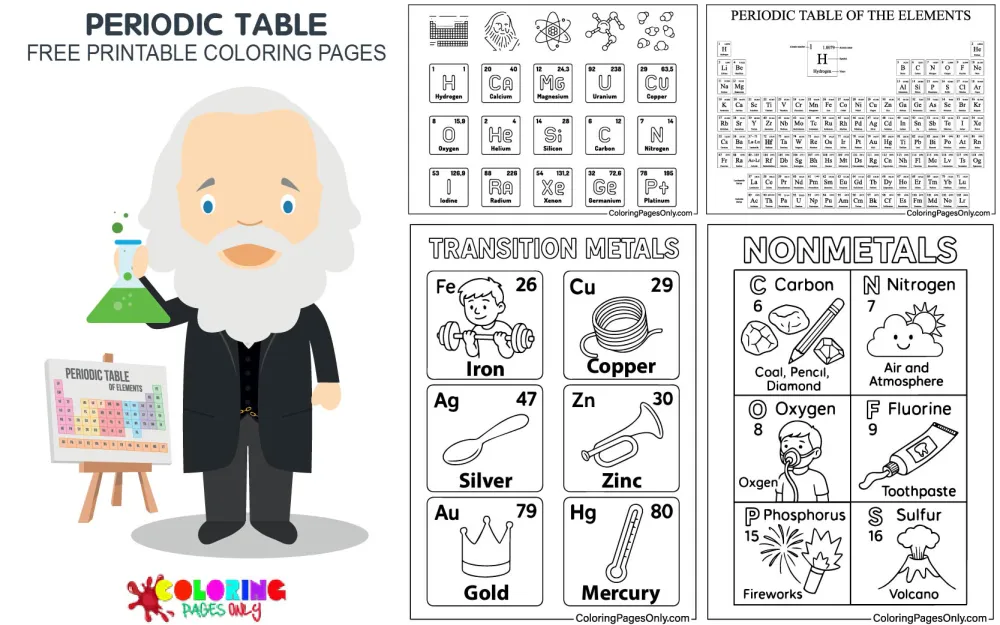
Free periodic table coloring pages: 48 printable PDF designs spanning full table charts, individual elements, and element category breakdowns. Every page can be downloaded as a PDF to print or colored online in the browser.
In March 1869, Russian chemist Dmitri Mendeleev presented the Russian Chemical Society with a table arranging the 63 known elements by atomic weight, and he deliberately left gaps for elements no one had yet discovered. He went further than simply leaving blanks: he predicted the properties of three missing elements, giving them provisional names like eka-aluminum and eka-boron. Within seventeen years, all three predictions were confirmed. Gallium was discovered in 1875, scandium in 1879, and germanium in 1886, each matching Mendeleev’s forecast closely enough to secure his place in the history of science. All three of those elements appear as individual pages in this collection.
This set spans that history alongside dozens of other real elements and full periodic table charts, giving a student or teacher a genuinely useful study tool rather than only a decorative science image.
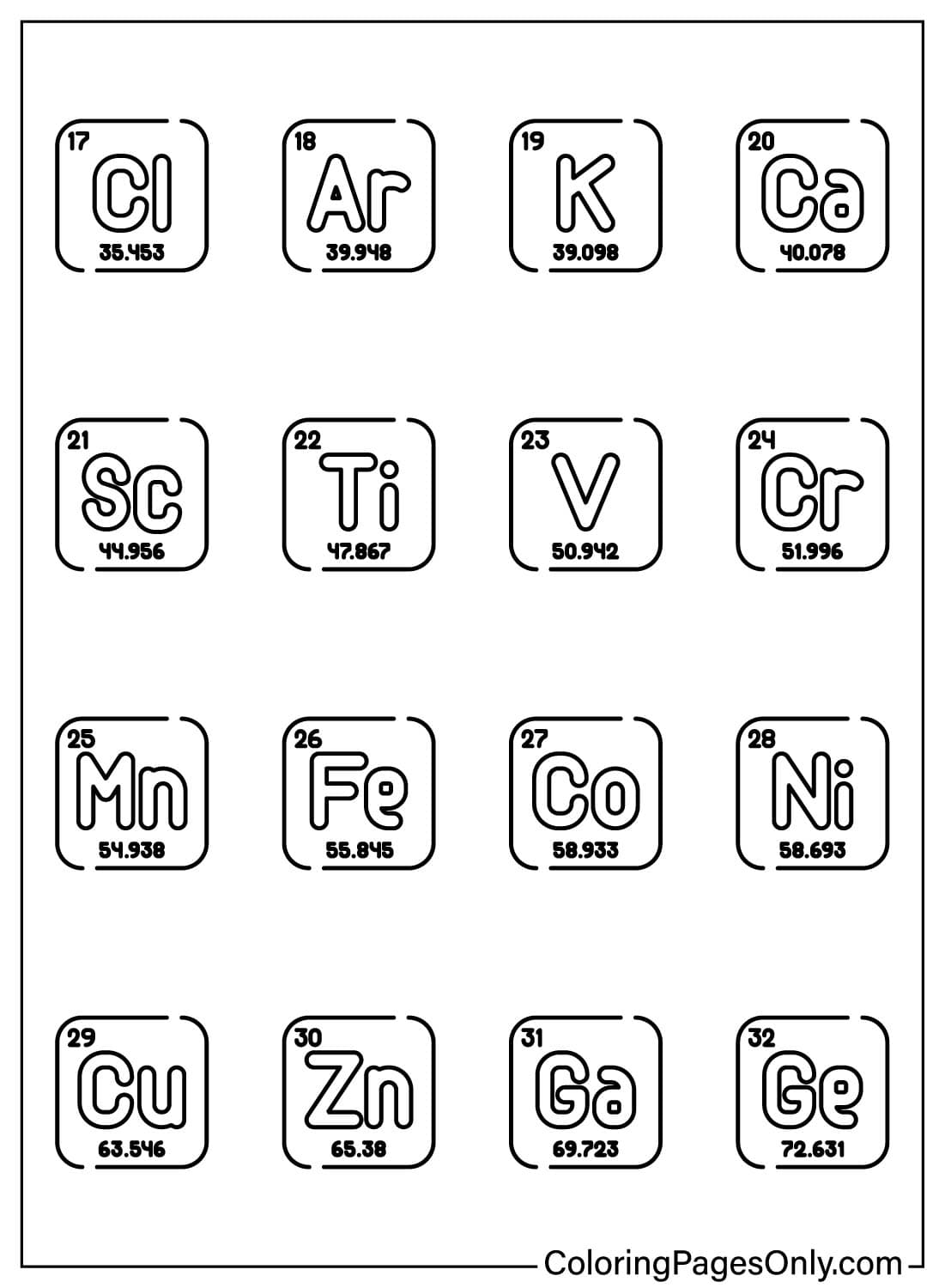
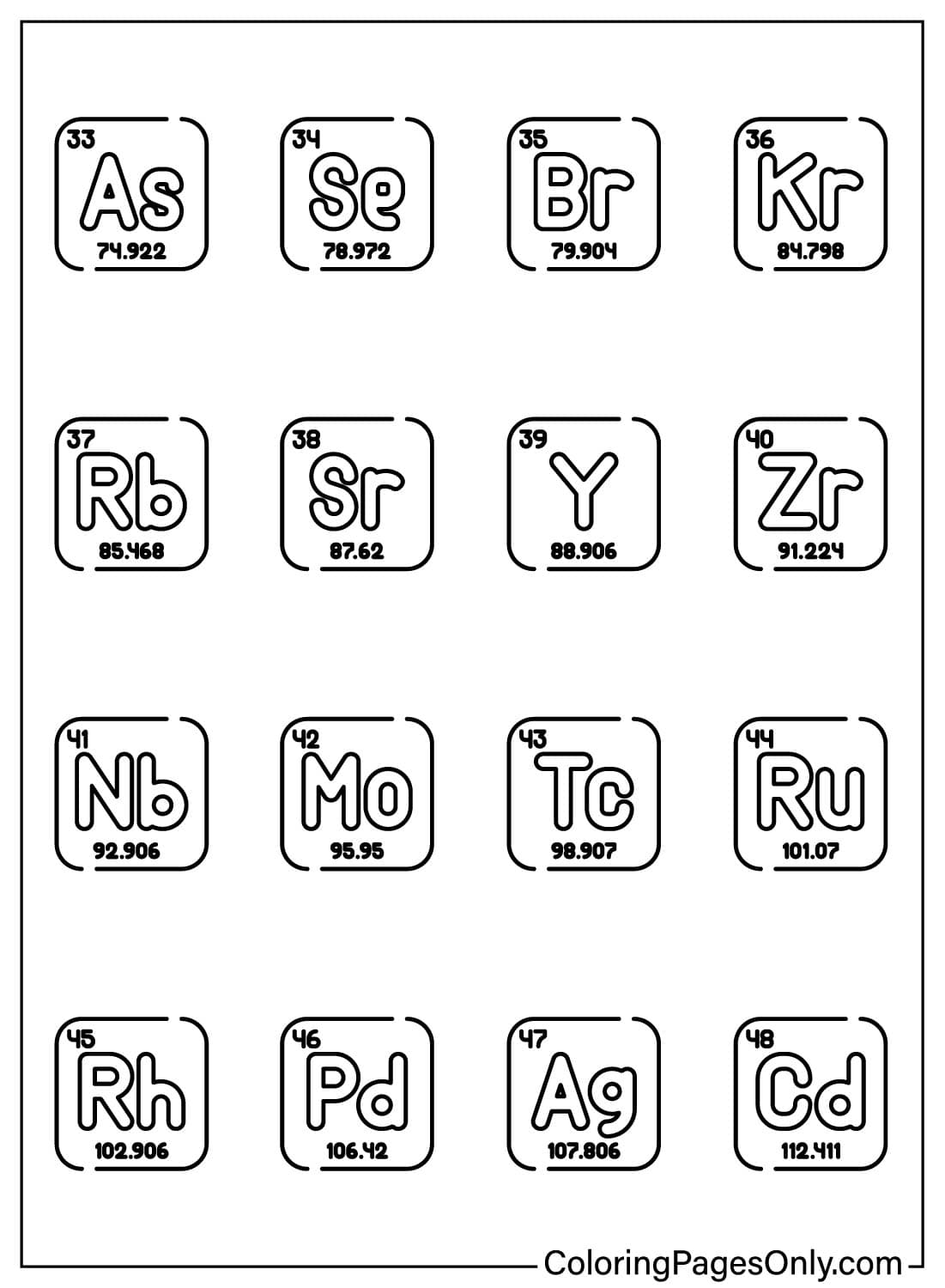
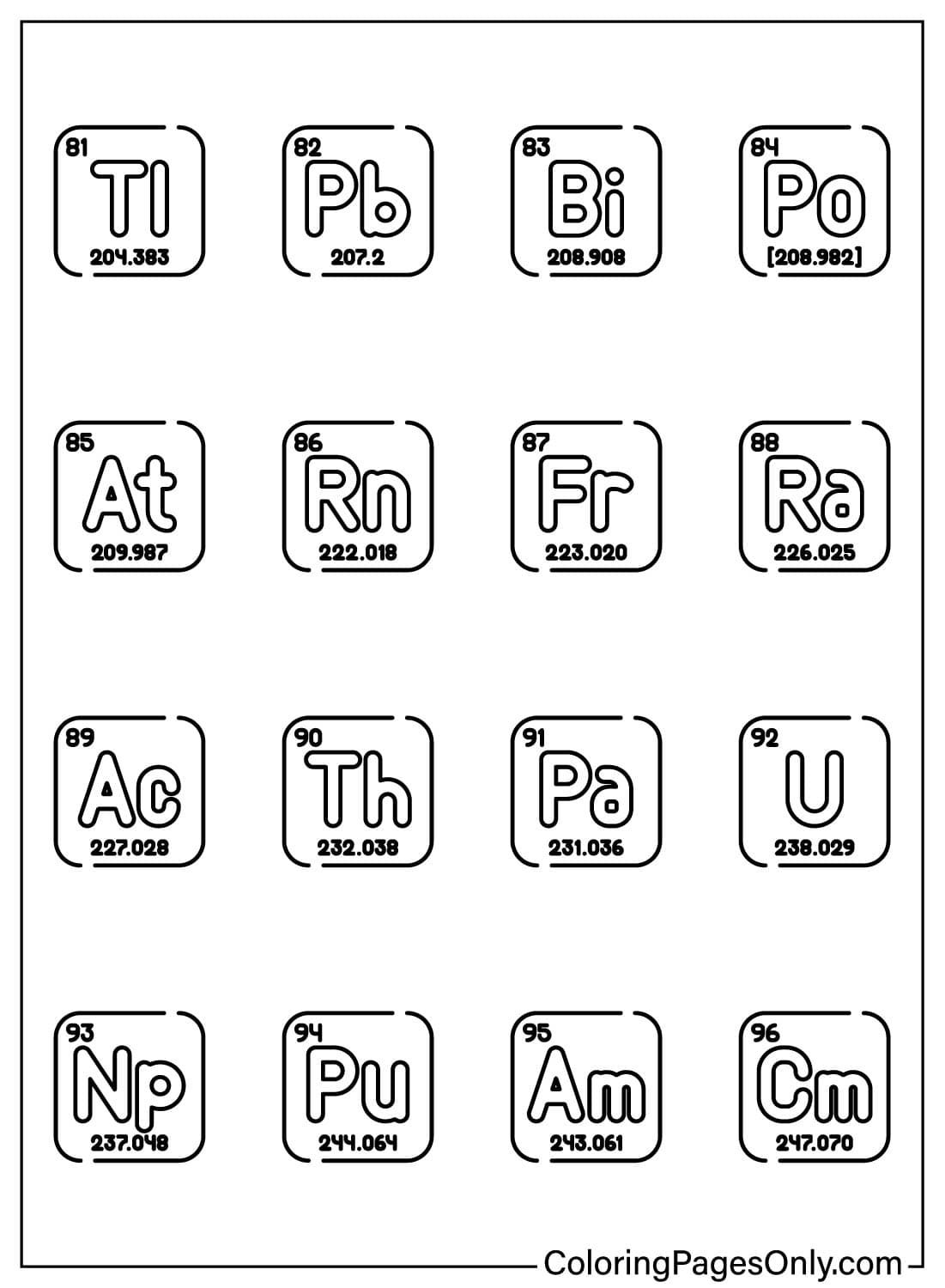
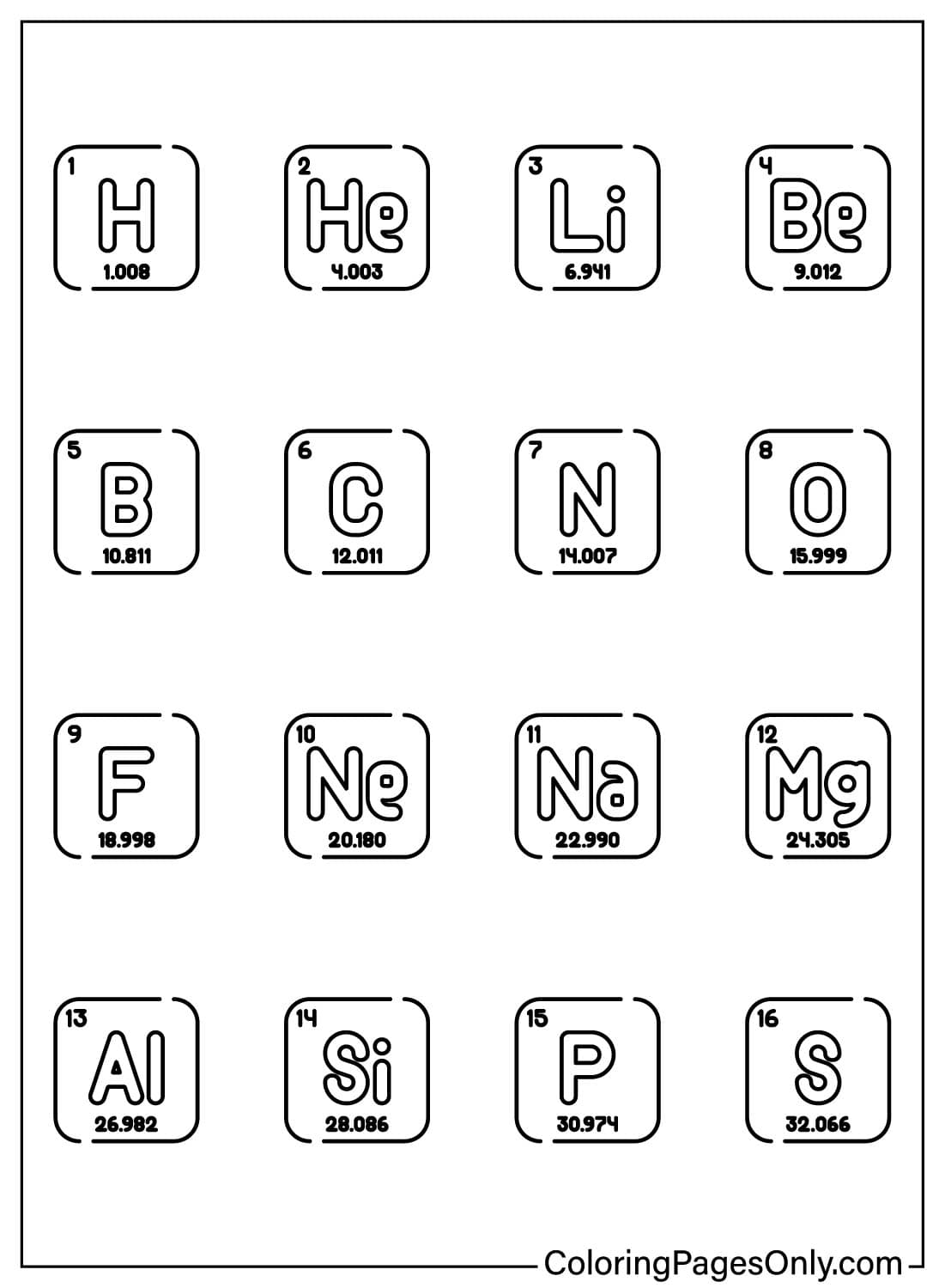
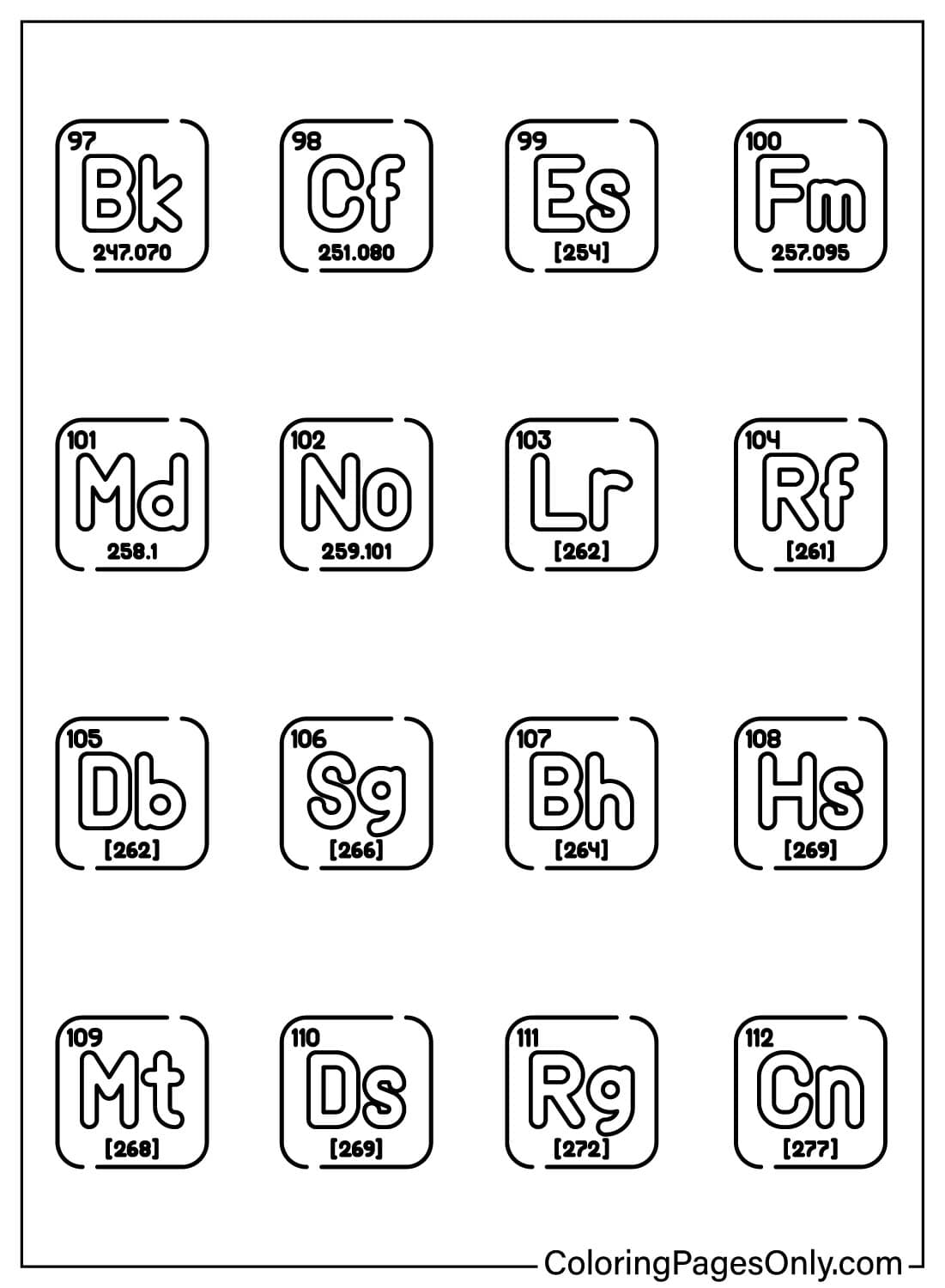
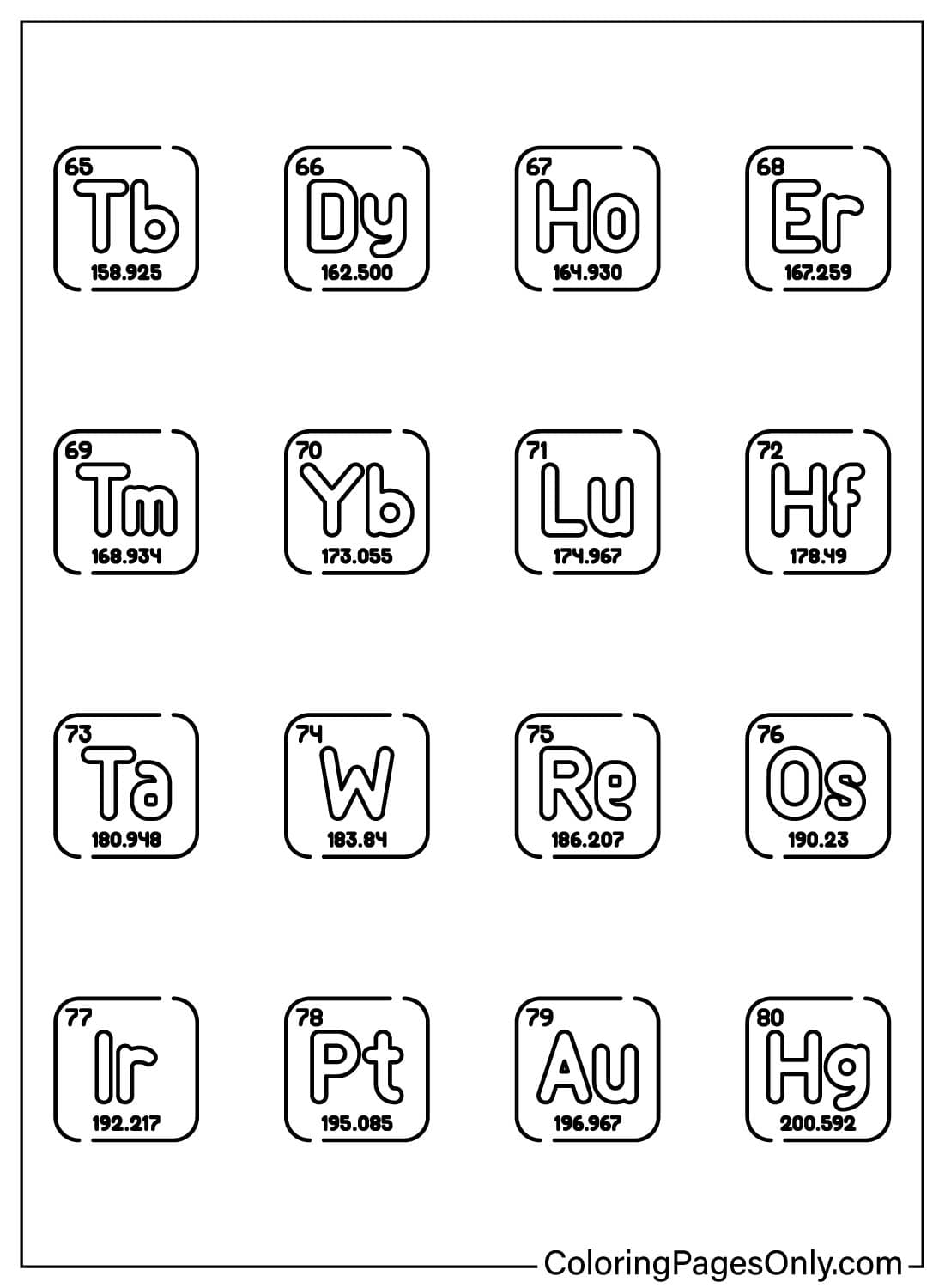
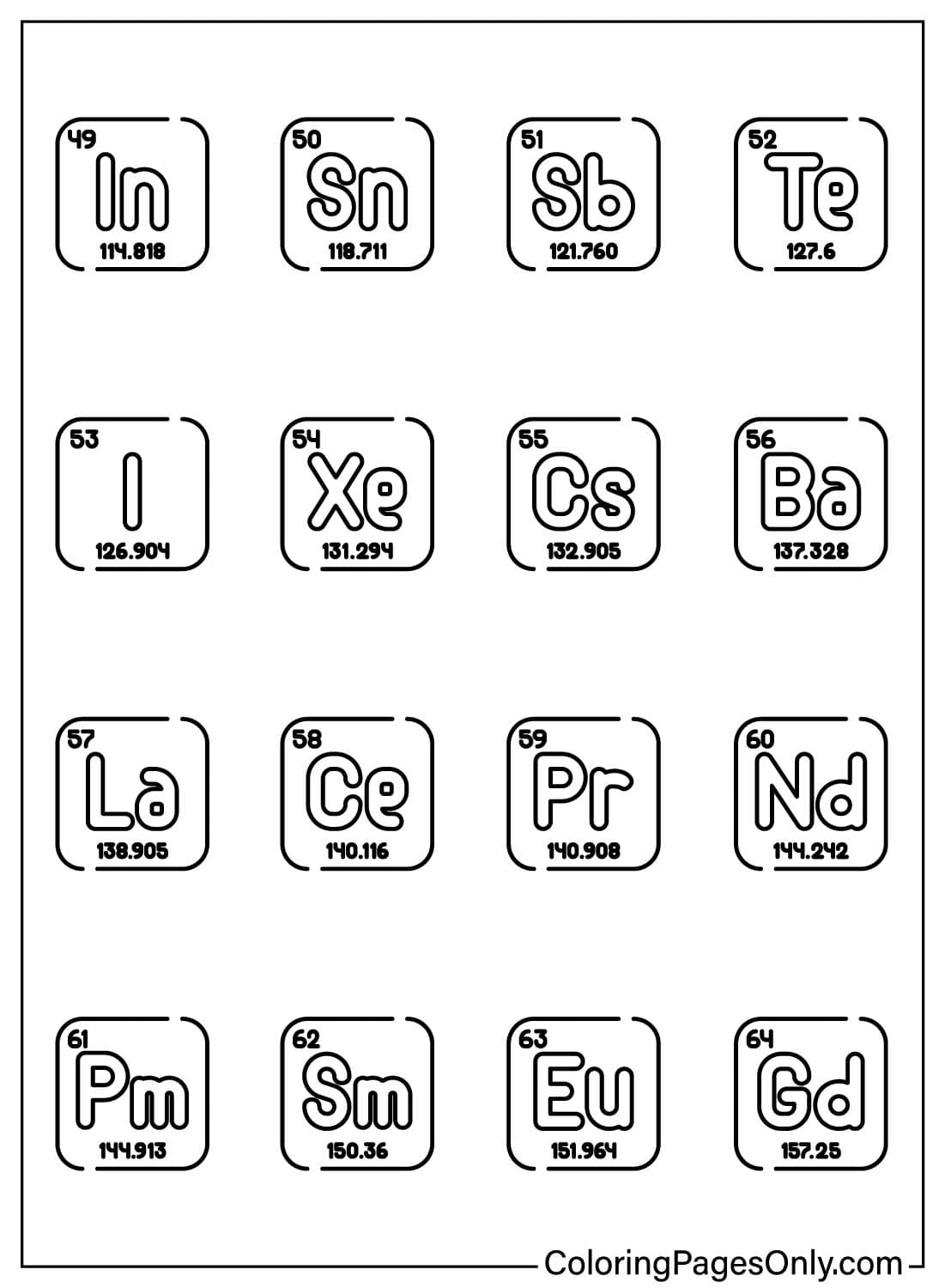
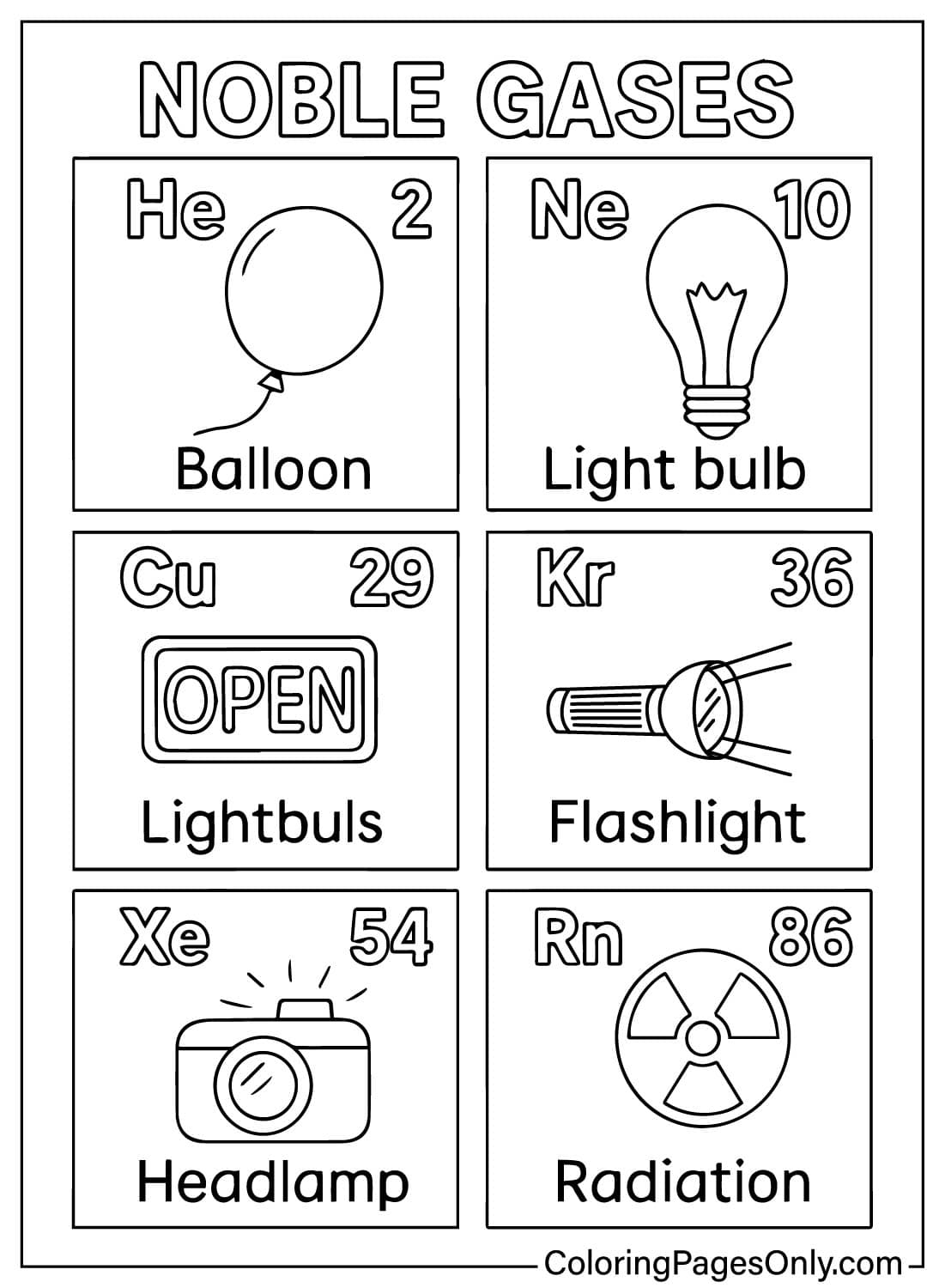
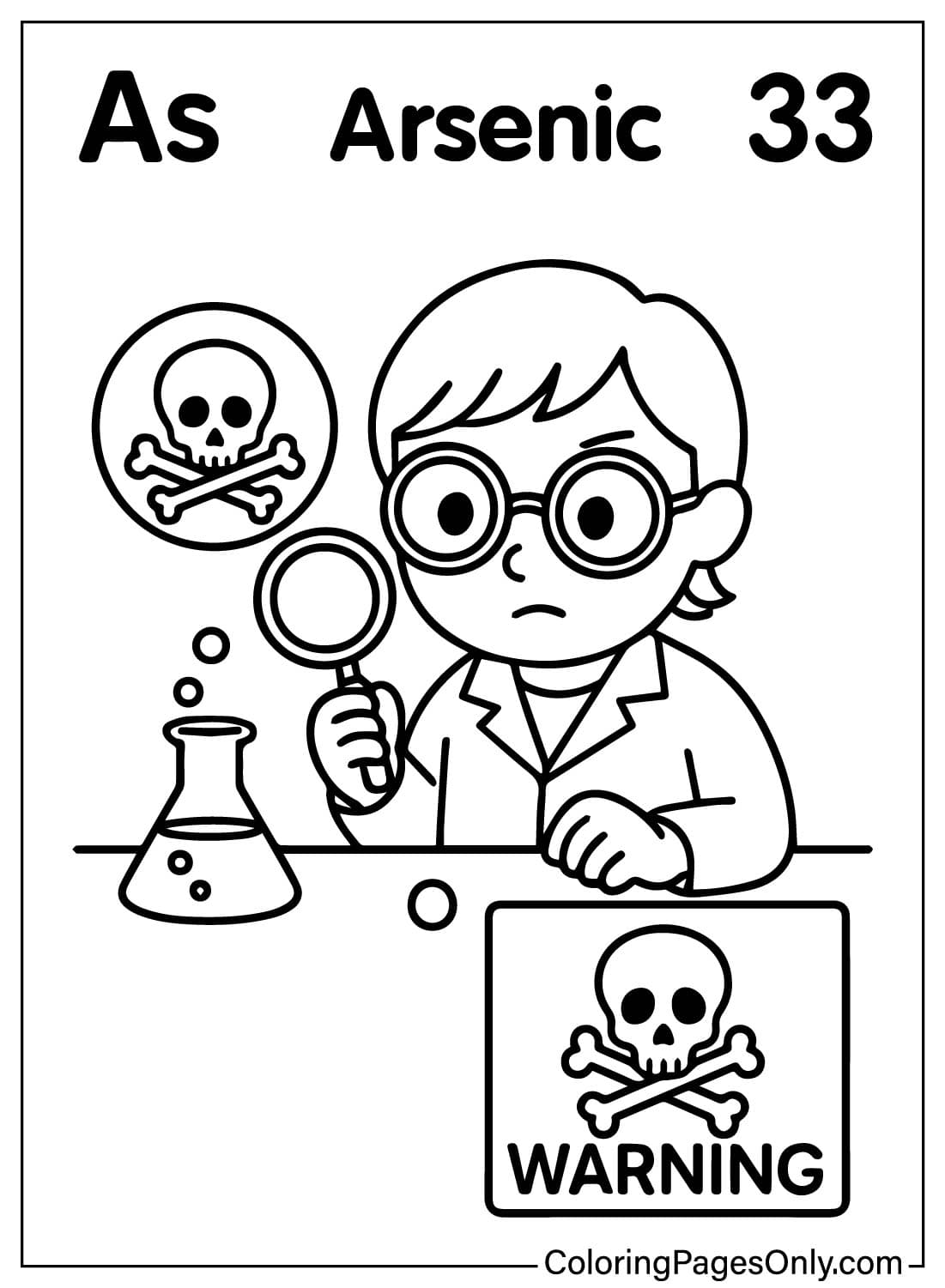
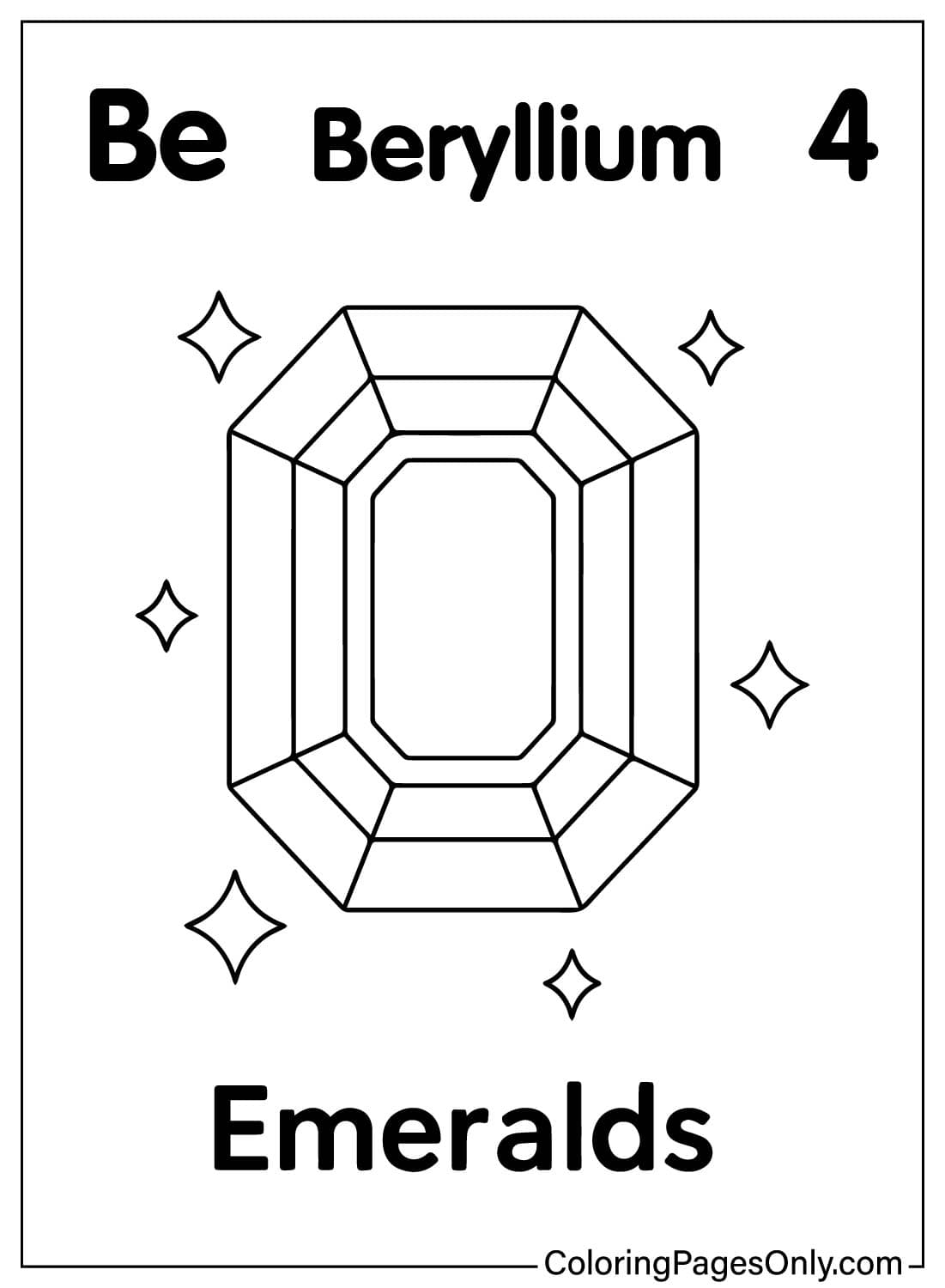

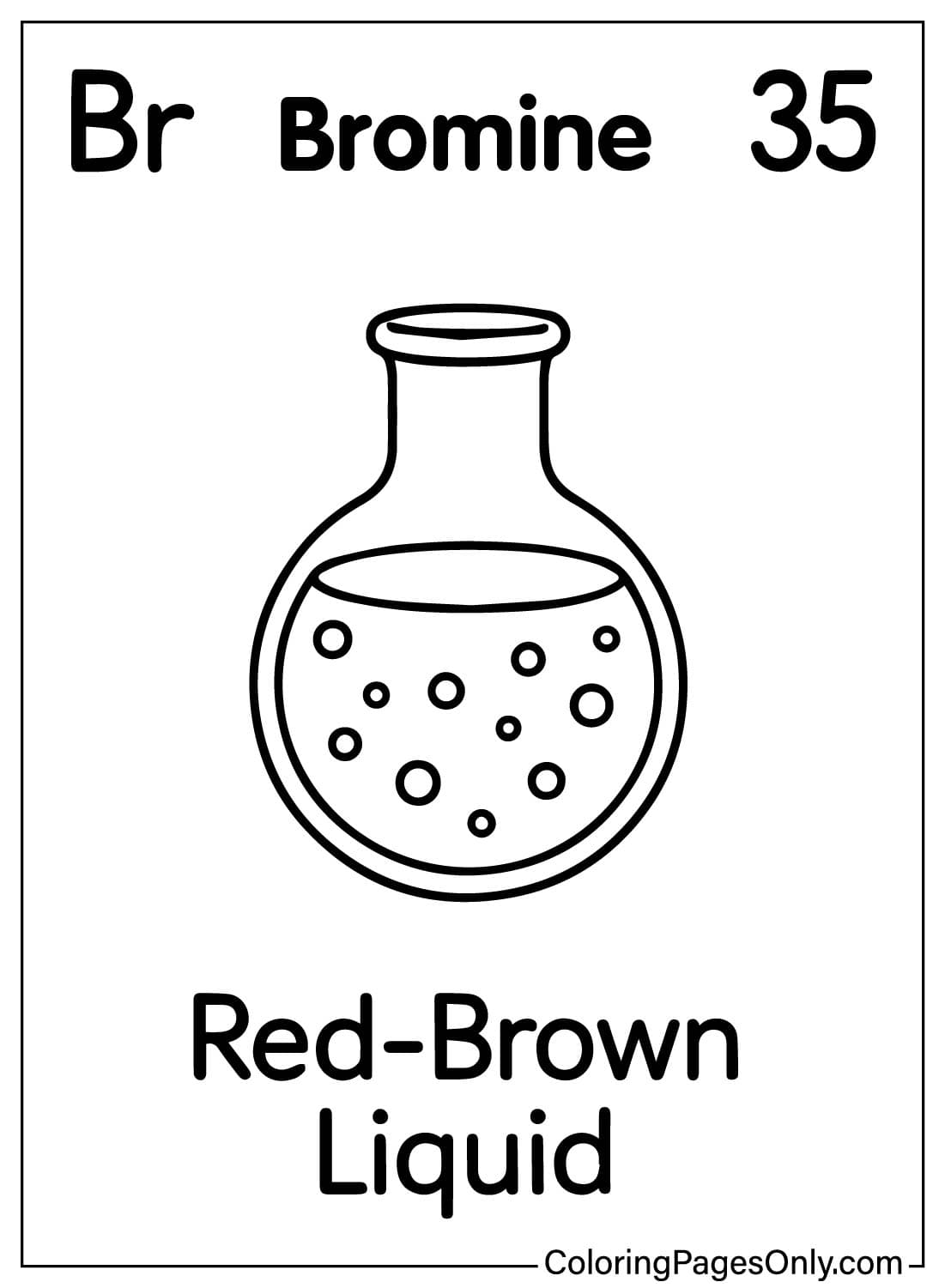
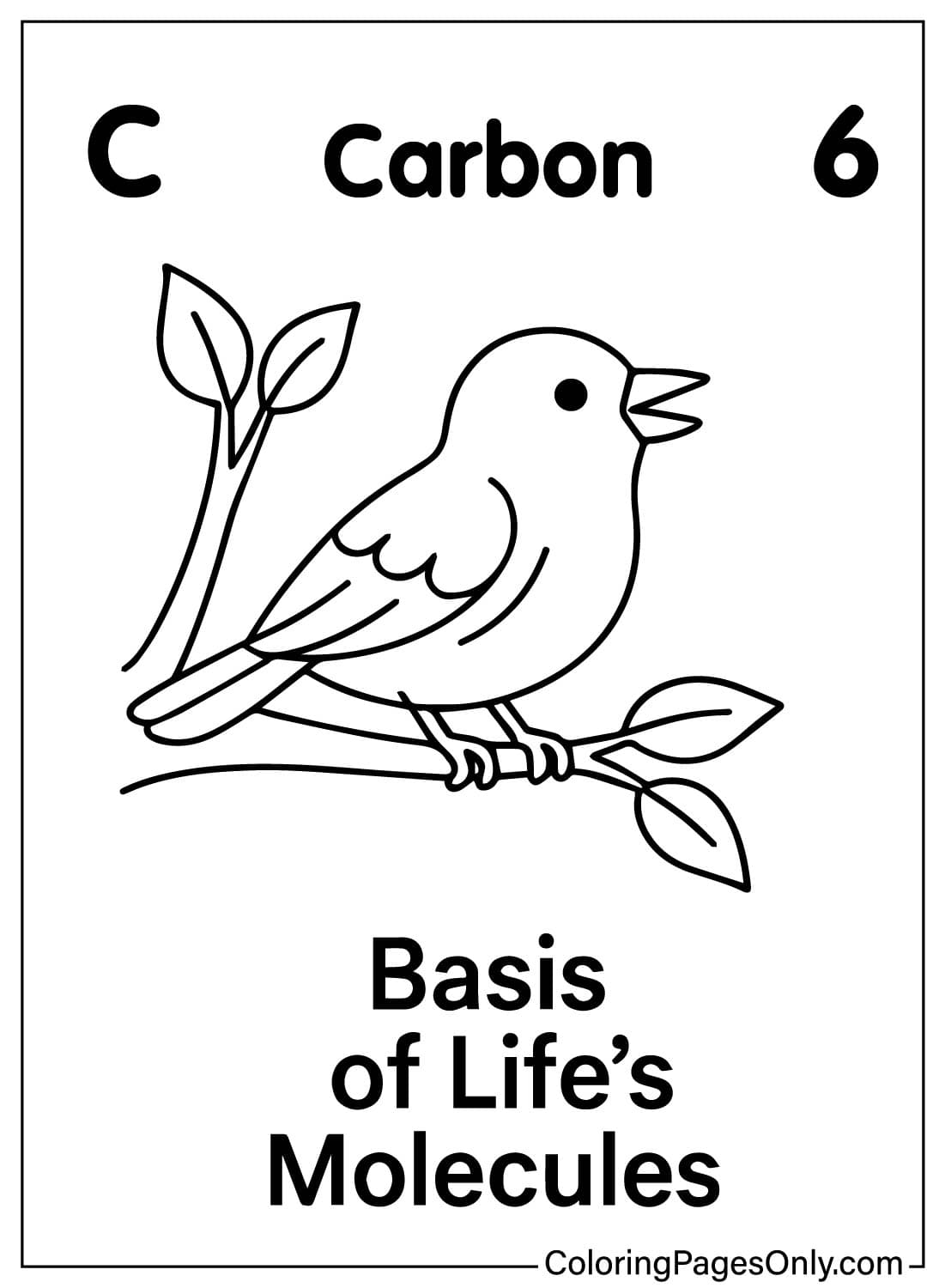
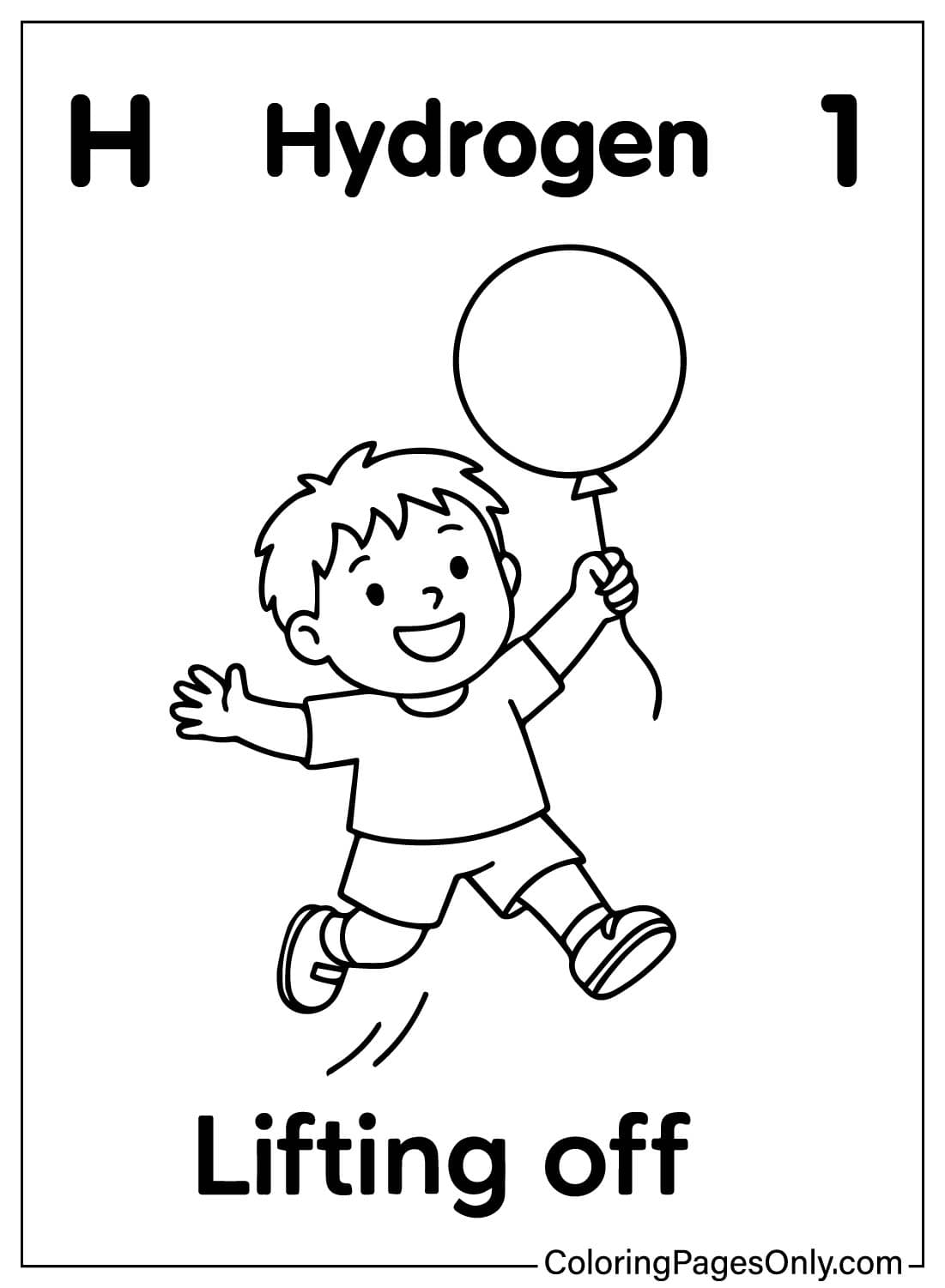
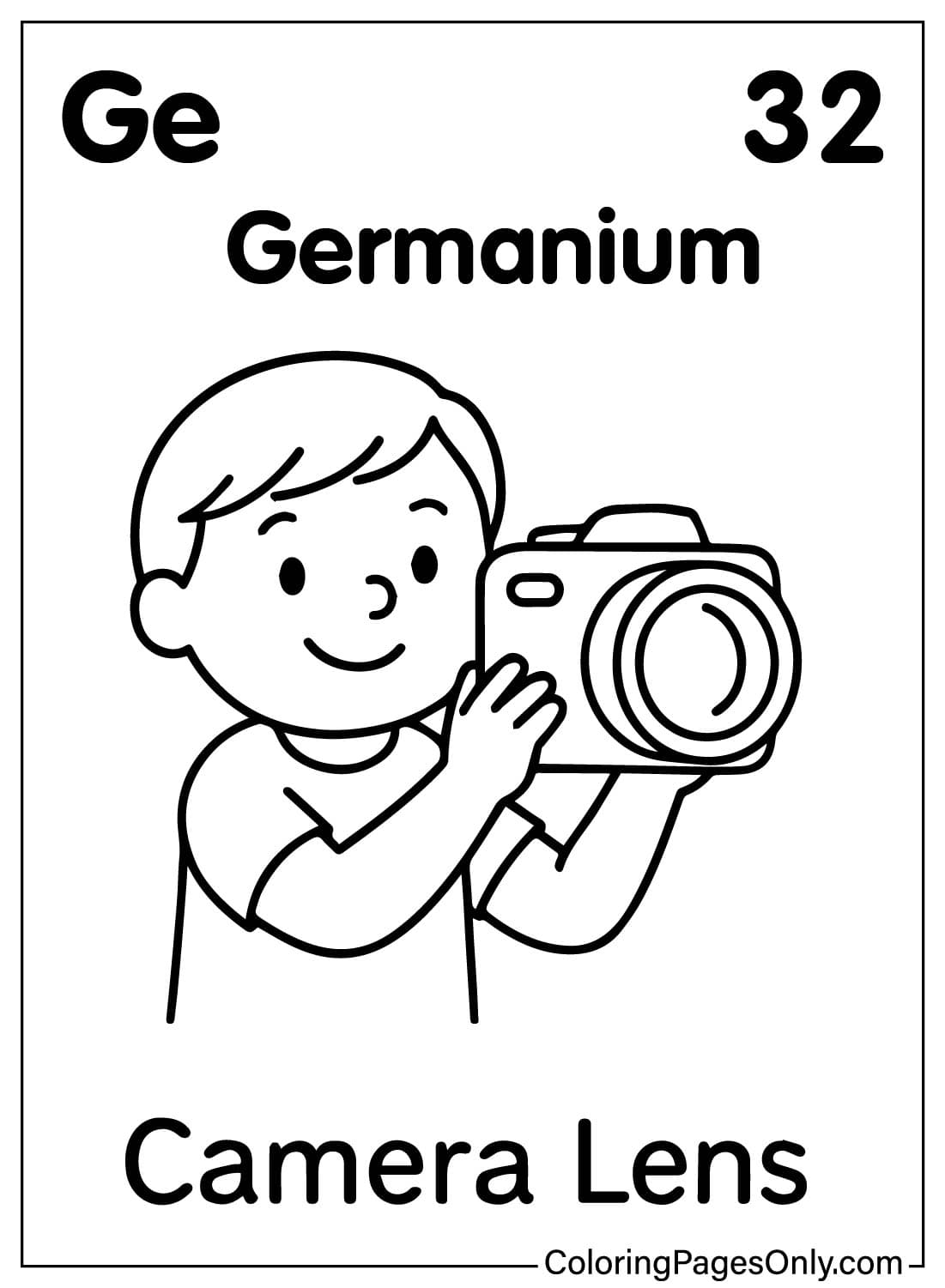
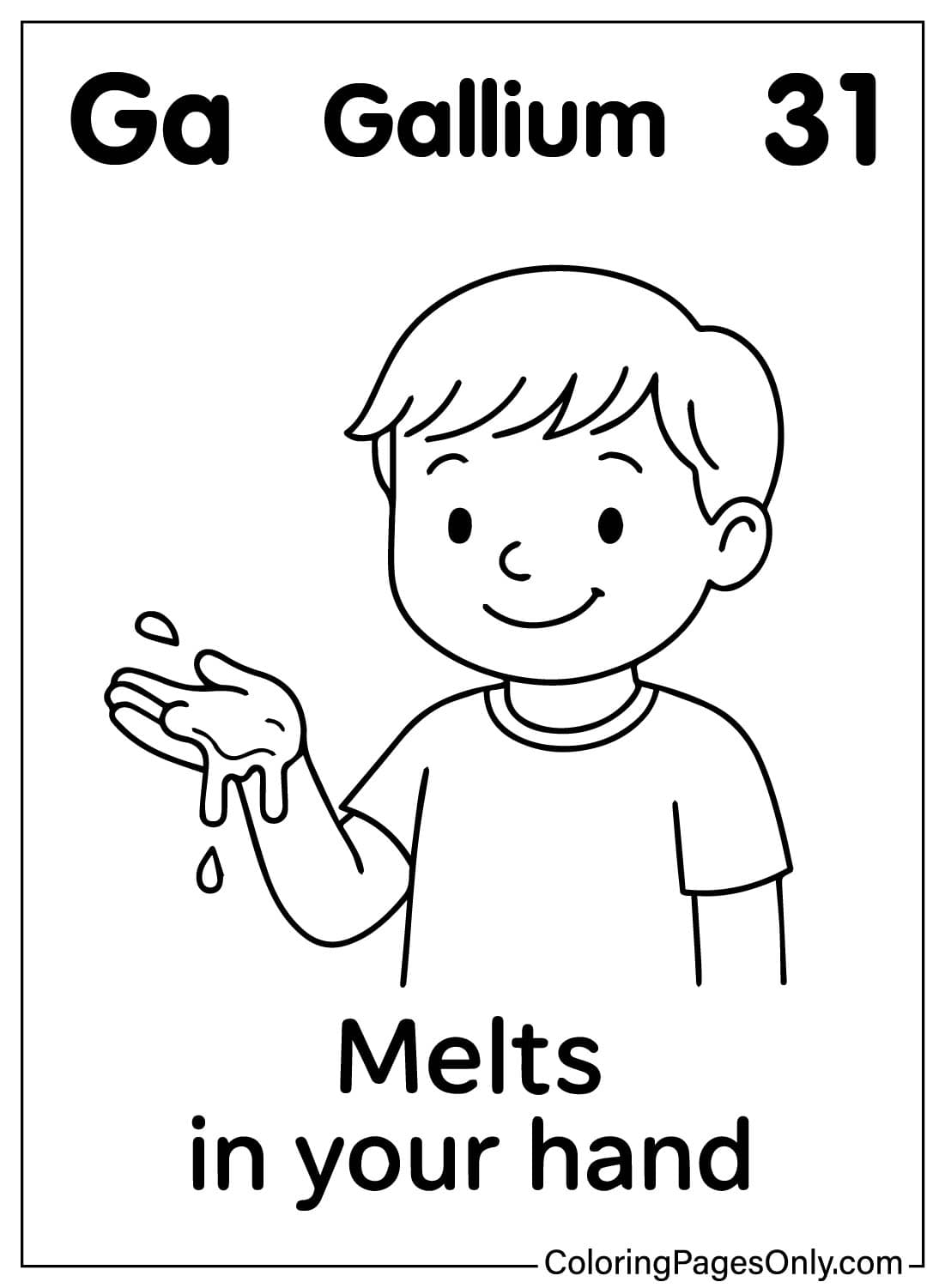
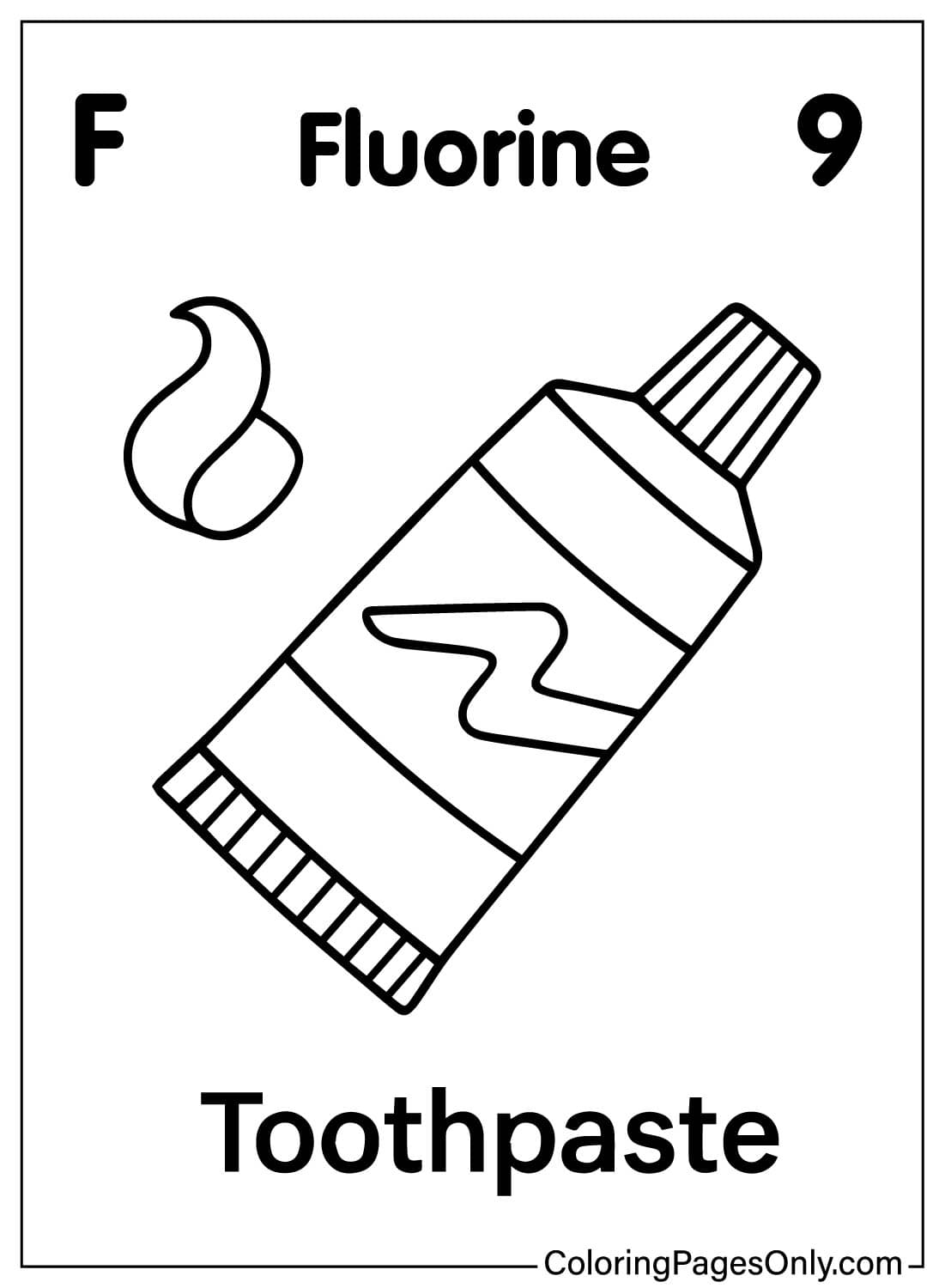
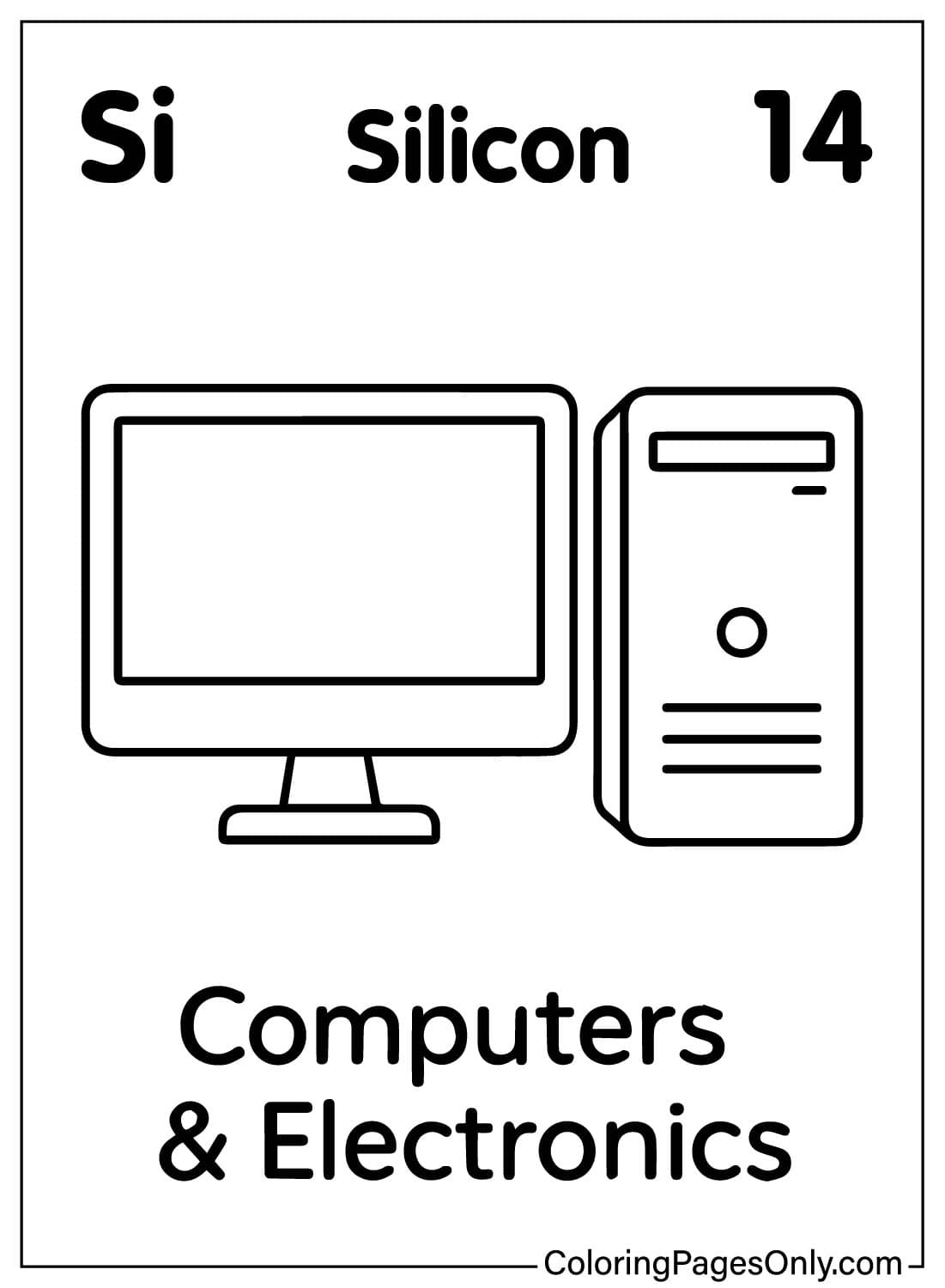
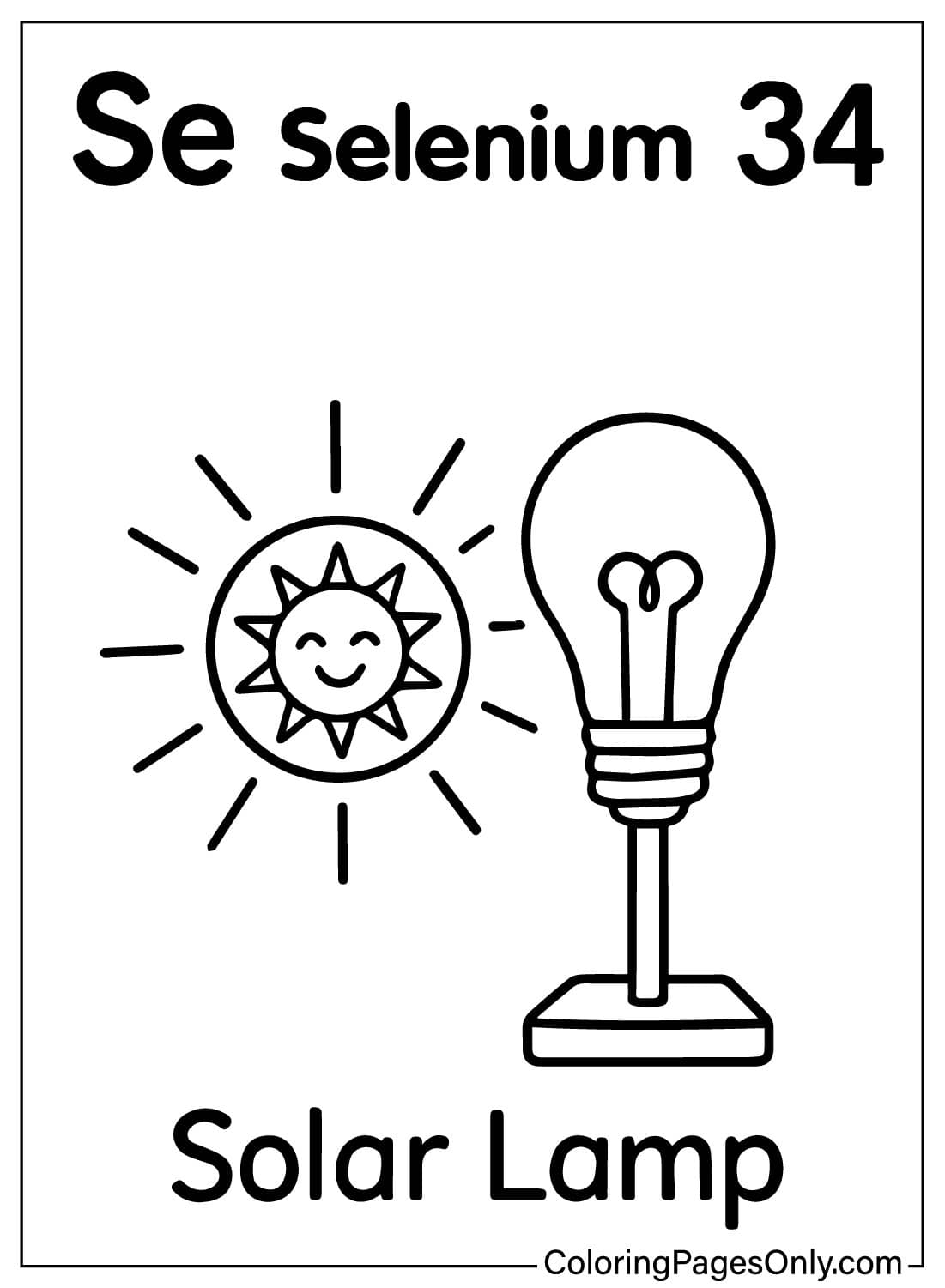
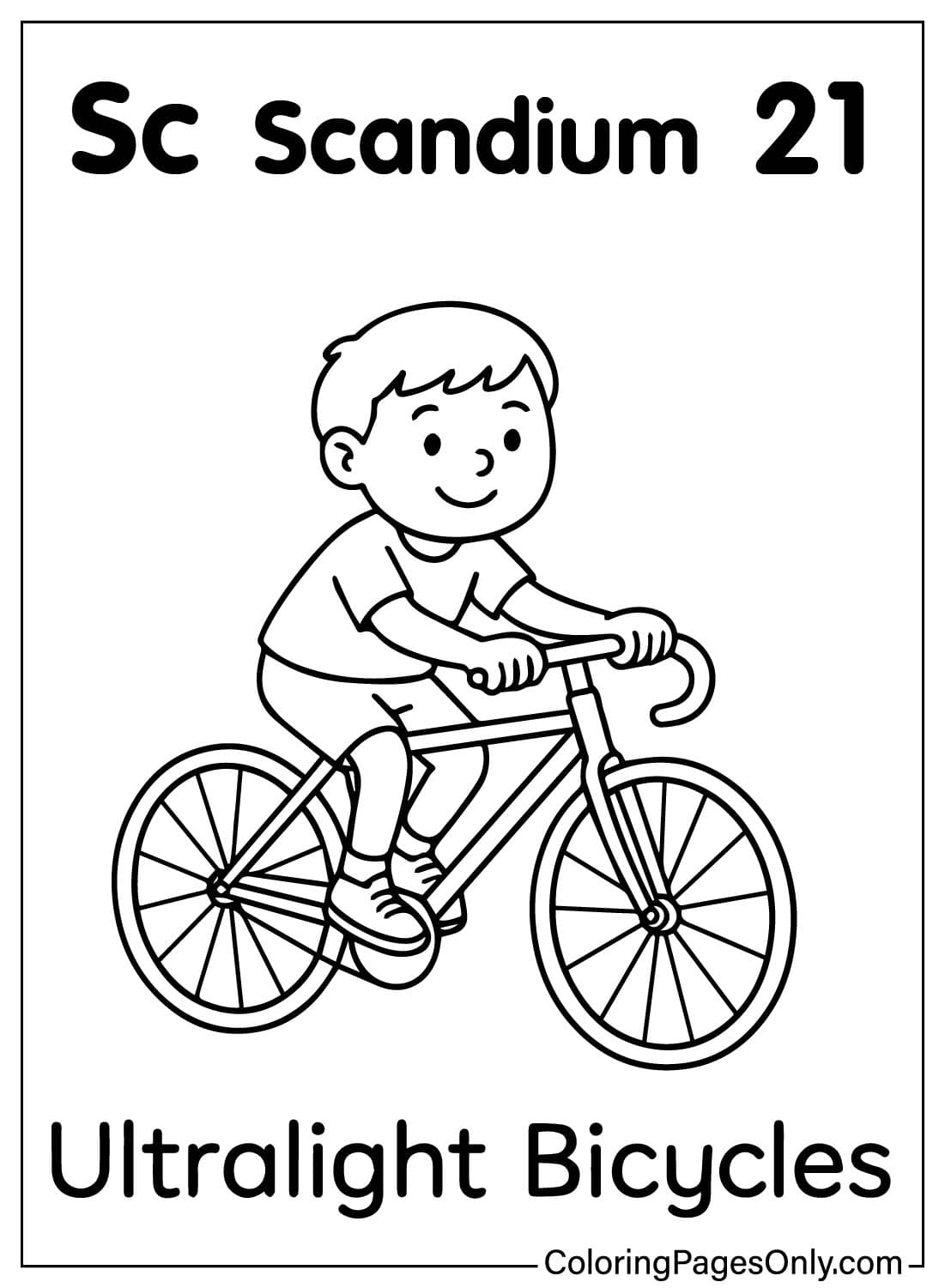
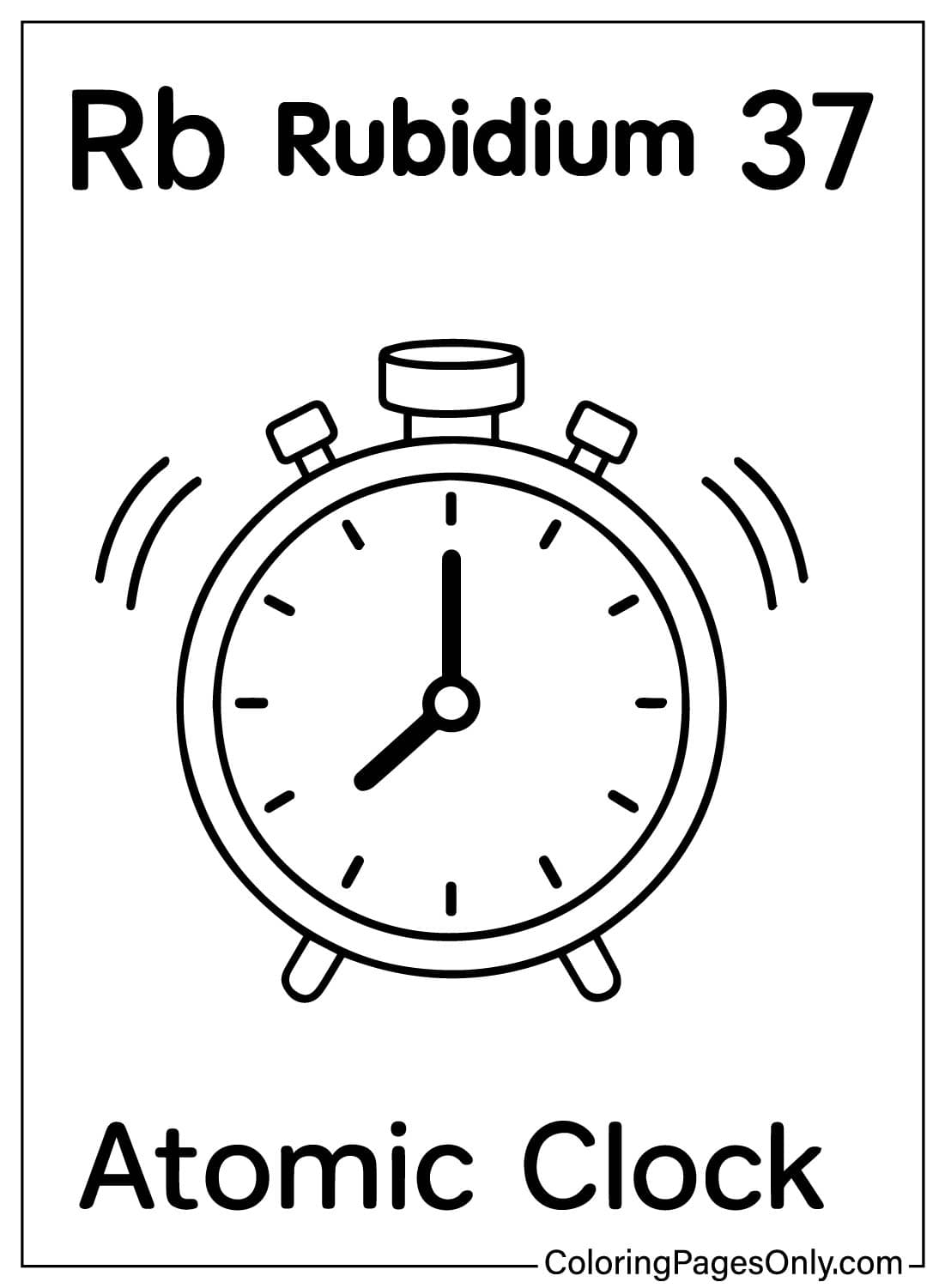
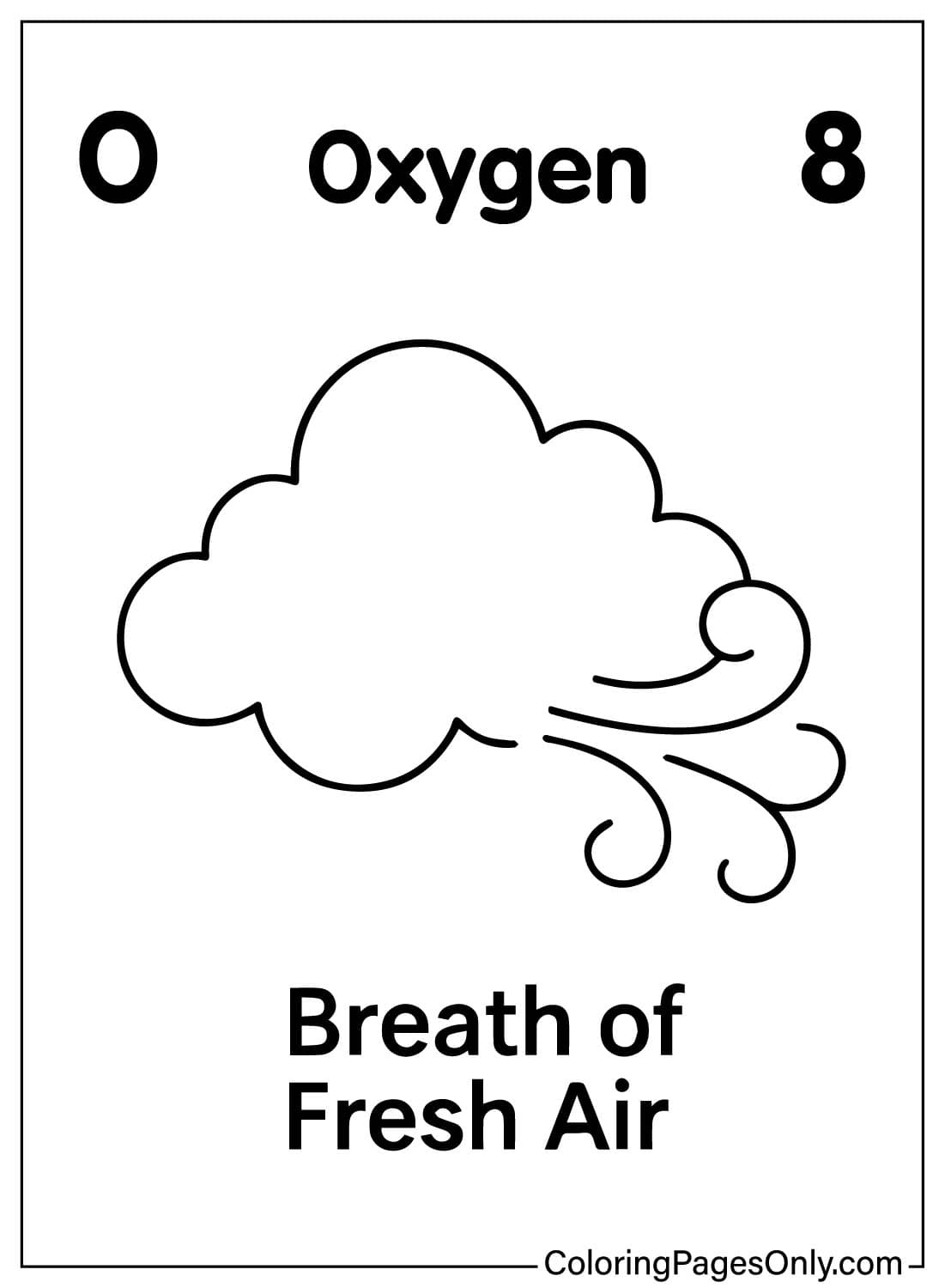
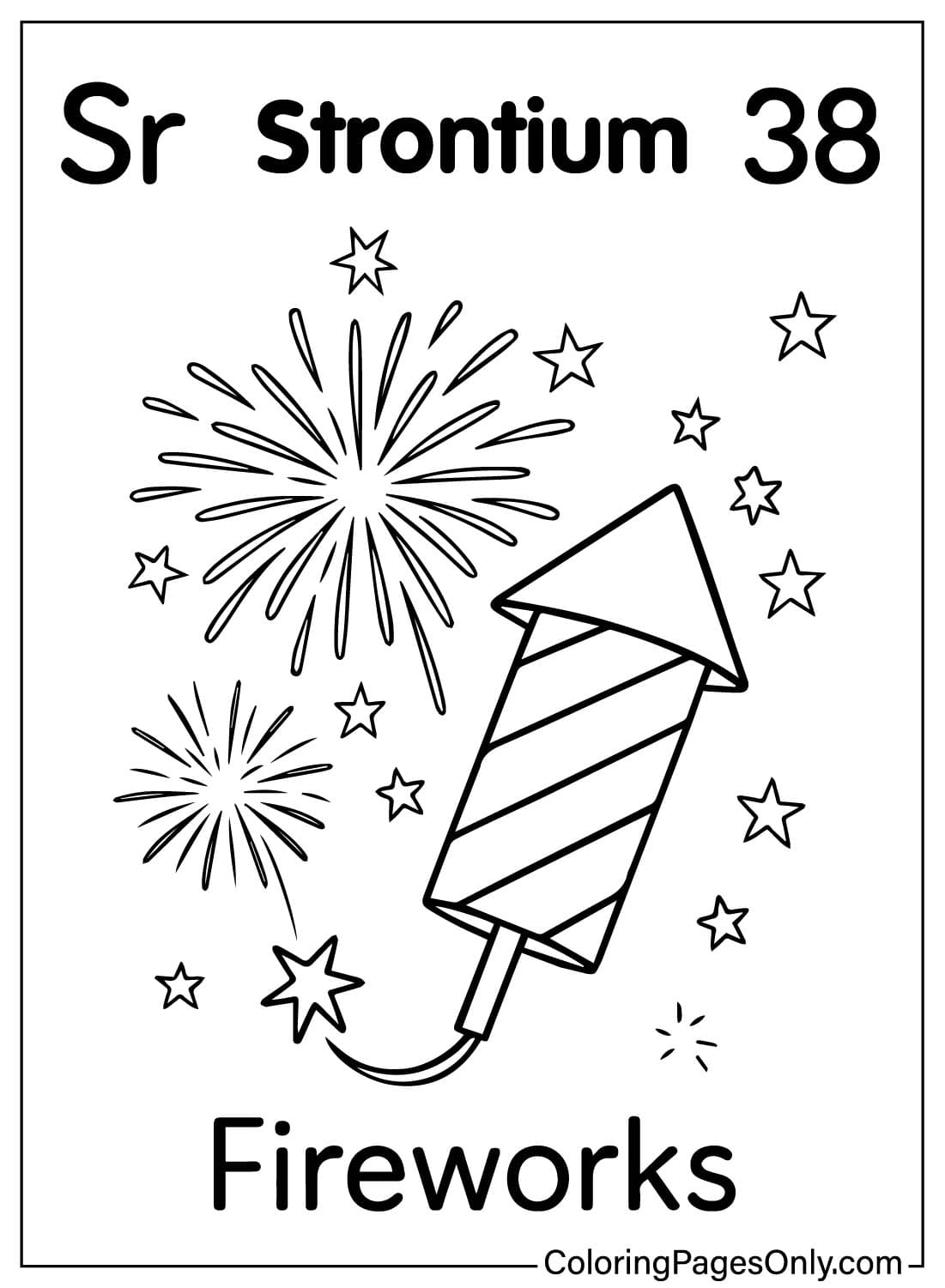
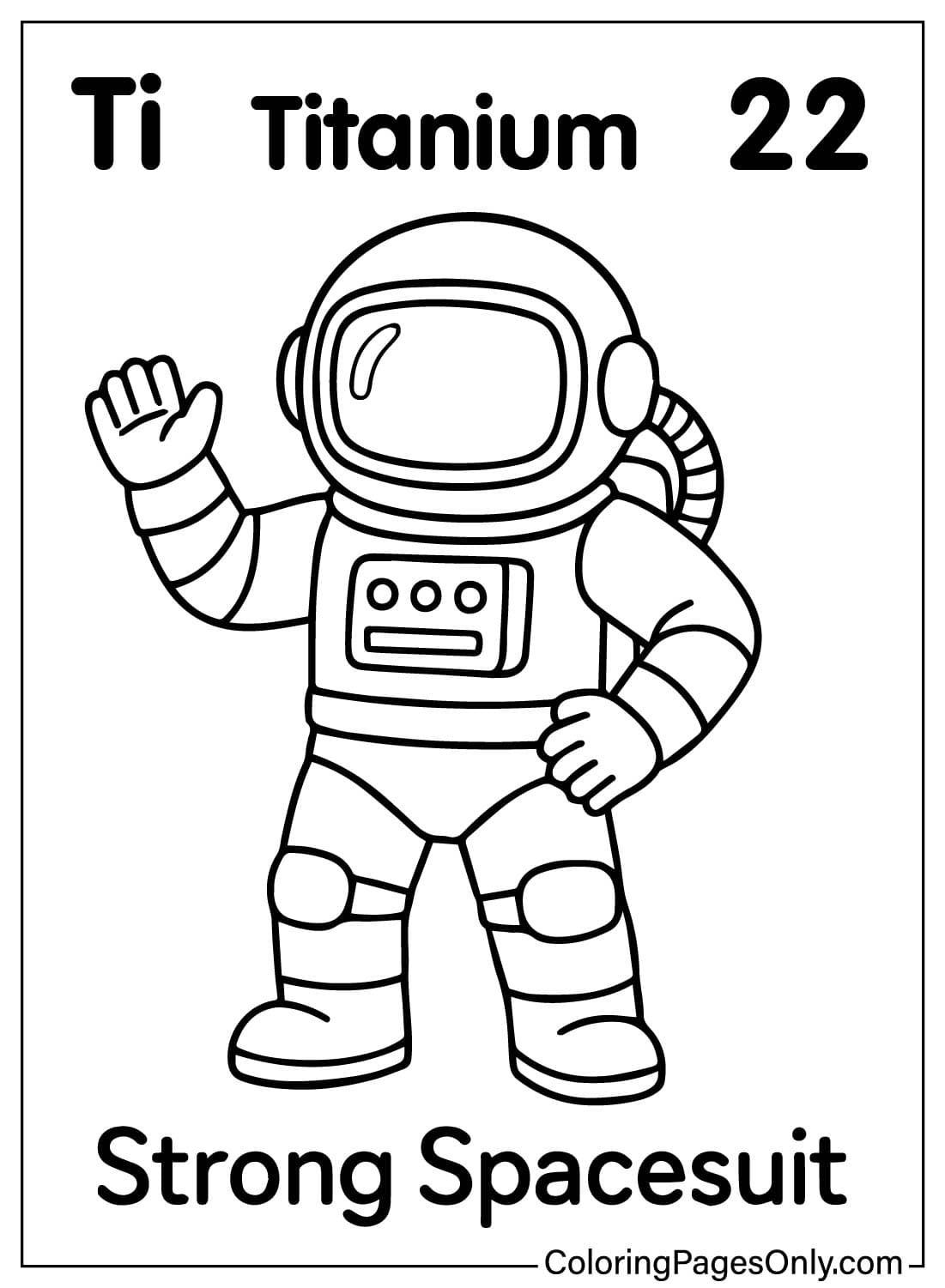

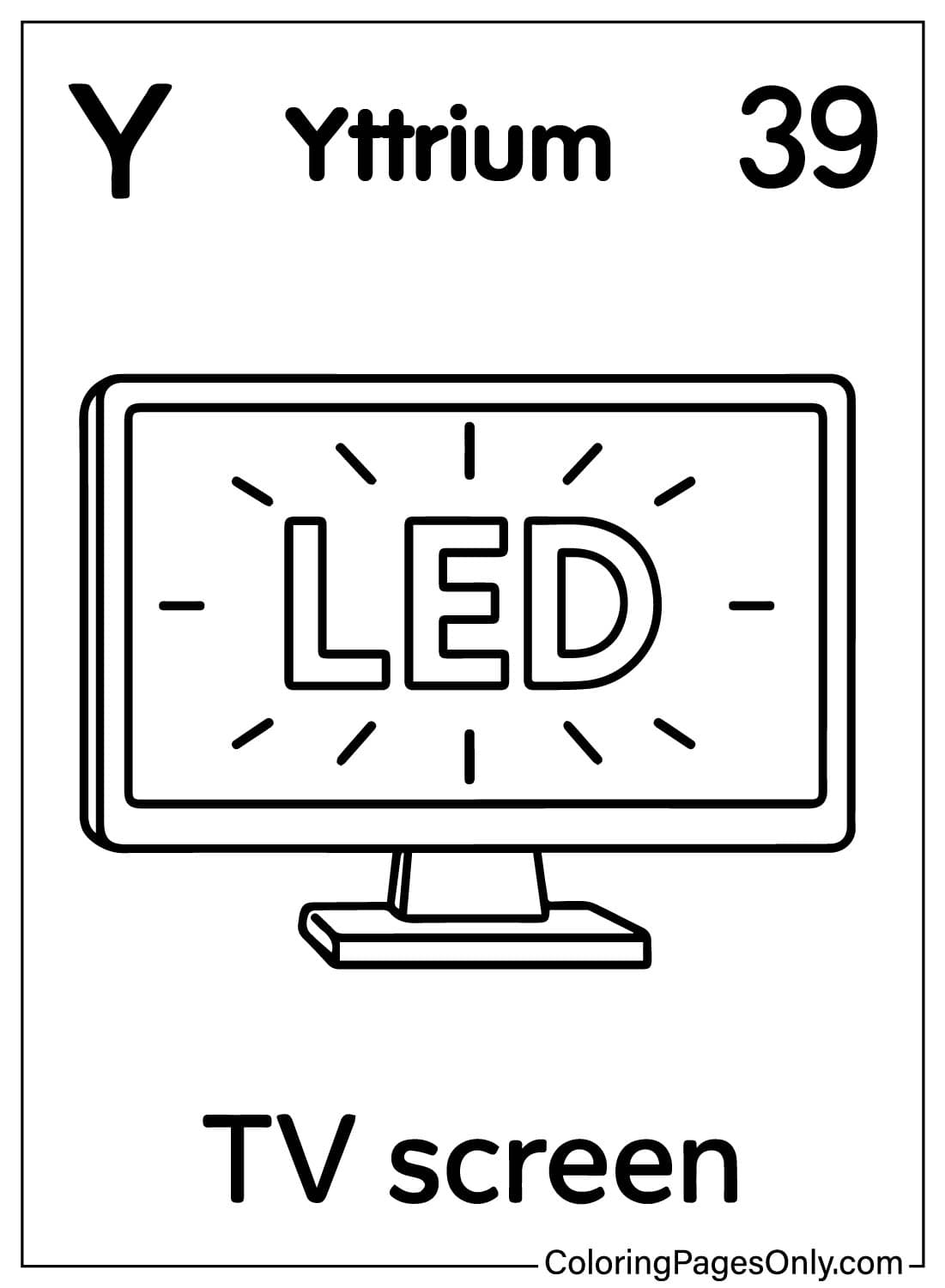
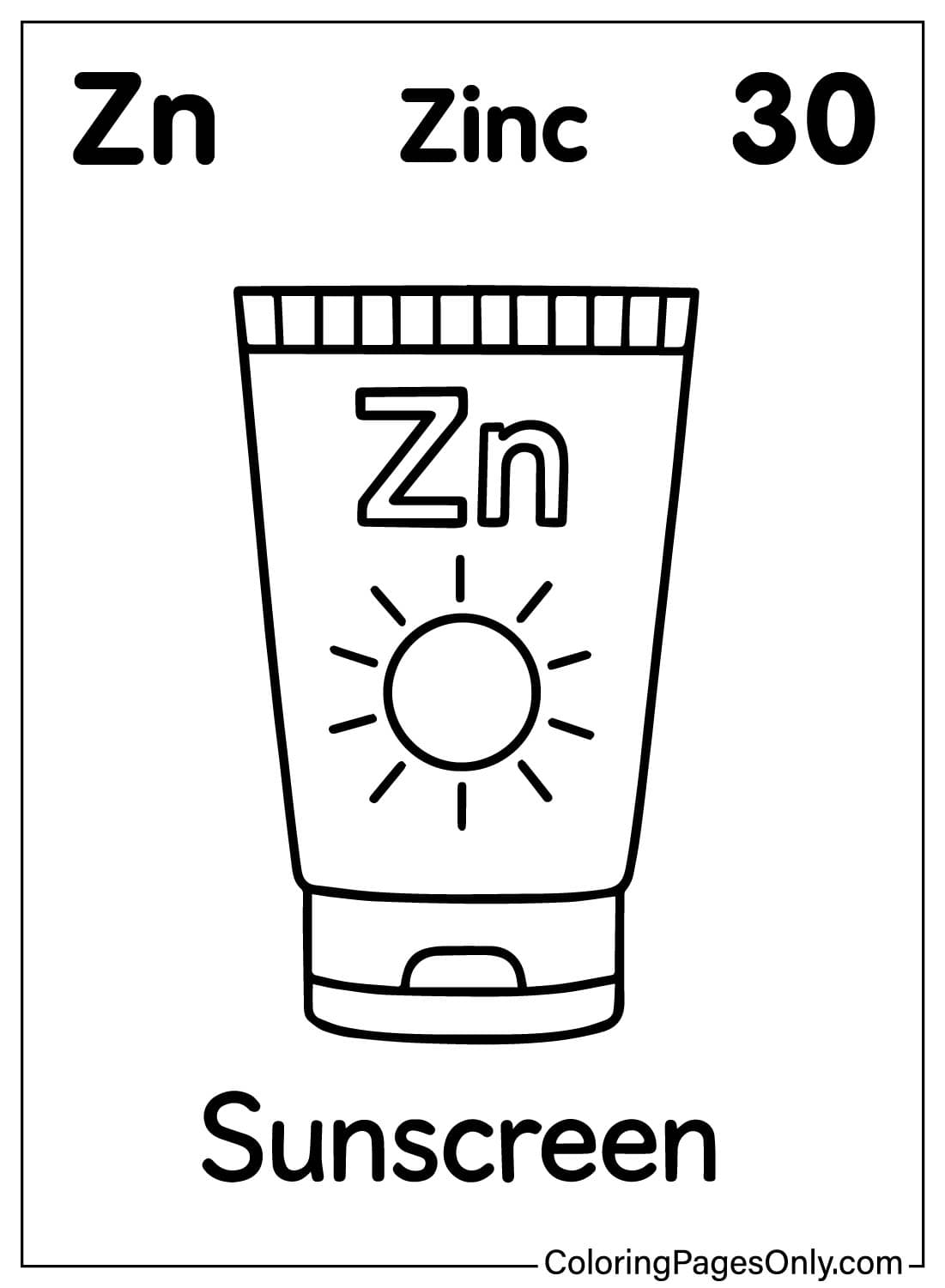
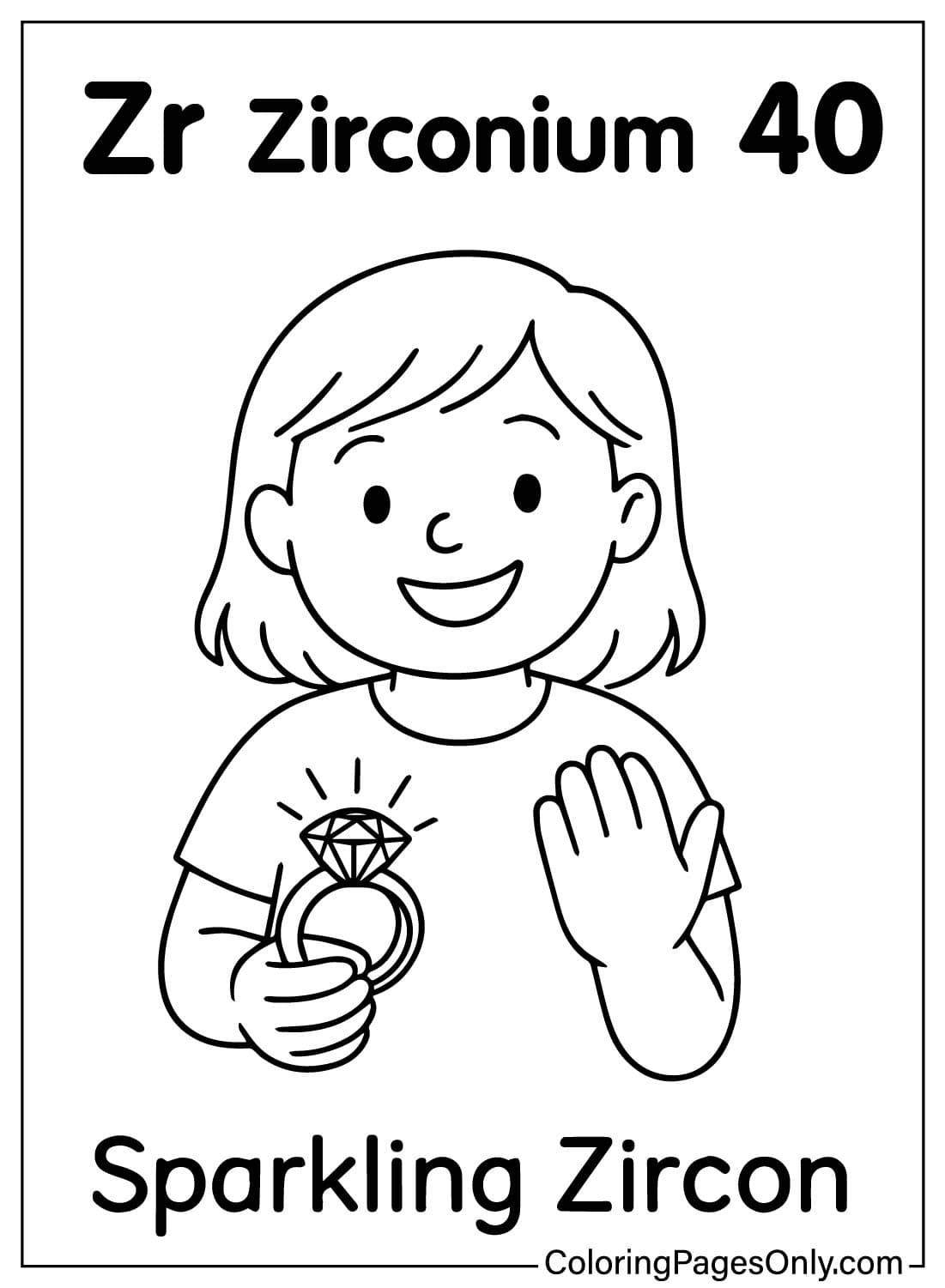
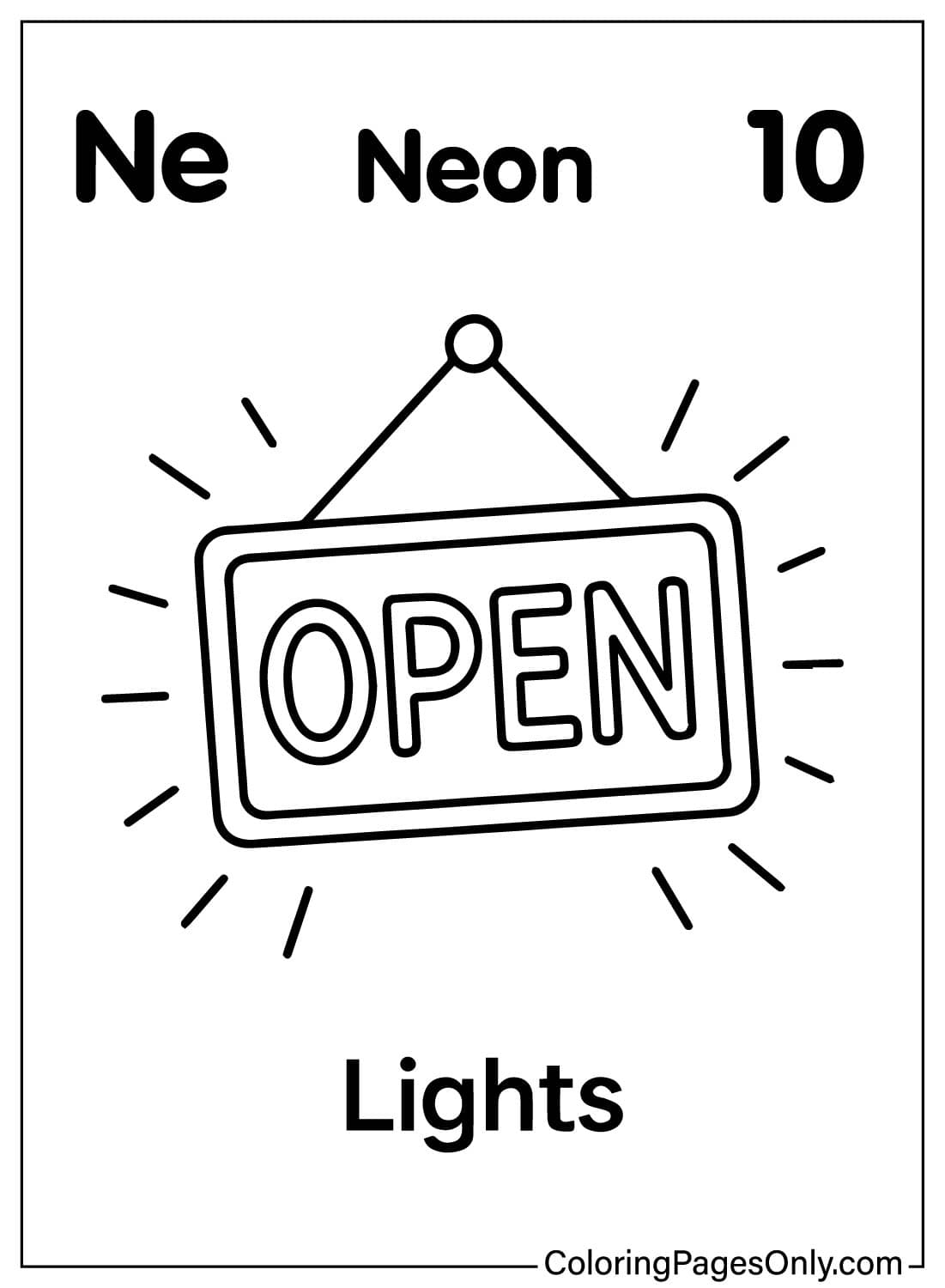
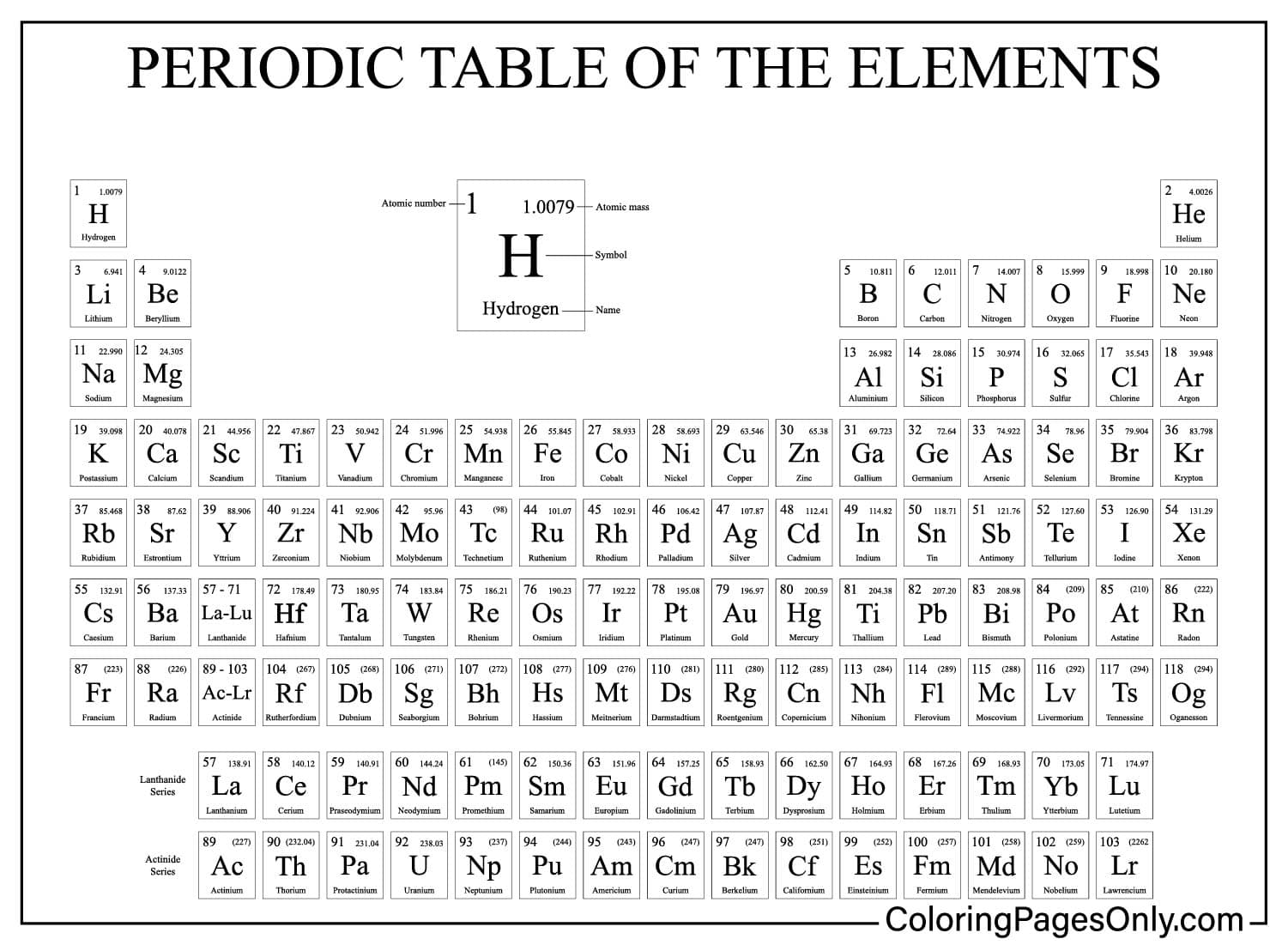
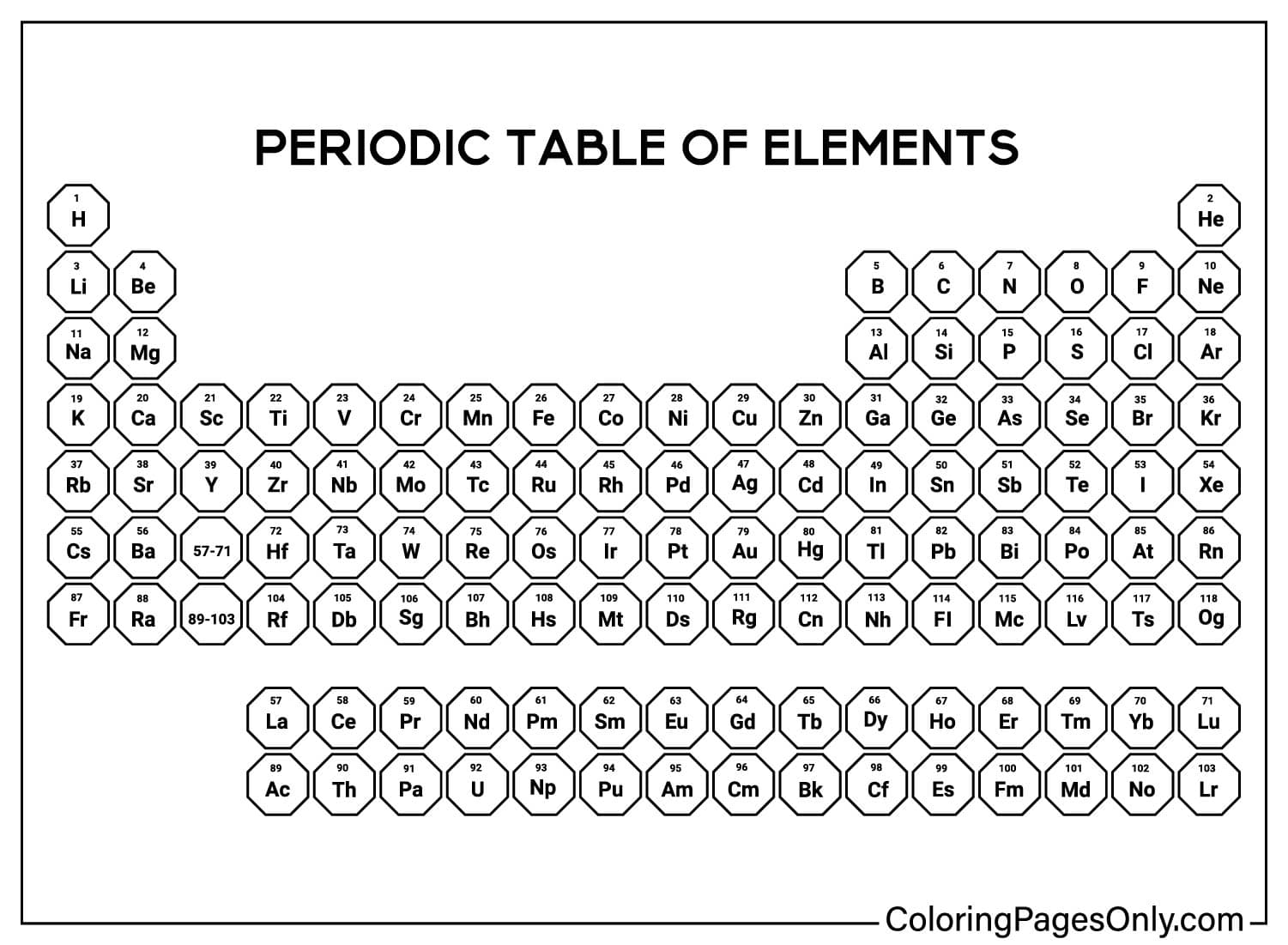
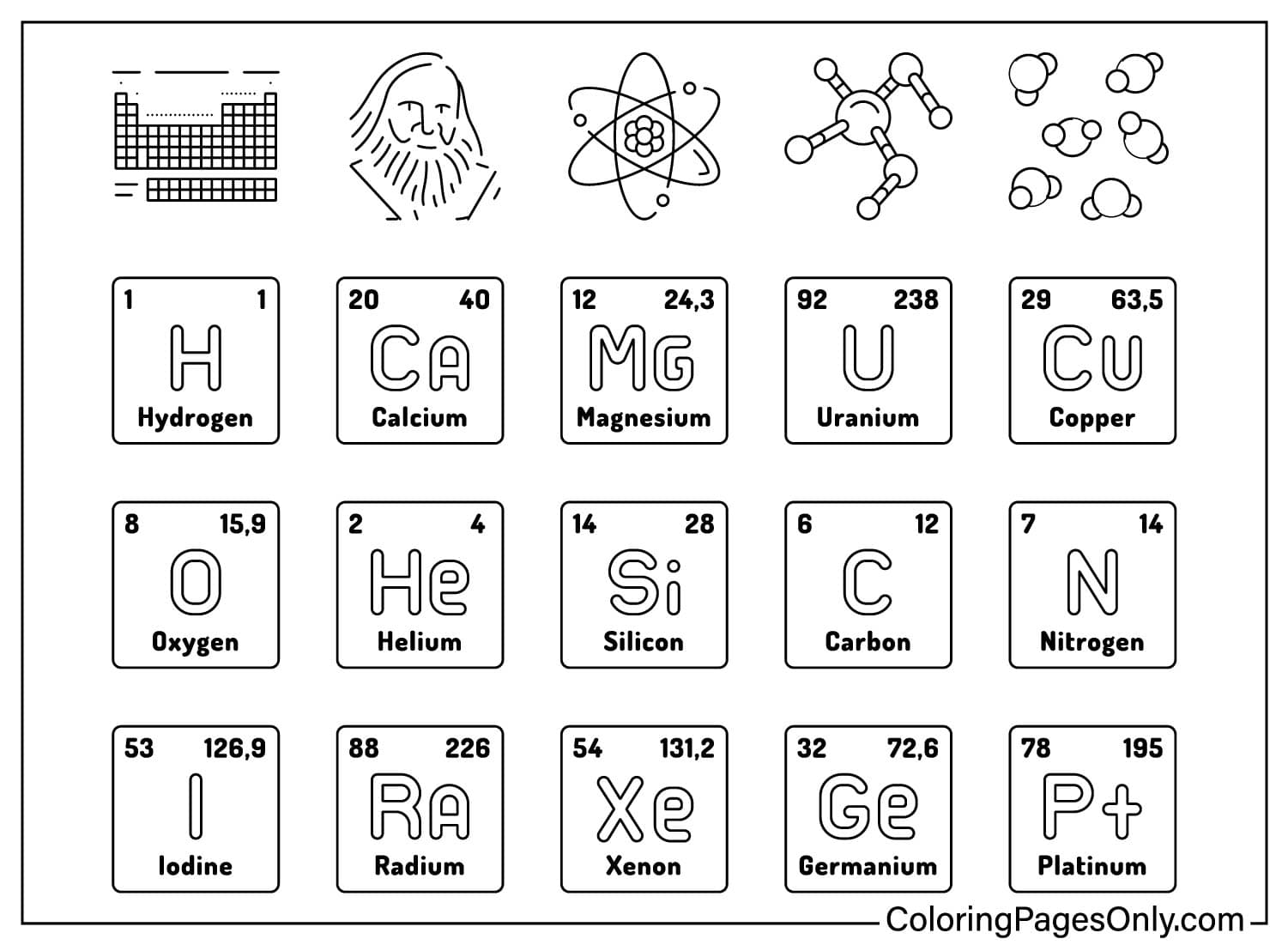
What Is Inside This Collection
The 48 pages are divided into four groups: Mendeleev’s confirmed predictions, individual elements, element category charts, and full table and general designs.
Mendeleev’s Confirmed Predictions
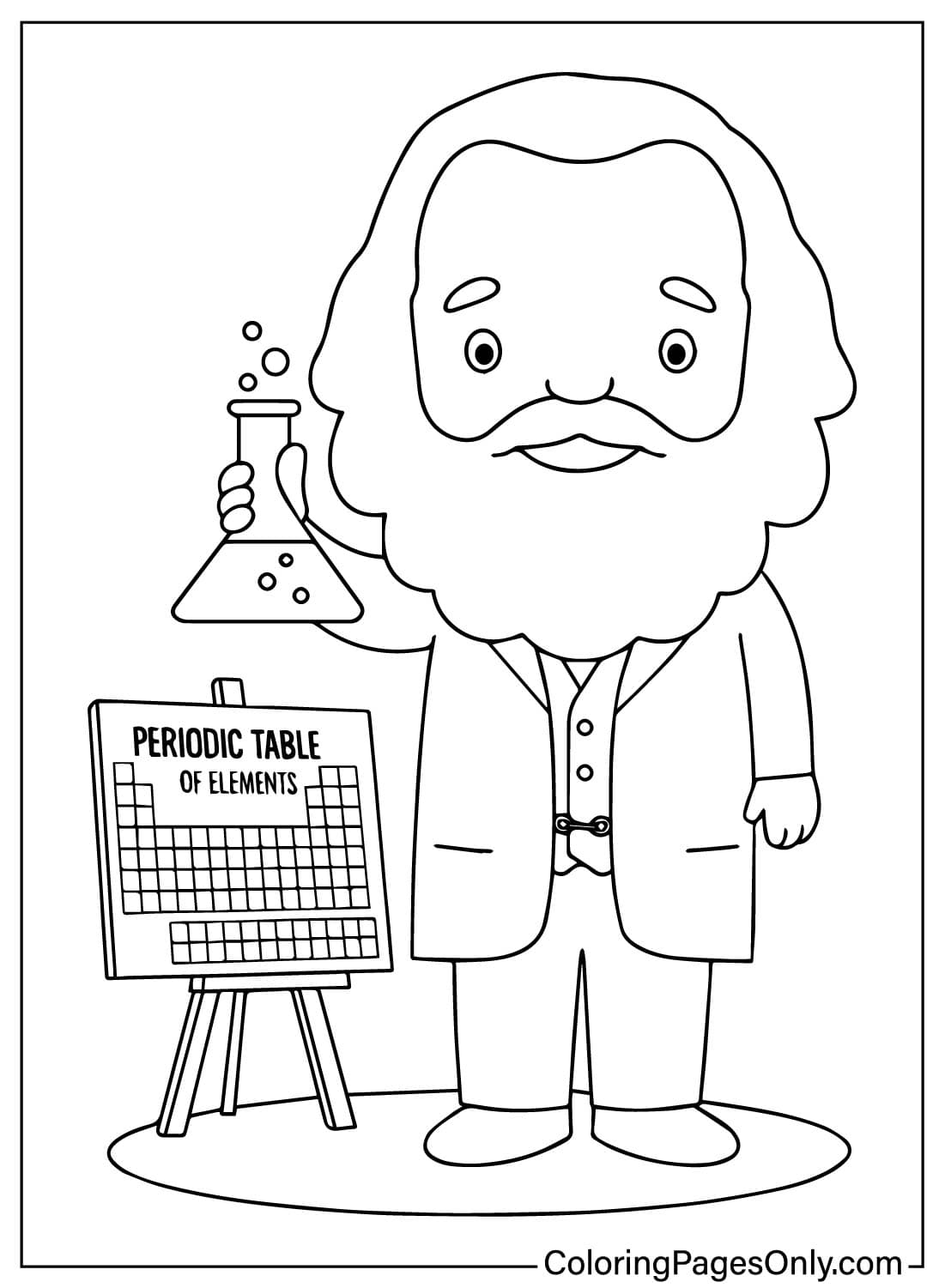
A small but historically significant group covers Dmitri Mendeleev himself alongside the three elements, gallium, scandium, and germanium, that he predicted before their discovery. These pages give a student the rare chance to color the exact elements tied to one of chemistry’s best-known predictive success stories, turning an abstract historical fact into something they can hold and complete.
Individual Elements
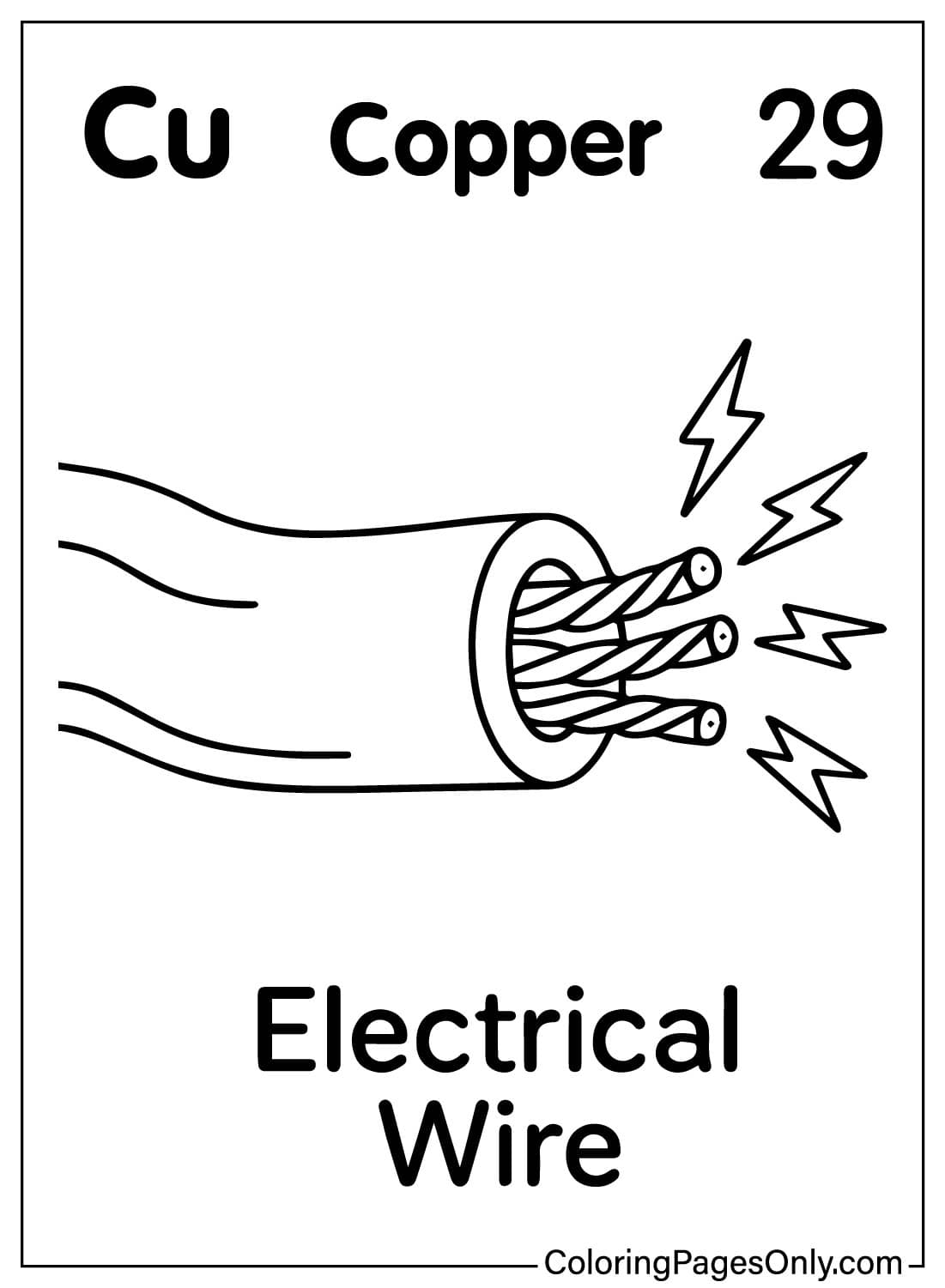
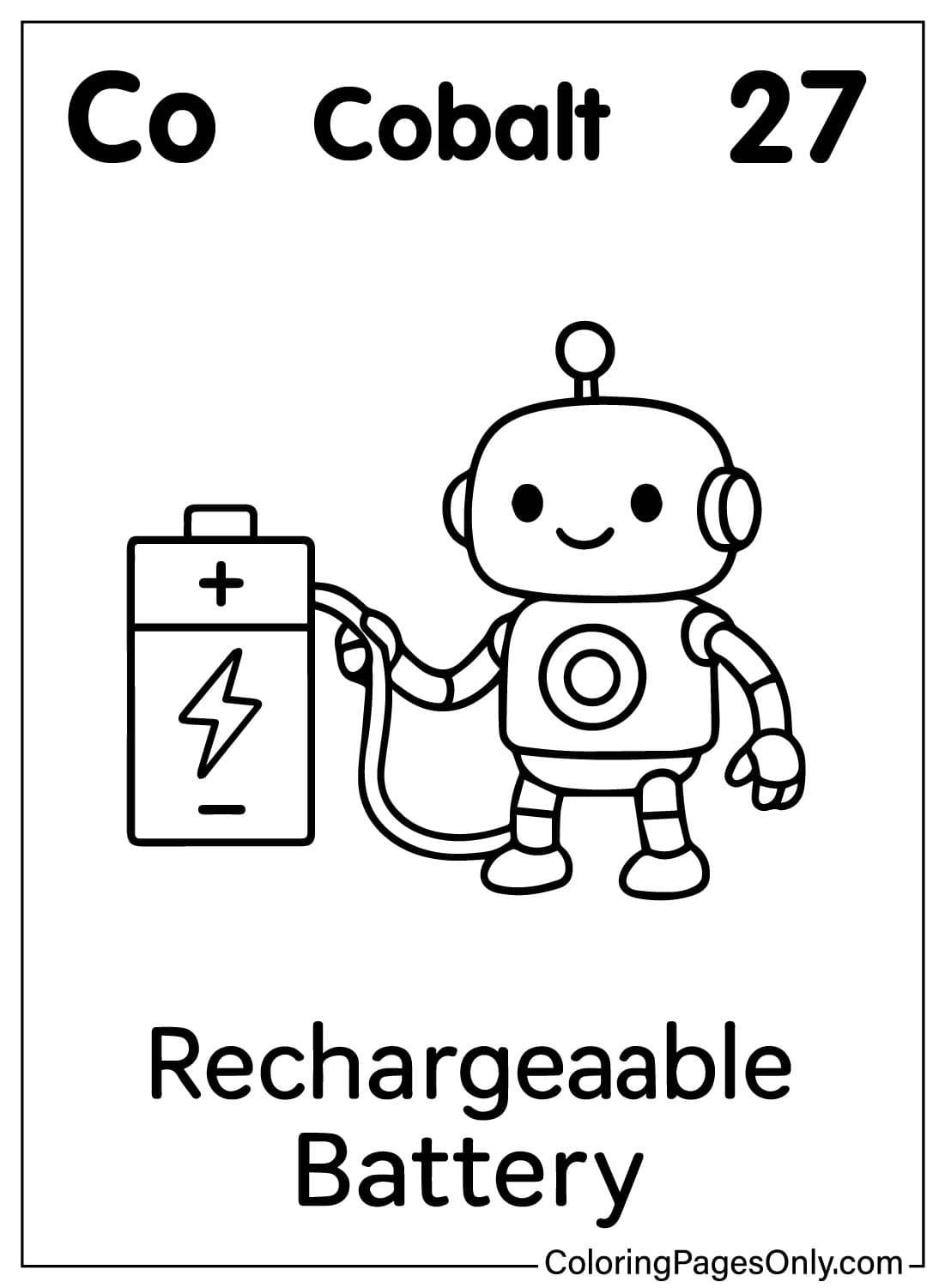
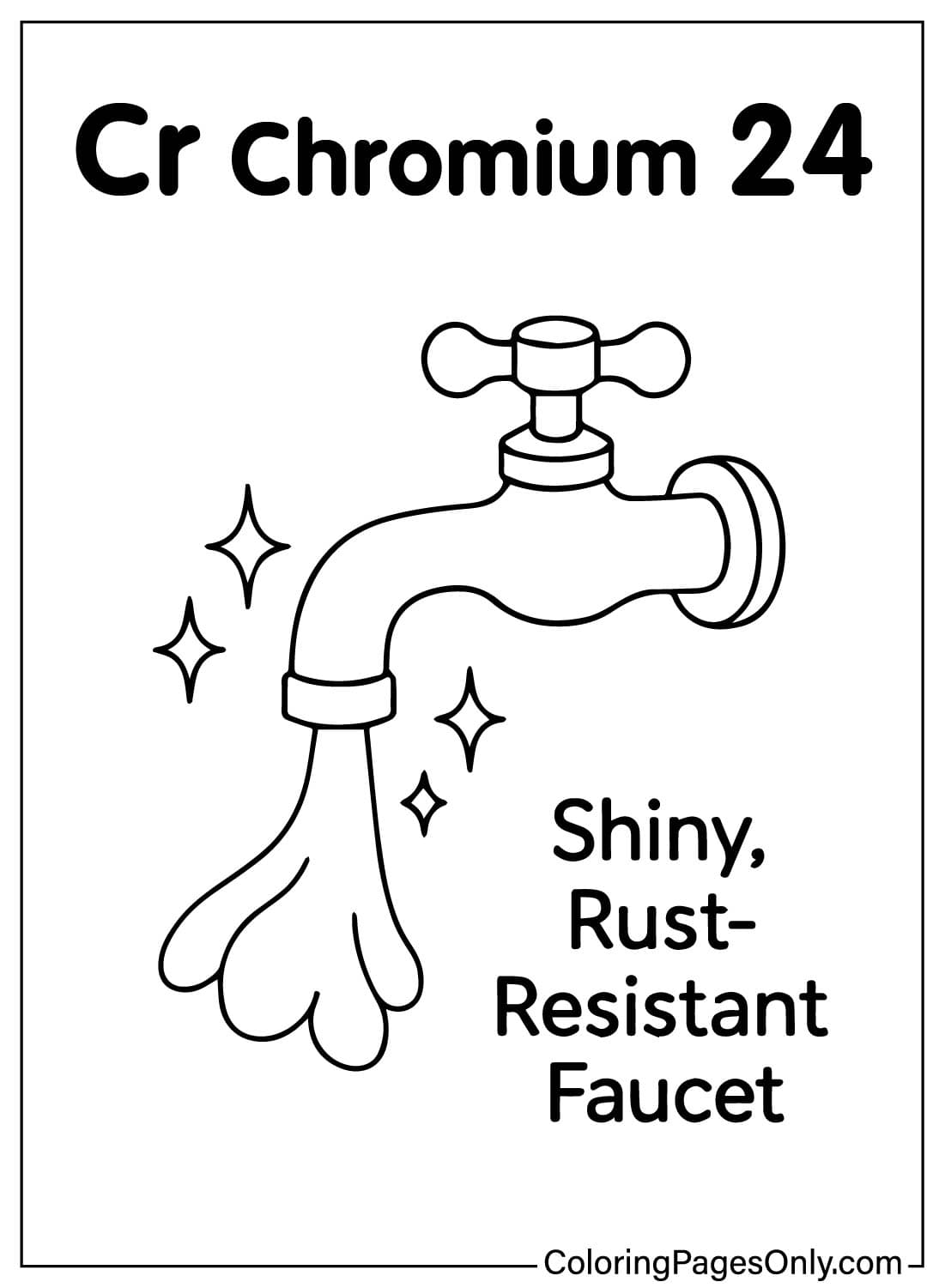
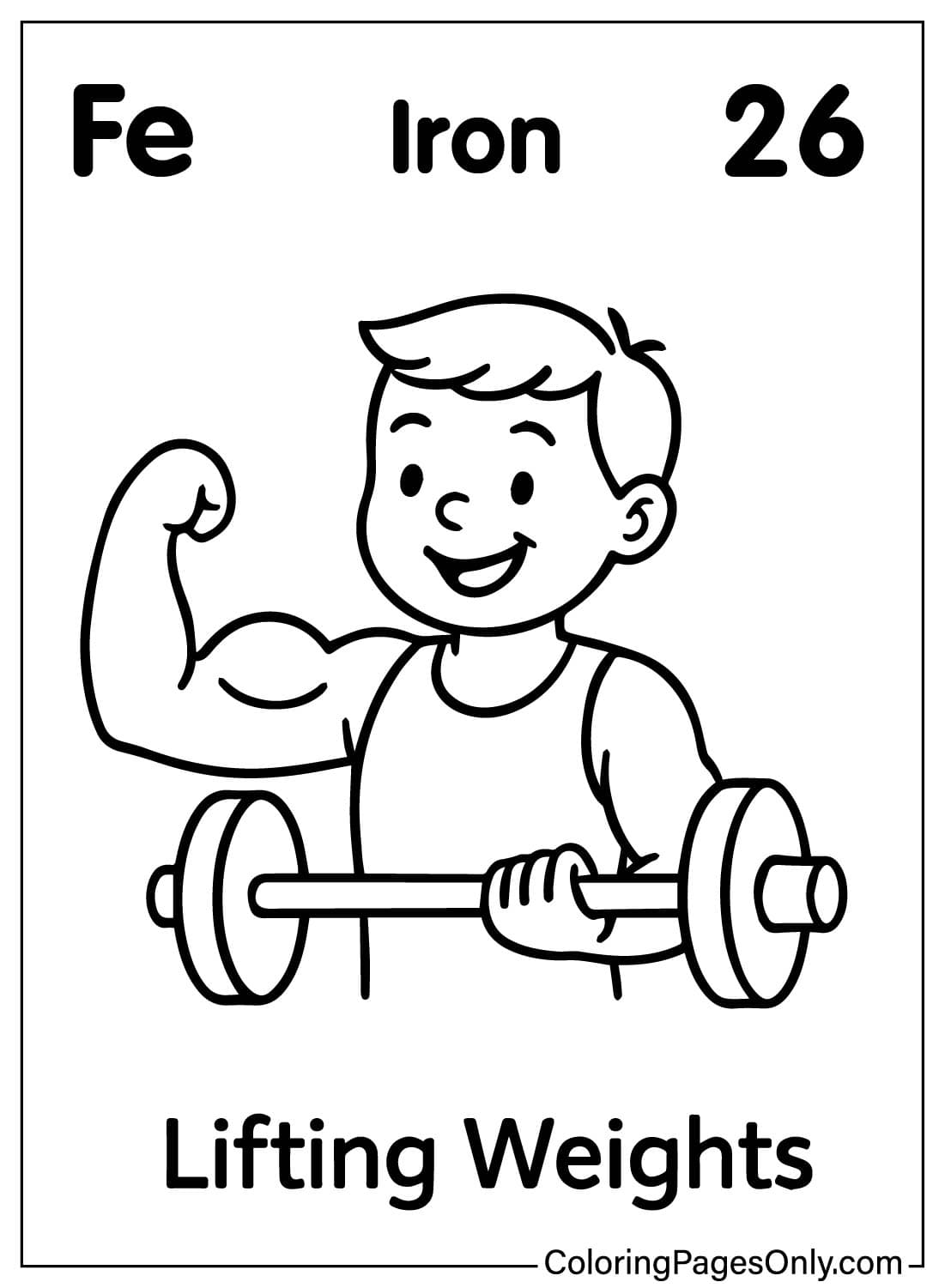
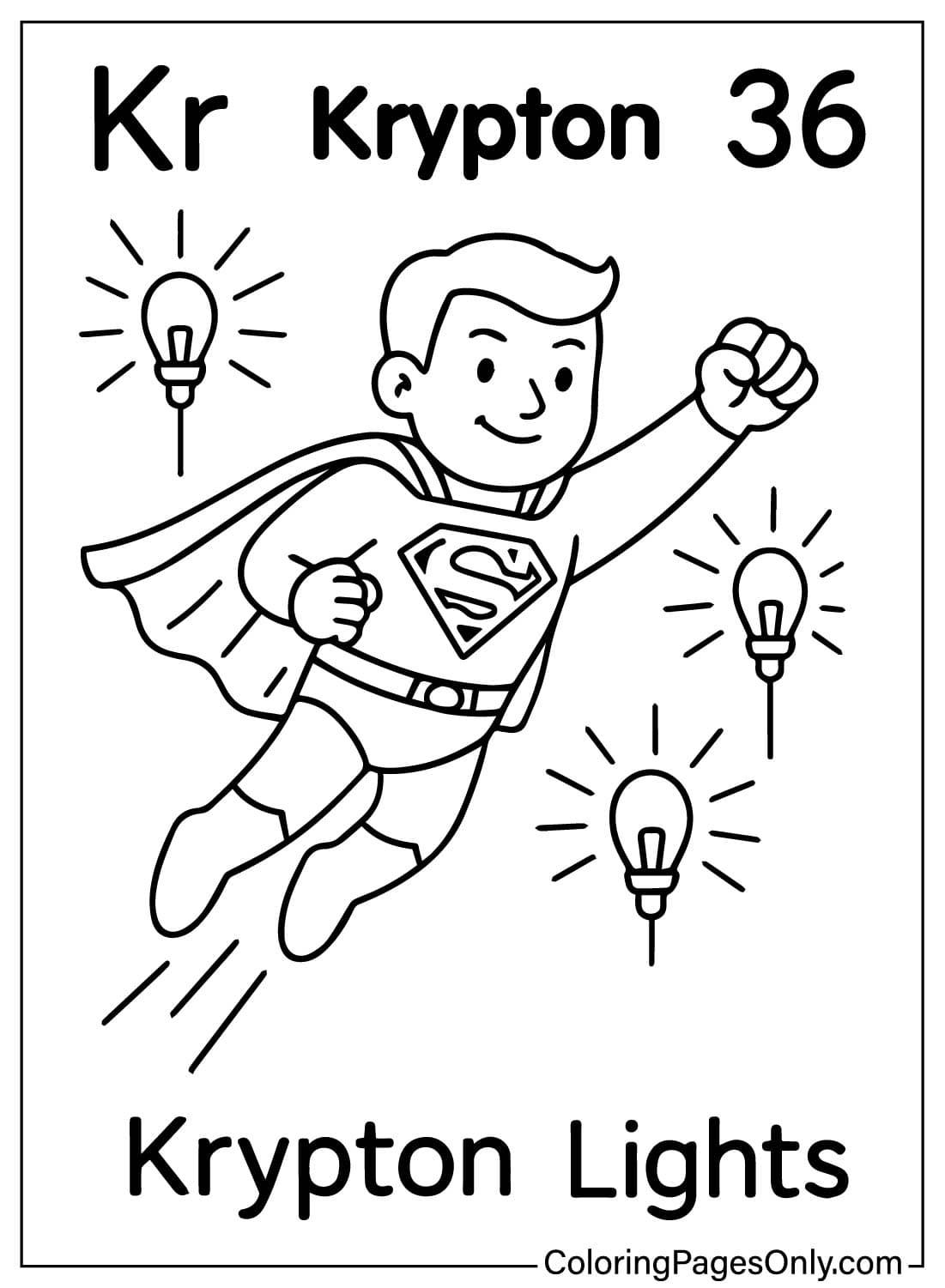
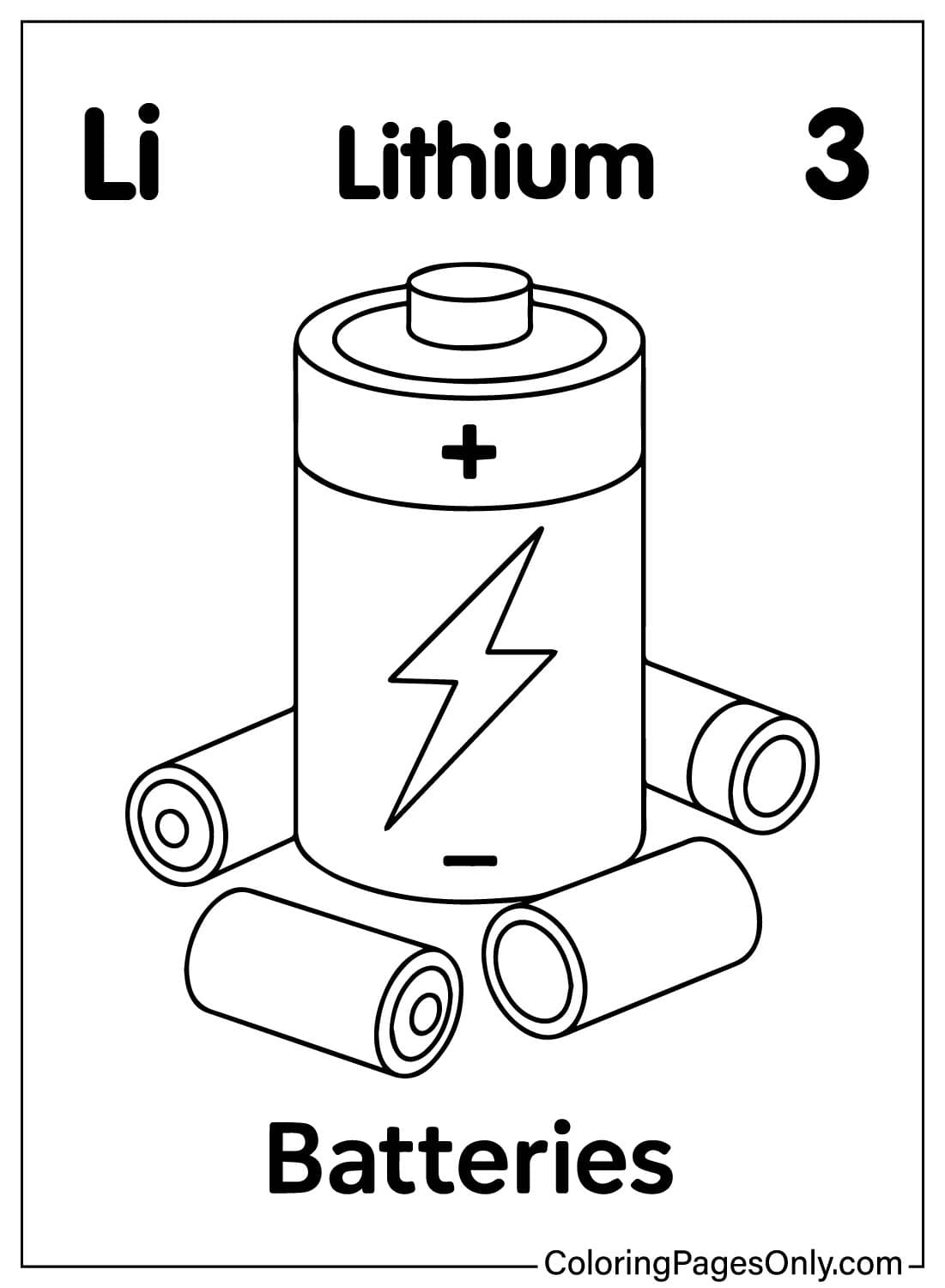
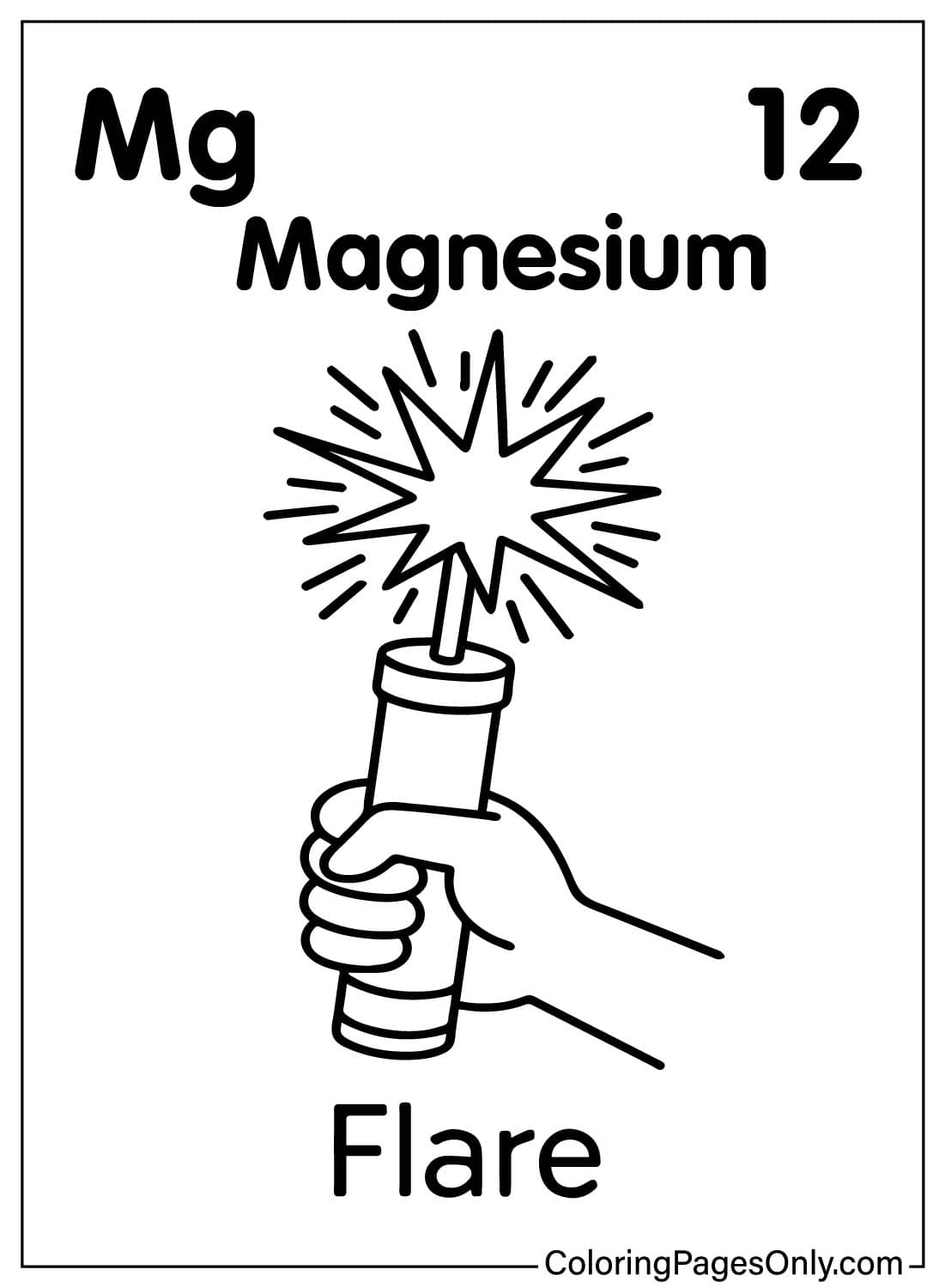
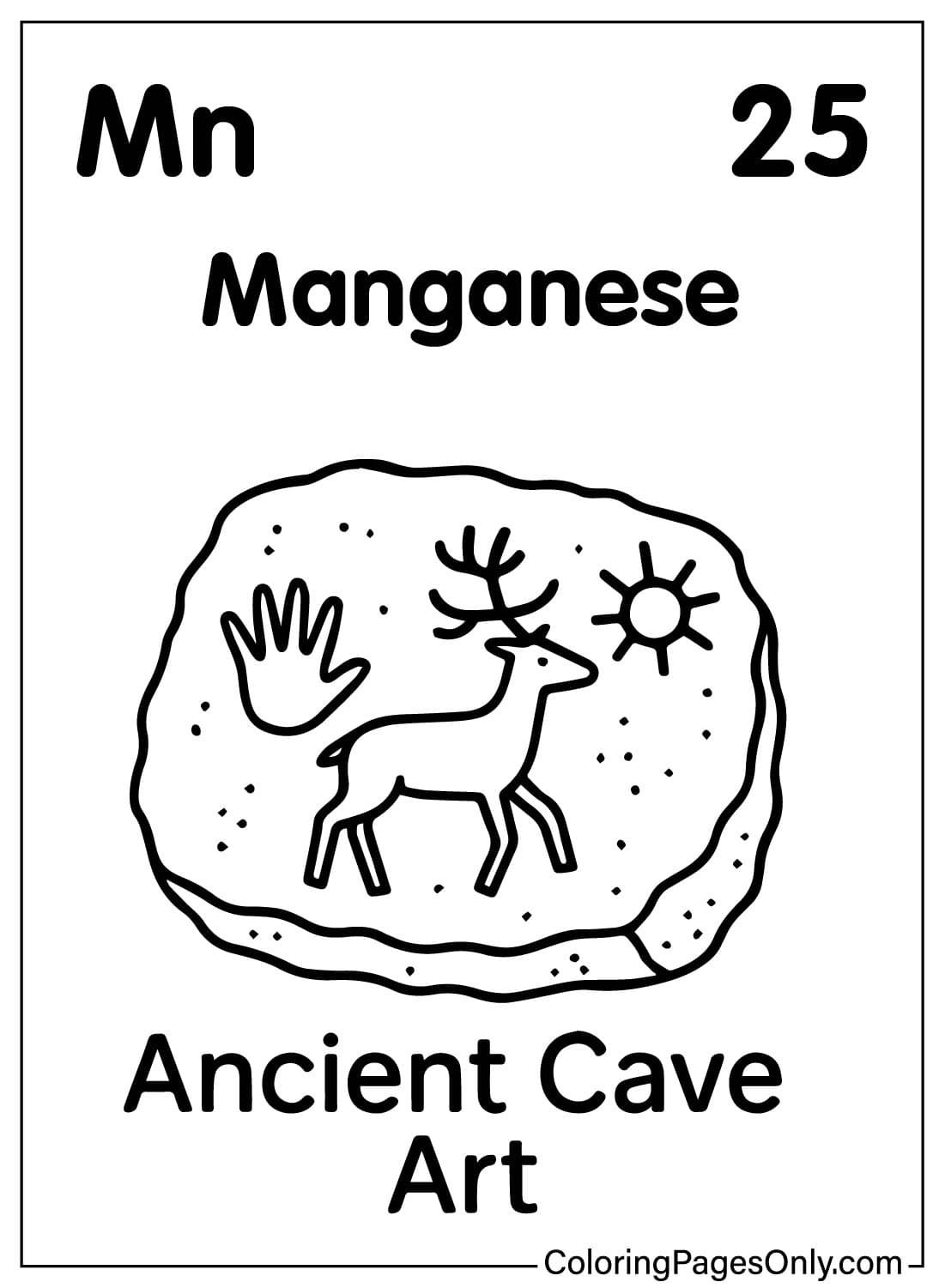
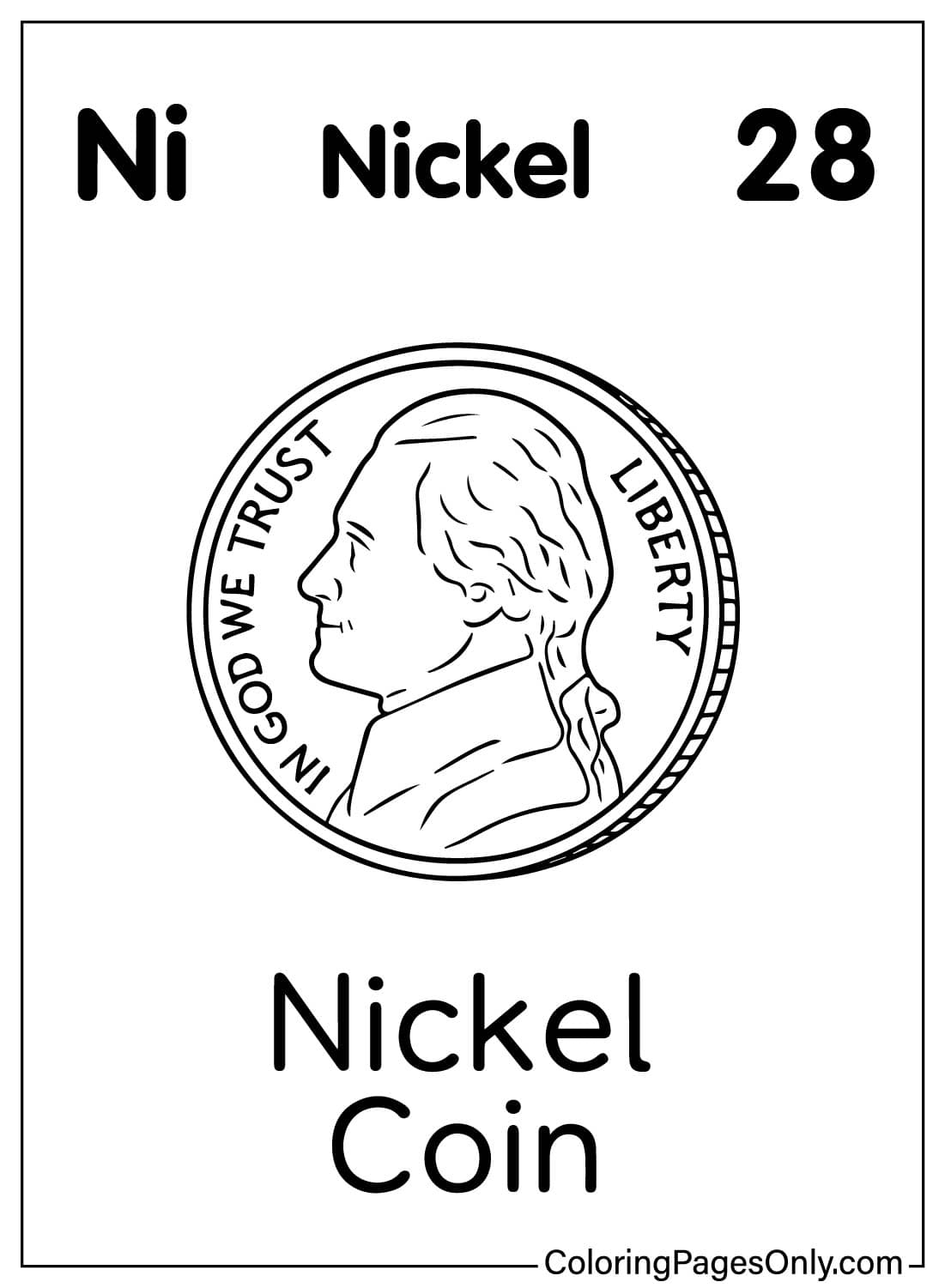
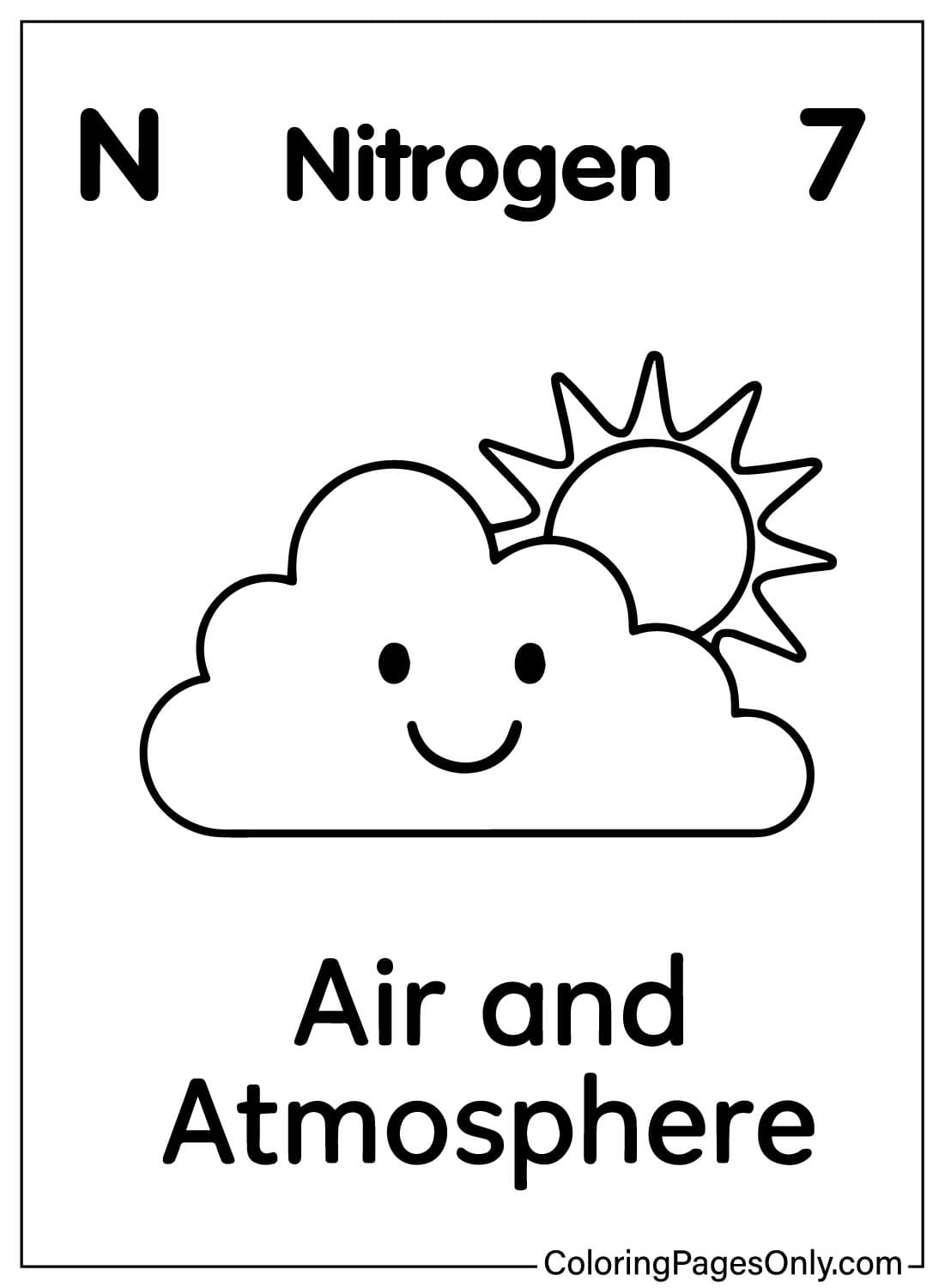
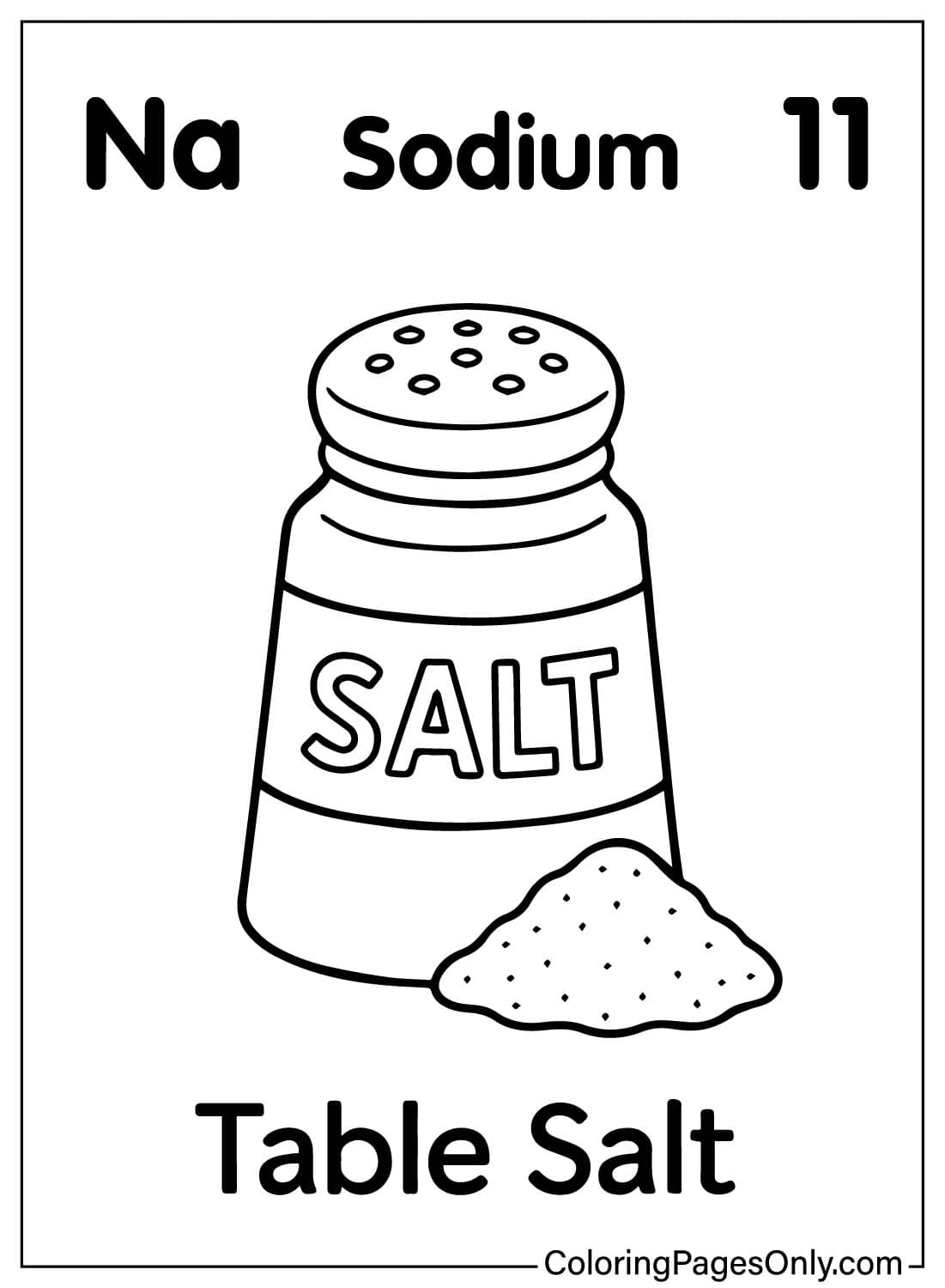
The largest group covers individual elements one at a time, including hydrogen, carbon, nitrogen, oxygen, sodium, iron, copper, and more than twenty others. These pages suit a student studying one element in depth rather than the table as a whole, and the sheer range gives a chemistry class enough variety to assign a different element to each student.
Element Category Charts
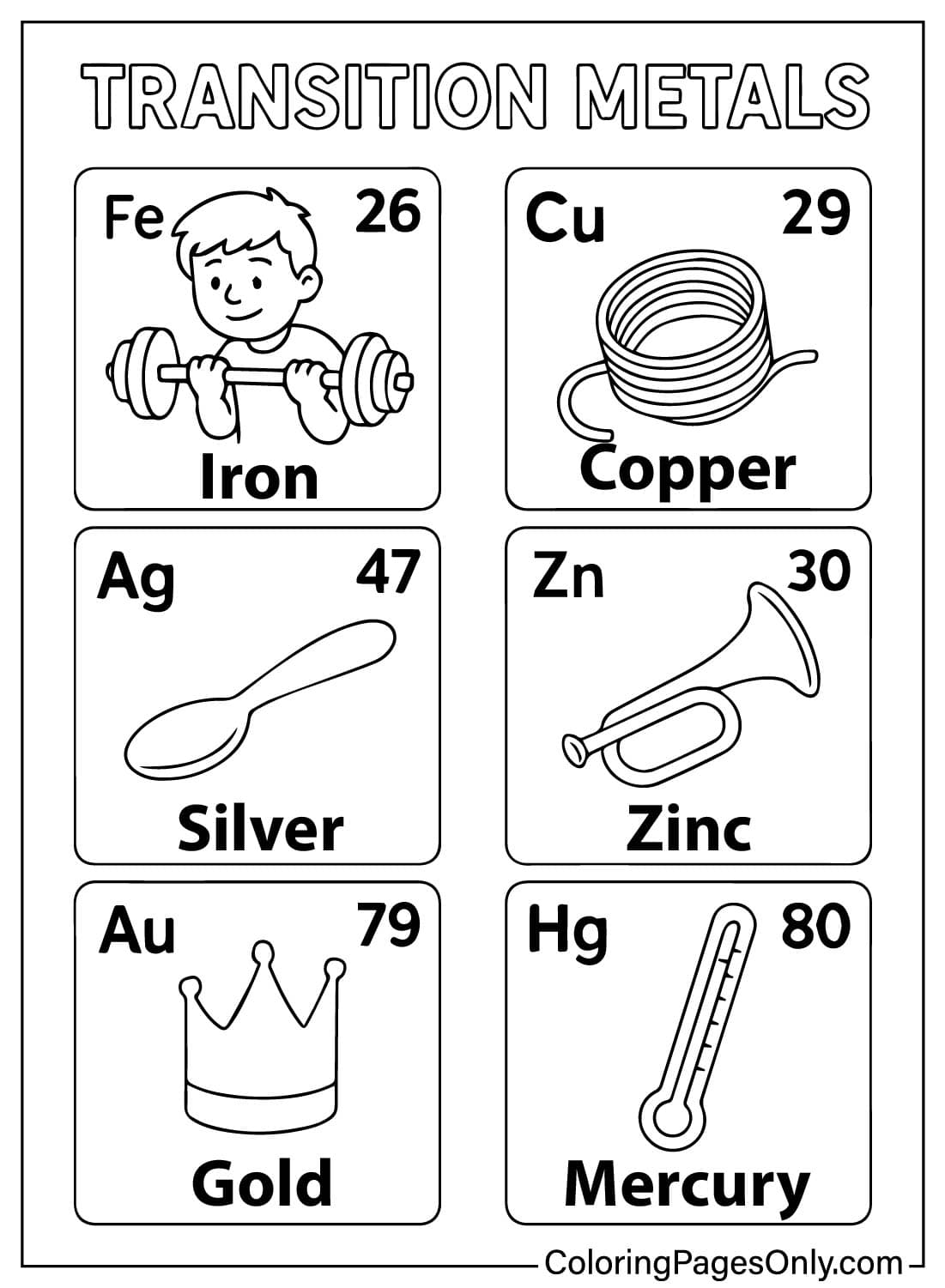
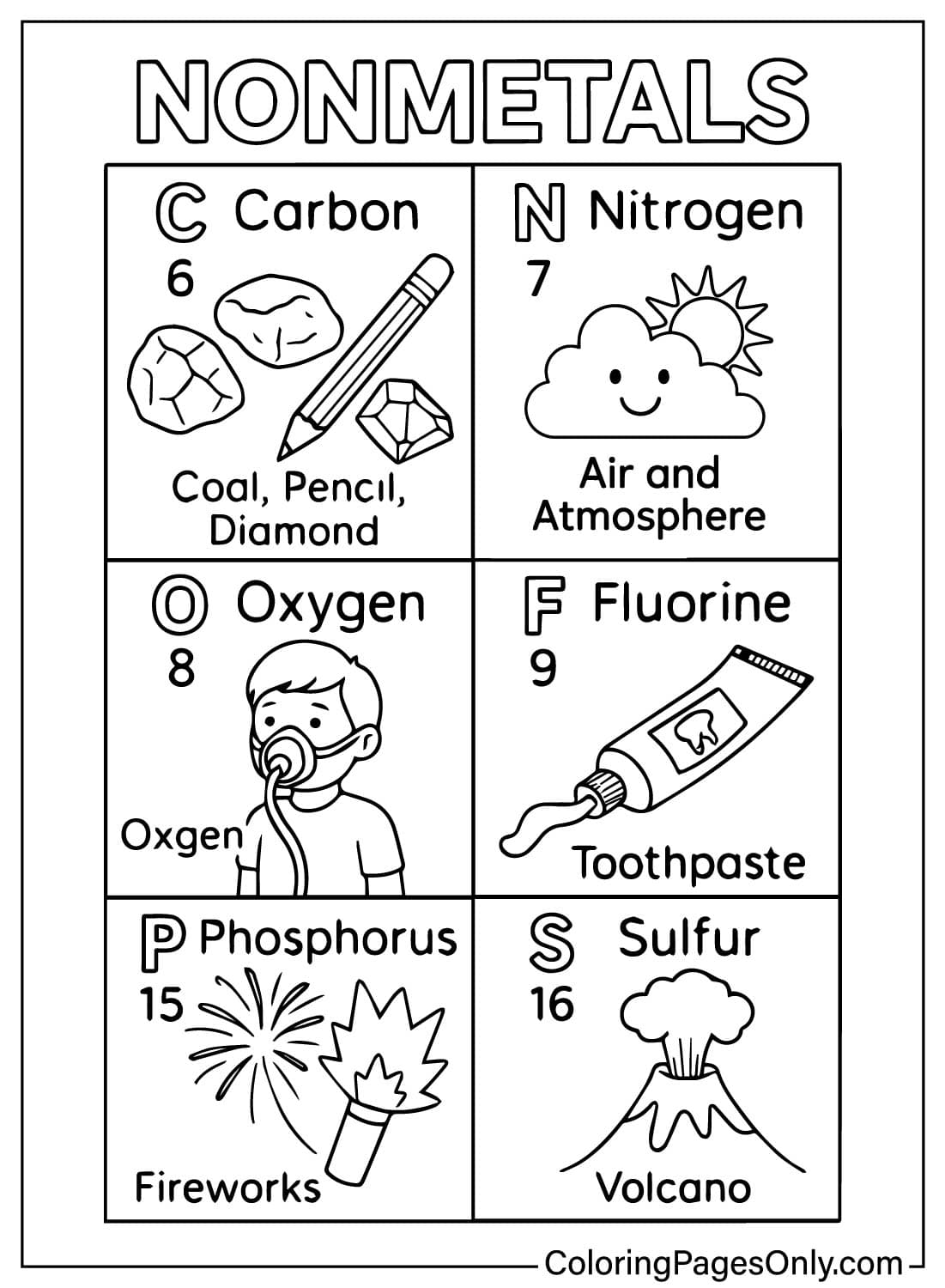
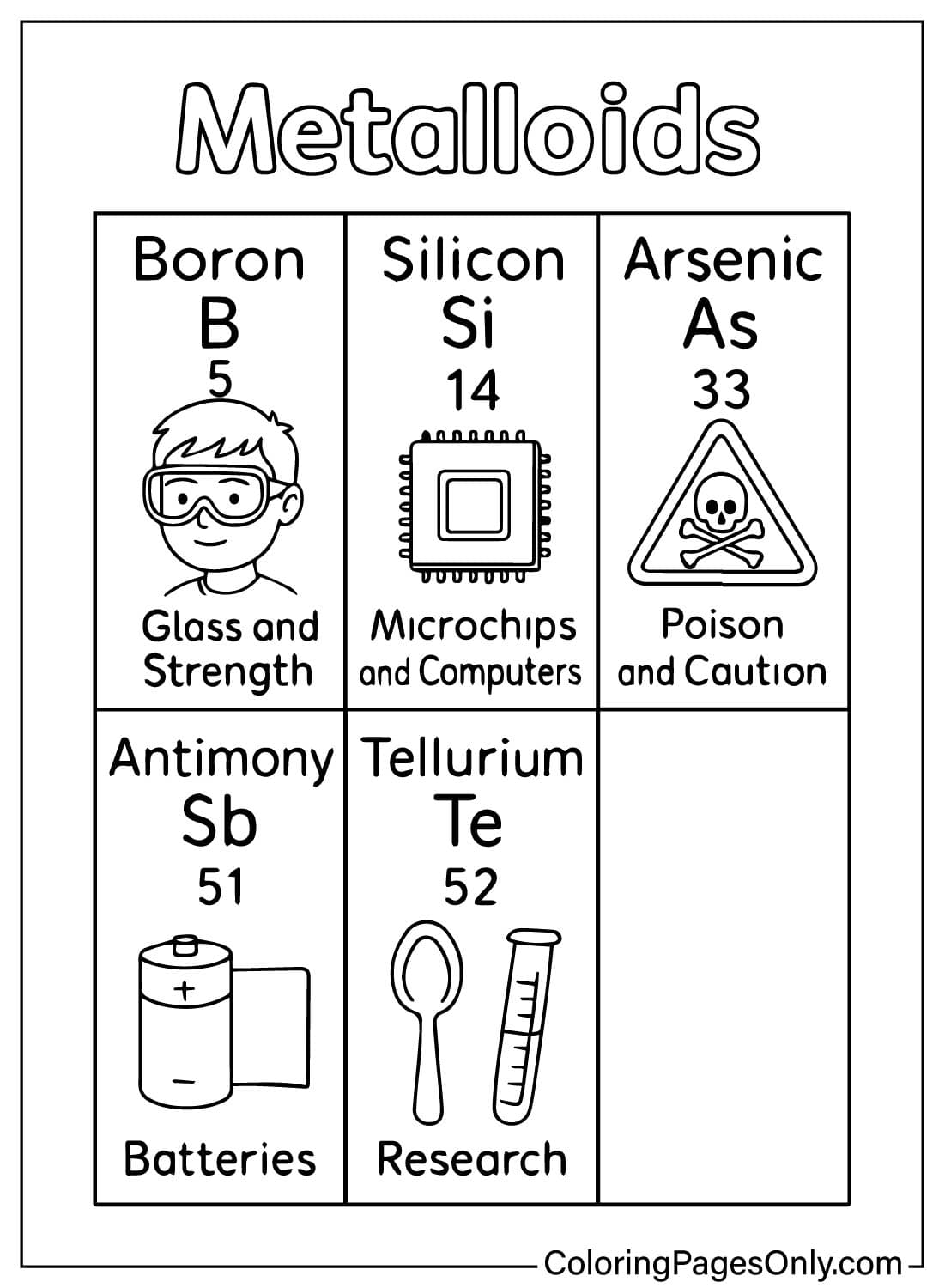
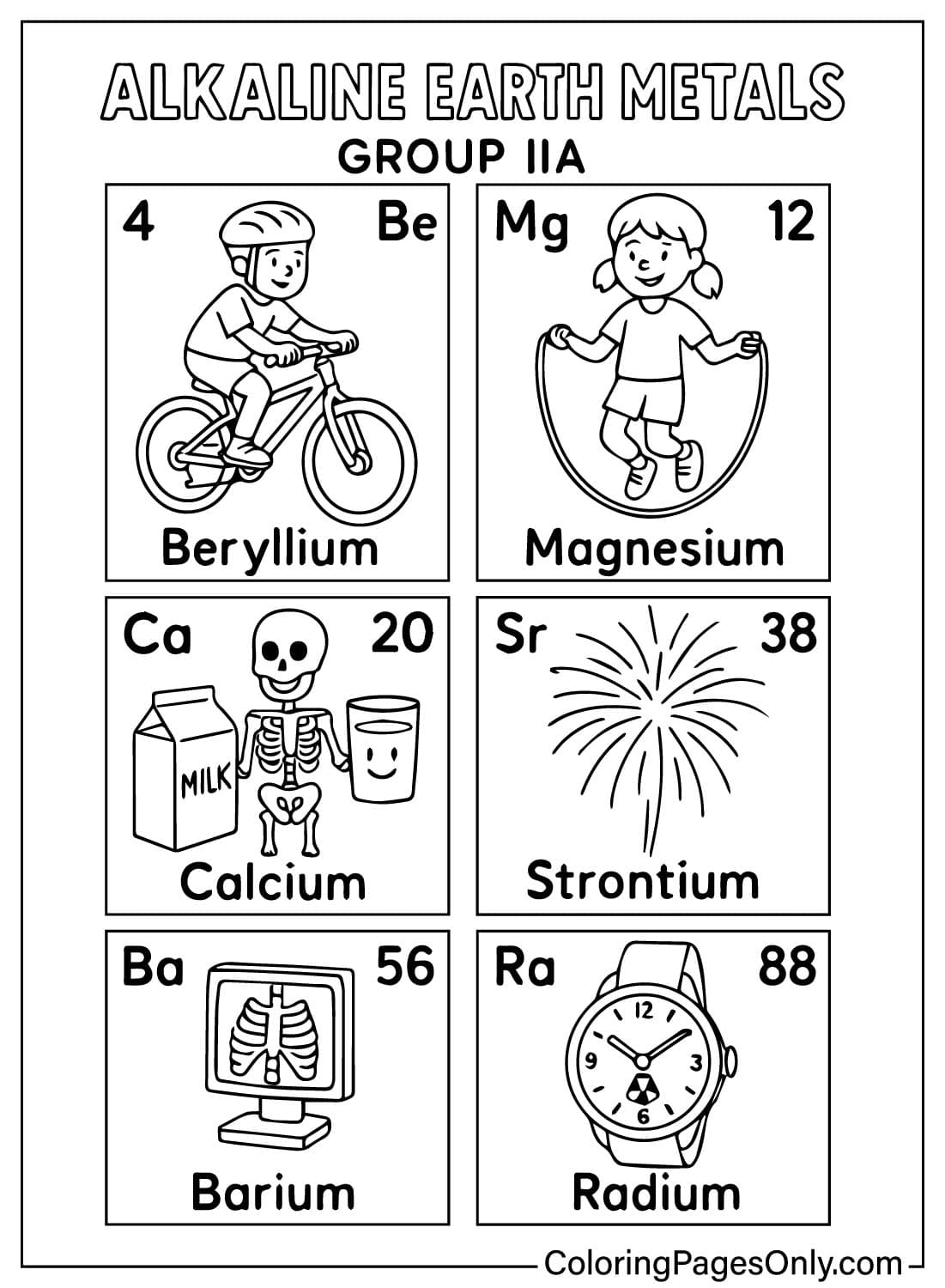
Several pages break the table down by category: nonmetals, noble gases, transition metals, metalloids, and alkaline earth metals. These pages work well for a lesson focused on how elements are grouped by shared properties rather than by individual identity, reinforcing the organizing logic behind the table itself.
Full Table and General Designs
The remaining pages are full of periodic table charts and general printable designs with titles that differ more than the actual layouts in several cases, offering a straightforward option for a student who wants the complete table on one page.
What Periodic Table Coloring Pages Do
A study tool, not just a picture. Color-coding element categories, metals in one color family, nonmetals in another, is a real, commonly used chemistry study technique, which makes this collection genuinely useful for review rather than purely decorative.
Fine motor practice is built into the review. Filling in dozens of small element squares by hand gives a student repetitive, structured practice, the same kind of task the American Academy of Pediatrics associates with fine motor skill development in younger children.
A calmer way to memorize a dense chart. The 2005 Art Therapy Journal finding that structured coloring lowers anxiety more than unstructured drawing applies well here, since a periodic table can otherwise feel like a dense, intimidating wall of information to memorize.
A real story about scientific prediction. Because gallium, scandium, and germanium were all predicted before they were found, coloring those specific pages is a natural opening to talk about how good scientific theories can forecast discoveries rather than describe what is already known.
How to Color Periodic Table Coloring Pages Well
- Alkali metals: Use a warm Orange or Red for elements like lithium and sodium, a common convention in printed periodic tables to flag this highly reactive group.
- Alkaline earth metals: use a lighter Peach or Tan, distinct from the alkali metal color but still in a warm family, for elements like beryllium and magnesium.
- Transition metals: use Blue or Steel Gray for elements like iron, copper, and nickel, the largest single block on most tables, and often given a cool, metallic tone.
- Nonmetals and noble gases: Use green for nonmetals like carbon and nitrogen, and a distinct Purple or Violet for noble gases like neon and krypton, keeping these two very different behaviors visually separate.
- Metalloids: use a middle-ground color like Teal, positioned between the metal and nonmetal palettes, reflecting their in-between chemical behavior.
Creative Craft Ideas With Periodic Table Coloring Pages
1. Color-Coded Study Chart. Color a full periodic table page using one consistent color per element category, then keep it as a laminated reference sheet for future study sessions.
2. Mendeleev Prediction Timeline. Color the gallium, scandium, and germanium pages, then arrange them in order of discovery with their dates to show how each prediction was confirmed.
3. Element Flashcard Set. Color several individual element pages, then write the element’s symbol and atomic number on the back to build a simple flashcard set.
4. Category Poster. Color the nonmetals, noble gases, transition metals, metalloids, and alkaline earth metals pages, then arrange them together on a poster labeled with each category name.
5. Bookmark Set. Color two or three small element pages, trim each into a bookmark shape, and laminate or tape them for a set to use while studying.
Frequently Asked Questions
What are periodic table coloring pages?
A free set of 48 printable PDFs and online coloring sheets covering full periodic table charts, individual elements, and element category breakdowns.
Who created the periodic table?
Dmitri Mendeleev presented his version in March 1869, arranging 63 known elements by atomic weight and leaving gaps for elements that had not yet been discovered.
Which elements did Mendeleev predict before they were discovered?
Gallium, scandium, and germanium were all predicted by Mendeleev based on gaps in his table, and all three were discovered within seventeen years, matching his forecasts closely.
Why is element 101 called Mendelevium?
Mendelevium was named in 1955 in honor of Dmitri Mendeleev, recognizing his role in creating the framework for the modern periodic table.
Is color-coding actually used to study the periodic table?
Yes, using a consistent color for each element category, such as metals, nonmetals, and noble gases, is a common and genuinely useful study technique in chemistry education.
Are these pages suitable for young children?
The simpler full-table pages can introduce younger children to the idea of the periodic table, while the individual element and category pages suit students studying chemistry more formally.
Do these pages include real element category classifications?
Yes, several pages are organized around real chemistry categories, including nonmetals, noble gases, transition metals, metalloids, and alkaline earth metals.
Are these free to download and print?
Yes. Every page is free, with no account, email, or payment required, and can be downloaded as a PDF or colored online in the browser.
Start Coloring
Download any page by clicking the design. No account, email, or payment is required. Pages print directly from the browser at full resolution or open in the online coloring tool for screen use. Share finished pages on Facebook or Pinterest with the share buttons at the top of each design page.