Free Swimming Coloring Pages: 38+ pages featuring Olympic swimmers, competitive freestyle, backstroke, breaststroke, and butterfly stroke scenes, pool races with lane ropes and starting blocks, swim lesson pages with kickboards and floats, pool safety scenes for young children, beach and sea swimming pages, fish and jellyfish underwater scenes, open-water swimming with race buoys, podium and medal moments, cartoon animals in the water, and cheerful summer pool activities. All free, printable PDFs and online coloring pages are ready for home, classroom, camp, pool-season lessons, sports-themed activities, and water-safety conversations.

Swimming is one of the oldest human movement skills and one of the core sports of the modern Olympic Games. It has appeared on the Olympic program since the 1896 Athens Games, while the international governing body originally known as FINA was founded in London on July 19, 1908. Today, competitive swimming includes freestyle, backstroke, breaststroke, butterfly, relays, medley events, and open-water races.

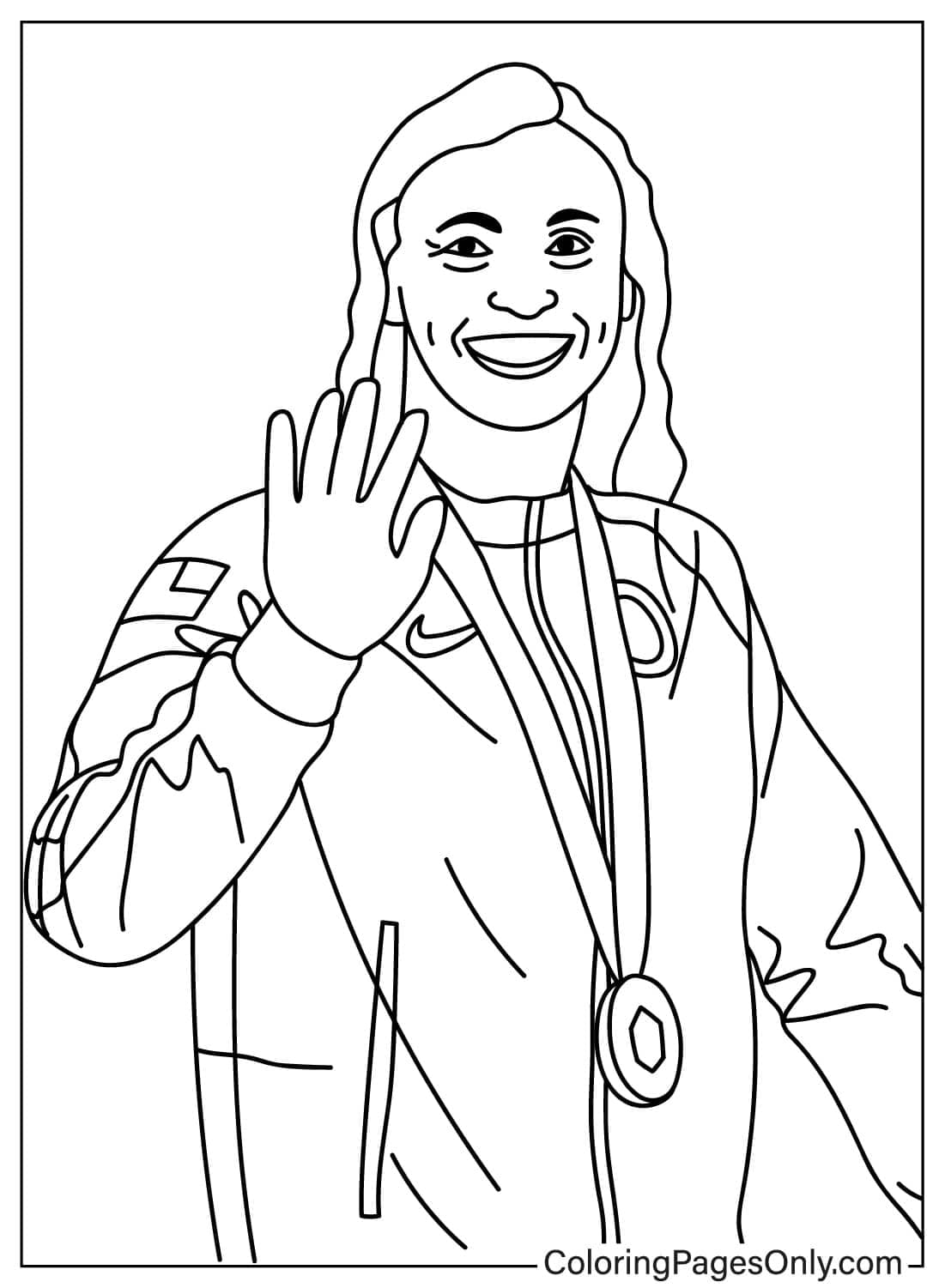
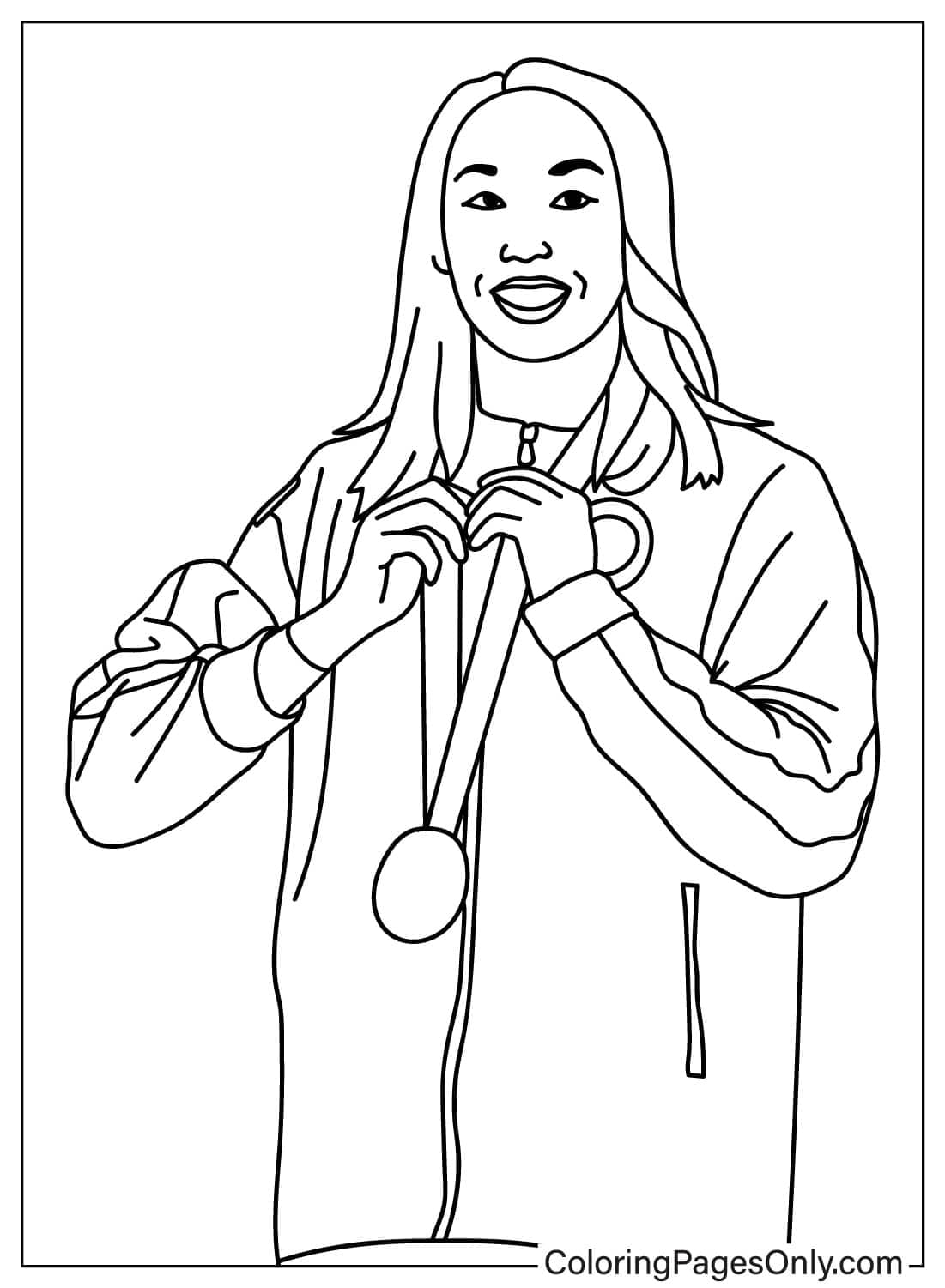
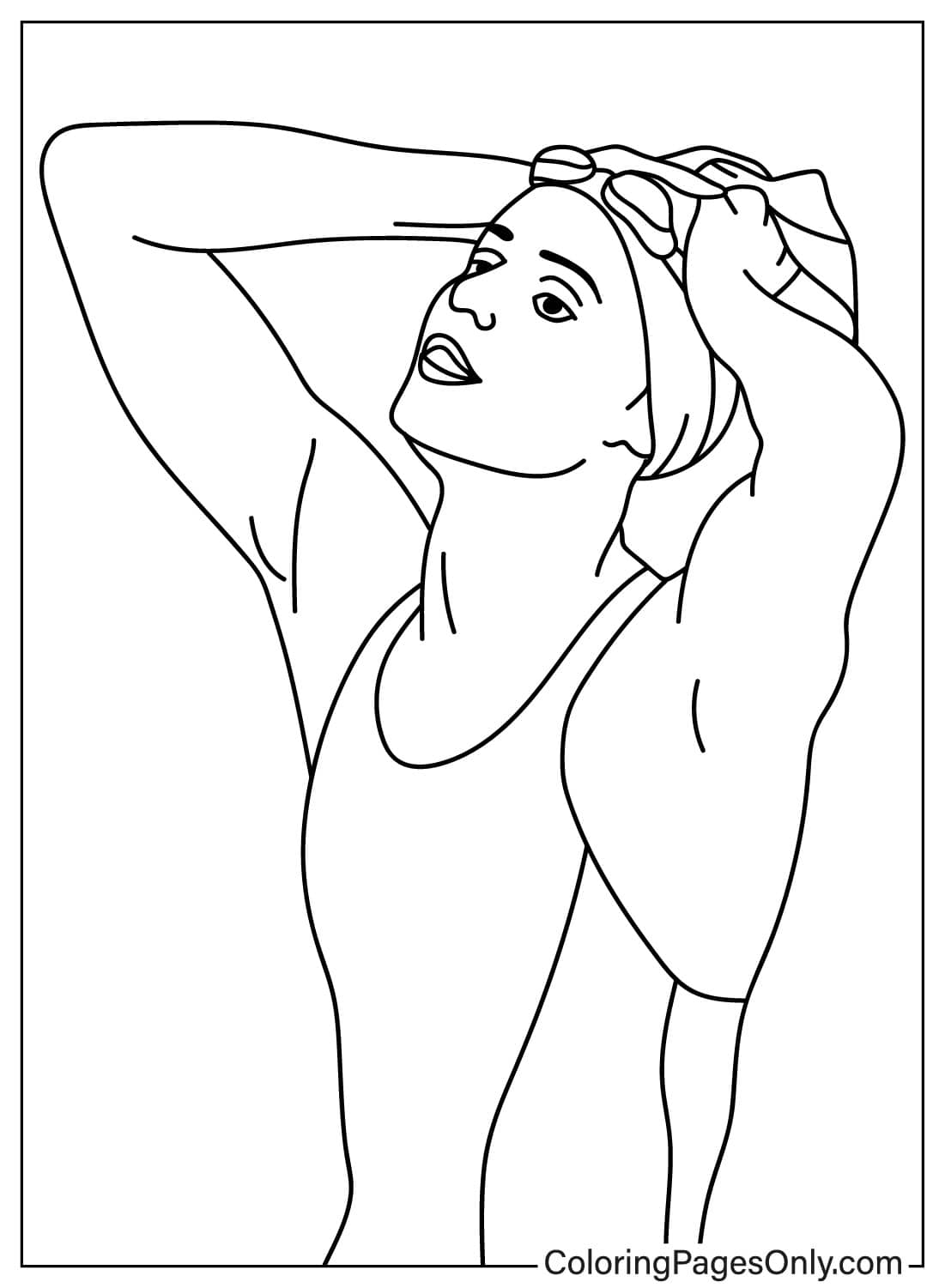
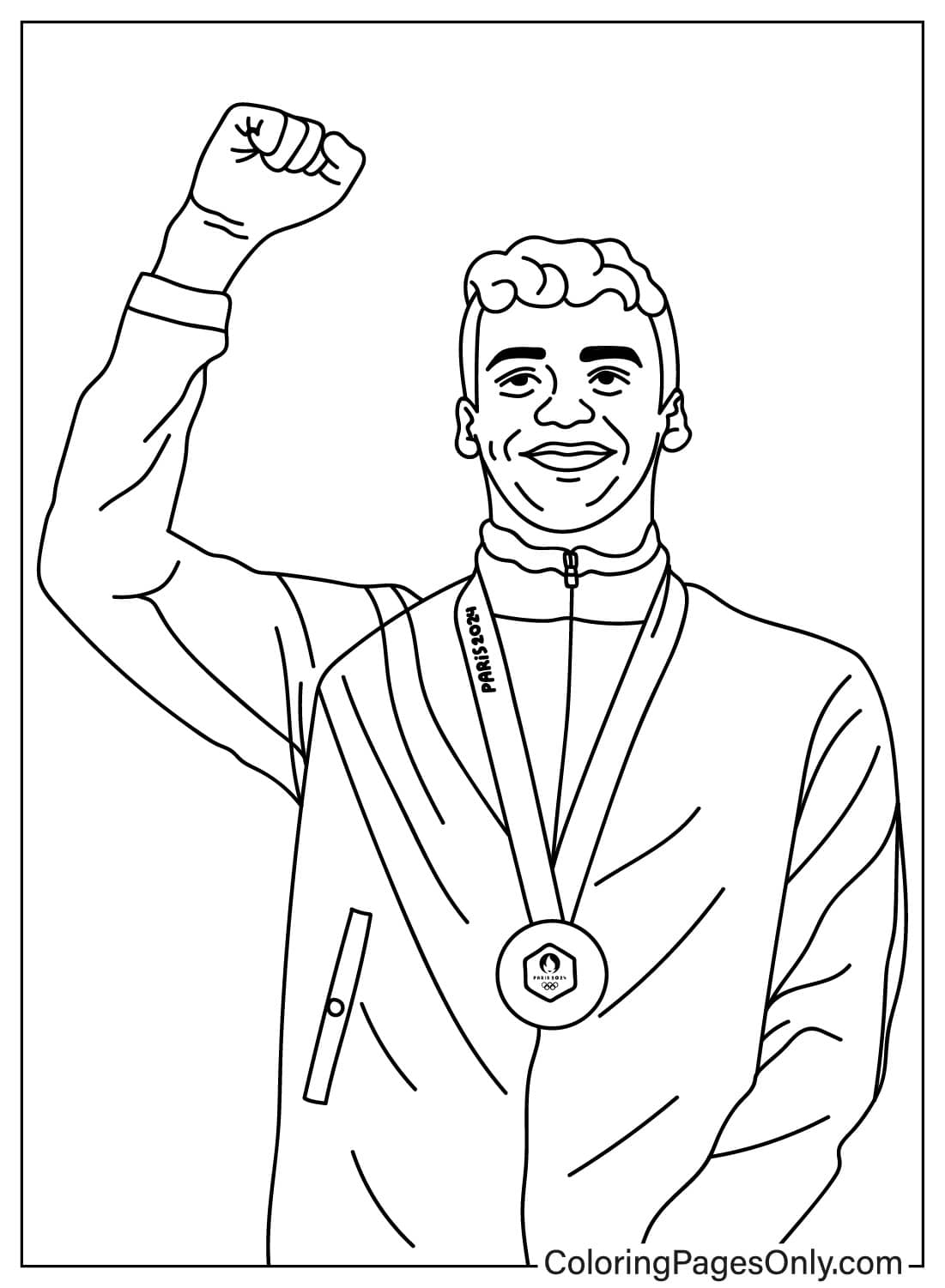
This collection connects simple water-play scenes with recognizable sports culture. Children can color playful pool pages with floats and beach balls, then move into athlete-inspired pages connected to Michael Phelps, Katie Ledecky, Léon Marchand, Ariarne Titmus, Bobby Finke, Torri Huske, Kaylee McKeown, and Paris 2024-style racing moments. Younger colorists can choose larger summer outlines, while older children can work on stroke shapes, race poses, lane patterns, medals, and layered water movement.

These 38+ free pages at ColoringPagesOnly.com cover Olympic champions, competitive strokes, racing scenes, children learning water safety, pool play, swim lessons, floats, sea animals, and open-water swimming scenes. All free, PDF or PNG, print or color online.

What’s Inside

Olympic Swimmers and Medal Moments

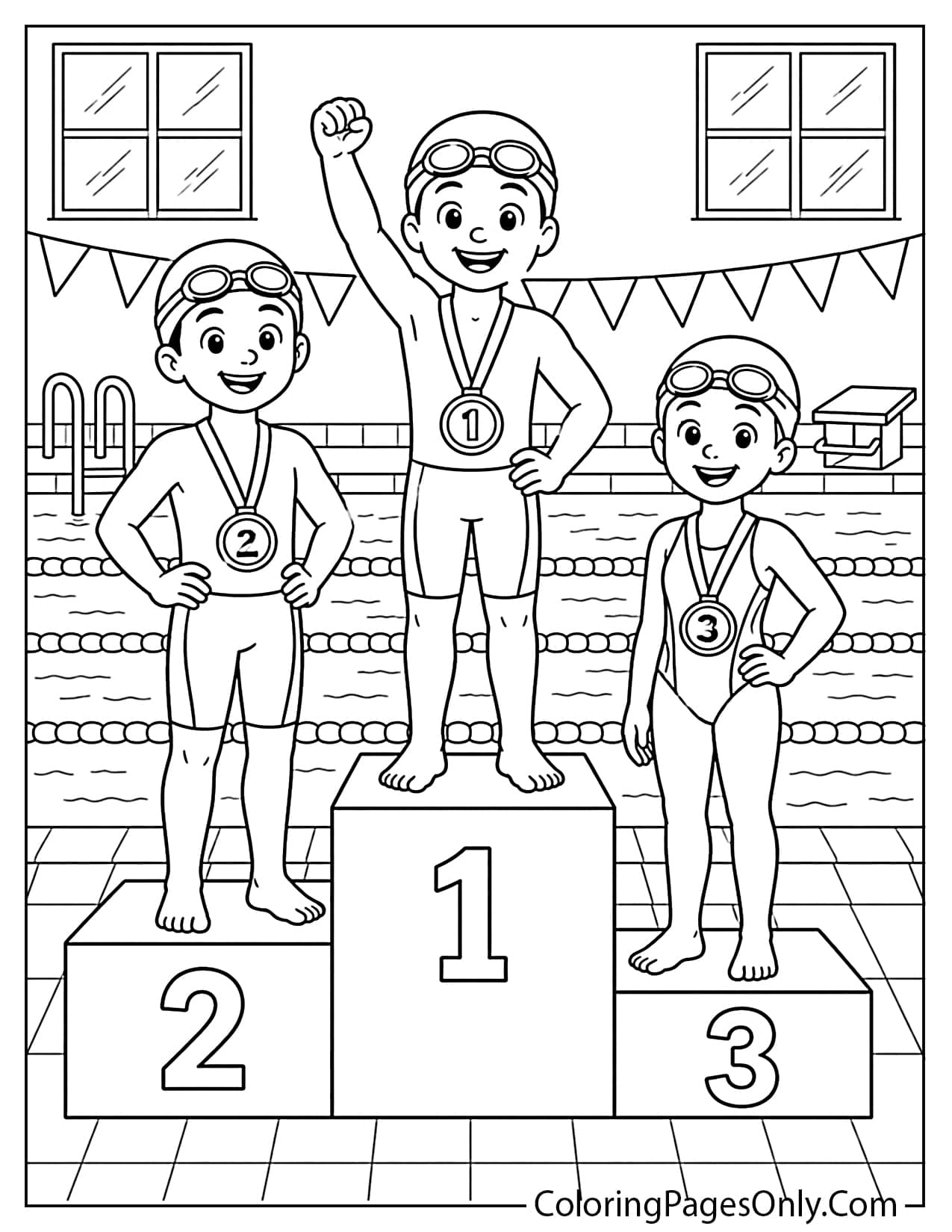
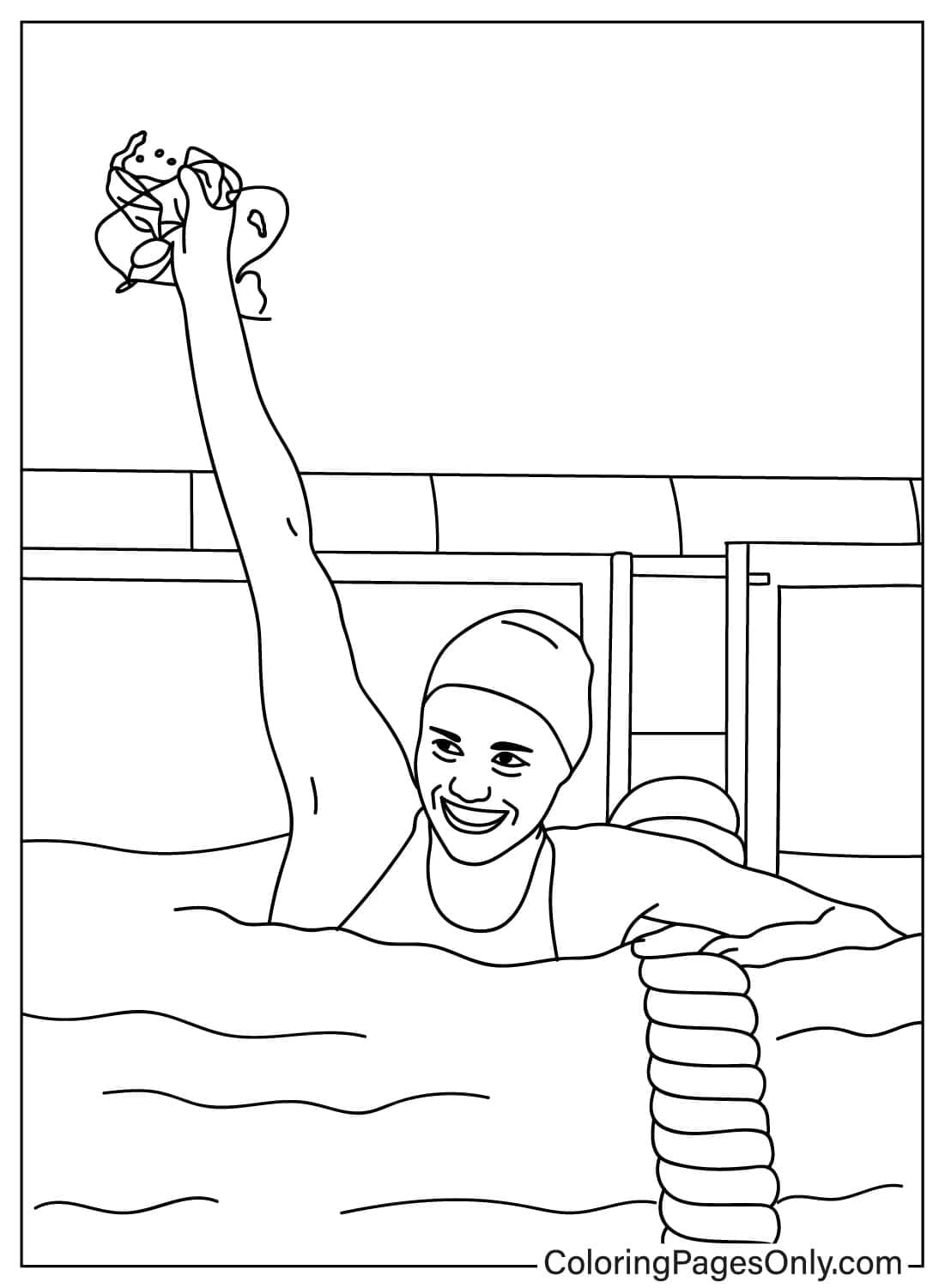
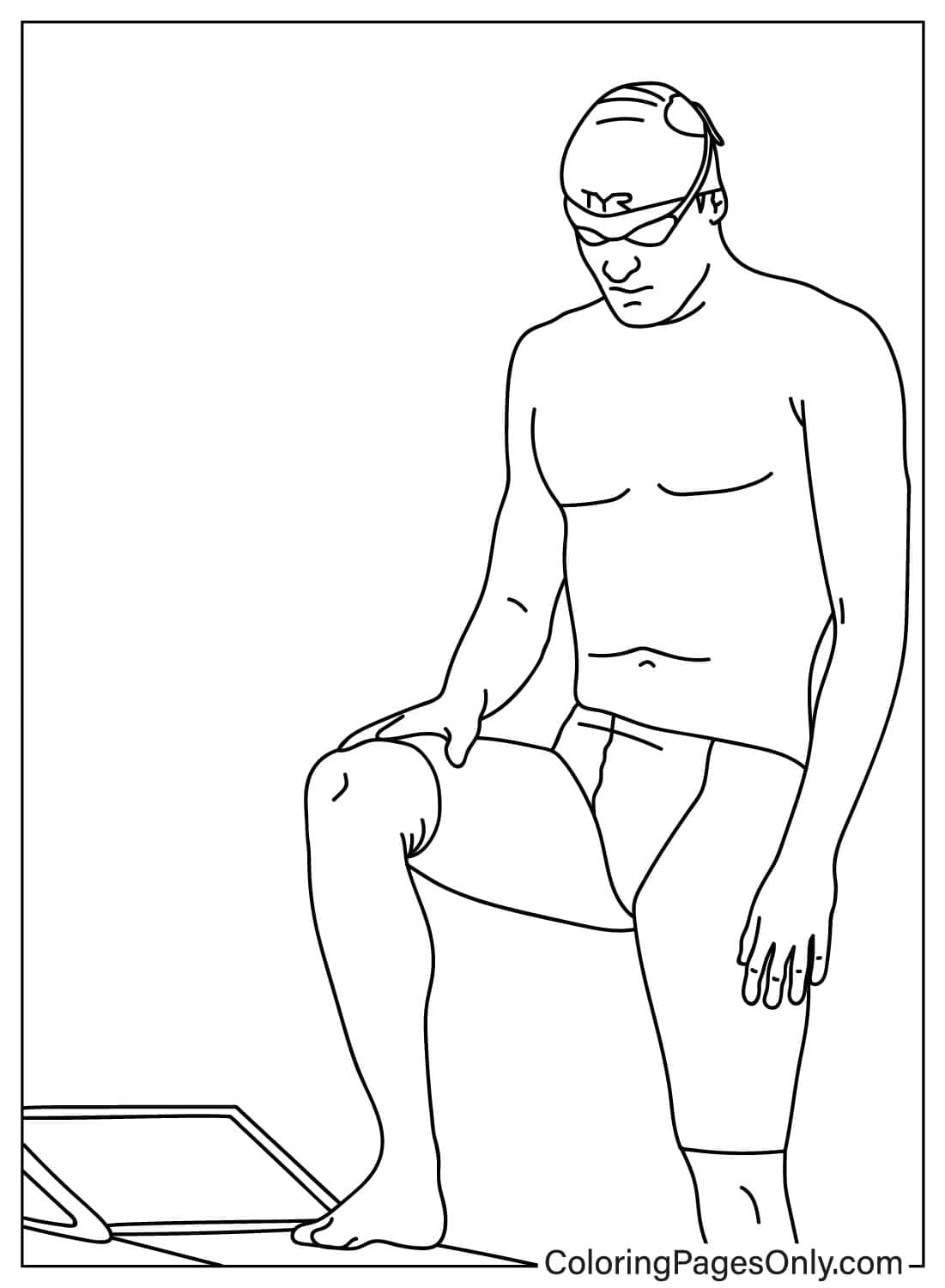
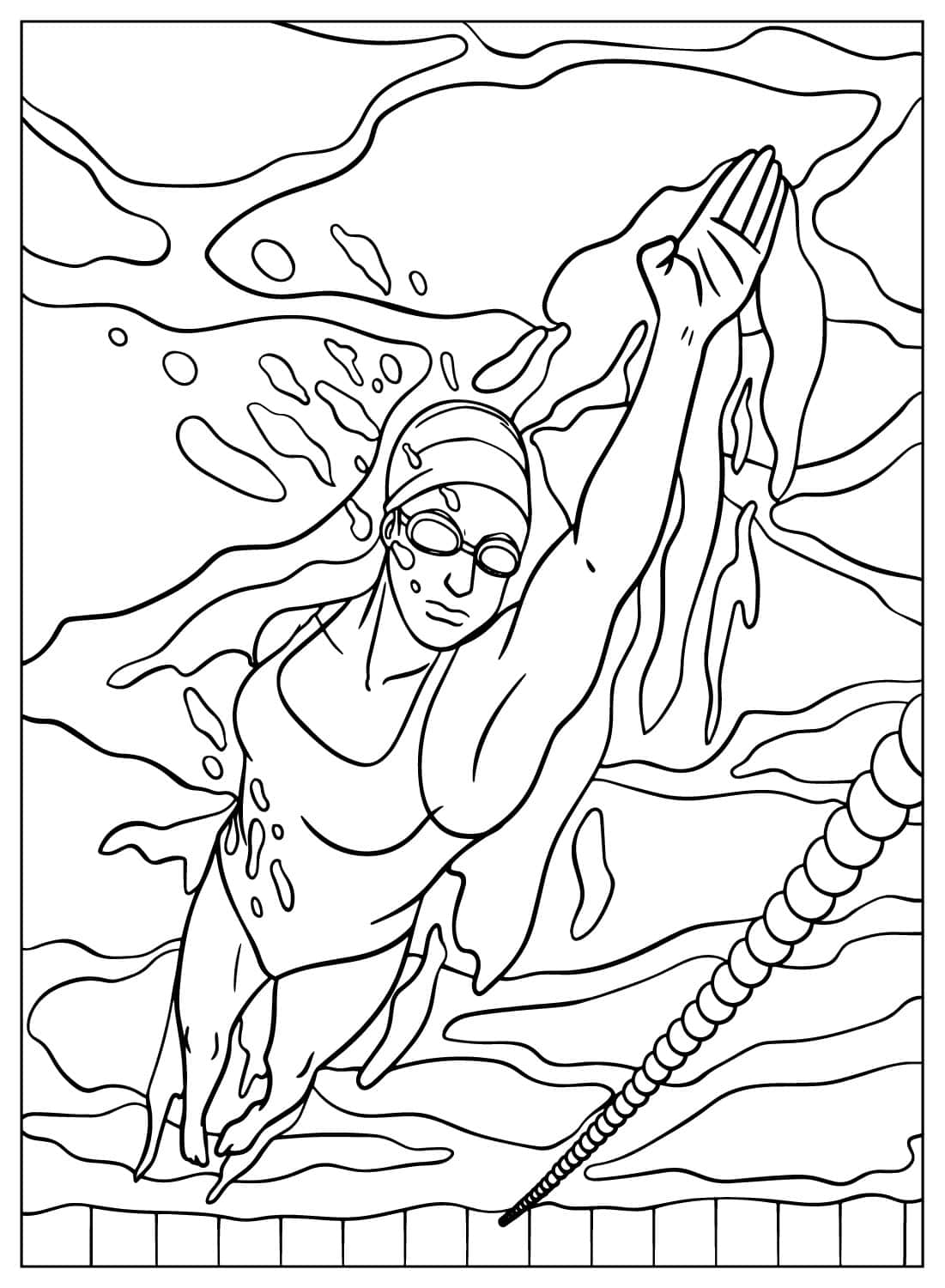
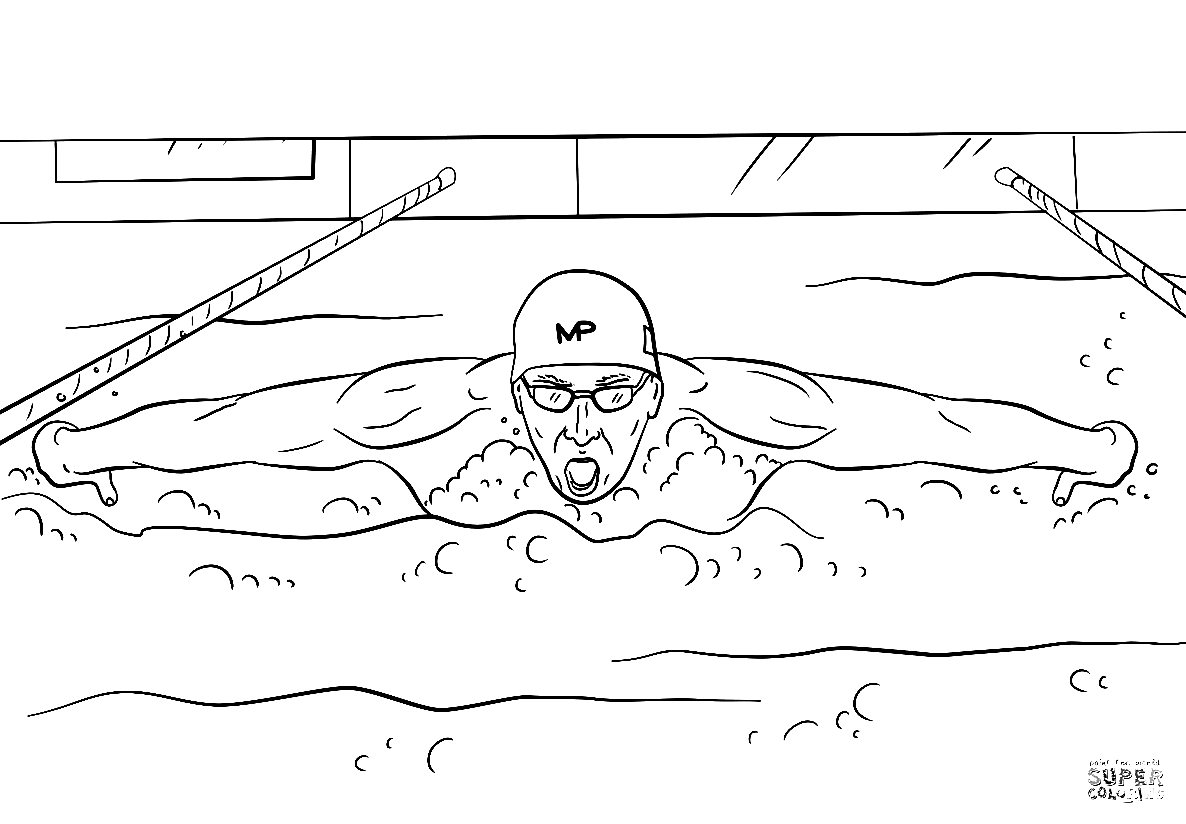
These pages focus on swimmers, medals, race lanes, and pool-deck moments connected to Olympic competition. Pages featuring athletes such as Katie Ledecky, Michael Phelps, Léon Marchand, Ariarne Titmus, Bobby Finke, Torri Huske, and Kaylee McKeown give older children a clear link between coloring and real sports culture. Swim caps, goggles, lane ropes, racing suits, medals, podium scenes, and strong body positions make these pages useful for Olympic displays, sports lessons, and athlete research activities.

Coloring Olympic swimmers: Use championship white, navy blue inspired by Team USA suits, French flag blue, Australian green-and-gold accents, racing-suit black, and Olympic medal gold as the core palette. Apply a medal-focus technique by coloring the medal, cap, or podium first, then building the water around it with pale aqua, pool blue, and deeper cobalt. The common mistake is making the athlete and background equally dark; keep the swimmer slightly higher in contrast than the water.

Competitive Strokes and Pool Racing Pages

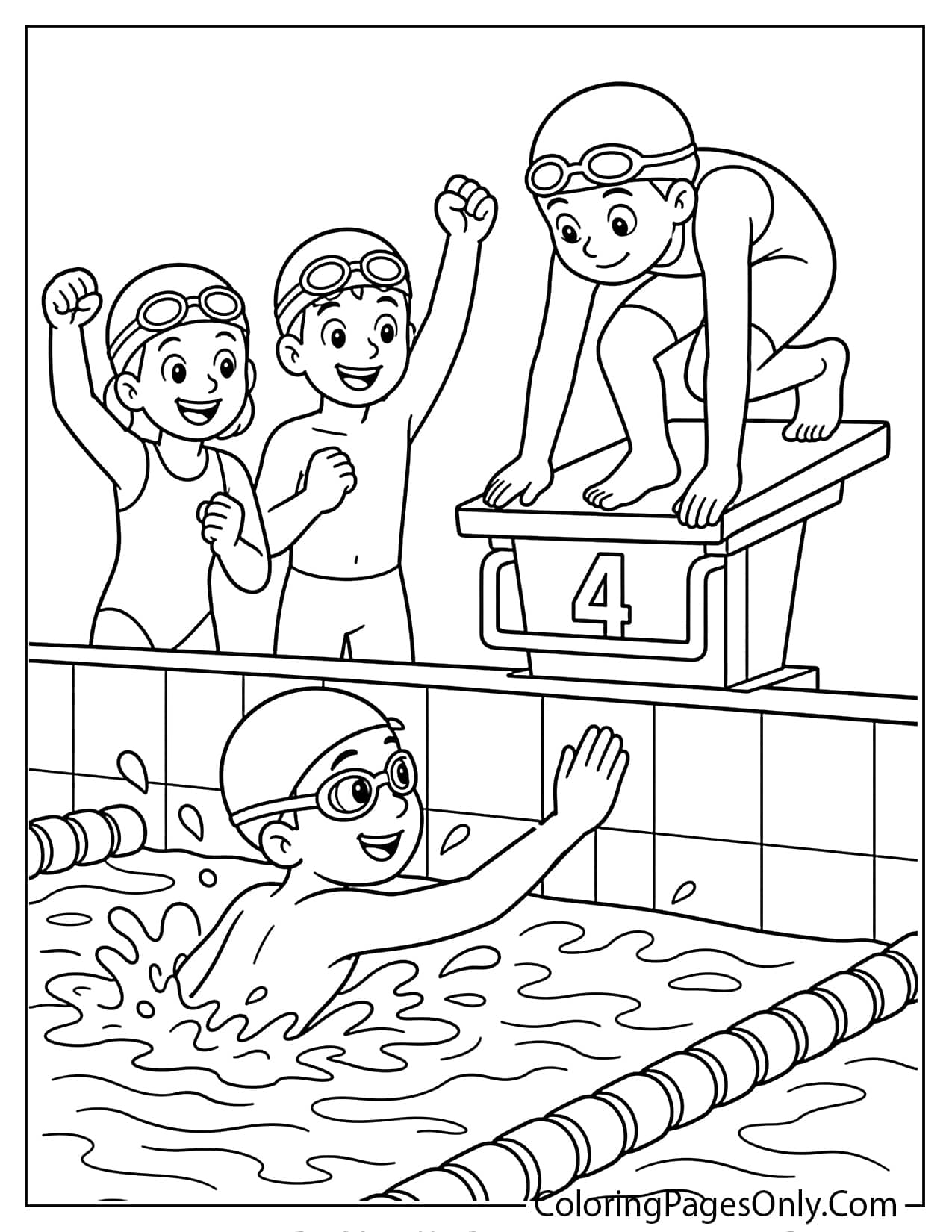
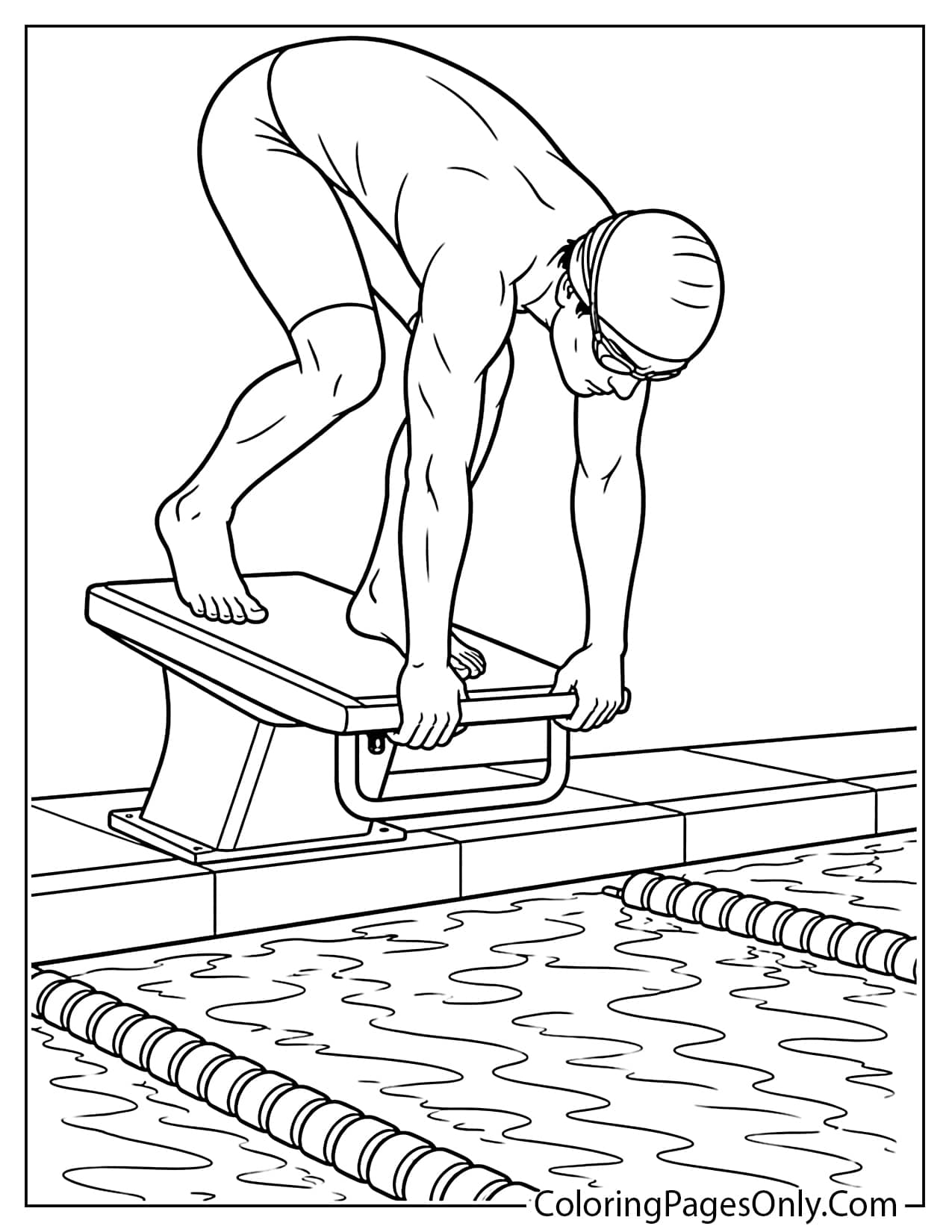
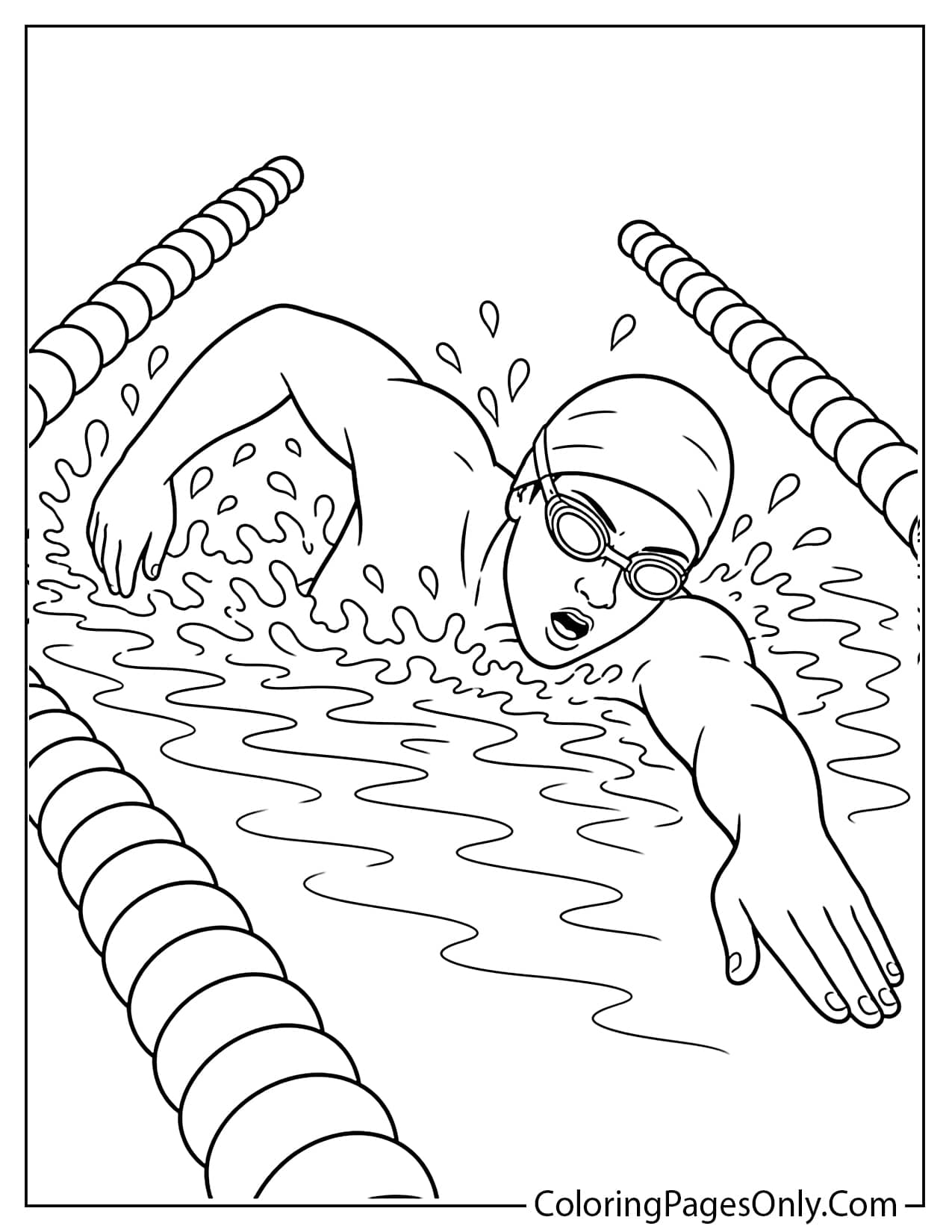
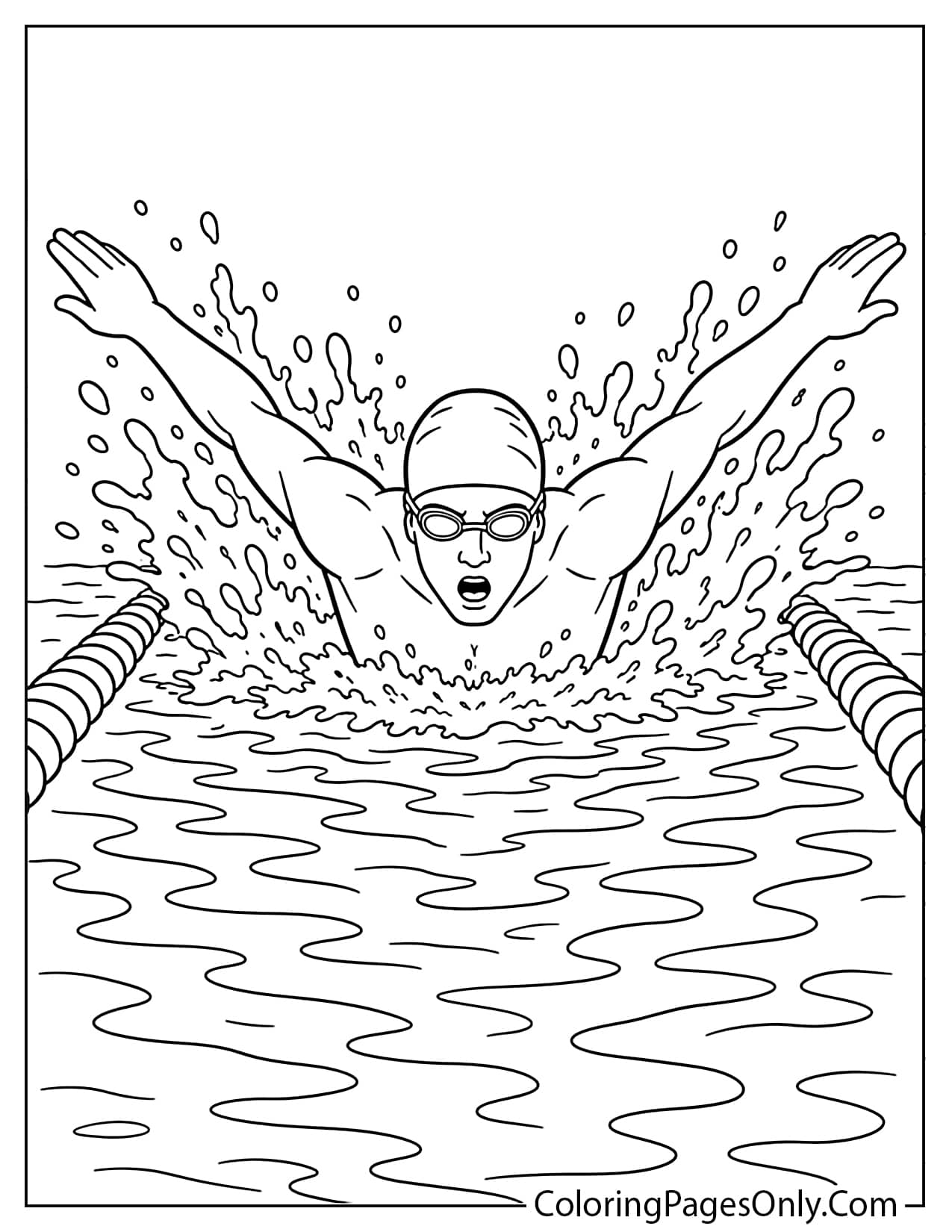
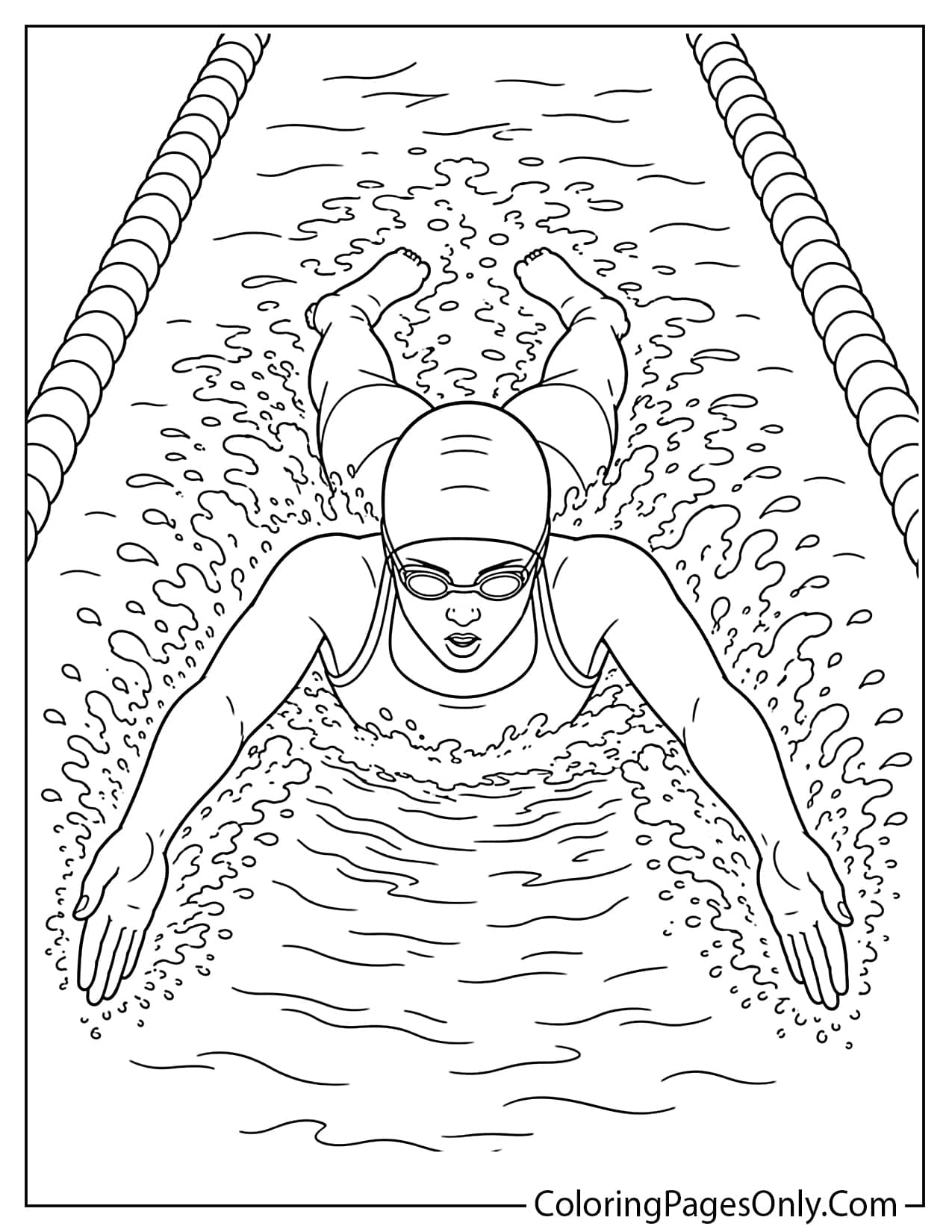
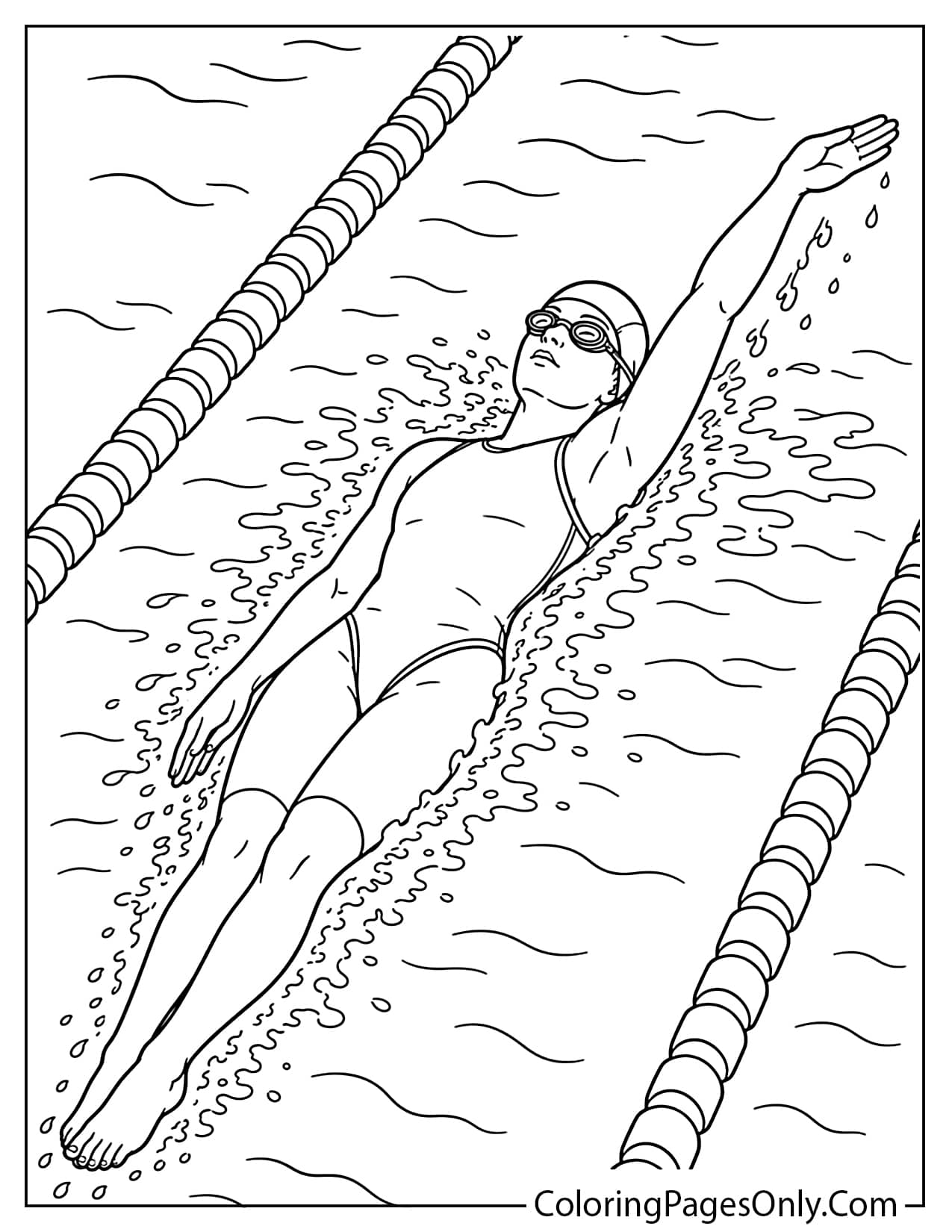
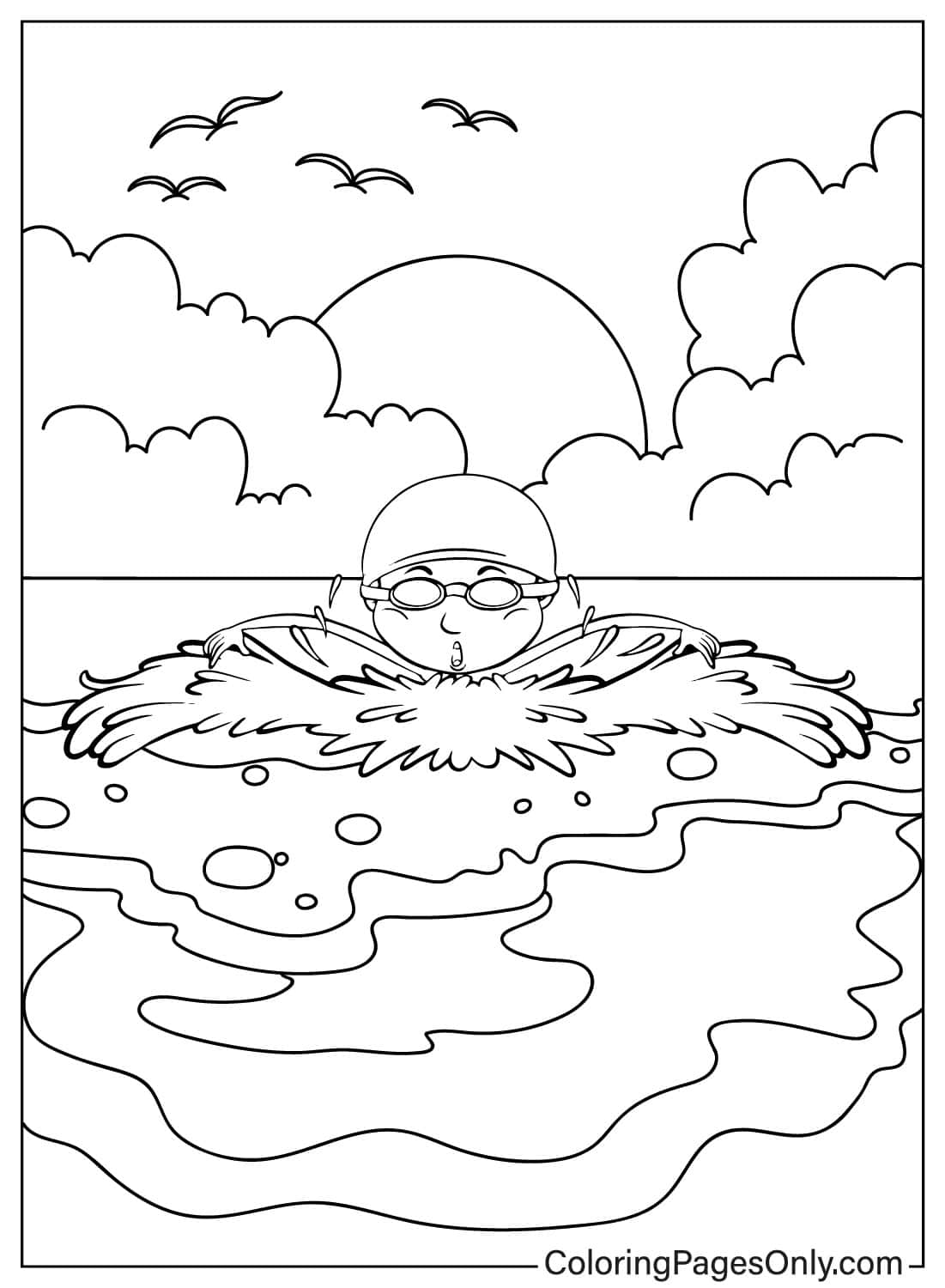
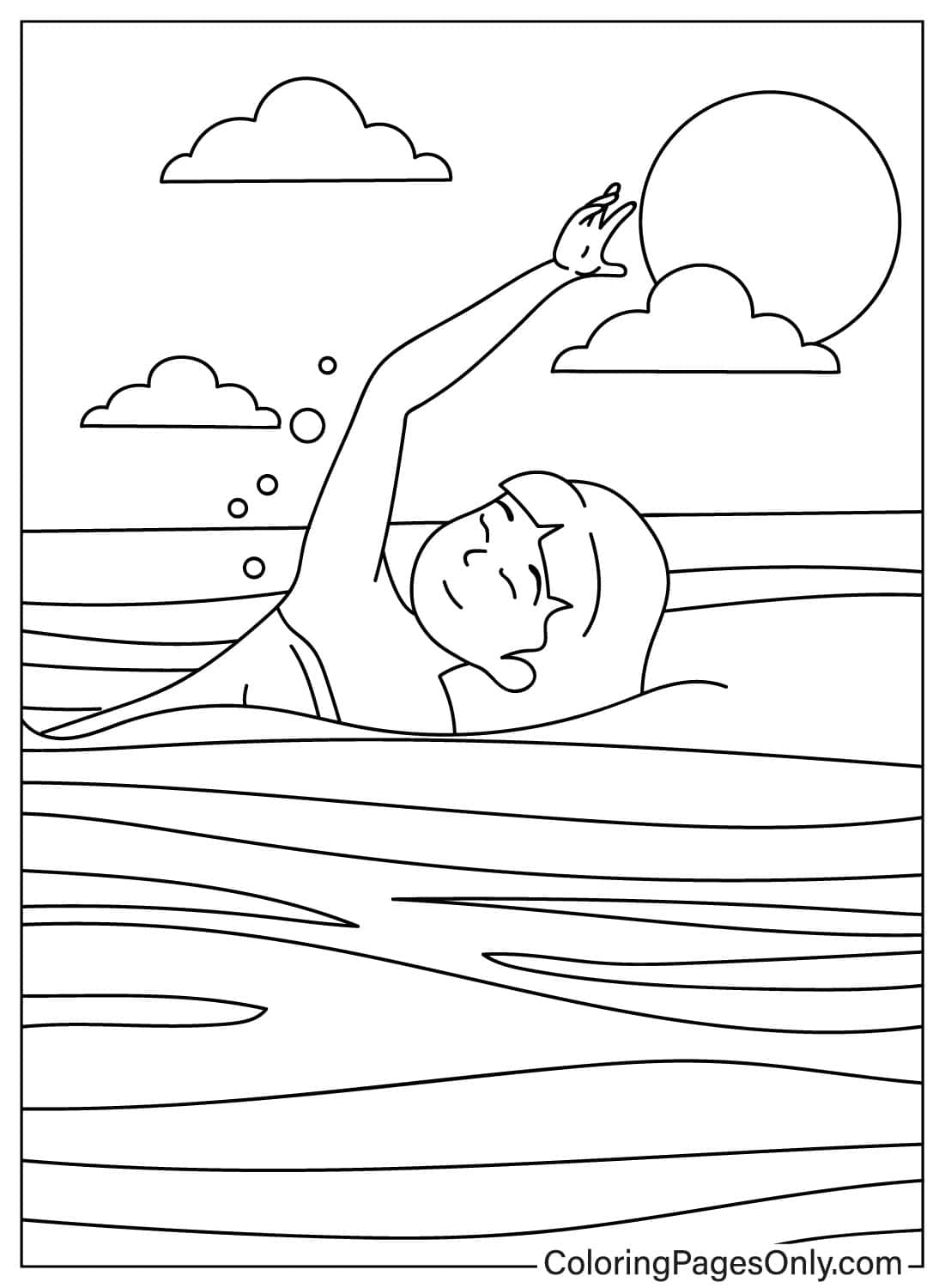
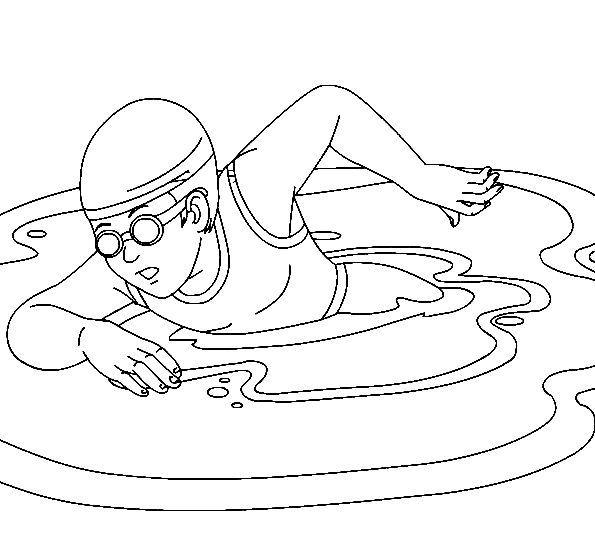
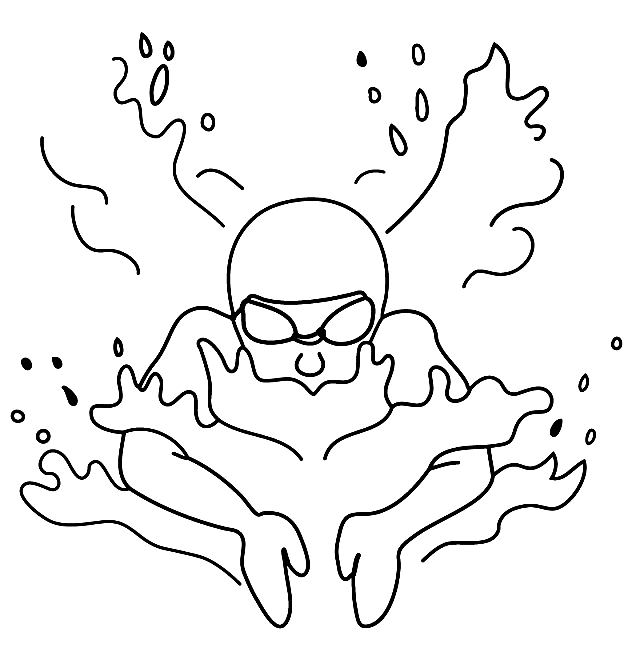
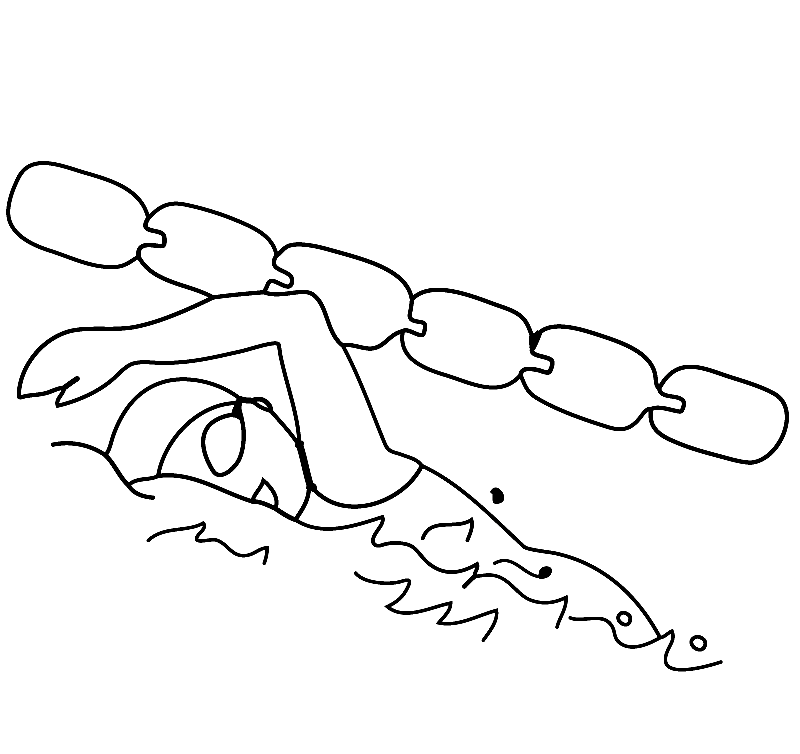
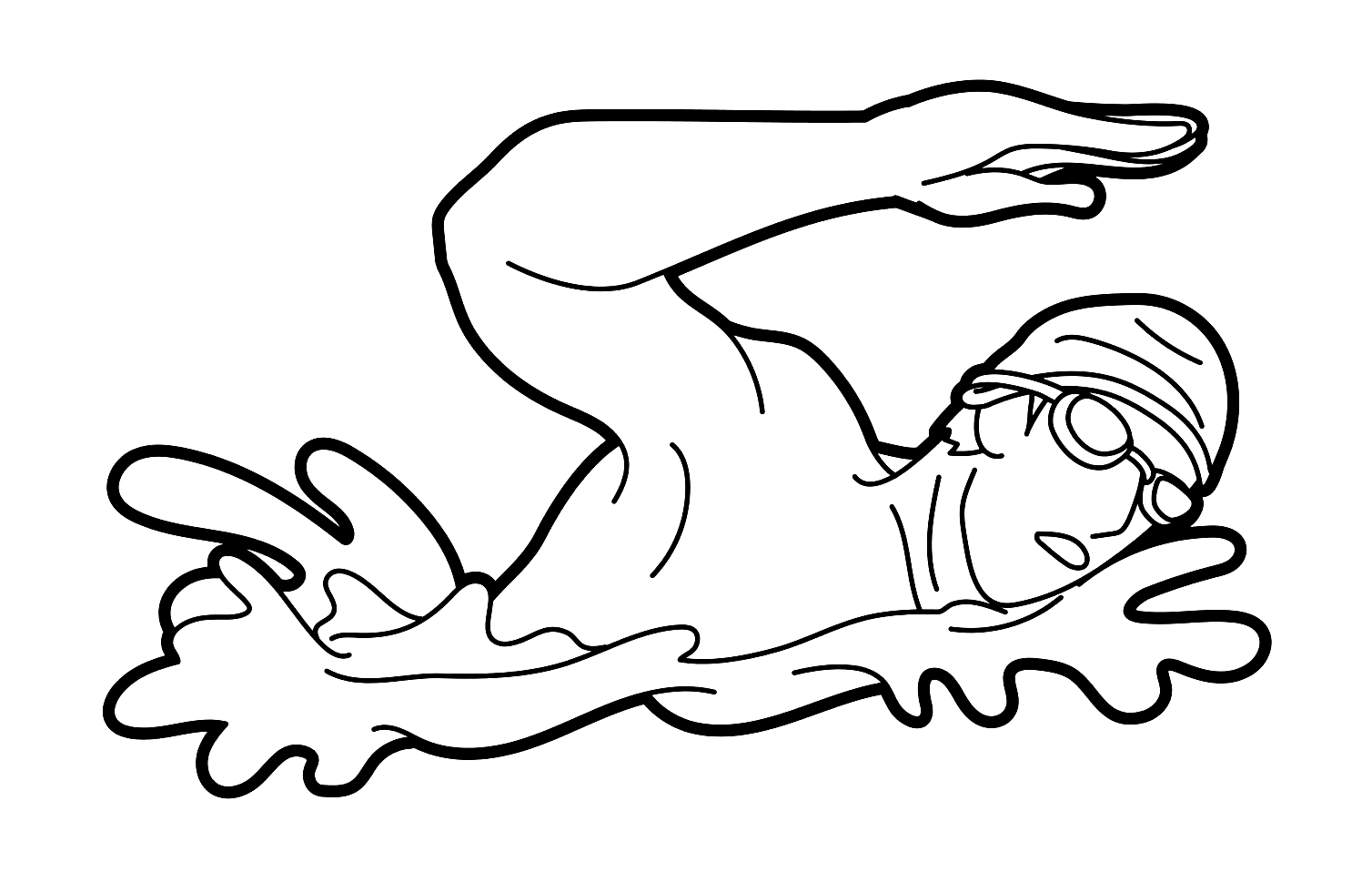
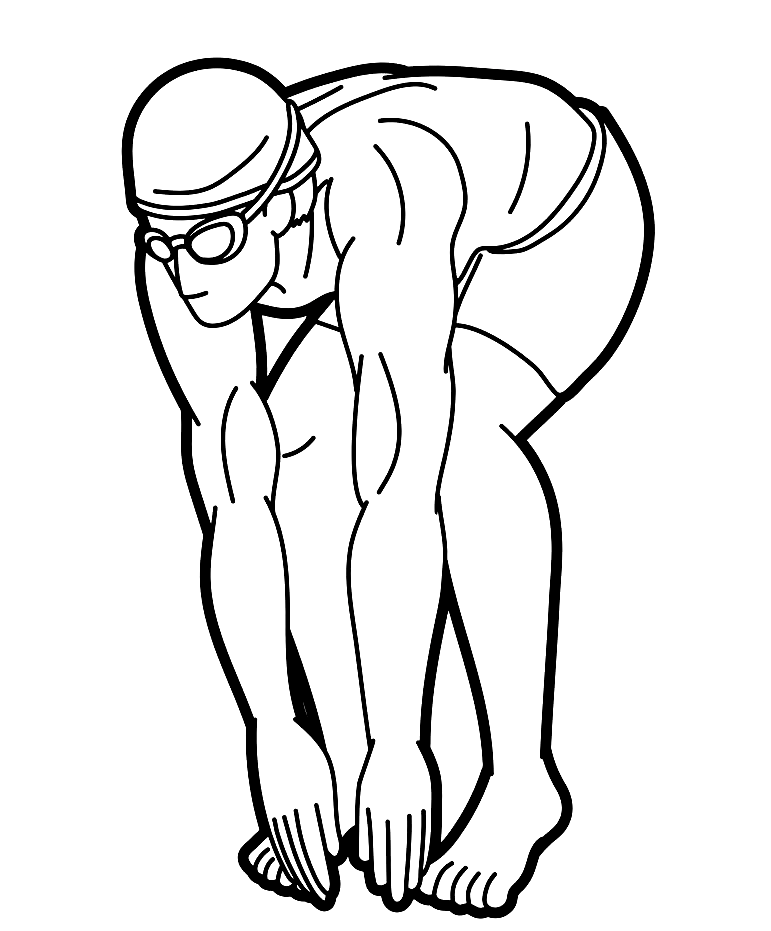
The competitive swimming pages show freestyle, backstroke, breaststroke, butterfly, diving starts, relay moments, and swimmers racing through marked pool lanes. These pages help colorists notice how each stroke creates a different body shape: freestyle reaches forward, backstroke opens the chest upward, breaststroke spreads the arms symmetrically, and butterfly lifts both arms above the water. Lane ropes, starting blocks, splashes, and relay scenes make this group useful for sports lessons, Olympic boards, and children who enjoy action-based swimming scenes.

Coloring competitive strokes: Start with pale ice blue around the swimmer’s body, add bright cyan in the middle water areas, and finish with deep ultramarine near lane ropes, starting blocks, and lower shadows. Use a three-zone water technique, so freestyle and butterfly pages feel fast, while backstroke and breaststroke pages stay cleaner and more balanced. The common mistake is coloring every splash blue; leave some splash edges white to keep the stroke movement visible.

Kids Learning to Swim

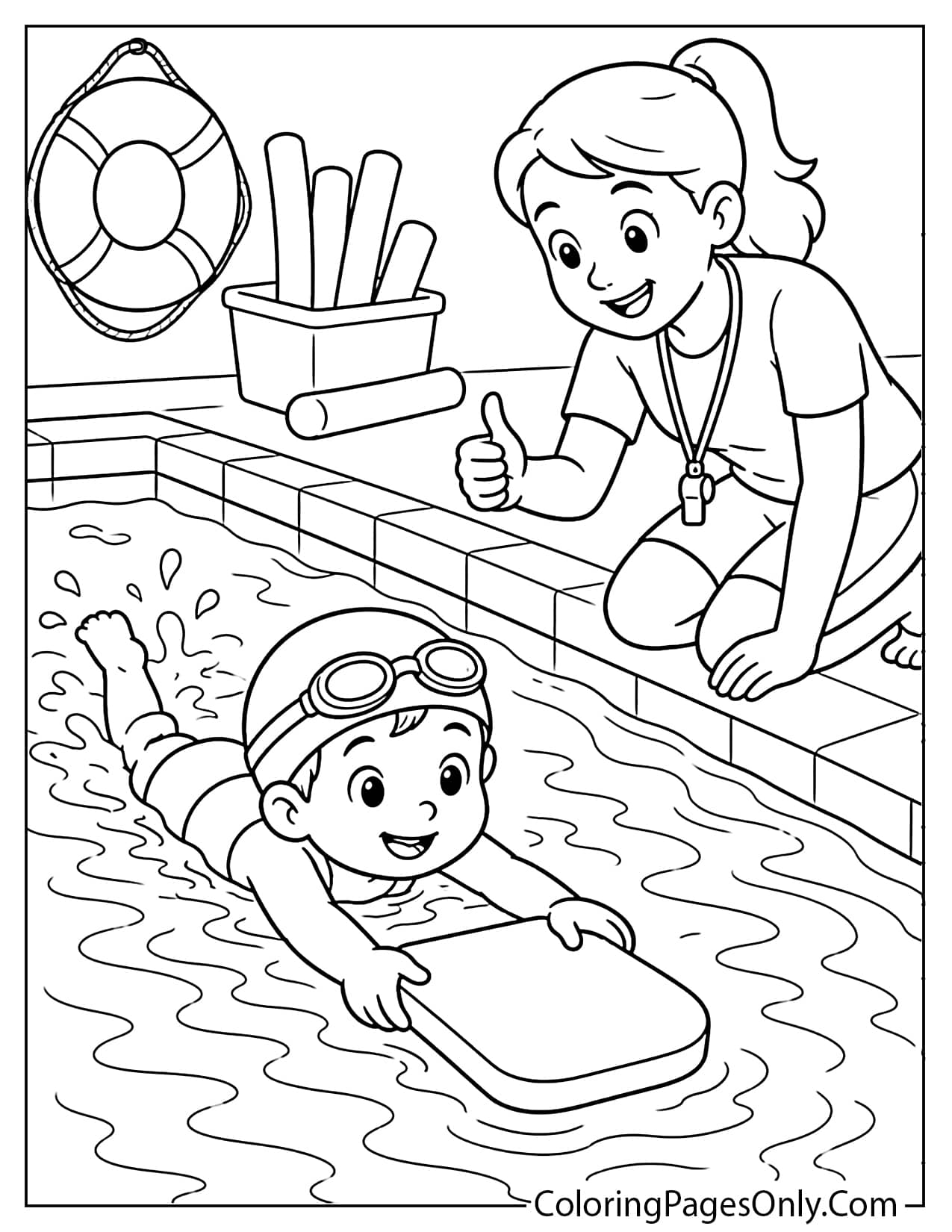
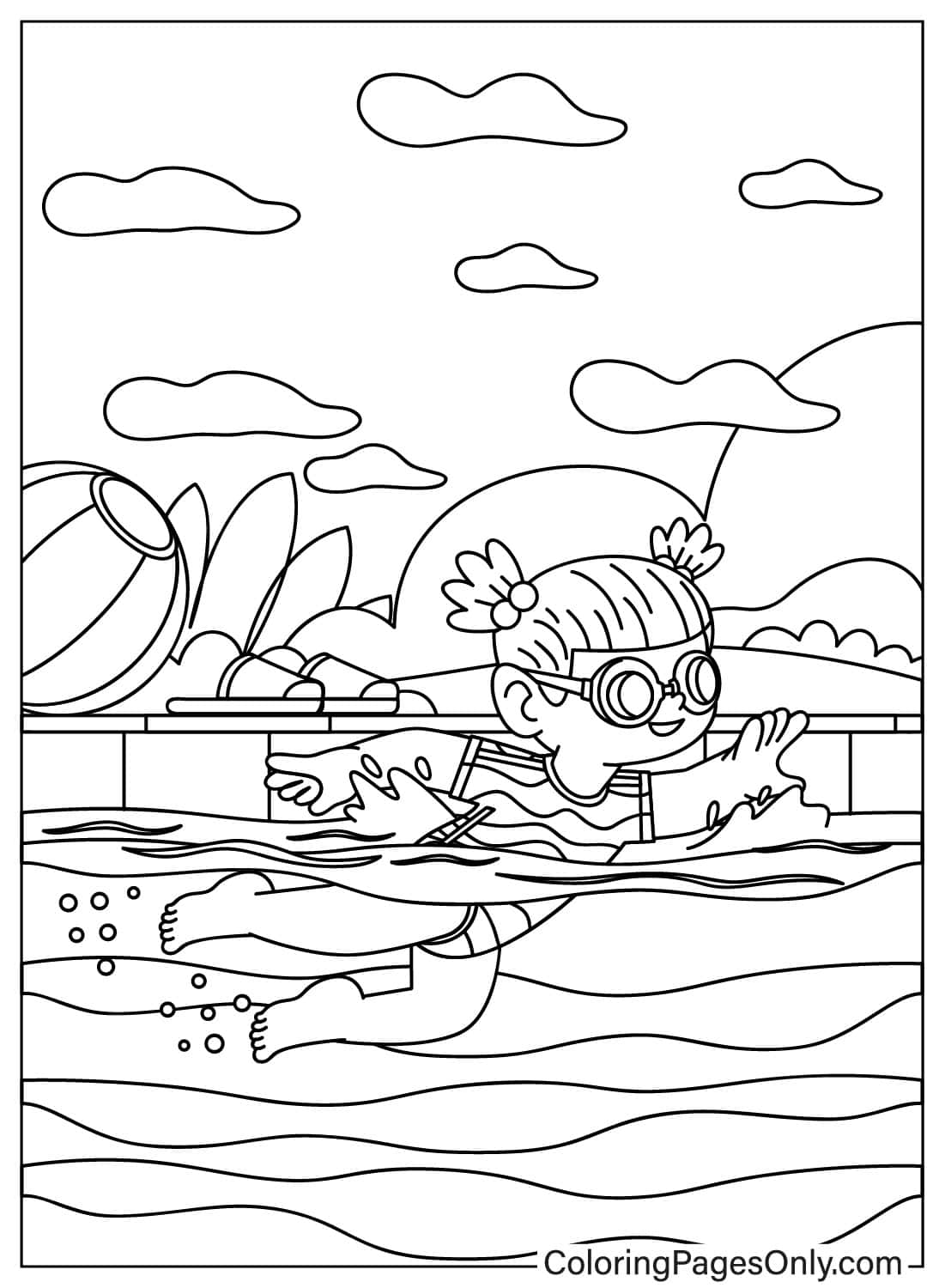
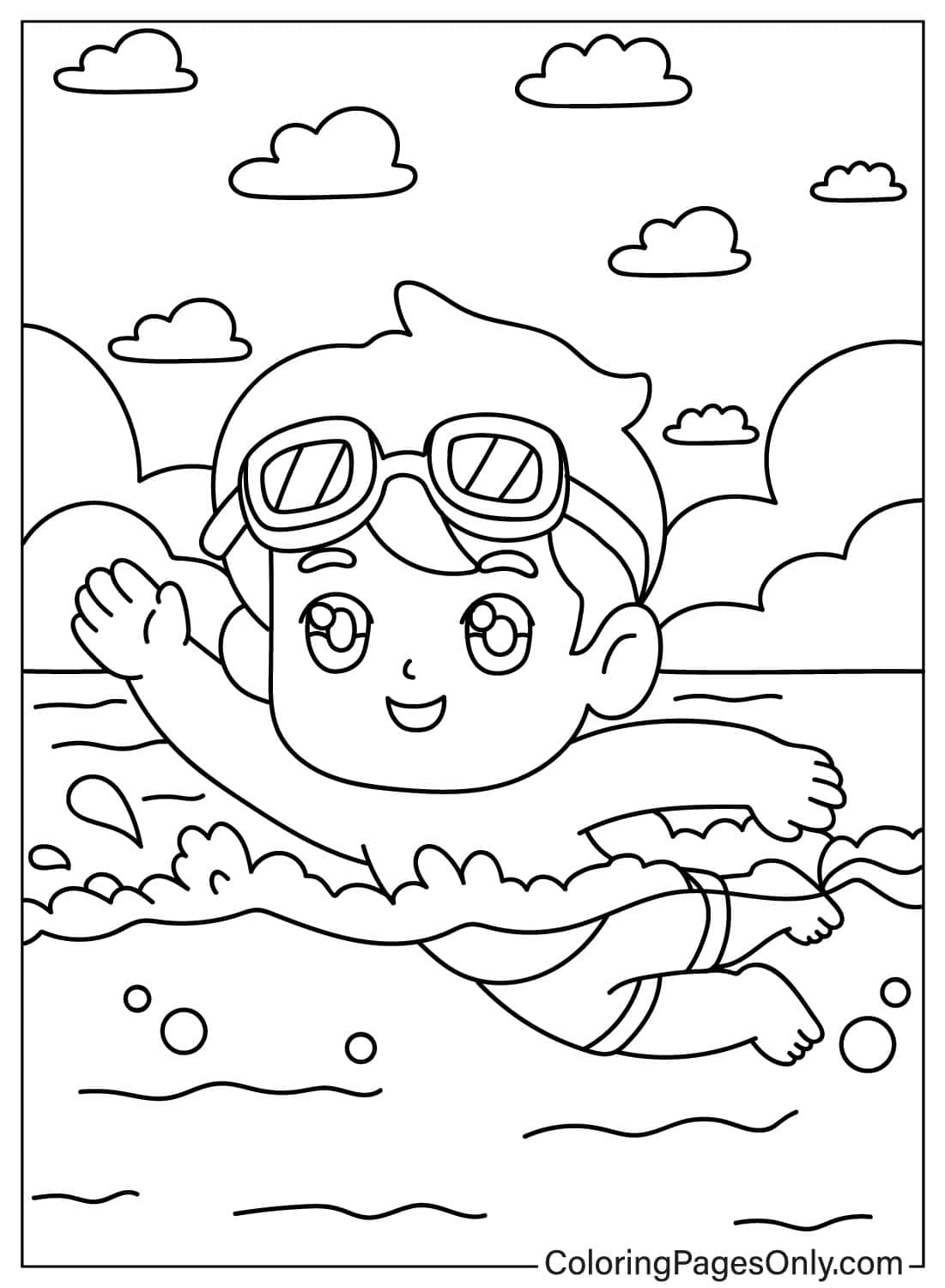
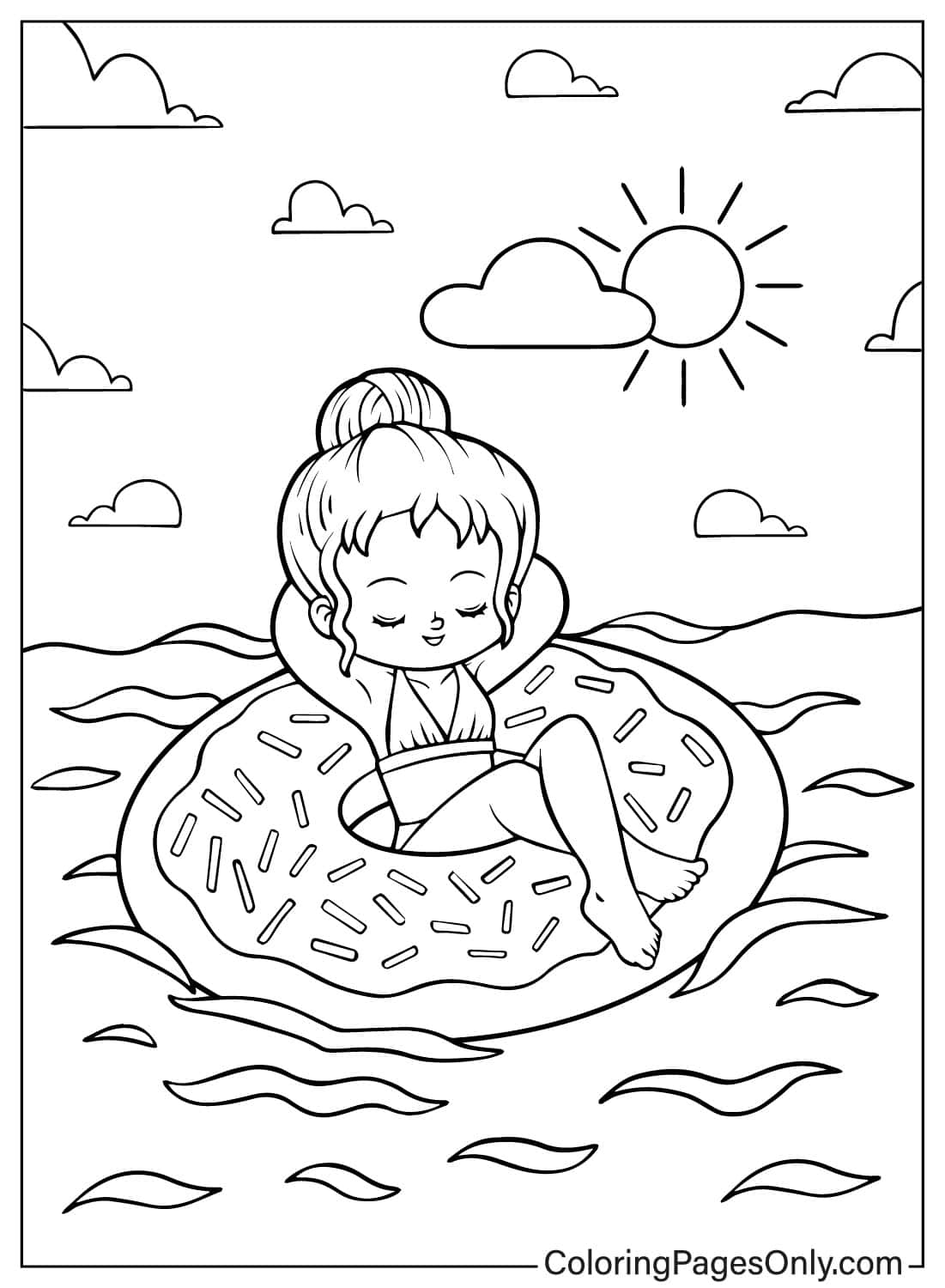
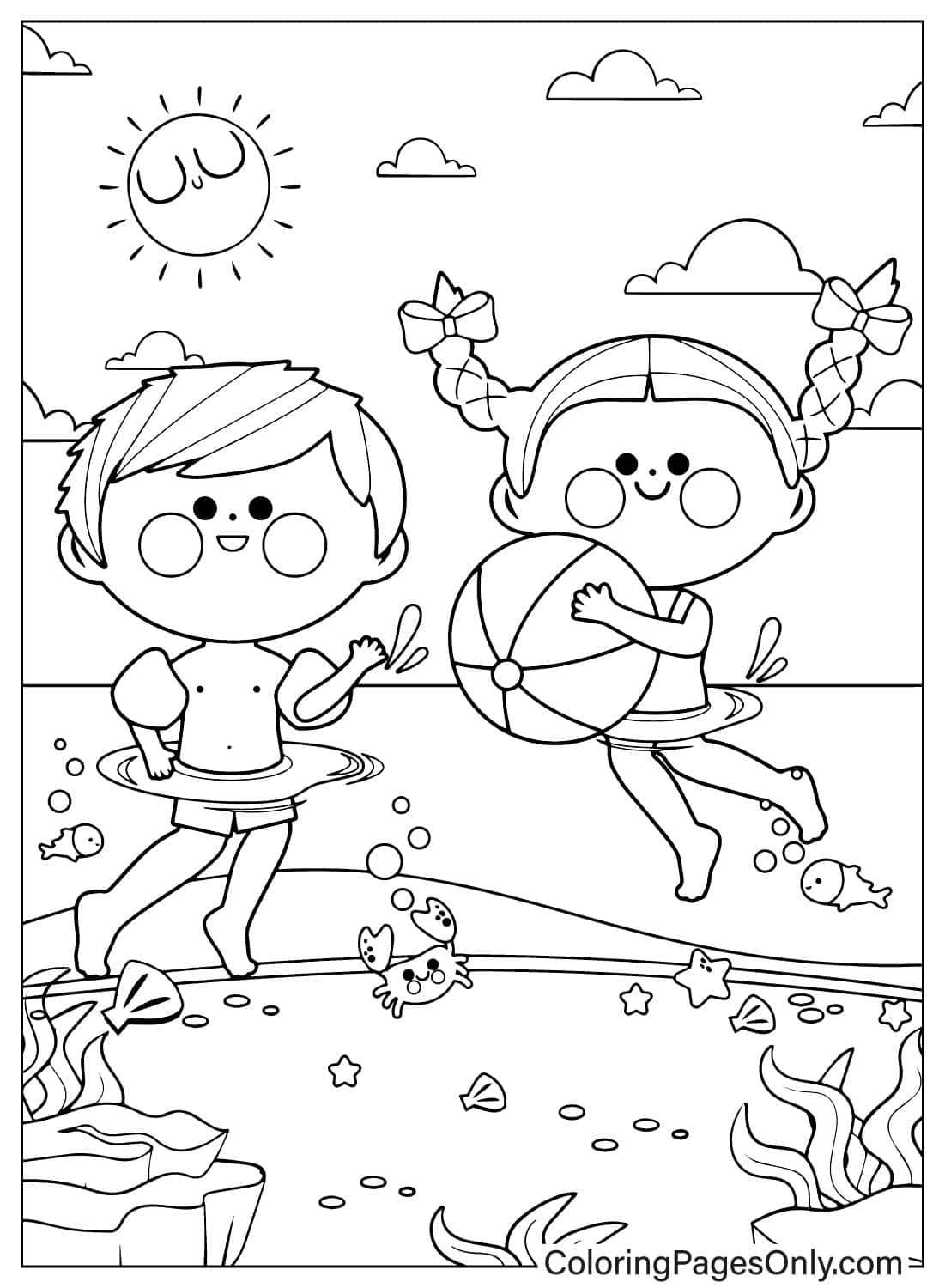
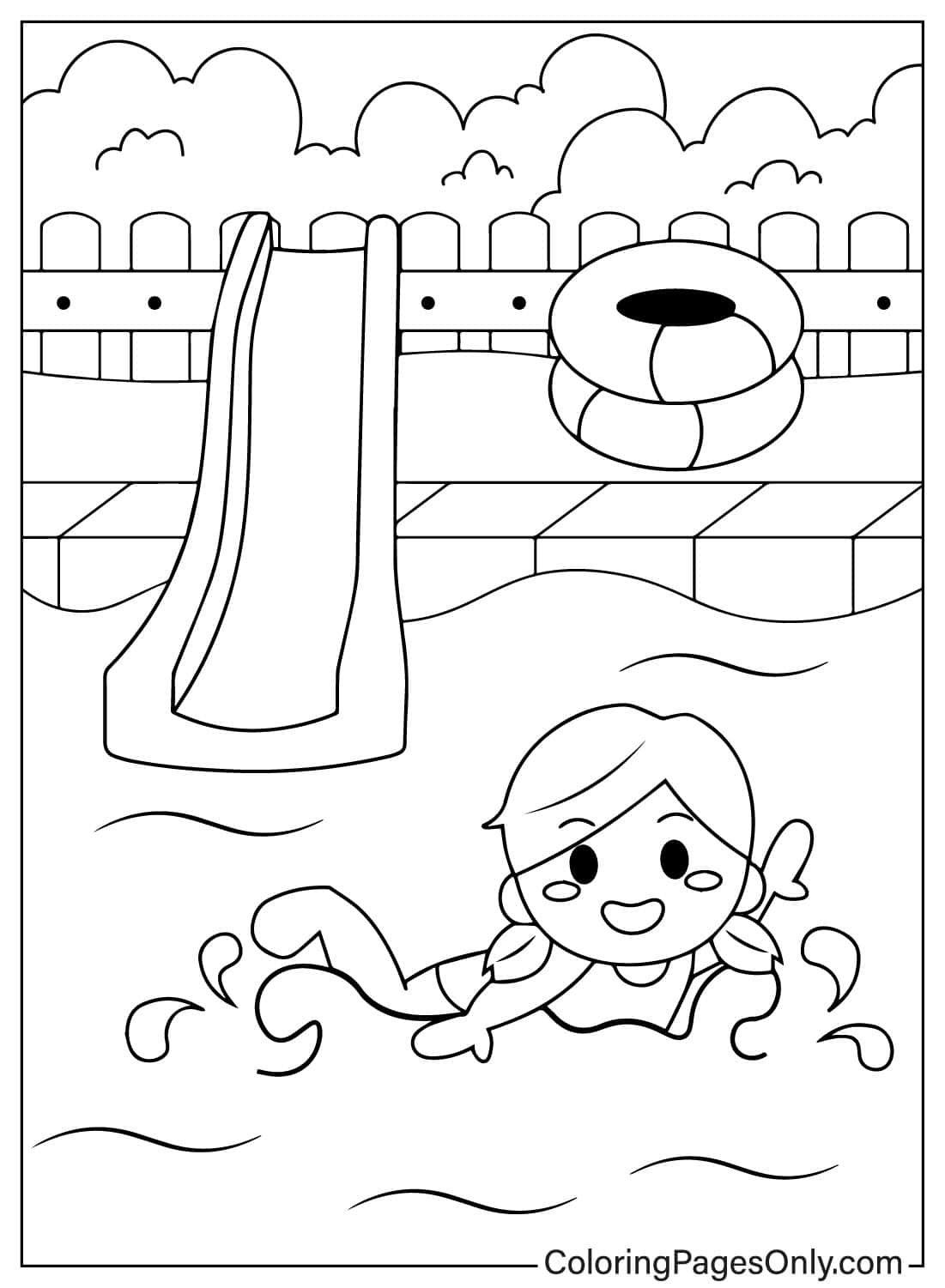
This group includes children swimming in pools, a baby girl with floating balls, young swimmers using floats, swim lessons with kickboards, and simple pool-play pages. These are the easiest pages for preschool and early elementary children because the outlines are larger, the faces are simpler, and shapes such as balls, float rings, kickboards, and swimsuits are easy to identify. They also give parents and teachers a calm way to talk about adult supervision, staying close in the water, using floats correctly, and building confidence step by step.

Coloring young swimmers: Choose natural skin tones such as warm peach, honey beige, golden tan, deep sienna, or rich umber, then add swimsuits in coral pink, sunshine yellow, pool red, or turquoise green. For kickboards, use sunshine yellow, coral orange, or turquoise green so the learning tool stands out clearly from the water. Use a large-shape-first method: color the float, kickboard, swimsuit, and water before adding facial details.

Beach, Ocean, Fish, and Open-Water Scenes

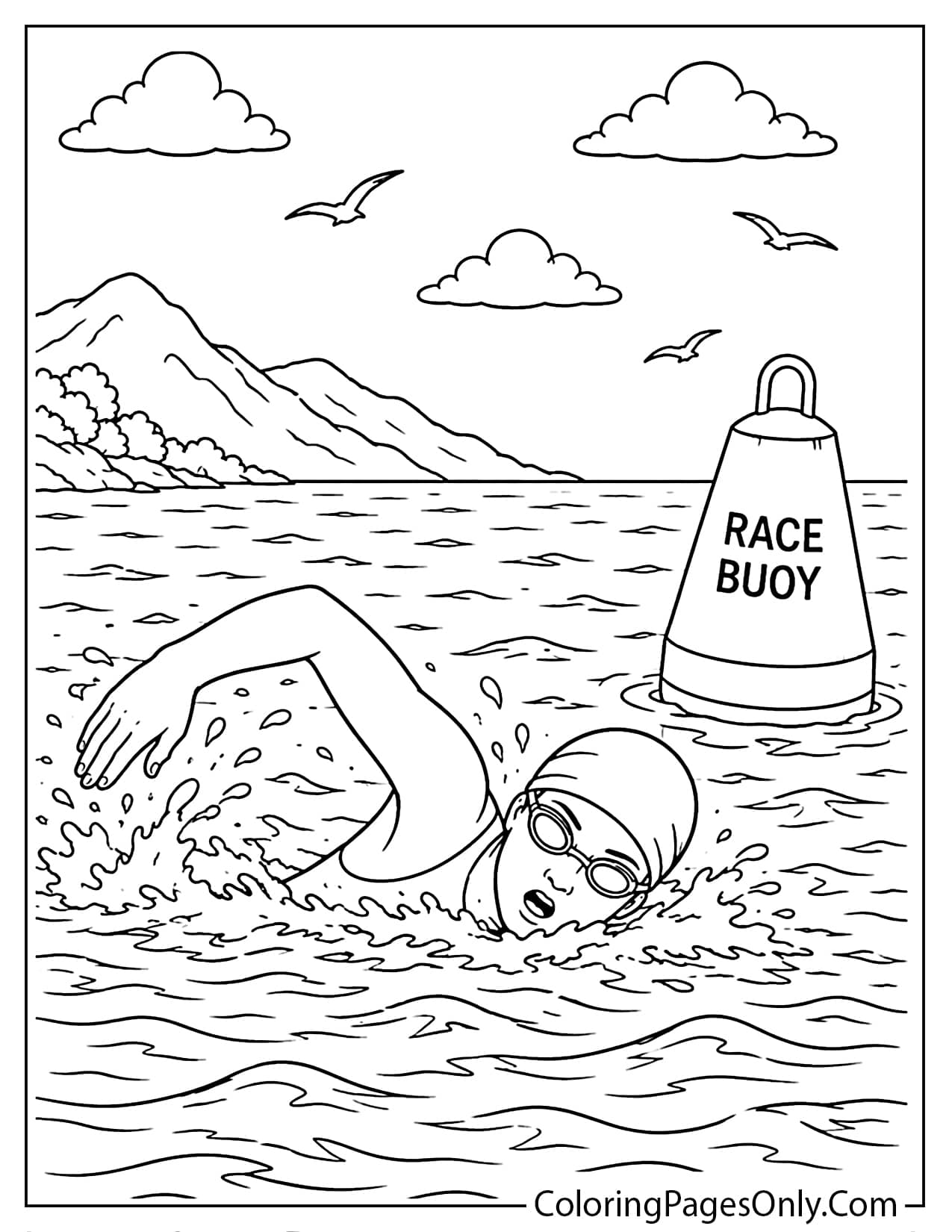
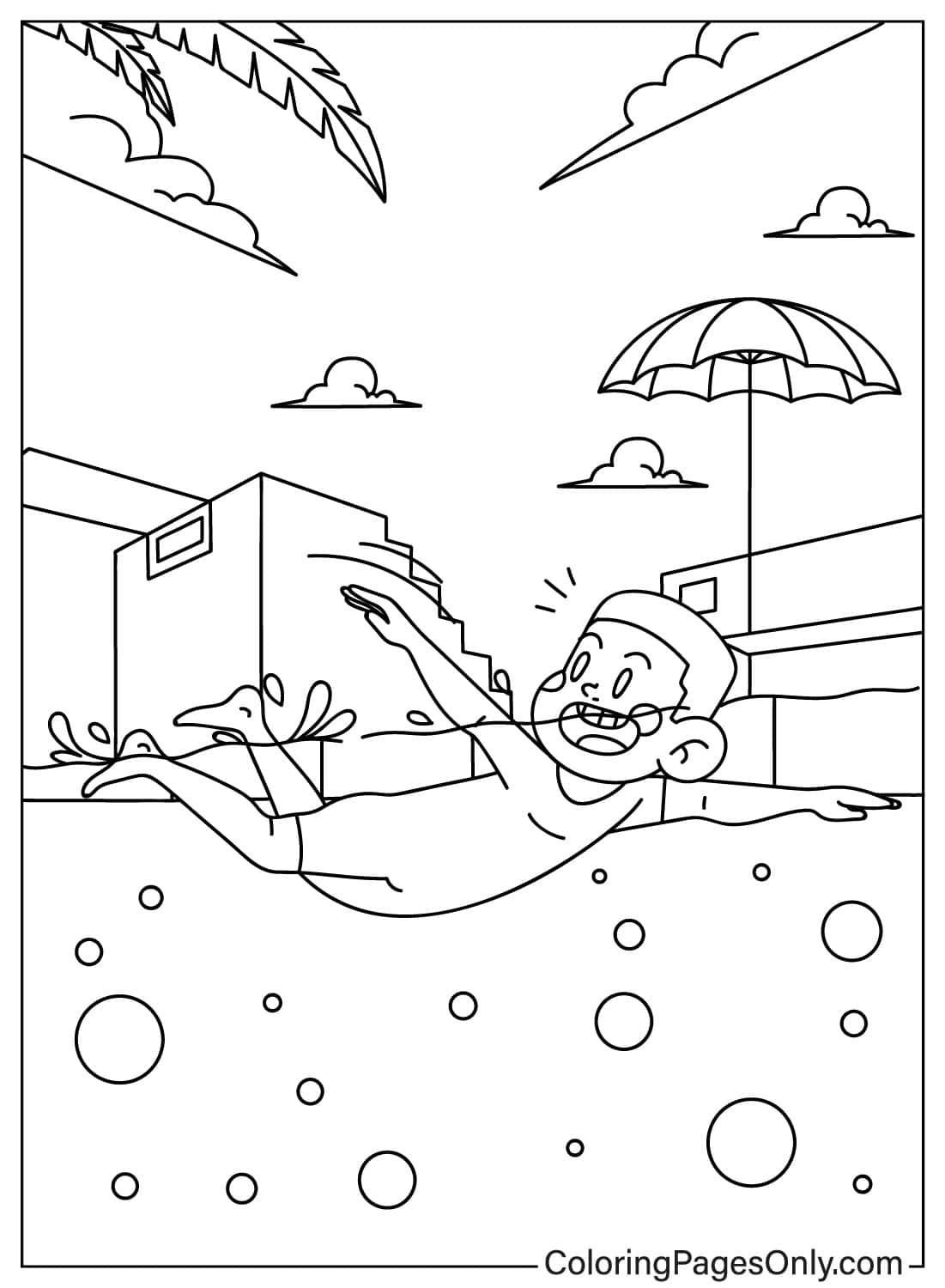
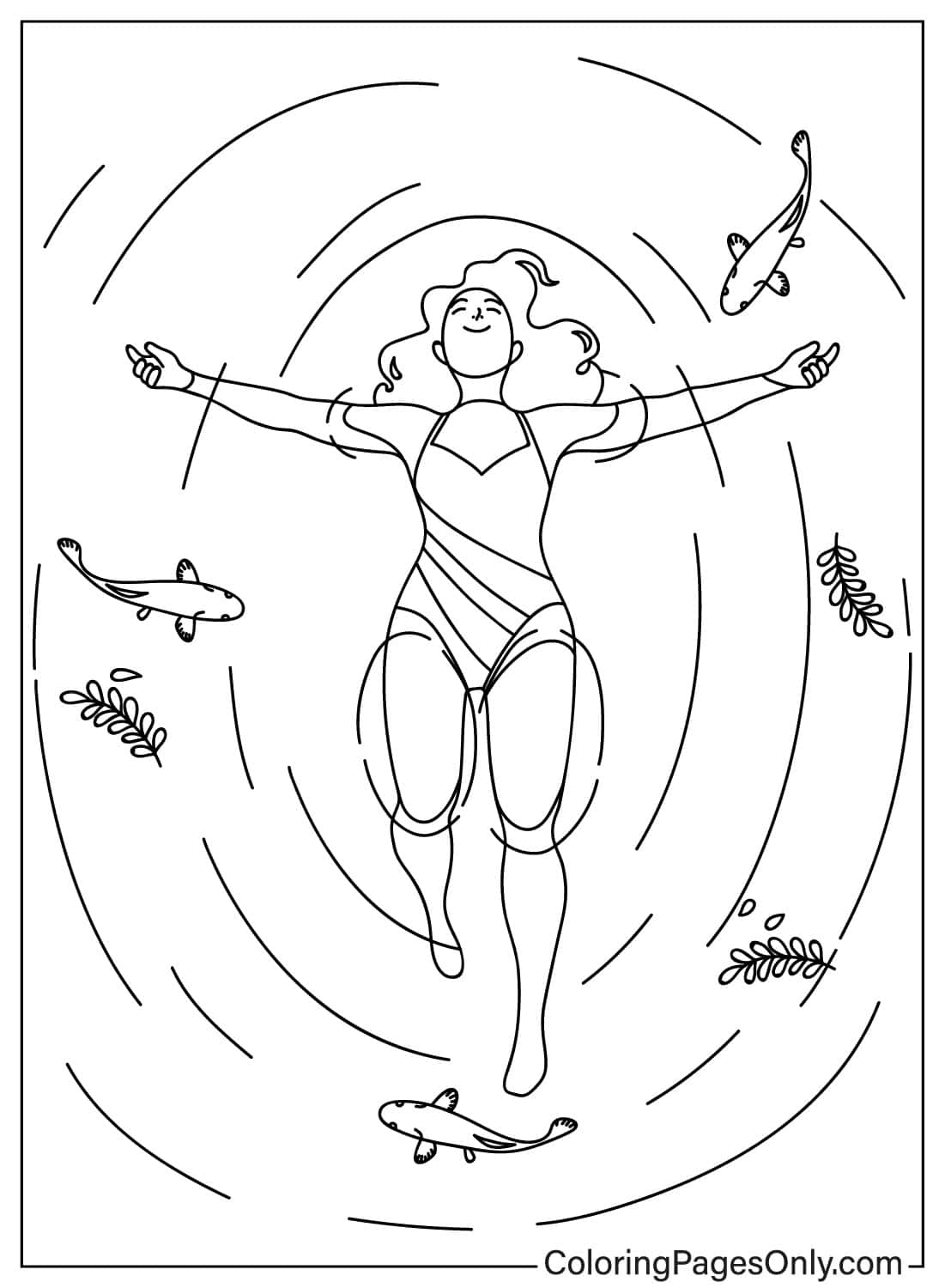
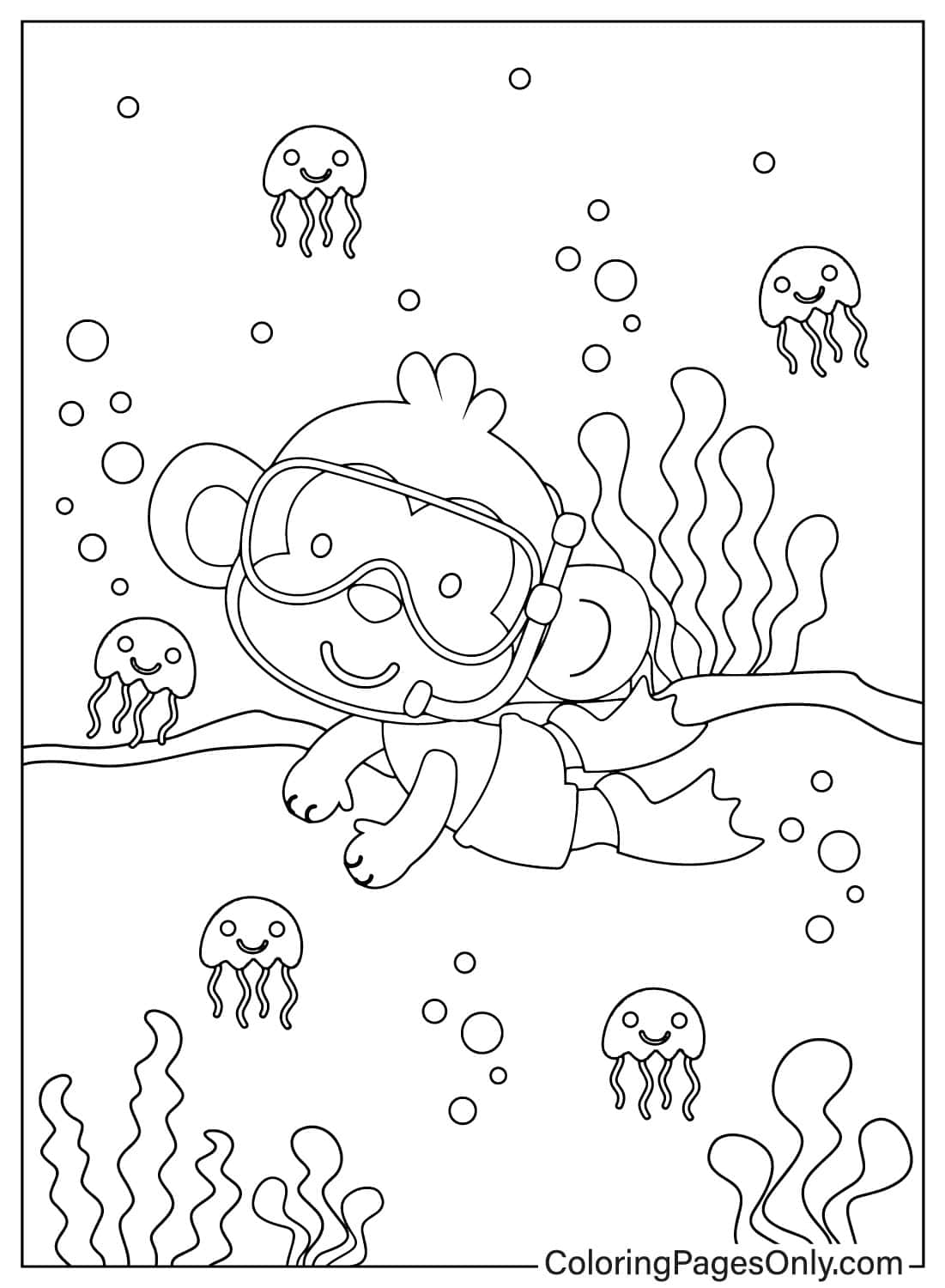
The ocean-themed pages move beyond the swimming pool into summer beach, sea, and open-water swimming settings. A girl swimming with fish, a boy in the sea, a monkey near a jellyfish, and underwater animal scenes add a softer, more imaginative side to the collection. Open-water pages with race buoys and wider waves also show that swimming can happen outside a pool, in lakes, seas, and marked outdoor courses. These pages help children see the difference between pool water and ocean water while practicing bubbles, fish, sea plants, buoys, and layered backgrounds.

Coloring ocean swimming scenes: Use sea-glass green, Caribbean blue, deep teal, and sand beige to separate ocean water from pool water. For fish, add coral orange, lemon yellow, or warm golden yellow so they do not disappear into the background. For open-water pages, color buoys in lifeguard orange or bright red so the route markers stand out. The common mistake is coloring the ocean with one solid blue; layer darker tones near the bottom and lighter tones around bubbles and swimmers.

Cartoon Animals, Floats, and Summer Pool Fun

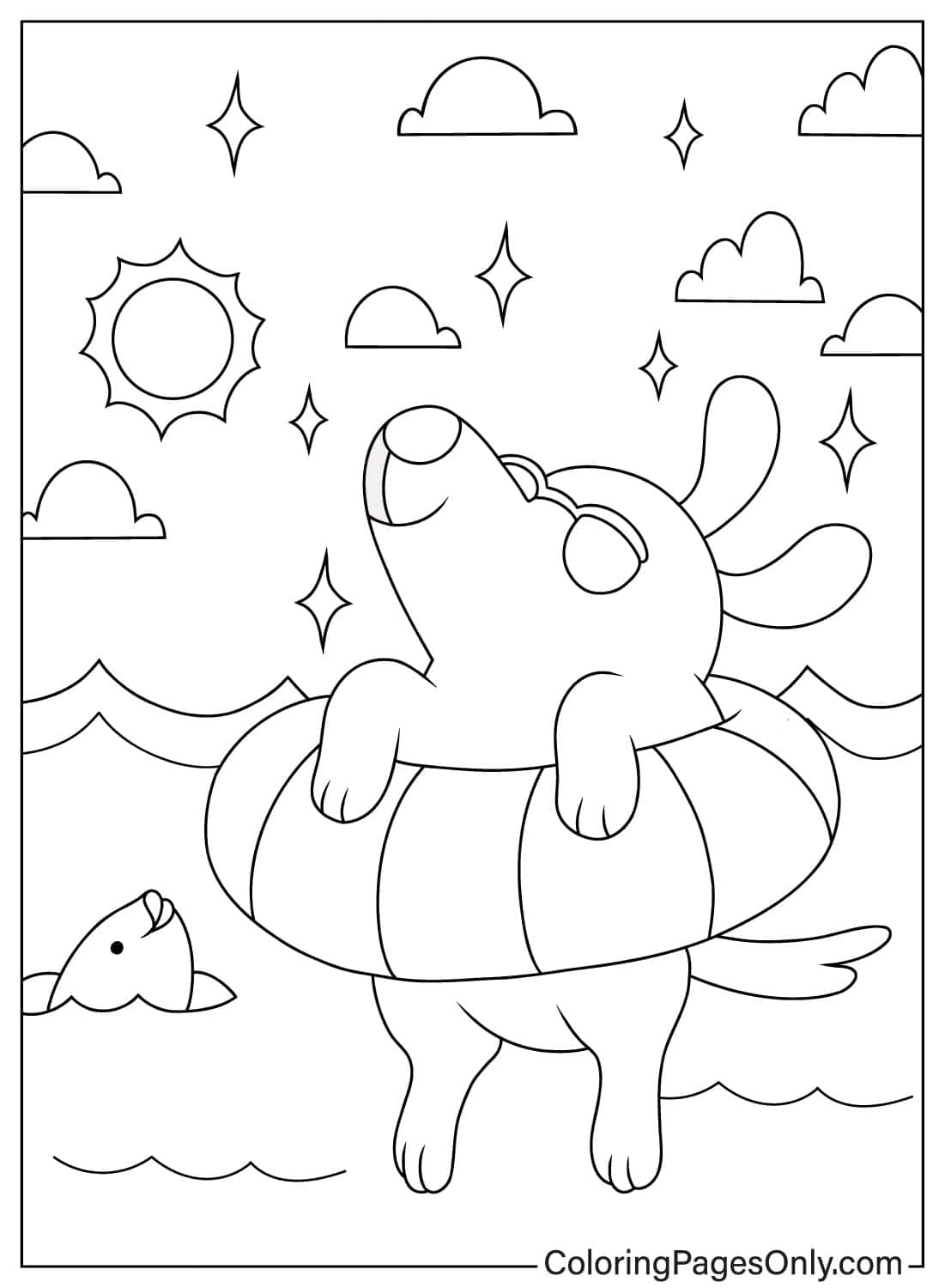
The playful pages include dogs, monkeys, floats, beach balls, simple swimming poses, and cheerful water scenes. These designs are best for younger children, quick classroom activities, party tables, or rainy-day summer printables. Because the outlines are less technical than the Olympic and stroke pages, children can finish them faster and feel confident. They also help build simple swimming vocabulary such as float, goggles, pool, splash, ball, fish, swim cap, kickboard, and buoy.

Coloring pool-fun pages: Use rubber-duck yellow, lifeguard red, bubblegum pink, clear-sky blue, and mint green for a cheerful summer look. Try a three-color limit for younger children: one color for the water, one for the main character, and one accent for the float, ball, or kickboard. The common mistake is adding too many unrelated bright colors, which makes the page look busy instead of playful.
What These Pages Do

Swimming pages connect children to a sport with deep cultural and Olympic history. Swimming entered the modern Olympic program in 1896, and World Aquatics traces the sport’s international organization to the founding of FINA in London on July 19, 1908. A coloring page showing a race lane, swim cap, medal, relay team, or podium can introduce more than a seasonal activity; it can open a conversation about training, competition, national teams, and the long history of aquatic sport.

These pages also teach design through water, motion, and body position. A freestyle page shows forward reach and speed, a backstroke page opens the body upward, a breaststroke page creates symmetry, and a butterfly page uses large splash shapes to show power. Ocean and open-water scenes ask for a different visual approach, with softer depth, sea animals, bubbles, buoys, and layered blue-green space. This makes the collection useful for art practice because water is never just one color or one shape.

The American Academy of Pediatrics identifies fine motor skill development as a key milestone throughout early childhood. HealthyChildren.org, the parenting site from the American Academy of Pediatrics, lists coloring with crayons or chalk among quiet-time activities that can help improve a 3-year-old child’s hand abilities. Swimming pages support that development through curved wave lines, small goggles, lane ropes, bubbles, fish, float rings, kickboards, buoys, and swimsuit details that require controlled hand movement.

The 2005 Art Therapy Journal study on structured coloring and anxiety reduction applies well to swimming pages with repeated visual patterns. Lane ropes, bubbles, ripples, pool tiles, kickboard shapes, relay lanes, and wave bands give children a structured space to color with rhythm. This kind of organized coloring can feel calmer than a blank page because the child has clear boundaries, repeated shapes, and a predictable visual task.

How to Color These Pages Well

Make pool water clean, bright, and readable. Use light aqua for the first layer, then add pool-tile blue in larger water areas and deep cobalt only near shadows, lane ropes, or the bottom edge. Leave narrow white spaces beside arms and feet to show foam. Test the darkest blue on scrap paper first because heavy pressure can make the swimmer look hidden instead of active.

Match the water pattern to the swimming stroke. Freestyle pages need diagonal splash lines near the reaching arm, while butterfly pages need wider white foam behind both shoulders. Backstroke pages look cleaner with pale blue around the face and chest, and breaststroke pages work best with balanced ripples on both sides. The common mistake is using the same splash pattern for every stroke; change the water shape so each page feels different.

Use a different palette for ocean and open-water scenes. Ocean pages look better with sea-glass green, deep teal, Caribbean blue, and small touches of sand beige near the surface or beach edge. Open-water pages can use wider areas of blue-grey, soft teal, and darker wave bands, with buoys in bright red or lifeguard orange. The common mistake is using pool-blue colors for the sea, which makes fish, jellyfish, and outdoor water feel less natural.

Treat goggles as reflective objects, not flat circles. Begin each lens with cool blue-grey or pale silver, then leave a tiny white highlight dot near the upper edge. Add a thin rim with charcoal grey or midnight blue. Avoid filling the whole lens black because that removes the swimmer’s expression and makes the face too heavy.

Let the swim cap define the athlete. Swim caps are small but visually important, especially on Olympic-style pages. Use strong colors such as championship white, navy blue, French flag blue, Australian green, racing black, or bright red. The common mistake is coloring the cap, goggles, and suit the same shade; separate them so the head shape stays clear.

Build skin tones before adding water shadows. Choose the skin tone first, using colors such as warm peach, honey beige, golden tan, deep sienna, or rich umber. Add only light shadows under the chin, arms, knees, and float ring. Do not drag blue watercolor over skin areas too early, because it can make the figure look muddy.

5 Creative Craft Ideas

Olympic Swimming Medal Card

Use one athlete-inspired swimming page or podium page to create a medal card for a classroom display or sports-themed craft table. Materials include the printed coloring page, cardstock, crayons or colored pencils, metallic gold or silver paper, scissors, glue, and a short ribbon. After coloring the swimmer, cut the page into a circle or oval and mount it onto a medal-shaped backing. Add a label such as “Freestyle Focus,” “Backstroke Strength,” “Paris Pool Moment,” or “Olympic Swimming History.” Older children can write one fact on the back, such as the year swimming entered the Olympic Games or the name of a real swimmer featured in the collection. The finished product combines coloring, sports history, handwriting, and presentation skills.

My First Pool Safety Poster

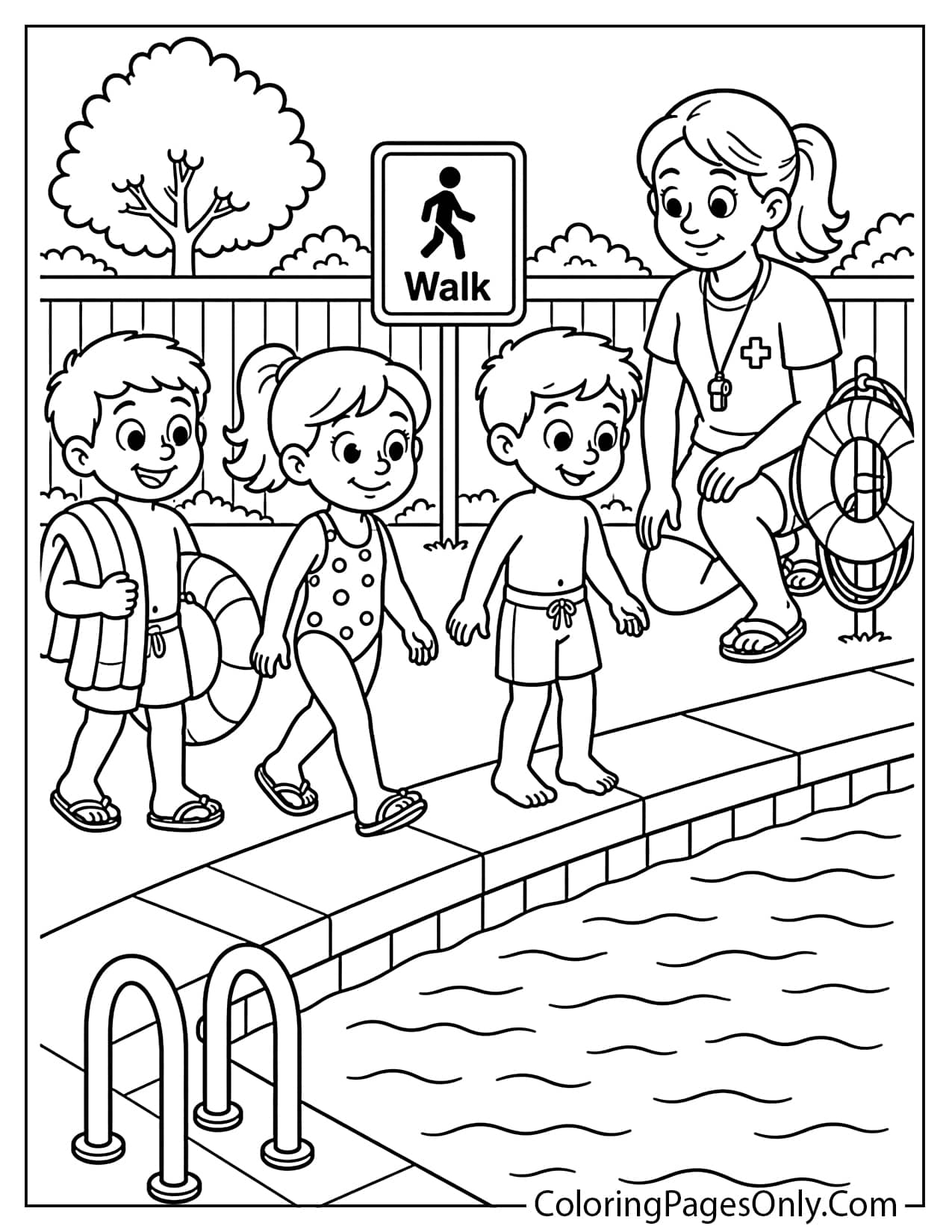
This simple craft is designed for preschool and early elementary children with adult help. Choose a page showing kids swimming, floats, beach balls, a kickboard lesson, or a pool safety scene. Materials include crayons, a large sheet of paper, glue, and three safety labels: “Stay Near an Adult,” “Walk Near the Pool,” and “Use Floats Correctly.” Children color the swimming page first, then paste it in the center of the poster. Adults can help read each safety phrase and connect it to the picture. The finished poster works for a classroom wall, summer camp room, or home reminder before pool season. Its educational value is practical because it combines fine motor practice with simple water safety language.

Freestyle Stroke Sequence Flipbook

Create a small flipbook that shows a swimming motion from one page to the next. Materials include three or four printed stroke pages, thin paper, colored pencils, scissors, a stapler, and number labels. Children color each swimmer with the same swimsuit and cap colors so the figure feels like one athlete moving through a race. Arrange the pages in order: reach, pull, breathe, and recover. Older children can compare the freestyle sequence with backstroke, breaststroke, or butterfly pages to see how each stroke changes the body shape. This project is best for ages 8–13 because it requires sequencing, comparison, and attention to motion.

Ocean and Open-Water Diorama

Use the sea swimming pages, open-water swimming page, fish, jellyfish, or buoy scenes to build a small aquatic habitat. Materials include a shoebox, blue and green paper, string, glue, scissors, crayons, and small labels. After coloring the swimmer, animals, and buoy markers, cut out selected figures and hang fish or jellyfish from the top of the box with a string. Cover the background with layered sea-glass green, deep teal, Caribbean blue, and blue-grey paper. Add labels such as “fish,” “jellyfish,” “bubbles,” “swimmer,” “buoy,” and “open water.” This craft works well for ages 6–10 and supports science vocabulary, spatial awareness, and habitat learning.

Swimming Vocabulary Flashcards

Turn the collection into reusable vocabulary cards for English lessons, summer school, or homeschool activities. Materials include printed swimming pages, index cards, glue, markers, scissors, and optional laminating sheets. Children color and cut out small objects such as goggles, swim caps, floats, pools, lane ropes, fish, splashes, balls, medals, kickboards, starting blocks, and buoys. Paste one object on each card and write the word underneath. Older children can add a sentence on the back, such as “The swimmer wears goggles” or “The relay swimmer waits near the starting block.” This project works for ages 5–11 because it can be simplified into picture-word matching or expanded into sentence writing.

Frequently Asked Questions

What is swimming?

Swimming is the movement of the body through water using coordinated arm, leg, and breathing actions. It can be a survival skill, a recreational activity, a fitness exercise, or a competitive sport. In sports settings, swimming includes strokes such as freestyle, backstroke, breaststroke, and butterfly. In this coloring collection, the topic appears through Olympic swimmers, pool races, children in pools, sea animals, floats, goggles, kickboards, and open-water scenes.

When did swimming become an organized competitive sport?

Competitive swimming did not come from one single creator. It developed over time from human water skills, local races, swimming clubs, and organized sports programs. World Aquatics notes that swimming has been part of the modern Olympic Games since the 1896 Games in Athens, while FINA was founded in London on July 19, 1908, to organize aquatic sports internationally. Women’s aquatic events were first contested at the Stockholm Olympic Games in 1912, which became an important milestone in the sport’s growth.

Why are Olympic swimmers important in this collection?

Olympic swimmers give the collection a stronger sports identity than ordinary pool-play pages alone. Athletes such as Michael Phelps, Katie Ledecky, Léon Marchand, Ariarne Titmus, Bobby Finke, Torri Huske, and Kaylee McKeown connect the pages to real competition, medals, national teams, and training discipline. Michael Phelps is widely known as the most decorated Olympian, while Katie Ledecky is strongly associated with distance freestyle events. These pages also create good opportunities for classroom research, medal crafts, and Olympic bulletin boards.

What kinds of swimming scenes are included?

The collection includes competitive pool racing, Olympic-style swimmers, children learning to swim, pool play, beach balls, floats, fish, jellyfish, dogs, monkeys, stroke-specific pages, diving starts, relay scenes, medal moments, and open-water swimming. Some pages are simple enough for preschool children, while others have more detailed goggles, lane ropes, splashes, starting blocks, and athlete poses. Pool scenes are useful for safety conversations, while ocean and open-water scenes support habitat and summer-theme learning. This range helps parents and teachers choose a page that fits the child’s age, patience, and activity goal.

Why do swimming pages often include goggles, caps, lane ropes, and splashes?

These details help the viewer immediately recognize swimming as a sport. Goggles protect the eyes and create a distinct athlete look, while swim caps help organize the head shape and can represent team colors. Lane ropes divide swimmers during races and create strong, repeating patterns for coloring. Splashes show movement, speed, and contact with water, making the page feel active rather than still.

What swimming skills or ideas can children learn from these pages?

Children can learn visual ideas connected to floating, kicking, reaching, breathing, pool lanes, race starts, relay teamwork, and safe water play. Stroke-specific pages can introduce freestyle, backstroke, breaststroke, and butterfly through body position and splash shape. Swim lesson pages with kickboards can support conversations about practice and confidence, while pool safety pages remind children to stay near an adult. Open-water scenes also show that swimming outside a pool has different surroundings, including waves, buoys, and wider water space.

What age group are these Swimming Coloring Pages best suited for?

The simplest swimming pages with floats, beach balls, cartoon animals, kickboards, and large pool shapes can work from about age 3 with adult supervision and thick crayons. More detailed Olympic swimmer pages, lane-rope patterns, goggles, medals, diving starts, relay scenes, and ocean backgrounds are better for ages 7–12 because they require smaller hand movements and more patience. Teen colorists and adults can also use the athlete and stroke pages to practice water shading, sports composition, and layered color techniques. The best choice depends on outline complexity, not only the swimming theme.

How can these pages support water safety awareness?

Swimming coloring pages give adults a calm visual tool for talking about water before a child enters a pool, lake, or beach area. A float or kickboard page can lead to a reminder that swimming tools help but do not replace adult supervision. A pool safety page can introduce simple rules, such as walking near wet surfaces and staying where an adult can see you. This makes the collection useful for preschool lessons, summer camps, family preparation, and health-themed classroom activities.

Swimming has a visual language children understand quickly: blue water, steady breath, bright floats, moving arms, lane ropes, race starts, and white splashes near the surface. In this collection, that language appears in both playful and athletic ways, from a child learning to swim with a kickboard to an Olympic racer cutting through a lane.

Browse the full collection at ColoringPagesOnly.com. All 38+ pages free, no sign-up, PDF or PNG, print at home or color online.

These pages fit many real moments: a rainy afternoon, a summer classroom lesson, an Olympic sports unit, a pool-safety reminder, or a first conversation about open-water swimming. They also give colorists a useful challenge, because water is simple to recognize but difficult to color well.

For the final pass, keep some splash lines white and use darker blue only where the water needs depth. A few untouched highlights can make the whole swimming scene look brighter.

Share your work on Facebook and Pinterest and tag #Coloringpagesonly. We especially want to see your Olympic Swimming Medal Card and Ocean and Open-Water Diorama.

These related coloring collections will help you explore the wonderful world of colors. Let’s choose, be creative, and show us your great pictures!

Charlotte Taylor – Writer

I'm Charlotte Taylor, a former preschool teacher turned content creator at Coloringpagesonly.com. Fueled by my love for children and a deep passion for exploring the world through colors, I’m dedicated to inspiring creativity and spreading a vibrant, positive artistic spirit to all.