Free Talking Tom coloring pages – 20+ pages featuring Tom in action, Tom with Angela, Tom with Ginger, the full character lineup, plus holiday, activity, and emotion scenes – free printable PDF and online coloring for kids who love the app and the animated series.

Talking Tom was first released on July 6, 2010, by Outfit7 Limited – a startup founded in Ljubljana, Slovenia – as a simple iPhone application. The premise was almost absurdly minimal: a gray cartoon cat that repeated whatever you said in a funny, pitch-shifted voice and reacted when you poked, petted, or tickled it. Within two weeks of release, it had reached number one in the App Store in 28 countries. Within its first year, it had been downloaded over 100 million times – making it, at that point, the most downloaded app on the App Store.

From that starting point, Outfit7 built one of the most successful mobile entertainment franchises in the world. The Talking Tom and Friends universe now includes over 20 apps, an animated YouTube series with over 20 billion views, merchandise, and a fan community spanning virtually every country in the world. The character that started it all – a gray cat who talks back – remains the franchise’s center of gravity.

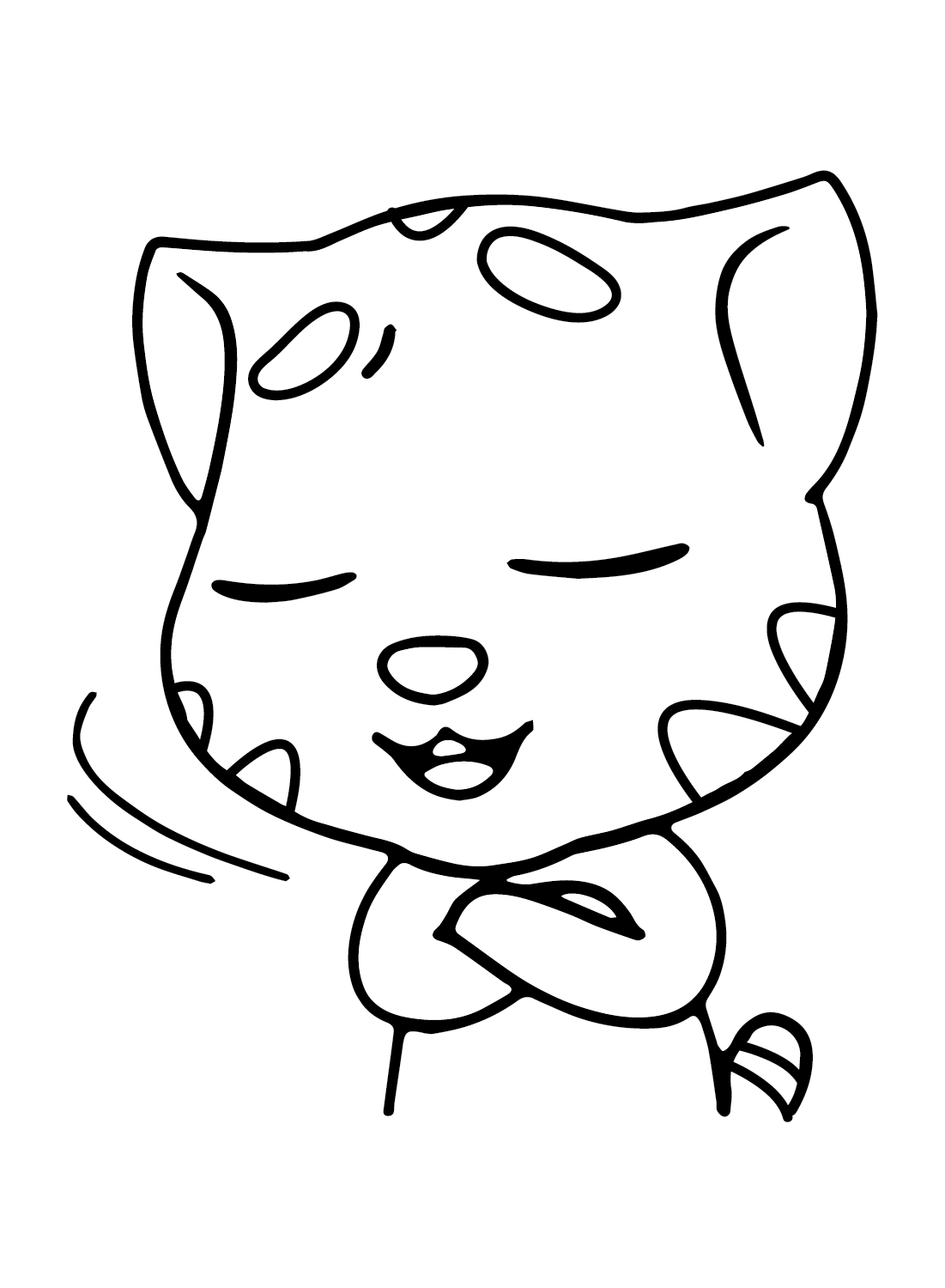
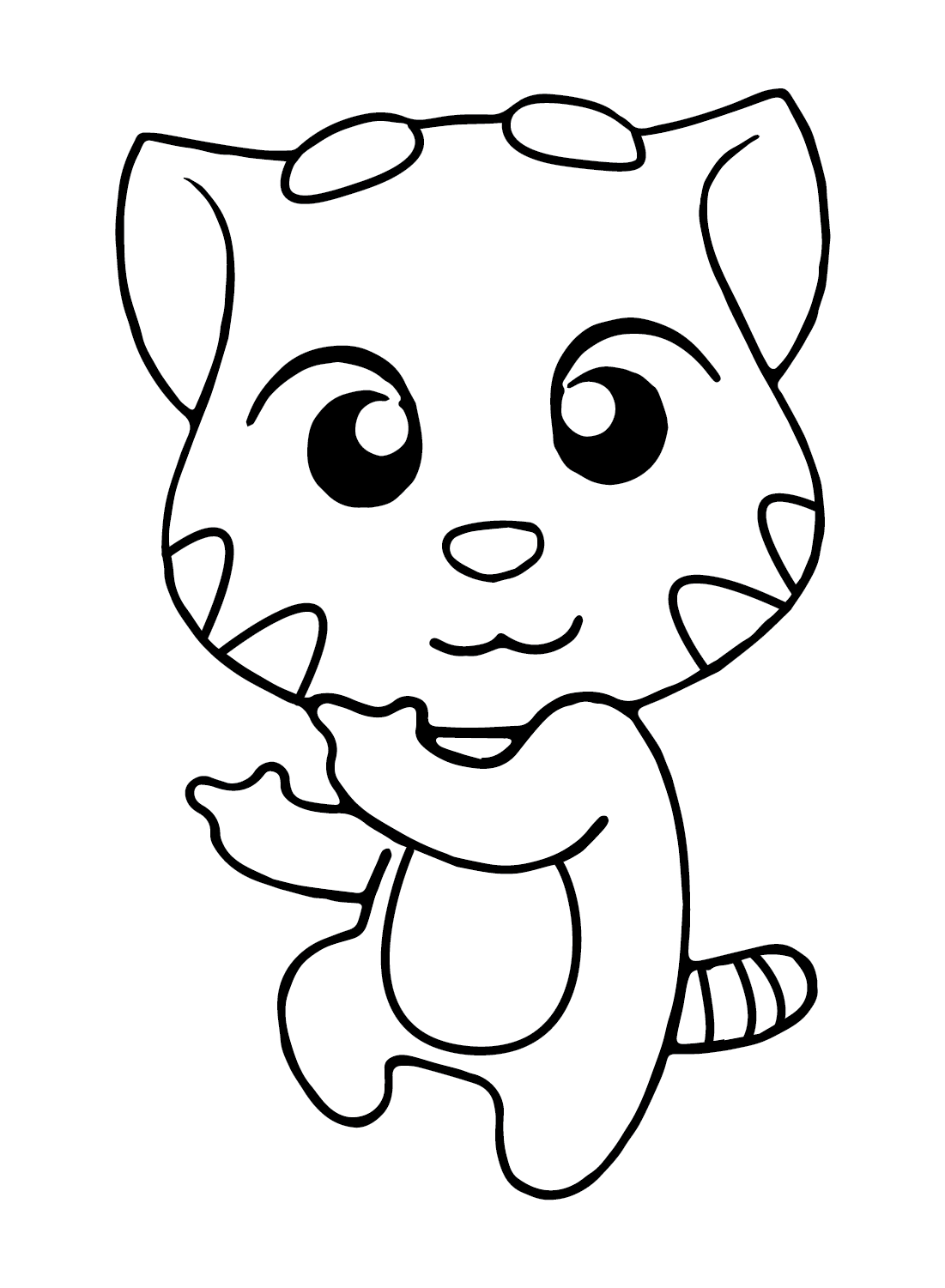
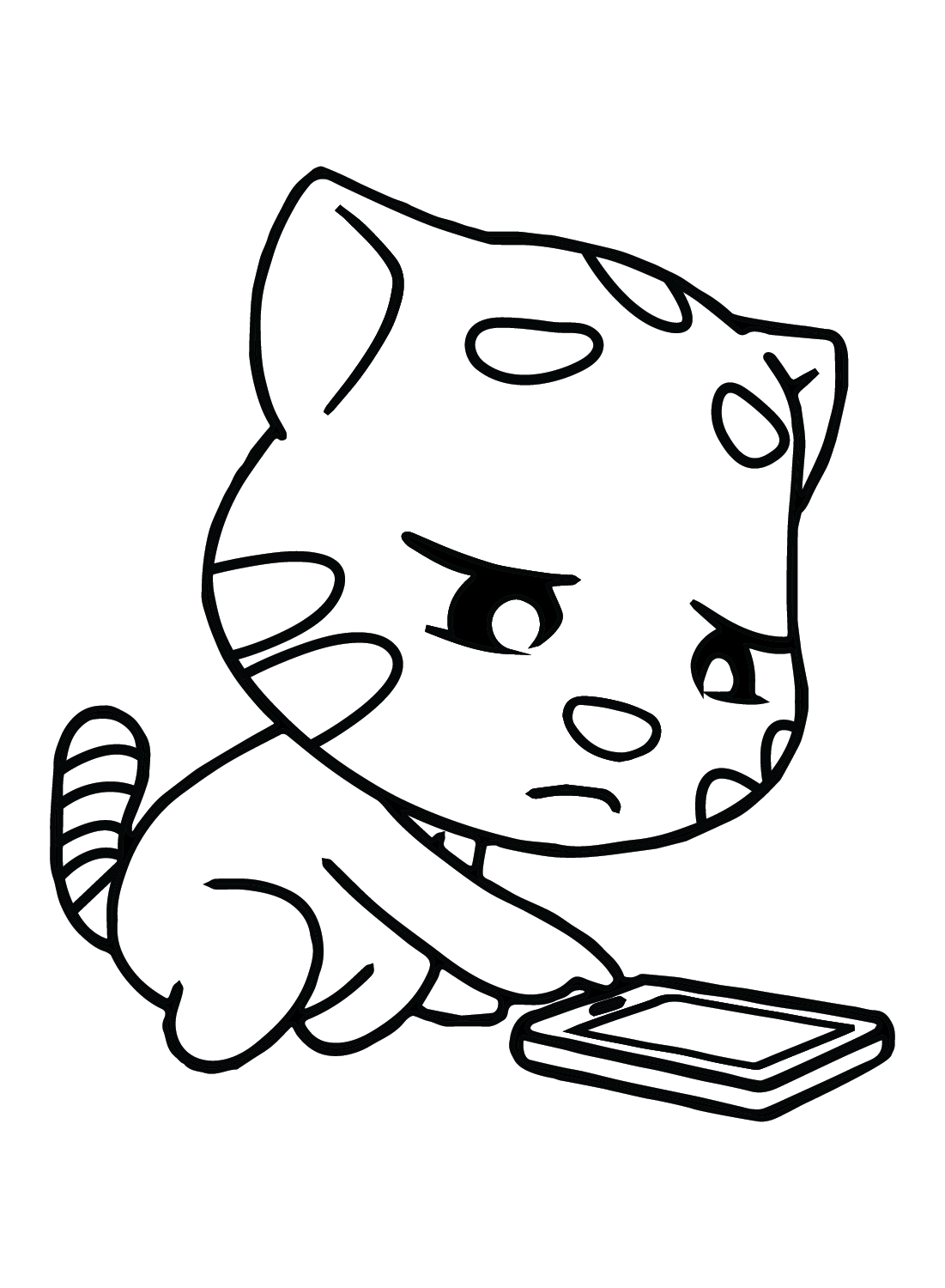
These 20+ free pages at ColoringPagesOnly.com cover Tom across his full range: happy, sad, skateboarding, eating watermelon, singing with Angela, dressed as a reindeer, and injured alongside Squeak the mouse. All free, PDF or PNG, print or color online.

What’s Inside

Tom Solo – The Full Emotional Range

What makes the Talking Tom character genuinely interesting from a coloring perspective is that the franchise has always emphasized emotional expressiveness. Tom laughs, sulks, panics, celebrates, and grieves in ways that the original app’s animation established and the Talking Tom and Friends YouTube series expanded significantly. The solo Tom pages in this collection cover that full range.

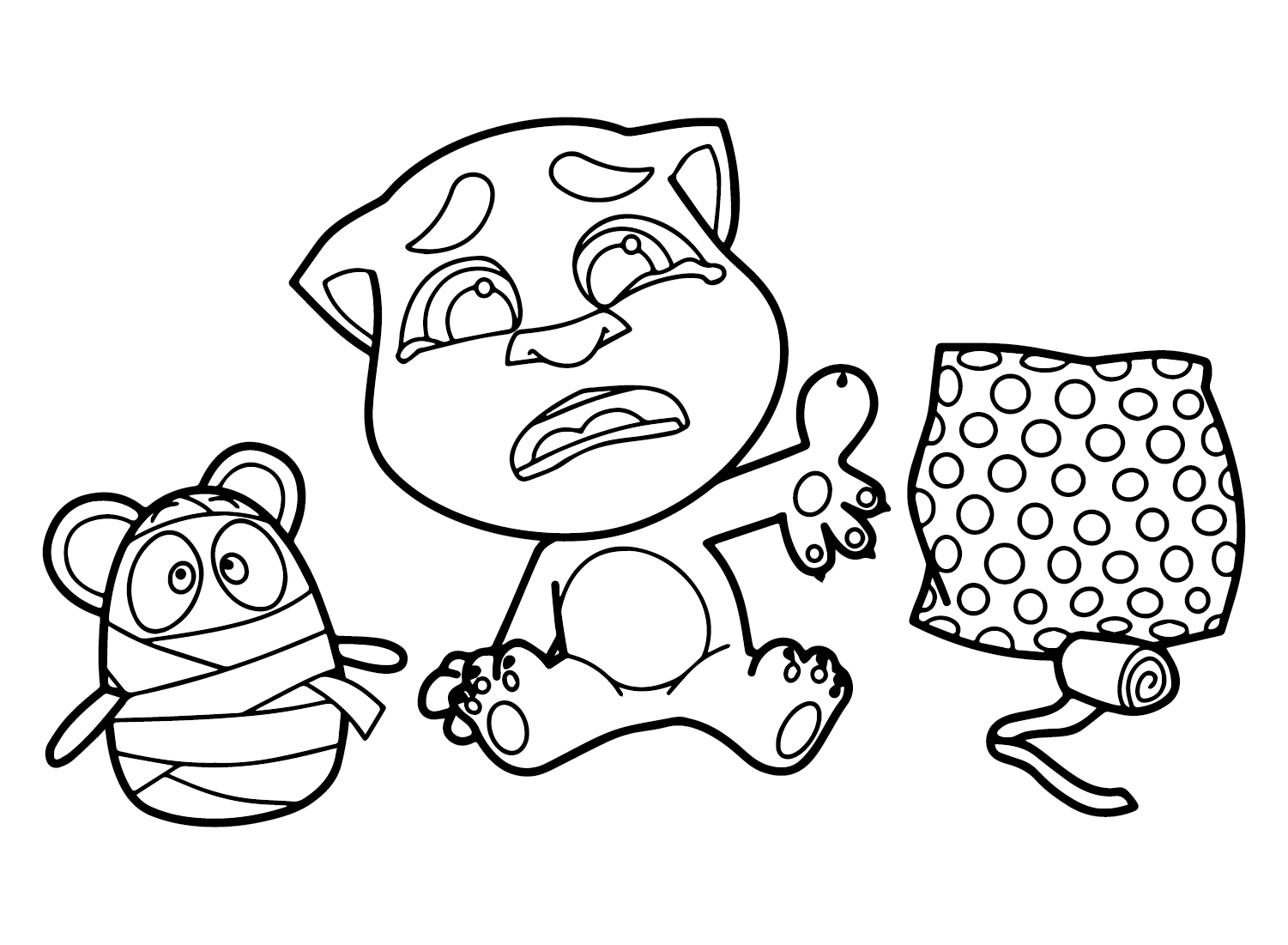
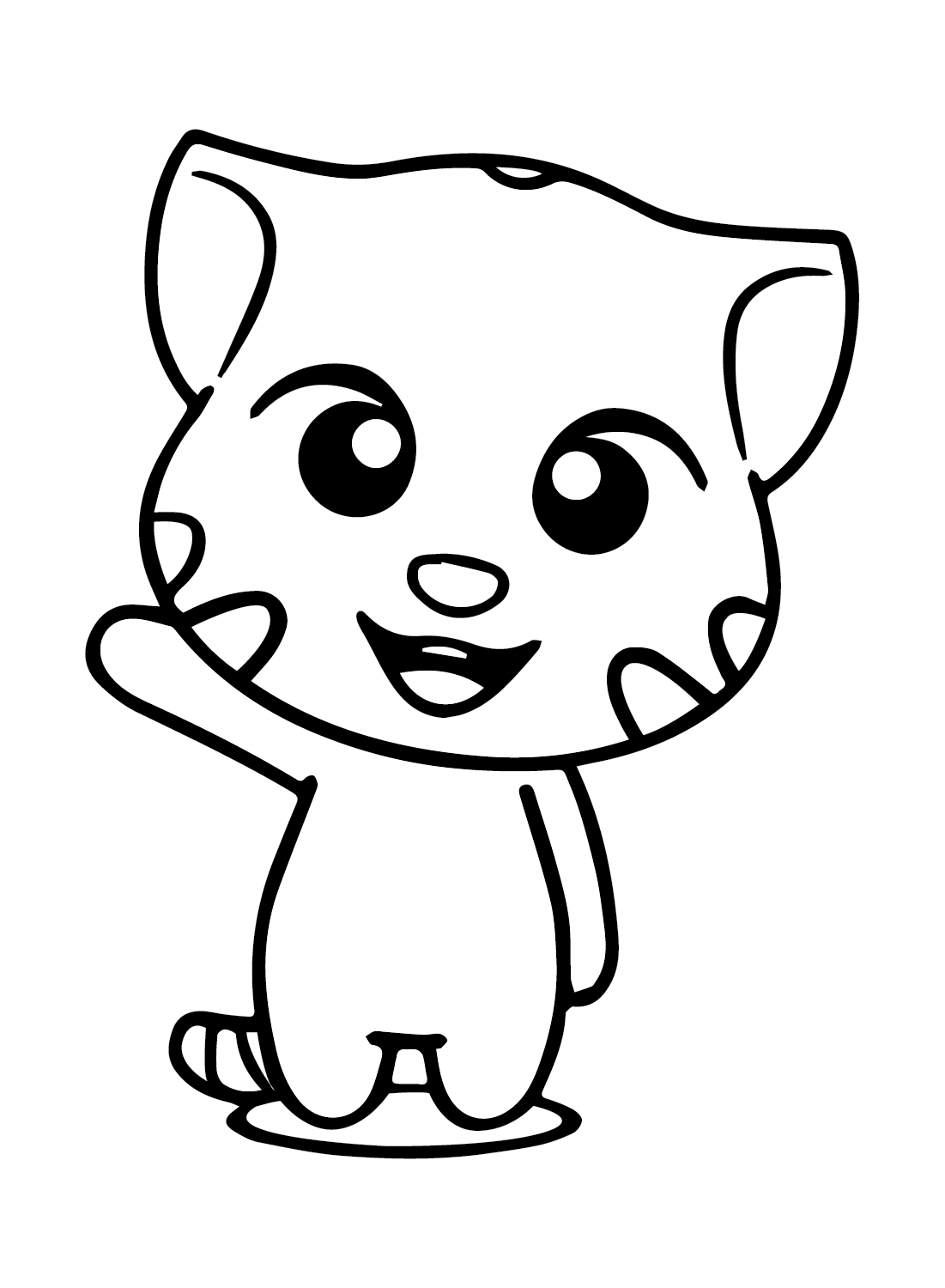
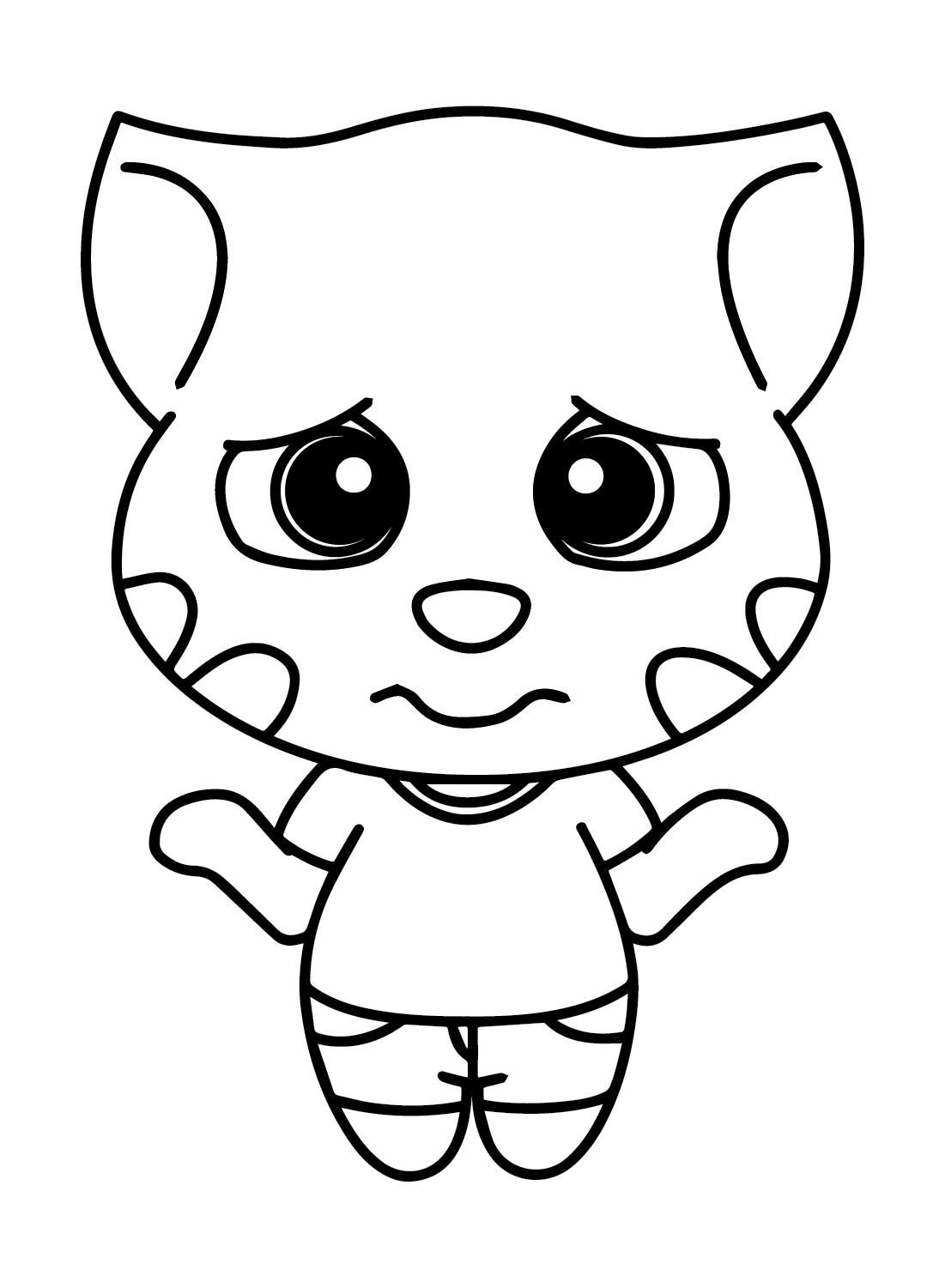
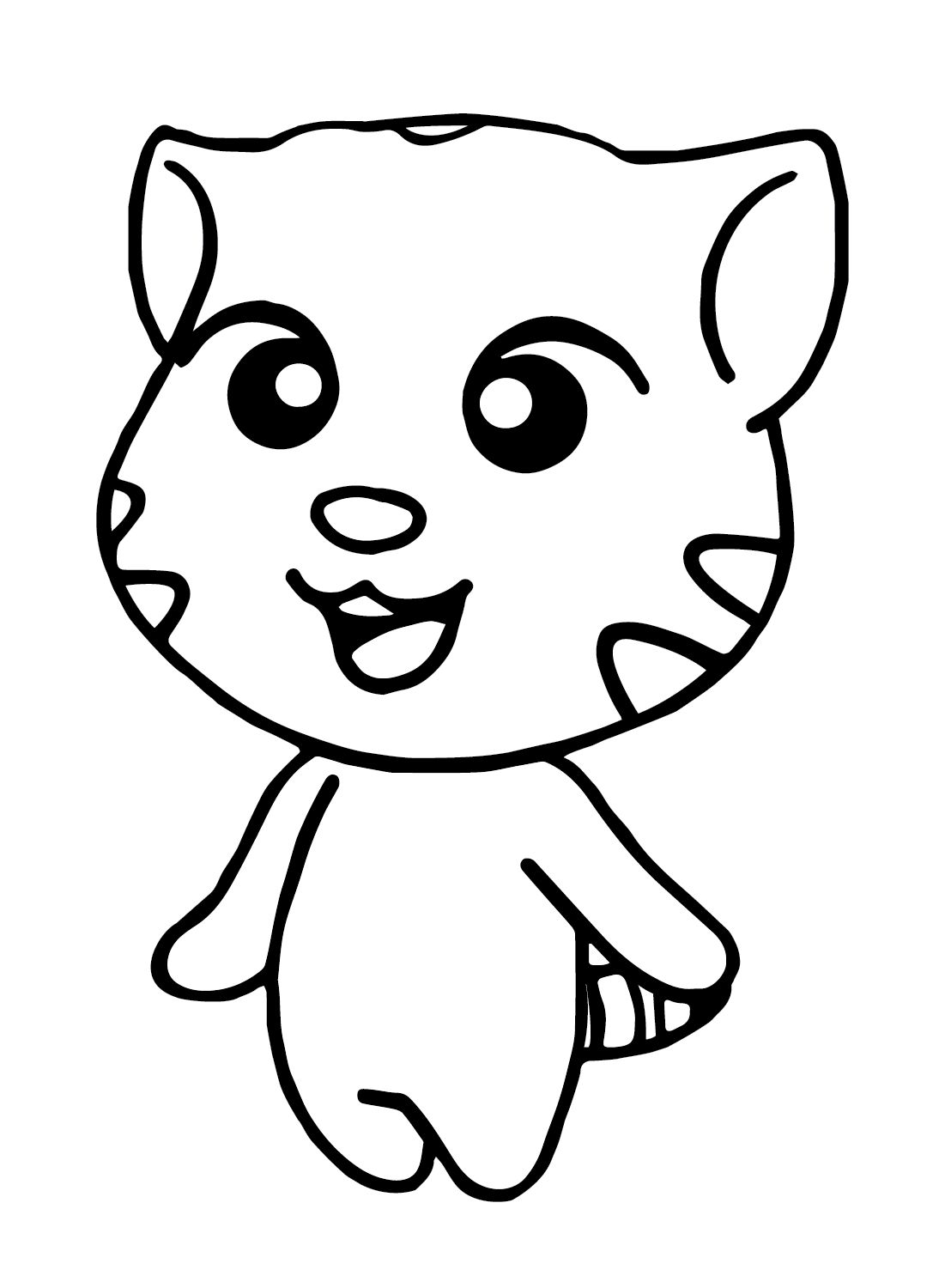
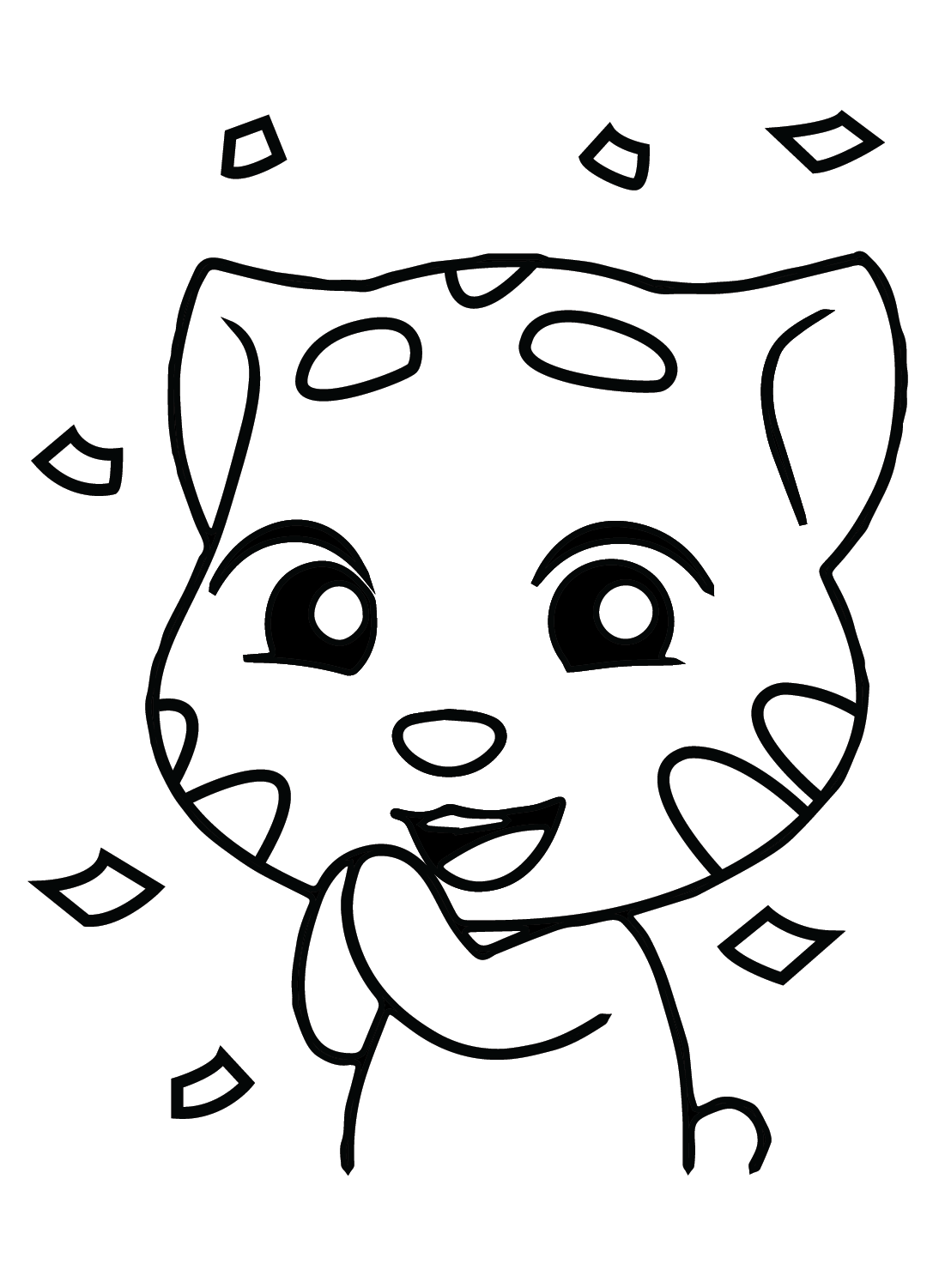
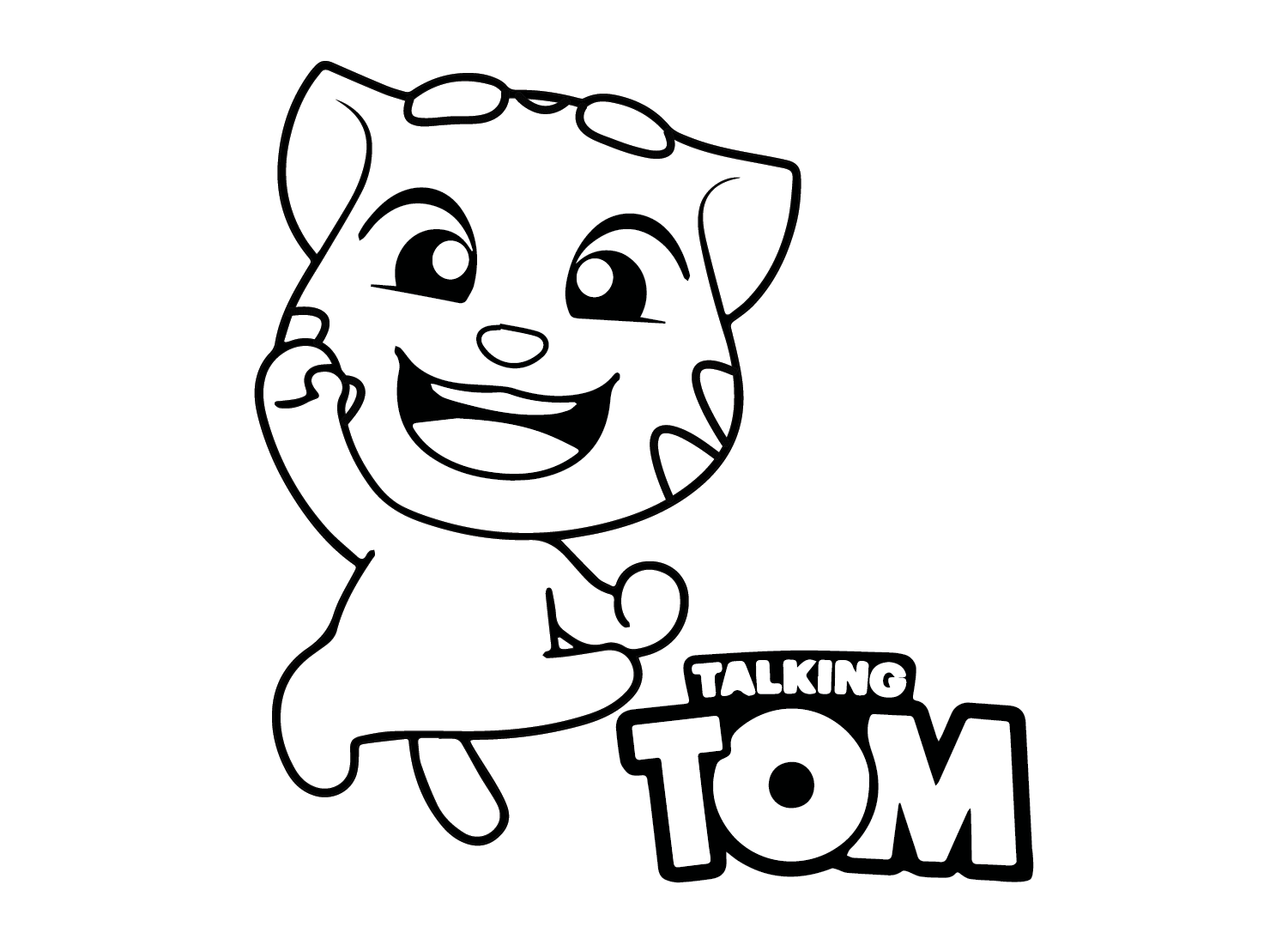
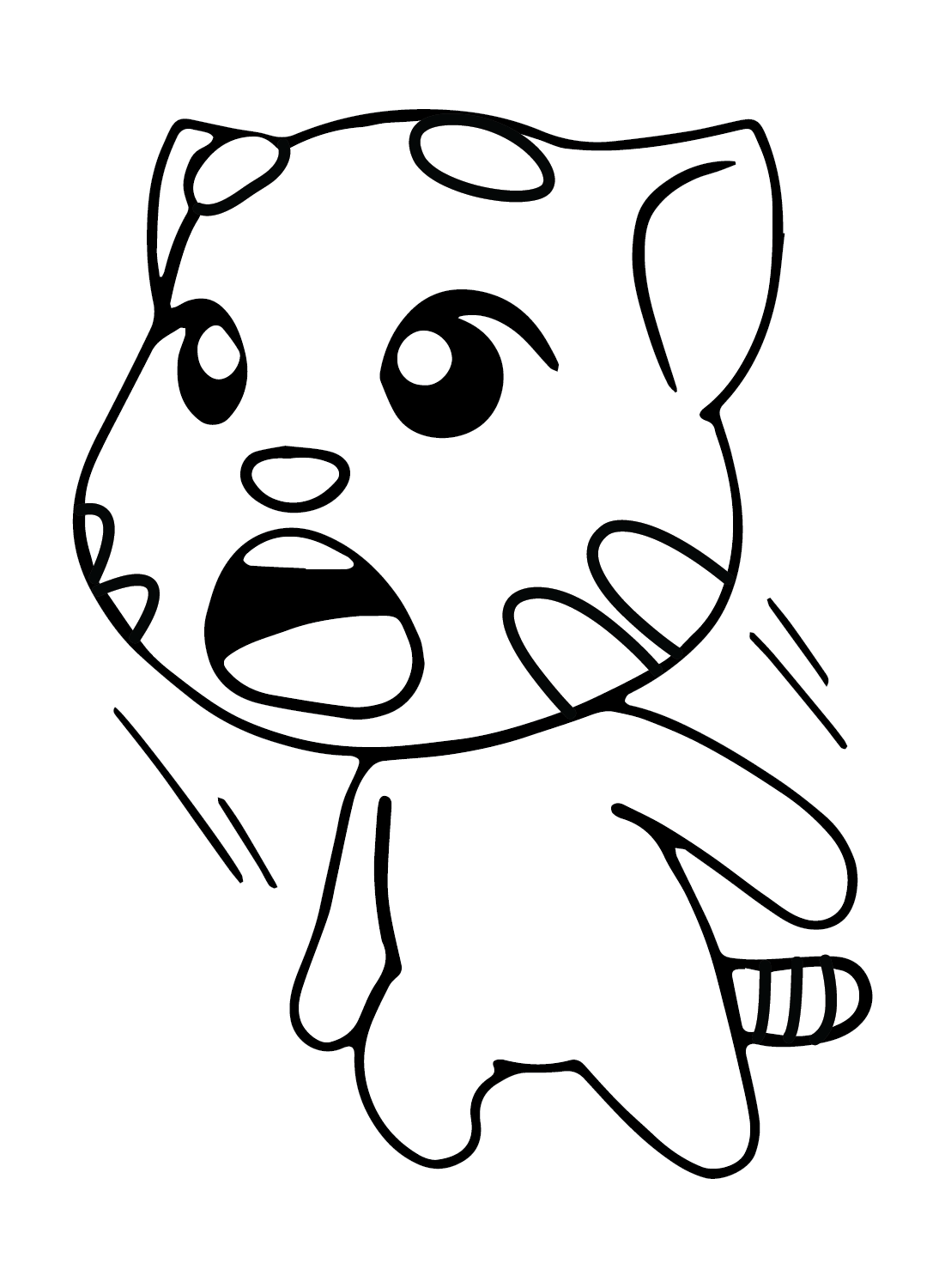
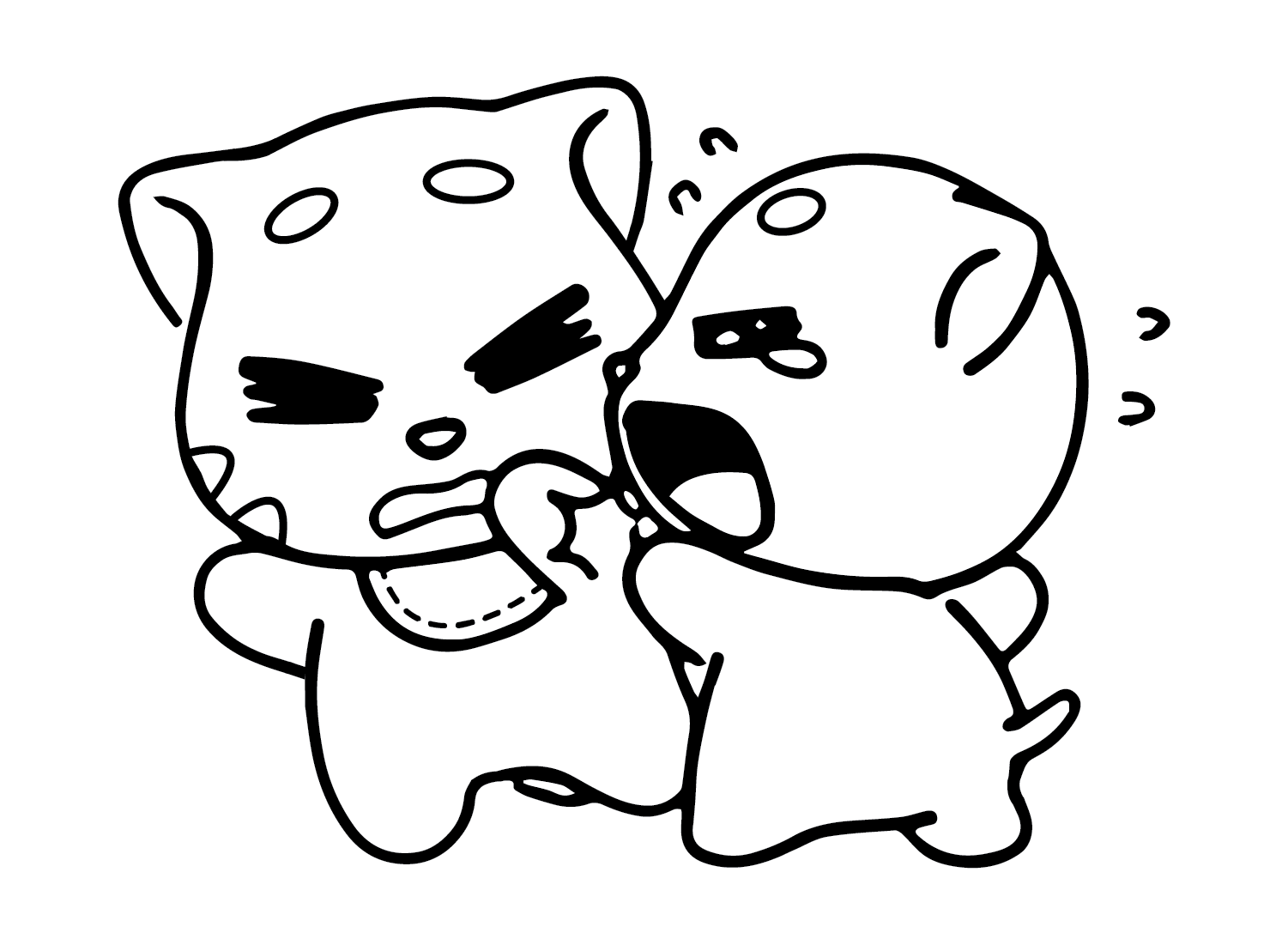
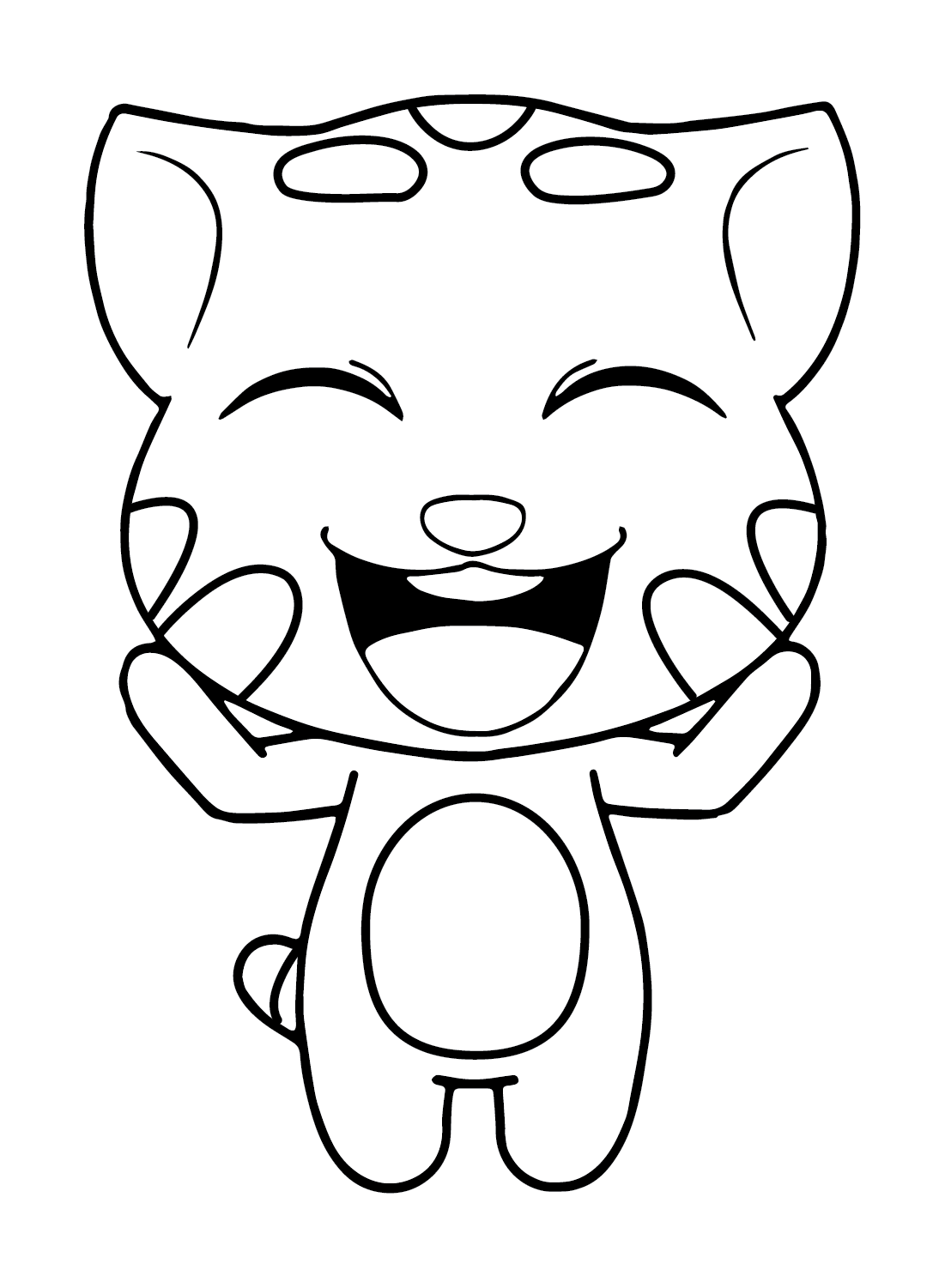
Talking Tom Happy is the default mode – the widest grin, the upright posture, the energy that communicates “everything is going well, and I have opinions about it.” Talking Tom Sad is the opposite: the downturned mouth, the slumped posture, the expression that children respond to with immediate empathy. One of the more quietly interesting decisions the Outfit7 animators made was giving Tom genuinely readable sadness – not just a neutral expression, but the specific visual language of someone who is disappointed and wants the person looking at them to notice. Talking Tom Injured shows Tom with a bandage on his forehead alongside a heavily bandaged Squeak, which captures the franchise’s consistent interest in depicting minor physical comedy with a level of visual drama that makes it immediately funny.

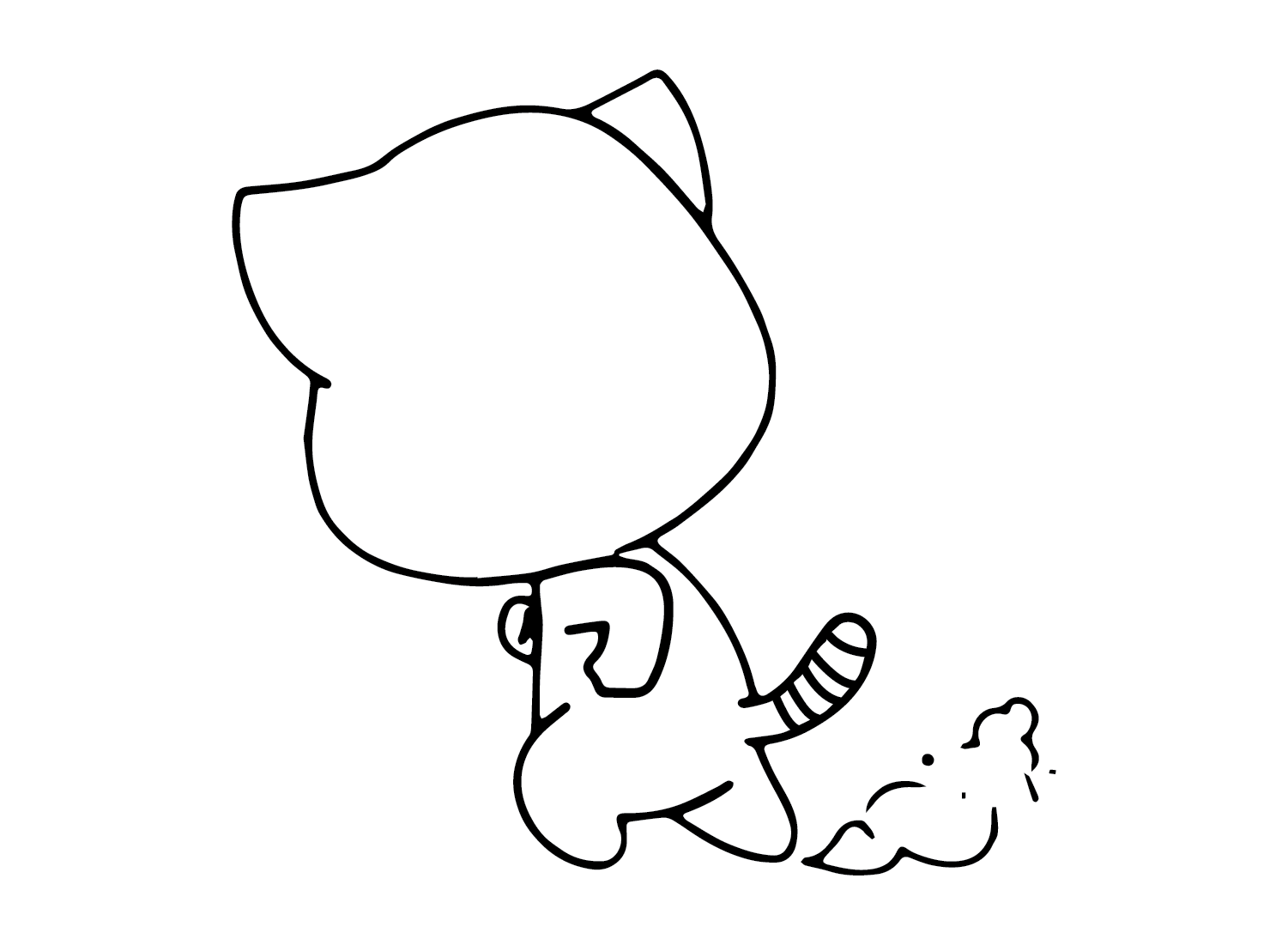
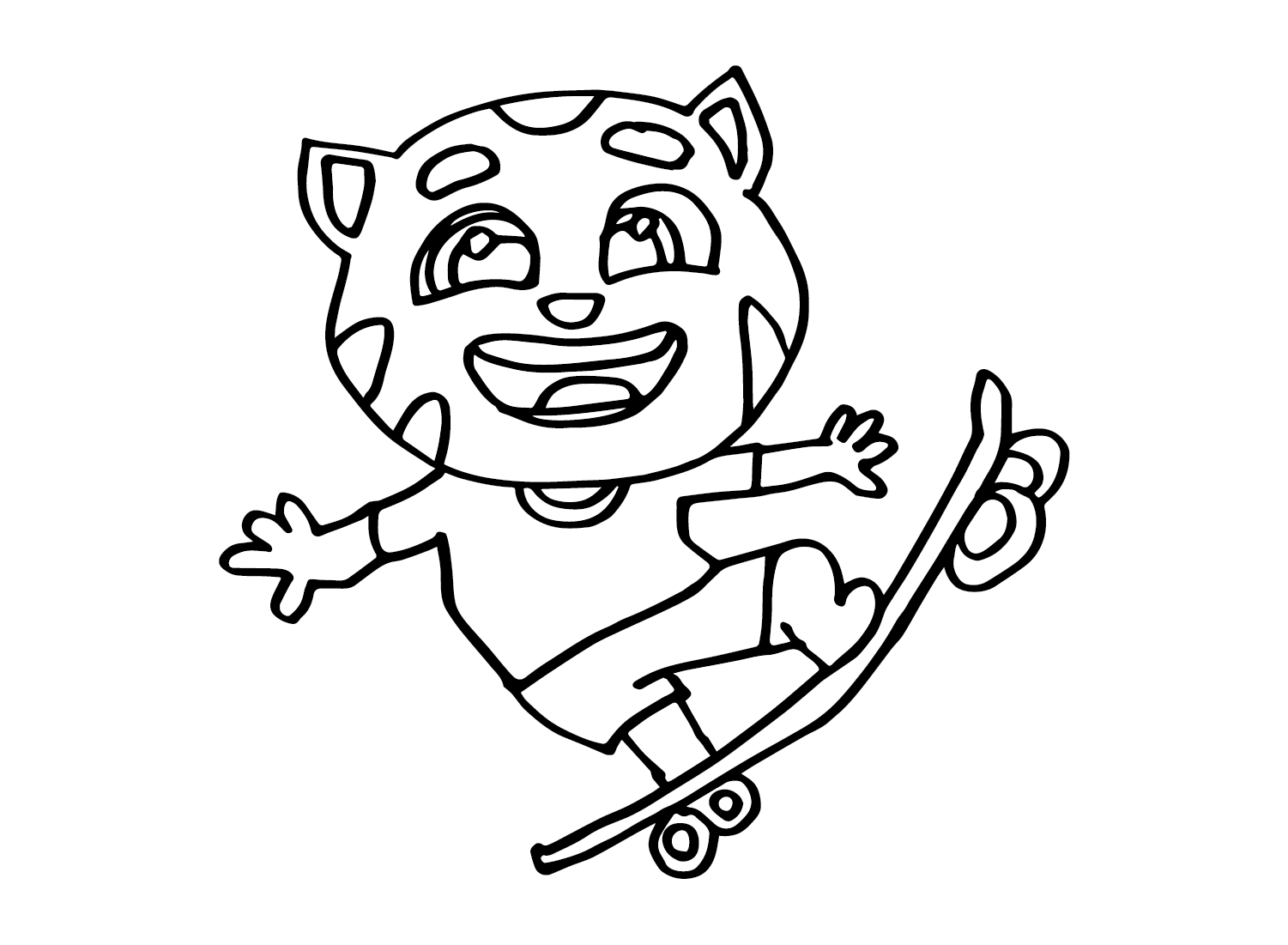
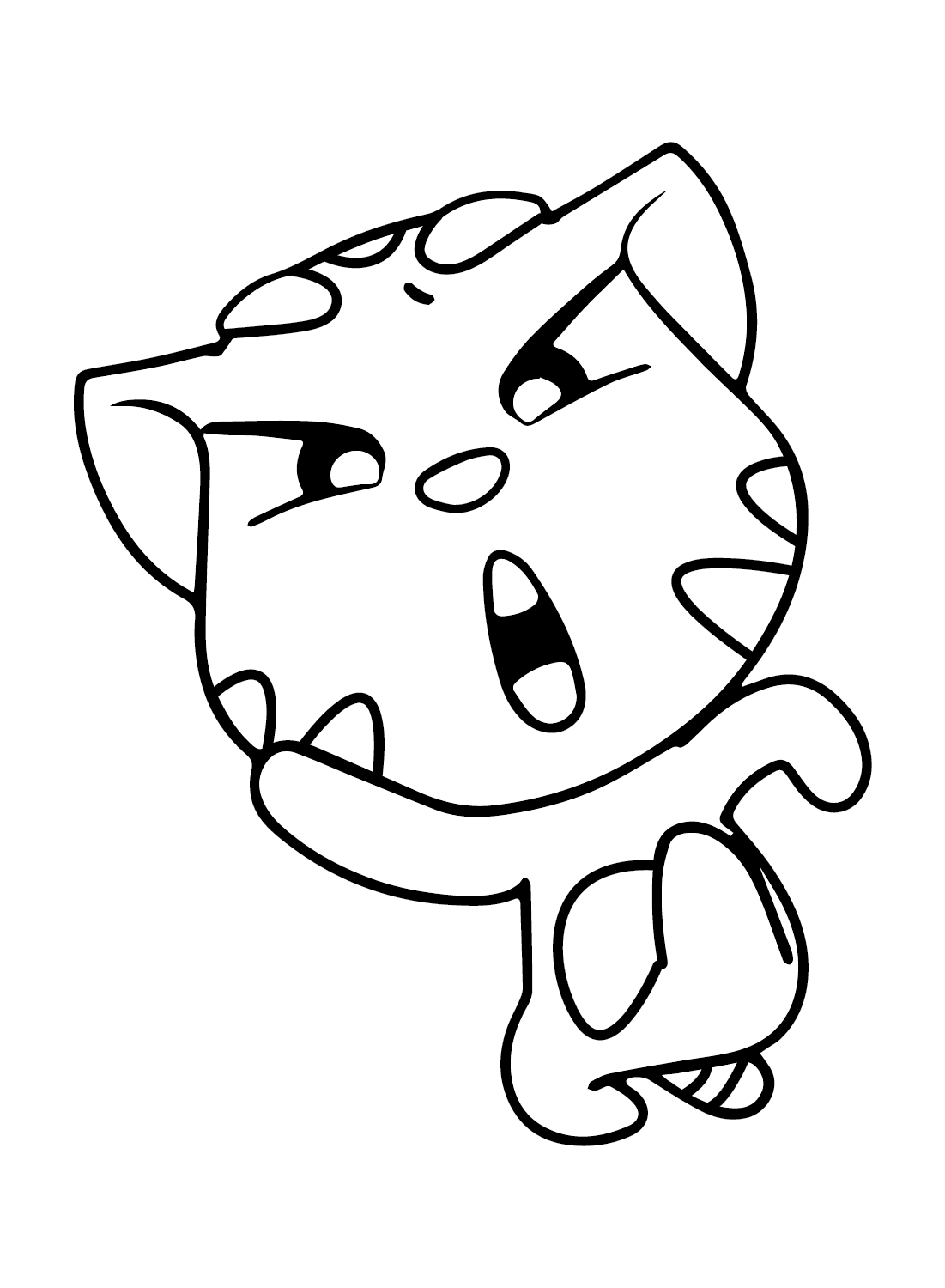
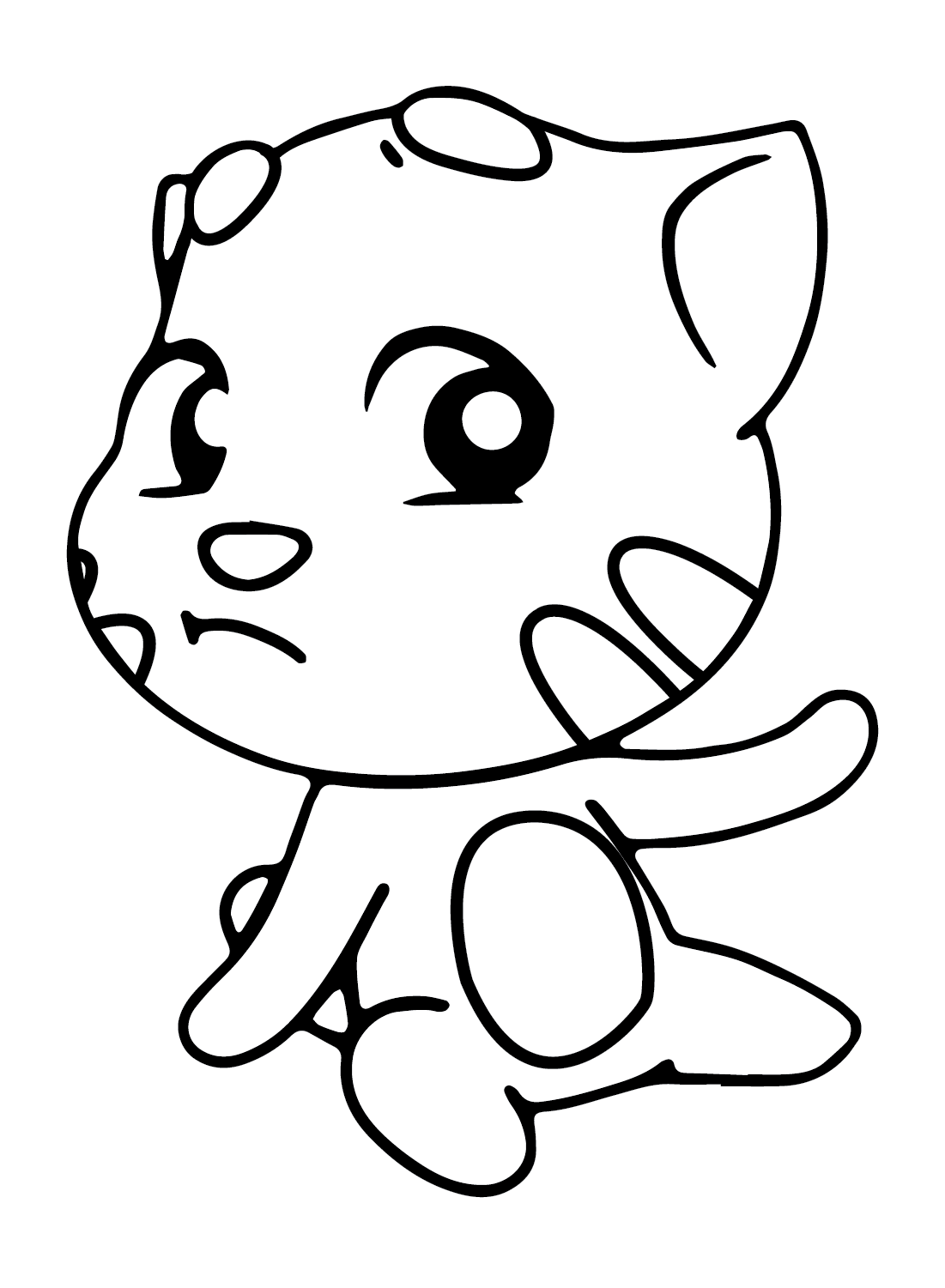
Talking Tom Run captures the character in full sprint – the action posture that Tom Gold Run, one of Outfit7’s runner games, made globally familiar. Talking Tom Skateboarding shows him on a skateboard with a slightly terrified expression during what appears to be a kickflip, which is an accurate emotional response to attempting a kickflip.

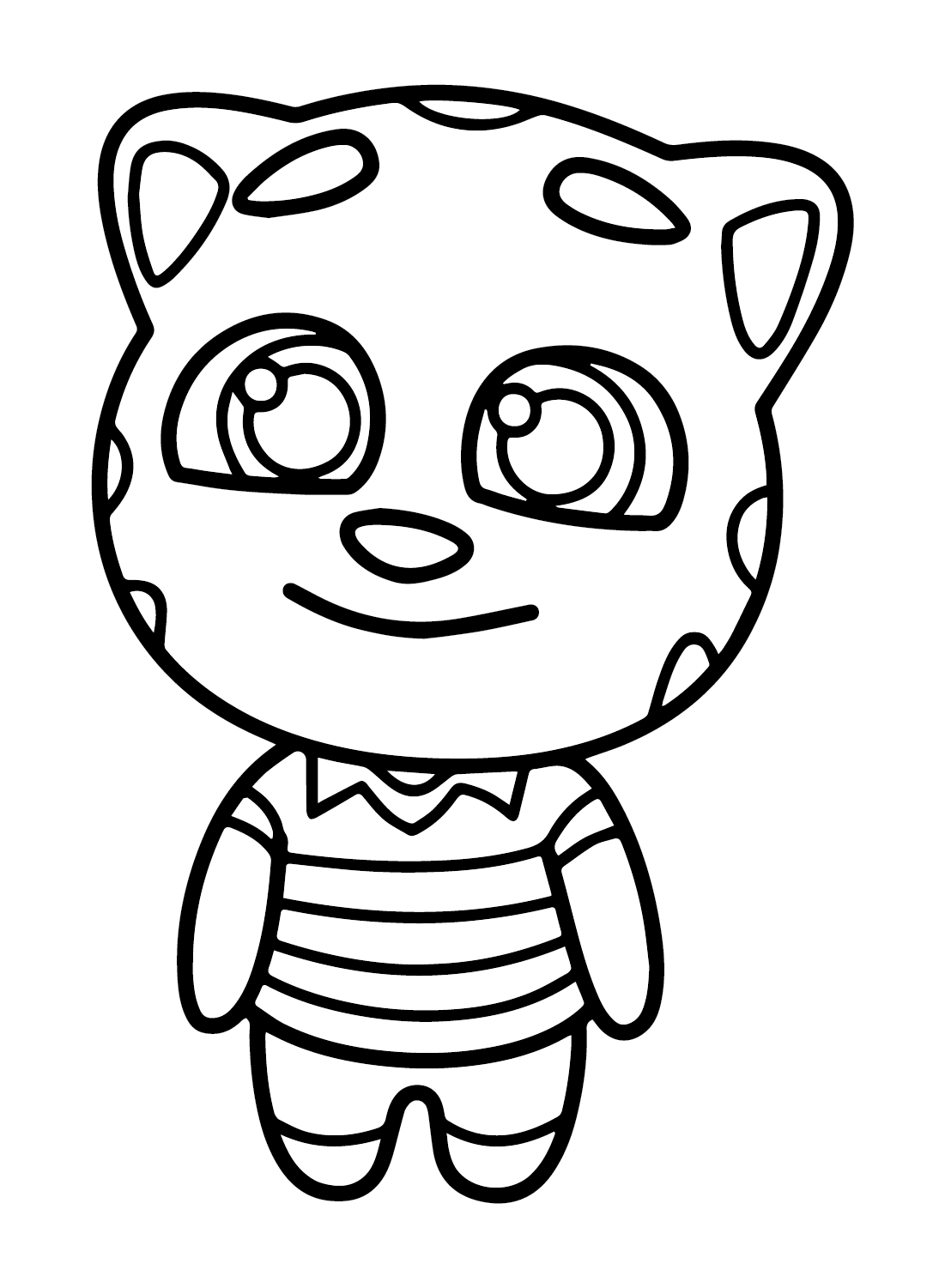
Talking Tom Plush depicts the merchandise version of the character – rounder, softer, designed to translate into stuffed toy form – which is a different visual register from the app or series character and rewards a slightly softer coloring approach.

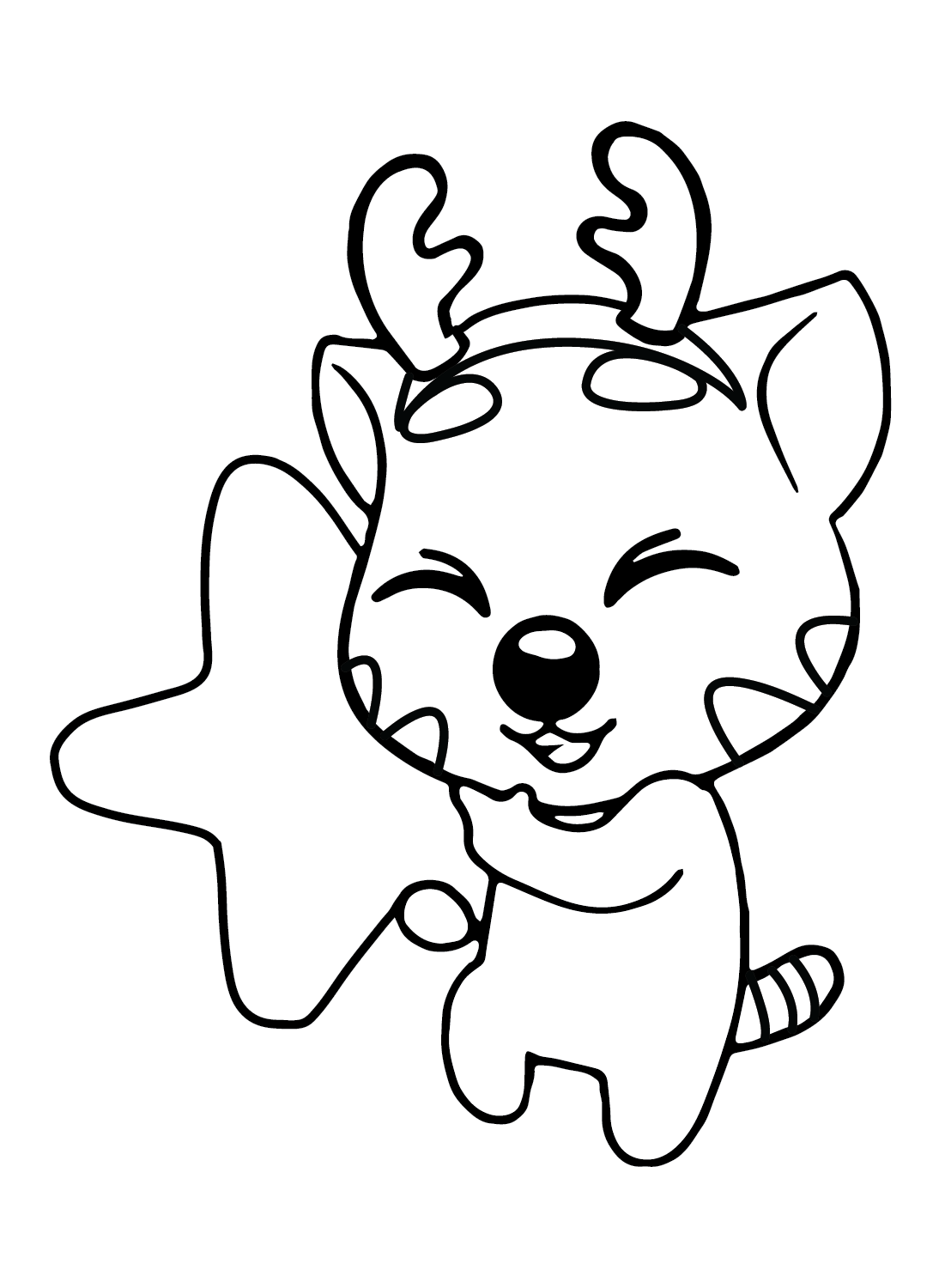
Talking Tom Reindeer is the franchise’s reliable holiday content: Tom in reindeer antlers with a red nose, which children find immediately charming because it is Tom but also absolutely a reindeer, and both of these facts are true simultaneously.

Tom with Angela

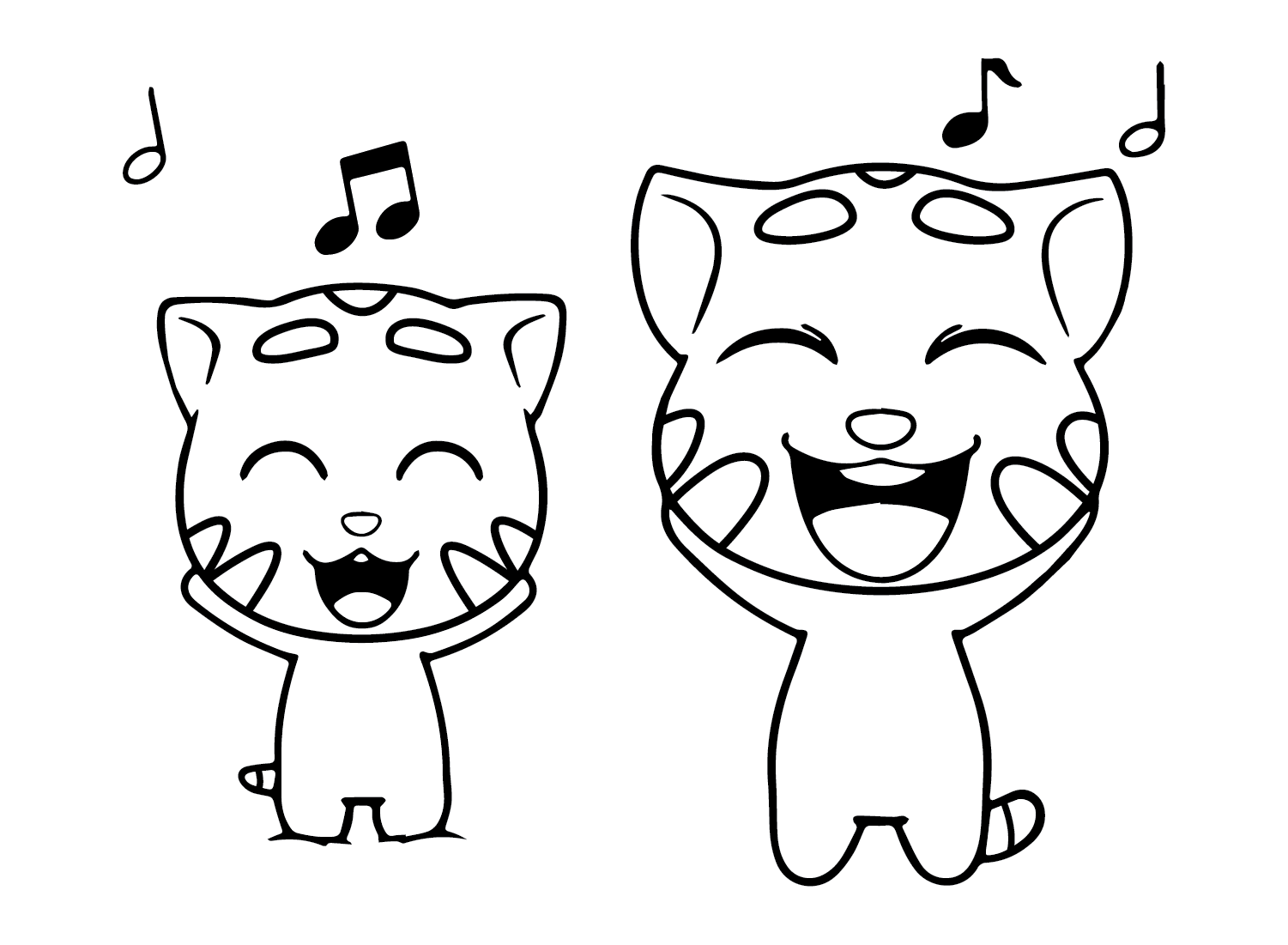
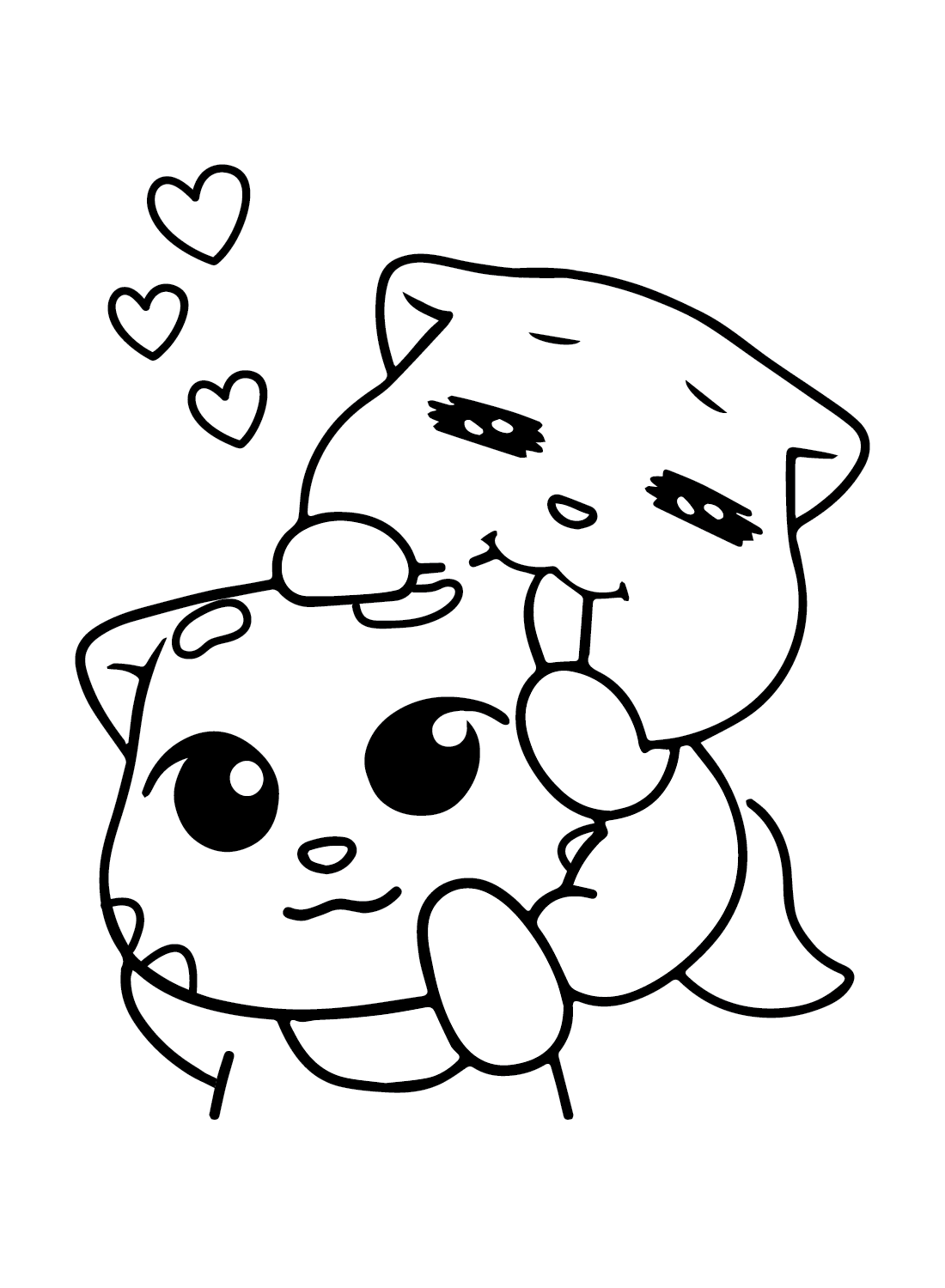
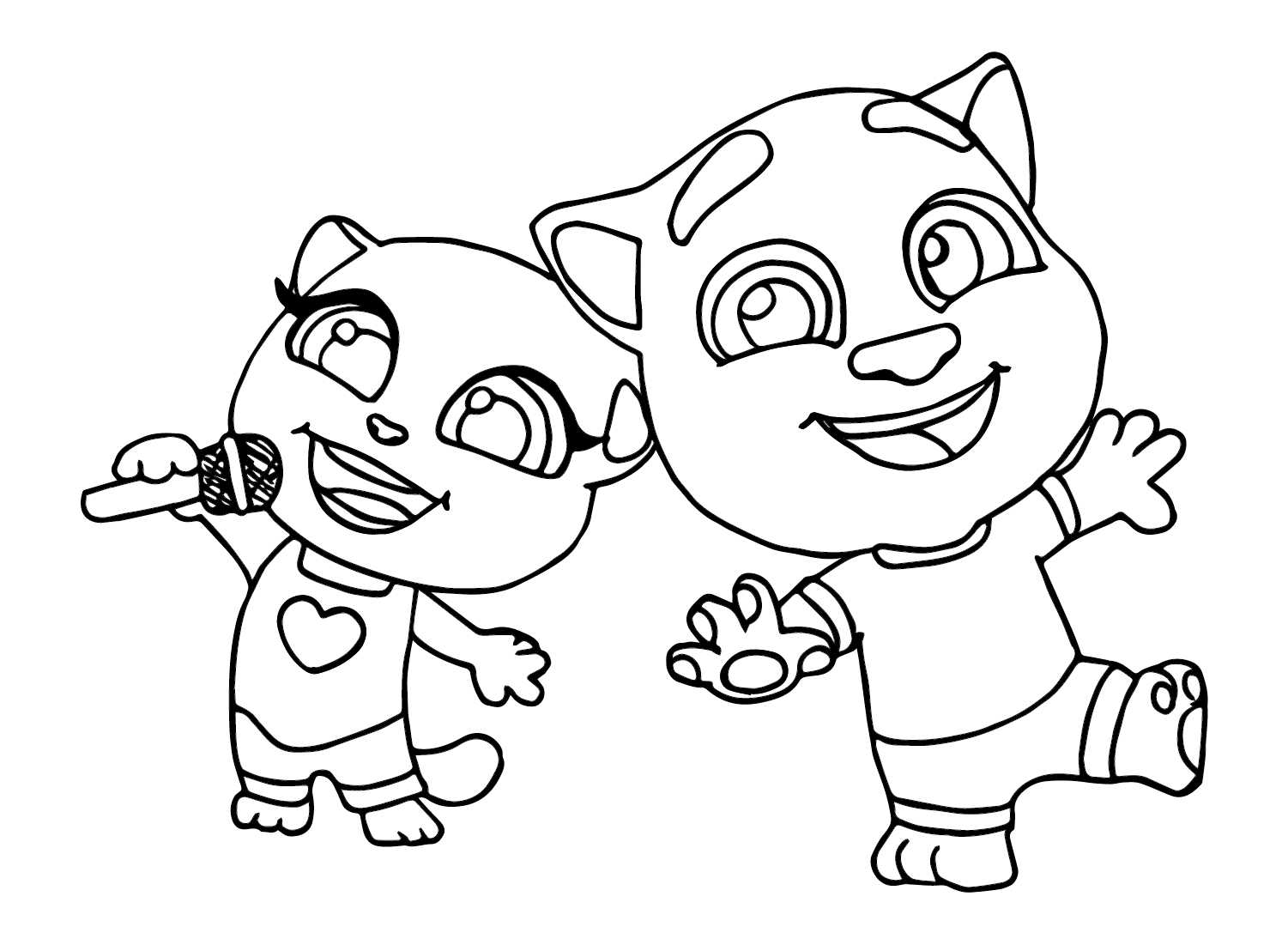
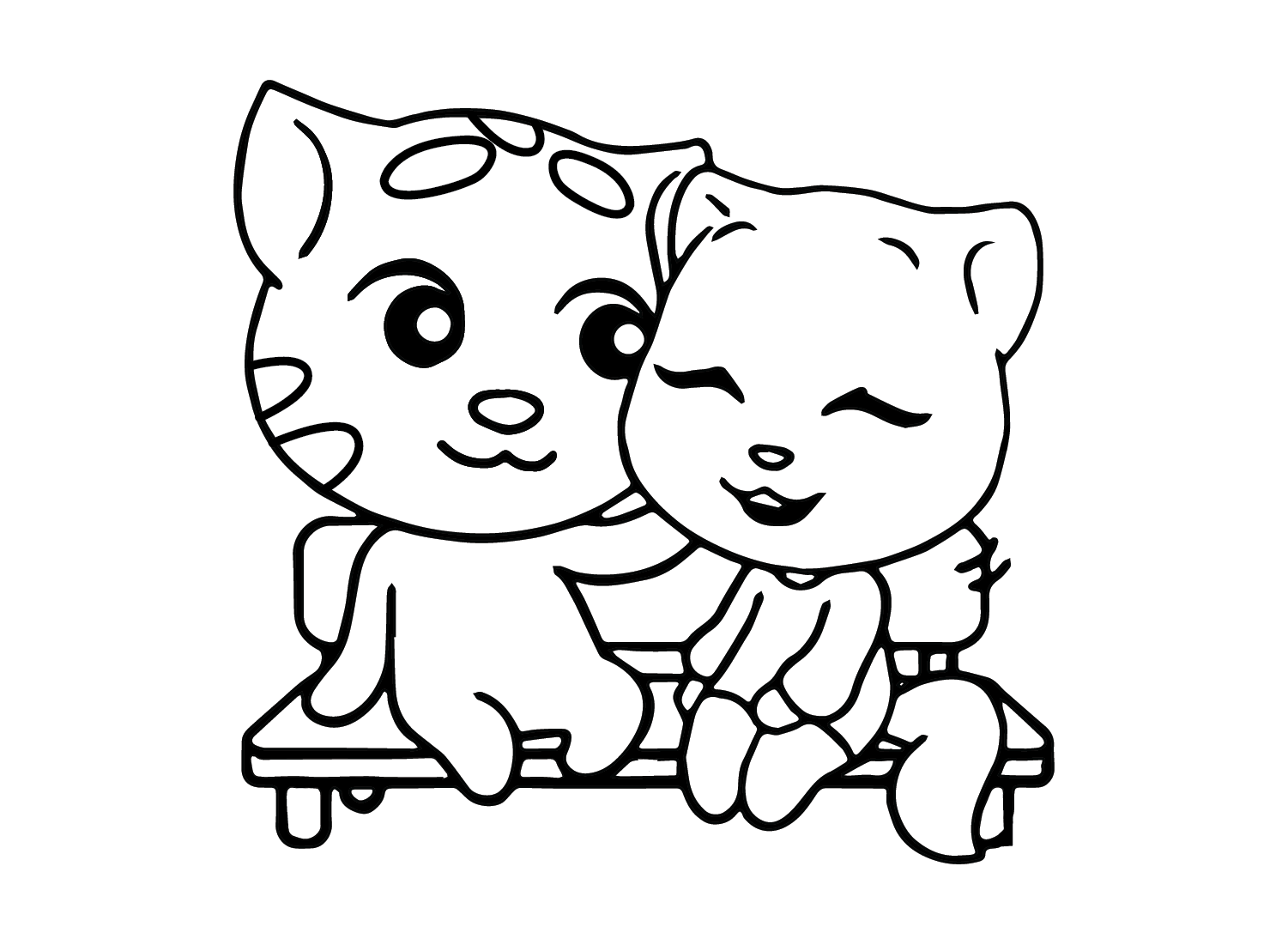
Talking Angela and Tom, Talking Tom and Angela Sing, and Talking Tom and Angela are the pages that represent the central romantic relationship of the franchise – Tom and Angela, who began as separate app characters and eventually became a couple whose relationship drives significant portions of the Talking Tom and Friends animated series.

Talking Angela – the white cat with large expressive eyes who loves music and fashion – was introduced as a separate app in 2012 and became one of the most downloaded apps of that year, accumulating over 300 million downloads in her first year. She and Tom have a complementary visual dynamic: Tom’s grey and casual against Angela’s white and elegant. Coloring the duo pages requires managing this contrast – keeping Tom’s warm grey distinct from Angela’s cooler, brighter white while ensuring both characters read clearly against whatever background color you choose.

The Talking Tom and Angela Sing page – both characters at a microphone, Angela holding it while Tom joins in – captures one of the franchise’s most consistent themes: music as shared experience, creativity as the thing that brings the characters closest to each other.

Tom with Ginger

Talking Tom with Ginger shows Tom alongside the franchise’s youngest and most chaotic character – the small orange kitten who treats the world as a series of experiments in what he can get away with. Ginger was introduced in the Talking Ginger app in 2011 and has been a central character in the animated series, where his relationship with Tom functions as a kind of unofficial mentorship that neither of them would describe that way.

The page showing them side by side with excited, wide-mouthed expressions captures the specific energy of their dynamic: Tom is either delighted or barely containing alarm, and Ginger is entirely delighted, and both are probably about to do something inadvisable.

Full Cast and Group Pages

Talking Tom Characters and Talking Tom Friends bring together the extended Talking Tom universe – Tom, Angela, Ginger, Hank (the purple dinosaur-dog hybrid), and Ben (the scientist bear) in the group compositions that the Talking Tom and Friends animated series uses as its primary visual format. The animated series, which launched on YouTube in 2015 and now has over 20 billion views across its various channels, presents the characters as roommates sharing a house and chasing a recurring goal – completing Tom’s dream house – while managing the chaos that Ginger and the world’s general unreliability introduce on a weekly basis.

Activity Pages

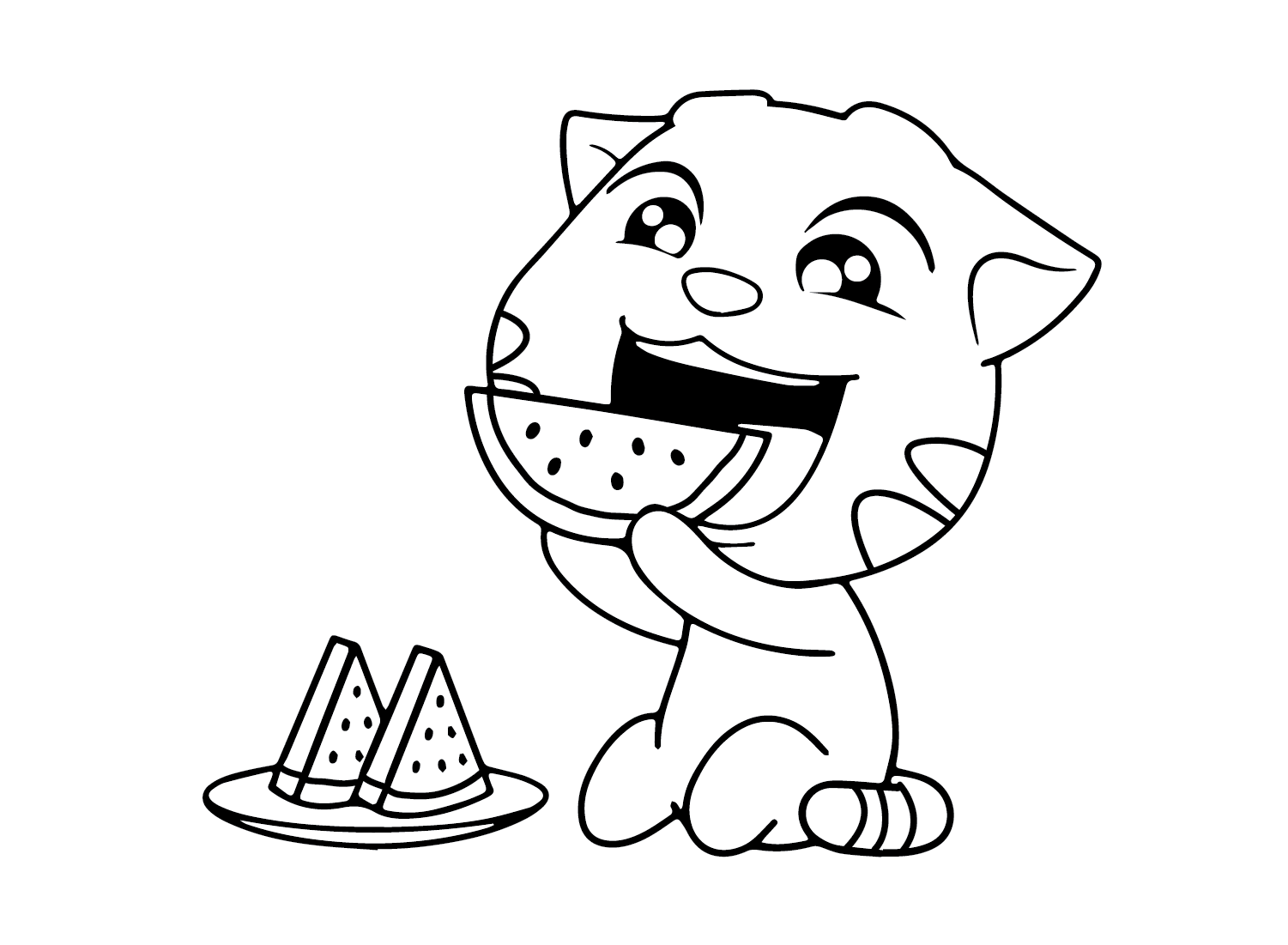
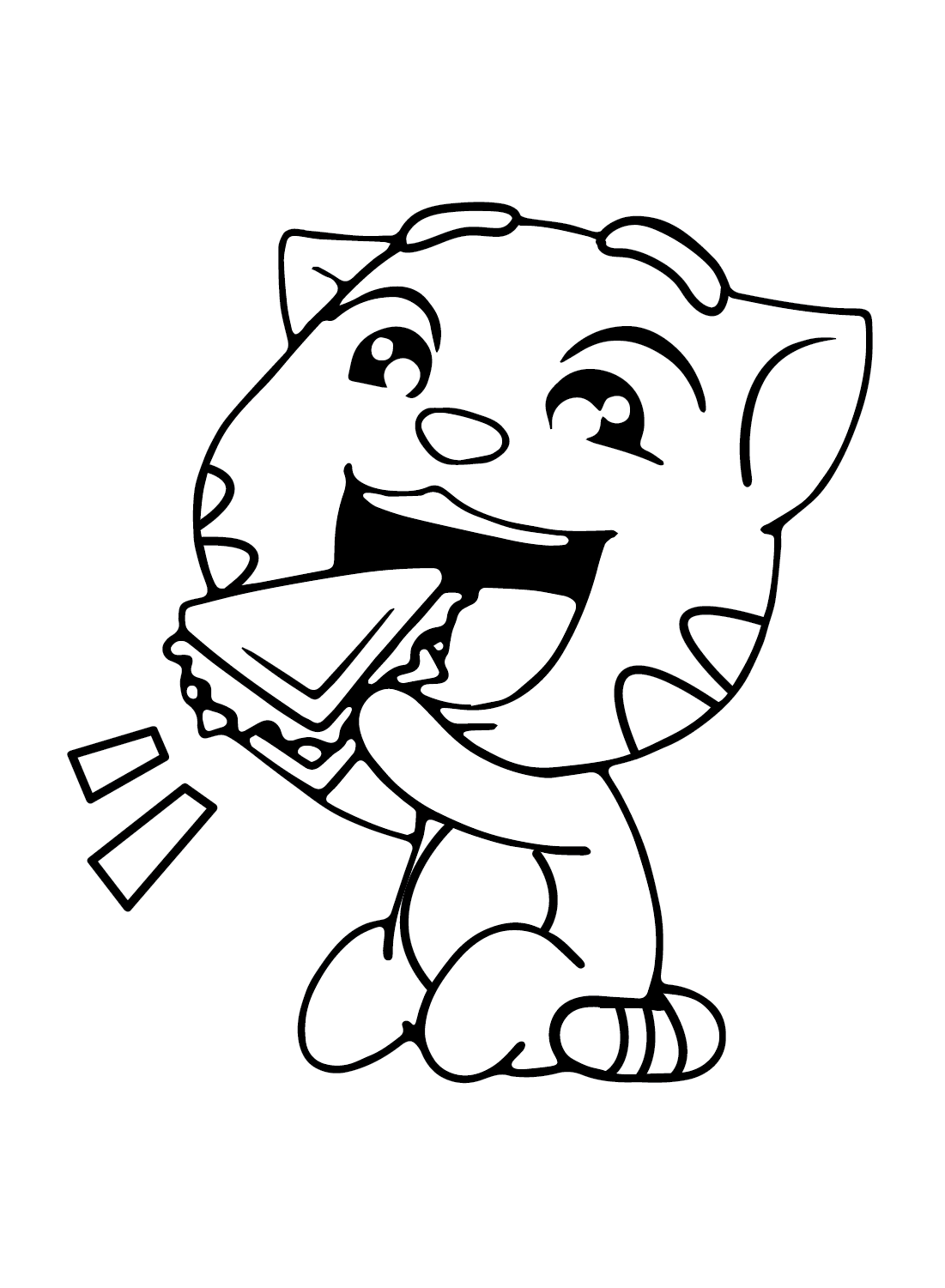
Talking Tom Eat Watermelon, Talking Tom Eat, Talking Tom Game, and Game Talking Tom place the character in specific activity contexts that connect to the app ecosystem Outfit7 has built around him. The eating pages tap into the franchise’s food-and-nutrition content across its apps and videos. The game pages reference the mobile gaming dimension of the brand – Tom Gold Run, Talking Tom Jetski, Talking Tom Camp, and numerous other titles that have collectively been downloaded billions of times across iOS and Android platforms.

My Talking Tom references the virtual pet game – the direct descendant of the original app’s interactive mechanic – where players care for Tom by feeding him, putting him to bed, bathing him, and playing mini-games with him. The My Talking Tom games (the original and its sequels, My Talking Tom 2 and My Talking Tom Friends) have been among the most downloaded mobile games globally for over a decade.

What These Pages Do

The emotional expression pages build empathy vocabulary. Tom’s full emotional range across these pages – happy, sad, scared, excited, injured – provides a natural context for conversations about emotions with young children. A child who colors the Talking Tom Sad page and is asked, “Why do you think he looks sad?” is practicing emotional recognition and attribution, skills that developmental psychologists identify as foundational to social-emotional learning. The 2005 Art Therapy Journal study on structured coloring reducing anxiety applies throughout this collection, and the emotionally expressive character pages add a specific empathy dimension to that general benefit.

The character design develops fine motor skills through fur texture. Tom’s grey tabby fur – rendered in the simplified but still fur-textured style of the Outfit7 character design – is one of the more technically interesting coloring subjects for children developing fine motor control. The fur texture suggests stroke direction: colored pencil or marker strokes that follow the fur’s implied direction (generally flowing from the center outward, from the spine downward along the sides) look markedly more finished than strokes applied without this consideration. The American Academy of Pediatrics identifies motivated, sustained fine motor practice as key to developmental milestone achievement, and a child coloring Tom with genuine attention to the fur texture is doing exactly that.

The duo pages build story comprehension. The Tom and Angela pages, and the Tom and Ginger pages, each imply a relationship and a story. A child who has watched the animated series will bring existing story knowledge to these pages; a child new to the franchise will construct their own narrative from the visual information provided. Both are legitimate creative activities, and the one that constructs a new story is arguably the more cognitively complex of the two.

Connecting screen experience to physical creative activity. For children who engage primarily with Talking Tom through apps and YouTube videos – both of which are screen-based – coloring pages provide a physical, hands-on creative activity that maintains engagement with the characters and world they love while moving into a non-screen medium. Research from the American Academy of Pediatrics consistently recommends ensuring that children’s media engagement includes creative, physical-world activities rather than being purely passive and screen-based.

How to Color These Pages Well

Tom’s grey is warm, not cool. The most common mistake in coloring Tom is reaching for a standard cool grey – the kind of grey in a standard colored pencil set that leans toward blue or silver. Tom’s fur is a warm grey – slightly brown-toned, closer to the warm end of the grey spectrum. If you have a “warm grey” or “French grey” colored pencil, that is closer to a standard cool grey. The difference between warm grey and cool grey, Tom, is immediately visible: cool grey Tom looks like a silver cat; warm grey Tom looks like Tom.

The fur has direction – follow it. Apply color strokes that follow the fur’s implied growth direction: from head to back along the spine, from the spine outward and downward along the sides and belly, from the shoulder outward along the arms. On the face, strokes radiate from the muzzle outward. This technique, which takes about ten seconds of planning before you begin, makes the finished fur look like actual fur rather than a grey shape.

Angela is white, not grey or cream. When coloring the duo pages, keeping Angela’s fur genuinely white – paper white in the lightest areas, with only a very subtle warm cream in the shadow areas (under her chin, behind her ears, in the fold of an arm) – is what makes her read as distinct from Tom’s warm grey. Any color applied to Angela’s fur should be barely visible: the point is the contrast, and the contrast lives in how much lighter she is than Tom.

For the emotional expression pages, commit to the expression. The Talking Tom Sad page rewards a coloring approach that matches the emotional register: slightly cooler, less saturated tones throughout, with the blue of tears rendered in genuine transparency rather than solid blue. Talking Tom Happy rewards the opposite: the warmest, most saturated version of every color choice, maximum brightness on the eyes. Color does not just fill in a character – it communicates the character’s emotional state to anyone looking at the finished page.

The plush version wants softer edges. The Talking Tom Plush page depicts the merchandise version of the character, which has rounder forms and softer surface quality than the animated character. Apply color slightly more softly here – less pressure, more blending, fewer hard edges – to suggest the stuffed fabric quality of a real plush toy rather than the crisp lines of animated illustration.

5 Creative Activity Ideas

Emotion Expression Card Set

Print every solo Tom page that shows a distinct emotional state: Talking Tom Happy, Talking Tom Sad, Talking Tom Injured (distressed), Talking Tom Skateboarding (scared), and Tom Talking or Tom Talks (communicative, expressive). Color each one. Cut each page into a card-sized rectangle – approximately 10×15cm – and mount on cardstock for durability.

On the back of each card, write the emotion name in large, clear letters. For younger children, add a simple definition: “Sad means your heart feels heavy.” “Happy means something good happened.” “Scared means something feels dangerous.”

Use the finished cards for emotion recognition games: show a card face-first and ask the child to name the emotion; show a card back-first and ask the child to act out the emotion; or ask the child to tell a story about what happened to Tom to make him feel that way. This activity is directly aligned with social-emotional learning objectives that preschool and kindergarten educators use as developmental benchmarks, and it turns a coloring activity into a reusable educational tool.

Tom’s Diary

Print five or six pages from the collection. Color each one. Fold three or four sheets of A4 paper in half and staple along the fold to create a simple booklet. Glue one colored Tom page on the cover with the title “Tom’s Diary” in large letters.

Inside each spread of the booklet, paste or draw a smaller version of a different Tom page on the left side. On the right side, write a diary entry in Tom’s voice – what he was thinking, what happened before the illustration, what happened after. For the Talking Tom Eat Watermelon page, Tom might write about why watermelon is the best food in existence. For Talking Tom Skateboarding, Tom might explain his extremely complicated relationship with gravity.

This is a creative writing activity that uses character knowledge as scaffolding. Children who struggle with creative writing prompts from a blank page often find character-based prompts much more accessible – because they already know the character’s voice from the apps and videos, and they simply need to transcribe it.

Talking Tom Greeting Card

Print one or two pages – the Talking Tom Happy and Talking Angela and Tom pages work best – and color them carefully. Fold a piece of A5 cardstock in half. Cut out the central Tom or Tom-and-Angela figure and mount it on the card front at a slight angle. Add a speech bubble drawn in marker coming from Tom’s mouth, with the recipient’s name inside: “Hi, [Name]!” or “Happy Birthday, [Name]!”

Inside, write a message from Tom’s perspective – his voice, his personality, his slightly self-important way of framing things. If this is a birthday card: “It’s your birthday! I calculated that birthdays are statistically better when celebrated. I’m celebrating with you. You’re welcome. – Tom.”

The card takes about twenty minutes to make and is consistently more enjoyable to receive than a purchased card, because no purchased card has ever had Tom specifically address the recipient by name.

My Talking Tom Care Chart

Connect the coloring activity to the My Talking Tom virtual pet game by creating a physical care chart that mirrors the game’s mechanics. Print four Tom pages: Tom eating (the Talking Tom Eat or Talking Tom Eat Watermelon page), Tom happy, Tom tired or sad, and a general Tom page for the chart header.

Color all four pages. Create a weekly chart on a large sheet of paper or cardstock – rows for each day of the week, columns for each care activity: Fed, Played With, Bathed (in the game), Put to Bed. Glue the colored Tom pages as icons next to each column header. Add Tom’s happy face at the top of the chart as the heading image.

Each day, when the child has completed their own equivalent care activities – meals eaten, homework done, teeth brushed – they place a sticker or a check in Tom’s chart. The fictional care of Tom becomes a scaffold for the real care routine.

This is exactly the kind of gamification-of-routine that behavioral researchers identify as effective for building habits in young children – and it is significantly more personal than a generic star chart because the child built and colored it themselves.

Talking Tom Fan Art Gallery

This is the most open-ended craft – not a specific project but a creative practice. Print one or two pages as a starting reference. Color them. Then, on blank paper, try to draw Tom from memory.

The exercise of drawing from a colored reference – not tracing, but actually observing the shapes, proportions, and color relationships and attempting to reproduce them freehand – is one of the most effective drawing skill-building activities available. It requires close visual attention, spatial reasoning, and hand-eye coordination simultaneously. For a child who loves Talking Tom and wants to be able to draw him, this practice is more effective than any drawing instruction that doesn’t start from a character they already want to draw.

After several attempts, create a small gallery of the drawings alongside the colored reference page – showing the progress from the first attempt to later attempts, displayed together on a wall or folder. The comparison is motivating: the gap between the first attempt and the fifth attempt is almost always significant, and seeing it displayed creates genuine pride in the development.

Frequently Asked Questions

Who created Talking Tom, and when was the app first released? Talking Tom was created by Outfit7 Limited, a technology and entertainment company founded in Ljubljana, Slovenia, in 2009. The original Talking Tom Cat app was released on July 6, 2010, for iPhone. The core mechanic – a cartoon cat that repeated the user’s voice in a pitch-shifted funny voice – was simple but extraordinarily effective. The app reached number one in the App Store in 28 countries within two weeks of release and accumulated over 100 million downloads in its first year, making it the fastest-growing app on the App Store at that time. Outfit7 has since grown into one of the world’s largest mobile entertainment companies, with offices across Europe, Asia, and North America.

Who are the main characters in the Talking Tom universe? The Talking Tom and Friends franchise includes six central characters: Talking Tom (the grey tabby cat protagonist), Talking Angela (the white cat who loves music and fashion), Talking Ginger (Tom’s young orange kitten companion), Talking Hank (an enthusiastic purple creature who combines dog and dinosaur visual elements), Talking Ben (a bear scientist who appears distracted but is highly intelligent), and Talking Becca (a more recently introduced character who is practical and determined). Each character has its own standalone app series and appears in the Talking Tom and Friends animated YouTube series.

What is the Talking Tom and Friends YouTube series? Talking Tom and Friends is an animated comedy series produced by Outfit7 and released on YouTube, beginning in 2015. The series follows the characters as roommates in a house that Tom is perpetually trying to complete and improve, while dealing with the complications that Ginger’s chaos, Ben’s experiments, and Hank’s enthusiastic incompetence regularly introduce. The show has accumulated over 20 billion views across its various channels and spin-offs, making it one of the most-watched animated series on YouTube globally. Its humor is accessible to children ages 4 and up while containing enough rapid-fire jokes and situational comedy to hold adult attention.

How many Talking Tom apps exist, and how many downloads have they accumulated? Outfit7 has developed over 20 distinct mobile applications under the Talking Tom and Friends brand, including the original Talking Tom Cat, My Talking Tom (the virtual pet sequel), Tom Gold Run (an endless runner game), Talking Tom Jetski, Talking Tom Camp, My Talking Tom Friends, and numerous others. Collectively, the Talking Tom app ecosystem had accumulated over 20 billion downloads as of 2023 – a figure that makes it one of the most downloaded mobile entertainment franchises in the history of the App Store and Google Play. The apps have been localized into over 40 languages.

What are the canonical colors for Talking Tom? Tom’s fur is a warm grey – slightly brownish-toned rather than cool silver. His inner ears and the pads of his paws are pink. His eyes are a vivid blue-green – the specific aqua or teal that distinguishes him from generic grey cat designs. His nose is pink. His mouth interior and tongue are pink when open. He typically wears no clothing in his standard design, though seasonal and special pages show him in various costumes (the reindeer antlers and red nose for holiday pages, for example). His whiskers are white and should be rendered as clean white lines rather than grey, for contrast against the warm grey face.

What age group are these coloring pages best suited for? The simpler solo Tom pages – Talking Tom Happy, Talking Tom Sad, the plush page – work well from ages 3–5, particularly for children who have seen the character in the apps or YouTube series. The duo pages (Tom and Angela, Tom and Ginger) and the activity pages work well for ages 4–8. The group page Talking Tom Characters and Talking Tom Friends requires managing multiple characters simultaneously and rewards the fine motor control that develops from around age 6–7. The Talking Tom Skateboarding and Talking Tom Run action pages provide the most interesting coloring challenge for older children who want to attempt directional stroke work and dynamic posture coloring.

Can these pages be used in a classroom setting? Yes, and the emotional expression pages in particular (Happy, Sad, Injured) have a specific classroom application in social-emotional learning programs. The Talking Tom character’s wide emotional range provides a non-threatening, familiar context for children to discuss emotions, practice empathy, and explore emotional vocabulary. The character’s universal recognition across cultures and age groups – the apps have been downloaded in over 190 countries – makes him a usable teaching anchor regardless of the specific cultural makeup of a classroom.

Is Talking Tom appropriate for very young children? The original Talking Tom Cat app was rated for ages 4 and up, and the My Talking Tom virtual pet games are rated for ages 4 and up on most app stores. The Talking Tom and Friends YouTube series is generally considered appropriate for ages 4 and up, with humor and story complexity that scales from the slapstick accessible to young children through the character-driven comedy that older children and adults appreciate. The coloring pages in this collection contain no content inappropriate for any age group. The Talking Tom Injured page shows the characters with bandages (minor physical injury in a comedic context), which is well within the content level of the franchise itself.

Browse the full collection at ColoringPagesOnly.com. All pages free, no sign-up, PDF or PNG, print at home or color online.

Talking Tom started as a cat that repeated what you said in a funny voice. Within a decade, that cat had been downloaded 20 billion times in 190 countries, generated a YouTube series with 20 billion views, spawned 20 apps, and become one of the most recognizable animated characters in the world. The premise never got more complicated than it needed to be: here is a grey cat, he is very expressive, and he will always make you laugh. These pages are the same premise in coloring form.

Pick up your warm grey. Get the eyes right – they’re blue-green, not just blue. Color something simple and satisfying.

Share your work on Facebook and Pinterest and tag #Coloringpagesonly. We especially want to see the emotion card sets and the diary projects.

Color the cat. Make him talk. Keep coloring.

These related coloring collections will help you explore the wonderful world of colors. Let’s choose, be creative, and show us your great pictures!

Emily Lewis – Website Technology Engineer

I am Emily Lewis, a passionate technical designer from Las Vegas. I love art and want to create a community of people passionate about drawing and coloring, especially children. I am proud to create a website that allows everyone's creativity to be realized most easily and enjoyably.