
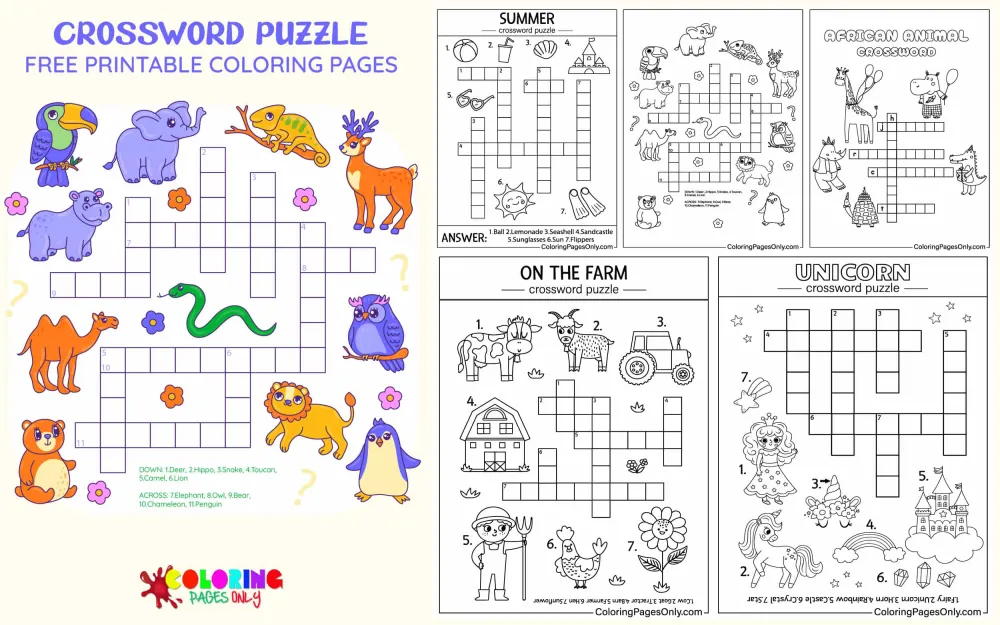
Crossword Puzzle Coloring Pages at ColoringPagesOnly.com brings together 30+ free printable pages combining two activities in one: a themed crossword puzzle grid that children complete using illustrated picture clues, and a set of cute illustrations – one for each answer – that can be colored before, during, or after solving the crossword. Every page in the collection is organized around a specific theme, from Christmas and Halloween to farm animals, circus performers, ecology, France, camping gear, and many more. Download any page as a free PDF to print, or color online directly in your browser.
This collection sits within the Educational Coloring Pages hub. For related vocabulary and learning pages, see Alphabet Coloring Pages, Numbers Coloring Pages, and ABC Letter Tracing Coloring Pages.
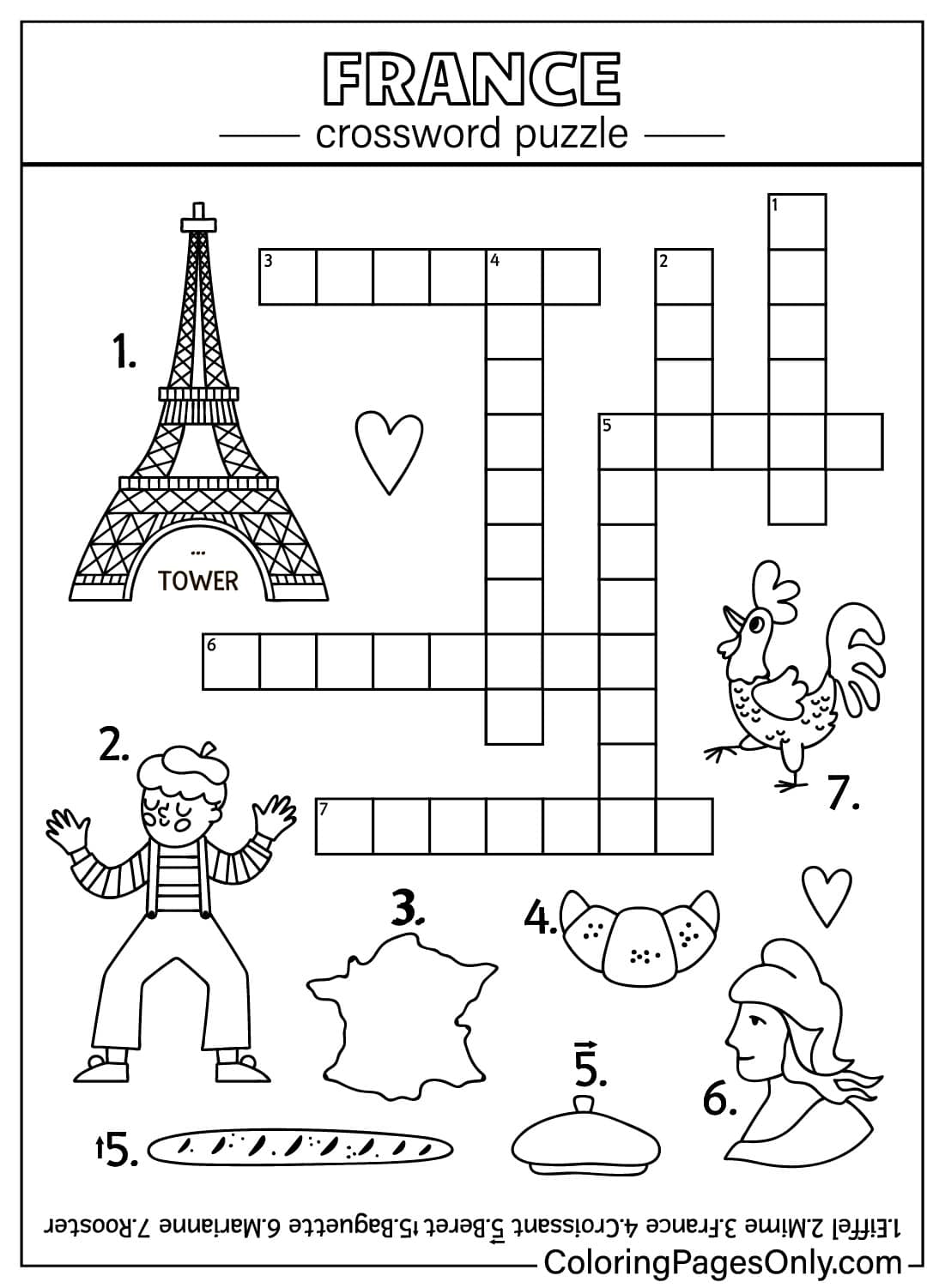
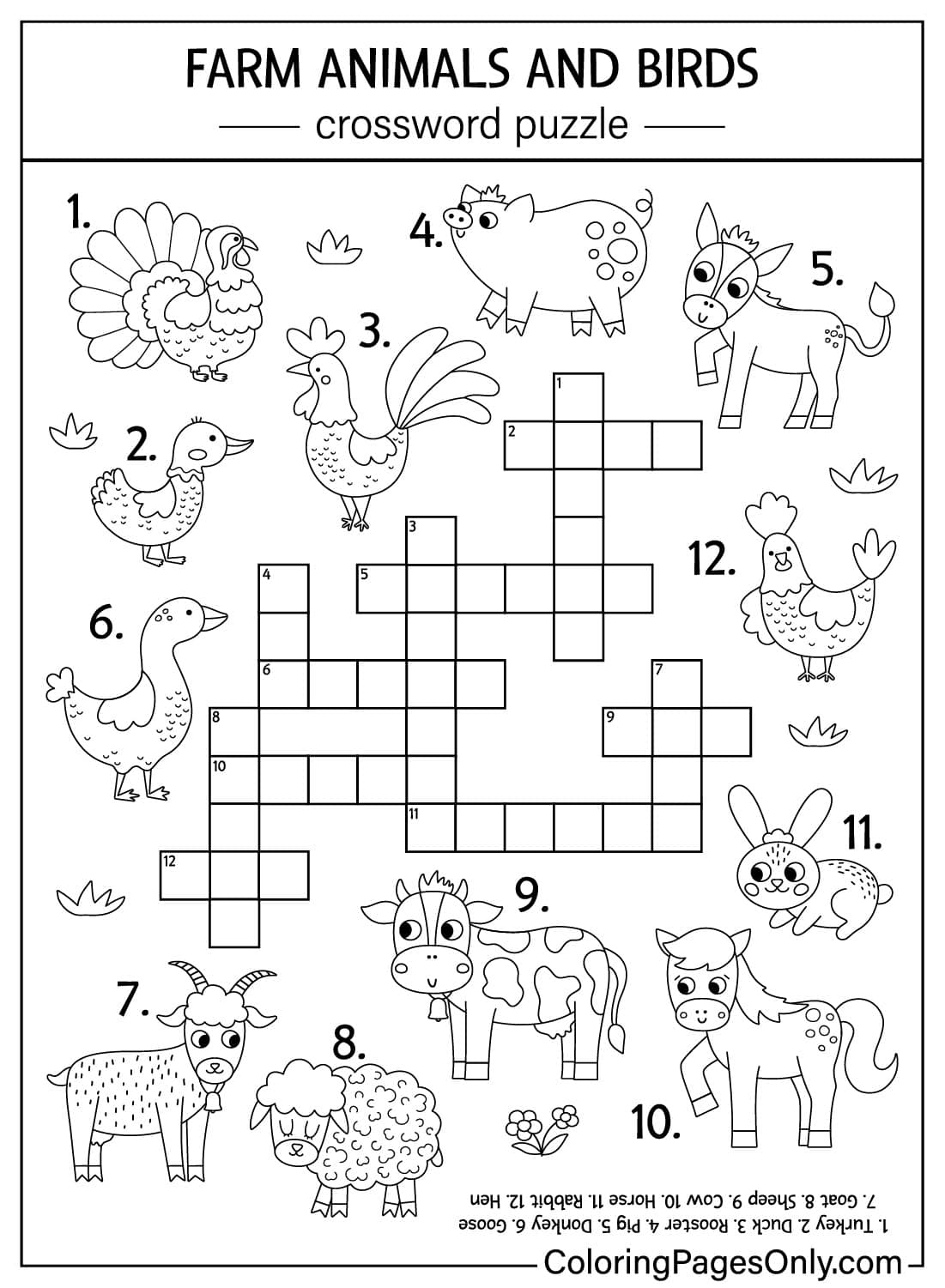
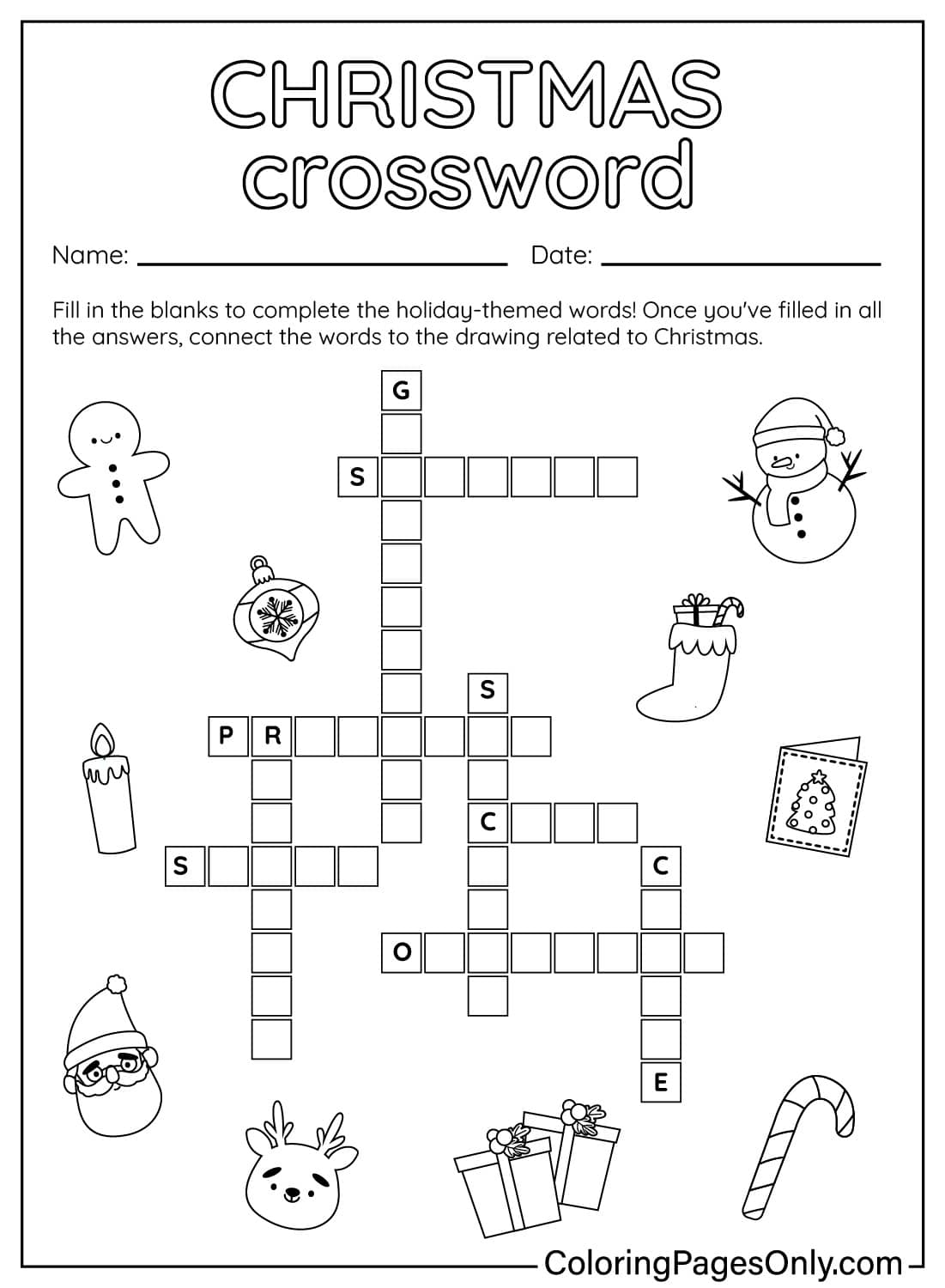
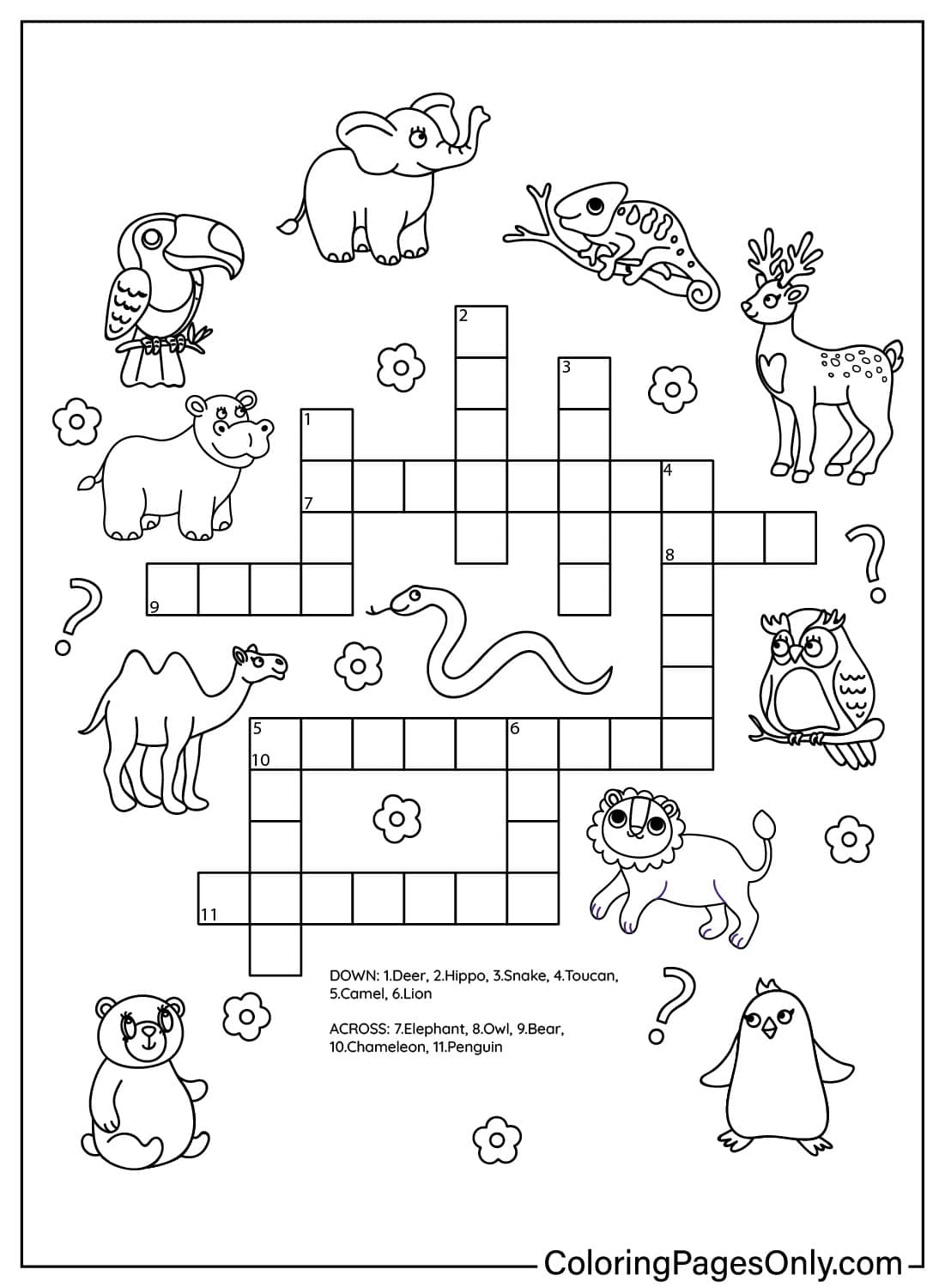
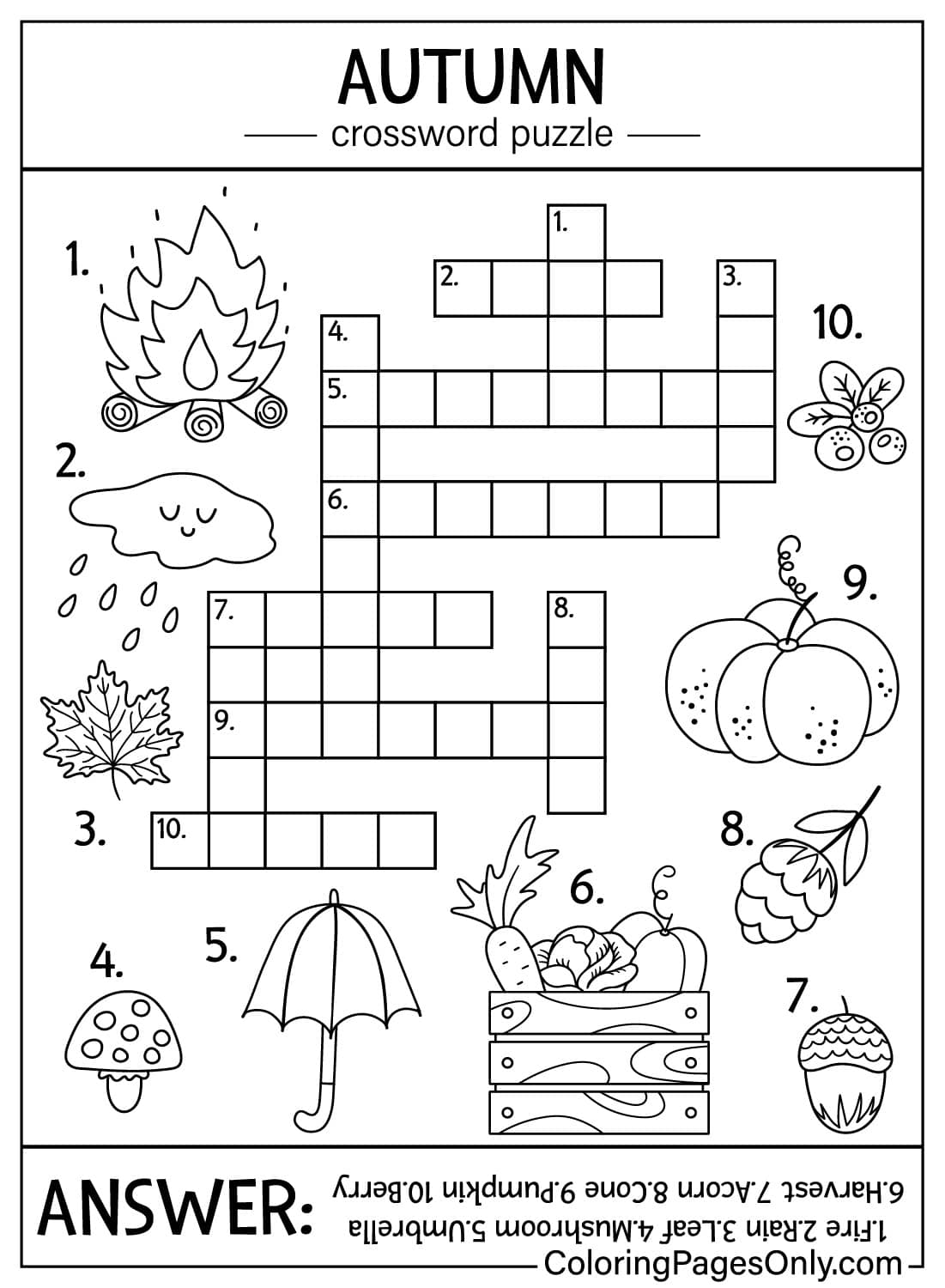
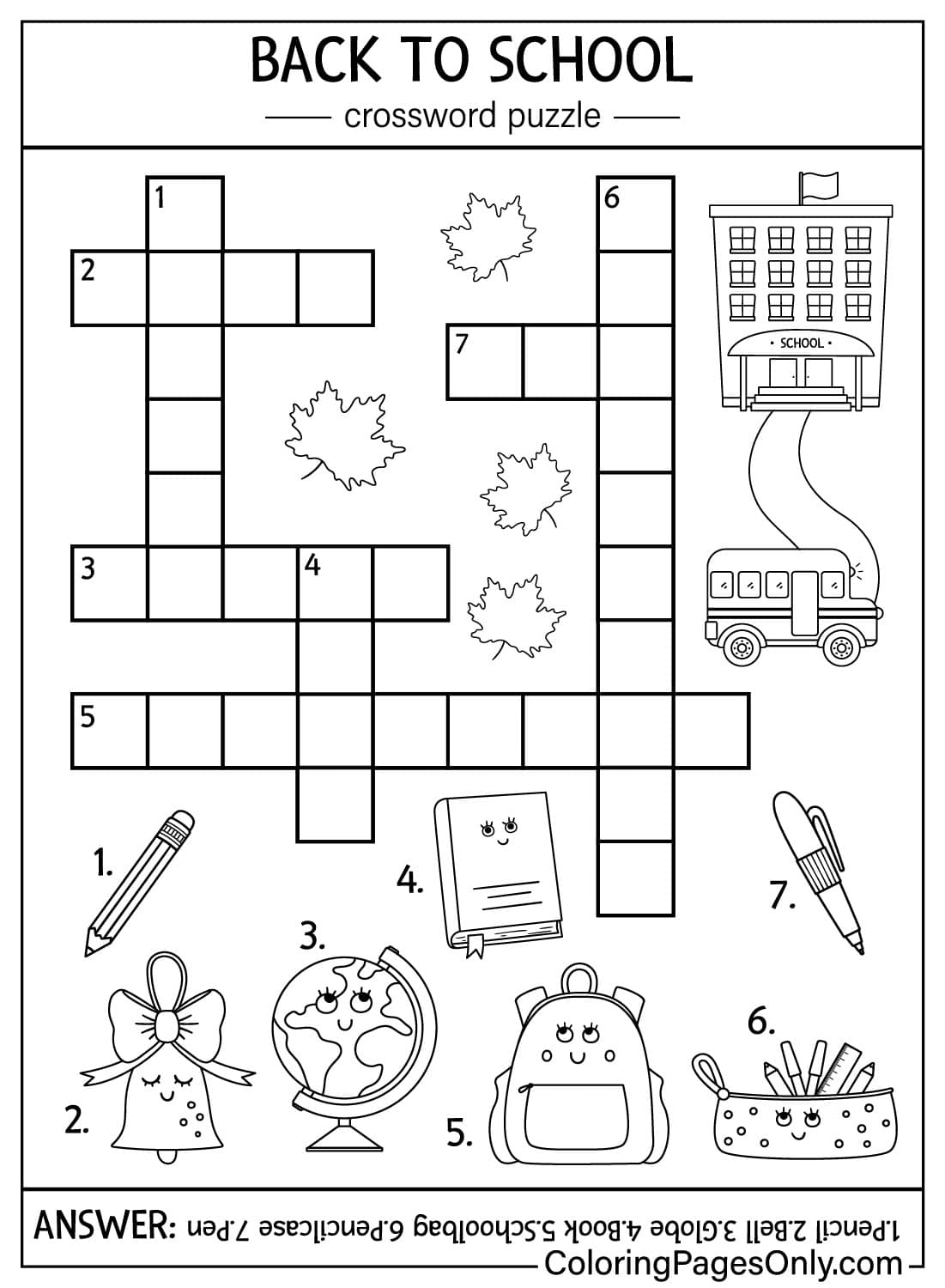
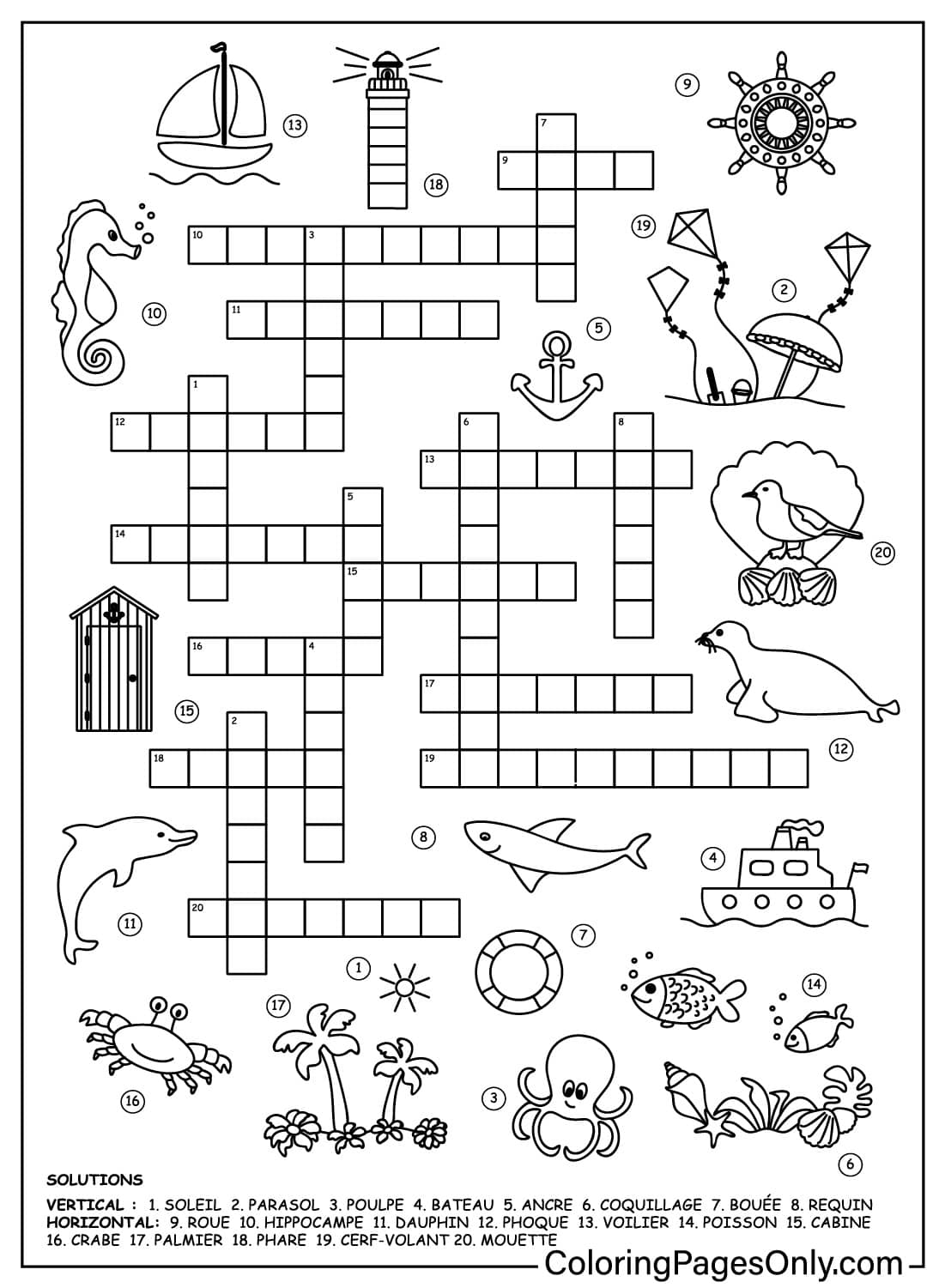
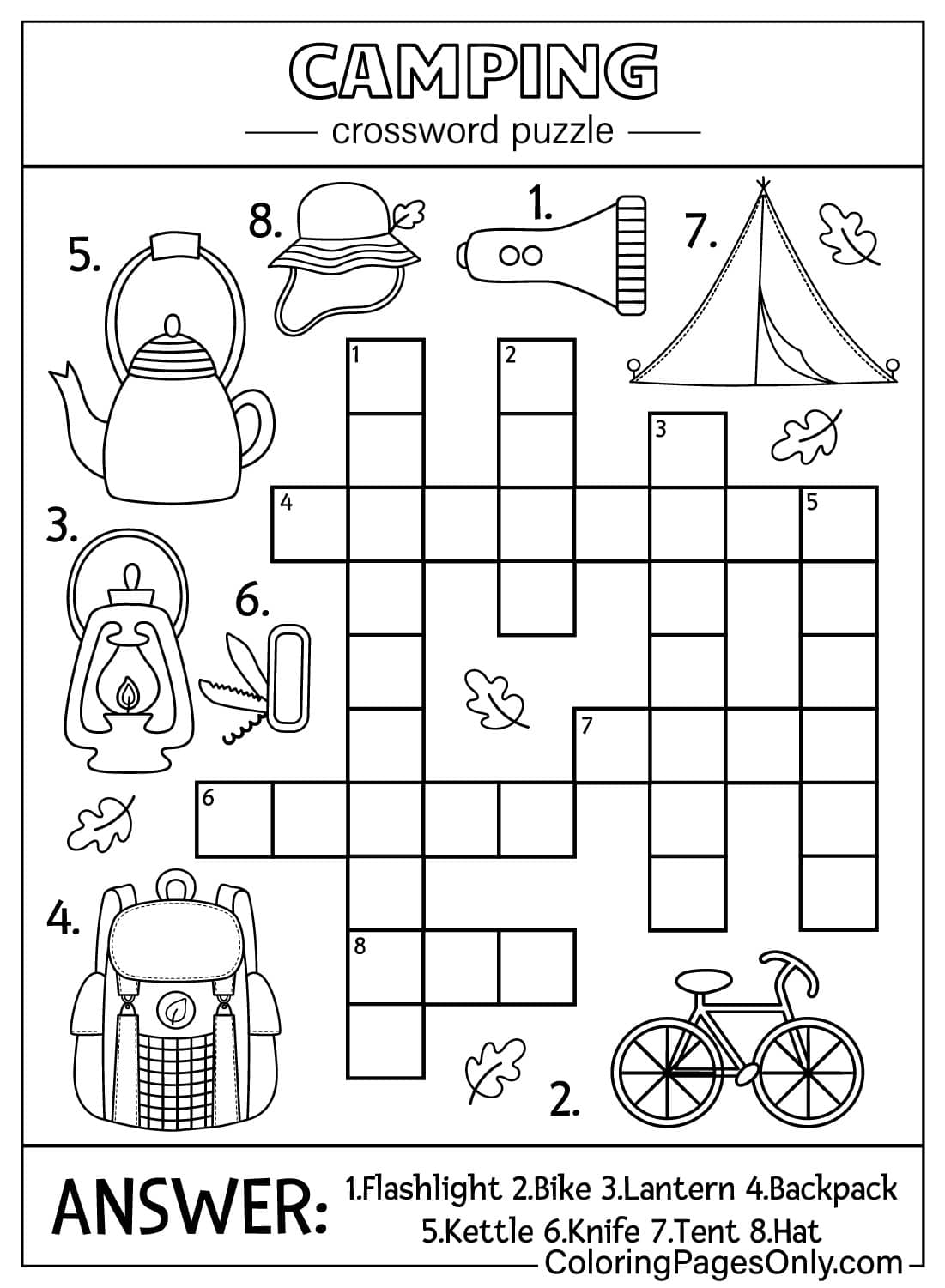
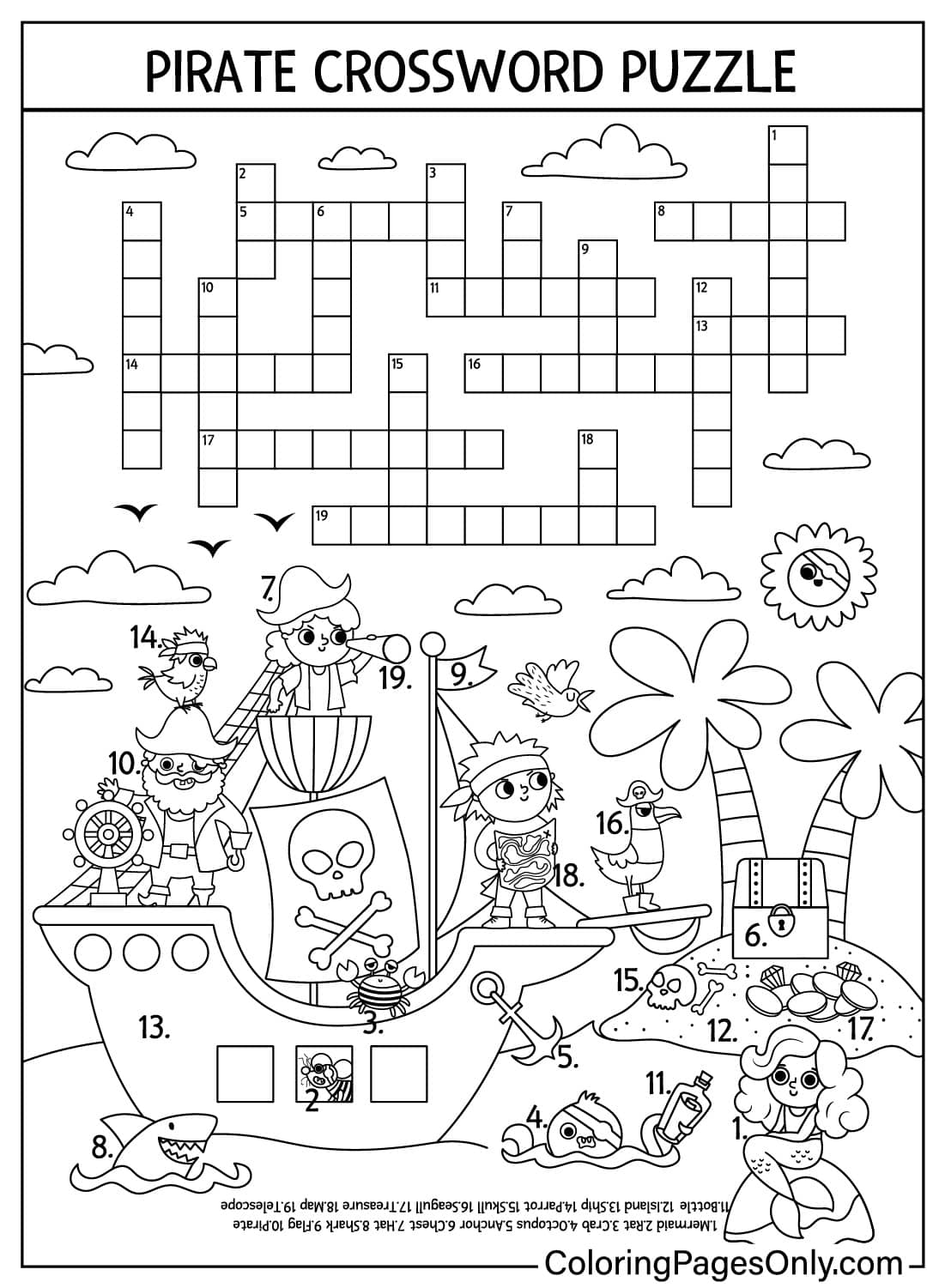
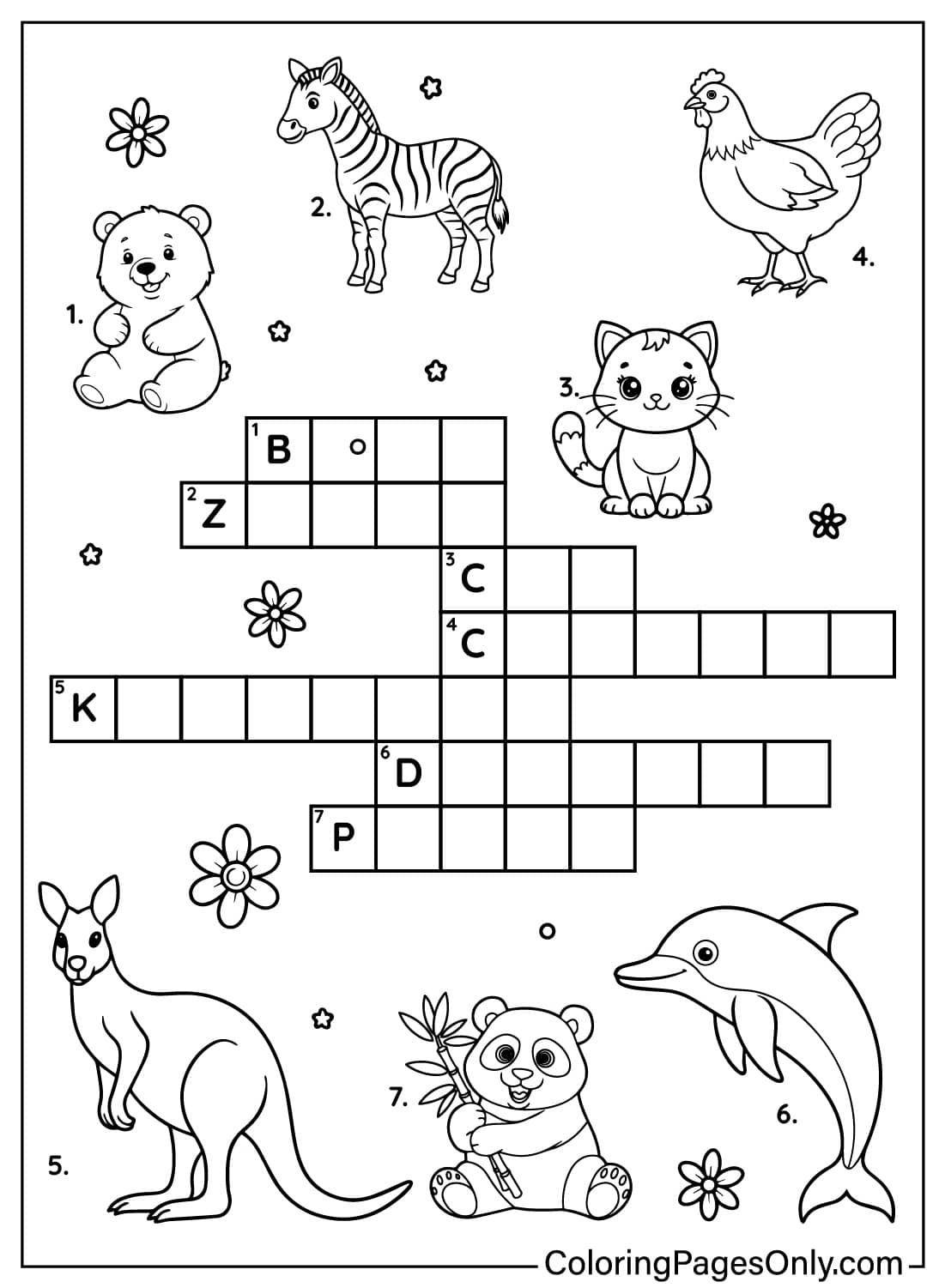
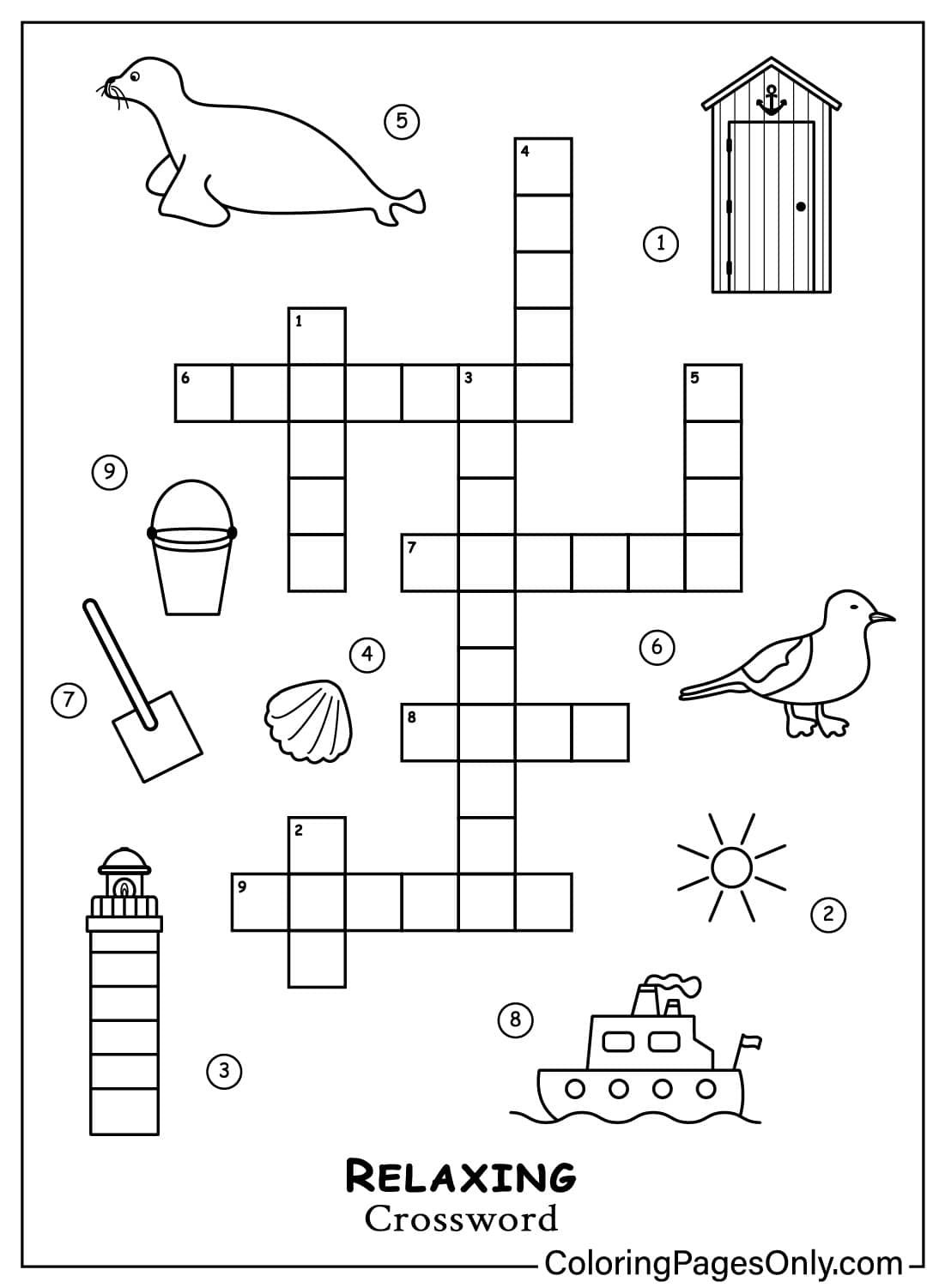
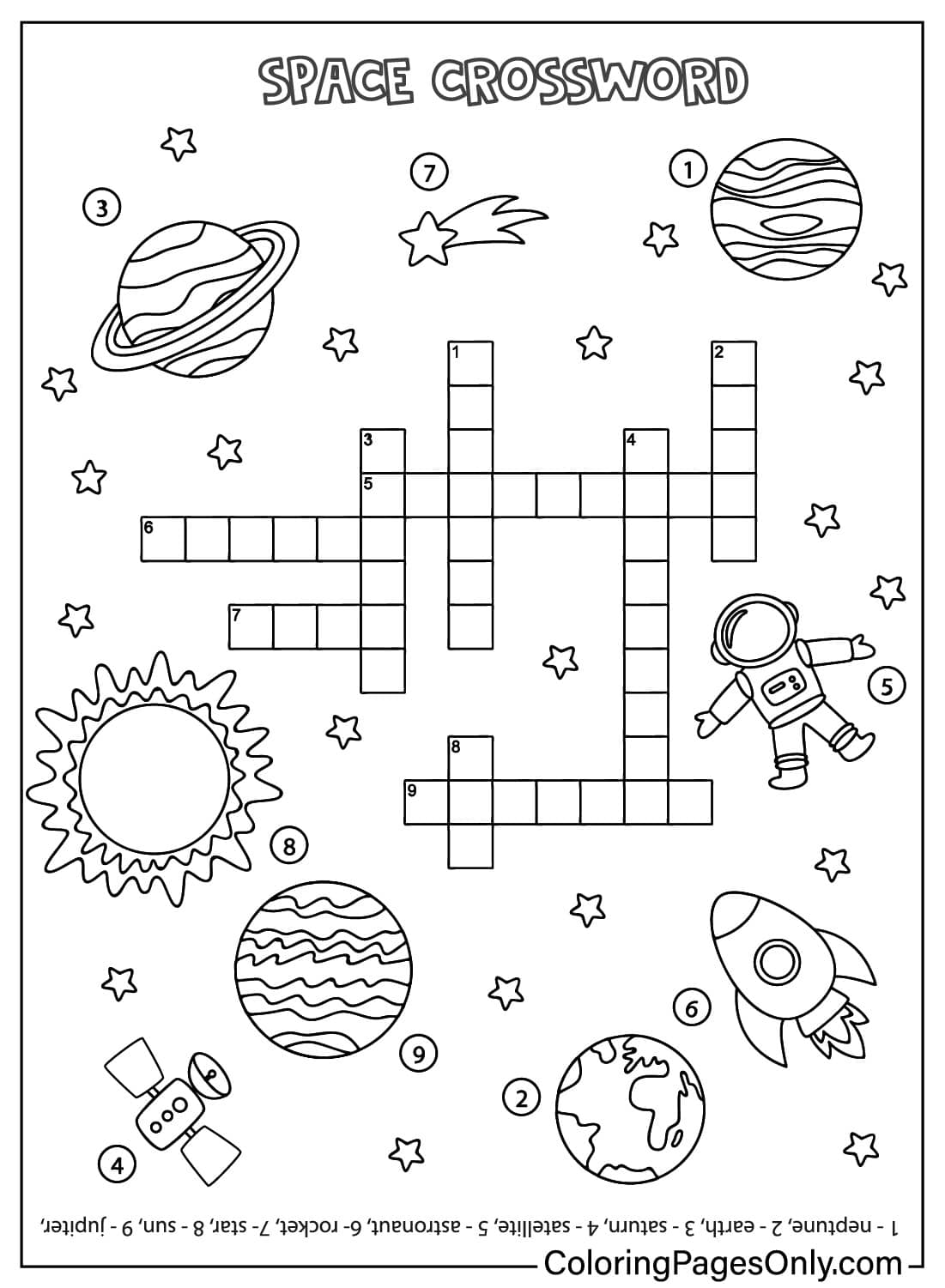
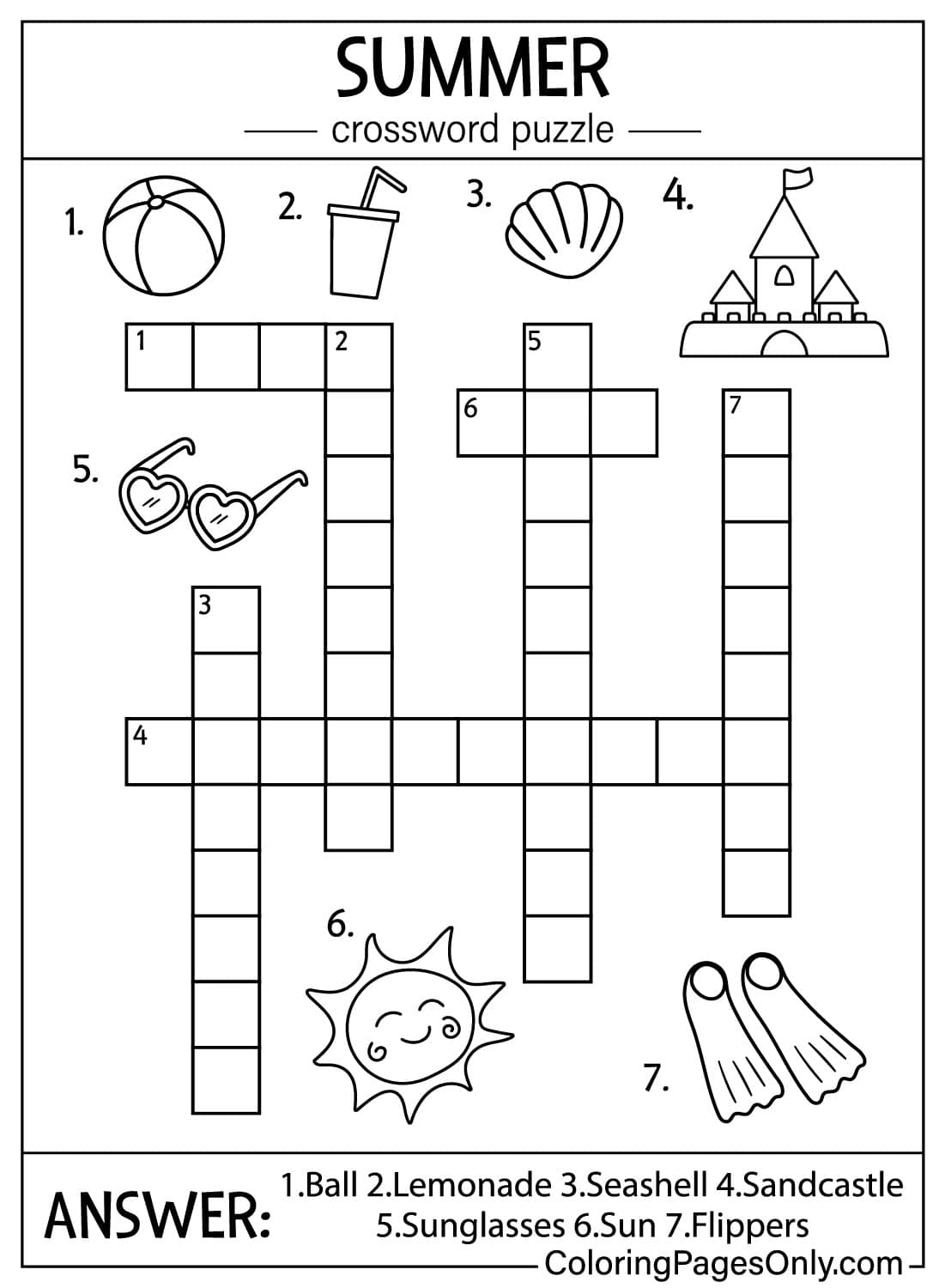
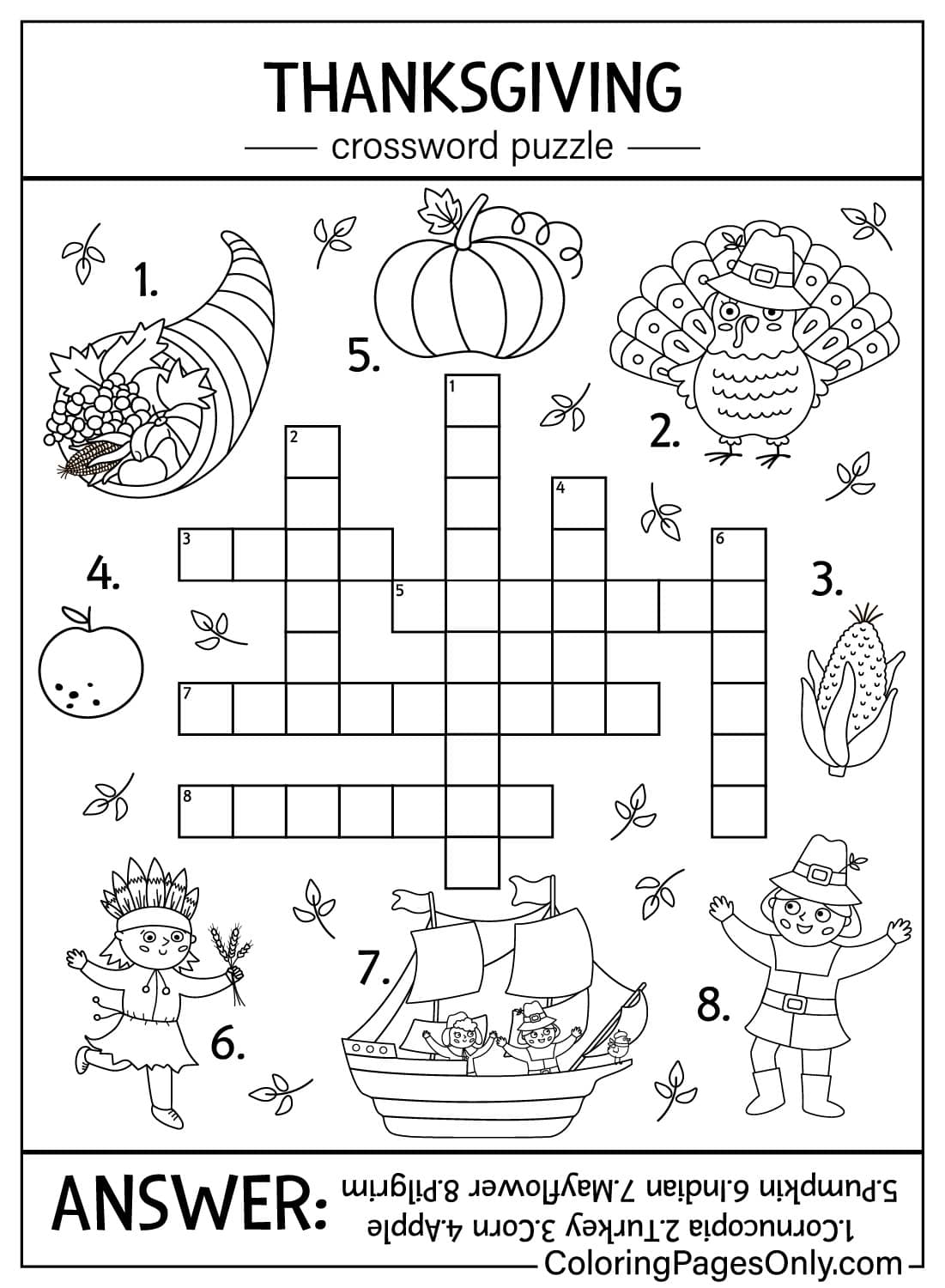
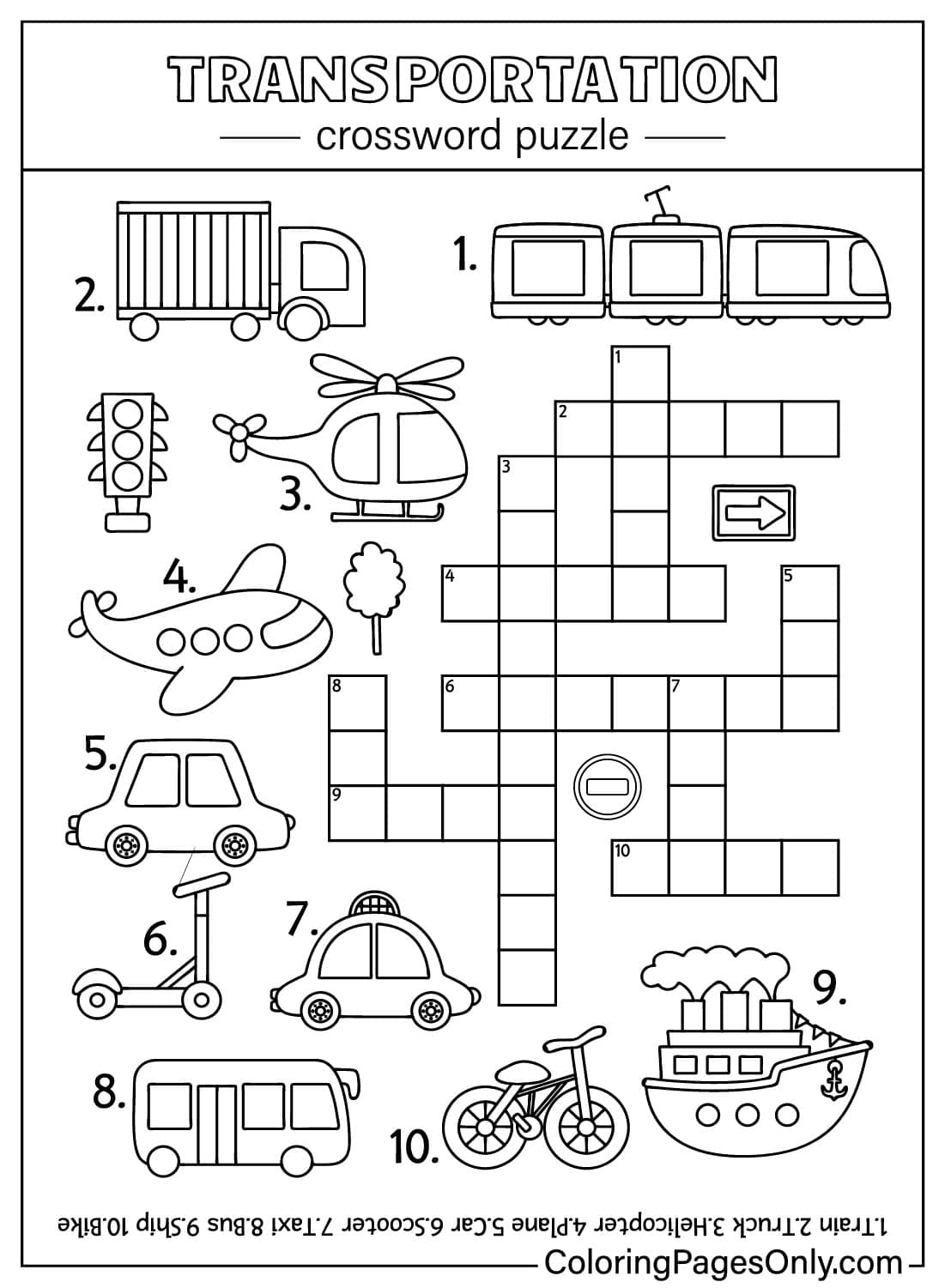
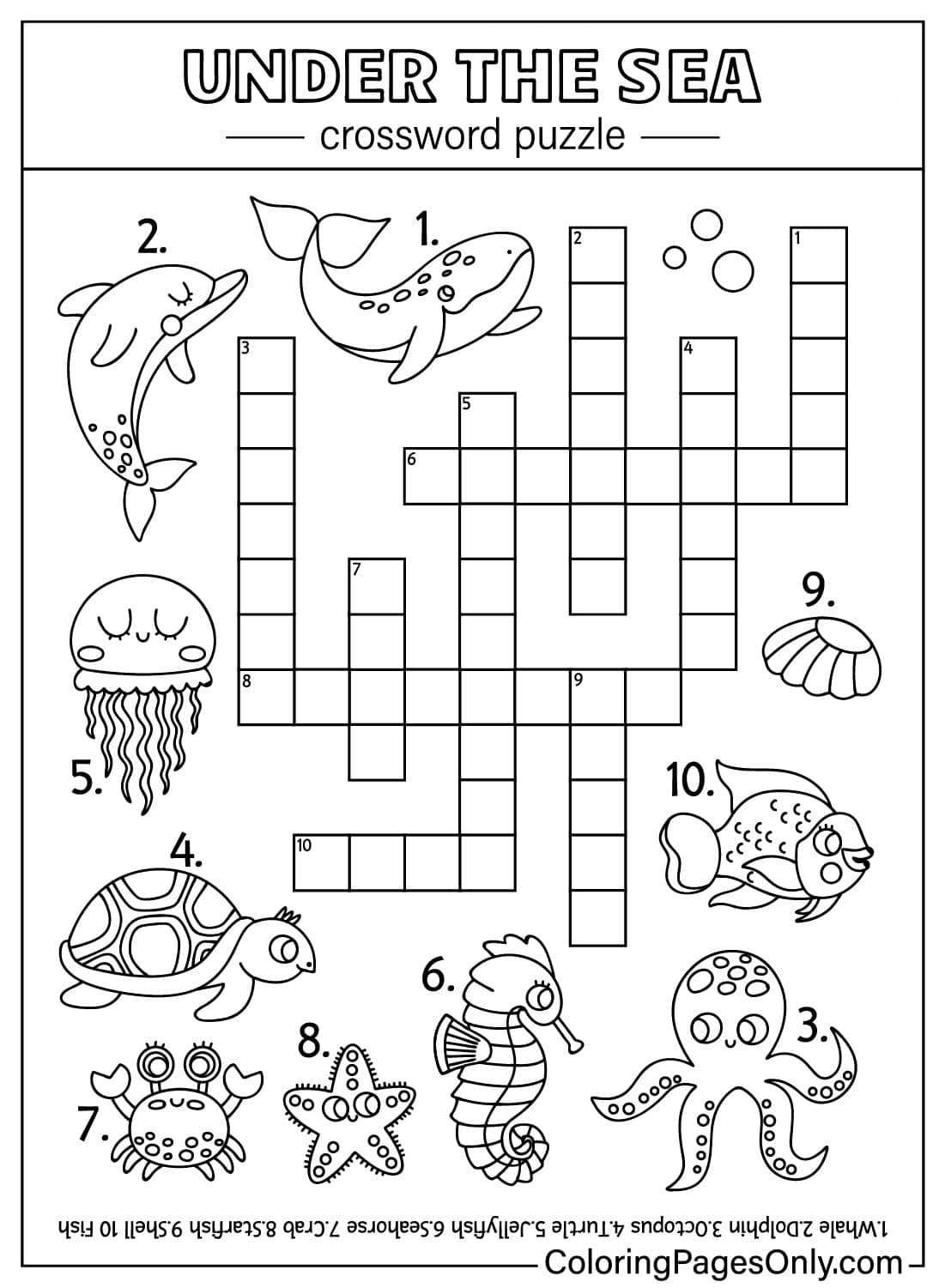
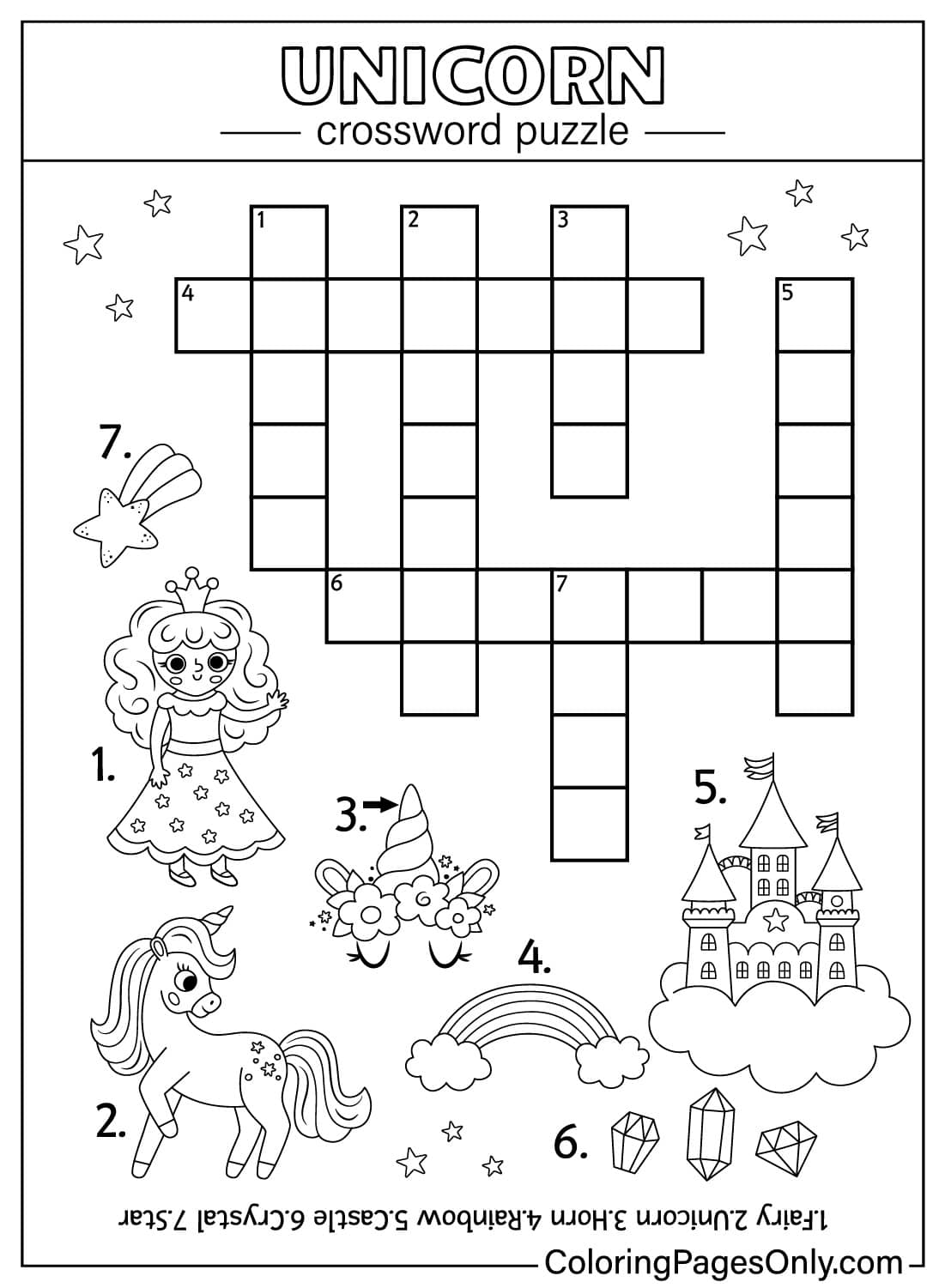
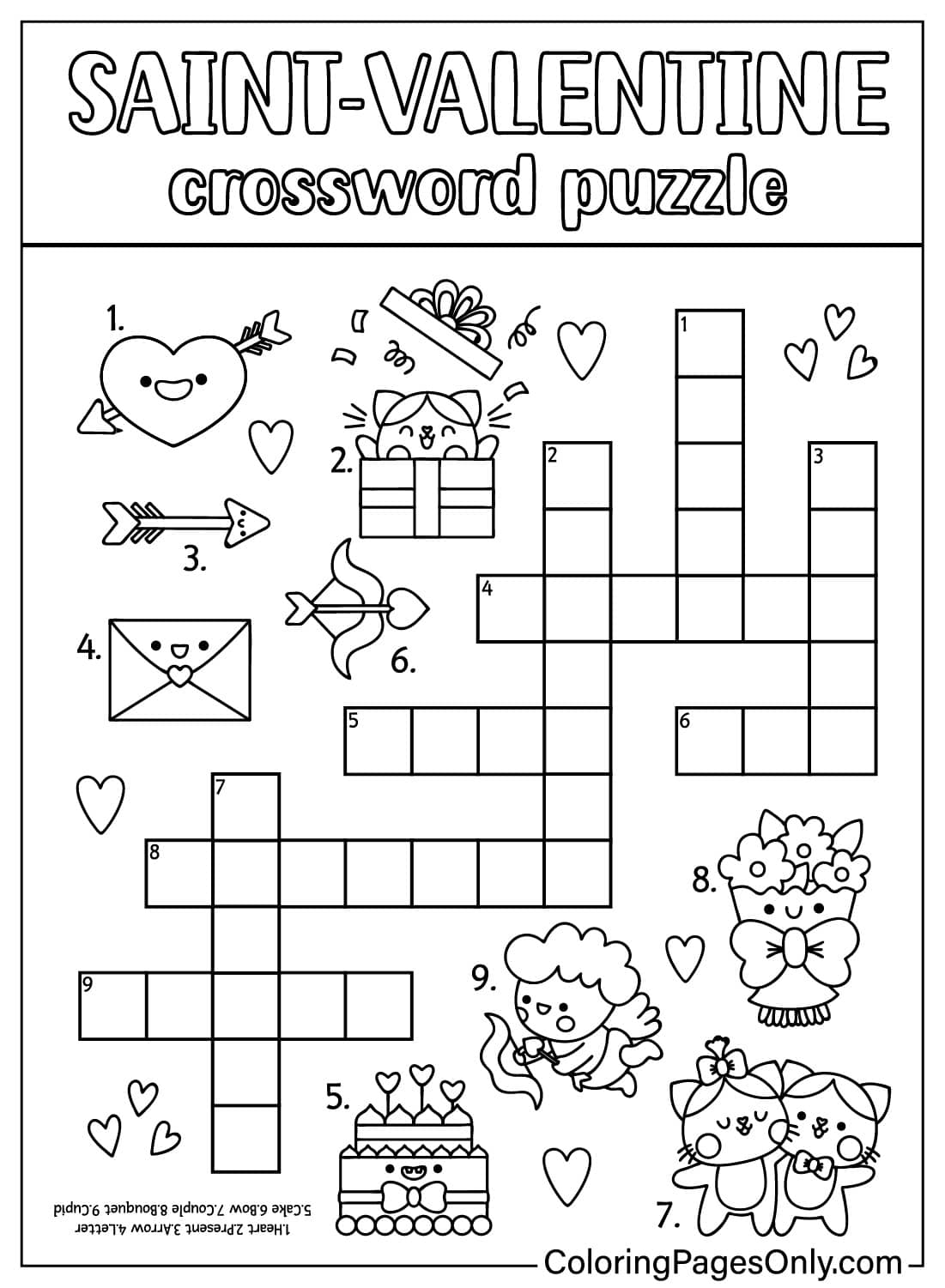
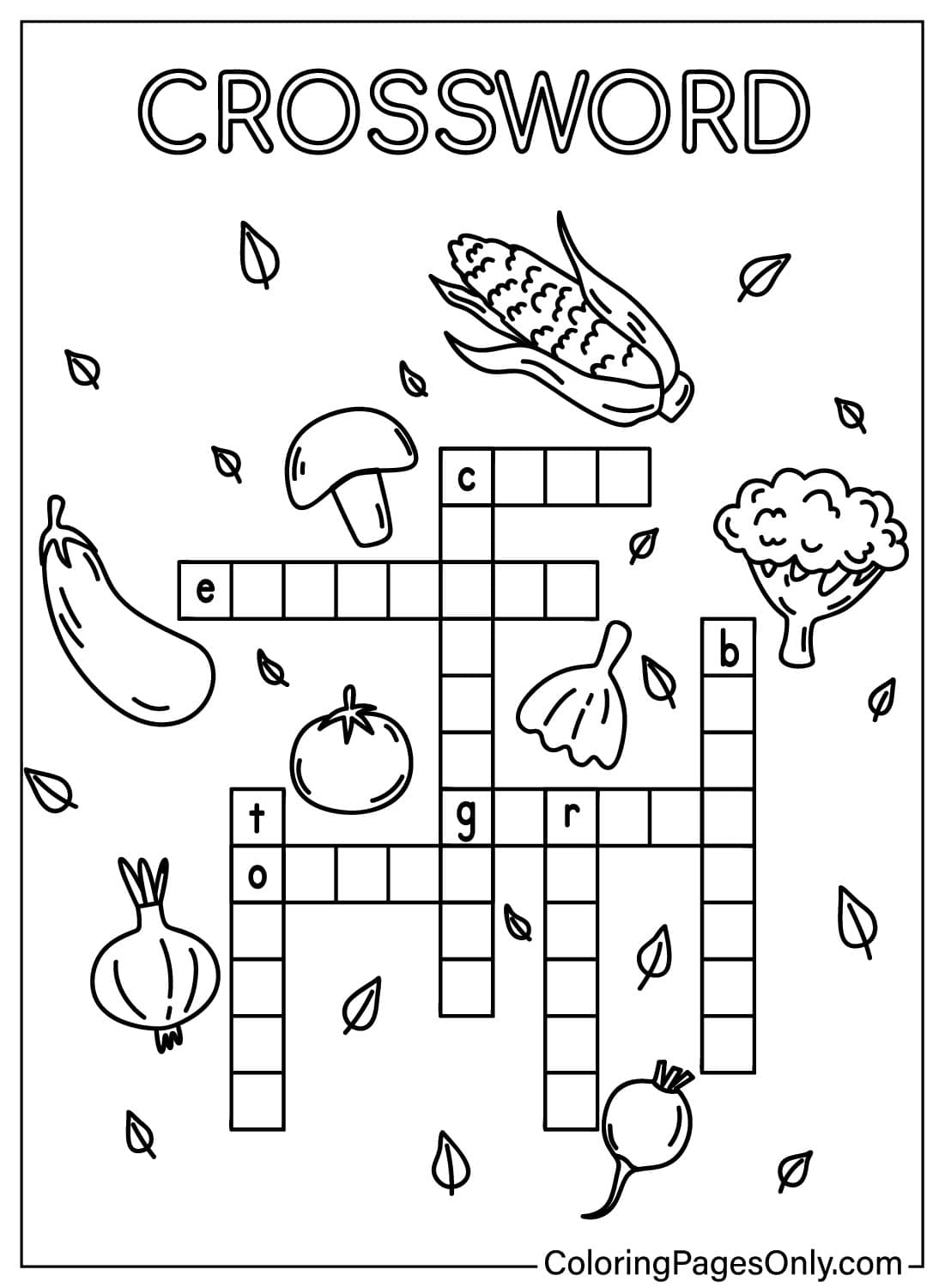
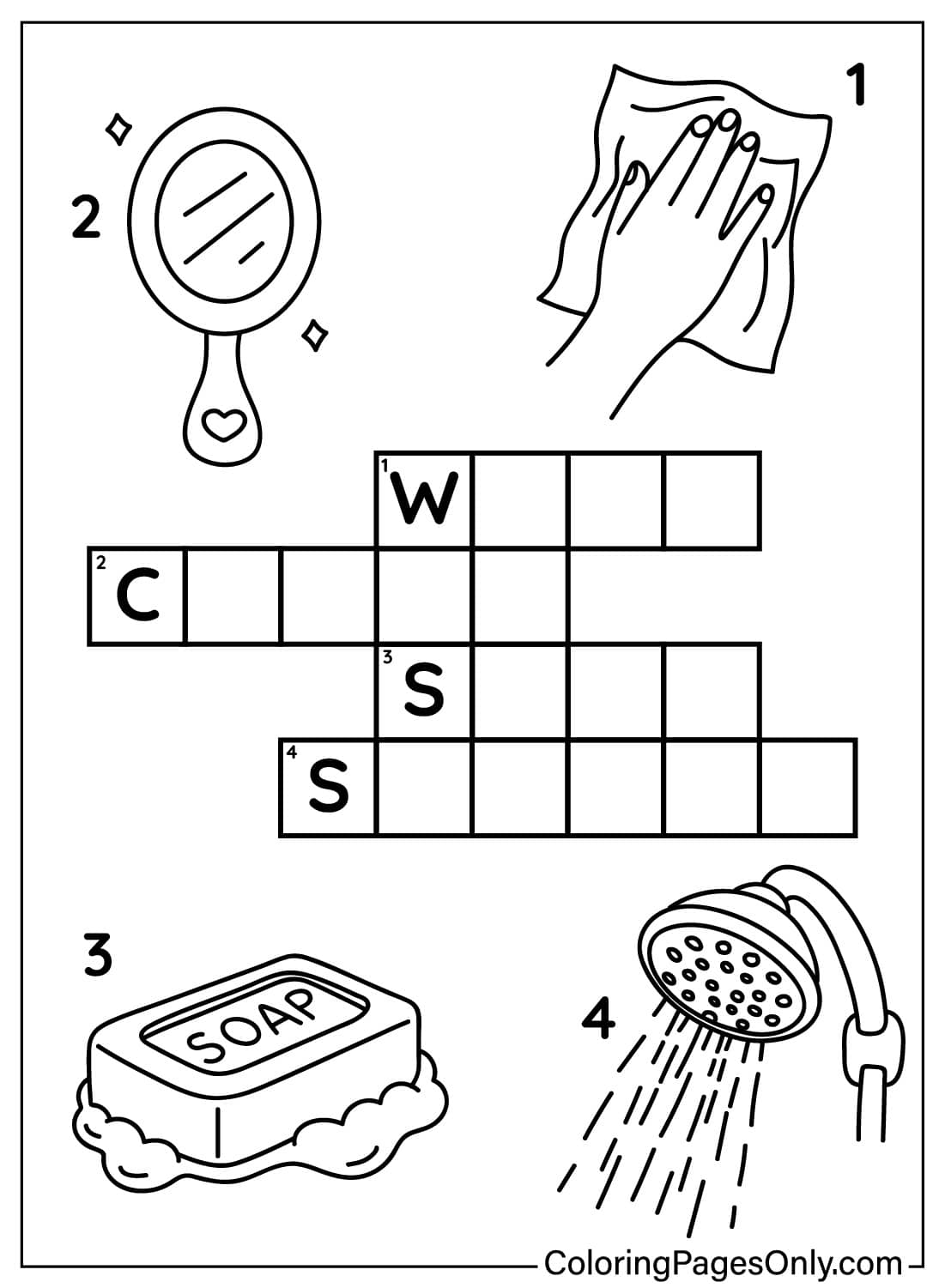
What Makes This a “Crossword Puzzle Coloring Page”?
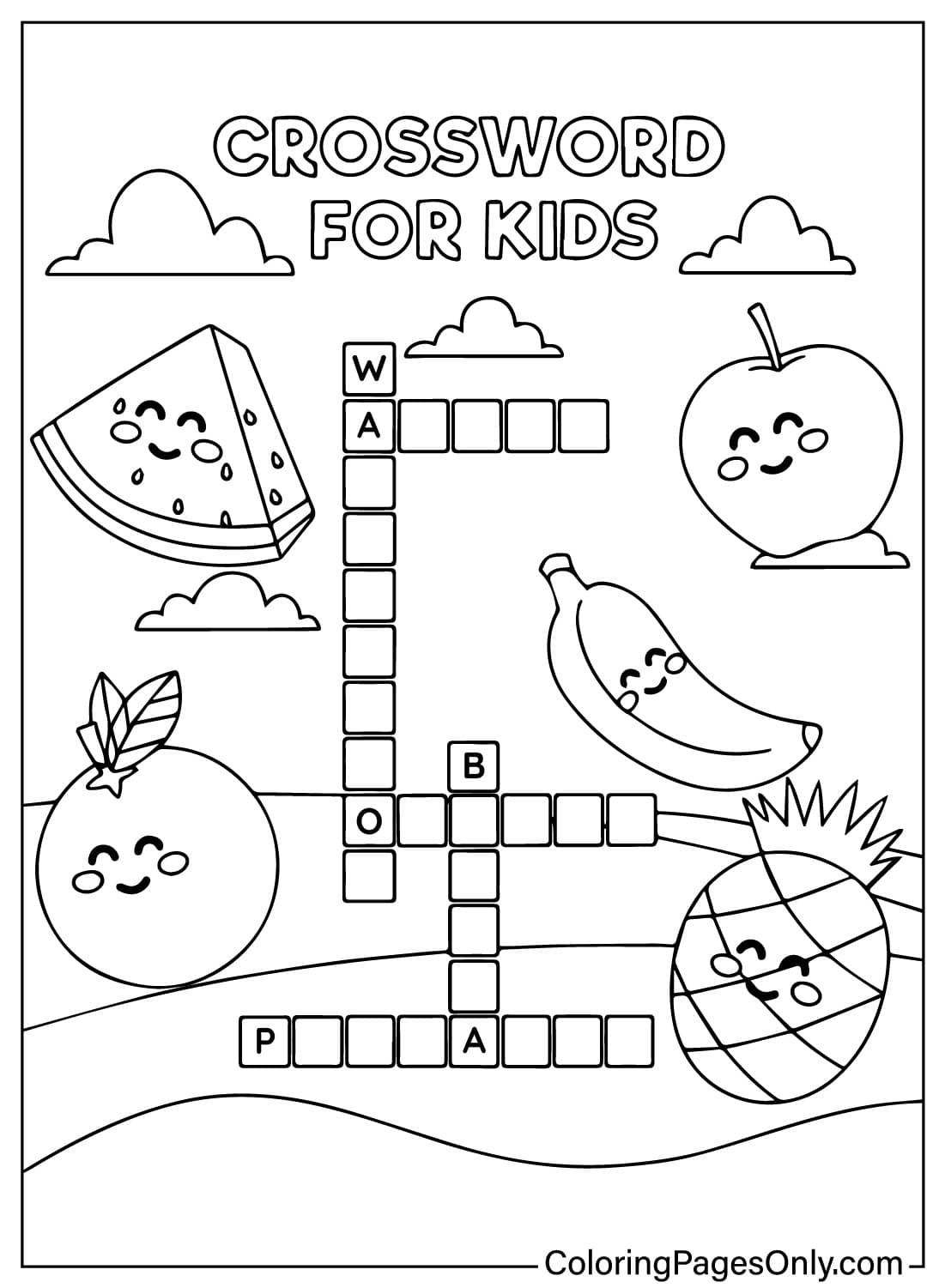
A standard crossword puzzle is text-only: a grid of interlocking boxes, numbered clues in prose (“6 down: a large African mammal with a very long neck”), and blank squares for the solver to fill in letters. A standard coloring page is image-only: an outlined illustration with no text challenge. The pages in this collection are neither of these things alone. They are a specific hybrid format where each crossword answer corresponds to an illustrated picture on the same page – and each picture can be colored.
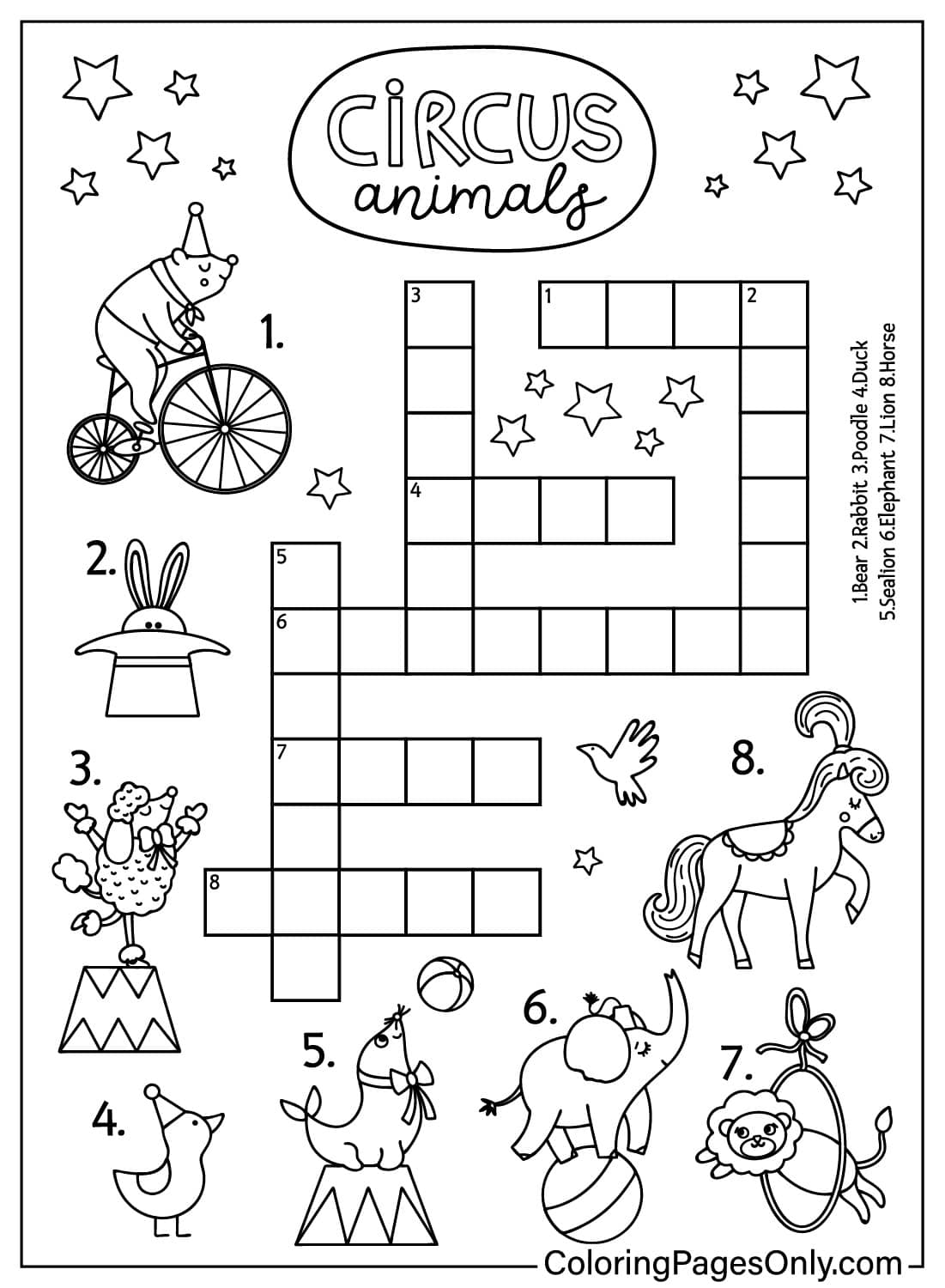
The mechanism works like this: instead of a written text clue, each crossword entry is paired with a labeled illustration of the answer. A child solving the Circus Animals page sees an outlined picture of a bear next to a clue number, counts the letters in “bear,” finds the corresponding numbered boxes in the grid, and writes B-E-A-R across or down. After solving, they color the bear illustration (and all the other circus animal illustrations on the page). The two activities reinforce each other: solving the crossword means engaging with each word’s spelling carefully enough to place it letter-by-letter in the grid; coloring the illustration after solving means spending more time looking at and thinking about the same vocabulary item.
This picture-clue format is also more accessible than traditional crossword clues for younger solvers. A child who cannot yet read a prose definition (“a marine mammal related to the seal, trained in circuses to balance balls”) can still identify a picture of a sealion and spell its name. The visual clue bridges the gap between the child’s vocabulary knowledge (they know what a sealion is; they can name it) and their literacy level (they may not yet be able to decode a written definition). This makes these crosswords appropriate for a younger age range than traditional crosswords typically target, while still providing a genuine spelling and vocabulary challenge.
The History of the Crossword Puzzle – A Christmas Innovation
The crossword puzzle was born on December 21, 1913 – the Christmas edition of the New York World newspaper’s “Fun” supplement. Arthur Wynne, a British journalist from Liverpool who had emigrated to the United States at age 19, was responsible for the supplement and needed something new to fill space for the holiday issue. Drawing on the word square puzzles he had learned from his grandfather in Liverpool, he designed a hollow diamond-shaped grid of interlocking numbered boxes and wrote clues for each entry. He called it a “Word-Cross Puzzle” – “fun” was already pre-filled at the top as the first across entry, a wink to the supplement’s name.
Wynne was born in 1871, the son of a newspaper editor, and had worked at the Pittsburgh Press before joining the New York World. His father’s trade gave him a natural ear for what readers would engage with, and the Word-Cross was immediately popular. Within weeks, the puzzle became a weekly feature. A typographical error, a few weeks after the first publication, accidentally transposed the title to “Cross-Word” – and the name stuck permanently.
The New York World was nearly alone in publishing crosswords for almost a decade. Other newspapers hesitated, and the New York Times – whose puzzle is now globally famous – famously dismissed crosswords in 1924 as “a primitive sort of mental exercise” and refused to publish them. The Times reversed course on February 15, 1942, two months after the United States entered World War II. An editor’s note to the publisher explained the reason directly: Margaret Petherbridge Farrar, the pioneering crossword editor hired by the Times, had argued that the puzzle would give readers something to occupy themselves during blackout hours – a solace from the bleakness of the war news. Farrar’s logic became famous: “You can’t think of your troubles while solving a crossword.”
The crossword puzzle’s first major commercial success beyond newspapers came in 1924, when publishers Richard Simon and M. Lincoln Schuster, who had recently launched their publishing house, printed the first crossword puzzle book. The project worried them enough that they did not put the Simon & Schuster name on the cover. They needn’t have been anxious: the first run of 3,600 copies sold out immediately, and the book eventually sold more than 100,000 copies. The publishing house that would become one of the most storied in American history launched itself on a crossword puzzle book.
Today, December 21, is officially Crossword Puzzle Day, commemorating Wynne’s 1913 invention. Arthur Wynne died in Clearwater, Florida, on January 14, 1945, never having patented his invention, as the New York World declined to cover the associated costs. Google honored him with an interactive doodle on December 20, 2013, commemorating the puzzle’s centennial.
Why Crossword Puzzles Work – The Educational Evidence
Crossword puzzles have been used as classroom educational tools for decades, and the research base for their effectiveness is substantial across multiple skill domains.
Vocabulary acquisition. A 2013 study published in the Electronic Journal of Research in Educational Psychology examined the effects of crossword puzzles on vocabulary acquisition in students and found statistically significant improvements in post-test vocabulary scores across all student ability levels – beginners, intermediate, and advanced learners all showed meaningful gains. The mechanism is straightforward: crossword solving requires both recognizing a word’s meaning (from the clue) and correctly spelling it (in the grid), creating a double encoding of each vocabulary item that is more durable than either exposure alone.
Spelling accuracy. Unlike most vocabulary activities where a child can approximate a word or gesture toward it verbally, a crossword grid is unforgiving: a misspelled word creates incorrect letters in intersecting answers, which makes the error visible and unmistakable. This self-correcting property means that children who make spelling errors are immediately confronted with their mistake in a low-stakes, game-like context – and must find the correct spelling to proceed. Research consistently finds that active correction of one’s own errors produces stronger spelling retention than passive correction by a teacher.
Thematic knowledge building. The themed crossword format used throughout this collection – a dental crossword teaching teeth-related vocabulary, a France crossword teaching French cultural icons, an ecological crossword teaching environmental concepts – aligns with how research on vocabulary acquisition finds that words are most reliably retained when learned in thematic clusters rather than in isolation. A child who solves the France page learns “Eiffel Tower,” “beret,” “croissant,” “mime,” “baguette,” and “Marianne” in a single sitting, with each word reinforcing the others through the shared French cultural context. This clustering is exactly the approach recommended by educators working on thematic vocabulary instruction.
Critical thinking and deductive reasoning. Solving a crossword requires a specific kind of reasoning: when a word doesn’t fit, the solver must consider whether the answer is wrong, whether the spelling is wrong, or whether an intersecting word is wrong – then evaluate which letter or word to reconsider. This deductive process – working backward from constraints to find the consistent solution – is one of the most directly applicable forms of puzzle-based critical thinking to formal academic reasoning.
Sustained attention and task completion. A crossword puzzle has a clear endpoint (all boxes filled correctly) and produces a visible, satisfying completed object when finished. This goal structure – progressive visible progress toward a defined, achievable completion – is one of the most effective designs for sustaining attention in children who find open-ended tasks difficult to complete. The coloring component of these hybrid pages adds a second layer of satisfying completion: the puzzle is solved, and then the illustrations are colored, leaving the page in a fully decorated, personally meaningful state.
The Collection’s Themes – A Complete Guide
The 30+ pages in this collection span four broad thematic categories, each with its own vocabulary domain and coloring characteristics.
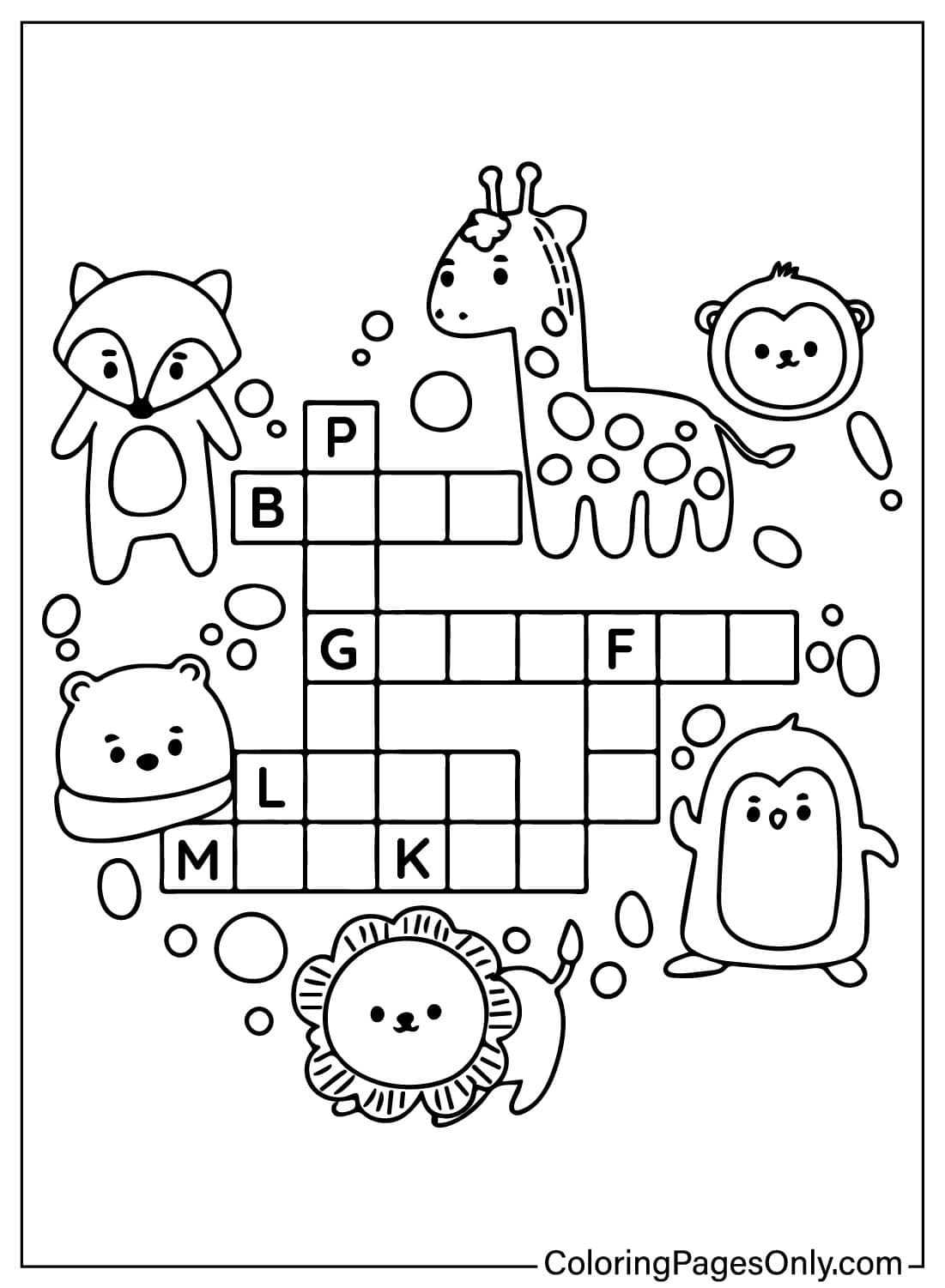
Animals and Nature is the largest category, with pages covering general cute animals (fox, giraffe, monkey, bear, lion, penguin), farm animals (cow, goat, hen, horse, turkey, duck, rabbit, goose, sheep, donkey), wild animals from around the world (elephant, hippo, snake, camel, lion, deer, toucan, owl, bear, chameleon, penguin), and seasonal nature scenes (autumn with campfire, leaf, mushroom, umbrella, acorn, pinecone, pumpkin, berries). These pages are the most accessible thematically for the youngest solvers, as animal names are among the first vocabulary items children acquire. The Circus Animals page extends this category with a circus performance context: bear, rabbit, poodle, sealion, elephant, lion, horse, duck – all performing in an imagined big-top setting.
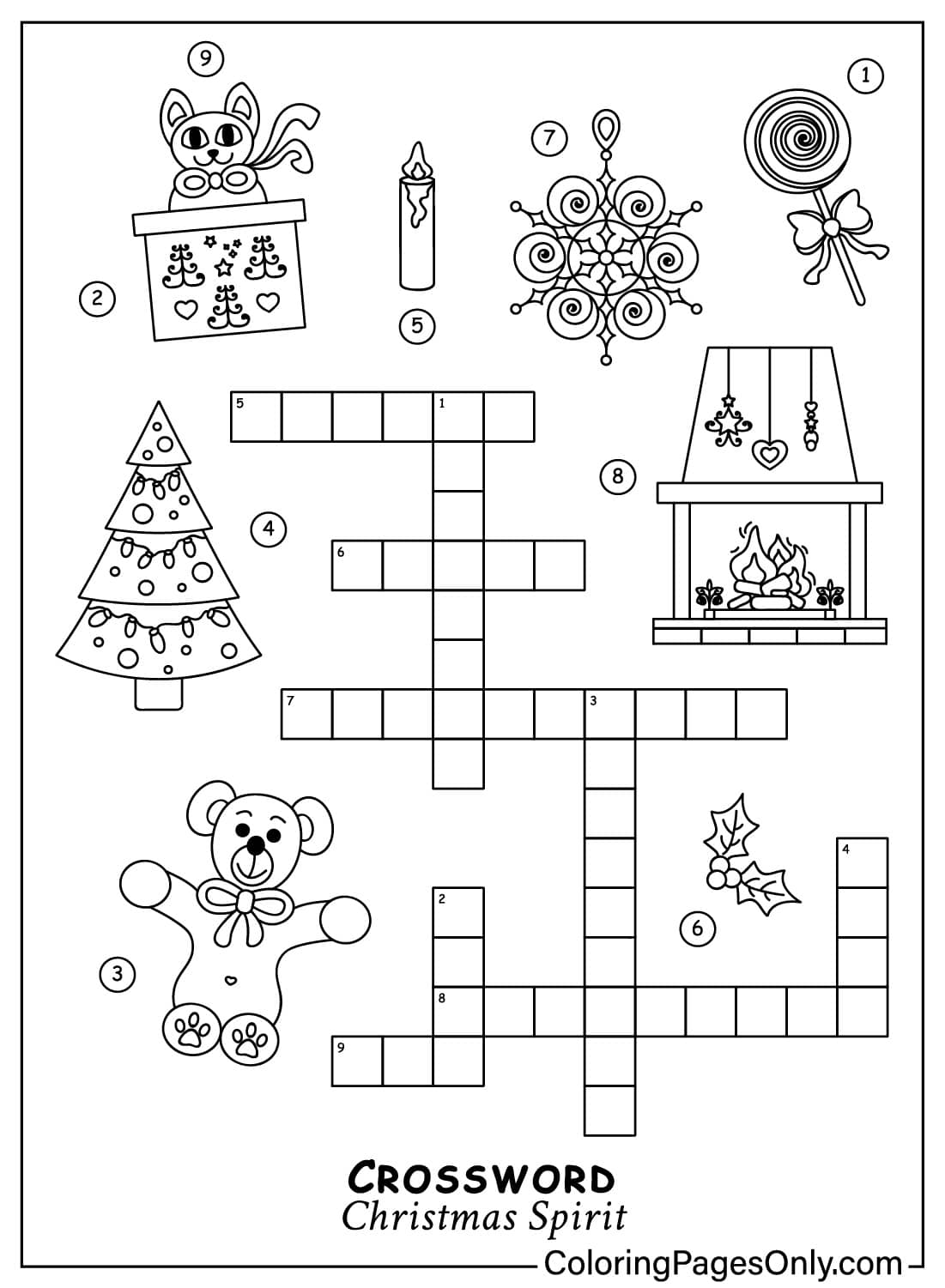
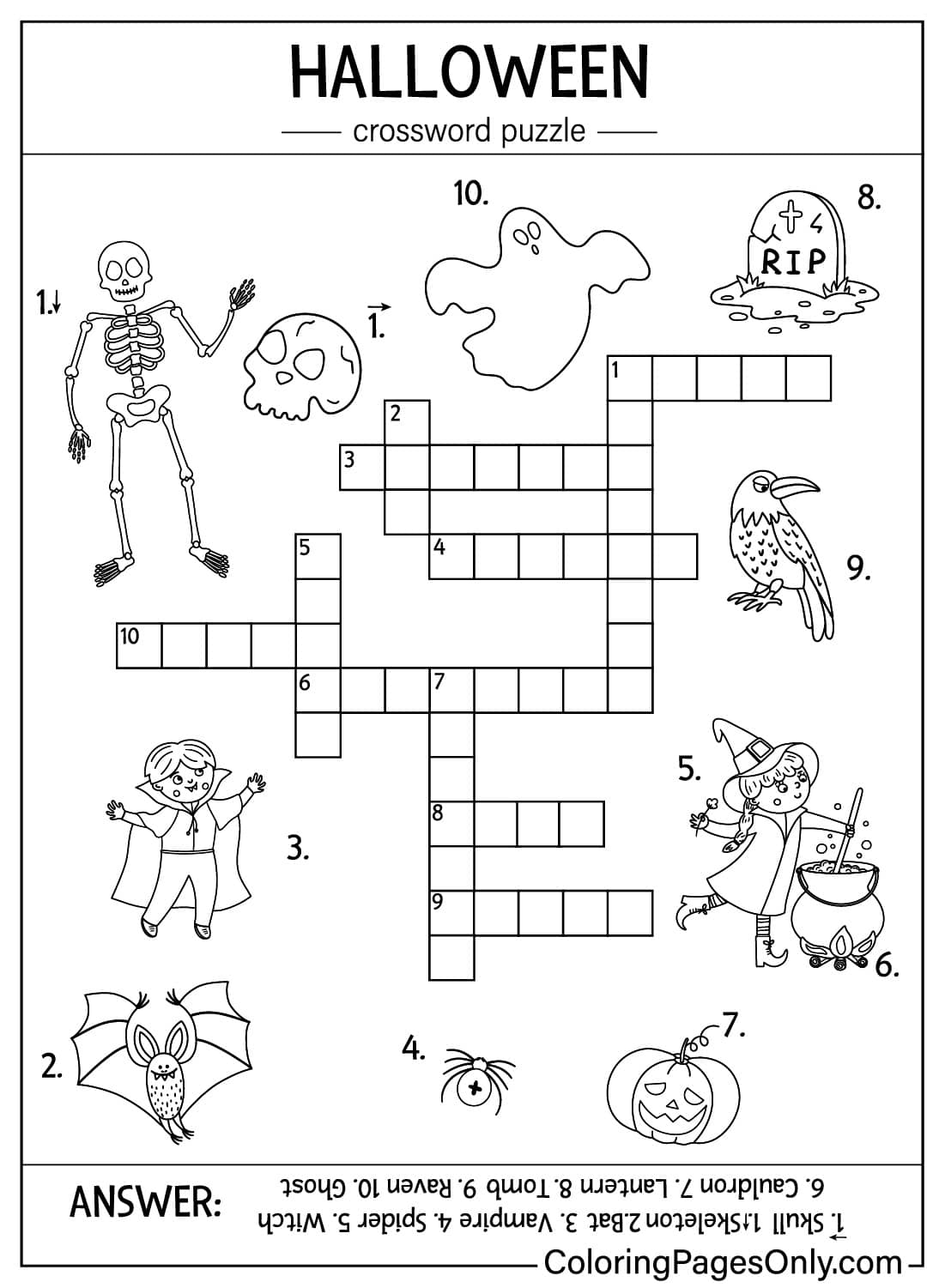
Seasonal and Holiday pages include two distinct Christmas puzzles (Christmas Spirit featuring lollipop, tree, teddy bear, candle, snowflake, gift, fireplace, holly; and Christmas itself featuring Santa, snowman, reindeer, gingerbread man, candle, gifts, ornaments), a Halloween puzzle (skeleton, bat, vampire, spider, witch, cauldron, lantern, tomb, raven, ghost), and the Autumn puzzle. These pages are particularly valuable as seasonal classroom activities – timing the completion of each page to the approaching season connects the vocabulary to the child’s immediate environmental experience, strengthening retention through contextual anchoring.
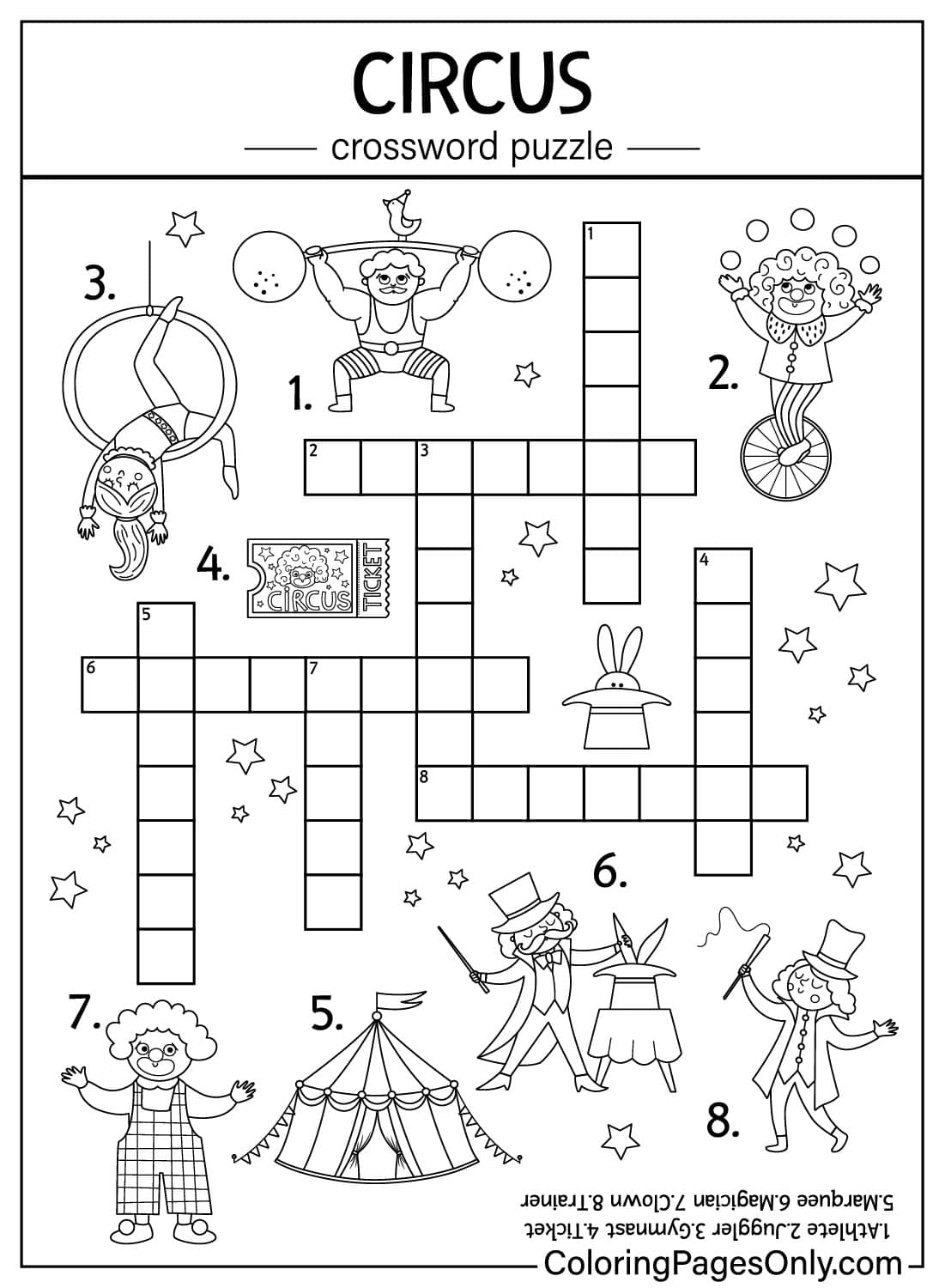
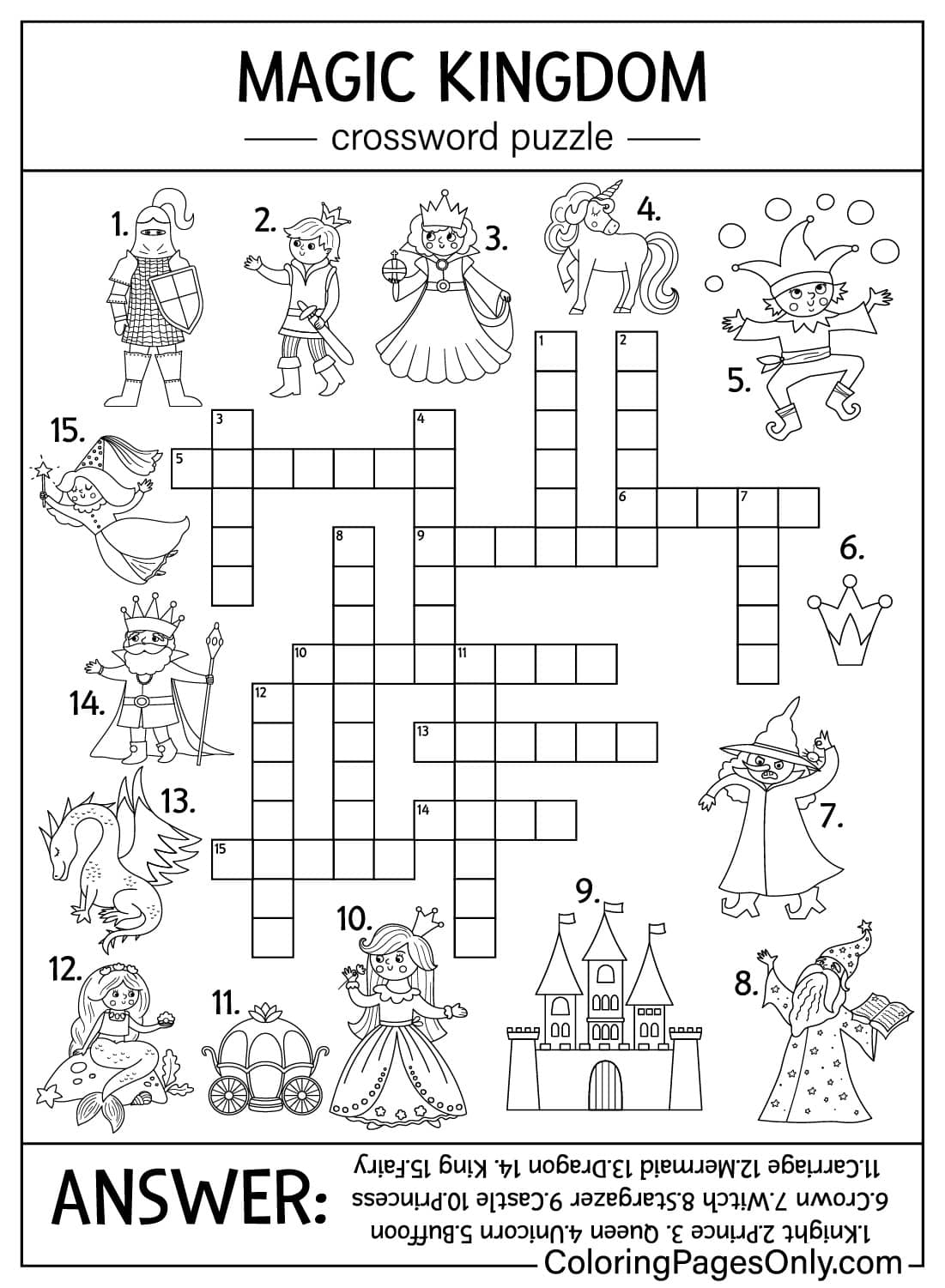
Fantasy and Imagination includes the Magic Kingdom page – the most vocabulary-rich in the collection, with fifteen entries: knight, prince, queen, unicorn, jester, crown, witch, sorcerer, castle, princess, carriage, mermaid, dragon, king, and fairy. This page introduces sophisticated vocabulary (“sorcerer,” “jester,” “carriage”) in a context that children find intrinsically engaging. The Circus Performers page also falls here: strongman, clown, acrobat, magician, ringmaster, tent, and ticket – each a distinct vocabulary item with a specific illustrated character to color.
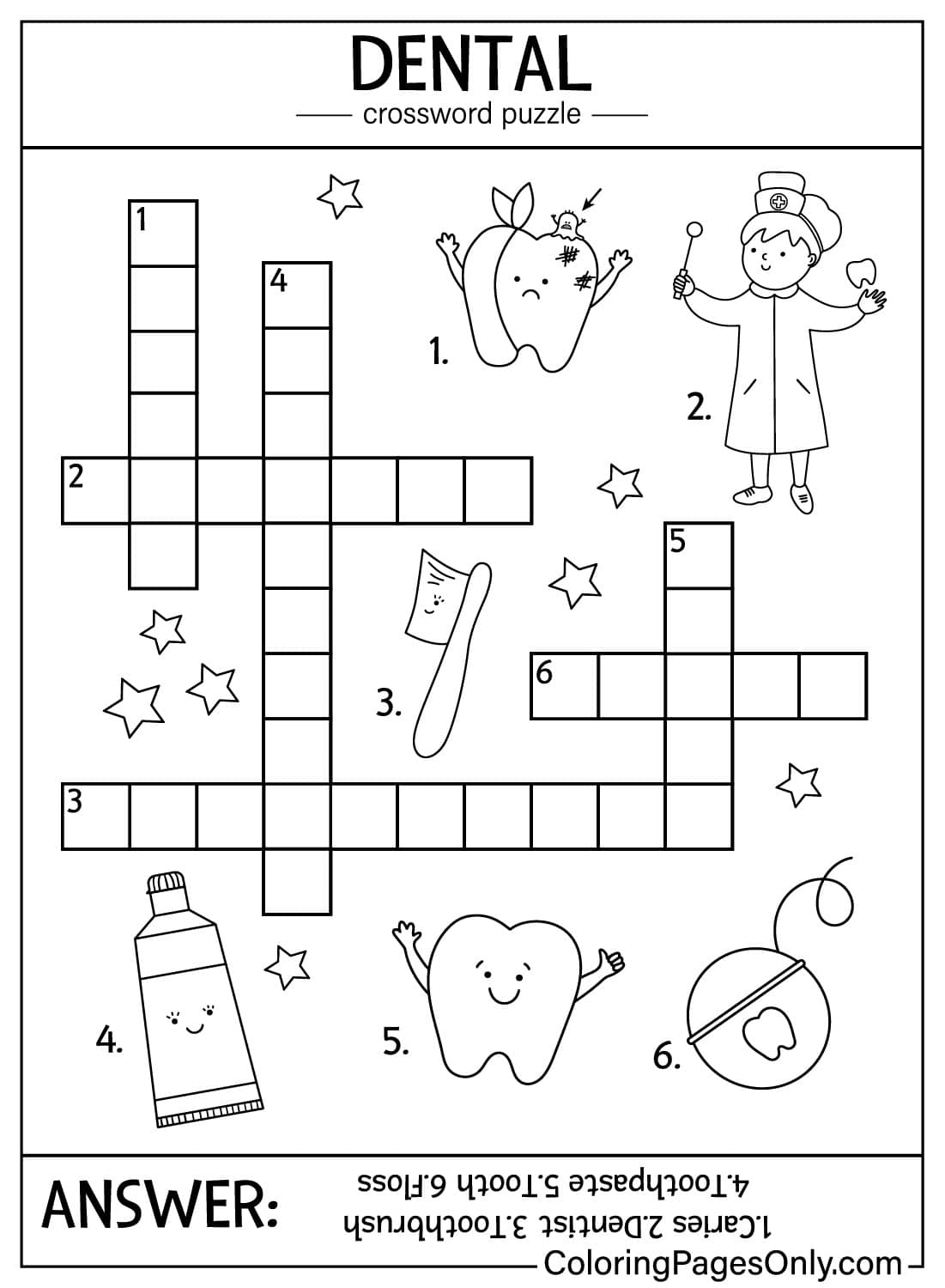
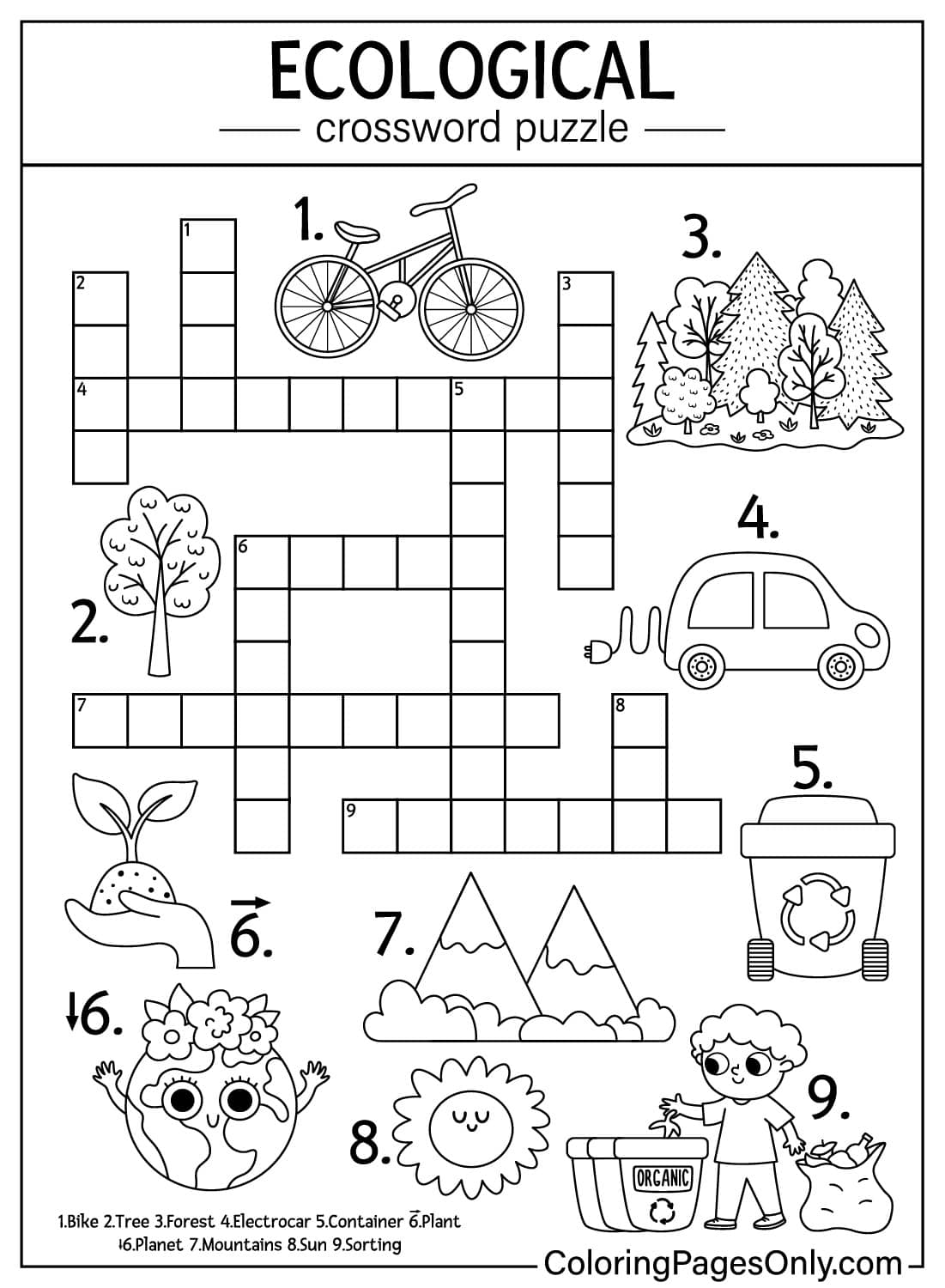
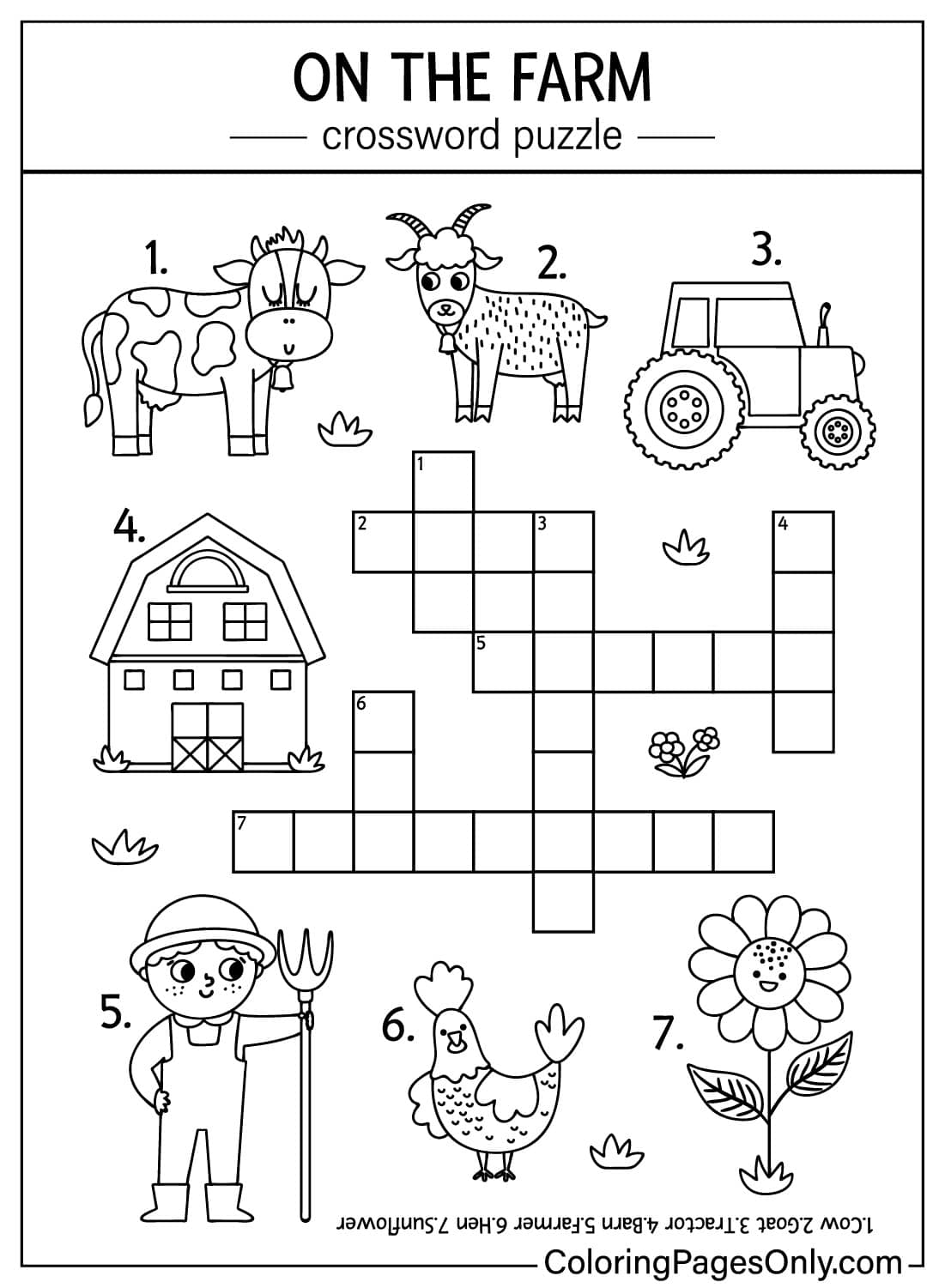
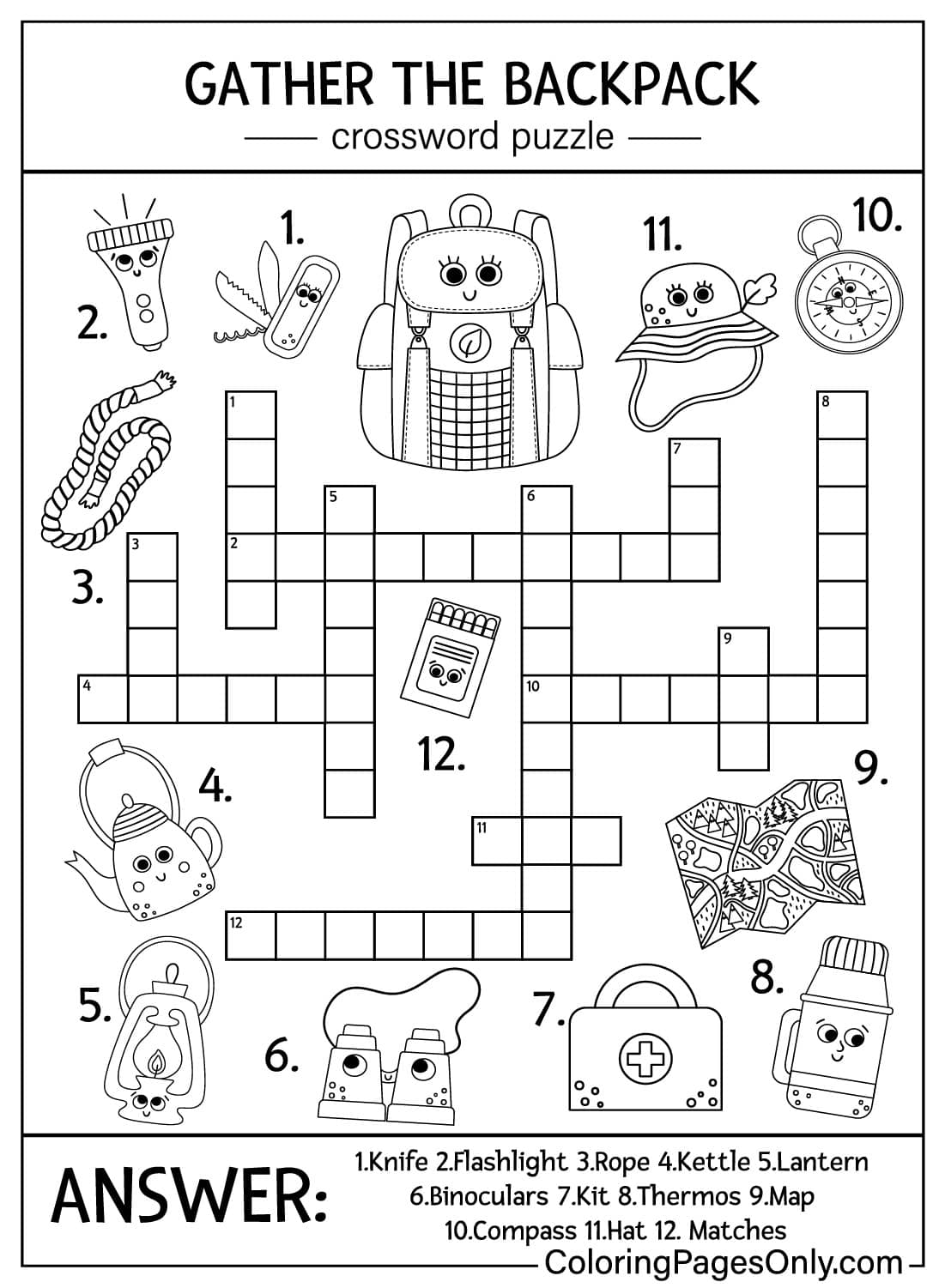
Real-World and Educational pages cover thematic domains that extend vocabulary learning into specific subject areas. The Dental page teaches oral hygiene vocabulary: dentist, tooth, toothbrush, toothpaste, dental floss, decayed tooth. The Ecological page introduces environmental concepts: bike, tree, forest, electric car, recycling – vocabulary that directly connects to environmental science curricula. The On the Farm page combines agricultural vocabulary (cow, goat, tractor, barn, farmer, hen, sunflower) in a rural scene context. The France page introduces cultural geography (Eiffel Tower, mime, croissant, beret, Marianne, rooster, baguette) in a way that functions as a miniature cultural introduction. The Gather the Backpack page teaches outdoor adventure vocabulary (knife, flashlight, rope, kettle, lantern, binoculars, first aid kit, thermos, map, compass, hat, matches) – twelve vocabulary items with high practical value and immediate visual identifiability.
How to Use These Pages – A Step-by-Step Approach
Because these pages combine two distinct activities, the order in which you approach them matters and can be varied strategically depending on your child’s age, skill level, and goal.
Approach 1 – Color first, then solve. For younger or more hesitant solvers, coloring the illustrations first is a warm-up that produces familiarity with the vocabulary before the spelling challenge begins. A child who has spent time carefully coloring the giraffe, monkey, bear, and penguin on the Cute Animal page has been looking closely at those animals and thinking about them for several minutes by the time the crossword begins. This pre-exposure means the vocabulary is already somewhat activated, making the spelling task easier and less intimidating.
Approach 2 – Solve first, then color. For children who are ready for the puzzle challenge and want to use coloring as a reward for completion, solving first ensures the crossword receives full attention before the more relaxed coloring phase begins. This approach works particularly well for children who might rush through the crossword to get to the coloring if both are presented simultaneously.
Approach 3 – Integrated: color each illustration after solving its clue. For maximum vocabulary reinforcement, solve one clue, write the answer in the grid, then immediately color the corresponding illustration before moving to the next clue. This integrated approach means each vocabulary item receives triple processing: identification from the picture (visual recognition), spelling in the grid (motor-linguistic encoding), and coloring of the illustration (extended visual attention). This is the approach most aligned with research on multi-modal learning – engaging visual, motor, and linguistic channels in close temporal proximity for each vocabulary item.
Coloring Tips for Crossword Puzzle Pages
Use color to reinforce the vocabulary. After solving the puzzle and learning that entry 3-Across is “rhinoceros” on the animal page, color the rhinoceros in its realistic grey-brown color rather than a random choice. This reality-anchored coloring reinforces the word-concept connection: the word “rhinoceros” is associated not just with a shape in a grid but with the specific visual identity of the actual animal. When completing themed pages (the France page, the Halloween page, the Circus page), use thematically appropriate colors that deepen the contextual learning.
Complete the illustrations fully before moving to the grid background. These pages have two distinct visual zones: the illustrated clue pictures (which are the primary visual content) and the crossword grid itself (which is the puzzle structure). Color all the illustrated pictures first – they are what the page is really about. The grid background, if you choose to color it, should be in a much lighter, more neutral tone that does not compete with the illustrations for visual attention.
Color the crossword grid’s blank answer boxes in a pale, readable tint. If you want to add color to the grid itself, use a very pale color (light yellow, pale blue, soft cream) for the answer boxes – light enough that any penciled-in letters remain fully readable. The black squares (blocked cells) in the grid can remain black or be colored in a slightly warmer dark tone that harmonizes with the illustration palette.
For themed pages – establish a unified palette. The Ecological page, for example, uses green as its obvious thematic color – but the five illustrated items (bike, tree, forest, electric car, recycling symbol) each have their own specific colors. Rather than making every item green, identify the two or three shared accent colors that appear across multiple items (the green of the tree and the forest; the grey of the electric car and the recycling symbol) and ensure these colors are consistent throughout the page. This creates visual unity that reflects thematic coherence.
The Halloween page rewards the boldest color choices. Of all the pages in the collection, the Halloween puzzle features subjects – skeleton, vampire, spider, witch, ghost, cauldron, raven, bat, tomb, lantern – with the strongest and most culturally established color associations. Deep purple-black for the witch, orange-yellow for the lantern, bone-white for the skeleton, vivid orange for the cauldron’s flames, grey-blue for the ghost. Using the established Halloween color palette on this page creates a finished illustration that is immediately recognizable as a holiday artifact, which makes it more satisfying to display and more personally meaningful to keep.
The Magic Kingdom page is the most ambitious coloring challenge in the collection. Fifteen distinct illustrated characters – knight, prince, queen, unicorn, jester, crown, witch, sorcerer, castle, princess, carriage, mermaid, dragon, king, fairy – each with their own costume, color, and visual identity. Approach this page with a planned palette: decide which colors will recur across multiple characters (gold/yellow for royalty items – crown, castle, carriage; deep purple/violet for magical characters – witch, sorcerer, fairy; and bright, saturated accents for each character’s primary costume) before beginning to color. This planning prevents the fifteen characters from looking like an uncoordinated collection of random colors.
5 Activities
The crossword relay. Print one page and sit at a table with two or more players. Taking turns, each player solves one crossword clue and colors the corresponding illustration before passing the page to the next player. The page is complete when all clues are solved, and all illustrations are colored. This cooperative relay format transforms a solo activity into a social one, with each player responsible for both the spelling accuracy of their answers (which others will see if they intersect) and the coloring choices they make for their assigned illustration. The social accountability of the relay produces more careful spelling – children are more likely to count letters and double-check their answers when others will see the result – and the variety of coloring hands creates a more diverse, interesting finished page. The relay also introduces a natural peer-teaching moment: when one player is uncertain about a word, the group can discuss and arrive at the correct spelling collaboratively.
The vocabulary reinforcement game. After completing any themed page, close the coloring page face down. One player names a number (from the clue numbers on the page), and another player must recall and say the corresponding vocabulary word without looking at the page. Then open the page to verify. Score one point per correct answer. This memory-recall activity, done after solving and coloring, tests whether the dual-processing of solving and coloring has actually produced durable vocabulary retention – or whether the child can recall the word in a new context (number-only prompt, no picture visible). Children who can answer correctly have formed a genuine number-word association through the crossword-and-color process. This game can be played immediately after completing the page or, more revealingly, a day or a week later – testing longer-term retention.
The themed vocabulary book. After completing three or more pages from different thematic areas – perhaps Halloween, Ecological, and France – create a personal vocabulary glossary. For each completed page, list every answer word in alphabetical order, write a one-sentence definition for each in the child’s own words, and illustrate each definition with a small drawing. The finished glossary, which the child has written and illustrated themselves using vocabulary from completed crossword pages, represents active vocabulary learning of a much higher order than either the crossword or the coloring alone. Creating definitions requires understanding a word deeply enough to explain it; drawing the illustration requires visualizing it clearly enough to represent it. Children who complete this activity for three pages will have created personal definitions and drawings for 20–40 vocabulary words across three distinct thematic domains.
The build-your-own crossword. Using any completed page as a model, challenge the child to create their own crossword puzzle on the same theme – or a new theme of their choice. They must: select 5–8 words on the same theme, draw illustrated pictures for each word (one picture per word, numbered), draw an interlocking grid where the words fit, and number each word’s starting box. Exchange with a sibling, parent, or friend who then solves it. Creating a crossword requires a much deeper understanding of how the format works than solving one does – the designer must ensure that intersecting words share correct letters at their crossing points, that the grid is navigable, and that the pictures clearly convey the intended words. This is a genuine puzzle design exercise, and children who complete it typically gain a much stronger understanding of the crossword mechanism than children who only solve them.
The seasonal crossword calendar. Over the course of a school year, time each themed page to its most relevant season or occasion: Autumn in October, Halloween on or near October 31, Christmas Spirit and Christmas in December, and so on for any available seasonal pages. For non-seasonal themed pages, assign one per month and complete them as a monthly vocabulary focus. After each page is solved and colored, write the month and year on the back. At the end of the school year, arrange all completed pages chronologically – they form a year’s record of seasonal activities and vocabulary learning. This calendar approach provides a structured, year-long framework for using the collection rather than completing all pages in a single sitting, and produces a personal educational record that documents the child’s vocabulary range across the full thematic scope of the collection.