Snake Coloring Pages
 By:
Jennifer Thoa – Content Editor & Designer
Updated:
By:
Jennifer Thoa – Content Editor & Designer
Updated:
Free snake coloring pages: 81 printable PDF designs featuring simple portraits, cartoon personalities, playful scenes, and real species like cobras, rattlesnakes, and pythons. Each page can be downloaded as a PDF to print or colored online in the browser.
A snake’s forked tongue is not for tasting food the way a human tongue is. It collects scent particles from the air and delivers them to an organ in the roof of the mouth called the Jacobson’s organ, which is how a snake actually senses its surroundings. Most snake species are non-venomous, and the ones that do carry venom generally use it to catch prey rather than for defense. This set works for a reptile-obsessed kid, a classroom covering animal adaptations, and anyone who finds a coiled shape satisfying to fill in with color.
A snake’s body is essentially one long, continuous shape, which makes it different from most animals in terms of color. There is no separate head, torso, and limbs competing for attention. That single unbroken line is exactly what makes pattern and shading the real skill here, since color is doing almost all the work of making a snake page look finished rather than half-colored.
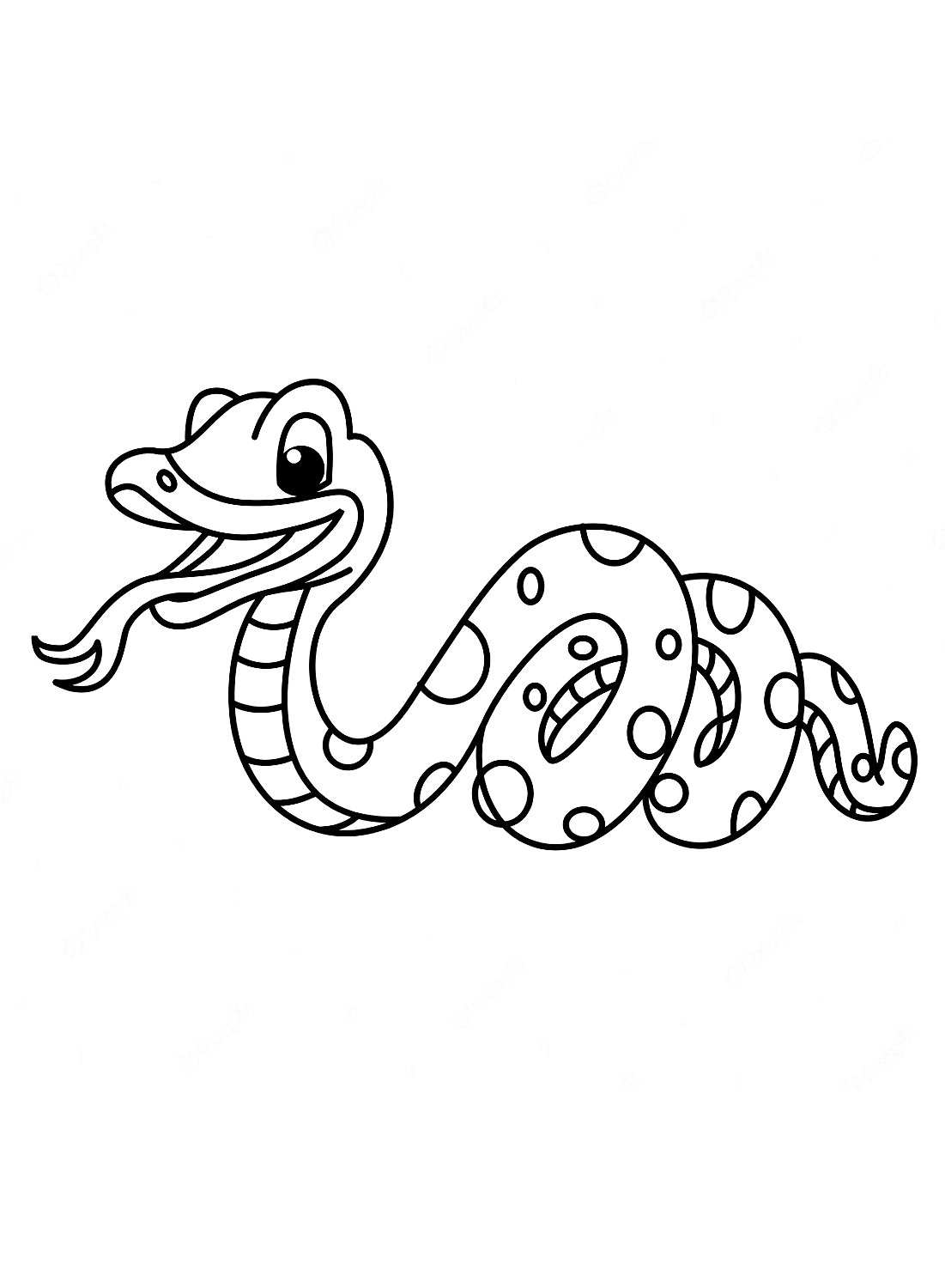
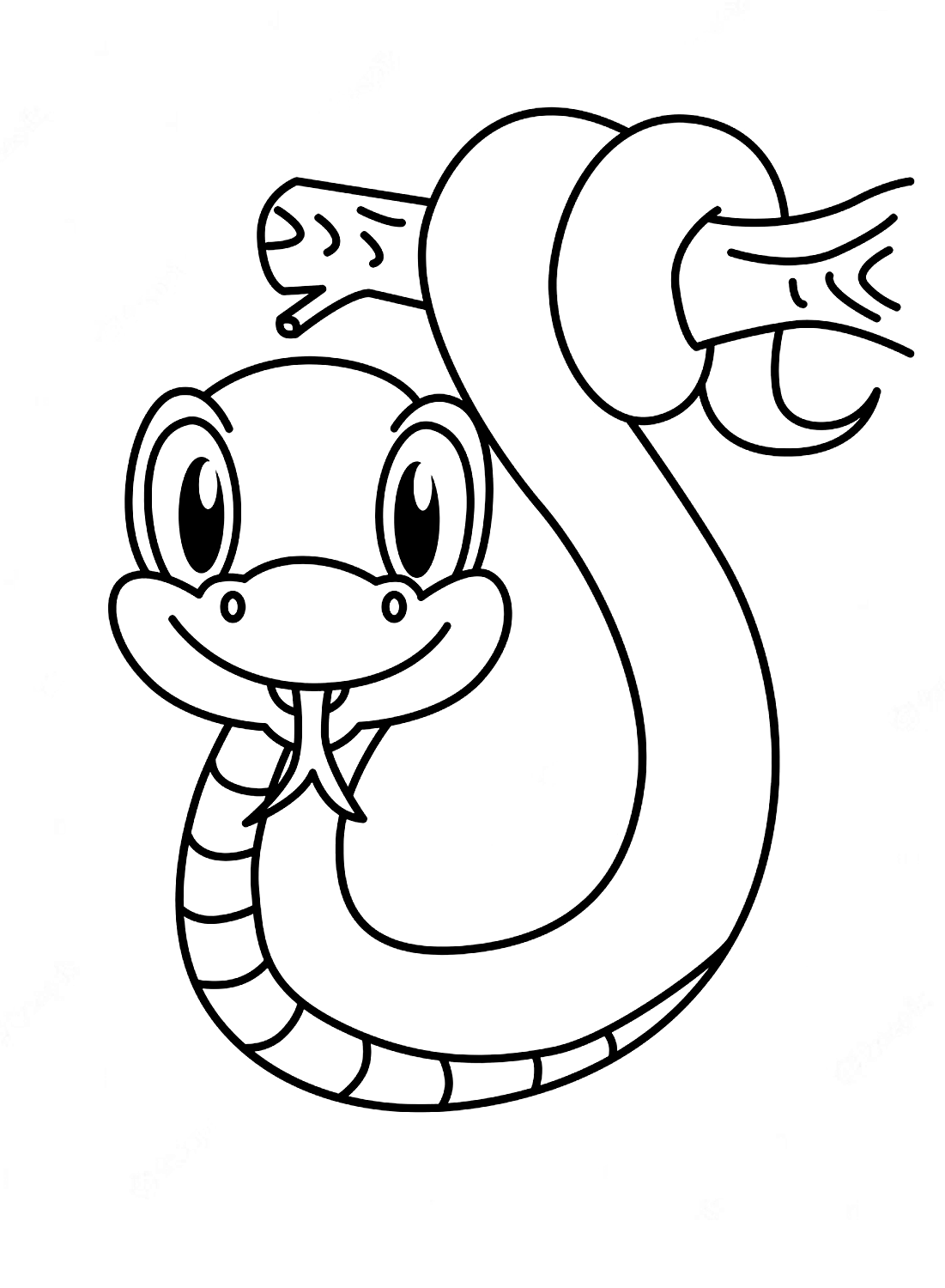
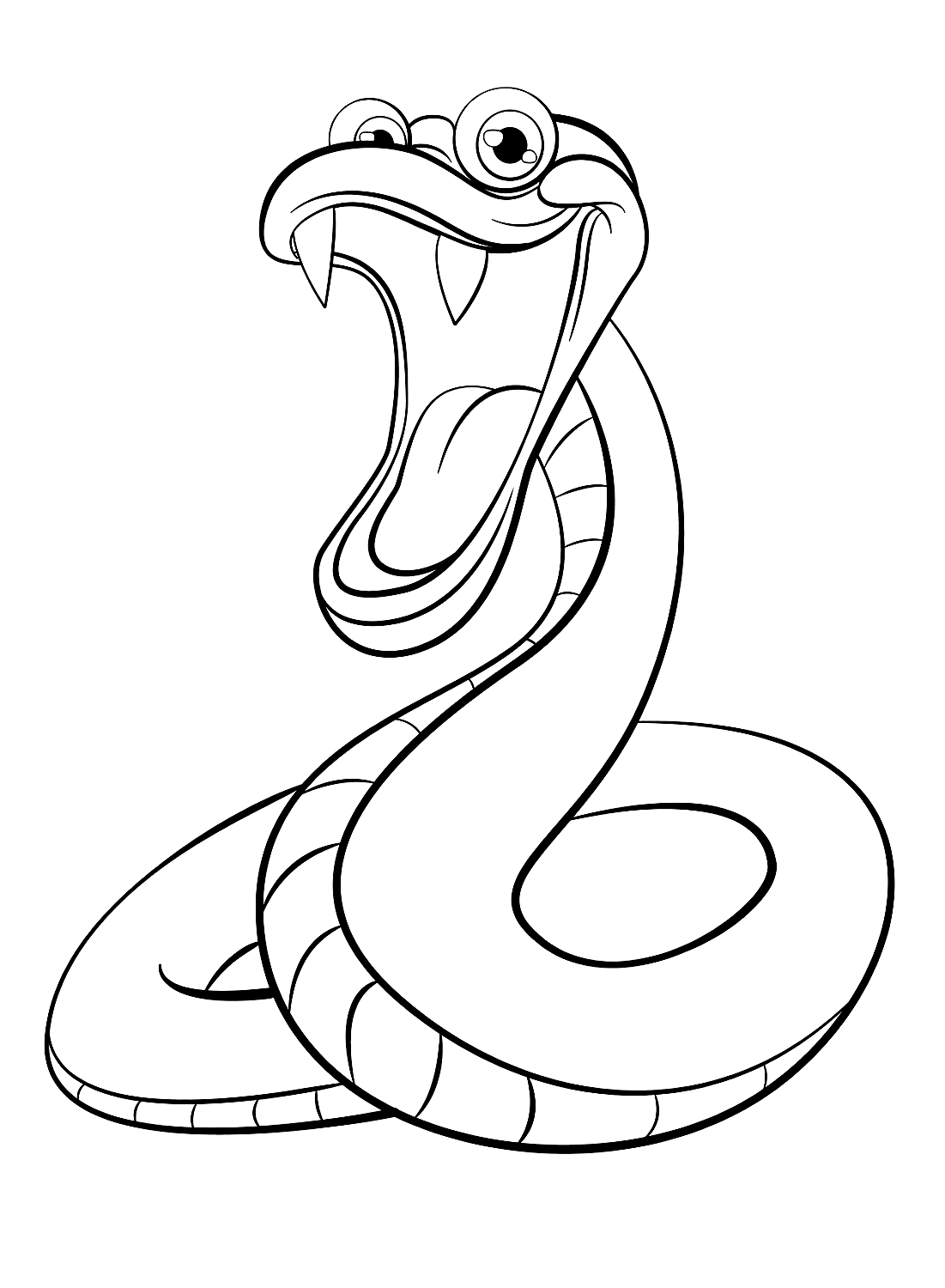
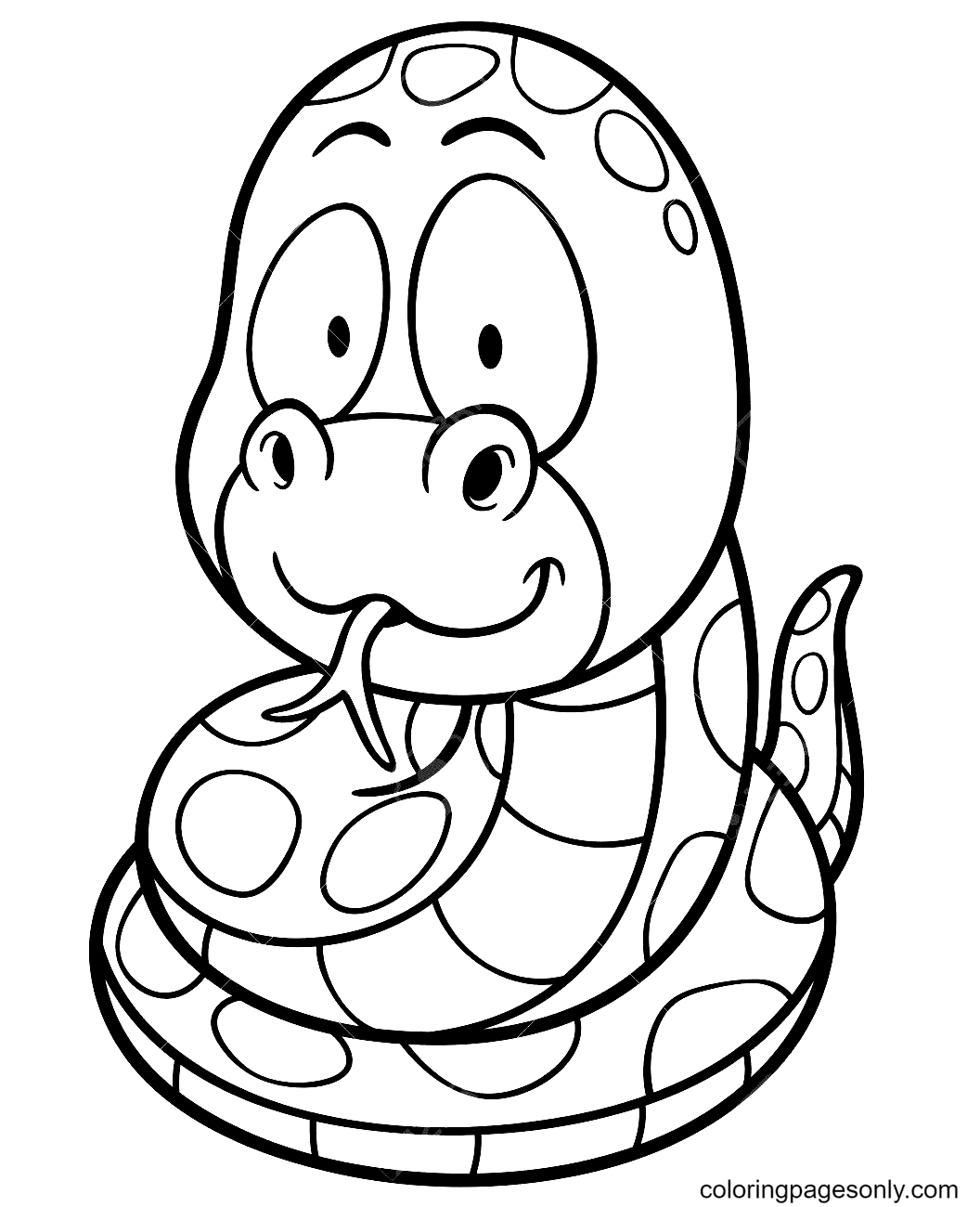




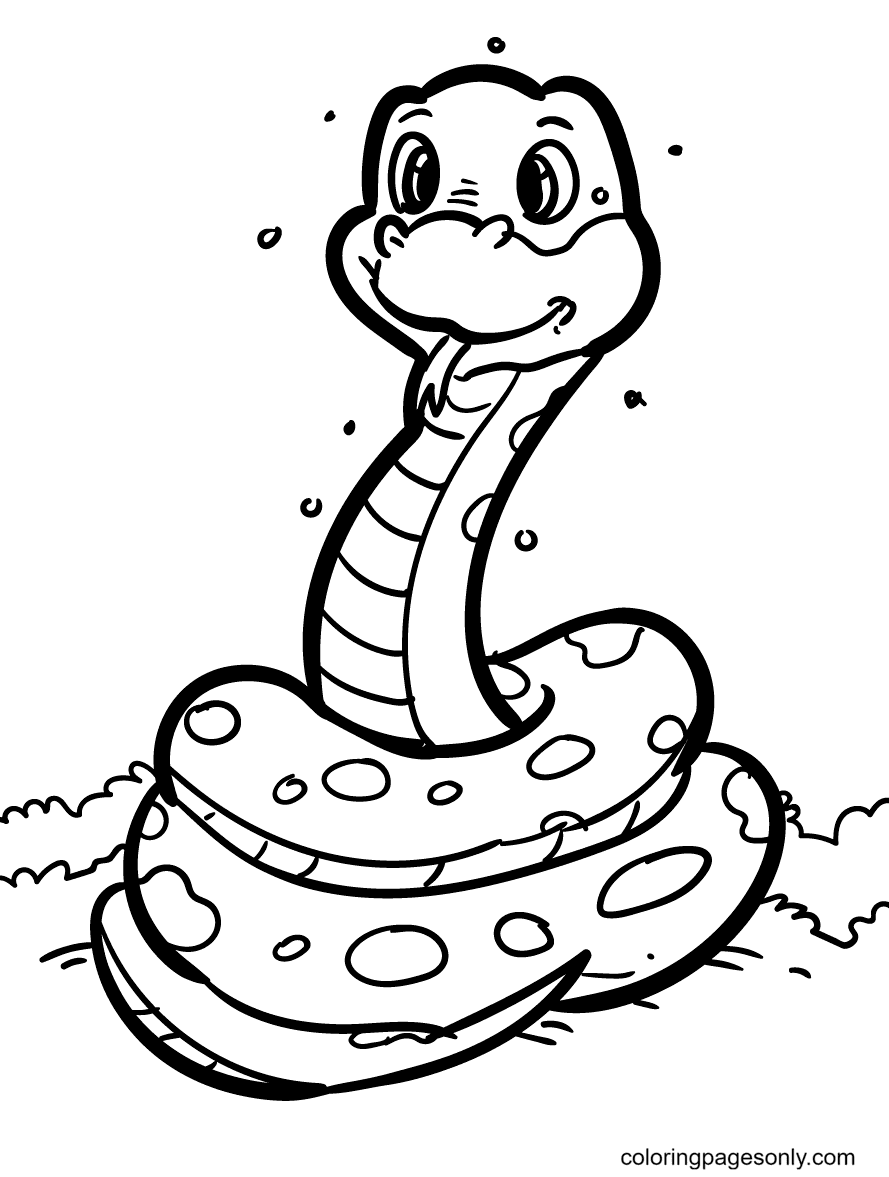
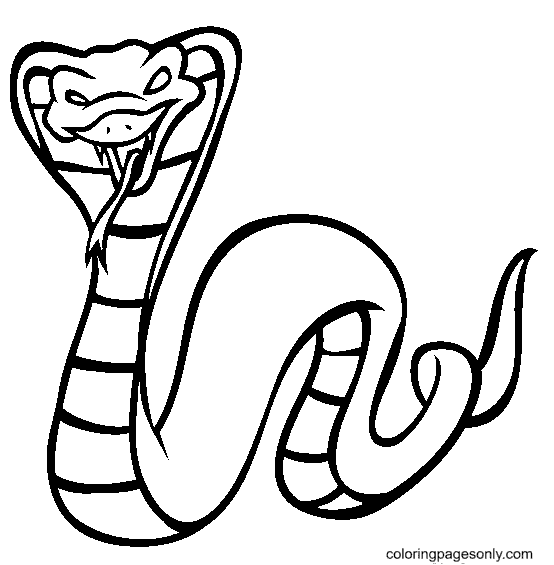
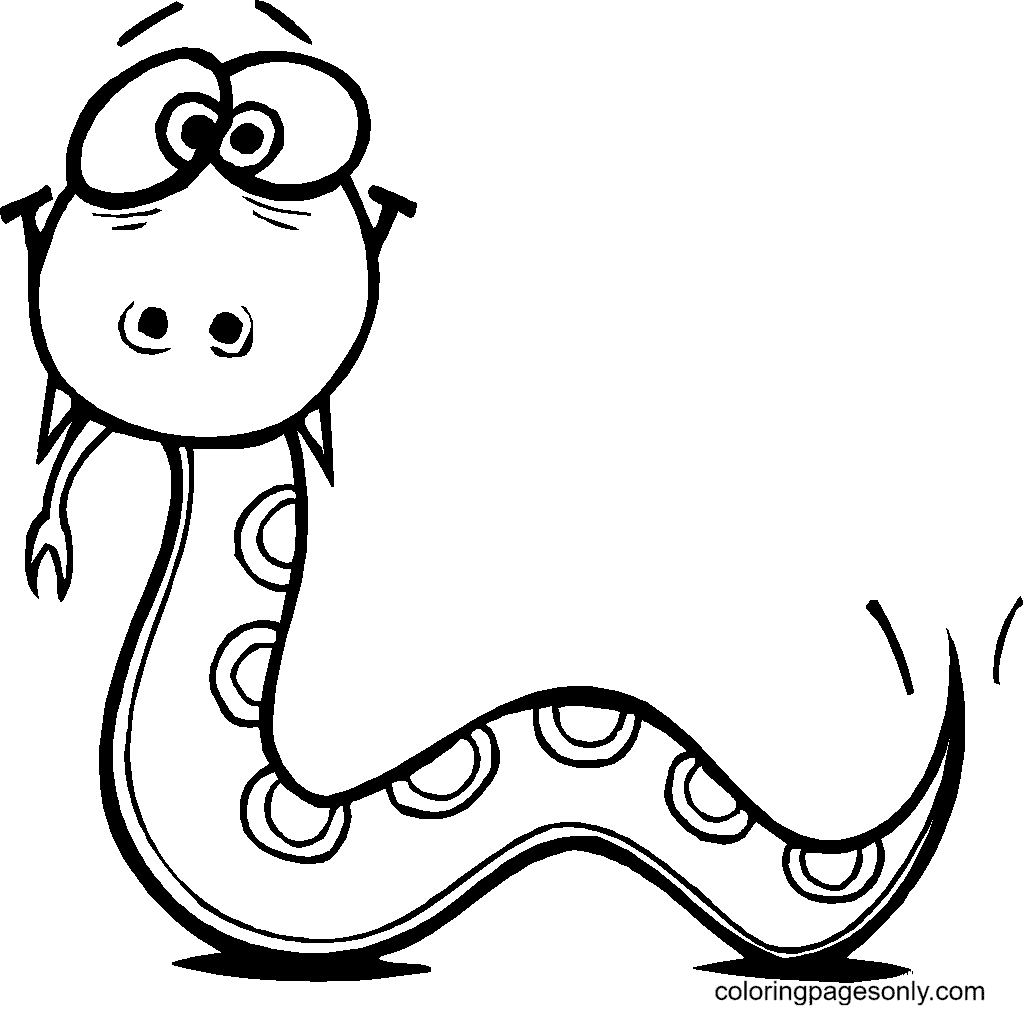
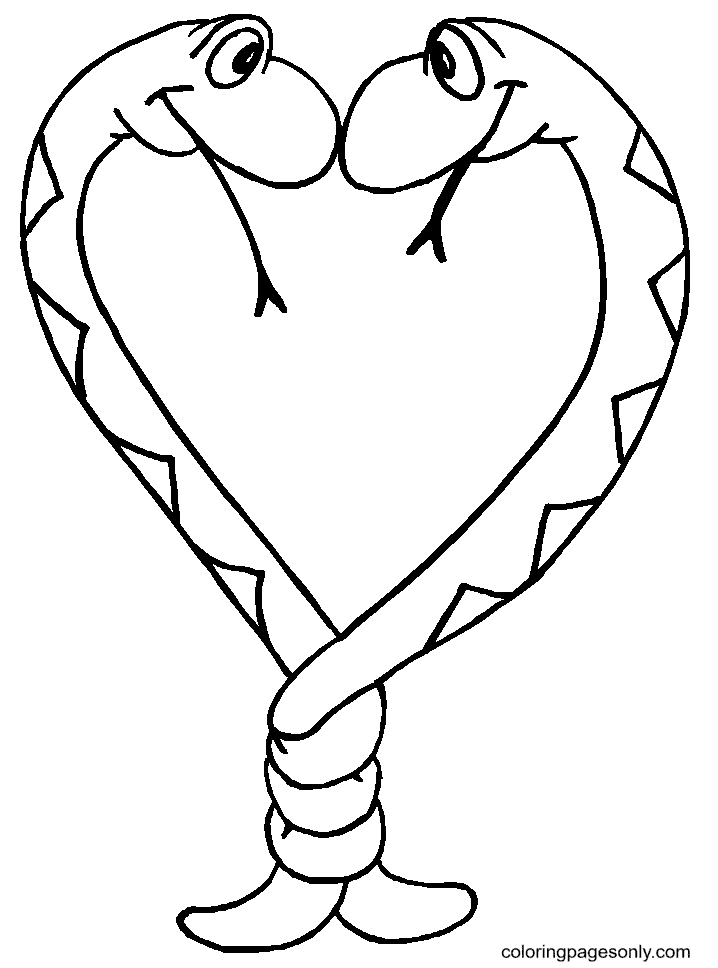


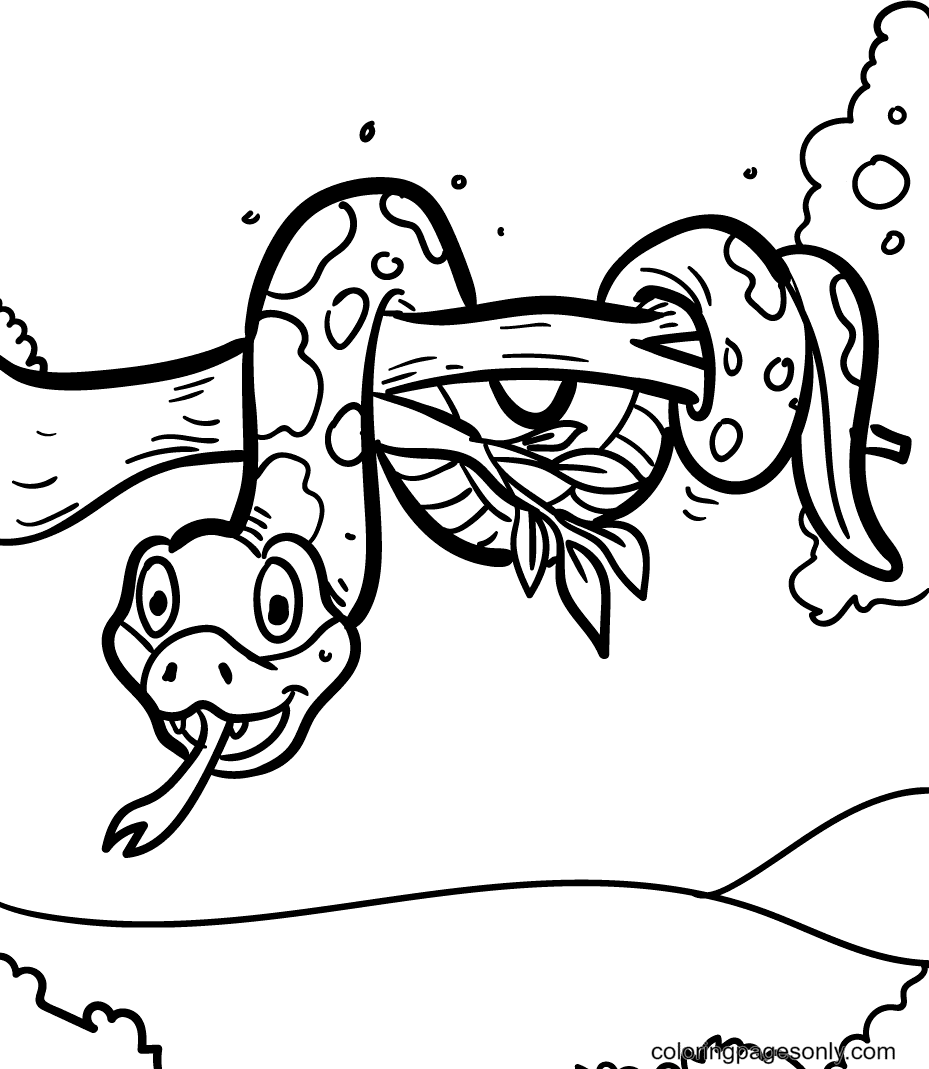
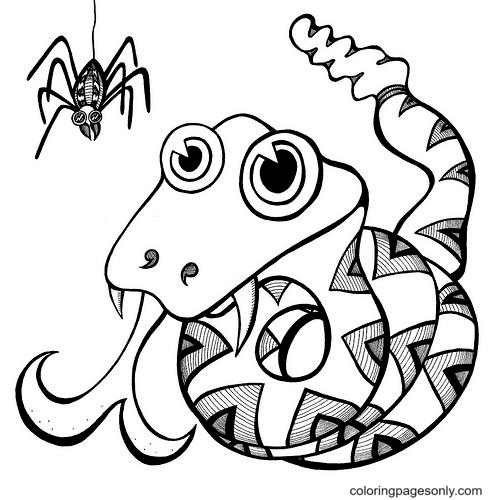
What Is Inside This Collection
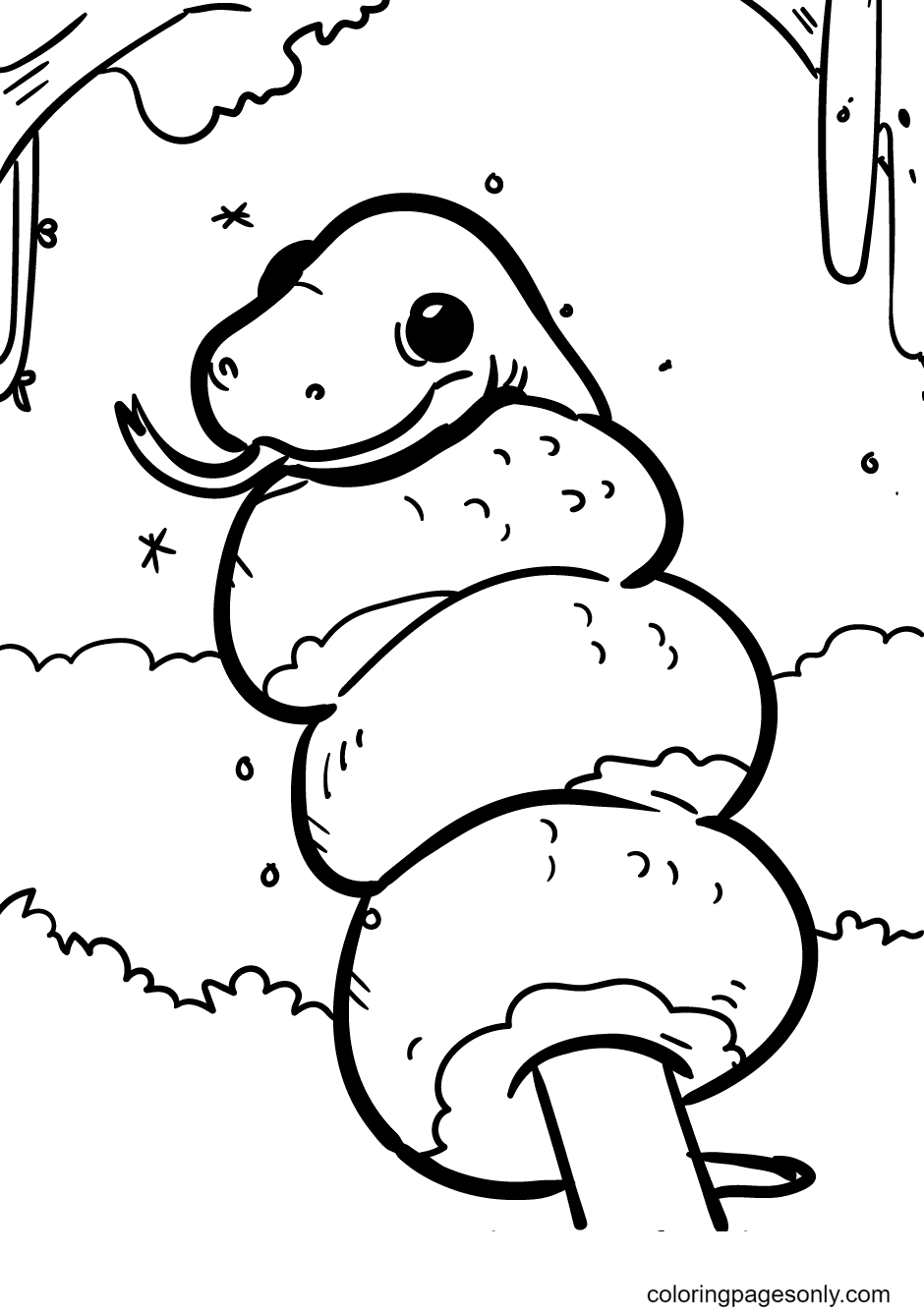
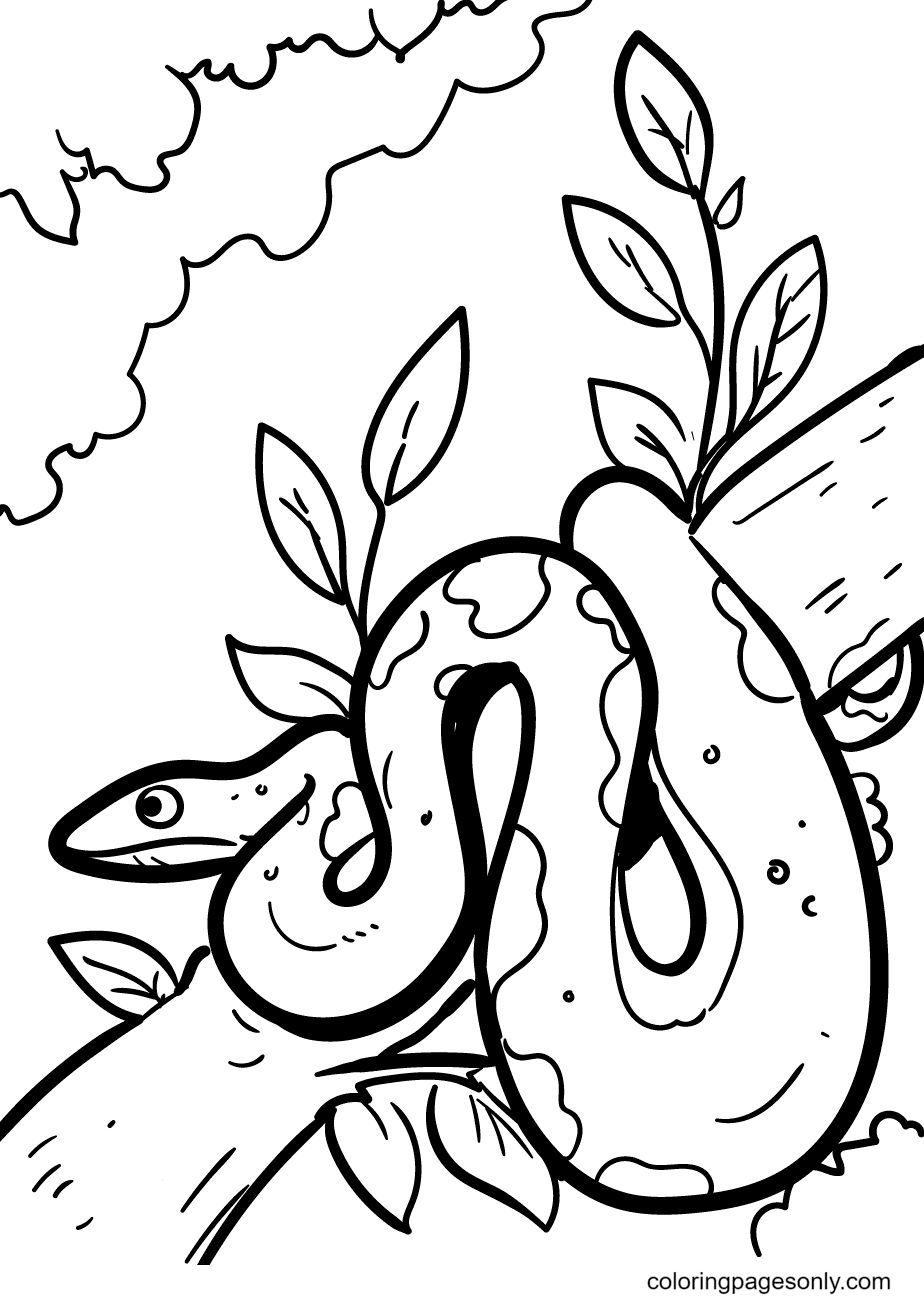
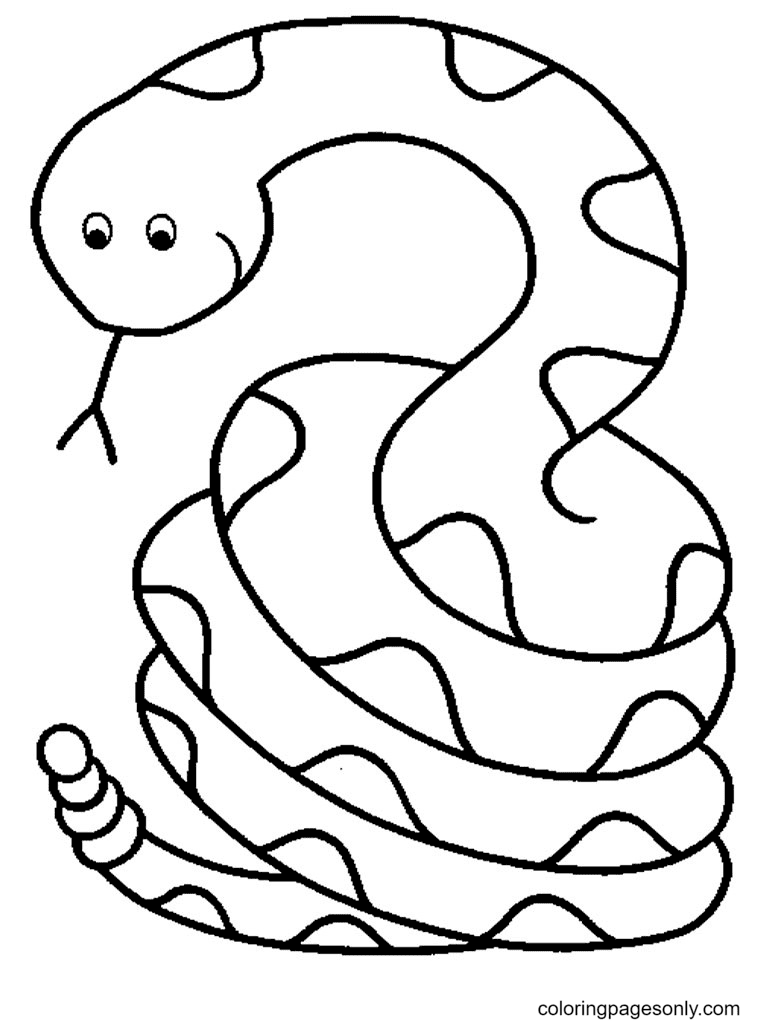
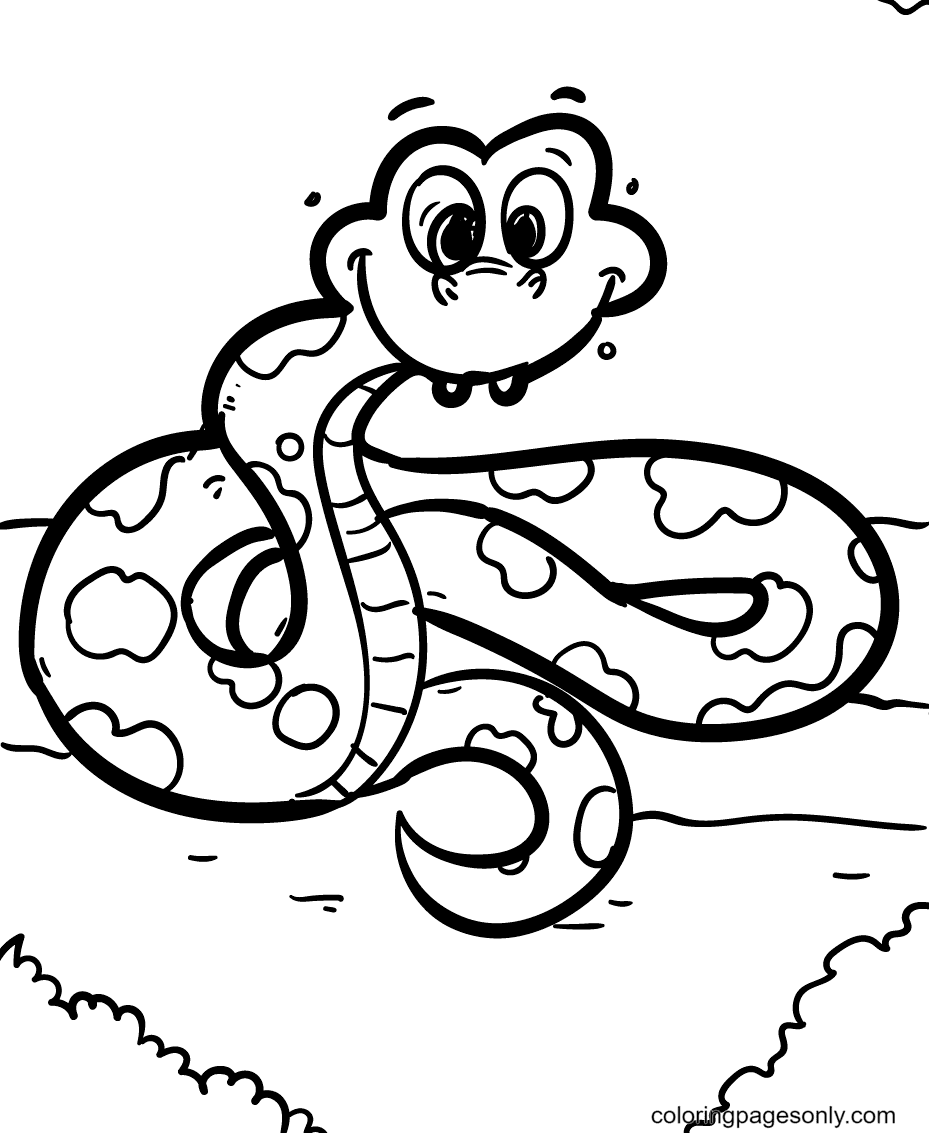
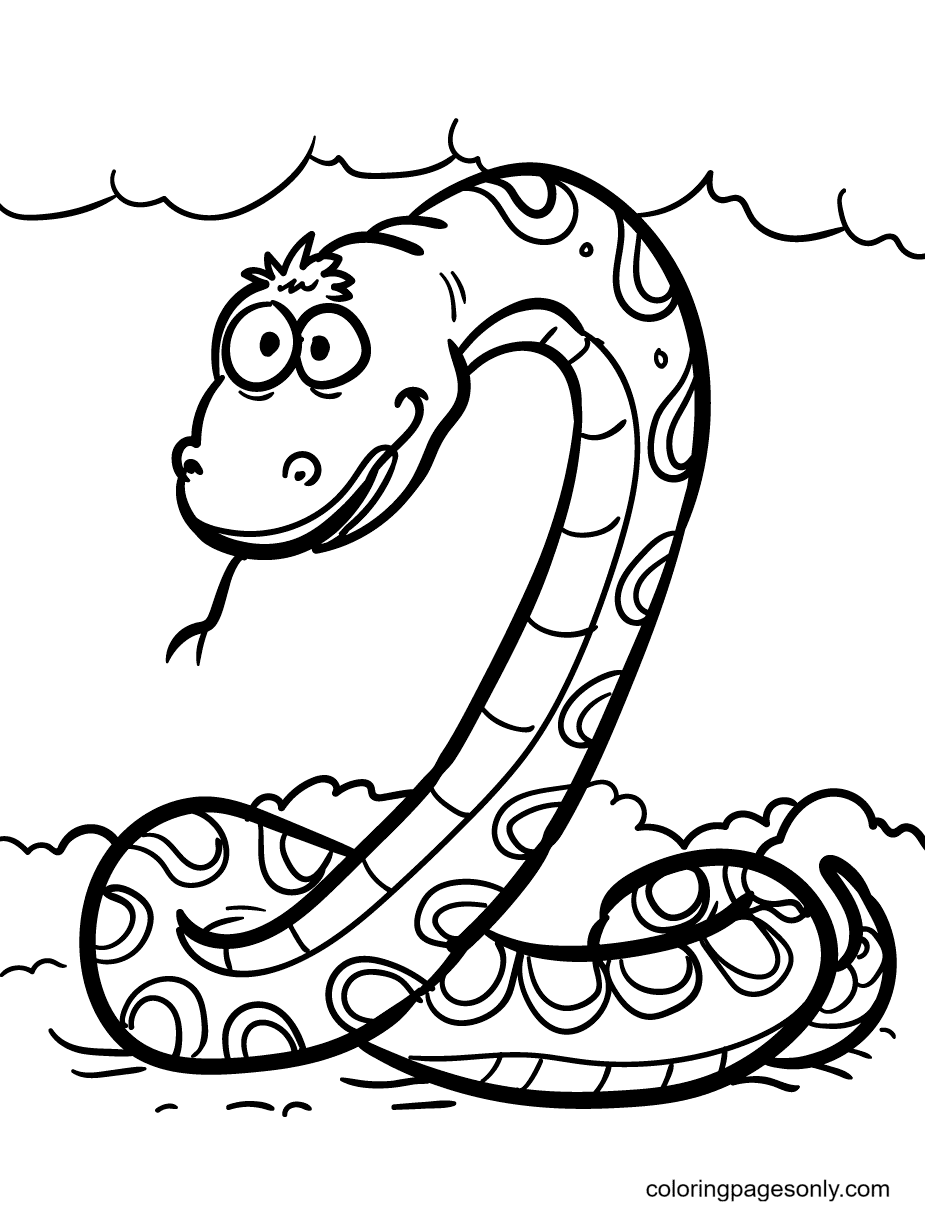
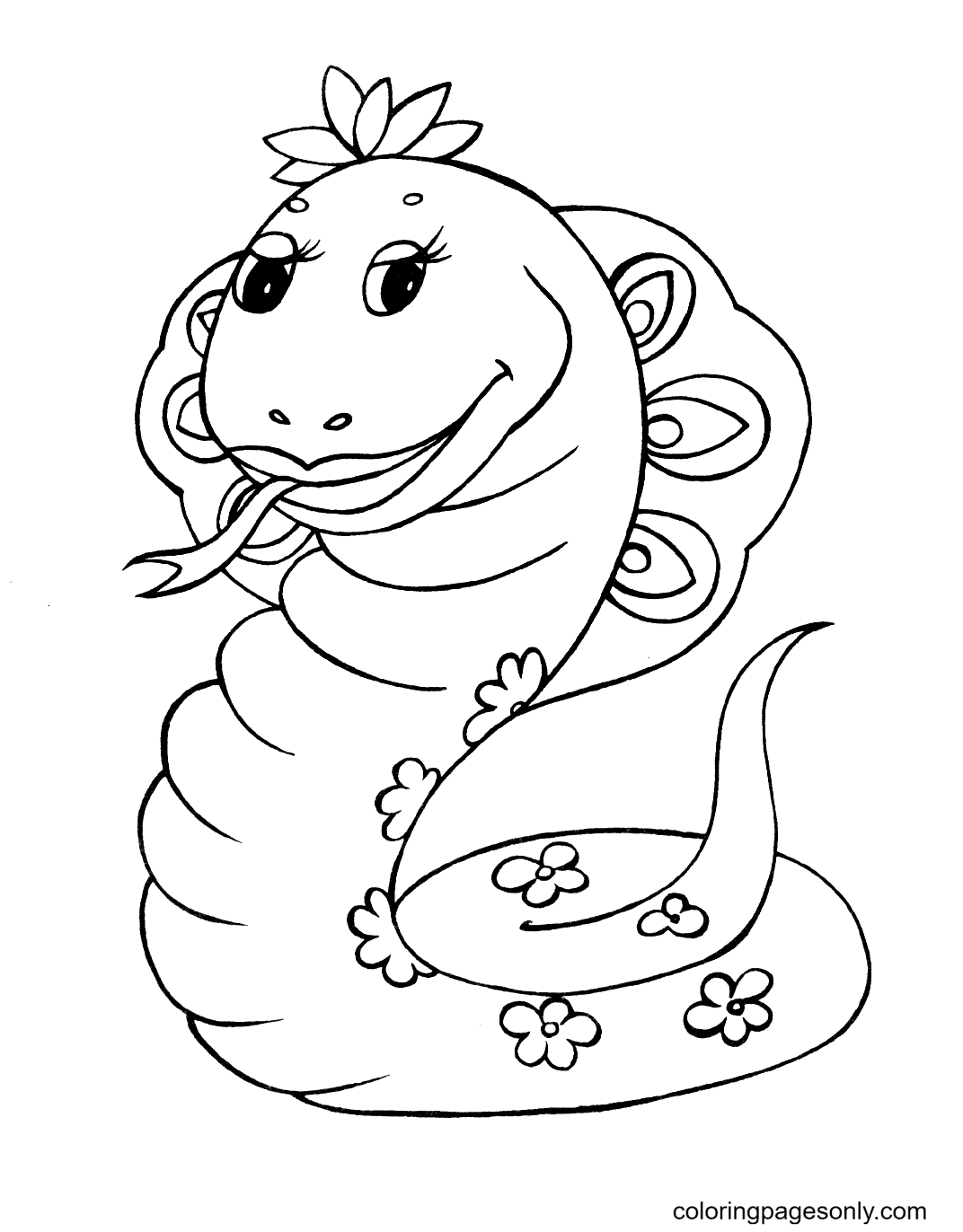
The 81 pages fall into a few clear groups, built around plain portraits, cartoon personalities, activity scenes, and real species.
Simple and Generic Portraits
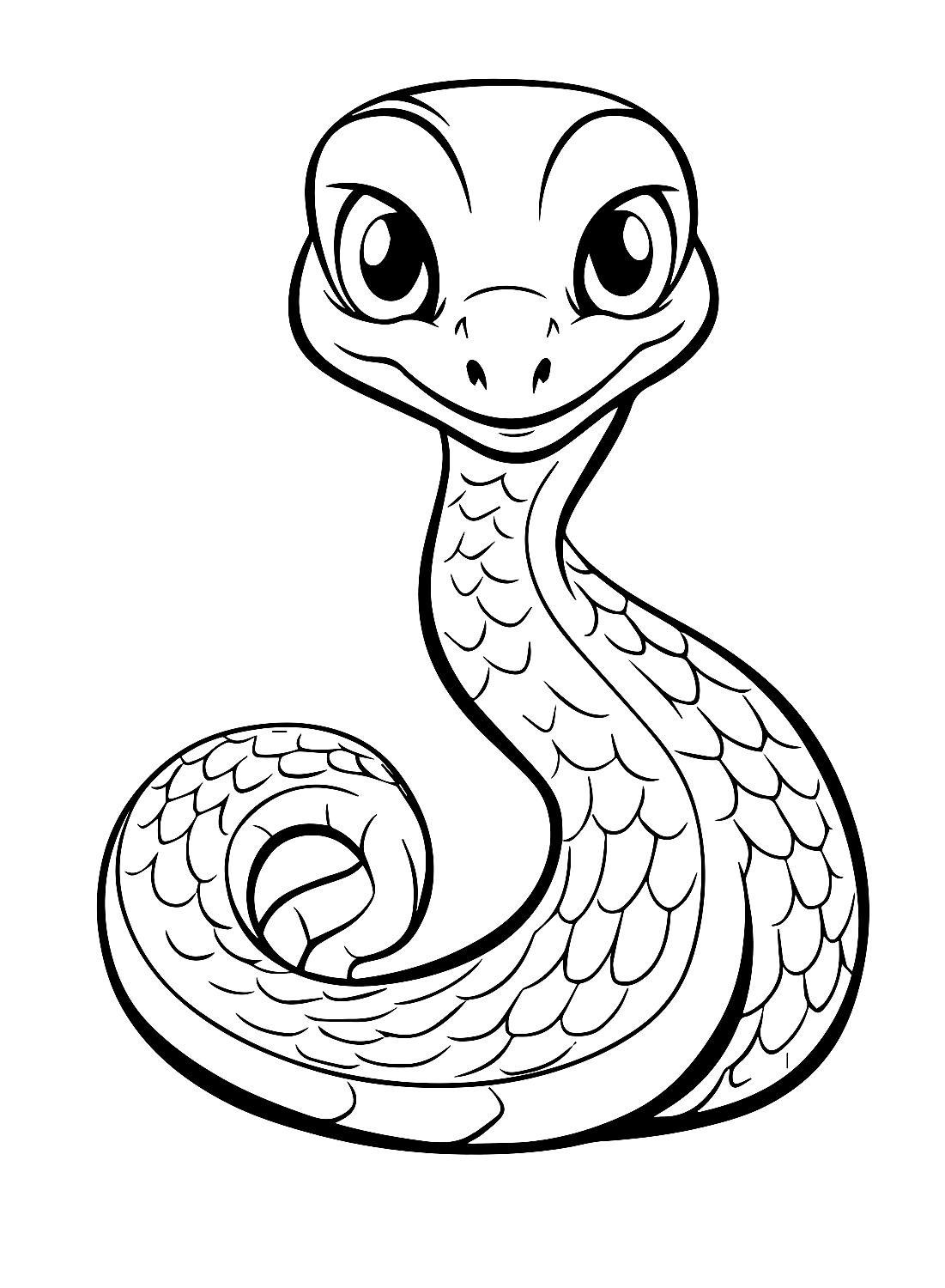
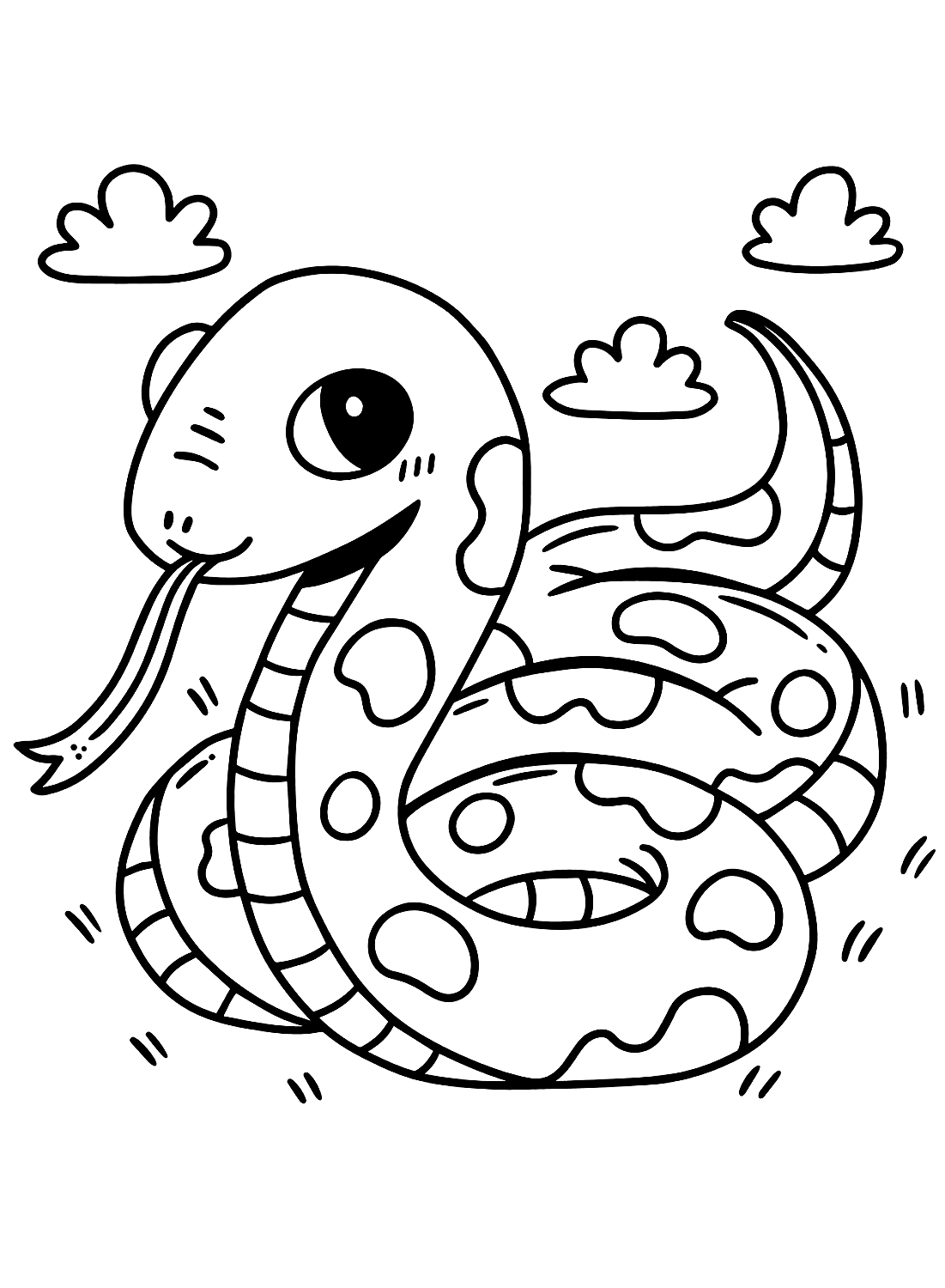
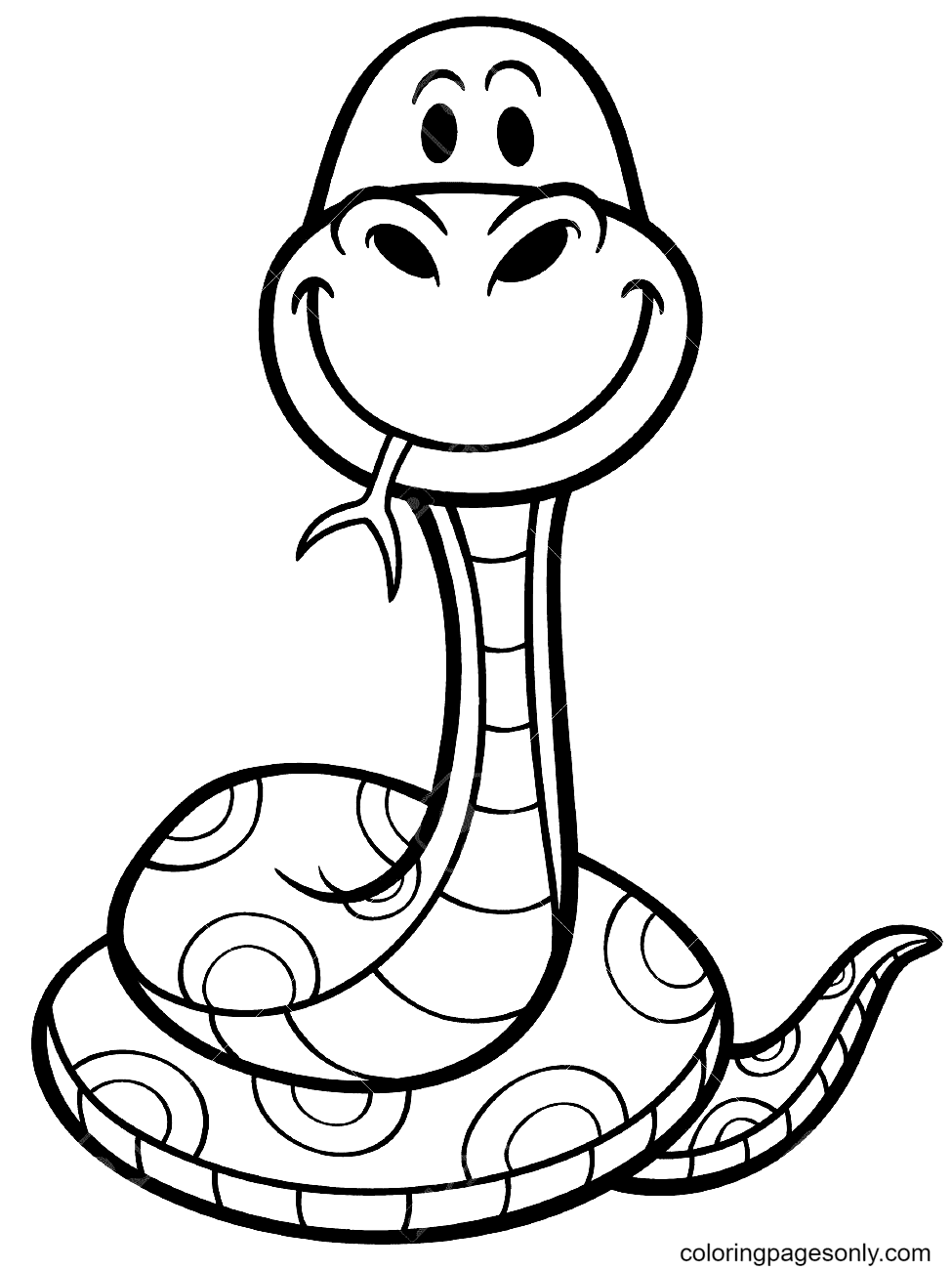
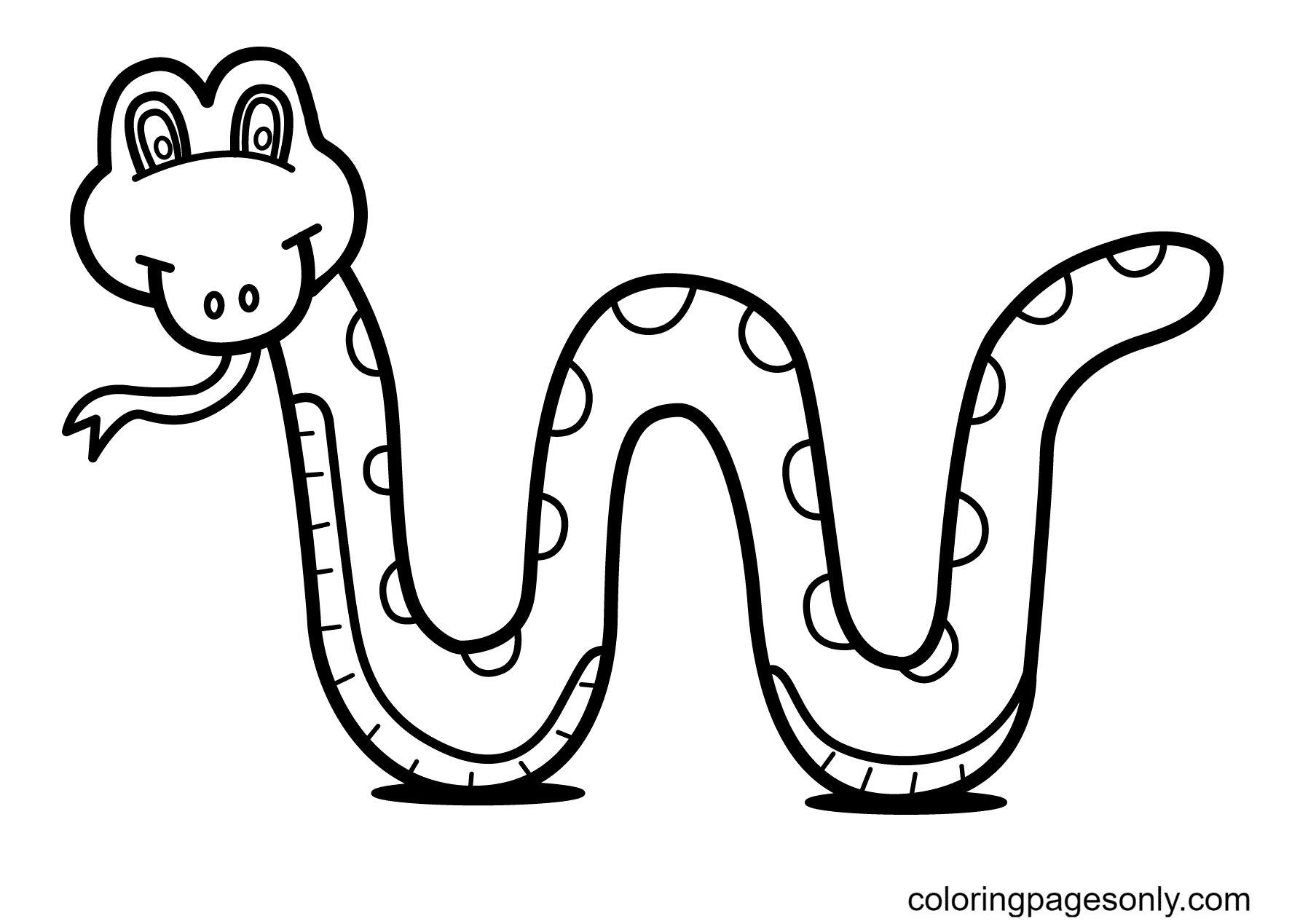
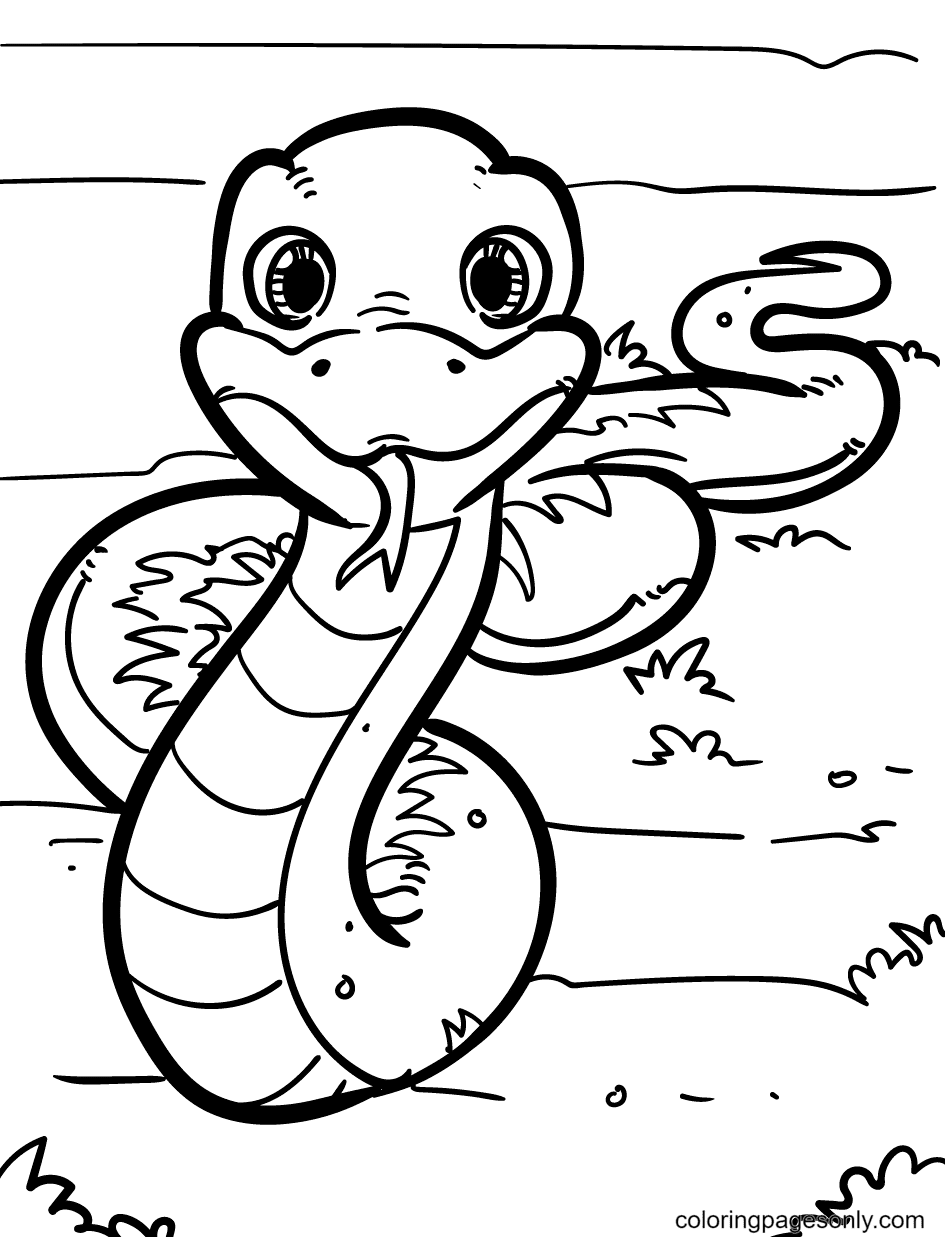
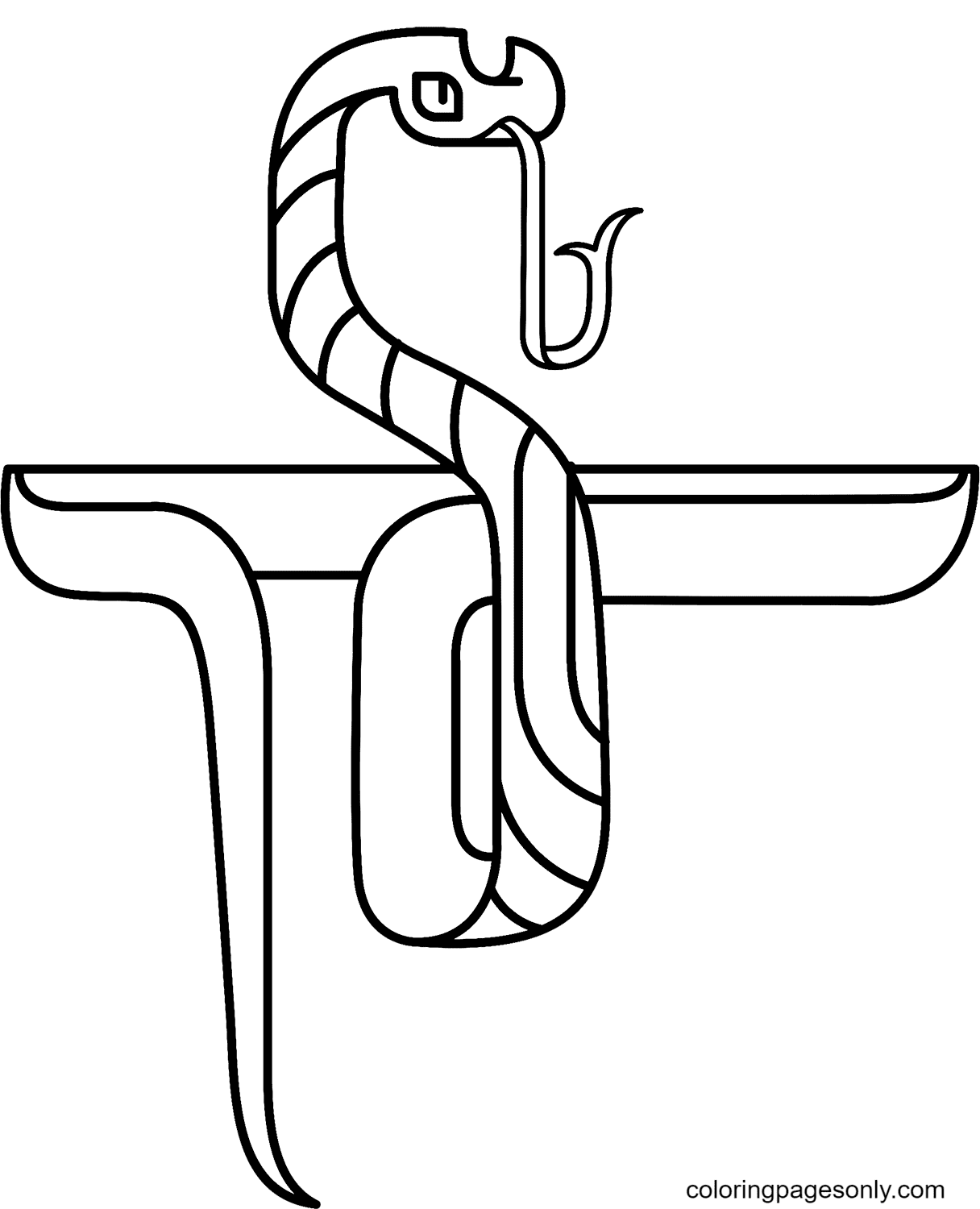
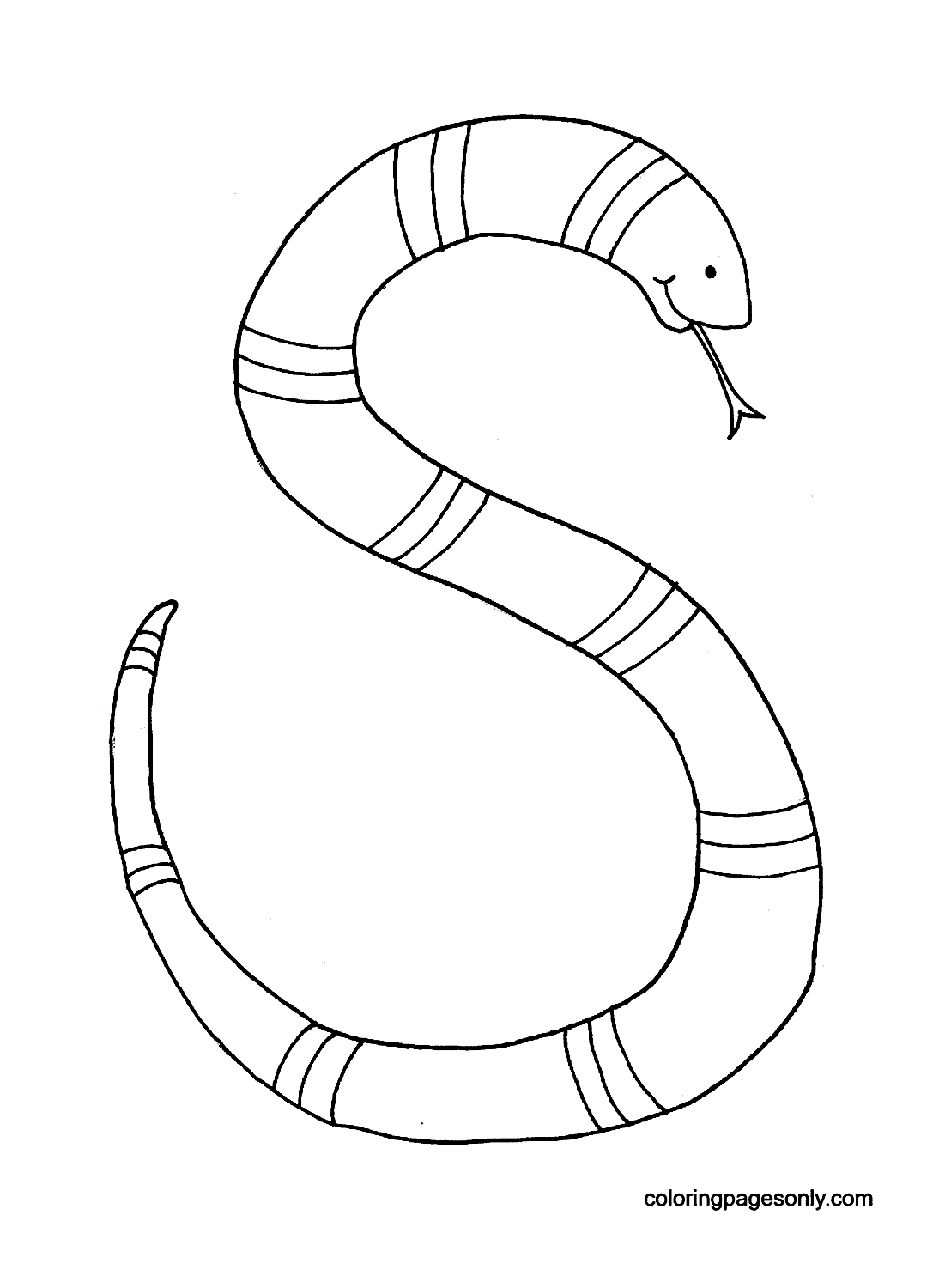
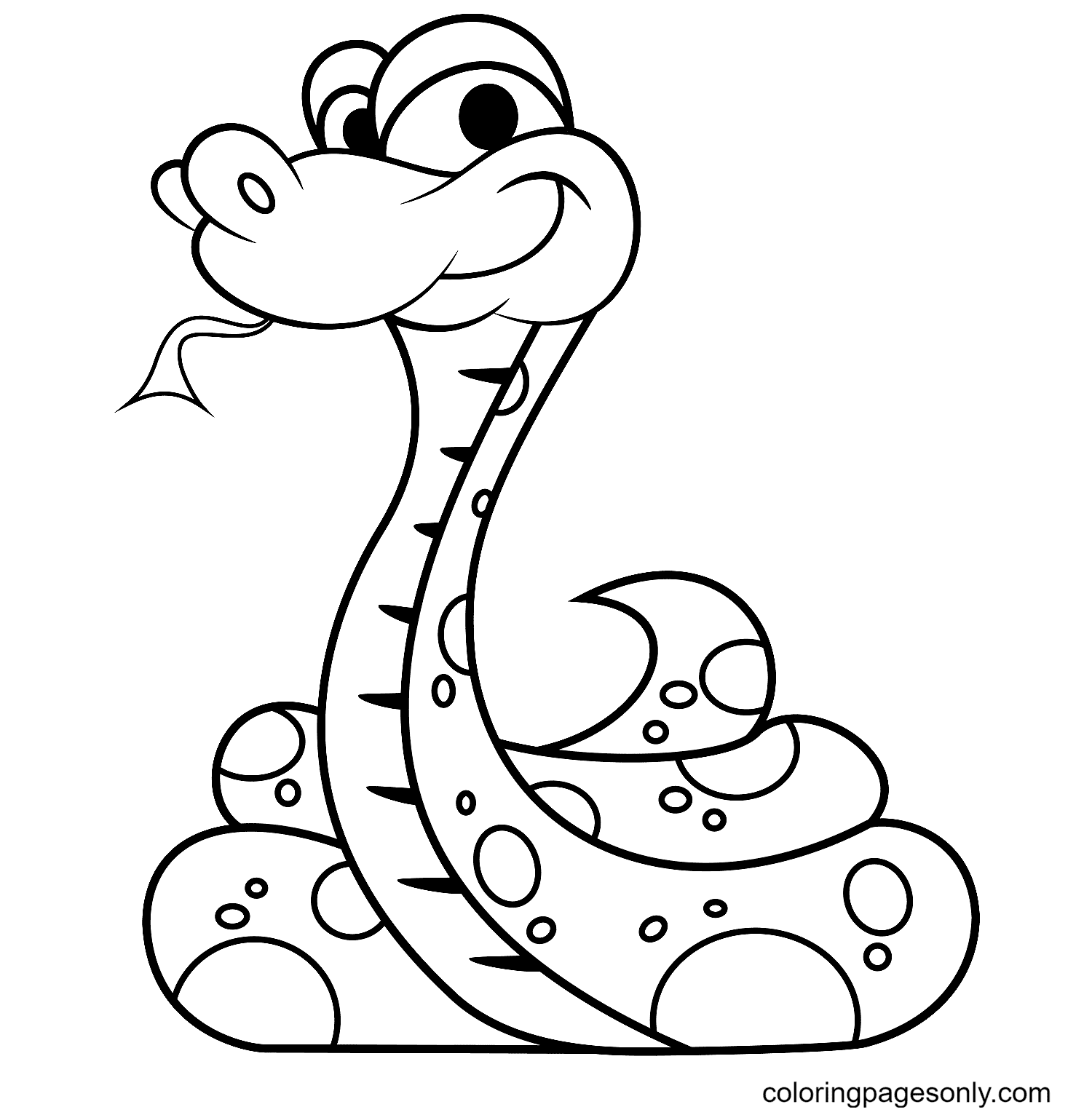
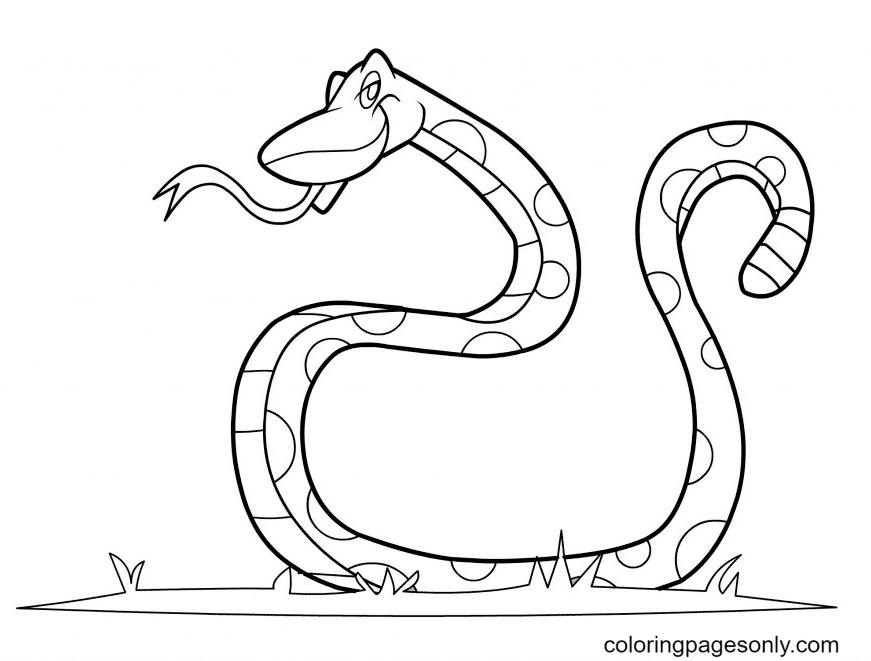
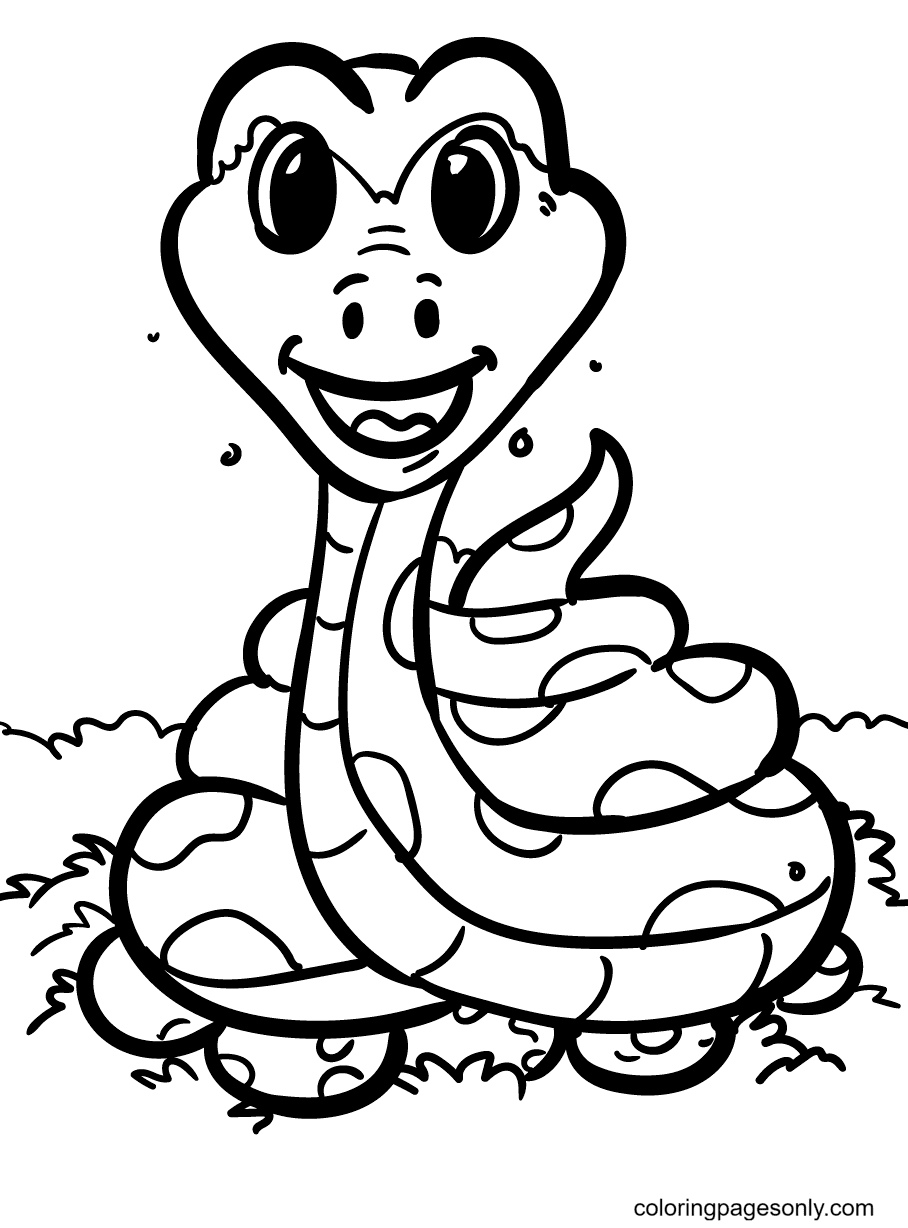
Twenty pages are plain, single-snake portraits without a personality or scene, useful mostly as a fast, printable sheet or an easy entry point. A single warm or cool solid color, Forest Green or Burnt Orange, is enough to finish most of these.
Personality and Cartoon Portraits
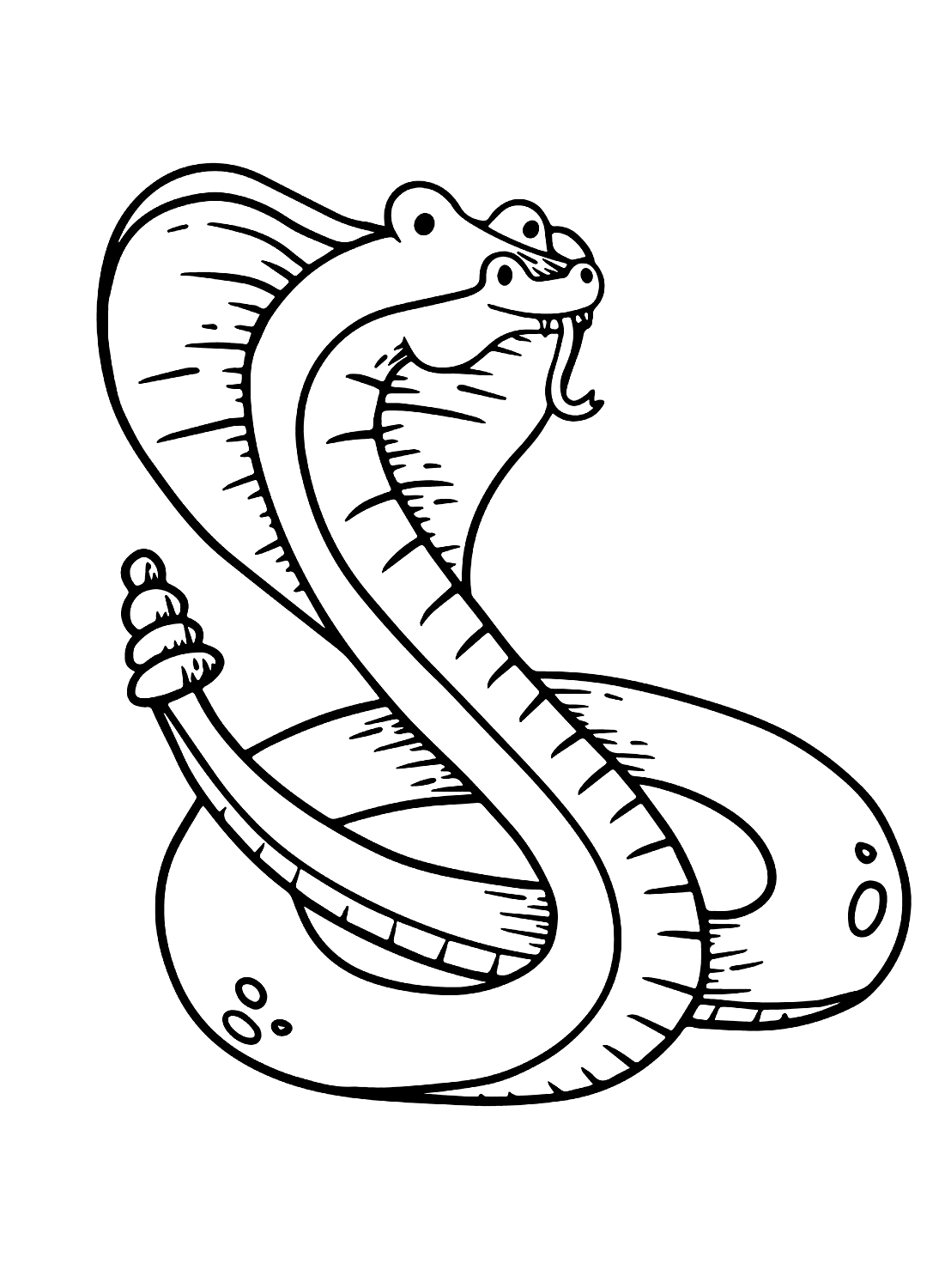
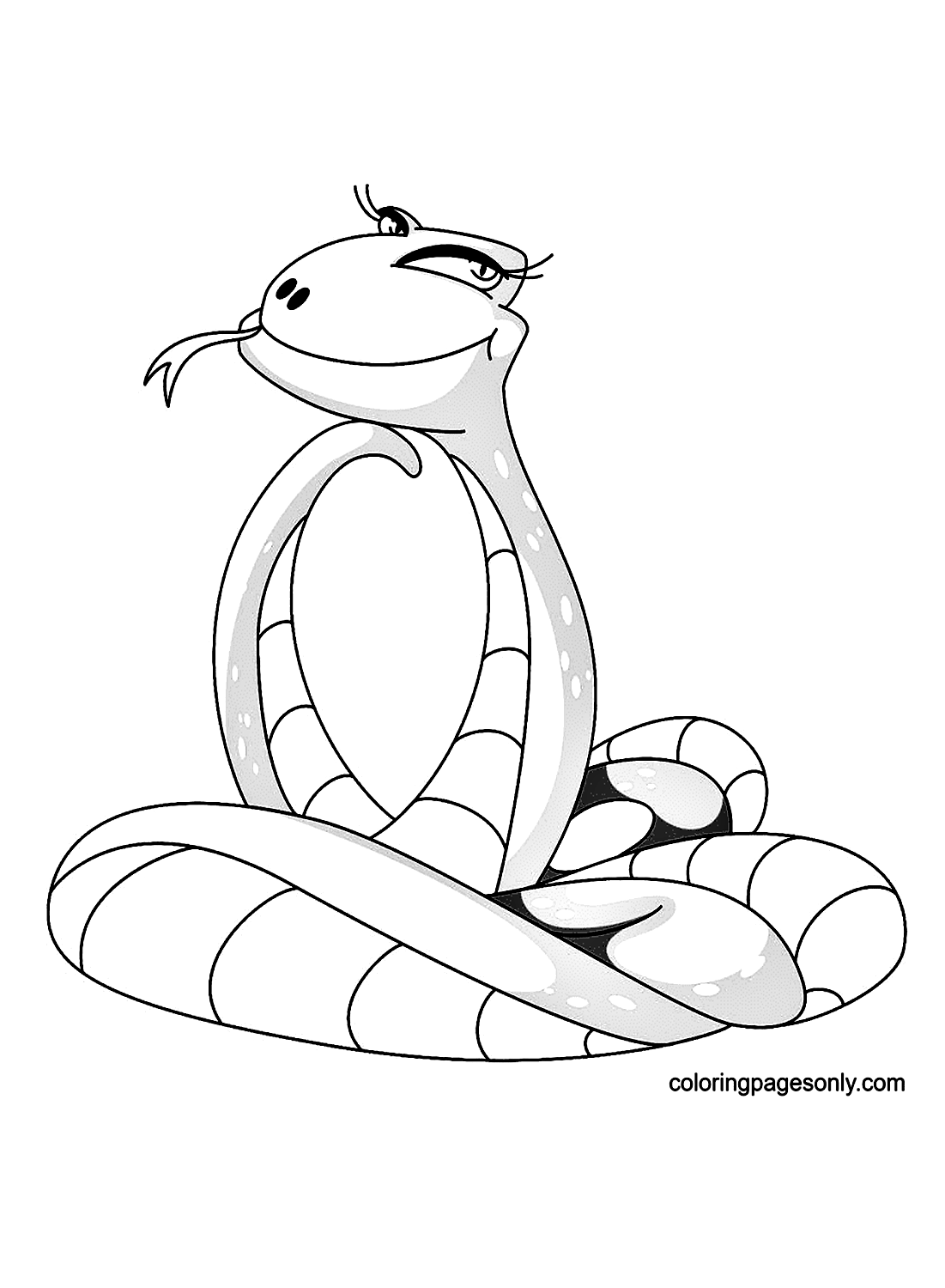
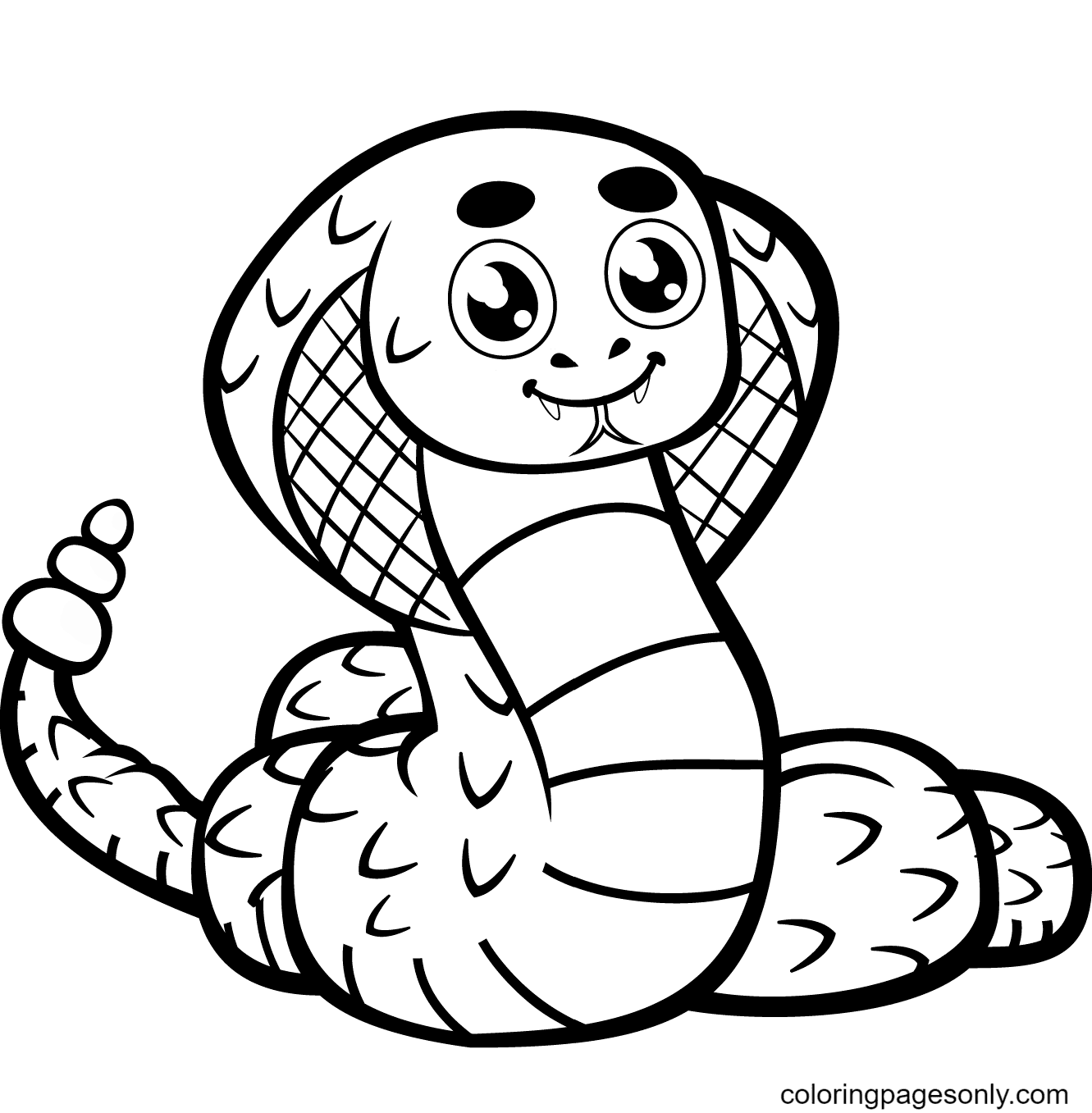
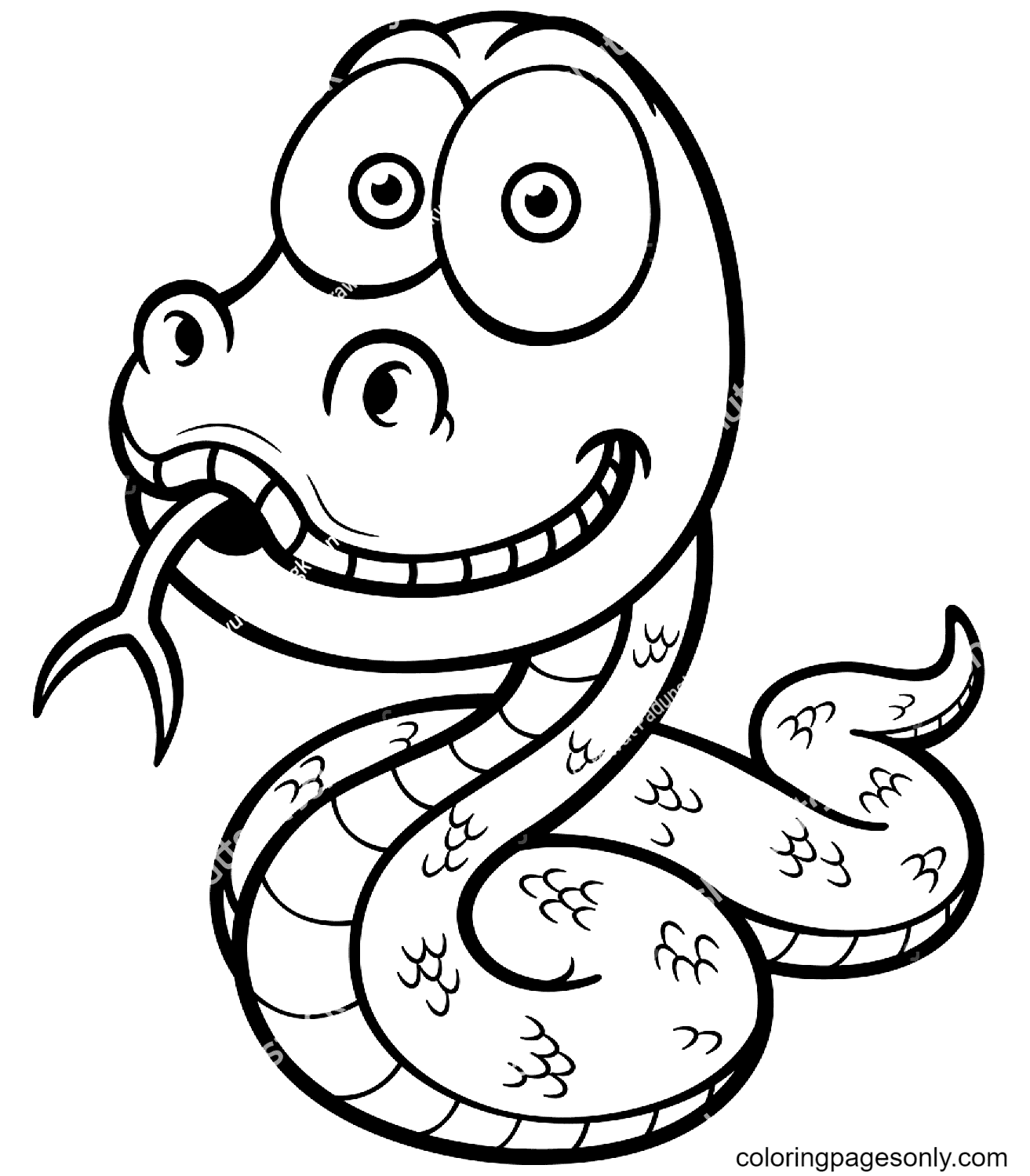
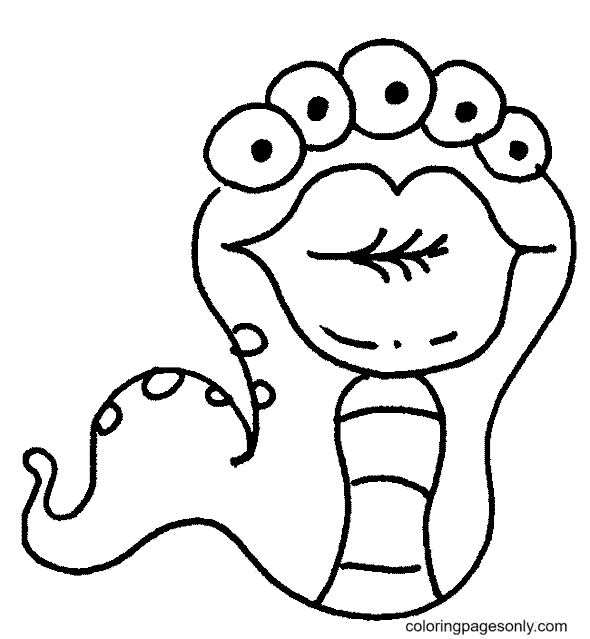
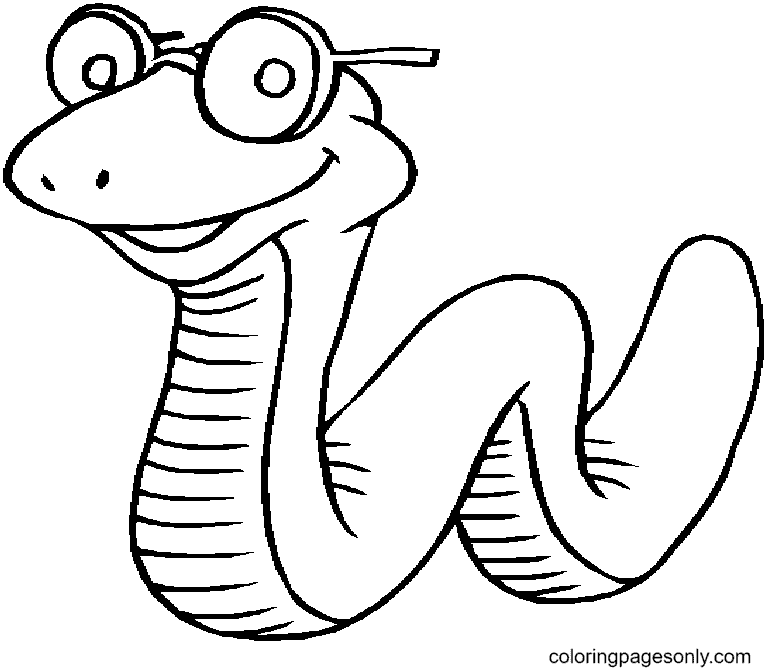
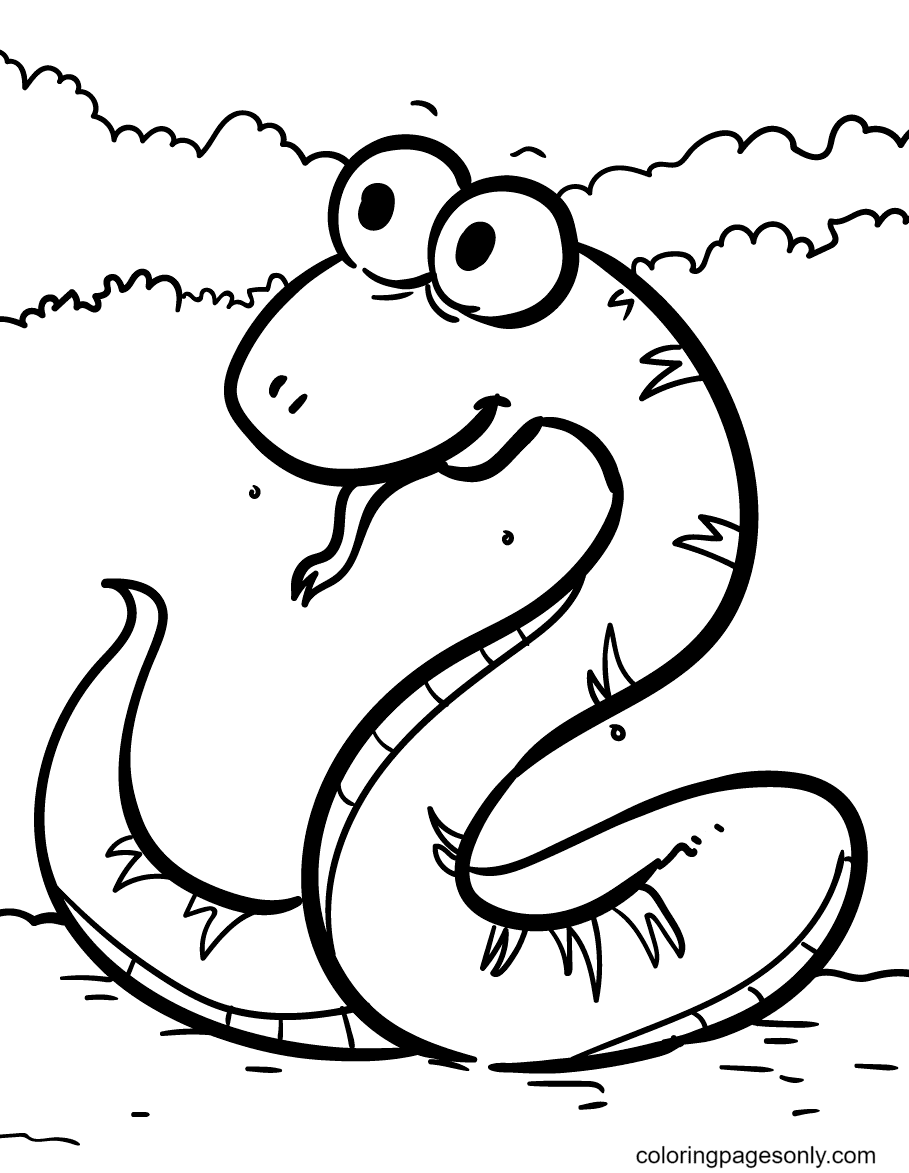
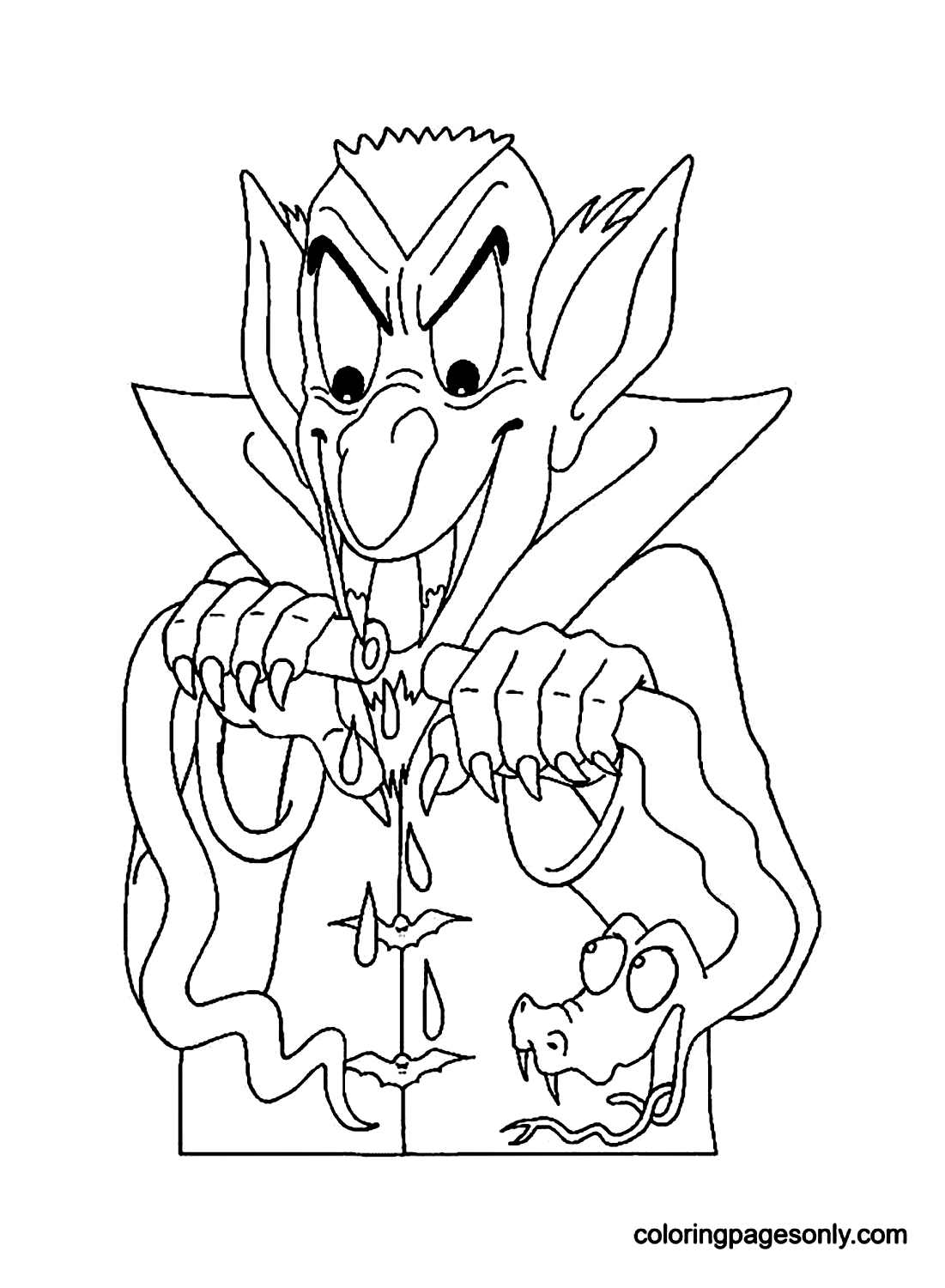
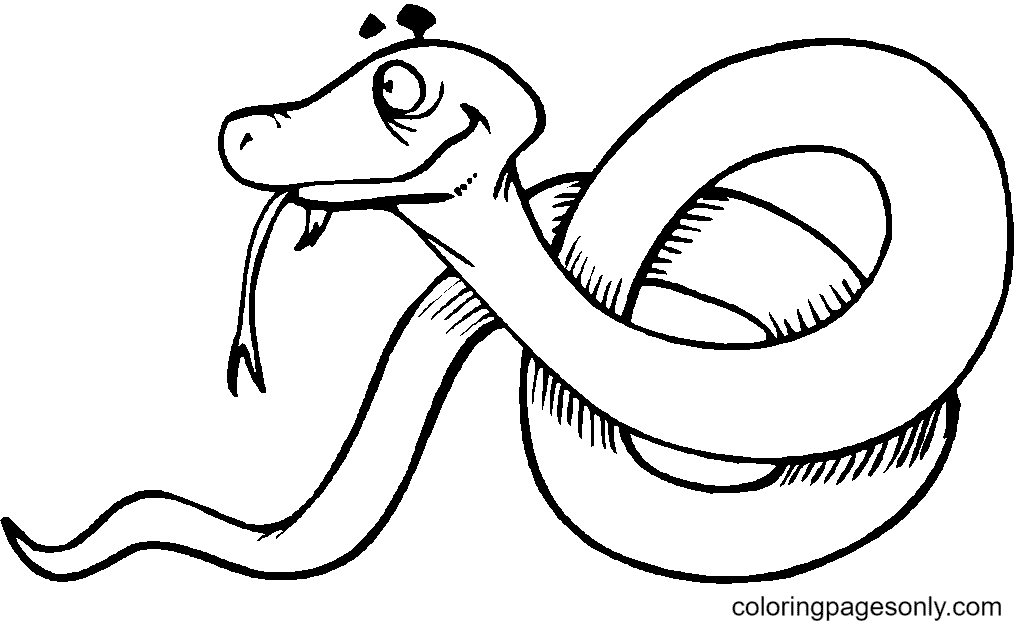
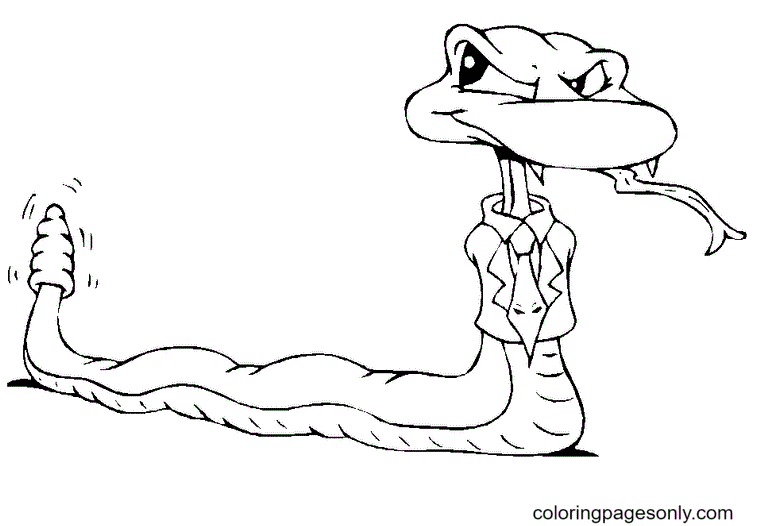
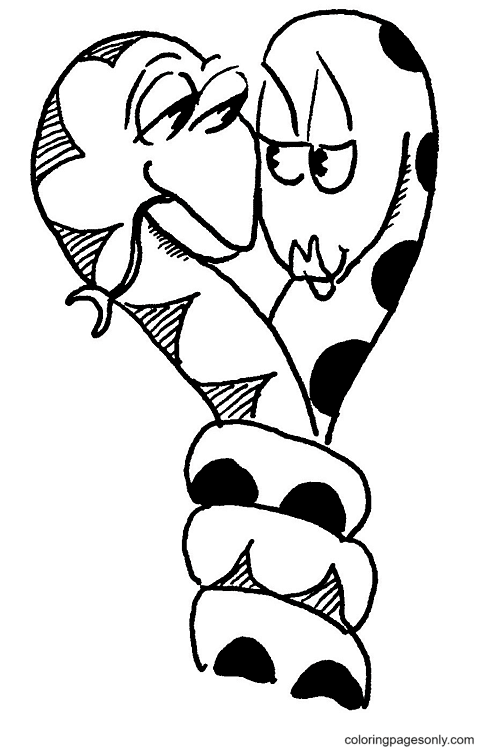
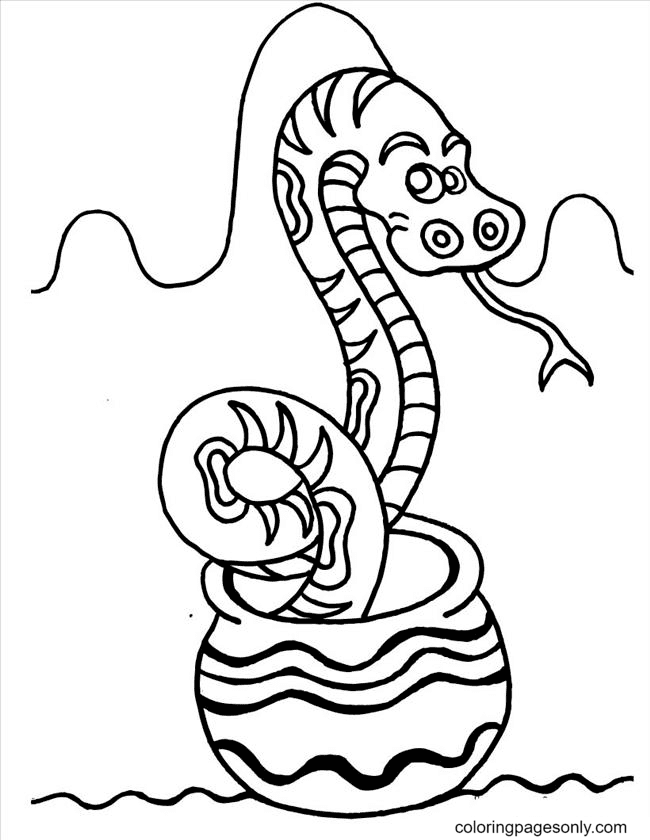
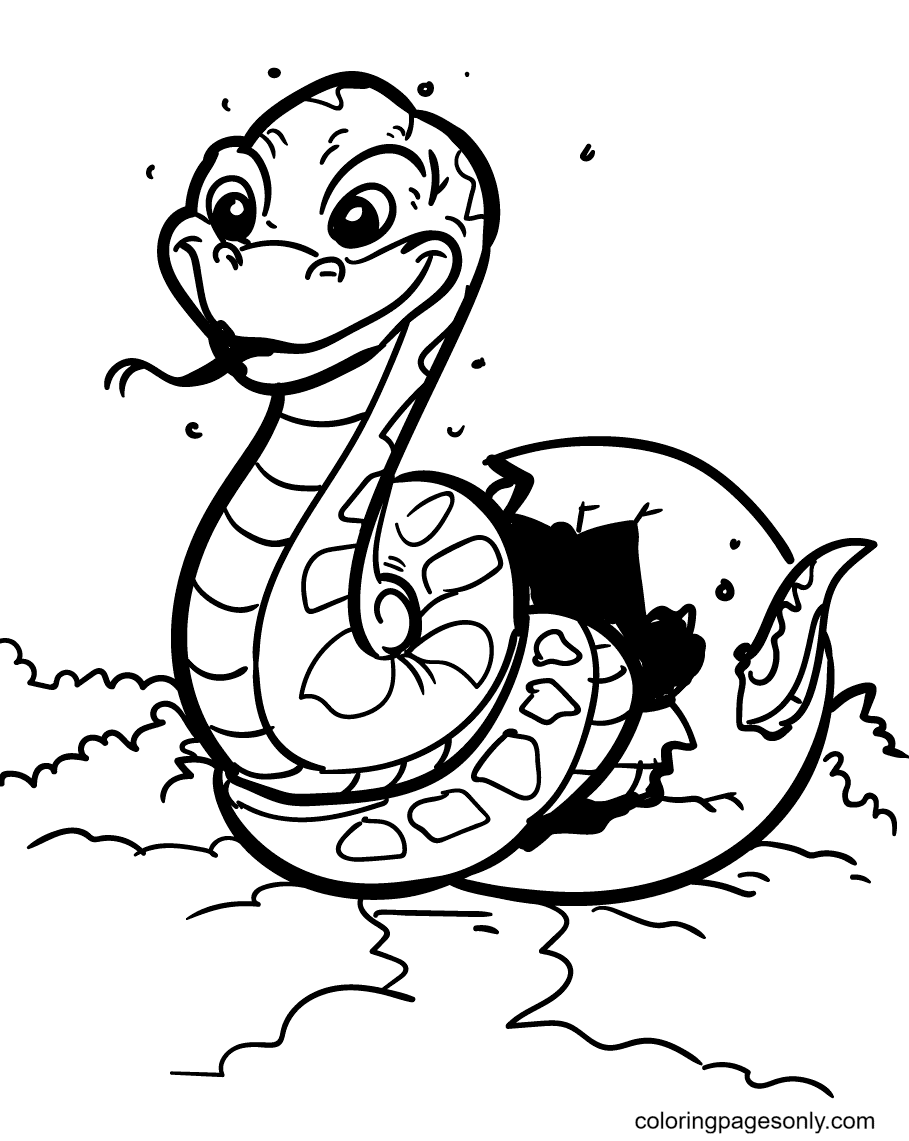
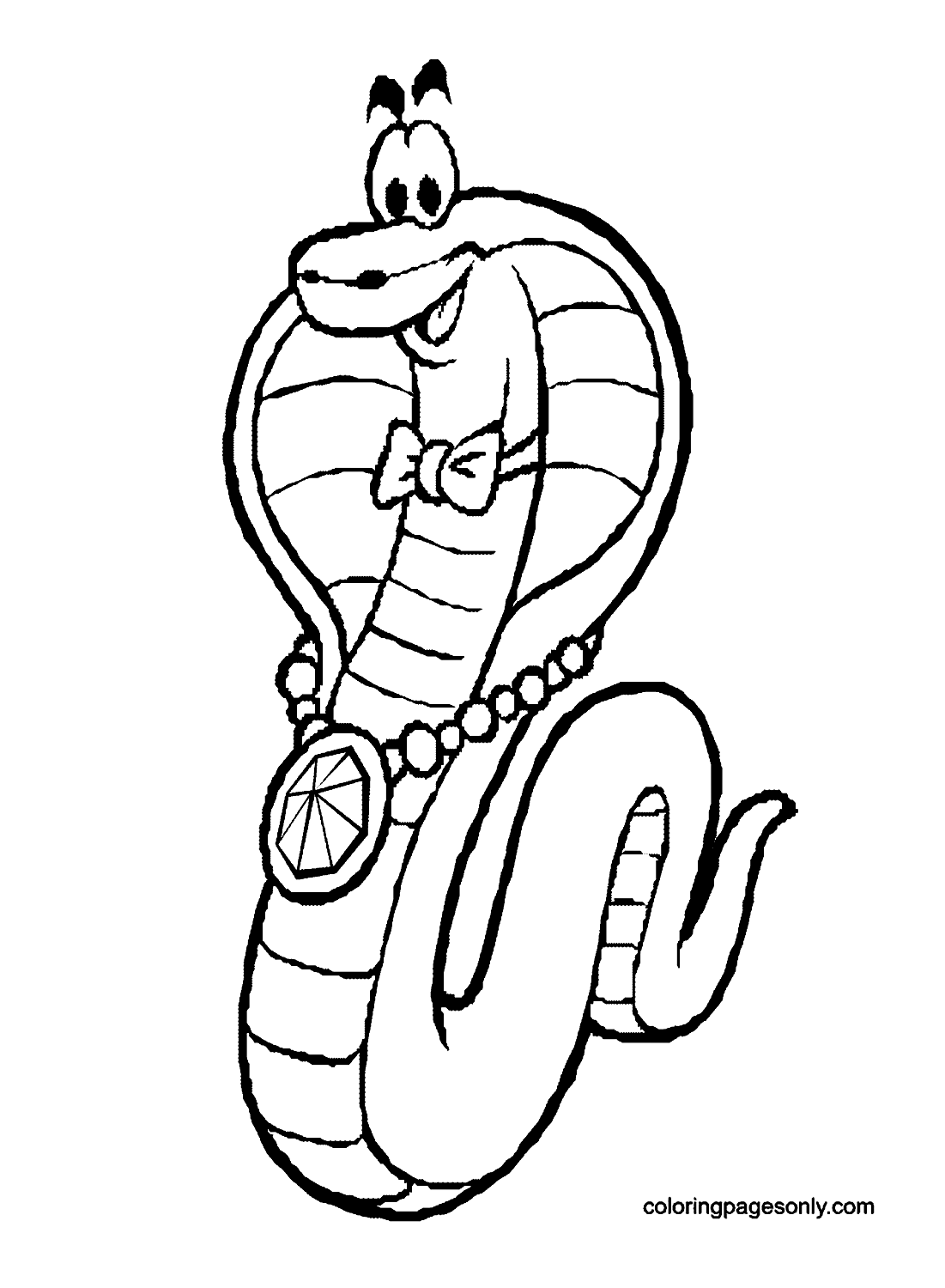
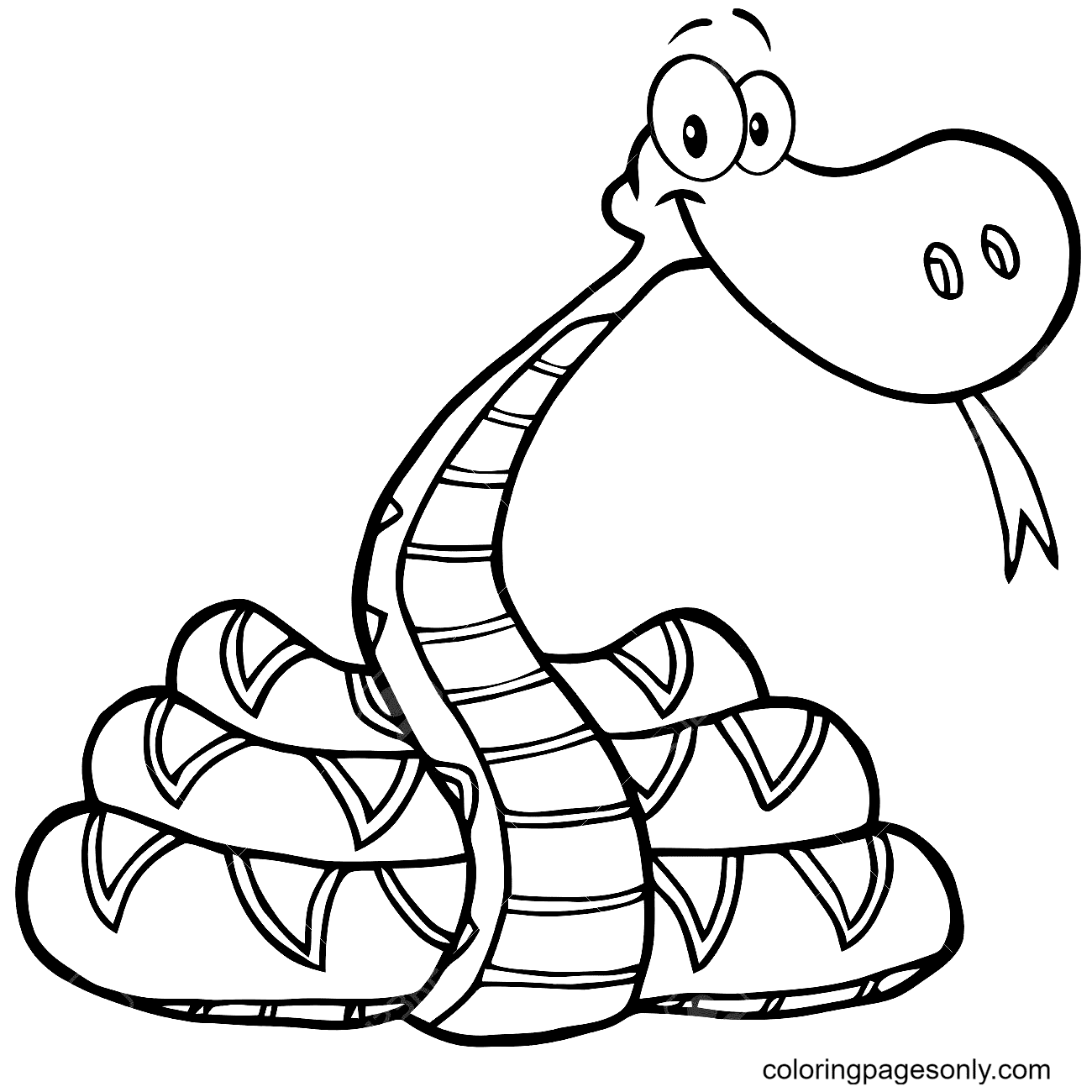
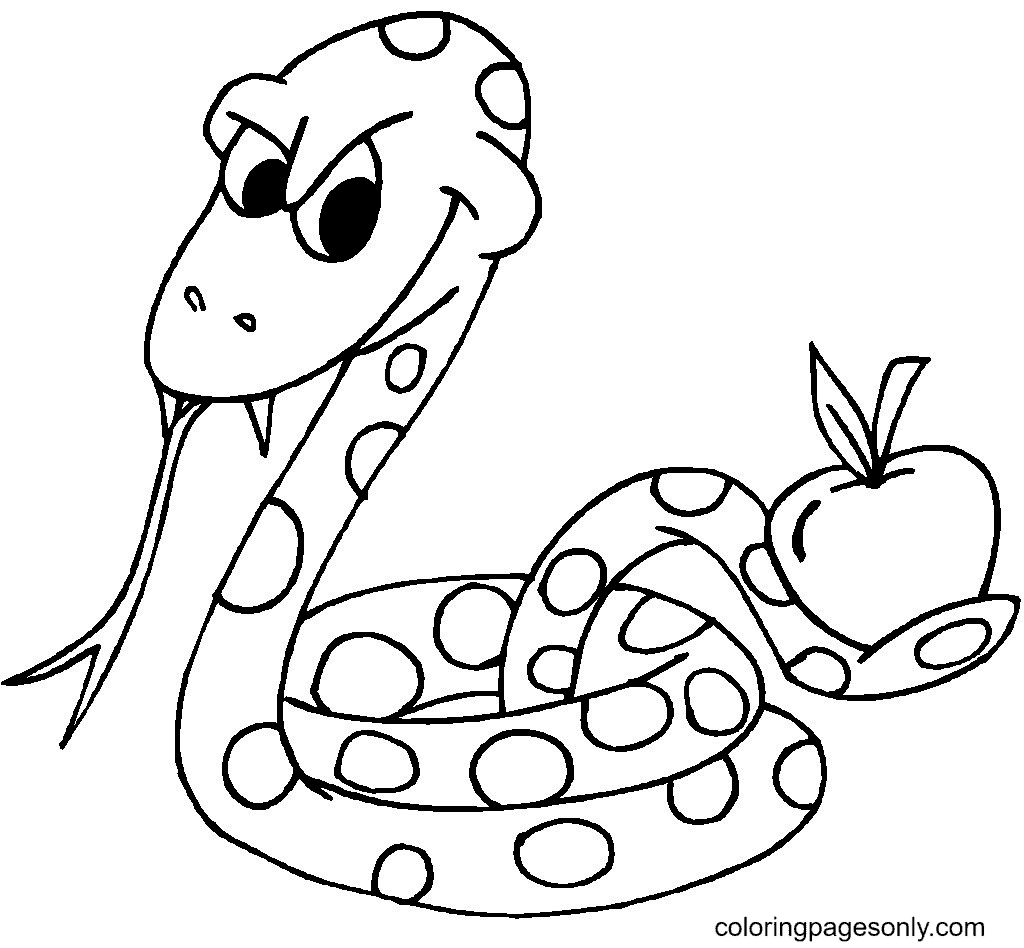
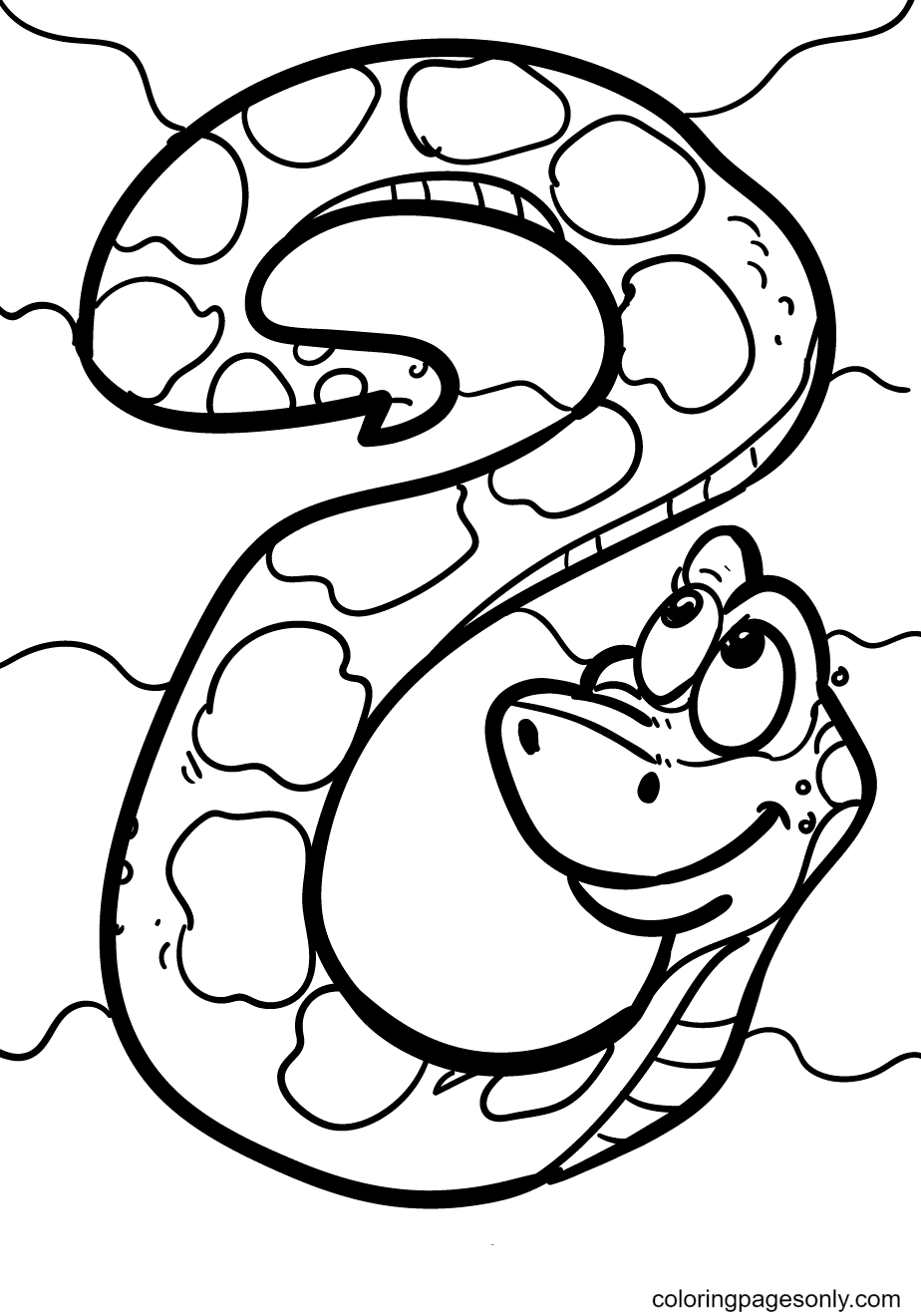
Twenty-one pages give a snake a specific mood or personality, friendly, nerdy, frightening, or five-eyed, through facial expression rather than a background scene. These are pages built around character rather than accuracy, so that the color choice can follow the mood rather than any real species.
Activity, Costume, and Story Scenes
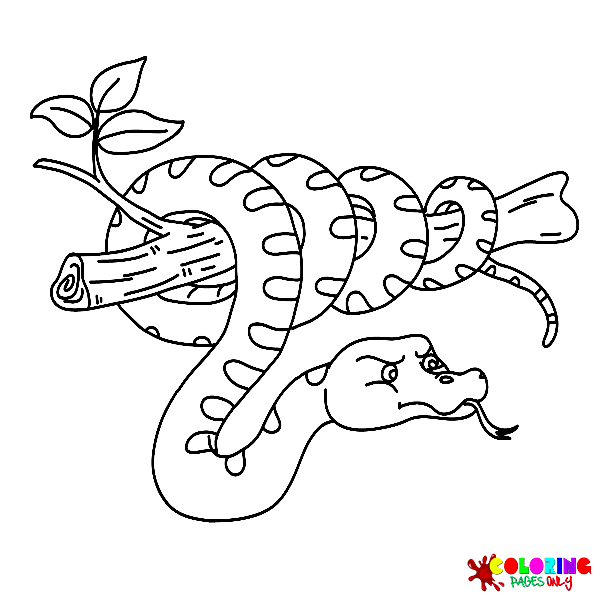
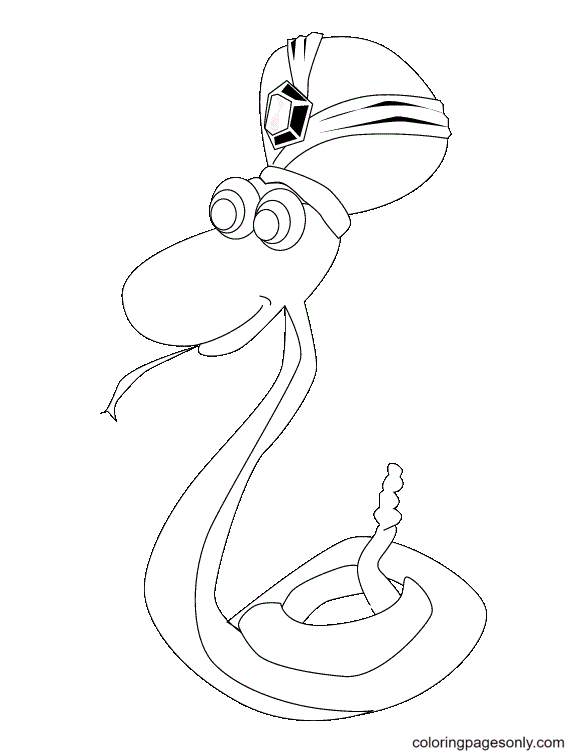
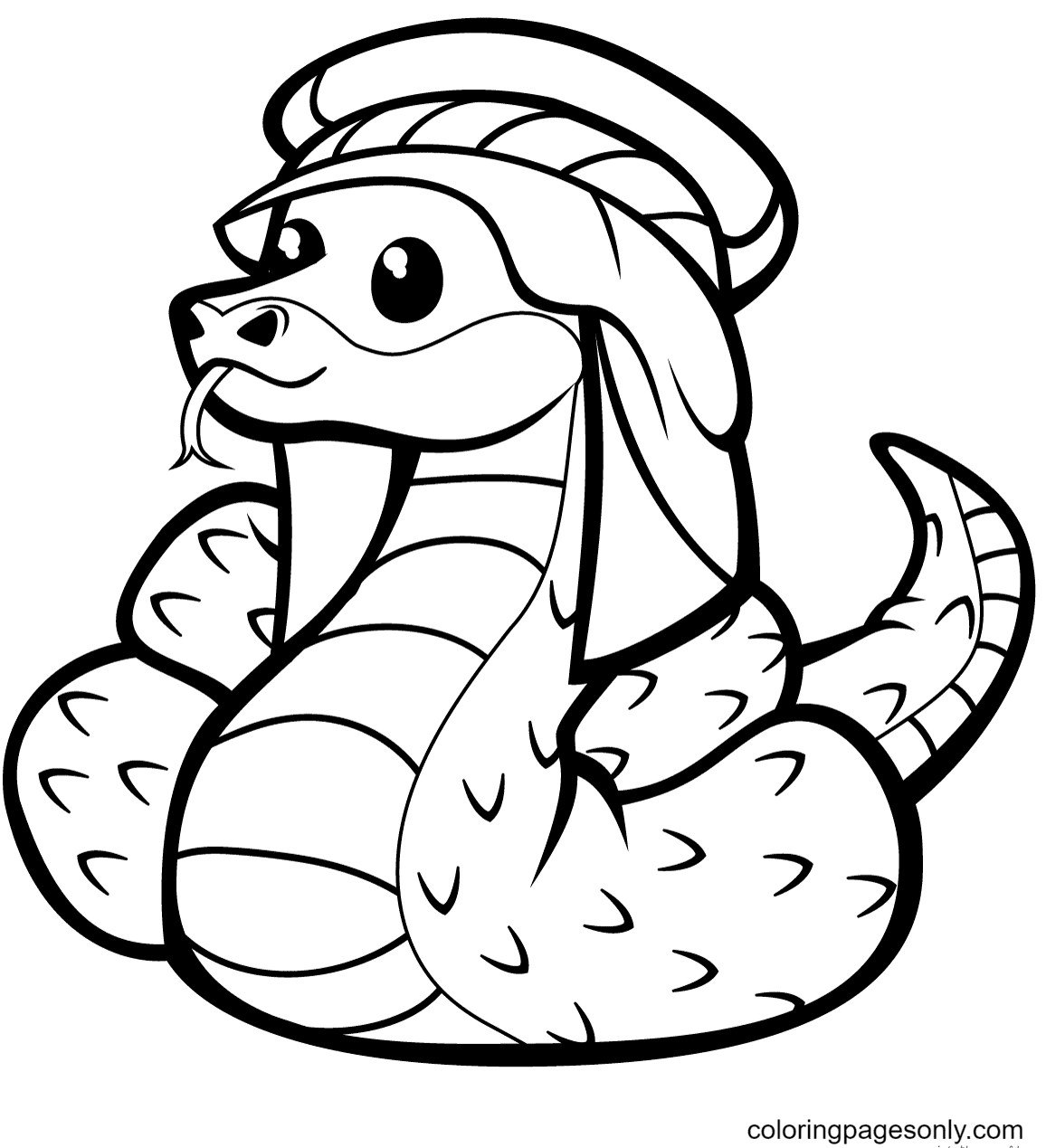
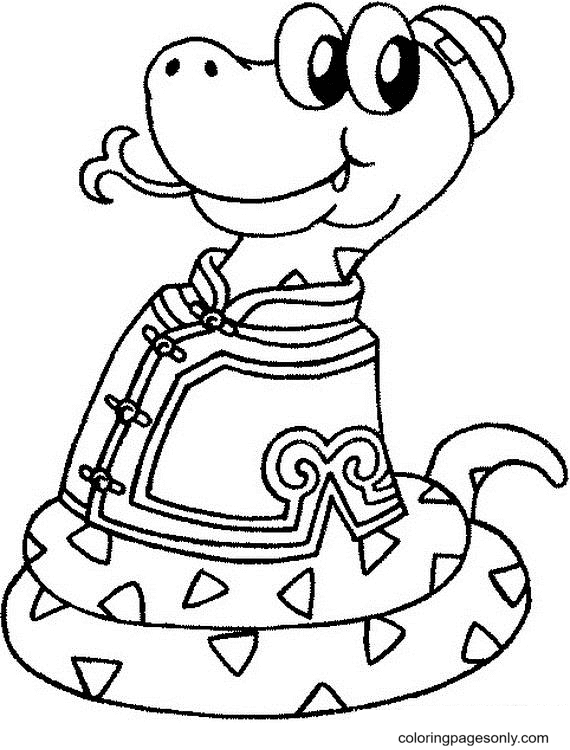
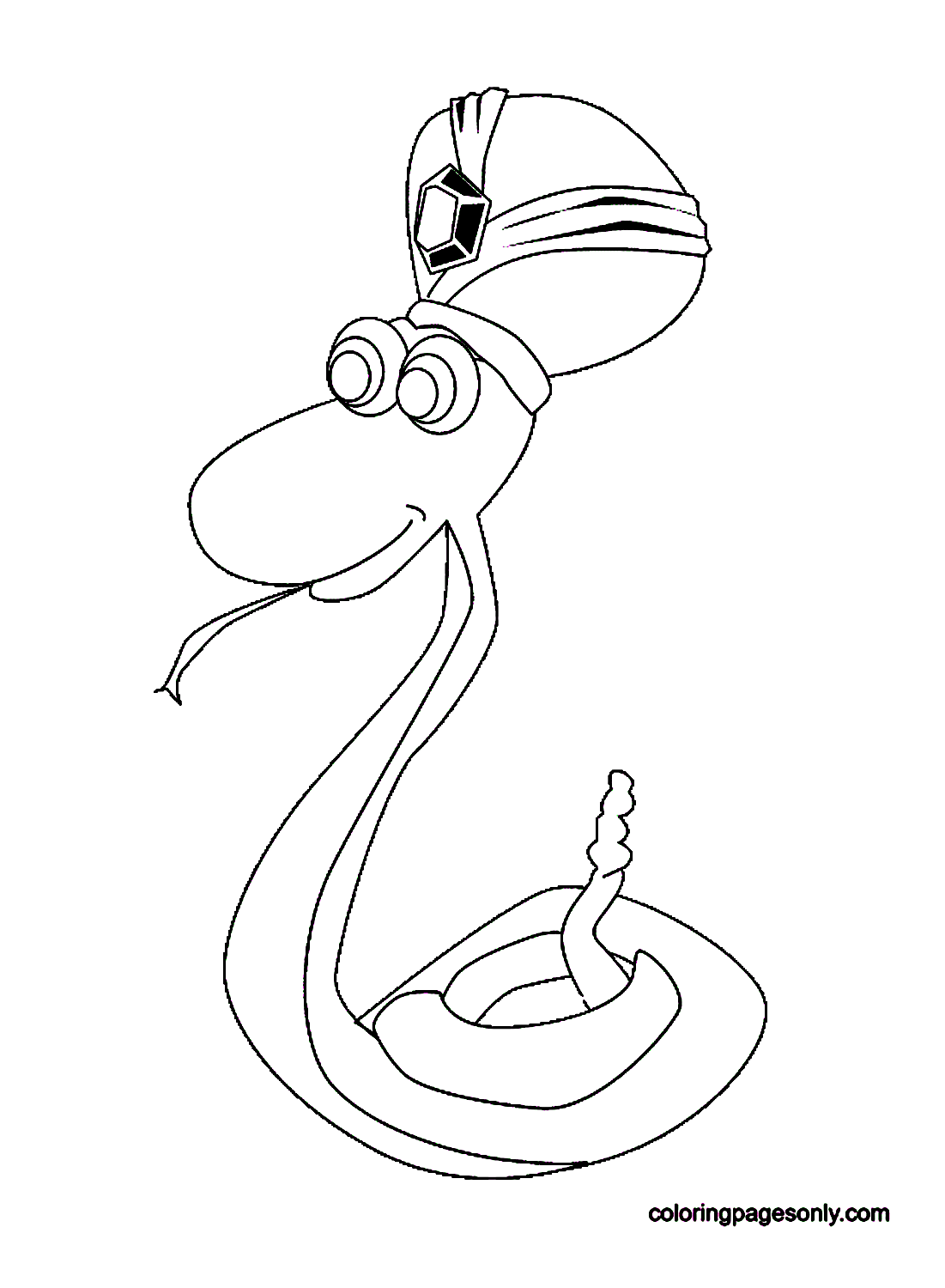
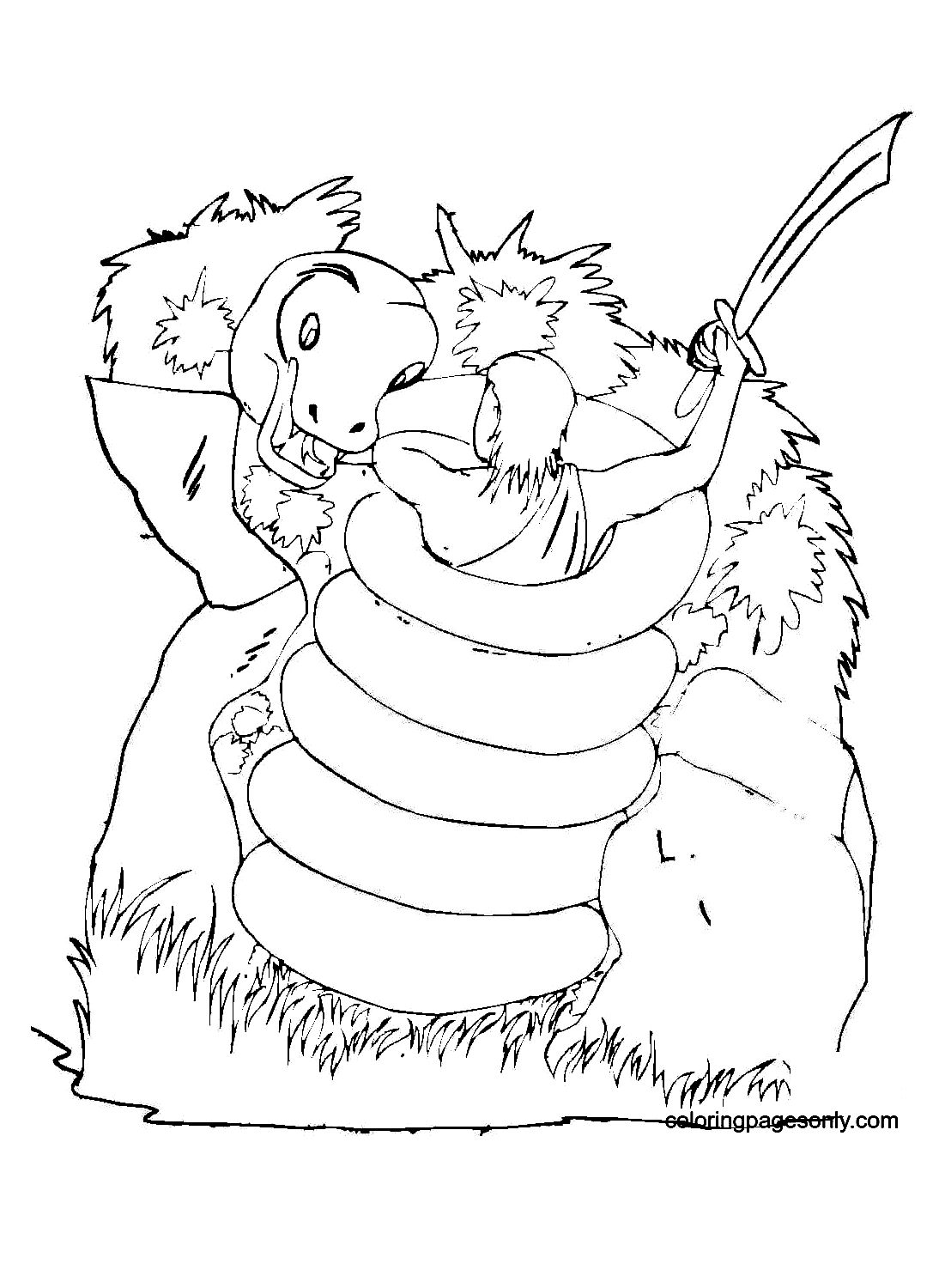
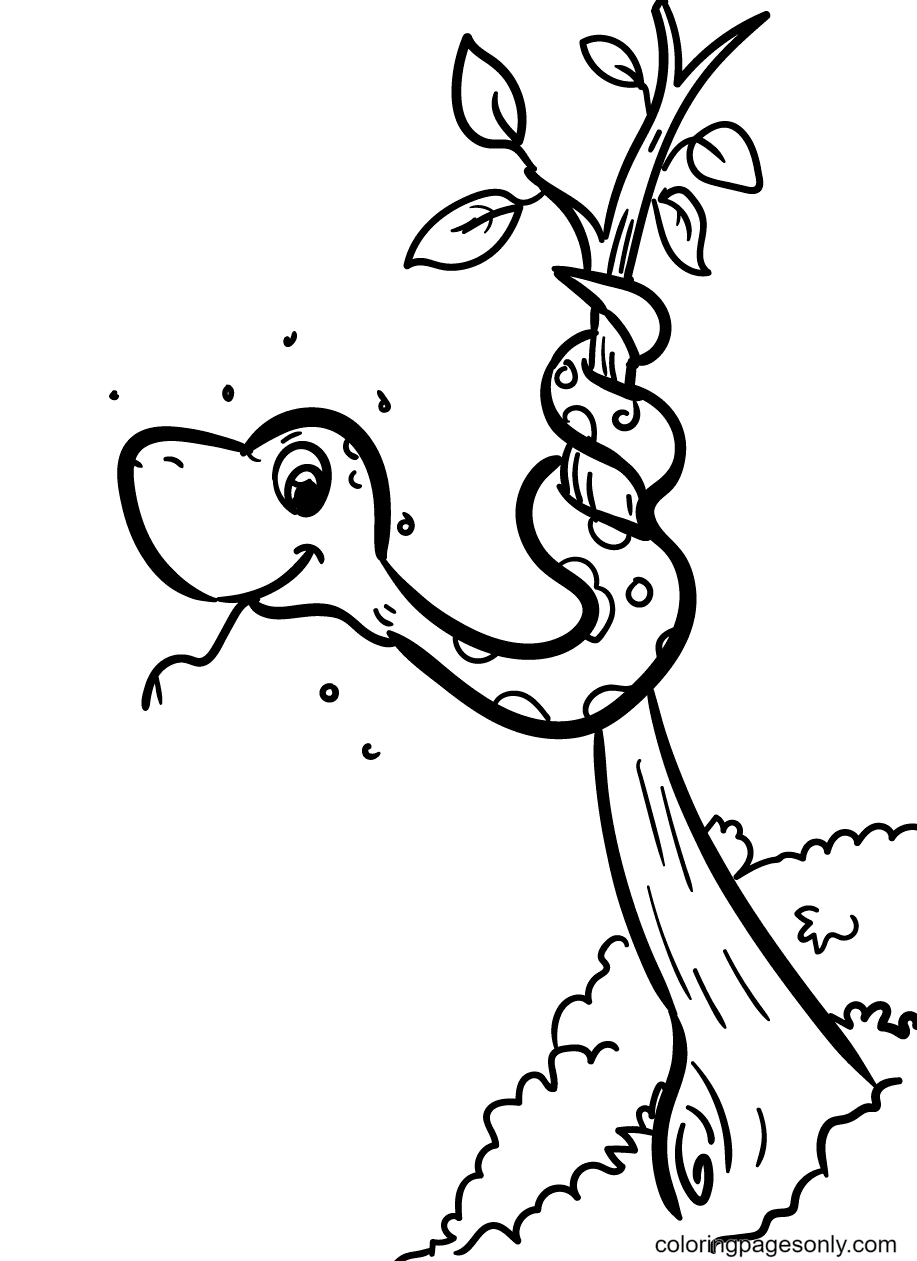
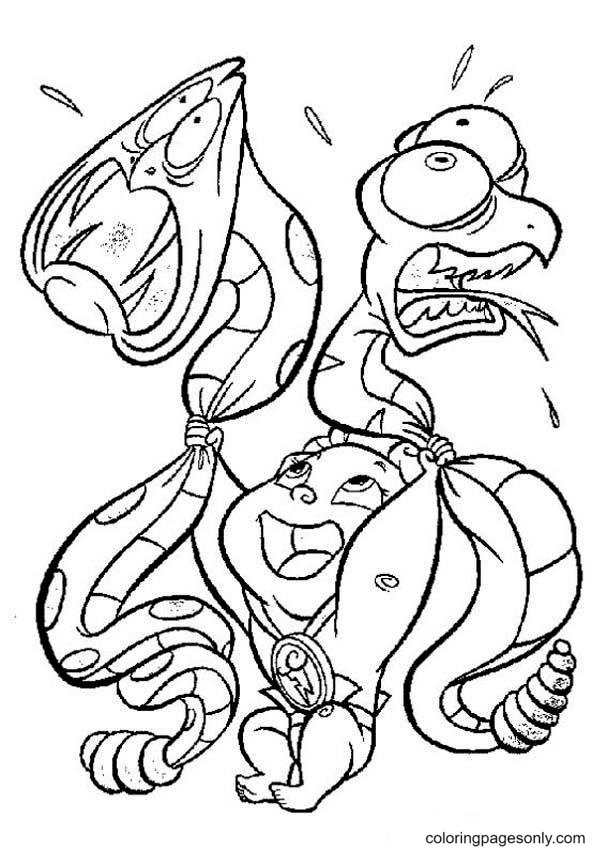
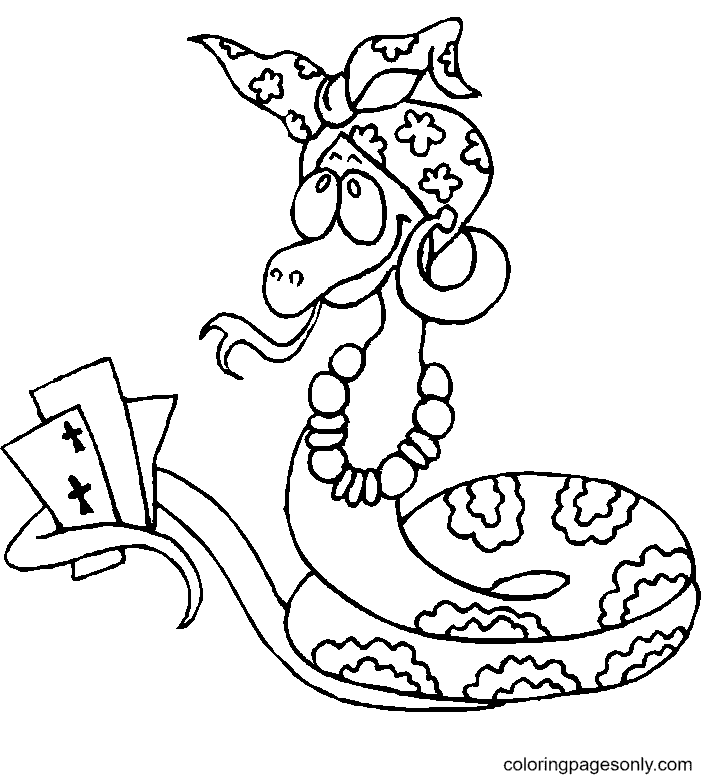
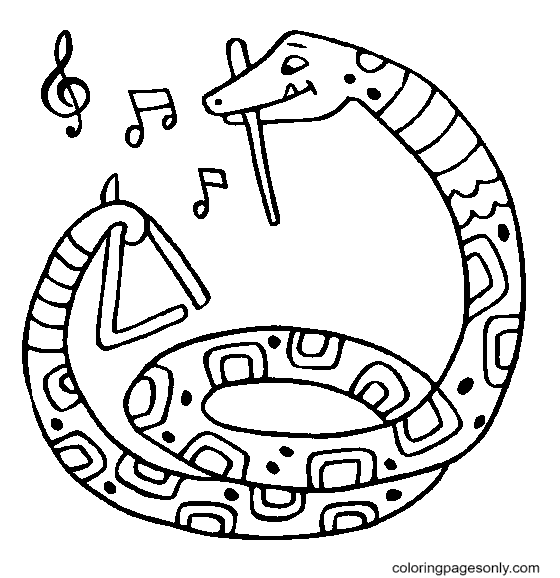
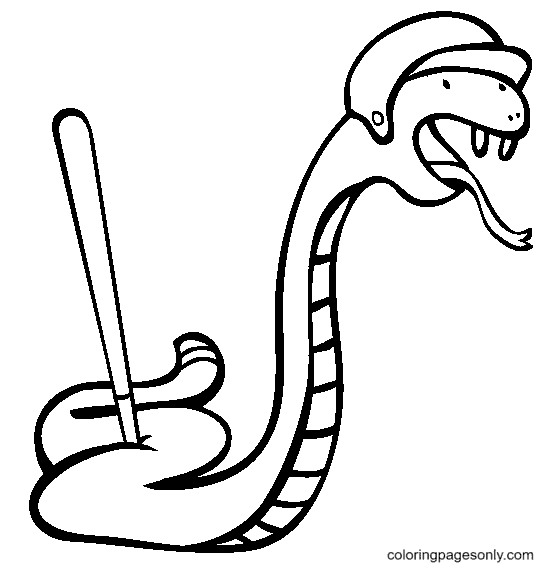
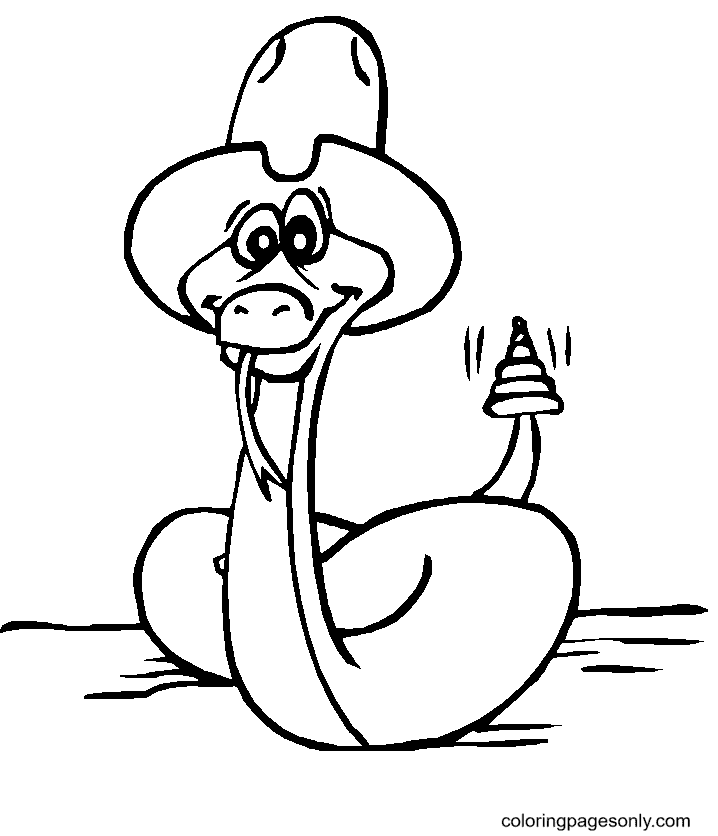
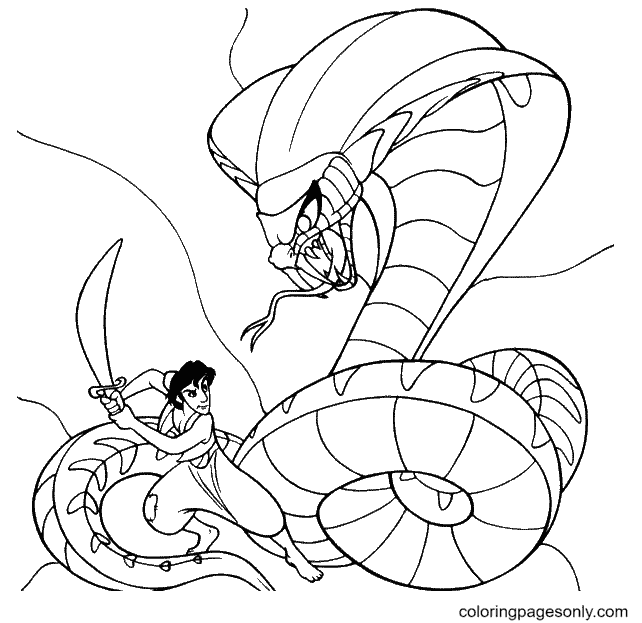
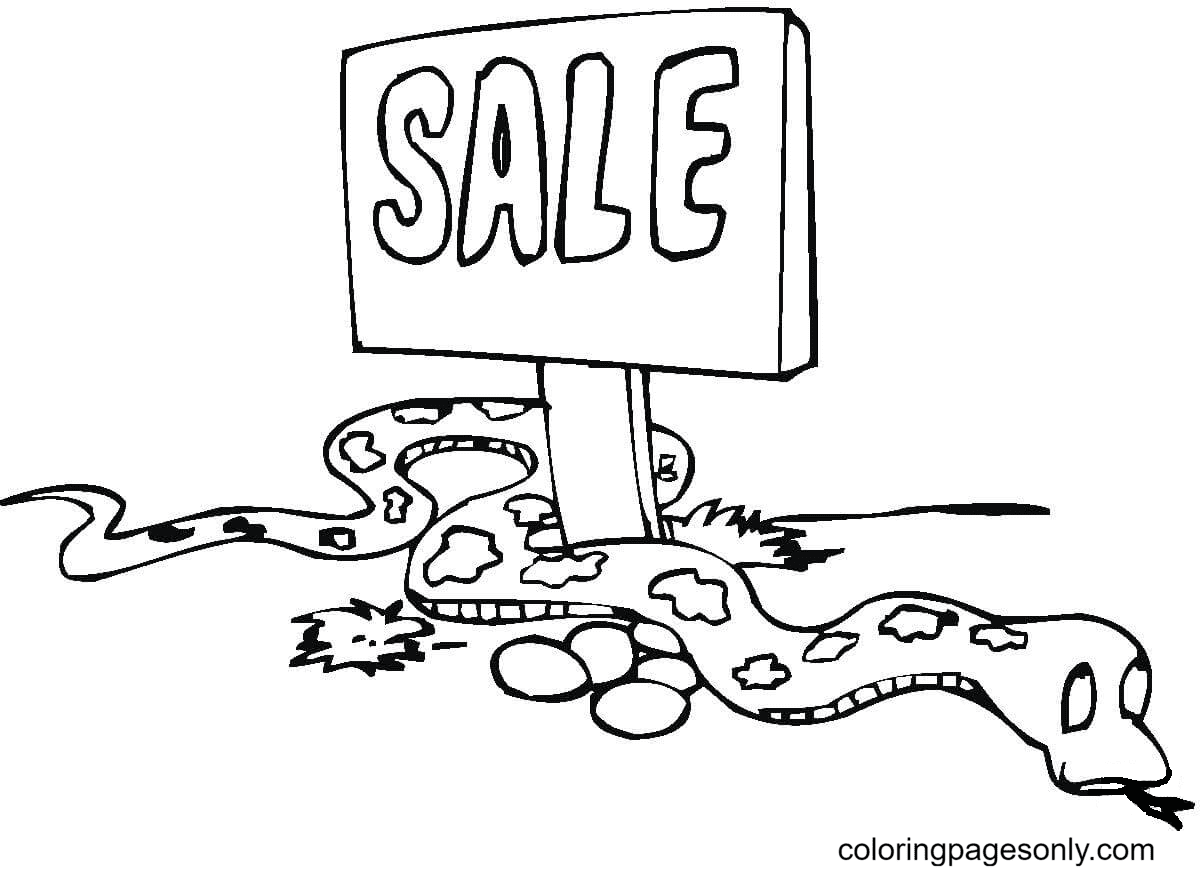
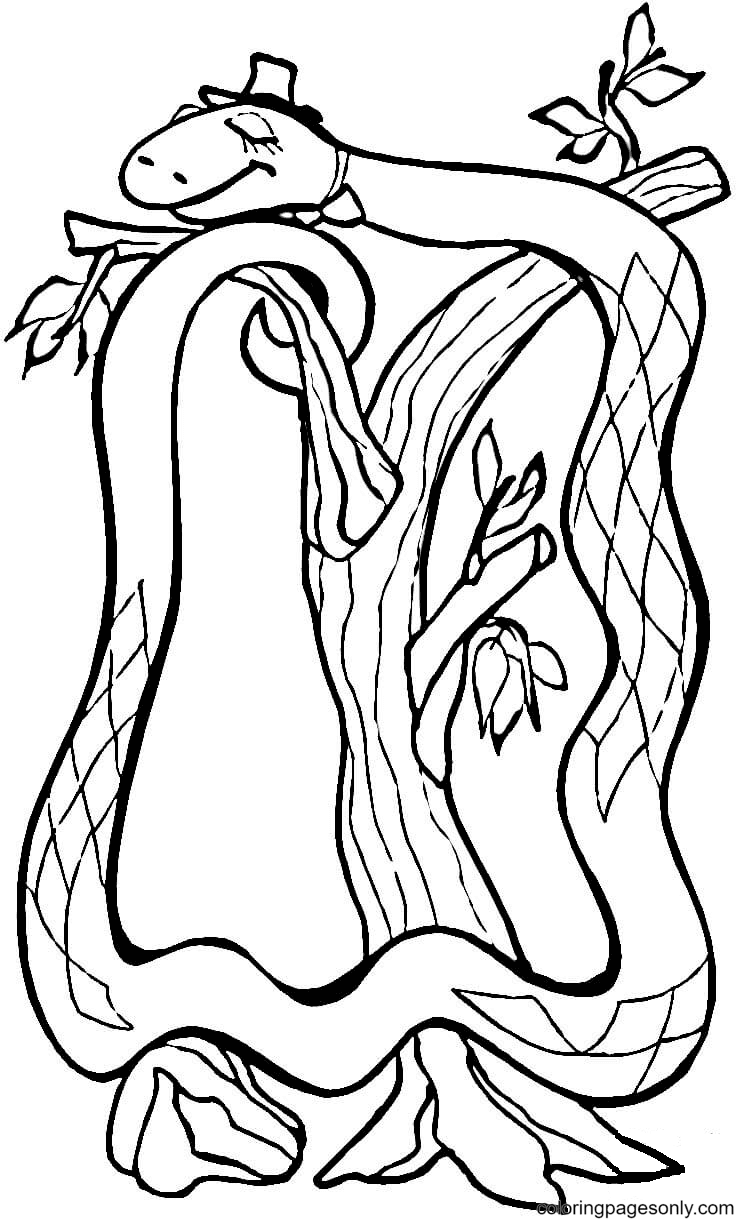
Twenty-two pages, the largest group, put a snake into a specific situation: playing cards, wearing a hat, curling around a tree branch, or appearing in a scene referencing Aladdin. These pages carry the most background detail and the widest range of subject matter in the set.
Real Species and Family Scenes
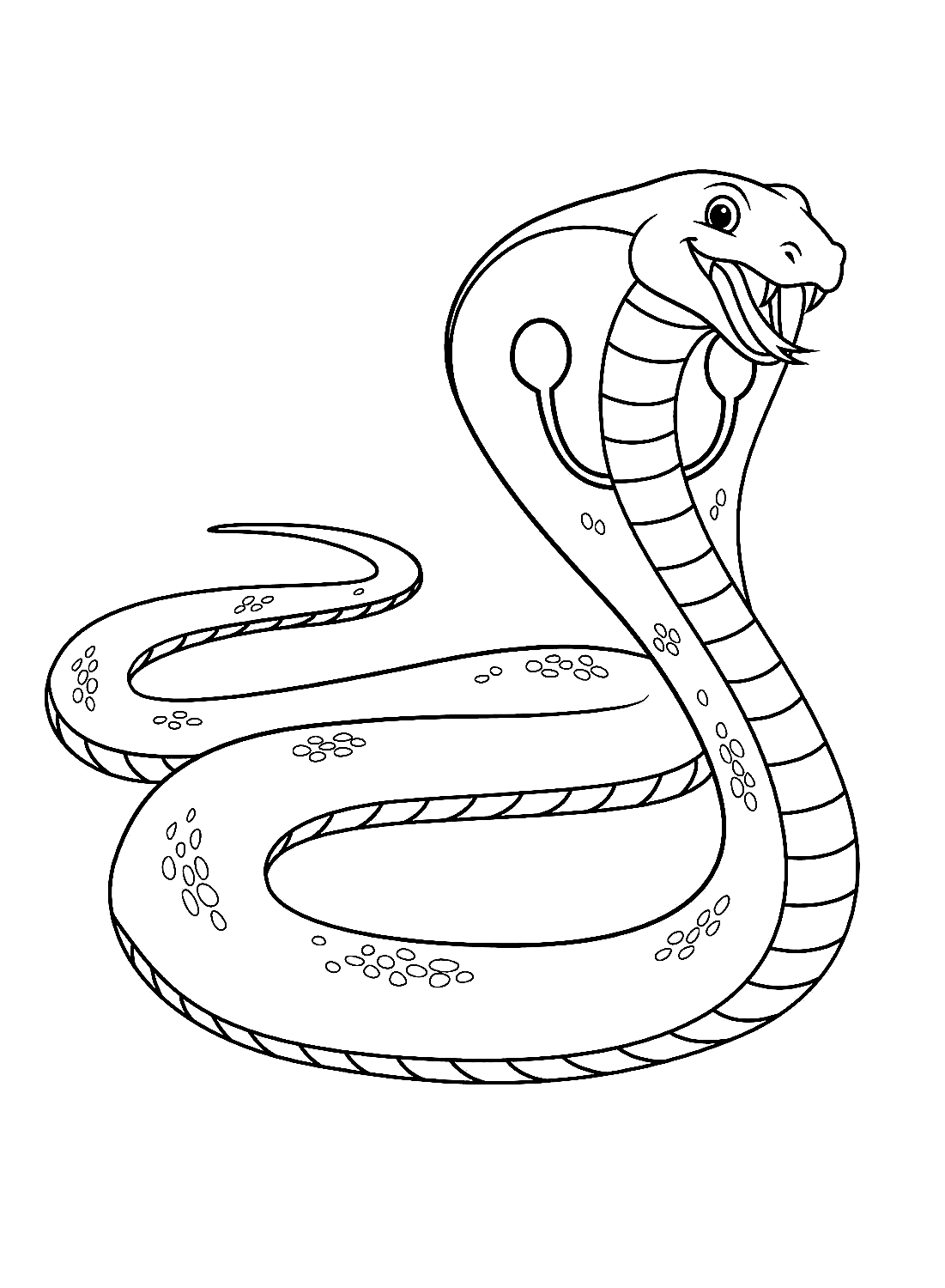
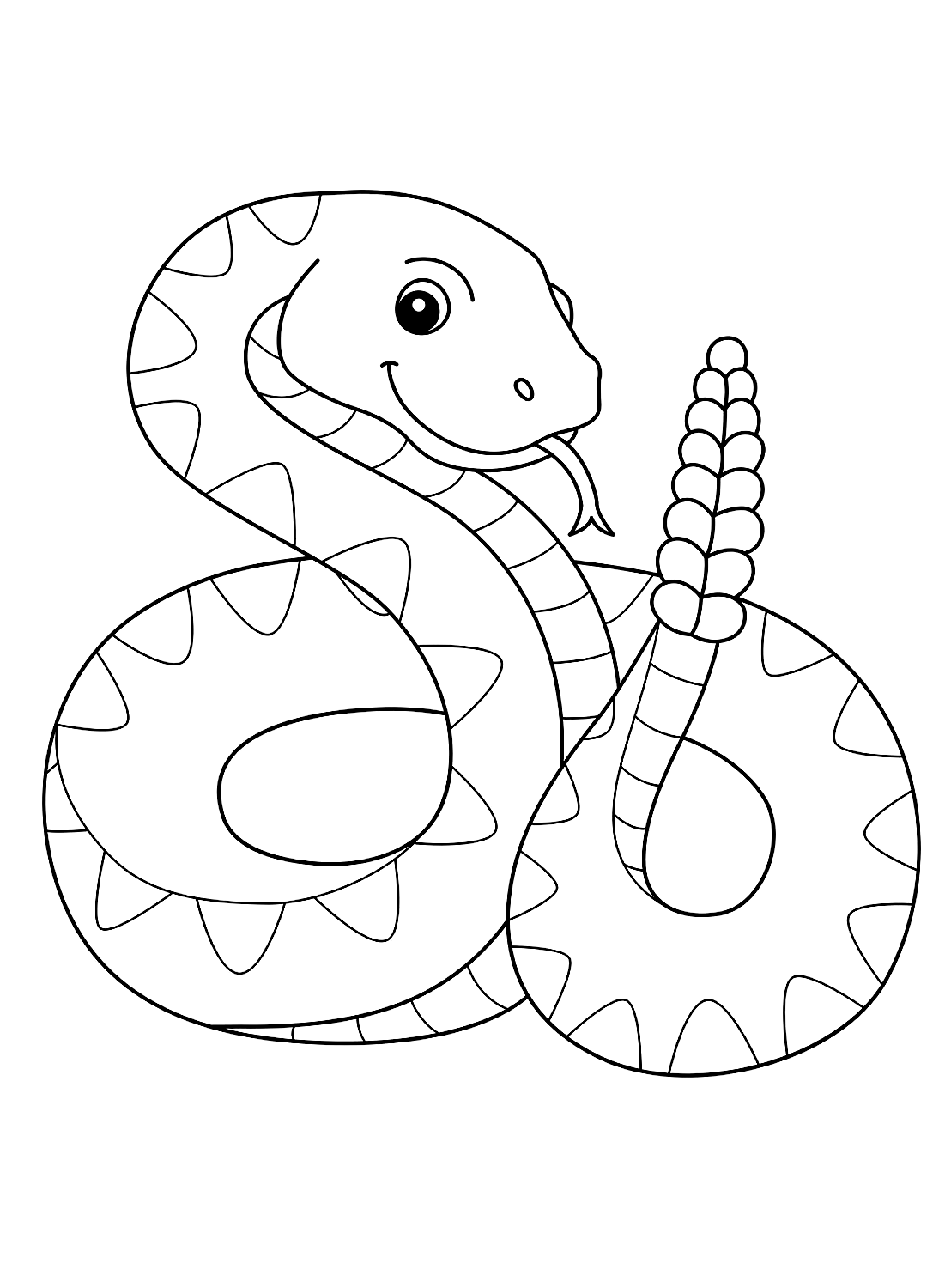
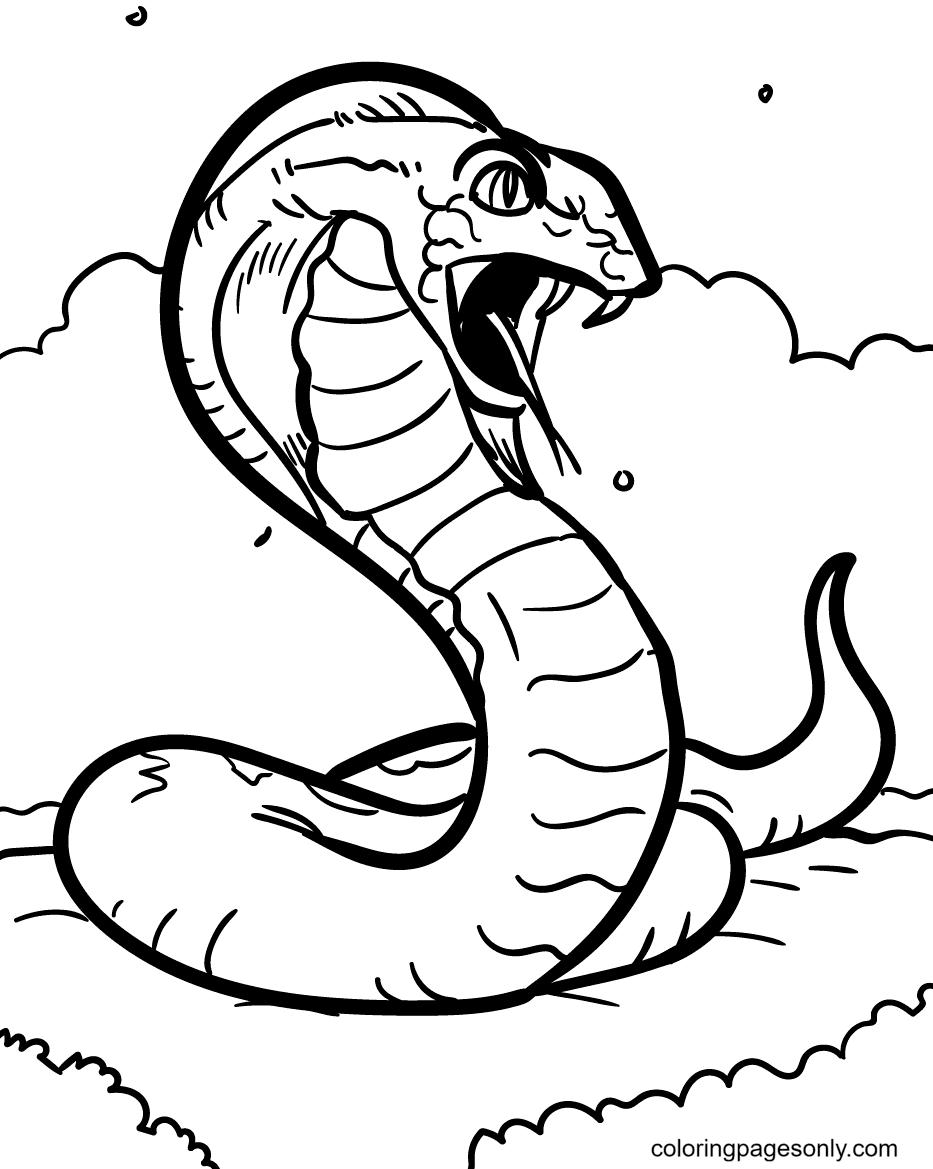
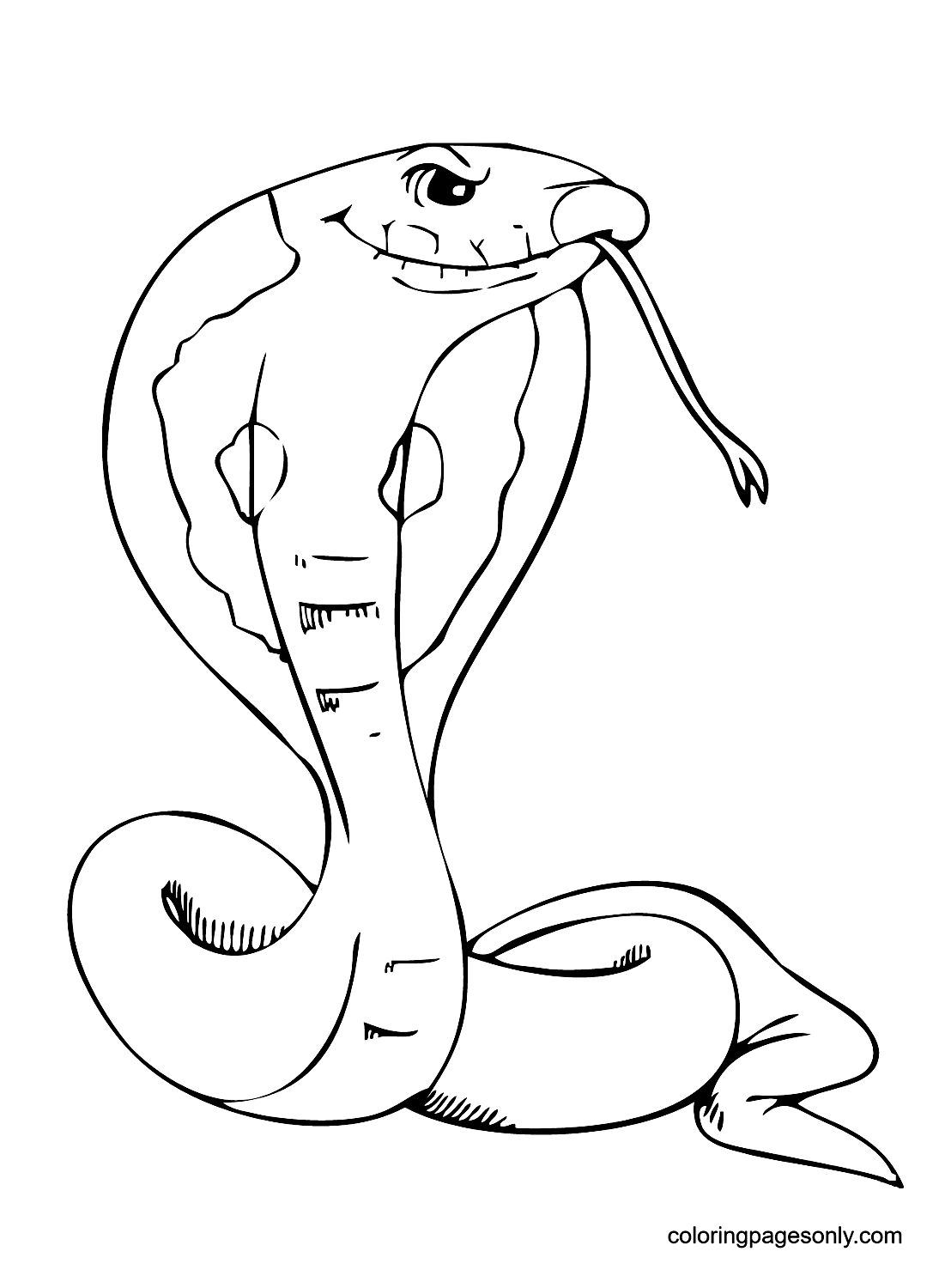
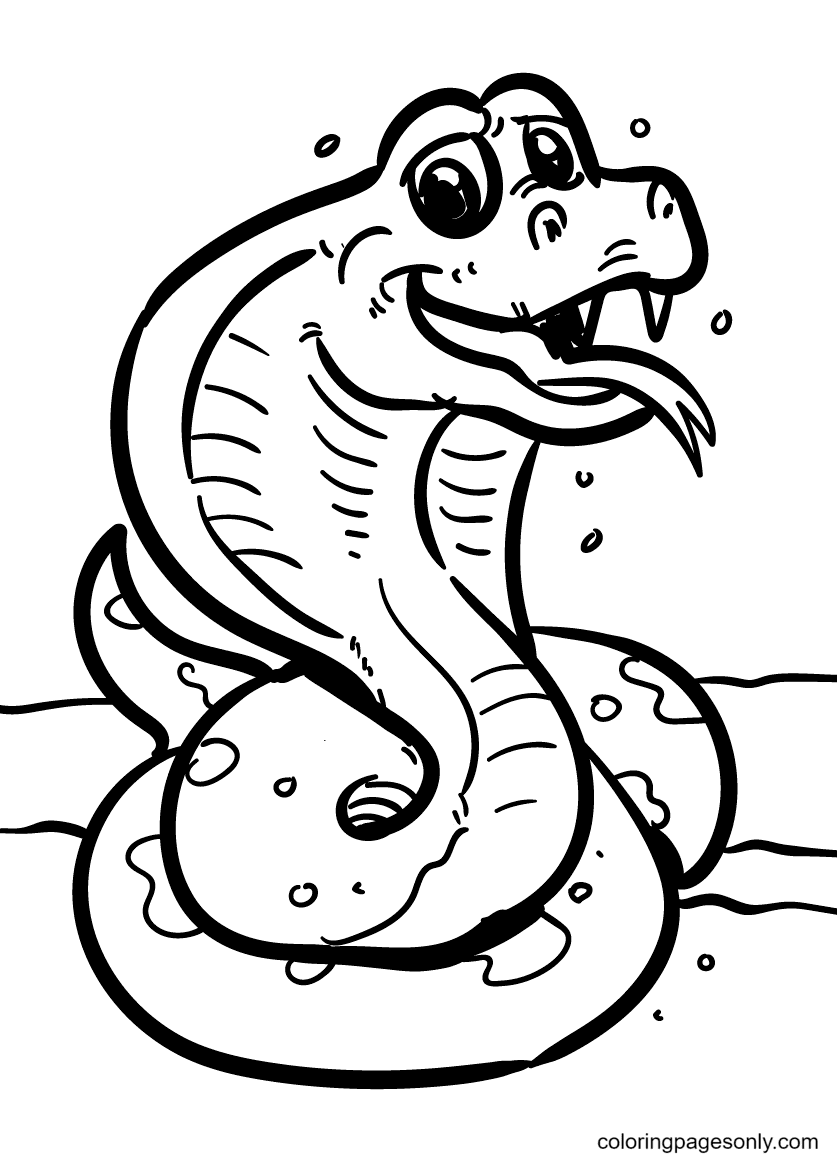
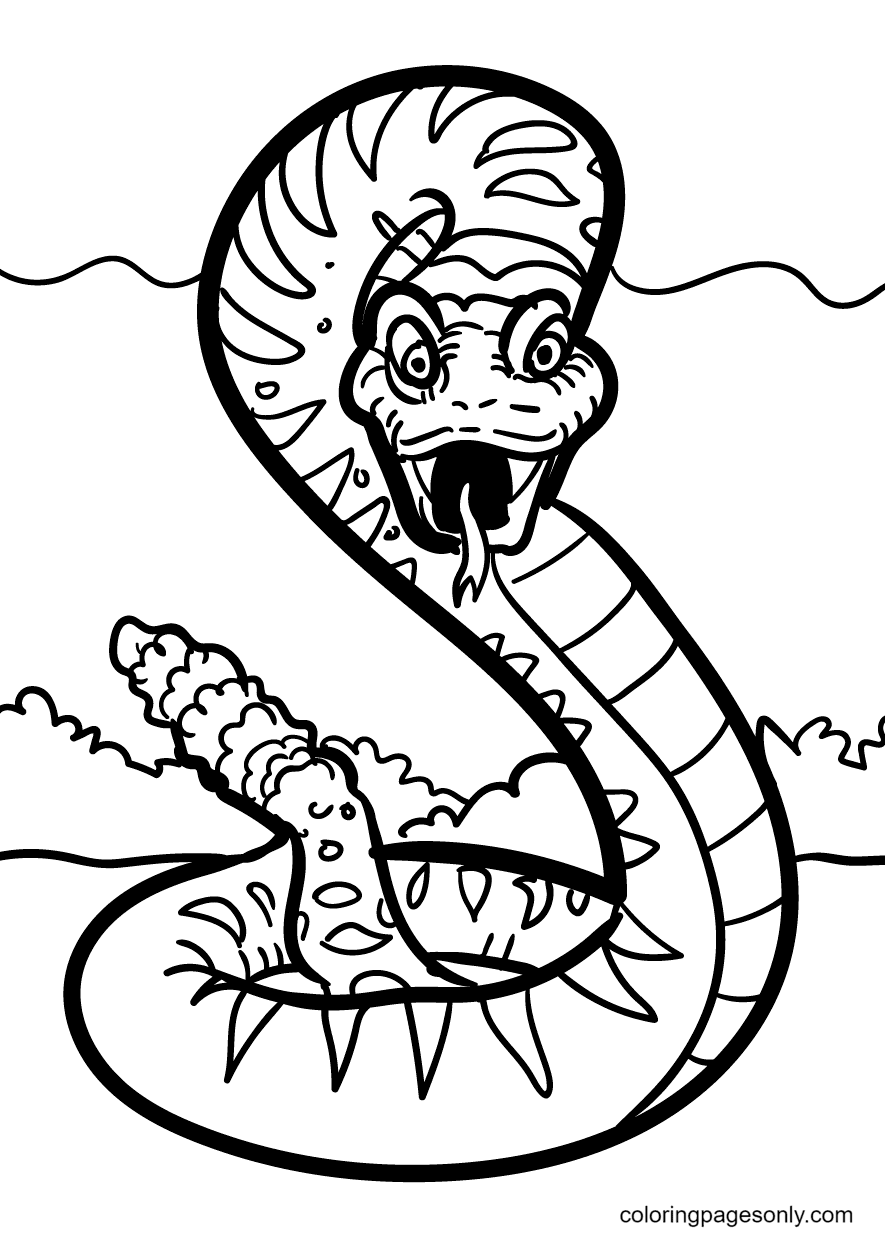
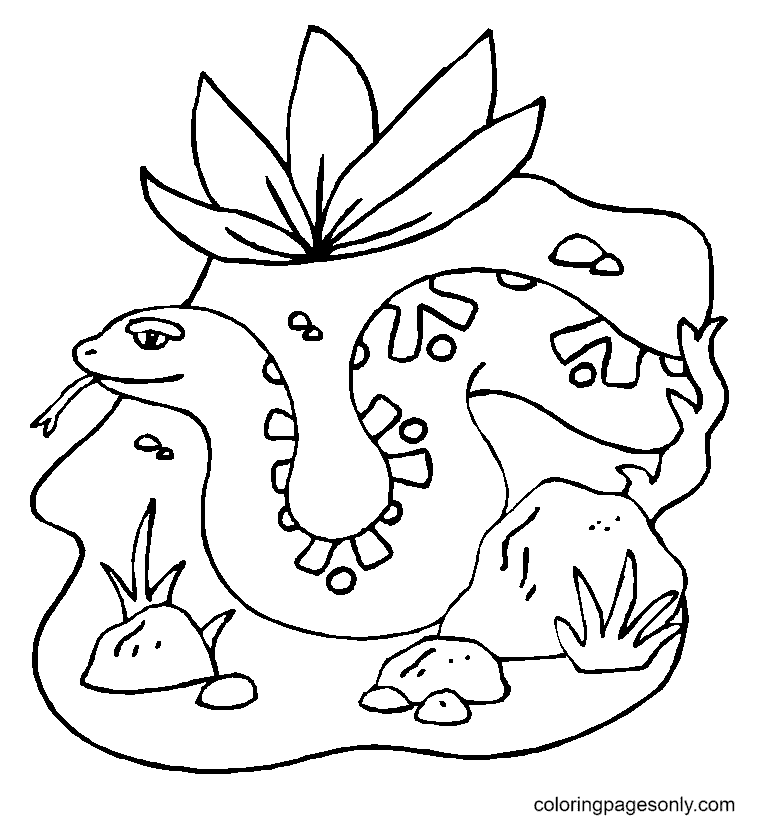
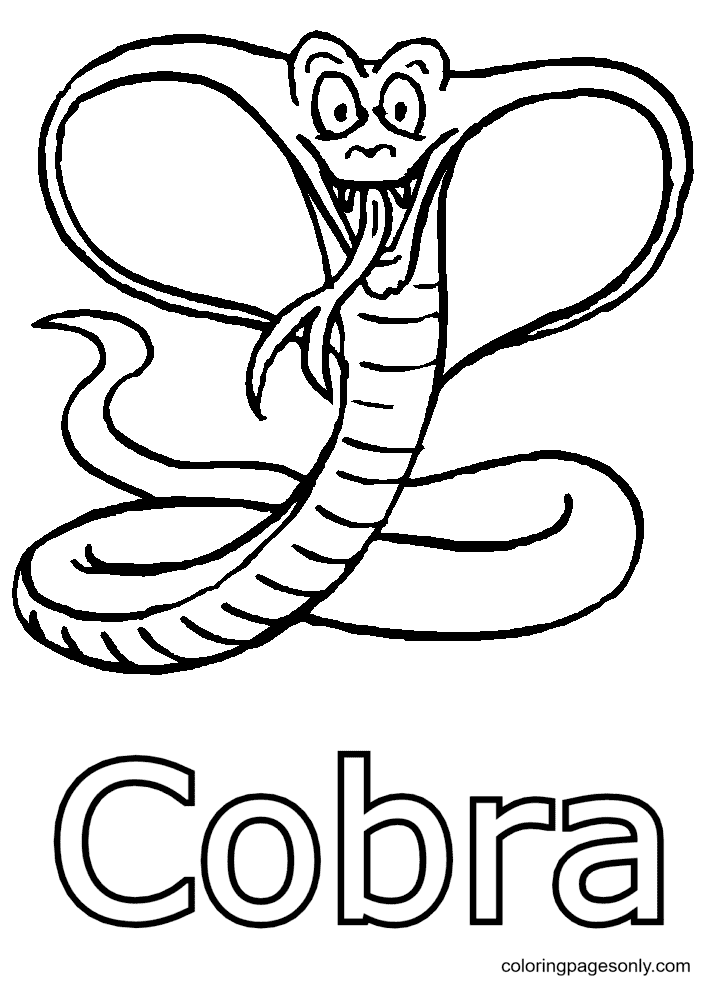
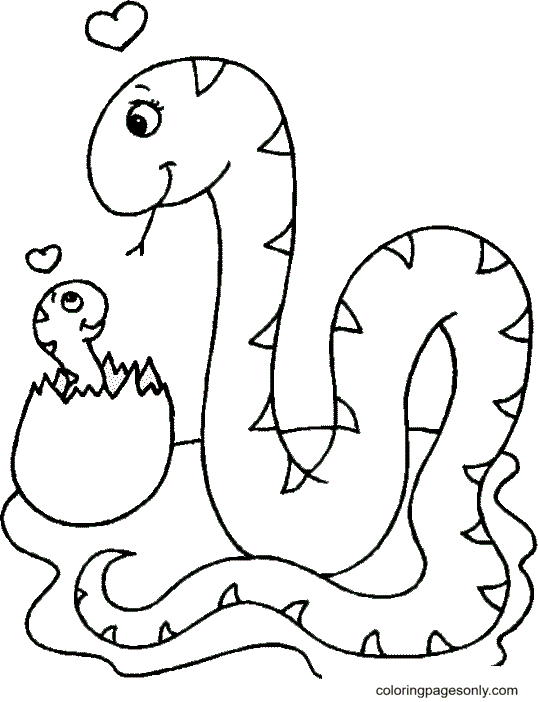
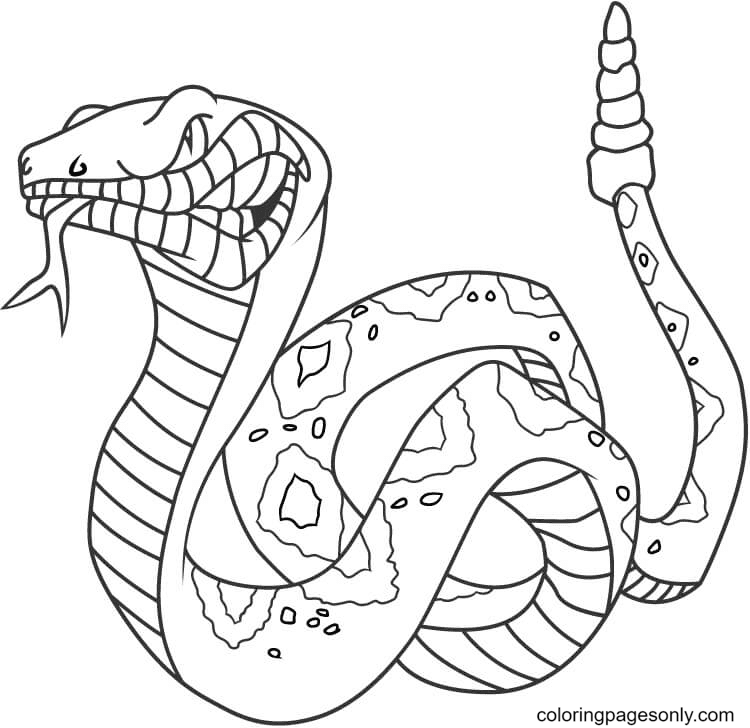
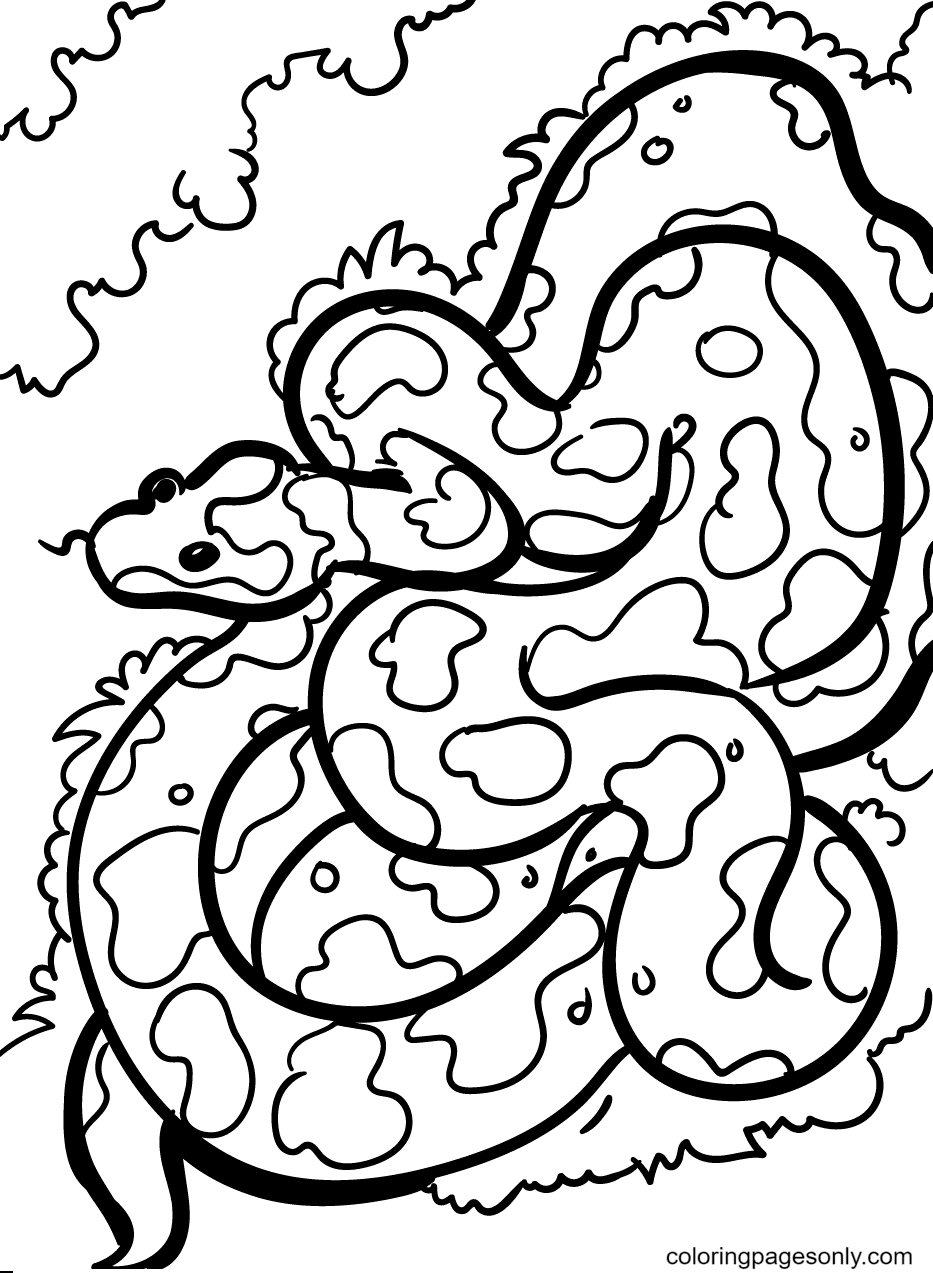
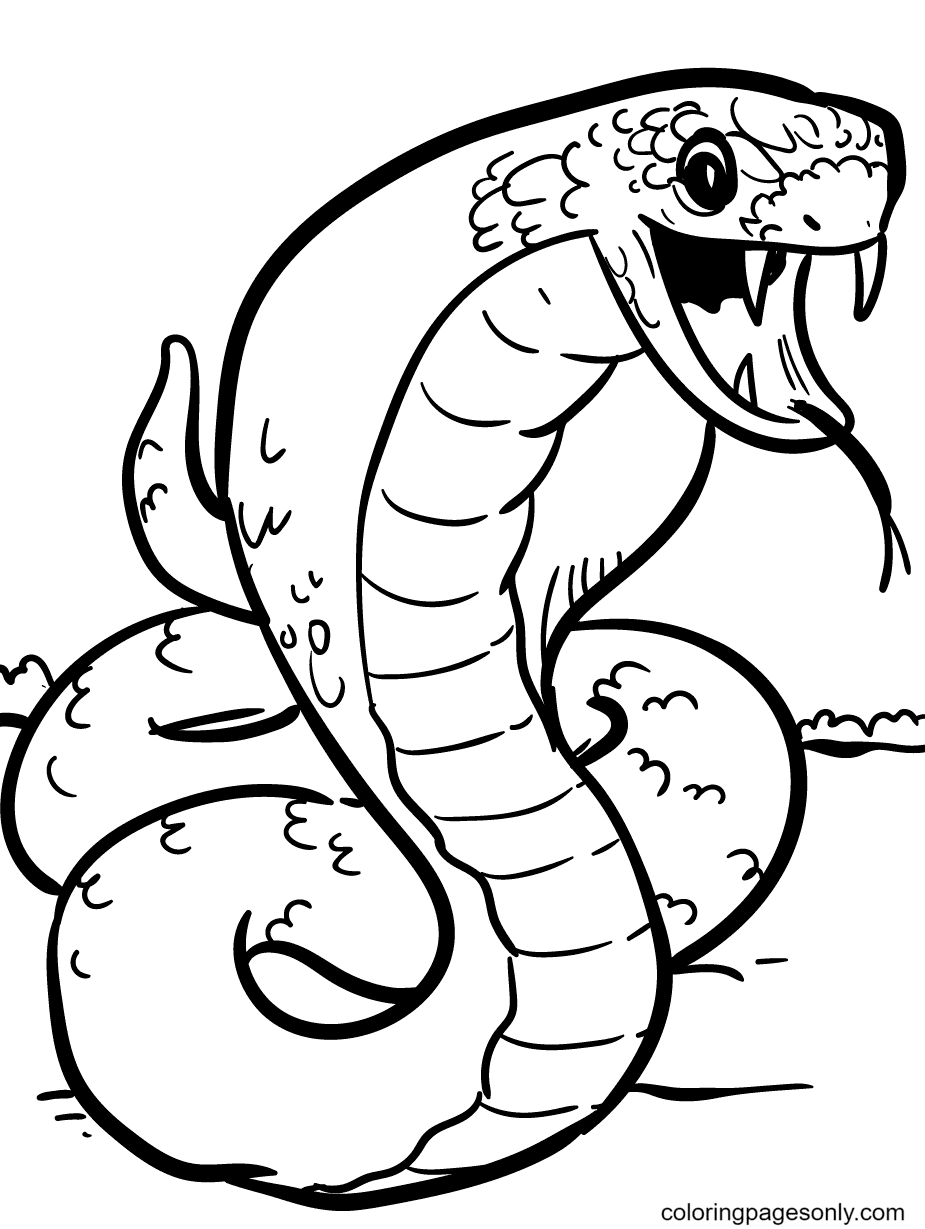
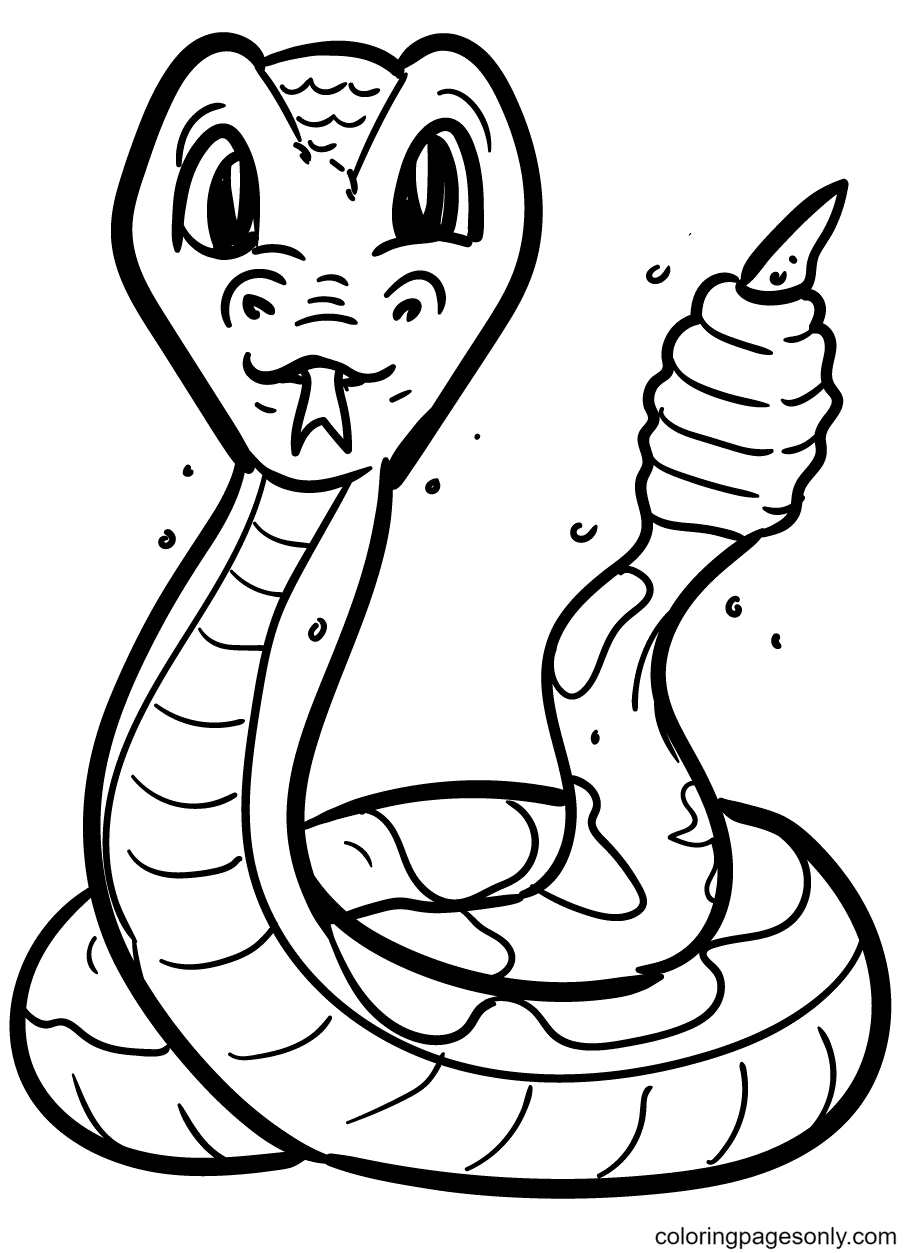
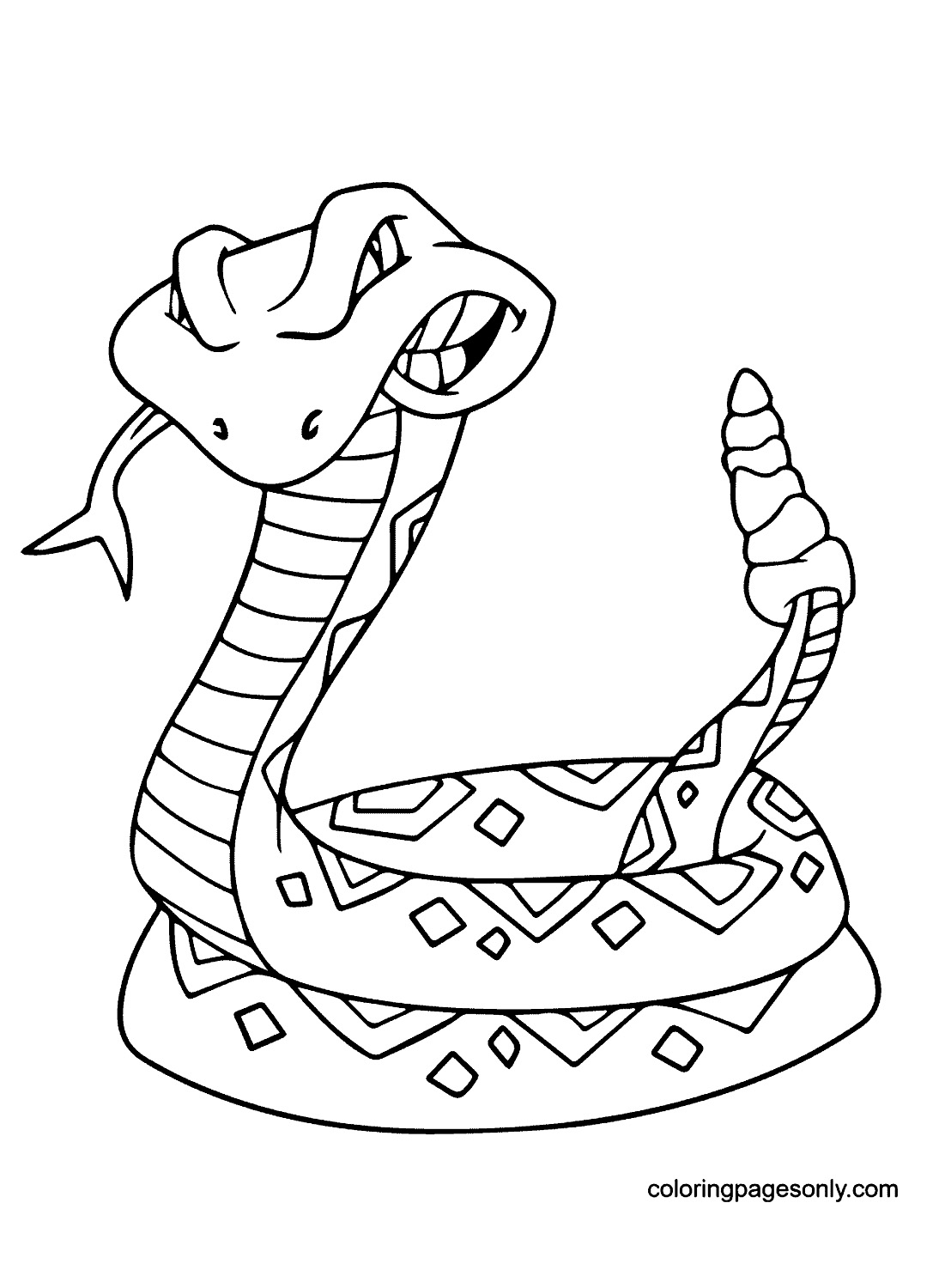
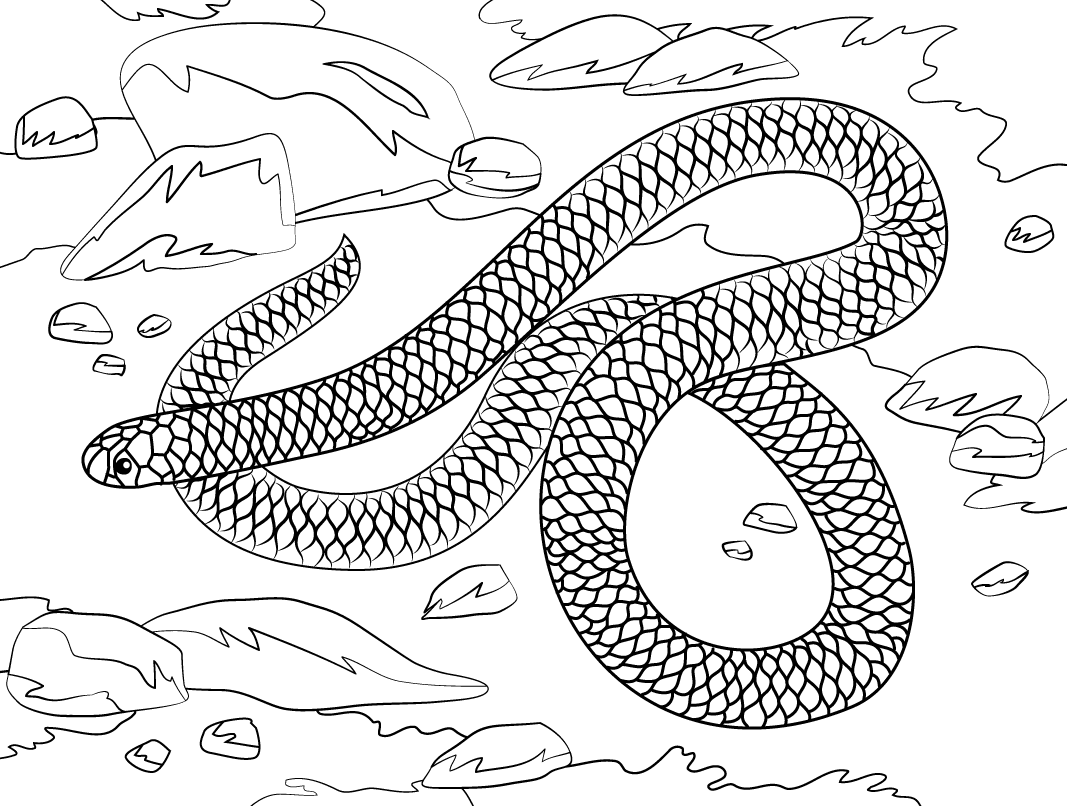
Eighteen pages are modeled on real snakes and their behavior: cobras, rattlesnakes, boa constrictors, pythons, and a mother snake incubating eggs. These reward a more accurate palette. Keep a cobra’s hood a solid dark tone and a rattlesnake’s tail segments a lighter, contrasting shade from the body.
What These Pages Do
One line, many decisions. A snake has no separate limbs or torso to break up the page, so the entire coloring decision comes down to how a single winding shape is patterned and shaded, a different kind of challenge than choosing colors for several distinct body parts.
Practice hiding in the scales. Filling in a long row of small, repeating scale marks without smudging past the line calls for exactly the kind of controlled hand movement the American Academy of Pediatrics flags as valuable for children between two and seven, even though it looks like simple pattern work rather than a skill-building exercise.
A different way of sensing the world. A snake’s forked tongue is doing the job a nose does for most animals, gathering scent particles and passing them to an organ in the roof of its mouth. That detail turns a coloring session into an easy opening for talking about how differently animals experience their surroundings.
Calm built through repetition, not avoidance. A 2005 study in the Art Therapy Journal linked coloring inside structured shapes to a measurable dip in anxiety, and a subject some children find unsettling at first, colored slowly and repeatedly, is a reasonable way to let that unease settle rather than avoiding the animal altogether.
How to Color Snake Pages Well
- Build pattern before adding shading: Lay down the base color first, then add diamond, band, or blotch markings in a second color before any shading, since most snake patterns sit on top of a base tone rather than replacing it.
- Give a cobra’s hood its own weight: Color the hood a slightly darker or more saturated version of the body color, since the extended ribs that form it are still part of the same skin, not a separate material.
- Layer a rattlesnake’s tail segments: Color the rattle segments in alternating Tan and Gray bands rather than one flat color, since each keratin segment reflects light a little differently than the last.
- Vary a boa or python’s blotches: Use two or three related earth tones, Brown, Tan, and Rust, in an irregular blotch pattern rather than a repeating grid, since real constrictor patterns are irregular by nature.
- Keep the forked tongue a contrasting color: Color the tongue Red or Pink, distinct from the body, so this small detail stays visible against a longer, larger-colored shape.
- Shade along the coil, not across it: Add a slightly darker tone on the underside of each coil or curve in the body, since a real snake’s rounded body catches shadow differently as it winds across the page.
5 Creative Craft Ideas With Snake Coloring Pages
- Snake Bookmark Set. Materials: two or three colored snake pages, scissors, clear contact paper, and a hole punch. Cut each colored page into a long, snake-shaped strip, cover both sides with contact paper, and punch a hole for a ribbon.
- Coiled Snake Wreath. Materials: a colored coiled-snake page, scissors, and a ribbon loop. Cut out the colored snake along its coiled shape, attach a small ribbon loop to the back, and hang it as a simple reptile-themed wall piece.
- Reptile Fact Poster. Materials: several colored snake pages, a poster board, glue, and a marker. Glue the colored snakes onto the poster board, then write one fact under each, such as how the species uses its tongue or whether it is venomous.
- Snake Greeting Card. Materials: a colored snake page, folded cardstock, scissors, and glue. Trim the colored page to fit the card front, glue it in place, and write a message inside for a birthday or reptile-loving friend.
- Zigzag Garland. Materials: several colored snake pages, scissors, twine, and clear tape. Cut out each colored snake, tape it to the twine at intervals so the winding shapes overlap slightly, and hang the finished garland for a reptile-themed room or party.
Frequently Asked Questions
What are snake coloring pages?
Snake coloring pages are printable designs featuring simple portraits, cartoon personalities, activity scenes, and real species like cobras, rattlesnakes, and pythons. This collection includes 81 free designs available as printable PDFs or online coloring pages.
How does a snake smell without a working nose?
A snake’s forked tongue collects scent particles from the air and delivers them to the Jacobson’s organ in the roof of its mouth, which is the main way a snake senses its surroundings.
What is a rattlesnake’s rattle made of?
The rattle is made of hard, hollow segments of keratin, the same material as human fingernails, and a new segment is added each time the snake sheds its skin.
How does a snake swallow prey larger than its own head?
The two halves of a snake’s lower jaw are connected by flexible ligaments rather than fused bone, letting the jaw stretch wide enough to swallow prey two to four times the width of its head.
Are most snakes venomous?
No. Most snake species are non-venomous, and the venomous species typically use their venom mainly to subdue prey rather than for defense.
What forms a cobra’s hood?
A cobra’s hood is formed by extending elongated rib bones in its neck outward, spreading the surrounding skin into the flattened shape used as a threat display.
Are snake coloring pages suitable for young children?
Yes. The simple portrait and cartoon-personality pages suit ages 3 and 4. The real species and detailed scene pages, with more pattern work, suit ages 6 and up.
Do any pages in this collection reference other stories or characters?
A couple of pages reference a snake character from a well-known animated film, but this collection does not reproduce any studio’s artwork, plot, or dialogue, only an original design.
Start Coloring
Download any page by clicking the design. No account, email, or payment is required. Pages print directly from the browser at full resolution or open in the online coloring tool for screen use. Share finished pages on Facebook or Pinterest with the share buttons at the top of each design page.