
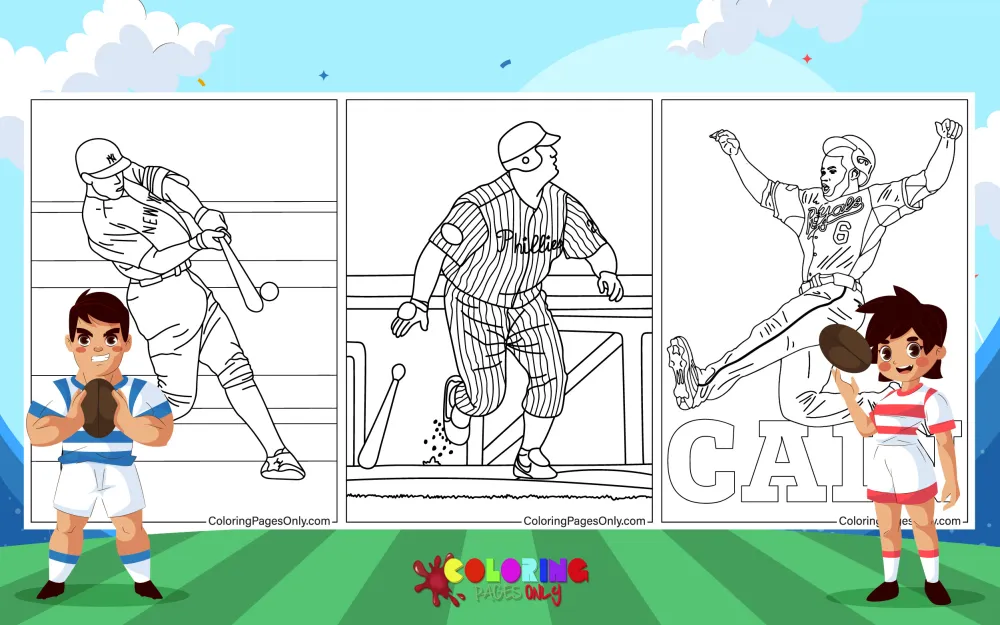
Explore 45 free MLB coloring pages featuring team logos from across both leagues, star players including Ken Griffey Jr., Clayton Kershaw, Bryce Harper, Jose Altuve, Mike Trout, and rising stars Elly De La Cruz and Wander Franco – plus action scenes, puzzles, and a birthday card template – free printable PDF and online coloring for baseball fans of all ages.
Baseball has been played professionally in the United States since 1871, when the National Association of Professional Base Ball Players became the first professional league. The National League was founded in 1876 and still operates today, making it the oldest professional sports league in North America. The American League launched in 1901. They met in the first modern World Series in 1903, and the two-league structure of Major League Baseball has remained essentially intact for over 120 years.
Today, 30 franchises across 29 American cities and one Canadian city play a 162-game regular season from late March through early October, producing approximately 2,430 games of baseball annually before postseason play even begins. The sheer volume of the game – more than any other major professional sport – is part of what makes baseball what it is: not a weekly event but a daily presence through six months of the year, as reliable as weather.
These 45 free pages at ColoringPagesOnly.com cover team logos, legendary players, and today’s rising stars. All free, PDF or PNG, print at home or color online. Play ball.






What’s Inside
The Team Logo Pages – All 30 Franchises
The logo pages are the collection’s foundation and its most immediately satisfying section for fans who follow specific teams. The collection includes: Atlanta Braves, Baltimore Orioles, Boston Red Sox, Chicago Cubs, Chicago White Sox, Cincinnati Reds, Cleveland Indians (now the Cleveland Guardians – more on the name below), Colorado Rockies, Detroit Tigers, Houston Astros, Kansas City Royals, Los Angeles Angels of Anaheim, Los Angeles Dodgers, Miami Marlins, Milwaukee Brewers, Minnesota Twins, New York Mets, New York Yankees, Oakland Athletics, Philadelphia Phillies, Pittsburgh Pirates, San Diego Padres, San Francisco Giants, Seattle Mariners, St. Louis Cardinals, Tampa Bay Rays, Texas Rangers, Toronto Blue Jays, and Washington Nationals.
A few logos in the collection carry stories worth knowing:
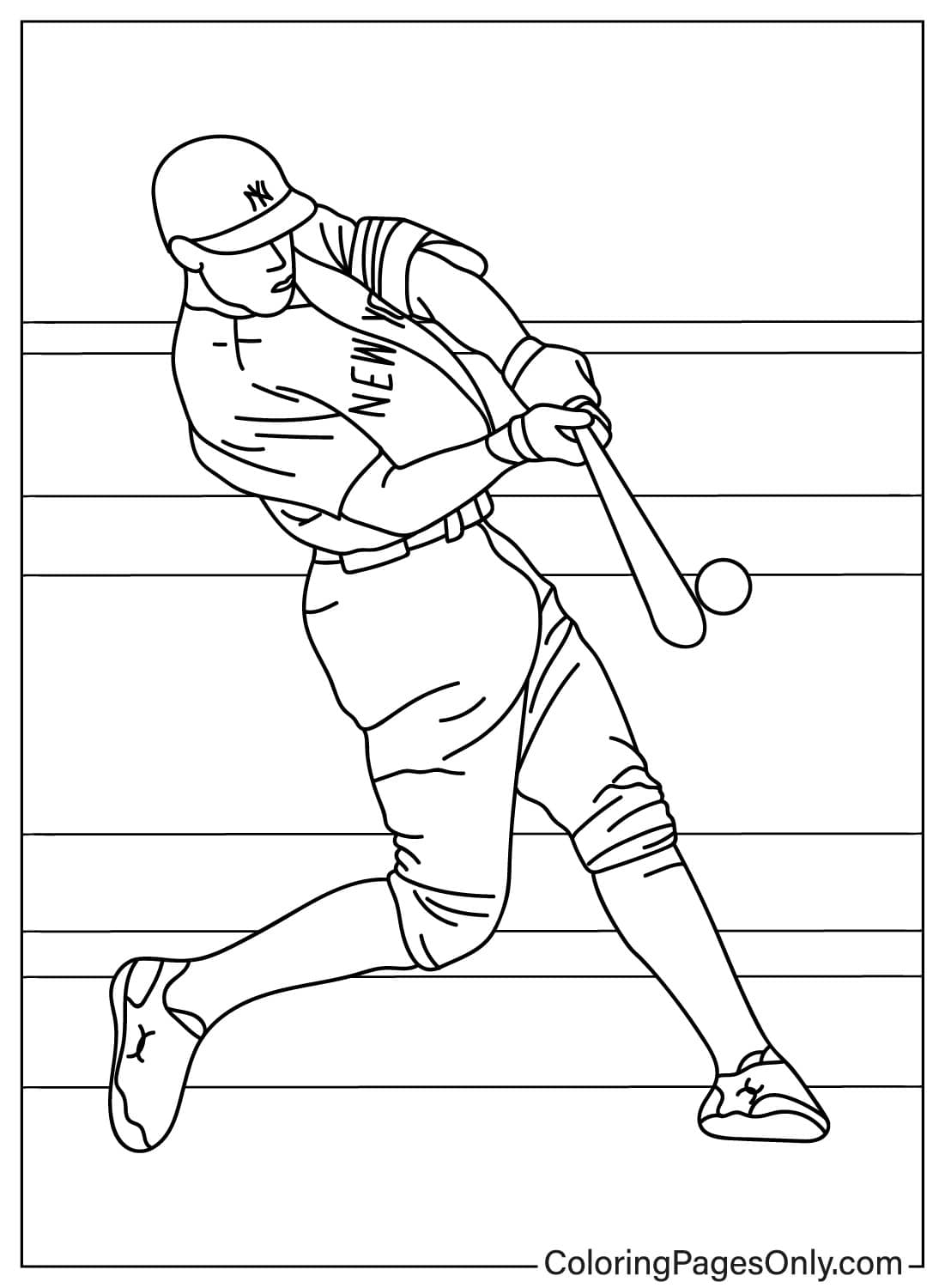
The New York Yankees Logo – the interlocking NY monogram – was designed by Louis B. Tiffany (of Tiffany & Co.) in 1877, originally as a Medal of Honor for a police officer. The Yankees adopted it in 1909. Of the 27 World Series championships the Yankees have won – the most in MLB history – each was celebrated under some version of this monogram. When fans of other teams hate the Yankees, they are often actually hating the logo: that cool, impassive, endlessly successful NY that has been hanging above the rest of the league for over a century.
The Boston Red Sox Logo – the pair of interlocked red socks – is one of baseball’s cleanest and most durable designs, unchanged in its essential form for decades. The Red Sox won the World Series in 1903, 1904, 1912, 1915, 1916, 1918, then waited 86 years – during which time the “Curse of the Bambino” entered the American lexicon – before winning again in 2004. They have since won in 2007, 2013, and 2018.
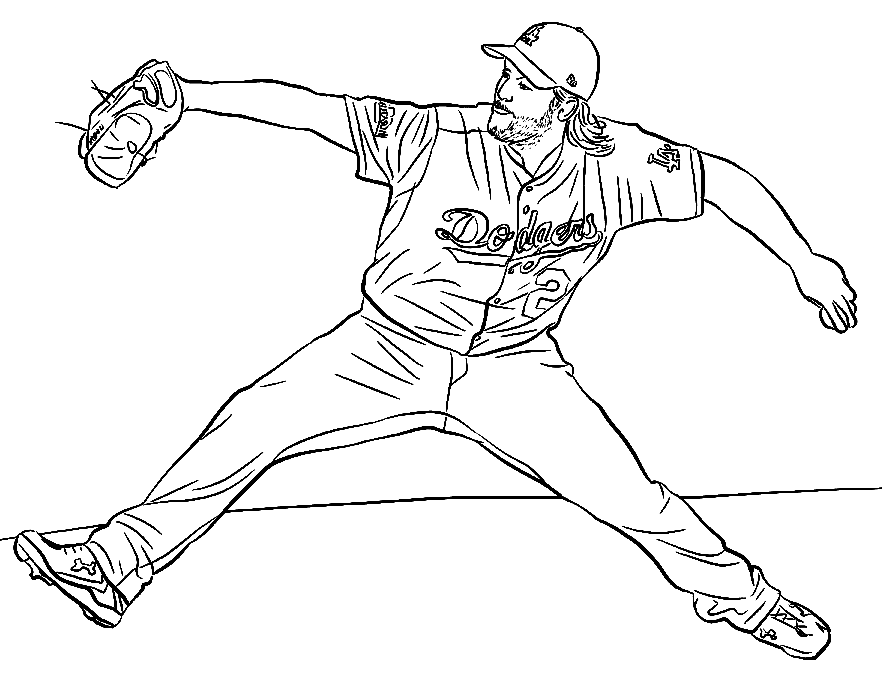
The Los Angeles Dodgers Logo uses a script “Dodgers” in the same style as the Ebbets Field-era Brooklyn uniform – a deliberate connection to the club’s origins in Brooklyn, where they played from 1890 to 1957 before moving west. The name “Dodgers” comes from “Trolley Dodgers,” a nickname for Brooklyn residents who navigated the borough’s extensive streetcar network.
The Seattle Mariners Logo features a compass rose design – the star shape suggesting both nautical navigation (Seattle is a major port city) and the four directions, rendered in the Mariners’ navy and teal. The teal element, introduced in 1993, was at the time unprecedented in MLB and has become one of the sport’s most recognizable color combinations.
The St. Louis Cardinals Logo – two cardinals perched on a baseball bat with a cardinal written in script – is one of the most distinctive in baseball: an actual bird depicted with ornithological accuracy on a sports logo, which is rarer than you’d think. The Cardinals have won 11 World Series championships, second only to the Yankees.
The Oakland Athletics Logo – the A’s script in Kelly green and gold – represents a franchise that has played in three different cities (Philadelphia, Kansas City, Oakland) and is currently in the process of relocation to Las Vegas, which means the Oakland Athletics as a concept is in its final years. The Kelly green and gold color scheme, introduced by owner Charlie Finley in the late 1960s, was radical and controversial at the time and is now beloved – prompting recent MLB-wide throwback uniform movements partly out of nostalgia for Oakland’s era of championship play in the early 1970s.
The Players – Legends and Rising Stars
The collection spans a remarkable range of baseball generations in its player pages.
Ken Griffey Jr. – Mariners is arguably the most purely beloved player in baseball history among a generation that watched him play in the 1990s. His career statistics: 630 home runs, 10 Gold Glove Awards in center field (10 consecutive from 1990 to 1999), 13 All-Star selections, and the 1997 American League MVP. He played from 1989 to 2010, primarily with the Seattle Mariners and later the Cincinnati Reds. His swing – arguably the most aesthetically beautiful in the history of the sport – has been described by players, coaches, and writers as the physical incarnation of what baseball should look like when it is played perfectly. He was inducted into the Baseball Hall of Fame in 2016 with 99.3% of the vote – the highest percentage in Hall of Fame history at the time. The Mariners page depicts him in the Mariners’ teal and navy.
Clayton Kershaw is the Los Angeles Dodgers’ left-handed pitcher and the dominant pitching talent of his generation. He has won three NL Cy Young Awards (2011, 2013, 2014) and the 2014 NL MVP – the first pitcher to win the MVP award since Bob Gibson in 1968. His combination of a hammer curveball, a four-seam fastball, and exceptional command produced ERA and strikeout numbers across his prime years (2011–2017) that belong among the best sustained pitching performances in MLB history. He pitched for the Dodgers his entire career.
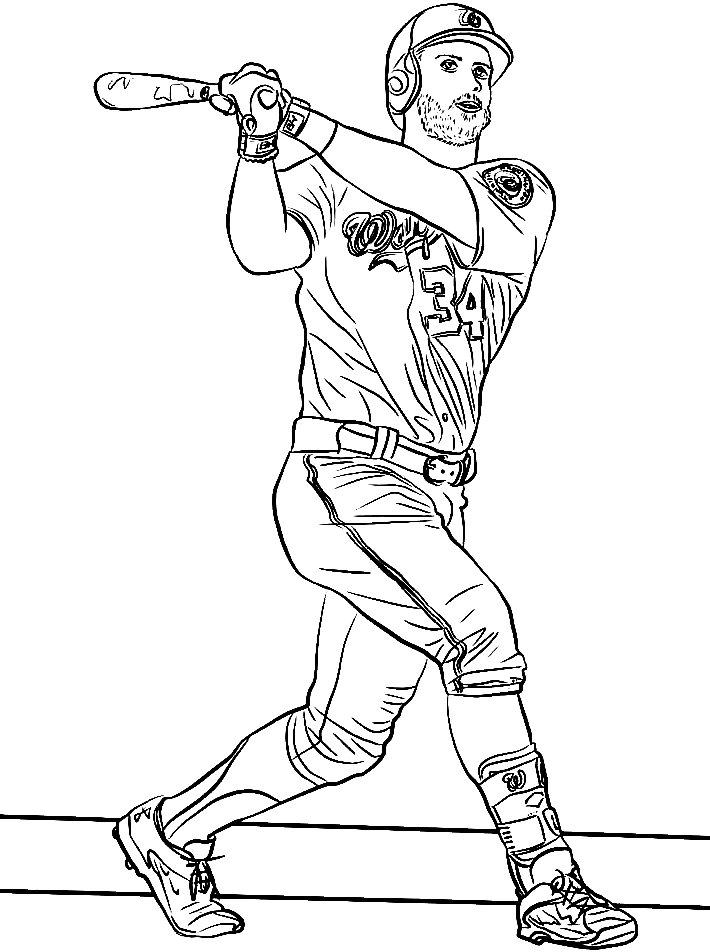
Bryce Harper is the Philadelphia Phillies’ right fielder and one of the most physically imposing hitters in modern baseball. He won the NL MVP in 2015 with the Washington Nationals and again in 2021 with the Phillies after signing a then-record 13-year, $330 million contract in 2019. His 2021 MVP season – after recovering from Tommy John surgery – is widely considered one of the great individual performance narratives in recent baseball history. The Phillies page depicts him in Philadelphia’s classic red and white.
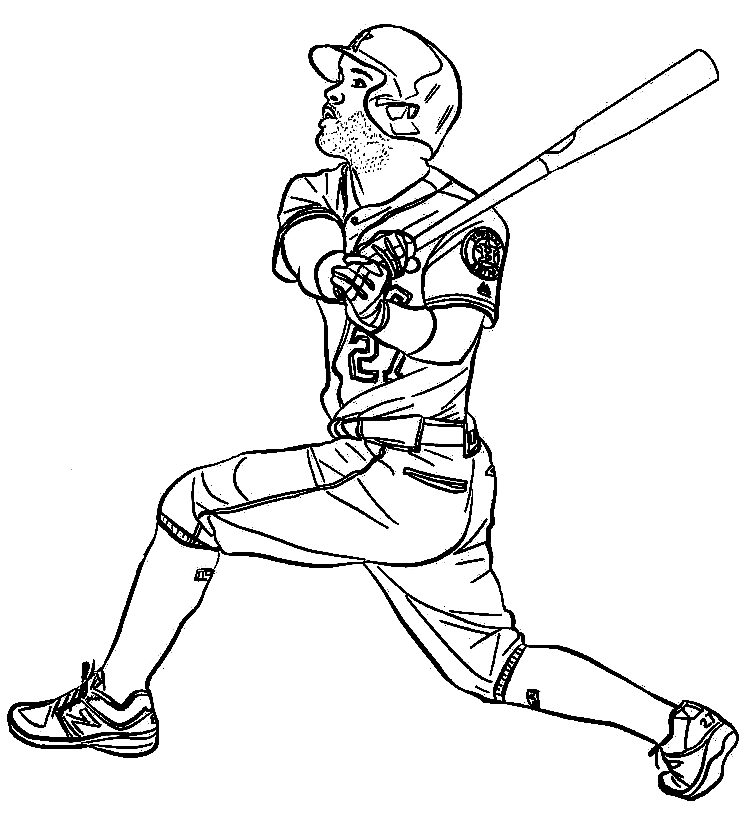
Jose Altuve is the Houston Astros’ second baseman and one of the most unlikely franchise icons in MLB. At 5’6″ (168cm), he is one of the shortest players in the league and has spent his career overcoming both the skepticism of scouts who doubted his size and the shadow of the 2017 sign-stealing scandal that has complicated the Astros’ championship narrative. His individual career – seven Silver Slugger awards, six All-Star selections, the 2017 AL MVP – is extraordinary on its own terms. The Astros page depicts him in Houston’s navy and orange.
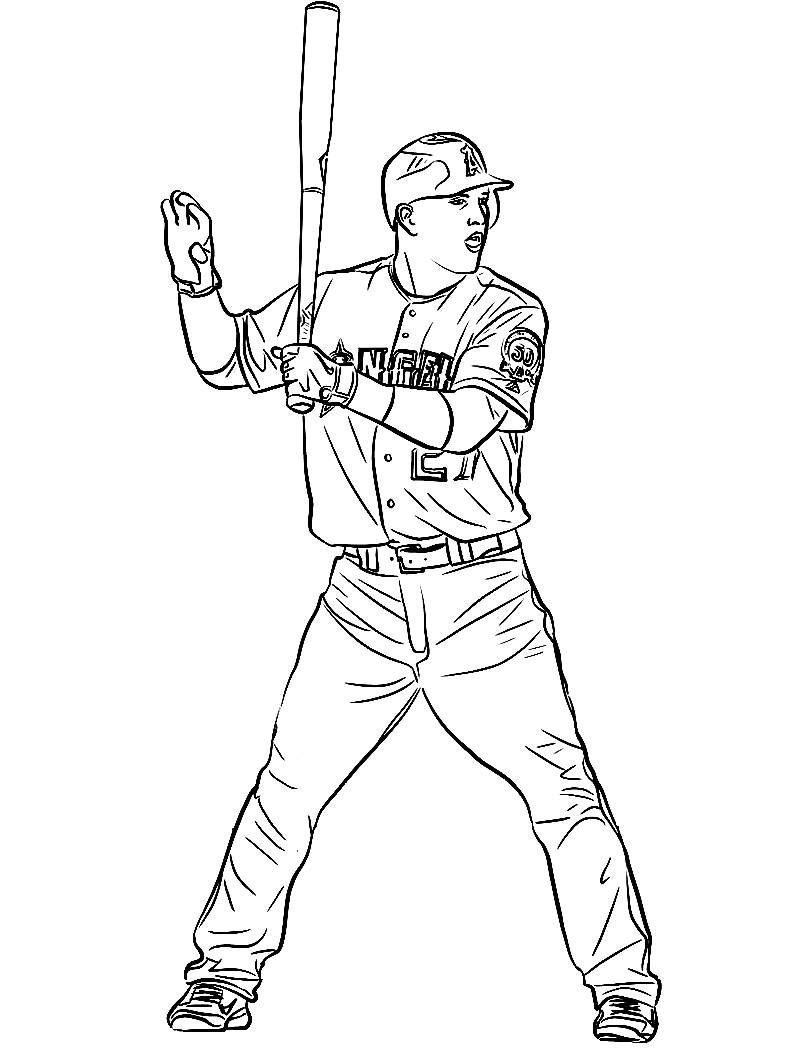
Mike Trout of the Los Angeles Angels is, on the basis of accumulated statistical evidence, the greatest position player of his era – possibly the greatest of the modern era. Three AL MVP awards (2014, 2016, 2019), nine Silver Slugger awards, nine All-Star selections. His WAR (Wins Above Replacement) accumulation through his early 30s places him among the greatest players in baseball history by that measure. The complicating fact of his career is that the Los Angeles Angels have been a remarkably unsuccessful team during his tenure, meaning he has appeared in very few playoff games despite being the best player of his generation – a situation that generates its own ongoing conversation about the relationship between individual excellence and team success.
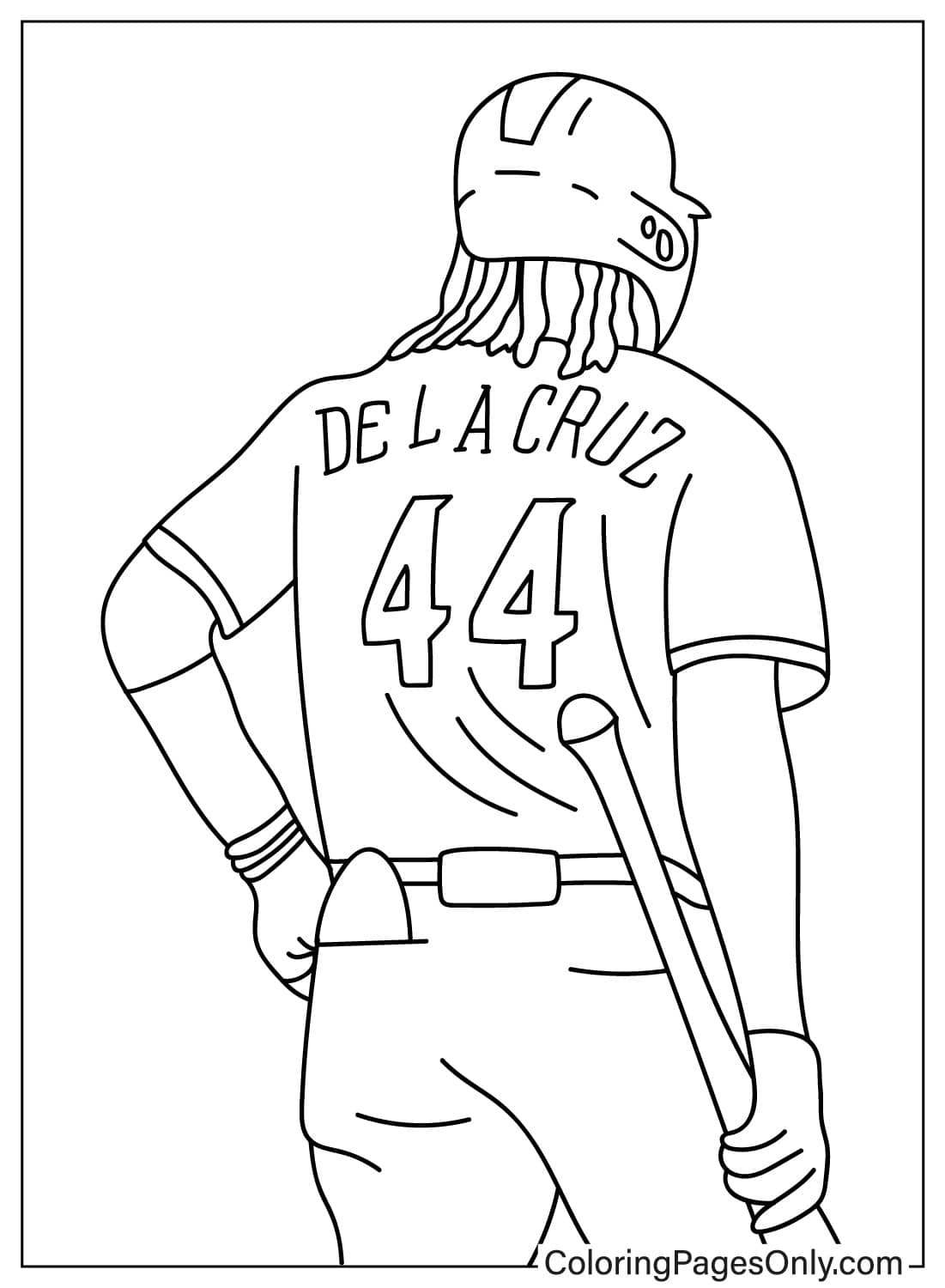
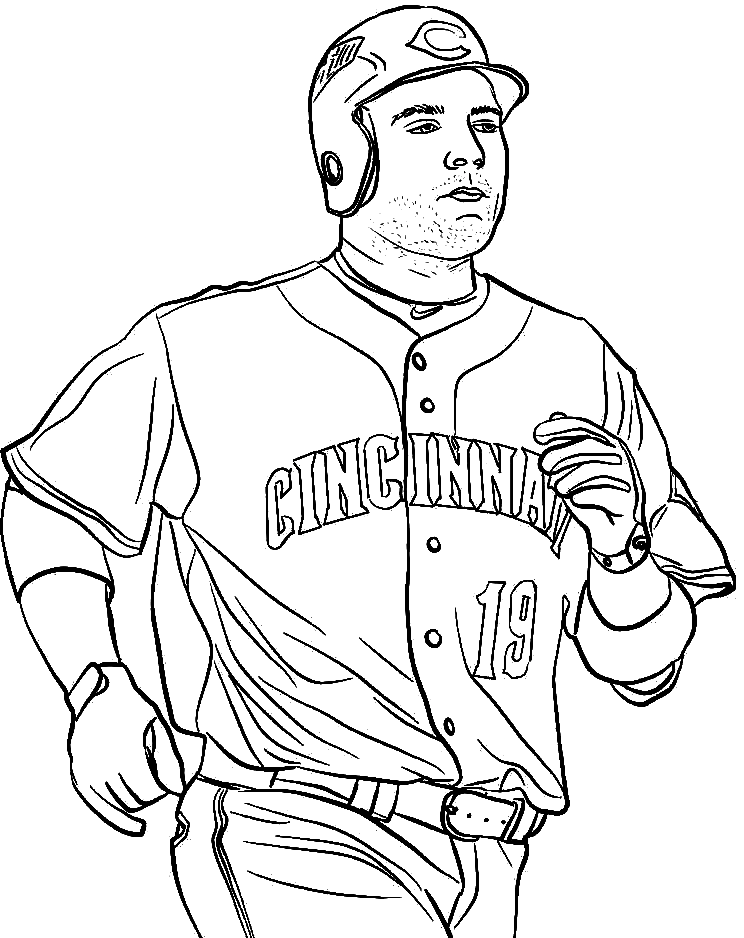
Elly De La Cruz of the Cincinnati Reds represents the current generation’s most electrifying young talent. He made his MLB debut in 2023 at age 21 and immediately distinguished himself with a combination of speed, power, and athleticism that had scouts and analysts reaching for historical comparisons. At 6’5″ (196cm), he hits with power from the shortstop position, runs with elite speed, and throws with a velocity from the infield that is genuinely unusual. His debut season generated the kind of excitement that the Reds – and their fanbase – needed after several years of rebuild.
Wander Franco of the Tampa Bay Rays was, before legal circumstances intervened, one of the most highly regarded young prospects in baseball history. He debuted in 2021 at age 20 as the consensus top prospect in the sport, and his early performance – exceptional contact rates, plus defense, plate discipline beyond his years – fulfilled the advance billing. The situation surrounding him as of 2024 is serious and ongoing; the Rays suspended and then placed him on administrative leave in 2023. His page appears in this collection as a representation of his play before those circumstances developed.
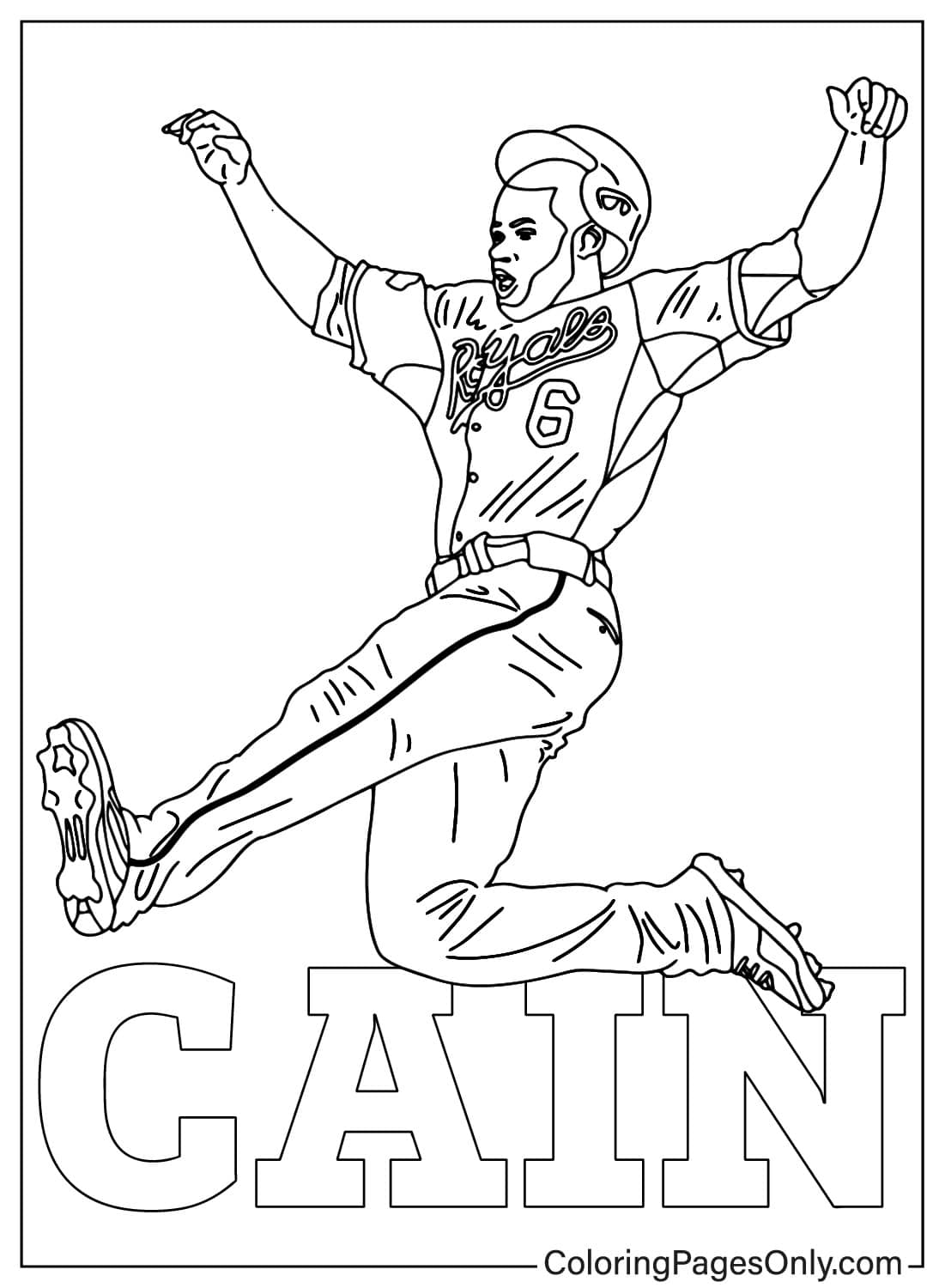
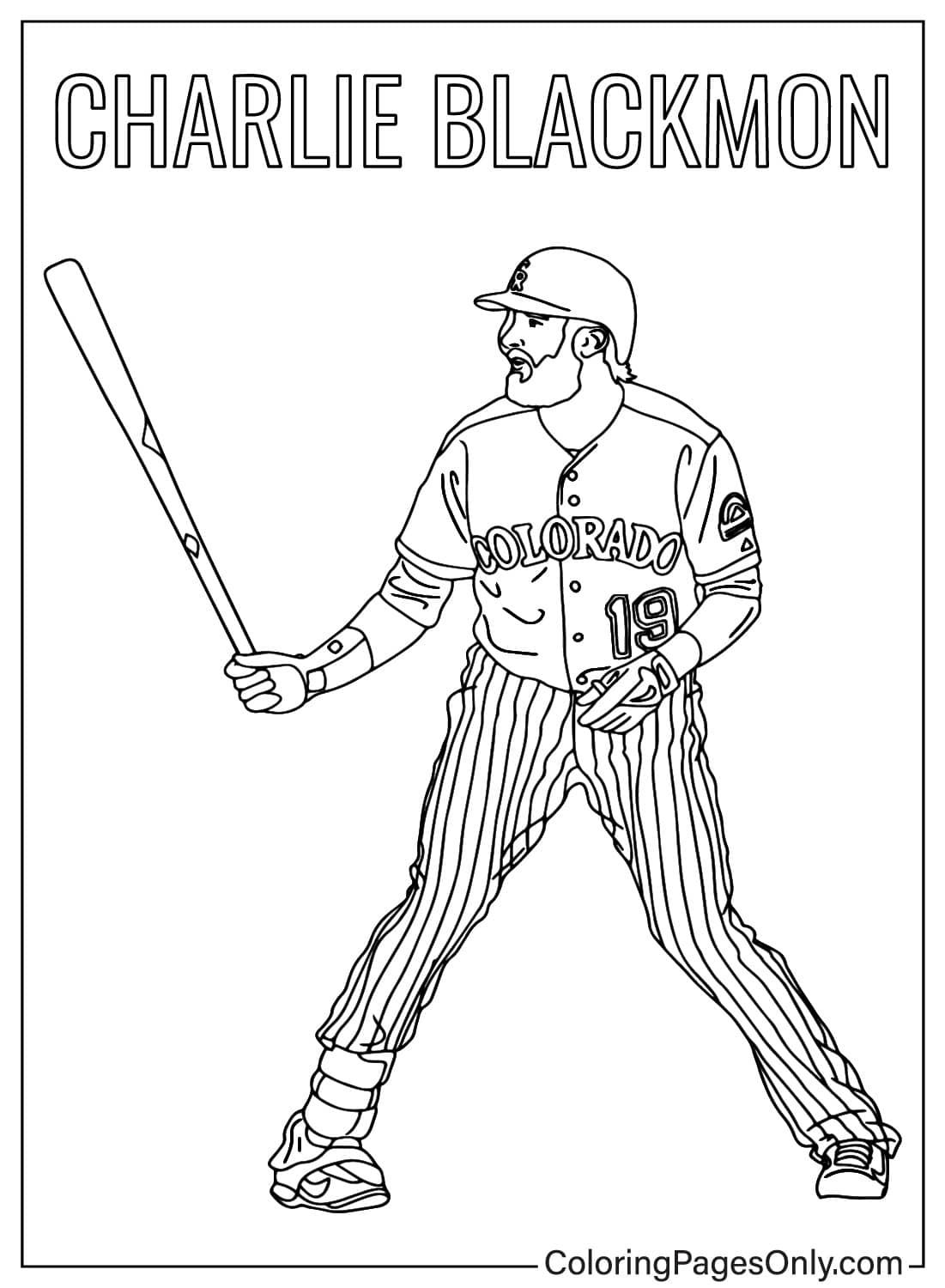
Charlie Blackmon of the Colorado Rockies is the bearded, lead-off hitting outfielder who has been one of the more durably excellent players in a franchise that has historically struggled to develop and retain talent. Lorenzo Cain is the former Milwaukee Brewers and Kansas City Royals outfielder known for his exceptional center field defense and his 2015 World Series run with Kansas City.
Template and Puzzle Pages
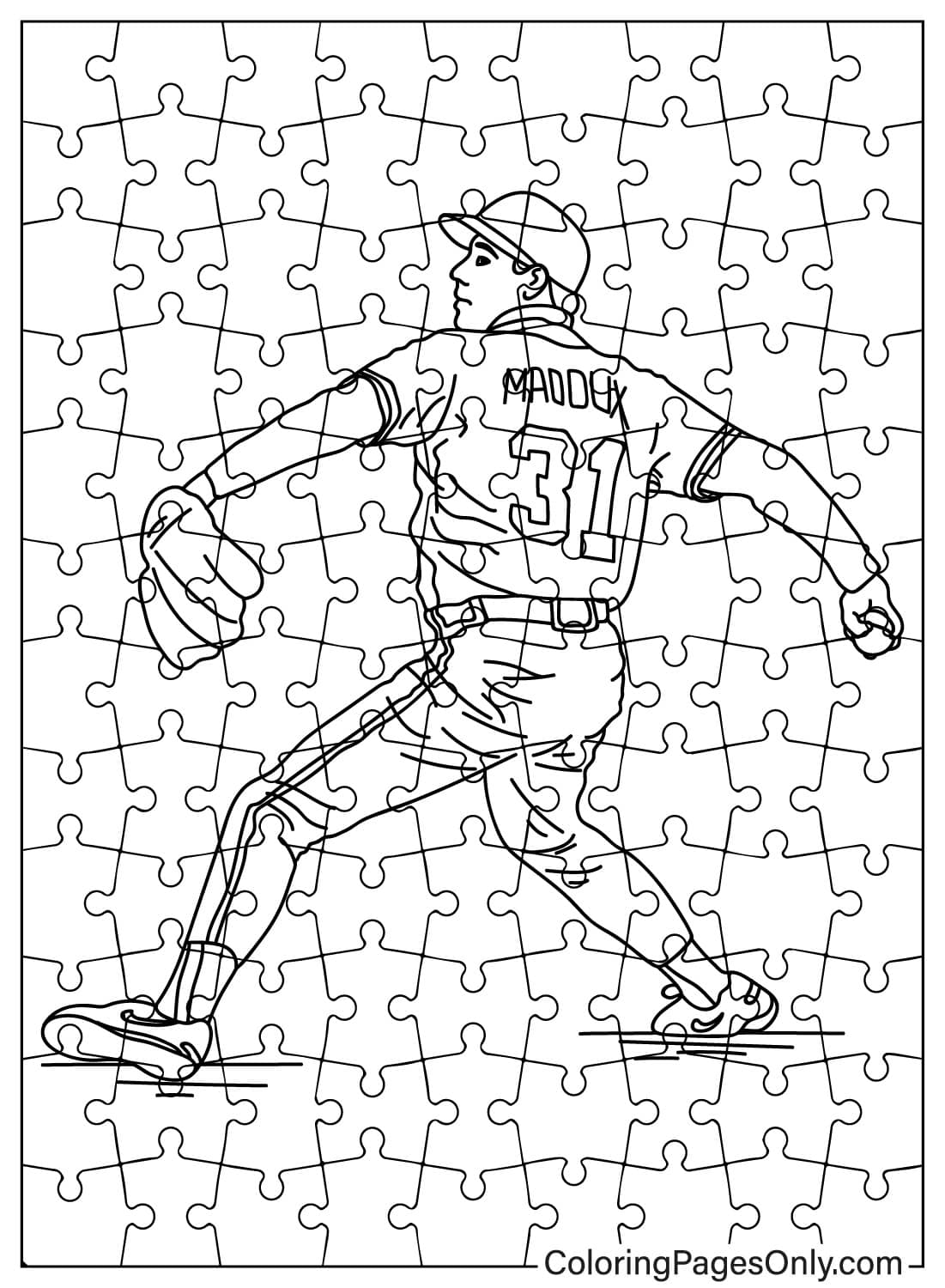
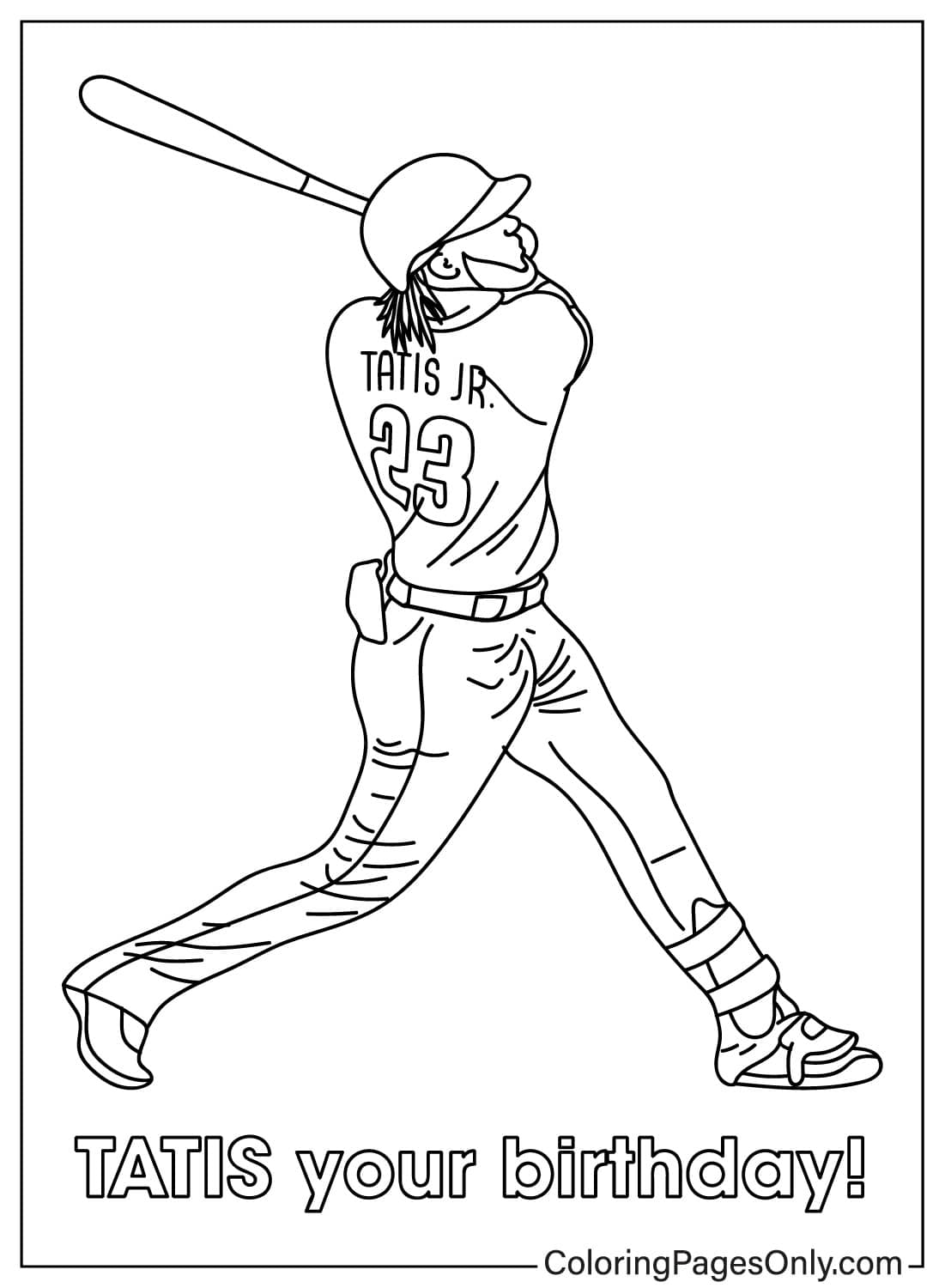
MLB-themed Birthday Card Template and MLB-themed Puzzles are the collection’s functional craft pages – designed not just for coloring as standalone illustration but as starting points for specific projects. The birthday card template is particularly well-designed for fan-specific use: the baseball-themed card framework accommodates any team’s colors, making it equally effective for a Yankees fan’s birthday and a Dodgers fan’s.
What These Pages Actually Do
Baseball rewards deep knowledge. Unlike most sports, where surface familiarity produces adequate viewing enjoyment, baseball rewards genuine expertise in a disproportionate way. Understanding what a pitch count means for a pitcher’s next start, why a shift changes defensive positioning, and what OPS+ actually tells you about a hitter’s value – all of these deepen the experience of watching the game exponentially. Coloring pages that feature specific players’ portraits, team logos with their historical context, and realistic uniform details create natural entry points for the conversations that build this knowledge. A parent and child coloring the Ken Griffey Jr. page together and talking about why his swing was so beautiful – and pulling up video to compare – is a baseball education that happens to involve colored pencils.
Team logos build brand literacy and geographic knowledge. The 30 MLB franchises are spread across 29 cities in the United States and Canada, representing communities from Seattle to Miami, from Denver to Toronto. A child who can identify all 30 logos has learned something real about North American geography and cultural geography – which cities have had baseball teams since the 19th century, which cities represent recent expansion, why Oakland is losing its team, and what that says about professional sports economics. The logos in this collection are gateways to all of that if the questions are asked.
The player pages teach statistical literacy. Baseball is the most statistically rich sport in the world. The game has been measured with box scores since the 1850s, and the accumulated data now spans nearly 150 years of professional play. When a child learns that Mike Trout has a career WAR that places him among the all-time greats, or that Ken Griffey Jr. won 10 consecutive Gold Gloves, those numbers require explanation, which requires understanding what WAR is, what a Gold Glove measures, and how individual performance is evaluated against historical context. This is genuine quantitative literacy delivered through genuine curiosity.
The 2005 Art Therapy Journal study applies here, too. Structured coloring reduces anxiety. Baseball’s season also reduces anxiety for many fans – the rhythmic daily presence of the game from April through October provides a consistent background hum of something interesting happening. The coloring pages extend that presence into a creative, tactile activity that carries the same calming quality.
How to Color These Pages Well
Team colors are specific and worth verifying. The 30 MLB franchises have carefully managed proprietary color systems, and fans notice when they’re wrong. A few specific cases: Yankees navy is a very dark, cold navy – almost black in low light. Red Sox red is a warm, slightly orange-tinted red (not a cool blue-red). Dodgers blue is the specific royal blue called “Dodger Blue” (Pantone 294 C) that has been essentially unchanged since the Los Angeles move. Cardinals red is a bright, warm, vivid red. Mariners teal is a specific aqua-teal that is distinct from both blue and standard teal. Cubs royal blue and red is a combination that looks almost toy-like in its primary clarity. Astros navy and orange create a striking warm-cool contrast that makes their logo one of the most graphically bold in the league.
The Yankees NY monogram requires geometric precision. The interlocking NY is one of baseball’s most recognizable logos and one of its most technically demanding to color cleanly. The two letters share space and overlap in a specific way – work from the outermost edge of each letter inward, rather than trying to fill the complete N first and then the complete Y. Establish the dark navy field across the full shape, then add the white gaps between the letter forms last. Any bleeding across the sharp angles of the letter strokes is immediately visible, so take the time to get the edges right.
The Cardinals’ logo has a bird in it. This sounds obvious, but it’s easy to treat the two cardinals on the Cardinals logo as decorative elements and color them generically. Real Northern Cardinals (Cardinalis cardinalis) have vivid all-red males with a distinctive crest and dark facial mask, and streaked brownish-red females. The male cardinals on the Cardinals logo should be that vivid, saturated red – the bird and the “Cardinals” script should match in hue and saturation.
Player portraits want accurate skin tone and kit colors together. The player pages are the most demanding in the collection because they combine a human face – which requires careful, layered skin tone application – with a specific team uniform. Establish the uniform color first, getting the team’s proprietary shade right. Then work on the face and hands, applying skin tones in at least two layers: a lighter warm base, then slightly deeper tones in shadow areas (under the brim of the helmet, beneath the chin, at the edge of the face). The helmet color above and the uniform below both provide framing contrast that makes the skin tone appear more accurate than it would in isolation.
For the birthday card template, build the team identity in layers. The template framework works for any team. Choose your team colors before starting – make all color decisions together before touching the page. Write the team name or primary color scheme at the top of the page as a reference. Apply the primary team color to all corresponding elements simultaneously – don’t finish one section and then move to the next, but establish the full primary color across the whole template before adding secondary colors and details. This creates visual coherence across the finished card.
5 Creative Activity Ideas
MLB Birthday Card
The MLB-themed Birthday Card Template and MLB-themed Birthday Card pages make this the most straightforward craft in the collection. Print the template on cardstock. Choose team colors. Color the framework in the recipient’s team palette – everything in consistent team colors, applied with full saturation rather than tentative approximation.
Cut out any player or logo pages from the collection that correspond to the recipient’s team. Layer them on the card front in a dynamic composition – overlapping elements at slight angles rather than arranged in a rigid grid. The Phillies Player page, alongside the Phillies logo, for example, creates a fan-specific card that no commercial greeting card manufacturer produces.
Write the birthday message inside in the team’s primary color. Sign with the team’s name as the signer’s identifier – “From a fellow Dodgers fan” or similar. A card made this way takes twenty minutes and communicates exactly the kind of specific personal knowledge that turns a greeting card into a genuine gift.
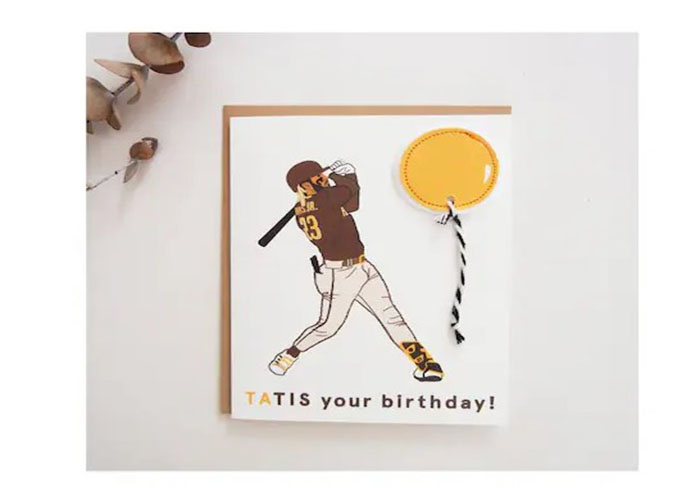
Image source: Etsy.
MLB Sticker Collection
Print all player pages and several logo pages at approximately 35% of full size – sticker scale. Color each one carefully with fine-tip markers. Apply clear contact paper over each colored page before cutting. Cut each design out along its outline with a clean 2mm border of contact paper as a protective laminate edge.
A complete player sticker set – Griffey Jr., Kershaw, Harper, Altuve, Trout, De La Cruz, Franco, Blackmon, and Cain – plus a selection of team logo stickers, creates a genuinely comprehensive baseball sticker collection that covers different eras, positions, and teams. Applied to a notebook, binder, water bottle, or laptop, the collection functions as a walking declaration of baseball literacy.
For a gift: package a complete set in a small kraft paper envelope labeled “MLB Player Series” with the year and the number of stickers inside. A set of nine player stickers is more meaningful than most baseball card packs and more personal than anything commercially available.
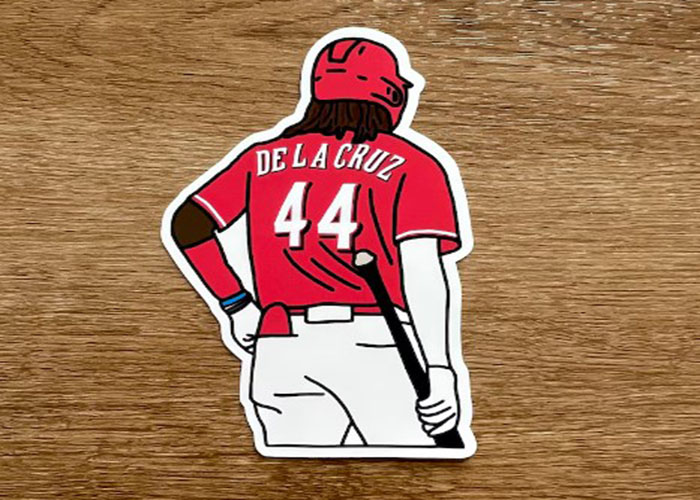
Image source: Etsy.
All-30 Logos Wall Display
This is the collection’s most ambitious project and its most rewarding completed result. Print all available team logo pages – as many as are in the collection. Color every single one with maximum accuracy to the team’s proprietary colors, using reference images for each. This takes time. Plan for multiple coloring sessions over several days if needed.
Once all logos are colored, arrange them on a large sheet of black poster board in the standard MLB division structure – two conferences (American League, National League), each divided into three divisions of five teams. Label each division clearly. Mount the finished logos in their correct positions.
The resulting display is a genuinely impressive piece of baseball knowledge made visual – a fan’s declaration of understanding the full geography and structure of the sport. For children learning about MLB, it is the most comprehensive visual reference available. For adult fans, it is wall art that will generate conversation from anyone who enters the room and knows the game.
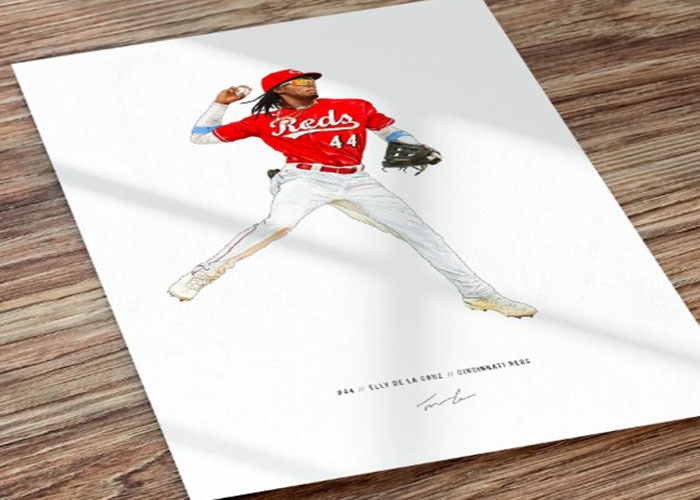
Image source: Etsy.
Team Colors Fan Poster
Select your team – or the recipient’s team if making this as a gift – and print every page in the collection that represents that team: the logo, any player associated with the team, the birthday card template if it fits. Color every single page in the team’s exact color scheme, with maximum accuracy and maximum saturation.
Cut out all figures and elements. On a large sheet of white or black poster board, arrange them in a composition that celebrates the team logo at the top center, player figures arranged below and around it, birthday card template elements used as design detail rather than a card. Add hand-lettered text: the team name, a relevant record or championship year, a player’s career statistic that means something.
The finished poster is a piece of fan art specific enough to be genuinely meaningful to the recipient and creative enough to be visually interesting to anyone in the room. Frame it. It lasts.
Image source: Amazon.
All-Star Puzzle Game
The MLB-themed Puzzles page is the starting point for this craft, but the game extends beyond the printed puzzle into something more interactive. Print the puzzle page on cardstock and color it carefully. Cut the puzzle along its printed lines – making clean, straight cuts so the pieces interlock properly.
To play: time how long it takes to reassemble the colored puzzle, starting from the scrambled pieces. Record the time. Reassemble, scramble, and try again. Track improvement over multiple sessions. For a competitive version with two players: print two identical puzzle pages, color both simultaneously (racing against each other), then cut both and race to assemble.
A completed and framed MLB puzzle – the colored pieces reassembled, mounted on cardstock, and framed – also makes a low-cost, genuinely personal gift for a baseball fan. The hand-coloring makes it unique; the puzzle format makes it interesting to look at closely.
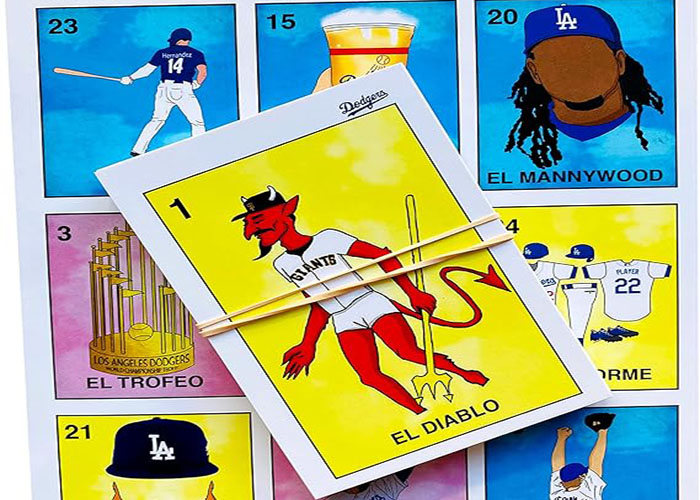
Image source: Amazon.
Frequently Asked Questions
When was Major League Baseball founded, and how is it structured? Major League Baseball traces its origins to the National League, founded in 1876 – the oldest professional sports league in North America. The American League launched in 1901. The two leagues competed separately until the first modern World Series in 1903, and the two-league structure has been continuous since. Today, MLB consists of 30 franchises divided into the American League and National League, each containing three divisions (East, Central, West) of five teams. Teams play a 162-game regular season from late March through early October, followed by a postseason that culminates in the World Series in late October.
Who is Ken Griffey Jr., and why is he considered one of baseball’s greatest players? Ken Griffey Jr. played from 1989 to 2010, primarily as a center fielder for the Seattle Mariners and Cincinnati Reds. He hit 630 career home runs, won 10 consecutive Gold Glove Awards in center field (1990–1999), was selected to 13 All-Star Games, and won the 1997 American League MVP. He was inducted into the Baseball Hall of Fame in 2016 with 99.3% of the vote – the highest percentage in Hall of Fame history at the time. He is particularly remembered for his swing – widely regarded as the most aesthetically perfect in baseball history – and for his combination of power, speed, and defensive excellence that placed him among the complete players the game has produced.
What is the note about the Cleveland Indians logo? The Cleveland franchise renamed itself the Cleveland Guardians in 2022, retiring the “Indians” name after widespread criticism of Indigenous representation concerns and pressure from advocacy organizations. The Cleveland Indians’ name was used from 1915 to 2021. The coloring page in this collection displays the older Indians logo – the branding as it existed during the period when many of the other pages in this collection were created. Cleveland now competes as the Guardians, with a new logo that maintains the franchise’s traditional red, navy, and white palette.
What makes a baseball logo most effective for coloring? The most satisfying baseball logos to color are those with clean geometric forms, limited color palettes, and strong contrast between elements. The Yankees’ interlocking NY – navy and white, two colors, clear geometric letterforms – is technically demanding but produces a striking result. The Cardinals’ two-bird logo requires the most detailed work. The Mariners’ compass rose is elegant and geometric. The Cubs C is clean and bold. For children just developing their coloring skills, logos with fewer internal details (White Sox, Rays, Royals) produce more satisfying results more quickly. For experienced colorists, the team crests and detailed mascot logos (Cardinals, Tigers, Blue Jays) offer the most interesting challenge.
What are the most successful franchises in MLB history by World Series wins? As of the 2024 season, the New York Yankees lead with 27 championships. The St. Louis Cardinals have 11. The Oakland/Philadelphia Athletics have 9. The San Francisco/New York Giants have 8. The Boston Red Sox have 9 (1903, 1904, 1912, 1915, 1916, 1918, 2004, 2007, 2013, 2018). The Los Angeles/Brooklyn Dodgers have 7. The Cincinnati Reds have 5. The Pittsburgh Pirates have 5. The Atlanta/Milwaukee/Boston Braves have 3.
Who is Elly De La Cruz, and why is he one of baseball’s most exciting young players? Elly Antonio De La Cruz is the shortstop for the Cincinnati Reds who made his MLB debut in June 2023 at age 21. He stands 6’5″ – exceptionally tall for a shortstop – and combines exceptional speed, power, and arm strength with the athleticism and instincts associated with elite defensive players. His 2023 debut season produced immediate comparisons to historical player benchmarks for combining power and speed from a shortstop position. He represents the new generation of Dominican Republic-born shortstops (joining a tradition that includes names like Miguel Tejada and Hanley Ramirez) who have redefined expectations for what the position can look like offensively.
What coloring supplies work best for MLB logo pages? For the team logo pages, broad-tip markers in the correct team colors produce the most accurate, saturated results – particularly for logos with large solid color fields. Fine-tip markers or colored pencils work better for the interior details of complex logos and for the player portrait pages where skin tone gradation matters. For the birthday card template, markers throughout give the most vibrant finished result. For the puzzle page, colored pencils give better control when working in the individual puzzle sections. Younger children do best with chunky crayons or washable markers for the simpler logo pages and with adult assistance on the more detailed player portrait pages.
Browse the full collection at ColoringPagesOnly.com. All 45 pages free, no sign-up, PDF or PNG, print at home or color online directly in your browser.
Baseball has been played professionally since 1871. The game has survived two World Wars, the Great Depression, labor strikes, steroids scandals, the pandemic, and the ongoing argument about whether the designated hitter should exist. Each spring, without fail, pitchers and catchers report to Florida and Arizona, the grass gets cut, and the game starts again exactly where it left off. There is something deeply reassuring about that continuity – the way the game keeps coming back, season after season, carrying its history with it.
Pick up your team’s colors. Find your logo. Color something that belongs to you.
Share your work on Facebook and Pinterest and tag #Coloringpagesonly. We especially want to see the All-30-Logos wall displays and the birthday cards.
Color your team. Know the game. Keep score.