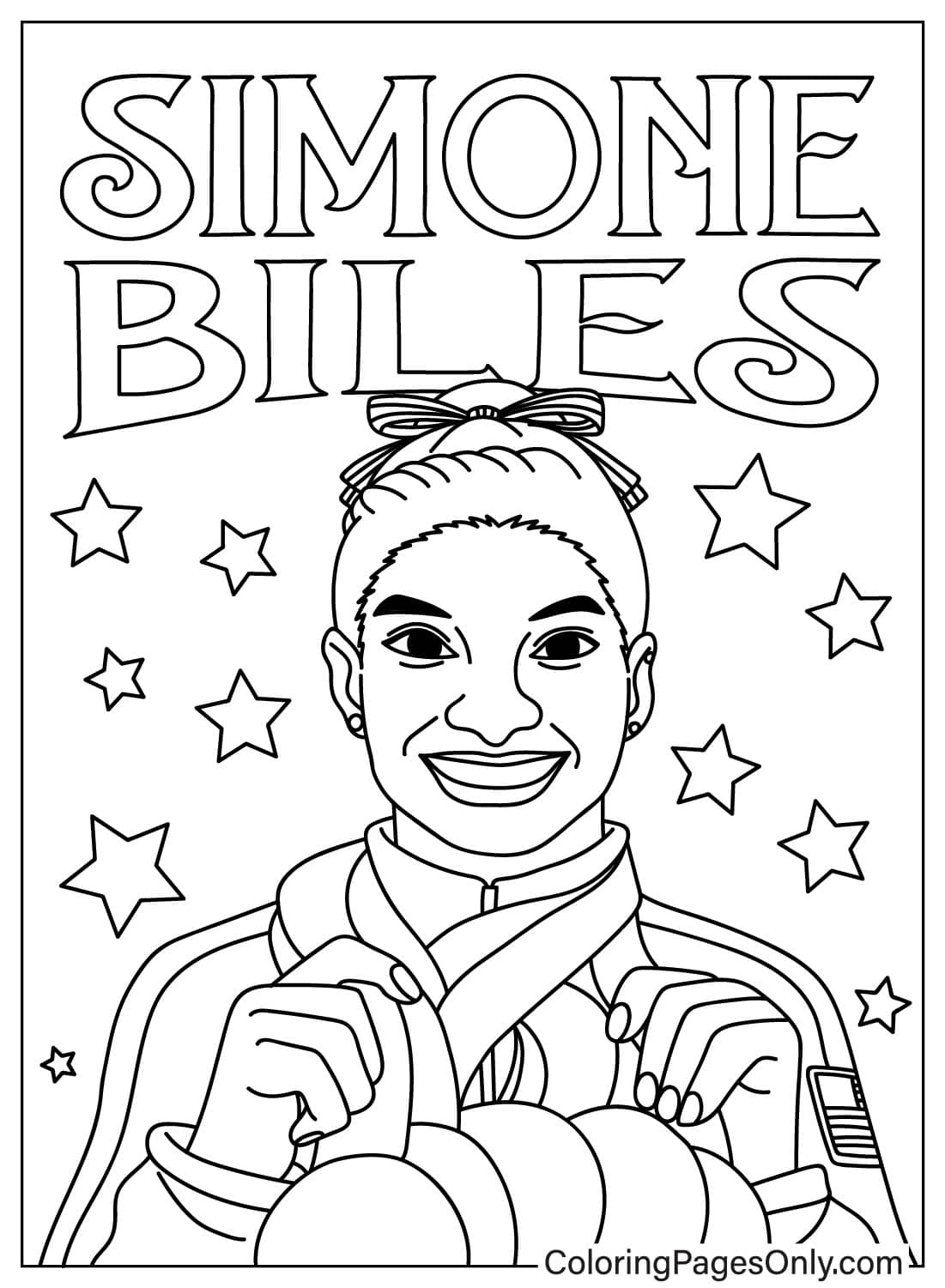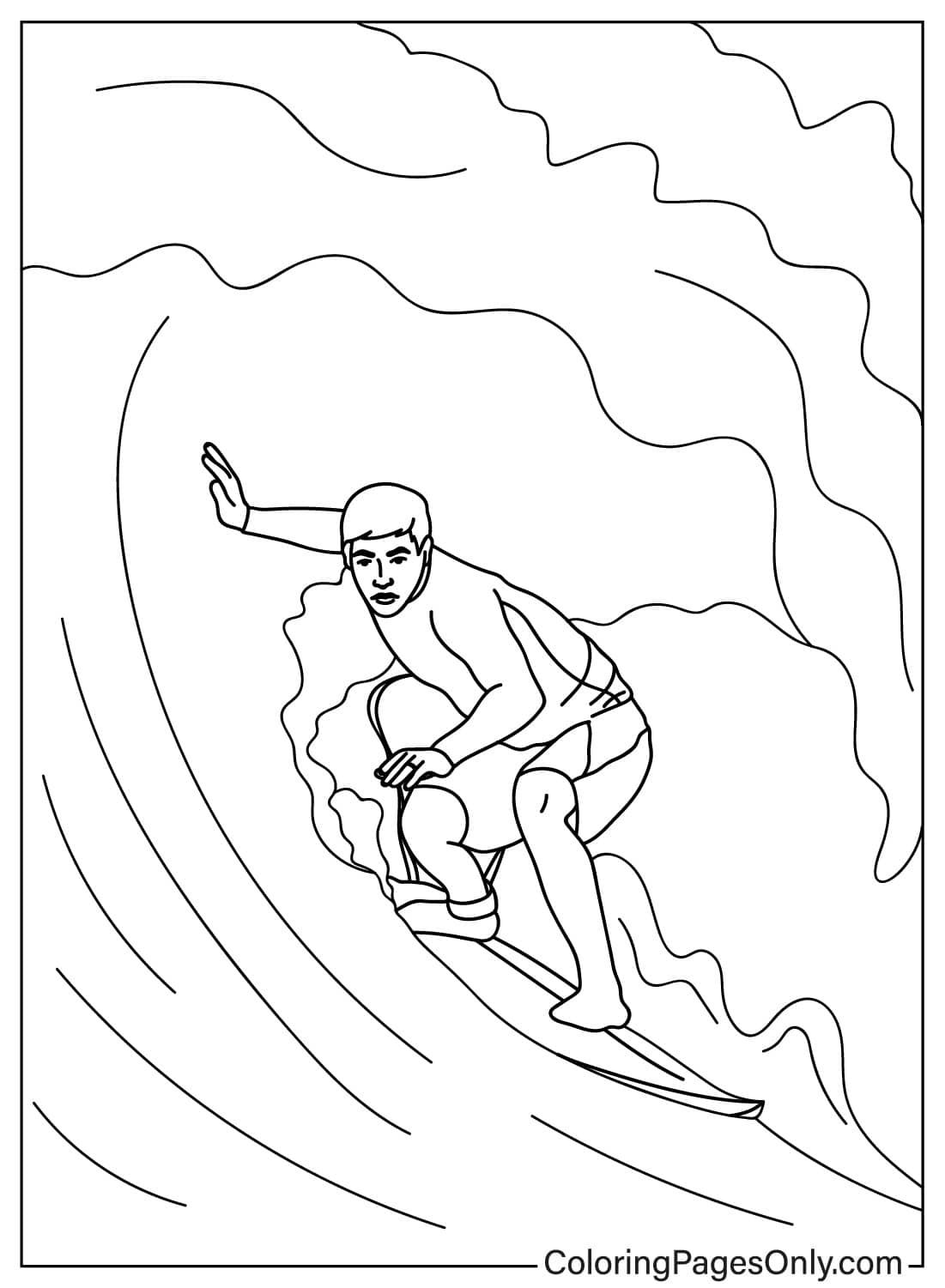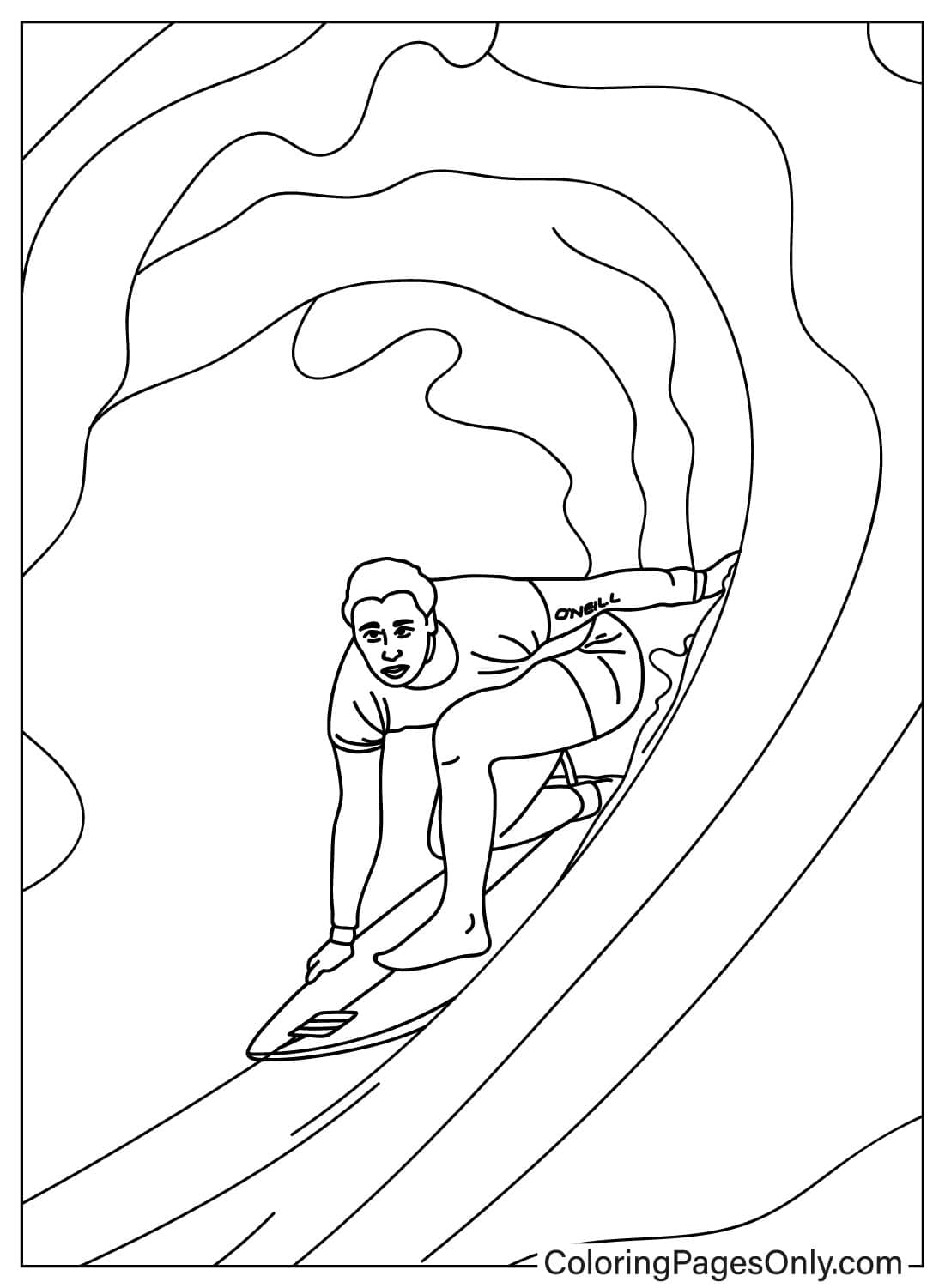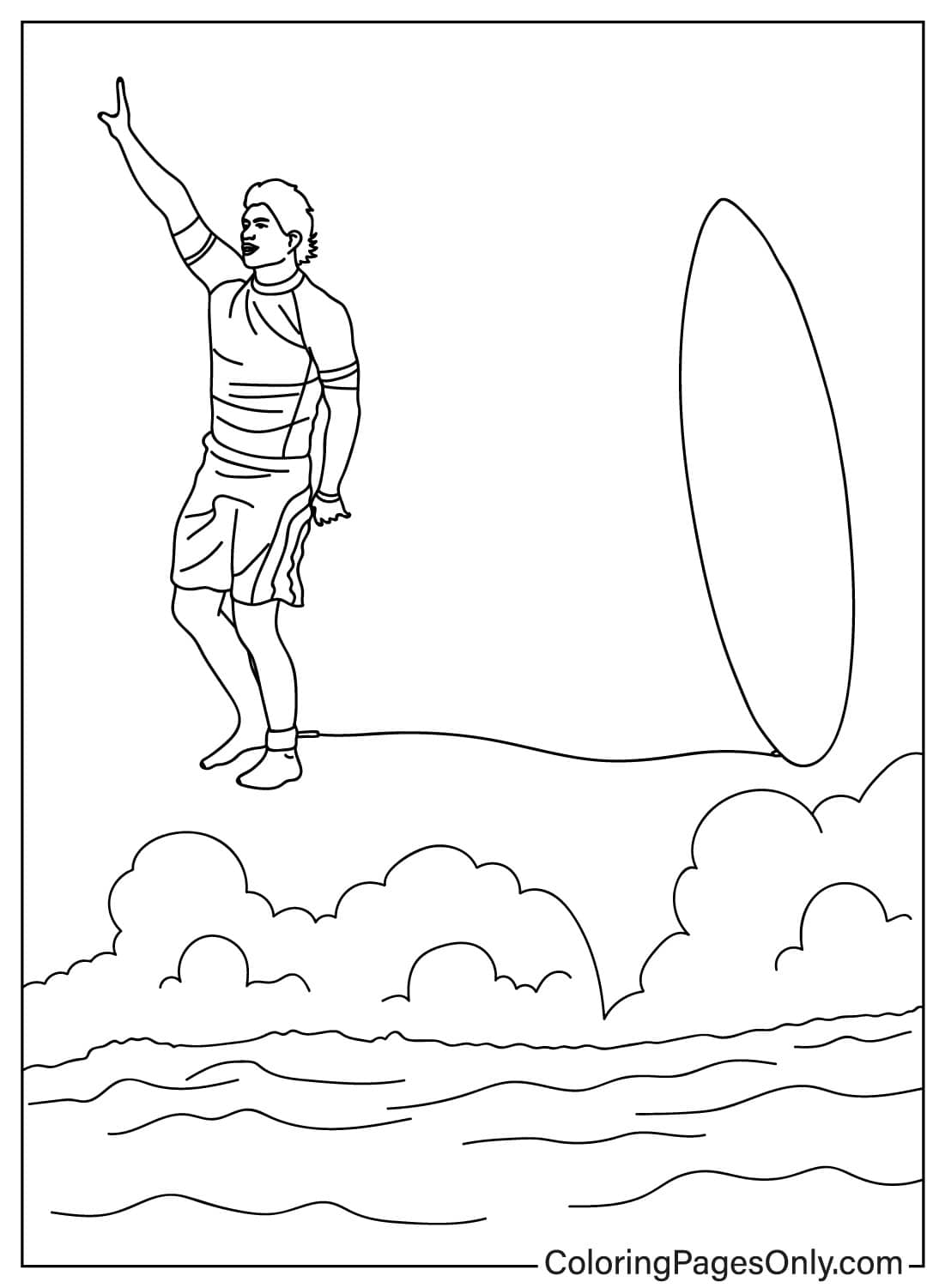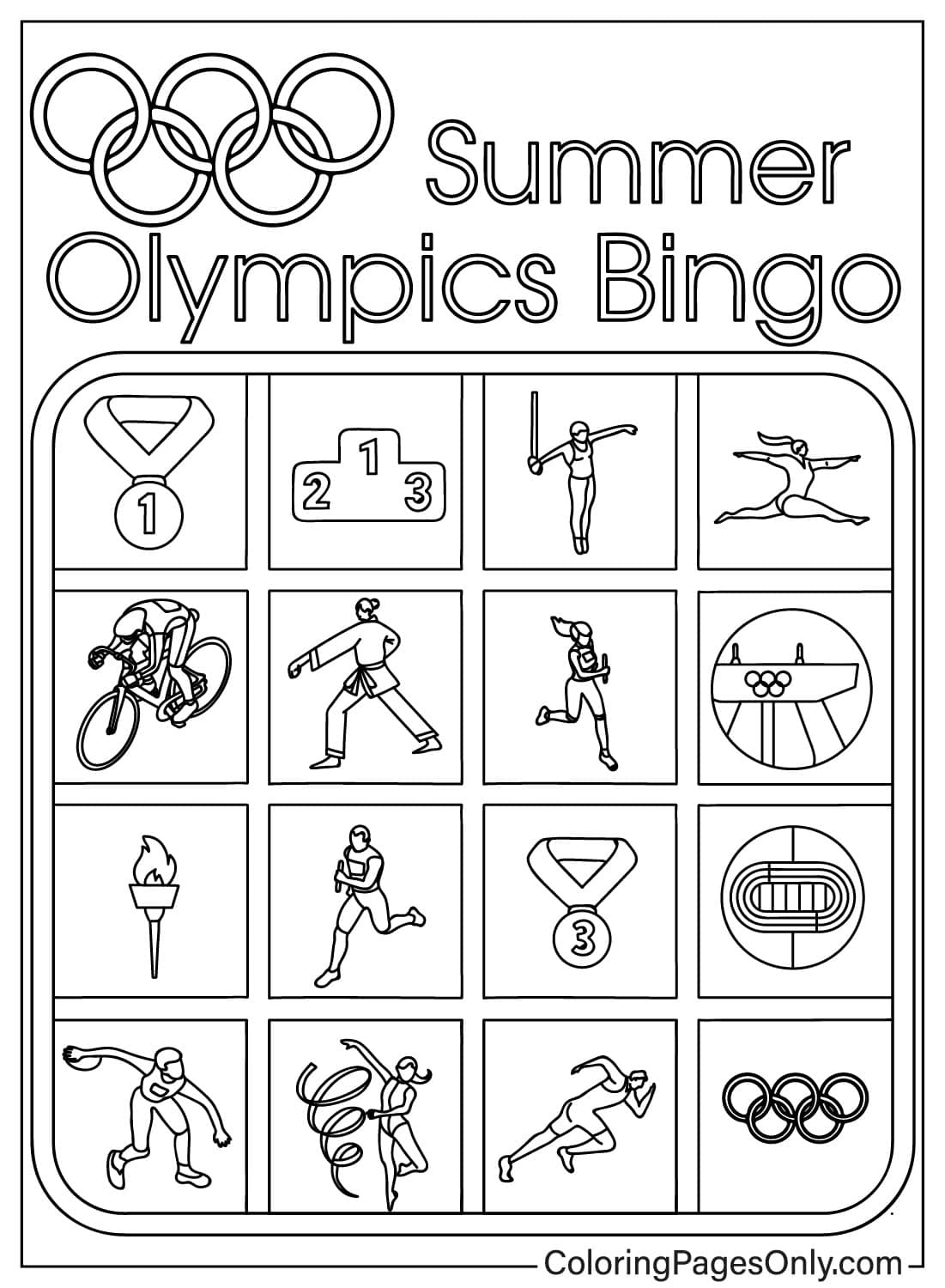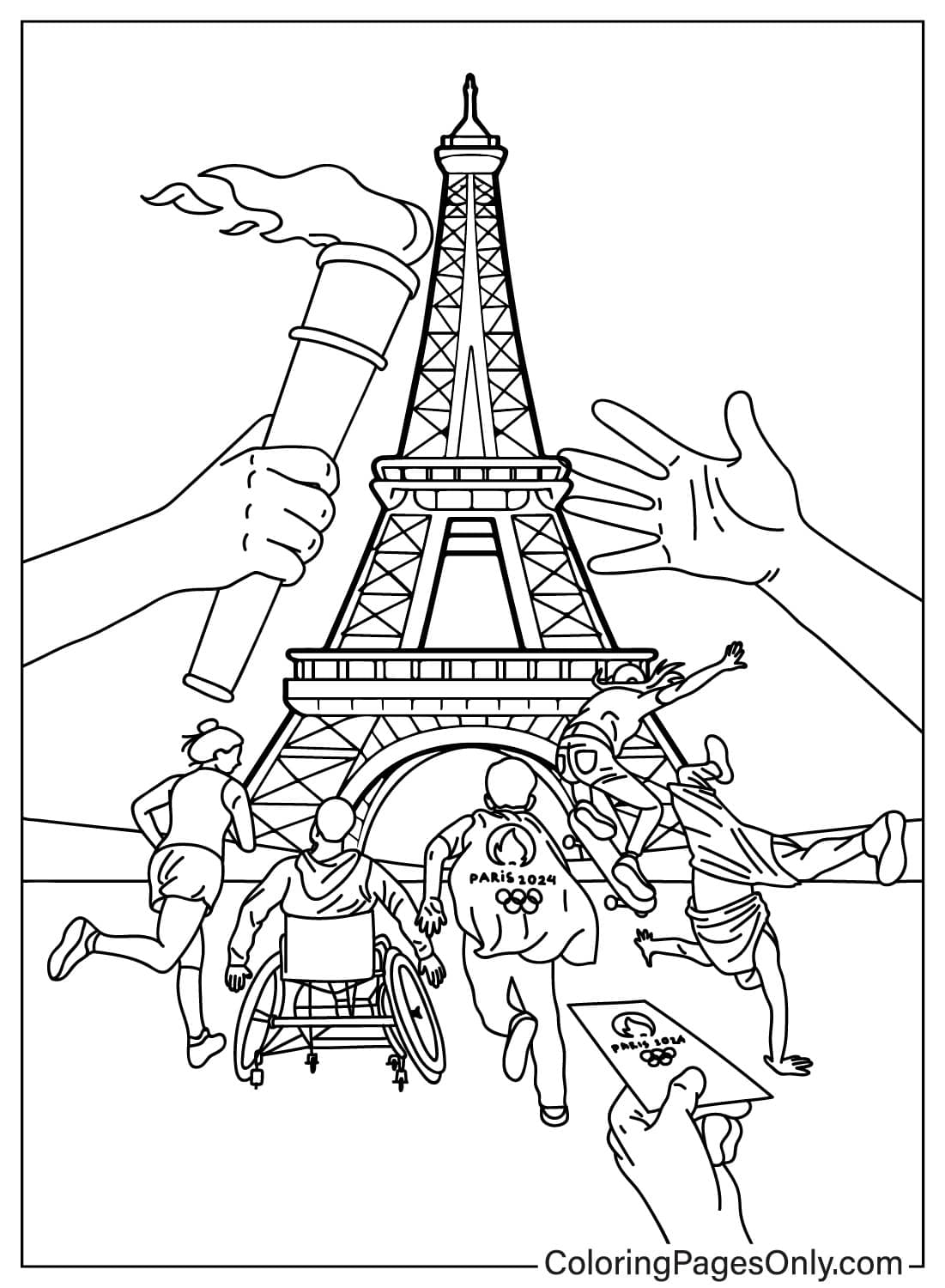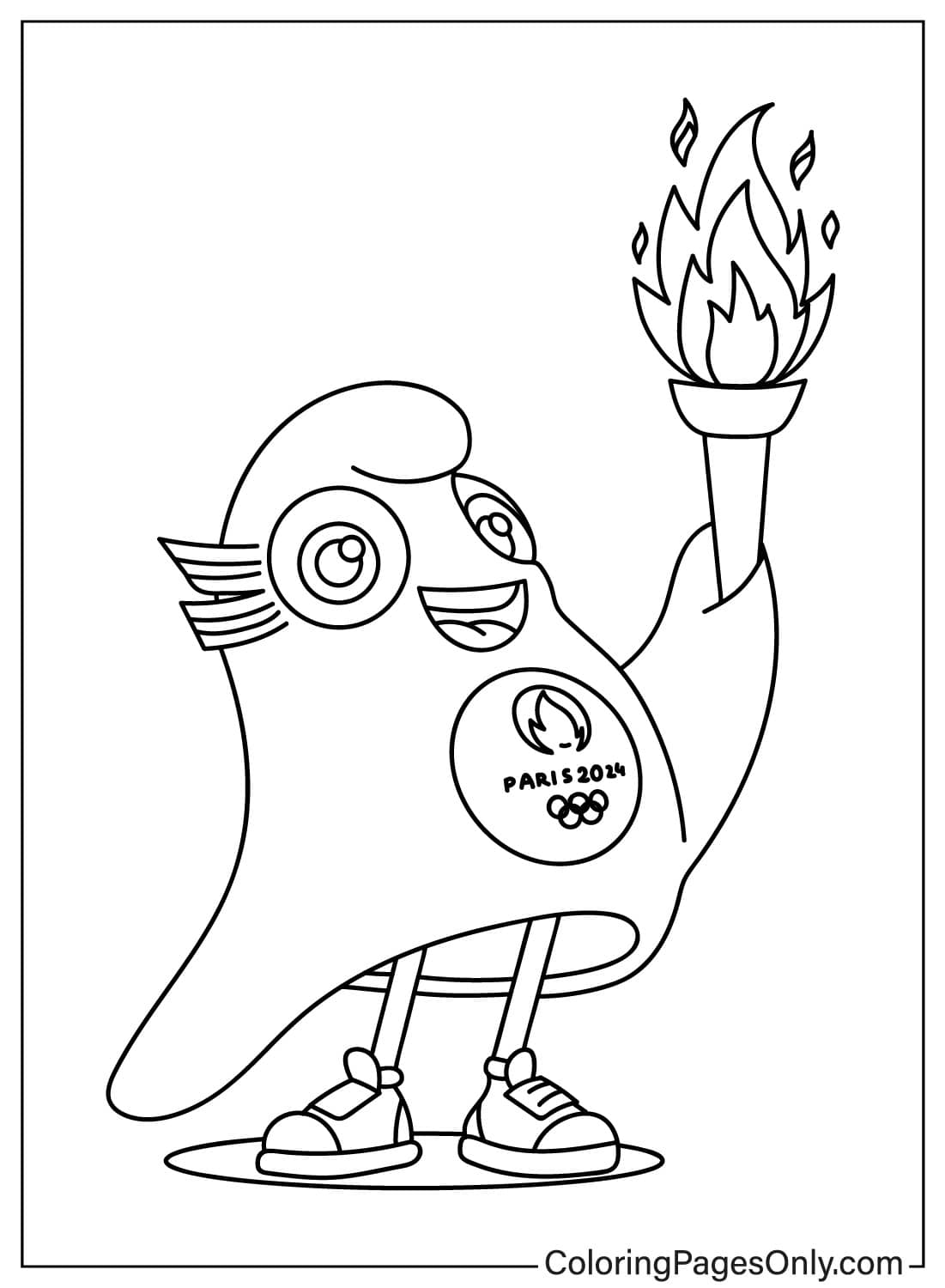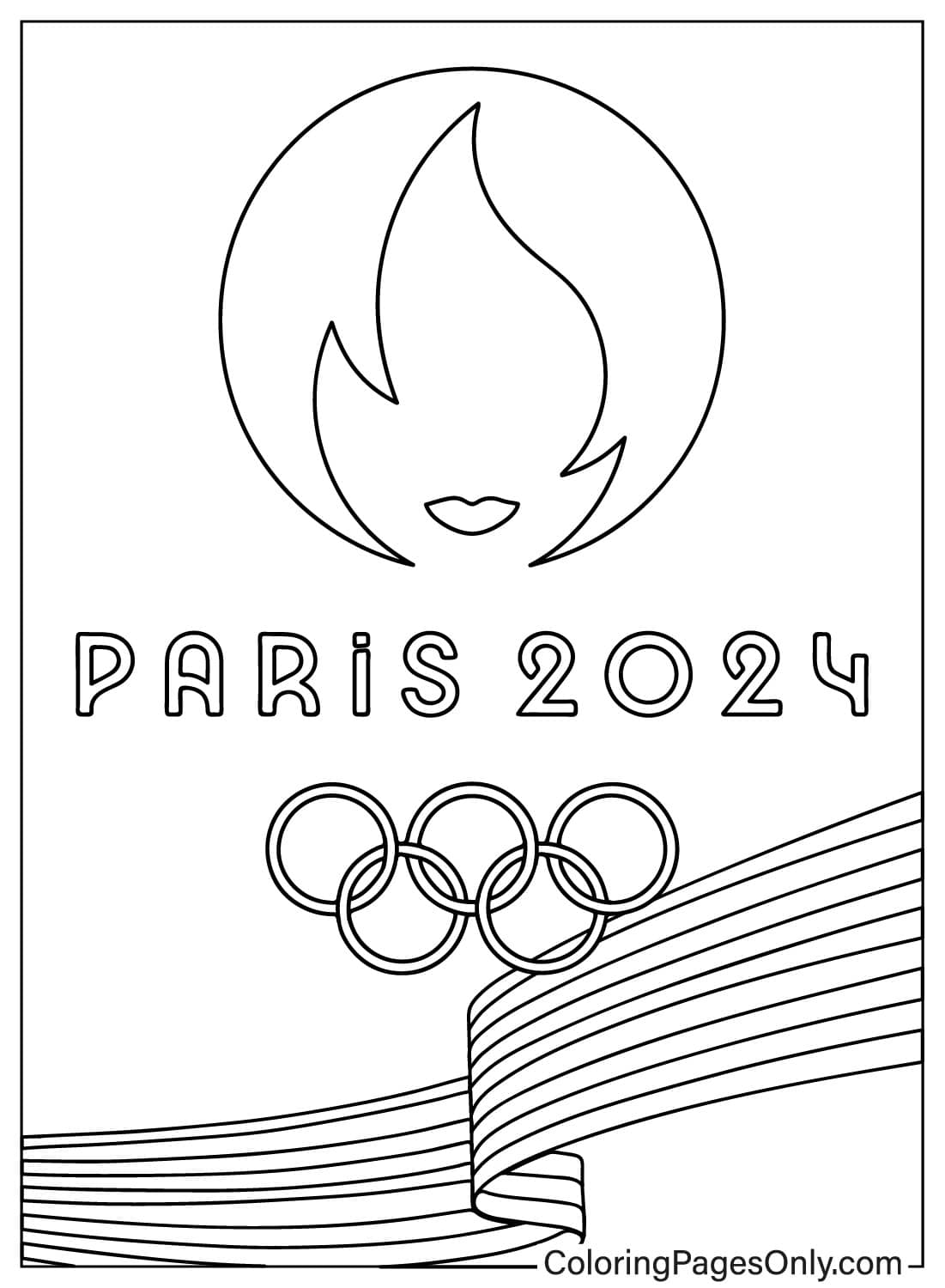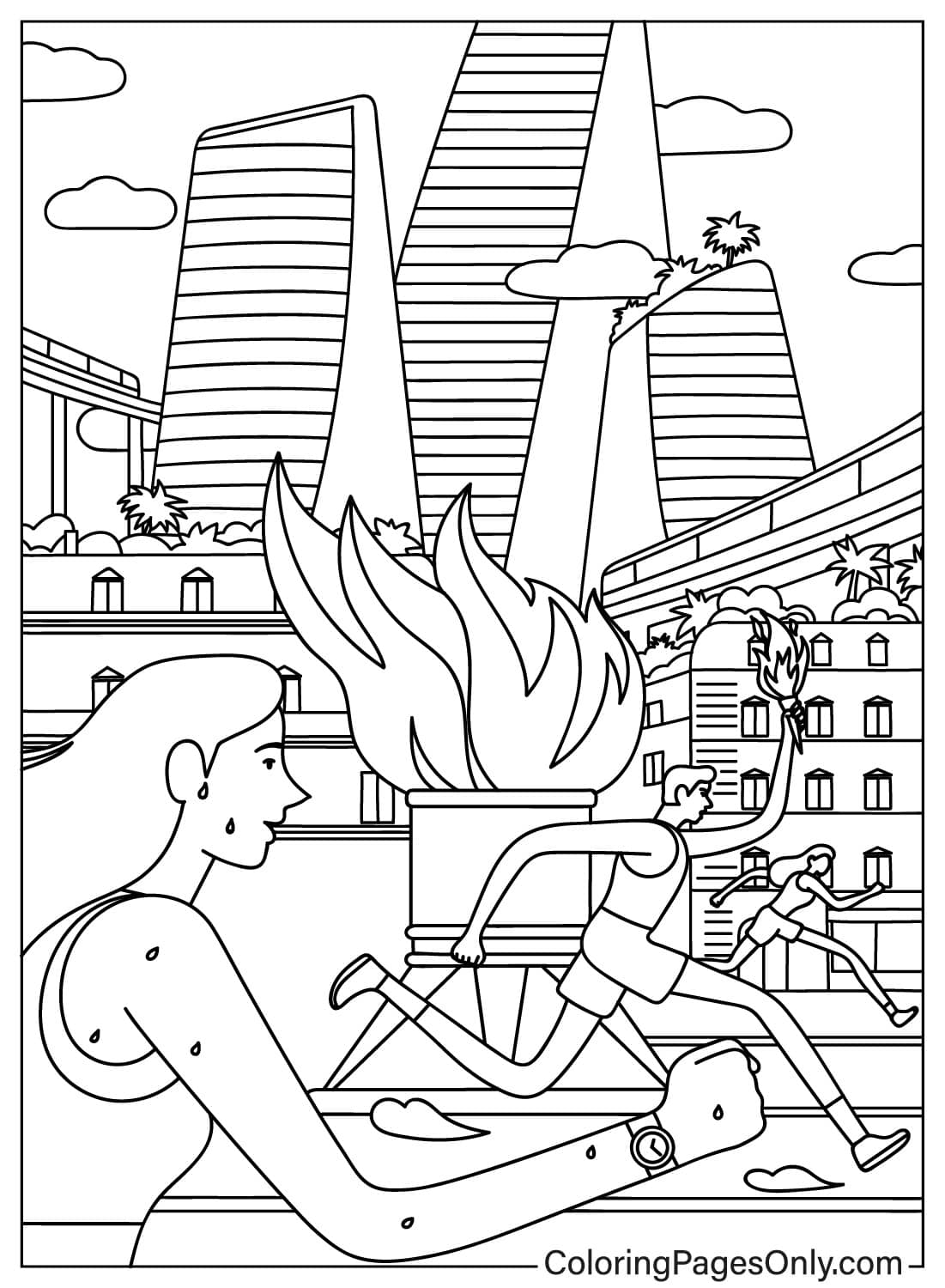
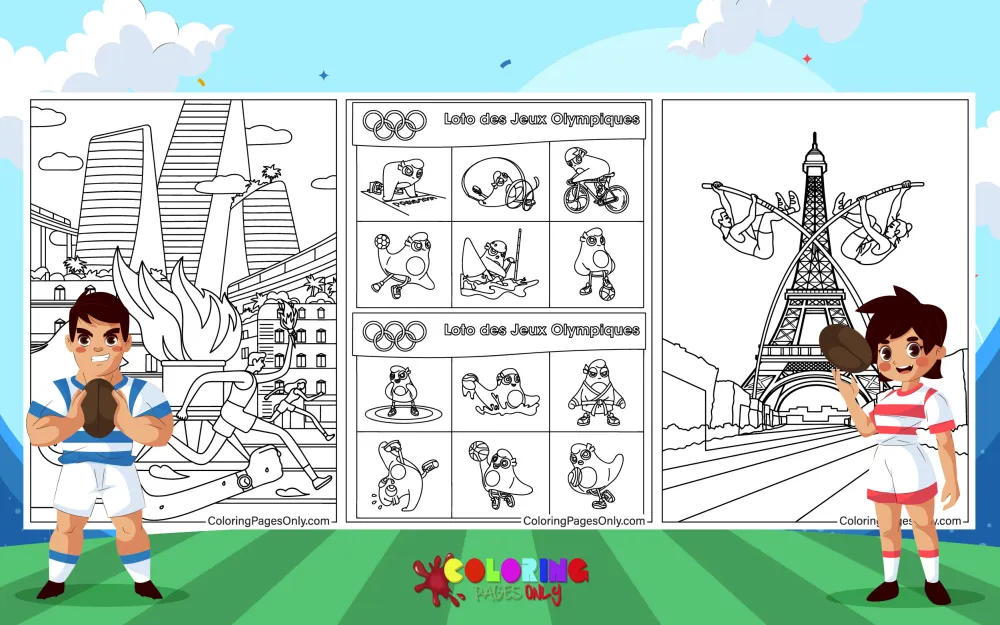
Free Olympic coloring pages: 20+ pages featuring the iconic five-ring Olympic symbol in standalone and decorative compositions, the Olympic torch with its flame in full detail, gold, silver, and bronze medal podium scenes, athletes in action across track and field, swimming, gymnastics, cycling, and other Summer Olympic sports, the Olympic cauldron lighting ceremony, Paris 2024 themed pages referencing the historic Seine River opening ceremony, sport equipment detail pages, the “Citius, Altius, Fortius” motto in decorative typography, mascot pages, and the full visual vocabulary of the world’s largest multi-sport international event across its modern history. All free, printable PDFs and online coloring for sports fans and Olympics enthusiasts of all ages.
The modern Olympic Games were revived by Pierre de Frédy, Baron de Coubertin, a French educator born January 1, 1863, in Paris. Coubertin founded the International Olympic Committee at the first Olympic Congress in Paris on June 23, 1894, a date now observed annually as Olympic Day. The first modern Summer Olympics were held in Athens, Greece, from April 6 to April 15, 1896, with 14 nations participating, 241 athletes (all male), and 43 events contested. The first gold medal of the modern era was awarded to American athlete James Connolly in the triple jump on April 6, 1896.
The ancient Olympic Games that inspired Coubertin had their first recorded competition in 776 BCE at Olympia in the Elis region of the Peloponnese peninsula in Greece, held in honor of Zeus. The ancient games continued for over a millennium until Roman Emperor Theodosius I abolished all pagan festivals in 393 CE. More than fifteen centuries after the ancient games ended, Coubertin’s revival in Athens in 1896 began the modern tradition that continued through the Paris 2024 Summer Olympics (July 26 to August 11, 2024), the 33rd Summer Olympiad, which featured 10,714 athletes from 206 National Olympic Committees competing in 329 events across 32 sports.
These 20+ free pages at ColoringPagesOnly.com cover the Olympic Games’ full visual tradition. All free, PDF or PNG, print or color online.
What’s Inside
The Olympic Rings Pages
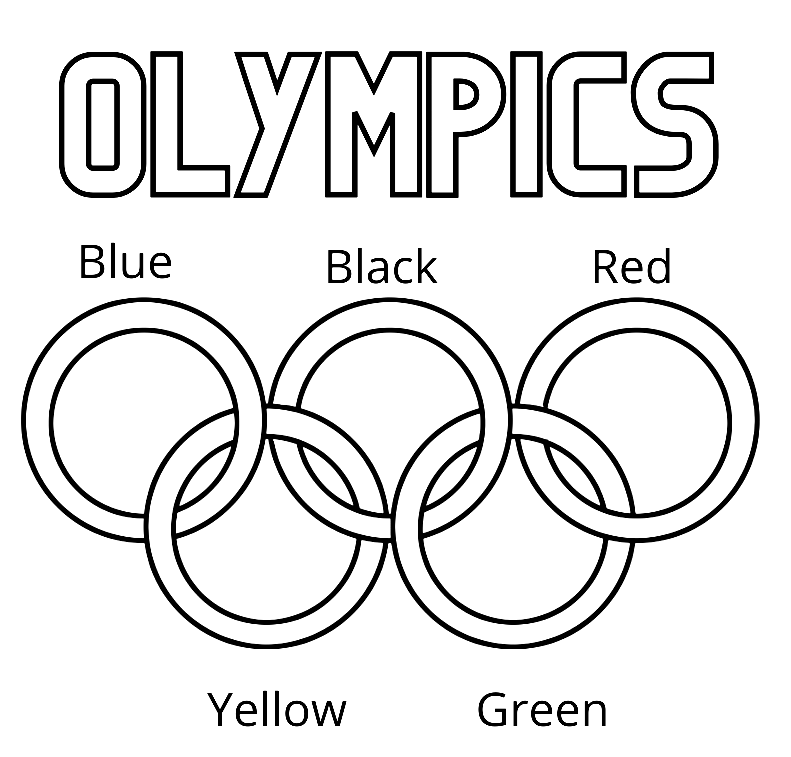
The five interlocking rings are among the world’s most universally recognized symbols, appearing on every official Olympic venue, every broadcast, and every piece of official communication associated with the Games since their introduction at the 1920 Summer Olympics in Antwerp, Belgium, where they appeared on the Olympic flag for the first time.
The rings were designed by Pierre de Coubertin, who drew the original design in 1913. He was inspired to use five rings to represent the five inhabited continents of the world. He selected the six colors of the flag (blue, yellow, black, green, red, and white background) because those six colors combined contained at least one color found in every national flag in the world at the time the design was created.
The specific color assignment to continents has been a subject of some historical uncertainty. Still, the IOC’s current official position is: blue (Europe), yellow (Asia), black (Africa), green (Oceania), and red (the Americas). The interlocking arrangement of the five rings, with each ring linked to its neighbors, represents the unity and friendship of the athletes from these five parts of the world.
The Olympic flag, bearing the five rings on a white background, was first hoisted on June 15, 1914, at the Olympic Congress in Pari,s celebrating the 20th anniversary of the IOC’s founding, and first used at the Olympic Games themselves at Antwerp in 1920.
Coloring the Olympic rings: The rings are colored in sequence from left to right: blue (far left), yellow (second from left), black (center), green (second from right), and red (far right). The overlapping areas where adjacent rings cross each other should show the ring in the upper position crossing over the ring below. Apply each ring color at full saturation. The rings against a white background create the maximum visual impact: apply the white background first or leave the paper white, then apply each ring color carefully within the ring outlines.
The Olympic Torch and Flame Pages
The Olympic torch relay, in which a flame lit at Olympia, Greece, is carried by relay runners from Greece to the host city, was introduced at the 1936 Summer Olympics in Berlin, organized by Carl Diem. The flame is lit using a parabolic mirror to focus the sun’s rays onto a torch at the site of the ancient Olympic stadium at Olympia. This method references the ancient Greek tradition and connects the modern games directly to their ancient source.
The torch design changes with each Olympics, with the host city commissioning a specific torch design that reflects the host nation’s design traditions and the particular themes of that year’s games. The Paris 2024 torch design featured a gold and white flame-like form. Previous torch designs have ranged from the spare modernism of the Tokyo 2020 torch to the intricate traditional designs of the Beijing 2008 torch.
The torch itself carries the flame through the hands of thousands of relay runners: the Paris 2024 relay involved more than 11,000 torchbearers across France before the flame arrived at the Paris 2024 Opening Ceremony on July 26, 2024.
The Opening Ceremony cauldron lighting is the flame’s final destination: a massive cauldron, visible from throughout the host city, is lit from the torch by the ceremony’s designated final torchbearer or torchbearers, and the flame burns throughout the duration of the Games.
Coloring torch pages: The torch body uses the specific metal finish of the particular design depicted: gold or silver metallic, applying the three-zone metallic technique (lighter on the top-facing and most directly lit surfaces, mid-tone on the main vertical faces, darker in recesses and shadow sides). The flame is the page’s most vivid element: apply the center-to-edge gradient with pale yellow-white at the flame’s hottest interior point, vivid orange-yellow in the main flame body, and deep orange-red at the outer flame edges.
Olympic Medal and Podium Pages
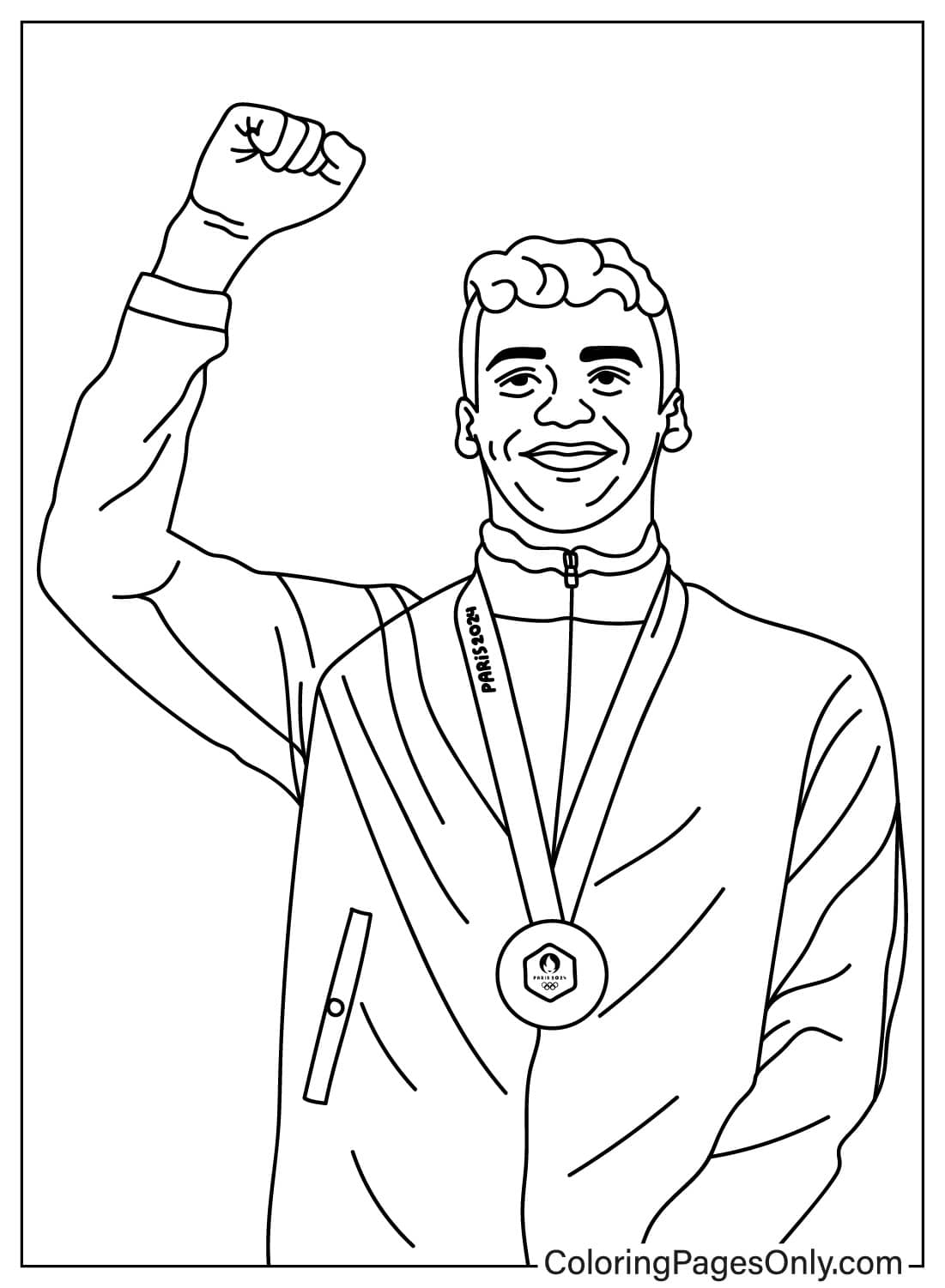
The Olympic medal is the Games’ most personally significant physical symbol: the specific object that an athlete receives at the apex of a career of training, competition, and sacrifice. Gold medals are not made of pure gold: they are made of silver and plated with at least six grams of gold, a standard that has been in place since the 1912 Stockholm Olympics, after which pure gold medals were discontinued. Silver medals are sterling silver. Bronze medals are made of a copper alloy.
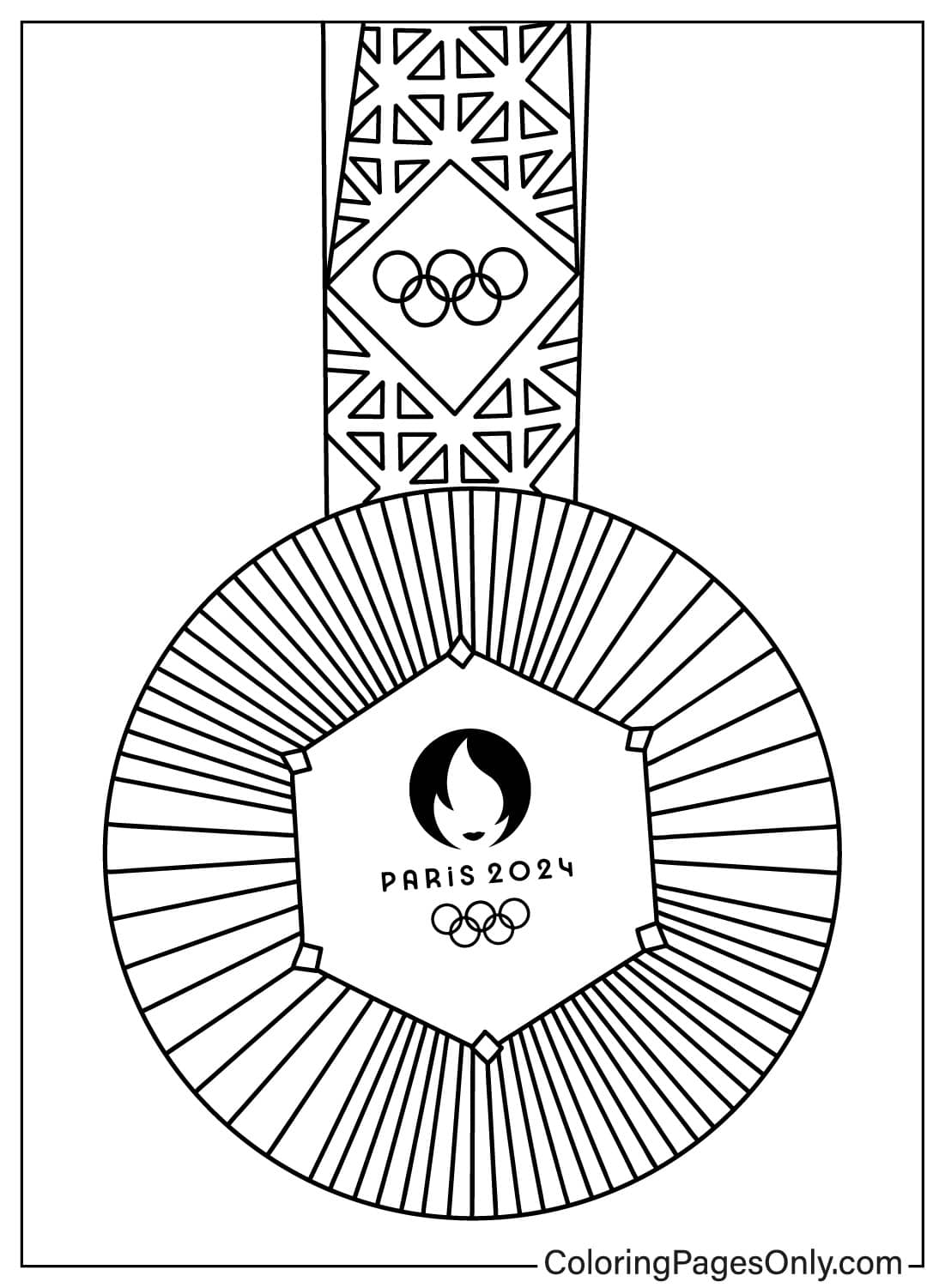
The medal design changes with each Olympics while maintaining consistent elements: one face traditionally shows Nike (the Greek goddess of victory) or the Olympic rings and games designation, and the reverse is customized by the host city. The Paris 2024 medals were designed by luxury jewelry house Chaumet and incorporated a piece of original iron from the Eiffel Tower into each medal’s center.
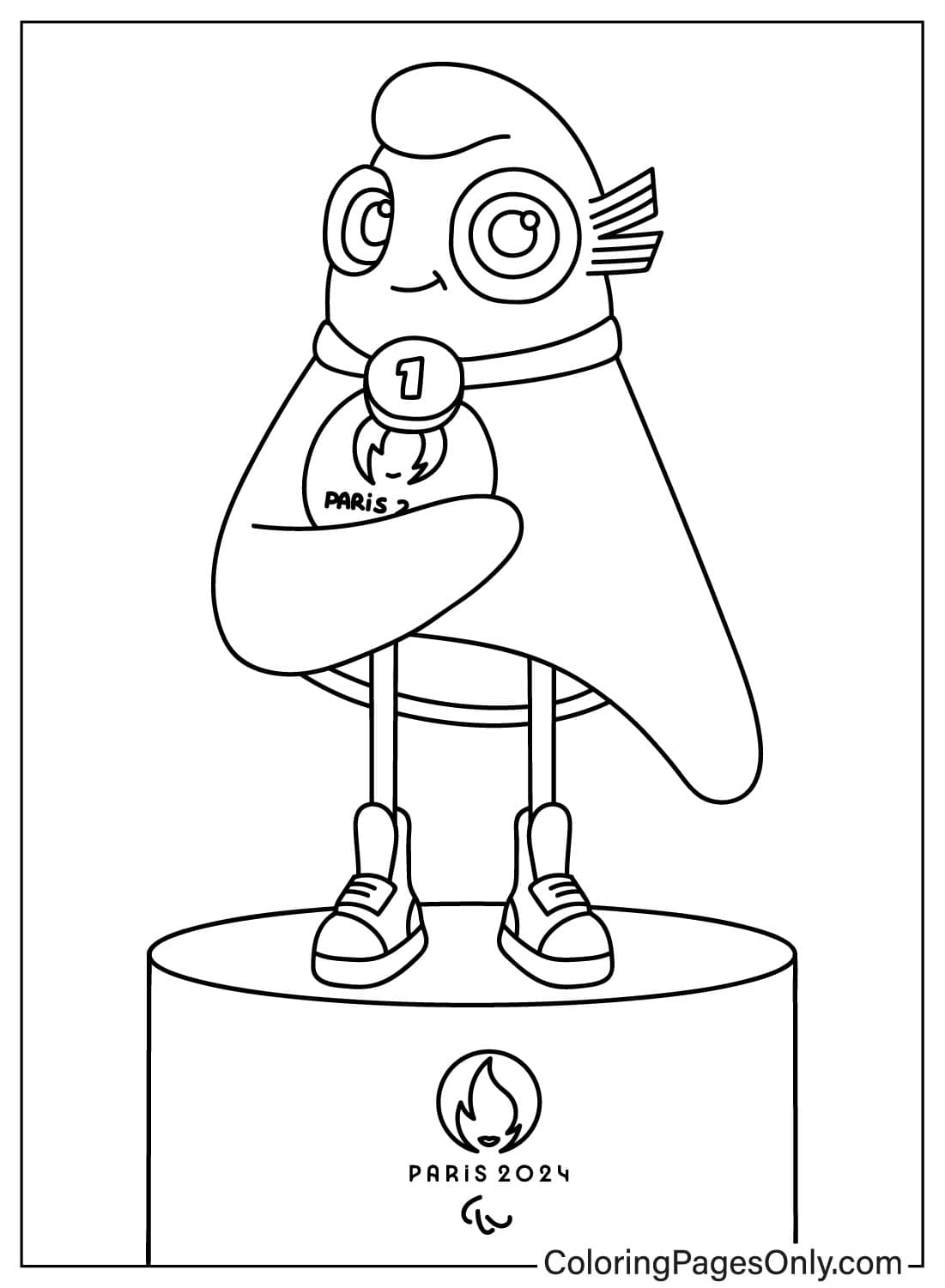
Podium pages show the specific ceremony that delivers medals to athletes: the top three finishers mount the podium at designated heights (gold on the center and highest platform, silver on the right side slightly lower, bronze on the left side at the lowest height), national flags are raised, and the gold medalist’s national anthem plays. This ceremony is one of the most emotionally significant rituals in international sport.
Coloring medal pages: The gold medal uses vivid warm gold at full saturation, applied carefully across the medal disc. The silver medal uses metallic silver-grey with the three-zone technique to suggest its reflective quality. The bronze medal uses warm copper-bronze: a richer, more orange-brown tone than either gold or silver. The ribbon or lanyard from which the medal hangs uses the specific colors of the host city’s design.
Athletic Sports Action Pages
Athletics (track and field) is the Olympic Games’ largest and most historically foundational sport category. The ancient Olympics’ first and longest-standing event was the stadion (stade), a running race approximately 192 meters long. Modern athletics at the Olympics includes events spanning from the 100-meter sprint through the 50km race walk, plus all jumping, throwing, combined, and road racing events.
Running pages show athletes in full sprint posture: the specific biomechanics of maximum-speed running (forward lean, high knee lift, full arm drive, the brief aerial phase when neither foot touches the ground at peak speed). The sprint starts from blocks, the finish line, and the mid-race extended stride are the collection’s most dynamically posed athletics pages.
Swimming pages show the specific body position and stroke technique of competitive swimming: the flat-bodied, streamlined position of the freestyle swimmer, the butterfly stroke’s dolphin kick and simultaneous arm pull, the backstroke’s rotated body position, and the breaststroke’s frog-kick leg pattern.
Gymnastics pages show the apparatus events (floor, vault, uneven bars, balance beam for women; floor, vault, parallel bars, horizontal bar, pommel horse, and rings for men) and the rhythmic gymnastics events, capturing the specific body position and movement quality of Olympic-level artistic gymnastics.
Coloring athletics pages: Running track surfaces use warm tan or vivid orange-red (the specific color of modern synthetic track surfaces). The athlete’s uniform uses their national team’s colors. Swimming pool water uses vivid medium blue with a slight texture suggesting disturbed water. Gymnastics apparatus (bars, beam) uses the specific equipment colors: wood-toned or white-covered apparatus.
The Paris 2024 Olympic Pages
The Paris 2024 Summer Olympics were historic in several specifically documented ways. The opening ceremony, held on July 26, 2024, was the first in Olympic history to take place on water rather than in a stadium: athletes traveled on boats along the Seine River past the city’s landmarks, with approximately 320,000 spectators watching from the riverbanks and another estimated 1.5 billion watching on television worldwide.
Paris hosted the Olympics for the third time: previously in 1900 (the second modern Olympics) and 1924 (exactly 100 years before 2024). The 2024 games, therefore, marked the centennial of Paris’s most recent previous hosting.
The sport of breaking (competitive breakdancing) was included in the Olympic program for the first time at Paris 2024, making its only Olympic appearance before being excluded from the program for the 2028 Los Angeles Games.
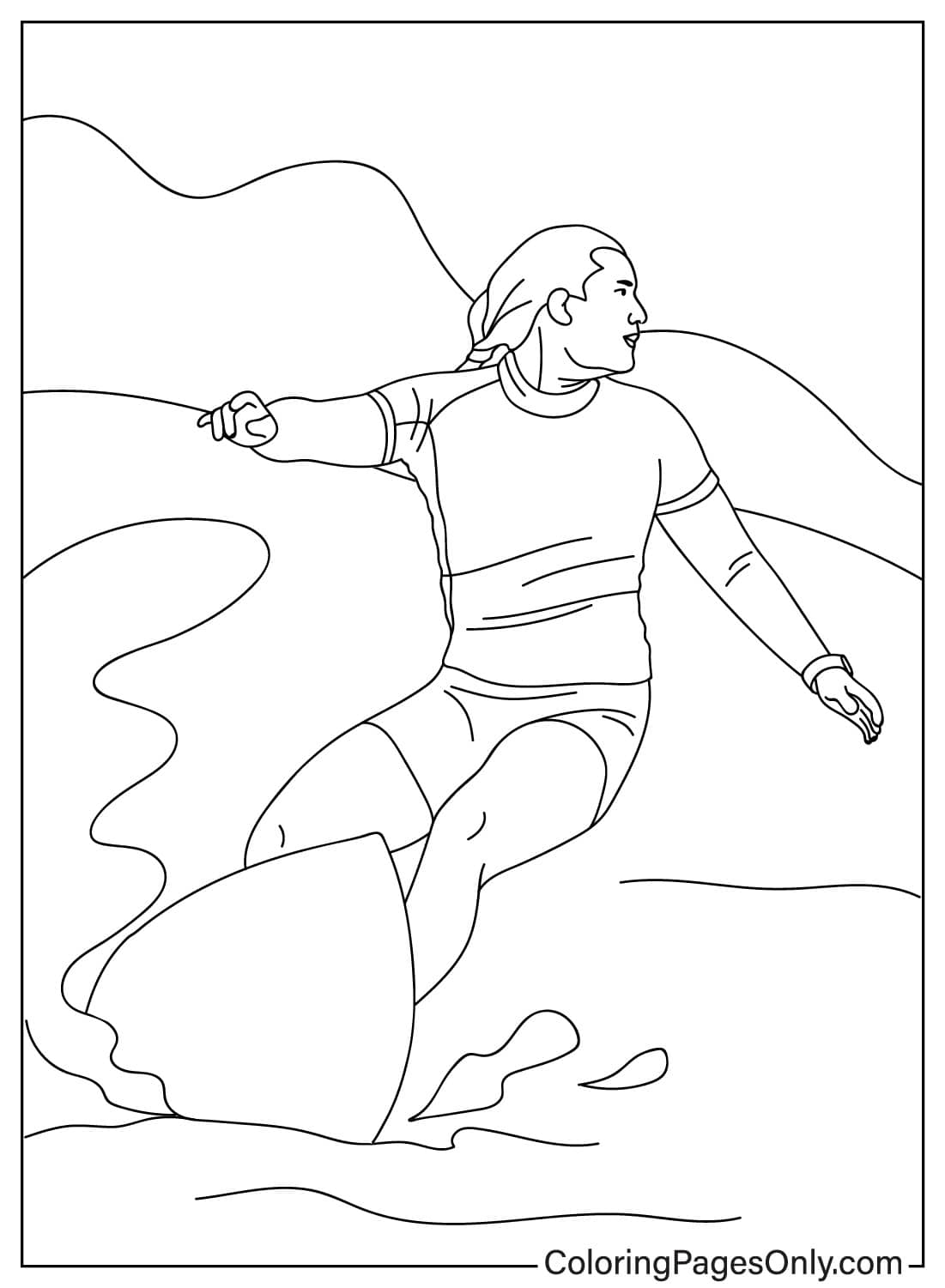
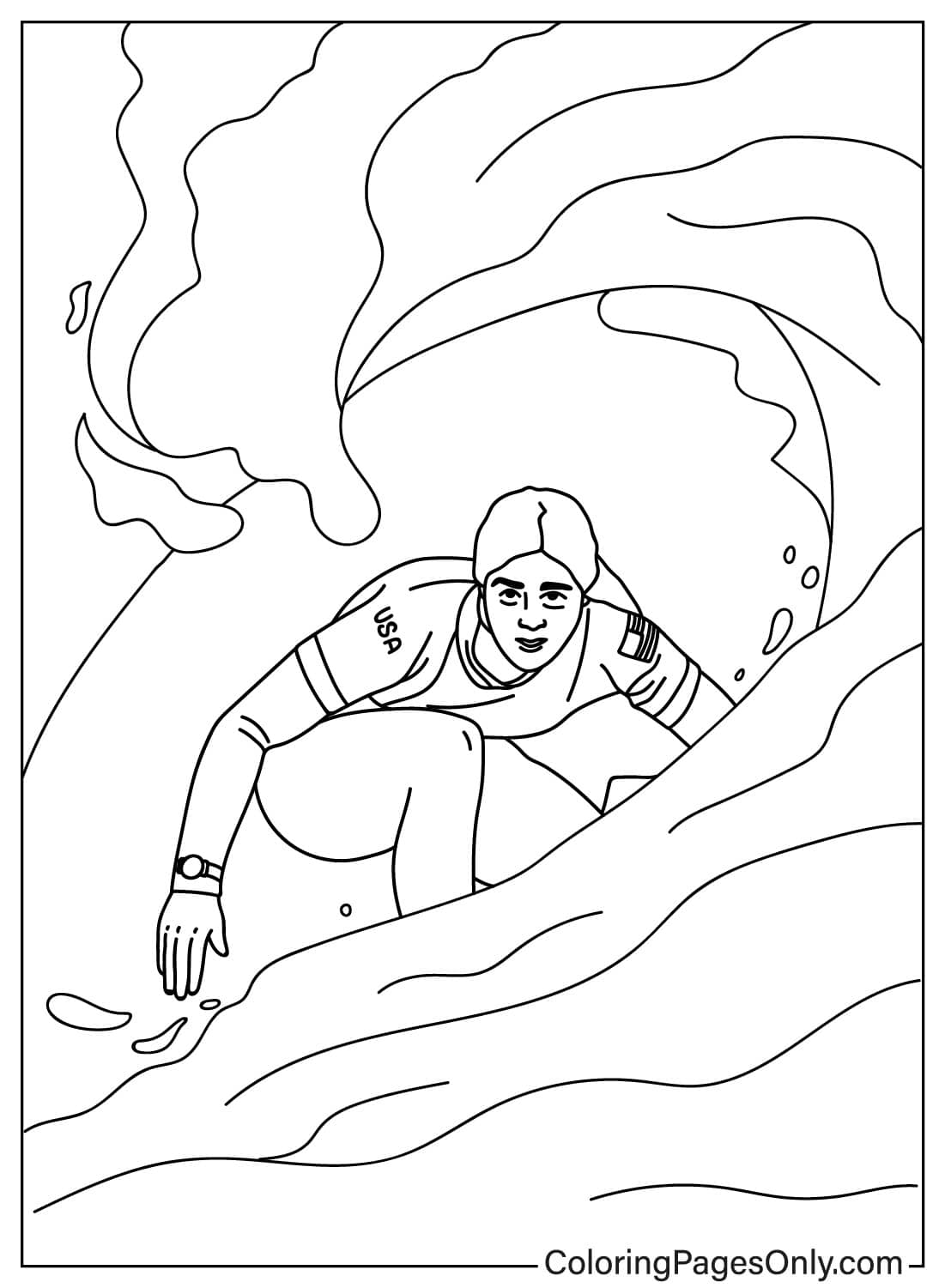
Notable venues outside Paris included the surfing competition in Teahupo’o, Tahiti (a French Overseas Collectivity approximately 15,000 kilometers from Paris), which used the famously heavy and powerful wave conditions of that location.
Coloring Paris 2024 themed pages: The Seine River opening ceremony setting uses deep blue-grey for the river water, with the specific warm stone-white and gold tones of Parisian architecture along the banks. The Eiffel Tower, visible in many Paris 2024 visual compositions, uses warm grey-brown metalwork with slightly darker grey in the structural shadow areas.
What These Pages Do
Pierre de Coubertin’s founding vision for the modern Olympics was specifically articulated in the Olympic Creed, a statement that has appeared in the Official Report of every Summer Olympics since 1908: “The most important thing in the Olympic Games is not to win but to take part, just as the most important thing in life is not the triumph but the struggle. The essential thing is not to have conquered but to have fought well.” This creed, combined with the motto “Citius, Altius, Fortius” (Faster, Higher, Stronger, with “Communiter” (Together) added by the IOC in 2021), frames the Games as a moral and social project as much as a sporting competition.
The specific history of the Olympics in the 20th century includes several of its most significant moments: Jesse Owens winning four gold medals at the 1936 Berlin Olympics under the Nazi regime; the 1972 Munich Olympics massacre in which Palestinian militants killed 11 Israeli athletes and coaches; the United States-led boycott of the 1980 Moscow Olympics and the Soviet-led boycott of the 1984 Los Angeles Olympics; and the symbolic return of the Games to Athens in 2004, 108 years after the first modern Olympics.
The American Academy of Pediatrics identifies fine motor skill development as a key childhood milestone throughout early childhood. The Olympic ring interlocking detail, the torch flame gradient work, the medal disc rendering, the athlete action pose line work, and the specific sport equipment detail across track, pool, and gymnastics apparatus pages all provide sustained fine motor challenge across the collection’s age range. The 2005 Art Therapy Journal study on structured coloring and anxiety reduction applies throughout.
The Olympic Games have been held in 23 different countries and 24 different cities in their modern history (1896-2024), making them one of the few cultural events whose visual and contextual reference points are genuinely global rather than regionally specific.
How to Color These Pages Well
The Olympic rings require the specific colors in the specific sequence. The single most important technical decision on any Olympic rings page is applying the five colors in the correct sequence from left to right: blue, yellow, black, green, red. This sequence is not arbitrary and is established in the Olympic Charter. Any deviation from the sequence produces a design that is visually similar to the Olympic rings but technically incorrect. Apply each ring at full saturation so all five read as equally vivid and equally weighted against each other.
The overlapping areas where adjacent rings interlock require careful attention. In the standard Olympic rings design, the rings alternate between appearing above and below each other at the overlap points: the first ring (blue) goes over the second (yellow), the second (yellow) goes under the third (black), the third (black) goes over the fourth (green), and the fourth (green) goes under the fifth (red). Apply the overlap areas in the color of the ring that passes in front at each intersection, keeping the behind-ring’s color visible only in its non-overlapping portions.
The Olympic flame gradient uses the full warm color spectrum from white to deep orange-red. The flame on any Olympic torch or cauldron page should show the complete temperature gradient of actual combustion: the hottest zone is the palest (near-white or pale yellow at the base of the visible flame), transitioning through vivid yellow, vivid orange, and deep orange-red at the cooler outer edges. Apply this gradient working from the center outward, beginning with the lightest color at the flame’s interior and graduating to the deeper tones at its edges.
Medal pages require three clearly distinguishable metallic tones. Gold, silver, and bronze must read as clearly different metals. Gold uses the warmest, richest available gold (amber-warm tone). Silver uses cool metallic grey, lighter and cooler than gold. Bronze uses warm copper-brown, darker and warmer than both. If any two of the three metallic tones appear similar in value or temperature, the medal distinction fails. The three medals should create an immediately readable warm (gold), cool (silver), warm-dark (bronze) sequence.
Sport action pages reward understanding the specific biomechanics of each event. A sprint pose should show the athlete in the specific forward-lean, high-knee drive position of maximum speed. A swimmer’s page should show the streamlined body position that competitive swimming requires. A gymnast on bars should show the specific grip and body position of the skill being performed. Understanding what each sport actually looks like in peak performance makes the coloring activity more engaging and the result more visually accurate.
5 Creative Craft Ideas
The Ancient to Modern Timeline
The ancient Olympic Games were first recorded in 776 BCE. They ended in 393 CE. The modern Olympics were revived in Athens in 1896. Between the ancient games’ end and the modern revival: 1,503 years.
Print the Olympic rings page and the Olympic torch page. Color the rings in the canonical five-color sequence. Color the torch in gold with a vivid flame gradient.
Mount both with a timeline: “776 BCE: First recorded ancient Olympic Games, Olympia, Greece. Dedicated to Zeus. 393 CE: Ancient games abolished by Roman Emperor Theodosius I. Duration: approximately 1,169 years. Gap: 1,503 years. June 23, 1894: The International Olympic Committee was founded in Paris by Pierre de Coubertin. April 6, 1896: First modern Olympic Games, Athens, Greece. 14 nations. 241 athletes. 43 events. July 26-August 11, 2024: Paris 2024 Olympics. 206 nations. 10,714 athletes. 329 events. The continuity: interrupted for 1,503 years. Then resumed.”
The Five Rings Geography Study
Each Olympic ring represents a continent. Print five separate ring pages (or five star or circle pages if ring pages are not individually available). Color each in its continental color: blue ring (Europe), yellow ring (Asia), black ring (Africa), green ring (Oceania), red ring (the Americas).
Alongside each colored ring, outline the continent it represents.
On the central backing card: “The Olympic rings. Designed by Pierre de Coubertin, 1913. First displayed: June 15, 1914, Paris, Olympic Congress. First used at the Olympic Games: 1920, Antwerp, Belgium. Five rings: five inhabited continents. Six colors (including white background): chosen because at least one appeared in every national flag at the time. Blue: Europe. Yellow: Asia. Black: Africa. Green: Oceania. Red: the Americas. The interlocking: unity. The different colors: difference. Both at the same time.”
The Gold Medal Standard
Olympic gold medals have not been made of solid gold since the 1912 Stockholm Olympics. Since then, they have been made of silver and plated with at least six grams of 24-carat gold. The current weight of a gold medal varies by games; the Paris 2024 gold medals weighed approximately 529 grams. At current gold prices, the gold component alone would be worth approximately $400-500; the full medal’s value as an artifact is incomparably greater.
Print a medal page. Color the gold medal in vivid warm gold. Add a small label on the backing card with the specifications.
On the backing card: “Olympic Gold Medal. Material: silver, plated with a minimum of 6 grams of 24-carat gold. This standard was established after the 1912 Stockholm Olympics. Pure gold medals: last awarded in 1912. Paris 2024 gold medal weight: approximately 529 grams. Paris 2024 special feature: incorporated a piece of original iron from the Eiffel Tower into each medal’s center. The medal is not primarily valuable as metal. It is valuable as the specific object that an athlete received at the top of the podium, on the day they competed at the Olympic Games. No equivalent exists. Six grams of gold is approximately $400. The medal is worth more than that.”
The Opening Ceremony Innovation Page
The Paris 2024 Opening Ceremony on July 26, 2024, was the first Olympic Opening Ceremony in history to take place on water rather than in a stadium. Athletes traveled on boats along the Seine River from the Pont d’Iéna near the Eiffel Tower past the Notre-Dame Cathedral and other Parisian landmarks, with approximately 320,000 spectators on the riverbanks.
Print the most Paris-evocative page in the collection: the Olympic rings with the Eiffel Tower, or any Paris 2024 themed page. Color with Parisian tones: warm grey stone, Eiffel Tower metalwork, blue-grey Seine water.
On the backing card: “Paris 2024 Opening Ceremony. July 26, 2024. Location: the Seine River, Paris. The first opening ceremony in Olympic history was held on water rather than in a stadium. Length of the Seine route: approximately 6 kilometers. Athletes: traveled on boats. Spectators on riverbanks: approximately 320,000. Global television audience: approximately 1.5 billion. Previous Paris Olympics: 1900 (2nd modern Olympics) and 1924 (exactly 100 years before 2024). The 2024 games: the centennial of Paris’s most recent previous hosting. The Seine: also a river.”
The Olympic Creed and Motto Page
The Olympic motto “Citius, Altius, Fortius” (Faster, Higher, Stronger) was proposed by Father Henri Didon, a Dominican priest and friend of Pierre de Coubertin. The Olympic Creed states: “The most important thing in the Olympic Games is not to win but to take part.” In 2021, the IOC added “Communiter” (Together) to the motto, making it “Citius, Altius, Fortius – Communiter.”
Print the most decorative typographic page in the collection or any page with “Olympics” or sport imagery that can serve as a background for the text. Color it in Olympic colors.
On the backing card, write both the motto and the creed in full: “Citius, Altius, Fortius, Communiter. Faster, Higher, Stronger, Together. Proposed by Father Henri Didon. ‘Together’ added by the International Olympic Committee, July 20, 2021. The Olympic Creed: ‘The most important thing in the Olympic Games is not to win but to take part, just as the most important thing in life is not the triumph but the struggle. The essential thing is not to have conquered but to have fought well.’ These two statements contain a tension. The motto asks for the maximum. The creed says the maximum is not the point. Both are in the Olympic Charter.”
Frequently Asked Questions
When and where did the modern Olympics begin? The modern Olympic Games were founded by Pierre de Frédy, Baron de Coubertin, a French educator who established the International Olympic Committee at the first Olympic Congress in Paris on June 23, 1894 (now observed as Olympic Day). The first modern Summer Olympics were held in Athens, Greece, from April 6 to April 15, 1896, with 14 nations participating, 241 athletes (all male), and 43 events across 9 sports. The first gold medal of the modern era was awarded to American James Connolly in the triple jump on April 6, 1896. Coubertin was inspired by the ancient Olympic Games that had been held at Olympia, Greece, beginning in 776 BCE in honor of Zeus, and which continued for over a millennium until being abolished by Roman Emperor Theodosius I in 393 CE.
What do the five Olympic rings represent? The five interlocking Olympic rings were designed by Pierre de Coubertin in 1913 and represent the five inhabited continents of the world united in Olympic competition. The official continental assignments are: blue (Europe), yellow (Asia), black (Africa), green (Oceania), and red (the Americas). The six colors of the flag (the five ring colors plus the white background) were specifically chosen because at least one of them appeared in the national flag of every country in the world at the time the design was created. The rings first appeared publicly at the Olympic Congress in Paris on June 15, 1914, and were first used at the Olympic Games themselves at the 1920 Summer Olympics in Antwerp, Belgium.
What is the Olympic motto and what does it mean? The Olympic motto “Citius, Altius, Fortius” is Latin for “Faster, Higher, Stronger.” It was proposed by Father Henri Didon, a Dominican priest and friend of Pierre de Coubertin, and was adopted as the official Olympic motto. In 2021, the International Olympic Committee added “Communiter” (Together) to the motto, making the full official motto “Citius, Altius, Fortius – Communiter” (Faster, Higher, Stronger – Together). The addition of “Together” was adopted at the 138th IOC Session on July 20, 2021, and reflected the Games’ themes of international solidarity and collective effort, particularly in the context of the COVID-19 pandemic period.
What made the Paris 2024 Olympics historically significant? The Paris 2024 Summer Olympics (July 26 to August 11, 2024) were historically significant for several reasons. The Opening Ceremony on July 26, 2024, was the first in Olympic history to take place on water rather than in a stadium: athletes traveled on boats along the Seine River past Paris’s major landmarks, with approximately 320,000 spectators watching from the riverbanks. Paris hosted the Games for the third time (previously in 1900 and 1924), with 2024 marking the centennial of its most recent previous hosting. Breaking (competitive breakdancing) appeared at the Olympics for the first and only time. The games featured 10,714 athletes from 206 National Olympic Committees competing in 329 events across 32 sports. The Paris 2024 gold medals incorporated a piece of original iron from the Eiffel Tower into each medal’s center.
How are Olympic medals made, and what are they worth? Olympic gold medals have not been made of solid gold since the 1912 Stockholm Olympics. Under current IOC standards, gold medals must be made of at least 92.5% silver and plated with a minimum of 6 grams of 24-carat gold. Silver medals are made of sterling silver. Bronze medals are made of copper alloy (bronze). The Paris 2024 gold medals weighed approximately 529 grams and incorporated an octagonal piece of original iron from the Eiffel Tower into the center of each medal, a unique design feature across Olympic history. The monetary value of an Olympic gold medal’s metal content is a few hundred dollars; its value as a physical artifact of athletic achievement at the highest level is beyond any market equivalent.
What is the Olympic torch relay, and when was it introduced? The Olympic torch relay, in which a flame lit at Olympia, Greece, using a parabolic mirror,r is carried by relay runners from Greece to the host city, was introduced at the 1936 Summer Olympics in Berlin, organized by Carl Diem. The flame is lit at the site of the ancient Olympic stadium at Olympia using a parabolic mirror to focus the sun’s rays, connecting the modern games to their ancient Greek origins. The relay carries the flame through the hands of thousands of torchbearers: the Paris 2024 relay involved more than 11,000 torchbearers across France. The flame burns in the Olympic cauldron throughout the Games, lit during the Opening Ceremony by the relay’s final designated torchbearer.
What age group are these pages best suited for? Olympic coloring pages serve a wide age range, reflecting the Games’ universal audience. The simplest pages with the Olympic rings in their five-color design are accessible from ages three and four, where the five distinct circles provide clearly defined color targets and the bold primary colors create immediately satisfying results. The sports action pages, with their specific athletic body positions and equipment, are most rewarding from ages five to ten, where fine motor development allows for more precise rendering of the specific postures and forms. The medal podium pages, the torch gradient work, and the Paris 2024 architectural context pages are most engaging for ages seven and up. The historical context pages, connecting the modern Games to their ancient origins and to specific historical moments, are most meaningful for older children and adults who can engage with the documented history behind the visual imagery.
Browse the full collection at ColoringPagesOnly.com. All 20+ pages free, no sign-up, PDF or PNG, print or color online.
Pierre de Coubertin founded the International Olympic Committee on June 23, 1894, in Paris. Two years later, James Connolly of the United States won the triple jump on April 6, 1896, in Athens—the first modern gold medal. The ancient games had ended in 393 CE. The gap was 1,503 years.
The five rings were designed in 1913. The colors chosen appeared in every national flag then in existence. The flame has been lit at Olympia using a mirror and the sun before every Games since 1936.
On July 26, 2024, the athletes of 206 nations traveled on boats along the Seine River in Paris. 320,000 people watched from the riverbanks. 1.5 billion watched on television. It was the first Opening Ceremony held on water. Each medal contained a piece of the Eiffel Tower.
Pick up your blue for the first ring. Yellow, black, green, red follow in order from left to right. The sequence is in the Olympic Charter. Apply each at full saturation. The white background is behind all five.
Share your work on Facebook and Pinterest and tag #Coloringpagesonly. The ancient-to-modern timeline and the five-ring geography study are particularly worth sharing.
Color the five rings in sequence. Apply the flame gradient from pale center to deep red edges. Citius, Altius, Fortius, Communiter. Faster, Higher, Stronger, Together.