Muichiro Tokito Coloring Pages
 By:
Emma Wilson – Illustrator
Updated:
By:
Emma Wilson – Illustrator
Updated:
Free Muichiro Tokito coloring pages – 20+ pages featuring the youngest Hashira in Demon Slayer Corps history in portrait poses, battle stances, Mist Breathing technique scenes, chibi style, and detailed costume close-ups – free printable PDF and online coloring for Demon Slayer fans of all ages.
Muichiro Tokito became a Hashira – one of the nine most powerful demon slayers in the Corps – within two months of joining. He was fourteen years old. The standard path to Hashira status requires either killing fifty demons or killing a member of Muzan Kibutsuji’s Twelve Kizuki. Muichiro did it in sixty days. The speed of his rise is the first thing the series establishes about him, and it remains the most precise statement of what kind of character he is: someone who absorbs everything immediately, processes nothing emotionally, and performs at a level that should be impossible for his age.
He is the Mist Hashira – the practitioner of Mist Breathing, a combat style characterized by disorienting, unpredictable movements that create the visual impression of fog. His Nichirin blade is turquoise. His hair is black at the roots, fading to a pale mint-green at the tips. His haori carries a dark geometric pattern. His eyes, which appear perpetually detached, are the same turquoise as his sword. He is one of the most visually distinctive characters in the series and one of the most popular – the combination of his appearance, his tragic backstory, and his arc from emotional absence to full feeling makes him a character that rewards sustained attention.
These 20+ free pages at ColoringPagesOnly.com cover his full range. All free, PDF or PNG, print or color online.


What’s Inside
Portrait and Character Pages
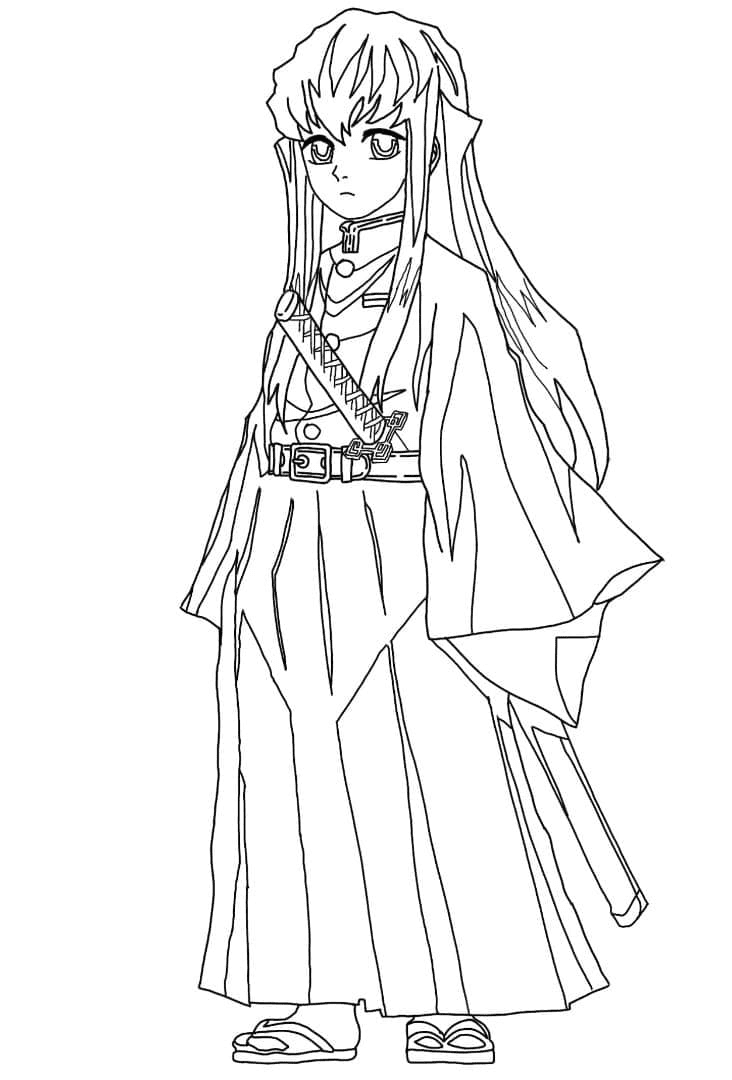
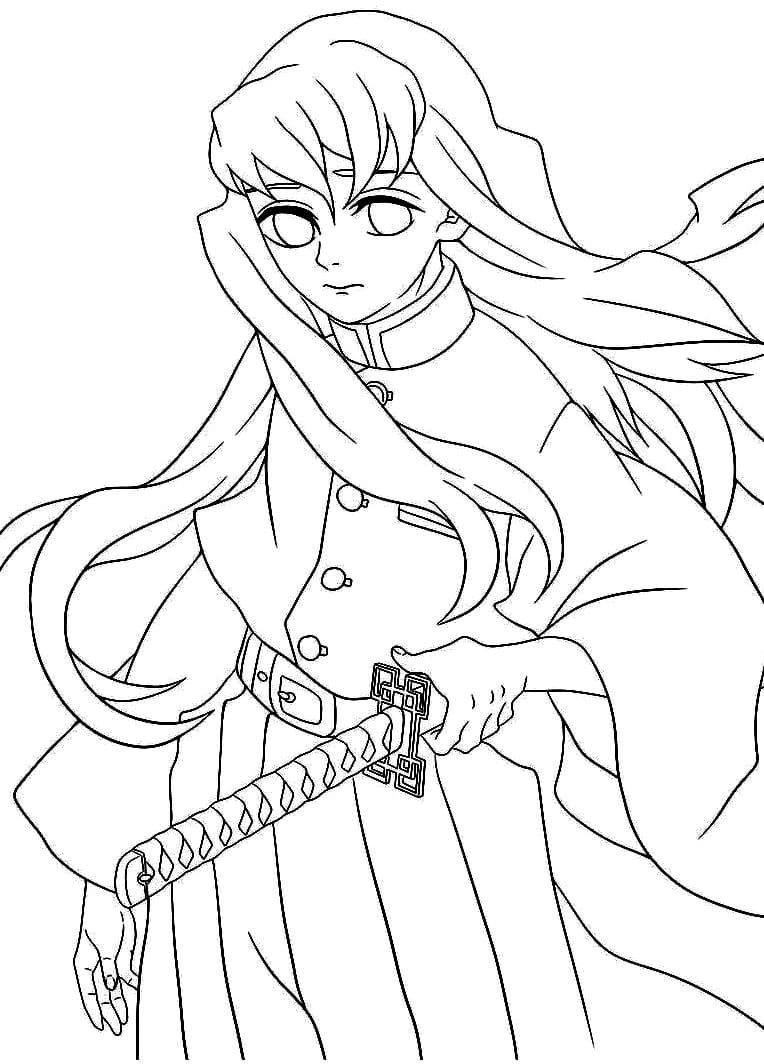
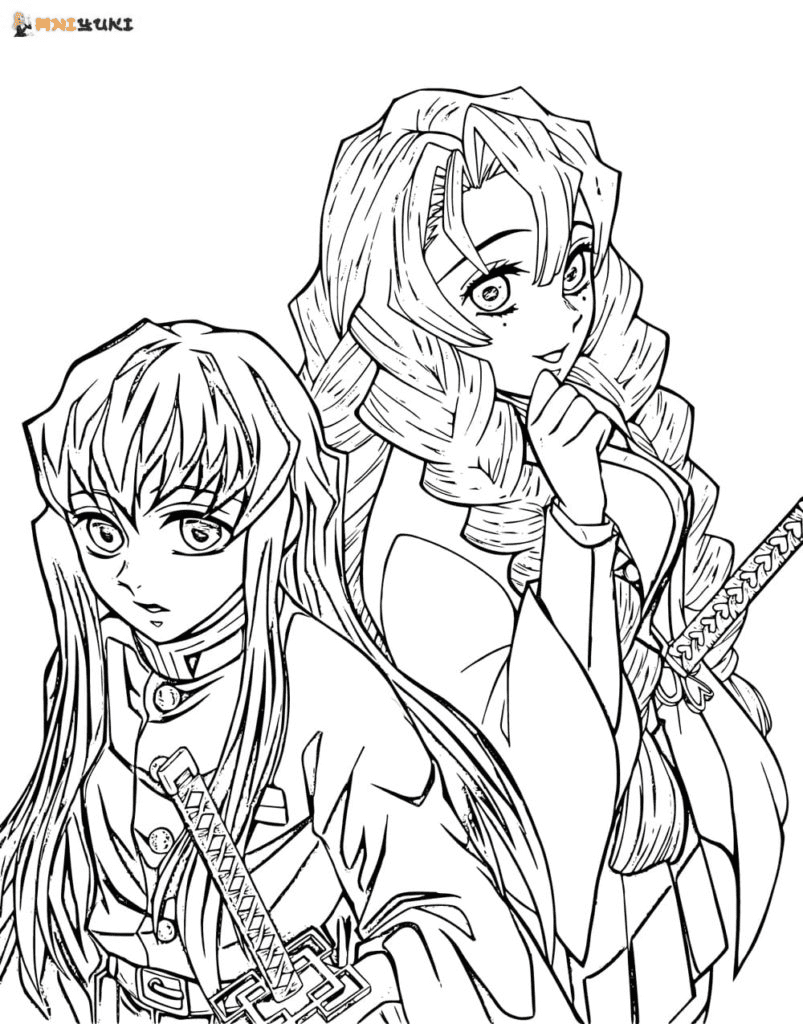
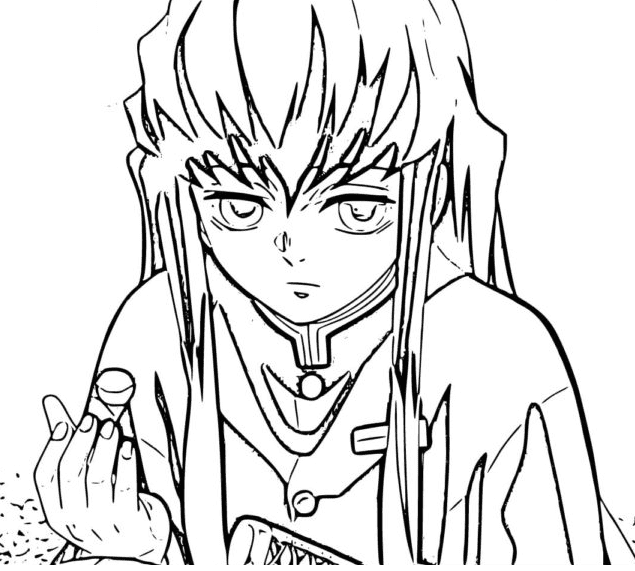
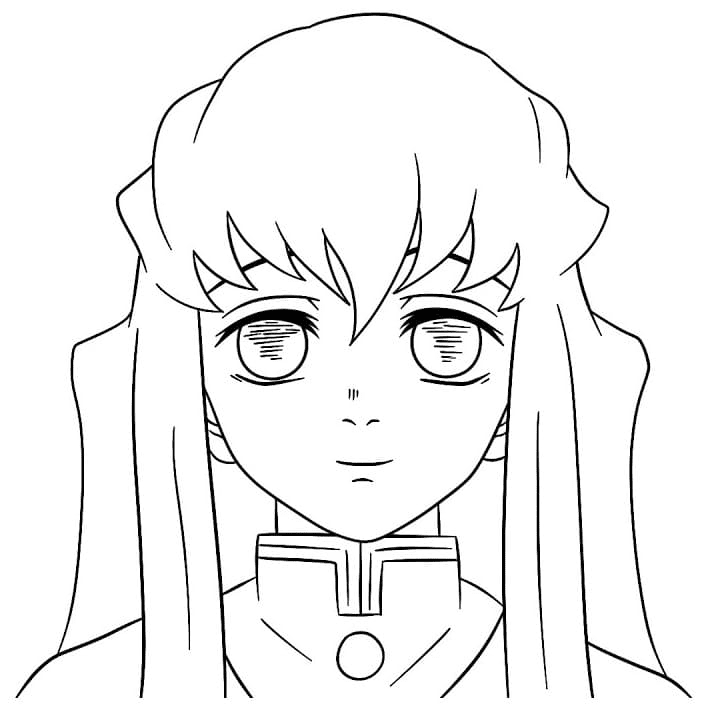
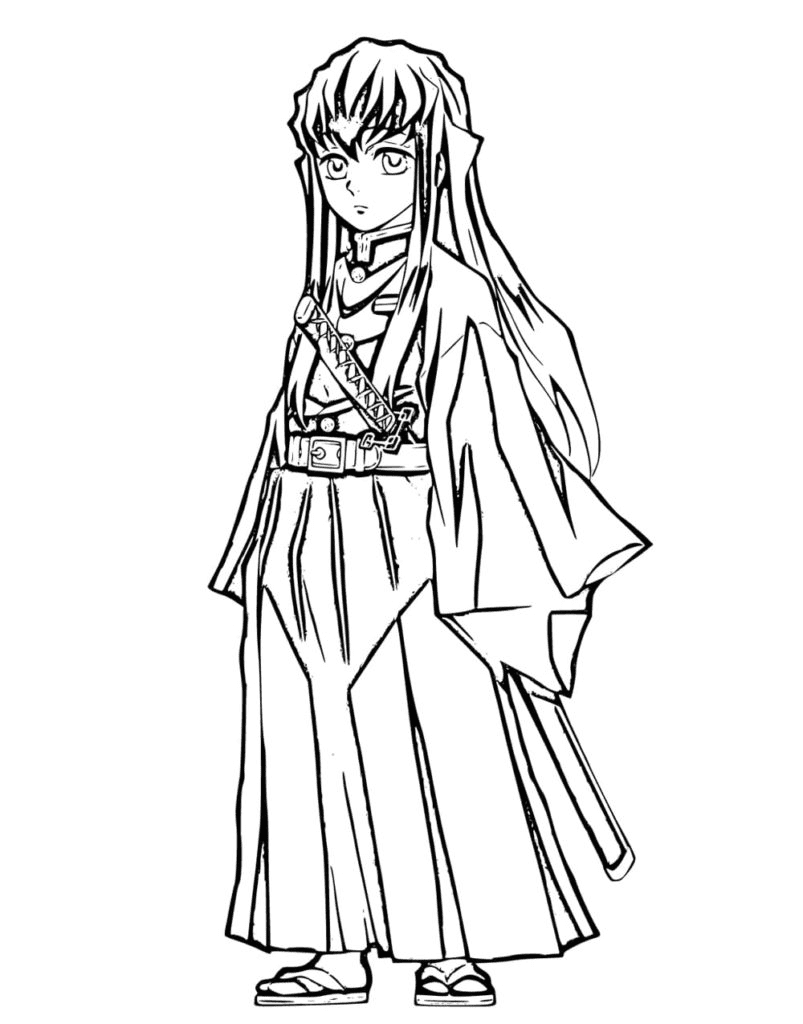
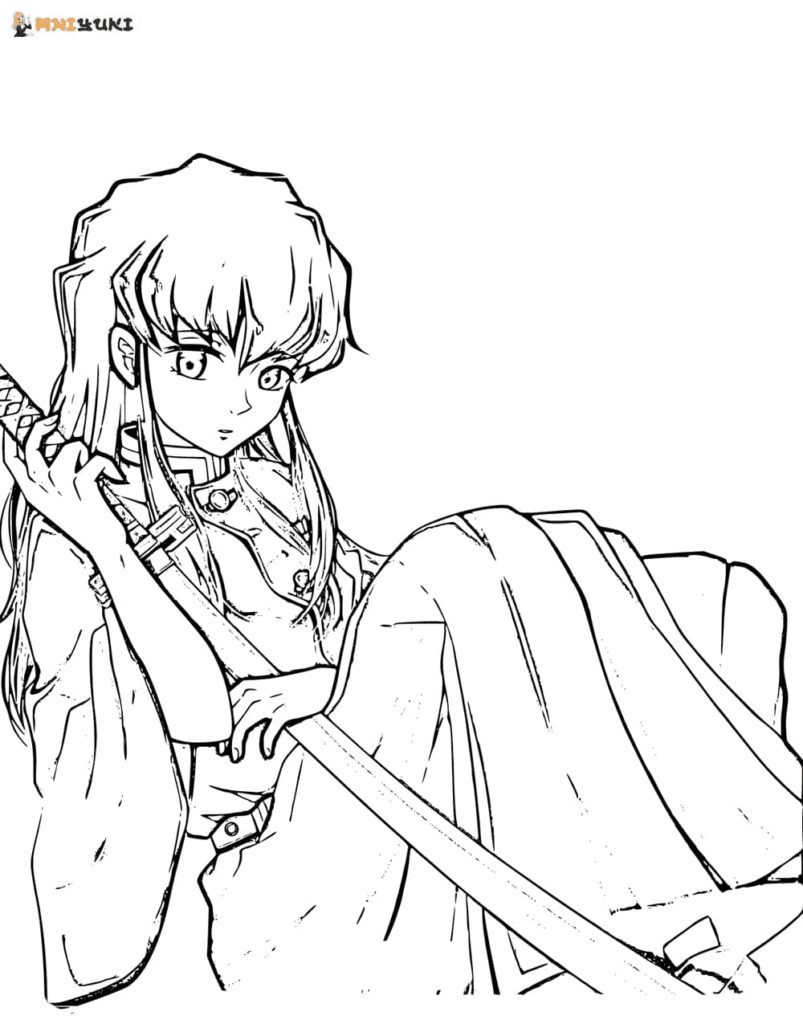
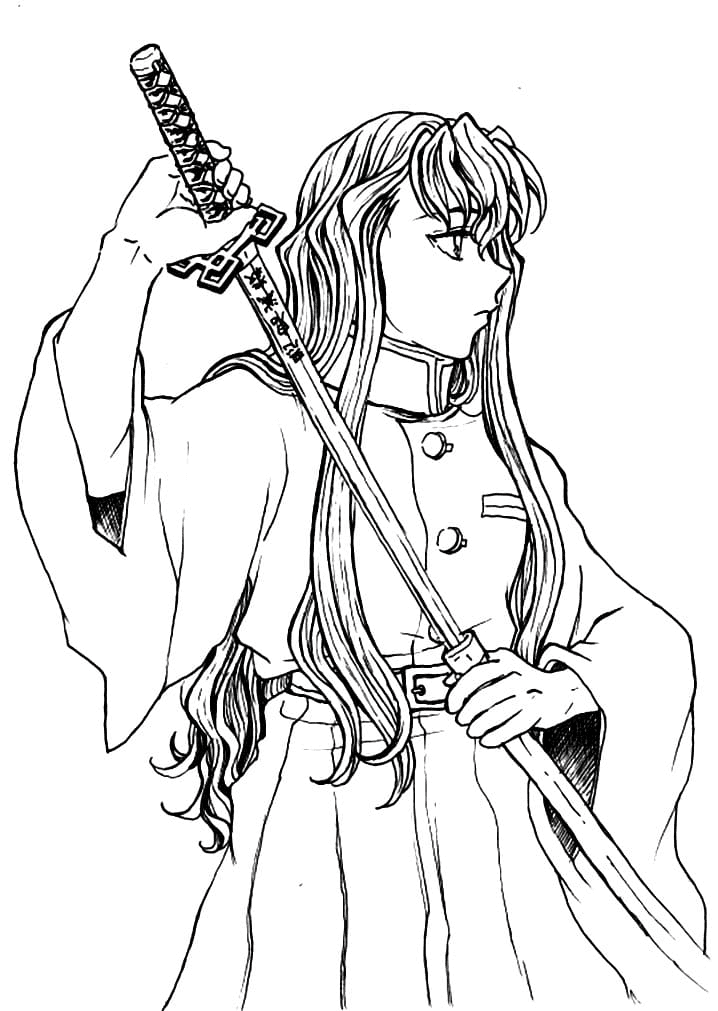
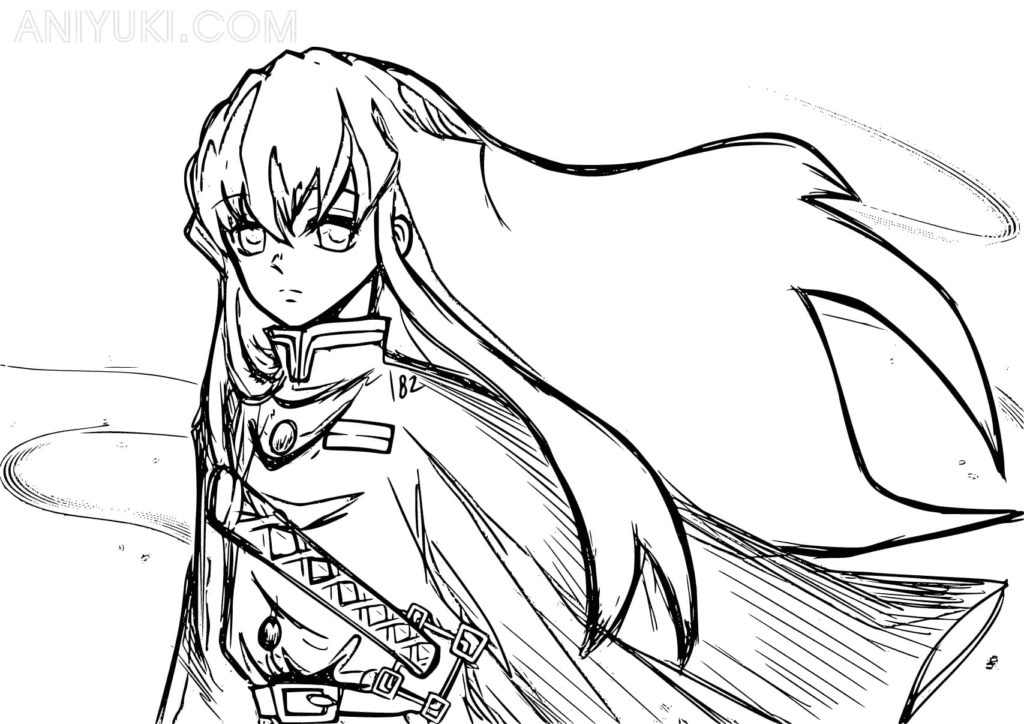
The collection’s largest section gives Muichiro in his characteristic poses – the contained, still quality of a character who rarely wastes movement. These pages show the Demon Slayer Corps uniform (dark navy, with the standard white belt), the haori with its dark geometric pattern, and his sword in various positions – sheathed, drawn, at rest.
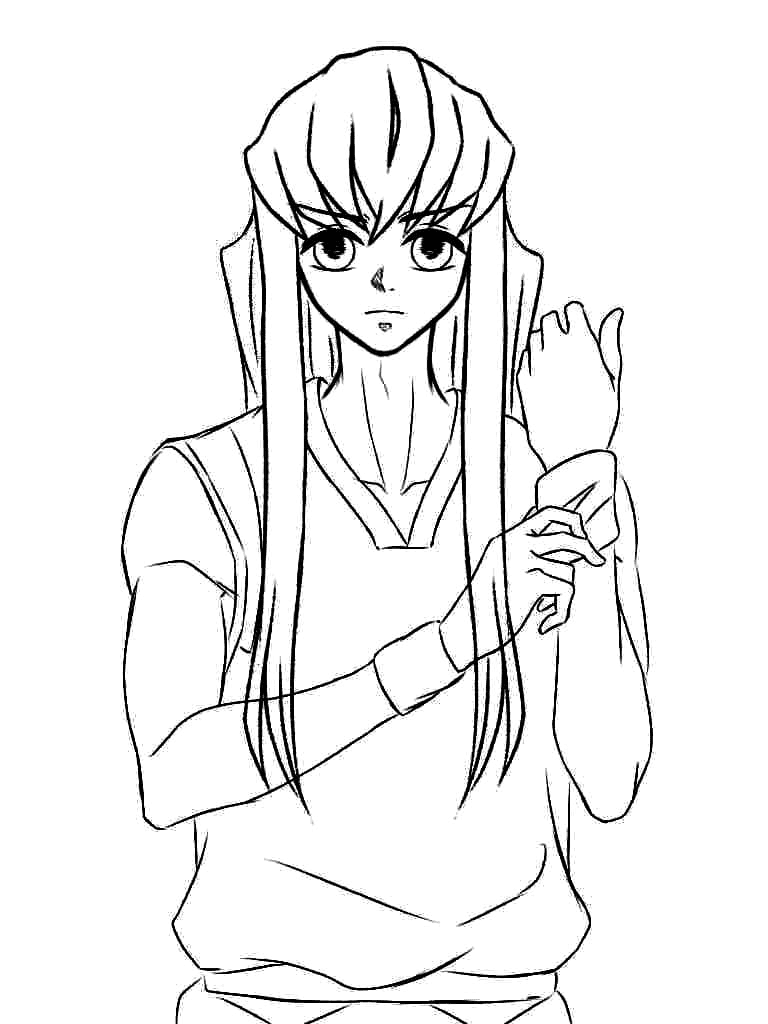
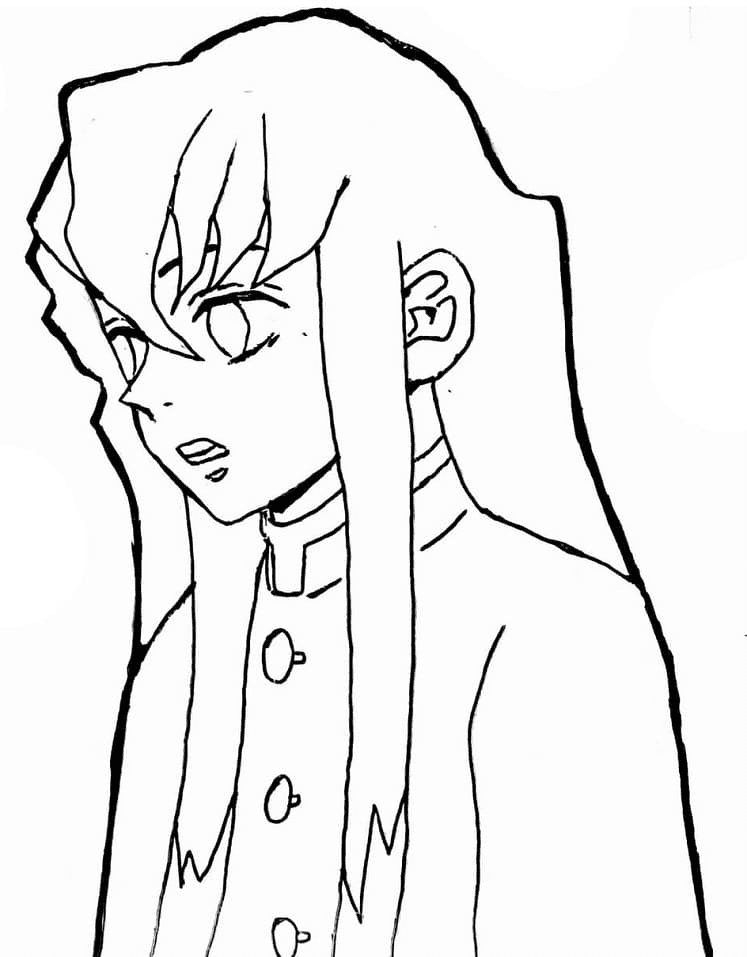
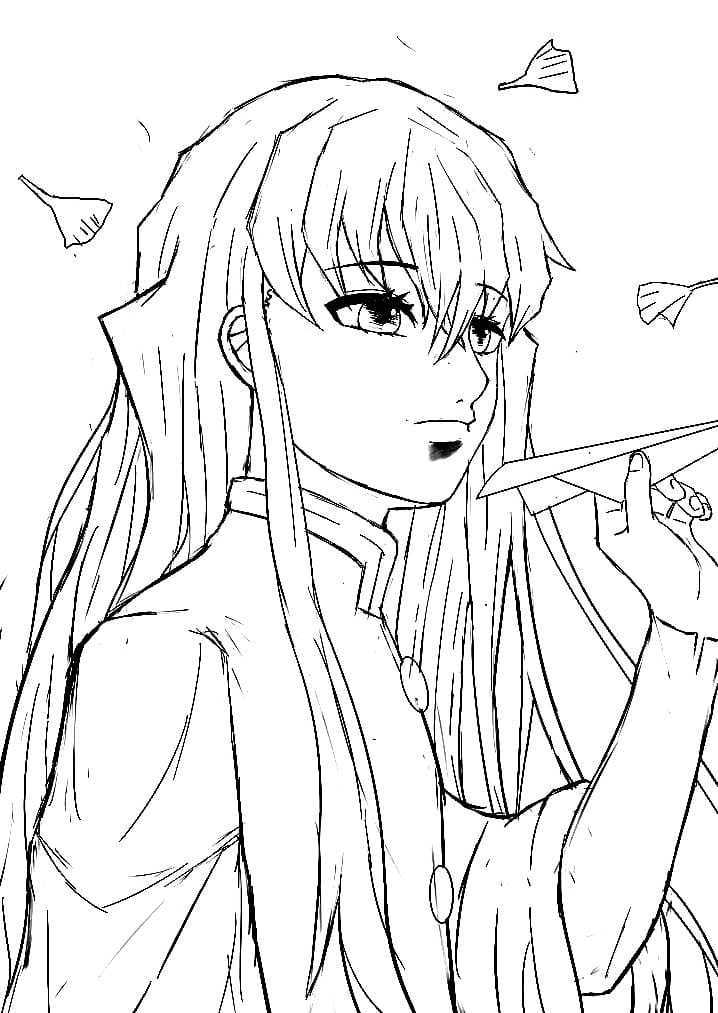
His portrait pages are technically demanding for one specific reason: the hair gradient. Muichiro’s hair transitions from black at the scalp to pale mint-green at the tips – a two-tone gradient that requires either blending technique or deliberate layering to render correctly. The pages that include his full head of hair in profile or three-quarter view present this challenge most directly.
Coloring Muichiro’s defining features: His eyes are turquoise – the same color family as his blade, which is the series’ visual shorthand for his Mist Breathing attribute. Apply turquoise to both with confidence. His skin is very pale – the palest of any Hashira in the series. His Corps uniform is a deep navy that reads almost black in dim light but has blue undertones visible in direct light. His haori’s geometric pattern works best rendered in two tones of dark – near-black and dark grey – that allow the pattern’s structure to be visible without competing with the main body colors.
Battle and Action Pages
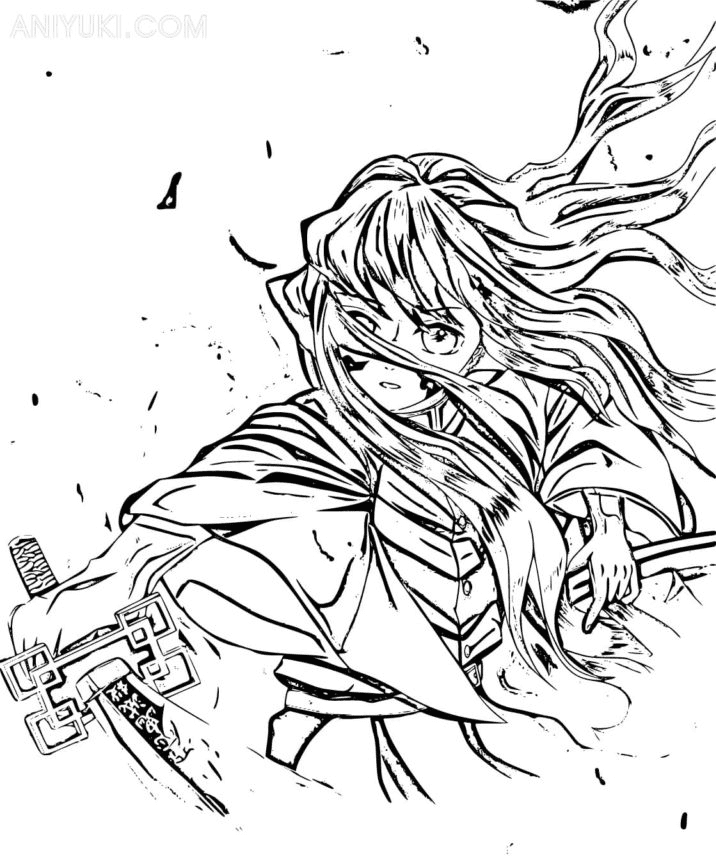
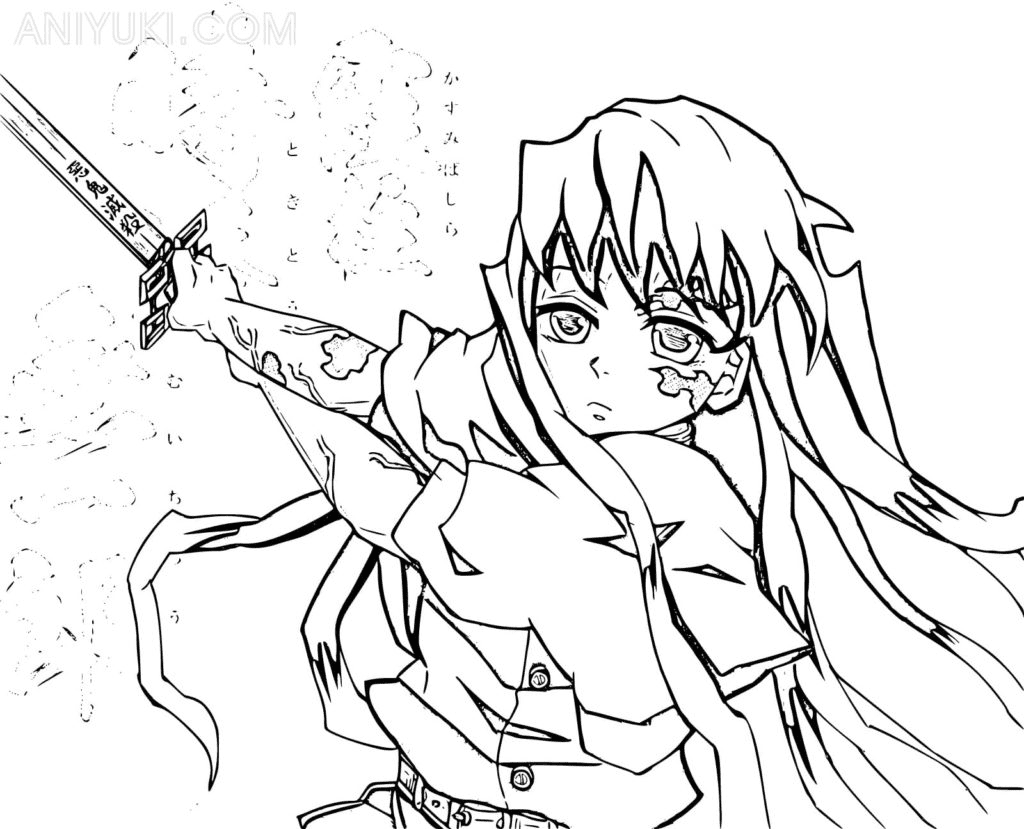
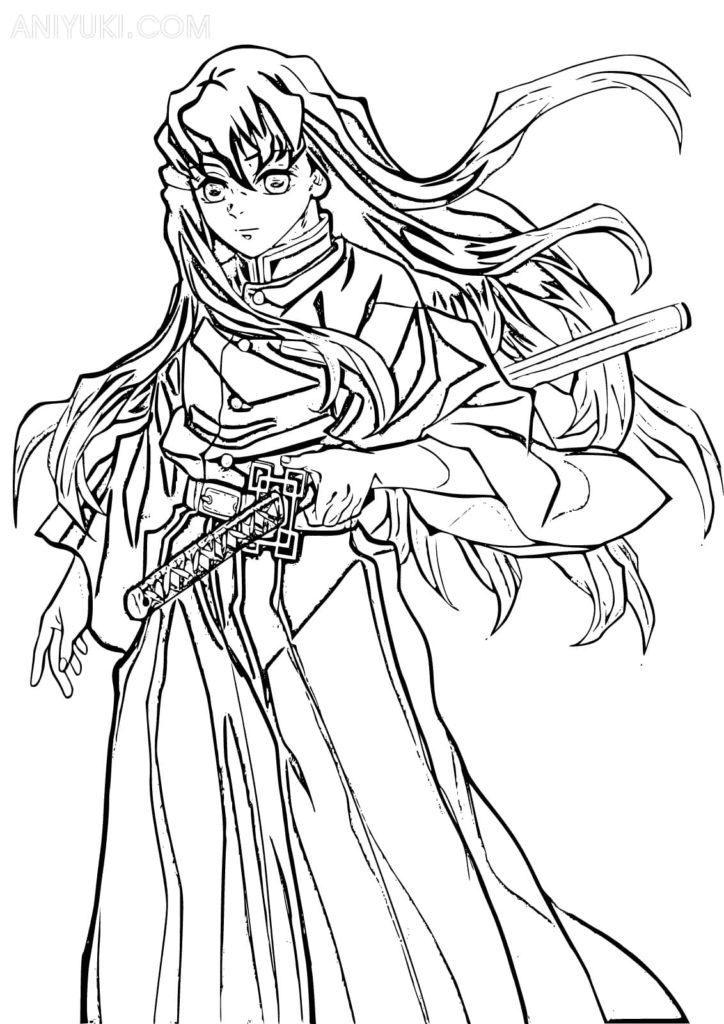
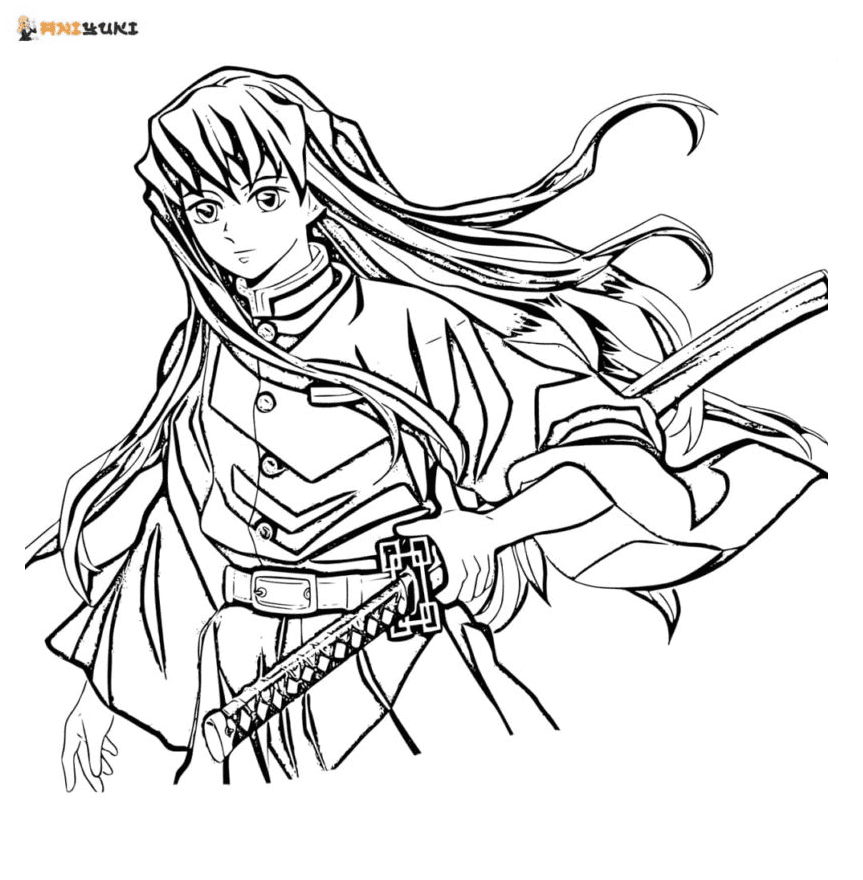
Muichiro’s combat style – Mist Breathing – is designed to disorient. His movements are described in the series as appearing like mist: unpredictable in direction, difficult to track, emerging from unexpected angles. The battle pages in this collection capture him mid-technique: the extended reach of a thrust, the sweep of a wide horizontal cut, the compressed coil before an explosive movement.
The most dramatic action pages come from the Swordsmith Village Arc, where Muichiro faces Gyokko – the Upper Rank 5 demon whose body is made of interlocking fish-like forms. These pages tend to have more complex compositions than the portrait pages – Muichiro’s figure against the elaborate, threatening shapes of Gyokko’s demon form – and reward the most careful, patient coloring approach.
Coloring action pages: The turquoise of the Nichirin blade is the primary color accent on every action page. It should be the most vivid element – fully saturated, not pale. The blade’s edge catches light differently from its flat – apply a slightly brighter highlight along the cutting edge and a slightly deeper tone to the flat. The motion lines that indicate speed in anime-style art look best left light or rendered in a very subtle grey rather than colored – they are structural lines, not surface elements.
Mist Breathing Technique Pages
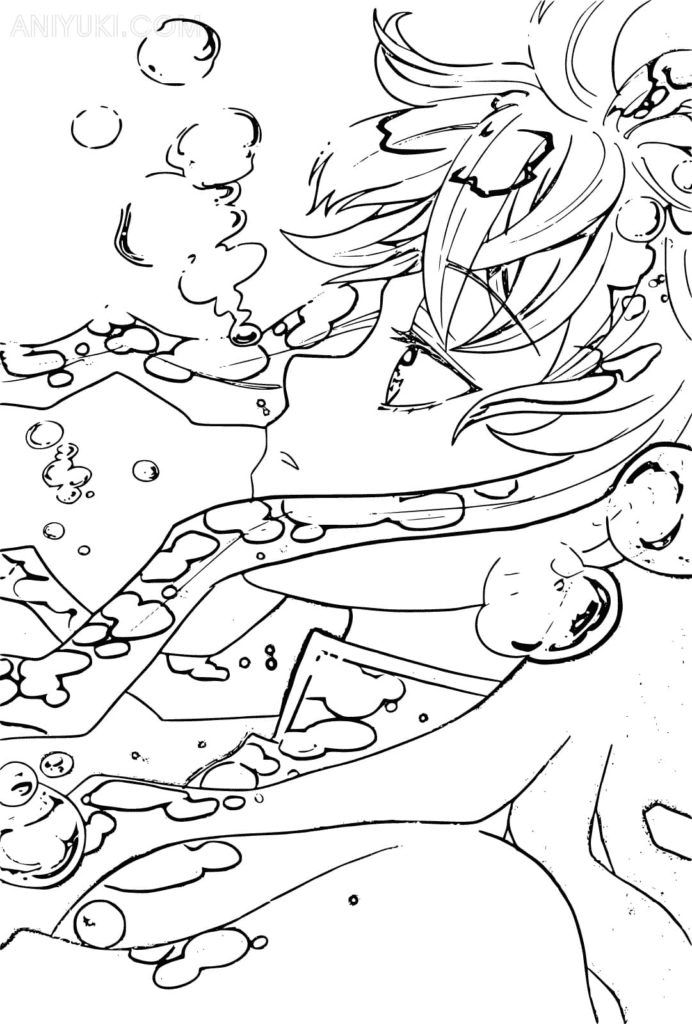
Mist Breathing has seven forms in the series, each with a specific visual signature. The technique pages in this collection show the atmospheric quality the style is named for – the sense of movement becoming diffuse, unclear, as figures glimpsed through fog. These pages typically include environmental texture (mist effects, motion blur representation) that most character portrait pages don’t.
The technique pages are the most challenging in the collection and the most rewarding when executed carefully. The atmospheric elements – the mist, the speed lines, the diffuse lighting of battle scenes at night – require a different approach from the clean character pages. These are pages where soft, blended transitions serve the image better than precise, contained color application.
Chibi Muichiro Pages
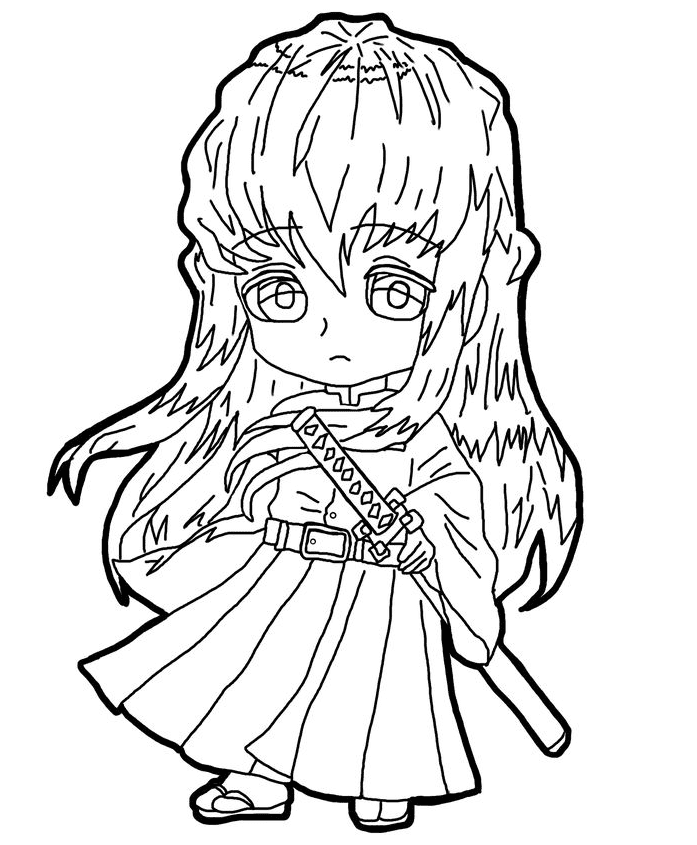
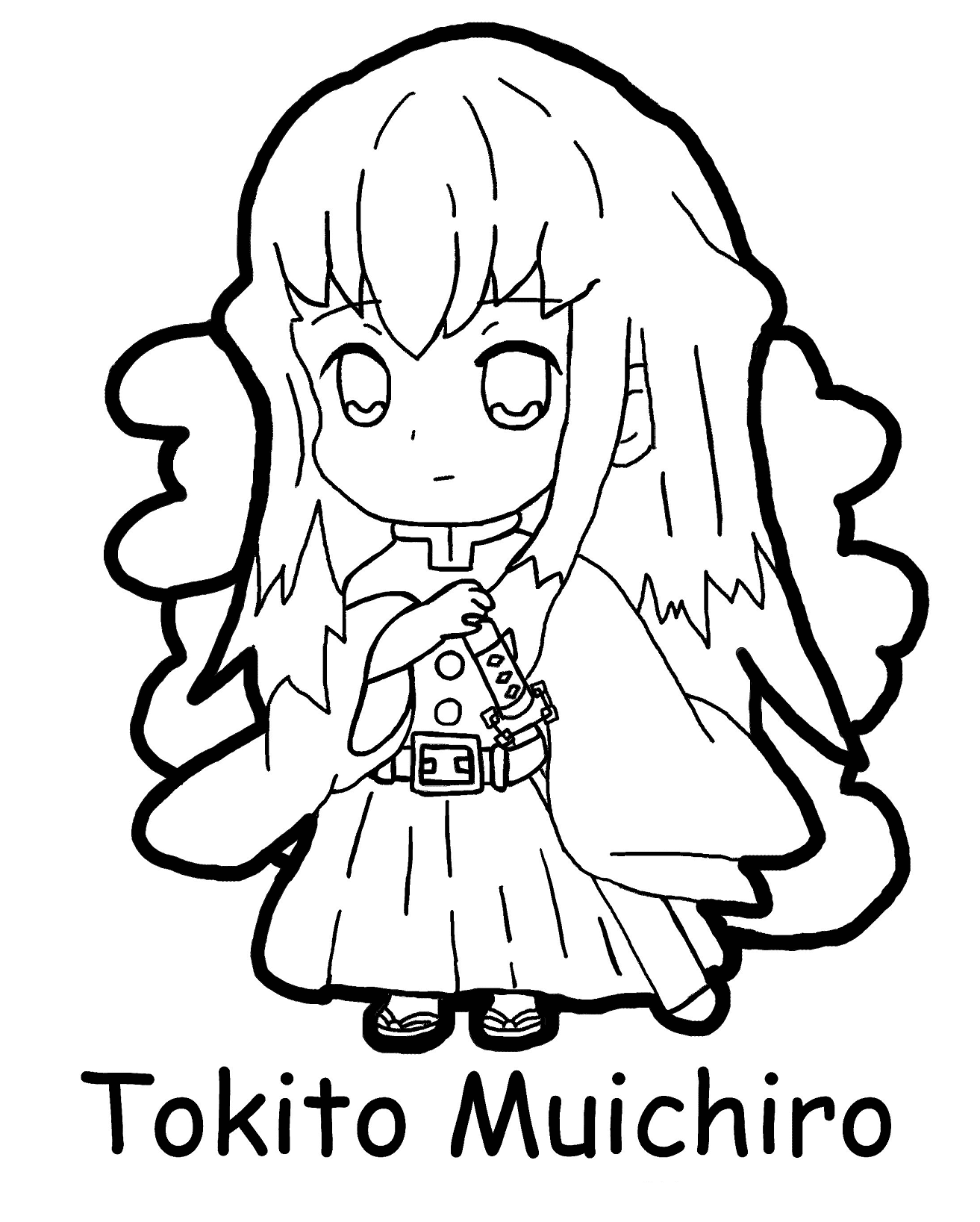
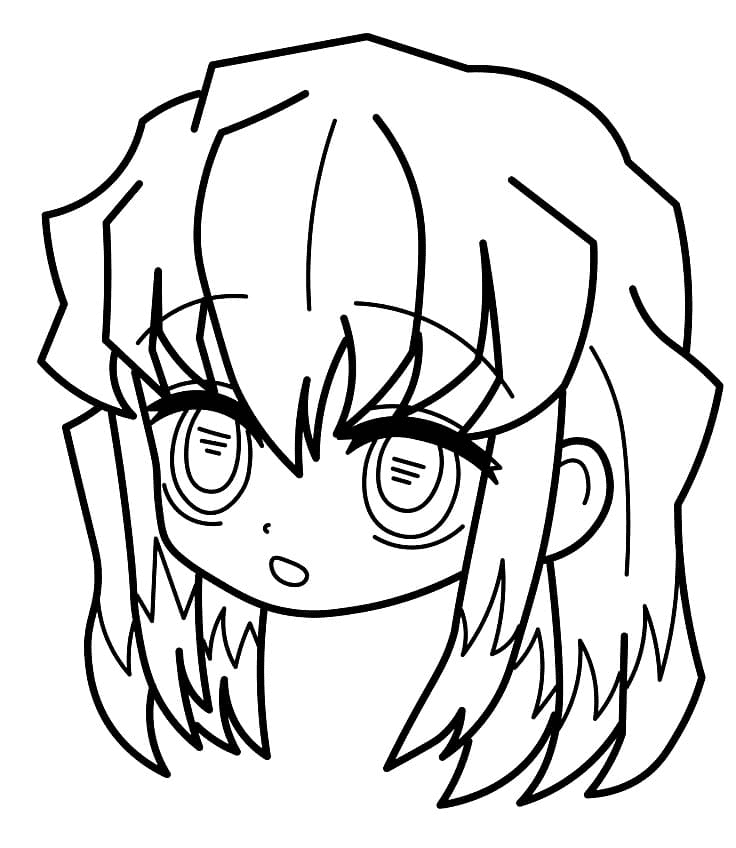
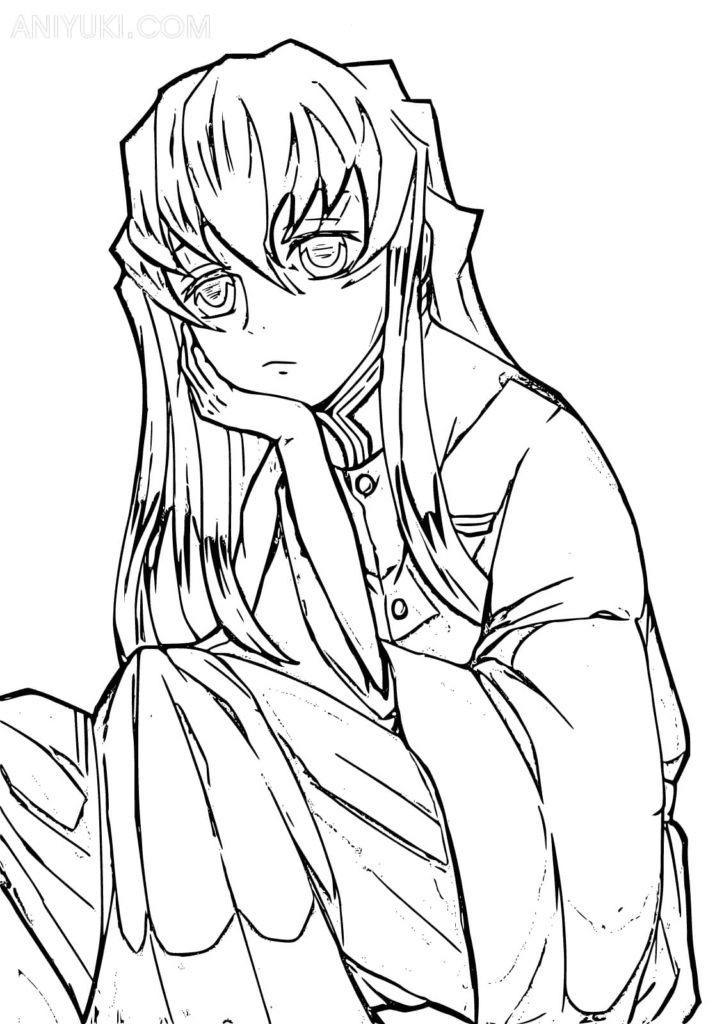
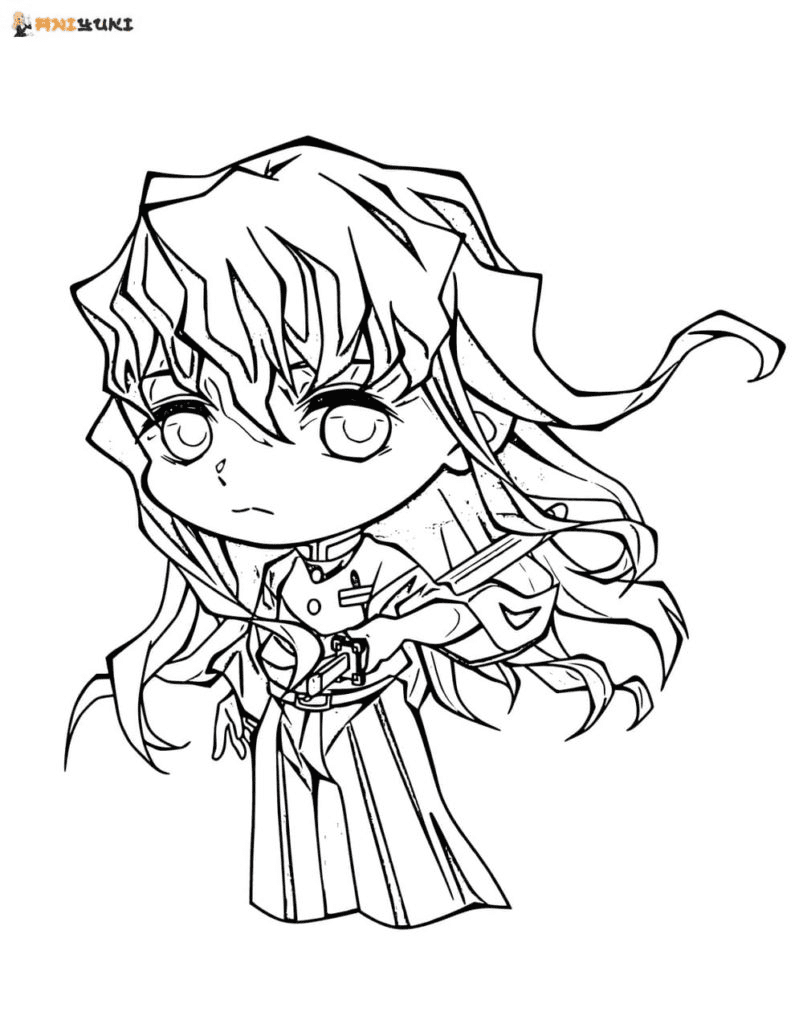
The chibi pages translate Muichiro’s character into the large-head, small-body proportions of the kawaii aesthetic. His distinctive features – the gradient hair, the turquoise eyes, the contained expression – translate well to chibi style. These pages are accessible for younger fans and for colorists who prefer bold, flat color application over the more demanding gradient and blending work of the realistic portrait pages.
Haori and Costume Detail Pages
Muichiro’s haori is one of the most visually complex in the series – dark base color with a repeating geometric pattern. Pages that show the haori in detail, or that include close-up views of the costume, are valuable references for fans who want to understand the design structure. The geometric pattern has a specific repeat that, when colored with attention to its structure, gives the haori a quality of depth that flat single-color treatment doesn’t achieve.
What’s Inside Muichiro’s Story
Muichiro lost his memories of his childhood – including his twin brother Yuichiro – following a traumatic demon attack that killed Yuichiro and left Muichiro alone. The amnesia was psychological: the mind’s response to an experience it could not process. The person who emerged from that trauma was functional, extraordinarily skilled, and emotionally absent – a boy who could not remember why things mattered and therefore approached everything with the same cool detachment.
His arc in the Swordsmith Village Arc involves the gradual return of those memories. The process is not presented as resolution or healing so much as restoration – Muichiro recovering access to himself, to the brother who believed in him, to the reason he became what he became. When his memories return fully, his combat ability undergoes a measurable increase – the series’ way of connecting emotional wholeness to physical capability, suggesting that Muichiro’s peak performance is not cold efficiency but feeling fully inhabited.
He is fourteen. He became the fastest person in history to reach Hashira status. He carried memories that were not available to him. These three facts together describe a character whose distance from others is not coldness but injury, and whose arc is about the distance between who someone is and who they can access themselves to be.
What These Pages Do
The character design teaches color theory in practice. Muichiro’s design is built around a specific color relationship: turquoise appears in his eyes, his blade, and the teal tips of his hair. This is not coincidental – it is the series’ systematic use of color to establish character identity. Coloring these pages while paying attention to this relationship teaches the principle that color builds character consistency before a single word of text is read.
The gradient hair is a genuine technical challenge. The black-to-mint-green transition in Muichiro’s hair is the most technically demanding element on any of his pages. The 2005 Art Therapy Journal study on structured coloring and anxiety reduction applies directly here – the focused, sustained attention required to render a gradient correctly produces exactly the calm, absorbed state the research identifies. It is not easy, but it is the kind of difficulty that rewards the time spent.
The battle pages develop compositional understanding. Muichiro’s action pages – with their multiple elements, their motion lines, their atmospheric effects – require the colorist to make decisions about visual hierarchy: what is most important, what should be most vivid, what should recede. These are genuine design decisions, not just filling-in exercises.
Fine motor development. The American Academy of Pediatrics identifies fine motor skill development as a key milestone throughout childhood. The detailed costume elements – the haori’s geometric pattern, the blade’s edge details, the texture of the Corps uniform – provide exactly the kind of motivated, sustained fine motor practice that is most developmentally effective.
How to Color These Pages Well
Start with the turquoise and build outward. Muichiro’s turquoise eyes and blade – is the page’s anchor color. Apply it first, with full saturation and confidence. Every other color decision can be made in relation to this anchor: the hair gradient, the uniform’s navy, the haori’s dark pattern. Starting with the page’s most distinctive element establishes the visual foundation before adding complexity.
The hair gradient requires a plan. Before applying any color, decide where the black ends and where the mint-green begins. The transition happens approximately at ear level – the upper two-thirds of the hair is black, the lower third fades to pale mint. Apply the mint-green first at the tips, working upward with decreasing pressure and decreasing saturation. Then apply the black from the roots downward, with the same approach. The overlap zone – roughly an inch of hair in the middle – blends naturally if both applications use light pressure at their edges.
His expression resists exaggeration. Muichiro’s face has a specific quality of stillness – not blankness, but containment. His eyes are the most expressive element. The turquoise of his iris should be fully saturated, but the pupil – a standard anime-style large dark oval – should be rendered in near-black rather than pure black, which can make the expression read as harsh rather than still. The highlight in his eye (a small white or very pale blue spot in the upper portion of the iris) is essential for the eyes to read as alive rather than flat.
The haori pattern needs a base before the pattern. Apply the base color of the haori first – dark navy or near-black – across the entire garment. Once dry or fully applied, render the geometric pattern on top in a slightly lighter tone – dark grey or deep blue-grey. The pattern reads correctly when it is visible but not competing with the uniform for attention.
Night battle scenes want cool shadows. The Swordsmith Village battle scenes take place at night. Night scenes in anime typically use cool, blue-shifted shadows rather than warm ones. When adding shadow to any surface in these pages, shift toward blue-grey rather than brown-grey. The result reads as night-lit in a way that warm shadows don’t.
5 Creative Craft Ideas
Hashira Ranking Display
Print the Muichiro portrait page alongside pages from other Hashira characters available on this site – Tanjiro (for reference), and any other Hashira pages in the collection. Color all pages carefully in their canonical color schemes.
Mount all figures on a single large backing sheet arranged in a row. Below each figure, hand-letter the Hashira’s name, breathing style, and element. Muichiro: Mist Hashira, Mist Breathing, Turquoise.
The finished display is a reference guide to the Demon Slayer Hashira presented through careful coloring – a piece of fan knowledge made visual.
Before and After Memory Arc
Print two copies of the same Muichiro portrait page. Color the first in the muted, emotionally absent palette of Muichiro before his memories return – desaturated colors, cooler tones, an expression that reads as distant. Color the second in a warmer, more vivid palette – the same colors but more saturated, the expression in the eyes rendered with slightly more warmth.
Mount both side by side on a backing sheet: “Before” on the left, “After” on the right. The comparison makes the emotional arc of the character visible through color – a lesson in how the palette communicates psychological state.
Mist Breathing Technique Card
Print the most dynamic Mist Breathing action page. Color it with full commitment to the atmospheric effects – the mist rendered in pale blue-grey and white, the figure in his canonical colors, the blade in its full turquoise.
Cut the finished page to card dimensions. On the back, hand-letter the Mist Breathing form shown, its number in the sequence (First Form through Seventh Form), and a brief description of what the technique does.
The finished card is a Demon Slayer technique reference in hand-colored form – the kind of object that combines artistic practice with series knowledge.
Gradient Hair Study
This craft uses Muichiro’s most distinctive design element as a deliberate practice exercise. Print three copies of any portrait page showing his full hair.
Color each one using a different technique for the gradient: the first using two colors blended wet, the second using layered dry pencil strokes, the third using alternating light strokes of each color in the transition zone. Compare all three when finished.
The comparison shows what different coloring techniques do to the same gradient challenge – a practical lesson in material properties delivered through a character-specific exercise.
Demon Slayer Fan Bookmark
Print the Muichiro chibi page at reduced scale – approximately 5cm × 15cm portrait orientation. Color carefully in canonical colors. Apply clear contact paper to both sides for durability. Cut to bookmark dimensions with rounded corners.
Punch a small hole at the top and thread a ribbon or cord in turquoise – his color. Tie off.
The finished bookmark is a handmade Demon Slayer object that uses the coloring activity as its production method – functional fan art rather than wall art, equally personal and more likely to be carried and used.
Frequently Asked Questions
Who is Muichiro Tokito in Demon Slayer? Muichiro Tokito is the Mist Hashira of the Demon Slayer Corps in Demon Slayer: Kimetsu no Yaiba, the manga series by Koyoharu Gotouge serialized in Weekly Shōnen Jump from February 2016 to May 2020 and subsequently adapted into an anime series by Ufotable. He is one of nine Hashira – the most powerful demon slayers in the Corps – and holds the rank at age fourteen, having achieved it within two months of joining, making him the fastest person in the series’ history to reach that status. His breathing style is Mist Breathing, and his Nichirin blade is turquoise.
What is Mist Breathing, and what makes it distinctive? Mist Breathing is one of the Breathing Styles derived from Sun Breathing – the original breathing technique from which all others descend. It is characterized by unpredictable, flowing movements that disorient opponents by making the practitioner’s trajectory difficult to read, creating the impression of movement through fog or mist. Muichiro uses all seven of its forms, with the Seventh Form – Obscuring Clouds – being particularly associated with his character. The style’s effectiveness depends on the practitioner’s ability to create perceptual confusion in the opponent, which requires both technical precision and physical speed.
Why does Muichiro seem emotionally distant at first? Muichiro’s emotional distance in his early appearances is the result of amnesia following the traumatic death of his twin brother Yuichiro, who was killed in a demon attack that Muichiro survived. The psychological response to that trauma suppressed his memories – including his memories of his brother, his childhood, and the reasons he became a demon slayer. The character the reader and viewer first encounter is, in effect, a person operating without access to his own history. His arc in the Swordsmith Village Arc involves the recovery of those memories and the emotional reintegration that follows.
What is the connection between Muichiro and Yoriichi Tsugikuni? Muichiro Tokito is a descendant of Michikatsu Tsugikuni, the twin brother of Yoriichi Tsugikuni – the creator of Sun Breathing and the most powerful demon slayer in history. Michikatsu became Kokushibo, the Upper Rank 1 demon and one of Muzan Kibutsuji’s most powerful subordinates, after choosing to become a demon in pursuit of immortality. This makes Muichiro’s bloodline directly connected to both the origin of all Breathing Styles and to the demon hierarchy’s highest level – a lineage that the series uses to explain the exceptional nature of his talent.
What colors should I use for Muichiro’s Nichirin blade? Muichiro’s Nichirin blade is turquoise – a blue-green in the medium range, neither too blue nor too green. In the anime adaptation, it renders as a vivid, saturated turquoise that matches his eye color, consistent with the series’ practice of aligning blade color with the character’s elemental attribute. When coloring, aim for a fully saturated turquoise without blue or green dominance – the midpoint between the two. The blade’s edge can receive a slightly brighter highlight (near-white or very pale turquoise) while the flat of the blade uses the main turquoise tone.
What age group are these pages best suited for? The simpler portrait pages – clean character outlines with minimal background detail – work well from ages 7–8 for fans of the series who are developing colored pencil control. The chibi pages are accessible from ages 5–6. The complex battle pages – with multiple figures, atmospheric effects, and the detailed haori pattern – are most rewarding for ages 10 and up and for adult fans who want a sustained coloring challenge. The gradient hair technique is genuinely difficult at any age and is best approached after the simpler pages have been completed.
Are these pages from the Swordsmith Village Arc specifically? The collection draws from Muichiro’s appearances across the series – including his introduction as a Hashira, his scenes at the Butterfly Estate and Swordsmith Village, and key moments from his combat with Gyokko. Some pages are based on specific anime or manga scenes; others are character illustrations in the series’ style without specific scene attachment. Pages featuring the elaborate, fish-derived form of Gyokko are most specifically associated with the Swordsmith Village Arc, which comprises Season 3 of the anime adaptation.
Browse the full collection at ColoringPagesOnly.com. All 20+ pages free, no sign-up, PDF or PNG, print at home or color online.
Muichiro Tokito became a Hashira in two months at age fourteen. He did it without access to his own memories, without the emotional grounding of knowing why it mattered, with only the instinct that had been shaped by a trauma he could not fully recall. When his memories returned – when he could finally know the brother who had told him he was destined for something – his ability increased. The series is making a specific point: that completeness produces capability, that knowing yourself matters for what you can do with yourself.
The coloring pages in this collection are the visual record of that character. The turquoise that runs through his eyes and his blade. The gradient in his hair goes from dark to pale. The still expression that rewards looking at carefully.
Pick up your turquoise first. Build the rest from there.
Share your work on Facebook and Pinterest and tag #Coloringpagesonly. We especially want to see the gradient hair studies and the memory arc comparisons.
Color the mist. Know the Hashira. Two months were enough.
More from our Demon Slayer and anime collections: