Multiplication Chart Coloring Pages
 By:
Jennifer Thoa – Content Editor & Designer
Updated:
By:
Jennifer Thoa – Content Editor & Designer
Updated:
Free Multiplication Chart Coloring Pages: 20 printable PDF designs featuring the times-table grid from 1 through 10 or 1 through 12, each one ready to color as a print-at-home worksheet or directly in the browser. Every page can be downloaded as a PDF to print or colored online, and no account is required.
A multiplication chart is a grid listing the product of every pair of numbers from 1 through 10 or 1 through 12, and it has worked as a memorization and reference tool for thousands of years. The earliest known multiplication tables were inscribed on Babylonian clay tablets around 2000 BCE using a base-60 counting system, and a base-10 version carved into bamboo strips during China’s Warring States period is recognized today as the oldest known decimal multiplication table, roughly 2,200 years old. In French, Italian, and Russian, the grid is still called the Table of Pythagoras, after the Greek mathematician it is popularly associated with. In United States classrooms, Common Core standard 3.OA.C.7 sets the expectation that third graders know every one-digit multiplication product from memory, which is why the chart is a fixture of third and fourth-grade math folders. This collection turns that reference grid into a coloring activity, letting kids fill in its rows, columns, and number patterns by hand while they study it.
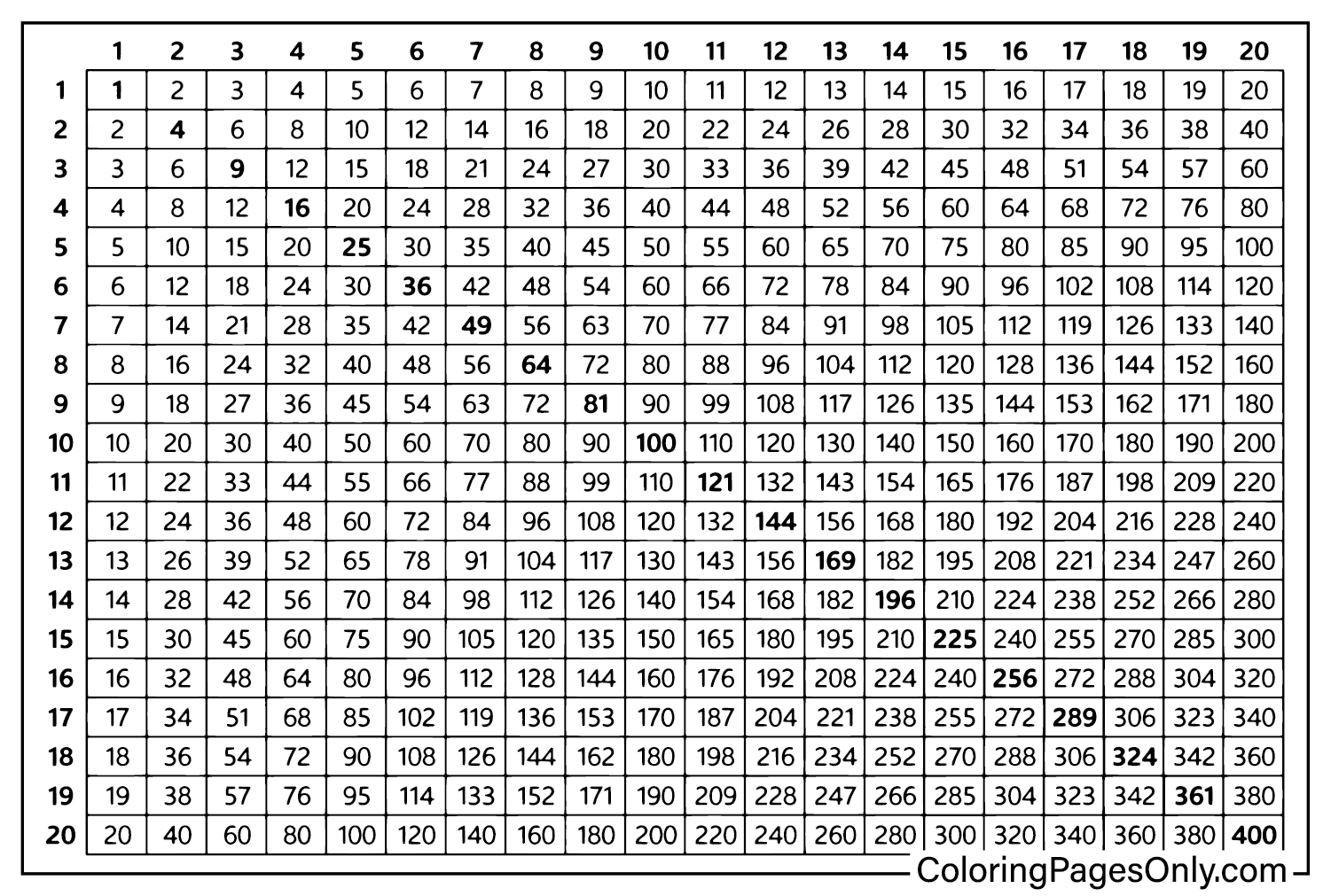
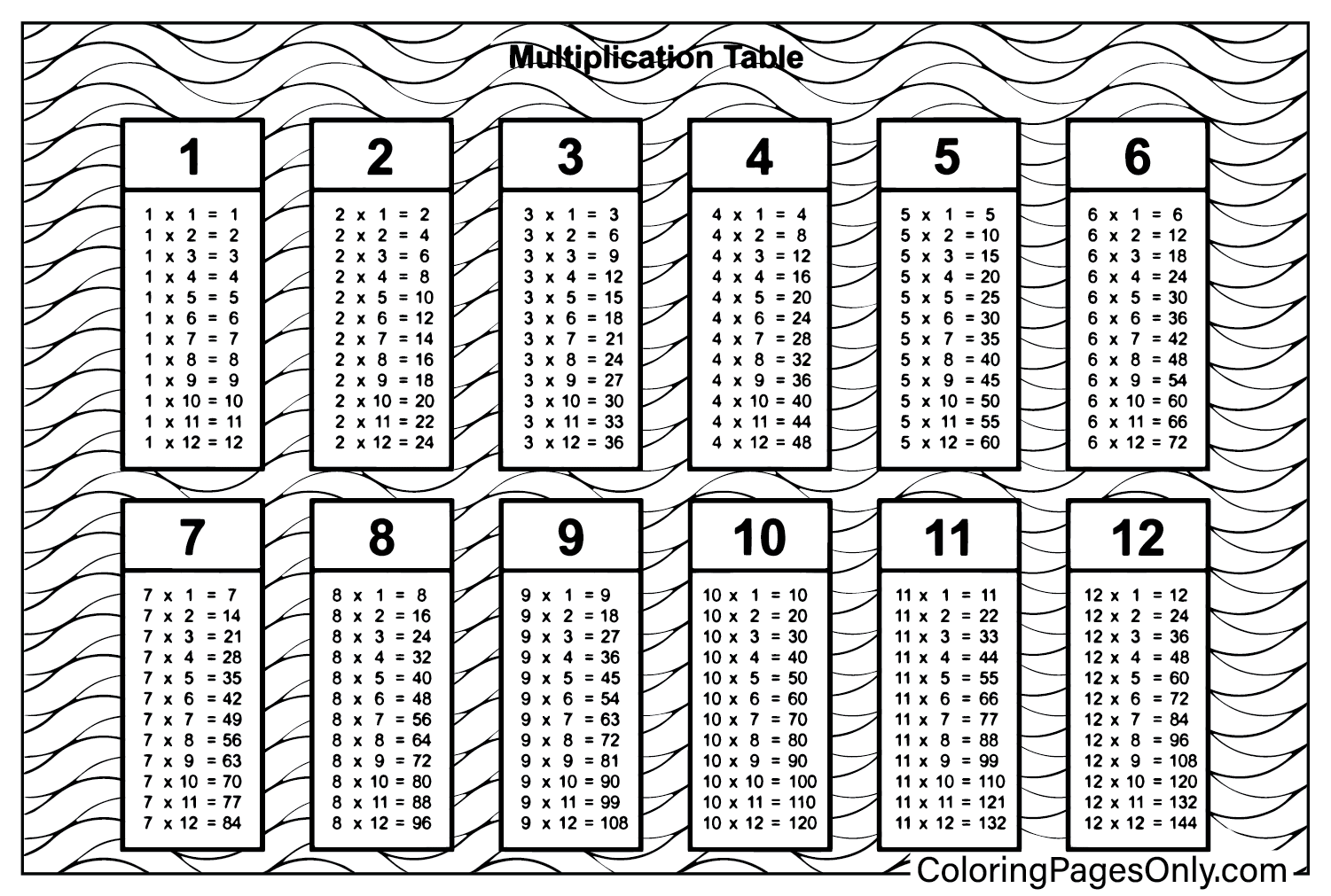
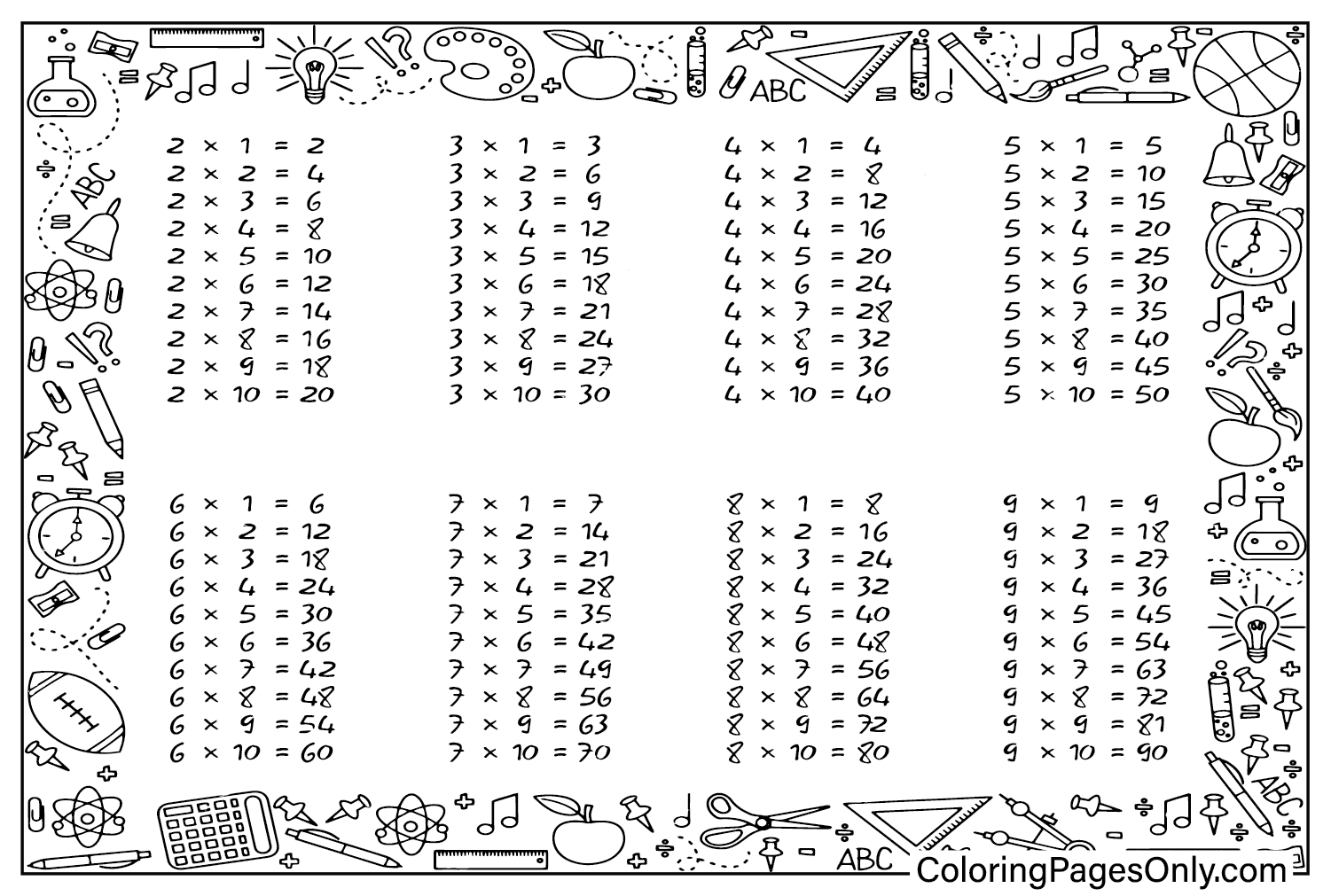
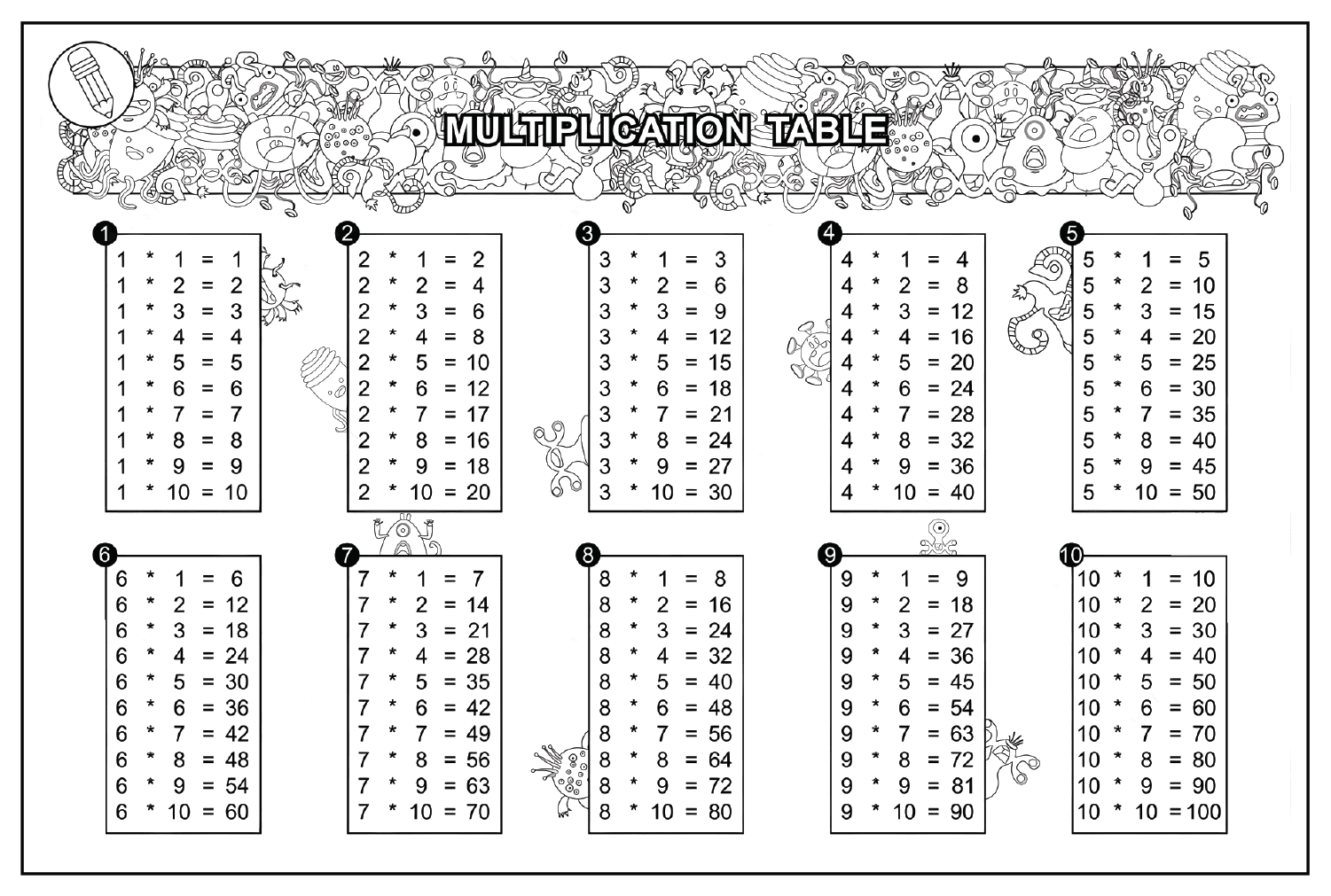
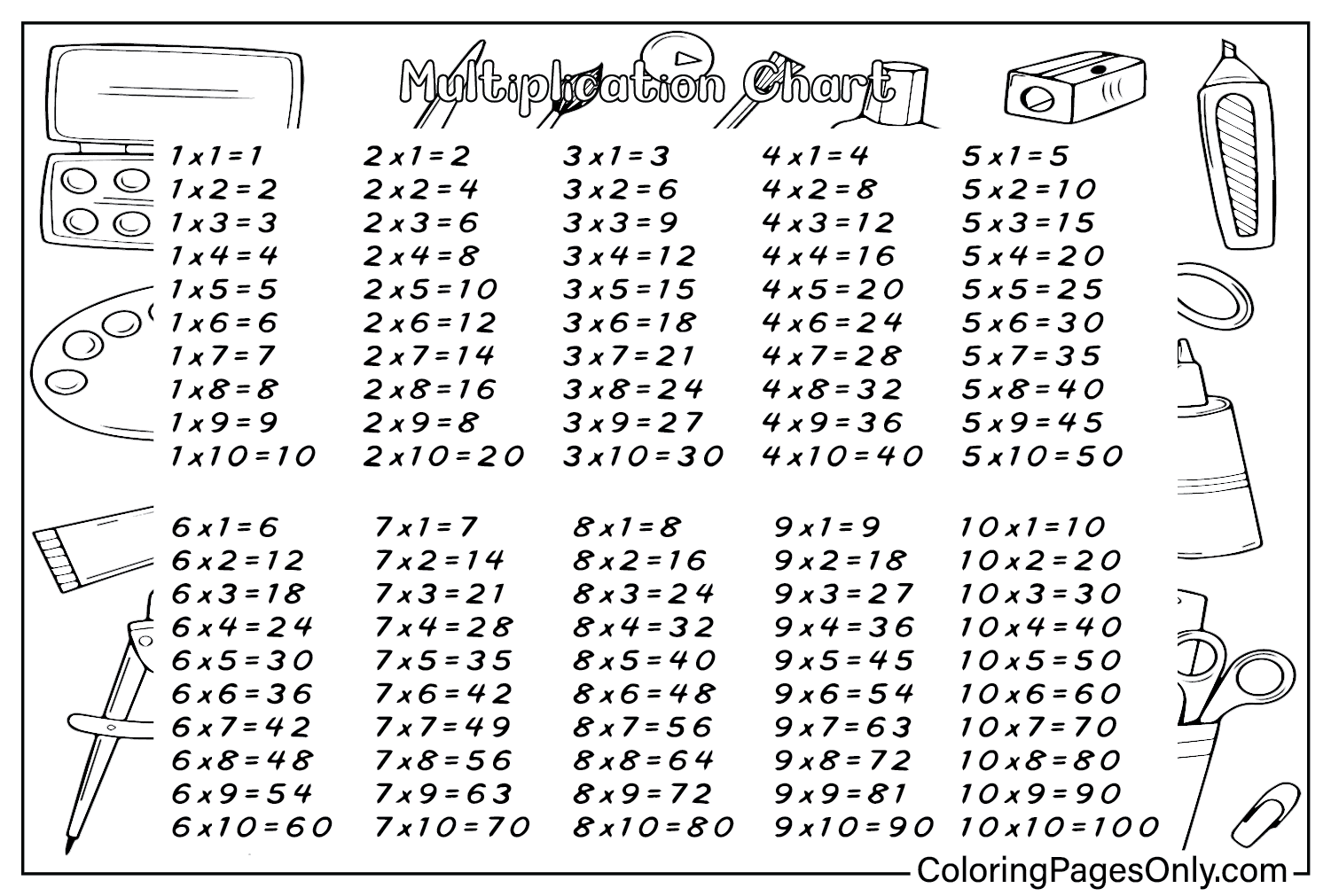
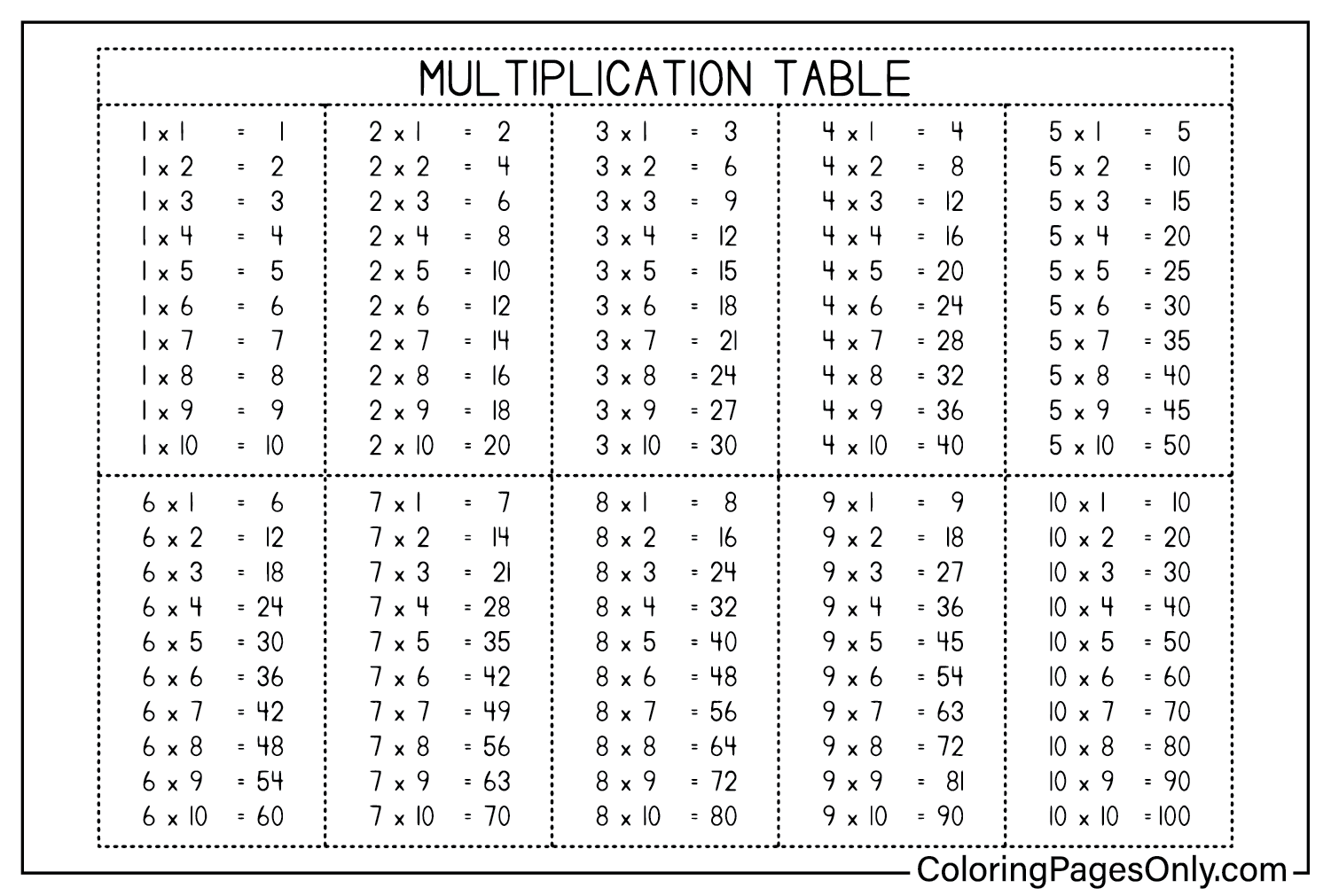
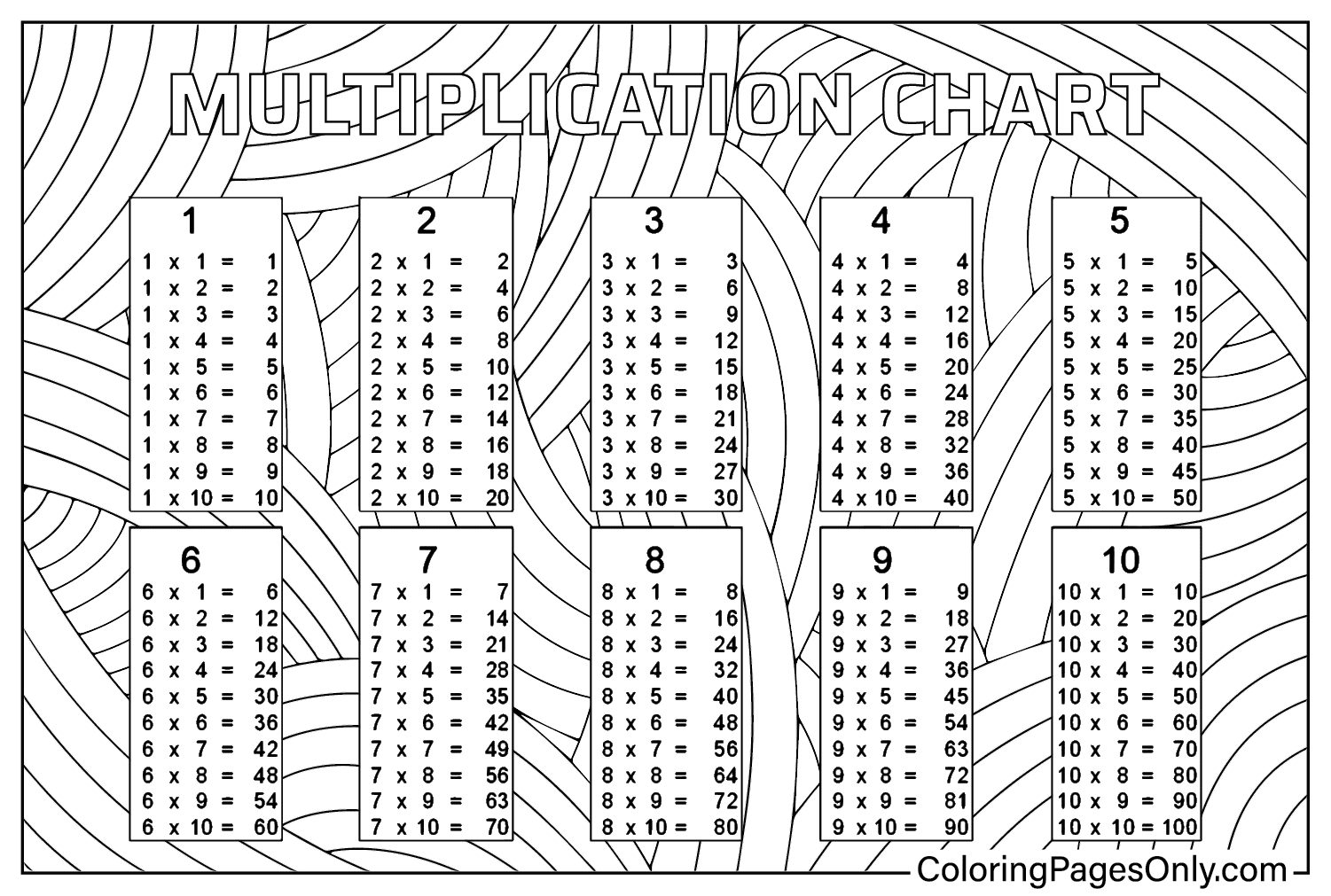
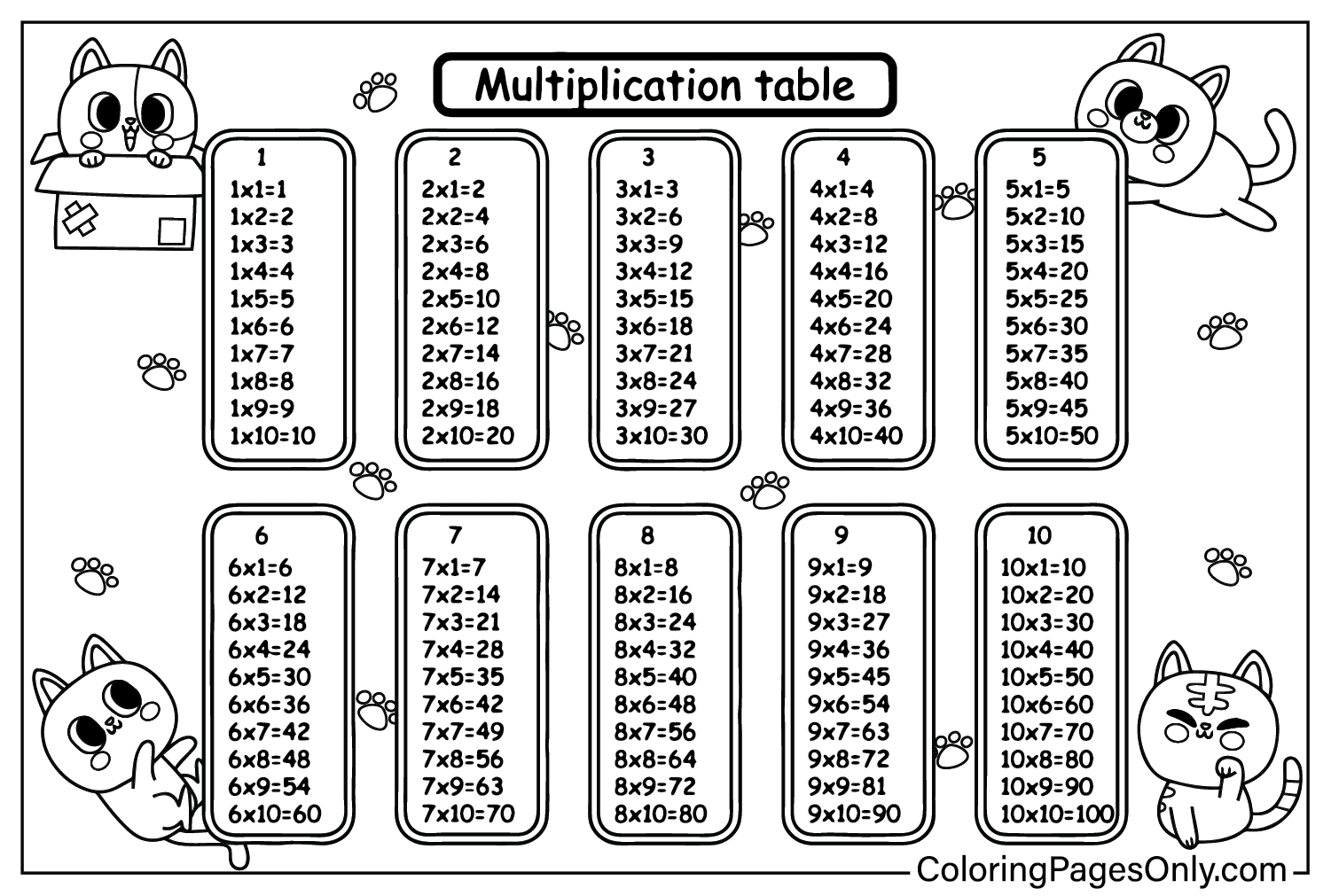
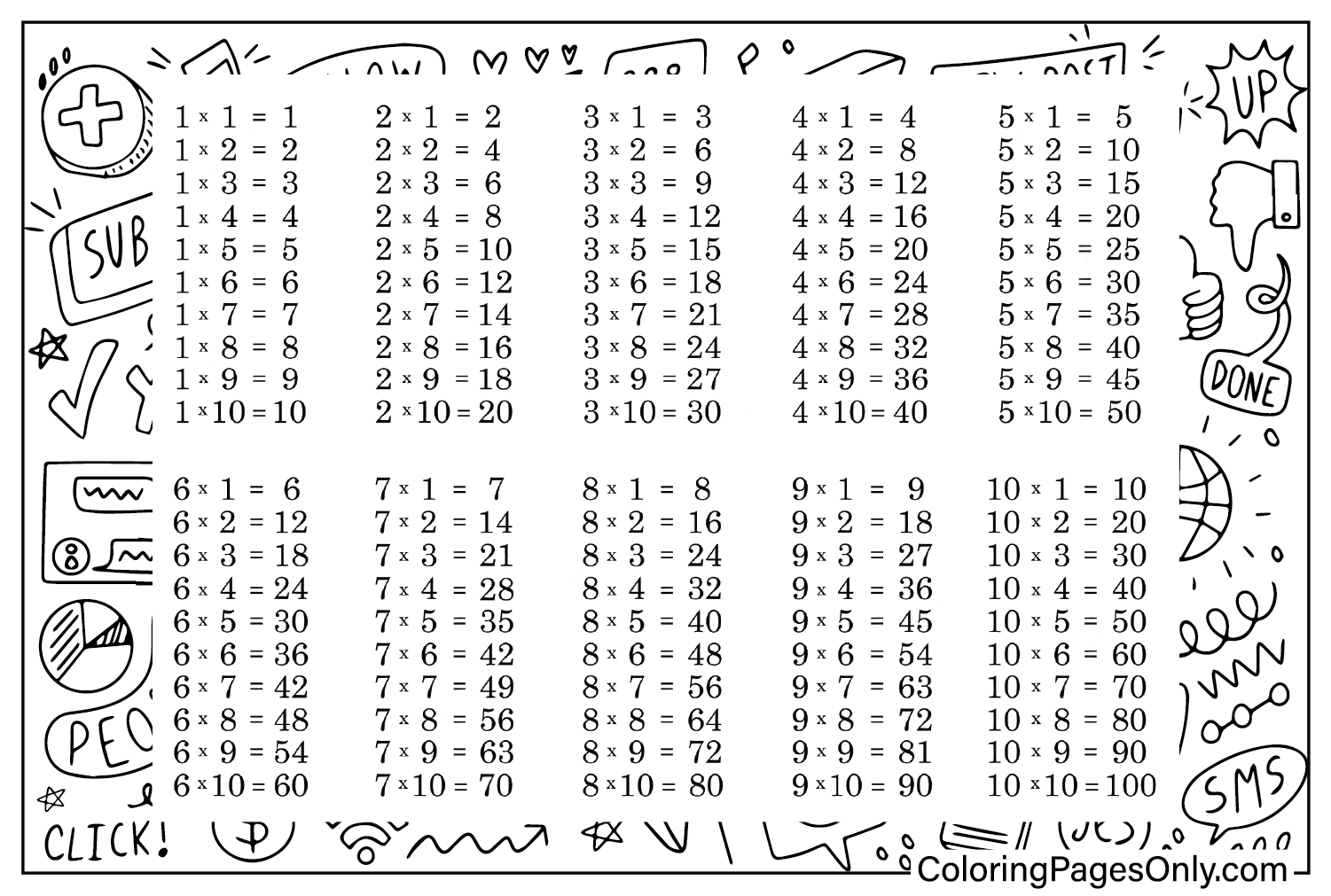
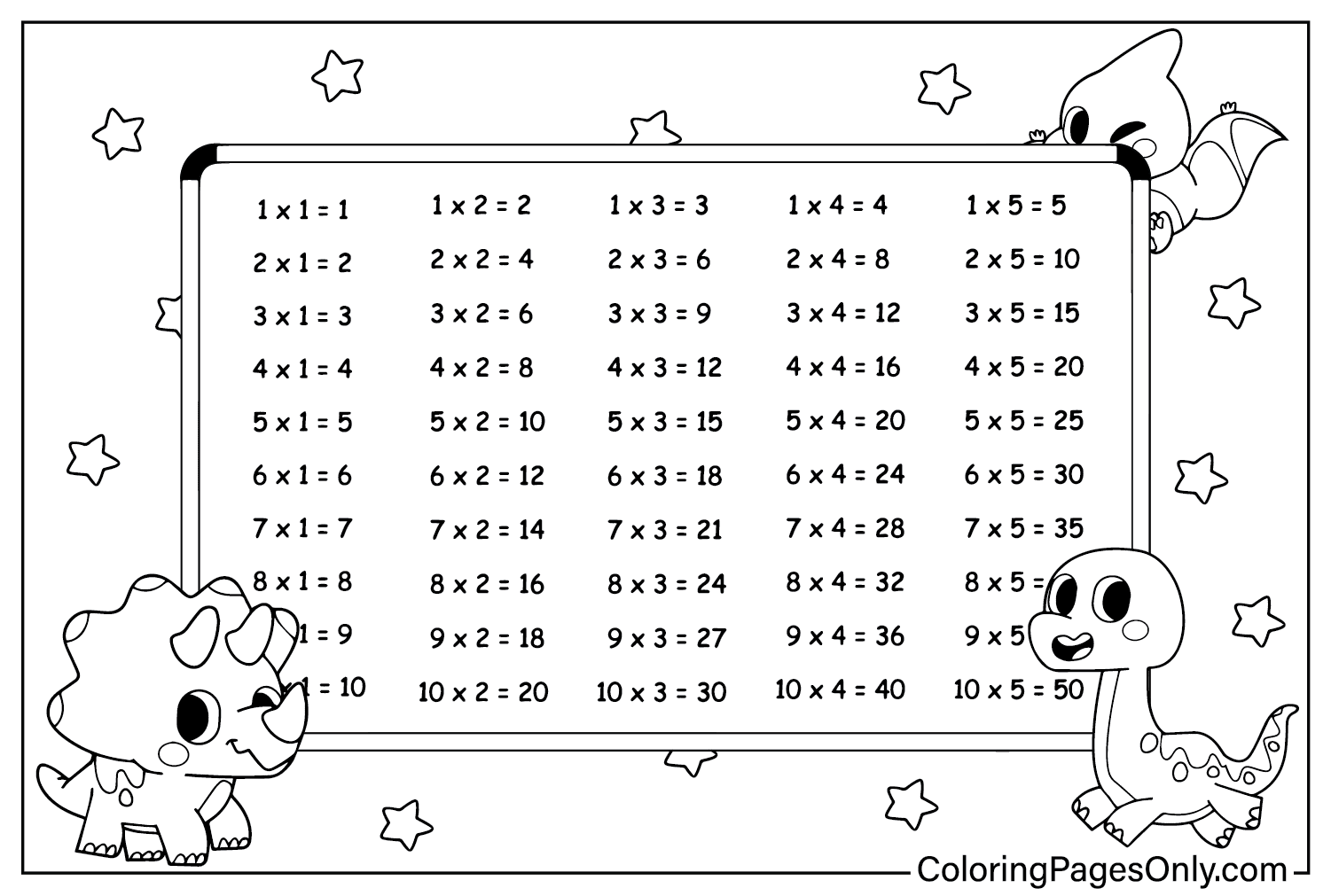
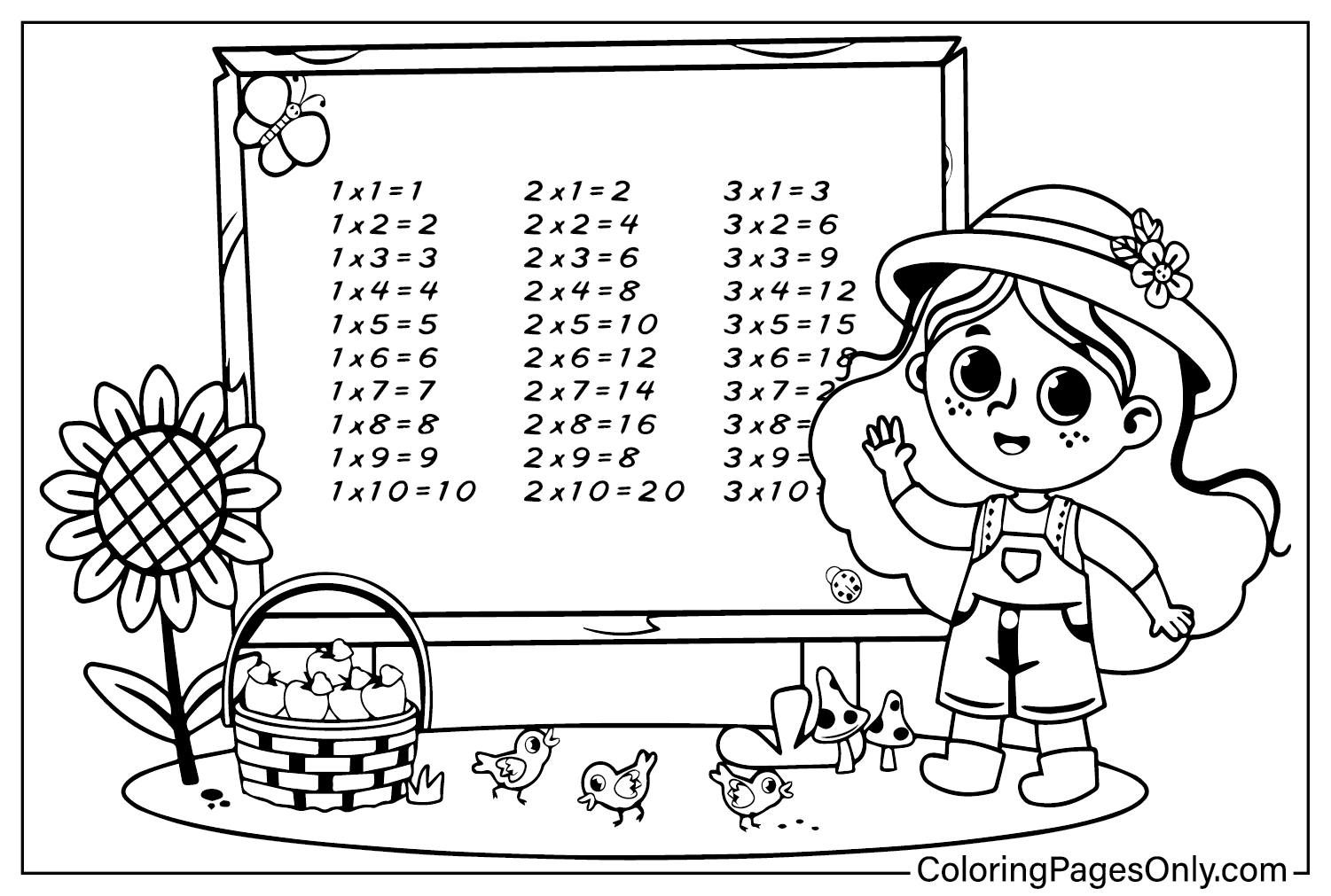
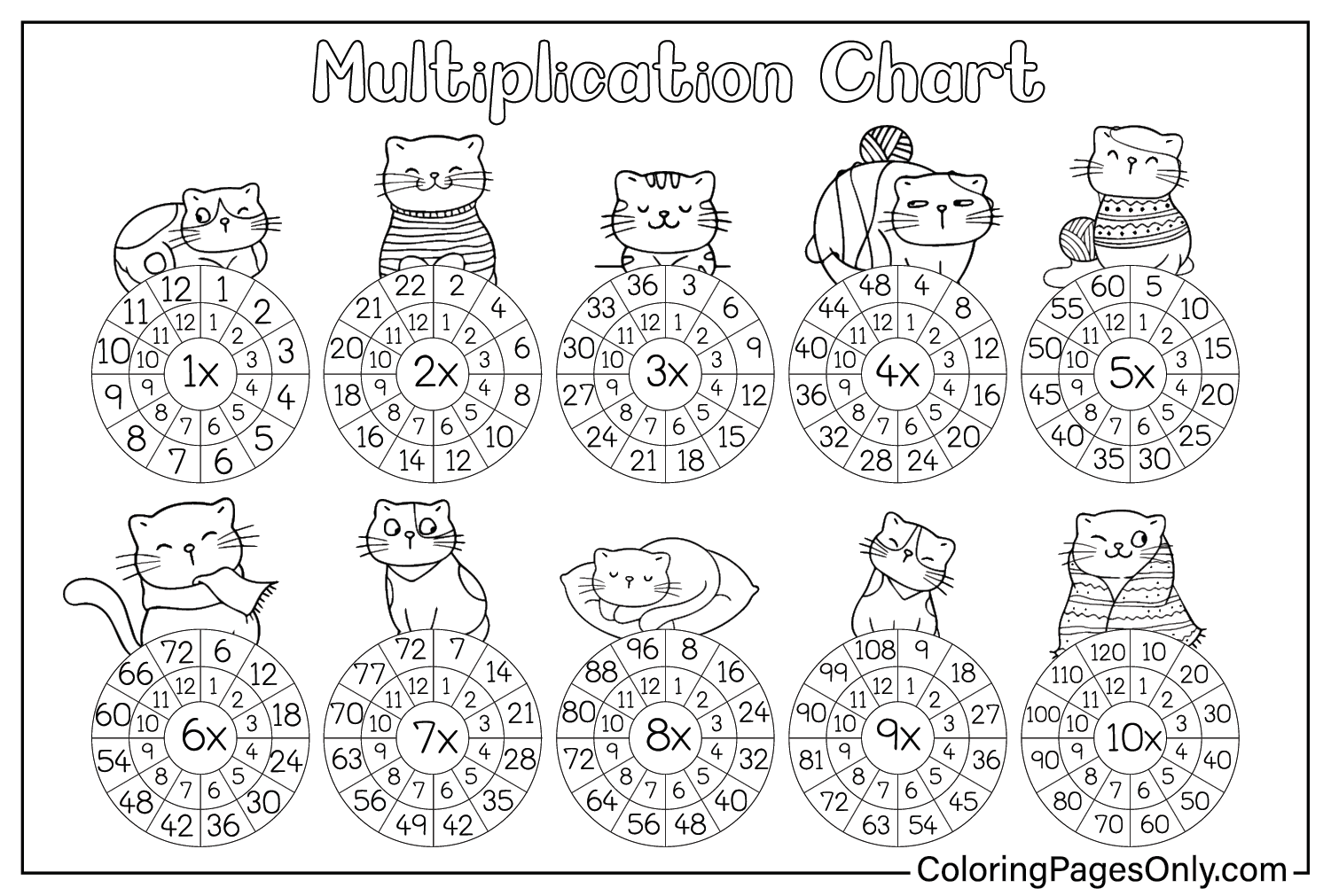
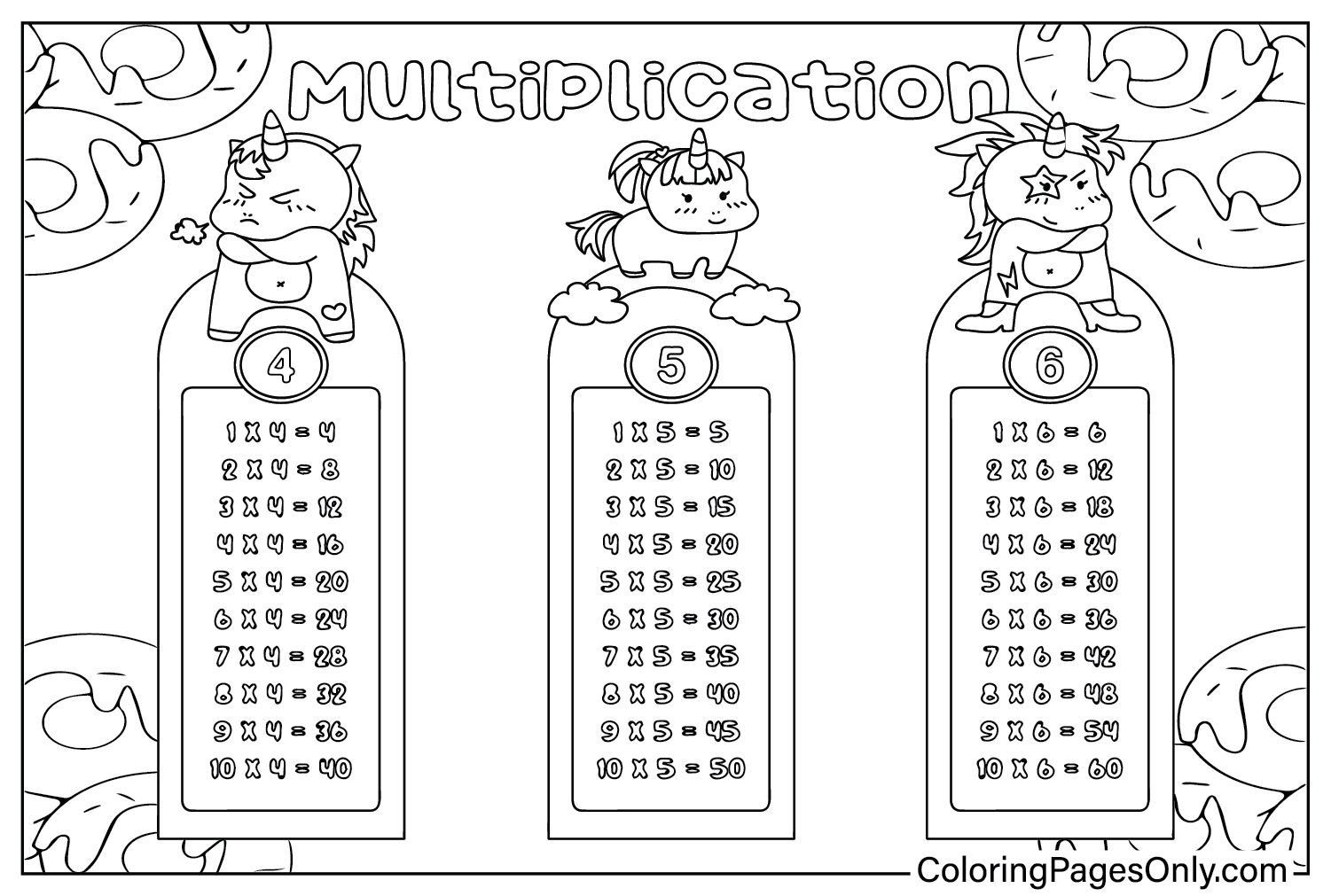
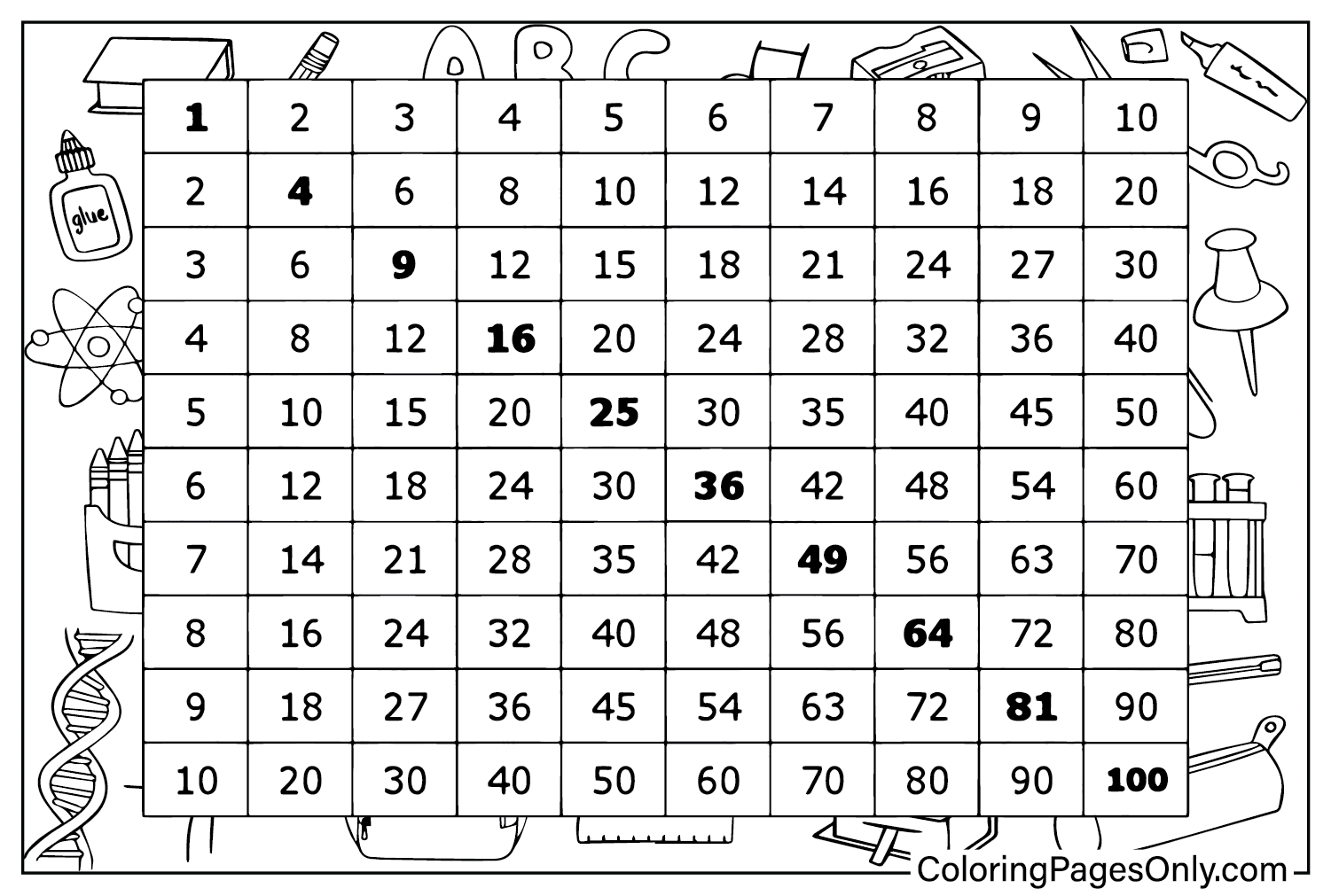
The set includes 20 printable designs, ranging from plain 10-by-10 reference grids to simplified, kid-friendly layouts and fill-in practice sheets, all built around the same underlying chart. The coloring angle here is different from a typical picture page: instead of filling in a scene, kids are coloring information, using color to make number patterns like skip-counting, even numbers, and perfect squares visible at a glance.
What Is Inside This Collection
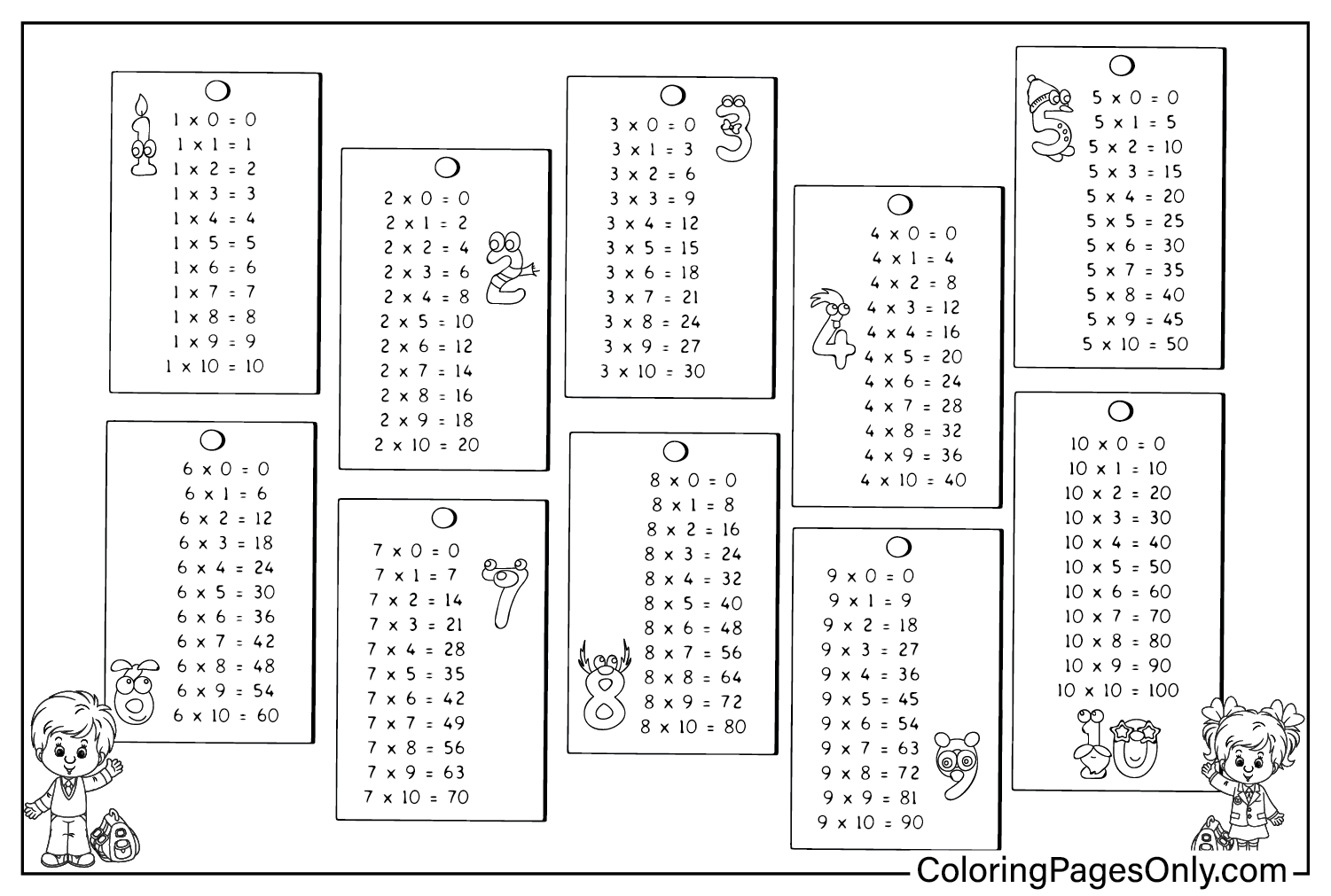
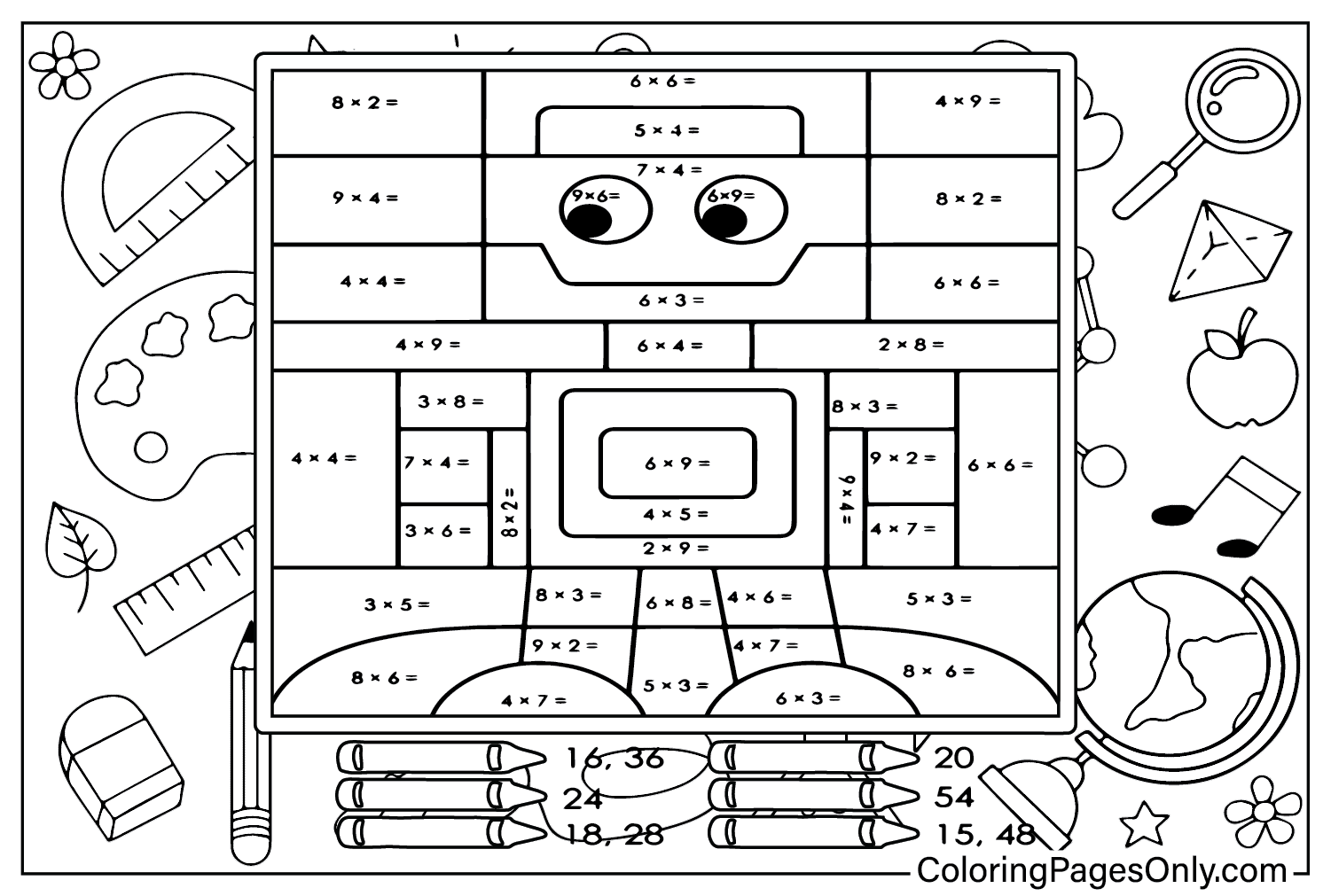
The 20 designs are built around one core reference tool in a few formats, so the differences between pages come down to grid size, decoration, and intended use rather than subject matter.
Standard Reference Grids
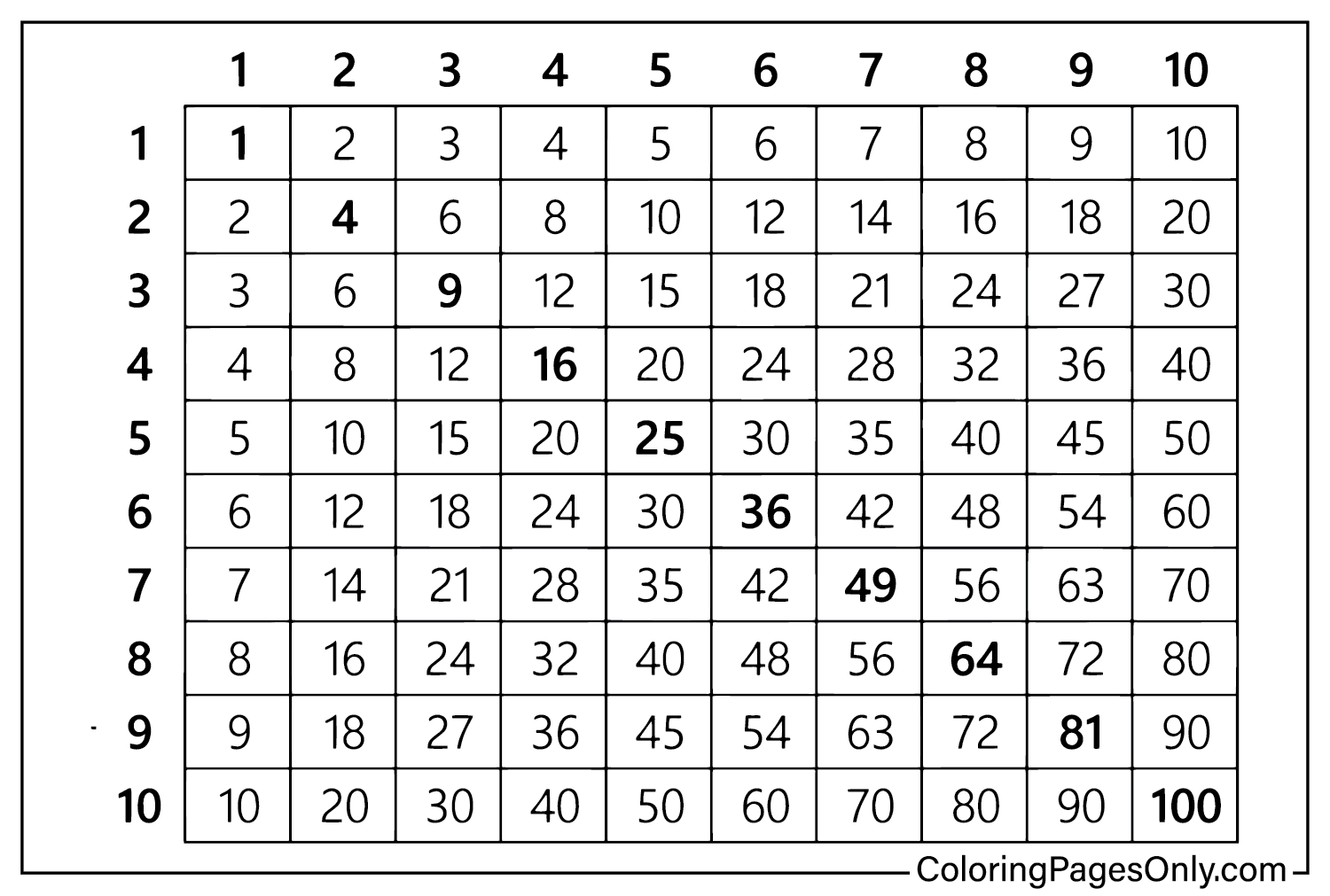
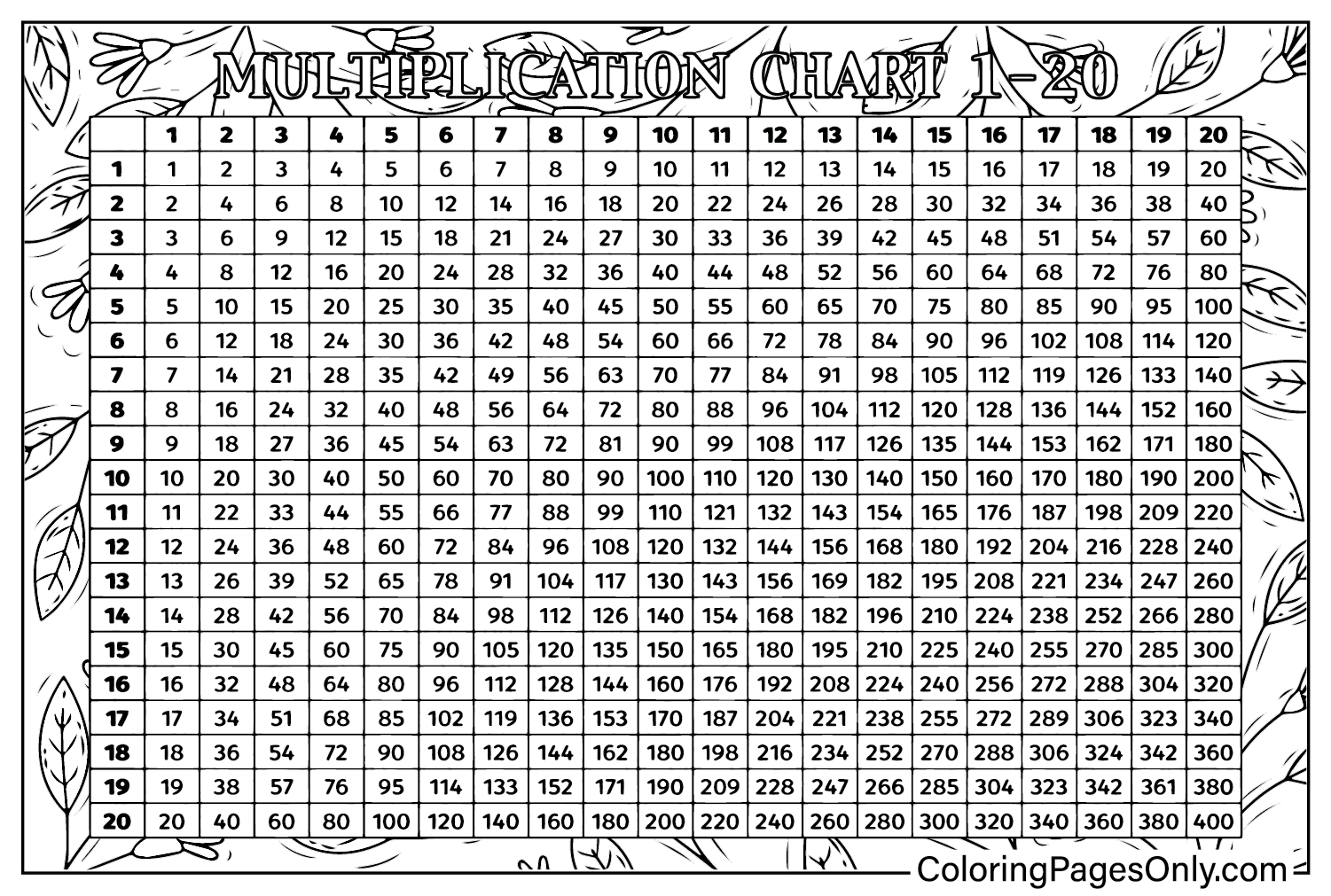
Most of the set is the classic 10-by-10 or 12-by-12 multiplication grid, with row and column headers along the top and side and the product filled into each intersecting cell. These are the plainest designs in the collection and work best as a true reference chart once colored, since the numbers stay easy to read against the color underneath.
Kid-Friendly and Simplified Layouts
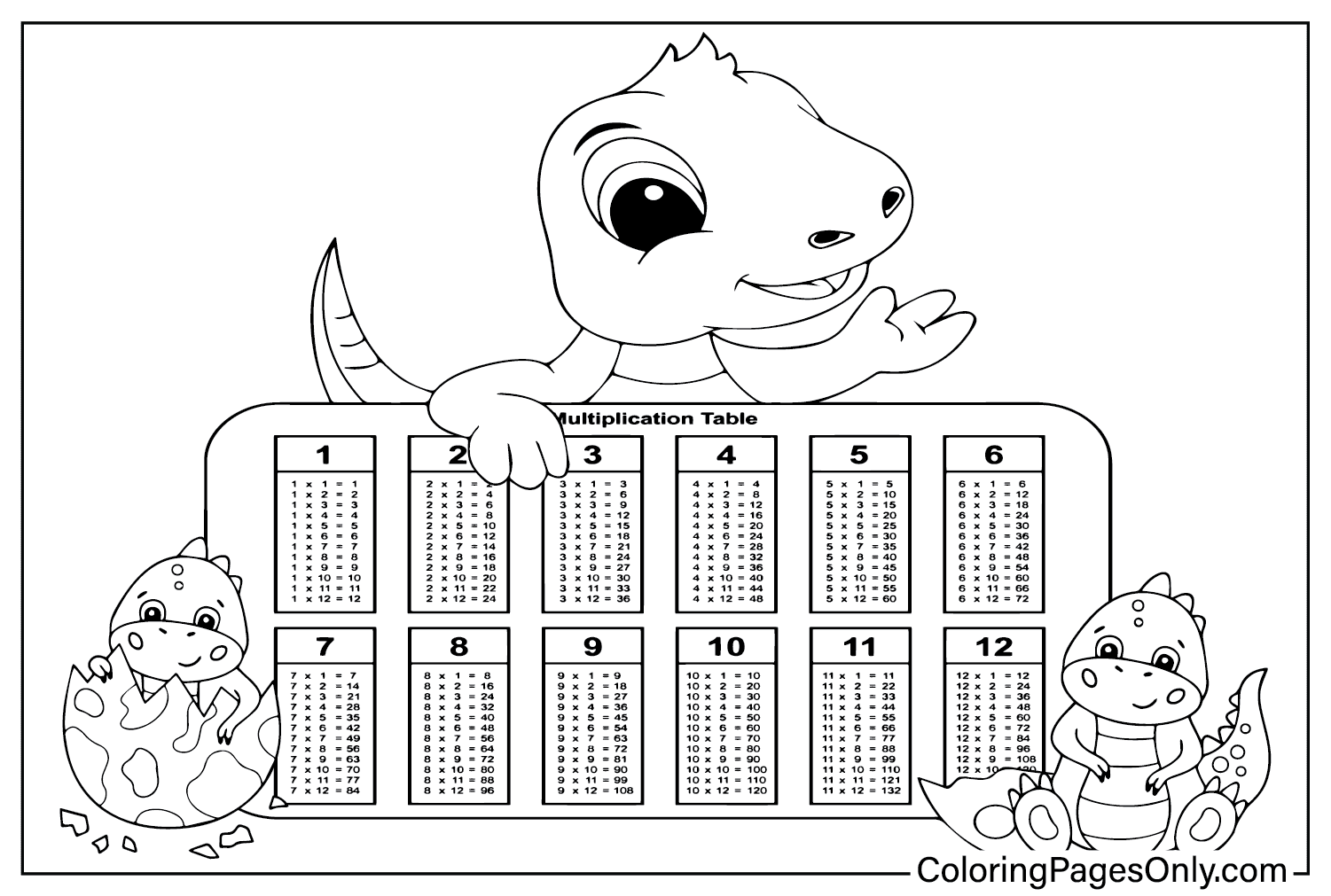
Several pages are built for younger colorers, using a smaller grid, thicker gridlines, and larger printed numerals that make them easier for early elementary hands to color inside the lines. These trade some of the reference density of a full 12-by-12 chart for a page that a first or second grader can finish in one sitting.
Practice and Activity Charts
A few designs are structured as activity sheets rather than finished reference charts, with some cells left blank for a child to solve before coloring, turning the page into a two-step task: work out the missing product, then color the cell.
Printable PDF and Online Versions
Every one of the 20 designs is available as a downloadable PDF for printing at home or school, and as an online coloring page that works directly in the browser.
What Multiplication Chart Coloring Pages Do
Fine motor development. The American Academy of Pediatrics identifies fine motor skill development as a core benefit of structured coloring for children ages 2 through 7. Staying inside a small grid cell without covering the printed numeral asks for more hand control than coloring a large open space, which makes a multiplication chart a finer-grained fine motor task than most picture-based pages.
Pattern recognition is tied to the math itself. Common Core standard 3.OA.D.9 asks third graders to identify arithmetic patterns in the multiplication table and explain them. Color is one of the most direct ways to make those patterns visible. Coloring every multiple of 5 the same shade, for example, shows a child that those products always end in 0 or 5 before anyone has to explain why.
Anxiety reduction through focus. A 2005 study in the Art Therapy Journal documented measurable reductions in anxiety following structured coloring sessions. For a student who associates multiplication facts with timed tests, coloring the same chart at an unhurried pace can lower the stakes of looking at the numbers at all.
A self-made study reference. A chart a child has colored by hand, row by row, tends to see more use as a study tool than a plain printed one, since the coloring process is itself a first pass through every fact on the page. The finished, colored chart can then be kept as a genuine homework reference rather than a one-time activity.
How to Color Multiplication Chart Pages Well
- Color-code the times-table rows: Assign each row or column its own Crayola color, for example, Scarlet for the 2s, Dandelion for the 5s, and Sky Blue for the 10s, using the same hue on both the row and its matching column. Coloring this way turns the chart into a color key: any cell shaded Dandelion is automatically a multiple of 5.
- Highlight the diagonal of perfect squares: The cells where a number is multiplied by itself, 1, 4, 9, 16, 25, and on up, run in a straight diagonal line across the chart. Outlining or filling that diagonal in Black or Mahogany, kept separate from the row colors, makes the chart’s built-in symmetry visible at a glance.
- Use Dandelion for every multiple of 5: Since every multiple of 5 ends in either 0 or 5, shading those cells a consistent golden yellow turns a memorized rule into a pattern a child can check by eye.
- Use Sky Blue for every multiple of 2: Every product in an even-numbered row or column shares the same last-digit pattern of 0, 2, 4, 6, or 8. Coloring them a consistent blue makes roughly half the chart recognizable even before a single fact is memorized.
- Keep the numerals legible over color: Color the cell background first with a light layer of colored pencil, then go back over the printed numeral with a Black or Brown fine-tip marker so the number stays readable once the background is filled in. A heavy marker laid straight over a printed number tends to blot it out.
- Save bold color for the border on kid-friendly pages: On the simplified, decorated designs in the set, reserve the brightest colors, Red, Orange, and Violet, for the border or corner illustrations, and keep the number grid itself in lighter, consistent shades so it still functions as a usable chart once finished.
5 Creative Craft Ideas With Multiplication Chart Coloring Pages
- Homework Folder Reference. Color a full 10-by-10 or 12-by-12 chart, slide it into a plastic sleeve, and tape it inside a school folder as a standing reference during homework time.
- Desk Reference Mat. Color a chart and laminate it for use as a desk mat, so the finished coloring work doubles as a study tool sitting in plain view.
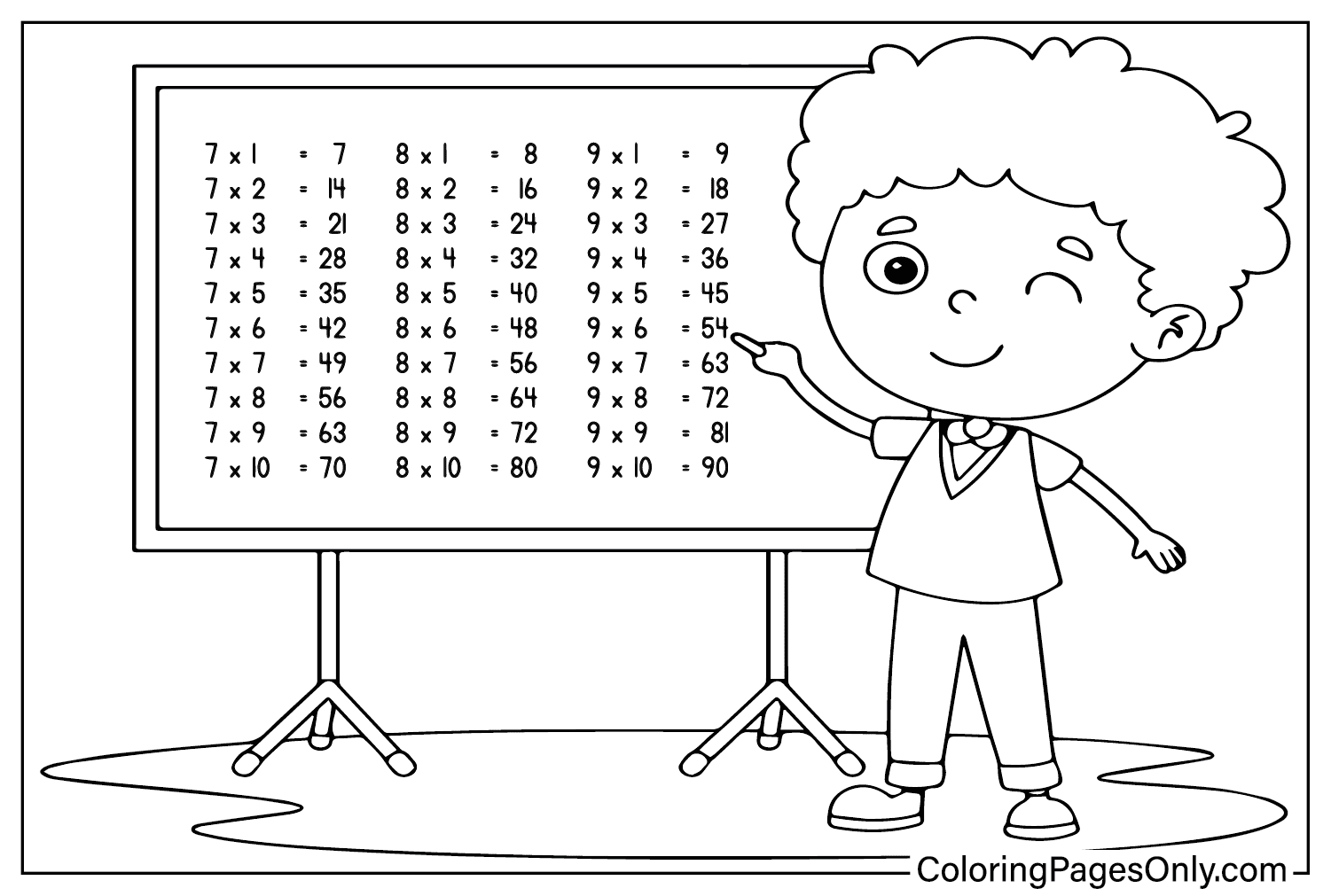
- Times-Table Bookmark. Color a single row, such as the 5s or the 9s, and cut it into a narrow strip that works as a bookmark listing one full times table top to bottom.
- Math Corner Display. Color several charts with a different color key on each, then pin them together on a classroom or bedroom wall as a display comparing the same information colored differently.
- Flashcard Companion Set. Color a chart using the row color-coding method, then make matching flashcards for the same color group, so studying the Sky Blue row on the chart means pulling the Sky Blue flashcards to match.
Frequently Asked Questions
What are multiplication chart coloring pages?
Multiplication chart coloring pages are printable grids showing the product of every pair of numbers from 1 through 10 or 1 through 12, formatted for a child to color in by hand. They combine a standard math reference tool with a coloring activity, and this collection offers 20 free designs as printable PDFs or online coloring pages.
What is the history of the multiplication chart?
The earliest known multiplication tables date back roughly 4,000 years to ancient Babylon, where they were recorded on clay tablets using a base-60 number system. A base-10 version found on Chinese bamboo strips from the Warring States period is around 2,200 years old. In French, Italian, and Russian, the grid is still called the Table of Pythagoras, after the Greek mathematician Pythagoras, though the individual inventor is not known.
What size multiplication chart should my child start with?
A 10-by-10 chart, covering 1 through 10, matches the Common Core expectation that students know all one-digit multiplication facts by the end of third grade. A 12-by-12 chart adds the 11s and 12s and is more common once a student has the basic facts down and is moving toward more advanced math.
At what grade level do students learn multiplication facts?
Common Core standard 3.OA.C.7 states that by the end of third grade, students should know from memory all products of two one-digit numbers. Multiplication is typically introduced in second or third grade and built toward fluency through third grade, which is why multiplication chart activities are most common for ages 7 through 9.
What patterns can be found on a multiplication chart?
A few patterns repeat across every multiplication chart: every product of a number times itself falls on a diagonal line from corner to corner, every multiple of 5 ends in 0 or 5, every multiple of 2 is an even number, and the chart is symmetrical across that diagonal because 4 times 7 equals 7 times 4. Coloring by these rules is one of the more direct ways to see them.
Why color a multiplication chart instead of just studying it?
Coloring by pattern, such as shading every multiple of 5 the same color, turns a rule a child has to memorize into something visible on the page. Teachers commonly use this kind of color-coding because it gives visual learners a second way into the same information, alongside memorization and timed practice.
Are multiplication chart coloring pages suitable for young children?
The simplified, larger-grid designs in this set suit children around ages 6 and 7 who are just starting to see multiplication. The full 10-by-10 and 12-by-12 reference grids suit ages 8 and up, once a child is actively memorizing facts, and the charts stay useful as a study reference well into upper elementary school.
Can a colored multiplication chart replace flashcards or timed drills?
A colored chart works best as a reference and a pattern-recognition tool, not a replacement for the recall practice that flashcards and timed drills provide. Common Core’s fluency standard specifically calls for facts to be known from memory, so most teachers use a colored chart alongside drills rather than instead of them.
Start Coloring
Download any page by clicking the design. No account, email, or payment is required. Pages print directly from the browser at full resolution or open in the online coloring tool for screen use. Share finished pages on Facebook or Pinterest with the share buttons at the top of each design page.