Jasmine Coloring Pages
 By:
Jennifer Thoa - Content Editor & Designer
Updated:
By:
Jennifer Thoa - Content Editor & Designer
Updated:
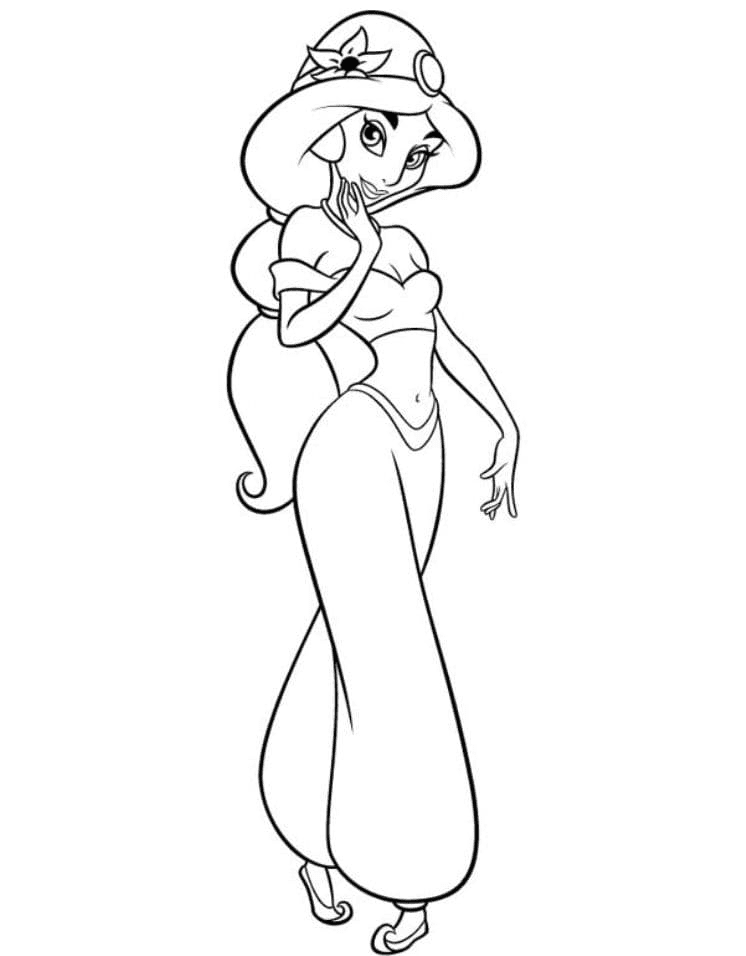
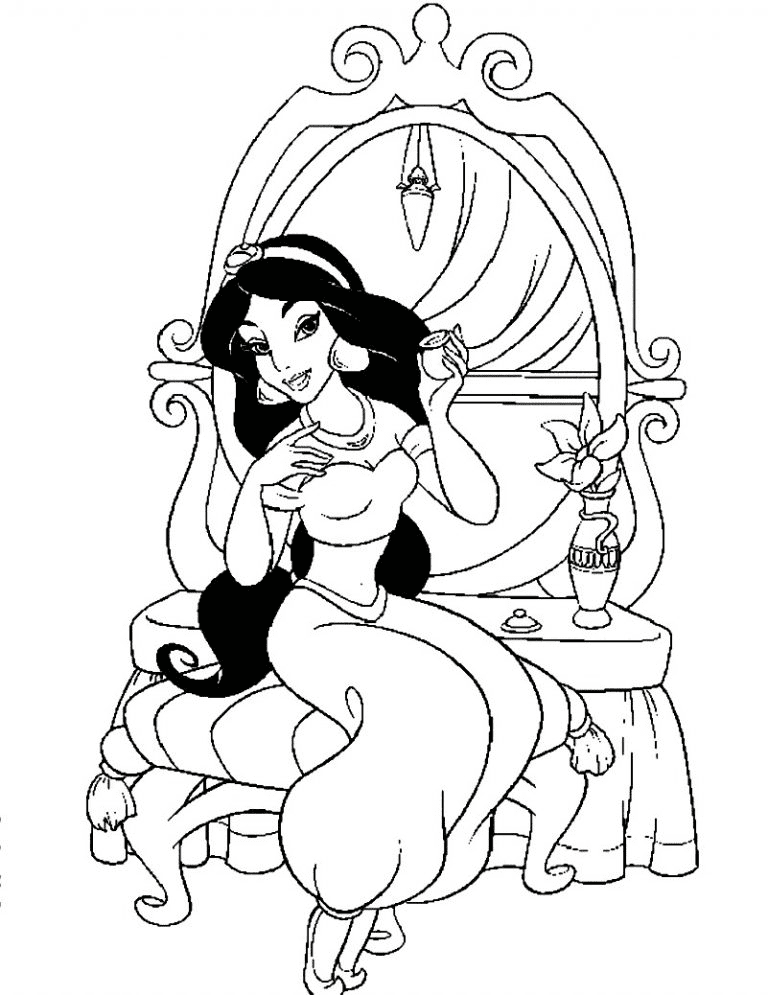
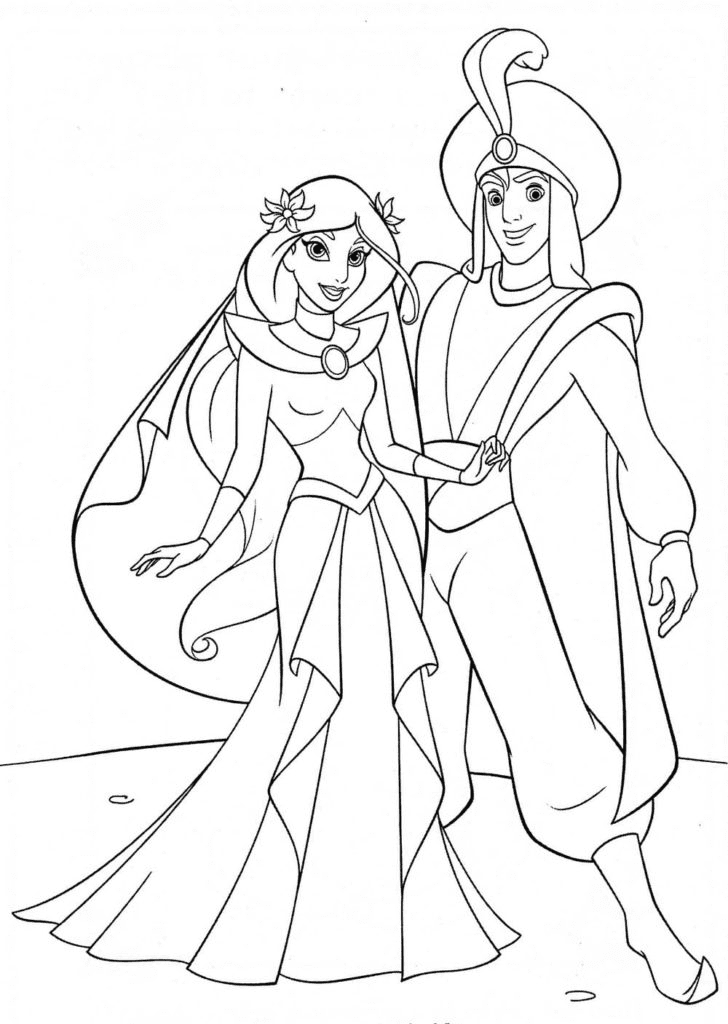
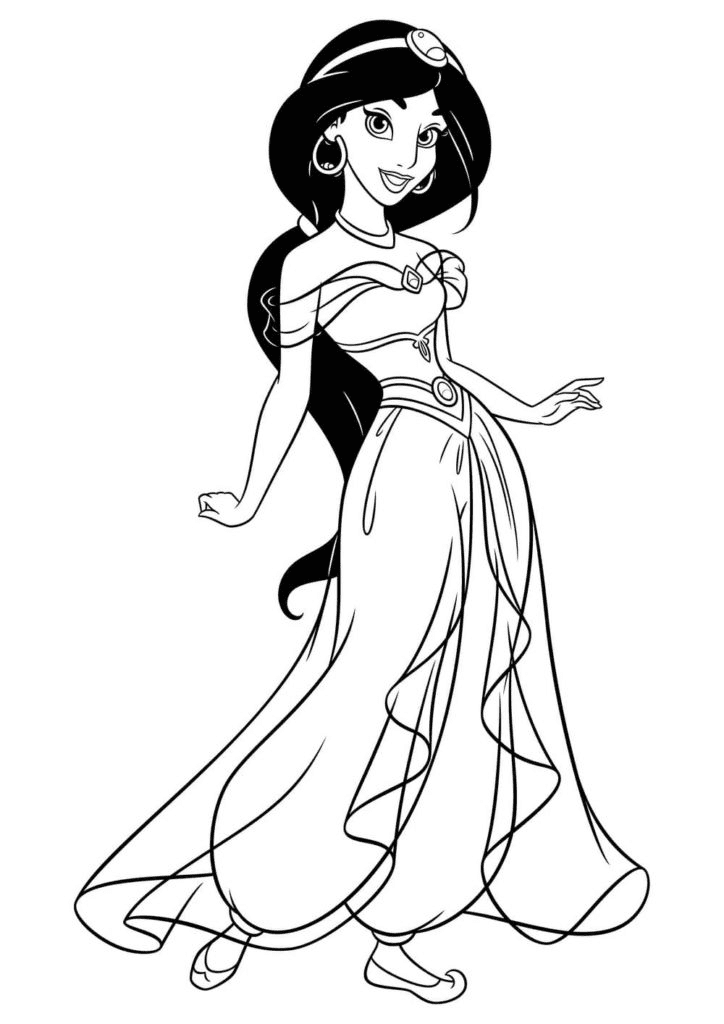
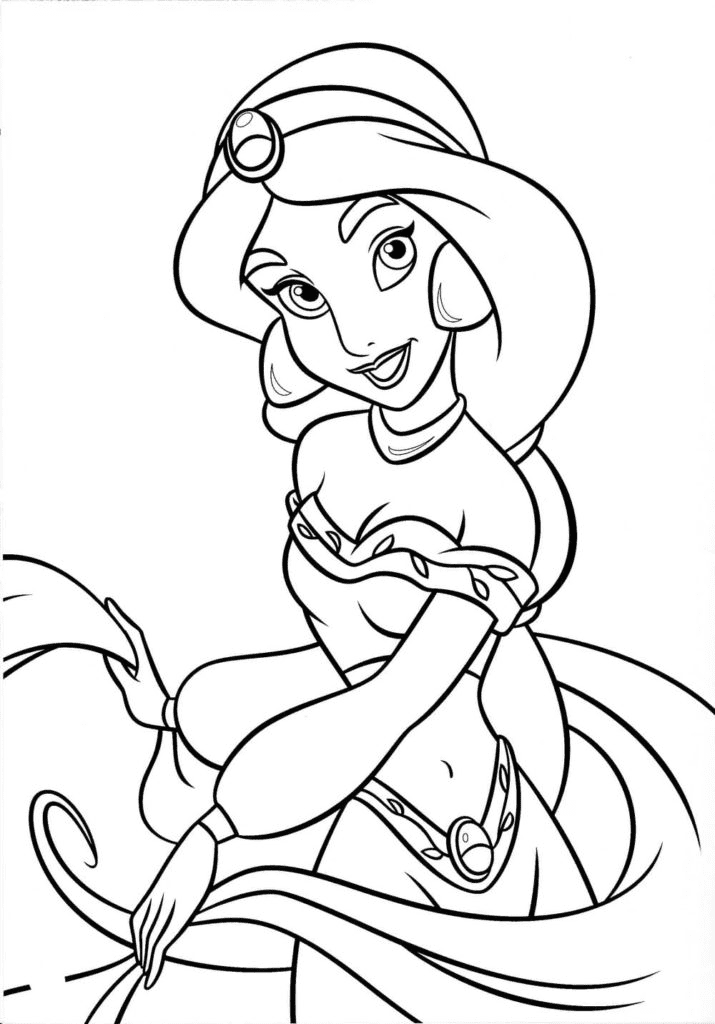
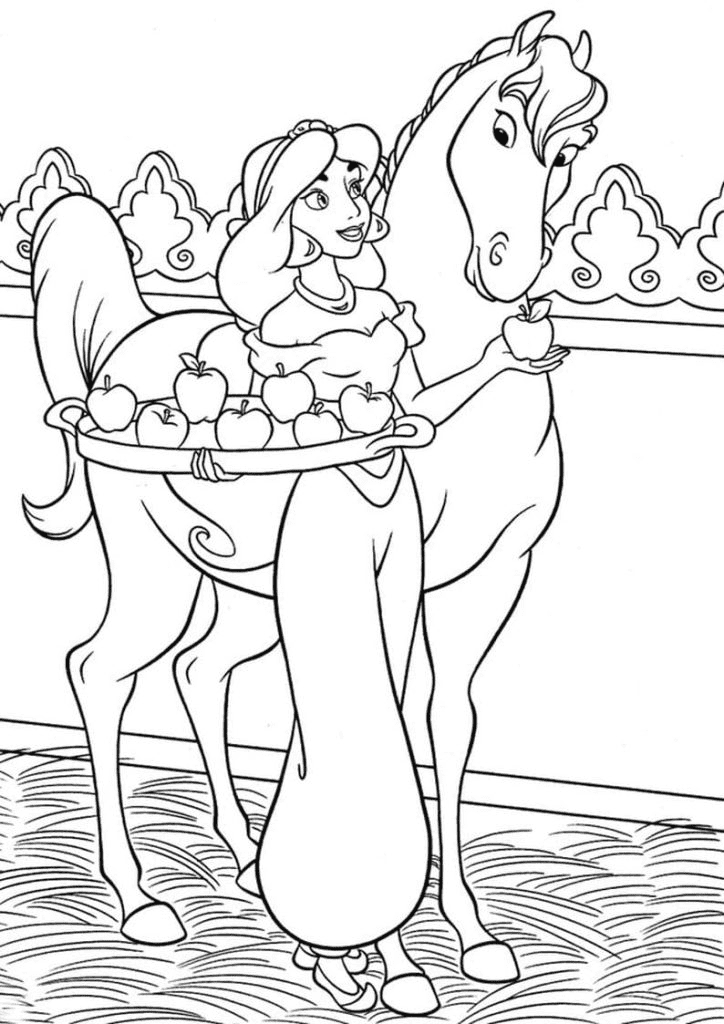
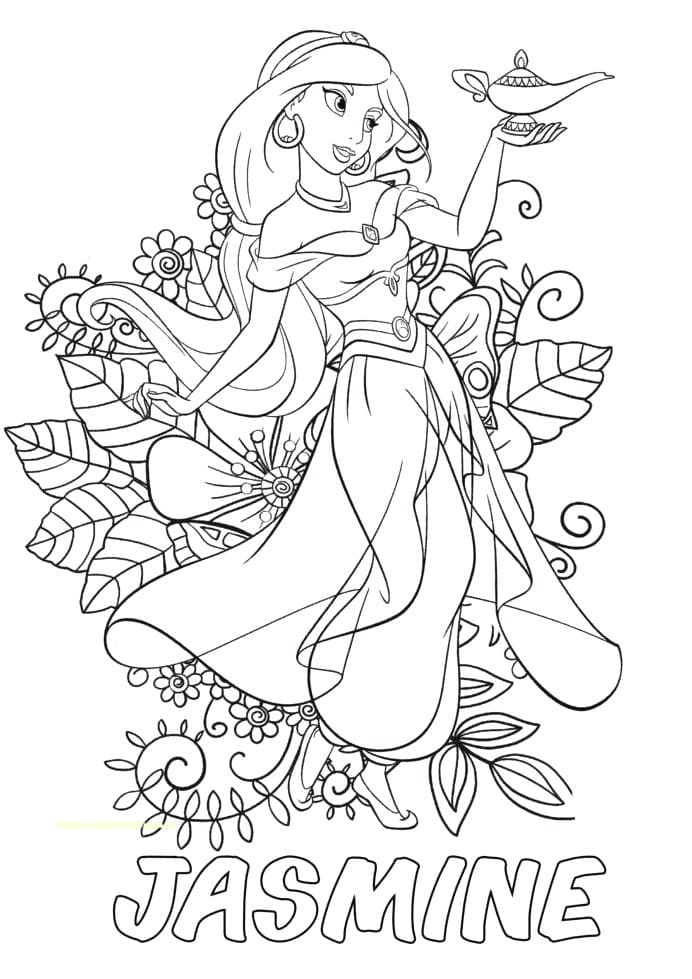
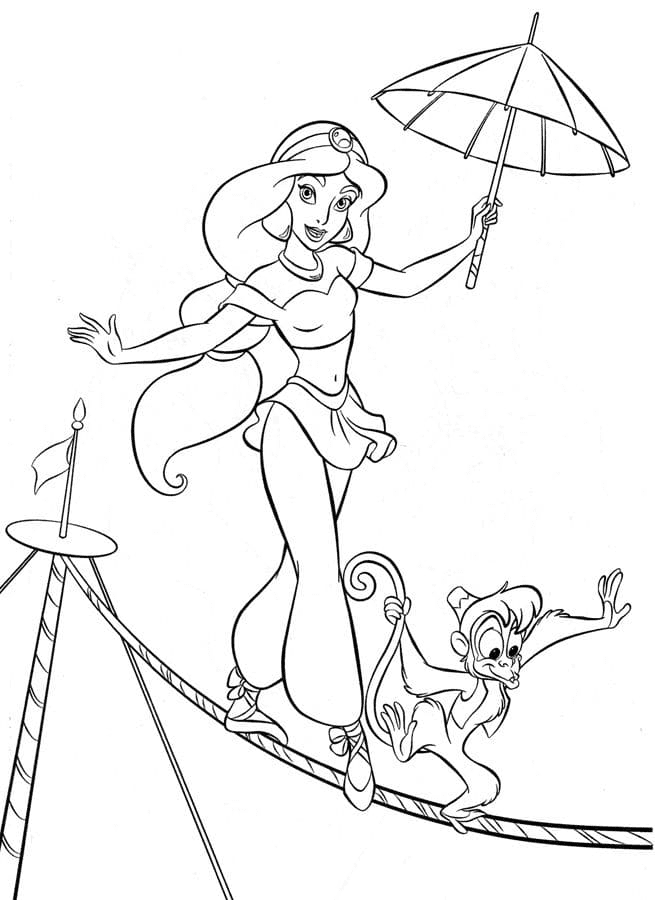
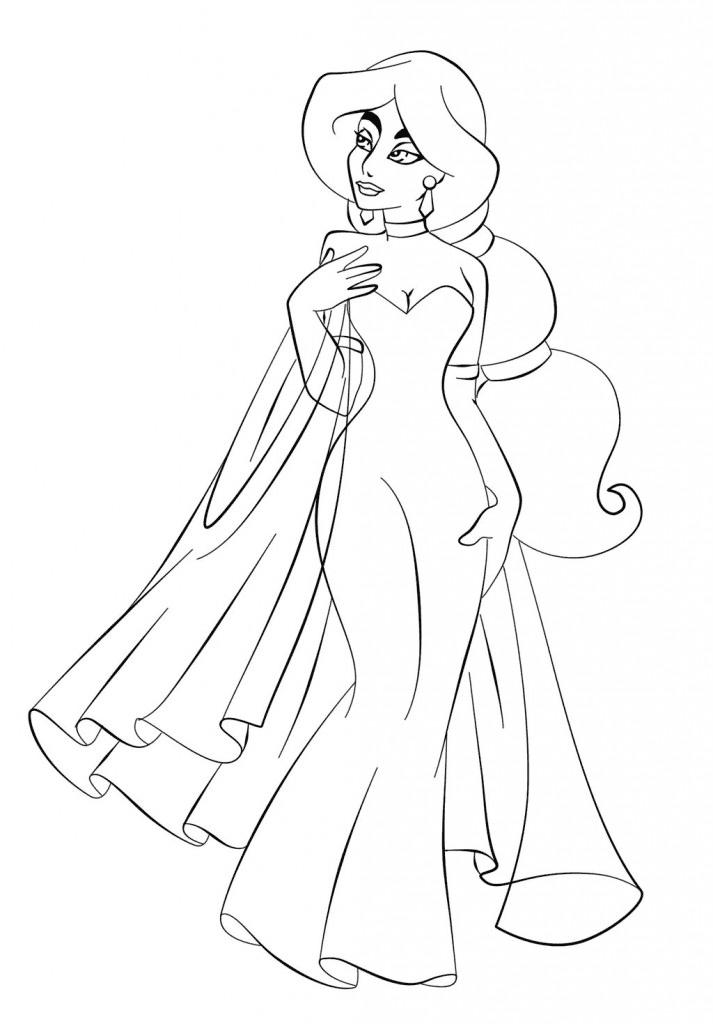
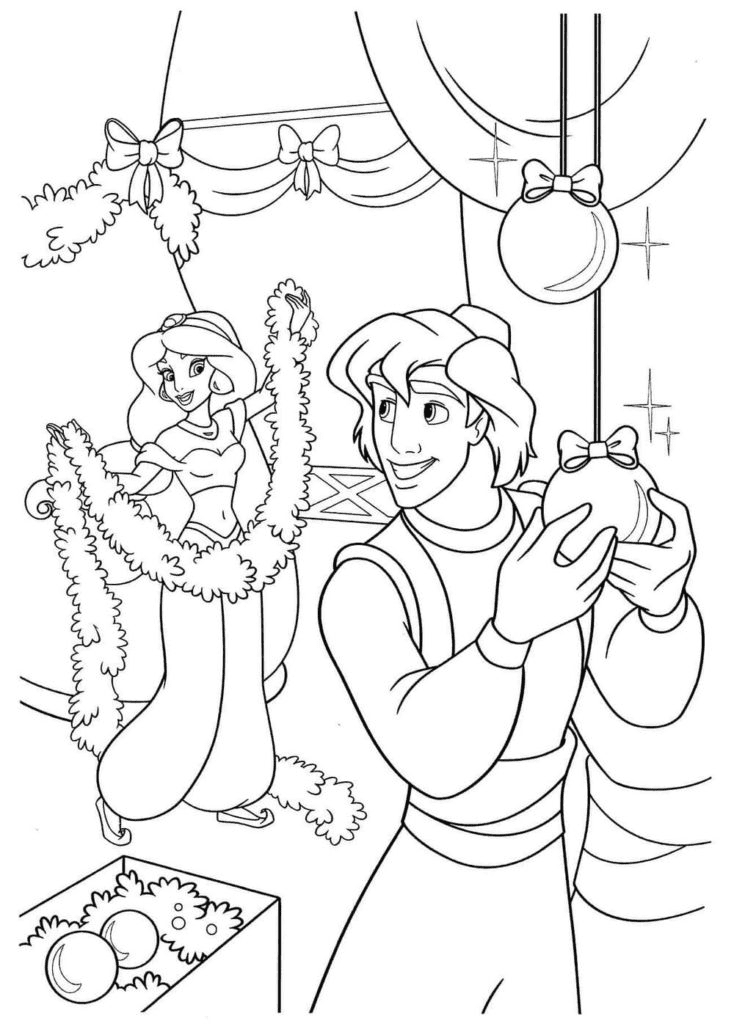
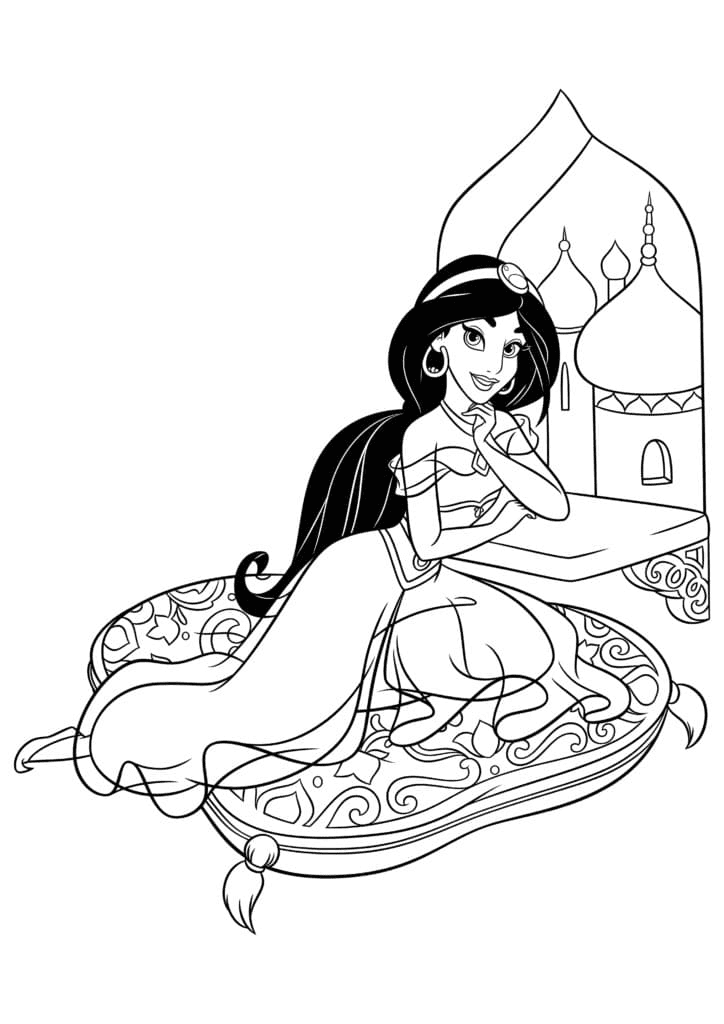
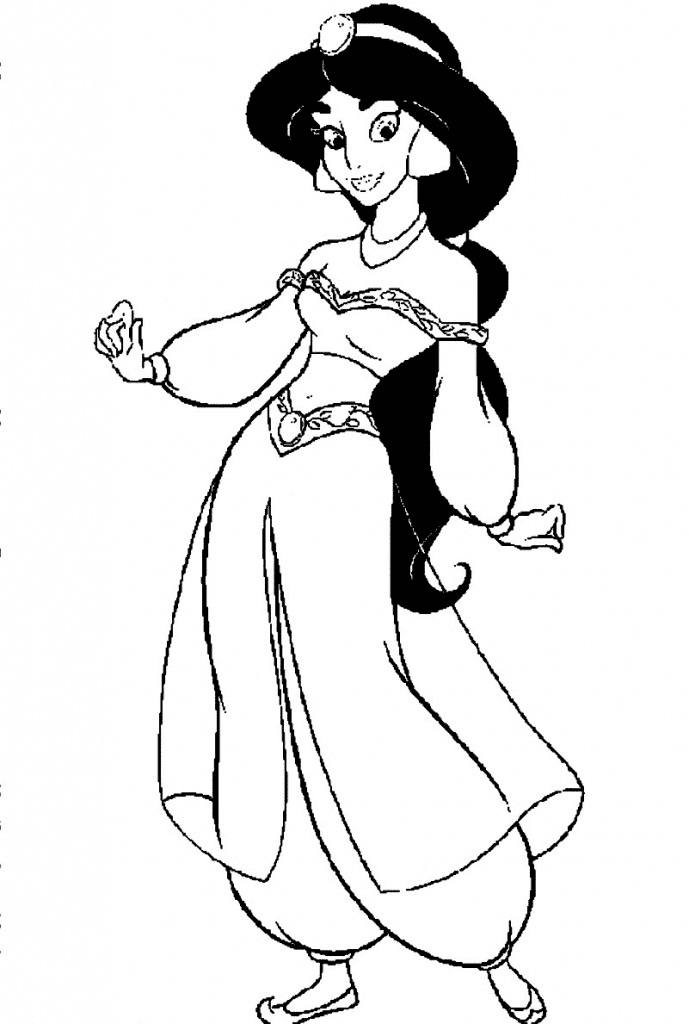
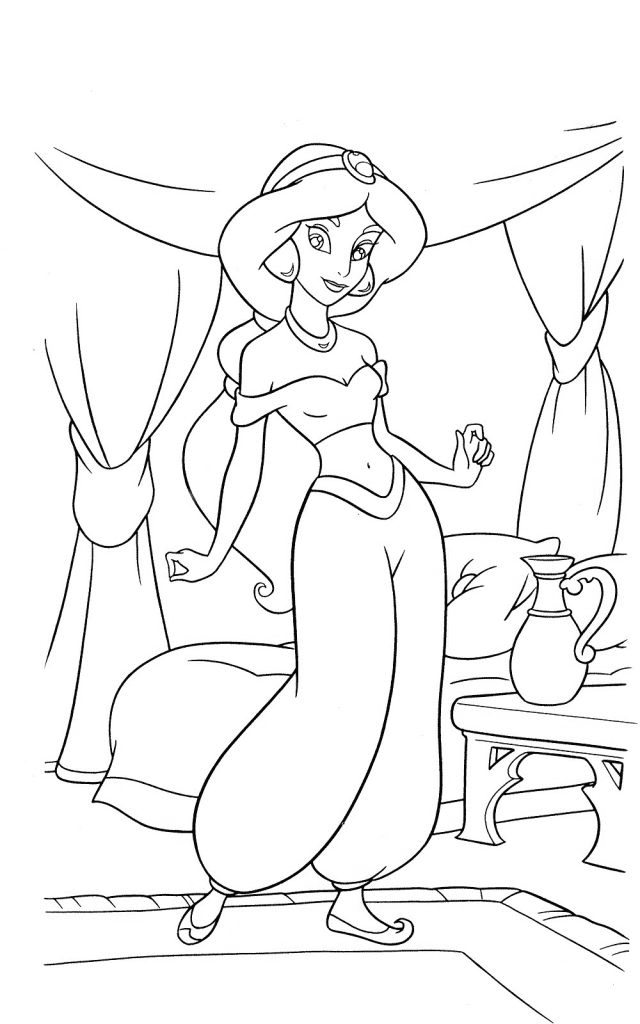
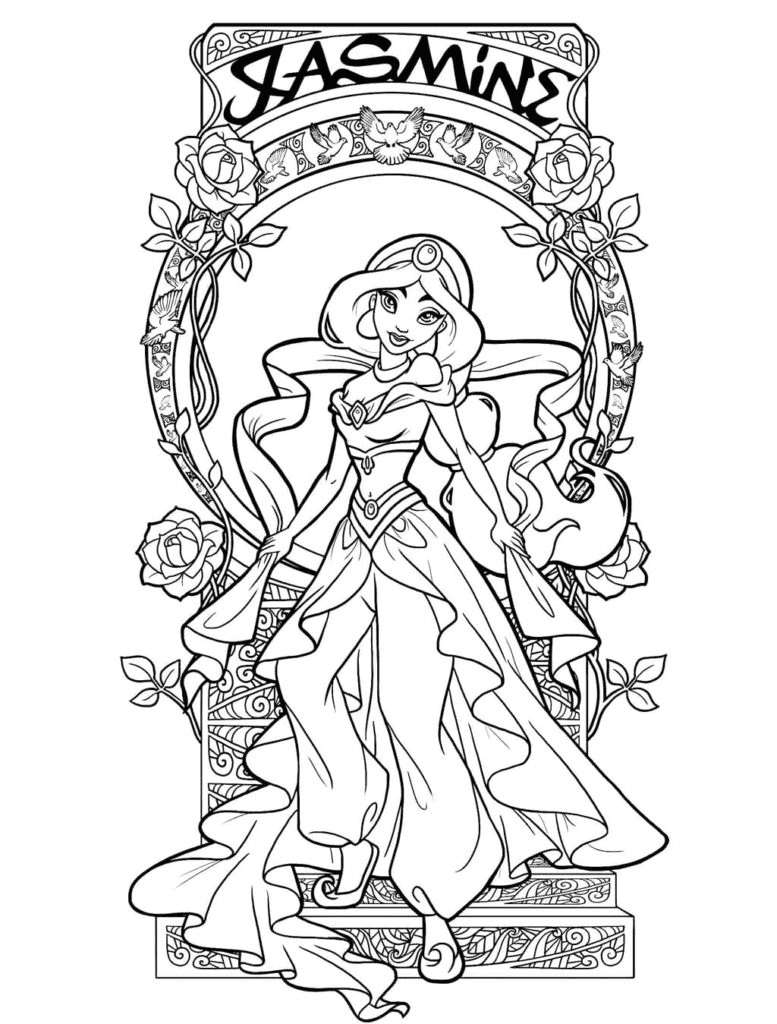
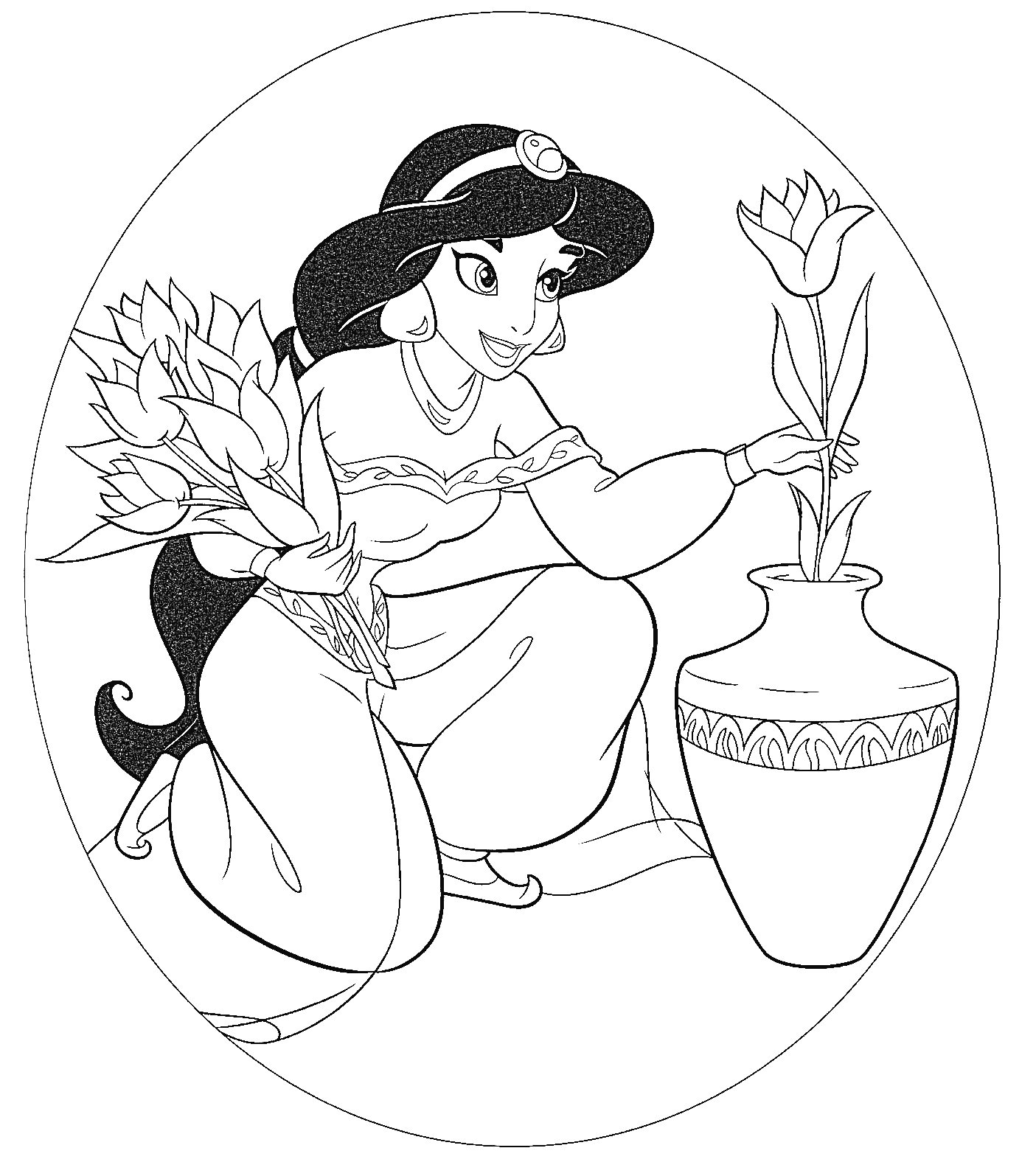
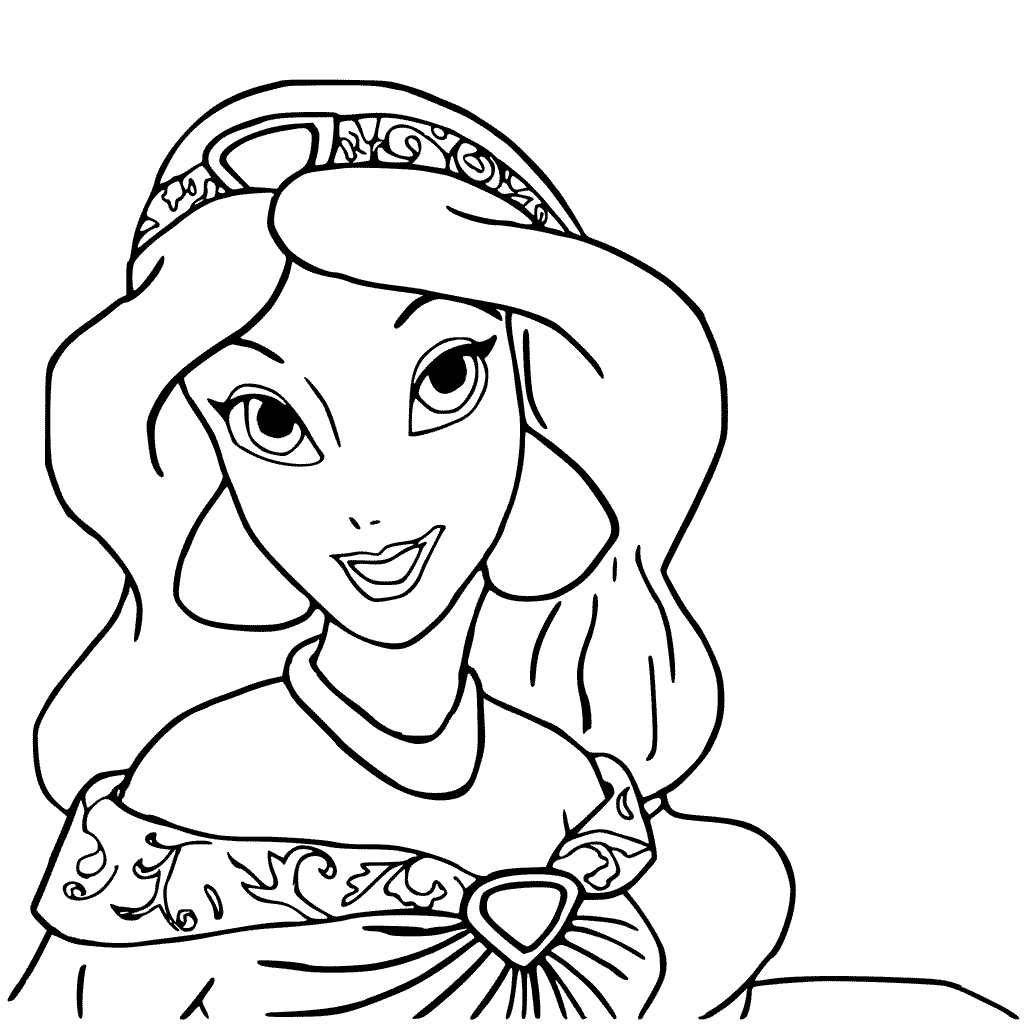
Free Jasmine coloring pages: 49 printable PDF designs featuring Jasmine in classic portraits, palace and marketplace scenes, and moments with Aladdin and her pet tiger Rajah. Each page can be downloaded as a PDF to print or colored online in the browser.
Jasmine was created by directors Ron Clements and John Musker for Disney’s 1992 film Aladdin, loosely based on Princess Badroulbadour from the One Thousand and One Nights tale of Aladdin and the magic lamp. Animator Mark Henn built her face from several real references at once, including his own sister and actress Jennifer Connelly’s eyebrows. In contrast, actress Linda Larkin provided her speaking voice and Lea Salonga her singing voice, making Jasmine the first Disney princess with two different actresses cast for the two roles. This collection colors that same look, from her turquoise outfit to her pet tiger, across dozens of scenes.
This set works well alongside a broader conversation about world cultures, since Jasmine was Disney’s first princess drawn from a non-European setting, and her design pulls directly from Middle Eastern and South Asian visual traditions, including a palace inspired by the Taj Mahal. The palace and marketplace scenes give an older child more architectural detail to work through, while the simpler solo portraits suit a child just starting to color a face and hair.

What Is Inside This Collection
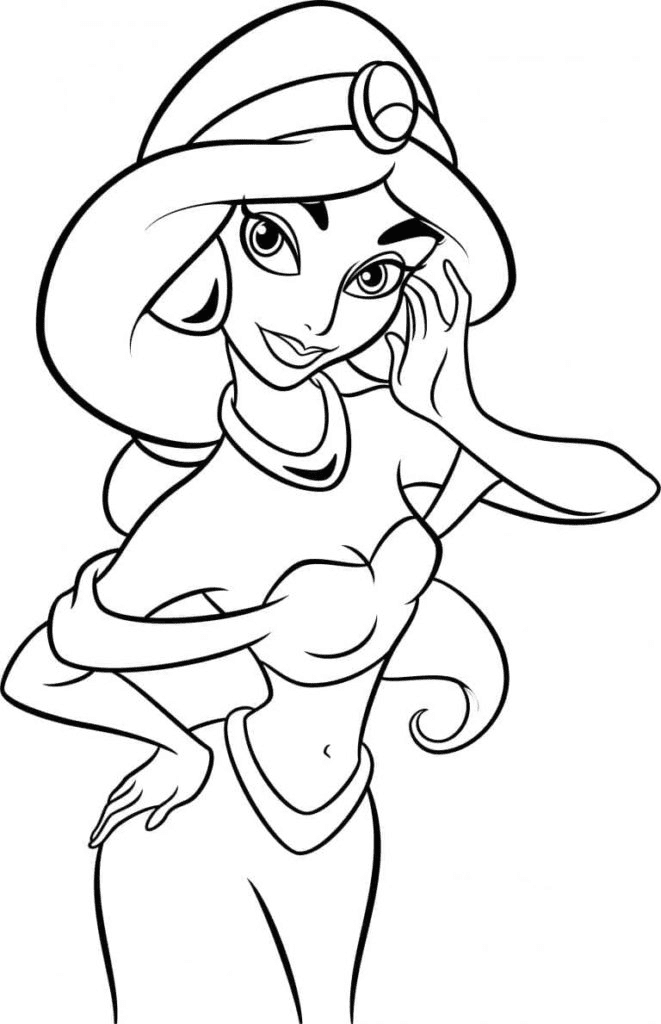
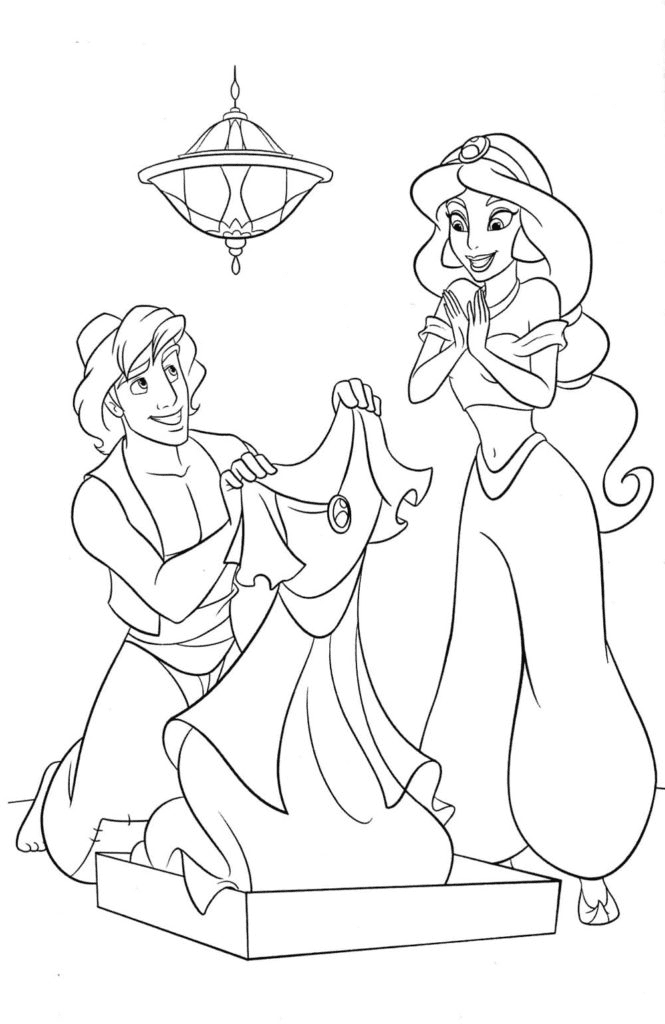
The 49 pages fall into a few clear groups, built around Jasmine’s expressions, her relationship with Aladdin, her tiger Rajah, and the palace setting around her.
Classic Jasmine Portraits
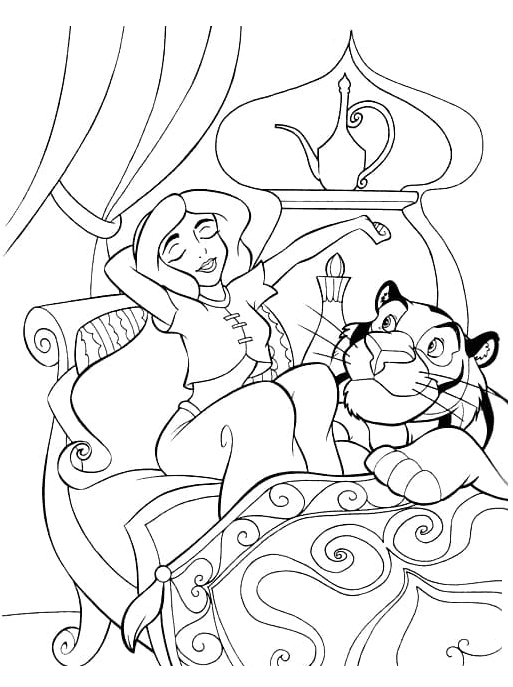
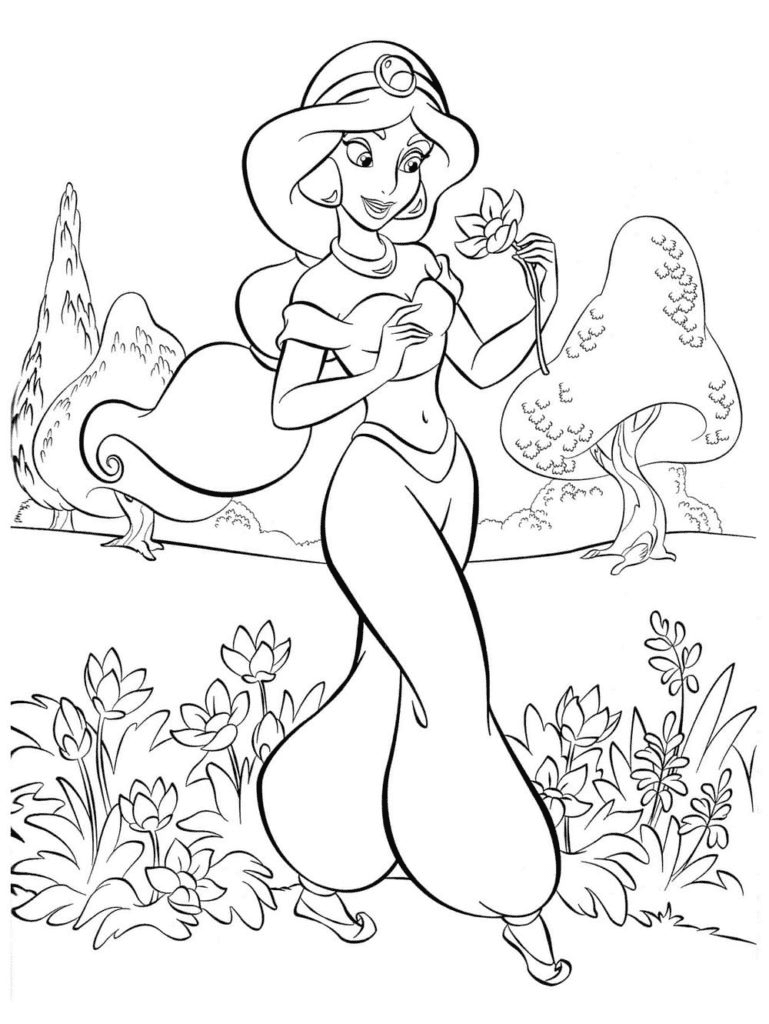
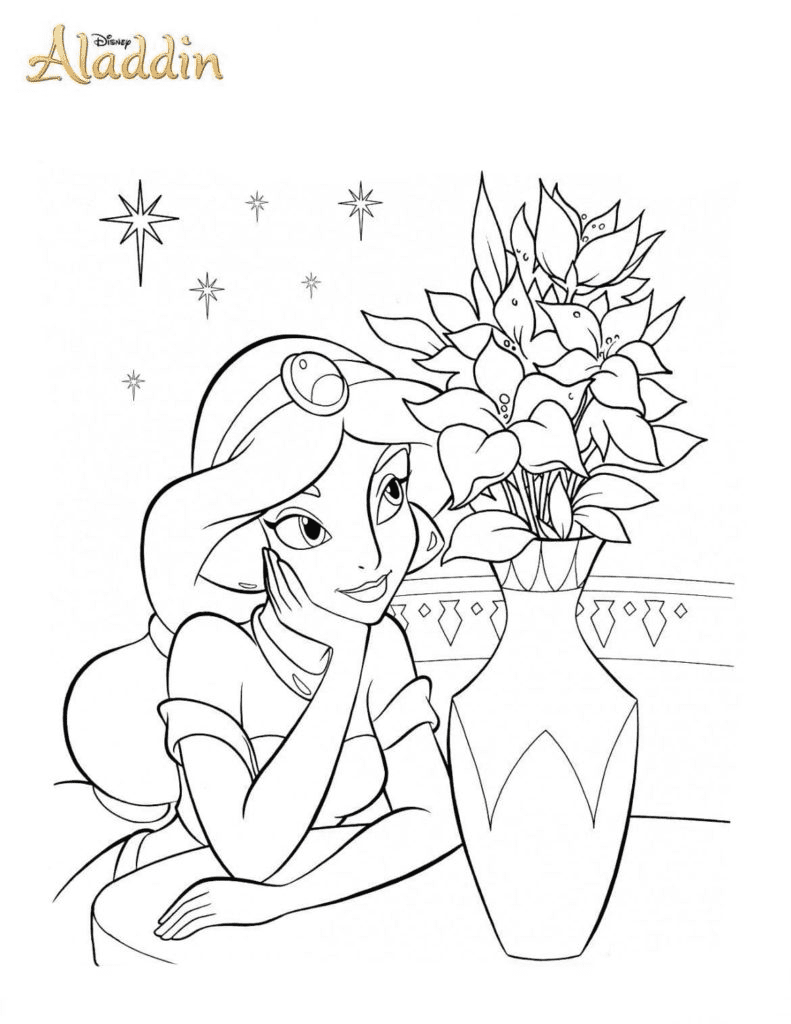
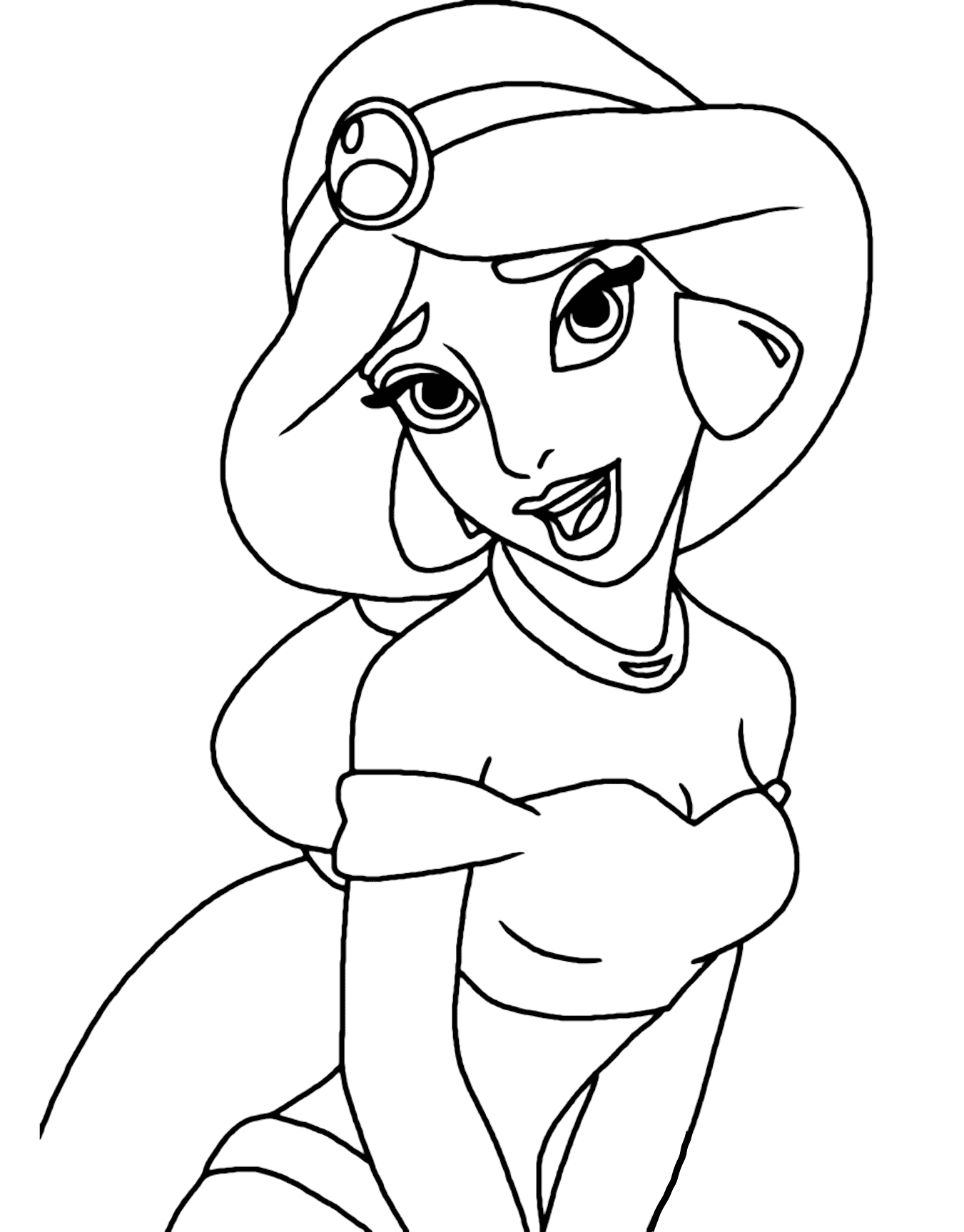
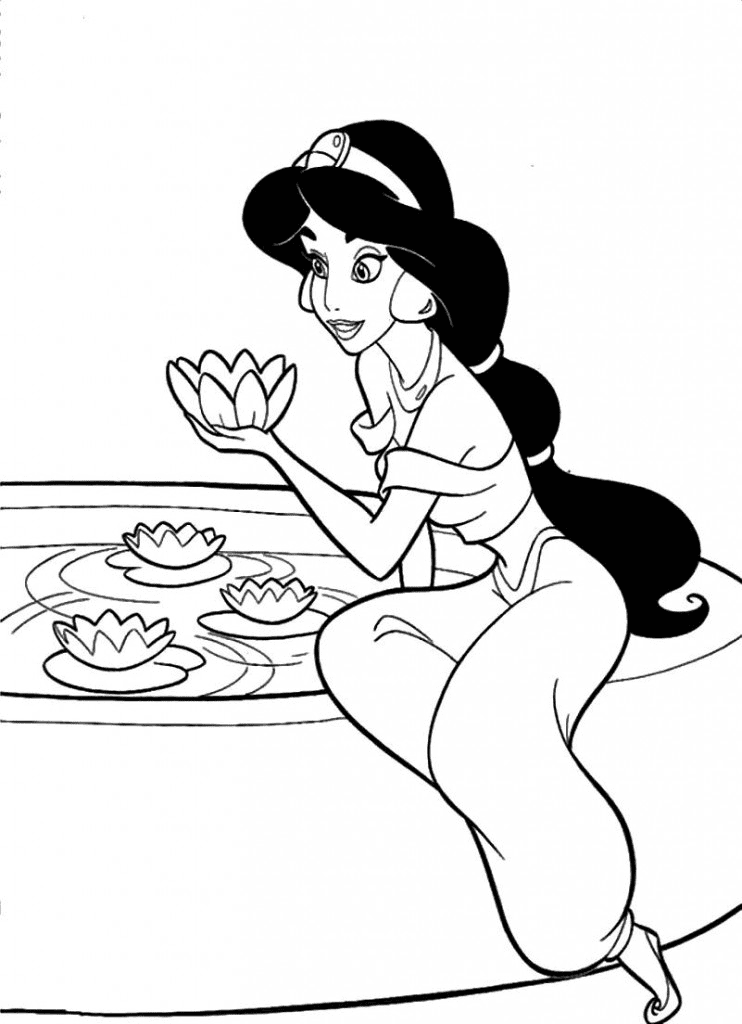
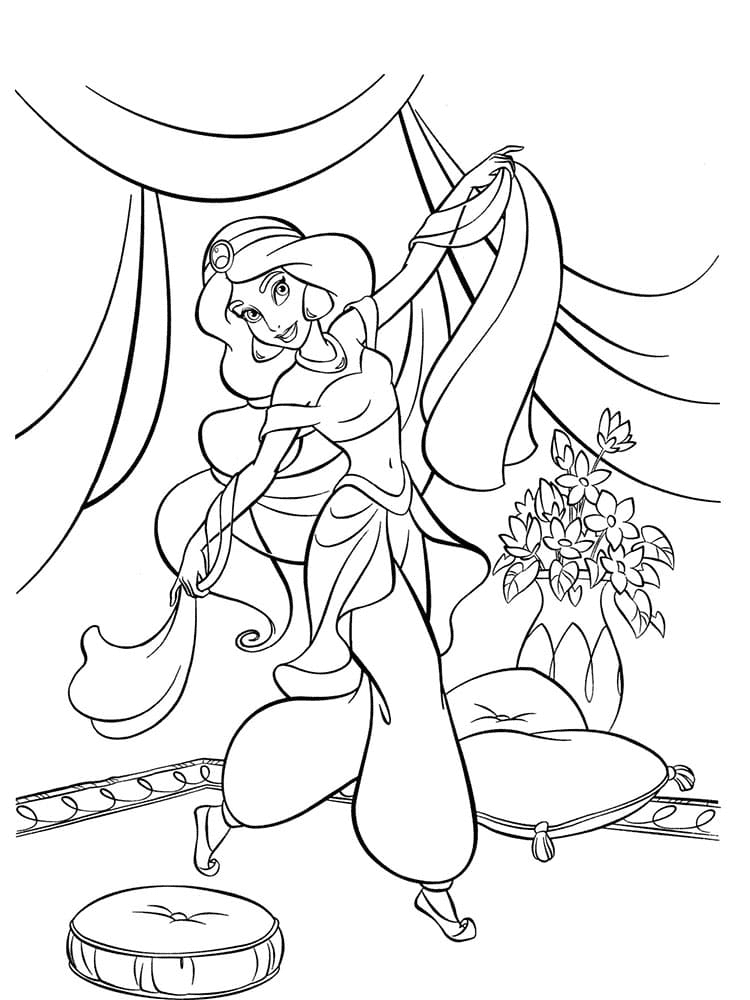
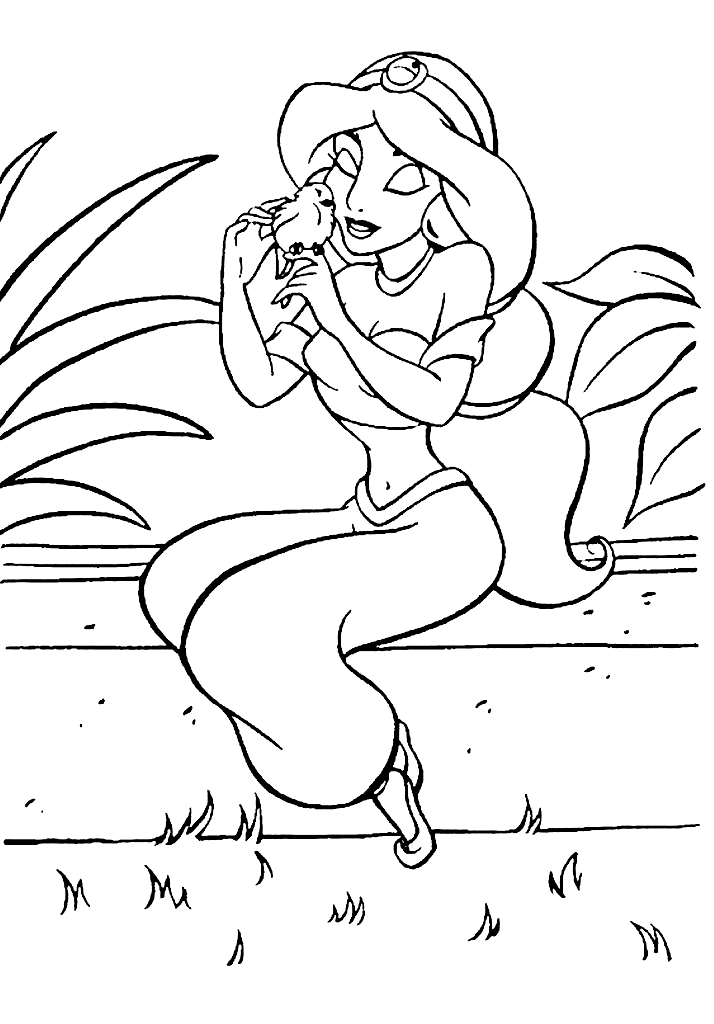
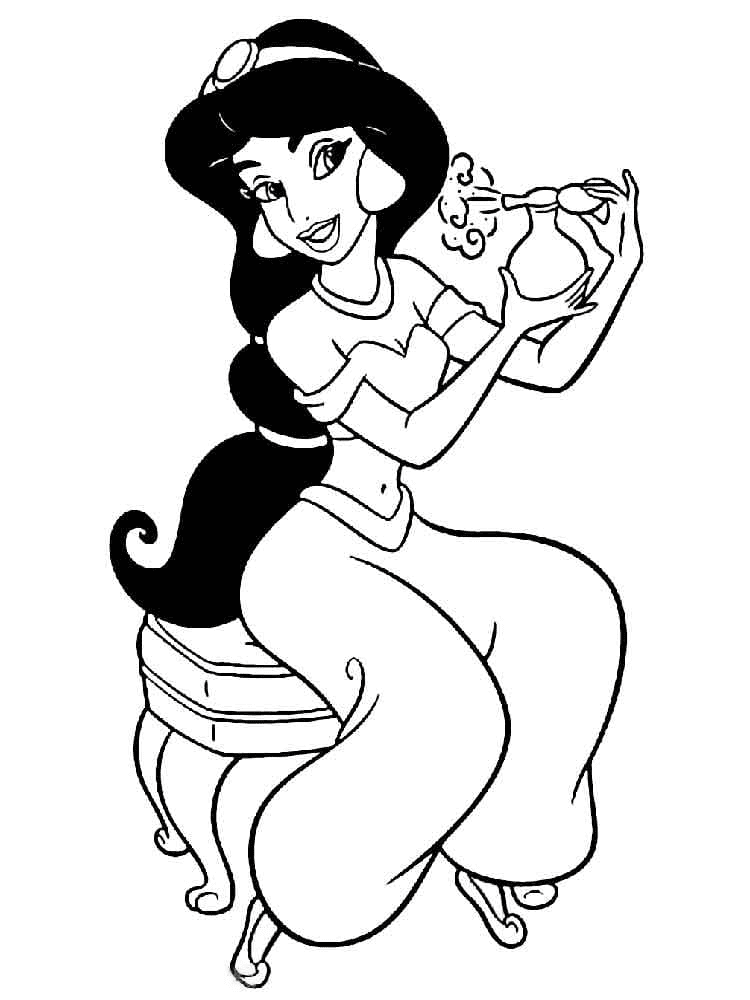
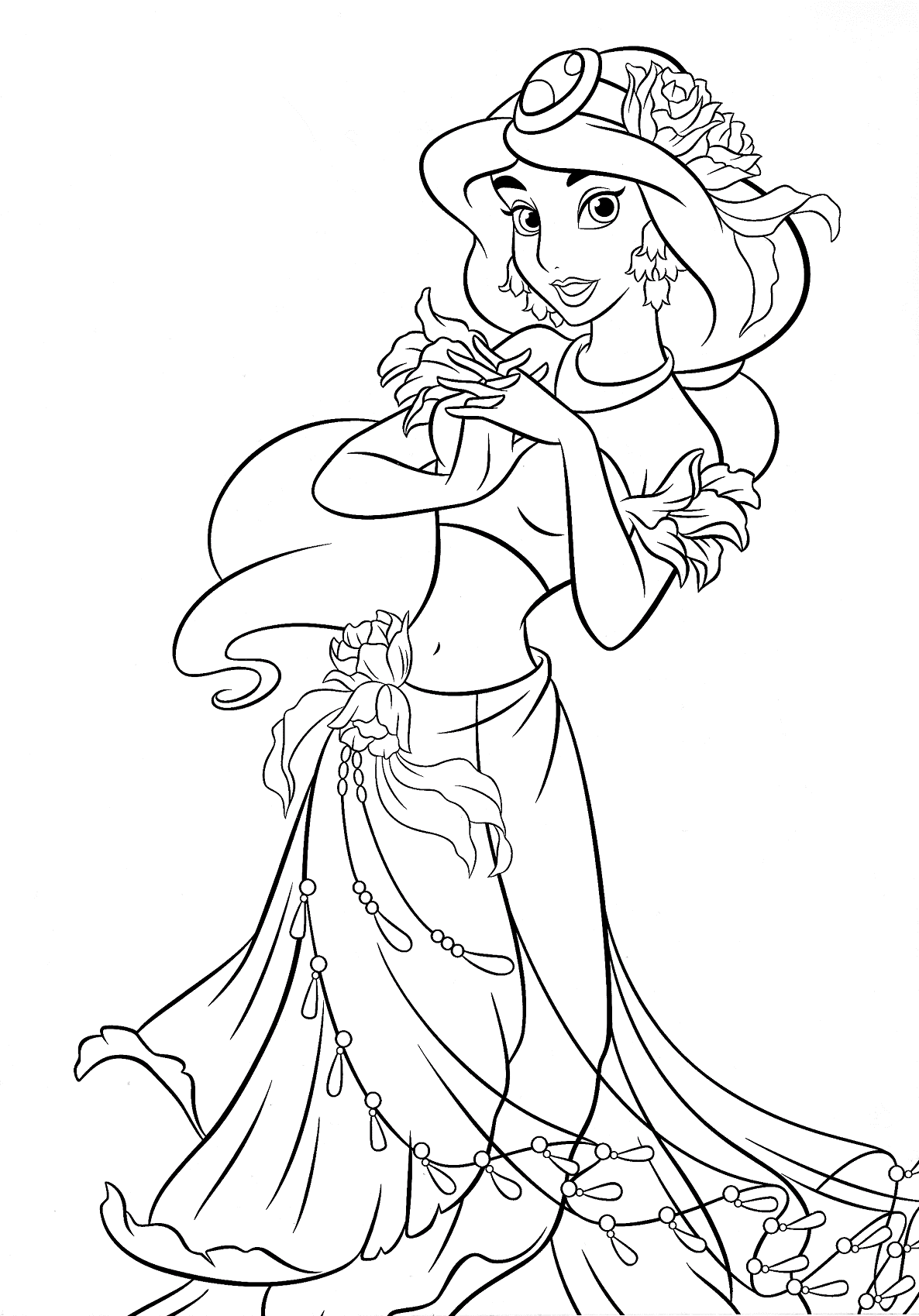
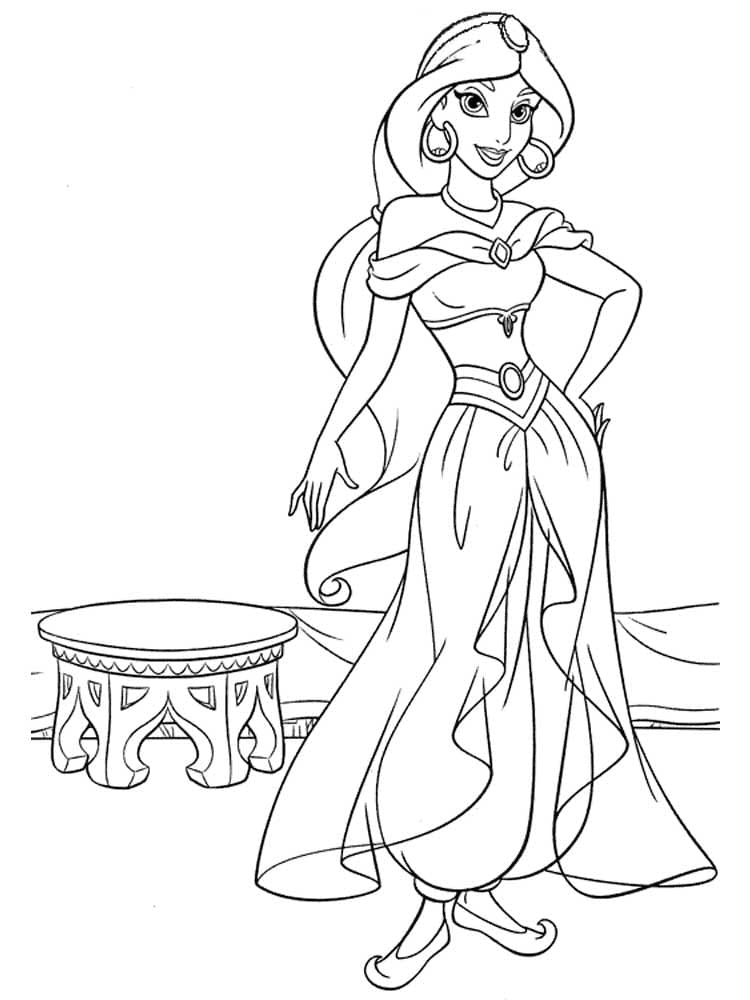
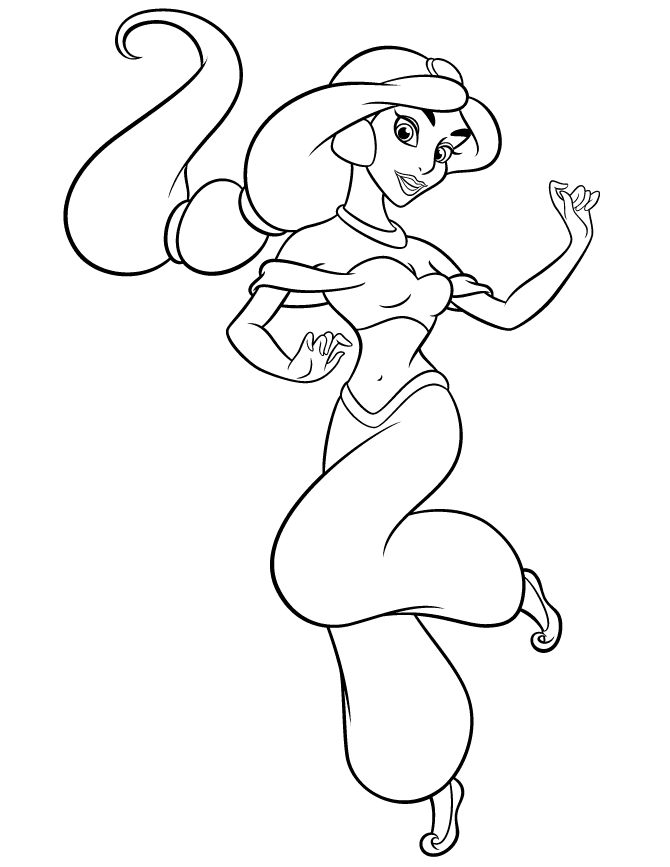
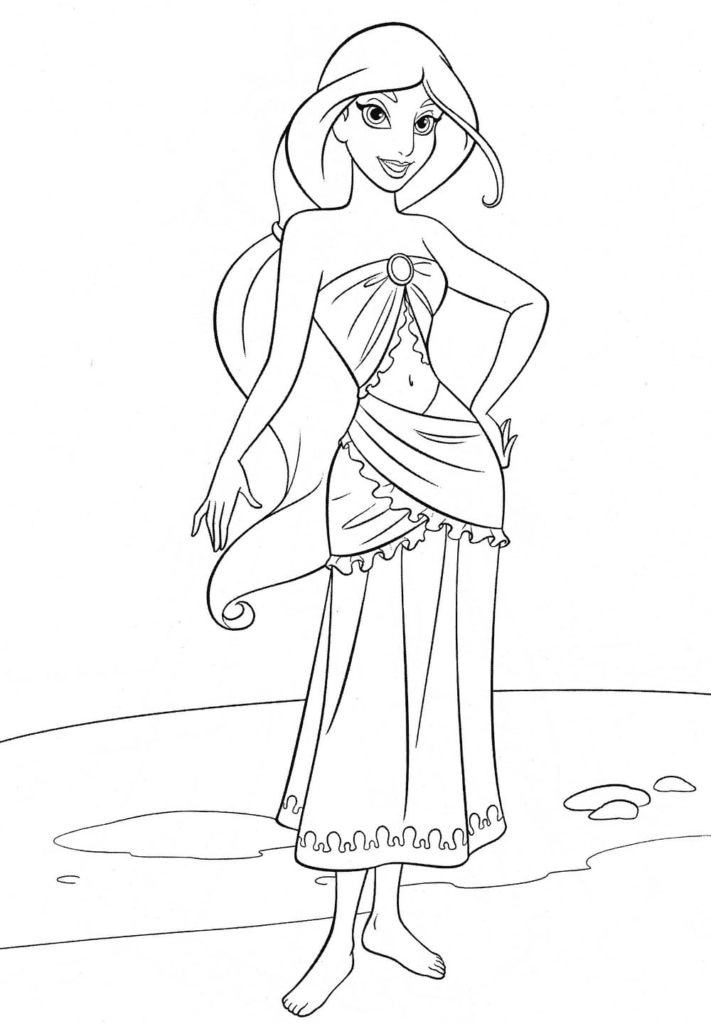
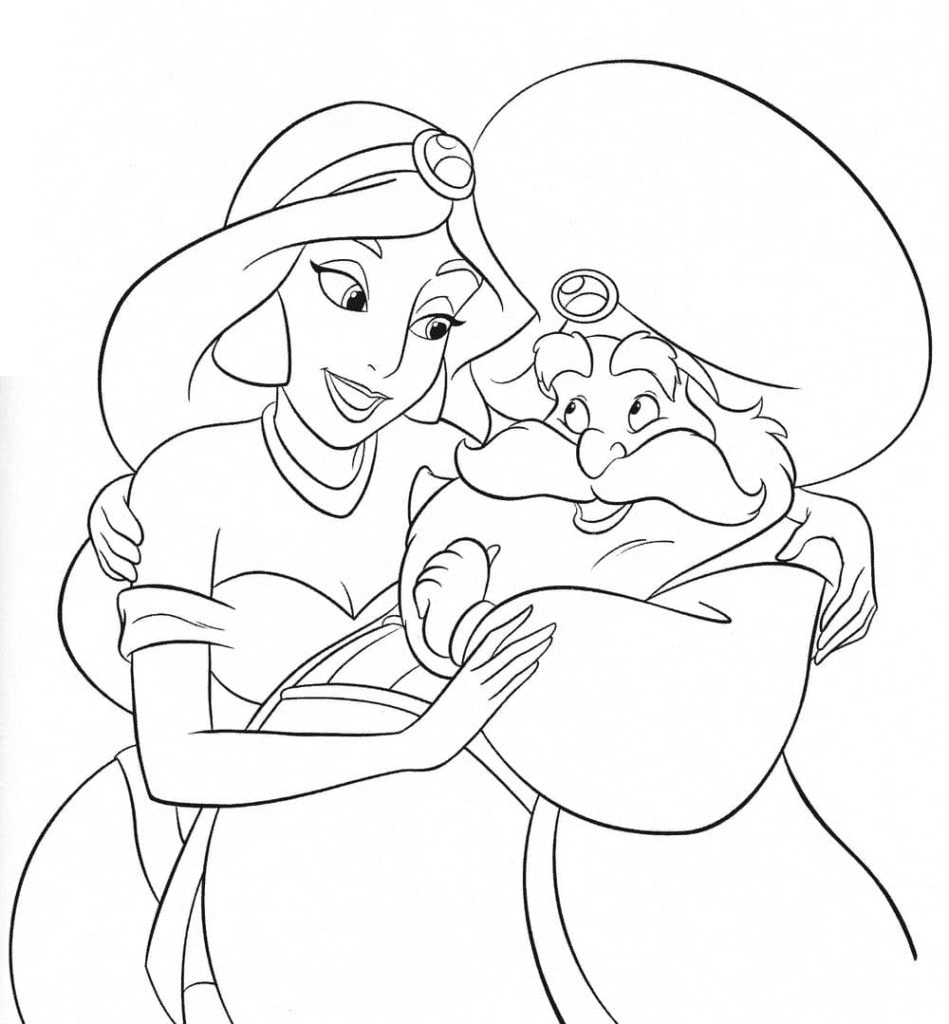
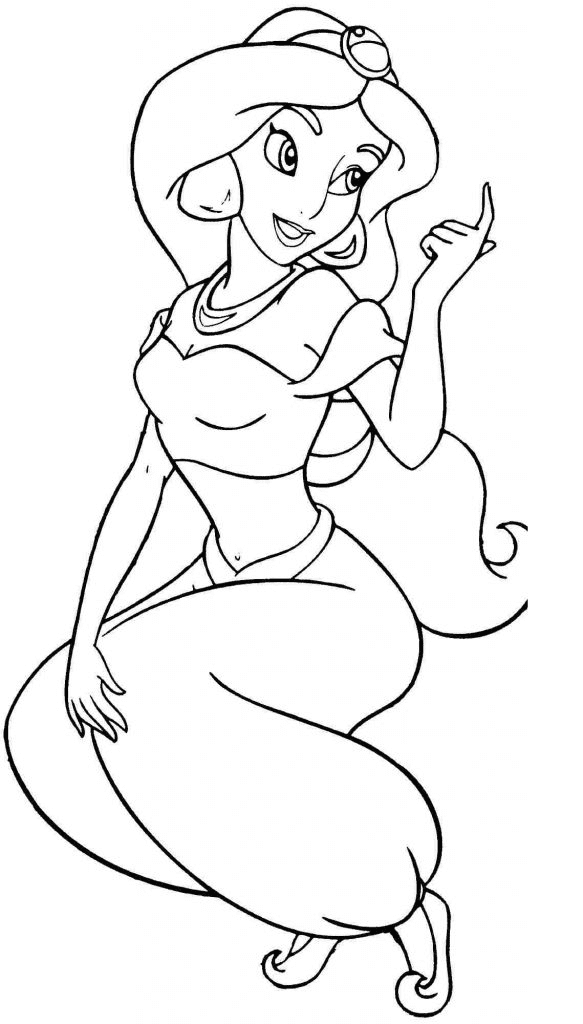
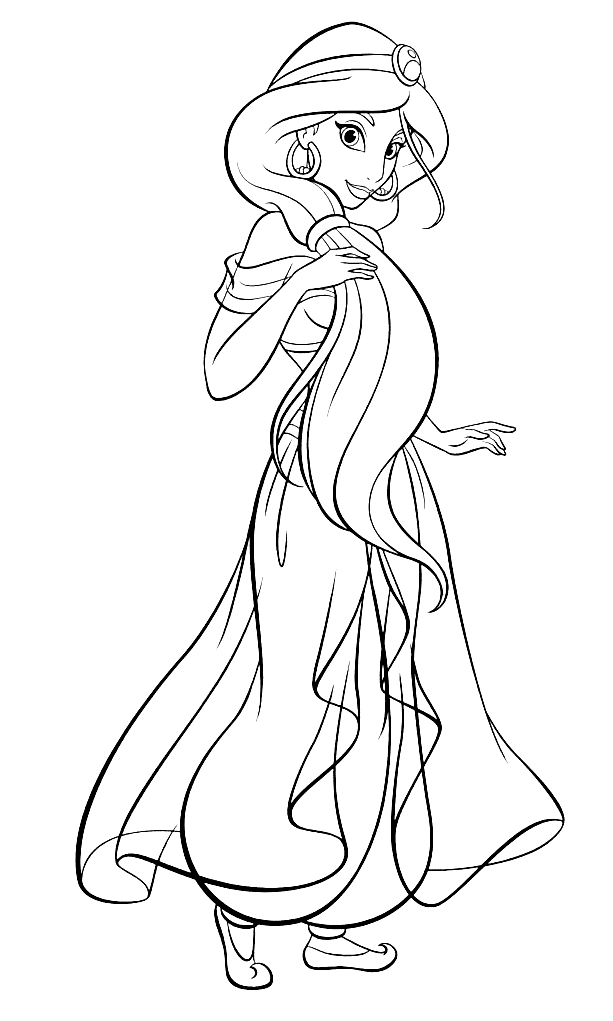
A large share of the set is solo portraits: Jasmine smiling, sitting, or posed in her classic look. Keep her hair a deep Black, her skin a warm Tan or Burnt Sienna, and her eyes Brown, the same three colors on every portrait, so her face reads consistently across the set.
Jasmine and Aladdin
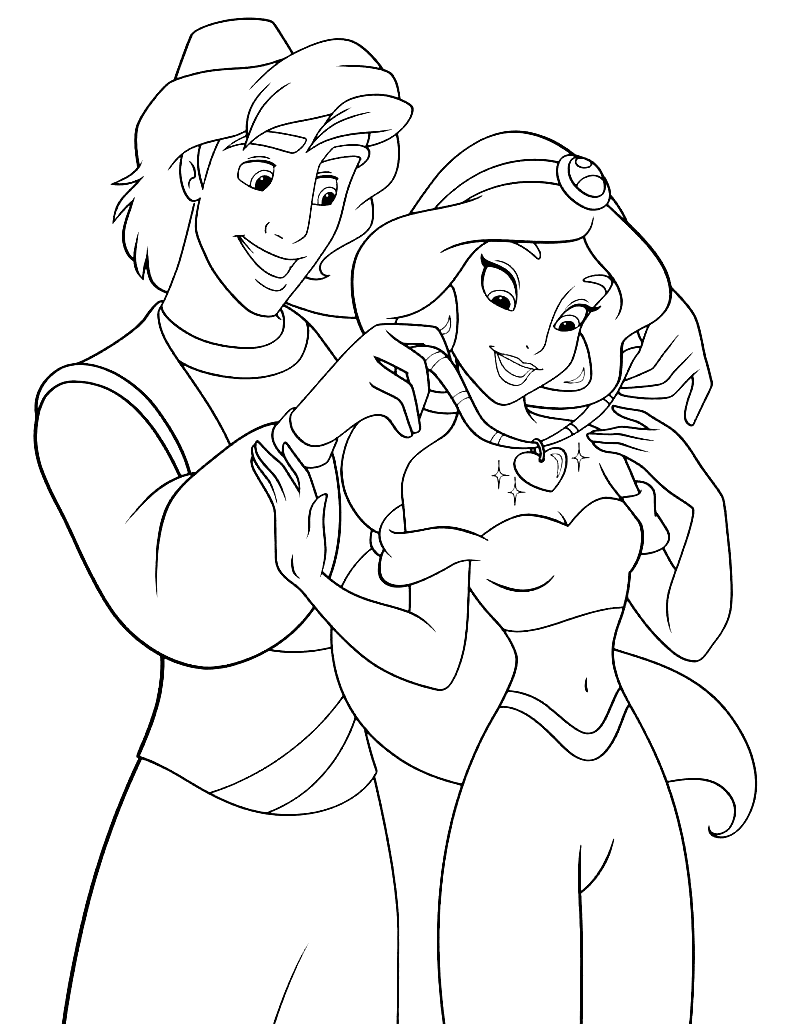
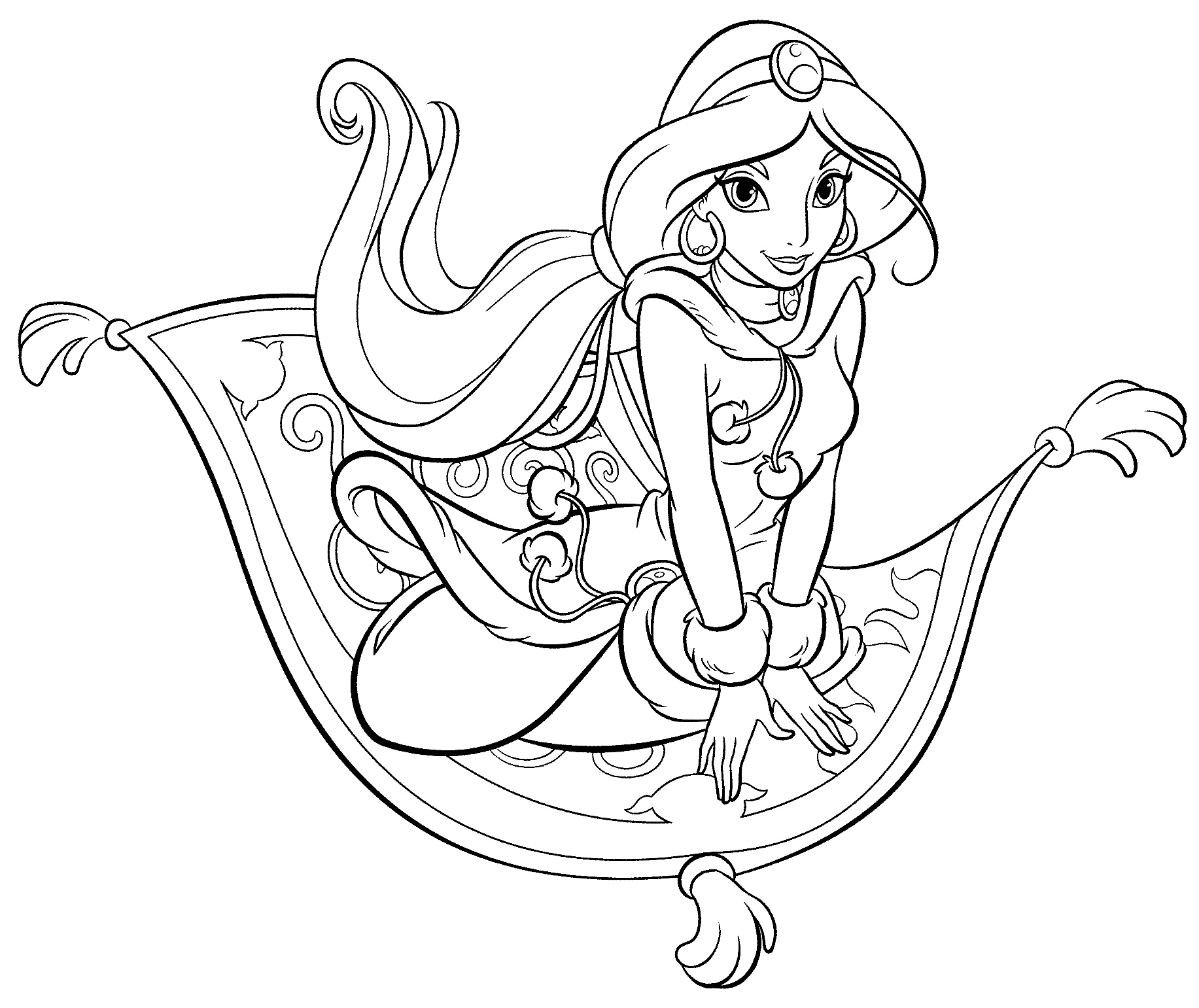
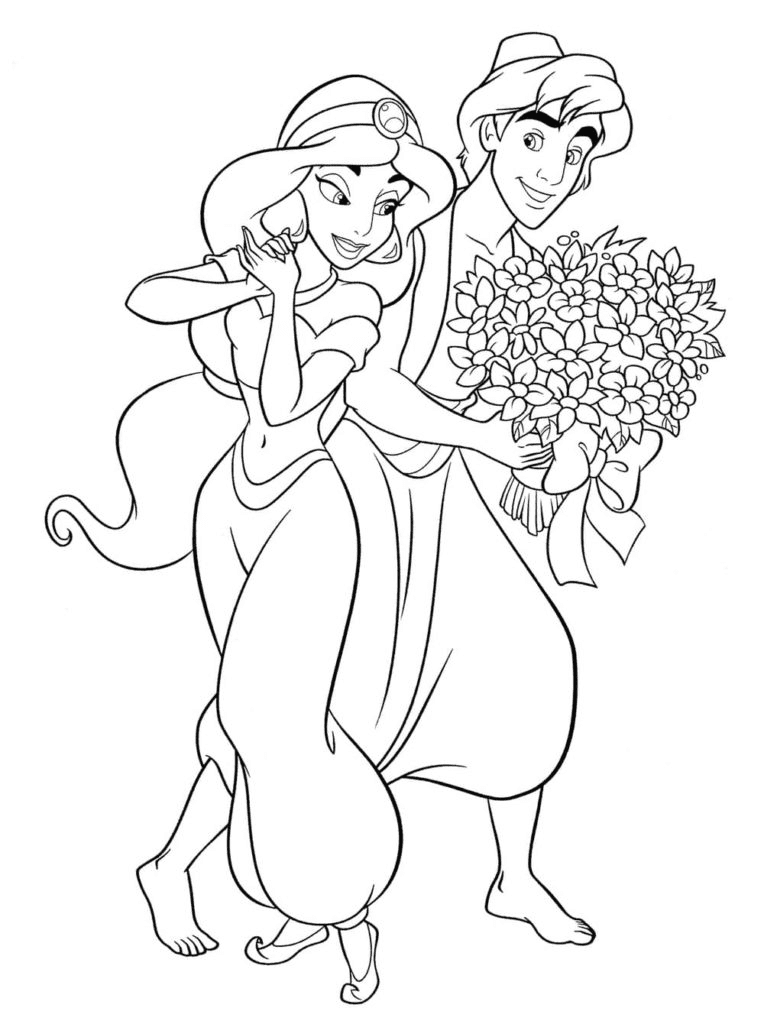
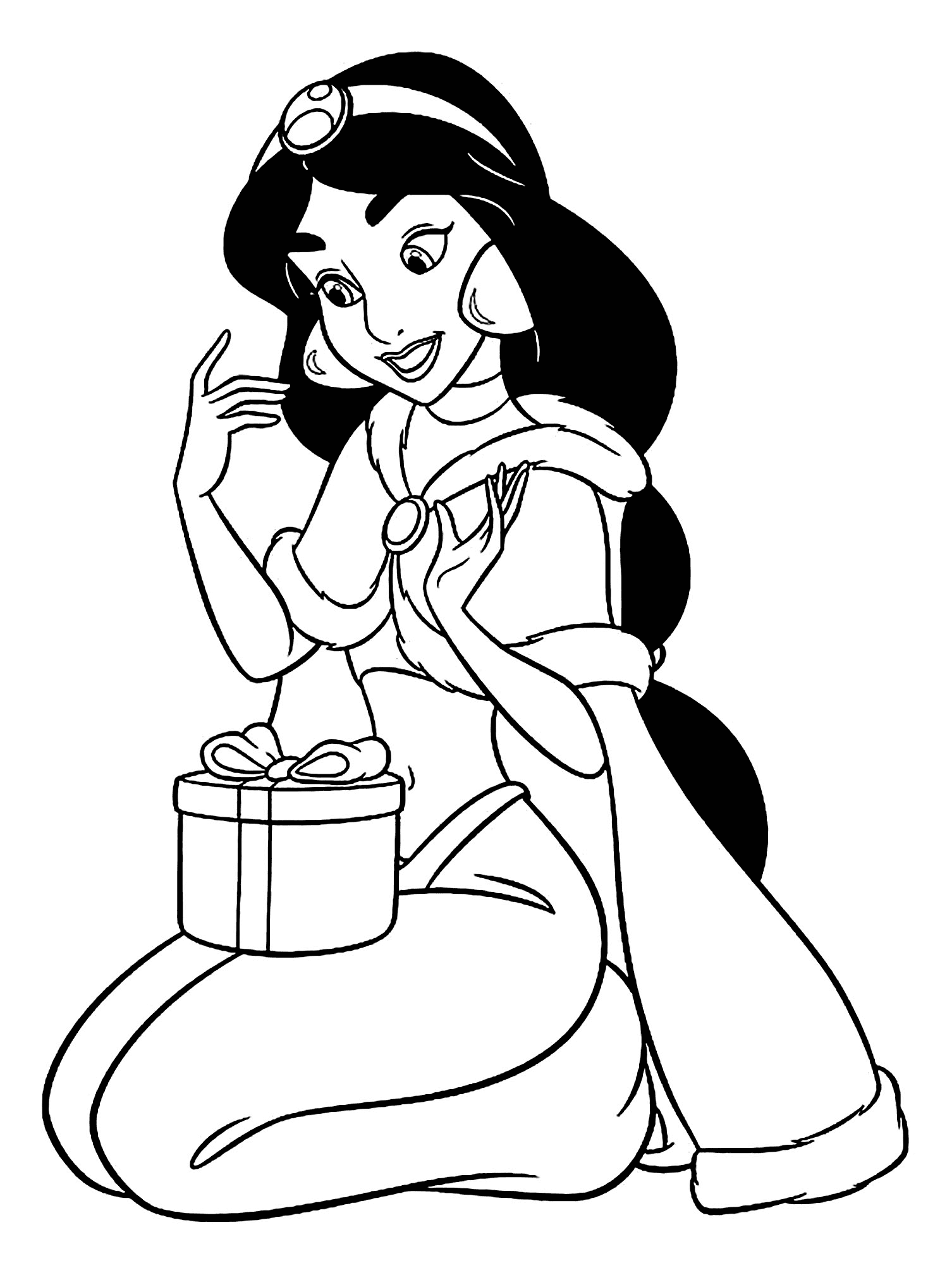
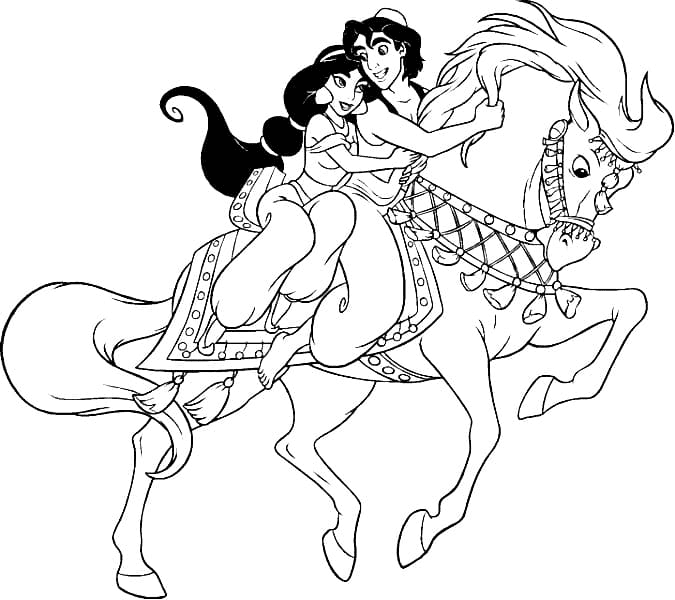
Several pages pair Jasmine with Aladdin, on the magic carpet, on horseback, or exchanging gifts. Give Aladdin his own palette; a Purple vest over a white shirt is his classic look, so the two characters stay visually distinct rather than blending into one color block.
Jasmine and Rajah, Her Pet Tiger
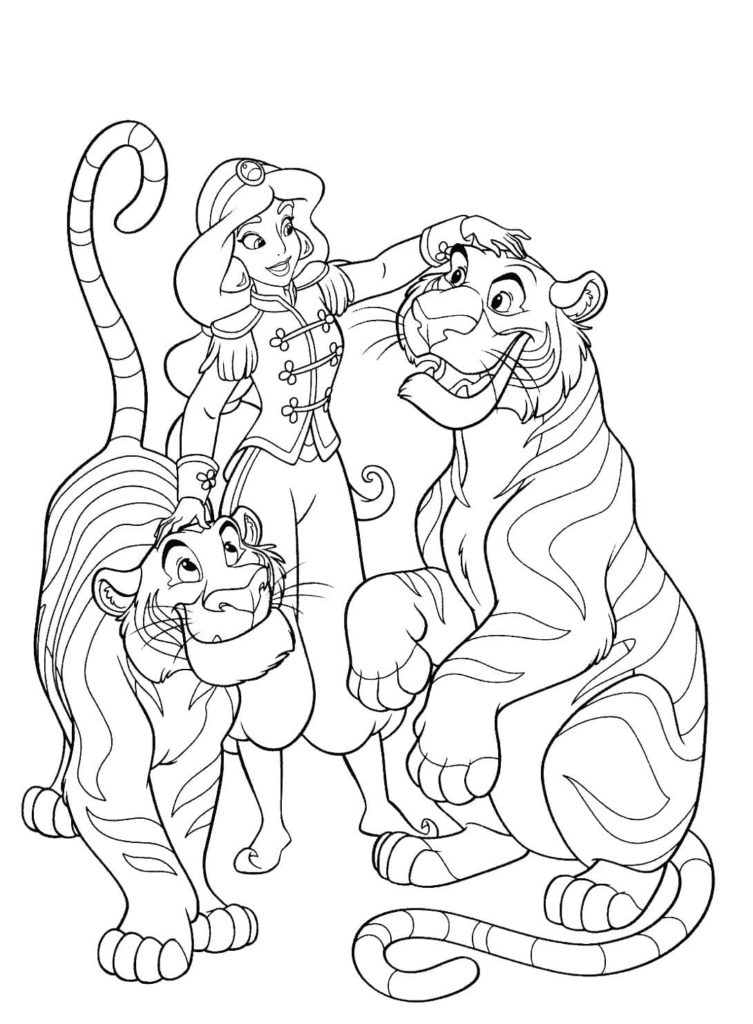
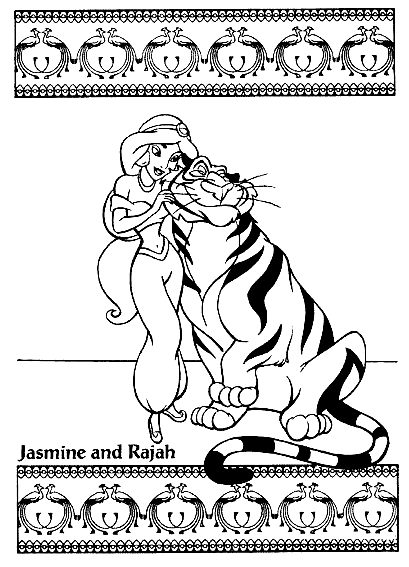
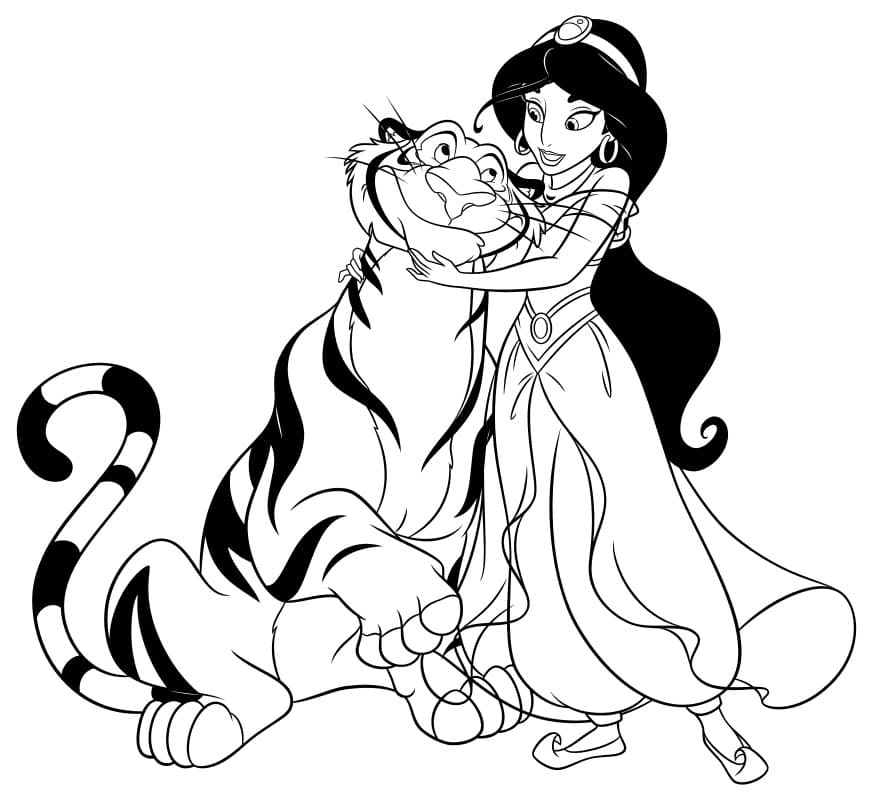
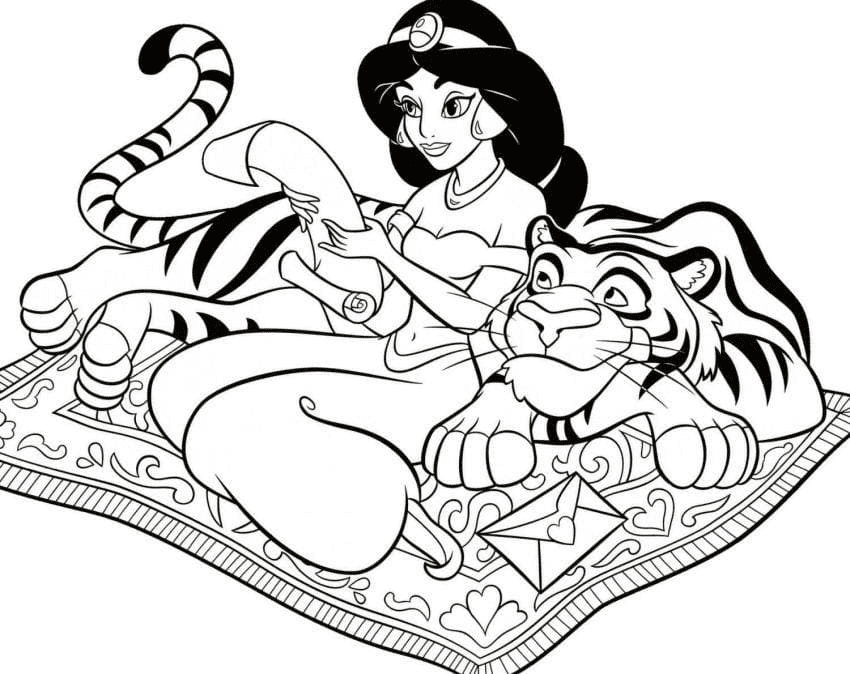
A dedicated group of pages shows Jasmine with Rajah, the tiger she has kept since he was a cub. Color Rajah Orange with Black stripes and a White underbelly, the standard tiger pattern, and keep his size clearly larger than a housecat to match his role as a full-grown companion.
Jasmine in the Palace and Marketplace
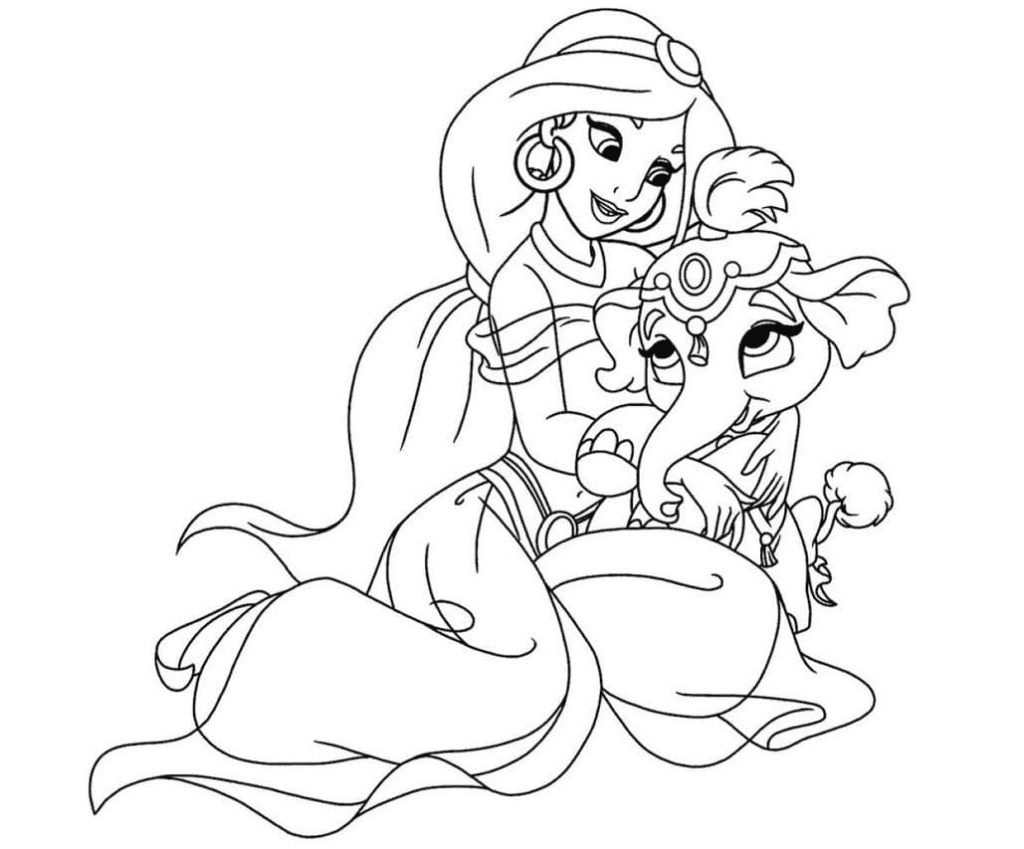
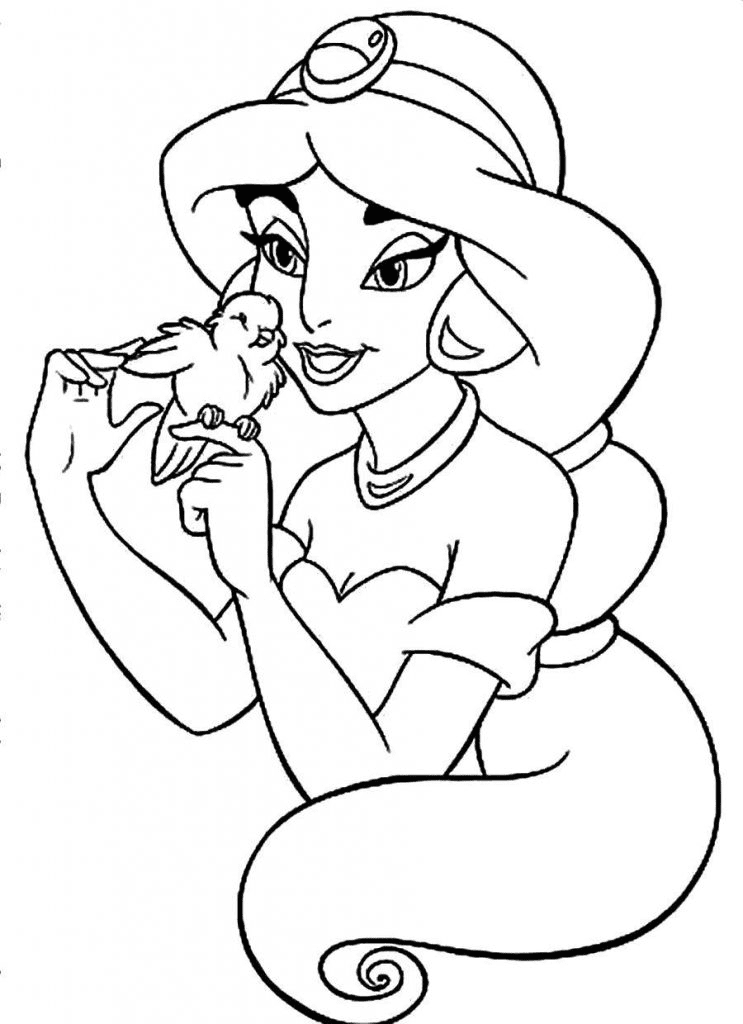
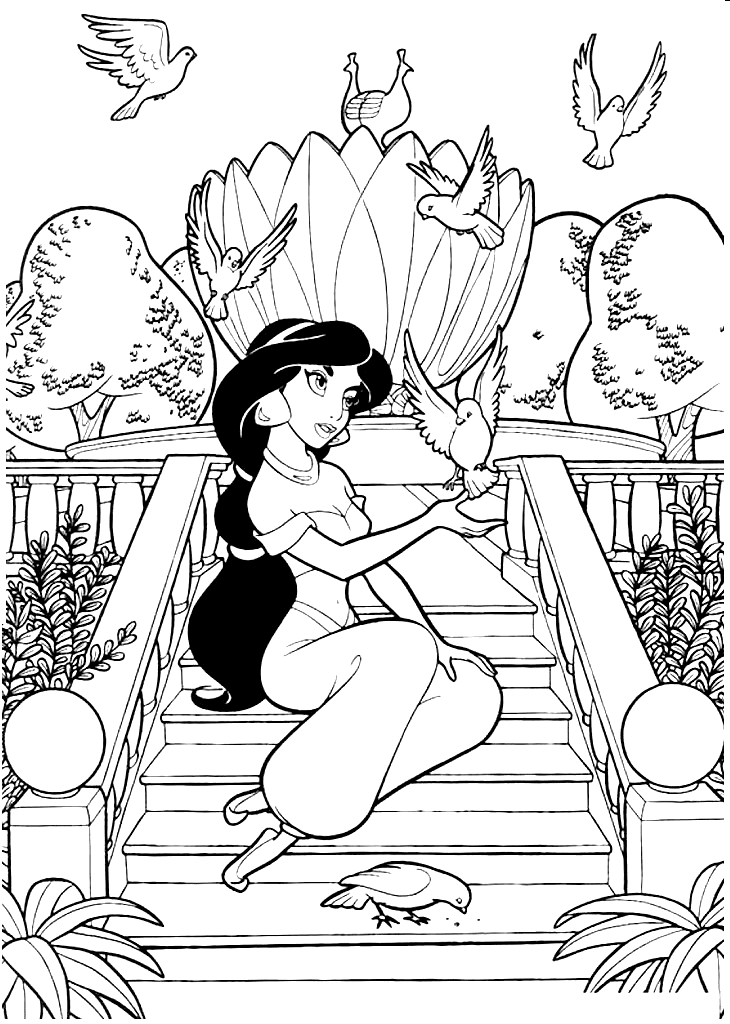
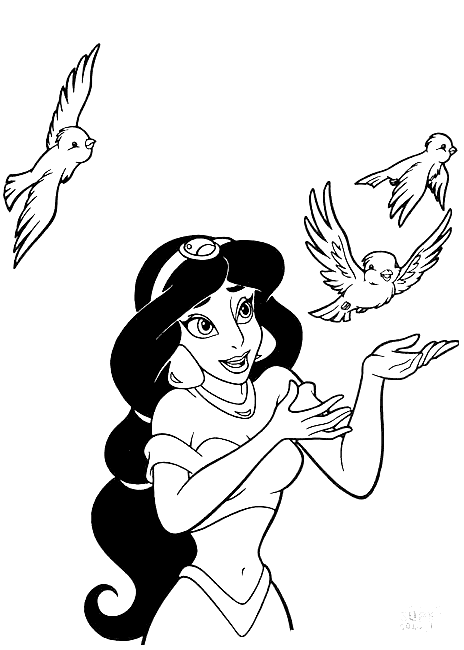
The rest of the set places Jasmine among birds, an elephant, flowers, and palace scenery drawn from Agrabah’s marketplace. Save warm Gold and Sand tones for the architecture and cooler Turquoise accents for Jasmine herself, so she still stands out against a busy background.
What Jasmine Coloring Pages Do
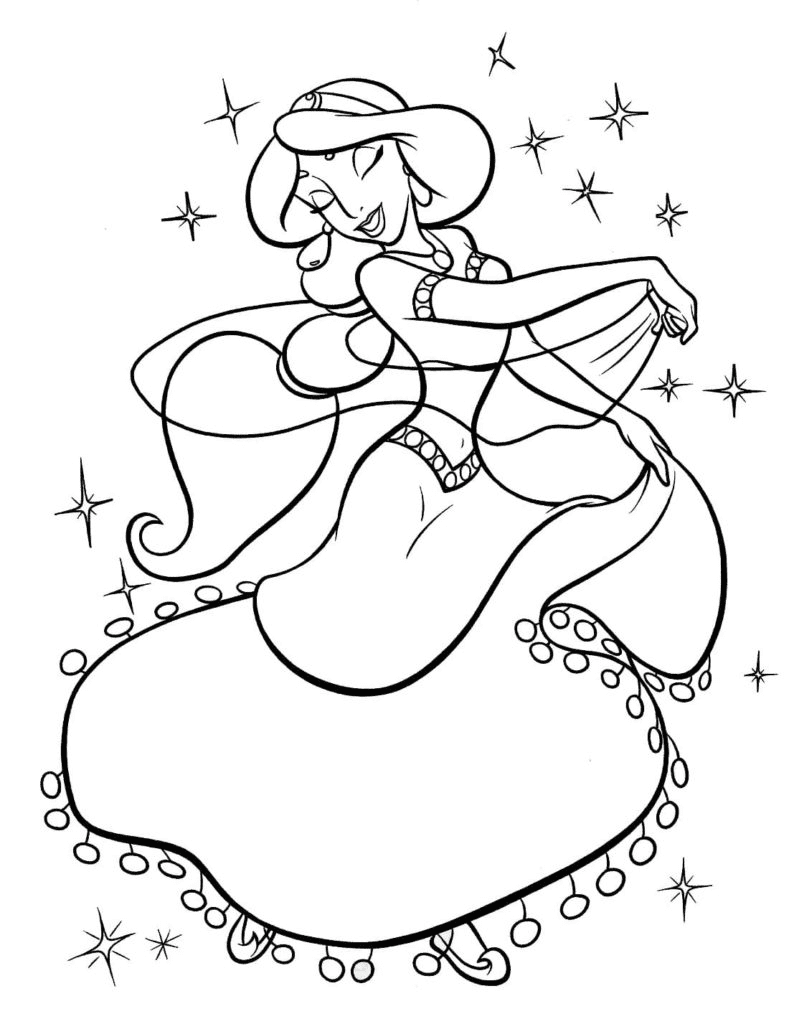
Jewelry and fabric folds test real control. Jasmine’s earrings, headband, and the draped fabric of her outfit are made up of small curved and layered shapes, giving a child practice staying inside detailed lines rather than filling one large open space. The American Academy of Pediatrics names this kind of structured, detailed coloring as a core contributor to fine motor skill development in children ages 2 through 7.
Practice matching skin tone accurately. Jasmine was one of the first Disney princesses drawn with a visibly different skin tone and hair color from earlier characters in the lineup, which makes her pages a useful place to practice choosing and blending a specific skin tone rather than leaving a face uncolored or defaulting to the same crayon for every character.
A repetitive task with a calming effect. Coloring inside a defined shape has a measurable effect on stress: a 2005 study in the Art Therapy Journal found lower anxiety levels in people who colored structured designs compared with those who drew freely. The many small, separate regions on a Jasmine page, jewelry, fabric, hair, tiger stripes, give a child the same repetitive, structured task to work through calmly.
An entry point into world architecture. Jasmine’s palace design borrows visibly from real buildings like the Taj Mahal, and the marketplace scenes are full of arches, domes, and patterned tile work. Coloring these backgrounds carefully gives a child early, hands-on exposure to architectural styles from outside a typical Western storybook setting, without needing a geography lesson to go along with it.
How to Color Jasmine Pages Well
- Turquoise outfit, every time: Color her bandeau top and pants Turquoise or Sky Blue, her most recognizable color choice across nearly every official appearance, and keep the shade consistent across the whole set.
- Gold jewelry and trim: Use Metallic Gold or Yellow-Orange for her earrings, necklace, and headband trim, small bright accents against the turquoise that make the outfit read as royal rather than plain.
- Black hair with a warm skin tone: Color her hair a deep Black, and choose a warm Tan, Burnt Sienna, or Brown for her skin, matching the tone consistently on every page rather than switching between designs.
- Rajah’s tiger stripes: Base Rajah in Orange with Black stripes and a White belly and muzzle, the same pattern real tigers have, and keep the stripes irregular rather than perfectly even for a more natural look.
- Aladdin’s purple and white: On pages with Aladdin, dress him in a Purple vest over a white shirt, his classic look, so he stays visually distinct next to Jasmine’s turquoise.
- Keep marketplace backgrounds warm, Jasmine cool: On the busier palace or marketplace pages, use warm Gold, Sand, and terracotta tones for the architecture and crowd, while keeping Jasmine’s own turquoise and gold consistent, so her figure stays the visual focal point of a detailed scene.
5 Creative Craft Ideas With Jasmine Coloring Pages
- Magic Carpet Diorama. Materials: a colored page of Jasmine and Aladdin on the carpet, scissors, a small box, tape, and optional star stickers. Cut around the carpet scene, tape one edge inside the box so it appears to float, and decorate the inside like a night sky.
- Rajah Finger Puppet. Materials: a small colored Rajah cutout, scissors, tape, and a paper strip sized to fit around a finger. Cut out the tiger shape, leaving a small tab at the bottom, and tape the tab around the strip so it fits a child’s finger.
- Paper Headband. Materials: a colored Jasmine portrait showing her headband, scissors, a strip of cardstock, tape, and a star or gem sticker. Trace the headband shape onto the cardstock, cut it out, and tape it to fit a child’s head with the sticker centered like Jasmine’s gem.
- Palace Skyline Collage. Materials: two or three colored palace or marketplace pages, scissors, dark paper, glue, and optional star stickers. Cut out the domes, arches, and towers, arrange them along the bottom of the dark paper to form a skyline, and glue them in place.
- Homemade Jigsaw Puzzle. Materials: one colored Jasmine page, glue, cardboard, and scissors. Glue the page flat onto the cardboard, let it dry, and cut it into six to eight large pieces to mix up and put back together.
Frequently Asked Questions
What are Jasmine coloring pages?
Jasmine coloring pages are printable designs featuring the Disney character from Aladdin in different poses, outfits, and settings. This collection offers 49 free designs as printable PDFs or online coloring pages, including solo portraits and scenes with Aladdin, her pet tiger Rajah, and the palace of Agrabah.
Who created Princess Jasmine, and when did she debut?
Jasmine was created by directors Ron Clements and John Musker for Disney’s 1992 film Aladdin, the studio’s 31st animated feature. She is loosely based on Princess Badroulbadour from the One Thousand and One Nights tale of Aladdin and the magic lamp, reimagined and renamed for the film.
What colors does Jasmine wear?
Jasmine’s classic outfit is a turquoise off-shoulder top and matching pants, worn with a turquoise headband, gold earrings, and a gold necklace. Her hair is deep black, styled in a long ponytail, and her skin tone is a warm tan or brown, a detail that made her one of Disney’s earliest characters drawn with visibly different features from earlier princesses.
Why is Jasmine considered a significant Disney princess?
Jasmine was Disney’s first princess from a non-European setting, and her introduction is often credited with paving the way for later princesses with different cultural backgrounds, including Pocahontas and Mulan. She was also the first Disney princess to have separate actresses for her speaking voice, Linda Larkin, and her singing voice, Lea Salonga.
Who is Rajah, and why does he appear on so many pages?
Rajah is Jasmine’s pet tiger, raised by her since he was a cub and established as one of her closest companions in the film. His frequent appearance across this collection reflects how central he is to Jasmine’s world, and he gives young colorers a large, simple animal shape to practice on alongside her more detailed portraits.
Who are Jasmine’s friends and family featured in this collection?
This set includes Jasmine alongside Aladdin, her love interest, and her pet tiger Rajah, along with palace birds and other animals from the marketplace scenes. The related links below lead to standalone coloring collections for other Disney princesses.
Are Jasmine coloring pages suitable for young children?
The simple solo portraits suit children around ages 3 and 4 who are just learning to color a face and hair. The palace and marketplace scenes, with more background detail, suit ages 6 and up, and the Rajah and Aladdin pages work well for ages 5 and up.
What age group are the palace and marketplace pages best for?
Pages showing Agrabah’s architecture and crowded marketplace scenes include more small details, arches, patterns, and background figures than the simple portraits. Hence, they suit children around ages 6 and up who have practiced coloring smaller, more complex spaces.
Start Coloring
Download any page by clicking the design. No account, email, or payment is required. Pages print directly from the browser at full resolution or open in the online coloring tool for screen use. Share finished pages on Facebook or Pinterest with the share buttons at the top of each design page.