Pocahontas Coloring Pages
 By:
Jennifer Thoa - Content Editor & Designer
Updated:
By:
Jennifer Thoa - Content Editor & Designer
Updated:
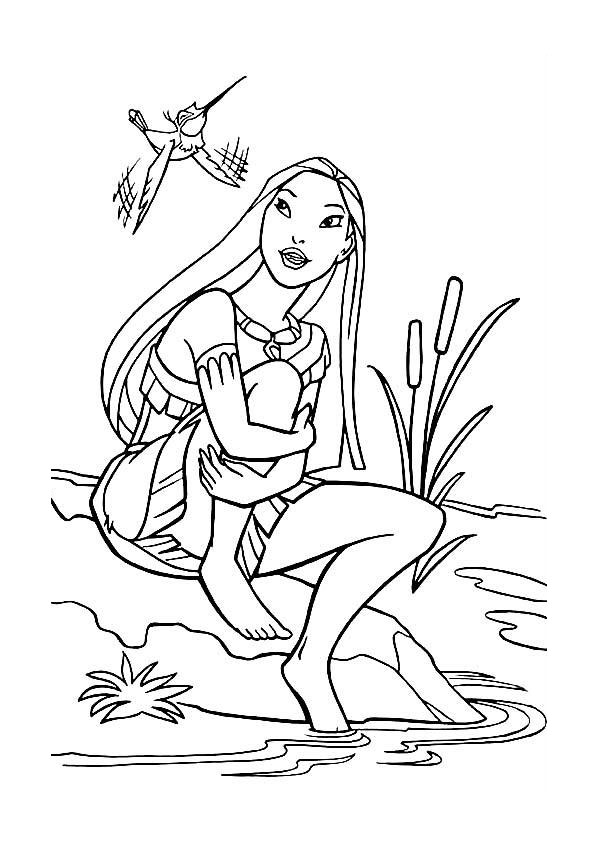
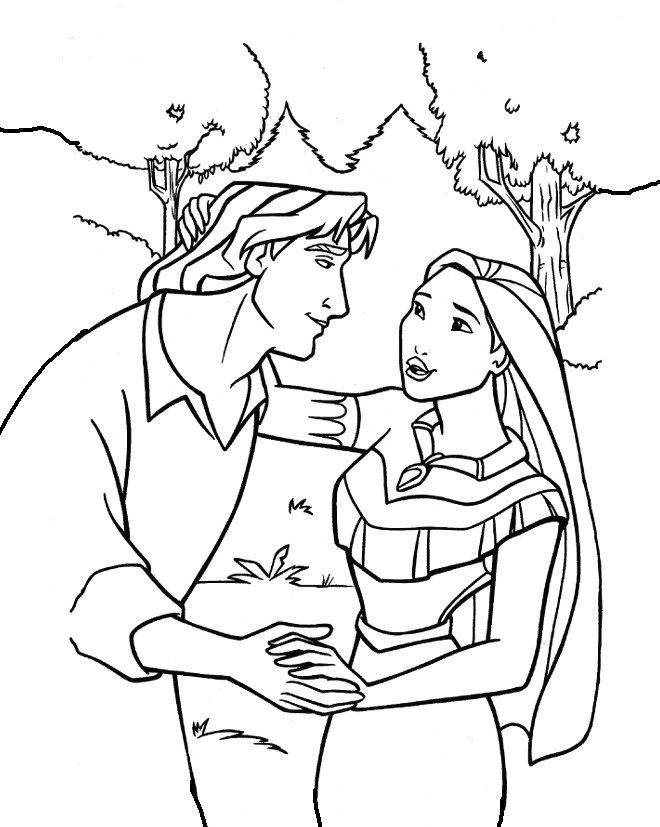
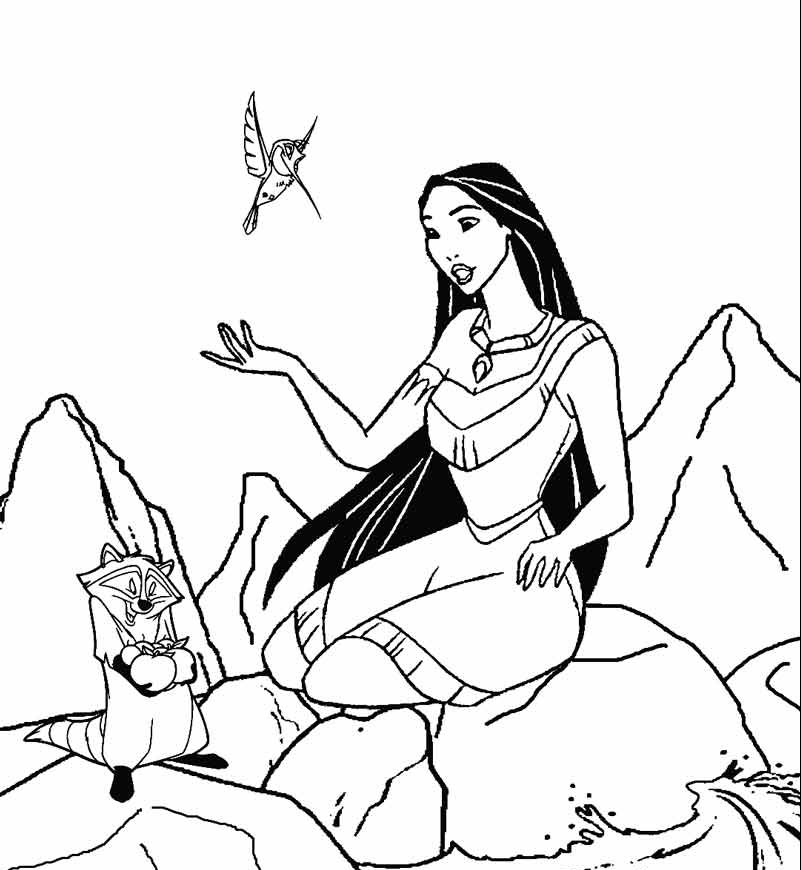
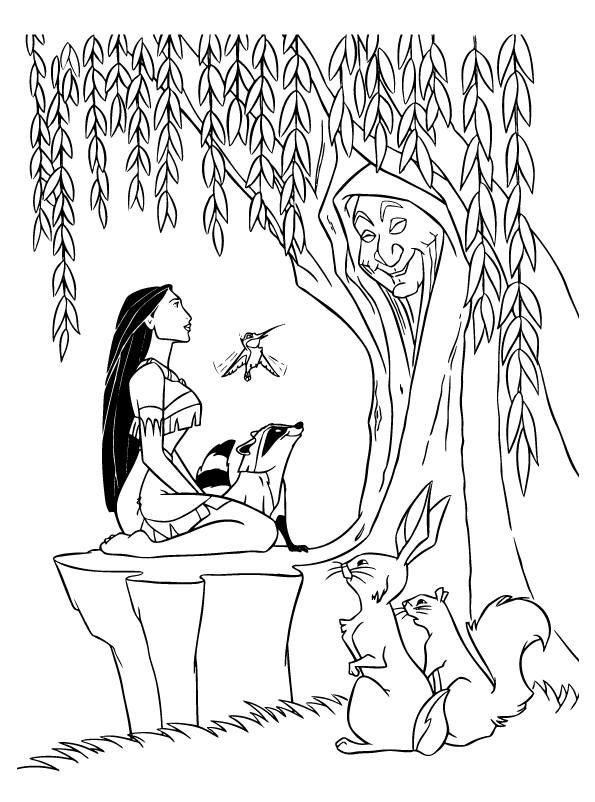
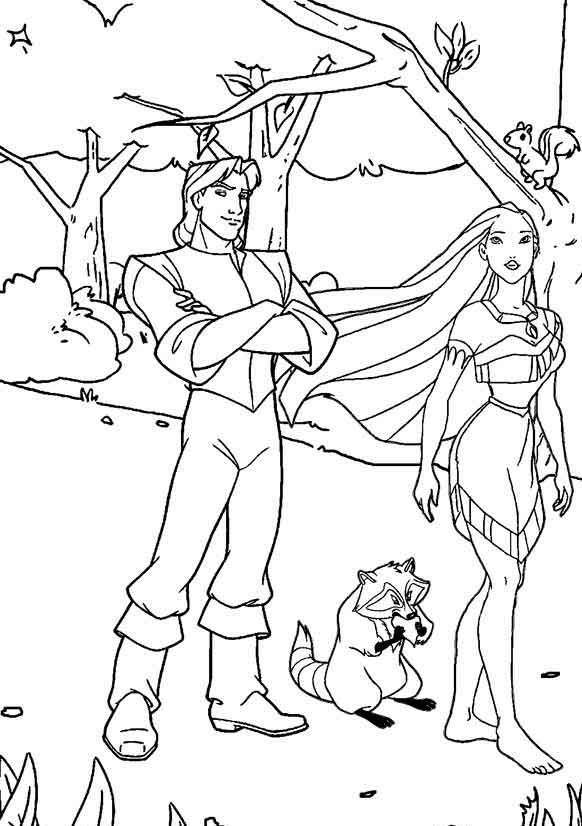
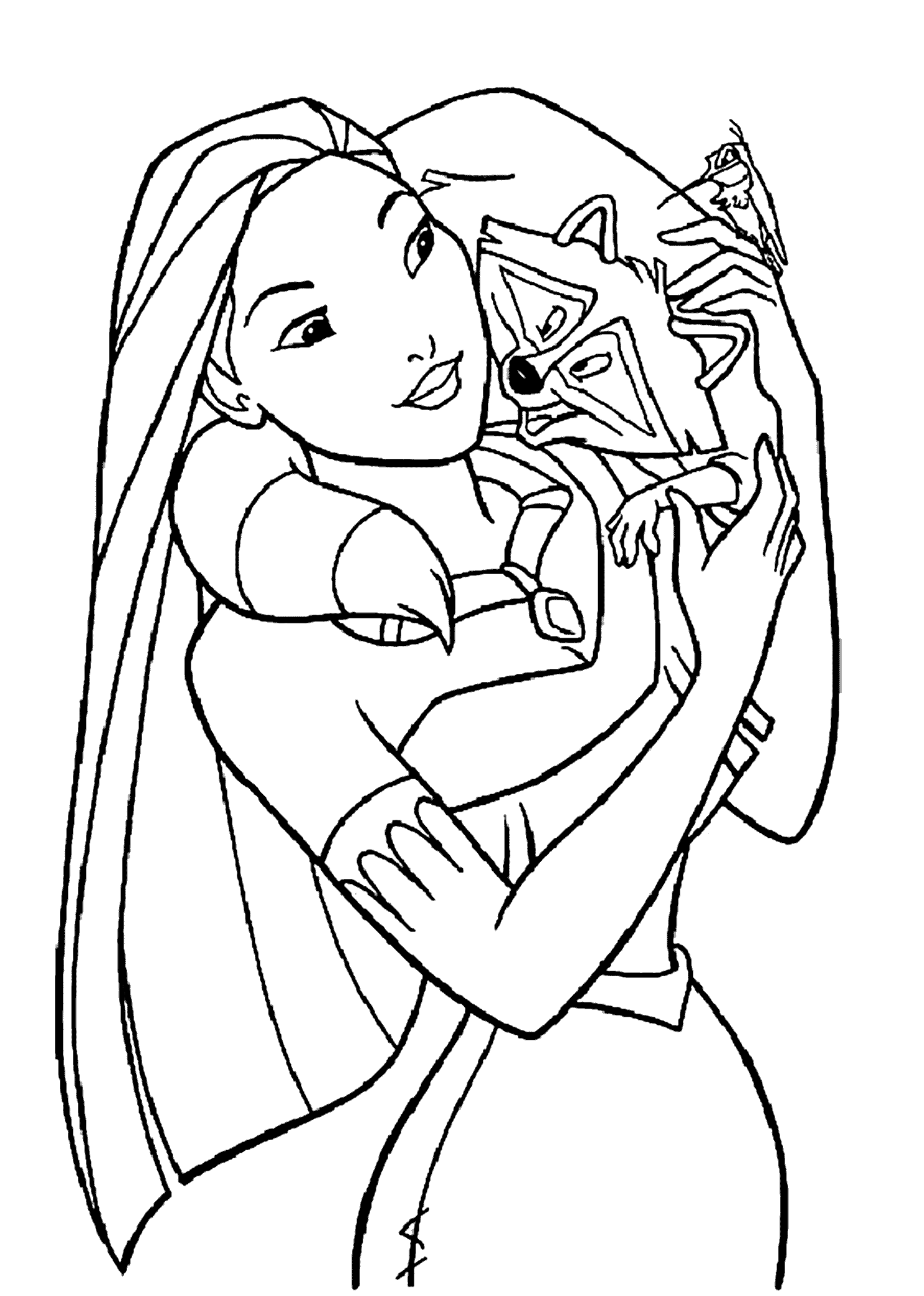
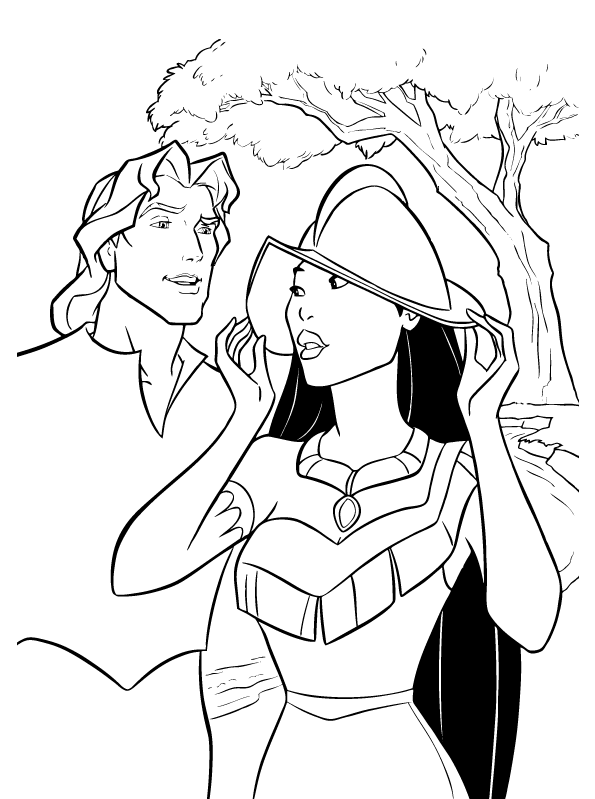
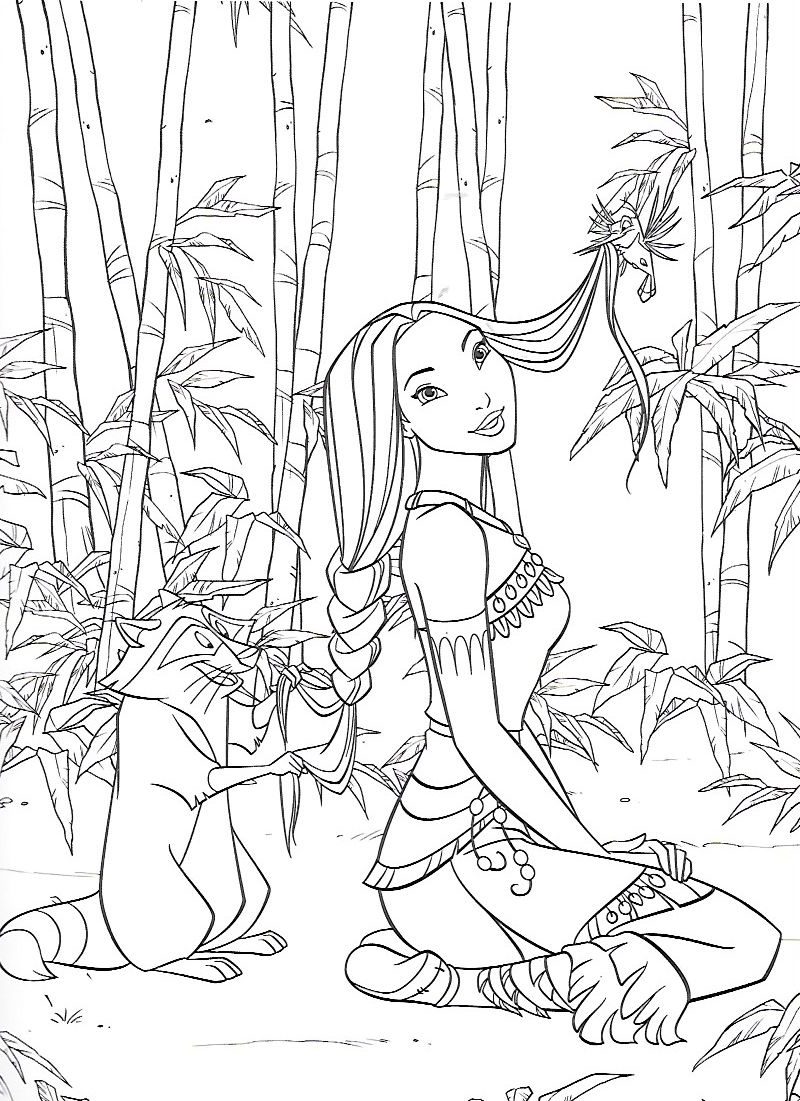
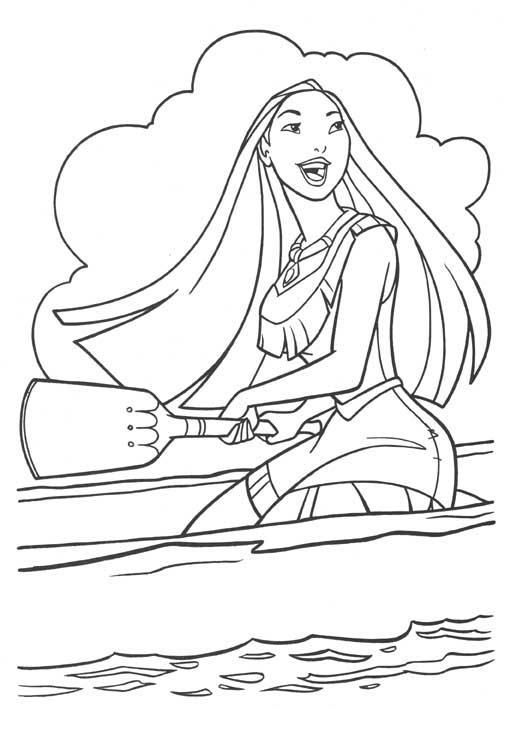
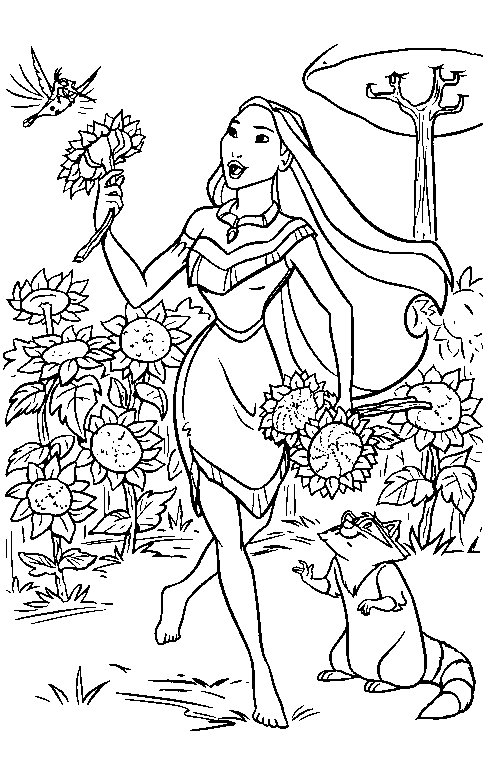
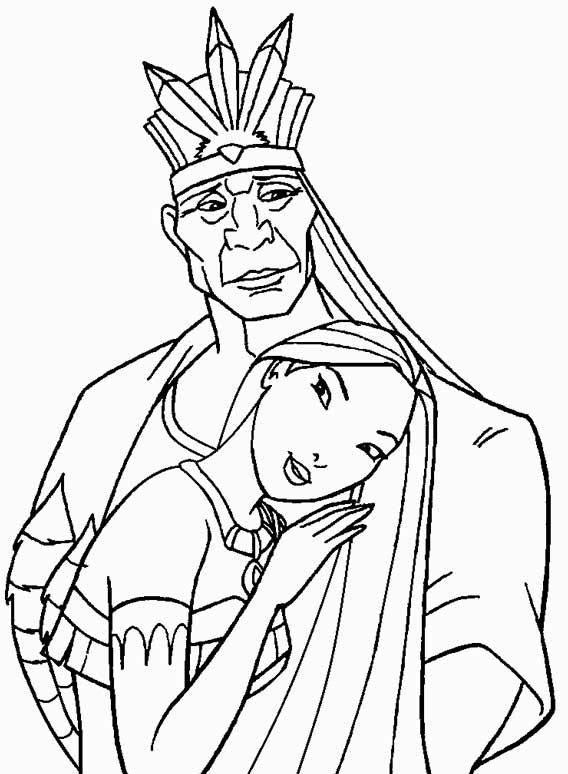
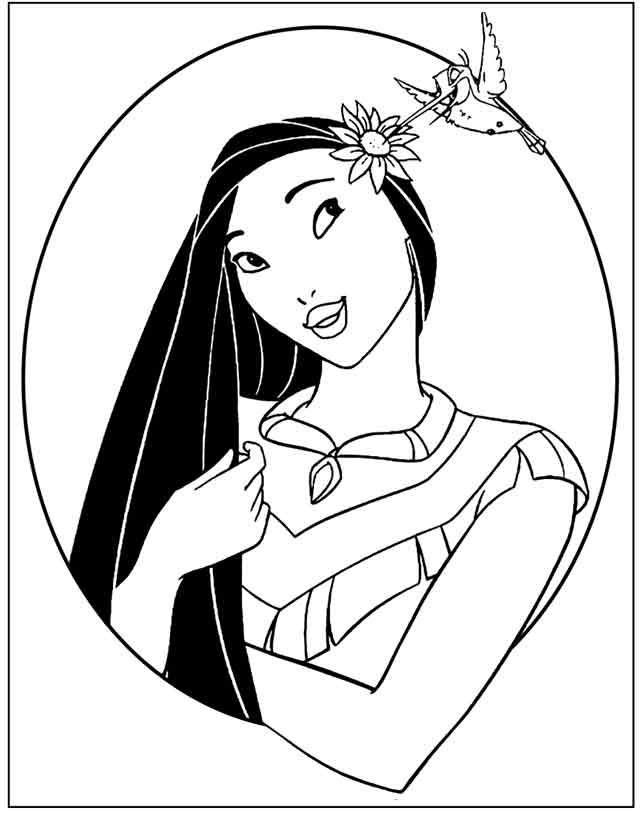
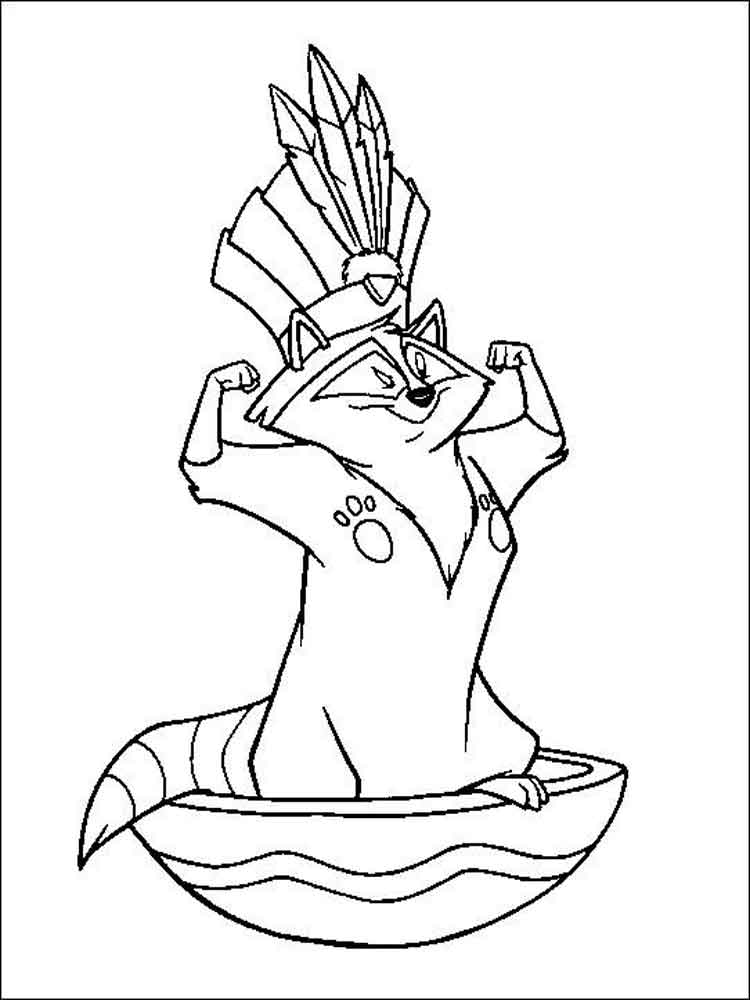
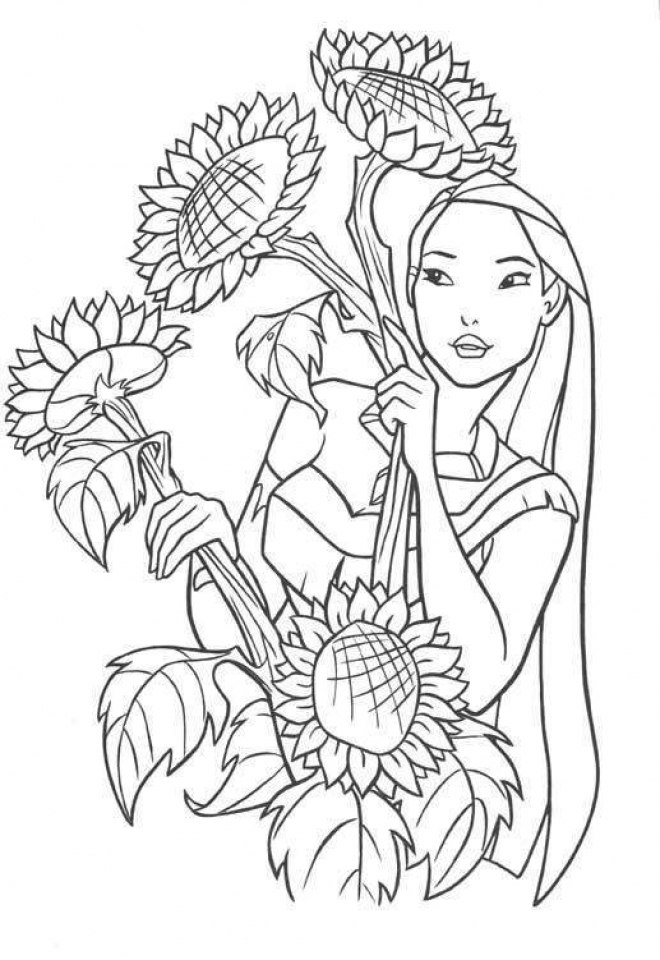
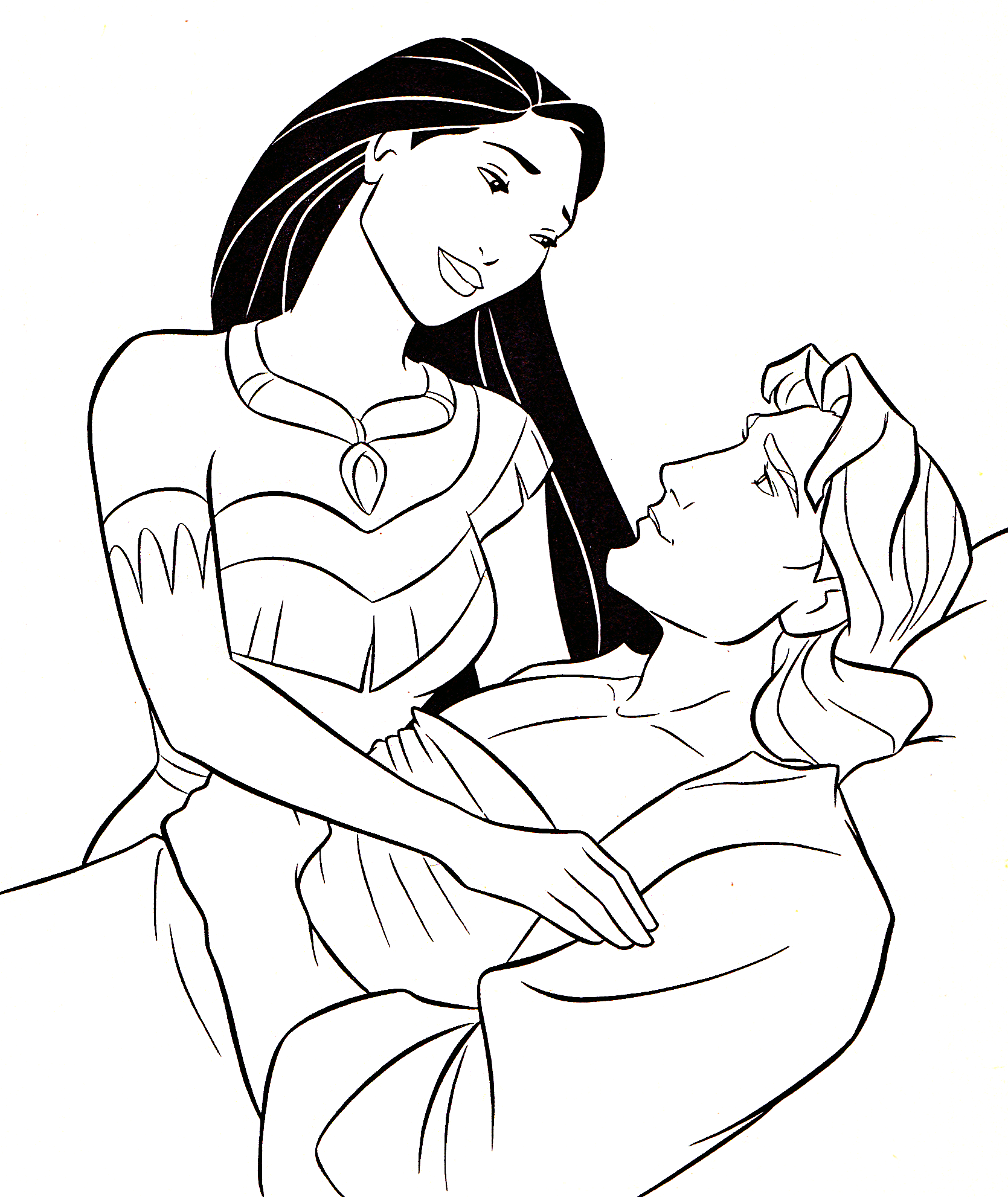
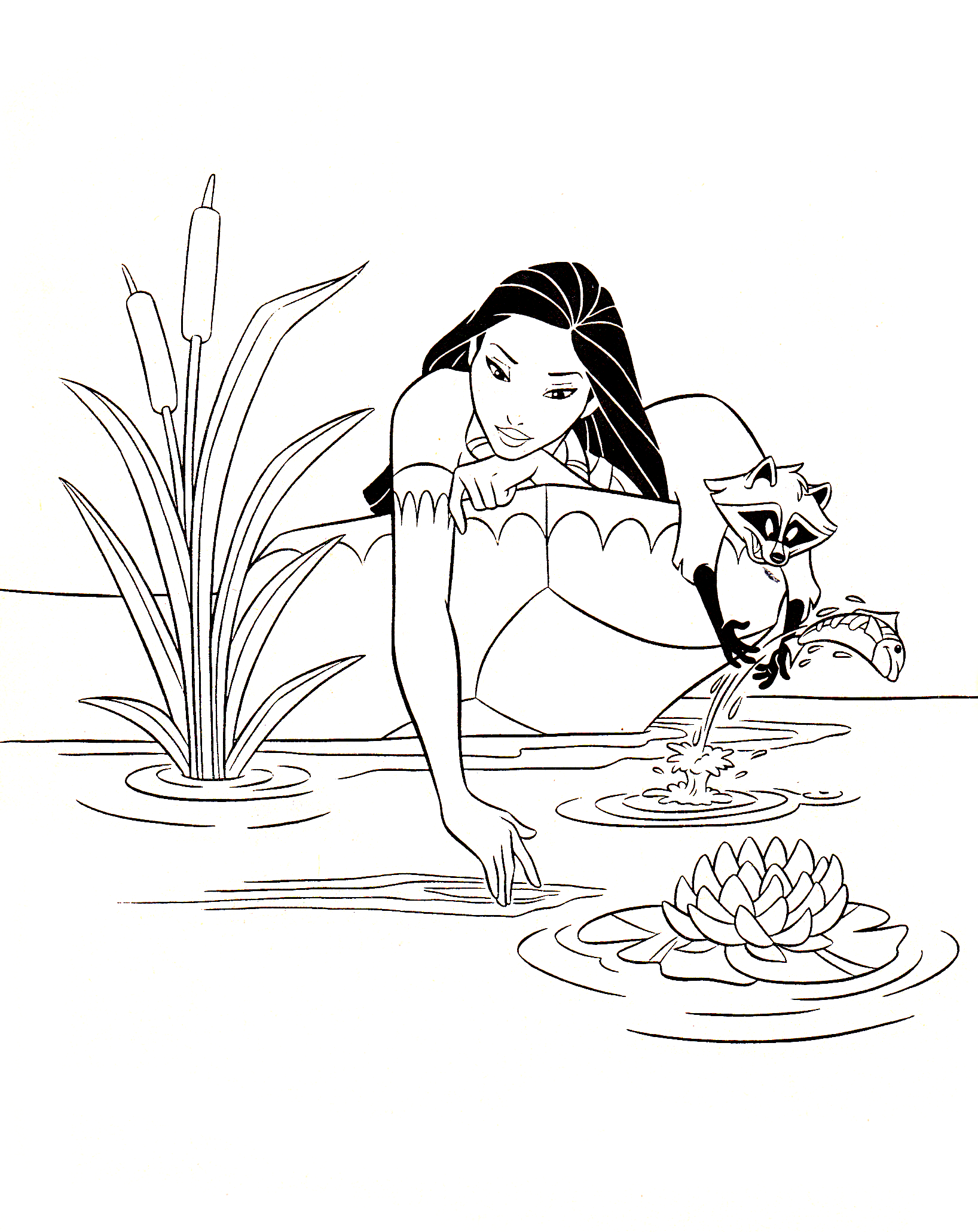
Free Pocahontas coloring pages: 53 printable PDF designs featuring Pocahontas in nature scenes, classic portraits, and moments with her animal companions Meeko and Flit. Each page can be downloaded as a PDF to print or colored online in the browser.
Disney’s Pocahontas is a fictionalized character loosely based on a real historical woman, Amonute, also known as Matoaka, the daughter of Powhatan leader Wahunsenacawh in what is now Virginia. The 1995 film builds its story around a friendship with English colonist John Smith, though the real Amonute was only a child, around ten years old, when she first met him, and her actual adult life took a very different path. This collection colors the animated Disney character and her world, not a historical record, across dozens of scenes.
This set works well paired with a short conversation about the real Amonute, since her true story, including her capture by English colonists and her death in England at about twenty, is very different from the film’s version and worth knowing alongside the artwork. The simpler solo portraits suit a child just starting to color a face and hair, while the nature and river scenes give an older child more background detail to work through.




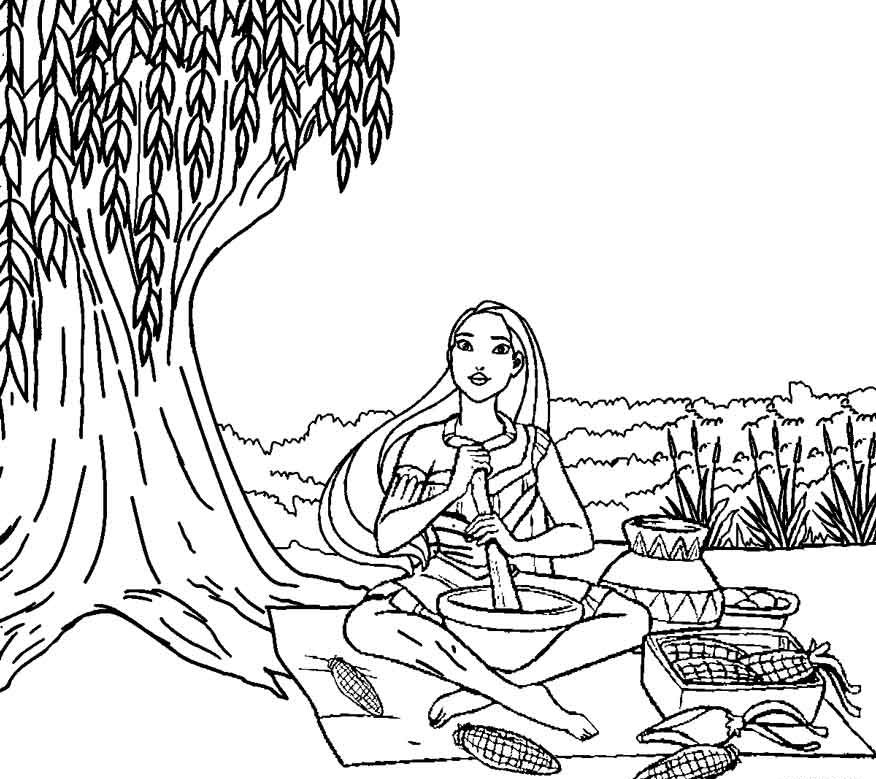
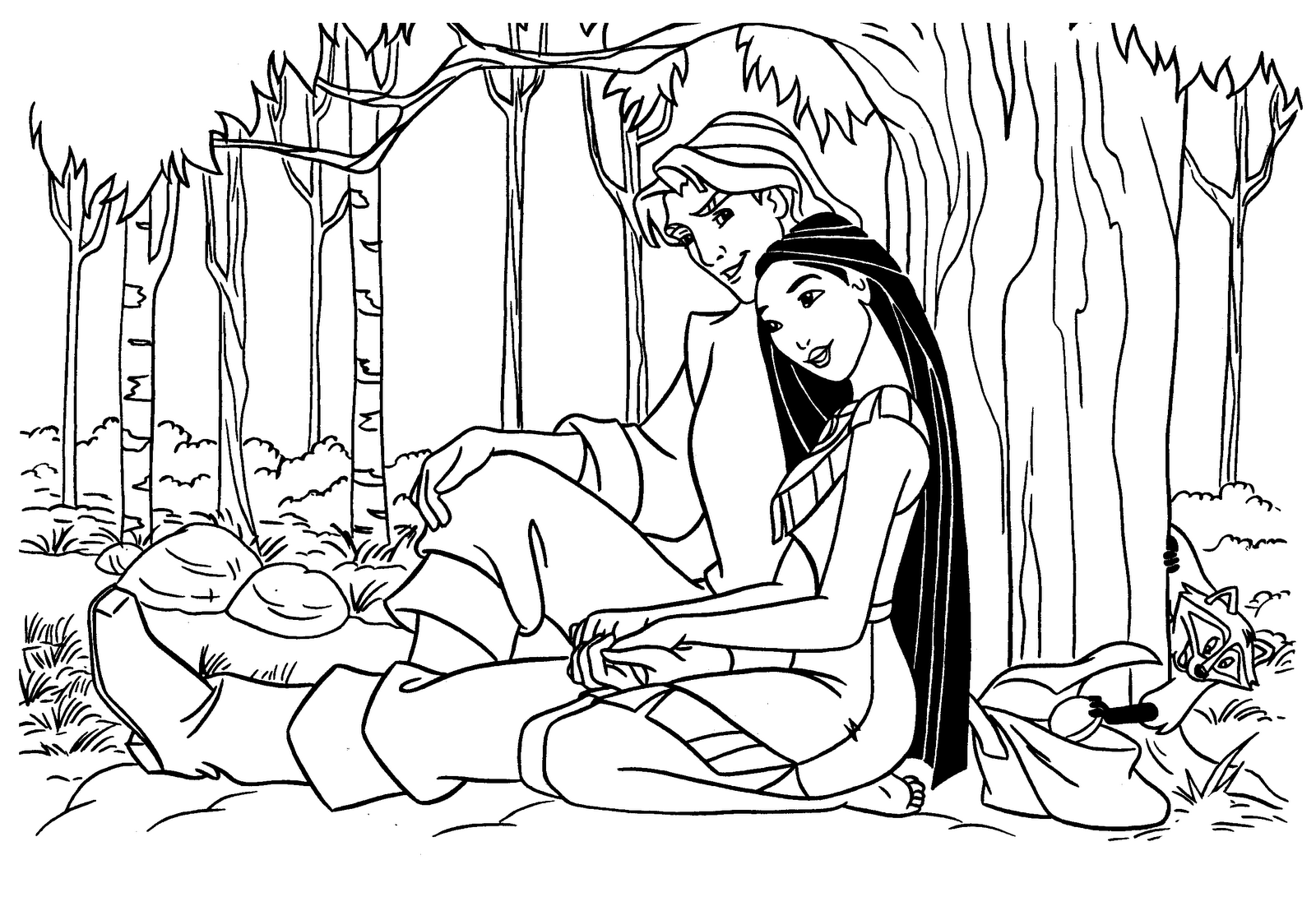
What Is Inside This Collection
The 53 pages fall into a few clear groups, built around Pocahontas’s expressions, her animal companions, her friendship with John Smith, and her family and village.
Classic Pocahontas Portraits
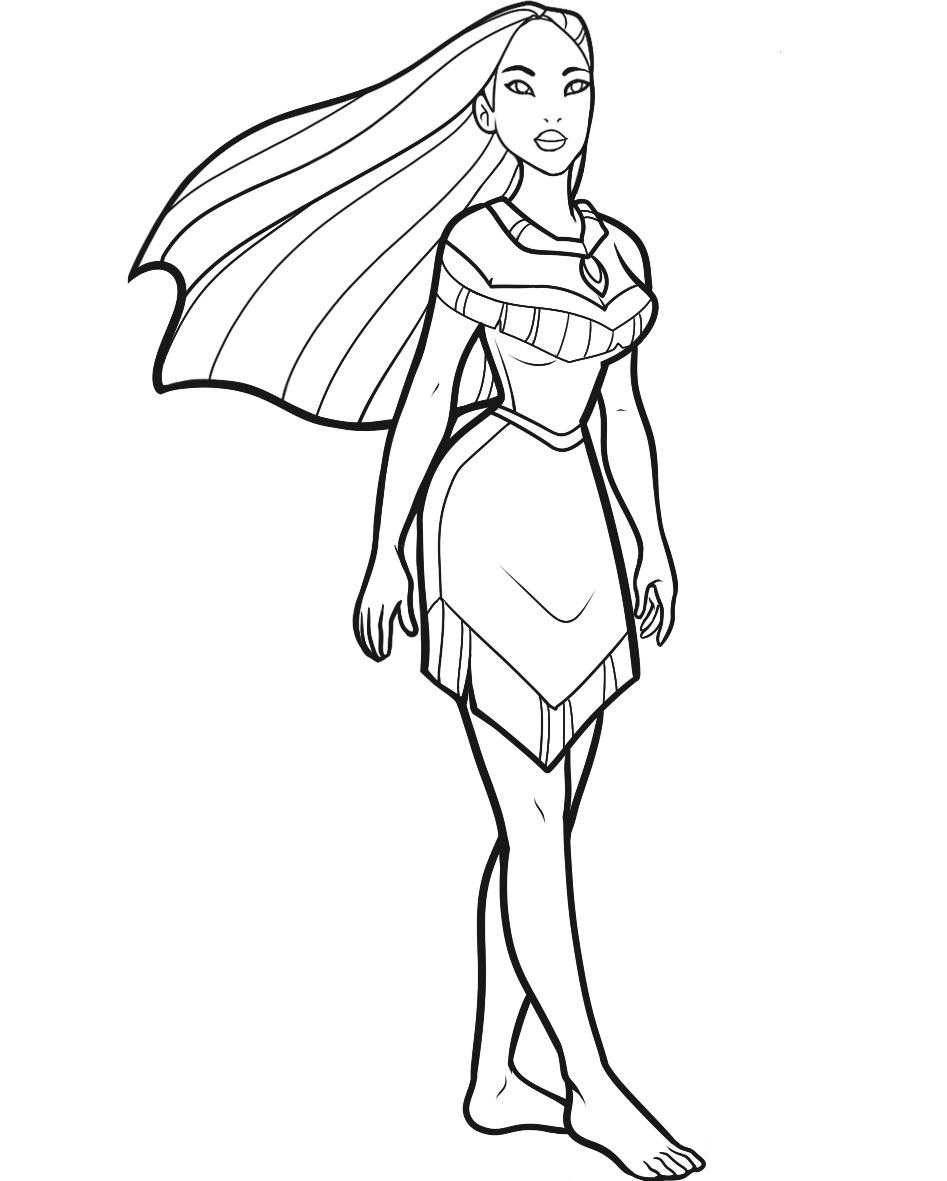
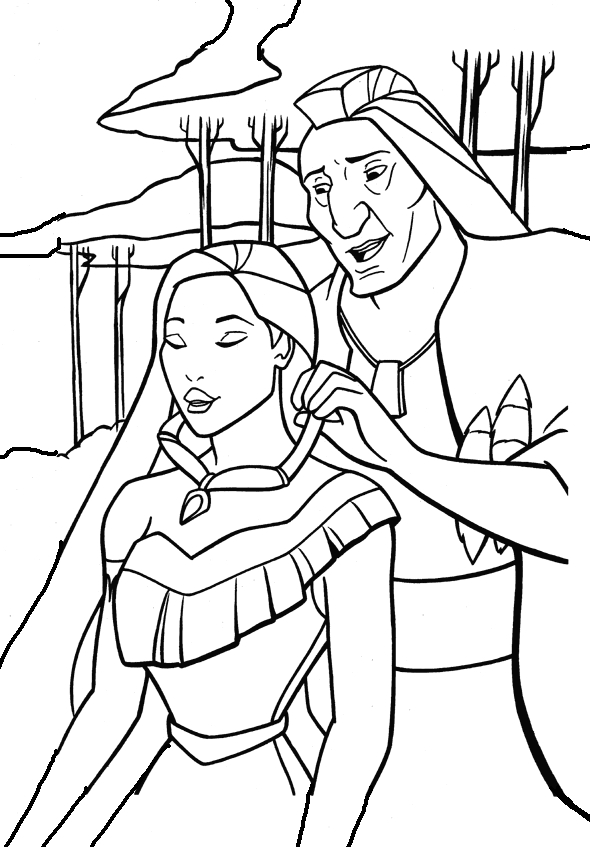
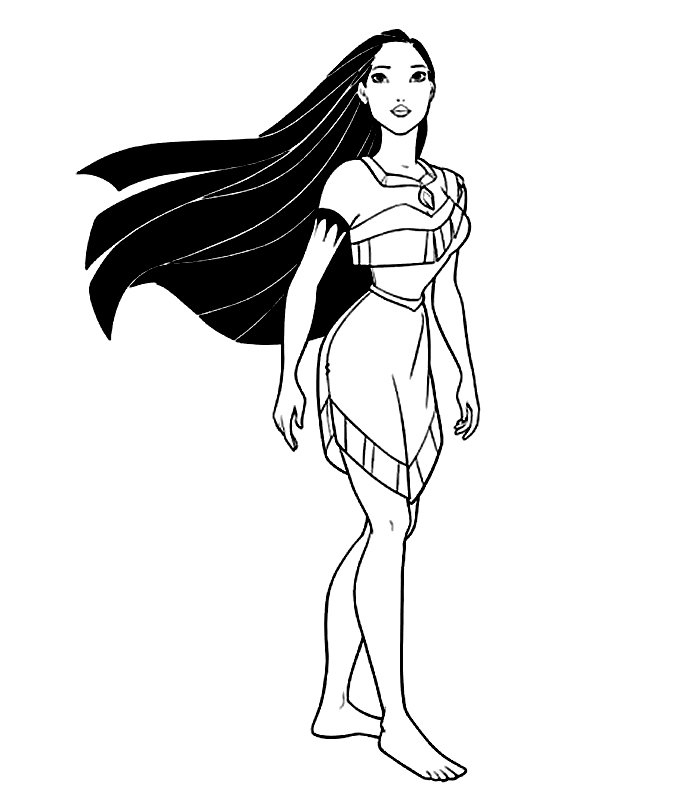
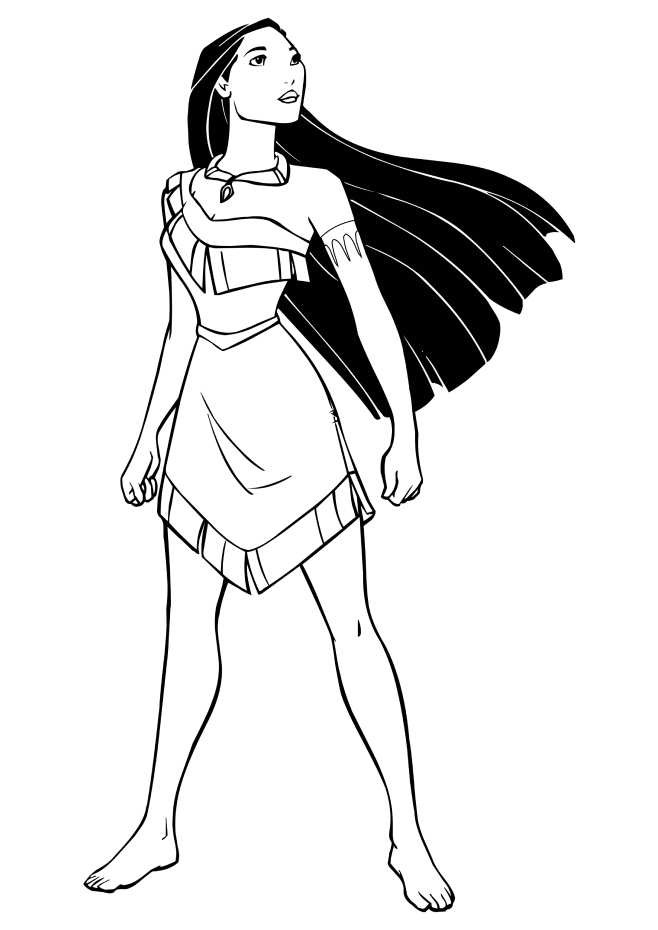
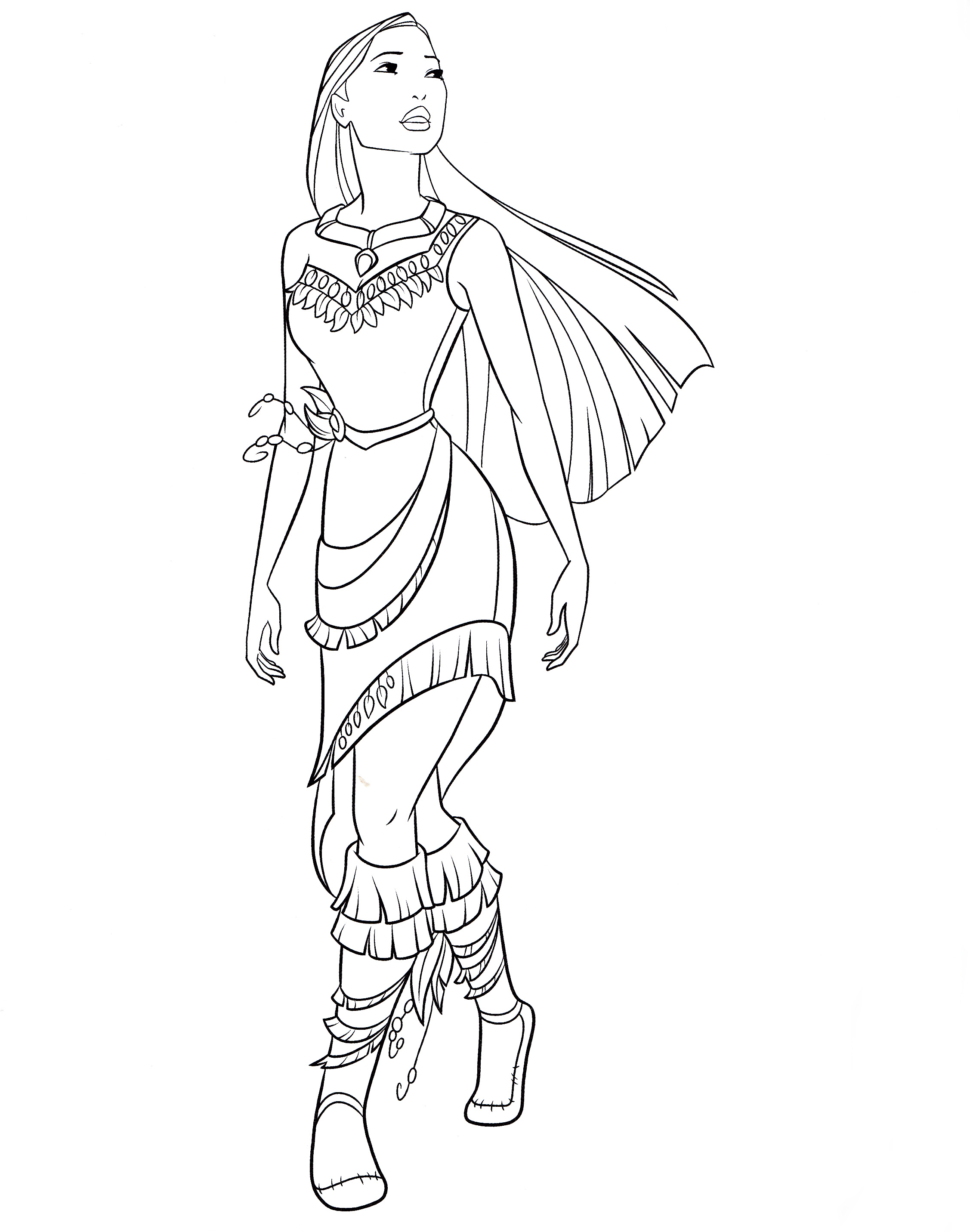
A large share of the set is solo portraits showing Pocahontas standing, dancing, or in motion, based on the character’s 1995 animated design. Color her hair Black, her skin a warm Tan, and her dress a soft Tan or Beige with a Purple sash, the palette used throughout the film, keeping these three colors consistent across every portrait.
Pocahontas with Meeko and Flit
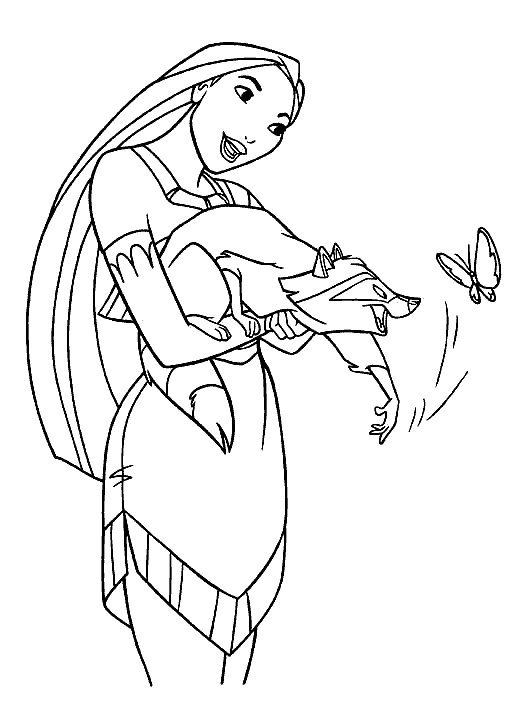
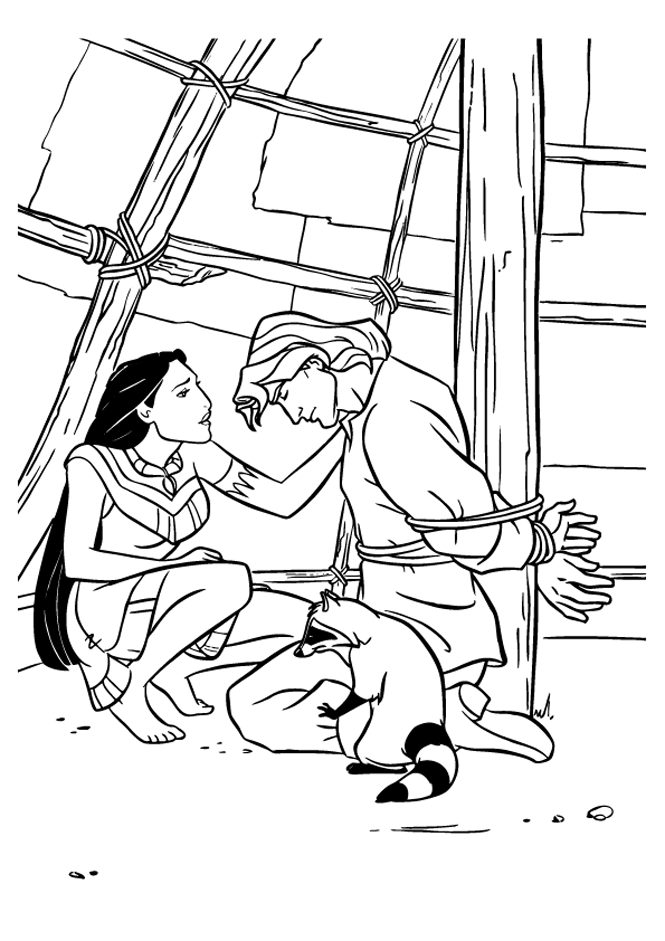
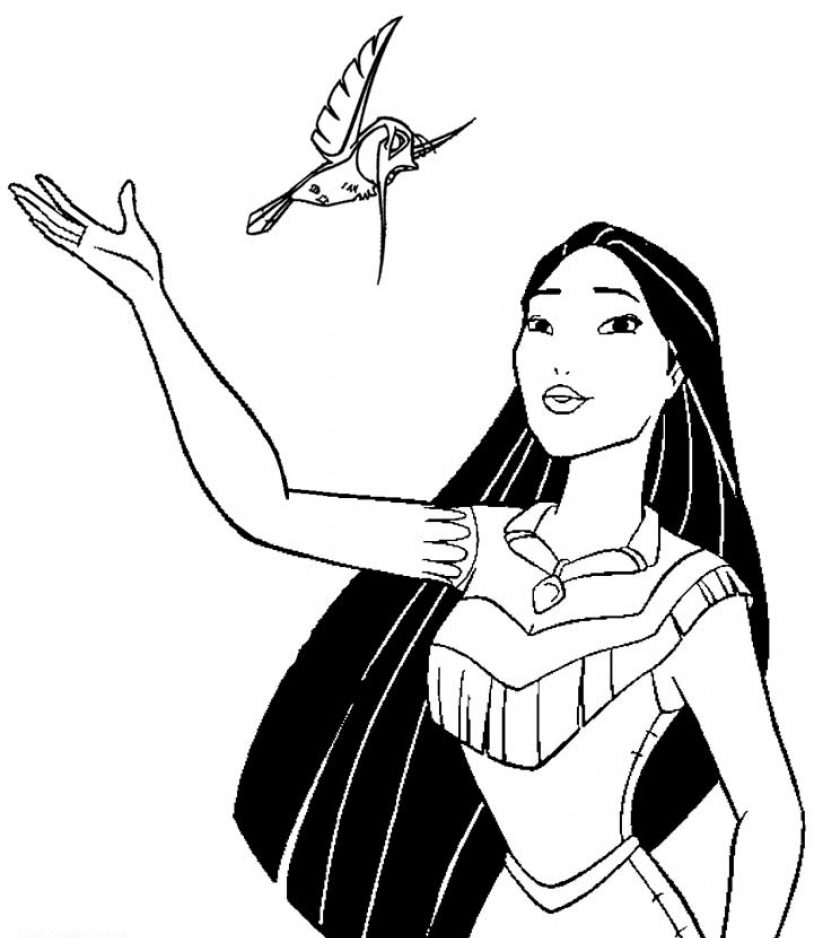
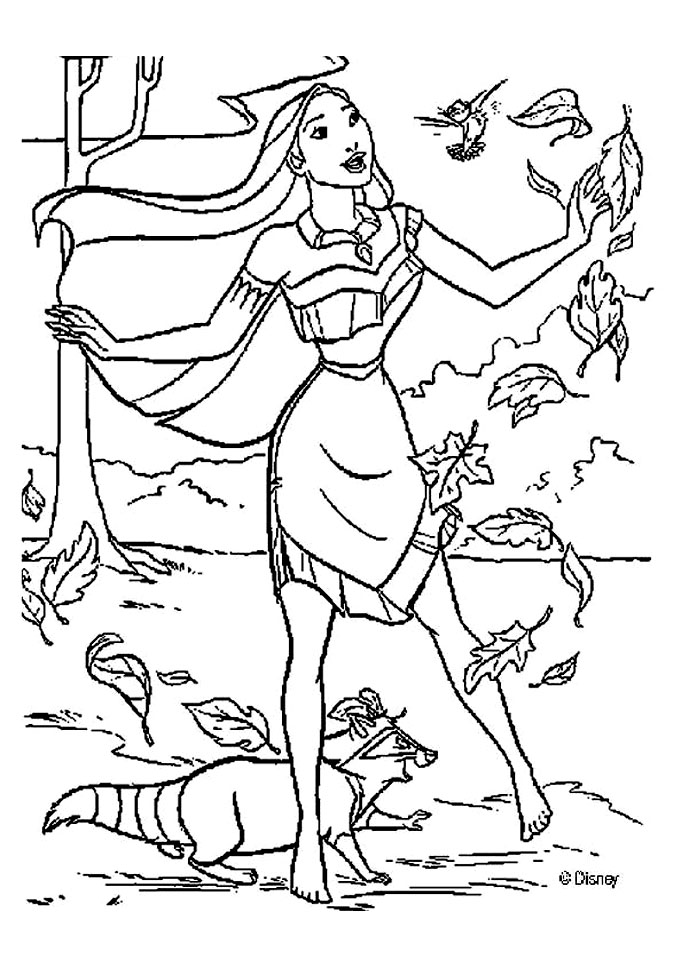
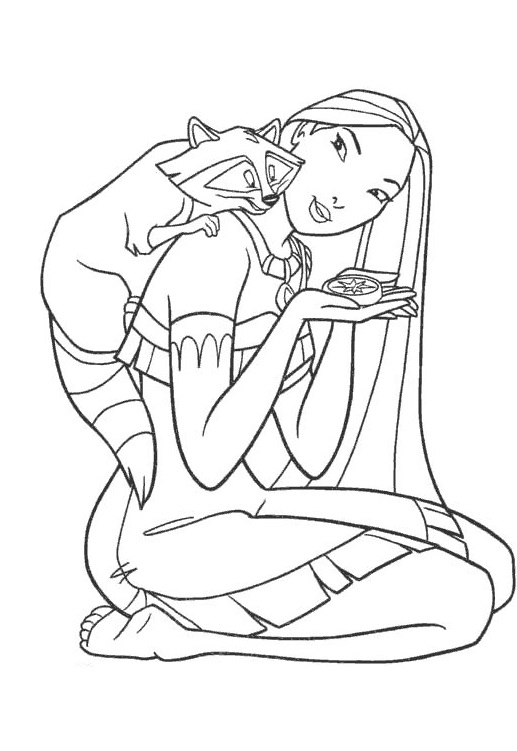
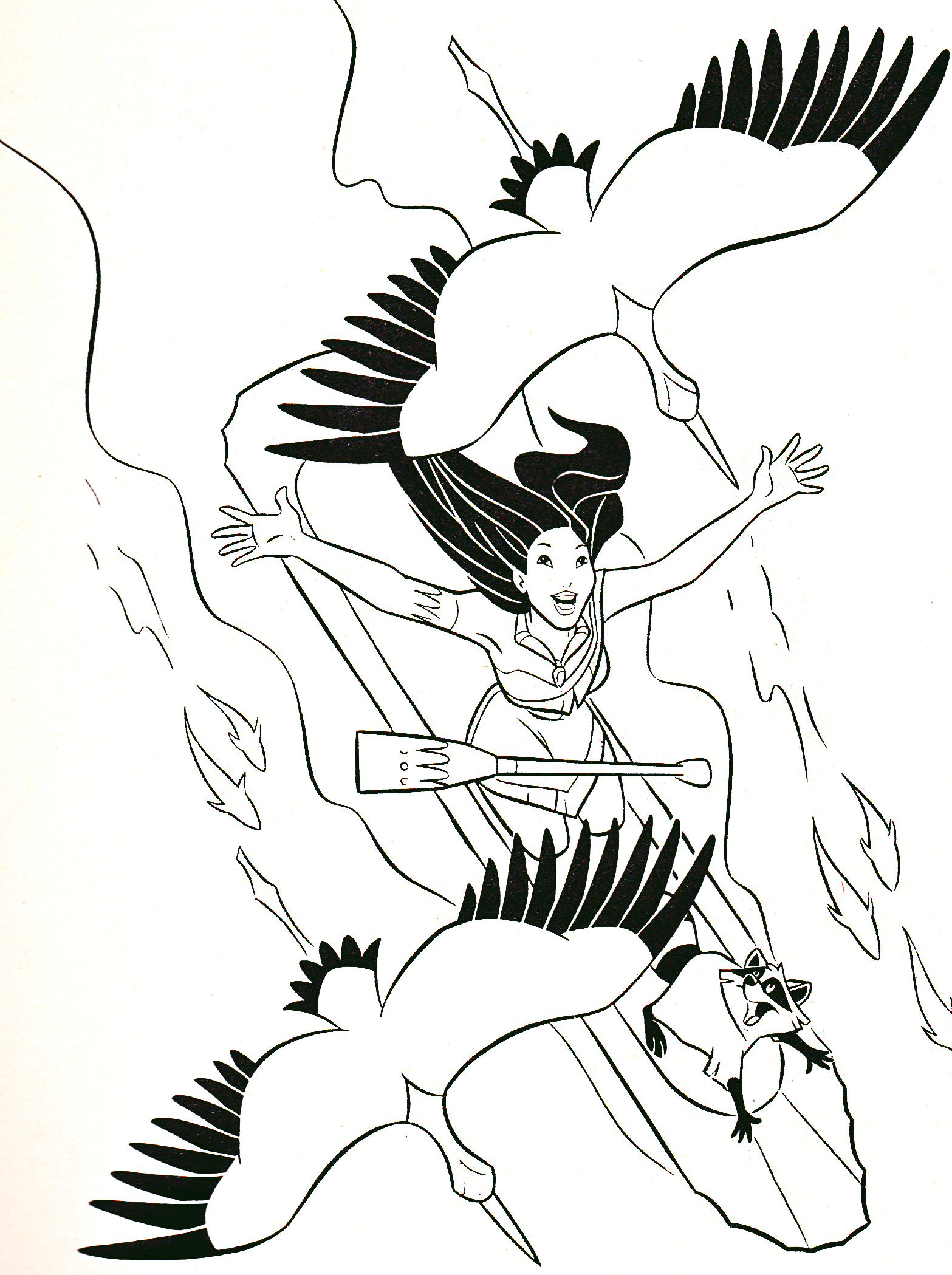
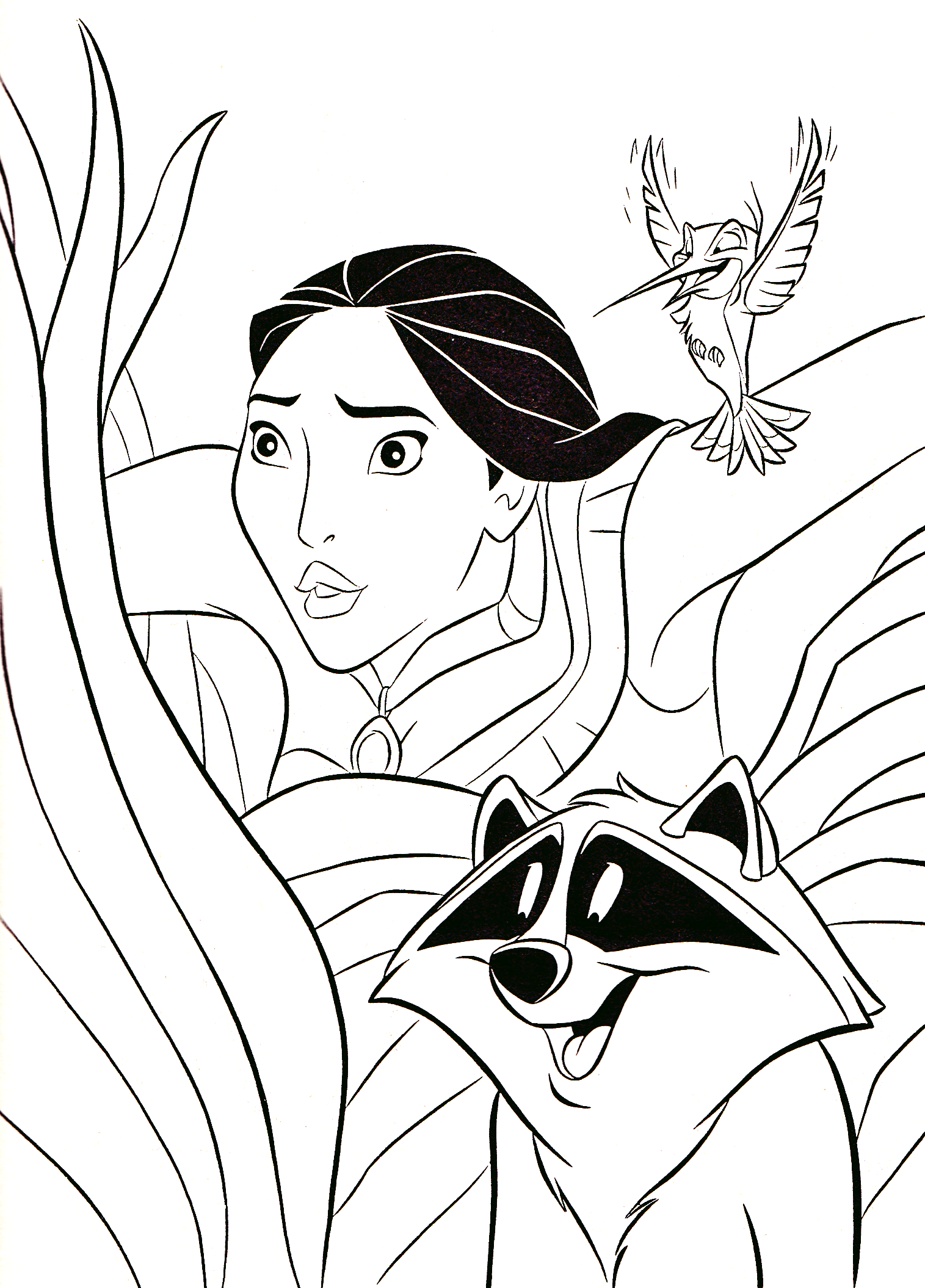
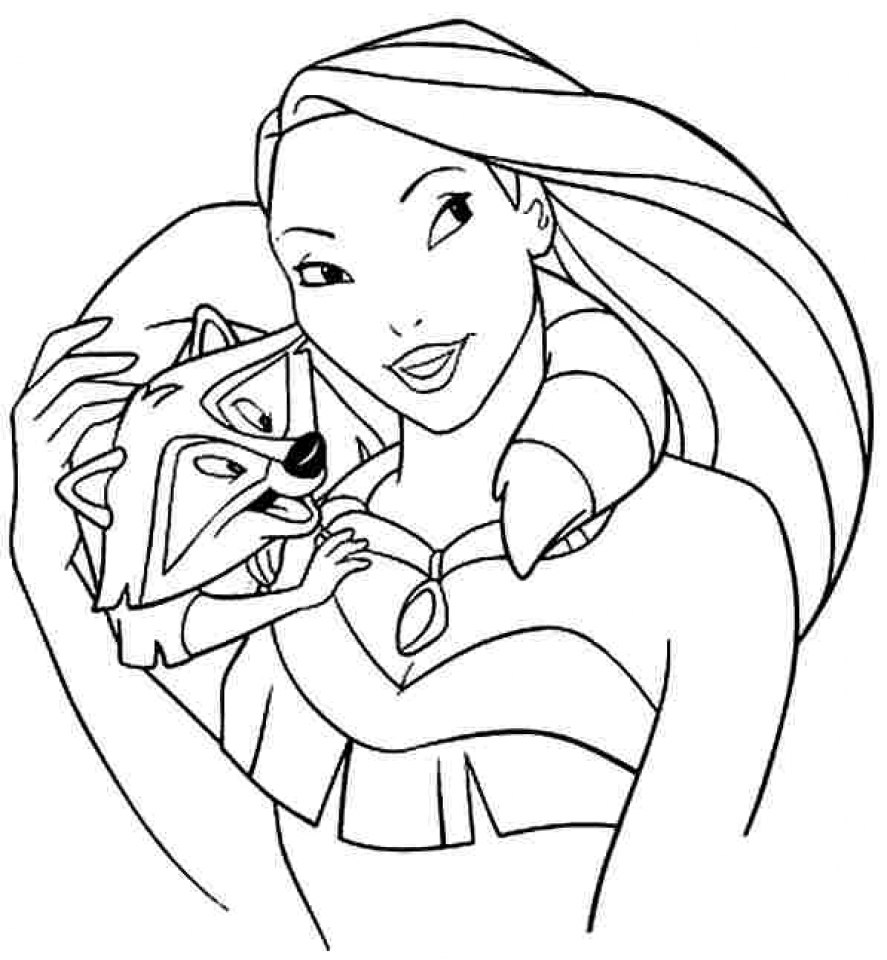
Several pages include her two animal companions from the film, Meeko the raccoon and Flit the hummingbird. Color Meeko in natural raccoon Gray and Black with a ringed tail, and keep Flit small and Blue-Green so he does not compete with Pocahontas for attention on a shared page.
Pocahontas and John Smith
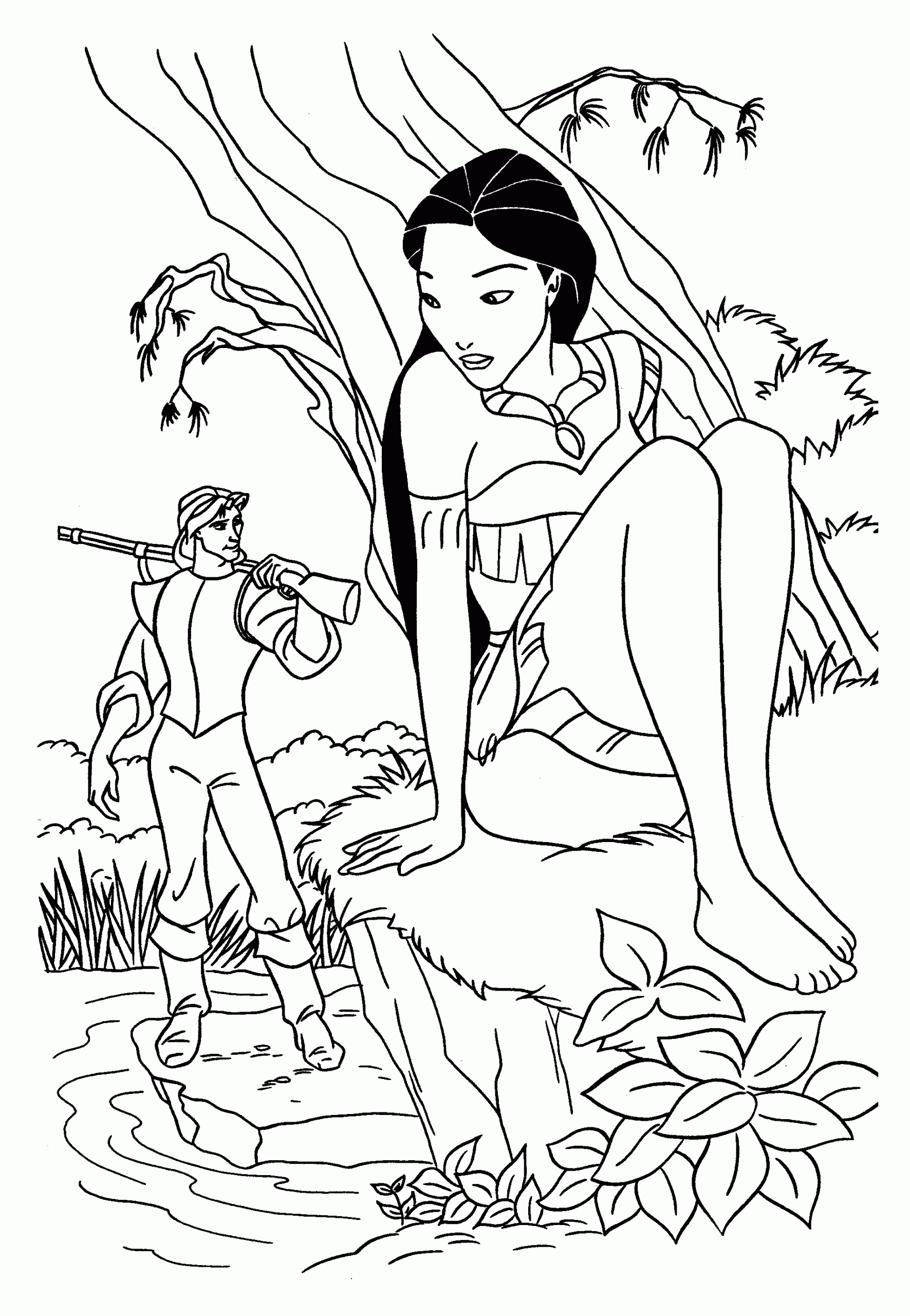
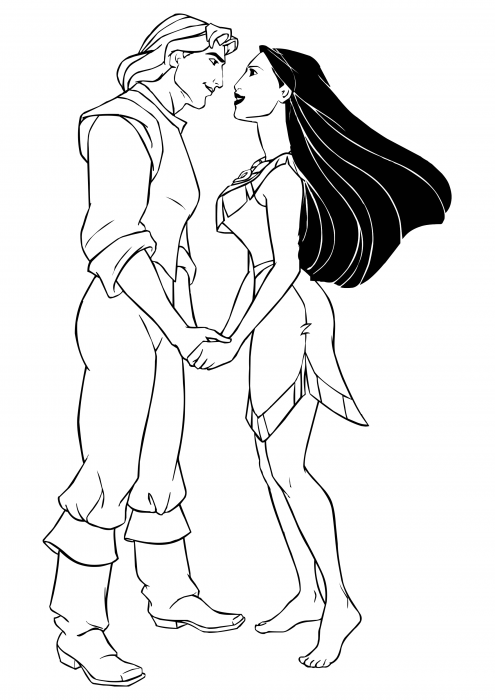
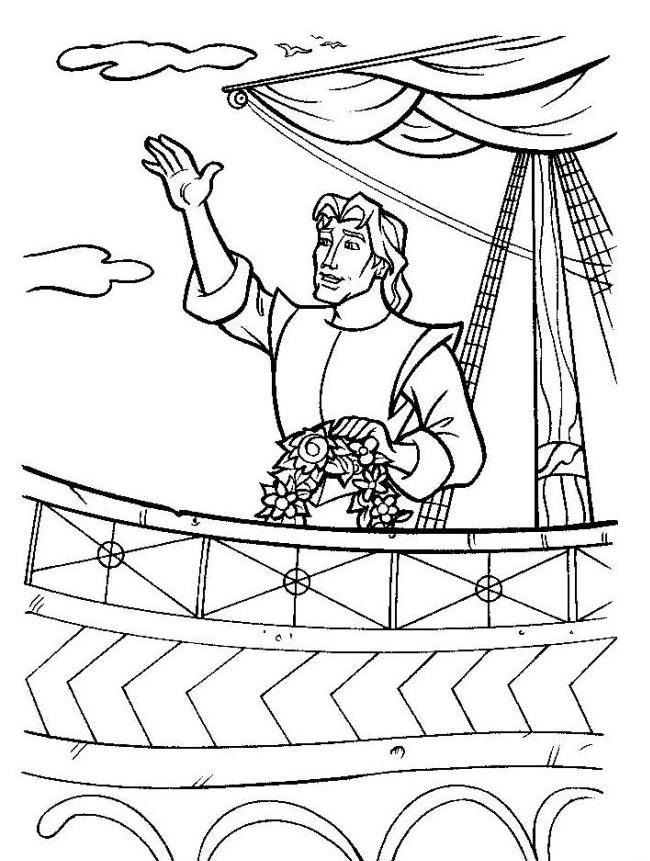
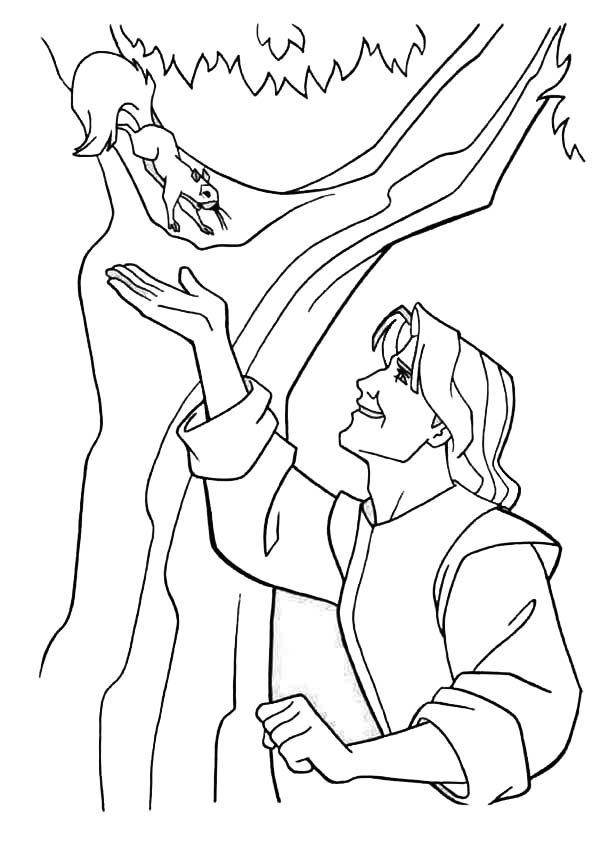
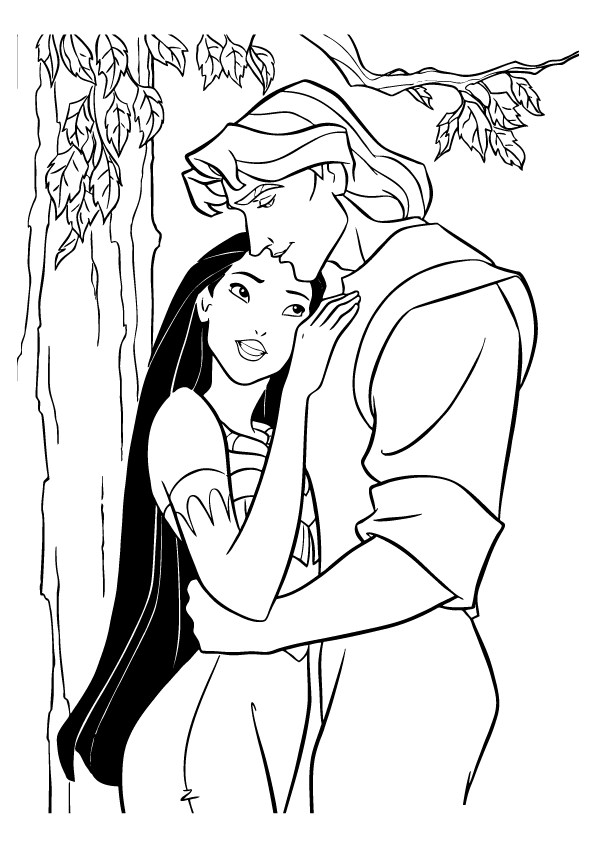
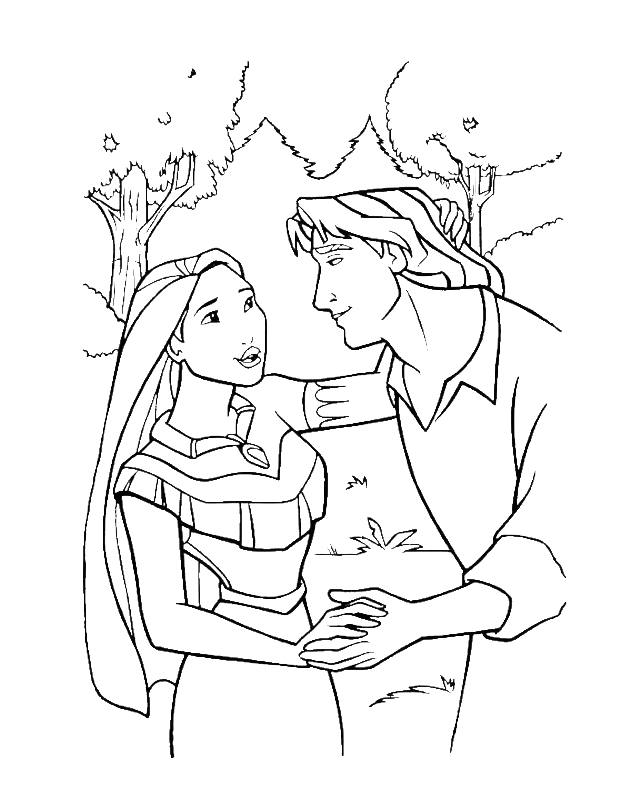
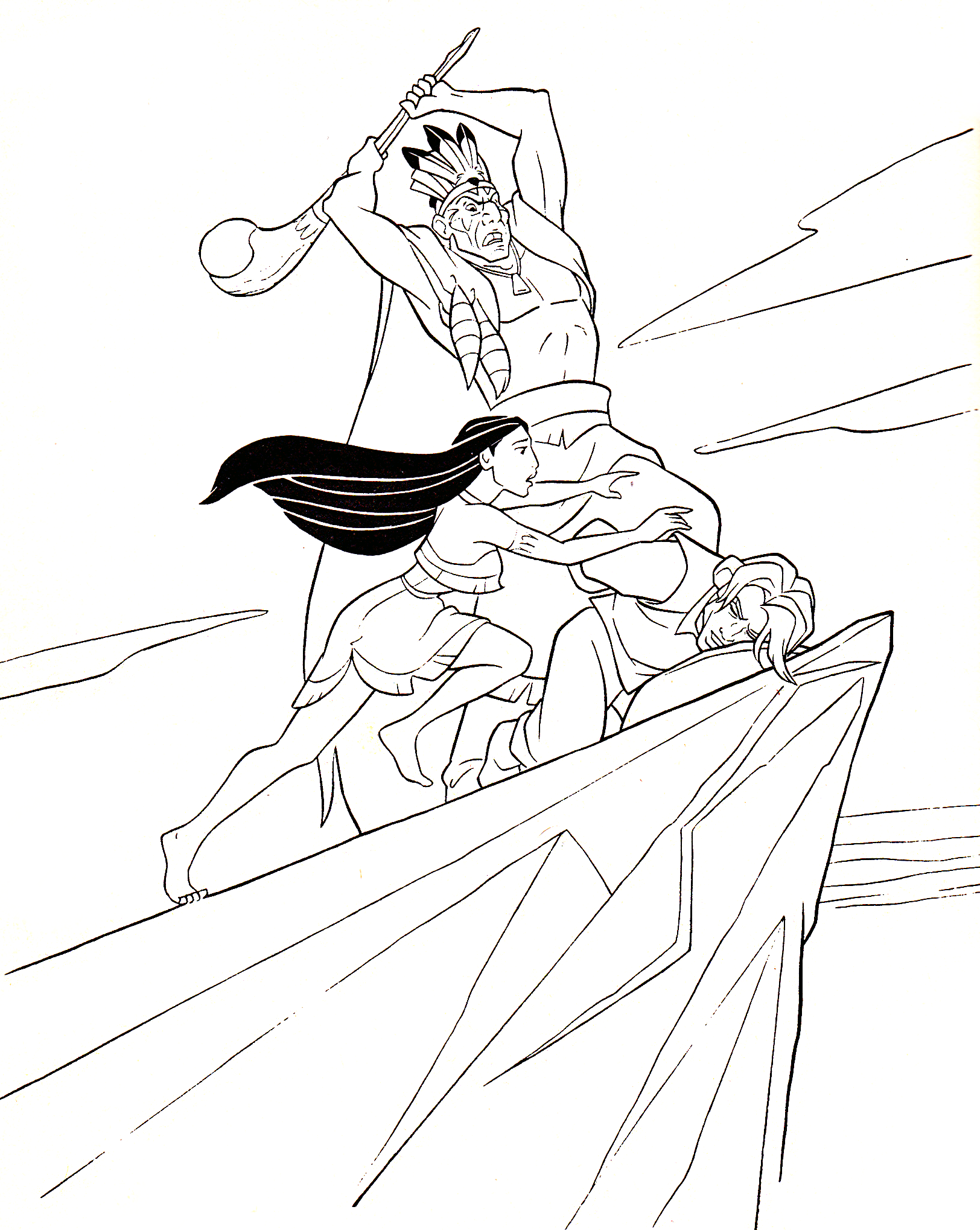
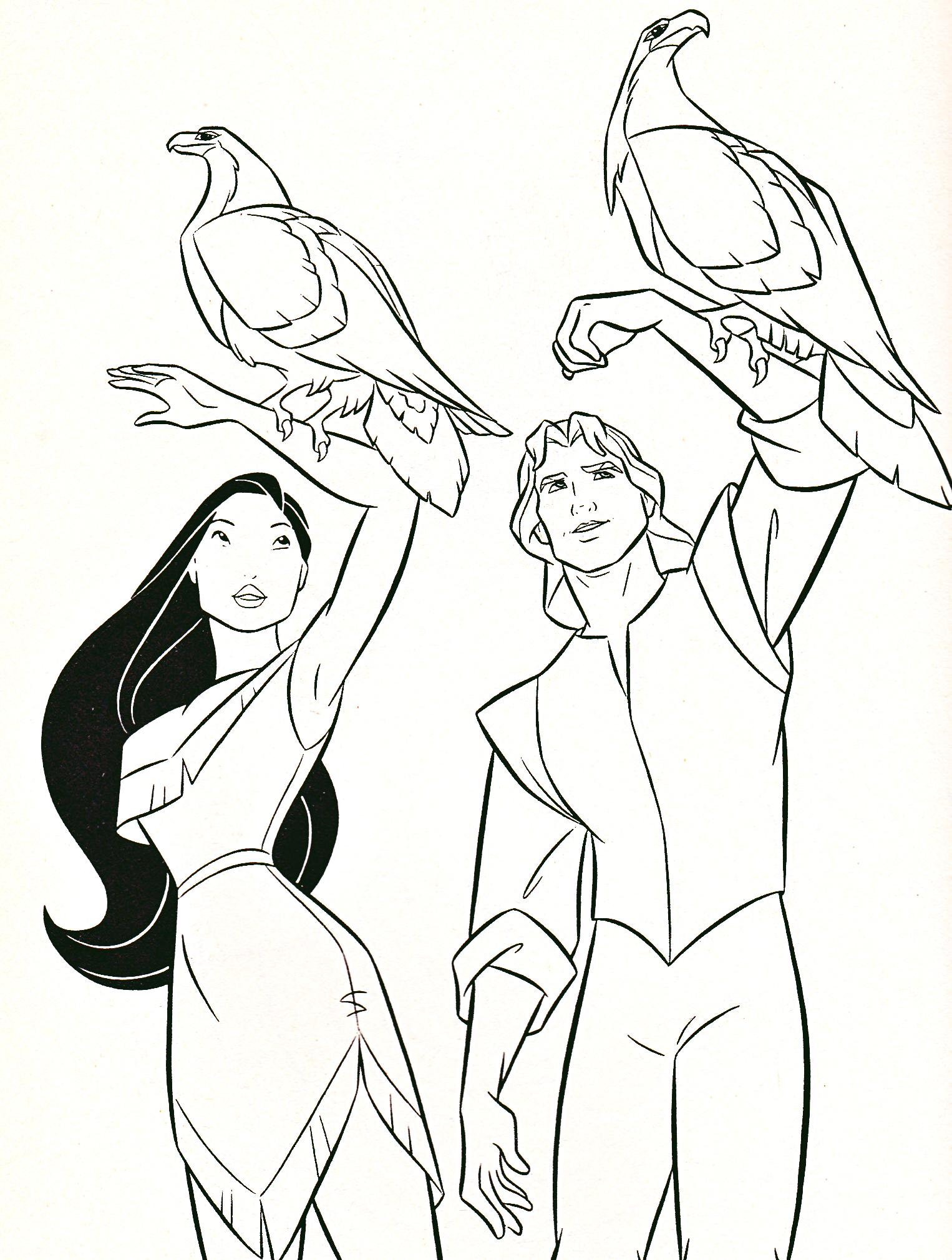
A number of pages show Pocahontas with John Smith, the English settler who is her friend in the film’s story. Give Smith a Blue coat and lighter pants, distinct from Pocahontas’s warm palette, so the two figures read clearly as separate characters.
Pocahontas’s Family and Village
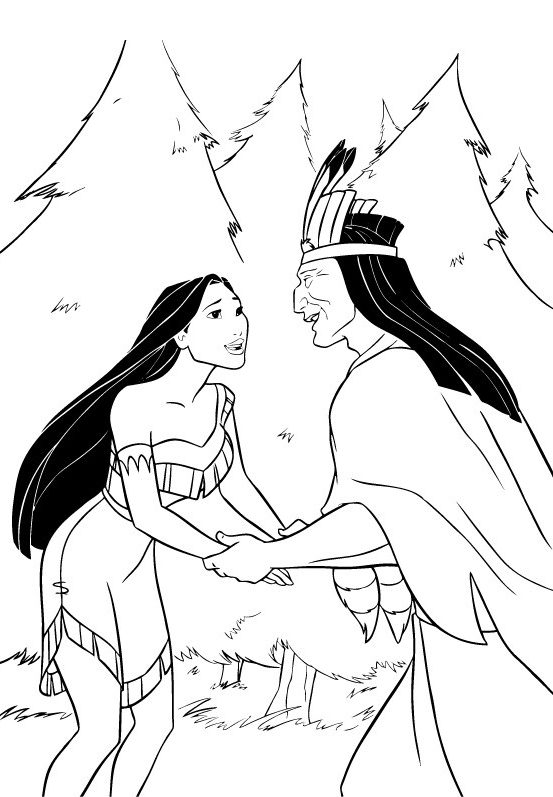
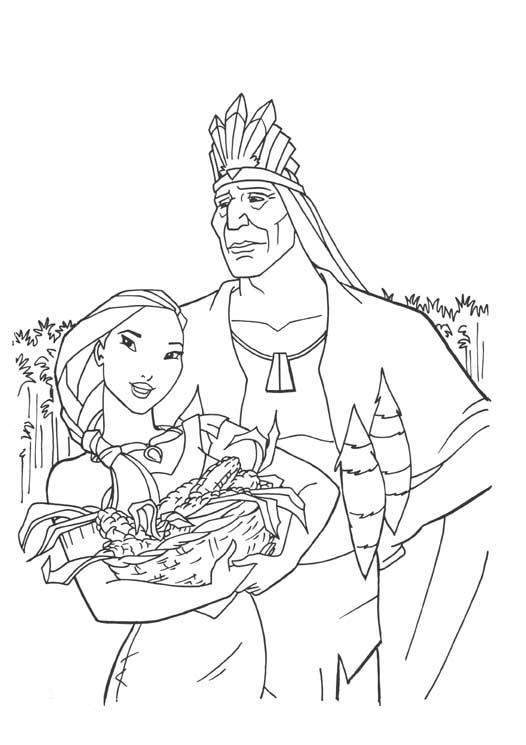
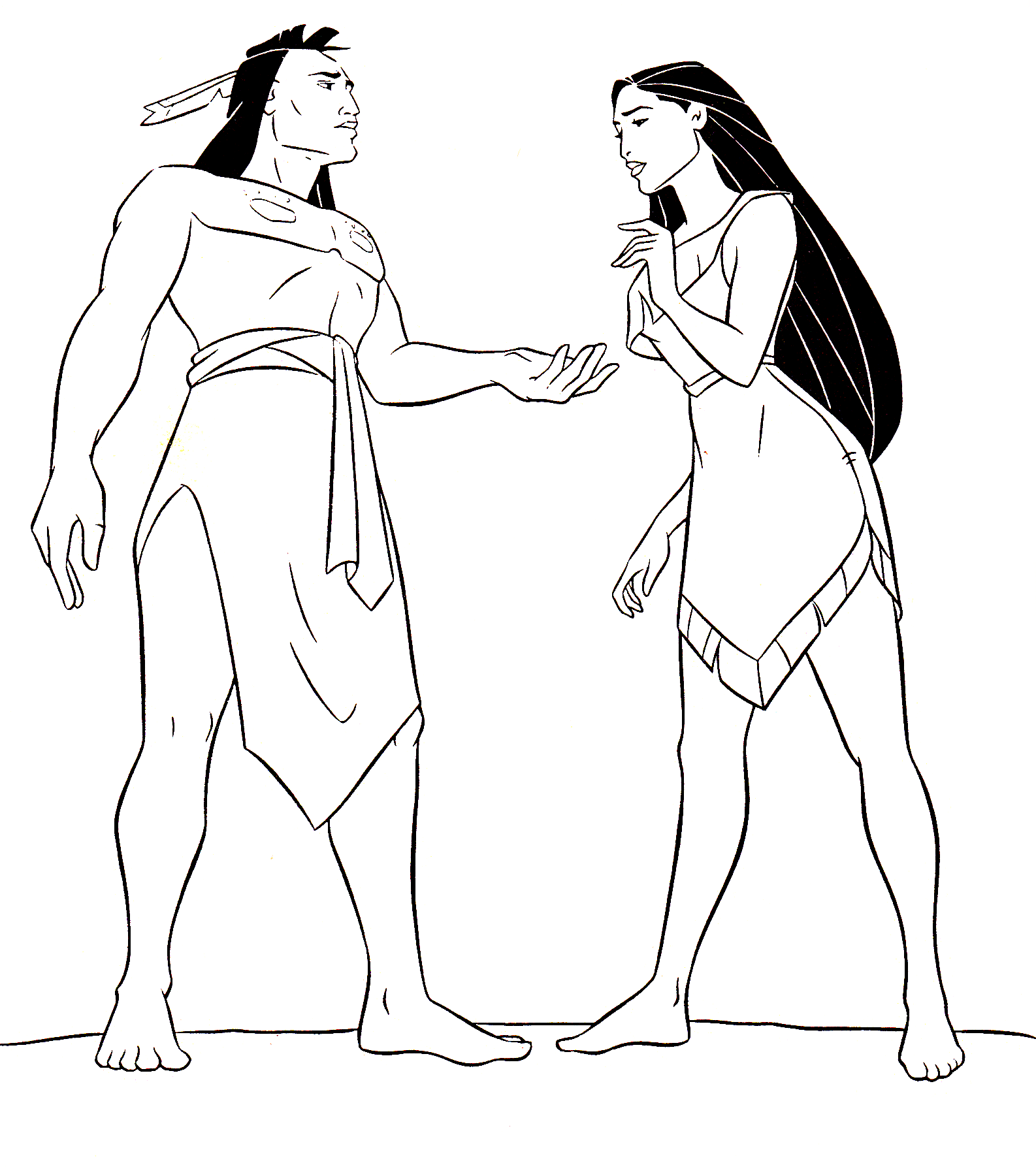
The rest of the set includes her father, Chief Powhatan, her friend Nakoma, and village scenes. Keep Powhatan’s look dignified and consistent across pages. A deep Red sash is common in the film’s design, and uses earthy Greens and Browns for any village or forest backdrop.
What Pocahontas Coloring Pages Do
Long, curving lines instead of small shapes. Fine motor development, one of the core benefits the American Academy of Pediatrics attributes to structured coloring for children ages 2 through 7, is usually built through small, separate regions, buttons, petals, and individual letters. Pocahontas flips that pattern: her flowing hair and dress folds ask for the opposite skill, a long, steady stroke held across a curve without the line wobbling, a kind of hand control most character pages do not require.
A starting point for real history, not just the movie. Because the film is a fictionalized version of a real person, these pages work well as a jumping-off point for talking about the actual historical Amonute, also known as Matoaka, a Powhatan girl whose real life was very different from the animated story. Looking up her true history together turns a coloring session into a small research project.
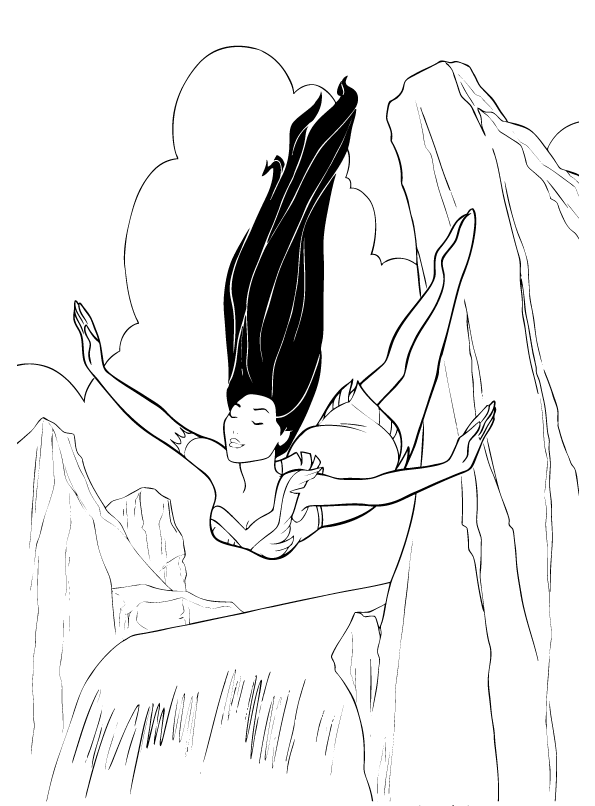
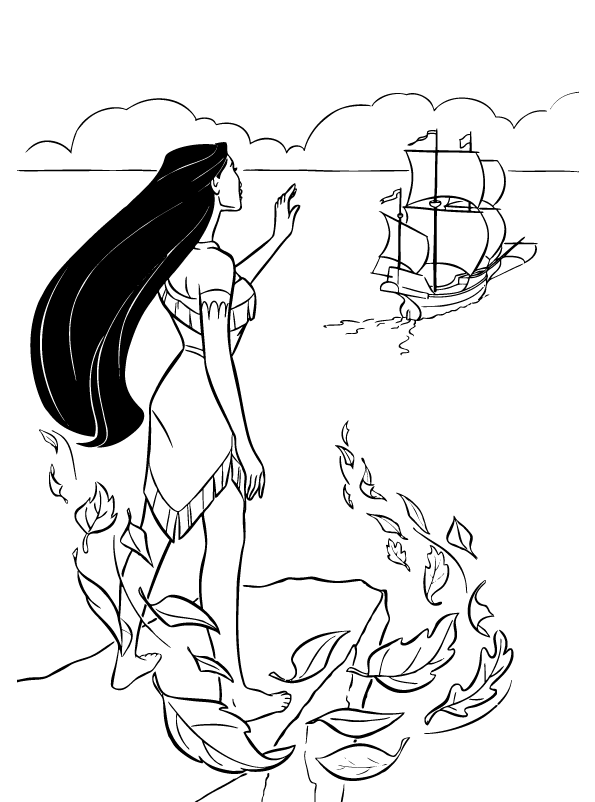
Water and wind patterns create a calming rhythm. Rivers, wind-blown leaves, and rippling water repeat across this collection in long, similar strokes, the same kind of structured, repetitive coloring that a 2005 Art Therapy Journal study linked to measurably lower anxiety than free-form drawing. Following a current of water across a page, one curve at a time, is a small, physical way to practice the calm character that she is often shown finding outdoors.
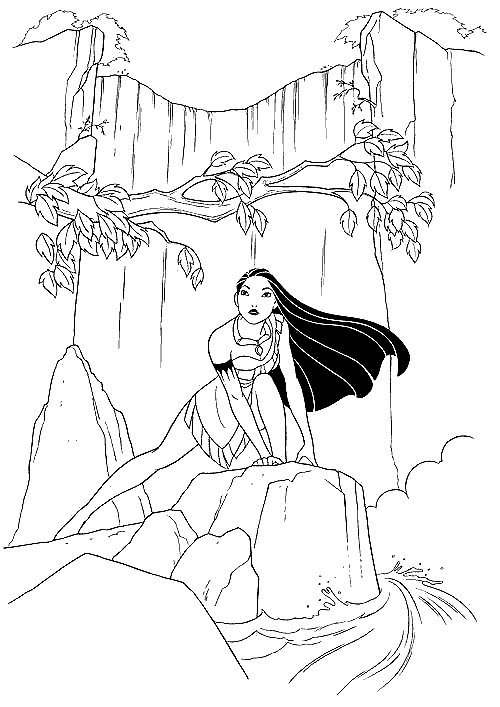
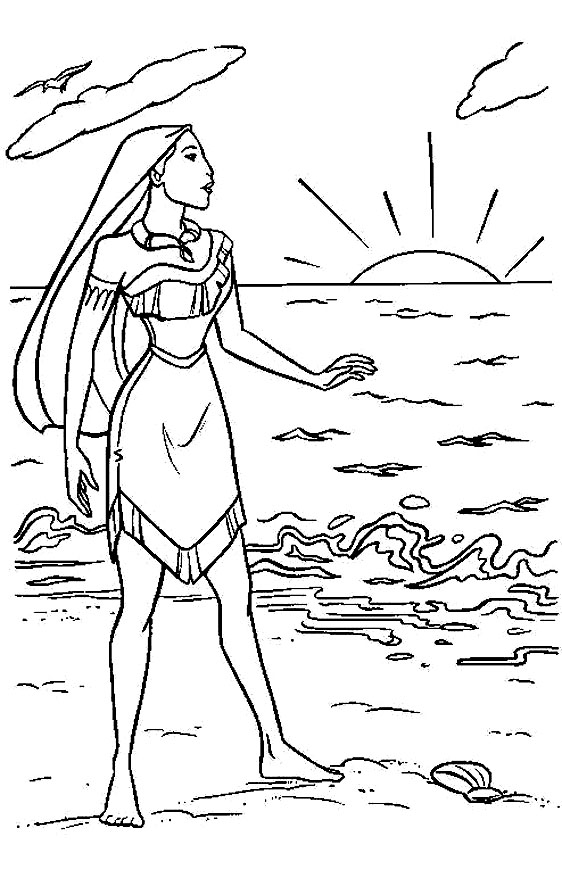
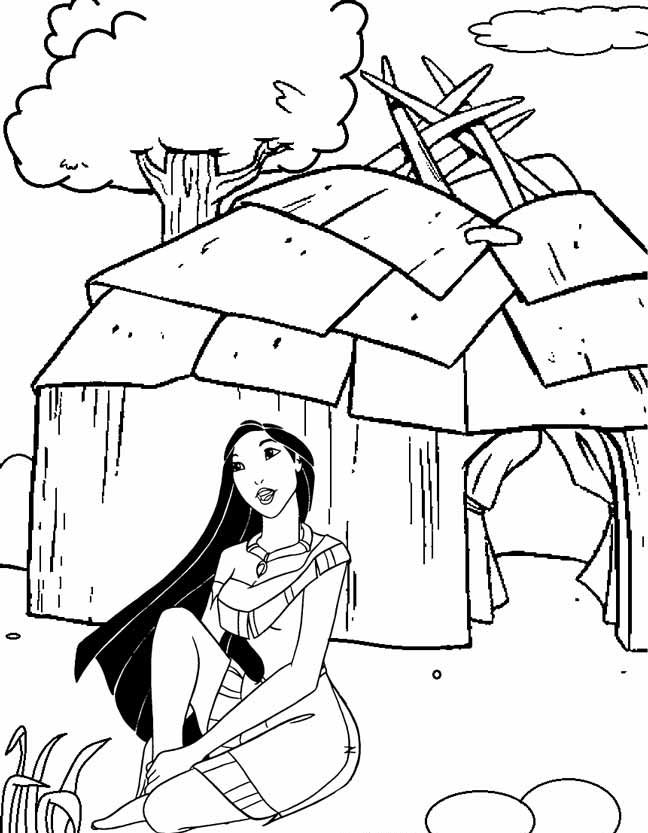
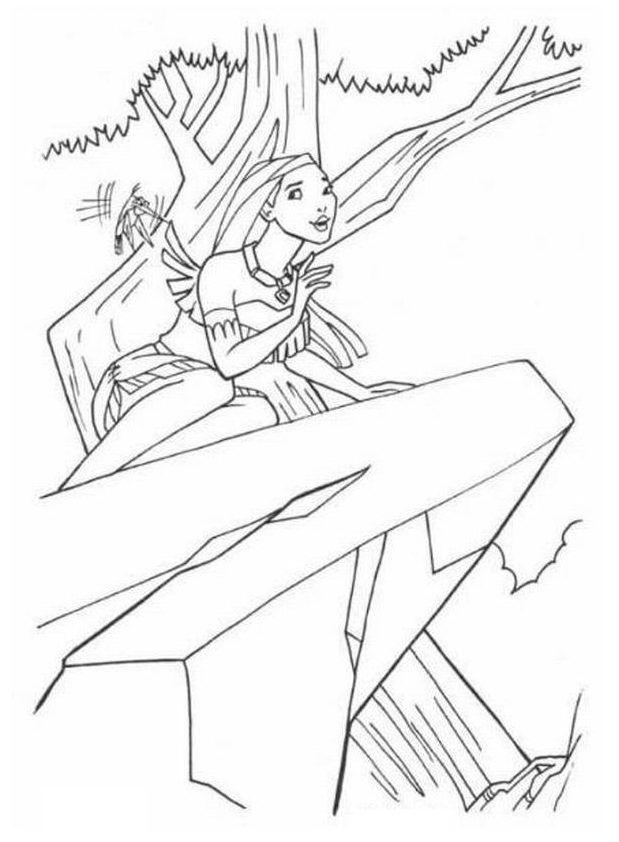
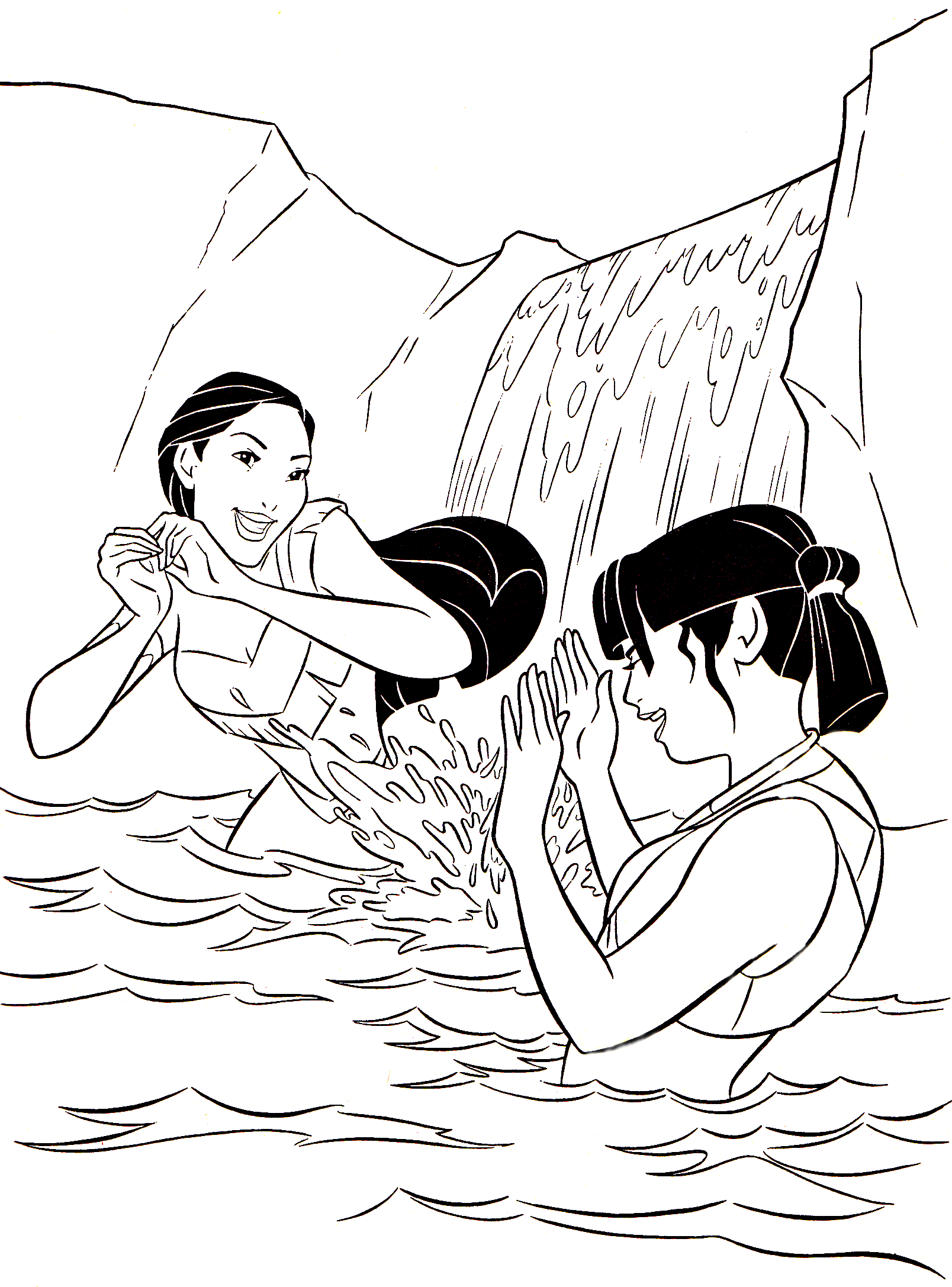
A focus on the natural world. Many pages set Pocahontas among rivers, trees, and animals rather than indoors, reflecting how central the outdoors is to her character in the film. Coloring these nature-heavy scenes gives a child practice with a wider range of greens, browns, and blues than a typical portrait page requires.
How to Color Pocahontas Pages Well
- Black hair, warm skin tone: Color her hair a deep Black and her skin a warm Tan or Copper, the consistent palette used for the character throughout the film.
- Dress in tan and purple: Color her dress a soft Tan or Beige with a Purple sash, her signature color combination in the original film design.
- Meeko in natural raccoon colors: Use Gray and Black for Meeko’s fur with distinct rings on his tail, standard raccoon coloring that keeps him recognizable.
- Flit in blue-green: Keep Flit small and colored in Blue-Green, so his size and color set him apart from Meeko on pages where both companions appear.
- Give John Smith his own palette: On pages with John Smith, use Blue for his coat, distinct from Pocahontas’s warm tones, so the two characters do not blend.
- Nature backdrops in soft greens and browns: On river and forest pages, use a range of soft Greens and Browns for the trees and water so the background supports the scene without overpowering Pocahontas’s own colors.
5 Creative Craft Ideas With Pocahontas Coloring Pages
- River Scene Diorama. Materials: a colored river or canoe page, a small box, blue cellophane or tissue paper, scissors, and tape. Cut out the colored scene, tape it to the back of the box, and layer the blue cellophane across the bottom to look like flowing water for a simple 3D diorama.
- Hanging Nature Mobile. Materials: three or four colored nature pages, such as animals or leaves, scissors, a stick or hanger, and string. Cut out each colored shape, tie a length of string to each one, and tie the strings to the stick at different lengths so the shapes hang and turn freely.
- Nature Journal Cover. Materials: a colored Pocahontas nature page, several sheets of blank paper, a hole punch, and string or yarn. Use the colored page as the front cover, punch matching holes through it and the blank pages, and tie them together to make a simple journal for drawing or writing about things found outside.
- Leaf and Flower Collage. Materials: a colored Pocahontas nature page, real pressed leaves or flower petals, glue, and a sheet of cardstock. Glue the colored page to the cardstock, then arrange and glue real leaves or petals around it to blend the artwork with actual nature collected outdoors.
- Window Silhouette Display. Materials: a colored nature or river page, scissors, and tape. Cut around the outer edge of the colored scene and tape it to a window so daylight shines through the colors, creating a stained-glass-style display that changes with the light.
Frequently Asked Questions
What are Pocahontas coloring pages?
Pocahontas coloring pages are printable designs featuring the Disney character in nature scenes, portraits, and moments with her animal companions. This collection offers 53 free designs as printable PDFs or online coloring pages, including scenes with Meeko, Flit, and John Smith.
Who is the real Pocahontas the Disney character is based on?
The real woman was named Amonute and privately called Matoaka; Pocahontas was a childhood nickname. She was the daughter of Powhatan leader Wahunsenacawh and lived in present-day Virginia in the early 1600s. Her real life, including being captured by English colonists and later marrying settler John Rolfe, was very different from the version told in the animated film.
Is the Disney film historically accurate?
No. The film presents a fictionalized friendship and romance between Pocahontas and John Smith. Still, Amonute was likely only around ten years old when she met Smith in 1607, not a young woman in a relationship with him. She later married a different English colonist, John Rolfe, in 1614, and died in England at about twenty years old in 1617.
What colors does Pocahontas wear in the film?
Pocahontas has black hair and a warm tan skin tone throughout the film. Her dress is typically shown as a soft tan or beige with a purple sash, a consistent color combination used across her official character design.
Who are Meeko and Flit?
Meeko is a mischievous raccoon, and Flit is a small hummingbird, both animal companions who appear alongside Pocahontas throughout the film. They are featured on many pages in this collection and give younger colorers a simpler animal shape to practice alongside her more detailed portraits.
Why does Pocahontas hold a special place among Disney princesses?
She was the first Disney Princess based on a real historical person and the first American member of the Disney Princess lineup. Voice actress Irene Bedard, who is of Inupiat and Cree heritage, provided her speaking voice, and animators used a mix of real references, including a historical 1616 portrait, to design her look.
Are Pocahontas coloring pages suitable for young children?
The simple solo portraits suit children around ages 3 and 4 who are just learning to color a face and hair. The nature and river scenes, with more background detail, suit ages 6 and up, and the pages with Meeko and Flit work well for ages 5 and up.
What age group are the nature and river scenes best suited for?
Pages showing forests, rivers, and detailed backgrounds include more small elements, leaves, water ripples, distant trees, than the simple portraits, so they suit children around ages 6 and up who have practiced coloring smaller, more complex spaces.
Start Coloring
Download any page by clicking the design. No account, email, or payment is required. Pages print directly from the browser at full resolution or open in the online coloring tool for screen use. Share finished pages on Facebook or Pinterest with the share buttons at the top of each design page.