Passover Coloring Pages
 By:
Jennifer Thoa – Content Editor & Designer
Updated:
By:
Jennifer Thoa – Content Editor & Designer
Updated:
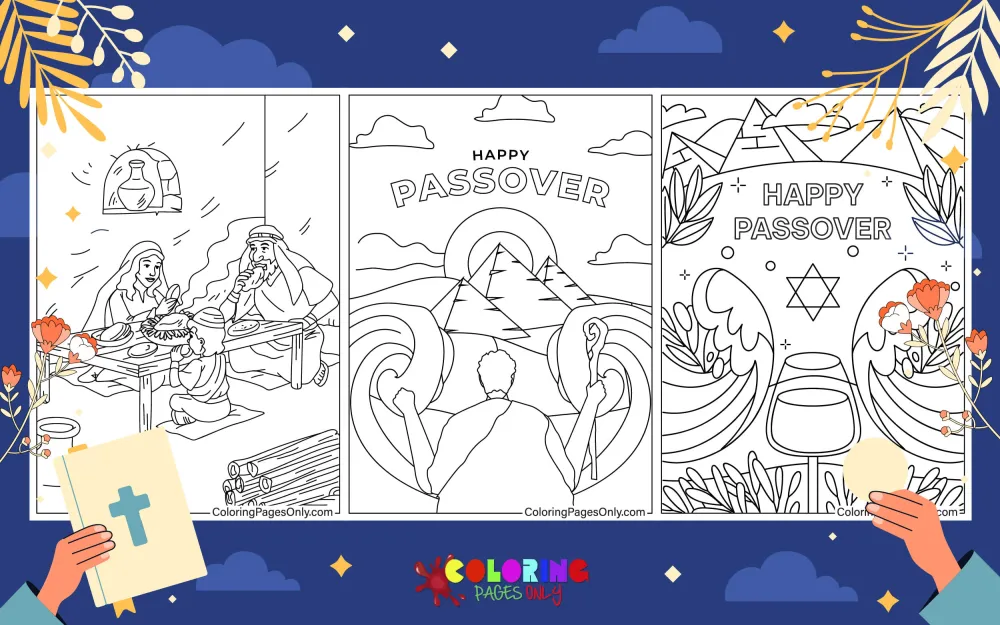
Passover Coloring Pages brings one of the most meaningful and story-rich holidays of the Jewish calendar to life through art – and we are so happy to share this collection with you at ColoringPagesOnly.com! With 50+ free pages covering the Seder table, the story of Moses, the Ten Plagues, and all the symbols that make Passover so distinctive, this collection is designed for families celebrating the holiday, teachers building multicultural lessons, and anyone who wants to explore one of the world’s oldest living traditions.
Every page is completely free to download as a PDF or color online instantly. No sign-up, no cost – just the story of freedom, told through color.

What Is Passover?
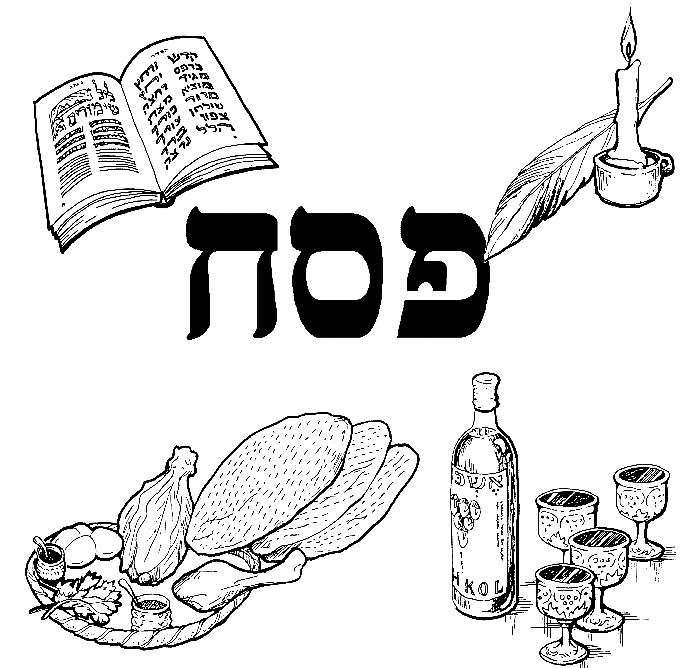
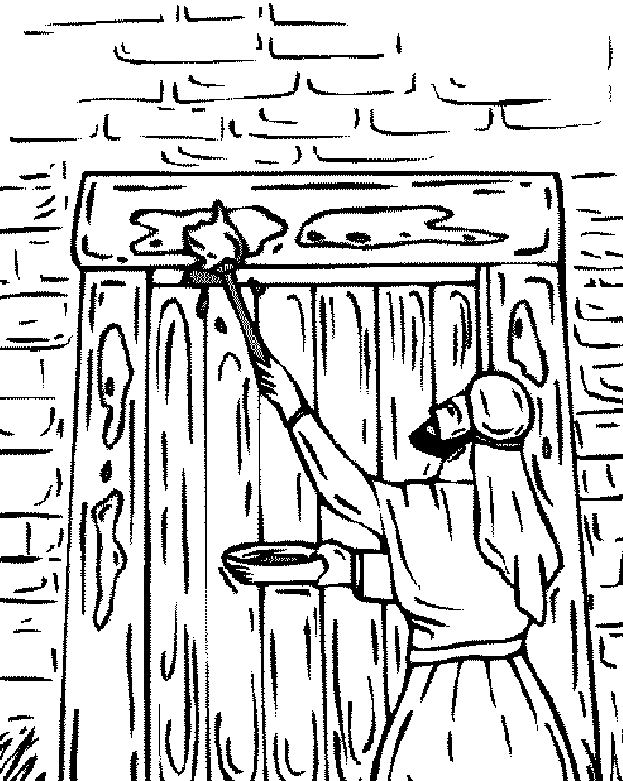
Passover – known as Pesach (פֶּסַח) in Hebrew – is one of the most important holidays in the Jewish faith. Observed in the spring, it commemorates the liberation of the Israelites from slavery in ancient Egypt, as told in the Book of Exodus. The word “Passover” refers to the final plague, when God passed over the homes of the Israelites who had marked their doorposts with lamb’s blood – one of the most dramatic moments in the entire story.
Passover begins on the 15th day of Nisan in the Hebrew calendar and is celebrated for seven days in Israel and eight days in Jewish communities around the world. The holiday falls in March or April each year, depending on the lunar calendar.
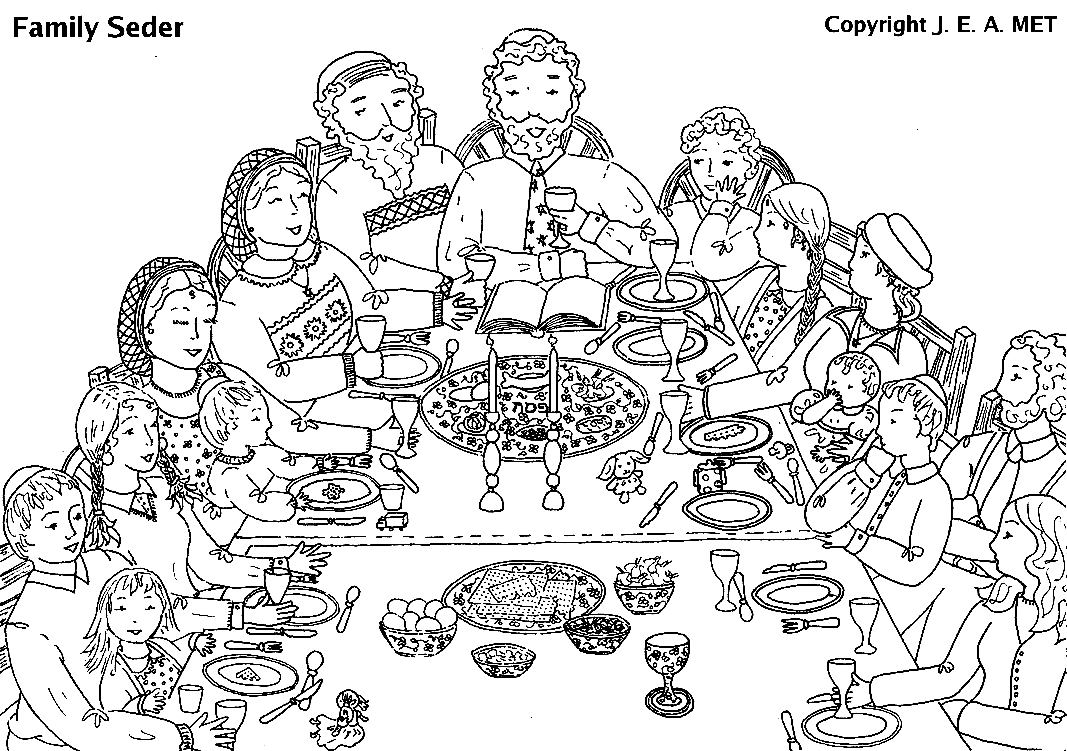
The heart of Passover is the Seder – a ceremonial meal held on the first night (or the first two nights) of the holiday. Families gather around a table set with special foods and symbolic objects, read from the Haggadah (a text that retells the Exodus story), sing songs, ask questions, and share a meal that connects every generation to the same ancient story of liberation. The word seder means “order” in Hebrew – every element of the evening follows a sequence that has been observed for thousands of years.
The Seder Plate – What Each Symbol Means
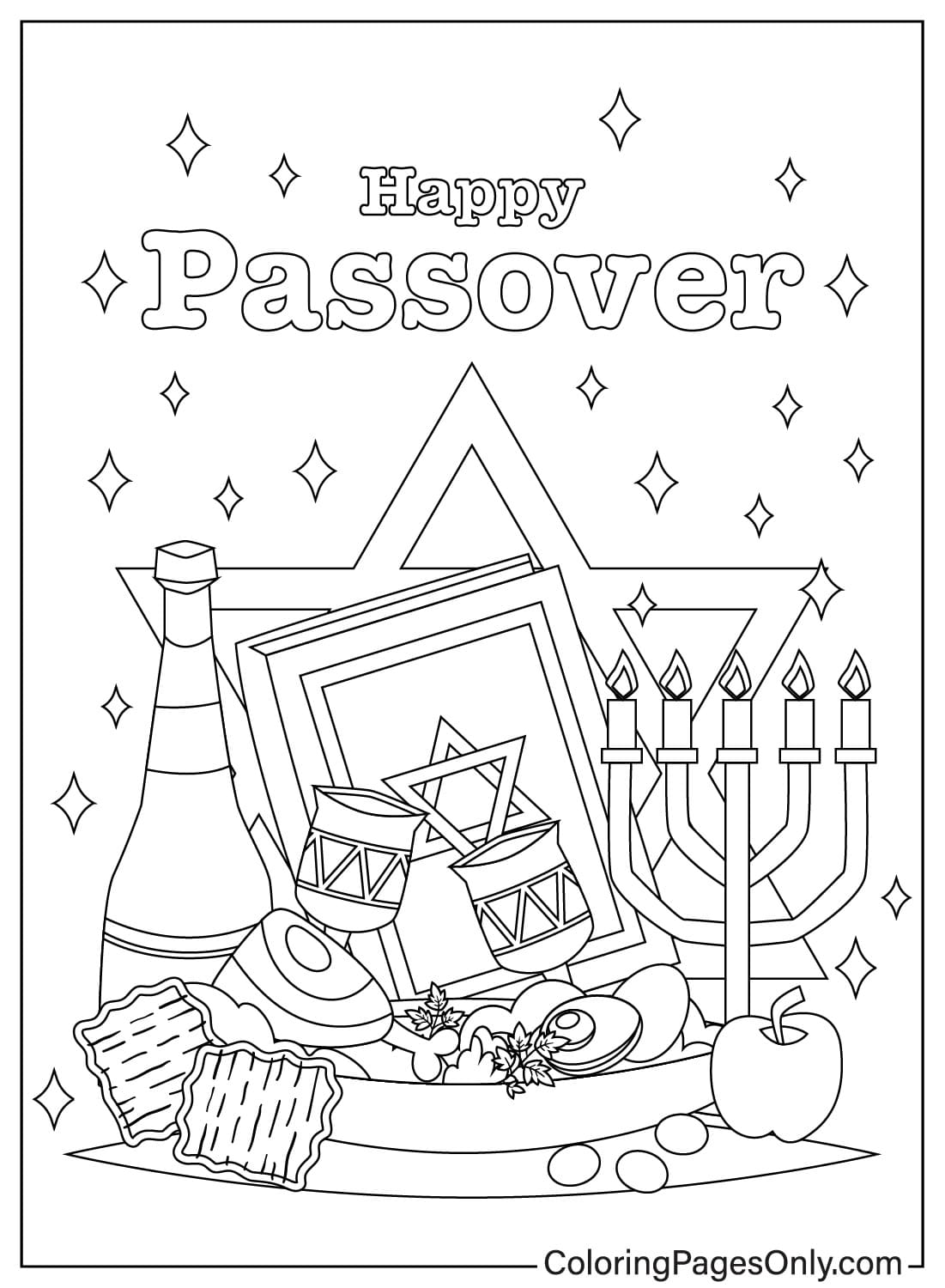
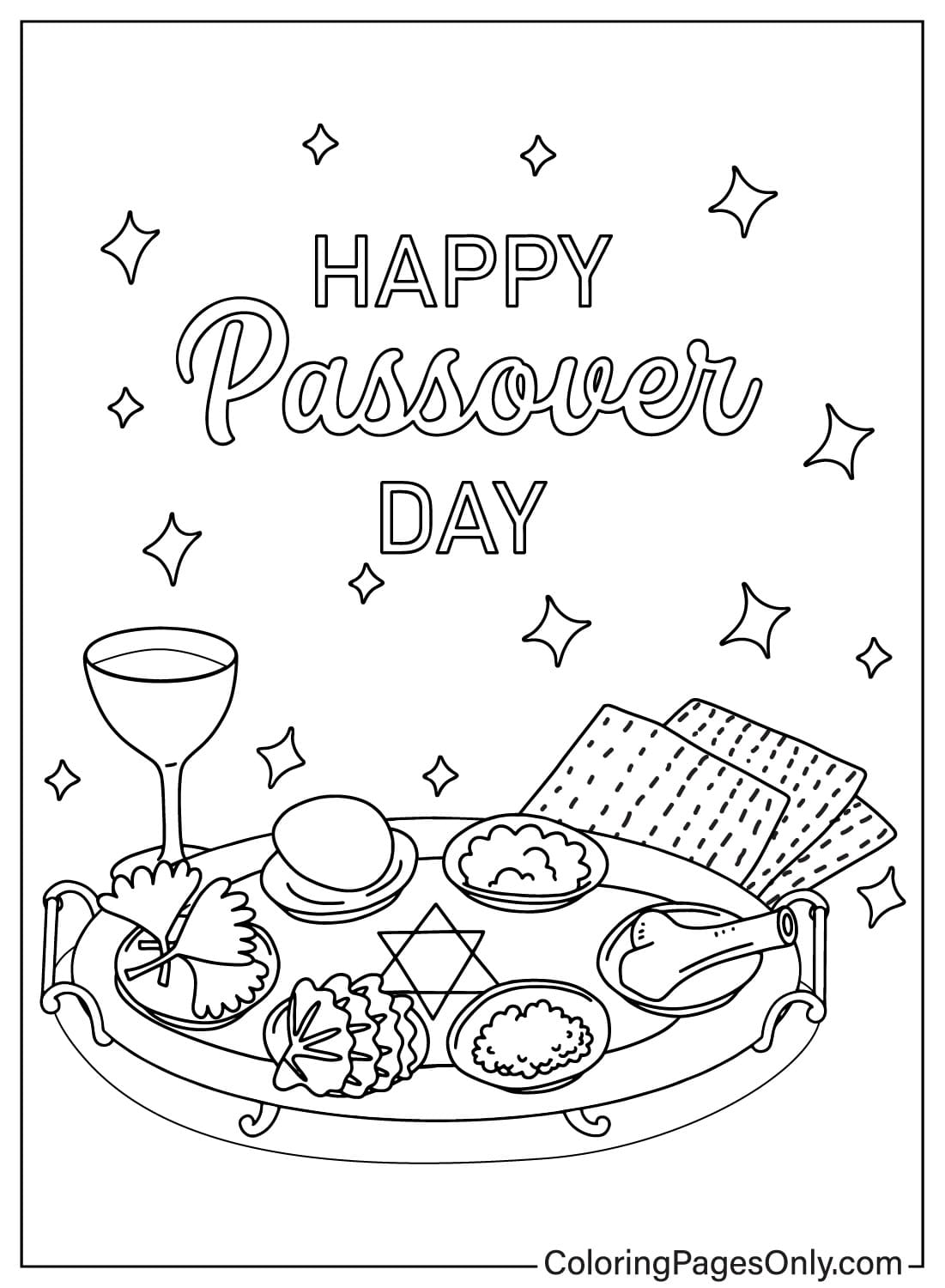
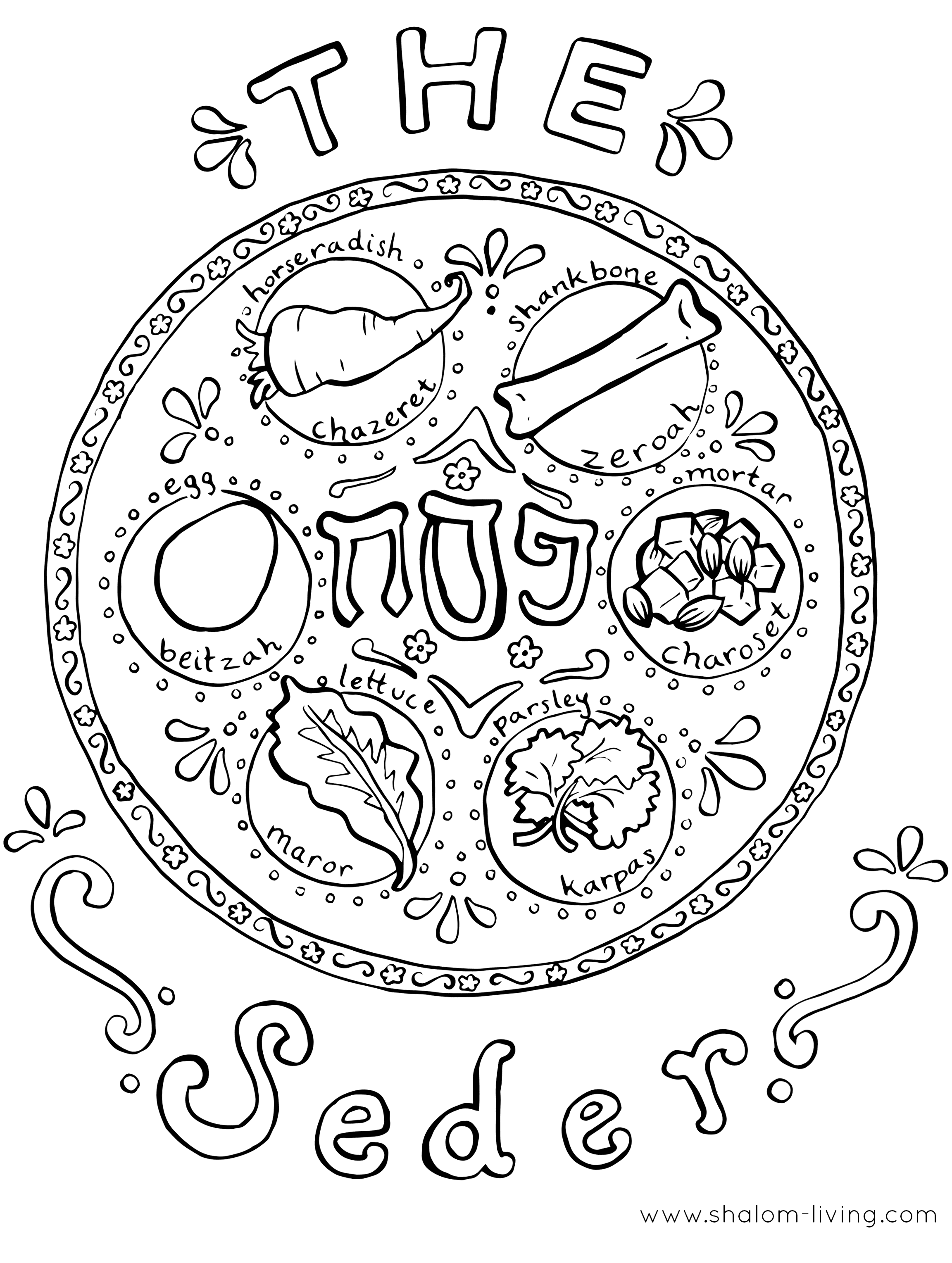
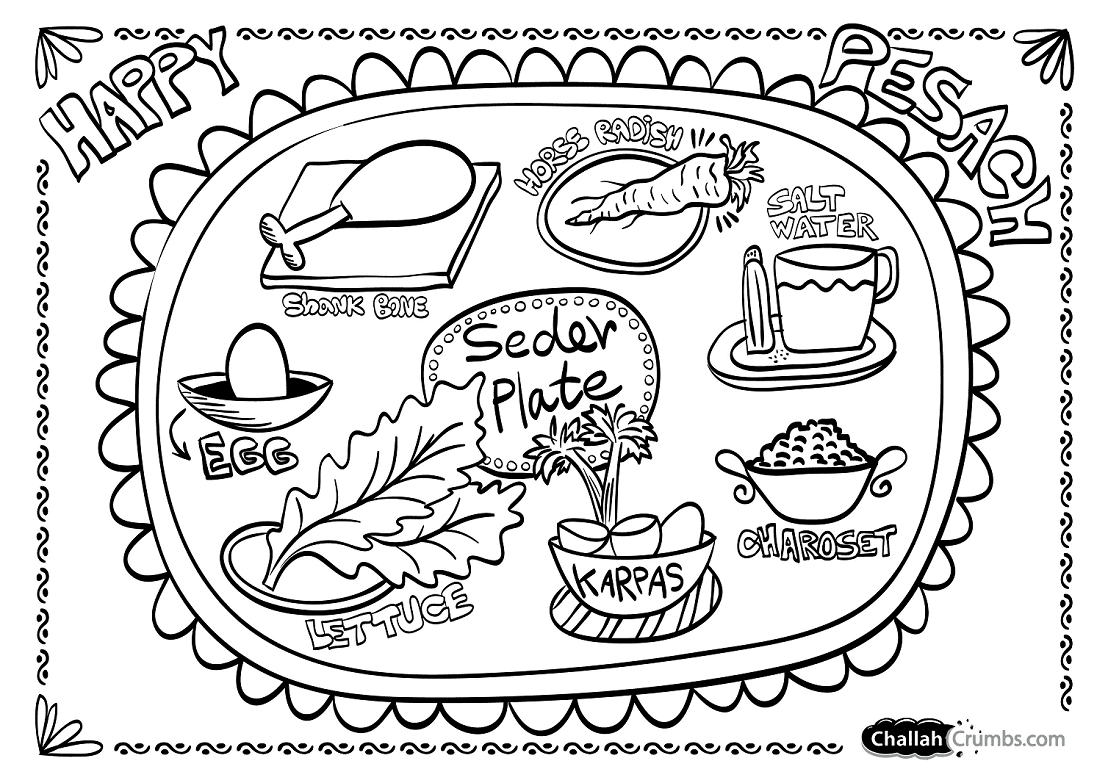
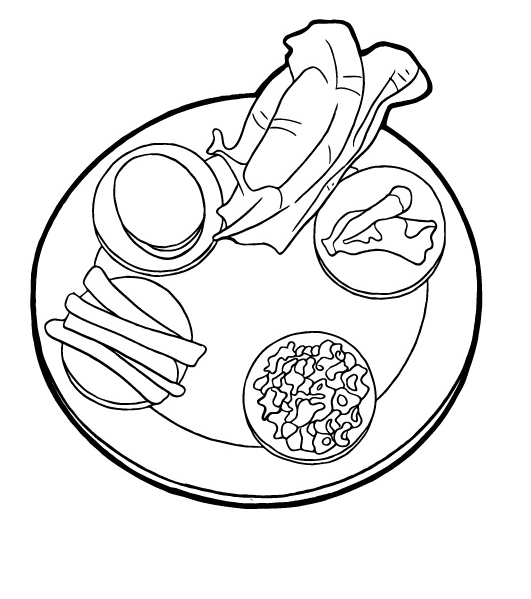
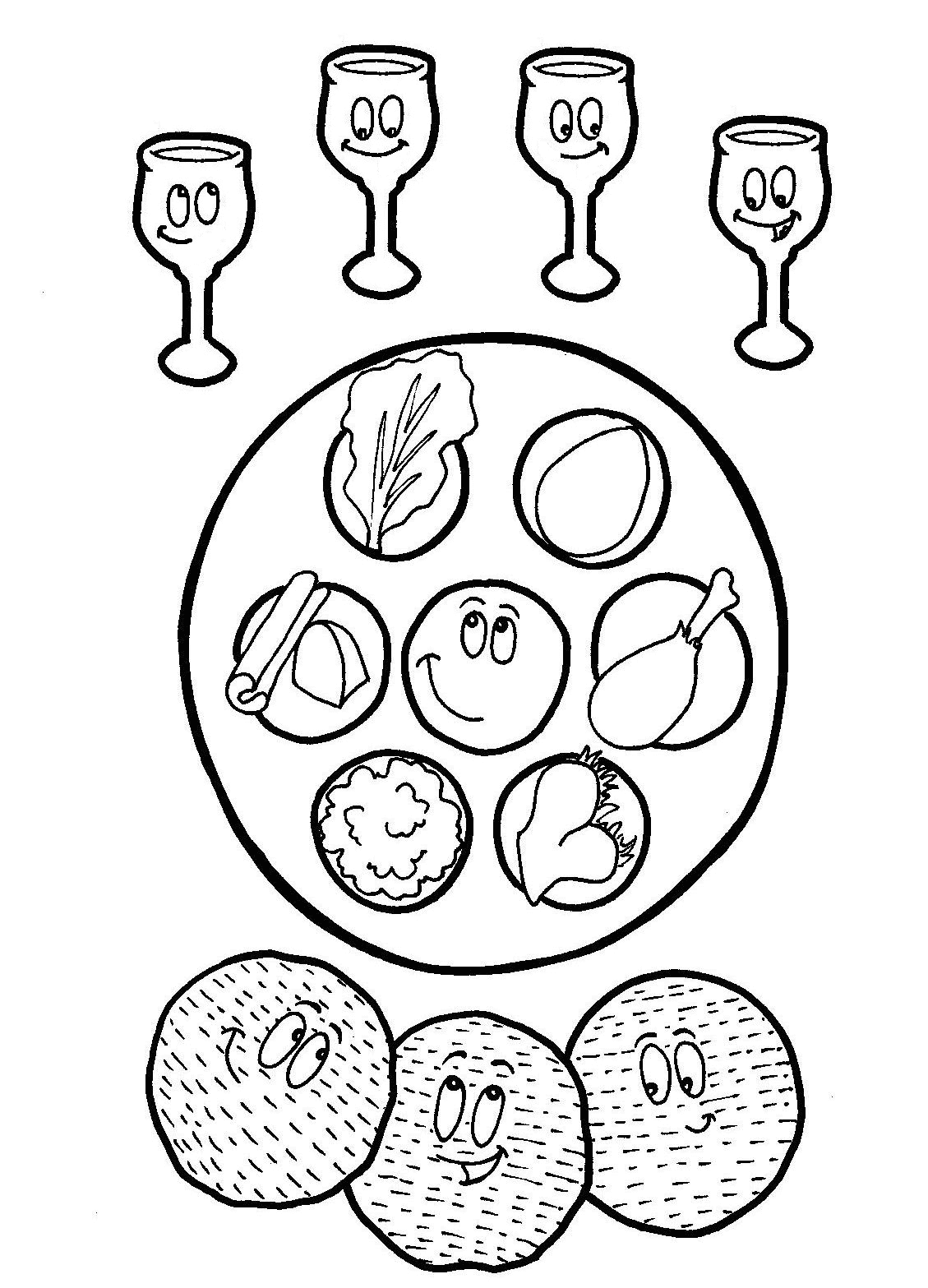
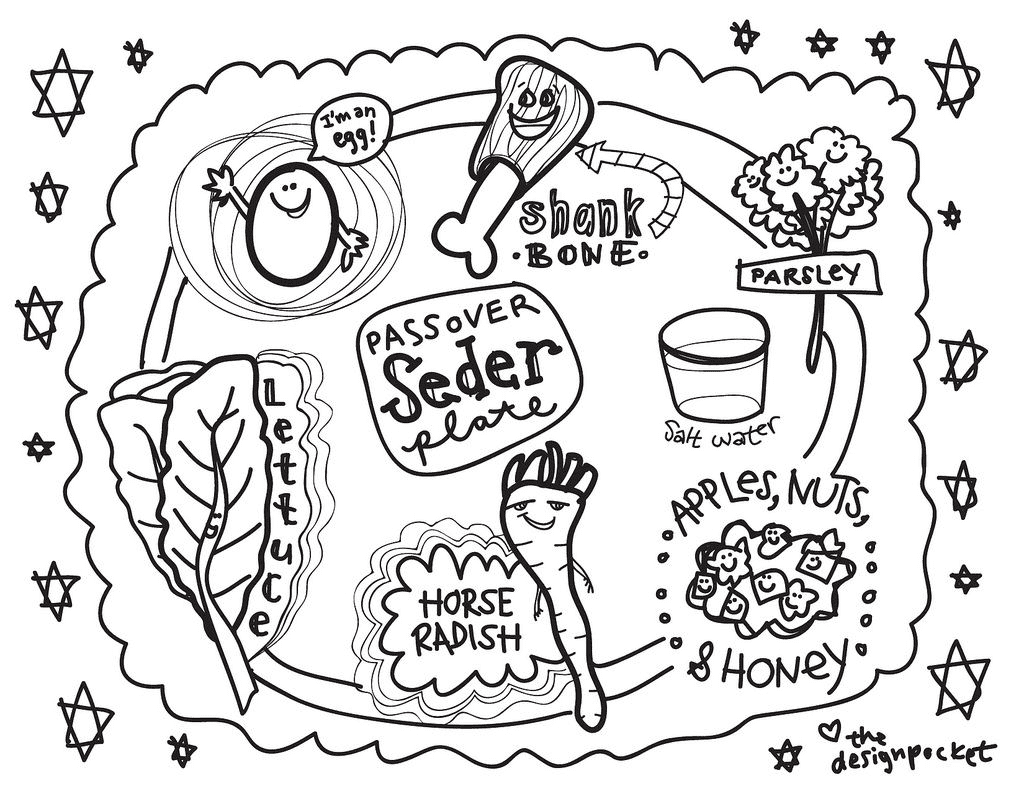
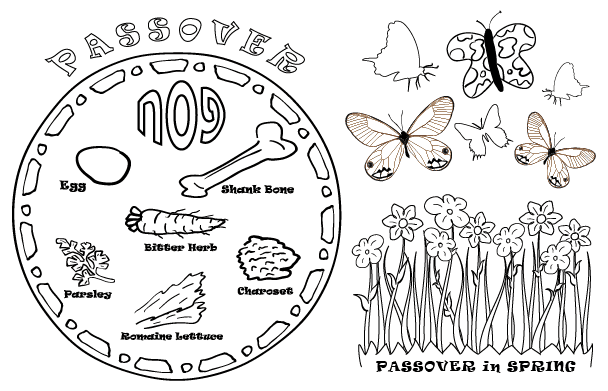
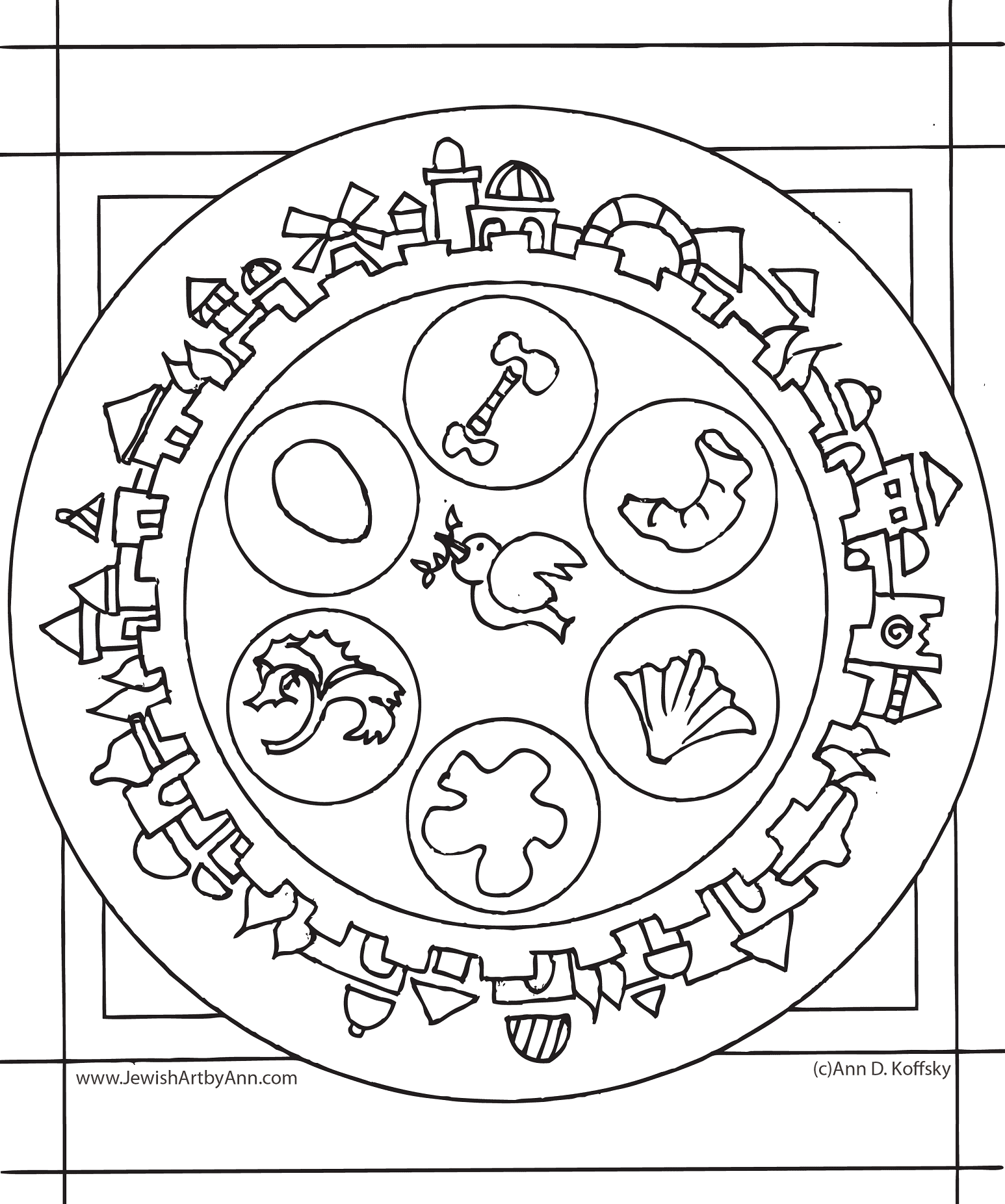
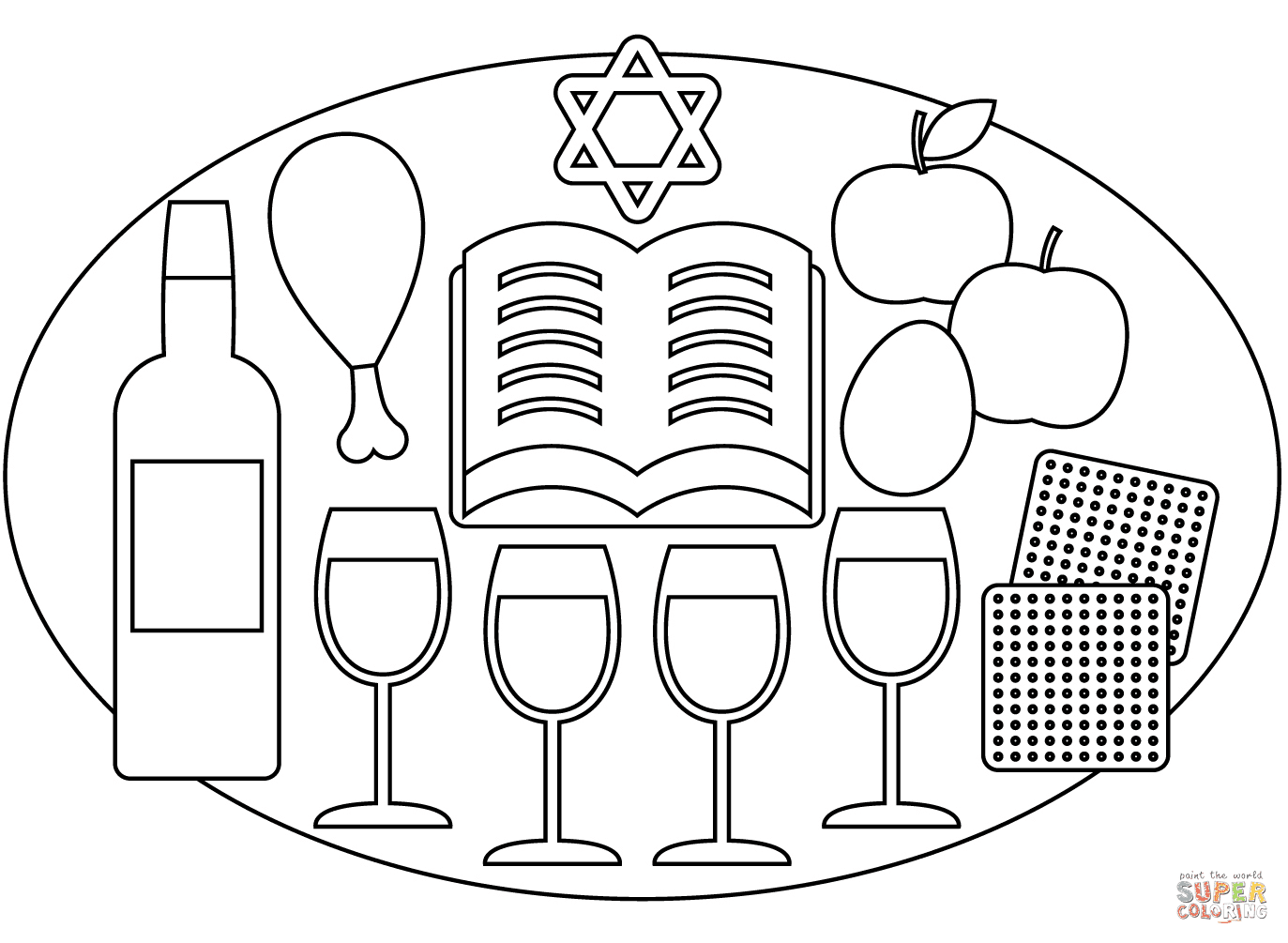
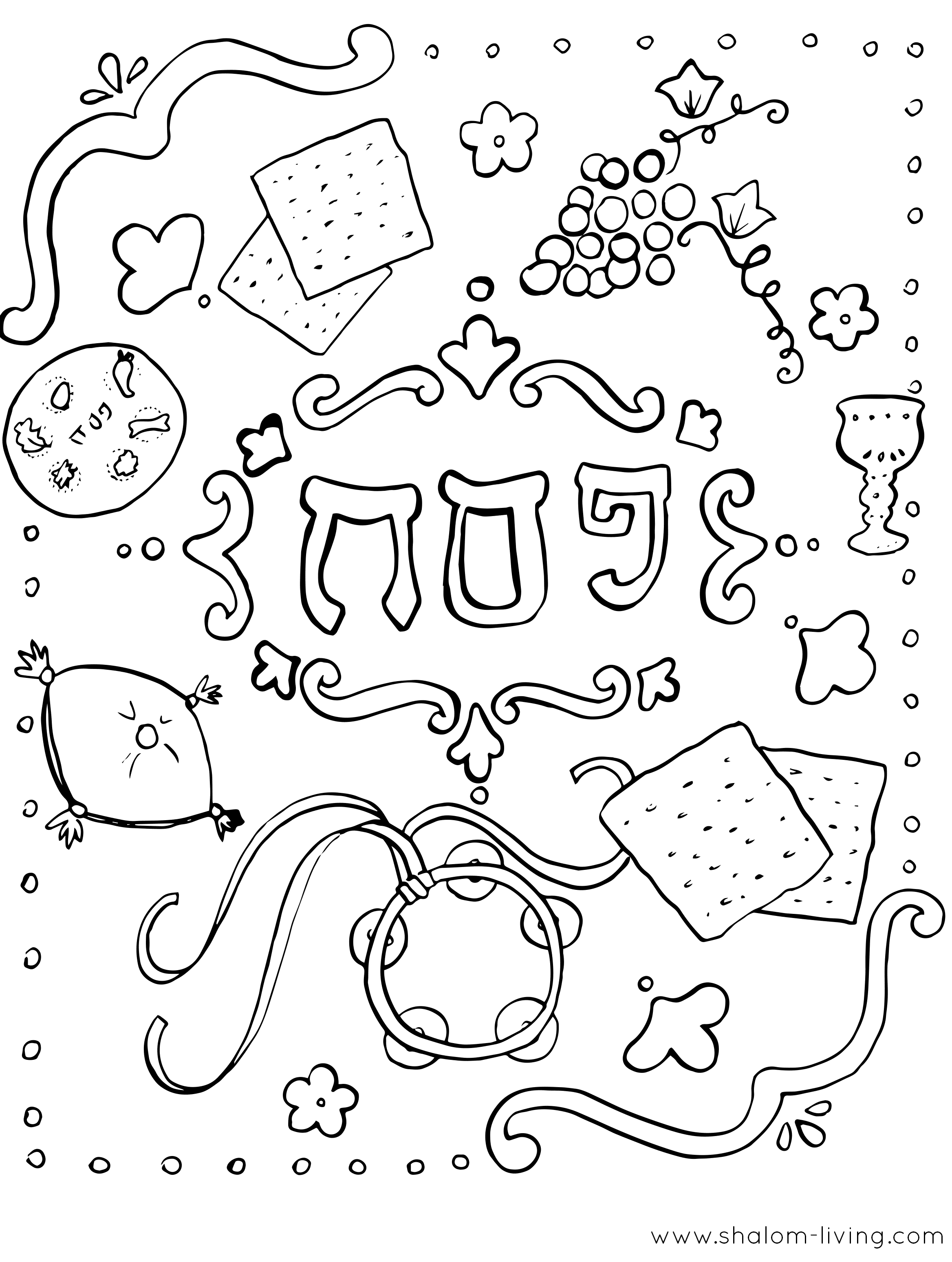
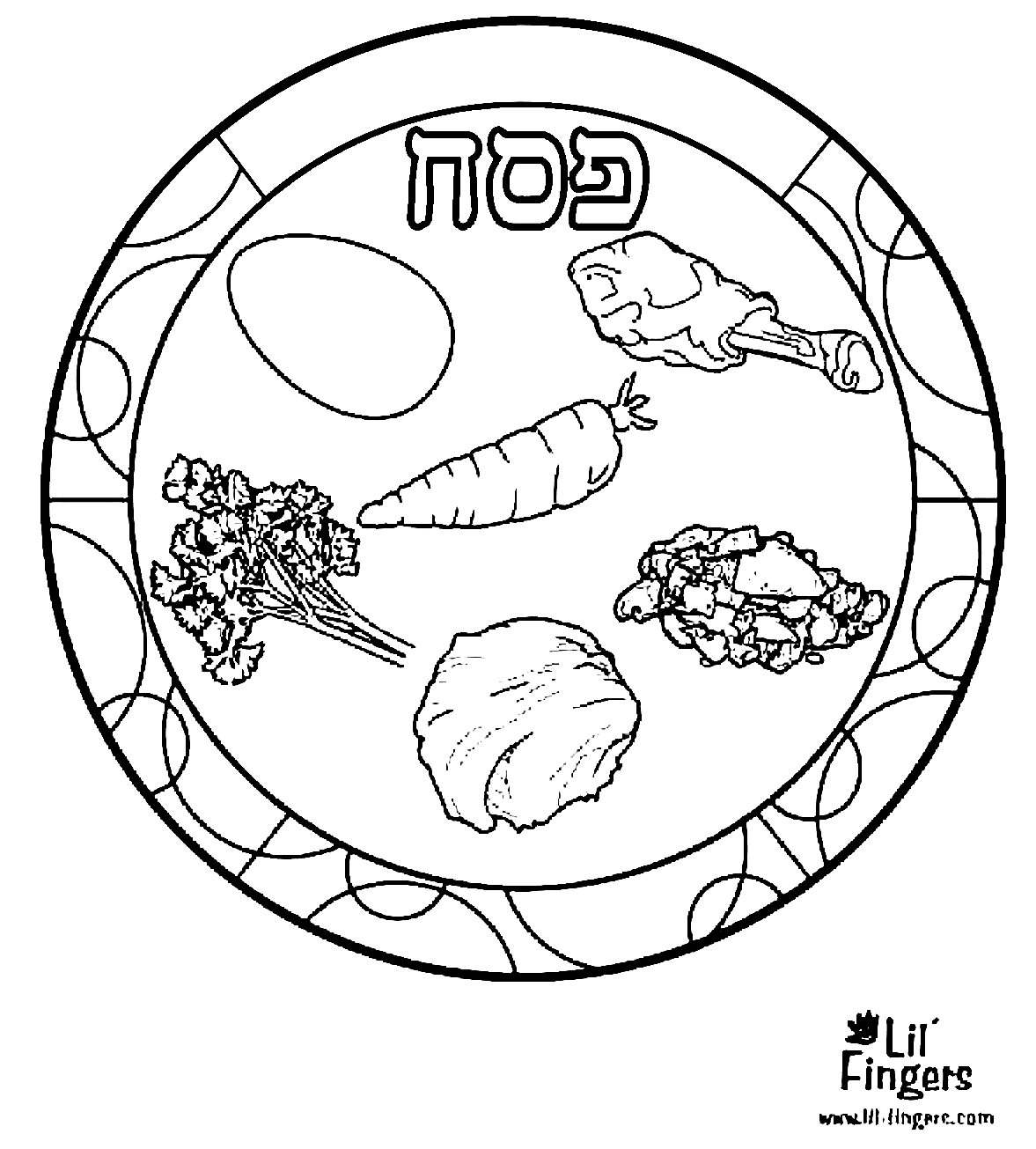
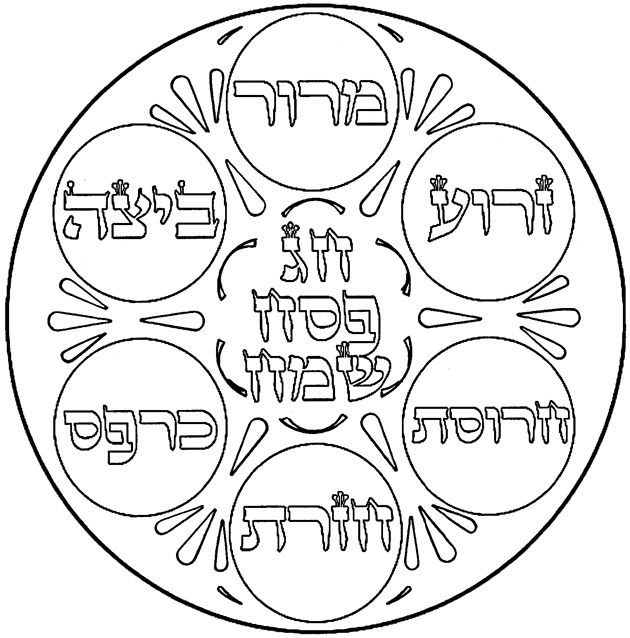
The Seder Plate is the centerpiece of the Passover table and one of the most frequently illustrated objects in our collection. Several of our pages focus specifically on it, and knowing what each element represents makes these pages come alive in a completely different way when you color them.
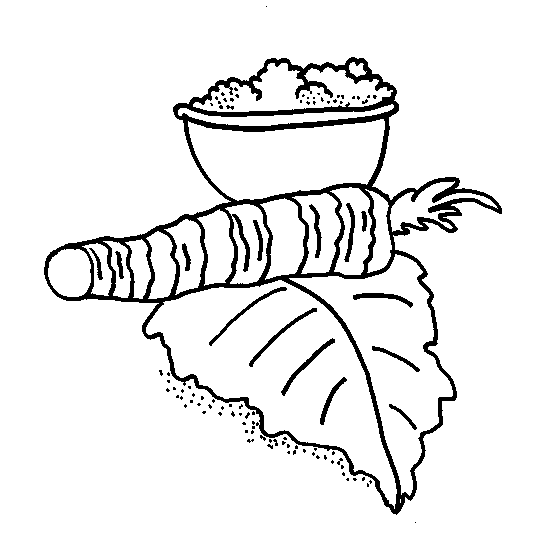
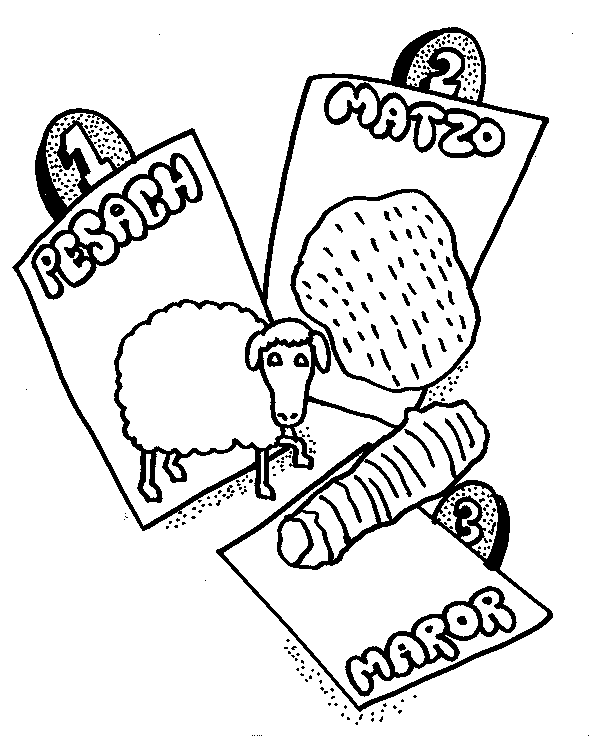
Maror – bitter herbs, traditionally horseradish. Eaten to symbolize the bitterness of slavery in Egypt. The sharp, intense flavor is intentional – it is meant to be felt, not just described.
Charoset – a sweet paste made from apples, nuts, wine, and spices. It represents the mortar that the Israelite slaves used to make bricks for the Pharaoh’s buildings. The sweetness of the charoset placed against the bitterness of the maror holds the whole emotional tension of the holiday in two small tastes.
Karpas – a green vegetable, usually parsley, dipped in salt water. The salt water represents the tears of the enslaved. The green represents hope and new life – it is no coincidence that Passover falls in spring.
Zeroa – a roasted lamb shankbone. A reminder of the Passover sacrifice described in Exodus, when each family marked their door with lamb’s blood so the final plague would pass over their home.
Beitzah – a roasted egg. A symbol of the festival sacrifice brought to the Temple in Jerusalem, and also of the cycle of life, mourning, and renewal that runs through the Passover story.
Chazeret – additional bitter herbs, often romaine lettuce. Like maror, a reminder of the bitterness of slavery.
When you color the Seder Plate pages in our collection, each section of the plate has its own color logic: the deep red-brown of charoset, the bright green of the karpas parsley, the pale ivory of matzah, the warm earth tones of the roasted egg and shankbone. The plate itself is often decorated in blue and gold – the traditional colors of Jewish ceremonial objects.
The Ten Plagues – and What Our Pages Show
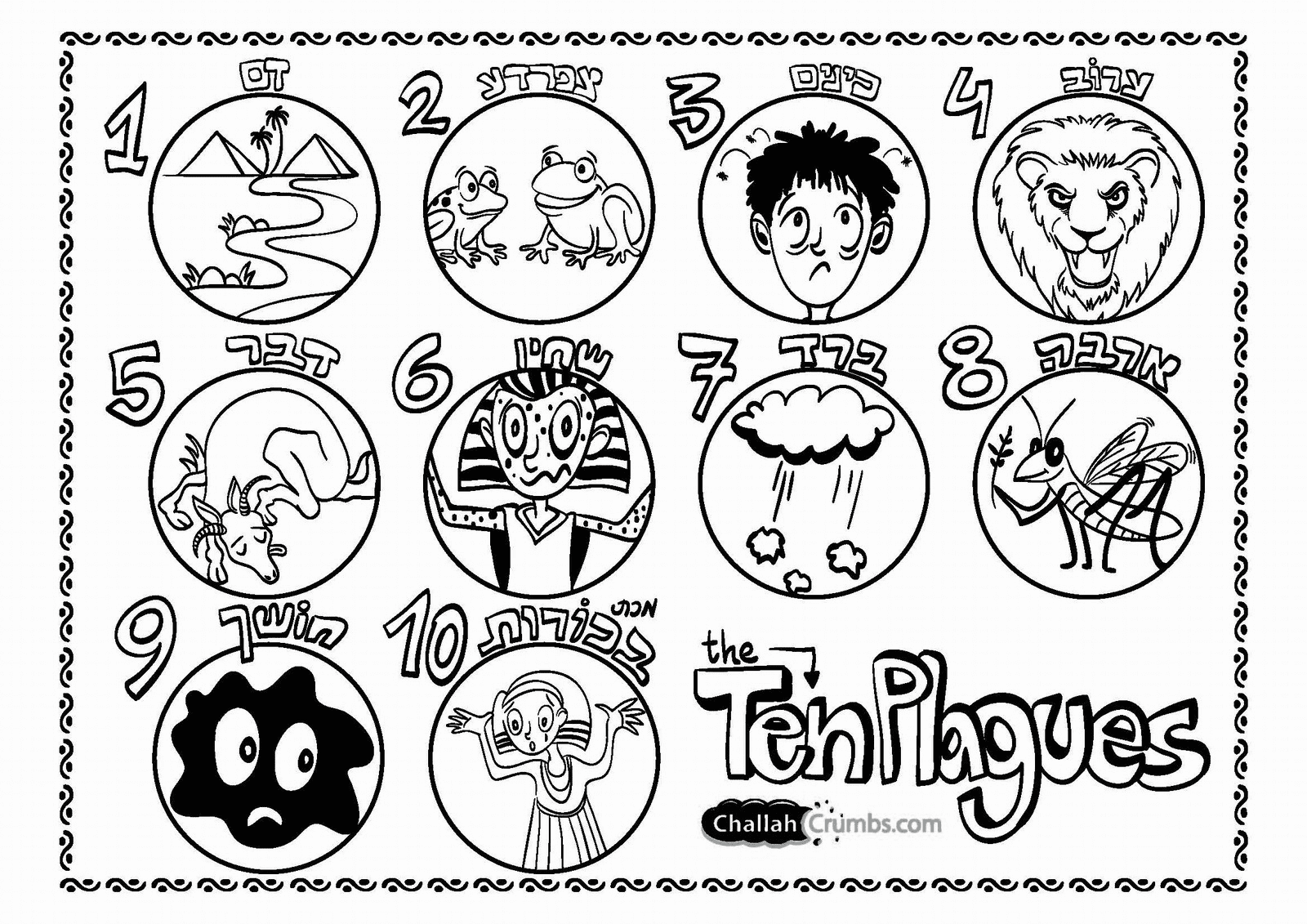
The story of how God sent ten plagues upon Egypt to compel Pharaoh to free the Israelites is one of the most dramatic narratives in the entire Hebrew Bible – and it’s fully represented in our collection. During the Seder, it is traditional to spill a drop of wine for each plague, acknowledging that even the suffering of enemies should temper joy. The ten plagues are:
Blood, Frogs, Lice, Wild Beasts, Livestock Disease, Boils, Hail, Locusts, Darkness, and the Death of the Firstborn.
Our Ten Plagues pages illustrate these moments for children in a way that captures the drama of the story without being frightening. The frog plague page is consistently one of the most popular with younger kids – there is something irresistibly funny about imagining frogs everywhere, in beds and ovens and cooking pots, even in the middle of a serious story about freedom.
What’s Inside Our Passover Coloring Collection
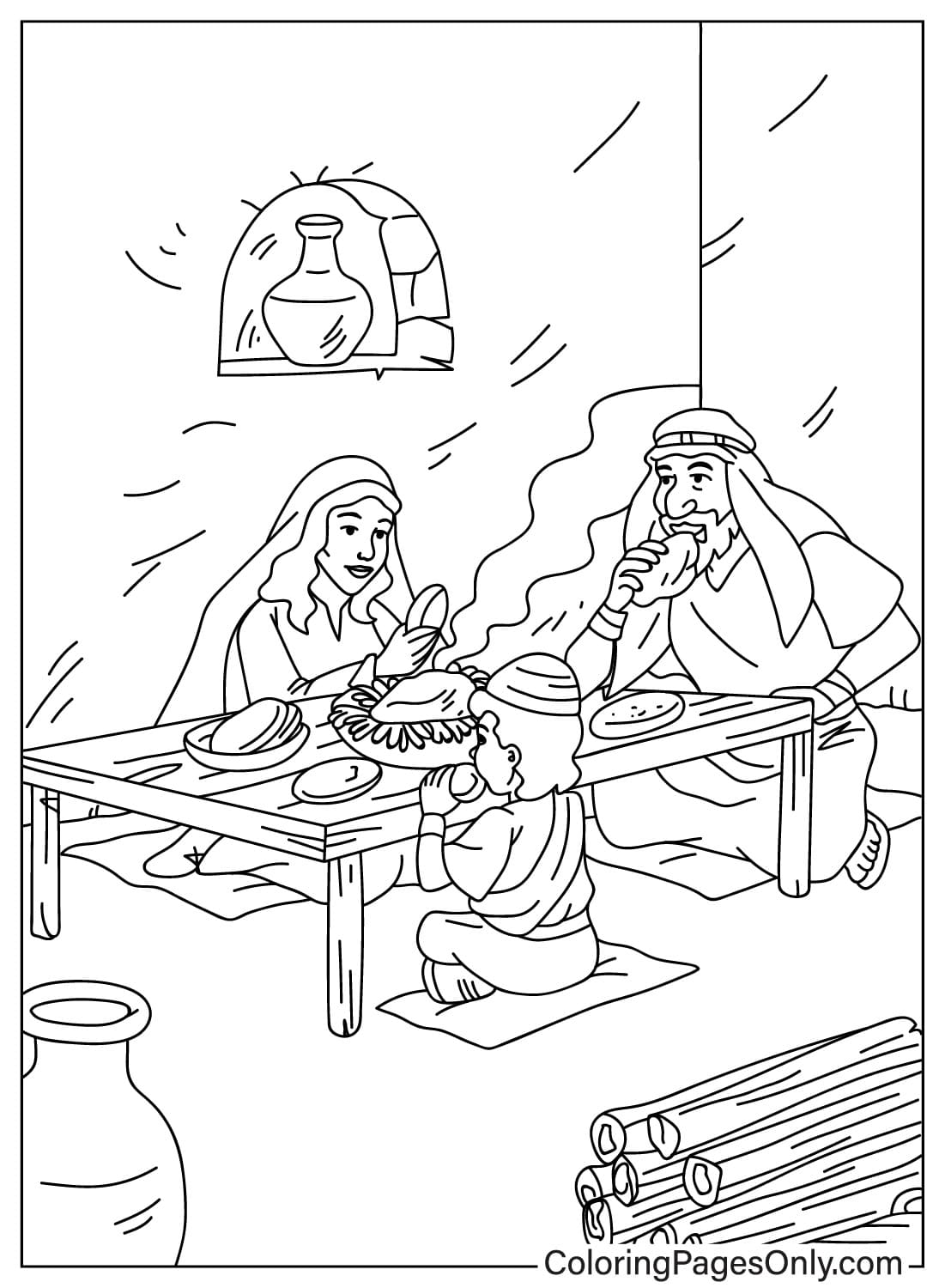
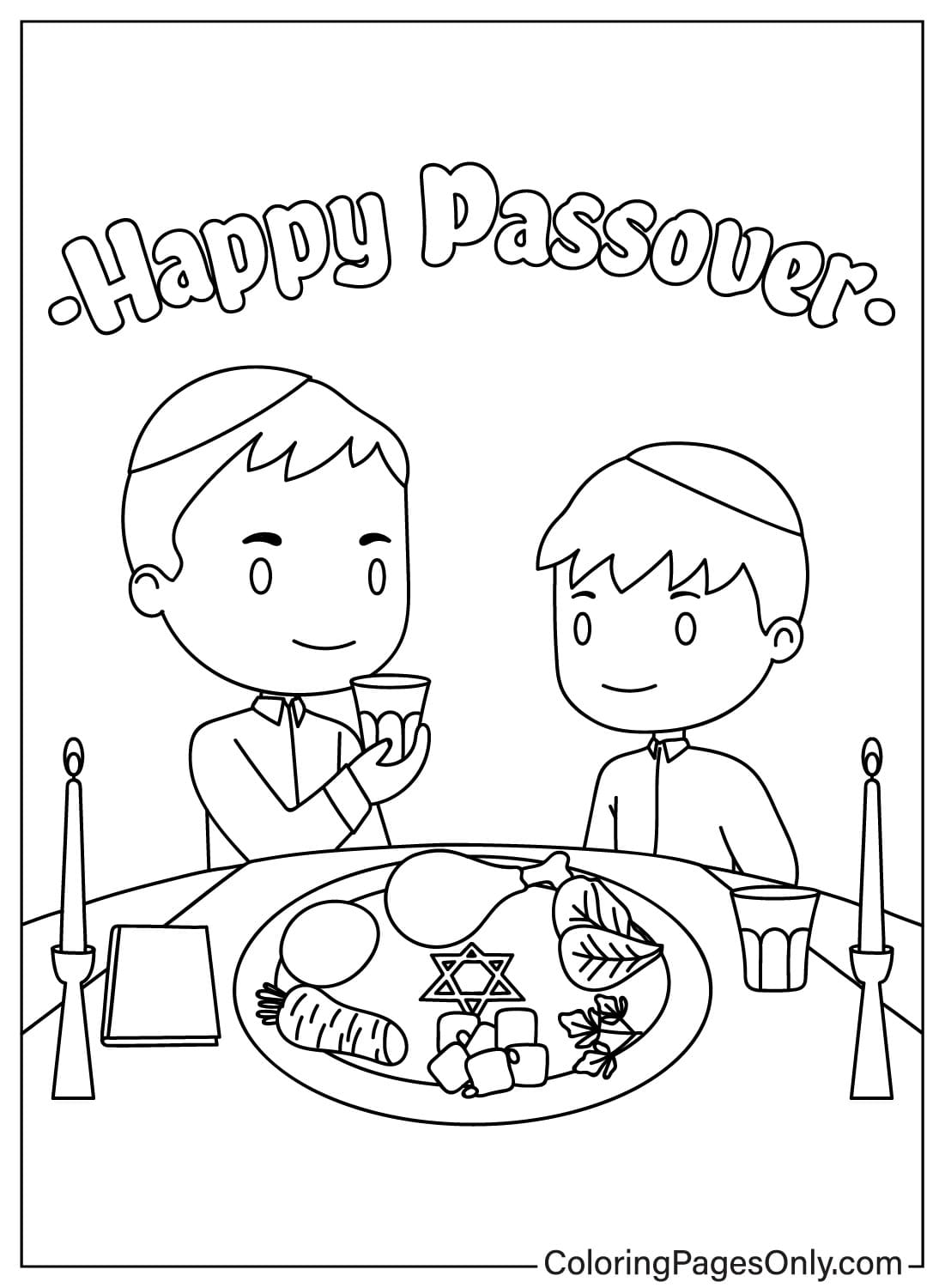
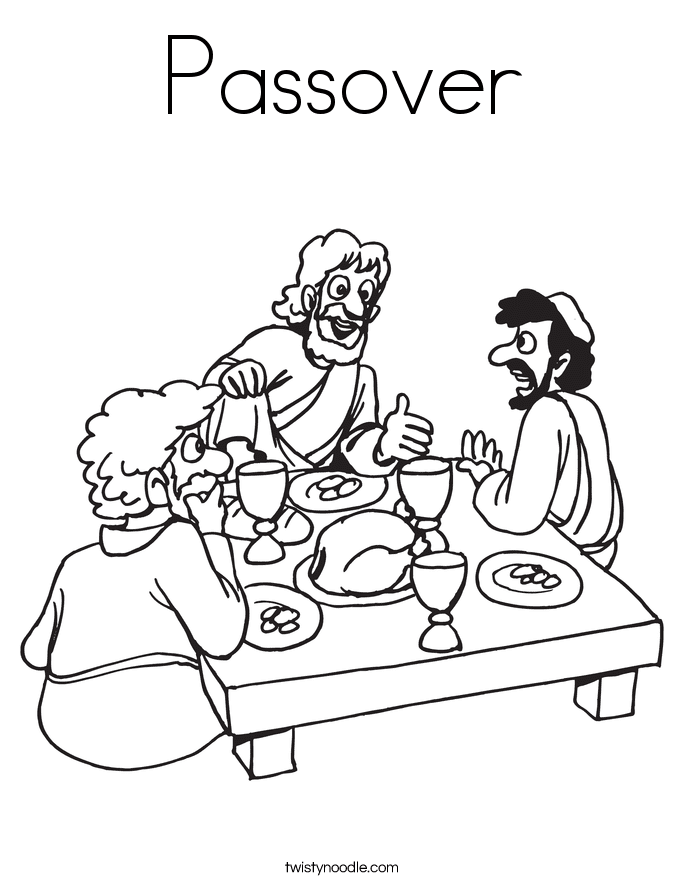
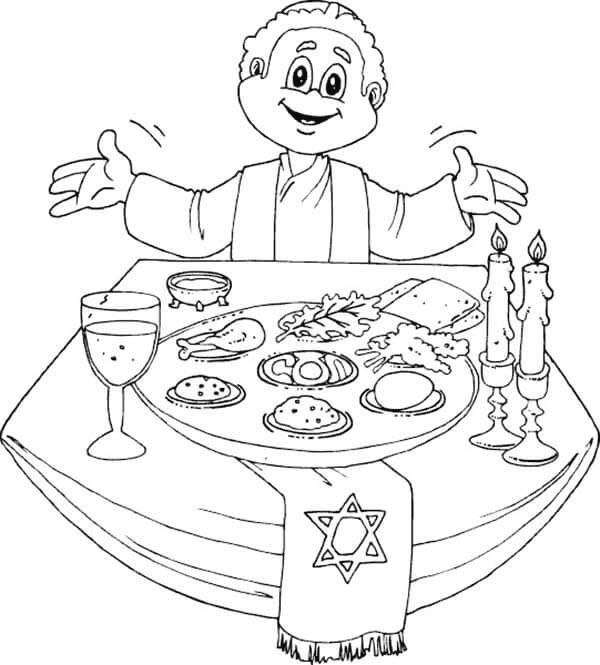
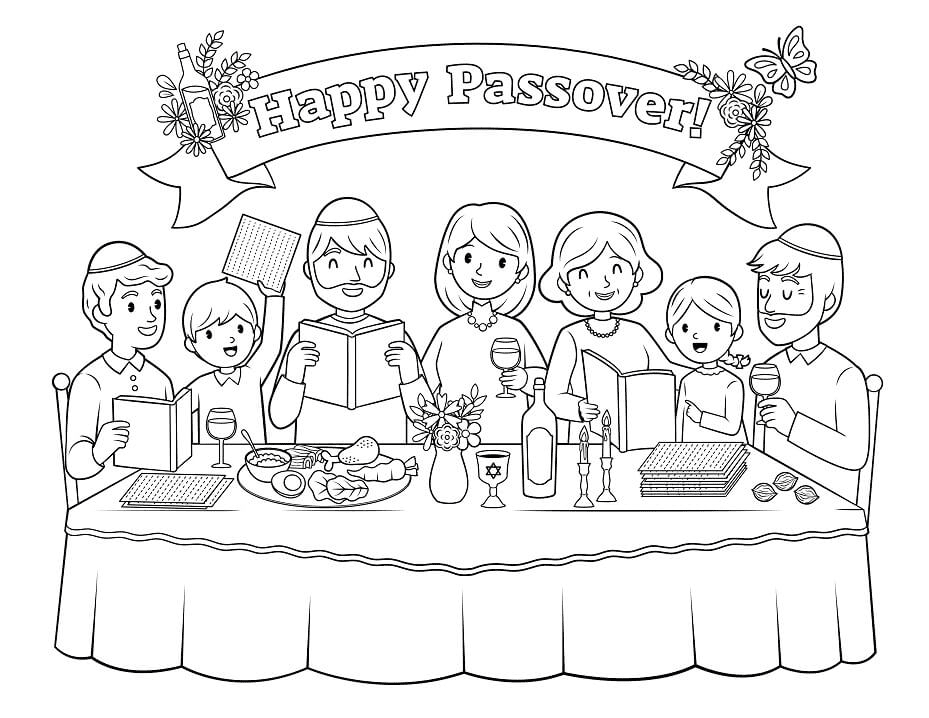
The Seder and family pages – the Family Eating Passover page, the Passover Family Seder, the Seder Plate pages in multiple versions – are the most-used pages for families celebrating the holiday. These are the pages that get colored in the days before Passover and displayed on the table or the refrigerator during the Seder itself.
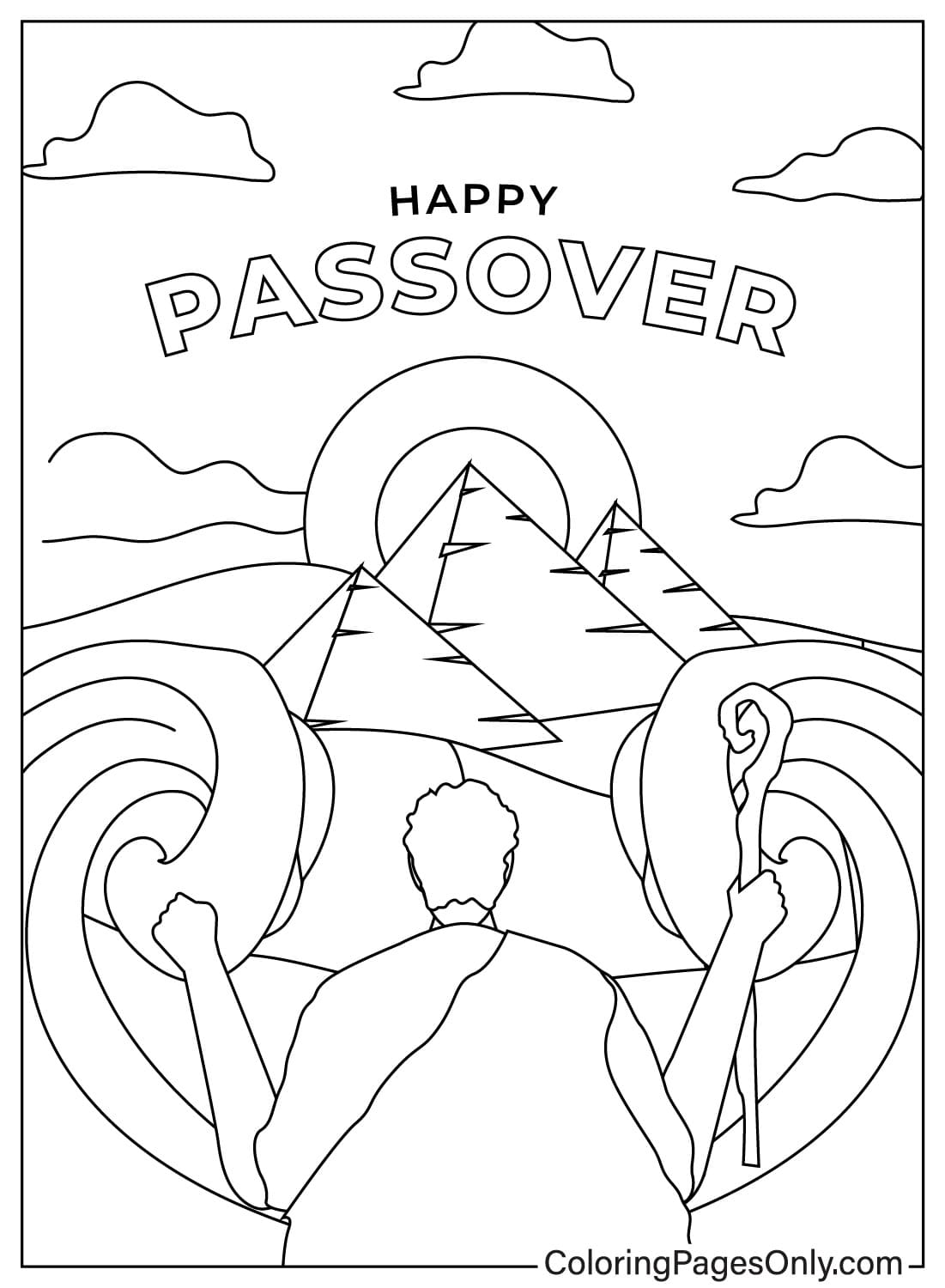
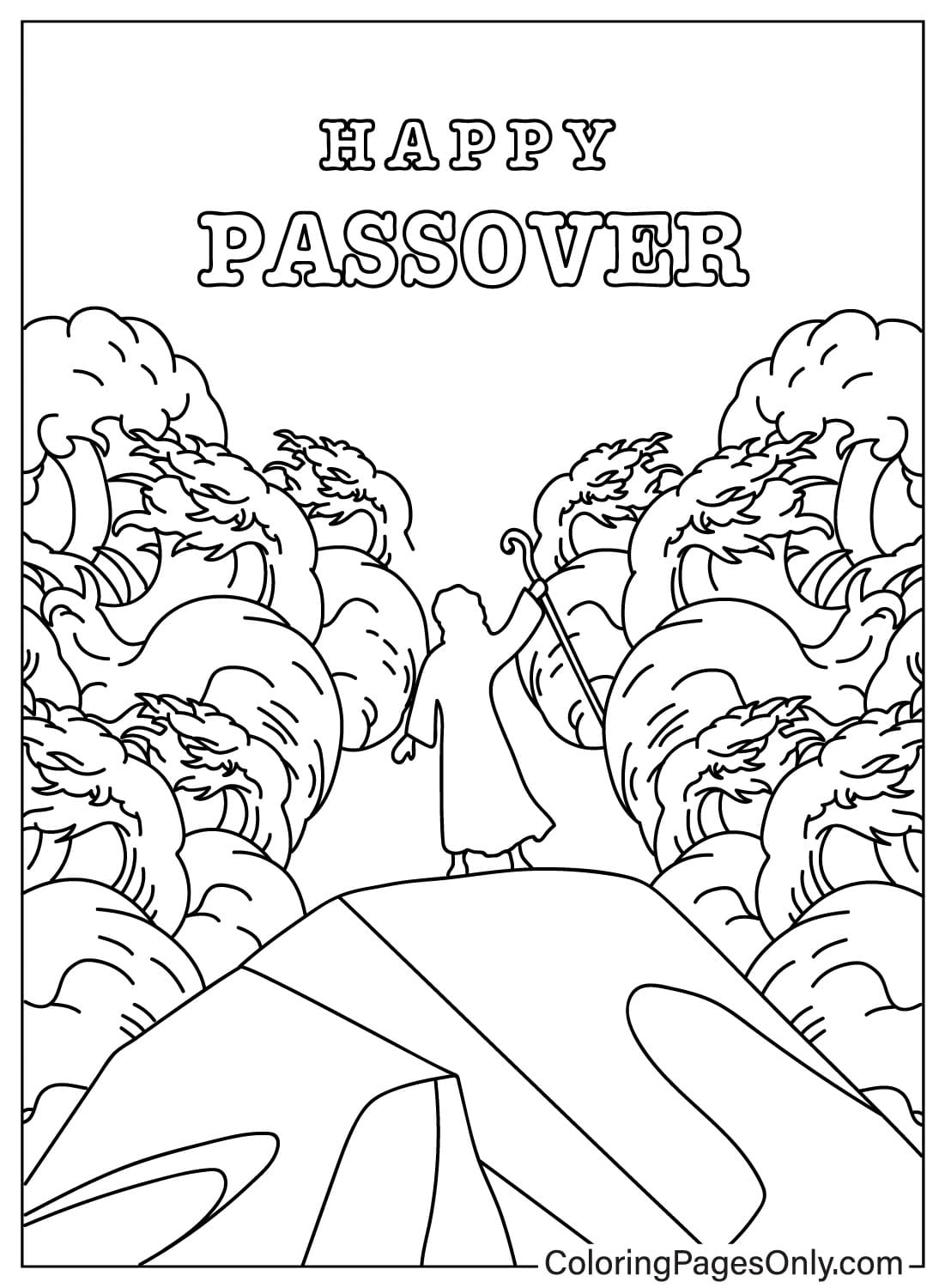
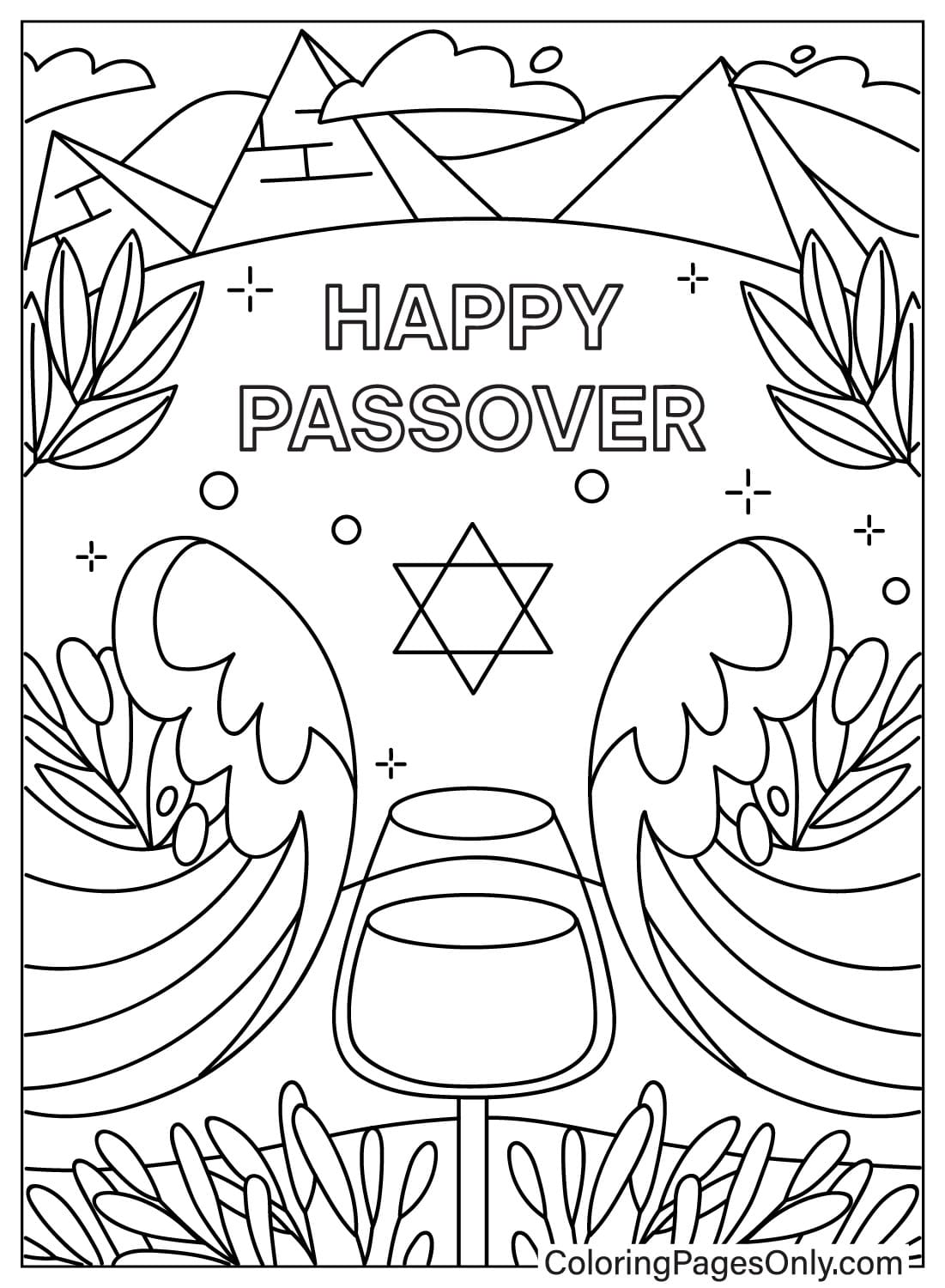
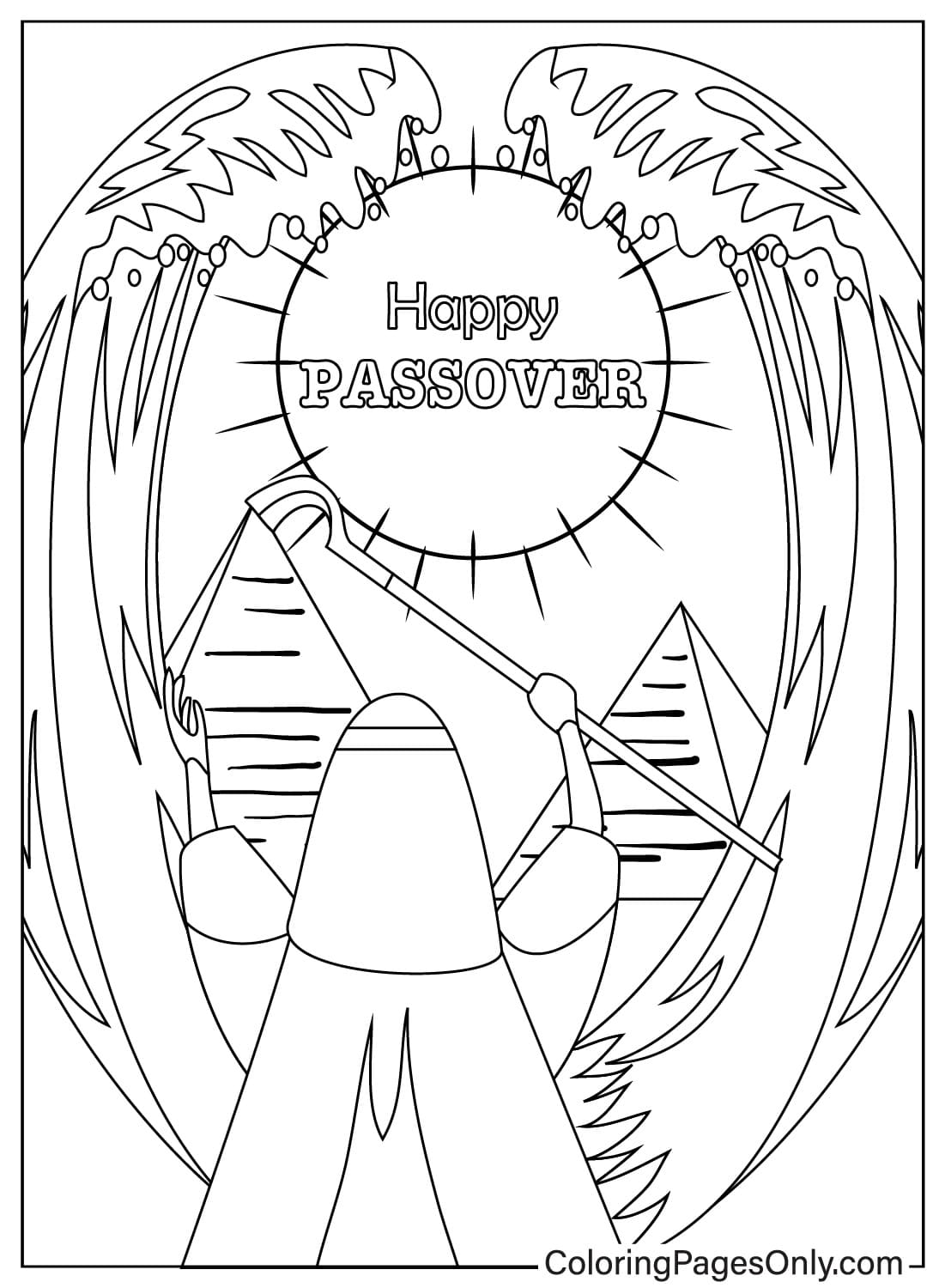
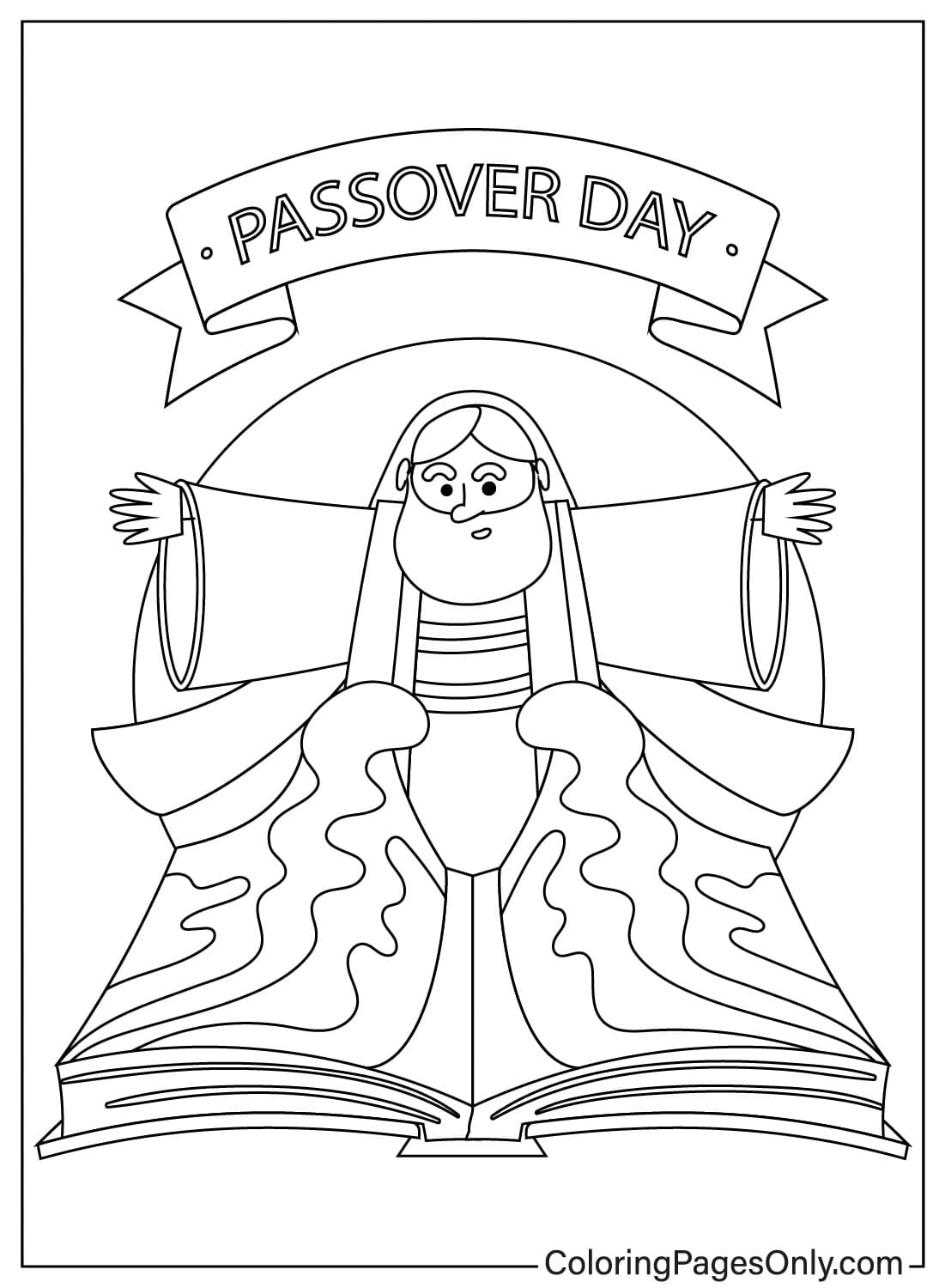
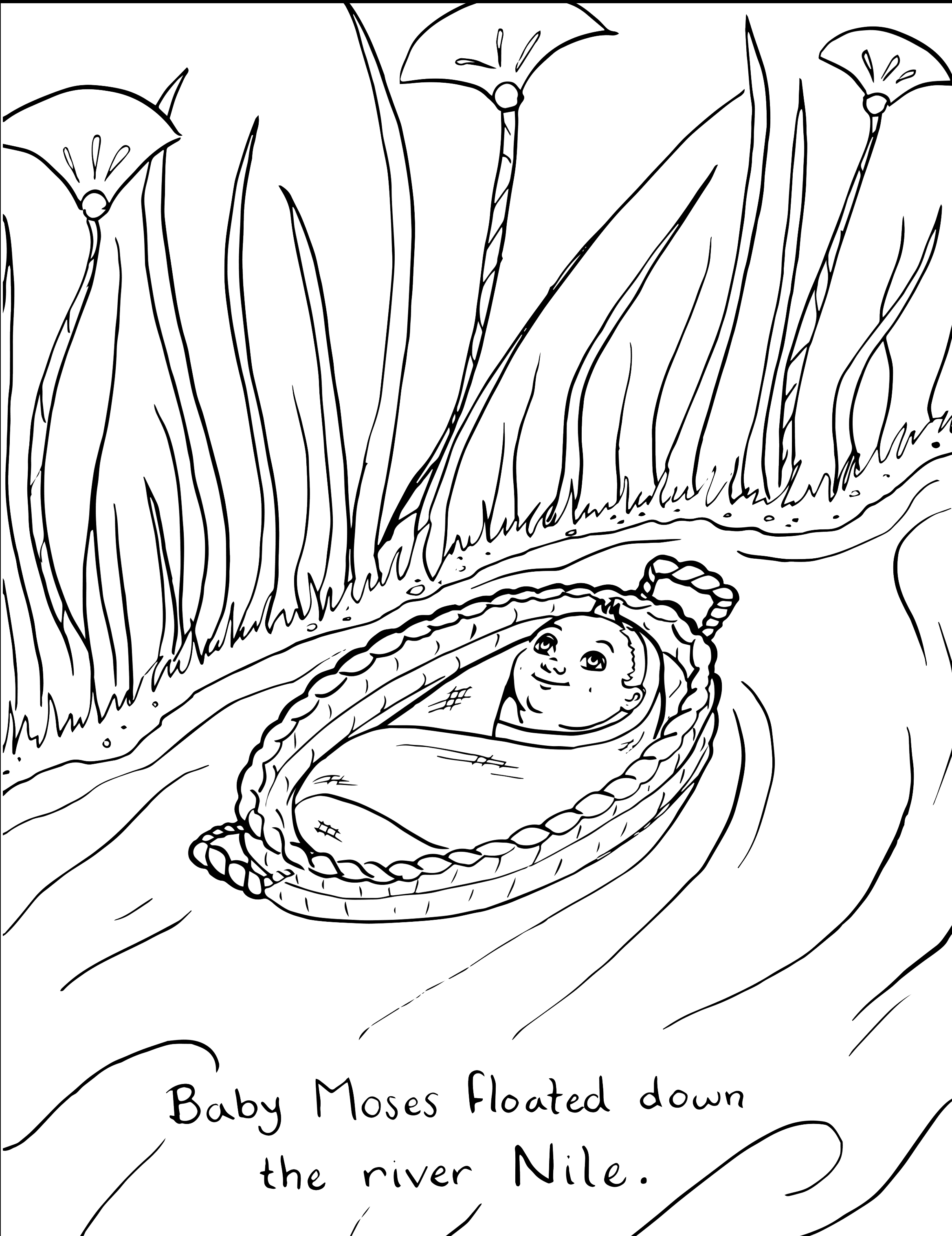
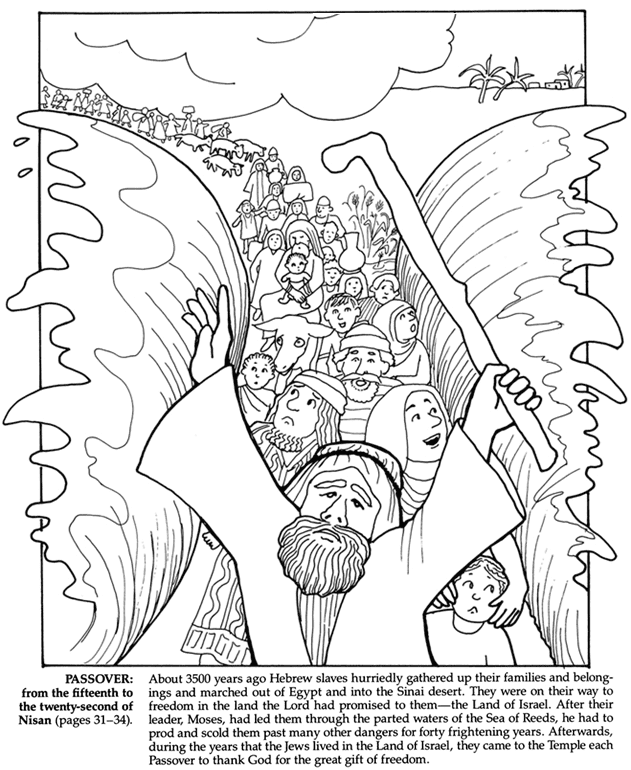
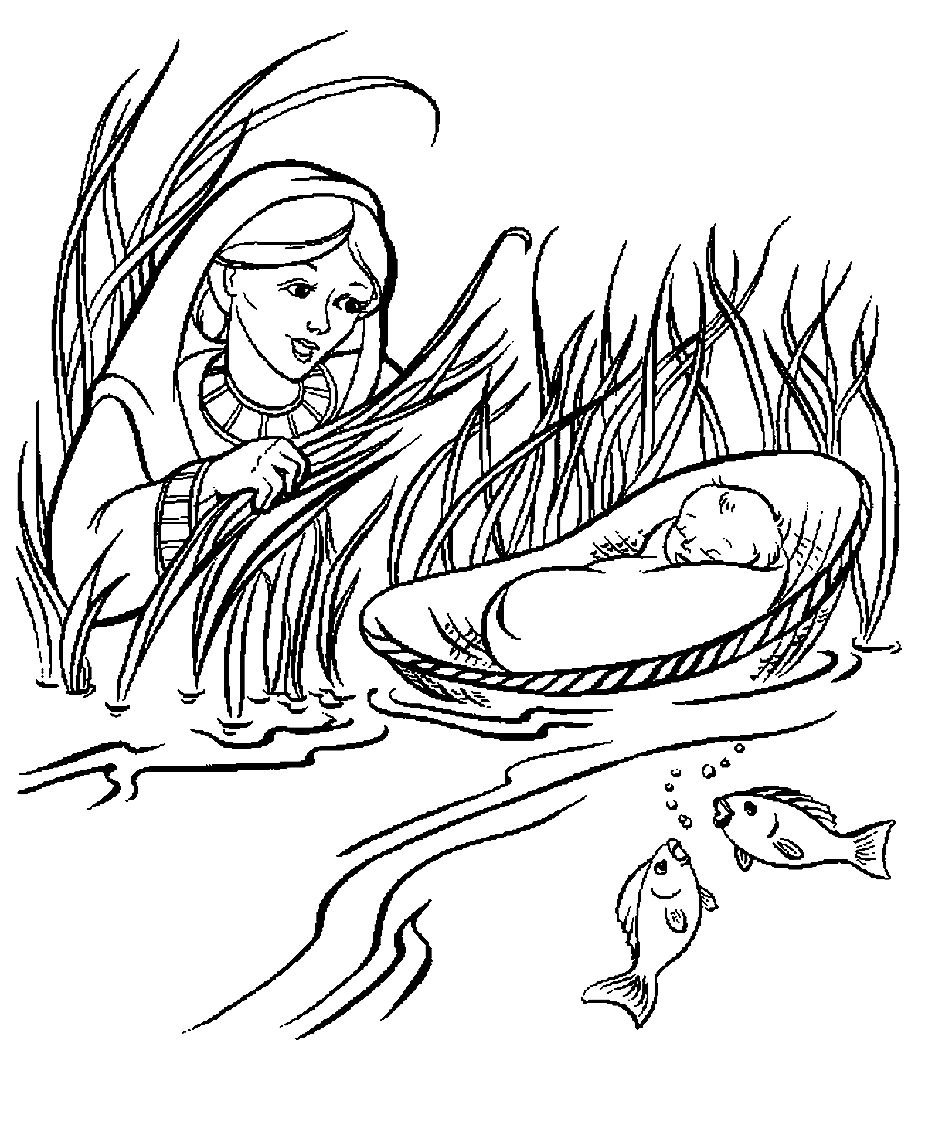
The Moses story pages – Baby Moses in the basket, Moses and the Passover, Moses Takes the People Across the Sea – follow the arc of the Exodus narrative from beginning to end. The parting of the sea page is one of the most dramatic compositions in the whole collection, with the walls of water rising on either side of the Israelites.
The Ten Plagues page captures the full dramatic sequence in a single illustration, perfect for using alongside a Haggadah reading or a classroom lesson about the Exodus story.
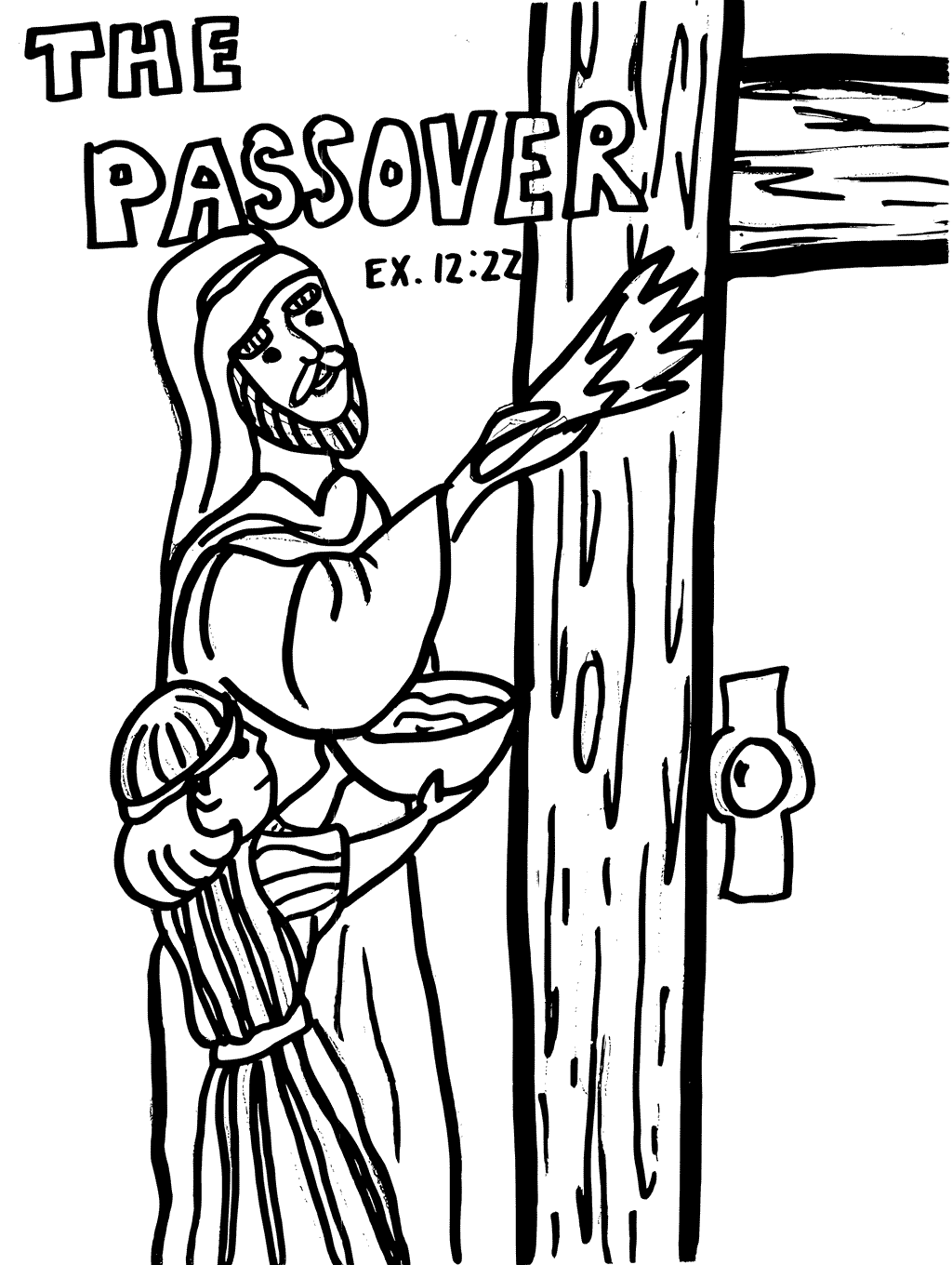
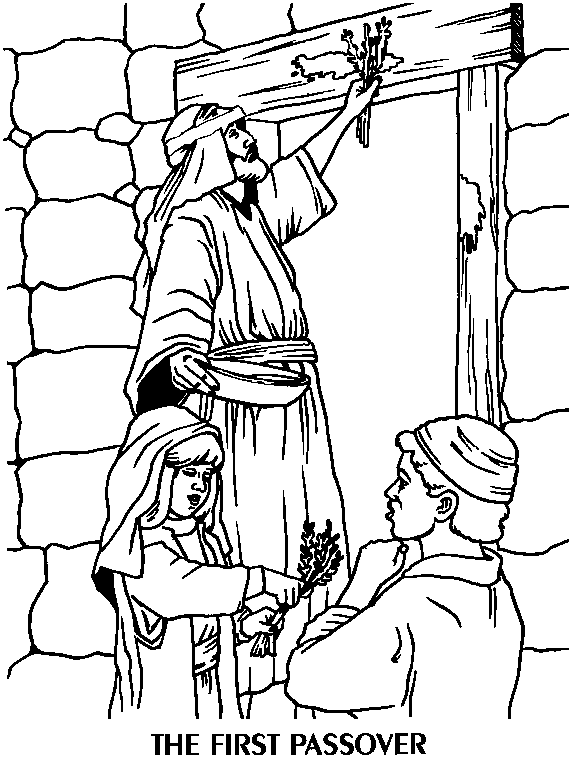
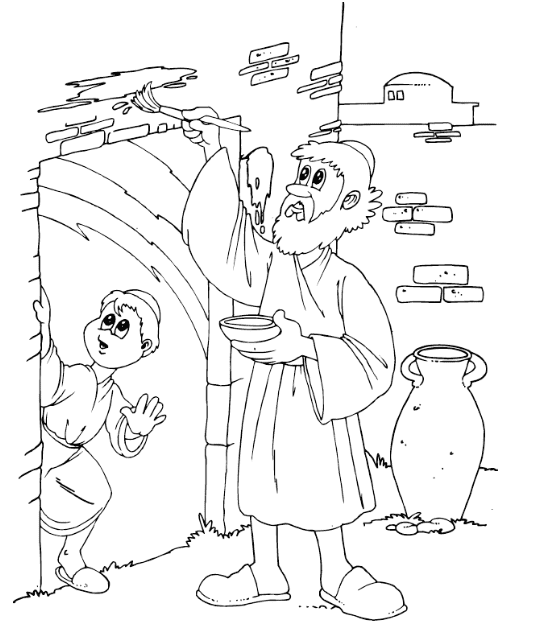
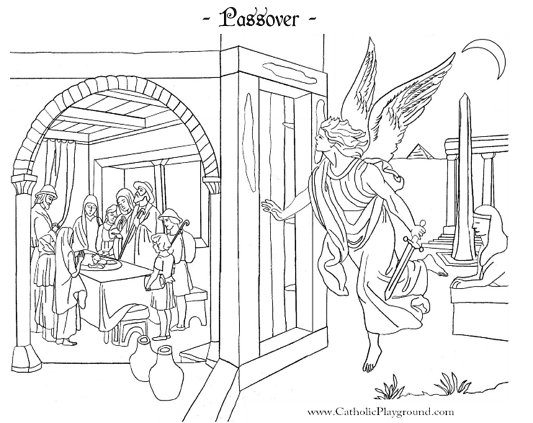
The Passover Blood on Door page illustrates the pivotal moment when the Israelites marked their doorposts – a page that connects directly to the meaning of the holiday’s name and is especially valuable for children learning the story for the first time.
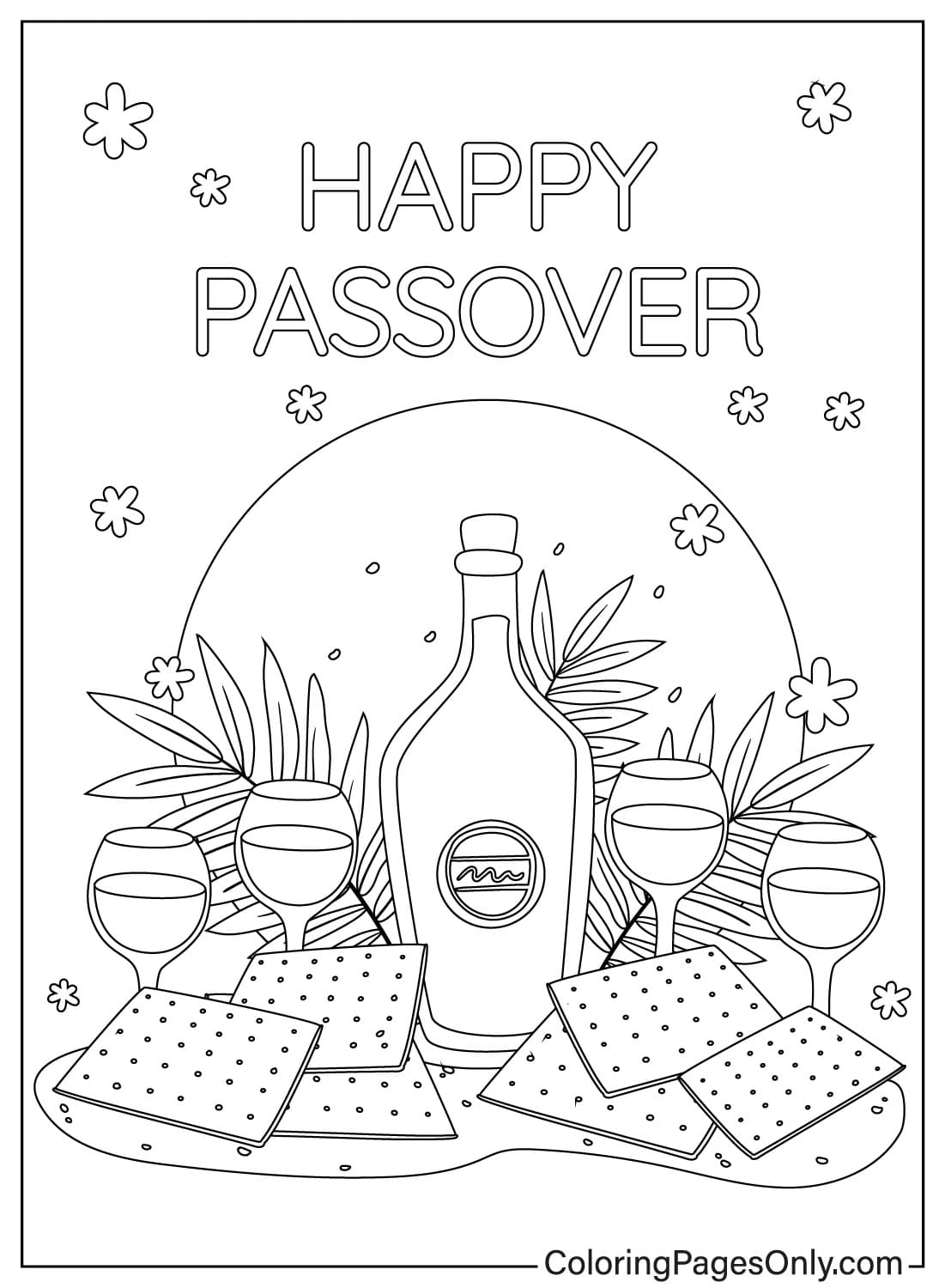
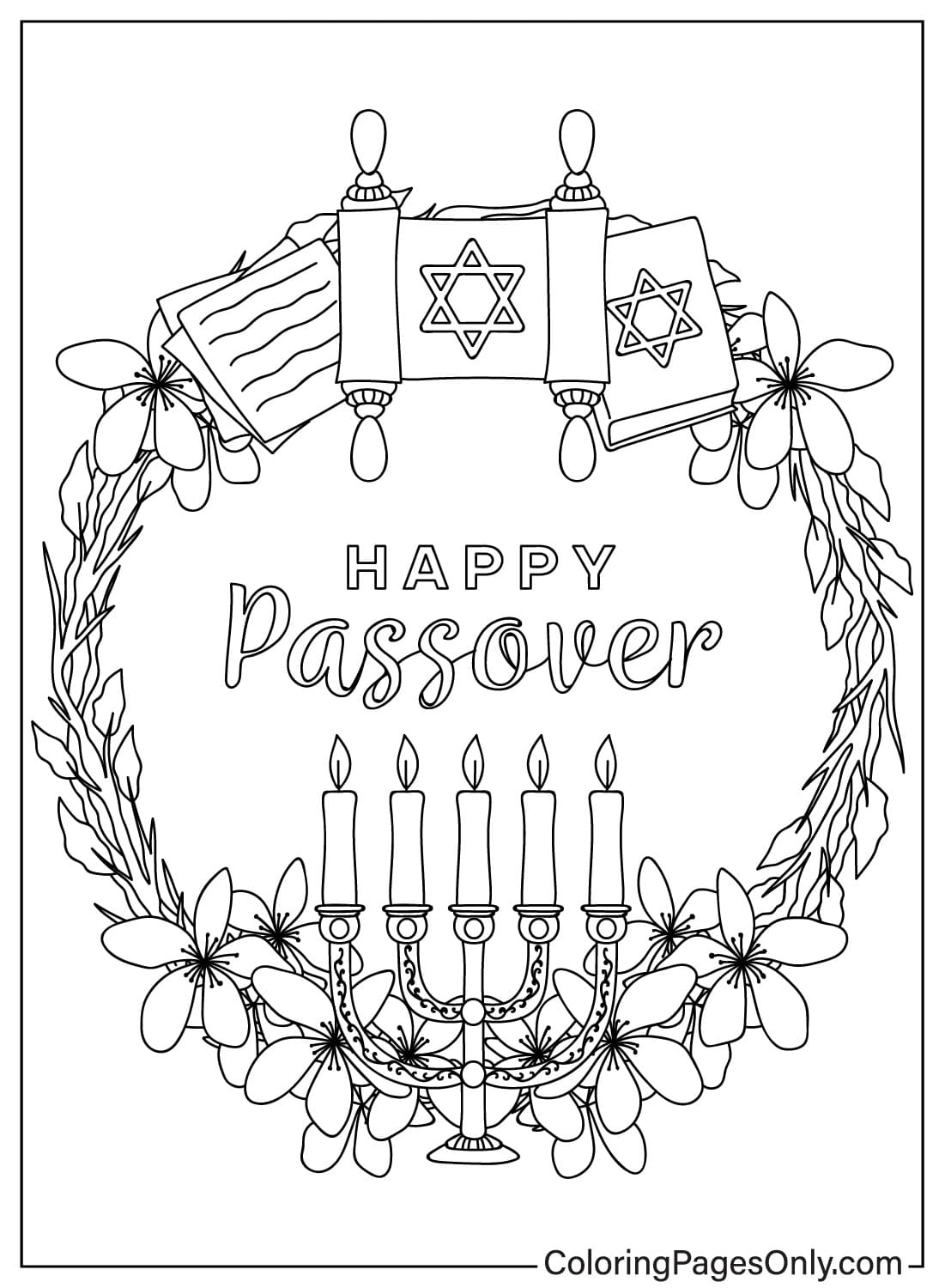
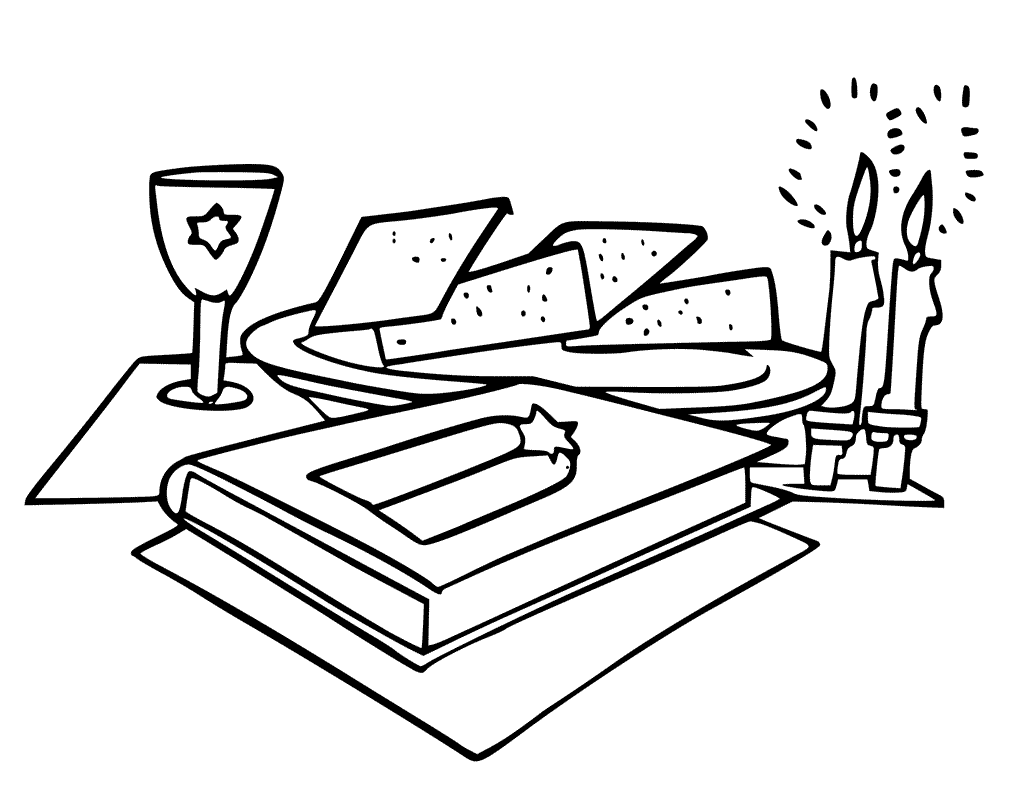
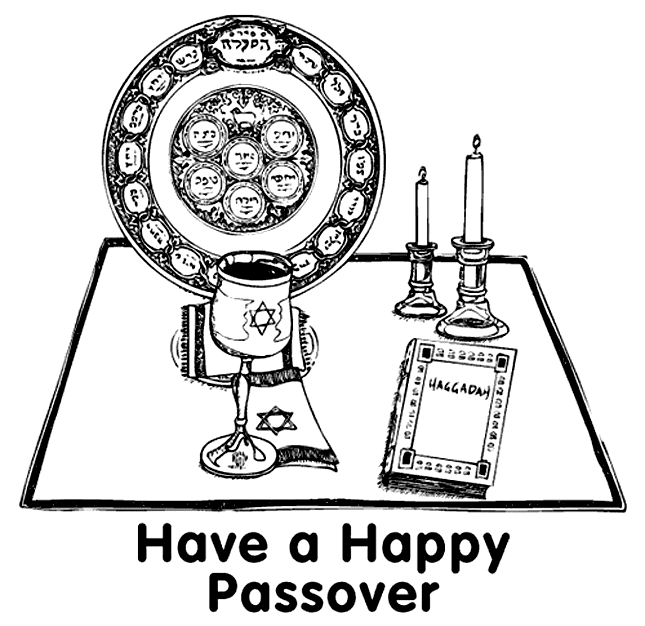
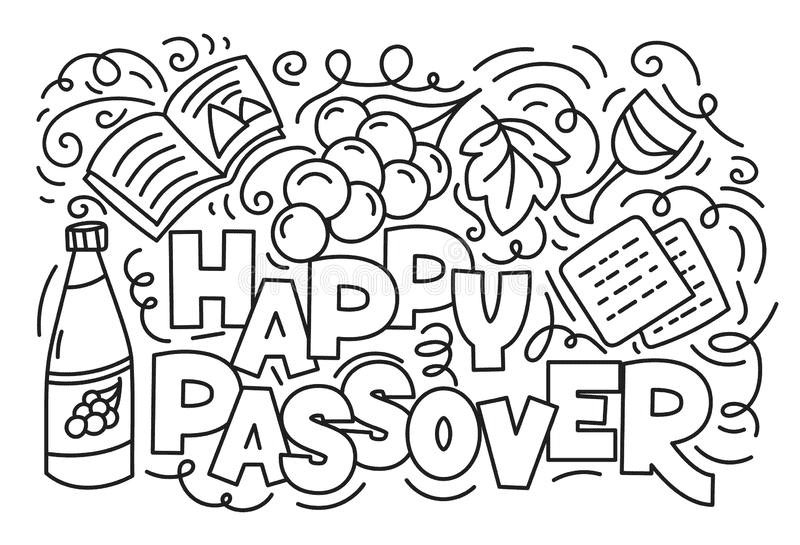
The Symbol and greeting pages – Happy Passover, Have a Happy Passover, The Seder, and the Seder Plate designs – are the pages that become cards, decorations, and table settings. The Star of David for Kids page works beautifully as a standalone symbol page for younger children.
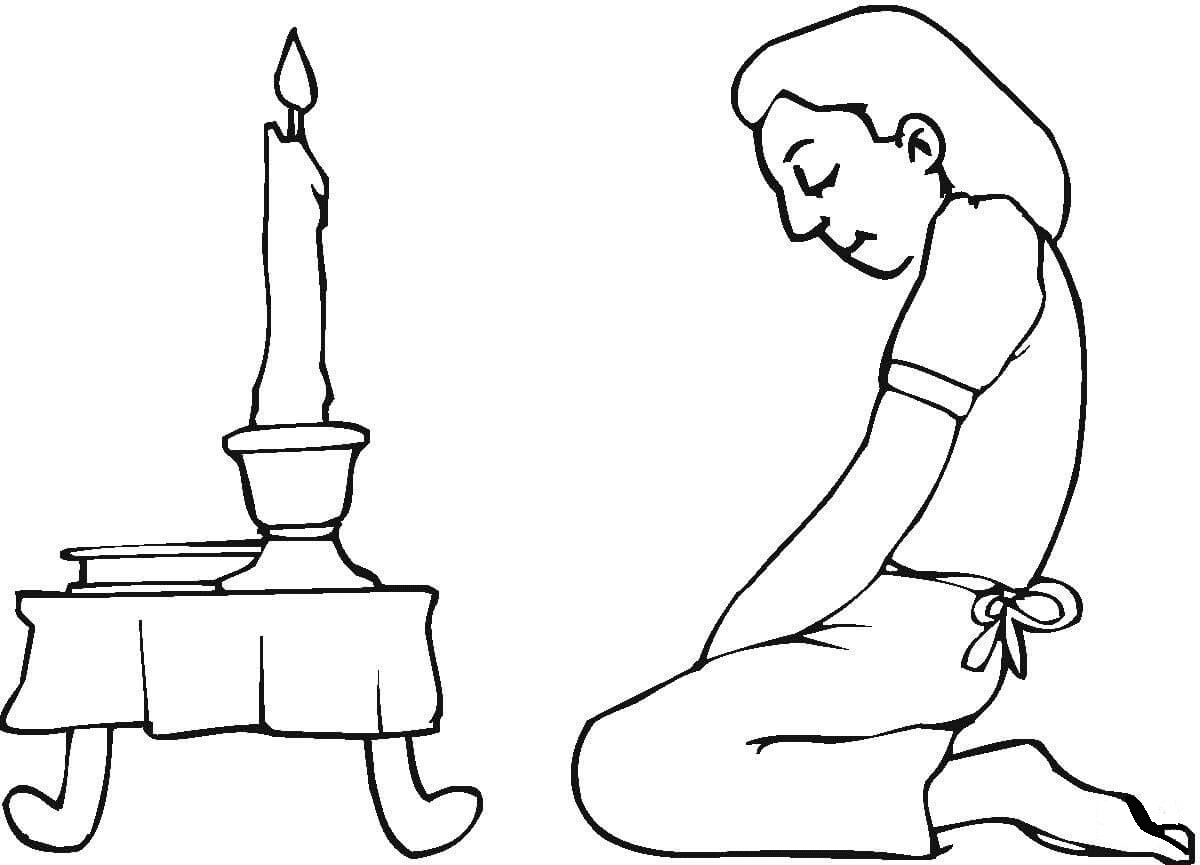
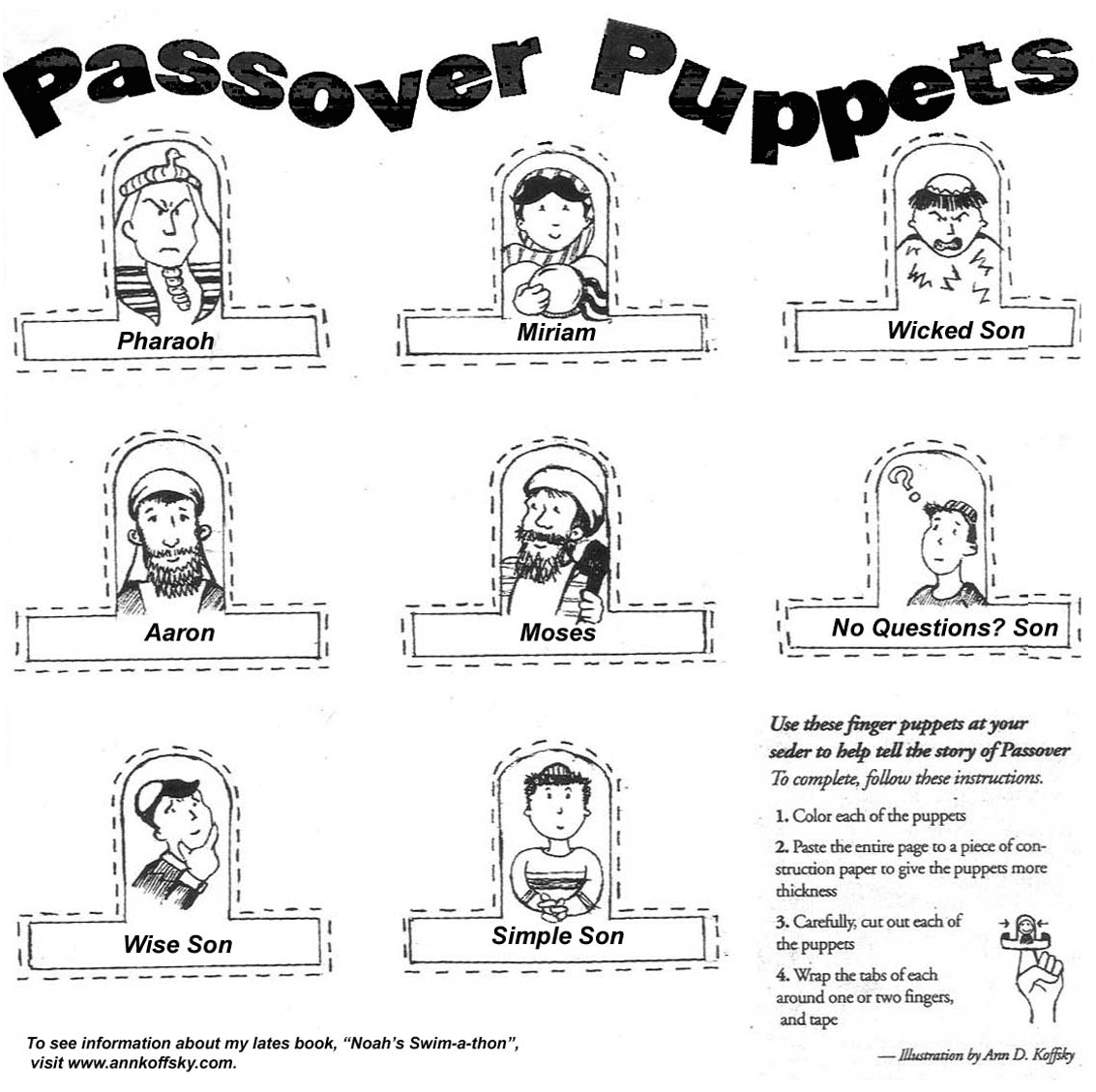
The Haggadah and prayer pages – Prayer for Passover, Passover Puppets and Craft for Children – are wonderful for classroom settings or for families who want to extend the coloring activity into the Seder night itself.
Coloring Tips for Passover Pages
Passover has a distinct color palette rooted in both the natural world of spring and the traditional blues and golds of Jewish ceremonial art. Understanding it makes these pages feel genuinely connected to the holiday.
Blue and gold are the dominant tones of Jewish ceremonial life – deep royal blue, bright sky blue, and warm gold appear on Kiddush cups, Seder plates, menorahs, and Torah covers throughout Jewish tradition. The Seder Plate pages, the Star of David page, and any pages with Haggadah imagery look most authentic with these as the primary color palette.
For the nature and spring elements – the karpas parsley, the spring flowers that often appear as borders, the outdoor scenes – use the same fresh spring palette that works for all spring pages: bright mid-greens, soft yellow-greens for new growth, warm creamy yellows for the sunshine quality of a spring afternoon.
For the Moses and narrative pages, think desert and water. The Egyptian desert scenes call for warm sandy ochres, terracotta, and deep burnt orange in the architecture and landscape. Moses himself is traditionally depicted in robes of white, cream, or blue, and the water of the Red Sea, when it parts, is a deep saturated blue that you want to build in layers to create a sense of the wall of water.
For the Ten Plagues pages, each plague has its own color logic. The blood plague is obvious – deep red in the Nile. The frog plague is bright, cheerful green, which creates a funny contrast with the chaos. The darkness plague is one of the most interesting to color: a near-black sky with only the faintest light at the edges where the plague ends.
For the family Seder pages, warm interior tones – candlelight amber, deep tablecloth red or white, the warm skin tones of families gathered together – create the right feeling of intimacy and celebration.
5 Passover Activities With Your Coloring Pages
Make a personal Haggadah. Print and color the Passover story pages – Moses, the plagues, the crossing of the sea, the Seder – staple them together in order, and create a simple illustrated Haggadah that a child can follow along with during the actual Seder night. This is one of the most meaningful things you can make with these pages because it becomes part of the holiday itself.
Design a Seder table display. Color the Seder Plate page, the Happy Passover greeting pages, and a few of the symbol pages, and use them to decorate the table before the Seder. Children who helped make the decorations sat down to the meal with a different sense of ownership and belonging in the celebration.
Create a Passover greeting card. Print and color the “Have a Happy Passover” or “Happy Passover” page on cardstock, fold it in half, and write a Passover message inside. The traditional greeting is Chag Sameach (Happy Holiday) or Chag Pesach Sameach (Happy Passover Holiday) – receiving a hand-colored card with a Hebrew greeting is something people remember.
Make a Passover story puppet show. The Passover Puppets and Craft for Children page was designed exactly for this purpose. Color and cut out Moses, Pharaoh, and the other figures, attach them to craft sticks, and retell the Exodus story through a puppet performance. For families with young children, this is one of the best ways to make the Seder story concrete and memorable – and kids who performed it themselves at age five can still tell you the whole story at age fifteen.
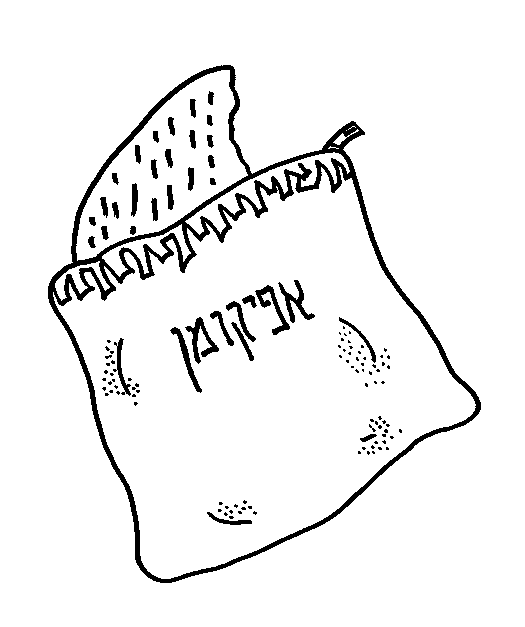
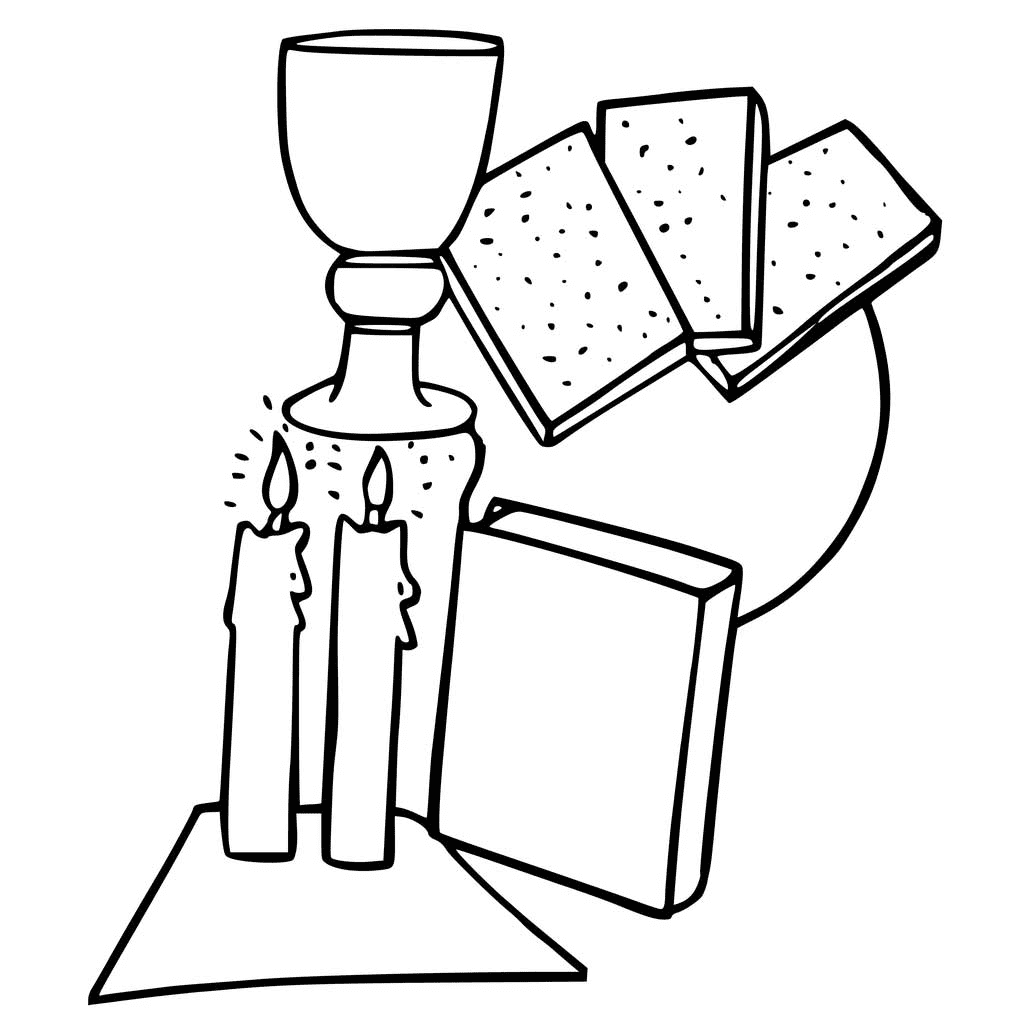
Create a matzo cover. Color one of the beautiful Seder plate or Passover symbol pages, laminate it or cover it with clear contact paper, and use it as a matzo cover for the Seder table. A matzo cover is the cloth or decorative piece placed over the three pieces of matzah on the Seder table – making one from a hand-colored page turns a simple coloring activity into a functional piece of Passover tradition.
Download Your Free Passover Pages Today!
All 50+ Passover Coloring Pages are completely free – download as PDF to print at home, or color online in your browser with one click. No account needed, no payment required. Whether you’re celebrating Passover with your family, using these pages in a classroom, or discovering this beautiful holiday for the first time, we hope these pages bring a little extra warmth to your table.
Chag Pesach Sameach – Happy Passover!
We’d love to see your finished pages! Share your artwork with us on Facebook and Pinterest at ColoringPagesOnly.com.