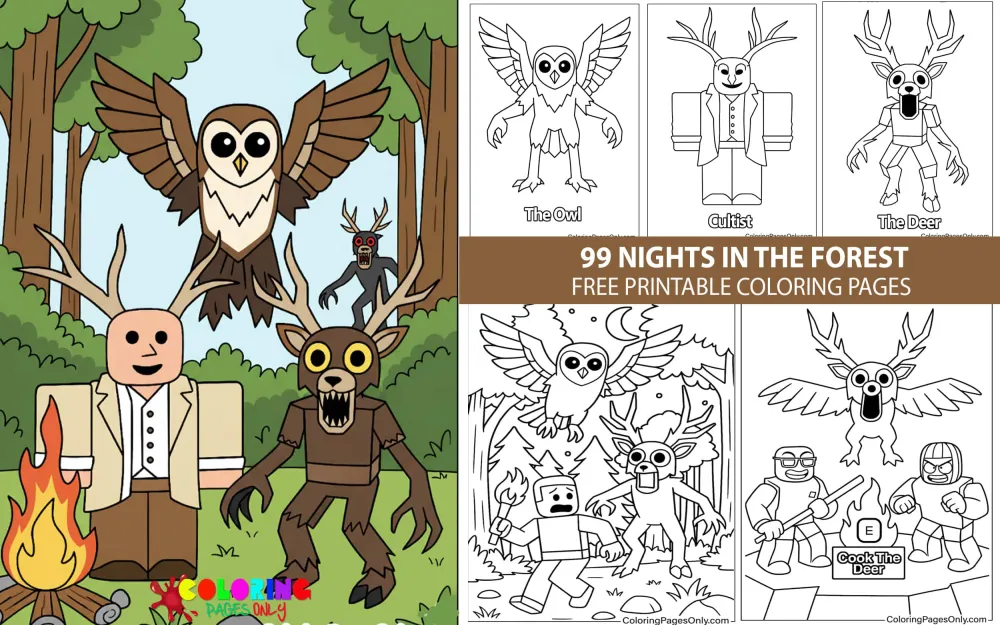
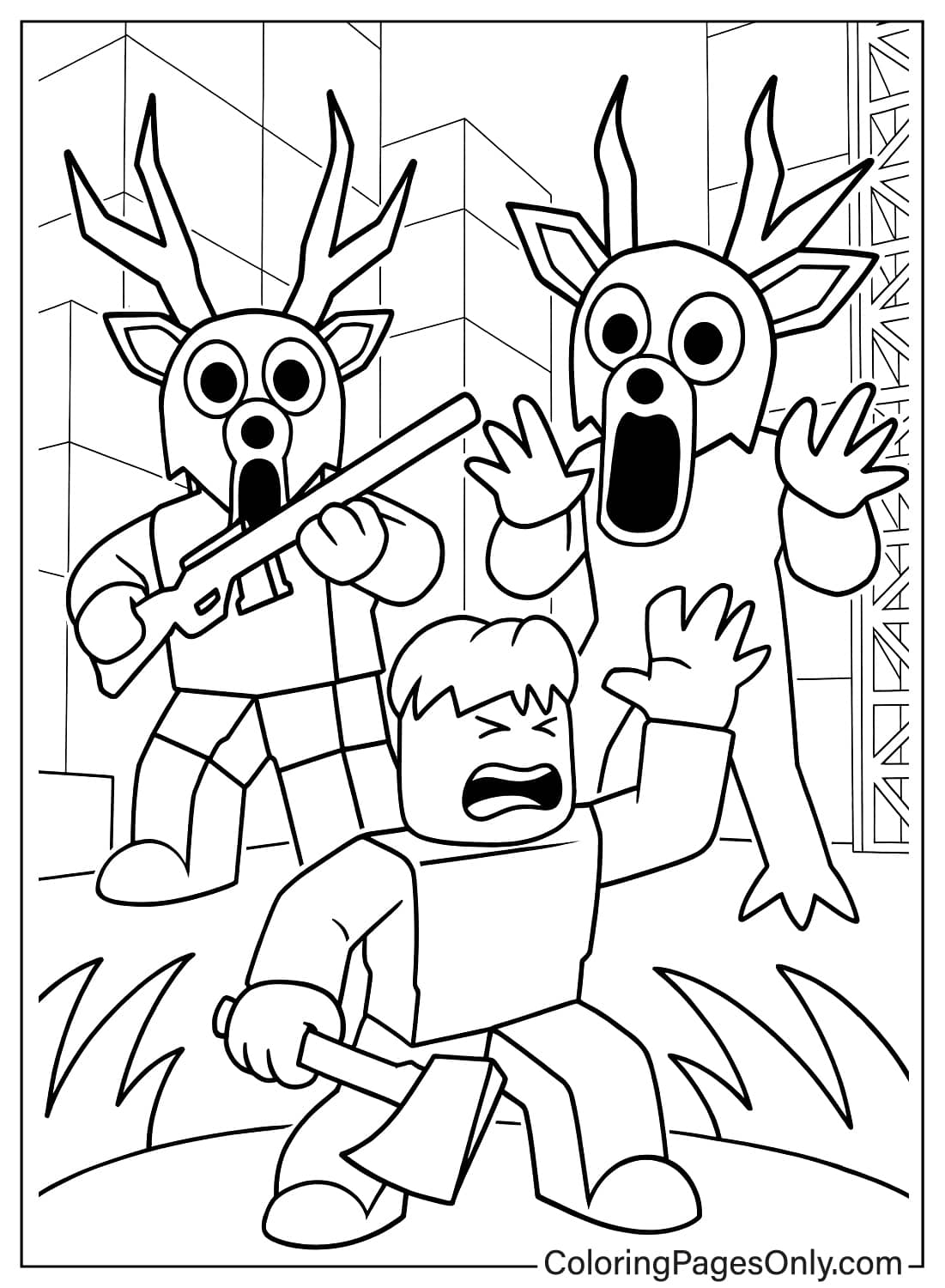
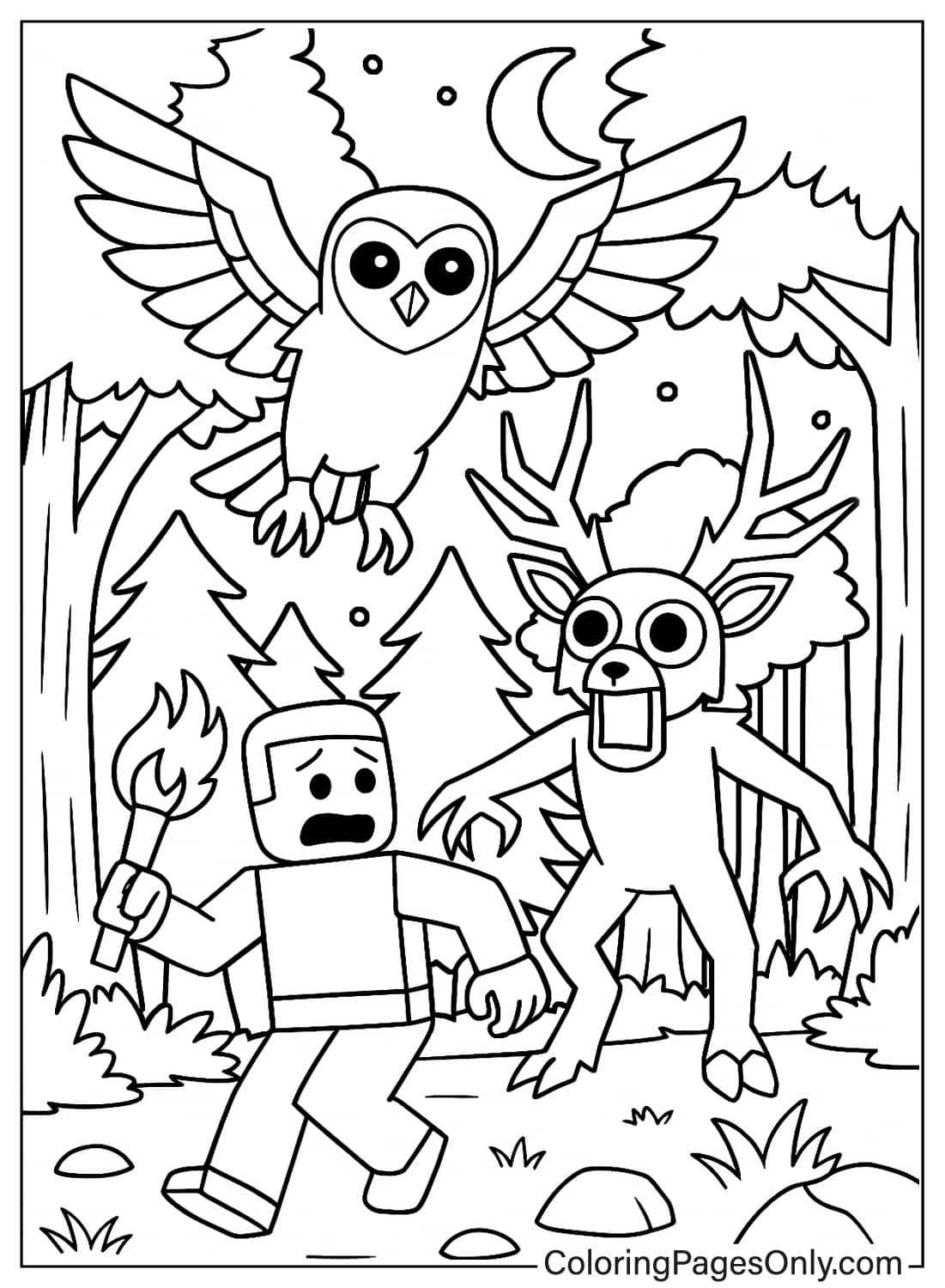
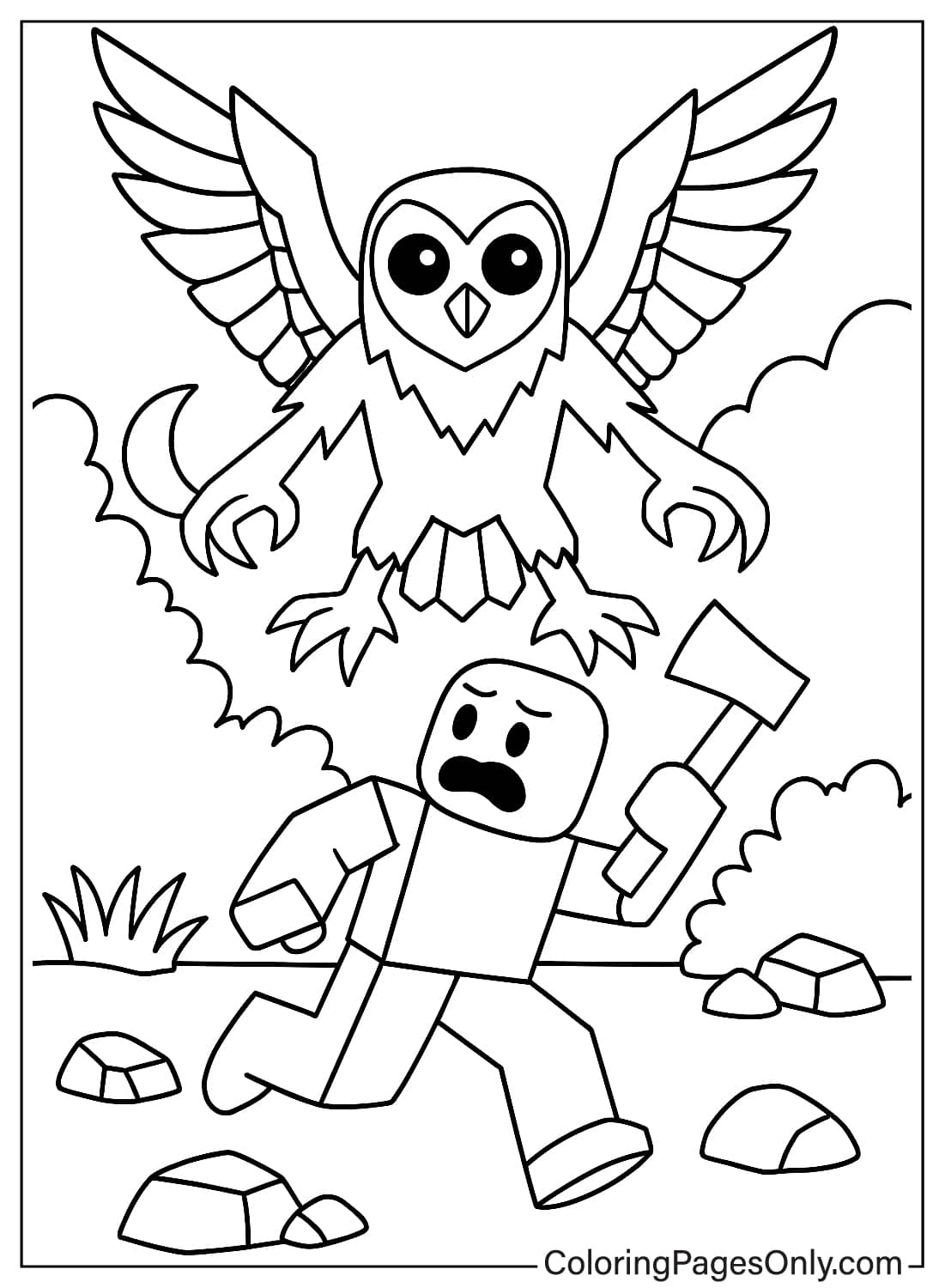
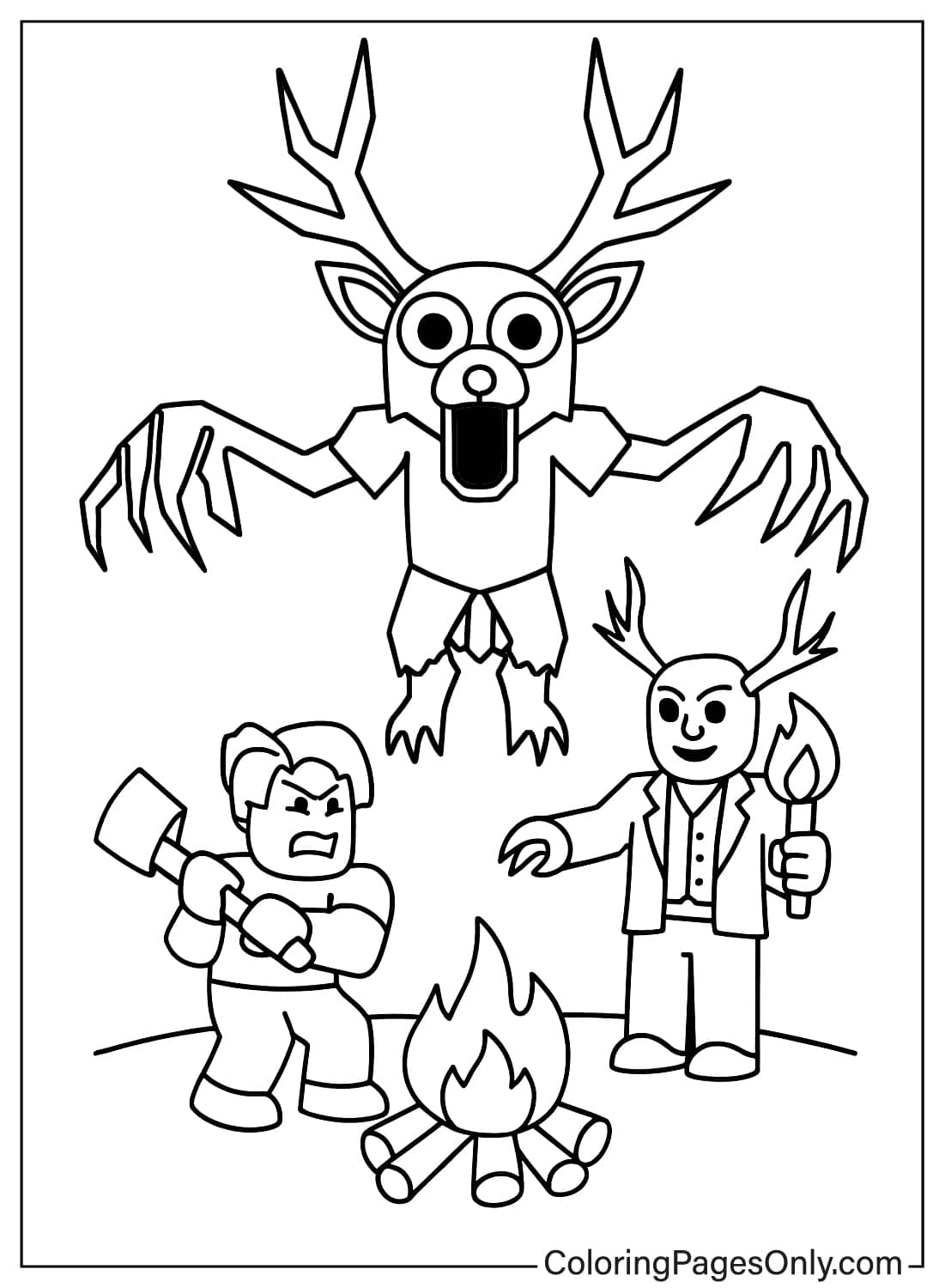
99 Nights in the Forest Coloring Pages at ColoringPagesOnly.com brings together 30+ free pages based on the hit 2025 Roblox survival horror game – individual entity pages for The Deer Monster, The Owl Monster, The Ram, and The Bat, cultist character pages, chase and campfire scene compositions, and individual missing child poster pages. Download any page as a PDF to print, or color online in your browser. The full Games collection is at Games Coloring Pages.
What is 99 Nights in the Forest?
99 Nights in the Forest is a co-op multiplayer survival horror game on Roblox, created by Grandma’s Favorite Games – the studio also known for the Break In series – and released on March 4, 2025. In under a year, it became one of the most-played horror experiences on the platform, combining a tense day-night survival loop with a genuinely unsettling monster design that spawned significant fan art and community discussion.
The premise is direct: a small plane crashes into a forest said to be haunted by a mysterious creature. Four children who survived the crash have gone missing somewhere in the woods. Players – up to four in co-op – enter the forest to find and rescue the children while surviving 99 nights against the threats that emerge after dark.
The game’s structure runs on a day-night cycle. During daylight hours, the forest is relatively safe. Players gather resources – wood, coal, food, weapons – explore the map, and build or reinforce their campfire base. The campfire is the core survival mechanic: it must stay lit at all times, because it is the only reliable protection against the game’s main antagonist, The Deer. A campfire that goes out at night is a campfire that invites The Deer directly into the player’s camp.
At night, The Deer becomes active and begins hunting. Players caught outside the campfire’s protective circle are in serious danger. The Deer cannot be killed by any weapon in the game – its complete invulnerability is the defining mechanical rule that separates 99 Nights in the Forest from conventional combat-focused survival games. The only tools that work against it are light (flashlights temporarily stun it) and the campfire itself. The design forces players into a resource management mindset rather than a combat mindset: the question is never “how do I kill it?” but always “how do I stay safe from it?”
Every fourth night in the early game, groups of cultists – masked figures who worship The Deer – raid the campfire directly. These cultists can be fought and killed, unlike The Deer itself, providing one of the few active combat encounters in the game. As nights progress, the cultist raids grow more frequent, more dangerous, and more varied.
The game is inspired by a real event: in May 2023, four children aged 13, 9, 4, and 11 months survived 40 days stranded in the Colombian Amazon rainforest after a plane crash before being rescued. The game developers combined this survival story with the North American cryptid folklore of the Wendigo and the “Not Deer” – a creature from internet horror tradition that appears to be a deer but moves and behaves wrongly – to create The Deer as the game’s central monster. The lore is deliberately ambiguous: the game contains evidence suggesting The Deer may be the result of laboratory experiments, but also evidence consistent with the supernatural cryptid interpretation. The Fandom wiki community has produced extensive lore theory discussions around this ambiguity.
As of April 2026, the game has received multiple major updates including the Snow Biome (introducing The Owl and new enemies), the Volcanic Biome (introducing The Ram and Scorpions), the Jungle Biome (introducing The Cat), a Bat Cave area, the November 2025 “The Deer is HURT” narrative event, a full Christmas 2025 event, and the Halloween 2025 event. Each update has added new entities, biomes, and coloring subjects.
Entity Guide
The Deer – Primary Antagonist
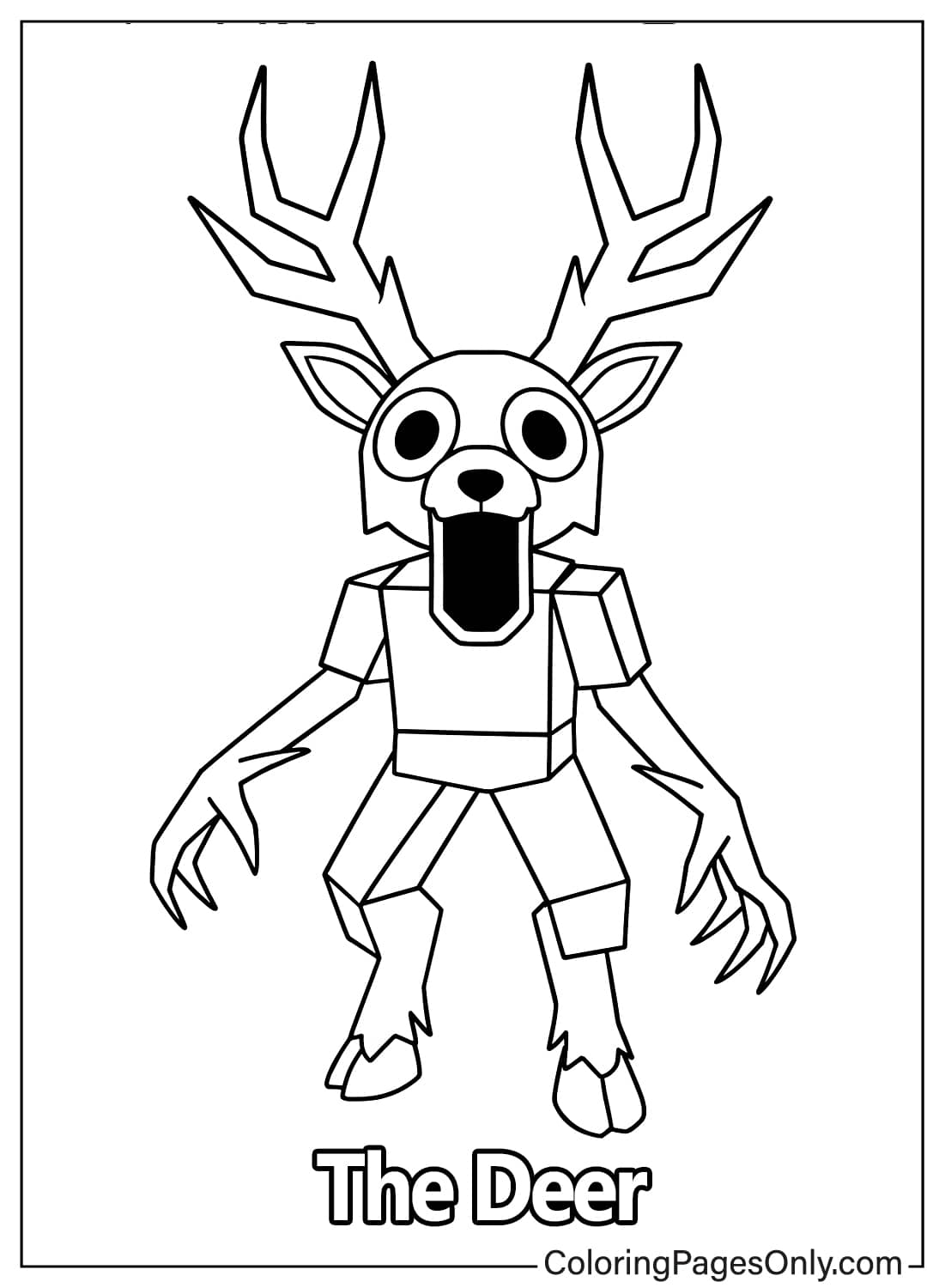
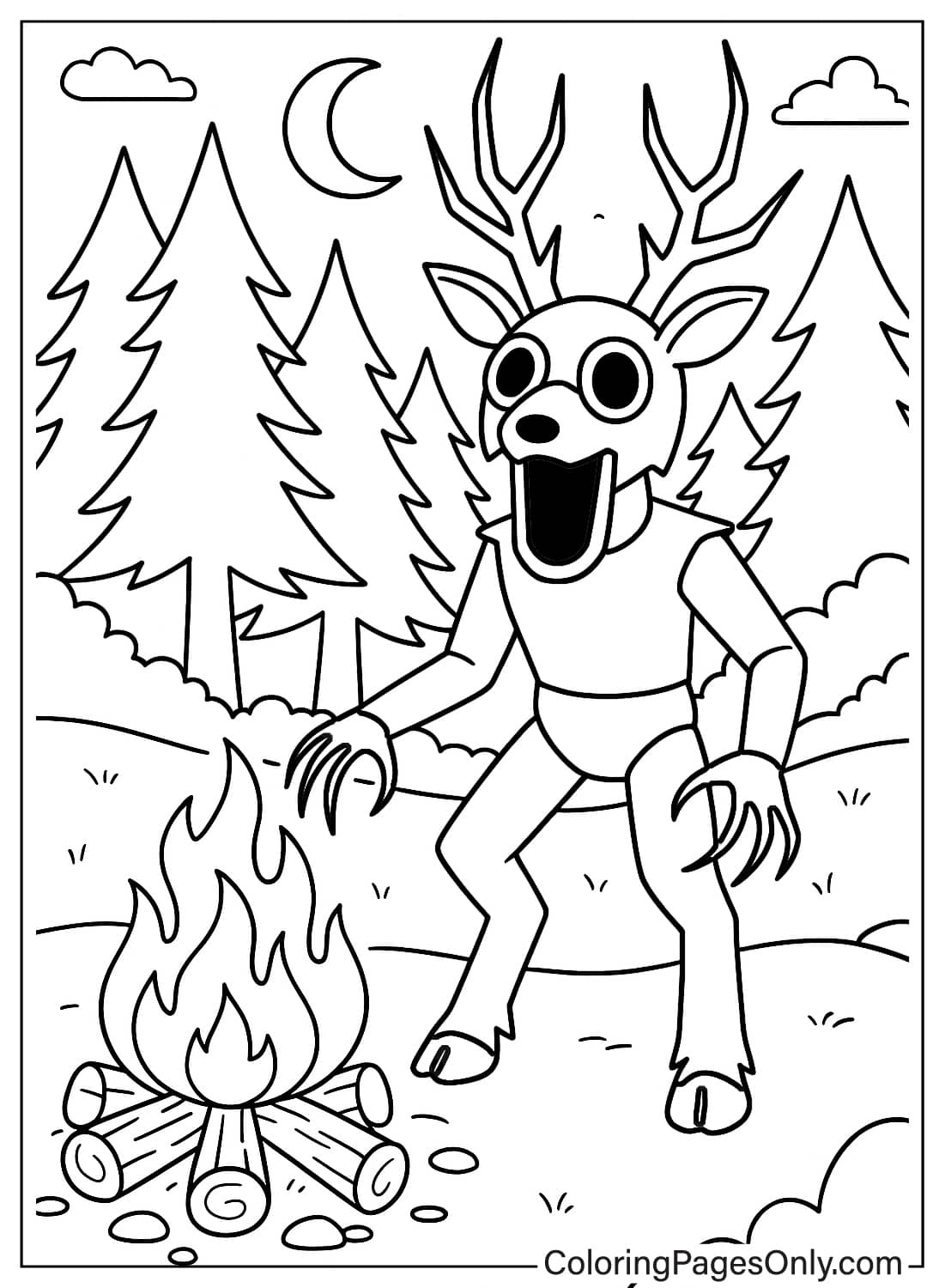
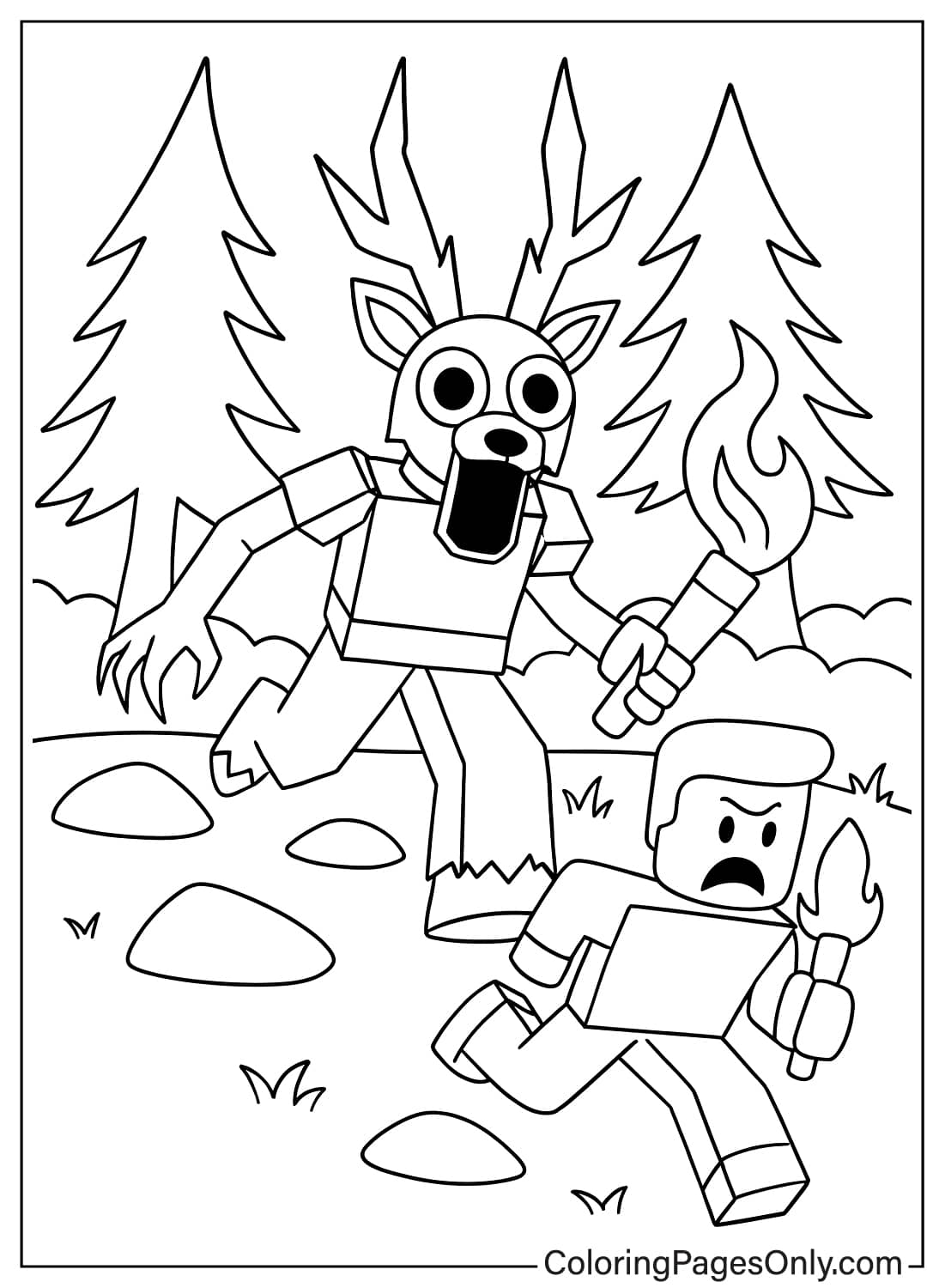
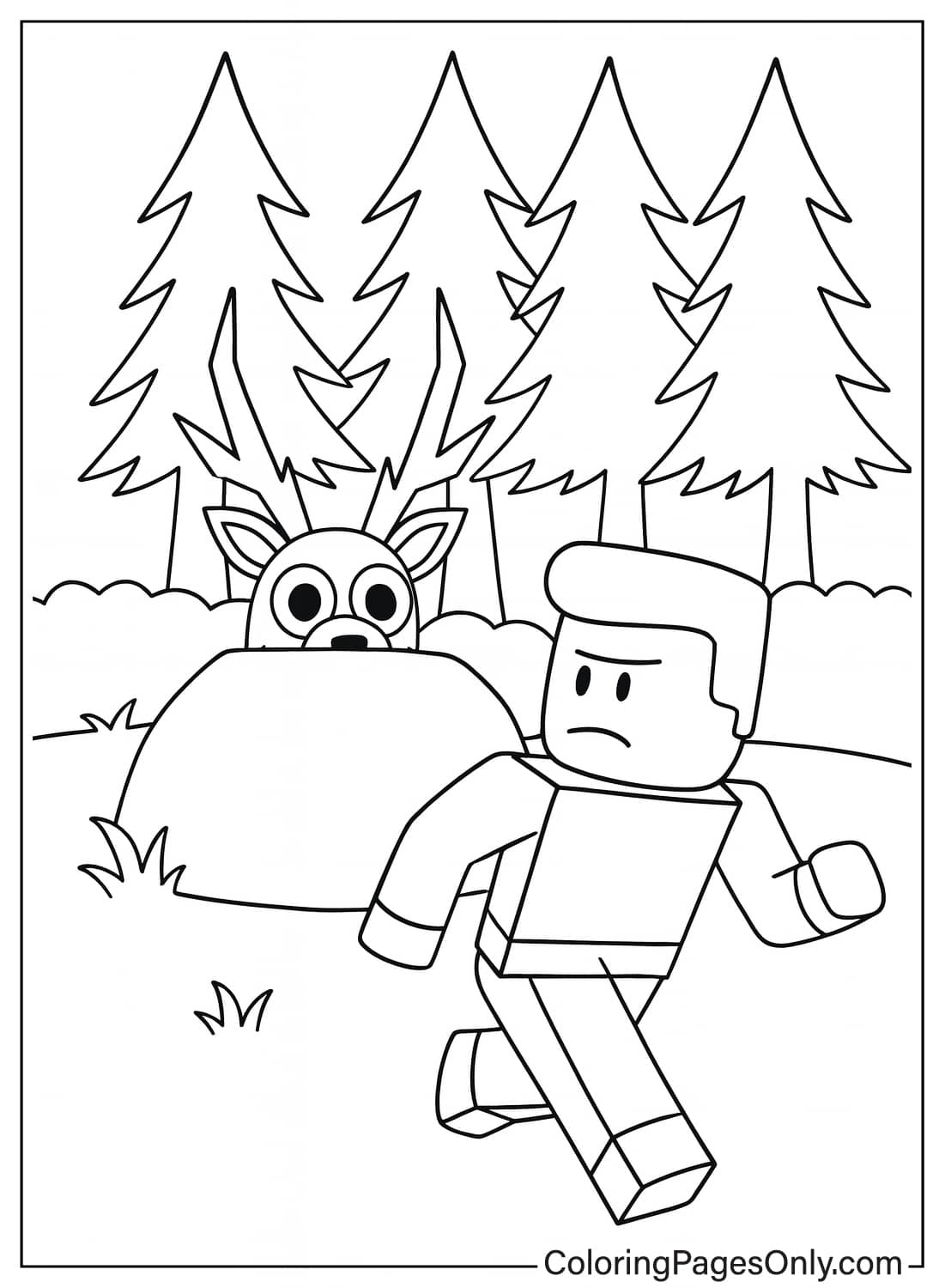
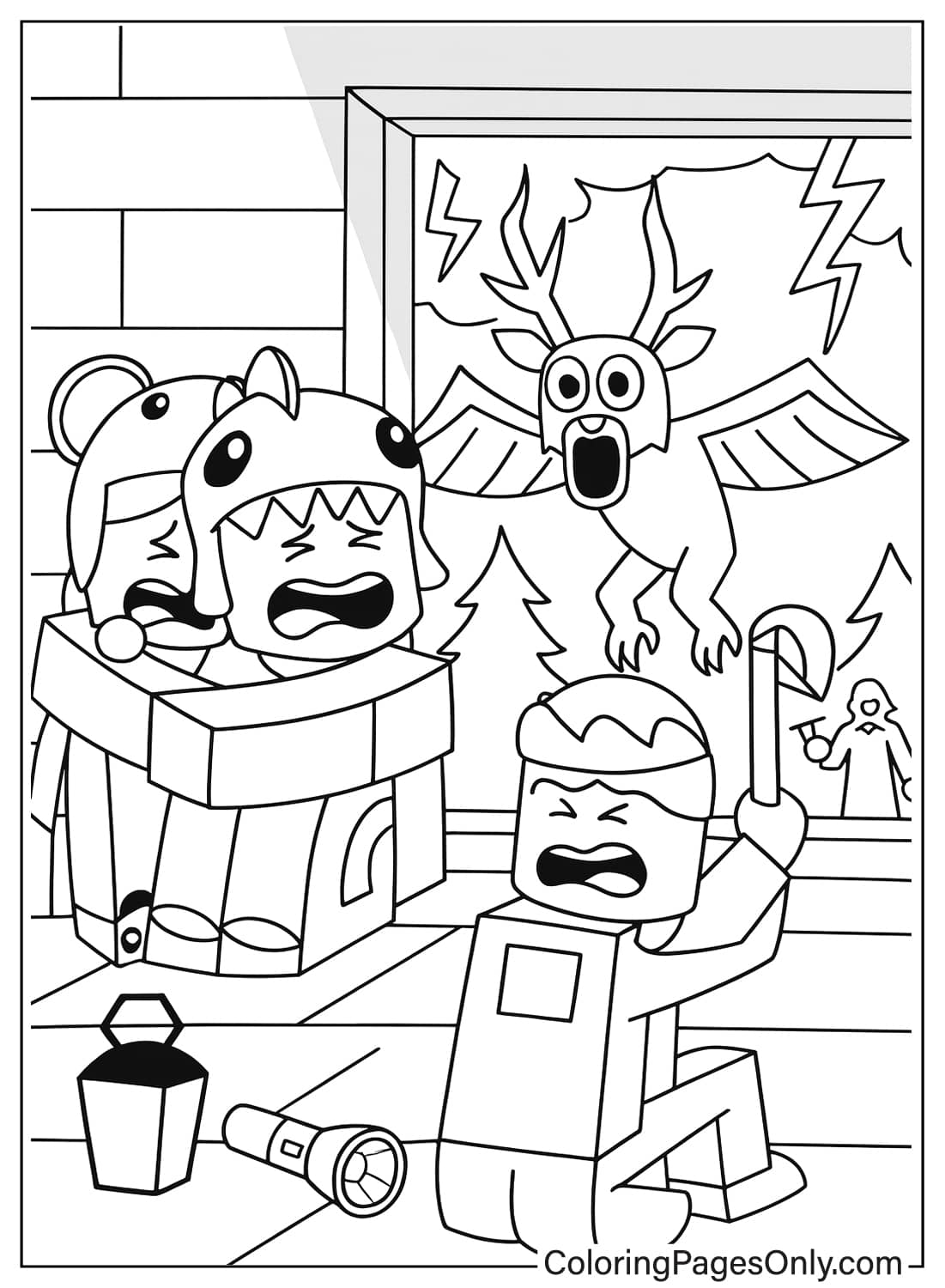
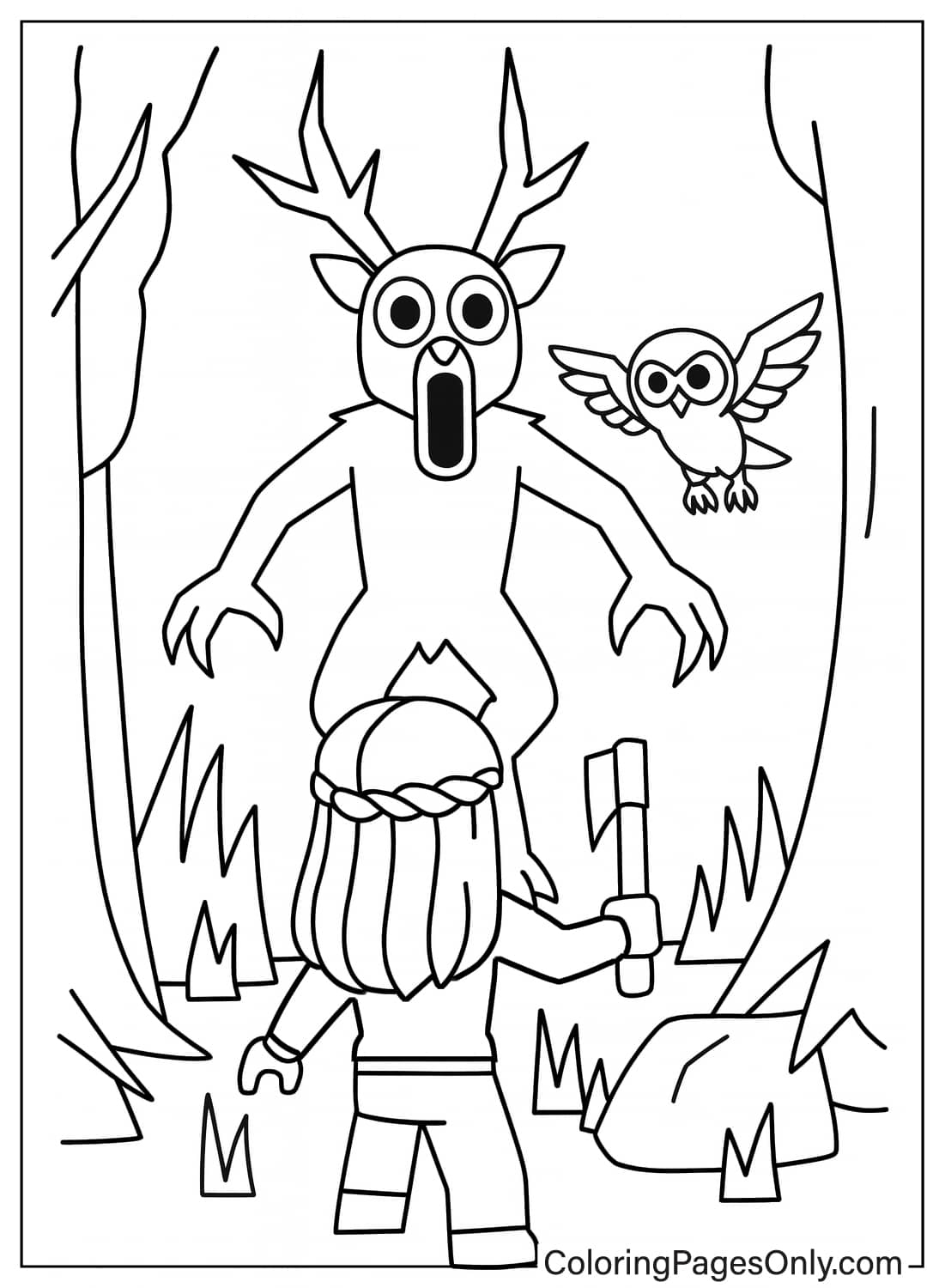
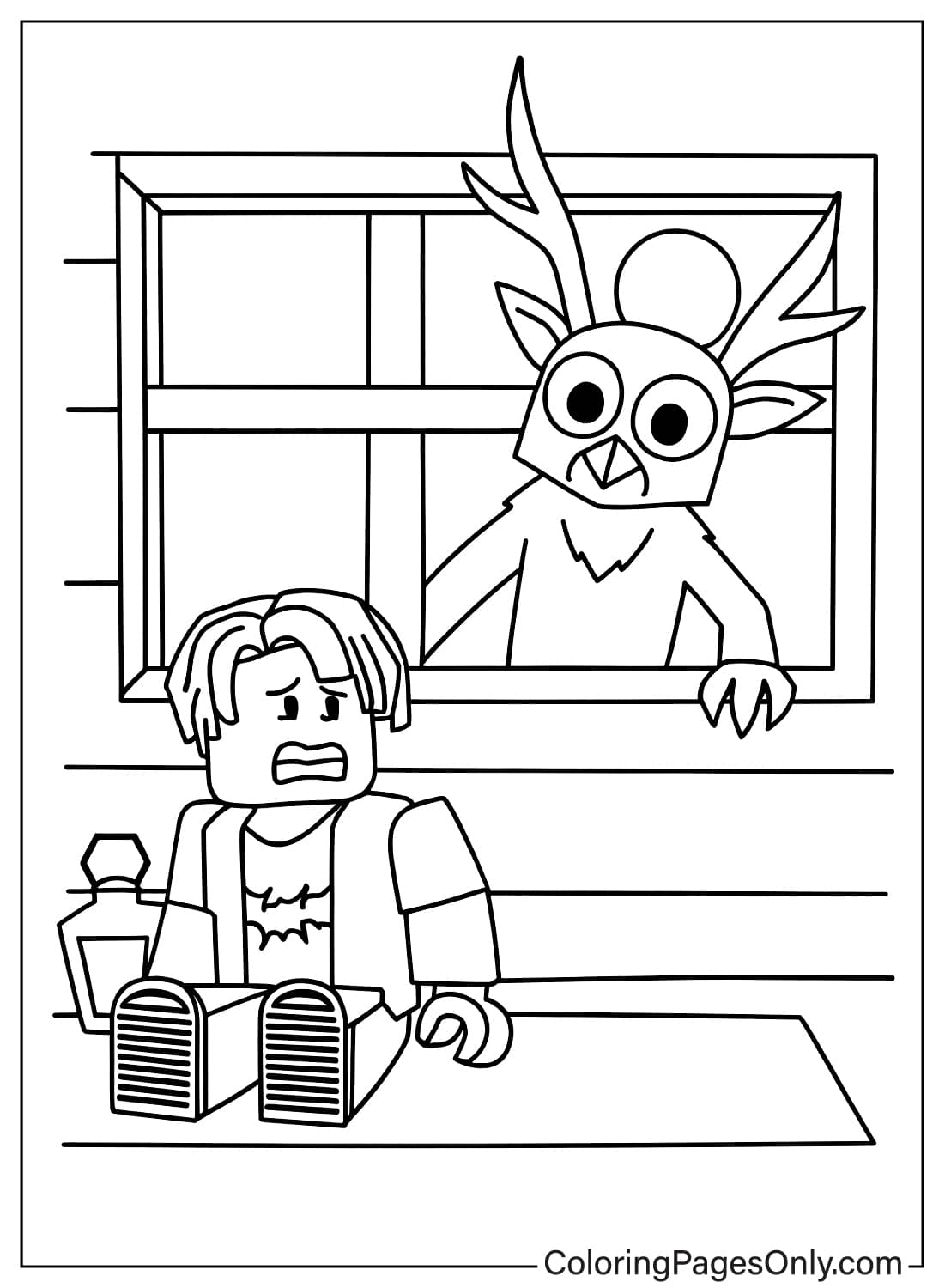
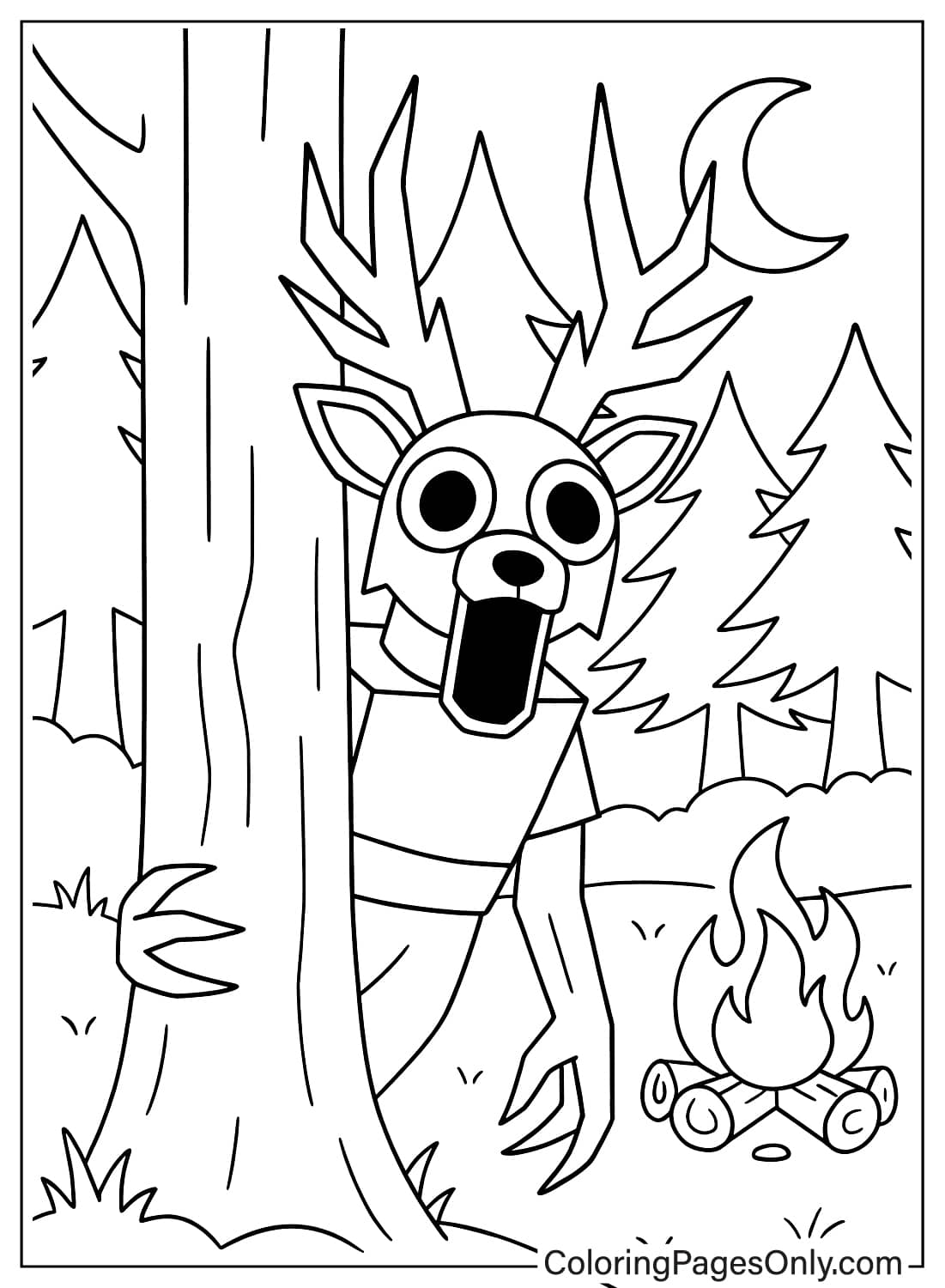
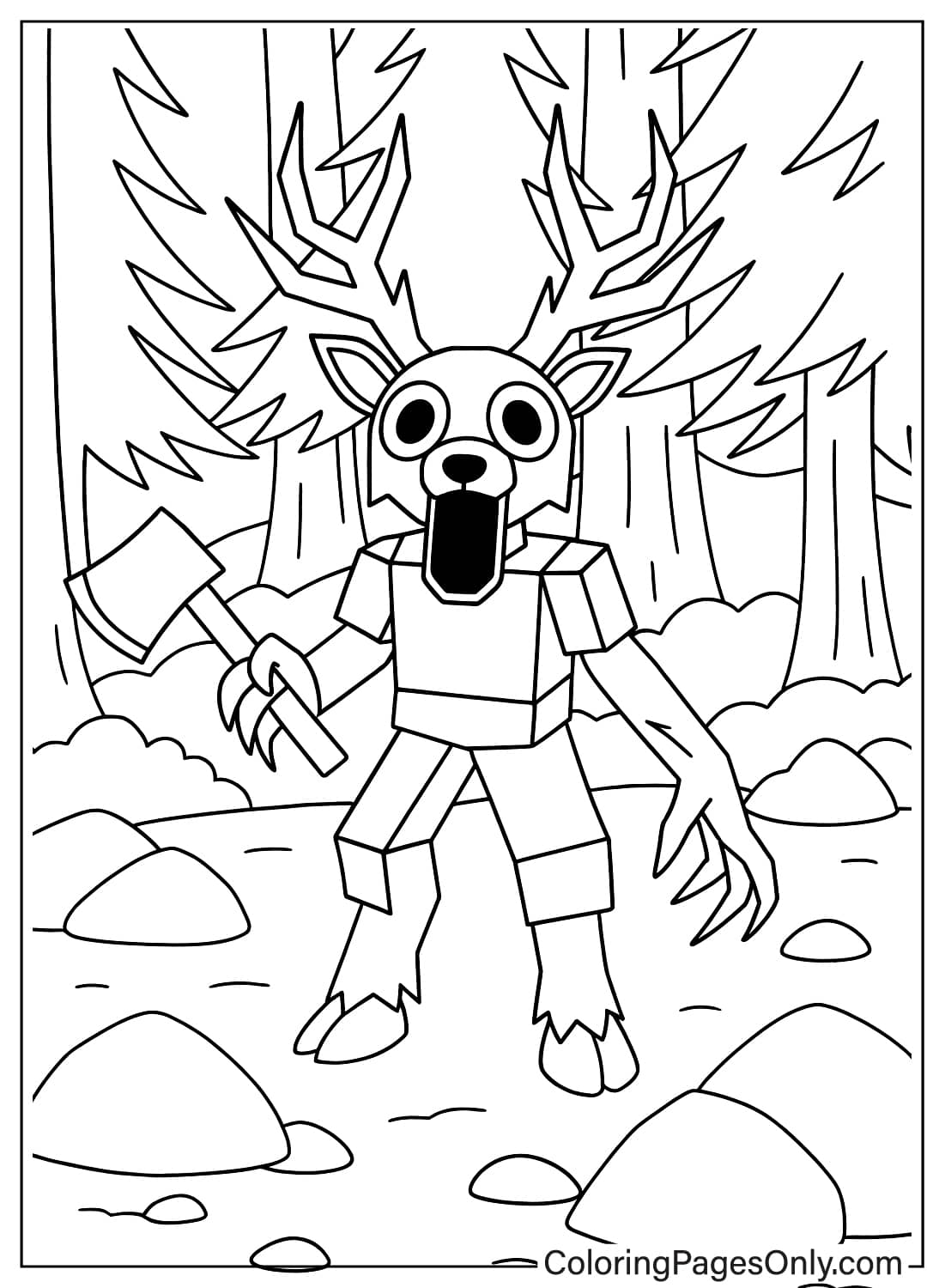
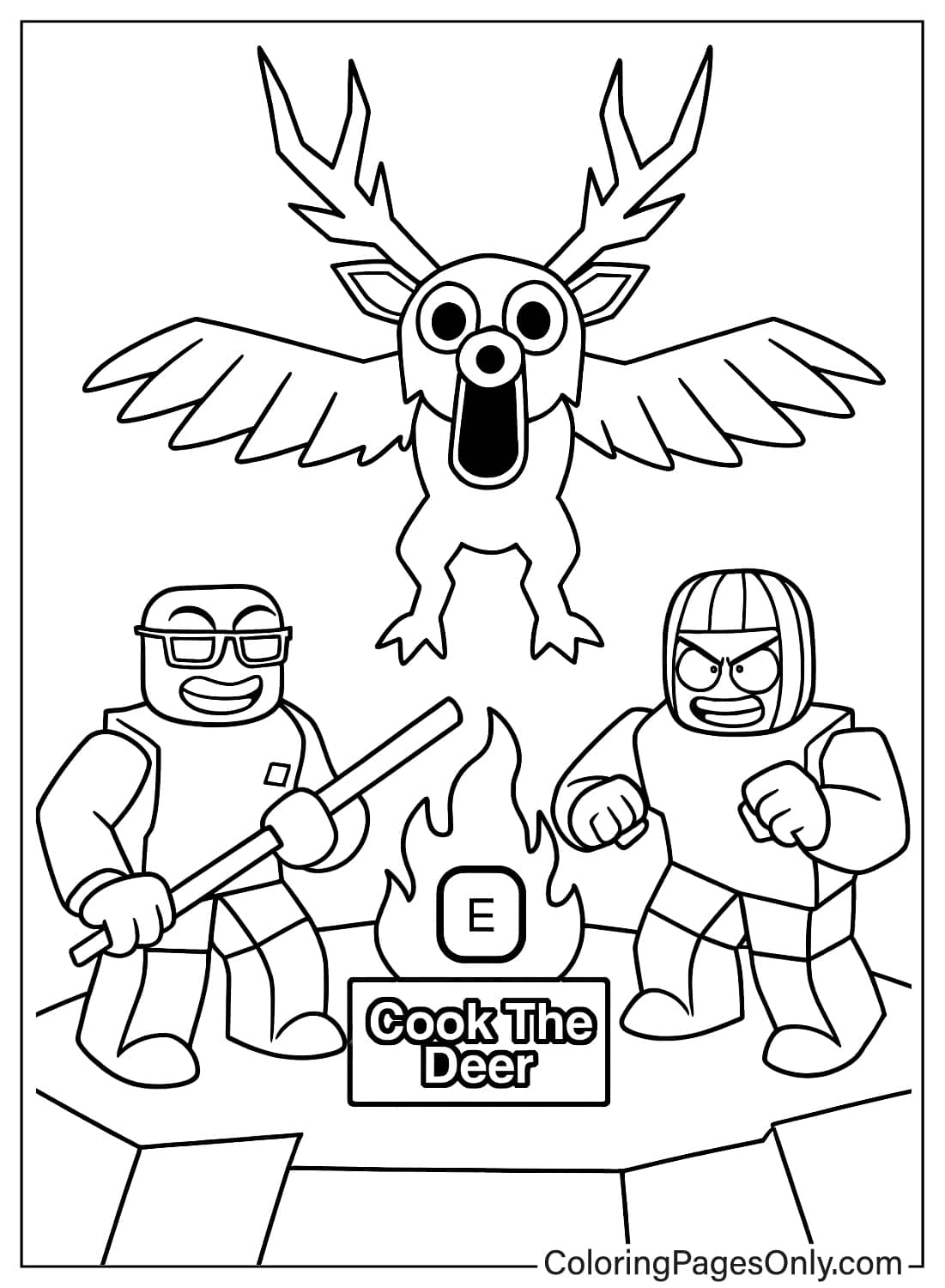
The Deer is the game’s central monster and undisputed mascot. It is a giant semi-humanoid deer – substantially larger than any human-scale character – with brown fur across its body, a beige/tan muzzle, and large cartoonish eyes that dominate its oversized head. Its jaw is permanently outstretched in an uncanny gape. Its black antlers, black hooves, and black claws all feature the same distinctive visual detail: the color fades gradually from brown into black as it moves toward the extremities, creating the impression of corruption or decay spreading through the creature. This brown-to-black fade on the claws and antler tips is the most important coloring detail for any Deer page – it is what makes the design look canonically accurate rather than just “a brown deer with black accents.”
The Deer is a facultative biped: it typically stands on its hind legs when stalking players, giving it an upright humanoid posture that makes it tower above the pine trees, but it drops to all fours to chase at higher speed. Pages showing it in standing versus running poses capture these two distinct visual modes.
When The Deer is hungry, its eyes change from the normal large-pupil black to a deep blood red. This “hungry state” is a significant visual variant for any Deer portrait page: the sclera fills with red, and the expression becomes visually distinct from the standard design.
Seasonal variants: Christmas 2025 added colorful lights wrapped around its antlers (bright multicolor holiday lights against the brown-and-black antler design); Halloween 2025 added a vampire costume with a red high collar, small bat wings, and fangs; Easter 2026 added bunny ears.
The Owl – Snow Biome Entity
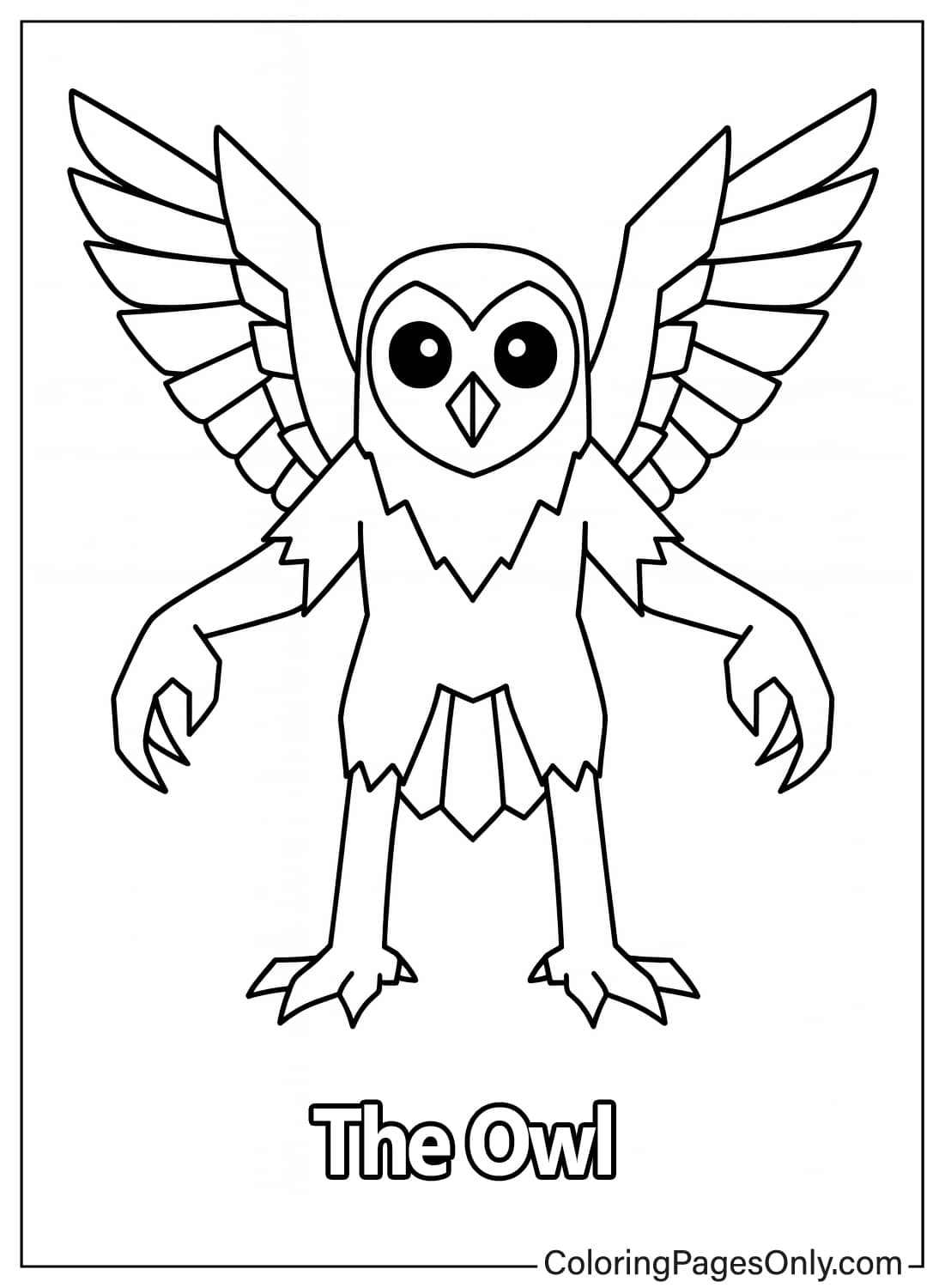
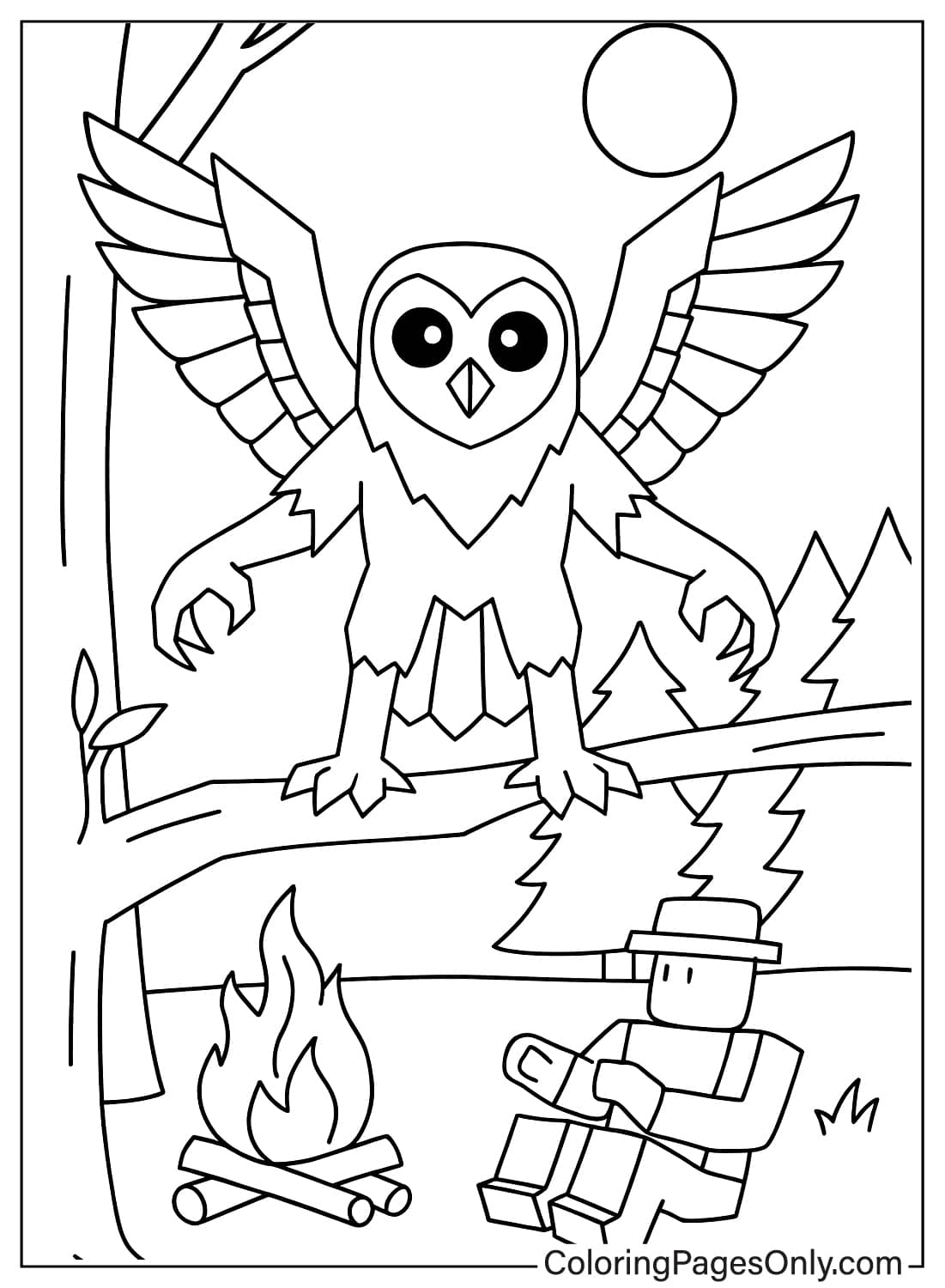
The Owl appears in the Snow Biome as a replacement for the Deer when the Snow Biome is active. It is the game’s most feared entity among experienced players – in the in-game lore, it is noted as a creature “even The Deer won’t go near.” Its mechanic is distinctly different from The Deer’s: The Owl uses a “don’t move” detection system, becoming hostile when players are in motion. Standing completely still while The Owl is nearby is the only reliable way to avoid triggering its attack.
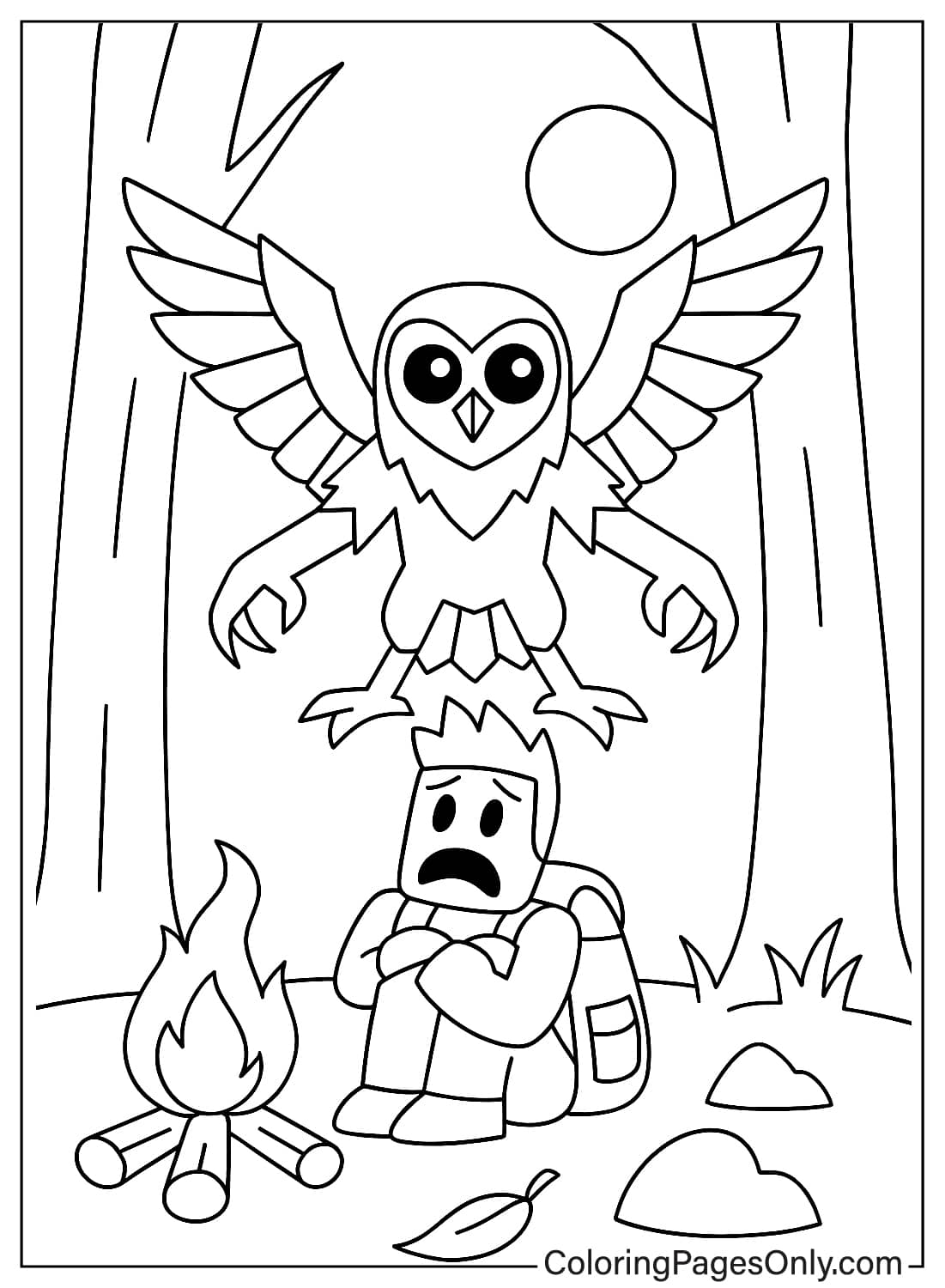
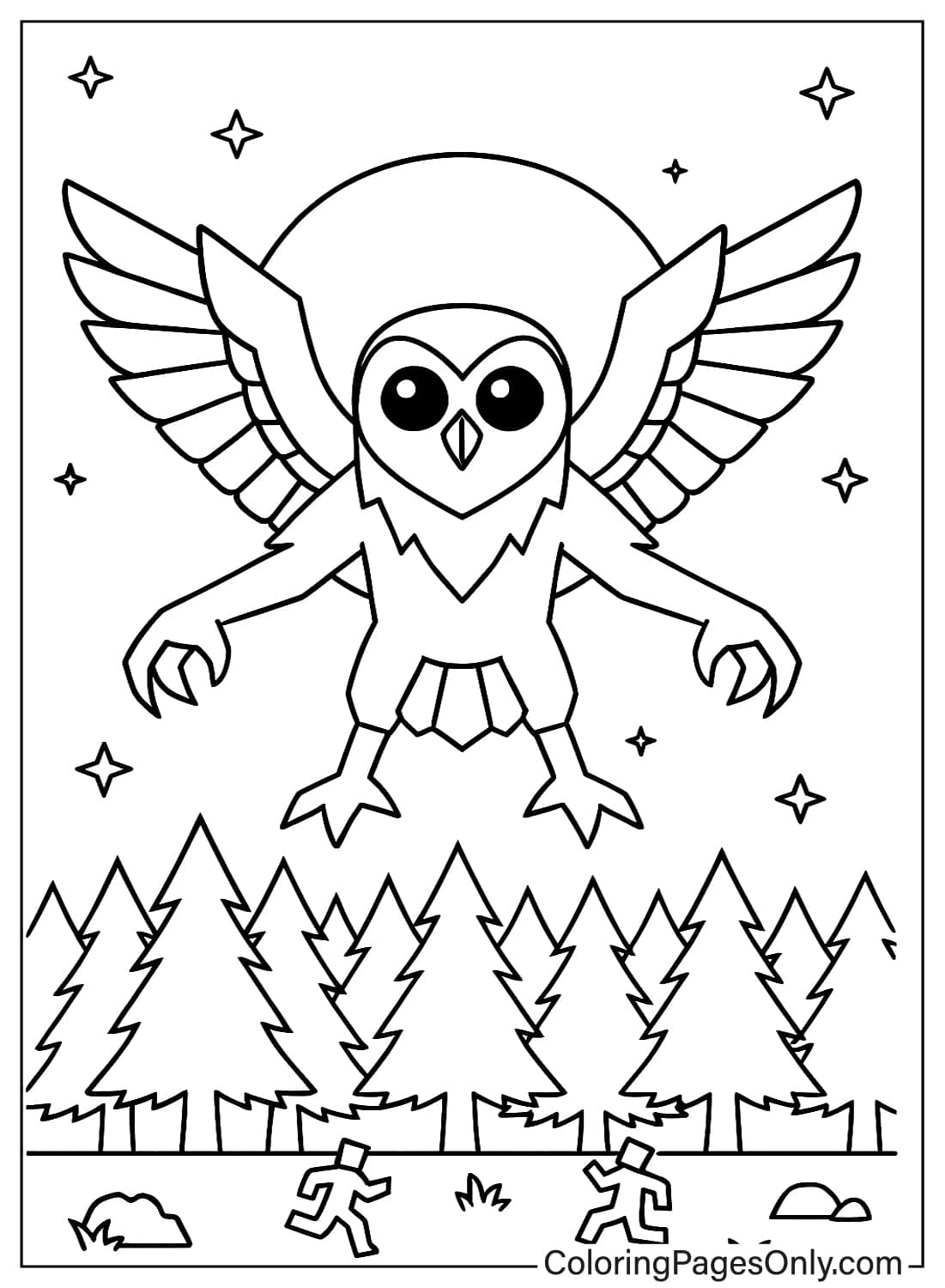
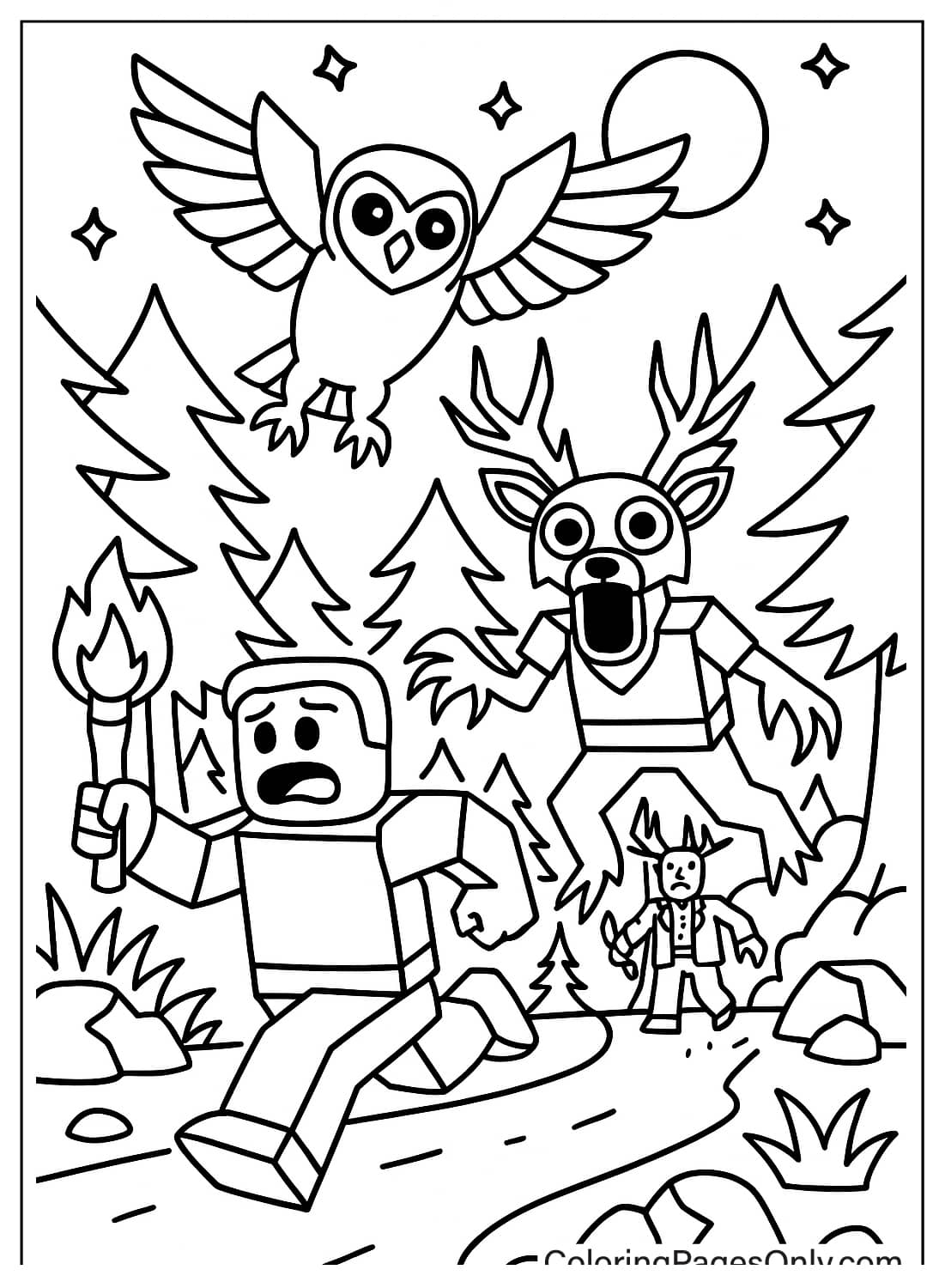
Visually, The Owl stands on long, spindly legs – much longer relative to its body than a real owl’s – with large wings and talons that define its silhouette. Pages showing it with wings lifted and claws extended capture its signature threatening pose. Its color palette draws from classic owl species: grey-brown feathers with darker markings, lighter facial disc, and yellow-orange eyes. The feather texture is one of the most detailed rendering challenges in the collection.
The Ram – Volcanic Biome Entity
The Ram is the Volcanic Biome’s primary entity, replacing The Deer when the Volcanic Biome is active. It has large curled horns – the defining silhouette element that makes it immediately distinct from The Deer. Its coloring is associated with the volcanic environment: warmer tones, darker browns, with the horns receiving special visual emphasis. Pages showing The Ram in a striking “ready to charge” pose with its massive horns are the key visual for this entity.
The Bat – Cave Entity
The Bat is a giant, unkillable, blind monster that guards the Bat Cave. Unlike The Deer, which uses sight to hunt, The Bat uses sound – it emits a powerful sonic screech that damages players and summons cultists. Because it is blind, stealth and silence are the relevant survival strategies rather than flashlight use or campfire proximity. Its design features enormous wings stretched wide and a hunched posture. Pages showing it with wings fully spread capture its most visually dramatic pose.
The Cultists – Human Enemies
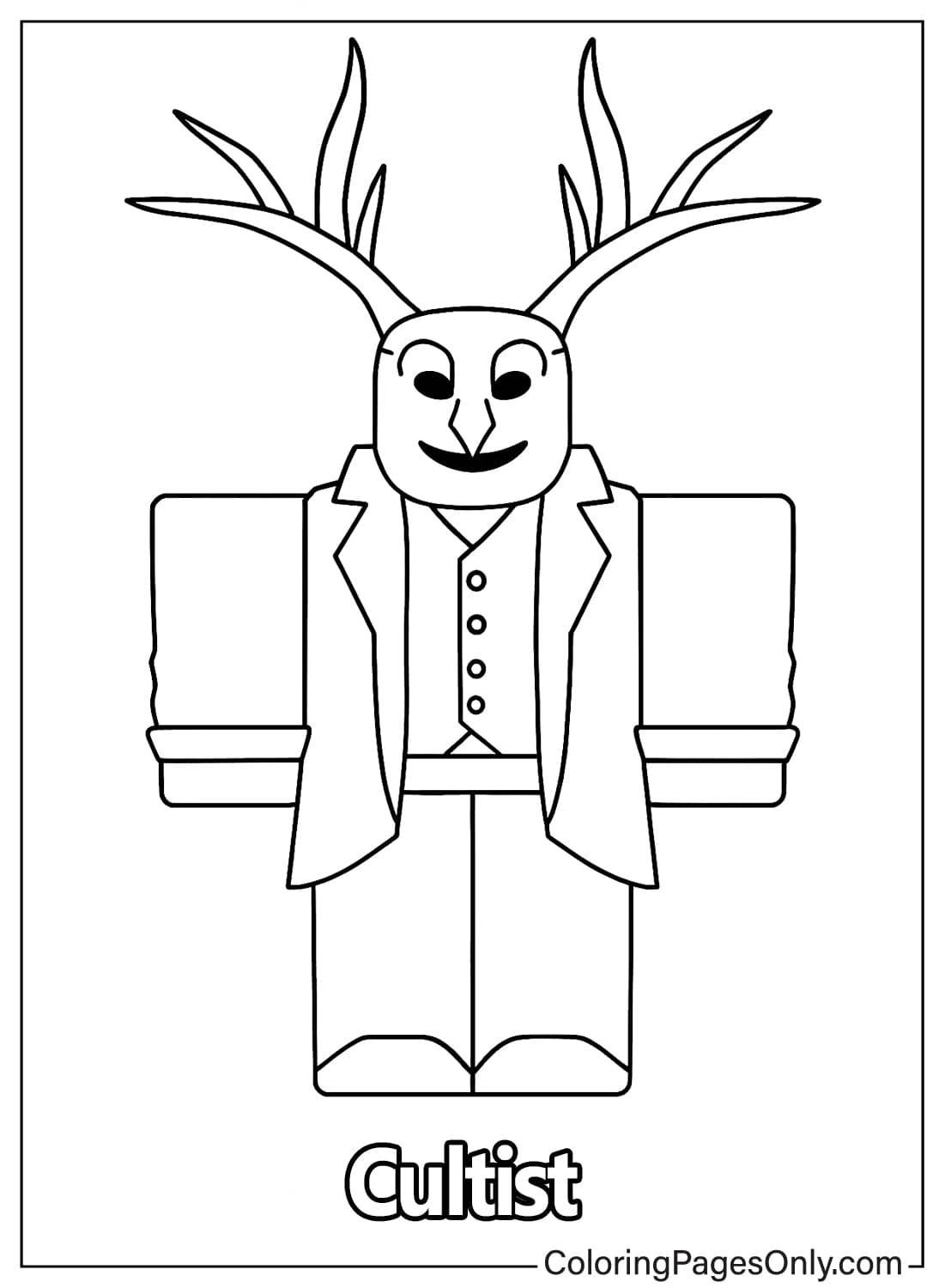
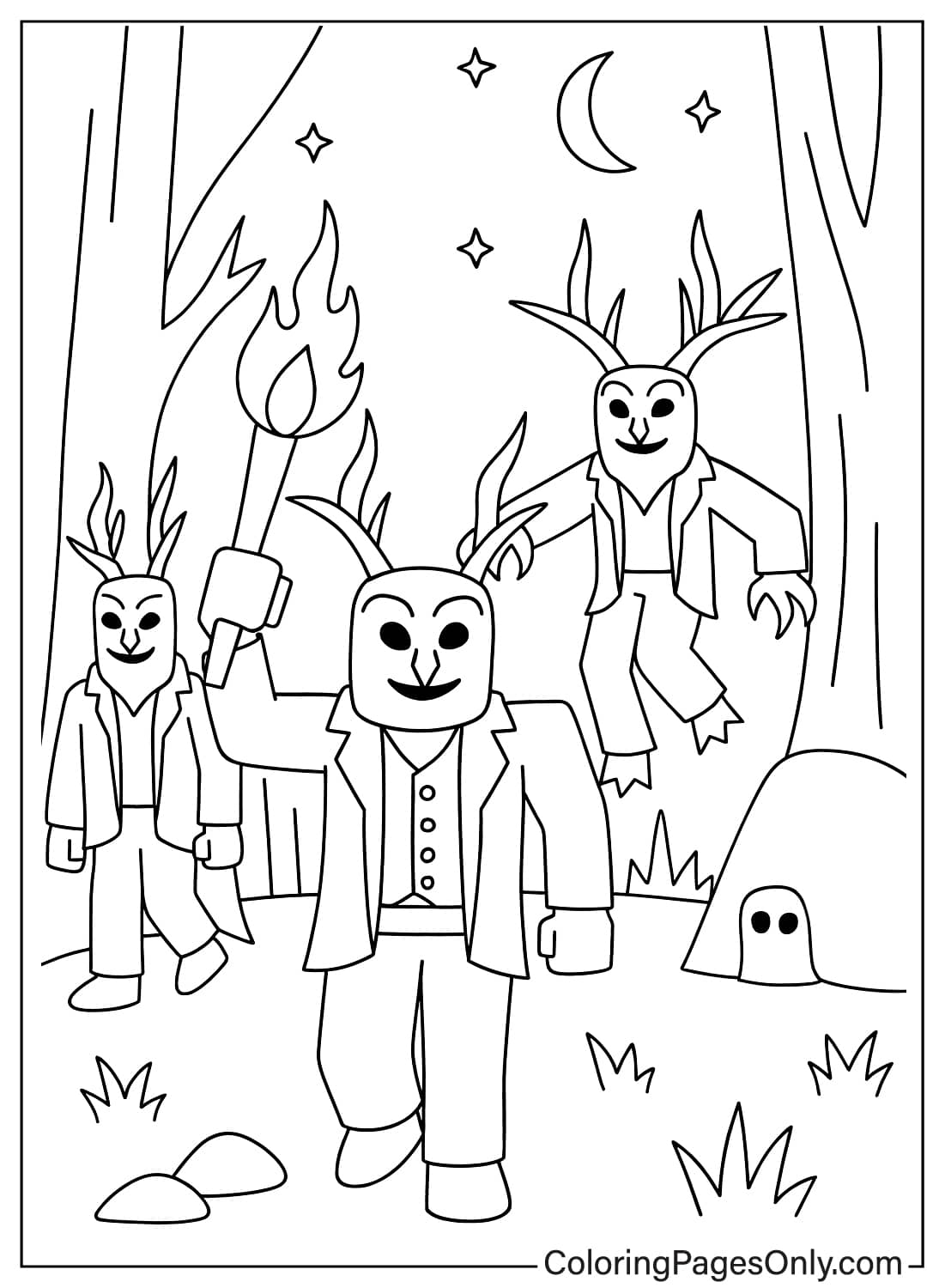
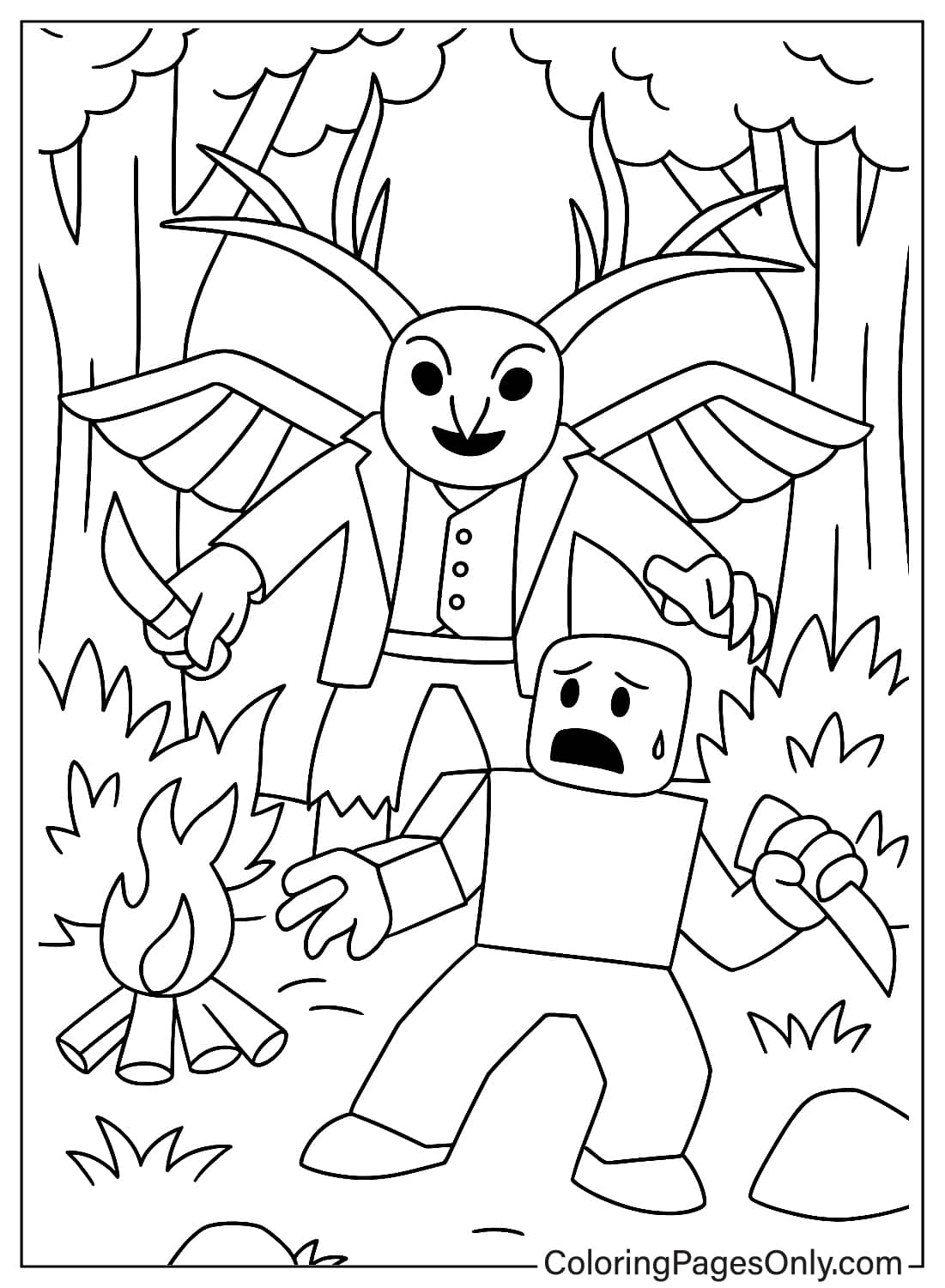
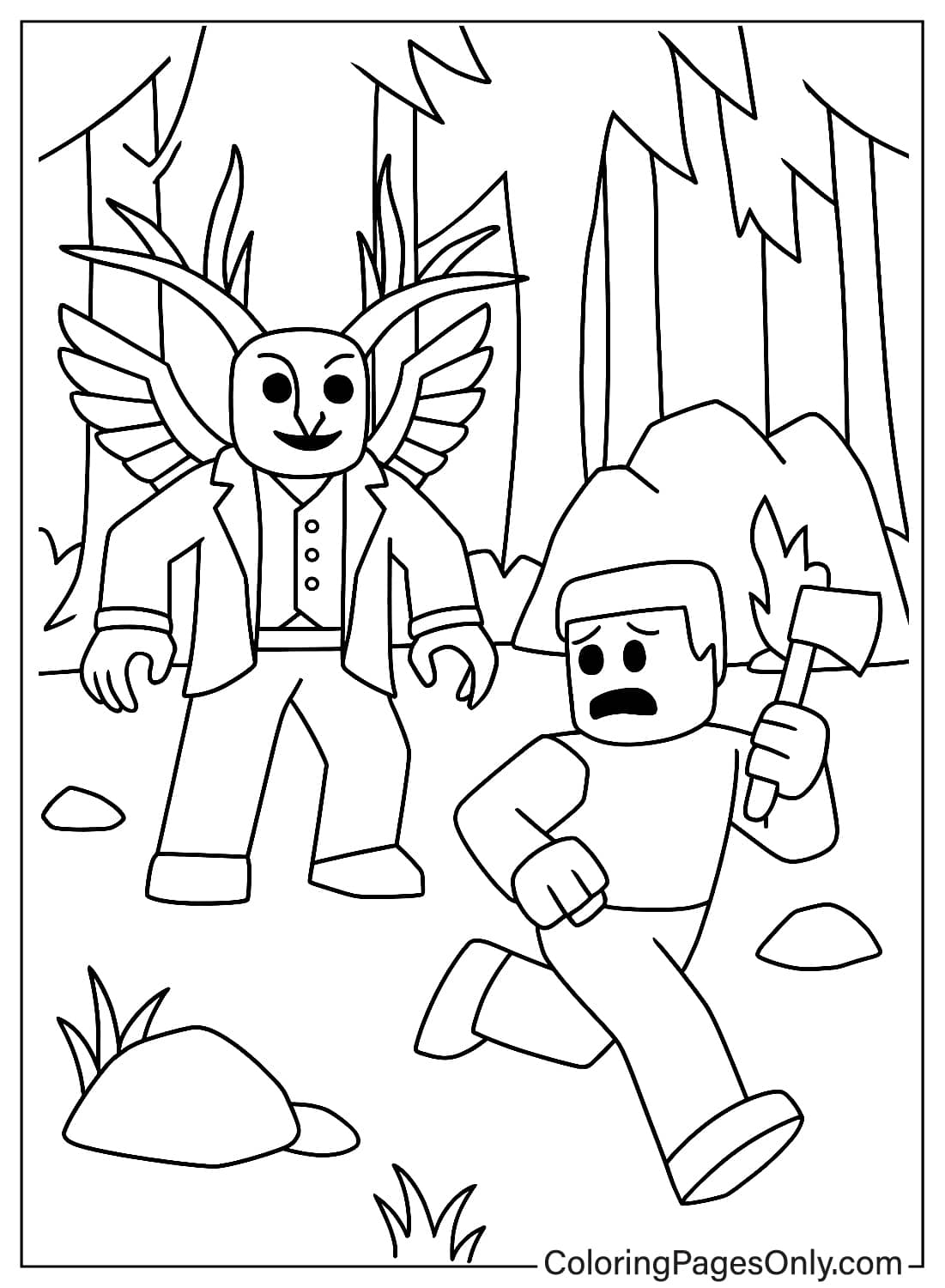
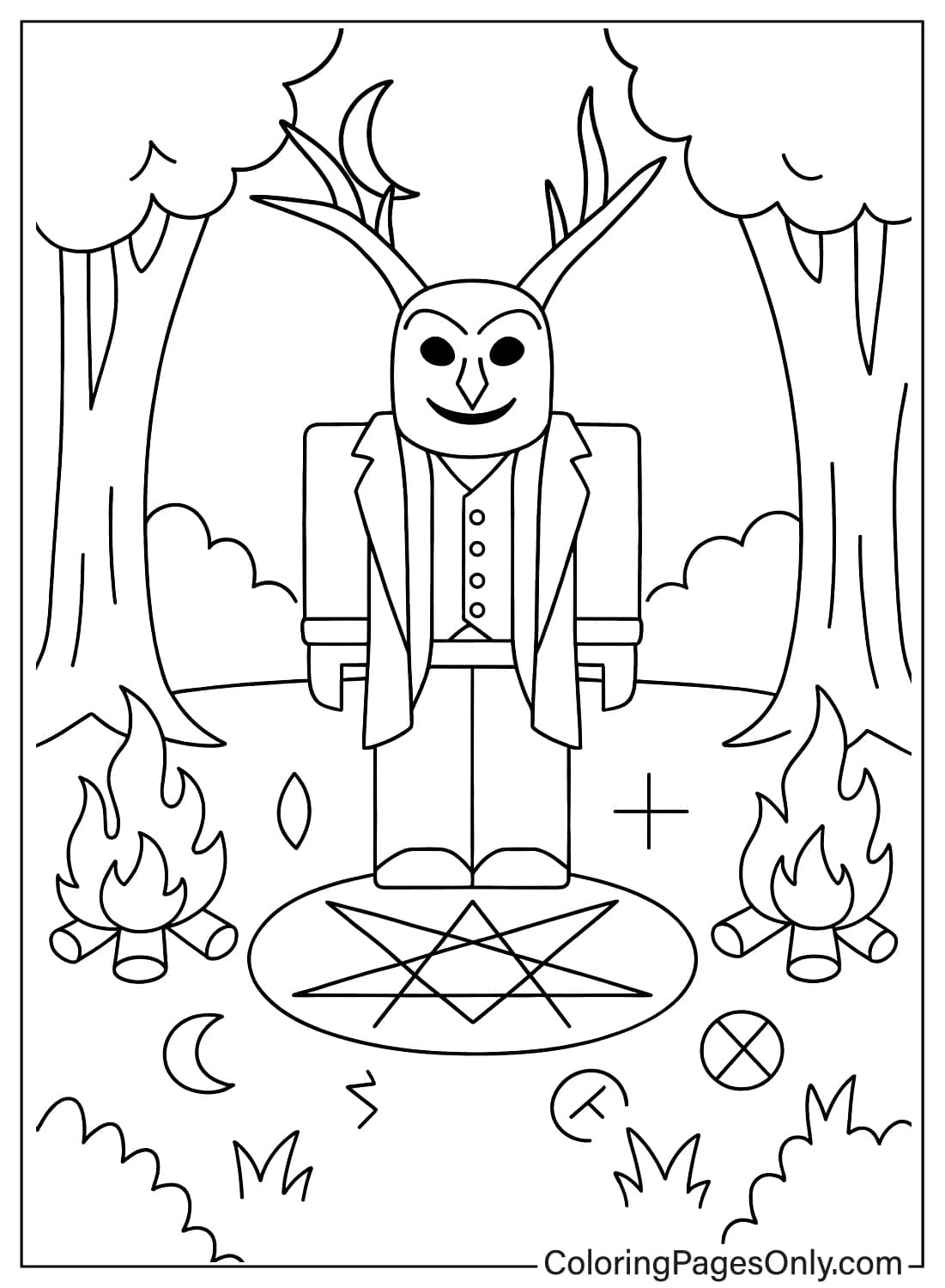
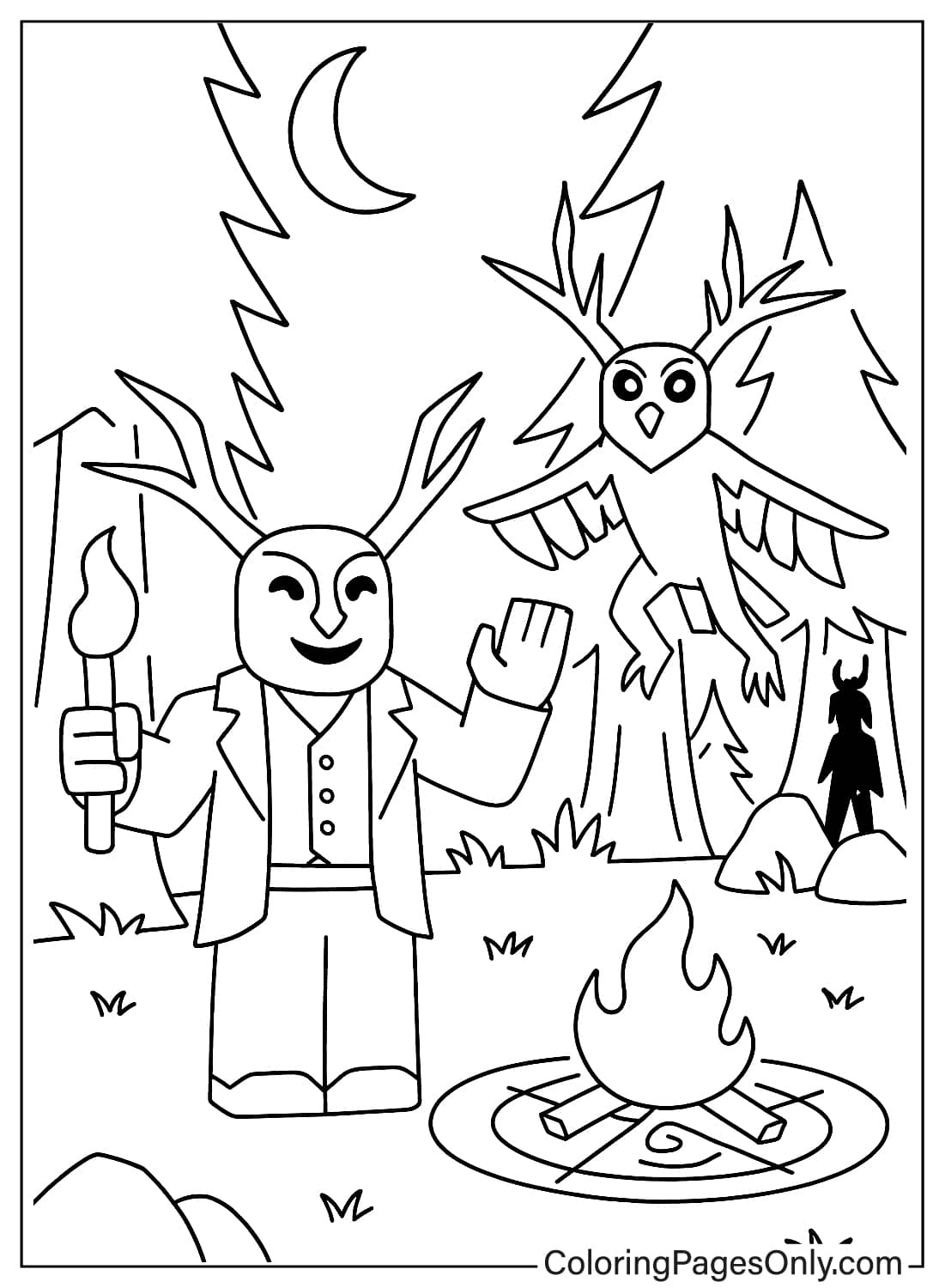
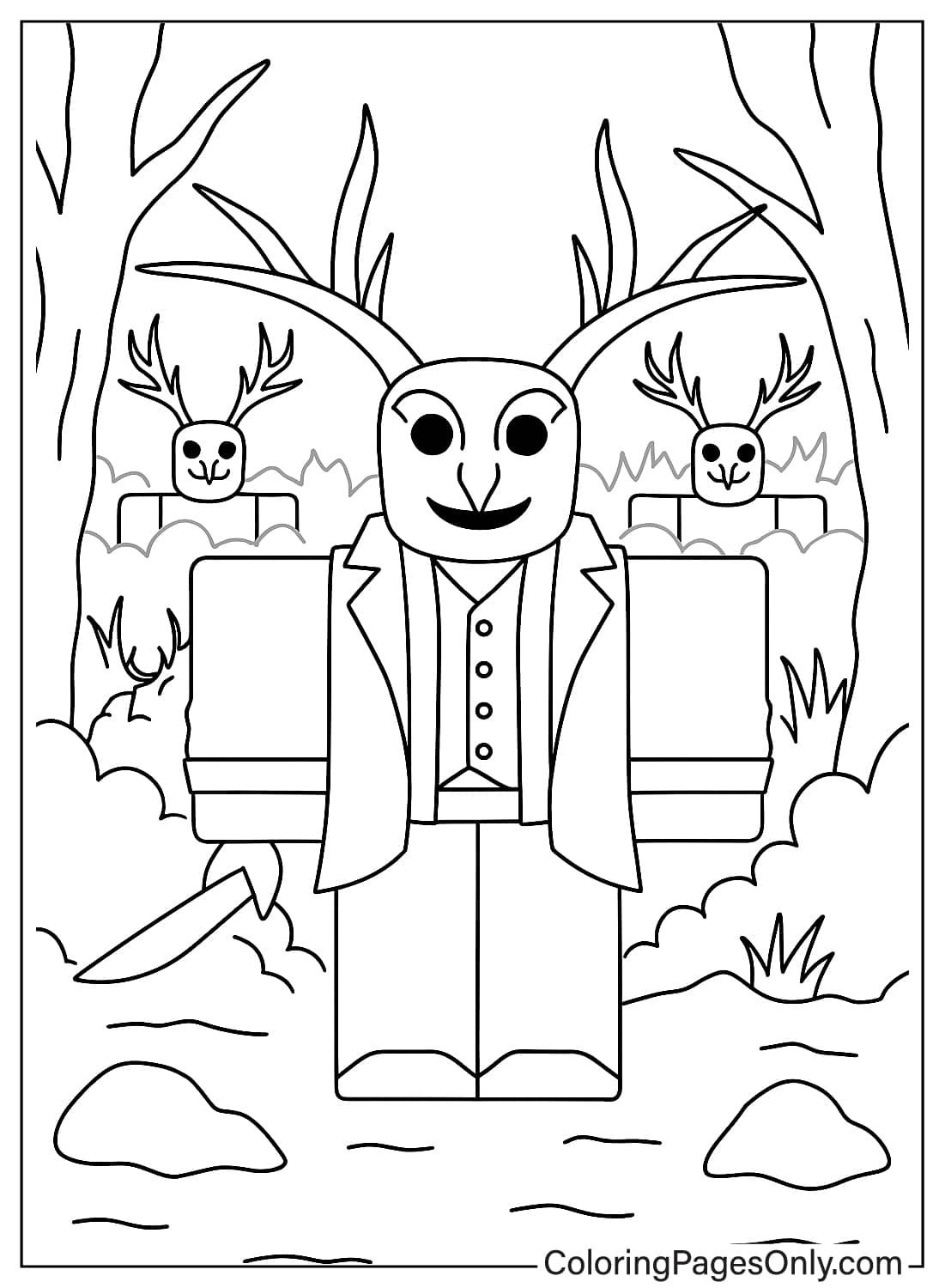
Cultists are the only enemies in the game that players can actively kill, making them the primary source of combat engagement. They wear dark suits with a distinctive smiling mask (a white face with a permanent wide smile, referencing the deer’s permanent gaping expression) and deer antlers. They attack the campfire every few nights in increasingly organized raids.
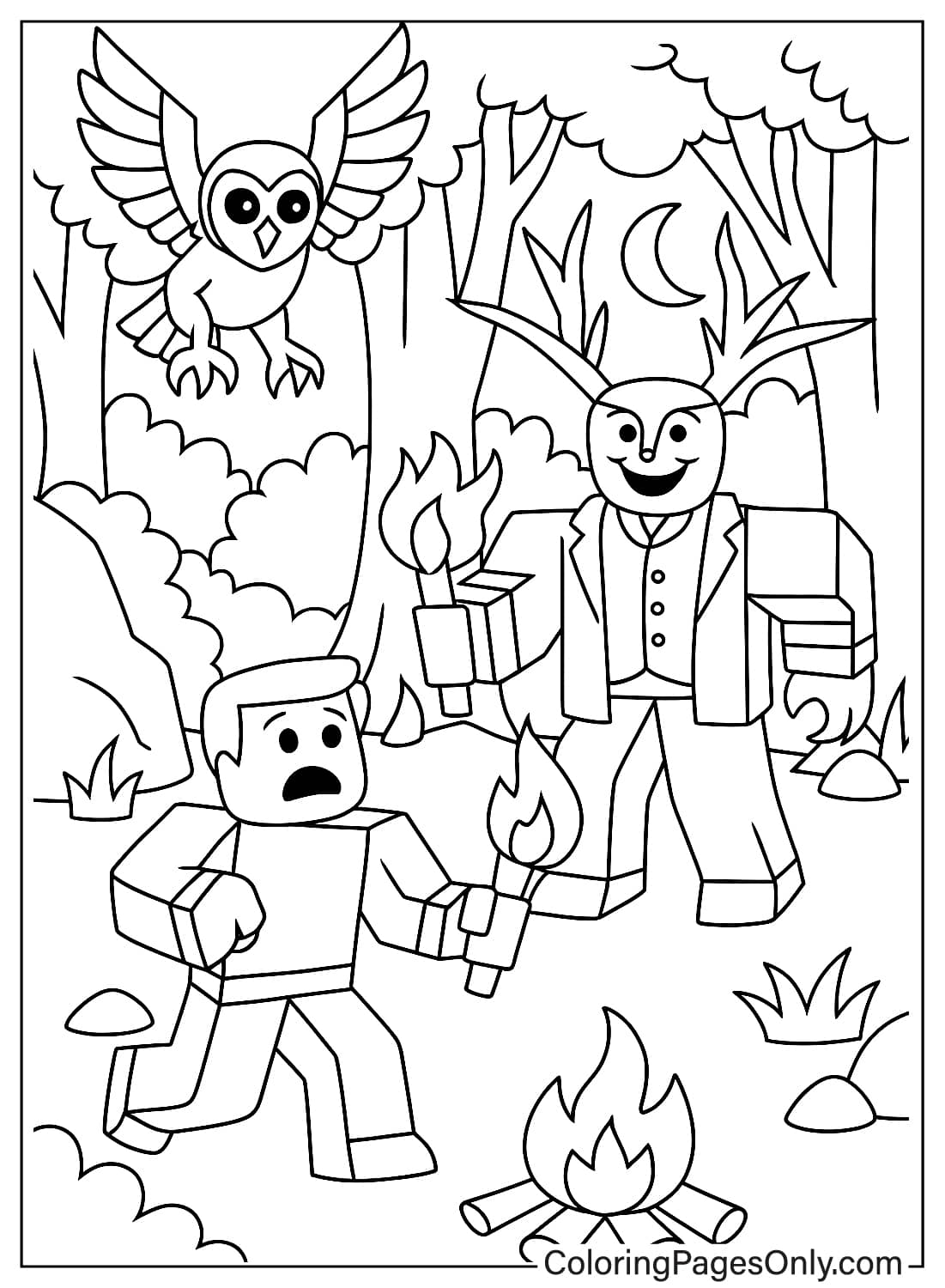
The collection includes individual Cultist portrait pages and group scene pages showing three Cultists at night – one holding a torch, one appearing to fly. The Cultist King (a larger, more powerful variant with a spiked staff and royal cloak) represents the elite tier of the cultist hierarchy.
For Cultist pages: the dark suit should be a near-black with very slight texture variation in the darkest shadow areas. The smiling mask is white – stark, clean white, not cream – which creates a strong value contrast against the dark suit. The antlers follow the same brown-to-black gradient as The Deer’s, reinforcing the visual connection between the cultists and their deity.
The Missing Children – Dino Kid, Kraken Kid, Squid Kid, Koala Kid
The four missing children are the narrative objective of the entire game – rescue all four to complete the primary mission and significantly reduce the number of nights required. Each child is named after an animal theme that appears in their costume design, referencing the Roblox aesthetic of character customization:
Dino Kid wears dinosaur-themed elements – green tones, scales, or dinosaur-print patterns, a dinosaur hood or headpiece. Their “Missing Poster” page shows a crying child in a distressed state.
Kraken Kid wears a kraken/octopus-themed design – deep sea blues and purples, tentacle motifs. The missing poster captures a worried expression.
Squid Kid wears a squid-themed design with similar deep sea aesthetics to Kraken Kid, but distinct in its specific squid-inspired color placement – lighter teals and pinks compared to Kraken Kid’s deeper blue-purples.
Koala Kid wears a koala-themed design – soft grey tones, rounded ear elements, the warmer grey-brown of a koala’s fur.
For all missing child pages: the “Missing Poster” format means the child appears within a document-style frame with text elements. The paper background should be aged – light cream or slightly yellowed – and the child’s expression communicates the distress of being lost. The animal theme of each child’s costume is the primary color cue.
Coloring Tips
The entire visual language of 99 Nights in the Forest is built around one contrast: warm light against cold darkness. The campfire – the safe zone, survival, protection – is warm amber and orange. The forest at night – danger, The Deer, the unknown – is cold, deep blue-green, and black. Every page in this collection that shows a nighttime scene is fundamentally an exercise in managing this warm-versus-cold tension.
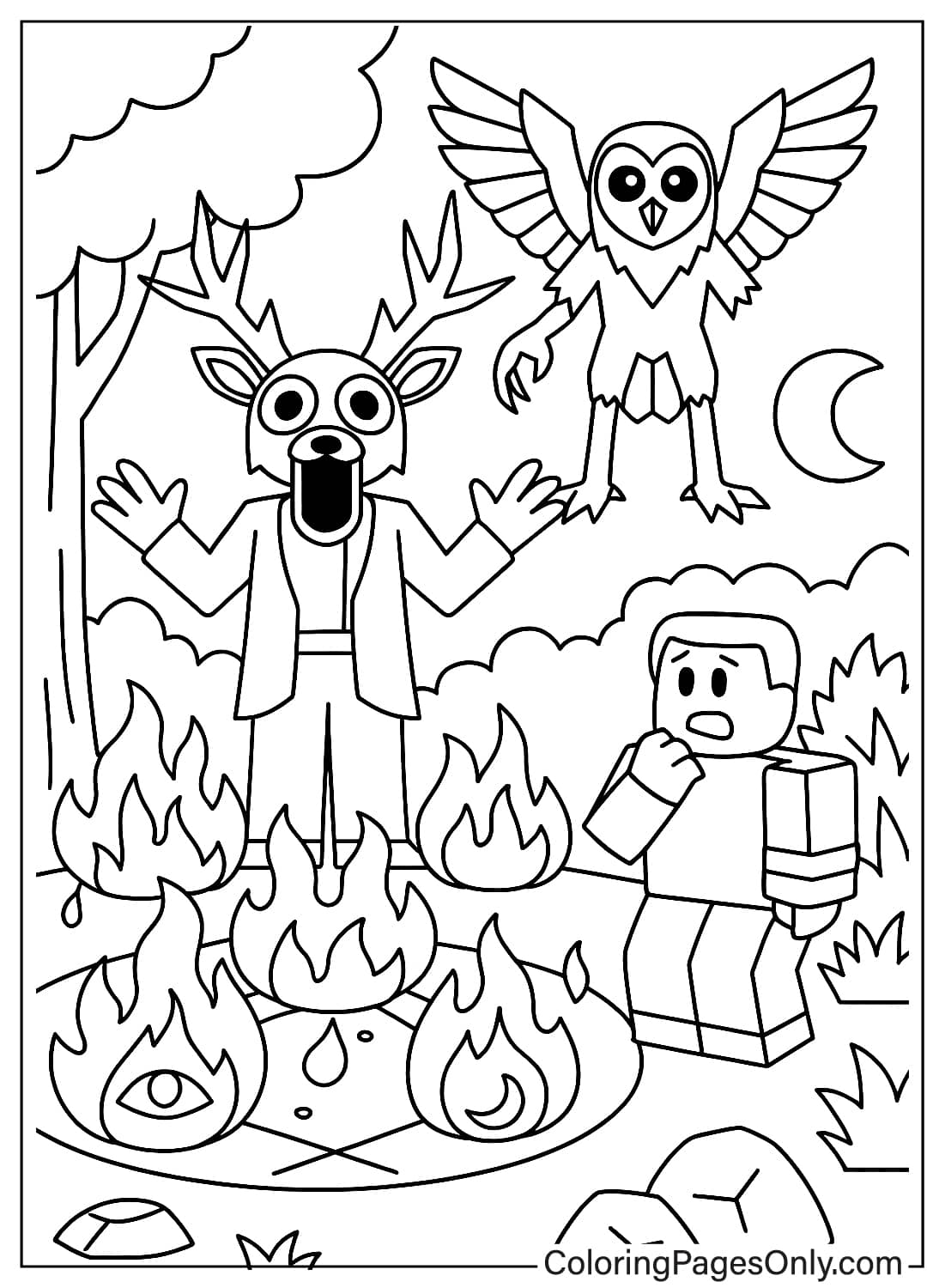
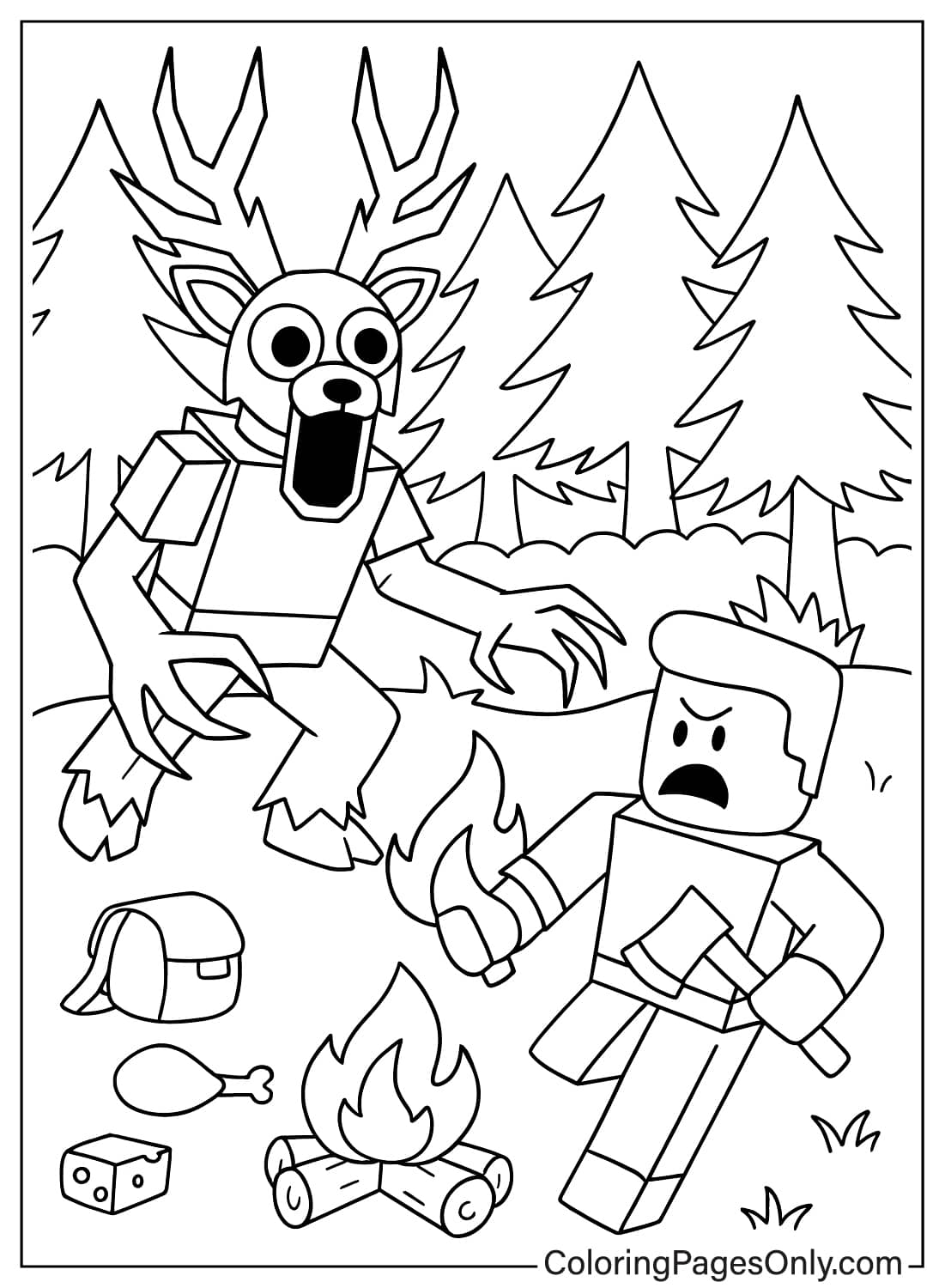
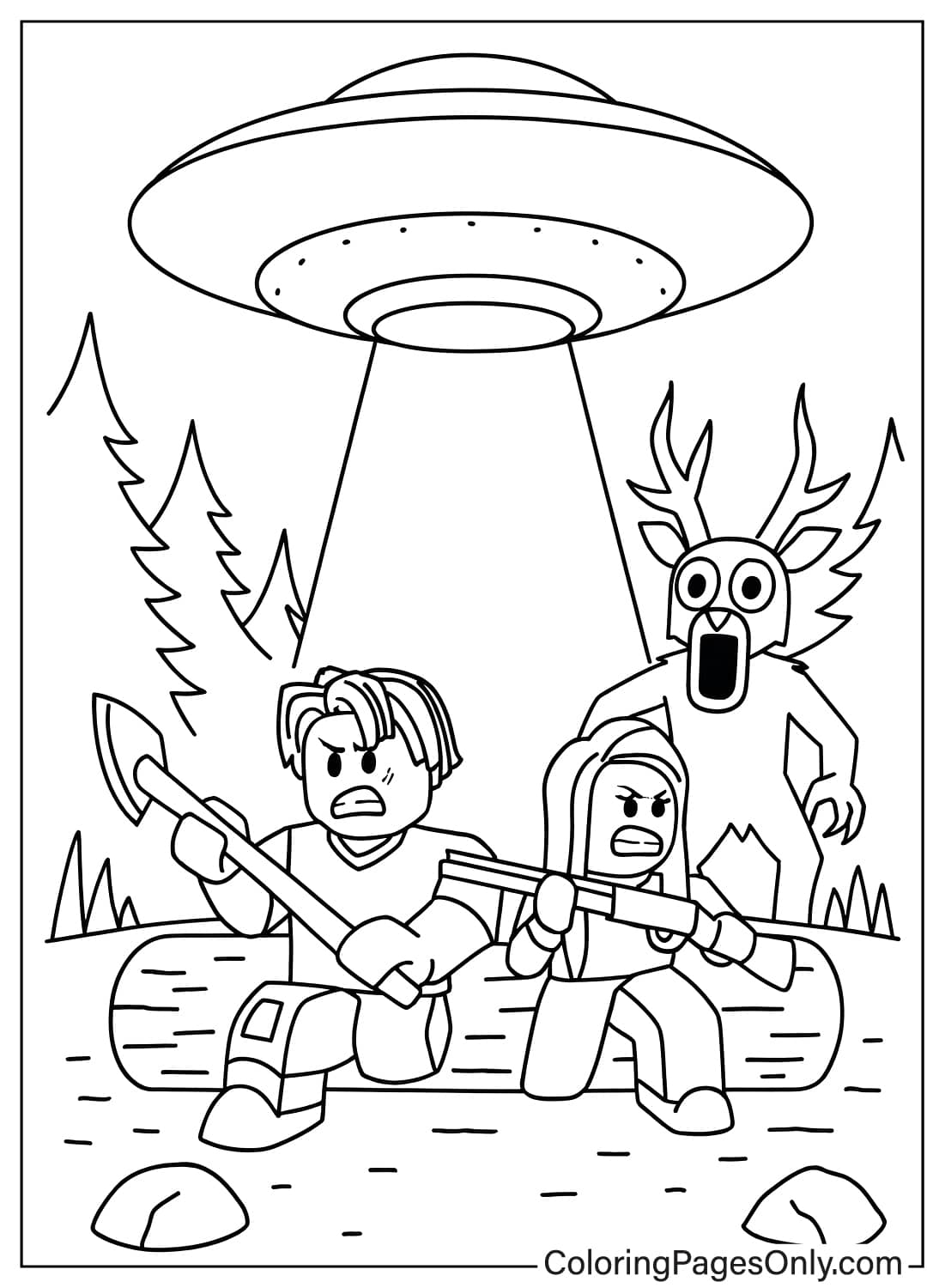
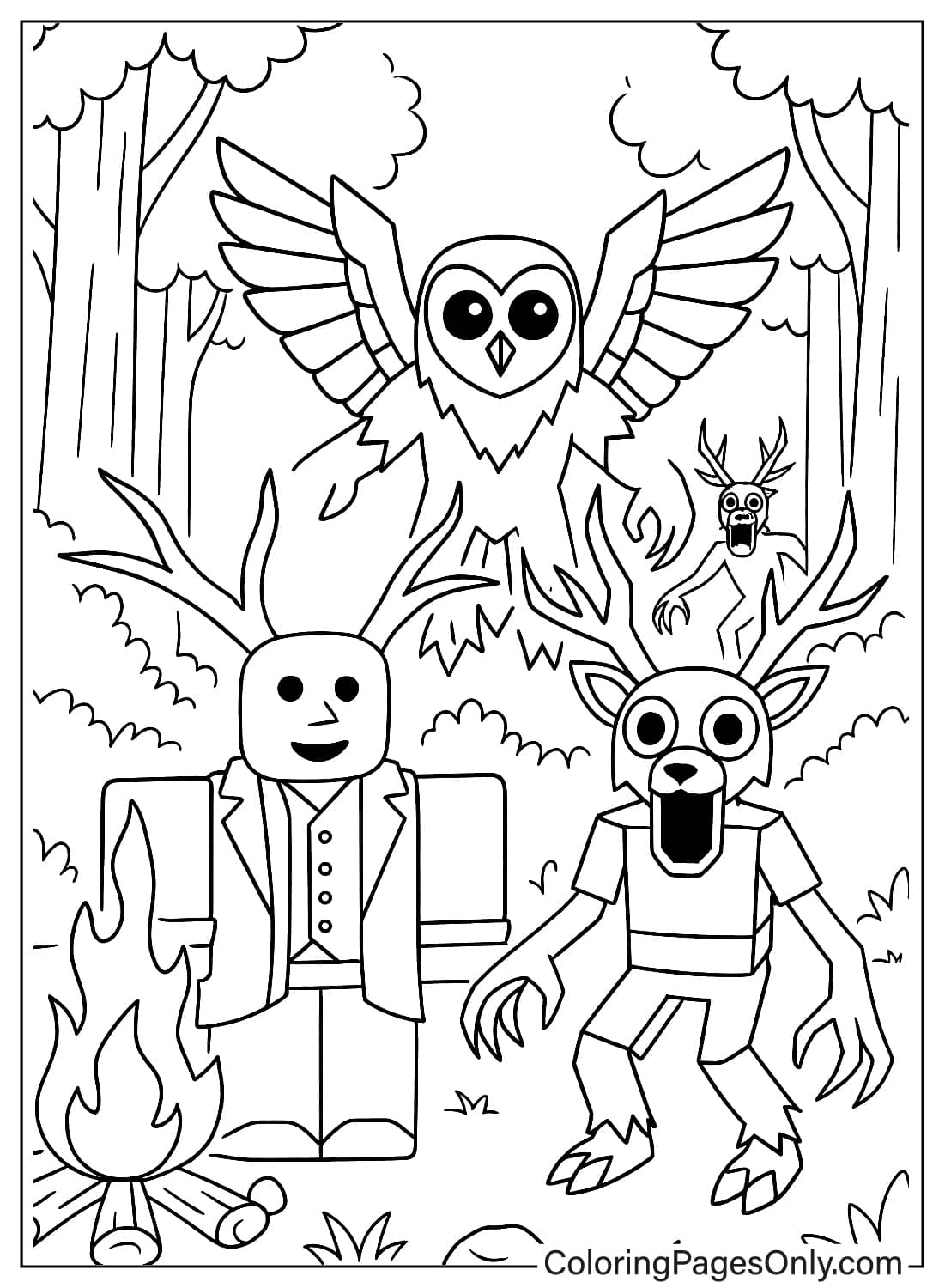
For campfire scene pages (the adventurer huddled by the campfire, the deer crouching near bonfires, the triple threat scene): the campfire itself is the compositional anchor. Render it in the warmest, most saturated oranges and yellows you have. The immediate radius around it receives warm light – figures near the fire pick up orange-tinted illumination on the side facing the flames. Beyond the campfire’s light, the background transitions through orange-amber to dark brown-green to near-black. The further from the campfire, the cooler and darker everything becomes.
For The Deer’s brown-to-black gradient: This is the single most important coloring detail for canonical accuracy. The Deer’s antlers, claws, and hooves are not uniformly black – they transition from the body’s brown color through increasingly dark brown values until they reach near-black at the tips. The gradient signals “corruption spreading from the extremities.” A Deer page where the antlers are flat black from base to tip loses this detail and looks less accurate. Use progressively darker values starting from the point where the antler meets the skull, reaching your darkest point at the antler tips.
For The Deer’s eyes – normal vs. hungry state: In standard mode, The Deer’s eyes are large, cartoonishly round, and black with a white or light-grey highlight spot. In the hungry state, the entire sclera floods with deep blood red – a red darker and more saturated than a typical fire engine red, closer to arterial blood. The pupil remains dark within the red. This is a small detail in terms of page area, but it is the single most visually impactful difference between the two states.
For Cultist pages – the smiling mask: The mask is pure white. This sounds simple, but it is the most important element to render correctly, because the entire unsettling quality of the Cultist design depends on the high-contrast relationship between the white smile-mask and the dark suit. If the mask picks up any cream or grey tone, it loses its disturbing cleanness. Keep the mask as white as your medium allows.
For The Owl’s feathers: The Owl pages are the most texturally complex in the collection. Owl feathers have directional structure – they grow in overlapping layers that radiate outward from the body’s center. Apply each color in short strokes following the direction the feathers grow, using the stroke direction itself to create the layered texture without requiring precise detail. Vary the pressure to suggest where feathers overlap. The facial disc – the distinctive rounded shape that frames an owl’s face – should be rendered in lighter tones than the surrounding wing and body feathers, creating a natural frame around the eyes.
For night scene backgrounds generally: The pine forest at night in 99 Nights in the Forest is not simply black – it is a deep, cold blue-green darkness that feels alive and threatening. The base is near-black, but if any blue-green can push into the shadow areas, the background reads as forest night rather than just an absence of color. The tree silhouettes against the sky read best as slightly lighter than the deepest forest shadow, creating a subtle layered depth.
5 Activities
Campfire light study – map the warm-to-cold transition. Print any scene page that shows a campfire alongside a threat (the adventurer and owl, the forest fire scene, the triple threat scene). Before adding any color, draw a light map on a separate piece of paper: circle the campfire, draw rings expanding outward representing decreasing warmth. Label them: innermost ring – bright orange-yellow; second ring – amber; third ring – warm brown; fourth ring – neutral dark; outer boundary – cold dark blue-green. Color the scene following your light map strictly. The finished result should demonstrate the most important visual rule in 99 Nights in the Forest’s aesthetic – proximity to the campfire means warmth, safety, and light; distance means cold, darkness, and danger. This exercise directly transfers to any scene-based coloring work in any medium.
Color The Deer in standard mode vs. hungry mode. Print the Deer Monster Coloring Page twice. Color the first copy in full standard canonical palette: warm medium brown body, beige muzzle, black-tipped antlers and claws using the brown-to-black gradient, large dark eyes with a light highlight spot. Color the second copy as the hungry-state variant: same brown body, same gradient antlers and claws, but replace the eyes with deep blood red sclera around a dark pupil. Display both pages side by side and label them “Day 1” and “The Deer is Hungry Tonight.” The exercise makes visible exactly how the game designers created a more dangerous visual state using only one changed element – the eyes – while keeping the rest of the design identical.
The missing children search board. Print all four missing child poster pages (Dino Kid, Kraken Kid, Squid Kid, Koala Kid). Color each child in their respective animal-themed costume palette: Dino Kid in greens, Kraken Kid in deep blue-purples, Squid Kid in lighter teals and pinks, Koala Kid in soft grey-browns. After coloring, cut each poster out and arrange them on a piece of cardboard as if they are pinned to a community search board – the game’s in-lore “Missing Kids Locations” board that players can find in the forest. Add a handwritten caption at the bottom: “Last seen: the forest. If found, bring them to the campfire.” This activity recreates a specific game object and connects the coloring activity directly to the game’s narrative objective.
The cultist night raid scene. Print the Three Cultists Coloring Page. Before starting, review the Cultist design rules: near-black suit, pure white smiling mask, brown-to-black gradient deer antlers. Color all three cultists with strictly consistent palettes – each cultist is dressed identically, so any inconsistency between them reads as a mistake rather than an artistic choice. After finishing the figures, add a dark forest background with one or two distant orange-yellow eyes visible in the tree line. In the game, cultist raids are accompanied by the distinctive sound of eyes appearing in the darkness around the camp. Adding the eye-in-darkness detail to the background references this specific game atmosphere and makes the composition read as a cultist raid scene rather than just three figures standing in a forest.
Design a new biome entity. The game’s update pattern has introduced a new primary entity for each biome – The Deer (forest), The Owl (snow), The Ram (volcanic), The Cat (jungle). On a blank page, design a new entity for a hypothetical new biome of your choice. Follow the game’s entity design conventions: the creature should be based on a real animal that fits the biome thematically, significantly upscaled beyond its natural size, given an outstretched jaw and large cartoonish eyes (consistent across all current entities), and rendered with the same brown-to-black gradient on its extremities that connects it visually to The Deer. Name the biome, name the entity, and describe in one sentence its unique survival mechanic – the rule that differentiates it from all other entities (The Deer: light/campfire repels it; The Owl: don’t move; The Ram: its specific detection method; The Cat: fastest entity currently in game). This is the most technically ambitious activity in the collection and the one that engages most directly with the game’s design logic.