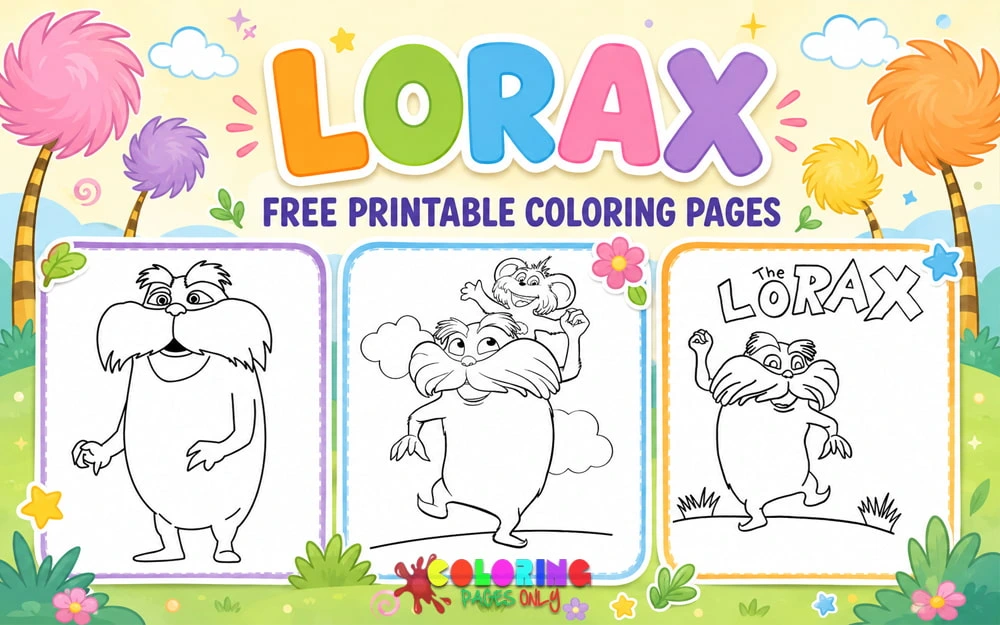
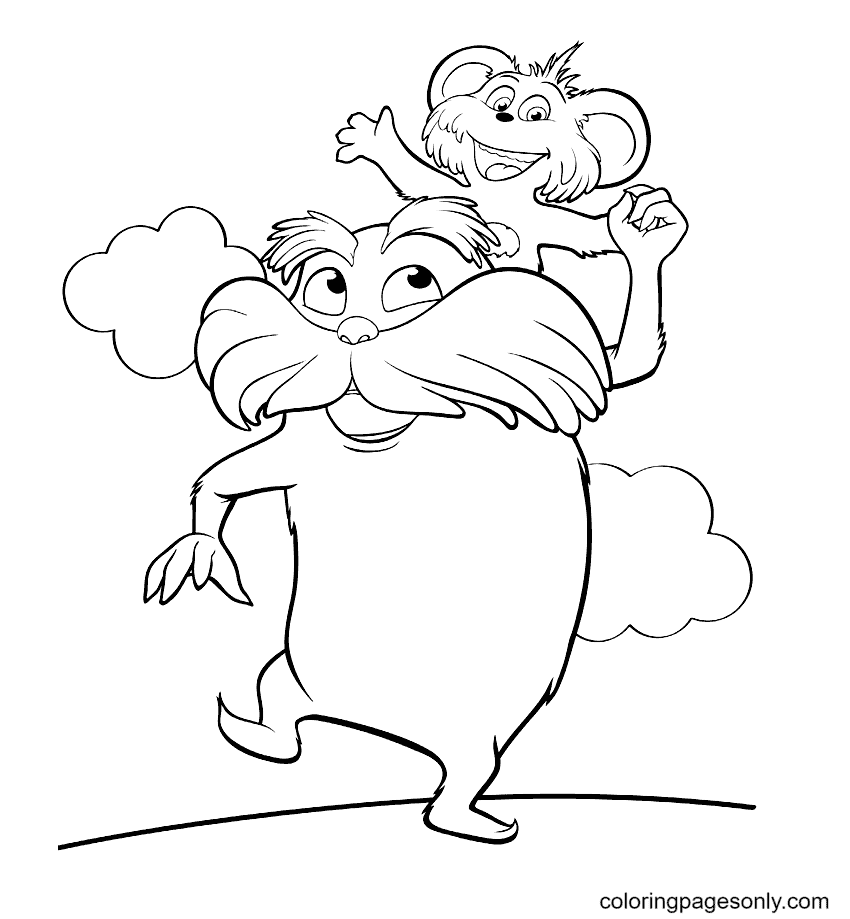
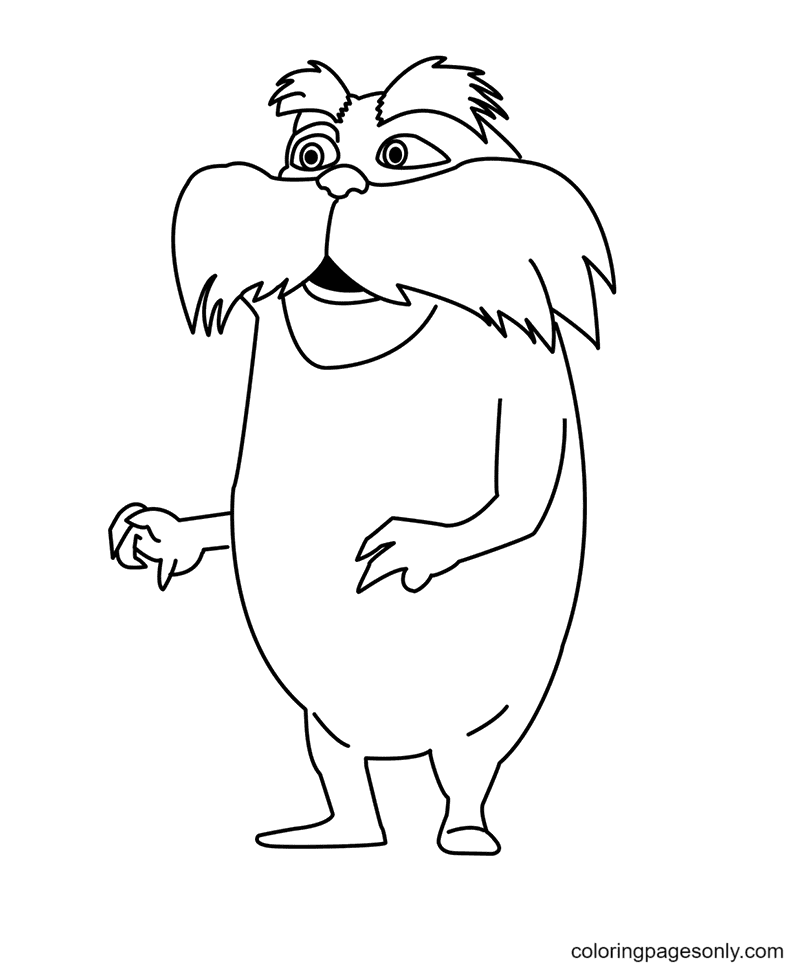
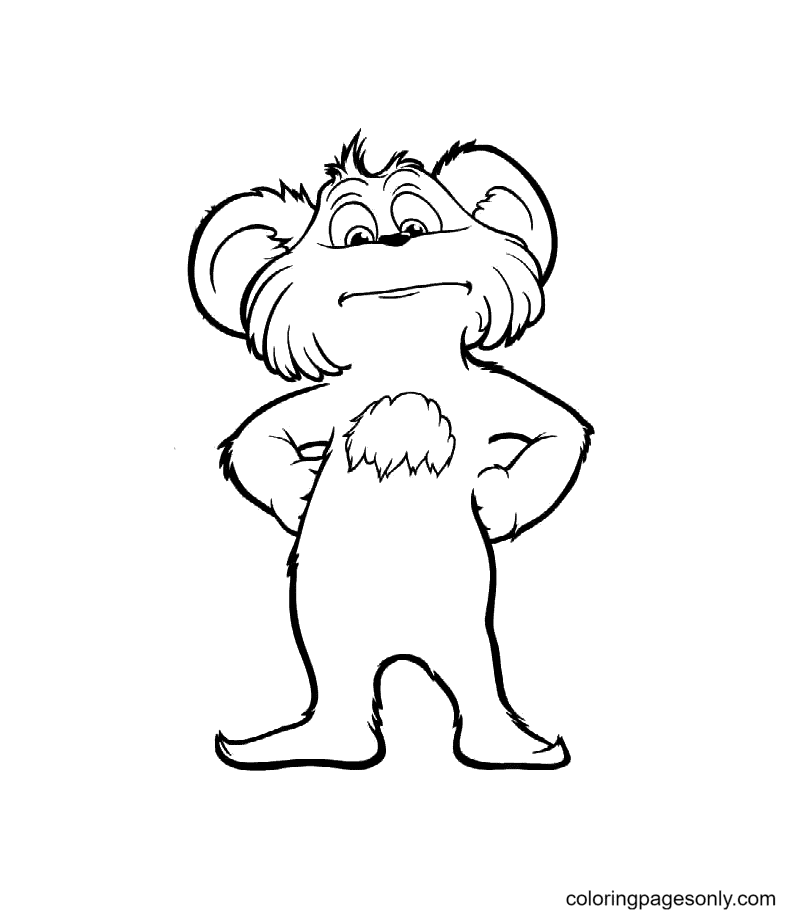
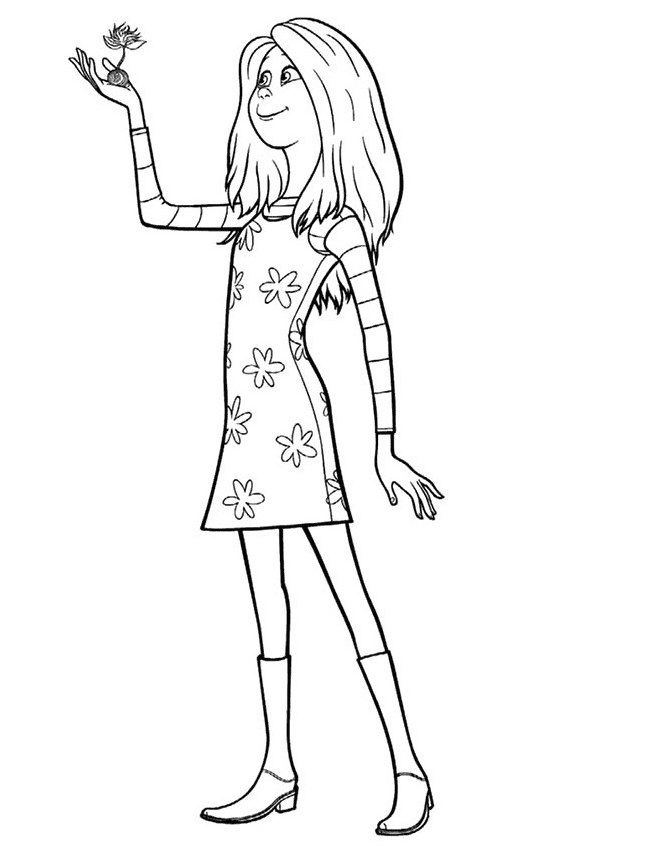
Free Lorax Coloring Pages: 22 printable PDF designs of the small, orange, mustached guardian of the Truffula Trees, standing on a stump, posing, and smiling, along with Ted, Audrey, the Once-ler, the Swomee-Swans, and the Humming-Fish. A group page brings the whole cast together. Download a PDF to print at home or color any outline straight in the browser.
The Lorax first appeared in Dr. Seuss’s 1971 picture book and returned in the 2012 Illumination film Dr. Seuss’ The Lorax, with Danny DeVito voicing the title character. In the film, a boy named Ted lives in Thneedville, a town where everything is plastic, and sets out to find a real tree to impress his friend Audrey. His search leads him to the Once-ler, who tells how greed destroyed the Truffula forest despite the Lorax’s warnings.
Bright Truffula tufts, a fiery orange Lorax, and a bold yellow mustache give these pages one of the most cheerful palettes in Dr. Seuss’s world. The story’s message about protecting nature also makes the set a natural fit for classrooms and Earth Day activities.
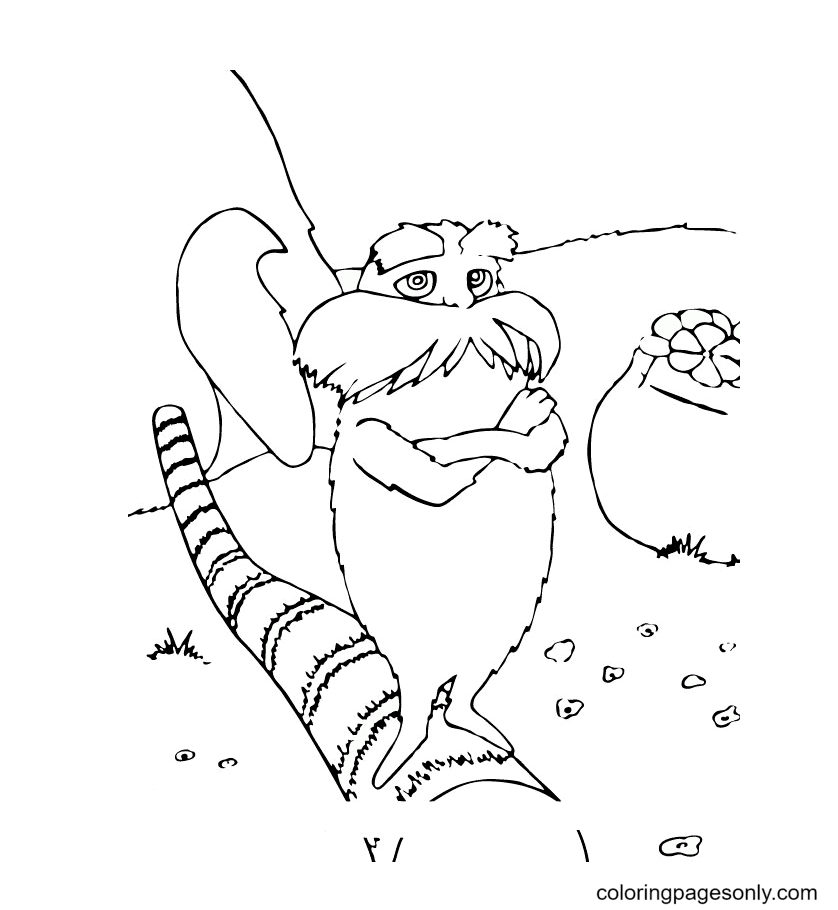
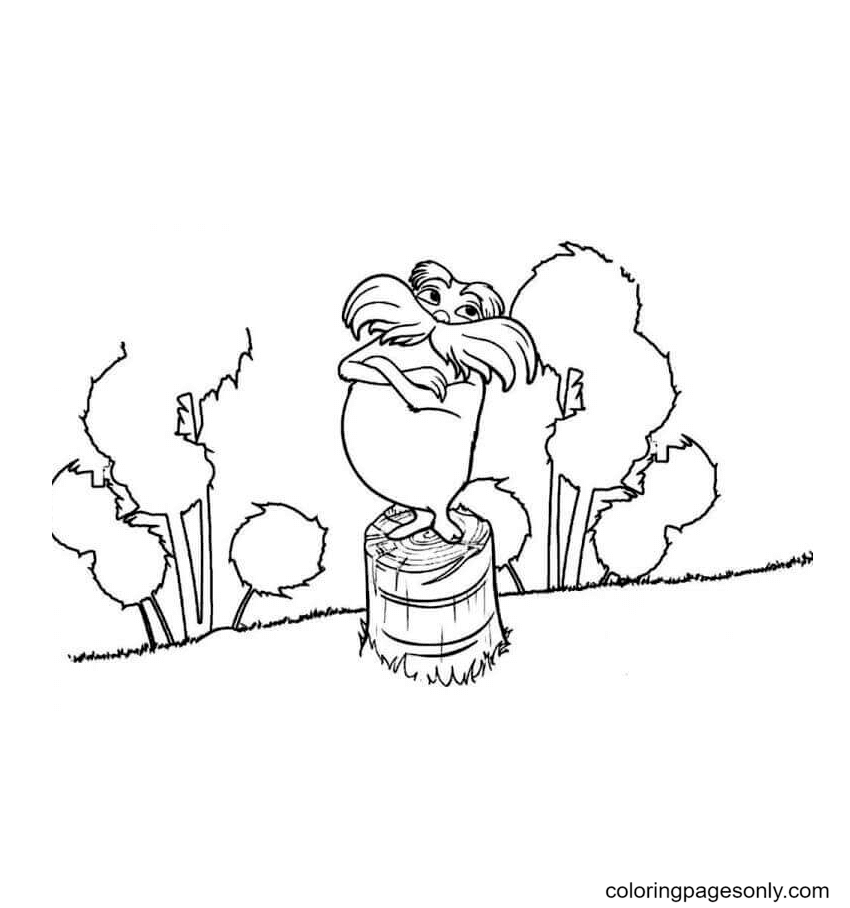
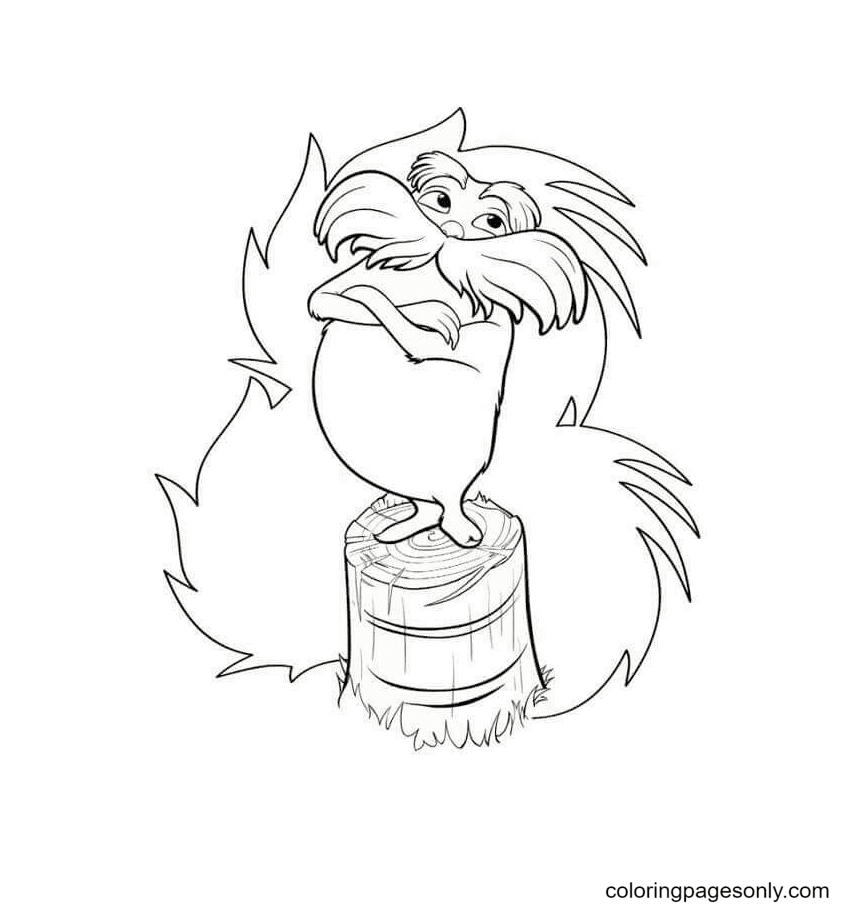
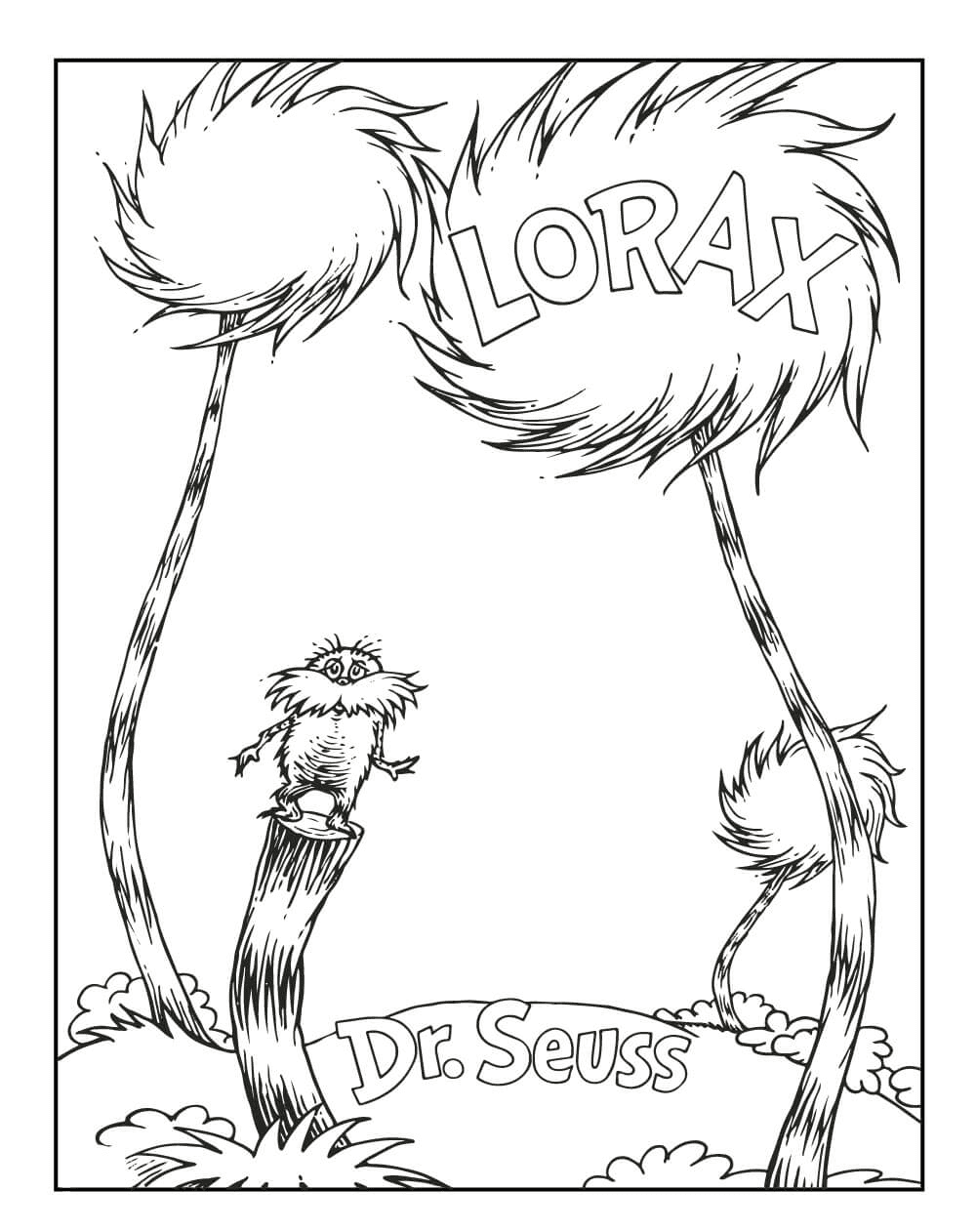
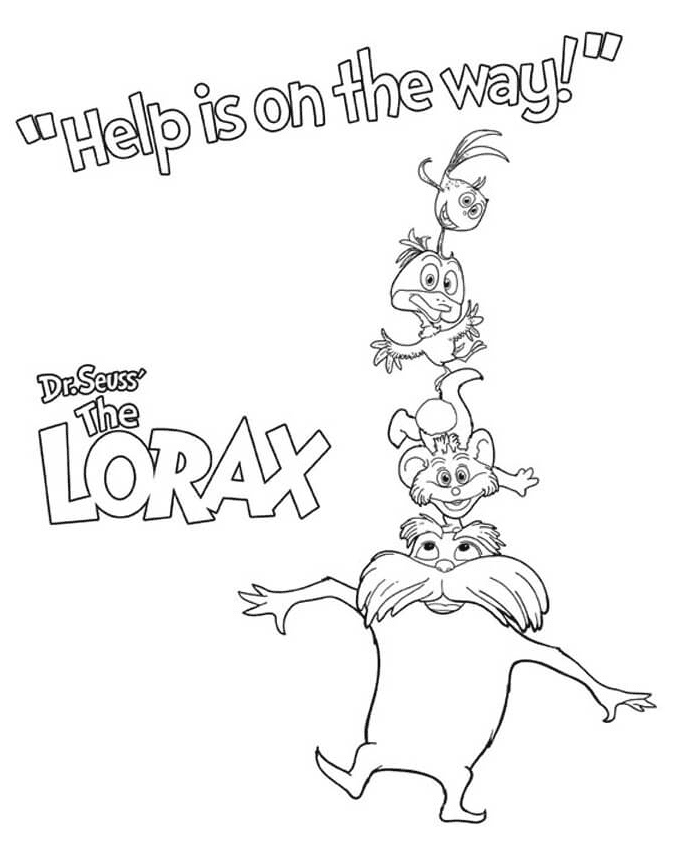

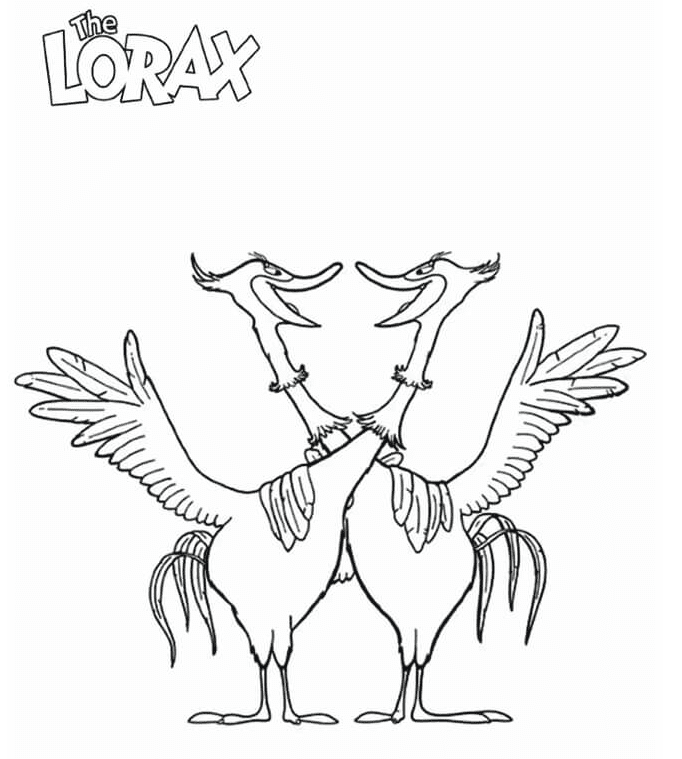
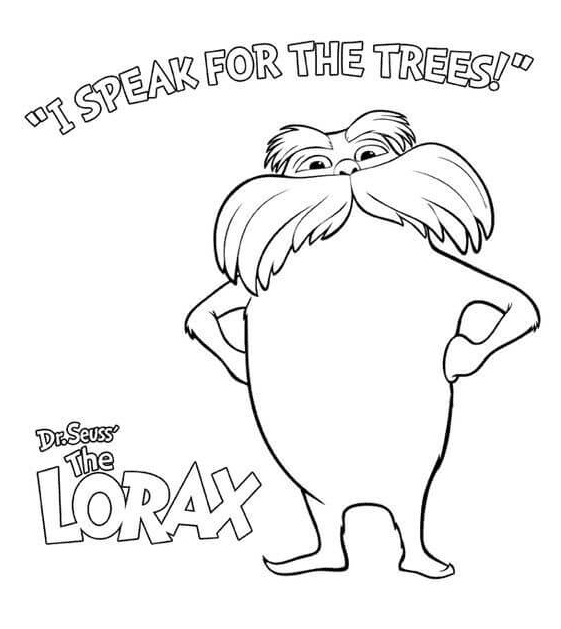
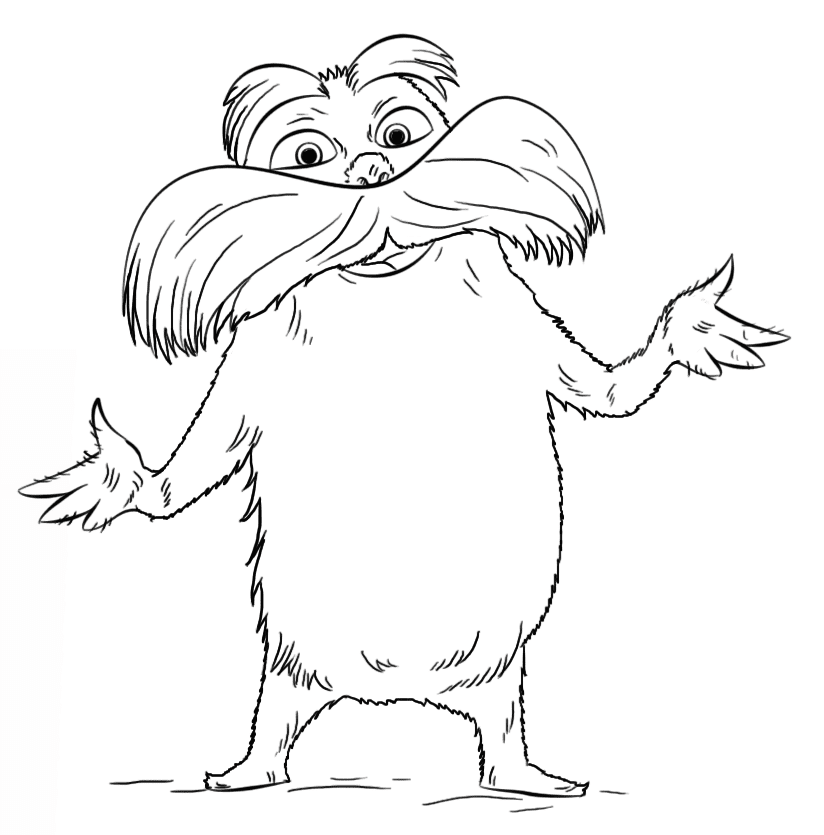
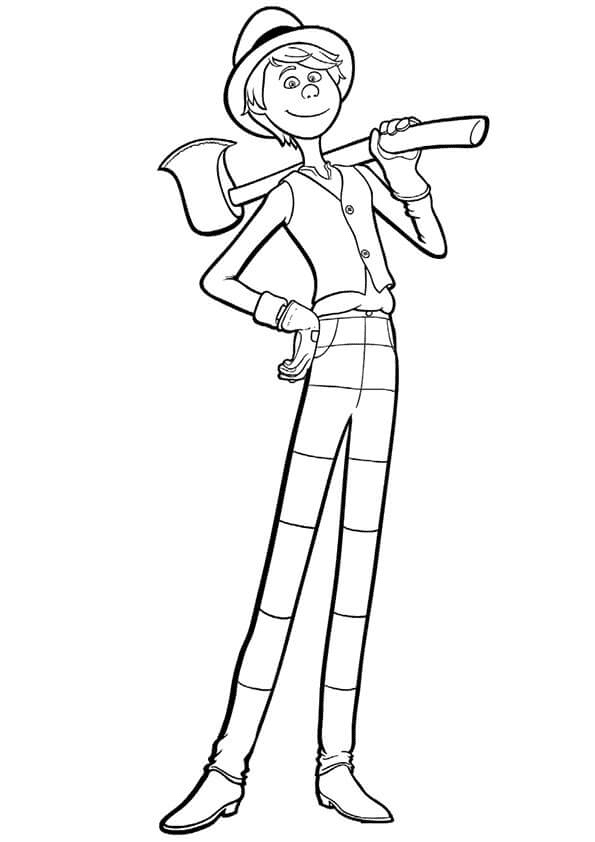
What’s Inside This Collection
The Lorax himself fills most of the 22 designs, with Ted, Audrey, the Once-ler, and forest creatures in the rest.
The Lorax
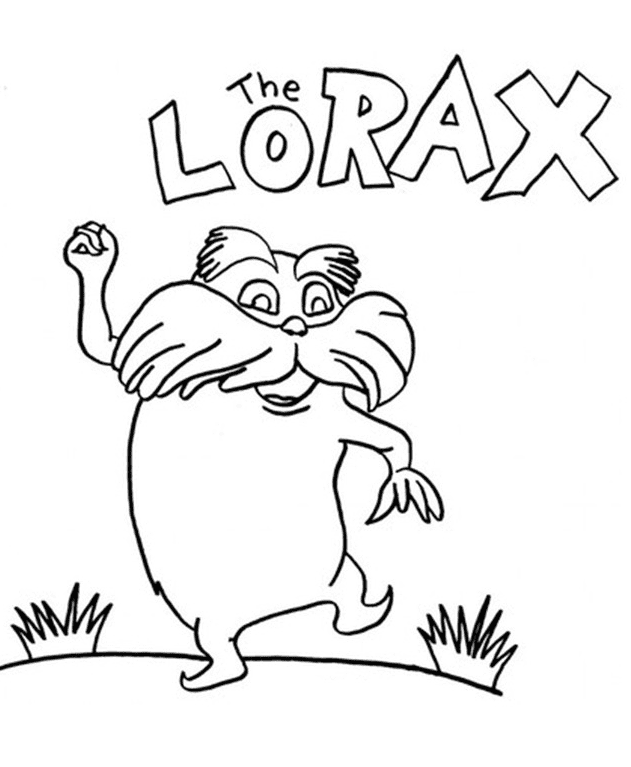
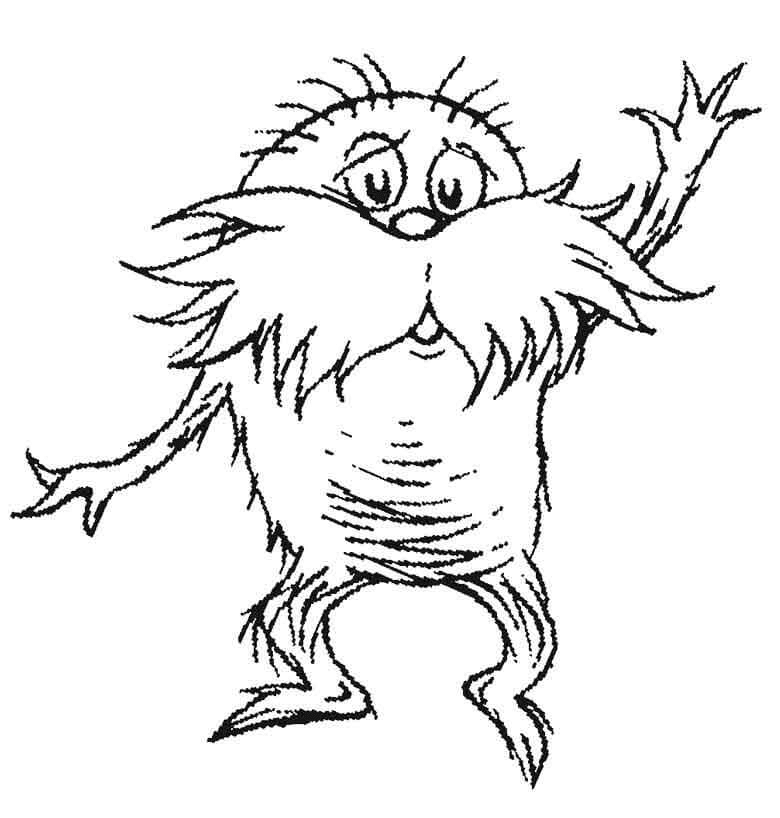
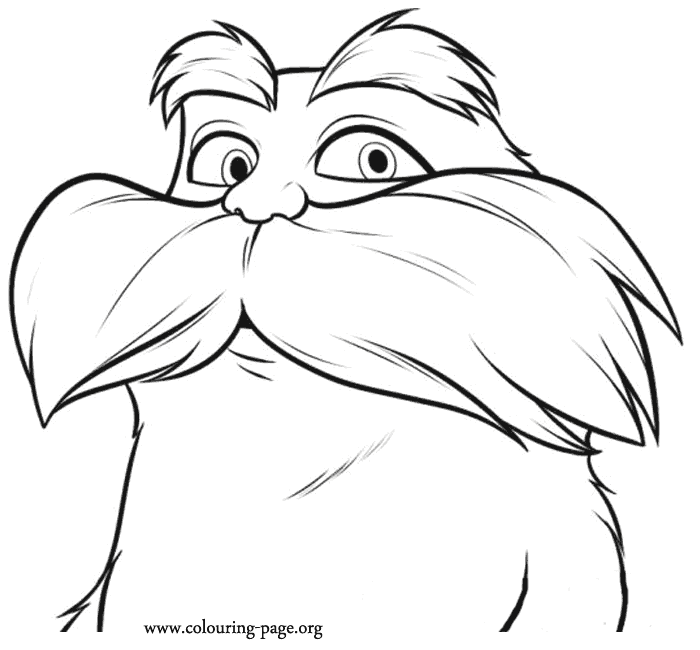
The Lorax stands on a tree stump, poses proudly, smiles, and appears in cute and cartoon versions. Color his fur Orange with a deeper red-orange for shading, and give his oversized mustache and eyebrows a sunny Goldenrod.
Ted and Audrey
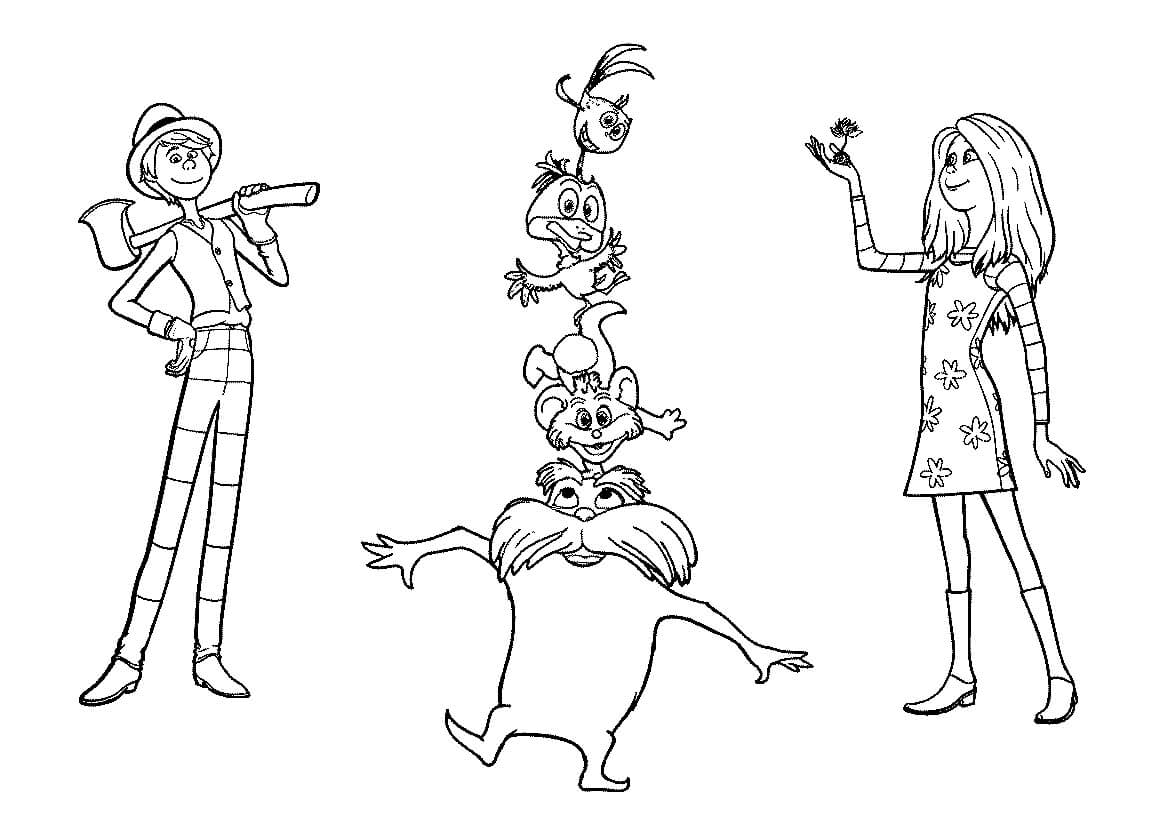
Ted, the curious boy from Thneedville, and Audrey, the girl who dreams of seeing a real tree, each have their own page. Give Ted brown hair and a Red shirt, and color Audrey’s hair a bright Red with a Pink headband.
The Once-ler
The Once-ler’s page shows the inventor whose choices change the forest. A Green top hat and suit match his look in the film, with a lighter yellow-green on the folds.
Swomee-Swans and Humming-Fish
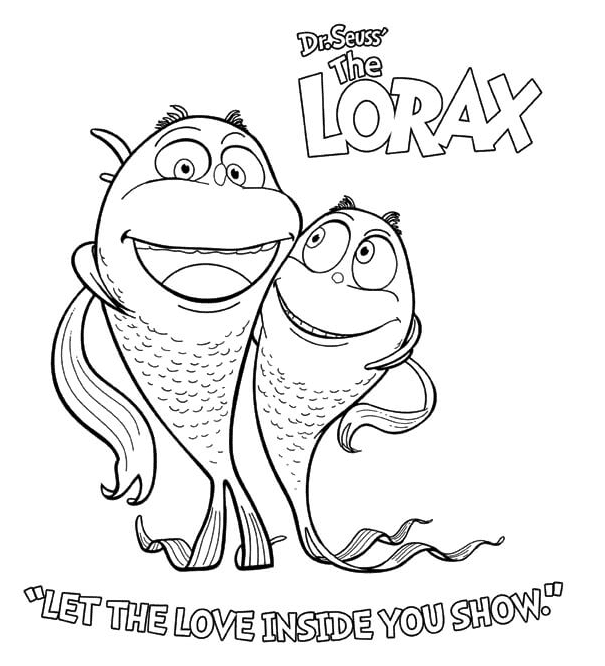
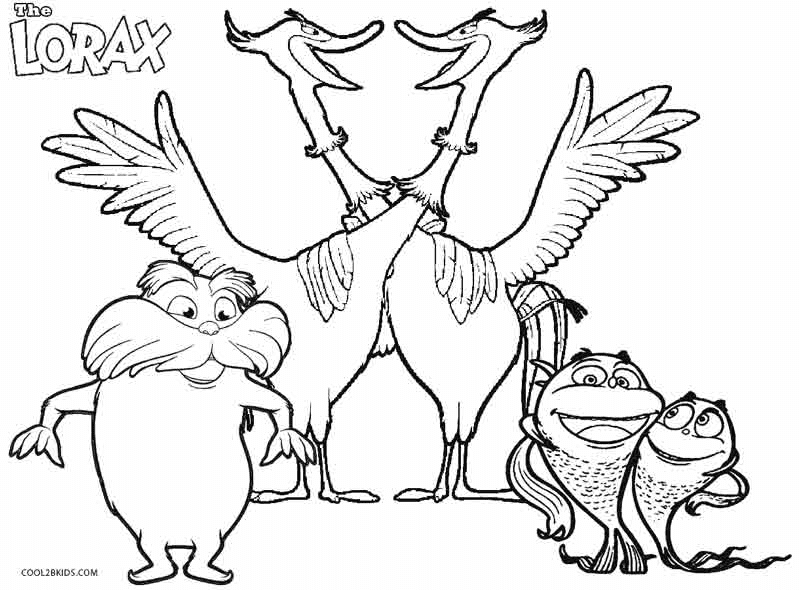
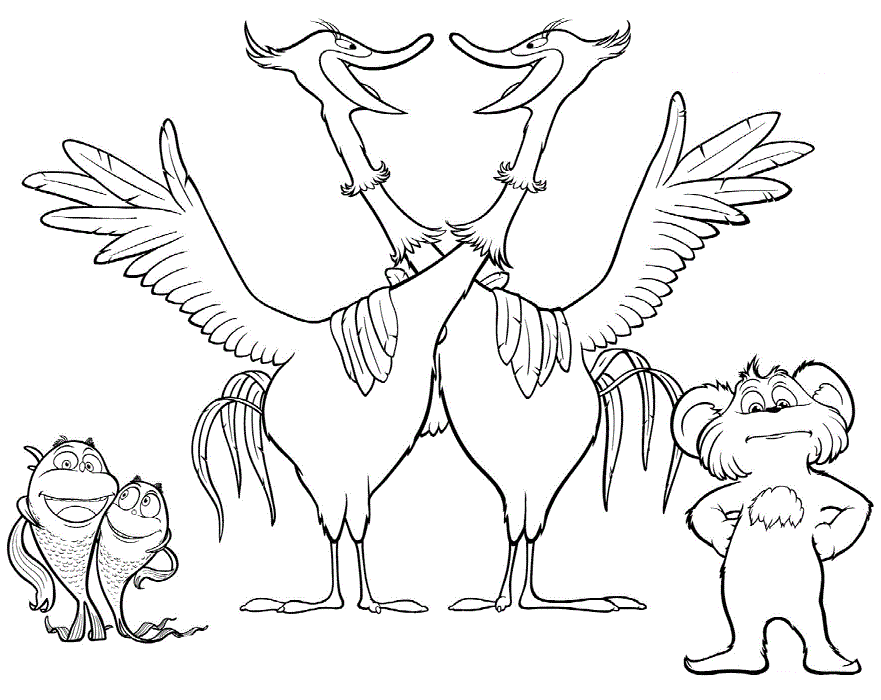
The forest’s singing swans and humming fish appear on their own pages. Use soft White and pale Blue for the Swomee-Swans, and give the Humming-Fish bright Orange bodies with Yellow fins.
Group and Printable Pages
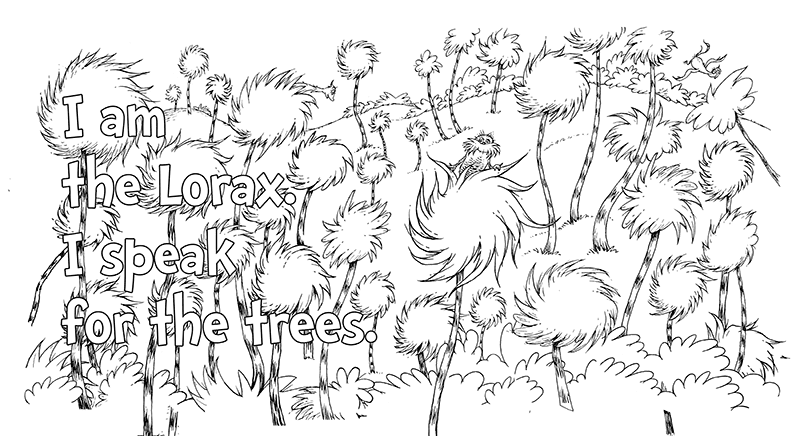
Characters from The Lorax gather the cast in one scene, while several printable pages show the Lorax in a simple outline. Truffula Trees on these pages look best with striped Yellow and Black trunks and fluffy tufts in Pink, Purple, and Orange.
What Lorax Coloring Pages Do
Teaching care for the environment. The Lorax “speaks for the trees,” warning that cutting down every Truffula will harm the animals and the air. Through the forest pages, kids find an easy opening to discuss why trees matter and what happens when nature is used up. Teachers often pair these pages with tree planting, recycling projects, or Earth Day lessons.
Fine motor skills with fluffy shapes. The American Academy of Pediatrics tells parents that structured coloring sharpens hand and finger control in children 2 to 7. The Lorax’s mustache, the round Truffula tufts, and the Humming-Fish fins need small, careful strokes, while the Lorax’s body offers a big, easy area to fill. Moving between large and small shapes on a single page builds both confidence and precision.
A calm, colorful break. The Art Therapy Journal published findings in 2005 showing that structured coloring helped lower anxiety. Truffula Trees come in candy-bright colors, so choosing a different shade for each tuft feels playful and relaxing at the same time. A quiet page like Little Lorax works well as a short reset during the school day.
Learning about choices and consequences. The Once-ler’s story shows how small decisions can grow into big problems, and how one seed can begin to fix them. Comparing the Once-ler page with the Lorax and Ted pages helps kids discuss responsibility, honesty, and making things right. The famous line “Unless someone like you cares a whole awful lot” is a powerful message to write beside a finished page.
How to Color Lorax Pages Well
- Orange fur with depth: Fill the Lorax with Orange, then add Red Orange along his sides and under his mustache. Two shades make his round body look fuller.
- Big yellow mustache: Use Goldenrod or Yellow and stroke outward from the middle. Following the mustache shape keeps it fluffy and bold.
- Truffula tufts: Give each tuft a different bright color, such as Pink, Purple, Orange, or Yellow. Small circular strokes make the tufts look soft, like cotton candy.
- Striped trunks: Color Truffula trunks in alternating Yellow and Black bands. Even stripes are a signature part of the Seuss style.
- Thneedville versus forest: Use bright natural colors for forest scenes and gray, plastic-looking colors for city scenes. The contrast mirrors the film’s message.
- Sky and grass: A soft Sky Blue sky and Yellow Green grass let the brighter Truffula colors stand out.
5 Creative Craft Ideas With Lorax Coloring Pages
1. Pom-Pom Truffula Trees
Color a Truffula forest page, then glue small colorful pom-poms onto each tuft. The fluffy texture makes the trees pop off the page.
2. “Unless” Pledge Poster
Color the Lorax, glue him to a poster board, and write “Unless someone like you cares a whole awful lot” across the top. Kids can add a pledge to help the planet below.
3. Seed Planting Card
Color the Ted page, fold it into a card, and tape a small packet of real flower seeds inside. It makes a meaningful gift for Earth Day.
4. Stump and Lorax Stand-Up
Color the Lorax Standing on the Tree Trunk page, mount it on cardboard, and add a folded cardboard stand on the back so it sits on a desk.
5. Recycled Thneedville Collage
Color the Once-ler page and fix it over a background made from old plastic packaging and bottle caps. The collage shows the plastic city that replaced the forest.
Frequently Asked Questions
What are Lorax Coloring Pages?
Lorax Coloring Pages transform the Dr. Seuss story and its 2012 animated film into free printables. The 22 designs include the Lorax, Ted, Audrey, the Once-ler, the Swomee-Swans, and the Humming-Fish, and every sheet offers a PDF copy for printing plus an in-browser coloring version.
Who created The Lorax?
Dr. Seuss, the pen name of Theodor Seuss Geisel, wrote and illustrated The Lorax in 1971. Illumination later turned the book into an animated film released by Universal Pictures in 2012.
Who is the Lorax?
The Lorax is a short, orange creature with a big yellow mustache who “speaks for the trees.” He tries to stop the Once-ler from cutting down the Truffula forest.
Who is the Once-ler?
The Once-ler is an inventor who chops down Truffula Trees to make Thneeds, a product everyone thinks they need. He later regrets it and gives Ted the last Truffula seed.
What are Truffula Trees?
Truffula Trees are colorful, fluffy trees with striped trunks found only in the Lorax’s forest. Their soft tufts are used to make Thneeds, which leads to the forest’s destruction.
Who voices the characters in The Lorax movie?
Danny DeVito voices The Lorax, Zac Efron voices Ted, Taylor Swift voices Audrey, and Ed Helms voices the Once-ler. Betty White plays Ted’s grandmother, Grammy Norma.
At what age is it right for Lorax coloring pages?
The 2012 movie is PG, and these sheets show only friendly characters and bright forest scenes, so they suit a wide age range. Kids as young as 3 can handle the simple Lorax portraits, and the group page offers older children more detail.
What is the message of The Lorax?
The story teaches that people must protect nature before it is lost. Its closing message, “Unless someone like you cares a whole awful lot, nothing is going to get better. It’s not,” encourages readers to take action.
Start Coloring
Open whichever Lorax design looks best, then choose paper printing through the free PDF or on-screen coloring, both without an account. A finished Truffula forest or orange guardian is one tap from friends using the Facebook or Pinterest button beneath the picture.