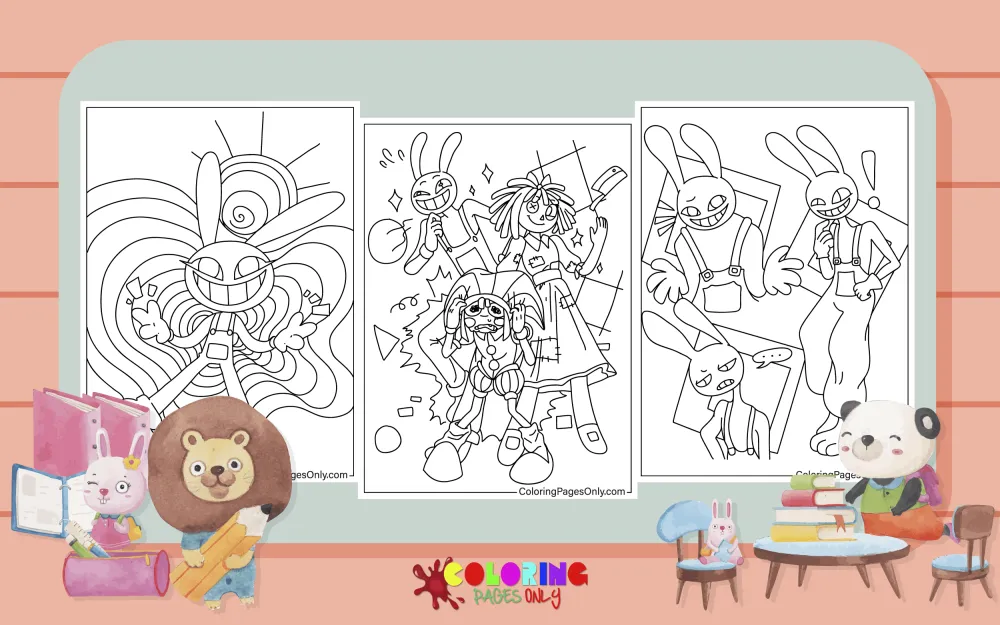
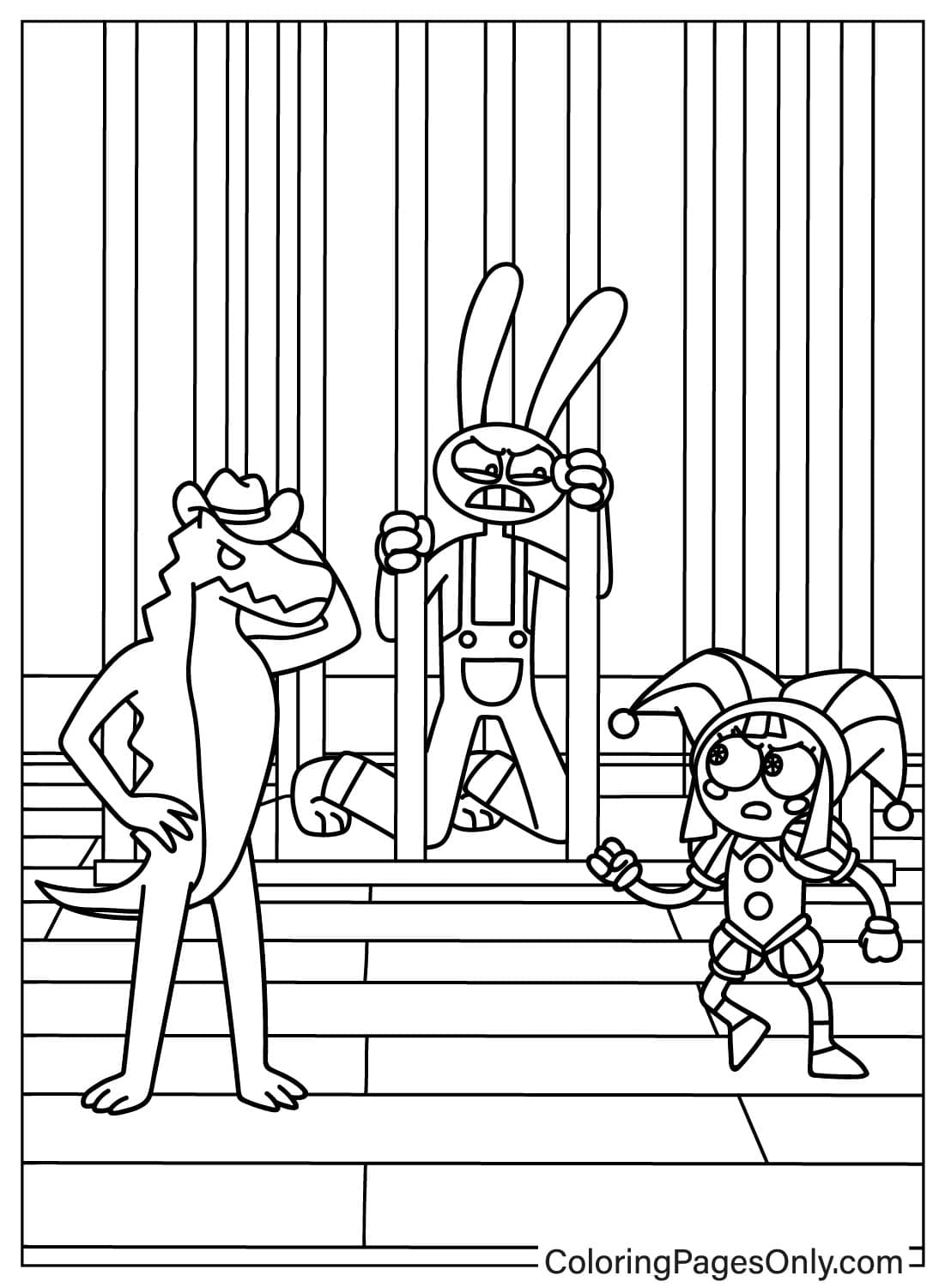
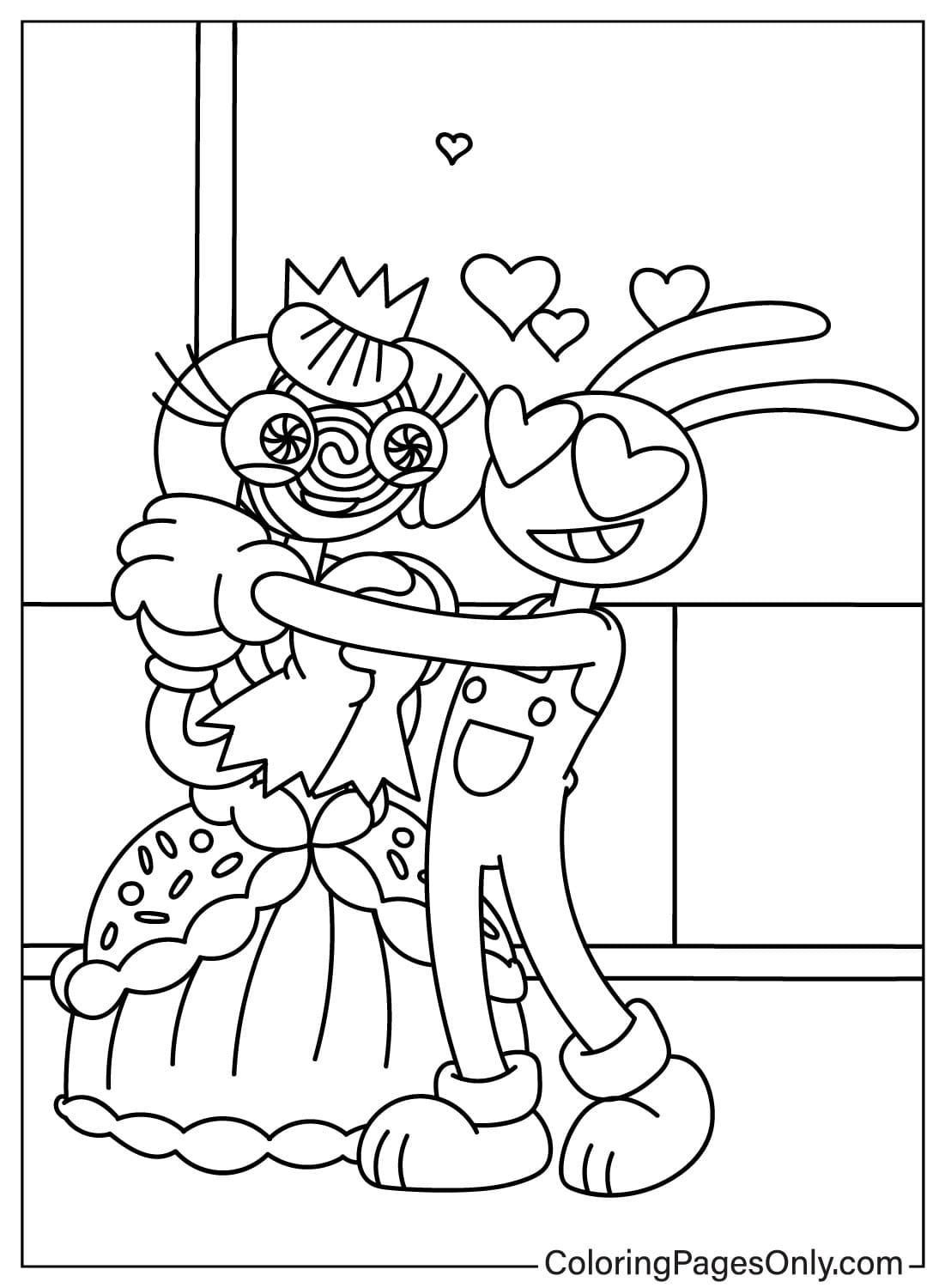
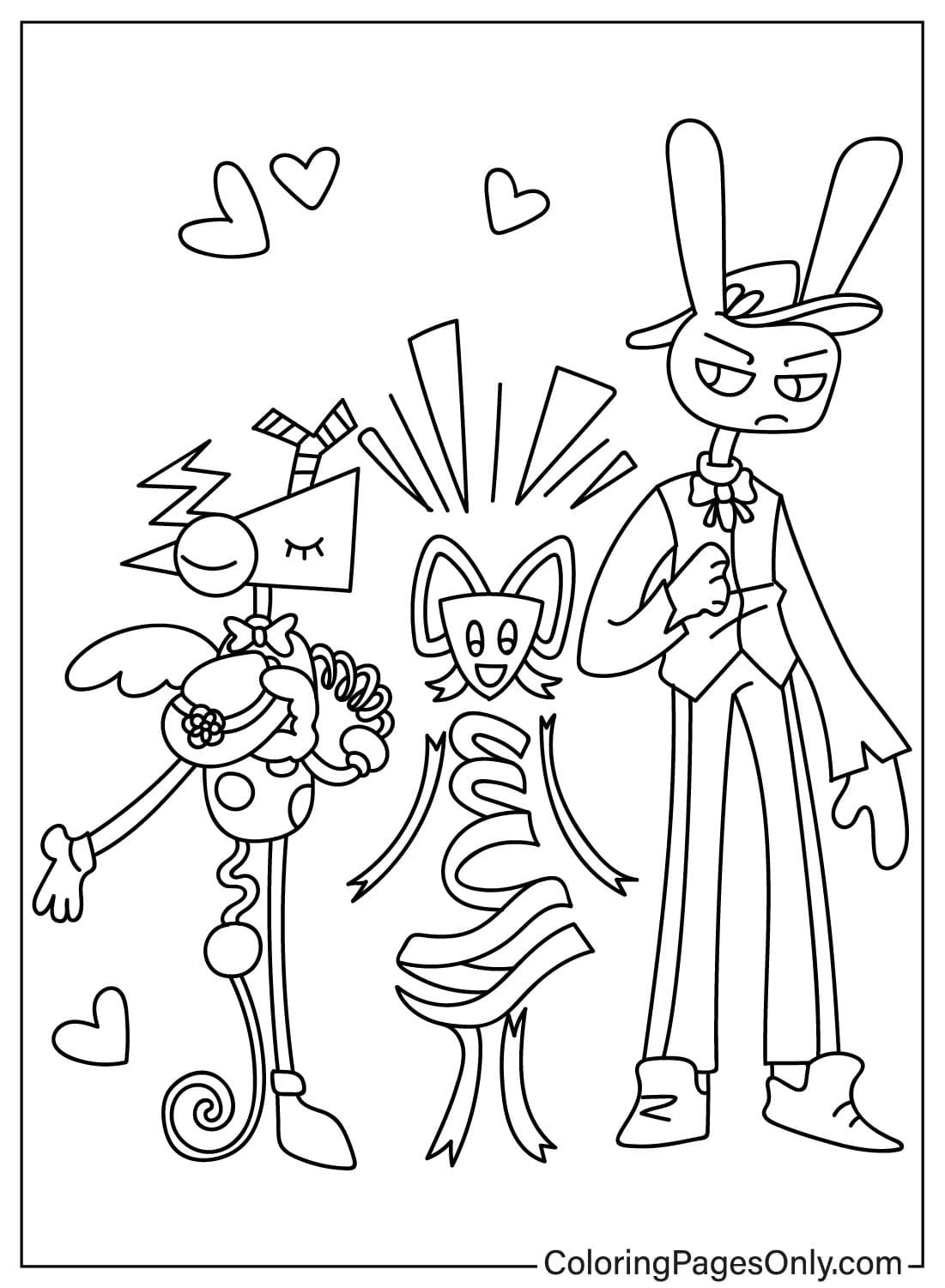
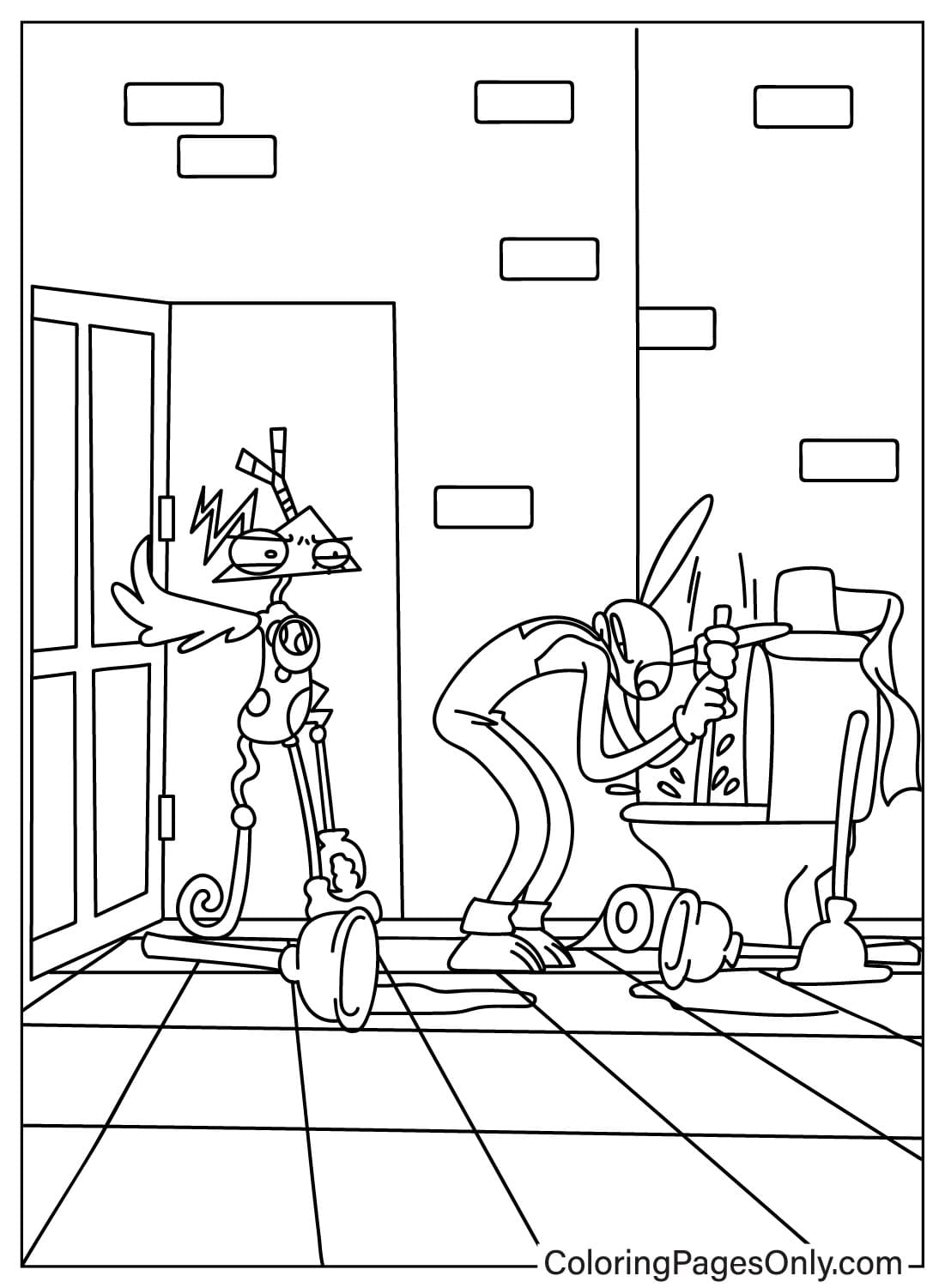
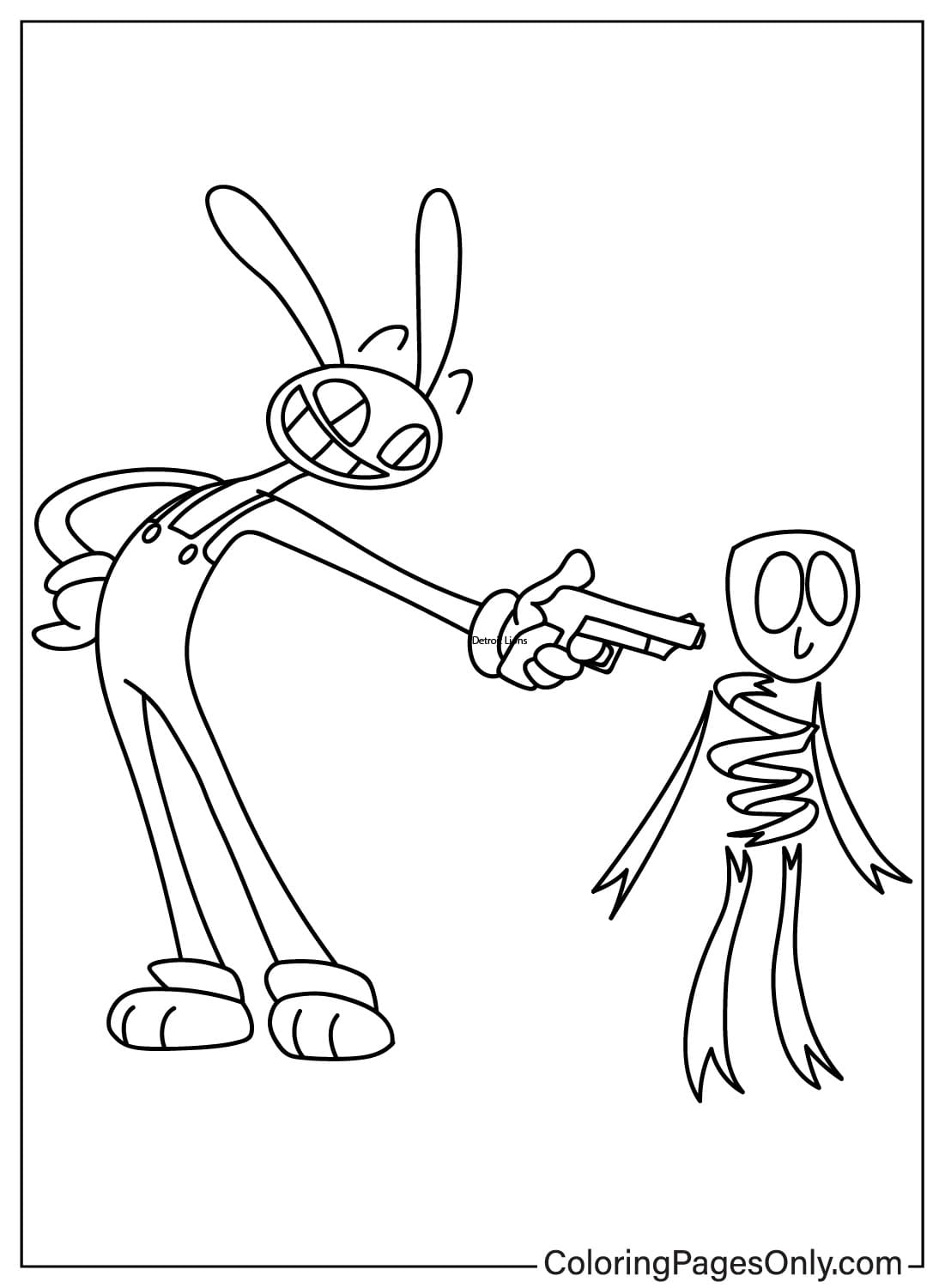
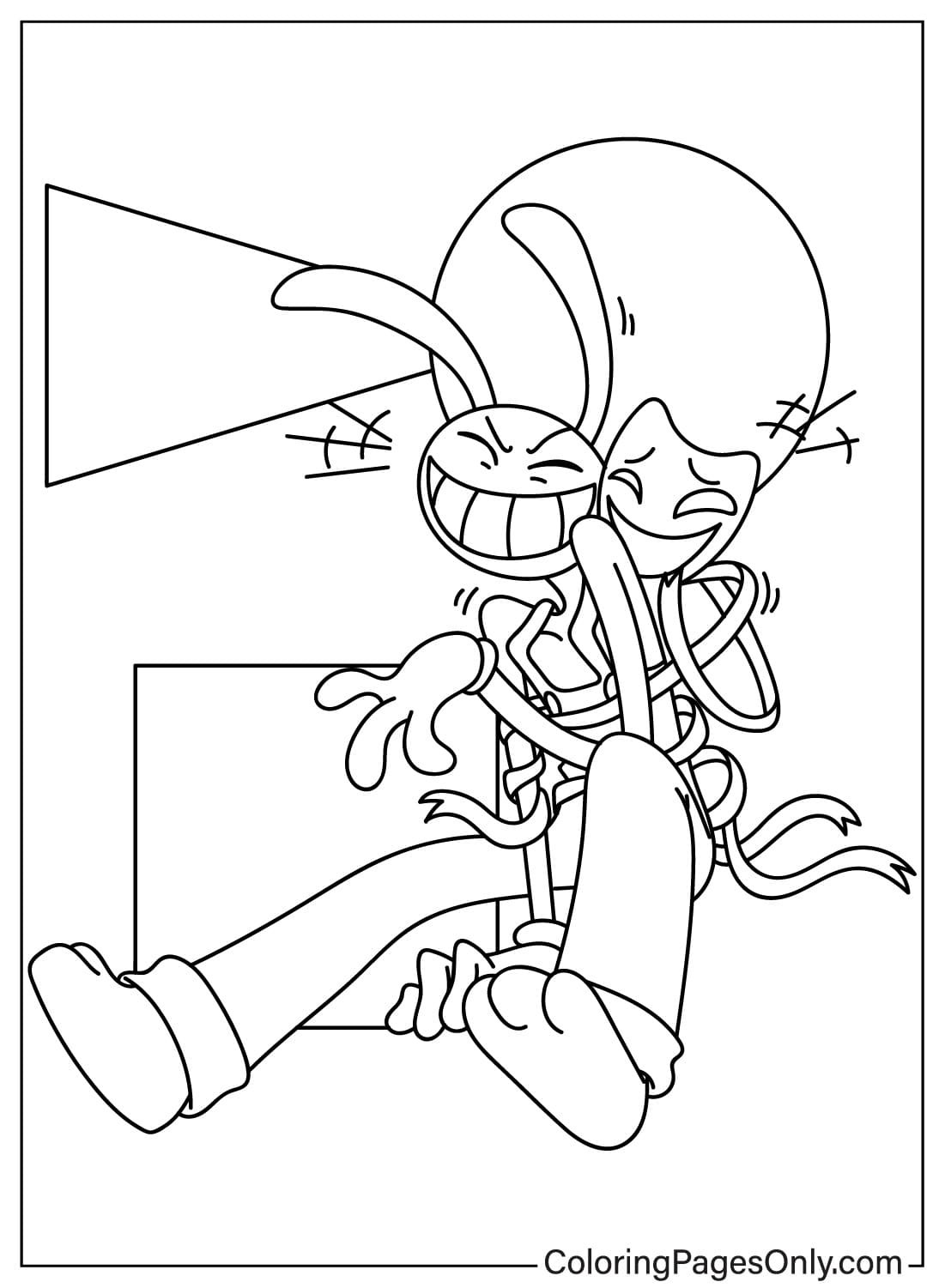
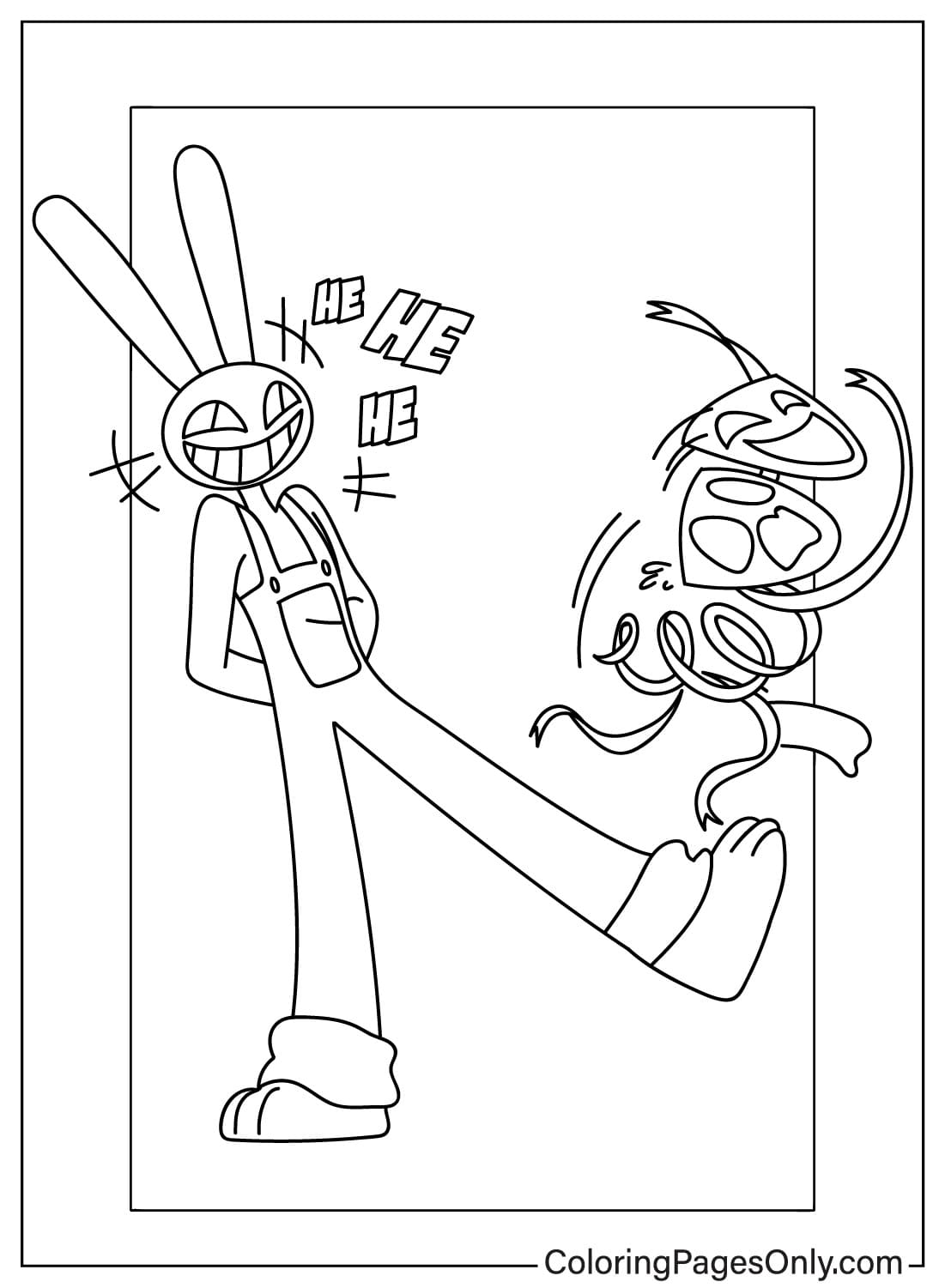
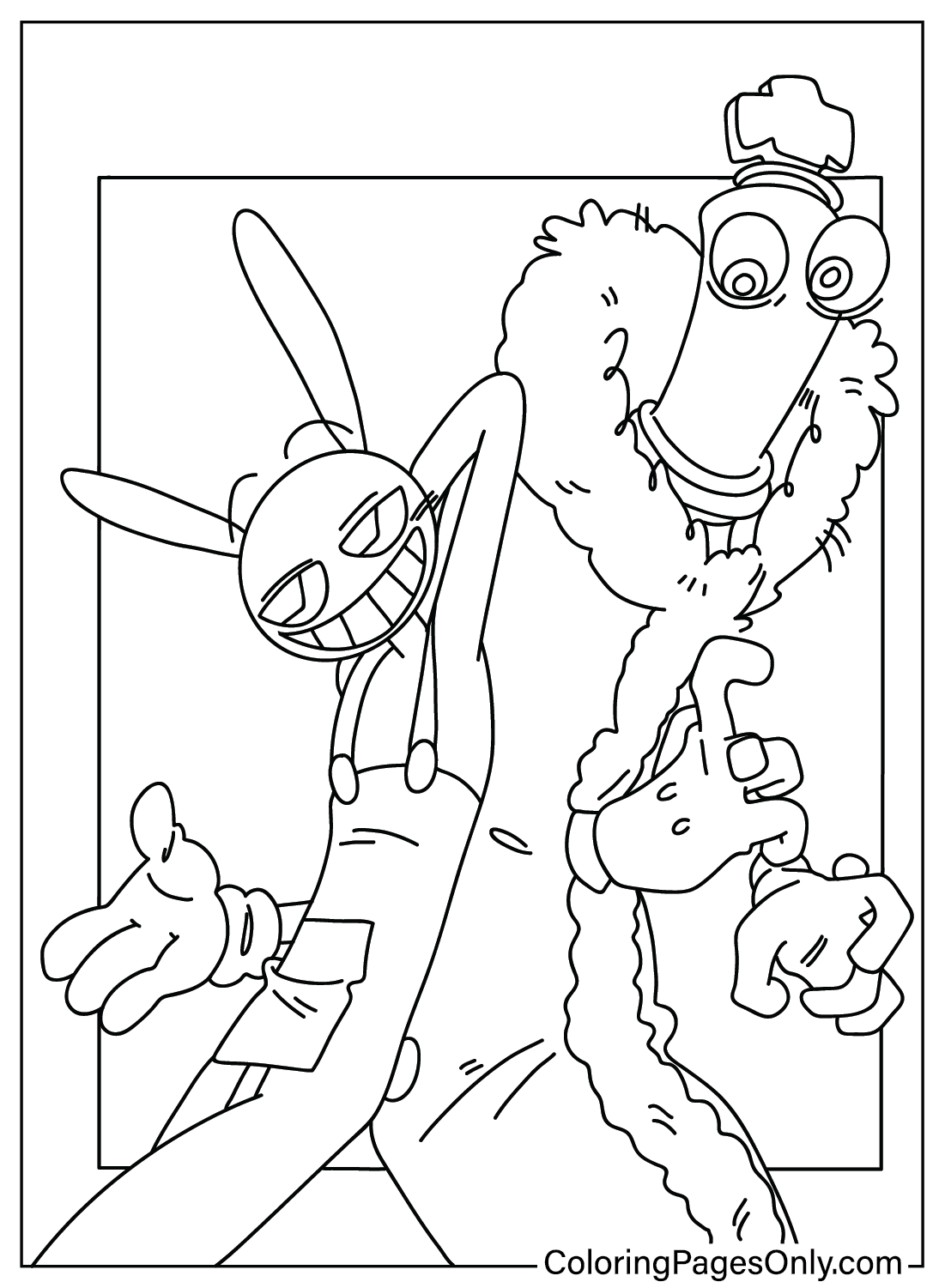
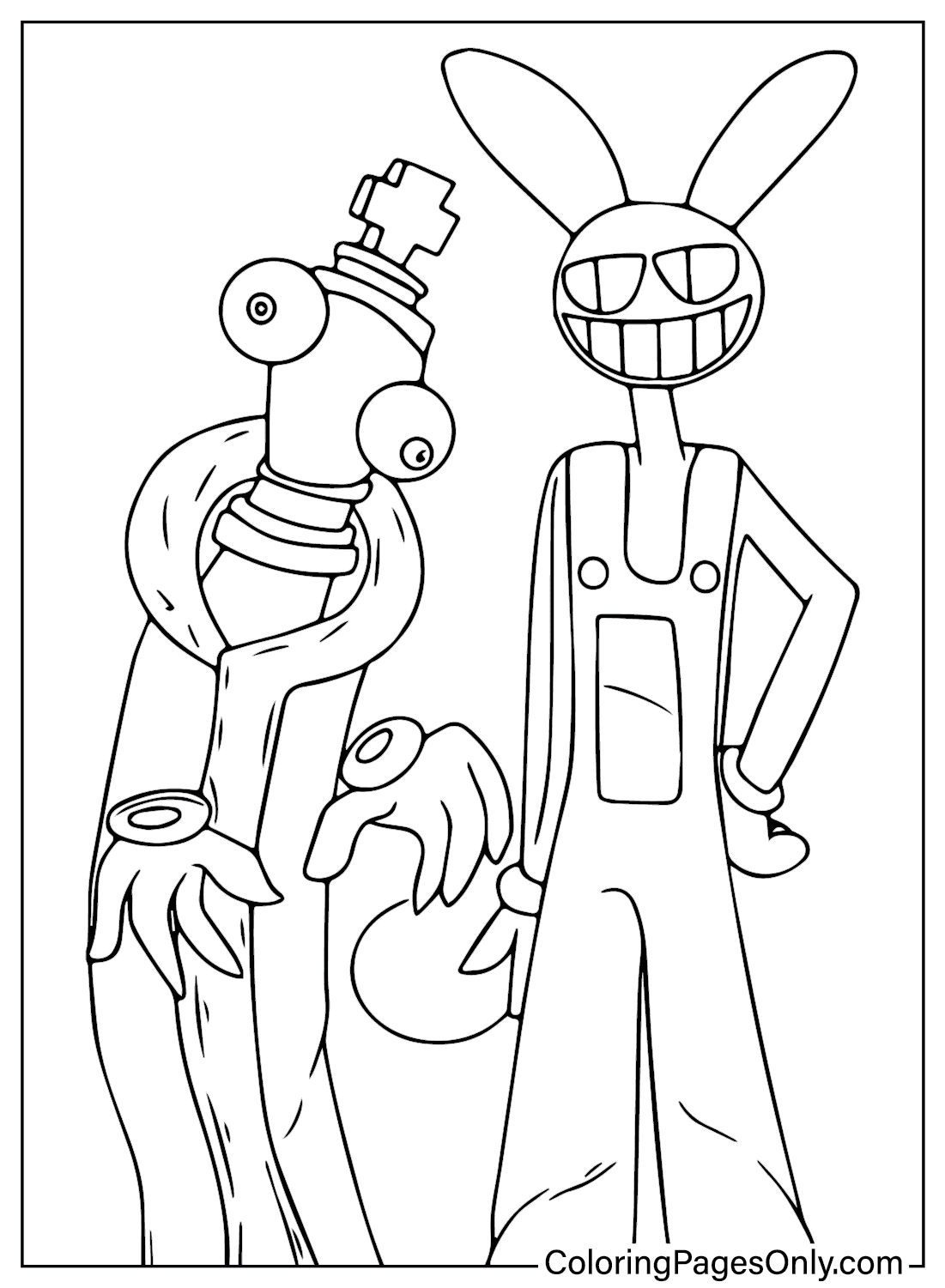
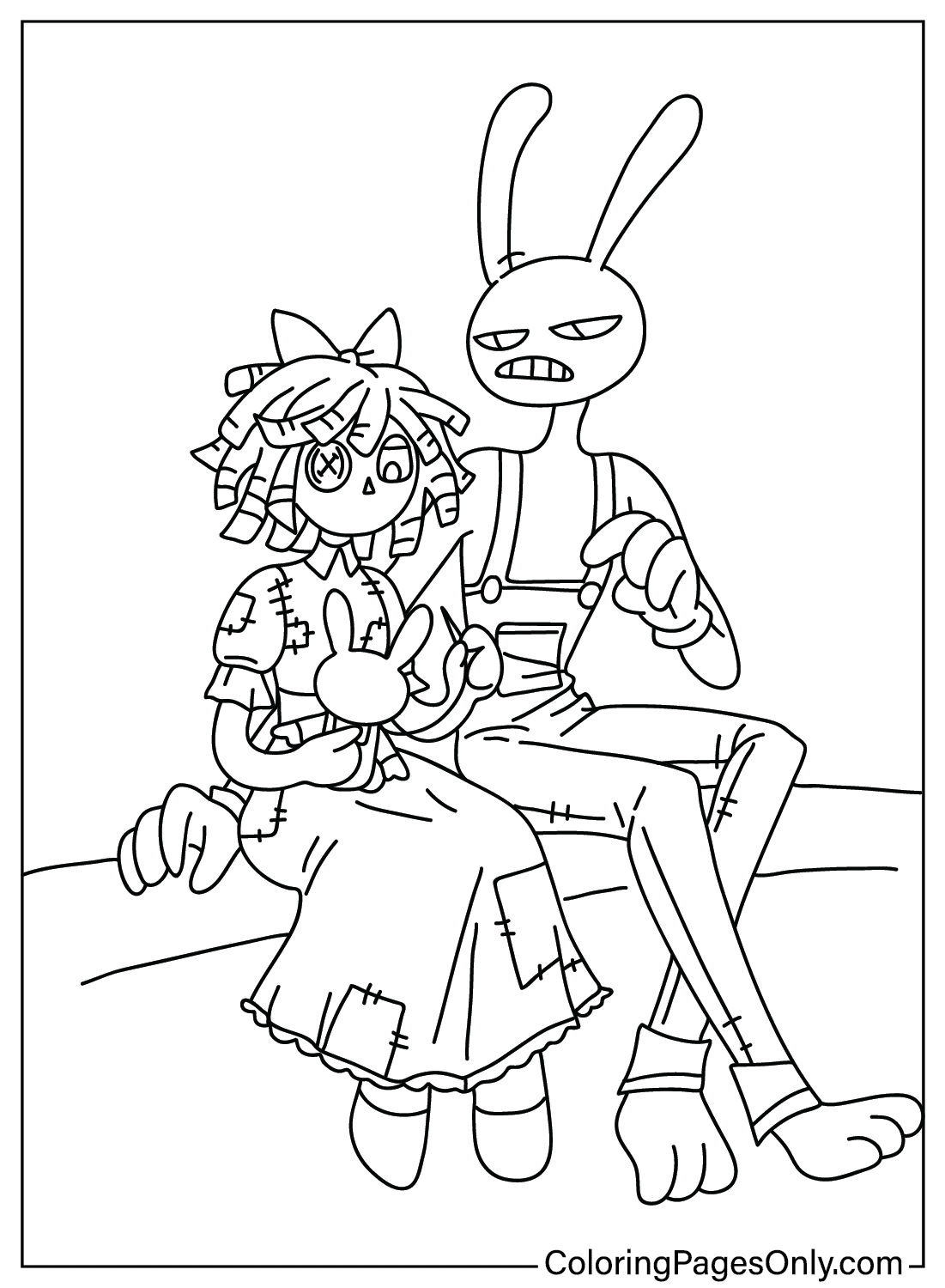
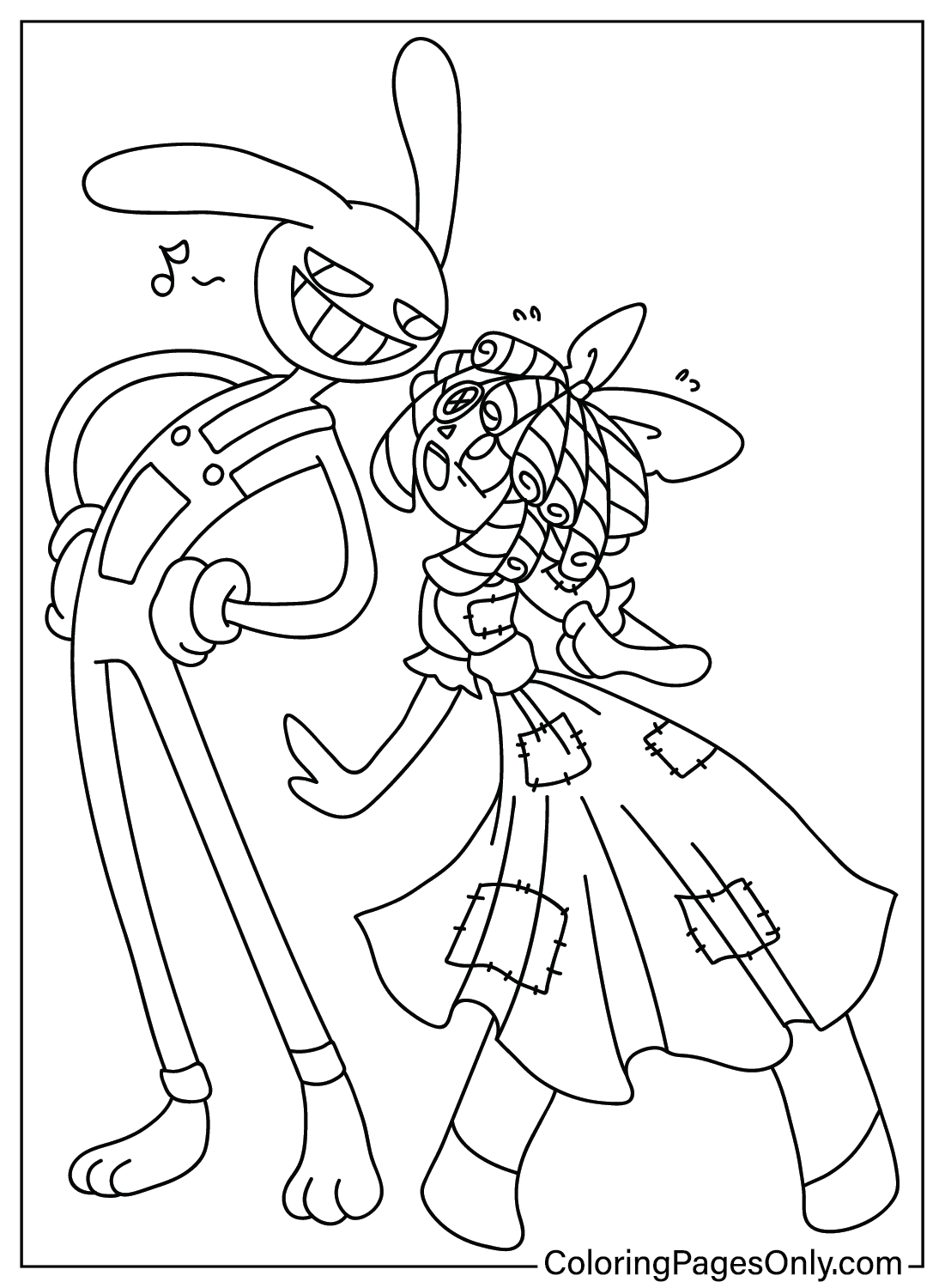
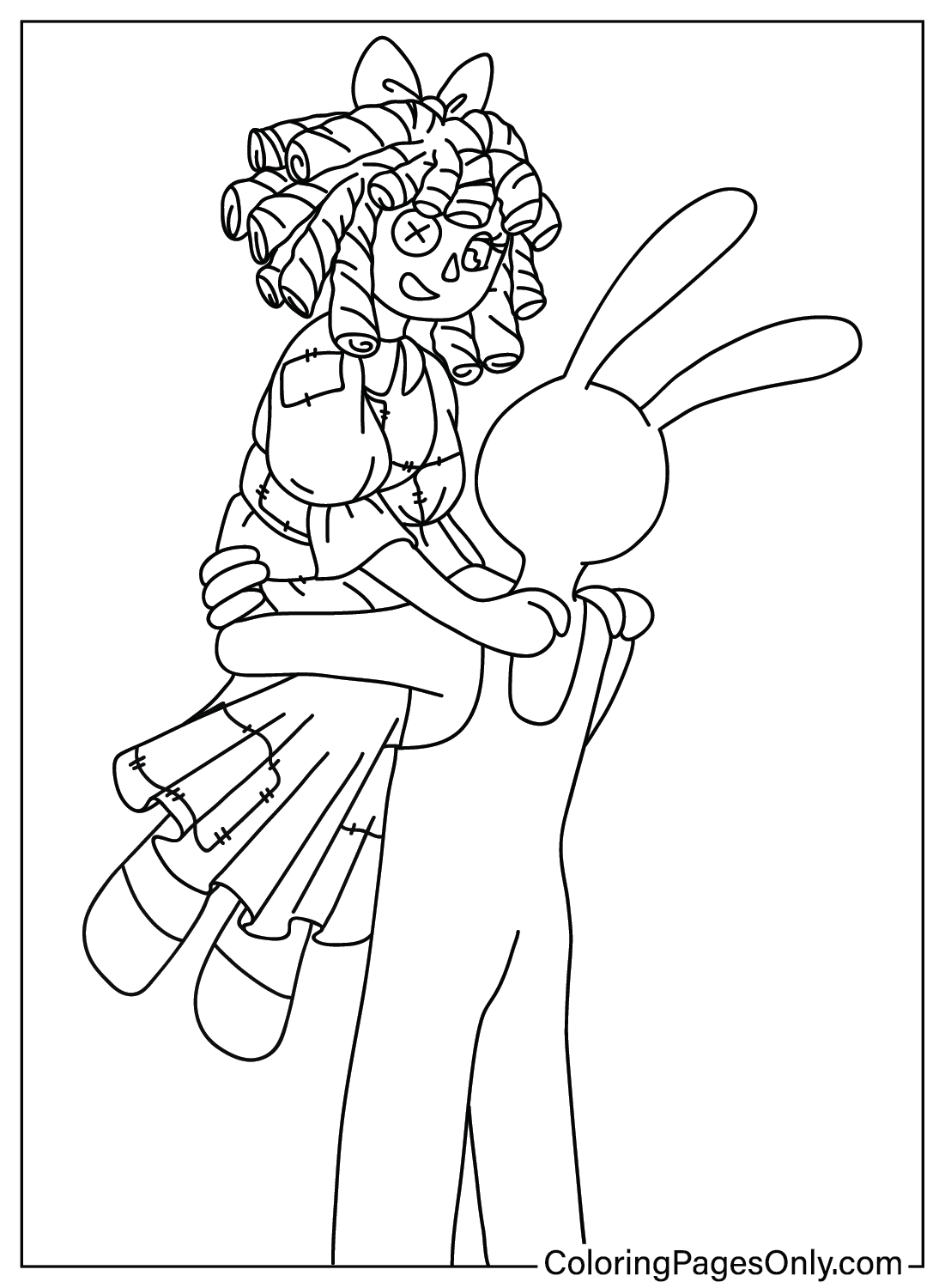
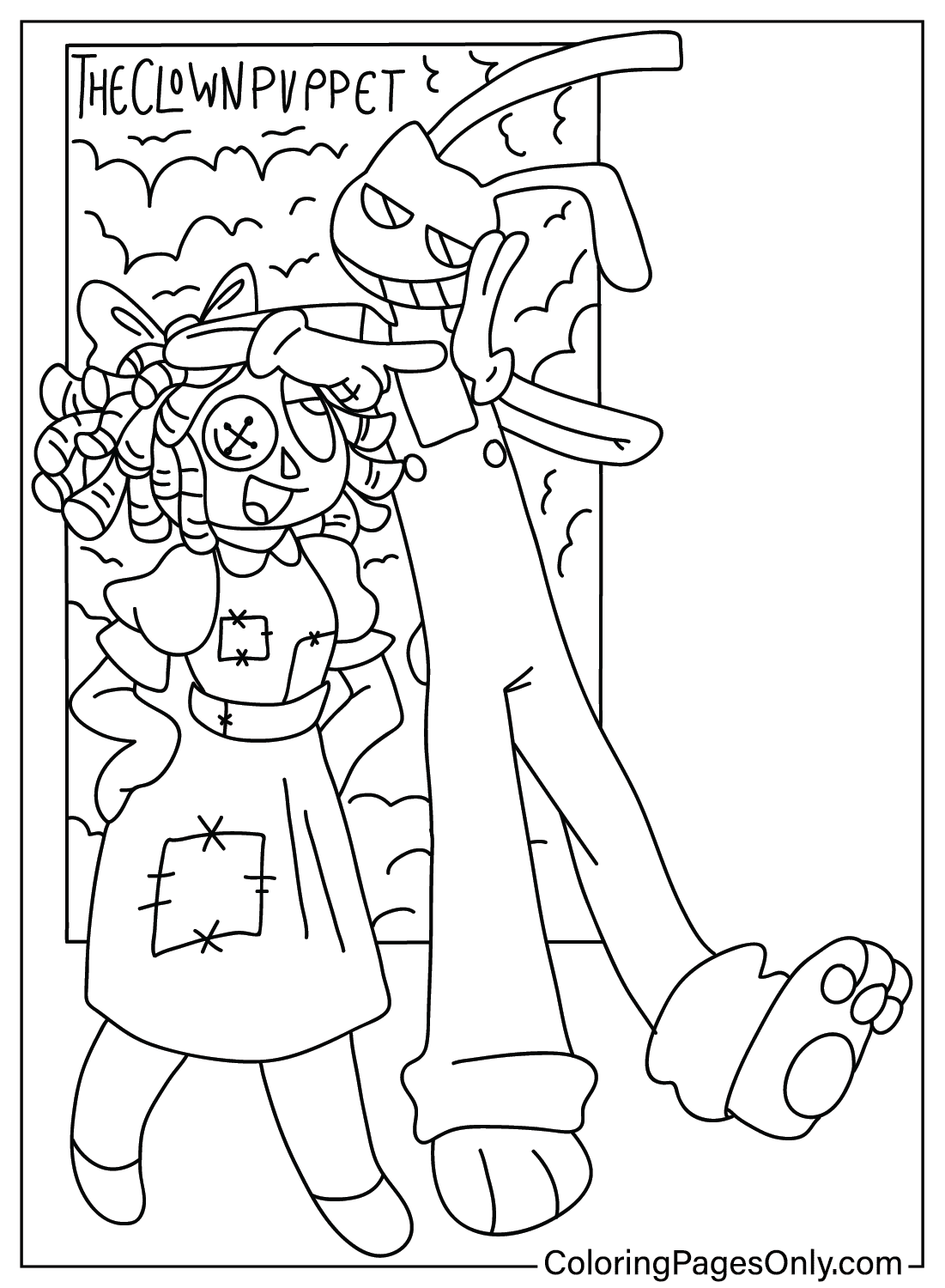
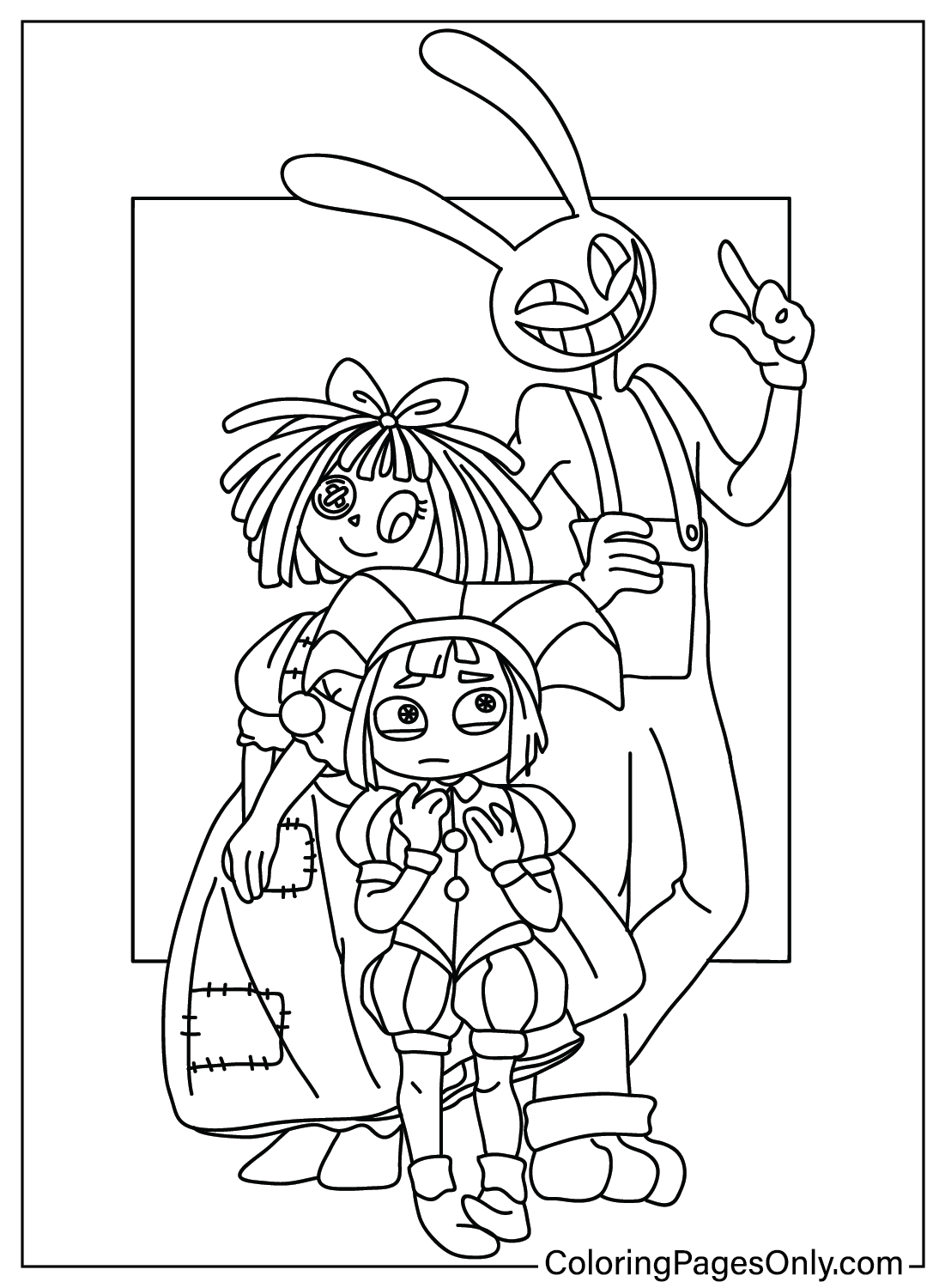
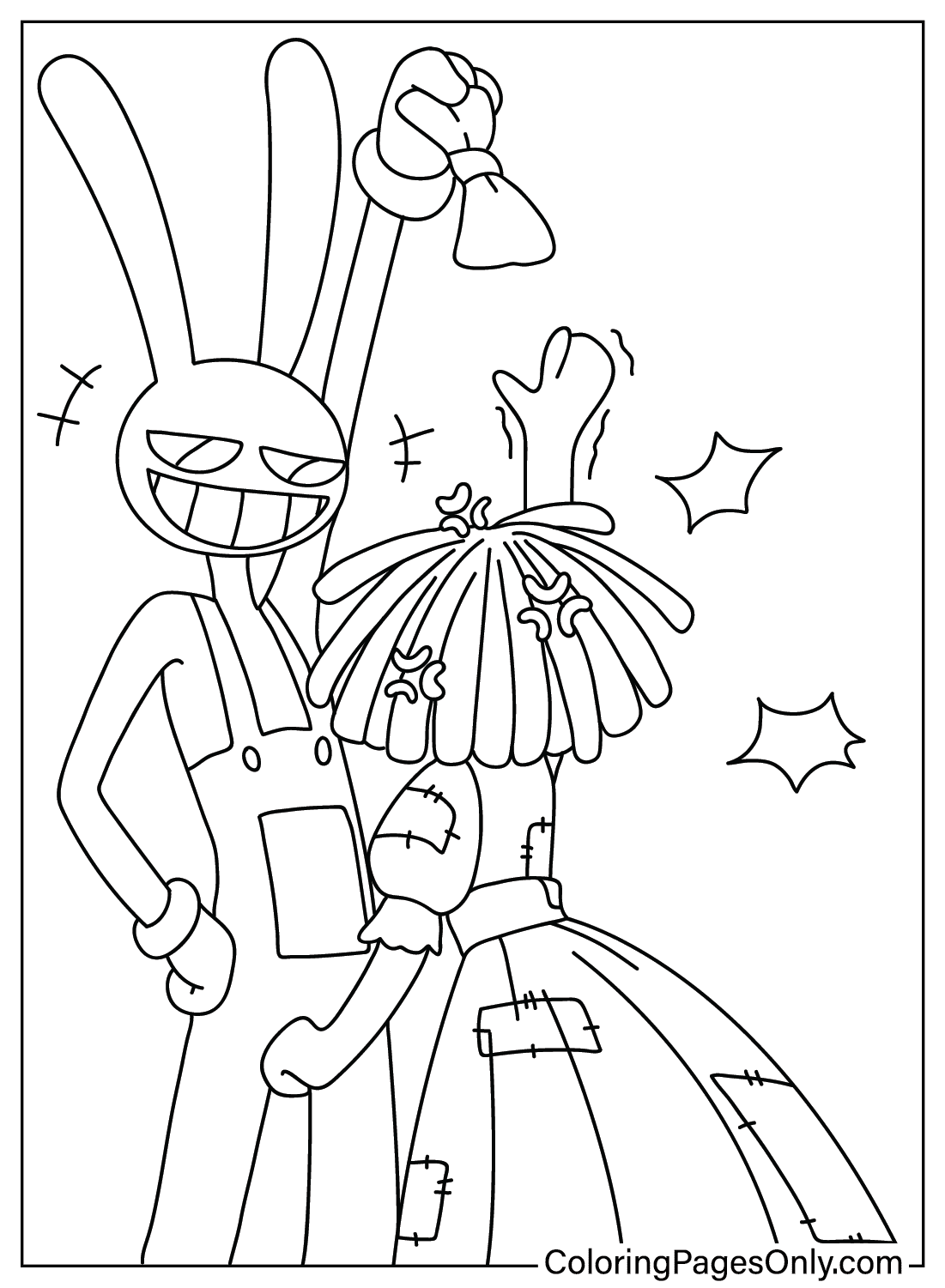
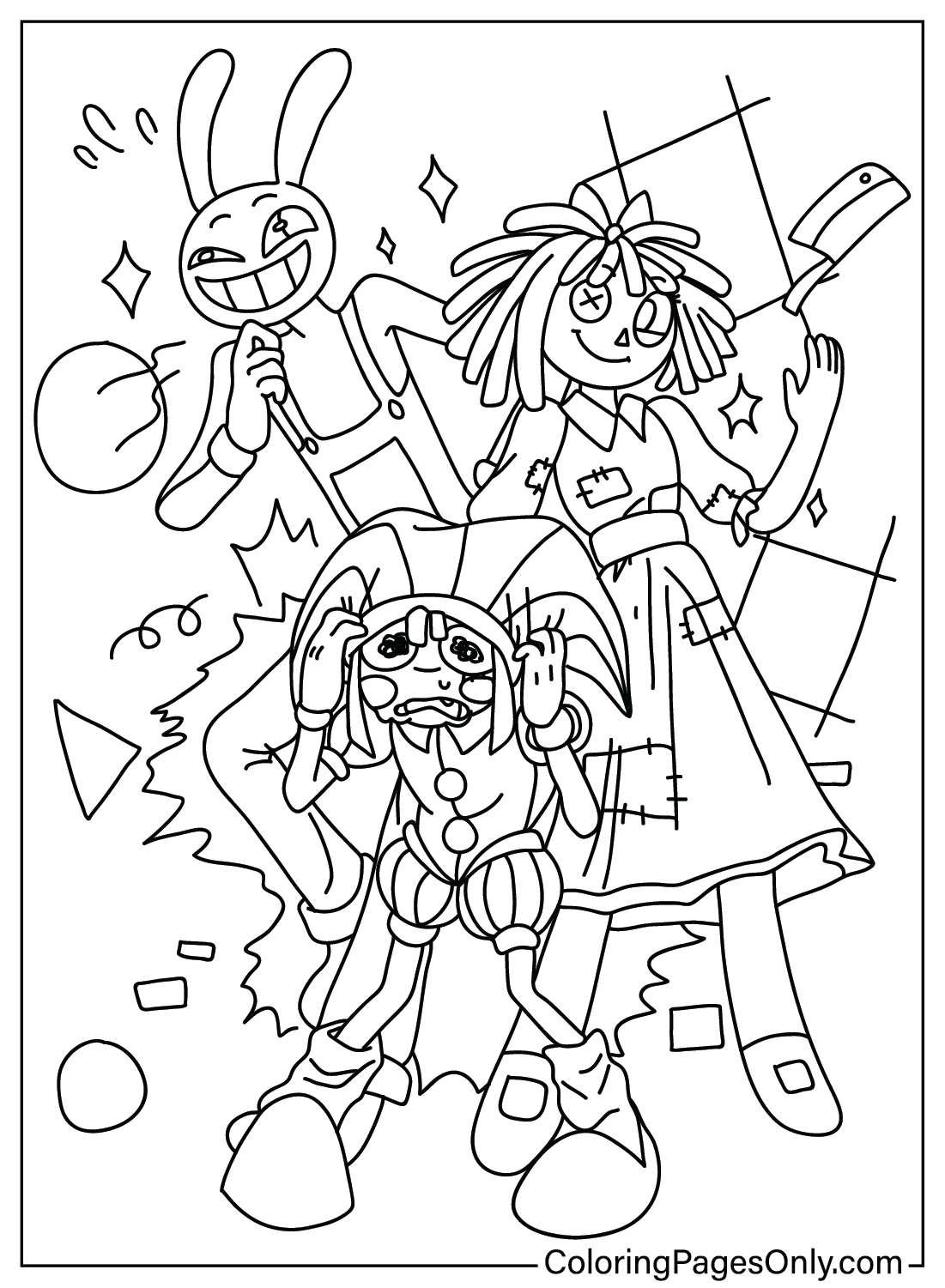
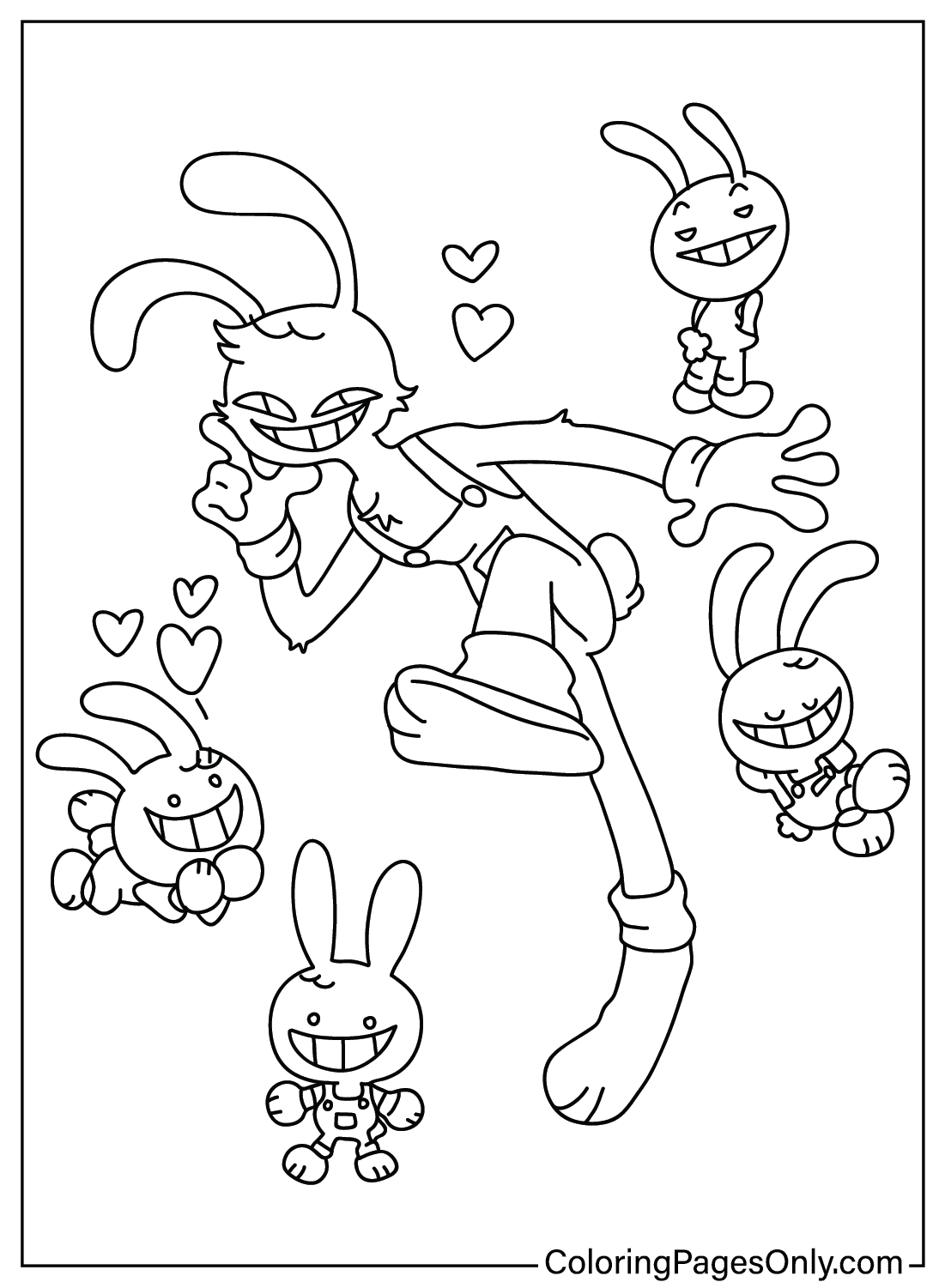
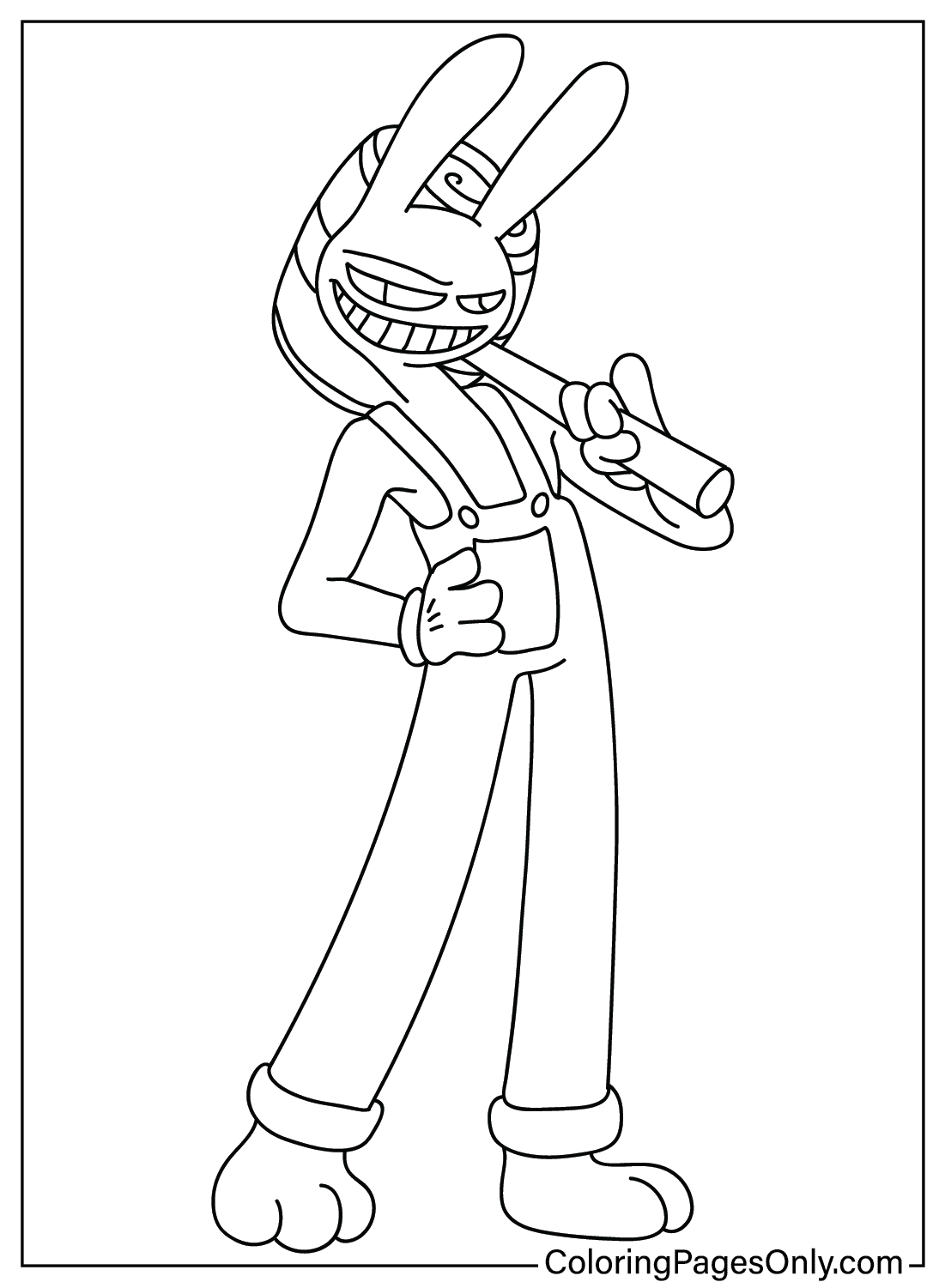
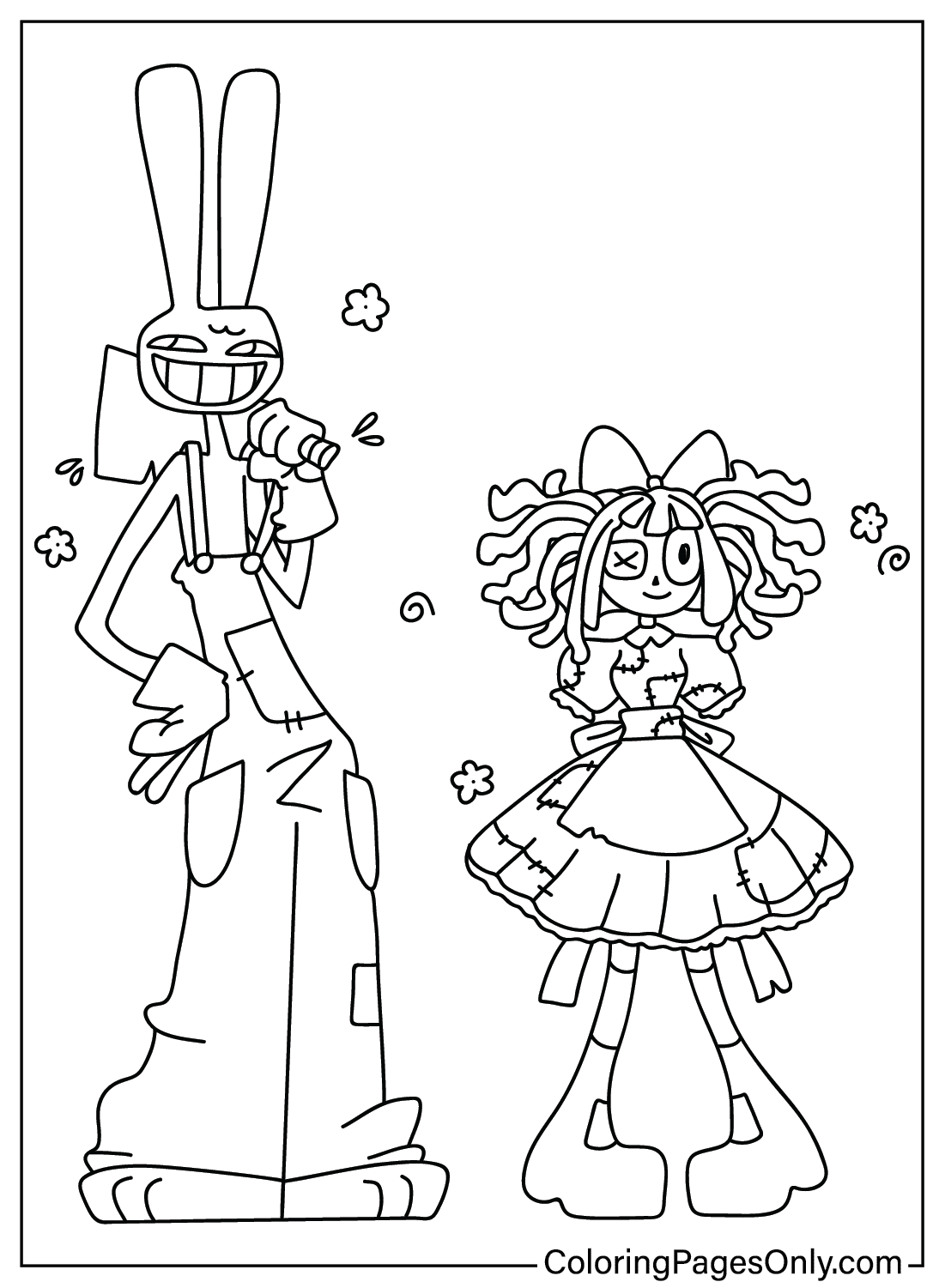
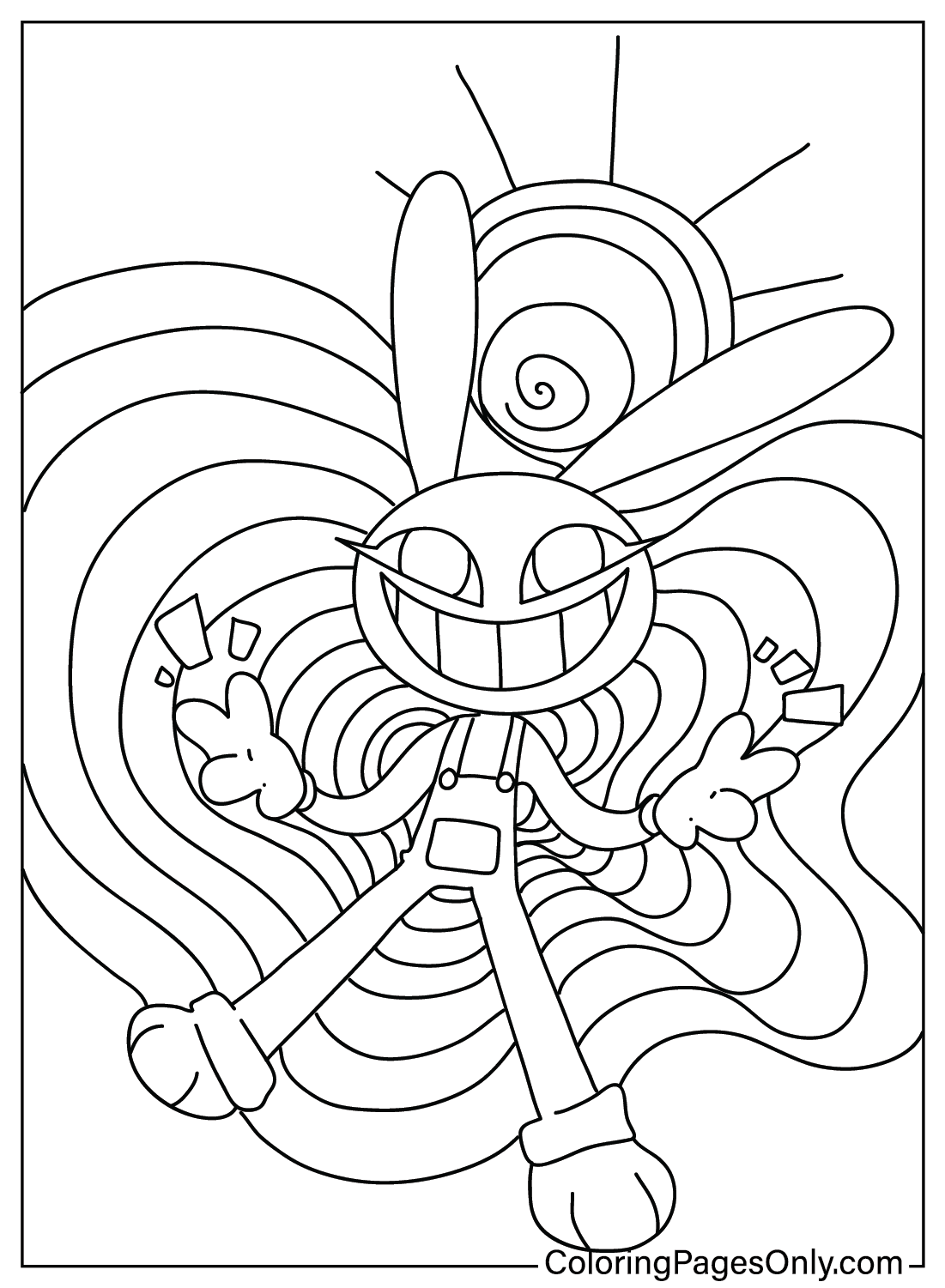
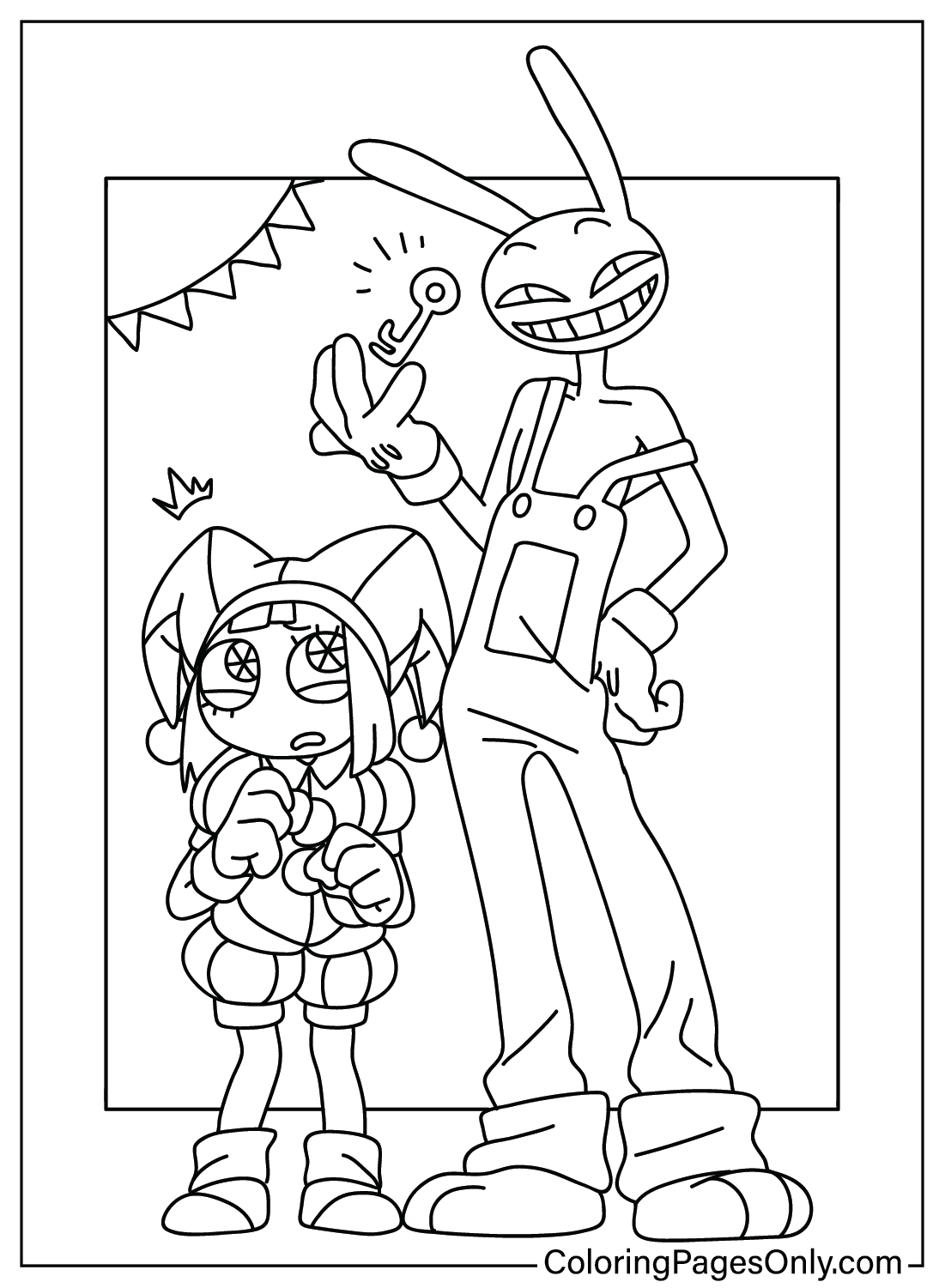
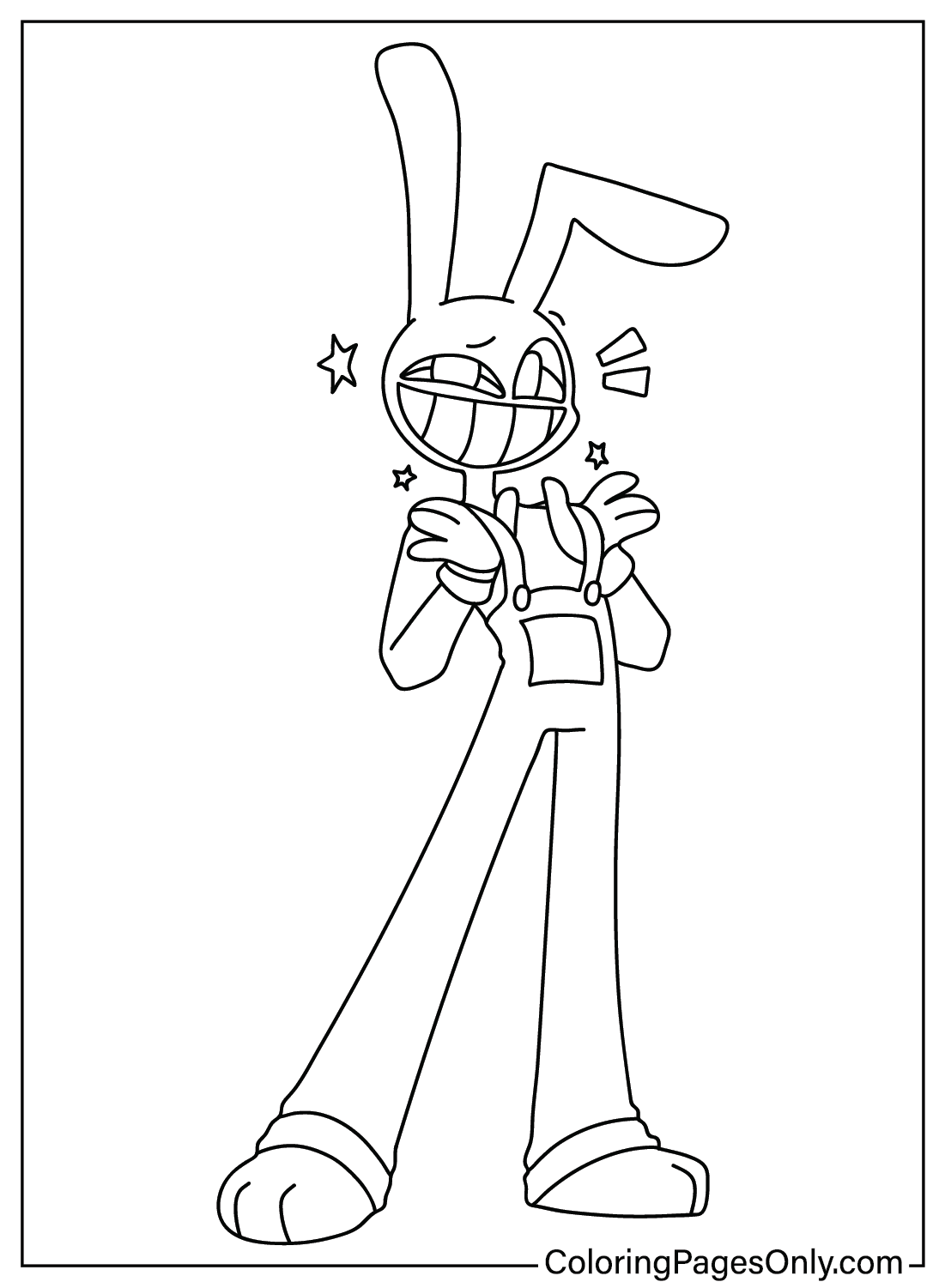
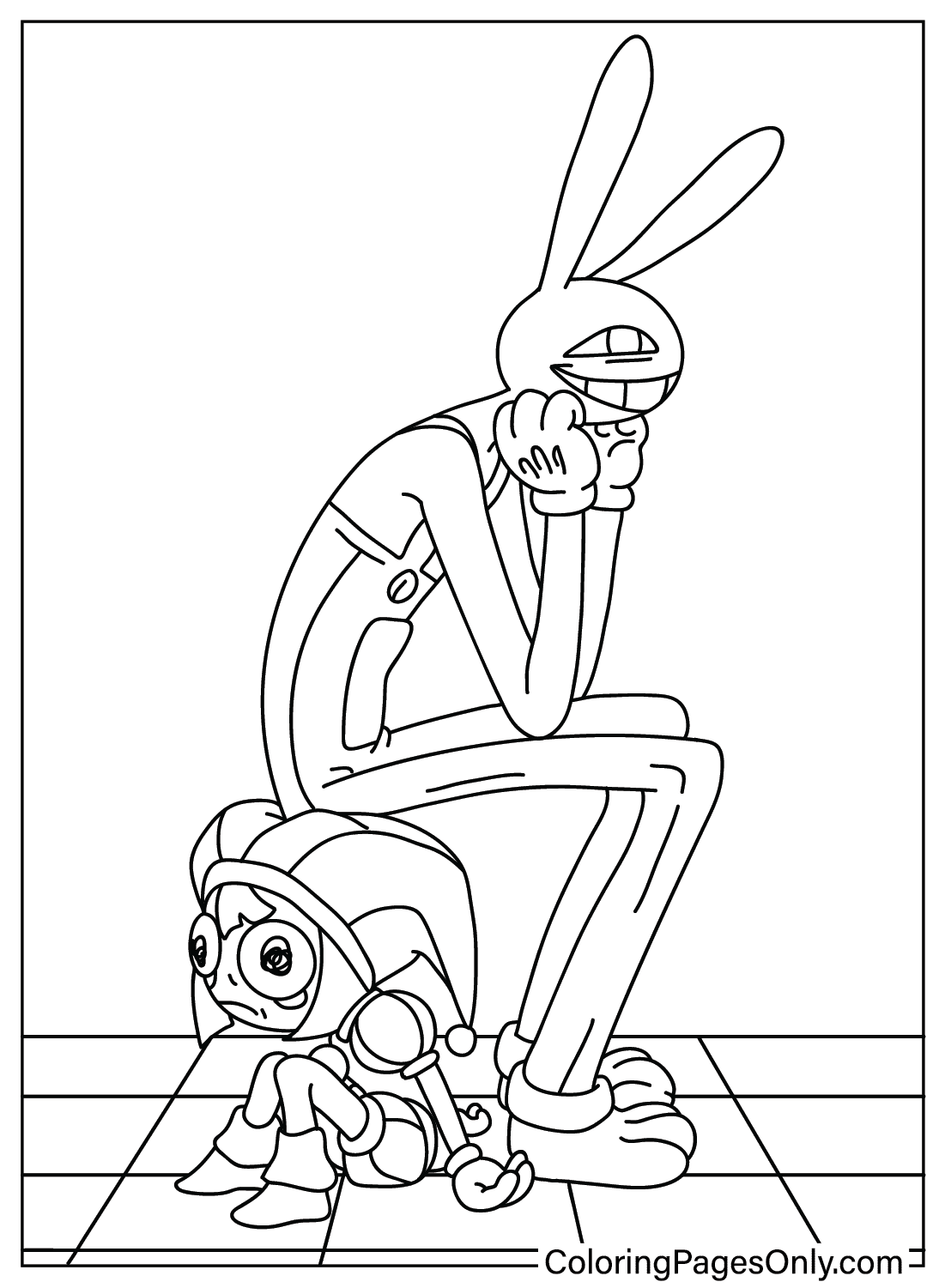
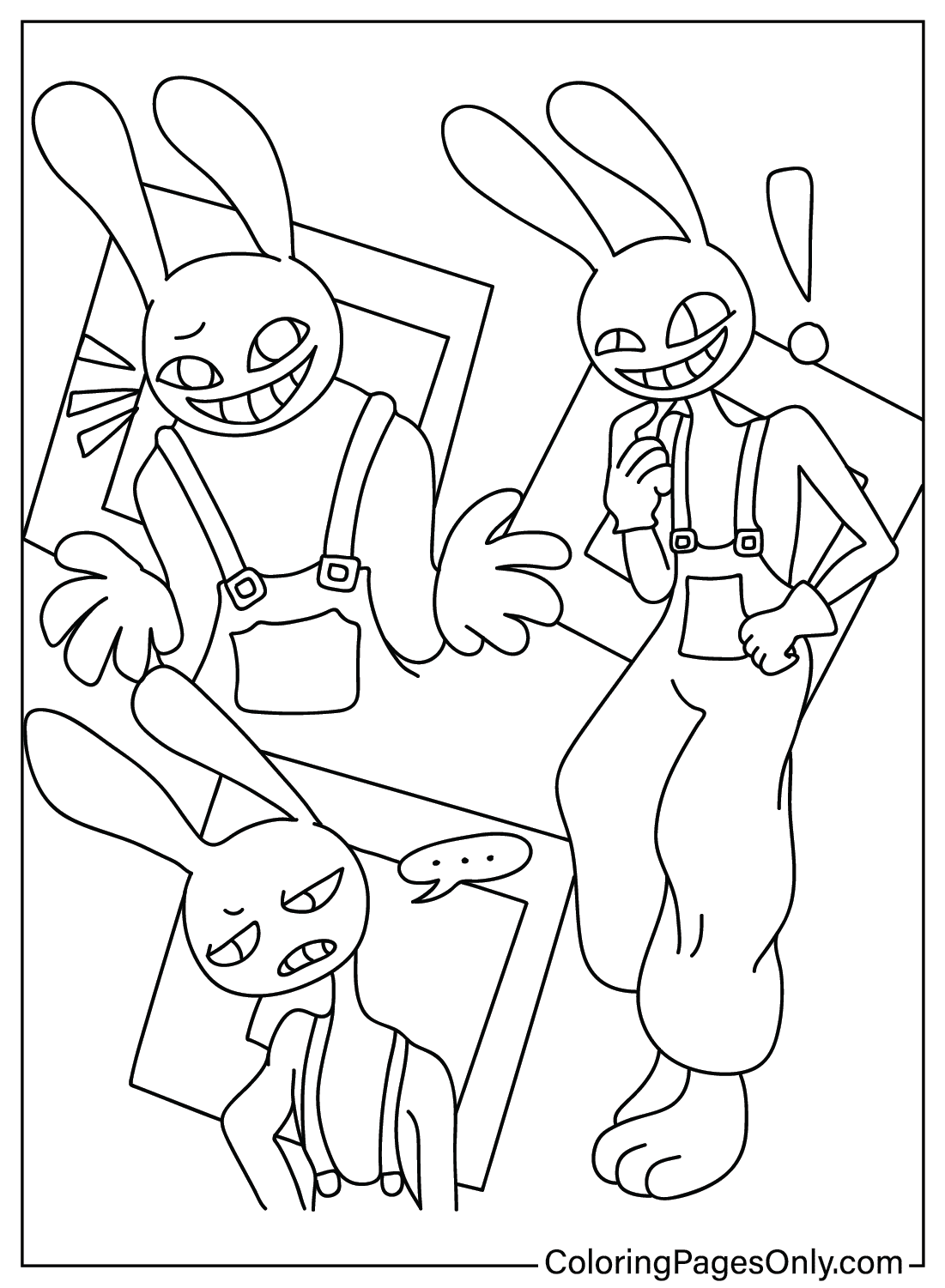
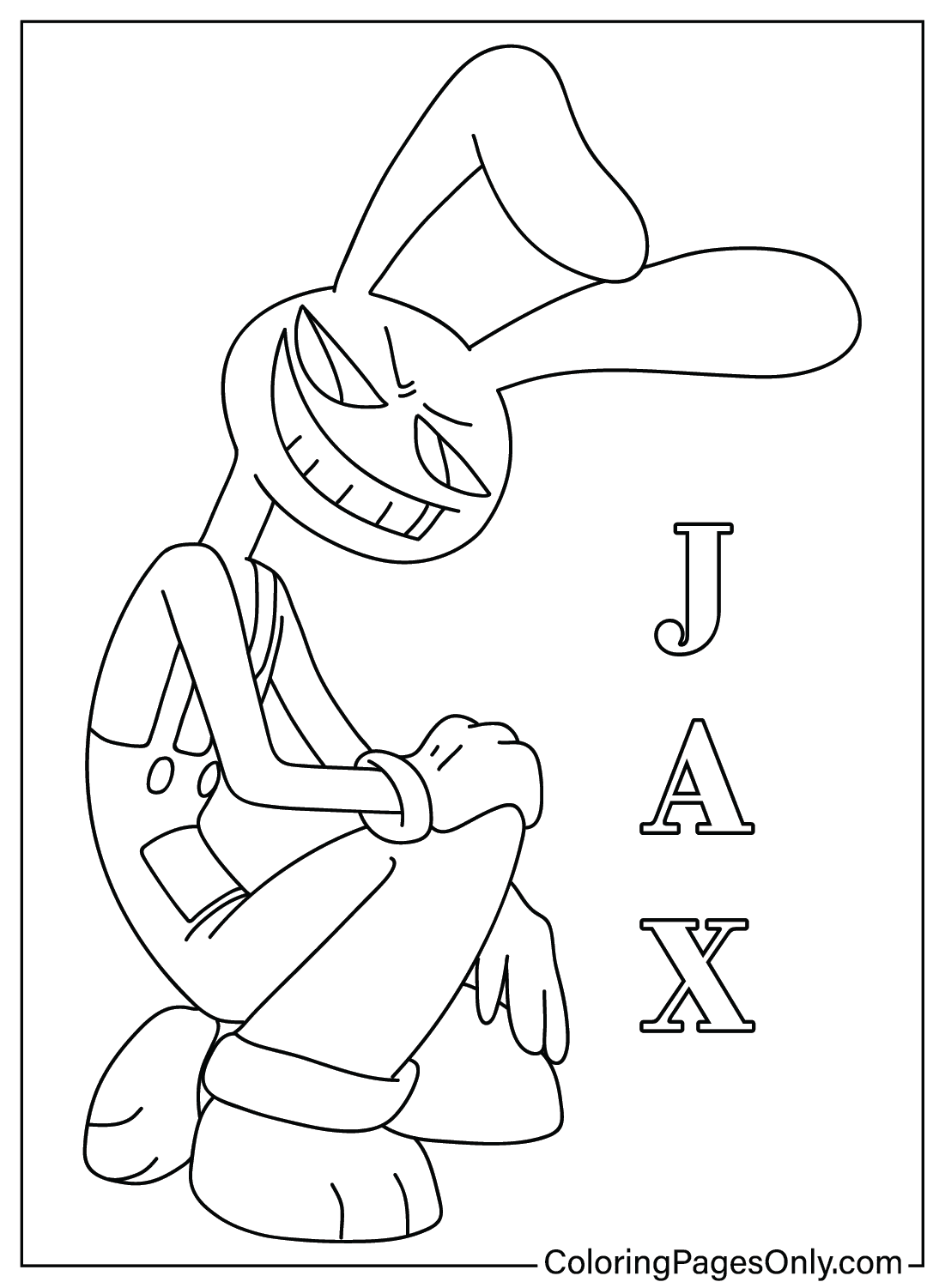
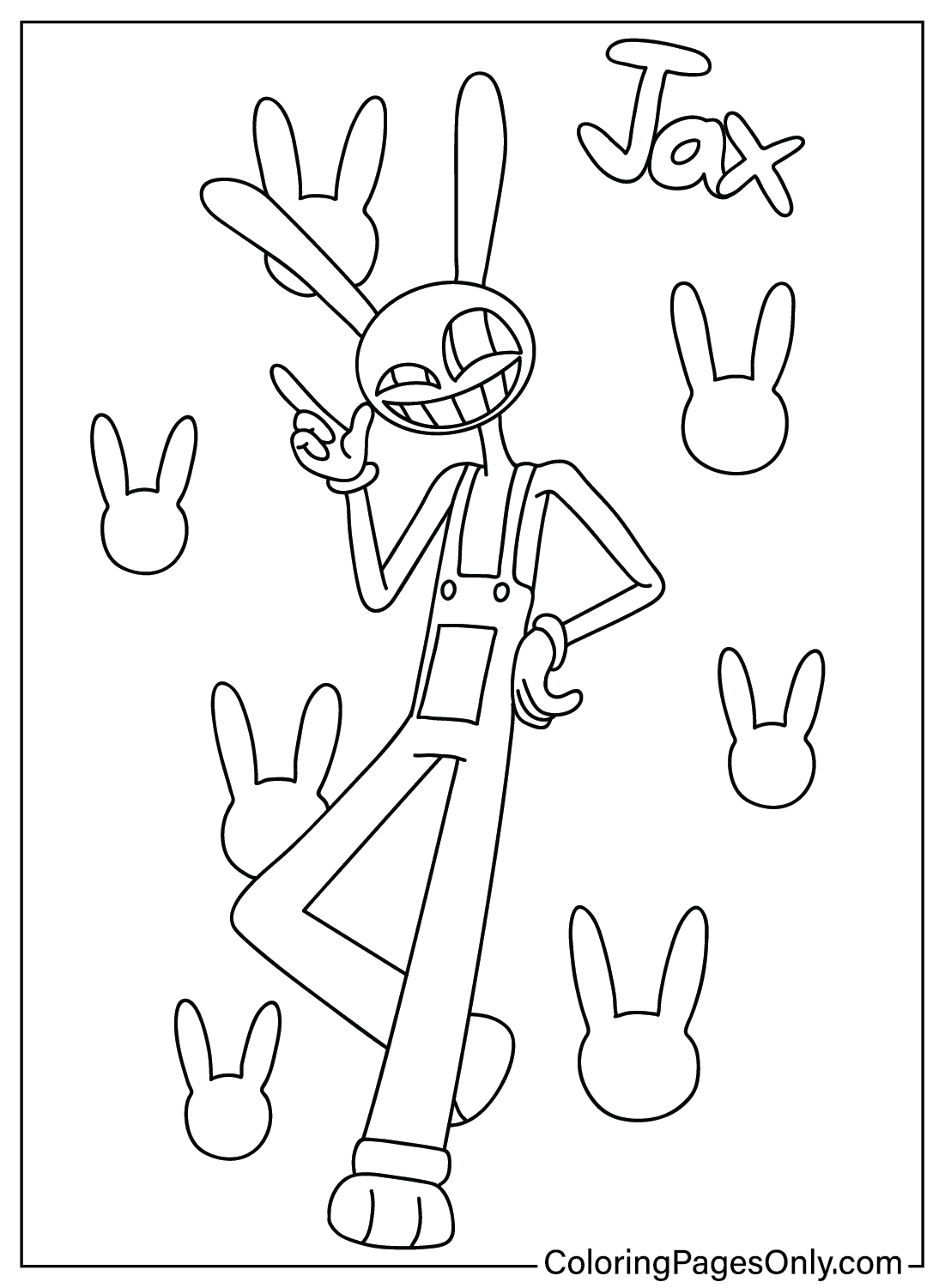
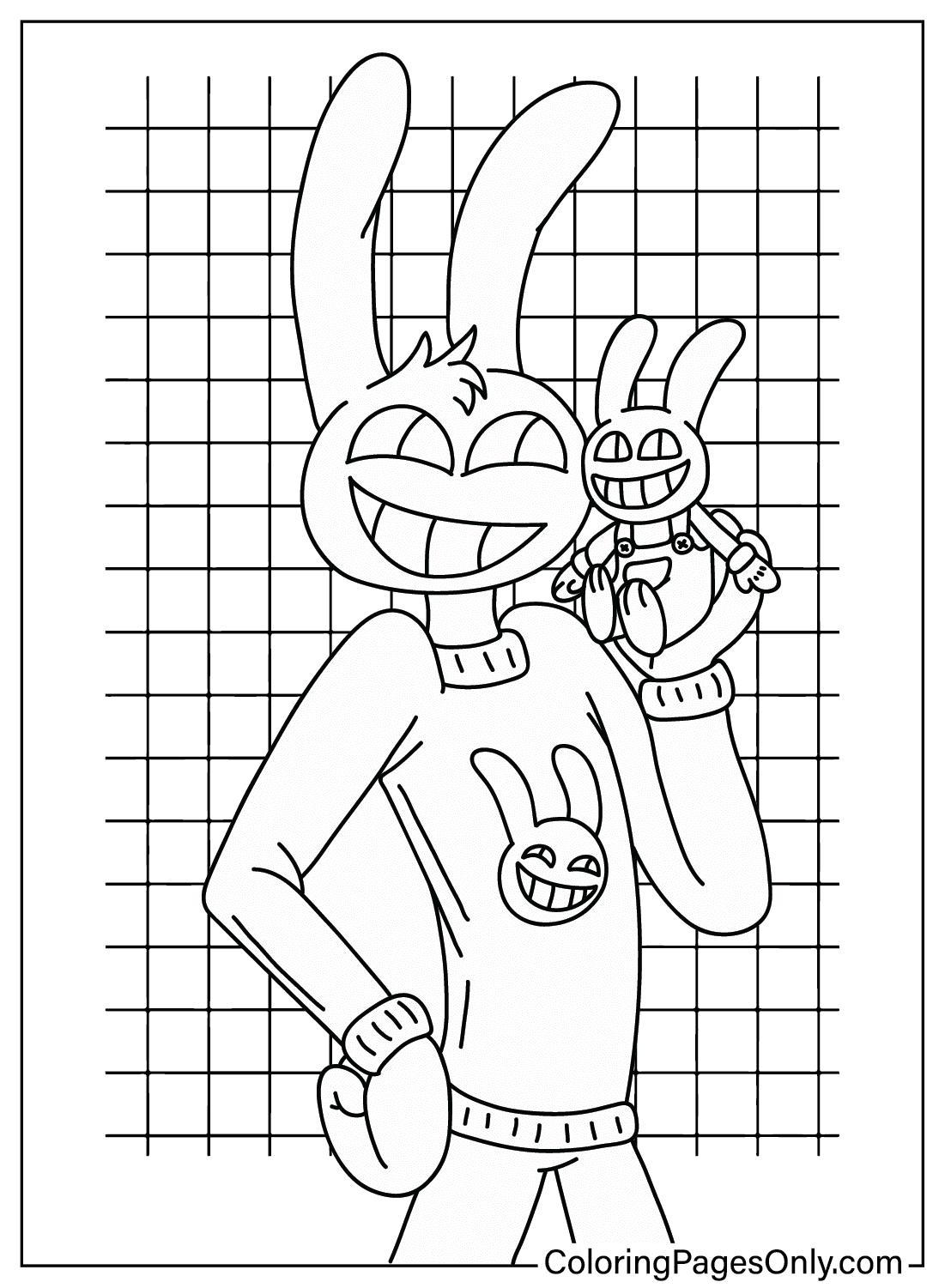
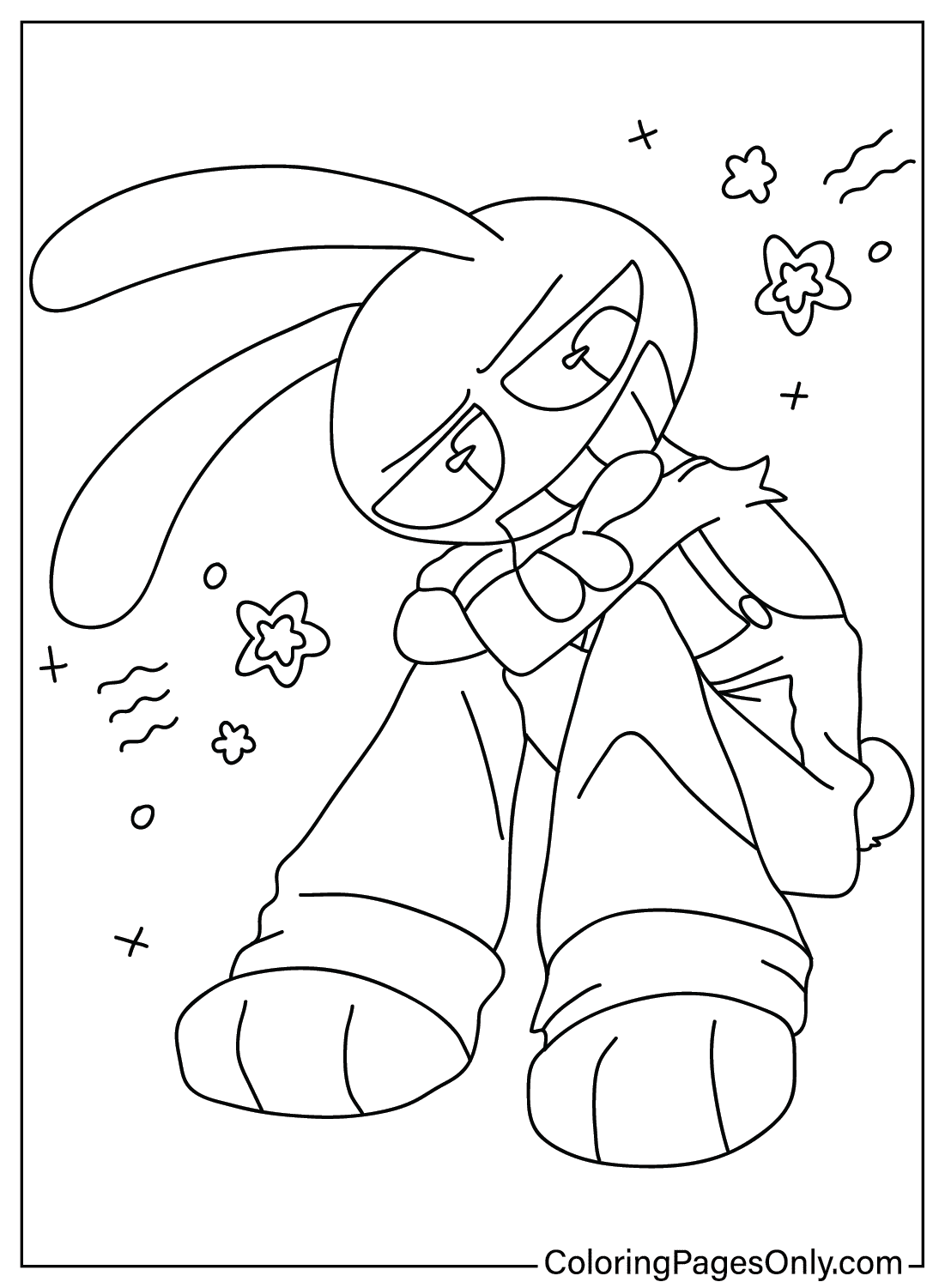
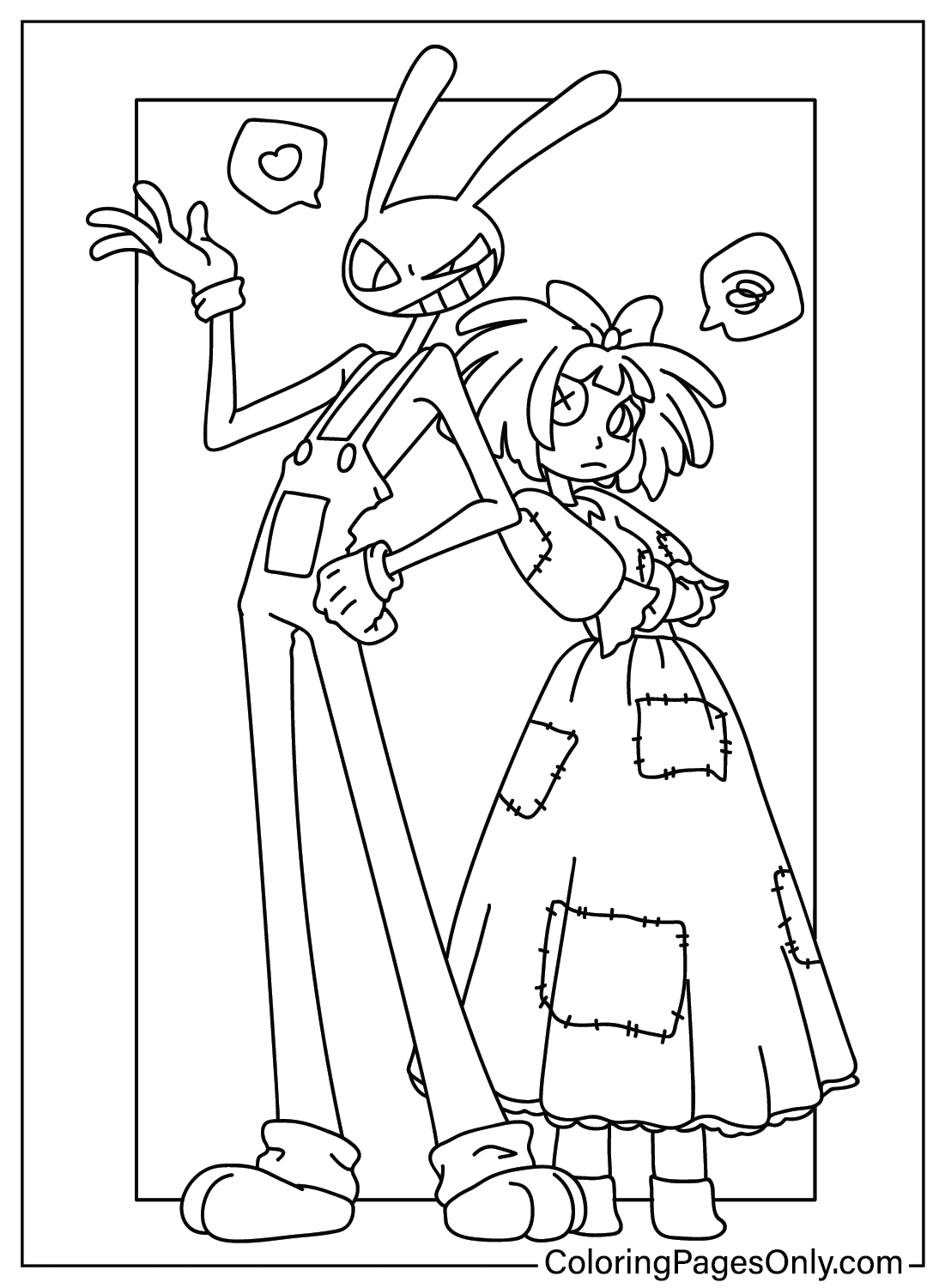
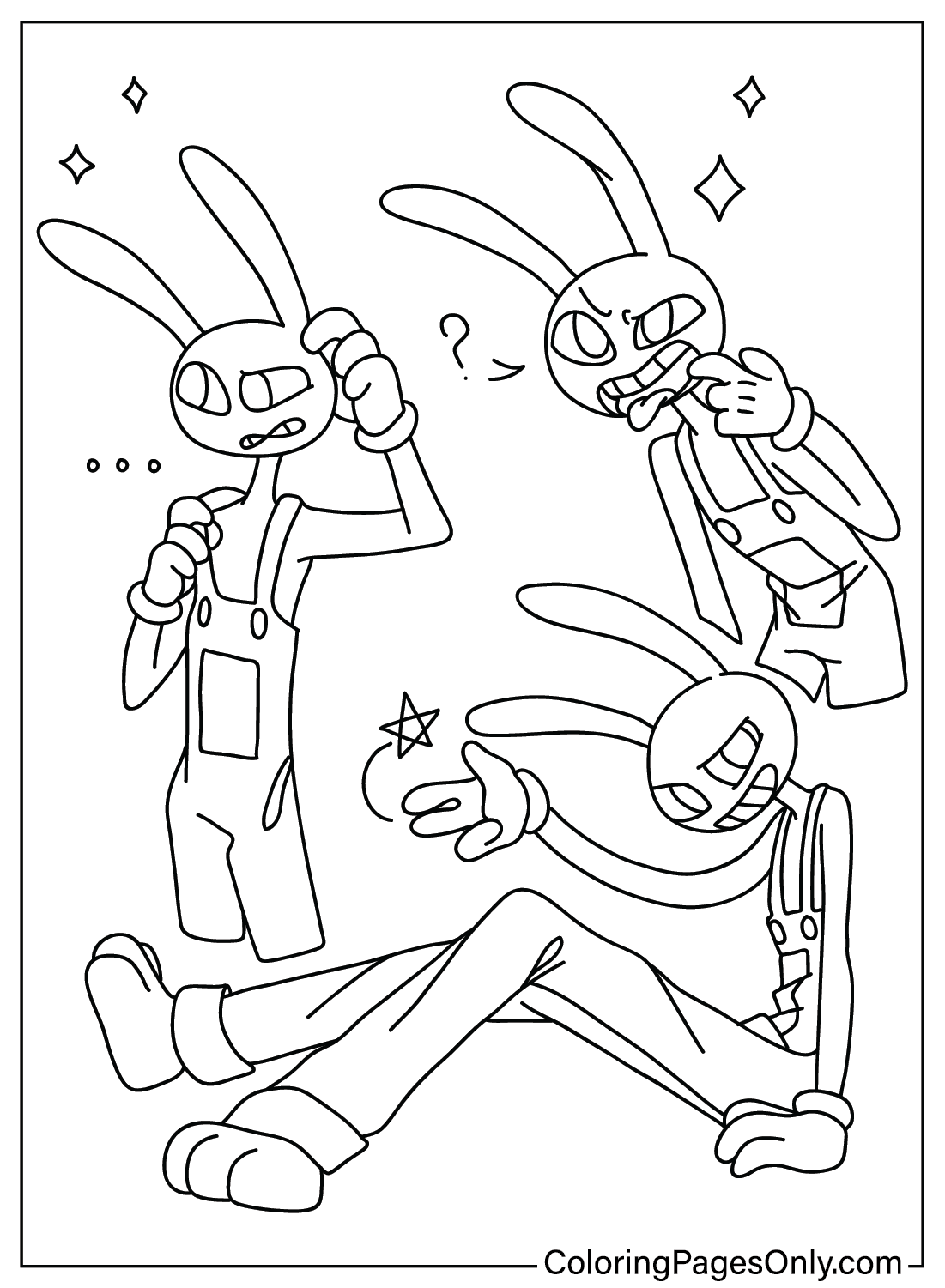
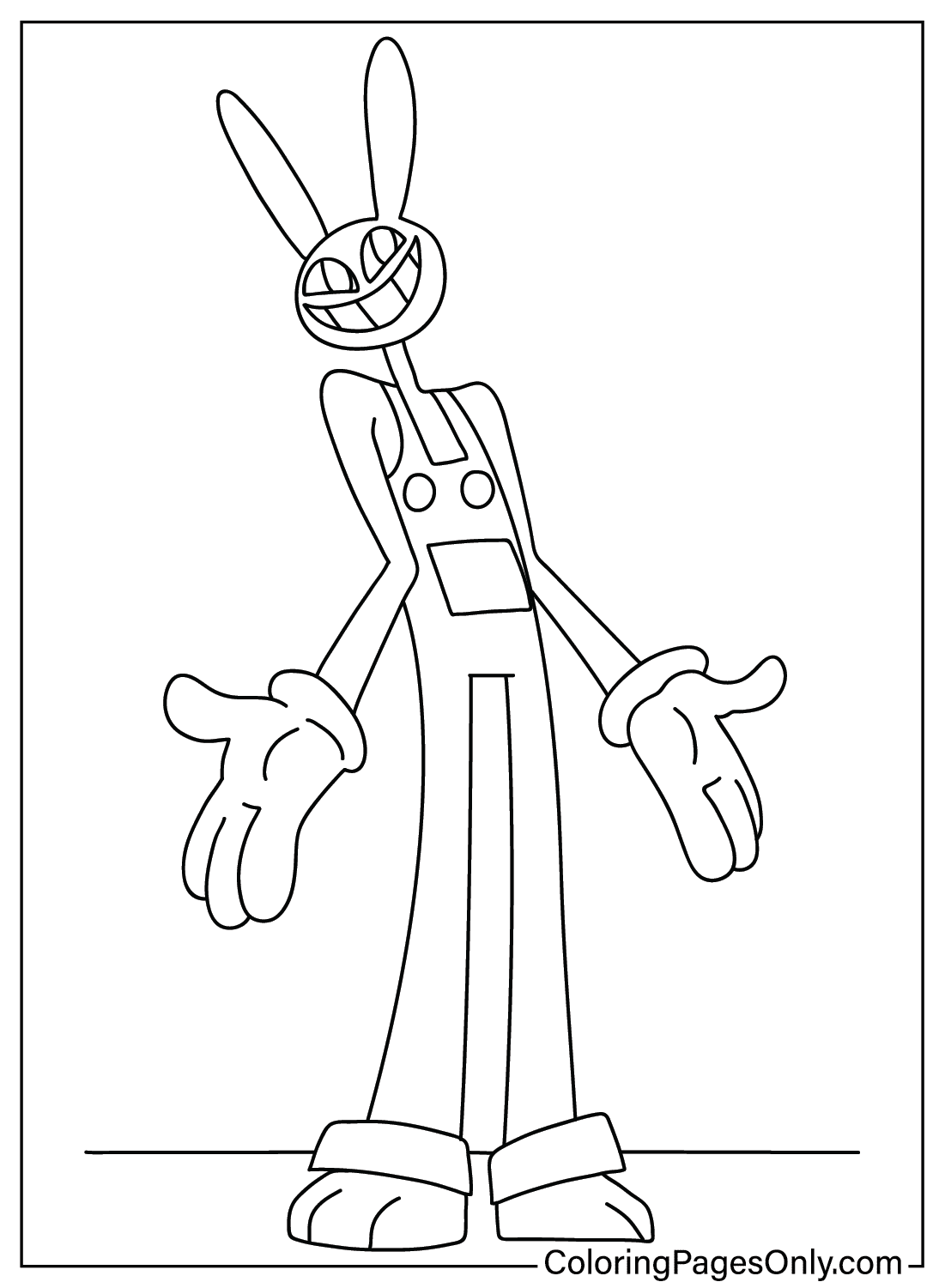
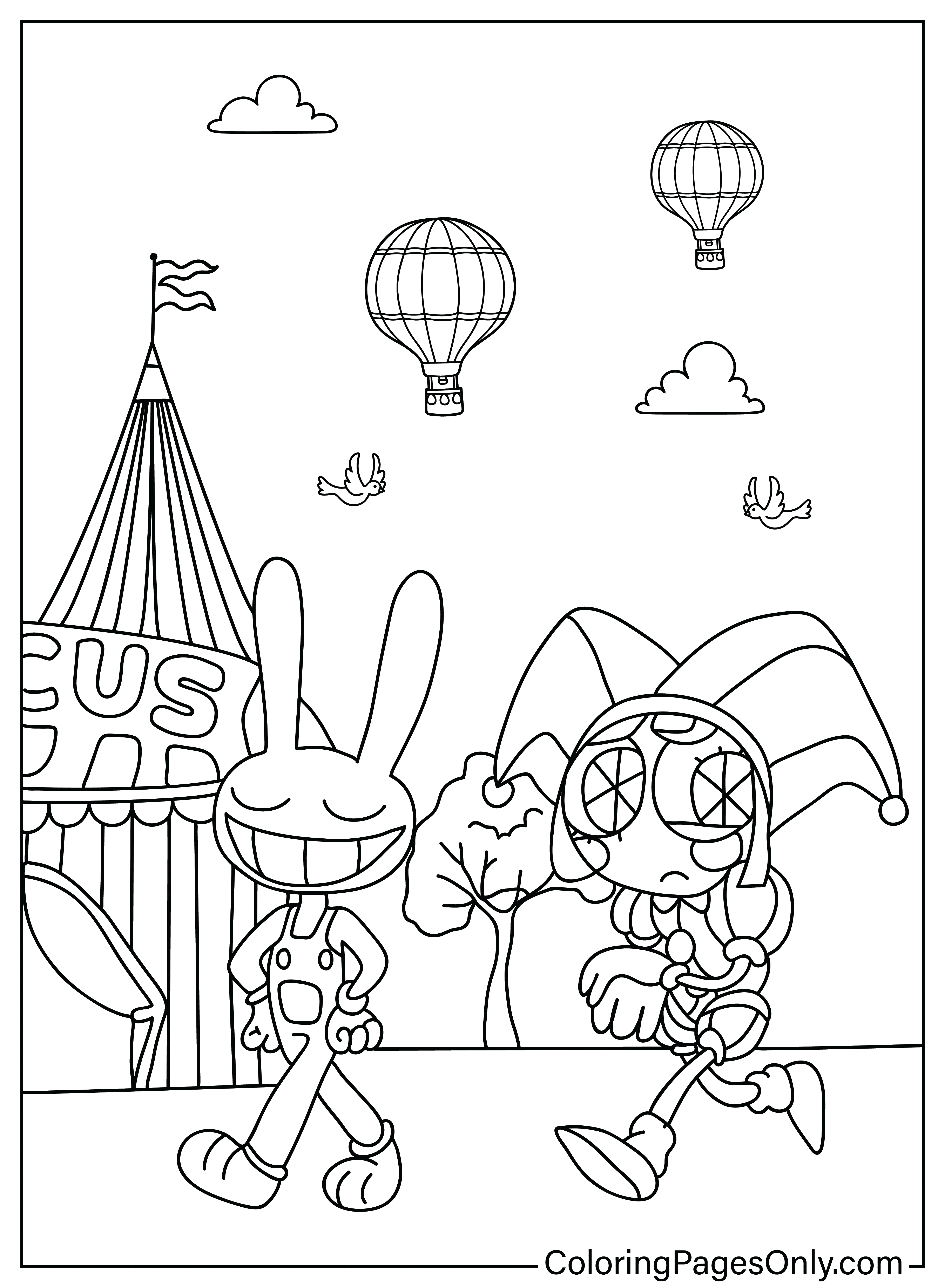
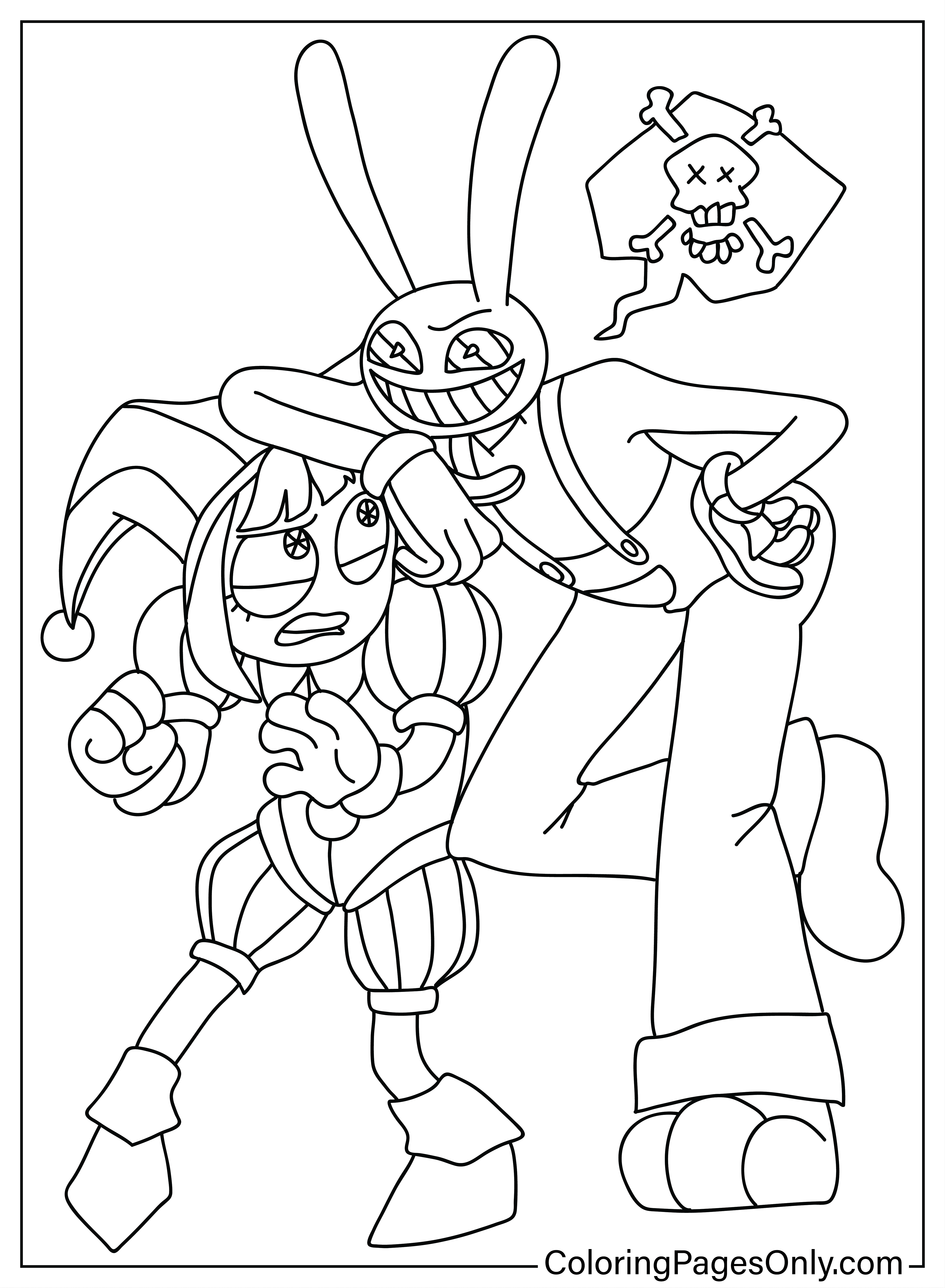
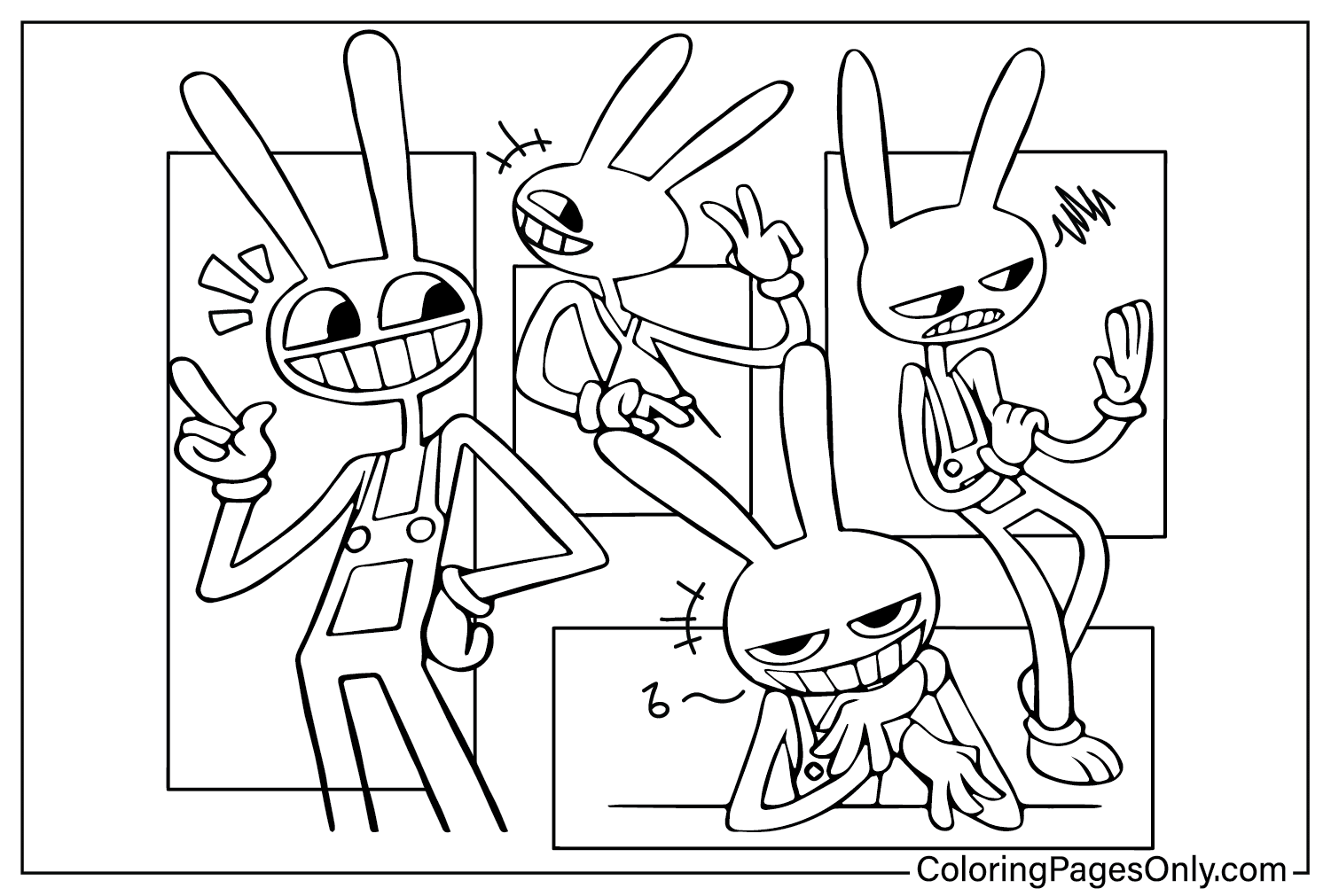
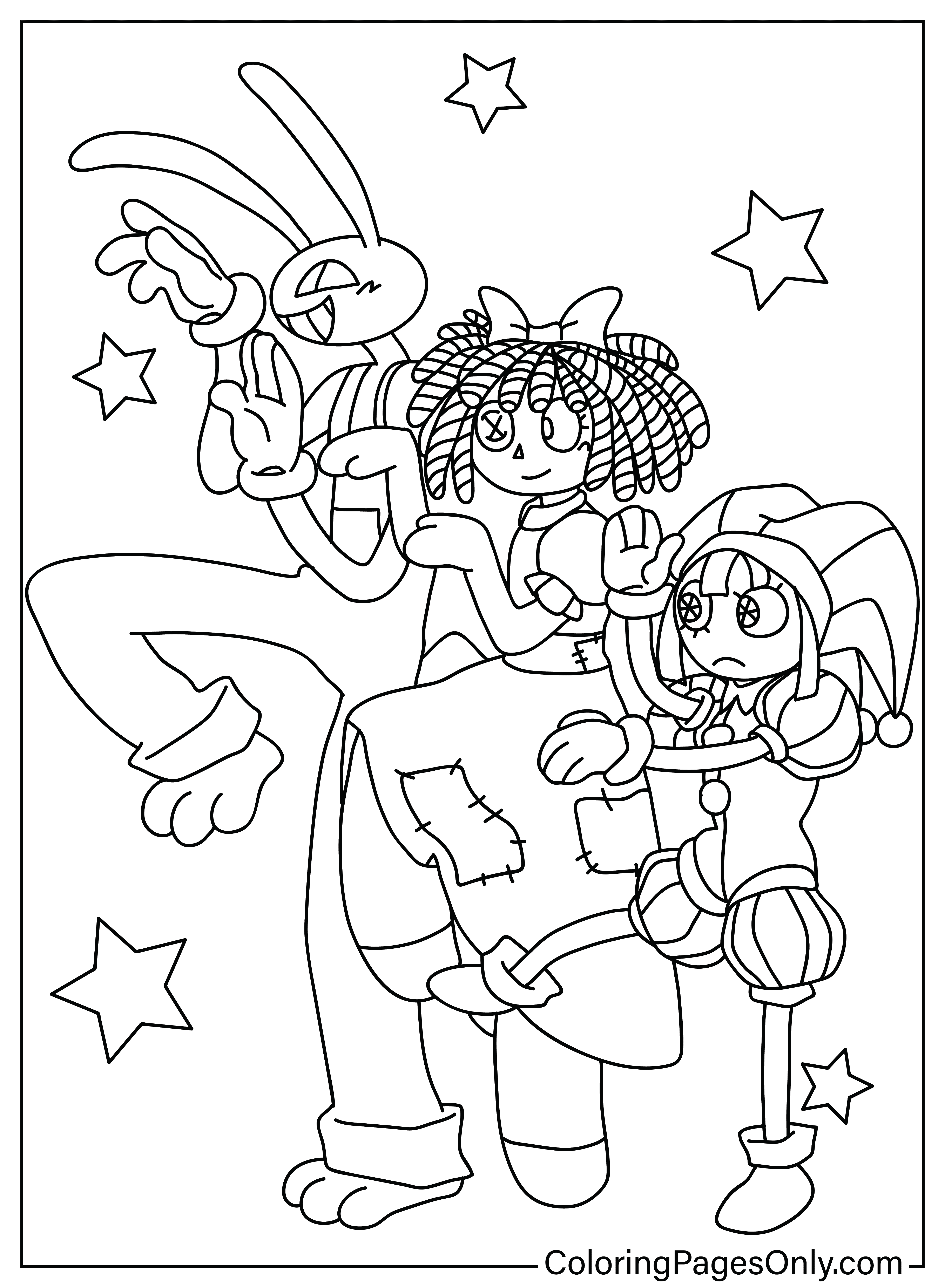
Jax Coloring Pages at ColoringPagesOnly.com brings together 30+ free pages featuring The Amazing Digital Circus‘s most mischievous resident – individual Jax portrait and action pages, duo scenes with Pomni, Ragatha, Gangle, Kinger, and Zooble, group compositions with the full cast, and adventure episode scenes including the Iron Cage sequence from “Candy Carrier Chaos!” and the Princess Loolilalu encounter. Download any page as a free PDF to print, or color online directly in your browser.

Jax is part of the full TADC collection – explore Pomni Coloring Pages and Kinger Coloring Pages for more characters, and browse the full TV Show and Films Coloring Pages hub for more series.

Who Is Jax?

Jax is one of the two main protagonists of The Amazing Digital Circus – the other being Pomni – and is voiced by Michael Kovach, also known for voicing N in Murder Drones and Rocky Rickaby in Lackadaisy. He is the youngest character in the circus at 22 years old, confirmed by series creator Gooseworx, making him the opposite of Kinger in almost every measurable way: youngest versus oldest, most casually cruel versus most openly distressed, least visibly affected versus, as the series progresses, most internally fragile.

His digital avatar is a tall, lanky anthropomorphic rabbit whose design deliberately draws from the tradition of 1930s rubber hose animation – the style of Looney Tunes, early Disney, and similar cartoons where characters had exaggerated proportions, rubbery limbs, and expressive cartoon physicality. Gooseworx confirmed that Jax’s specific design was inspired by Popee from Popee the Performer, another antagonistic rabbit character whose work influenced the creation of The Amazing Digital Circus more broadly. He is notably one of only two characters who break the fourth wall, staring directly into the camera at key moments – a detail that reinforces his self-awareness of the absurdity of his situation.

Within the circus, Jax positions himself as the group’s designated troublemaker: sarcastic, apathetic on the surface, content to watch things go wrong for others, and consistently cruel to Ragatha and Gangle in particular. He has keys to everyone’s rooms through means no one has fully explained. He knows the circus is not real in any meaningful sense and uses this as justification for not taking any consequences seriously. His most frequently quoted line – “I’m fine with doing whatever, as long as I get to see funny things happen to people” – is delivered with the specific flatness of someone who has decided that emotional disengagement is the only viable survival strategy.

The complication, developed across the series’s later episodes, is that this detachment is a coping mechanism rather than a personality. Jax is confirmed by Gooseworx to be “a troubled individual,” and that every character has a reason for behaving the way they do. Episode 6 (“They All Get Guns!”) is largely devoted to showing his friendship with Pomni and the moment he deliberately destroys it because the connection feels too threatening. By Episodes 7 and 8, he is visibly the most mentally fragile member of the group – closer to abstraction than anyone else, not from external trauma but from the internal weight of consistently pushing away everyone who might help him. The cloud imagery in the background when he realizes he has no tail – depicting a rabbit losing its tail while looking at a bowtie – is widely interpreted as a reference to Ribbit, a close friend who abstracted before the pilot, whose loss appears to have fundamentally altered Jax’s personality and accelerated his deterioration.

Jax’s Design – Canonical Colors

Jax is a periwinkle-to-lilac purple rabbit – the official TADC wiki describes the color as “periwinkle,” while other sources use “lilac,” “light purple,” or “lavender.” The key point for coloring accuracy is that his purple is a cool, medium-light value – not a deep saturated purple, not a blue-grey, but the specific soft purple that reads as a cartoon character’s fur rather than a dramatic or dark color. The lightness of the purple is what makes the warm colors of his overalls and gloves contrast against him so visibly.

His overalls are pink/fuchsia – not red, despite being described as “red” in some fan sources. The official Fandom wiki describes them as “light pink-colored overalls” with “lighter pink roll-up cuffs” and a “lighter pink rectangular pocket on the front.” The overall tone sits in the pink-to-fuchsia range: warmer than a dusty rose, more pink than red. The buttons are yellow-gold, and the pocket appears as a slightly lighter pink rectangle on the front bib. He is typically barefoot – no shoes are part of his standard design.

His gloves are yellow – a warm, slightly acid yellow that reads immediately as cartoon character accessory yellow rather than a natural skin tone. The yellow of the gloves matches the yellow of his teeth and the yellow sclera of his eyes, creating an intentional color repetition across three different parts of his design.

His eyes are one of the most expressively designed elements in the show’s entire cast. The sclera – the whites of the eyes – are yellow, not white. This is a critical accuracy detail: yellow sclera gives Jax a slightly unsettling, uncanny quality that white sclera would not. The pupils are square and black, which is the rubber hose animation convention – round irises with square pupils rather than the typical round-pupil human eye. The pupils contract when Jax is angry (becoming smaller, more intense) and heavily dilate when he is caught off guard or at a loss for words. When he is stressed or anxious – states that appear more frequently as the series progresses – his eyes change into animated scribbles, a visible breakdown of his composure.
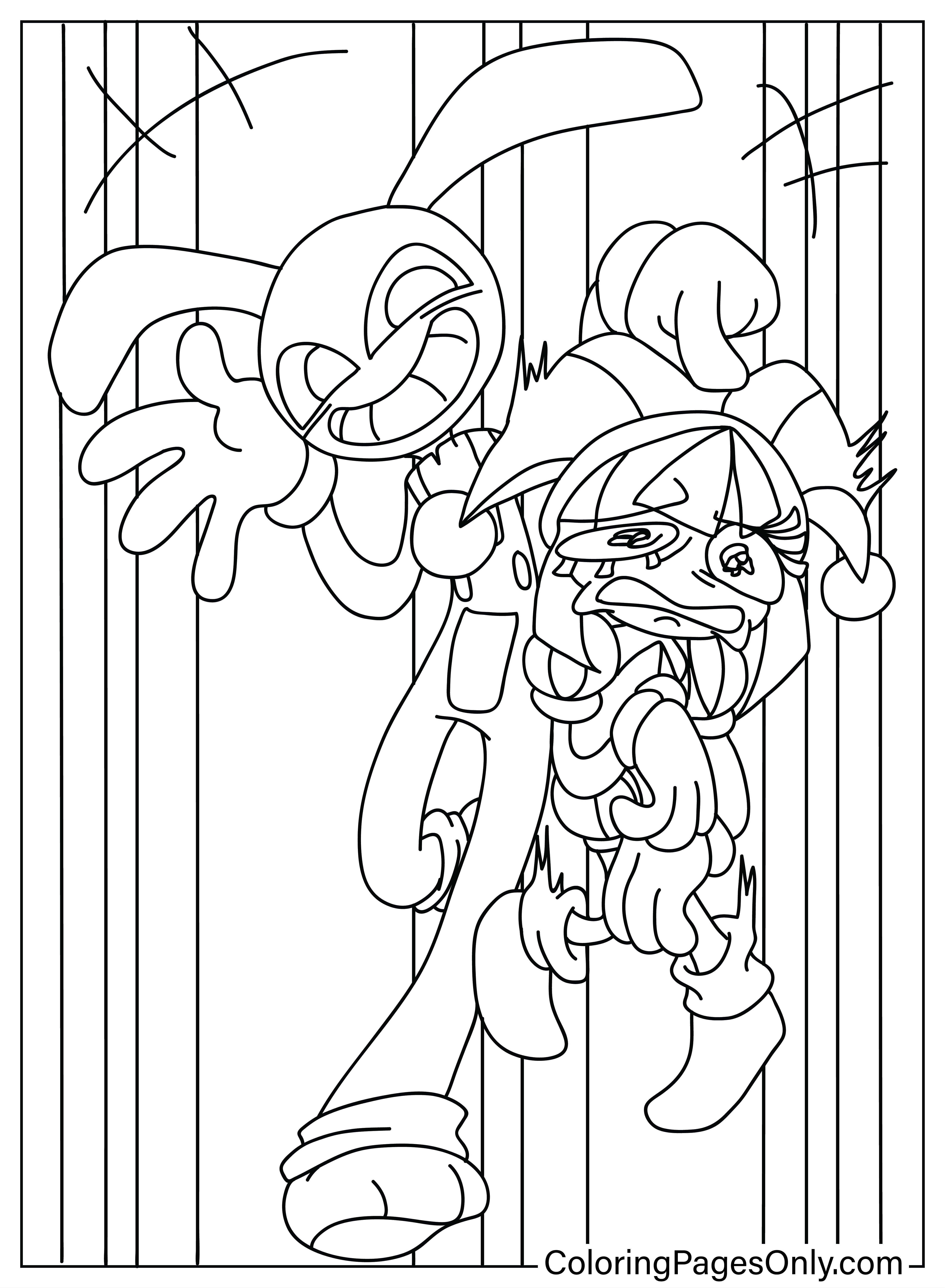
His teeth are yellow, usually flat-shaped when his mouth is closed (his lips typically do not move when he speaks, giving him a ventriloquist-dummy quality). When his mouth is actually opened, the teeth appear sharp and jagged – a jarring contrast to the friendly flat smile that is his resting expression.

His tail is a small, round puffball – notably absent in early episodes and restored from Episode 6 onward. This detail matters for accuracy: if a coloring page corresponds to a scene from Episodes 1–5, Jax has no visible tail. From Episode 6 onward, he does. The tail’s restoration is tied narratively to his emotional arc.

Coloring Tips

The purple-pink-yellow triad is Jax’s entire visual identity. Every coloring decision on a Jax page should serve this three-color relationship: the cool lilac-purple of his fur, the warm pink-fuchsia of his overalls, and the acid yellow of his gloves, eyes, and teeth. These three colors are intentionally spread across different value levels – the purple is a medium-light cool, the pink is a mid-warm, and the yellow is a bright accent – which is what makes them work together without any one element dominating to the point of visual chaos. Before starting any Jax page, establish all three in their correct value relationships.

The yellow sclera is the most important accuracy detail. More than any other single element, the yellow eye whites distinguish a canonically accurate Jax from a generic cartoon rabbit. Yellow sclera communicates the slight wrongness of his design – the way he looks friendly until you look at him carefully. Apply the yellow to the sclera area before rendering the square black pupil. The yellow should be a warm, slightly saturated yellow – not a pale cream, not an orange – consistent with the yellow of the gloves and teeth.

The square pupils require clean, sharp edges. Round pupils softened at the edges will not read as Jax. The square shape needs hard edges, particularly at the corners. If working with a colored pencil, the pupil outline should be rendered with the firmest possible pressure at the boundary. The expressiveness of Jax’s design lives in the geometry of those pupils – dilated squares read as a different emotional state from contracted ones, and the contrast between his usually-composed face and his rare moments of genuine expression is one of the show’s primary sources of character comedy and pathos.

For the overalls – pink, not red. If your initial instinct is to reach for red because you remember the overalls as red, test it against a clear medium pink before committing. The overalls read warmer than the purple fur, but they should not read as red-adjacent. A pink that you might describe as “bubble gum” or “flamingo” is closer to correct than anything that could be described as “crimson” or “scarlet.” The yellow buttons should be the same yellow as the gloves – consistency between these two yellow elements is what makes them feel intentional rather than random.

For Jax and Pomni page compositions. Of all the duo pairings in this collection, Jax-and-Pomni has the most visual harmony: his cool purple-and-pink contrasts with her cool blue-and-red in a palette that reads as genuinely complementary rather than competing. When coloring these pages, resist the urge to make either character’s palette more dominant – the visual balance between them is what communicates their narrative relationship as co-protagonists, two characters who are defined partly by their contrast with each other.

For the Iron Cage scene page (Jax in the iron cage, angrily looking at Gummigoo and Pomni from “Candy Carrier Chaos!”): The cage is the primary structural element and should be rendered in cool grey-black iron, creating a hard, angular frame around Jax’s purple figure inside. The color temperature of the candy kingdom environment surrounding the cage – warm gummy-candy tones – against the cool grey of the cage bars and Jax’s cool purple creates the visual tension of the scene. Jax inside the cage should have his pupils in contracted, angered mode: small, tight squares rather than the usual resting size.

For action pose pages showing his teeth. When Jax’s mouth is open, the teeth shift from the flat, friendly smile to sharp, jagged points. This is a visual cue that something has escalated – the friendly surface has dropped. Render the sharp teeth clearly: each tooth is a distinct pointed shape, not a smooth line. The yellow of the teeth should match the yellow elsewhere in his design. The inside of the mouth, visible when the teeth part, is a deeper warm pink.

5 Activities

The surface-versus-interior color study. Print any solo Jax portrait page twice. Color the first as his public-facing self: bright, confident, maximum contrast between the light purple, pink overalls, and yellow accents. Color the second as his interior – the version that exists in Episode 7’s bathroom scene and the Beach Episode’s breakdown. Same canonical colors, but muted: push the purple slightly toward grey, soften the pink overalls toward a less saturated tone, let the yellow accents read less vivid. The same character should look genuinely different between the two versions while remaining recognizably Jax. This exercise replicates what the show’s color artists do – using saturation and warmth adjustments to communicate psychological state without changing the character’s fundamental palette.

Map the eye expressions. Jax’s eyes carry his entire emotional range, given that his mouth typically doesn’t move when he speaks. On a blank page, draw five versions of Jax’s face at different eye states: standard resting square pupils, contracted-angry pupils, heavily dilated surprised pupils, animated-scribble stressed pupils, and the half-lidded bored expression that is his most frequent baseline. Color each set of eyes accurately – yellow sclera, yellow teeth visible at the resting expression – and label each with the episode moment it comes from. This exercise is both a character study and a technical exercise in how a show communicates emotion through minimal design changes within an established palette.

The Ribbit/Jax grief hypothesis. The show strongly implies that Jax’s current personality is shaped by the abstraction of his friends Ribbit and Kaufmo before the pilot begins – that he was a different person before those losses. Print any Jax page and color it in his canonical palette. Then, on a second page or in the margins, sketch a version of Jax with slightly different energy: a posture that is less performatively casual, pupils that are a normal size rather than contracted, and teeth that are not quite as sharp when the mouth opens. This is Jax-before – a thought experiment in what the design might look like if the grief hadn’t become the default setting. The exercise engages directly with what makes Jax one of the show’s most discussed and analyzed characters: the gap between his appearance and what the series suggests is underneath it.

The rubber hose animation study. Jax’s design is explicitly based on 1930s rubber hose cartoon conventions. Print any full-body Jax pose page and color it. Then look up reference images of original rubber hose cartoon characters from the 1920s and 1930s – early Disney, Fleischer Studios, Ub Iwerks. Compare the design conventions: the elongated limbs, the oval head, the exaggerated proportions, and the expressive hands. Notice what Gooseworx preserved from that tradition and what she updated for a contemporary digital animation context. The exercise places Jax in a 100-year design lineage and makes visible the specific tradition his appearance is both honoring and updating.

Color the full cast with Jax’s eye color logic. Print any group scene page that includes most or all of the TADC cast. Color every character’s eyes according to their canonical design – Pomni’s roulette-wheel pupils, Kinger’s asymmetrical blue eyes, Gangle’s mask expressions, Ragatha’s button eye, Zooble’s variable design, Jax’s yellow sclera and square pupils. The exercise forces careful attention to the specific eye design of each character and demonstrates how Gooseworx differentiated six characters with six distinct eye conventions – a design decision that makes the cast recognizable individually even when grouped in a crowd composition.
These related coloring collections will help you explore the wonderful world of colors. Let’s choose, be creative, and show us your great pictures!

Emily Lewis – Website Technology Engineer

I am Emily Lewis, a passionate technical designer from Las Vegas. I love art and want to create a community of people passionate about drawing and coloring, especially children. I am proud to create a website that allows everyone's creativity to be realized most easily and enjoyably.