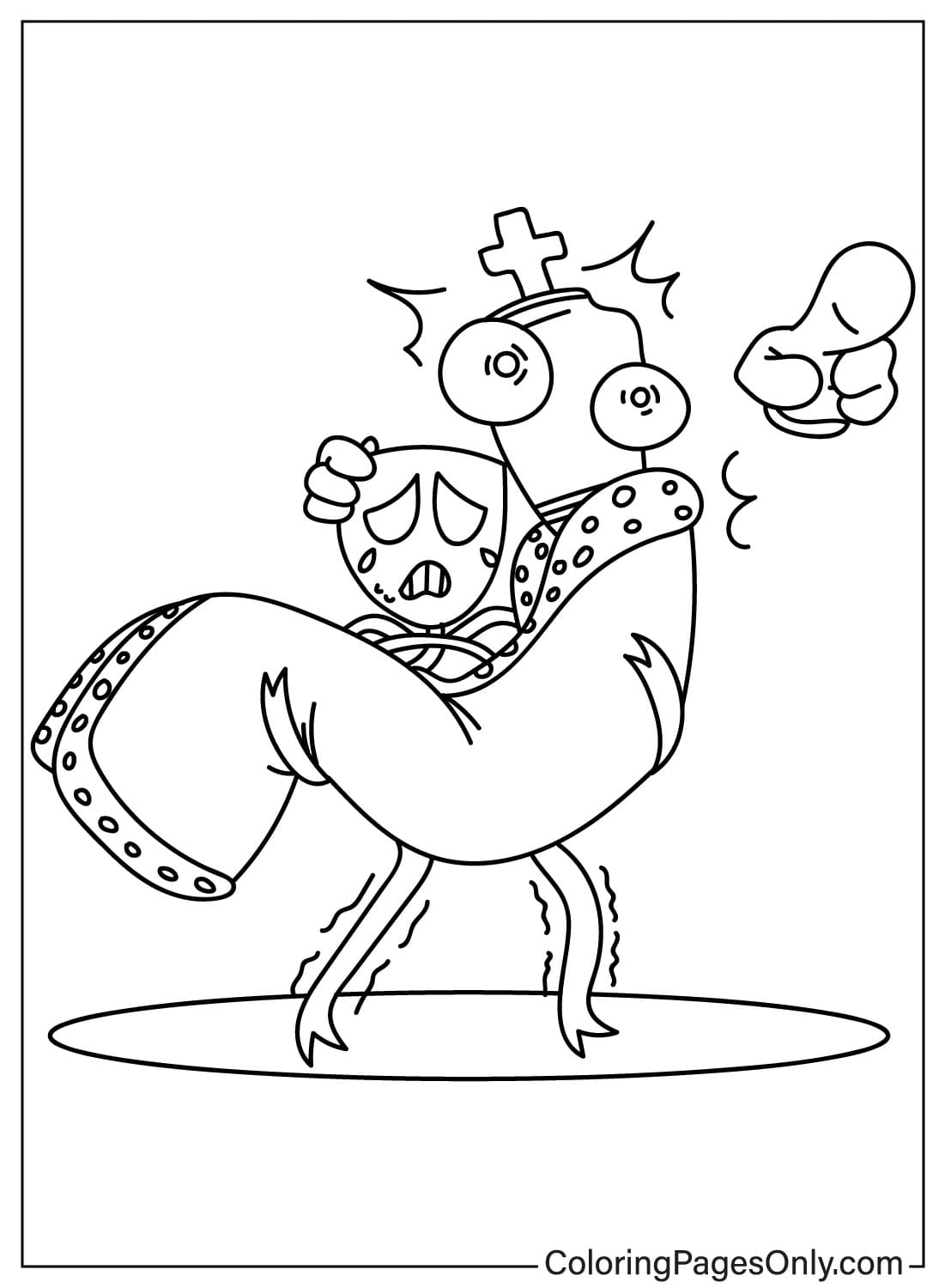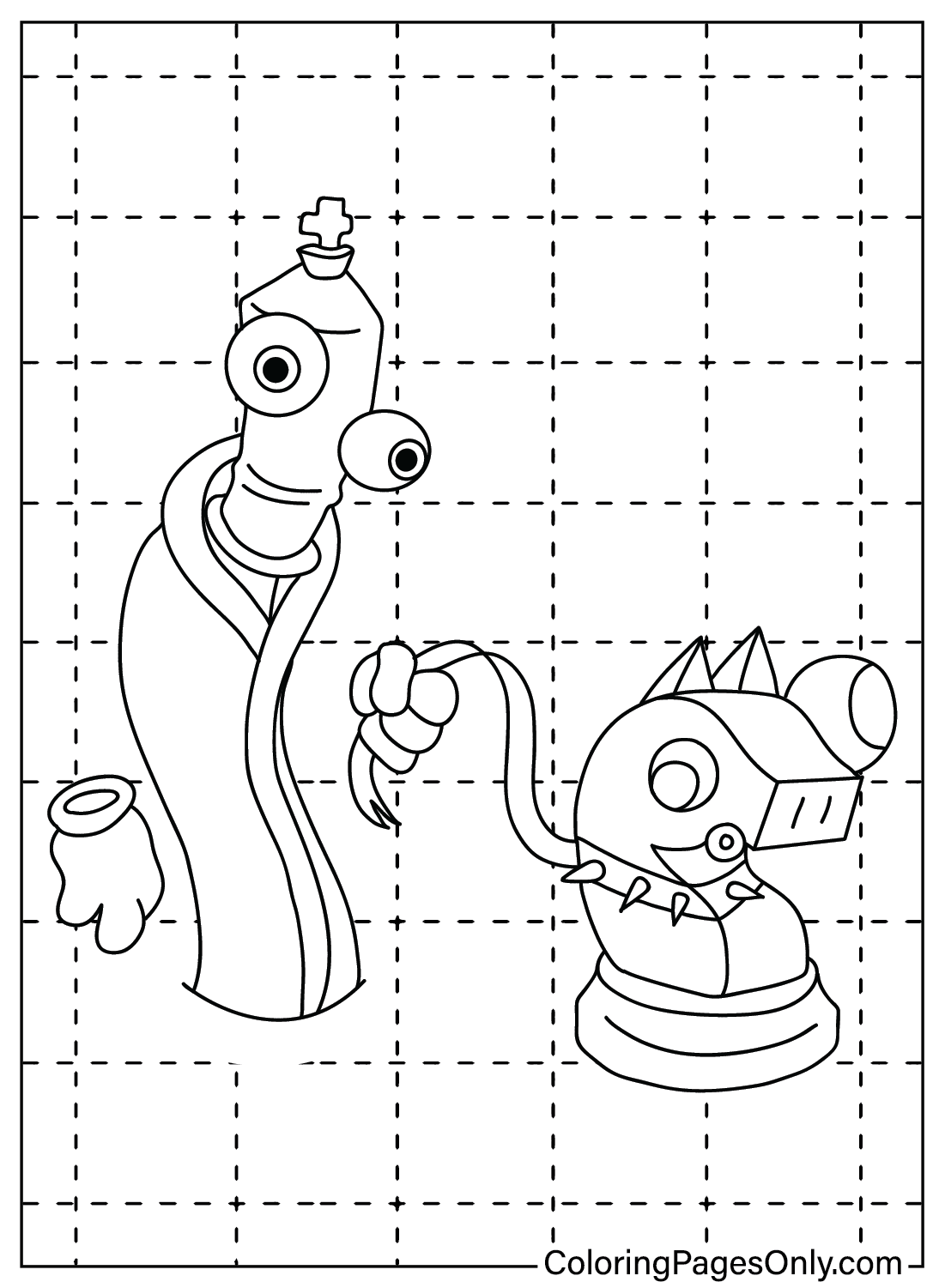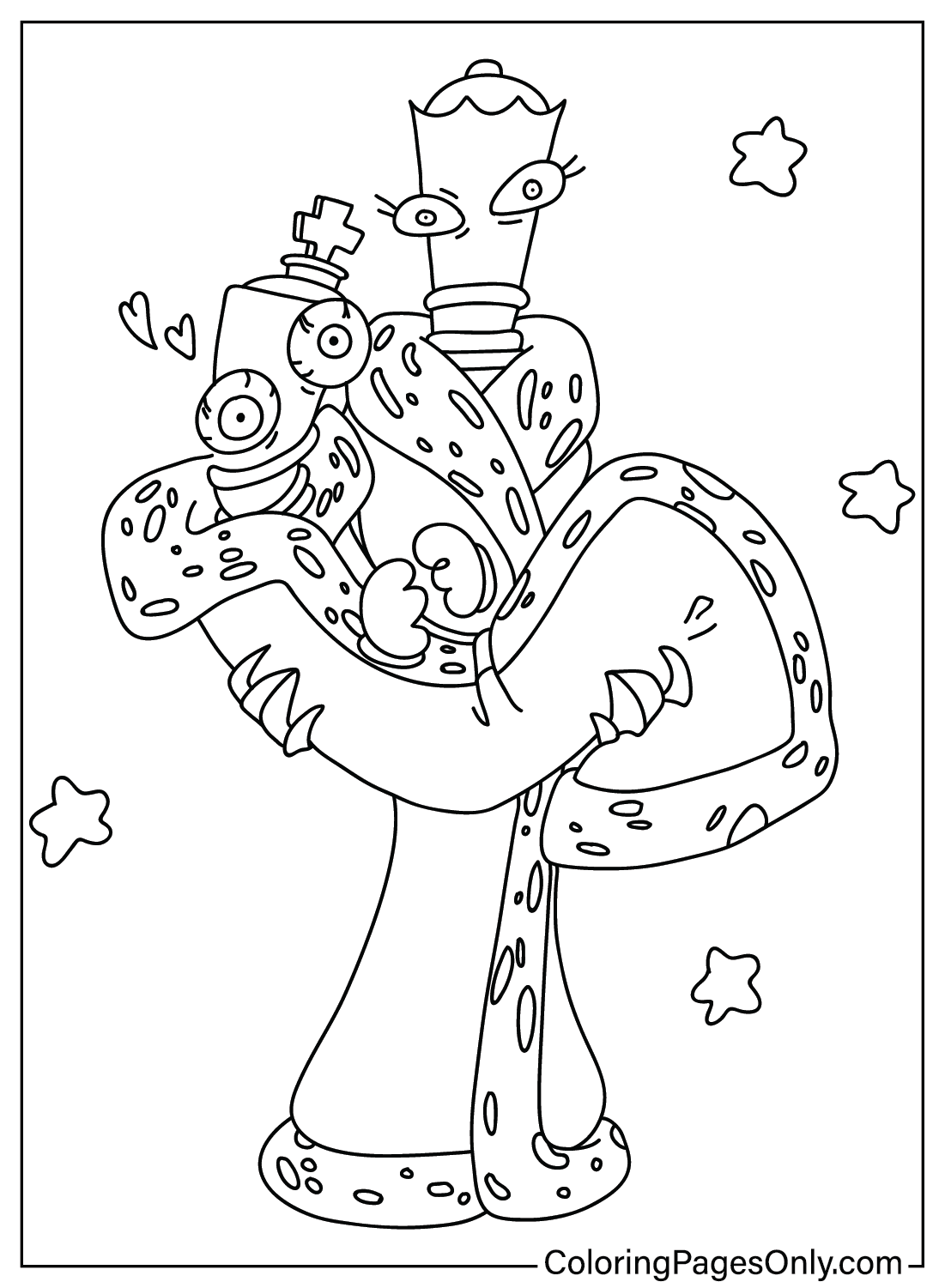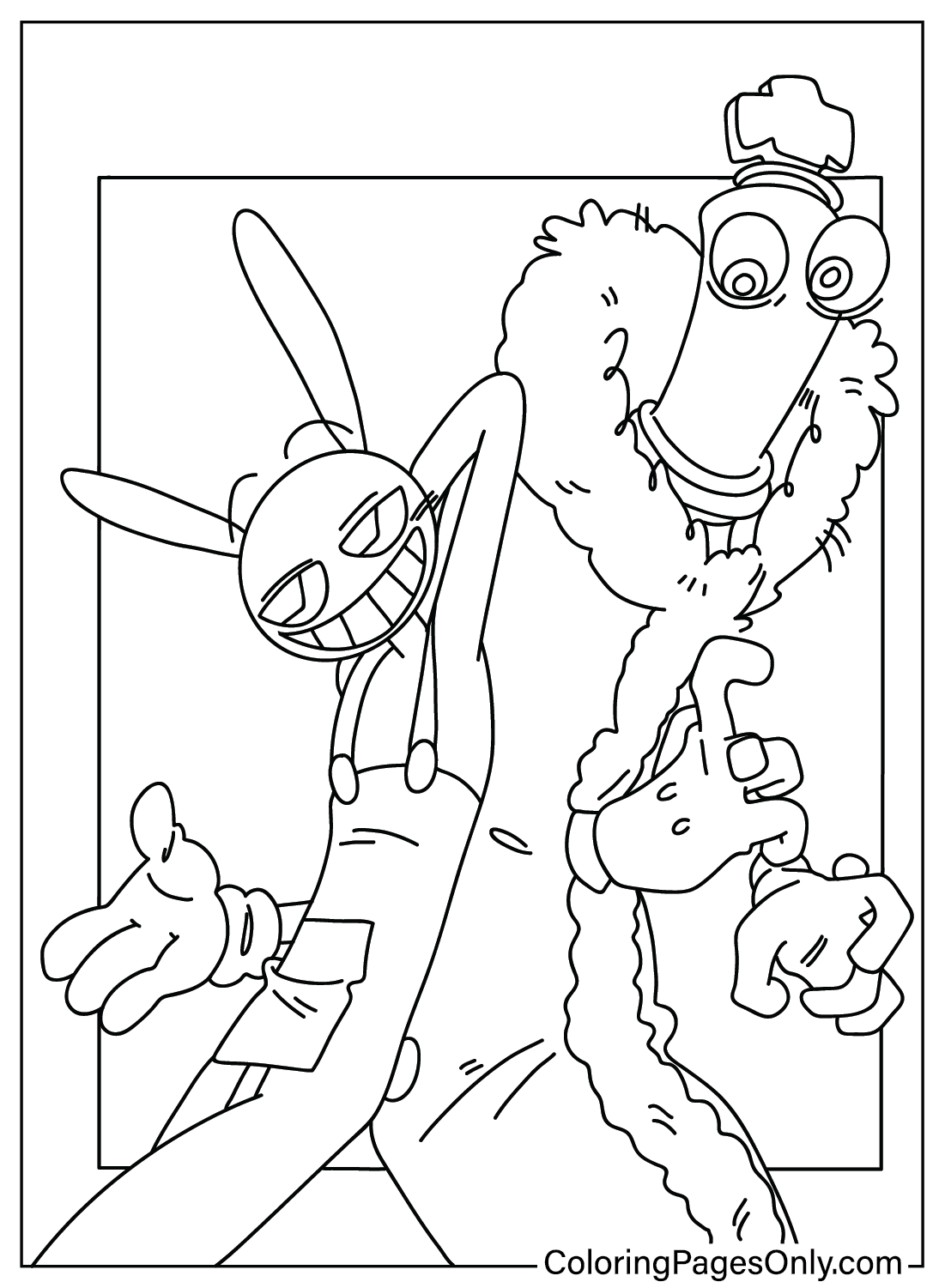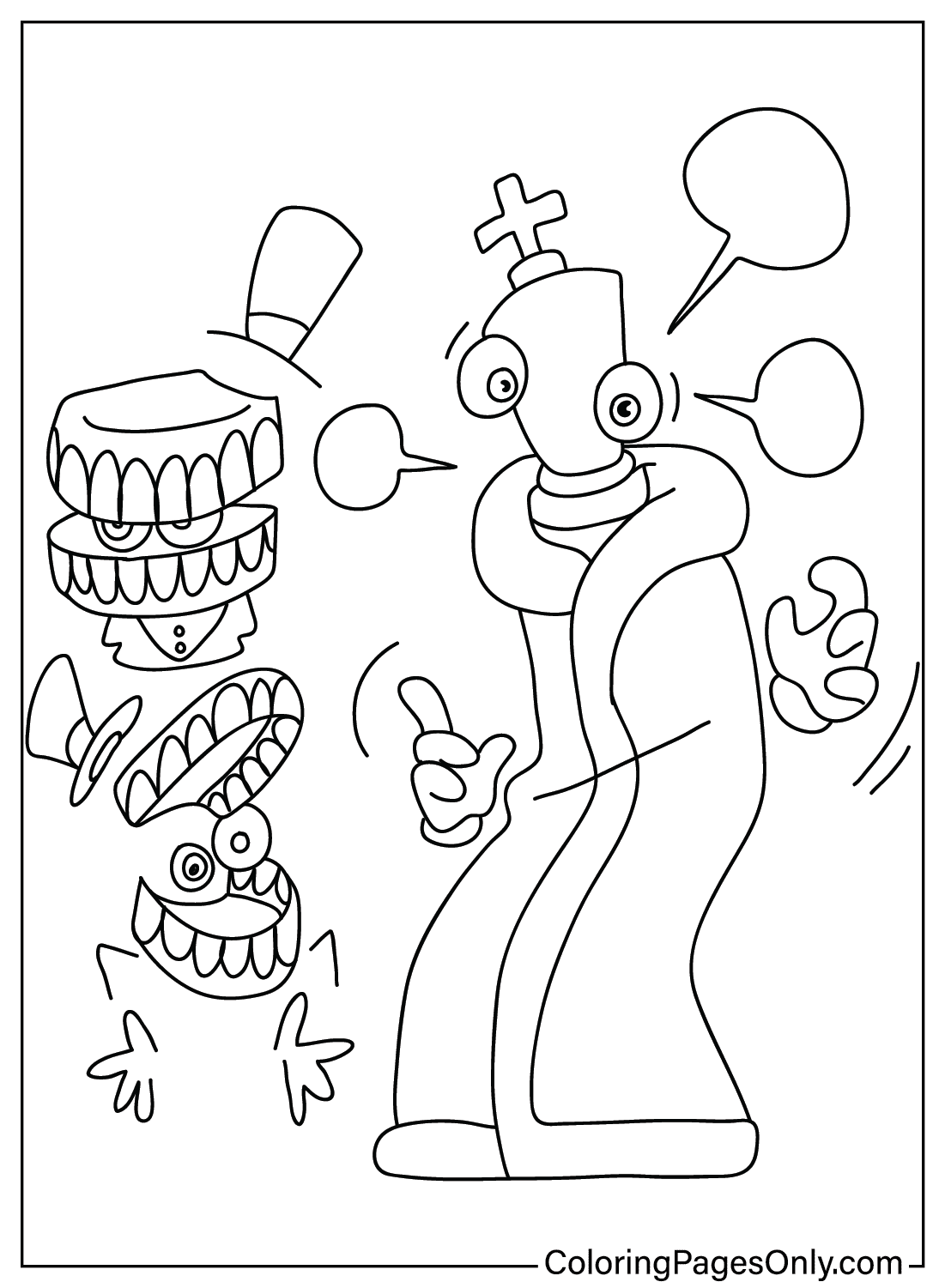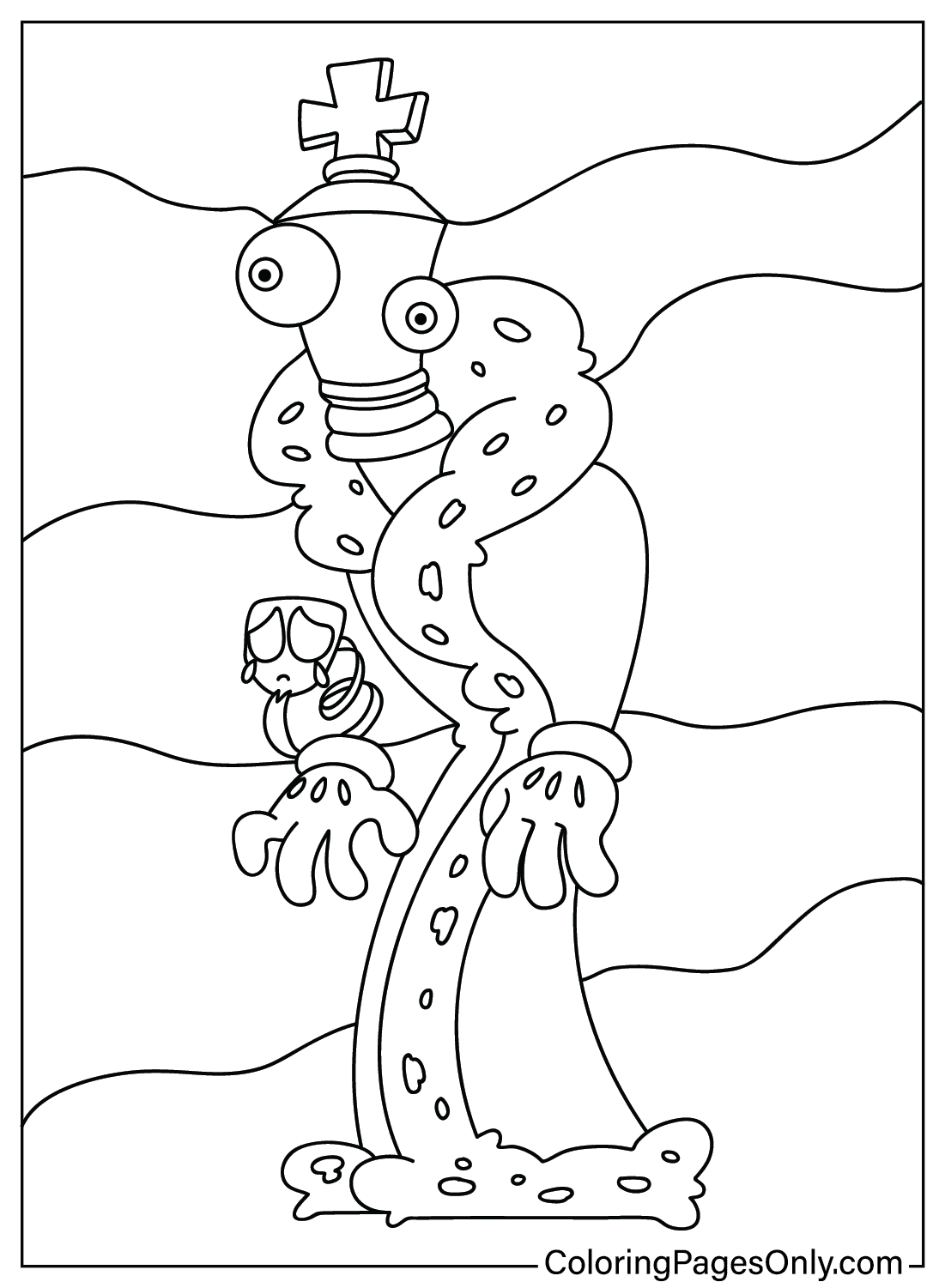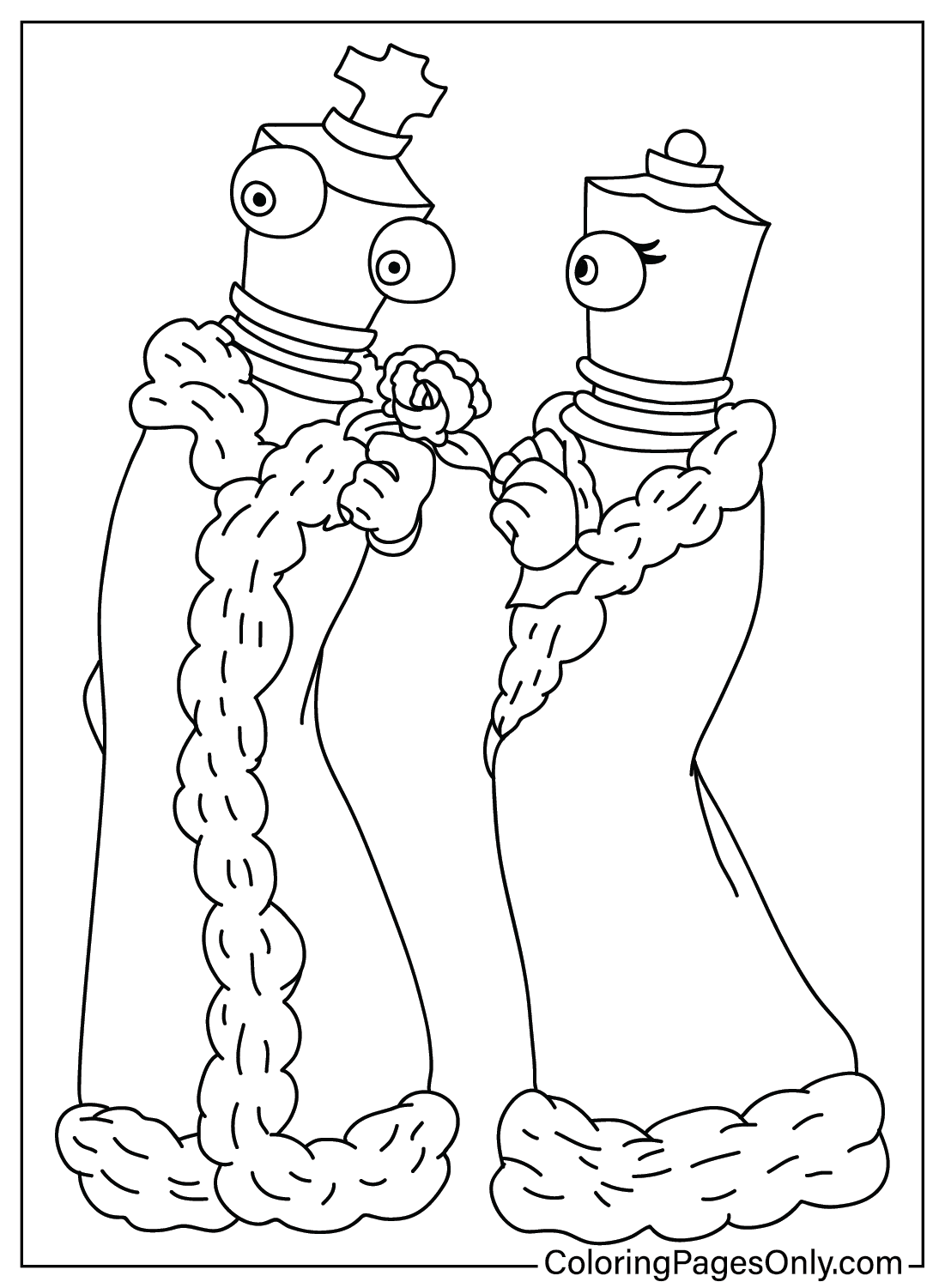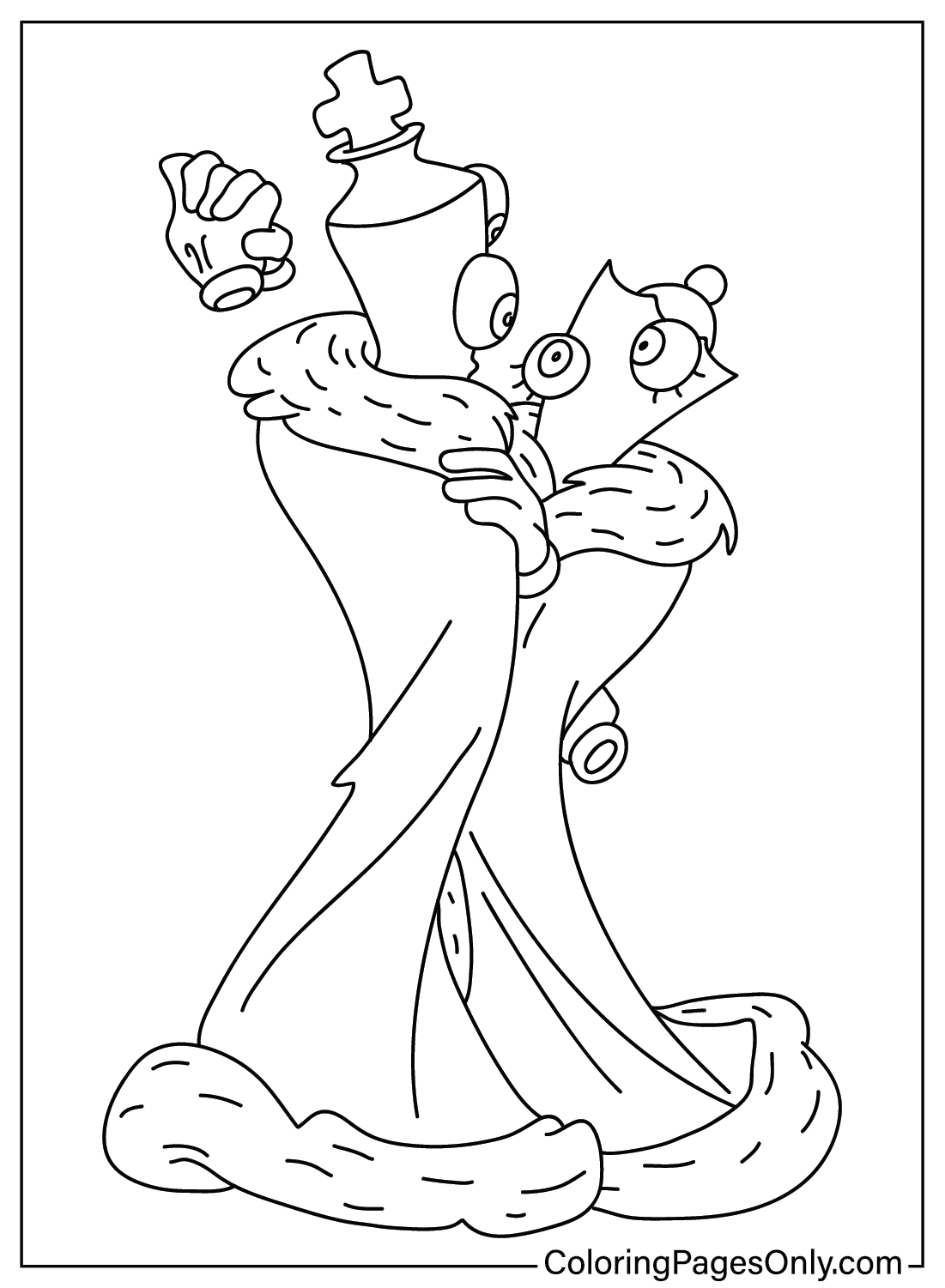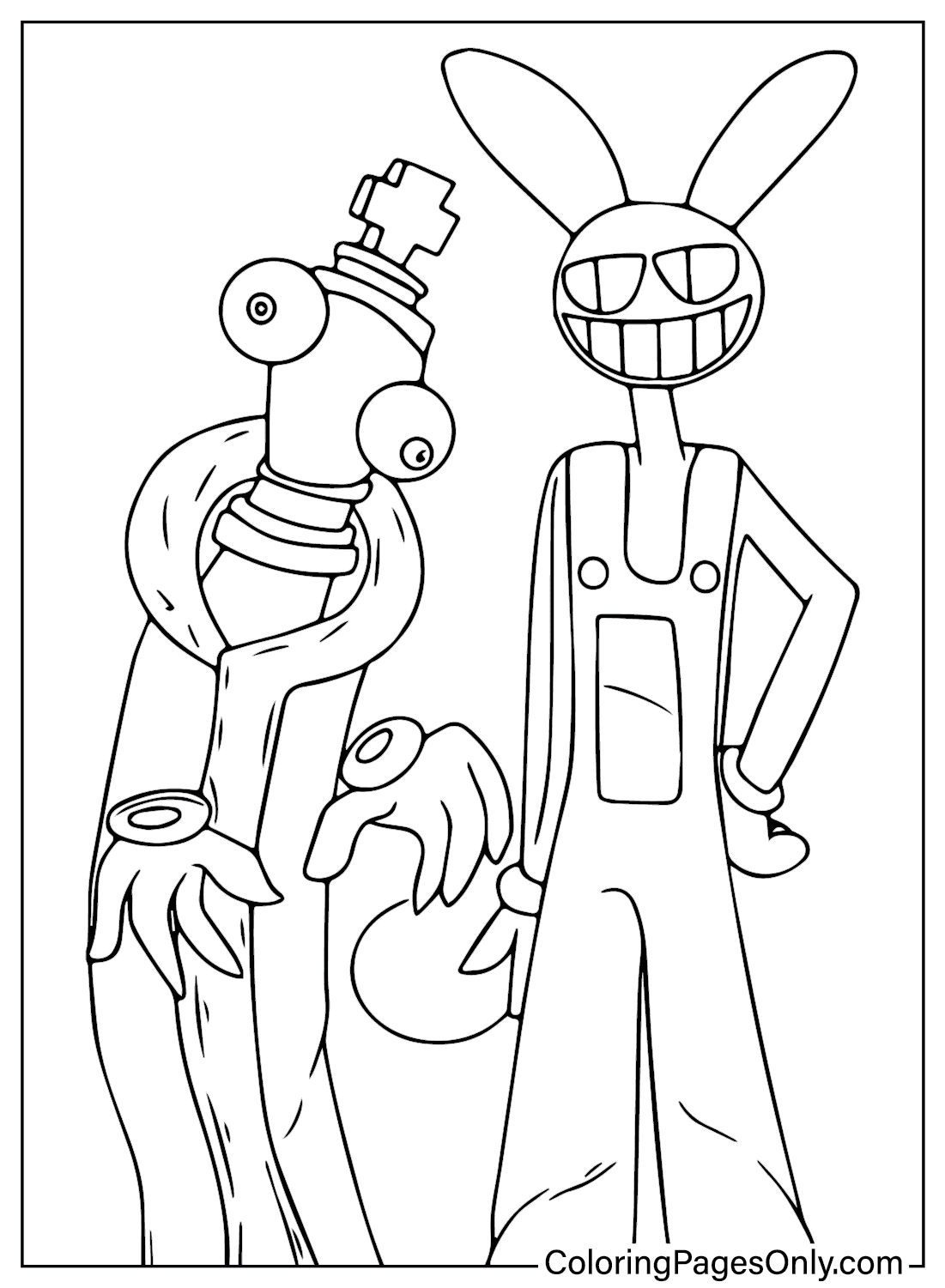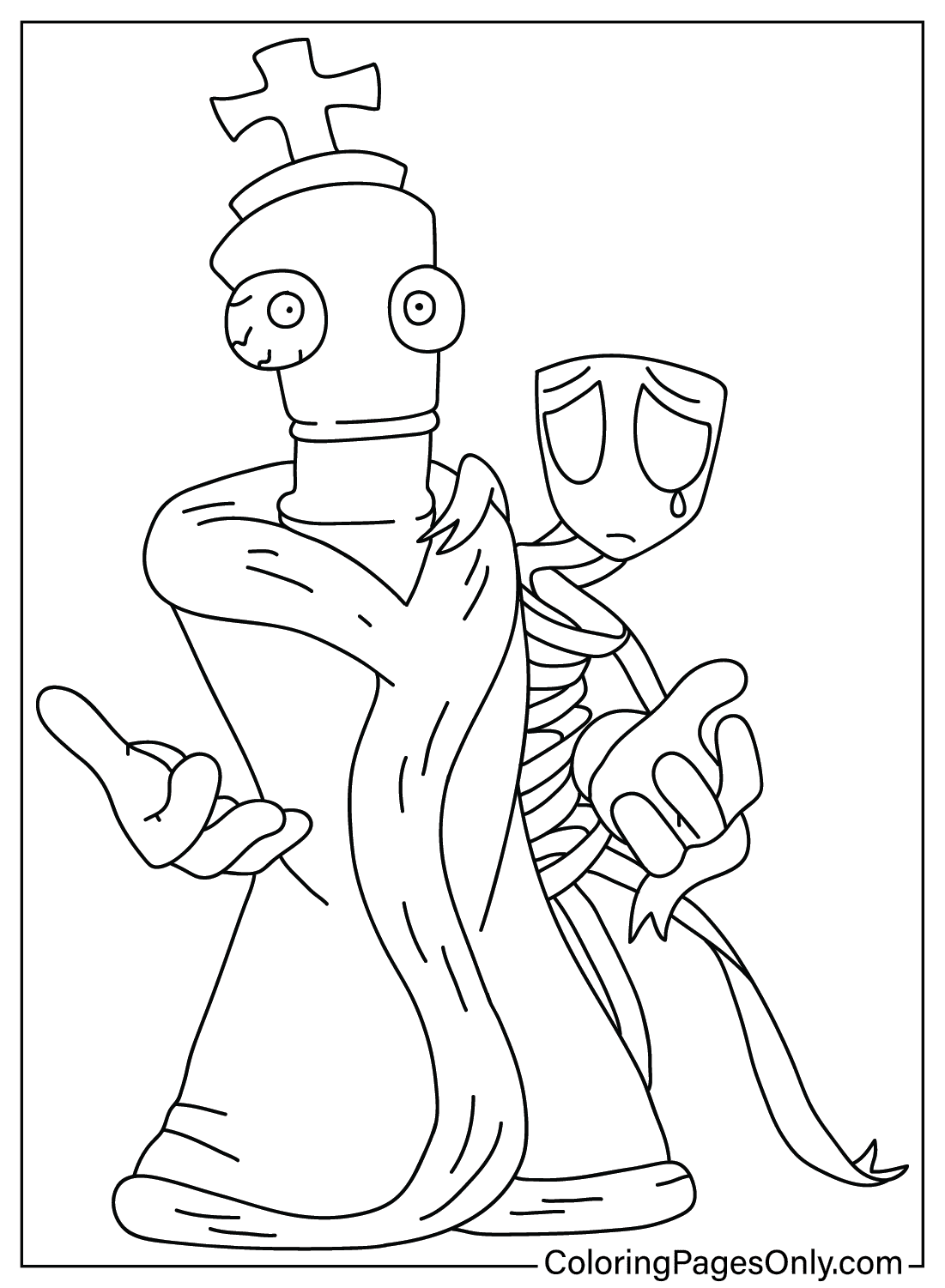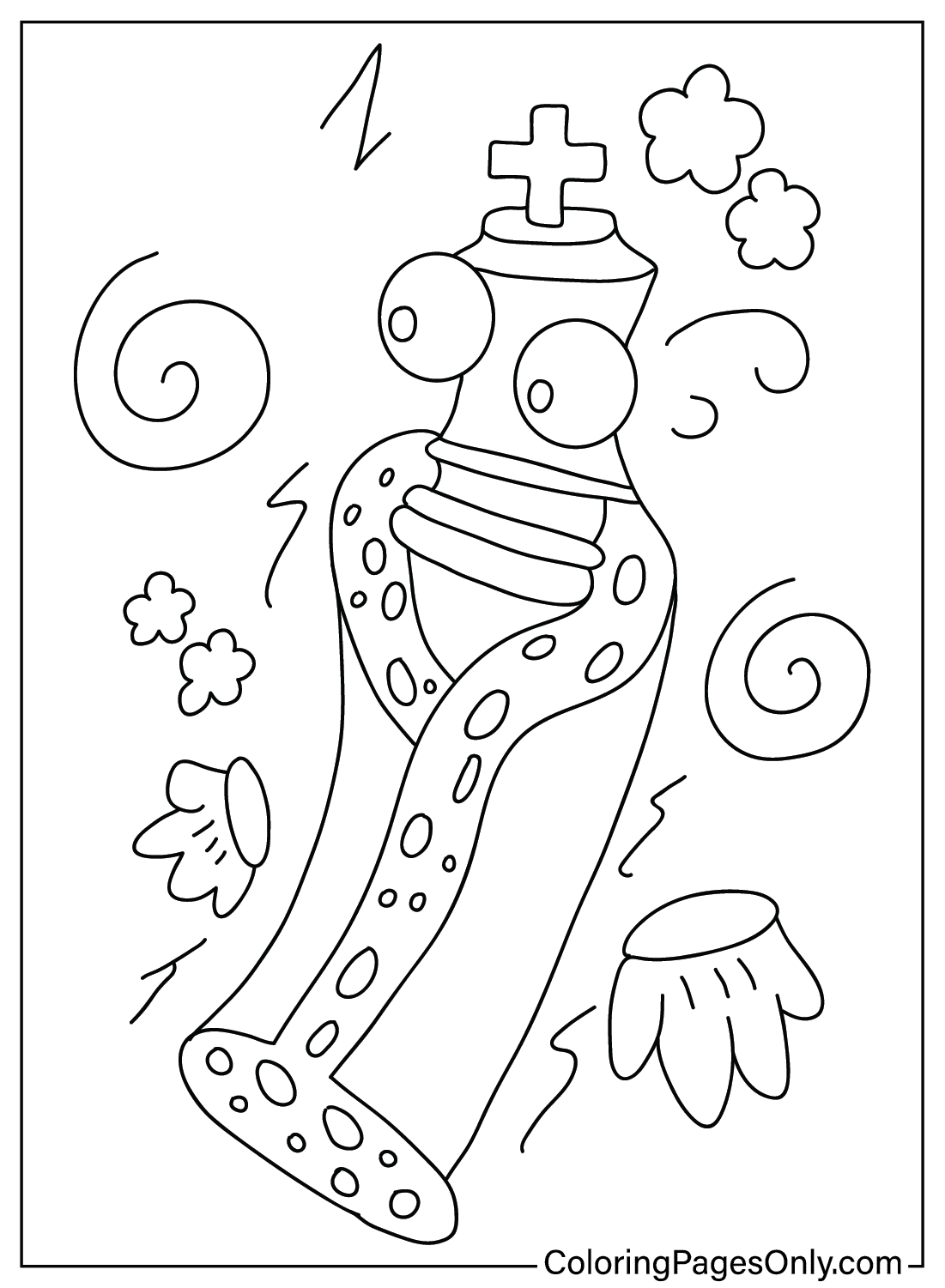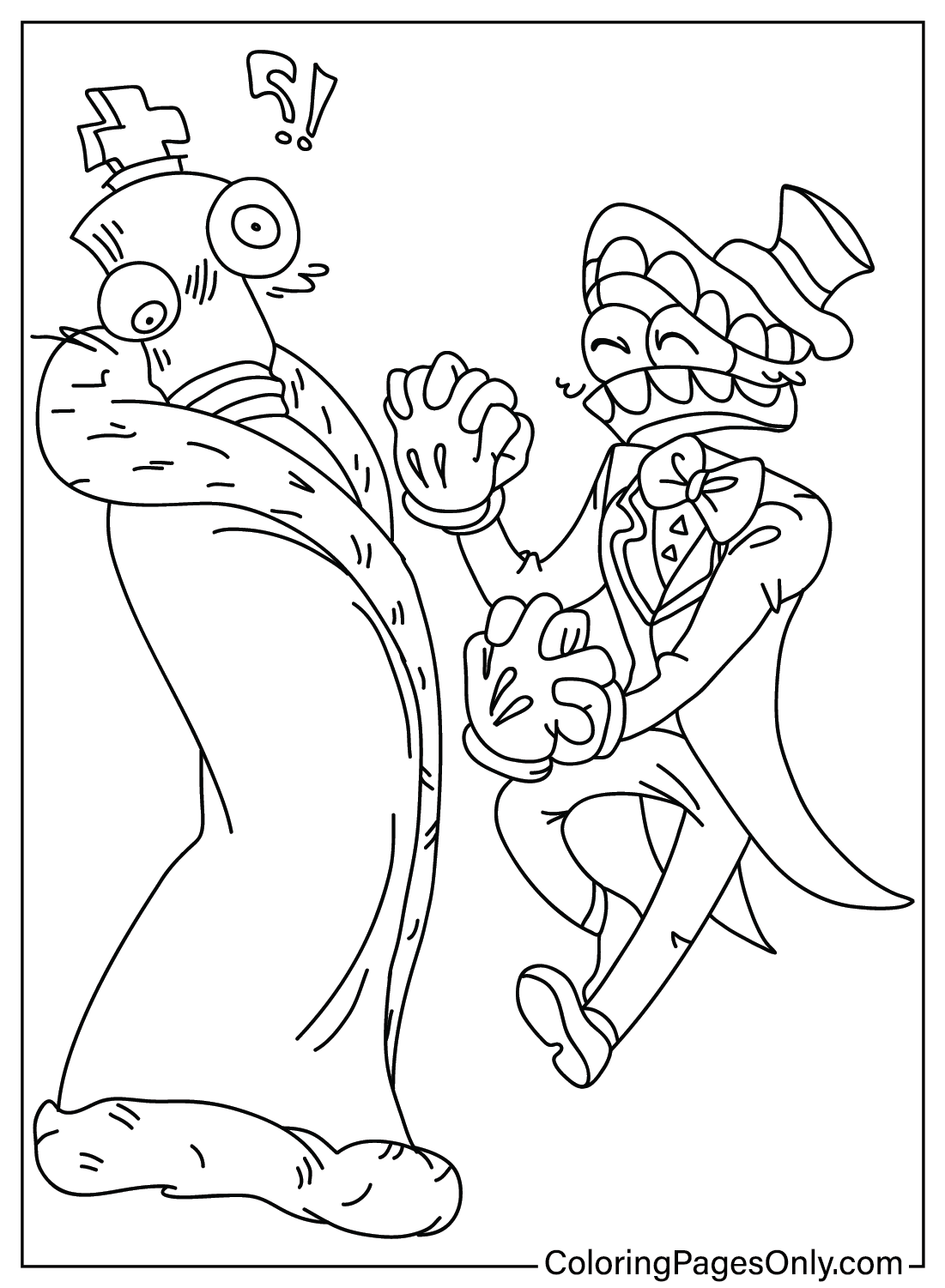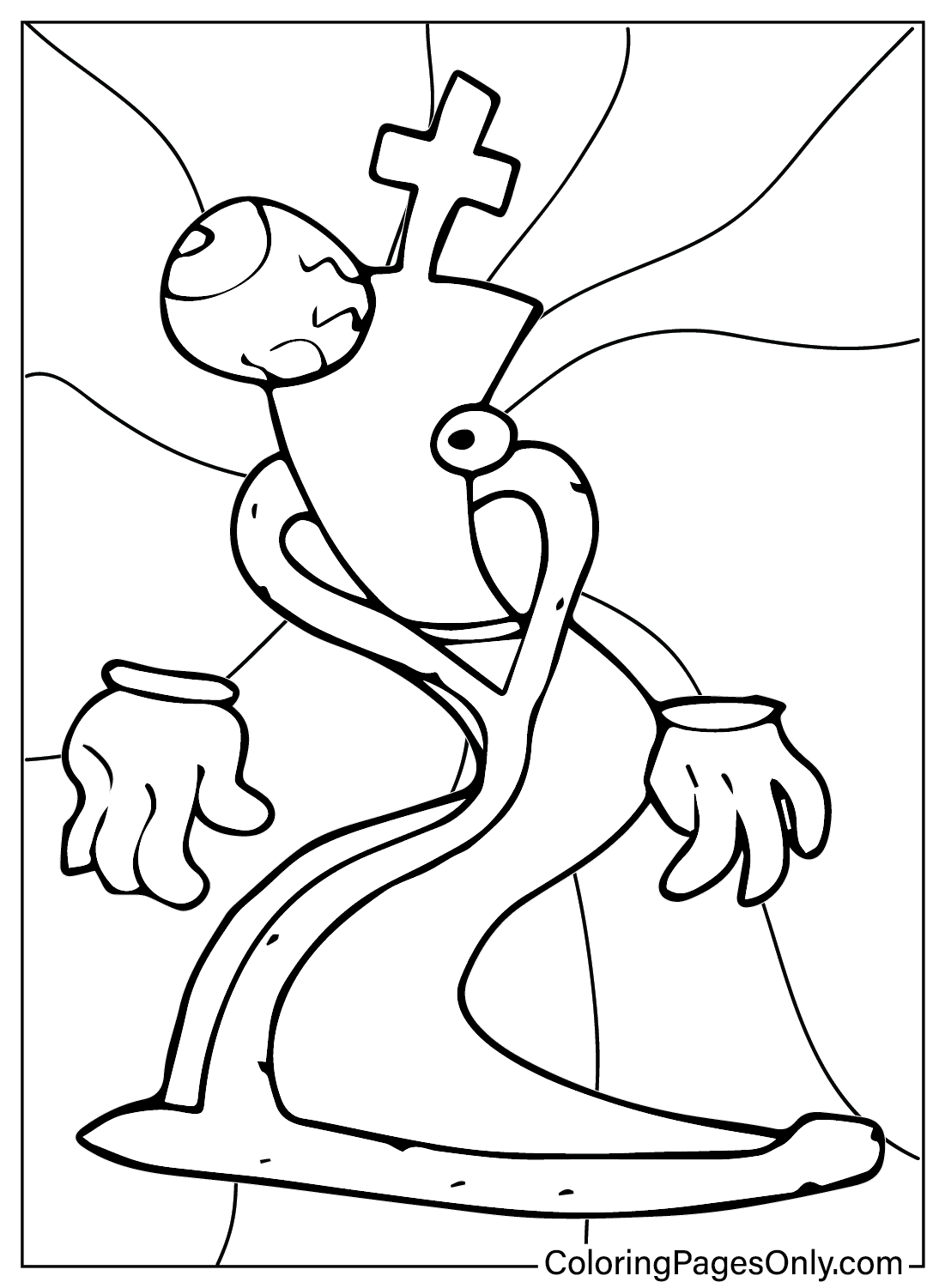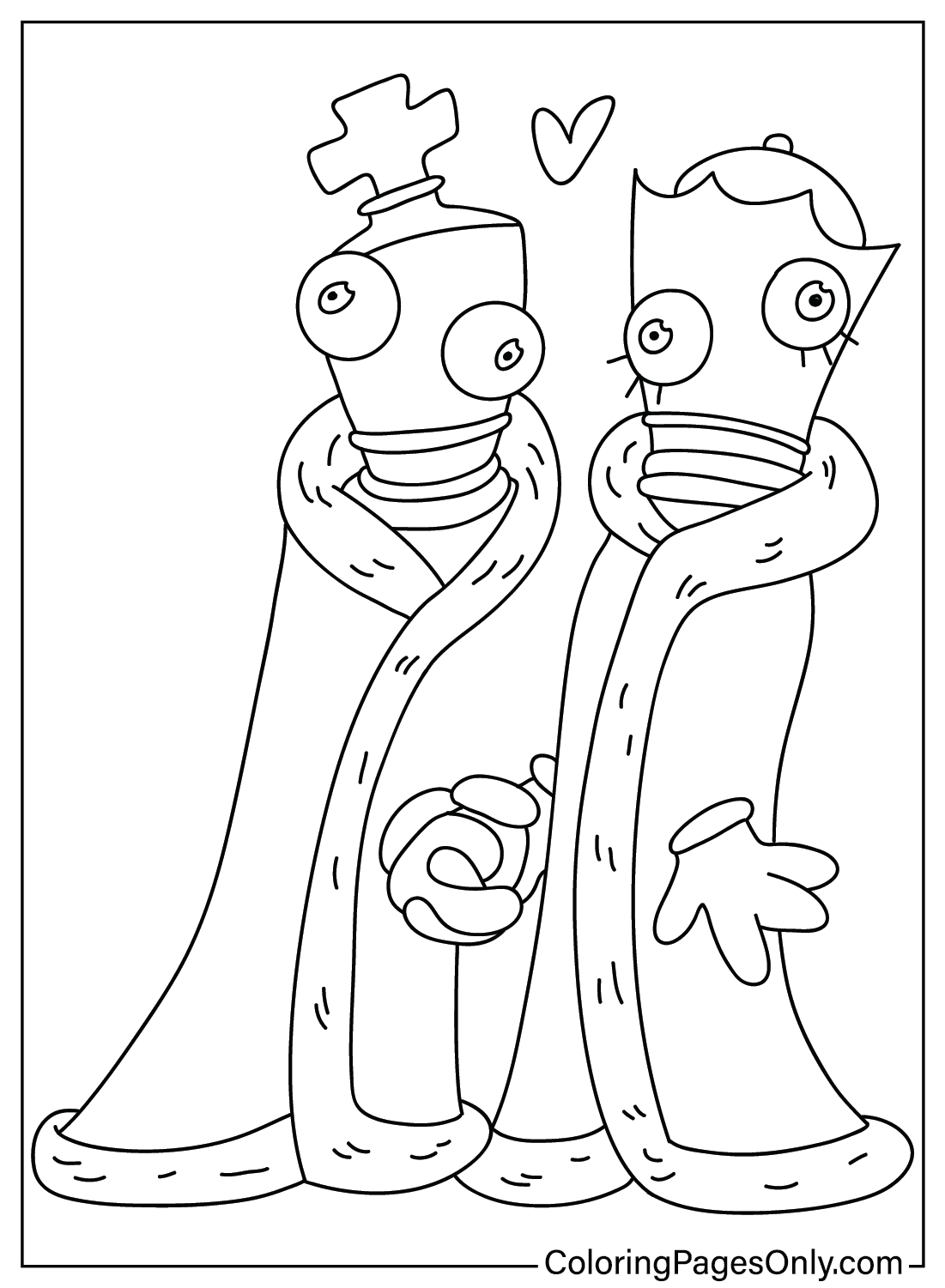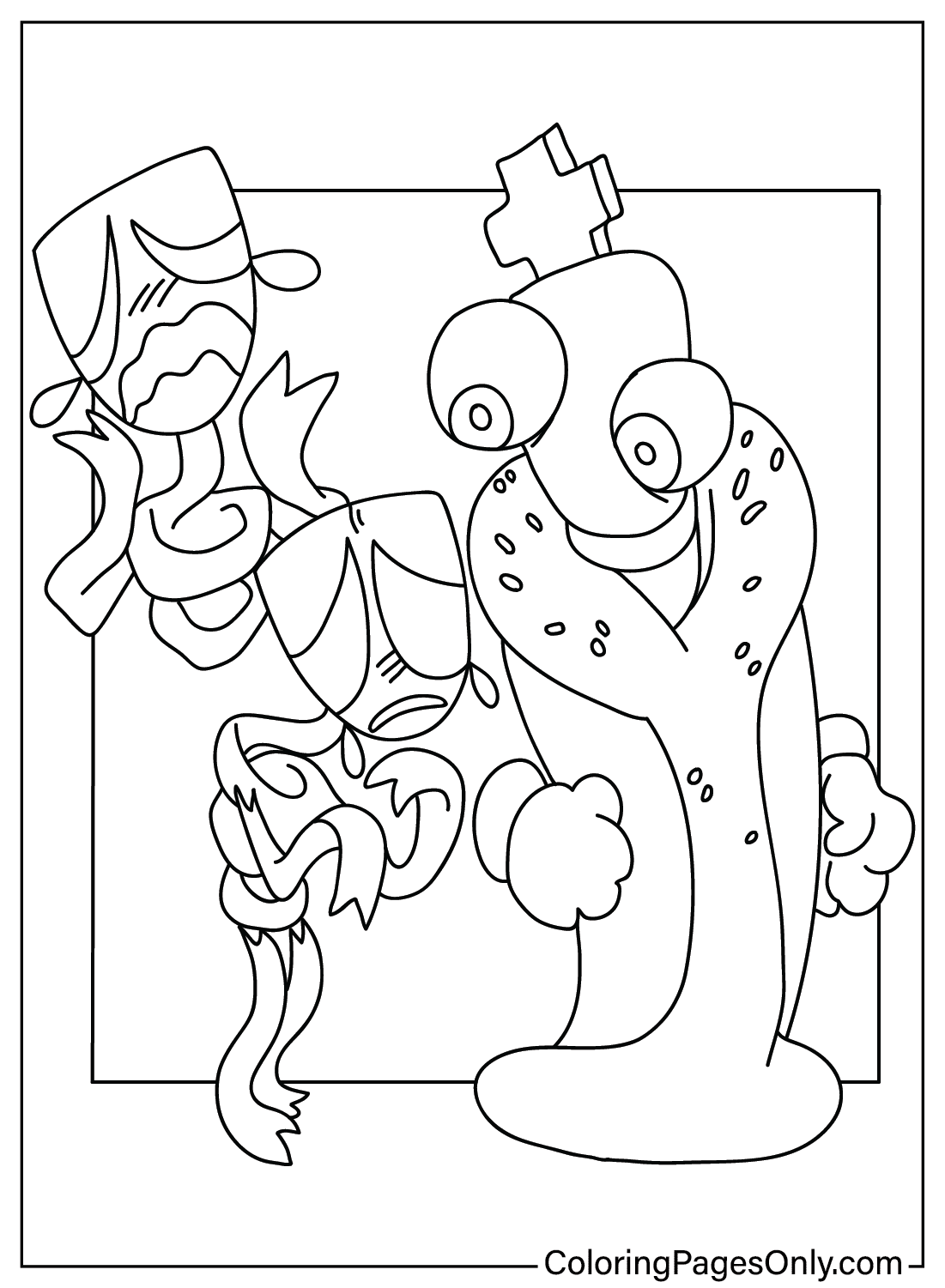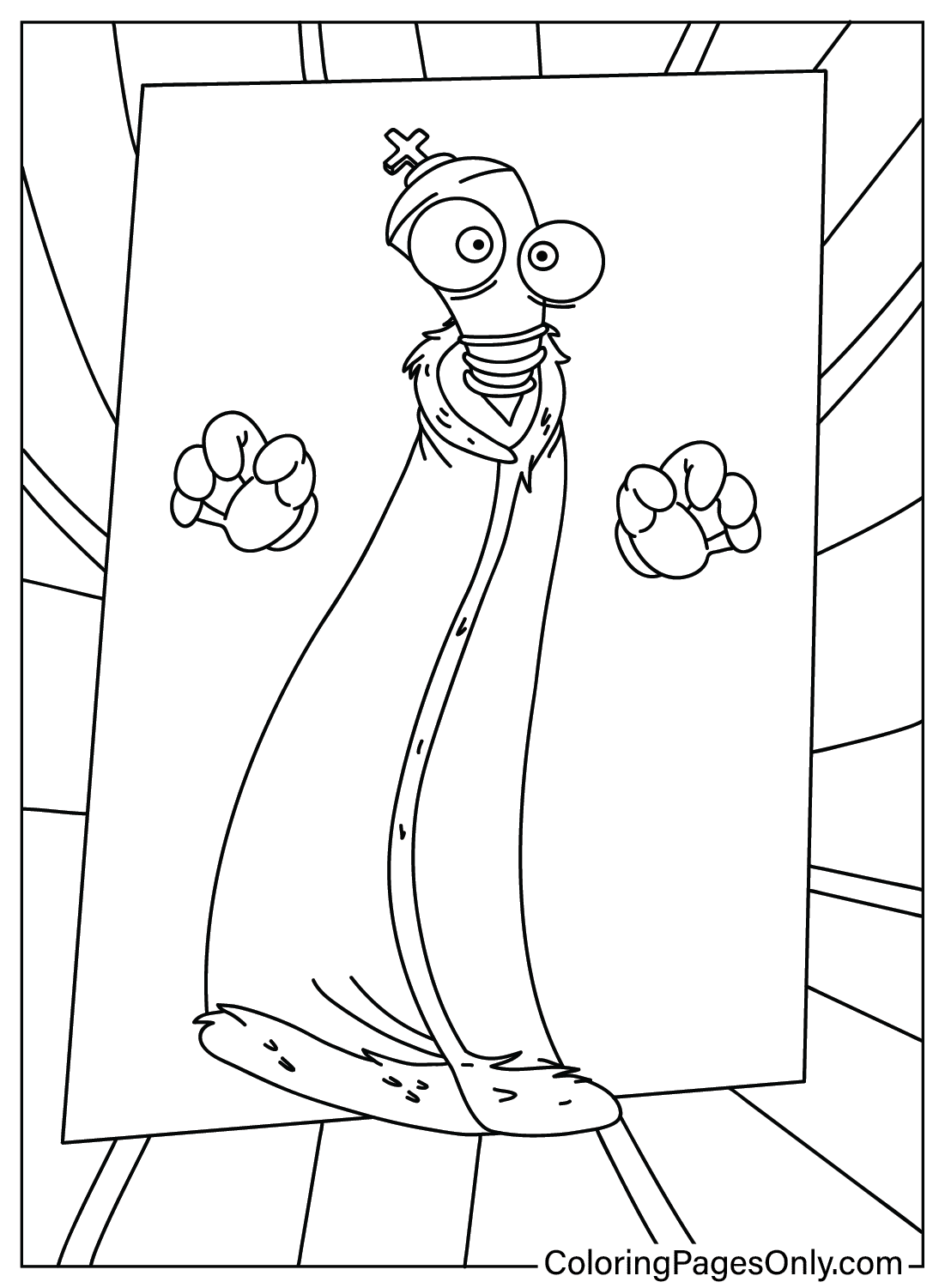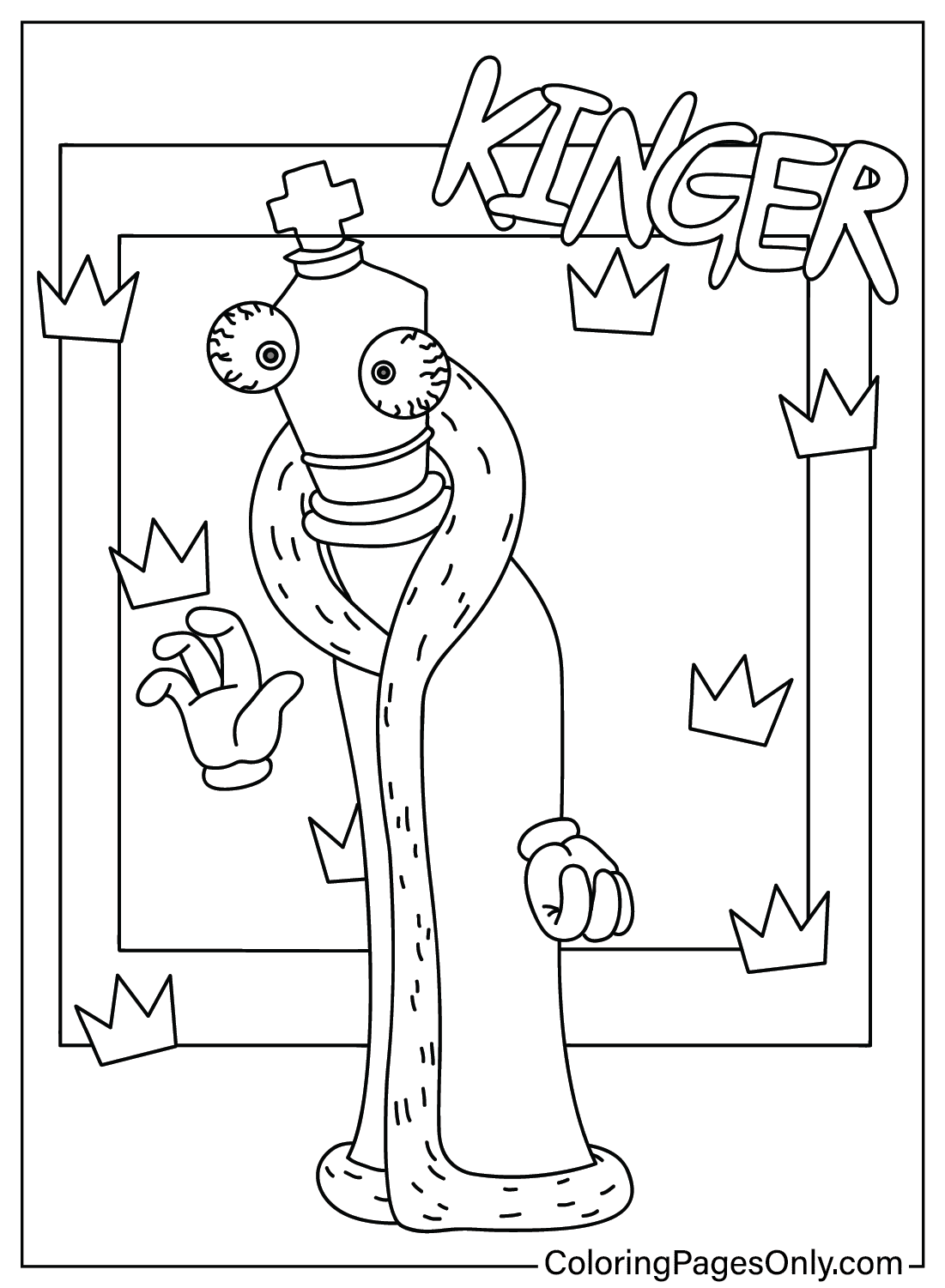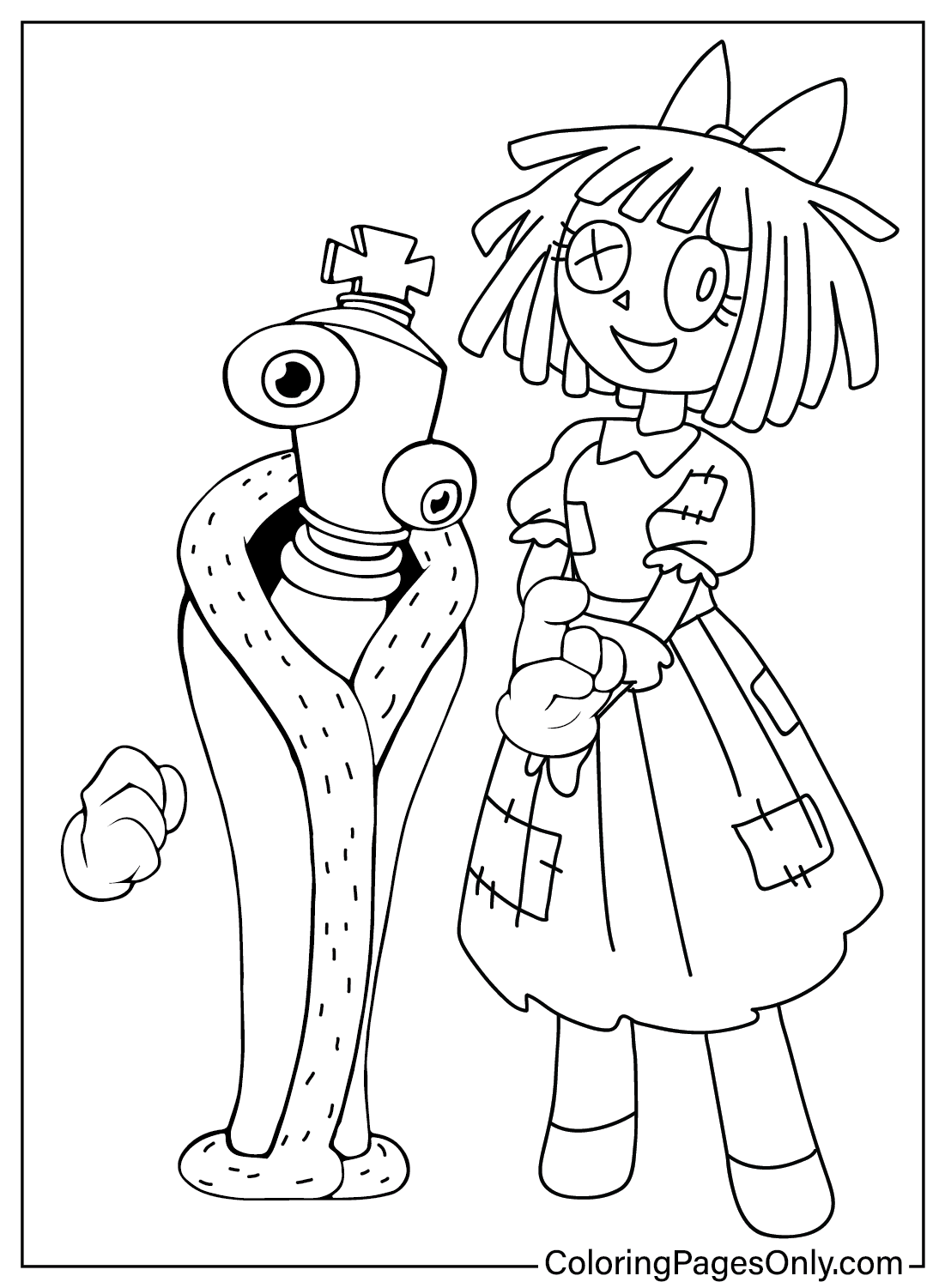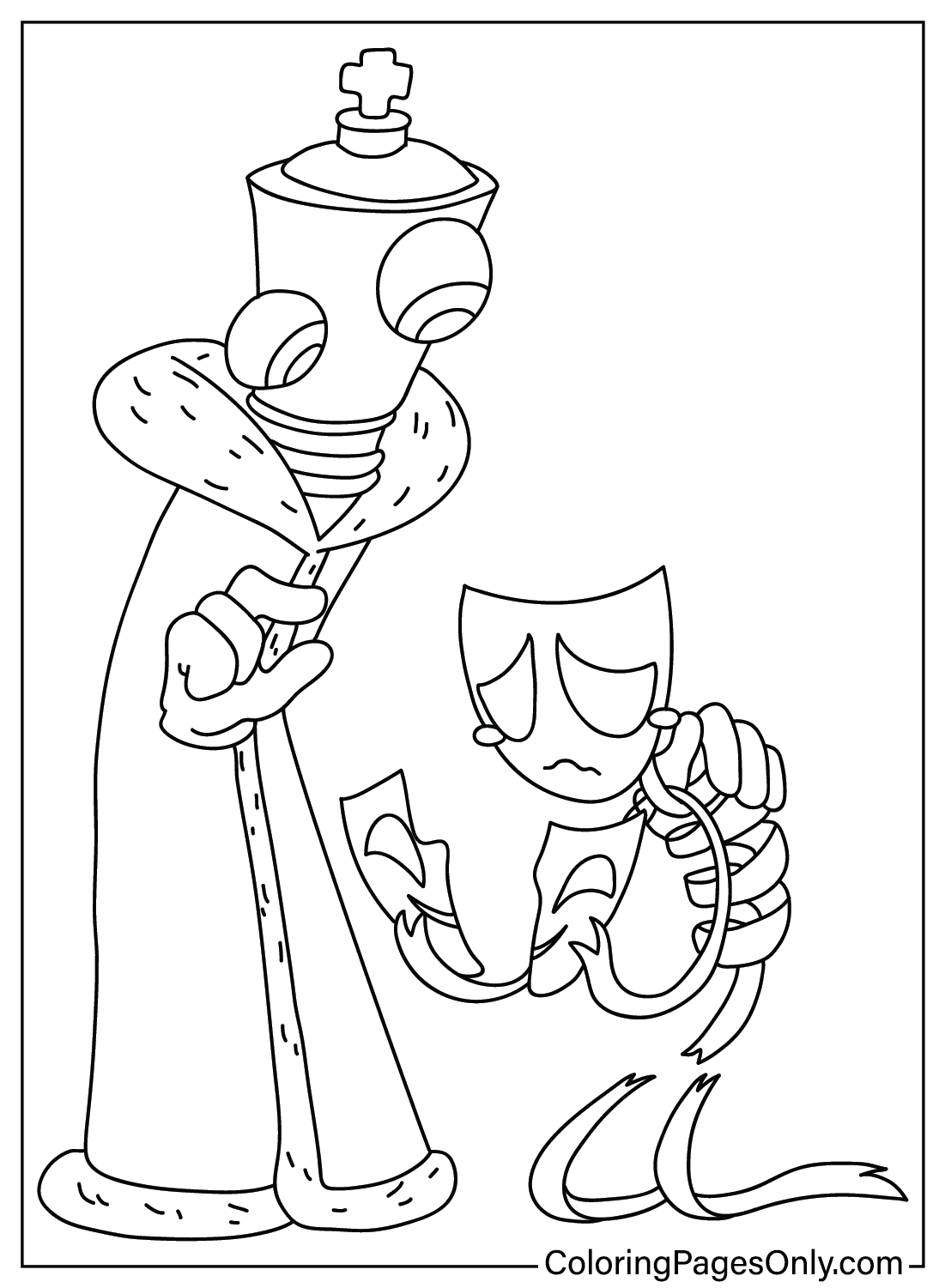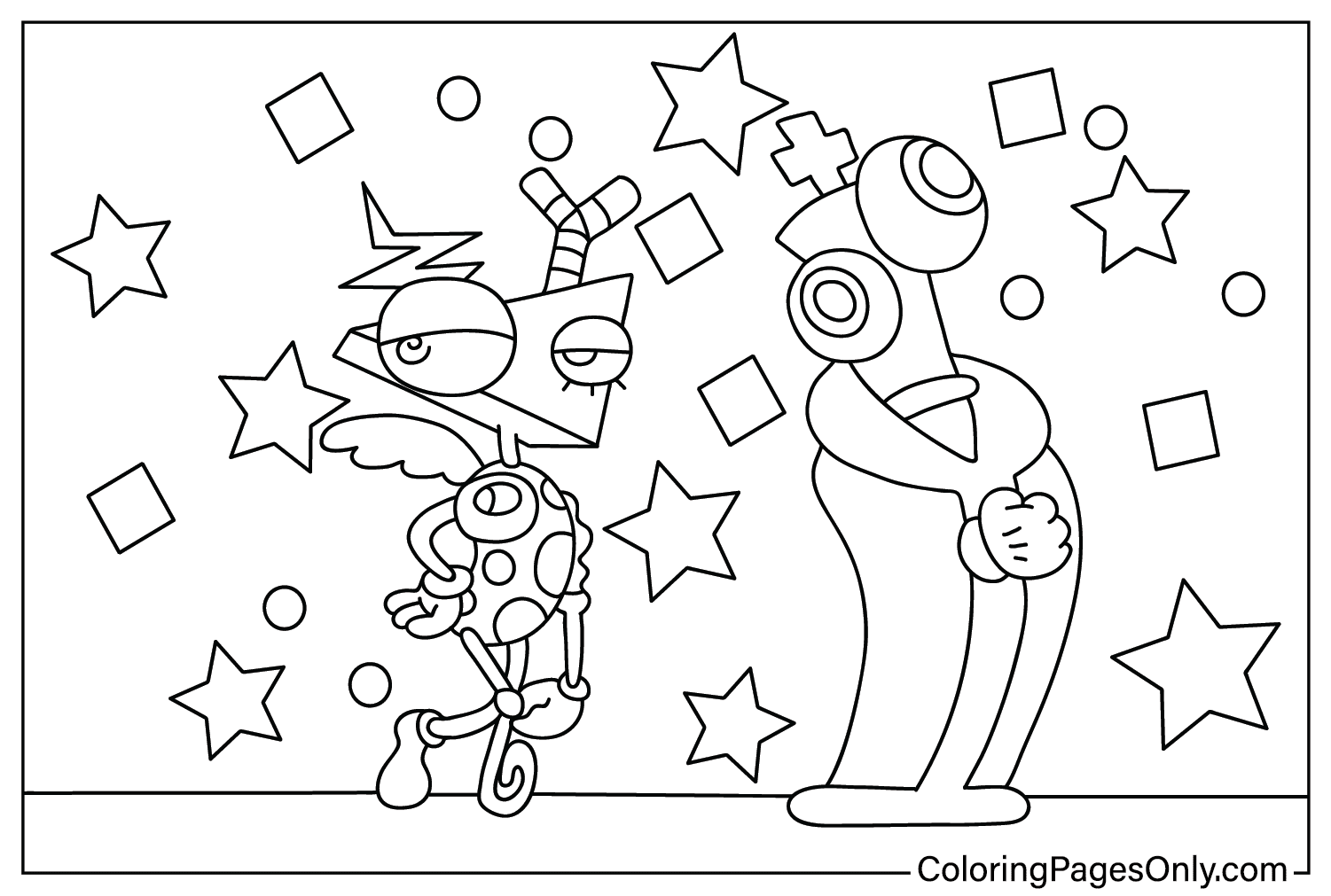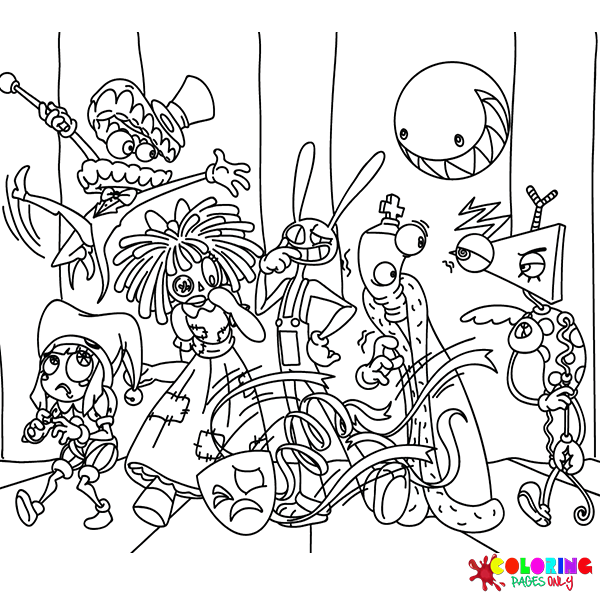
Kinger Coloring Pages at ColoringPagesOnly.com brings together 20+ free pages featuring The Amazing Digital Circus’s longest-surviving resident – individual Kinger portrait pages, duo pages with Queenie, Gangle, Jax, Caine, and Ragatha, and group circus compositions. Download any page as a free PDF to print at home, or color online directly in your browser.

Kinger is part of the full The Amazing Digital Circus cast – explore the complete collection at Pomni Coloring Pages, and browse more animated series at TV Show and Films Coloring Pages.

Who Is Kinger?

Kinger is one of the main characters of The Amazing Digital Circus, the Australian adult animated web series created by Gooseworx and produced by Glitch Productions, which premiered on YouTube on October 13, 2023. He is voiced by Sean Chiplock, known for his roles in The Legend of Zelda: Breath of the Wild and Murder Drones.

In the real world, before being trapped, Kinger was a computer scientist and programmer who studied the field for seven years. He entered the Amazing Digital Circus on October 15, 1999 – alongside his wife and five coworkers – making him the longest-surviving human in the circus by a significant margin. He has outlasted not only the coworkers who entered with him but every other human who has joined and subsequently abstracted since. His digital avatar is a king chess piece, one of only two characters whose design is based on a board game piece rather than a toy or entertainment form. Gooseworx noted this distinction places Kinger and Queenie slightly apart from the rest of the cast in terms of implied sophistication and background.

Episode 8 – hjsakldfhl – reveals the full extent of Kinger’s history with the circus: he and a coworker named Scratch were the original programmers who created Caine, the AI ringmaster who now traps them all. This revelation reframes his entire arc – the longest-suffering prisoner is also the person most responsible for building the prison itself. At the episode’s climax, Kinger accidentally kills Caine while attempting to recalibrate his code using a computer terminal in the circus’s hidden infrastructure.

His behavior in daylight hours is erratic, paranoid, and frequently forgetful. He startles easily, often fails to remember that other characters are standing next to him, and takes observable comfort in his self-named “Impenetrable Fortress” – a pillow fort he constructed inside the circus as a refuge. Jax considers him the most psychologically unstable of all the current players, and even Zooble admits they expected him to be the first to abstract.

In dark environments, however, Kinger undergoes a dramatic transformation. The darkness calms him, making him sharper, more lucid, and emotionally coherent. The explanation, revealed in The Mystery of Mildenhall Manor, is that darkness reminds him of his last moments with his wife Queenie – the two would spend time together in his pillow fort in the dark after Queenie began to abstract, the darkness smoothing her deteriorating mental state enough for them to be near each other before she was sent to the Cellar. This means every scene of Kinger functioning clearly and wisely in a dark setting carries that weight of memory. He can also glow in the dark – a detail established in Episode 3.

His interest in insect collections, often played as a comedic non-sequitur, is also rooted in grief: it is something he picked up from Queenie, who was an entomologist. Every time he asks, “Did someone say something about an insect collection?” – his most recognizable catchphrase – he is, in a sense, carrying something that belonged to her.

Kinger’s Design – Canonical Colors

Kinger’s avatar is an alder wood-colored king chess piece – a warm, slightly yellowish off-white that reads more like aged ivory than pure white. This specific tone is important: Kinger should not look stark white like a freshly manufactured chess piece. The warm wood tone gives him the quality of something that has existed for a long time, which fits the character precisely.

His body is shaped like a king chess piece: broad at the base, tapering to the distinctive cross-topped crown at the top. He has no visible limbs connected to his body – instead, two cartoonish white-gloved hands float freely from his sides, detached. This is not an accident of animation: the detached hands are a canonical design detail. They can be pulled away from his body endlessly, a gag used in the pilot when he grabs Zooble.

His eyes are one of the most distinctive design elements in the entire cast: two round, realistic blue eyes placed asymmetrically and unevenly on his face, with a slightly bloodshot quality. Unlike other characters whose eyes feel designed, Kinger’s eyes feel incongruous with his chess-piece body – as if realistic human eyes were placed on a geometric shape. This deliberate uncanniness is central to his visual identity. The asymmetry matters: one eye sits higher or differently positioned than the other, and reproducing that lopsidedness is what makes a Kinger portrait page recognizable versus generic.

He has no mouth, despite being able to speak, breathe, and eat normally. This absence is visually significant – the smooth surface where a mouth would be contributes to his slightly unsettling appearance.

His robe is violet-purple with white fuzzy lining spotted with dark brown. The purple is a medium-to-rich violet – not a pale lavender, not a deep navy-adjacent purple, but a clear royal purple that reads immediately as regal. The white lining runs along the front opening of the robe and at the collar, and the dark brown spotting on that white lining suggests ermine-trimmed royal robes – the traditional decoration of a king’s ceremonial garments. This detail connects Kinger’s design to the history of European royal regalia, a visual reference that works alongside his chess piece form.

Queenie, his wife, whose pages appear in this collection, is a dark queen chess piece with a red robe. Where Kinger is light/alder wood, Queenie is dark – in chess, they are opposing pieces, which the show acknowledges as a detail. Her red robe contrasts directly with Kinger’s purple robe. On any page showing them together, these two color contrasts – light body vs. dark body, purple robe vs. red robe – are the primary visual relationship to establish.

Coloring Tips

Kinger’s body color is the most important accuracy decision on any portrait page. The alder wood tone – warm ivory, slightly aged, not pure white – is what distinguishes him from a generic cartoon chess piece. Test your base color against a pure white swatch before committing. If your color reads as cool white, it needs warmth added. If it reads as cream, it is likely close. If it reads as yellow, you have gone too far. The target is the specific tone of warm light wood – the kind of chess piece that has been handled and lived-in rather than just unboxed.

The asymmetrical eyes are the emotional center of any Kinger page. His eyes carry virtually all of his expressiveness since he has no mouth. Render both eyes with the same base blue, but preserve their asymmetrical placement – one sits differently from the other, and leveling them out loses the character’s defining visual quality. The slightly bloodshot quality some reference sources describe can be suggested by a very faint warm tint at the whites of the eyes around the iris, pushing the overall eye tone slightly away from clean white toward a subtle warmth. Combined with the realistic circular pupil shape, this gives the eyes their characteristic incongruity against the geometric chess piece body.

The robe’s white lining spotting is a texture challenge. The dark brown spots on the white fuzzy lining are the detail that elevates the robe from a flat purple shape to a recognizable royal garment. Apply the white lining first, then add the dark brown spots in an irregular, organic pattern – not too uniform, not too random. Real ermine spotting has a biological logic to it: the spots are larger and more concentrated at the edges, sparser toward the center of any given section. Reference the traditional ermine pattern if you want to approach it carefully.

For Kinger and Queenie duo pages – two contrasts working simultaneously. Light alder wood body vs. dark queen body creates a value contrast. Purple robe vs. red robe creates a hue contrast. Both contrasts should be pushed clearly: Kinger’s body should be noticeably lighter than Queenie’s, and the purple and red of their respective robes should be clearly different hues, with neither muddied toward the other. The visual logic of chess – one light piece, one dark piece, opposing sides – is embedded in their design and worth honoring in the coloring.

For dark environment scenes. Several Kinger pages likely show him in low-light or dark settings – these are among the emotionally richest compositions in the collection because they depict the version of Kinger who is most himself. For dark background pages, push the environment toward deep blue-grey or near-black, and allow Kinger’s alder wood ivory body to read as the lightest element in the composition. His ability to glow in the dark – a canonical detail from Episode 3 – can be suggested by adding a very subtle warm glow emanating from his body into the immediately surrounding dark space. This technique, a small warm halo against the surrounding darkness, reads as luminosity without requiring neon colors.

For the pillow fort context pages. If any page shows Kinger’s “Impenetrable Fortress,” the pillow fort should be rendered in domestic, warm tones – off-white pillows, warm fabric textures, soft yellows and creams. The contrast between a cozy, homemade pillow structure and the surreal digital circus environment surrounding it is part of what makes Kinger’s coping mechanism both funny and sad simultaneously. Leaning into warm, soft, clearly handmade textures for the fort against a cooler or more synthetic-feeling circus environment makes that contrast explicit.

5 Activities

The light-versus-dark Kinger duality study. Print one Kinger portrait page twice. Color the first in a fully lit circus environment: bright, candy-colored background, Kinger rendered in full canonical palette with vivid surrounding colors. Color the second as a dark environment scene: deep blue-grey or near-black background, Kinger’s ivory body providing the composition’s primary light source. Place both pages side by side and label them “Daylight Kinger” and “Dark Kinger.” The exercise makes visible what the show communicates through lighting – that the same character contains two very different people, and that context, not personality, determines which one you’re seeing. The coloring activity is a direct engagement with the show’s most emotionally resonant recurring motif.

The chess king vulnerability study. Kinger’s design explicitly references the chess king piece – the most important and simultaneously most vulnerable piece in the game, which must be protected at all costs because its capture ends the game. Print any Kinger solo portrait page and color it with this in mind: the ivory body is imposing but fragile, the royal purple robe signals authority without actual power. After finishing, write two sentences alongside the image: one describing what a chess king represents (the end condition, the piece everyone else protects), and one describing how Kinger functions in the circus (the oldest, the most knowledgeable, the most damaged – protected by the others’ low-key awareness that he is falling apart). The comparison is the show’s central visual joke about Kinger, and sitting with it while coloring makes it visible.

The Queenie memory composition. If the collection includes a Kinger and Queenie page, print it and approach it as a memory rather than a present-moment scene. Color Queenie with her canonical dark chess piece body and red robe, but apply a slightly softer value to her overall rendering – not faded, but gentle. Color Kinger with his standard palette. Then add a very dark, warm surround to the entire composition – the dark of the pillow fort interior – so that both figures are illuminated against deep shadow. The result should read as a memory: two chess pieces in a moment of quiet before abstraction took one of them. This is directly what the scene depicted on any Kinger-and-Queenie page references, and coloring with that knowledge changes what decisions you make.

Design the visual language of “before the circus.” Kinger in the real world was a computer scientist who spent seven years studying the field, eventually co-creating Caine. On a blank page, design a visual representation of his real-world self – not his chess piece avatar but the human behind it. The show gives no direct visual reference for his human appearance, but the character design conventions of TADC’s aesthetic (early 2000s CGI-inspired) provide a framework. What would a 48-year-old computer programmer who eventually co-creates an AI circus ringmaster look like in early 2000s animation style? How does that person become the paranoid, fortress-building, insect-collecting chess piece currently in the circus? This is a direct character design exercise that engages with the show’s biggest unanswered visual question about Kinger.

The “Did someone say something about an insect collection?” visual interpretation. This line – Kinger’s most famous moment – functions as both comedy and grief simultaneously once you understand its context: he became interested in insects through Queenie, his wife, who was an entomologist, and now the interest surfaces as a randomly triggered non-sequitur because his memory is deteriorating. On a blank page or a Kinger portrait page, create a visual annotation around the character: illustrate the insect collection reference as something between a speech bubble and a memory fragment. What insects? What does an entomology collection look like? Where does this memory sit in relation to the chess piece standing in a digital circus? The exercise is part character study, part narrative archaeology – using a single throwaway line as the entry point to the character’s most important relationship.

These related coloring collections will help you explore the wonderful world of colors. Let’s choose, be creative, and show us your great pictures!

Emily Lewis – Website Technology Engineer

I am Emily Lewis, a passionate technical designer from Las Vegas. I love art and want to create a community of people passionate about drawing and coloring, especially children. I am proud to create a website that allows everyone's creativity to be realized most easily and enjoyably.