
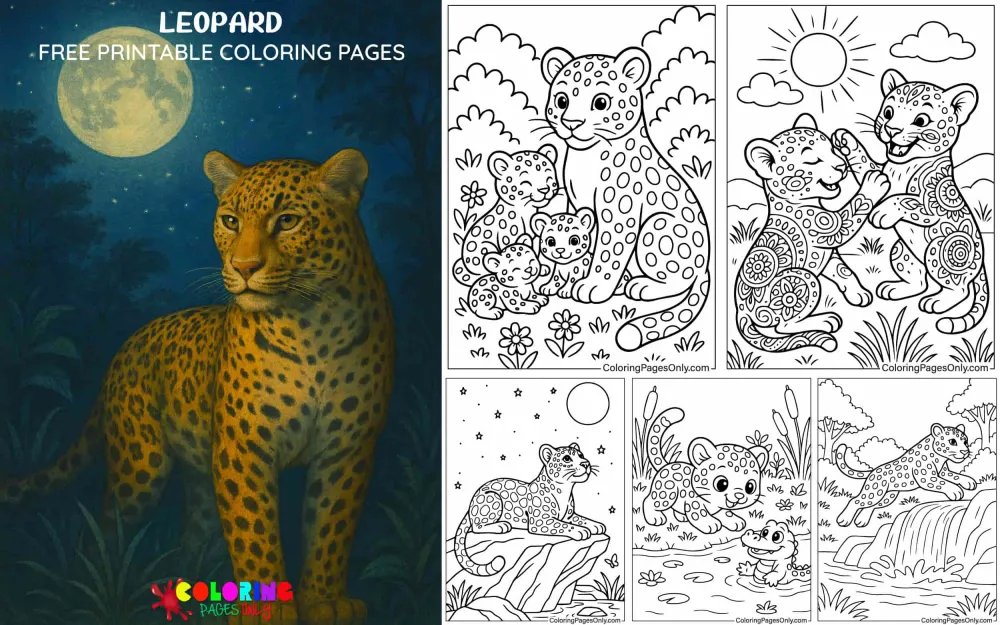
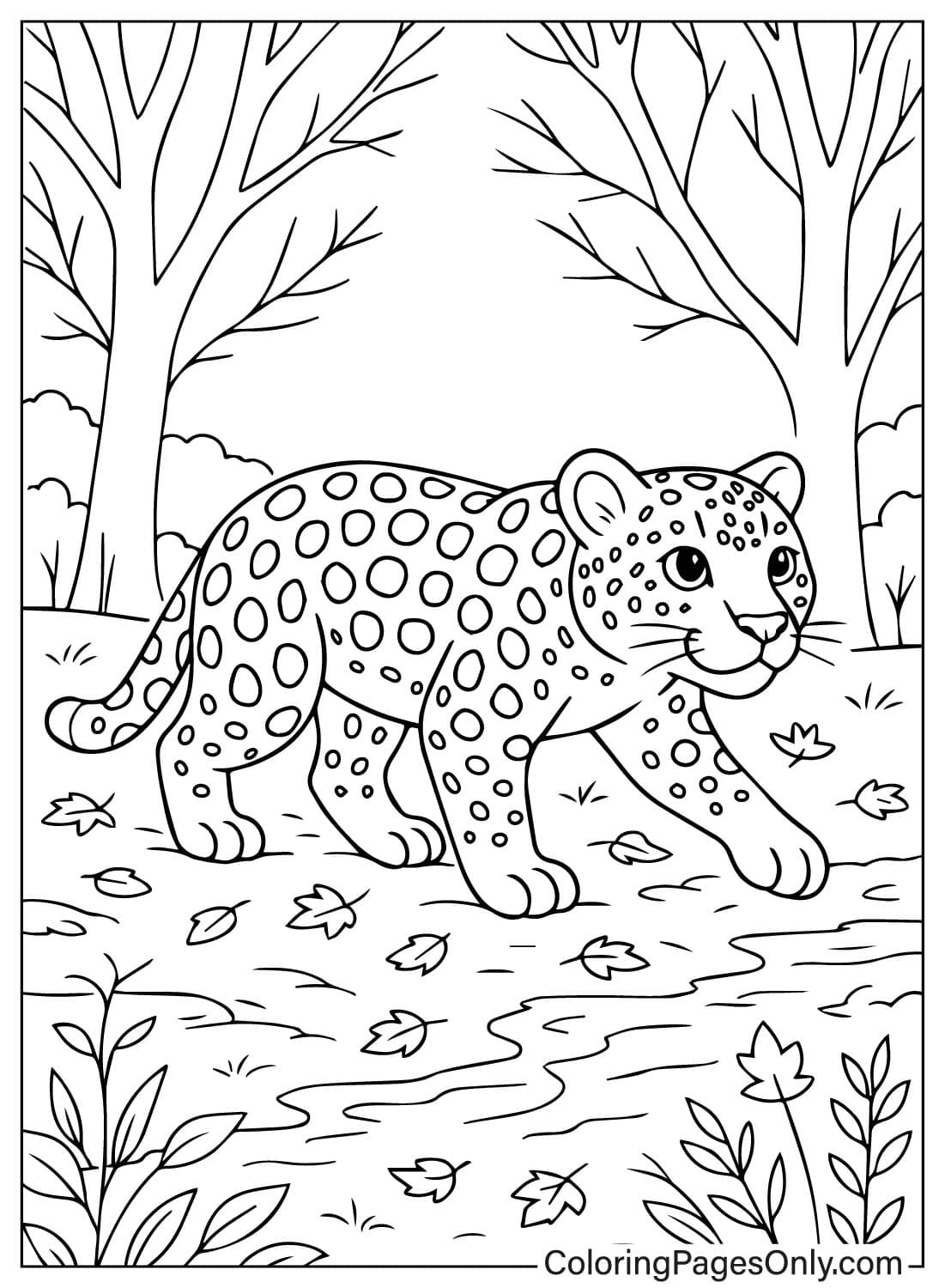
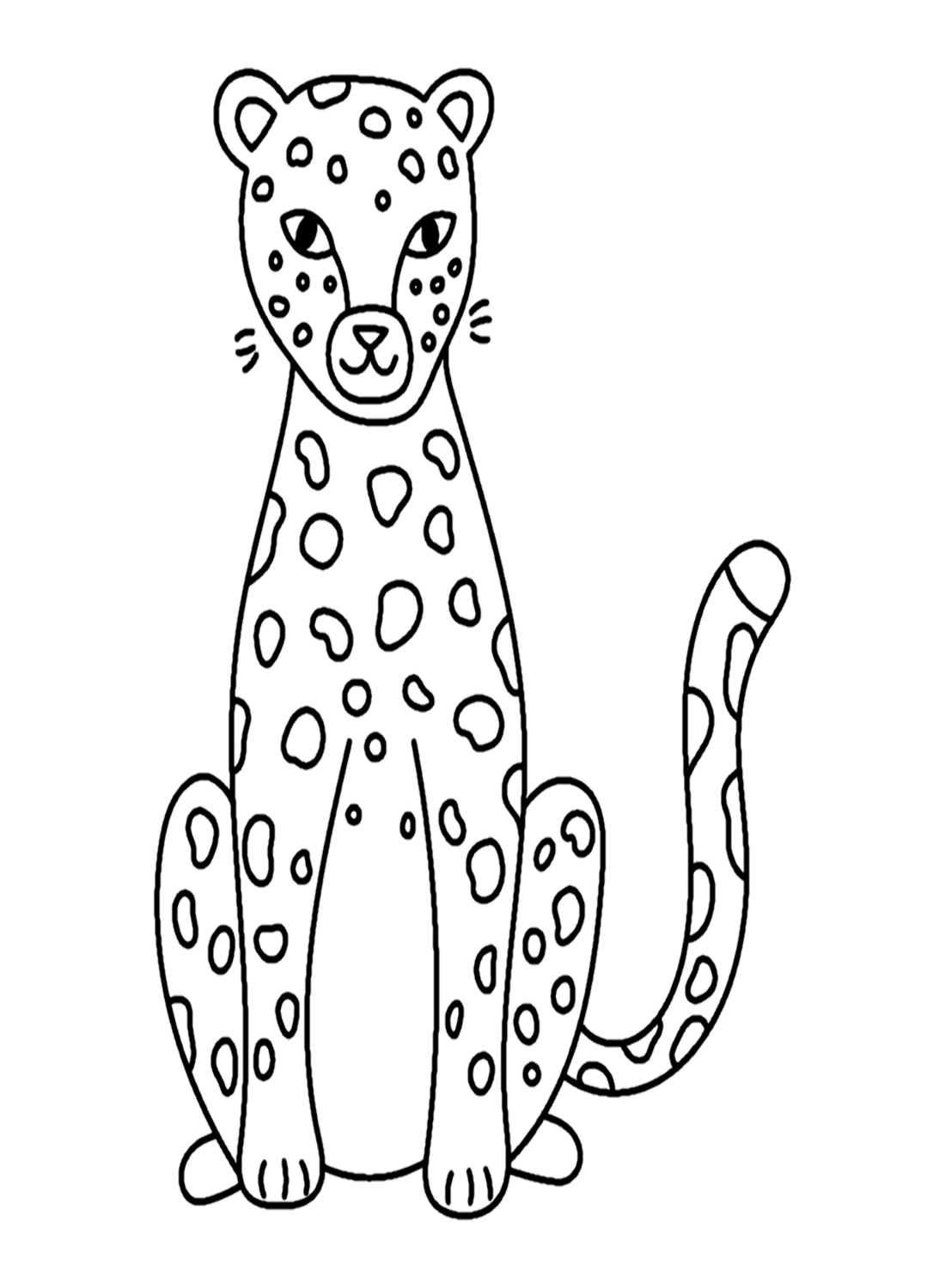
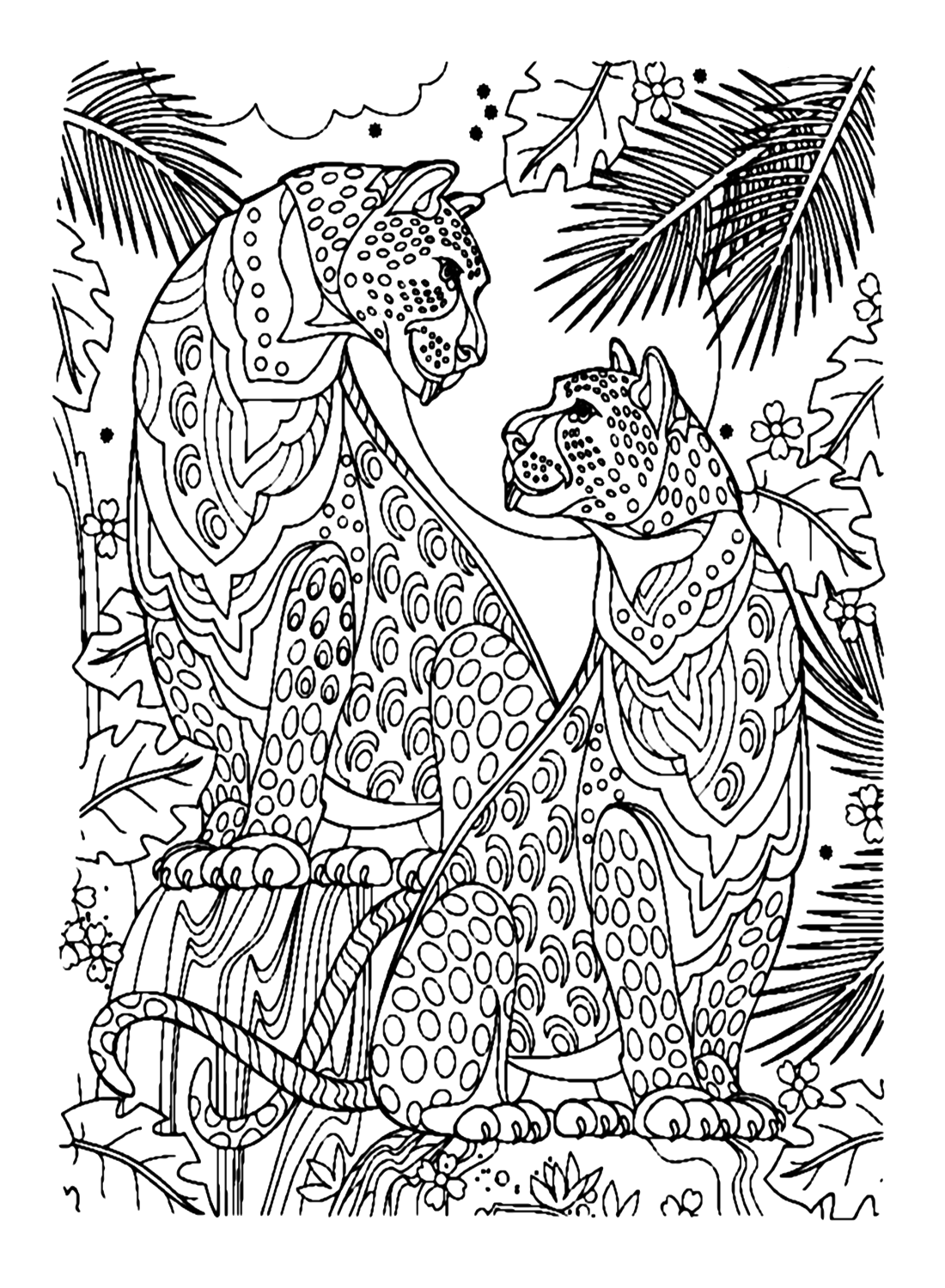
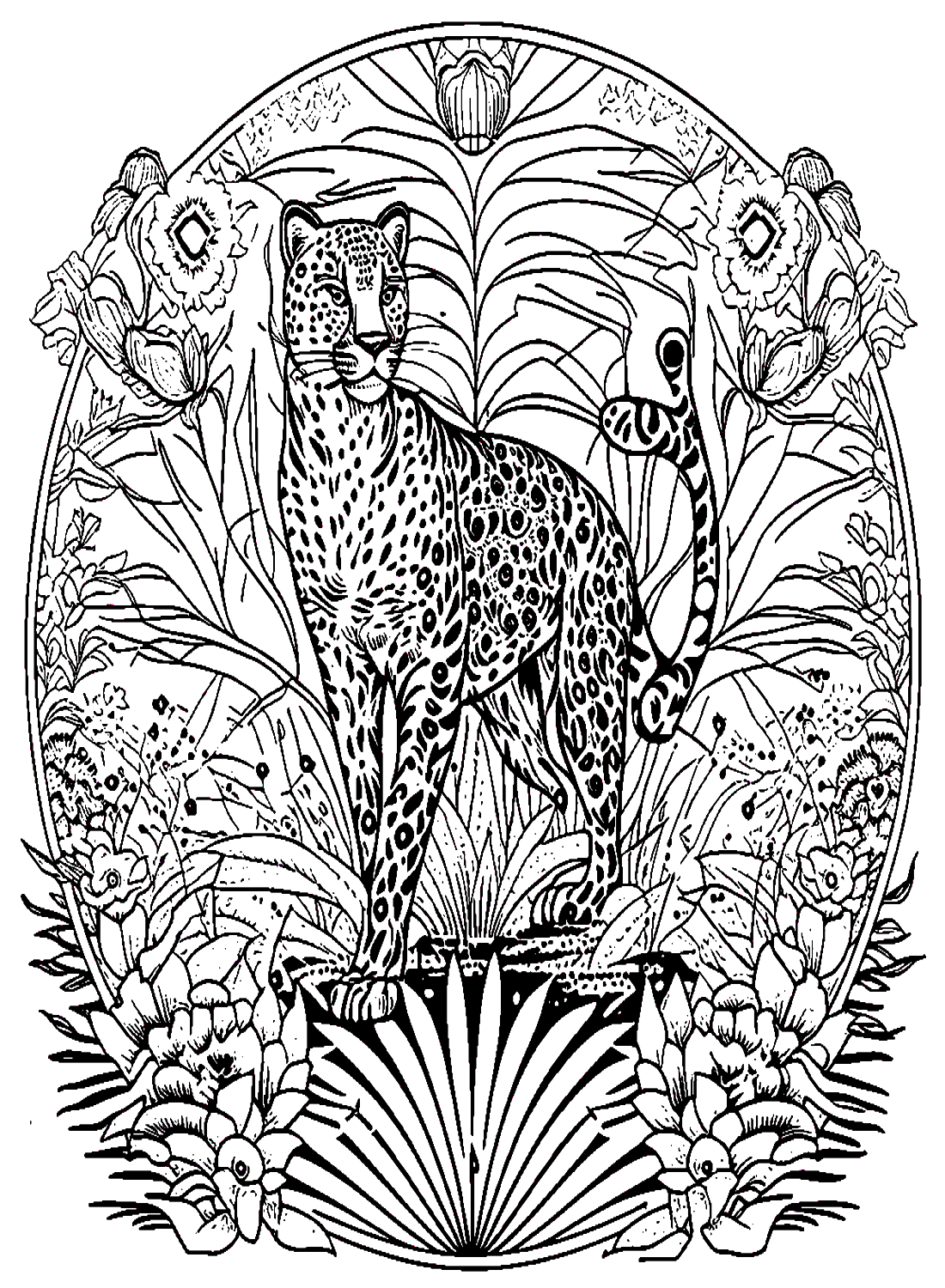
Free Leopard Coloring Pages: 40 printable PDF designs featuring realistic portraits and hunting scenes, cute cartoon characters, baby and family scenes, and a few pattern and habitat pages. Each page can be downloaded as a PDF to print or colored online in the browser.
The leopard, Panthera pardus, is the most widespread of the big cats, found across sub-Saharan Africa, parts of the Middle East, and Central and South Asia. Its coat is covered in rosette-shaped spot clusters without a center dot, which distinguishes it from the jaguar’s similar-looking but dotted rosettes. Leopards are exceptional climbers and often drag their kills up into tree branches to protect them from scavengers like hyenas, a behavior tied to their solitary, mostly nocturnal lifestyle. One tile in this set, labeled a clouded leopard, actually belongs to a genuinely different species, Neofelis nebulosa, which shares the leopard name but sits in a separate genus from the true leopard.
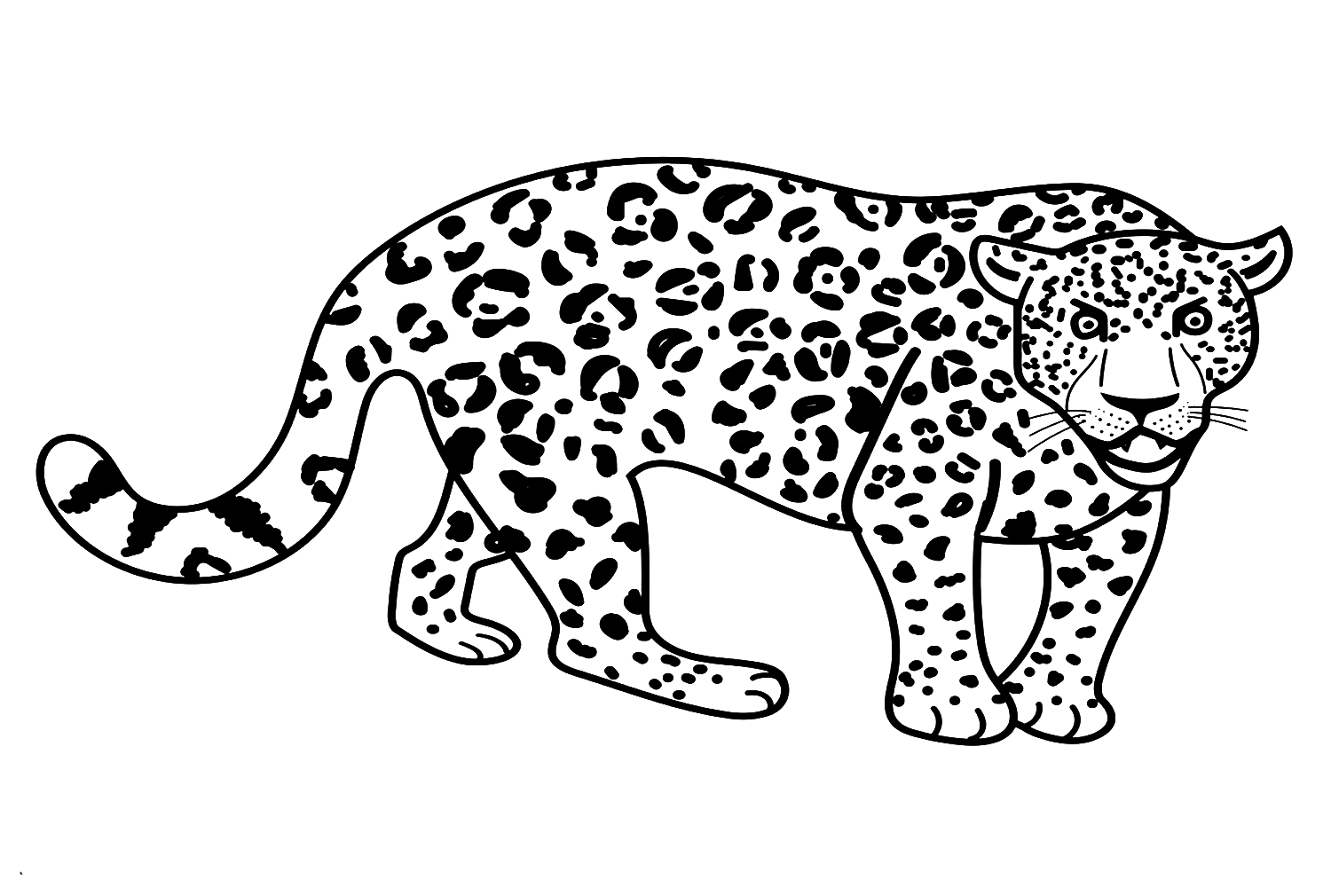
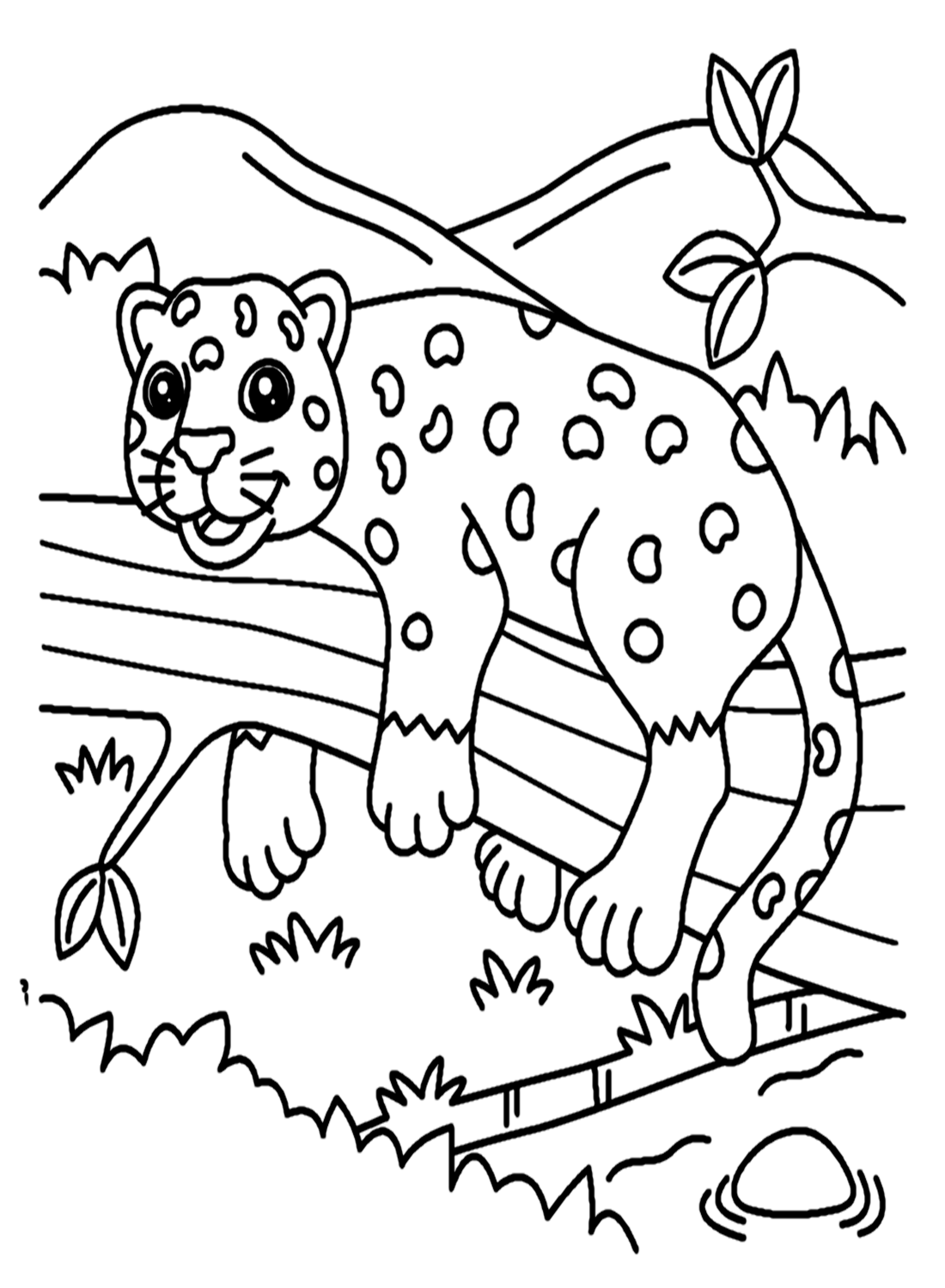
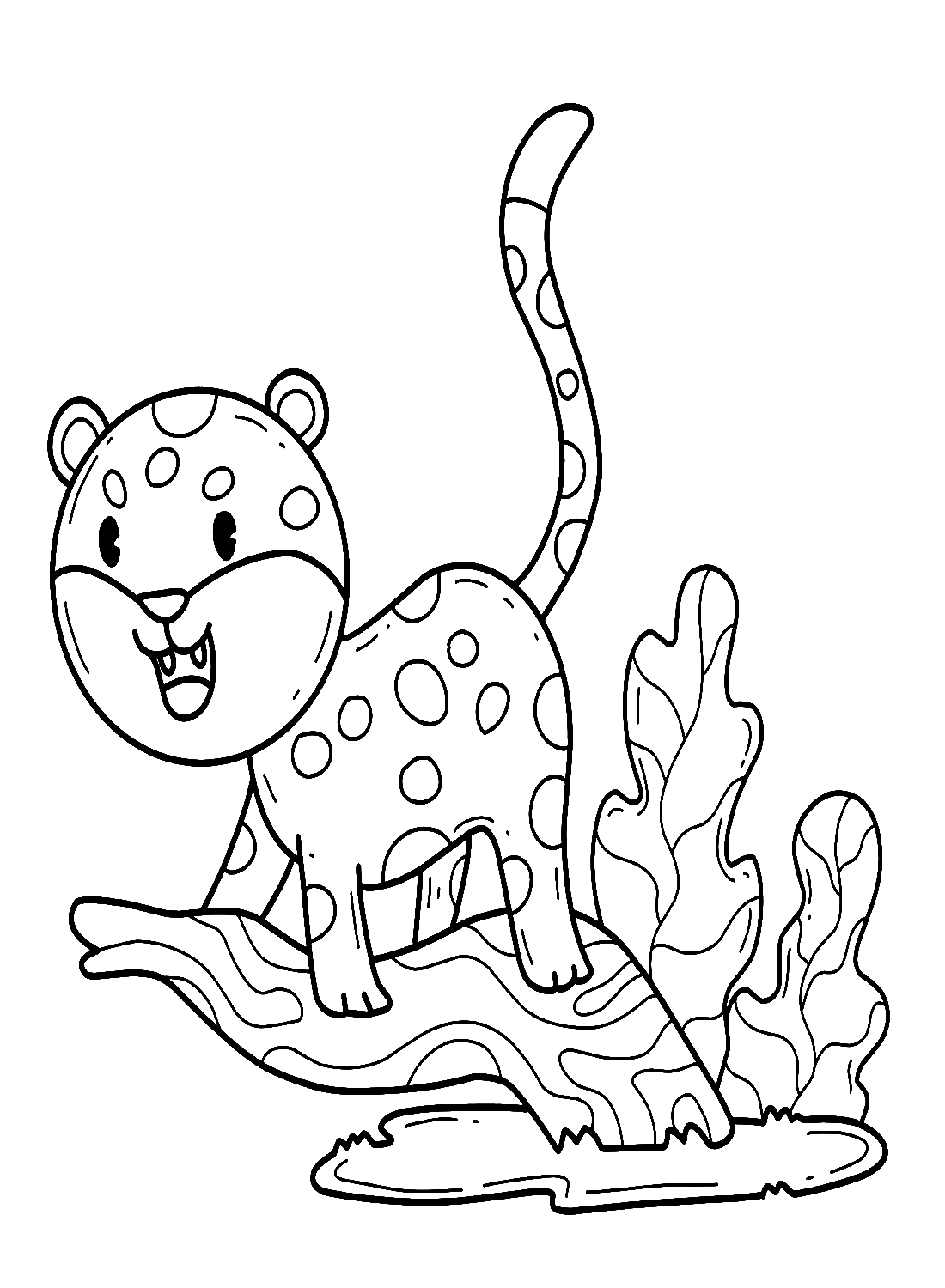
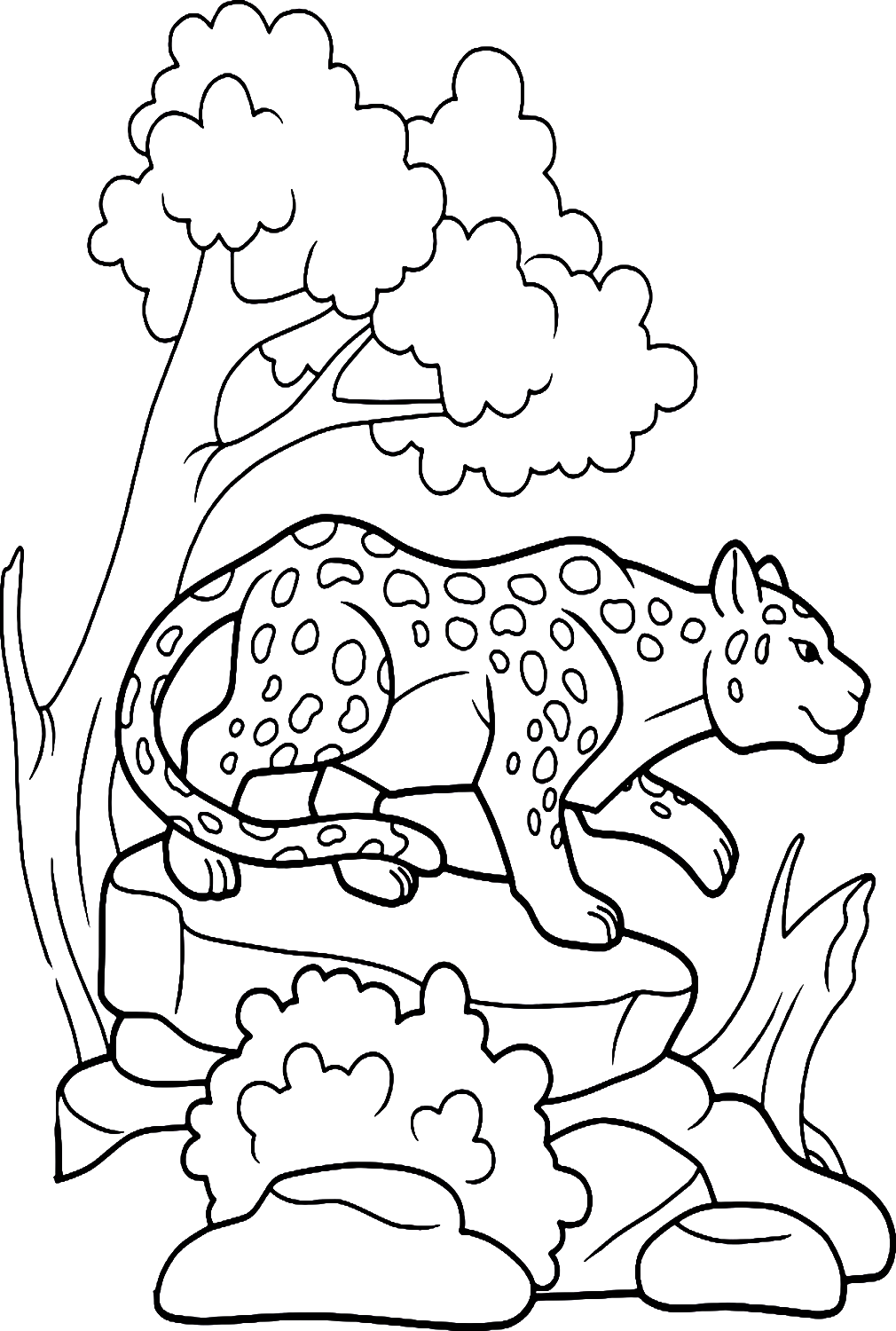
This collection reflects that range across 40 pages: realistic portraits and wild scenes, cute and cartoon-style characters, baby and family scenes, and a small group of pattern and habitat pages. The rosette-covered coat and long, balancing tail are the throughline across nearly every page.
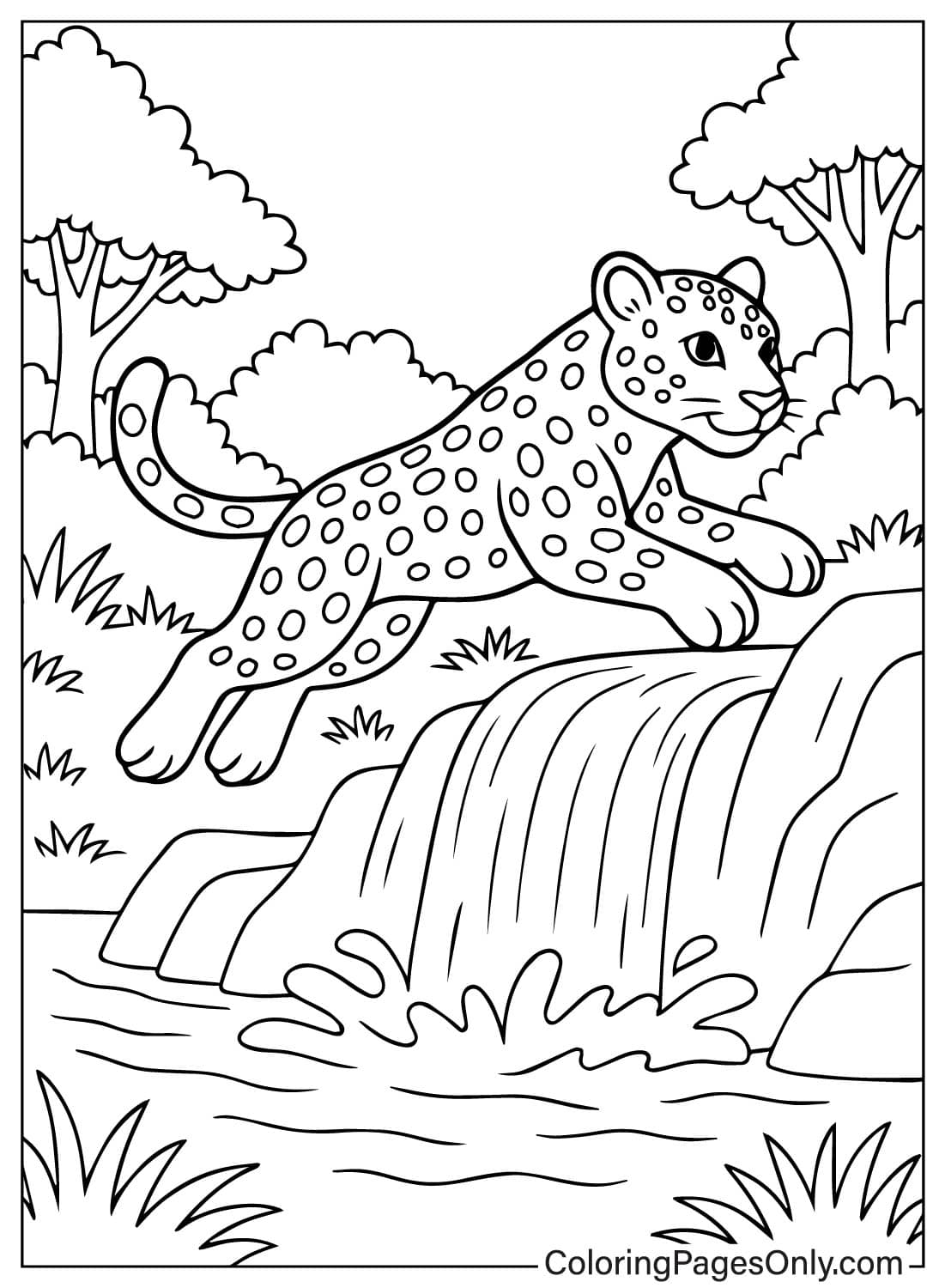
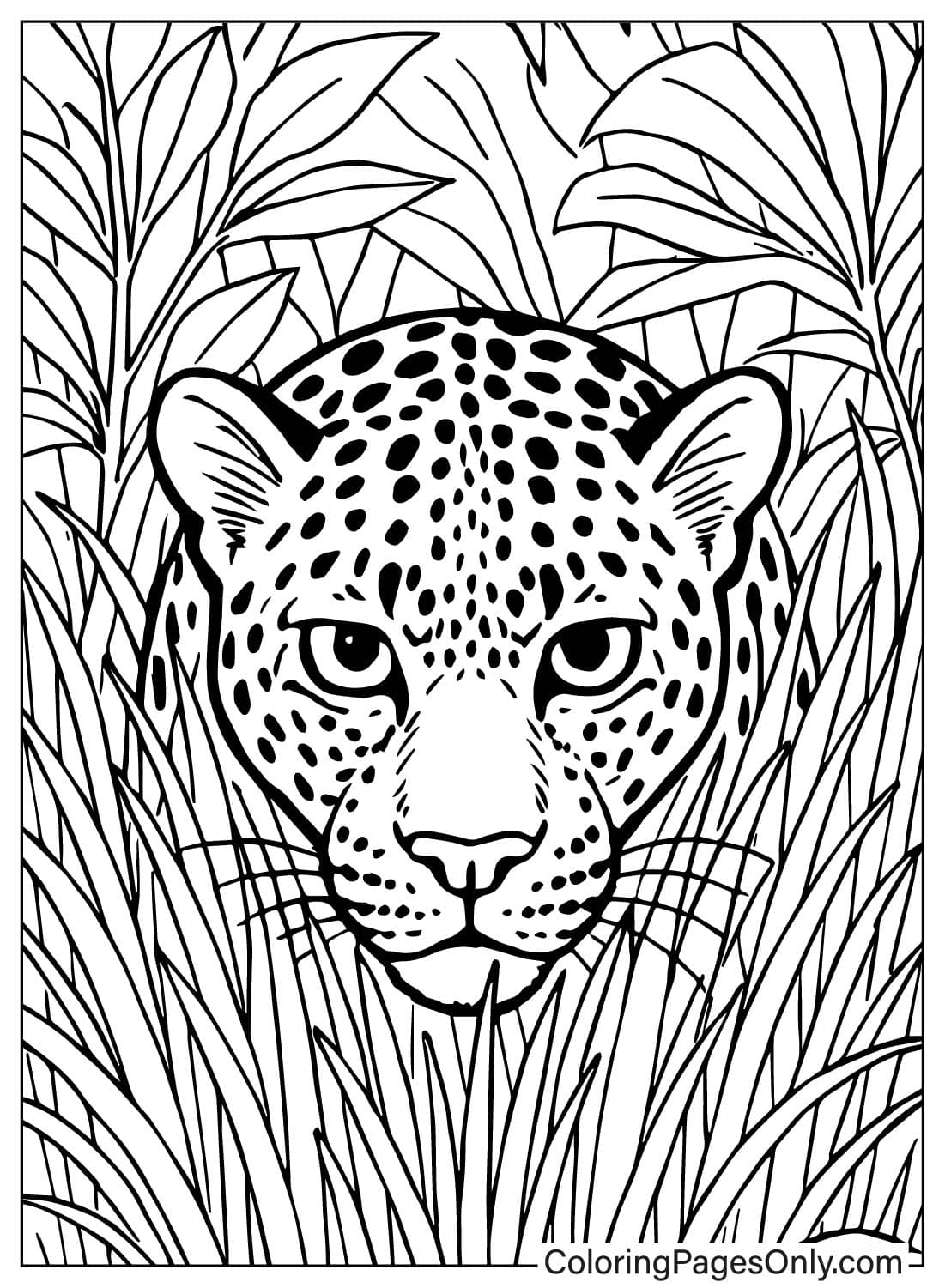
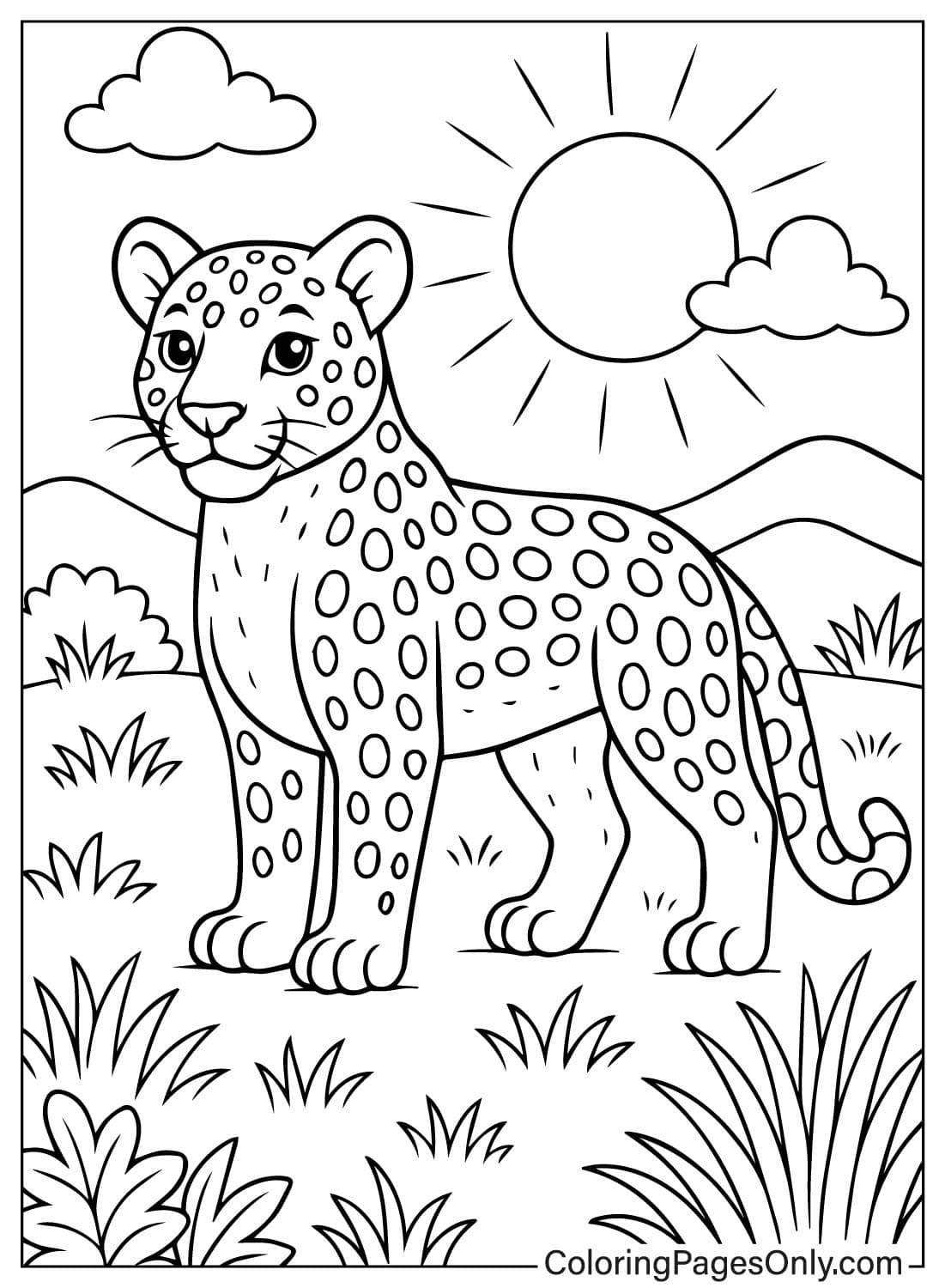
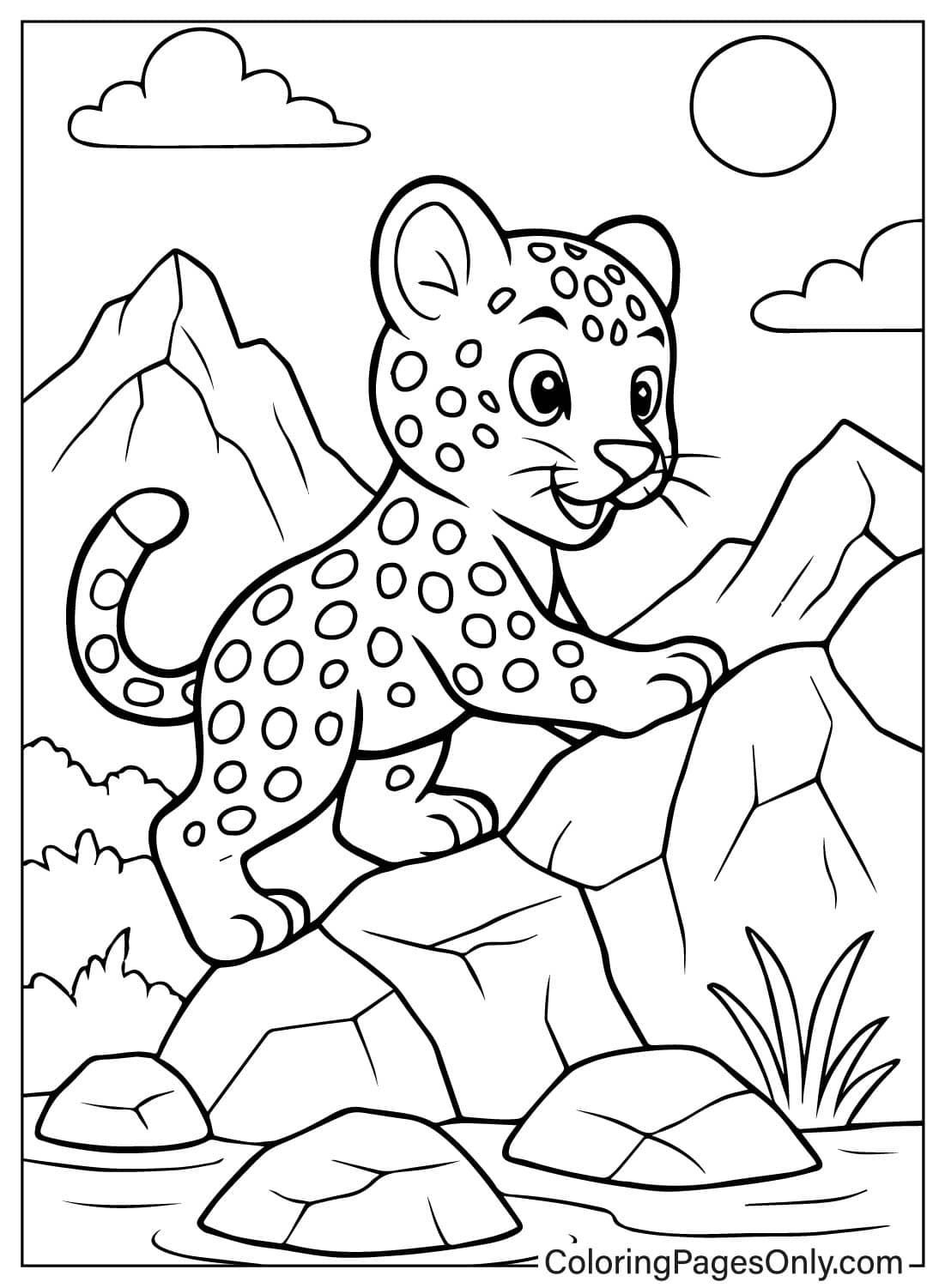
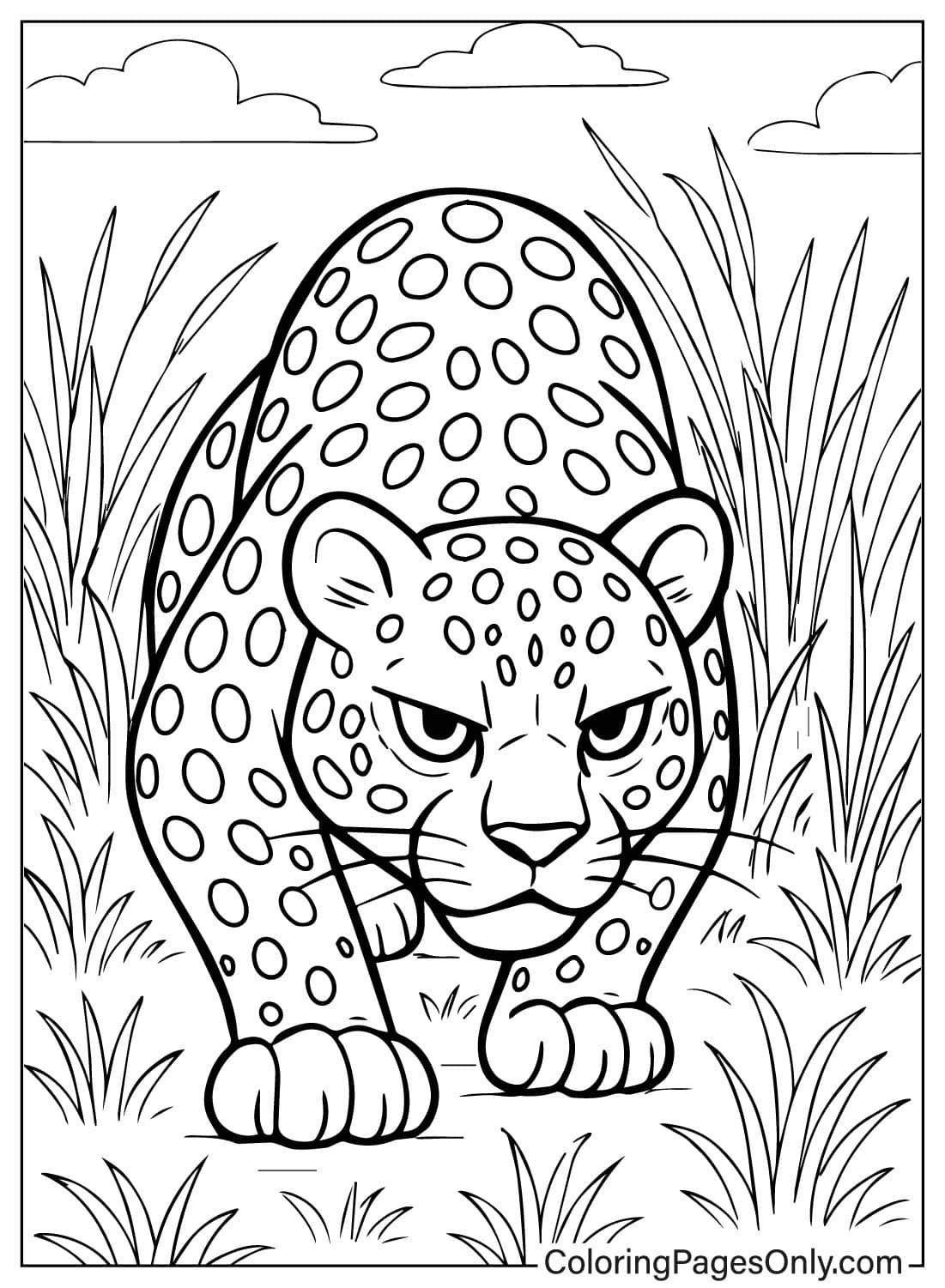
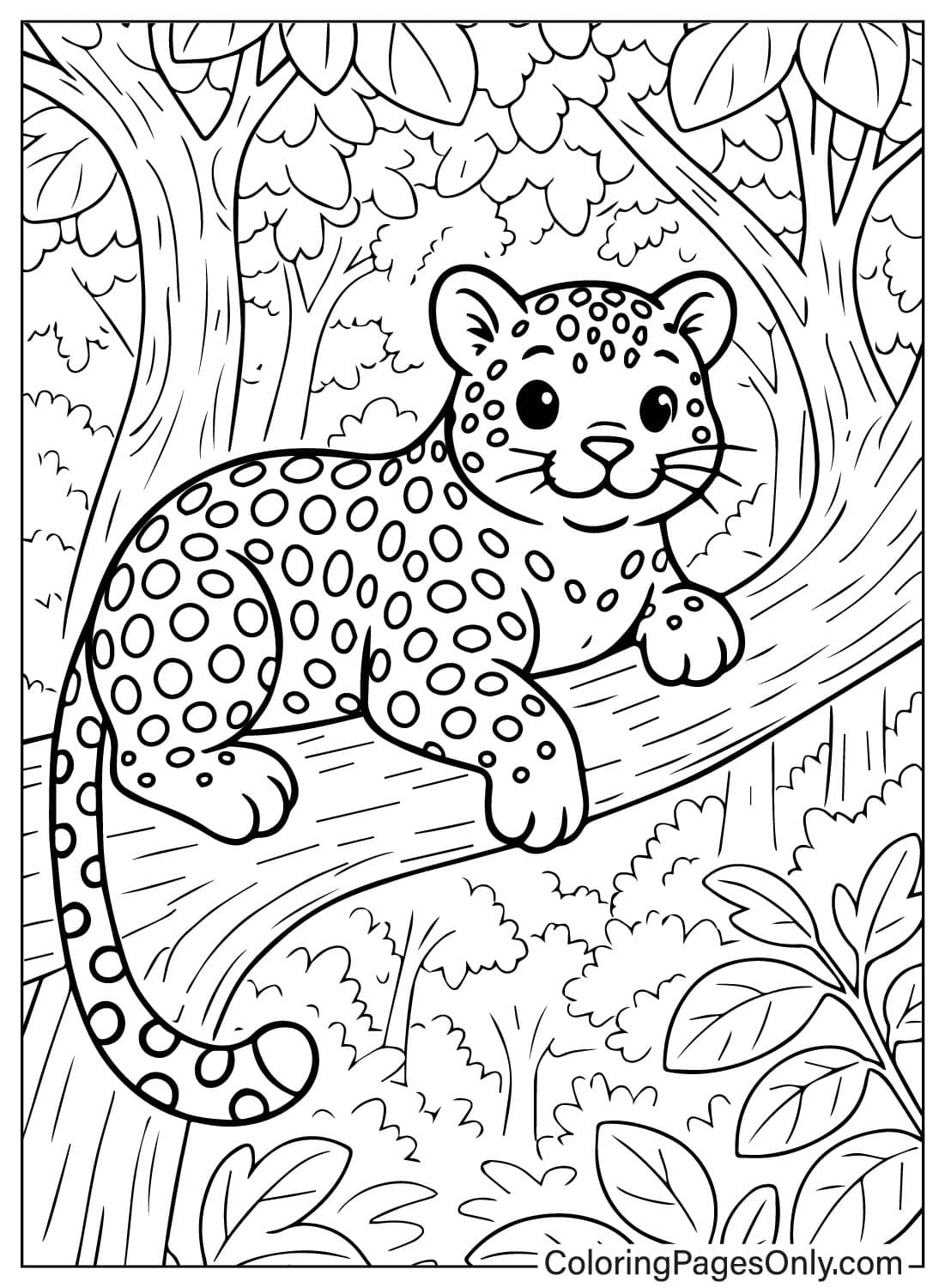
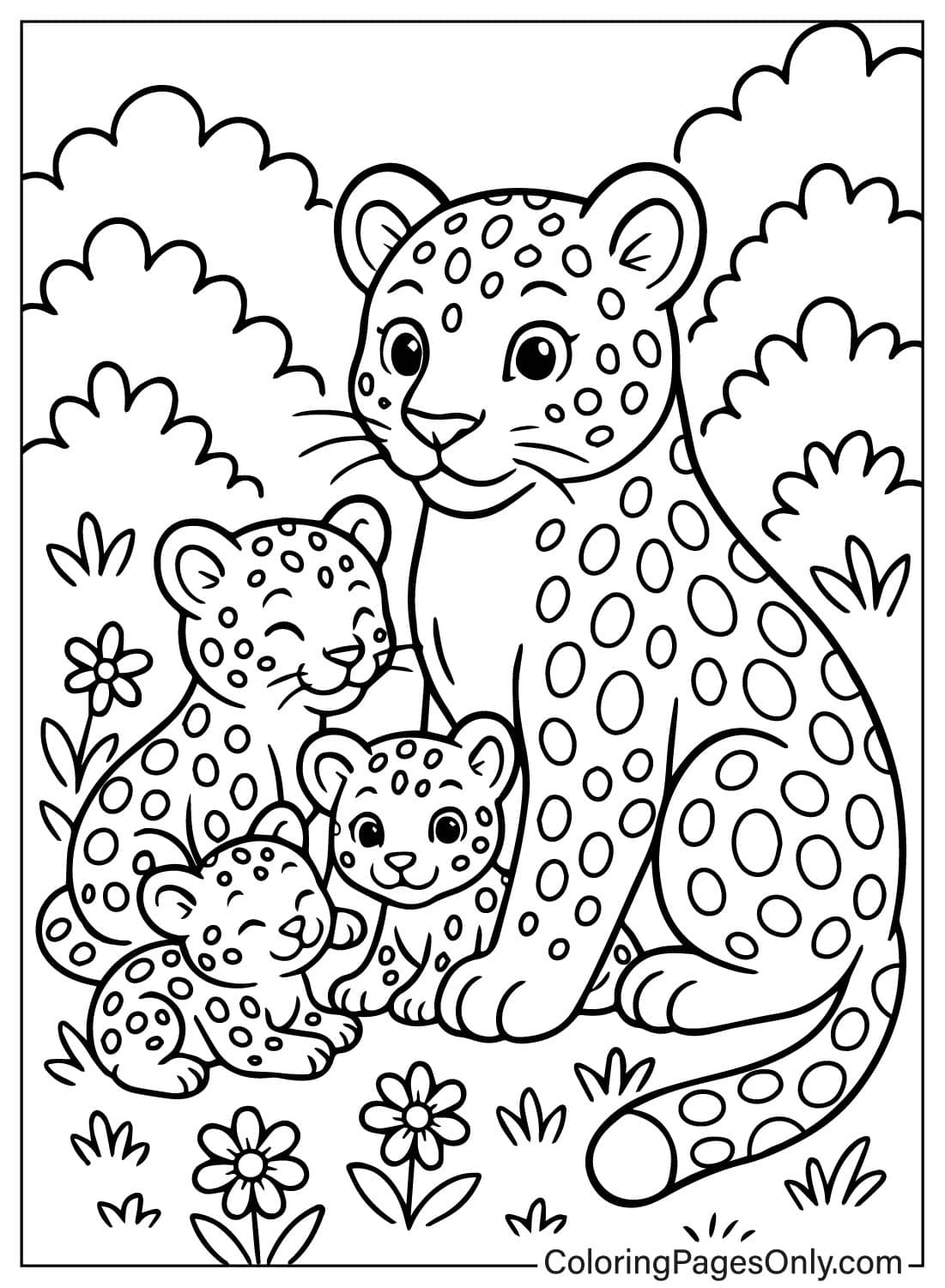
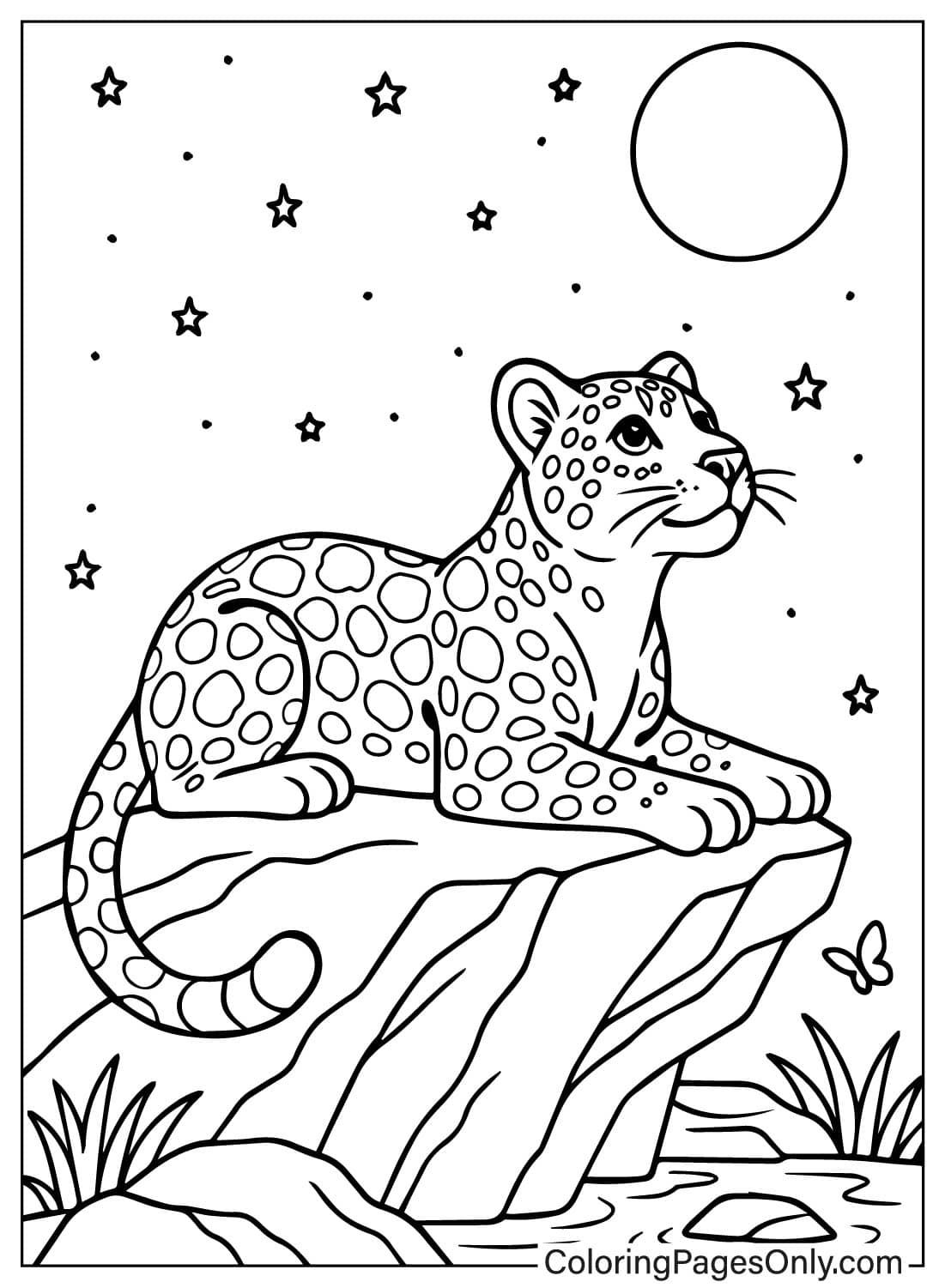
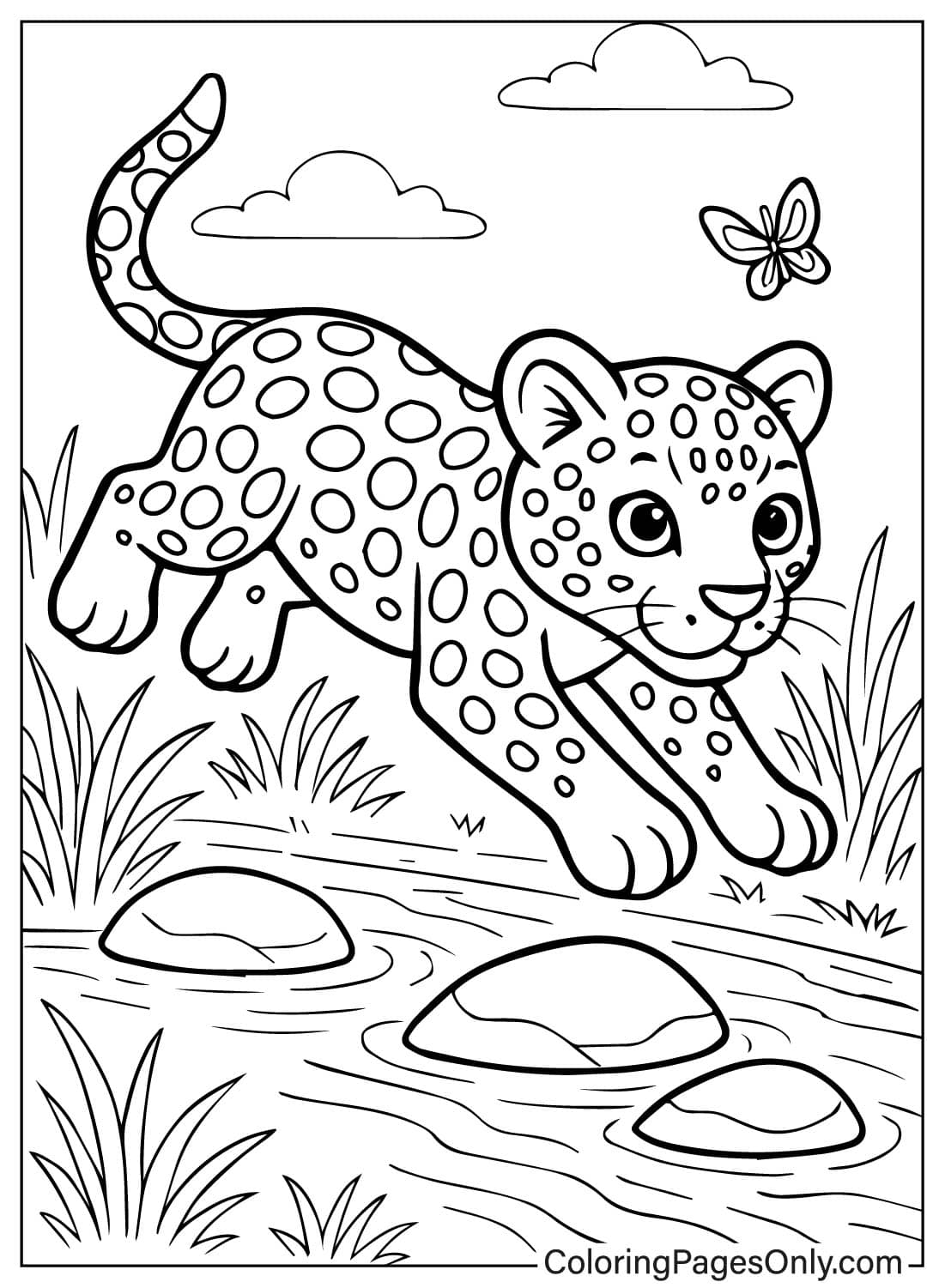
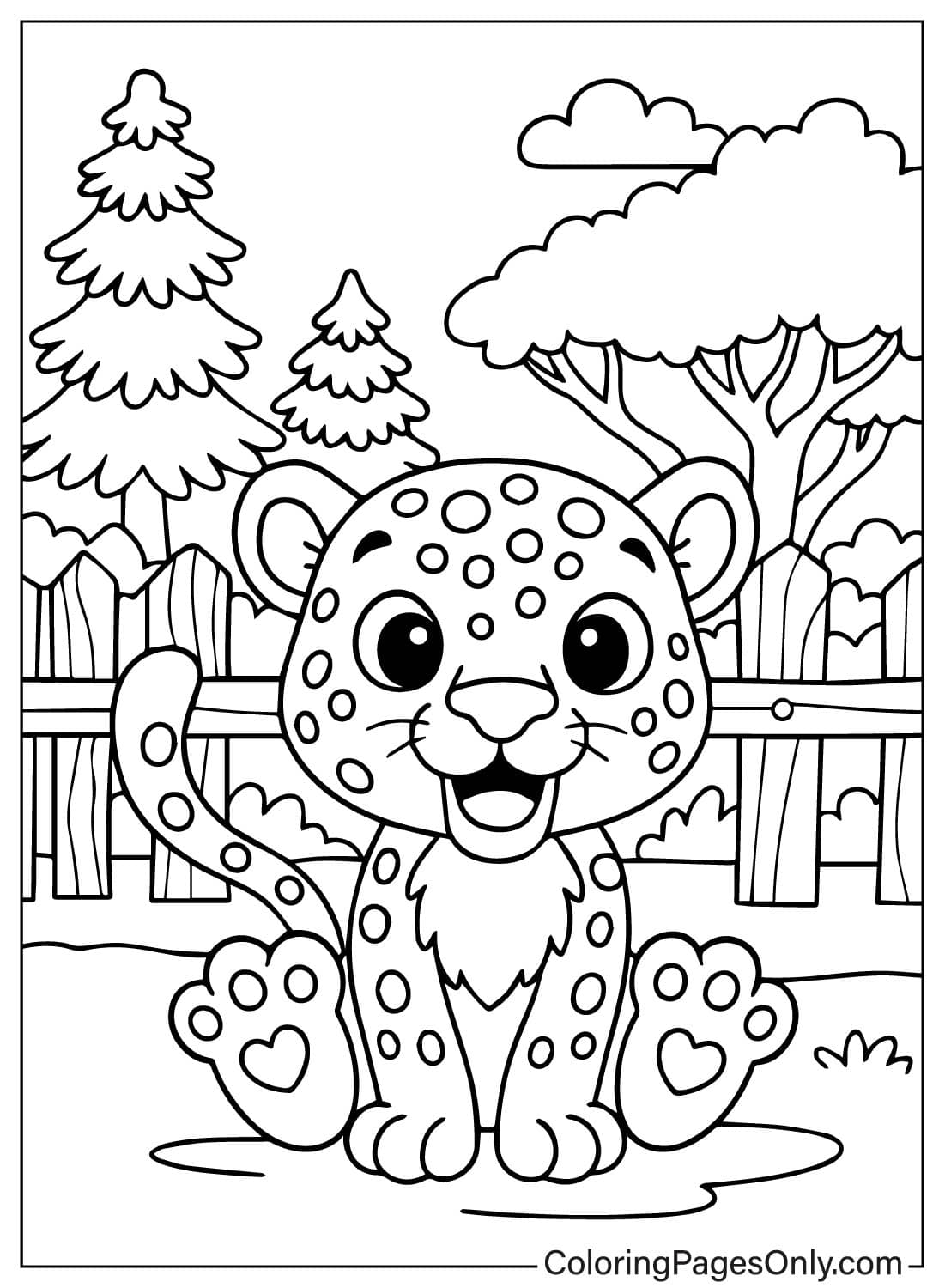
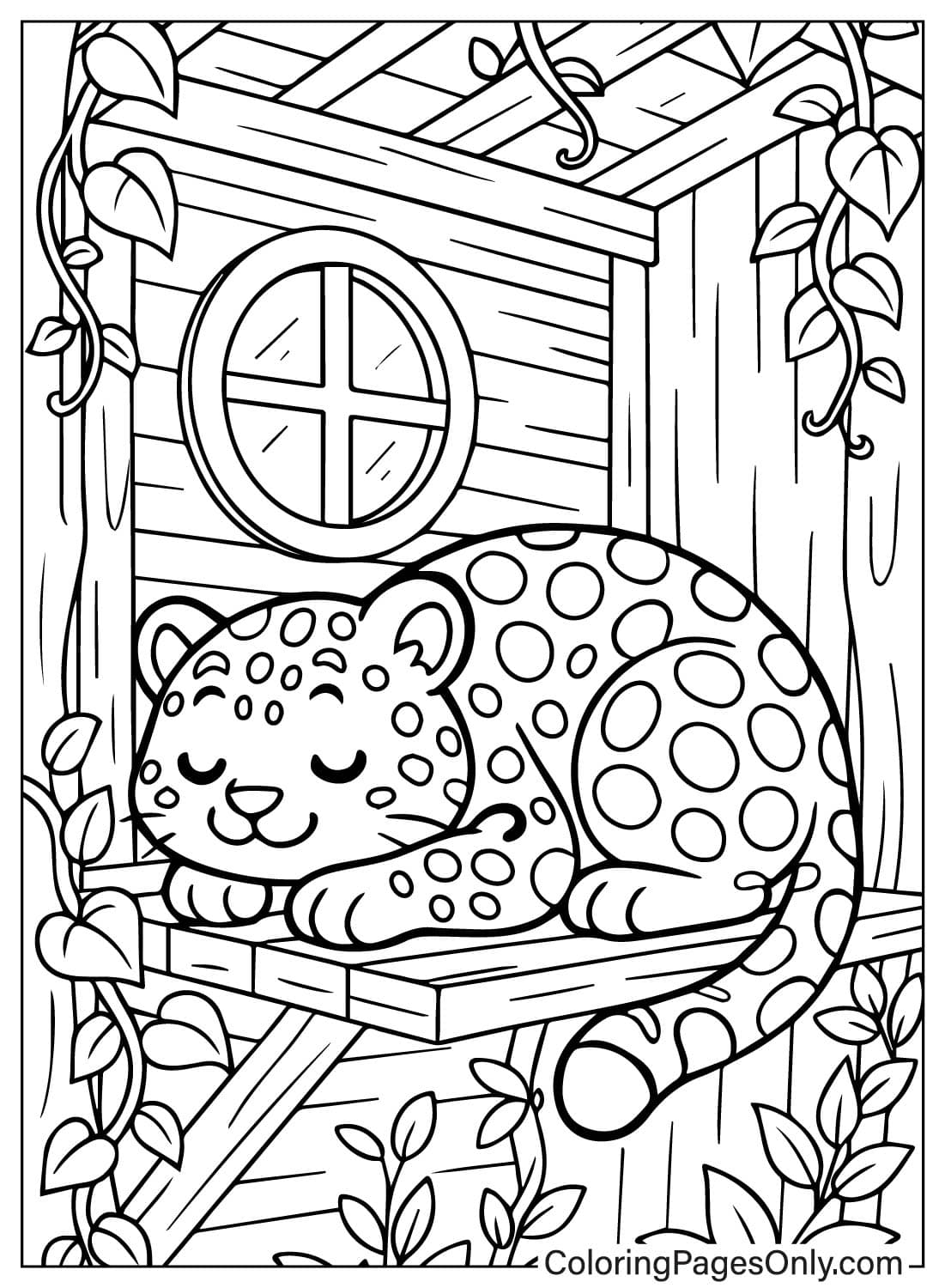
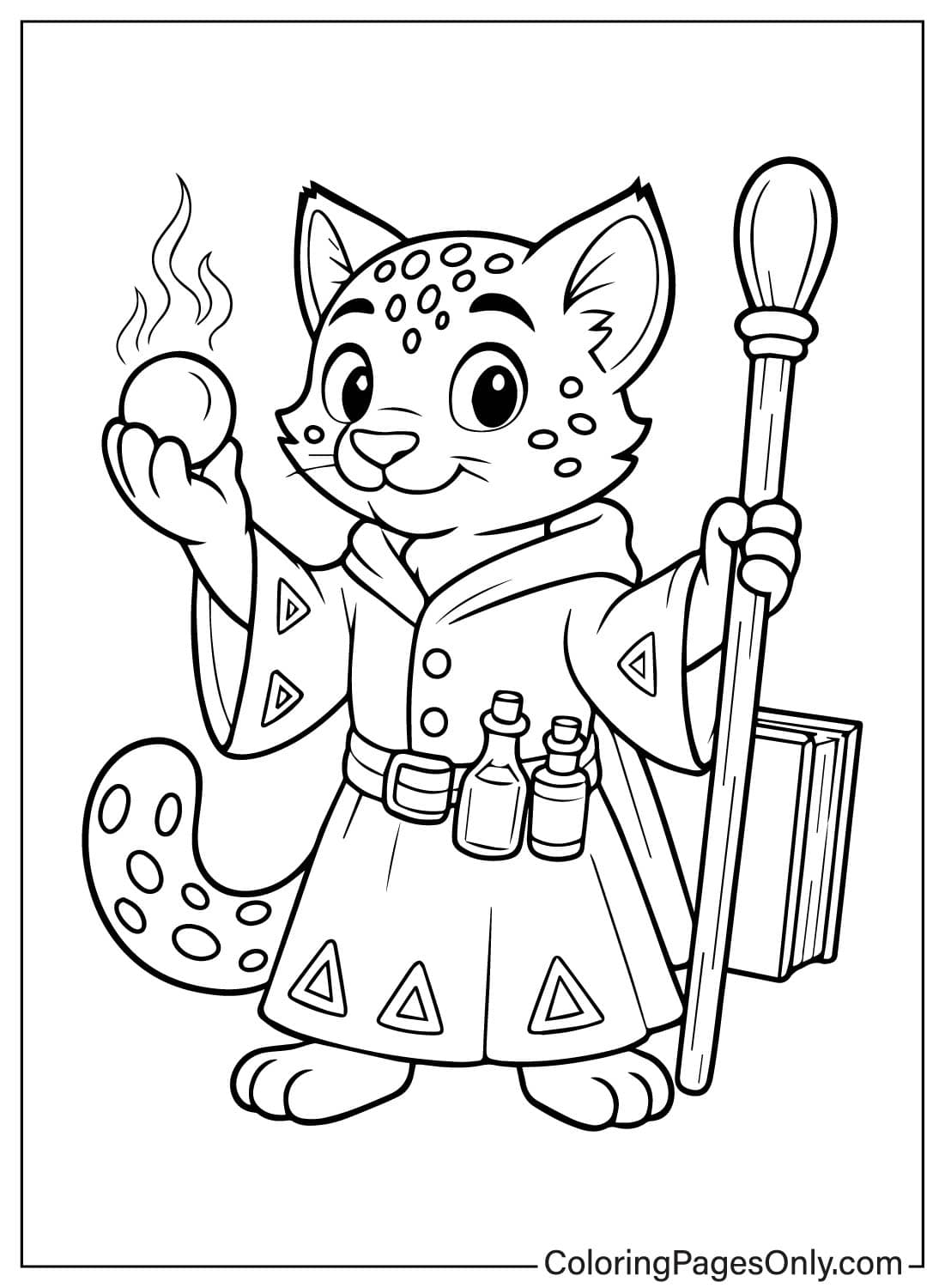
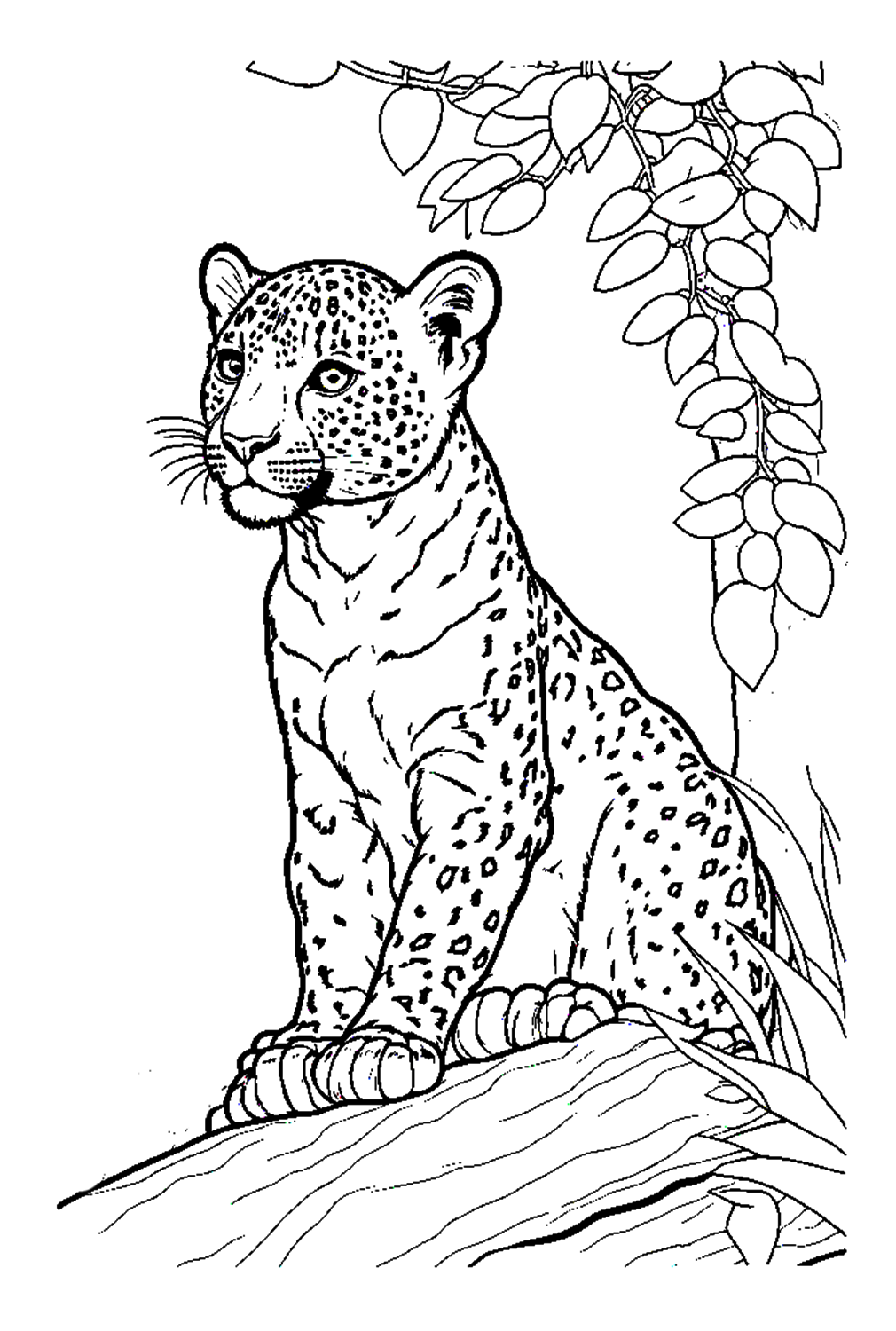
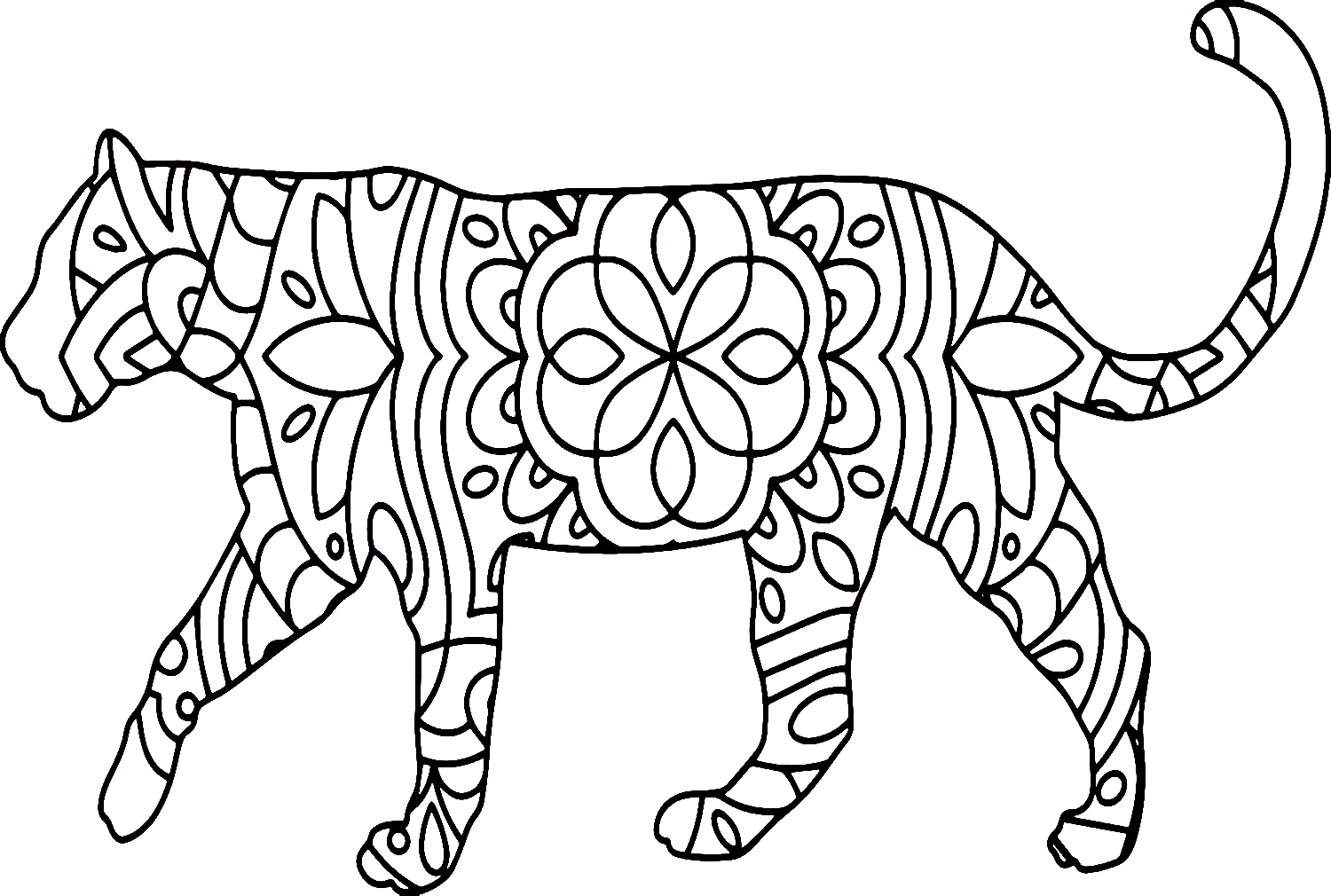
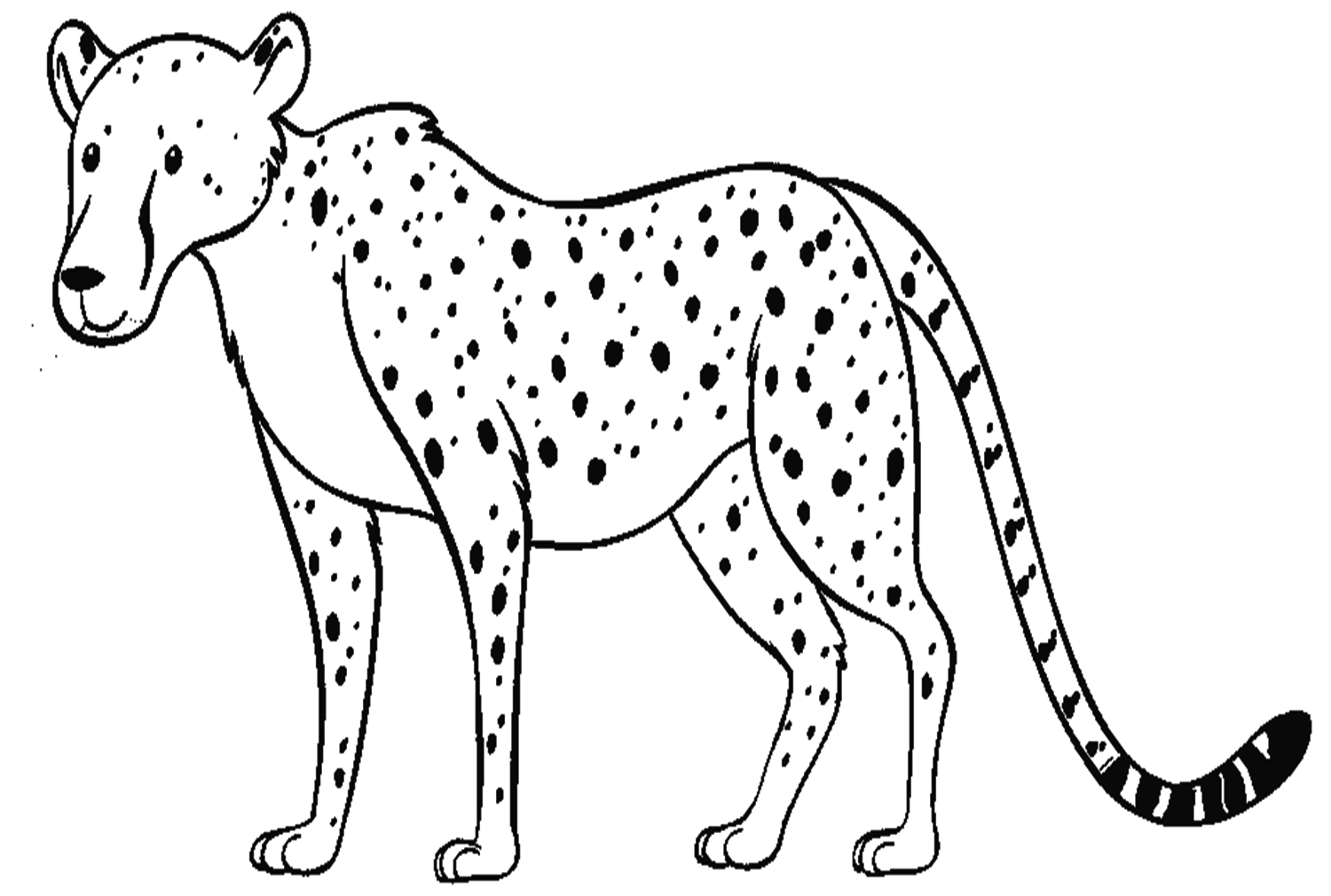
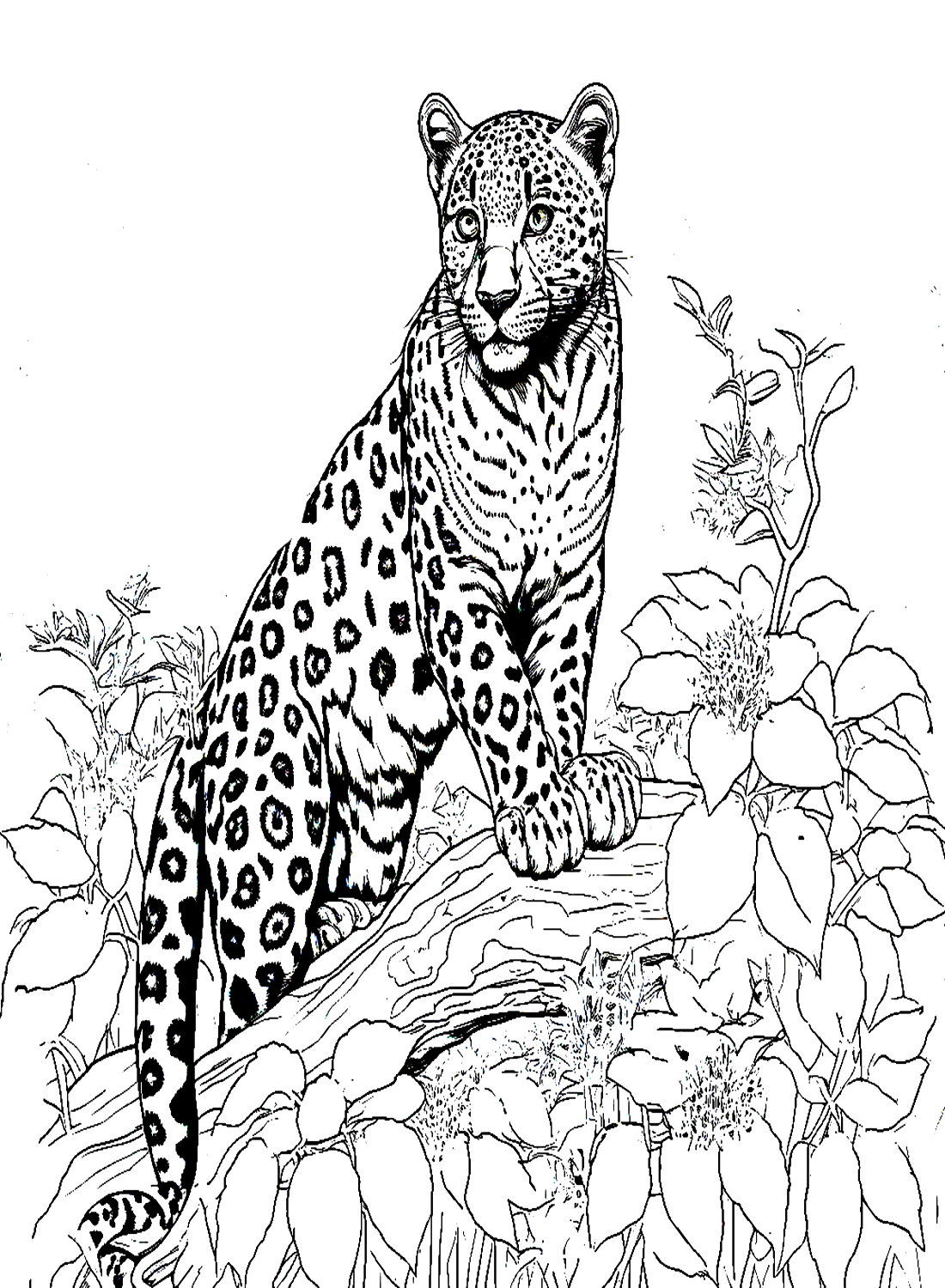
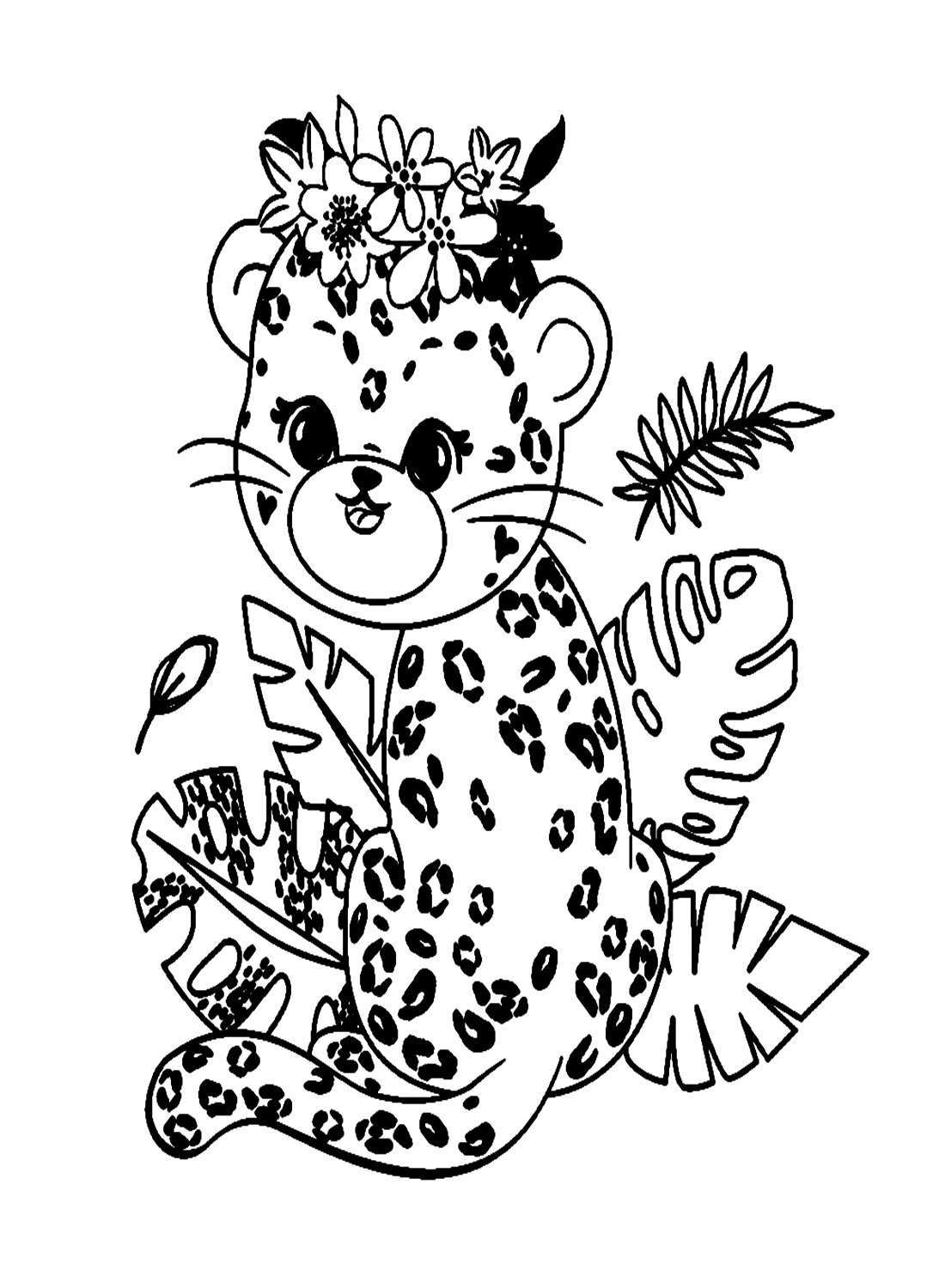
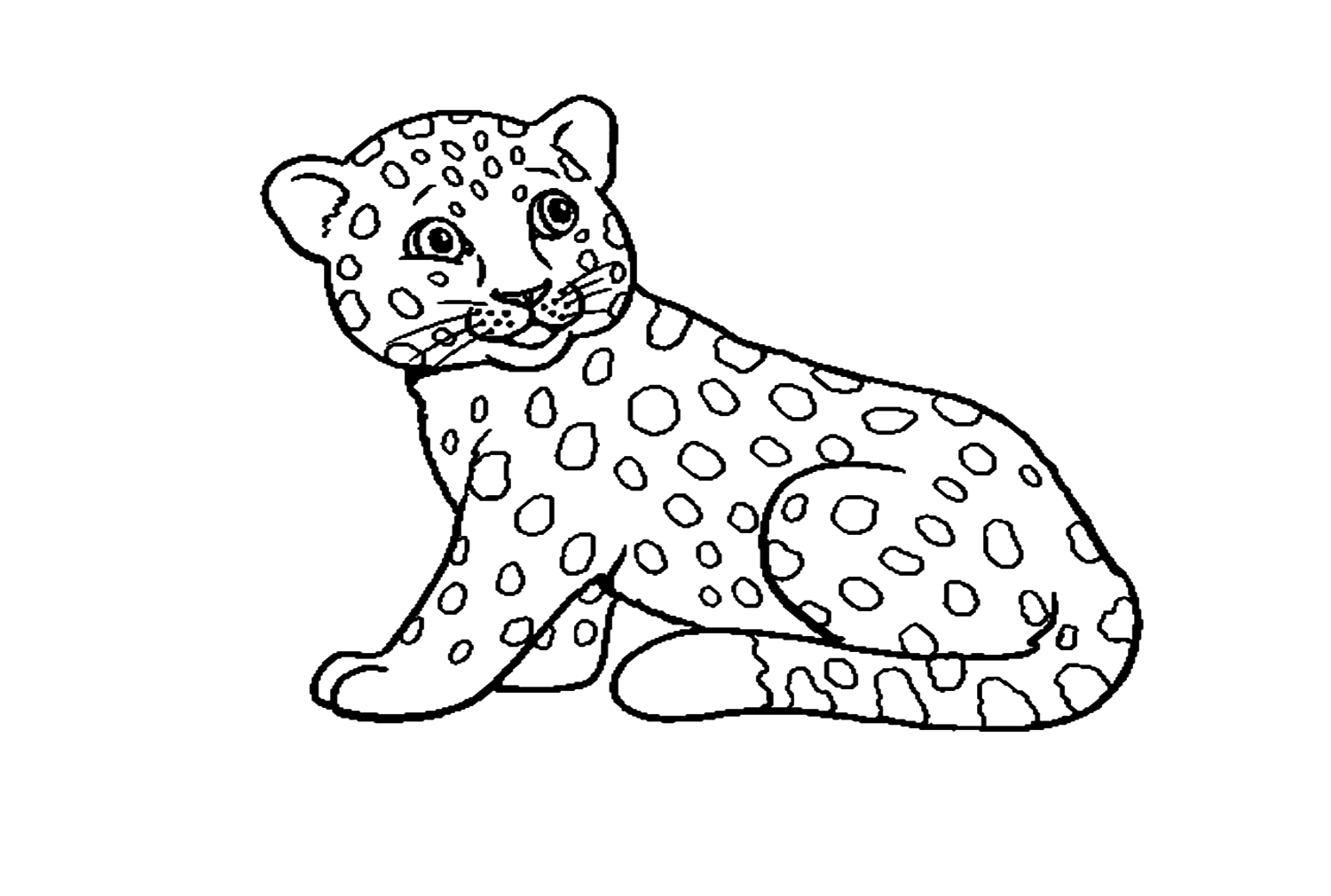
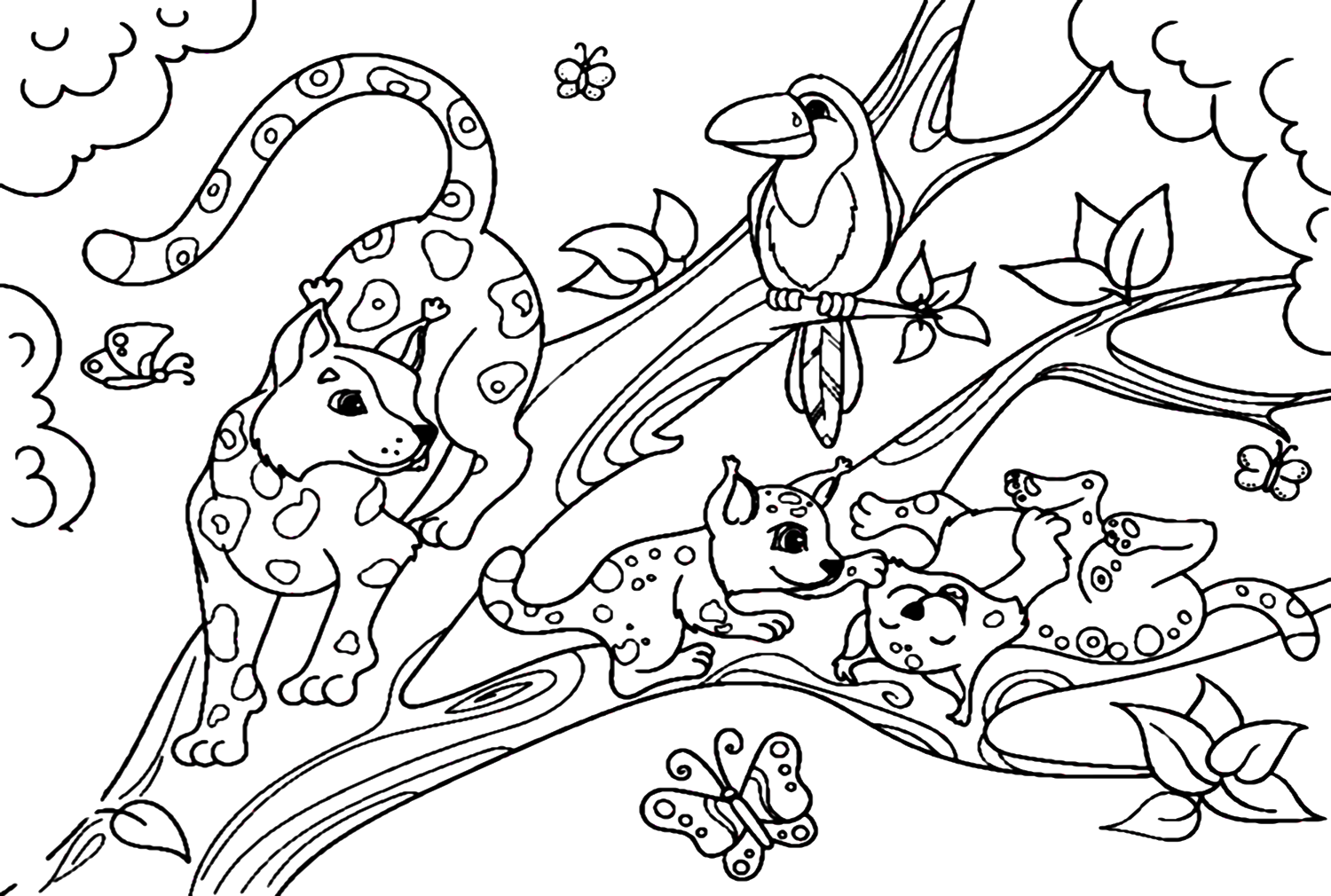
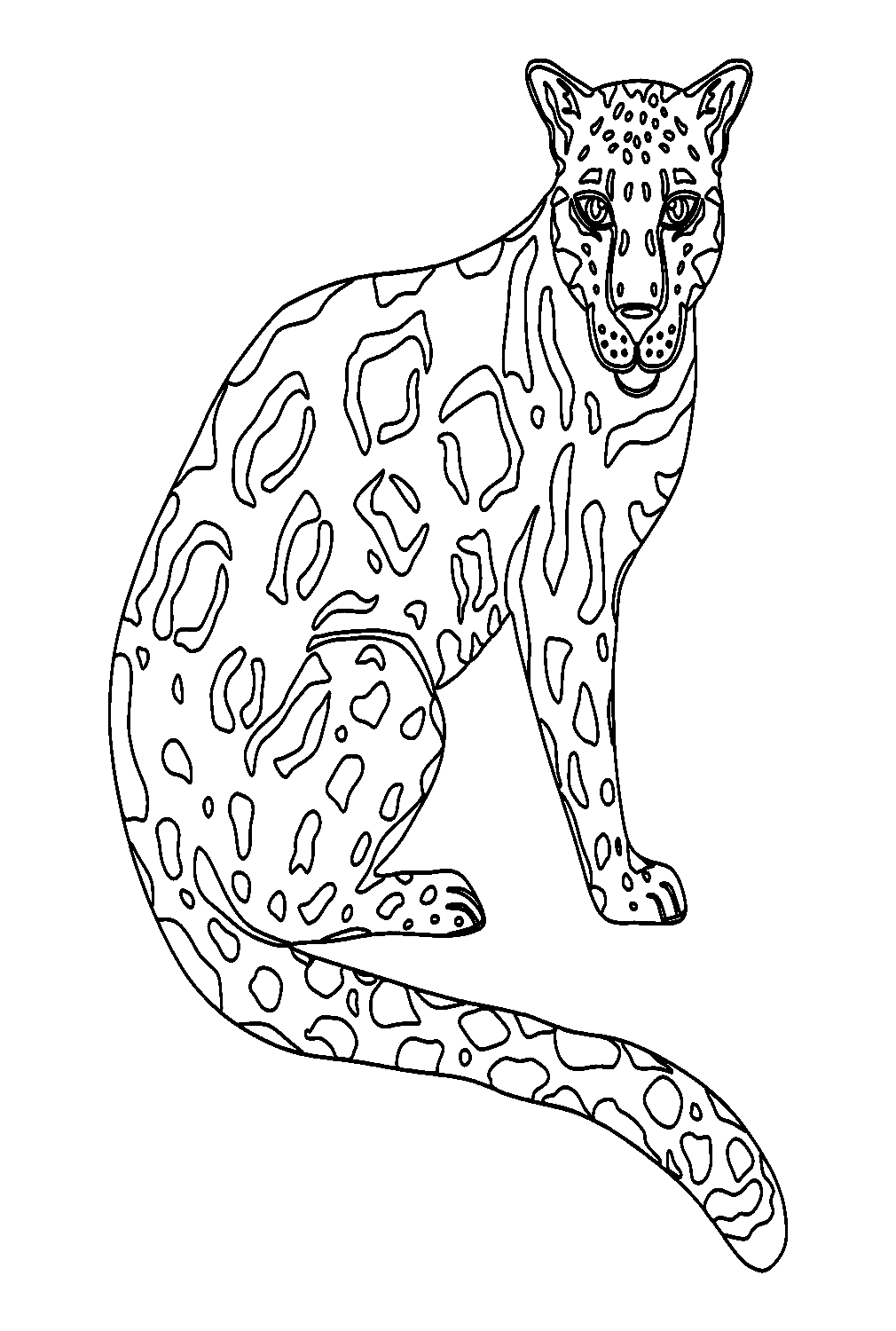
What Is Inside This Collection
The 40 pages are broken into four groups based on style and content.
Realistic Portraits and Wild Scenes
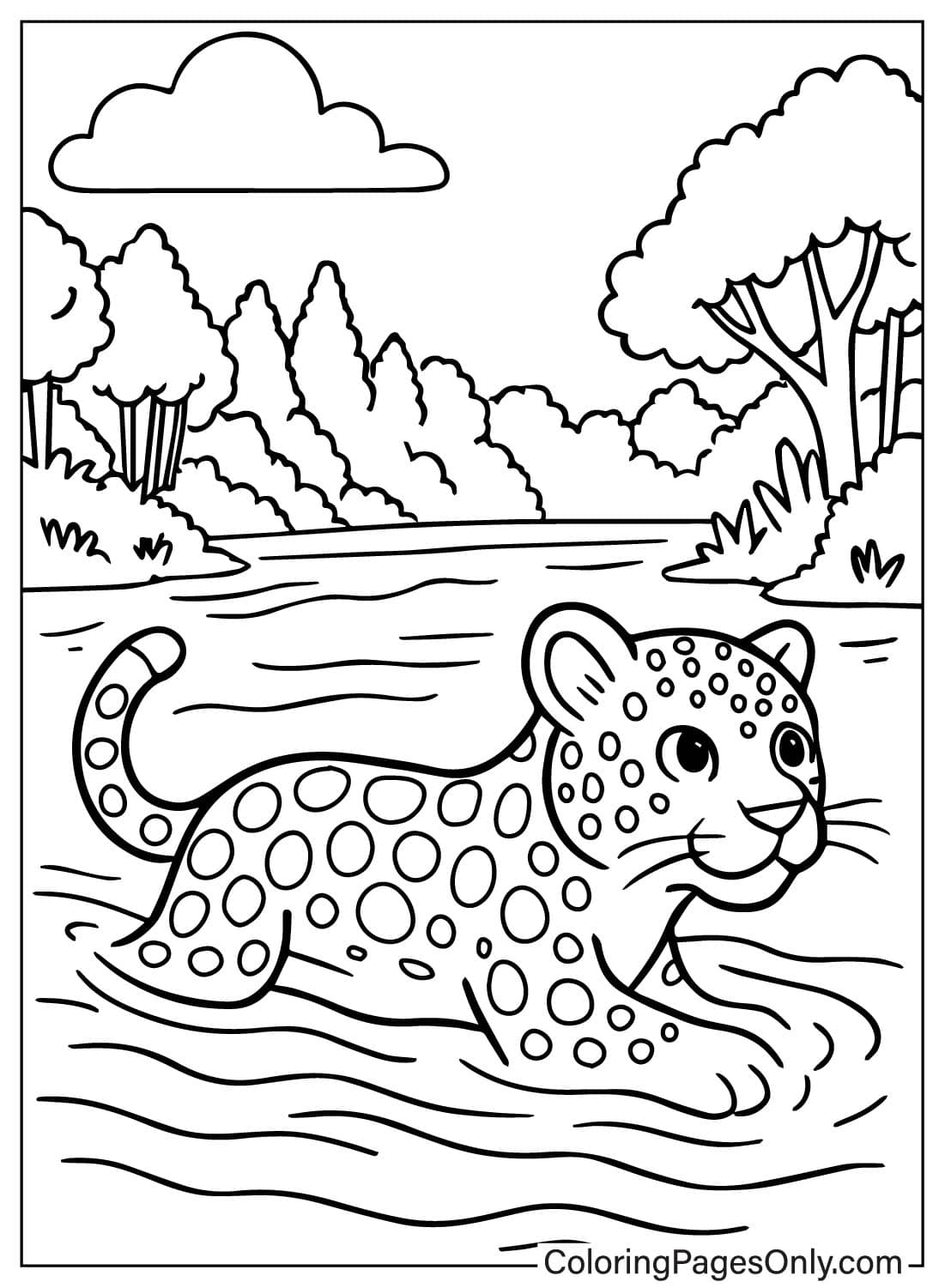
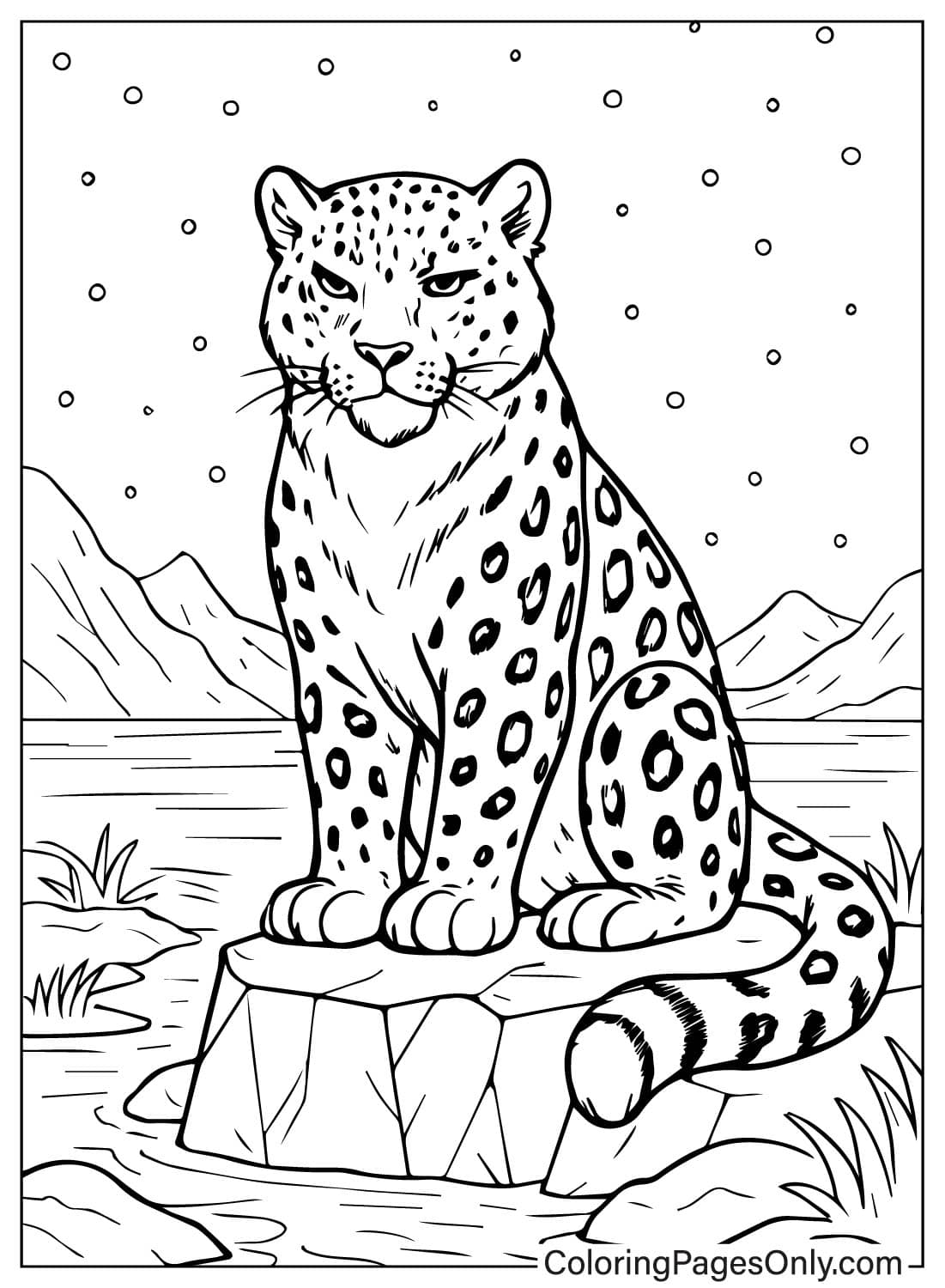
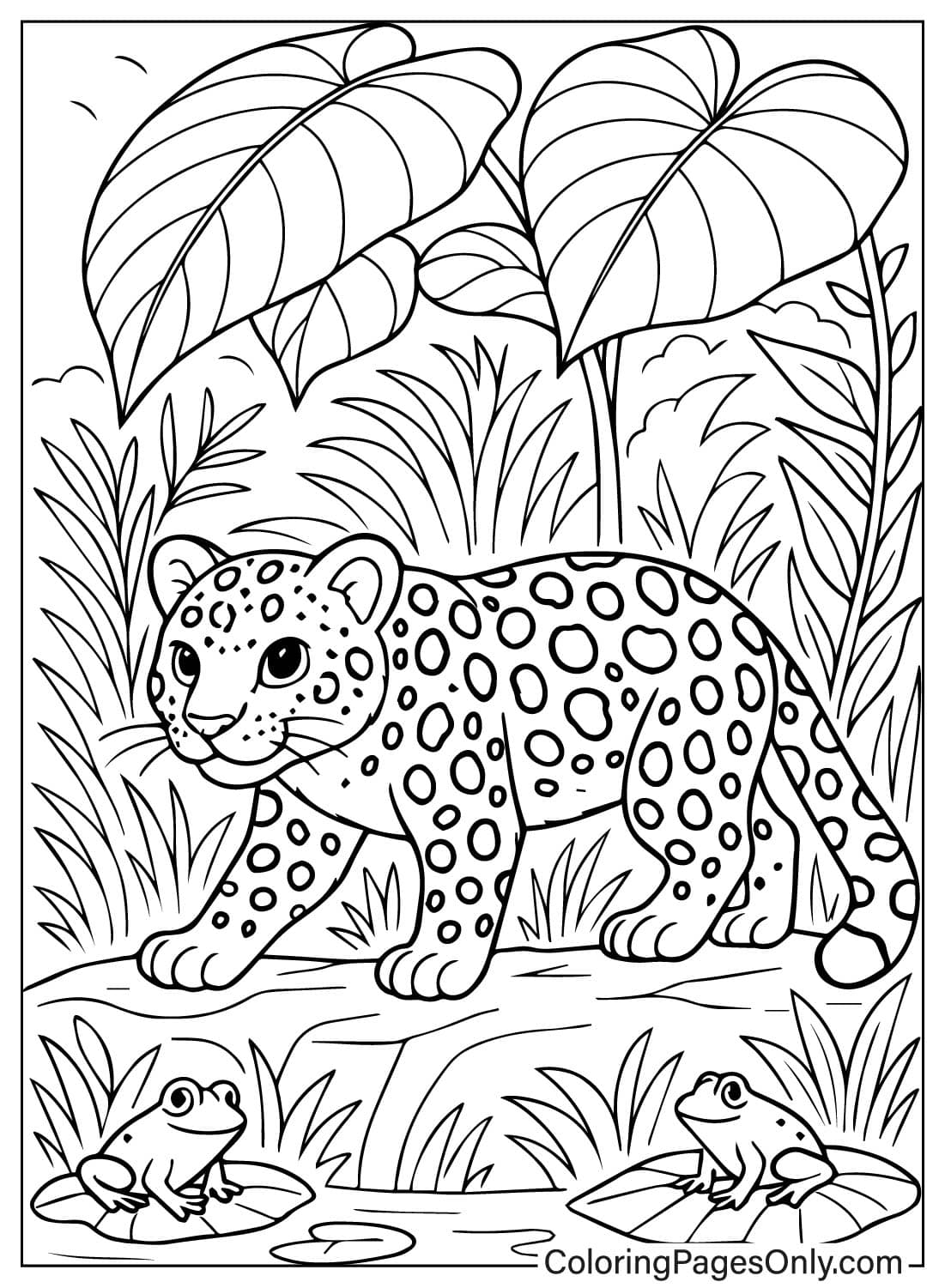
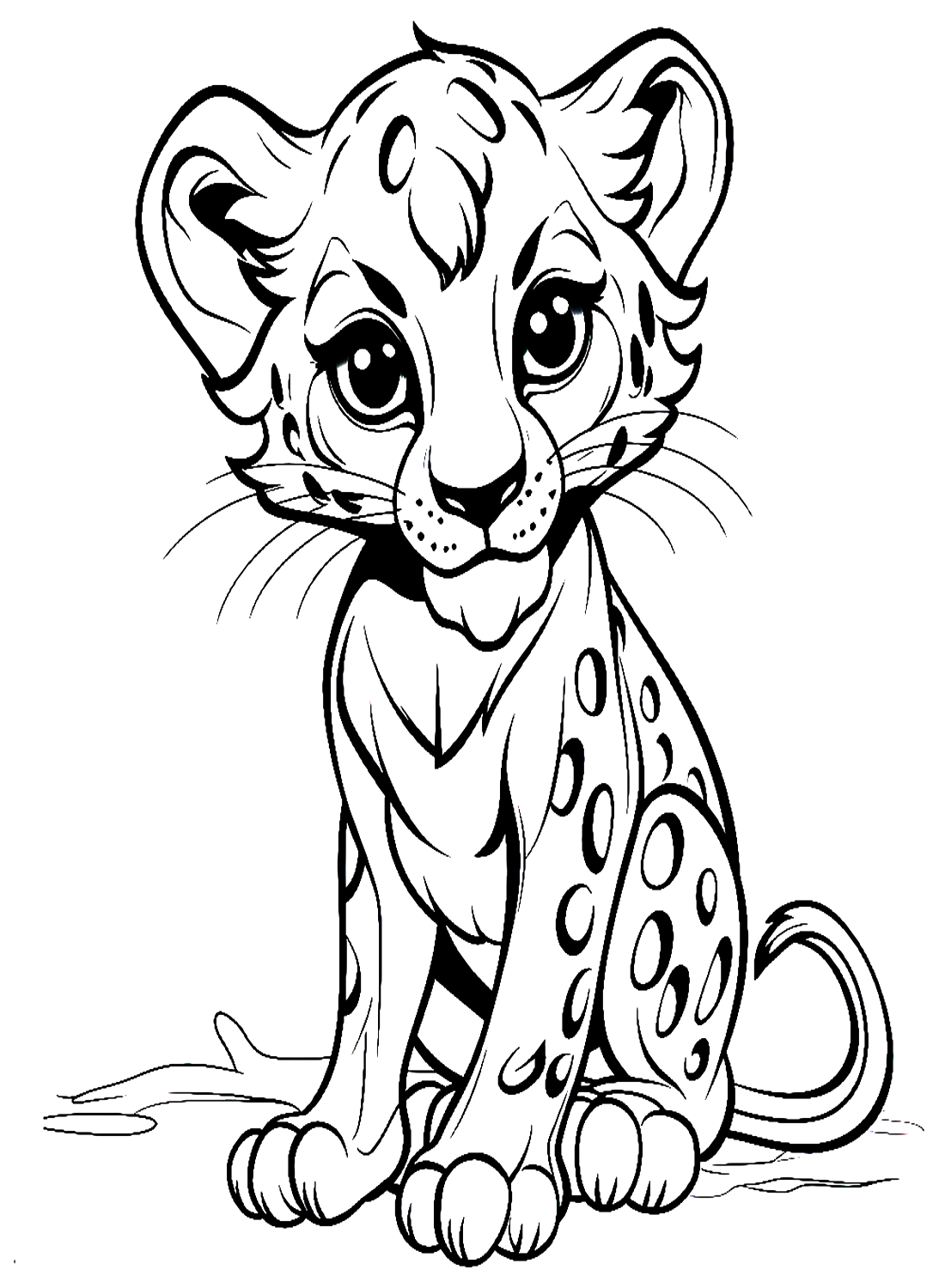
Fifteen pages show a leopard in a fairly true-to-life style, including solo poses, tree-climbing scenes, river crossings, and a stalking prey scene. Color suggestion: build the rosettes from the outside in, starting with a dark brown or black outline and filling the center with a slightly lighter brown than the surrounding coat, since real leopard rosettes are not solid black shapes.
Cute and Cartoon Characters
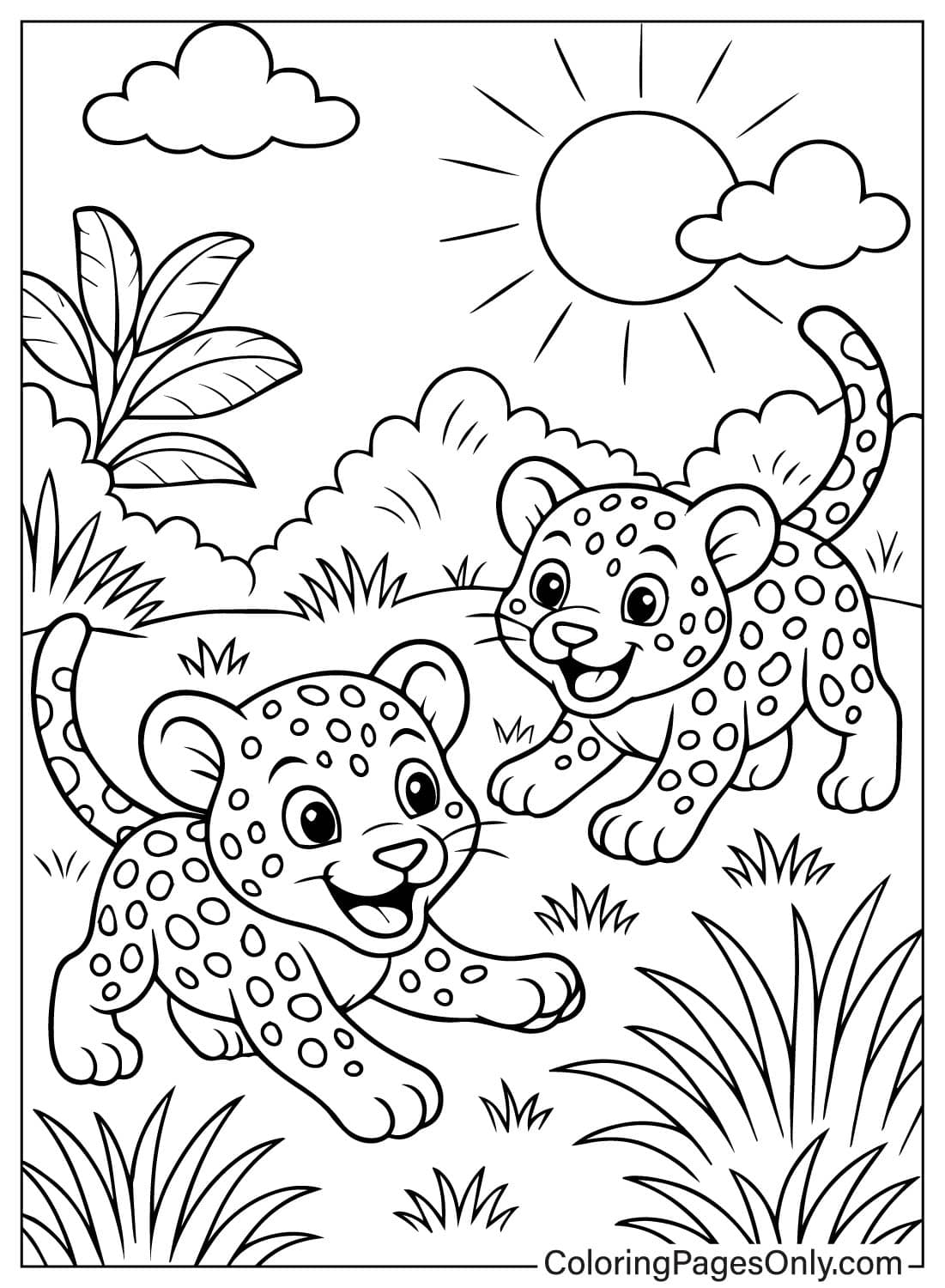
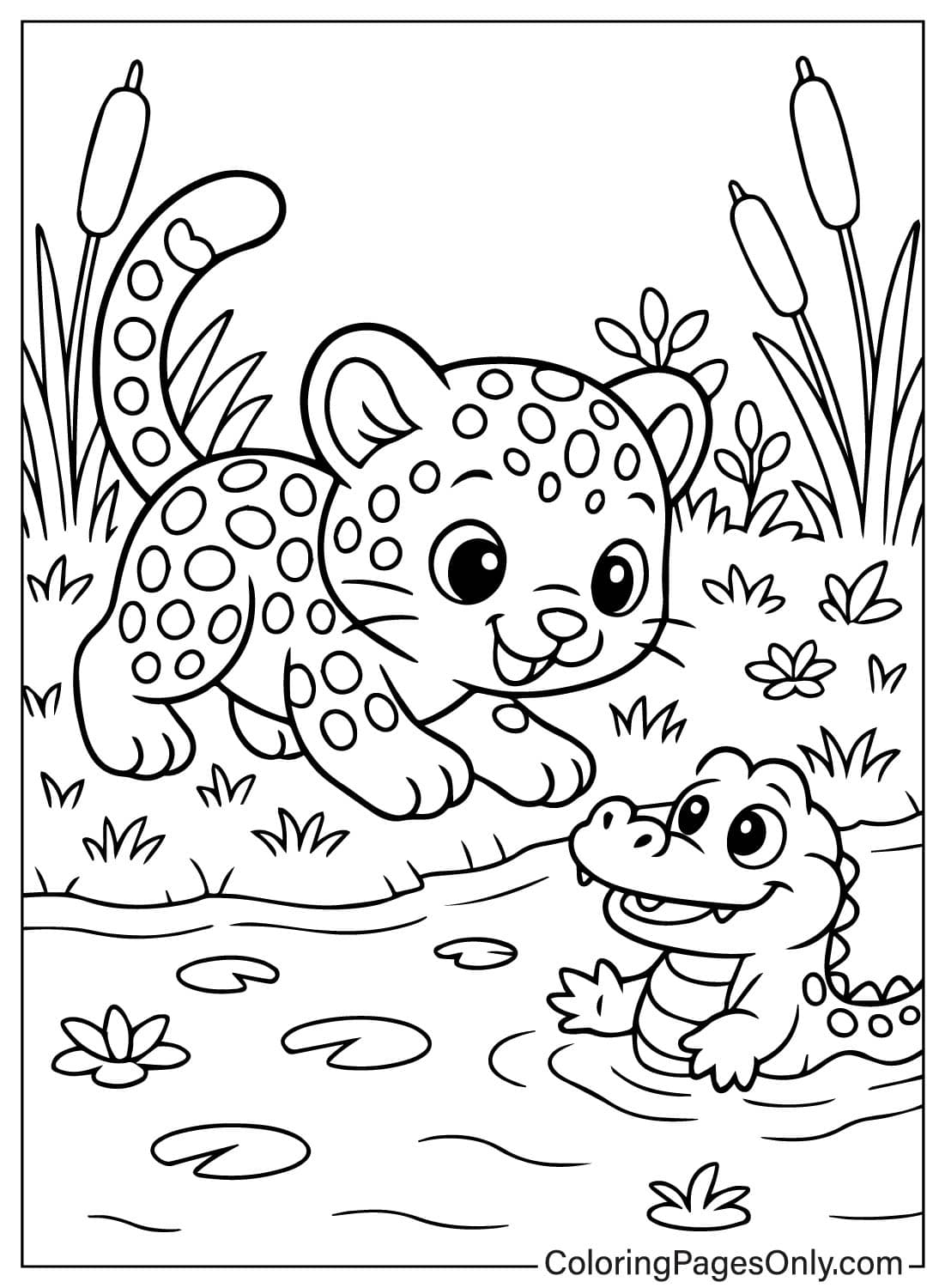
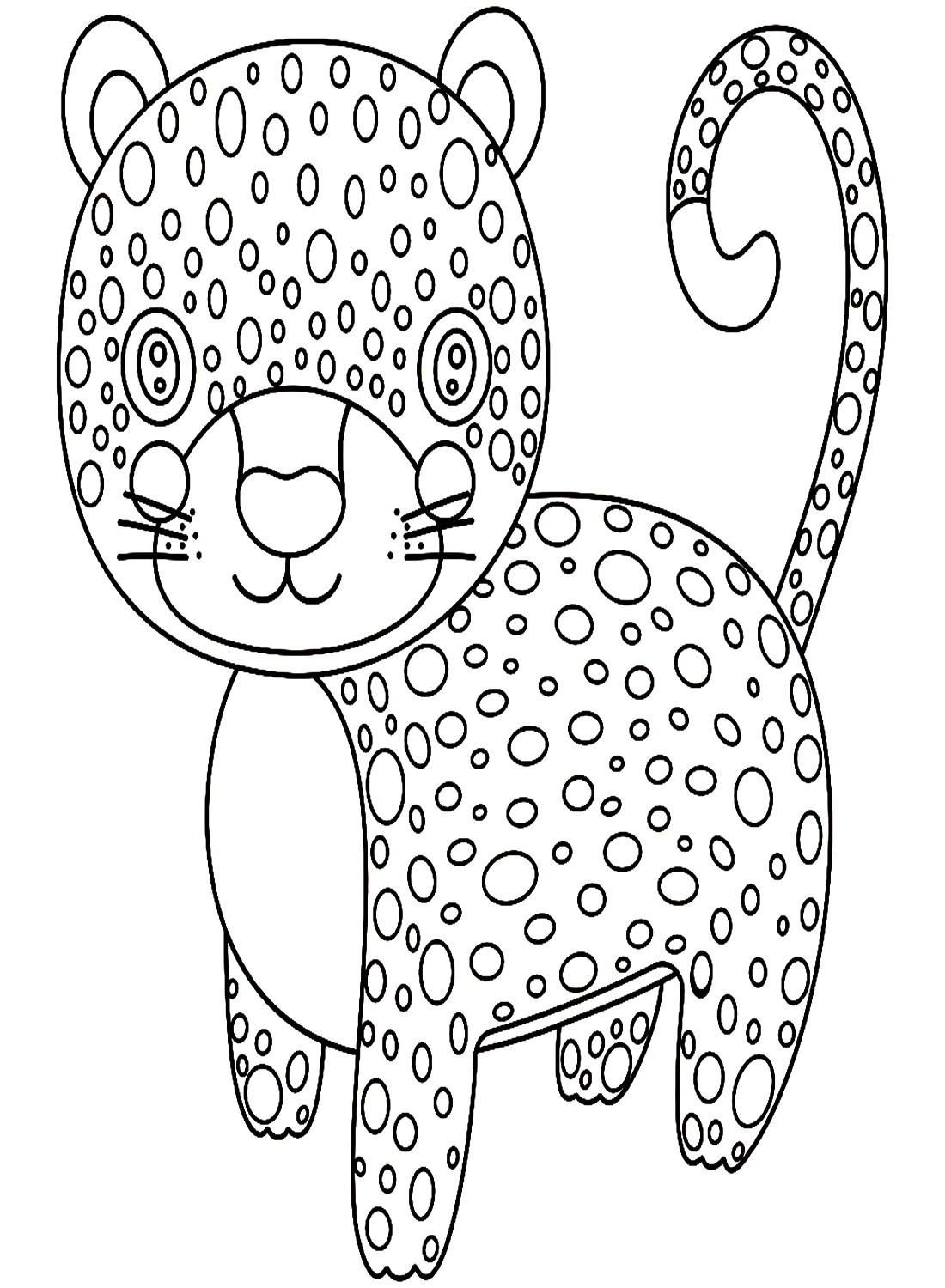
Eleven pages take a rounder, more playful approach, including simplified designs built for younger colorers. Color suggestion: these pages suit brighter, more saturated golds and oranges than the realistic portraits, since the simplified shapes are built for a bolder, flatter color style.
Baby and Family Scenes
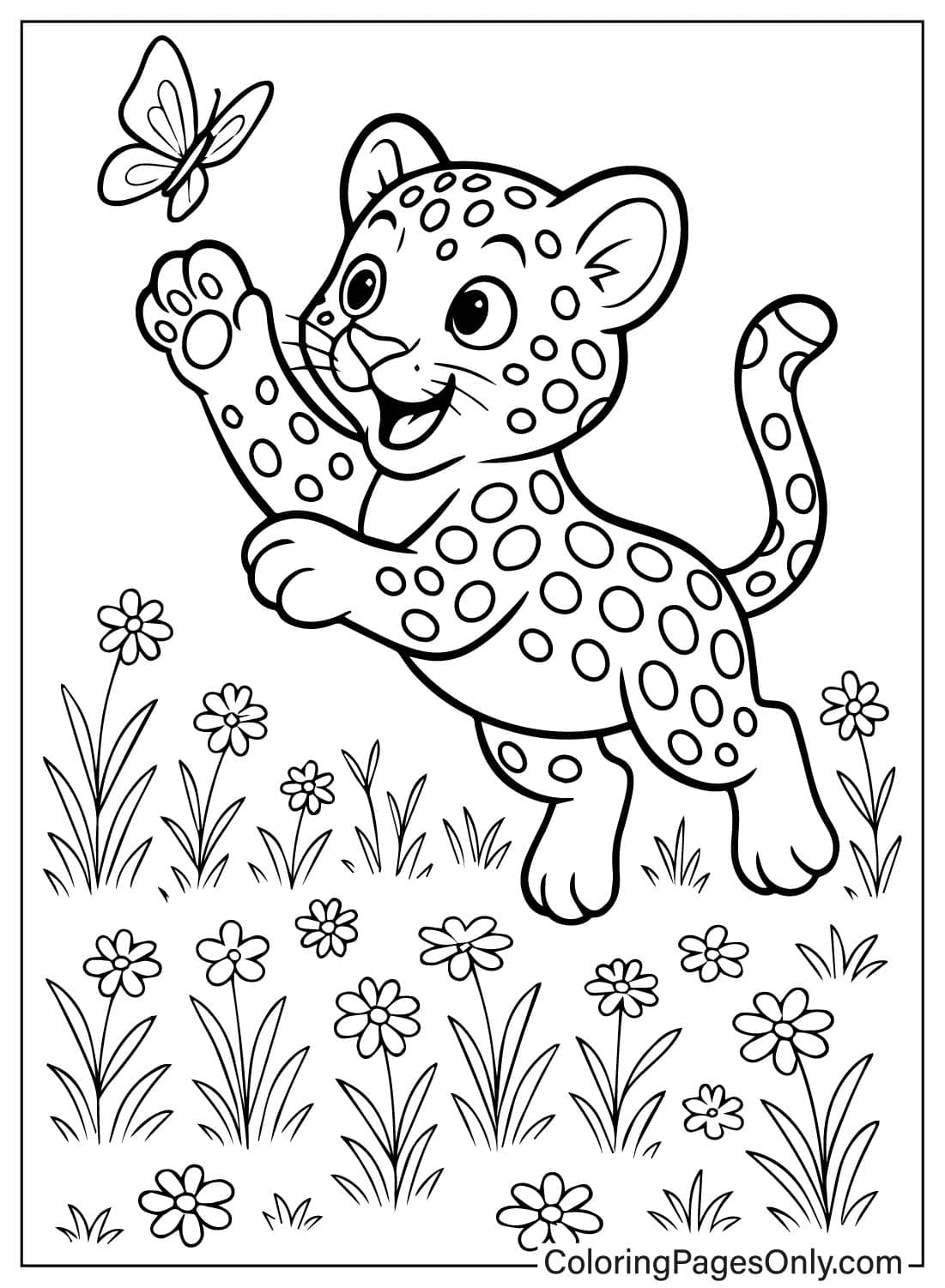
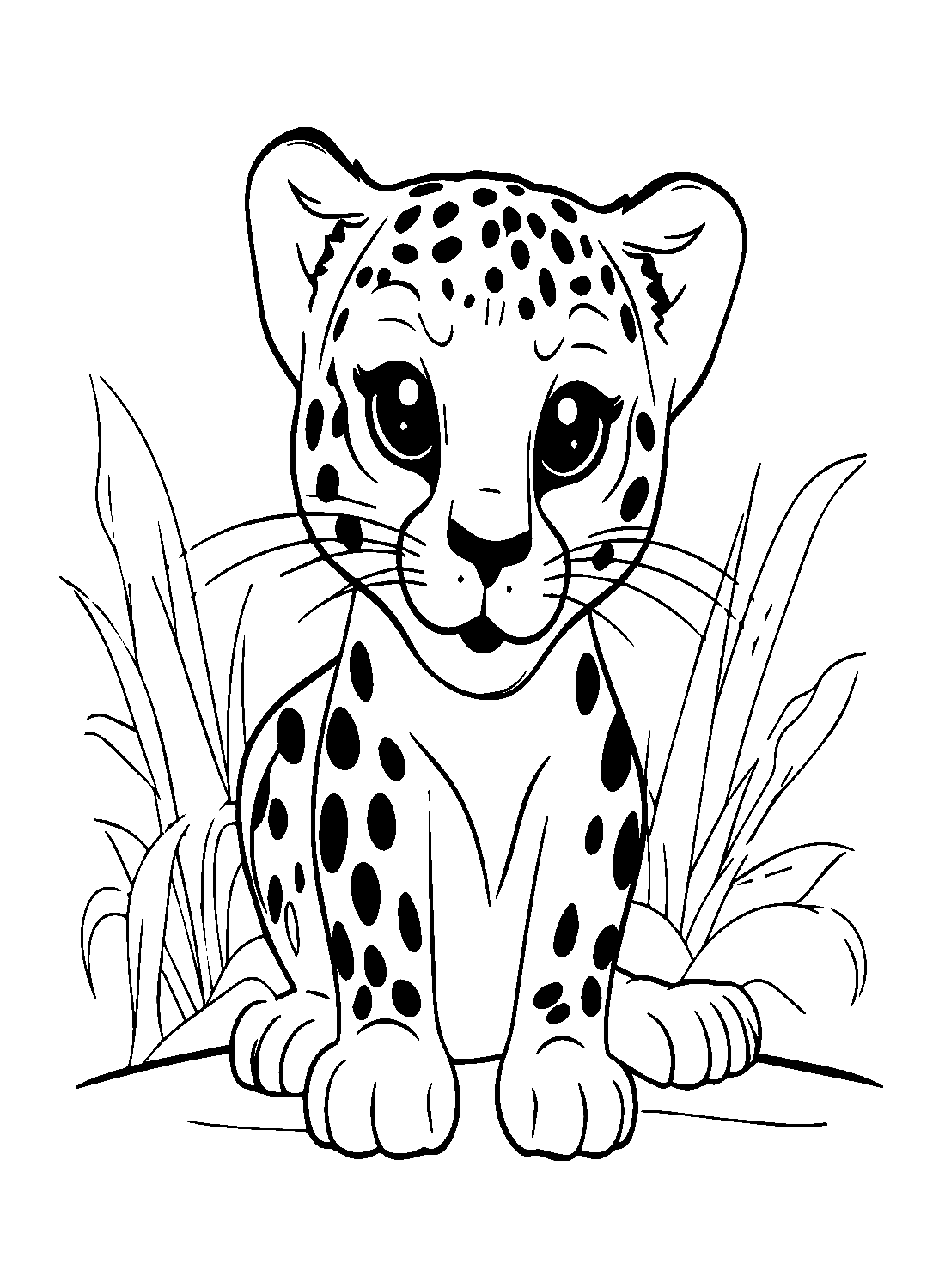
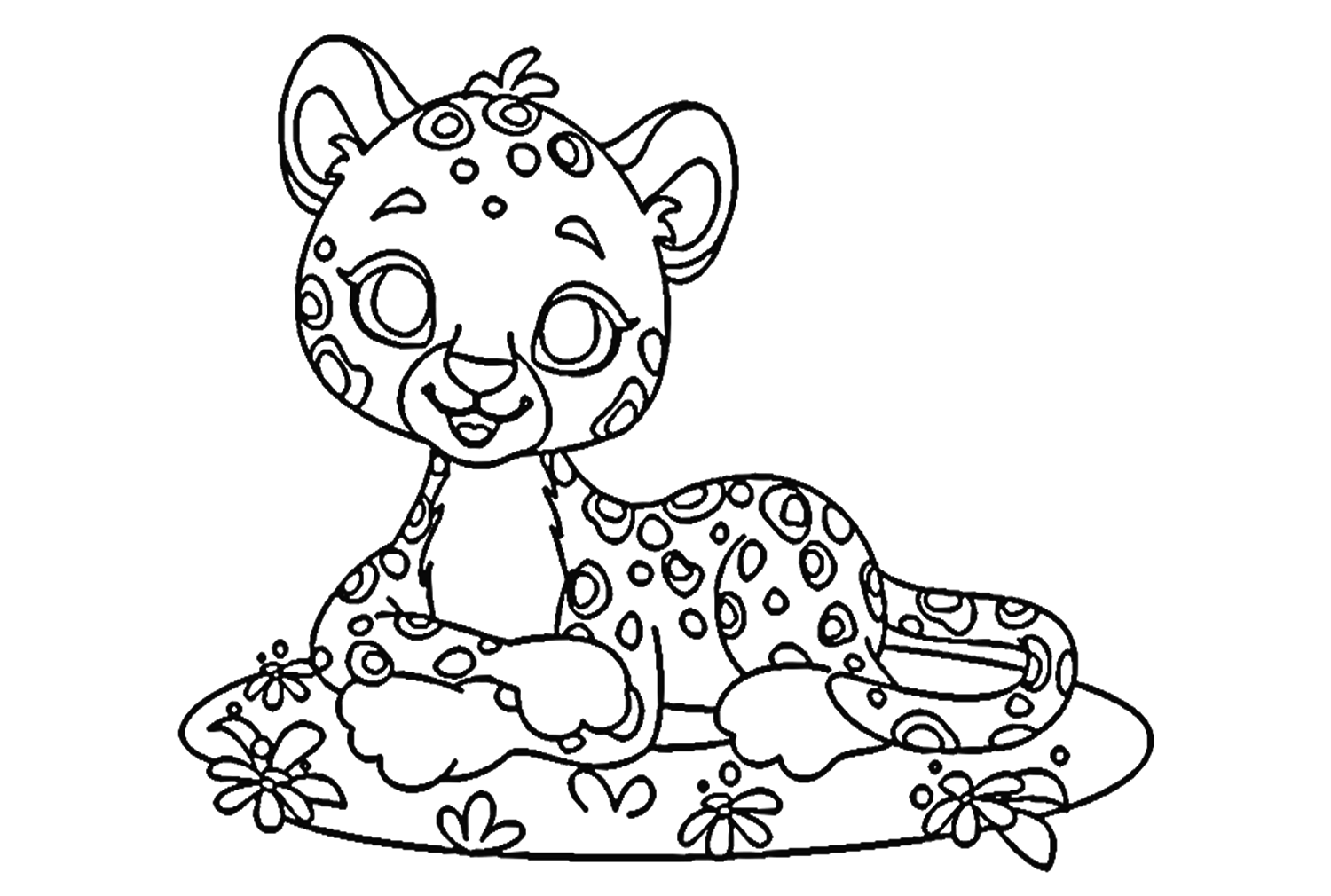
Eleven pages show leopard cubs or family groups, including cubs playing with a butterfly, resting, or sitting together. Color suggestion: keep cub coats a touch lighter and softer than the adult portraits, since young leopards often have a slightly fuzzier, less defined coat pattern than fully grown adults.
Pattern, Habitat, and Species Variant Designs
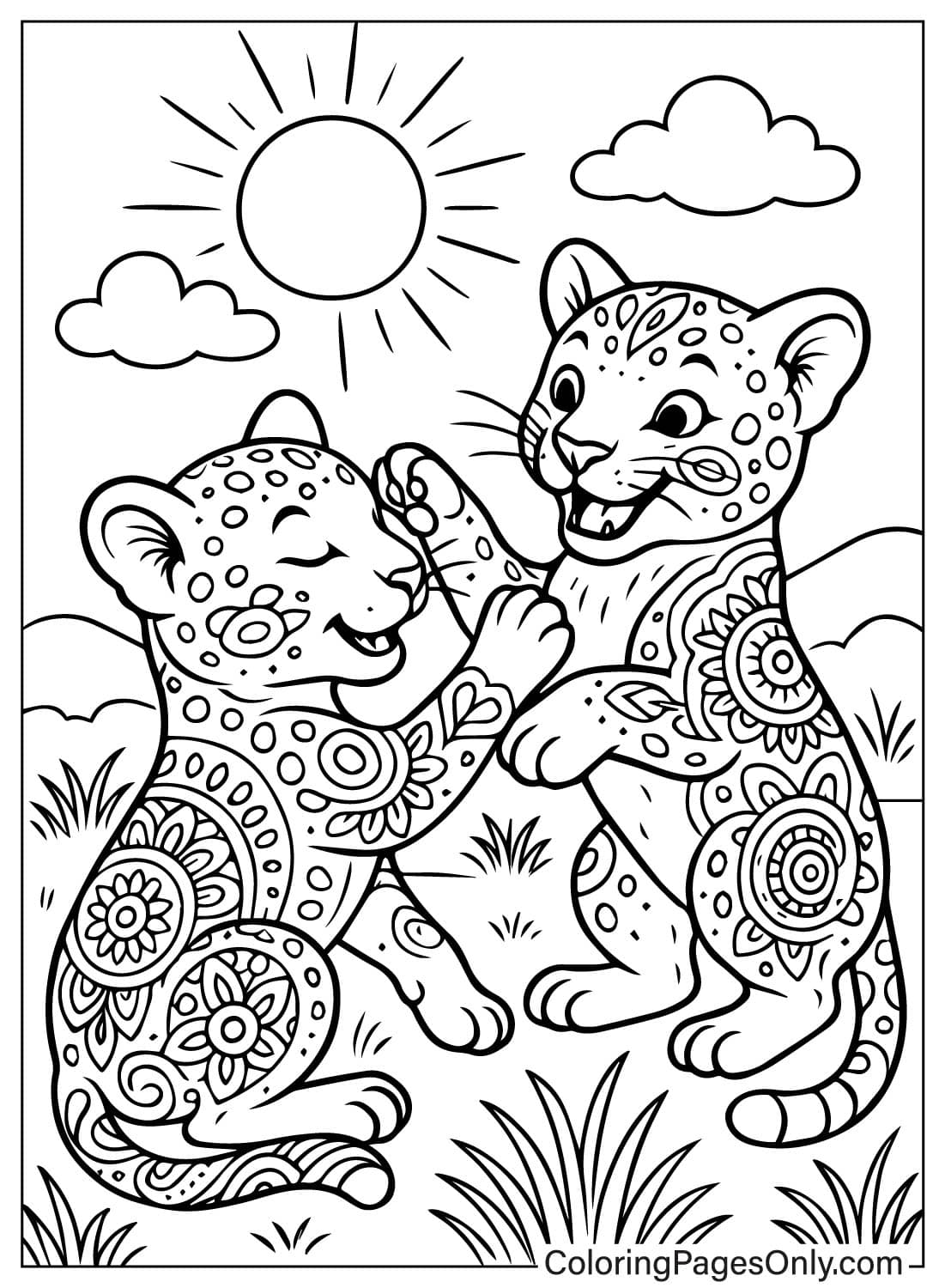
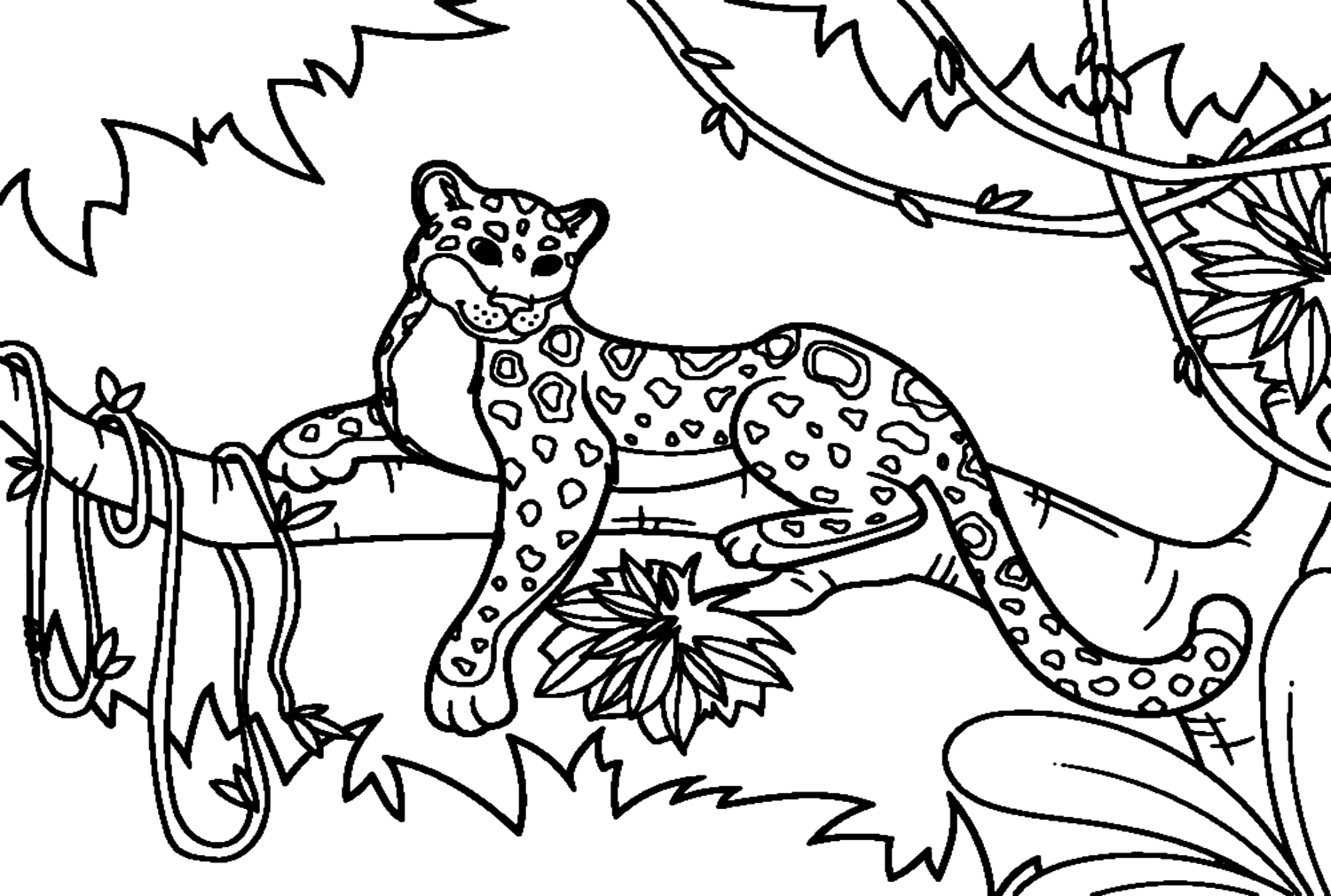
Three pages round out the set with a jungle-themed background, a detailed zentangle-style design, and a page depicting a clouded leopard, a genuinely different species from the true leopard. Color suggestion: on the zentangle page, pick two or three colors and repeat them consistently through the pattern rather than introducing a new color in every section.
What Leopard Coloring Pages Do
A close look at real camouflage. Because a leopard’s rosette pattern is genuinely functional camouflage rather than pure decoration, coloring these pages gives kids a hands-on way to notice how the spots break up the body’s outline against grass and trees.
Fine motor practice with detailed rosettes. The American Academy of Pediatrics identifies fine motor skill development as a core benefit of structured coloring for children ages 2 through 7, and filling in dozens of small, irregular rosette shapes gives more precise practice than a single solid-colored coat.
A natural comparison point among big cats. Because leopards are often confused with cheetahs, jaguars, and clouded leopards, this set is a good starting point for talking through what actually makes each big cat different, from solid spots to dotted rosettes to a completely separate species.
A calm, focused activity. Research published in the Art Therapy Journal in 2005 found that structured coloring sessions were associated with a measurable reduction in reported anxiety. Because these pages isolate the animal’s design rather than any hunting sequence in motion, the activity itself stays calm regardless of the leopard’s reputation as a predator.
How to Color Leopard Pages Well
- Coat base: Use Crayola Goldenrod or Raw Sienna for the main coat color, since real leopard coats range from pale gold to deep amber depending on habitat.
- Rosettes: Outline each rosette in Crayola Black or Sepia, filling the center with a shade slightly darker than the surrounding coat rather than leaving it solid black.
- Belly and inner legs: Use Crayola White or a very pale Cream for the underside, since leopards have a lighter belly than back.
- Eyes: A clear Crayola Green or Sky Blue works well, since leopard eyes are notably pale and striking against the darker coat.
- Tree and jungle backgrounds: Layer Crayola Forest Green and Sepia for foliage and bark, keeping the palette natural to match the realistic portraits.
- Clouded leopard page: Use larger, cloud-shaped blotches with a darker outline rather than small rosettes, since its coat pattern is genuinely different from the true leopard’s.
5 Creative Craft Ideas With Leopard Coloring Pages
1. Character Bookmark
Color a favorite portrait, trim it to a narrow strip, and cover it with clear tape or a laminate sheet to make a simple, durable bookmark.
2. Big Cat Comparison Poster
Color a leopard page alongside pages of other big cats from the site, then arrange them together with short notes on how to tell each one apart by its coat pattern.
3. Habitat Diorama
Color one of the tree-climbing or jungle scenes, glue it inside a shoebox turned on its side, and add paper leaves and branches to build a simple 3D habitat display.
4. Greeting Card
Color one of the cute or baby leopard pages, fold a piece of cardstock in half, and glue the colored page to the front for a handmade card.
5. Mini Story Card Set
Color two or three of the baby leopard pages, write one sentence under each describing a short, made-up scene, and arrange them in order to build a simple picture story.
Frequently Asked Questions
What are Leopard coloring pages?
Free printable designs of leopards in realistic, cartoon, baby, and pattern styles. This collection has 40 pages available as PDF downloads or online coloring, with no account required.
Where do leopards live?
Leopards are the most widespread big cat, found across sub-Saharan Africa, parts of the Middle East, and Central and South Asia, in habitats ranging from rainforest to dry grassland.
How can I tell a leopard apart from a jaguar or cheetah?
Leopard rosettes have no center dot, while jaguar rosettes do, and cheetahs have solid round spots rather than rosette clusters at all.
Is a clouded leopard the same as a regular leopard?
No. Despite sharing the leopard name, the clouded leopard belongs to a separate genus, Neofelis, and is a genuinely different species from the true leopard, Panthera pardus.
Why do leopards drag their prey into trees?
Leopards cache kills in tree branches to protect them from scavengers like hyenas and other competing predators, a behavior supported by their strong climbing ability.
Are leopards solitary animals?
Yes. Adult leopards are largely solitary, with females only spending extended time with others while raising cubs.
What age group are these pages best suited for?
The cute and simplified pages suit children as young as three, while the more detailed, realistic portraits and pattern pages work well for children five and up.
Can these pages be used for a wildlife or animal science lesson?
Yes. The mix of realistic portraits, real camouflage patterns, and the genuinely different clouded leopard species makes this set a good fit for a lesson comparing big cats.
Start Coloring
Download any page by clicking the design. No account, email, or payment is required. Pages print directly from the browser at full resolution or open in the online coloring tool for screen use. Share finished pages on Facebook or Pinterest using the share buttons at the top of each design page.