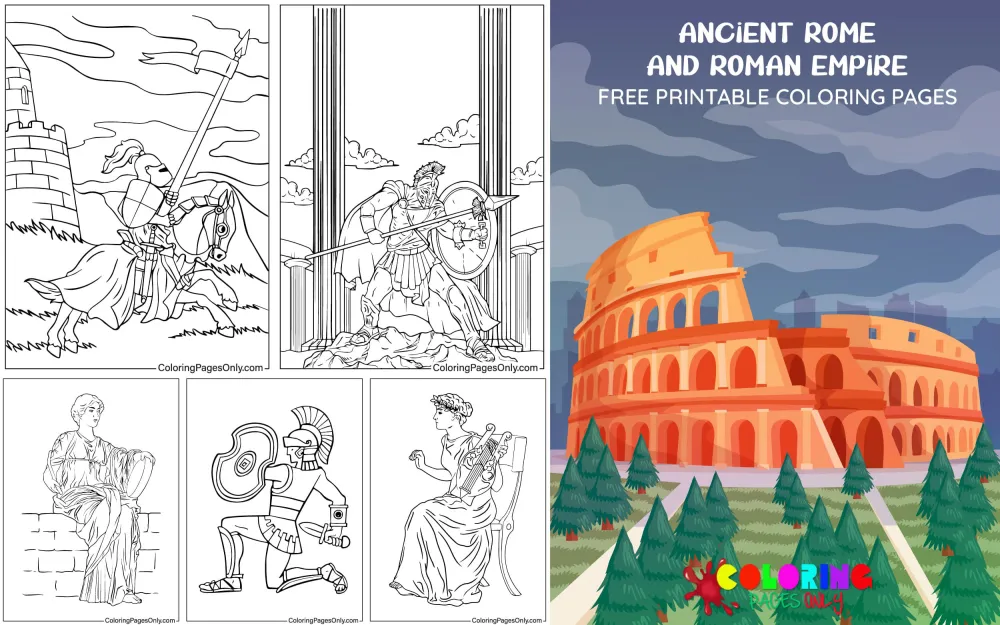
Free Ancient Rome and Roman Empire coloring pages: 25 printable PDF designs of Roman legionaries, the arena, and figures from the wider classical world. Each page can be downloaded as a PDF to print or colored online in the browser.
Ancient Rome began as a small settlement founded, according to legend, in 753 BC, and grew from a kingdom into a republic in 509 BC before becoming an empire under Augustus in 27 BC. At its height, Roman territory stretched from Britain to Egypt, held together by roads, aqueducts, and a highly organized army of soldiers known as legionaries. The Colosseum, completed in 80 AD under Emperor Titus, could seat up to 50,000 spectators for gladiator contests and public events. The Western Roman Empire came to an end in 476 AD, but Roman law, architecture, and language continue to shape the modern world.
This collection spans 25 pages centered on Roman soldiers and the arena, alongside a set of figures from ancient Greece and armored knights, offering a broader look at warriors and classical dress across different eras.
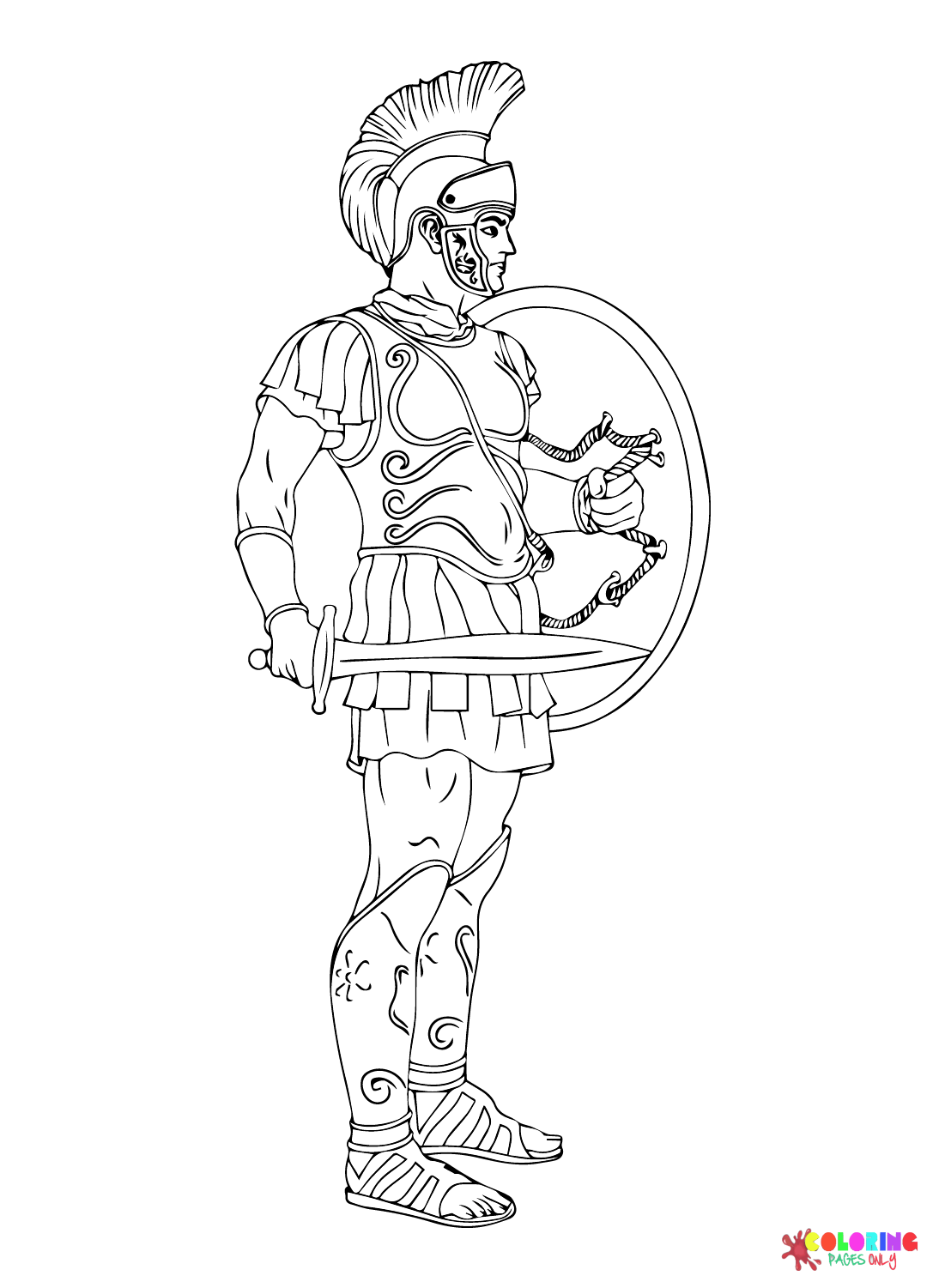
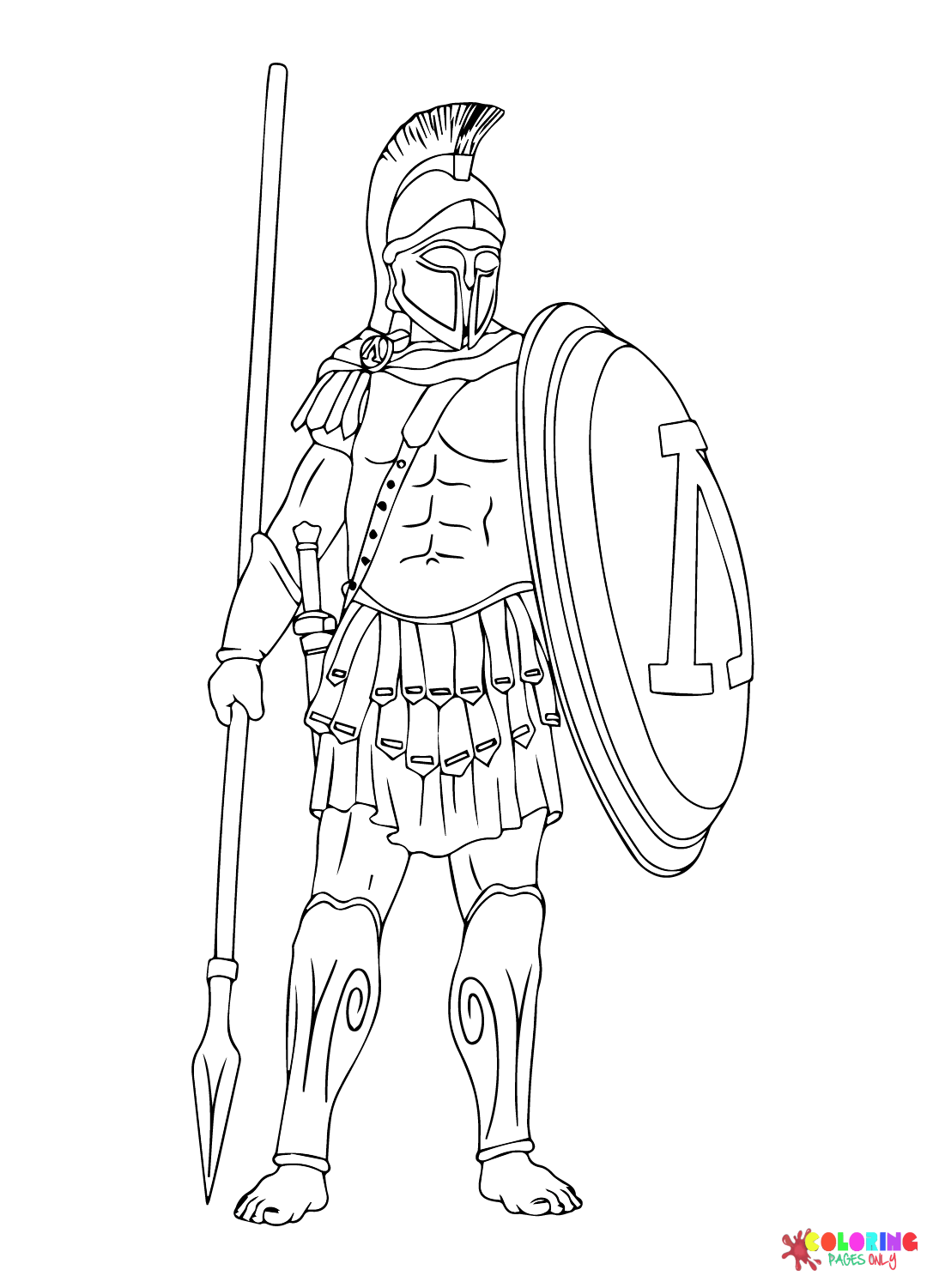
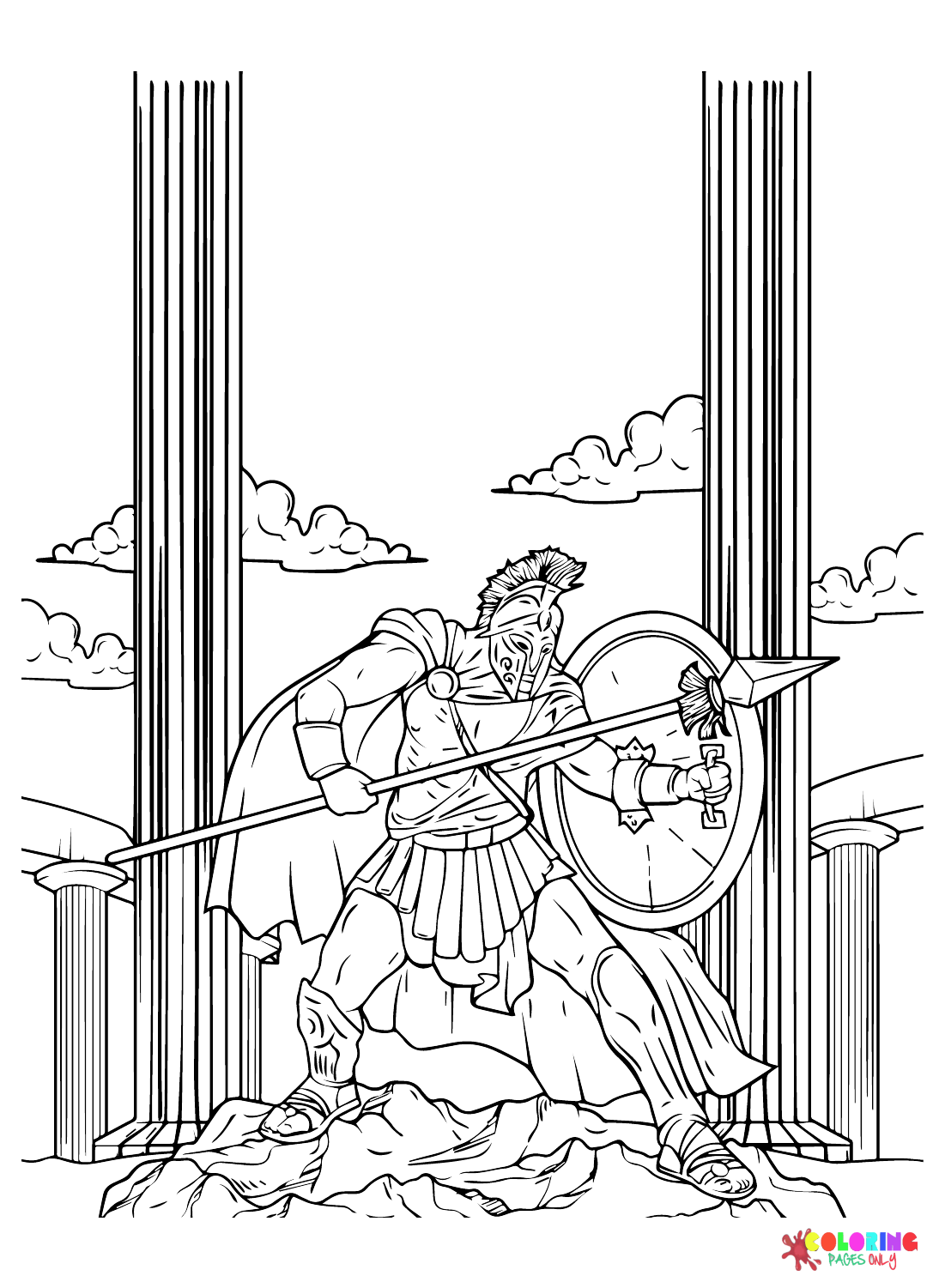
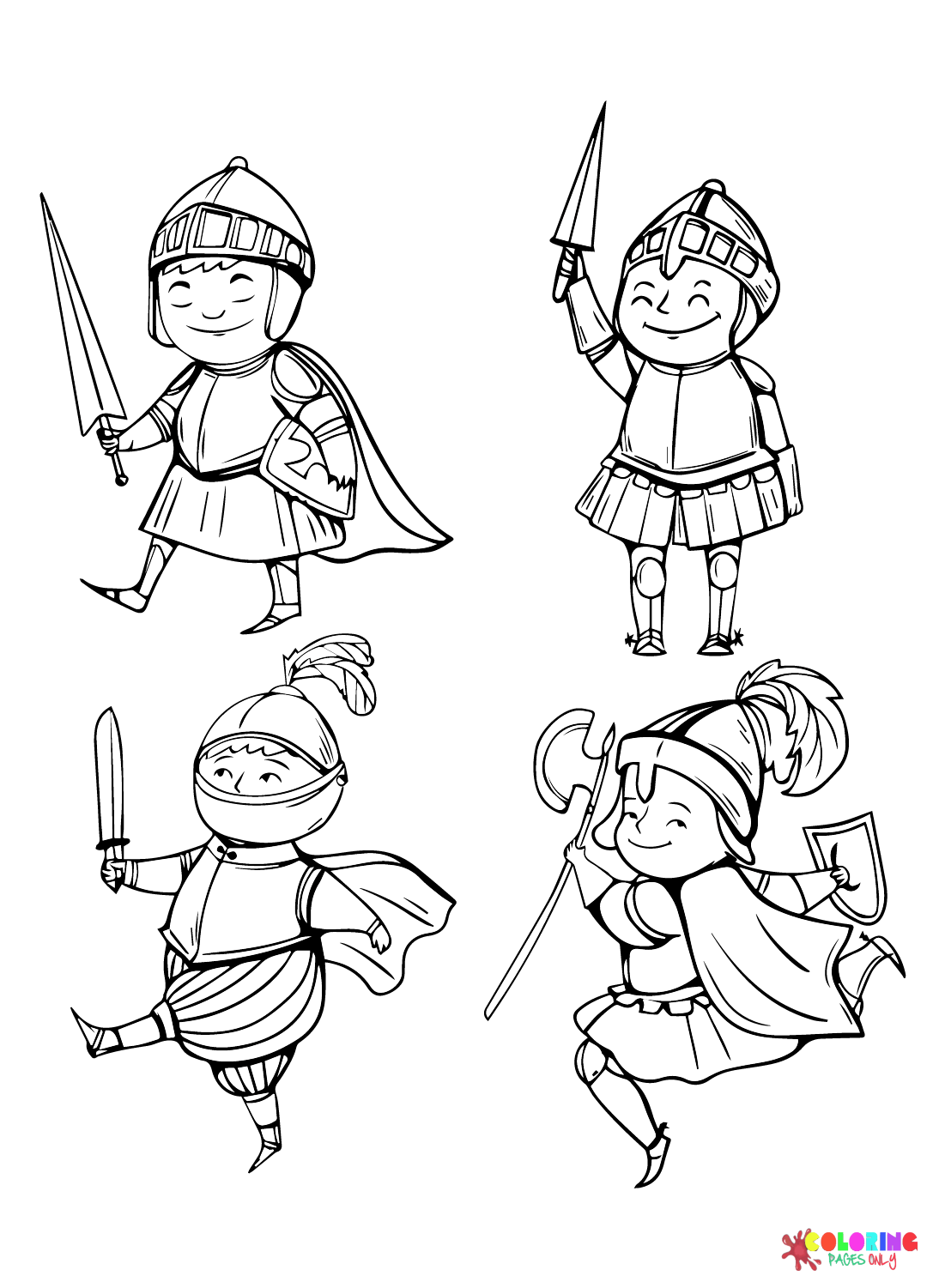
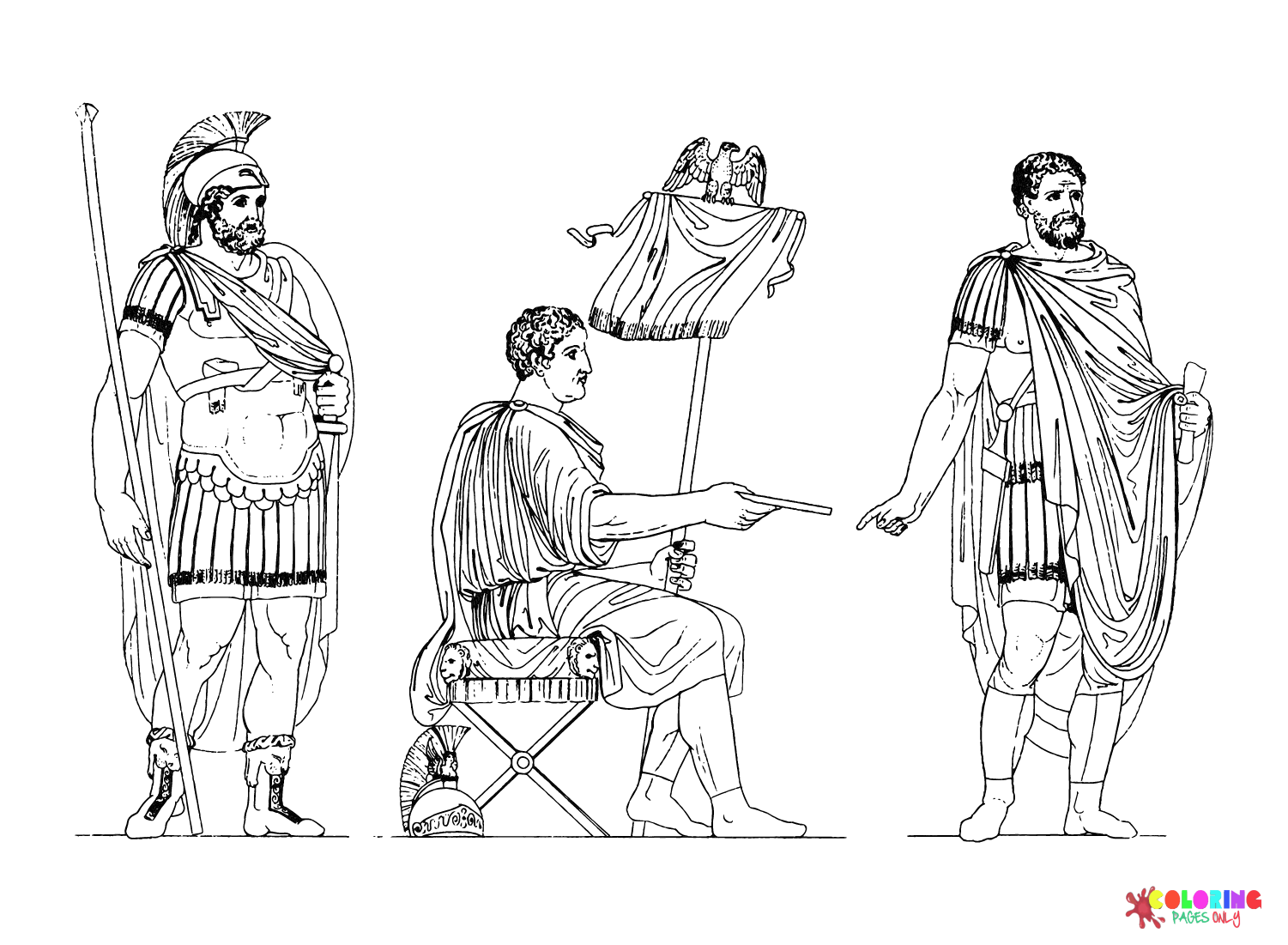
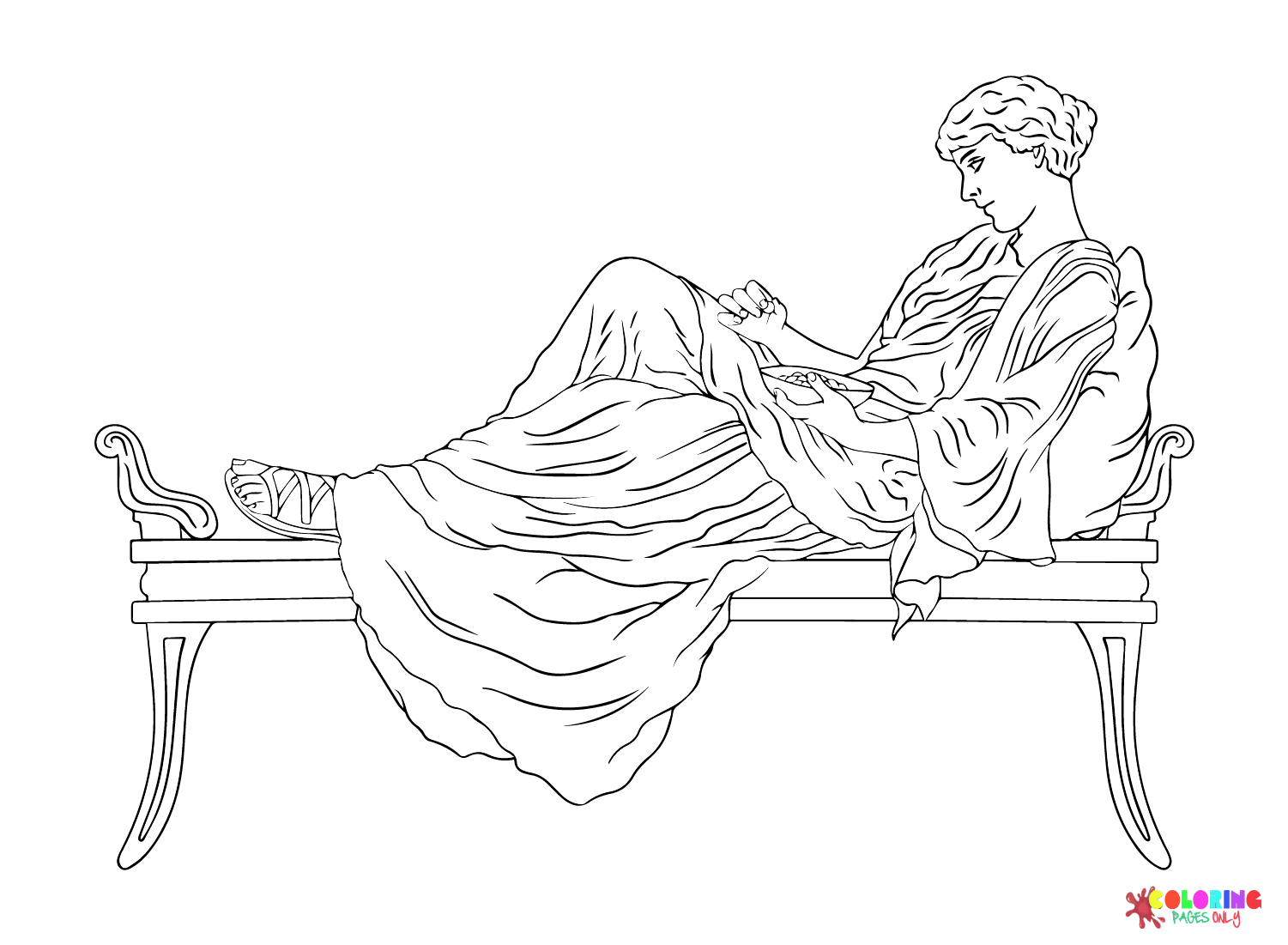
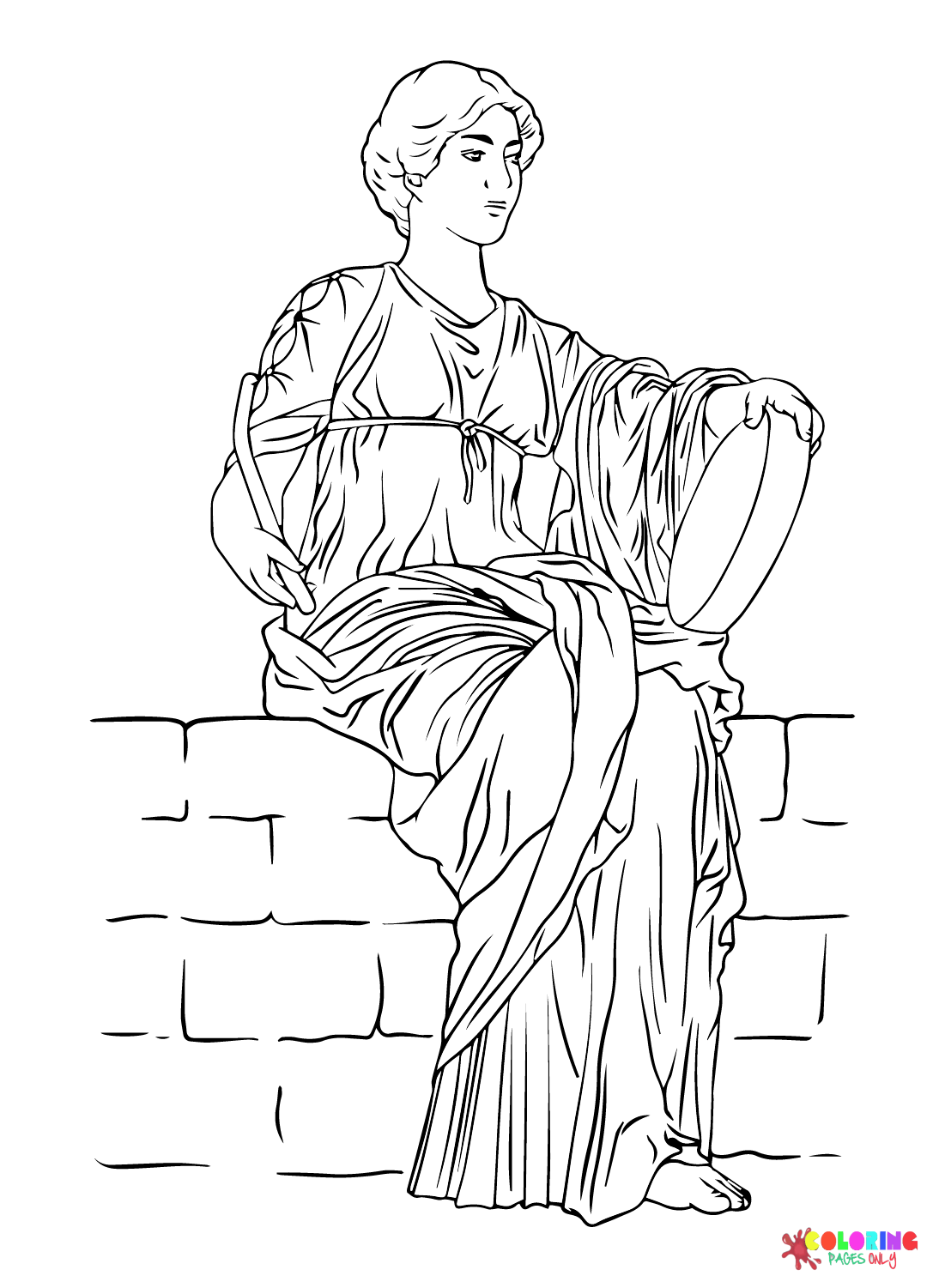
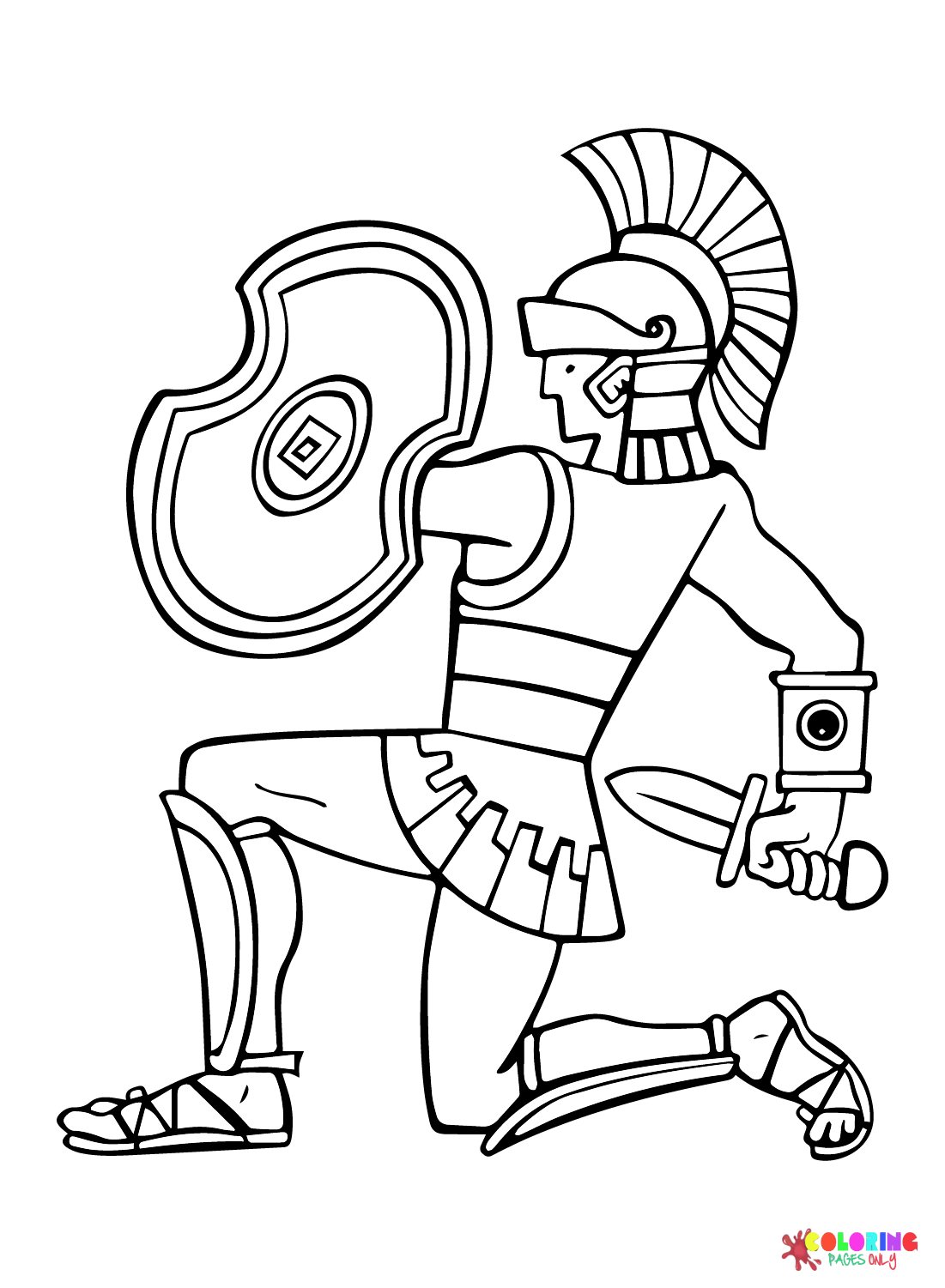
What’s Inside This Collection
The 25 designs group into three categories, from Roman soldiers to figures from neighboring historical periods.
Roman Soldiers and the Arena
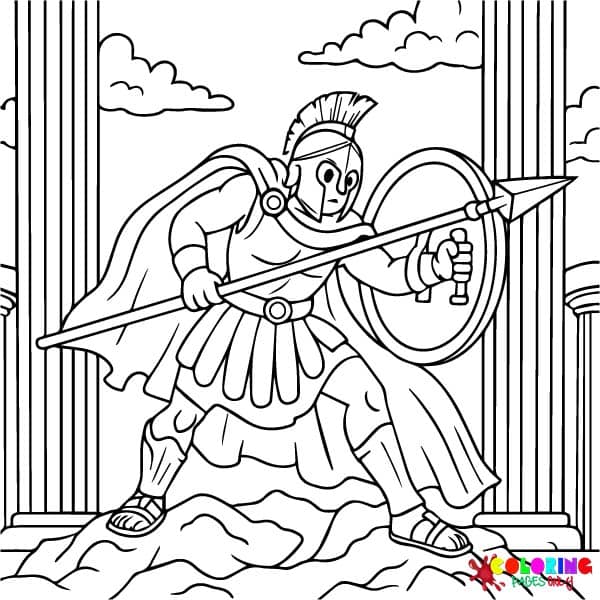
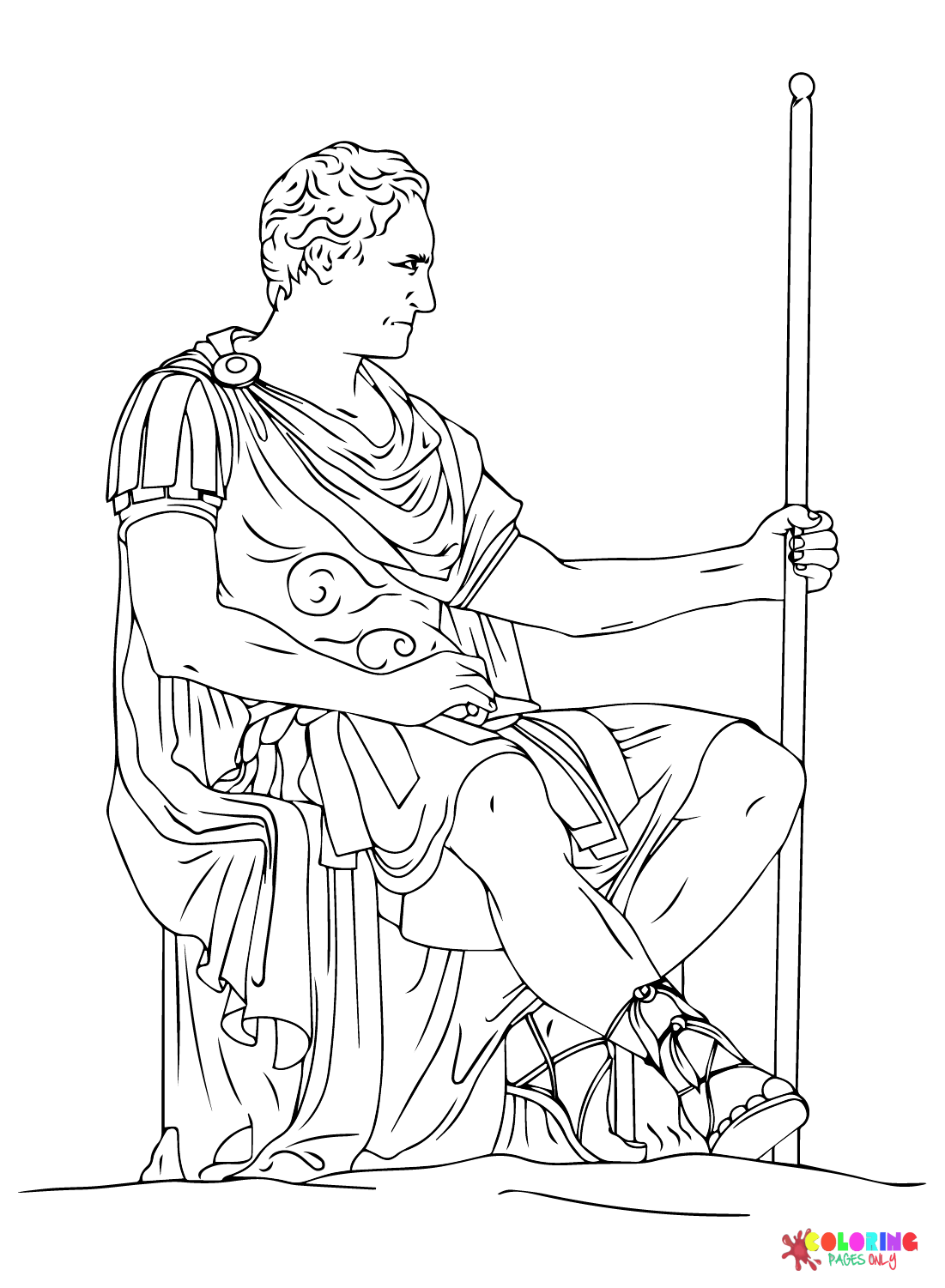
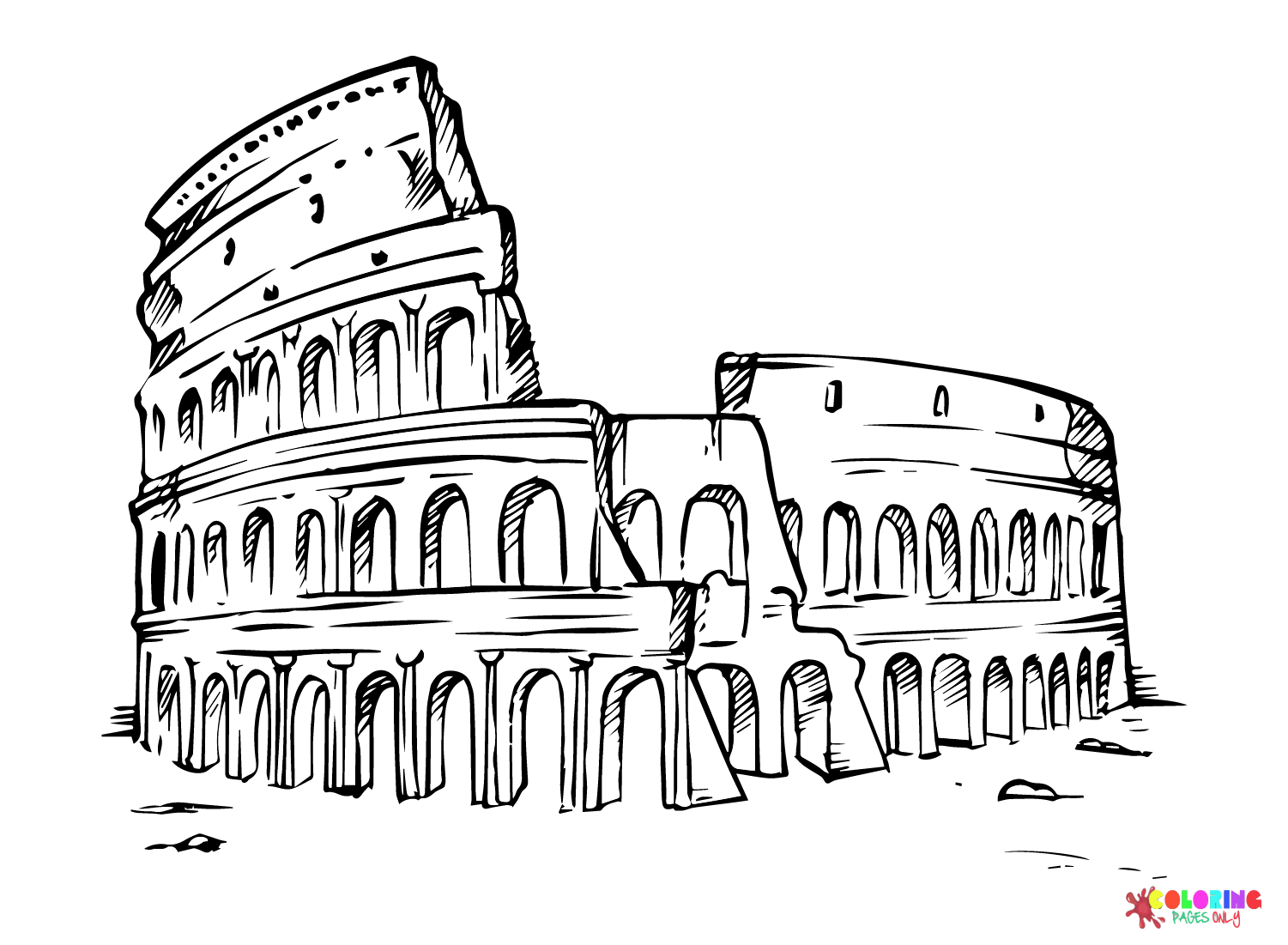
Several pages focus on Roman legionaries and a general in full armor, alongside a scene of the arena itself, capturing the military and public spectacle side of Roman life.
Ancient Greek Figures and Mythology
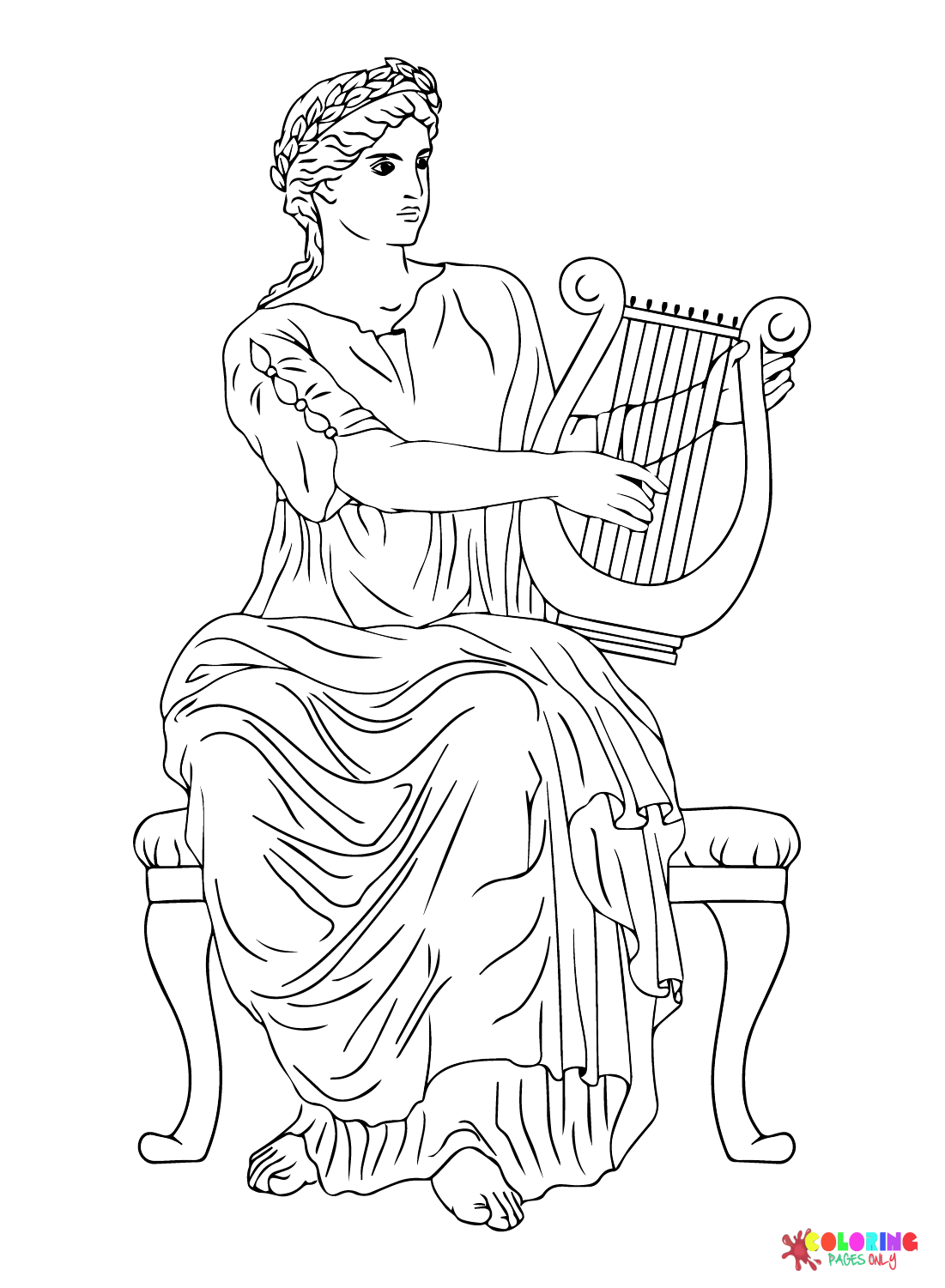
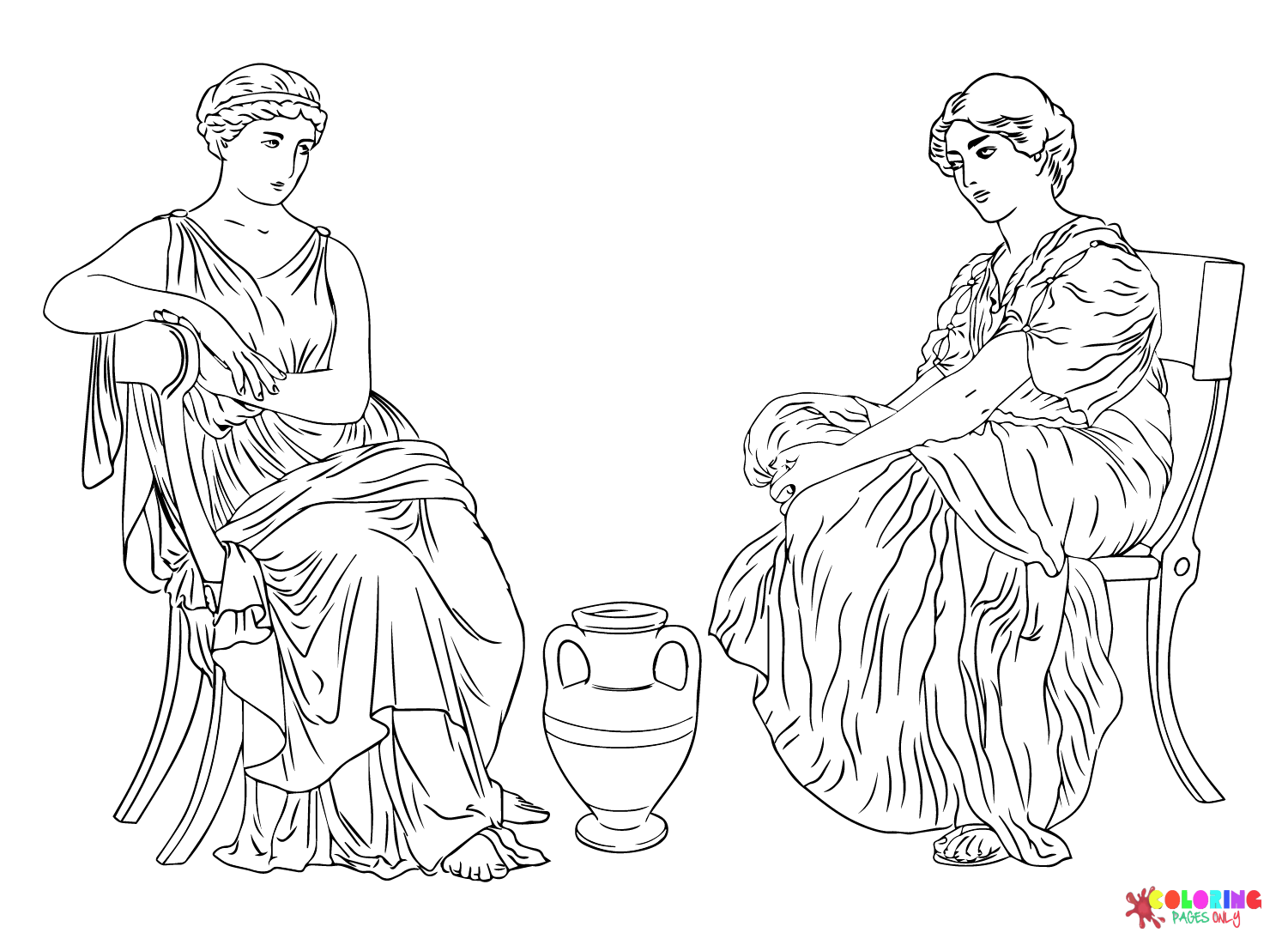
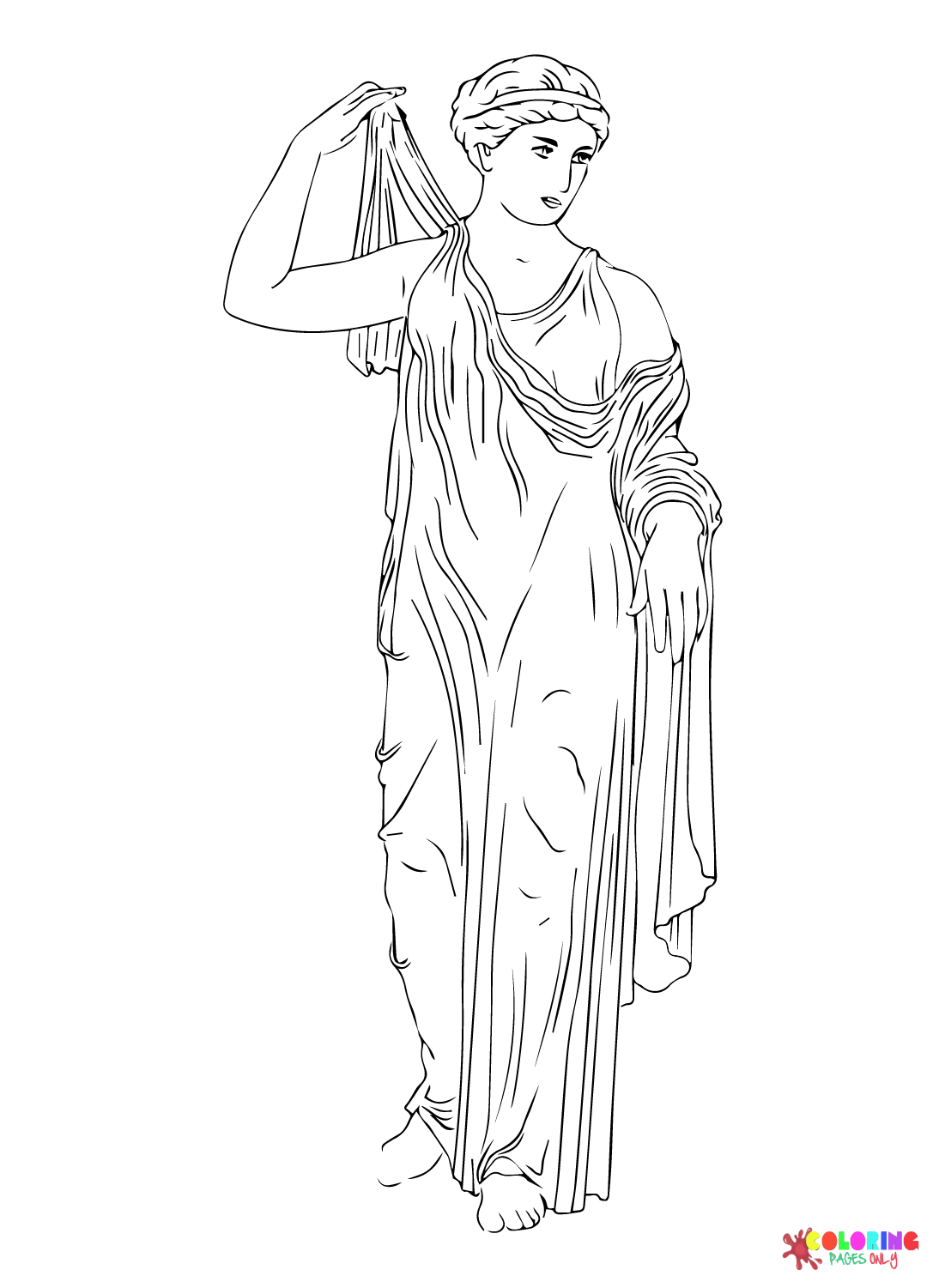
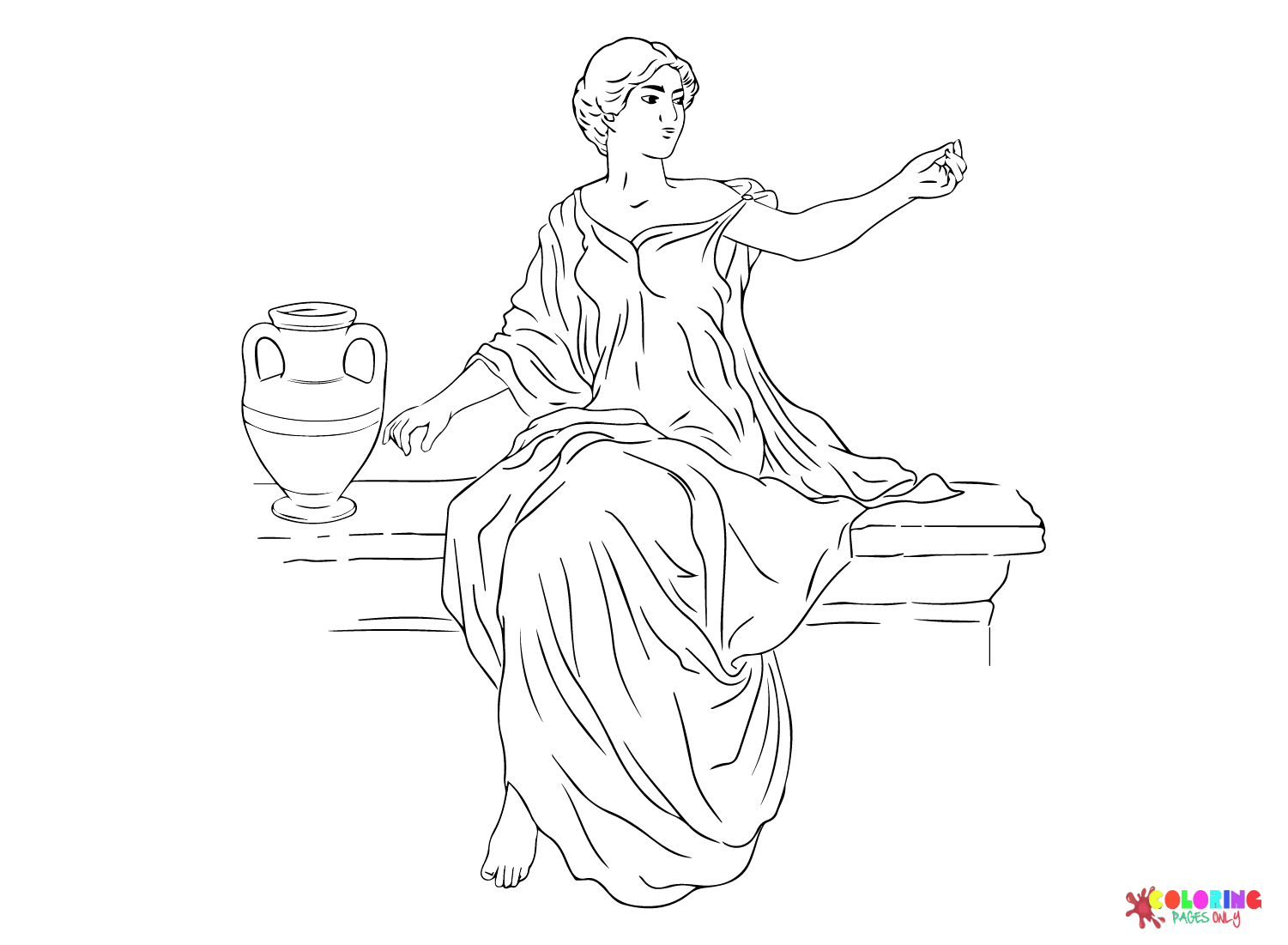
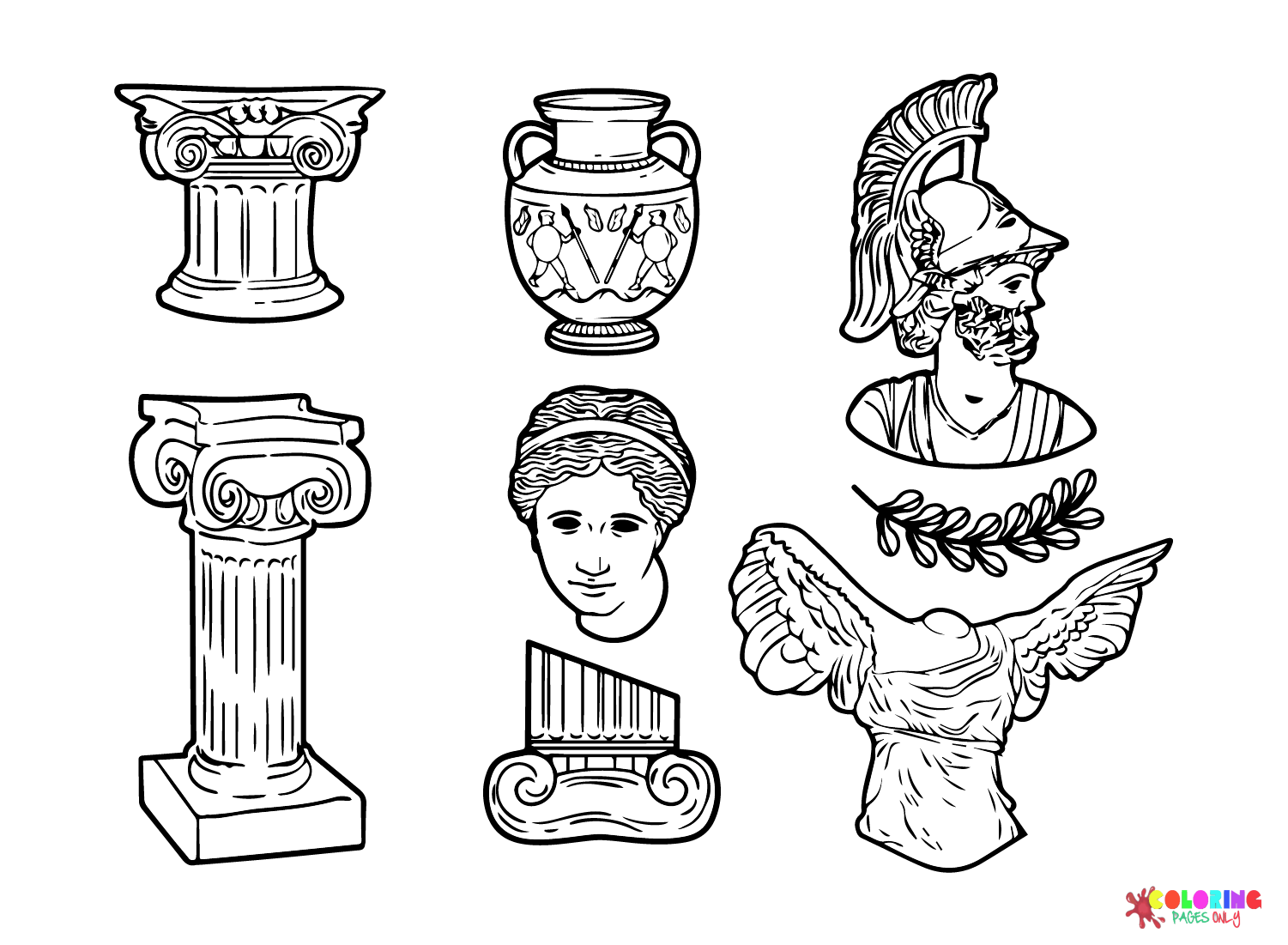
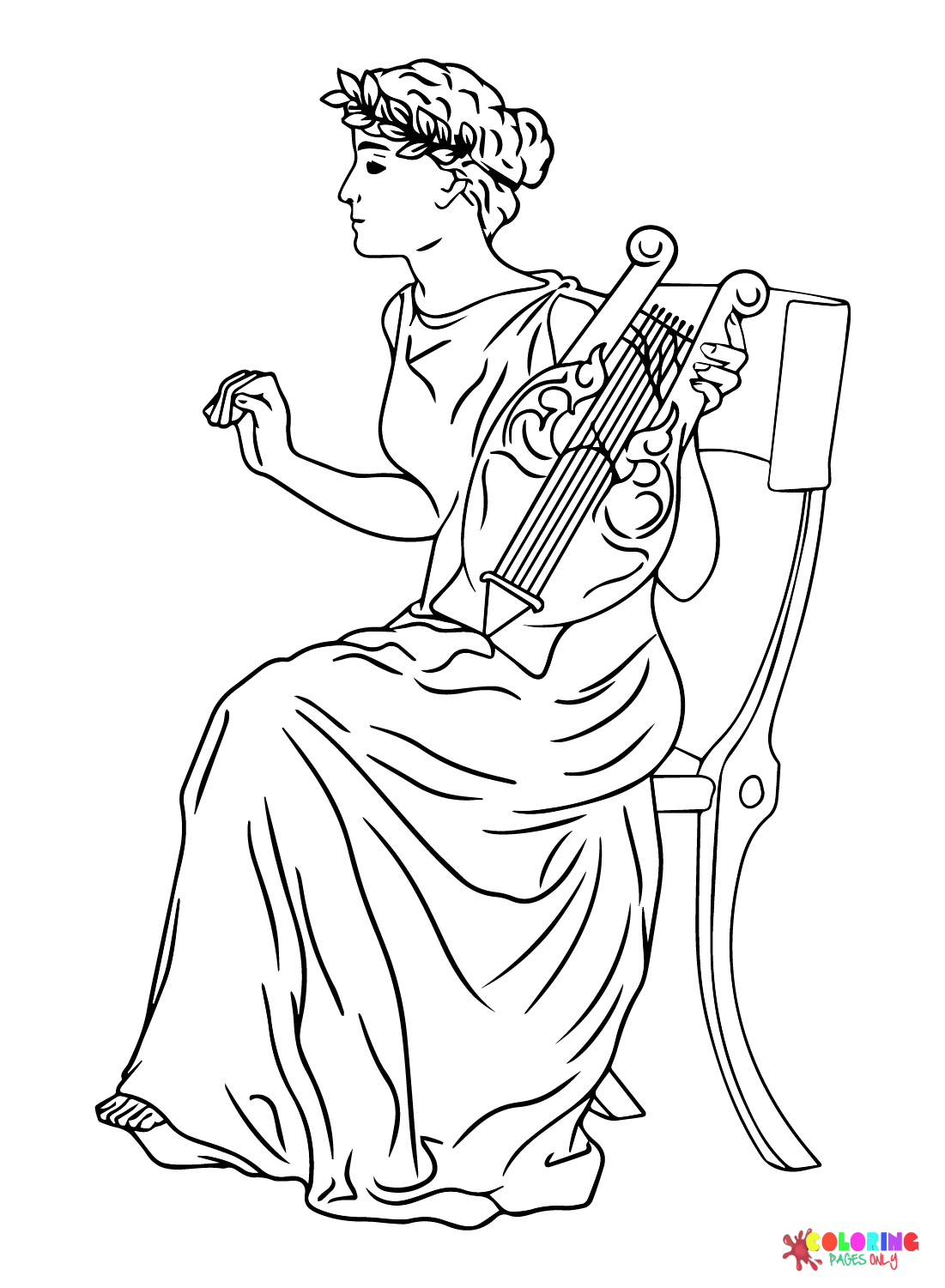
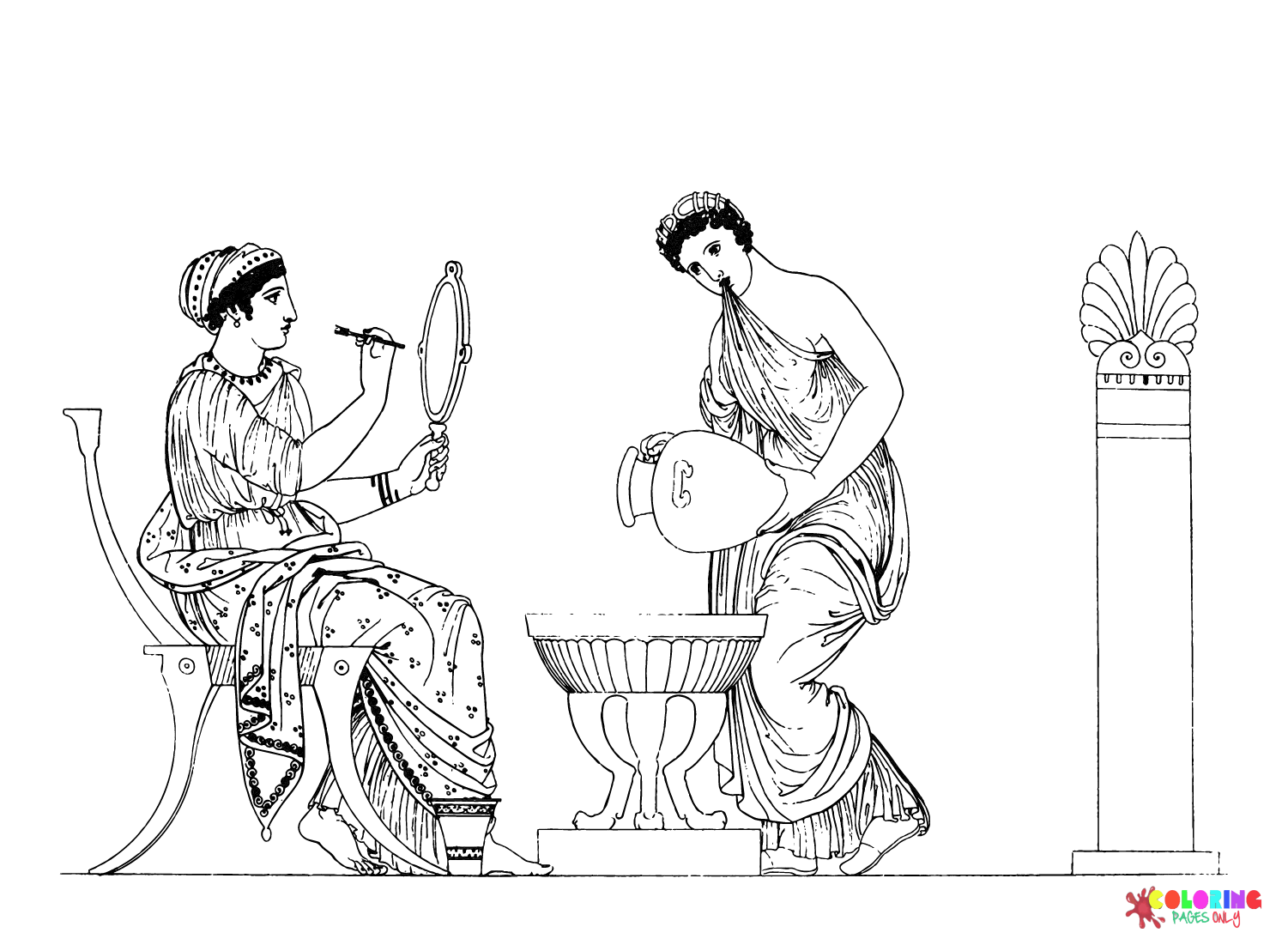
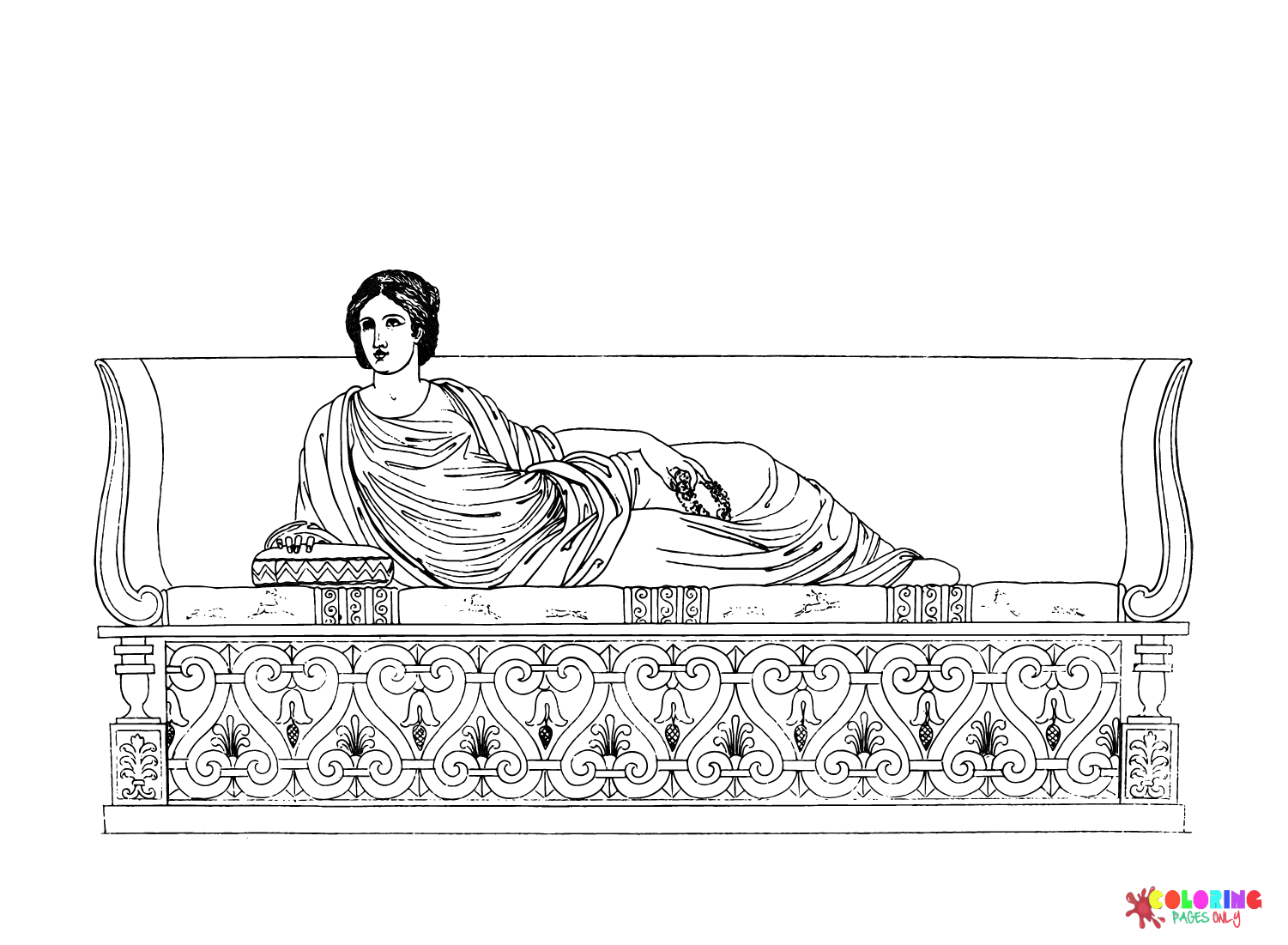
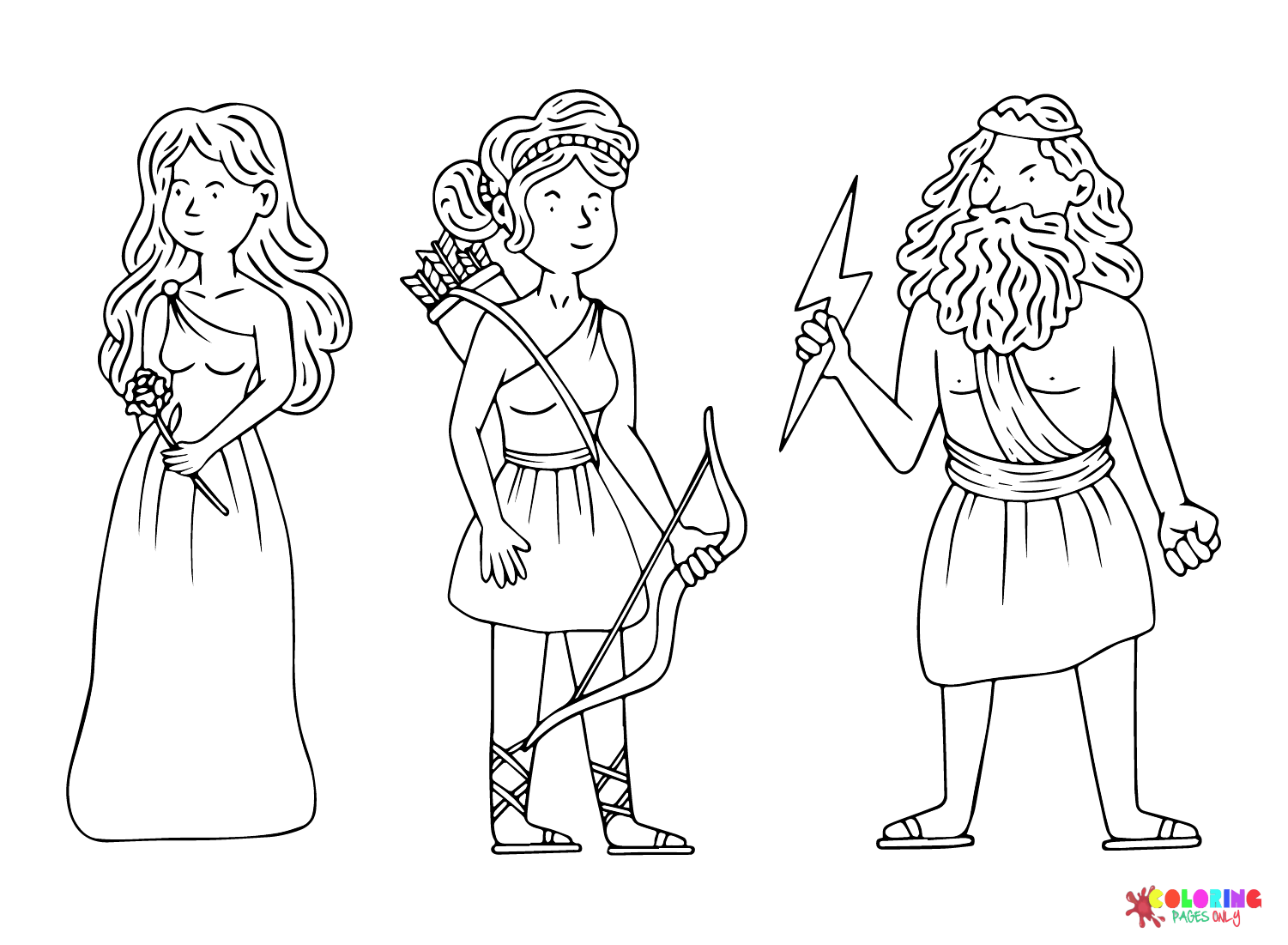
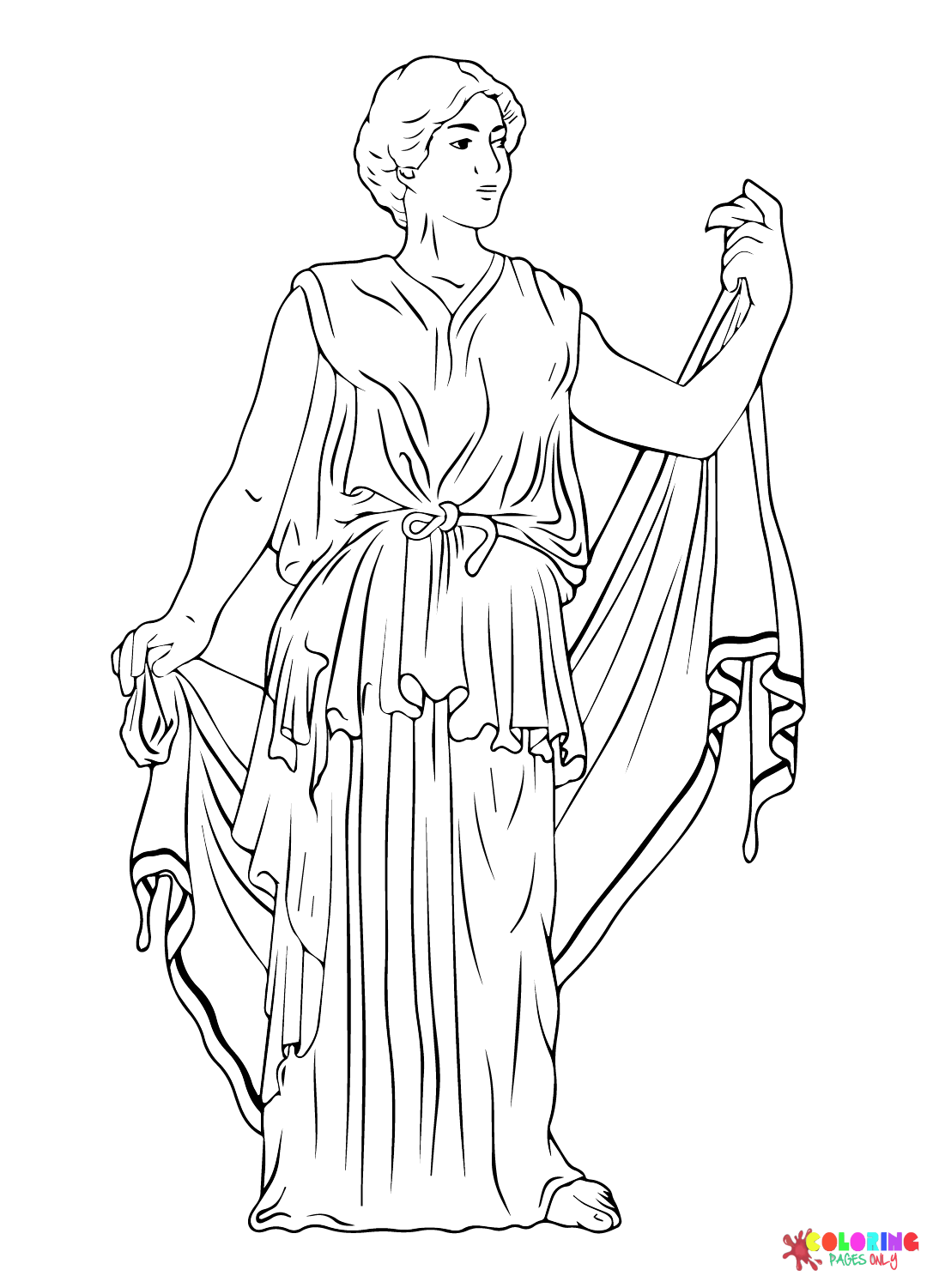
A number of pages depict figures from ancient Greece, including warriors, women in draped clothing, mythological illustrations, and a collection of Greek statues.
Knights and Armored Warriors
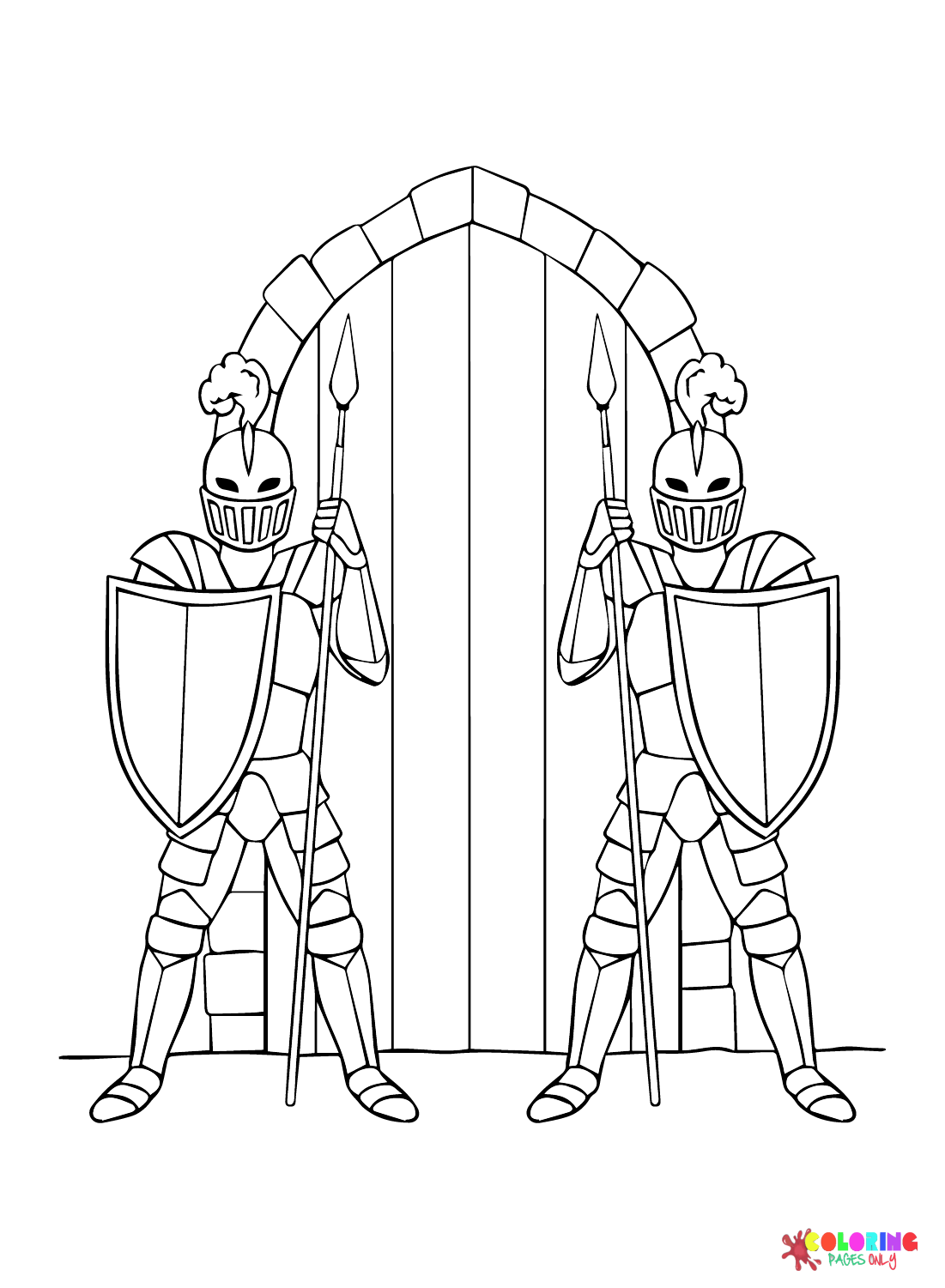
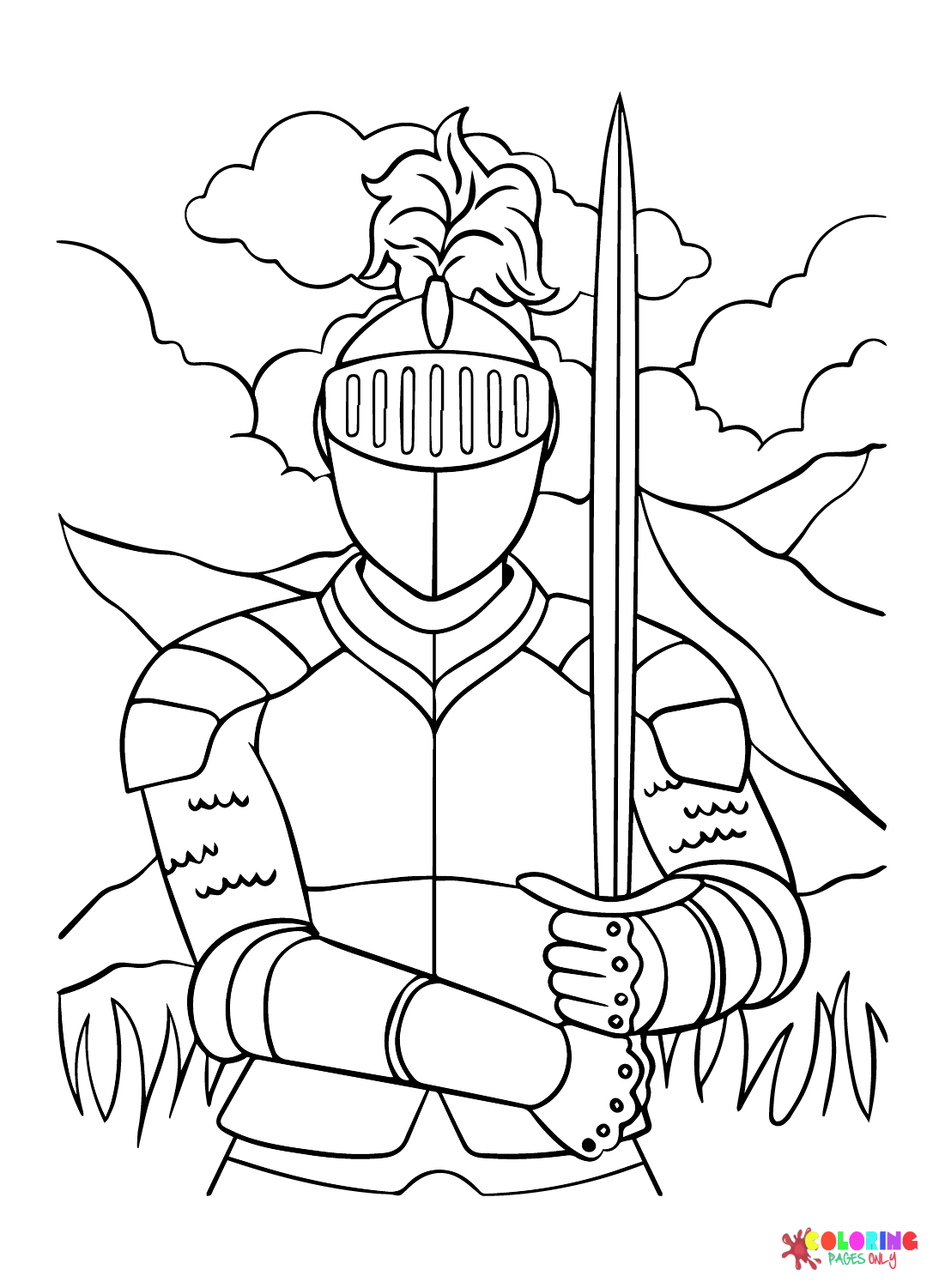
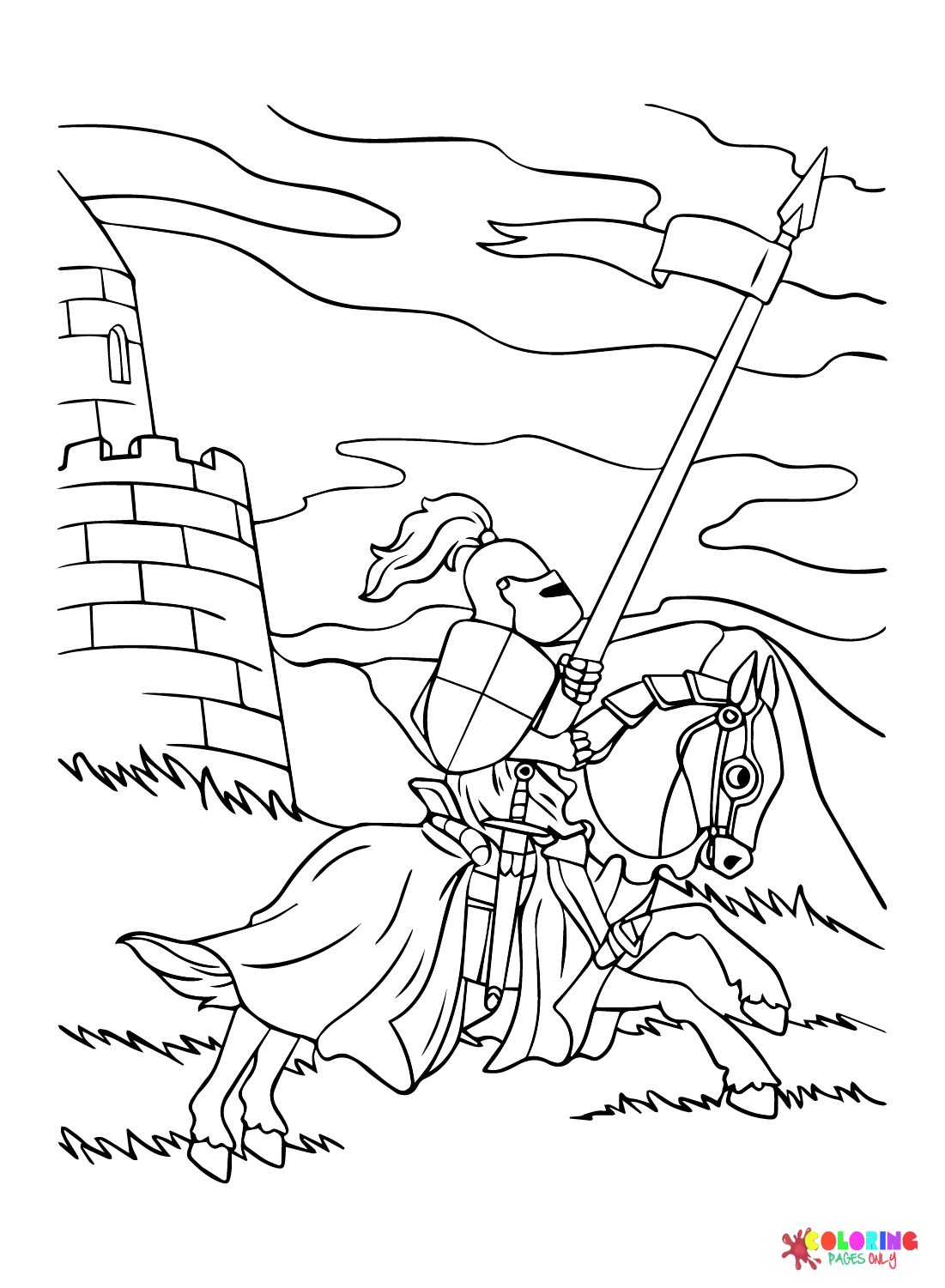
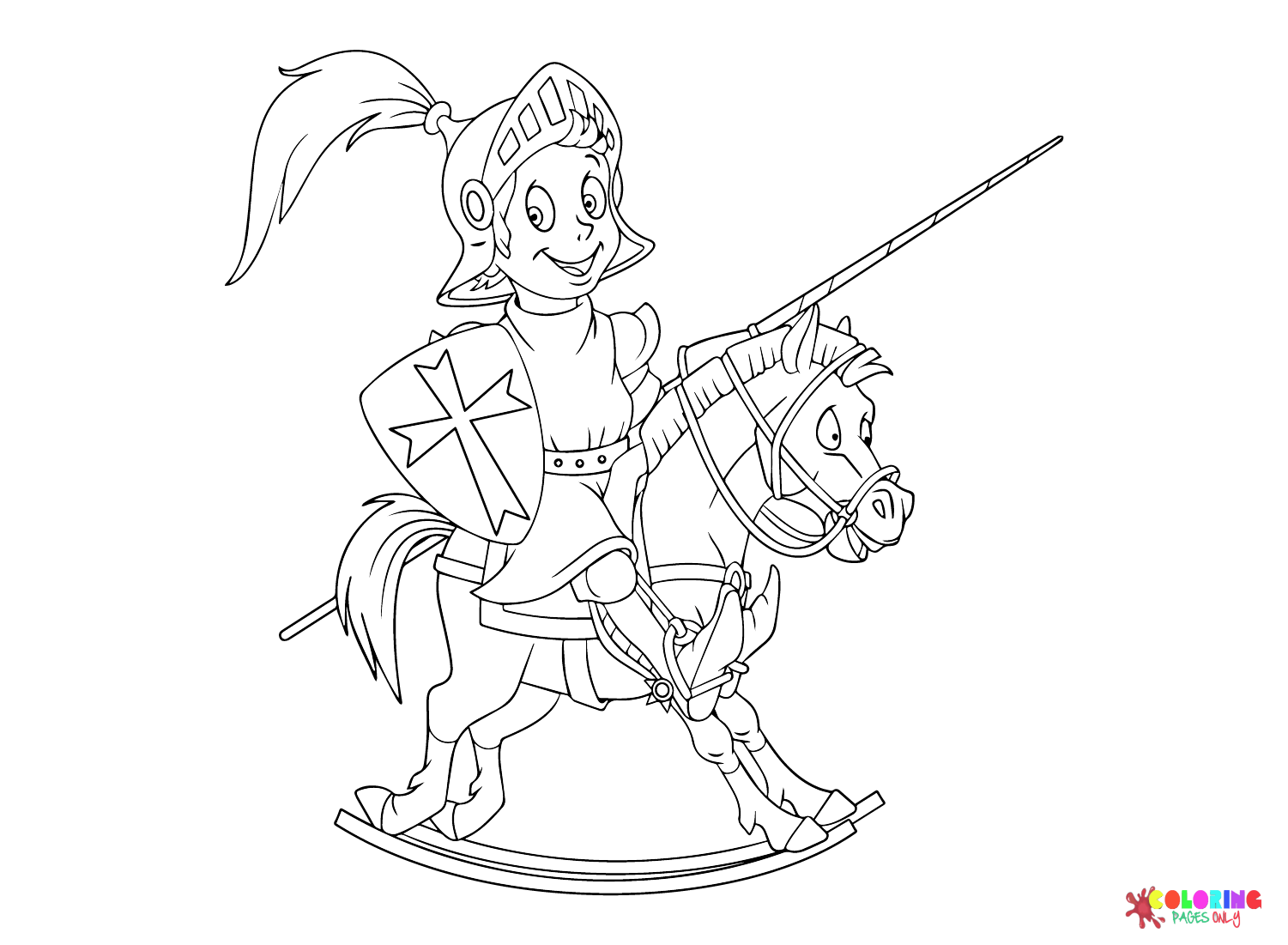
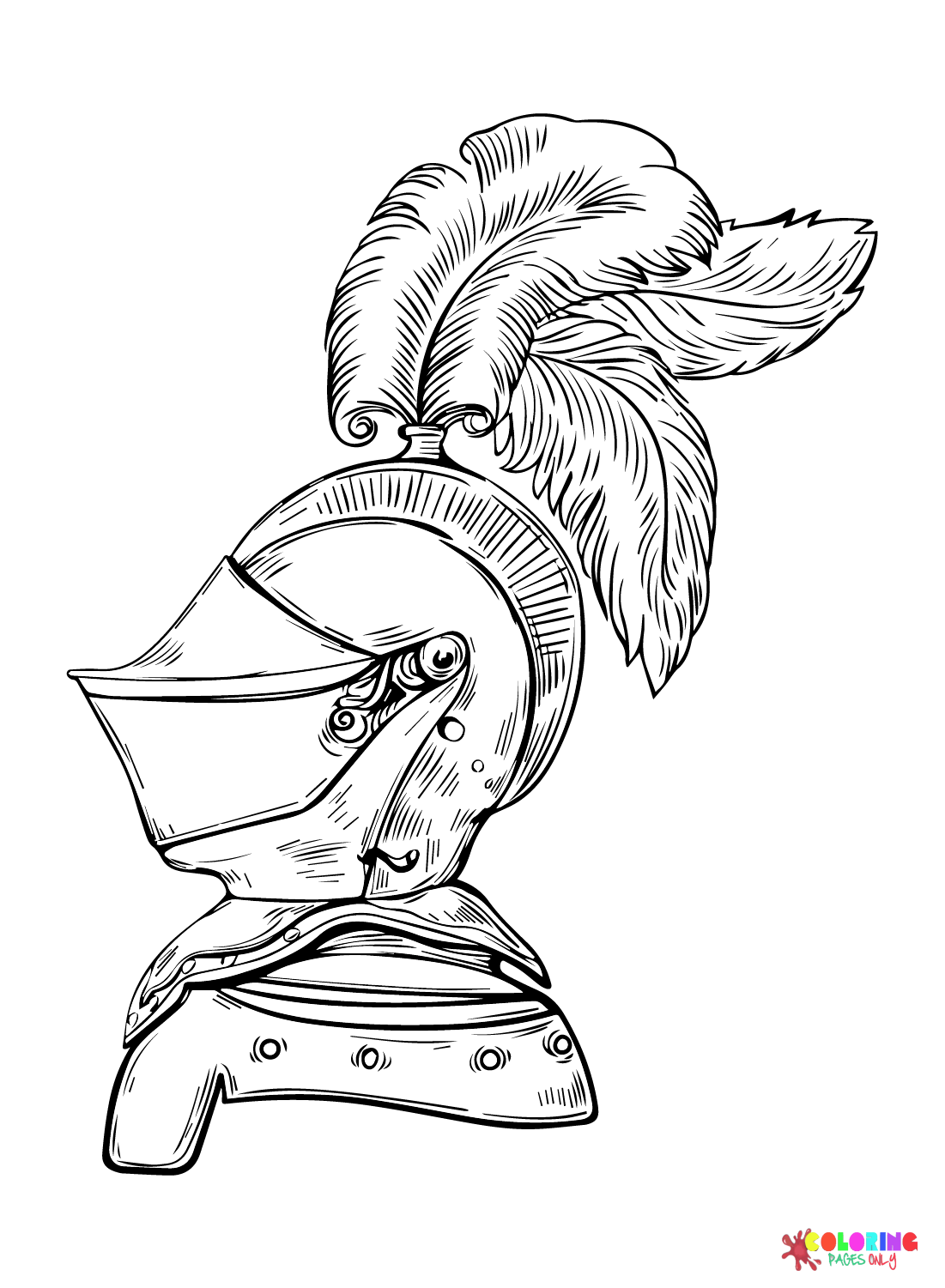
A smaller set of pages shows medieval knights in armor, guarding gates or jousting, rounding out the collection with a look at armored warriors from a later period.
What Ancient Rome Coloring Pages Do
Fine motor development through armor detail. The American Academy of Pediatrics identifies fine motor skill development as a core benefit of structured coloring for children ages 2 through 7, and staying inside the lines of a legionary’s armor plates and helmet crest calls for exactly that kind of controlled, contained pencil movement.
An introduction to ancient history. Coloring the details of a toga, a Roman helmet, or the arena’s stone arches gives colorists a visual way to explore how people dressed, fought, and built during one of history’s most influential civilizations.
Anxiety reduction through focus. A 2005 study in the Art Therapy Journal documented measurable reductions in anxiety following structured coloring sessions, and working through a set of detailed historical figures offers that same steady, repetitive rhythm.
A comparison across eras. Because this collection also includes ancient Greek figures and medieval knights, colorists get a chance to compare how armor, clothing, and weapons changed across different periods of history.
How to Color Ancient Rome Pages Well
- Roman armor: Use Silver or Iron Gray for the layered plate armor, with a Red tunic showing underneath and a Bronze or Gold helmet crest.
- Togas and draped clothing: Keep the fabric Cream or White, adding a Purple or Gold trim along the edge for figures of higher status.
- The arena and architecture: Use a Sandstone Tan or Beige for stone blocks and columns, with Terracotta accents for roof tiles and trim.
- Greek-style clothing: Color-draped garments in Cream or White with simple, soft folds, adding Gold jewelry accents for a classical look.
- Knight armor: Use Steel Gray or Silver for plate armor, paired with a colored surcoat in Red or Blue over the top.
- Backgrounds: Use warm Ochre or Sienna tones to suggest sun-baked stone and ancient landscapes across the collection.
5 Creative Craft Ideas With Ancient Rome Coloring Pages
1. Roman Shield Display. Color a soldier or shield design, cut it out, and mount it on cardboard for a sturdy display piece.
2. Colosseum Diorama. Use a colored arena page as the backdrop for a simple 3D diorama built with paper and cardboard.
3. History Flashcards. Color and cut out a set of figures, then write a fact about each one on the back to use as a simple study tool.
4. Historical Figure Bookmarks. Color a smaller portrait, laminate it, and add a tassel for a personalized bookmark.
5. Mosaic Art. Cut small pieces from extra colored pages and arrange them into a pattern to mimic the look of a Roman floor mosaic.
Frequently Asked Questions
What are Ancient Rome and the Roman Empire coloring pages?
Ancient Rome and Roman Empire coloring pages are printable line-art designs of Roman legionaries, the arena, and related classical figures. This collection includes 25 free designs available as PDFs or online coloring.
When was Rome founded, and when did the Roman Empire begin?
According to legend, Rome was founded in 753 BC. It became a republic in 509 BC, and the Roman Empire officially began in 27 BC when Augustus became its first emperor.
What is a Roman legionary?
A legionary was a professional soldier in the Roman army, typically equipped with a sword, shield, helmet, and layered plate armor, and organized into large military units called legions.
What was the Colosseum used for?
The Colosseum, completed in 80 AD under Emperor Titus, was a massive amphitheater that could seat up to 50,000 spectators for gladiator contests, animal hunts, and other public events.
When and how did the Western Roman Empire fall?
The Western Roman Empire fell in 476 AD, when a Germanic leader named Odoacer removed the last Western emperor, Romulus Augustus, from power.
What other historical periods appear in this collection?
Alongside Roman soldiers and the arena, this collection also includes figures from ancient Greece and knights in armor, offering a wider look at warriors and dress across different historical periods.
Are Ancient Rome coloring pages suitable for young children?
Yes. The bold outlines in this collection suit preschool and early elementary colorists, while the more detailed armor and architecture pages work well for older children and adults interested in history.
What did Roman soldiers wear into battle?
Roman legionaries typically wore layered plate armor over a short tunic, a bronze or iron helmet, and carried a large rectangular shield along with a sword and javelin.
Start Coloring
Download any page by clicking the design. No account, email, or payment is required. Pages print directly from the browser at full resolution or open in the online coloring tool for screen use. Share finished pages on Facebook or Pinterest with the share buttons at the top of each design page.