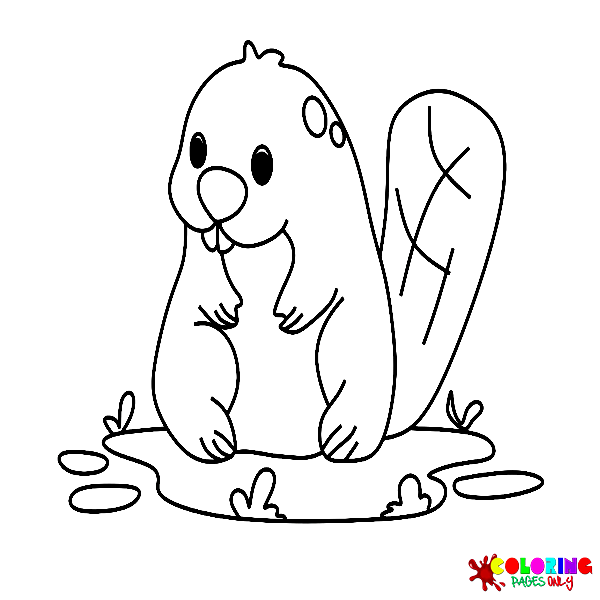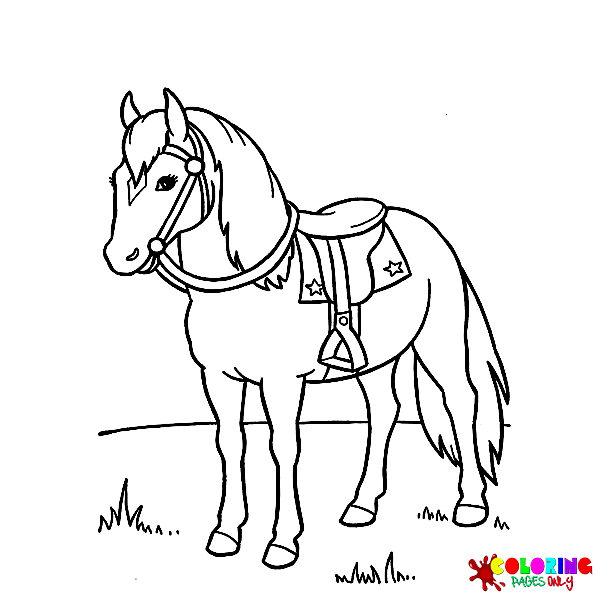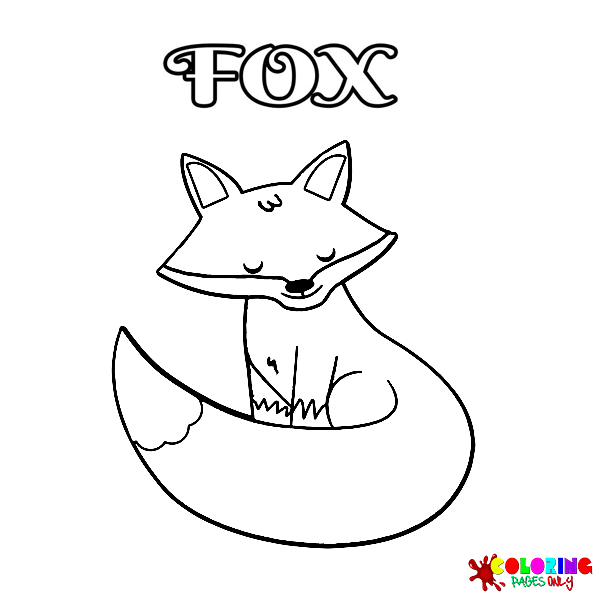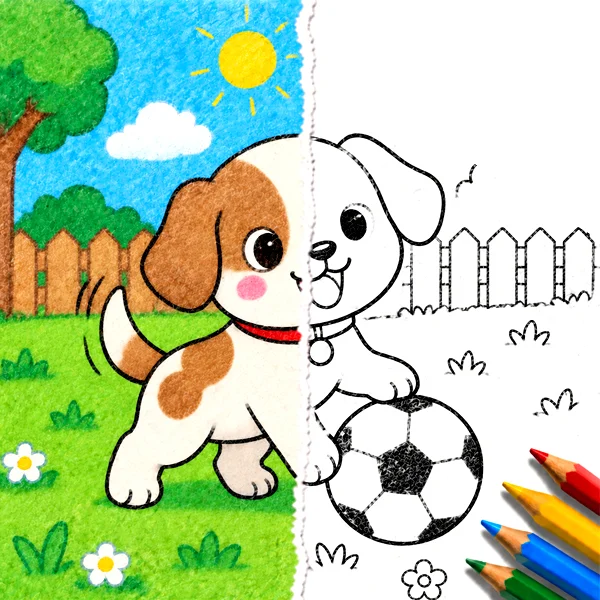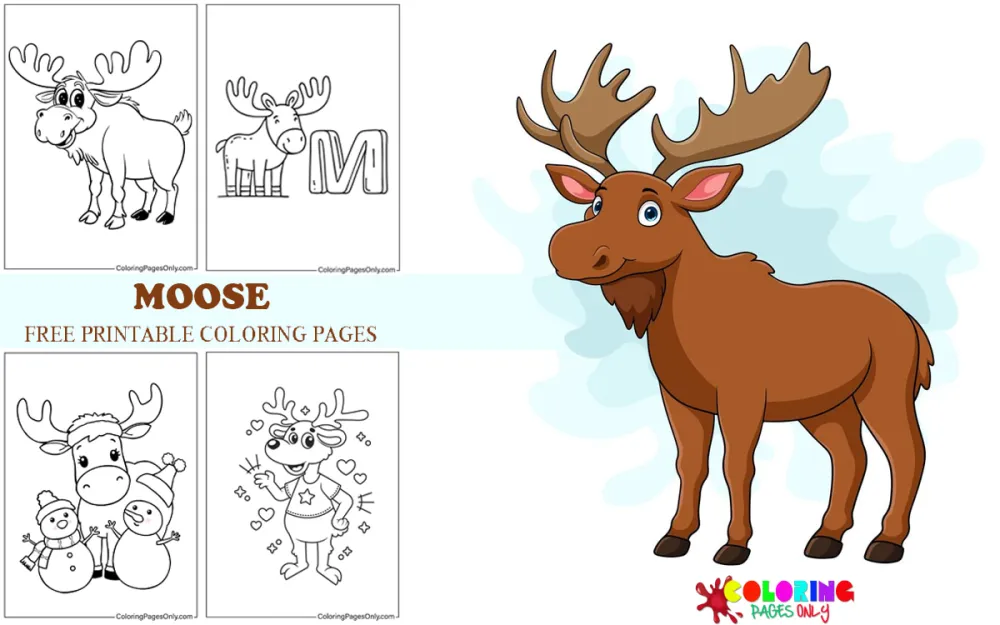
Free Moose Coloring Pages: 66 printable PDF designs featuring realistic and classic portraits, cartoon and mood variants, seasonal and themed designs, and baby moose scenes. Each page can be downloaded as a PDF to print or colored online in the browser.
The moose, Alces alces, is the largest member of the deer family, found in the northern forests of North America, Europe, and Asia. Large males can weigh up to 1,600 pounds and stand as tall as seven feet at the shoulder, with palmate antlers that can span up to six feet across, the widest antlers of any living mammal. Those antlers are shed and regrown every year, starting fresh each spring. Despite their massive size, moose are strong swimmers, able to dive several meters underwater to feed on aquatic plants and hold their breath for close to a minute. The name “moose” comes from an Algonquian word meaning roughly “stripper and eater of bark,” reflecting their winter diet of twigs and tree bark.
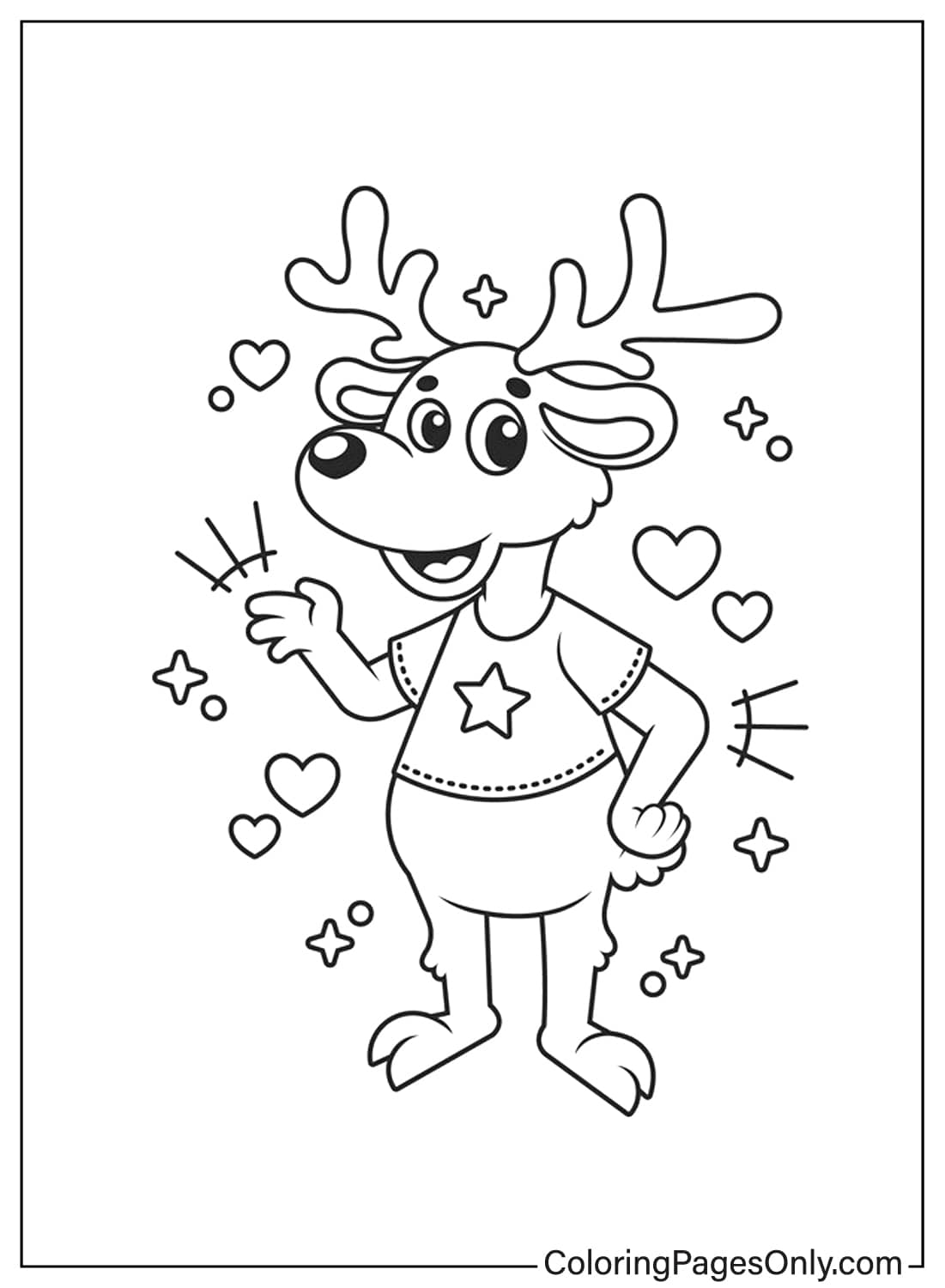
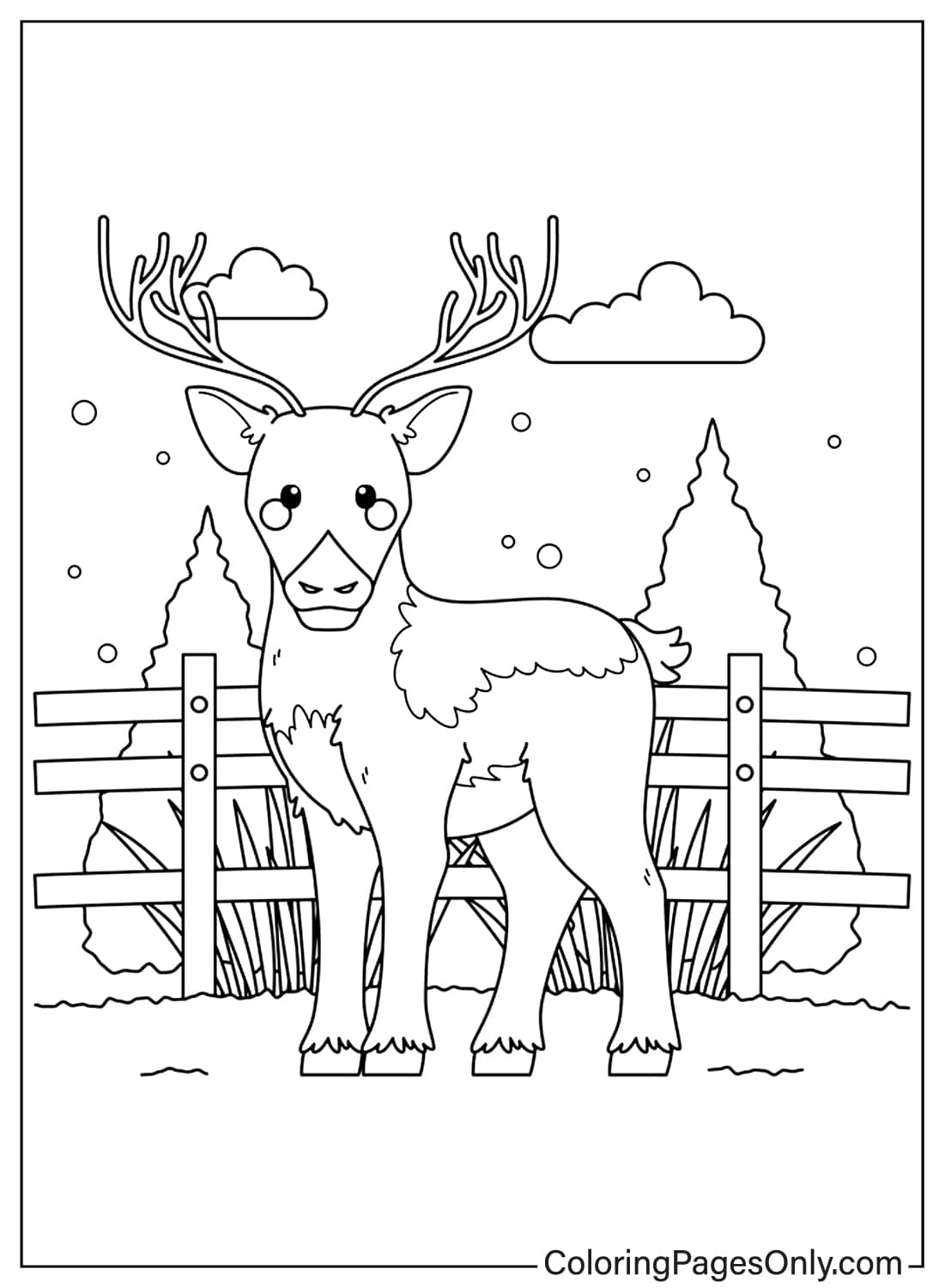
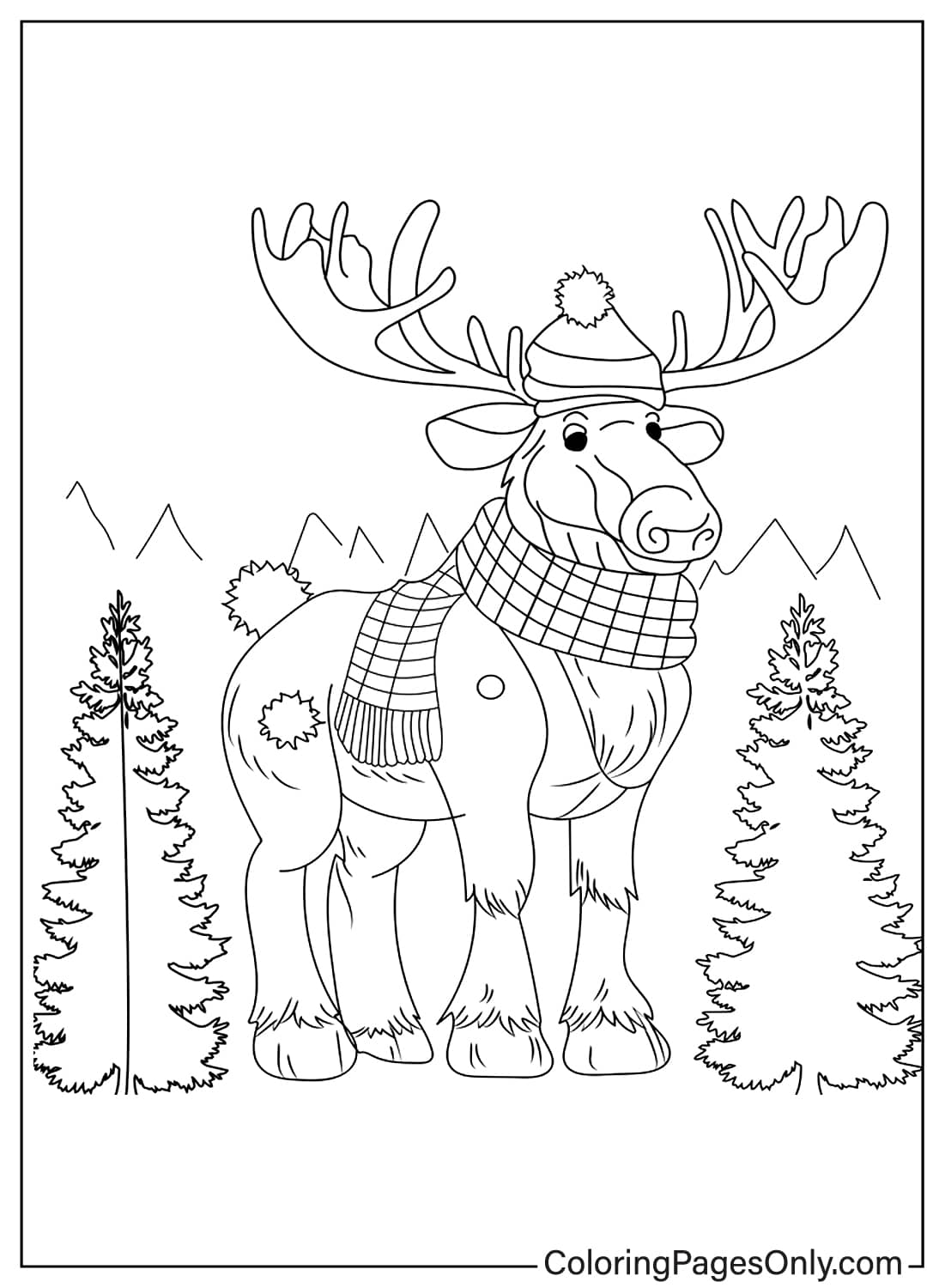
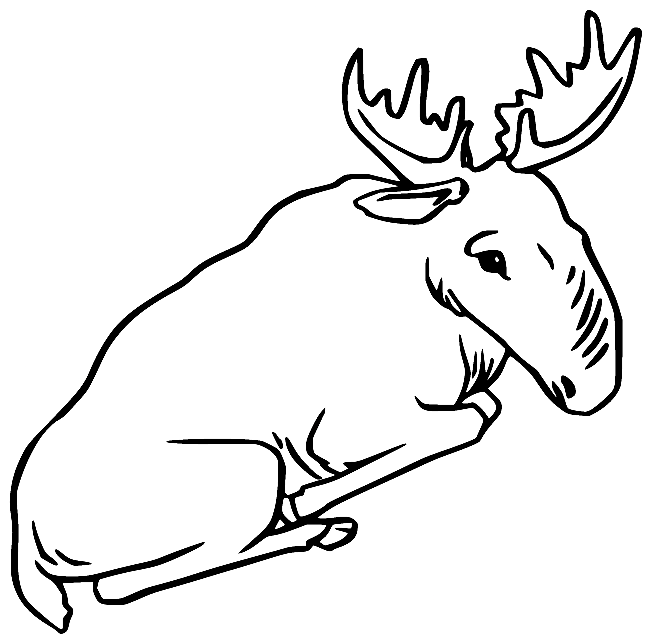
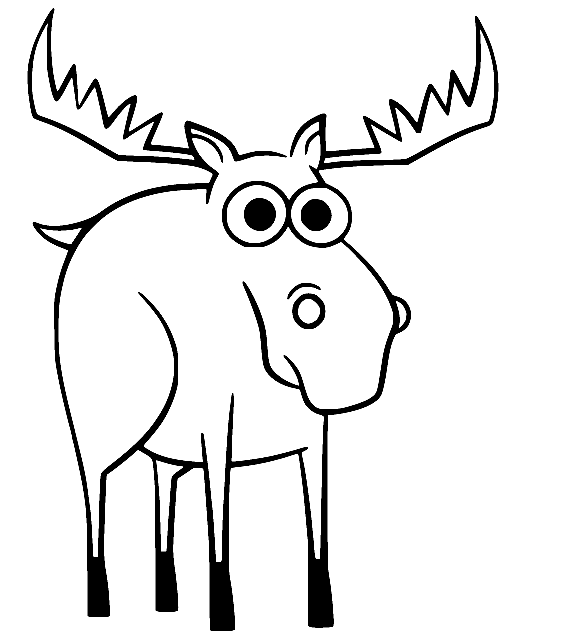
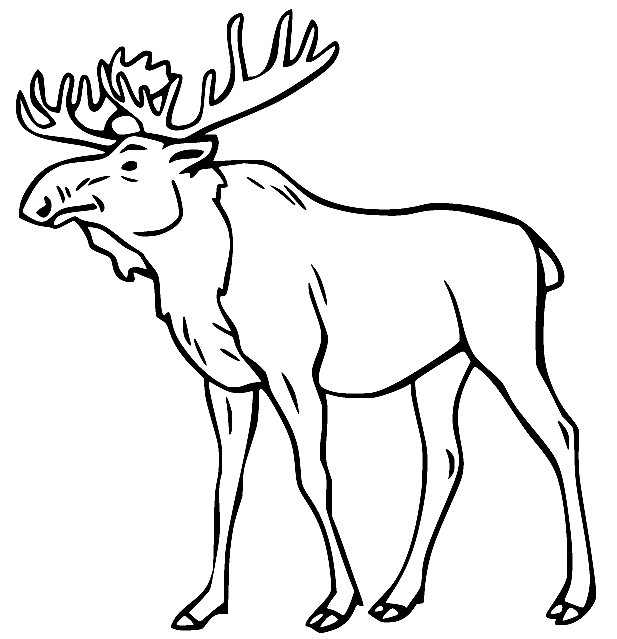
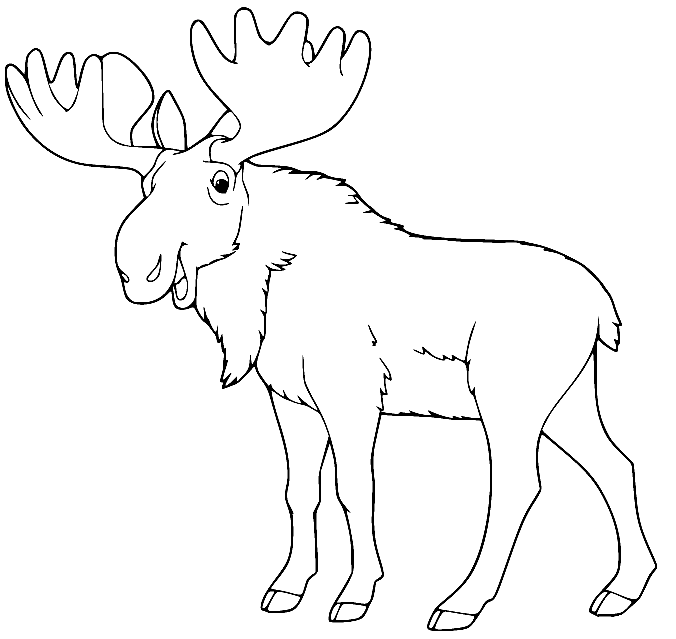
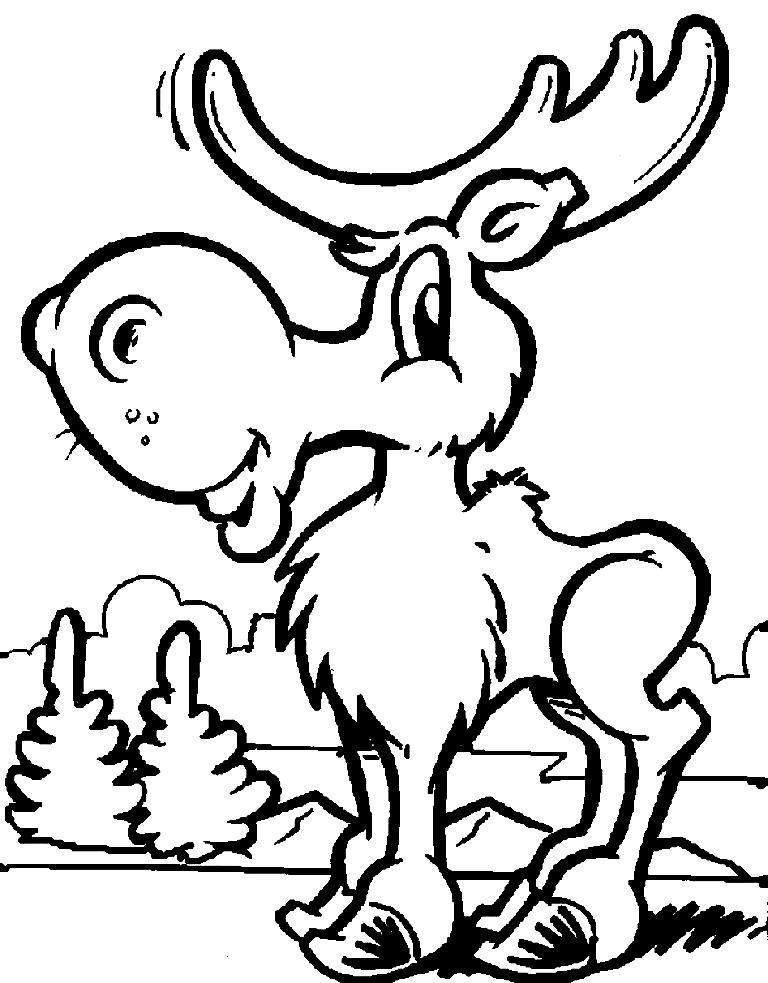
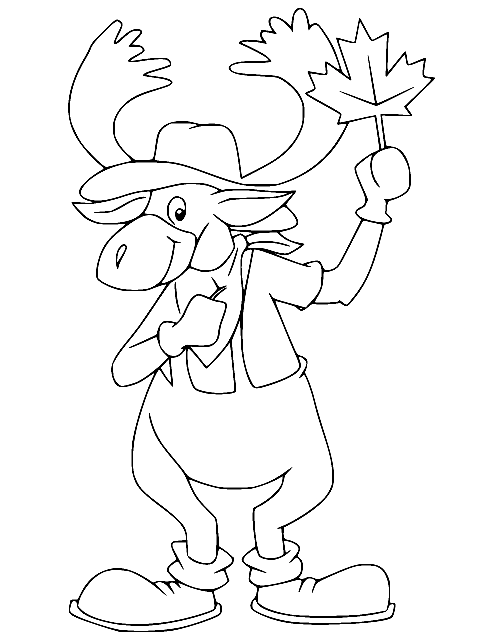
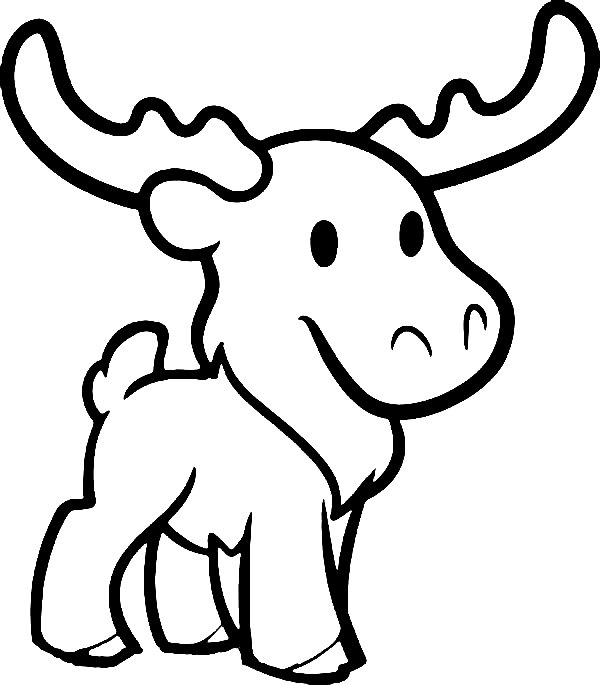
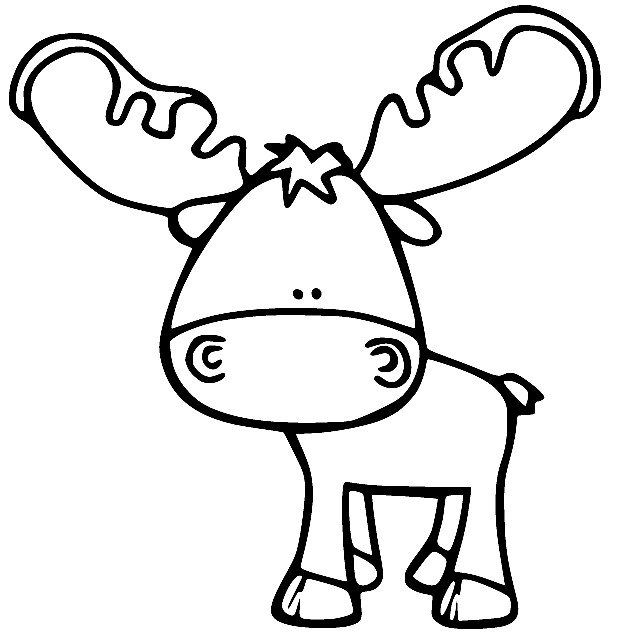
This collection reflects that mix of natural history and everyday charm across 66 pages: realistic and classic portraits, cartoon and mood variants, seasonal and themed designs, and baby moose scenes. Broad palmate antlers and long, sturdy legs are the throughline across nearly every page.
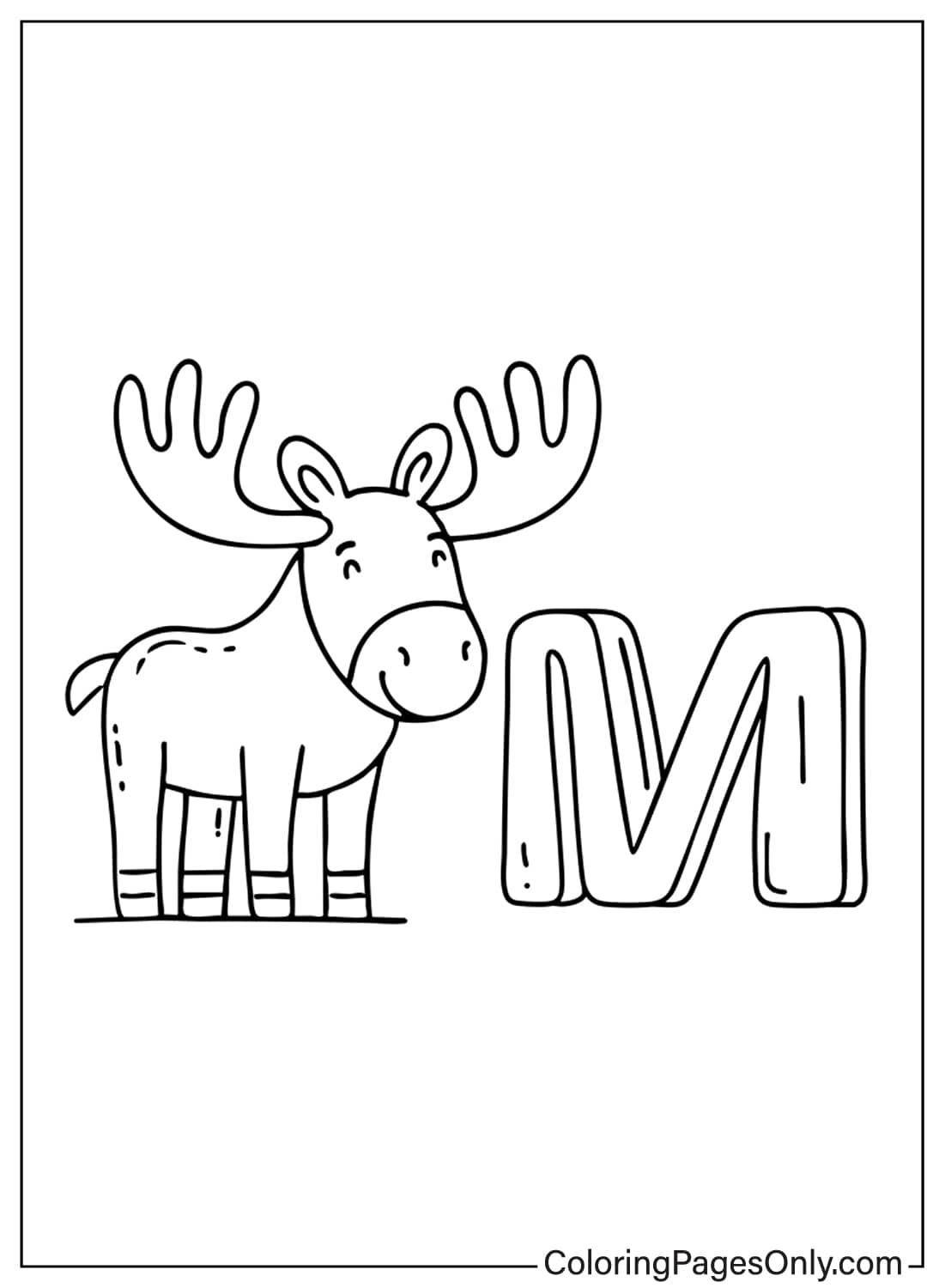
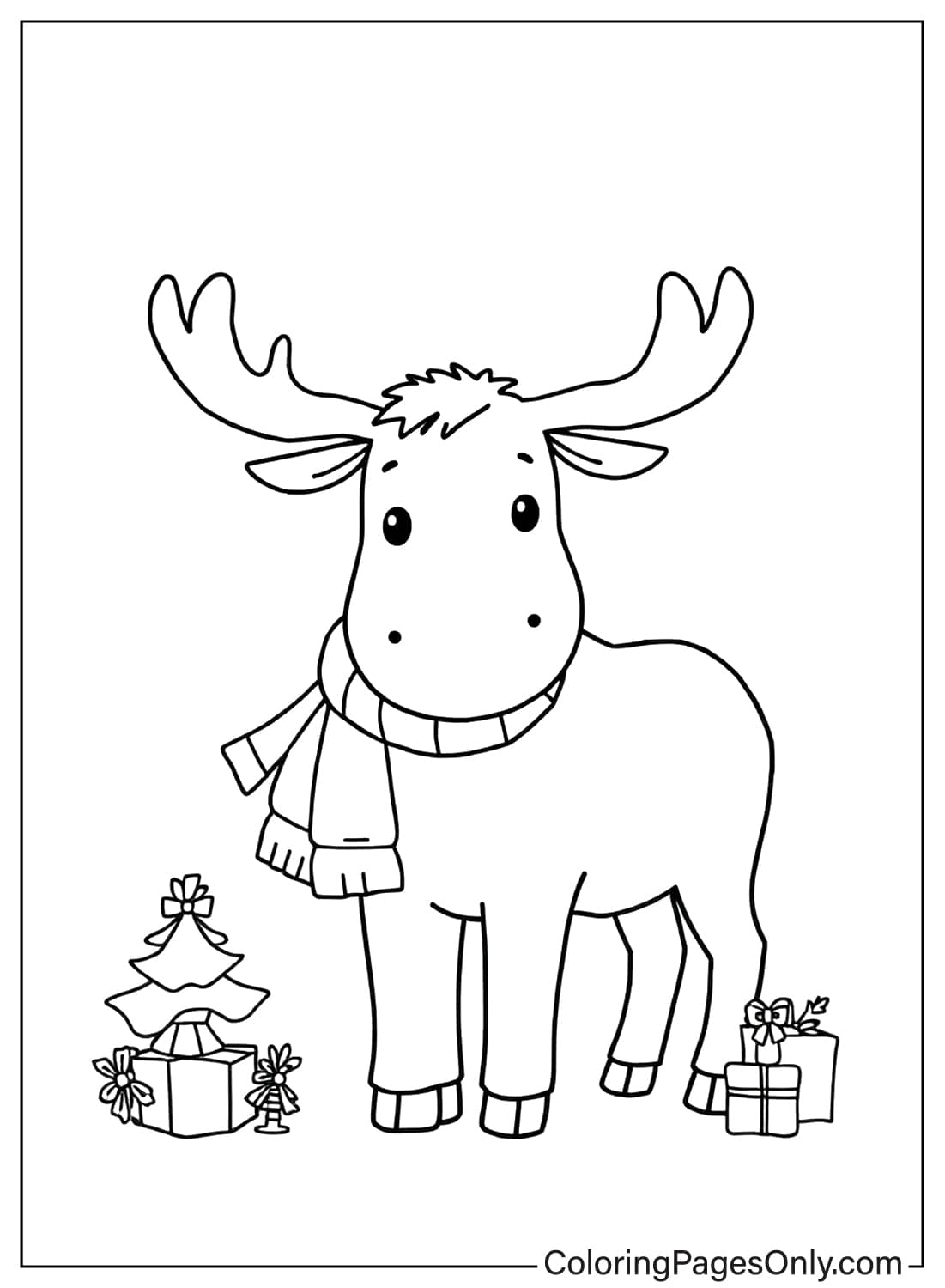
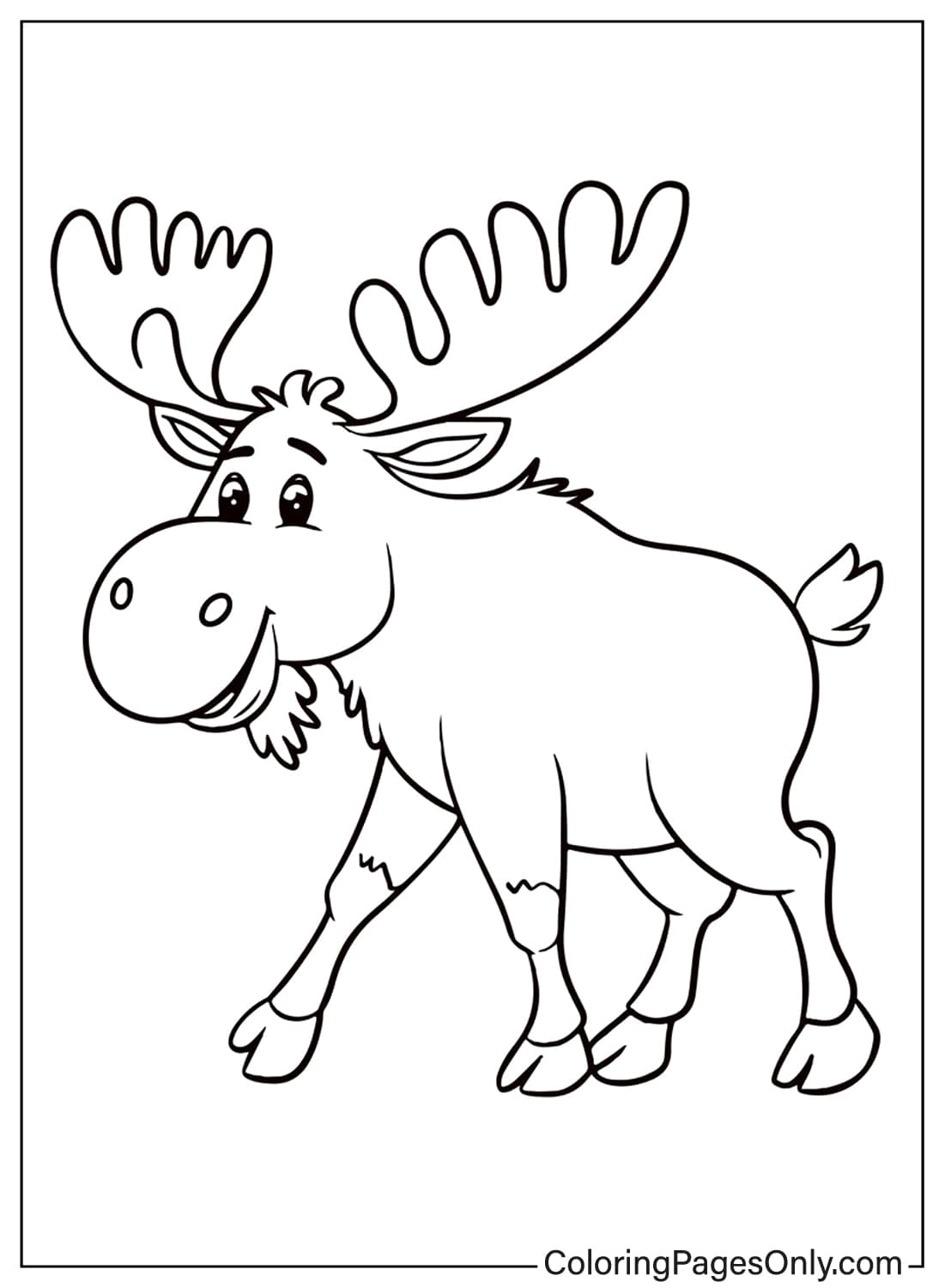
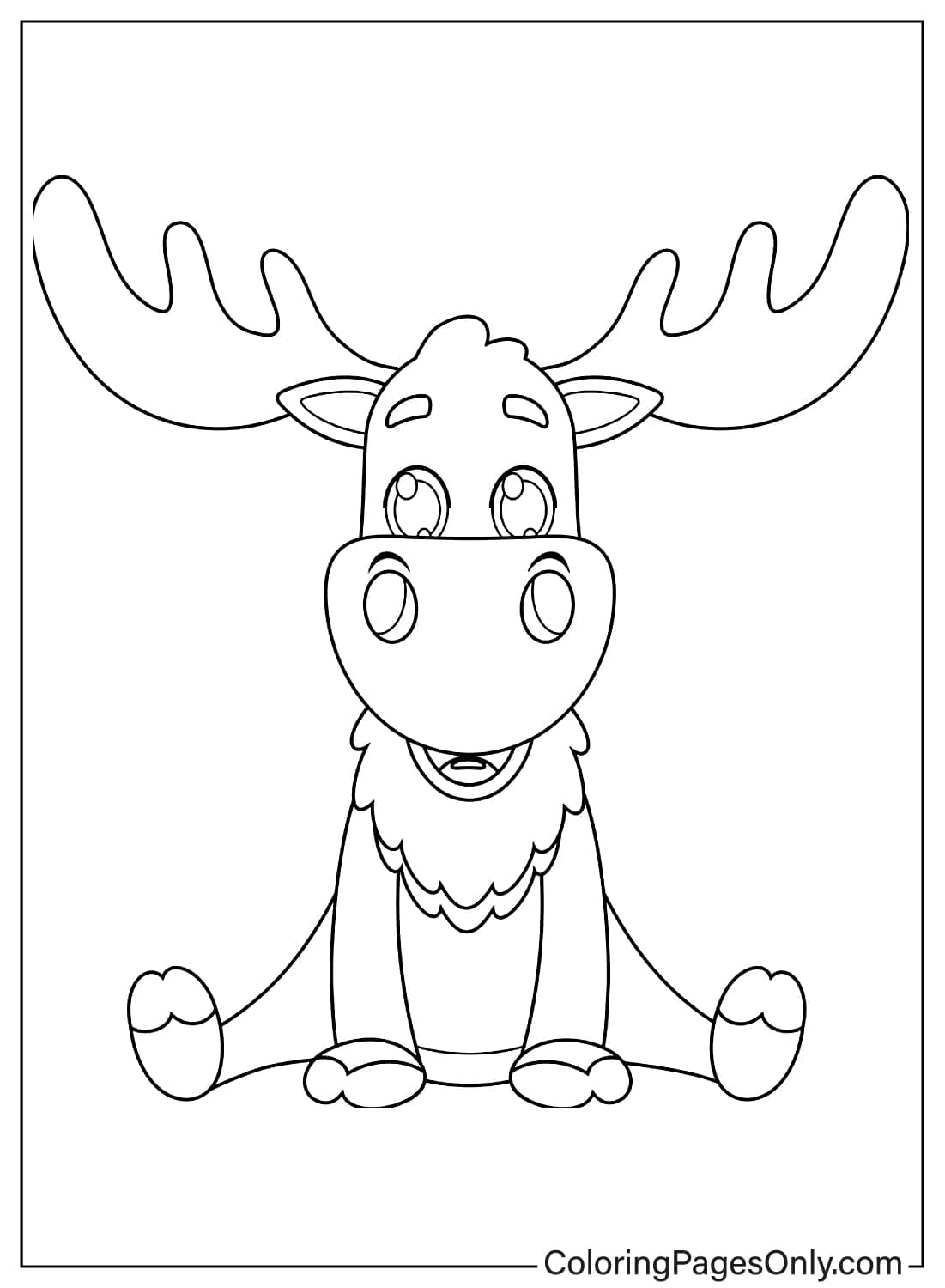
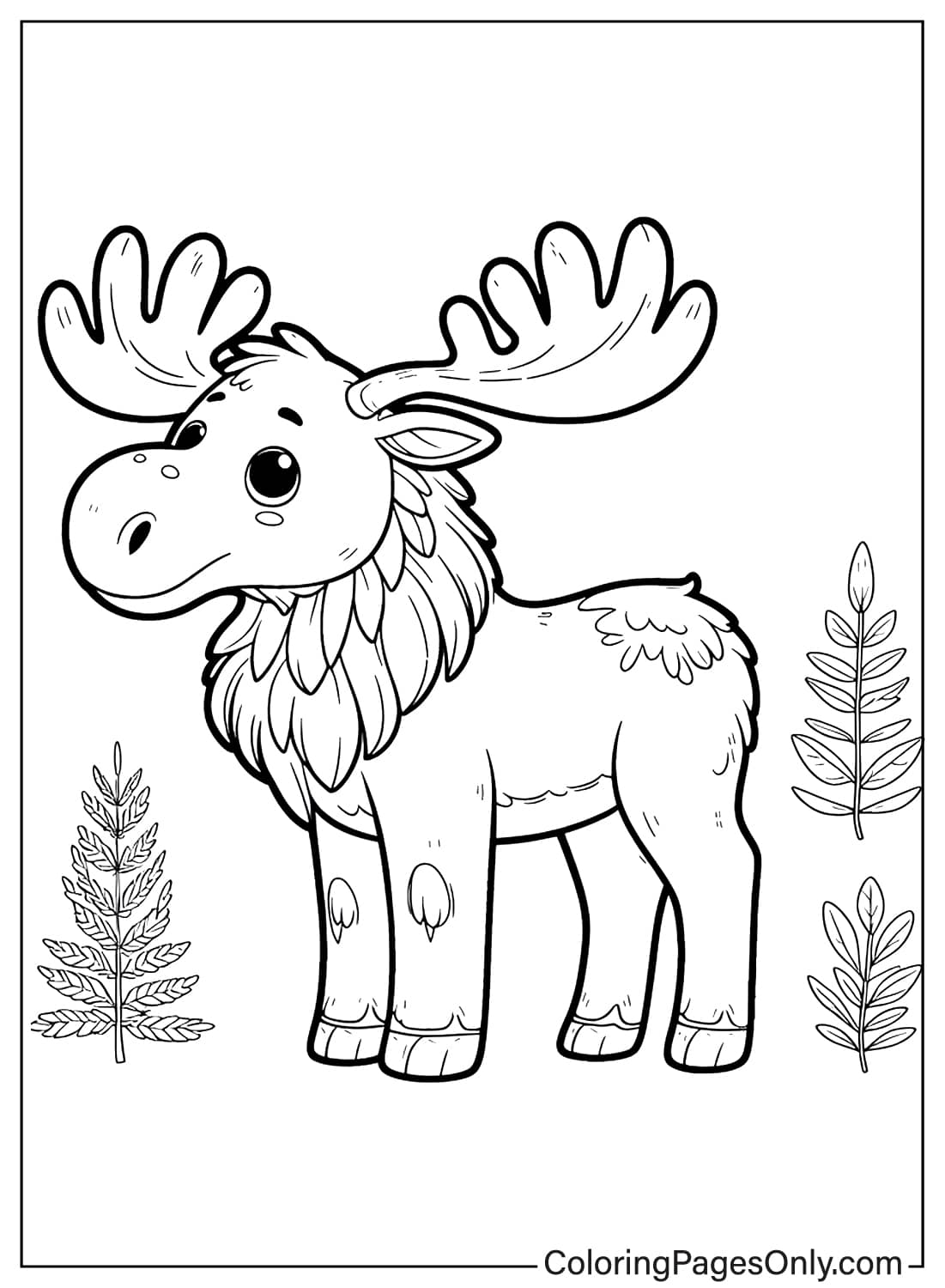
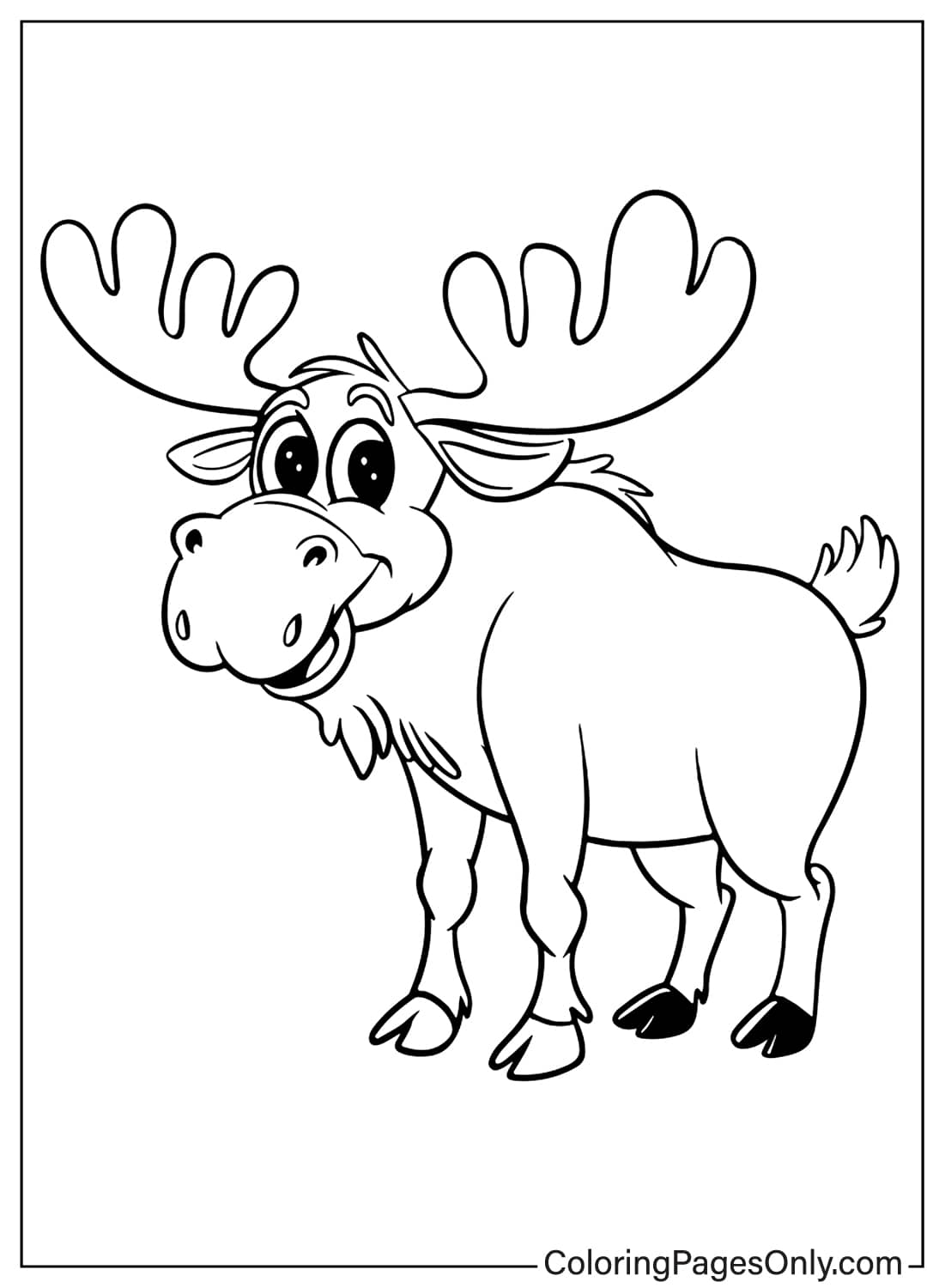
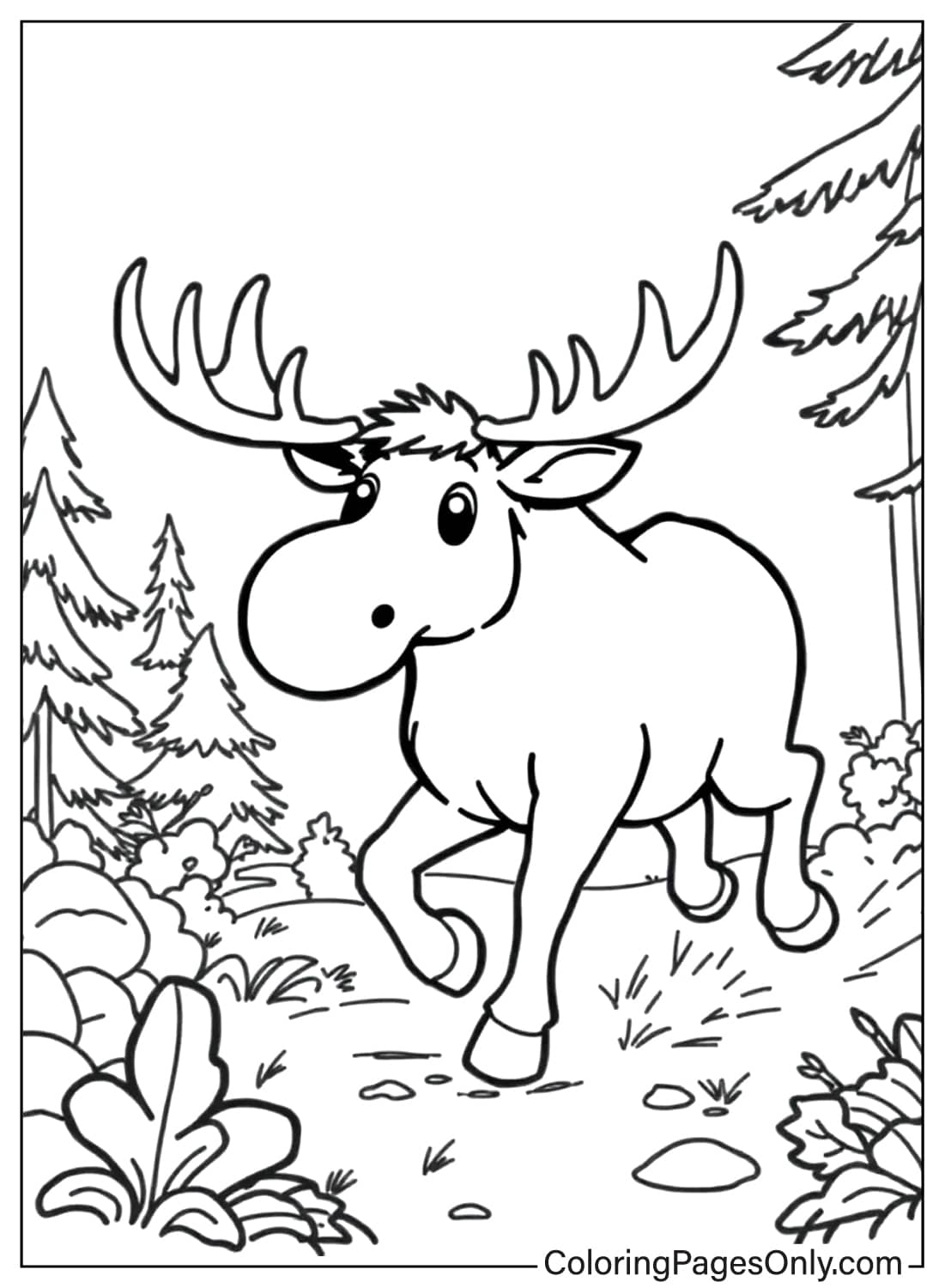
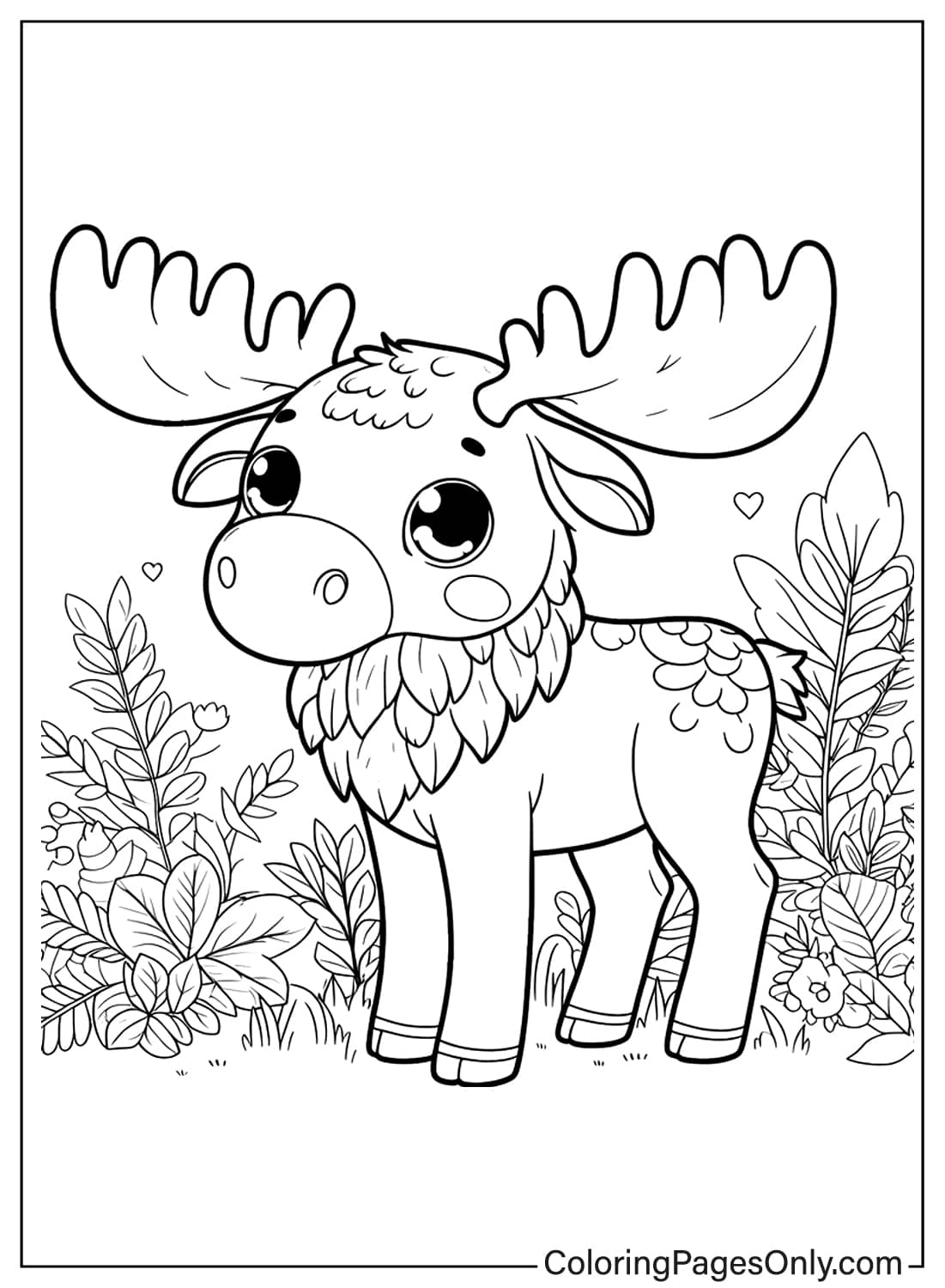
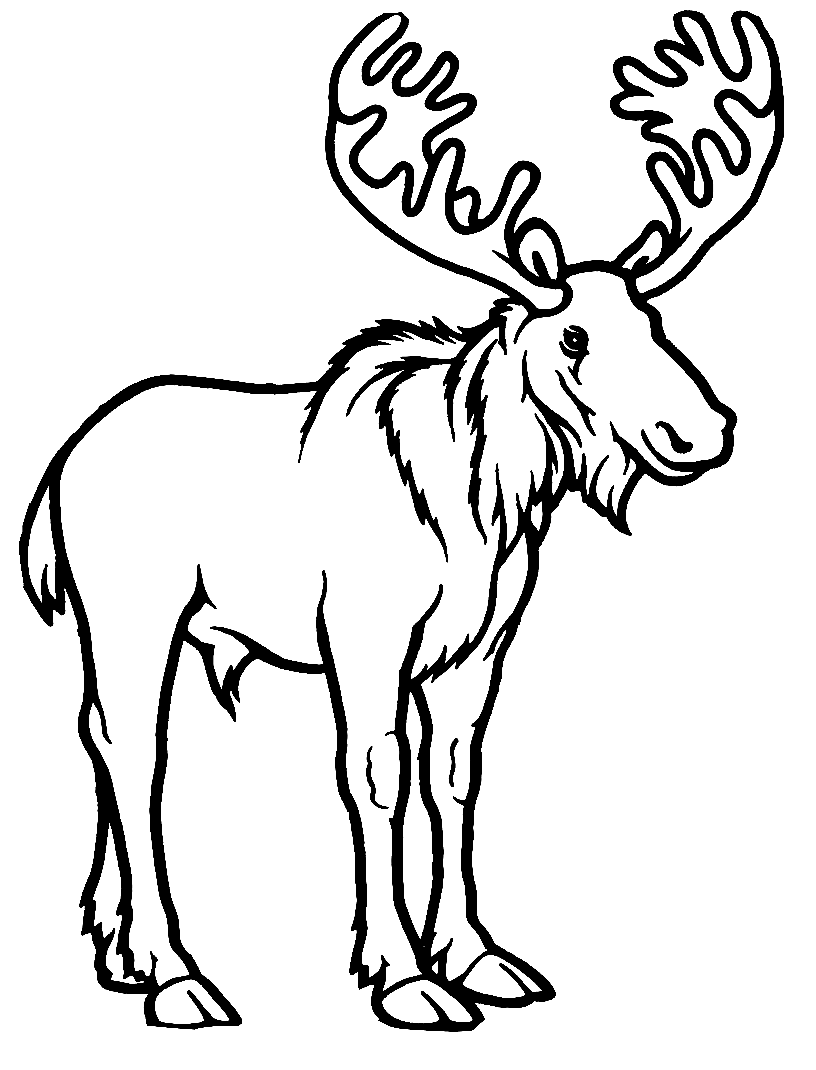
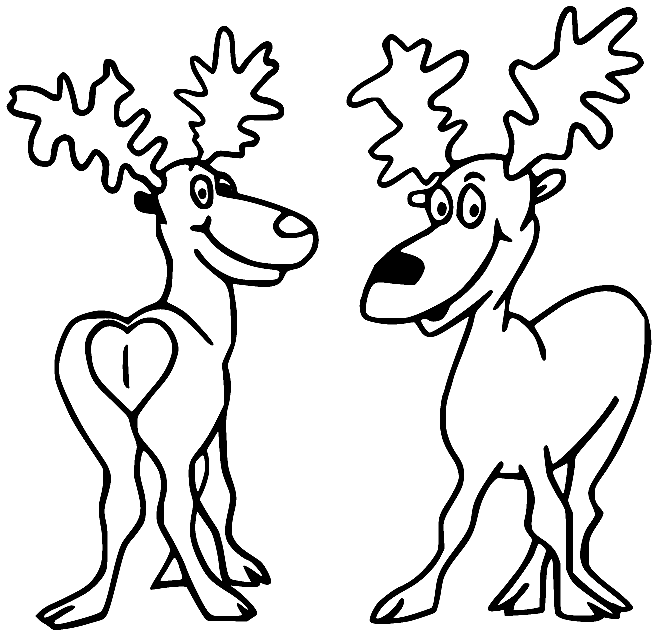
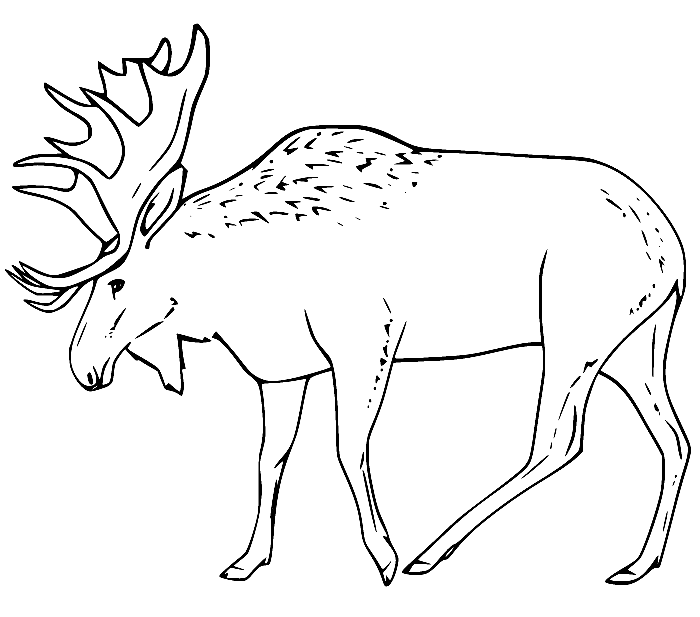
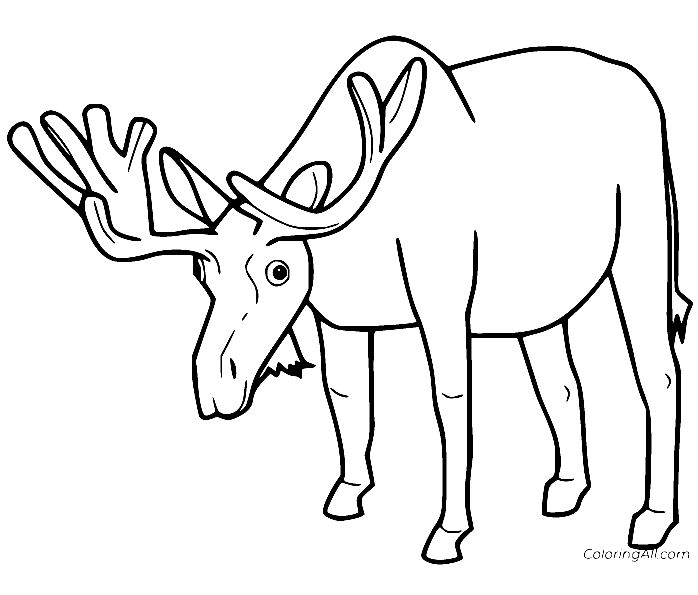
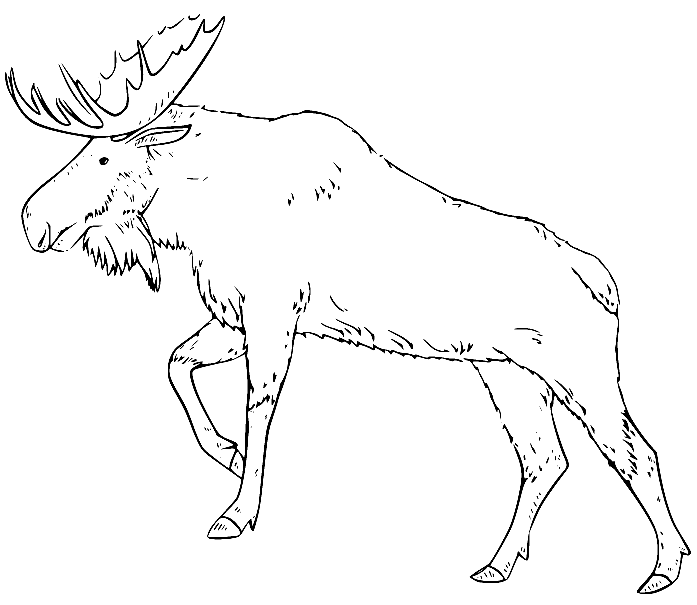
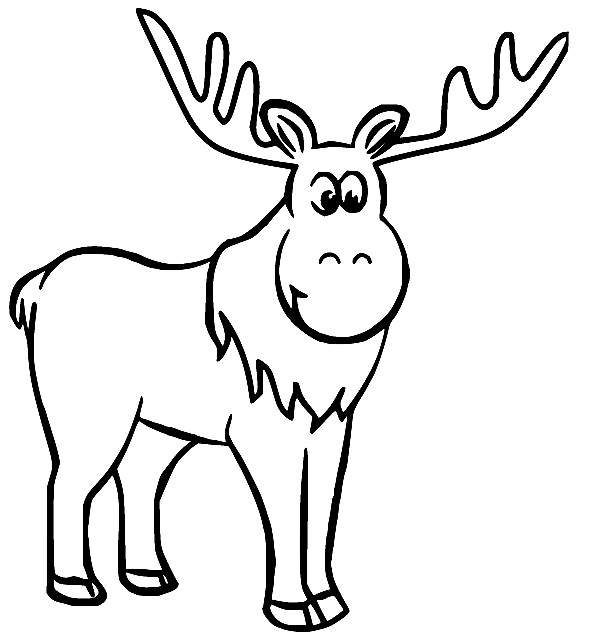
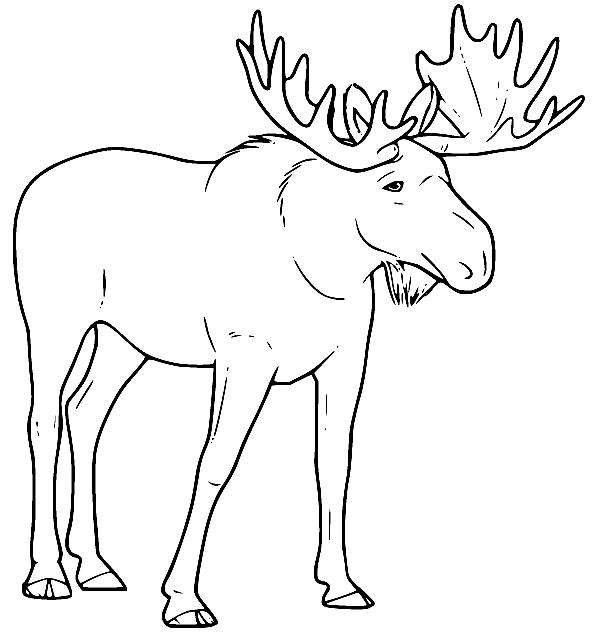
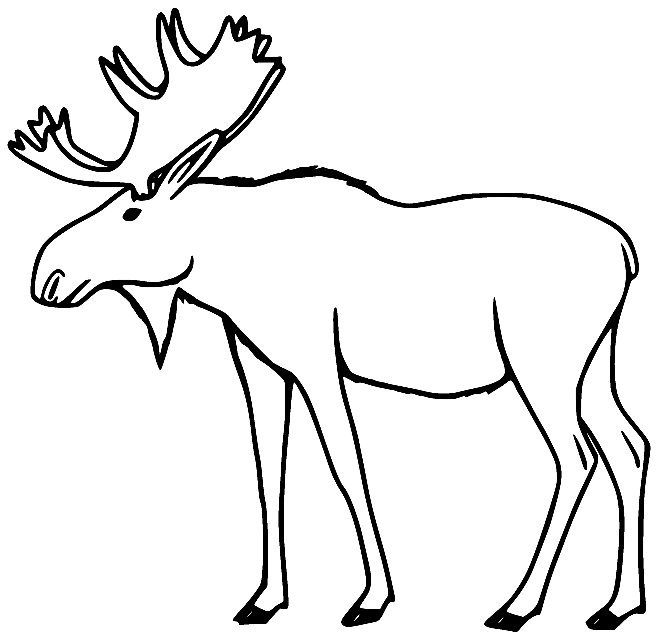
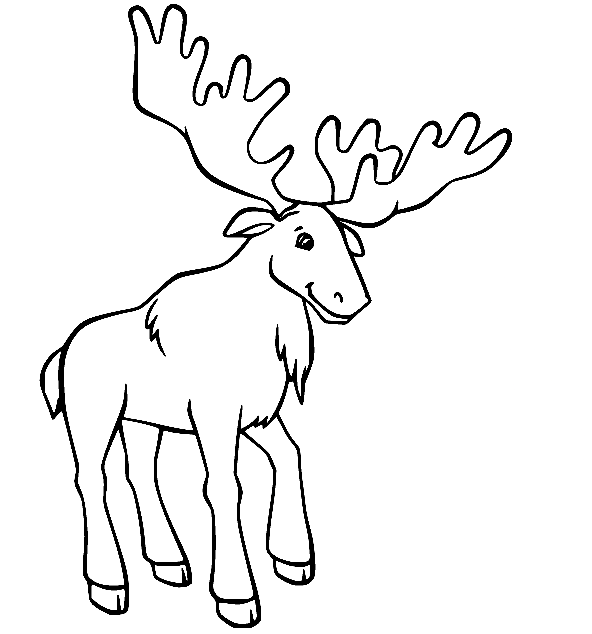
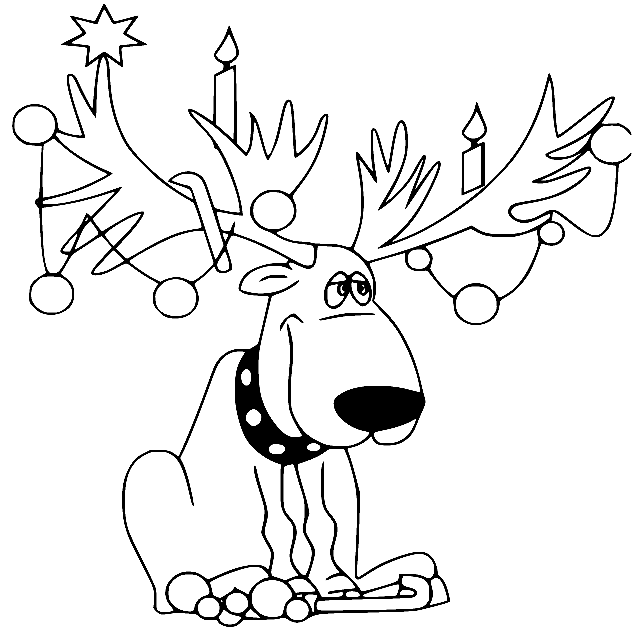
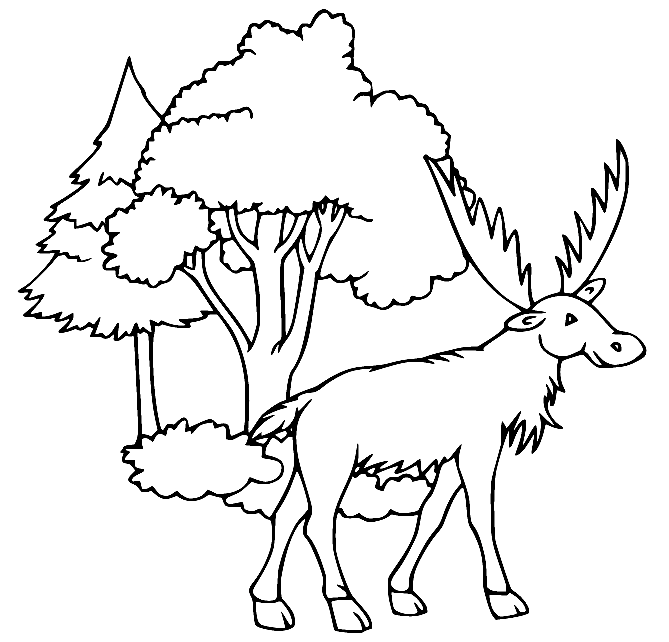
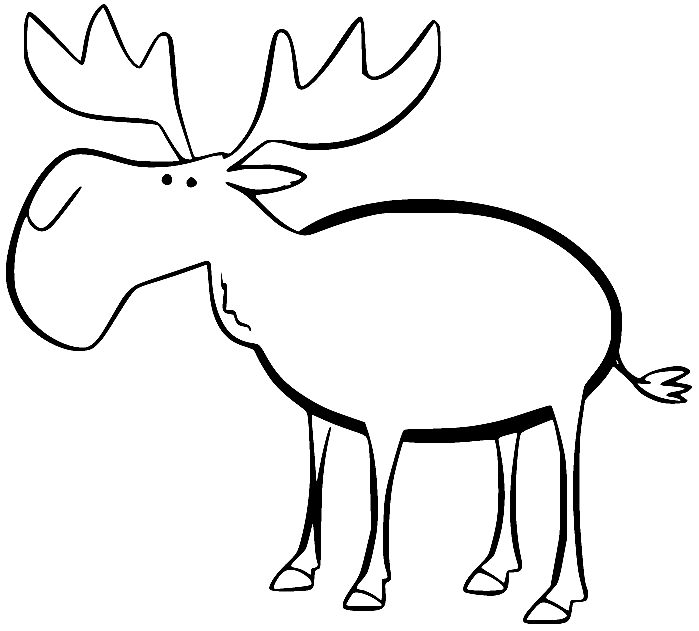
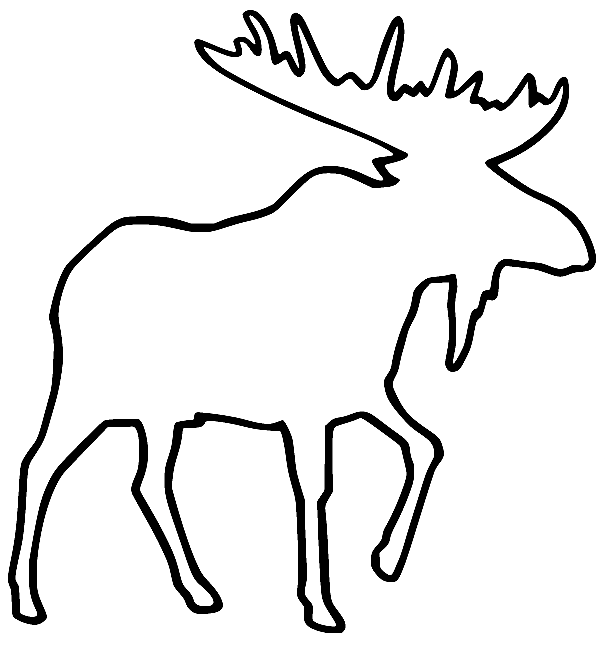
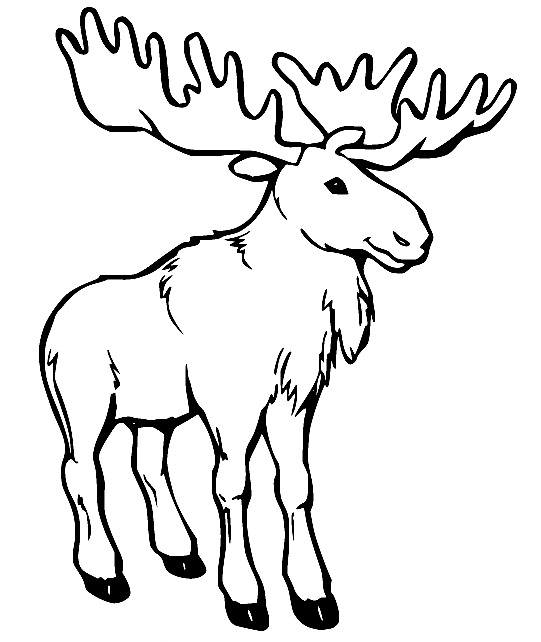
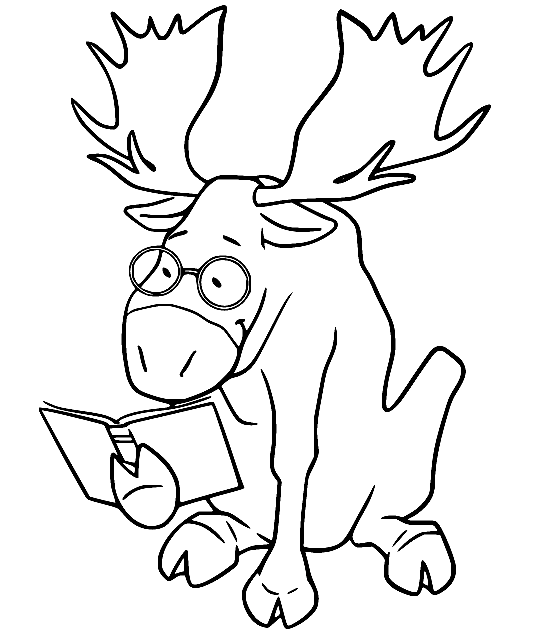
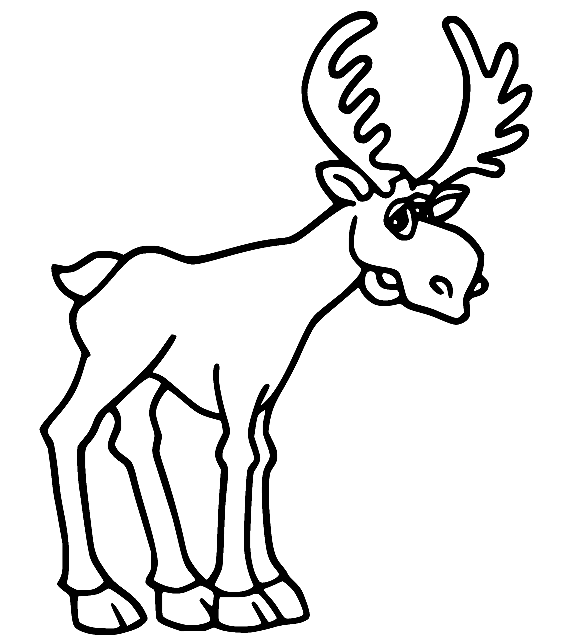
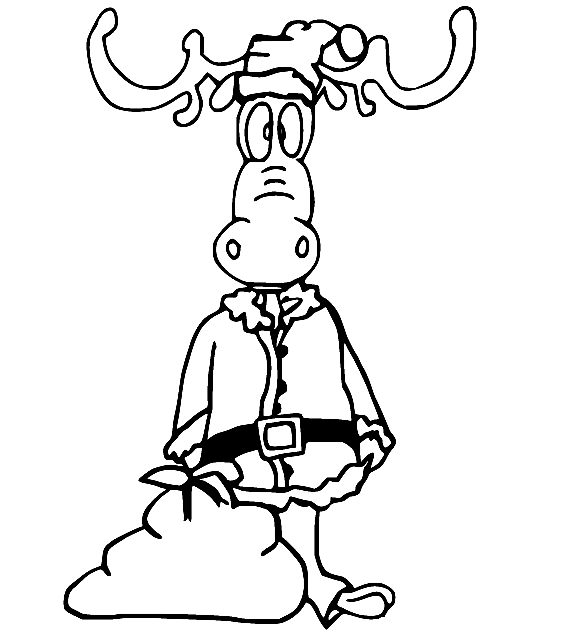
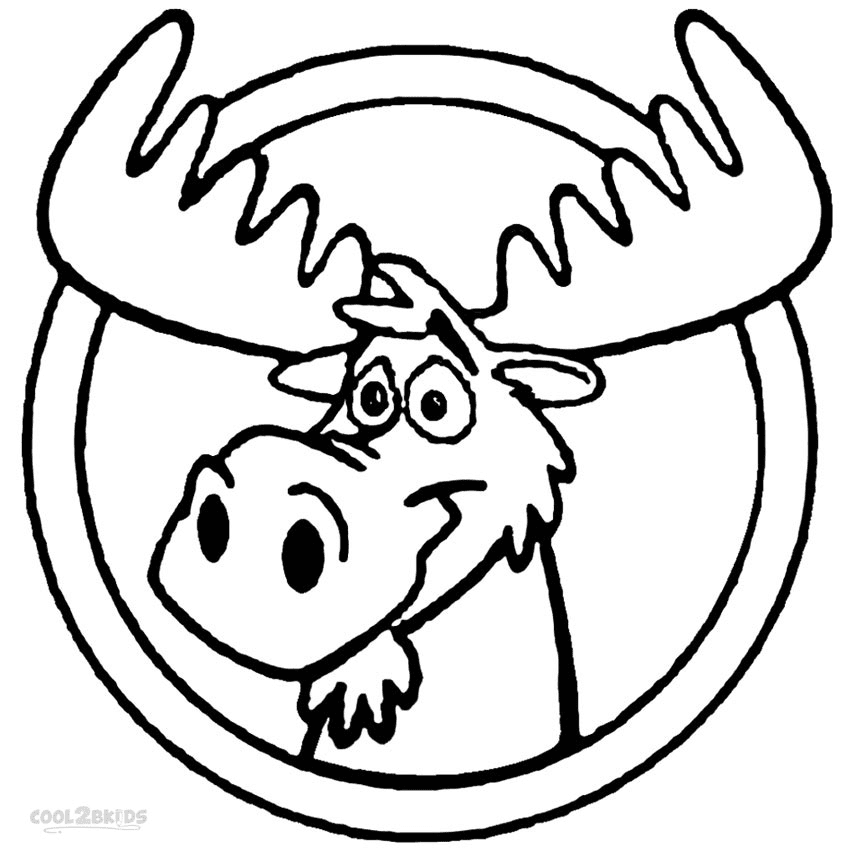
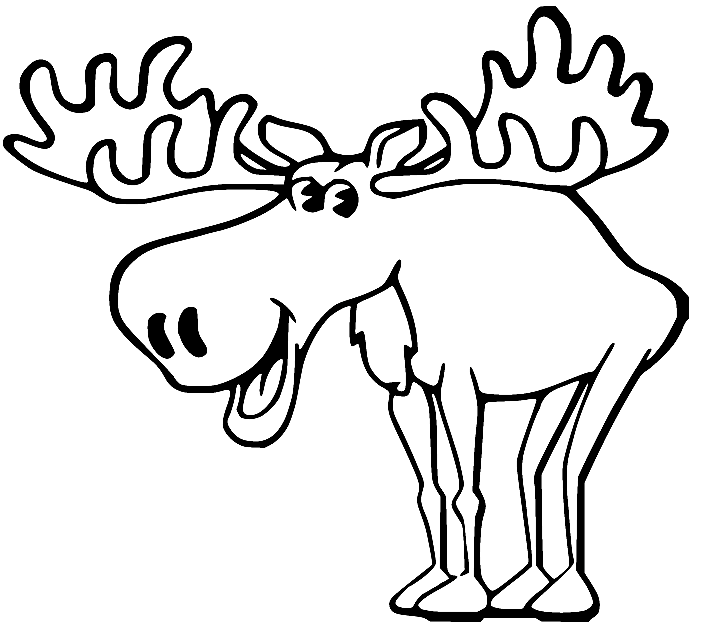
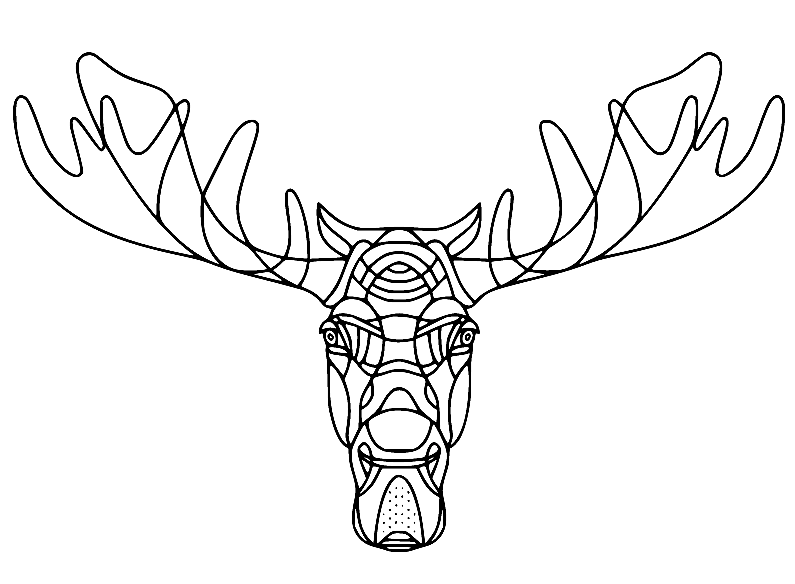
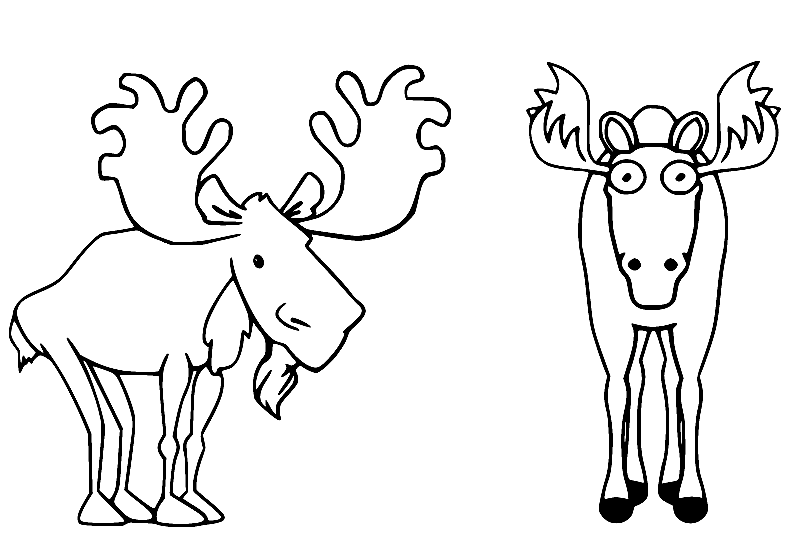
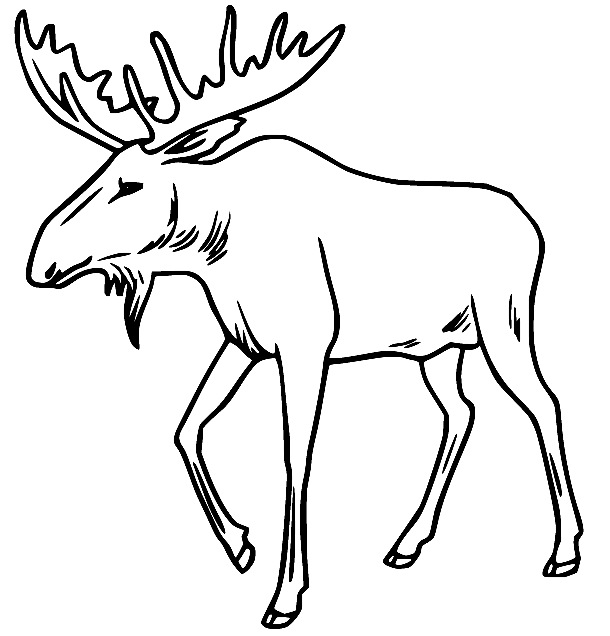
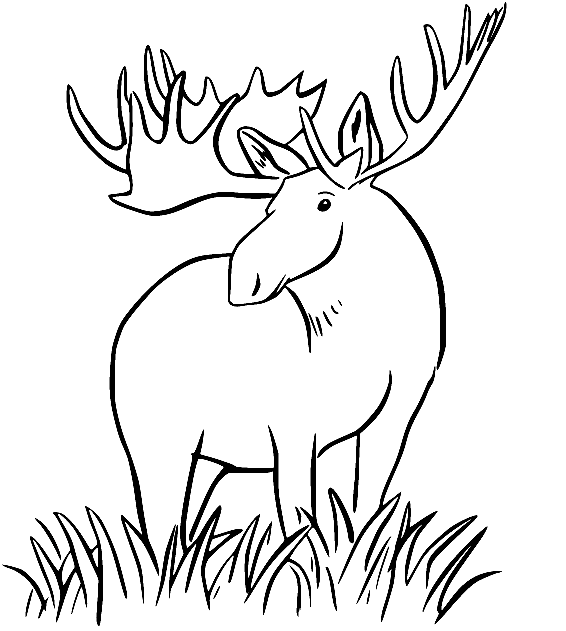
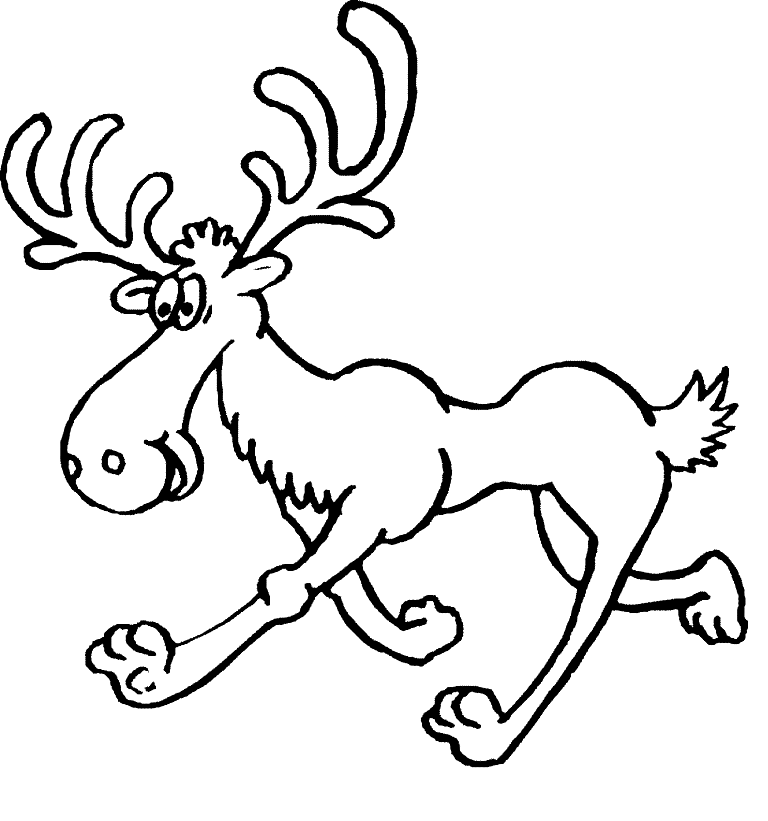
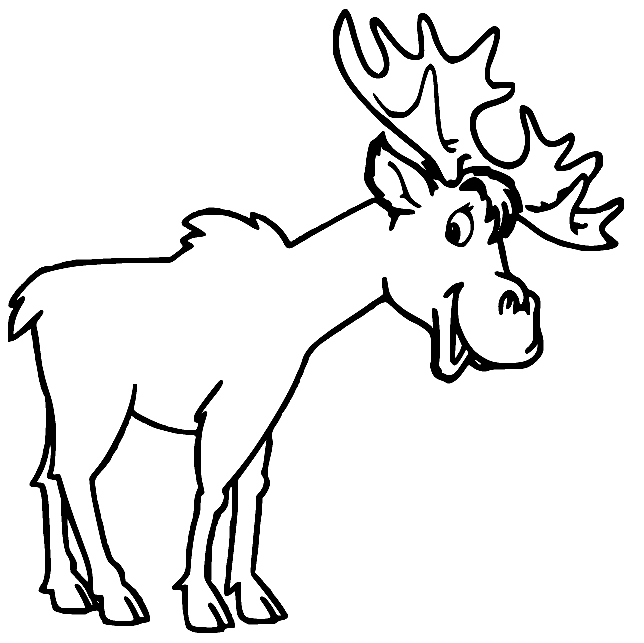
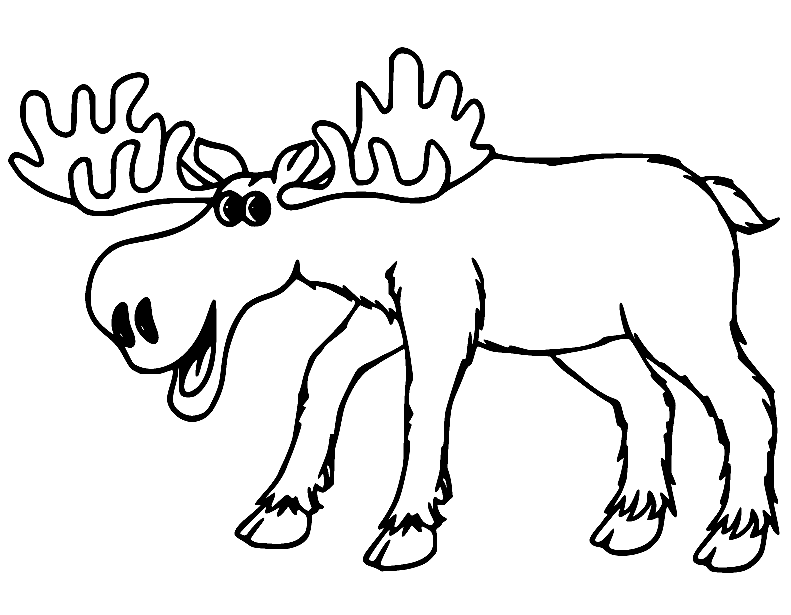
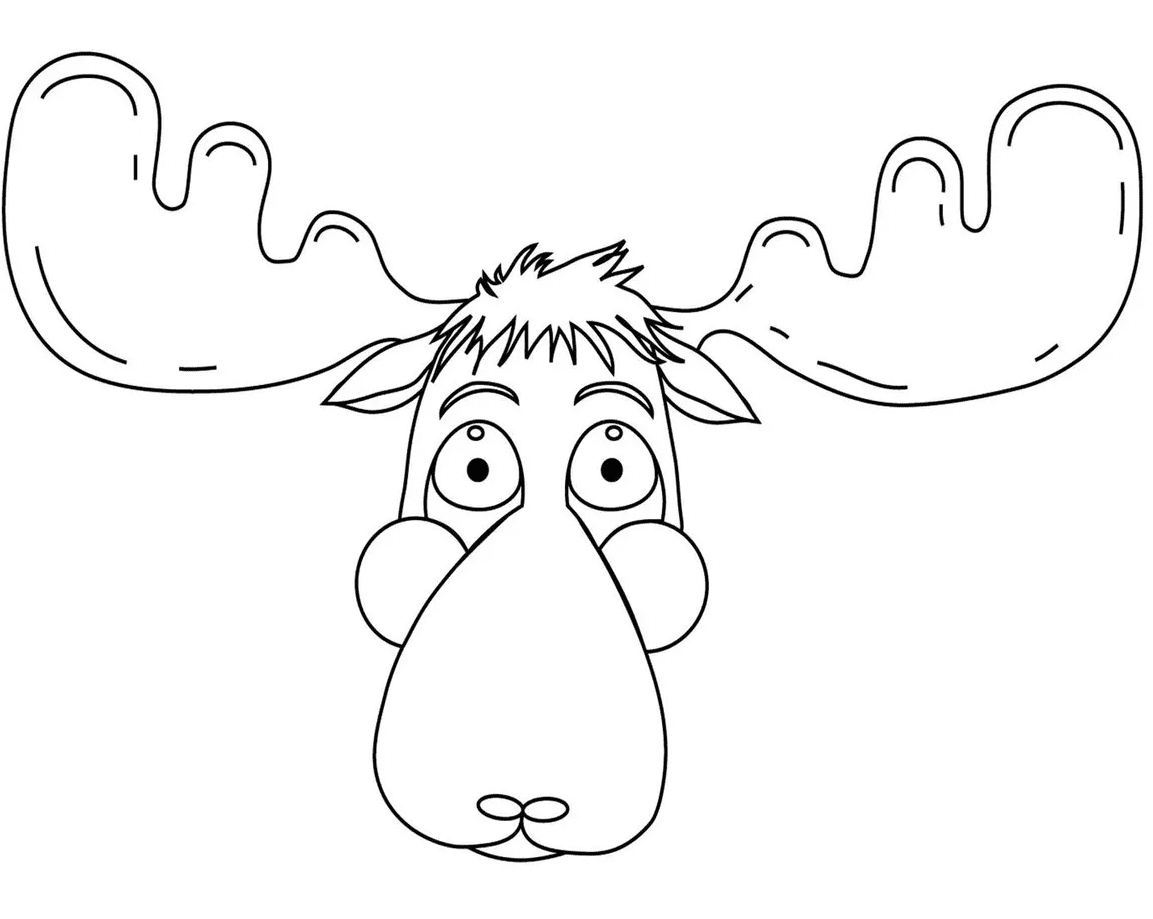
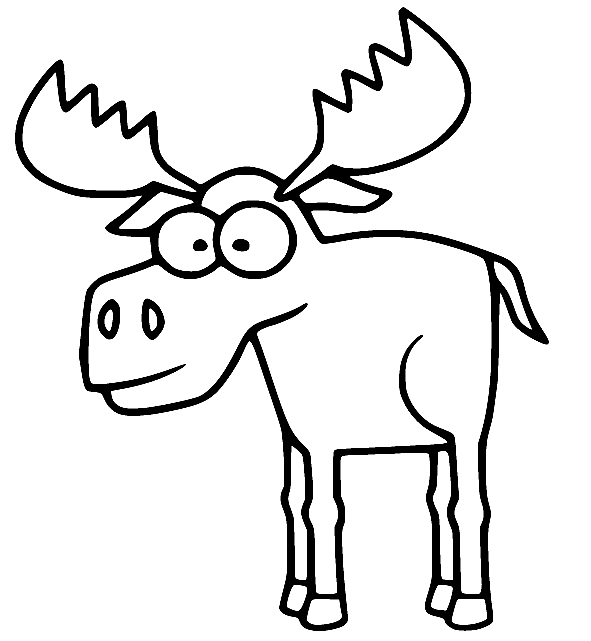

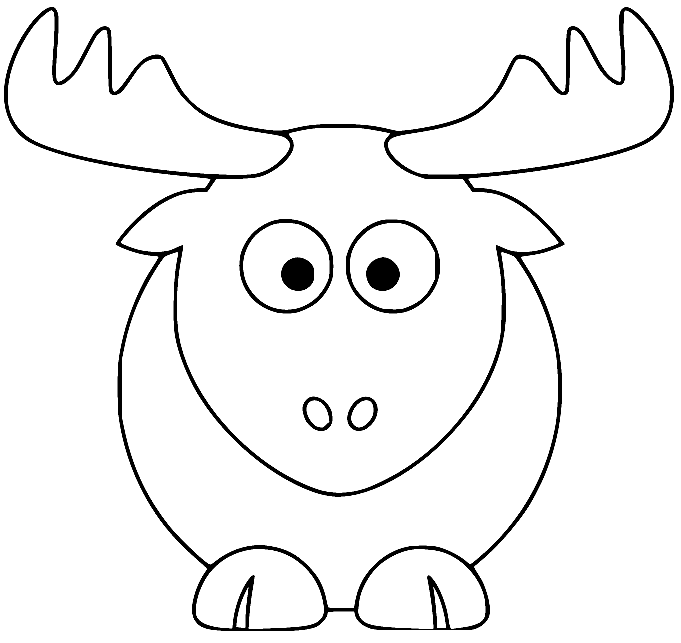
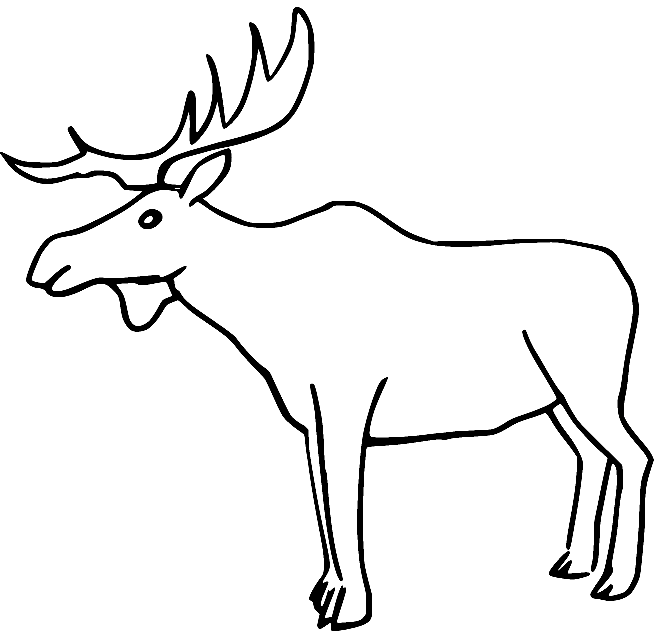
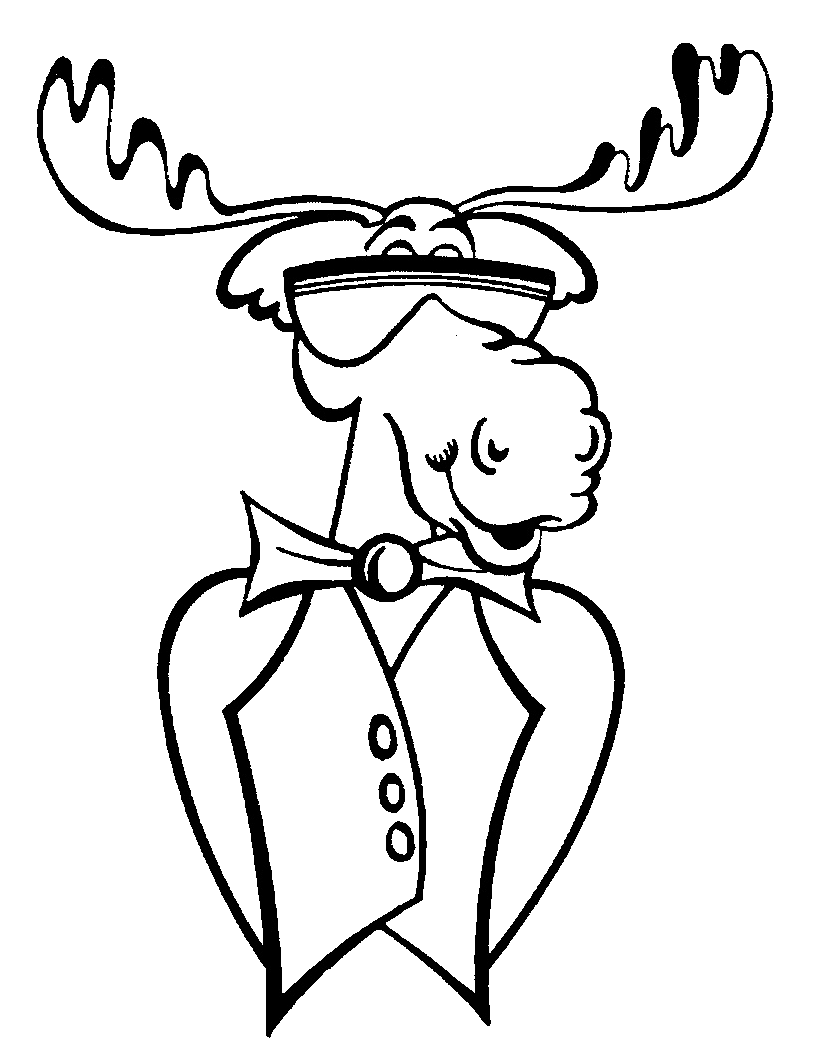
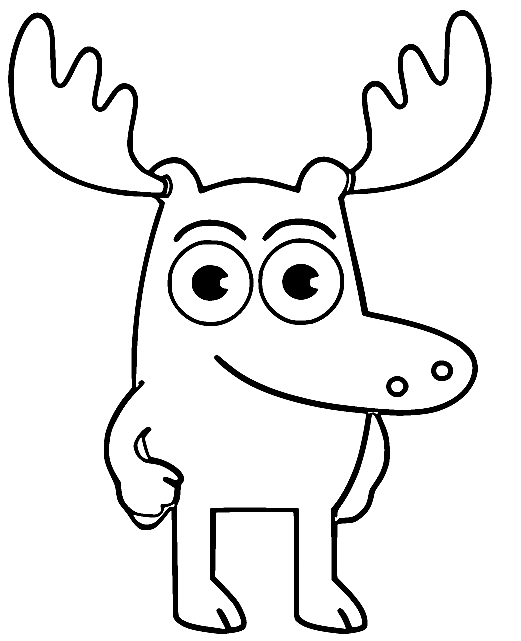
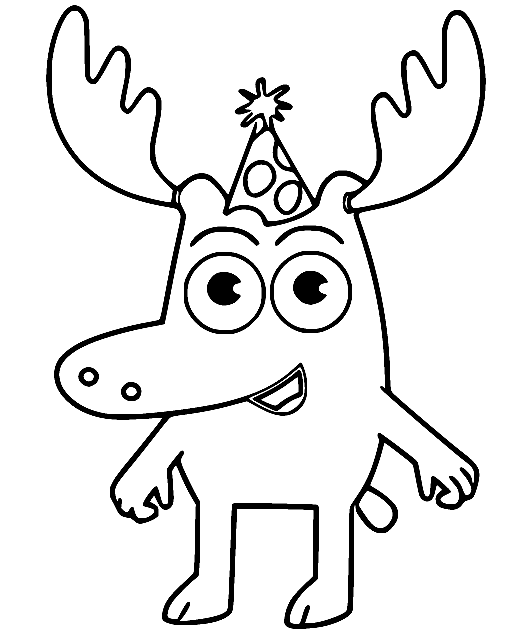
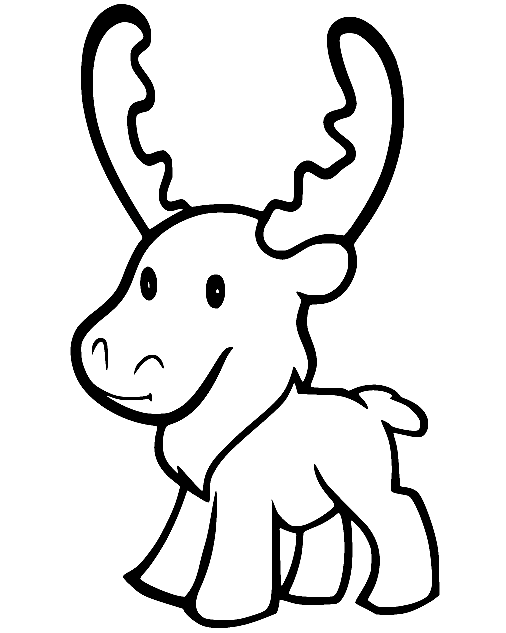
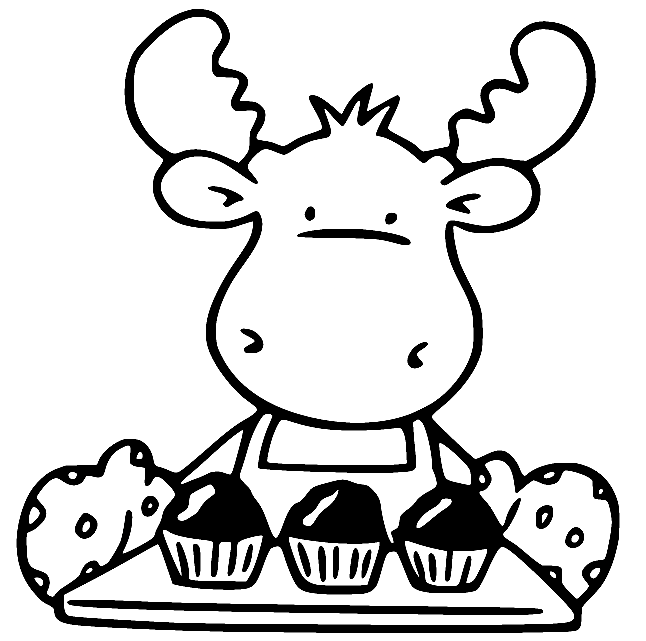
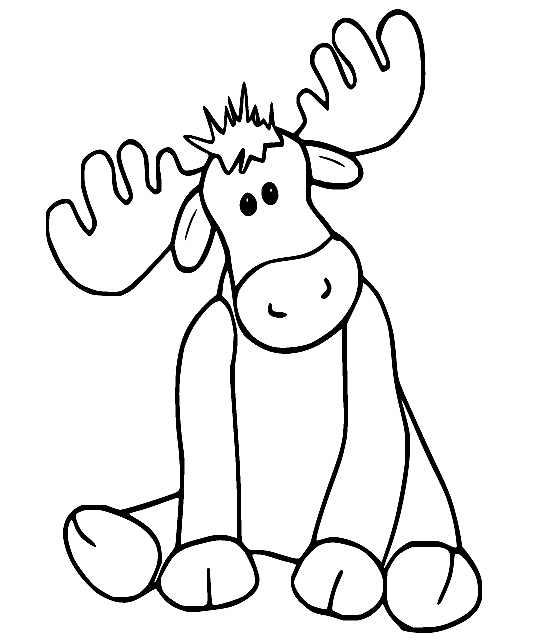
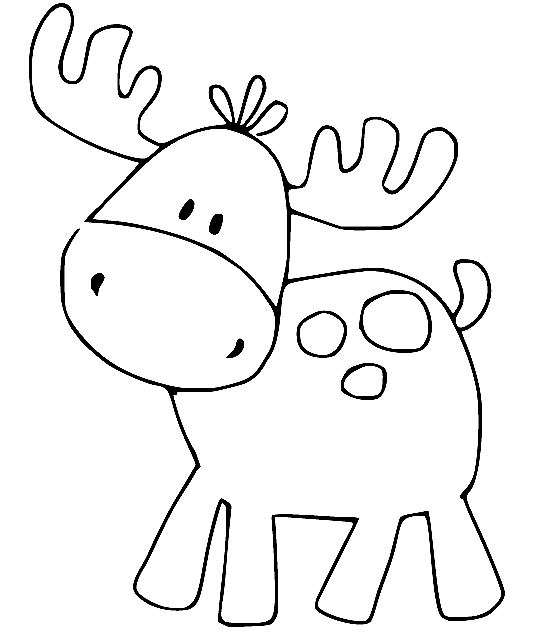
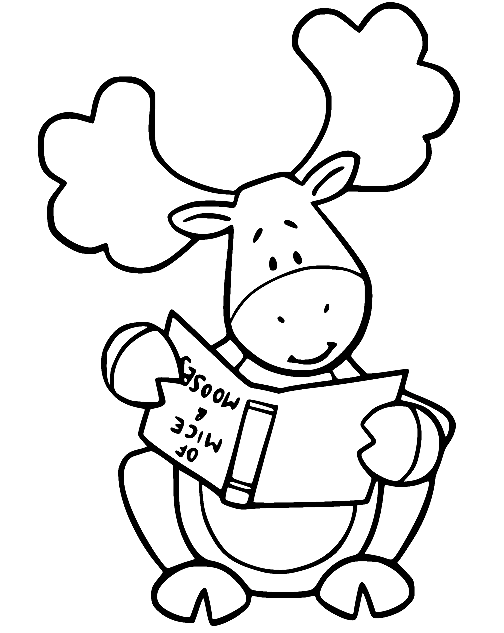
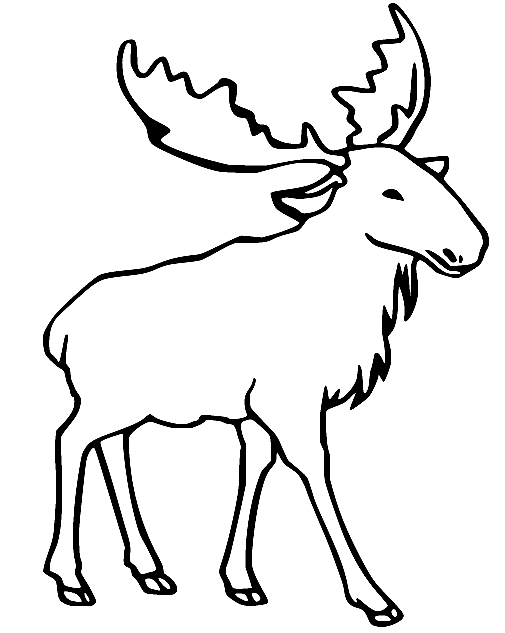
What Is Inside This Collection
The 66 pages are broken into four groups based on style and content.
Realistic and Classic Portraits
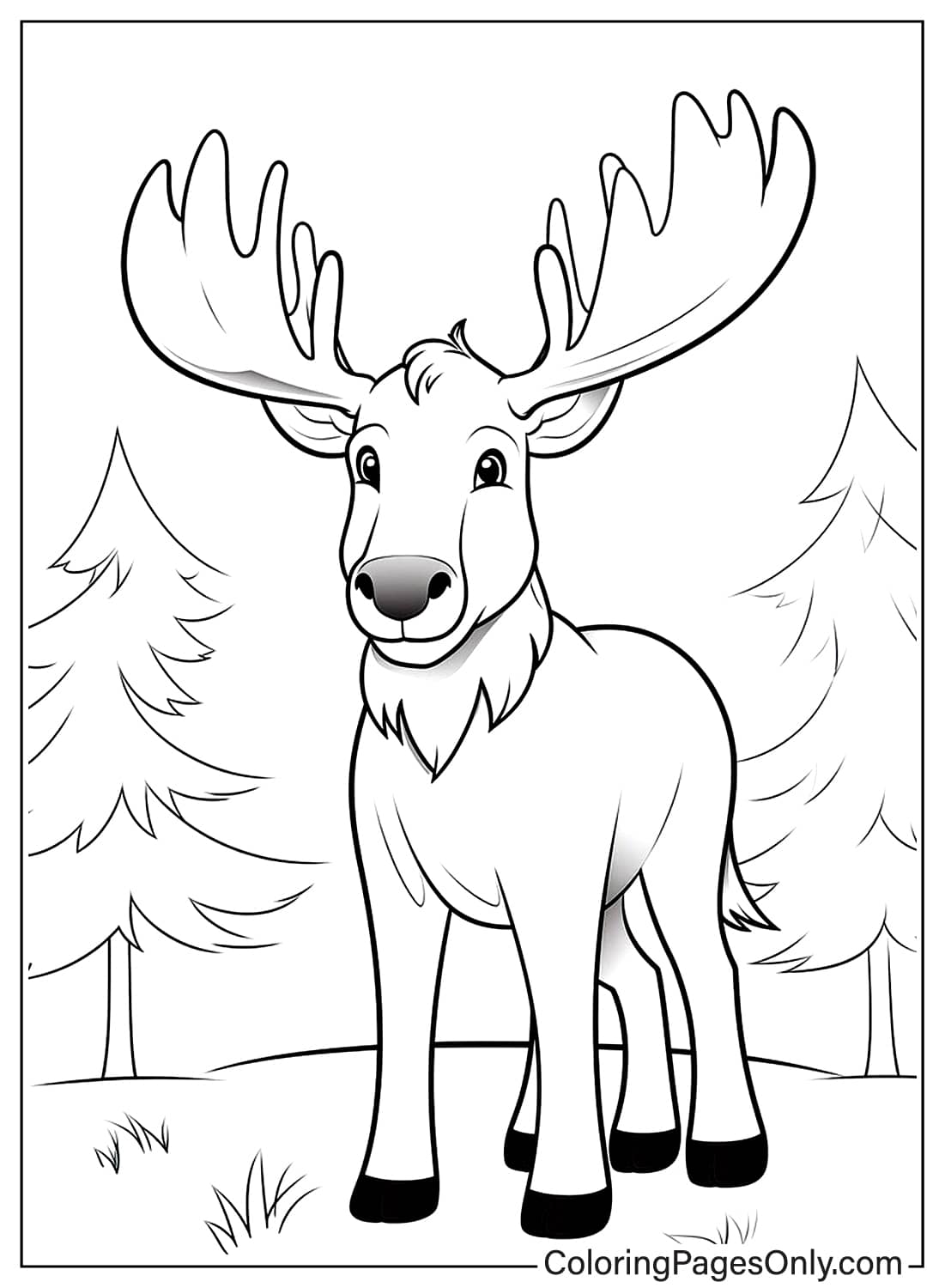
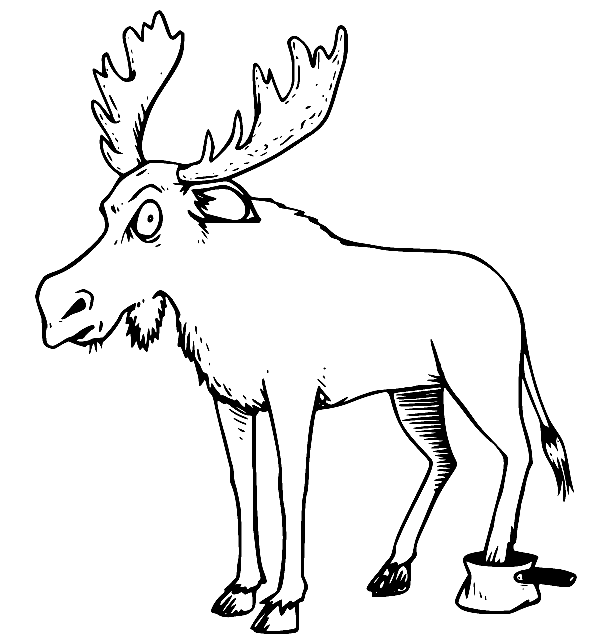
Twenty-six pages, the largest group in the set, show a moose in a fairly realistic or classic outline style, from simple silhouettes to more detailed illustrations. Color suggestion: layer two or three shades of brown for the coat, since real moose fur ranges from golden brown to nearly black depending on the season and the animal’s age.
Cartoon and Mood Variants
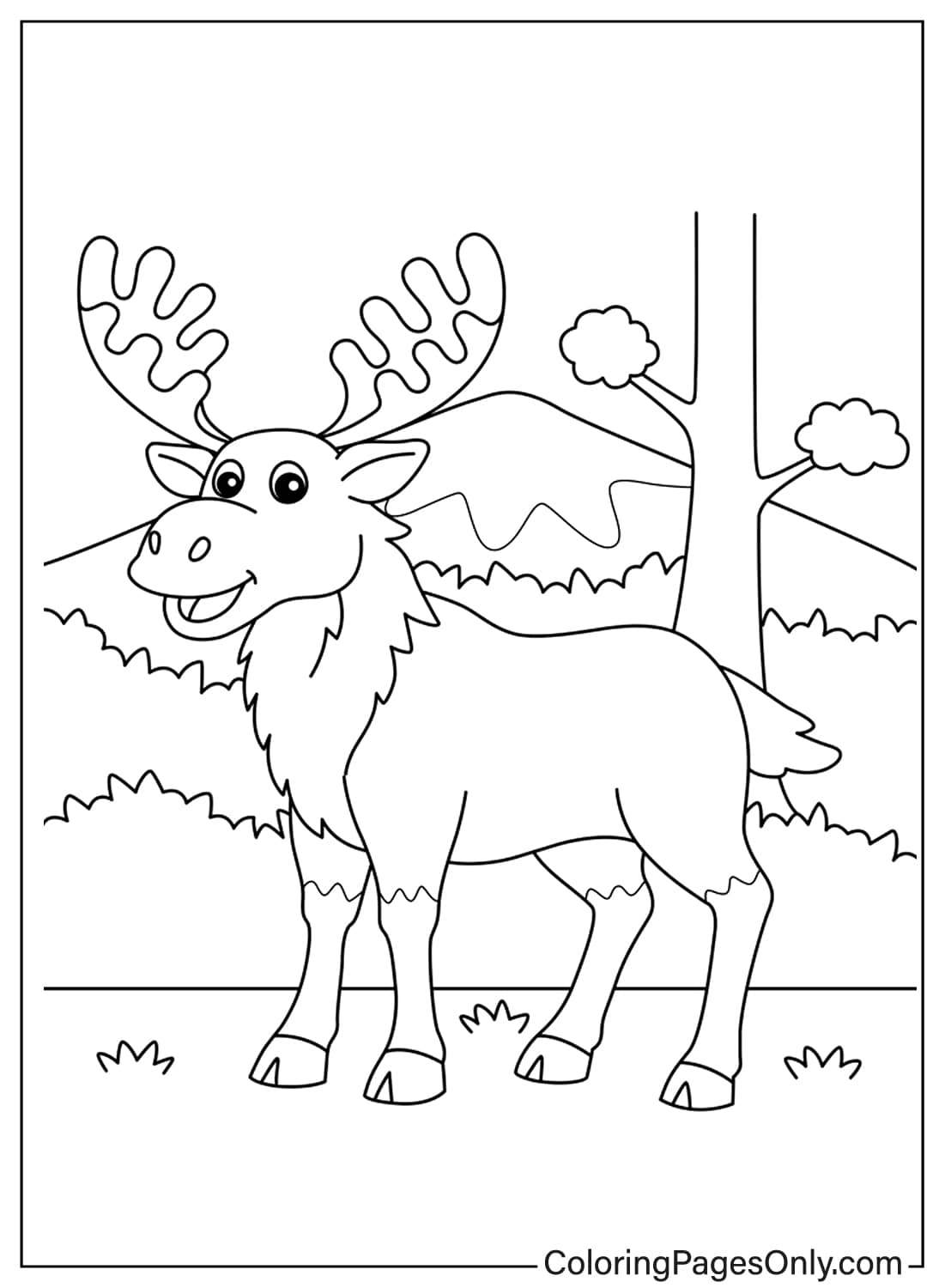
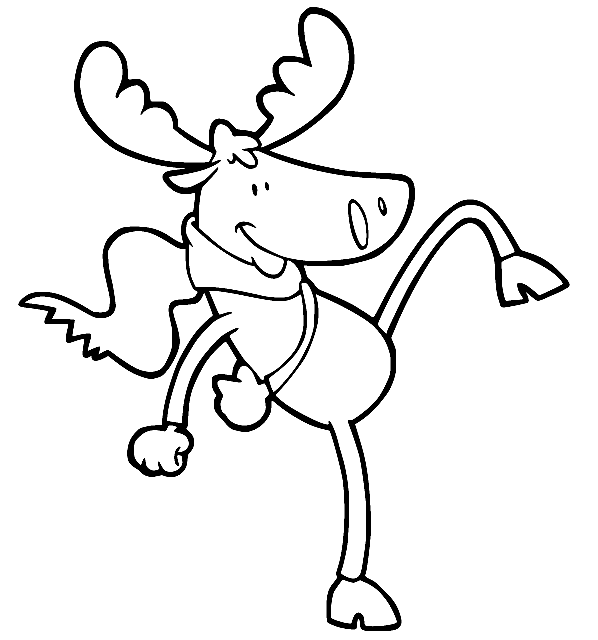
Twenty-four pages give the moose a distinct expression or personality, including happy, funny, smiling, and angry versions. Color suggestion: let the mood guide the palette, brighter and warmer tones for the happy and funny pages, cooler and more muted tones for the angry variant.
Seasonal and Themed Designs
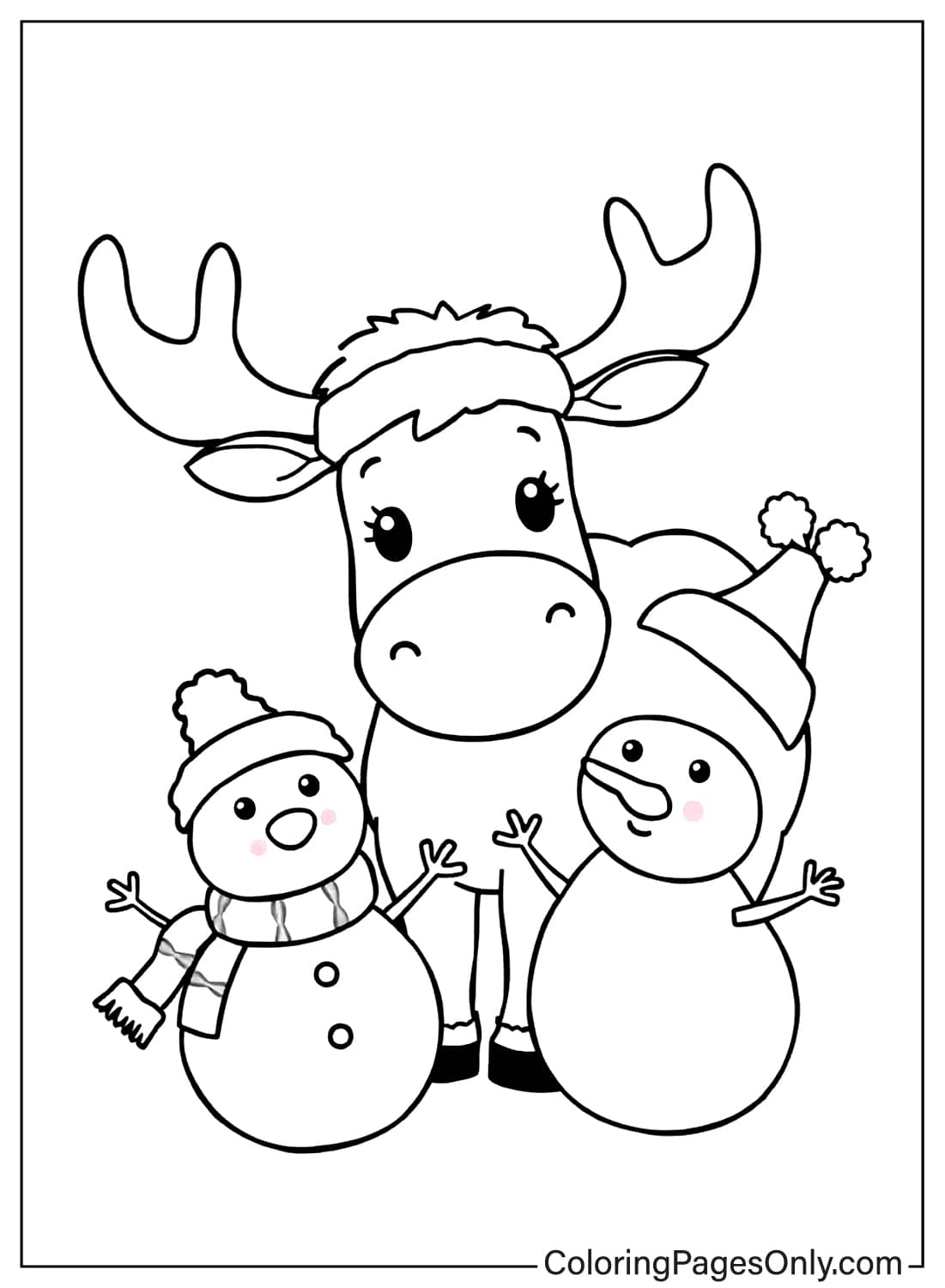
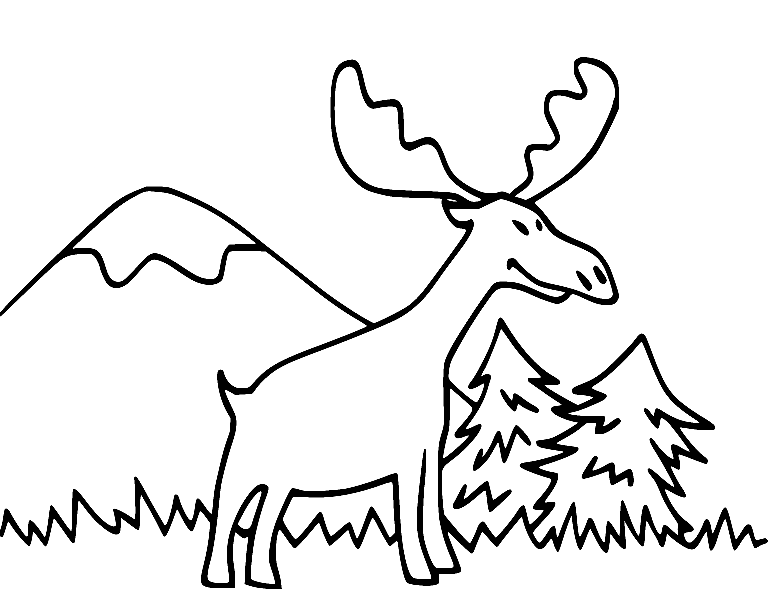
Seven pages set the moose in a specific season or occasion, including winter scenes, a Christmas design, and a moose dressed as Santa Claus. Color suggestion: layer in seasonal colors like icy blues and whites for winter scenes or red and green for the Christmas-themed pages, while keeping the moose’s own coat colors consistent.
Baby Moose and Everyday Activities
Nine pages show a young moose, including scenes of reading, baking, and celebrating a birthday. Color suggestion: keep the baby moose’s coat a touch lighter and softer than the adult portraits, since young moose calves have a slightly redder, less defined coat than adults.
What Moose Coloring Pages Do
A close look at a genuinely record-setting animal. Because the moose holds the record for the largest antlers of any living mammal, these pages give kids a concrete, visual way to appreciate just how large this animal’s most recognizable feature actually is.
Fine motor practice with detailed antlers. The American Academy of Pediatrics identifies fine motor skill development as a core benefit of structured coloring for children ages 2 through 7, and the broad, palmate shape of a moose’s antlers gives more varied practice than a simpler animal outline.
A natural entry point into seasonal biology. Because moose shed and regrow their antlers every single year, this set offers an easy way to talk about animal life cycles and seasonal change, especially alongside the winter and holiday-themed pages in the collection.
A calm, familiar activity. Research published in the Art Therapy Journal in 2005 found that structured coloring sessions were associated with a measurable reduction in reported anxiety. A gentle, majestic animal like the moose makes a satisfying, low-pressure subject for a relaxed coloring session.
How to Color Moose Pages Well
- Coat: Use Crayola Sepia or Raw Umber as a base, blending in Black for shadowed areas and a touch of Tan for highlights along the back and shoulders.
- Antlers: Color the broad, flat antler surface in Crayola Tan or Sepia, since real antlers have a bony, textured surface rather than a smooth one.
- Legs: Keep the long legs a slightly darker shade than the body, since a moose’s legs are typically darker than its torso.
- Bell (throat flap): A small detail worth including, use a slightly lighter brown for the loose skin flap under the chin.
- Winter scenes: Layer Crayola Sky Blue and White for snow, keeping the moose’s coat as the warmest color on the page for contrast.
- Baby moose: Use a warmer, slightly reddish-brown tone for young moose, since calves start with a redder coat that fades within a few weeks.
5 Creative Craft Ideas With Moose Coloring Pages
1. Character Bookmark
Color a favorite portrait, trim it to a narrow strip, and cover it with clear tape or a laminate sheet to make a simple, durable bookmark.
2. Forest Scene Diorama
Color one of the realistic portraits, glue it inside a shoebox turned on its side, and add paper trees and grass to build a simple 3D forest habitat.
3. Antler Fact Poster
Color one of the pages, glue it to a larger sheet of paper, and add a few real moose facts around it, such as their antler size, to make a simple educational poster.
4. Greeting Card
Color one of the seasonal or Christmas-themed pages, fold a piece of cardstock in half, and glue the colored page to the front for a handmade holiday card.
5. Baby Moose Storybook
Color several of the baby moose pages, staple them together, and add a short caption to each page to make a simple picture storybook.
Frequently Asked Questions
What are Moose coloring pages?
Free printable designs of moose in realistic, cartoon, seasonal, and baby-moose styles. This collection has 66 pages available as PDF downloads or online coloring, with no account required.
What is the largest member of the deer family?
The moose, Alces alces, is the largest member of the deer family, with large males weighing up to 1,600 pounds and standing as tall as seven feet at the shoulder.
Why do moose shed their antlers?
Male moose grow new palmate antlers each spring and shed them every winter, regrowing a fresh set the following year, a cycle tied to the breeding season each fall.
Are moose good swimmers?
Yes. Moose are strong swimmers capable of diving several meters underwater to feed on aquatic plants and can hold their breath for close to a minute.
Where does the name “moose” come from?
The name comes from an Algonquian word roughly meaning “stripper and eater of bark,” reflecting the moose’s winter diet of twigs and tree bark.
Are moose dangerous to humans?
Moose are generally not aggressive toward humans but can act defensively, particularly during the fall breeding season, or when a mother is protecting her calf, so wild moose should always be given plenty of space.
What age group are these pages best suited for?
The simple cartoon and mood-variant pages suit children as young as three, while the more detailed, realistic portraits work well for children six and up.
Can these pages be used for a wildlife or nature lesson?
Yes. The mix of realistic portraits and genuine facts about antler cycles and swimming ability makes this set a useful pairing with a lesson on North American wildlife.
Start Coloring
Download any page by clicking the design. No account, email, or payment is required. Pages print directly from the browser at full resolution or open in the online coloring tool for screen use. Share finished pages on Facebook or Pinterest using the share buttons at the top of each design page.