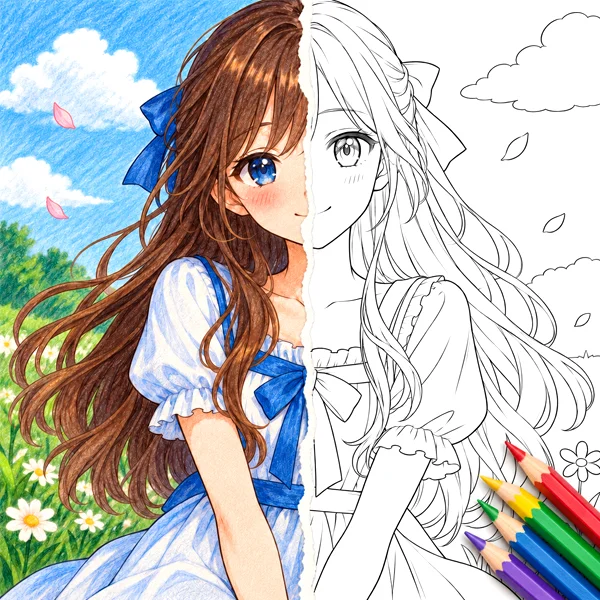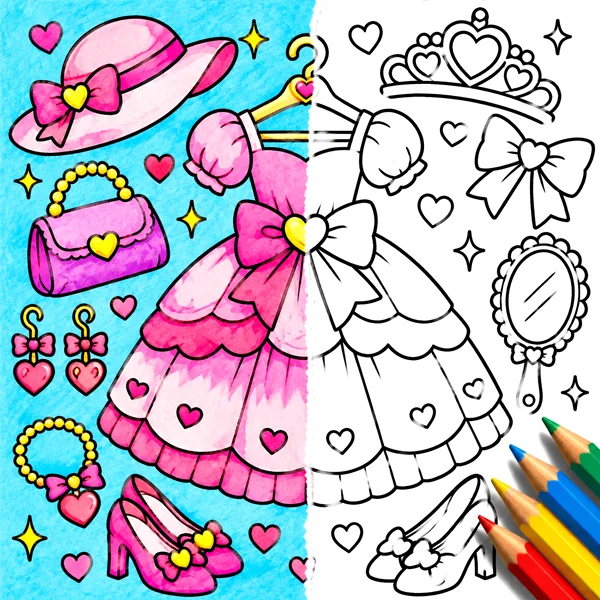

Flower coloring pages: 551 printable designs organized into 14 collections, from individual species to arranged compositions. Each page can be downloaded as a PDF to print or colored online in the browser.
Flowers are a naturally suited coloring subject: their radial symmetry produces balanced compositions, their layered petals offer room for shading, and most species carry a well-known canonical color, such as red roses or yellow sunflowers, that gives colorers a clear reference point while still leaving room for creative variation. Roses have been cultivated for more than 5,000 years and carry symbolic meaning across nearly every culture that has grown them. Sunflowers arrange their hundreds of tiny disc florets in a spiral pattern that follows the Fibonacci sequence, one of the more mathematically precise structures found in nature. Tulips were once at the center of a 17th-century Dutch speculative trading boom, now studied as one of the first recorded financial bubbles, and remain the defining flower of the Netherlands today.
This hub organizes the collection by flower type, since each has its own dedicated page with its own canonical colors and forms. The directory below links to every flower collection currently available, along with the number of pages in each.
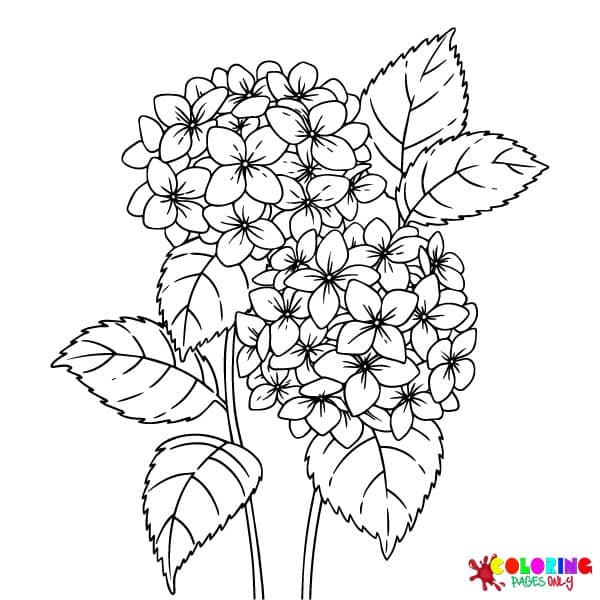
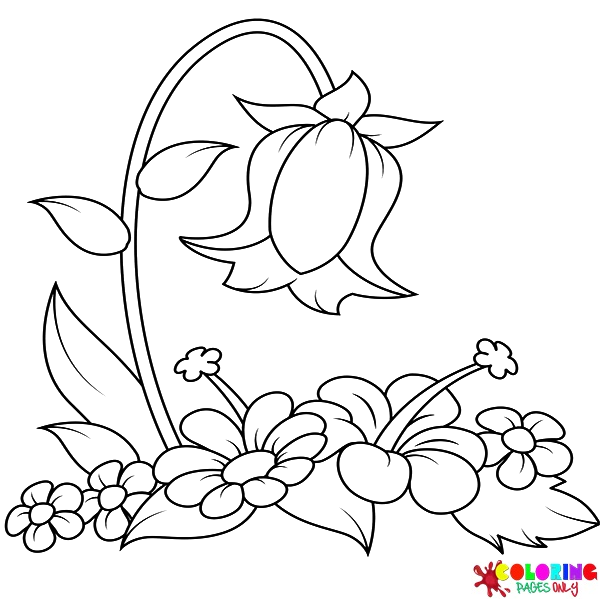
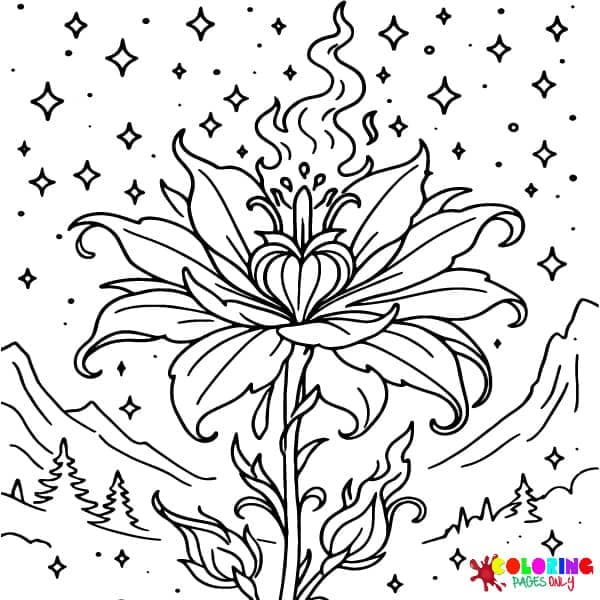
Browse by Flower
Each flower type below has its own dedicated collection.
Major Species
- Rose Coloring Pages (127 Pages), the collection’s largest individual flower, ranging from single-stem portraits to decorative patterns.
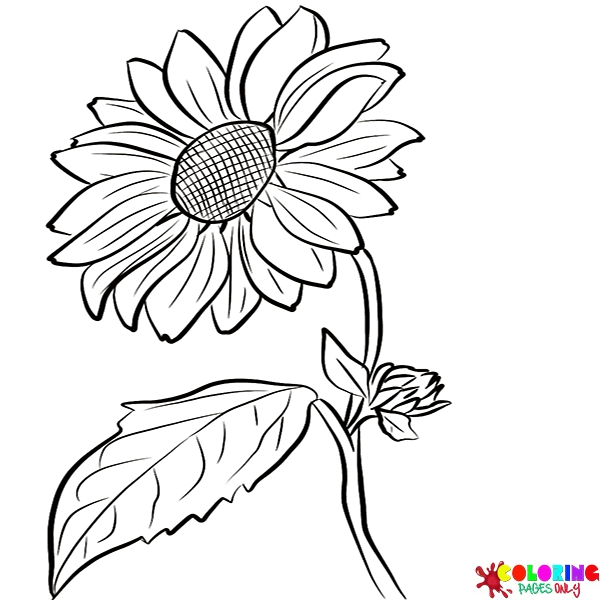
- Sunflower Coloring Pages (68 Pages), bold, circular blooms with a spiral-patterned central disc.
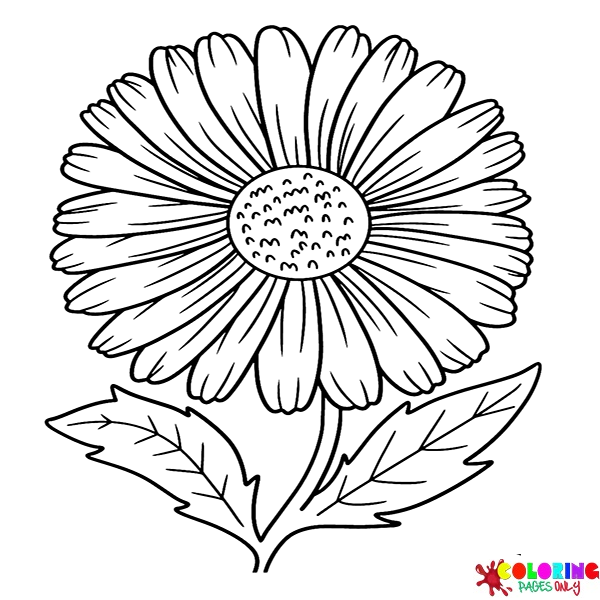
- Daisy Coloring Pages (36 Pages), the simple white-petaled, yellow-centered flower found in meadows worldwide.
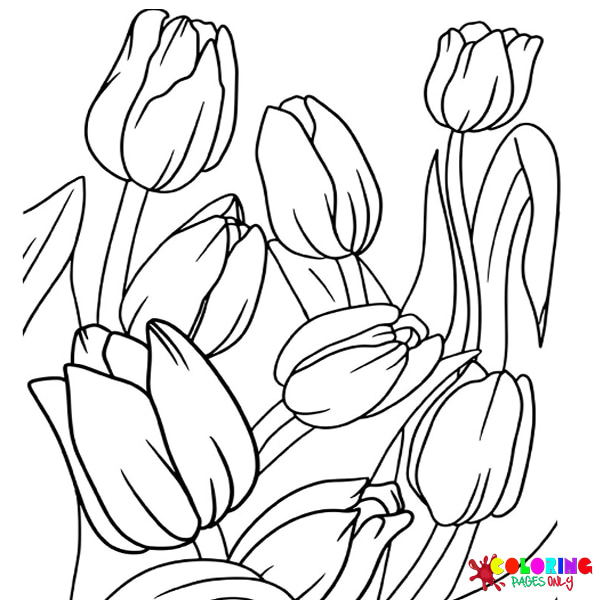
- Tulip Coloring Pages (27 Pages), clean, cup-shaped blooms available in a wide range of colors and patterns.
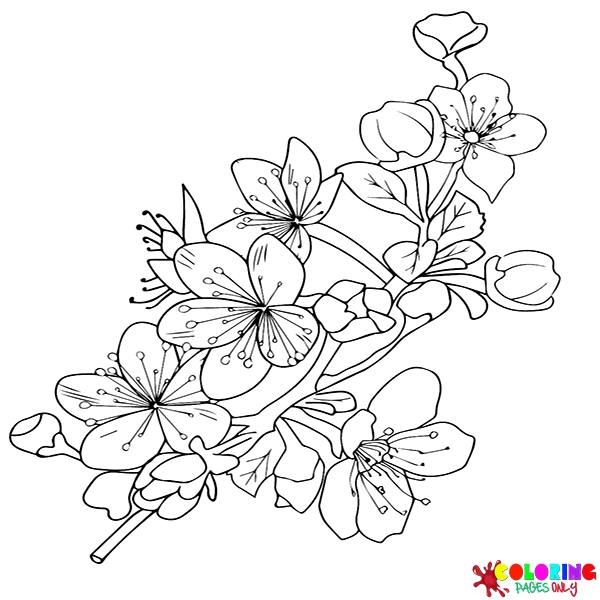
- Cherry Blossom Coloring Pages (27 Pages), the pale pink spring blossoms associated with the Japanese hanami tradition.
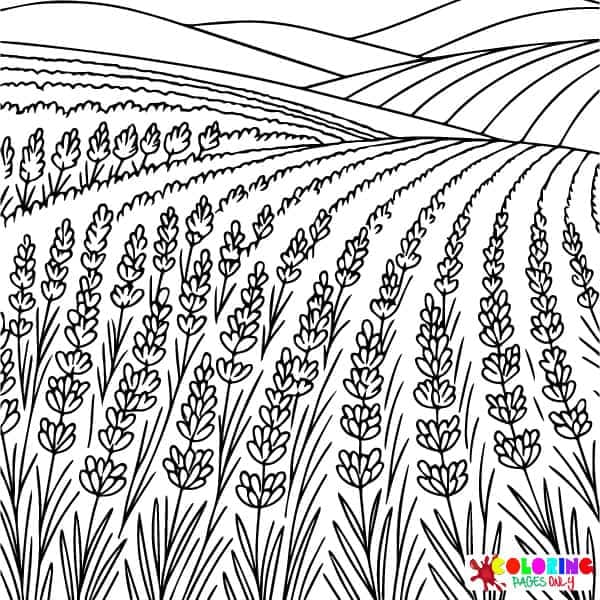
- Lavender Coloring Pages (34 Pages), tall aromatic spikes in a soft, gray-toned purple.
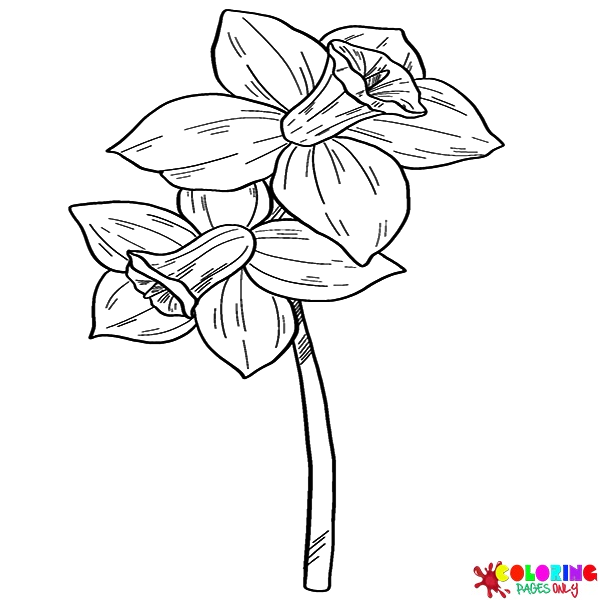
- Daffodil Coloring Pages (21 Pages), early-spring blooms with a distinctive trumpet-shaped center.
- Bellflower Coloring Pages (22 Pages), downward-hanging, bell-shaped blooms in blue, violet, and white.
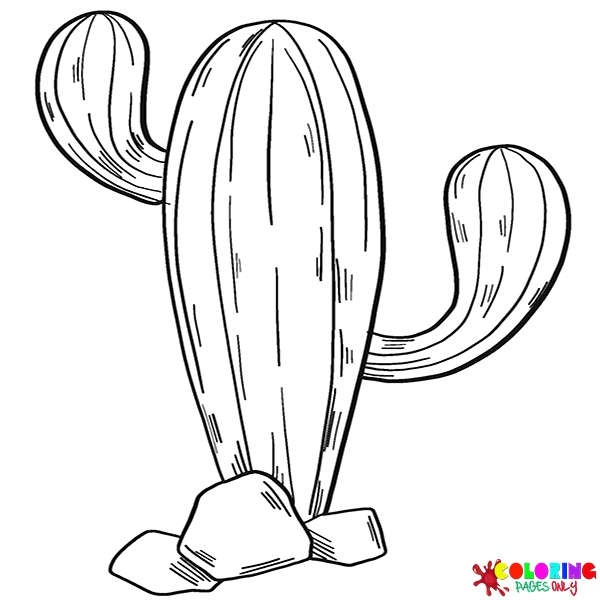
- Cactus Coloring Pages (15 Pages), desert plants shown with their spiny bodies and vivid blooms.
Compositions and Settings
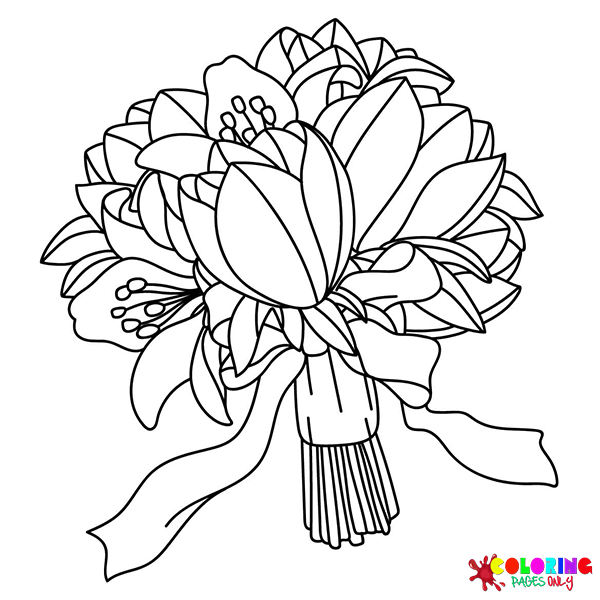
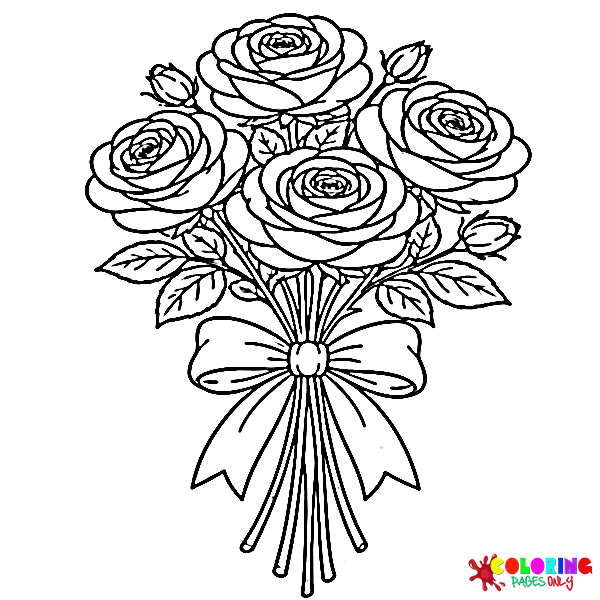
- Flower Bouquet Coloring Pages (28 Pages), arranged bunches combining multiple flower types.
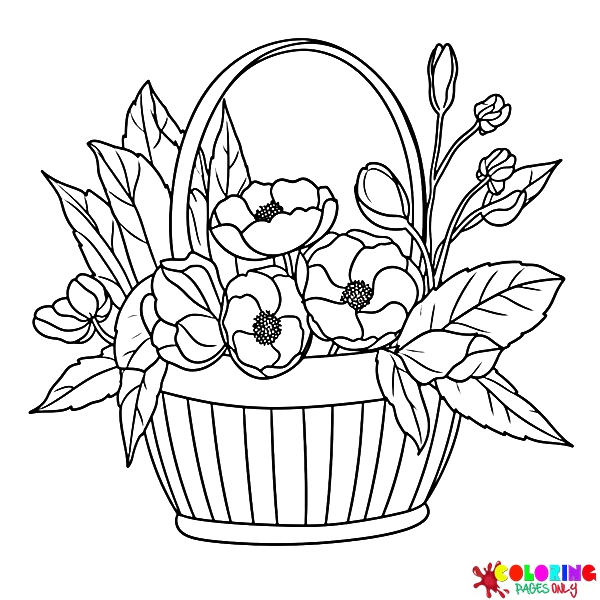
- Flower Basket Coloring Pages (26 Pages), flowers displayed in a woven basket container.
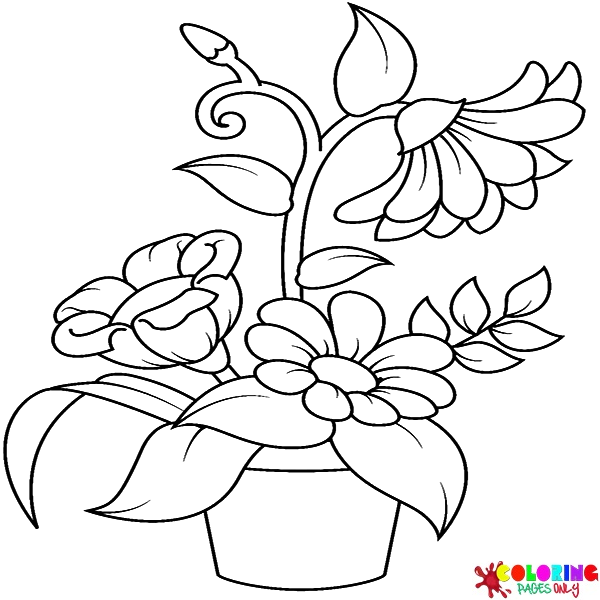
- Flower Pot Coloring Pages (52 Pages), potted flowers in a home or garden setting.
- Blooming Flowers Coloring Pages (32 Pages), flowers captured in the transitional moment between bud and full bloom.
- Midnight Flowers Coloring Pages (36 Pages), flowers set against a night background, colored with a darker, moonlit palette.
What Flower Coloring Pages Do
Fine motor development. The American Academy of Pediatrics identifies fine motor skill development as a core benefit of structured coloring for children ages 2 through 7. A flower’s layered petals give colorers of any age a natural structure to follow.
A structured way to build color recognition. Because most flowers carry a well-known canonical color, this collection gives young colorers a consistent way to practice matching a name to a color while still allowing creative variation.
Anxiety reduction through focus. A 2005 study in the Art Therapy Journal documented measurable reductions in anxiety following structured coloring sessions. The radial symmetry of a flower bloom suits that same steady, focused rhythm.
An easy way to find a favorite flower. Organizing the collection by flower type means someone with a favorite species can go straight to that flower’s full page count rather than searching through a mixed catalog.
Choosing Colors by Flower Type
Each flower in this collection has a canonical color that works as a reliable starting point, while also allowing creative freedom: red for roses, though pink, yellow, orange, and white are equally natural; golden yellow ray florets with a dark brown center for sunflowers; white petals with a yellow center for daisies; soft gray-purple for lavender; and pale pink for cherry blossoms. The Midnight Flowers collection reverses the usual approach entirely, calling for dark blues and blue-blacks in the background with paler, more luminous tones for the flowers themselves, since the pages are built around a night rather than daylight setting.
5 Creative Craft Ideas With Flower Coloring Pages
1. Pressed Flower Bookmark. Color a single-species page like Daisy or Bellflower, trim it to bookmark size, and laminate it for a lasting keepsake.
2. Seasonal Flower Wreath. Color several different flower pages, cut out each bloom, and arrange them in a circle on a paper plate ring to build a wreath.
3. Mother’s Day Bouquet Card. Color a Flower Bouquet page and mount it on a folded card for a handmade Mother’s Day or birthday greeting.
4. Pressed-in-a-Book Diorama. Color a Flower Basket or Flower Pot page, cut it out, and stand it inside a shoebox scene with a hand-drawn garden background.
5. Midnight Garden Nightlight Cover. Color a Midnight Flowers page in its dark, moonlit palette and tape it around a battery tea light for a soft, glowing garden scene.
Frequently Asked Questions
What are Flower coloring pages?
Flower coloring pages are printable line-art designs built around flower species and arrangements, organized into 14 collections that together total 551 pages.
How is this collection organized?
The collection is organized by flower type rather than as one long list. Each type, from Rose to Midnight Flowers, has its own dedicated page with its own page count, ranging from 15 pages for Cactus to 127 pages for Rose.
Which flower has the most coloring pages?
Rose has the largest individual collection with 127 pages, followed by Sunflower with 68 pages and Flower Pot with 52 pages.
What is the Midnight Flowers collection?
Midnight Flowers sets blooms against a night background rather than the usual white page, calling for a darker, moonlit color palette with pale, luminous flower tones instead of standard daylight colors.
Why do sunflowers have a spiral pattern in the center?
The hundreds of tiny disc florets at the center of a sunflower are arranged in a spiral that follows the Fibonacci sequence, a mathematically precise pattern also found elsewhere in nature.
What is the connection between tulips and the Netherlands?
Tulips became the subject of a 17th-century Dutch trading boom now studied as one of the first recorded speculative financial bubbles, and the flower remains closely associated with the Netherlands, which continues to grow tulips on a large commercial scale today.
Are Flower coloring pages suitable for young children?
Yes. Simpler pages, such as the Daisy and Tulip collections, work well for children ages 2 through 7, the age range the American Academy of Pediatrics associates with active fine motor skill development through coloring. More detailed pages, like Rose and Midnight Flowers, suit older children and adults.
What is the difference between the Flower Bouquet and Flower Basket collections?
Flower Bouquet pages show flowers gathered into a wrapped or hand-tied arrangement, while Flower Basket pages show flowers displayed inside a woven basket container, giving each collection a different compositional focus.
Start Coloring
Choose a flower above to browse that collection, or open any page to download it as a free PDF or color it online in the browser. No account, email, or payment is required. Share finished pages on Facebook or Pinterest with the share buttons at the top of each design page.
More Flower Coloring Pages
Jump straight to a specific collection: