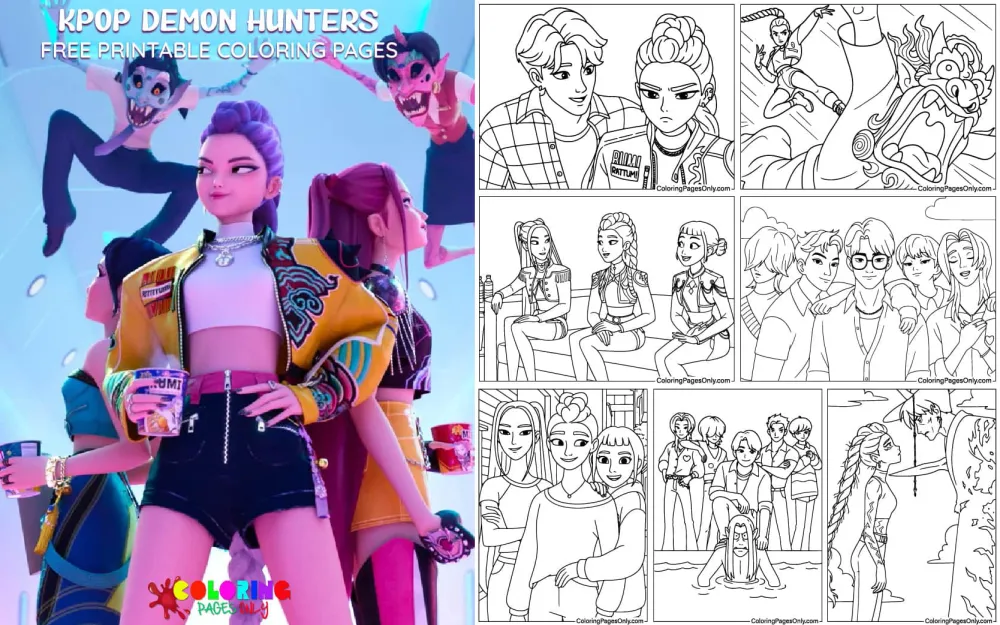
Free KPop Demon Hunters coloring pages – 40+ pages featuring Rumi, Jinu, Mira, Bobby, Celine, Healer Han, Zoey, the Saja Boys, HUNTR/X, battle scenes, performance moments, and a full Christmas collection – free printable PDF and online coloring for fans of the film and K-pop culture.
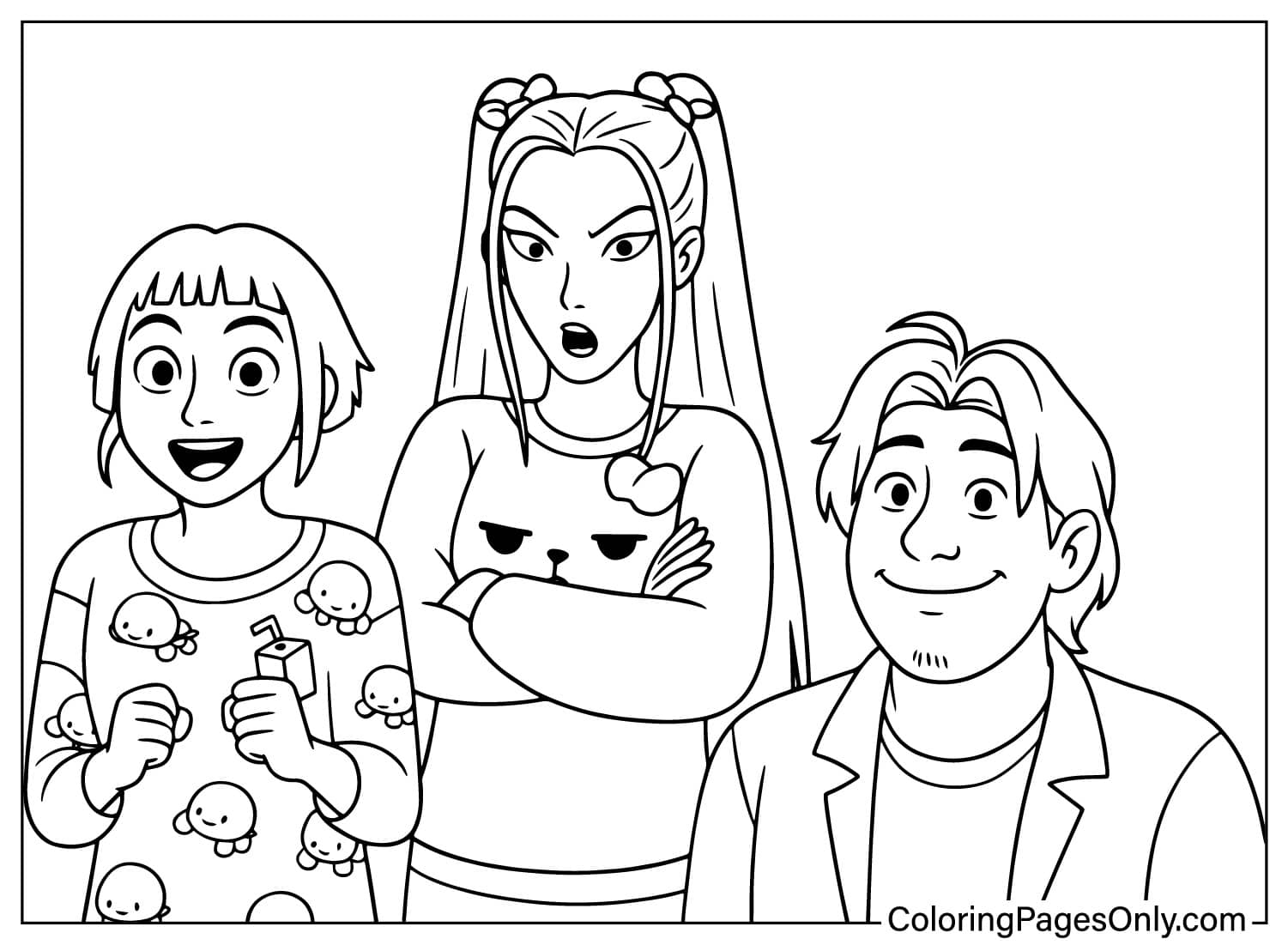
The premise of KPop Demon Hunters is one of the more inspired mashups in recent animation: what if a K-pop idol group was secretly also a team of demon hunters? The characters live double lives – managing the precise, exhausting, high-pressure demands of idol life (choreography, public personas, fan dynamics, group hierarchy, the constant performance of perfection) while also being the only people capable of seeing and fighting supernatural threats that nobody else can perceive. The double life narrative is not accidental – it pulls directly from the central tension of K-pop idol culture itself, where the carefully constructed stage persona and the private self are always two different things.
These 40+ free pages at ColoringPagesOnly.com cover the full cast across both worlds – idol performances and demon battles, quiet character moments and explosive action scenes, plus a dedicated Christmas collection added in December 2025. All free, PDF or PNG, print or color online. The stage is set.
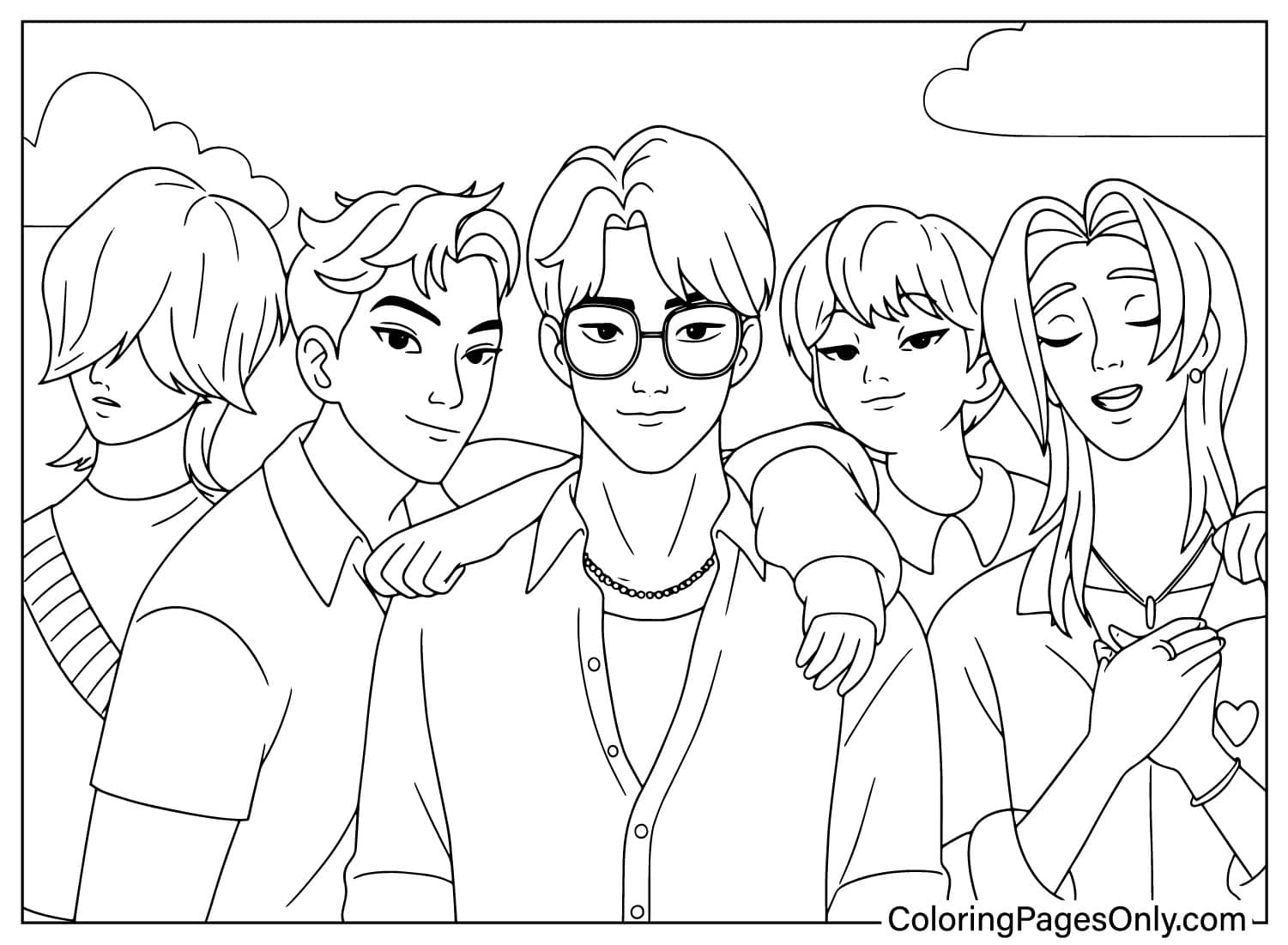
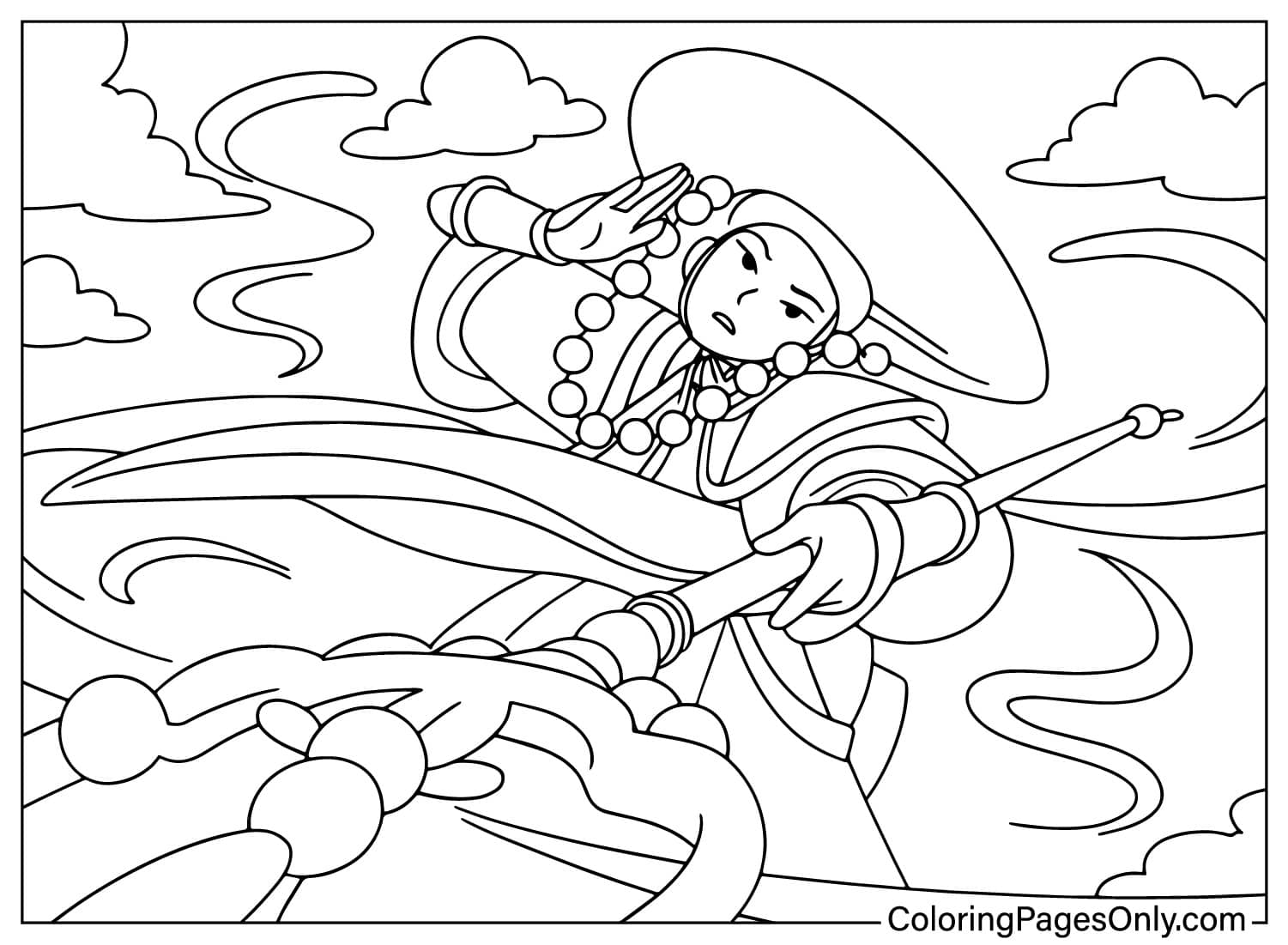
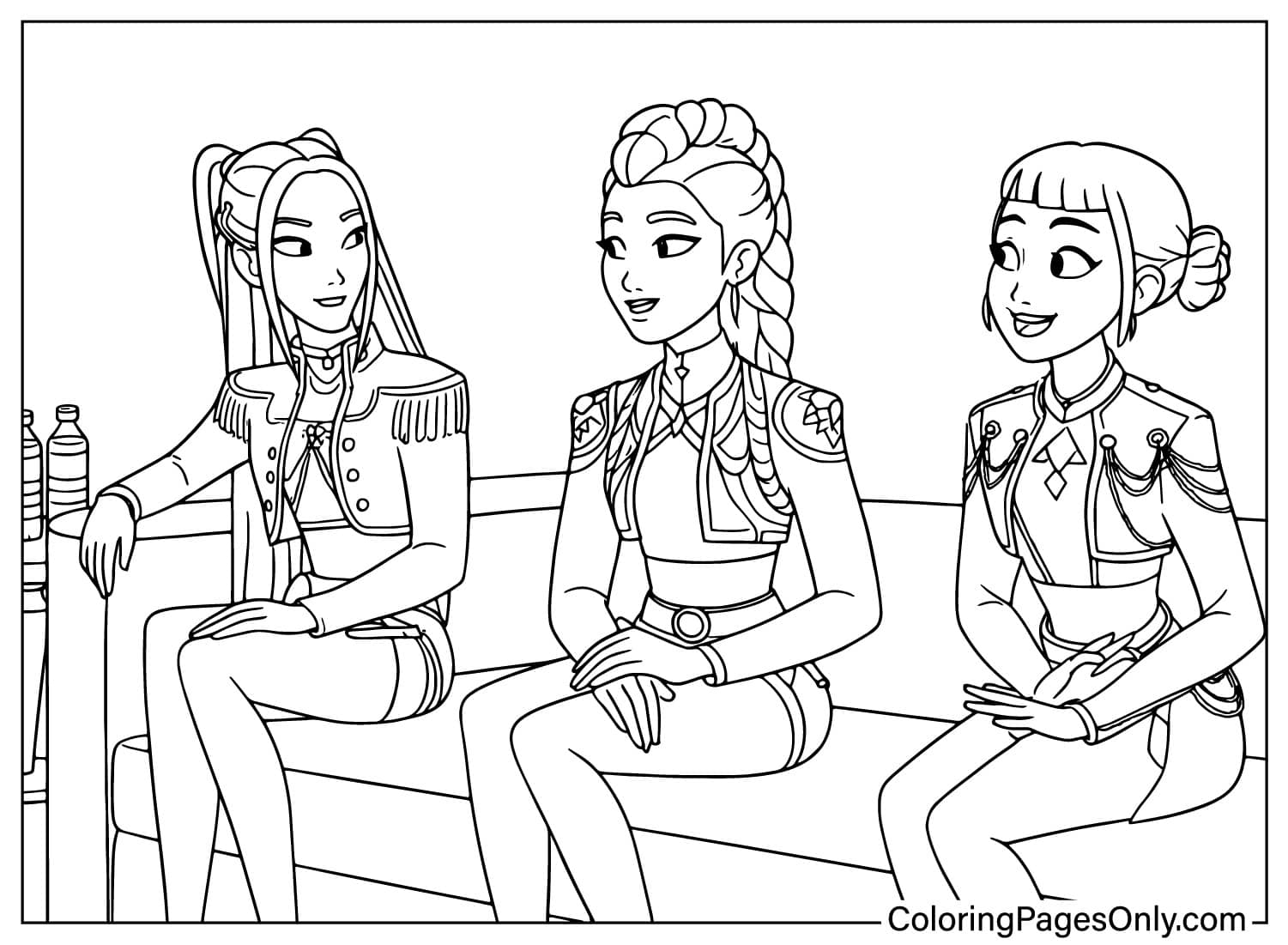
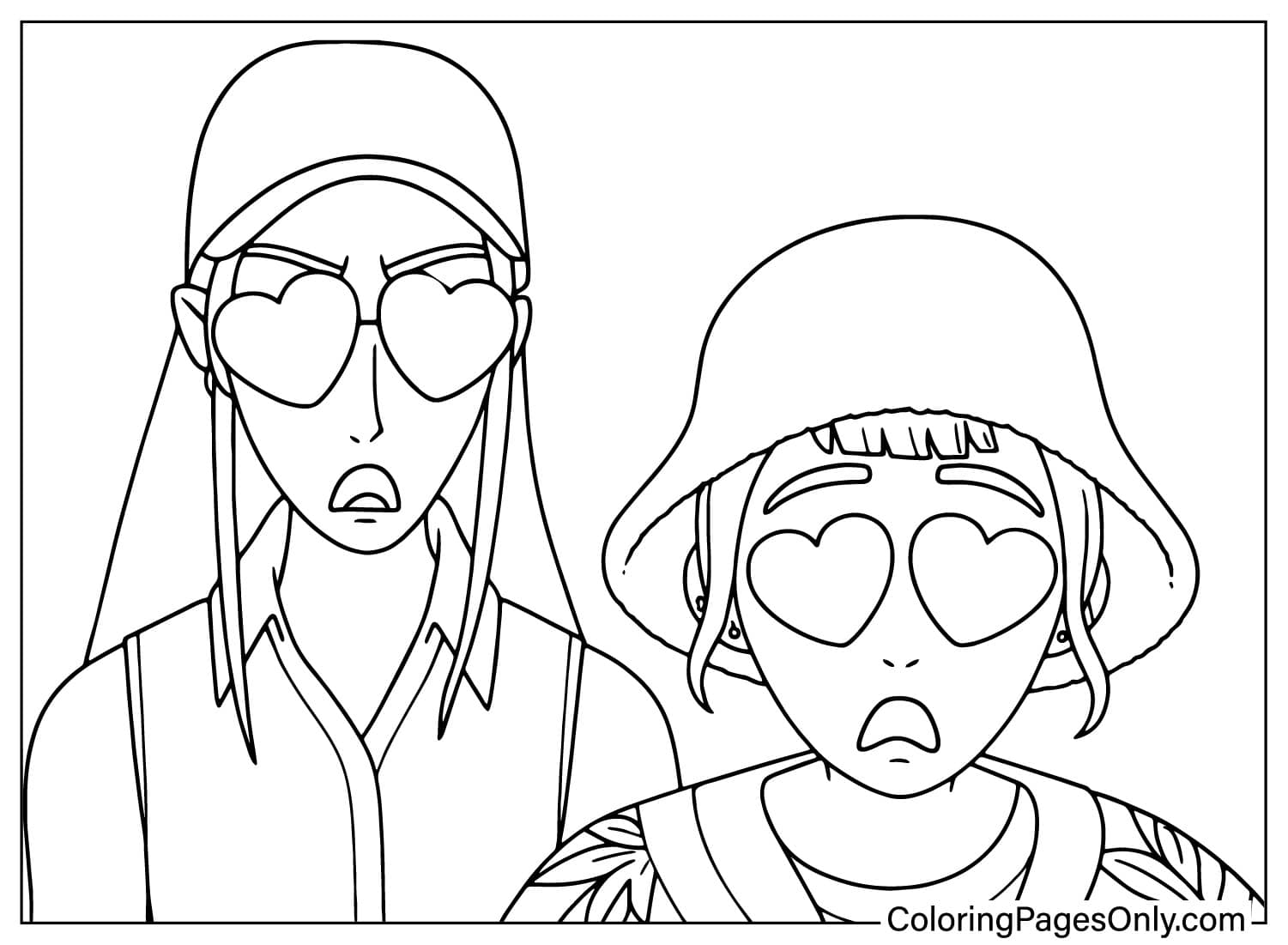
The World of KPop Demon Hunters
What the Film Is About
KPop Demon Hunters builds its world on a specific and well-observed insight: K-pop idol groups already operate with many of the structural features of a combat unit. There is hierarchy – clear roles, specializations, and a leader whose decisions the group follows. There is intense training toward a specific performance goal. There is the suppression of individual instinct in the service of group cohesion. There is the ability to read teammates’ movements and respond without explicit communication, developed through thousands of hours of synchronized practice.
The film takes this observation seriously and asks: what if that same structure – the hierarchy, the training, the synchronized teamwork, the carefully maintained public image – were applied to supernatural combat instead of (or in addition to) stage performance? The result is a world where the pressure of an imminent comeback tour and the pressure of a demon attack operate with the same urgency, where the skills developed in one context transfer directly to the other, and where the audience of fans watching a performance has no idea what the performers just survived to get there.
The K-Pop Industry Context
Understanding the world the film draws from makes coloring its pages more interesting. The Korean popular music industry – K-pop – has been a globally dominant cultural force since the early 2000s, when groups like BoA, TVXQ, and later Super Junior and Girls’ Generation began building the idol system’s foundational structure. K-pop idols typically train for two to seven years under agency contracts at major labels (historically SM Entertainment, YG Entertainment, and JYP Entertainment; more recently HYBE, the agency behind BTS and numerous newer acts) before debut.
Training covers singing, dancing, acting, language study (Japanese and English are standard for international market preparation), media training, and the development of the “concept” – the specific aesthetic and persona identity that distinguishes each group from others. After its debut, an idol group operates on a cycle of comeback promotions: new music, new choreography, new styling concept, intensive performance and media schedule, and fan engagement. The gap between the public performance of a comeback and the private reality of an idol’s life is one of the most discussed tensions in K-pop fan culture – and it is exactly the gap that KPop Demon Hunters occupies and dramatizes.
BTS, the group whose global success from 2017 onward expanded K-pop’s international reach beyond anything previously imagined, demonstrated that idol culture could generate genuine cross-cultural emotional resonance rather than export a product. The fan communities – called fandoms – that K-pop generates are among the most organized, creative, and artistically engaged in contemporary popular culture. K-pop fan art, including illustrated fan work and coloring pages, is a major creative practice within these communities. This collection sits directly in that tradition.
Meet the Characters
Rumi – The Lead Hunter
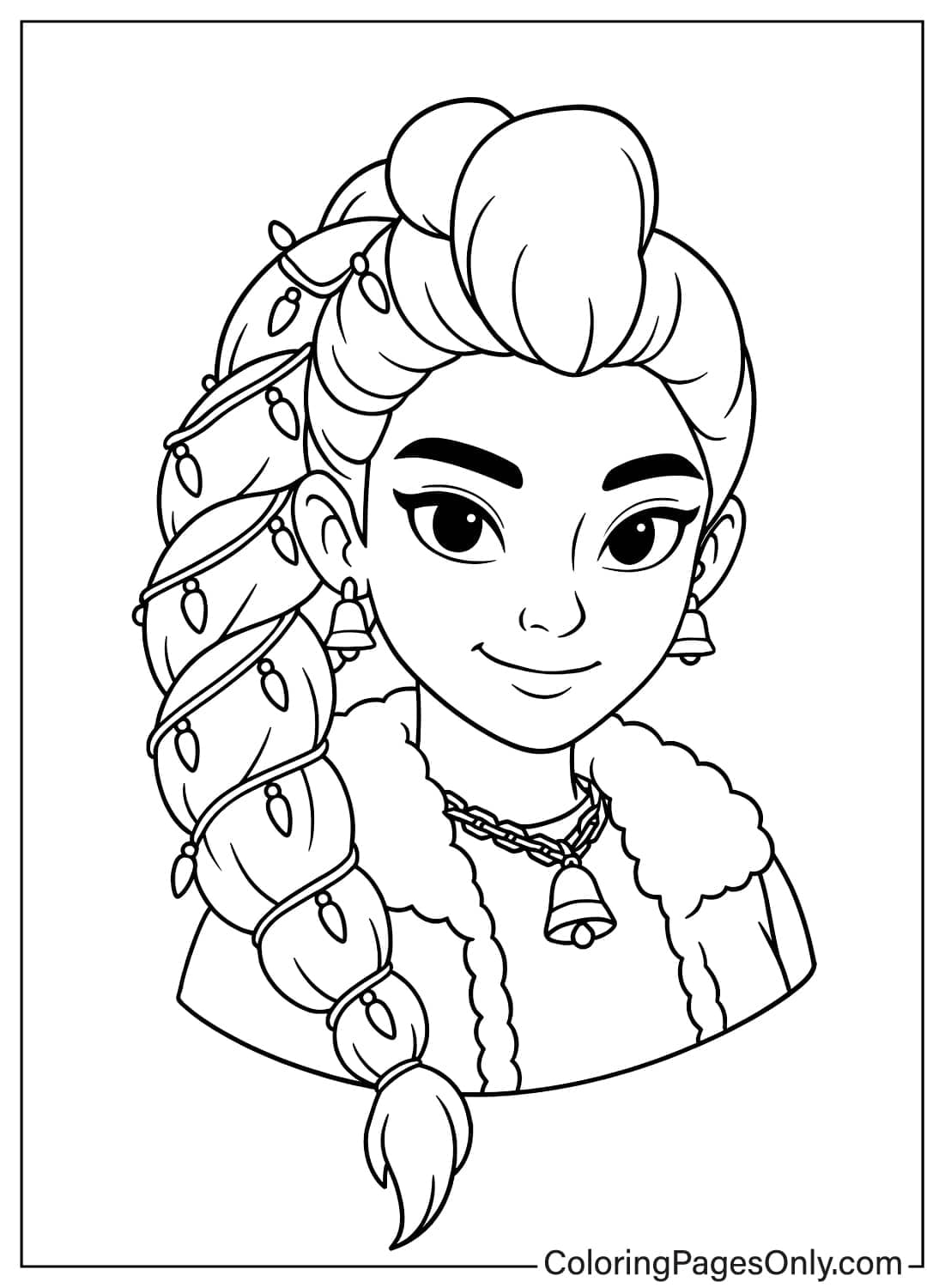
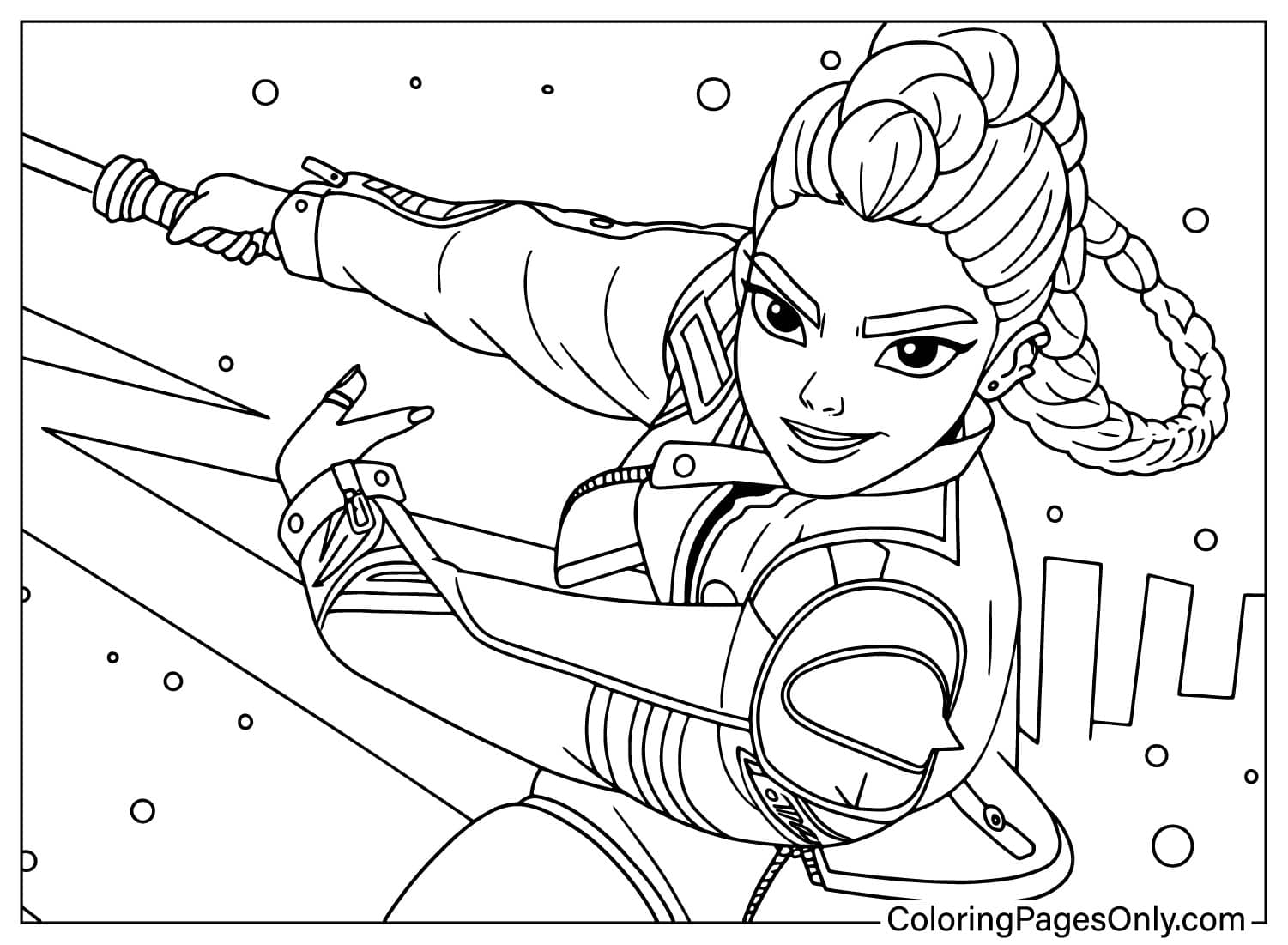
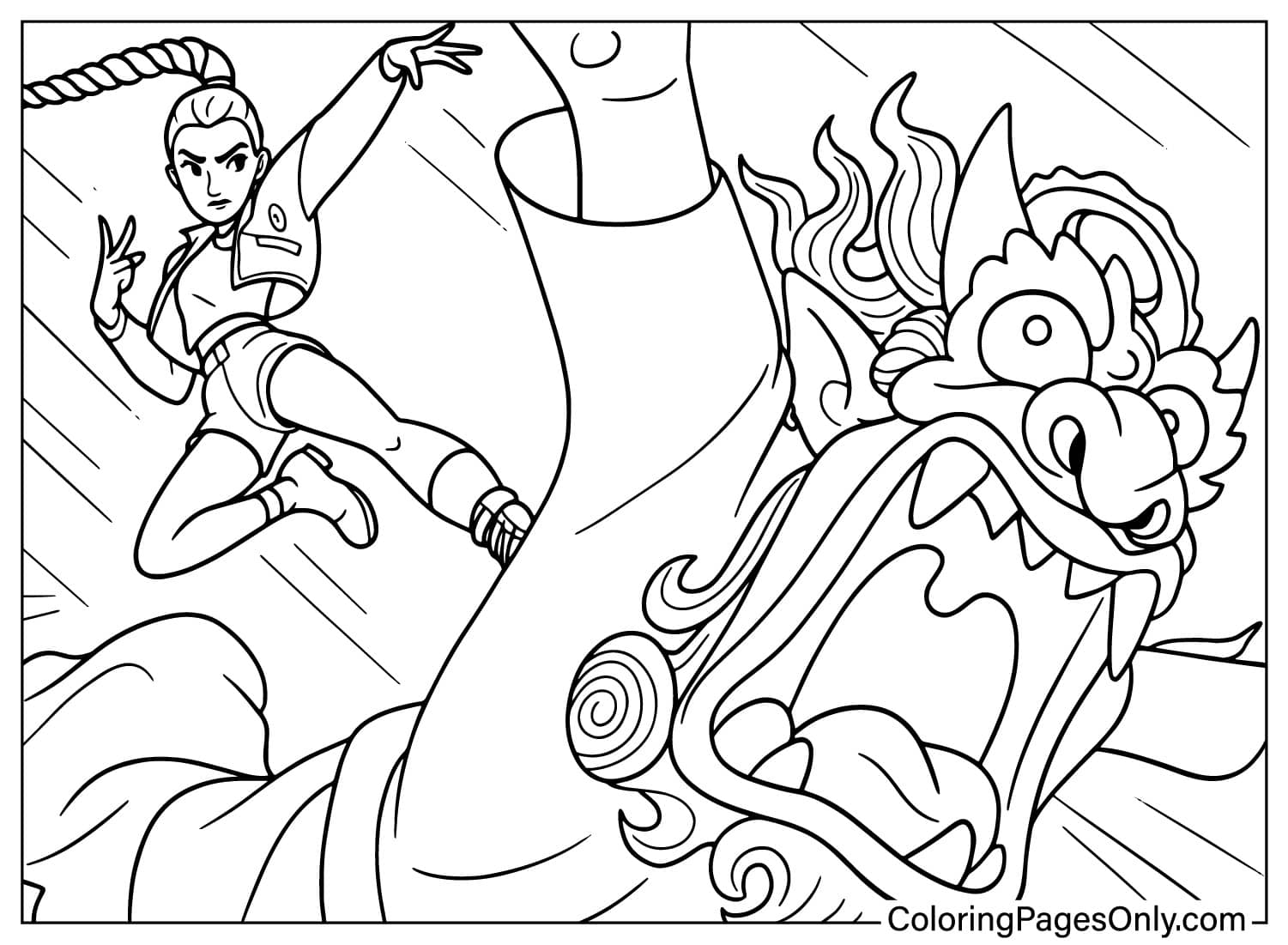
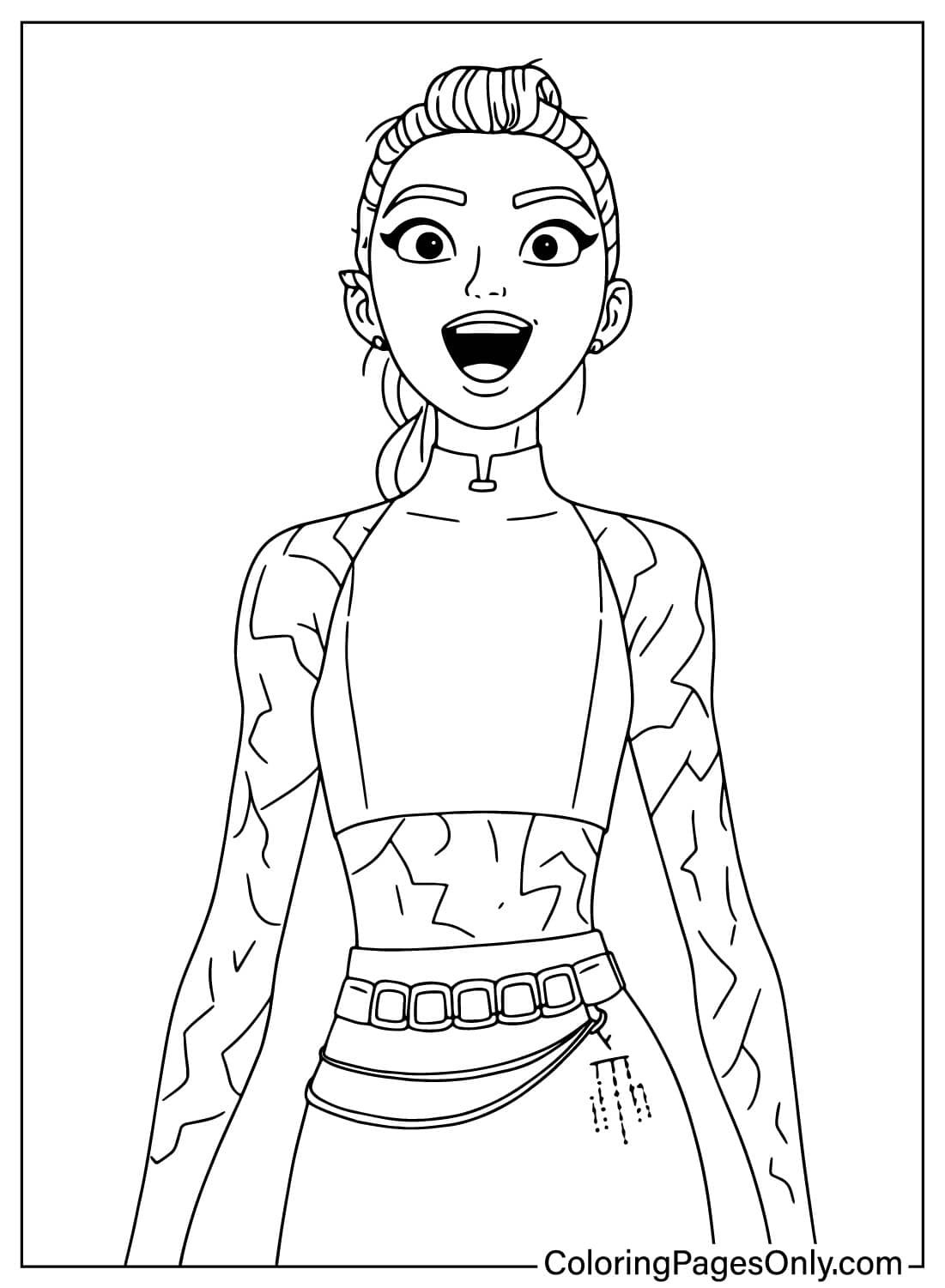
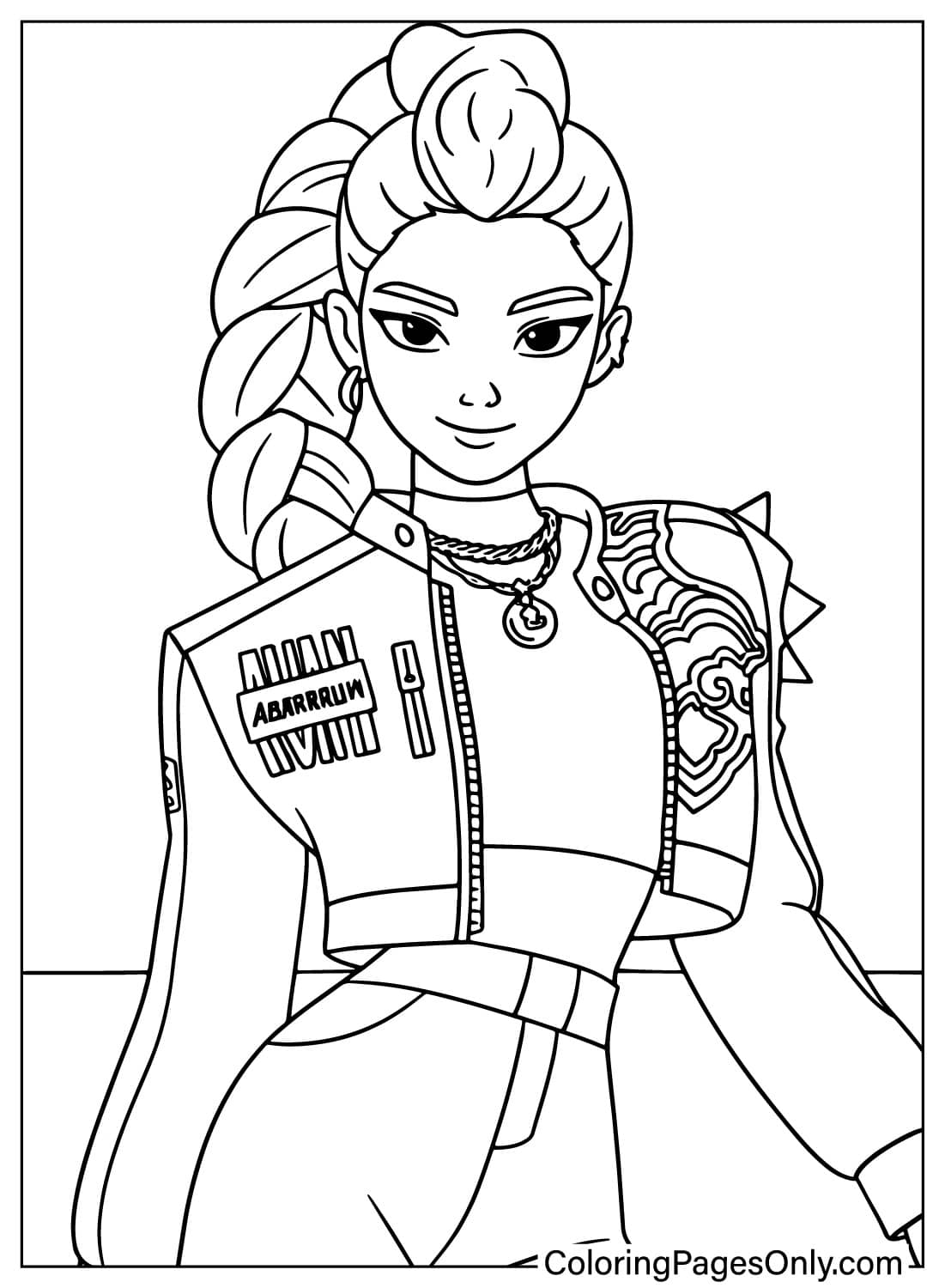
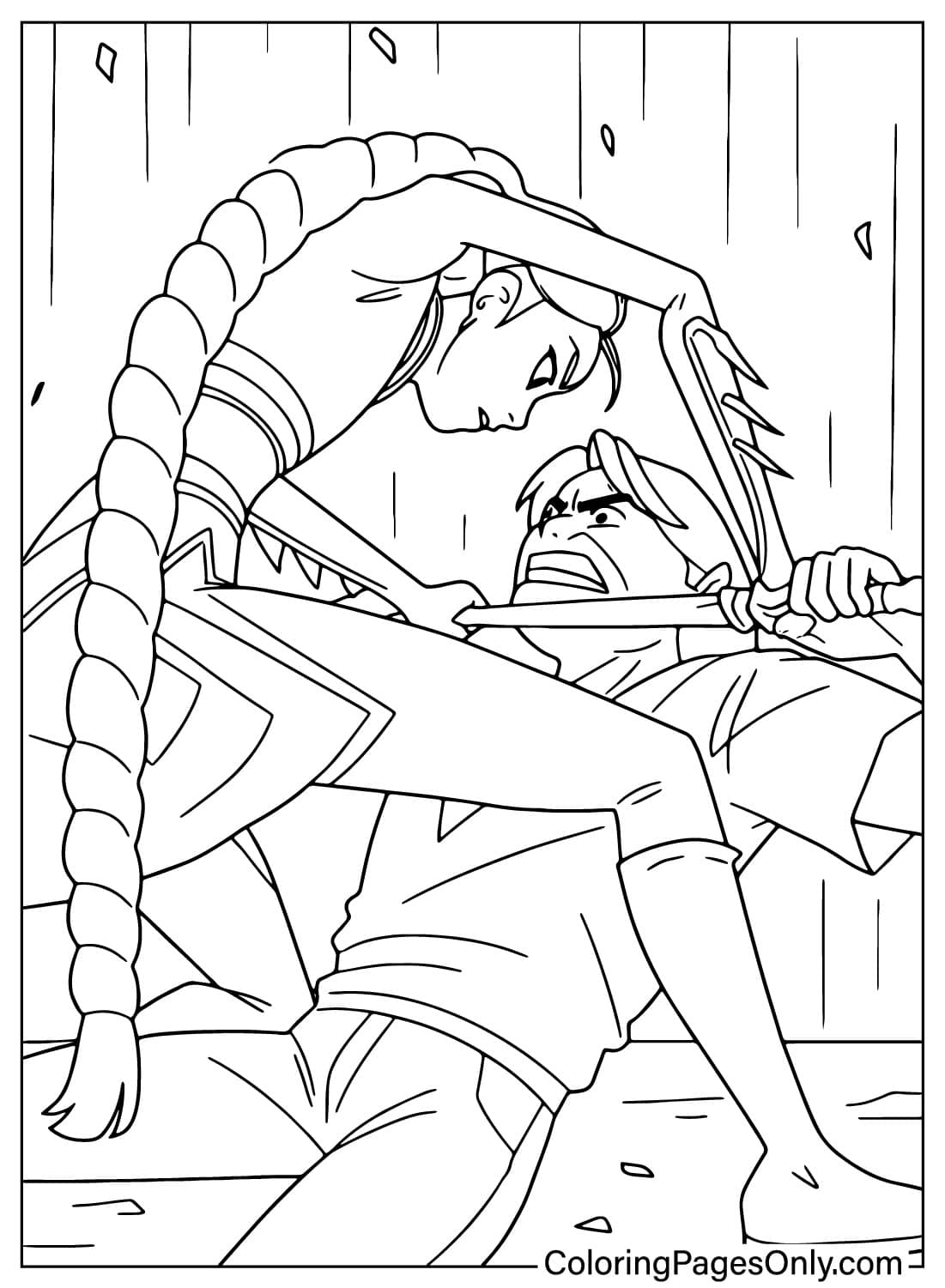
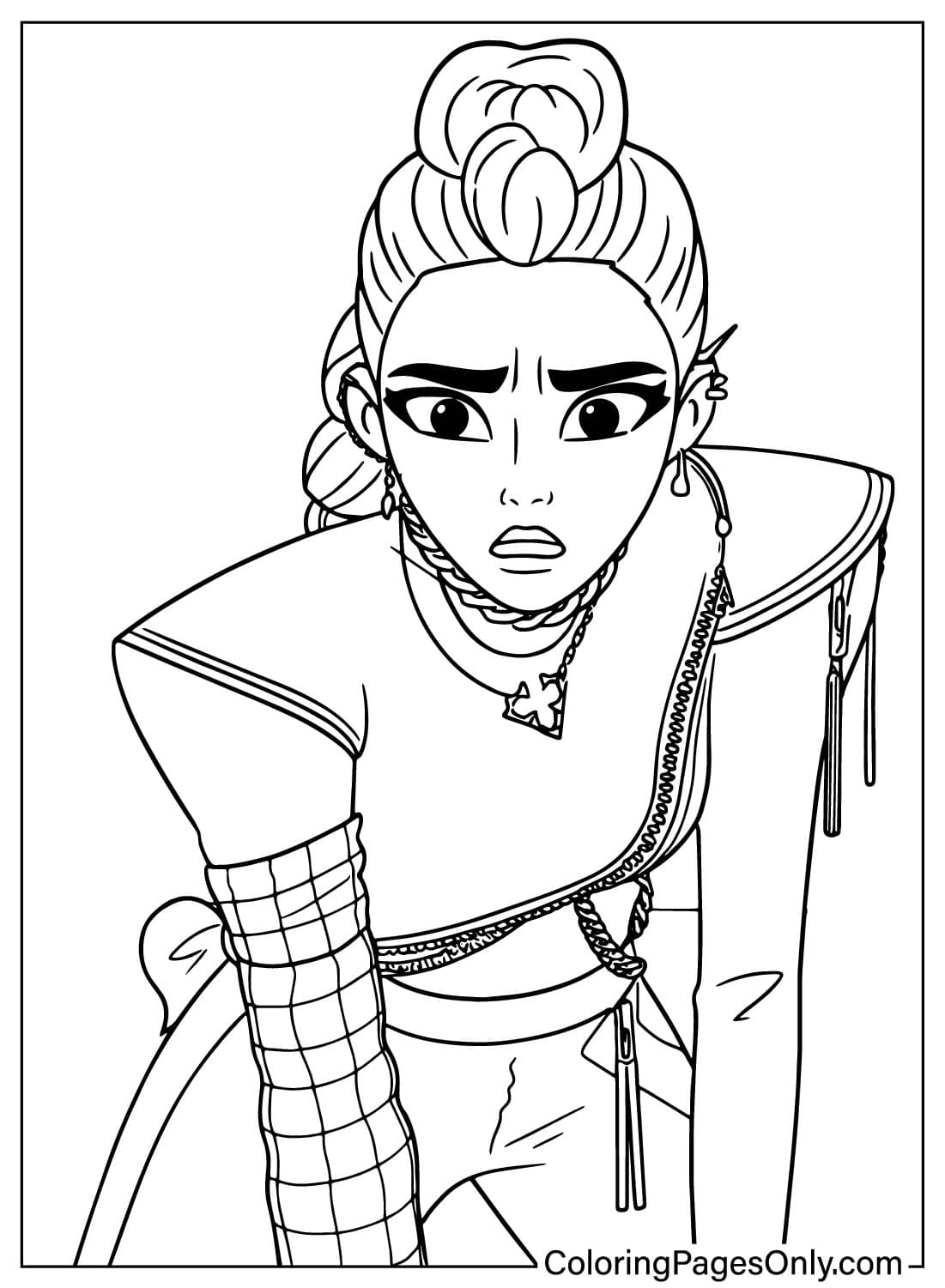
Rumi is the collection’s most frequently depicted character and the film’s central protagonist. Her defining visual elements – the braided hair, the determined expression, the warm, earthy palette of her outfits – appear across more pages than any other character. She is the kind of protagonist whose emotional state is readable in her body language: the Rumi Fighting and Rumi Fighting with Demon pages capture the forward-committed energy of someone who has stopped hesitating; Happy Rumi and Pretty Rumi show the warmth underneath the determination.
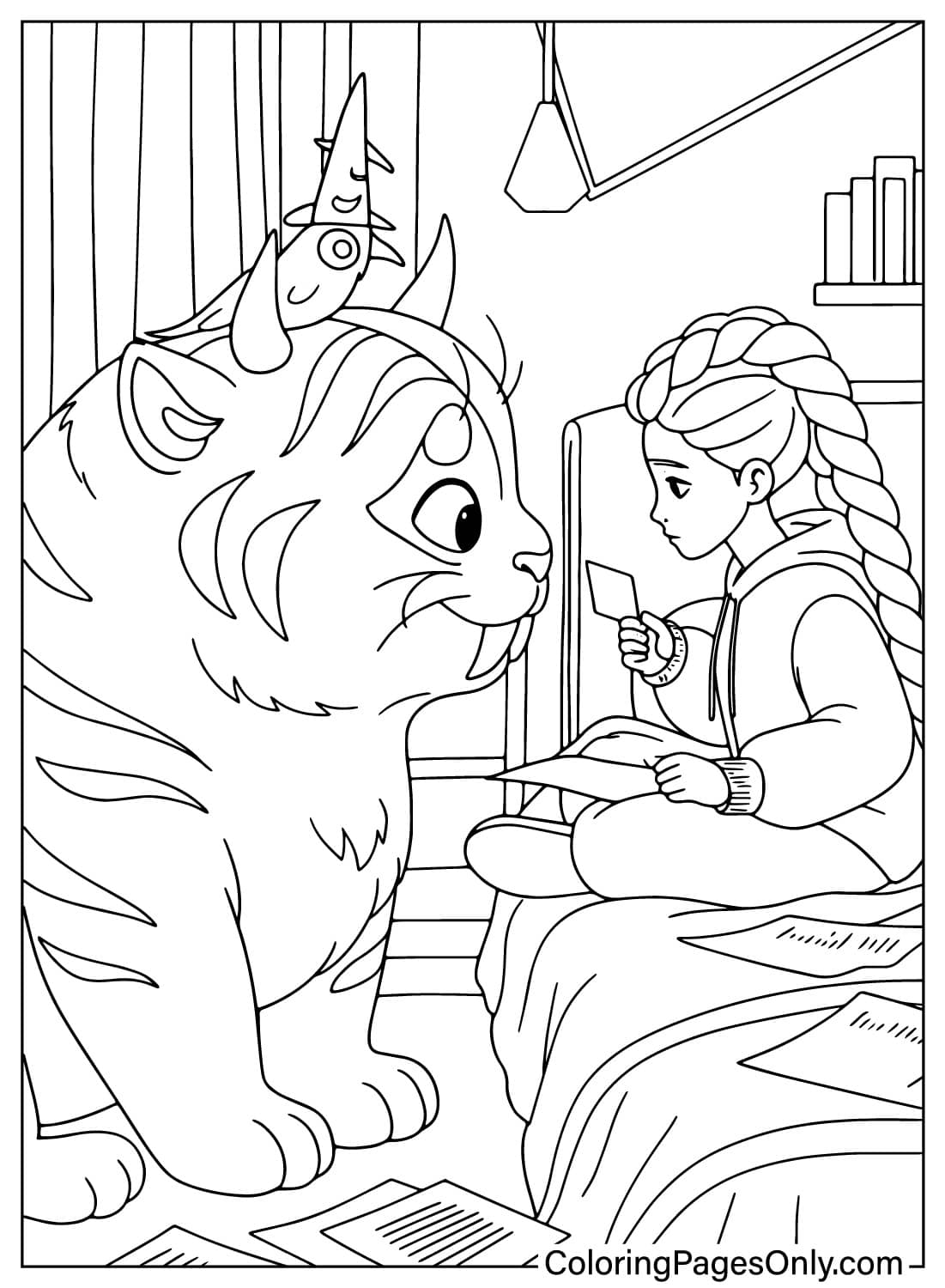
The KPop Demon Hunters Derpy Tiger Plush and Rumi page offers the collection’s most intimate glimpse of the character – Rumi on a bed, looking at something, with a large, friendly tiger-like creature beside her. The domesticity of the scene is a deliberate contrast to the action pages, and it is one of the most emotionally resonant pages in the collection precisely because of that contrast.
Coloring Rumi: Her palette is warm and grounded – warm skin tones, earthy mid-tone clothing, warm brown and amber in her hair. The braid’s layered structure rewards careful attention: each section of the braid should receive slightly different light and shadow treatment to suggest the three-dimensional interlocking of the woven strands. On the action pages, a slight desaturation of the background elements (cooler, less saturated tones for the environment) makes Rumi’s warm palette advance visually from the scene.
Jinu – The Mystical One
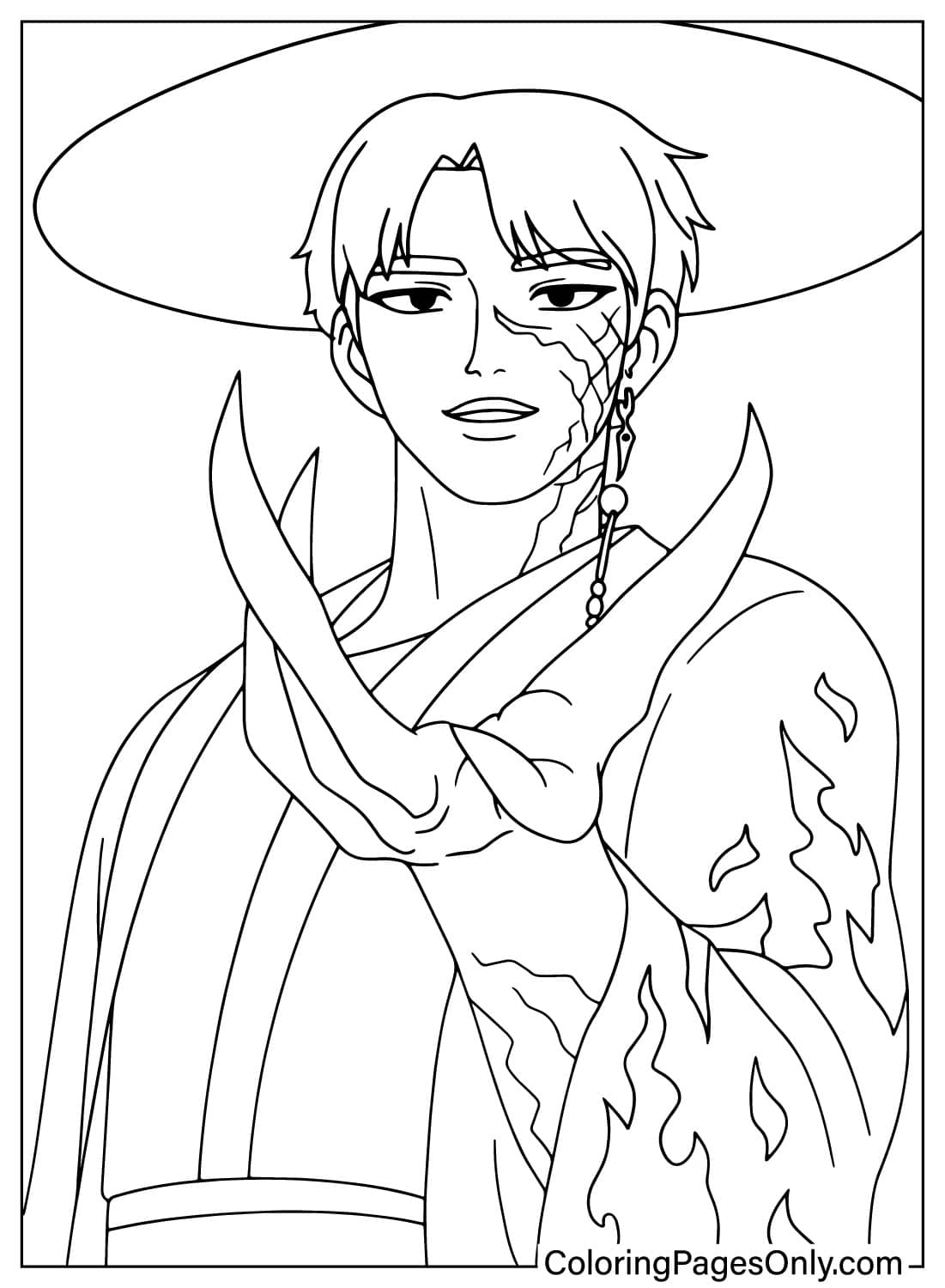
Jinu is visually the most distinctive character in the collection – the wide-brimmed hat, the facial markings, the glowing arm create a silhouette that is immediately identifiable and unlike any of the other cast members. His palette leans toward deep blues and grey-purples, with the glowing arm providing the warm amber-gold accent that makes Jinu in KPop Demon Hunters one of the most technically interesting pages to color.
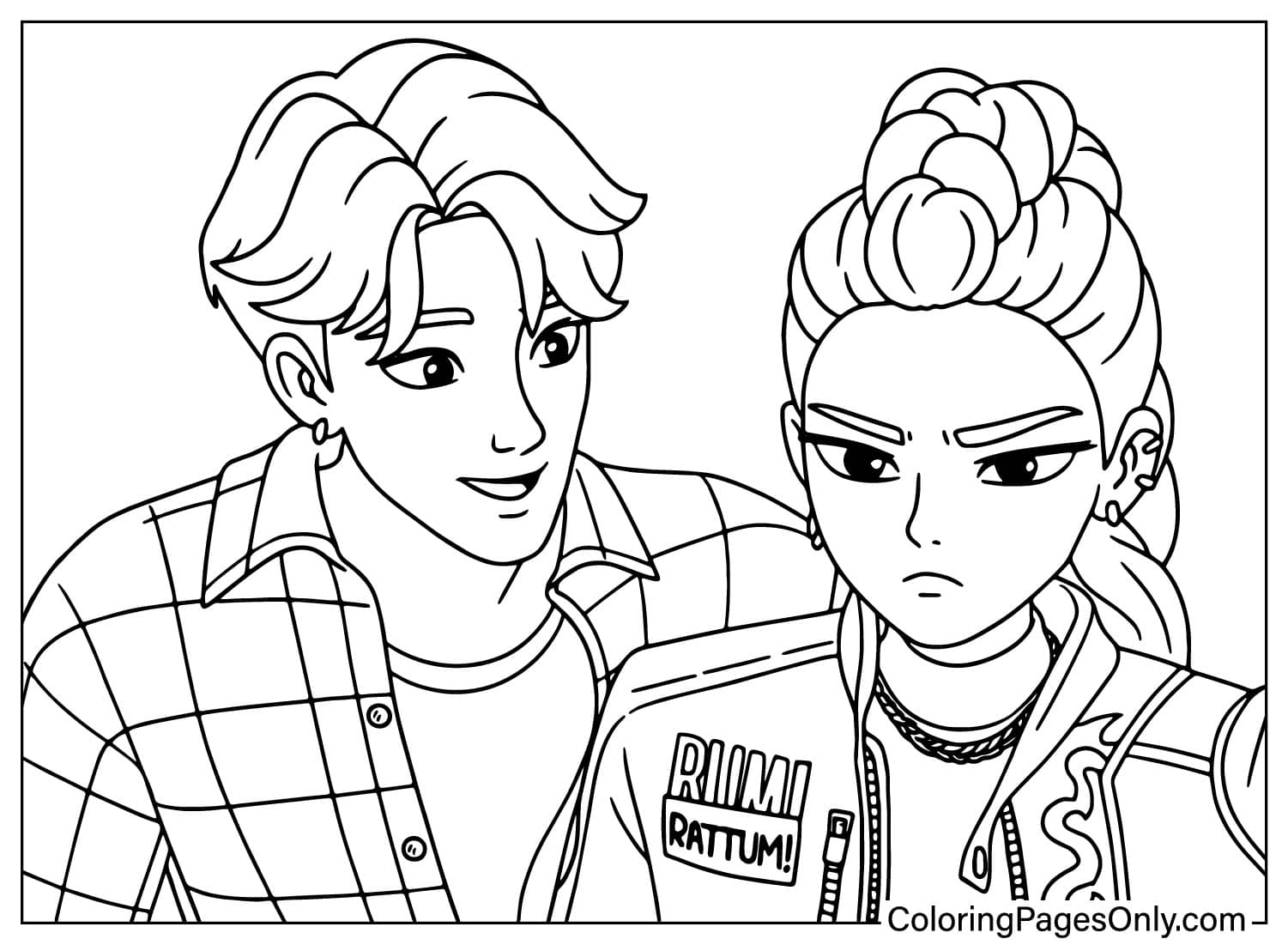
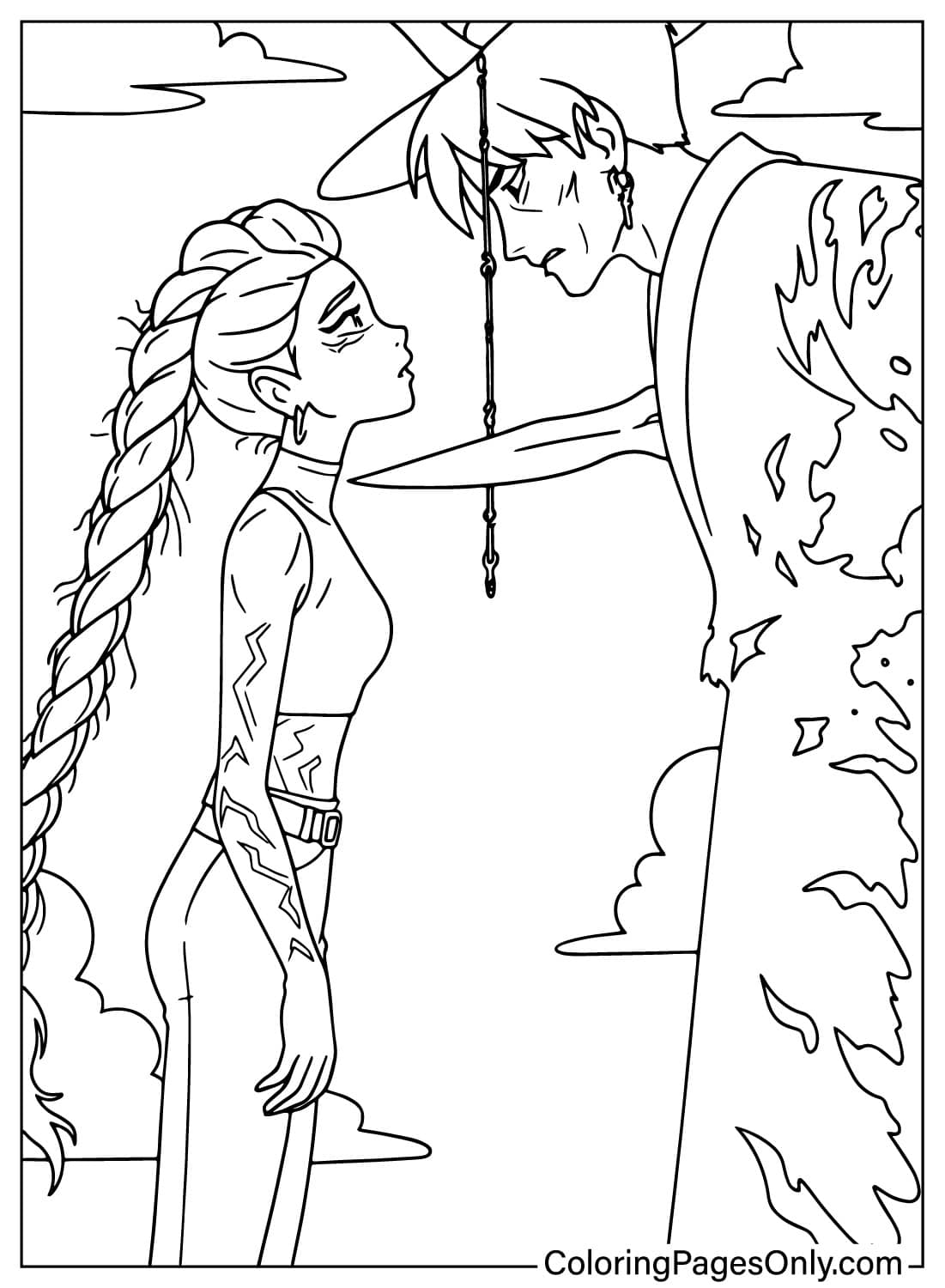
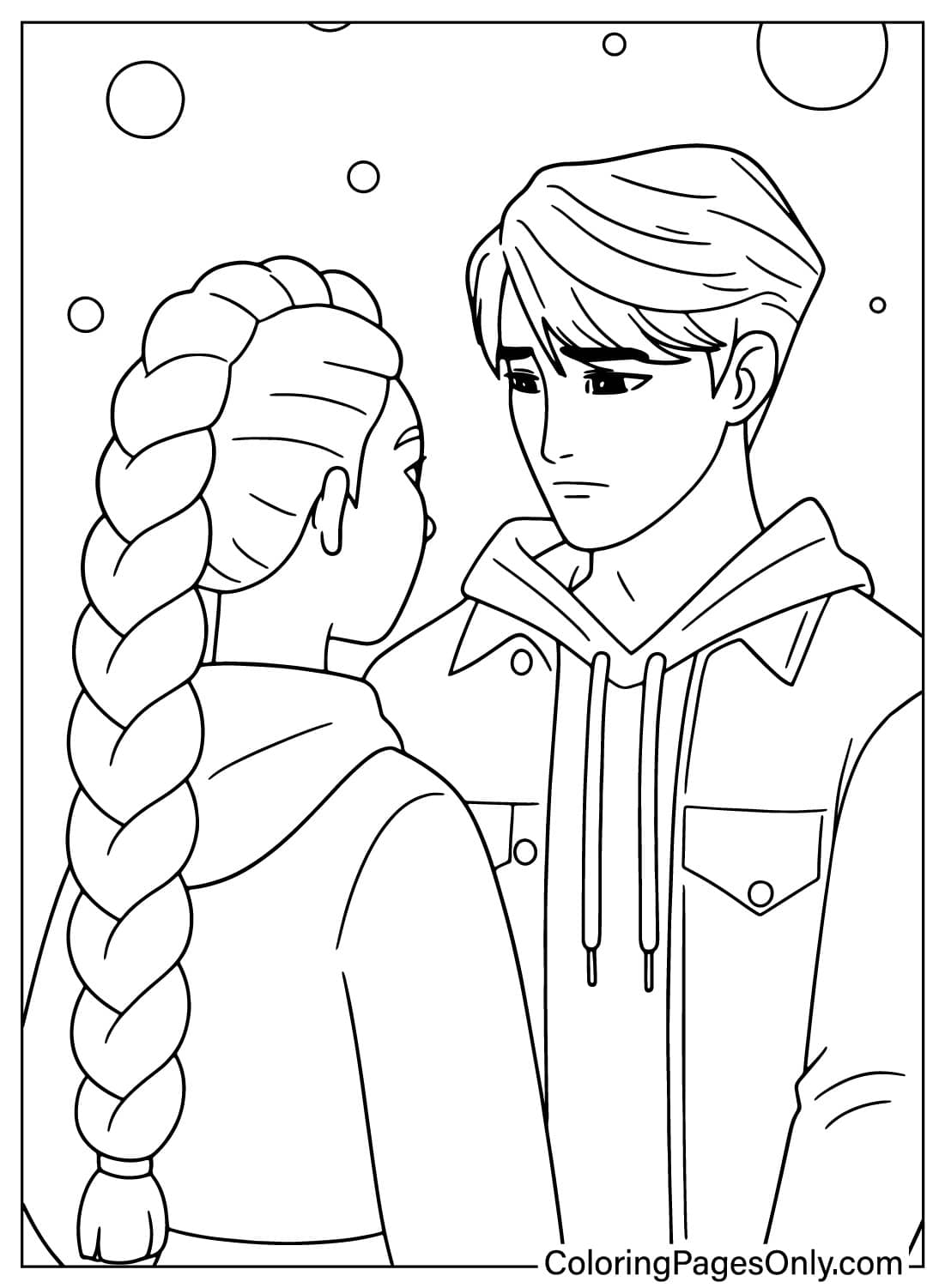
The Jinu and Rumi pages – the confrontation scene, the tender Jinu and Rumi Love scene with floating circles suggesting snow or magic – capture the central relationship of the film across its different registers: tense, warm, unresolved.
Coloring Jinu: The glowing arm is the technical challenge of this character. Apply the arm’s base color (a warm amber or golden yellow) first. Then, working outward from the glow’s center, apply slightly lighter, more yellow-white tones at the brightest point and let them transition to the full amber at the edges of the glow zone. The fabric and skin areas immediately surrounding the glow should be slightly warmer than the same areas further away – light sources color what they illuminate. His hat and facial markings should be deep, cool-leaning tones that contrast with the warm glow.
Mira – The Fighter
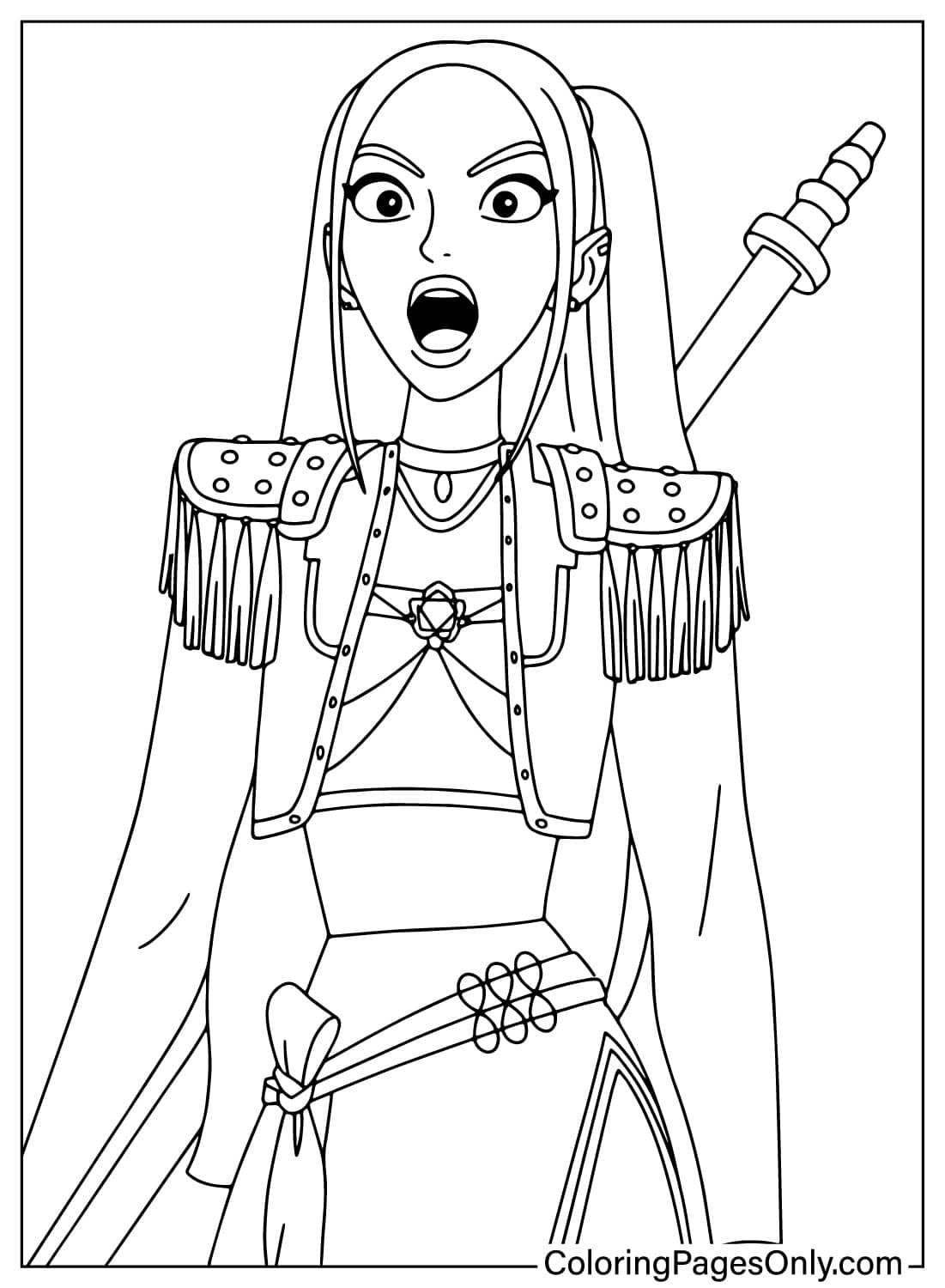
Mira’s pages are the collection’s most action-forward for a named female character. Her Mira in the KPop Demon Hunters page shows her with a shouting expression, shoulder epaulets, and a weapon carried on her back – a design that communicates combat readiness even in a static pose. Her visual character is built on strong contrasts and decisive shapes rather than the softer, warmer tones of Rumi.
Coloring Mira: Lean into contrast. Her pages reward a palette with stronger dark-light differentiation than the other characters – deeper shadows, brighter highlights, and more defined edges on the clothing details. The weapon on her back should be rendered with the same metallic treatment used for Jinu’s glowing arm, but in a cooler, more silver-grey register.
Jinu, Bobby, Celine, Healer Han, Zoey, and the Saja Boys
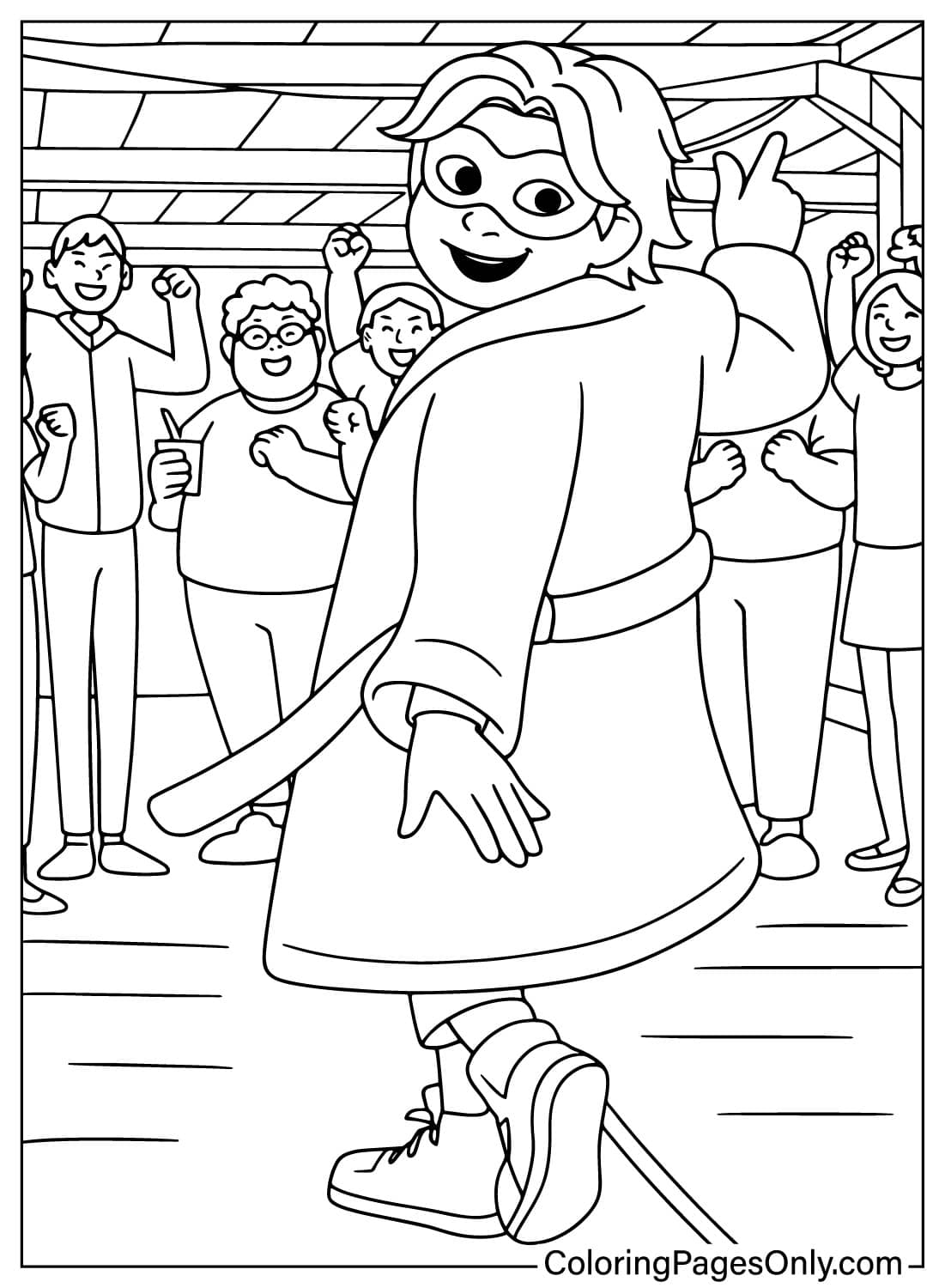
Bobby appears in his most characteristic context – viewed from behind, in robe and mask, facing a cheering crowd of fans. The page captures the idol-performance dimension of the story: Bobby is, from the crowd’s perspective, the object of adoration. From ours, he is a demon hunter who performs for audiences that have no idea who he actually is.
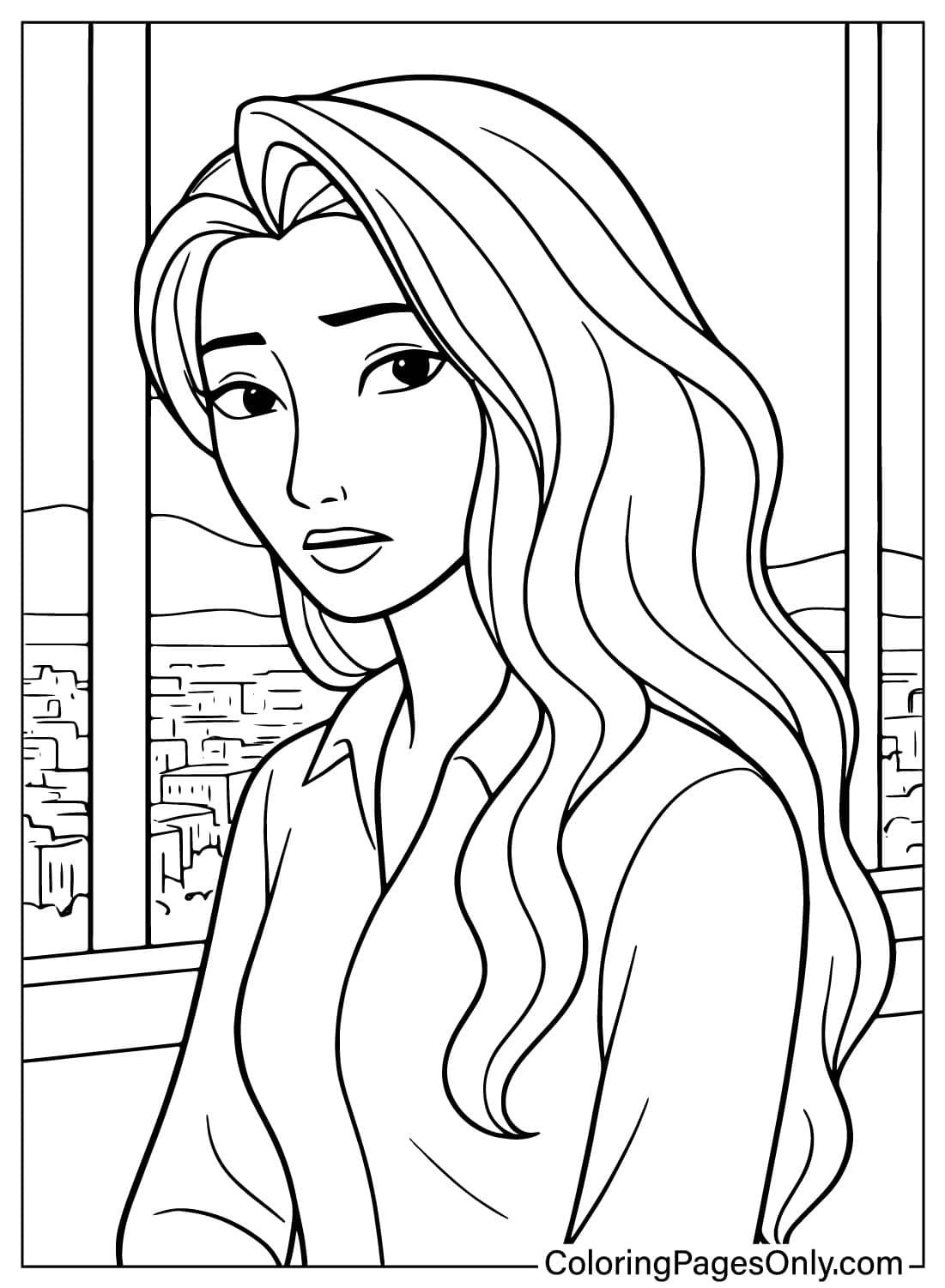
Celine is the collection’s most reflective character – her page shows her standing by a window overlooking a city skyline, a composition that communicates interiority and self-containment. She is the character whose pages feel calmest, most suitable for a slow, meditative coloring session. Her long, wavy hair and the city background reward a specific approach: warm tones for the hair, cool grey-blue for the city at dusk.
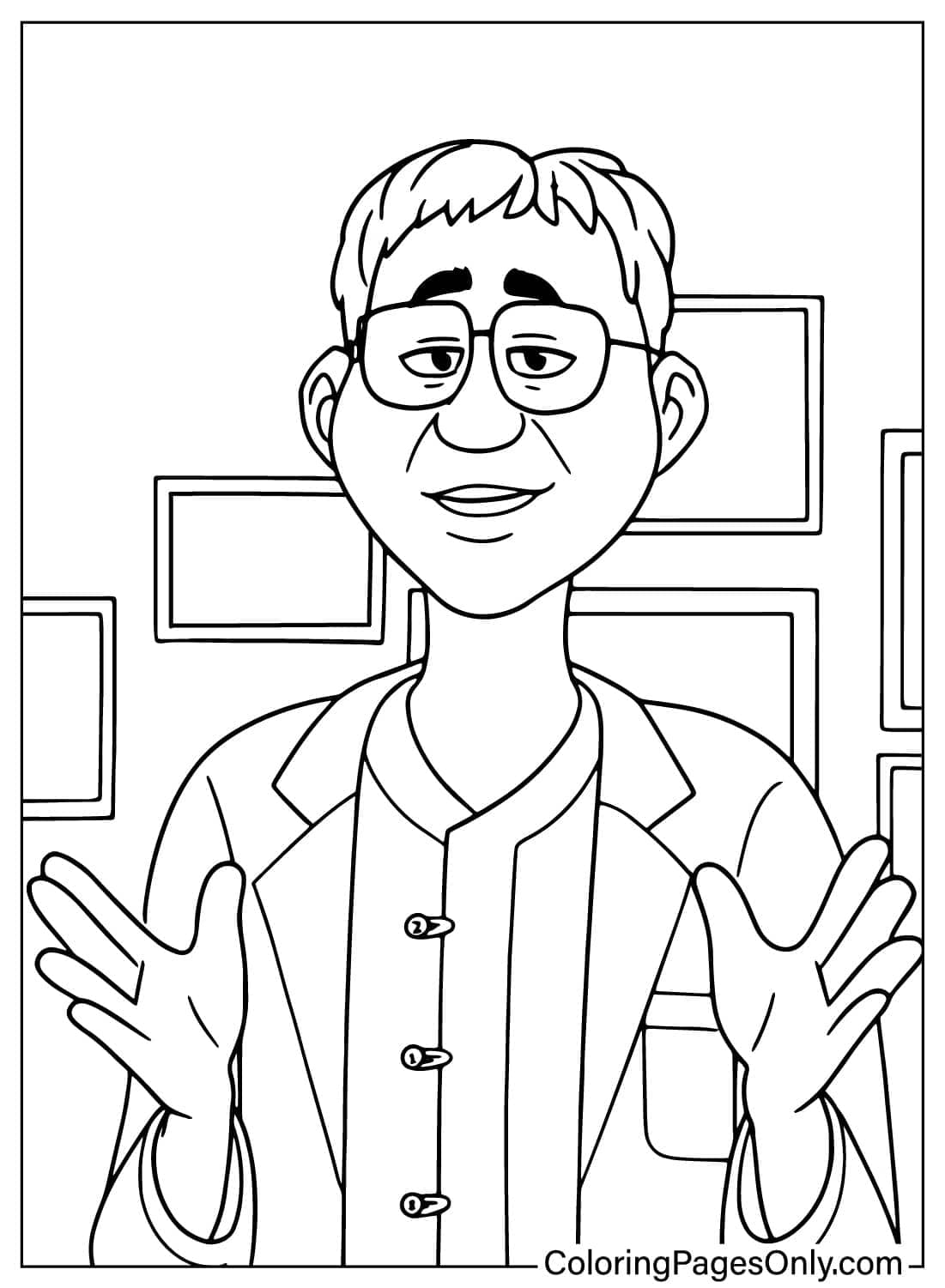
Healer Han brings a completely different register to the collection – the glasses and lab coat communicate a supporting character whose role is restoration and recovery rather than combat. His palette should be clean and organized: white coat, cool professional tones, the calm warmth of someone whose job is to help others recover.
Zoey contributes the collection’s most consistently cheerful energy. Her pages – performance-focused, bright, expressive – reward the most saturated, stage-lighting palette in the collection. K-pop performance lighting is deliberately extreme: high-contrast spotlights, vivid colored washes, and dramatic backlight. Zoey’s pages are the place to experiment with those effects.
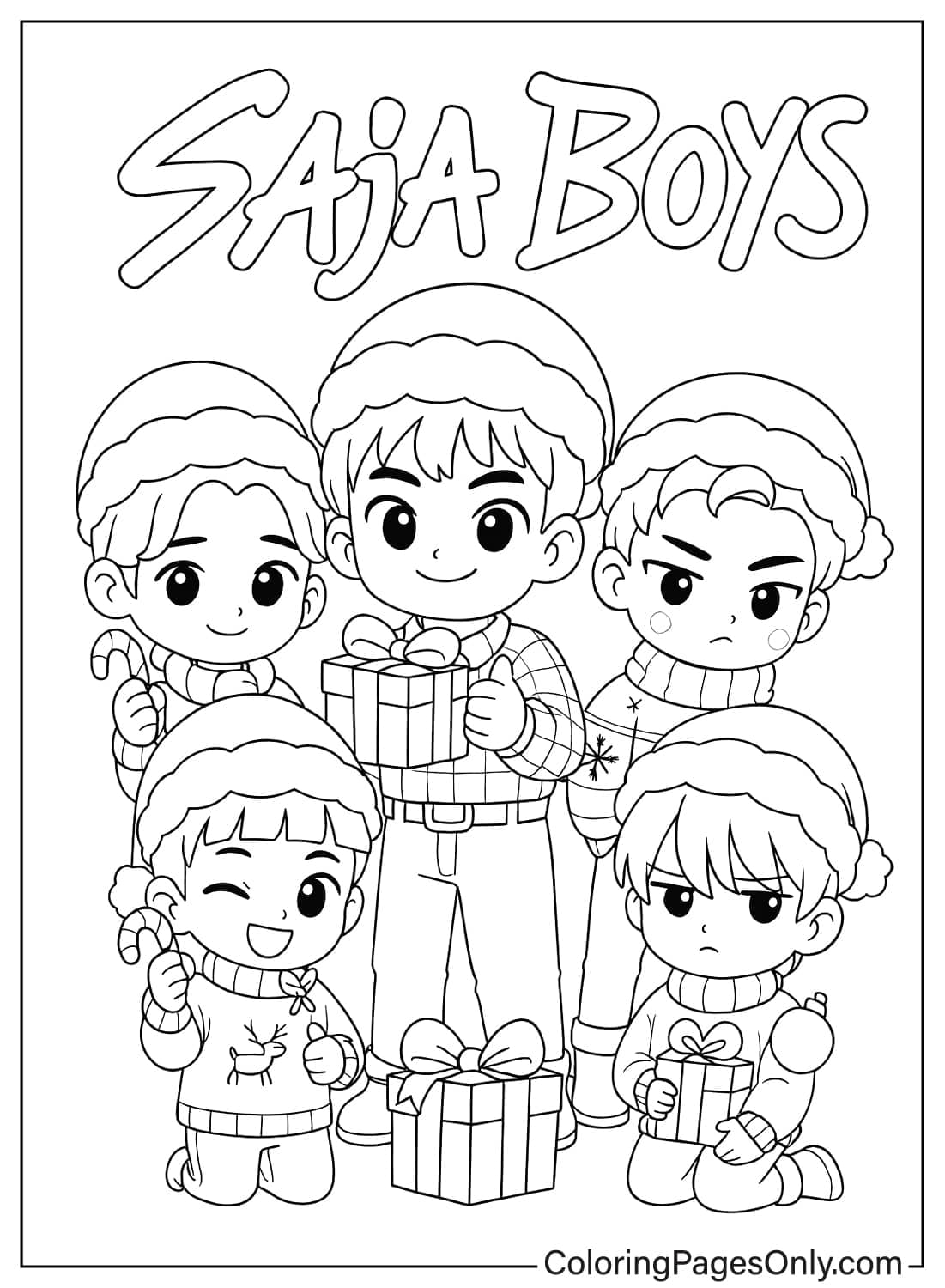
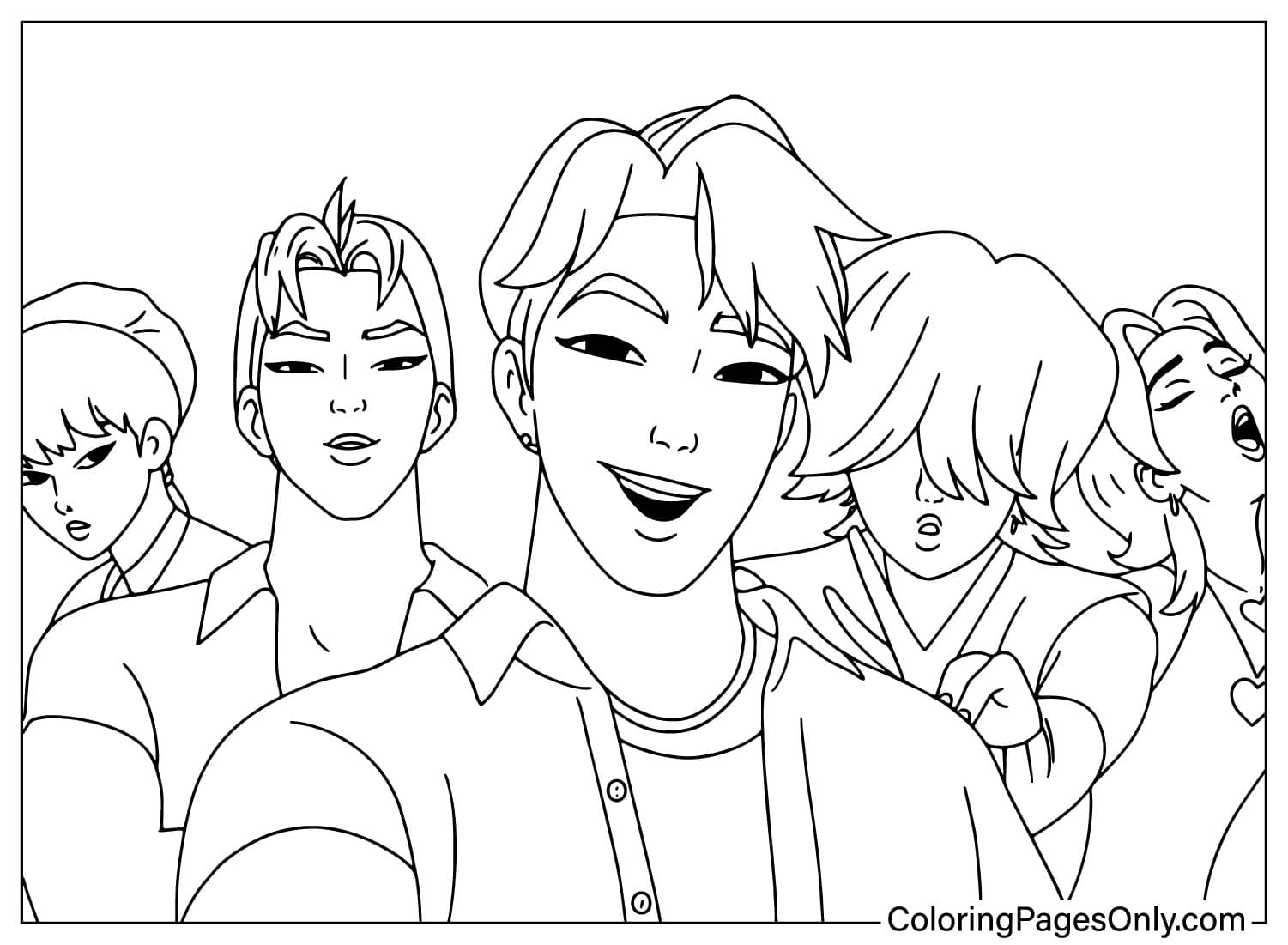
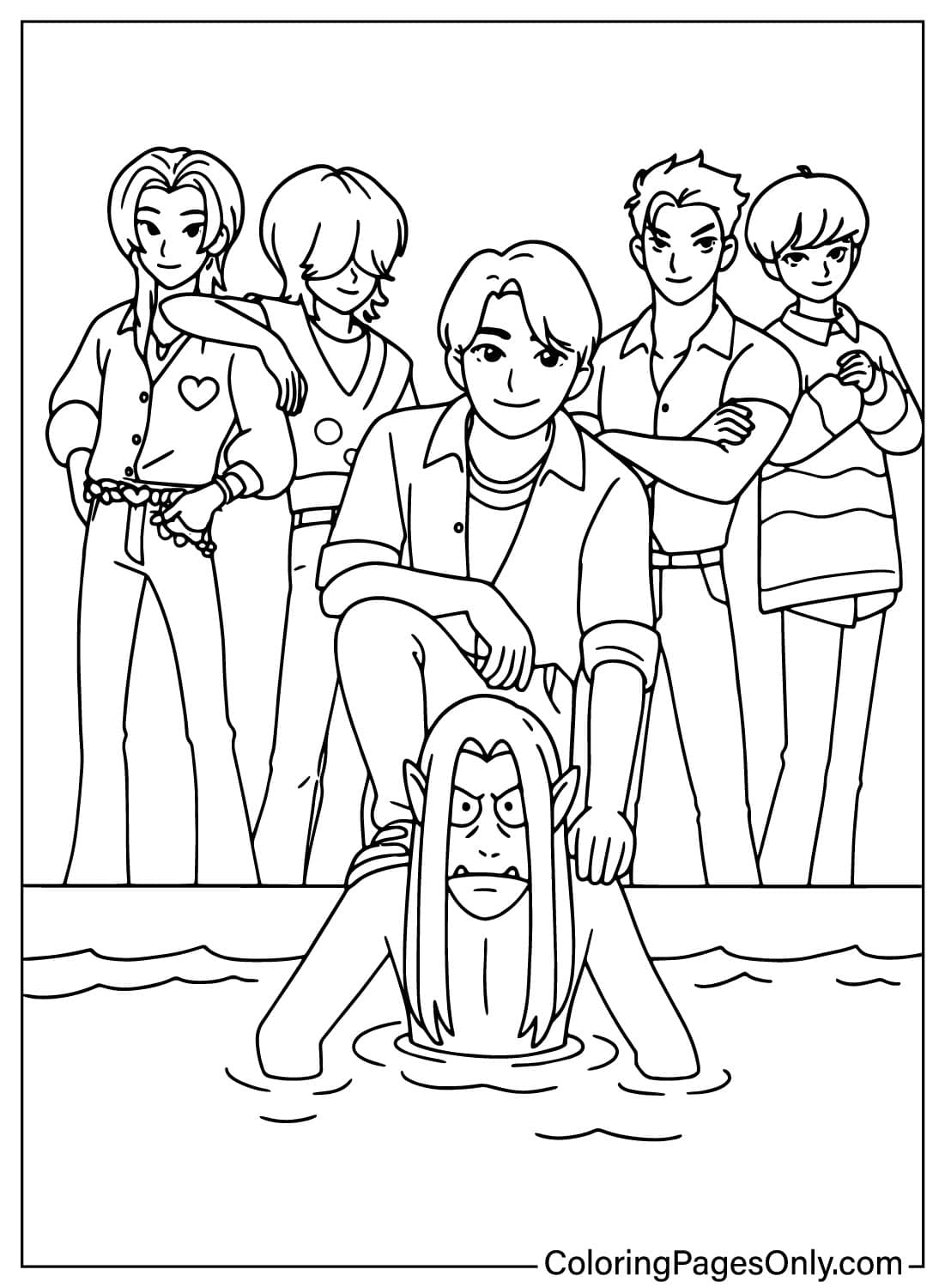
The Saja Boys – depicted as a group of five, their Christmas pages showing them in Santa hats with gifts – provide the most clearly idol-group-structured compositions in the collection. Five characters, each with distinct personalities legible even in their posture and expression, arranged in the kind of group formation that K-pop photographers spend careers perfecting. Color each character in a distinct but harmonious accent color to maximize the individual identities within the group visual.
How to Color These Pages Well
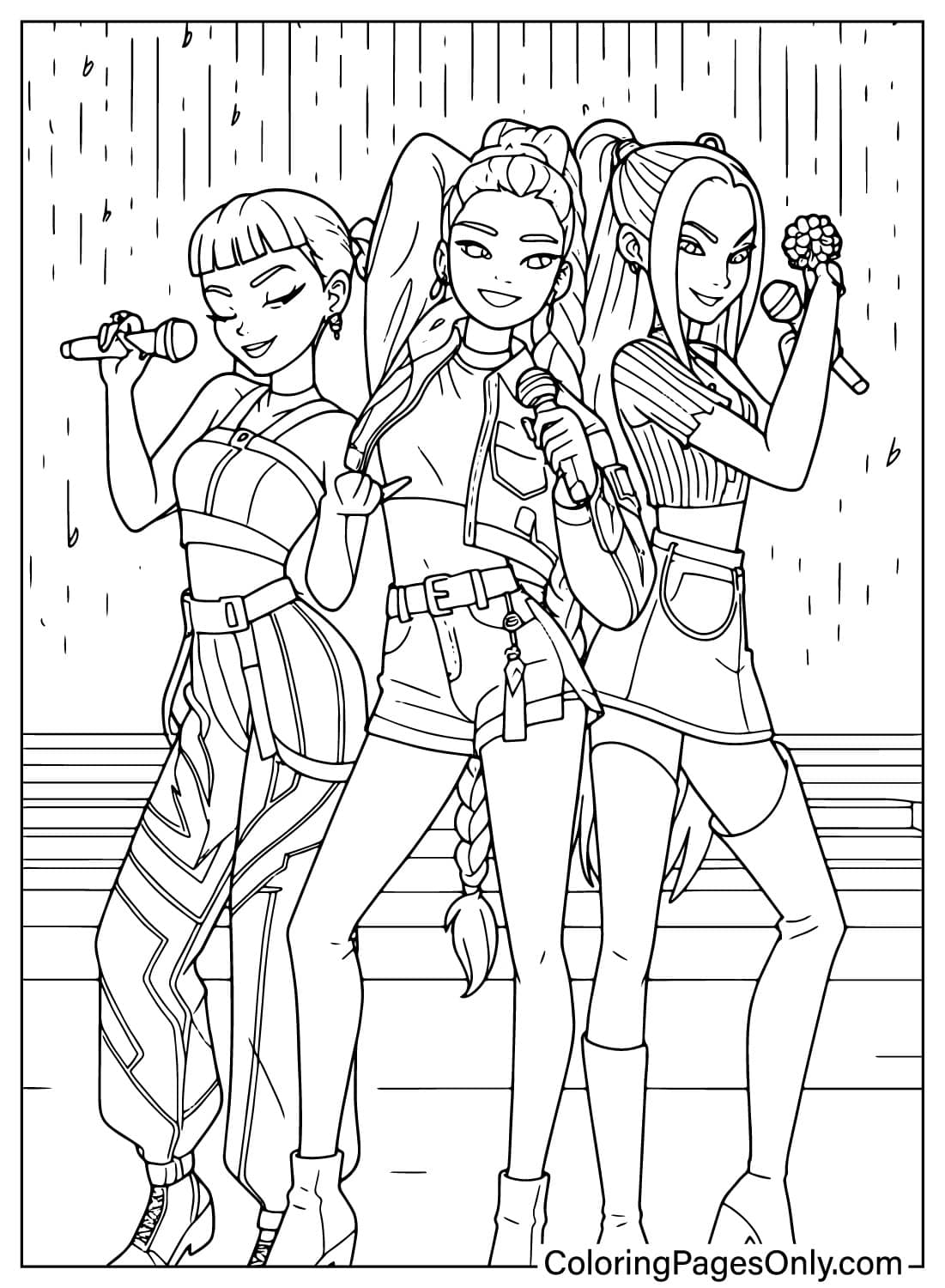
Understand the two visual worlds and switch between them deliberately. The film operates in two clearly distinct aesthetic registers, and the coloring pages reflect both. The performance pages – Bobby on stage, the HUNTR/X group shots, the Pretty Girls singing with microphones – belong to the world of stage lighting: vivid, high-contrast, saturated, designed to be seen from a distance by a large crowd. The battle pages – Rumi Fighting with Demon, the fight scenes, Characters on the demon in the water – belong to the world of supernatural action: darker environments, glowing power effects, more dramatic light-and-shadow contrast.
When you approach a page, identify which world it belongs to before choosing a single color. Stage world: reach for your most saturated, vivid options. Battle world: darken your environmental tones and let the power effects glow against them.
K-pop stage fashion rewards specificity. One of the defining characteristics of K-pop performance costumes is their specificity – each outfit is designed with deliberate intent, and no detail is accidental. When coloring the performance outfit pages, treat each costume element (a collar, a belt buckle, a pattern on fabric) as a designed object rather than a decorative accident. The difference between coloring an outfit generically and coloring it with attention to each designed detail is visible in the finished page.
Demon figures should not be flat black. A common mistake in coloring dark supernatural characters is applying uniform black across the entire form. Real darkness has color in it – the shadows in a demon’s form might be deep navy-black, or a very dark desaturated purple-black, or a near-black with a subtle cool green tint. Choosing a specific dark-with-color rather than pure black gives the demon forms visual depth and makes them feel genuinely threatening rather than simply absent of color.
Hair is the character’s most distinctive coloring element. In K-pop idol culture, hair is one of the primary tools of concept communication – color, texture, and style shift with each comeback to signal a new musical direction. In K-pop Demon Hunters, each character’s hair is a key identity marker. Rumi’s braids, Celine’s long waves, Jinu’s hat-covered hair with the markings visible, Zoey’s style – each should be colored with the same care given to the face. Flat hair coloring reads as unfinished regardless of how carefully the rest of the page is done.
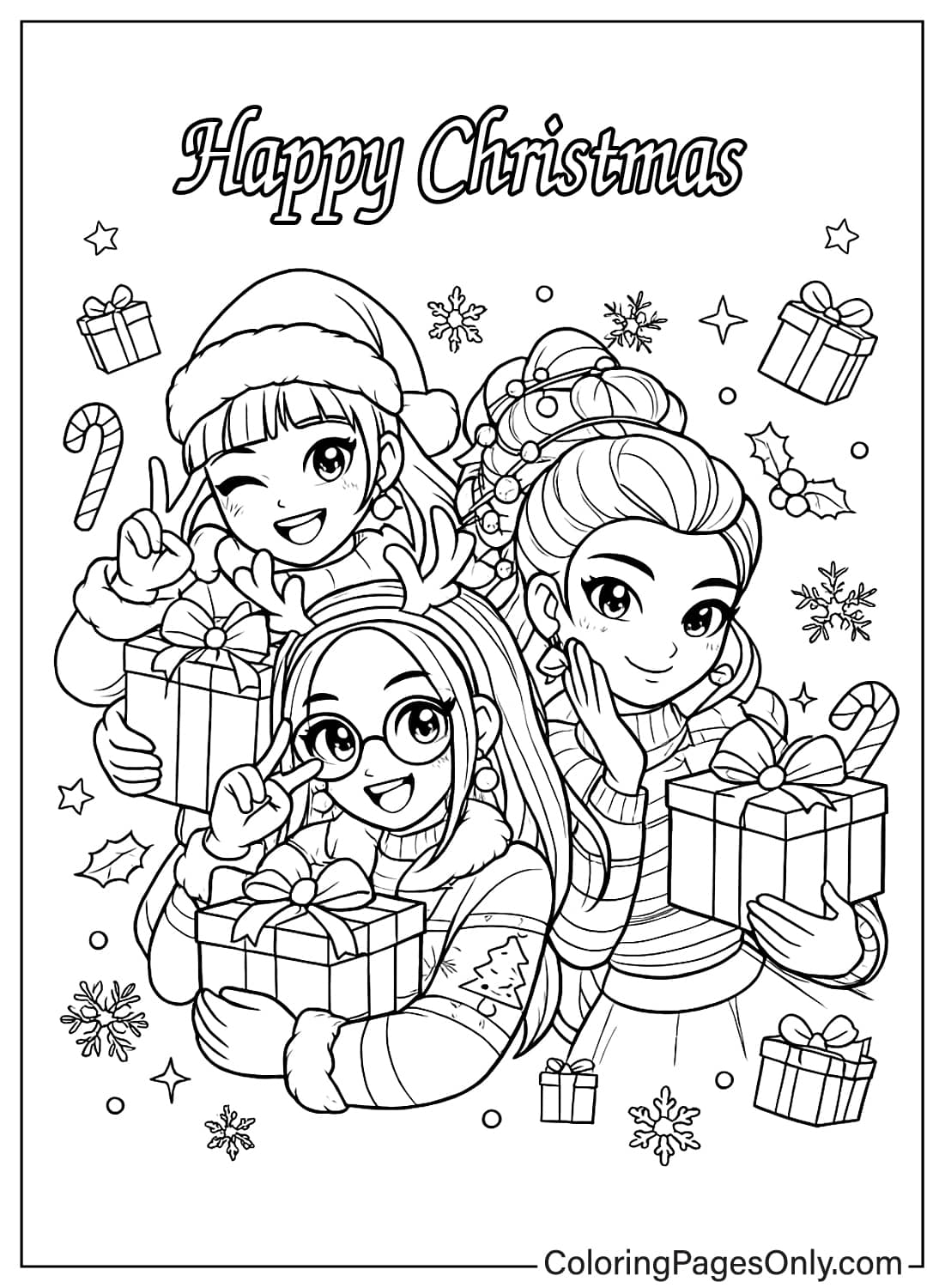
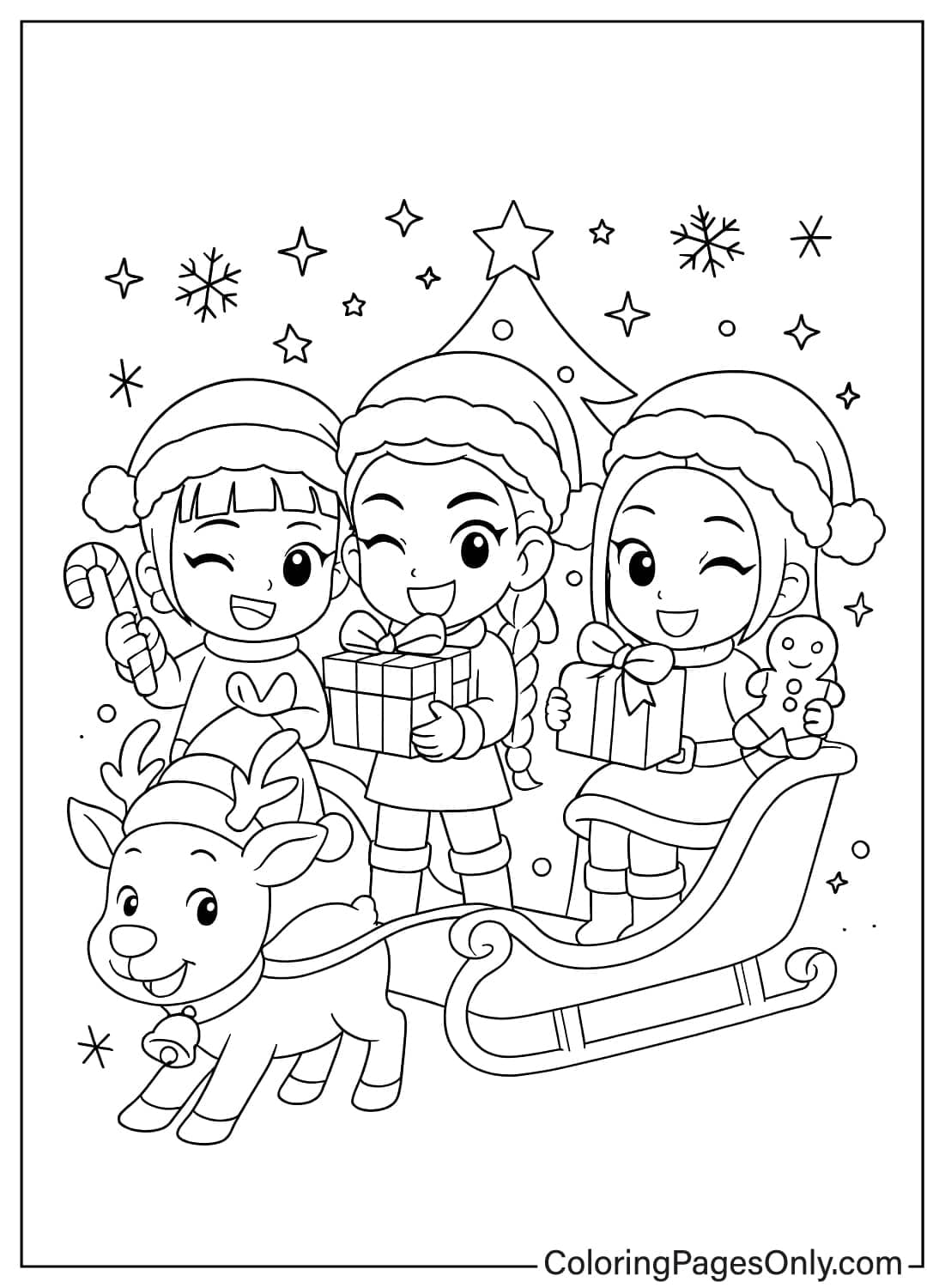
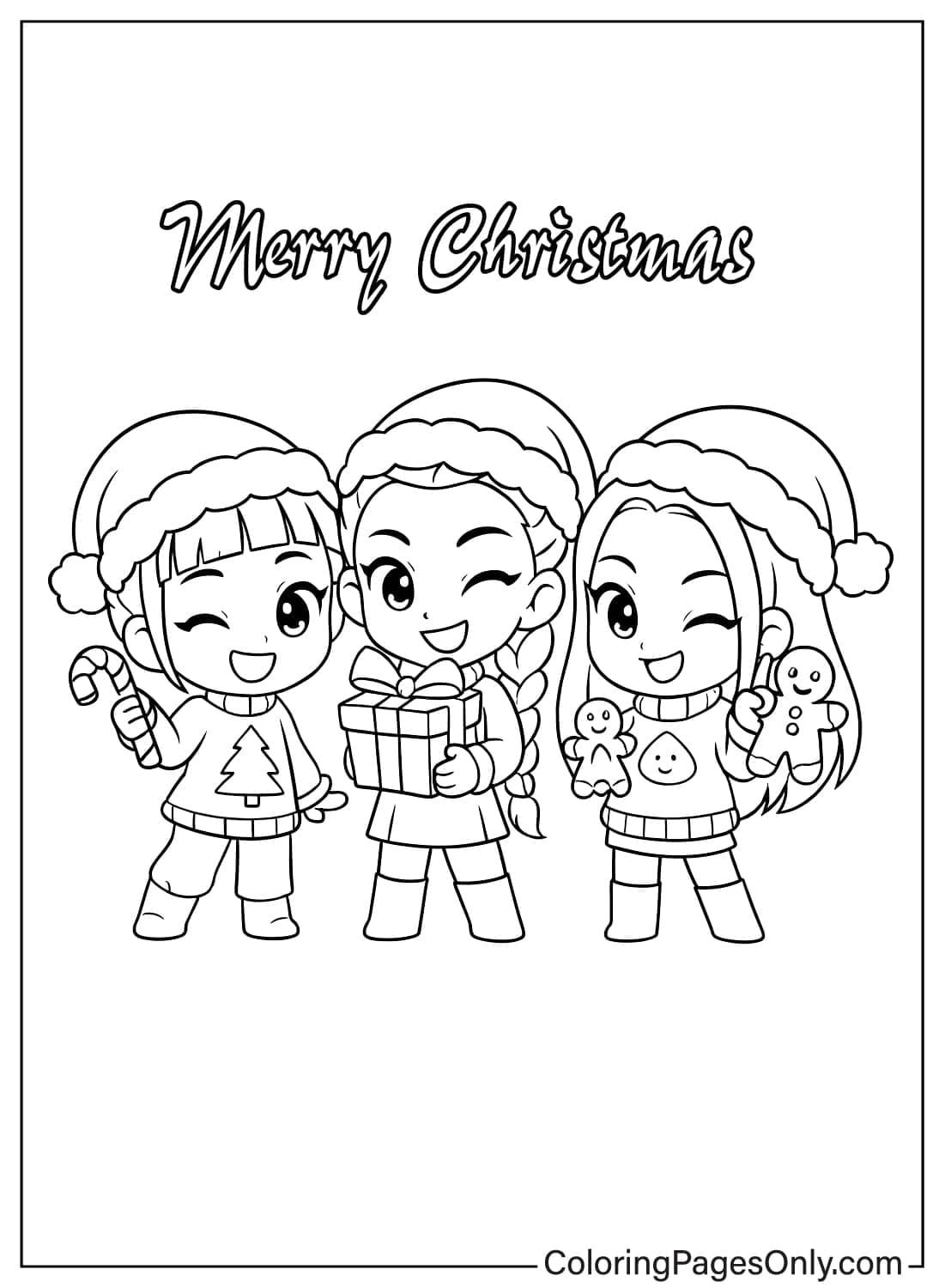
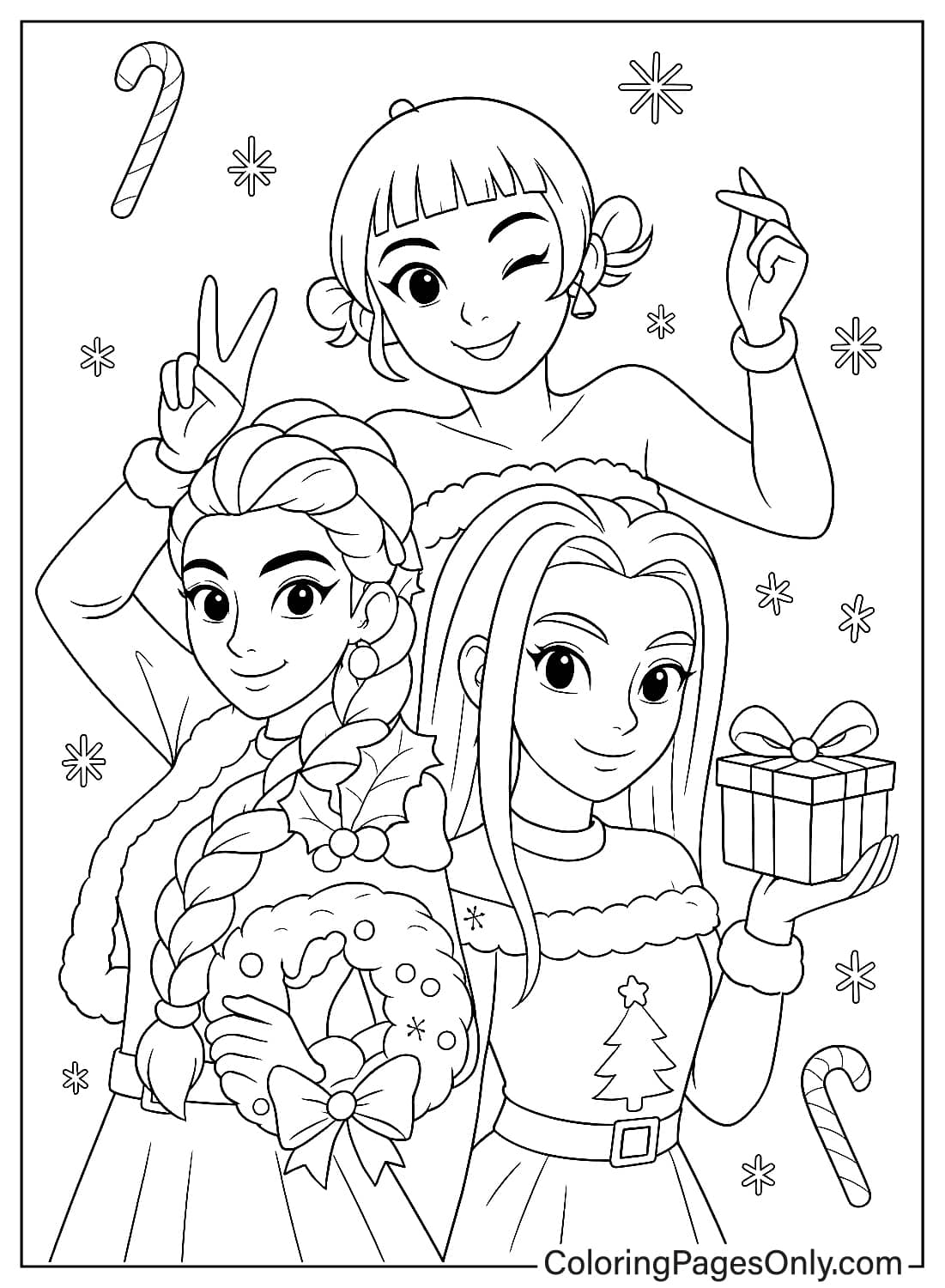
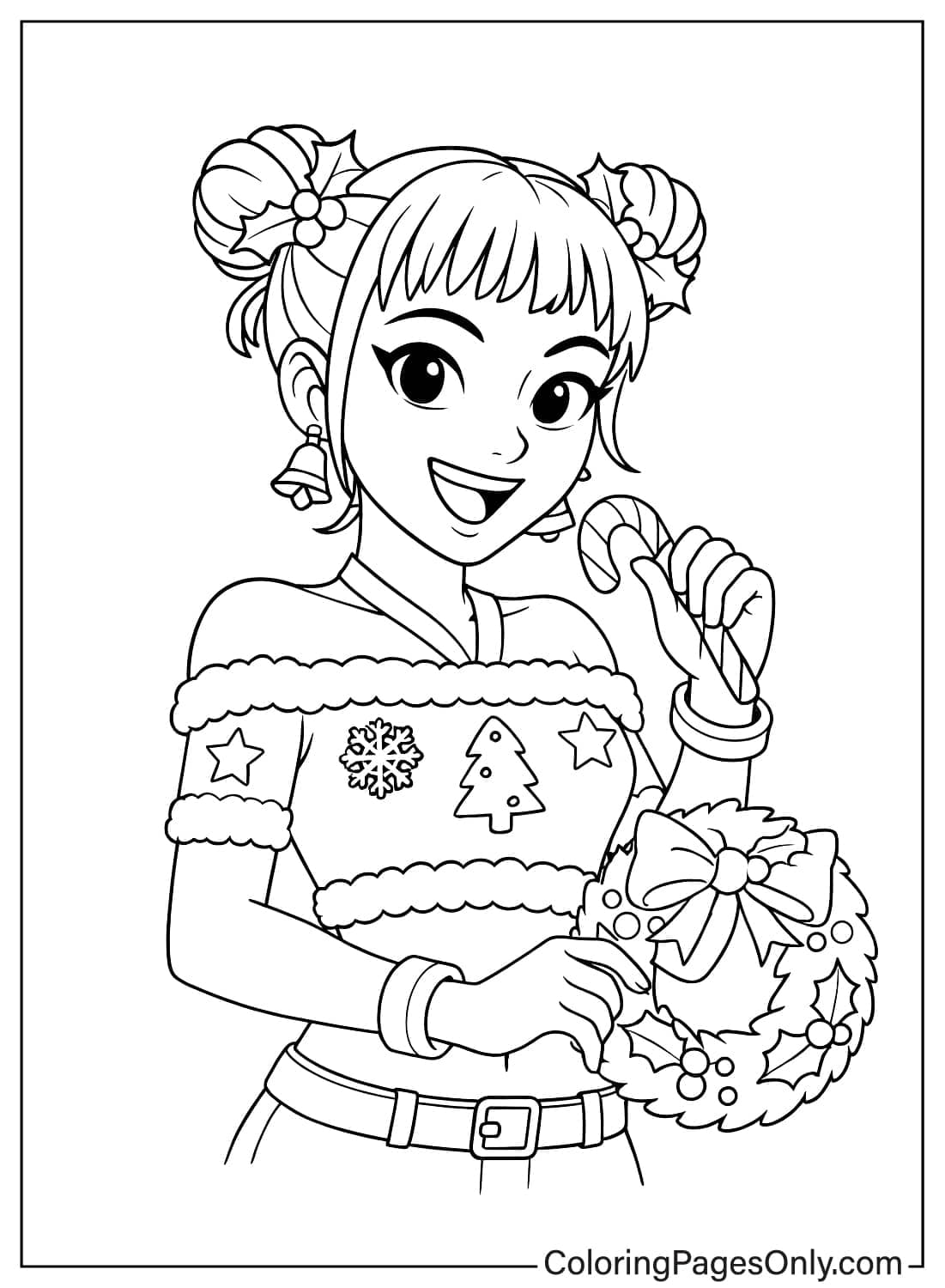
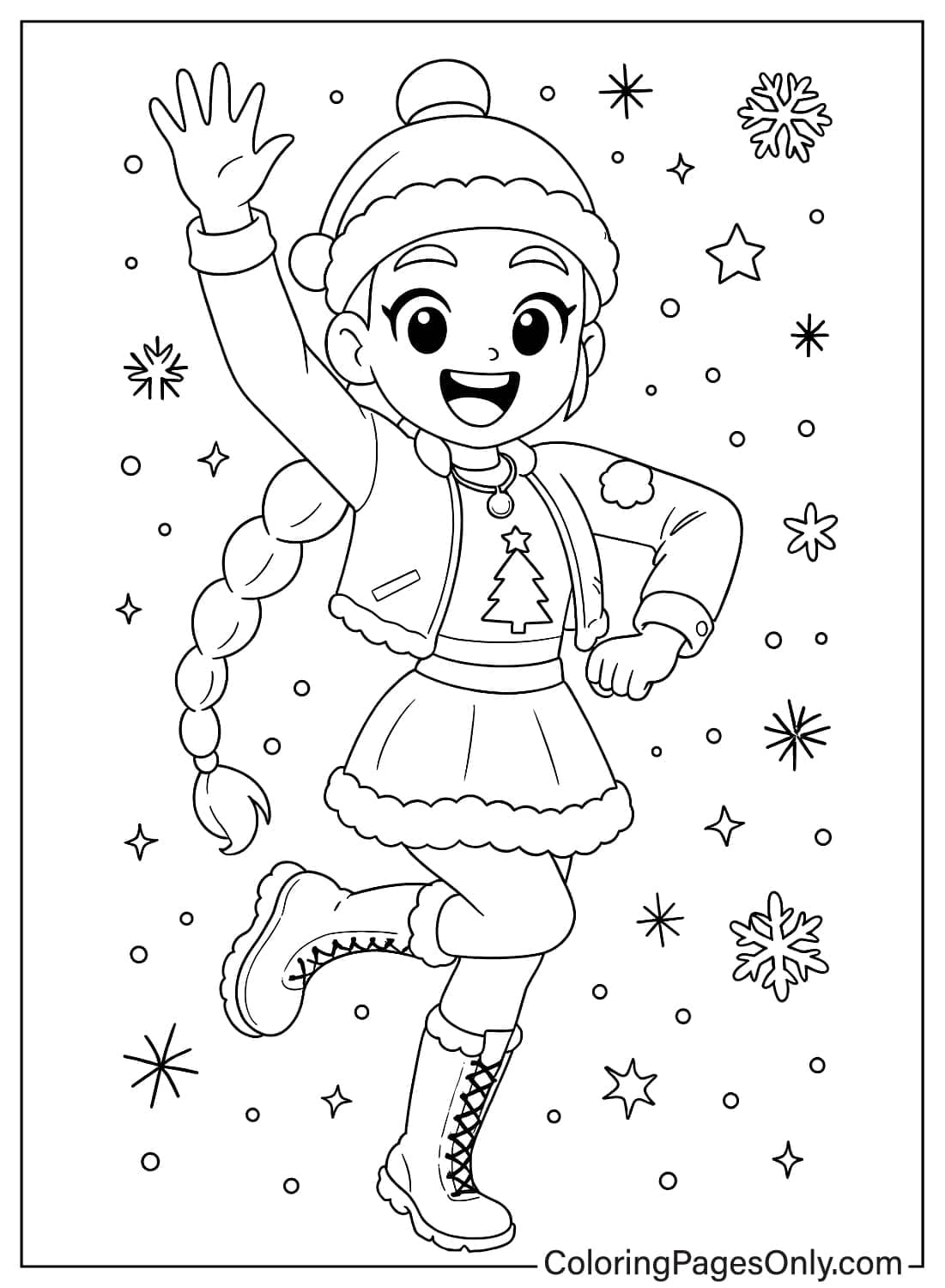
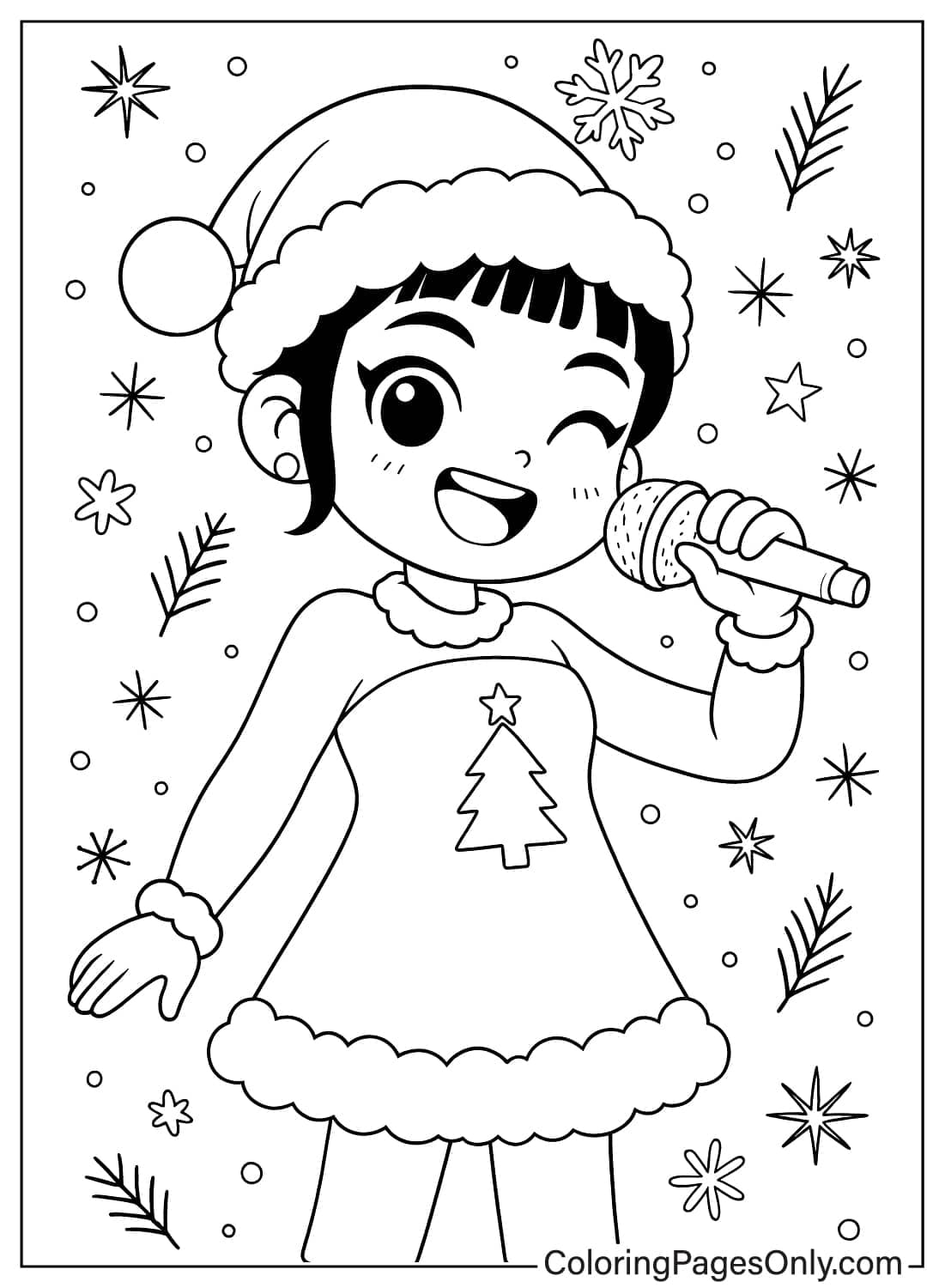
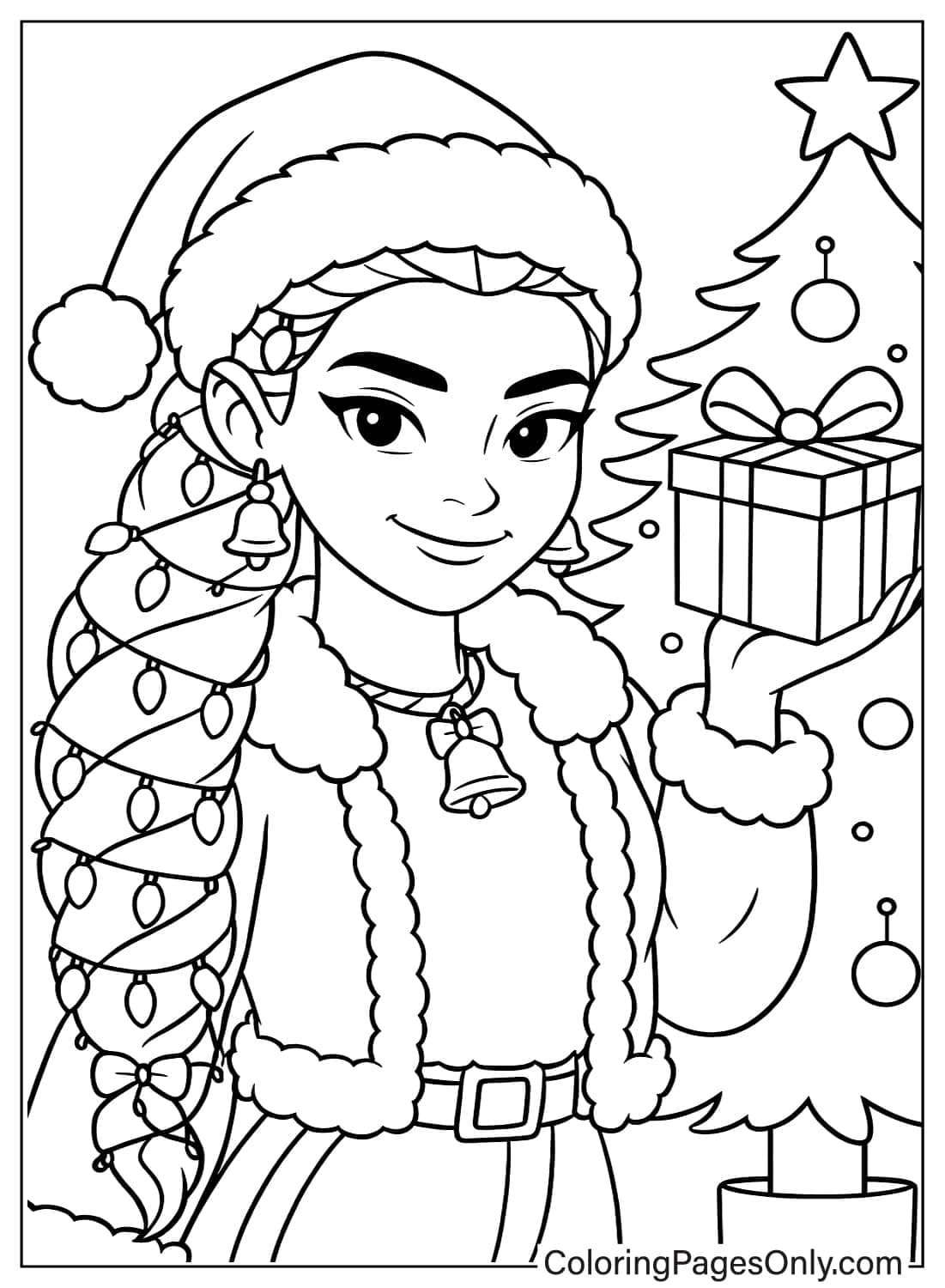
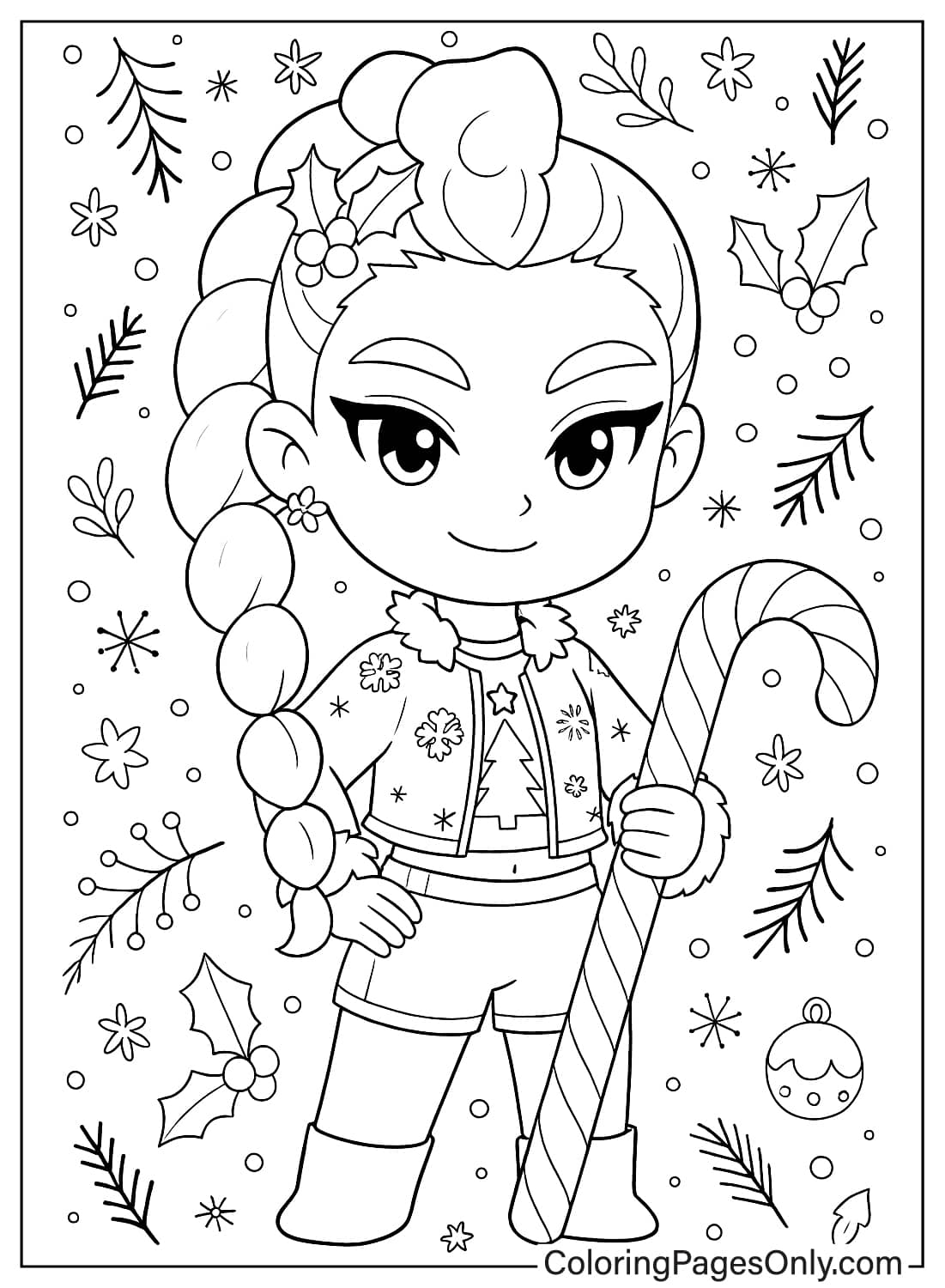
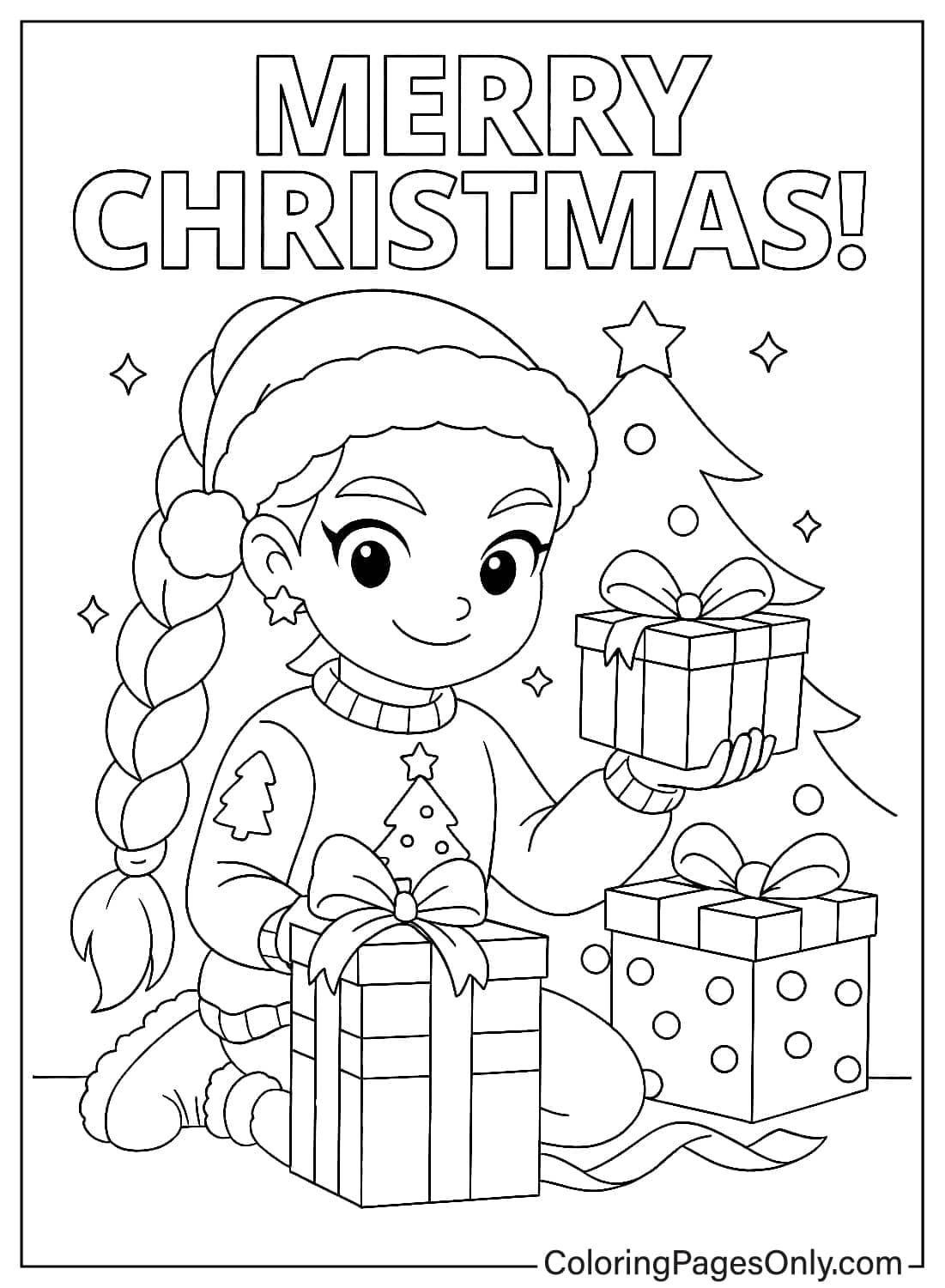
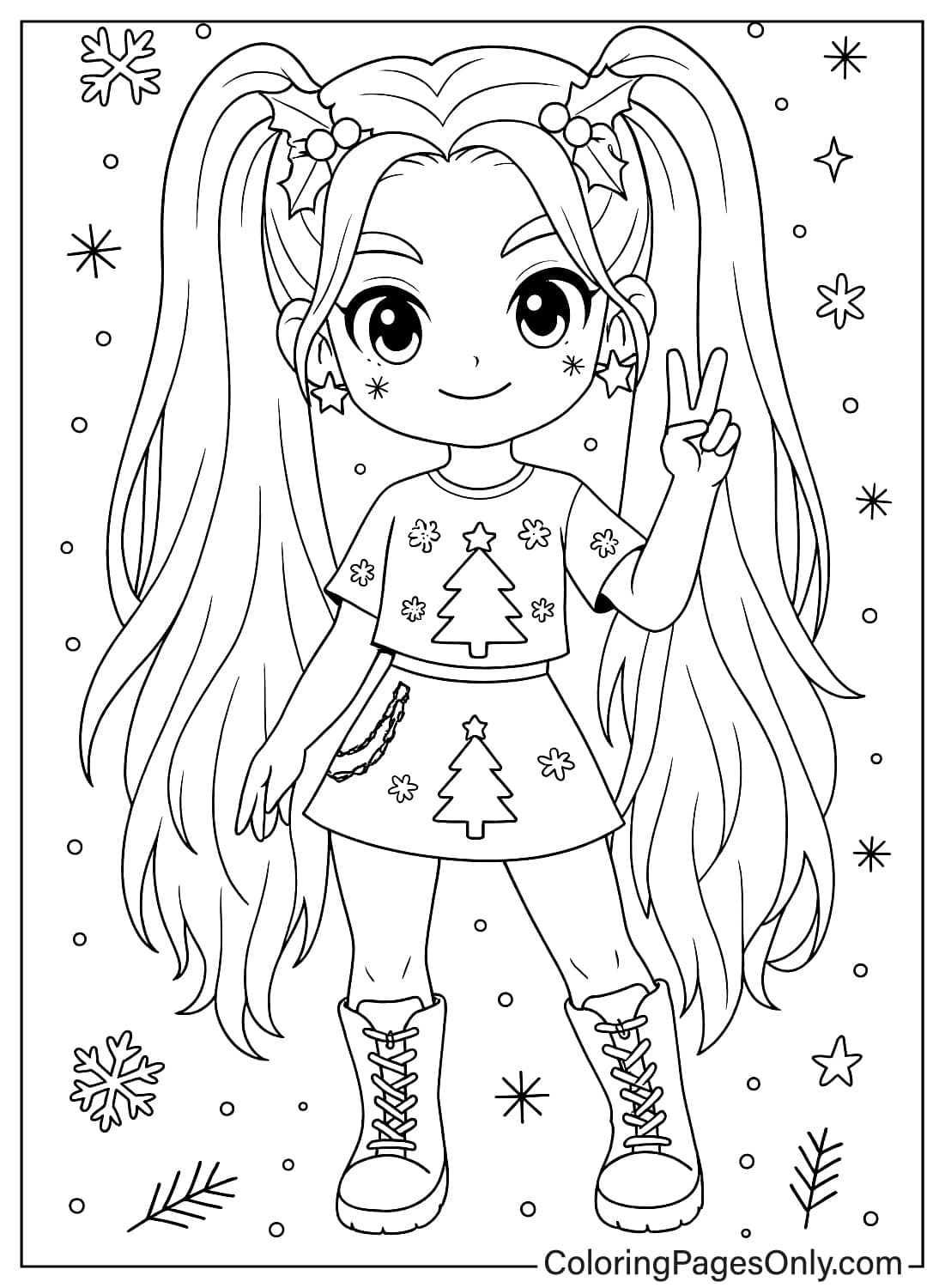
For the Christmas pages, preserve the characters. The Christmas collection introduces festive elements (Santa hats, gifts, sleigh, gingerbread, winter backgrounds) that could easily overwhelm the characters if colored too heavily. Prioritize the characters’ canonical palettes on the Christmas pages – the festive elements should complement rather than compete. A Santa hat in the canonical holiday red reads correctly against any character’s hair or costume color; a competing accent color in the background risks making the page feel visually noisy.
5 Creative Activity Ideas
Dual-World Character Card Set
For each major character in the collection, print two pages – one from their performance/idol context and one from their battle/demon-hunting context. Color both, with deliberately different palettes: the performance page in the warm, saturated tones of stage lighting, the battle page in darker, more contrast-heavy tones.
Mount each pair side by side on a piece of cardstock, labeled with the character’s name. Add two brief notes: “On Stage” above the performance page and “On the Hunt” above the battle page.
The finished card set makes visible the film’s central premise – the same character, the same face, two completely different worlds. For fans who connect with the show’s exploration of double life and dual identity, this craft captures exactly what makes the story interesting. It also develops genuine color thinking: the ability to shift between palette registers for the same subject is a professional illustrator’s skill.
Fan Lightstick Design
K-pop fandoms use lightsticks – branded glow sticks in distinctive shapes and colors – at concerts to create the visual effect of a stadium full of synchronized light. Each idol group has its own official lightstick design; fans wave them during performances to become part of the visual spectacle.
Using the character portrait pages as inspiration, design a custom HUNTR/X or Saja Boys lightstick for the fictional fandom. Start by coloring a portrait page – Rumi, Zoey, or Jinu – to establish the character’s canonical palette. Then, on a separate piece of paper, sketch a lightstick design: a handle, a glowing head element whose shape references something from the character or group (Rumi’s braid, Jinu’s hat, a demon-hunting weapon), and a color that represents the group.
Color the lightstick design in the group’s palette. If you want to suggest the glow effect, use white at the center of the light element and let it transition through the group’s color outward. Mount the completed character portrait alongside the lightstick design.
This craft teaches the design thinking behind brand identity – how a simple object can carry a character’s visual identity in compressed form – while requiring genuine color decision-making and creative invention.
Concert Poster
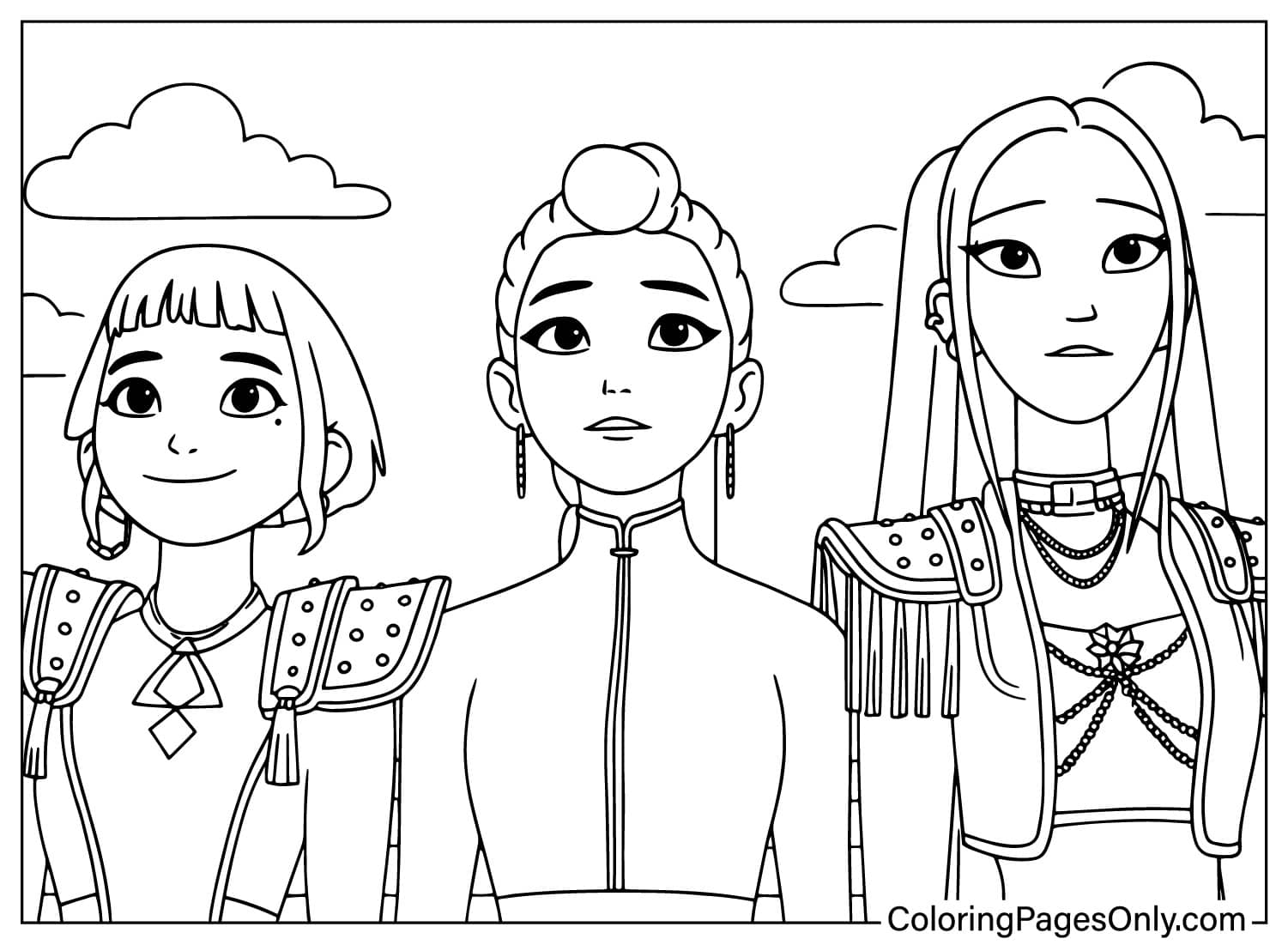
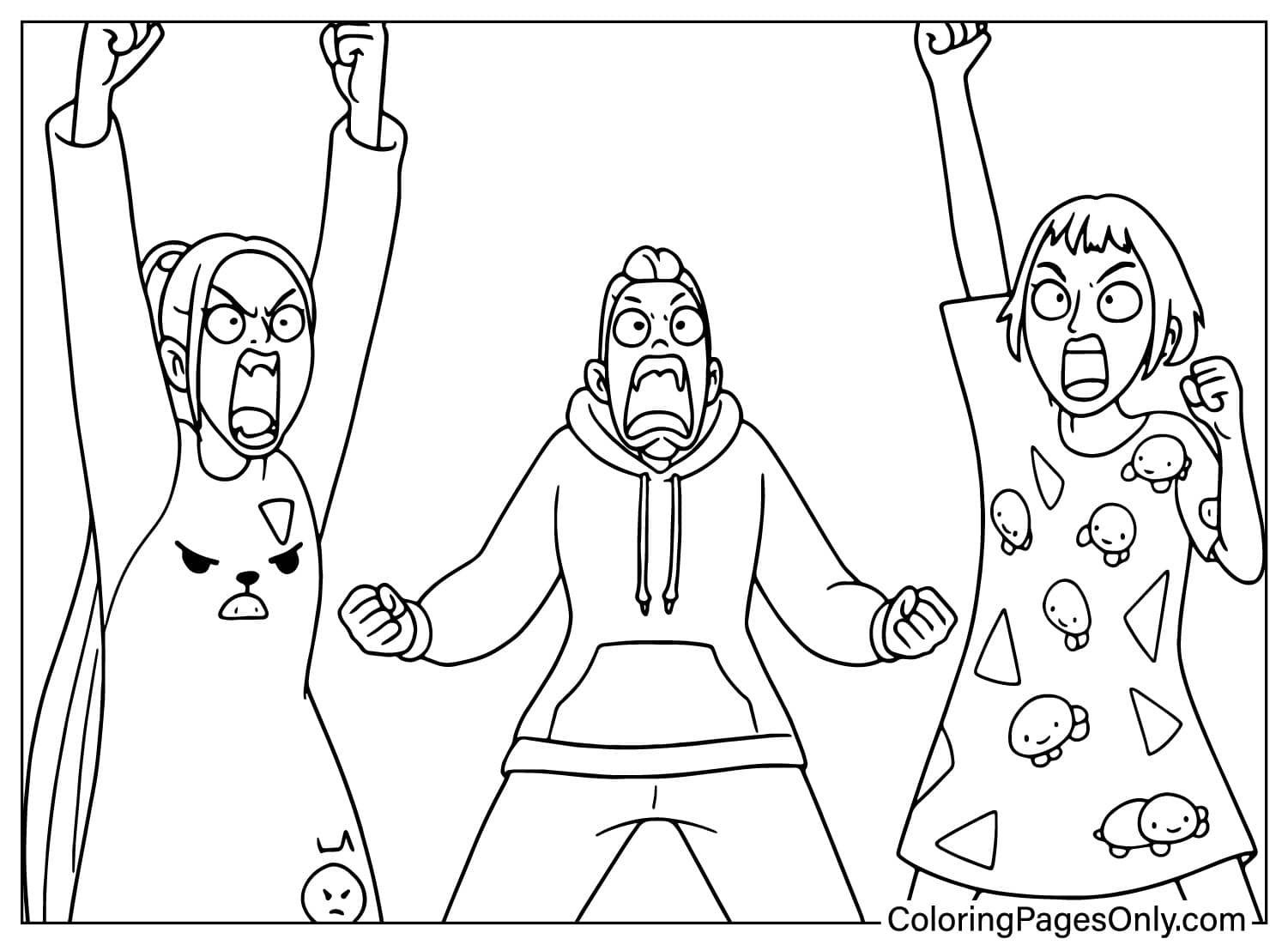
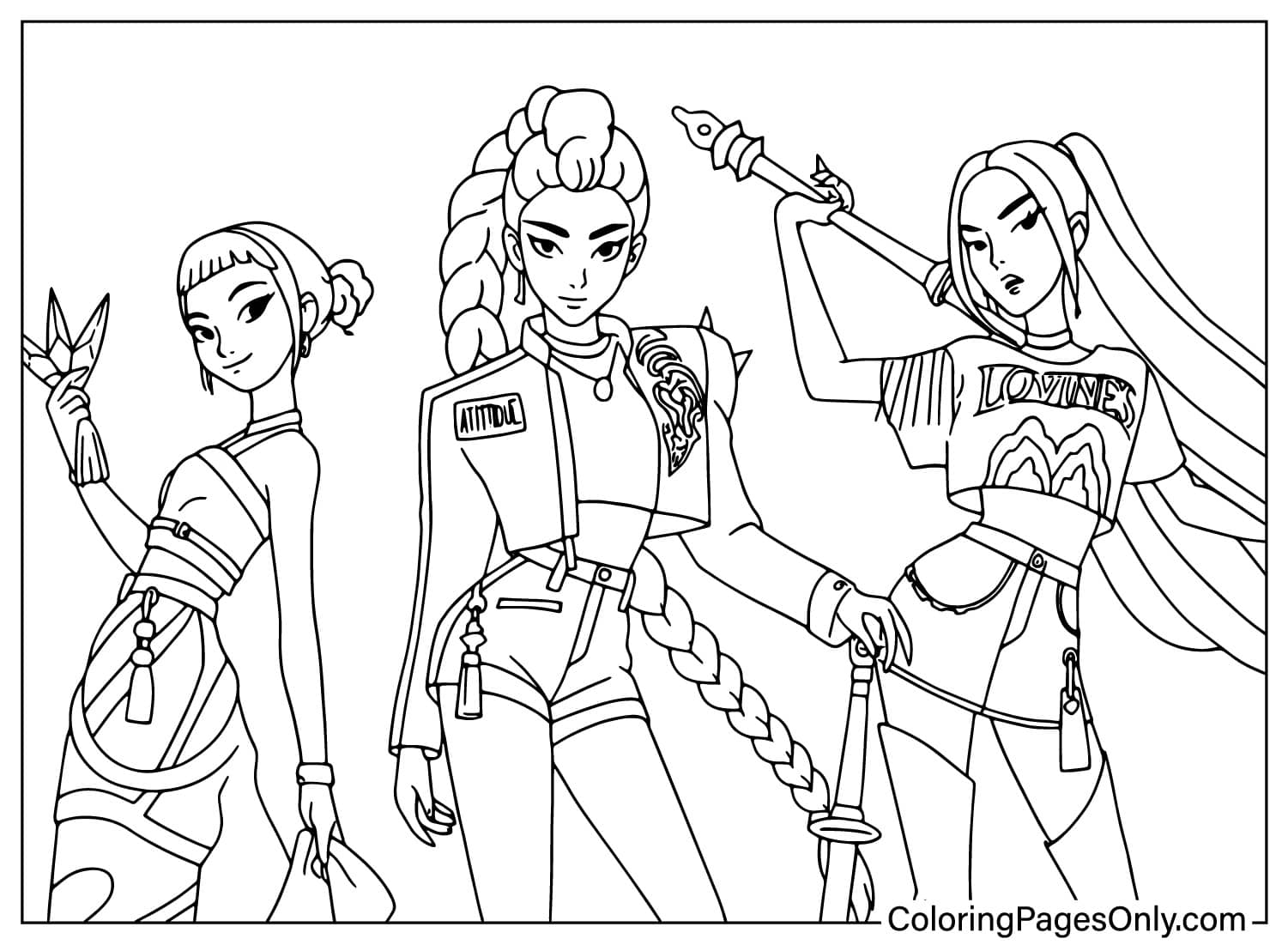
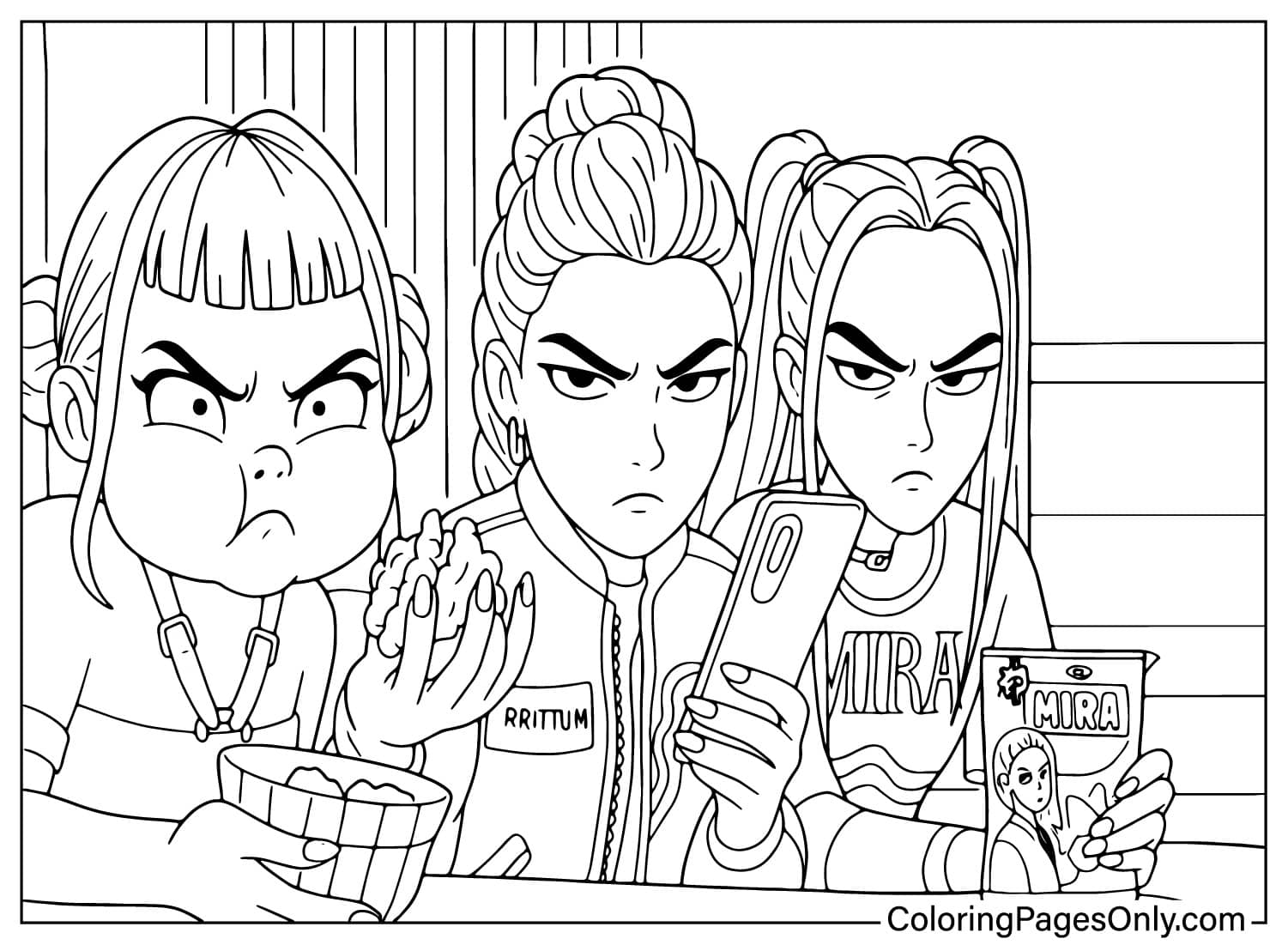
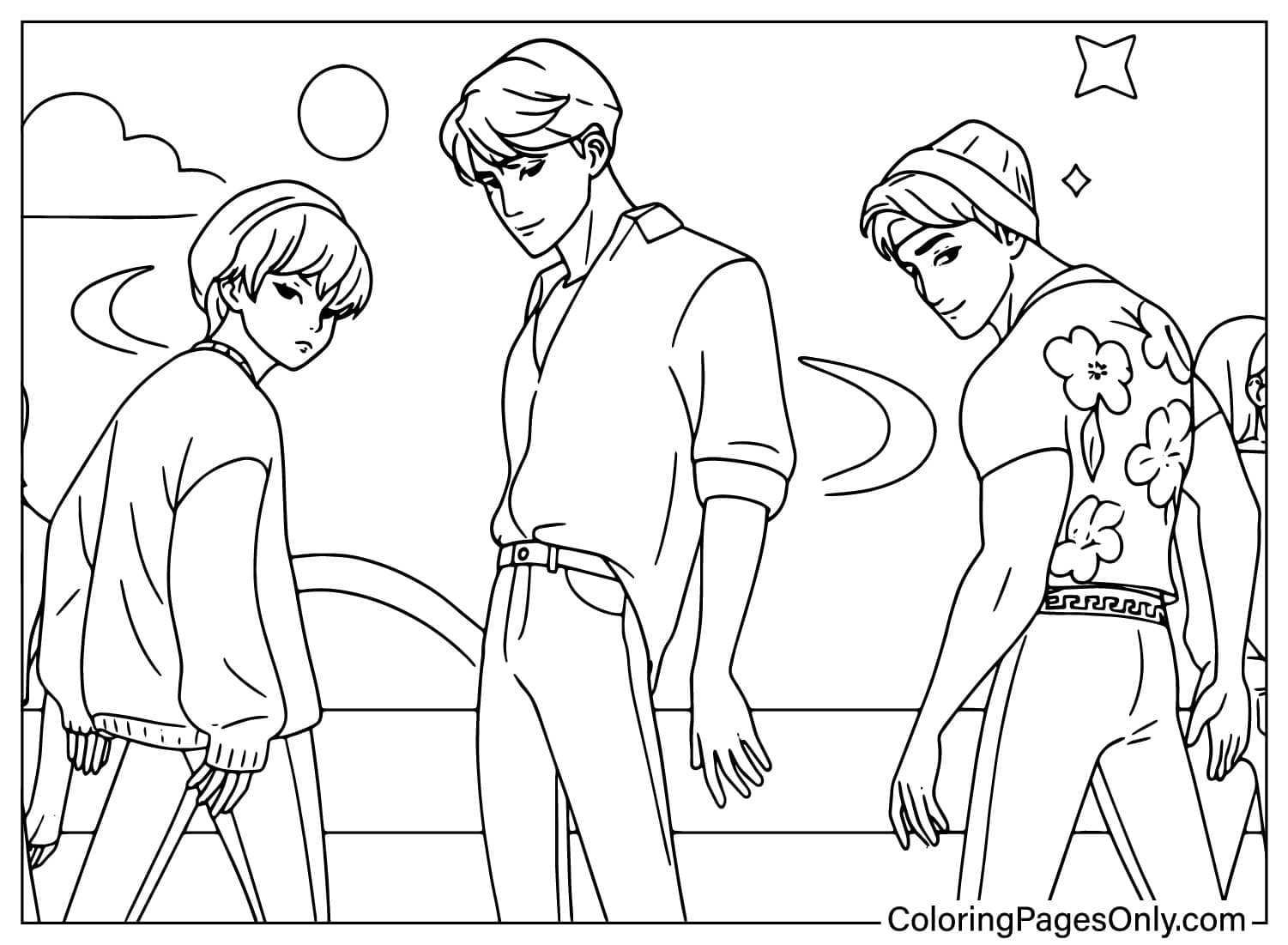
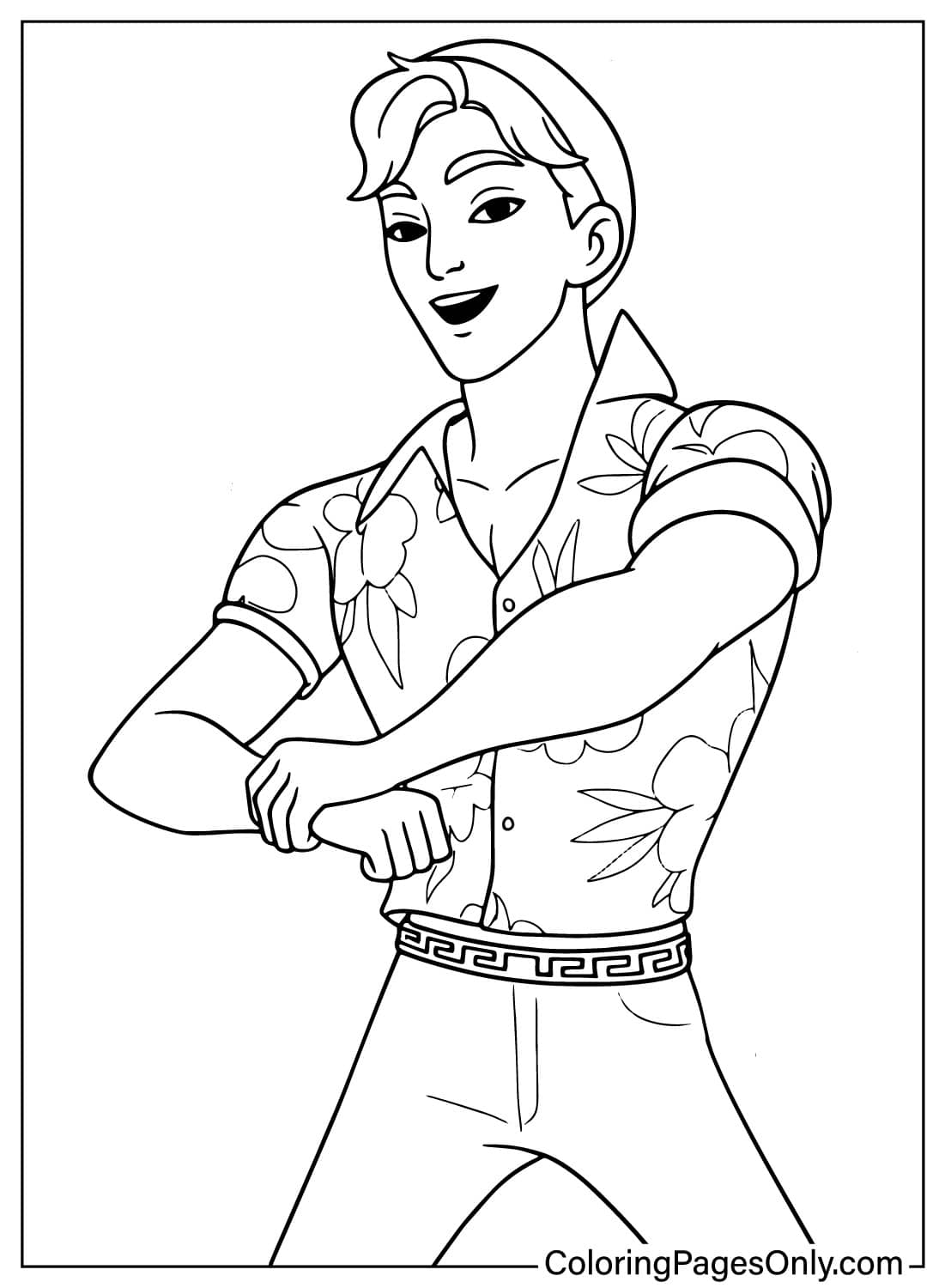
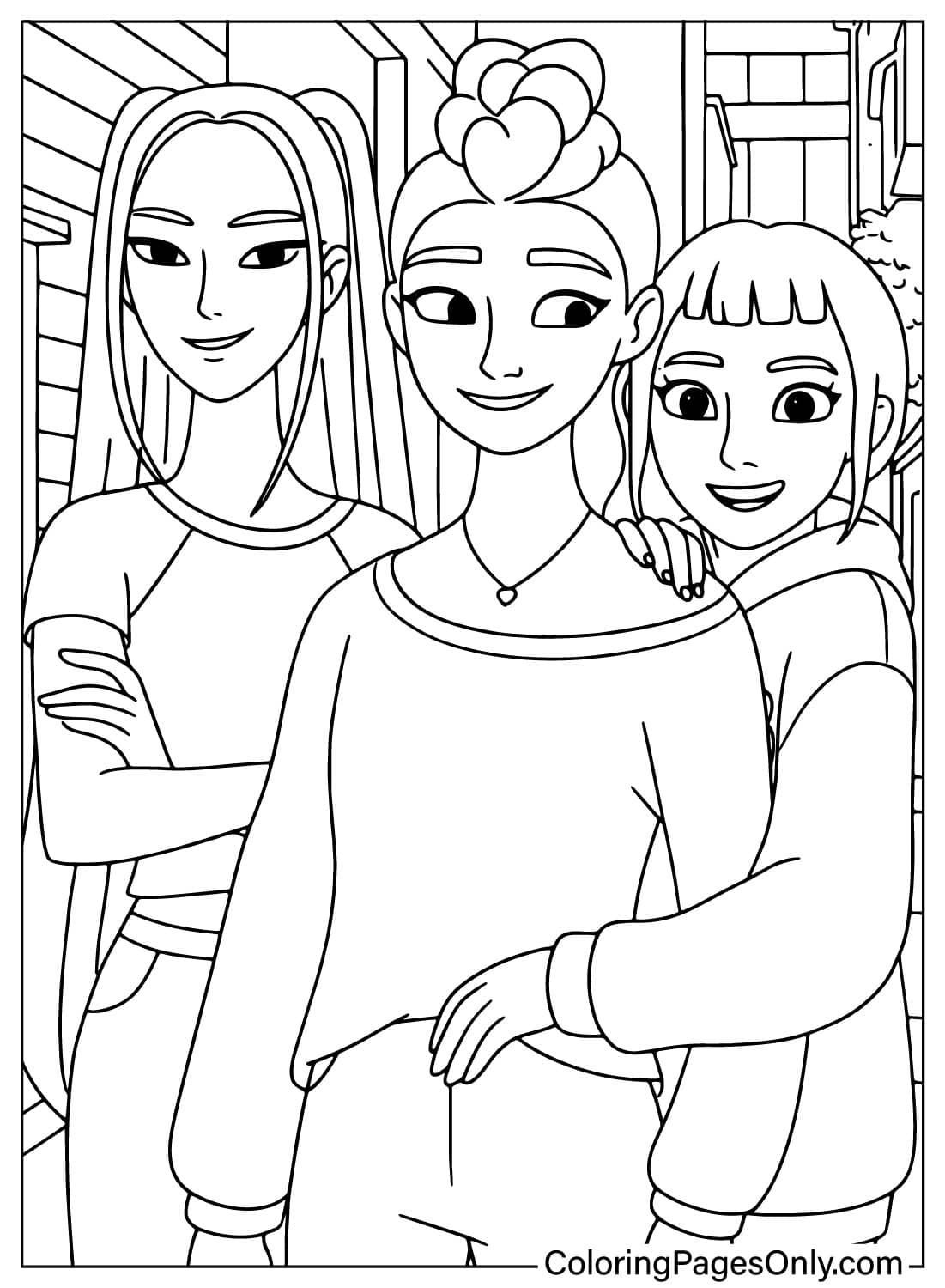
Use a full-group page as the central image for a hand-designed concert poster for HUNTR/X’s fictional comeback tour. The Strong Girls in KPop Demon Hunters, Pretty Girls in KPop Demon Hunters, and Handsome Character in KPop Demon Hunters pages work best as the central poster image.
Color the group page with maximum saturation and stage-lighting energy – this is the poster image, not a private moment. Once colored and cut out, mount it on a large piece of black or deep navy cardstock (the universal color of K-pop poster design, which makes vivid colors pop with maximum contrast).
Add hand-lettered text: group name (HUNTR/X or your own invented group name), tour title, venue name, date. K-pop concert posters tend toward bold, clean typography with a strong hierarchy: group name largest, tour name second, venue and date smallest. Look at real K-pop concert poster typography for reference before hand-lettering – the visual language is specific and recognizable.
Frame the finished poster. It is genuinely beautiful wall art for anyone who loves the show or the genre.
Story Page Sequence
Choose five to seven pages from the collection that together tell a story arc – not necessarily the film’s actual plot, but a coherent sequence that moves from introduction through conflict to resolution.
A sample sequence: Pretty Rumi (introduction, before the demon threat is known) → Girls are Ready (the team assembles) → Rumi Fighting with Demon (the battle) → Fighting in KPop Demon Hunters (the cost of the fight) → Jinu and Rumi Love (the quiet moment after) → Pretty Girls in KPop Demon Hunters (back on stage, the double life continues).
Color all pages with a consistent palette – the same character colors throughout, the same environmental tones in equivalent settings. On a backing strip of paper below each page, write one sentence of original narration: what is happening in this scene, in your own words.
The finished sequence is a visual narrative – a coloring-page comic strip – that demonstrates genuine story thinking and compositional awareness. It is also the most personal of the crafts in this collection, because the story it tells is one you chose and wrote.
Comparison Color Study – Two Groups
Print the group pages for HUNTR/X and the Saja Boys. Color each group with a distinct, internally consistent palette – every member of HUNTR/X in one color family (warm pinks and golds, stage-performance energy), every member of the Saja Boys in a contrasting family (cool blues and silvers, or deep purples and blacks).
Mount both group pages side by side on a neutral grey backing sheet. Below each group, write their name and three words describing the color mood you chose: for HUNTR/X, perhaps “warm, vivid, stage”; for the Saja Boys, “cool, deep, power.”
This exercise develops the ability to use color as a storytelling tool – to make two groups feel visually distinct and emotionally different from each other through palette alone, without changing any of the line art. It is the same skill that K-pop art directors use when designing the visual concepts for a group’s comeback, and the same skill that concept artists use when differentiating factions in animated films.
Frequently Asked Questions
What is KPop Demon Hunters about? KPop Demon Hunters is an animated film built around the premise of a K-pop idol group that secretly works as demon hunters. The characters manage the demands of idol life – performances, comebacks, fan dynamics, group hierarchy – while simultaneously fighting supernatural threats that ordinary people cannot see. The film uses the specific structures and tensions of K-pop idol culture (the double life, the performance of a constructed persona, the suppression of individual identity in service of group cohesion) as the foundation for an action-fantasy story.
Who is Rumi, and why does she appear on so many pages? Rumi is the film’s central protagonist and lead hunter. Her pages span the full range of the film’s tonal register – action sequences, quiet intimate moments, performance scenes, and the Christmas collection. She is depicted with braided hair, a warm, earthy palette, and the kind of expressive face that communicates emotional states clearly across different contexts. The collection reflects her centrality to the story by giving her more solo and duo pages than any other character.
Who are the Saja Boys and HUNTR/X? HUNTR/X and the Saja Boys are the two idol groups at the center of the film’s world. They represent different aspects of the K-pop idol ecosystem – different concepts, different aesthetics, different positions within the competitive landscape of the fictional industry. Their group pages capture the visual dynamics of K-pop group formations, where each member has a distinct role and personality legible in their physical presentation.
What makes K-pop idol culture specifically interesting as a story setting? The K-pop idol system is built on a tension that is intrinsically dramatic: a rigorously constructed public persona maintained over years of public scrutiny, set against a private self that the public never sees. Idols train for years to develop a stage presence that feels spontaneous and authentic while being highly choreographed and managed. The gap between these two versions of the same person – the one on stage and the one in private – is the gap that KPop Demon Hunters occupies. Adding demon hunting to that already-existing double life makes explicit a structure that K-pop idol stories have been exploring in fiction (manhwa, webtoons, drama) for years.
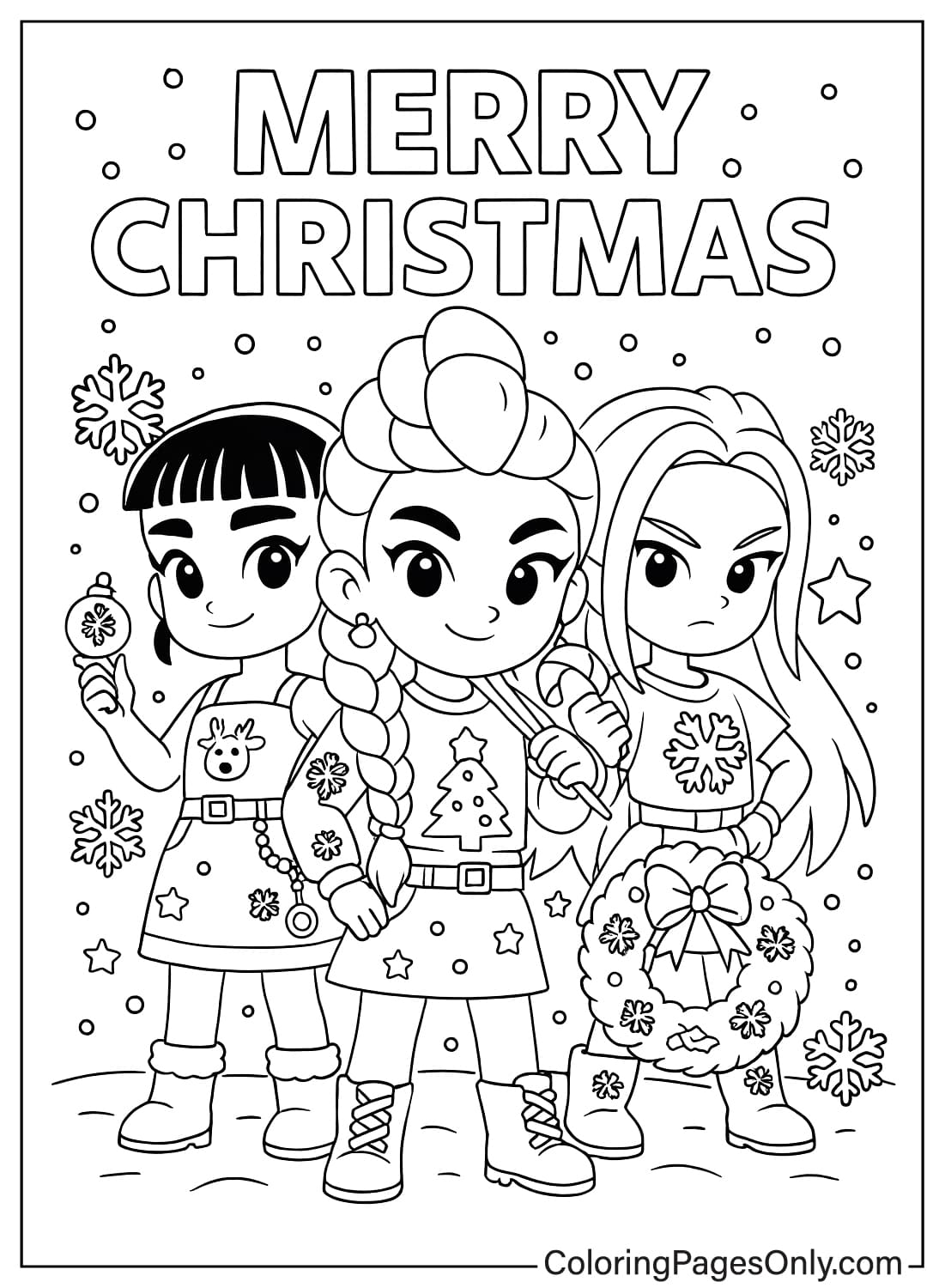
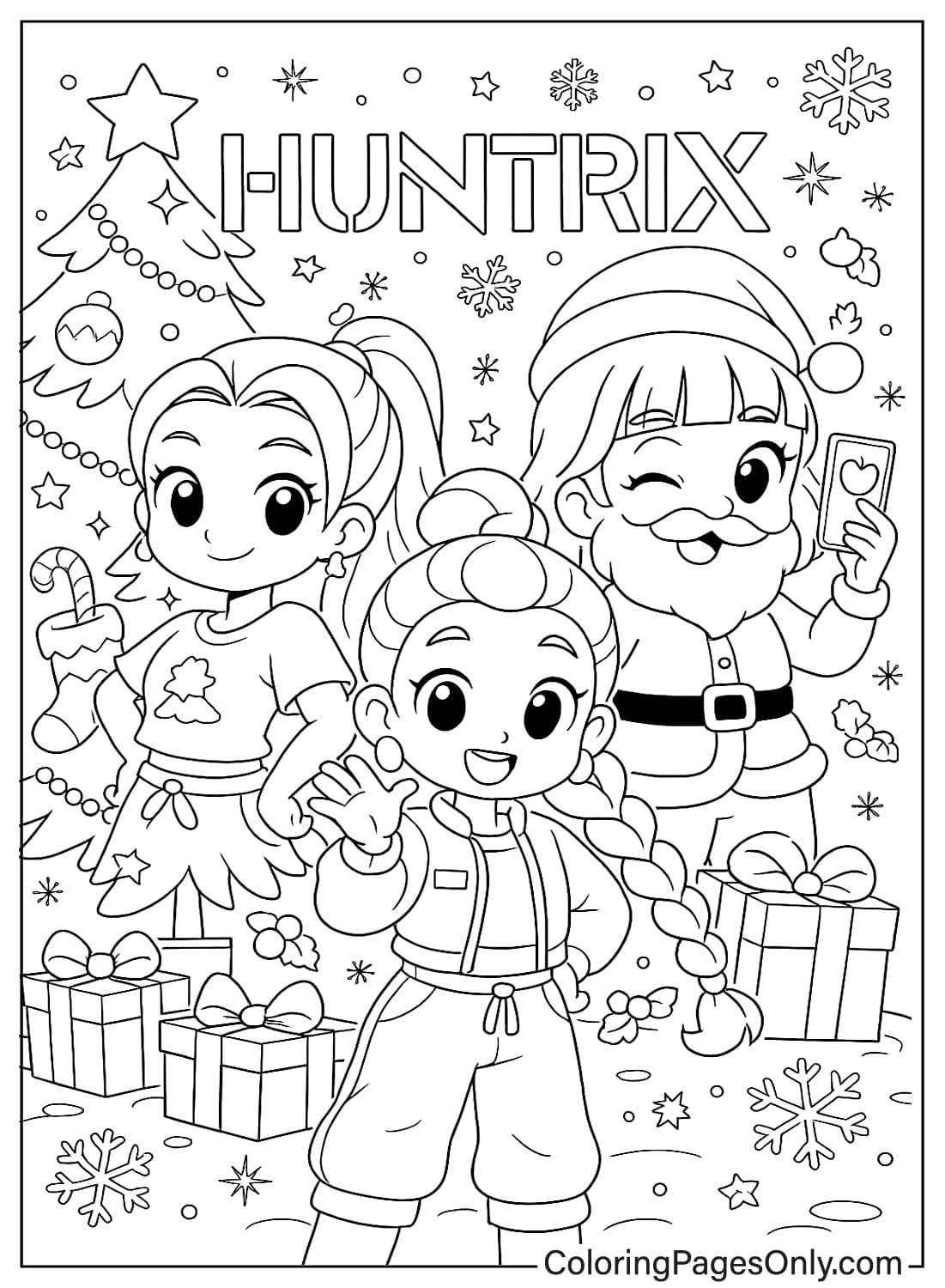
What is the Christmas collection, and when was it added? A dedicated Christmas collection was added to the KPop Demon Hunters pages in December 2025, featuring the main characters in festive contexts – Santa hats, gifts, sleigh rides, winter scenes, and the Saja Boys in a group Christmas composition. The Christmas pages maintain the characters’ design identities while introducing holiday visual elements. They are particularly popular as gifts and seasonal activity pages for fans of the film.
Are these pages appropriate for children? The collection spans a range of content complexity. The character portrait pages and the Christmas collection are suitable for children of all ages. Some of the demon battle pages – particularly Rumi Fighting with Demon and Fighting in KPop Demon Hunters – depict action and supernatural combat that may be intense for very young children; these pages are most suitable for ages 8 and up or for children already familiar with the film. The majority of the collection is appropriate for the same audience as the film itself.
What coloring supplies work best for these pages? For the performance and idol-focused pages, broad-tip markers deliver the most stage-appropriate saturated color quickly and cleanly. For the battle pages and the detailed character portrait pages, layered colored pencils allow the kind of shadow work and glow effects that the supernatural elements reward. For the Christmas pages, either medium works well – the festive elements (Santa hats, gifts, snowflakes) respond to both the bold application of markers and the softer blending of pencils. A white gel pen is valuable for adding highlight details and sparkle effects to both the glowing supernatural elements and the reflective surfaces in performance costumes.
What makes the Jinu pages technically challenging? Jinu’s design includes three elements that require specific technique: the wide-brimmed hat (a large, flat surface that rewards careful light-and-shadow work to prevent it from reading as a solid flat shape), the facial markings (small detail elements that require a fine-tip tool for accuracy), and the glowing arm (the most technically demanding element in the entire collection, requiring layered warm tones radiating from a near-white center). The Jinu in the KPop Demon Hunters page is the most technically rewarding single-character page in the collection for experienced colorists.
Browse the full collection at ColoringPagesOnly.com. All 40+ pages free, no sign-up, PDF or PNG, print or color online directly in your browser.
K-pop idol culture is built on the performance of impossible perfection – the synchronized choreography, the flawless presentation, the smile that does not waver under any circumstances. What KPop Demon Hunters adds to that world is the thing that makes that performance not just demanding but genuinely heroic: the knowledge that the people on stage just fought something in the dark, and they got on stage anyway.
Pick up your markers. Choose your palette – warm and vivid for the stage, deep and glowing for the hunt. Color both worlds.
Share your work on Facebook and Pinterest and tag #Coloringpagesonly. We especially want to see the concert posters and the dual-world character card sets.
Color the stage. Honor the hunt. Live the double life.