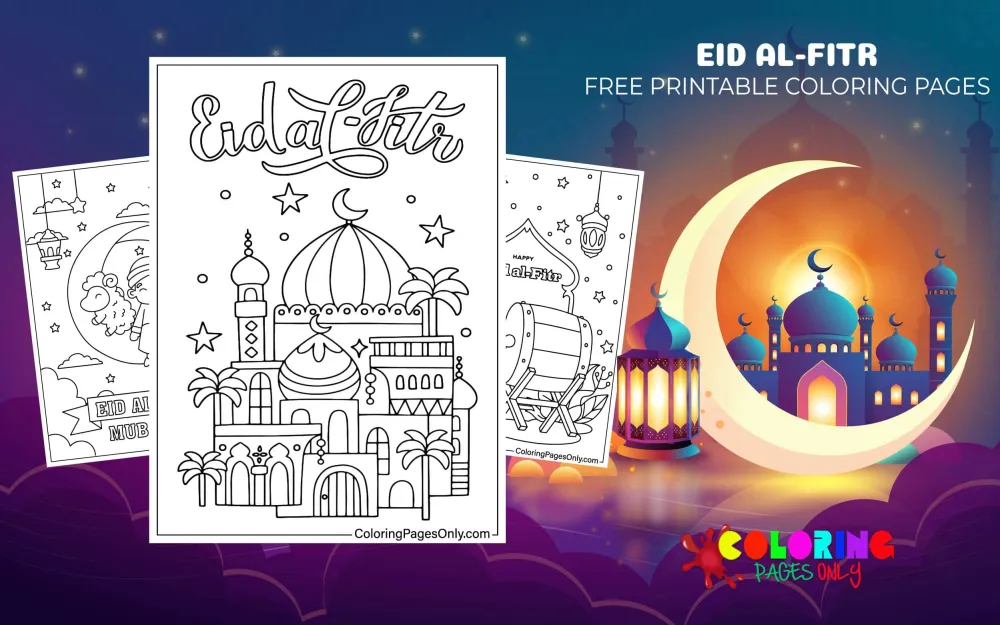
Eid Al-Fitr Coloring Pages at ColoringPagesOnly.com brings together 30+ free pages for one of the two major celebrations in the Islamic calendar – illustrated Eid Mubarak greetings, children celebrating, prayer scenes, crescent moon and lantern imagery, and decorative Islamic geometric patterns suitable for coloring during the holiday season. Download any page as a PDF to print, or color online in your browser. The Ramadan collection is at Ramadan Coloring Pages.


What is Eid Al-Fitr?
Eid al-Fitr (عيد الفطر) means “Festival of Breaking the Fast” in Arabic. It marks the end of Ramadan – the Islamic lunar month of fasting, prayer, and reflection – and falls on the first day of Shawwal, the tenth month of the Islamic calendar. Because the Islamic calendar is lunar rather than solar, Eid al-Fitr falls approximately ten to eleven days earlier each year relative to the Gregorian calendar, meaning it rotates through every season over a 33-year cycle.
The celebration typically lasts for three days. The morning of the first day begins with a special congregational prayer called Salat al-Eid, performed at a mosque or open prayer ground. Before the prayer, Muslims give Zakat al-Fitr – a mandatory charitable donation to ensure that people in need can also celebrate the holiday. After prayer, the day is given to family gatherings, visiting relatives, sharing festive meals, and exchanging gifts and greetings.
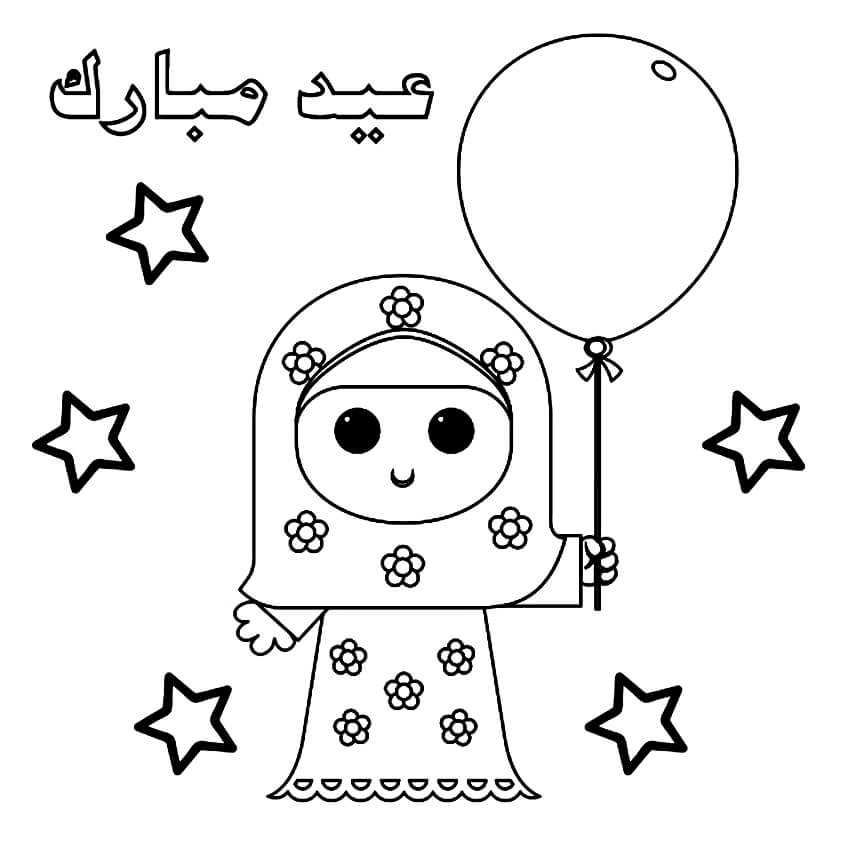
“Eid Mubarak” (مبارك) – meaning “Blessed Eid” – is the most widely used greeting, exchanged between family, friends, and neighbors. “Eid Sa’id” (سعيد), meaning “Happy Eid,” is also common. The phrase “Eid Mubarak” appears on nearly every page in this collection, written in both Arabic calligraphy and illustrated Latin lettering – it is the visual anchor of Eid celebration imagery in the same way that “Merry Christmas” anchors Christmas coloring pages.
Traditional Eid foods vary widely by culture and region: dates, maamoul (semolina pastry cookies filled with dates, nuts, or figs), sheer khurma (vermicelli cooked in sweetened milk with dates and raisins), kahk (Egyptian Eid cookies dusted with powdered sugar), baklava, halwa, and many others. The visual richness of Eid – the lanterns, the crescent moons, the decorative textiles, the new clothes – makes it a natural subject for illustration and coloring pages.
What’s in This Collection
The collection covers three main types of pages.
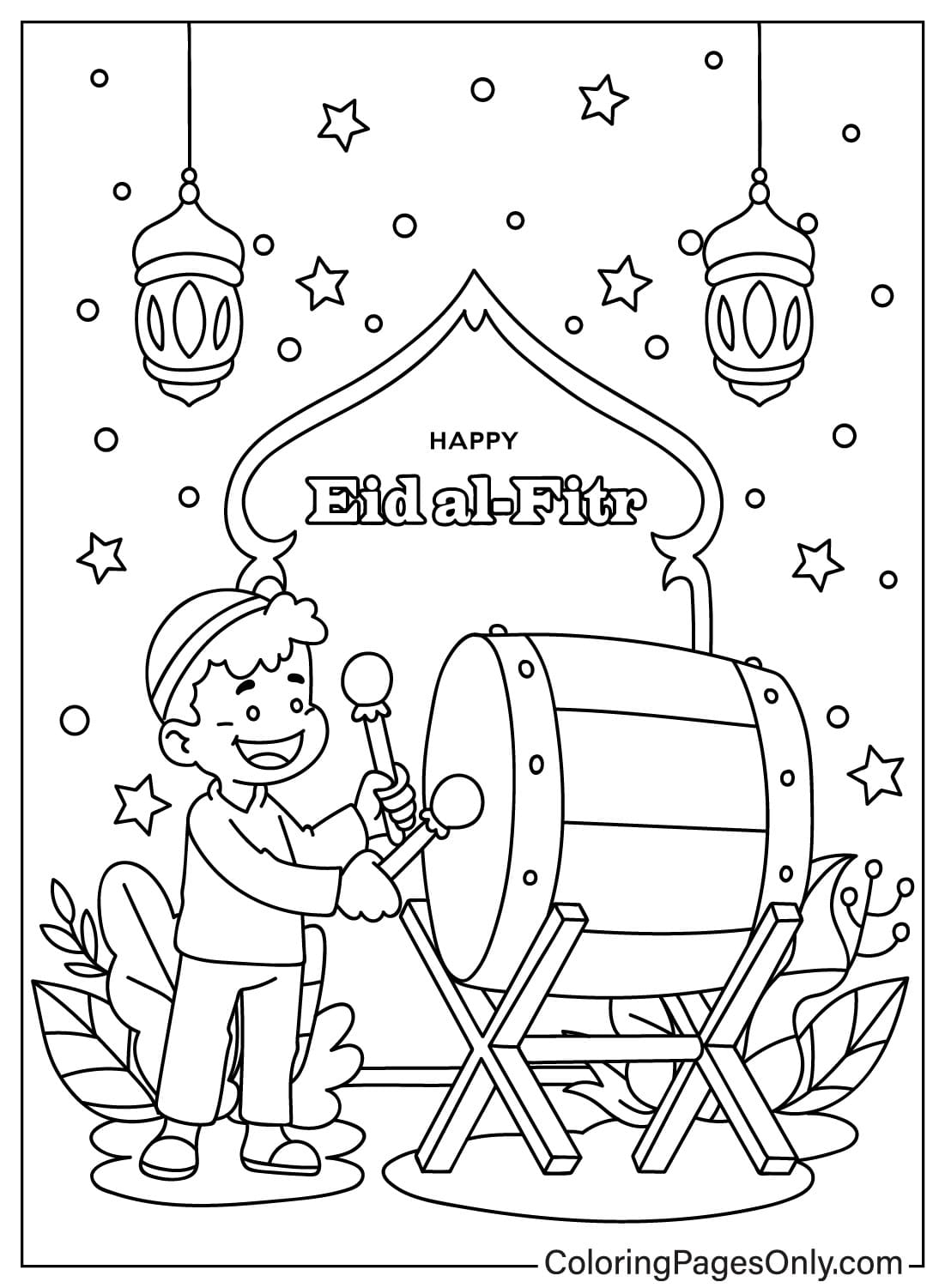
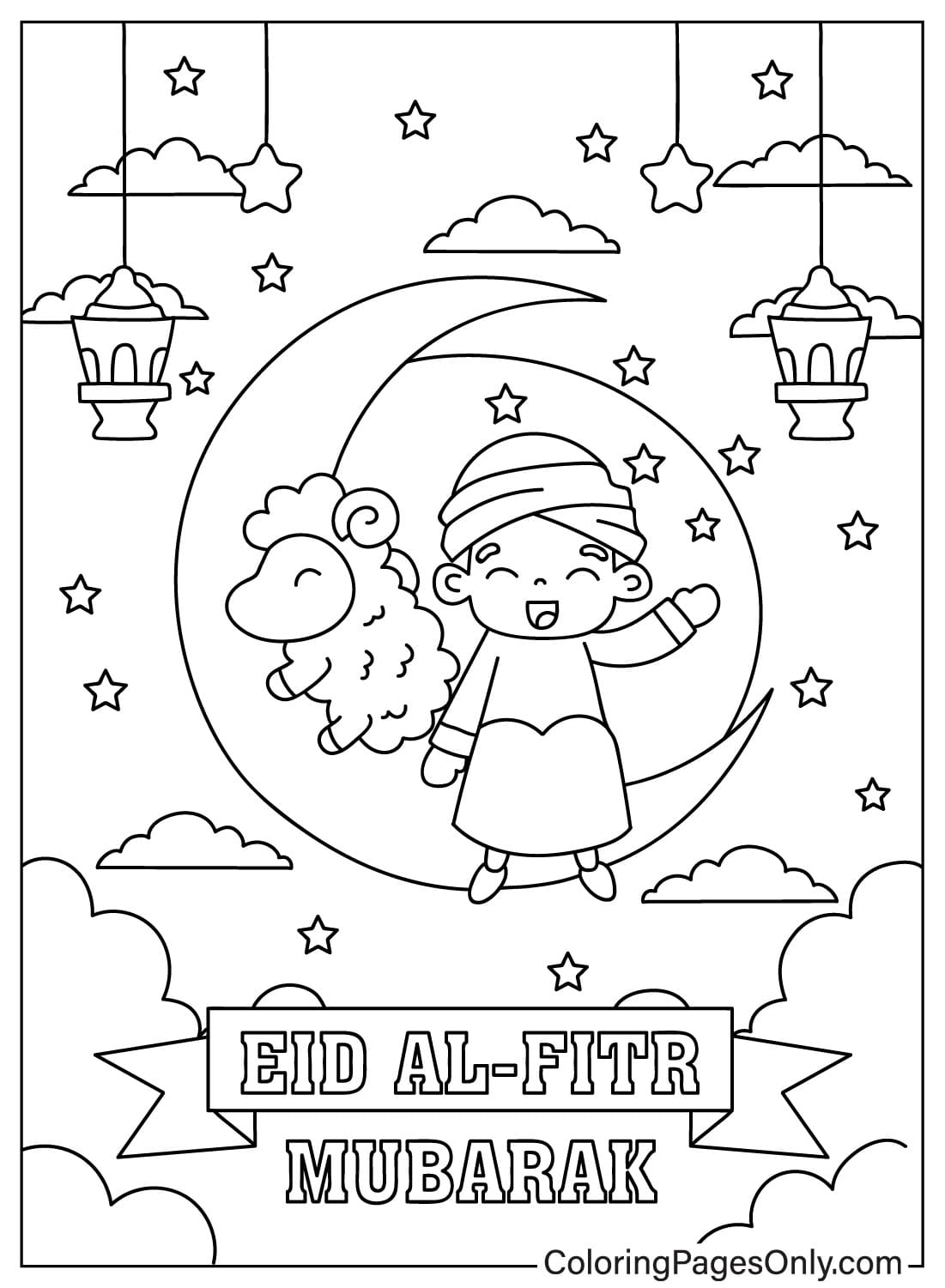
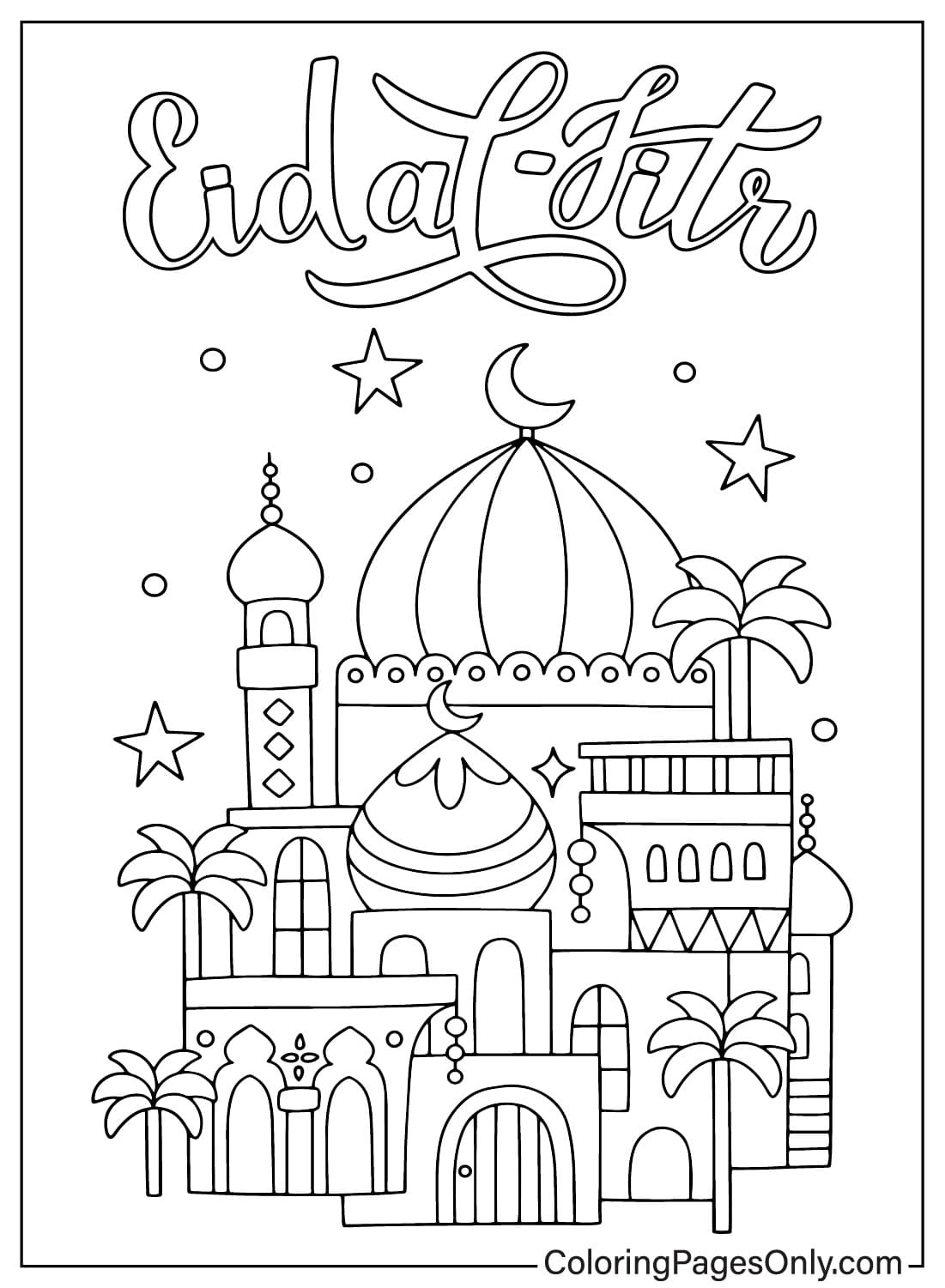
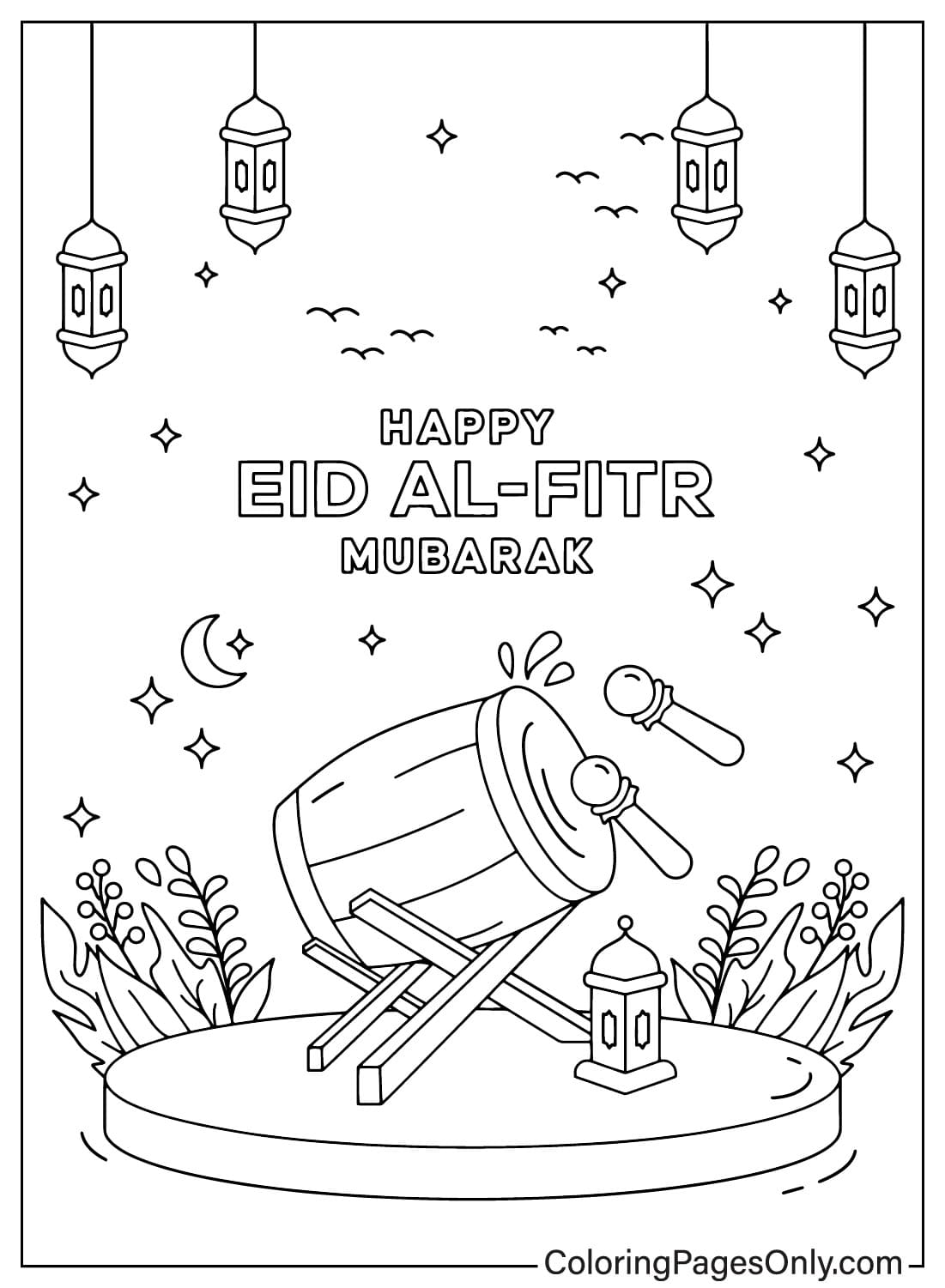
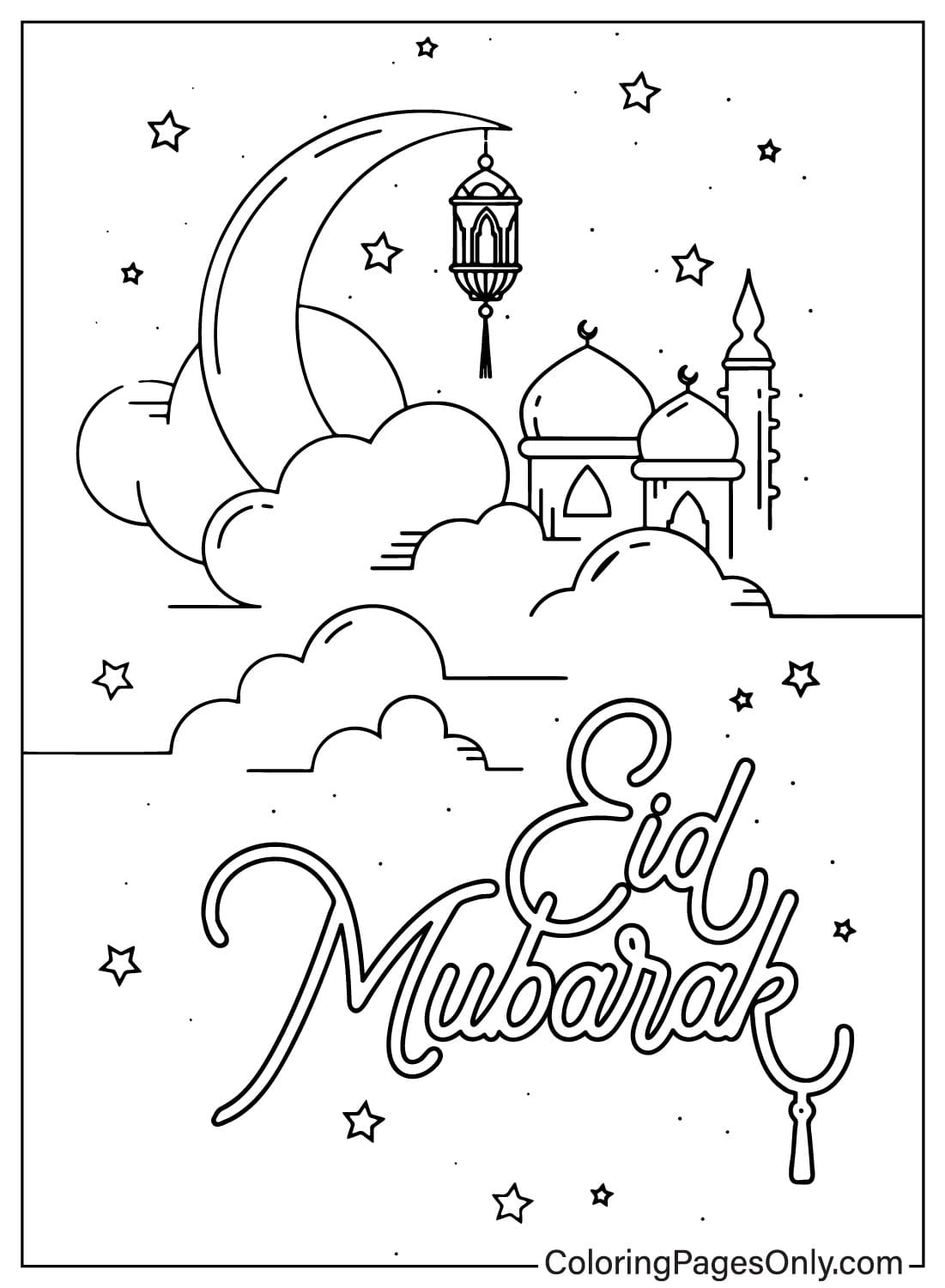
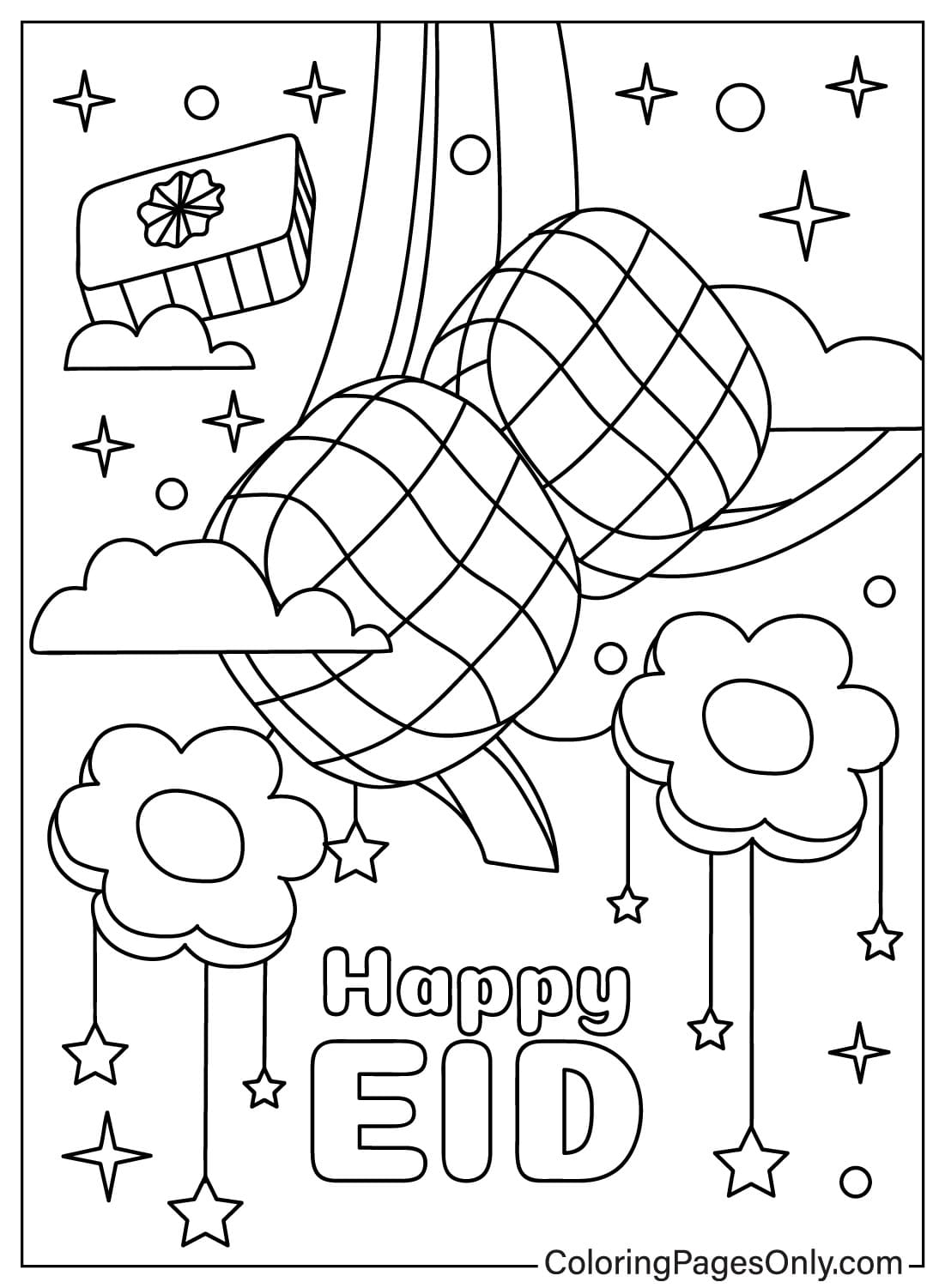
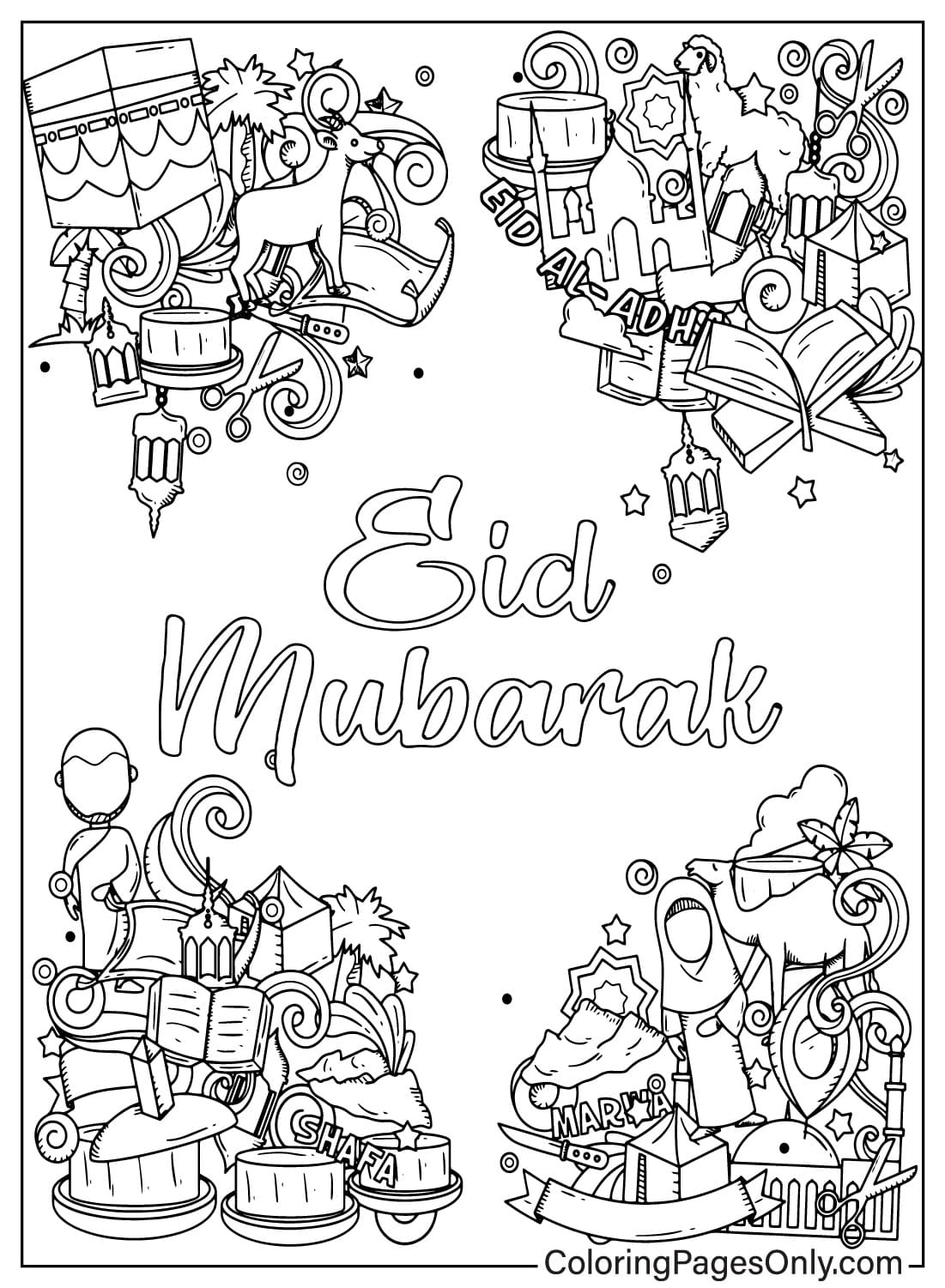
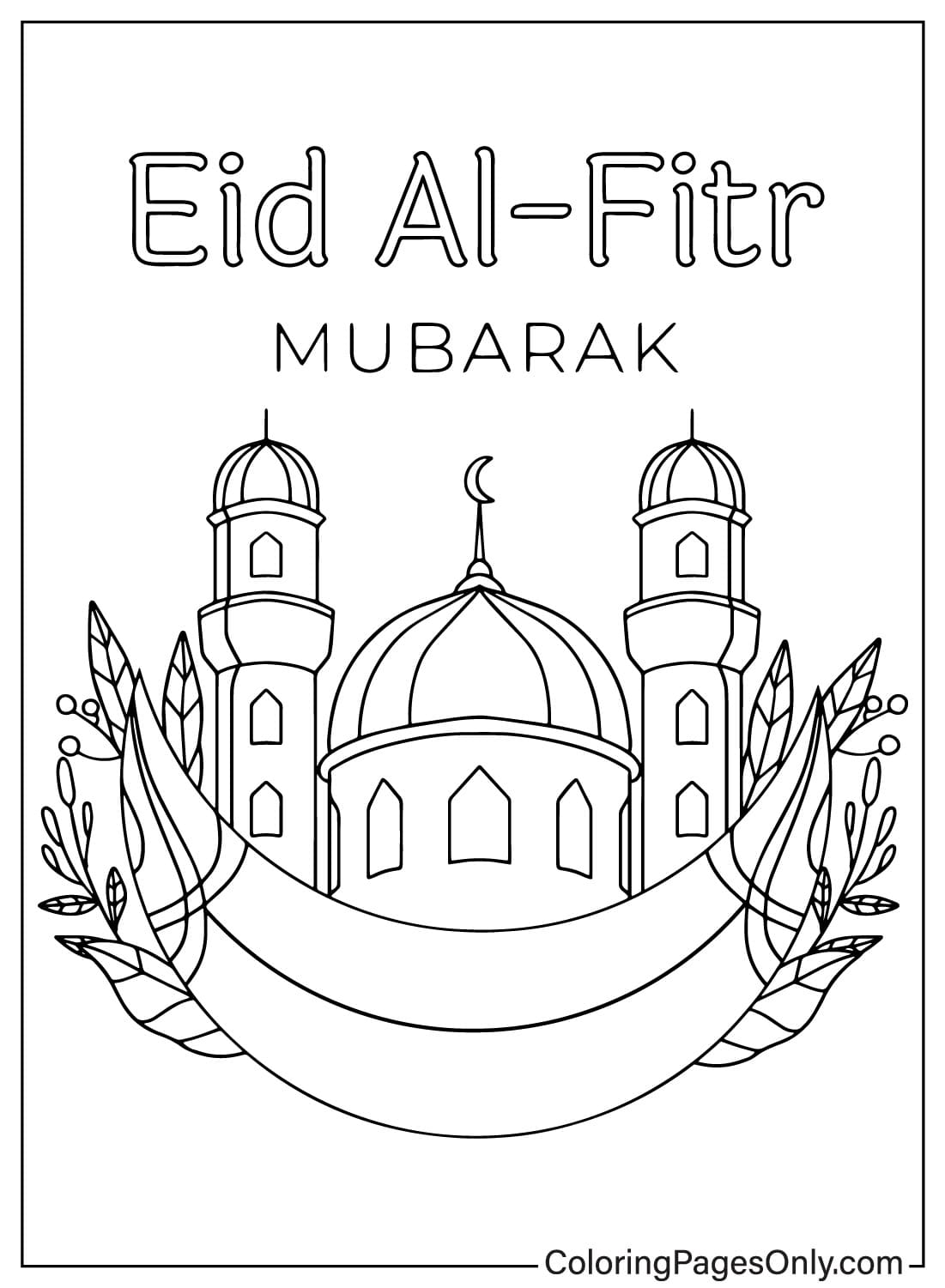
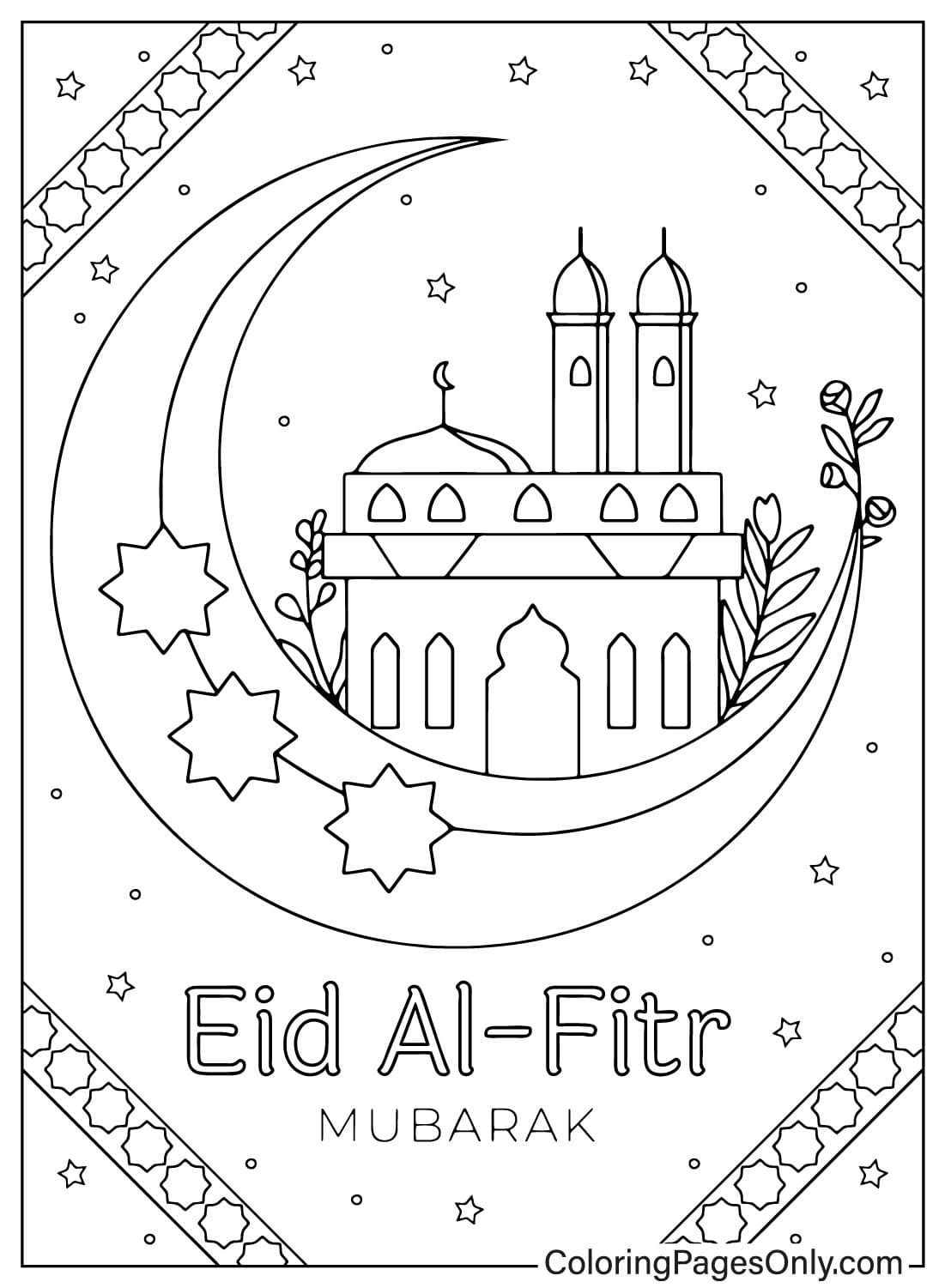
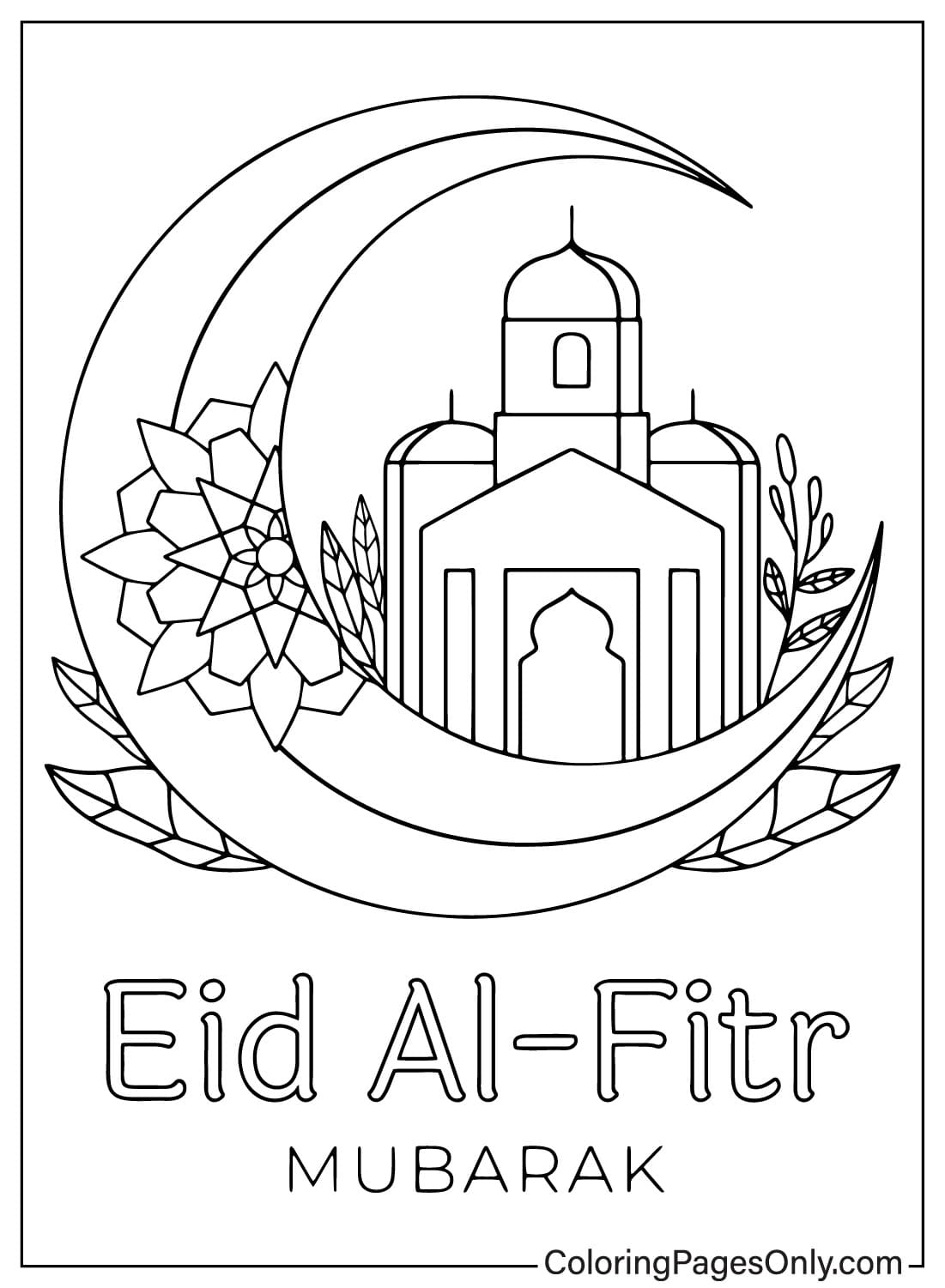
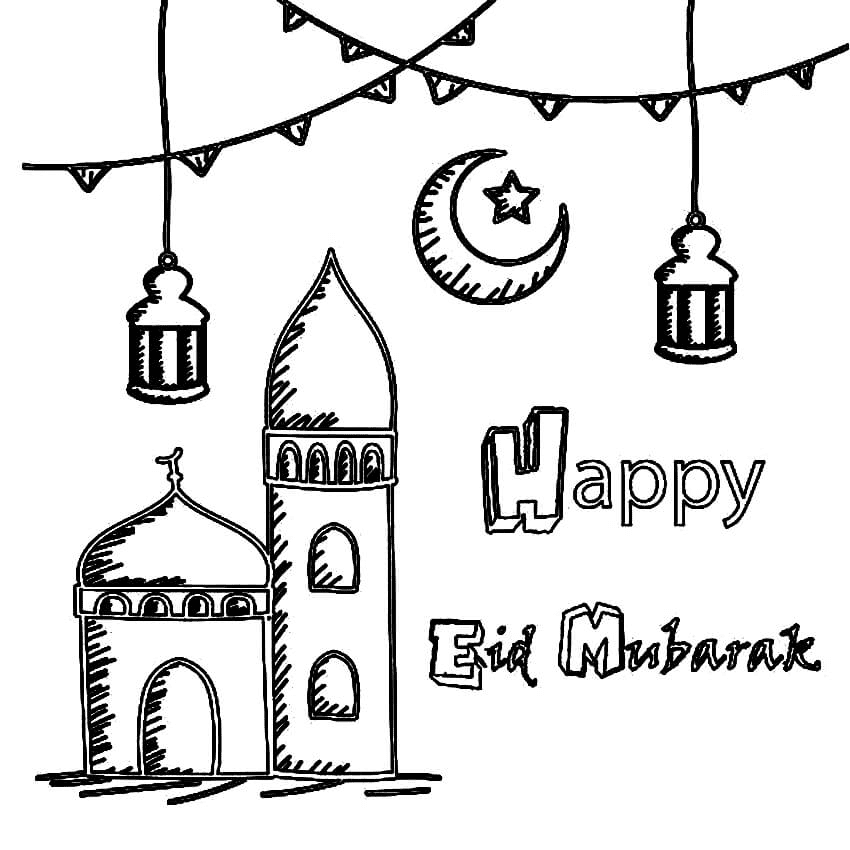
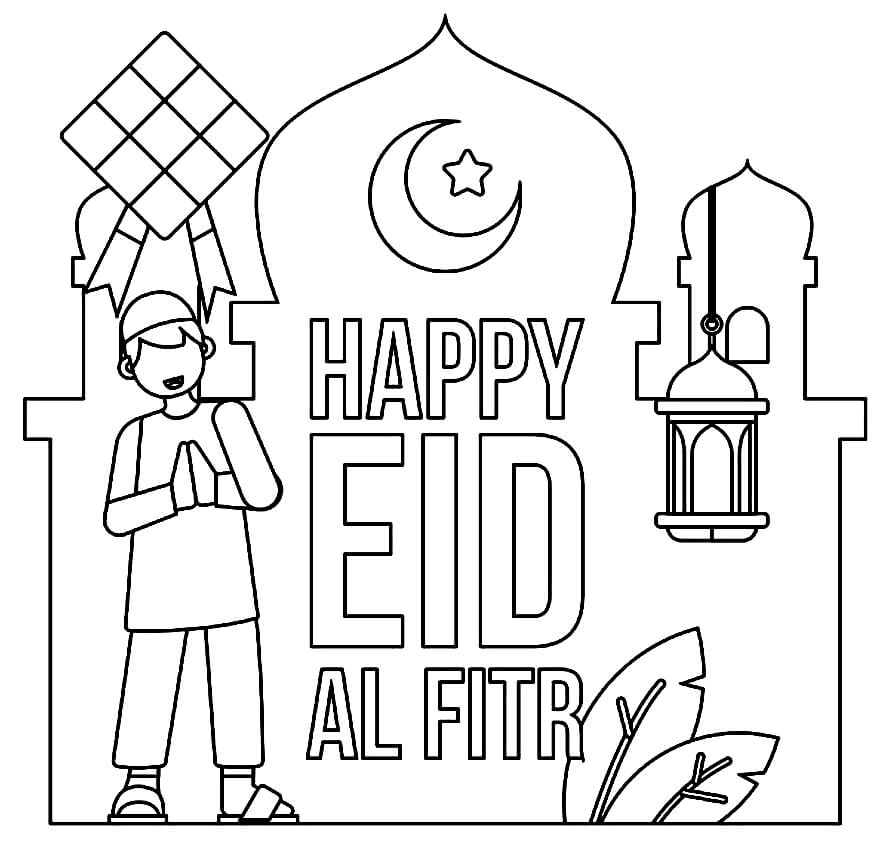
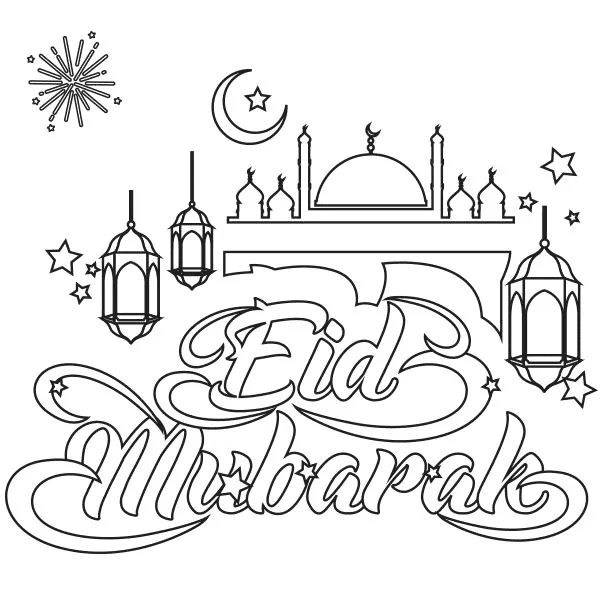
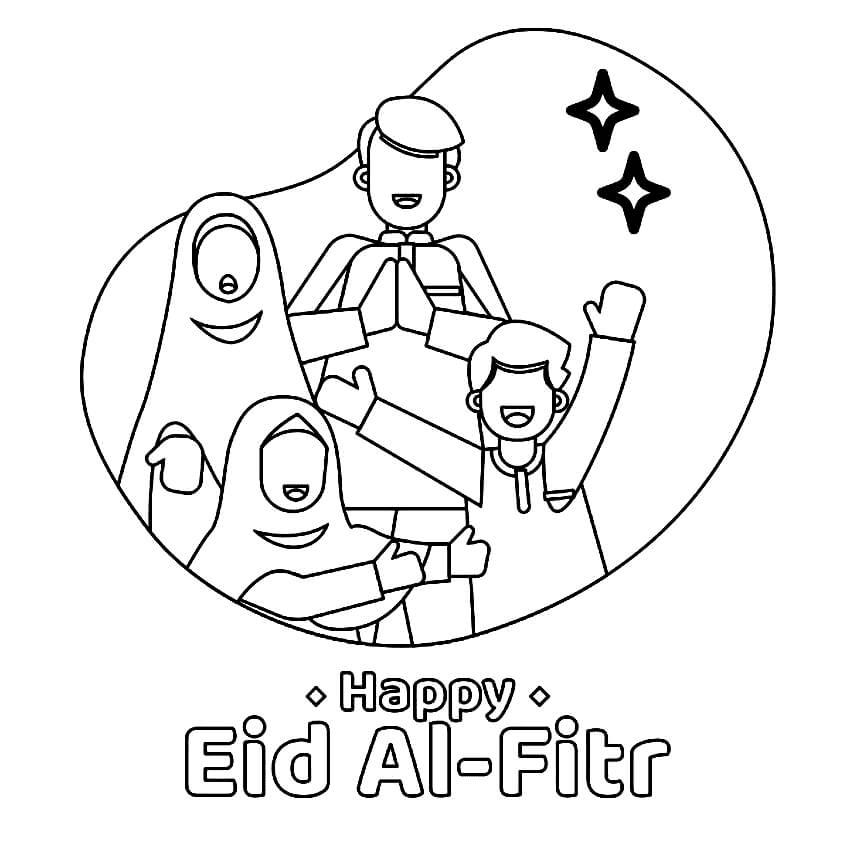
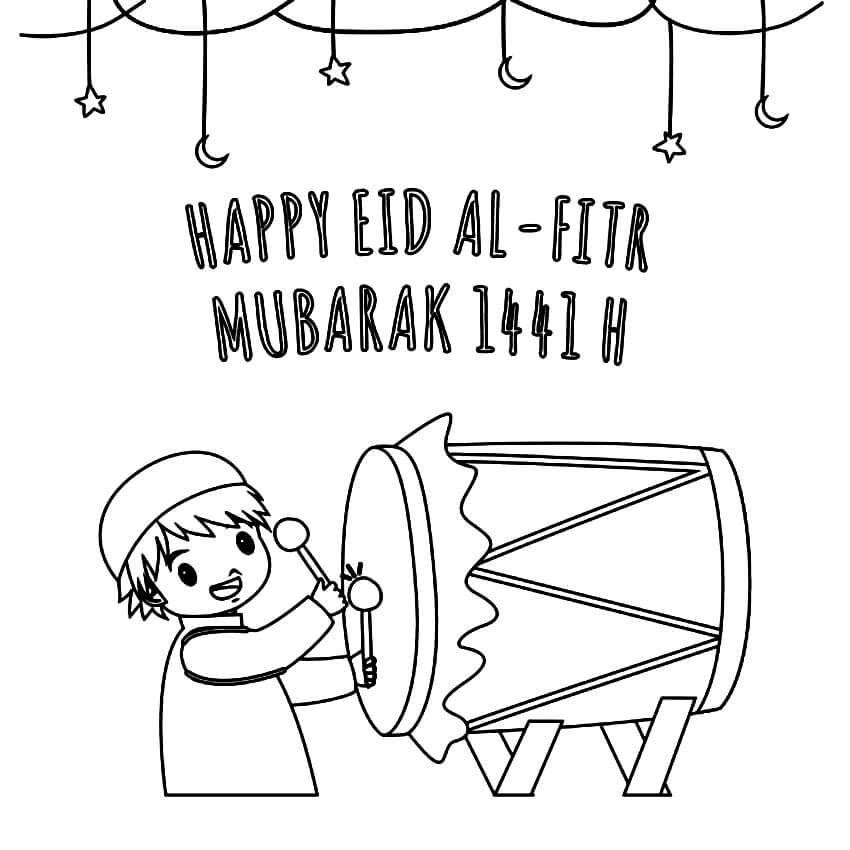
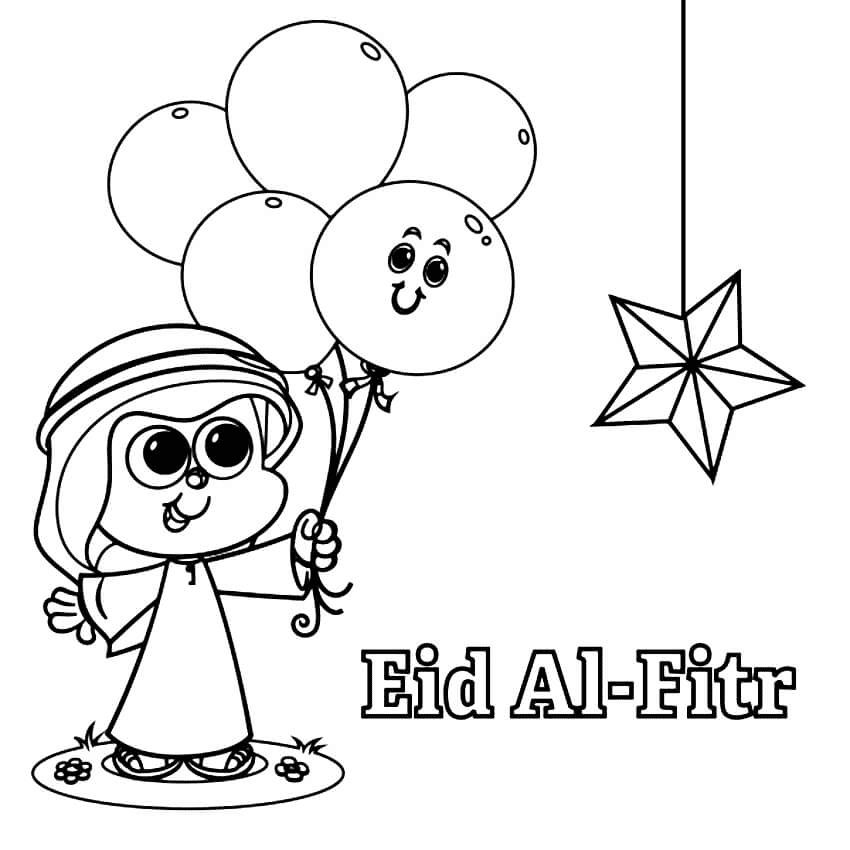
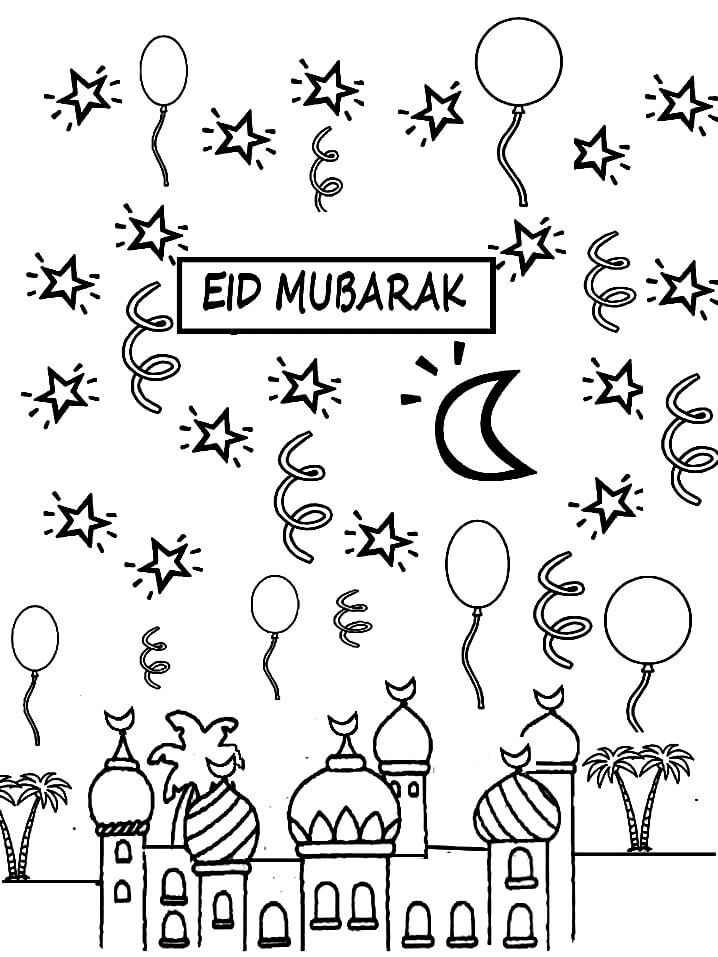
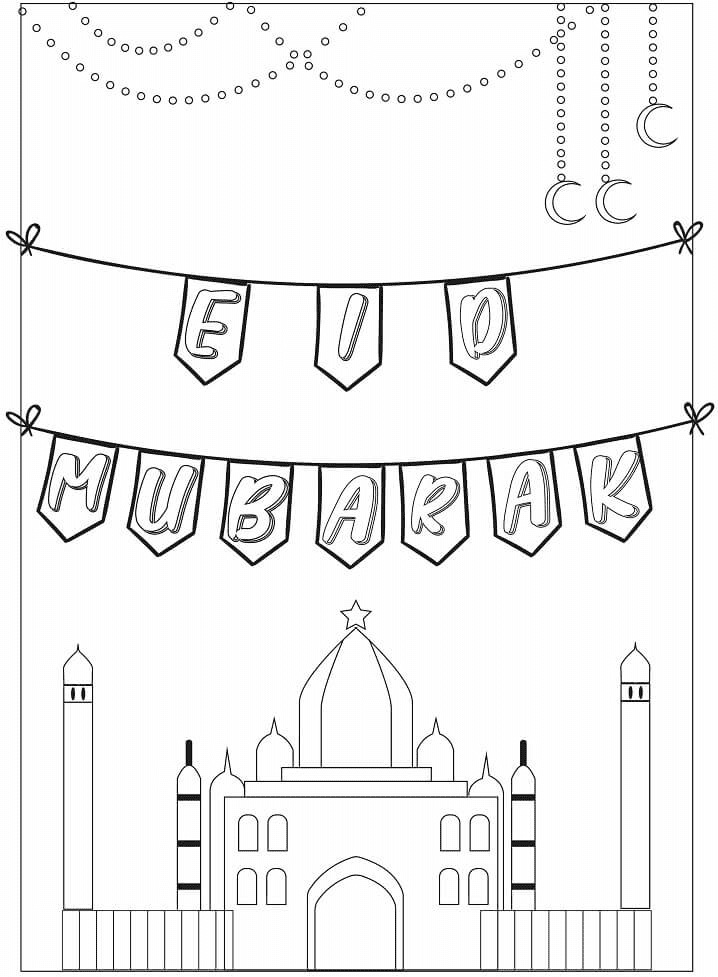
Eid Mubarak lettering and greeting pages form the largest group – pages built around the phrase “Eid Mubarak” rendered in decorative lettering, often surrounded by stars, crescent moons, lanterns, floral patterns, and other Eid visual motifs. These are the greeting-card format pages: Eid Mubarak, Happy Eid Mubarak, Happy Eid, Happy Eid al Fitr, Happy Eid al Fitr Mubarak, Eid al Fitr Mubarak. Many of these pages are suitable for coloring and then using as actual cards or gifts.
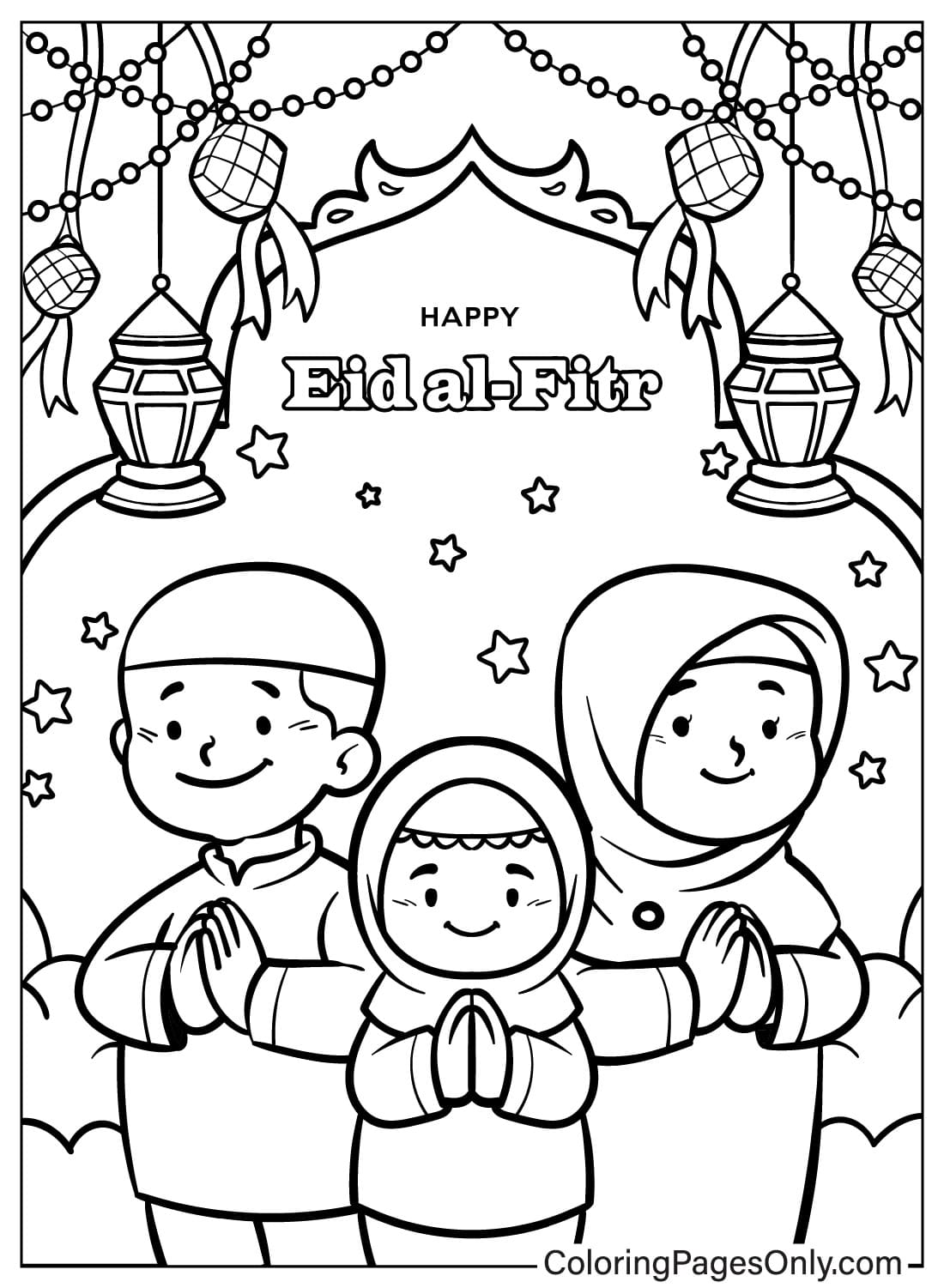
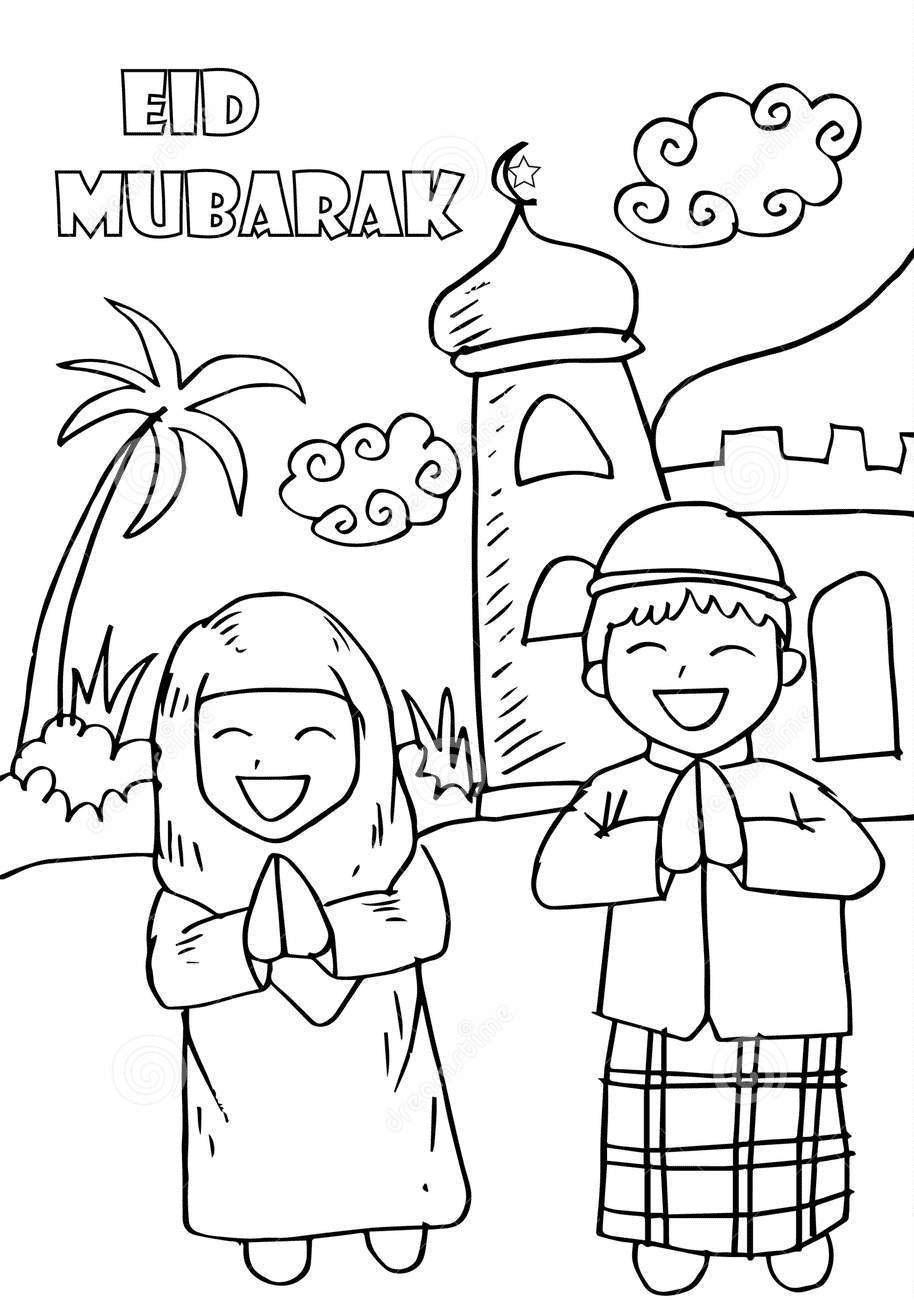
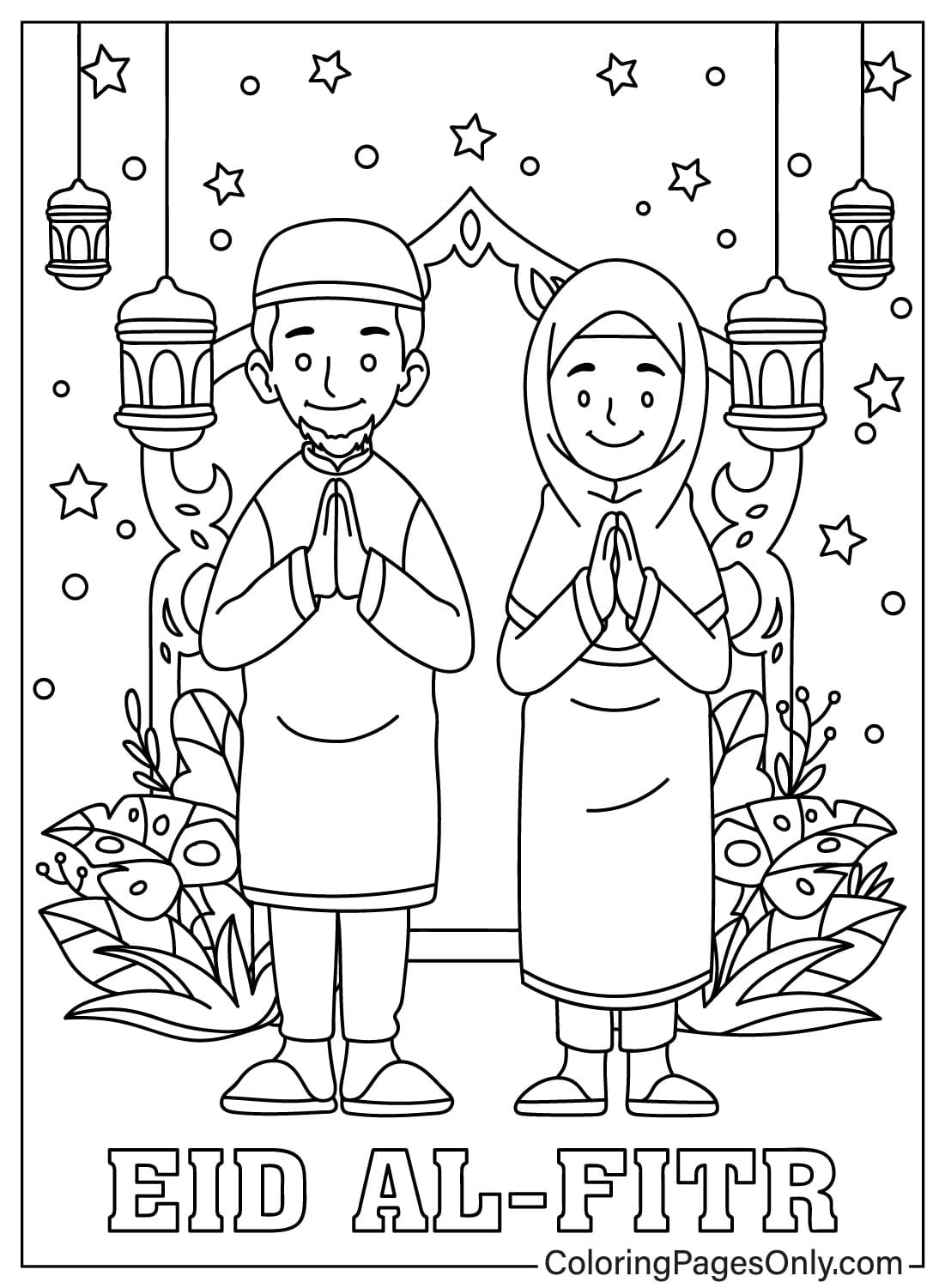
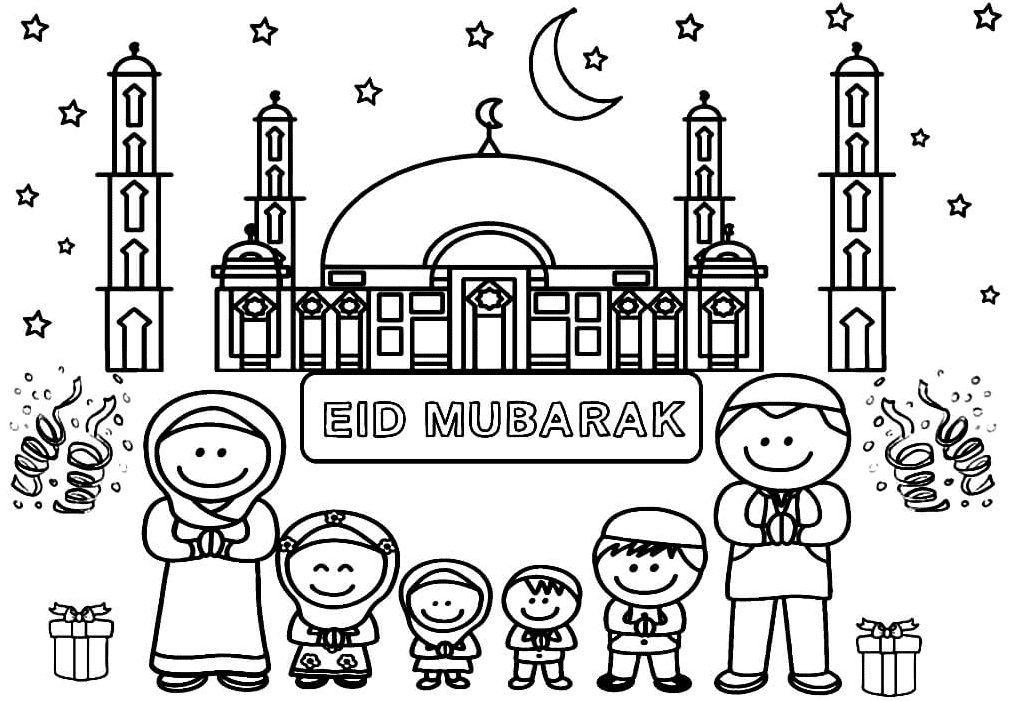
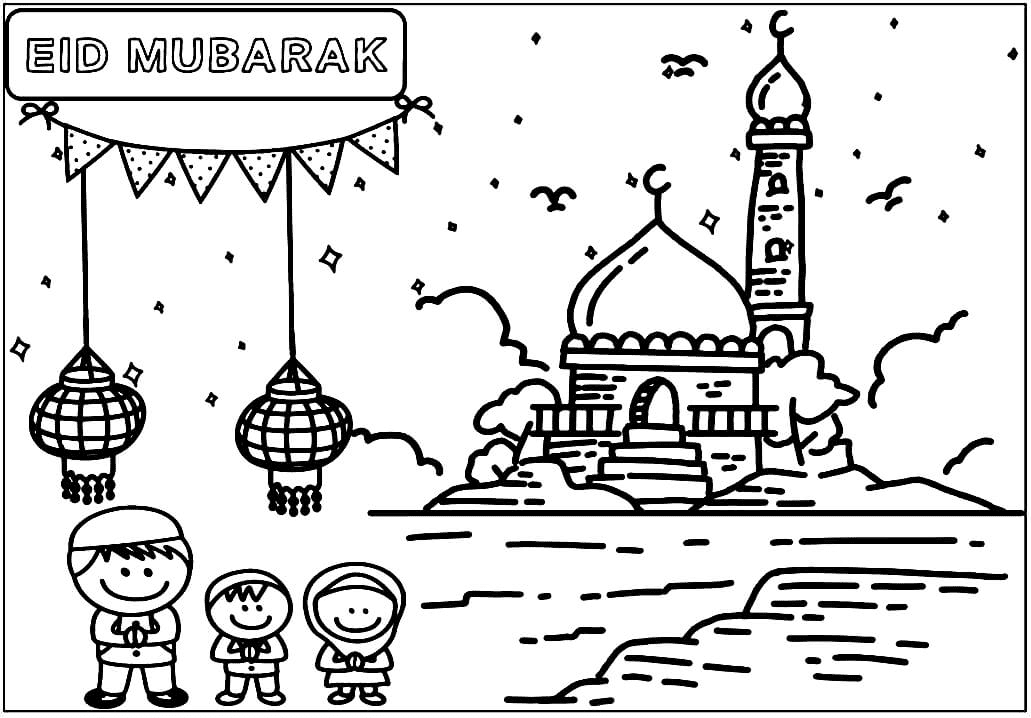
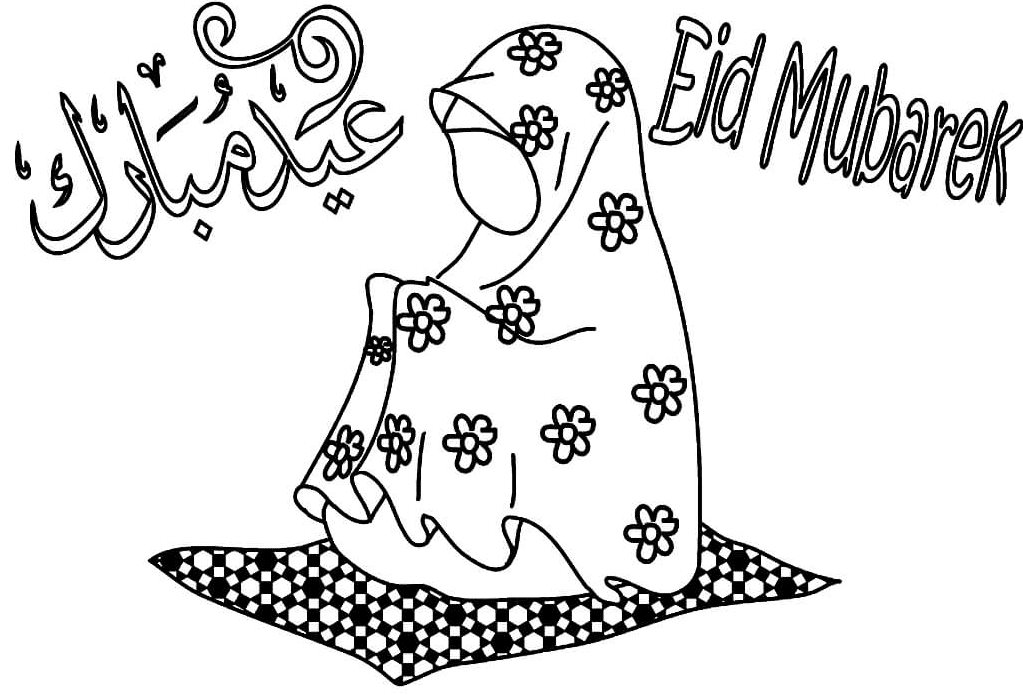
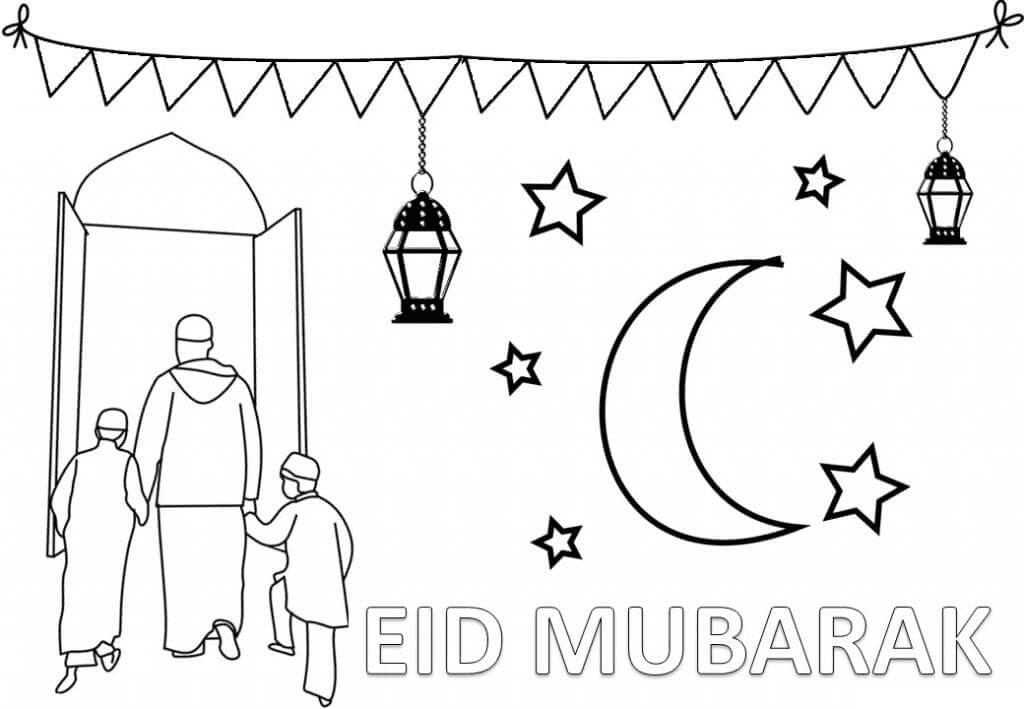
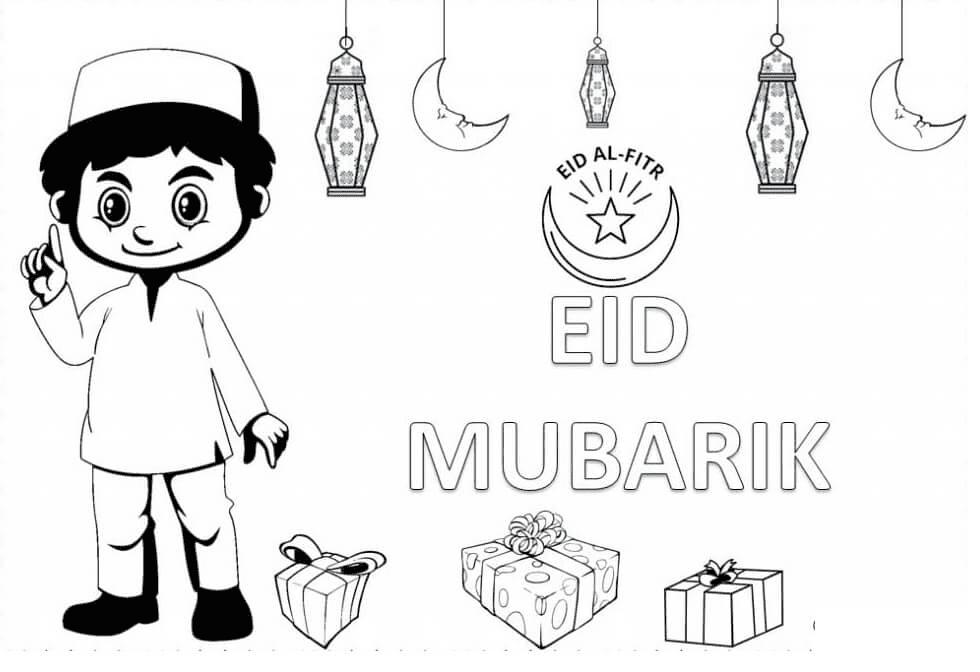
Children and family scene pages show the human dimension of the holiday – Eid Mubarak with Happy Kids shows children in celebration, while pages like Pray Eid Al-Fitr Coloring Sheet show the prayer element of the holiday. These pages are the most narrative in the collection, depicting real activities and moments from the Eid celebration rather than abstract patterns or lettering.
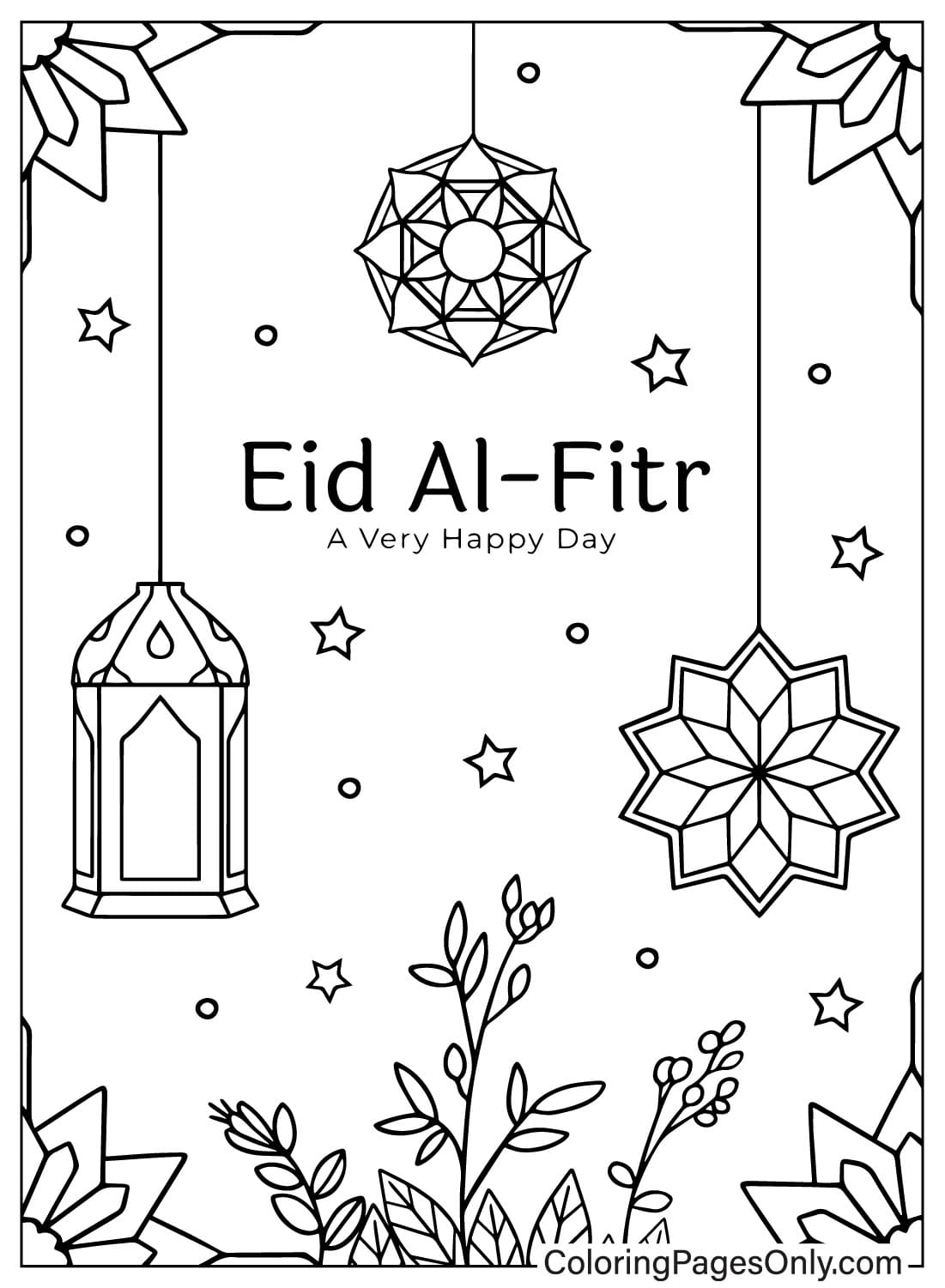
Pattern and decorative pages cover the Islamic geometric and botanical visual tradition – star patterns, arabesque designs, crescent and moon motifs, and lantern forms that appear repeatedly in Islamic decorative art and appear in Eid decoration. Drawing Eid Al-Fitr Coloring Page and related pattern pages fall into this category.
Coloring Tips
The Eid palette is warm, celebratory, and draws from Islamic decorative art traditions – gold, deep green, royal blue, crimson, and white are the most historically associated colors with Islamic celebration and architecture. Gold in particular is the color of festivity and illumination in the Islamic aesthetic tradition, appearing in mosque interiors, calligraphy, and decorative objects. These five colors – gold, emerald green, royal blue, deep red, and white – form the most authentic palette for Eid coloring pages and will produce finished pages that feel connected to the visual language of the holiday.
For the “Eid Mubarak” lettering pages, the lettering itself is the hero of the composition. The most effective approach is to treat the letters as objects that have a light source – color the main body of each letter in a mid-value color (deep green, royal blue, or crimson), add a slightly lighter value at the top edge of each letterform where light would hit, and a slightly darker value at the lower edge where shadow would fall. This simple three-value approach makes flat letters appear three-dimensional and makes the page feel finished rather than simply filled in.
Gold is technically the hardest color to achieve with standard colored pencils or crayons because no crayon accurately reproduces metallic gold. The closest approach is warm yellow-ochre layered with a small amount of light brown at shadow edges, then optionally traced with a gold gel pen or metallic marker on top when the base color is dry. This combination produces the warm-metallic quality of gold better than any single pencil alone. For the star and moon elements on most pages, gold is the canonical choice.
For crescent moon pages, the moon in Islamic decorative tradition is often rendered in gold or white against a deep navy or midnight blue sky. The crescent should be the warmest, brightest element in the composition – the light source – while the surrounding sky deepens from navy at the edges to near-black at the corners. Stars accompanying the crescent should also be gold or bright white, matching the moon’s brightness.
For lantern pages, the lantern body is typically rendered in rich jewel tones – deep ruby red, sapphire blue, or forest green for the glass panels, with gold or dark metal for the frame structure. The light emerging from the lantern should be the warmest yellow available, applied to the area immediately surrounding the lantern as a glow – slightly yellow-amber closest to the lantern, transitioning to the background color as it moves outward.
For scene pages with children – Eid Mubarak with Happy Kids – the children’s clothing is the primary color opportunity. Traditional Eid clothing varies enormously by cultural background: white thobes and kufiyas for many Arab families, shalwar kameez in a range of colors for South Asian families, embroidered kaftans or kaftans for North African families, and many other regional traditions. There is no single “correct” Eid outfit color – the choice is yours, and leaning into bright, celebratory colors (jewel tones, white with gold embroidery, bright patterns) captures the Eid spirit of dressing in one’s finest for the occasion.
For prayer scene pages like Pray Eid Al-Fitr Coloring Sheet – the prayer rug is typically a rich jewel tone (deep red is most traditional) with geometric pattern detail. The prayer environment is usually rendered in the calm, neutral tones of a mosque interior – cream, pale gold, and soft green. The contrast between the warm prayer rug and the quieter surrounding environment keeps the focus on the act of prayer.
5 Activities with Your Eid Al-Fitr Pages
Color a set of Eid Mubarak greeting cards. Print five different “Eid Mubarak” lettering pages – Happy Eid, Happy Eid Mubarak, Eid Mubarak, Happy Eid al Fitr, and Eid al Fitr Mubarak. Color each one using a different jewel-tone palette: one in gold and green, one in blue and gold, one in red and gold, one in purple and gold, one in all warm gold tones. Write a short personal message on the back of each finished page and give them as handmade Eid cards to family members. The activity turns the coloring pages into functional objects – cards that will be given and received and kept – rather than simply finished illustrations.
Color the full palette range in one session. Print the same Eid Mubarak page twice. On the first copy, use the traditional Islamic decorative palette: deep emerald green, royal blue, crimson, and gold. On the second copy, use a completely different palette of your choice – perhaps pastels, or a monochromatic blue-and-white scheme, or a warm sunset palette of orange, red, and amber. Display both versions side by side. The exercise demonstrates how much a palette choice changes the emotional quality of a design that is otherwise identical – the first reads as formal and traditional; the second will have a completely different character depending on what you choose.
Create a Ramadan-to-Eid progression display. If your family colors during Ramadan as well, print Eid coloring pages as the final pages in the Ramadan coloring project. Color the Eid pages on the last evening of Ramadan, completing them either before or just after the moon sighting that announces Eid. Frame or display the finished Eid pages prominently for the three days of the celebration. The coloring pages become a physical record of the transition from Ramadan to Eid – from quiet and reflective to joyful and celebratory.
Make a coordinated Eid decoration set. Print four or five pages from the collection – a mix of lettering pages, pattern pages, and scene pages. Color all five using the same four-color palette throughout, so that the finished pages read as a coordinated set rather than five independent images. Tape or frame them together as a decorative display for the Eid gathering. The consistency of palette across different page designs is what makes the set read as intentional decoration rather than random artwork.
The calligraphy appreciation exercise. Print two versions of a page that has “Eid Mubarak” written in Arabic calligraphy alongside the English lettering – or print an Arabic-lettering-focused page from the collection. Before coloring, spend a few minutes looking at the Arabic calligraphy and tracing the letterforms lightly with a finger without touching the paper. Notice the direction of the strokes, the thick-and-thin variation in the letterforms, and how each character connects to the next. Then color the calligraphy as if it were a piece of jewelry – giving it three-dimensional depth with light and shadow values, as described in the coloring tips. After finishing, write down one observation about how Arabic calligraphy looks different from Western typography.