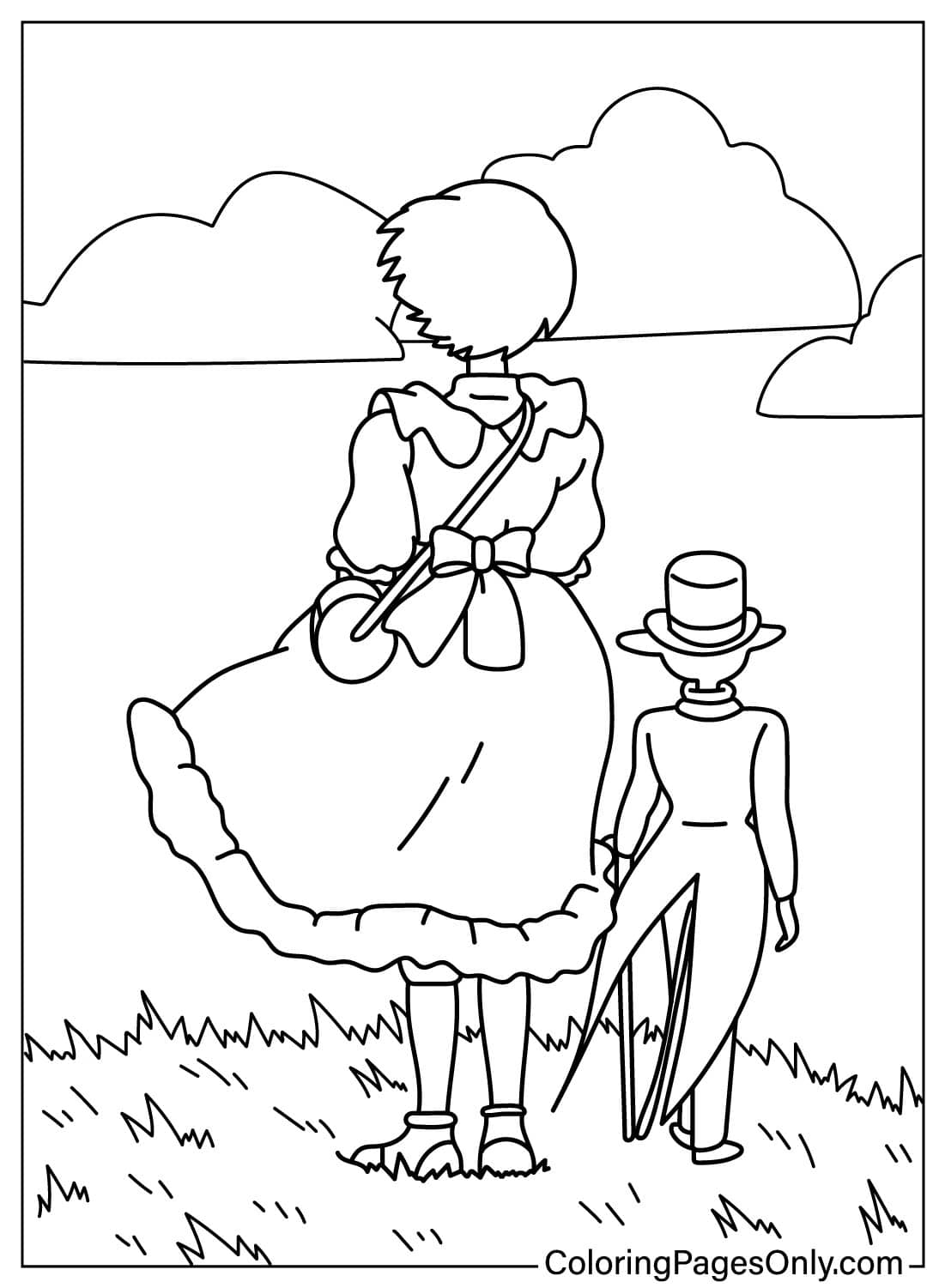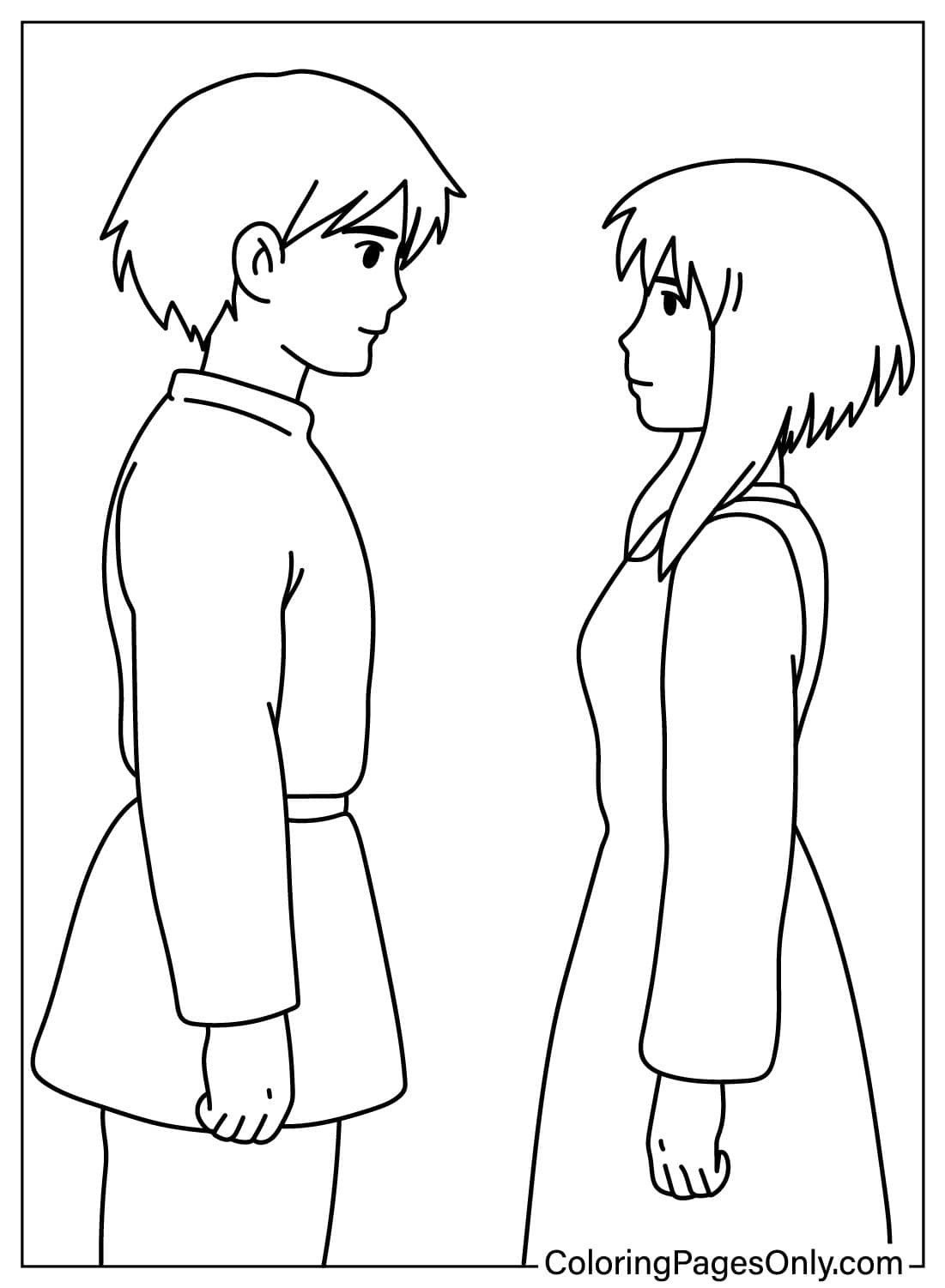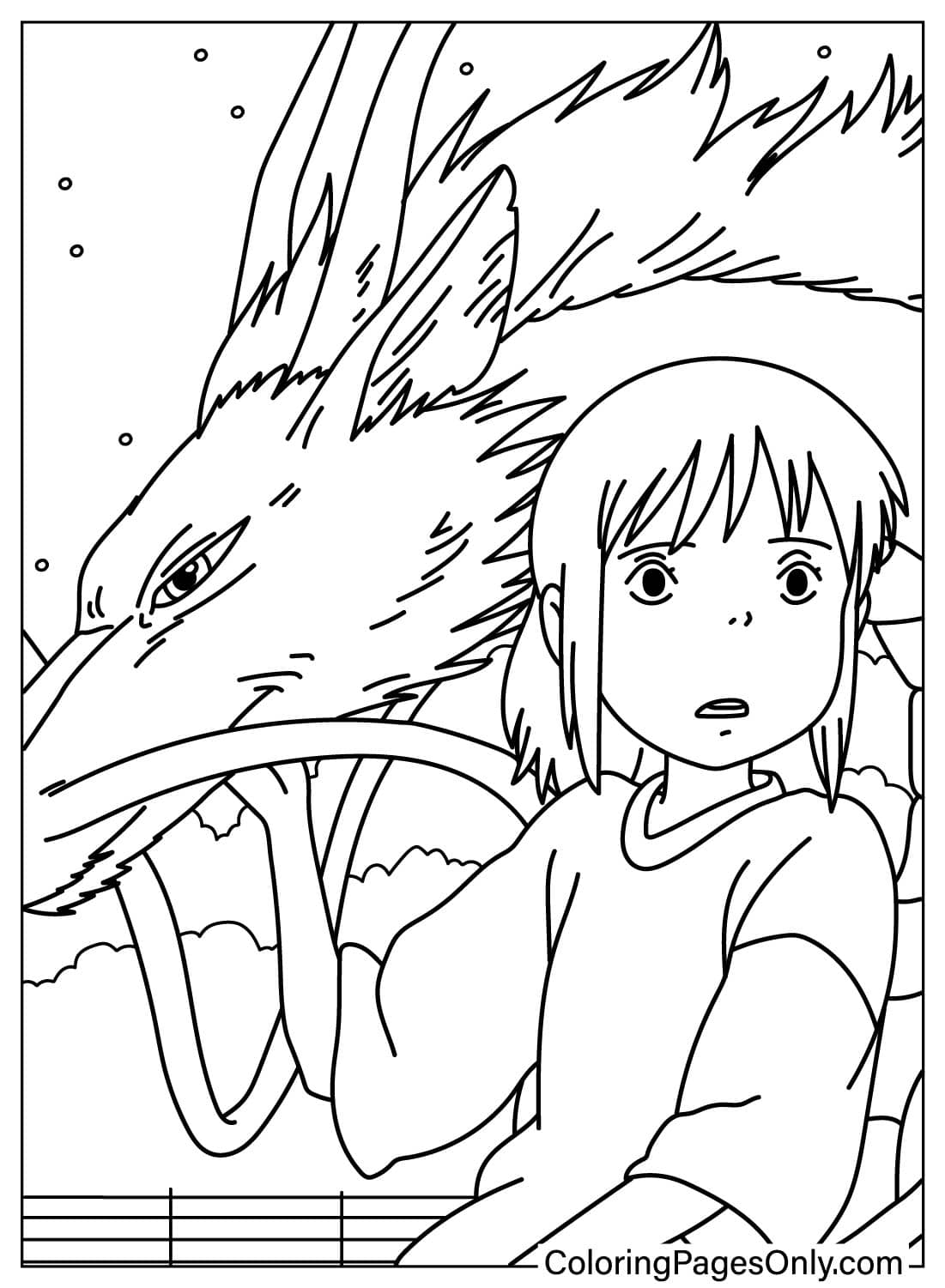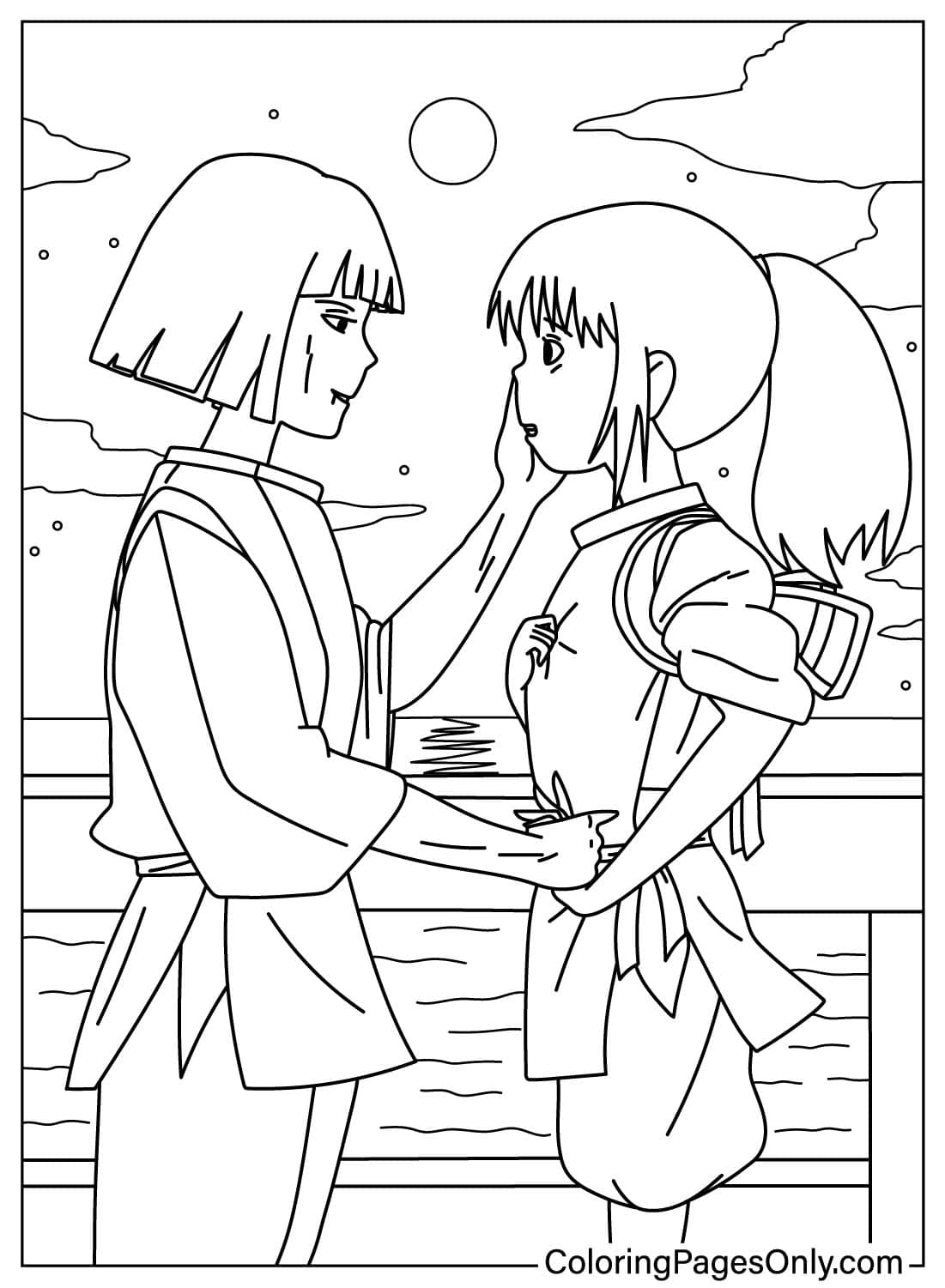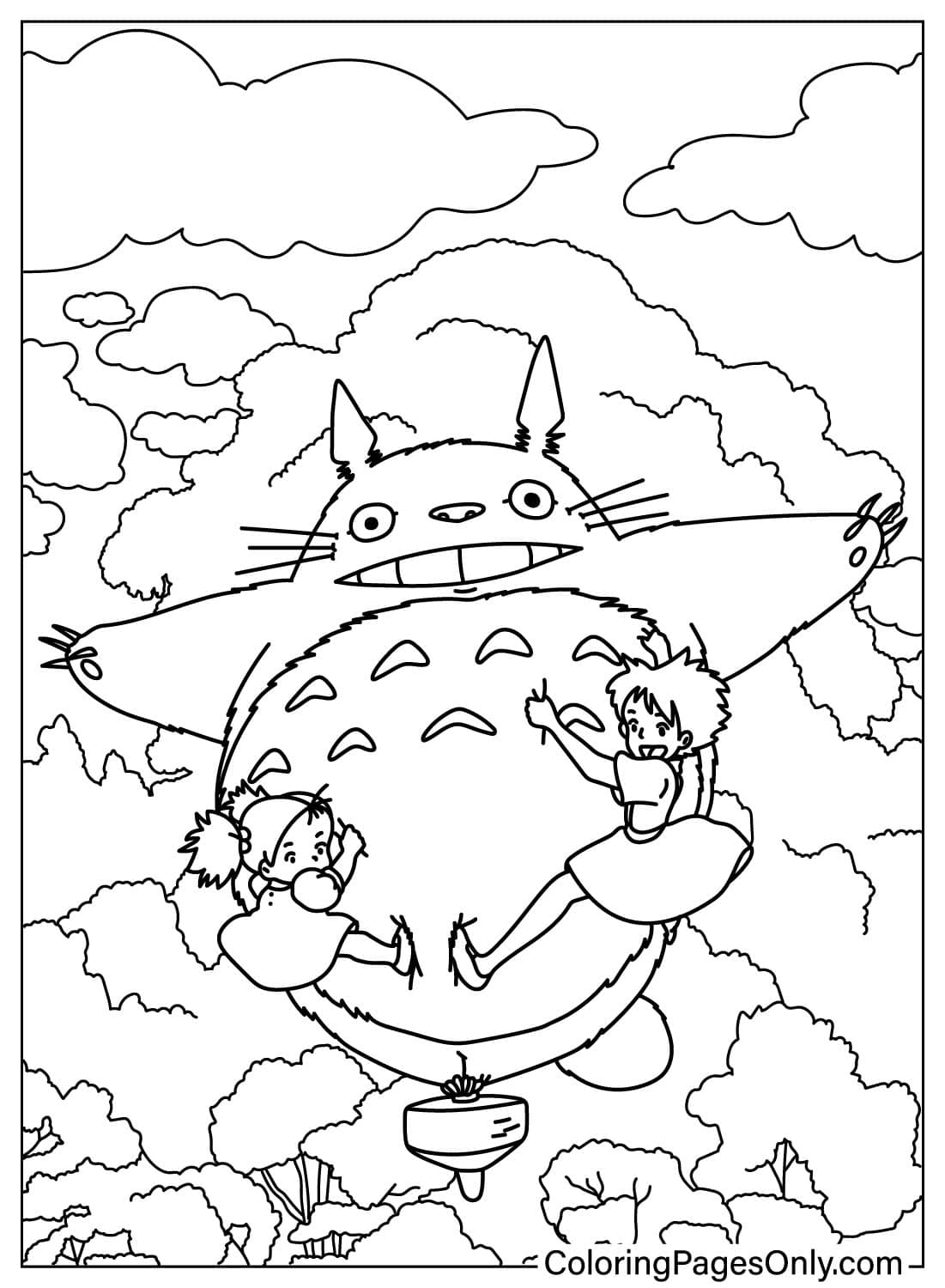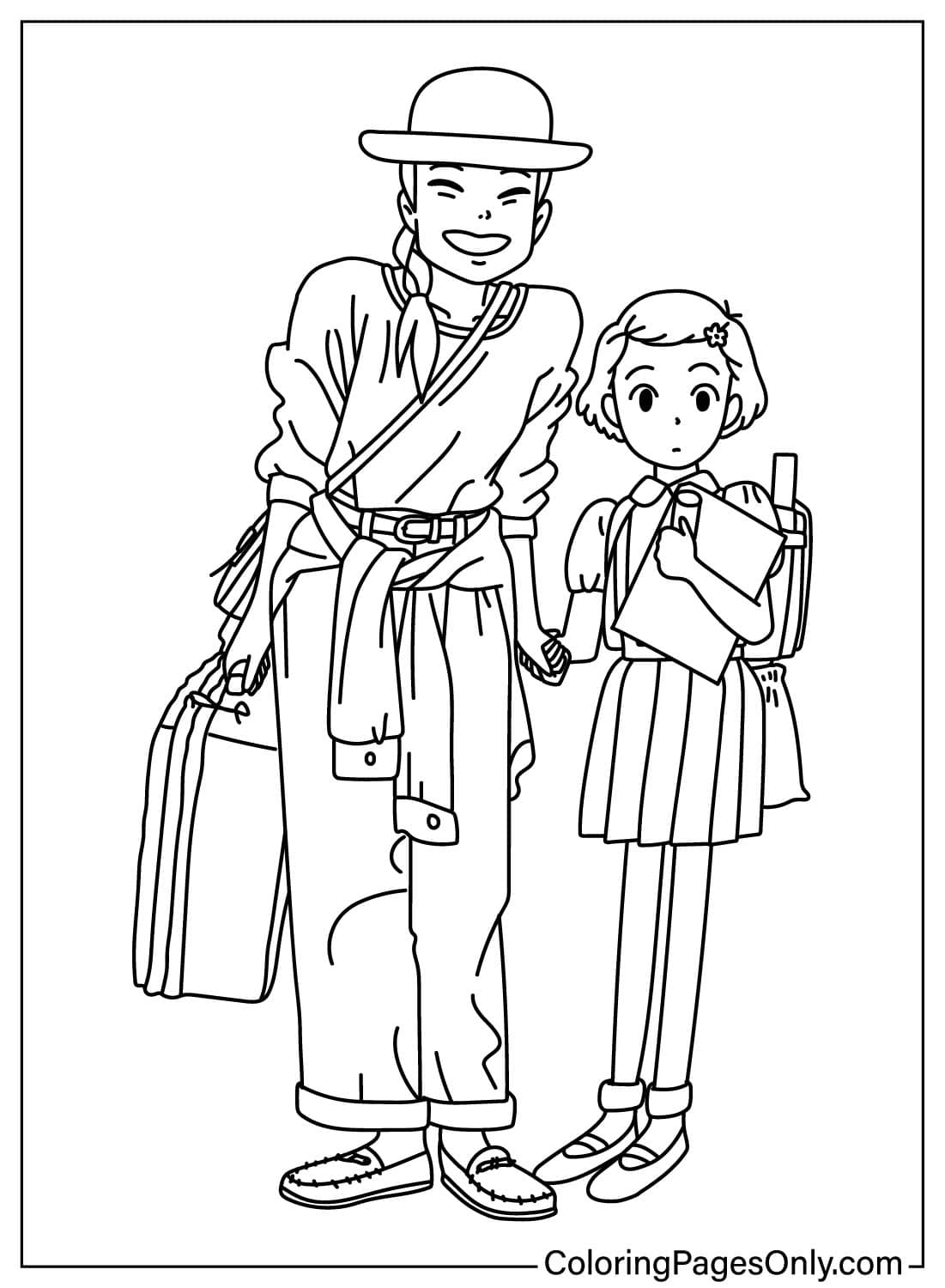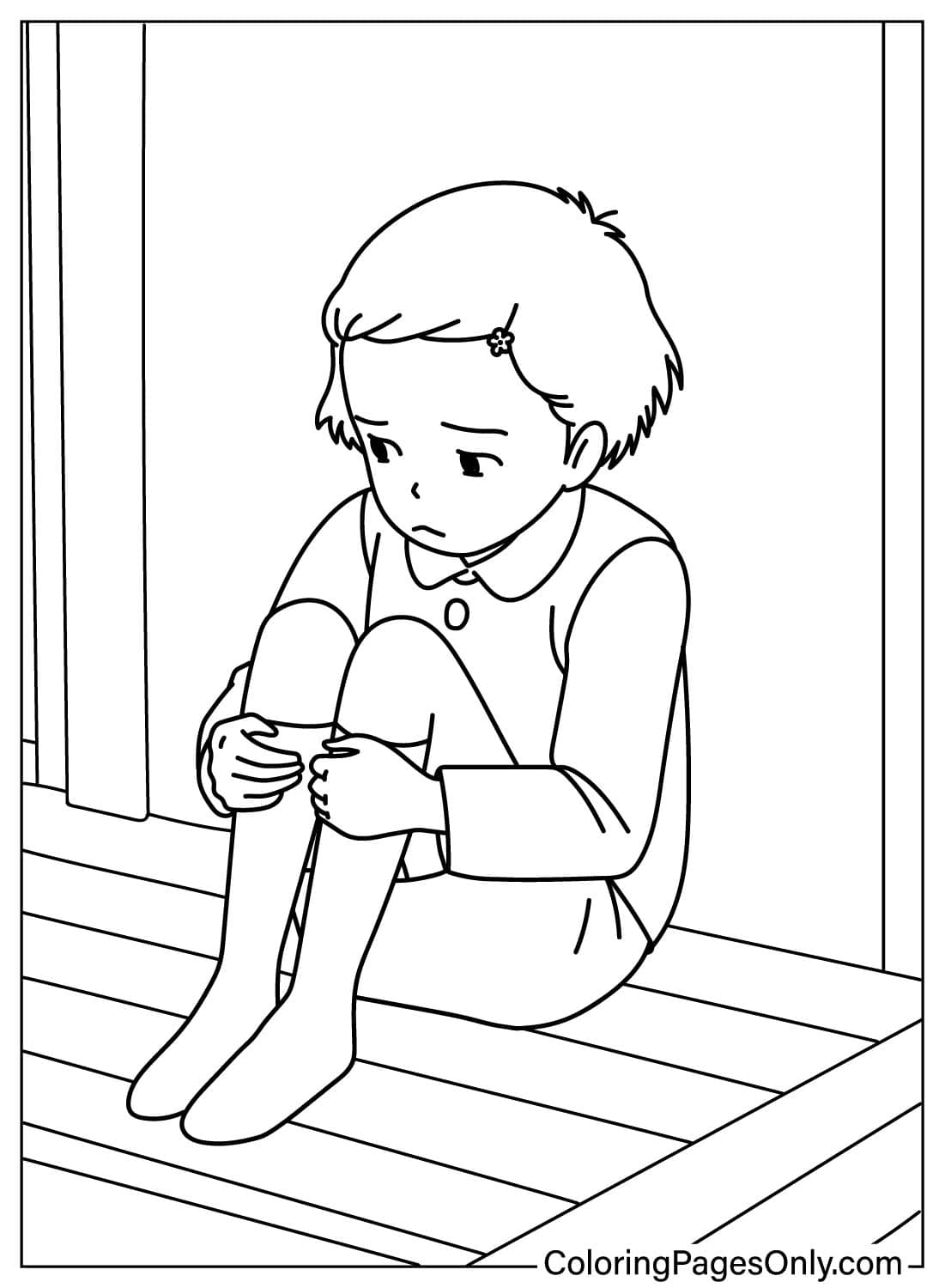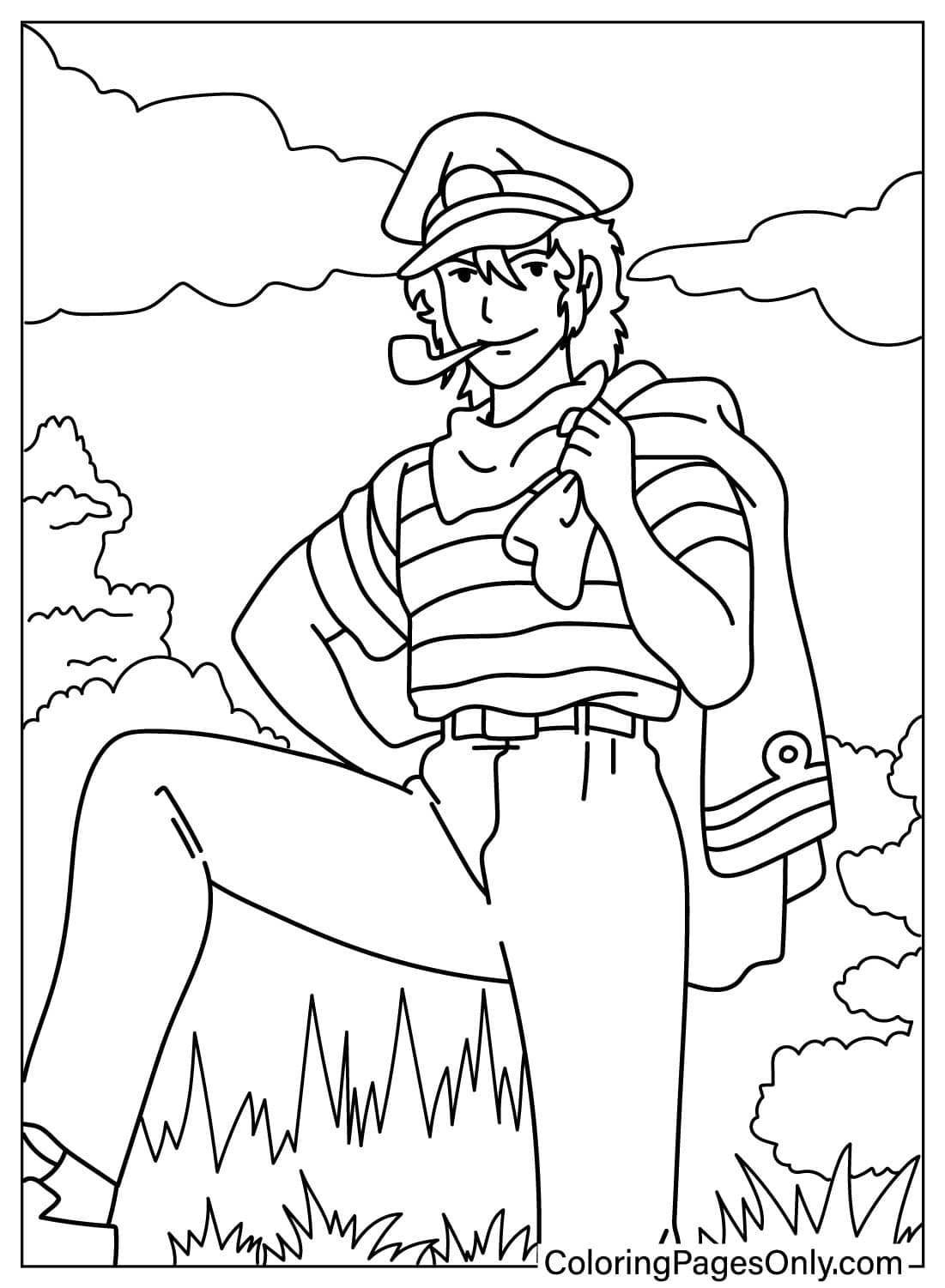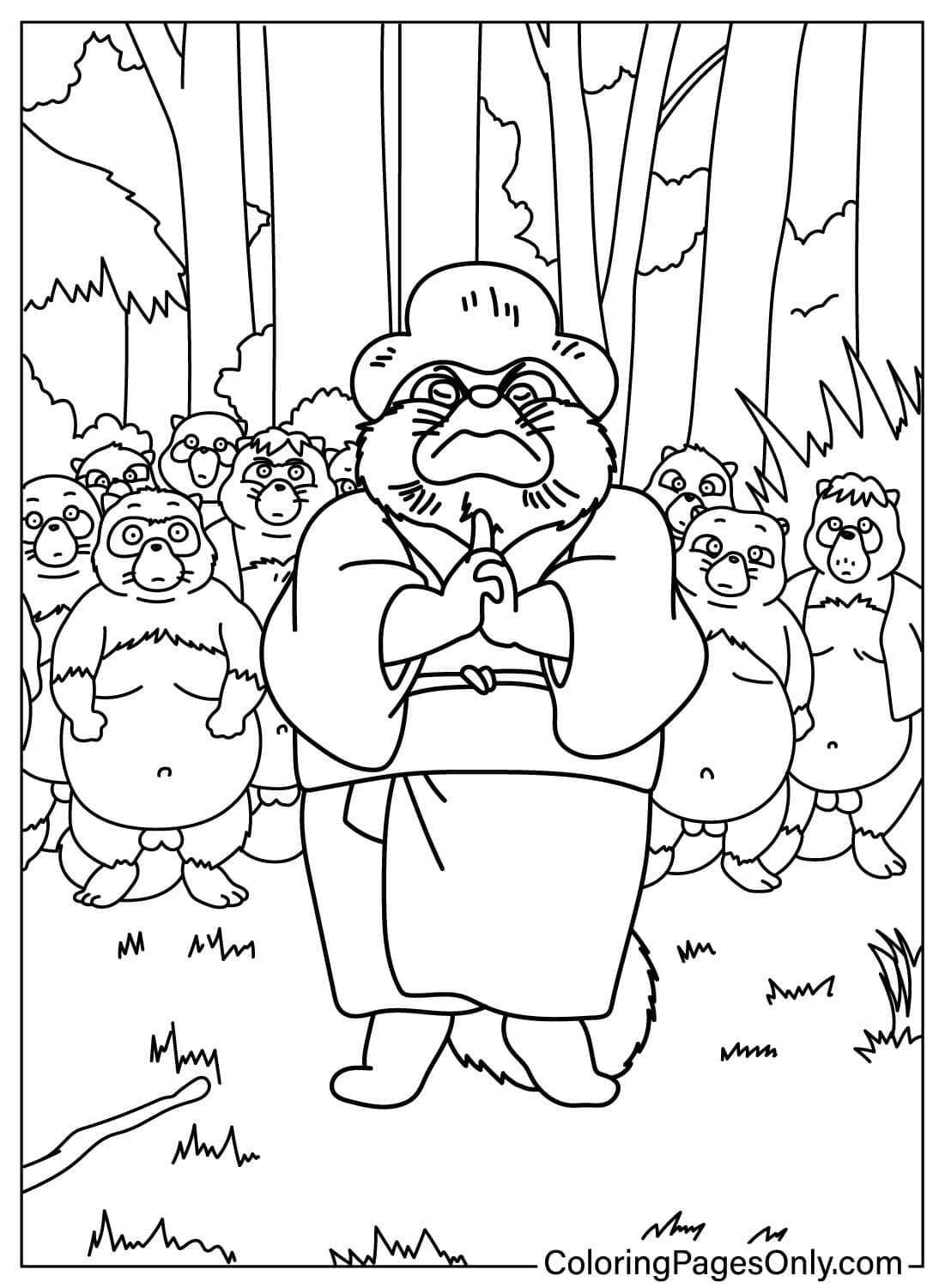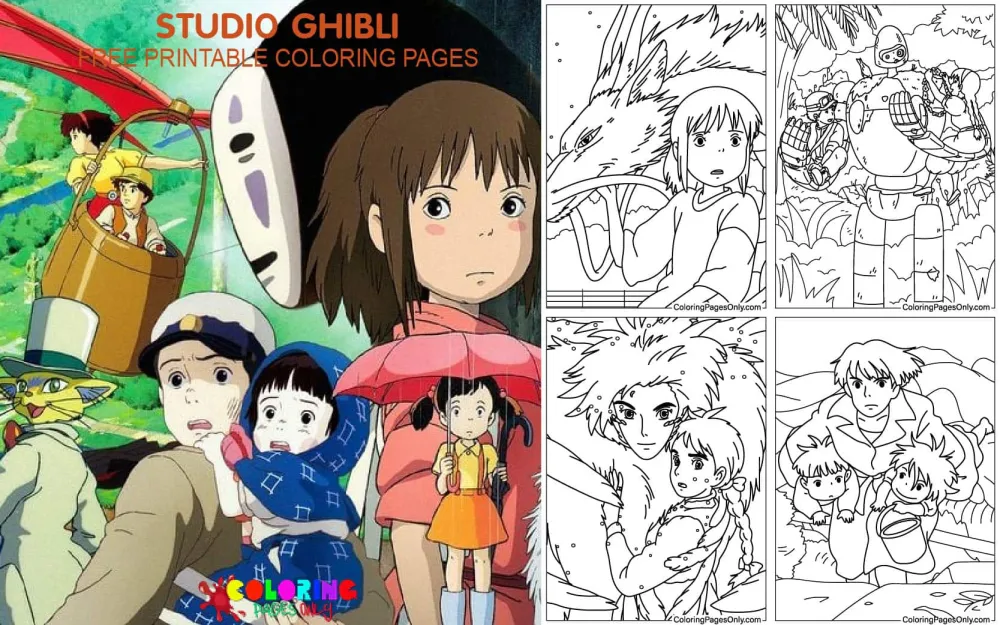
Studio Ghibli Coloring Pages at ColoringPagesOnly.com brings together 30+ free printable pages spanning nineteen films from the most acclaimed animation studio in the world. The collection covers the full breadth of Ghibli’s filmography – from the beloved warmth of My Neighbor Totoro and Kiki’s Delivery Service to the epic scale of Princess Mononoke and Castle in the Sky, the Academy Award-winning Spirited Away and The Boy and the Heron, the quiet melancholy of Grave of the Fireflies and Only Yesterday, and lesser-celebrated titles including Pom Poko, Whisper of the Heart, Porco Rosso, When Marnie Was There, The Secret World of Arrietty, and From Up on Poppy Hill. The full Anime collection is available through our Anime Coloring Pages hub.

Every page is completely free – download as PDF to print or color online in your browser. No sign-up, no cost.
About Studio Ghibli

Studio Ghibli (スタジオジブリ, Sutajio Jiburi) is a Japanese animation film studio founded in 1985 by directors Hayao Miyazaki and Isao Takahata alongside producer Toshio Suzuki in Koganei, Tokyo. The name comes from the Italian word for a hot Saharan wind – ghibli – a name Miyazaki chose based on an Italian aircraft he admired, reflecting his lifelong passion for flight and aviation that runs through much of the studio’s work.

From its founding, Ghibli took an approach to animation that set it apart from both Hollywood studios and most of the Japanese anime industry: hand-drawn animation produced to extraordinarily high quality standards, stories that treated children as capable of engaging with complex emotional and moral questions, and a consistent visual aesthetic rooted in detailed, loving depictions of the natural world and the everyday physical texture of Japanese life. Miyazaki and Takahata brought complementary but distinct sensibilities – Miyazaki’s work tends toward adventure, flight, and transformative encounters with the magical; Takahata’s toward quiet realism, memory, and the bittersweet weight of ordinary human experience.

The studio’s global recognition grew throughout the 1990s as its films became available internationally. Princess Mononoke (1997) was Japan’s highest-grossing film in history at the time of its release. Spirited Away (2001) surpassed it to claim the same title – and went on to win the Academy Award for Best Animated Feature in 2003, becoming the first and still only non-English-language animated film to win the award. The Boy and the Heron (2023) won the same award at the 2024 Academy Awards, making Hayao Miyazaki the first filmmaker to win the Best Animated Feature Academy Award twice.

In 2020, Netflix acquired global streaming rights to the Studio Ghibli catalog outside Japan – bringing the full filmography to a new global generation simultaneously. The Ghibli Museum in Mitaka, Tokyo, opened in 2001 and remains one of Japan’s most popular cultural destinations.

Films in This Collection

My Neighbor Totoro (1988)

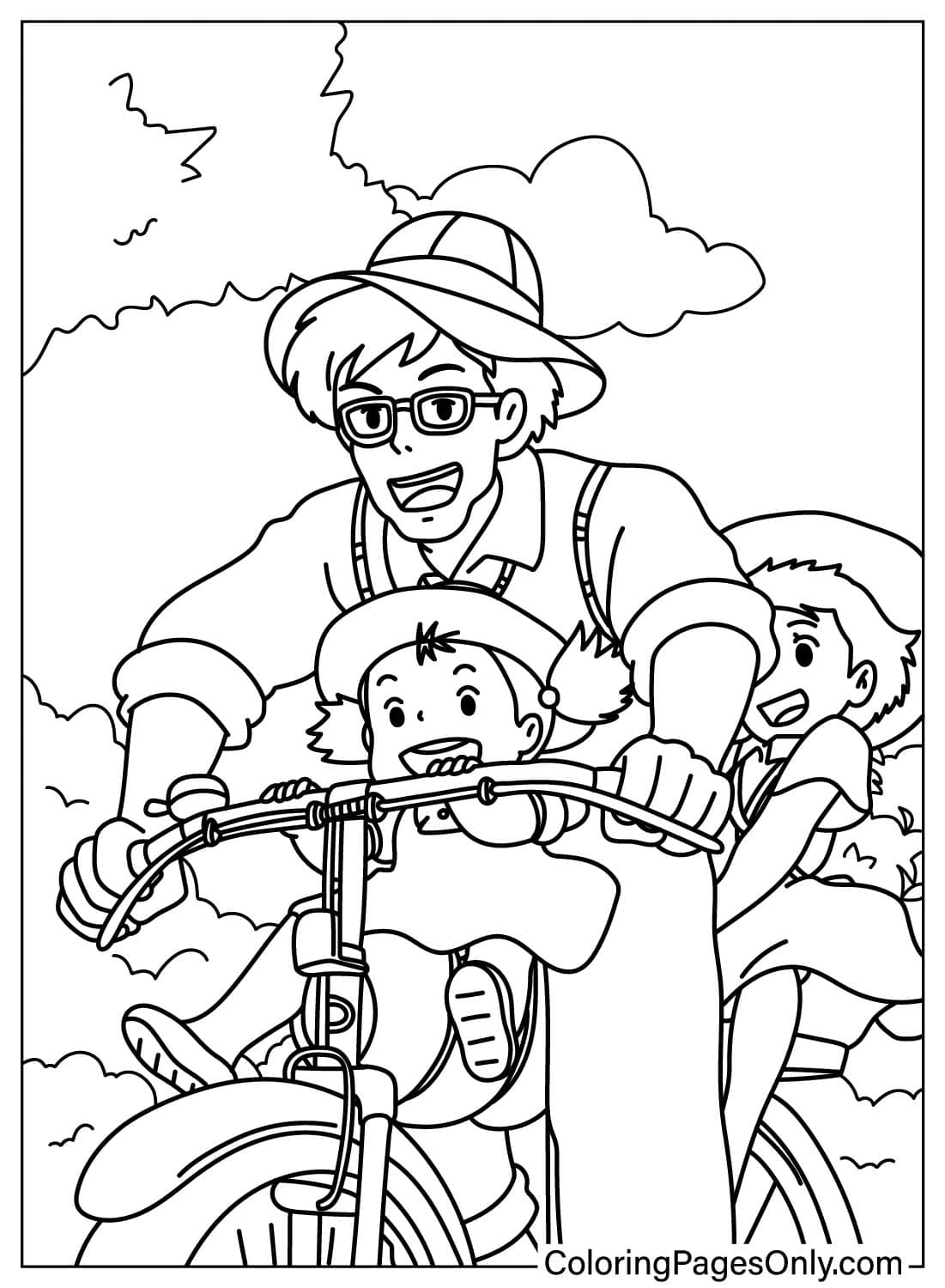
My Neighbor Totoro (となりのトトロ, directed by Hayao Miyazaki) is the most universally recognized Studio Ghibli film and the source of the iconic Totoro character that serves as the studio’s official logo. Set in rural 1950s Japan, it follows two young sisters – Satsuki and Mei – who discover that the ancient camphor tree near their new home is occupied by Totoro, a large, friendly forest spirit visible only to children.

The film has no villain, no dramatic conflict in the conventional sense – it is a film about childhood wonder, the comfort of nature’s presence, and a child’s way of processing family difficulty. Its emotional honesty and visual warmth made it an instant classic and the defining example of the “Ghibli feeling” that fans worldwide describe as a sense of peaceful, enveloping wonder.

The Happy Image in My Neighbor Totoro tile depicts Totoro in one of his characteristic warm, contented poses – round, grey-white, enormous, and completely benign.

Coloring Totoro: Totoro’s fur is a warm medium grey – not cool grey, not beige, but a warm middle grey. His chest has lighter grey-white fur. His eyes are pale cream-white with small dark pupils. The smaller Totoros (Chu-Totoro and Chibi-Totoro) use blue and white, respectively.

Castle in the Sky / Laputa (1986)

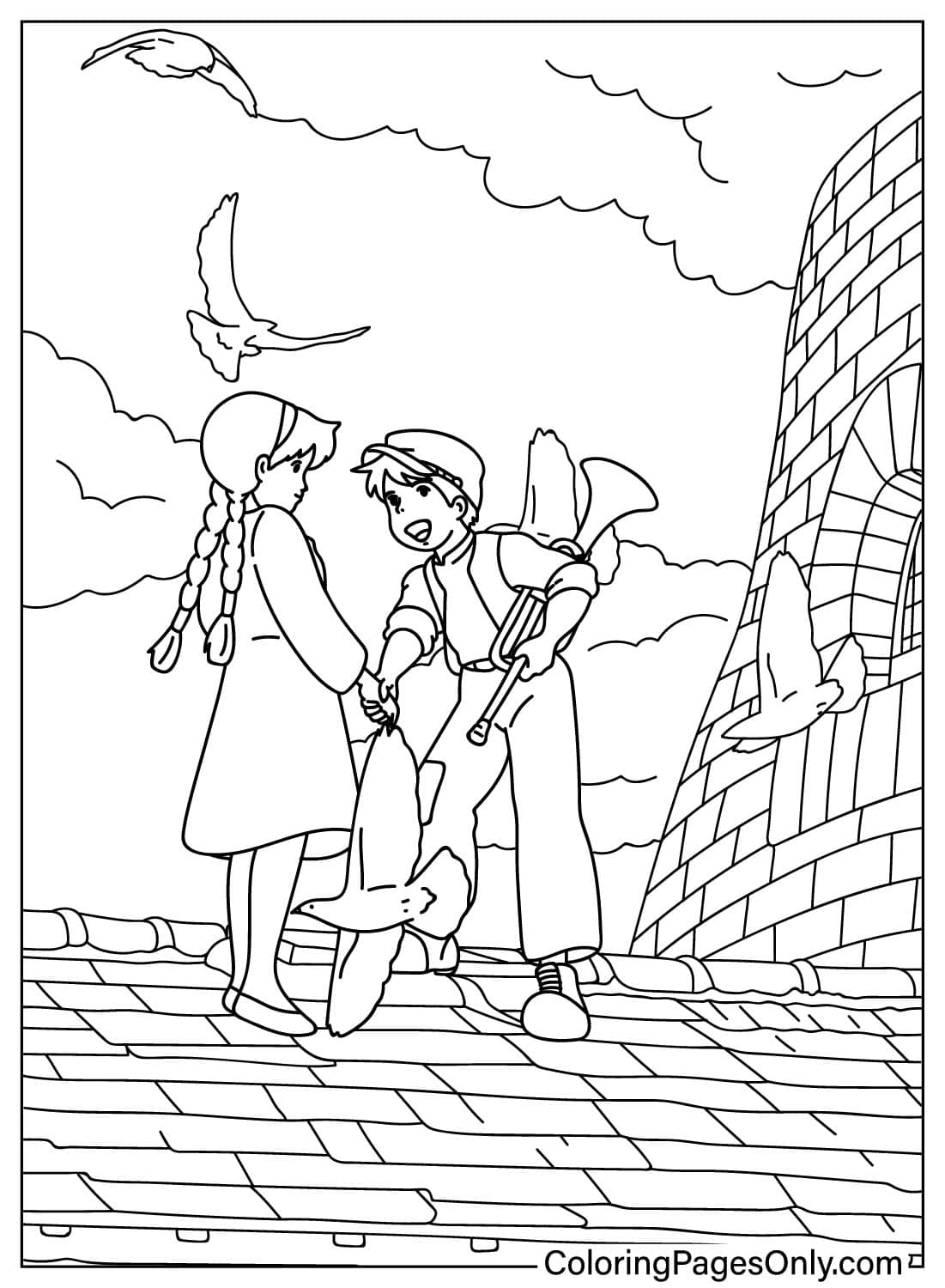
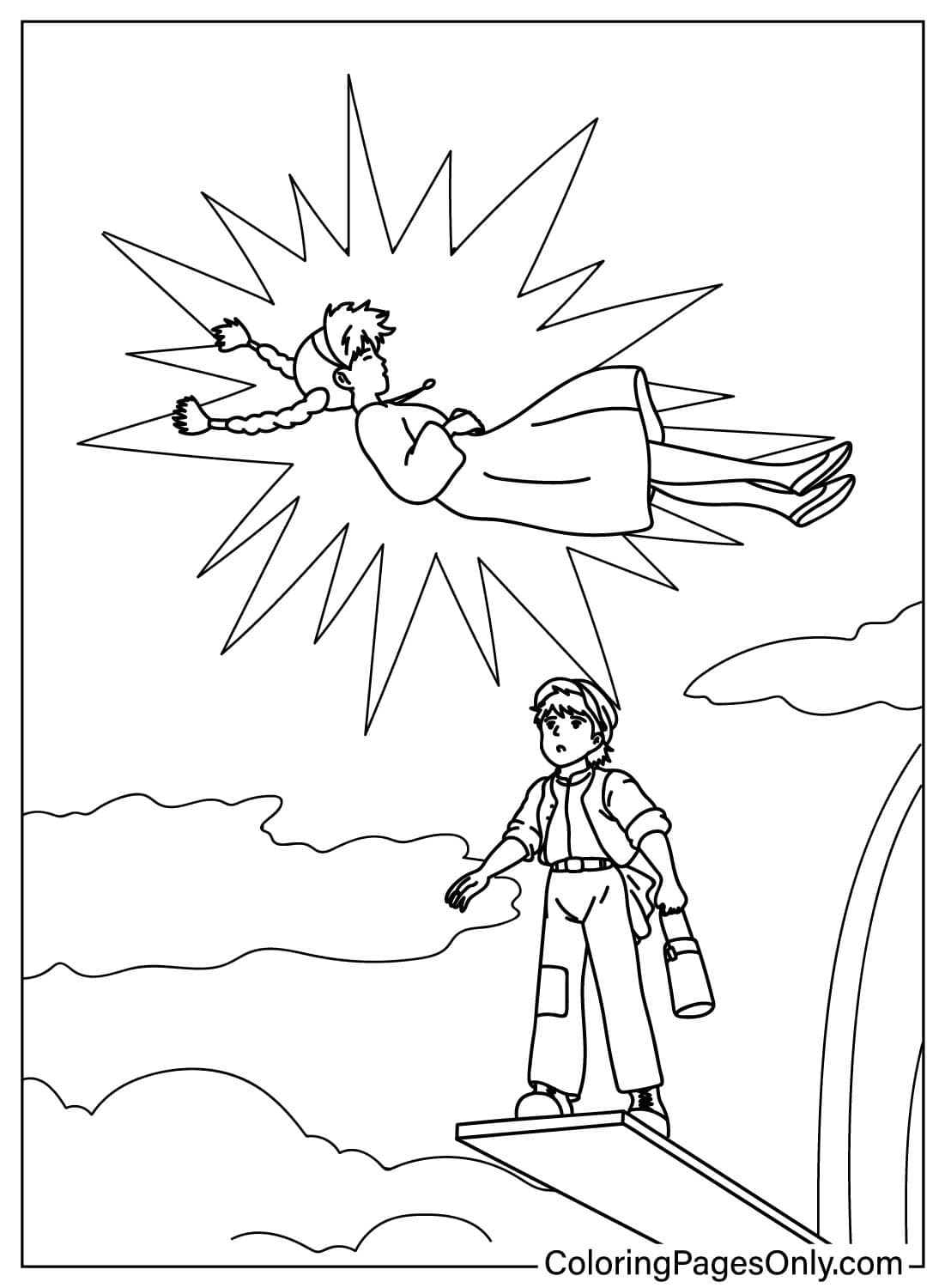
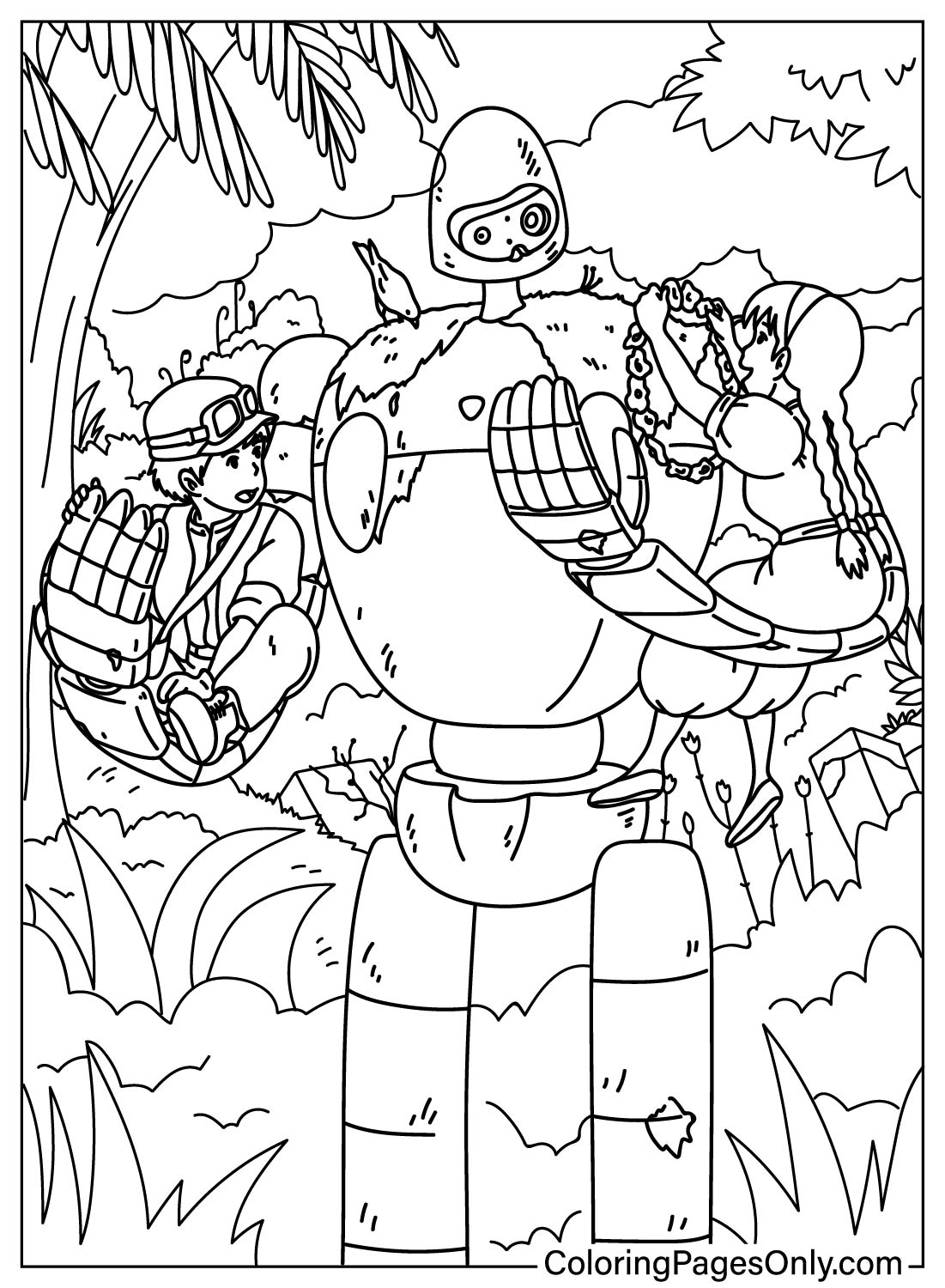
Castle in the Sky (天空の城ラピュタ, directed by Hayao Miyazaki) was the first film produced by Studio Ghibli and established the studio’s visual signature immediately: breathtaking sky sequences, elaborate mechanical flying machines, and adventure driven by fundamentally good-hearted young protagonists. The film follows Sheeta and Pazu as they search for the legendary floating island of Laputa, pursued by sky pirates and government agents.

Two tiles cover the film – Laputa Castle in the Sky Anime and Laputa Castle in the Sky Ghibli – depicting the characters and environments of this foundational work.

Grave of the Fireflies (1988)

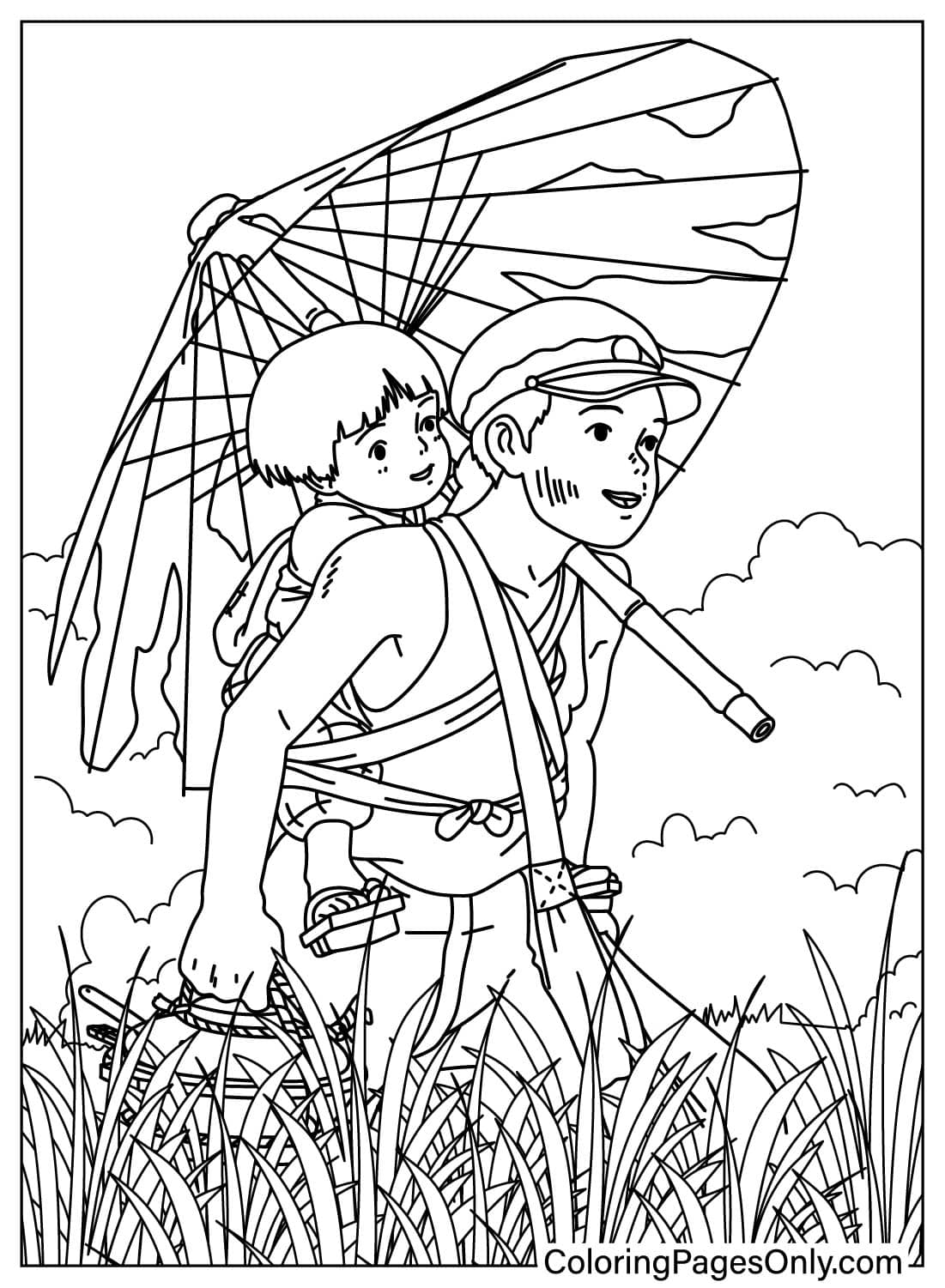
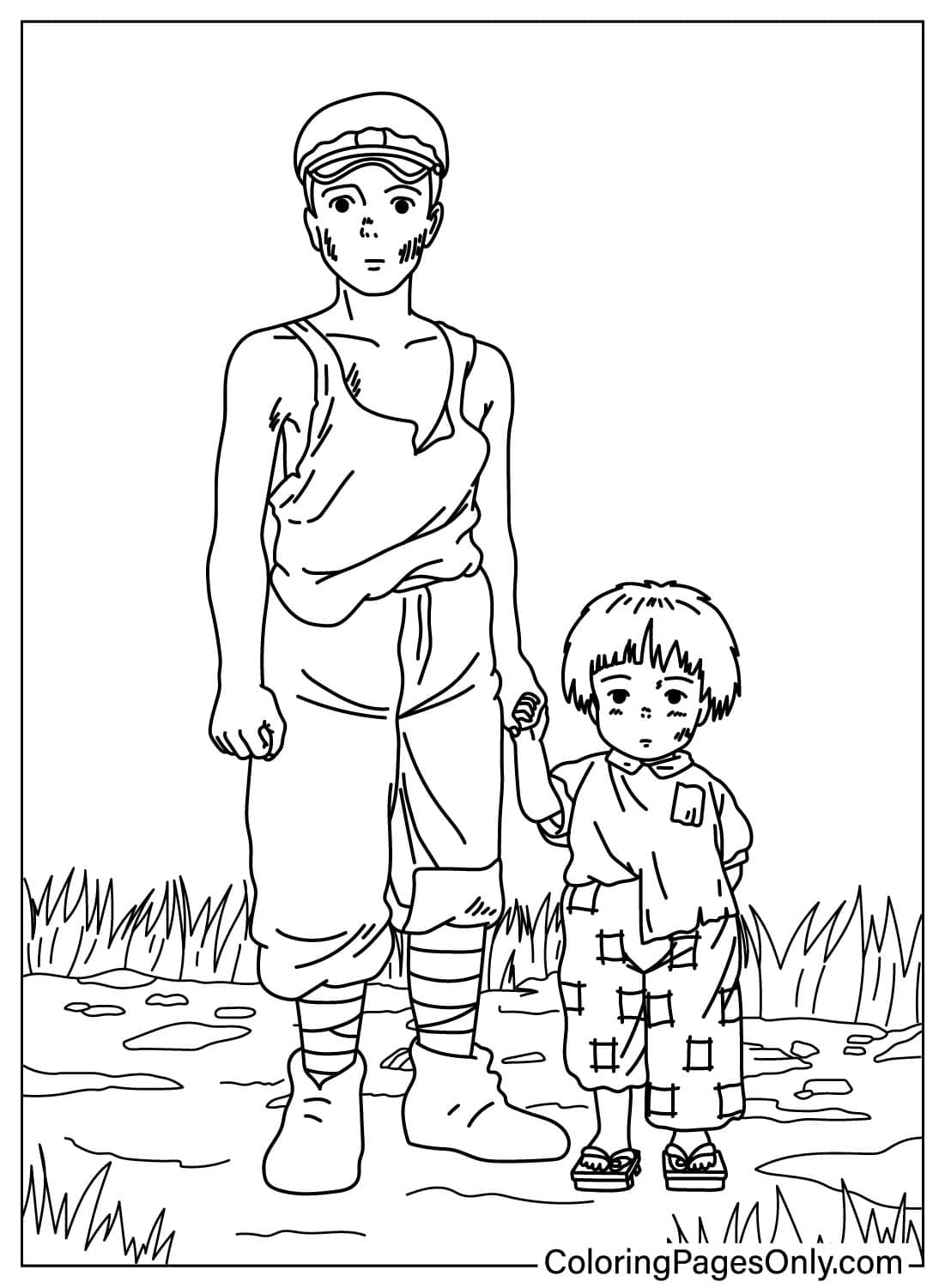
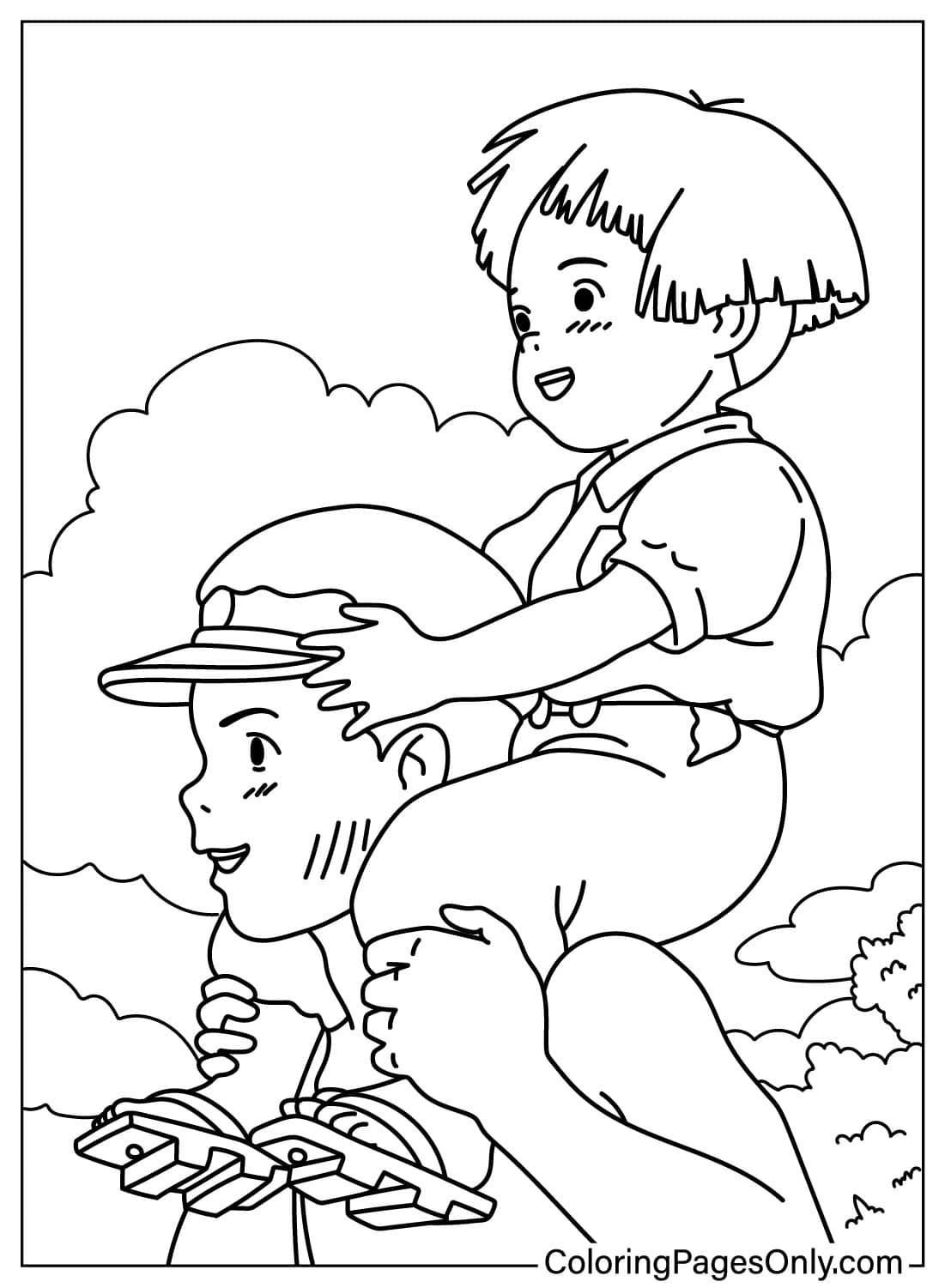
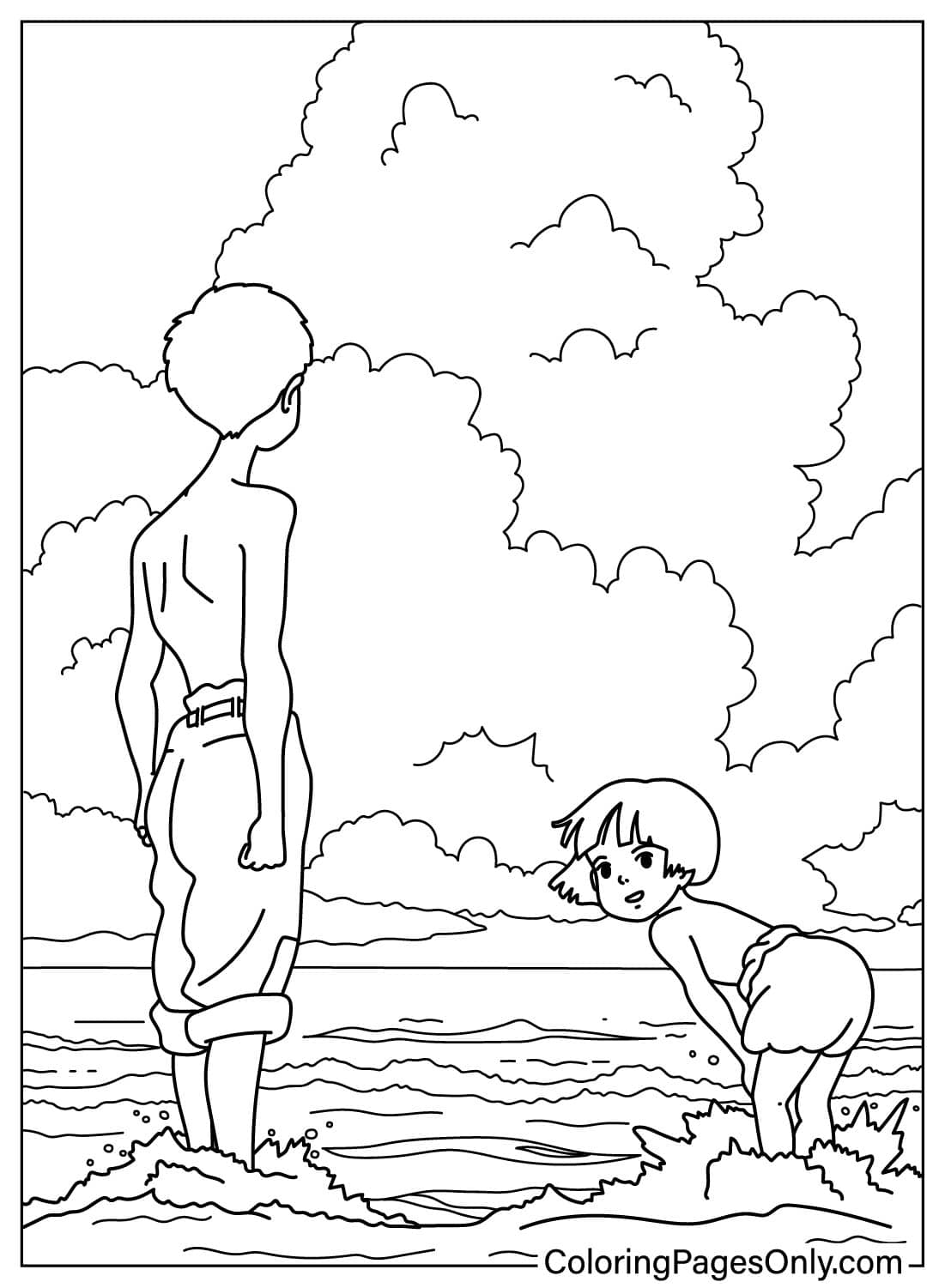
Grave of the Fireflies (火垂るの墓, directed by Isao Takahata) is one of the most emotionally devastating animated films ever made – a deeply sorrowful account of two siblings, Seita and Setsuko, struggling to survive in Japan during the final months of World War II. Based on a semi-autobiographical novel by Akiyuki Nosaka, it is considered one of the greatest war films in any medium.

Age note: Grave of the Fireflies deals explicitly with civilian suffering, starvation, and death during wartime. It is not appropriate for young children and is recommended for ages 13 and up. The coloring page tiles, which depict characters from the film in quiet moments, are appropriate for fans of the film.

Three tiles cover the film: Grave of the Fireflies Anime, Grave of the Fireflies Ghibli, Grave of the Fireflies Image in Ghibli, and Anime Image in Grave of the Fireflies.

Kiki’s Delivery Service (1989)

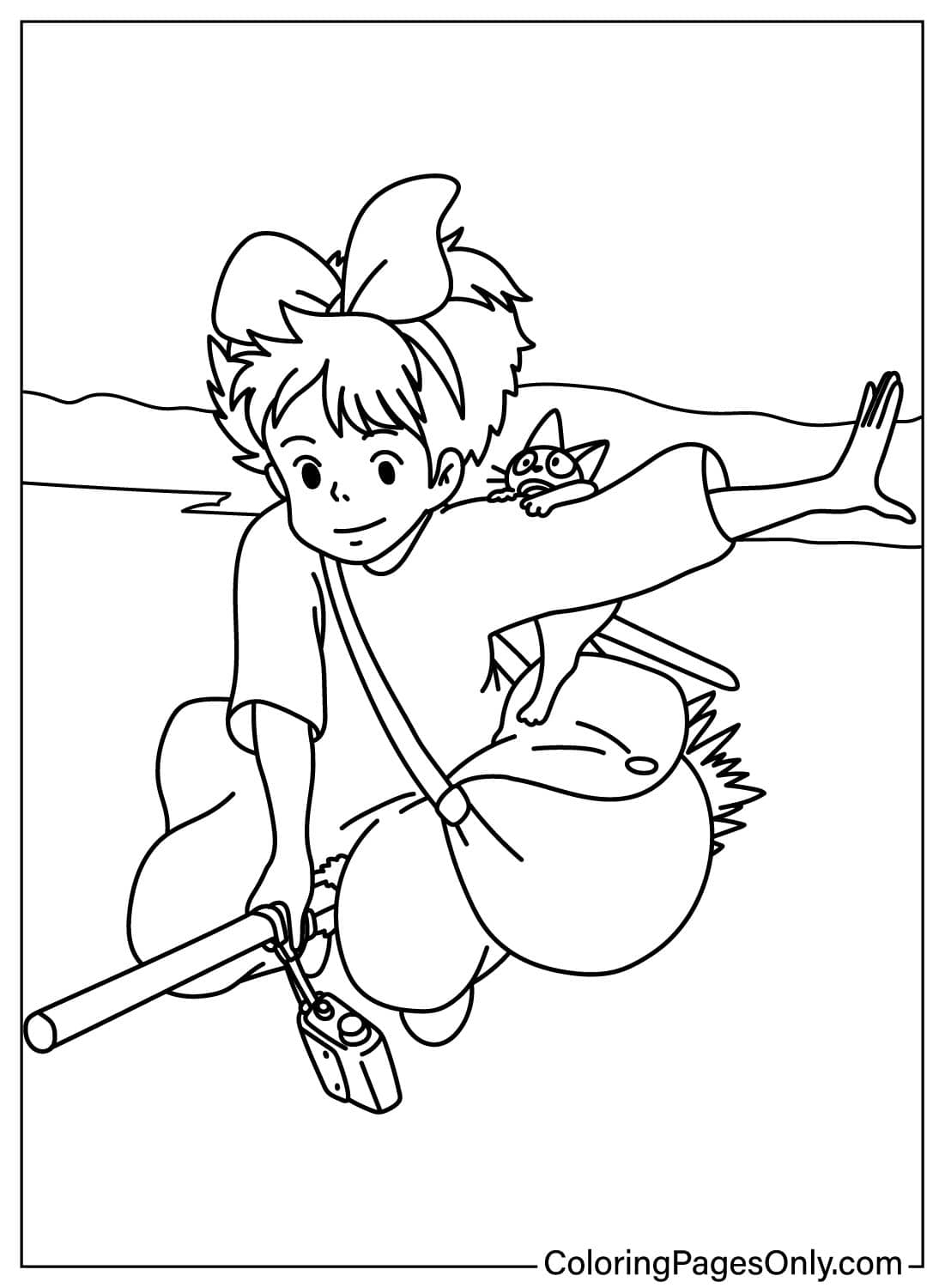
Kiki’s Delivery Service (魔女の宅急便, directed by Hayao Miyazaki) follows Kiki – a 13-year-old witch in training – as she leaves home for a year of independent living in a seaside city, starting a broomstick delivery service. The film is a gentle coming-of-age story about finding one’s place, losing confidence, and recovering creative ability through friendship and time.

Two tiles cover the film – Kiki’s Delivery Service Ghibli and Kiki’s Delivery Service Anime – depicting Kiki in her signature black dress and red bow, flying on her broomstick with her black cat Jiji.

Coloring Kiki: Kiki’s design is built around a single dominant color – her solid black dress against her pale skin and auburn-red hair. Her red hair bow is a vivid, warm red. Jiji the cat is pure black. The coastal city environment uses warm Mediterranean blues, terracotta, and cream stone tones.

Only Yesterday (1991)

Only Yesterday (おもひでぽろぽろ, directed by Isao Takahata) follows a 27-year-old Tokyo office worker who travels to the countryside for a working holiday while simultaneously revisiting memories of herself as a 10-year-old girl in 1966. The film is one of the most quietly beautiful works in the Ghibli catalog – a meditation on nostalgia, the gap between childhood expectations and adult life, and the unexpected pull of rural life.

Two tiles cover the film: Only Yesterday Anime and Only Yesterday Studio Ghibli.

Porco Rosso (1992)

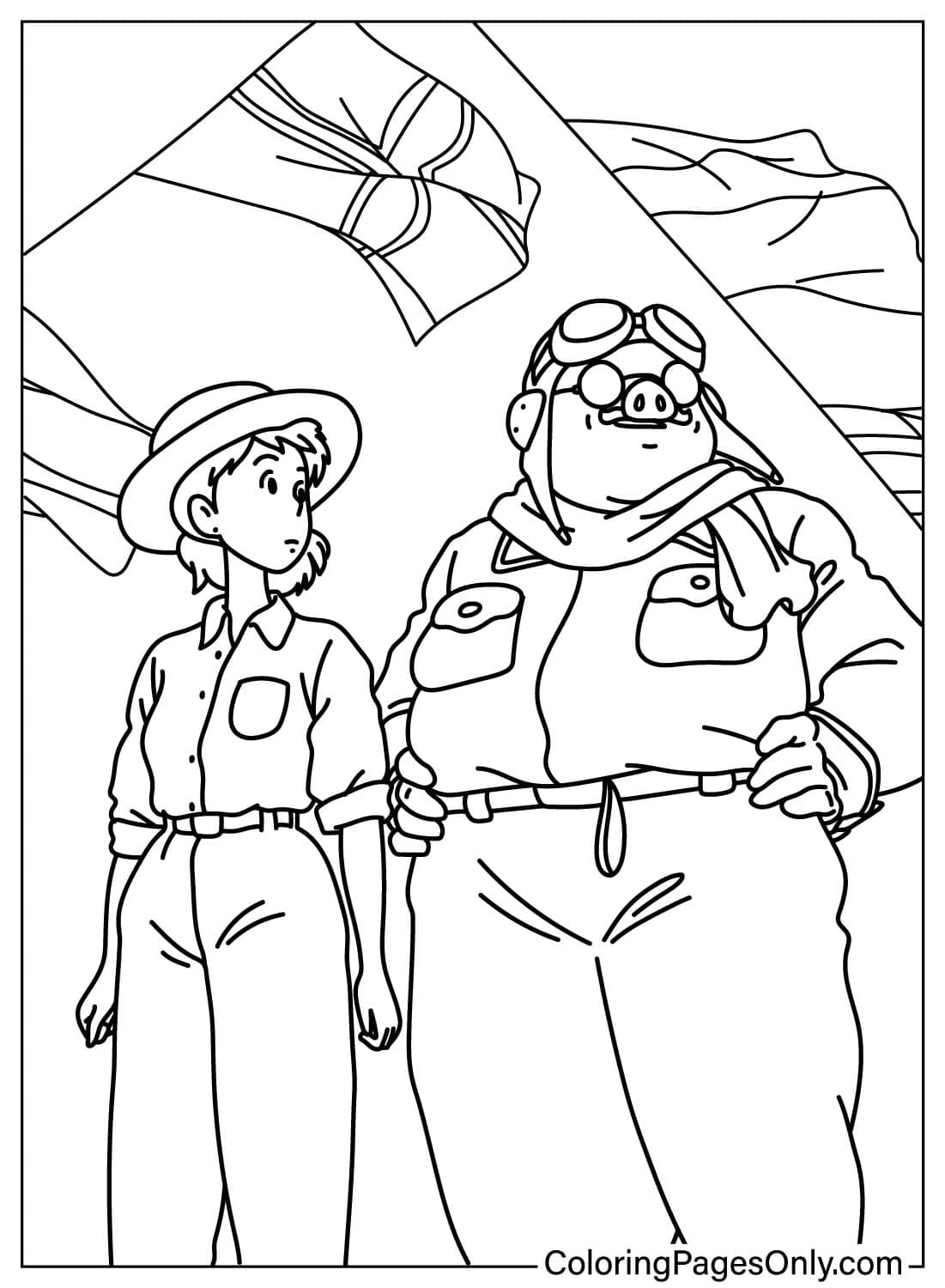
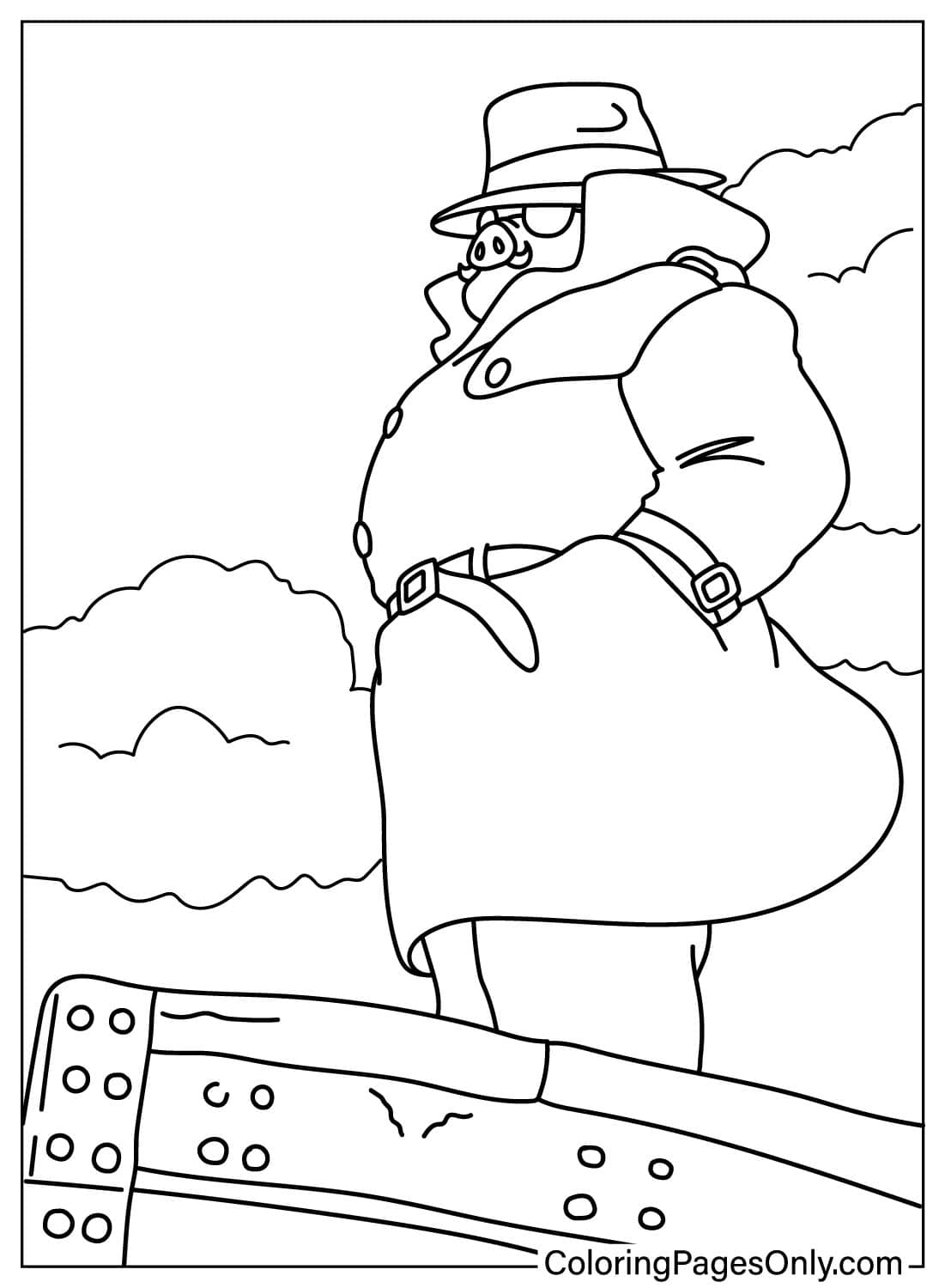
Porco Rosso (紅の豚, directed by Hayao Miyazaki) is set in the Adriatic Sea in the 1920s and follows Marco Pagot – a World War I veteran cursed to live with the head of a pig – who works as a freelance bounty hunter flying a red seaplane. Equal parts aviation love letter, comedy, and melancholy character study, it is one of Miyazaki’s most personally revealing films.

Two tiles cover the film: Porco Rosso Studio Ghibli and Porco Rosso Anime.

Pom Poko (1994)

Pom Poko (平成狸合戦ぽんぽこ, directed by Isao Takahata) follows a community of tanuki (Japanese raccoon dogs) who launch a magical resistance campaign against the urban development destroying their forest home. The film is a comedy rooted in Japanese folklore about the tanuki’s shapeshifting abilities, but carries a genuine and ultimately sad environmental message.

Two tiles cover the film: Pom Poko Anime and Pom Poko Studio Ghibli.

Whisper of the Heart (1995)

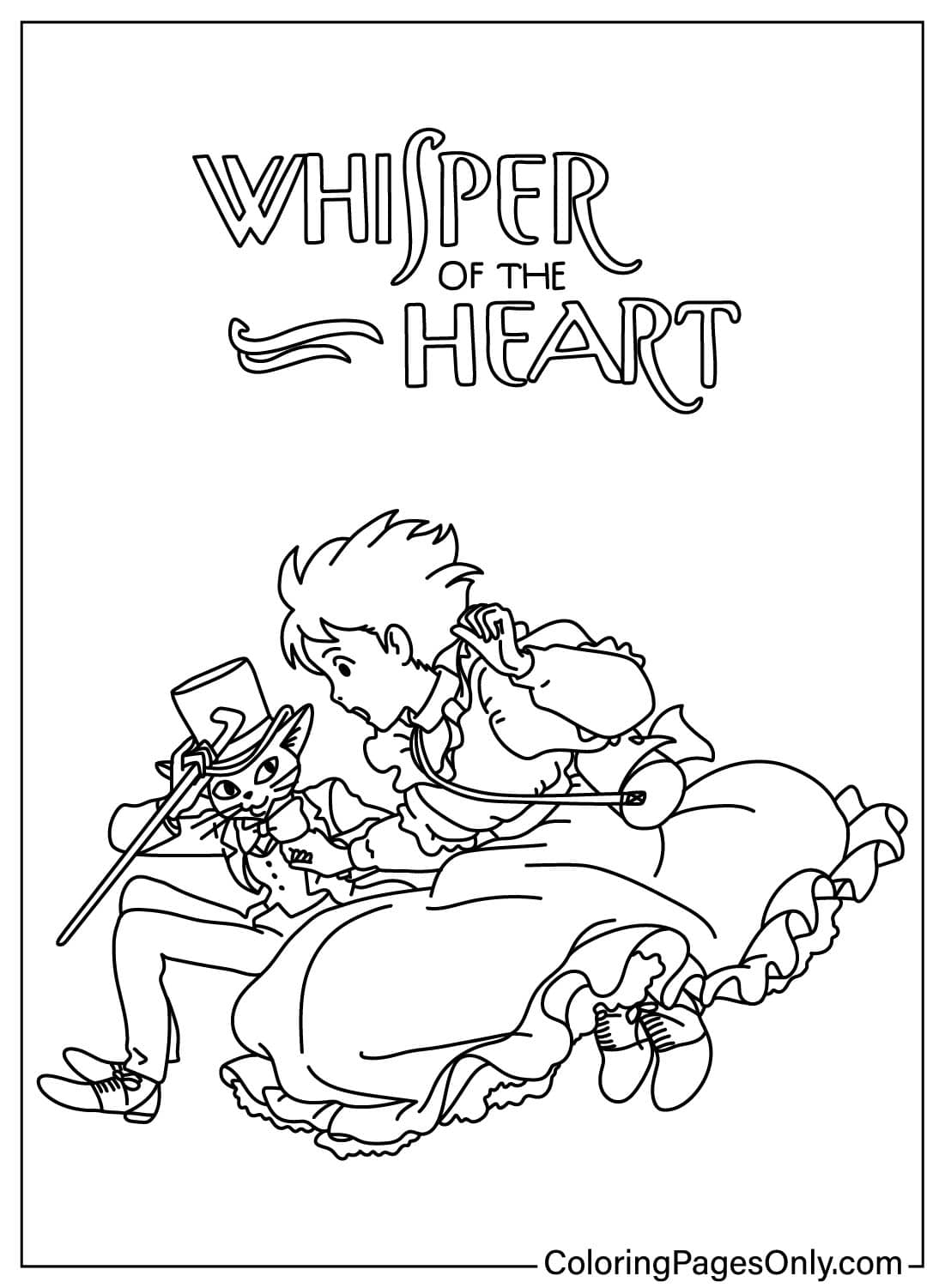
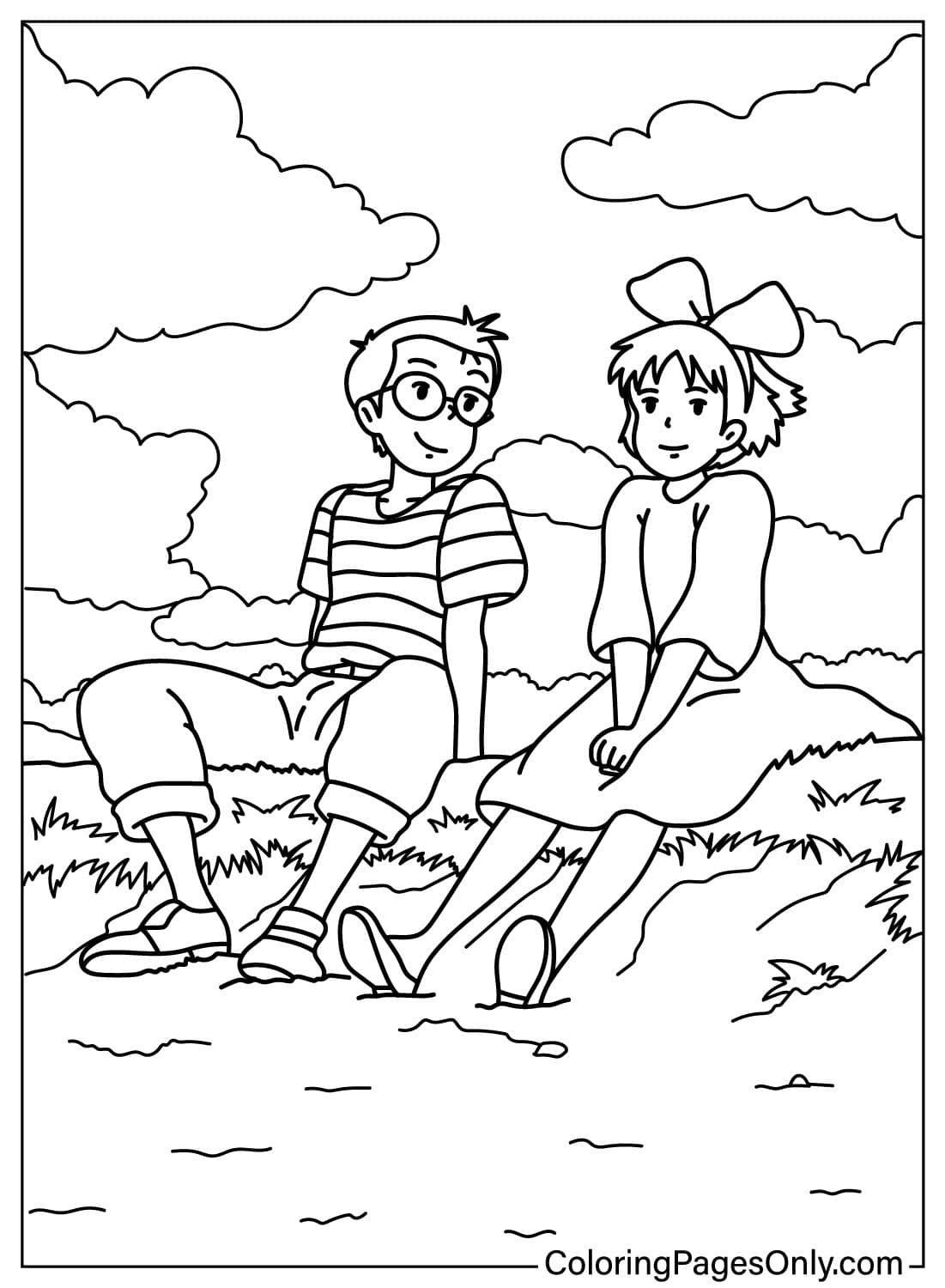
Whisper of the Heart (耳をすませば, directed by Yoshifumi Kondō) follows 14-year-old Shizuku, an aspiring writer who discovers that all the library books she checks out have been previously borrowed by the same mysterious boy. A quiet, romantic, deeply felt film about artistic ambition and the terrifying moment of deciding to take one’s creative work seriously.

Two tiles cover the film: Whisper of the Heart, Anime Studio Ghibli, and Whisper of the Heart Anime.

Princess Mononoke (1997)

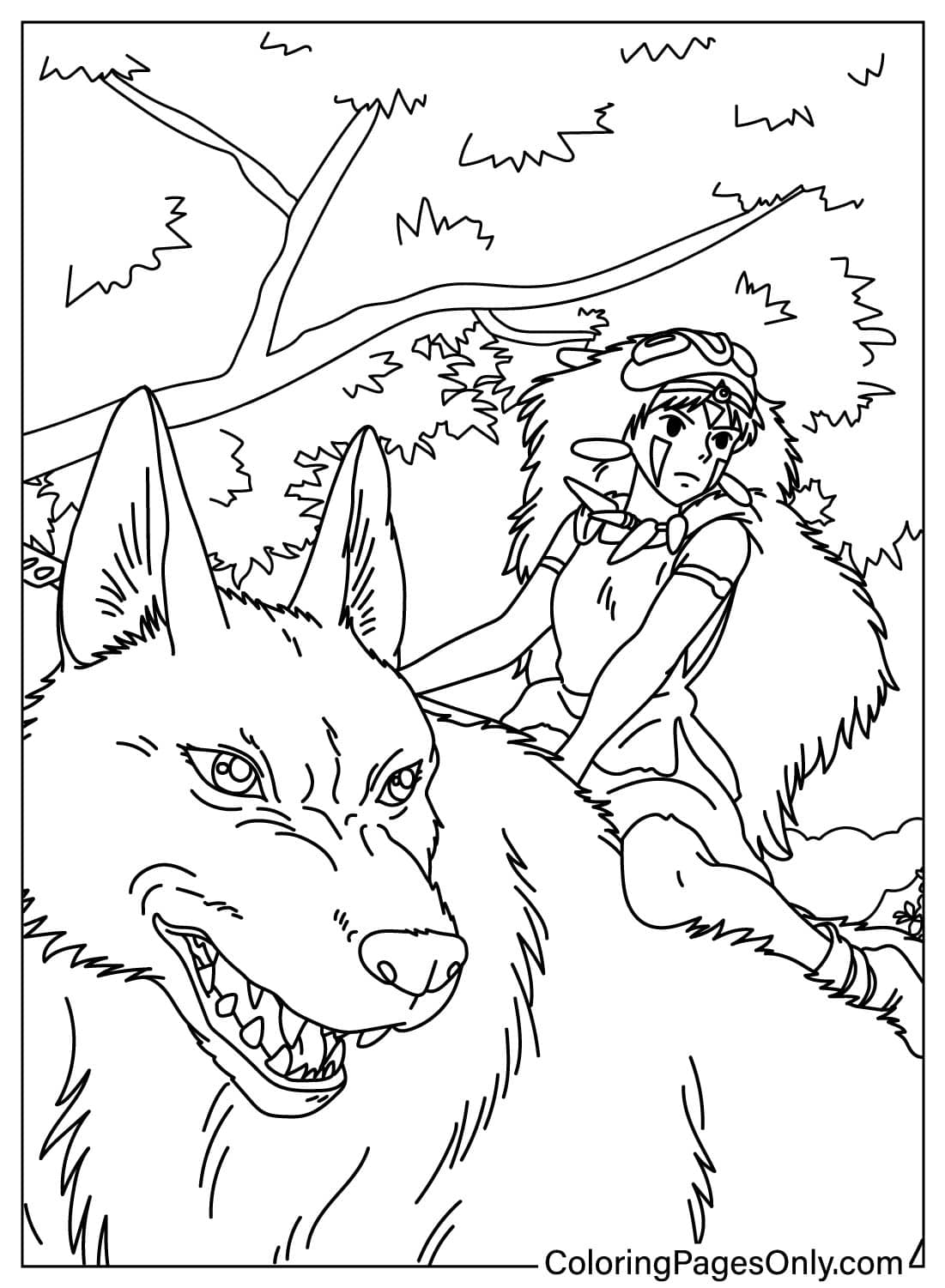
Princess Mononoke (もののけ姫, directed by Hayao Miyazaki) is Ghibli’s most morally complex and visually epic work – a historical fantasy set in Muromachi-era Japan depicting a conflict between the industrial settlement of Irontown (led by Lady Eboshi) and the forest gods and animals who oppose her. San, a human girl raised by wolves, fights to protect the forest alongside the great wolf goddess Moro.

Age note: Princess Mononoke contains significant violence – including decapitation, dismemberment, and battle sequences – and is rated PG-13. The coloring page tiles depict characters from the film in non-violent contexts and are appropriate for fans of the film.

Two tiles cover the film: Princess Mononoke Studio Ghibli and Princess Mononoke Anime.

Coloring San (Princess Mononoke): San wears white face paint with red markings – the red marks on her forehead and cheeks are her most defining visual feature. Her clothing uses animal skins – warm brown and white fur. Her eyes are vivid, intense.

Spirited Away (2001)

Spirited Away (千と千尋の神隠し, directed by Hayao Miyazaki) is Studio Ghibli’s masterpiece and the highest-grossing film in Japanese box office history. It follows 10-year-old Chihiro, who becomes trapped in a spirit world bathhouse after her parents are transformed into pigs, and must work and navigate the spirit world’s complex social structures to save them.

The film won the Academy Award for Best Animated Feature at the 2003 ceremony – the only non-English-language animated film to have won the award. It holds a 97% on Rotten Tomatoes and consistently appears at or near the top of critical polls of the greatest animated films ever made.

Two tiles cover the film: Spirited Away Ghibli and Spirited Away Anime.

Coloring Chihiro: Chihiro wears a white short-sleeved shirt tied with a yellow hair tie, and pink pants. Her hair is dark brown, held back simply. The bathhouse environment uses deep jade greens, warm woods, and the vivid colors of the spirits who inhabit it. No-Face – the enigmatic, mask-wearing spirit – is rendered in flat black with a pale white mask face.

Howl’s Moving Castle (2004)

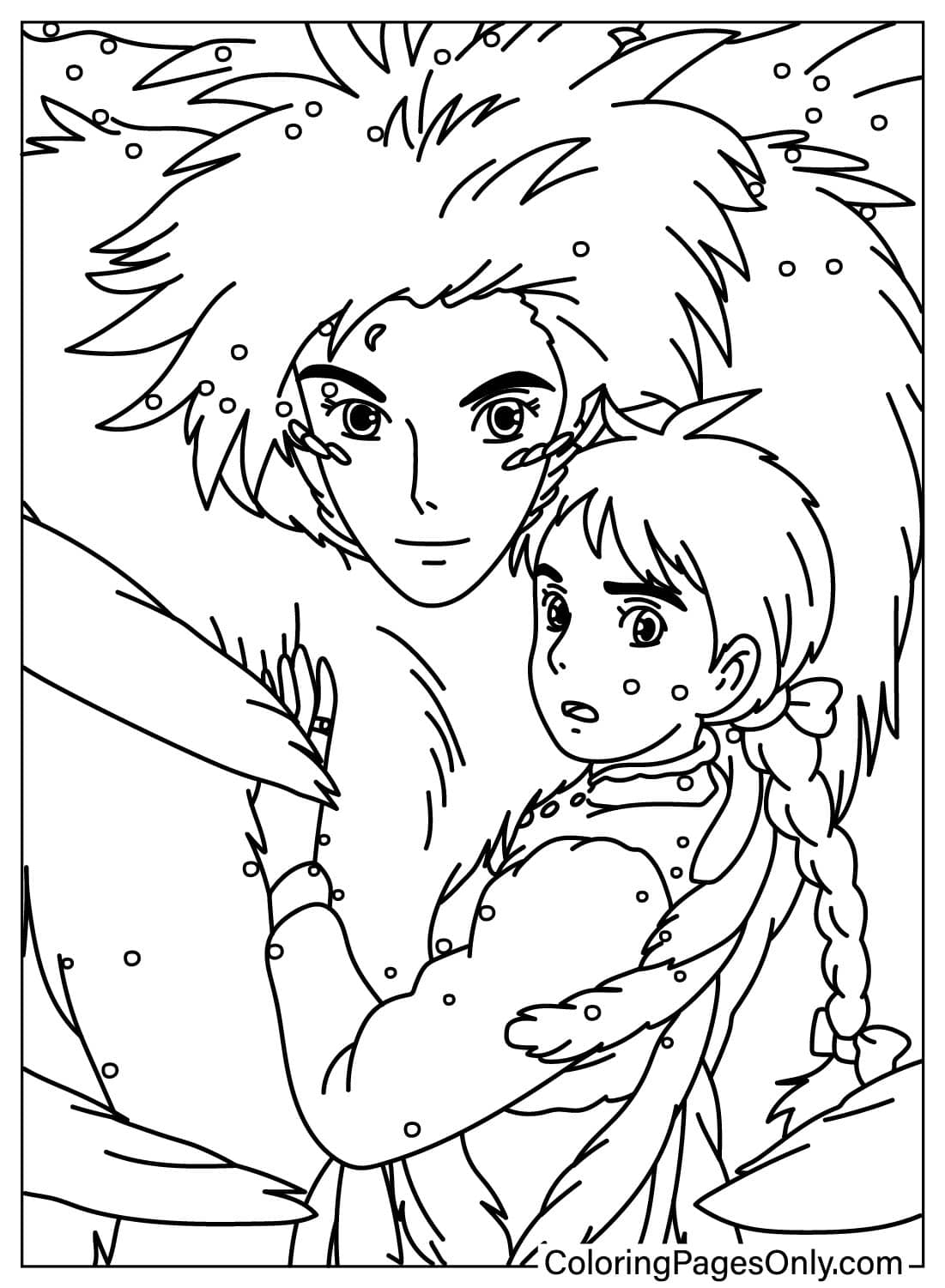
Howl’s Moving Castle (ハウルの動く城, directed by Hayao Miyazaki) is based on Diana Wynne Jones’s 1986 novel and follows Sophie, a young hatter who is cursed by a witch to appear as an old woman, and finds herself living in the fantastical moving castle of the wizard Howl. The film’s elaborate steampunk castle design – a lurching mechanical structure of chimneys, turrets, and mismatched architecture – is one of the most visually inventive designs in the studio’s history.

Two tiles cover the film: Howl’s Moving Castle Studio Ghibli and Howl’s Moving Castle Anime. For the dedicated Howl’s Moving Castle collection, see Howl’s Moving Castle Coloring Pages.

Coloring Howl: Howl’s most famous appearance uses a distinctive cobalt-blue and white outfit with long blonde hair – his most recognizable design across the film’s multiple transformations.

Tales from Earthsea (2006)

Tales from Earthsea (ゲド戦記, directed by Goro Miyazaki – Hayao Miyazaki’s son) is based on the Earthsea novels by Ursula K. Le Guin. Prince Arren and the wizard Sparrowhawk journey through a fantasy world where the balance between life and death is being disrupted. Goro Miyazaki’s directorial debut.

Ponyo (2008)

Ponyo (崖の上のポニョ, directed by Hayao Miyazaki) is a reimagining of The Little Mermaid set in a coastal Japanese fishing town, following a goldfish princess named Ponyo who falls in love with a five-year-old boy named Sosuke. The most visually exuberant and child-focused of Miyazaki’s late-career works, with watercolor-influenced wave sequences of extraordinary beauty.

One tile covers the film: Ponyo Studio Ghibli. For the dedicated Ponyo collection, see Ponyo Coloring Pages.

Coloring Ponyo: Ponyo’s half-fish form uses vivid red-pink for her fish body with white face and hands. Her human form has the same warm red-pink hair with round, cheerful features.

From Up on Poppy Hill (2011)

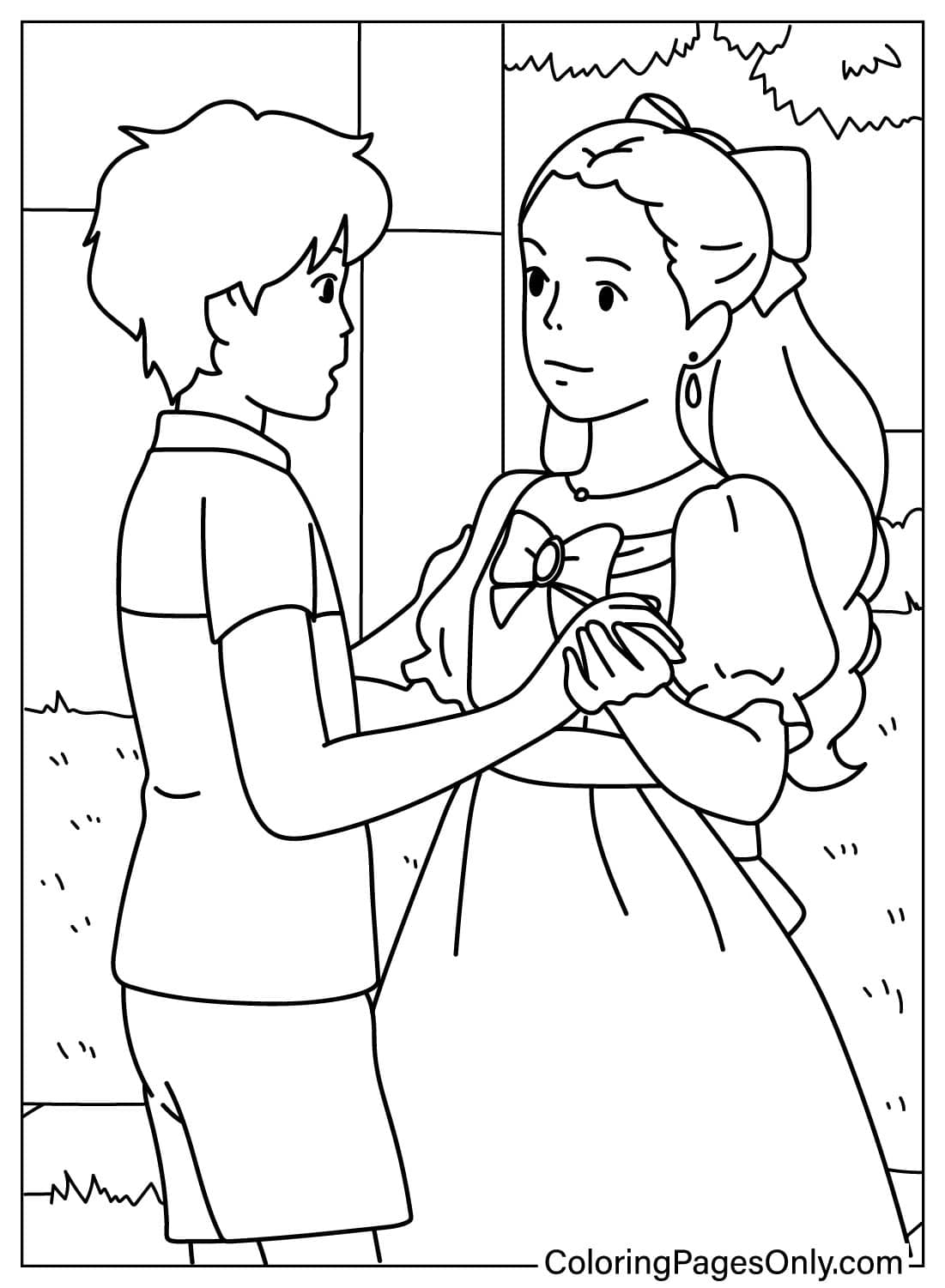
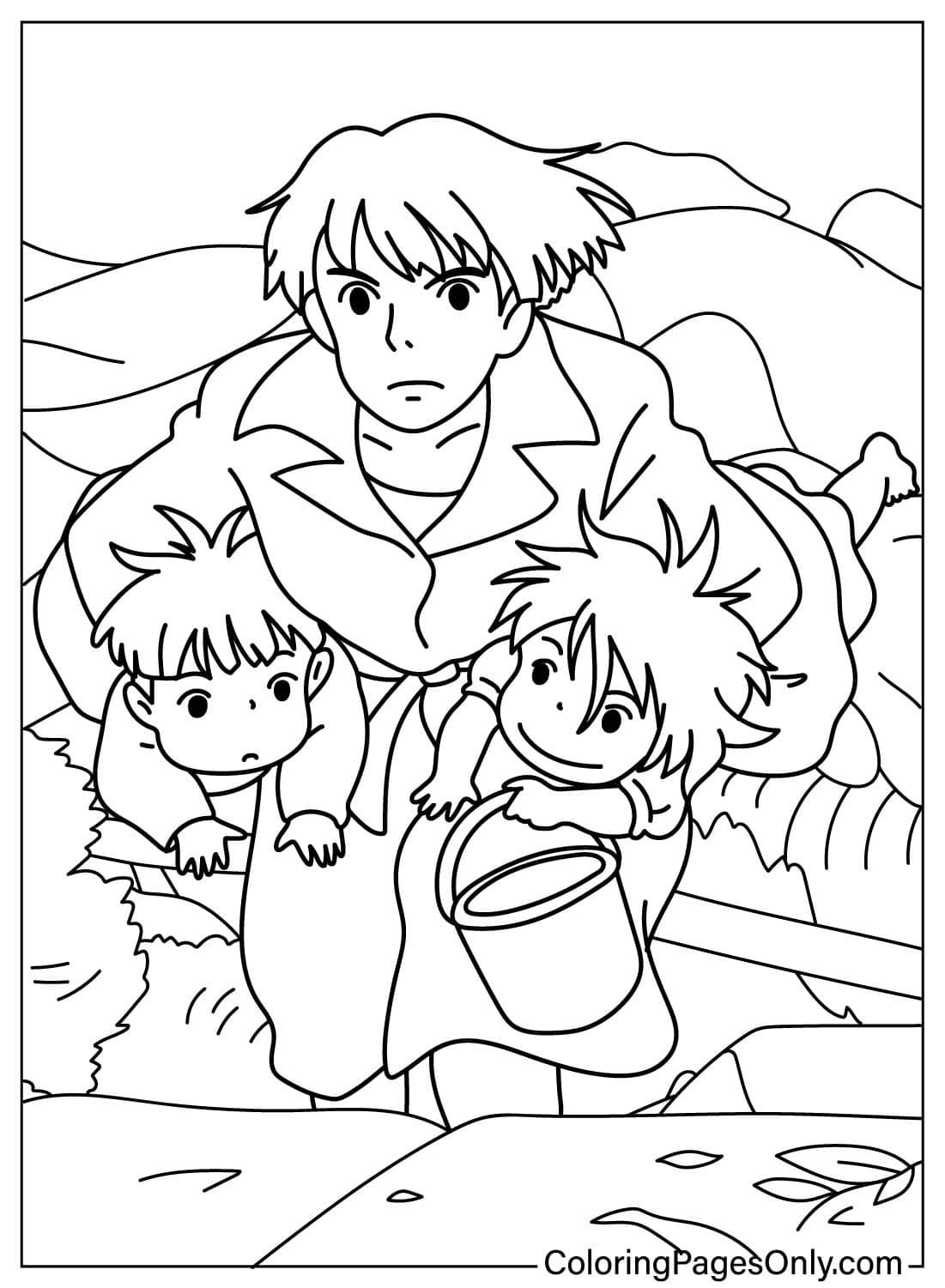
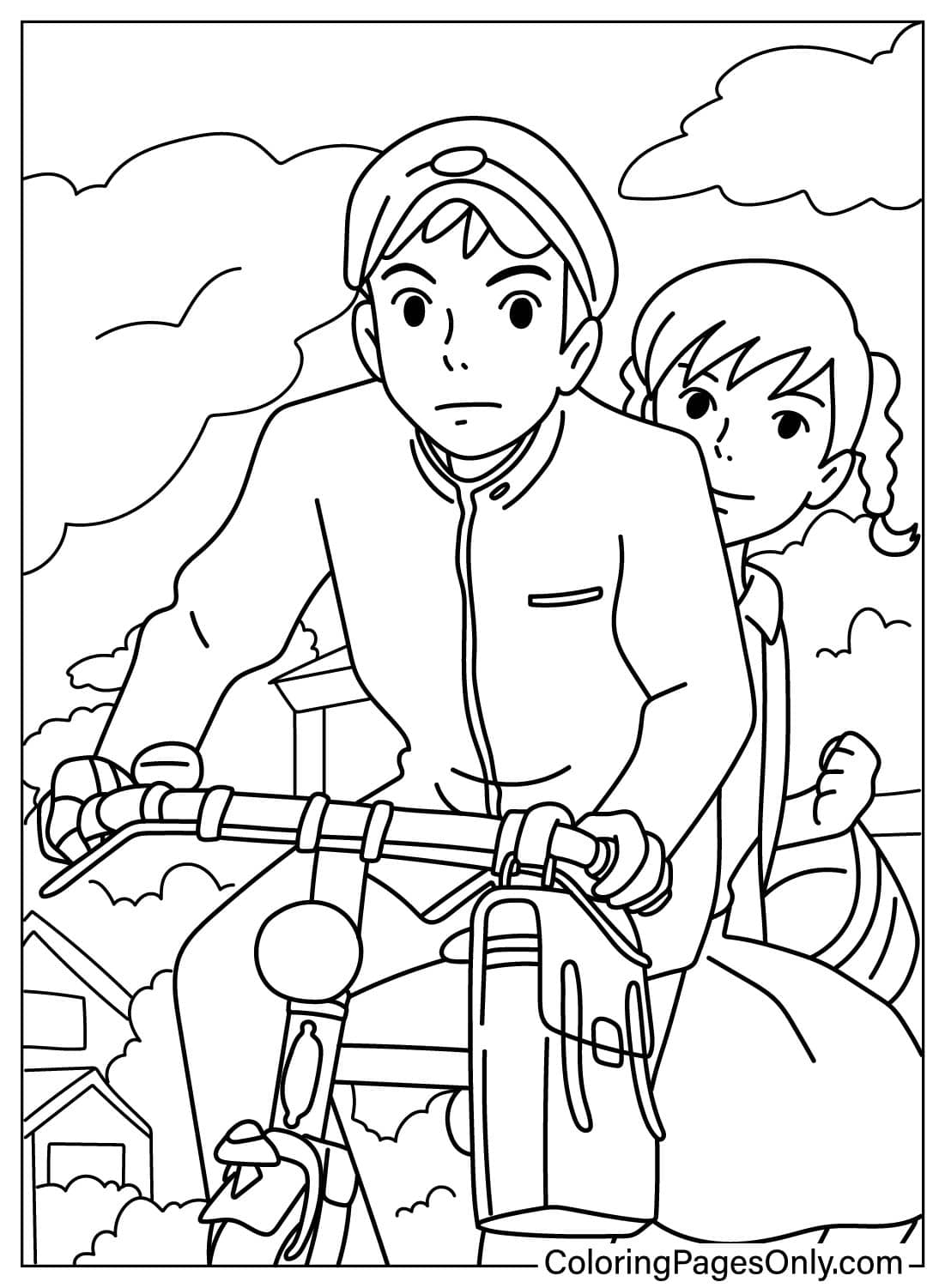
From Up on Poppy Hill (コクリコ坂から, directed by Goro Miyazaki) is set in Yokohama in 1963 – the year before the Tokyo Olympics – and follows two students working to save their school’s old clubhouse from demolition. A quiet, nostalgic film set against Japan’s rapid postwar modernization.

The Secret World of Arrietty (2010)

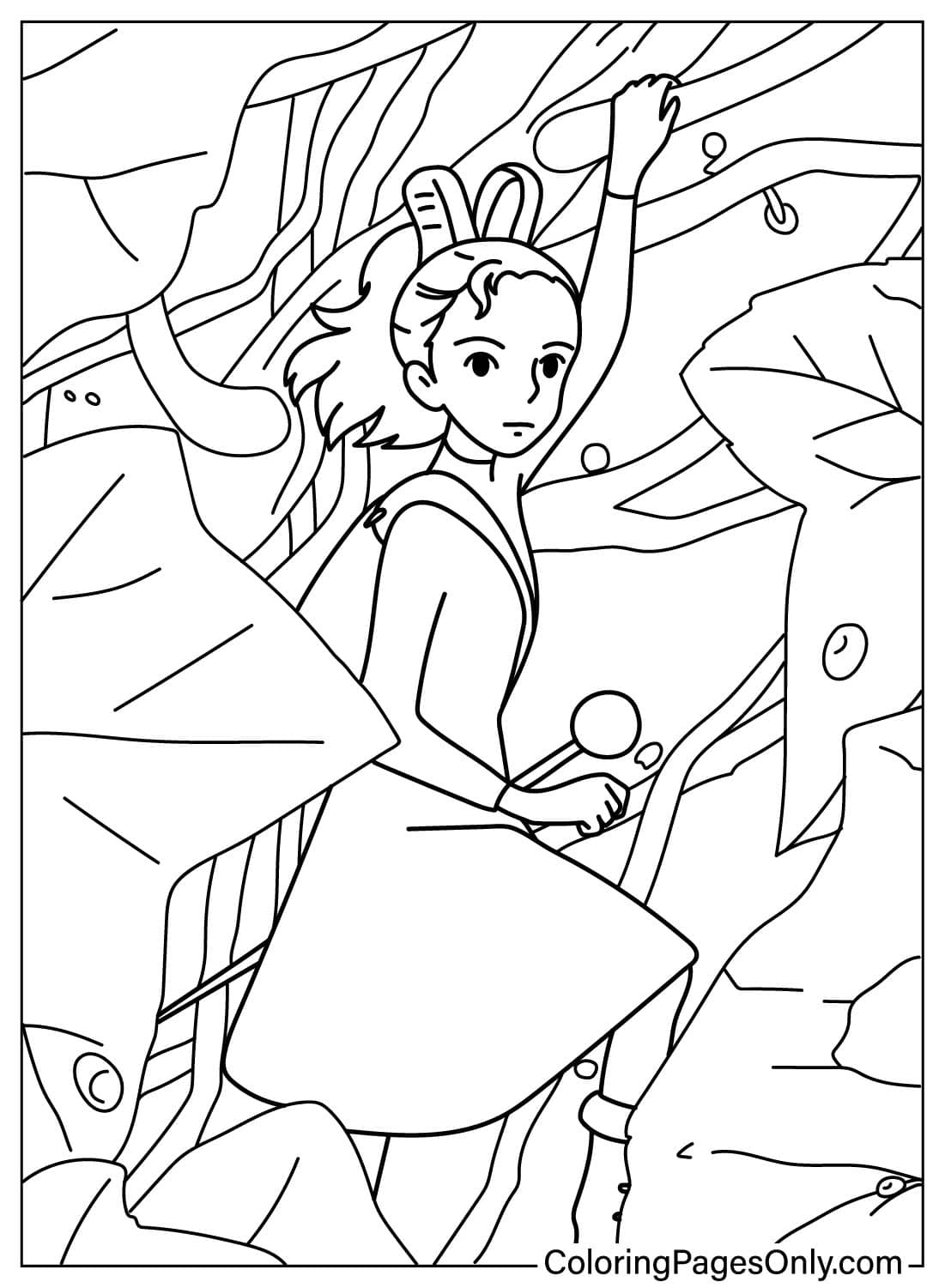
The Secret World of Arrietty (借りぐらしのアリエッティ, directed by Hiromasa Yonebayashi) is based on Mary Norton’s The Borrowers and follows Arrietty, a tiny girl living with her family under the floorboards of a Japanese house, as she is discovered by a sick boy named Sho. Two tiles cover the film: The Secret World of Arrietty Anime and Arrietty Anime Studio Ghibli.

The Cat Returns (2002)

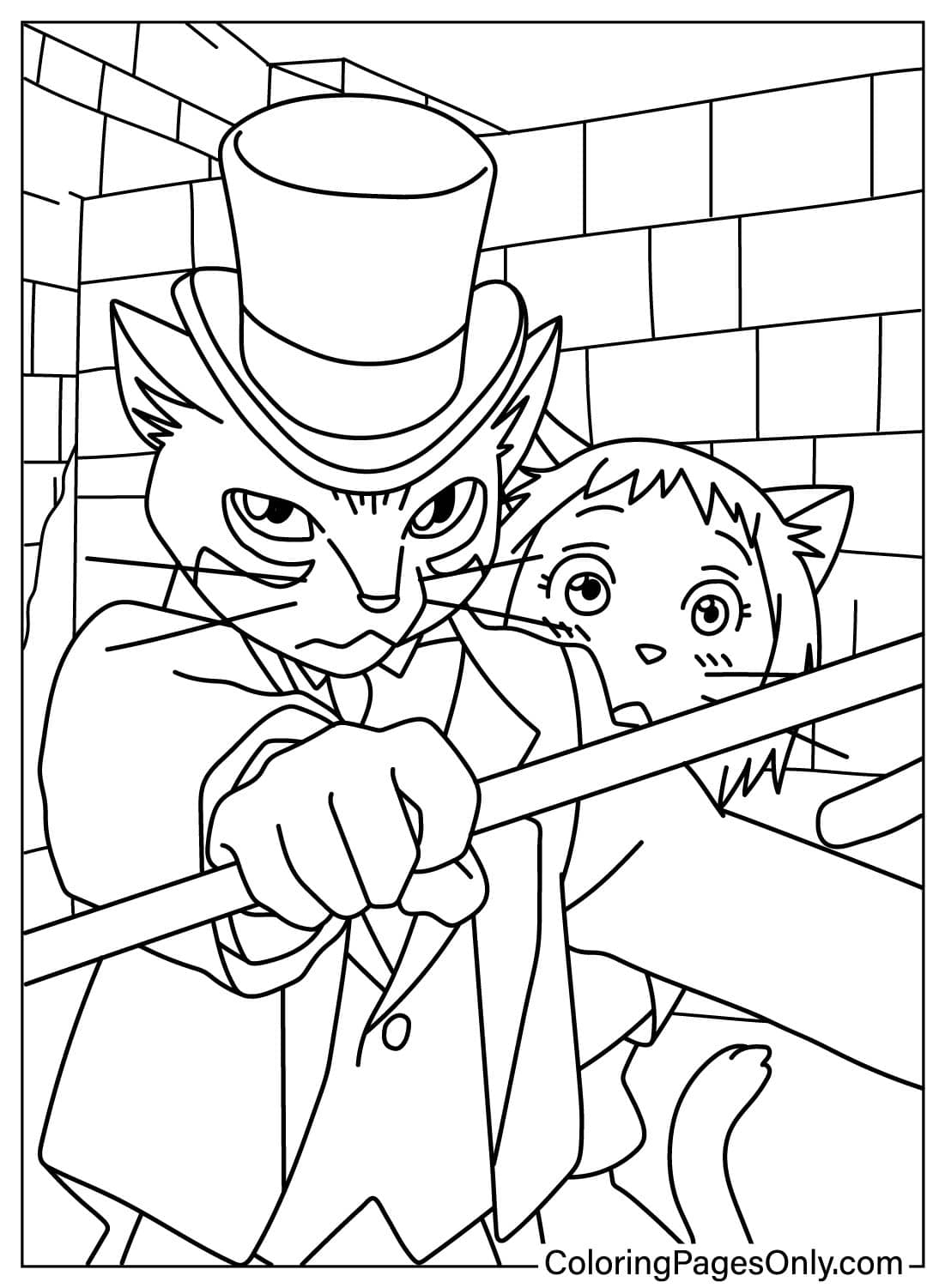
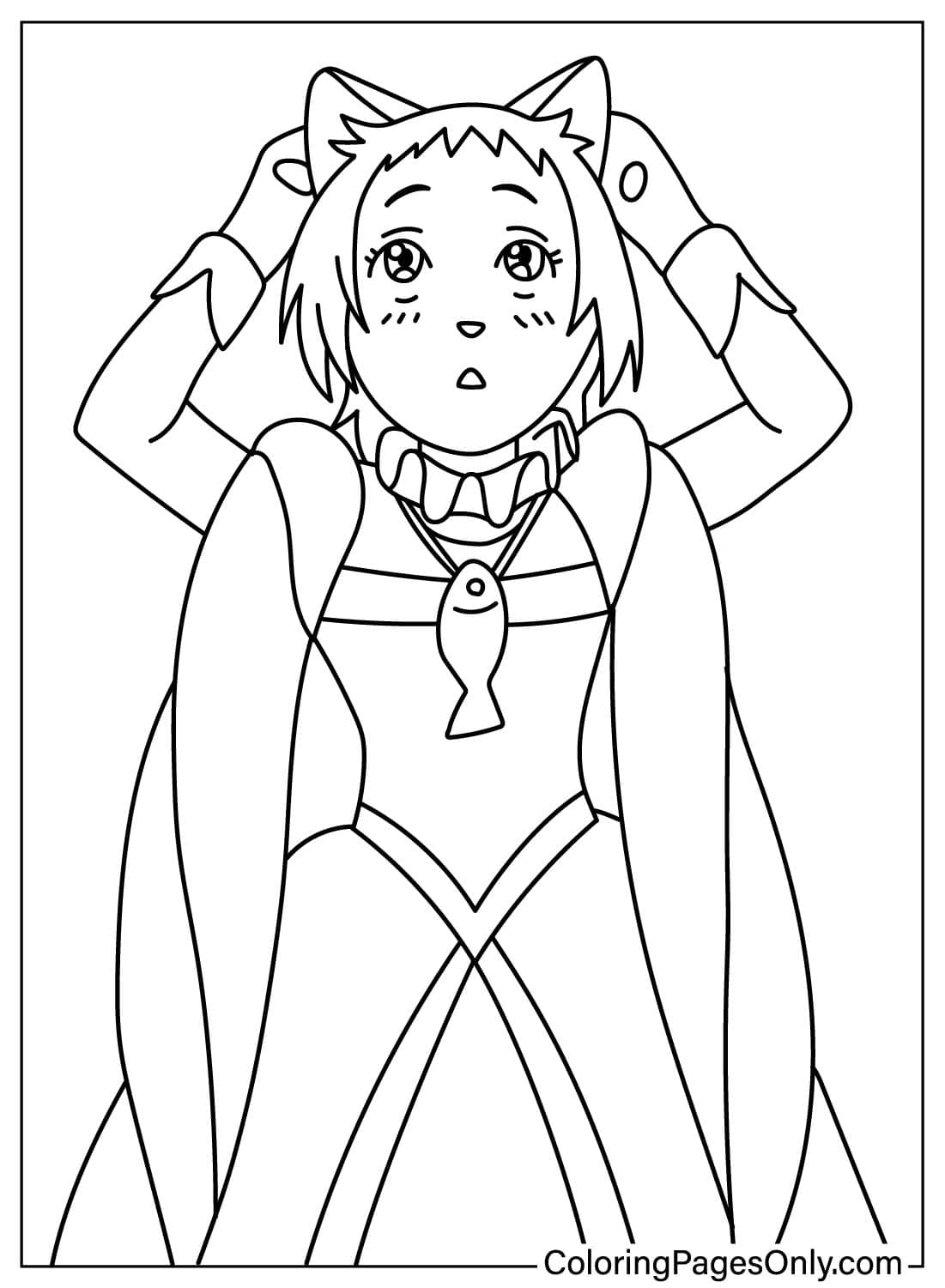
The Cat Returns (猫の恩返し, directed by Hiroyuki Morita) is a spin-off of Whisper of the Heart featuring the Baron cat figurine as a main character – a lighter, more comedic film following a teenage girl accidentally transported to the Cat Kingdom. Two tiles cover the film: The Cat Returns Anime and The Cat Returns Anime Studio Ghibli.

The Wind Rises (2013)

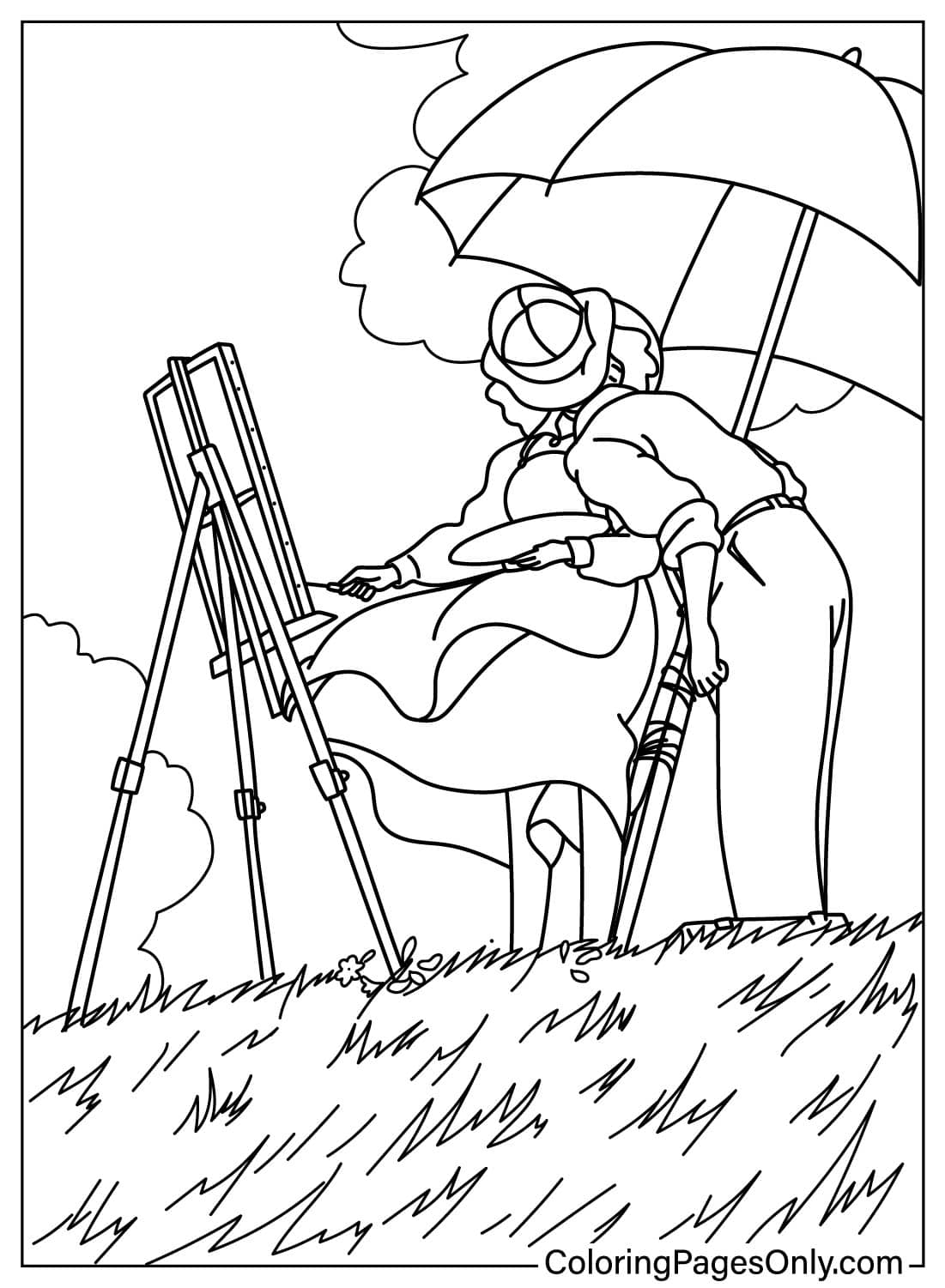
The Wind Rises (風立ちぬ, directed by Hayao Miyazaki) is a fictionalized biography of Jiro Horikoshi, the aerospace engineer who designed the Zero fighter plane used by Japan in World War II. Miyazaki’s most personal and most complex film in terms of its relationship to his own biography and Japan’s wartime history. One tile covers the film: The Wind Rises Studio Ghibli.

When Marnie Was There (2014)

When Marnie Was There (思い出のマーニー, directed by Hiromasa Yonebayashi) follows Anna, an introverted girl sent to the countryside for her health, who becomes obsessed with a mysterious blonde girl named Marnie who appears in an abandoned mansion near the marsh. One tile covers the film. Note: Tile name “When Marnie Was There[ Studio Ghibli” has a typo bracket – should be corrected.

The Boy and the Heron (2023)

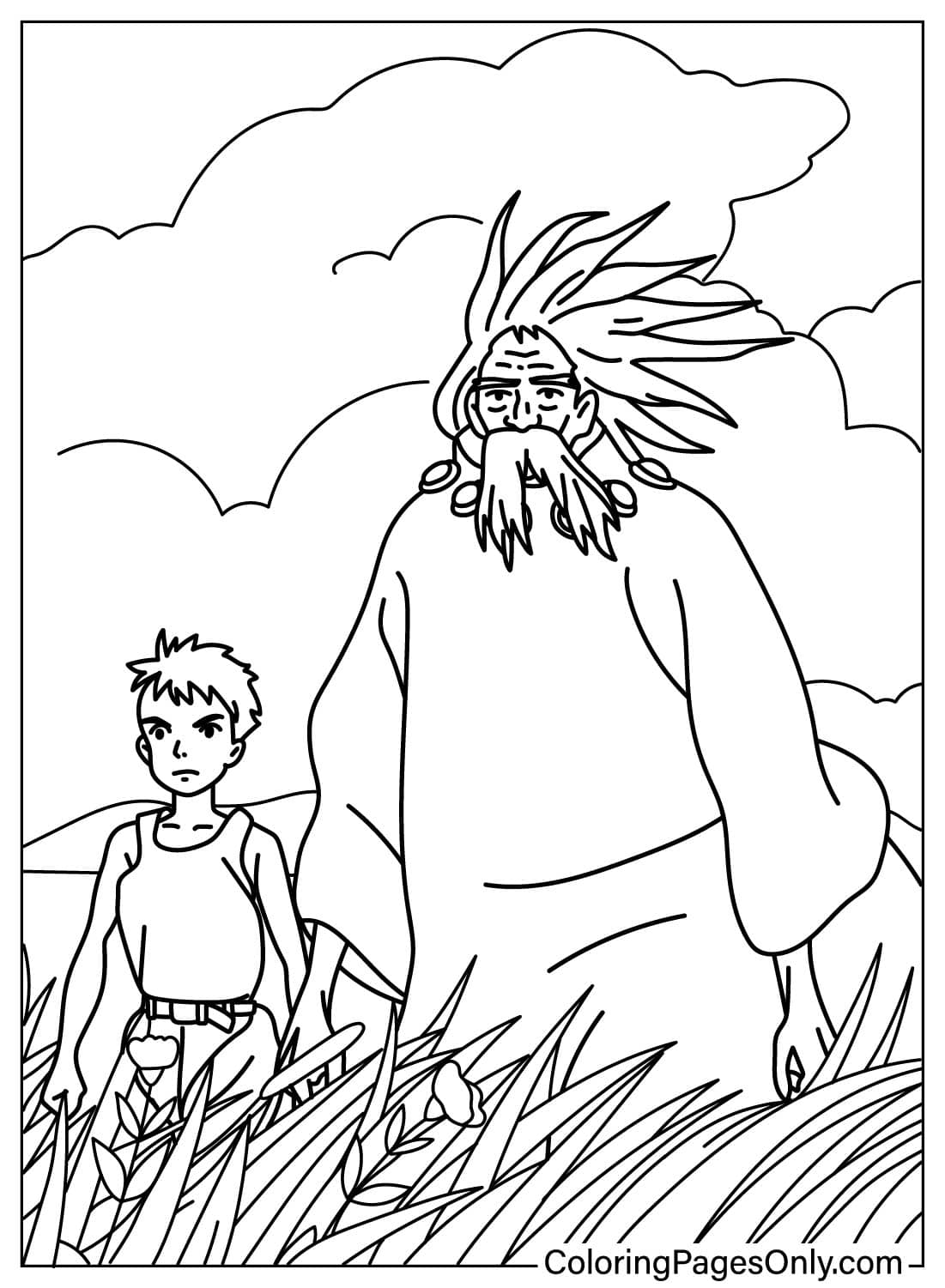
The Boy and the Heron (君たちはどう生きるか, directed by Hayao Miyazaki) is Miyazaki’s most recent film and was announced as his last before he again came out of retirement to make it. It follows 12-year-old Mahito as he follows a mysterious heron into a fantasy world connected to his family’s grief. The film won the Academy Award for Best Animated Feature at the 2024 ceremony, making Miyazaki the first filmmaker to win the award twice. One tile covers the film: The Boy and the Heron Anime.

Coloring Guide: The Ghibli Visual Language

Studio Ghibli’s films share a distinctive color language despite spanning wildly different settings – from medieval Japan to 1920s Adriatic to contemporary rural life to the spirit world. Understanding these principles helps produce coloring results that feel true to the source material.

The Ghibli Sky

No element appears more frequently or more beautifully across the entire Ghibli catalog than sky. Ghibli skies are not the flat blue of shorthand illustration – they are layered, atmospheric, constantly changing. The standard Ghibli sky treatment uses three to four distinct blue values: a pale, slightly warm blue at the horizon transitioning through medium blue to a deeper, more saturated blue toward the top of the sky. Clouds use warm white for their illuminated faces and cool blue-grey for their shadow undersides, with a particularly luminous quality where sunlight passes through their edges.

Nature’s Green

Ghibli’s vegetation is one of the studio’s most celebrated visual signatures – intensely lush, detailed, and varied. The standard Ghibli forest or garden green uses a warm, medium-saturated green as its dominant note – not the cool, desaturated green of temperate pine forests, but the vivid, sunlit warmth of deciduous foliage in summer. Shadow areas in vegetation use a distinctly blue-green tone – the specific cool shadow cast by layered leaves. This warm-lit/cool-shadowed green contrast is what gives Ghibli’s forest scenes their sense of depth and atmosphere.

Warm Interior Lighting

Indoor scenes across Ghibli films – the bathhouse in Spirited Away, Kiki’s bakery attic, the cozy house interiors in Totoro – use a characteristic warm amber-orange lantern light against soft warm wood and plaster tones. This warmth is the color of safety and belonging in Ghibli’s visual vocabulary, and capturing it in interior tiles requires the warm orange-amber of lantern glow as the dominant interior color rather than neutral white light.

Coloring Tools for the Ghibli Aesthetic

The soft, painterly quality of Ghibli’s backgrounds – distinct from the cel-shaded hard edges of the characters – is most closely approximated with watercolor pencils applied lightly and blended slightly, or with soft-core colored pencils (Prismacolor, Faber-Castell Polychromos) used with lighter pressure than usual. The goal is a slightly diffused, atmospheric quality in background areas – sky, foliage, water – that contrasts with the more defined coloring of the character figures in the foreground. For technique guidance, see our how to color anime characters guide, whose principles apply to Ghibli character coloring.

FAQs

Who founded Studio Ghibli? Studio Ghibli was founded in 1985 by directors Hayao Miyazaki and Isao Takahata alongside producer Toshio Suzuki. The studio is based in Koganei, Tokyo.

Which Studio Ghibli films have won Academy Awards? Spirited Away (2001) won the Academy Award for Best Animated Feature at the 2003 ceremony – the only non-English animated film to have won the award. The Boy and the Heron (2023) won the same award at the 2024 ceremony, making Hayao Miyazaki the first person to win the Best Animated Feature award twice.

What is the highest-grossing Studio Ghibli film? Spirited Away (2001) is the highest-grossing film in Japanese cinema history, surpassing Princess Mononoke, which held that record before it. Globally, Spirited Away is also the highest-grossing Ghibli film.

What age group are Studio Ghibli films for? Most Ghibli films are appropriate for ages 6 and up. My Neighbor Totoro (1988), Ponyo (2008), and Kiki’s Delivery Service (1989) are gentle enough for young children. Princess Mononoke (1997) is rated PG-13 for violence. Grave of the Fireflies (1988) deals with civilian wartime death and is recommended for ages 13 and up.

What does the name “Studio Ghibli” mean? “Ghibli” (or “Ghibli”) is an Italian word for a hot wind blowing from the Sahara. Miyazaki chose the name based on an Italian reconnaissance aircraft, the Caproni Ca. 309 Ghibli, reflecting his lifelong passion for aviation that appears throughout his films.

Where can I watch Studio Ghibli films? Since 2020, Netflix has held global streaming rights to the Studio Ghibli catalog outside Japan, making all films available on the Netflix platform. The films are also available for digital purchase and physical media worldwide.

Is there a Studio Ghibli museum? Yes – the Ghibli Museum opened in October 2001 in Mitaka, a city west of Tokyo. The museum is designed to reflect the whimsical, handcrafted aesthetic of the films and includes exclusive short films not available anywhere else, original animation cels and backgrounds, the studio’s working environment, and a replica of the Catbus from My Neighbor Totoro. Tickets must be booked in advance and are in very high demand.

All 30+ Studio Ghibli Coloring Pages are free – download as PDF or color online. Share your finished pages on Facebook and Pinterest.

These related coloring collections will help you explore the wonderful world of colors. Let’s choose, be creative, and show us your great pictures!

Jennifer Thoa – Writer and Content Creator

Hi there! I’m Jennifer Thoa, a writer and content creator at Coloringpagesonly.com. With a love for storytelling and a passion for creativity, I’m here to inspire and share exciting ideas that bring color and joy to your world. Let’s dive into a fun and imaginative adventure together!