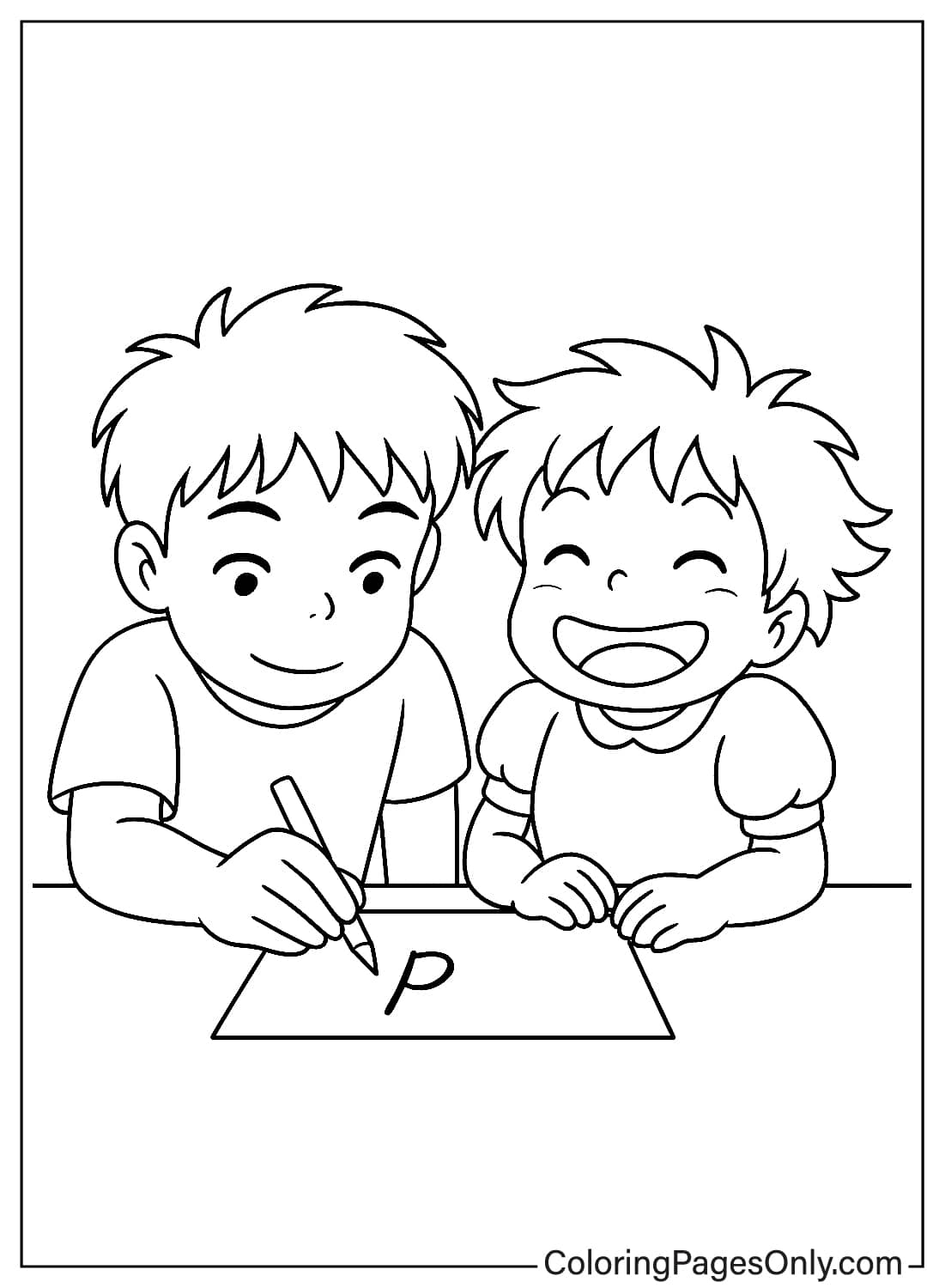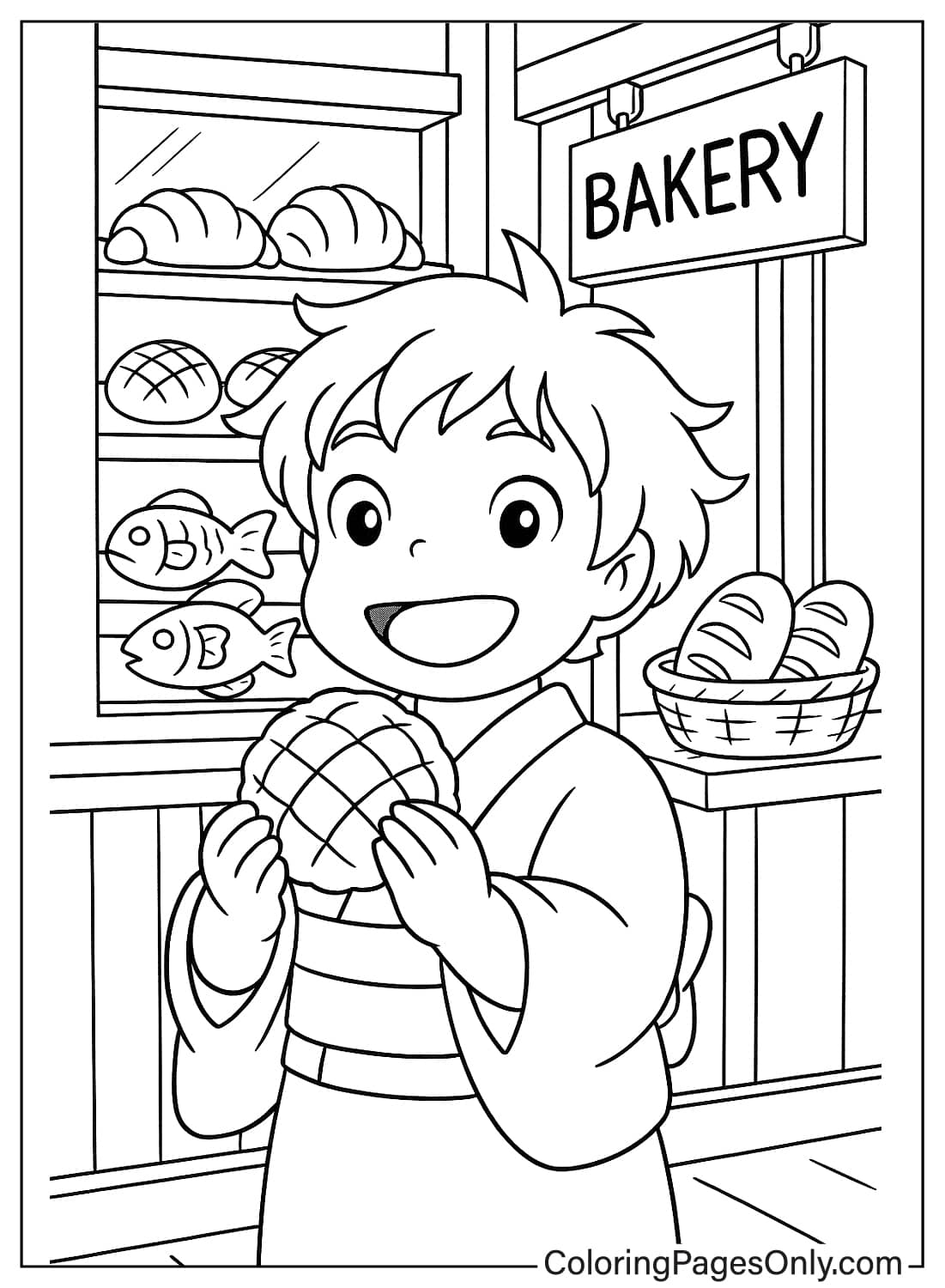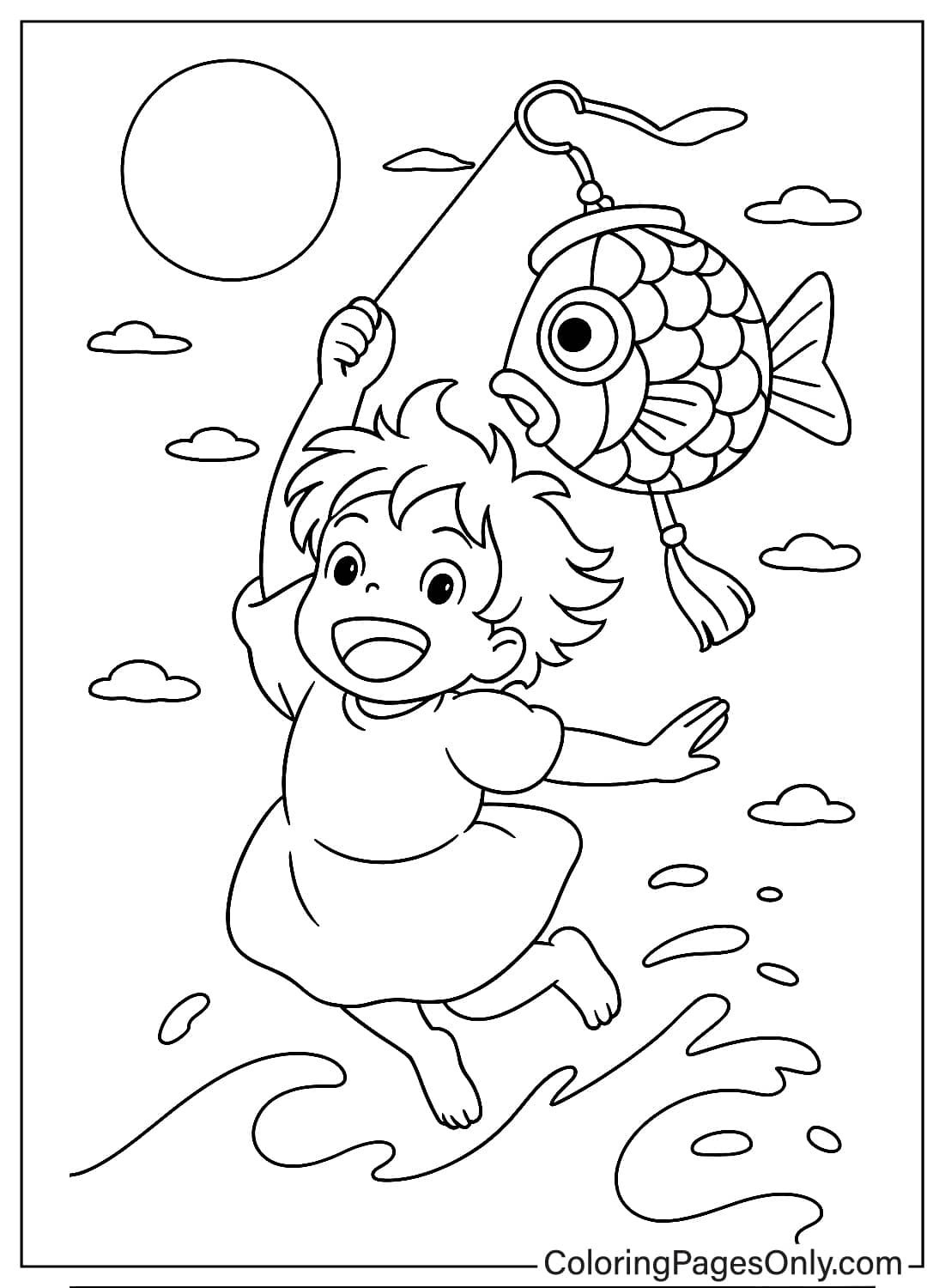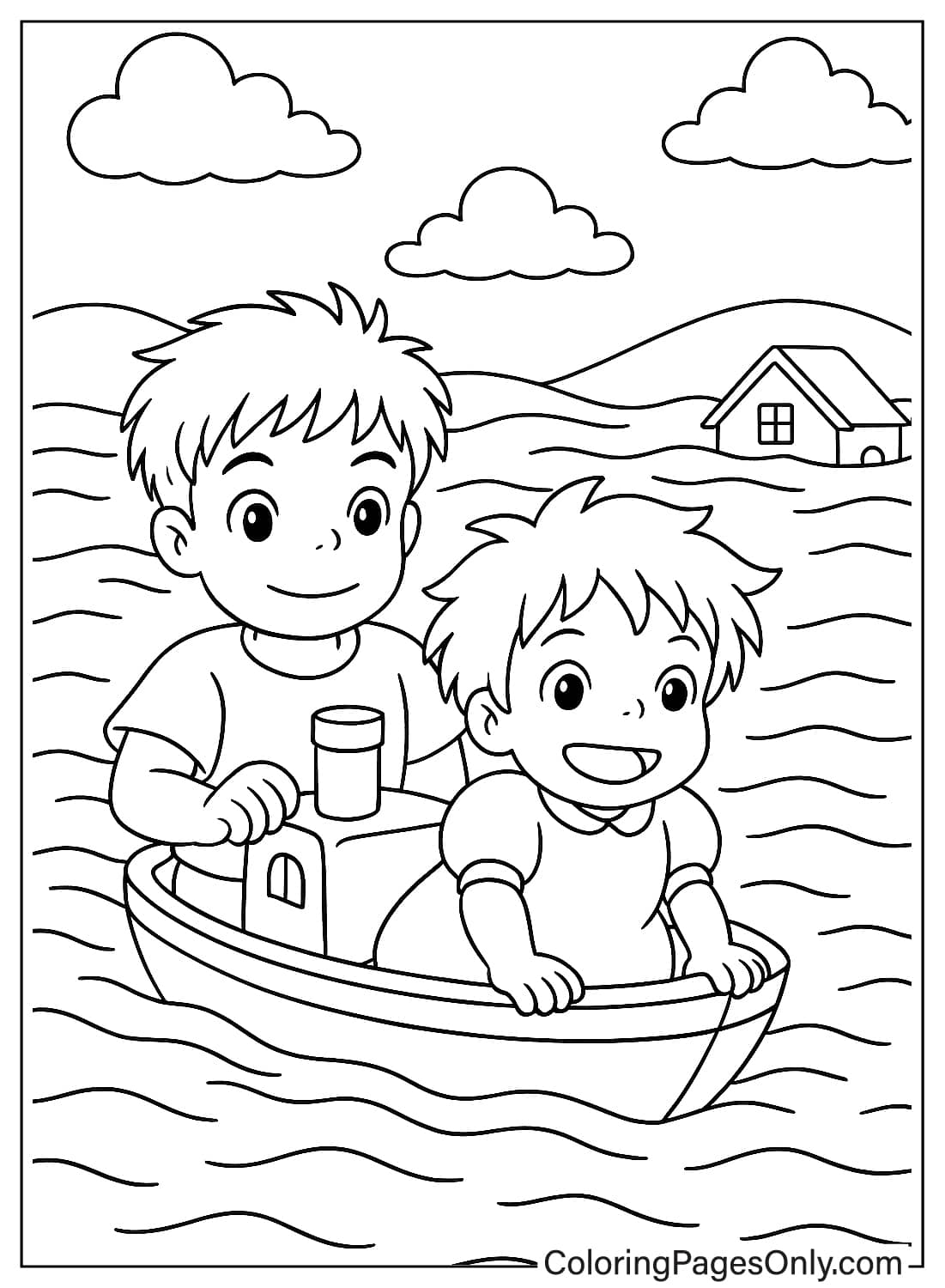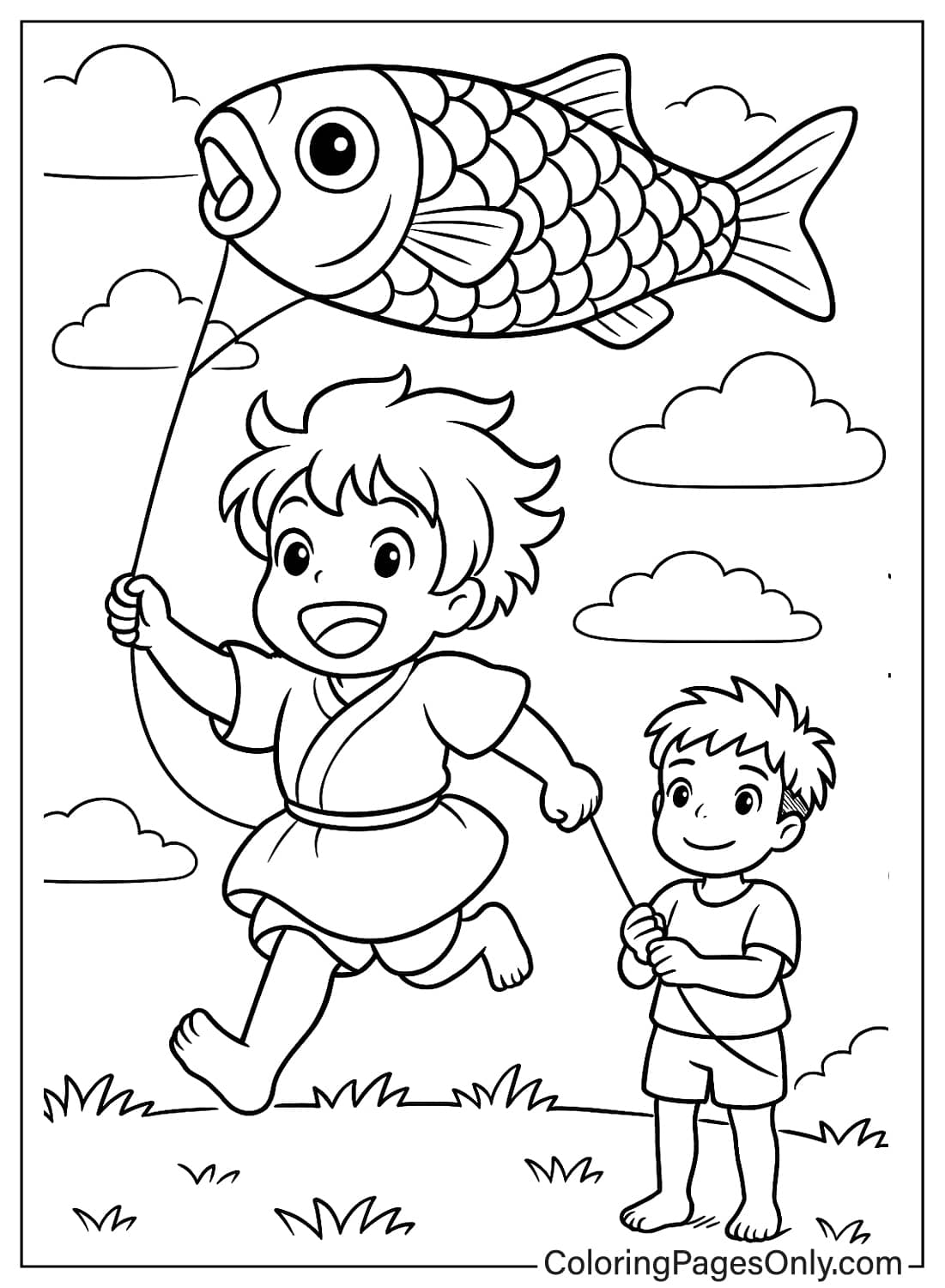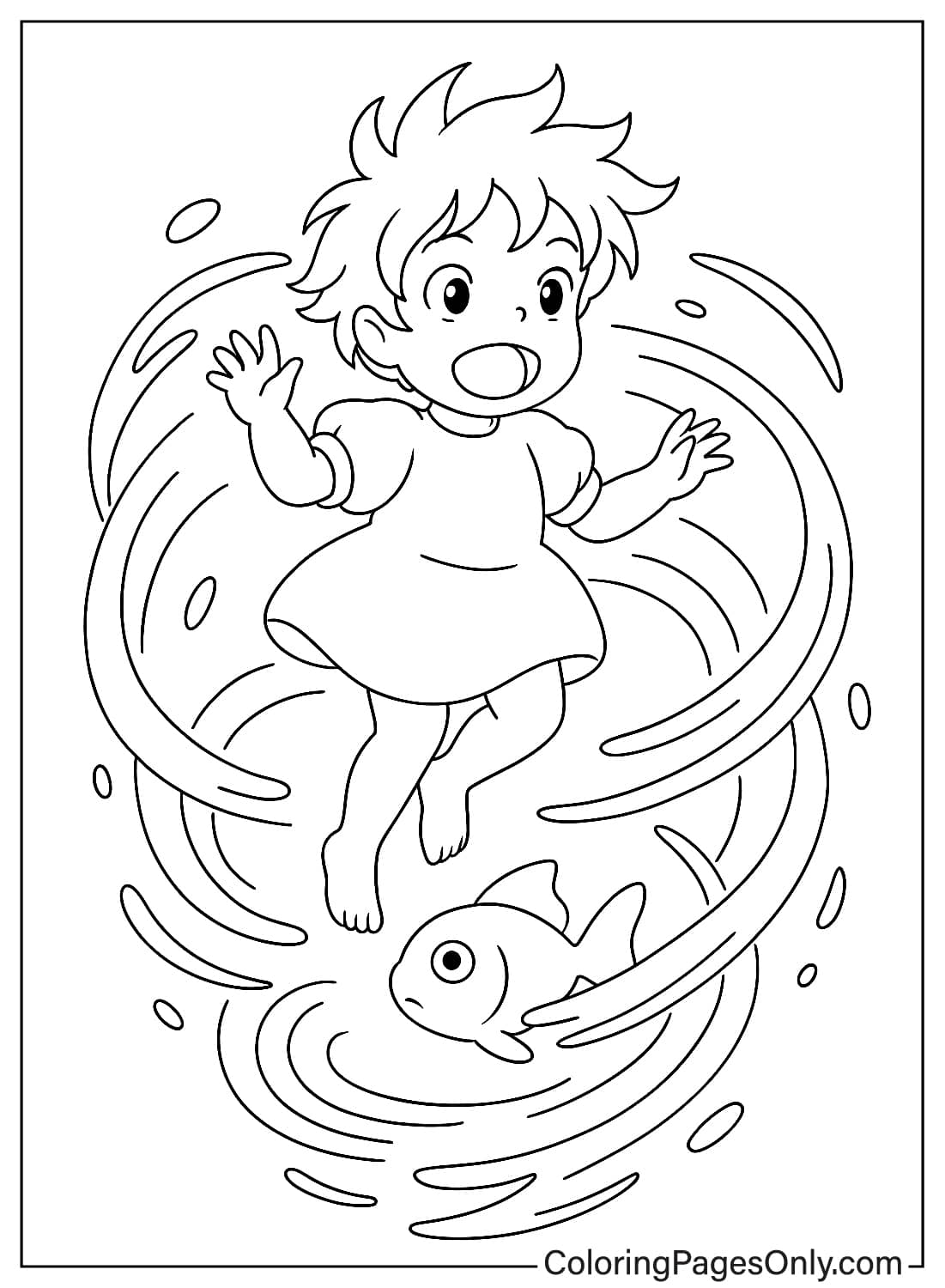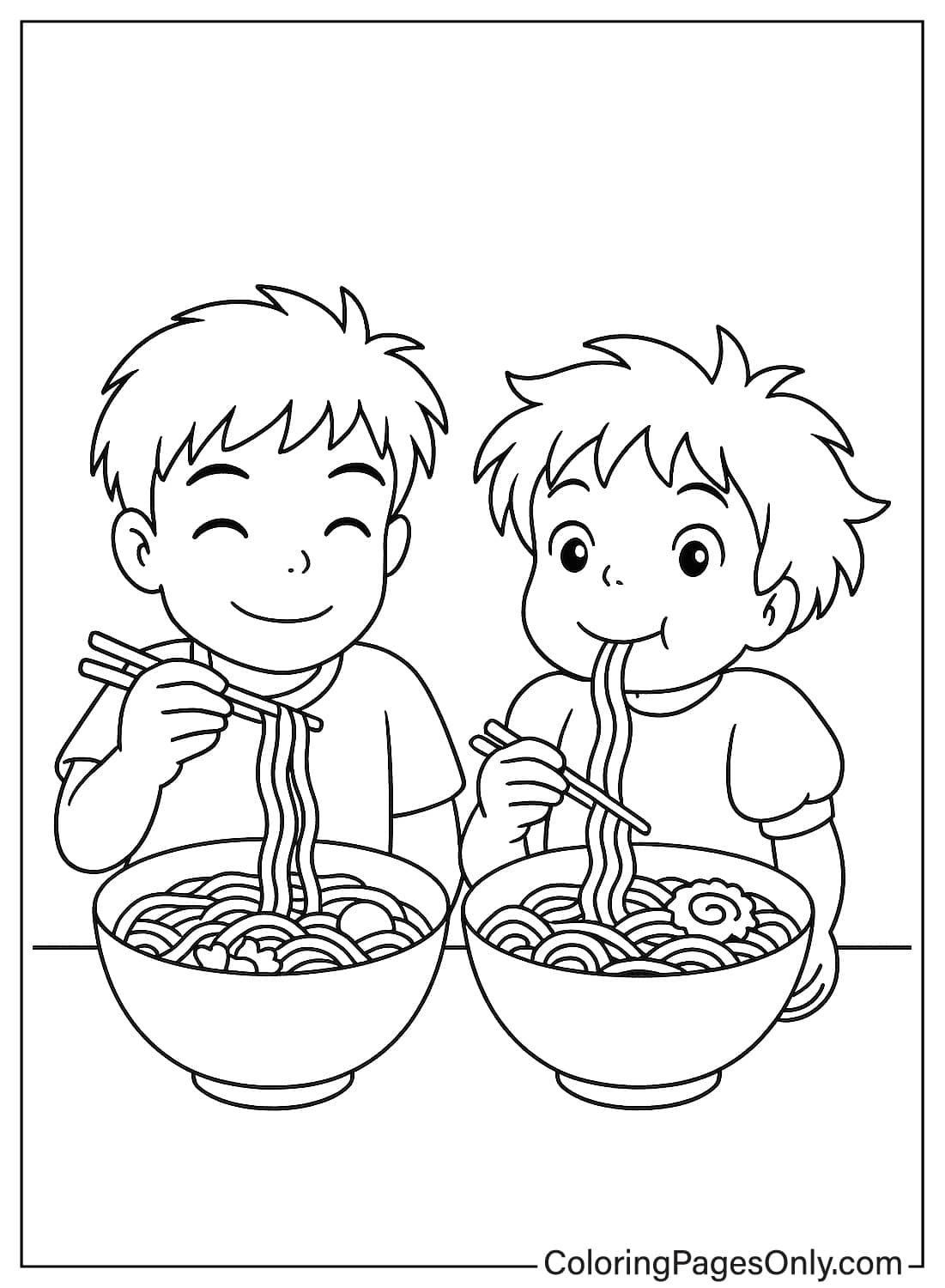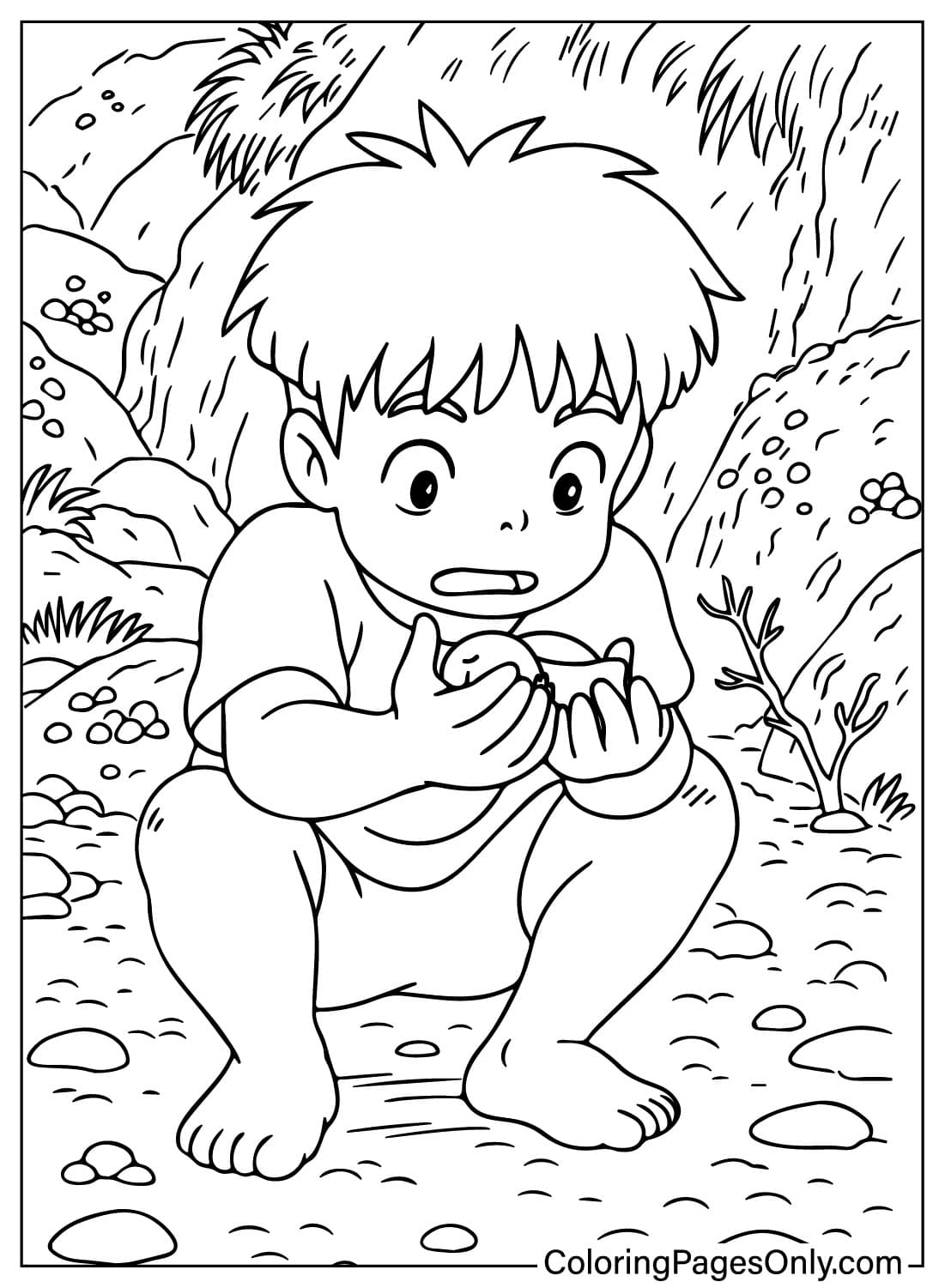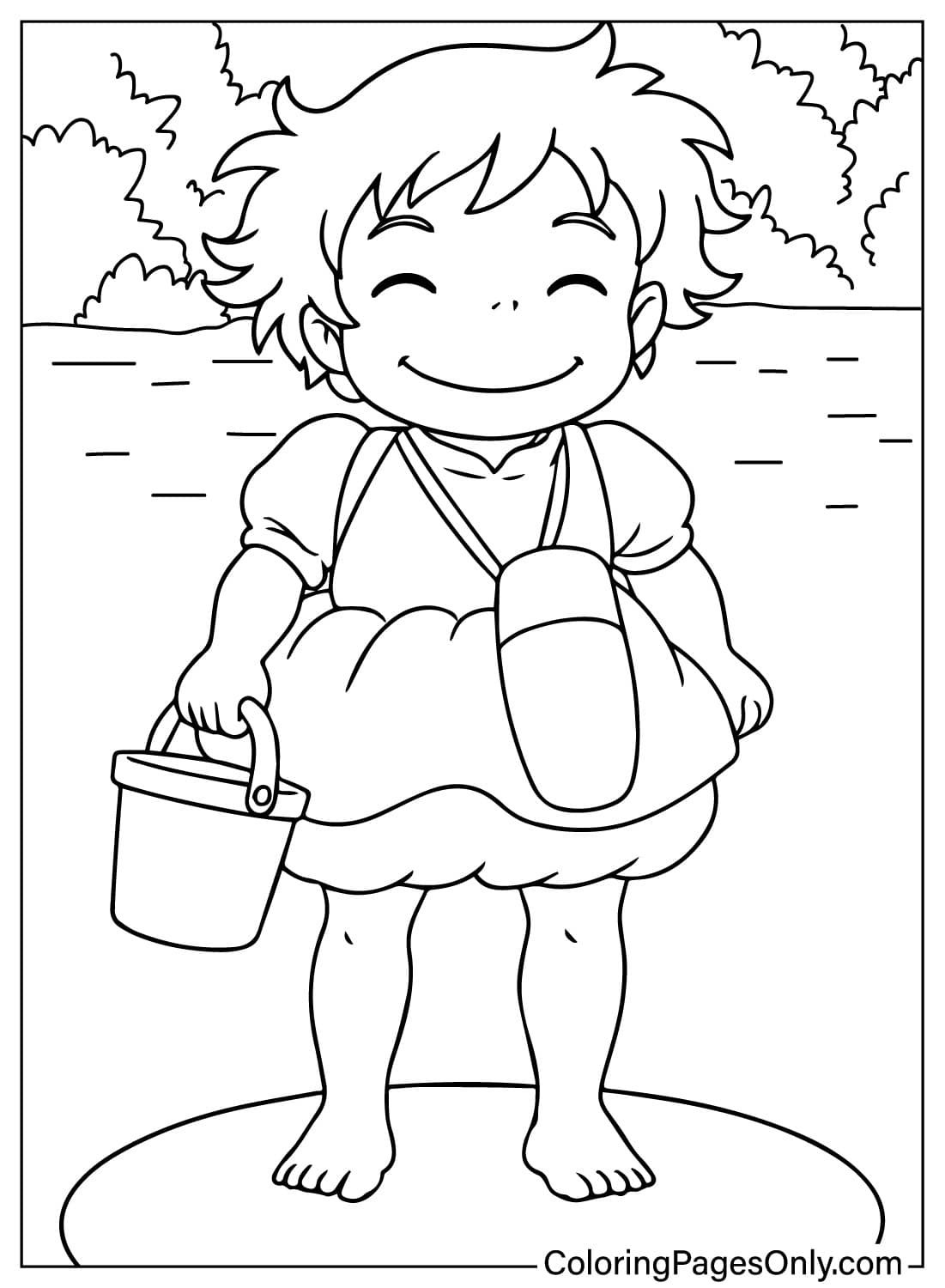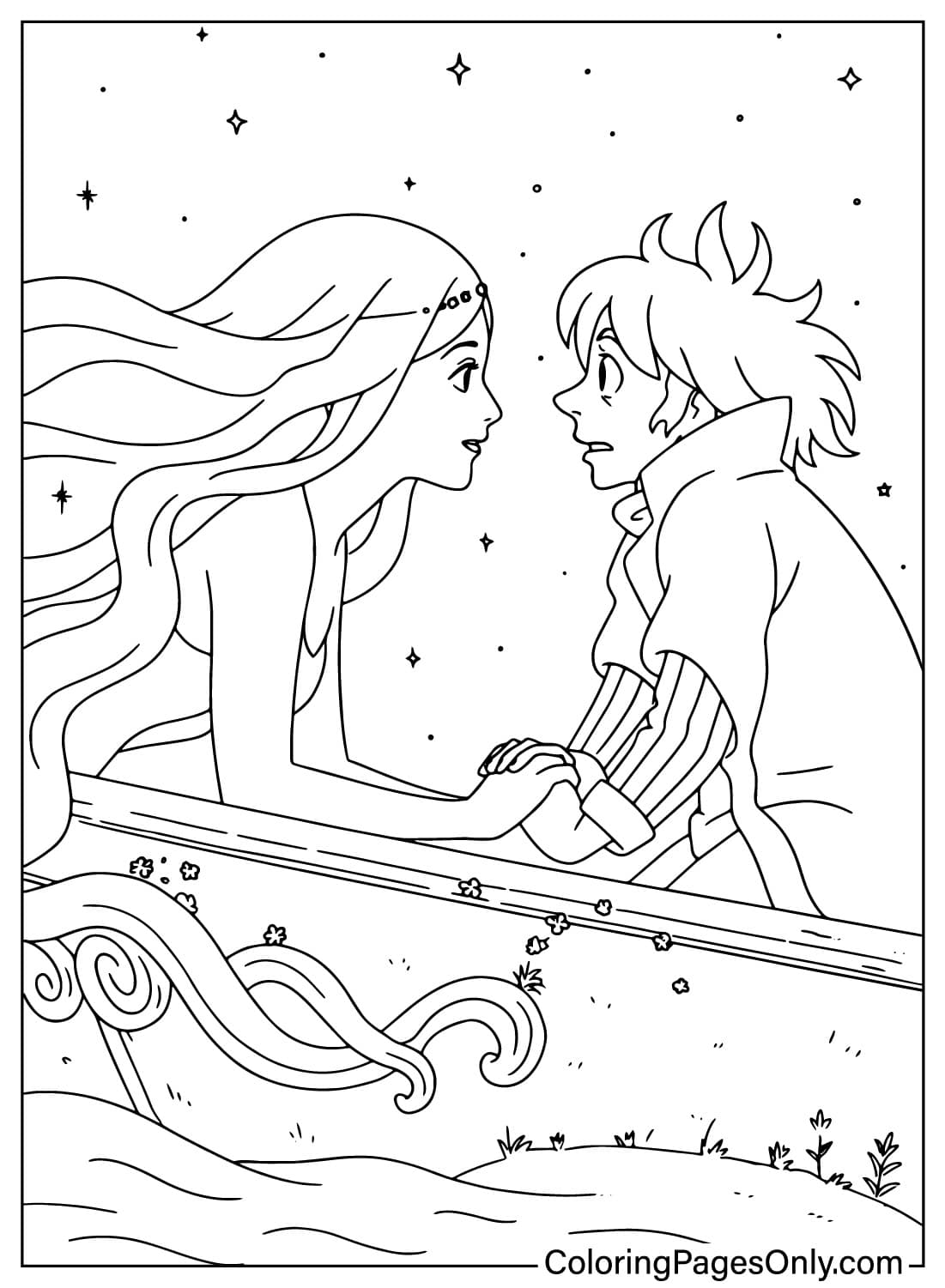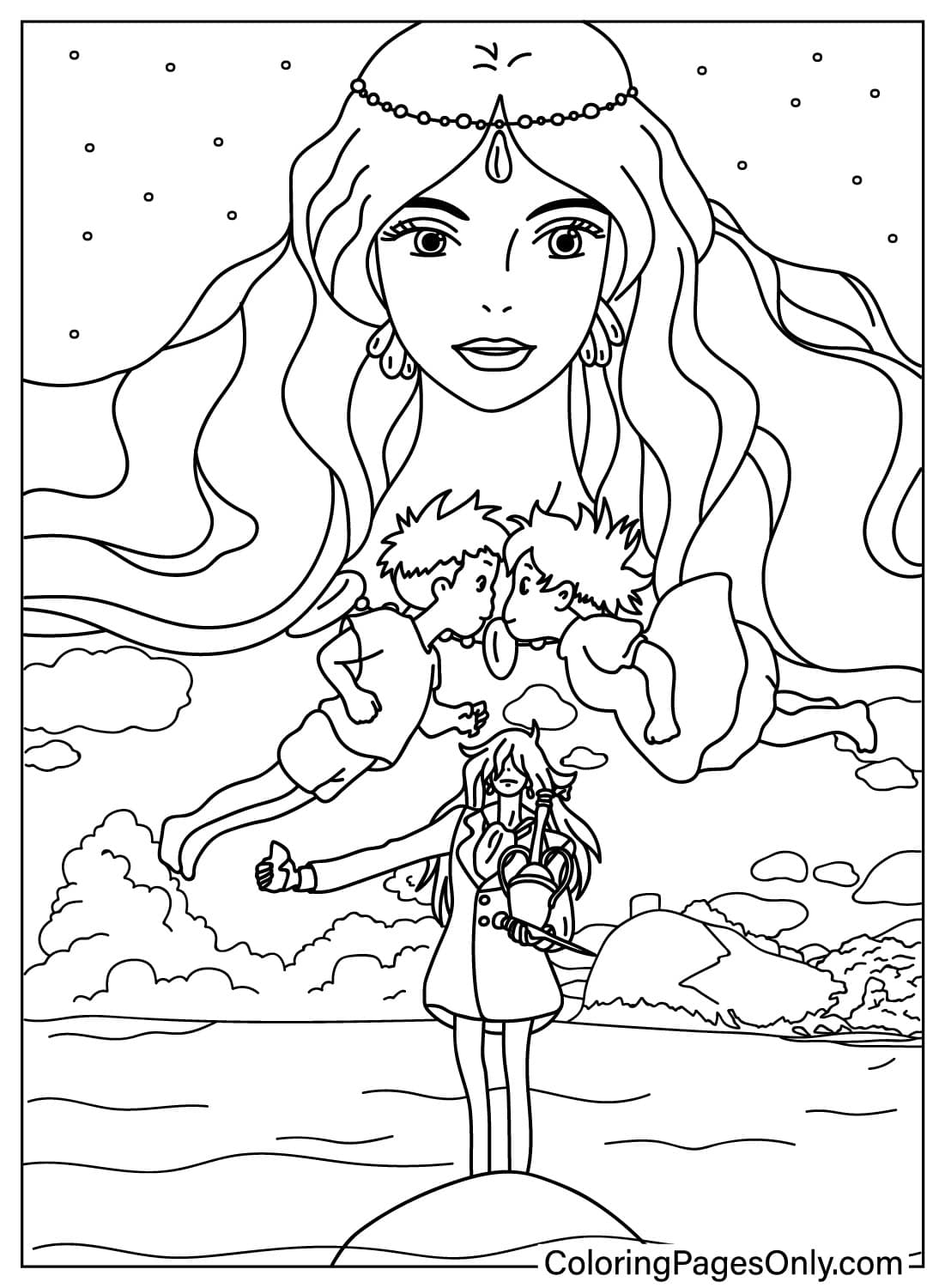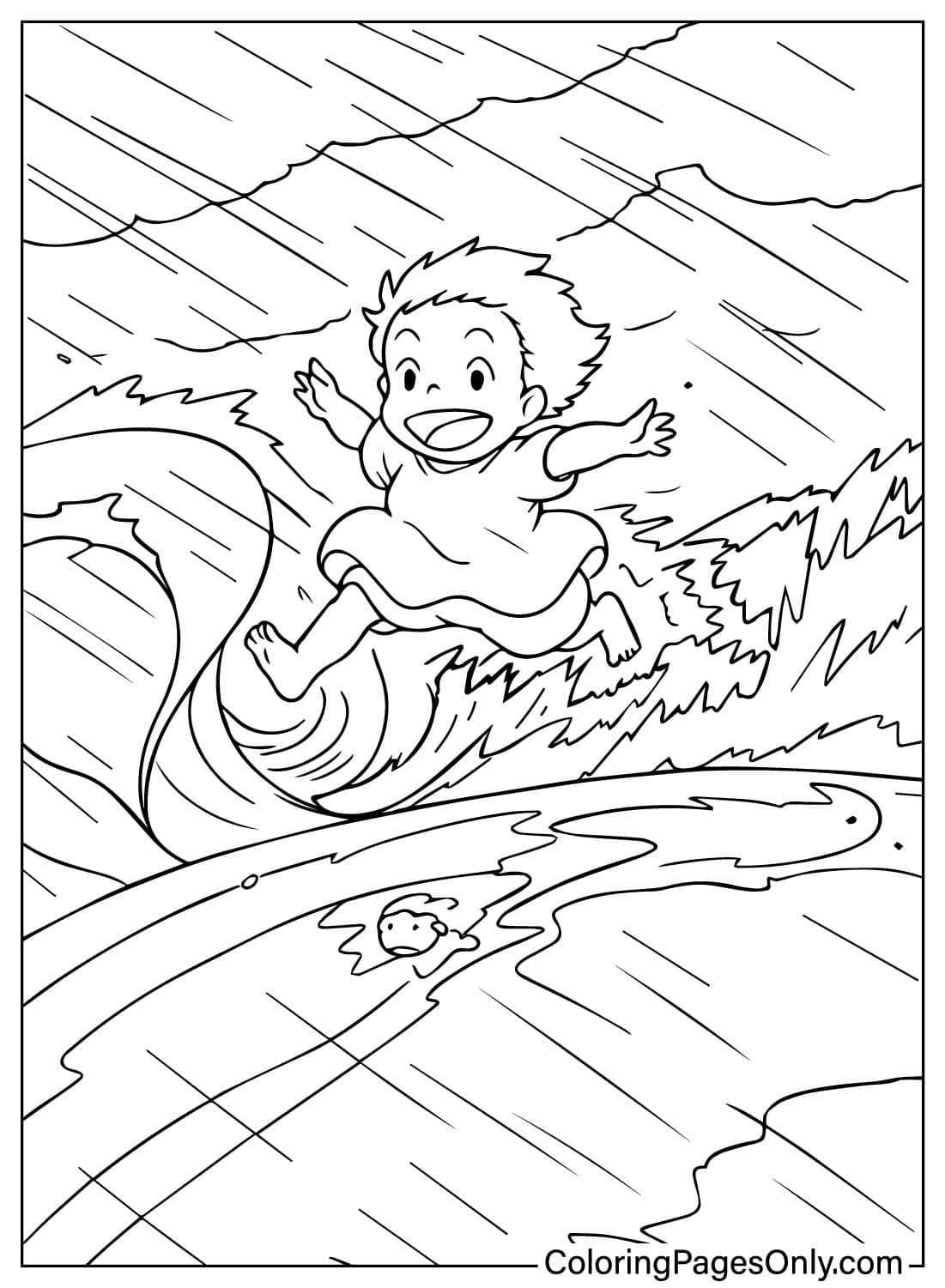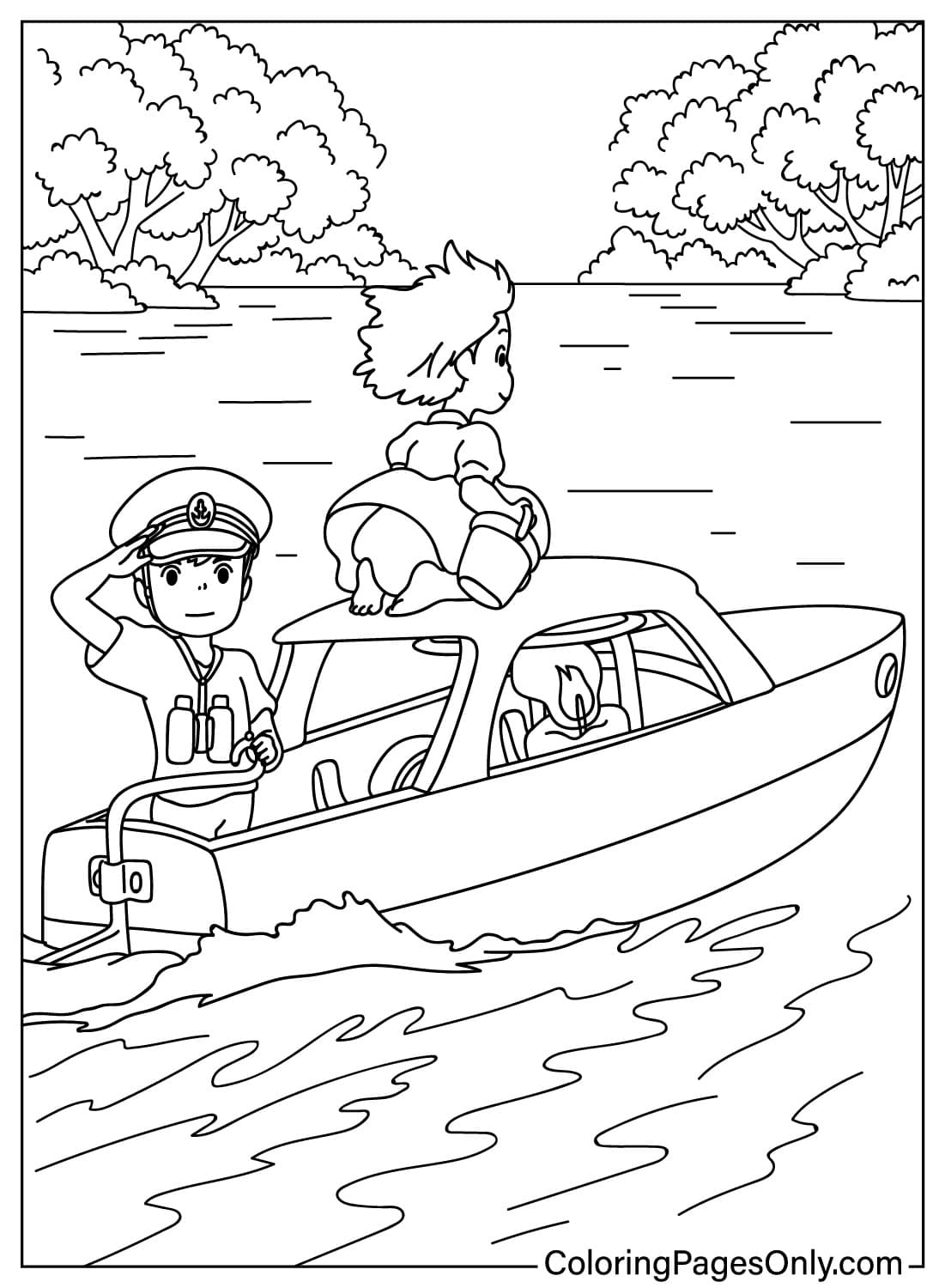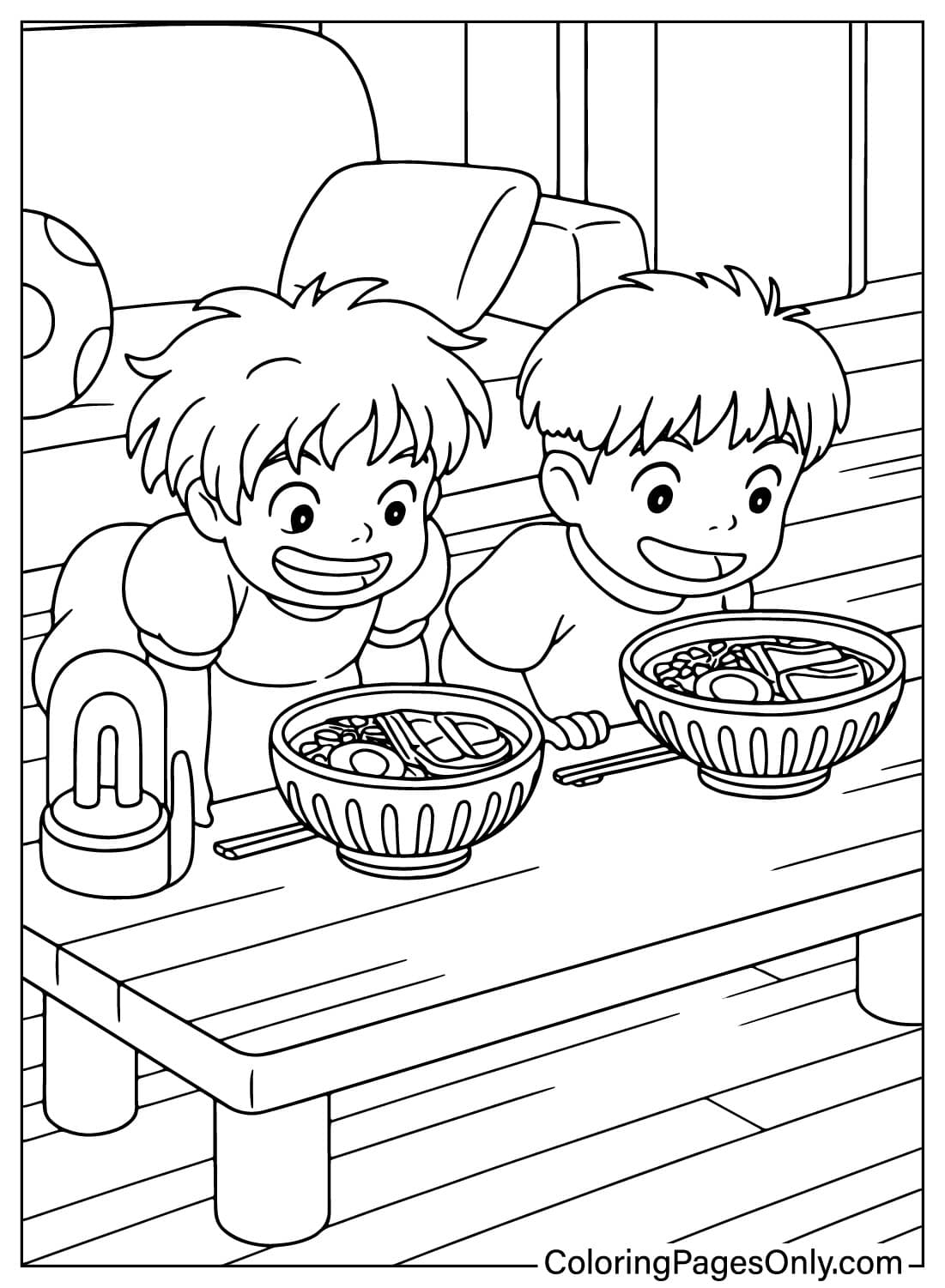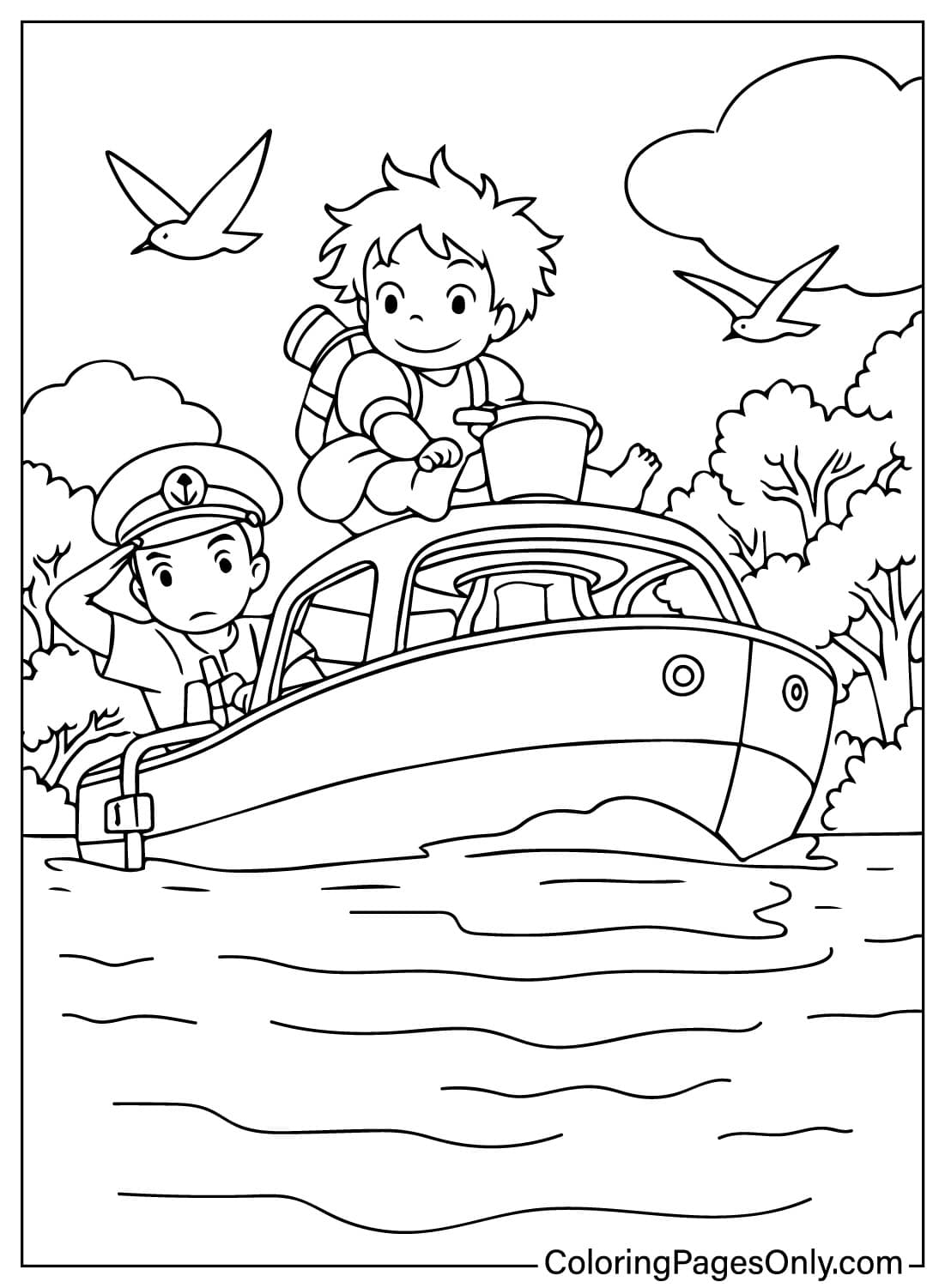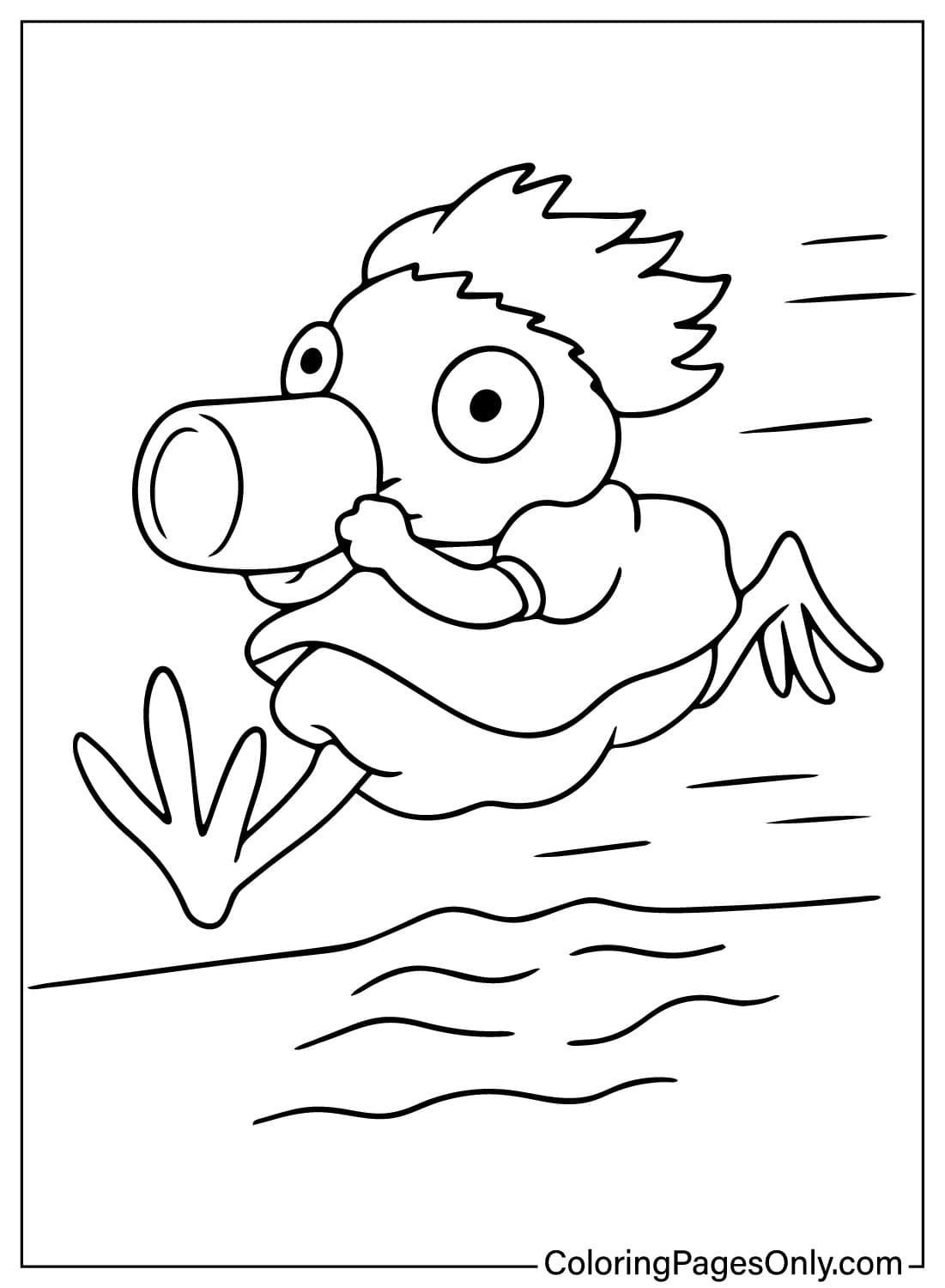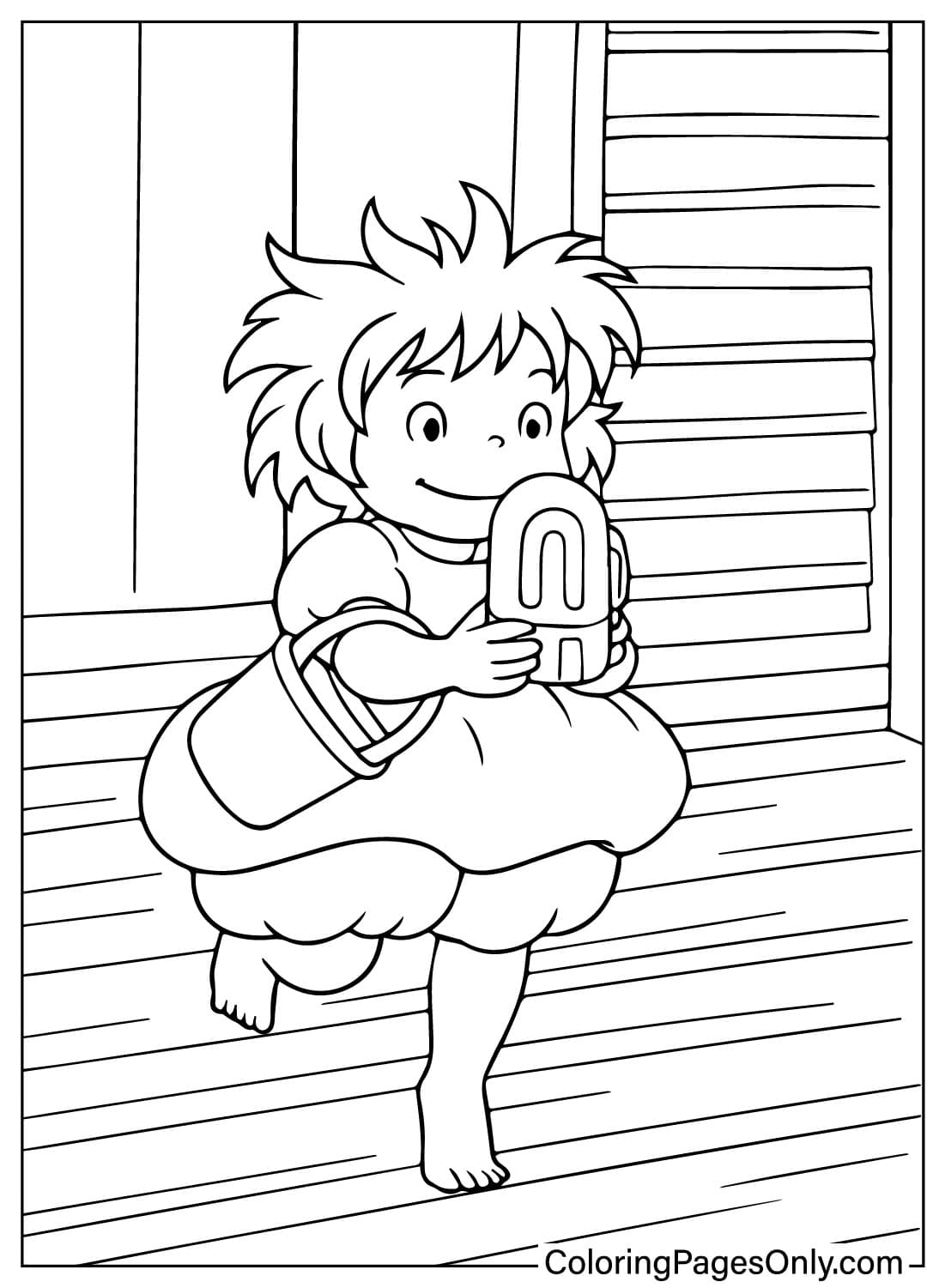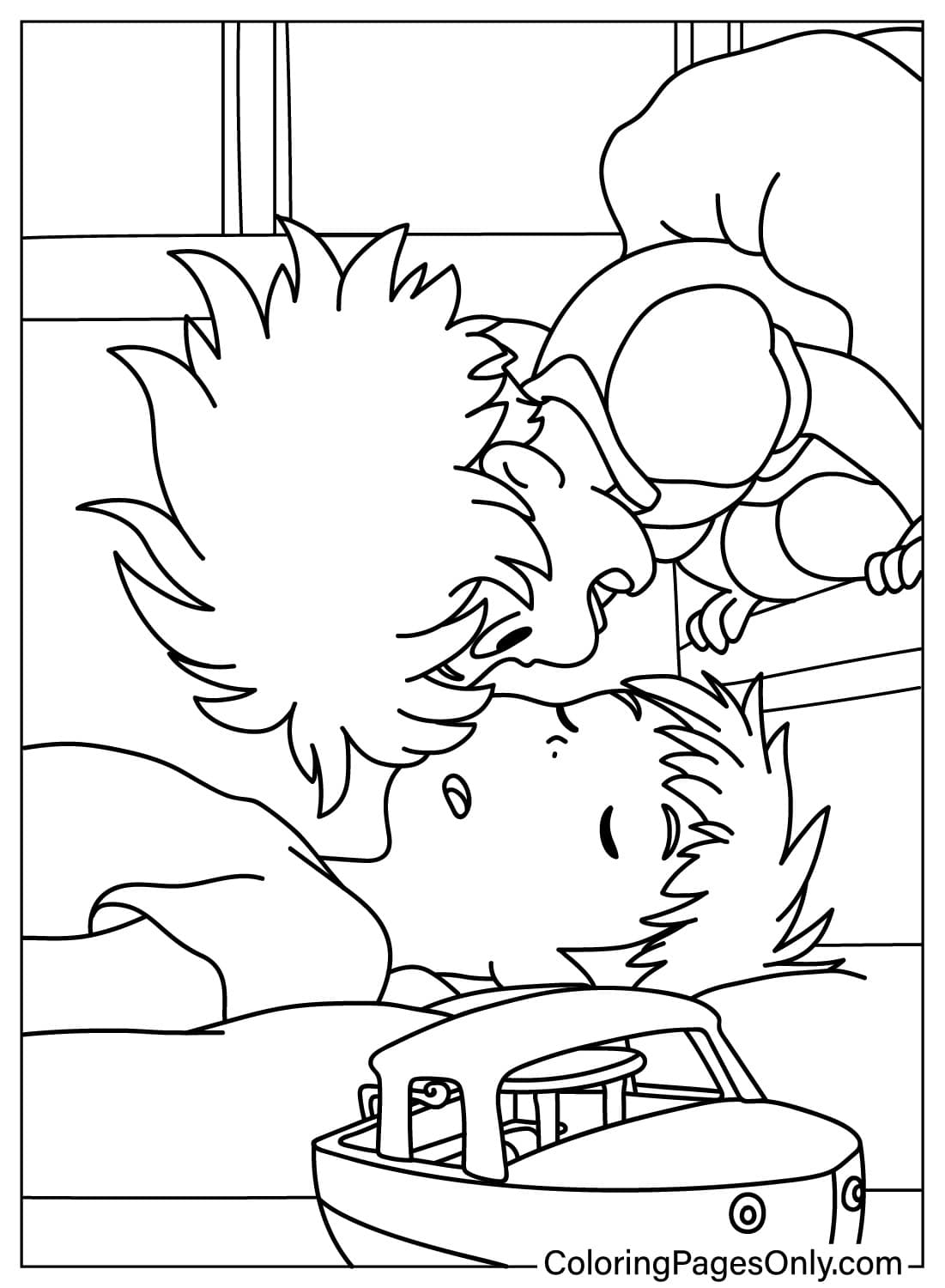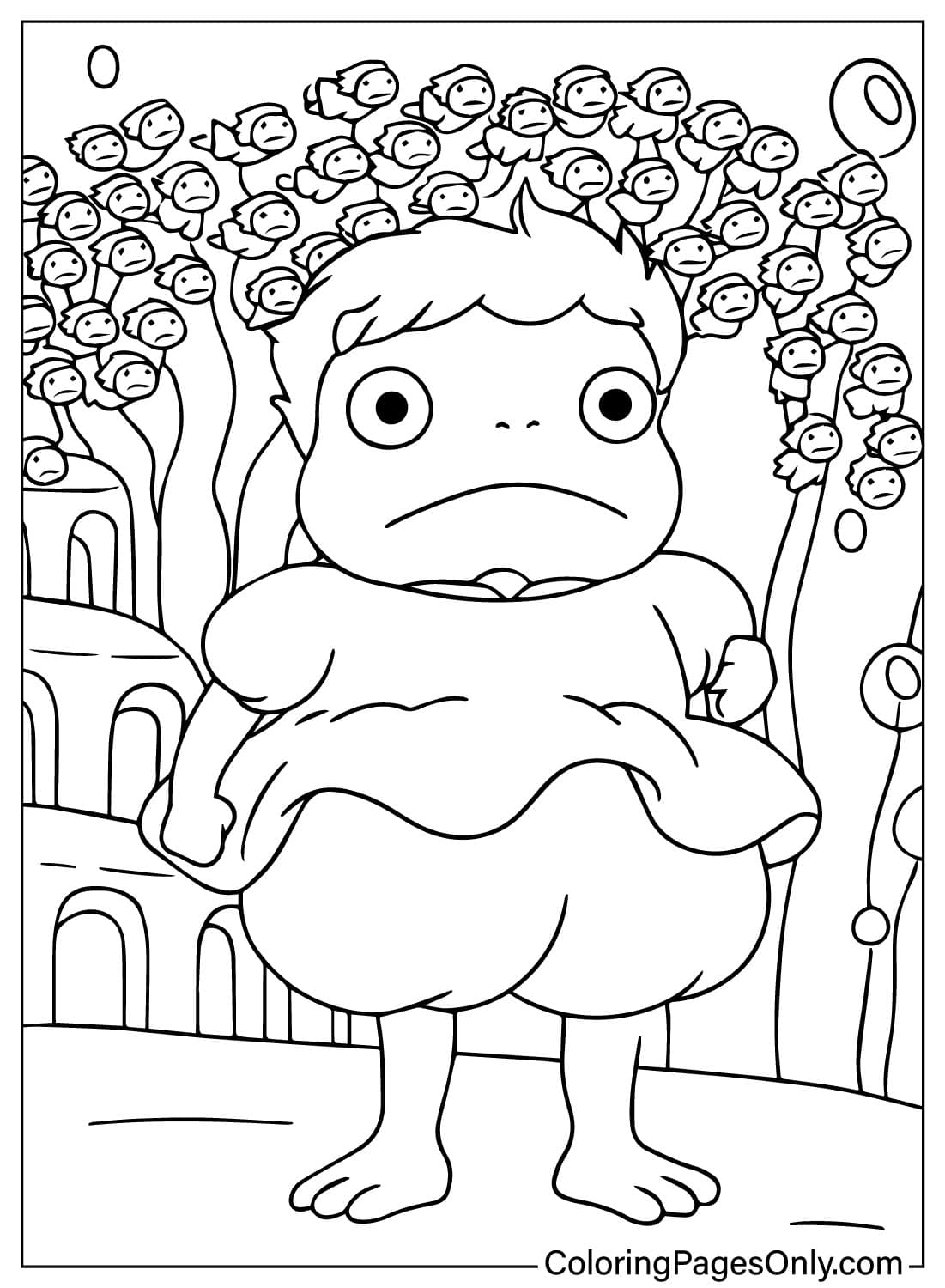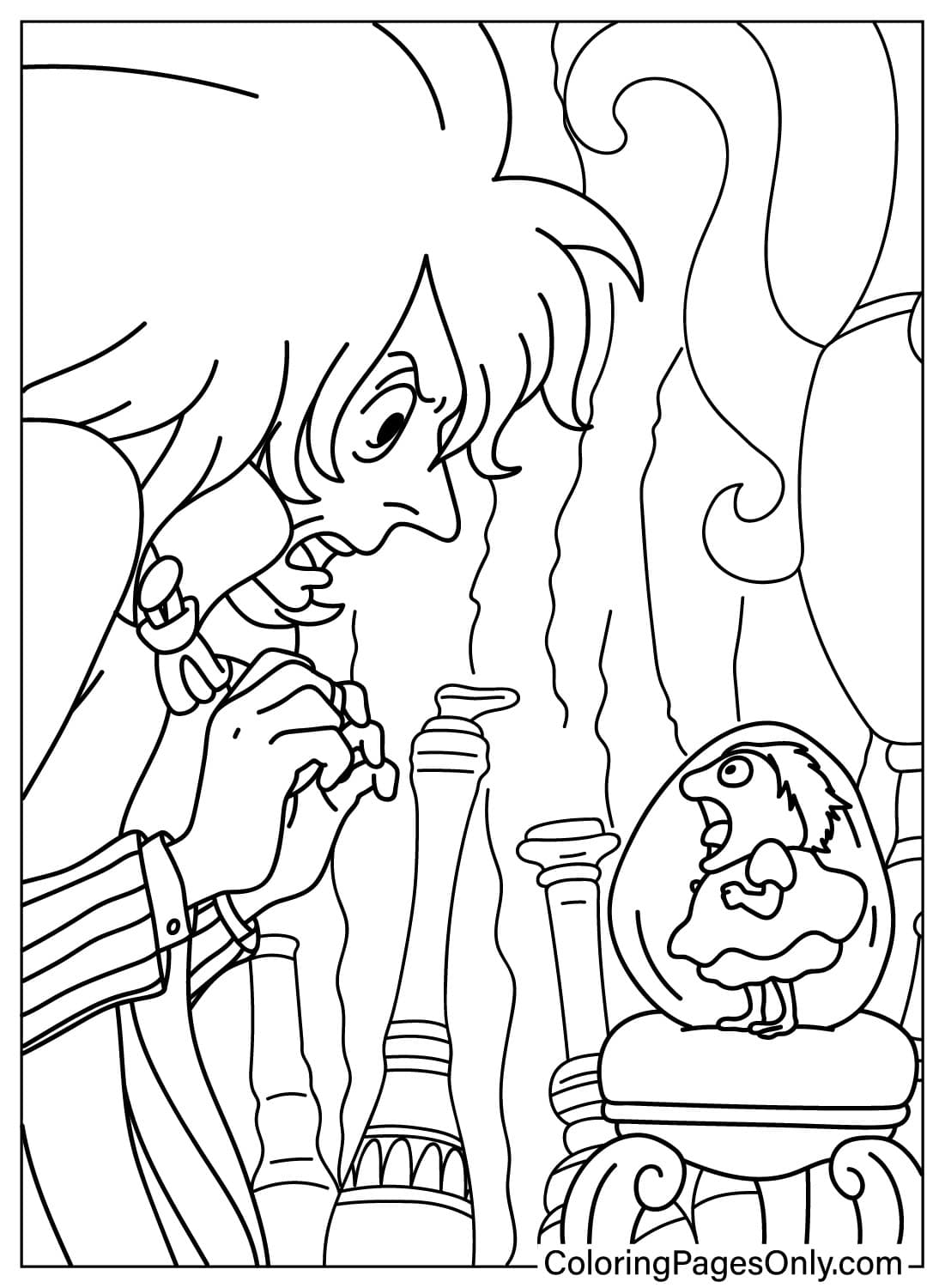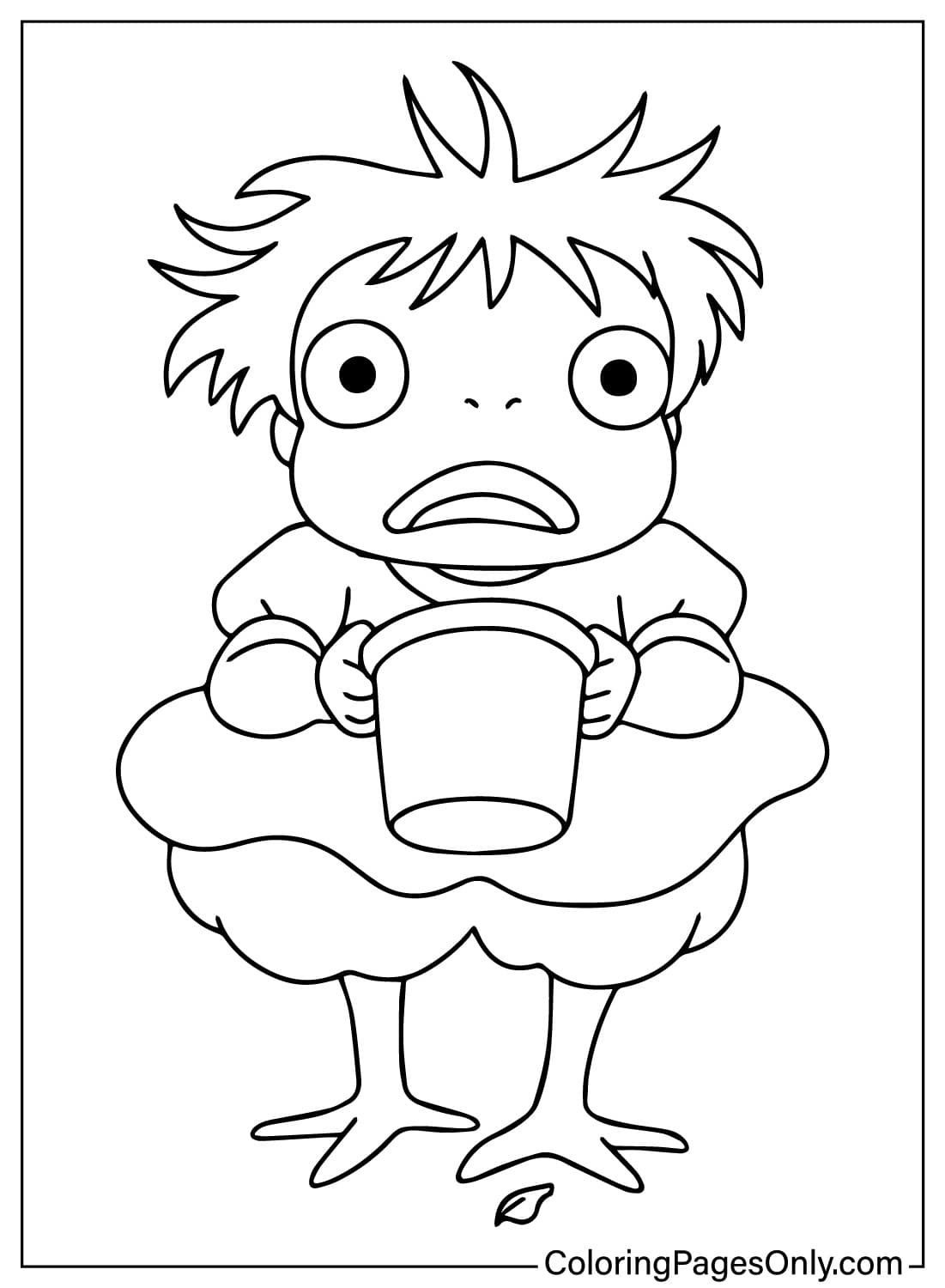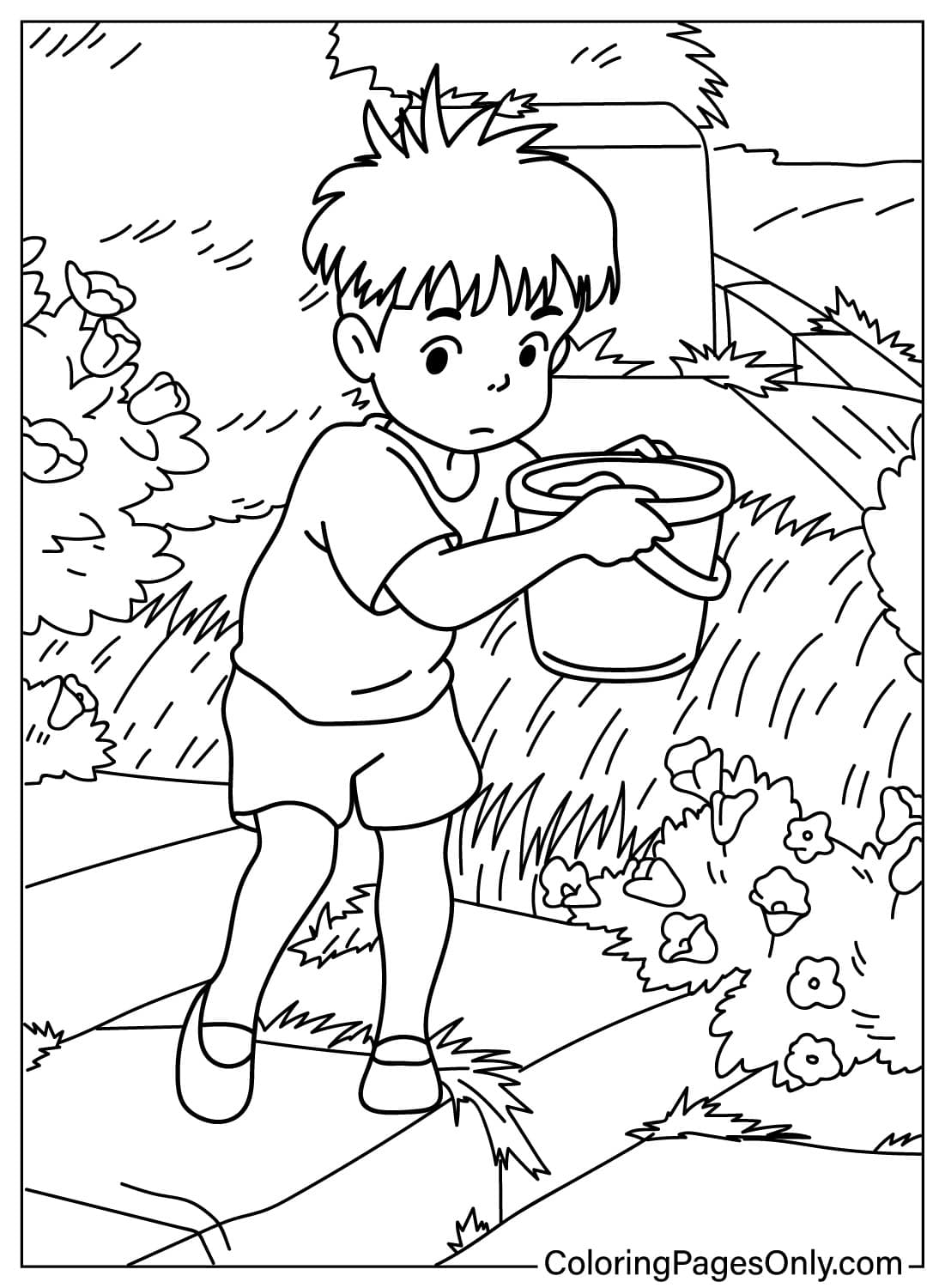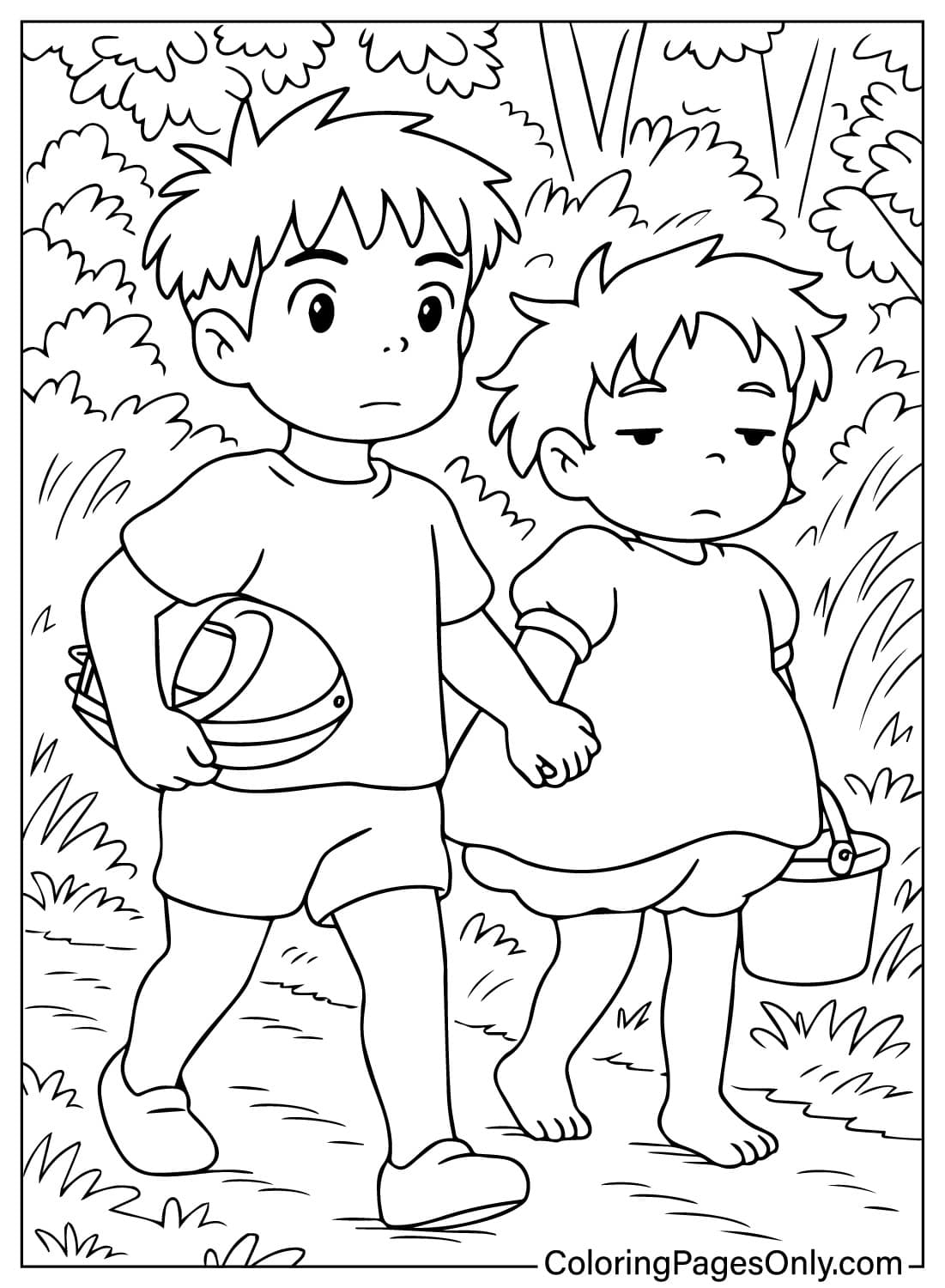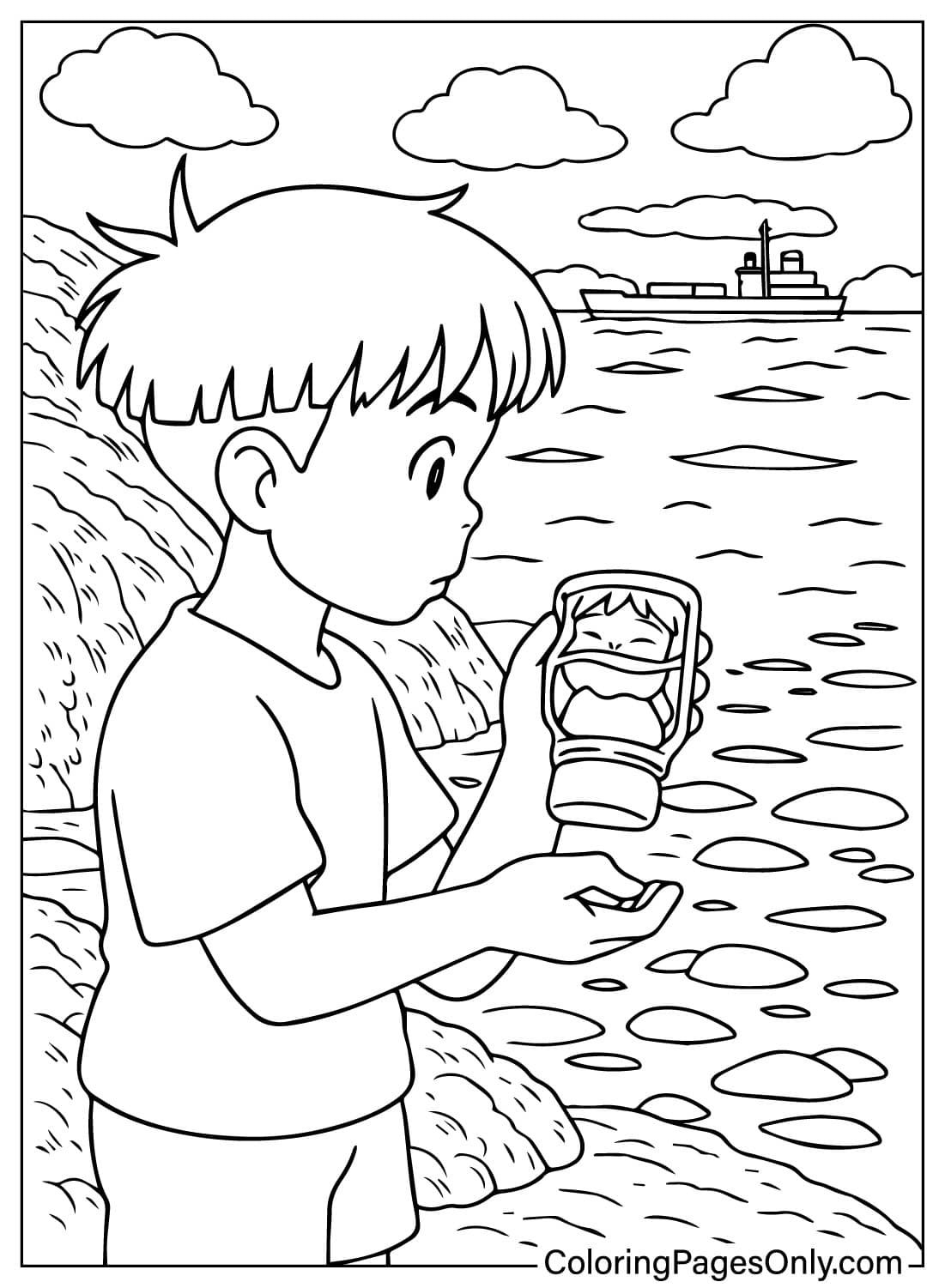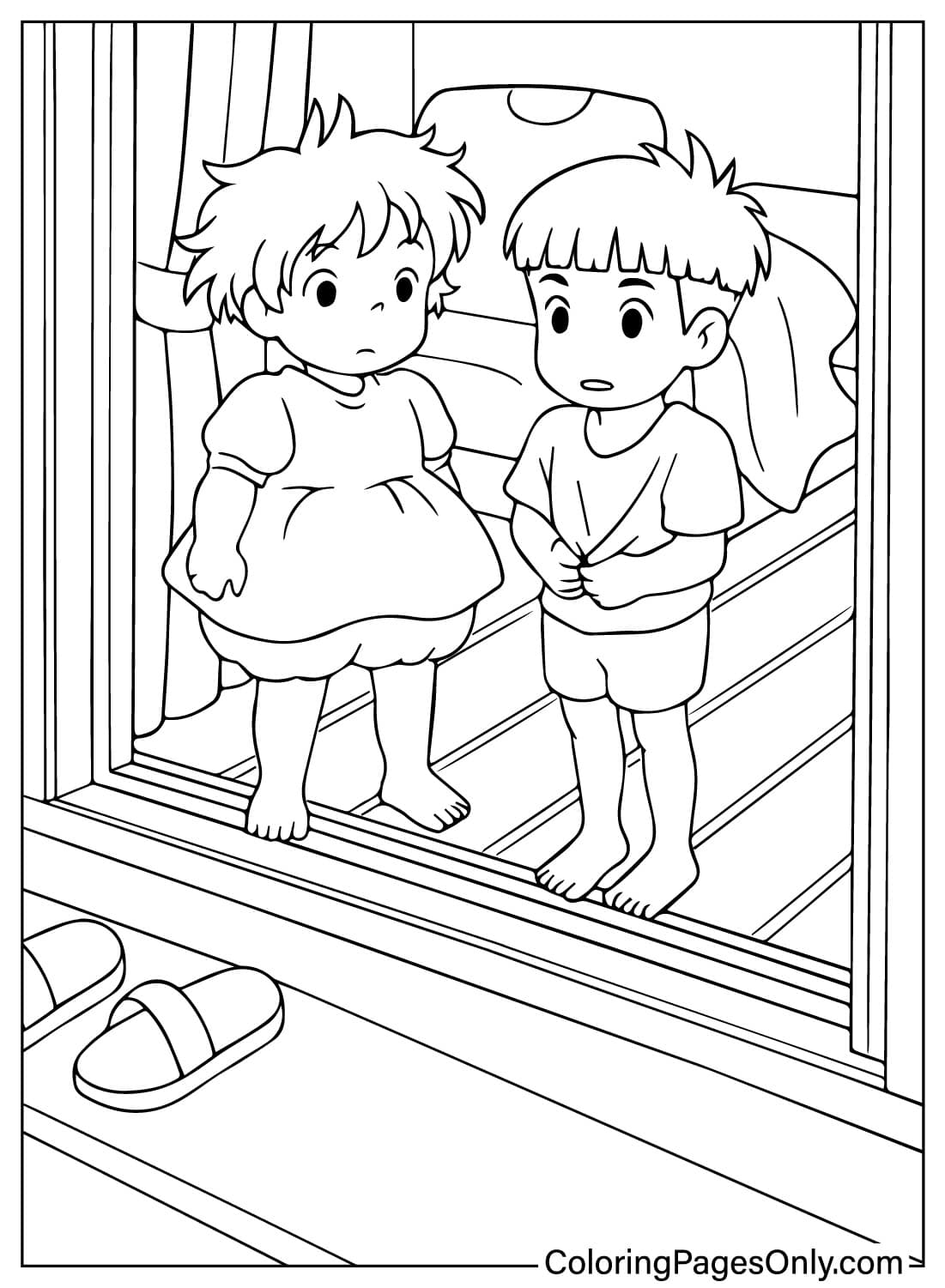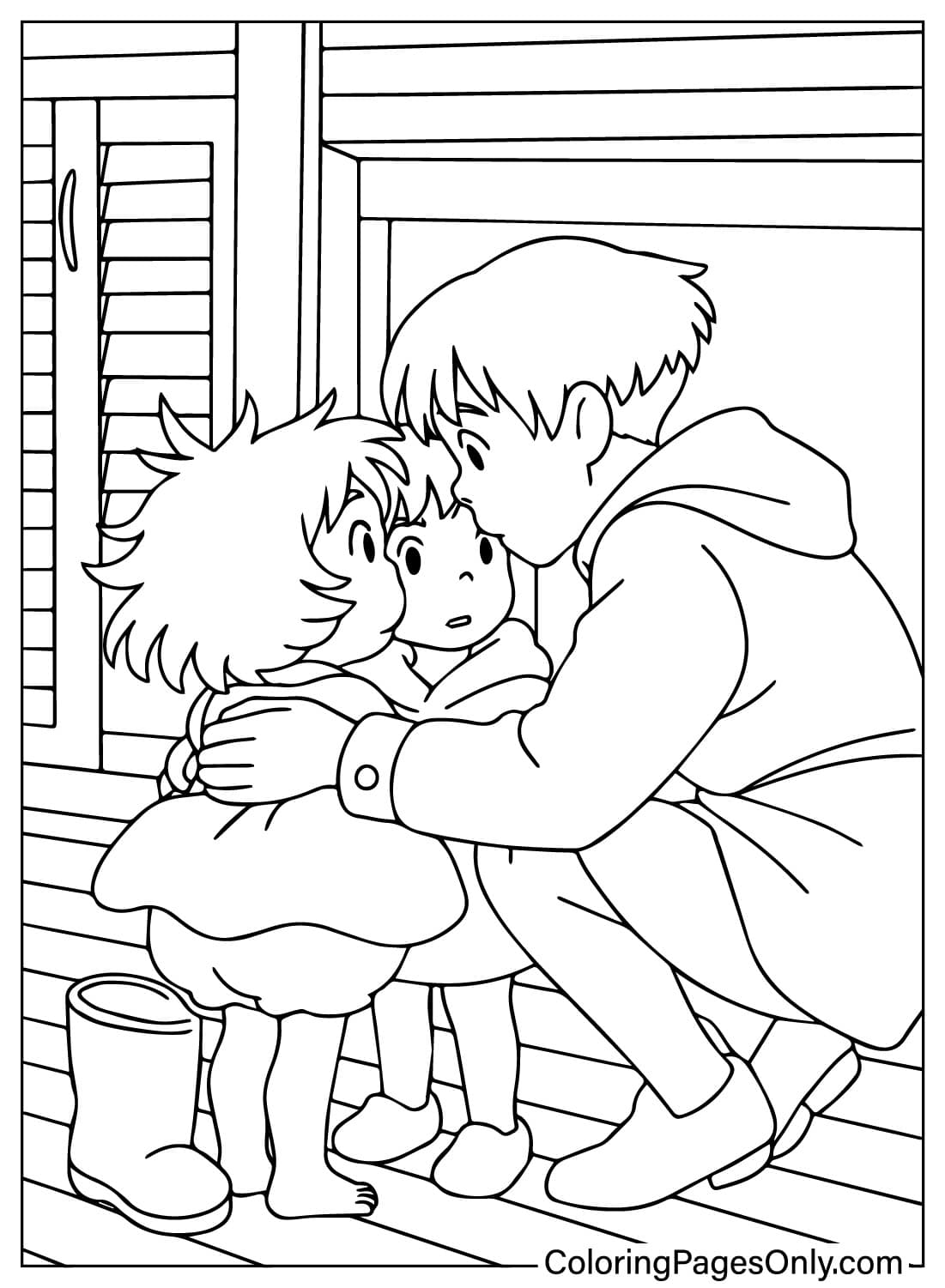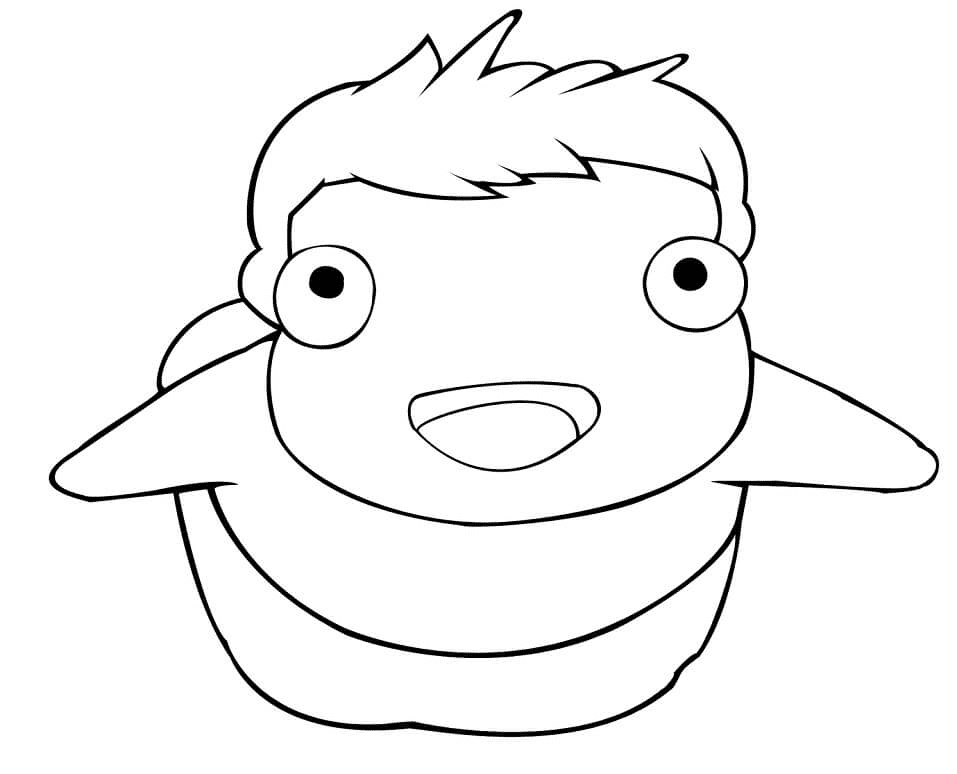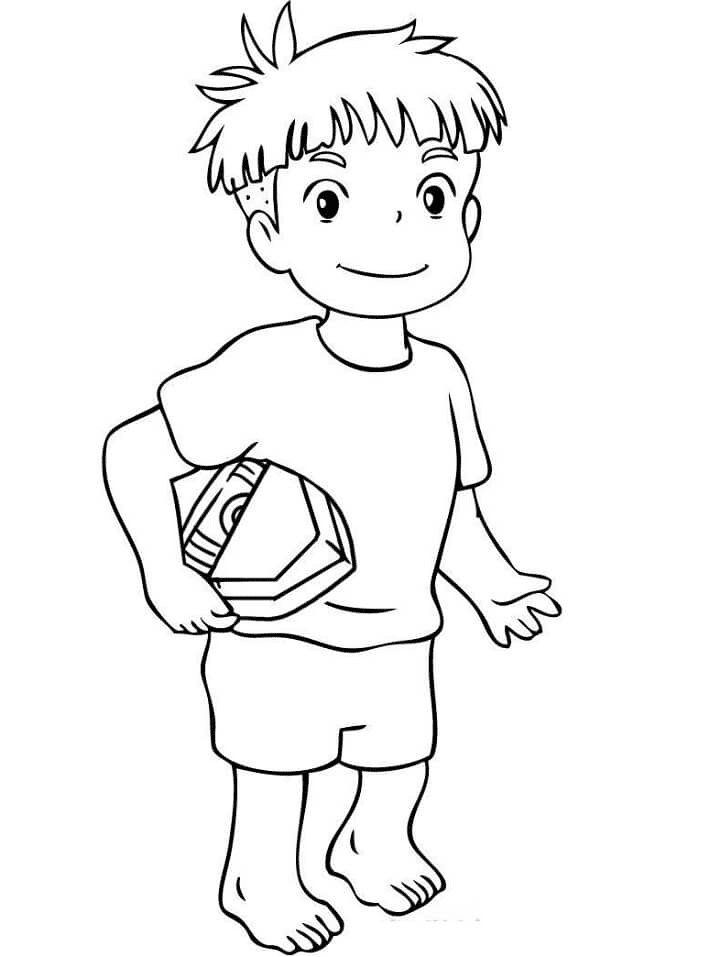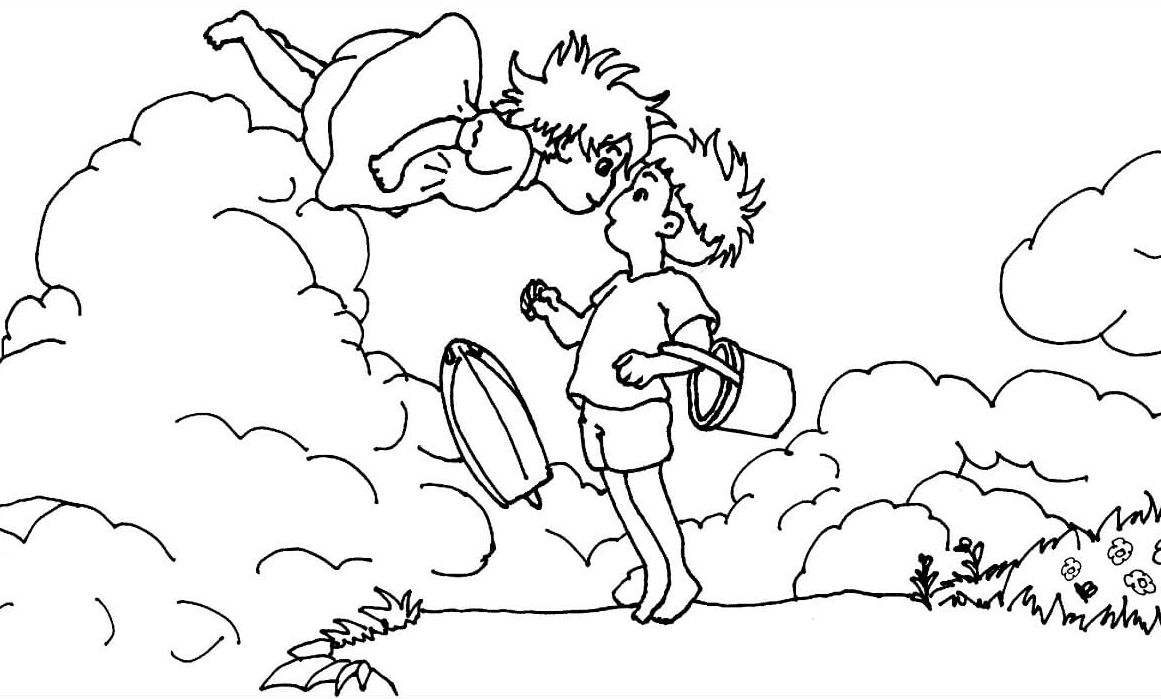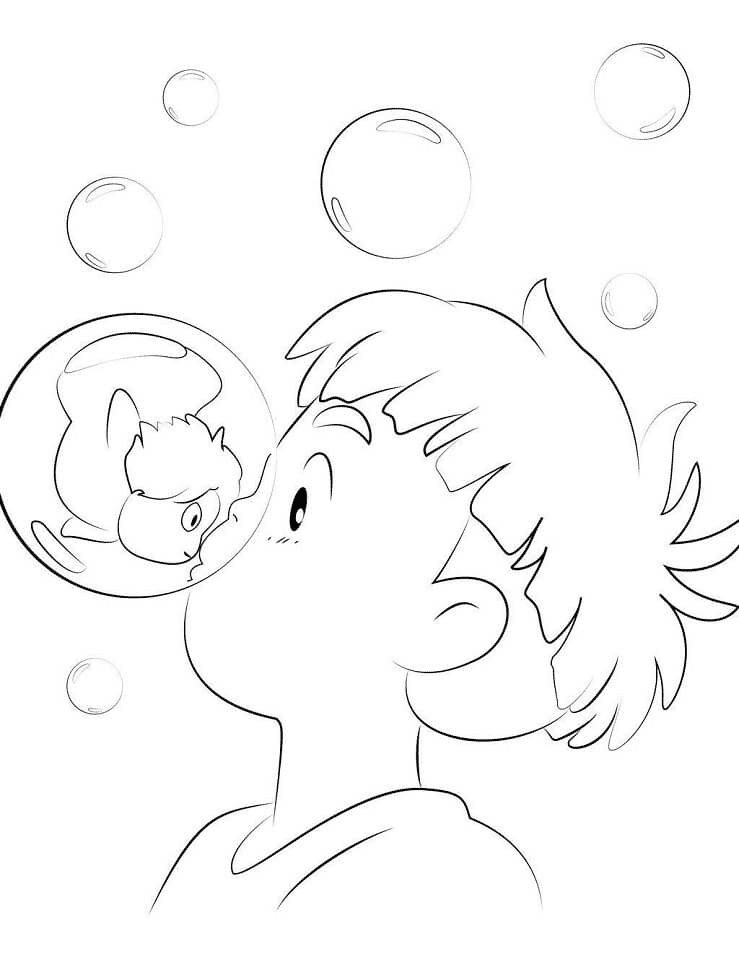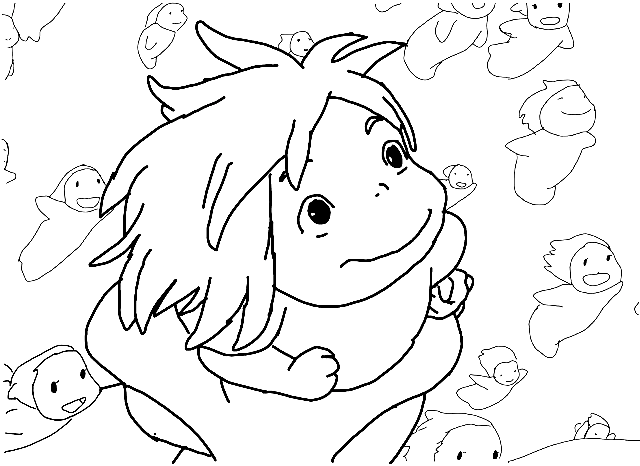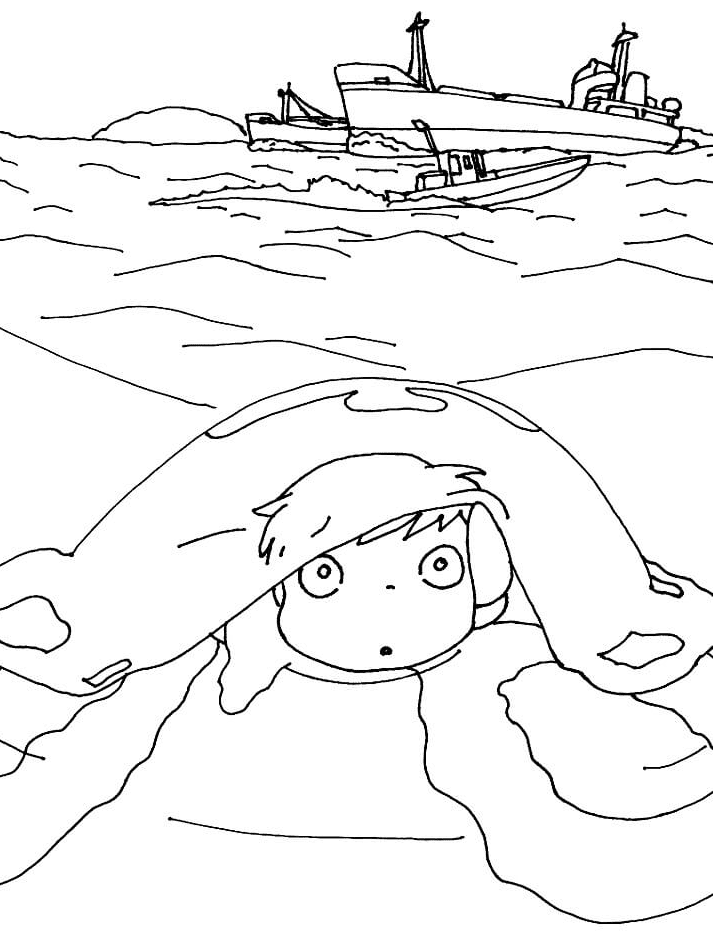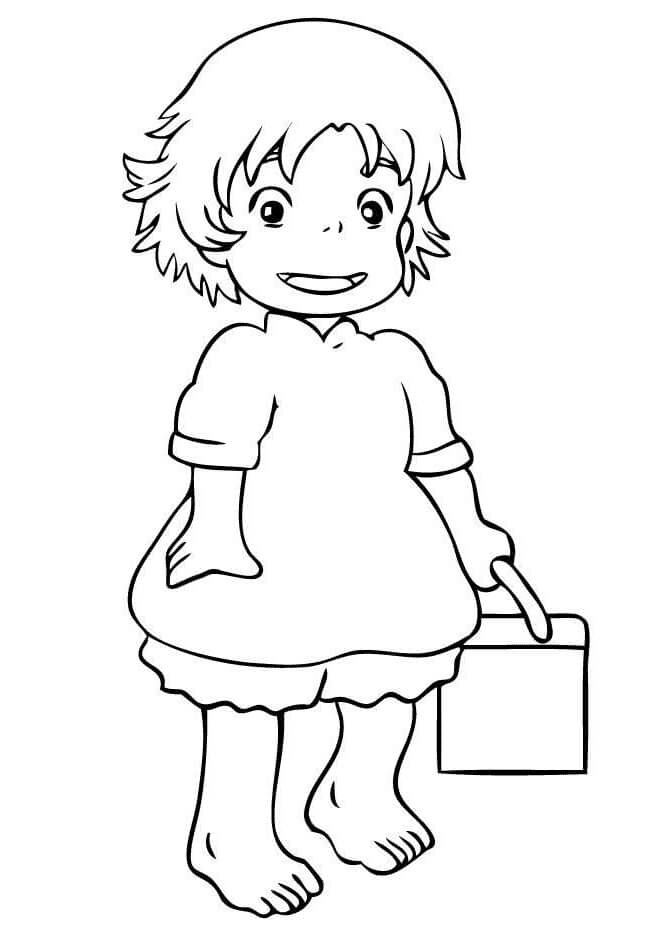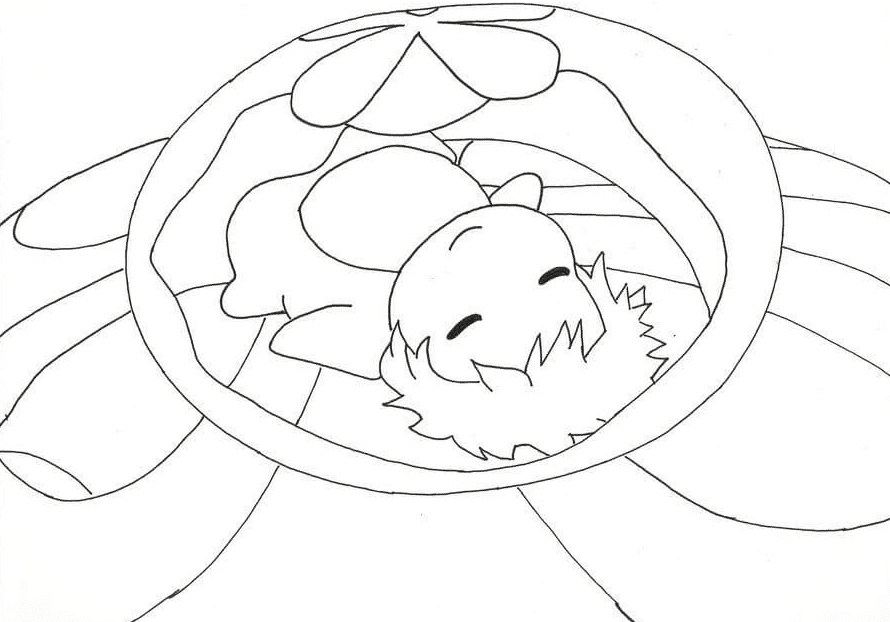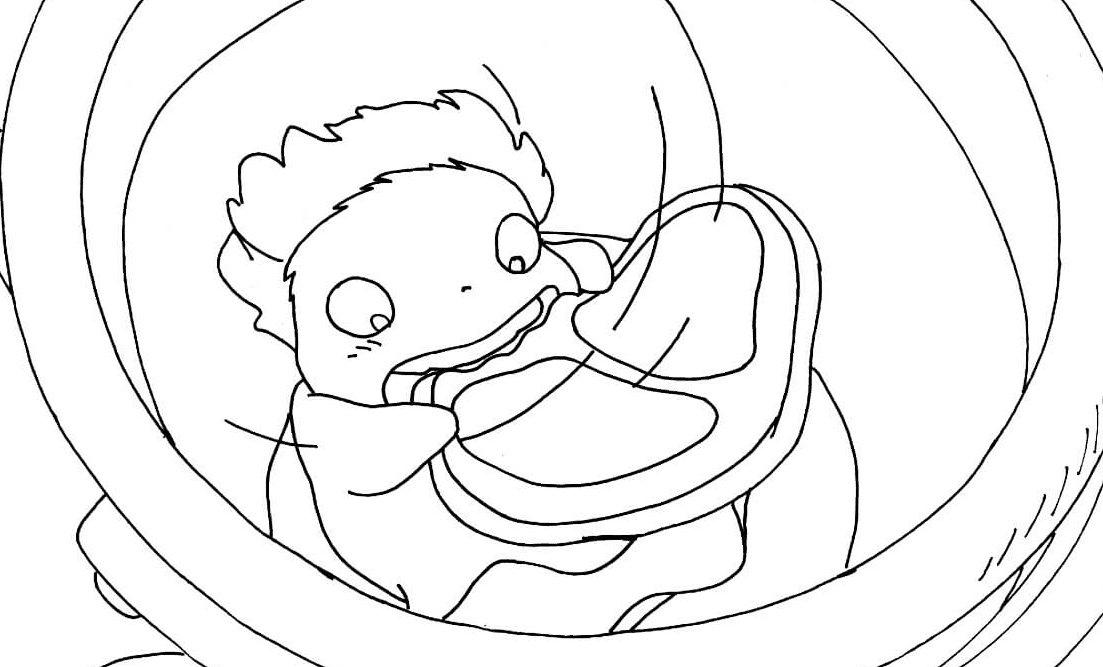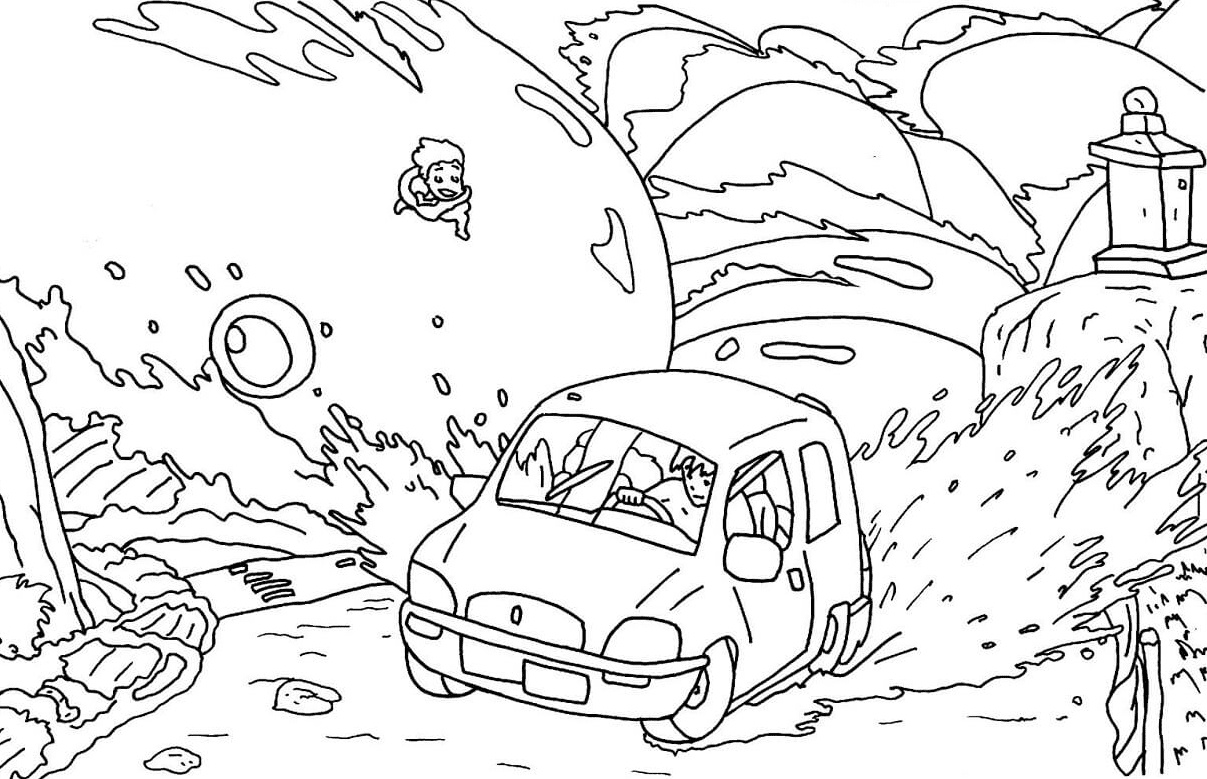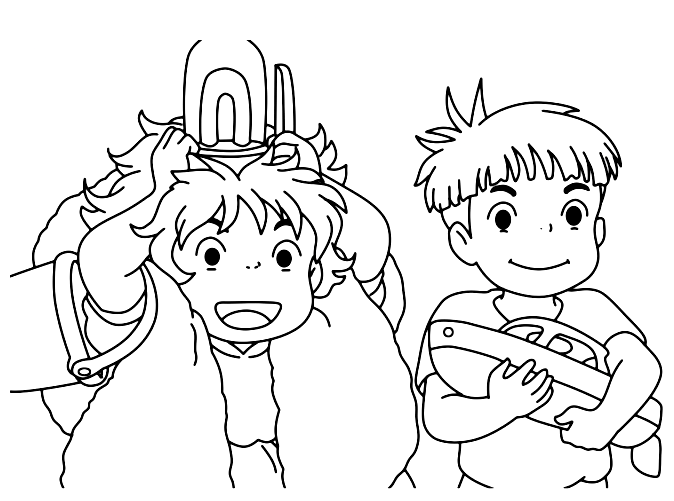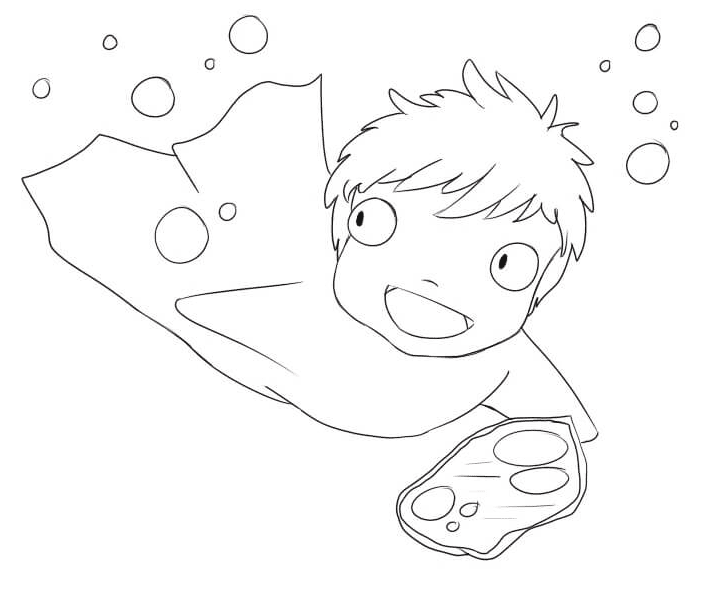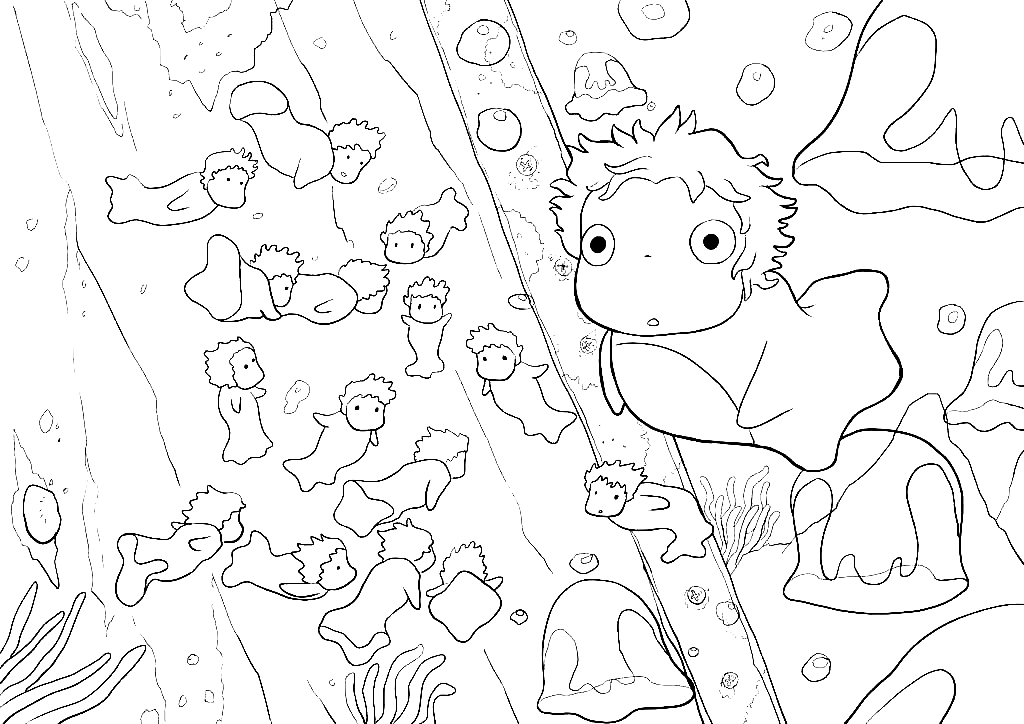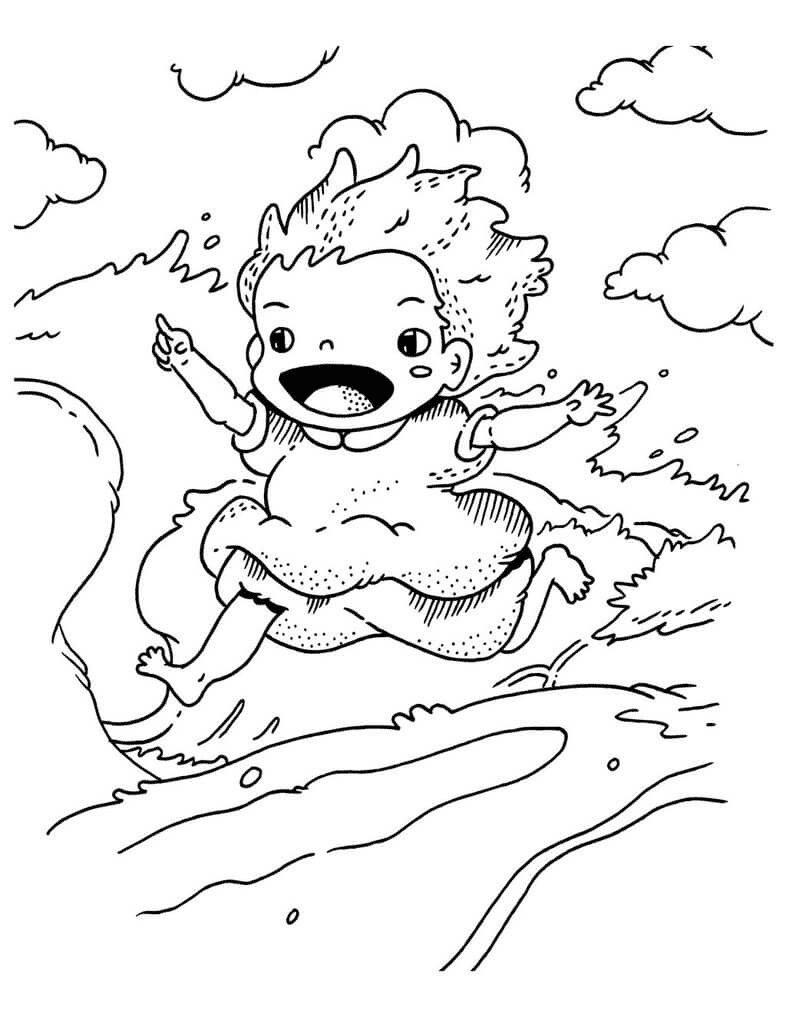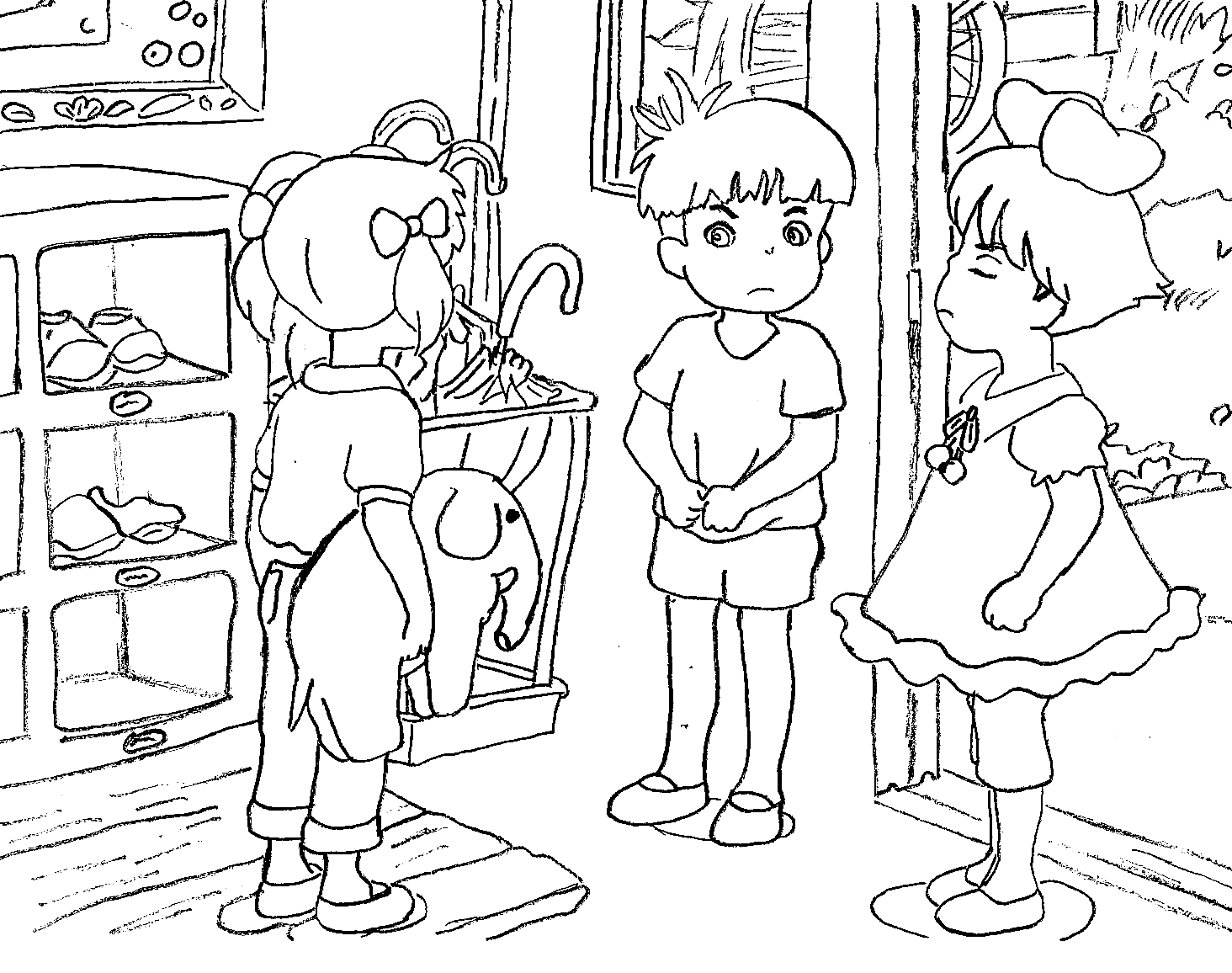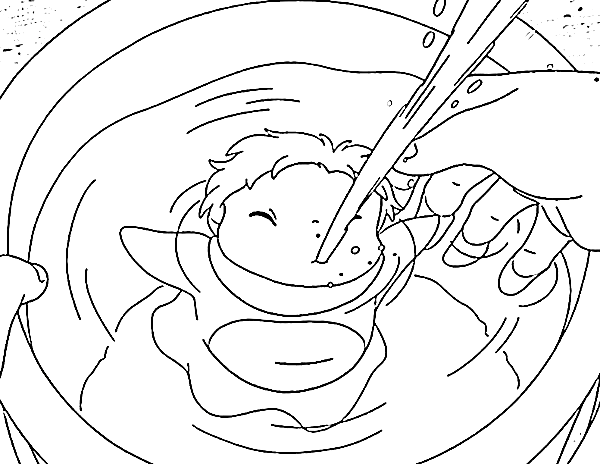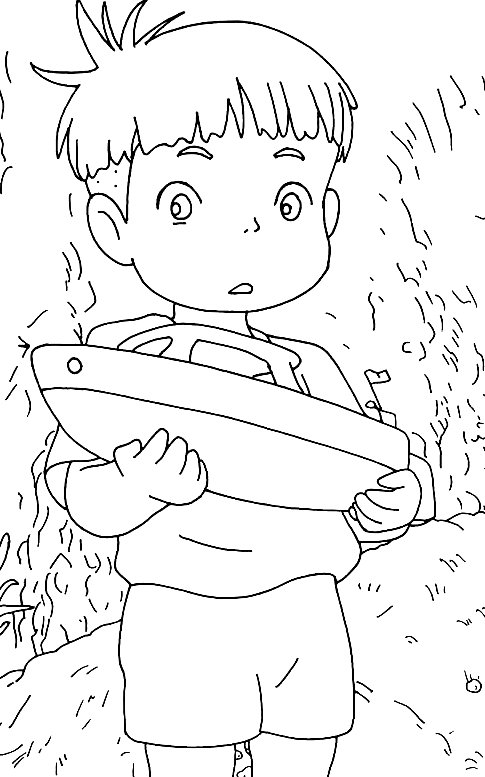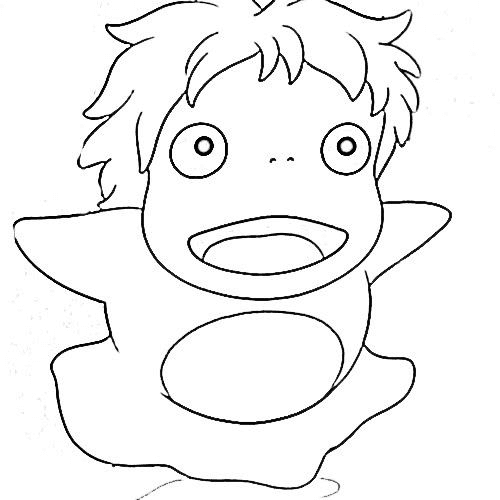
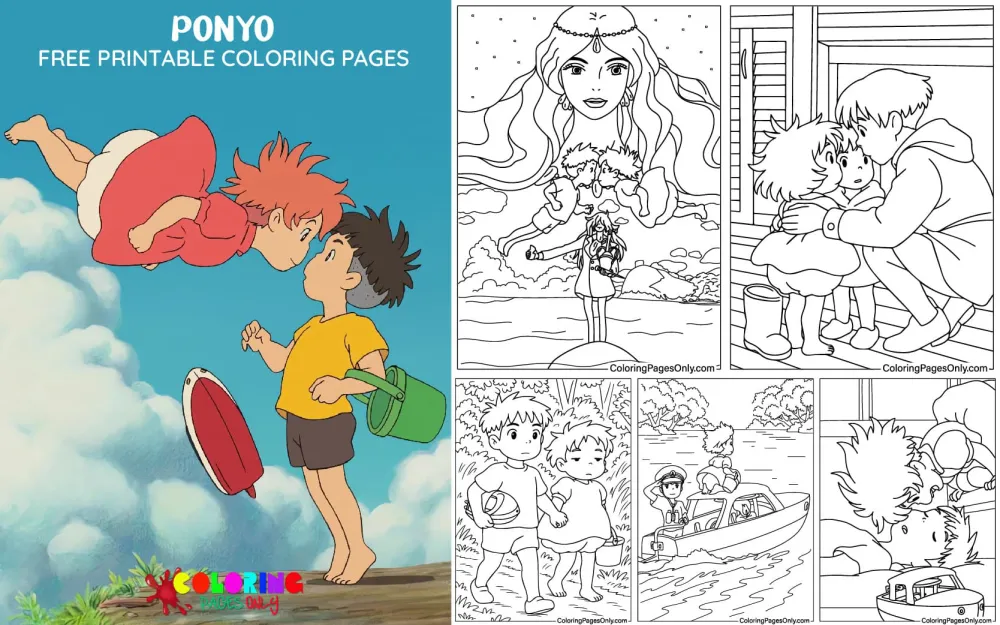
On this page, you’ll find 60+ free Ponyo coloring pages – all free to download as PDFs or color online! This collection captures the full magic of Hayao Miyazaki’s beloved 2008 Studio Ghibli film: Ponyo racing across ocean waves with the famous car scene, Ponyo running atop a giant fish as the storm surges, Sōsuke cradling Ponyo in her fishbowl with that warm protective smile, quiet moments of Sōsuke folding origami, the tender scene of Sōsuke tucking a sleeping Ponyo in, underwater Christmas pages, and much more. Every scene from the film is here – fish form, human form, and all the magical in-between.
These pages are perfect for Studio Ghibli fans of all ages, kids who love the movie, families who watch it together, and anyone who finds the ocean a little more magical after seeing Ponyo run across the waves. Once colored, they make beautiful wall art, fan-made gifts, or keepsakes from one of animation’s most beloved films!
While you’re here, grab these related Ghibli pages! My Neighbor Totoro Coloring Pages · Spirited Away Coloring Pages · Cartoon Coloring Pages · Princess Coloring Pages
What Is Ponyo? Miyazaki’s Most Personal Film
Ponyo is a 2008 animated fantasy film written and directed by Hayao Miyazaki and produced by Studio Ghibli, the Japanese animation studio responsible for some of the most revered animated films ever made. Released in Japan on July 19, 2008, under the title Gake no Ue no Ponyo (Ponyo on the Cliff), the film grossed over $204 million worldwide, making it the eighth-highest-grossing anime film of all time at its release. An English-language version followed on August 14, 2009, opening across 927 theaters in the United States – the widest opening any Studio Ghibli film had ever received in the American market.
Miyazaki was prompted to make Ponyo by producer Toshio Suzuki, who suggested a film aimed squarely at young children after the success of Howl’s Moving Castle (2004). The director responded by creating what many consider his most emotionally pure and visually uninhibited work – a film that deliberately embraced the logic of early childhood imagination rather than the more layered symbolism of his previous features. Where Spirited Away and Princess Mononoke reward close adult analysis, Ponyo rewards something simpler: the complete acceptance of magic as a fact of the world.
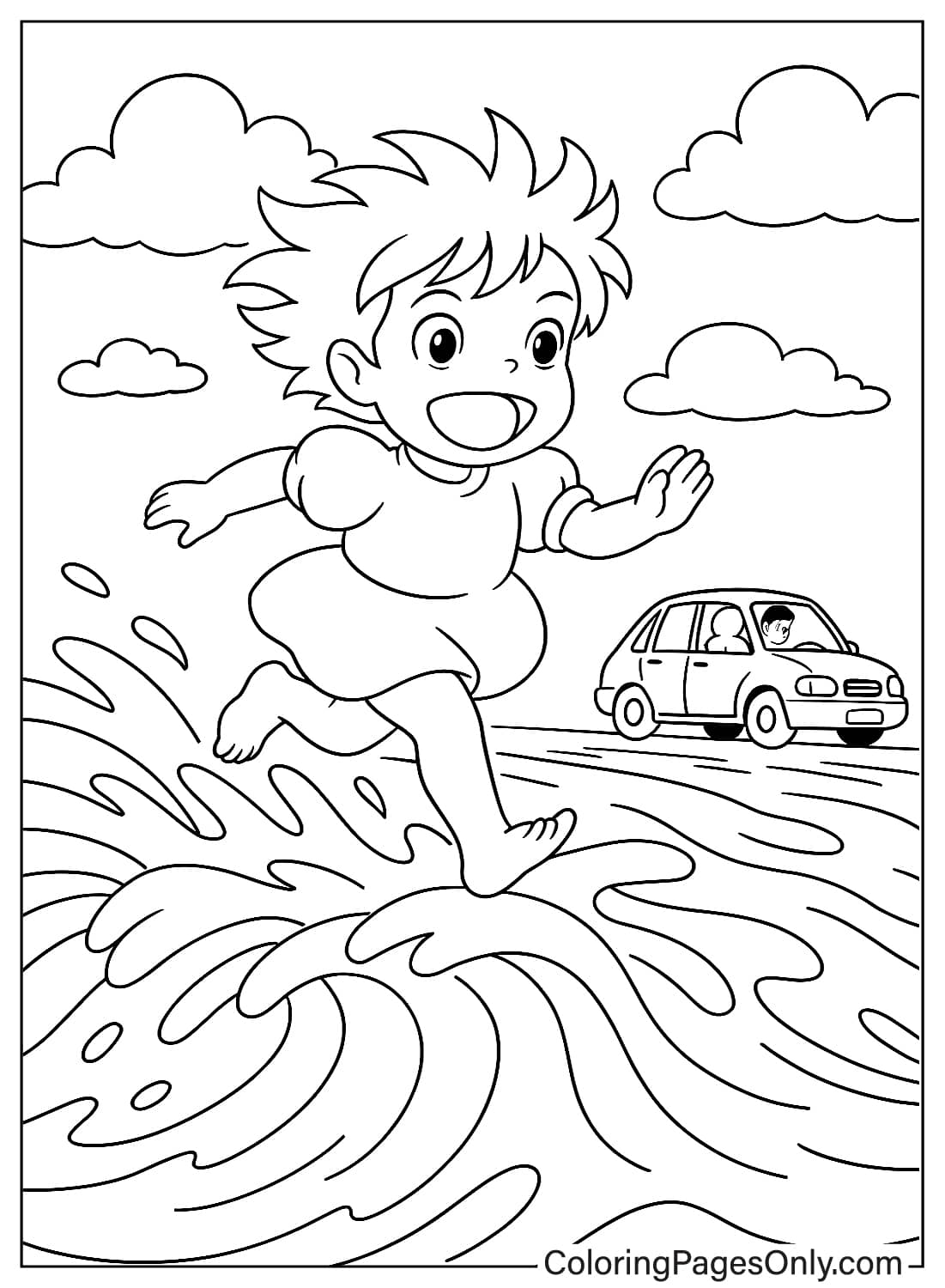
The film was Miyazaki’s eighth feature under Studio Ghibli and represents a particular achievement in hand-drawn animation. Rather than incorporating digital assistance for water effects, Miyazaki insisted that the film’s vast ocean sequences – the waves, the tsunami, the underwater scenes – be rendered entirely in traditional hand-drawn animation. The result, particularly the sequence of Ponyo running across the backs of enormous cresting waves as a child’s car races along the coastal road, is widely regarded as one of the most extraordinary pieces of hand-drawn animation in cinema history.
The Story – A Japanese Little Mermaid for Five-Year-Olds
Miyazaki acknowledged that Ponyo‘s inspiration was Hans Christian Andersen’s “The Little Mermaid” – though he described this inspiration as “more abstract than a story,” meaning he was not making an adaptation but drawing on the tale’s emotional core while pursuing his own direction.
The connection is unmistakable. A young sea creature who longs for the human world; a human boy who becomes the center of that longing; a father figure from the ocean world who opposes the crossing of the boundary between sea and land; a magical test that determines whether the sea creature can permanently become human; and the consequence that failure means transformation into sea foam. These structural elements are all present in both Andersen’s original tale and in Ponyo.
What Miyazaki changed – deliberately and meaningfully – was the emotional register. Andersen’s Little Mermaid story is about sacrifice and suffering: the mermaid endures physical pain, gives up her voice, and ultimately dies rather than being transformed by love. Ponyo is about joy, acceptance, and the love of a five-year-old. Miyazaki consciously made both Ponyo and Sōsuke five years old – the same age as his target audience – to frame the central relationship as childhood friendship rather than romance. The love being tested is not romantic love but the pure, complete, unconditional acceptance of a child: when the Goddess Granmamare asks Sōsuke whether he can love Ponyo, whether she is a fish or a human, Sōsuke’s answer – “I love all the Ponyos” – is the most five-year-old-appropriate declaration of complete acceptance imaginable.
The story in brief: Ponyo (whose actual name is Brunhilde, given to her by her wizard father Fujimoto) is a young goldfish-like sea creature who lives underwater with her father and her dozens of smaller sisters. Driven by curiosity about the world above the surface, she sneaks away from a family outing and becomes trapped in a glass jar, washing ashore near a small seaside fishing town. Five-year-old Sōsuke finds her, shatters the jar with a rock, cuts his finger in the process, and Ponyo heals the wound by licking his blood – the first of several interactions with his human blood that will fuel her transformation. Sōsuke names her Ponyo and promises to protect her.
Fujimoto’s wave spirits retrieve Ponyo before long, but she refuses to remain in the ocean. With her sisters’ help, she escapes, accidentally releasing a massive amount of magical energy that causes a tsunami and begins pulling the moon from its proper orbit – the imbalance of nature that her mother, Granmamare, must ultimately resolve. Ponyo races across the surging ocean waves to find Sōsuke, running on the backs of enormous fish-shaped waves in the film’s most iconic sequence. She reaches him in her human form, Sōsuke’s mother Lisa takes her in, and the film’s final act – the flooded coastal town, the glowing underwater world, the test, and the final transformation – concludes with Ponyo choosing to permanently become human, surrendering her magical powers, and kissing Sōsuke to complete the transformation.
The Characters – A Complete Guide
Ponyo (Brunhilde) is the film’s protagonist – a young goldfish-like sea creature who is simultaneously a princess of the ocean (daughter of its goddess), a magical being of extraordinary power, and a very small child who wants ham and to be with her friend. Her fish form is pale pink-white, round and soft, with the first hints of red hair already visible around her face. Her human form – which she achieves through magic and bloodline – gives her the characteristic round face and large bright eyes of Miyazaki’s child characters, with vivid red hair that is the film’s single strongest color statement, and a pink-and-white dress that echoes her fish form’s palette. She is voiced in Japanese by Yuria Nara and in English by Noah Cyrus (sister of Miley Cyrus).
Sōsuke is five years old, lives with his mother Lisa in a house on a cliff above the sea, and has a father who works on a cargo ship and is rarely home. He has dark brown hair, a practical, kind personality, and an instinct to protect anyone smaller and more vulnerable – a trait that immediately extends to Ponyo. He is voiced in English by Frankie Jonas (youngest of the Jonas Brothers).
Lisa is Sōsuke’s mother, 25 years old, working at a nursing home for elderly residents, raising her son largely alone while her husband is at sea. She is energetic, somewhat reckless (she drives too fast and too emotionally), deeply warm, and immediately accepting of the extraordinary when Ponyo arrives. When Ponyo asks Lisa about her own mother, Granmamare, and describes her as “big and beautiful, but she can be very scary,” Sōsuke replies, “Like my mum!” – one of the film’s best laughs. Lisa is voiced in English by Tina Fey.
Fujimoto is the film’s most complex and misunderstood character – Ponyo’s father, and a man who was once human before choosing to live underwater. He abandoned terrestrial life and humanity out of revulsion at how humans treated the natural world, giving up his ability to live on land for the love of the ocean – and, explicitly, for the love of Granmamare. He now lives as an underwater wizard, tending ocean currents with his colorful potions and commanding wave spirits. His visual design is deliberately eccentric: long red hair similar to Ponyo’s, dramatically styled and paired with green markings around his eyes that suggest both sea color and a theatrical flair. He is not a villain – Miyazaki is very clear on this – but a father whose love for his daughter has curdled into overprotectiveness and whose grief at the damage humans have done to the ocean has become a kind of apocalyptic wish. He is voiced in English by Liam Neeson.
Granmamare is the Goddess of the Sea and Mercy – Ponyo’s mother and an essentially divine being who oversees the oceans and everything within them. She appears rarely, but when she does, her scale makes clear that she is of a completely different order of existence than any other character in the film. She is vast, luminous, and pale – moving through the ocean with the slow grace of something that has existed for longer than human memory. The sailors on Sōsuke’s father’s ship recognize her as a goddess the moment they see her pass beneath their vessel, reviving a dead engine simply by her presence. She is voiced in English by Cate Blanchett.
Koichi is Sōsuke’s father, captain of a cargo ship named Kazushige Nagashima, who is at sea throughout most of the film. He communicates with Lisa via ship radio in the film’s most quietly tender domestic scene, and is voiced in English by Matt Damon.
The Ocean as the Film’s True Main Character
One of Ponyo‘s most distinctive creative choices – and one that makes the film visually unlike anything else in animation – is the treatment of the ocean not as a setting but as a living entity.
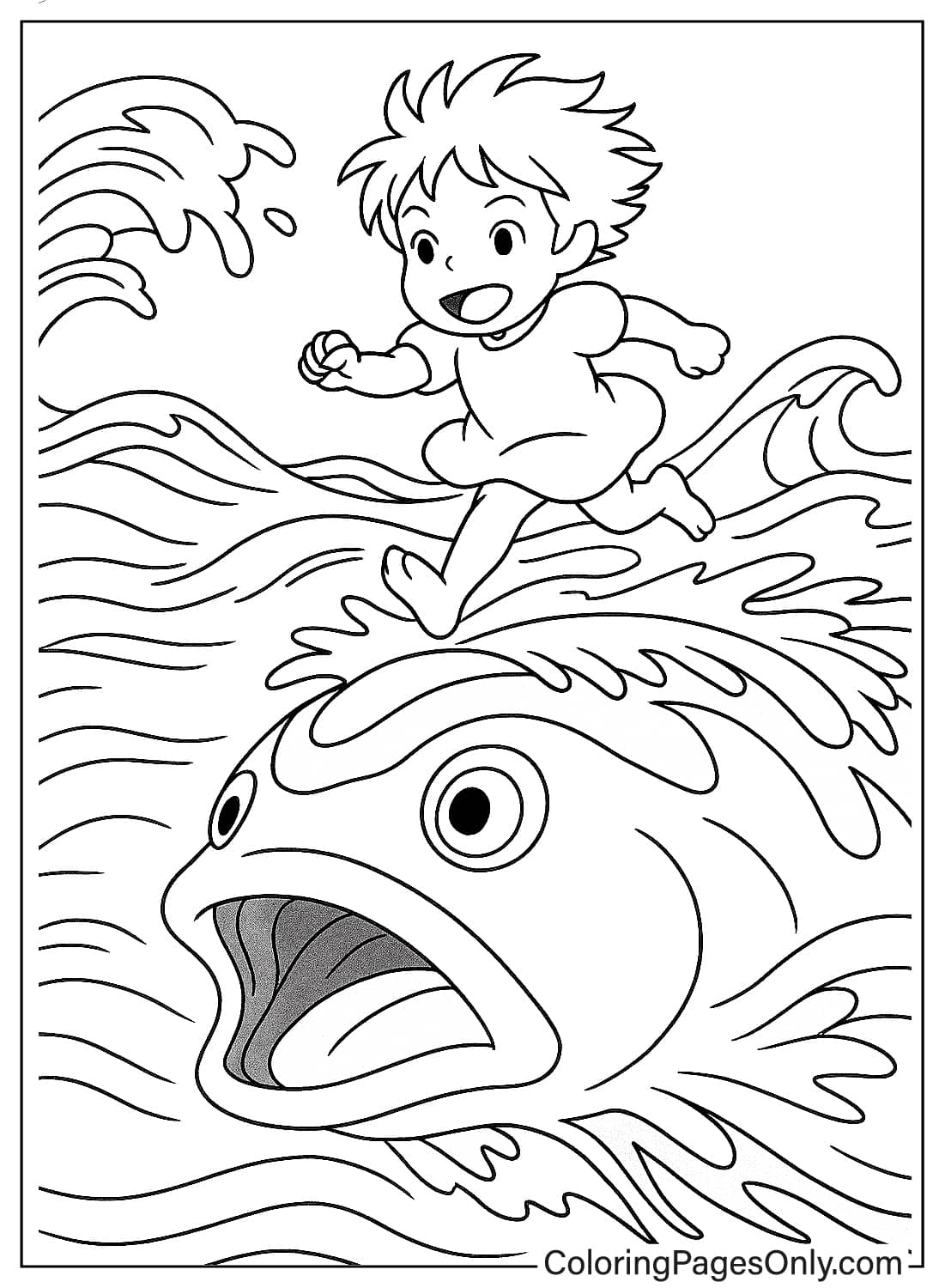
The wave spirits that Fujimoto commands are not simply natural forces responding to supernatural instruction; they have faces, eyes, and the quality of individual personalities. Ponyo’s sisters, who live within the ocean and form many of its waves in their tiny, pre-formed fish shapes, literally become the ocean in the film’s most extraordinary sequence – their merged forms creating enormous cresting waves with faces, Ponyo running across their backs as they surge toward the shore. The ocean in Ponyo is conscious, populated, and in constant motion because the beings within it are in constant motion.
Miyazaki drew on multiple traditions for this vision: the Japanese concept of the Ningyo (the Japanese mermaid or fish-human hybrid), traditional Shinto ideas of natural forces as populated by spirits, and his own longstanding artistic concern with the relationship between human activity and the natural world. Fujimoto’s obsession with the ocean’s pollution and his potions for healing its waters reflect Miyazaki’s consistent environmentalist thread, but expressed here not through conflict or moralizing but through beauty – the underwater world of Ponyo is overwhelmingly lush and alive, full of creatures from the Late Devonian period who emerge when Ponyo’s magic floods the town with ancient ocean.
This ocean-as-living-world makes Ponyo pages some of the richest coloring experiences in the collection: every ocean scene is populated with creatures, movement, light, and depth that reward careful, patient coloring across many tonal layers.
The Collection’s Pages – A Scene-by-Scene Guide
The iconic wave sequence pages – “Ponyo Running on Water with Car Coloring Page” and “Ponyo Running on Giant Fish on Waves Coloring Page” – depict the film’s most celebrated moment: Ponyo in her half-transformed state, running at extraordinary speed across the surface of enormous cresting waves, her red hair flying behind her, as a car races along the coastal road below. This sequence is hand-drawn animation at its technical peak – hundreds of individual waves, each with its own fish-face shape, rendered frame by frame. The coloring challenge on these pages is the largest and most complex in the collection: managing a page dominated by water (every shade of blue and teal, with white crests and depth shadows) while keeping Ponyo’s warm pink-and-red palette reading clearly against the cool ocean background.
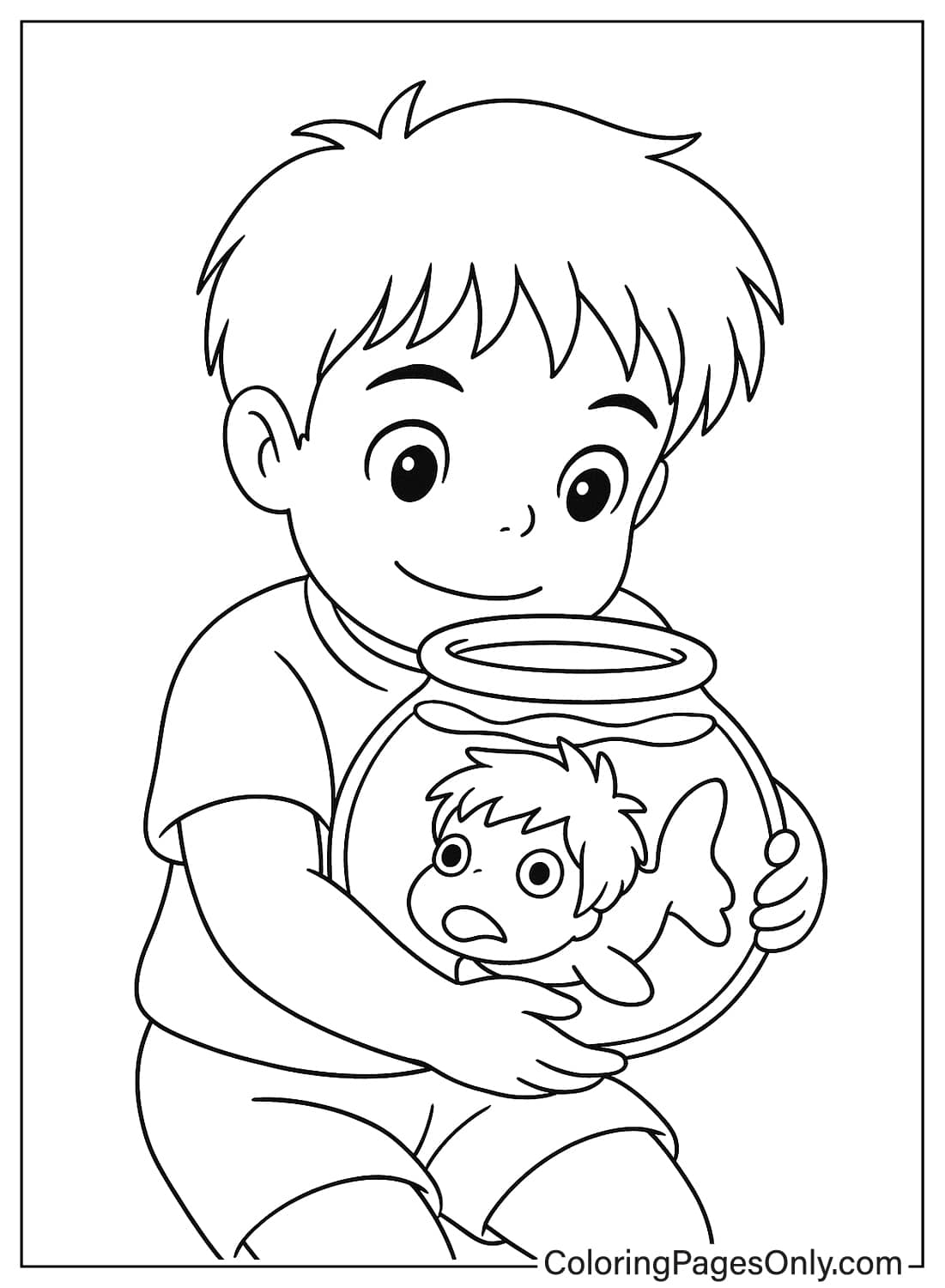
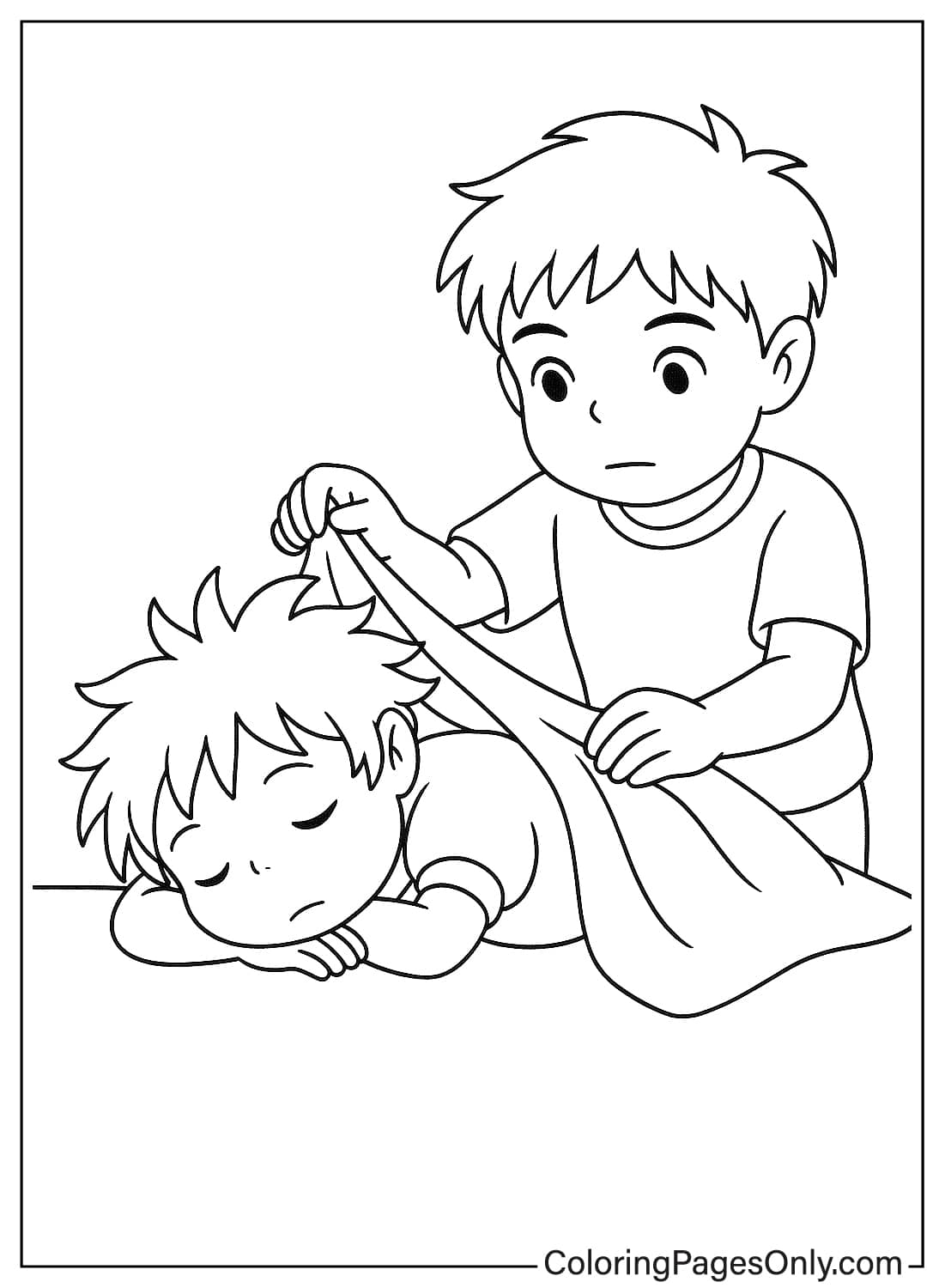
The Sōsuke-and-Ponyo friendship pages – “Sosuke Holding Ponyo in Fishbowl Coloring Page” and “Sosuke Tucking Sleeping Ponyo In Coloring Page” – capture the film’s emotional heart: the bond between the boy and his fish. The fishbowl page depicts the moment Sōsuke first presents Ponyo (still in fish form) to his mother Lisa, holding the small, round bowl with both hands and a smile of unconditional pride. The tucking-in page shows Sōsuke carefully covering Ponyo with a blanket as she sleeps – a gesture of care that communicates the depth of his protectiveness in the quietest possible way.
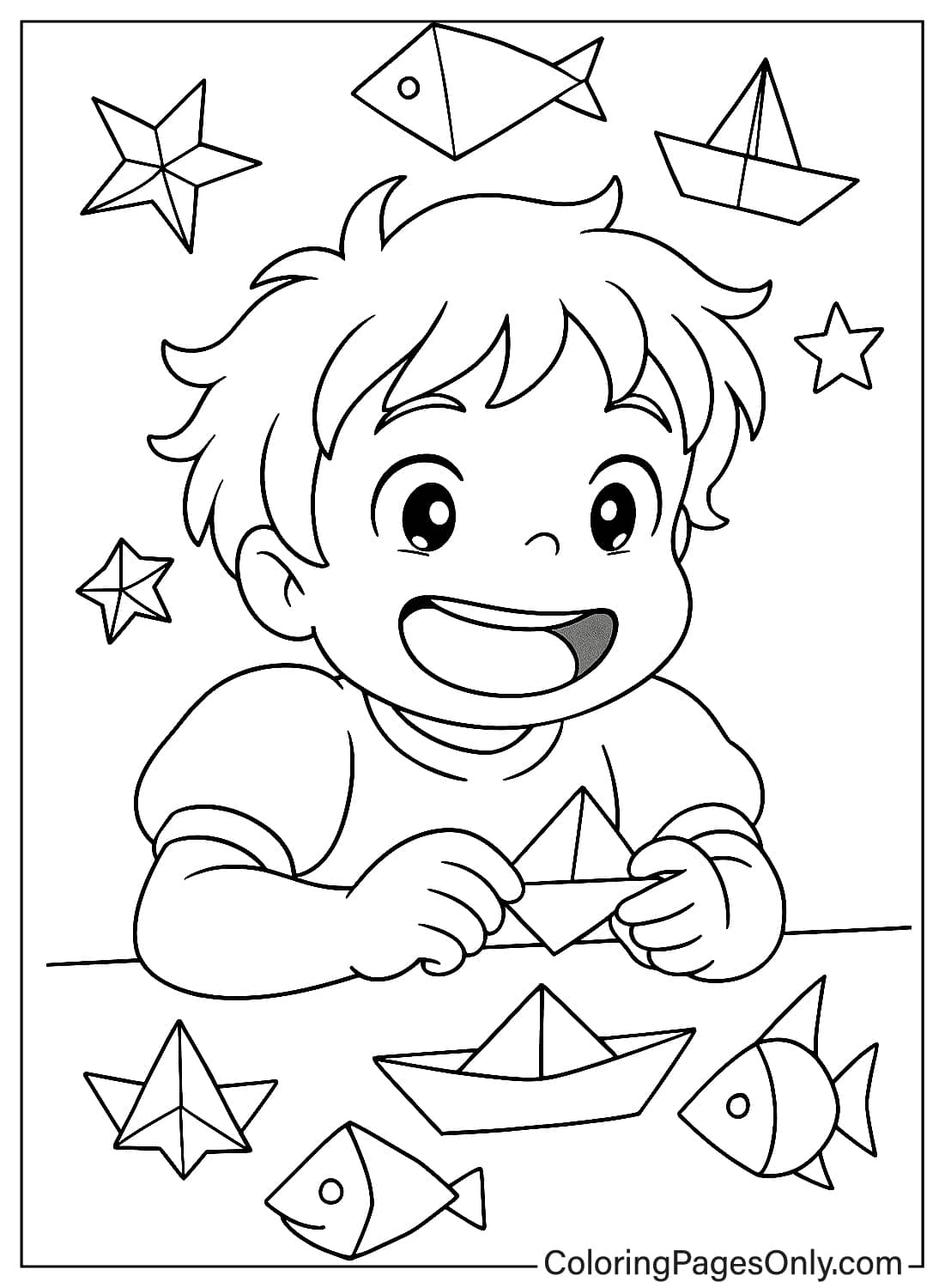
The Sōsuke activity pages – “Sosuke Making Origami Coloring Page” – show Sōsuke engaged in the Japanese paper-folding craft, a domestic scene that grounds the film’s fantasy in the specific texture of Japanese childhood. This page is the collection’s most serene and the one most suited to quiet, unhurried coloring.
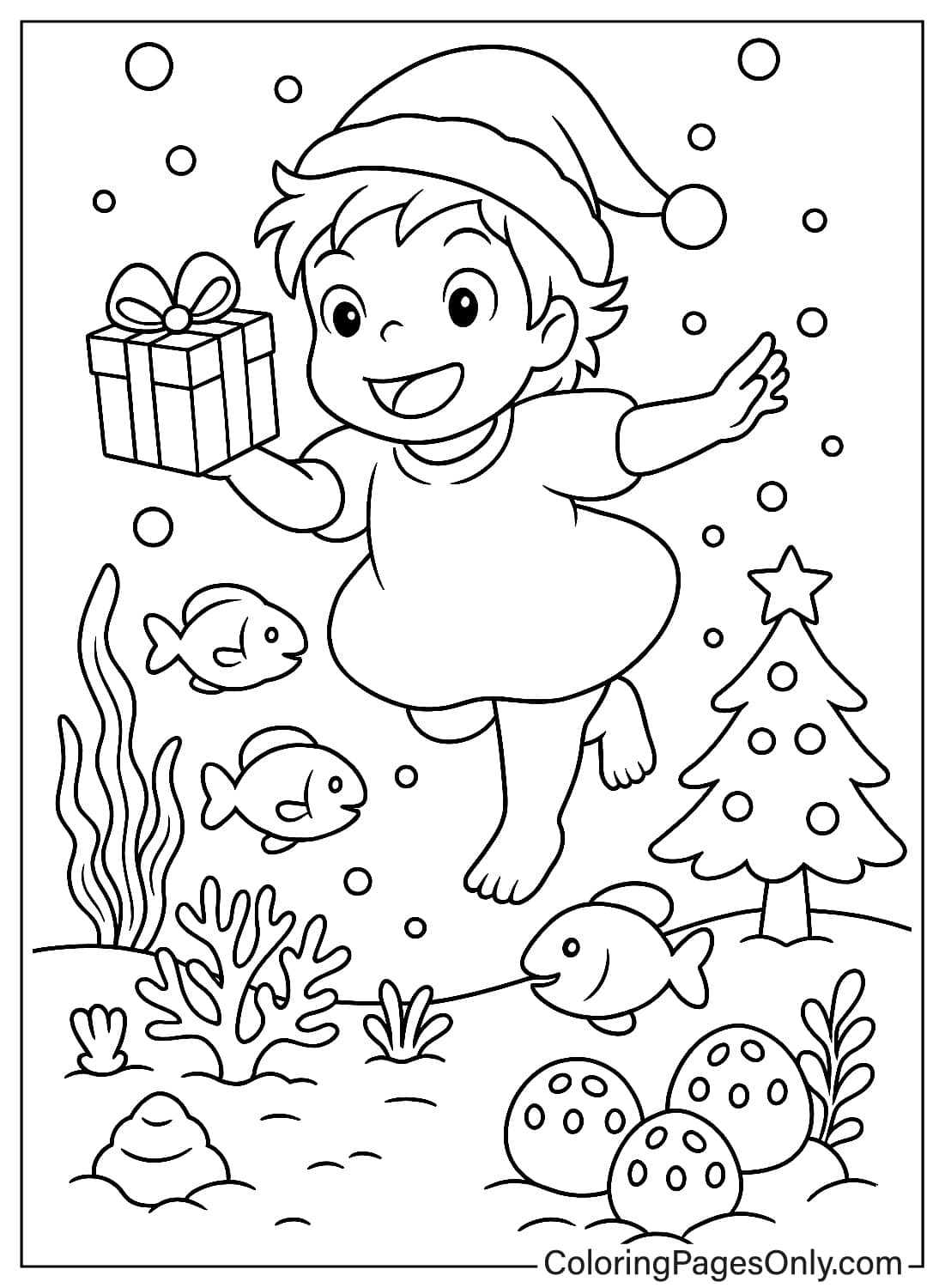
The seasonal variant pages – “Ponyo Underwater Christmas Coloring Page” – bring Ponyo’s underwater world into holiday context, with Ponyo in a Santa hat, surrounded by fish and an underwater Christmas tree. These pages are charming crossover pieces that combine the film’s established aesthetic with seasonal imagery.
Coloring Tips for Ponyo Pages
Ponyo’s two palettes – fish form vs human form. Ponyo appears in this collection in both her fish form and her human form, and each requires a completely different coloring approach. In fish form: her body is a soft, warm pink-white – the color of a pale cherry blossom, not hot pink and not pure white, but a gentle, warm mid-tone between the two. Her features (the early hints of red hair, the large eyes) are the page’s warmest and most saturated elements. In human form: her red hair becomes the page’s dominant color statement – a vivid, warm red (similar to Ariel’s red in Disney’s The Little Mermaid, as Miyazaki was aware of that visual connection) that should be rendered at maximum saturation. Her face and skin are pale and warm, and her pink-and-white dress echoes the color relationship of her fish form but in a more structured form.
The ocean pages – layered teal-to-deep-blue. Every wave and ocean page in this collection requires a systematic approach to rendering water depth. Establish a color progression before starting: the wave crests and foam at the very top of each wave in near-white; the wave surface in a medium, slightly warm teal; the wave bodies in a deeper, cooler blue-green; and any deep areas (the wave troughs, the underwater glimpses) in the deepest, most saturated marine blue available. Work from light to dark in each wave section – establish the lightest tone first, then layer progressively deeper tones downward. The Ponyo wave pages have dozens of individual wave forms, each requiring this progression independently; work systematically from the top of the page downward rather than completing one wave entirely before moving to the next.
Fujimoto – warm-cool tension. Fujimoto’s design creates a specific and unusual coloring challenge: his long red hair is the same warm red as Ponyo’s, providing an immediate visual connection between father and daughter – but his clothing and environment are cool-toned (deep greens, blues, ocean colors), creating a warm-cool tension that makes him visually complex even in outline. Render his hair at full warm-red saturation, then render his clothing in the deepest, most saturated ocean green you have. The contrast between the two – same saturation level, opposite temperature – creates a figure that reads as simultaneously part of the ocean world and apart from it, which is exactly what Fujimoto’s character represents.
Granmamare – luminous pale with ethereal scale. Any page depicting Granmamare faces a unique challenge: she is enormous and essentially divine, yet her canonical coloring is almost entirely pale – off-white, the palest gold, and luminous rather than colorful. The way to render this luminosity without making her simply blank-white is to use a warm, very light golden-cream as the base tone for her form, with the absolute lightest areas left in true paper-white to suggest points of actual light. Add a very subtle halo of the palest aqua around her outer edges, where her divine presence interacts with the ocean around her.
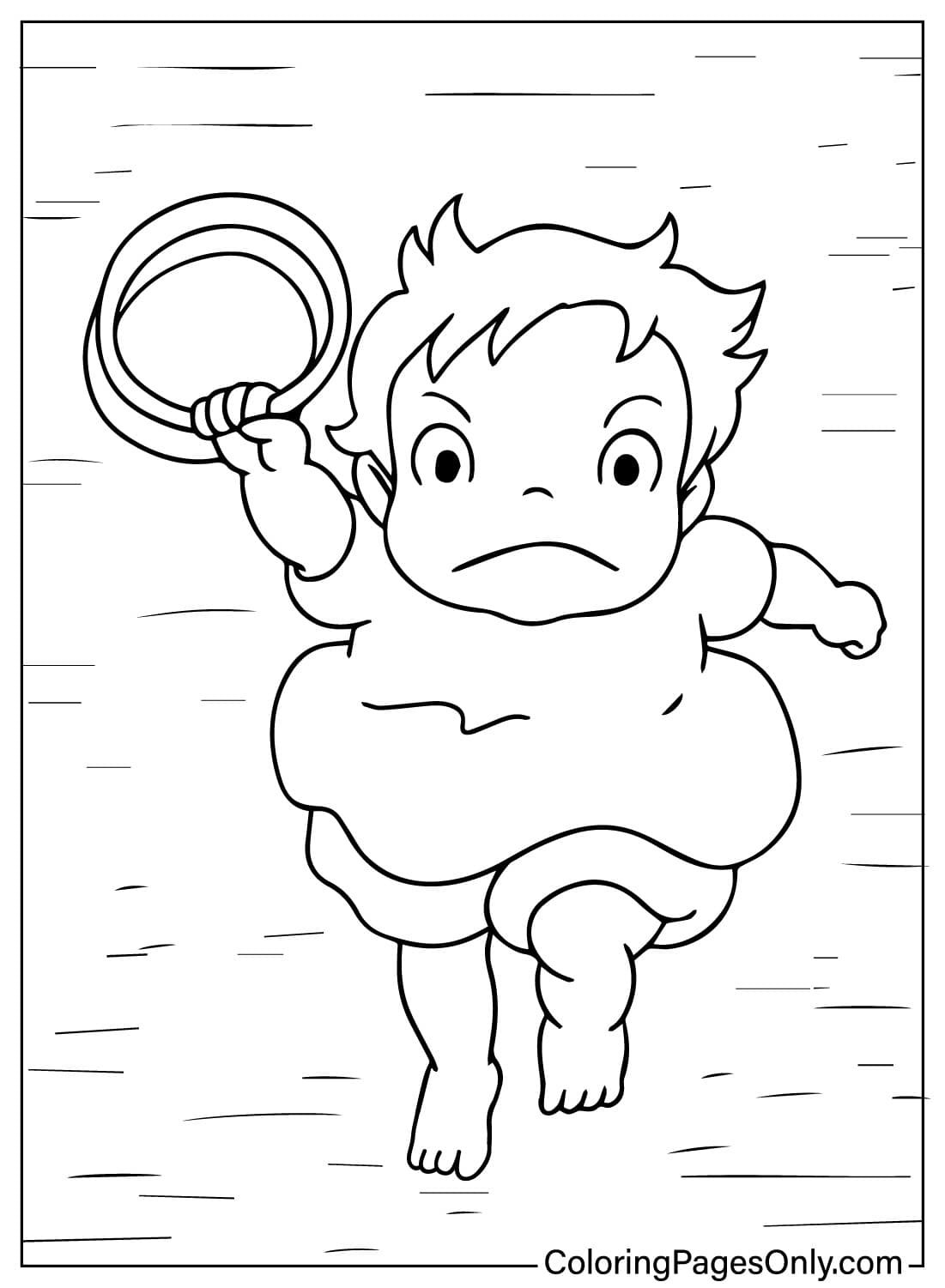
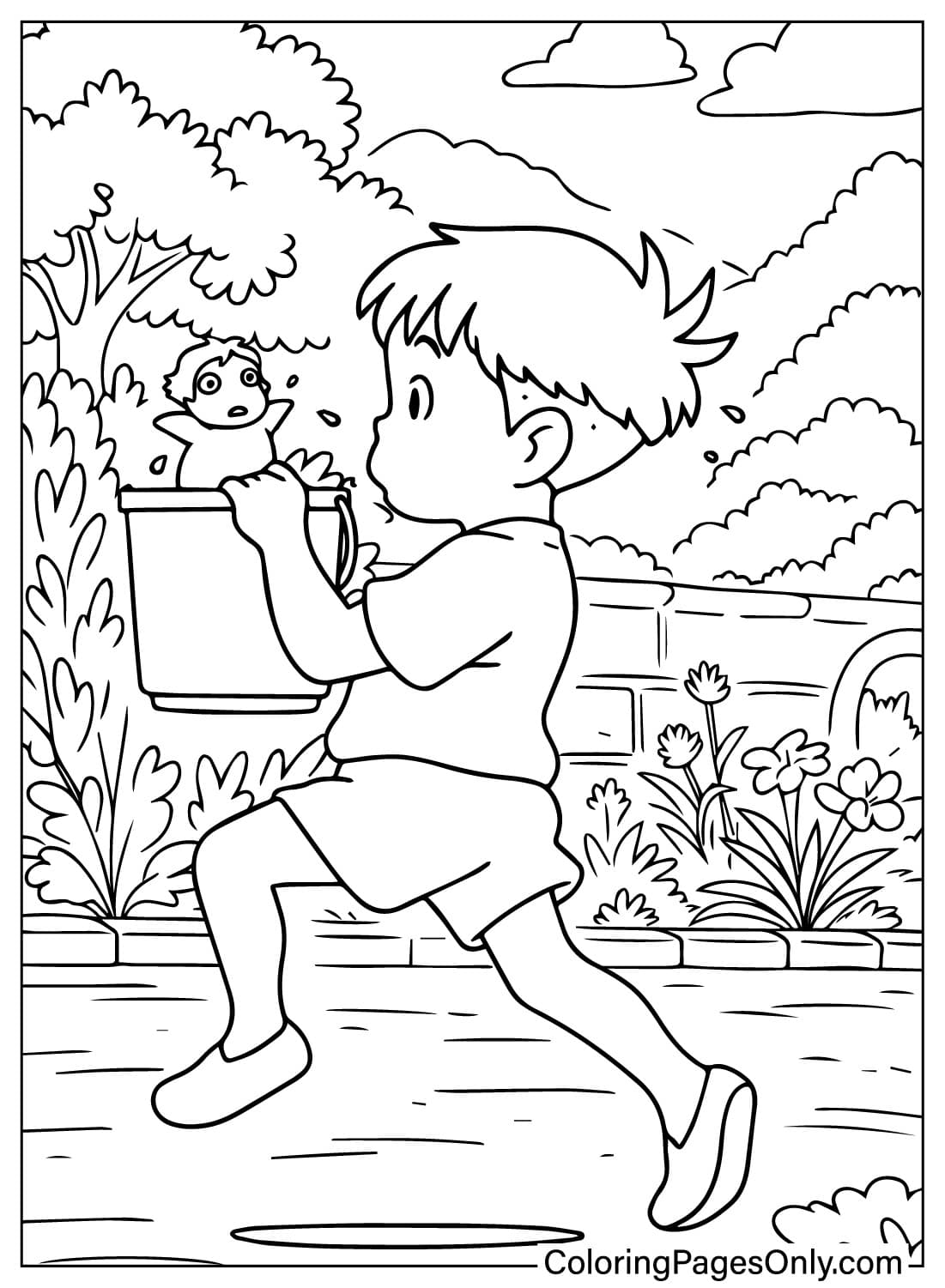
The fishbowl page – glass and water rendering. “Sosuke Holding Ponyo in Fishbowl Coloring Page” features the specific coloring challenge of glass containing water. Glass is transparent but reflective – it distorts what’s seen through it and catches light at its curves. The fishbowl should be rendered with a pale blue-tinted tonal variation across its surface (suggesting the water inside tinting the glass) with bright white highlights along its upper curved rim where light reflects most directly. Ponyo inside the bowl should appear slightly more saturated and vivid than her surroundings – the curved glass concentrates the view of her, making her appear more present, not less.
5 Activities
The two Little Mermaids comparison. Ponyo and Disney’s The Little Mermaid (1989) share the same Hans Christian Andersen source material and several specific visual choices – including, most famously, the red hair of the sea-creature protagonist. After coloring any Ponyo page, sit with your child and list three ways the stories are similar (sea creature wants to be human, boy and girl friendship, father opposes the land world) and three ways they are different (Ponyo’s characters are five years old; Ponyo’s transformation comes from her own magic and love, not a deal with a witch; there is no villain in Ponyo – Fujimoto is just a worried father). Draw two small portraits side by side: Ponyo with her red hair on one side, and a simple sketch of Ariel with her red hair on the other. Color both in their respective palettes – Ponyo’s soft pink-and-white versus Ariel’s green tail and seafoam palette. The comparison builds analytical thinking, encourages empathy for character motivations, and produces a paired art piece that demonstrates understanding of how the same source material can produce two completely different stories.
The wave creature design challenge. In Ponyo, the waves are alive – made from the fish-sisters who inhabit the ocean, their forms visible as cresting, enormous creatures with the faces of fish. After coloring “Ponyo Running on Giant Fish on Waves Coloring Page,” design your own ocean wave creature on blank paper: what animal lives inside your wave? What is the creature’s face like – does it look determined, playful, sleepy, curious? What color is the wave it forms – blue-green, turquoise, stormy grey-blue? Draw the wave creature in both its hidden form (the small fish or creature inside the water) and its revealed form (the giant wave with the creature’s face visible). This activity develops the specific imaginative skill of seeing faces and personalities in natural phenomena – precisely the kind of perception that Miyazaki’s environmental worldview encourages, and that makes the ocean feel alive rather than merely scenic.
The fishbowl story. “Sosuke Holding Ponyo in Fishbowl Coloring Page” is one of the film’s purest emotional moments – the boy, the fish, the bowl of water between them, the warmth of Sōsuke’s smile communicating that he intends to protect what he holds. After coloring this page, write a short first-person story from Ponyo’s perspective: what does she see from inside the bowl? What does Sōsuke’s face look like from the perspective of a small fish looking up through curved glass? What can she hear (muffled, because water surrounds her)? What does she feel about this boy who has already decided she matters to him? The constraint of the fishbowl perspective – limited view, distorted glass, muffled sounds – creates a specific and unusual creative writing exercise that develops both imaginative perspective-taking and sensory description.
The test of love – what would you answer? The moral center of Ponyo is the question Granmamare asks Sōsuke: “Can you love Ponyo whether she is a fish or a human?” – and his answer: “I love all the Ponyos.” After coloring the collection’s most tender pages (the tucking-in page, the fishbowl page, the origami page), discuss the question with your child in the context of their own relationships. Can you love someone who is very different from you? Can you love someone even when they’re being difficult or acting strange or not how you expected? What does it mean to love “all the Ponyos” – to accept someone in every form they might take? This philosophical conversation, grounded in the specific visual memory of the colored page, introduces abstract concepts of unconditional acceptance in a way that five-year-olds can genuinely engage with, because the film has already done the emotional work of making the question feel real.
The Ghibli ocean ecosystem project. Studio Ghibli’s treatment of the natural world is consistent across films – forests are alive in My Neighbor Totoro and Princess Mononoke, spirits inhabit every corner of Spirited Away, and the ocean in Ponyo is populated with ancient creatures and living waves. After coloring any Ponyo ocean page, create a two-page “Ghibli Nature Encyclopedia” entry for the ocean in Ponyo: on one side, draw and color three different kinds of creatures that live in Ponyo’s ocean (you may invent them based on what you’ve seen in the film, or look up creatures from the Late Devonian period that appear in the flooding sequence). On the other side, write or dictate a brief description of each creature: what is its name (invented is fine), where does it live in the ocean, what does it eat, and what role does it play in keeping the ocean alive? This activity connects the specific emotional and visual experience of Ponyo to the broader Studio Ghibli worldview – that nature is not a backdrop but a community of beings with their own lives and purposes.