Amphibian Coloring Pages
 By:
Jennifer Thoa - Content Editor & Designer
Updated:
By:
Jennifer Thoa - Content Editor & Designer
Updated:
Amphibian coloring pages featuring frogs, axolotls, salamanders, toads, cane toads, and tadpoles, available as printable PDF and interactive online coloring.
Anyone who has ever crouched at the edge of a pond and watched a frog sit perfectly still, then vanish into the water in a single powerful leap, knows that amphibians are something special. They were the first vertebrates to crawl onto land, they survive in environments ranging from tropical rainforests to high-altitude snowmelt streams, and some of them can regenerate an entire limb from scratch. They are, by almost any measure, among the most extraordinary animals alive.
This collection spans 227 free designs across six species groups, ranging from simple cartoon outlines for young children to detailed naturalistic illustrations for older kids and adults. Every page is free to download as a PDF, JPG, or PNG, and every page is available for online coloring directly in the browser.
Whether for a parent, a teacher building a life-science unit, or anyone who loves animals and art, this is a collection built to be explored by species.

What Is Inside This Collection
This library covers two of the three living orders of the class Amphibia: Anura (frogs and toads) and Urodela (salamanders, including the axolotl). The designs group into six species-specific collections.
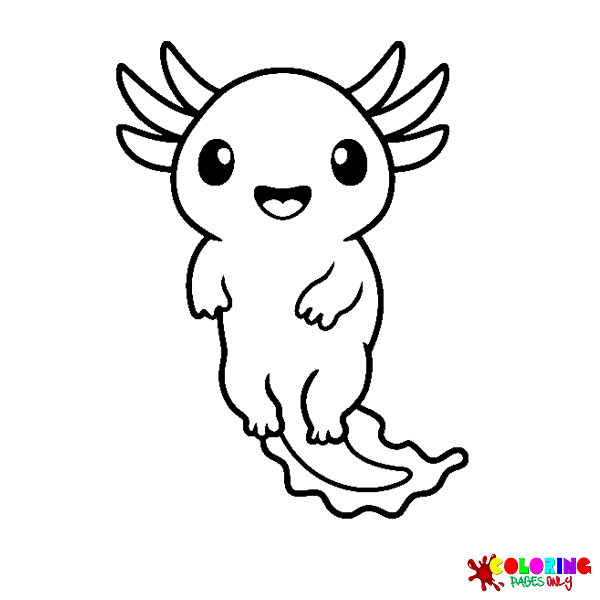
Axolotl Coloring Pages (53 designs)
The axolotl (Ambystoma mexicanum) is native to a single lake complex near Mexico City, Lake Xochimilco, much of which has been drained for agriculture and urban development. In the wild, it is critically endangered. In popular culture, it has become a global icon, appearing in video games, plush toys, and countless illustrations. This dedicated axolotl collection reflects both realities.
Designs include the famous leucistic (pale pink) variety most people picture when they think of an axolotl, with its delicate translucent skin and feathery gill plumes in rose and coral; the wild-type brownish-grey coloration with golden eyes that most people never see; kawaii and chibi-style cartoon versions for younger children; and detailed close-up illustrations of the external gill branches, called rami, that extend from the head throughout the animal’s entire life.
That last detail matters: unlike almost all other amphibians, the axolotl never fully metamorphoses. It retains its larval features permanently, a phenomenon called neoteny, making it scientifically unique and its silhouette genuinely unlike almost anything else on Earth.
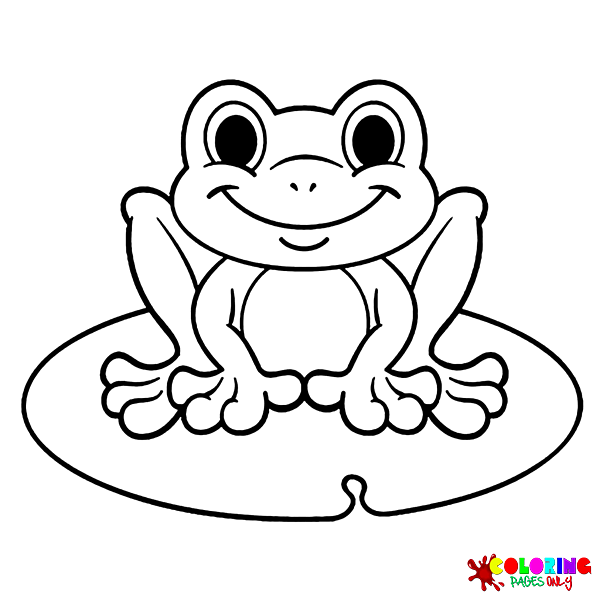
Frog Coloring Pages (82 designs)
Frogs are the largest amphibian group, with more than 7,000 known species described by science, and new ones are still being discovered each year. This frog collection reflects that diversity with illustrations that go far beyond a generic green frog on a lily pad.
The set includes red-eyed tree frogs (Agalychnis callidryas), among the world’s most recognizable amphibians, with their vivid emerald bodies and scarlet eyes, alongside poison dart frogs in warning colors of electric blue, bright orange, and vivid yellow. There are bullfrogs with inflated vocal sacs, glass frogs (Centrolenidae) with translucent bellies that reveal internal organs, and tree frogs spread across tropical leaves. Simple smiling cartoon frogs for younger children sit alongside detailed naturalistic portraits for experienced colorists.
Frogs are also useful for discussing real ecological science: they are widely used as a biological indicator species, meaning healthy frog populations signal a healthy ecosystem, and declining frog populations are among the earliest warnings of environmental stress.
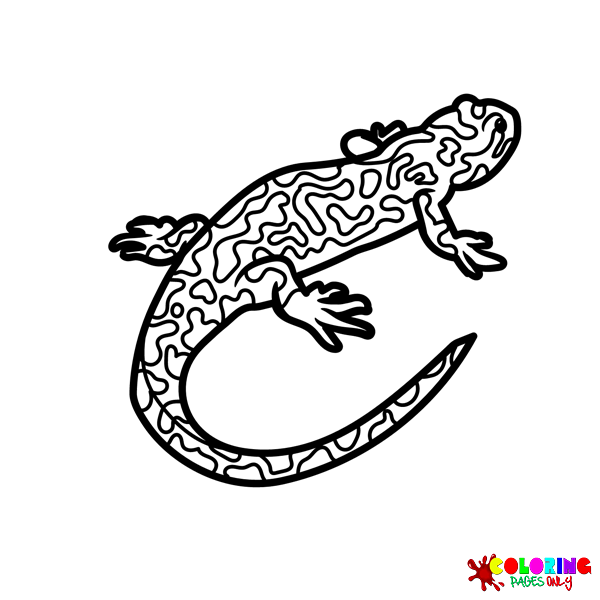
Salamander Coloring Pages (27 designs)
Salamanders are consistently the most overlooked animals in this collection, and consistently the ones that generate the most curiosity once people look closely. Often mistaken for lizards, salamanders have no scales, breathe largely through moist, permeable skin, and possess a regenerative ability that has made them the subject of biomedical research: many species can regenerate complete limbs, including bone, muscle, and nerve tissue.
Designs include fire salamanders (Salamandra salamandra) with bold black bodies crossed by vivid yellow or orange warning patterns, tiger salamanders (one of North America’s largest terrestrial salamanders) with striking brown and yellow banding, and small, secretive red-backed salamanders found beneath logs across eastern forests.
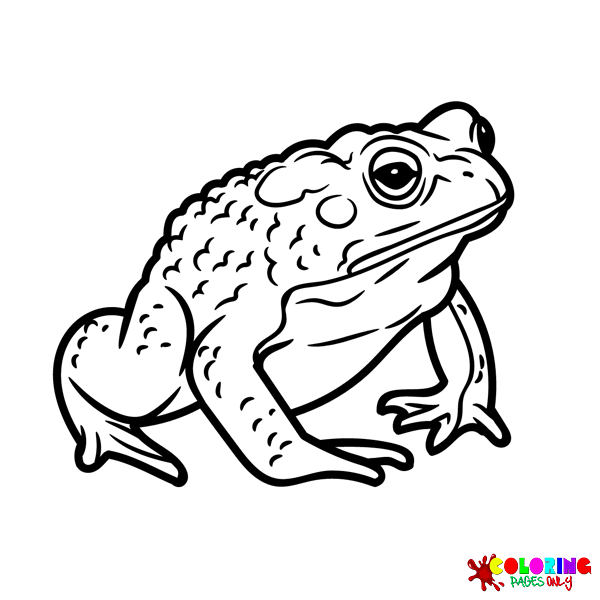
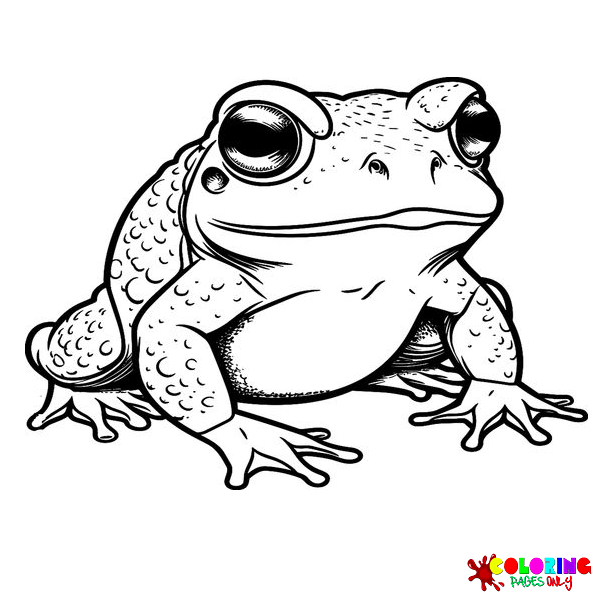
Toad Coloring Pages (21 designs)
Toads suffer from an unfair reputation as the grumpier, wartier cousin of the frog. In reality, they are ecologically important, behaviorally complex, and surprisingly long-lived, with some individuals exceeding 35 years in captivity. This toad collection gives these overlooked animals the artistic treatment they deserve.
Designs cover the American toad (Anaxyrus americanus) in warm earthy browns and rust-red tones, the European common toad (Bufo bufo) in its characteristic ambling walk, and spadefoot toads with their distinctive vertical pupils and digging adaptations.
Cane Toad Coloring Pages (26 designs)
The cane toad (Rhinella marina) gets its own collection for a reason: it is one of the world’s most infamous invasive species, originally introduced to Australia in 1935 to control sugar cane beetles, with famously disastrous ecological consequences for native wildlife. That real history makes this one of the more discussion-generating collections for classrooms.
Designs range from naturalistic portraits showing the cane toad’s large parotoid glands and warty, olive-brown skin to simpler cartoon versions suited to younger colorists.
Tadpole Coloring Pages (18 designs)
The tadpole-to-frog transformation is one of biology’s most dramatic processes, and this tadpole collection lets colorists illustrate every stage of it. Designs include early-stage tadpoles with external gills just emerged from jelly-covered egg masses, mid-development tadpoles showing the first appearance of rear limbs, late-stage froglets with four limbs developed and the tail being reabsorbed, and full life-cycle diagram sheets showing every stage at once, useful for classroom display or a nature journal.
What surprises many adults: the hormonal trigger for amphibian metamorphosis is a surge in thyroid hormone, connecting this life cycle to the broader subject of endocrinology and making these pages unexpectedly rich territory for older students.
Why These Amphibian Coloring Sheets Work
Completely free, always. Every page in this collection downloads as PDF, JPG, or PNG, with no sign-up and no subscription. PDF is best for high-resolution home printing, JPG for a quick single-page print, and PNG for digital coloring projects that need a transparent background.
Print or color online. The built-in online coloring tool works directly in the browser, useful for tablets and classrooms with limited printing. Pages also print on standard paper for a traditional hands-on session.
Designed for every age and skill level. Large, open cartoon outlines suit toddlers and preschoolers developing fine motor control. Detailed naturalistic illustrations of axolotls, fire salamanders, and cane toads offer a genuine artistic challenge for older children and adults.
Real science, real animals. Every species in this collection is real, and the colors, body shapes, and behaviors shown are drawn from actual natural history.
Benefits of Coloring Amphibian Pages
The benefits of coloring are well-documented across developmental psychology and art education research, and amphibian-themed pages offer a few advantages of their own.
Builds Fine Motor Skills
The American Academy of Pediatrics identifies fine motor skill development as a core benefit of structured coloring for children ages 2 through 7. Coloring within detailed outlines, managing pencil pressure, and navigating a salamander’s mottled pattern or a frog’s toe webbing all strengthen the hand muscles and coordination children later use for writing.
Builds Genuine Scientific Literacy
Coloring a real animal, with its actual colors, body proportions, and habitat, is a form of observational learning. A child who colors a glass frog and learns its belly is transparent, or who colors a fire salamander and discovers its yellow-and-black pattern is a real chemical warning signal, is building biological knowledge in a context that makes it stick.
Supports Cross-Curricular Learning
A single amphibian coloring page can anchor a lesson touching science (life cycles, adaptation, conservation), geography (species ranges), art (color theory, texture technique), and language arts (descriptive writing, research). That makes these pages useful across subject areas, not only in art class.
Promotes Mindfulness and Reduces Stress
A 2005 study in the Art Therapy Journal documented measurable reductions in anxiety following structured coloring sessions. The intricate patterns of a fire salamander or a poison dart frog page provide the kind of absorbing, low-pressure focus that supports a calm state.
Builds Environmental Awareness
Amphibians are currently the most threatened class of vertebrates on Earth. The International Union for Conservation of Nature (IUCN) estimates that approximately 41% of all amphibian species are threatened with extinction, a higher proportion than mammals, birds, or reptiles. A child who colors an axolotl and learns it is critically endangered in the wild gains a natural entry point into conservation awareness.
How to Color Amphibian Pages Well
- Layer greens for realistic frogs. Start with a light yellow-green base, add a deeper olive or forest green in shadowed areas under the chin and between the toes, then finish with a bright lime highlight on the head and back for a three-dimensional look.
- Go soft and pale for axolotls. For the iconic leucistic look, use the lightest pink available across the body, deepening to a soft rose or coral only at the tips of the gill plumes, with pale gold eyes. Avoid saturated hot pink.
- Use high contrast for warning-colored species. Fire salamanders and poison dart frogs use vivid coloration as a real warning signal. Use true black, not dark grey, as the base for fire salamanders, with bright cadmium yellow or orange pattern shapes.
- Try stippling for toad and cane toad skin texture. Apply a warm sand or tan base, then use a sharpened pencil tip to place individual dots of darker brown and olive. Dense clusters create a shadow, spaced dots create a highlight.
- Use complementary accents in deep shadows. Add a small touch of the opposite color on the color wheel into the darkest shadow areas, such as a hint of violet under a yellow salamander’s belly, to make the color read as more vivid.
5 Creative Craft Ideas With Amphibian Coloring Pages
1. Personal Amphibian Field Guide
Color eight to ten different species from the collection, aiming for variety across groups: at least two frogs, a salamander, a toad, and an axolotl. Below each page, write a short species card with common name, scientific name, habitat, and one surprising fact, then bind the pages together with a long-arm stapler or binder rings.
2. Frog Life Cycle Mobile
Color four life-cycle stages, an egg mass, an early tadpole, a mid-stage froglet, and an adult frog, mount each on cardstock, and tie them at graduating lengths of string to a wooden dowel so the finished mobile turns slowly and shows each stage in turn.
3. Amphibian Conservation Poster
Color five or six species, including at least one endangered species such as the axolotl, cut them out, and arrange them on a poster board under a headline such as “41% of Amphibians Are Threatened.” Add a short conservation fact beneath each animal.
4. Axolotl Habitat Diorama
Color a leucistic axolotl page, mount it inside a shoebox turned on its side, and add torn blue and green paper for water and aquatic plants to build a simple Lake Xochimilco-style habitat scene.
5. Frog vs Toad Comparison Chart
Color one frog page and one toad page side by side, then label the visible differences, such as smooth versus warty skin and long versus short legs, for a simple, hands-on classification exercise.
Frequently Asked Questions
What are amphibian coloring pages?
Amphibian coloring pages are printable line-art designs of real amphibian species, including frogs, axolotls, salamanders, toads, and tadpoles. This collection includes 227 free designs available as PDFs or online coloring.
What is the difference between a frog and a toad?
Both belong to the order Anura and are closely related, but frogs typically have smooth, moist skin and long legs built for jumping, while toads have dry, warty skin and shorter legs built for walking. On a coloring page, body proportions and skin texture are the easiest way to tell them apart.
What are the amphibian orders represented in this collection?
The class Amphibia contains three living orders. This collection represents two of them: Anura (frogs and toads, including cane toads, with over 7,000 species) and Urodela (salamanders, including the axolotl, with roughly 700 species).
Is the axolotl really an amphibian?
Yes. The axolotl (Ambystoma mexicanum) is a salamander, which makes it a true amphibian. What makes it unusual is neoteny, the permanent retention of larval features into adulthood; it keeps its external gill plumes and stays aquatic for life rather than undergoing full metamorphosis.
Why are so many amphibians endangered?
The IUCN estimates approximately 41% of amphibian species face extinction risk, the highest proportion of any vertebrate class. Primary drivers include habitat loss, the chytrid fungus Batrachochytrium dendrobatidis, climate change, and water pollution.
Why does the cane toad have its own collection?
The cane toad (Rhinella marina) was deliberately introduced to Australia in 1935 to control sugar cane beetles and became one of the world’s most well-known invasive species, which makes it a distinct and frequently searched topic on its own.
Are amphibian coloring pages suitable for young children?
Yes. Large cartoon outlines suit children ages 3 to 6, while detailed naturalistic illustrations of axolotls, fire salamanders, and glass frogs suit older children, teens, and adults.
What is the best medium for detailed amphibian illustrations?
Colored pencils with fine tips give the most control for detailed naturalistic sheets, including stippling for toad or cane toad skin texture. Broad-tipped markers work well for cartoon sheets, and watercolors suit pond and aquatic background scenes.
Start Coloring
Download any page by clicking the design. No account, email, or payment is required. Pages print directly from the browser at full resolution or open in the online coloring tool for screen use. Share finished pages on Facebook or Pinterest with the share buttons on each page.
More Amphibian Coloring Pages
Jump straight to a specific collection: