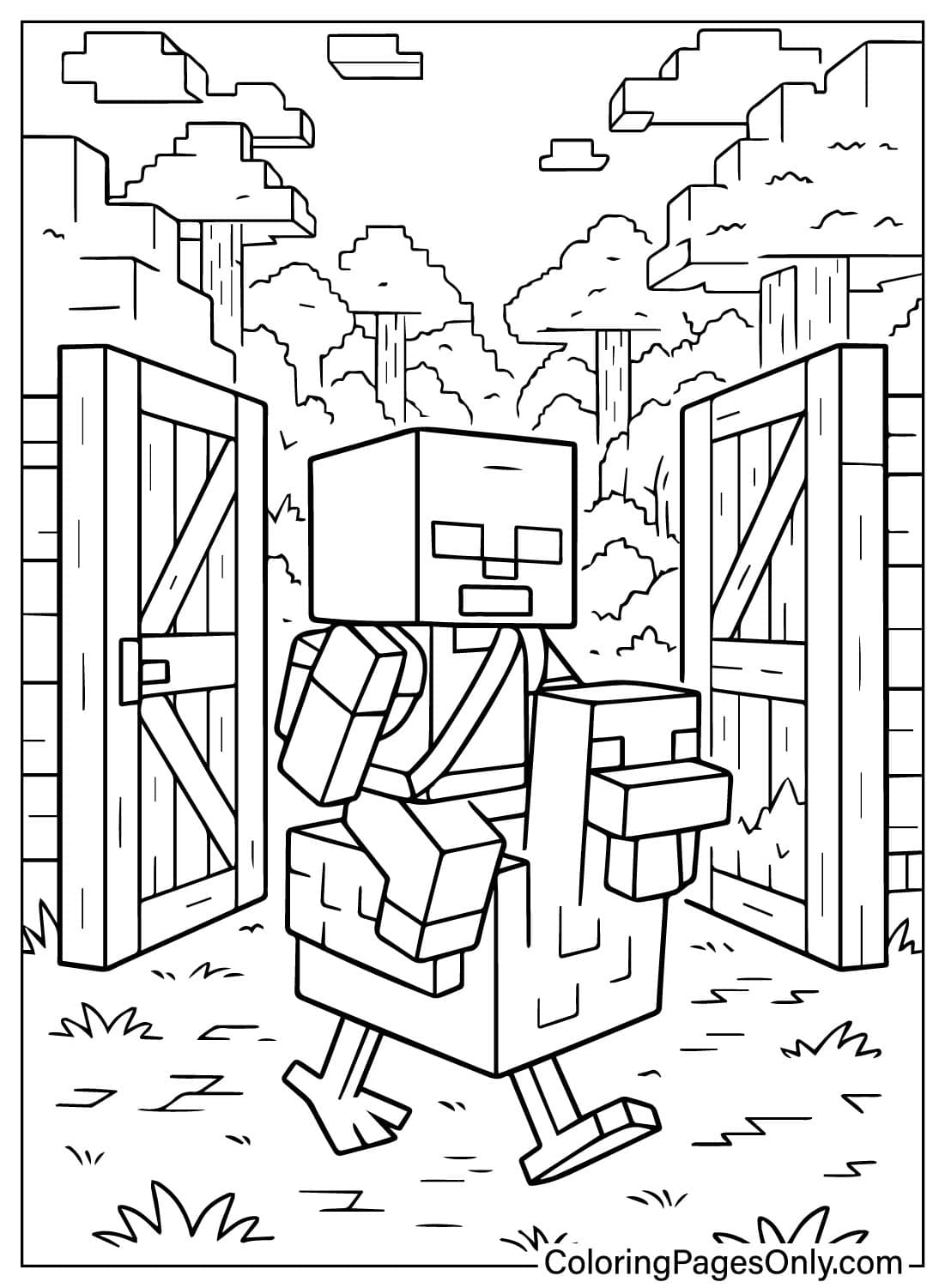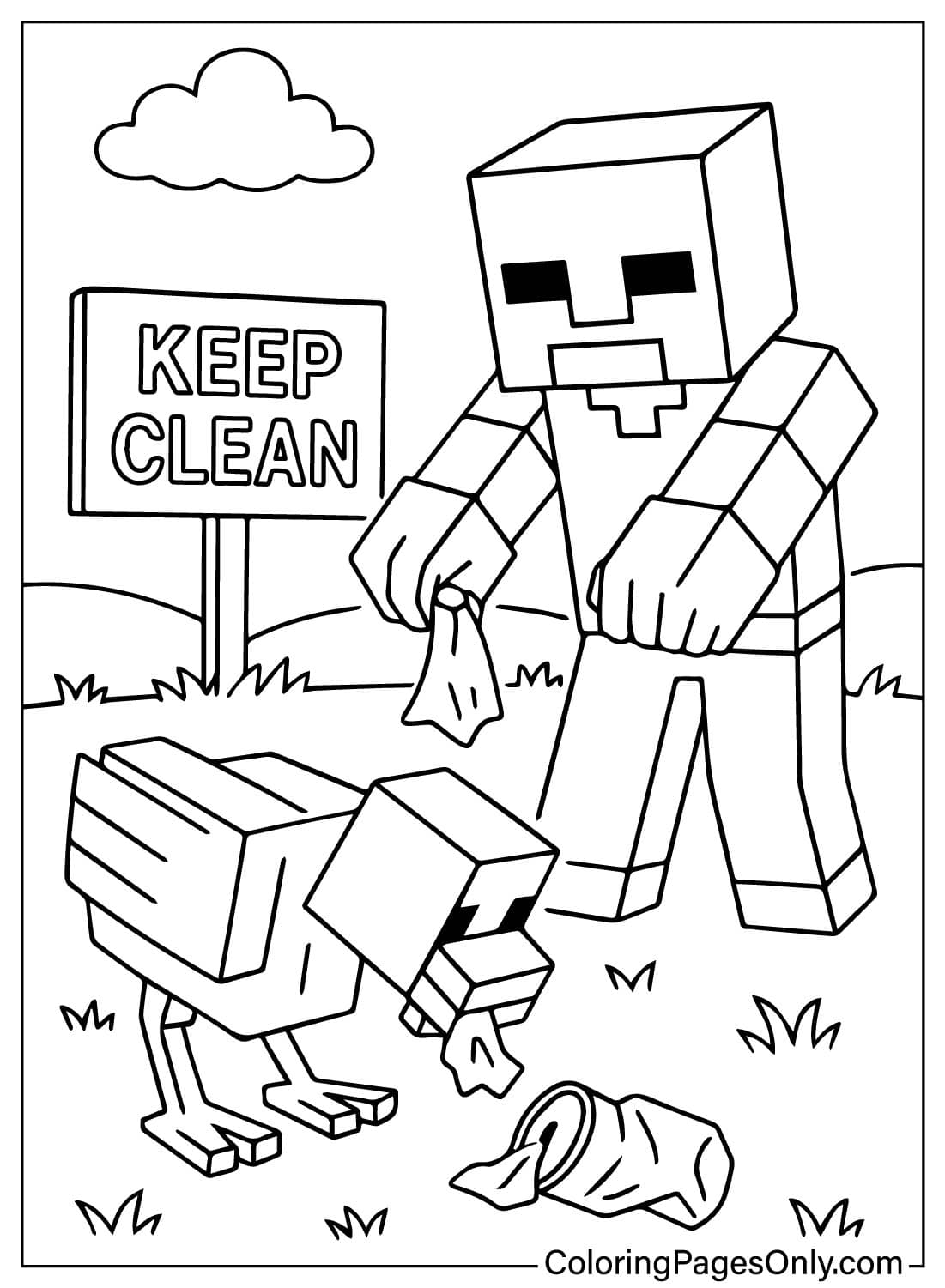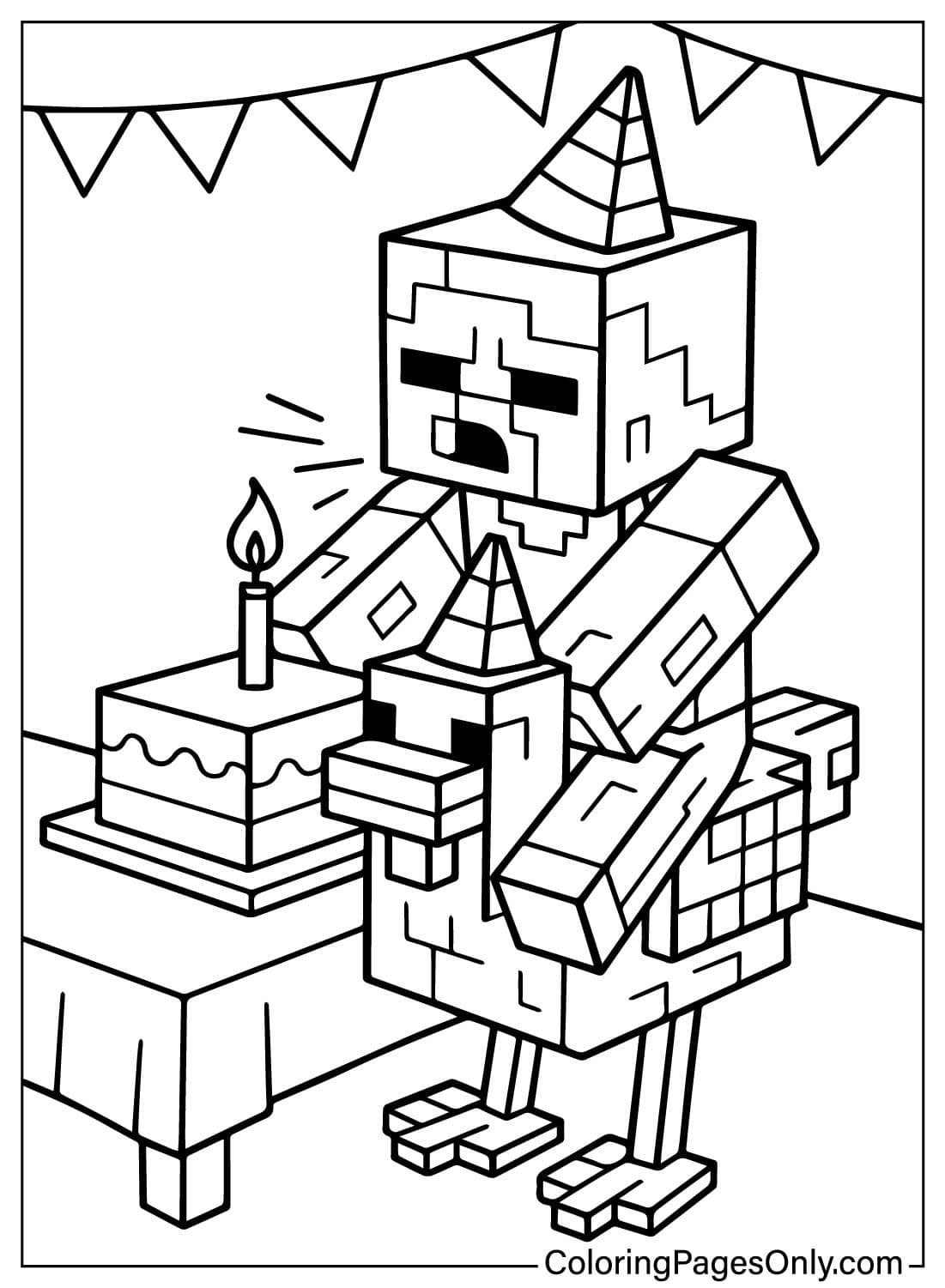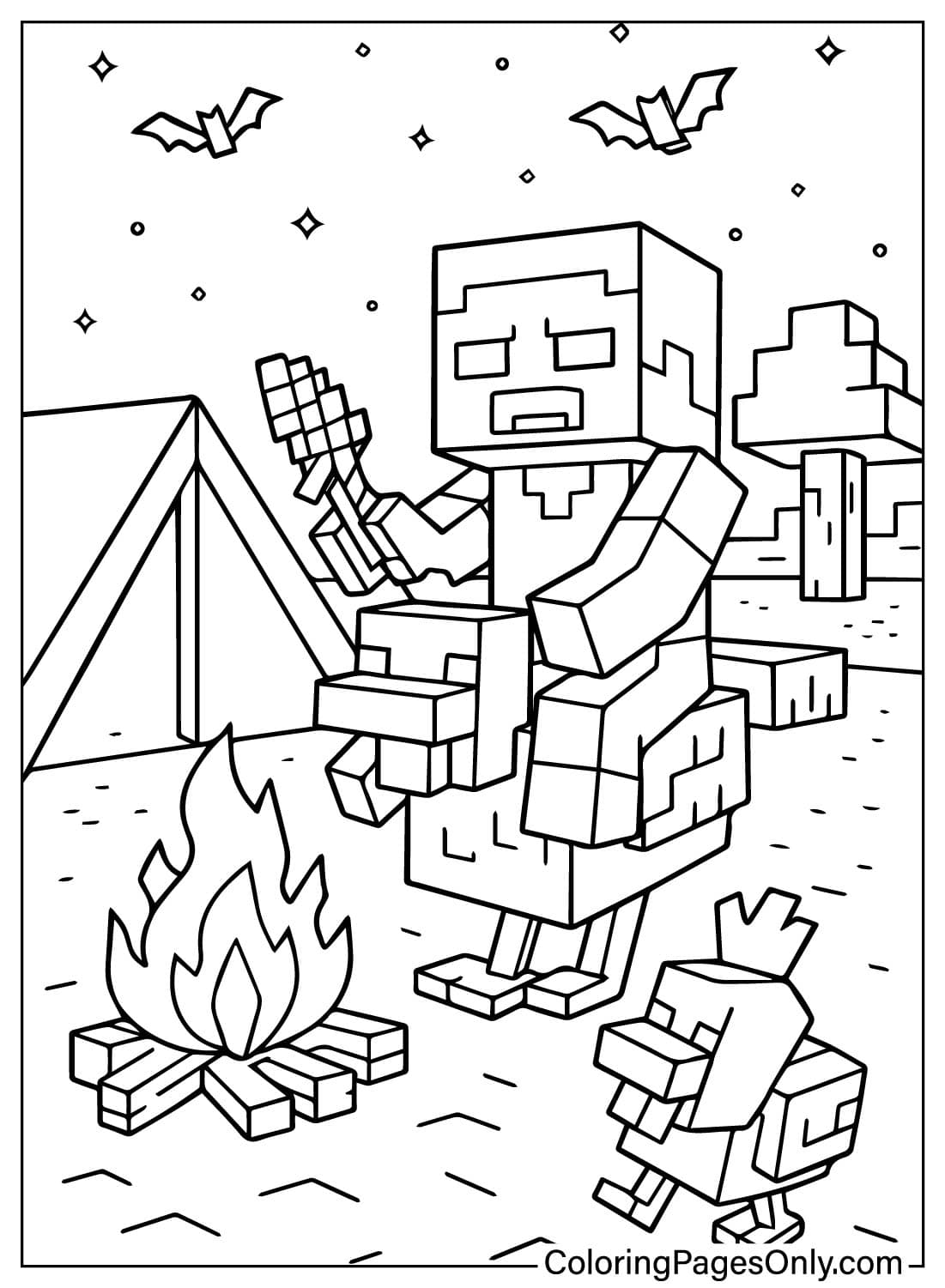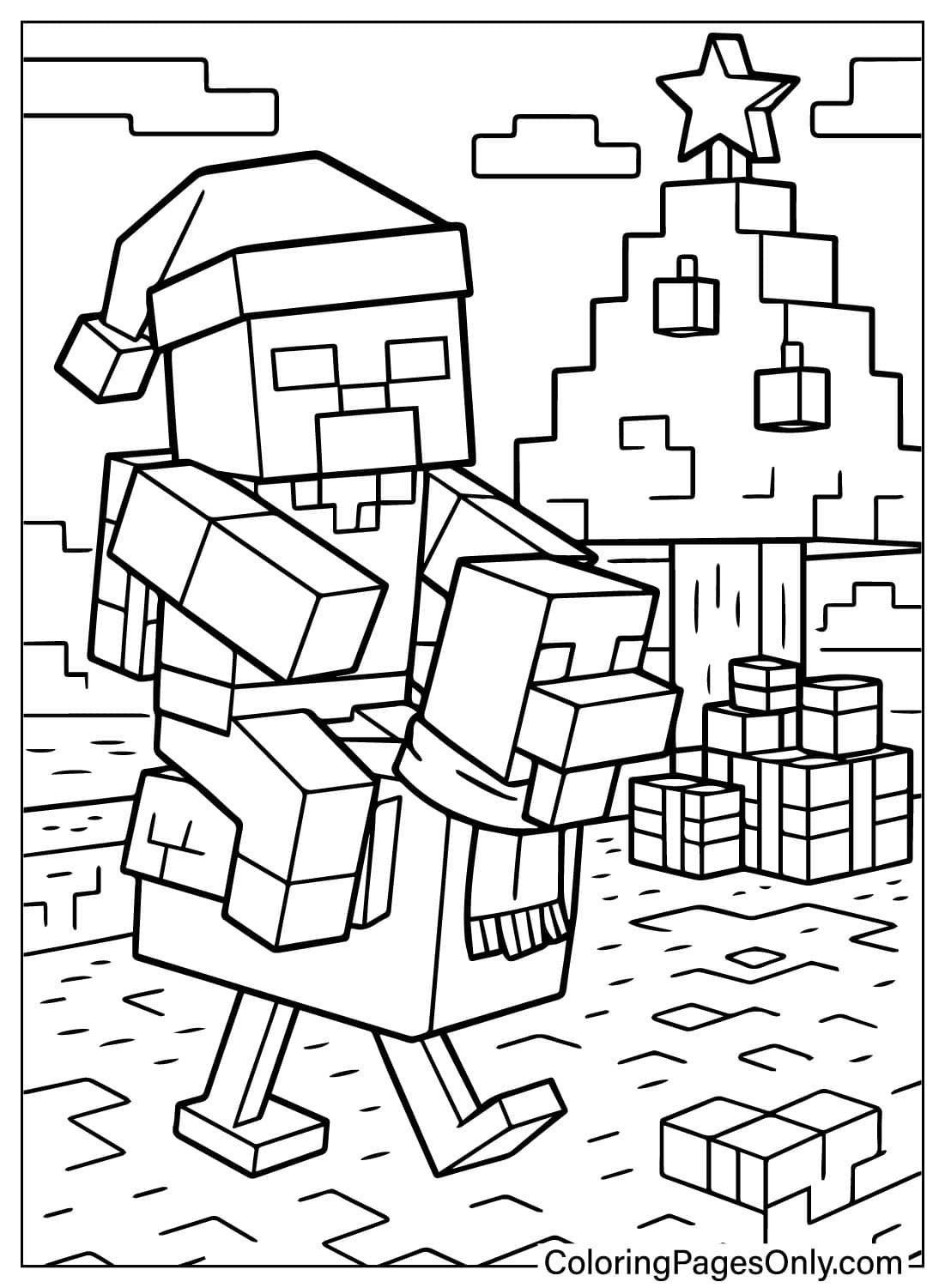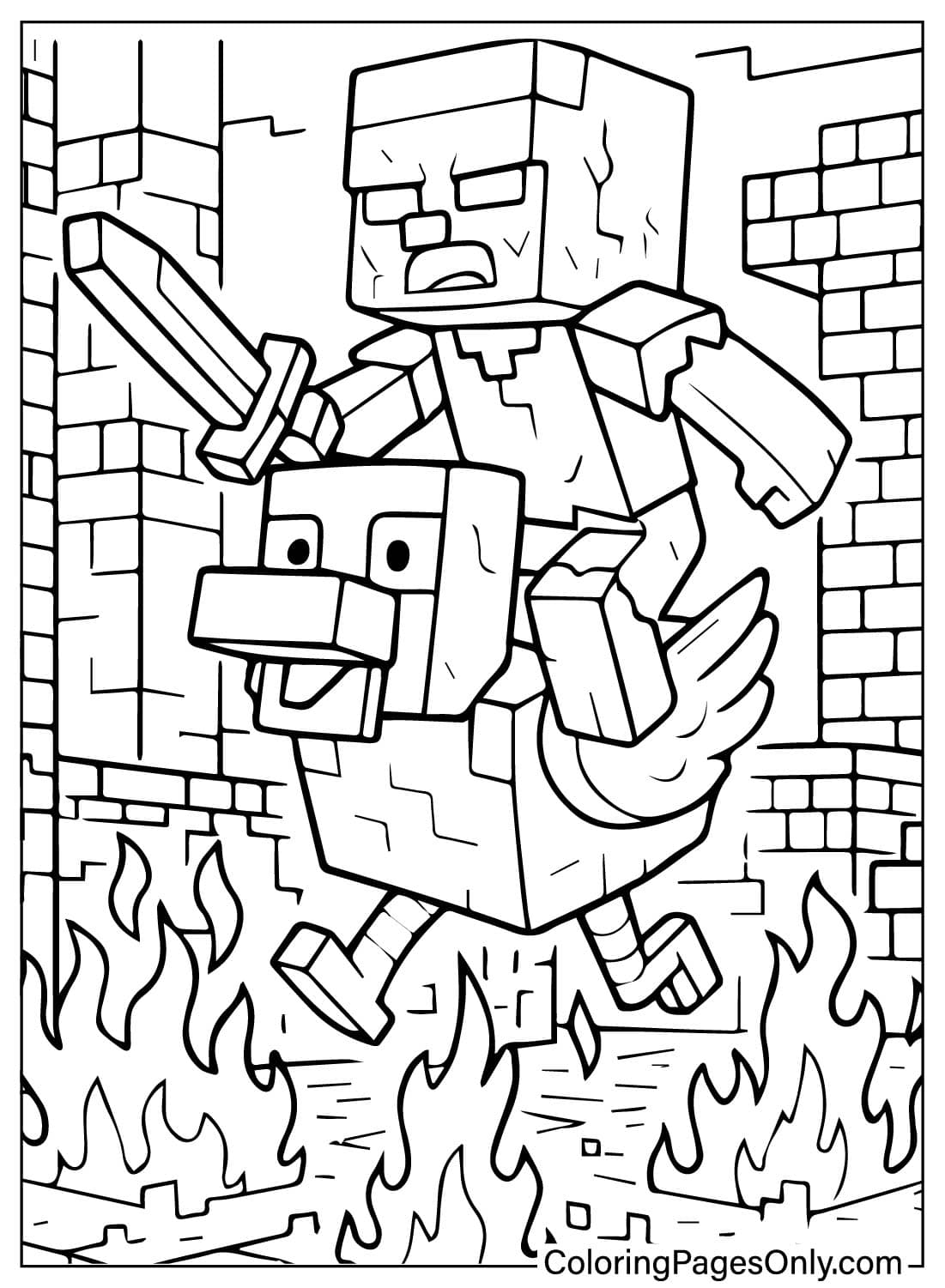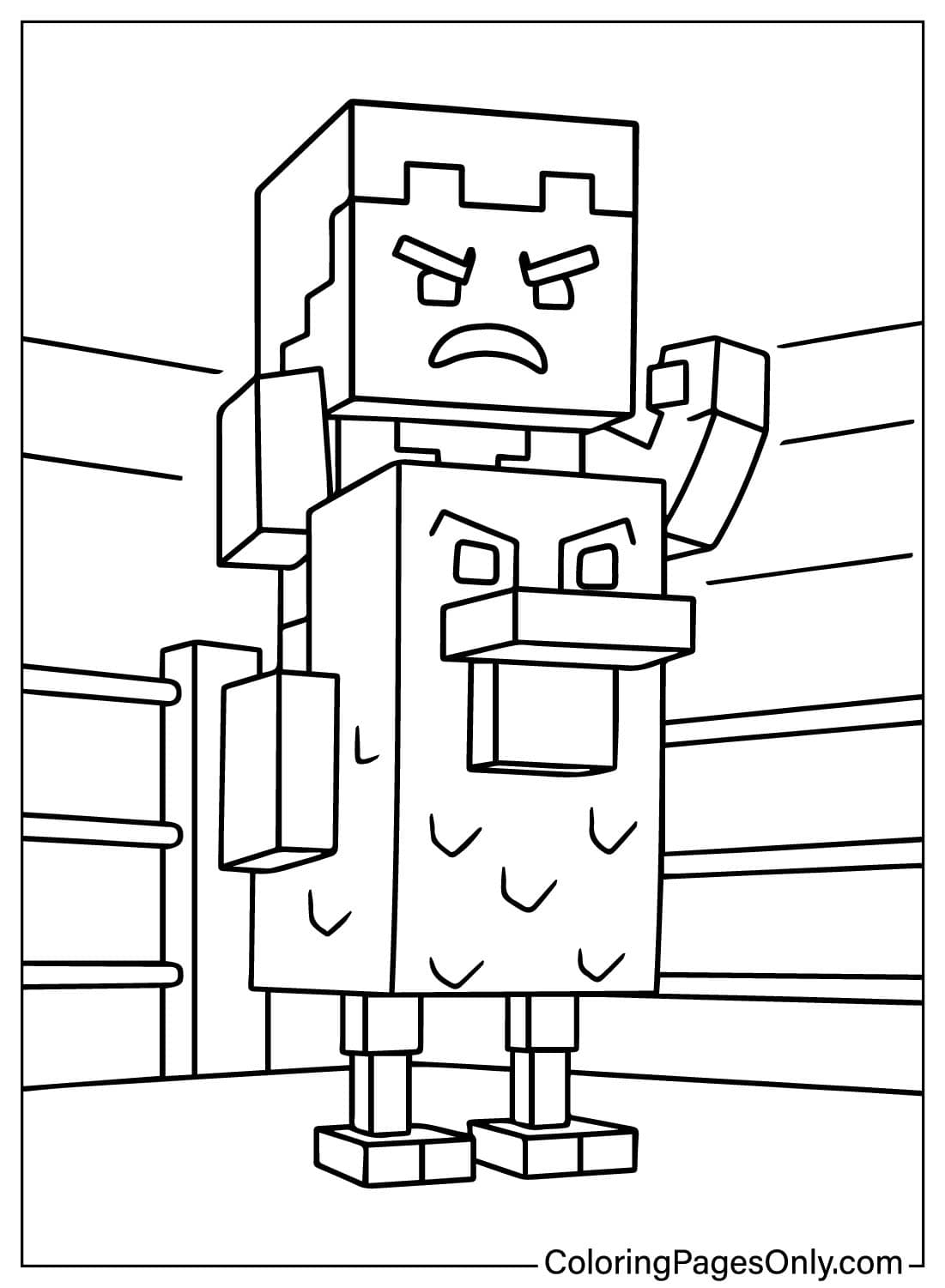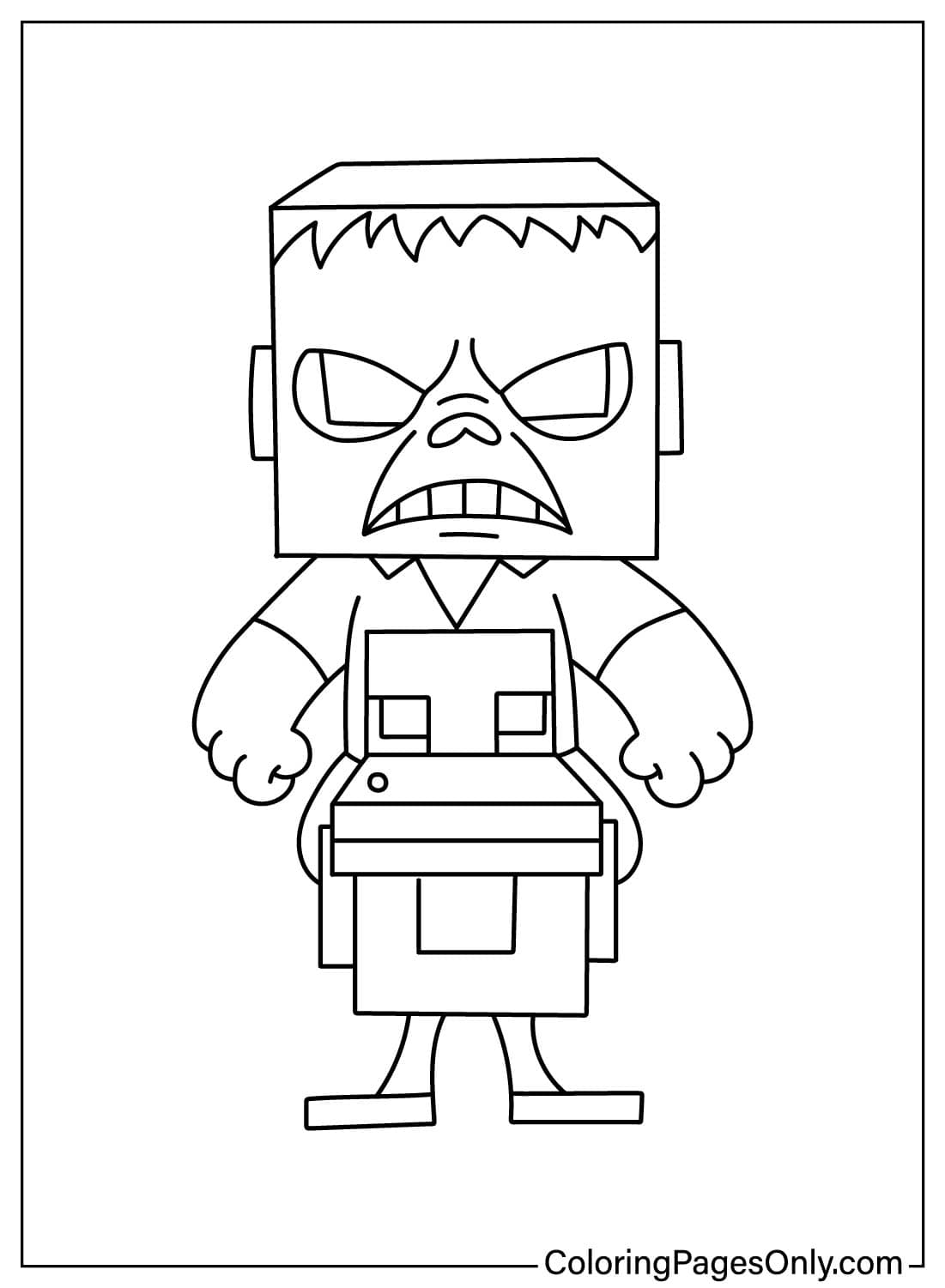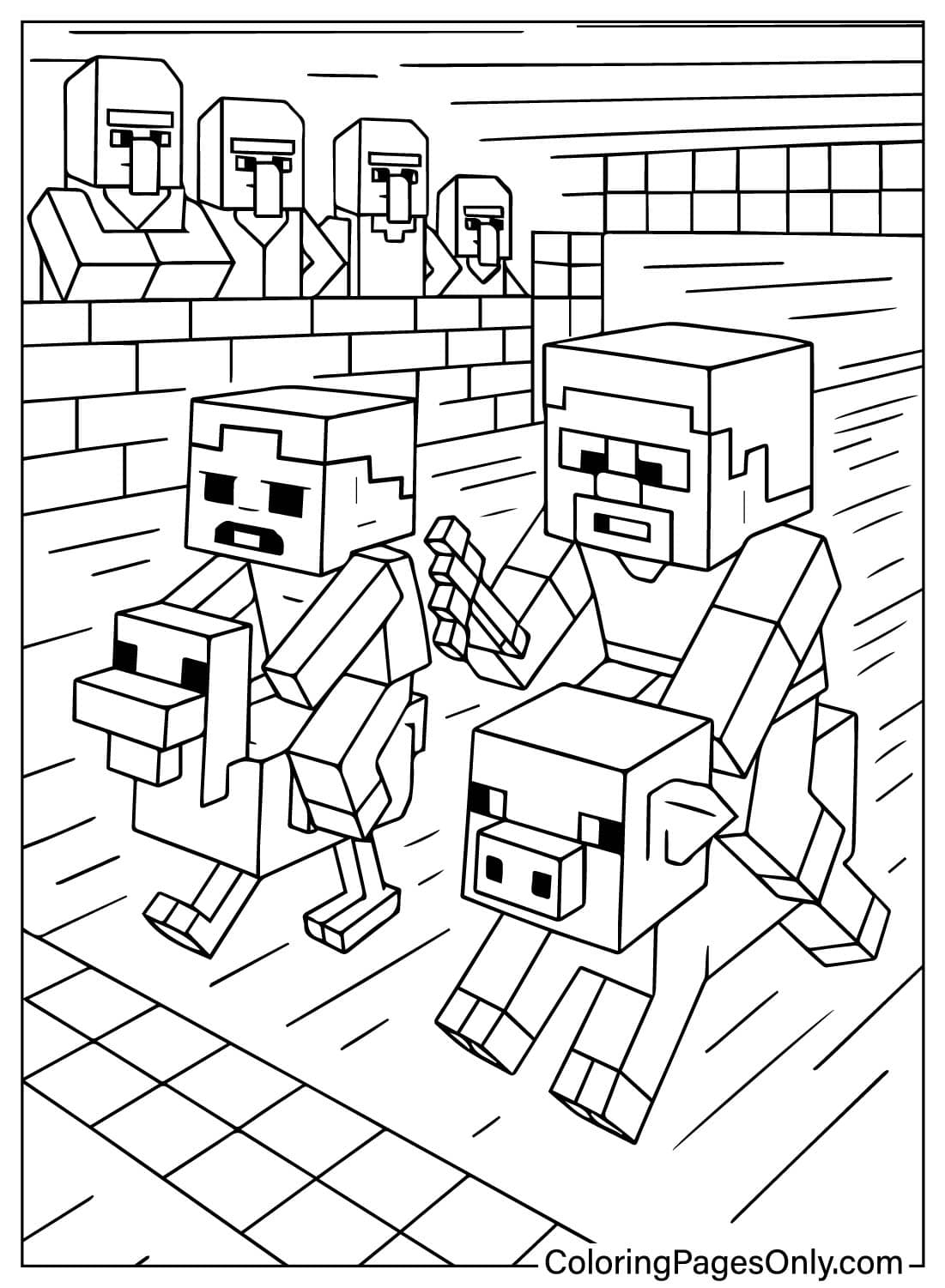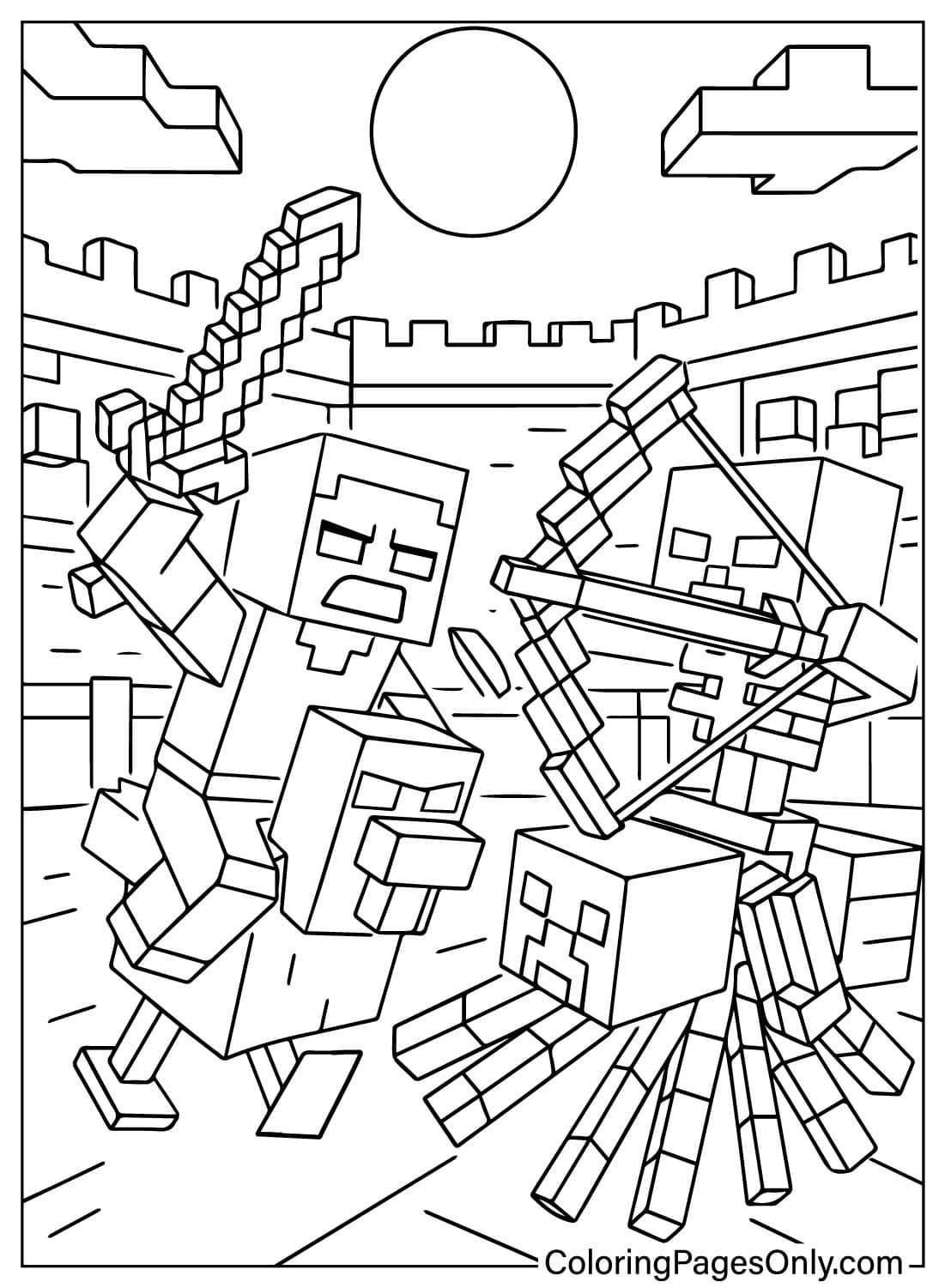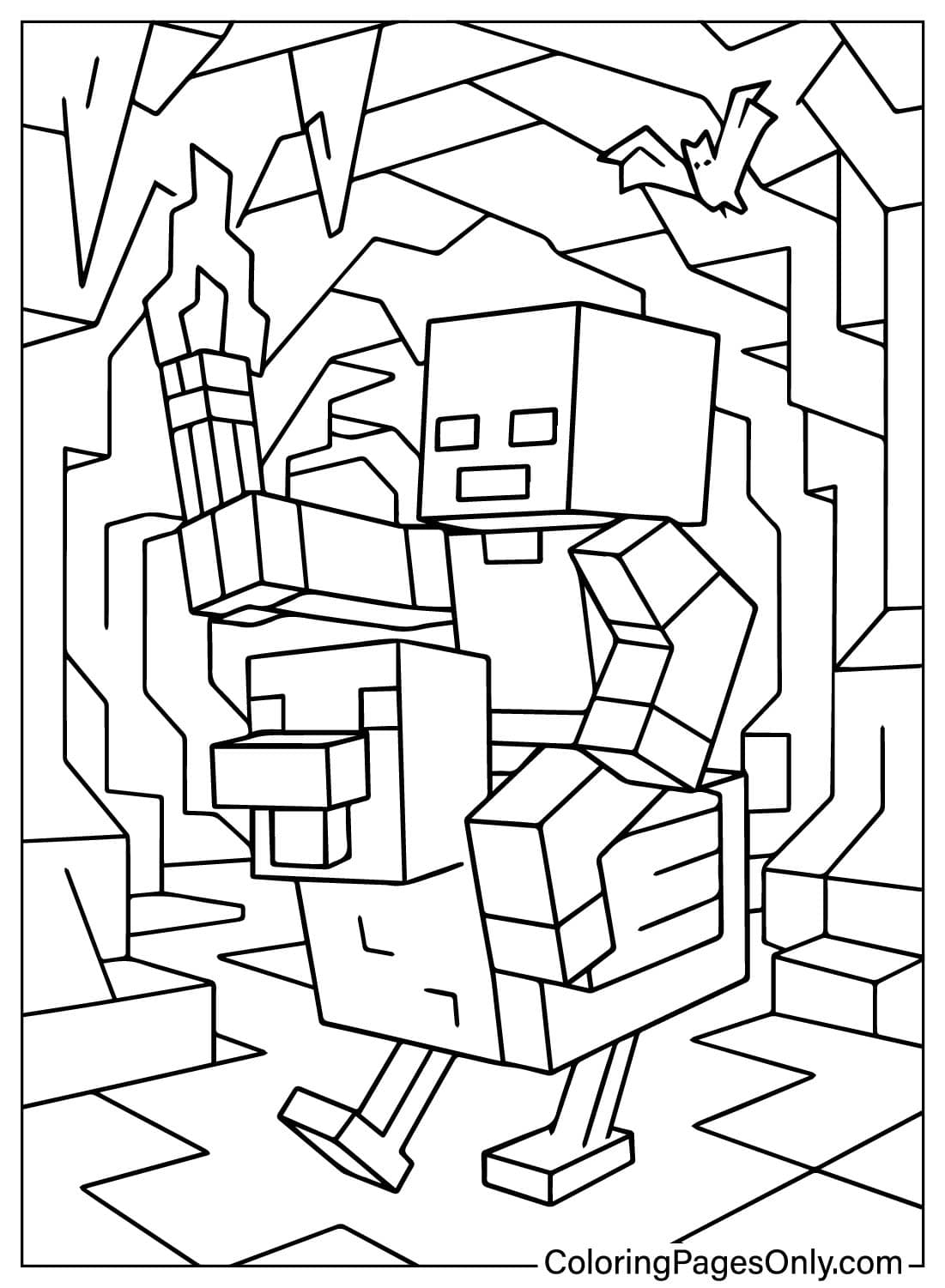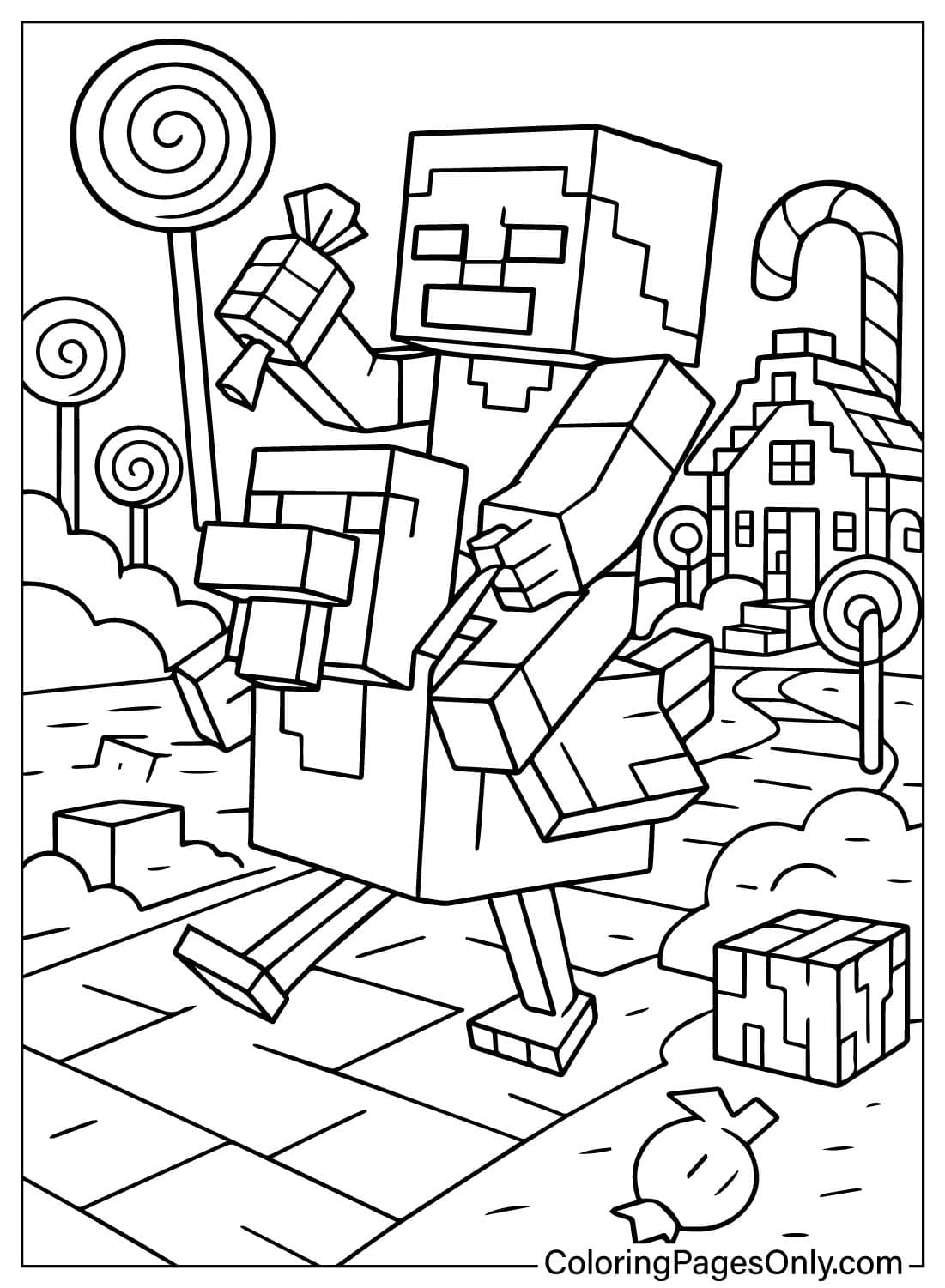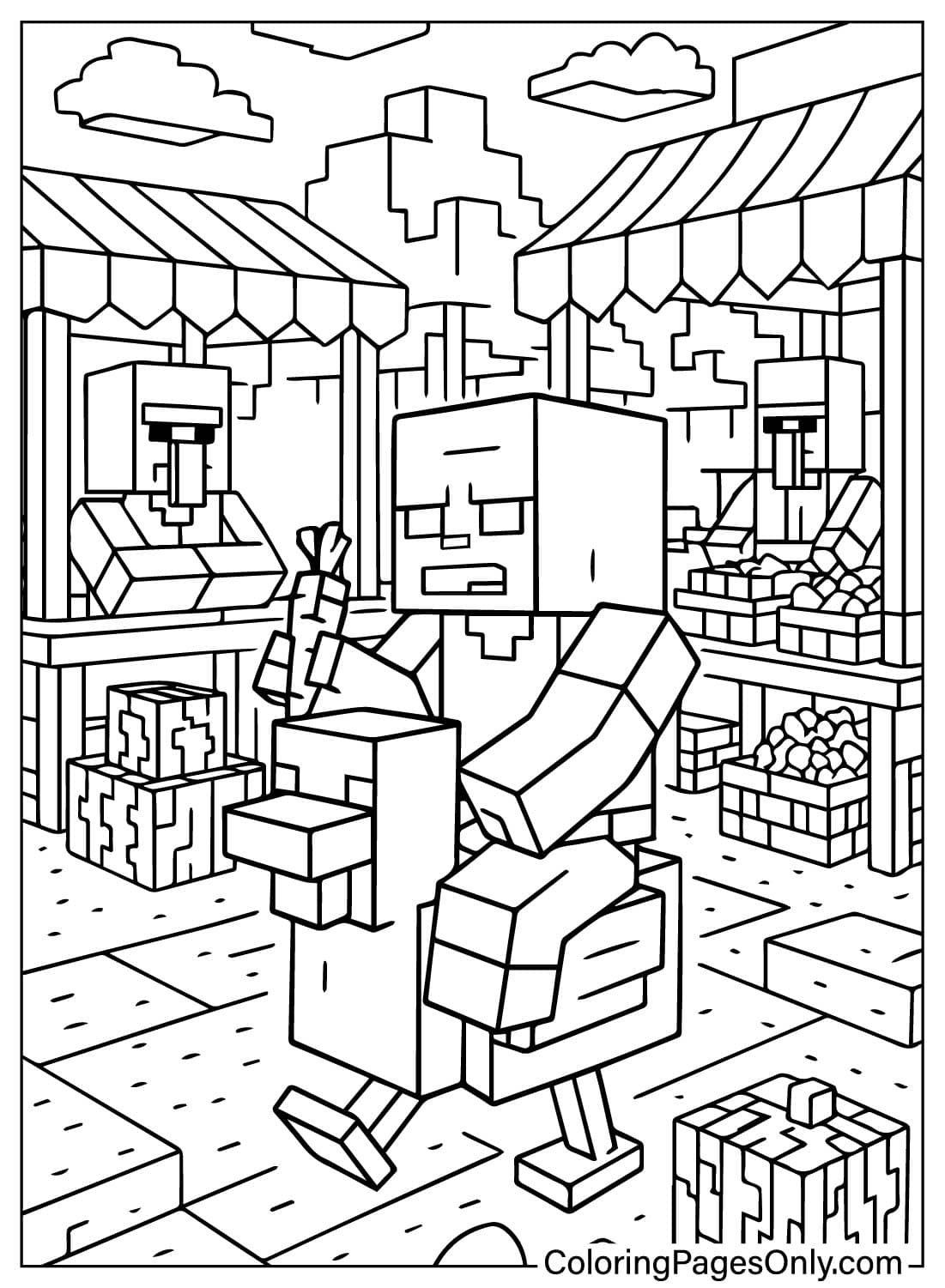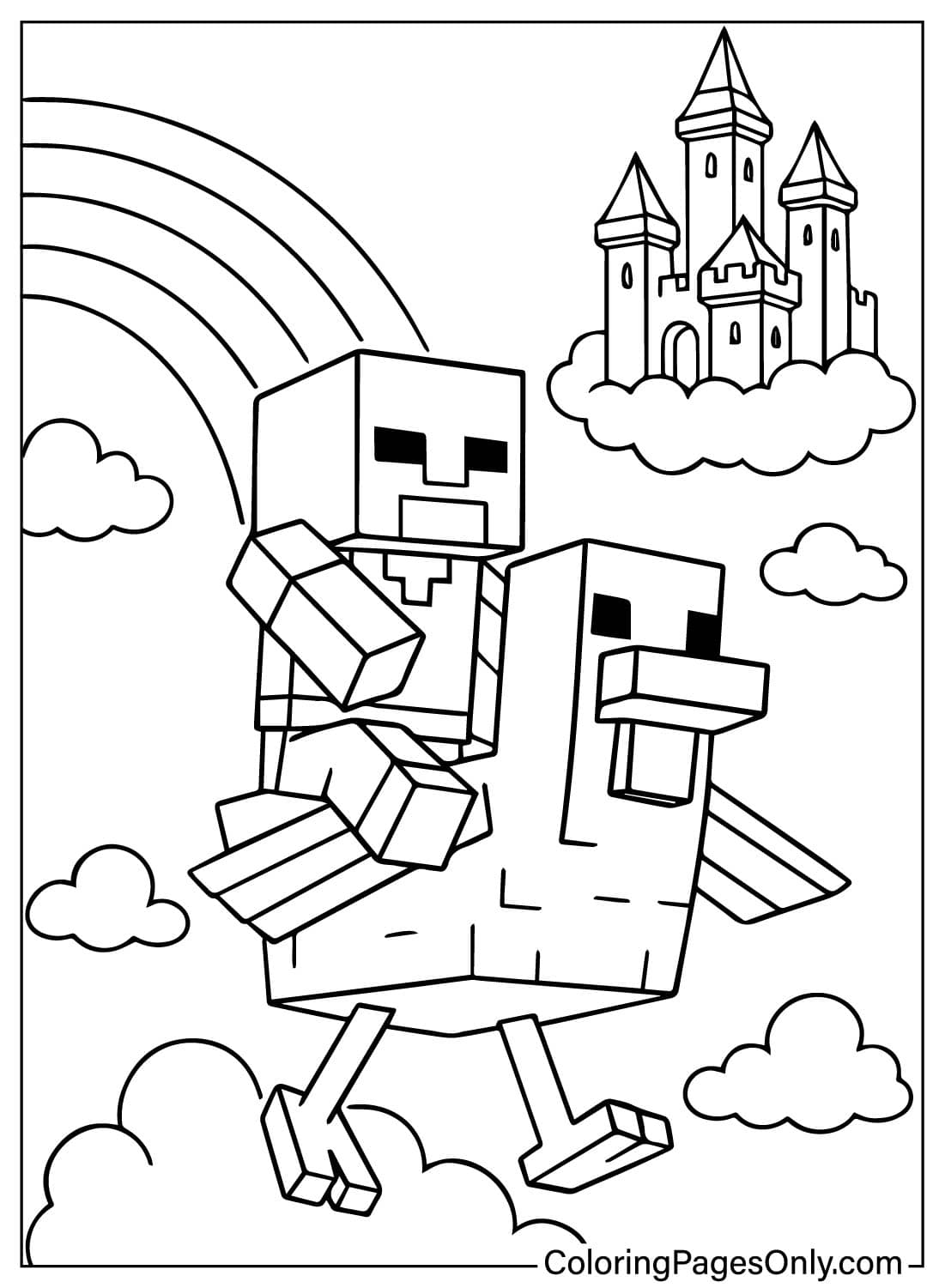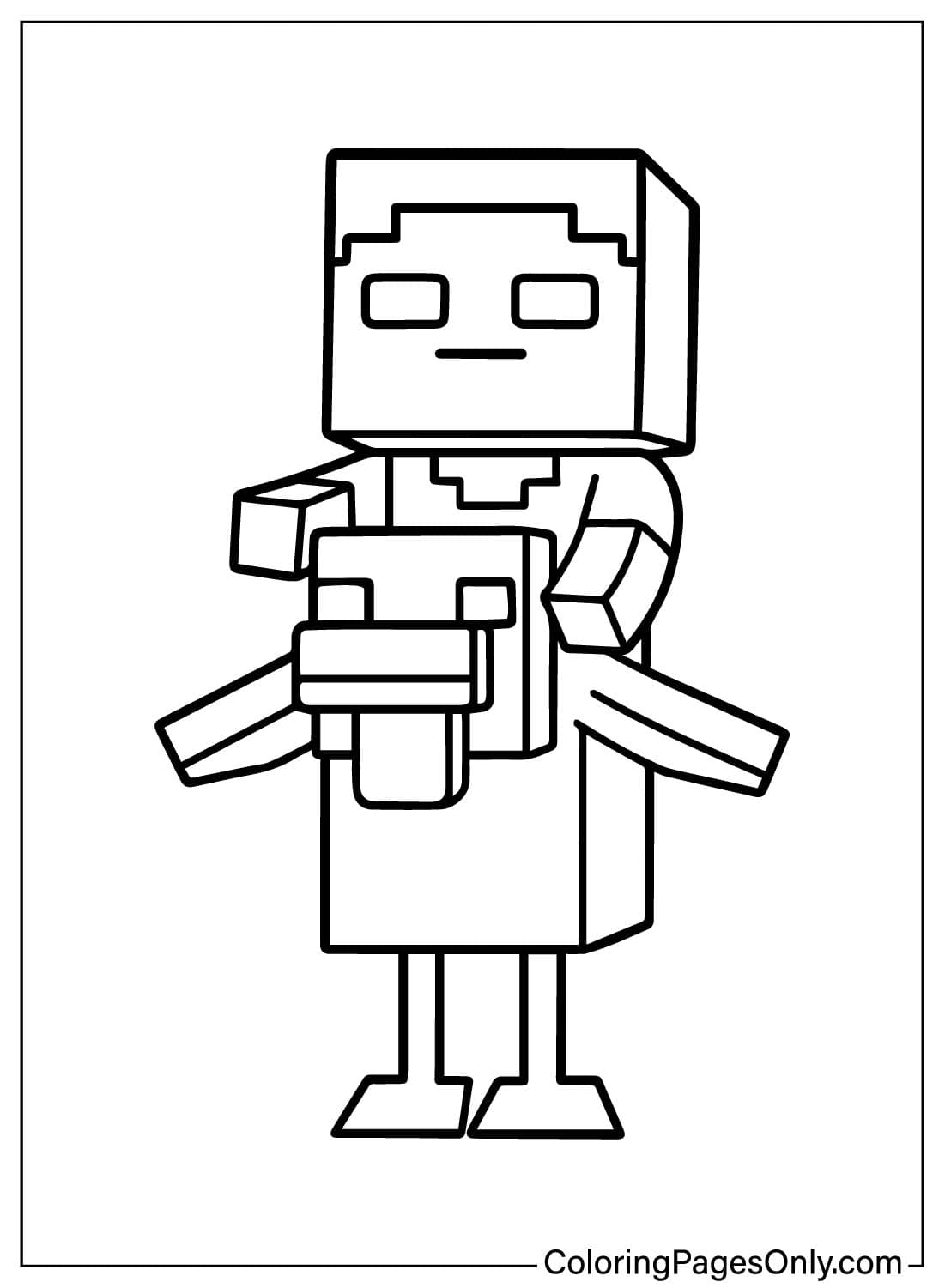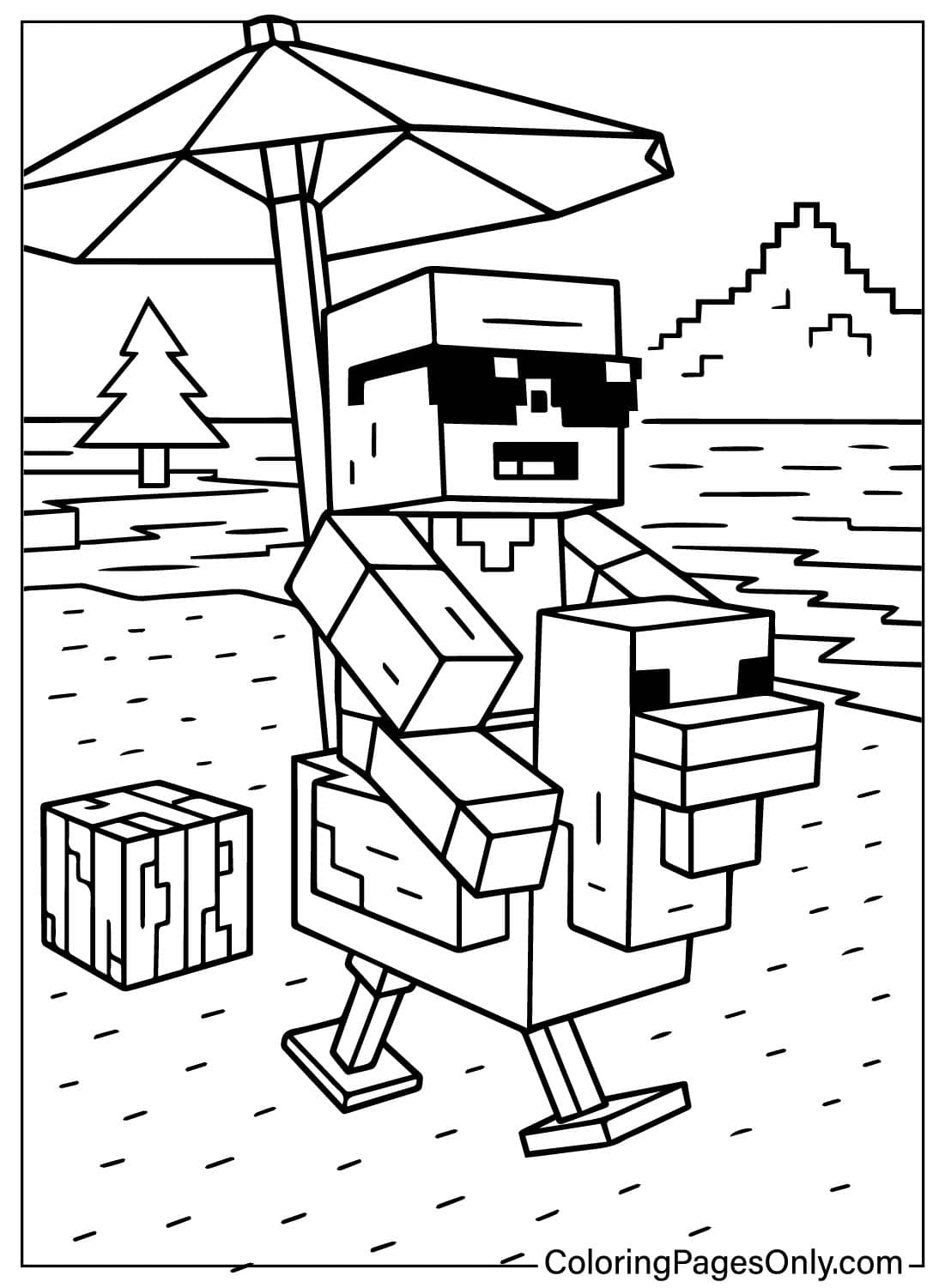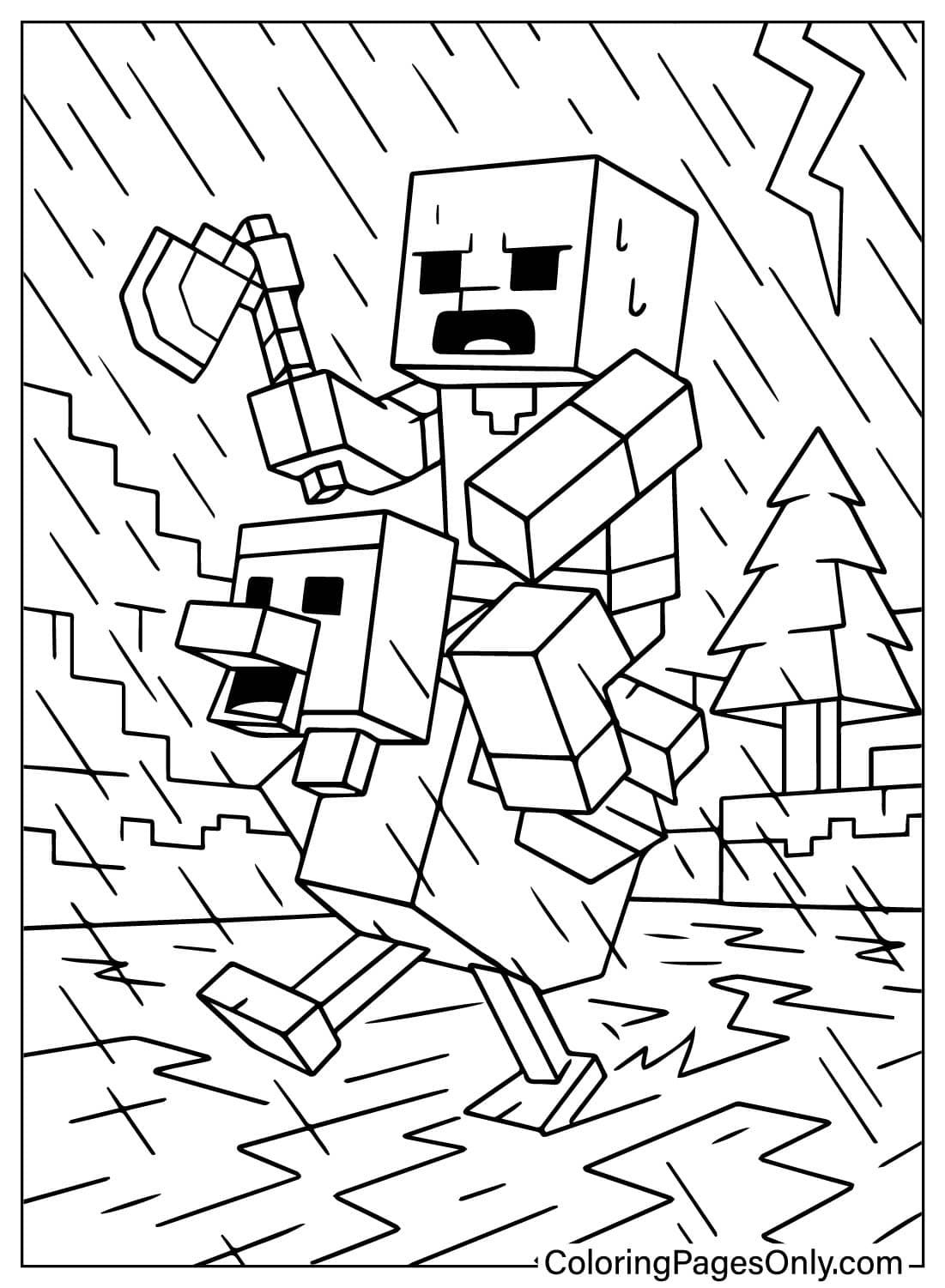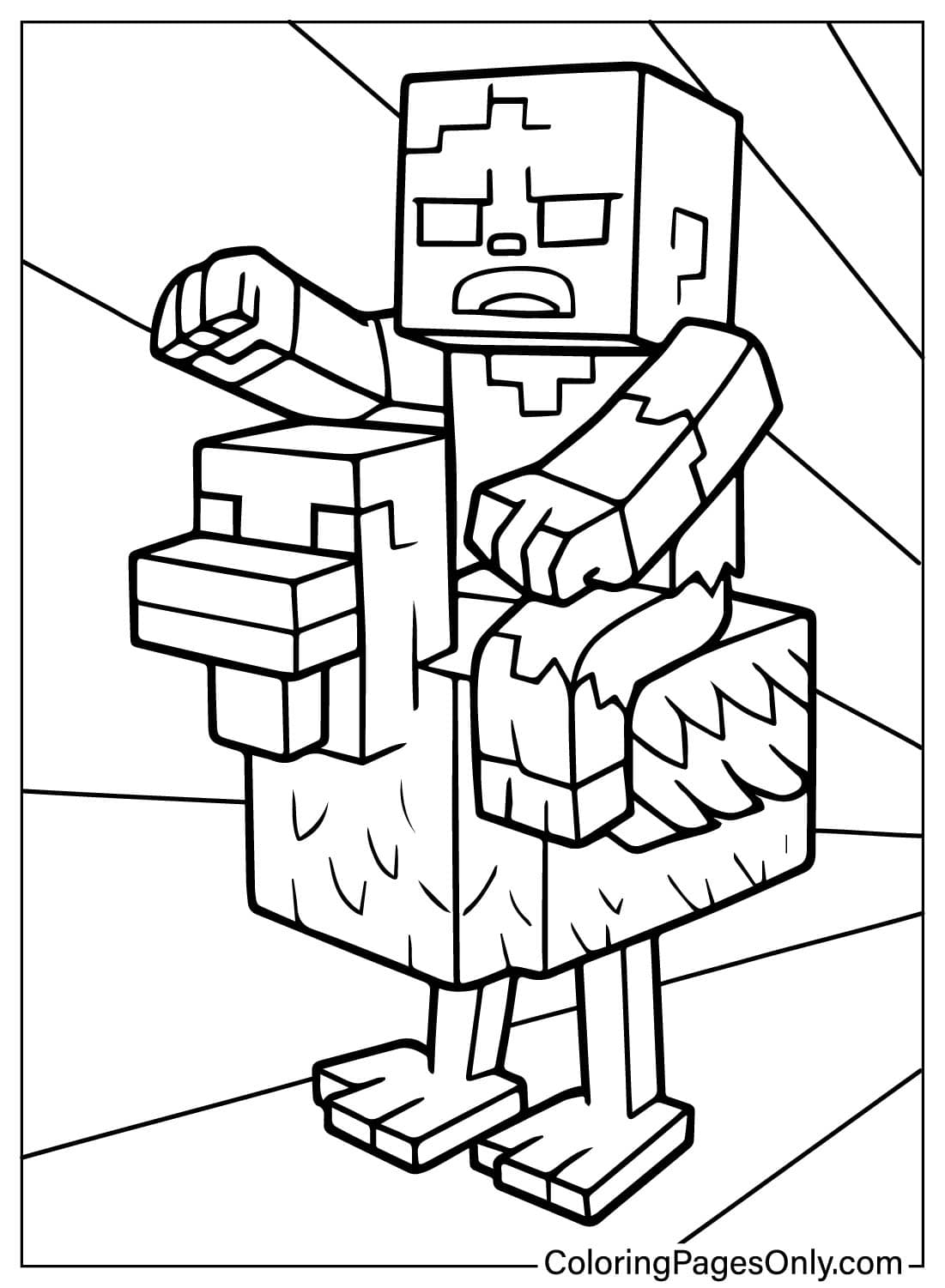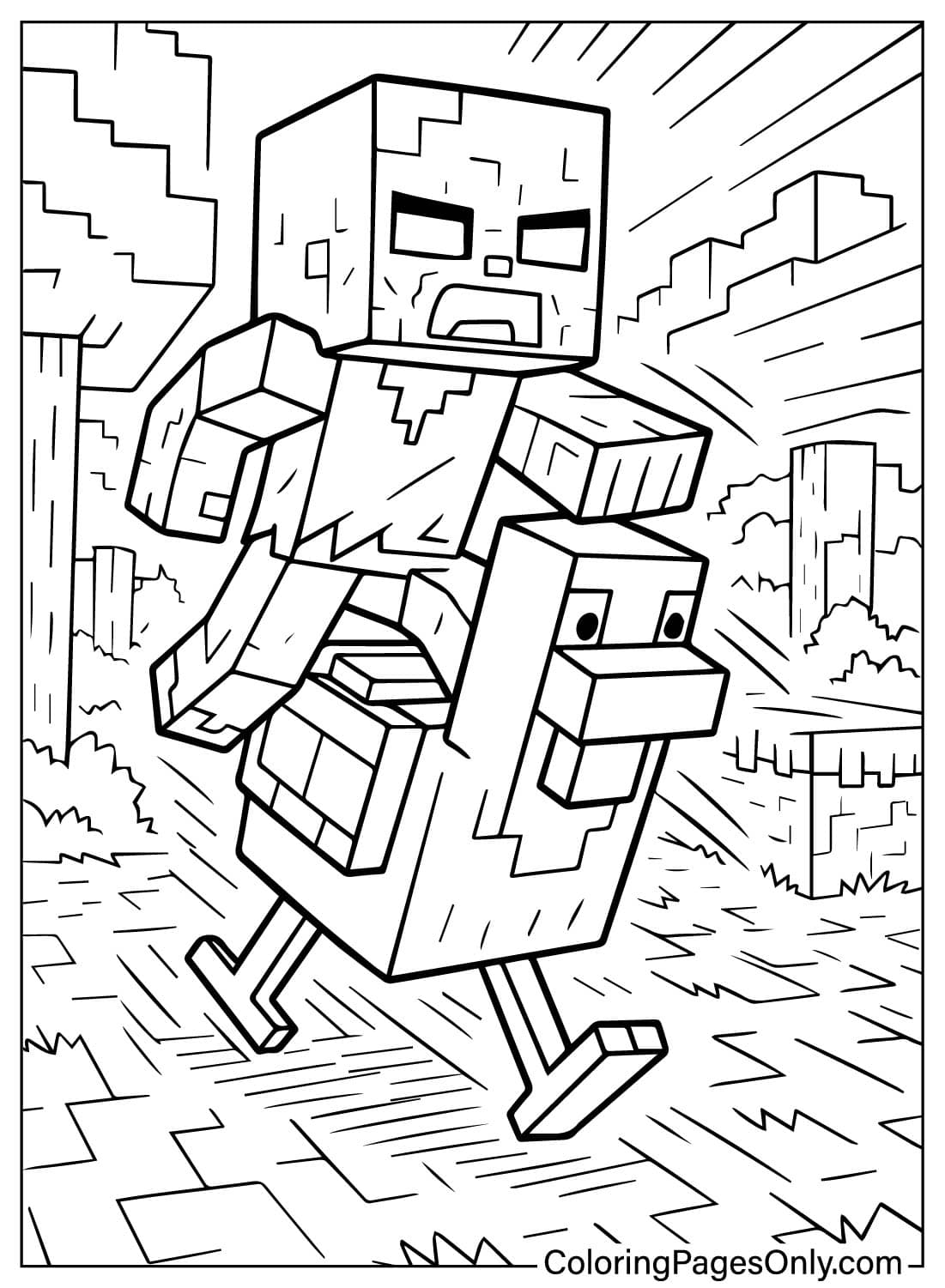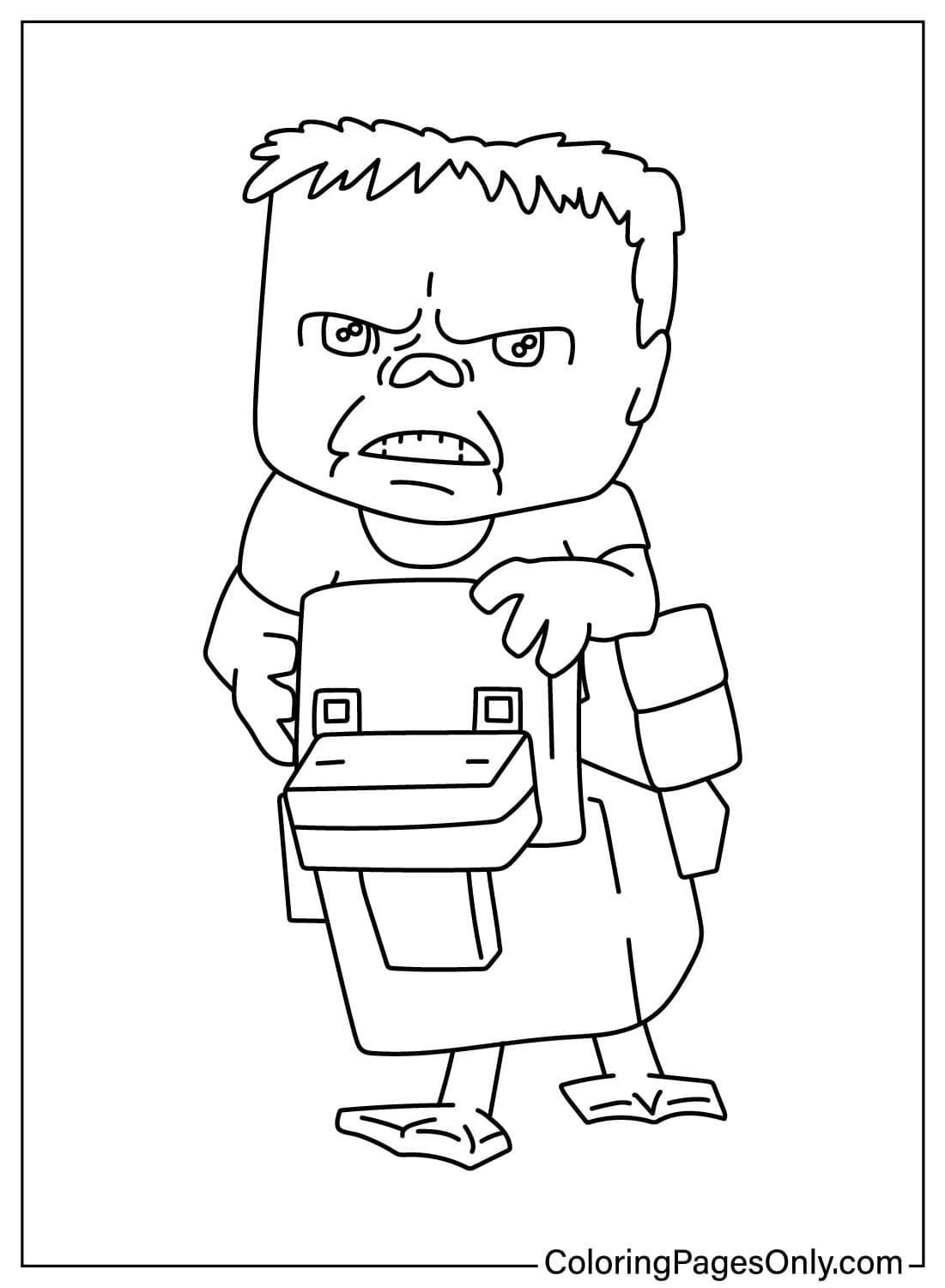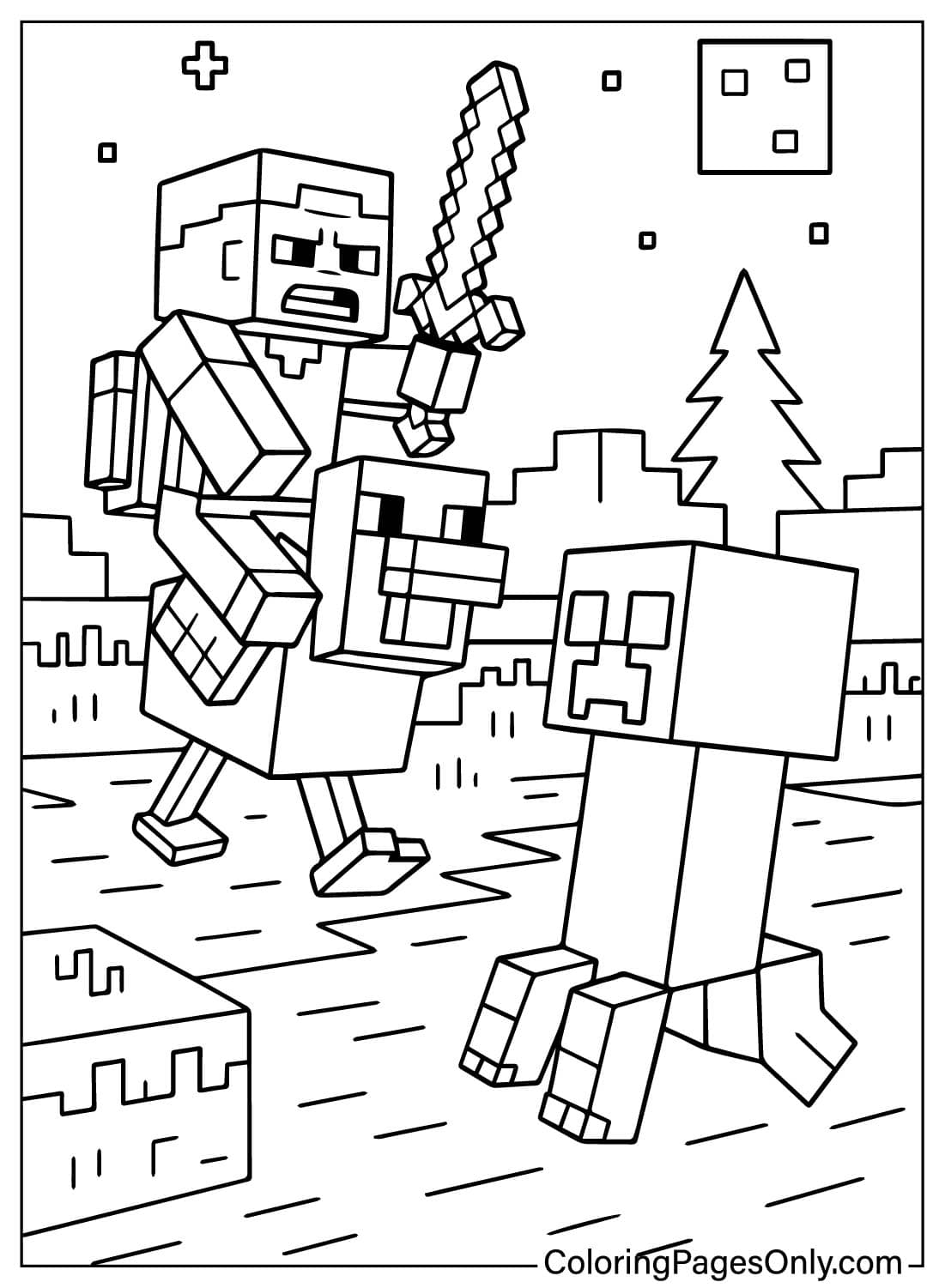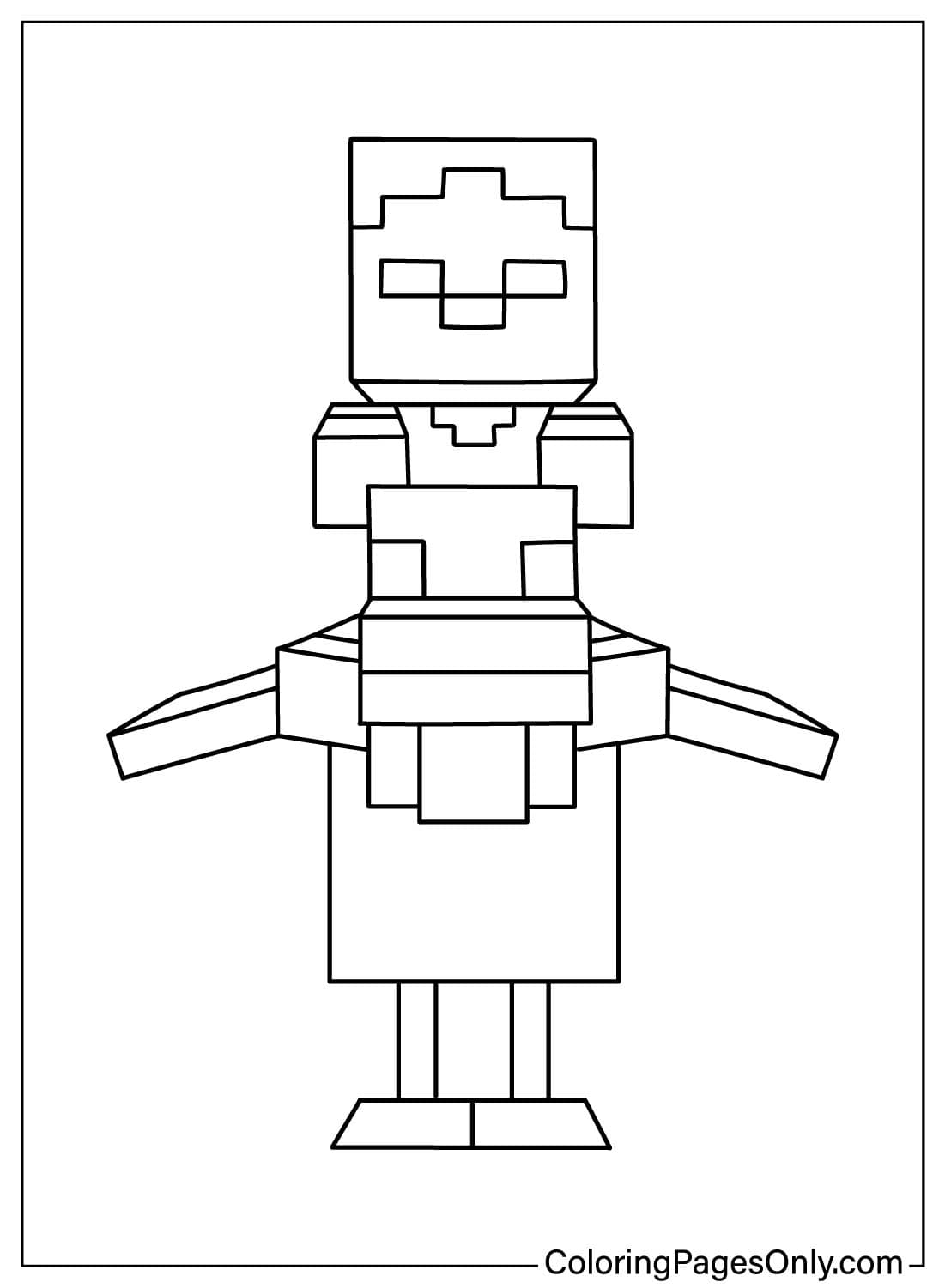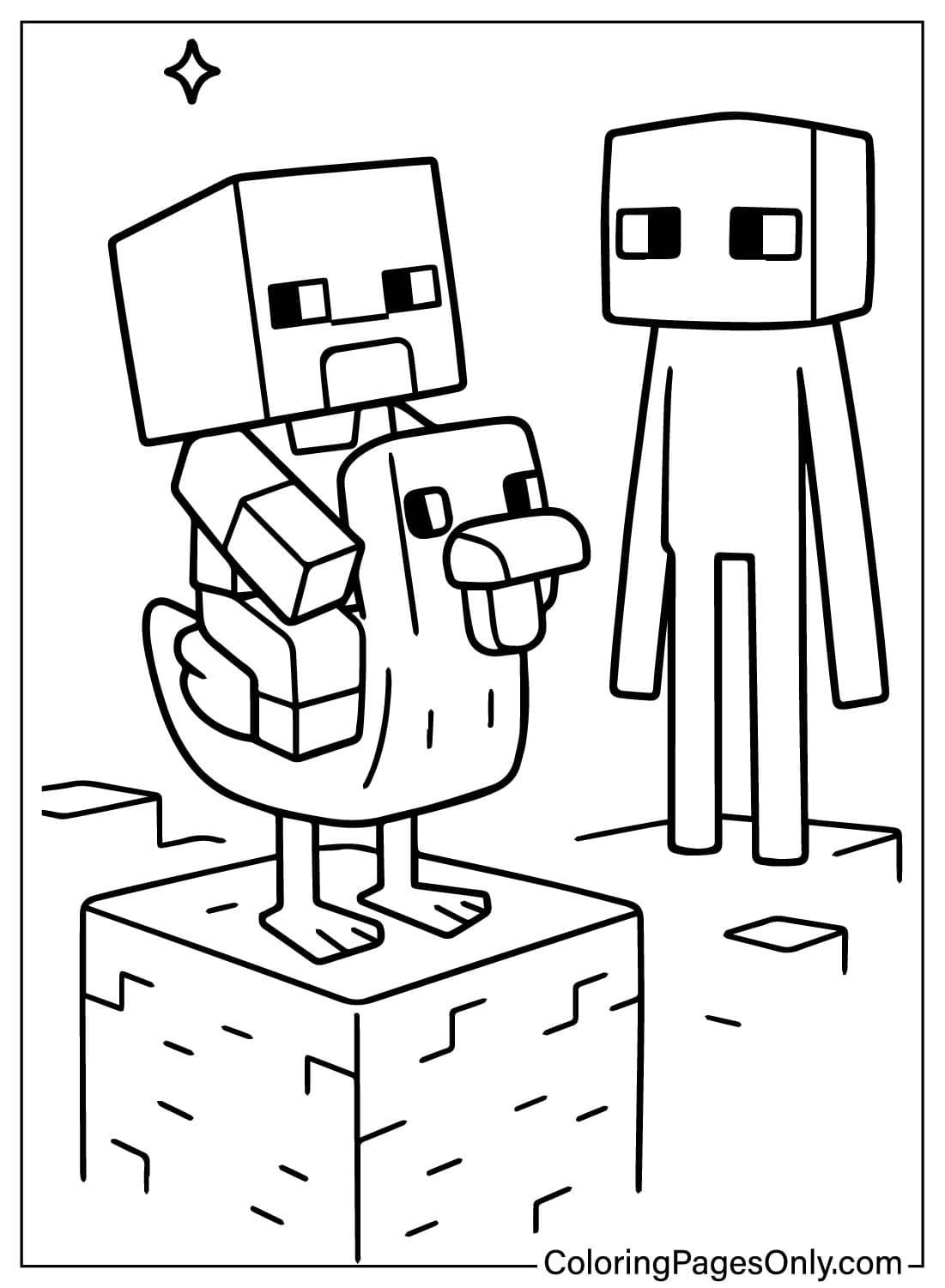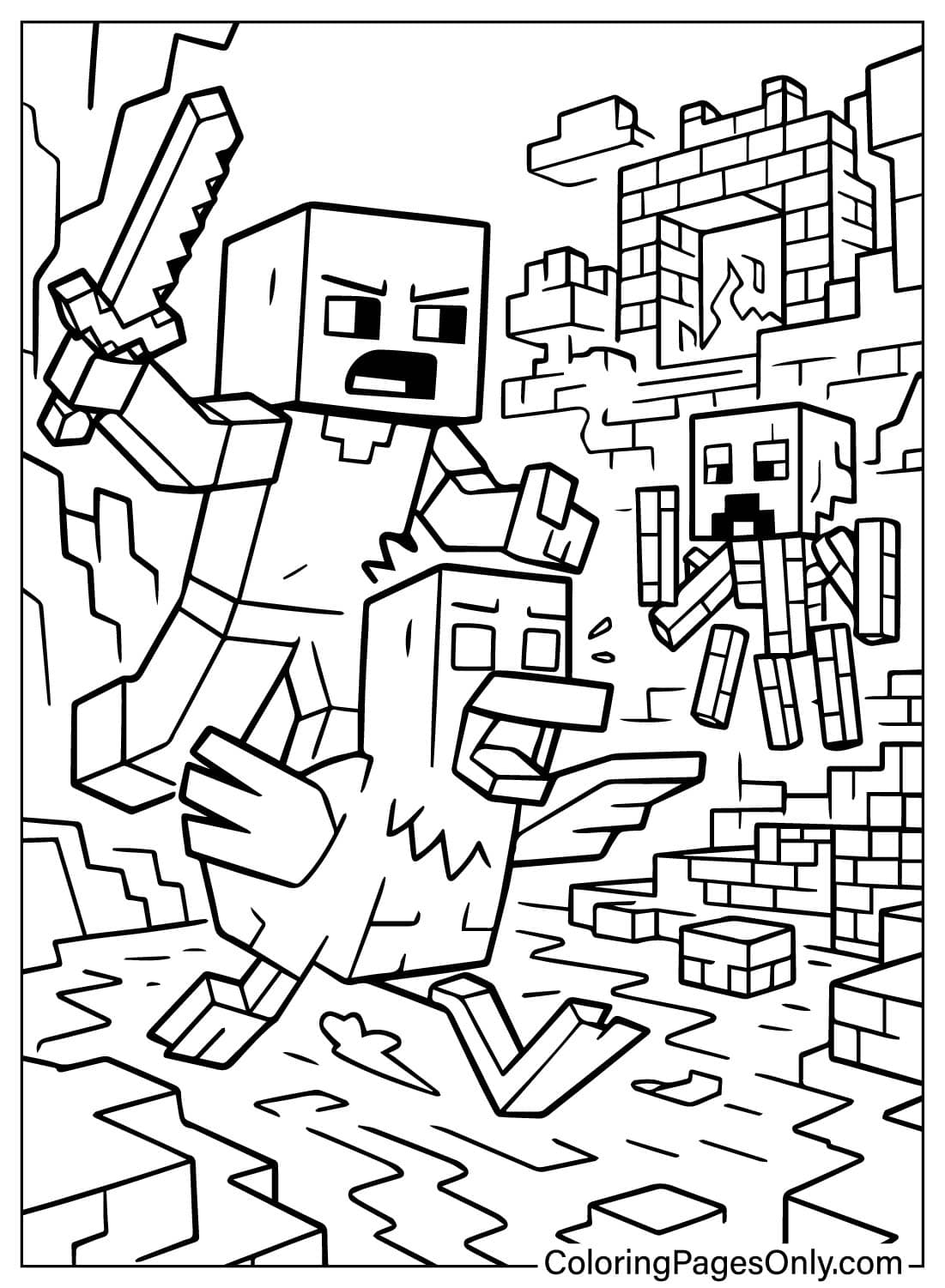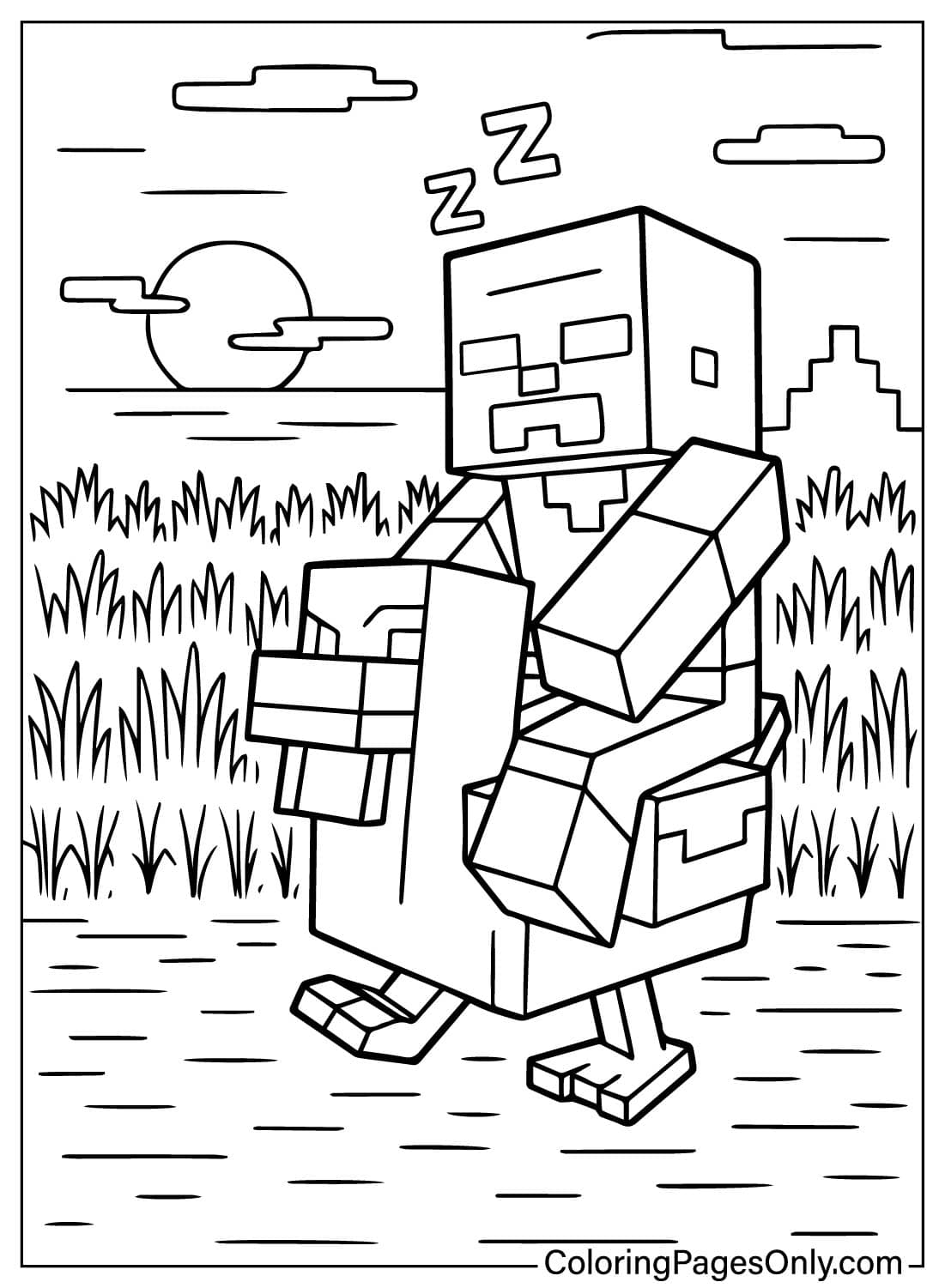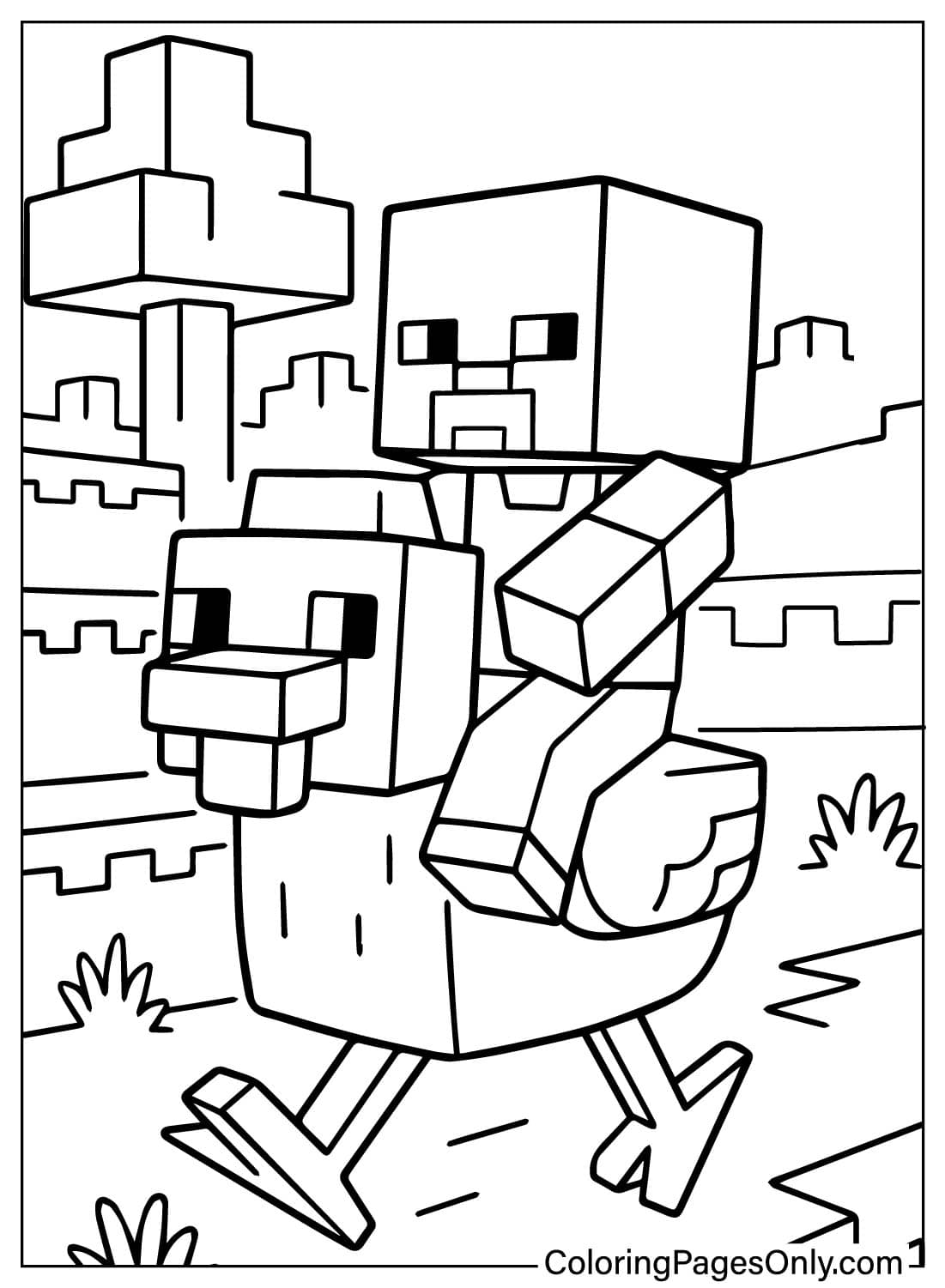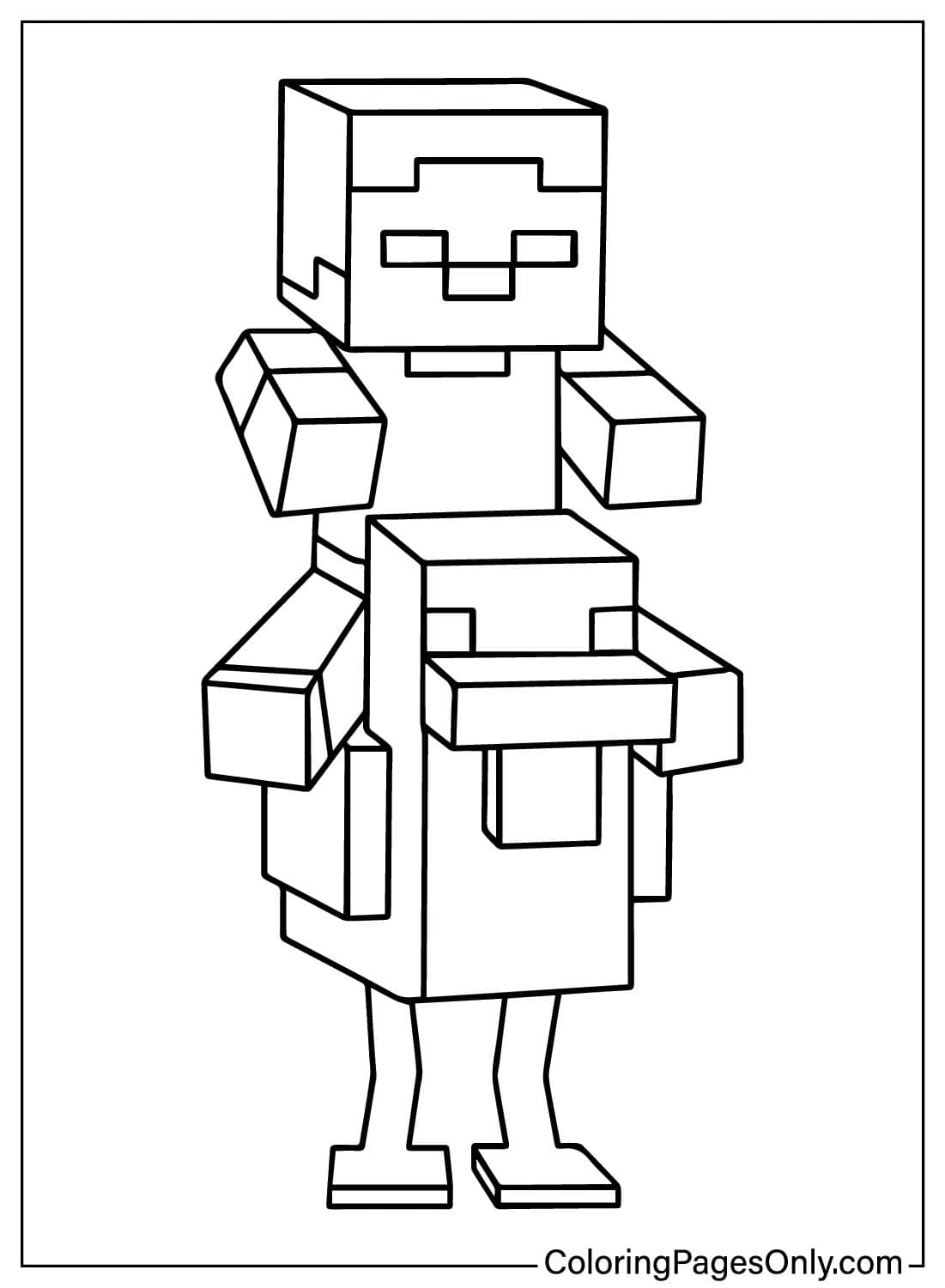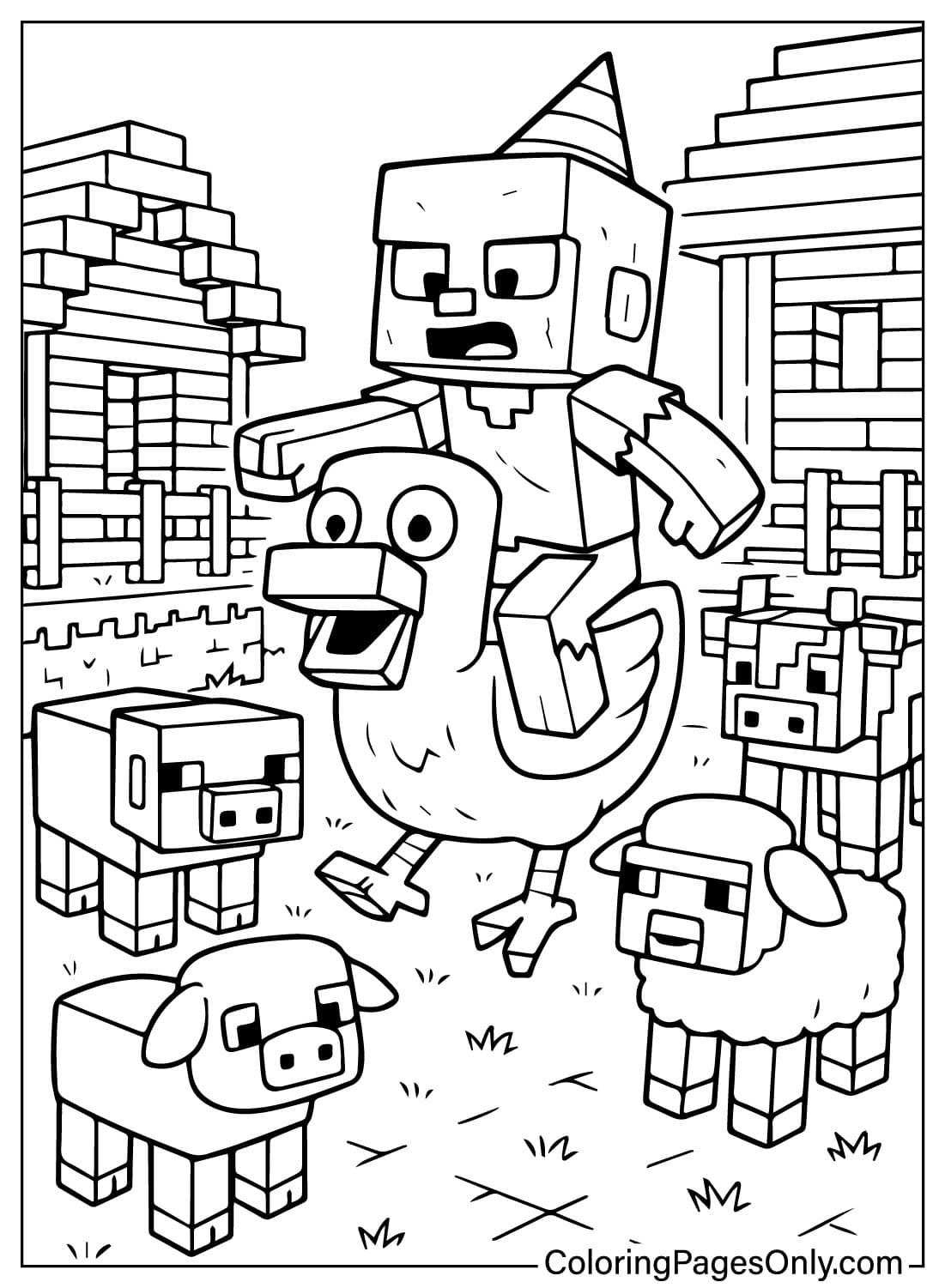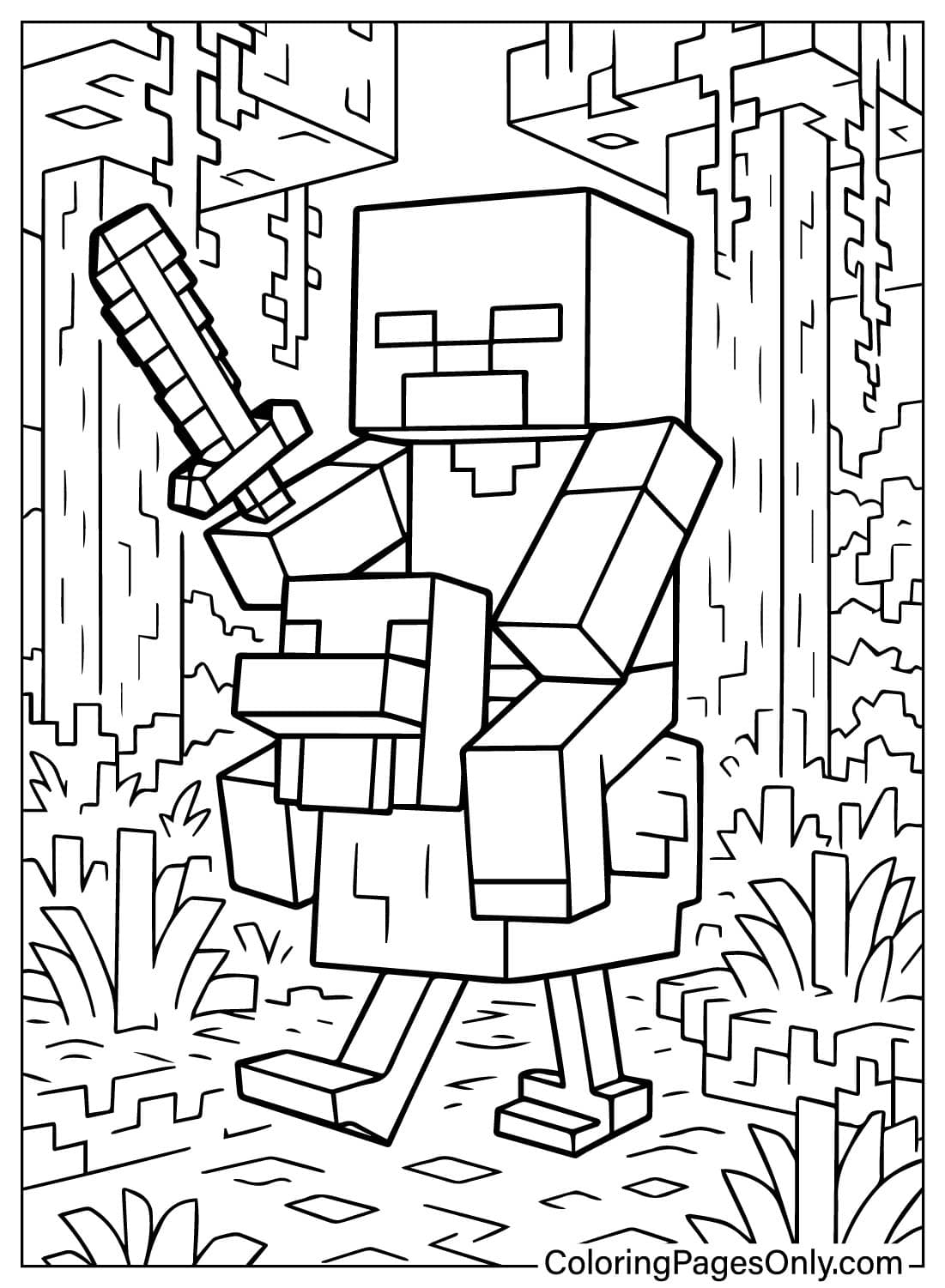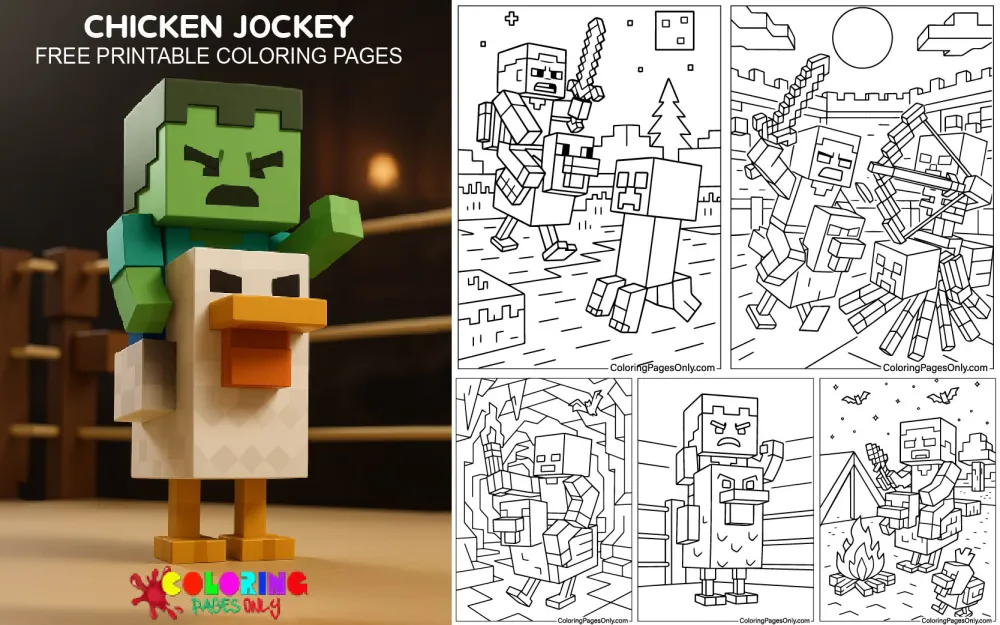
Chicken Jockey Coloring Pages at ColoringPagesOnly.com brings together 30+ free pages featuring Minecraft’s most beloved rare mob combination – the classic baby zombie riding a chicken in standard and cartoon styles, holiday and seasonal compositions including Christmas and birthday scenes, themed adventure settings like camping and candyland, action and mood pages featuring fire, fireworks, and the angry variant, and more imaginative scenarios across the full collection. Download any page as a free PDF to print, or color online directly in your browser.
Chicken Jockey is part of the wider Minecraft universe – explore the full Minecraft Coloring Pages hub and related Games Coloring Pages collection for more.
What Is a Chicken Jockey?
A Chicken Jockey is one of the rarest naturally occurring mob combinations in Minecraft – a baby zombie (or one of its variants) riding on top of an adult chicken, moving at the speed of the zombie rider while also inheriting the chicken’s immunity to fall damage. The result is a hostile mob that is simultaneously tiny, fast, unpredictable, immune to falling, and genuinely difficult to hit – a combination that has made it one of the most memorable sightings in the game’s history and, as of 2025, one of its most culturally significant moments in any medium.
The Chicken Jockey was added to Minecraft in late 2013 during the lead-up to the 1.7.4 update. Its origin is unusually well-documented: Nathan Adams, a Mojang developer known by his username “Dinnerbone,” posted on X (then Twitter) on November 30, 2013: “I saw this on Reddit and had to make it a real thing: Chicken Jockeys.” A Reddit user had imagined baby zombies riding chickens. Dinnerbone saw it, and within days, it was in the game. This is one of the most direct examples of community-to-game idea translation in Minecraft’s history.
The Viral Cultural Moment – A Minecraft Movie (2025)
The Chicken Jockey was always beloved within the Minecraft community as a rare and amusing encounter. But it became a global pop culture phenomenon with the release of A Minecraft Movie on April 4, 2025 – directed by Jared Hess (Napoleon Dynamite, Nacho Libre) and starring Jason Momoa as Garrett Garrison and Jack Black as Steve, Minecraft’s default avatar.
In a pivotal scene set inside a Woodland Mansion, Steve and Garrett are captured by Illagers and forced to fight in an underground arena. Their opponent is a Chicken Jockey. Jack Black’s character shouts the line “Chicken Jockey!” – and the scene’s specific delivery, combining genuine tension with the inherent absurdity of the phrase, immediately resonated with audiences.
What happened next was one of the most unusual viral cinema phenomena in years. Viewers at screenings began calling out “Chicken Jockey!” in unison. Popcorn was thrown. People brought live chickens into theaters. Fireworks were reportedly set off during at least one screening. Movie theaters in multiple countries issued disclaimers and warnings urging audiences to restrain themselves during the scene. The Minecraft Wiki now has a dedicated article titled “Chicken jockey sensation” documenting the event as a formal cultural moment, complete with sourced references to coverage from NPR, Rolling Stone, Vulture, Eurogamer, CBC, and multiple newspapers globally.
A Minecraft Movie became the second-highest-grossing film of 2025 at its release. The Chicken Jockey scene is credited as a significant driver of the film’s cultural momentum, turning a viewing experience into something closer to the audience-participation tradition of The Rocky Horror Picture Show. On December 31, 2025, Mojang’s official social media accounts referenced the meme in their year-in-review content with the message “One last CHICKEN JOCKEY to send off 2025.”
This is the context in which most people searching for Chicken Jockey coloring pages arrive at this collection in 2025 and 2026 – they have seen the movie, they know the meme, and they want to engage with the character creatively.
Chicken Jockey in the Game – Mechanics and Lore
How Rare Is It?
Chicken Jockey spawning is one of the most precisely documented rare events in Minecraft’s complex mob system. In Java Edition, when any baby zombie variant spawns, it has a 5% chance to check for an existing adult chicken within a roughly 10×6×10 block area centered on its spawn location and mount one if found. If no existing chicken is present, there is an additional 5% chance that the baby zombie will spawn alongside a brand new chicken to ride. Combined with the base 5% chance of any zombie spawning as a baby in the first place, the overall probability of encountering a Chicken Jockey in a chicken-free environment is approximately 0.2375% per zombie spawn – less than one in four hundred. In areas with existing chicken populations, the chance rises to about 0.4875%.
The Minecraft Wiki notes that in Java Edition, the absolute rarest mob variant of a Chicken Jockey – a baby zombie villager wearing fully enchanted diamond armor and carrying an enchanted iron sword in its left hand, while riding a chicken – has a spawn probability of approximately 1 in 2.91×10²². That is a number so astronomically small that encountering one naturally in survival play is, for all practical purposes, impossible.
Bedrock Edition handles Chicken Jockey spawning differently: the baby zombie does not spawn already mounted, but instead actively seeks out a nearby rideable mob after spawning. In Bedrock, a baby zombie has a 15% chance of mounting a nearby chicken (or other rideable mob) upon encountering one while pursuing a target. This makes Bedrock encounters slightly more predictable to engineer, though still genuinely rare in normal play.
The Chicken Jockey’s Behavior
The Chicken Jockey’s behavior is entirely controlled by the zombie rider – the chicken has no agency once mounted. This means the combined mob moves at full baby zombie speed (which is faster than an adult zombie), hunts players and villagers aggressively, and can pass through one-block-high gaps (though the rider briefly suffocates during transit). The chicken component, however, provides one critical advantage: the Chicken Jockey takes no fall damage, because chickens are immune to falling. This can create surprising situations where the mob drops from heights and immediately continues attacking.
A mounted chicken does not lay eggs. If the zombie rider is killed, the chicken reverts to passive behavior immediately and begins laying eggs normally. Killing the chicken first causes the baby zombie to fall, taking no fall damage, and continue attacking as a standard baby zombie.
Chicken Jockeys hit by the Wither – normally impossible since the Wither ignores undead mobs – can take damage through the Chicken Jockey, because the Wither targets the chicken (a passive mob) rather than the zombie, and the damage bleeds through to both components.
Variants
The standard Chicken Jockey features a baby zombie – the classic green-skinned, dark-clothed undead mob – riding a temperate chicken (the standard white-and-red chicken familiar to all Minecraft players).
Additional variants include: the baby husk chicken jockey (desert biome – husks have a sandy, desiccated skin tone and don’t burn in sunlight), the baby zombie villager chicken jockey (distinguished by the villager’s long nose and robe), the baby drowned chicken jockey (the waterlogged blue-green zombie variant, which may carry a trident), and the baby zombified piglin chicken jockey (gold-skinned undead piglin from the Nether, always holding a golden sword or spear).
As of Minecraft Java Edition 1.21.5, chickens themselves now come in three biome-dependent variants: temperate (the classic white chicken, lays white eggs – spawns in most grassy biomes), warm (spawns in hot biomes, lays brown eggs), and cold (spawns in cold biomes, lays blue eggs). A Chicken Jockey’s chicken variant depends on the biome where it spawns – meaning a desert Chicken Jockey will feature a warm-variant chicken, a taiga Jockey a cold-variant, and so on.
The Canonical Color Palette
Because the collection includes both standard and cartoon interpretations of the Chicken Jockey, both the canonical game palette and stylized alternatives are valid choices.
Standard Baby Zombie (Canonical)
The baby zombie’s skin is green – a medium, slightly yellow-toned green that matches all standard zombie mobs. The zombie wears a teal or dark blue-green shirt and dark blue-grey pants (sometimes rendered as near-black in official art). Hair, when visible on certain zombie variants, is brown or dark. Eyes appear white with a slight glow effect in-game.
Standard Temperate Chicken (Canonical)
The classic Minecraft chicken has a white body with a red comb (the fleshy protrusion on top of the head), red wattle (the two hanging flaps under the beak), an orange beak, and orange feet and legs. The wings are light grey or very pale tan. The overall impression is of a crisp, white-and-red bird on orange legs.
Warm Chicken Variant
The warm chicken has a brown body (warm, rusty brown rather than the white of the temperate variant), maintaining the red comb and wattle, orange beak, and orange feet. For pages featuring this variant, apply the brown before any other element.
Cold Chicken Variant
The cold chicken has a darker, blue-tinged grey body – a cool, slightly muted tone that reads distinctly from both the temperate white and warm brown. The red comb and orange elements remain consistent across all three variants.
Movie Chicken Jockey (A Minecraft Movie, 2025)
The film’s Chicken Jockey has a specific appearance documented on the A Minecraft Movie fandom wiki: dark green skin (deeper and darker than the standard game zombie green), a turquoise t-shirt, brown pants, and dark green hair. The Chicken Jockey character in the film is named Charles J. Hokkey in fan community documentation. Cartoon-style pages in the collection that don’t strictly follow game canon may lean toward this more expressive movie interpretation.
Coloring Tips
The green of the baby zombie is the anchor of every composition. Before choosing any other color, establish the zombie’s green skin tone. The canonical green is a medium, slightly yellow-tinted green – not neon lime, not dark forest green, not grey-green. It should read immediately as “Minecraft zombie” at a glance. Everything else in the composition should be chosen in relation to this green: the chicken’s white (or brown or grey) creates contrast against it, and the zombie’s dark clothing recedes behind it.
White-on-green contrast is the composition’s primary visual relationship. For pages featuring the standard temperate chicken, the chicken’s white body sits directly beneath the green zombie rider. These two colors – green and white – are the visual anchors of the Chicken Jockey’s entire design. The red comb and orange legs are accent colors that should be rendered vividly to stand out from both the white body and any background color. If the chicken blends into the background, the composition loses its fundamental legibility. Use a warmer or cooler background to ensure the white reads clearly.
For the blocky Minecraft style – flat and hard-edged. Minecraft’s in-game aesthetic is entirely flat color with sharp pixel edges. Any page rendered in this style should use flat, single-tone fills for each distinct area with no blending or gradients. The zombie’s skin is one flat green, the shirt is one flat teal, and the chicken is one flat white. This approach, which produces results most faithful to the game’s visual style, is also the simplest technically, perfect for younger colorists who may struggle with shading but can fill enclosed areas confidently.
For cartoon-style pages, the red comb is the most vivid element. In cartoon interpretations of the Chicken Jockey, the chicken’s red comb (the top-of-head feature) and red wattle (the chin dangles) are typically rendered in the most saturated red in the composition. These small red elements provide maximum warm-versus-cool contrast against the white body and create the visual energy that reads as “Minecraft chicken” even in non-pixel styles. Render the comb and wattle in a clean, fully saturated red – deeper and more intense than the pink-red of some other character designs.
For seasonal and themed pages, the collection contains Christmas, birthday, camping, Candyland, fireworks, and fire compositions. In each case, let the environment’s canonical palette define the background and props, while keeping the Chicken Jockey itself in its standard green-zombie and white-chicken scheme. This contrast between a standard game mob and an extraordinary setting is the visual joke that makes the themed pages work: a Chicken Jockey at a birthday party, or in a candy landscape, reads as funny precisely because the mob’s appearance is unchanged from its game form. If you recolor the mob entirely for each seasonal theme, the joke disappears.
Angry variant pages and action scenes – for the Chicken Jockey Angry page and any dramatic poses, consider pushing the zombie’s green slightly darker (more toward an olive or forest tone) and adding intensity to the eye area. Baby zombies in the game have slightly glowing or intense eye renders in dark environments. In a coloring page, this can be suggested by rendering the eyes in a warm pale yellow or white rather than a neutral grey, giving them the characteristic undead glow without requiring technical shading skills.
For fire scene pages, the Chicken Jockey and Fire page presents the compositionally most complex piece in the collection. Fire in Minecraft is rendered in a specific orange-yellow gradient (orange at the base, transitioning to bright yellow at the tips). Render the fire from base to tip as a gradient if your medium allows: deep orange → medium orange → vivid yellow. The Chicken Jockey itself should remain in its standard palette against the fire, creating the contrast between the warm fire tones and the cooler zombie green.
5 Activities
The rarity math challenge. The Chicken Jockey has a roughly 0.2375% chance of spawning per zombie spawn in a chicken-free area of Java Edition Minecraft. On a piece of paper, write out what that fraction means visually: if you encountered 1,000 zombies overnight in Minecraft, approximately how many would be Chicken Jockeys? (Answer: about 2–3.) Color two Chicken Jockey pages and 998 zombie-only pages… or, realistically, print one Chicken Jockey page and color it while keeping count of how many regular zombie-colored squares you draw on blank paper for every Jockey square. The activity makes the rarity tangible and builds appreciation for why encountering one in-game feels genuinely special. After completing this, discuss: what other rare events in life feel like finding a Chicken Jockey?
The “Chicken Jockey!” theater experience at home. A Minecraft Movie made Jack Black’s delivery of “Chicken Jockey!” a viral participatory moment. Create a home version of this experience: dim the lights, set up a small “stage” area, and have one family member hold up a completed Chicken Jockey coloring page while another recites the line with maximum dramatic effect. Film it if desired. The activity engages directly with the 2025 cultural moment that made the Chicken Jockey famous well beyond its in-game roots, and it gives the coloring activity a performative second life after the pages are finished.
Design a Chicken Jockey for a new biome. Minecraft’s 1.21.5 update introduced warm and cold chicken variants whose appearance depends on the biome where they spawn. The Chicken Jockey you encounter in a desert biome would feature a warm-variant chicken (brown body) carrying a baby husk (sandy skin, desert-adapted). The Chicken Jockey in a frozen tundra would feature a cold-variant chicken (blue-grey body) carrying a baby husk or standard zombie. Print one Chicken Jockey page three times. Color each as a different biome variant: temperate (white chicken, green zombie), warm/desert (brown chicken, sandy husk), and cold/taiga (grey-blue chicken, standard zombie with slightly cooler skin tone). Label each with its biome name. This activity directly engages with the game’s biome-variant system and builds understanding of how Minecraft’s environment shapes mob appearances.
The mob combination designer. The Chicken Jockey is one of several “jockey” combinations in Minecraft – mobs riding other mobs. Using a blank piece of paper, design your own jockey combination: choose any two Minecraft mobs, one as the rider and one as the mount, and draw and color the combination. Consider: what would a baby creeper riding a pig look like? A skeleton riding a turtle? A baby villager riding a slime? After designing and coloring your invented jockey, write one sentence explaining the mechanics: does the rider control the mount? Does the mount give any advantages (fall immunity, swim speed, jump height)? This activity uses the Chicken Jockey as a creative prompt to engage with Minecraft’s mob design philosophy – the game has an entire “jockey” system, and the Chicken Jockey is its most famous expression.
Color your own MINECON Live protagonist. The official Minecraft Wiki confirms that a Chicken Jockey was the main protagonist of the openings for both MINECON Live 2019 and Minecraft Live 2020 – two of Mojang’s biggest annual community events. This means the Chicken Jockey is not just a rare hostile mob but an official Minecraft mascot-level character who has represented the game at its most public community moments. Print the most detailed or action-oriented Chicken Jockey page in the collection. Color it as if you are creating the official MINECON Live 2026 mascot artwork: choose a palette that celebrates rather than threatens, compose the pose as if the character is presenting or welcoming rather than attacking. This reframes the Chicken Jockey from hostile mob to community ambassador – which is, technically, the role it has played in official Minecraft media since 2019.