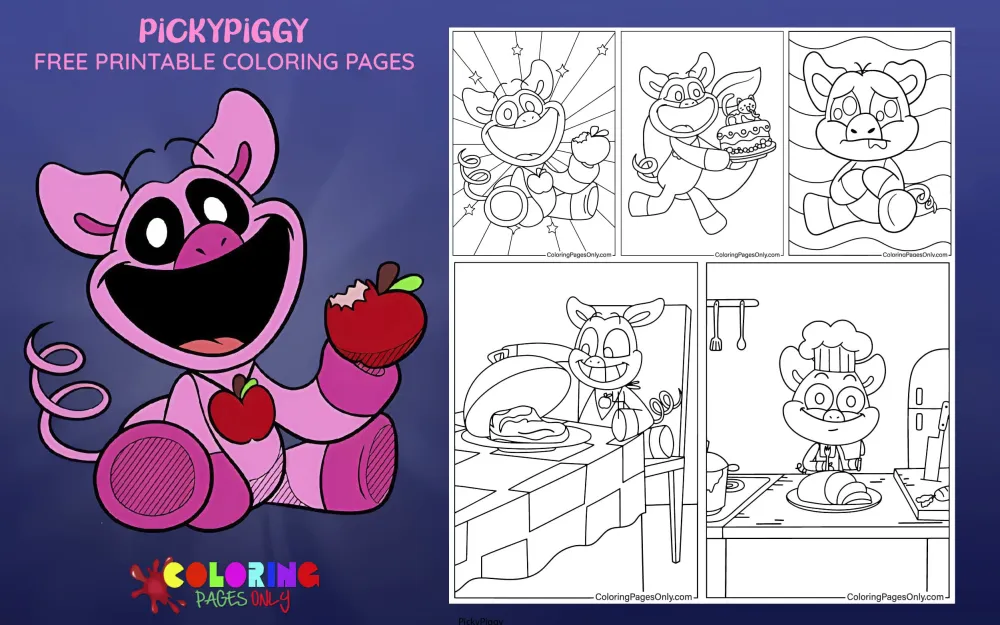
On this page, you’ll find 24 free PickyPiggy coloring pages – all free to download as PDFs or color online! PickyPiggy is one of the most popular characters from the Smiling Critters toy line in Poppy Playtime Chapter 3: Deep Sleep, and this collection covers her full range: solo portrait pages, duo pages with DogDay and CatNap, scene pages with her house, and group Smiling Critters pages – all featuring her signature pink design, wide grin, and iconic red apple pendant.
These pages are perfect for Poppy Playtime fans looking for a creative break from gameplay, birthday activities, or anyone who loves this quirky, food-obsessed little pig. Once colored, use them as posters, fan art displays, or notebook decorations!
While you’re here, grab these related pages! Poppy Playtime Coloring Pages · Smiling Critters Coloring Pages · Games Coloring Pages · Piggy Coloring Pages
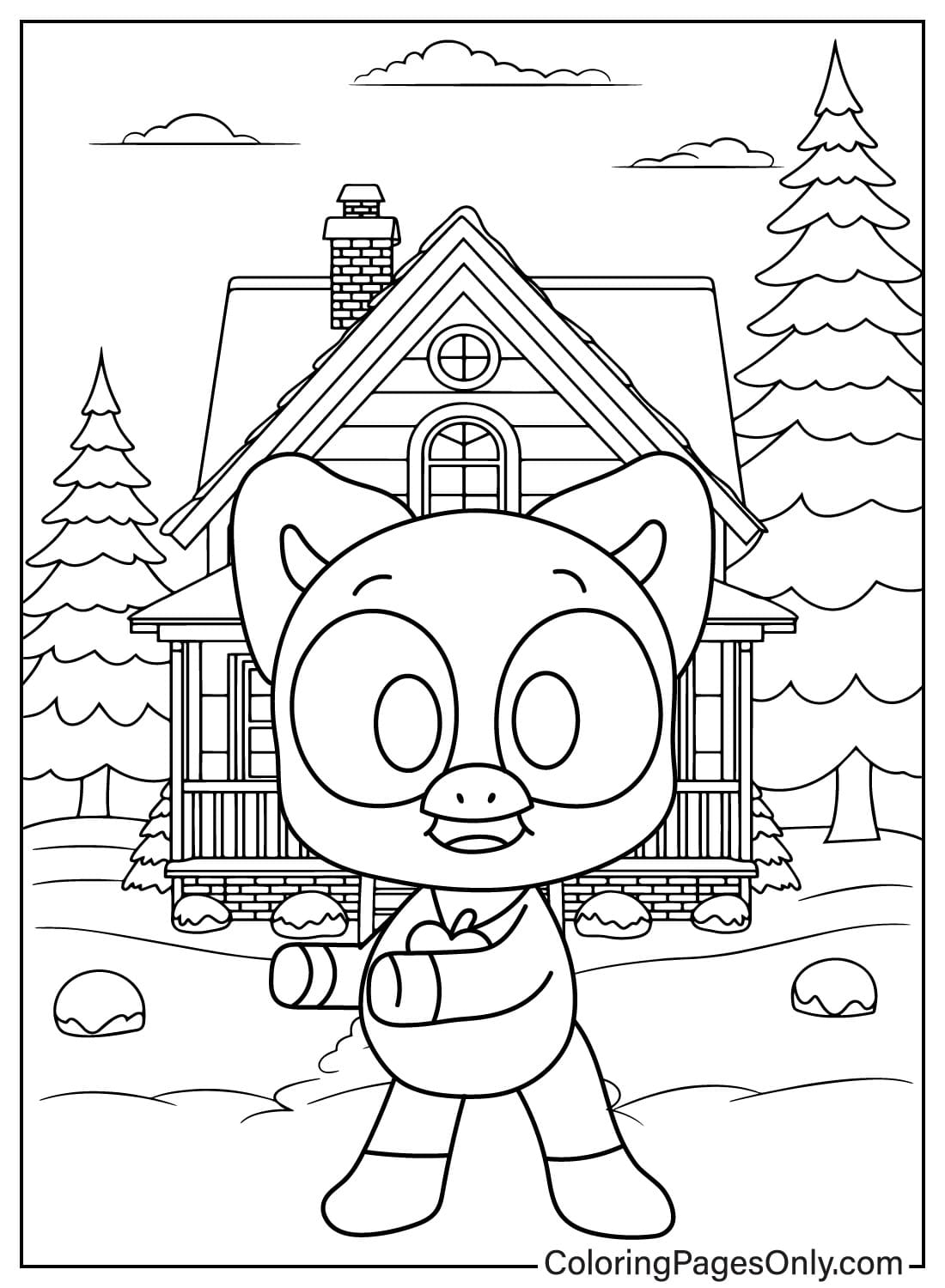
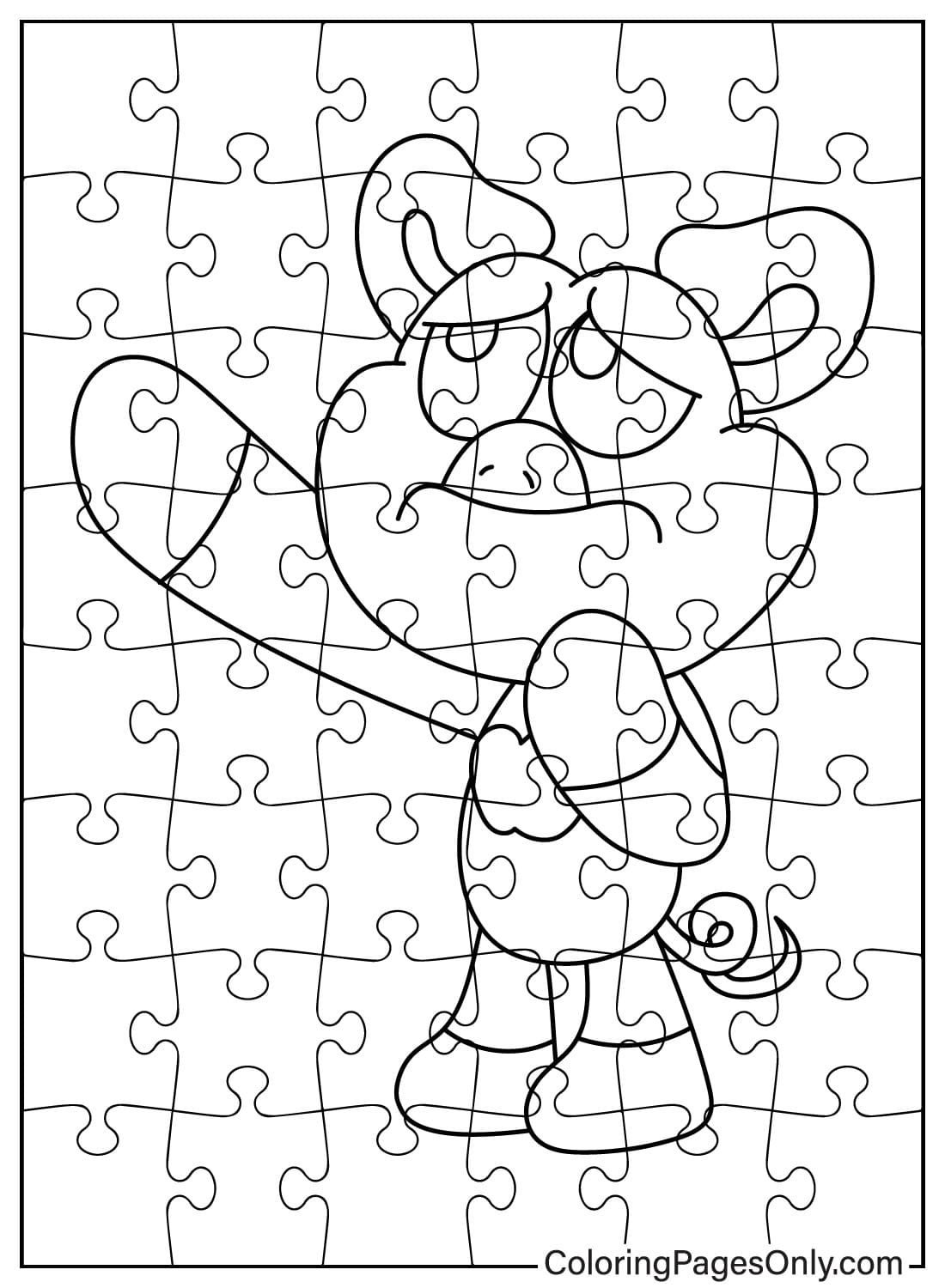
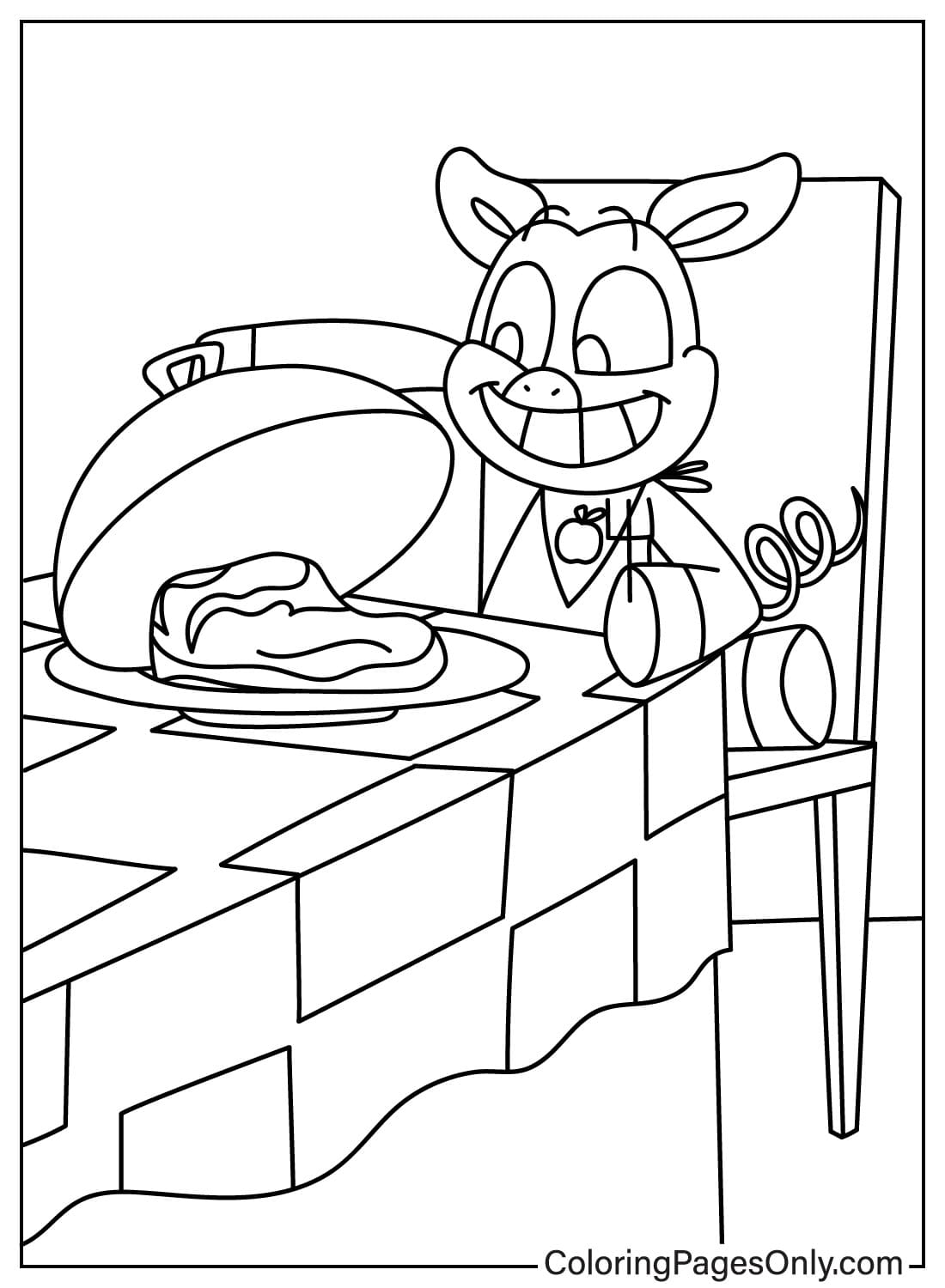
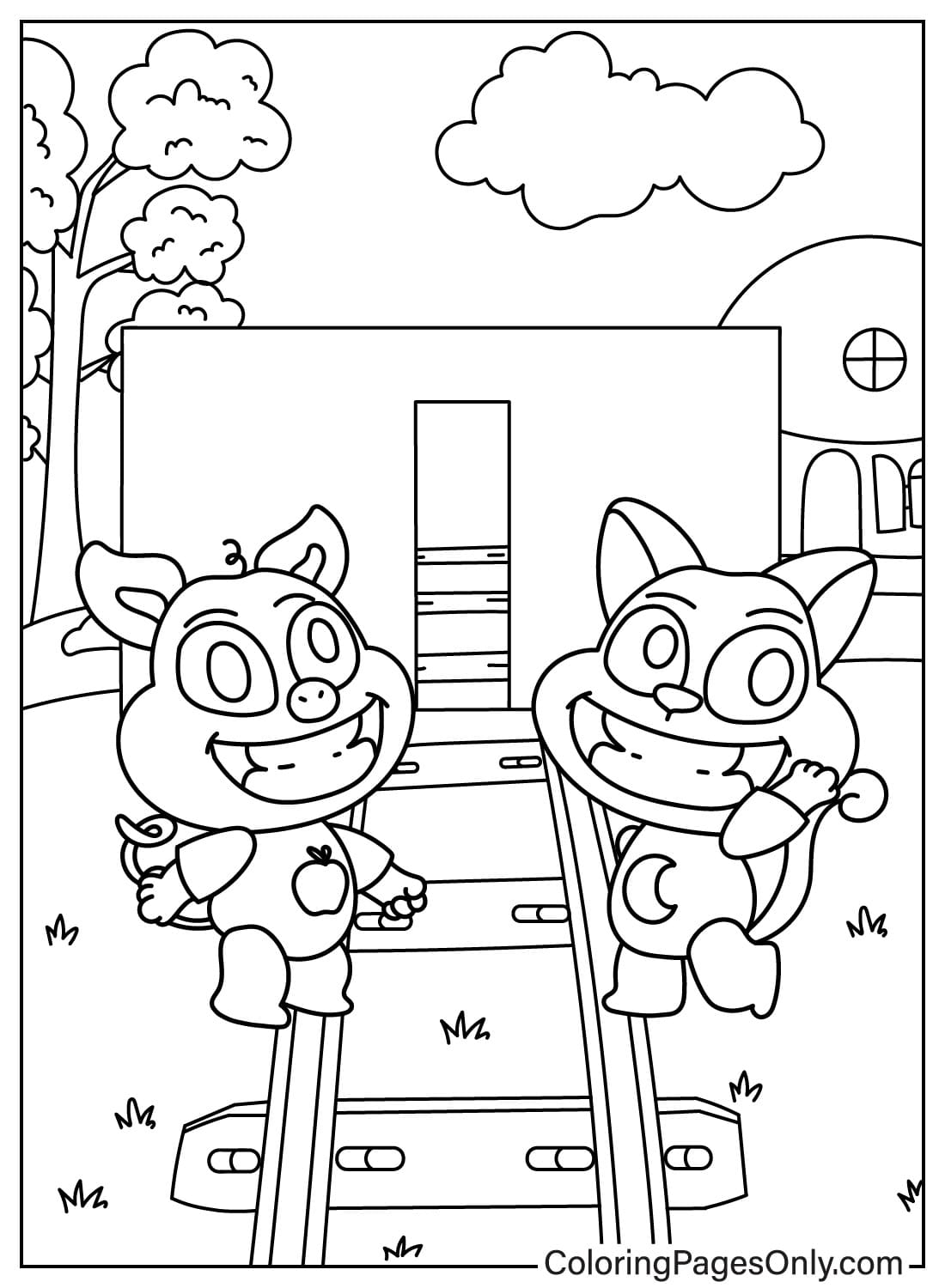
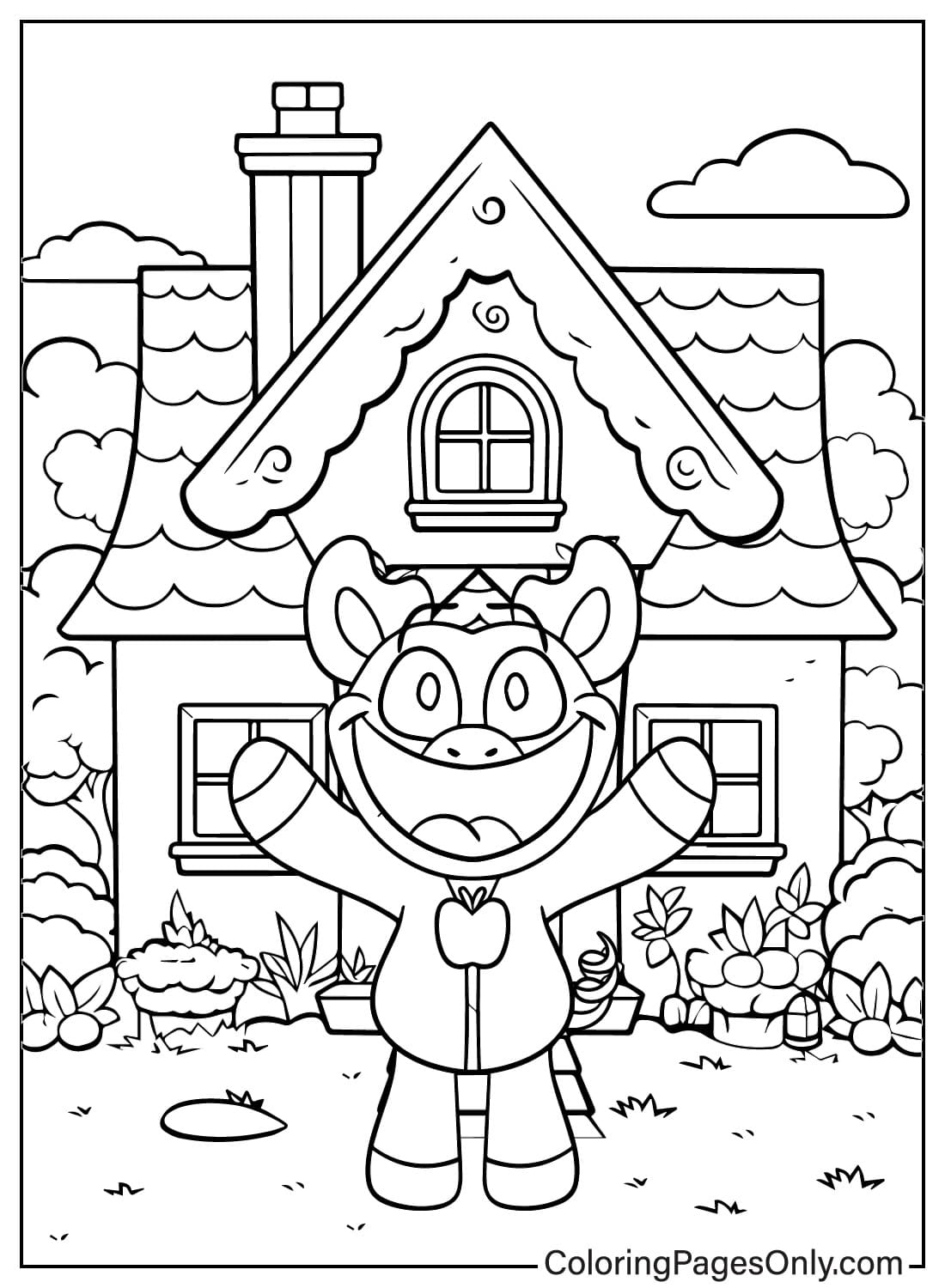
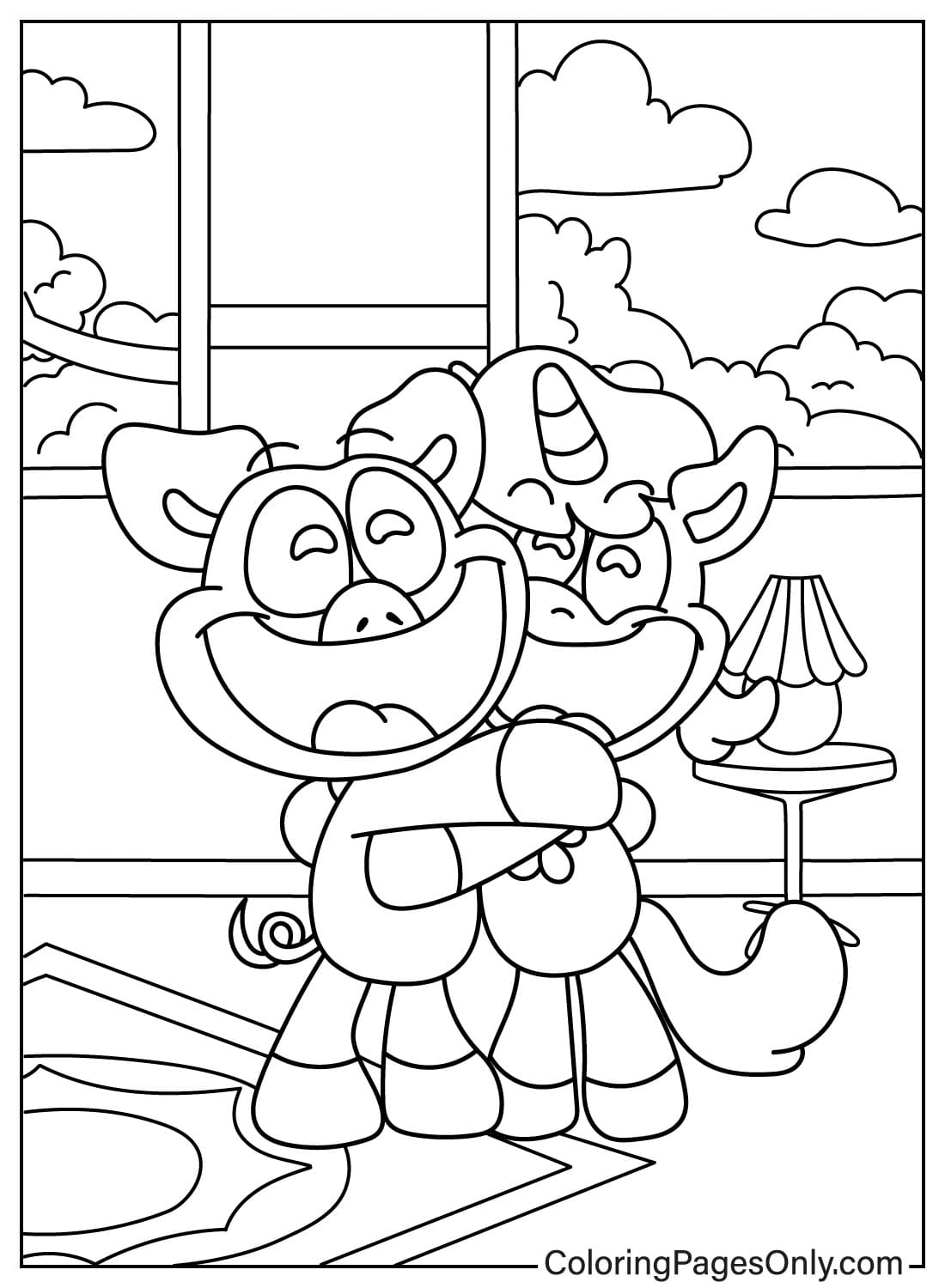
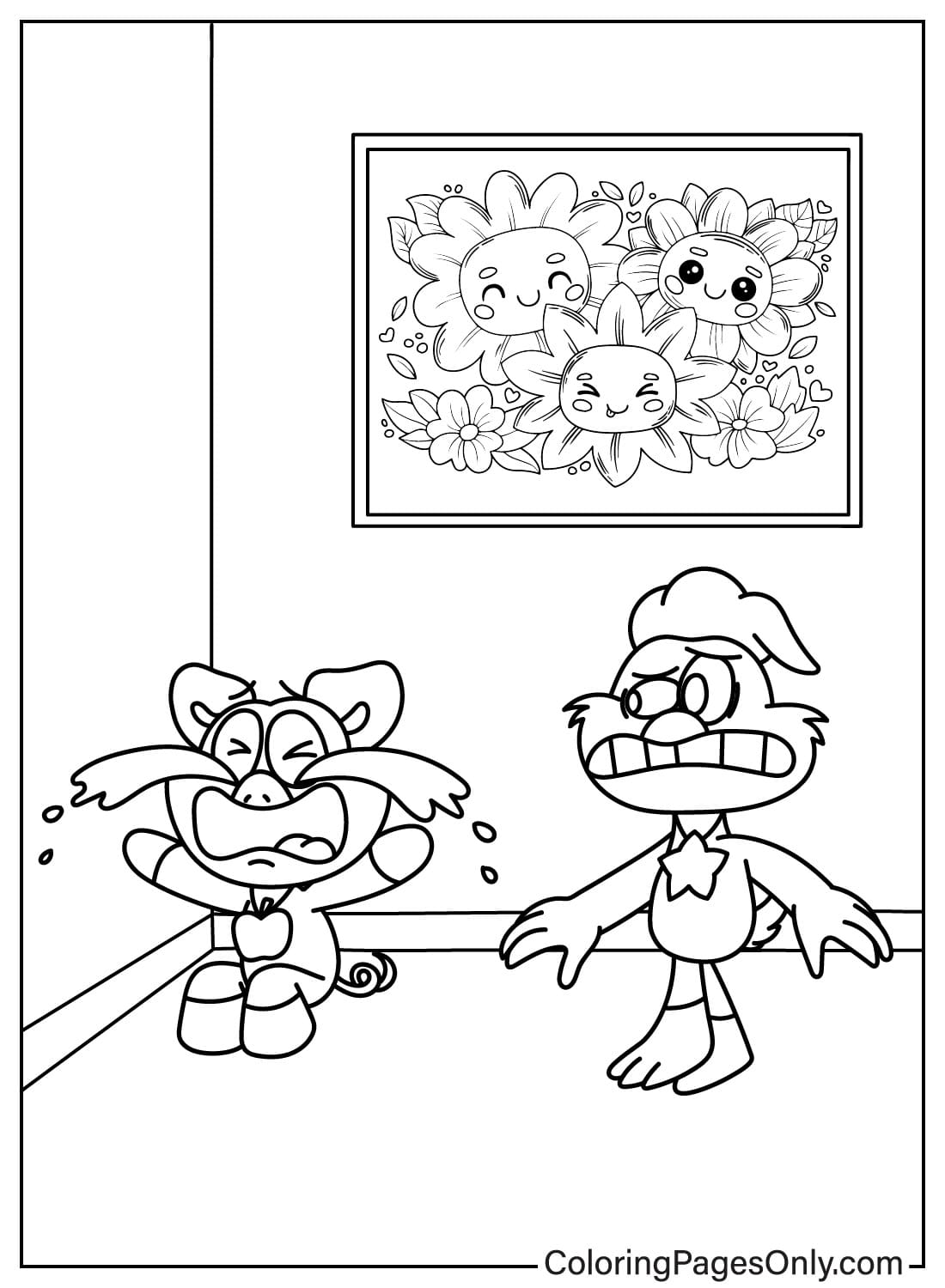
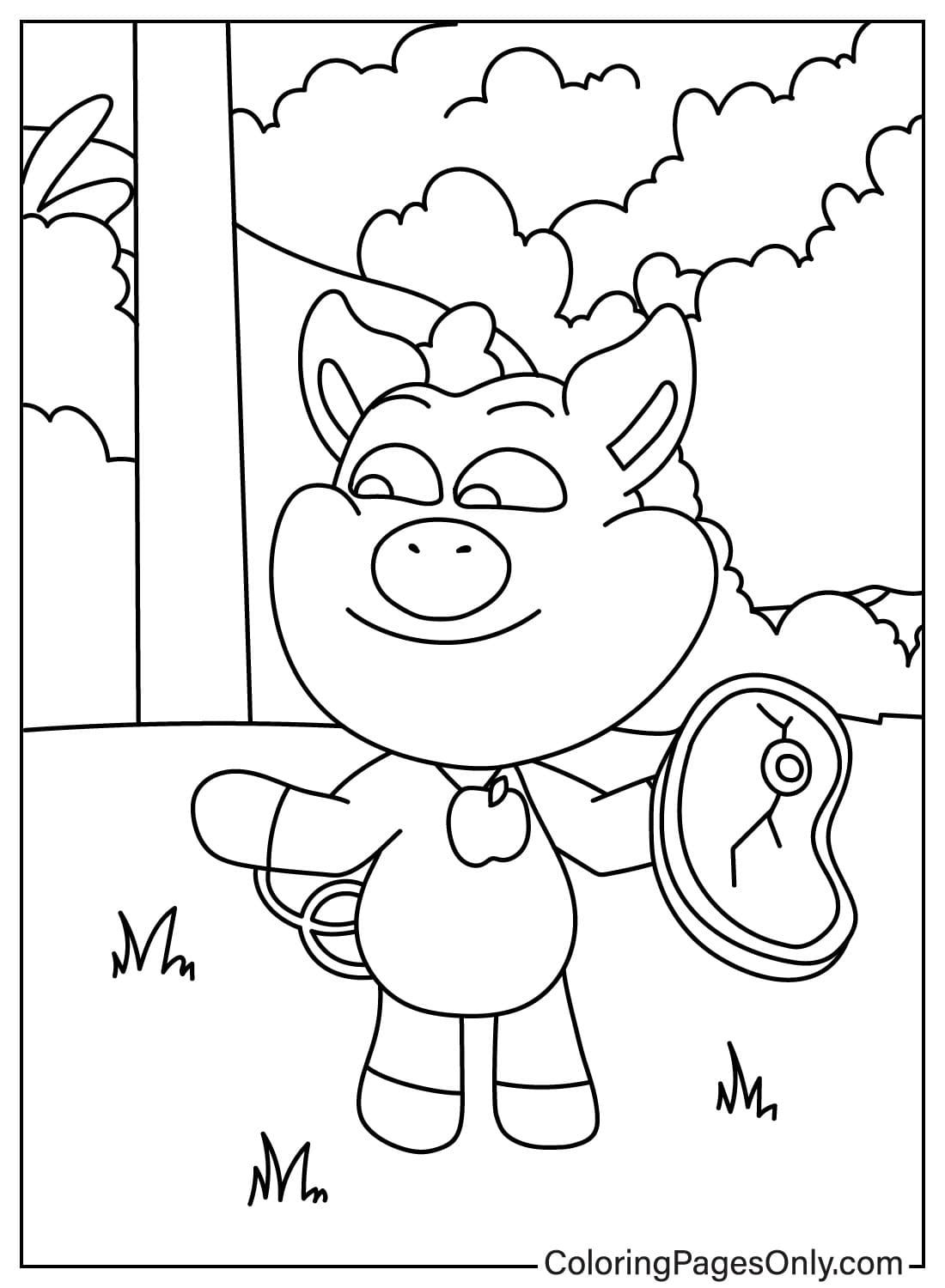
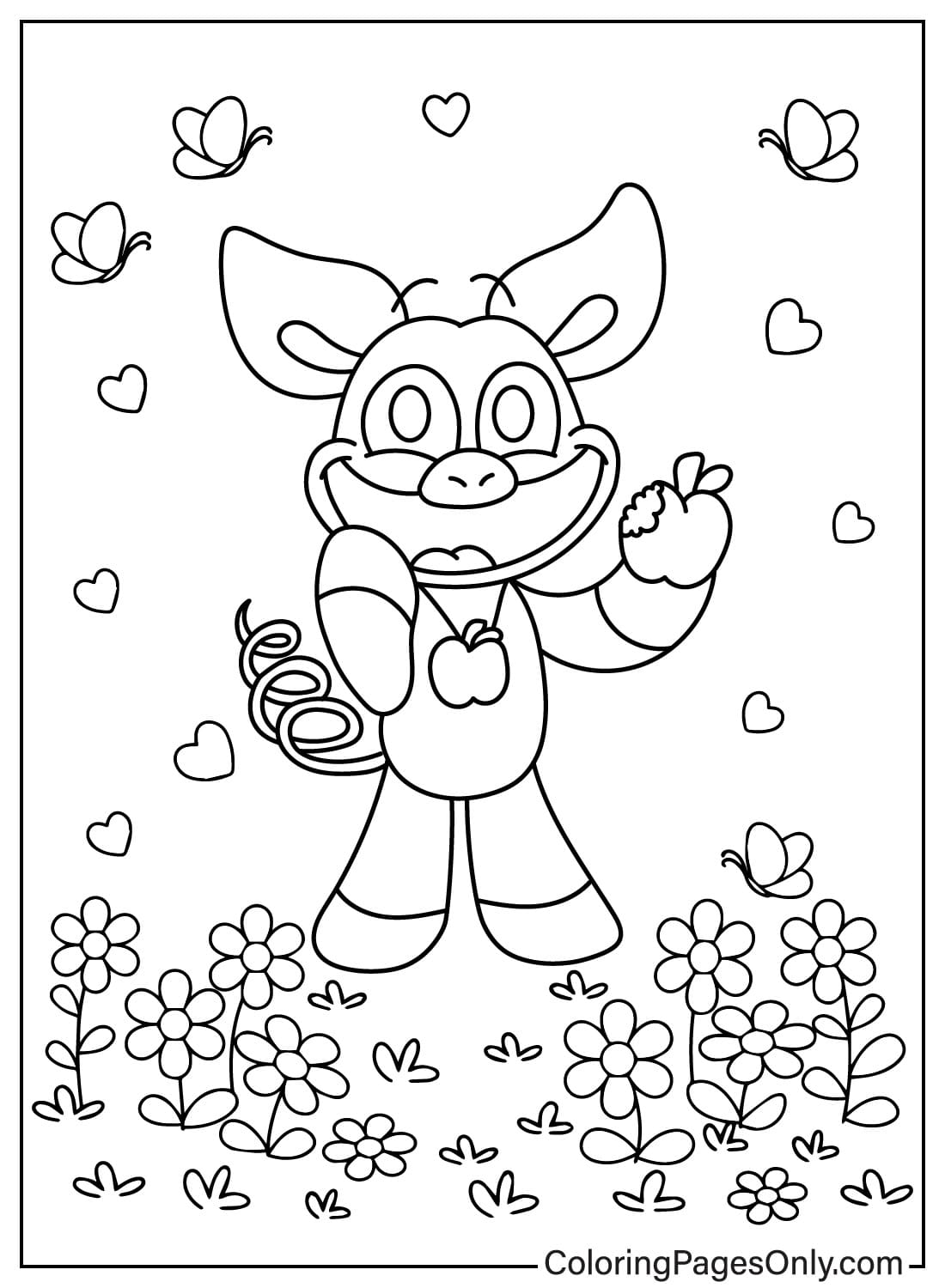
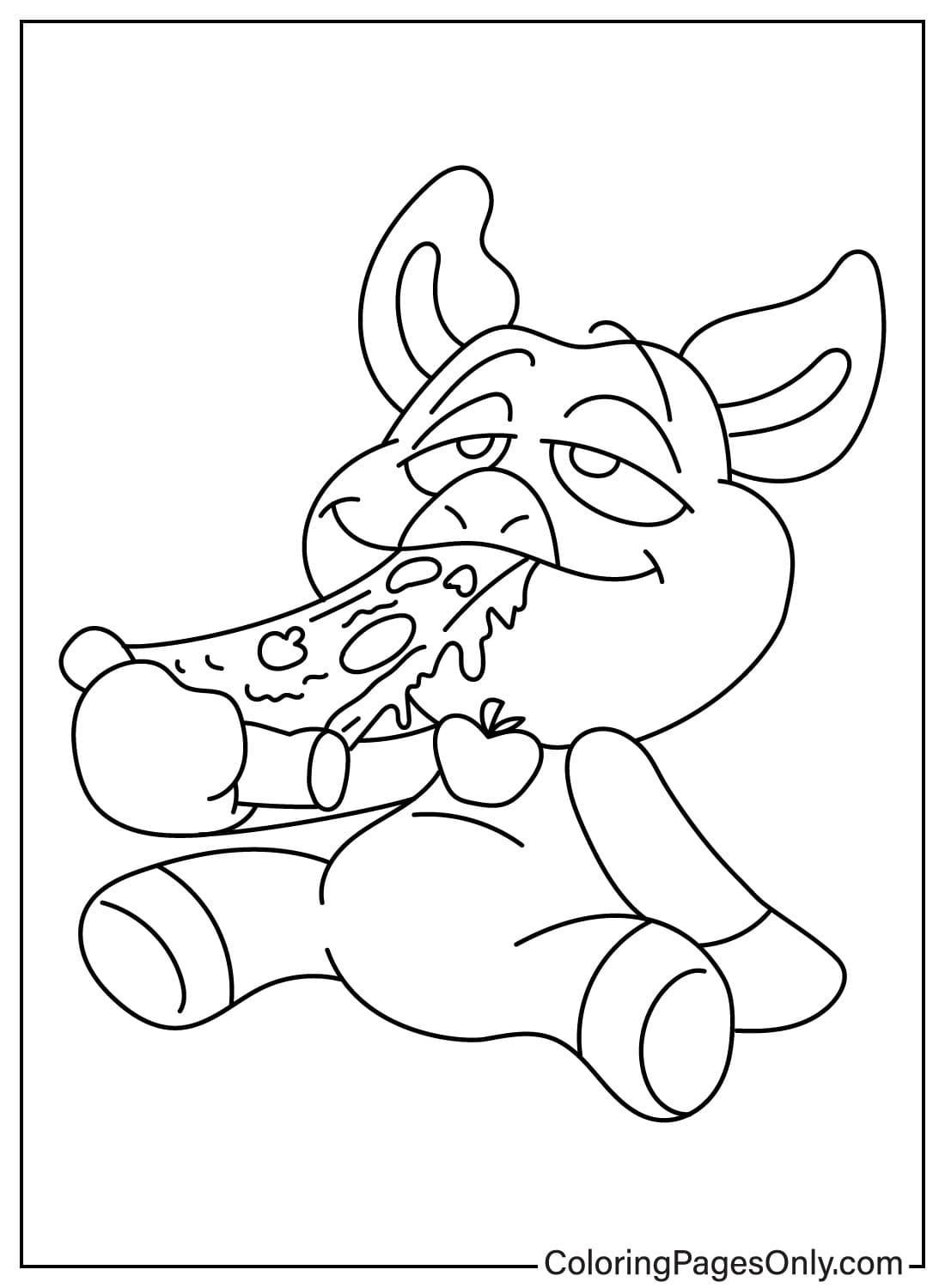
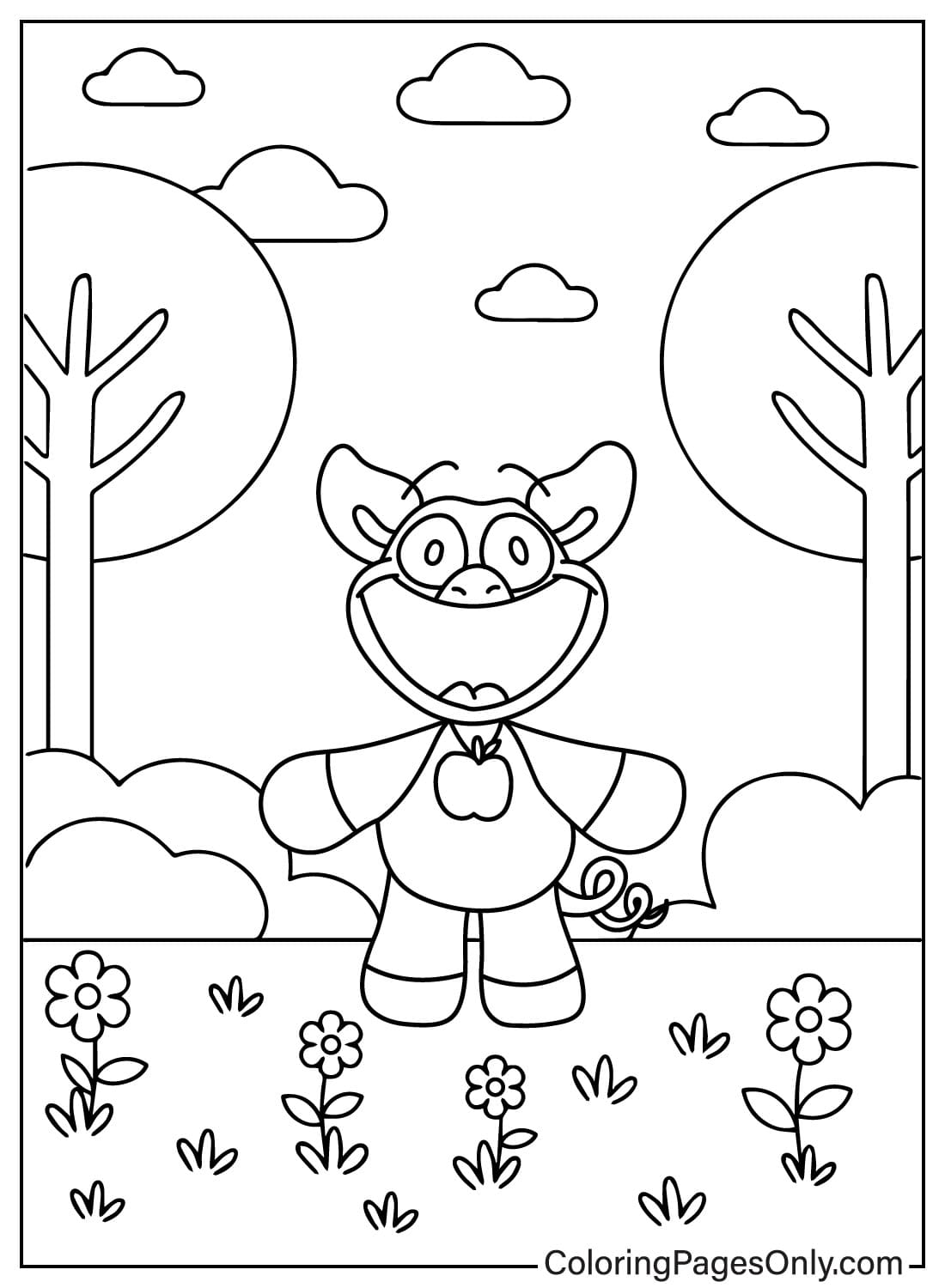
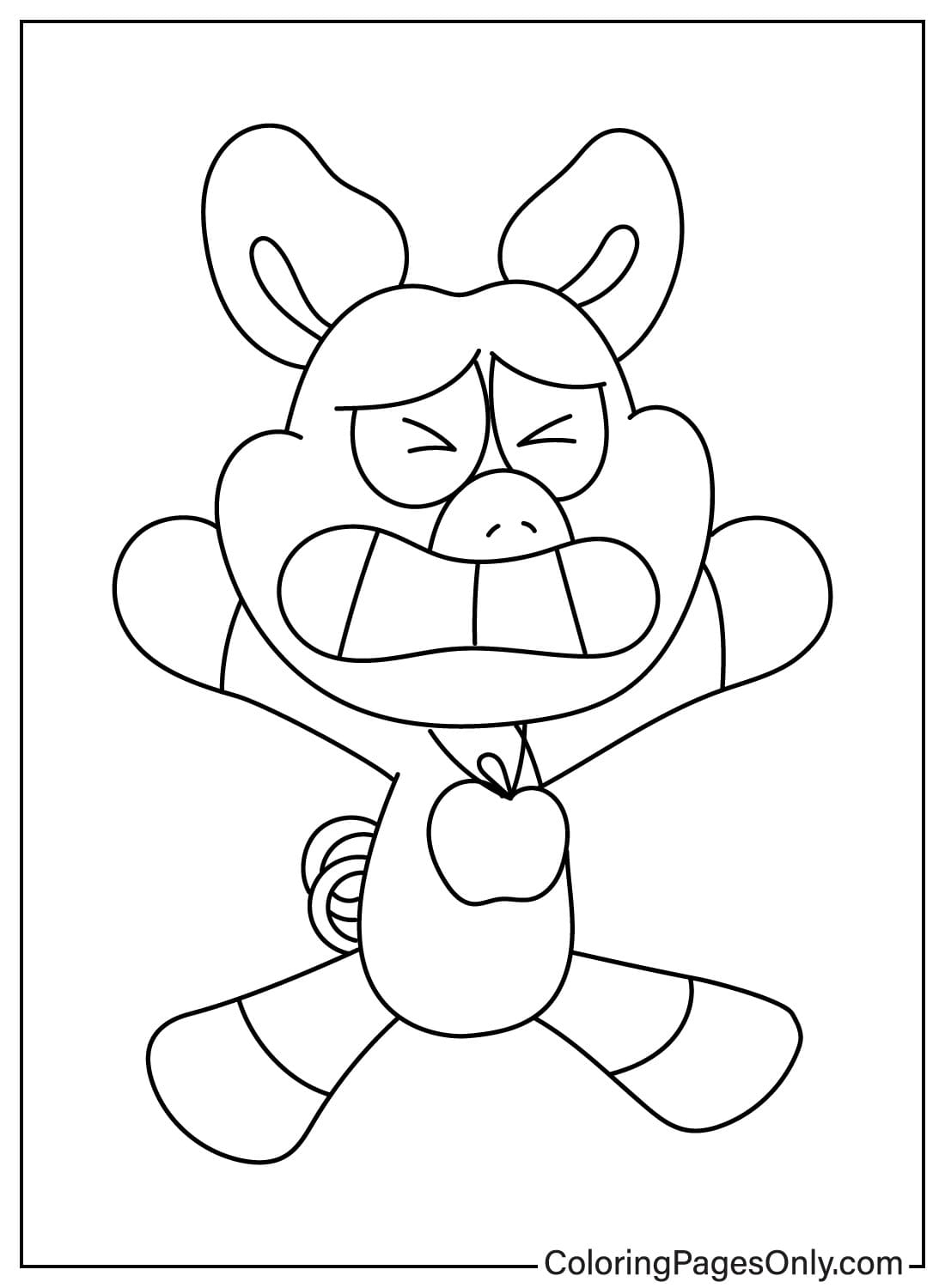
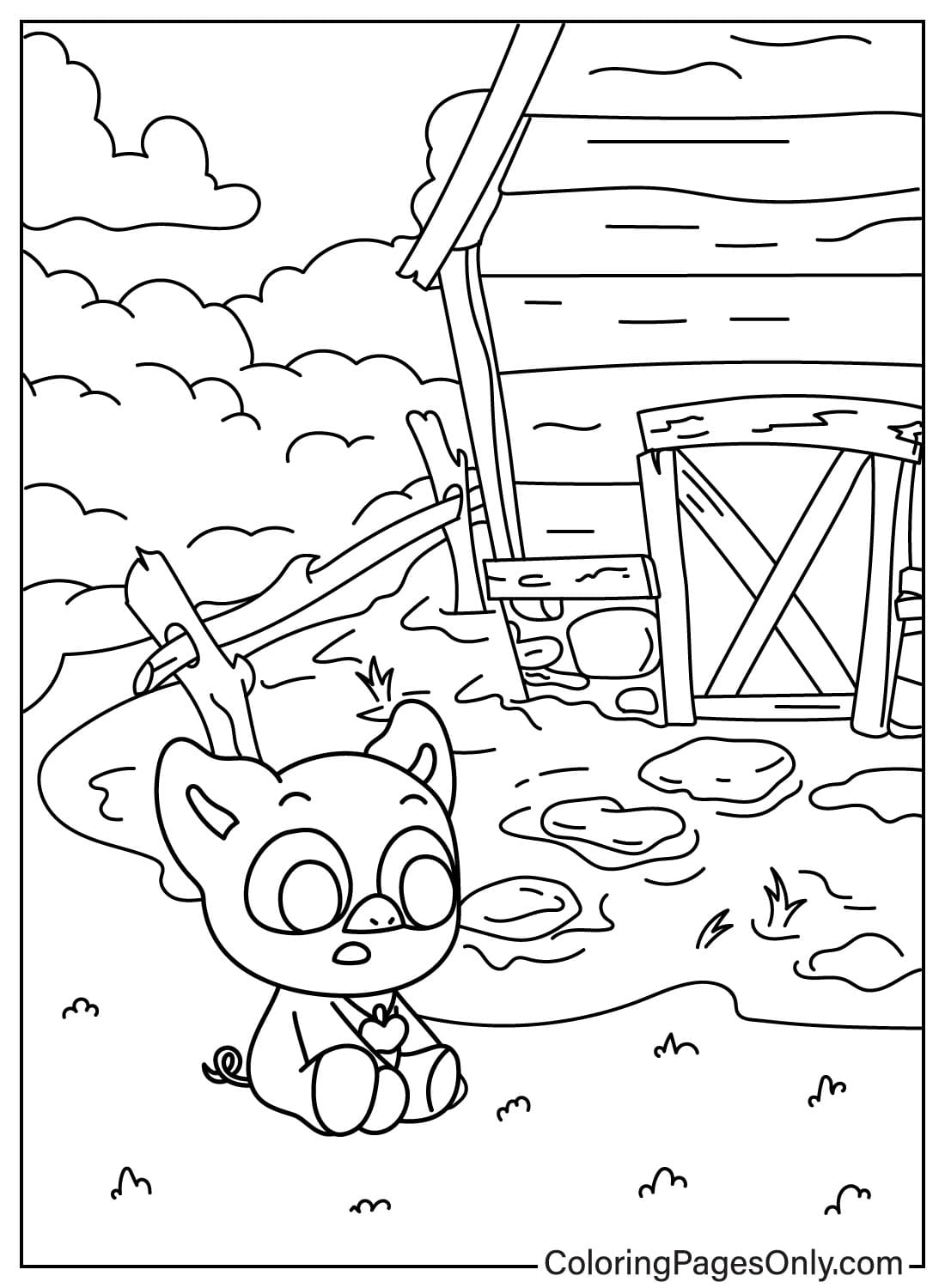
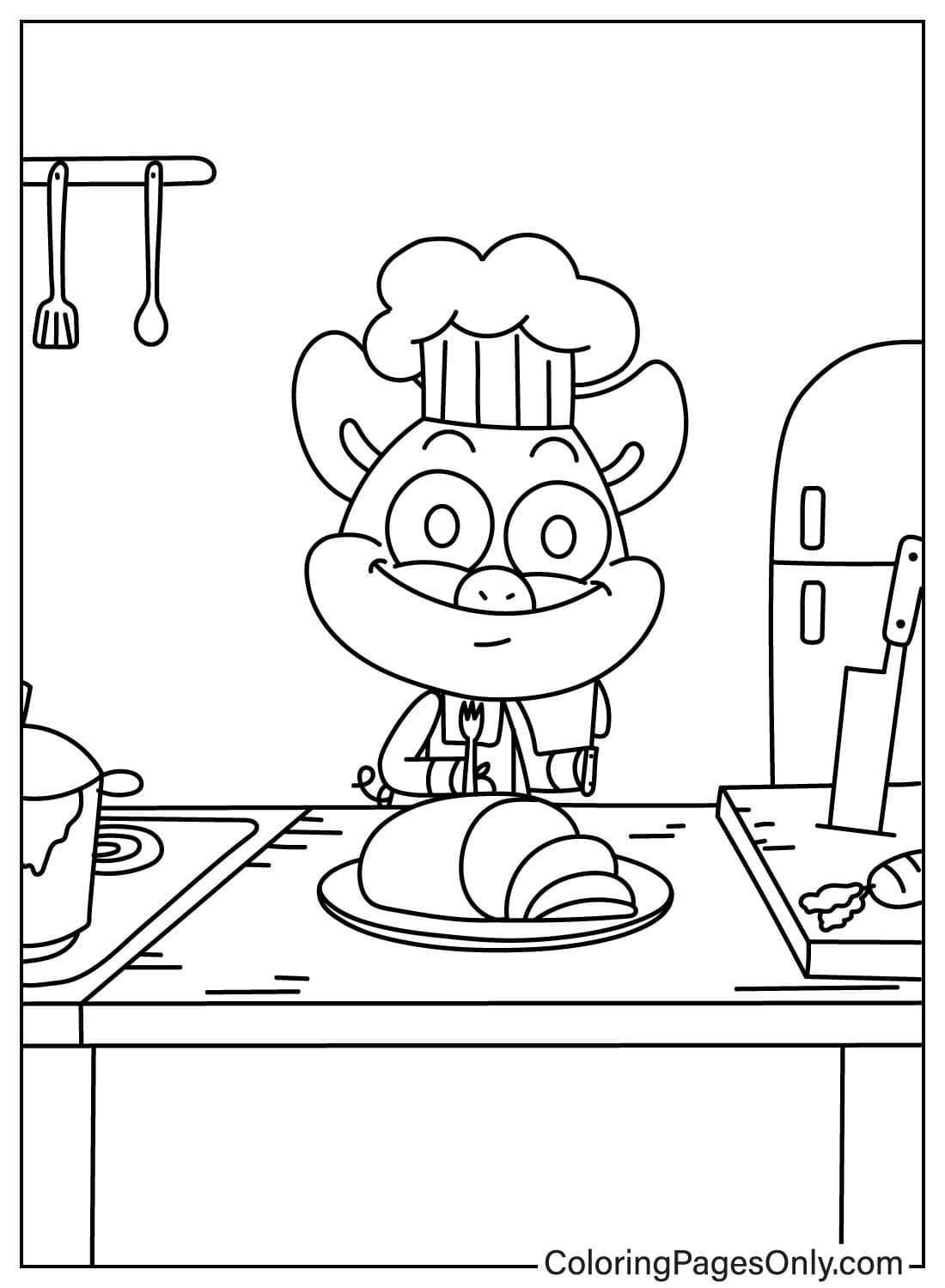
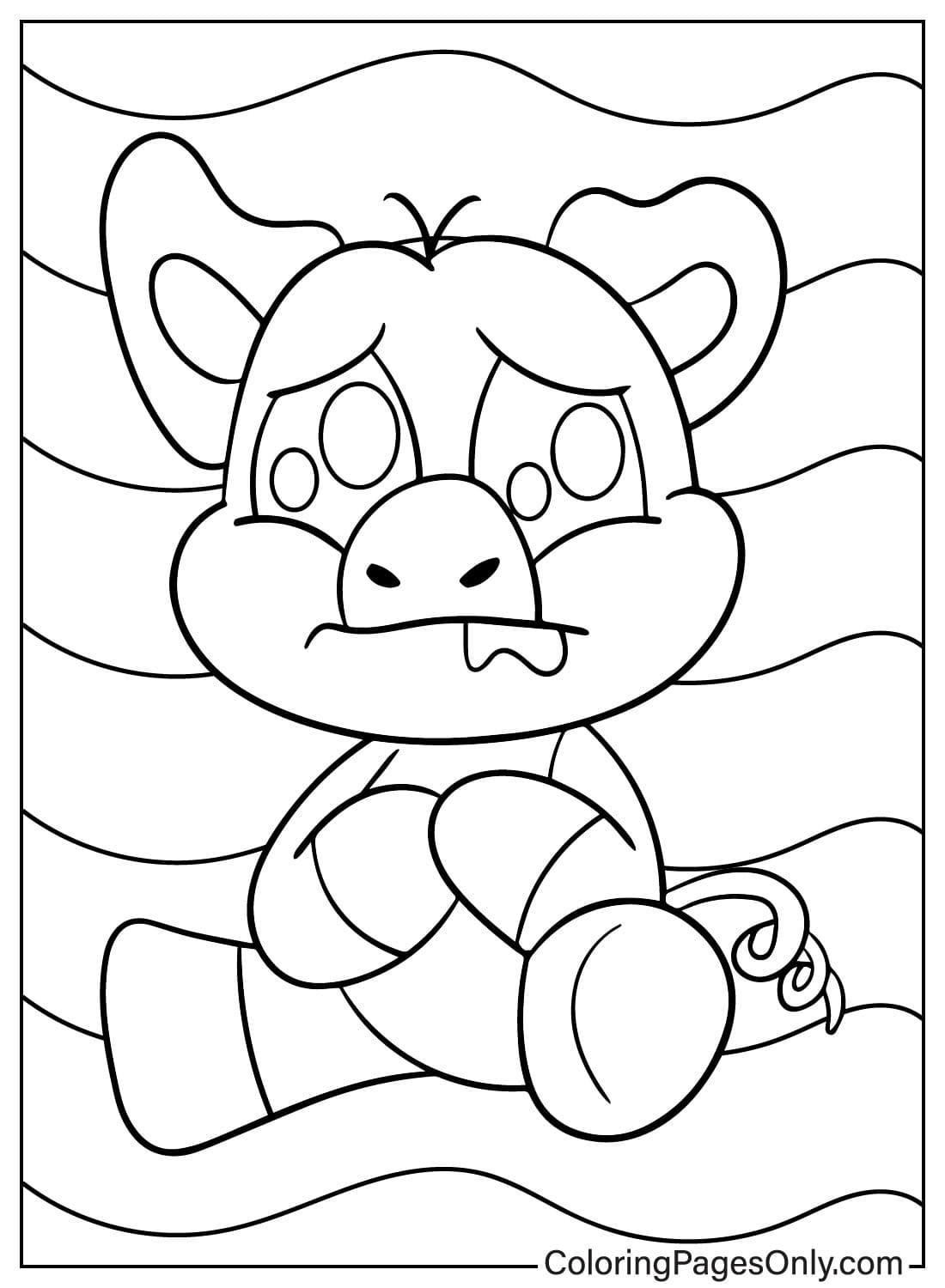
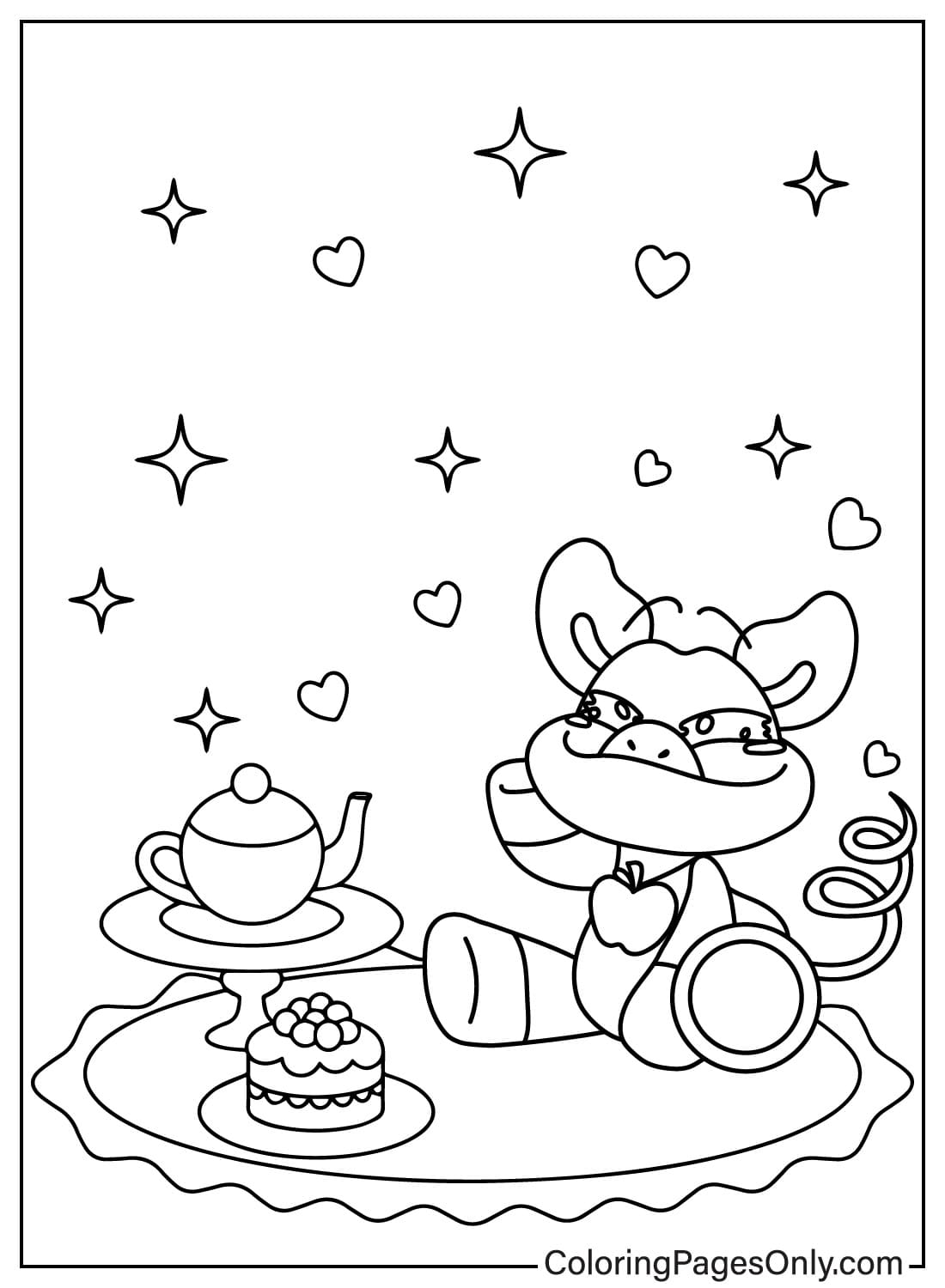
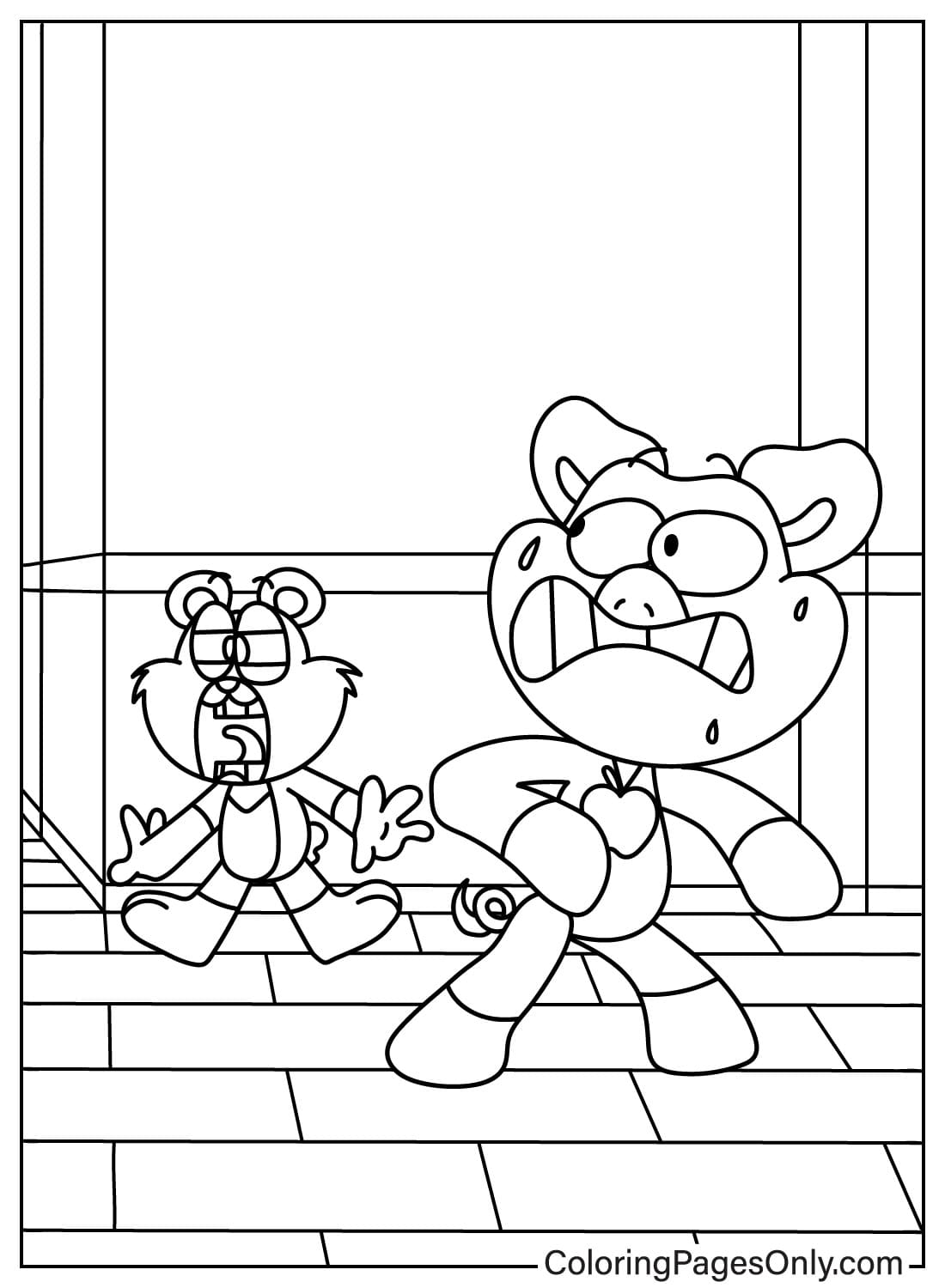
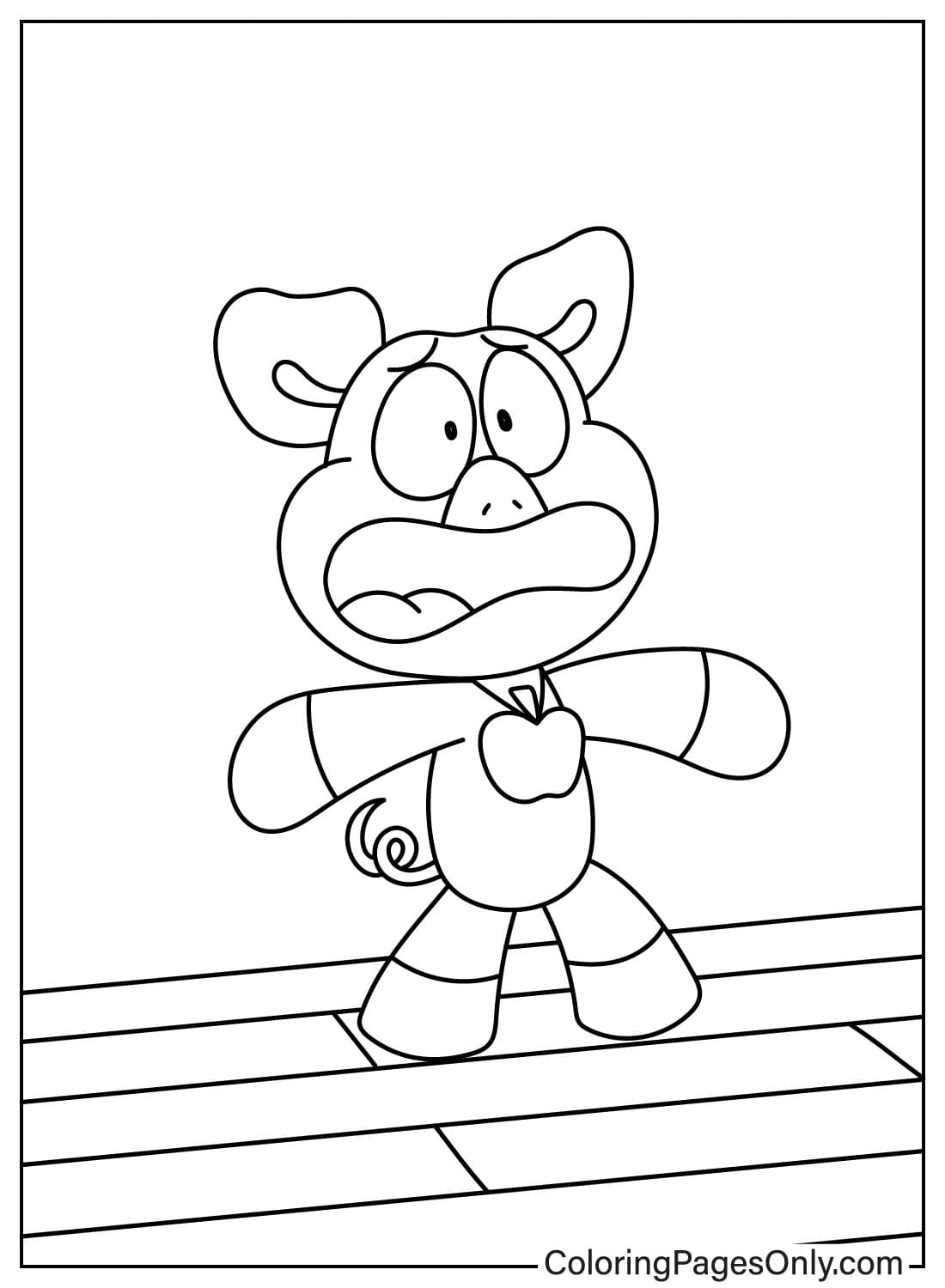
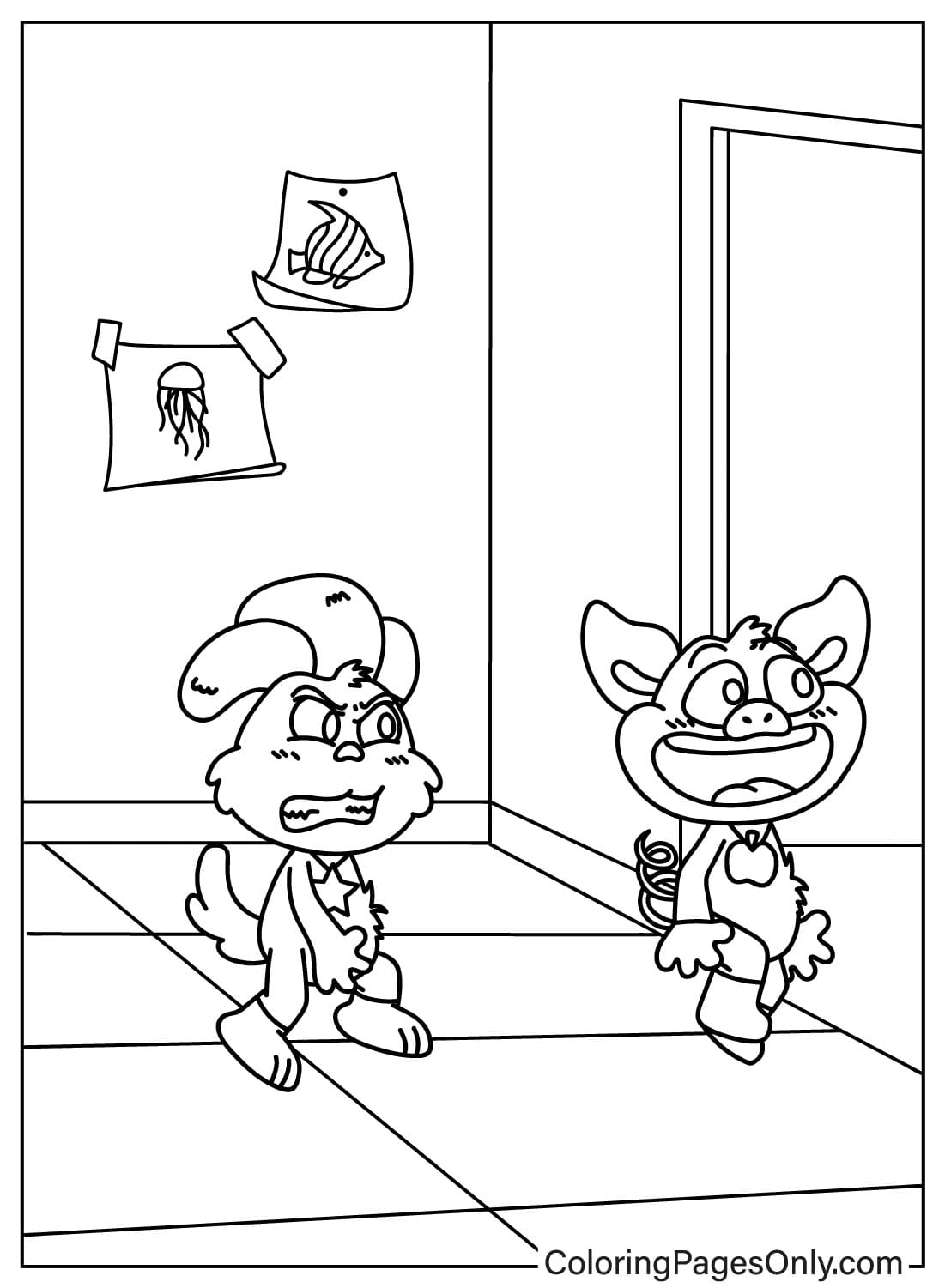
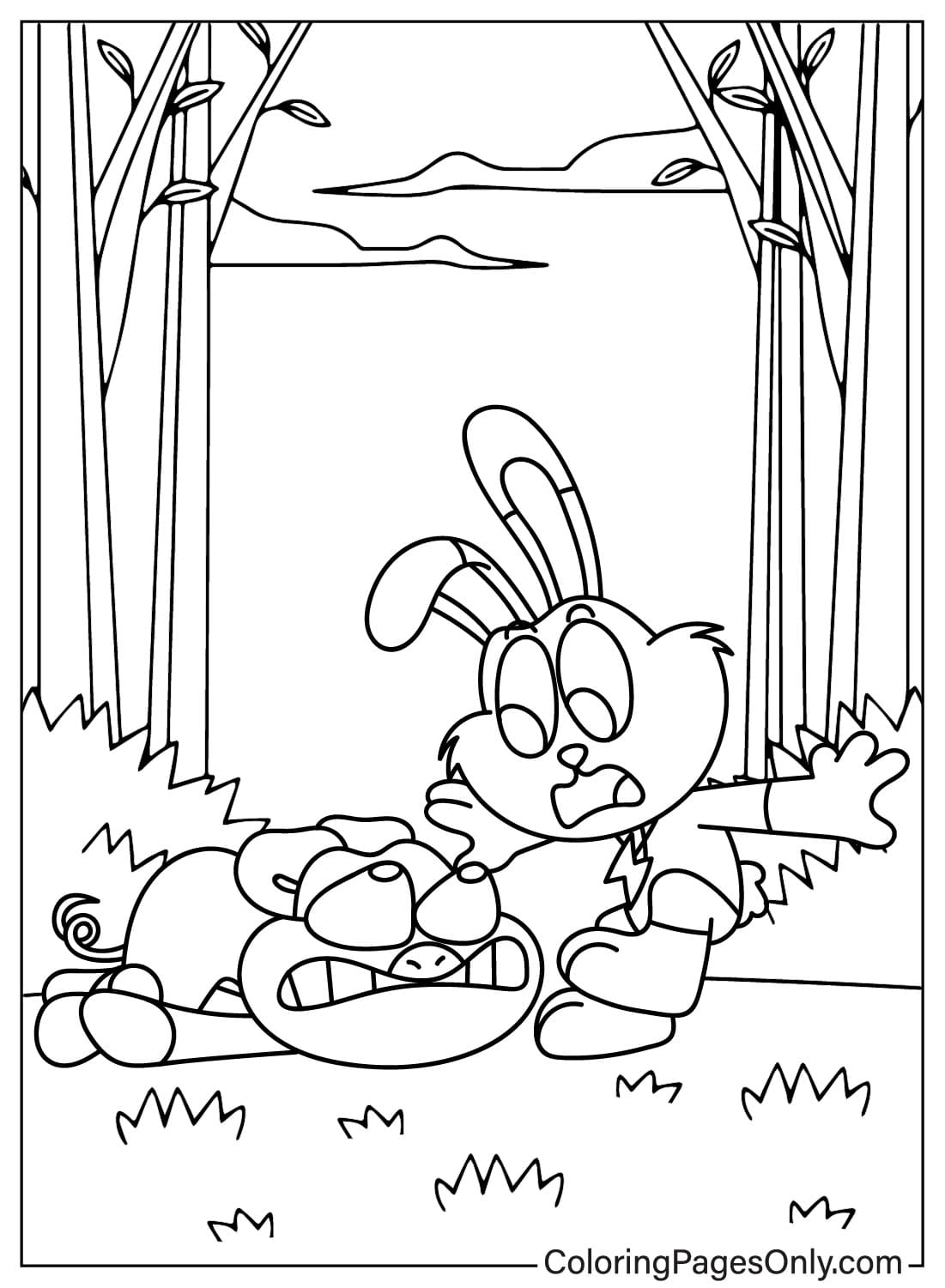
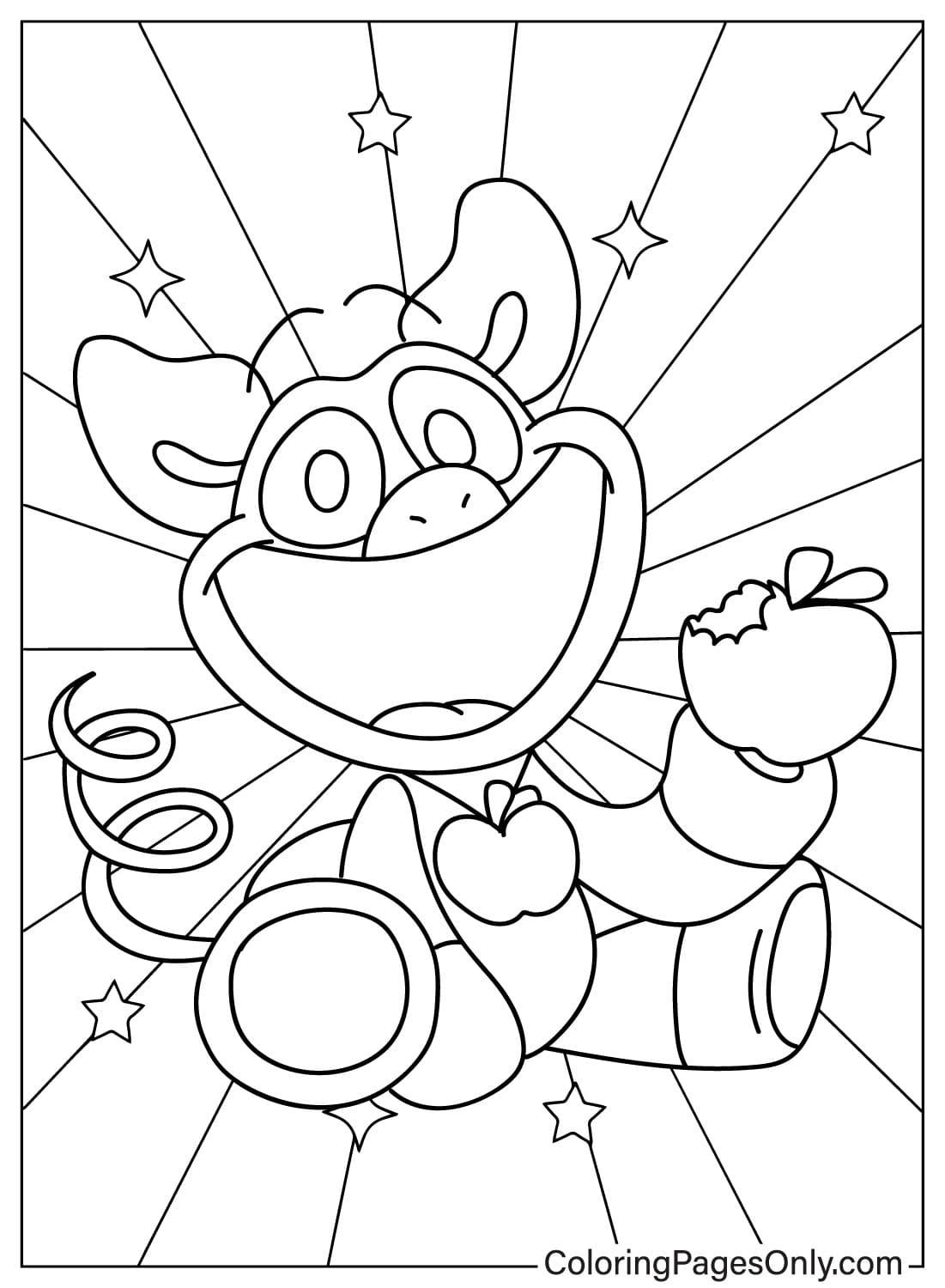
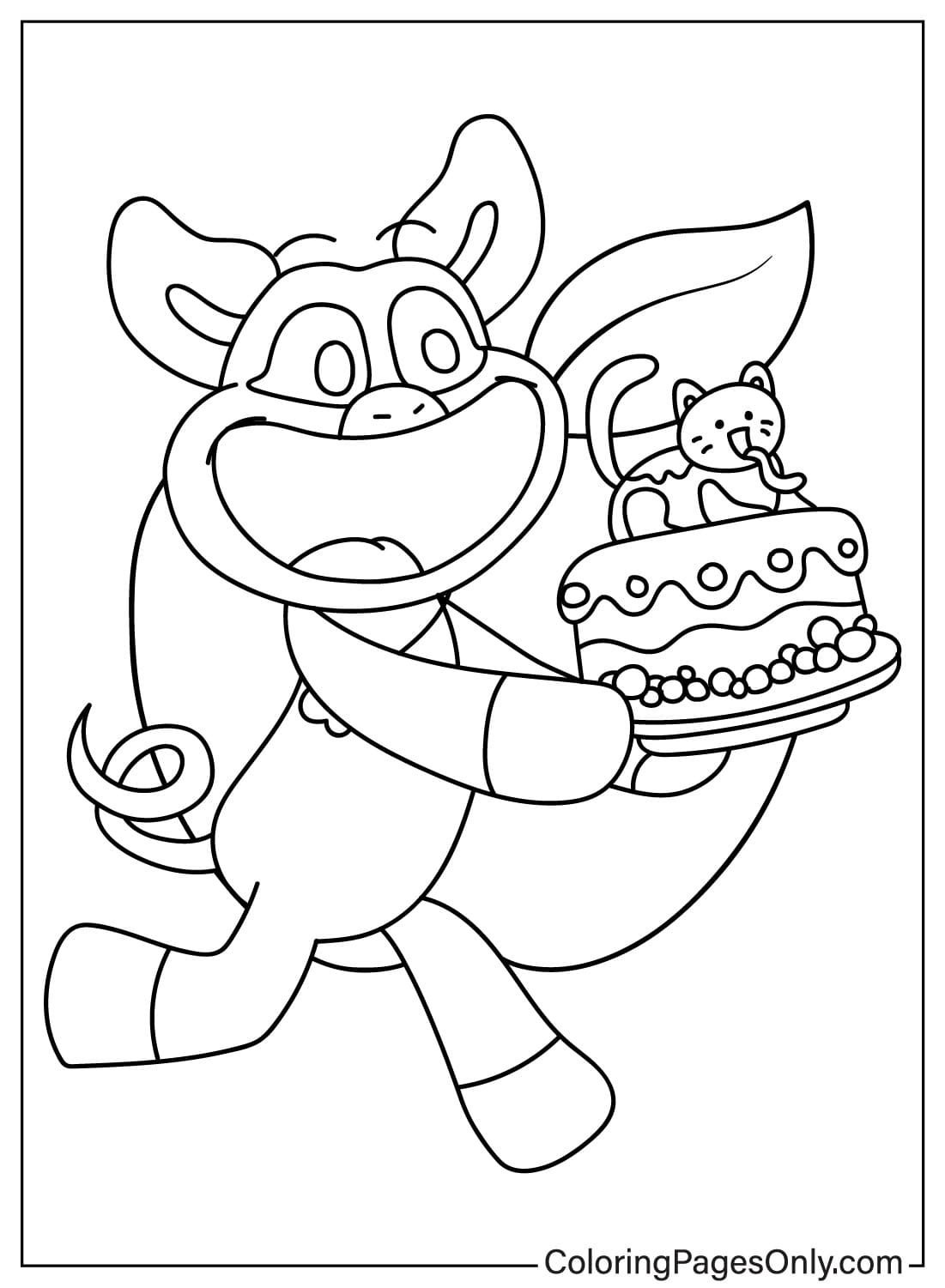
Who Is PickyPiggy? The Smiling Critter with a Complicated Relationship with Food
PickyPiggy is a toy produced by the fictional Playtime Co. as part of the Smiling Critters toy line – a collection of colorful, animal-themed plush toys that serve as the mascots of Playcare, the child care section of the Playtime Co. factory. She makes her first in-game appearance in Poppy Playtime Chapter 3: Deep Sleep, developed by MOB Games and released in early 2024, which became one of the most anticipated chapters in the horror puzzle franchise.
On the surface, PickyPiggy’s public-facing personality is charmingly simple: she is the Smiling Critters’ health food advocate – a cheerful pig who encourages her friends to eat balanced, nutritious meals and stay strong. Her red apple pendant (attached by a black necklace in her cartoon form, or built into her chest zipper in her toy form) is the visual symbol of this healthy-eating identity. She even emits a citrus scent from a small spray applicator in her mouth – the Smiling Critters each have a unique scent built into their design, originally intended to be calming or sleep-inducing for the children of Playcare.
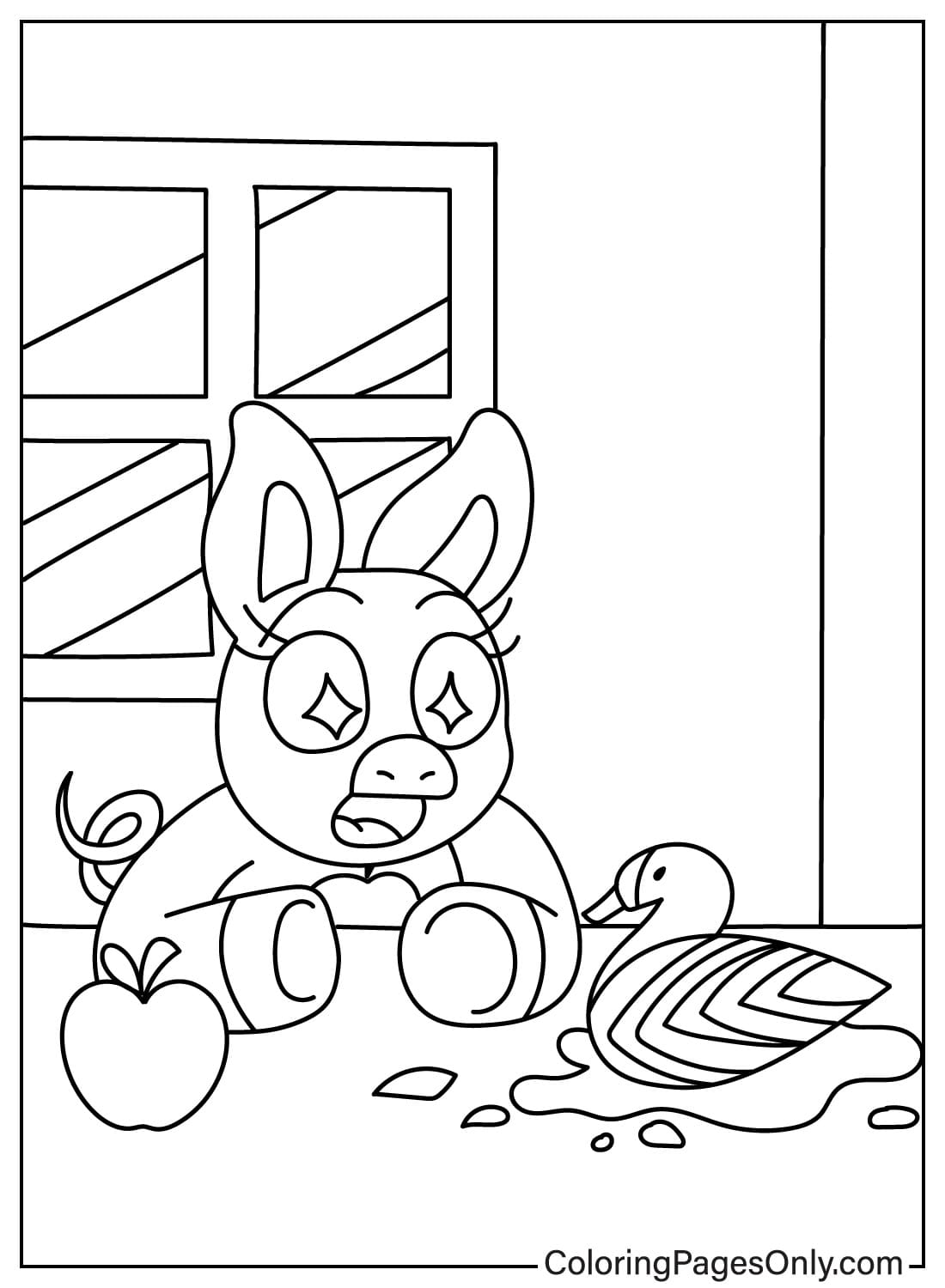
The immediately charming twist in her character design is the gap between her public persona and her private appetites. Despite all her healthy-eating advocacy, PickyPiggy secretly loves cheeseburgers and PB&J sandwiches – foods she presumably hides from her fellow Smiling Critters. This private hypocrisy is played in her earlier appearances as an endearing quirk, the kind of relatable character flaw that makes a cartoon mascot feel real and funny to children.
What makes PickyPiggy a genuinely complex character in the context of Poppy Playtime’s horror narrative is the layer beneath even this playful hypocrisy – revealed through her cardboard cutout audio files discovered during Chapter 3. In these recordings, PickyPiggy’s hunger becomes increasingly disturbing: she references roast beef, grilled chicken, seared elephant, and flayed unicorn as things she has found “delicious” – with each item widely interpreted by the game’s community as referring to fellow Smiling Critters (KickinChicken, Bubba Bubbaphant, and CraftyCorn). She ends the recording by saying she is “still hungry” and asking an unknown individual if they would like to “be friends” – framing the question as a threat. The community theory that PickyPiggy resorted to eating her companions to survive in the abandoned factory is one of Chapter 3’s most discussed lore elements.
Her line “Roast beef? Delicious!” is a deliberate reference to the classic nursery rhyme “This Little Piggy” – in which the third pig “had roast beef.” The callback to an innocent children’s rhyme within a horror context is exactly the kind of layered writing that has made Poppy Playtime’s character design so compelling to its community.
PickyPiggy’s Visual Design – The Canonical Coloring Reference
PickyPiggy’s design is one of the most immediately recognizable in the Smiling Critters lineup, with a specific and consistent visual palette that every coloring page in this collection should reproduce accurately.
Skin and body. PickyPiggy’s body is rendered in light pink – a soft, warm, medium-light pink that is not pastel (too pale and washed out) and not hot pink (too saturated and bright). Think of the pink of a traditional piggy bank: a warm, friendly, approachable pink that reads as charming rather than intense. Her design is rounded and plush – reflecting her origin as a stuffed toy – with a soft, chubby body shape.
Darker pink accents. Her hooves, snout, and the inside of her ears are rendered in a distinctly darker shade of the same pink, closer to a warm mauve-rose. This darker accent creates the visual depth that distinguishes her from a flat, one-tone design. The contrast between the light body pink and the darker accent pink is subtle but important: the darker tone grounds the design and prevents her from looking washed out.
The snout. PickyPiggy’s upper snout is described as half-moon shaped – a curved, slightly upturned form that gives her an immediately friendly, upward-looking expression. The snout should be rendered in the same darker pink as the hooves, with two small oval nostrils visible. Getting the snout’s characteristic shape right is one of the key elements that make any PickyPiggy coloring immediately recognizable.
The ears. Her ears curve inward rather than pointing outward – a design choice that gives her a slightly softer, more rounded silhouette than a traditional cartoon pig. The inner ear surface is the darker pink tone; the outer ear matches the lighter body color.
The eyes. PickyPiggy’s toy form has solid black eyes with no visible pupils – the same unsettling deep black shared by all Smiling Critters in their toy form. In her cartoon appearance, white pupils are added, giving her a more expressive, animated look. For coloring pages that depict her in a friendly or fun context, the cartoon version’s white-pupil eyes work best. For pages that depict her more menacing post-Chapter 3 appearance, the solid black toy eyes create a more appropriately unsettling effect.
The wide grin. Like all Smiling Critters, PickyPiggy wears a wide, toothless grin – the inner mouth area dark and shadowed, adding an unnerving quality to what is otherwise a cheerful expression. The grin is a key design element across all pages; coloring the inside of the mouth as a deep, dark shadow (not a warm interior tone) is what distinguishes the Smiling Critters’ iconic aesthetic from a conventional cute animal smile.
The zipper and pendant. On her toy form, a black zipper line runs down her center, with a red apple zipper pull as the pendant. On her cartoon form, the apple pendant hangs from a black necklace. The apple should be rendered in a vivid, saturated red – one of the few bright accent colors in her otherwise pink-dominant palette. This red apple is the page’s natural focal point and should be colored with maximum saturation.
The curly tail. A small, tightly curled pink tail visible from behind or in profile – consistent with classic cartoon pig design, rendered in the same light pink as her body.
The Smiling Critters – The Full Roster
To fully understand PickyPiggy’s role in Poppy Playtime, it helps to know who she shares the Smiling Critters toy line with. Each critter has a specific design color, a unique pendant, a characteristic personality, and a unique scent – making them one of the most systematically designed ensemble casts in horror gaming.
DogDay – A yellow dog with a sun pendant and a warm, optimistic personality. DogDay is the group’s natural leader – encouraging, cheerful, and steady. He has the largest narrative role in Chapter 3 and the most tragic fate, serving as a central emotional figure in one of the game’s most disturbing sequences.
CatNap – A lavender-purple cat with a moon pendant who releases red Poppy Gas from his respiratory system. CatNap is the primary antagonist of Chapter 3: Deep Sleep, having been designated as Playcare’s caretaker and originally intended to help children sleep with his calming scent. His allegiance shifts to The Prototype, and his gas, which causes hallucinations and laughter before unconsciousness, becomes a weapon. DogDay and CatNap have opposed designs as a deliberate choice: their colors are opposite on the color wheel, and their sun/moon pendants are classically opposed symbols.
Bubba Bubbaphant – A grey and blue elephant with a lightbulb pendant. Bubba is the group’s intellectual, always working out equations, proudly displaying his intelligence. His lightbulb pendant represents his role as the thinker of the group.
Bobby BearHug – A purple and pink bear known for being warm, affectionate, and comforting – the group’s source of physical and emotional support, true to the “hug” in her name.
CraftyCorn – A white and blue unicorn with a rainbow flower pendant. CraftyCorn is the creative and artistic member of the group – passionate about all forms of making and crafting, though she is also the shyest of the Smiling Critters, often overshadowed by her more assertive companions.
Hoppy Hopscotch – A bright green bunny with a lightning bolt pendant. Hoppy is the group’s high-energy, physically active character – always eager for sports, jumping, and movement. Her lightning bolt pendant is a perfect visual match for her kinetic personality.
KickinChicken – A cool, easy-going chicken known for being calm and composed in almost any situation – the group’s collected, unflappable member.
PickyPiggy – The food-focused health advocate, as described in detail above.
The Smiling Critters’ pendants form a deliberate design system: each pendant represents the core personality trait of its wearer. DogDay’s sun = warmth and leadership; CatNap’s moon = sleep/rest; Bubba’s lightbulb = intelligence; CraftyCorn’s rainbow flower = creativity; Hoppy’s lightning bolt = energy; PickyPiggy’s red apple = health and food. This systematic design makes the Smiling Critters an unusually well-constructed toy line within the Poppy Playtime fiction – one believable as an actual children’s toy brand.
PickyPiggy in Chapter 3: Deep Sleep – Gameplay Role
In the actual gameplay of Poppy Playtime Chapter 3, PickyPiggy appears in her miniature plush toy form as a hostile enemy in the Playcare section of the factory.
Along with the other Ruined Smiling Critters (the miniature versions of the group that have survived in the abandoned factory), PickyPiggy chases the player through the Playhouse – part of the Chapter 3 map. The player must use the GrabPack’s orange hand to shoot a flare at PickyPiggy to scare her away when she gets too close. If the player fails to keep her at a distance, she performs a jump scare by lunging directly at their face – one of the more viscerally startling of the chapter’s scares.
In one of Chapter 3’s most disturbing sequences, several miniature PickyPiggy figures crawl inside DogDay’s exposed torso wound to control his body – using the damaged leader of the Smiling Critters as a puppet to pursue the player. This sequence is widely considered one of the most unsettling moments in the entire Poppy Playtime series, and it recontextualizes PickyPiggy’s food-obsessed character concept in the most sinister possible way.
This dual nature – the friendly, health-advocating pig mascot on promotional materials versus the opportunistic, dangerous creature in actual gameplay – is what gives PickyPiggy her particular appeal to the Poppy Playtime community. She embodies the franchise’s central creative concept: the gap between the cheerful toy aesthetic and the horror underneath it.
Coloring Tips for PickyPiggy Pages
The two-pink rule – never use a single pink tone. The single most important technique for any PickyPiggy coloring page is maintaining the distinction between the light body pink and the darker accent pink throughout the page. Decide on both tones before starting and keep them consistent: body surface in the lighter tone, hooves/snout/inner ears in the distinctly darker tone. If these two tones merge or become confused – if the hooves end up the same shade as the body – the design loses its depth and reads as flat. The darker accent should be unmistakably darker but still clearly in the same pink family, not a different hue entirely.
The apple pendant – maximum saturation, small size. The red apple pendant is the only element in PickyPiggy’s design that uses a completely different color family – a warm, vivid red against the pink-dominant palette. Because it is small (relative to the page), it needs to be rendered in the most saturated, confident red available. A muted or desaturated red reads as brown or rust on such a small element; only a fully saturated, bright red creates the visual pop the pendant needs to read clearly as an apple and as the page’s focal accent. If a stem or small leaf is depicted on the apple, render the stem in dark brown and the leaf in vivid green – these micro-details matter more on a small focal element than on any larger area of the page.
The iconic grin – dark inner mouth. The Smiling Critters’ signature expression is the wide, dark-mouthed grin – and getting this right is essential. The interior of the mouth should be rendered in a deep, cool shadow tone – not warm, not brown, but a near-black charcoal or very dark grey. This dark interior is what creates the uncanny quality of the grin: it suggests a void, a depth, something absent where there should be a tongue or teeth. Coloring the mouth interior in any warmer tone (tan, beige, pink) destroys this effect and reduces the grin to something conventional and unthreatening.
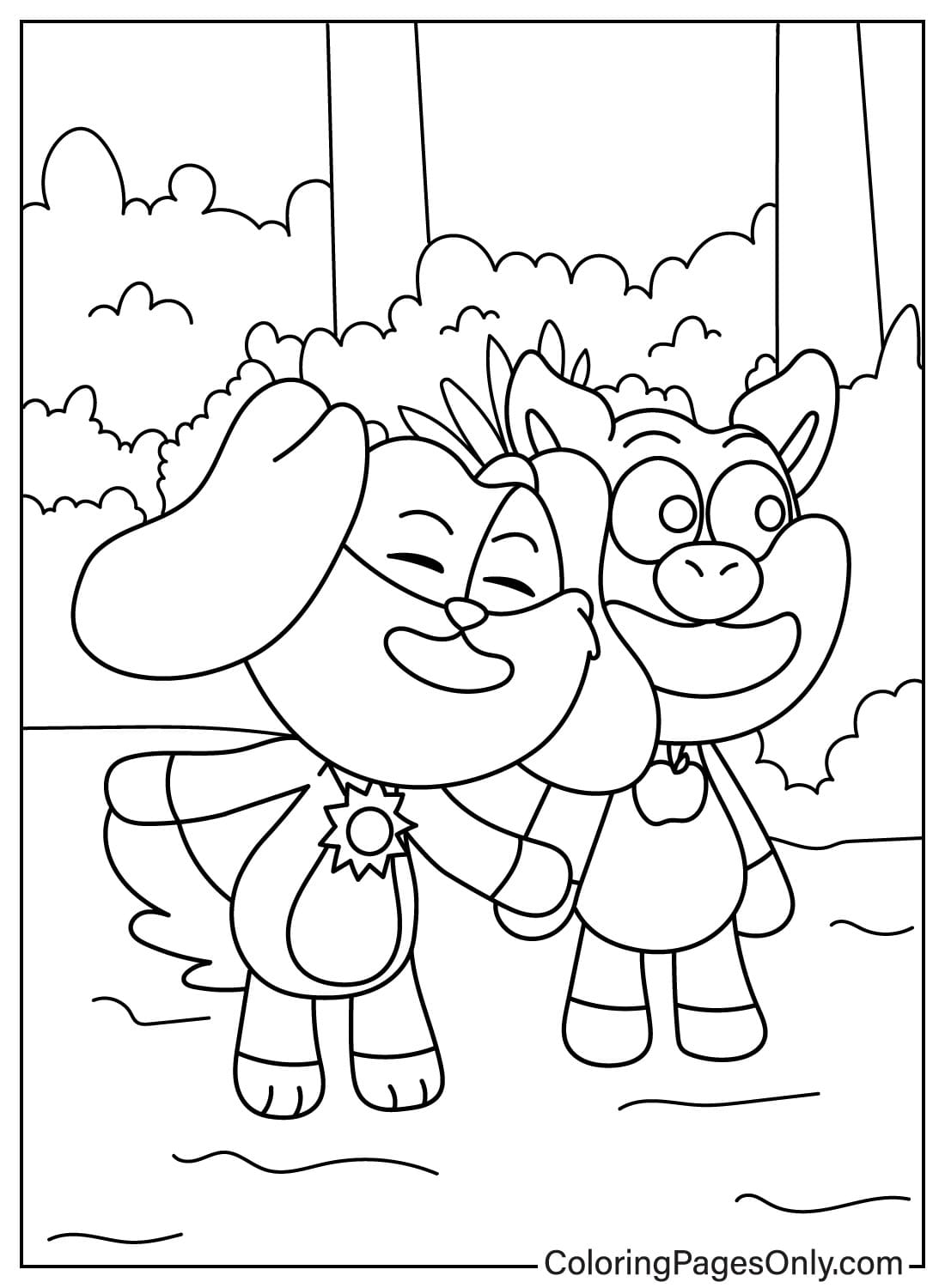
DogDay duo pages – two-character tonal management. Pages featuring both PickyPiggy and DogDay present a two-character coloring challenge: the warm pink of PickyPiggy’s palette and the warm yellow of DogDay’s palette are both warm-toned, which means they need clear value separation to distinguish the two figures. The solution: render DogDay in a slightly more saturated, deeper yellow than might be instinctive, creating a clear mid-tone anchor between the two warm palettes. PickyPiggy’s lighter pink reads as the lighter of the two; DogDay’s more saturated yellow reads as the middle-dark tone. Both characters’ darker accents (PickyPiggy’s darker pink, DogDay’s slightly deeper golden-yellow accents) should be kept consistent and distinct from each other.
PickyPiggy and CatNap pages – warm vs cool contrast. Pages showing PickyPiggy alongside CatNap present one of the most visually striking coloring opportunities in the collection, because their canonical palettes are deliberately designed as contrasts: PickyPiggy’s warm pinks against CatNap’s cool lavender-purple. This warm/cool contrast is most effective when both characters’ colors are rendered at similar saturation levels – making neither palette dominate the other but instead creating a natural visual tension that reflects their different natures in the game’s story.
5 Activities
The pendant personality project. Each Smiling Critter wears a pendant representing their core personality trait. After coloring PickyPiggy with her red apple pendant, design your own Smiling Critter: choose any animal, decide on their defining personality characteristic (kind, brave, adventurous, funny, gentle), and design a pendant that represents it – just as the apple represents health and food for PickyPiggy, the lightbulb represents intelligence for Bubba, and the lightning bolt represents energy for Hoppy. Draw your critter on a blank piece of paper with your pendant design clearly visible. Write a brief character bio on the back: the critter’s name, their species, their signature personality trait, their secret (because every Smiling Critter has a gap between their public persona and their private self), and the scent their mouth applicator would emit. This activity engages the same systematic character design thinking that MOB Games used when creating the Smiling Critters lineup.
The public vs. private persona comparison. PickyPiggy’s defining character tension is between her public identity (healthy-eating advocate with an apple pendant) and her private reality (secret cheeseburger lover, and darker implications beyond). Color any PickyPiggy page twice – once representing her “public” persona: bright, warm, cheerful colors, the apple pendant prominent, a friendly setting. Then color the same page again, representing her “private” self: slightly darker tones, the grin perhaps more prominent, the setting more ambiguous. Display the two versions side by side. Discuss: Why did the designers give PickyPiggy this particular tension? What does it say about the character that she publicly promotes something she privately contradicts? This activity develops the character analysis skill of reading below a surface presentation – something children engage with constantly in social contexts.
The “This Little Piggy” remix. PickyPiggy’s cardboard cutout dialogue references the nursery rhyme “This Little Piggy.” After coloring any PickyPiggy page, rewrite the “This Little Piggy” nursery rhyme using the Smiling Critters as the five piggies – assigning each Smiling Critter to one line of the rhyme based on their personality. “This little piggy went to market” might fit DogDay (optimistic, going out into the world); “This little piggy stayed home” might fit CraftyCorn (shy, artistic, content indoors); and so on. The fifth line (“this little piggy went wee wee wee all the way home”) should be assigned to the critter it most fits emotionally. Display the finished colored PickyPiggy page alongside the rewritten rhyme as a paired creative artifact.
The Smiling Critters team portrait. This activity works best across multiple sessions or as a shared project. Color one Smiling Critter page per session – PickyPiggy, DogDay, CatNap, CraftyCorn, Hoppy Hopscotch, Bubba Bubbaphant, Bobby BearHug, and KickinChicken – in each character’s canonical colors. After all eight are complete, arrange them together in a group display, with each character’s pendant clearly visible. Write each character’s name and defining trait beneath their figure. The finished display is a complete visual reference guide to the Smiling Critters toy line – rendered by hand, from memory and research, rather than assembled from official materials. It demonstrates knowledge of the characters, precision in canonical color use, and patience across a sustained multi-session project.
The toy design challenge. Poppy Playtime’s Smiling Critters were designed as a fictional toy line with very specific design rules: each toy is a plush animal with a zipper down the center (with a unique pendant zipper pull), a wide, dark-mouthed grin, and a scent applicator in the mouth. Using PickyPiggy’s design as the template, create a new Smiling Critter toy that would fit into the line: design its animal species, body color, pendant shape and meaning, the scent it emits, and its character name (following the Smiling Critters’ naming convention of combining the animal’s defining trait with the animal type – PickyPiggy, DogDay, CraftyCorn, BobbyBearHug). Draw the toy on blank paper, color it using the two-tone body approach PickyPiggy uses (lighter main body color, darker accent for extremities), and write its official “toy description” on the back in the style of a real toy box bio. This is genuine product design thinking – the same creative process a real toy designer would use when expanding an existing character line.