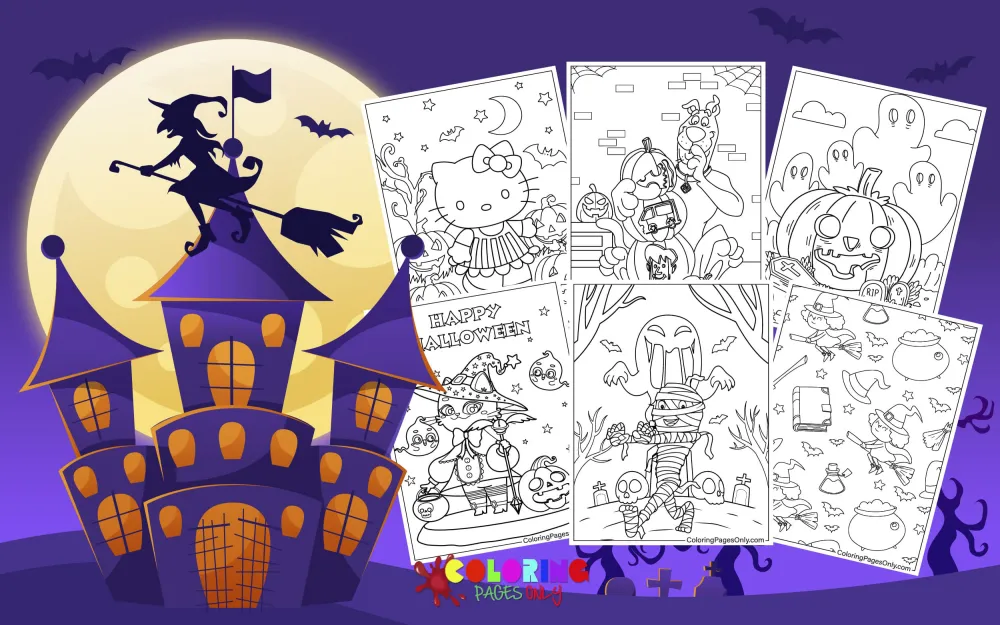
Halloween coloring pages: 1,371 printable designs across 36 sub-categories, organized around every dimension of the holiday: classic monsters and creatures, carved pumpkins and haunted settings, trick-or-treat and costume traditions, the kawaii and cute Halloween aesthetic, and beloved character crossovers such as Hello Kitty in a witch hat, Bluey in a Halloween costume, and SpongeBob trick-or-treating. Each page can be downloaded as a PDF to print or colored online in the browser.
Whether the goal is something genuinely spooky, something sweetly cute, something specific to a character, or something simple for a very young child, this collection is organized to help readers find it. The full holiday collection on this site is available through the Holidays hub.


Halloween History and Visual Identity
Halloween traces back to the ancient Celtic festival of Samhain, observed roughly 2,000 years ago at the end of the harvest season, when the Celts believed the boundary between the living and the dead grew thin. The holiday later absorbed elements of Roman festivals and the Christian All Saints’ and All Souls’ Days, and took its modern trick-or-treat form largely through Irish and Scottish immigration to North America in the 19th and 20th centuries. The jack-o’-lantern itself descends from an Irish tradition of carving faces into turnips; in America, where pumpkins were more plentiful and larger, the tradition became the jack-o’-lantern known today. By the late 19th century, Halloween was shifting from a community folk festival into a more family-oriented holiday, and the trick-or-treat tradition as practiced today emerged in the United States between the 1920s and the 1950s.
The visual identity of Halloween, the orange and black color palette, the jack-o’-lantern, the witch on a broomstick, the ghost, the skeleton, the black cat, and the haunted house against a full moon has remained remarkably consistent since the late 19th and early 20th centuries, when Halloween greeting card illustrations first established these iconic images. This visual consistency is one reason Halloween translates so powerfully to coloring pages: every image in the Halloween visual vocabulary is immediately recognized across all ages.
What Halloween Coloring Pages Do
Making an emotionally rich holiday approachable. Because Halloween’s visual vocabulary spans from gentle to genuinely spooky, coloring pages give children a hands-on way to explore the holiday’s imagery at whatever intensity feels right for them.
Fine motor development. The American Academy of Pediatrics identifies fine motor skill development as a core benefit of structured coloring for children ages 2 through 7. The wide range of complexity across this collection, from simple preschool Halloween pages to detailed haunted house scenes, suits a broad range of skill levels within that age range and beyond.
Anxiety reduction through focus. A 2005 study in the Art Therapy Journal documented measurable reductions in anxiety following structured coloring sessions. Halloween in particular can carry mixed emotions for some children, and a calm, focused coloring session can help process the holiday’s more intense imagery in a controlled, low-stakes way.
Connecting seasonal tradition to visual literacy. Because Halloween’s core symbols, the jack-o’-lantern, the witch, and the ghost, have remained visually consistent for more than a century, coloring them gives children practice recognizing a shared cultural visual language passed down through generations.
The Classic Halloween Creatures and Figures
The foundational sub-categories in this collection cover the creatures and figures that define the classic Halloween visual tradition, the images that appear on every decoration, every costume, every piece of seasonal merchandise.
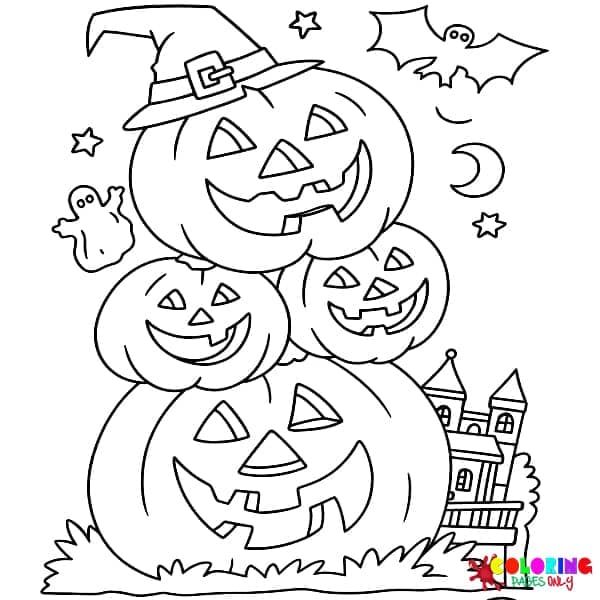
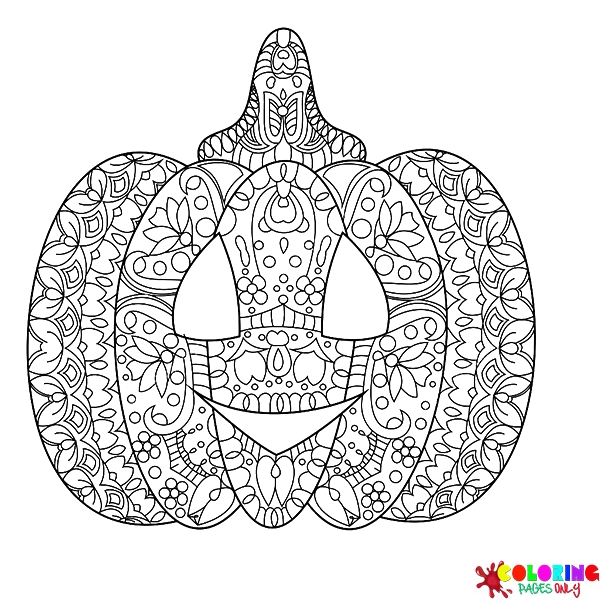
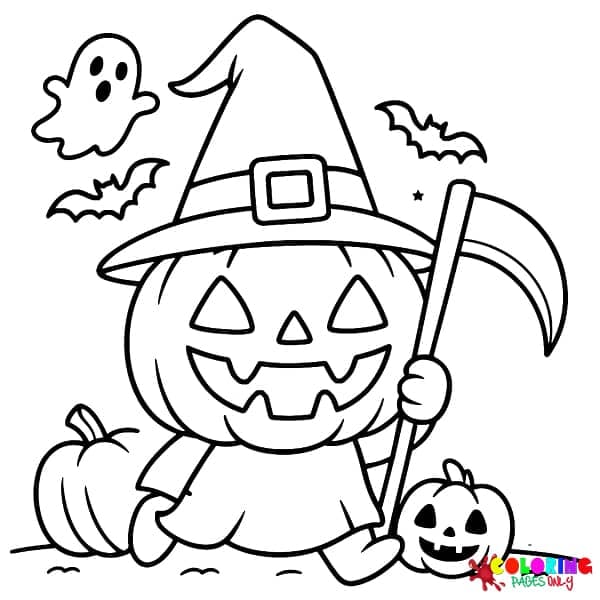
Jack O’ Lantern is the defining symbol of Halloween, the carved pumpkin with its cut eyes and mouth, lit from within, its face glowing against the darkness. This sub-category covers the full range of carved designs, from traditional, simple, triangular eyes to more elaborate carved expressions. Halloween Pumpkin extends coverage to uncarved pumpkins and pumpkin patch scenes alongside the carved jack-o’-lantern designs.
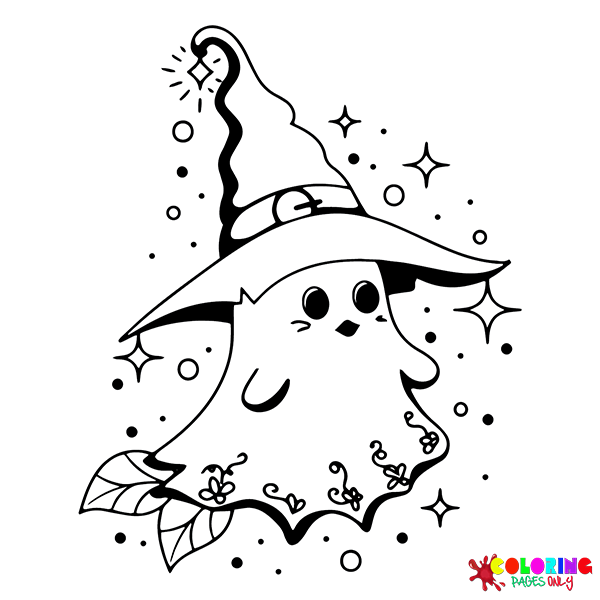
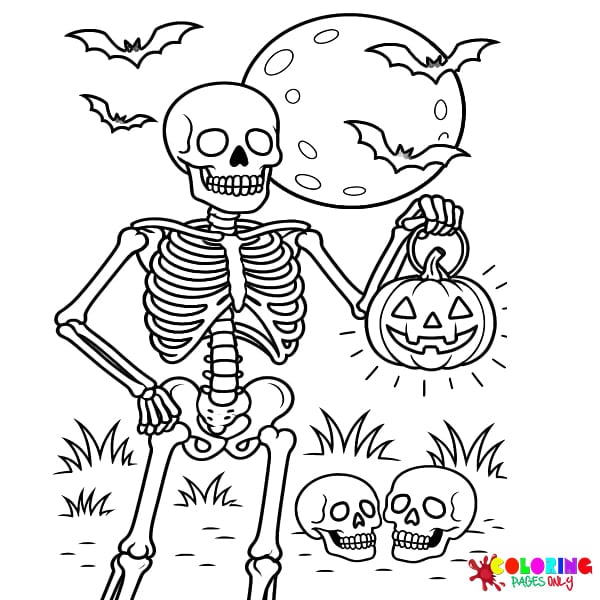
Ghost covers the most immediately simplified Halloween image, the draped white sheet shape with dark eye holes, alongside more elaborate ghost designs with translucent bodies and trailing ectoplasm. Skeleton covers the anatomical imagery of Halloween, the white bones against black, and the grinning skull, in scenes of dancing or posing.
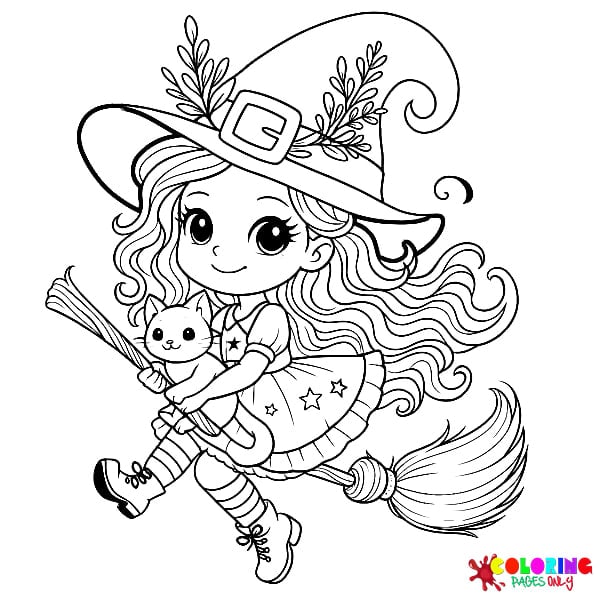
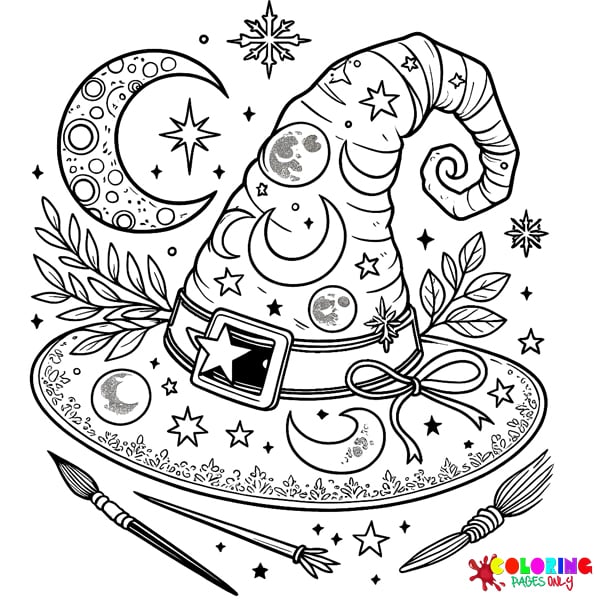
Halloween Witch covers the witch in her classic form, the pointed black hat, the long dark robe, the broomstick, the bubbling cauldron, and the black cat familiar. Witch Hat focuses specifically on the iconic pointed black hat as a standalone subject.
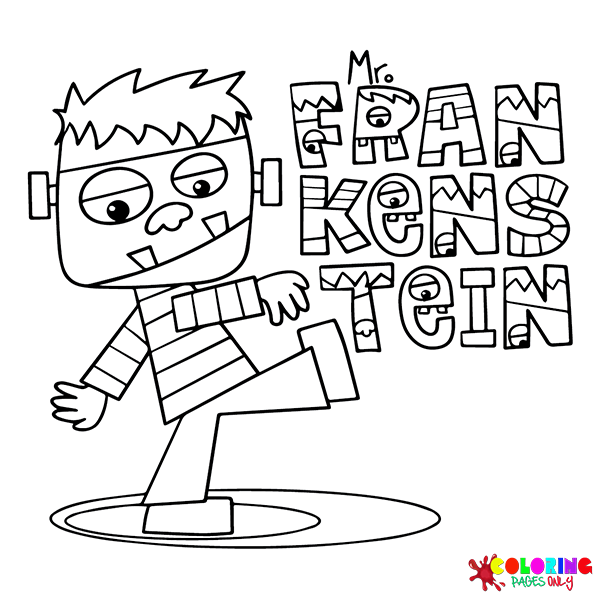
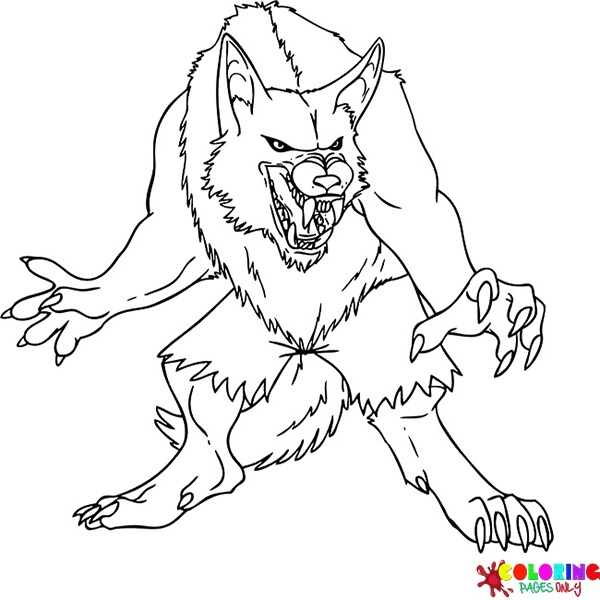
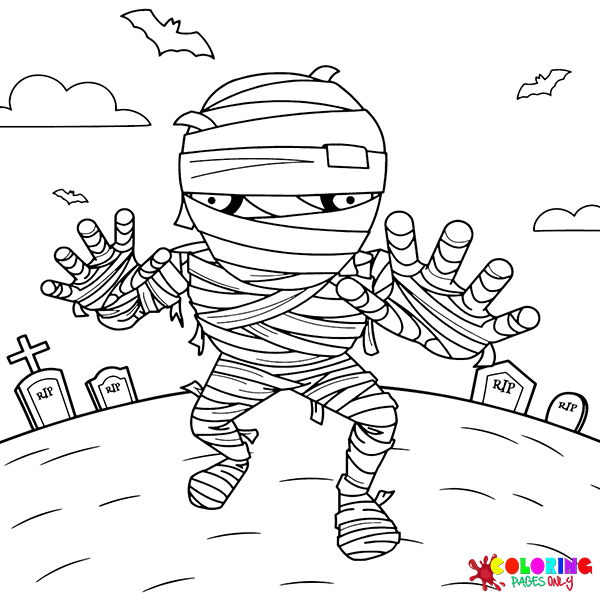
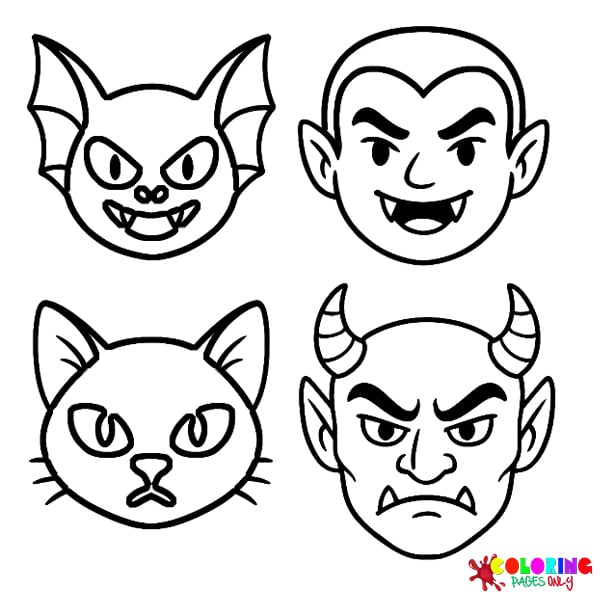
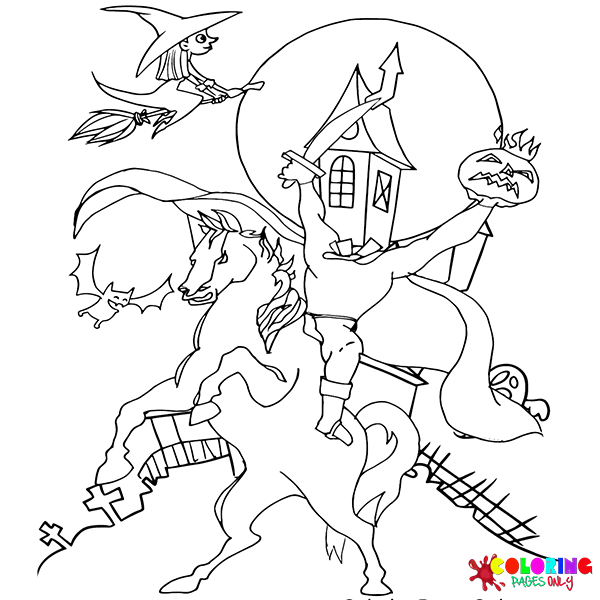
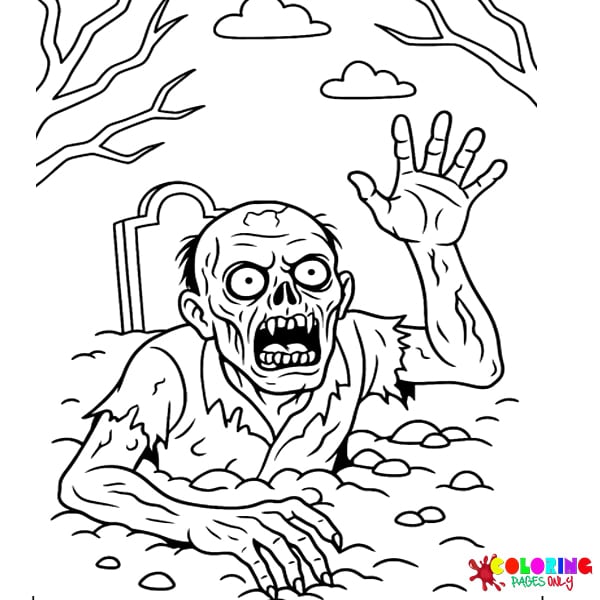
Mummy covers the Egyptian-inspired Halloween monster wrapped in white bandages. Halloween Monsters covers the broader monster family: Frankenstein’s monster, werewolves, vampires, and zombies. Headless Horseman covers the specific monster from Washington Irving’s 1820 story “The Legend of Sleepy Hollow,” the Hessian soldier who rides through the night carrying a jack-o’-lantern in place of his missing head.
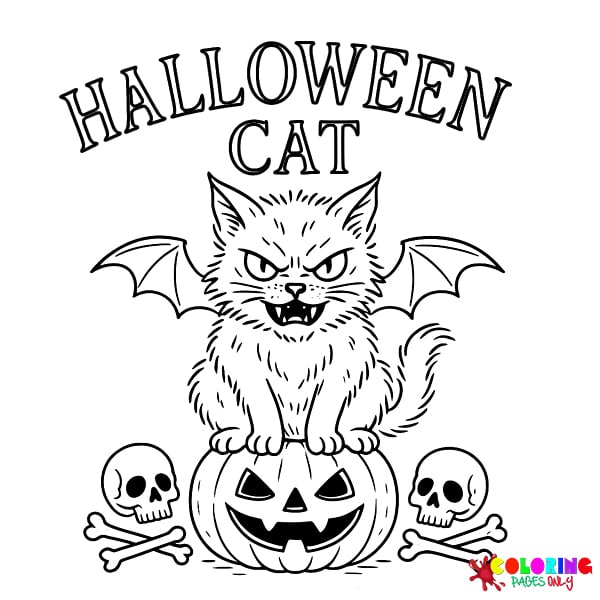
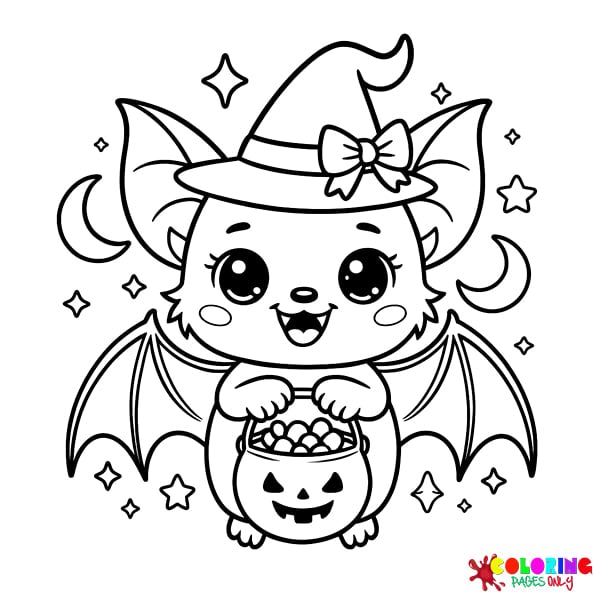
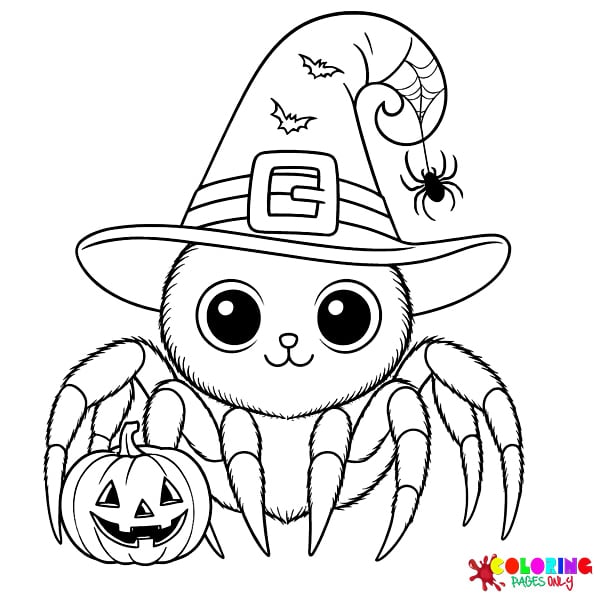
Halloween Spider covers the arachnid as a Halloween symbol, large, dramatic spiders with their webs. Halloween Bats covers the nocturnal flying mammal that has become one of Halloween’s most recognizable symbols. Halloween Cat covers the black cat of Halloween tradition, its association with witches and magic dating to medieval European folklore.
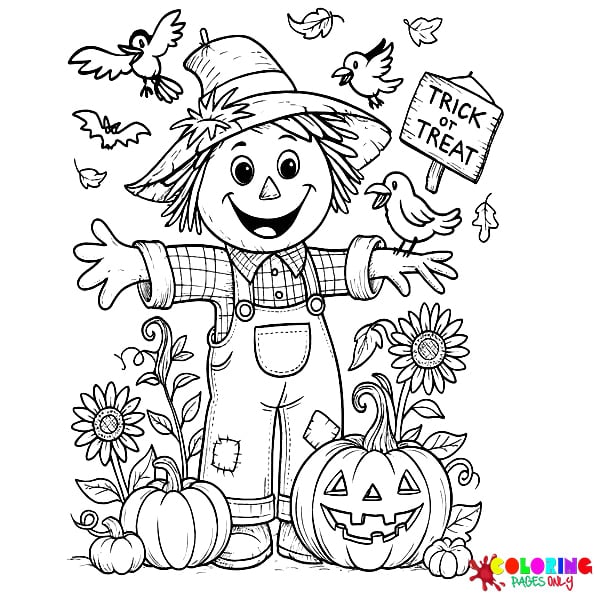
Scarecrow brings the autumn harvest imagery that connects Halloween to its agricultural Samhain origins, the straw-stuffed figure in ragged clothing on a post in an autumn field.
Halloween Settings and Atmospheres
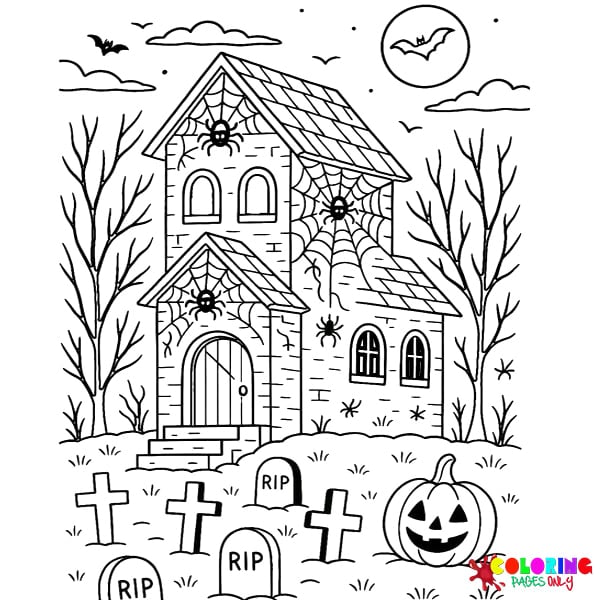
Haunted House covers the architectural centerpiece of Halloween imagery, the abandoned Victorian house on a hill silhouetted against a full moon, with lit windows, bats emerging from the eaves, and an overgrown cemetery. These are among the most compositionally rich pages in the entire collection.
Scary Halloween covers the more genuinely frightening end of the spectrum, darker compositions, and more intense monster designs. Spooktacular Halloween functions as a general Halloween grab bag, mixing gentle and dramatic designs across a wide range of subjects.
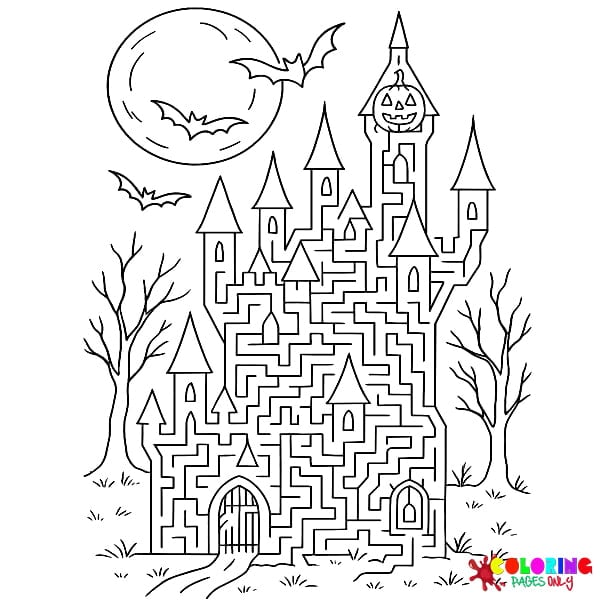
Halloween Maze brings a puzzle element to the collection, maze pages set within Halloween scenes that combine coloring with navigation problem-solving.
Trick-or-Treat, Candy, and Costume Traditions
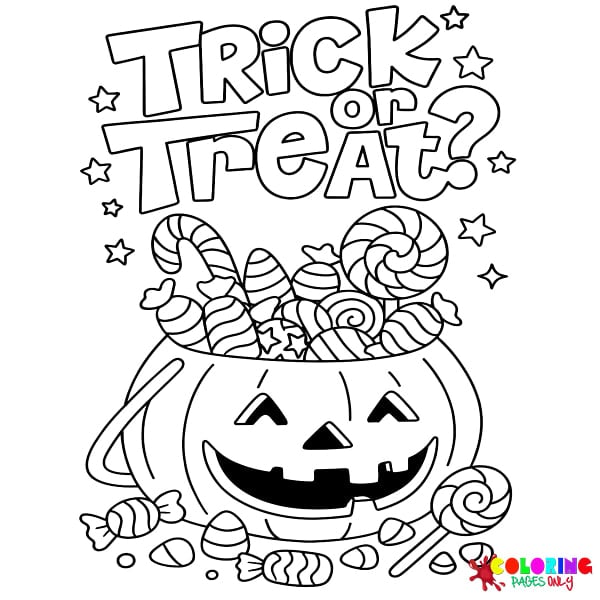
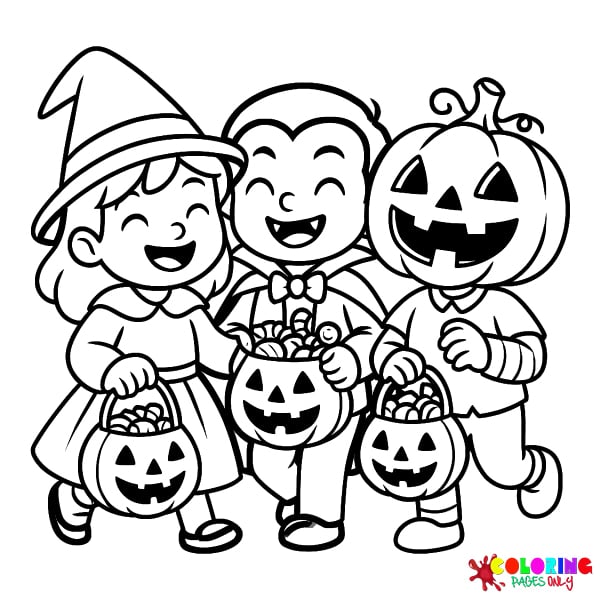
Trick or Treat covers the central community ritual of Halloween, children in costumes going door-to-door to collect candy. Halloween costumes cover the costume-wearing tradition in its full variety, with characters dressed as witches, ghosts, superheroes, and animals. Halloween Masks covers the specific costume element of the mask, from simple domino masks to elaborate creature masks.
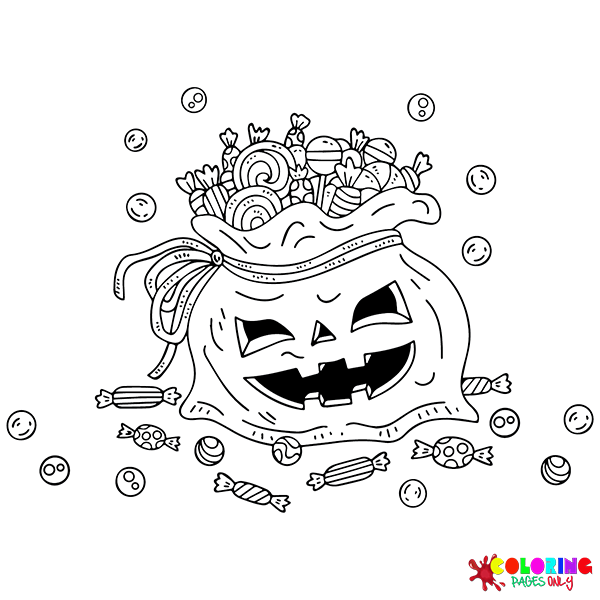
Halloween Candy covers the confectionery harvest of trick-or-treating, candy corn with its distinctive three-color striped triangle form, wrapped candies, and the overflowing treat bucket.
The Kawaii and Cute Halloween Aesthetic
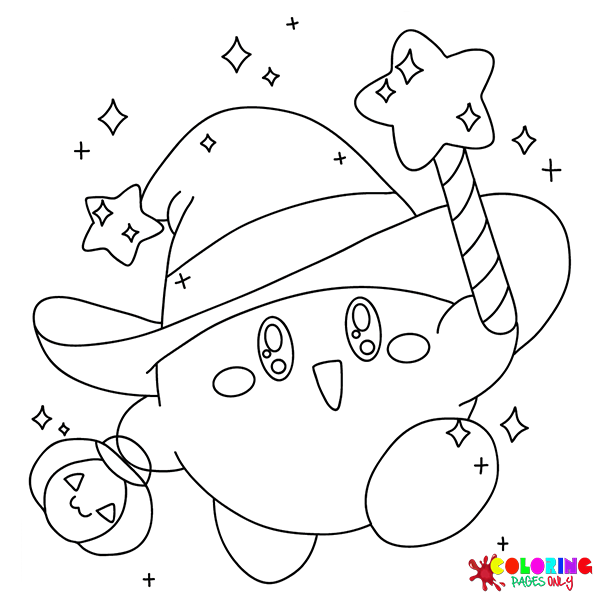
One of the most significant developments in Halloween coloring page culture in recent years is the emergence of the kawaii Halloween aesthetic, the Japanese cute design tradition applied to Halloween imagery, producing versions of spooky subjects rendered in round, soft, pastel-accented forms that are recognizable as Halloween while completely non-frightening.
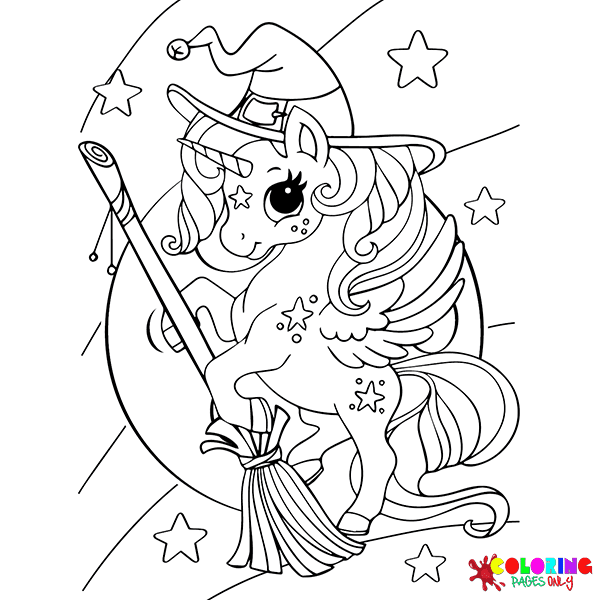
Kawaii Halloween covers this aesthetic specifically, round ghost shapes with tiny happy eyes and pumpkins with blushing cheeks. Cute Halloween covers the broader cute end of the spectrum beyond strictly kawaii styling. Happy Halloween covers Halloween imagery in its most cheerful and celebratory register. Halloween Unicorn combines the unicorn with Halloween imagery and costumes. Halloween Mandala covers Halloween-themed mandala designs, circular radially symmetric patterns incorporating bats, pumpkins, and moons, designed primarily for older children and adults.
Preschool Halloween covers the youngest end of the age spectrum, with very simple, large-outlined pages and minimal internal detail for children ages 2 to 5.
Character Crossover Halloween Pages
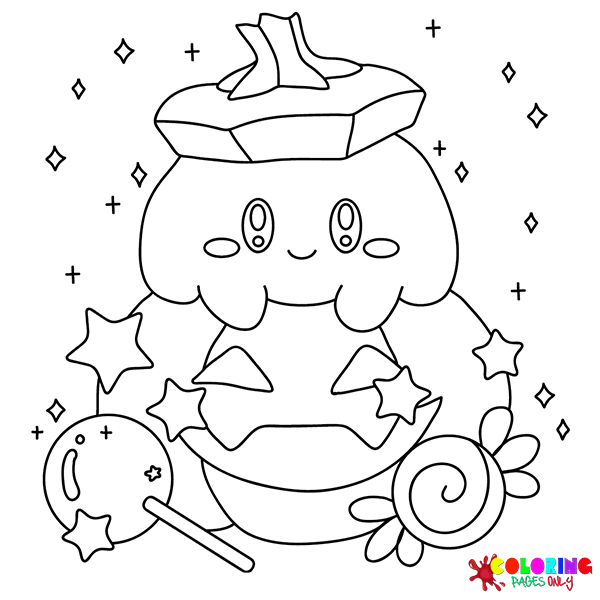
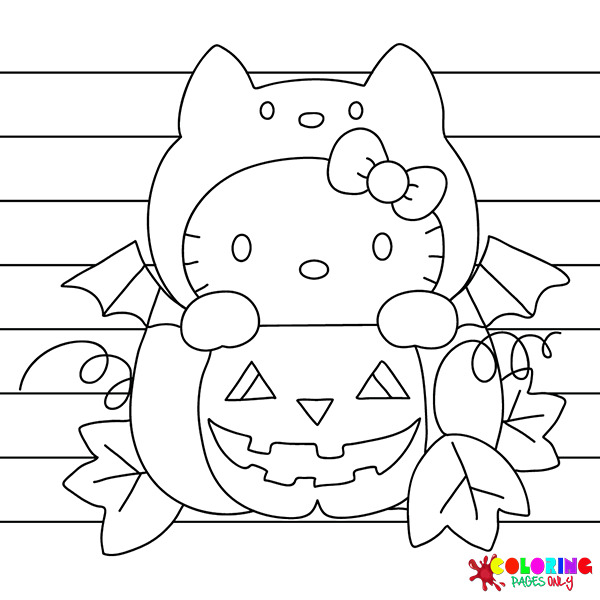
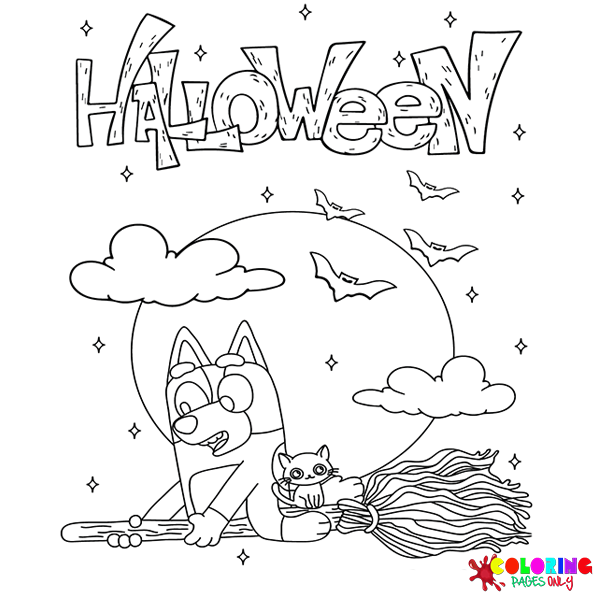
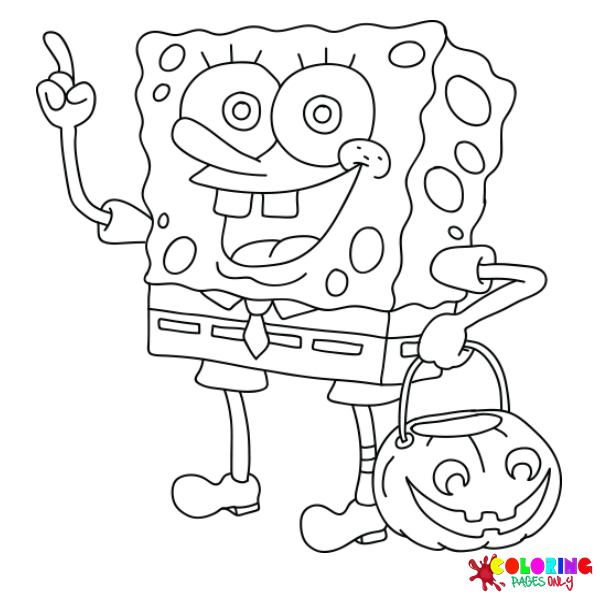
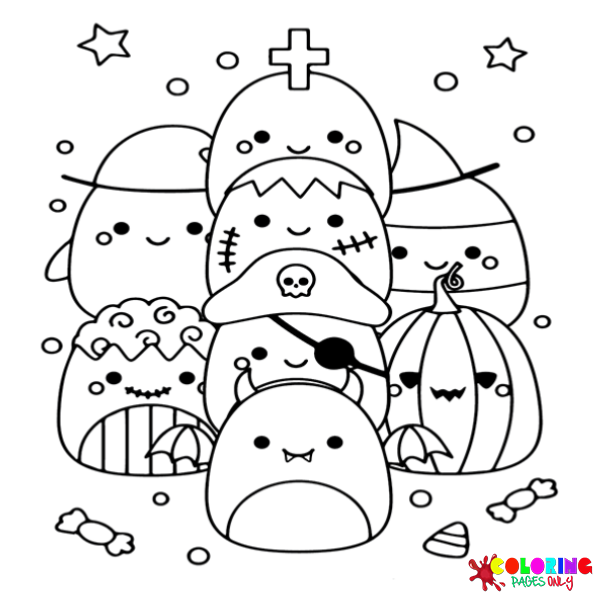
The character crossover sub-categories bring Halloween to the beloved characters children encounter throughout the year. Halloween Hello Kitty covers Hello Kitty in Halloween contexts, the white Sanrio cat in a witch costume. Bluey Halloween covers the Australian Blue Heeler puppy and her sister, Bingo, in Halloween costumes. SpongeBob Halloween covers SpongeBob and the Bikini Bottom characters. Squishmallow Halloween covers the round, soft plush toy characters in Halloween costumes.
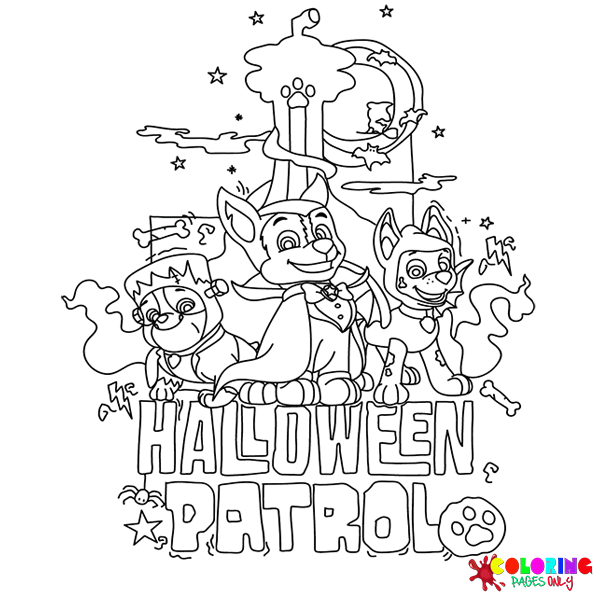
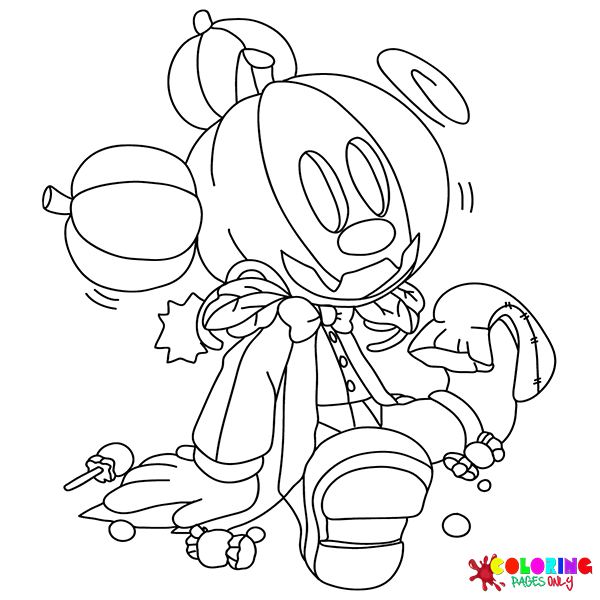
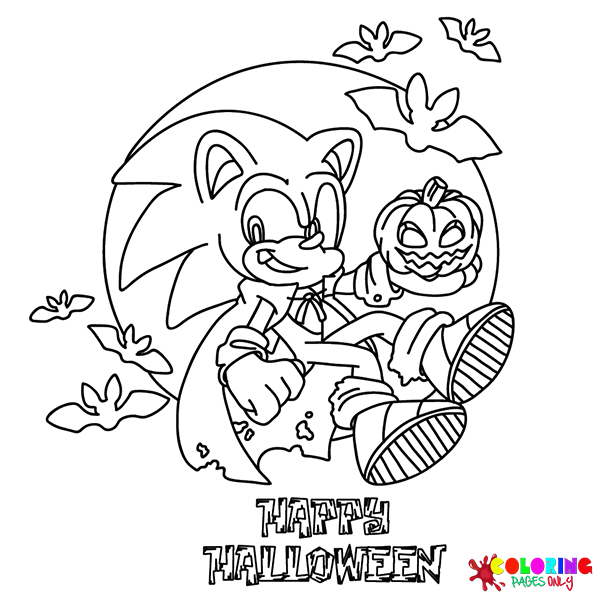
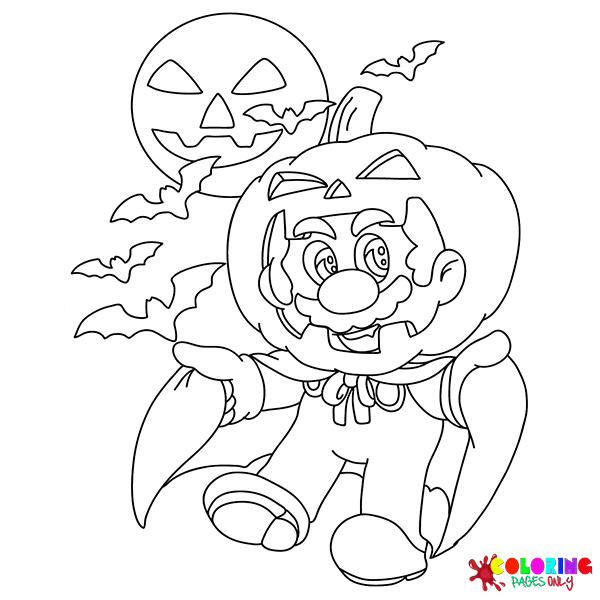
Paw Patrol Halloween covers the Paw Patrol pups in Halloween costumes. Mickey Halloween covers Mickey Mouse and friends in Halloween scenes. Mario Halloween covers Mario, primarily in solo costume designs, alongside a page featuring Luigi. Sonic Halloween covers Sonic the Hedgehog and the Sonic character family. Pokemon Halloween covers the Pokemon roster, including the naturally ghost-type Gengar, alongside costume designs featuring Pikachu and Charmander. Disney Halloween covers a broader crossover set spanning more than a dozen Disney and Pixar franchises, including films such as Frozen and The Nightmare Before Christmas.
Coloring Tips for Halloween Pages
Halloween has the most defined and culturally specific color palette of any holiday. The canonical palette is built on three primary colors: vivid Orange for pumpkins, autumn leaves, and the warm glow of jack-o’-lantern candlelight; Black for night sky, shadows, and witch clothing; and White for ghosts, skeletons, and the moon. Secondary colors add specific meaning: Purple for magic and the supernatural, Green for witch skin and potions, and deep Red for vampire imagery and dramatic accents.
For jack-o’-lantern pages, the most important decision is rendering the interior glow. The exterior should be vivid warm orange, deeper in the shadow areas between the ribs, while the interior visible through the carved openings should be brighter and more yellow, suggesting warm candlelight from inside.
For ghost pages, the challenge is rendering white as a positive, luminous color rather than leaving the paper blank. A ghost should feel lit from within, slightly warmer at the thickest parts of its form and cooler at the edges and trailing tail. A pale blue-gray shadow on one side gives it a three-dimensional presence.
For which pages, the hat and robe are black but never flat, dead black. A rich, slightly blue-tinged dark tone works for the main body, with near-black shadows in the deepest recesses. The cauldron reads best as a dark gray-green, suggesting old cast iron, and the potion inside can be any color, traditional green or vivid purple, showing bubbling activity on its surface.
For haunted house pages, the entire scene takes place at night, so the sky should be deep blue-black, with light sources, lit windows, the moon, and jack-o’-lanterns, determining the color of everything else. Windows lit from within should glow amber-yellow or ghostly blue-white against the dark house exterior.
For cute and kawaii Halloween pages, the palette shifts to a pastel version: soft peach rather than vivid orange, pale lavender rather than deep purple, soft gray rather than black, combined with pink cheek blush and large, round eyes.
For character crossover pages, a character’s canonical colors should remain consistent regardless of the Halloween costume they are wearing. A Halloween-costumed Hello Kitty is still white-bodied with a red bow; a Halloween-costumed Pikachu is still yellow. The costume elements are layered over the character’s established palette rather than replacing it.
5 Creative Craft Ideas With Halloween Coloring Pages
1. Halloween Countdown Calendar
In the days leading up to October 31, print and color one Halloween page each day, starting with simpler pages for younger colorists and working toward more elaborate pages as Halloween approaches. Arrange the completed pages on a wall or door in the order they were colored, creating a visual countdown to Halloween night.
2. Halloween Coloring Party
Print a selection of pages covering different difficulty levels and themes, then set up a coloring station with the full Halloween palette: orange, black, purple, green, white, yellow, and red. When finished, display the completed pages together as a collective Halloween gallery.
3. Haunted House Interior and Exterior Set
Print the Haunted House page and pair it with pages from the Ghost, Skeleton, Mummy, and Halloween Spider sub-categories to populate the interior. Color the exterior first to establish the nighttime palette, then color the interior creature pages in light consistent with the windows established in the exterior page.
4. Trick-or-Treat Candy Taxonomy
Print the Halloween Candy page and color each candy type in its canonical packaging colors, candy corn in its orange-yellow-white scheme, and chocolate bars in brown wrappers. Below each item, write its name and what makes it distinctively Halloween, for a personal candy guide.
5. Character Halloween Costume Comparison
Choose any character from the crossover sub-categories and print both a standard character page and a Halloween version of the same character. Color the everyday page first using the character’s canonical palette, then color the Halloween version, keeping the character’s body colors consistent while choosing a costume color scheme freely.
Frequently Asked Questions
What are Halloween coloring pages?
Halloween coloring pages are printable designs built around the imagery of the October 31 holiday, including pumpkins, ghosts, witches, monsters, and costumed characters. Every page in this collection can be downloaded as a PDF for printing or colored directly online in the browser.
What is the history behind Halloween?
Halloween traces back to the ancient Celtic festival of Samhain, observed roughly 2,000 years ago at the end of the harvest season, when the Celts believed the boundary between the living and the dead grew thin. The holiday later absorbed elements of Roman festivals and the Christian All Saints’ and All Souls’ Days, and took its modern trick-or-treat form largely through Irish and Scottish immigration to North America in the 19th and 20th centuries.
What sub-categories are included in this collection?
This hub organizes Halloween content into classic creatures and figures such as jack-o’-lanterns, ghosts, witches, and mummies, Halloween settings like haunted houses, trick-or-treat, and costume traditions, the kawaii and cute Halloween aesthetic, and character crossover pages featuring Hello Kitty, Bluey, SpongeBob, Mickey Mouse, Mario, Pokemon, and more.
What colors work best for Halloween coloring pages?
The classic Halloween palette centers on vivid Orange, Black, and White, with Purple, Green, and deep Red used for magic, potions, and dramatic accents. Kawaii and cute Halloween pages shift to a softer palette of pastel Peach, Lavender, and Gray instead.
Are Halloween coloring pages suitable for young children?
Yes, though the right page depends on the child. This collection spans very simple, non-frightening designs suited to preschool-age children through more dramatic, genuinely spooky pages aimed at older children and adults.
What is kawaii Halloween, and how is it different from regular Halloween pages?
Kawaii Halloween applies a Japanese-inspired cute design style, rounded shapes, oversized eyes, and pastel colors to classic Halloween subjects, softening them into something gentle rather than frightening. Regular Halloween pages use the classic high-contrast orange, black, and white palette.
Can Halloween coloring pages be used for a classroom or party activity?
Yes. The collection includes ideas such as a Halloween countdown calendar, a coloring party with pages at several difficulty levels, and a haunted house set built from matching exterior and interior pages.
How many Halloween coloring pages does the site have in total?
This hub currently organizes 1,371 pages across 36 sub-categories, though the exact count should be confirmed against the site’s current total, since collections are updated regularly.
Start Coloring
Choose a sub-category above to browse that collection, or open any page to download it as a free PDF or color it online in the browser. No account, email, or payment is required. Share finished pages on Facebook or Pinterest with the share buttons on each page.
More Halloween Coloring Pages