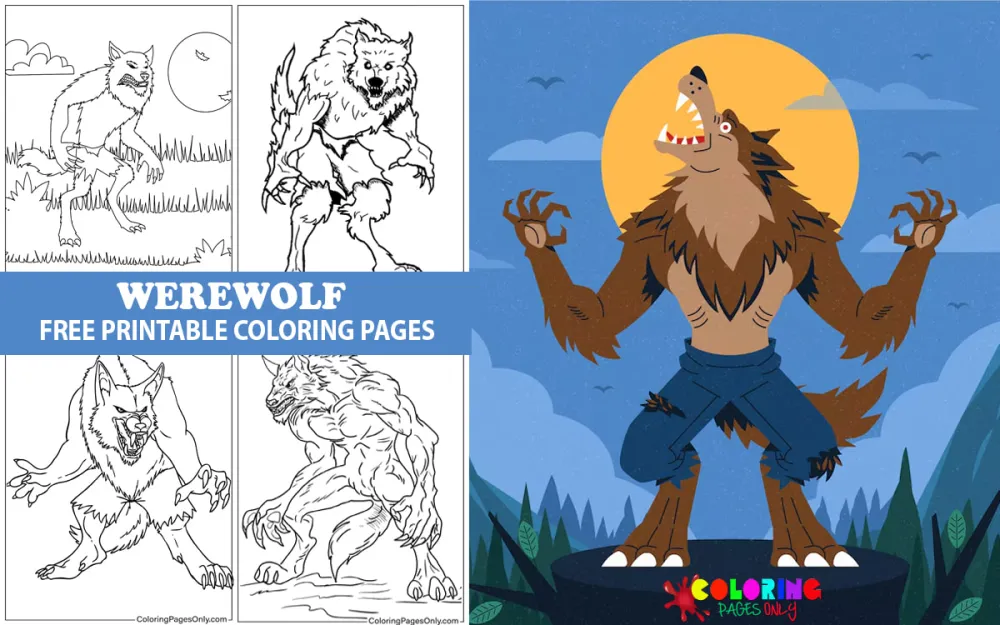
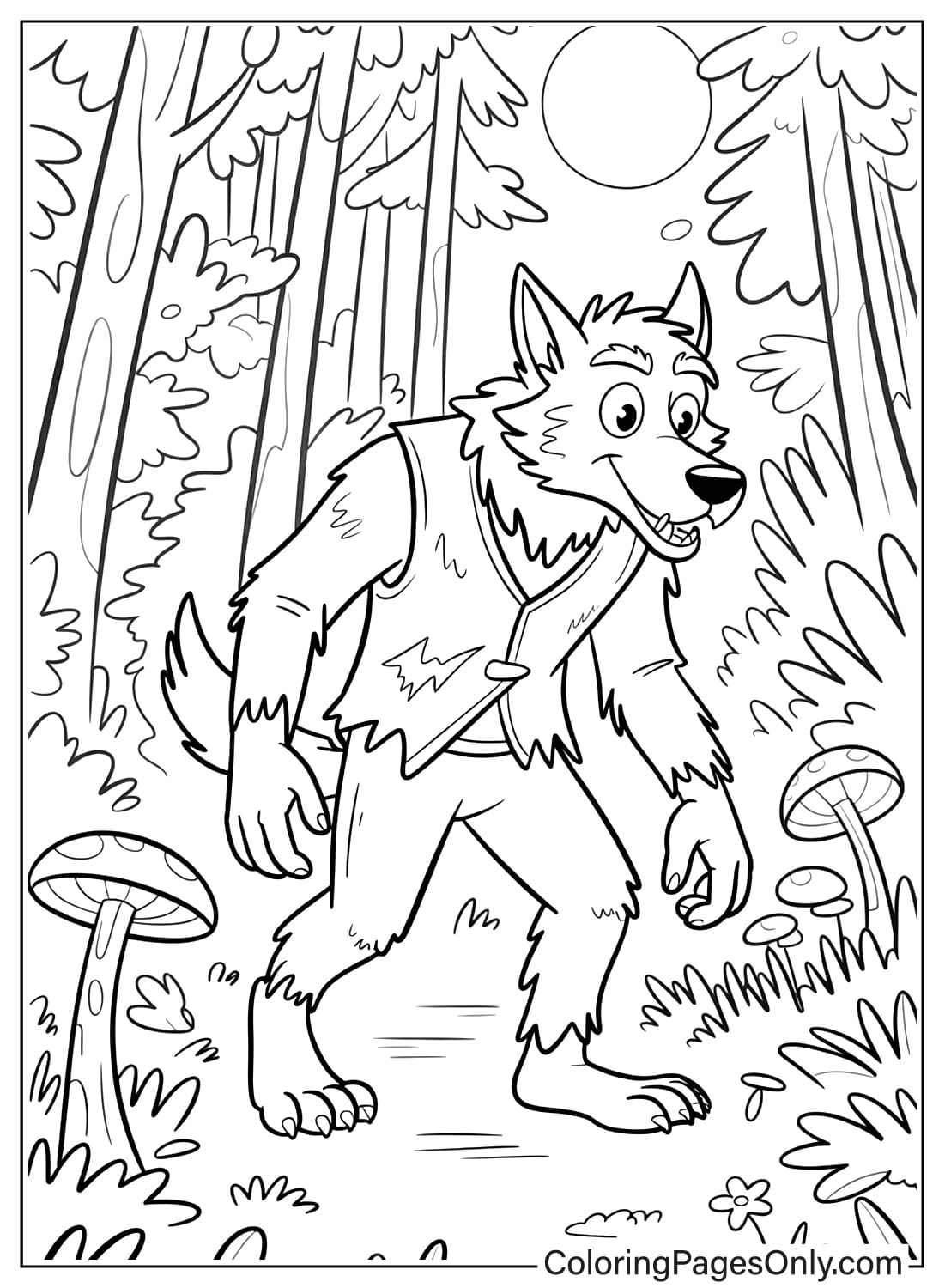
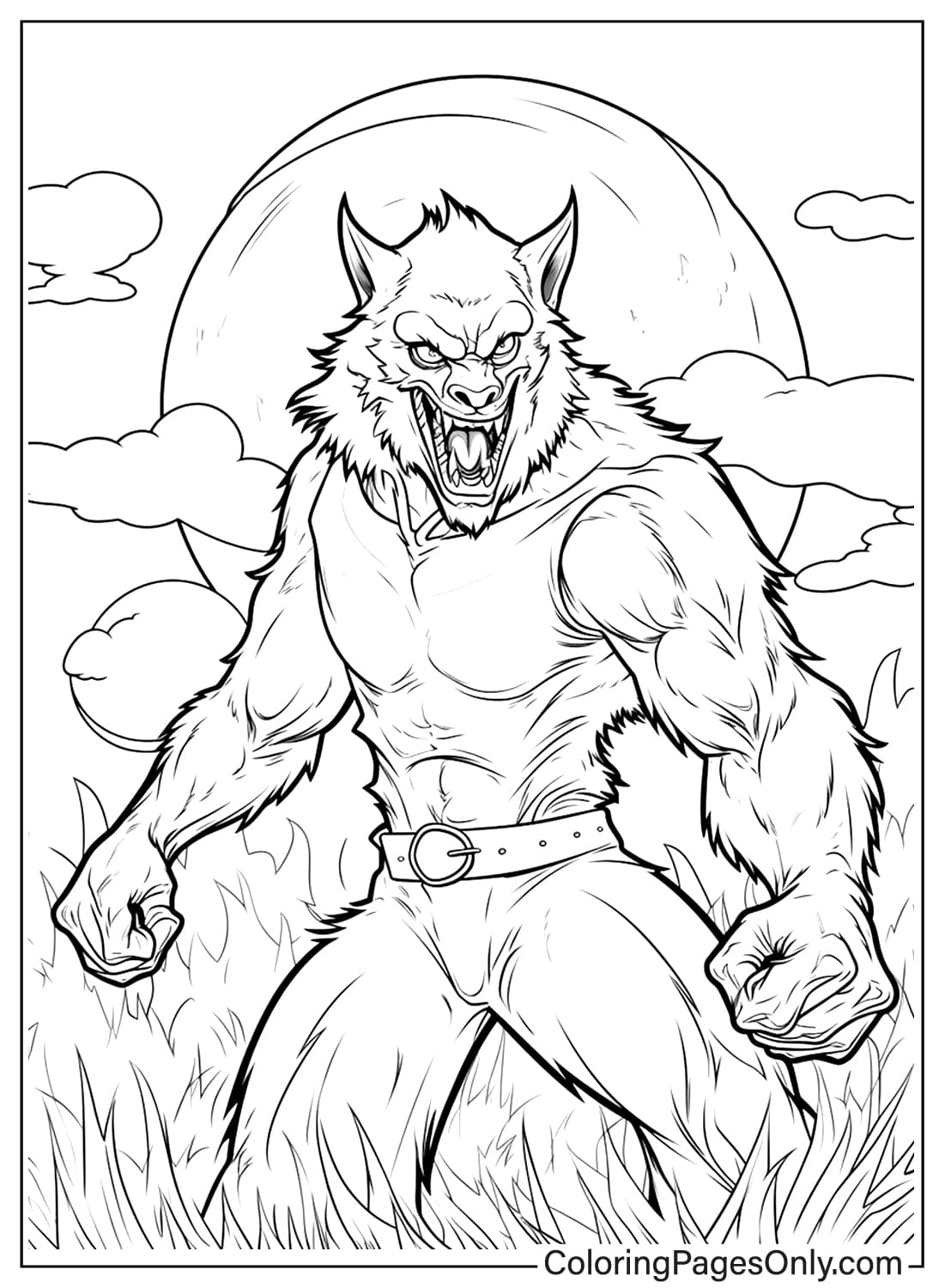
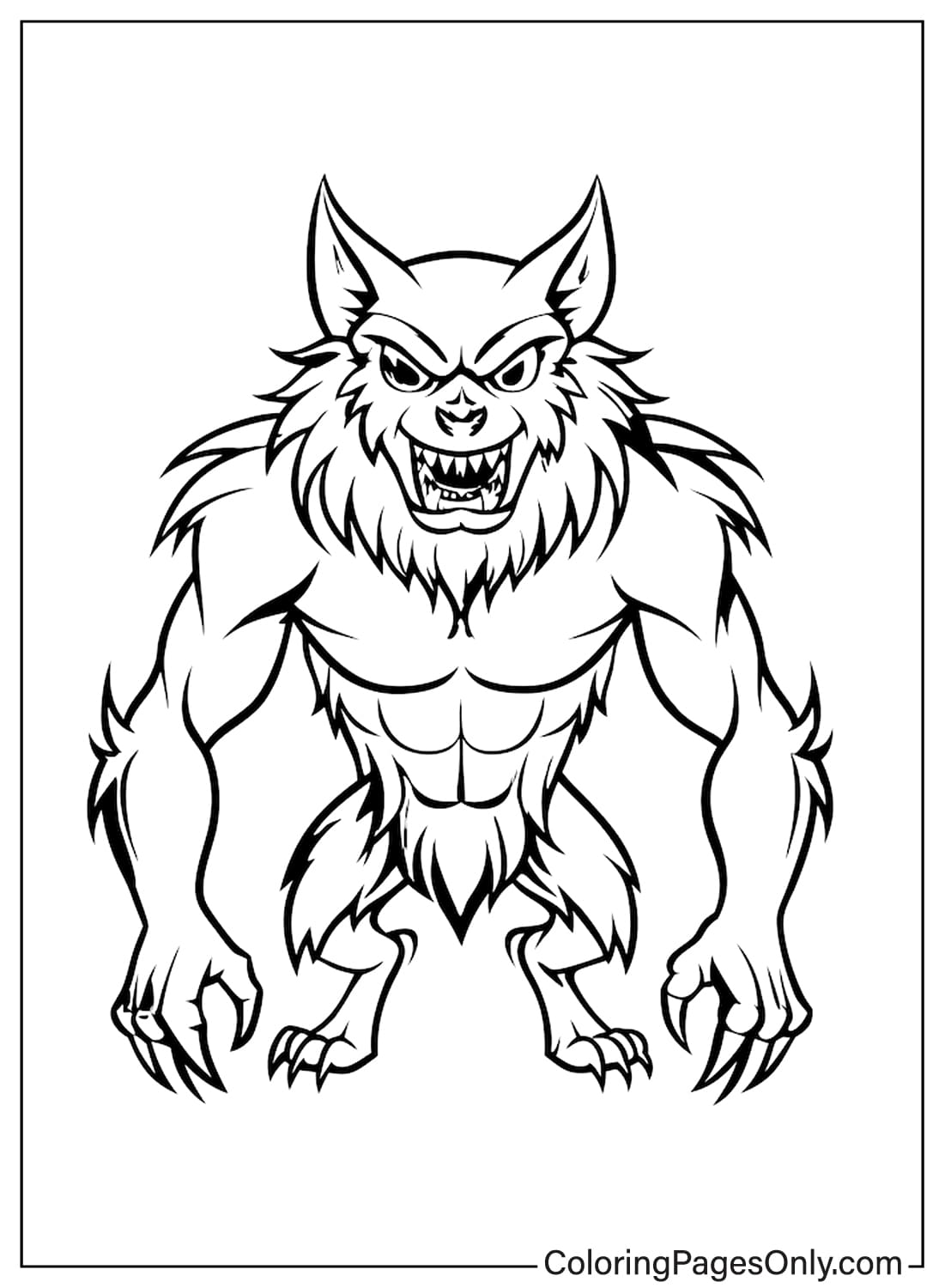
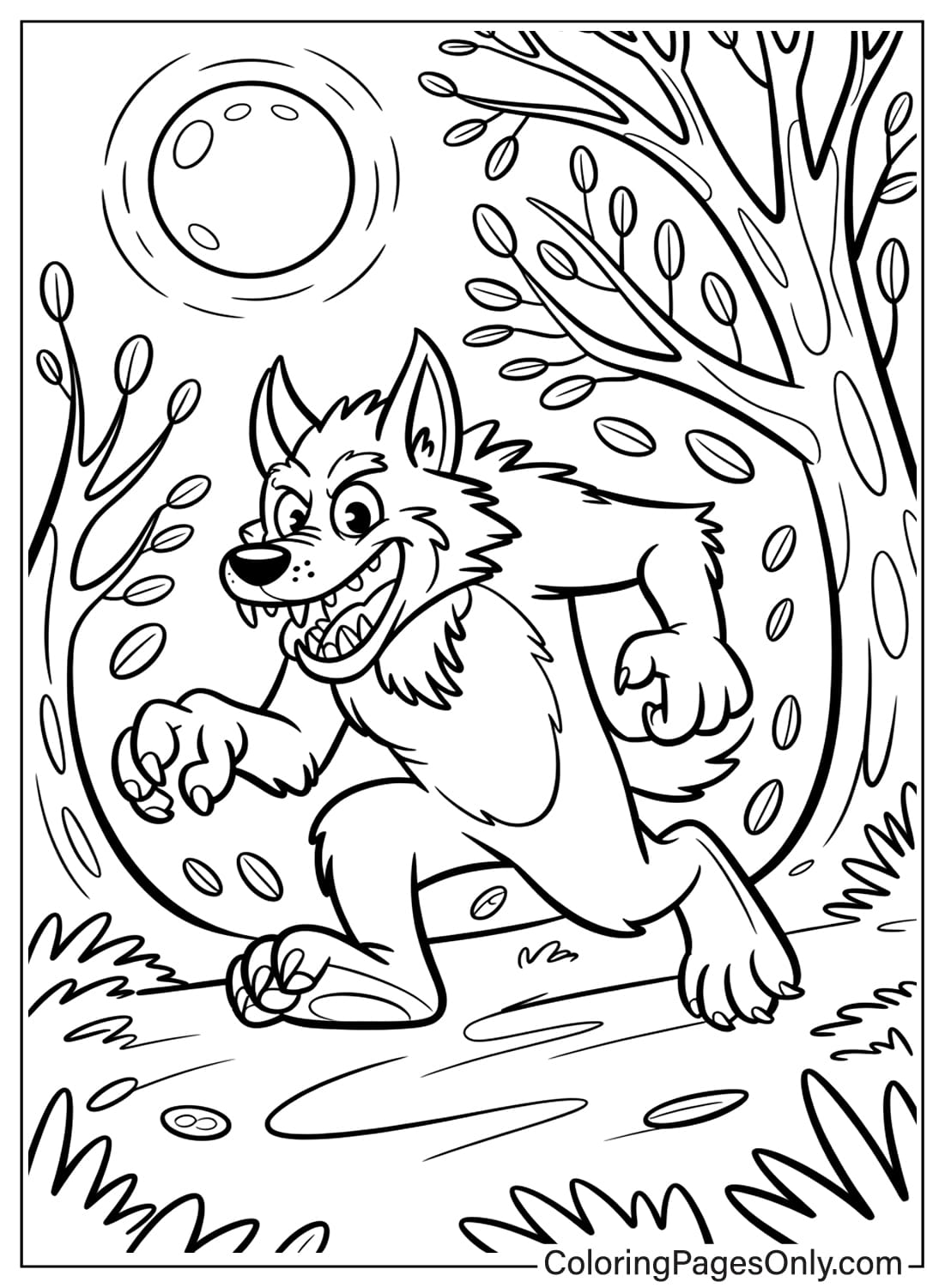
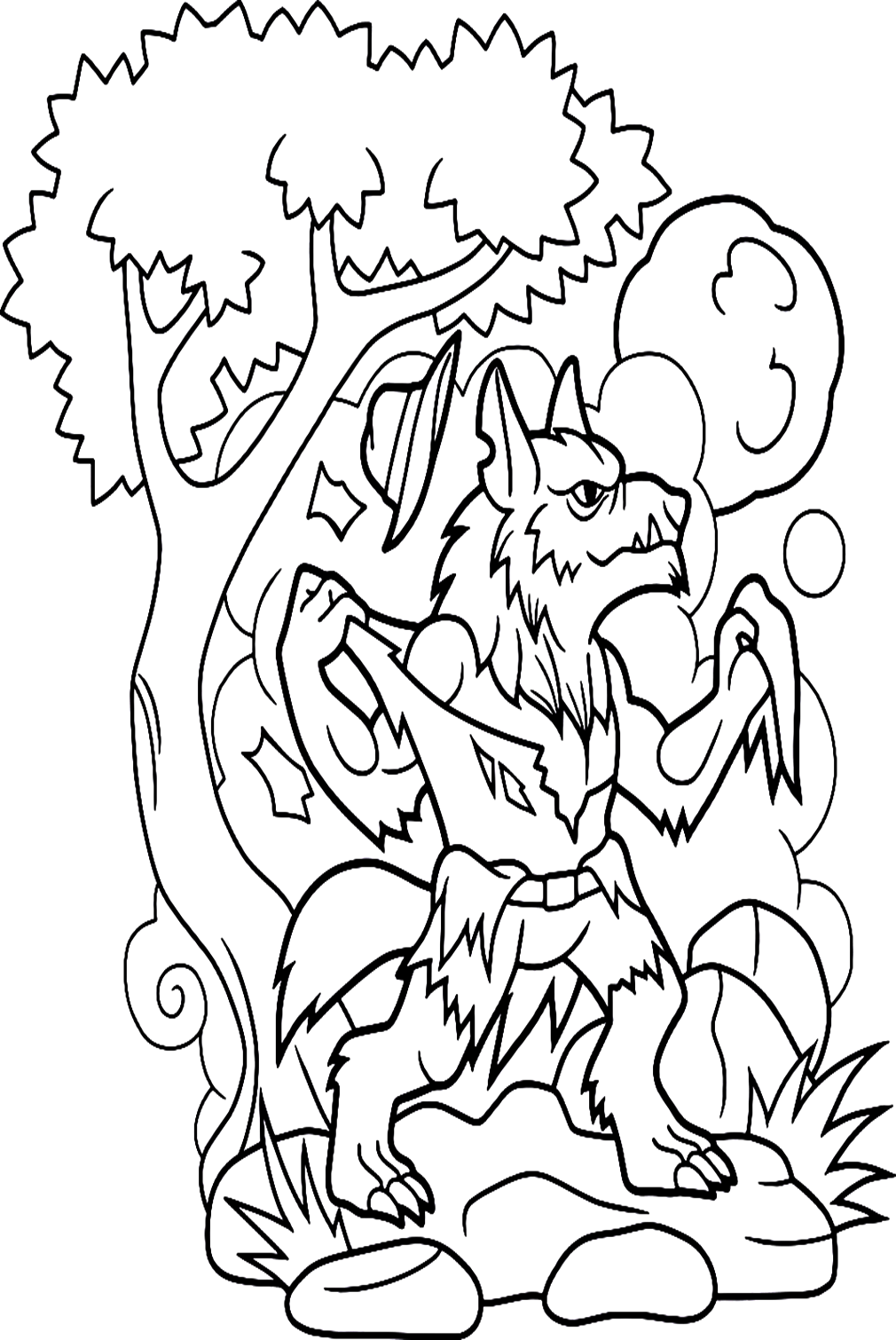
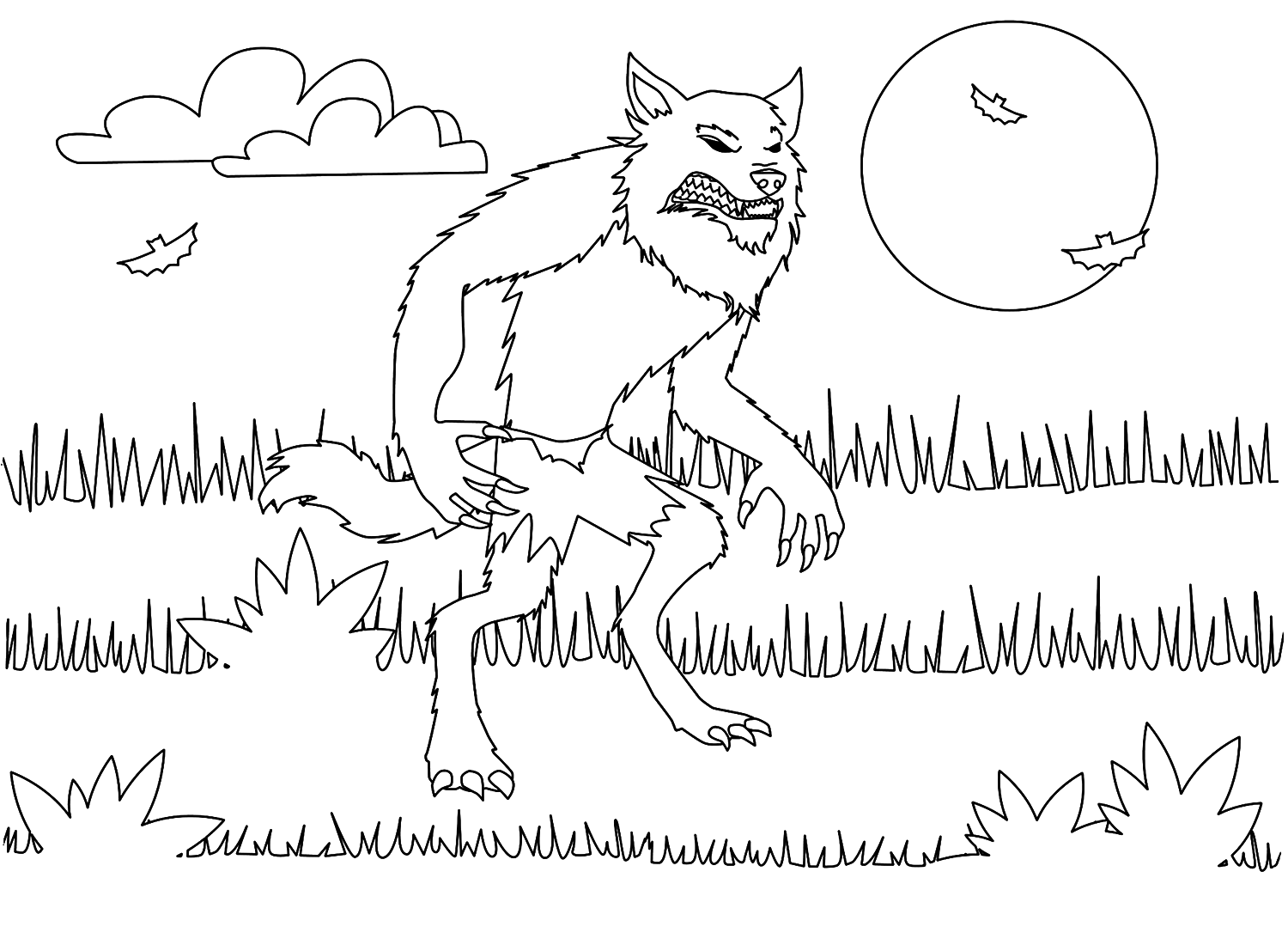
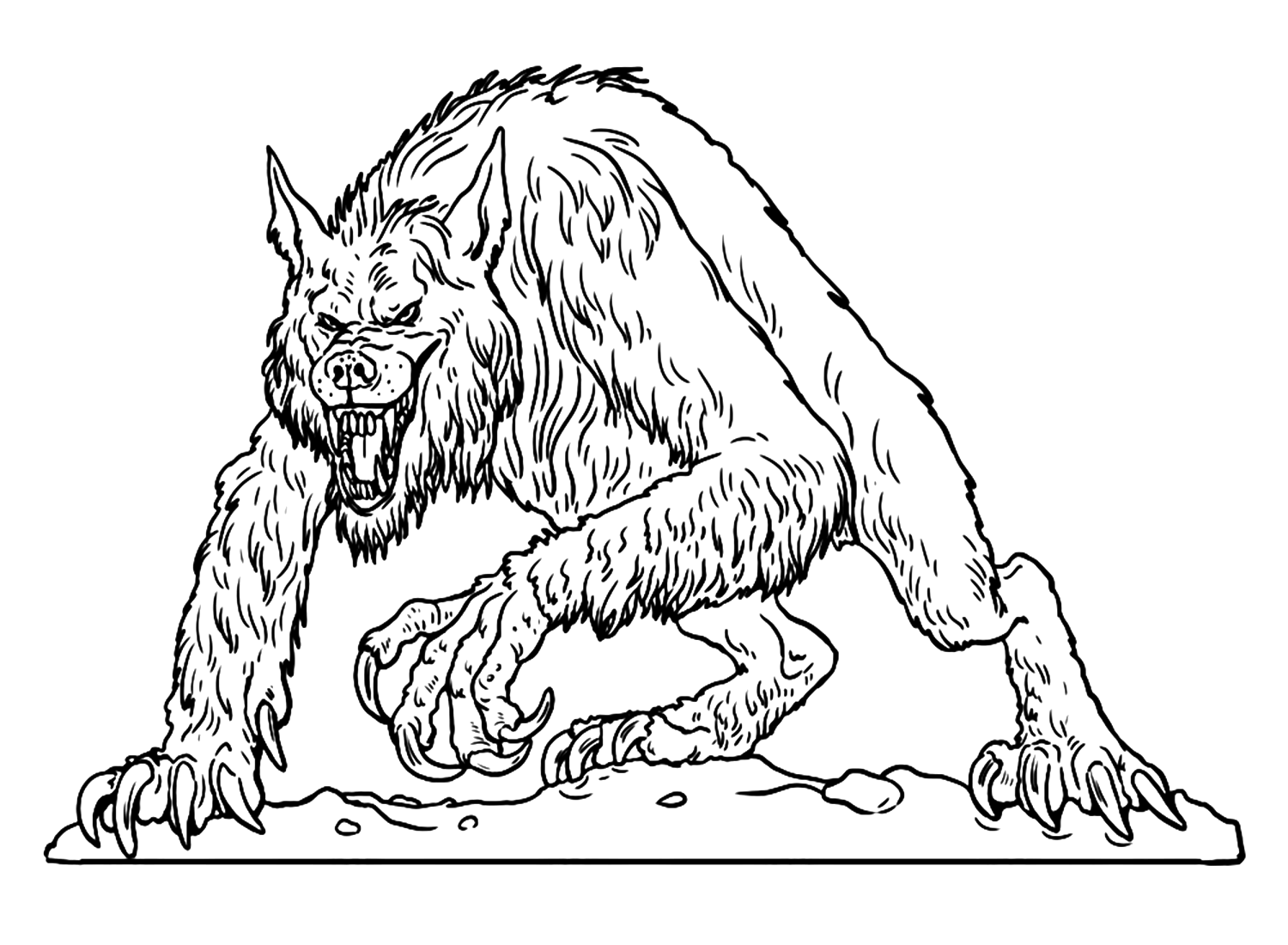
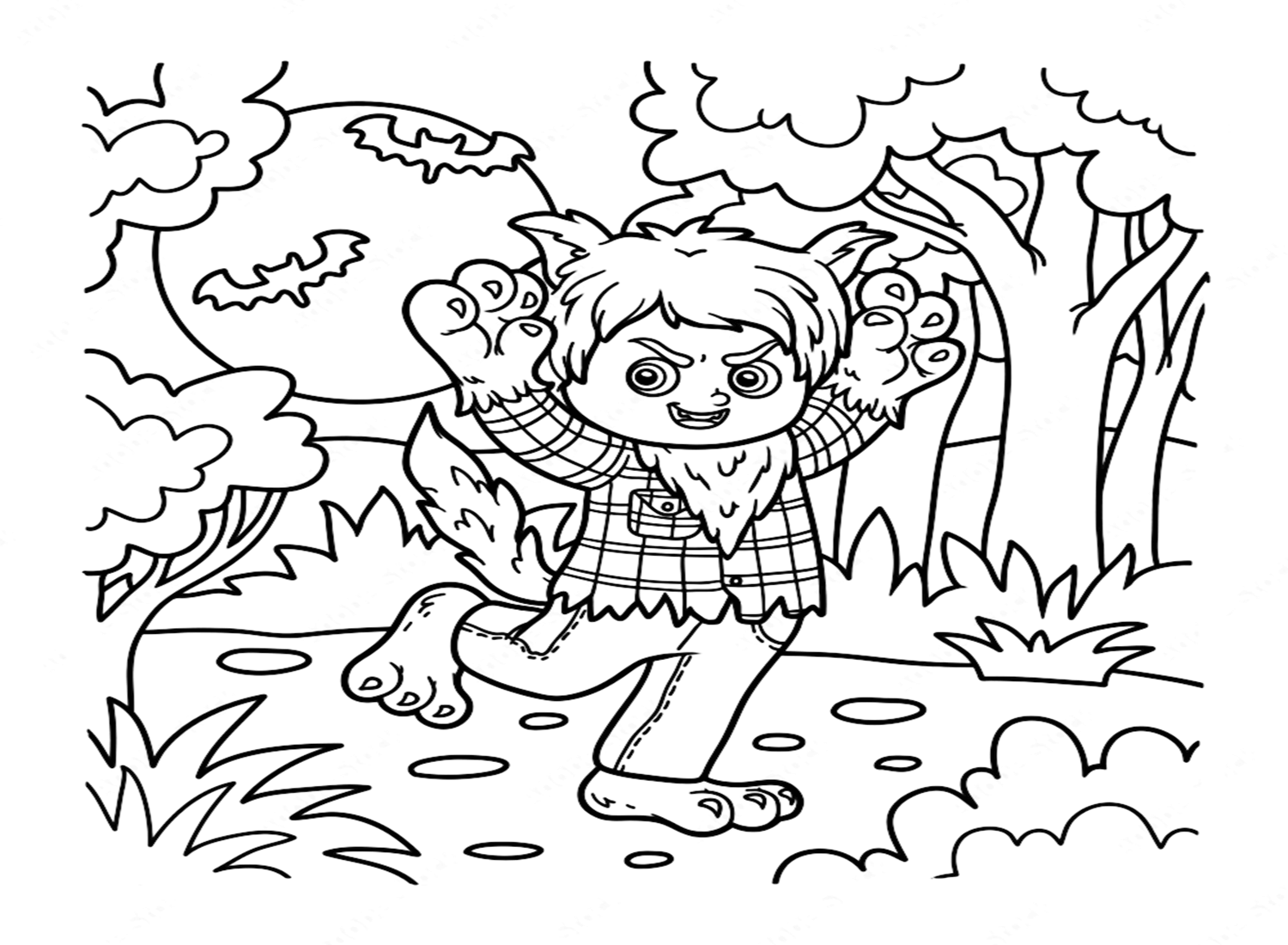
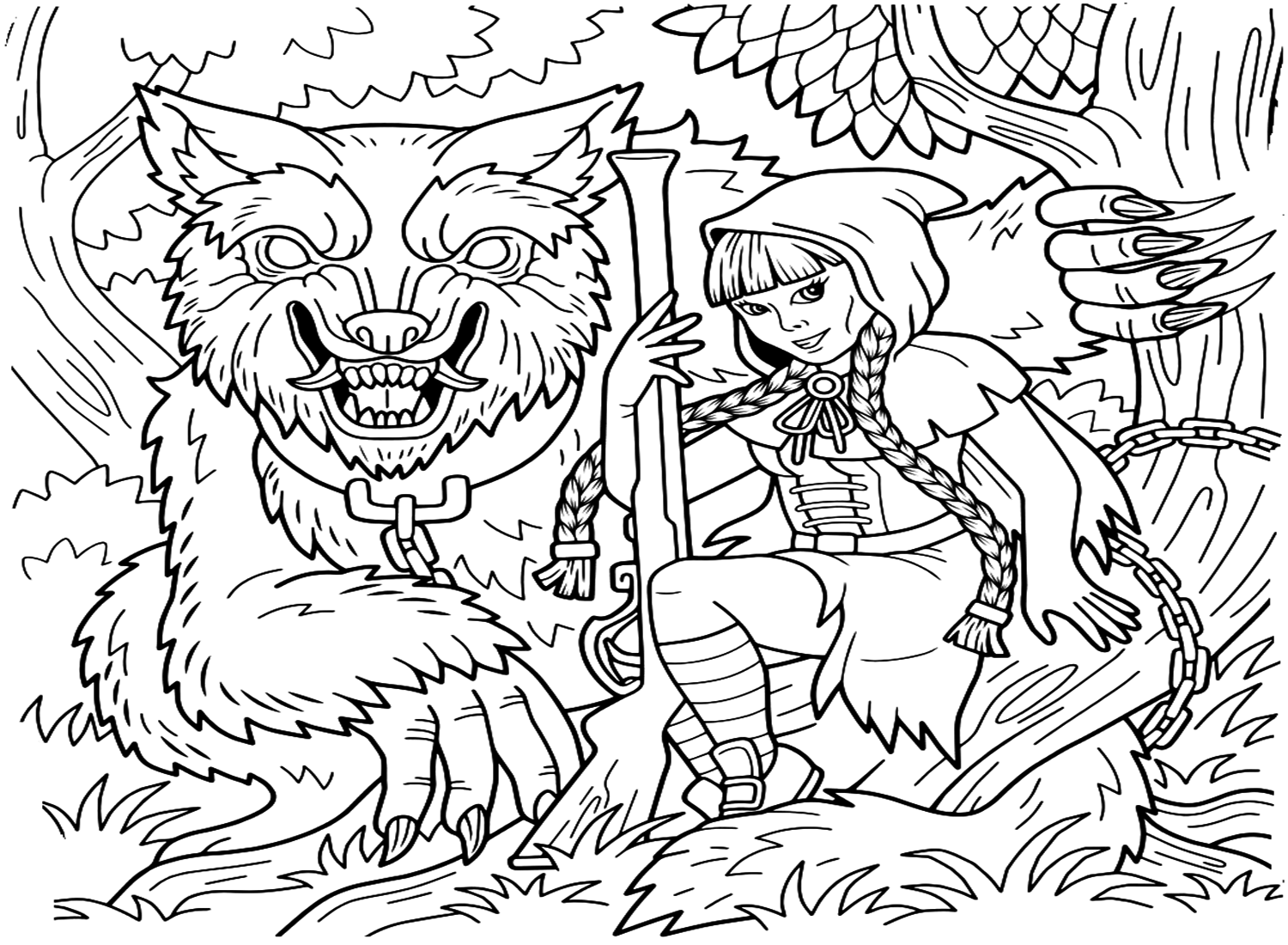
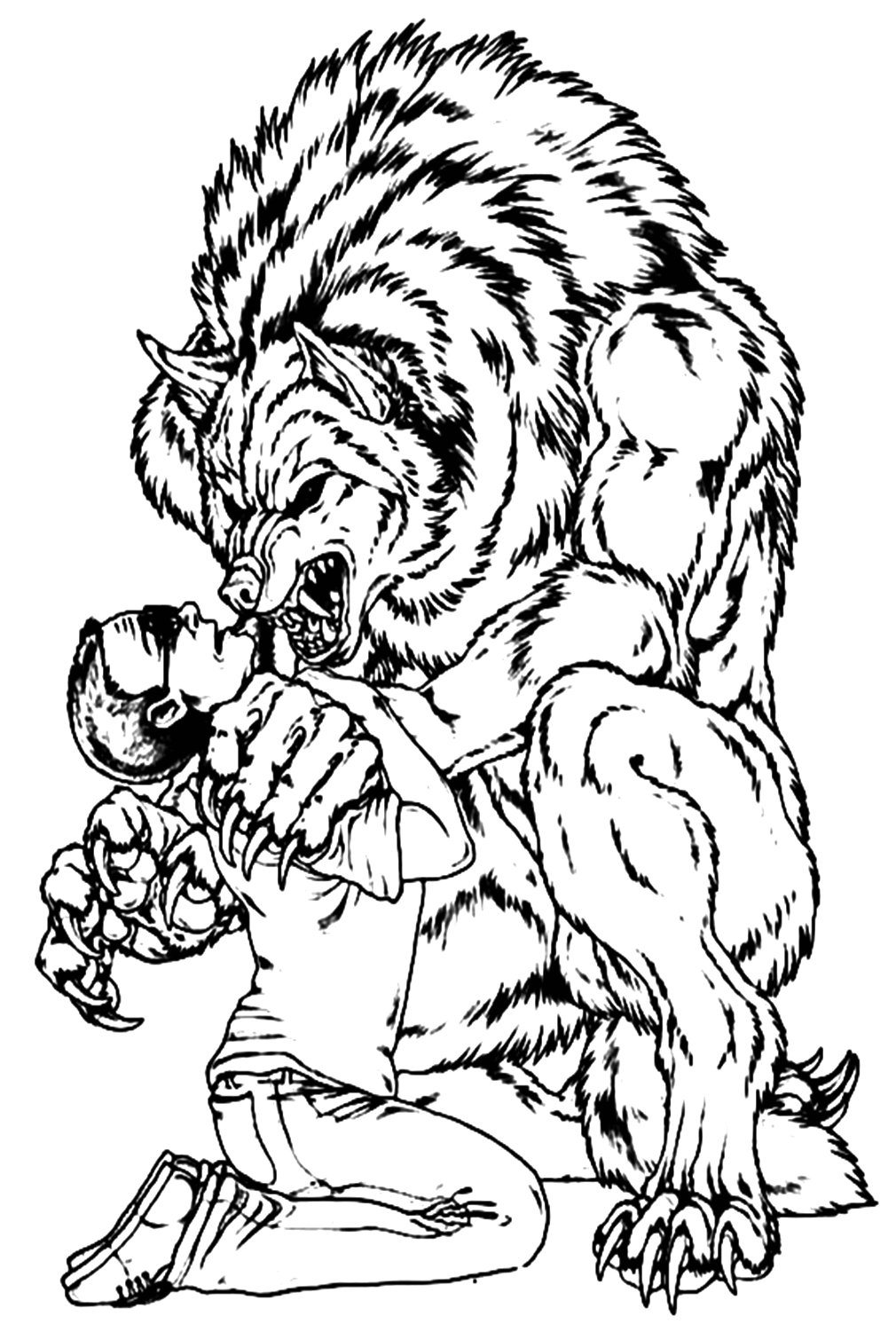
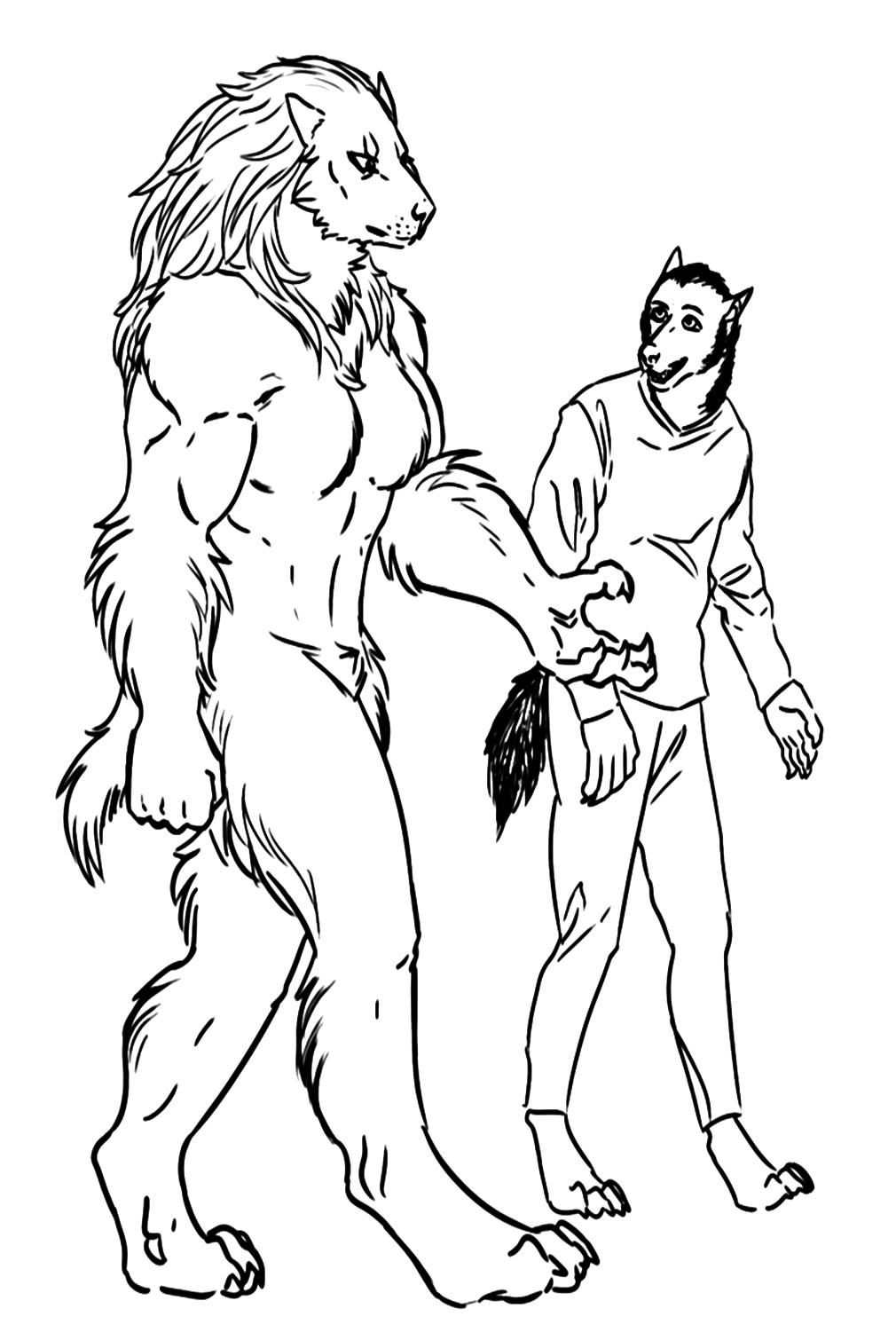
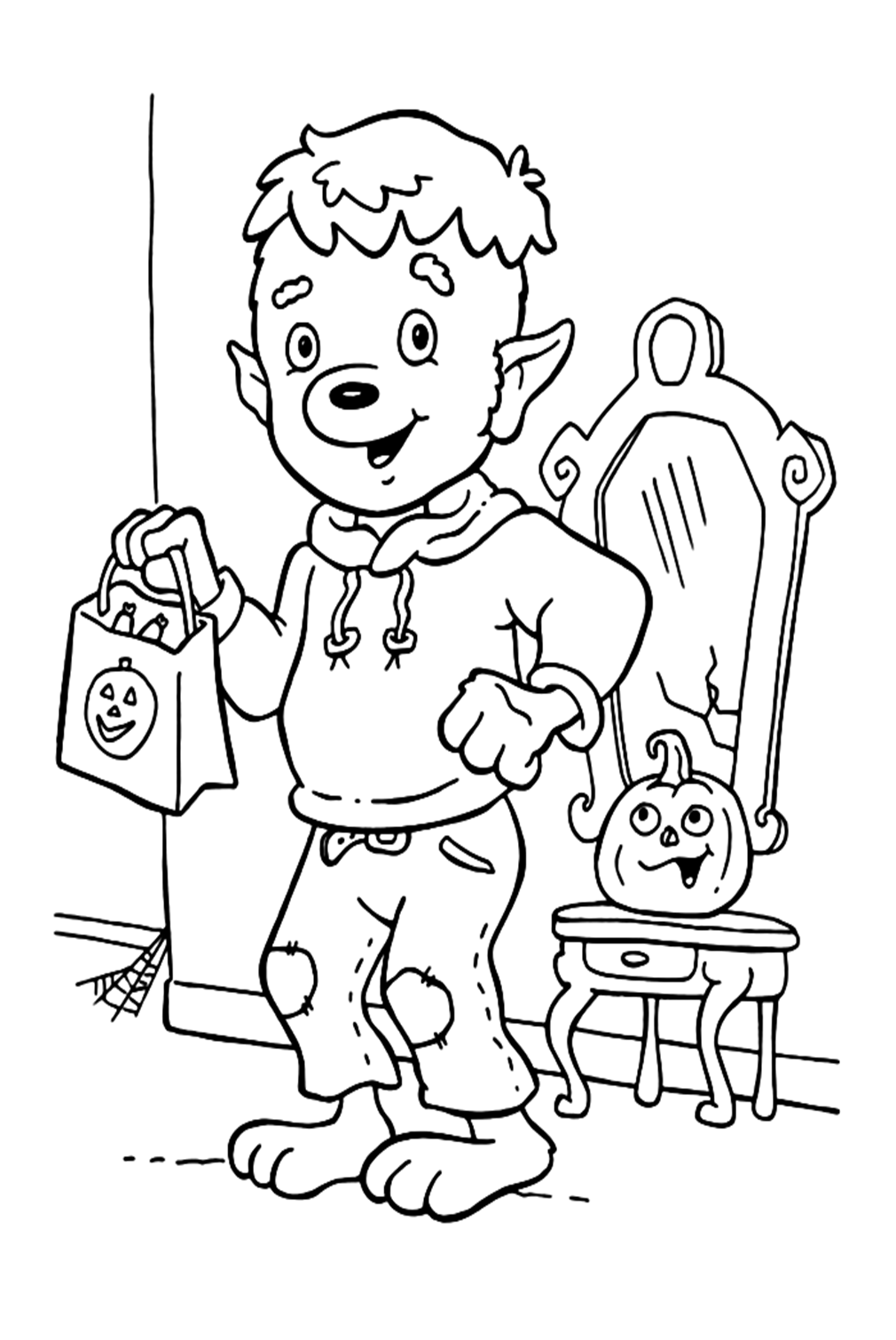
Werewolf Coloring Pages at ColoringPagesOnly.com brings together 60+ free printable pages dedicated to one of mythology and horror fiction’s most enduring figures – the werewolf. The collection spans the full tonal range of werewolf imagery: cartoon and friendly designs accessible to younger children, classically scary Halloween werewolves, action scenes showing werewolves running and howling, atmospheric forest and night settings, the dramatic transformation sequence from human to beast, a Goosebumps-inspired tile, a realistic, detailed portrait, and a dedicated kids variant alongside an adult-complexity page. The full Fantasy and Mythology collection is available through our Fantasy and Mythology Coloring Pages hub.

Every page is completely free – download as PDF to print or color online in your browser. No sign-up, no cost.

About Werewolves

The werewolf – a human being who transforms into a wolf, or a hybrid creature combining human and wolf anatomy – is one of the oldest and most consistently present figures in world mythology. Unlike many fantastical creatures that belong to specific cultural traditions, werewolf-adjacent beliefs appear independently across an extraordinarily wide range of human cultures separated by geography and history: Norse berserkers were said to wear wolf skins and take on wolf-like ferocity in battle; ancient Greek mythology includes the story of Lycaon, the king of Arcadia who was transformed into a wolf by Zeus as punishment for serving human flesh at a feast (the origin of the word lycanthropy); medieval European folklore from Germany, France, and Eastern Europe maintained extensive accounts of wolf-men who terrorized rural communities; and indigenous traditions across multiple continents include shapeshifting between human and wolf form as part of shamanic or spiritual practice.

The classical European werewolf legend, which most directly influences modern werewolf fiction, took its definitive form during the medieval and early modern periods. The key elements became codified: transformation triggered by the full moon, the bite or scratch of another werewolf as a contagion vector, silver as the only metal capable of killing the beast, and the tragic dimension – a person who is fundamentally human and conscious of what they become, suffering the transformation against their will. This last element – the werewolf as victim as much as monster – is what distinguishes the werewolf from simpler monster traditions and gives the figure its persistent emotional resonance.

Lycanthropy (lycos = wolf, anthropos = human in Greek) is the technical term for the transformation or the belief in it. In historical legal records, particularly from the 16th and 17th centuries in France and Germany, there were actual criminal trials of individuals accused of being werewolves – suggesting the belief was taken seriously enough in some communities to have legal consequences.

The werewolf’s transition from folklore to popular fiction began in the 19th-century Gothic literature tradition and accelerated with cinema. The Wolf Man (1941), starring Lon Chaney Jr. for Universal Pictures, established the definitive visual language of the cinematic werewolf – the gradual transformation, the wolf-man hybrid anatomy rather than a complete wolf, and the tragic protagonist who becomes something terrible against his will. Subsequent decades produced increasingly elaborate werewolf designs: An American Werewolf in London (1981) set a new standard for practical effects transformation sequences; The Howling (1981) explored werewolf society; the Twilight series (2008-2012) brought werewolves to a new generation; and the Underworld franchise positioned werewolves as the counterpart to vampires in an ongoing supernatural conflict.

What’s in This Collection

Scary and Realistic Werewolves

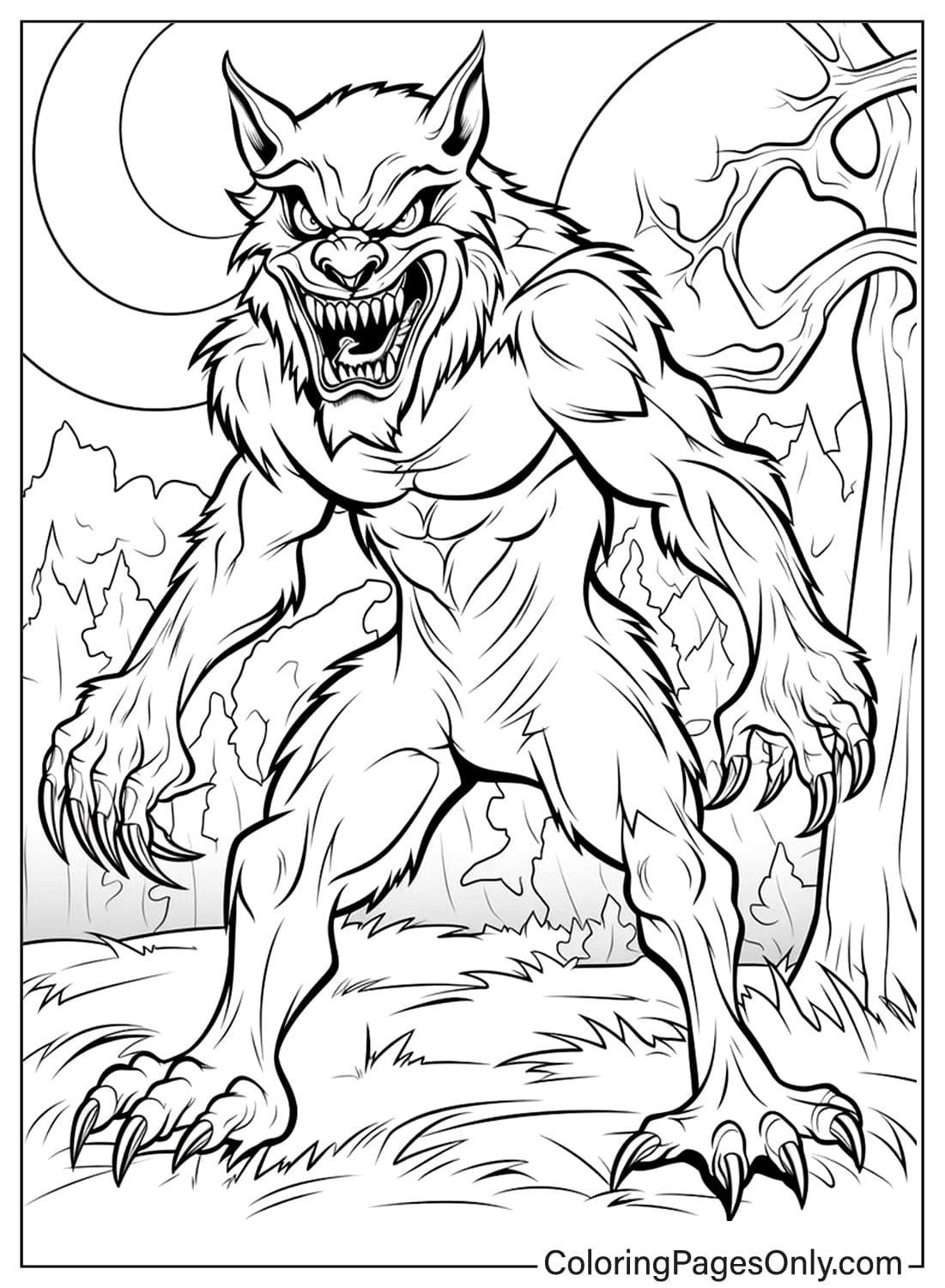
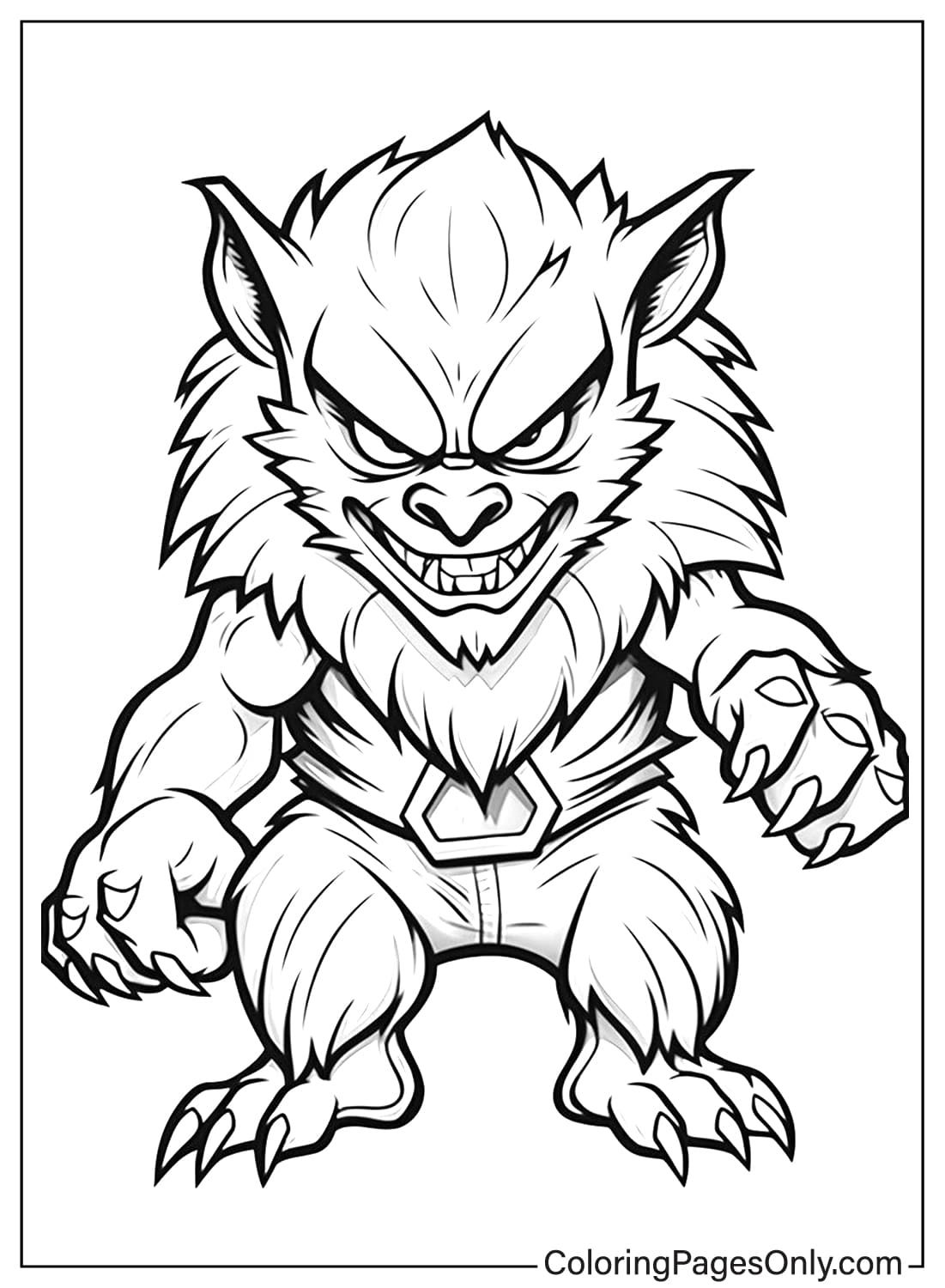
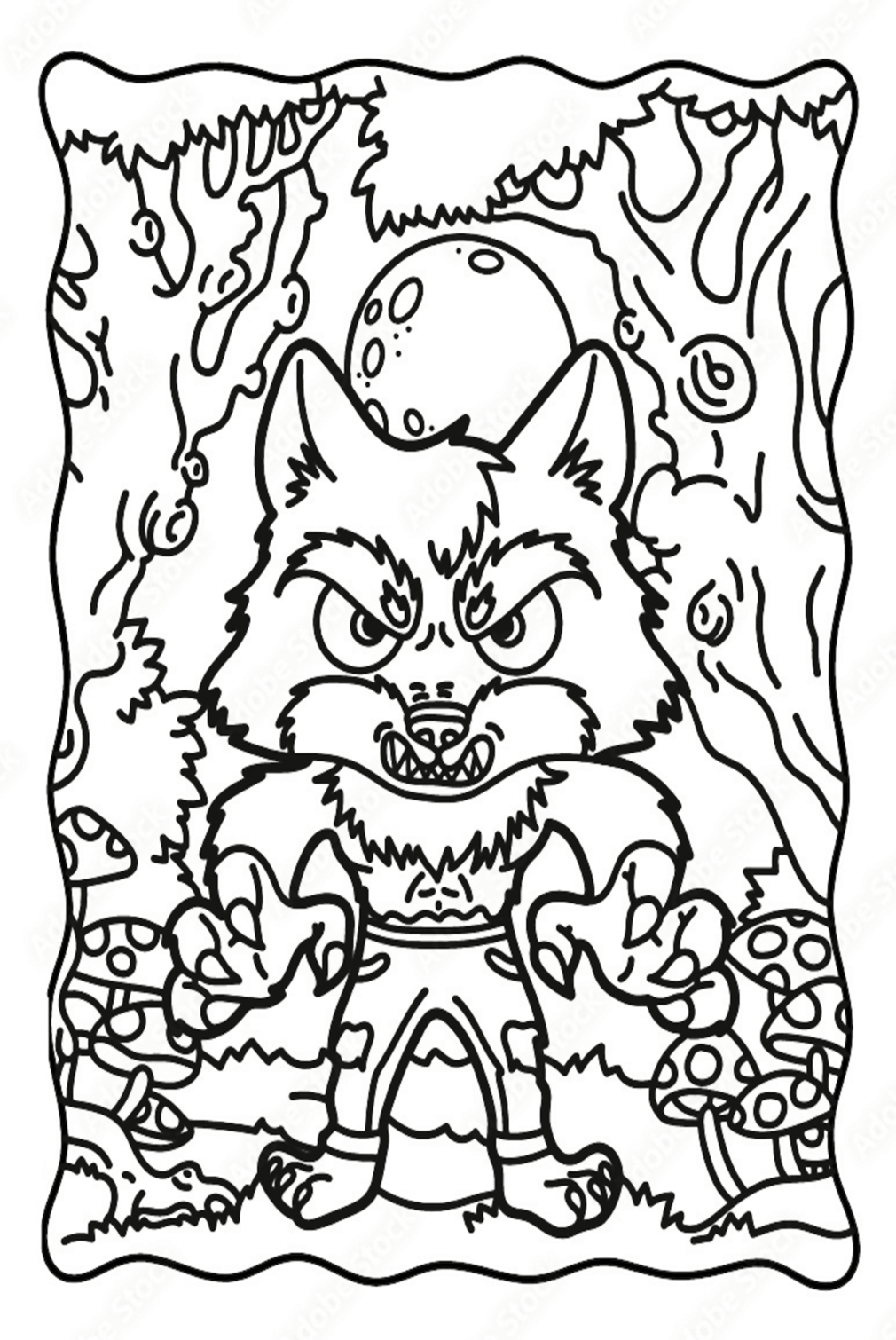
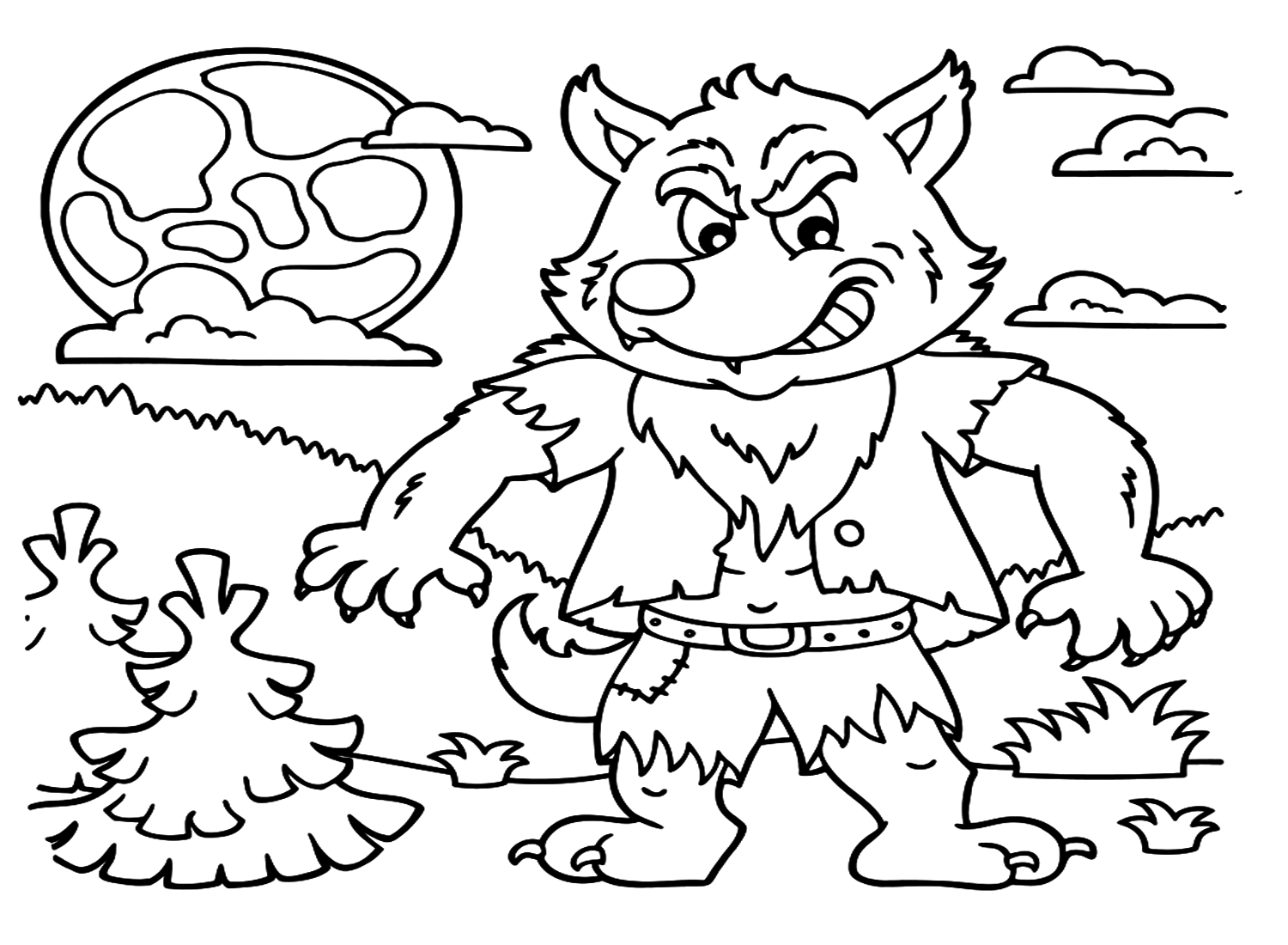
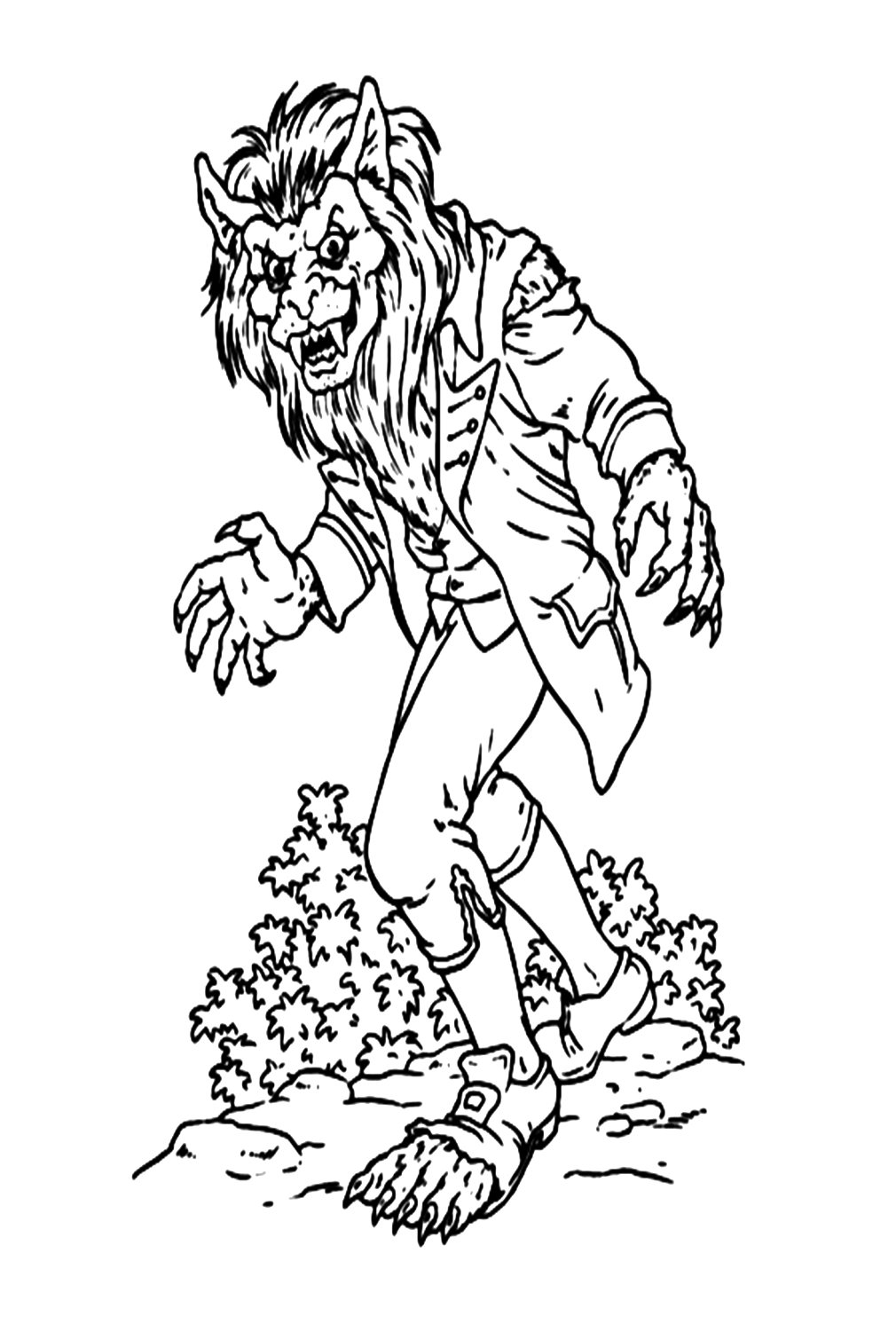
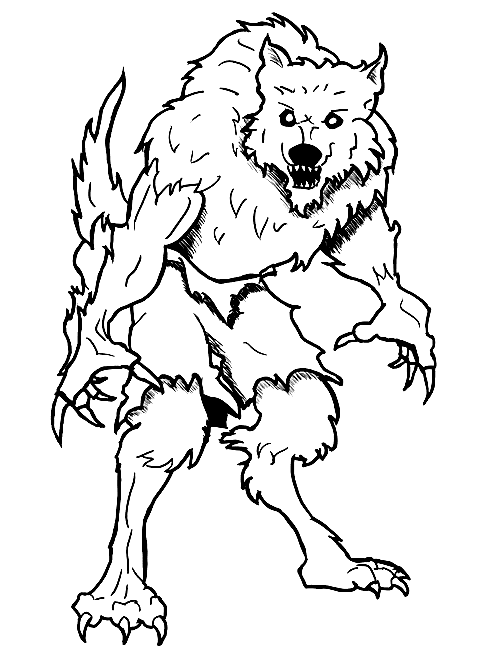
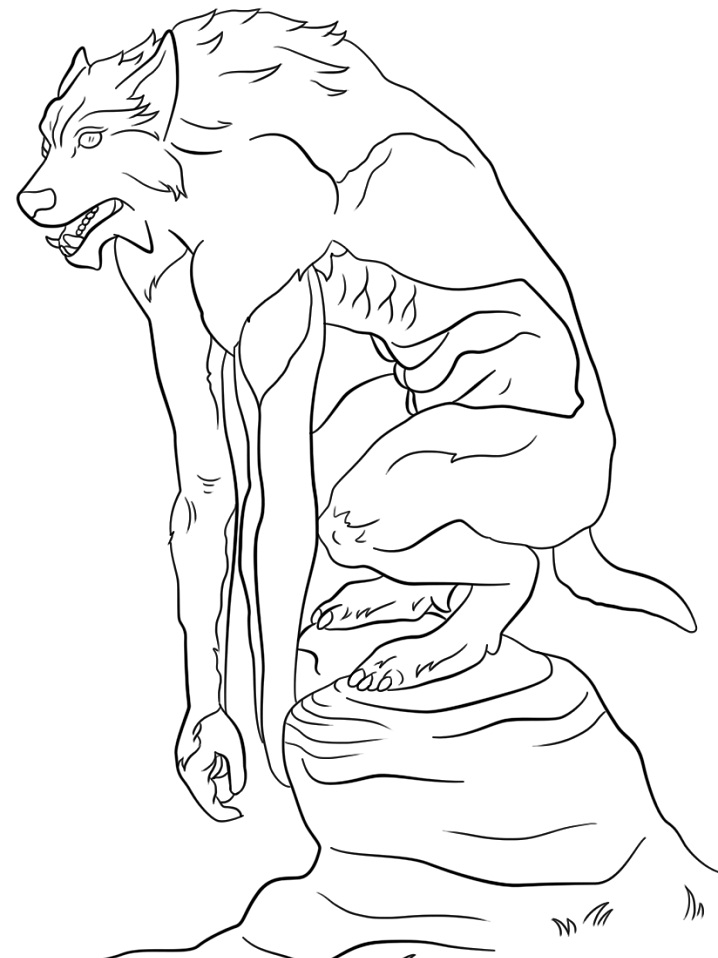
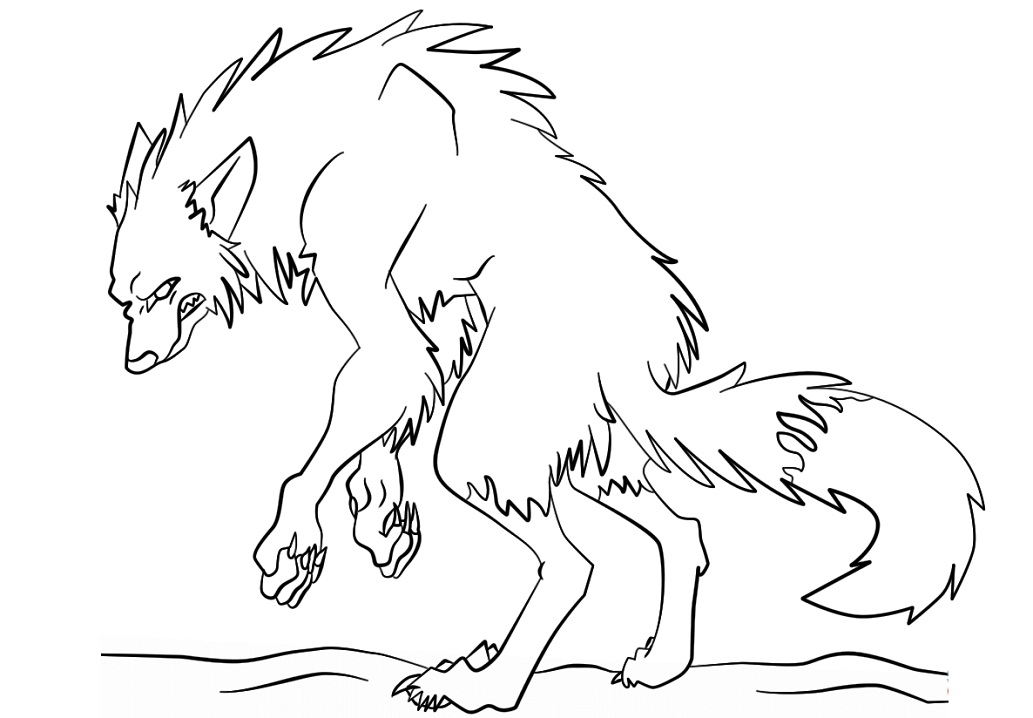
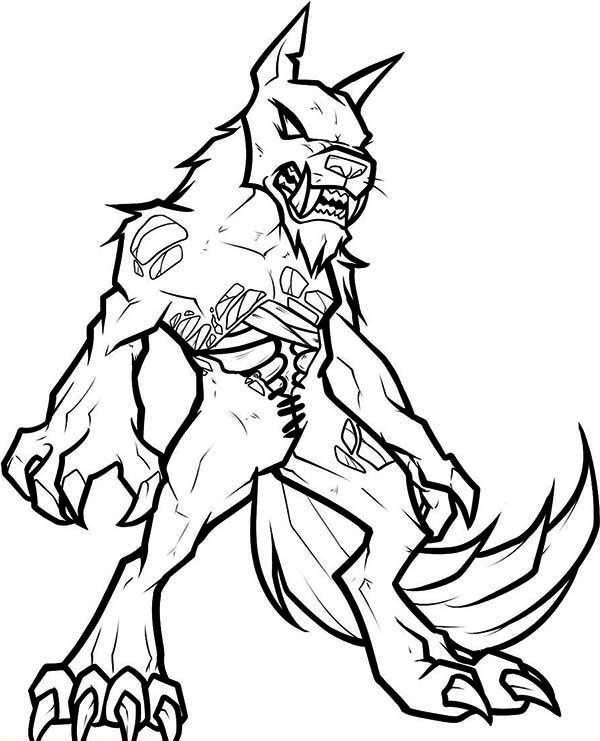
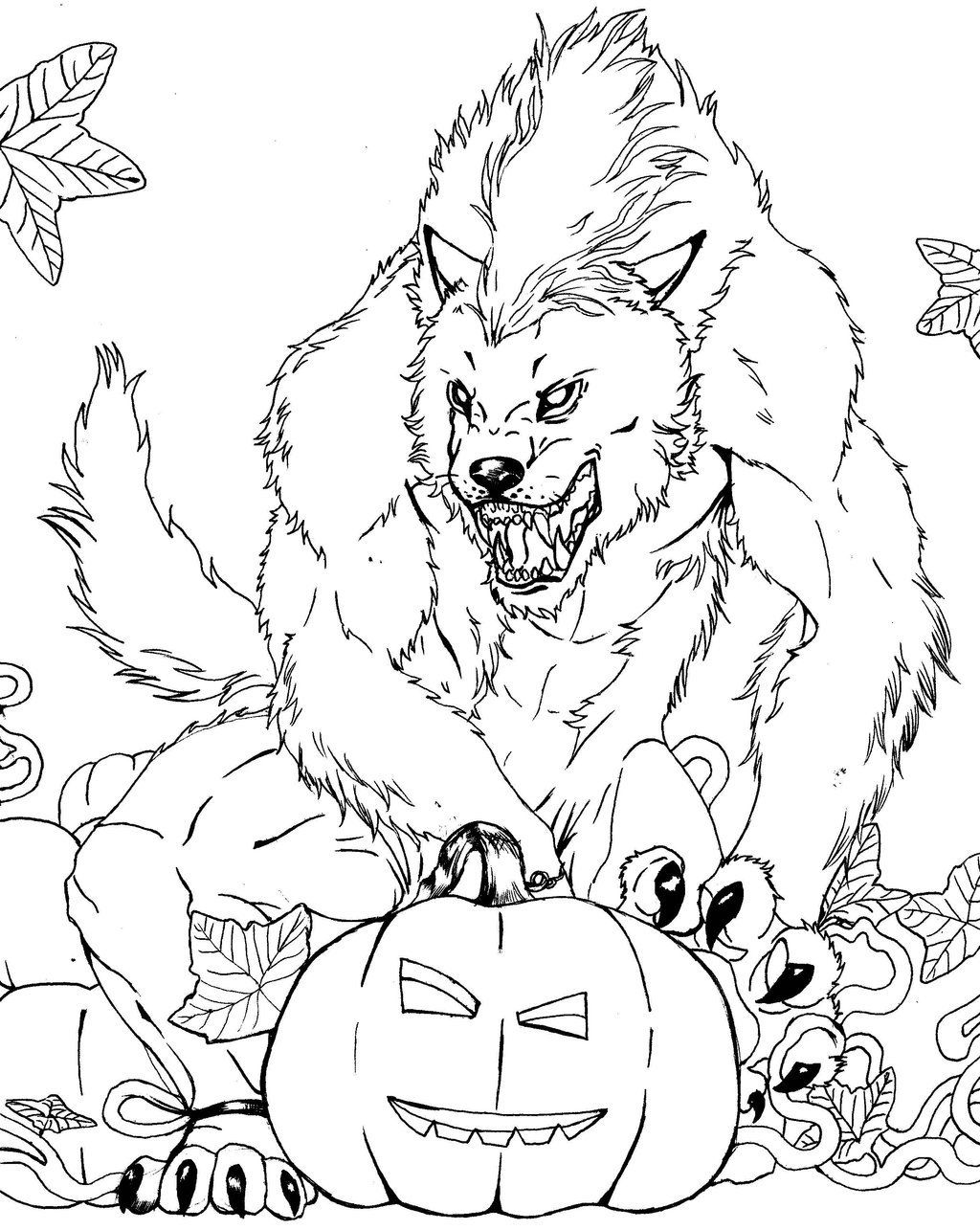
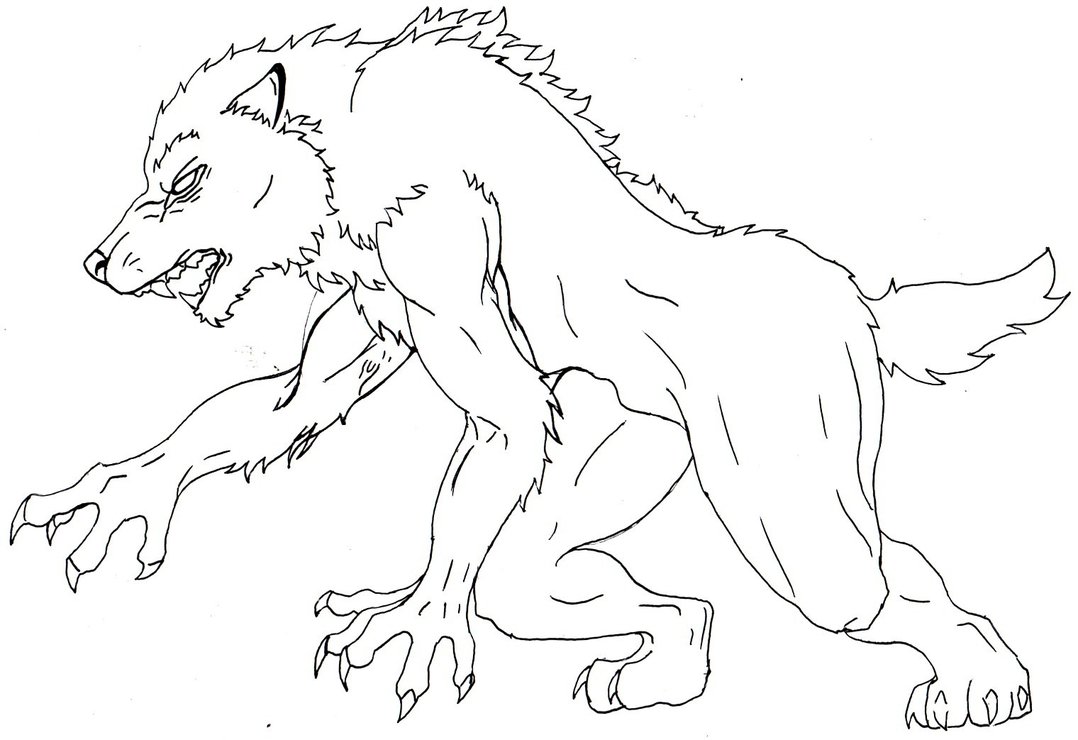
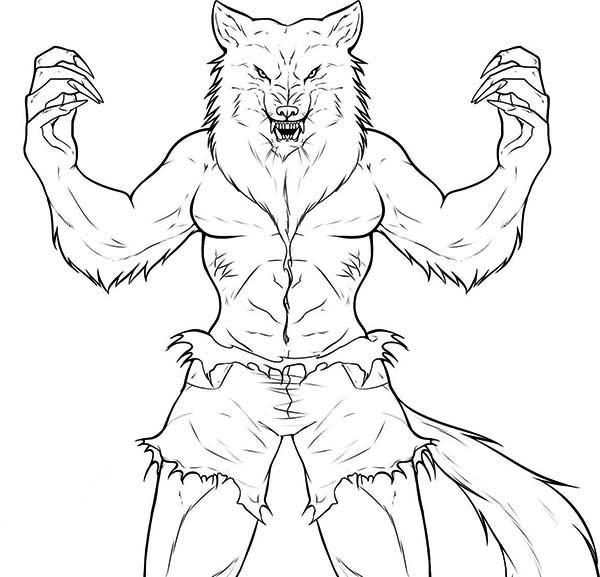
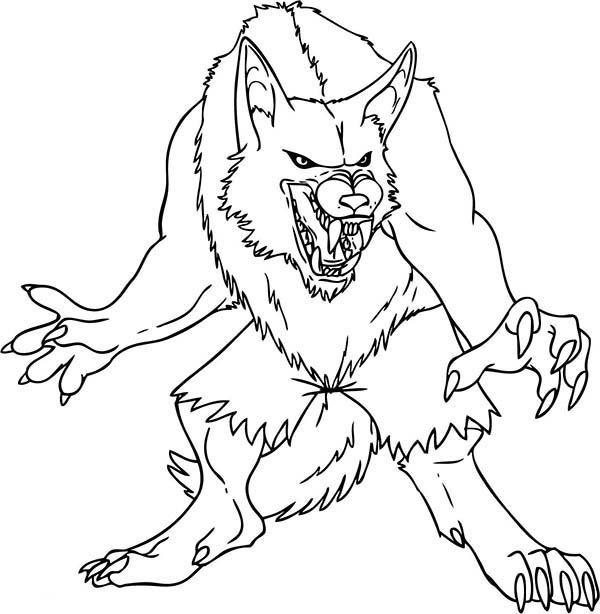
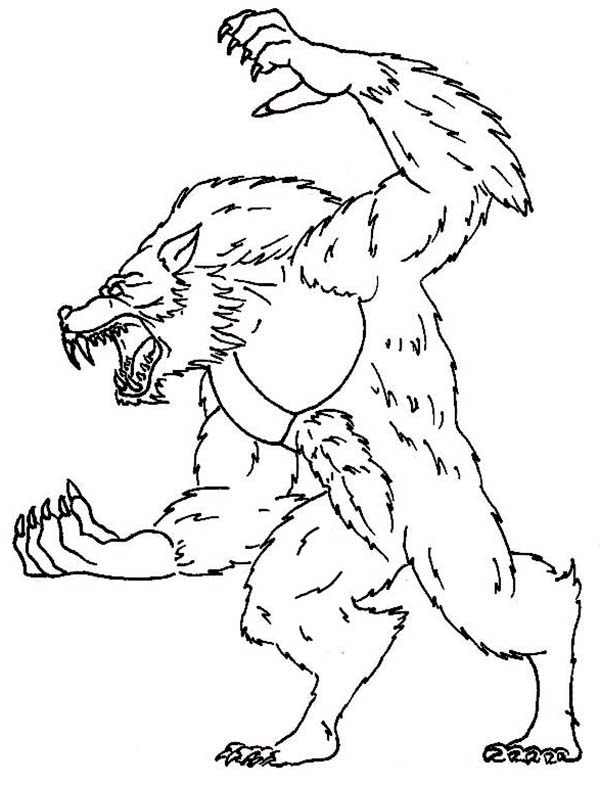
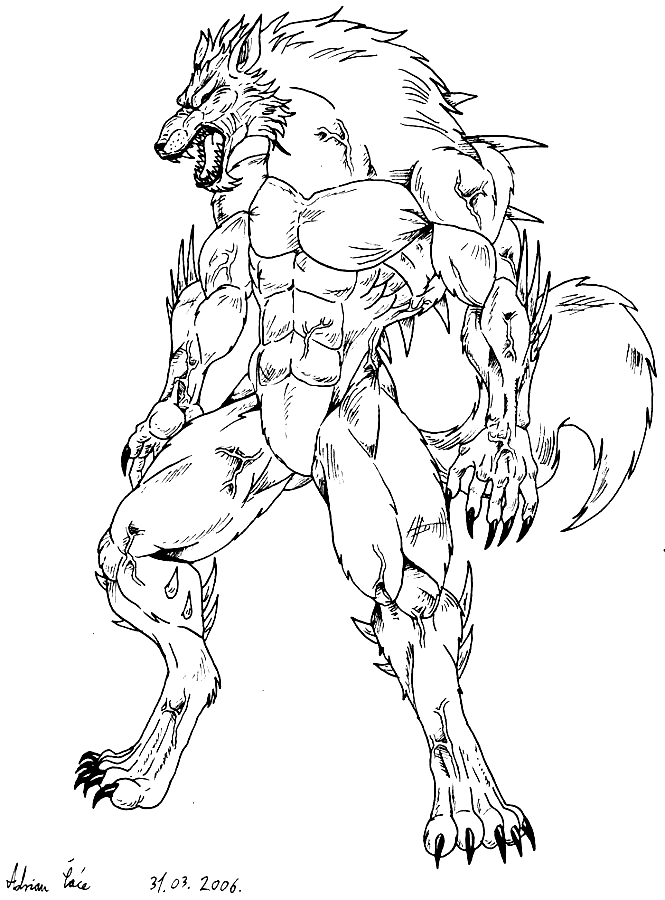
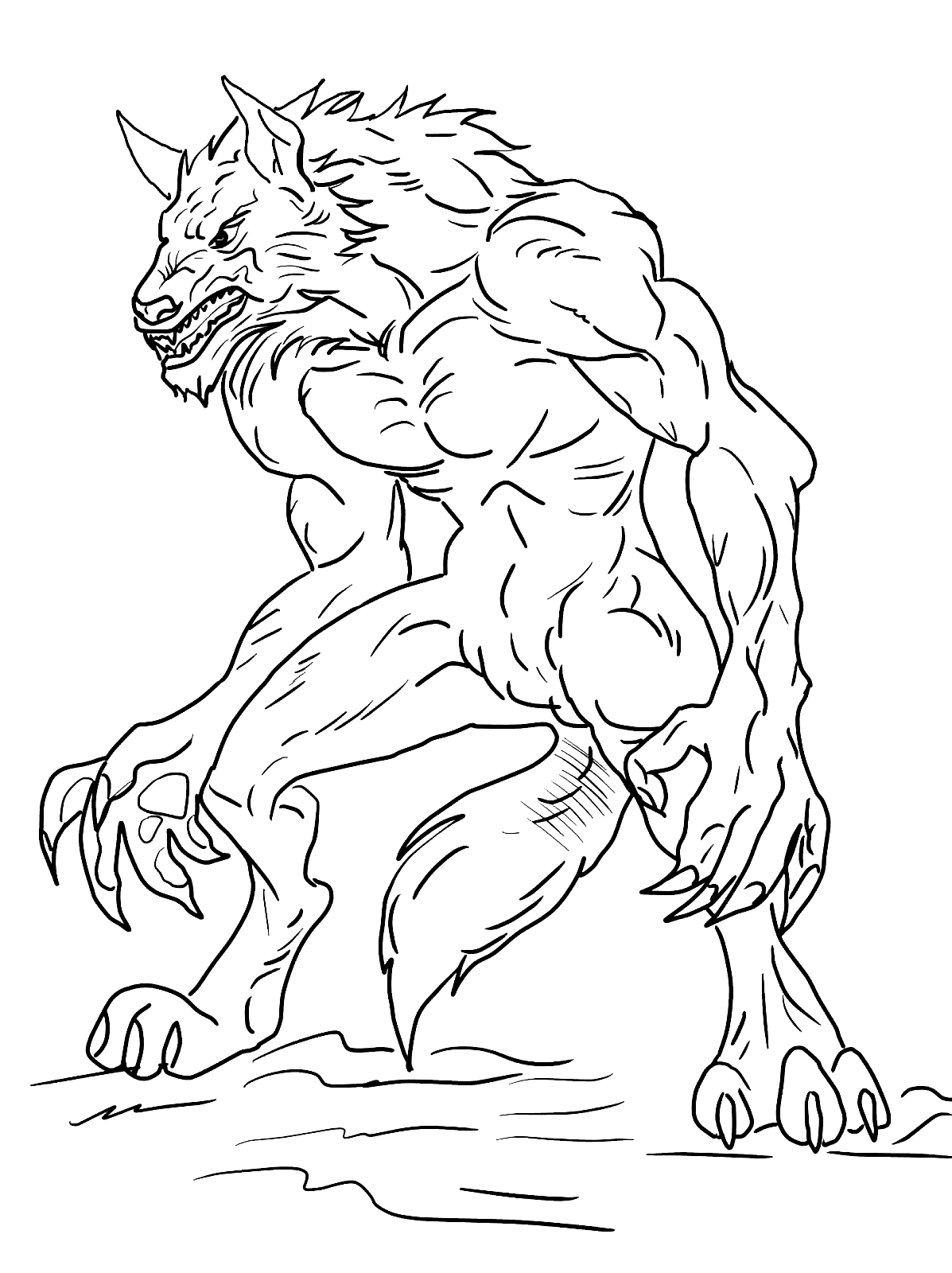
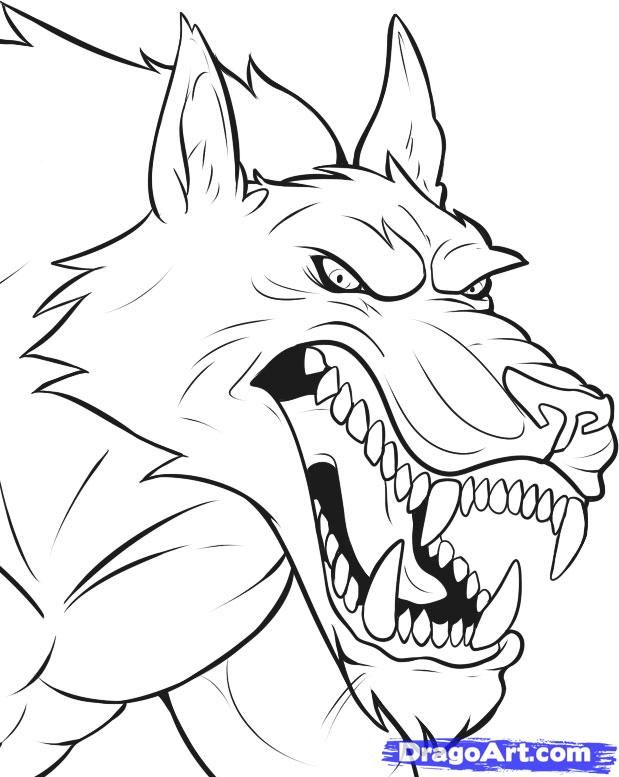
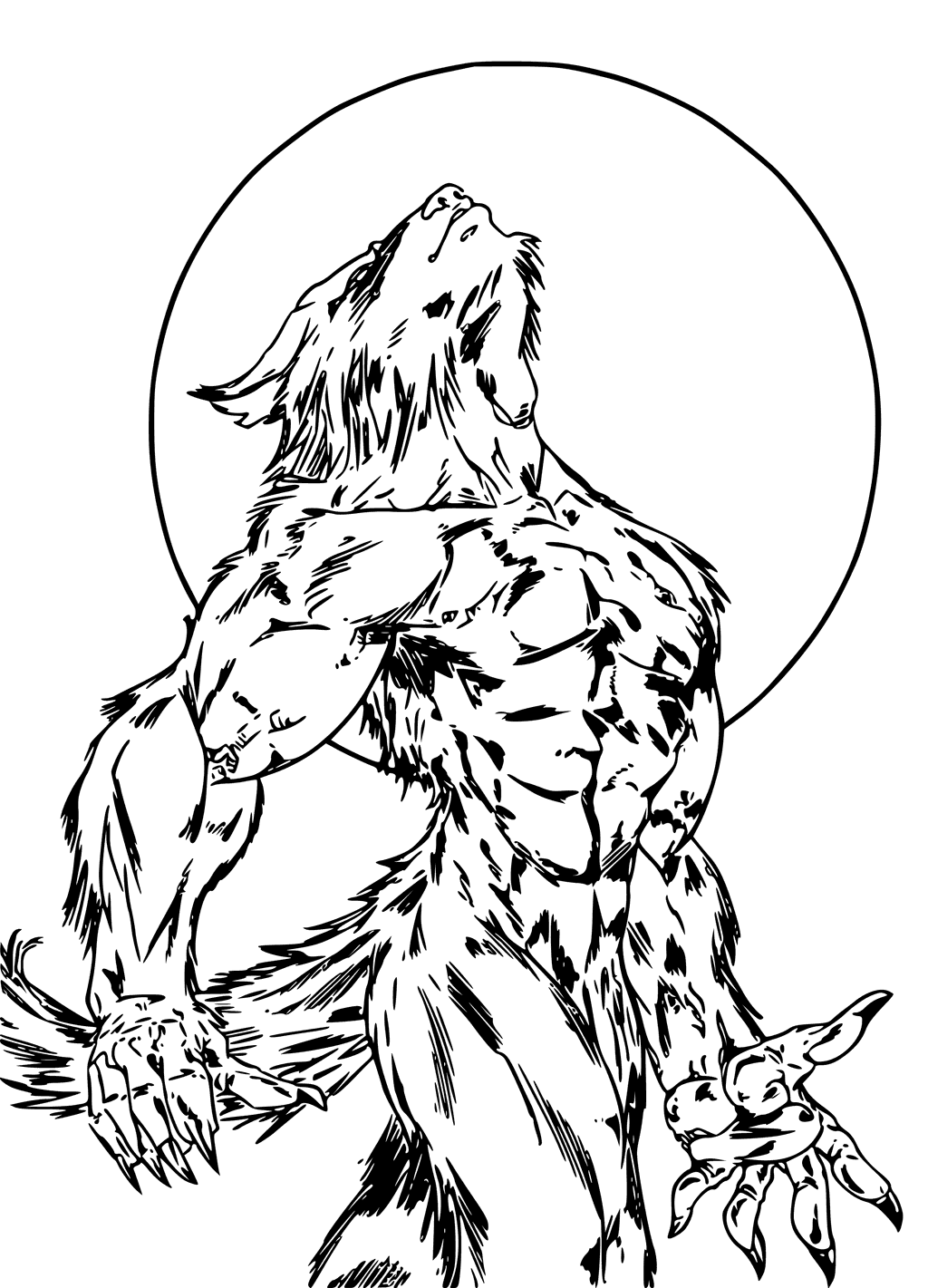
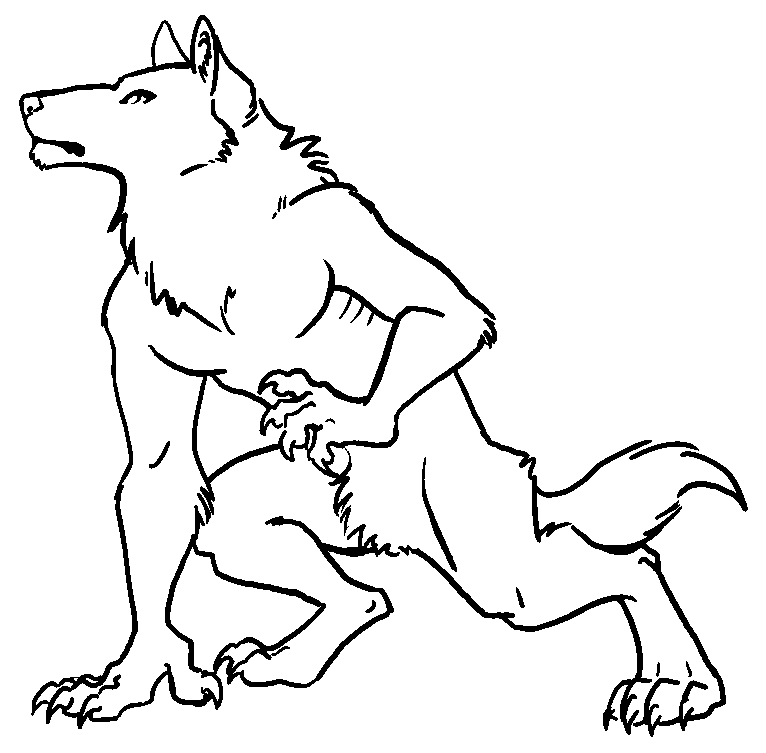
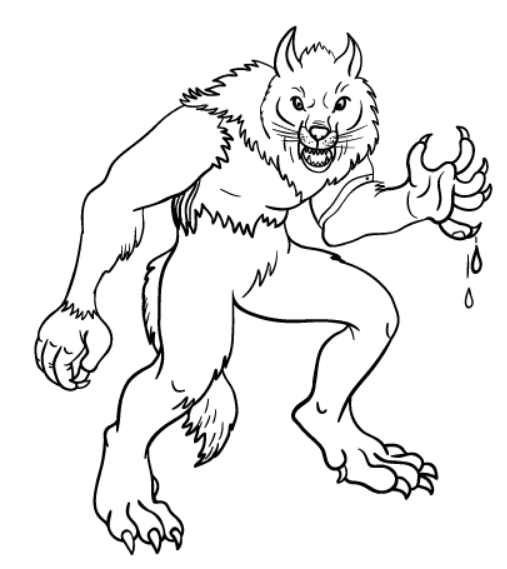
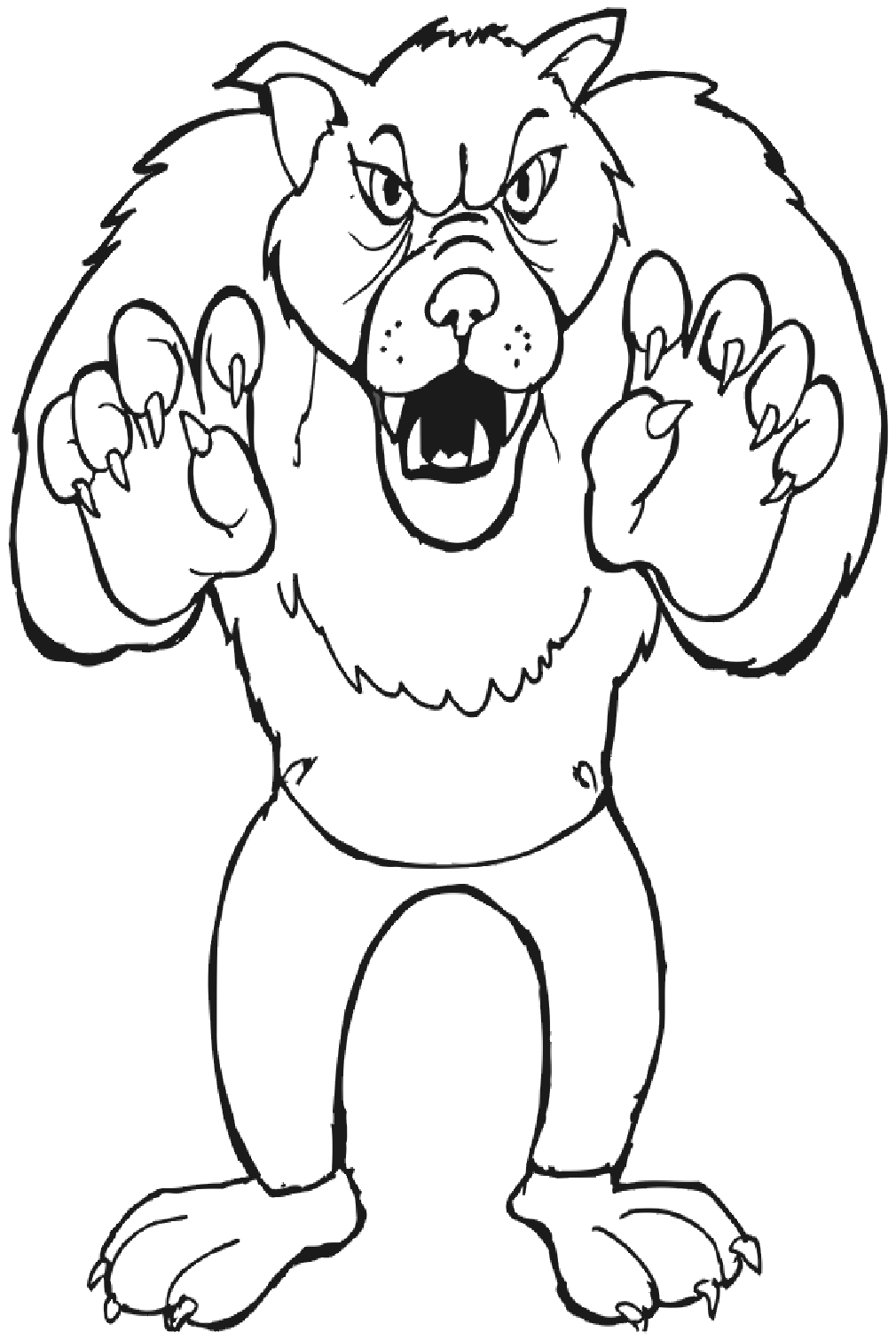
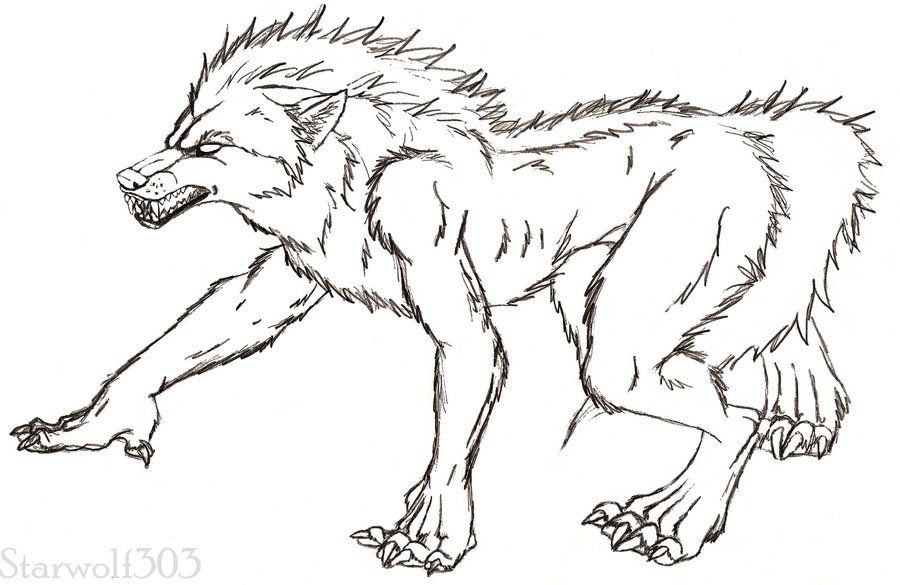
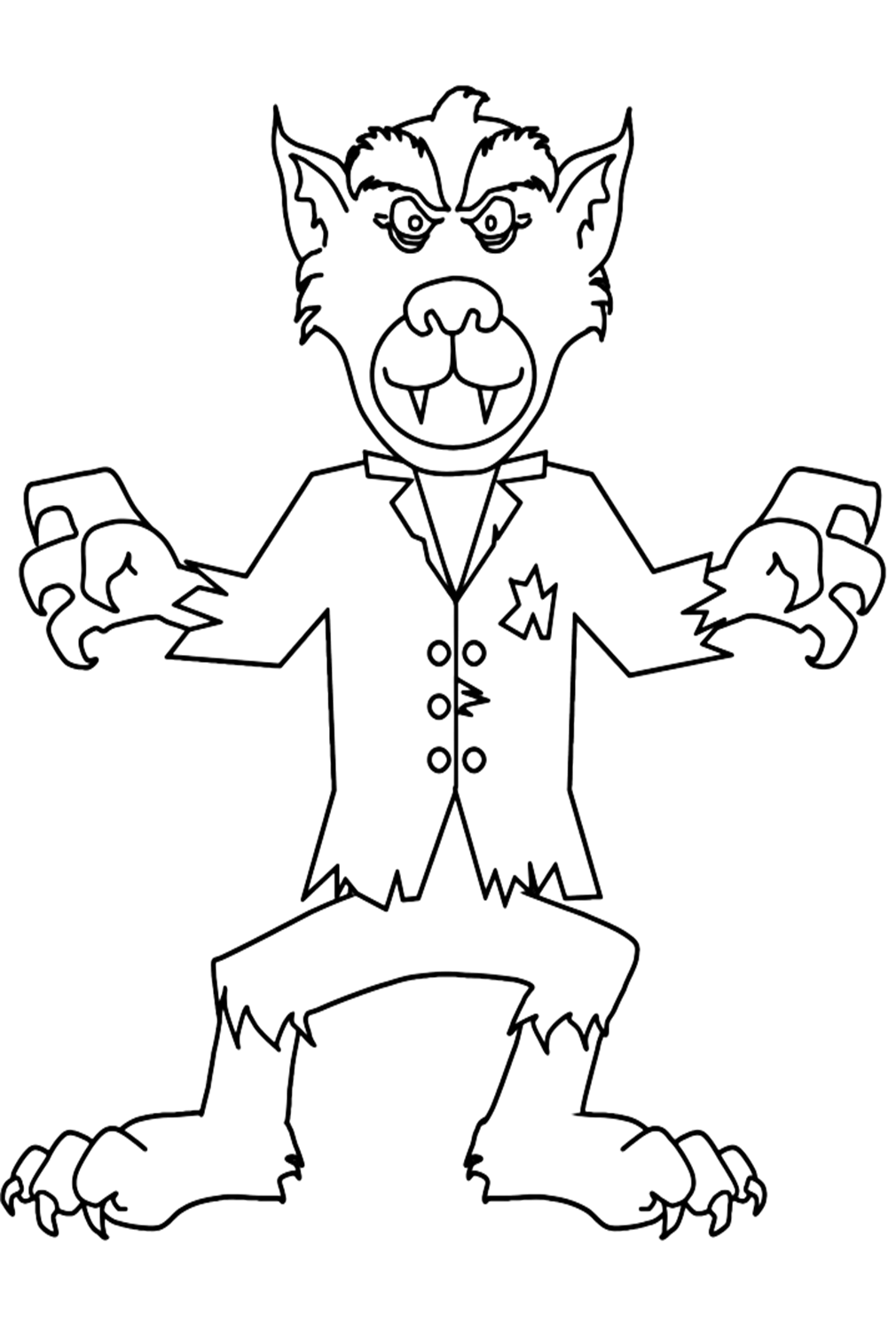
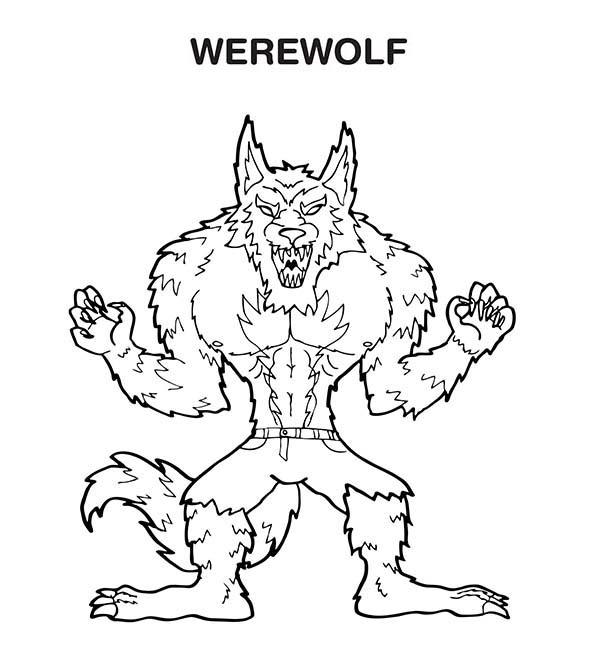
The collection’s largest single cluster – tiles including Scary Werewolf, A Huge Werewolf, Big Scary Werewolf, Free Scary Werewolf, Scary Werewolves, Scary Halloween Werewolf, Scary Werewolf Coloring Pages, Realistic Werewolf Coloring Page, Muscular Werewolves Coloring Page, Werewolf Beast, Undead Werewolf, and Angry Werewolf – covers the fully frightening end of the werewolf aesthetic spectrum. These tiles depict the creature in its most threatening, fully transformed state: powerful muscular anatomy, elongated snout with prominent fangs, clawed hands, fur-covered body, and the aggressive posture of an apex predator.

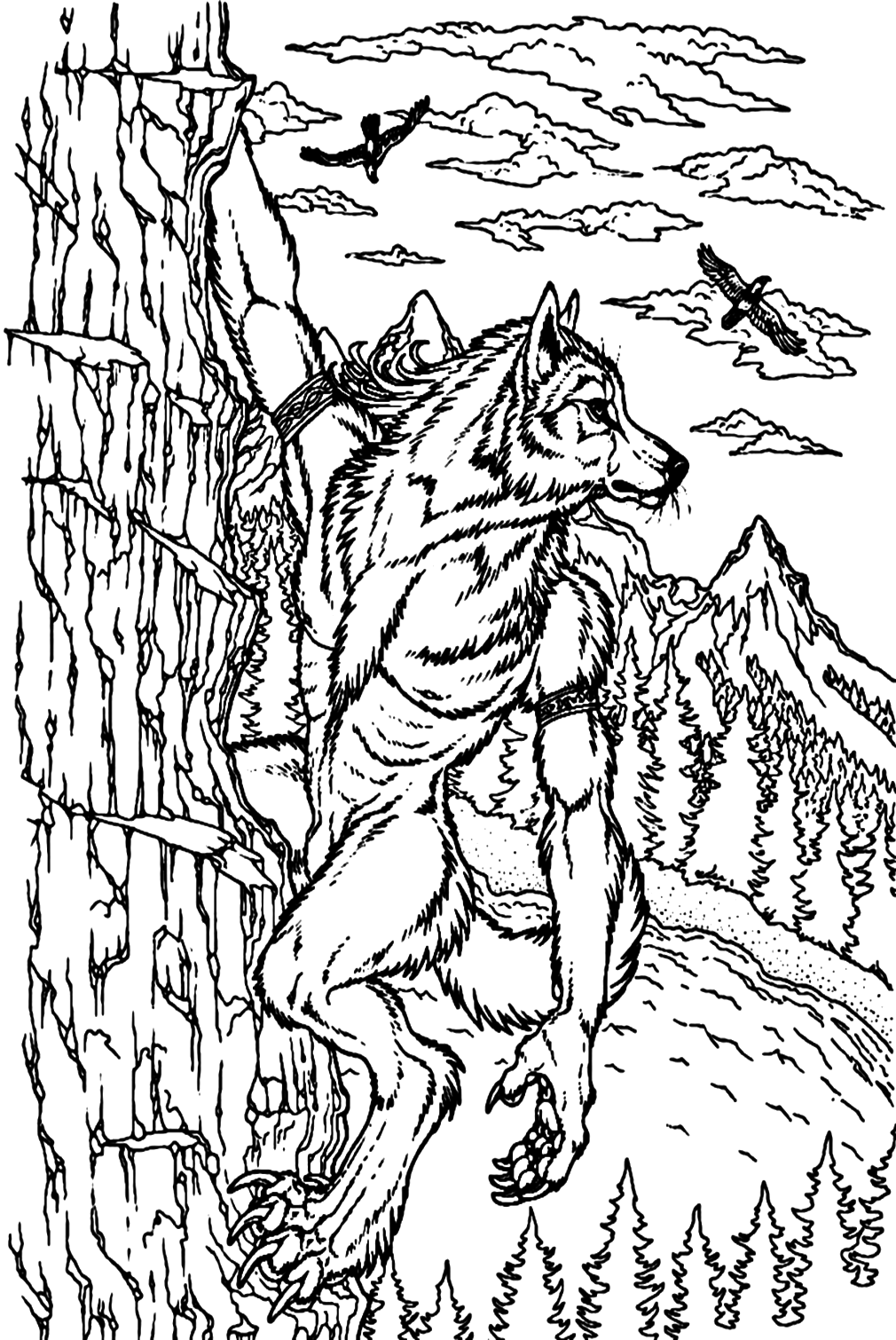
The Realistic Werewolf Coloring Page is the collection’s most technically demanding tile – a detailed portrait-quality rendering that rewards careful, patient coloring with fine-tip tools and layered shading. The Muscular Werewolves Coloring Page depicts multiple werewolves in a group composition, requiring the colorist to differentiate between individual characters using varied fur tones and shading approaches. The Undead Werewolf combines the werewolf with zombie horror aesthetics – skeletal elements, deteriorated fur, and an otherworldly quality that makes it among the most unusual tiles in the collection.

Age note: The scary and realistic tiles are best suited for ages 8 and up. They contain detailed horror-adjacent imagery – fangs, claws, threatening postures – that may be overwhelming for very young children.

Halloween Werewolves

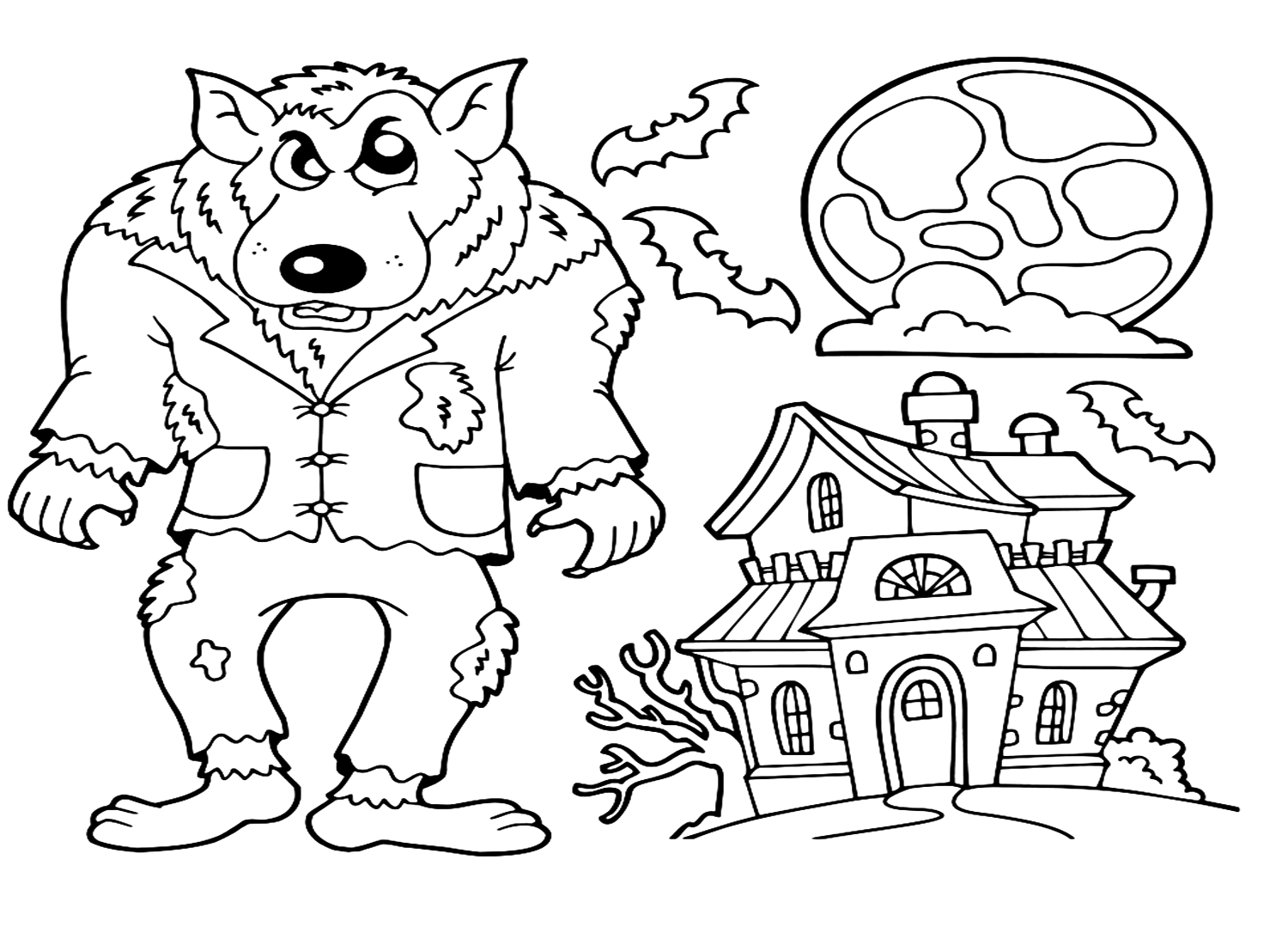
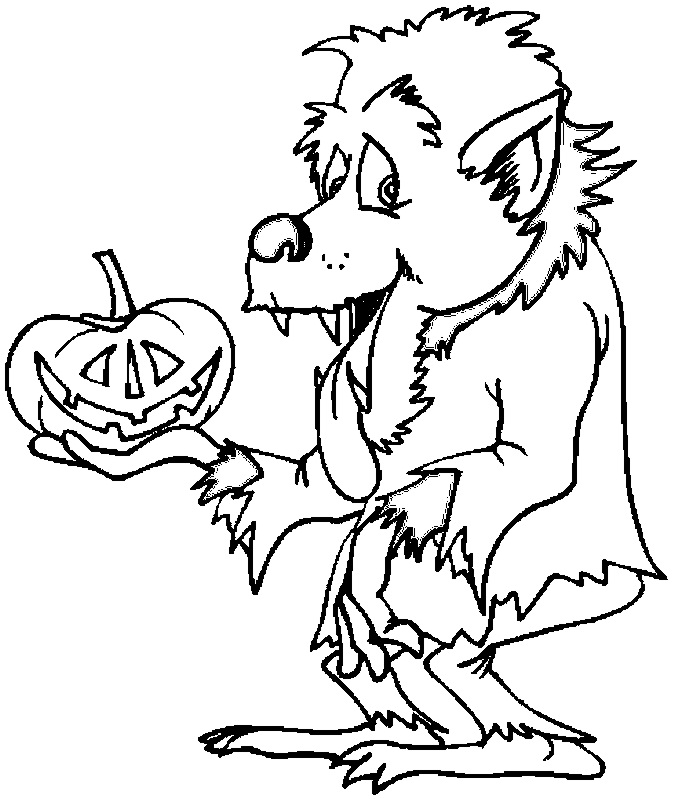
A dedicated Halloween cluster – Halloween Werewolf Coloring Pages, Halloween Werewolf Coloring Page, Halloween Werewolf, Scary Halloween Werewolf – places werewolves explicitly in the October 31 celebration context. These tiles connect werewolves to the broader Halloween monster tradition (alongside vampires, witches, and ghosts) and are most relevant for seasonal activities in September and October. For the full Halloween collection, see our Halloween Coloring Pages hub.

Howling and Action Scenes

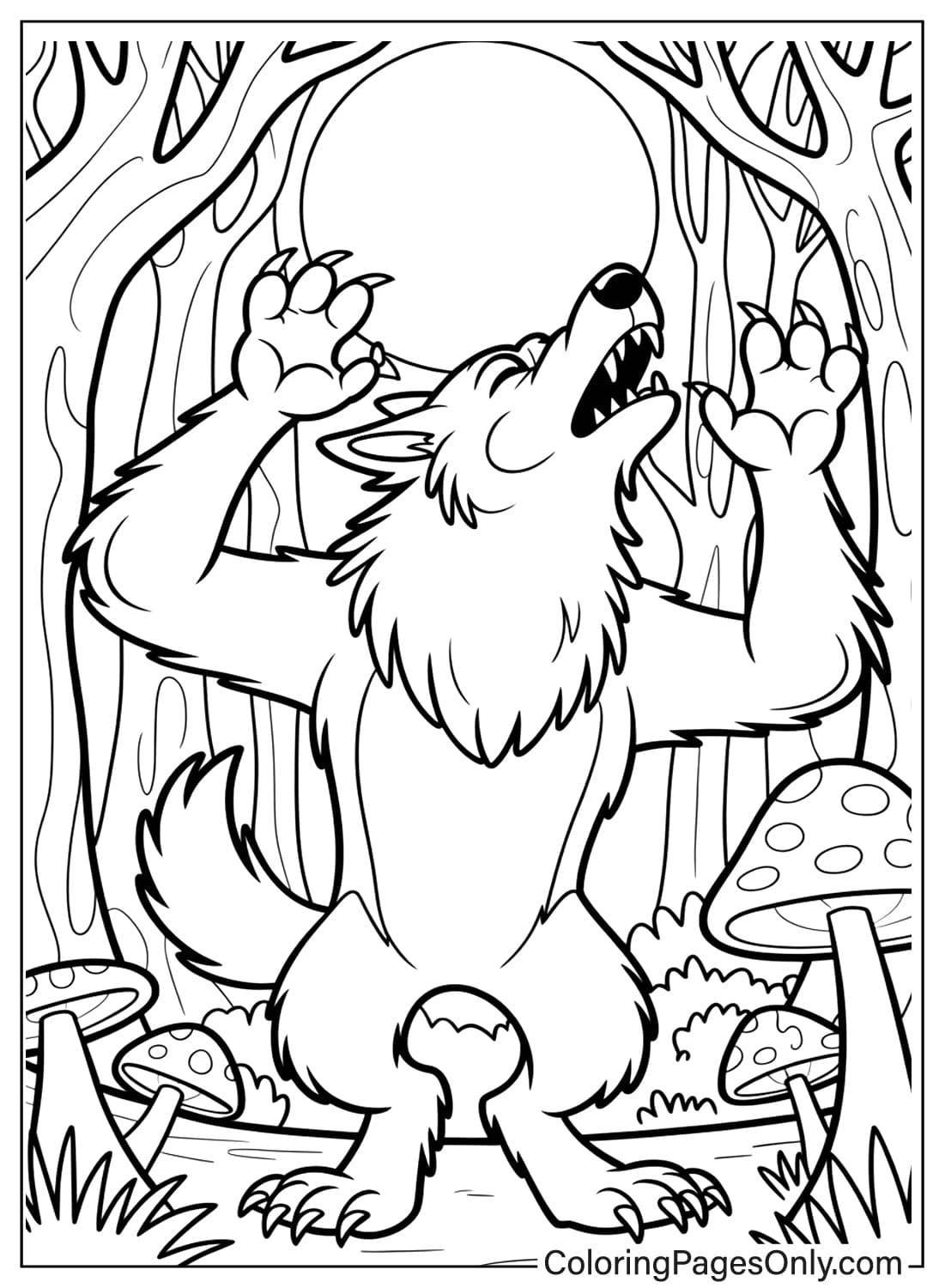
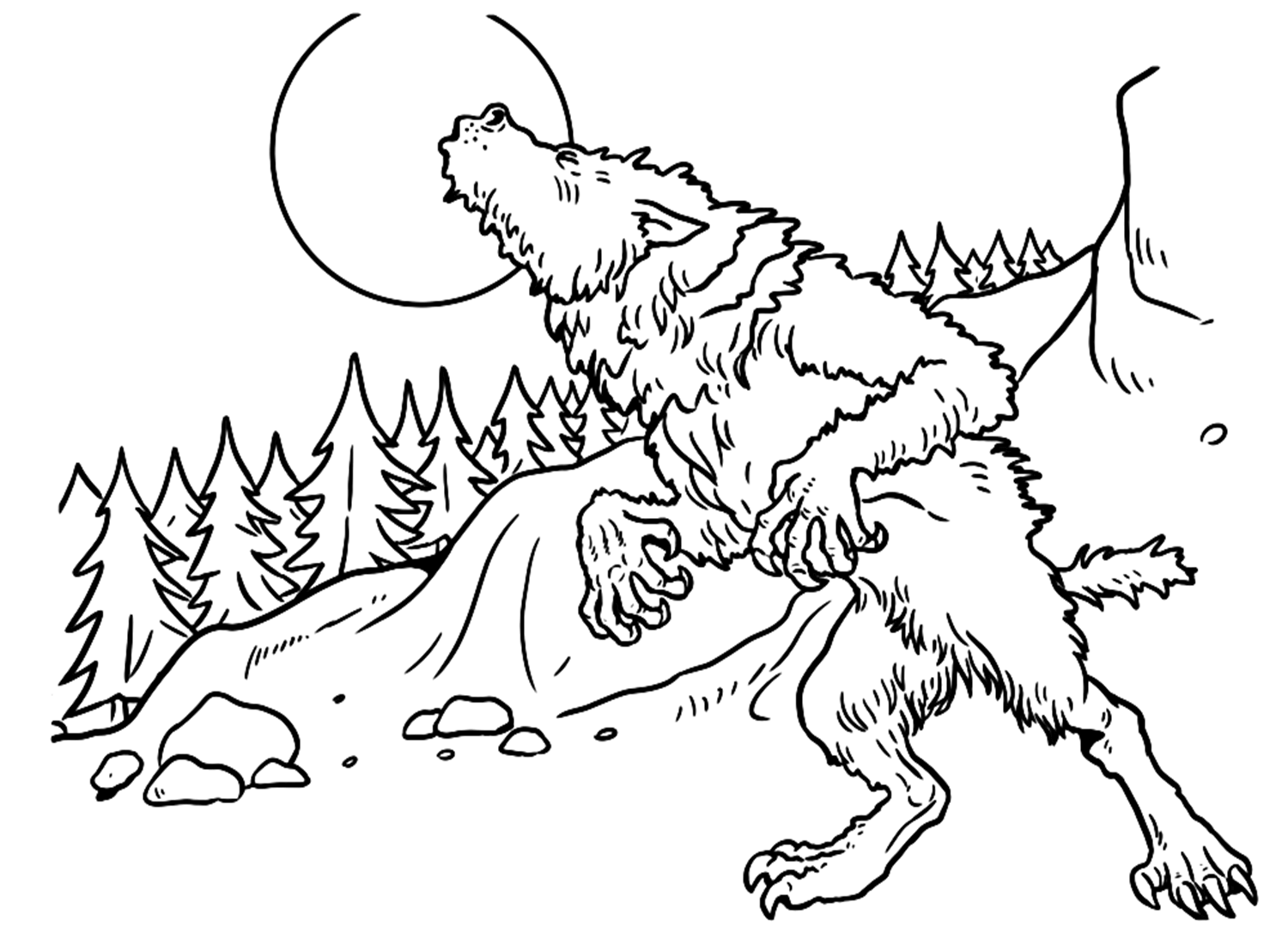
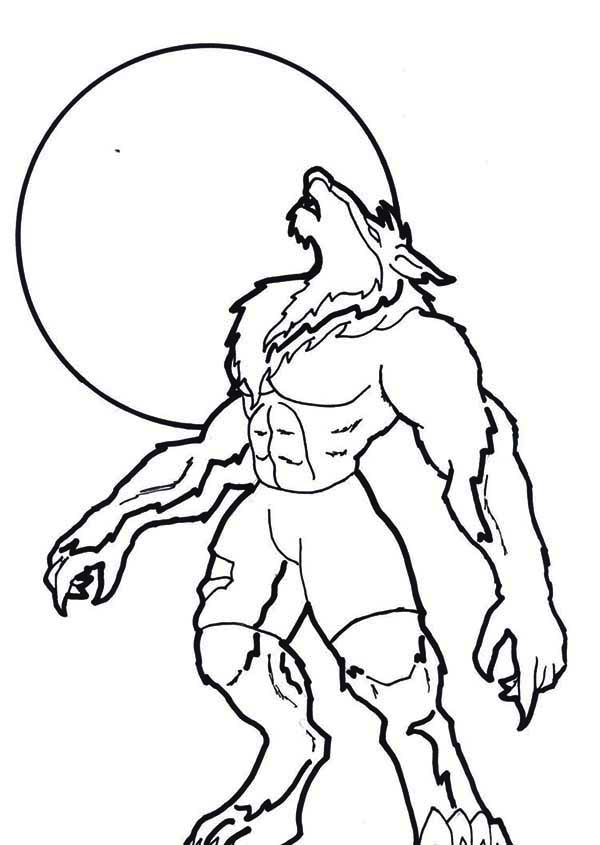
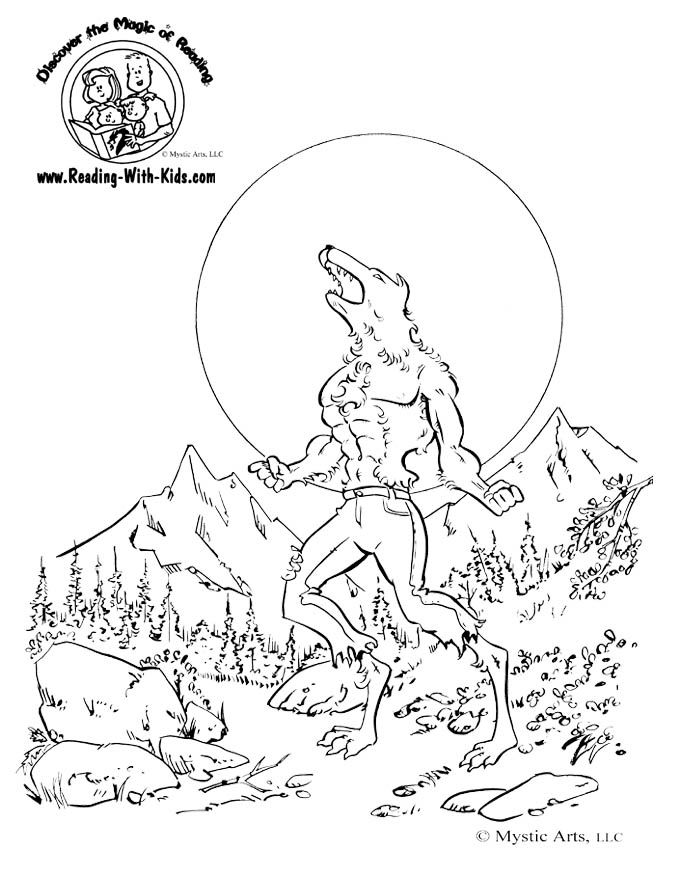
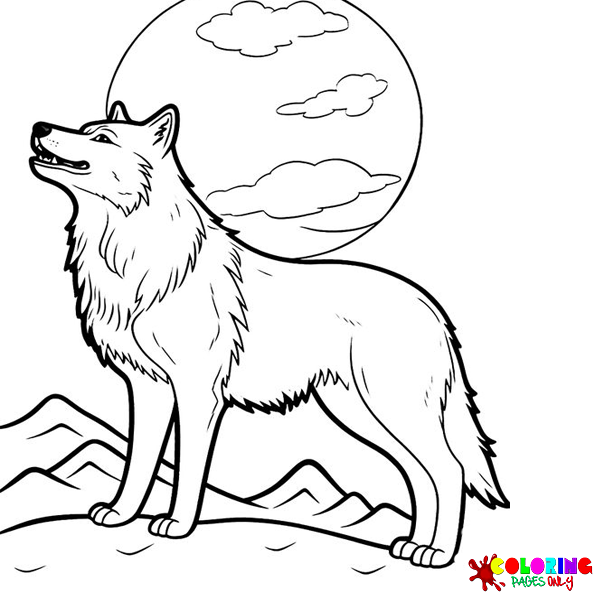
The howling sequence – Werewolf Howling, Howling Werewolf, Howling Wolf – captures the werewolf’s most iconic behavioral moment: the head tilted back, mouth open, directed at the full moon. This is the image most immediately associated with werewolves in popular imagination, and the howling tiles are the most emotionally and compositionally straightforward pages in the collection for capturing the werewolf’s essential nature.

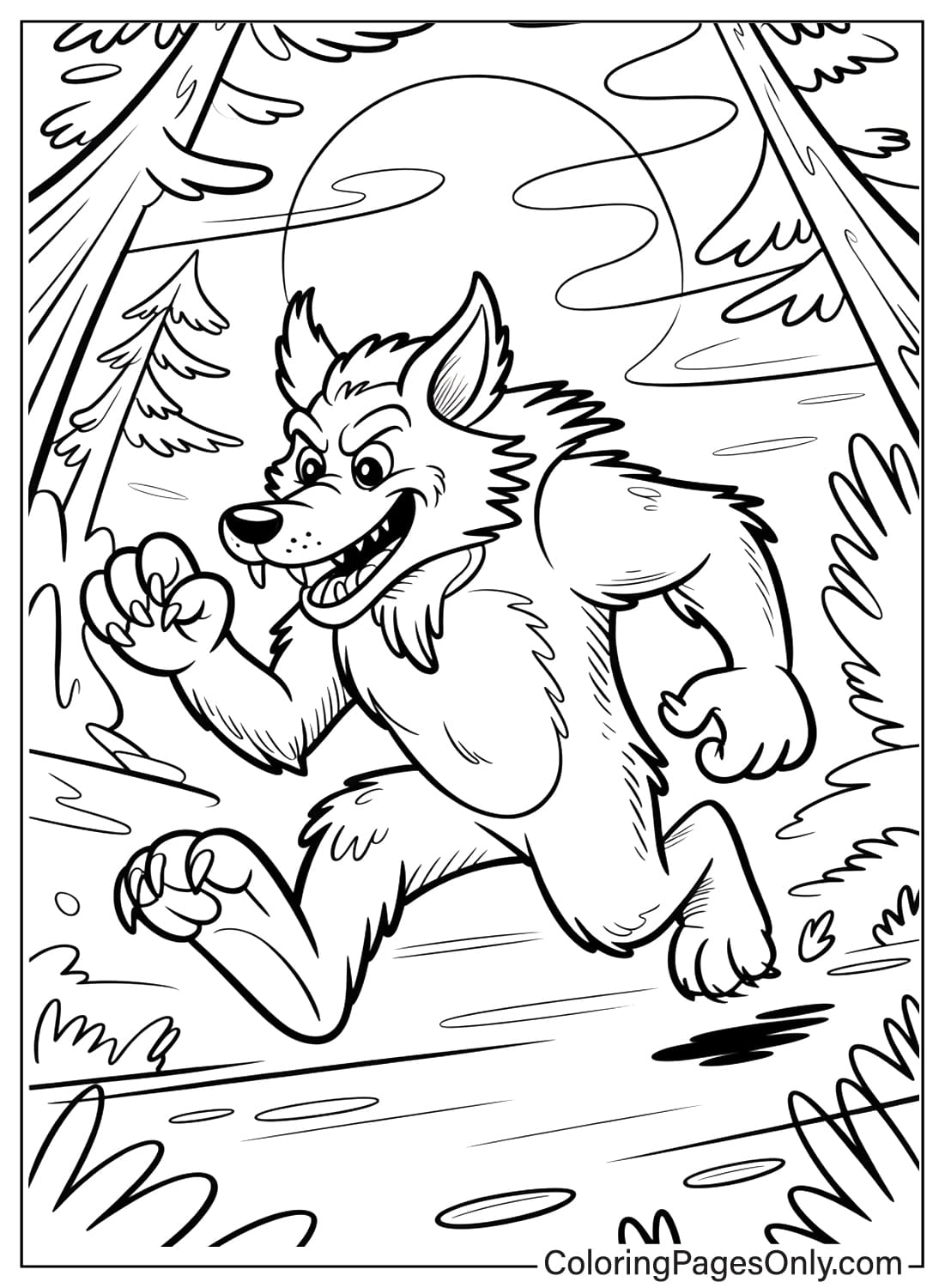
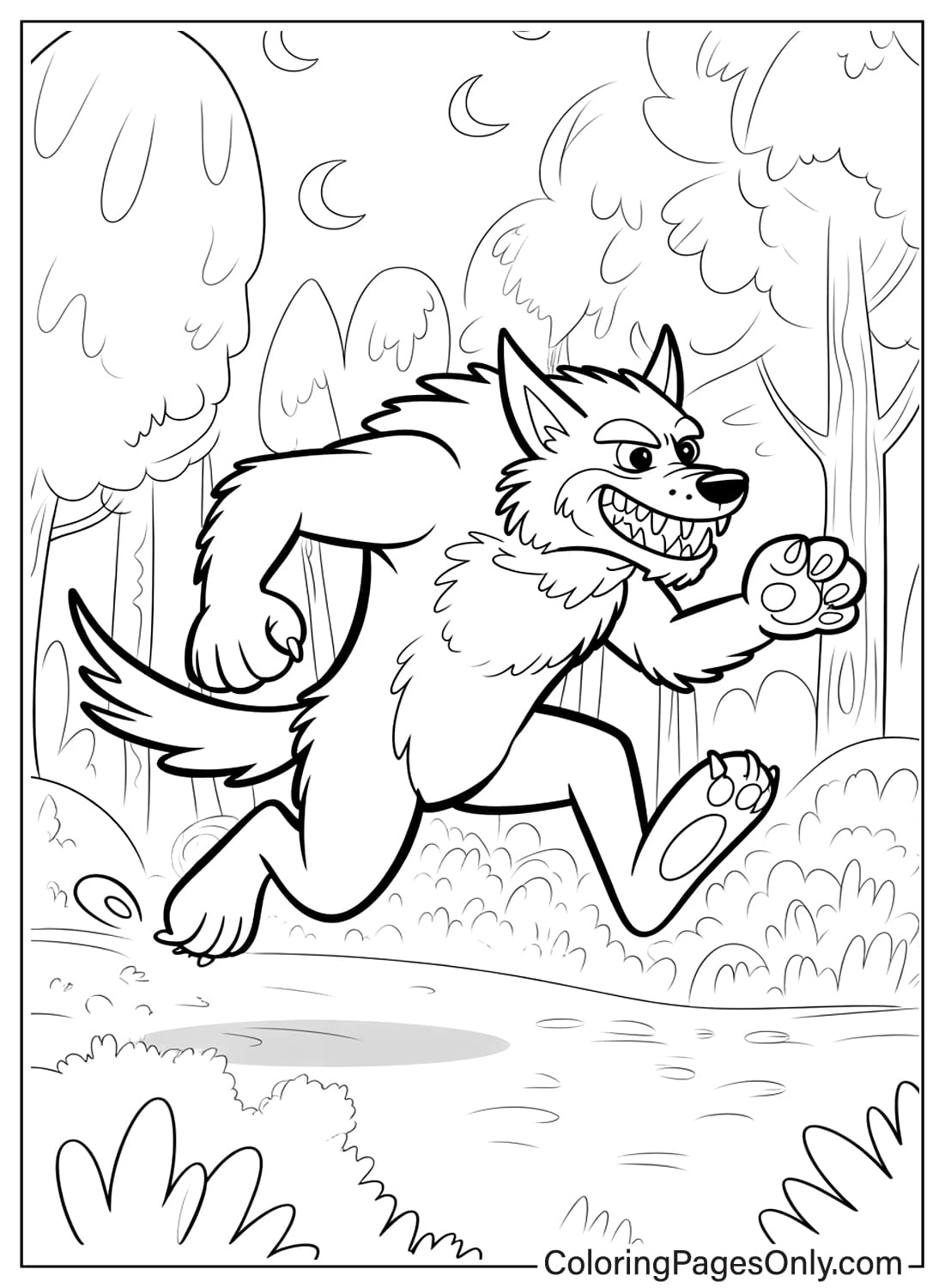
Werewolf Running, Werewolf Running in the Forest, and Werewolf Scene depict the creature in motion – the powerful quadrupedal or bipedal run that emphasizes the werewolf’s physical dominance of its environment. These action tiles benefit from dynamic background coloring: dark forest environments with moonlight filtering through trees create the most atmospheric result.

Werewolf in the Forest and Werewolf and Night are the collection’s most environmentally detailed tiles, placing the werewolf in the woodland and nocturnal settings that are its canonical habitat. These landscape-context tiles offer the most coloring complexity, requiring decisions about forest, sky, and moonlight in addition to the creature itself.

Transformation Tiles

Changing Werewolf depicts the transformation sequence – a human figure mid-transformation into werewolf form. This is one of the most conceptually interesting tiles in the collection because it depicts a state of becoming rather than a completed form, showing the hybrid in-between state that is the werewolf’s most dramatically charged moment. The transformation tile offers a unique coloring challenge: the partially human, partially wolf anatomy requires different skin/fur treatments on different areas of the same figure – human skin tone on less transformed areas transitioning to wolf fur on more transformed areas.

Cartoon and Friendly Werewolves

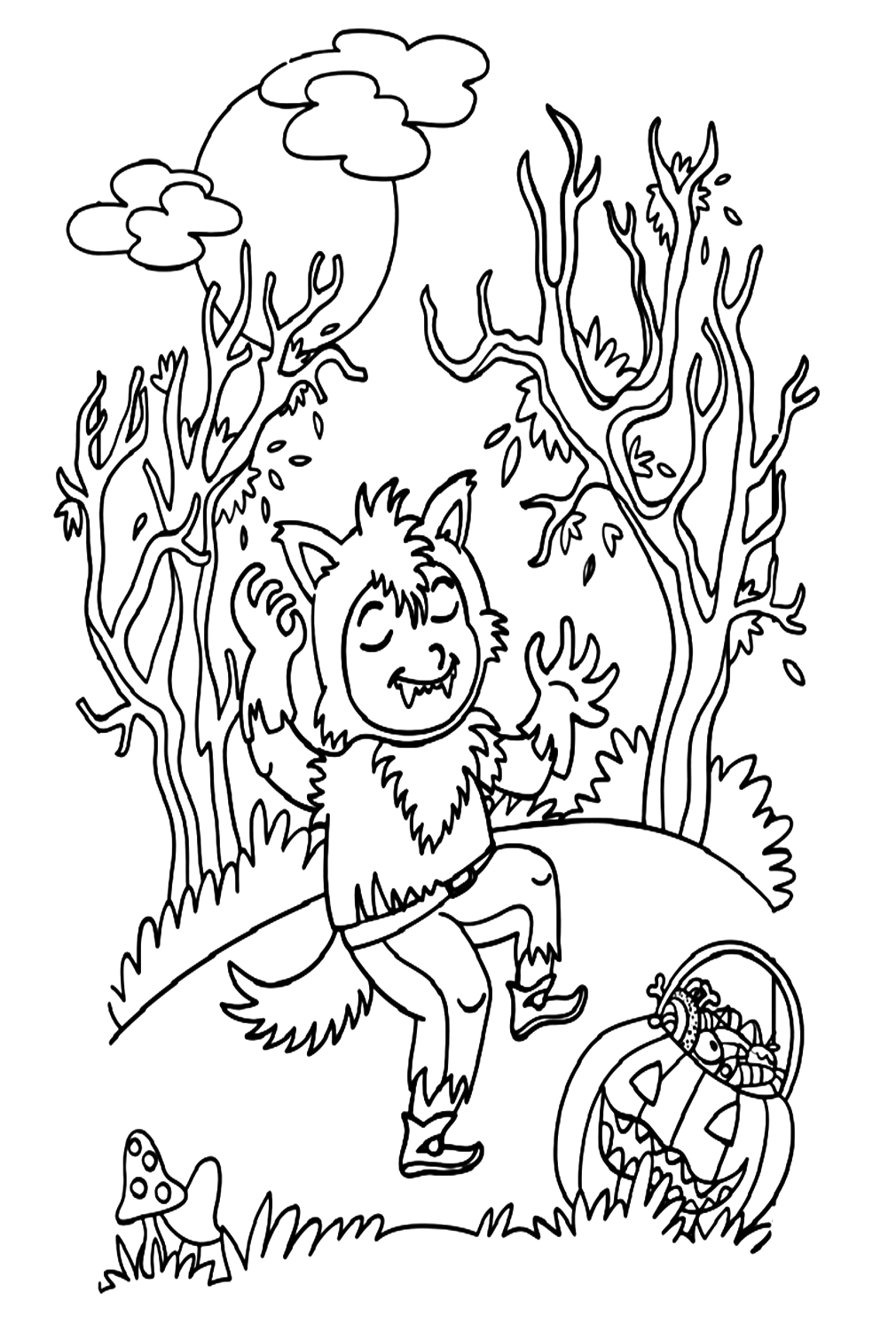
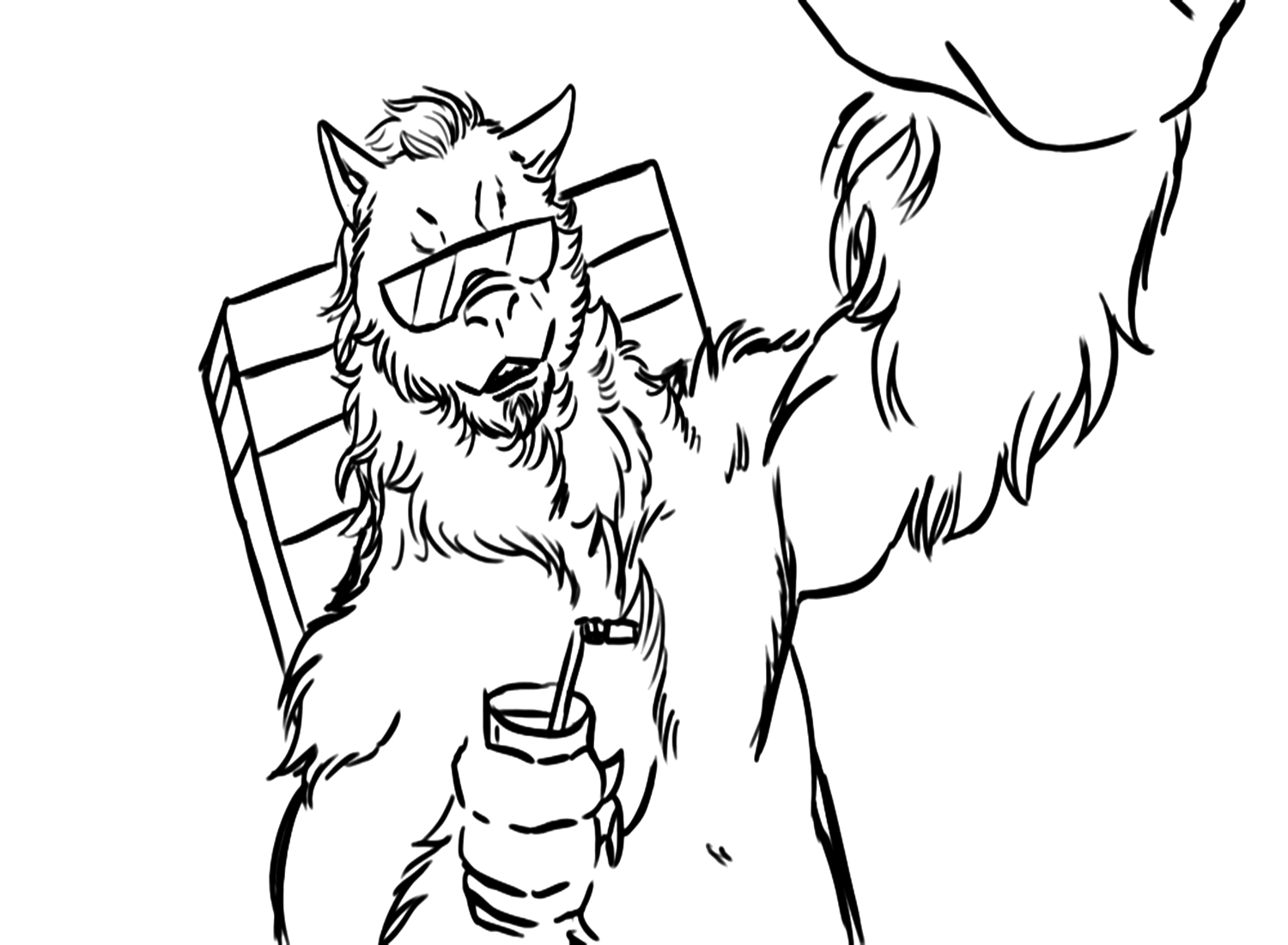
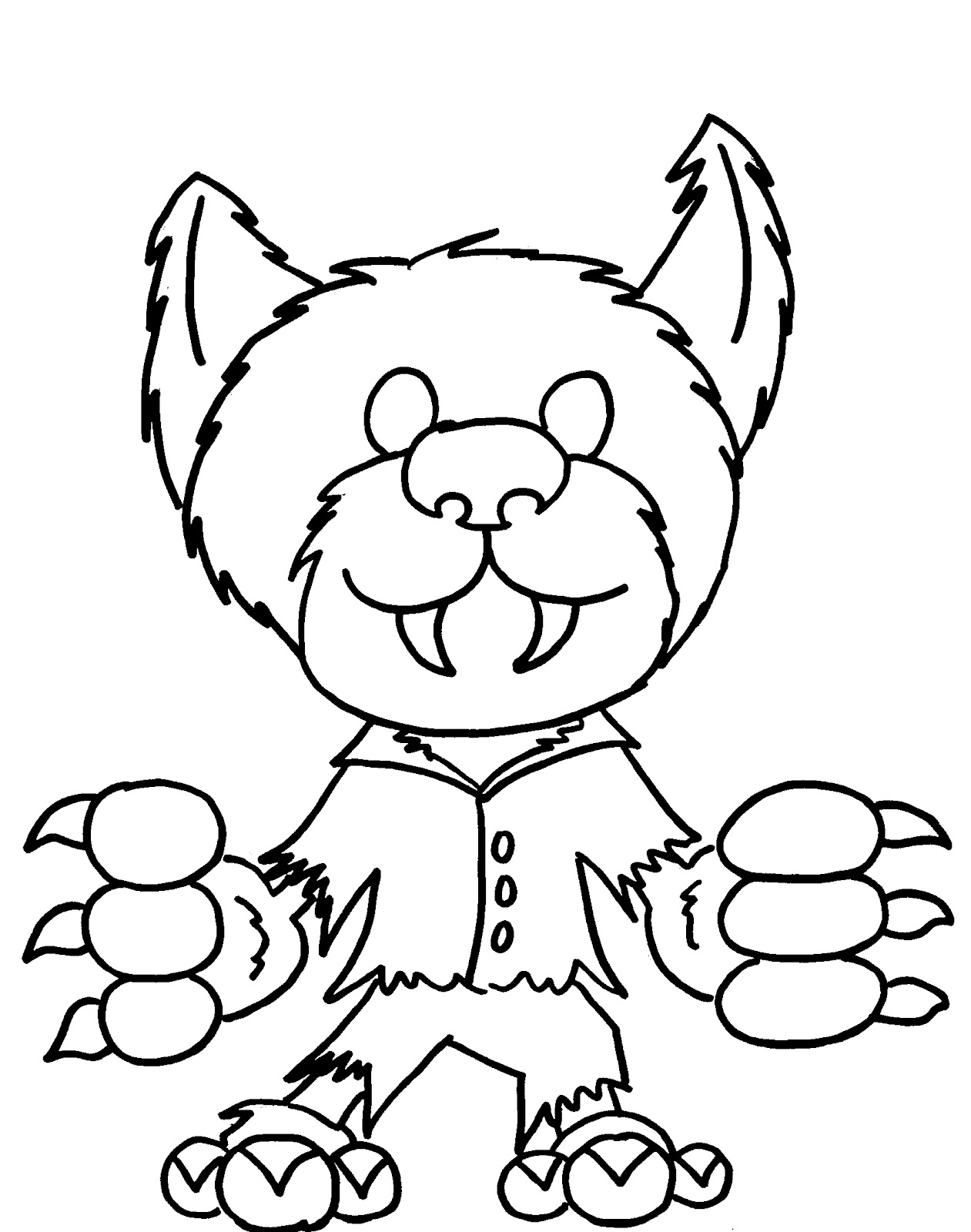
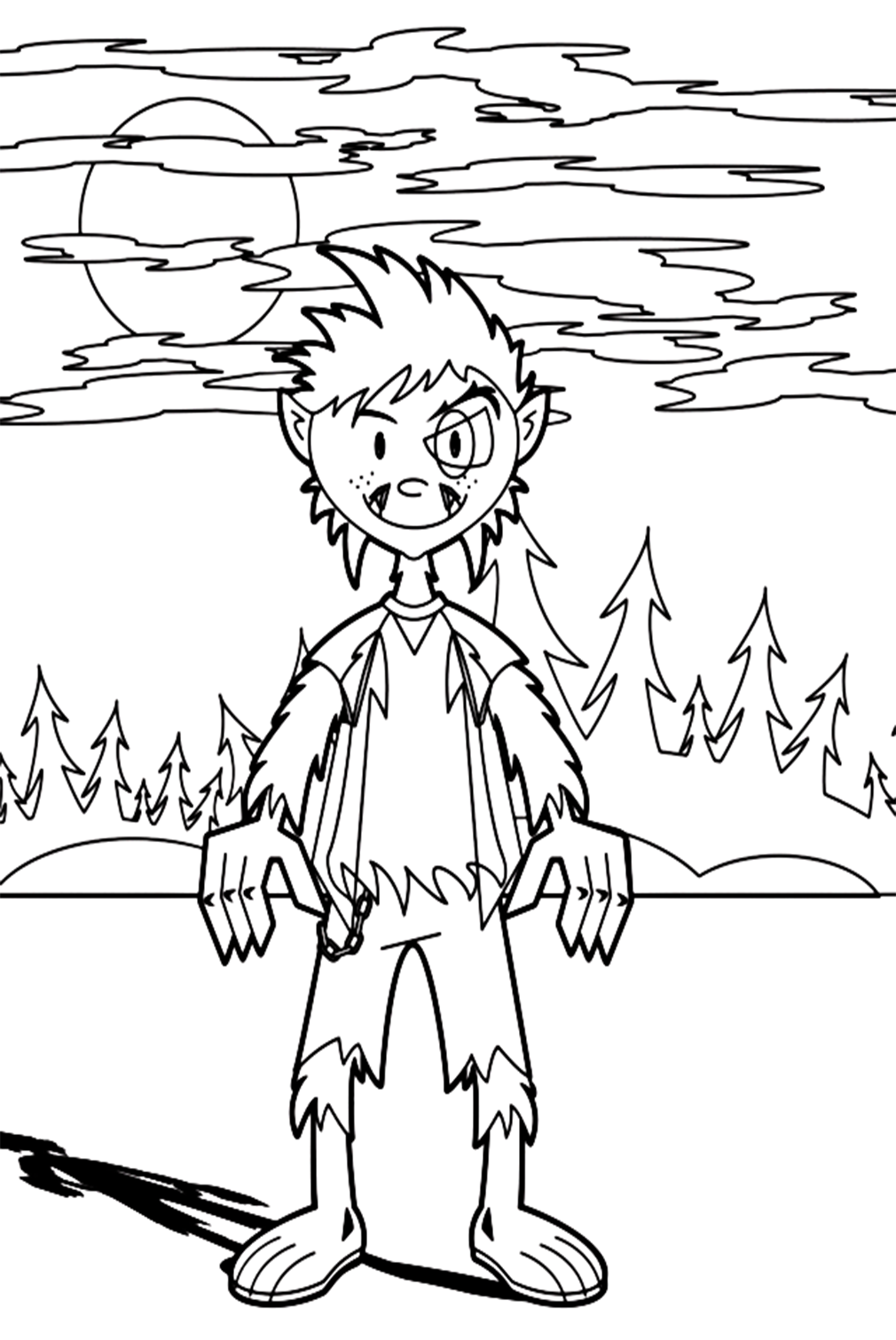
For younger children and those who prefer the character-focused, less frightening end of the werewolf spectrum: Cartoon Werewolf Sheet, Cartoon Werewolf Coloring Page, cartoon-werewolf variants, Cute Werewolf, Funny Werewolf (two variants), and Easy Werewolf. These tiles use simplified, rounded character designs with large expressive eyes, reduced anatomical detail, and an approachable aesthetic that reads as playful rather than threatening.

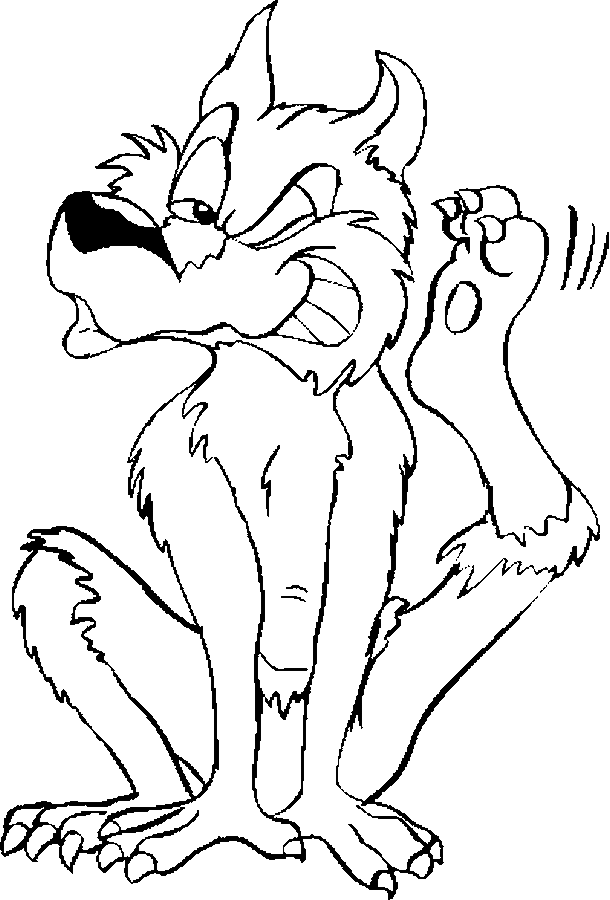
Funny Werewolf (two separate tiles with this name – the 2025 version and the older Halloween variant) takes the werewolf into comic territory – the creature depicted with exaggerated comedy expressions that defuse the inherent threat of the subject matter. These are the collection’s most appropriate tiles for children ages 4-7.

Boy in Werewolf Costume

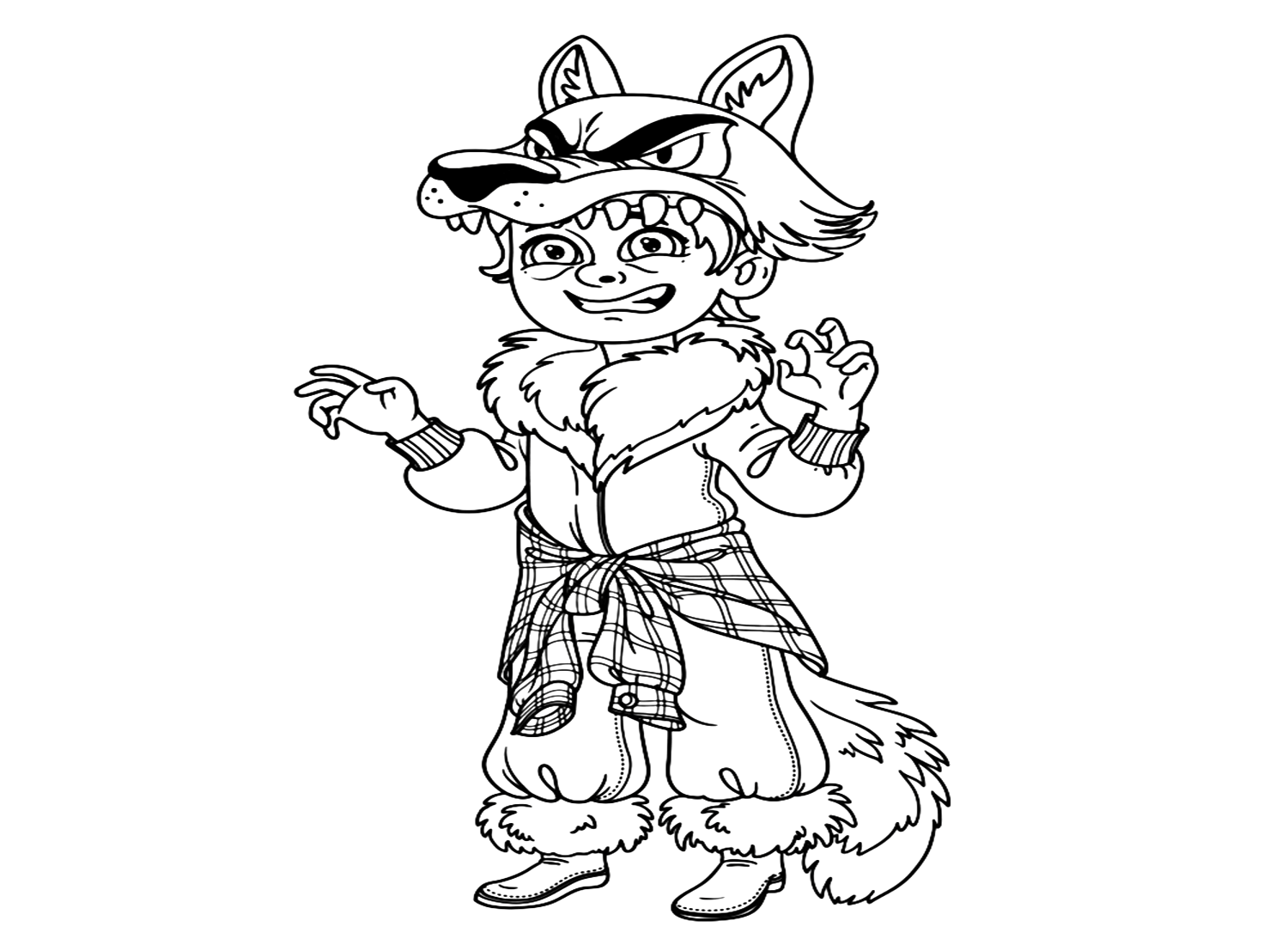
Boy in Werewolf Costume is the collection’s most relatably human tile – a child wearing a werewolf Halloween costume rather than an actual werewolf. This tile connects the werewolf tradition to the lived childhood experience of Halloween costume play, making it particularly appropriate for pre-Halloween coloring activities and the youngest end of the collection’s age range.

Goosebumps Werewolf

Goosebumps Werewolf is the collection’s most specifically pop-culture-referenced tile, depicting the werewolf in the visual style associated with R.L. Stine’s Goosebumps series – specifically referencing the books The Werewolf of Fever Swamp and related titles. The Goosebumps aesthetic uses a characteristic cartoonishly exaggerated horror style that balances genuine spookiness with accessible character design. This tile appeals most strongly to children who have read or watched Goosebumps.

Fantasy Werewolf

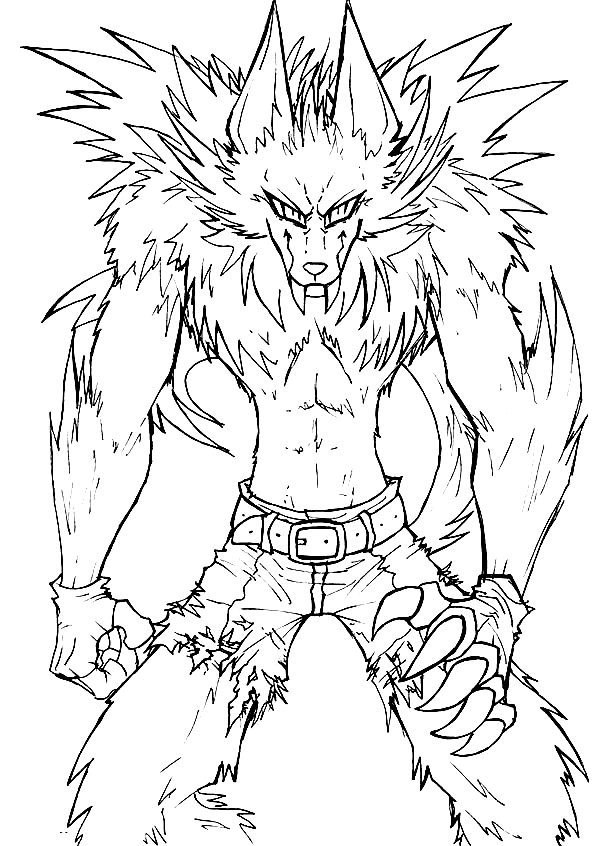
Fantasy Werewolf takes the werewolf out of its traditional horror context and into fantasy adventure territory – a werewolf depicted as a fantastical creature within a heroic or epic setting rather than a horror one. This tile connects to the tradition of werewolves as playable characters in fantasy role-playing games (D&D, Pathfinder) and the fantasy literature treatment of shapeshifters as morally complex figures.

Coloring Guide: The Werewolf Palette

Fur Color – The Central Coloring Decision

No single aspect of a werewolf coloring page is more important than the fur color, and no single coloring decision has more impact on the finished page’s overall mood. Werewolf fur across folklore, literature, and film has been depicted across a wide range of colors in folklore, literature, and film, giving colorists legitimate creative freedom:

Classic brown-gray – The most traditionally accurate werewolf color, based on the most common wolf coloration in the wild. A medium, slightly warm gray-brown (tawny gray) reads as naturalistic and grounded. This is the most appropriate choice for realistic tile treatments.

Silver-gray – The most cinematic werewolf color, strongly associated with Lon Chaney Jr.’s The Wolf Man and much of the classic Universal Monsters visual tradition. Silver-gray has a slightly cooler bias than brown-gray and suggests moonlit fur rather than naturalistic wolf coloring. This works particularly well for the howling and night-scene tiles.

Dark brown to near-black – Associated with more aggressive, dangerous werewolf depictions and with the darker visual tone of modern werewolf films like Underworld. Very dark fur creates maximum contrast between the werewolf and the moonlit background environment.

Black – The most dramatic fur choice, used in many contemporary werewolf designs and in the Goosebumps visual tradition. Black fur requires the most careful shadow differentiation – without varied tones, a black werewolf reads as a flat silhouette. Add slightly lighter dark blue or dark gray along the spine ridge, top of the head, and shoulder areas to create dimension.

Reddish-brown – Associated with certain regional werewolf traditions and with the werewolf-as-natural-animal aesthetic rather than the supernatural monster aesthetic. Reddish-brown fur is warm and earthy, reading as the most animalistic rather than demonic.

Moonlight – The Werewolf’s Essential Companion

Almost every werewolf scene tile in this collection involves a moon, and how the moon is colored determines the entire atmospheric quality of the finished page. The full moon in werewolf imagery uses a specific palette:

The moon itself is pale, cold white to pale, cold yellow – not warm golden yellow (that belongs to sunrise/sunset), but a cool, slightly blue-tinged white or the palest possible cool yellow. The moon’s light cast on the surrounding clouds uses a very pale blue-gray.

The sky around the moon uses deep navy to near-black blue – the specific blue of a clear night sky rather than the purple-blue of twilight. Stars, if visible, are bright white dots on this deep blue field.

Moonlight falling on the werewolf’s fur creates a directional highlight effect – the surface facing the moon (typically the top of the head, the shoulder, the raised paw or claws) receives the lightest, most blue-tinged coloring, while undersides and shadow areas use the deepest, most saturated dark tones.

The Forest Environment

Forest tiles – Werewolf in the Forest, Werewolf Running in the Forest, Werewolf Scene – use the dark, atmospheric woodland aesthetic that is the werewolf’s canonical setting:

Tree trunks in a moonlit forest use dark brown-black for the bark, with pale moonlight catching the left or right side of each trunk, depending on the moon’s position. Leaves and foliage in nighttime forest appear as very dark, near-black green rather than the vivid greens of daytime nature imagery. Ground cover uses dark earth tones – dark brown, dark charcoal – with suggested texture from roots, rocks, and leaf litter.

The most effective forest backgrounds for werewolf pages use a dark-to-darker value range rather than introducing any warm colors – keeping the entire environment cool and shadowed creates the atmospheric contrast that makes the werewolf the most vivid element on the page.

Eyes – The Werewolf’s Most Expressive Detail

Werewolf eyes across the coloring collection use several conventions that each create a different emotional register:

Vivid amber-gold eyes – The most common and most visually striking choice. Amber-gold eyes against dark fur create intense contrast and suggest the predatory intelligence of the creature. Use the most saturated warm yellow or amber available.

Red eyes – Associated with demonic or supernatural werewolf depictions. Red eyes push the creature away from a naturalistic wolf-animal toward supernatural horror.

Yellow-green – Suggests the creature’s wolf nature rather than its supernatural dimension. Yellow-green reads as animal rather than demonic.

FAQs

What is a werewolf? A werewolf is a human being who transforms – typically during a full moon – into a wolf or a hybrid human-wolf creature. The werewolf appears in folklore traditions across many cultures worldwide and became one of popular fiction’s most enduring horror and fantasy figures through literature and cinema. The technical term for the transformation is lycanthropy, from the Greek words for wolf and human.

Where do werewolves come from? Werewolf beliefs appear independently across many cultures. The Greek myth of Lycaon (transformed into a wolf by Zeus) is one of the earliest written accounts. Medieval European folklore – particularly from Germany, France, and Eastern Europe – maintained extensive accounts of werewolves. The word “werewolf” itself comes from Old English wer (man) and wulf (wolf).

What are the classic weaknesses of a werewolf? In the most widely established Western folklore and horror fiction tradition, werewolves are vulnerable to silver – silver bullets, silver blades – while conventional weapons have little or no effect. Other traditions include wolfsbane (a poisonous plant) as a deterrent. The transformation is traditionally triggered by the full moon, though some traditions allow voluntary transformation.

Who is the most famous werewolf in fiction? The Wolf Man, portrayed by Lon Chaney Jr. in the 1941 Universal Pictures film, established the definitive visual language of the cinematic werewolf and remains the most culturally significant single werewolf depiction. Other famous fictional werewolves include the werewolves of the Twilight series, Remus Lupin from Harry Potter, and David Kessler from An American Werewolf in London.

What is the Goosebumps werewolf? The Goosebumps werewolf refers to the werewolf depicted in R.L. Stine’s Goosebumps book series, particularly The Werewolf of Fever Swamp (1993). The Goosebumps series uses a cartoonishly exaggerated horror aesthetic – designed to be genuinely spooky but accessible to middle-grade readers.

What colors are used for werewolves? Werewolf fur is most commonly depicted in gray-brown, silver-gray, dark brown, or black – colors derived from actual wolf coloration. Moonlit werewolf scenes use cool blue-tinged highlights on the fur. Eyes are typically vivid amber-gold, red, or yellow-green.

What age group are these werewolf coloring pages for? The collection spans a wide age range. The Cute Werewolf, Funny Werewolf, Cartoon Werewolf, Easy Werewolf, and Boy in Werewolf Costume tiles suit children ages 4-7. The standard scary and Halloween werewolf tiles are appropriate for ages 8 and up. The Realistic Werewolf and Muscular Werewolves pages are most suitable for teens and adults, given their detailed complexity and mature horror aesthetic.

All 60+ Werewolf Coloring Pages are free – download as PDF or color online. Share your finished pages on Facebook and Pinterest.

These related coloring collections will help you explore the wonderful world of colors. Let’s choose, be creative, and show us your great pictures!
Jennifer Thoa – Writer and Content Creator

Hi there! I’m Jennifer Thoa, a writer and content creator at Coloringpagesonly.com. With a love for storytelling and a passion for creativity, I’m here to inspire and share exciting ideas that bring color and joy to your world. Let’s dive into a fun and imaginative adventure together!