Vampire Coloring Pages
 By:
Jennifer Thoa - Content Editor & Designer
Updated:
By:
Jennifer Thoa - Content Editor & Designer
Updated:
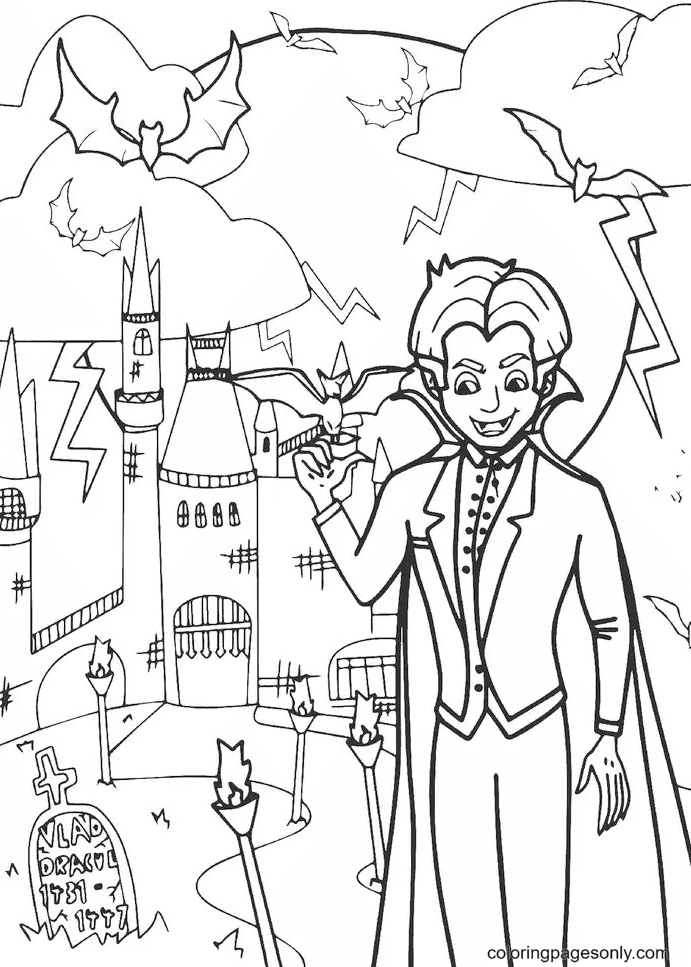
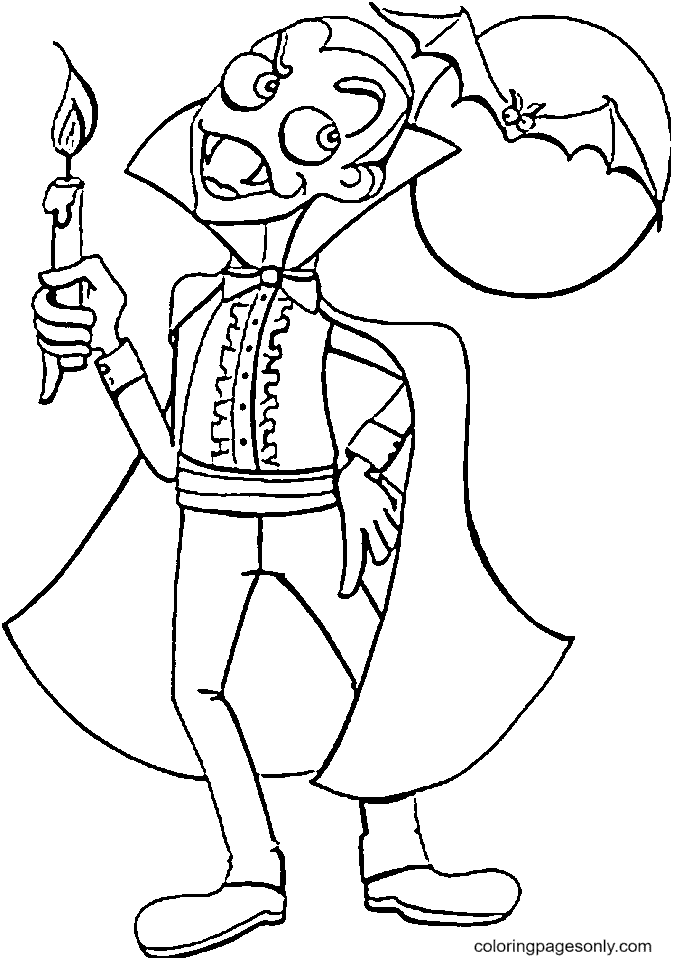
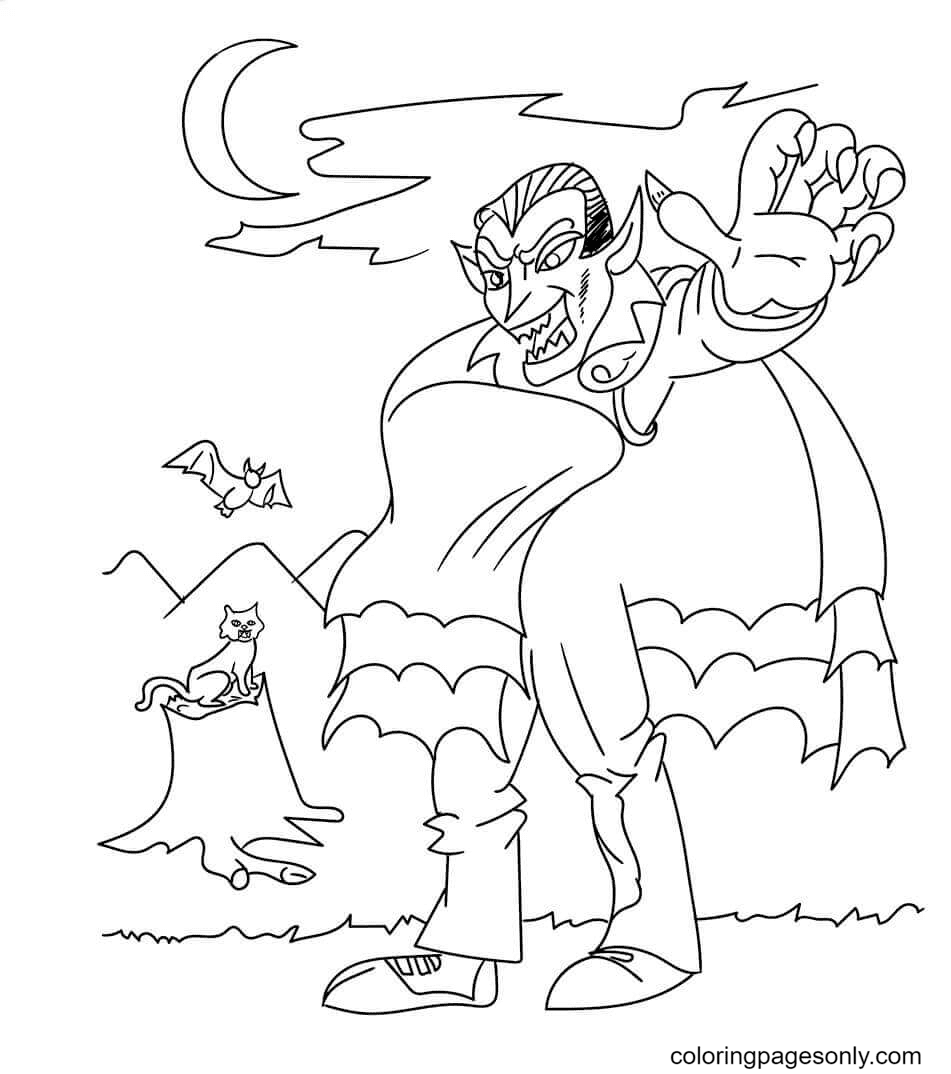
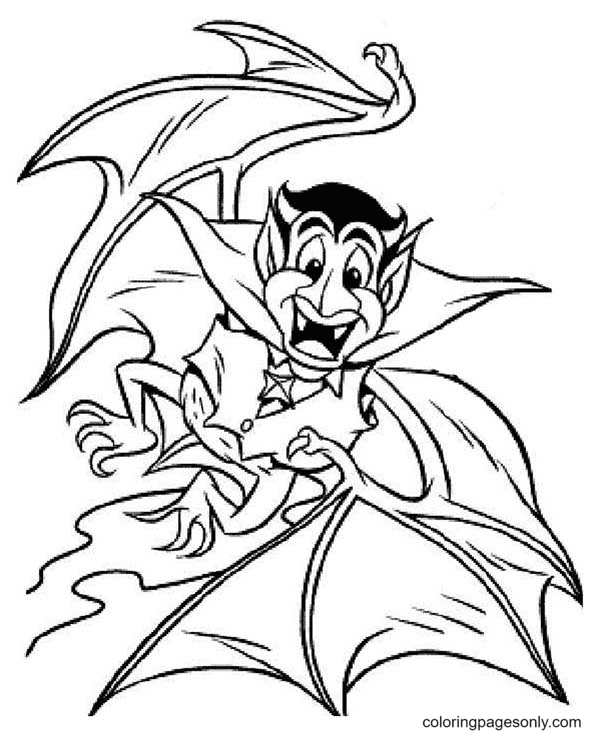
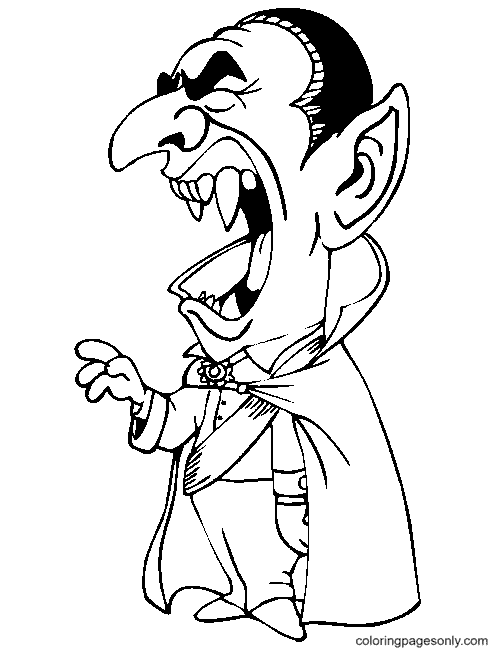
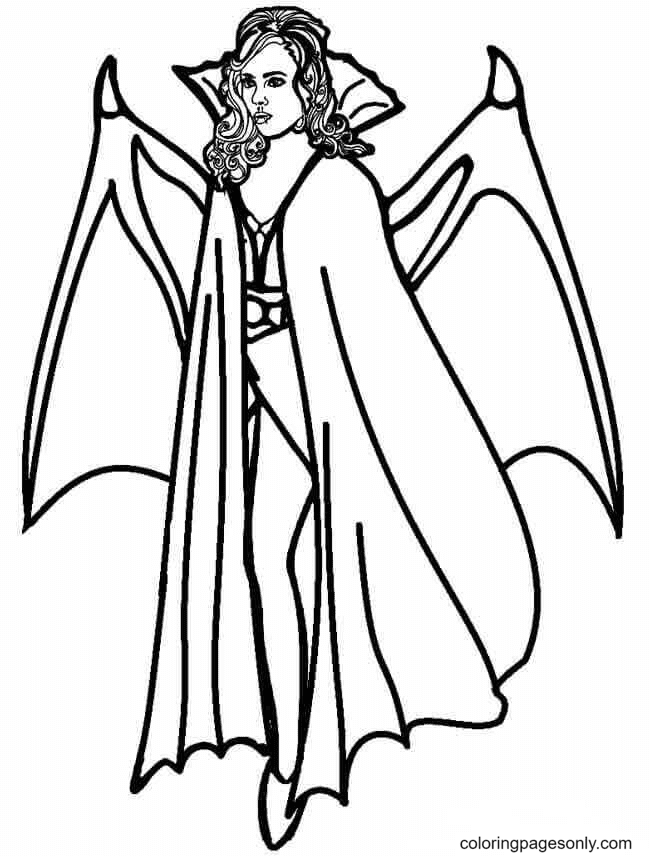
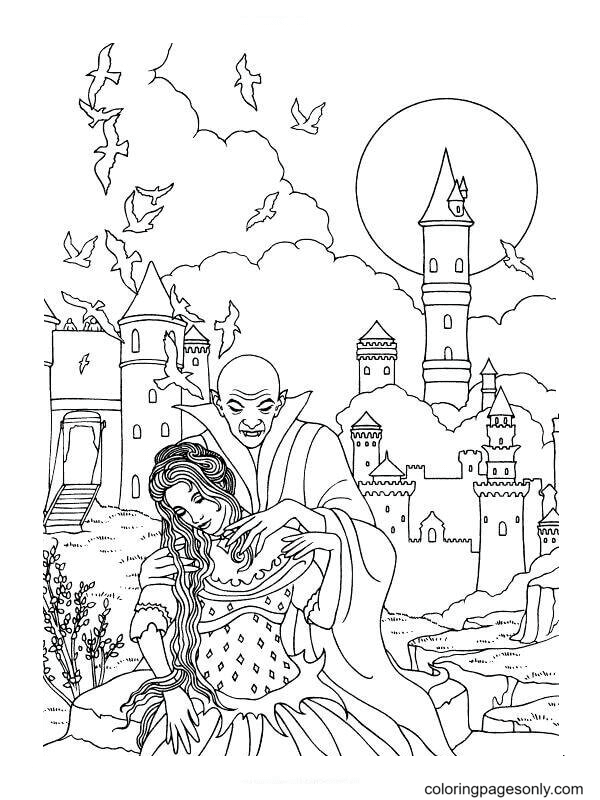
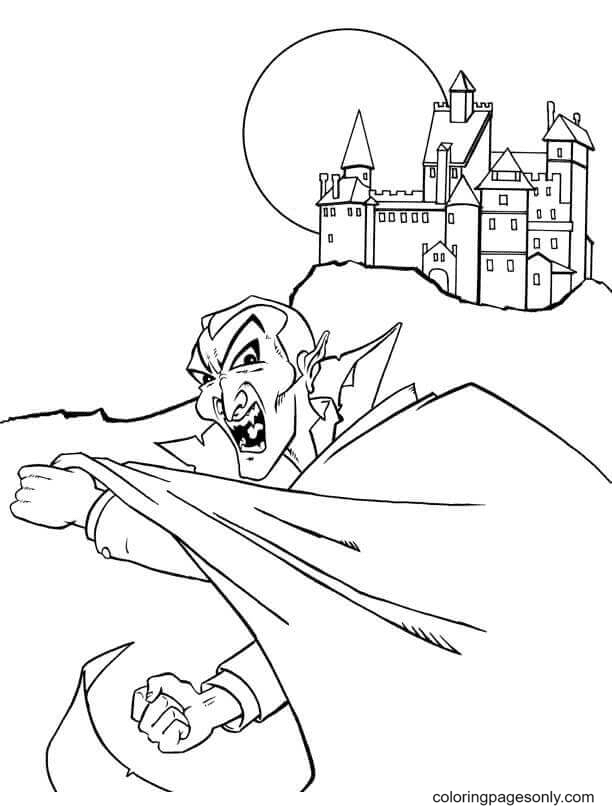
Vampire coloring pages: 85 printable PDF designs spanning classic Dracula scenes, licensed character crossovers, and both cute and genuinely spooky vampire portraits. Each page can be downloaded as a PDF to print or colored online in the browser.
Several details people assume are ancient vampire folklore actually come from one specific source: Bram Stoker’s 1897 novel Dracula, or the films that followed it. Stoker borrowed the name Dracula from Vlad III, a 15th-century Wallachian prince nicknamed Vlad the Impaler, whose father carried the epithet “Dracul,” meaning dragon; beyond the name and a shared aristocratic, Eastern European background, the fictional Count and the historical prince have little in common. One popular vampire trait isn’t even in Stoker’s original book: in the novel, Dracula can move around in daylight, just with reduced power, and he’s ultimately killed by a knife, not a stake through the heart or a sunbeam. The idea that a vampire disintegrates in sunlight actually comes from Nosferatu, a 1922 unauthorized film adaptation, which needed a dramatic ending after being denied the legal rights to use Stoker’s own story. This collection includes several pages based directly on Dracula and Mina Harker, another character from the original novel, alongside plenty of pages that lean into the newer, film-born vampire tropes instead.
With 85 pages split between literary characters, licensed crossovers, classic scenes, and both cute and scary styles, the set works as a quick single-page Halloween project and as source material for a much longer coloring session.
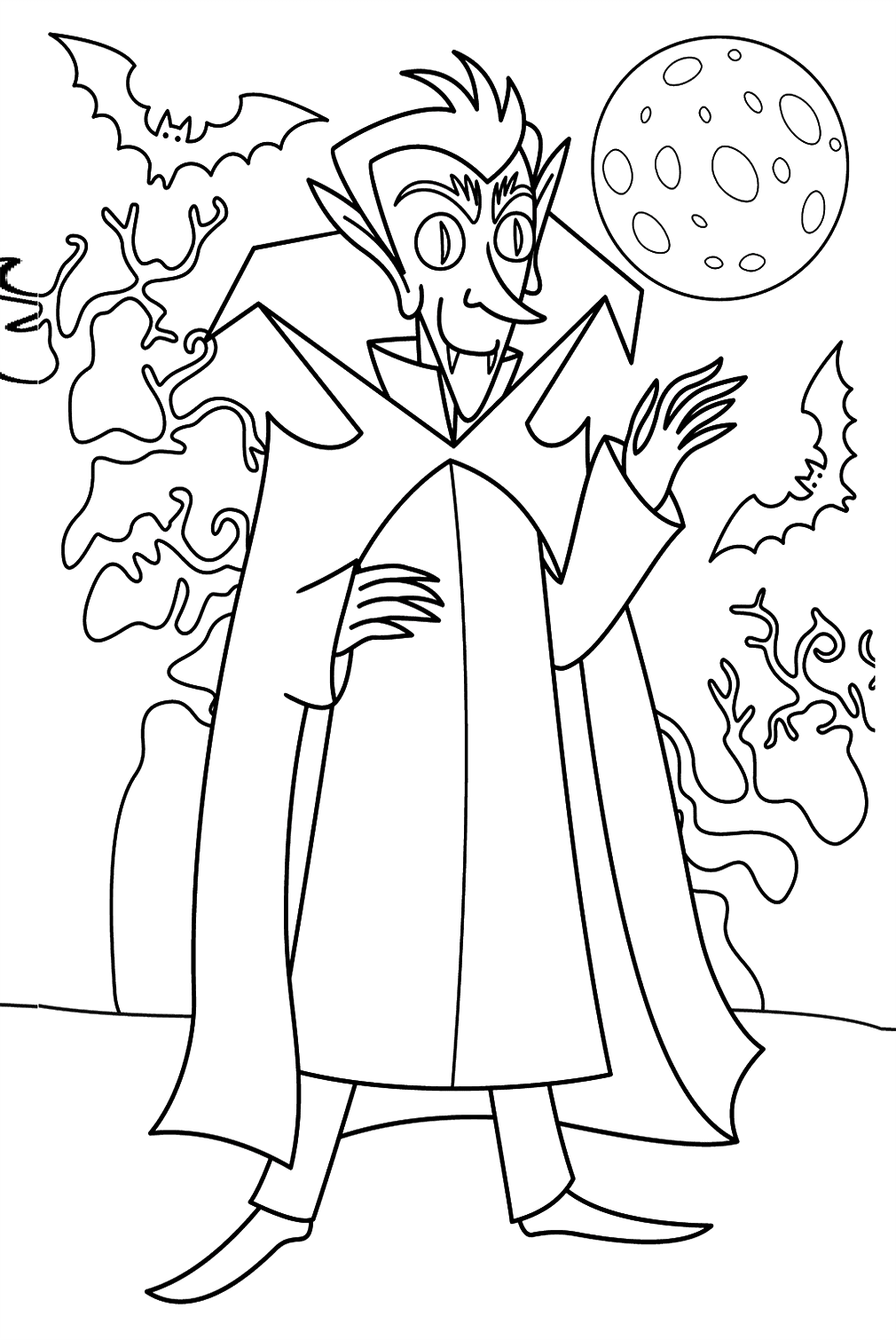
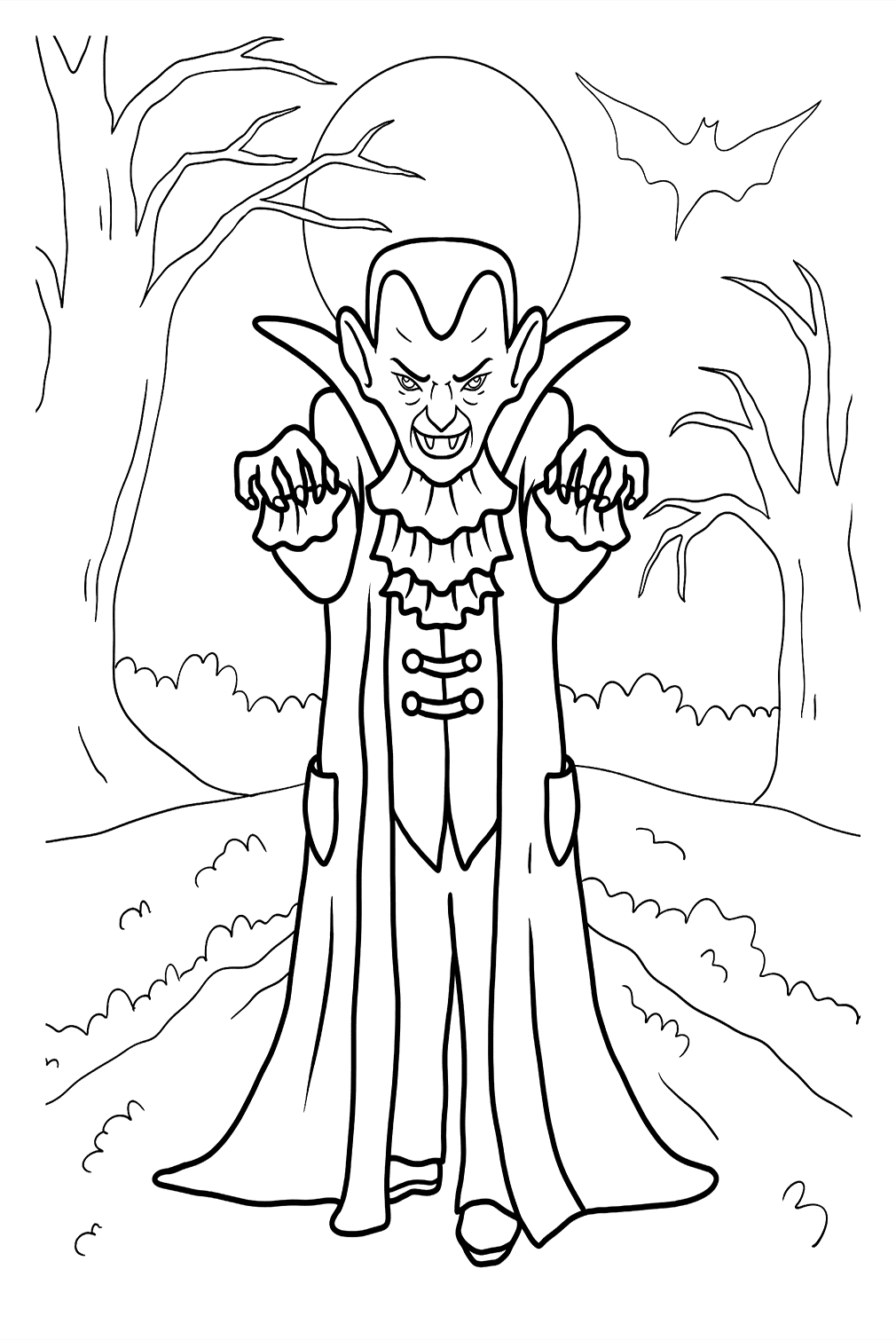
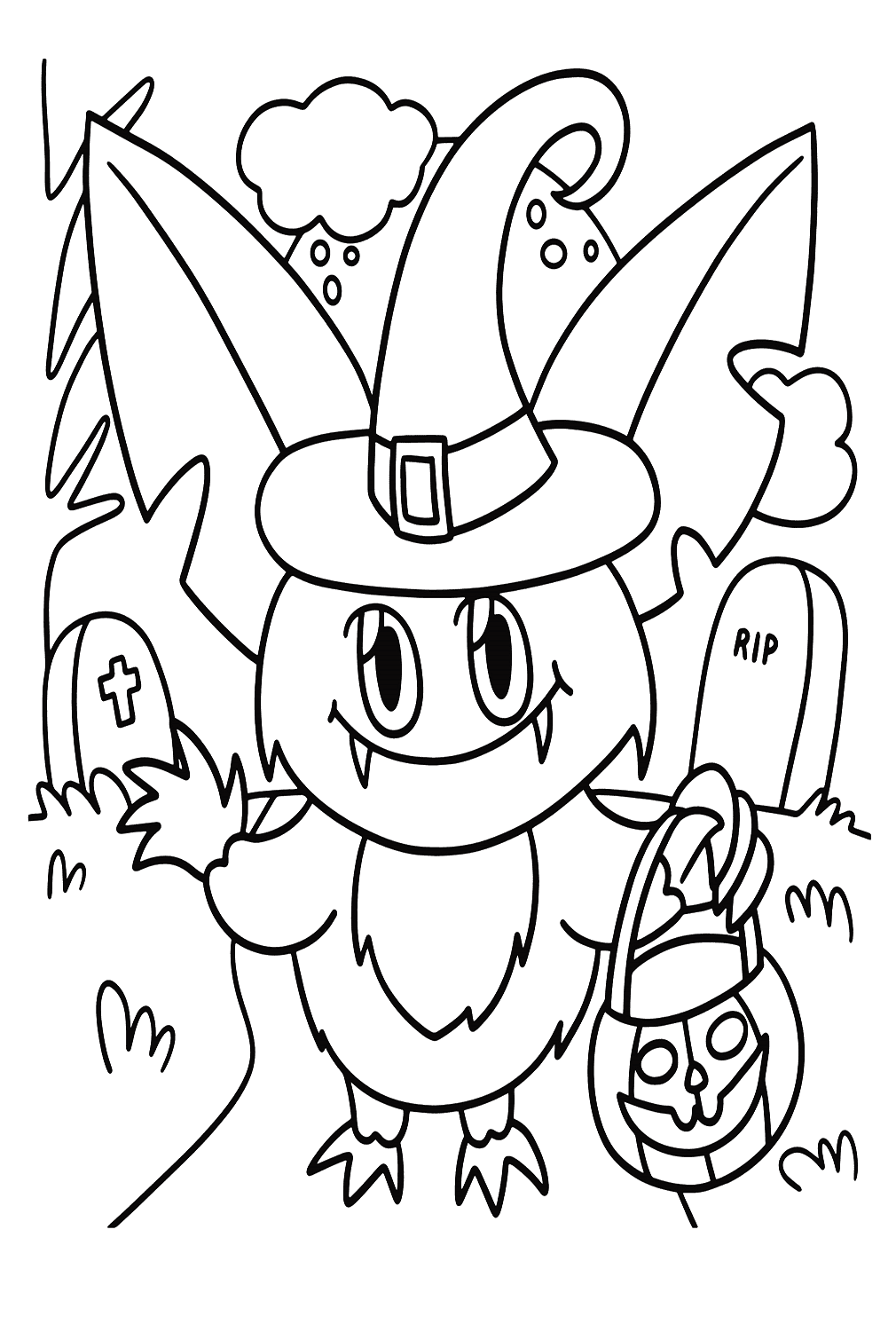
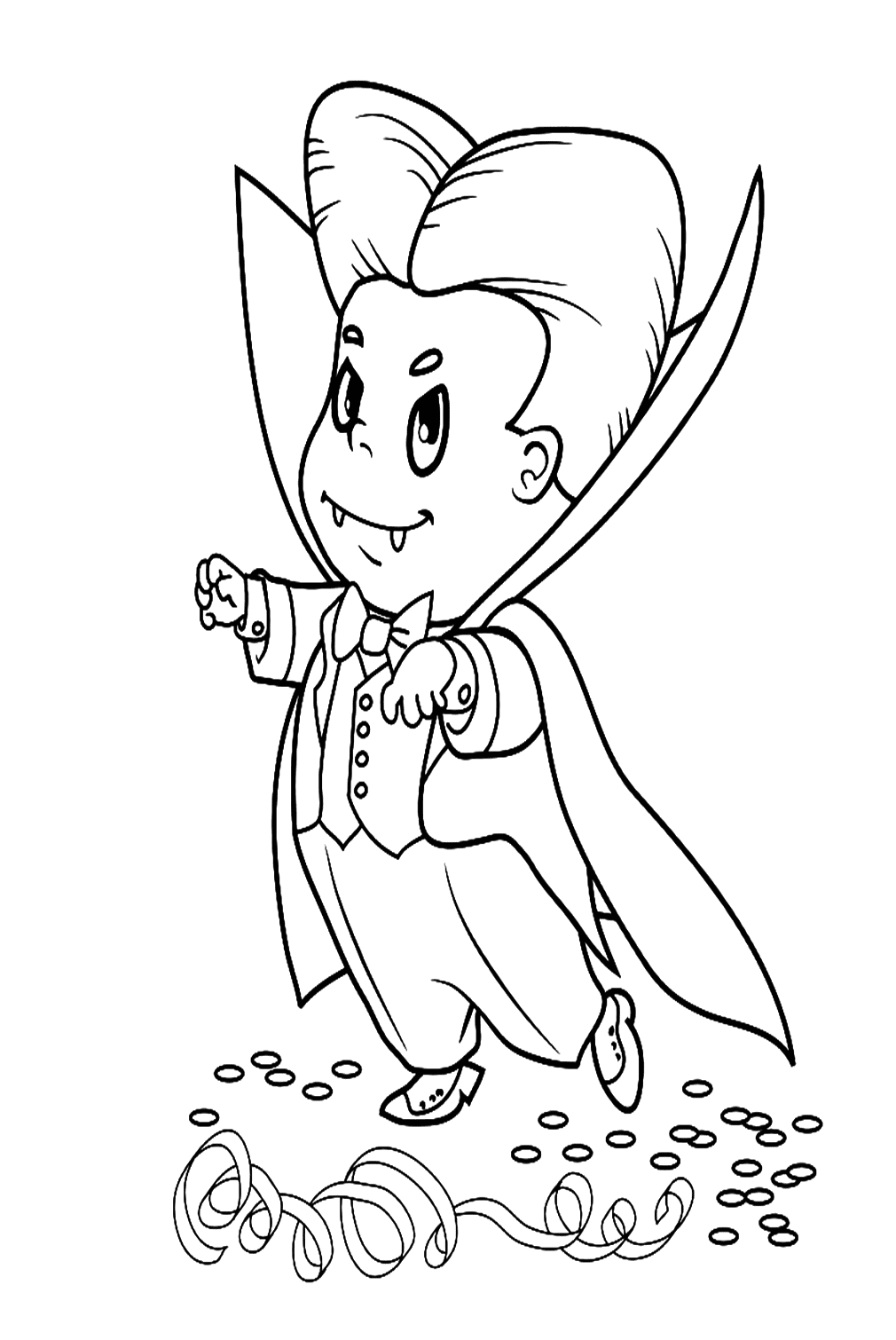
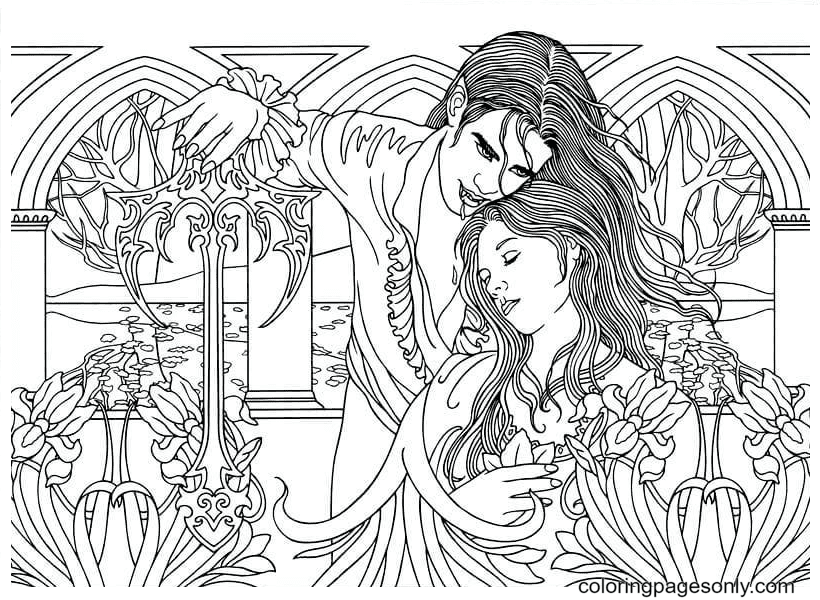
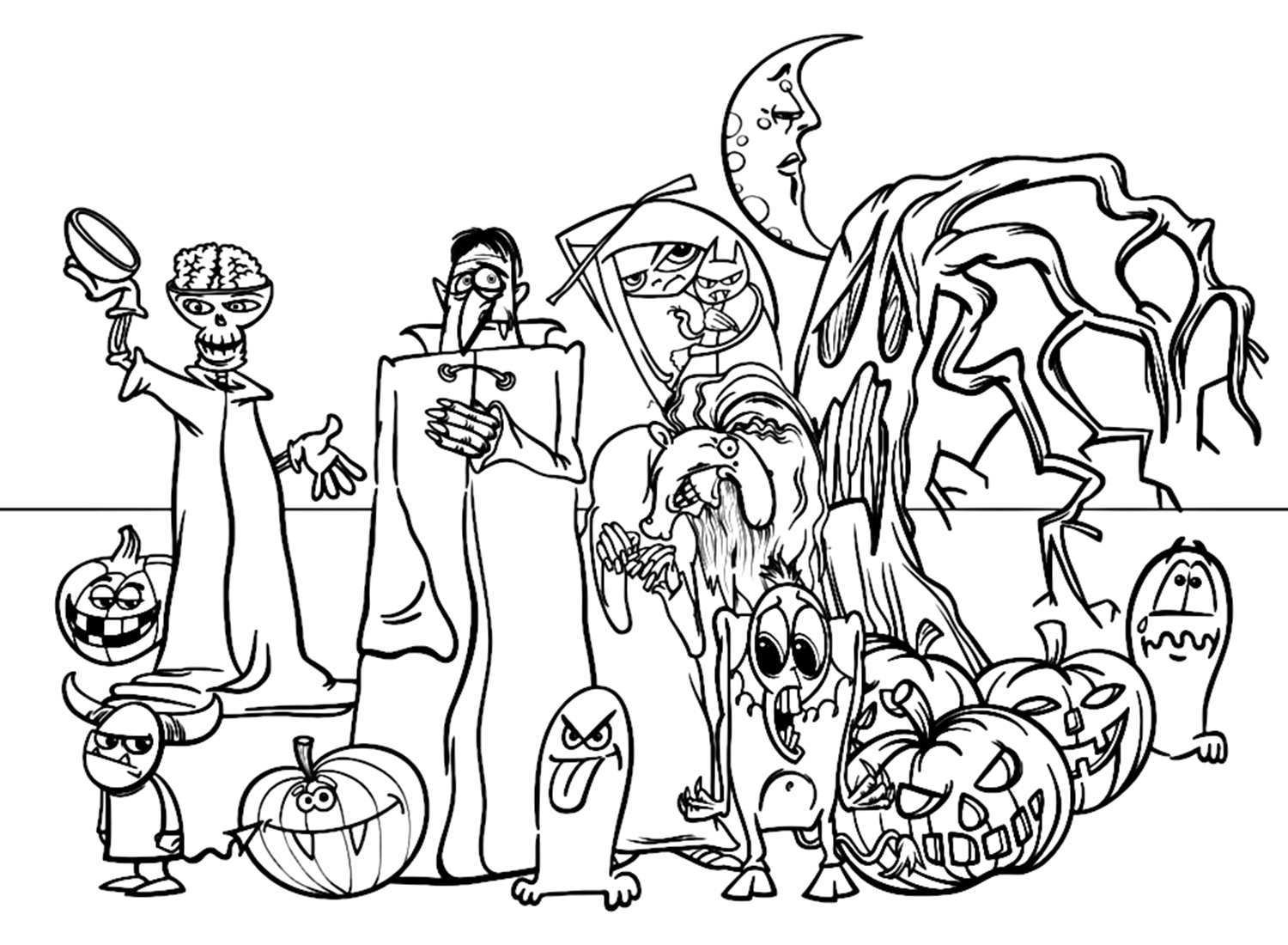
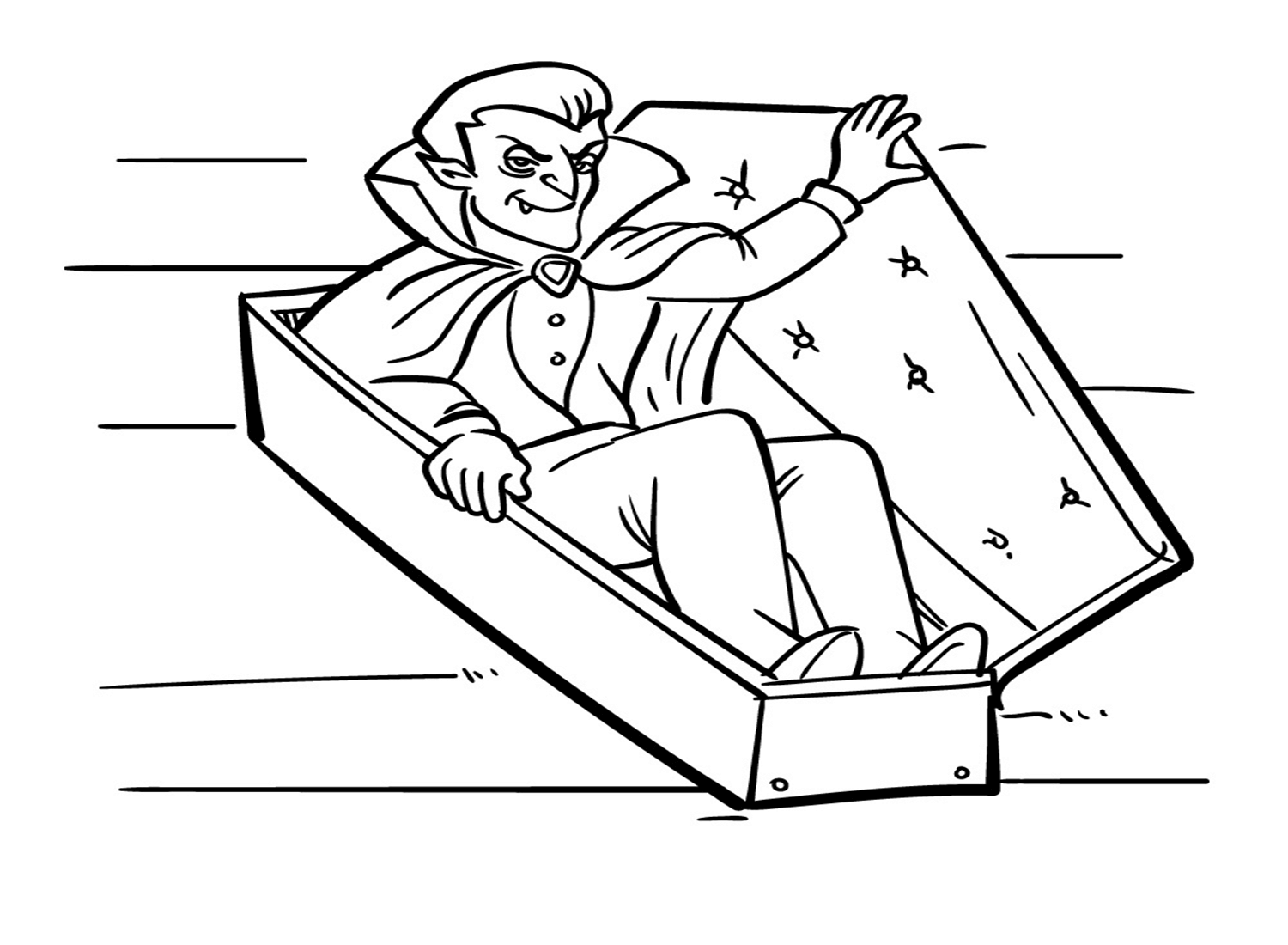
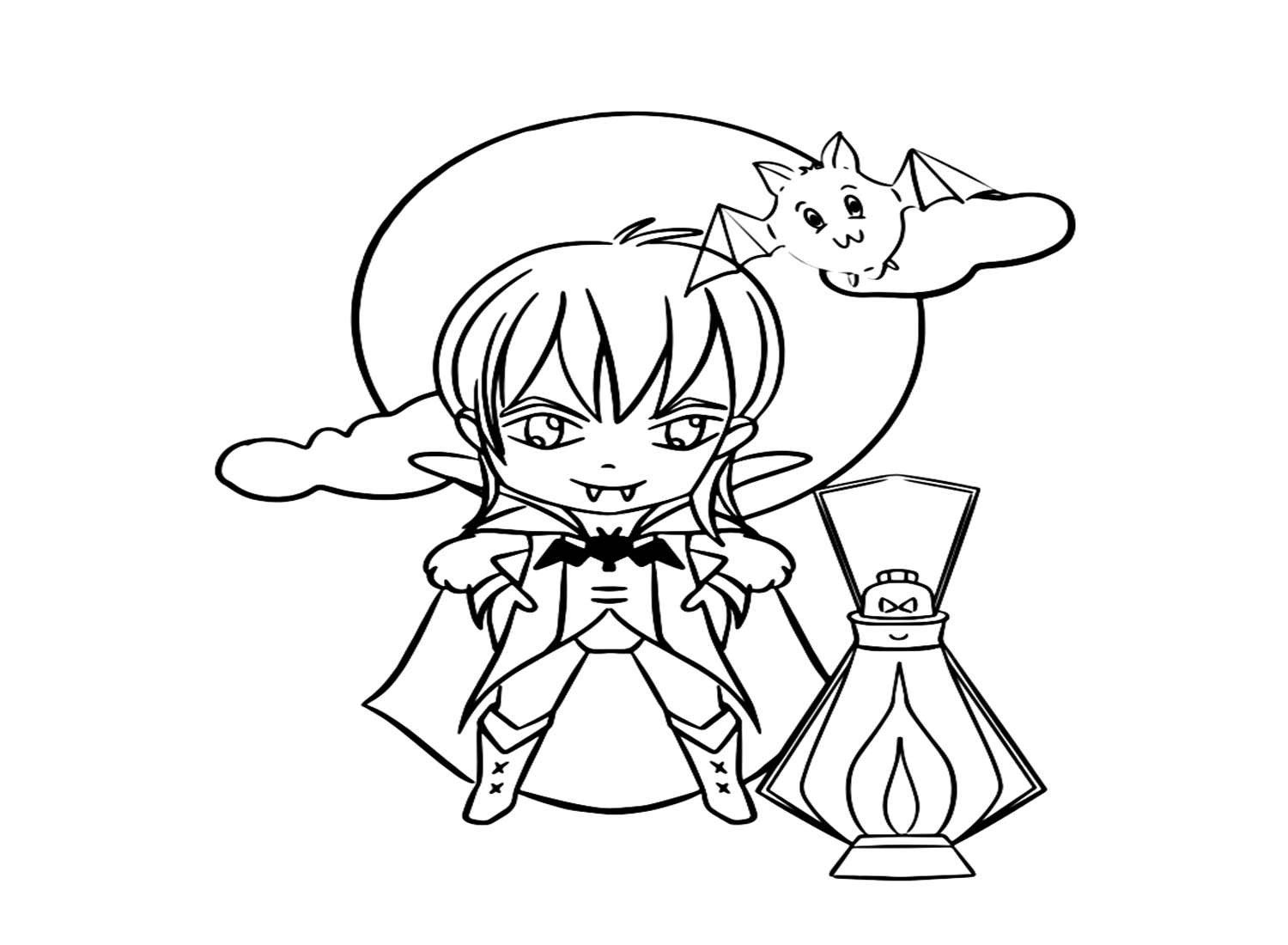
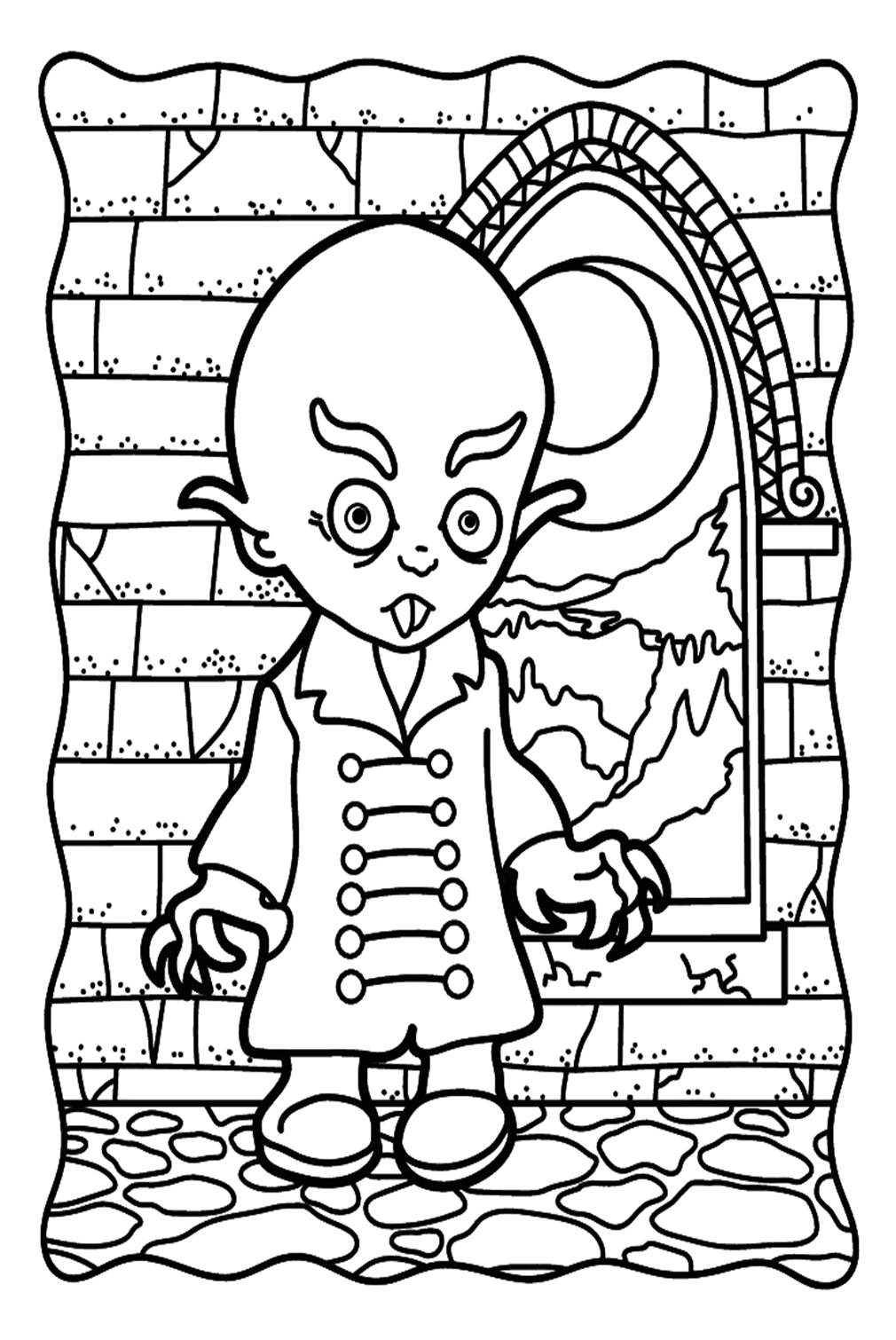
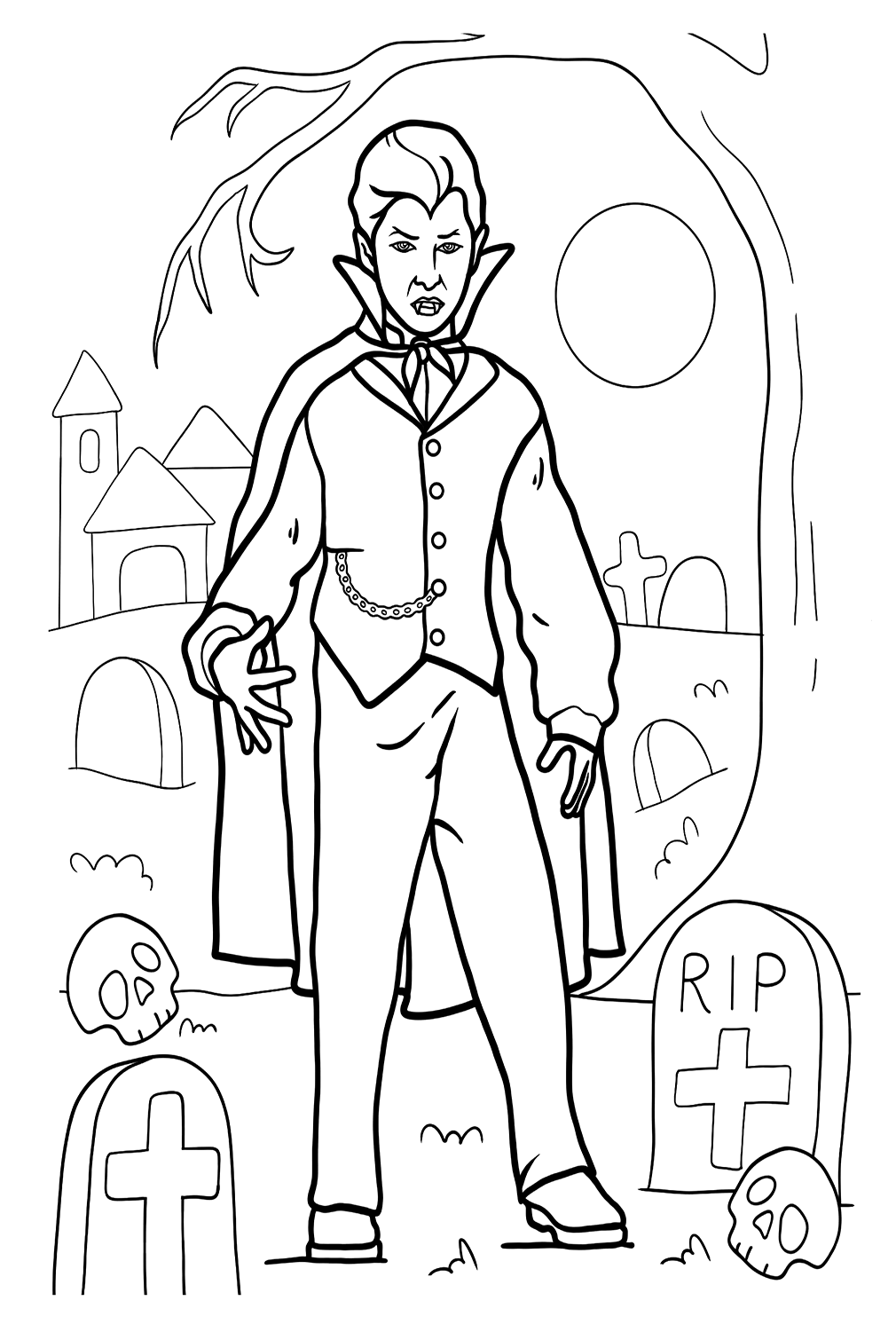
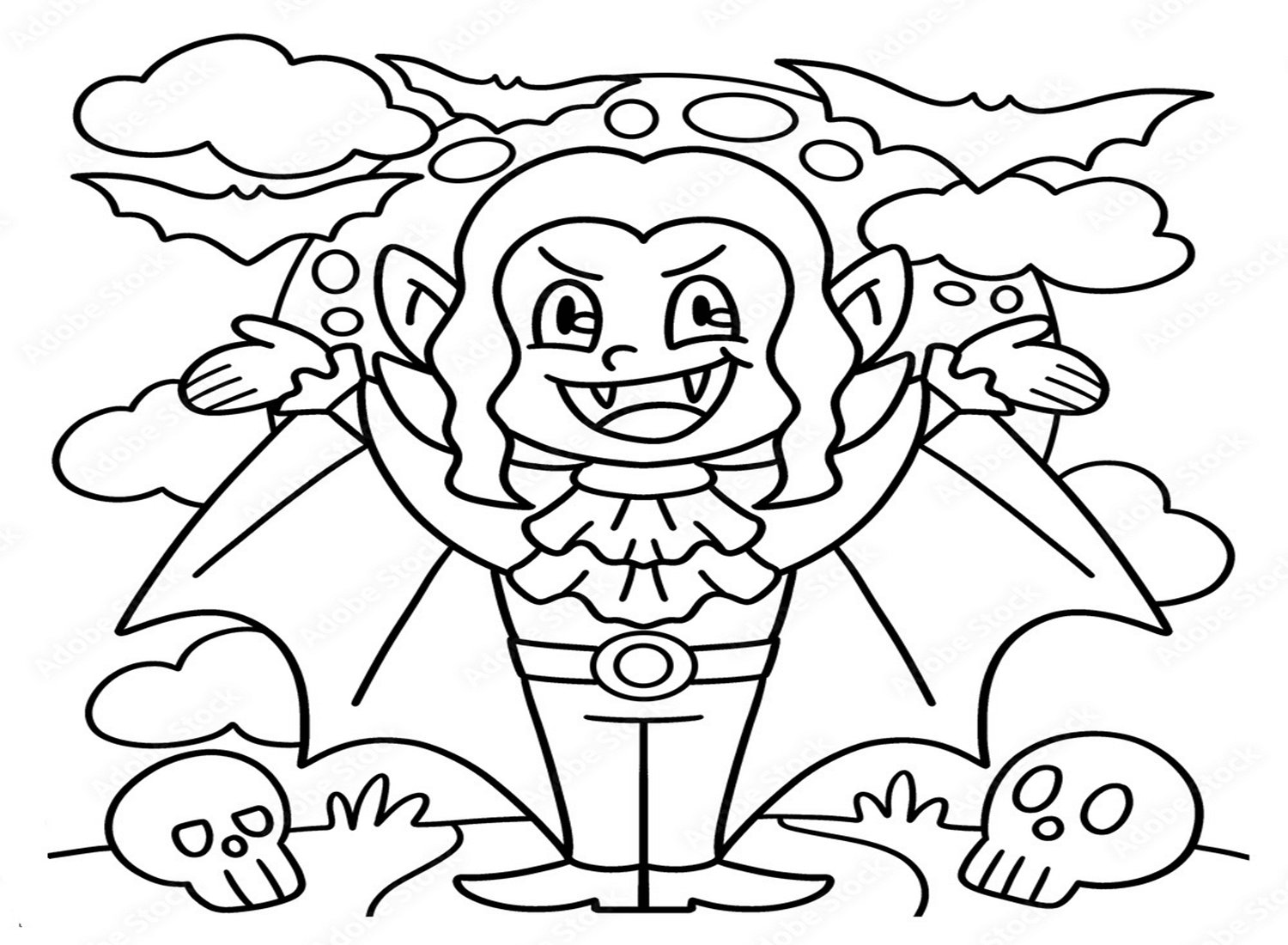
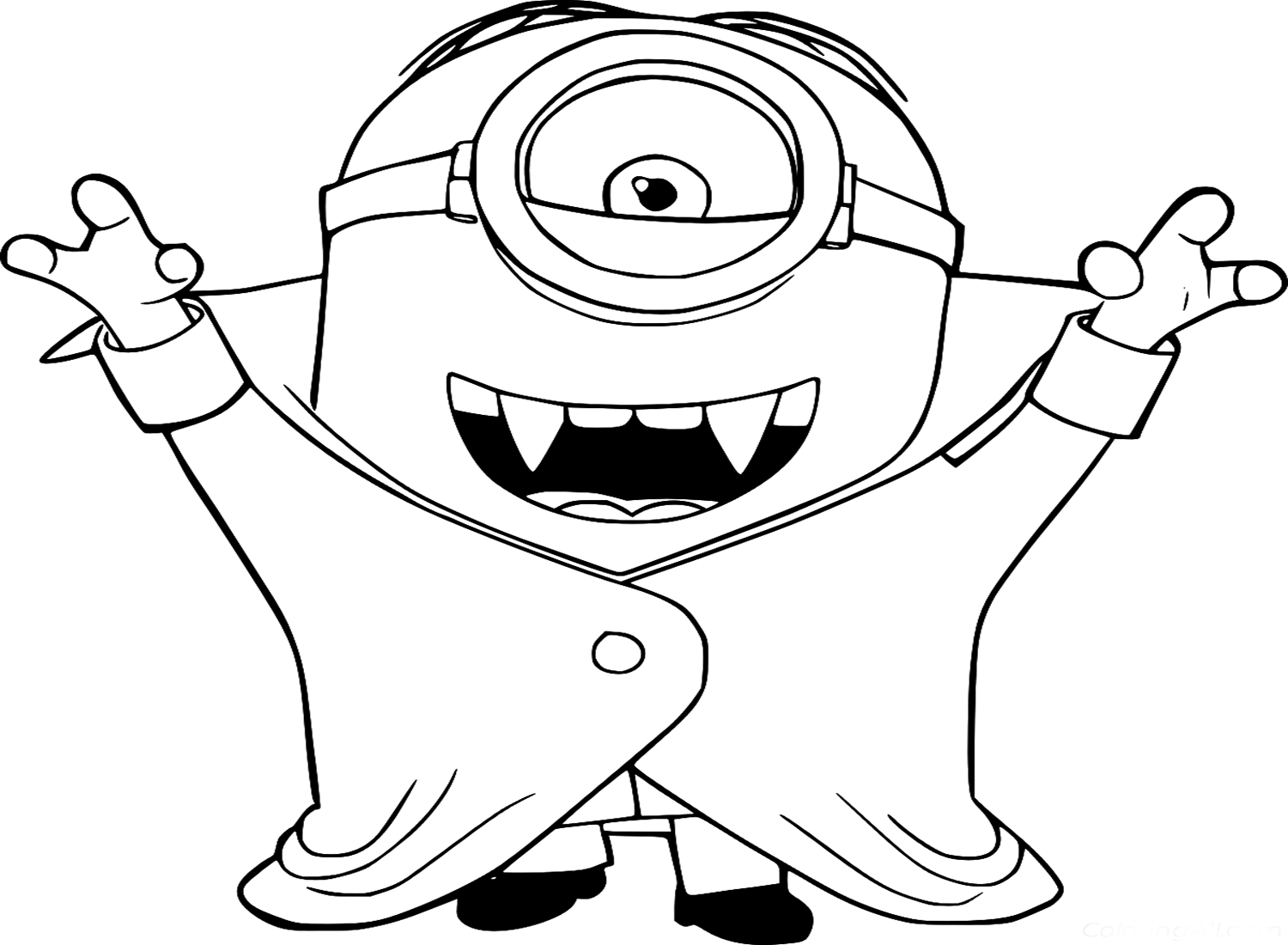
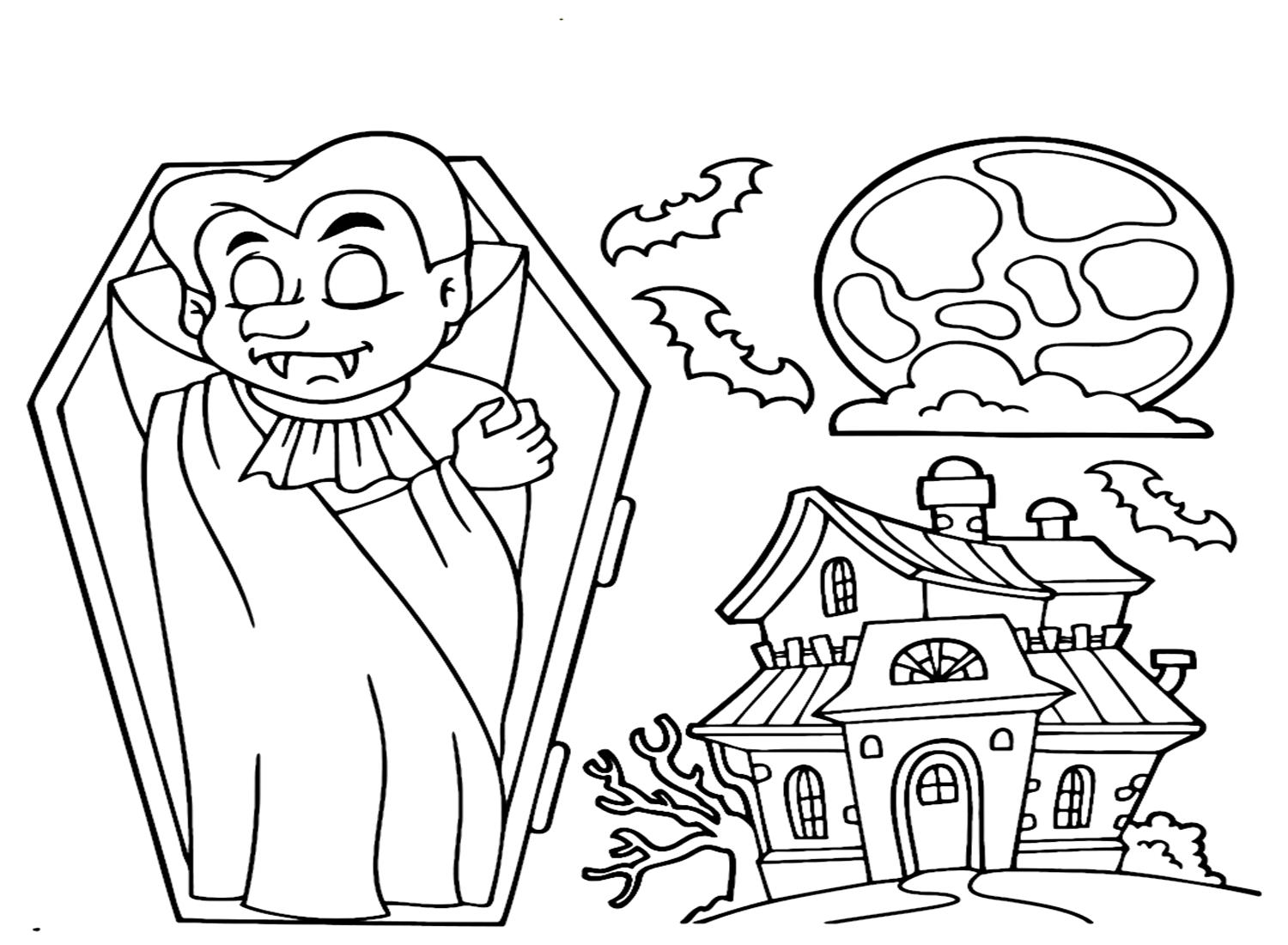
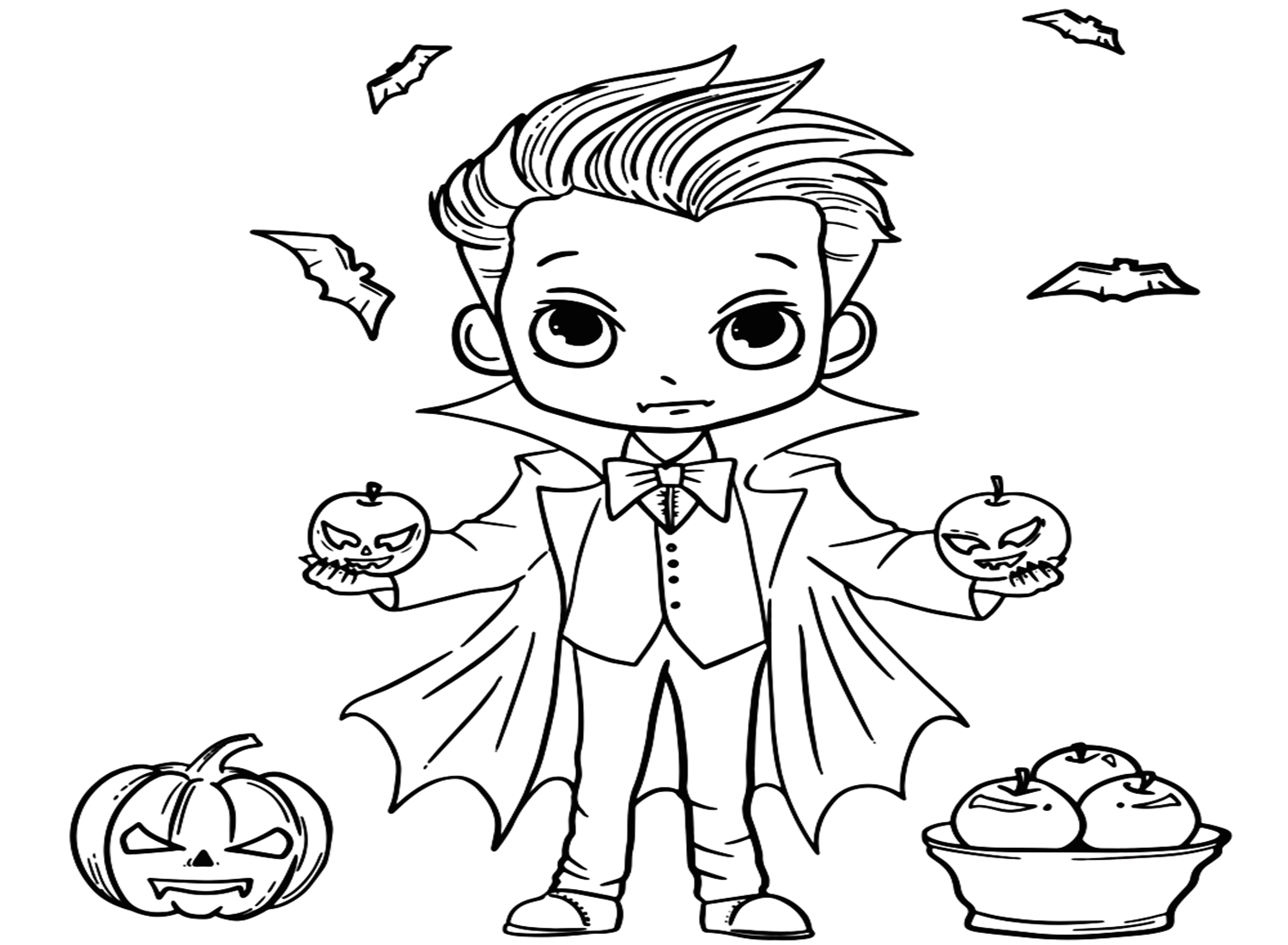
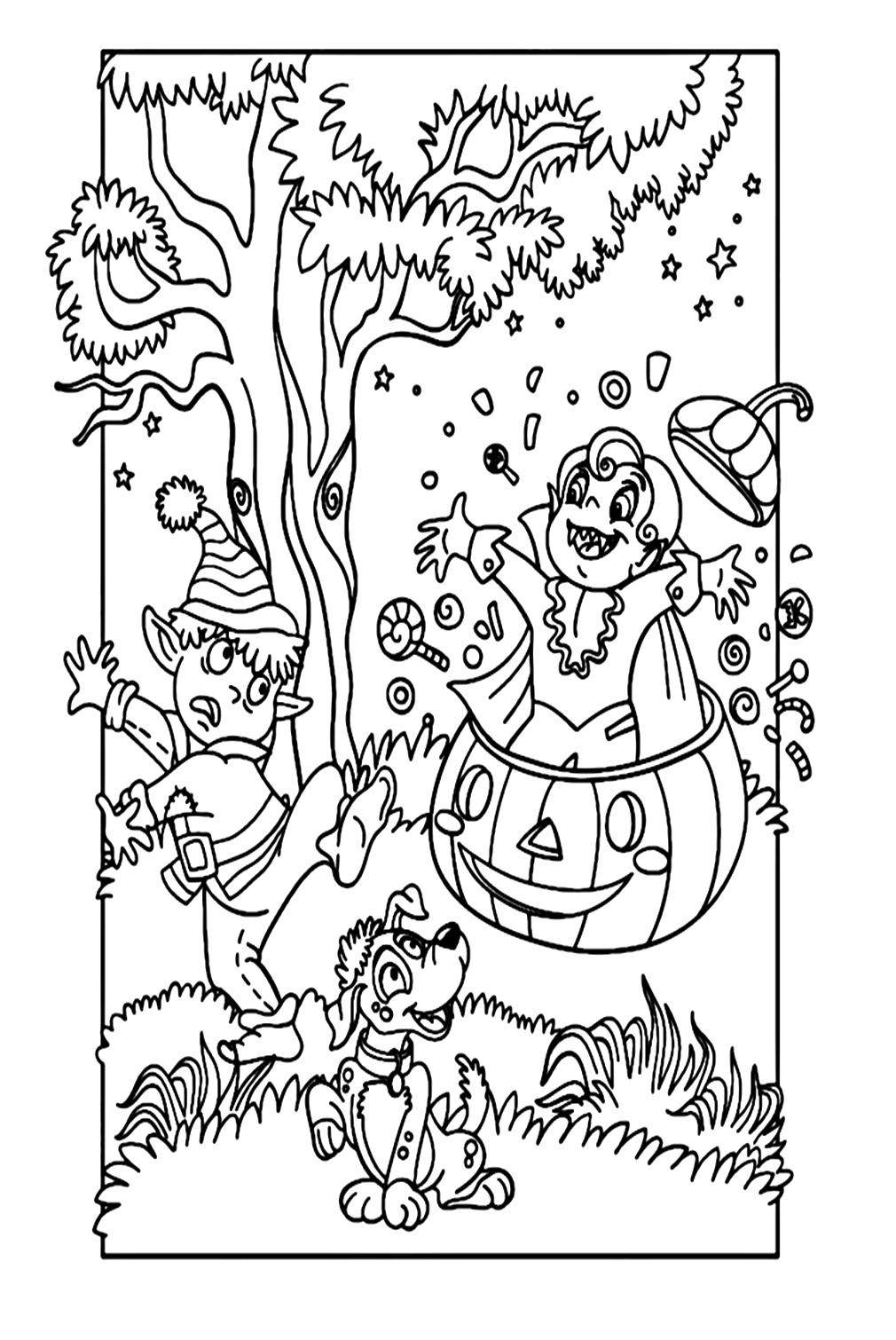
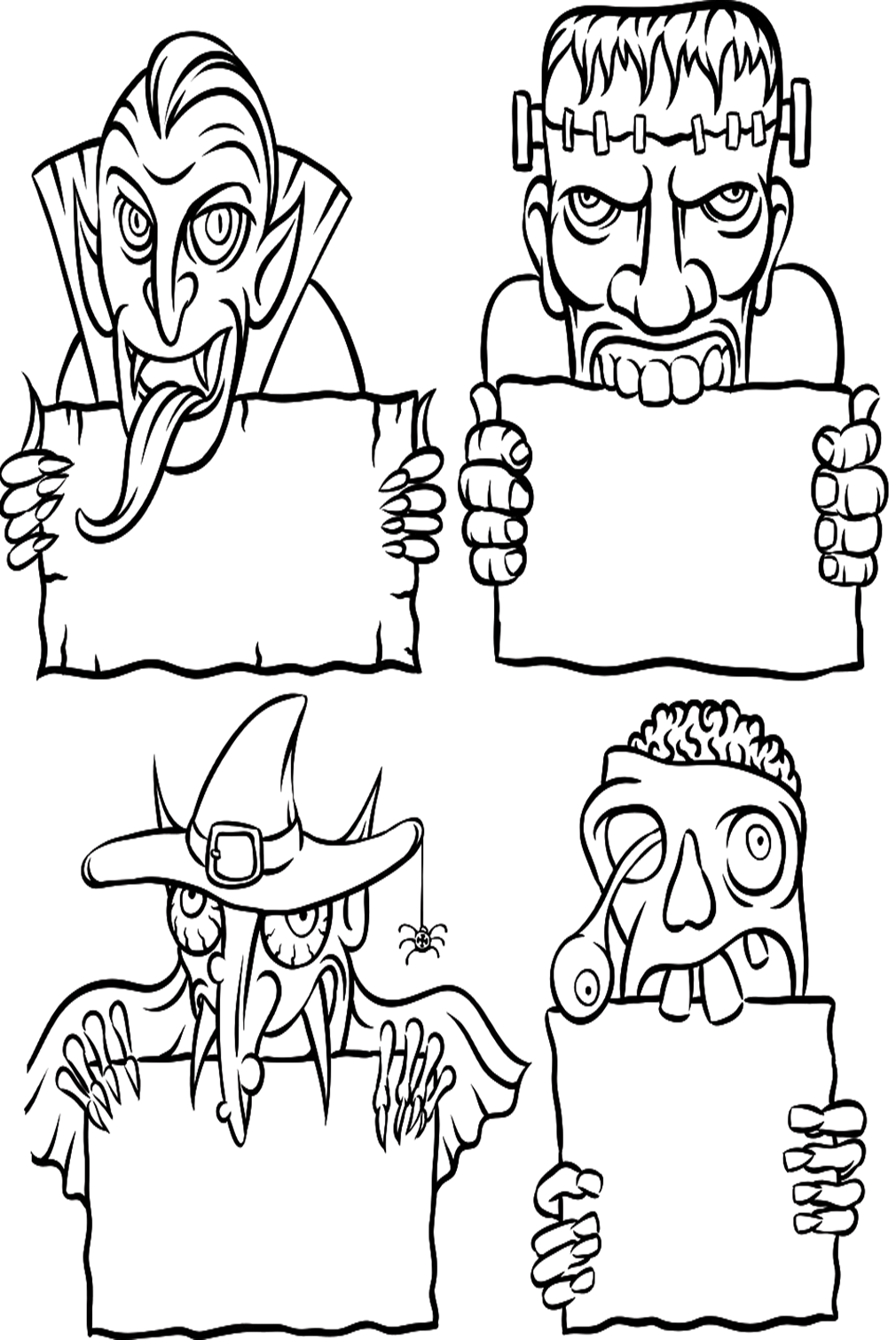
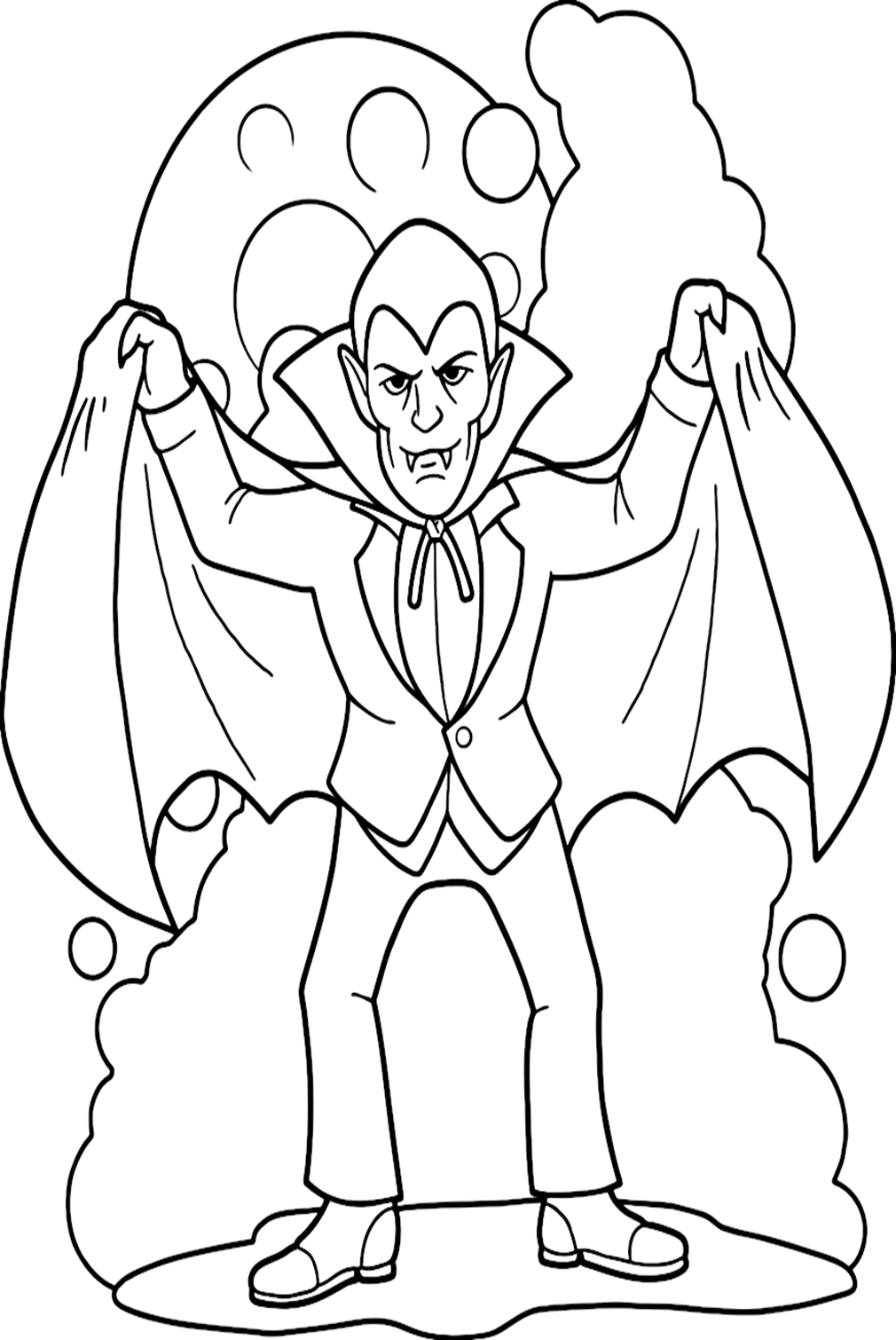
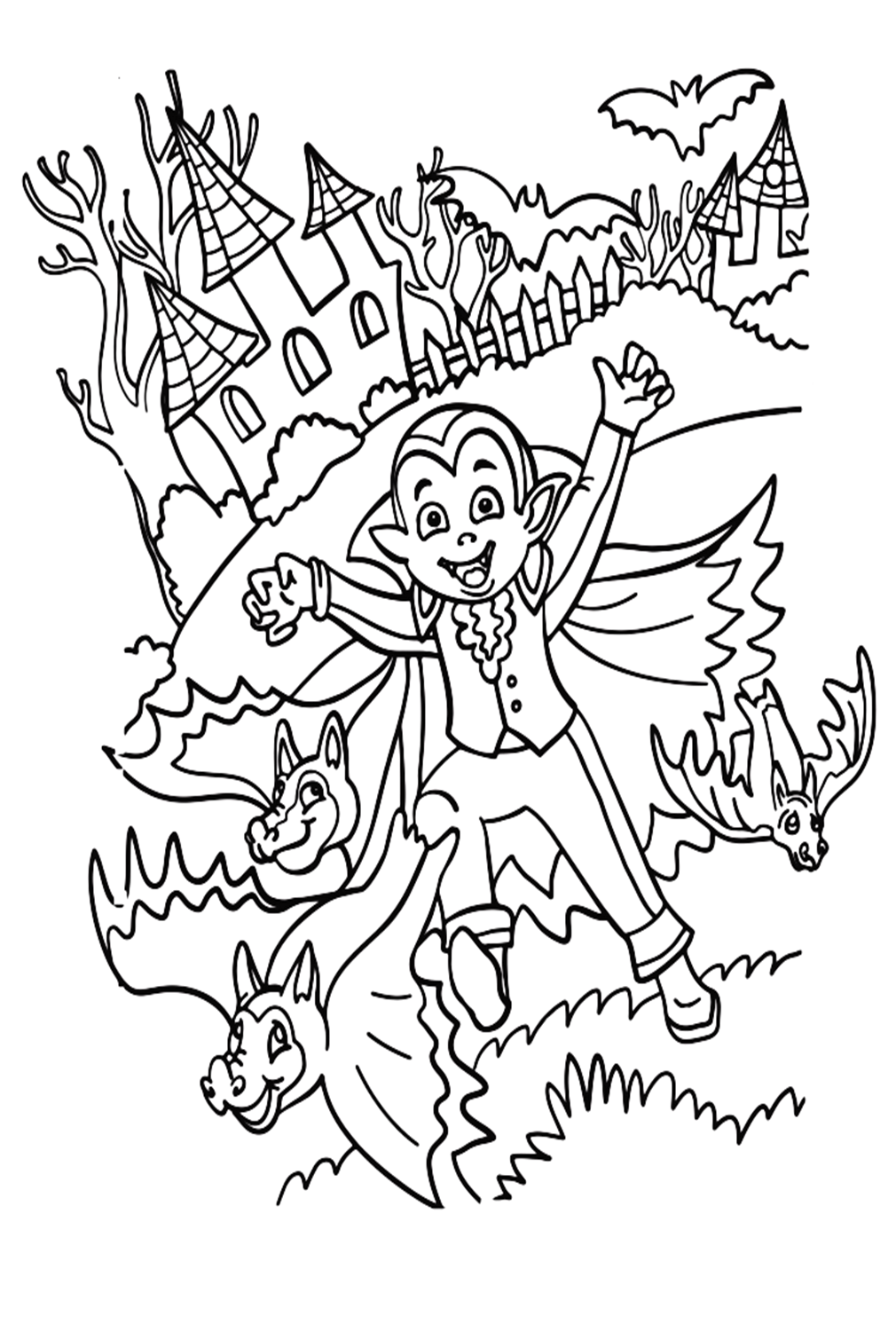

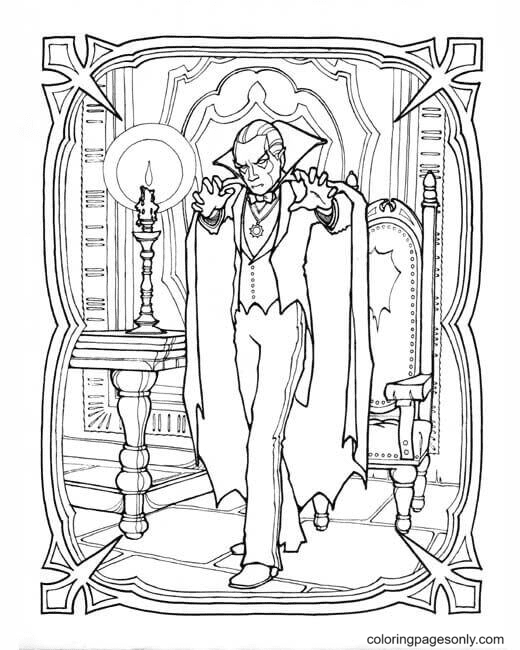
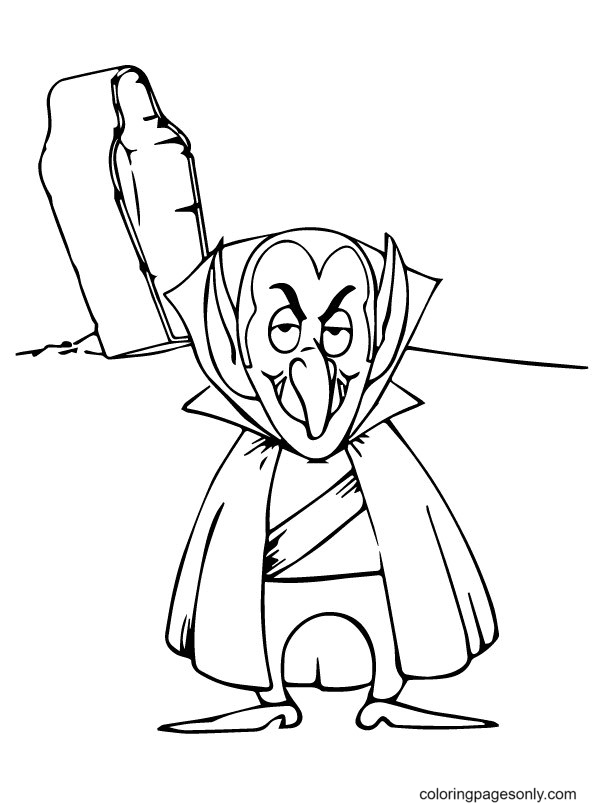
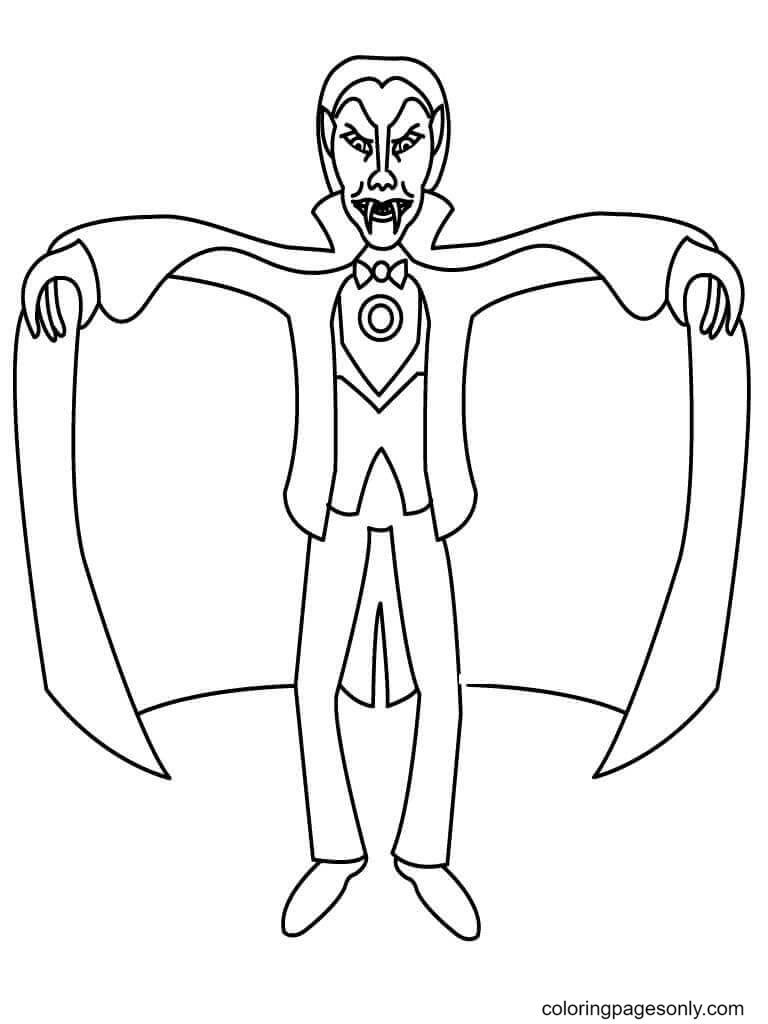
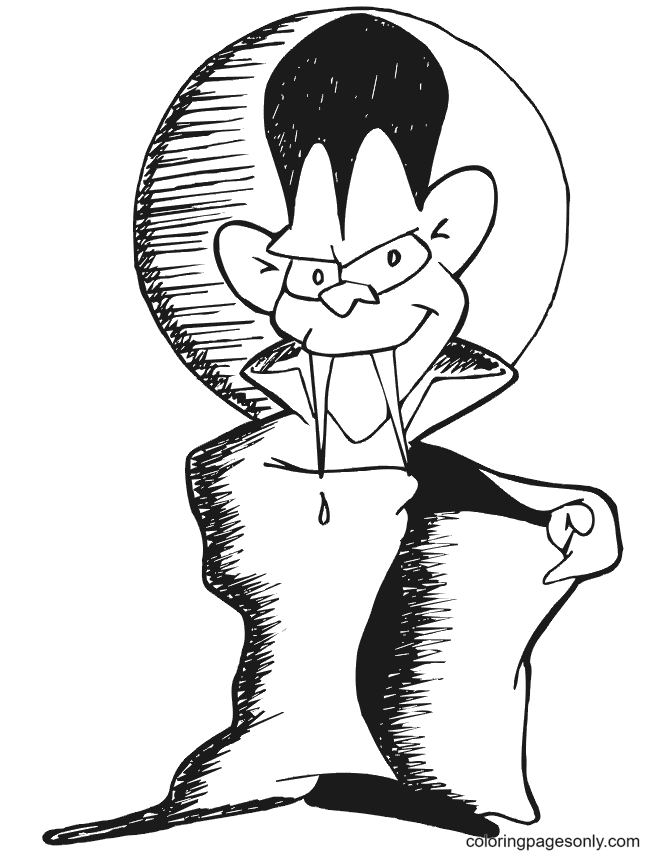
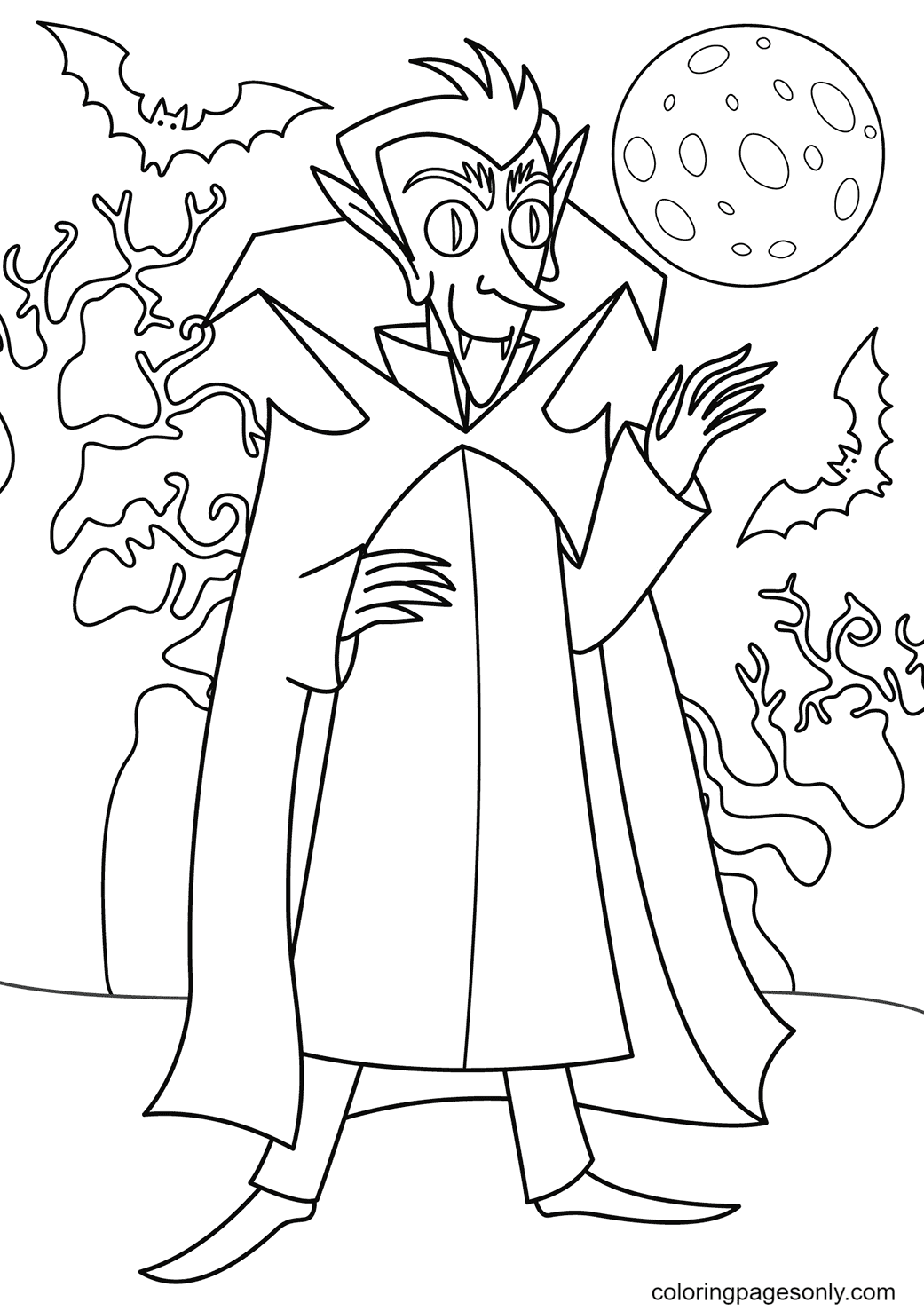
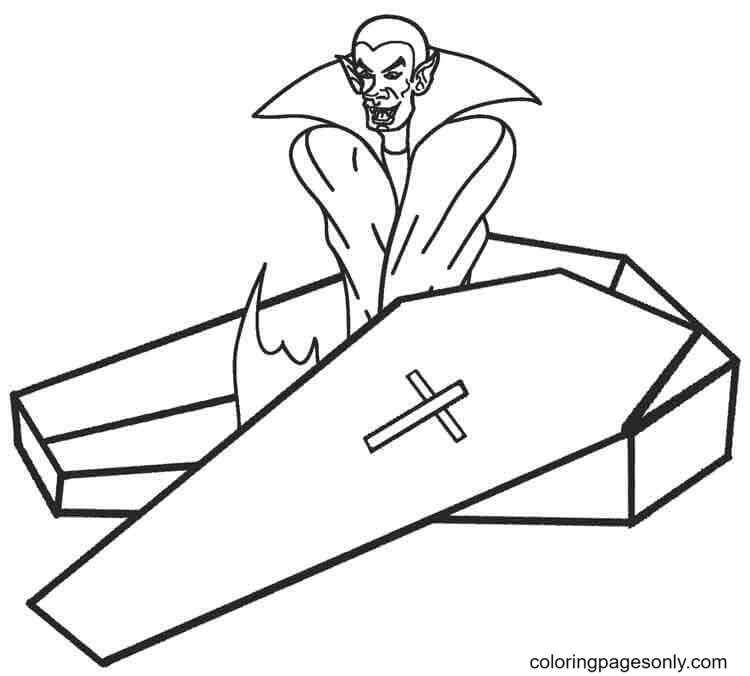




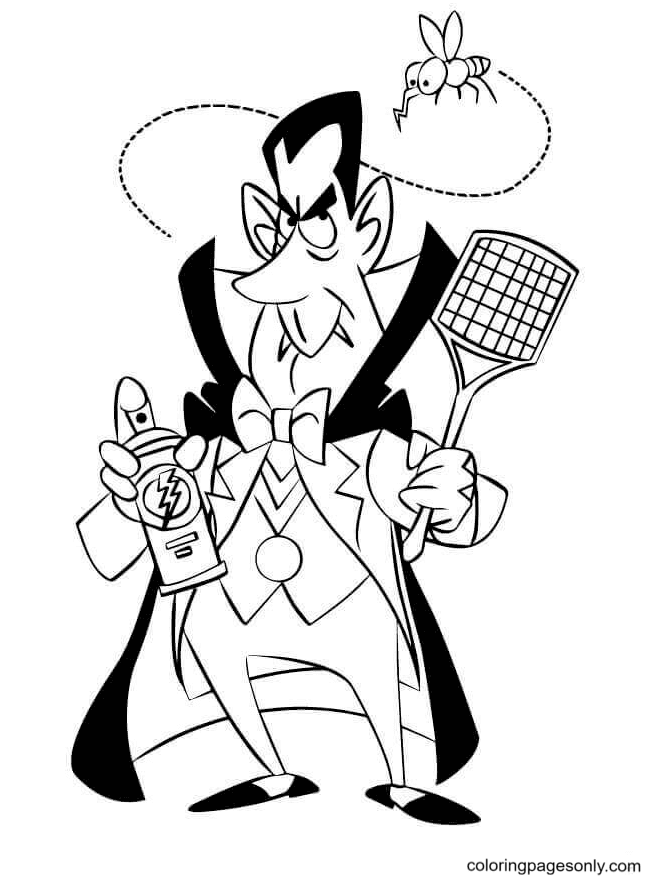
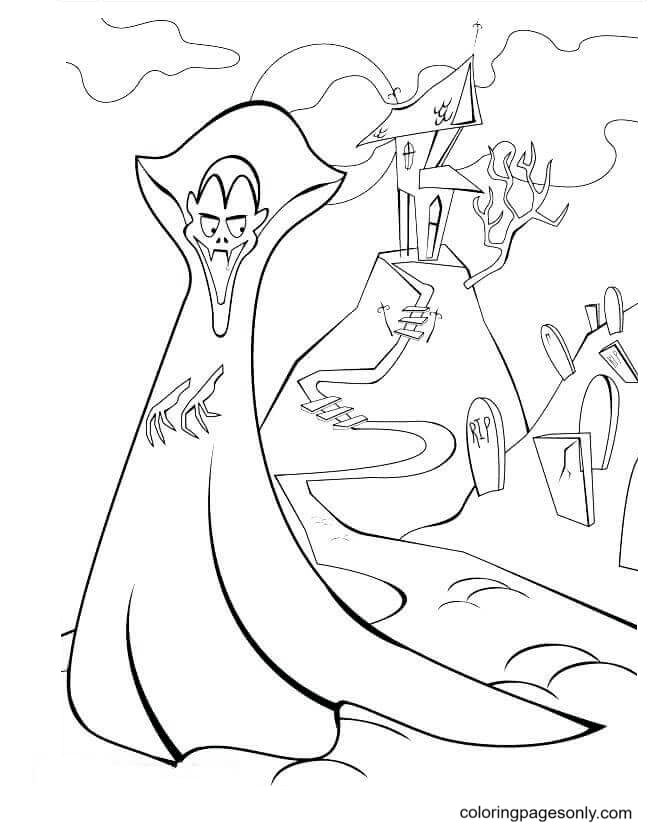

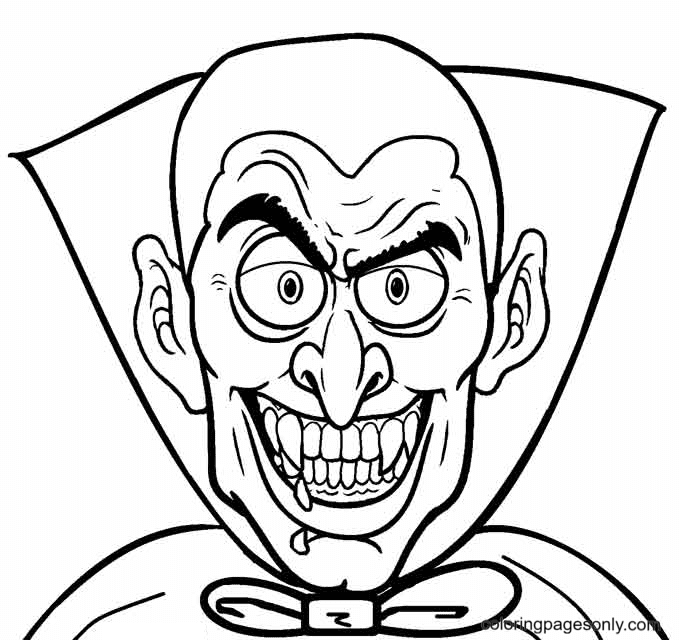
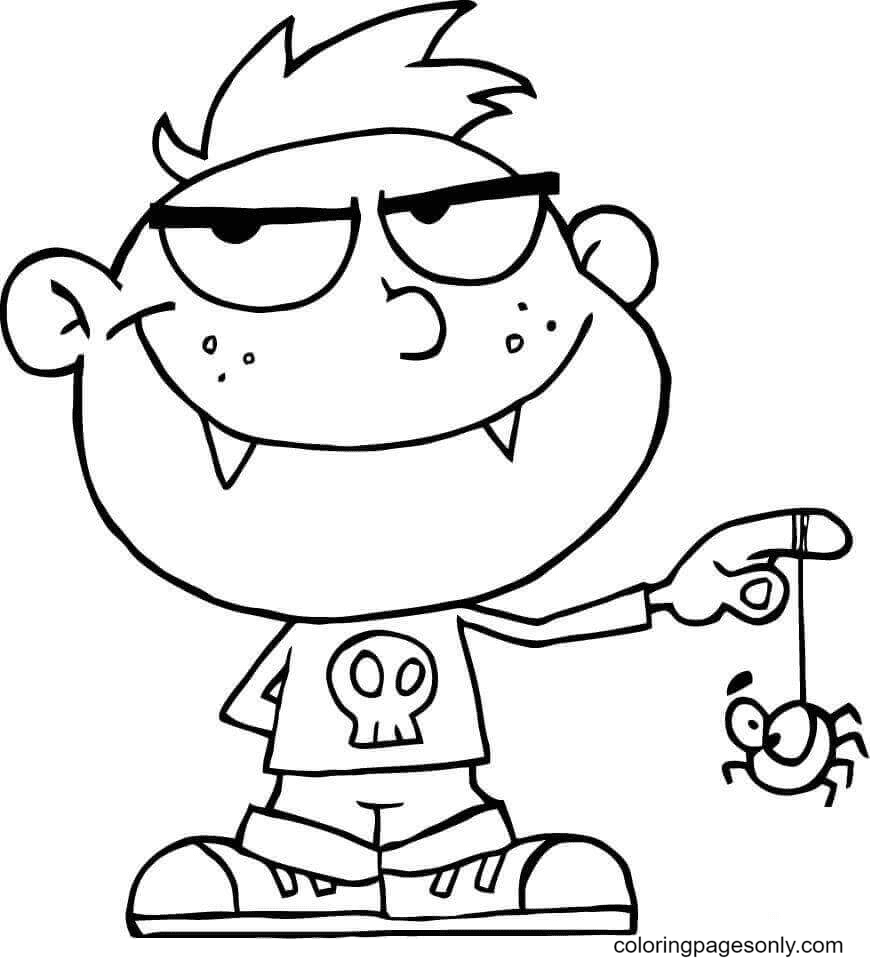



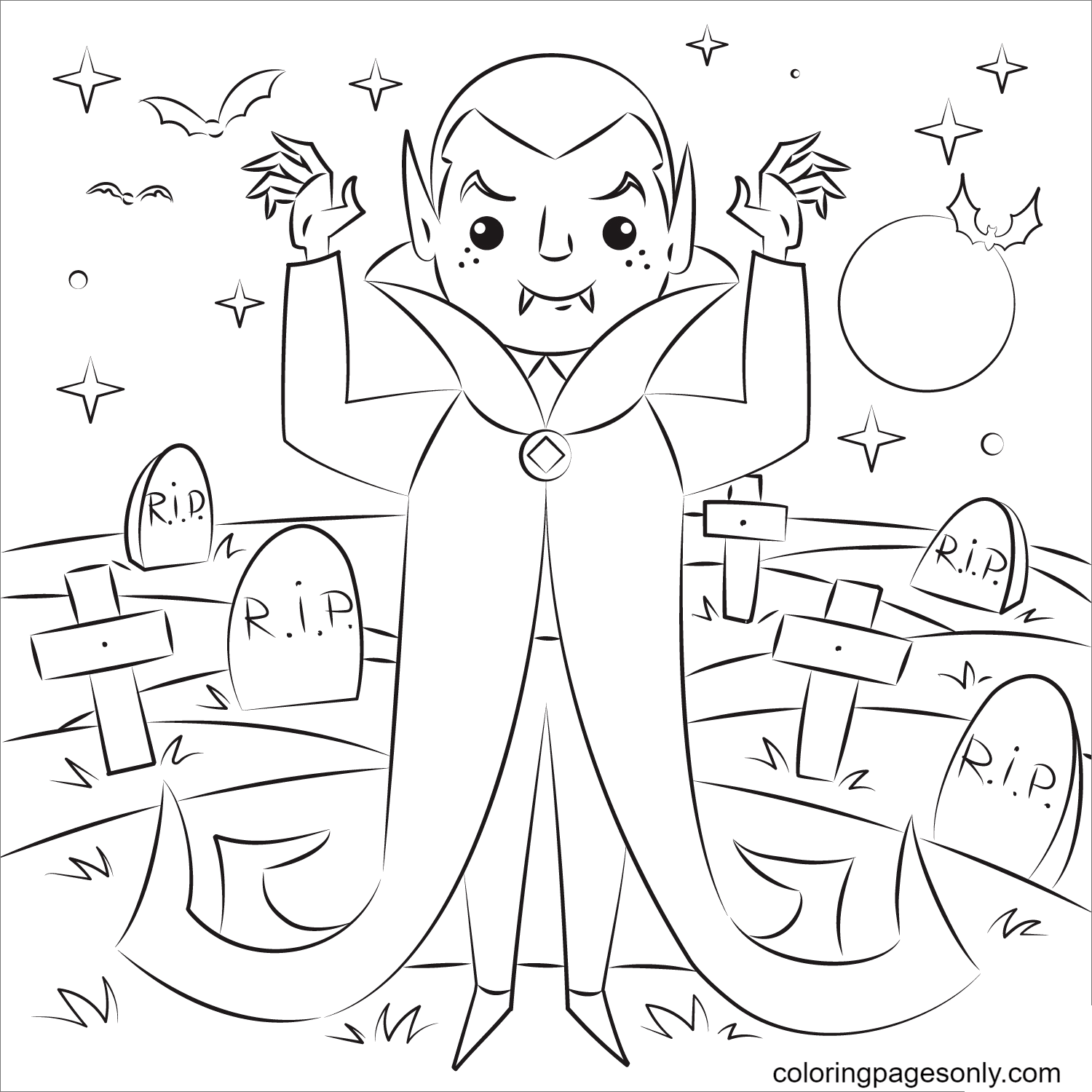
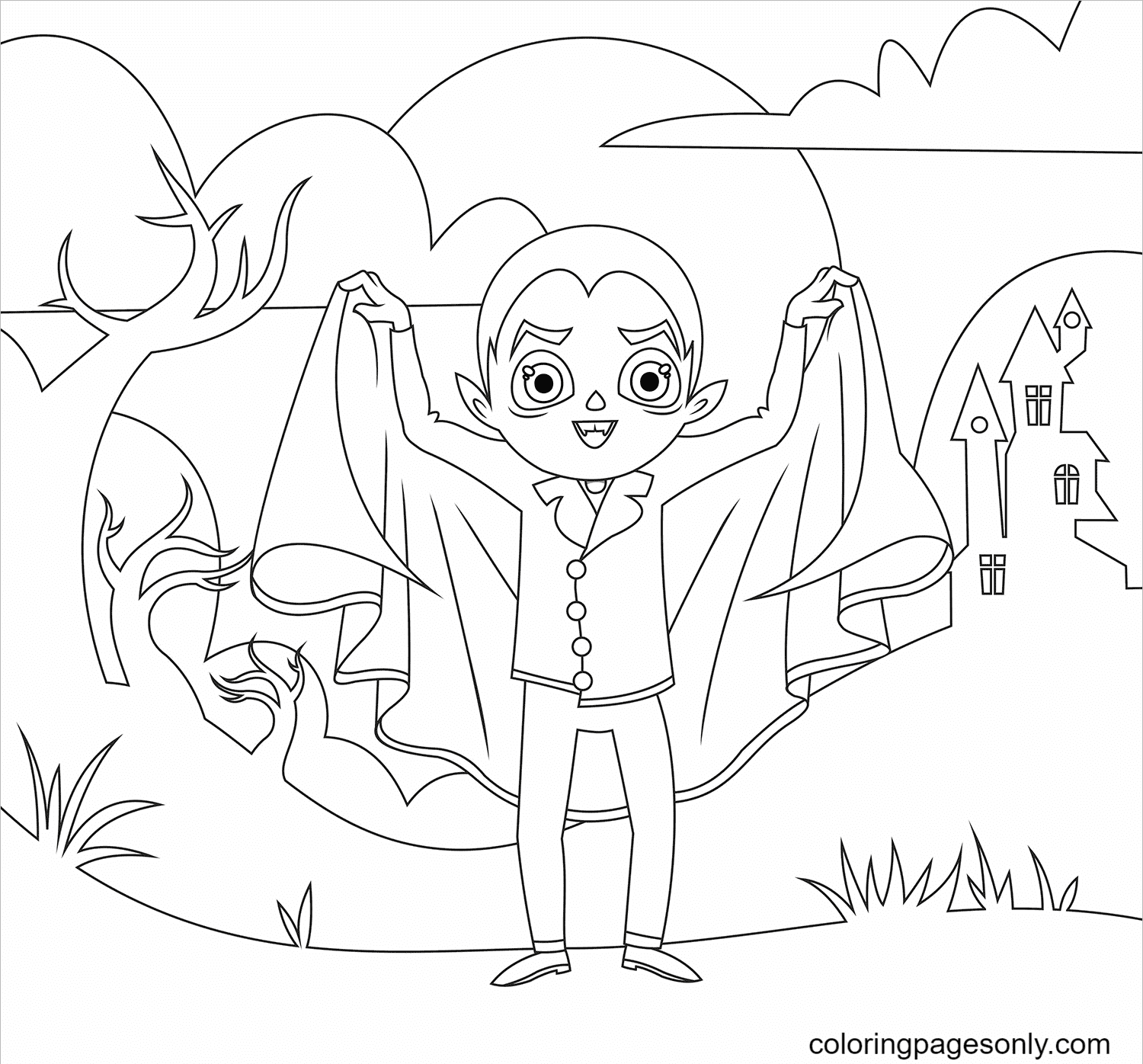
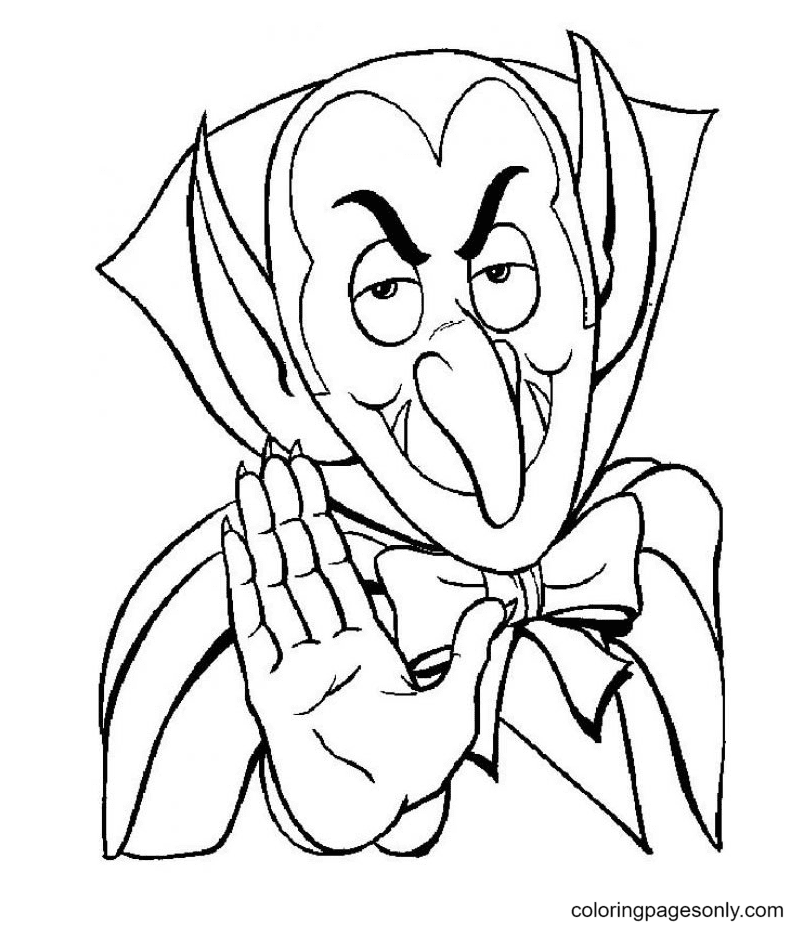
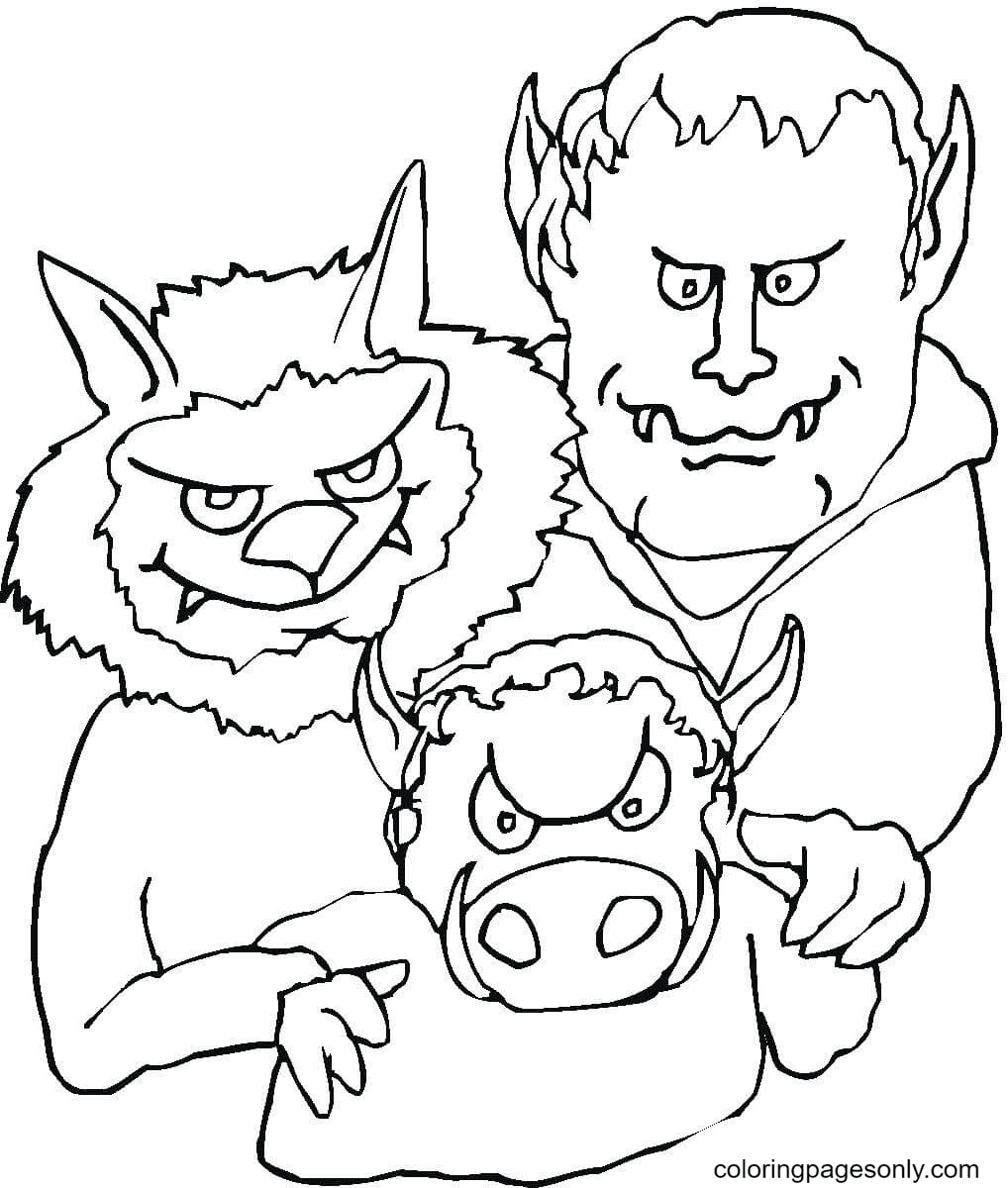


What Is Inside This Collection
This collection groups its 85 pages by character and tone, since a literary character, a licensed crossover, and a cute cartoon vampire each call for a different coloring approach.
Dracula and Literary Vampire Characters
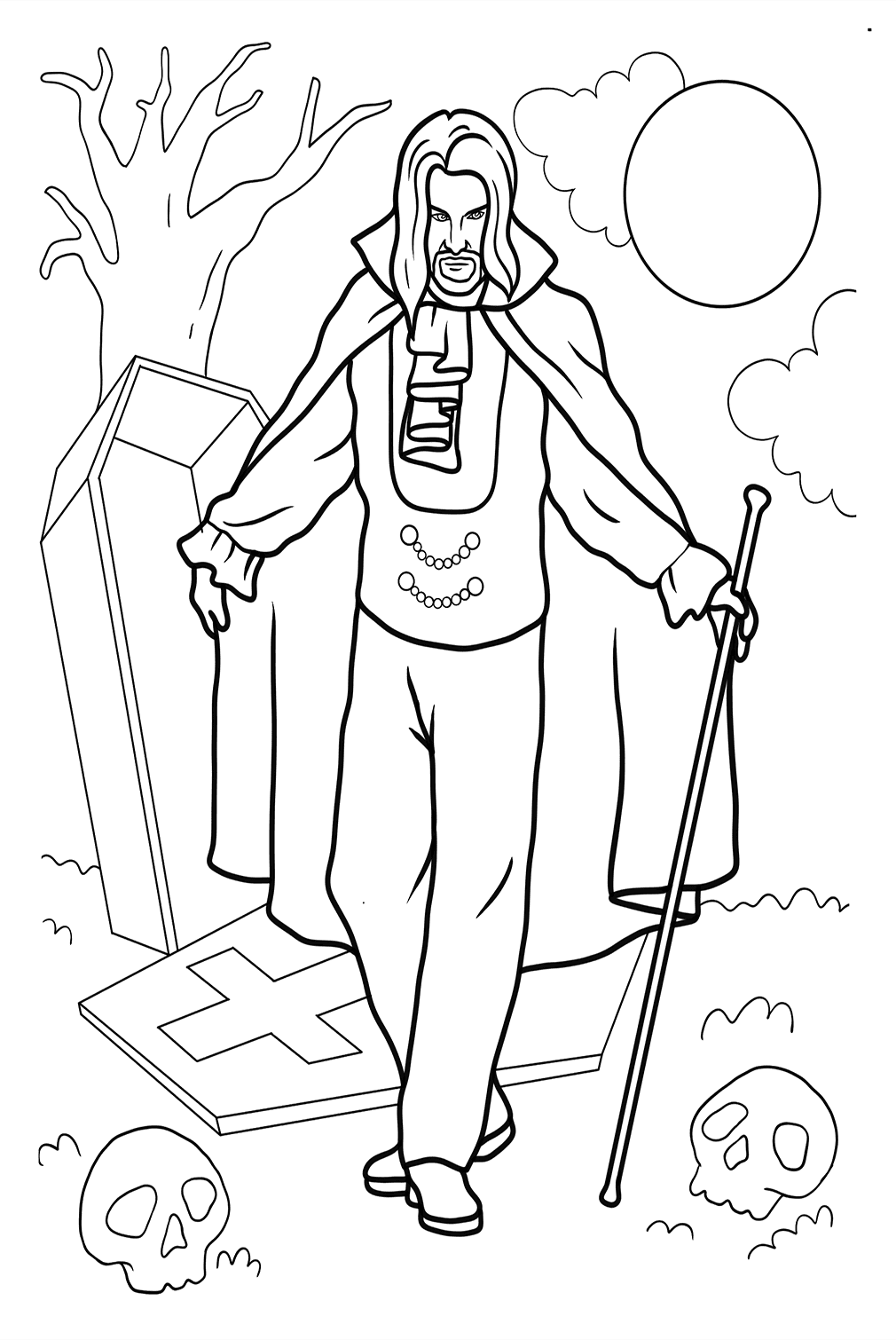
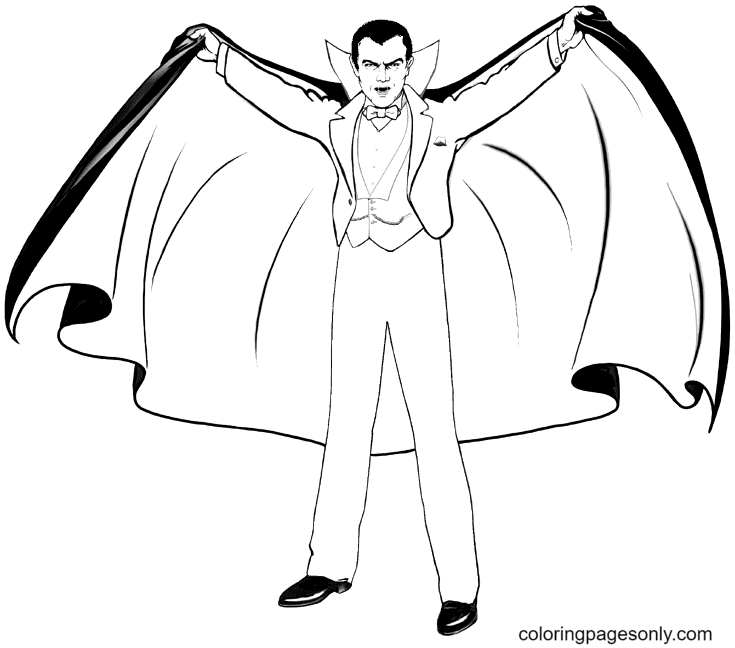
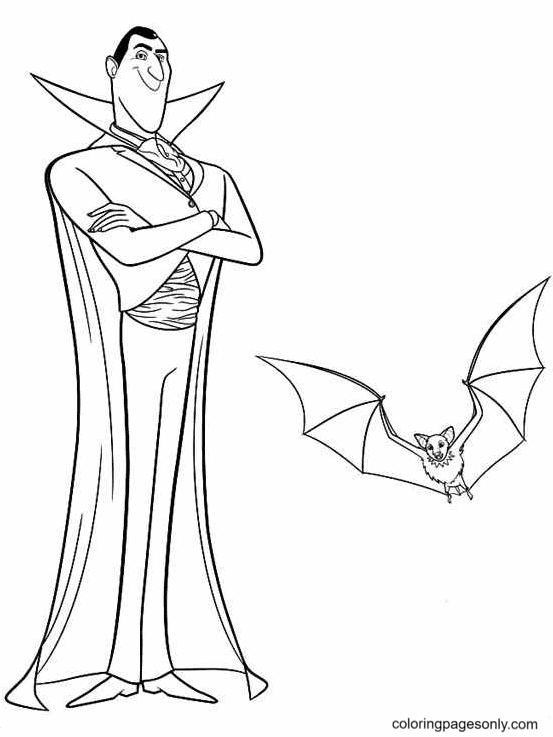
Nine pages focus on Dracula by name, along with Mina Harker, a character from the same 1897 novel that made Dracula famous. Stoker’s Count Dracula is traditionally shown in black and deep scarlet, with a widow’s peak hairline and a high-collared cape, so keeping that color combination consistent across these pages ties them to the character’s original literary look rather than a more modern film reinterpretation.
Licensed Character Crossovers
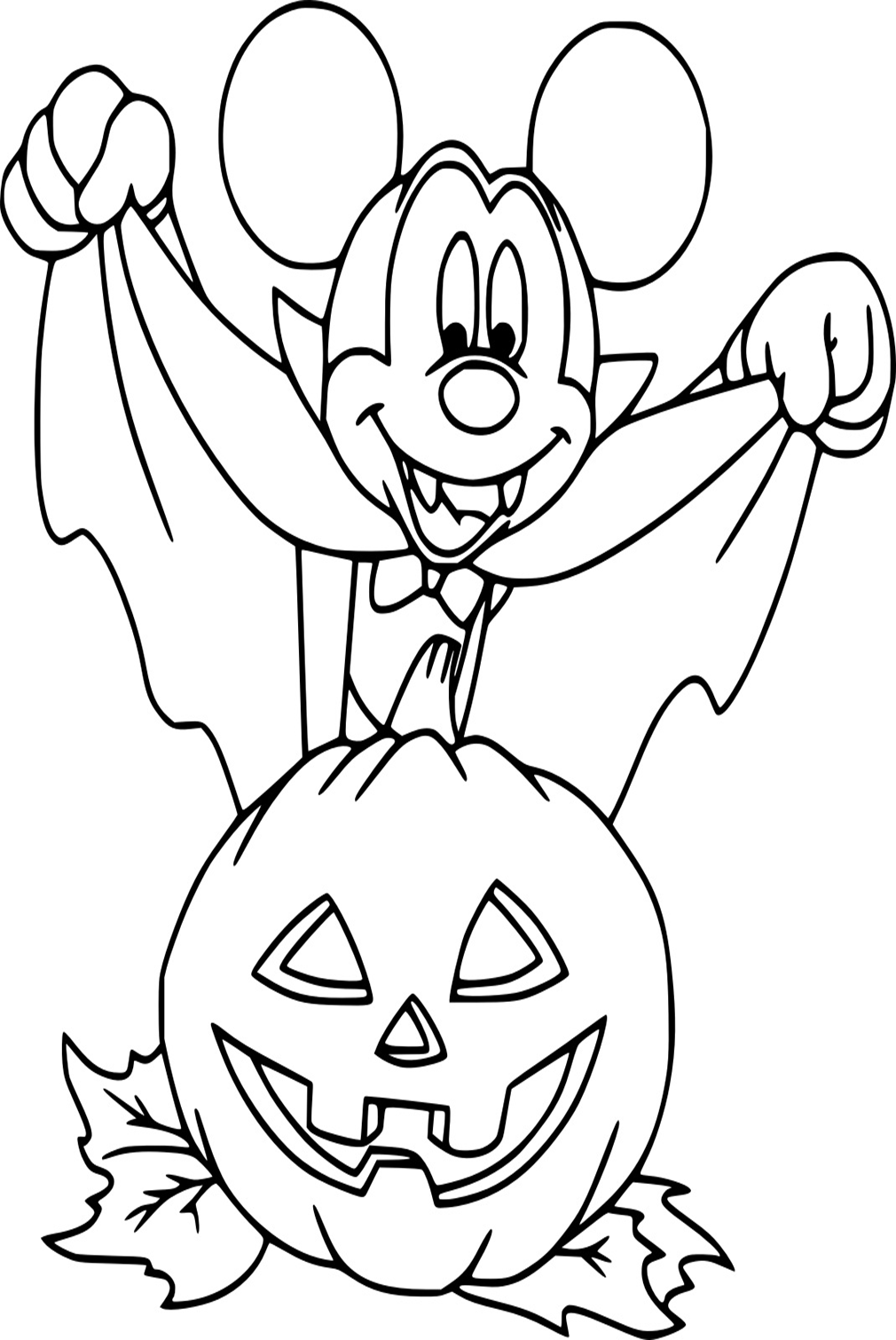
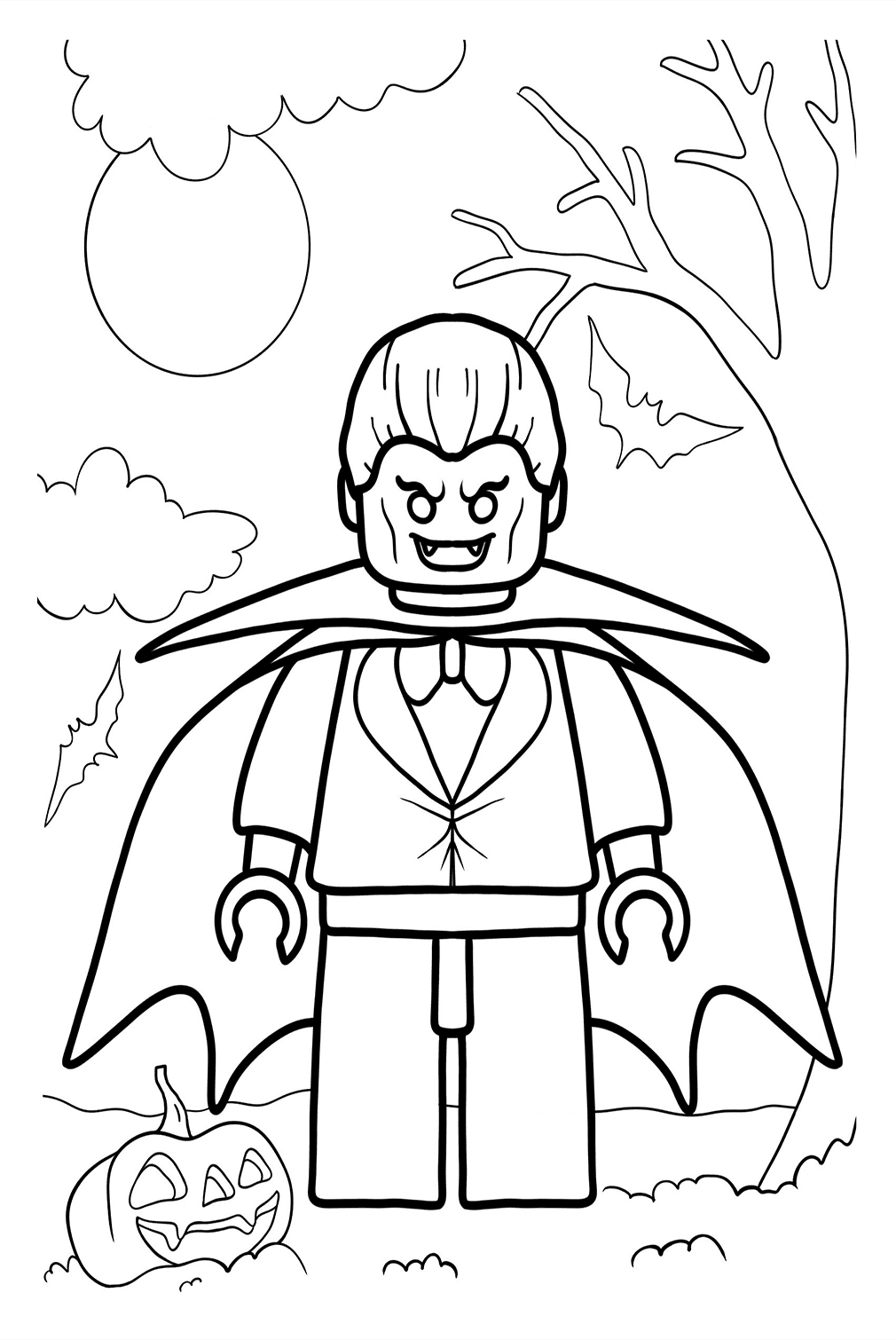
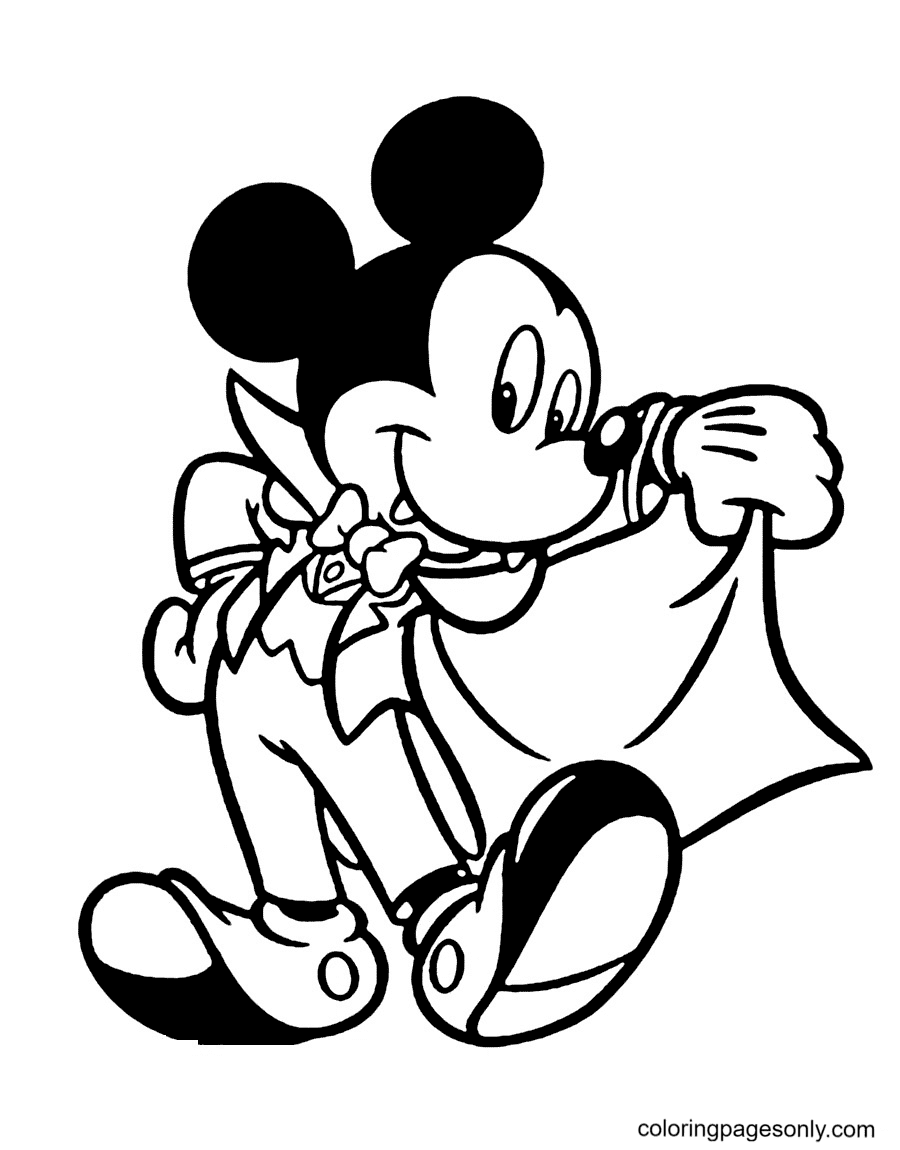
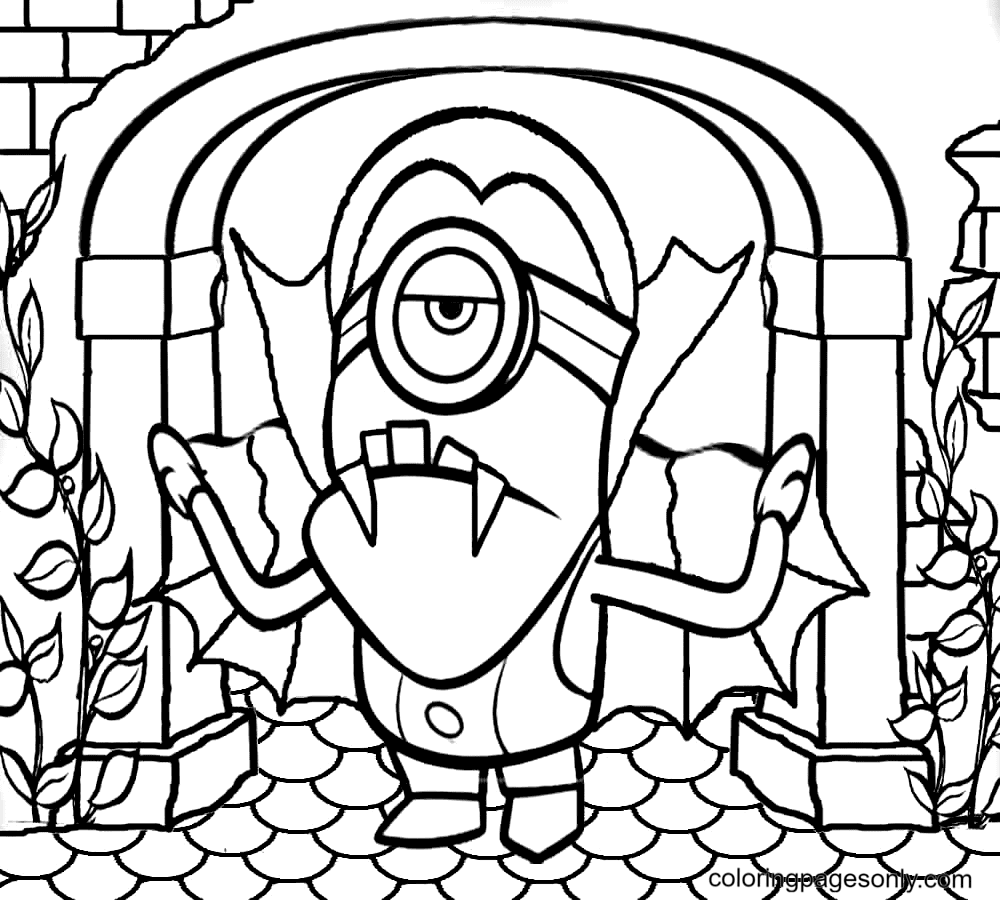
Five pages dress familiar characters, Mickey Mouse, a Lego minifigure, and Minions, up as vampires for Halloween. Since these are existing characters from other franchises, it’s worth keeping their usual color scheme (Mickey’s red shorts, a Minion’s yellow body) mostly intact and adding only the vampire cape and fangs on top.
Coffins, Bats, and Classic Vampire Scenes
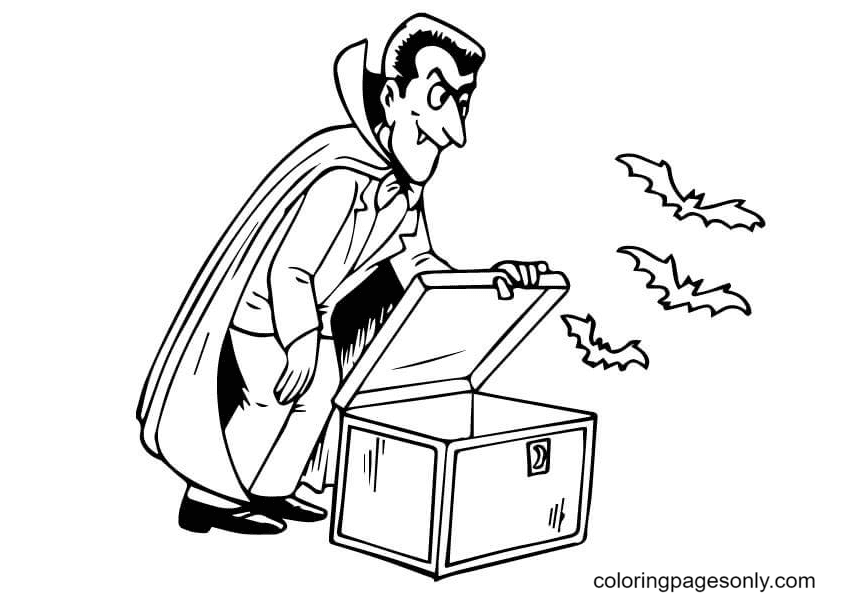
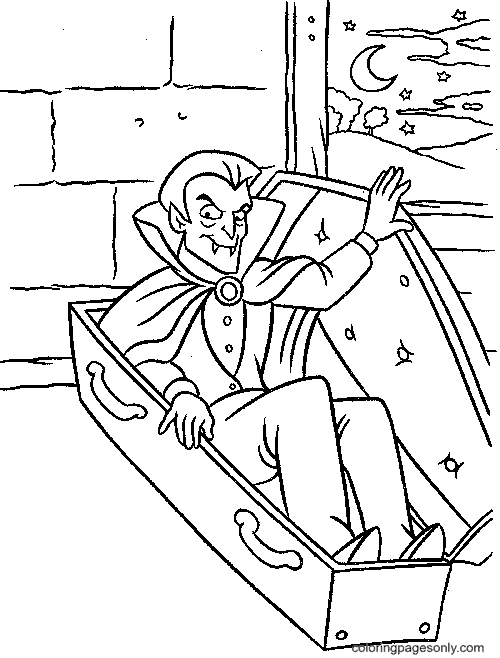
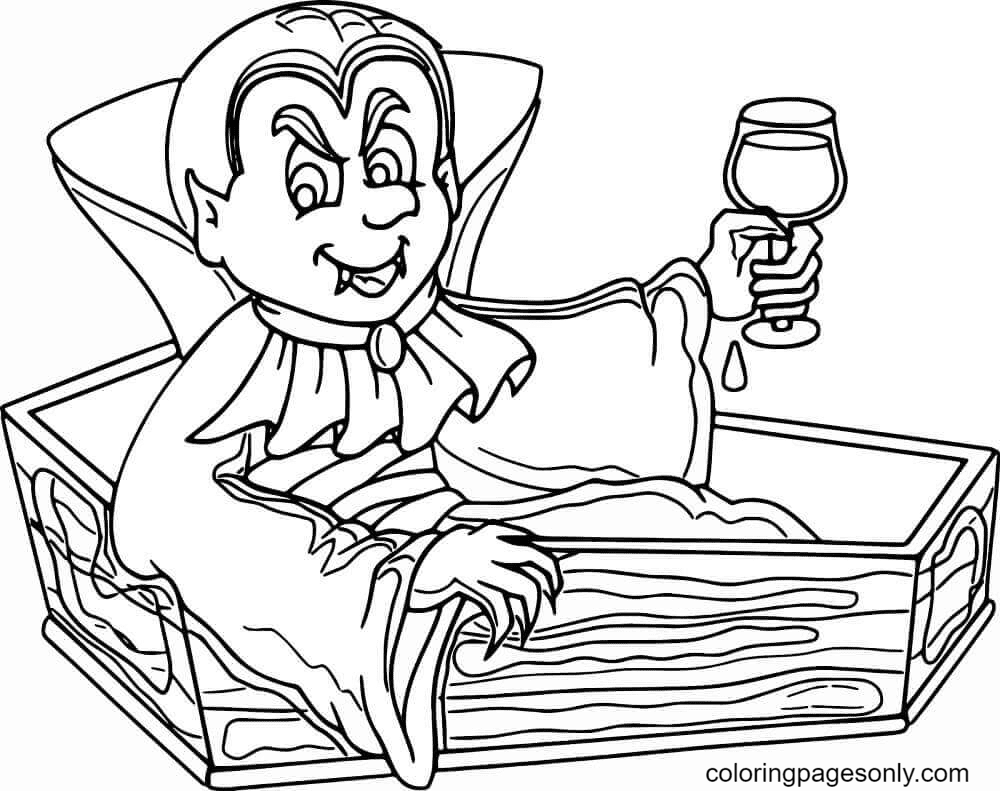
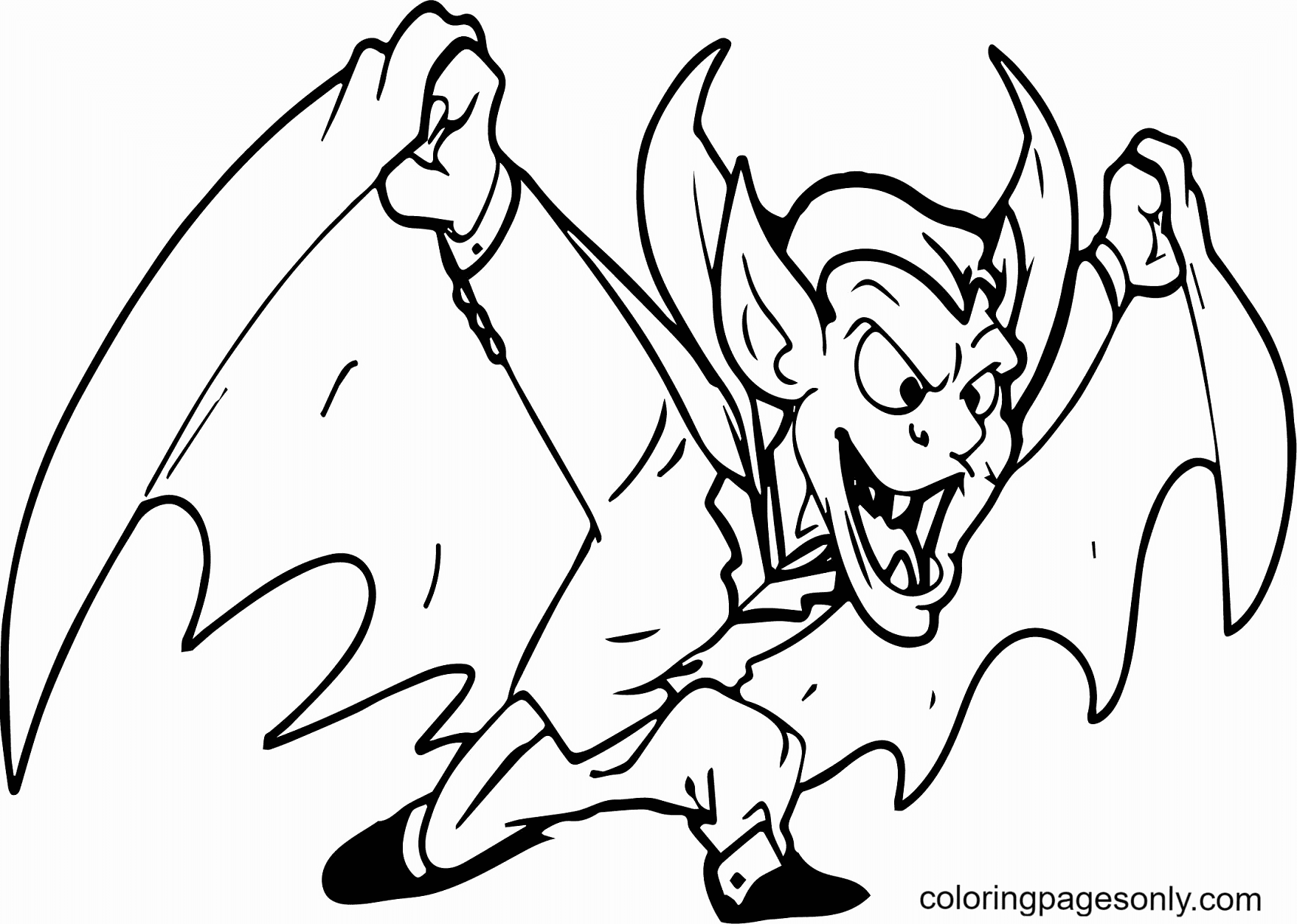
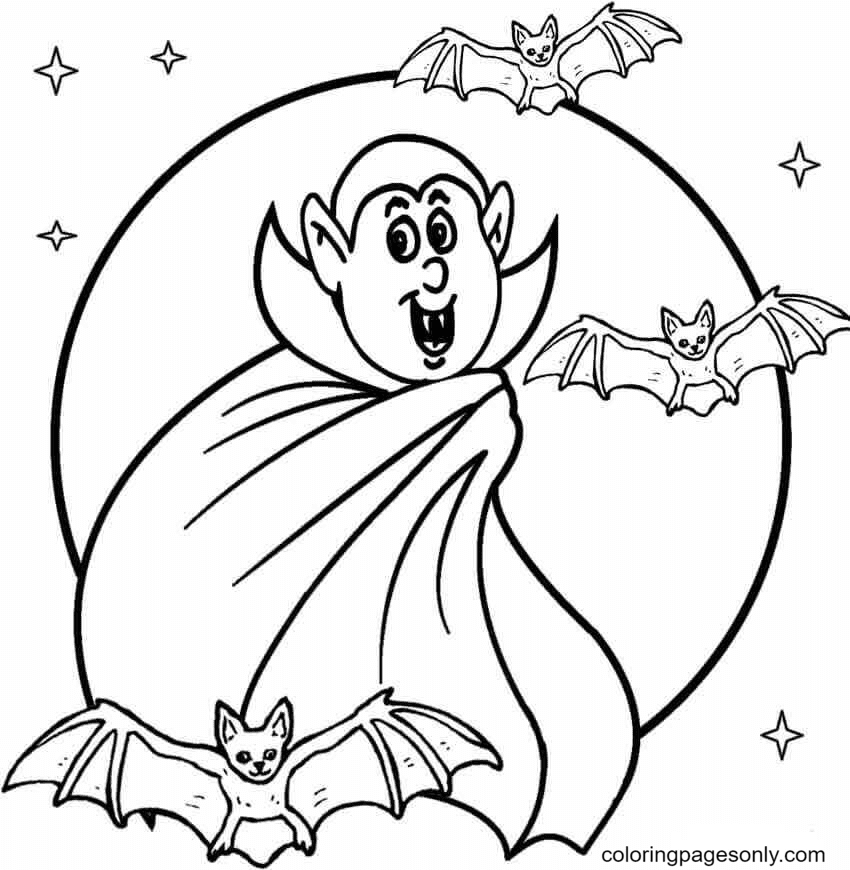
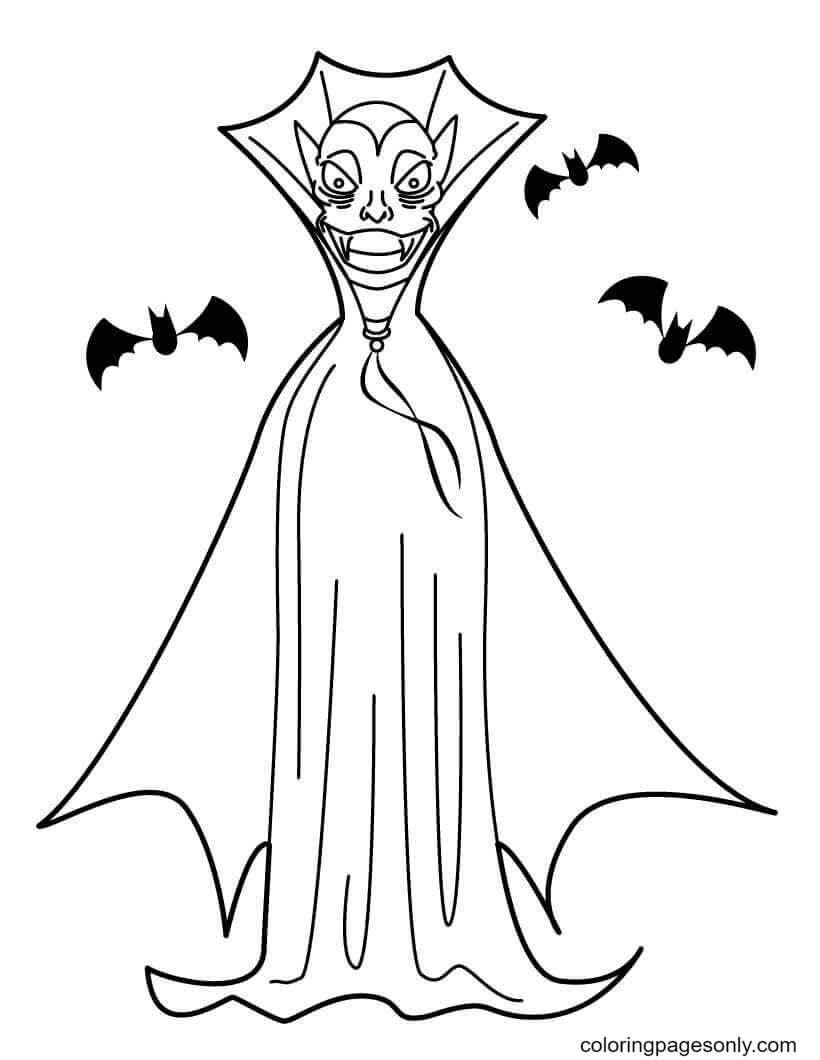
Twenty-one pages set a vampire in a classic scene: rising from a coffin, transforming into a bat, or standing in a graveyard by moonlight. Coloring these darker scenes works best with a limited, cooler palette, midnight blue, black, and purple, so the single warm accent color, usually the vampire’s red-lined cape, stands out clearly.
Cute and Kid-Friendly Vampires
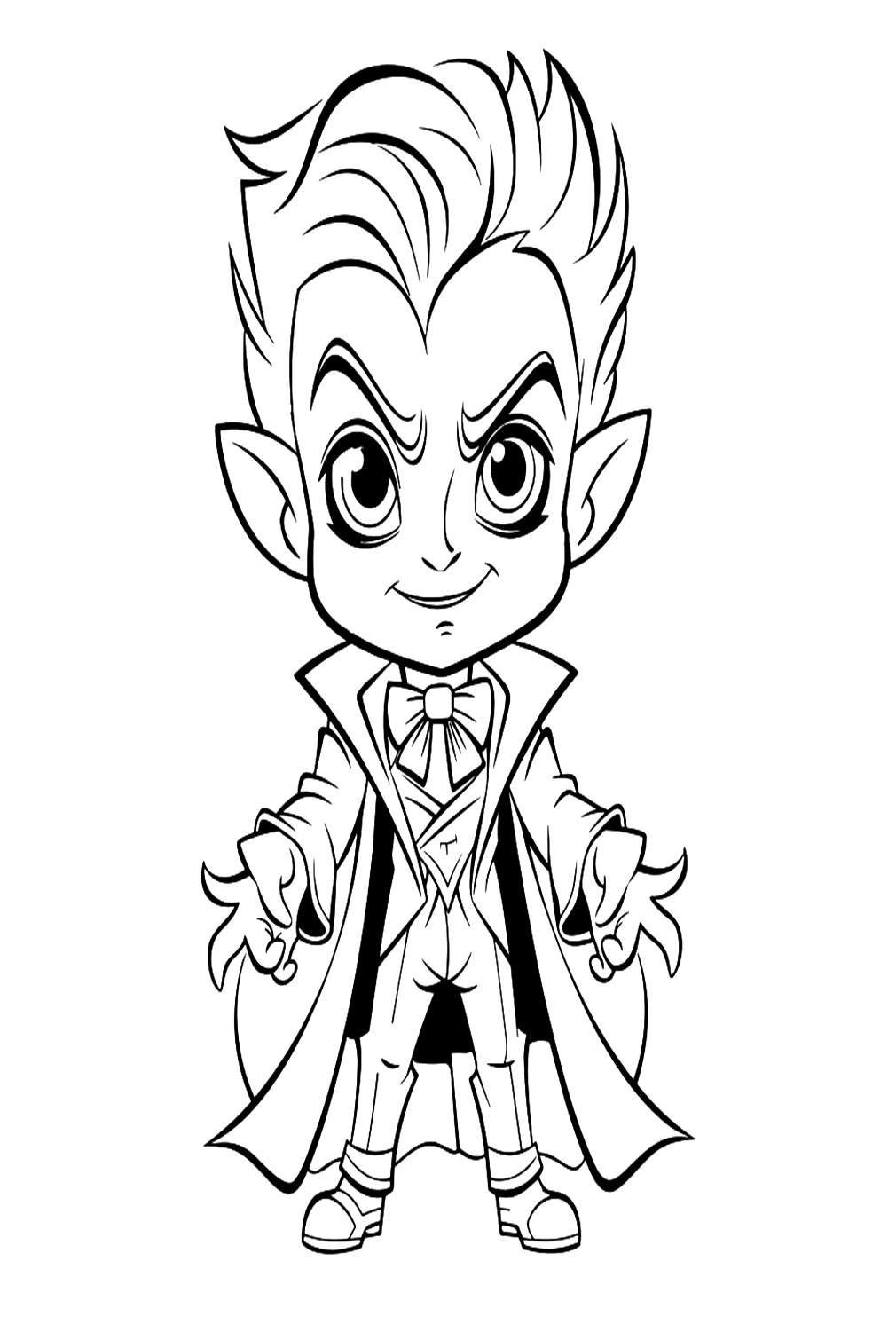
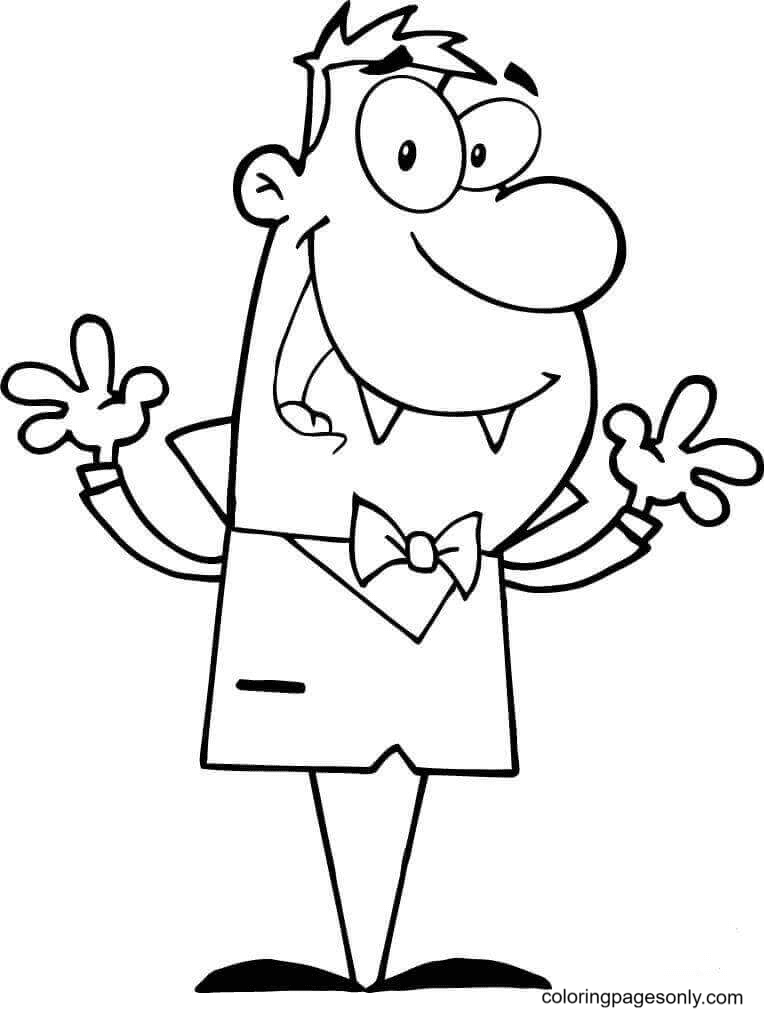
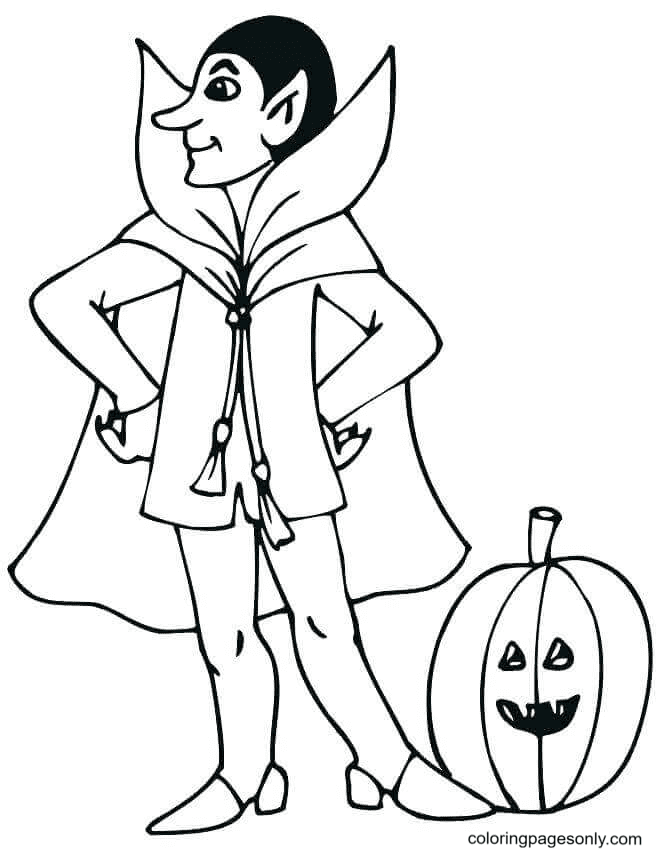
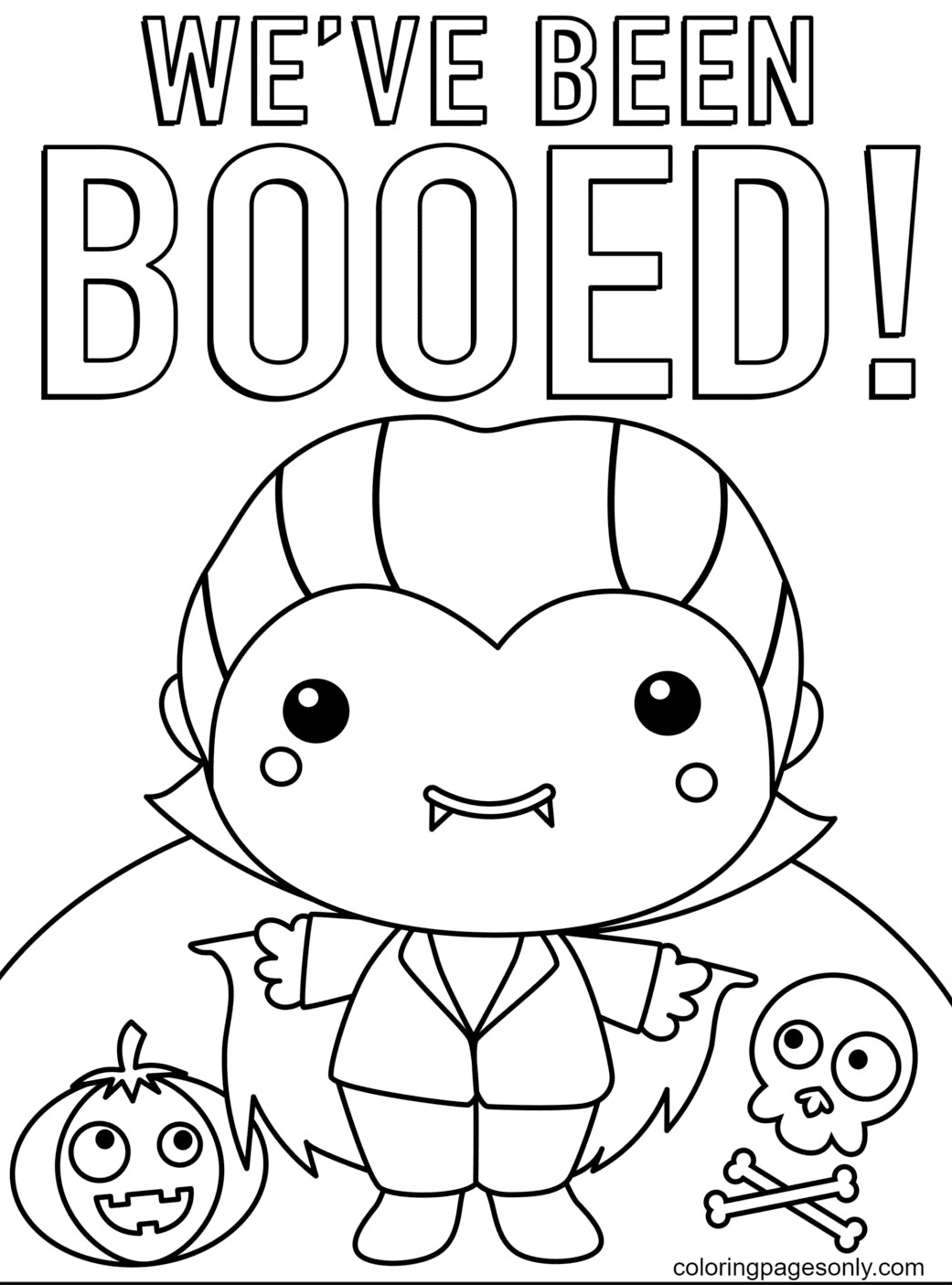
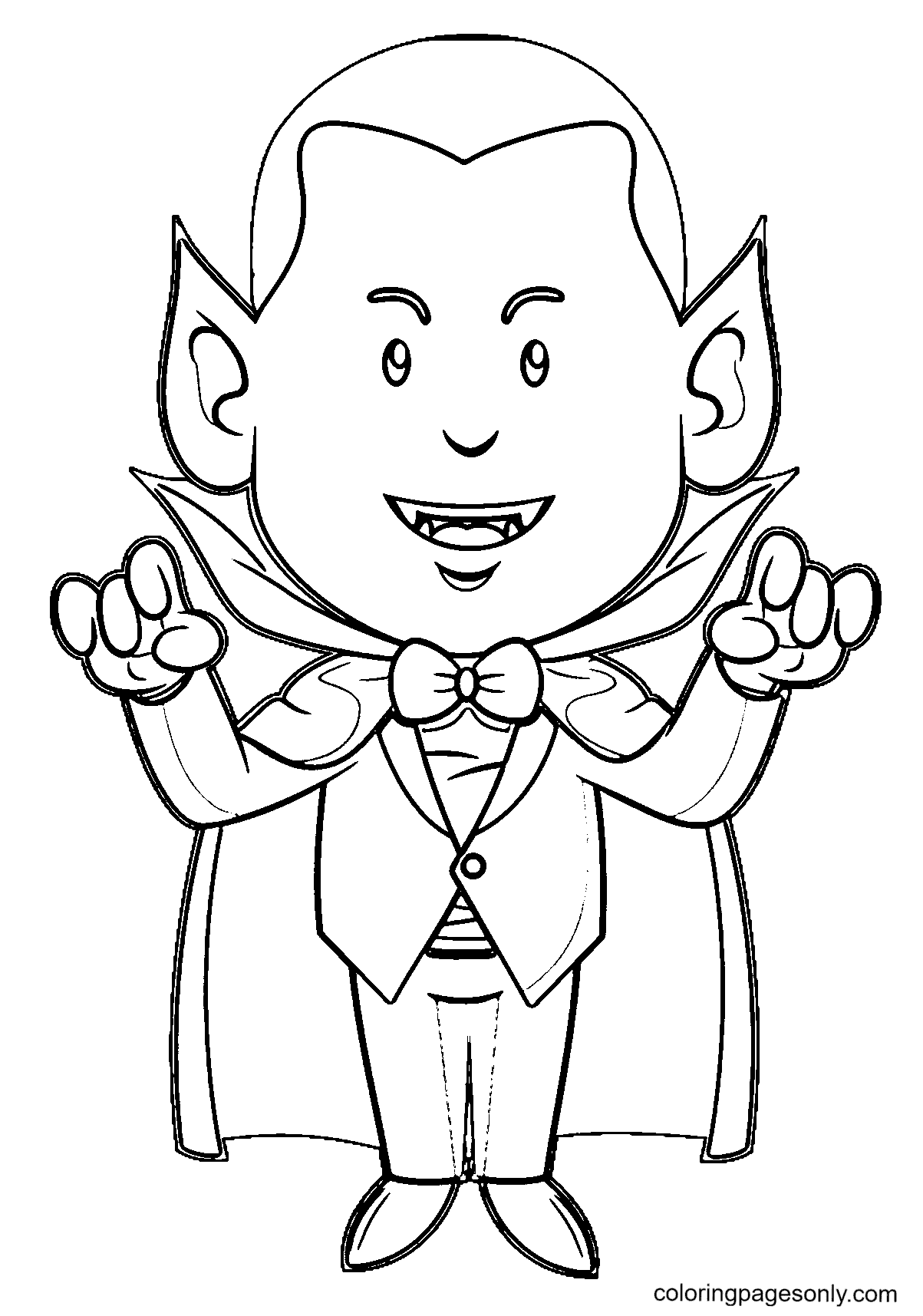
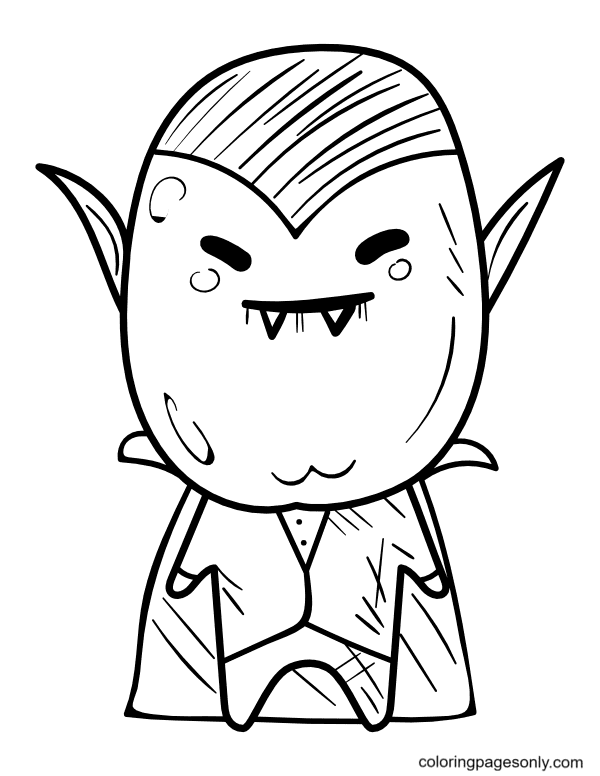
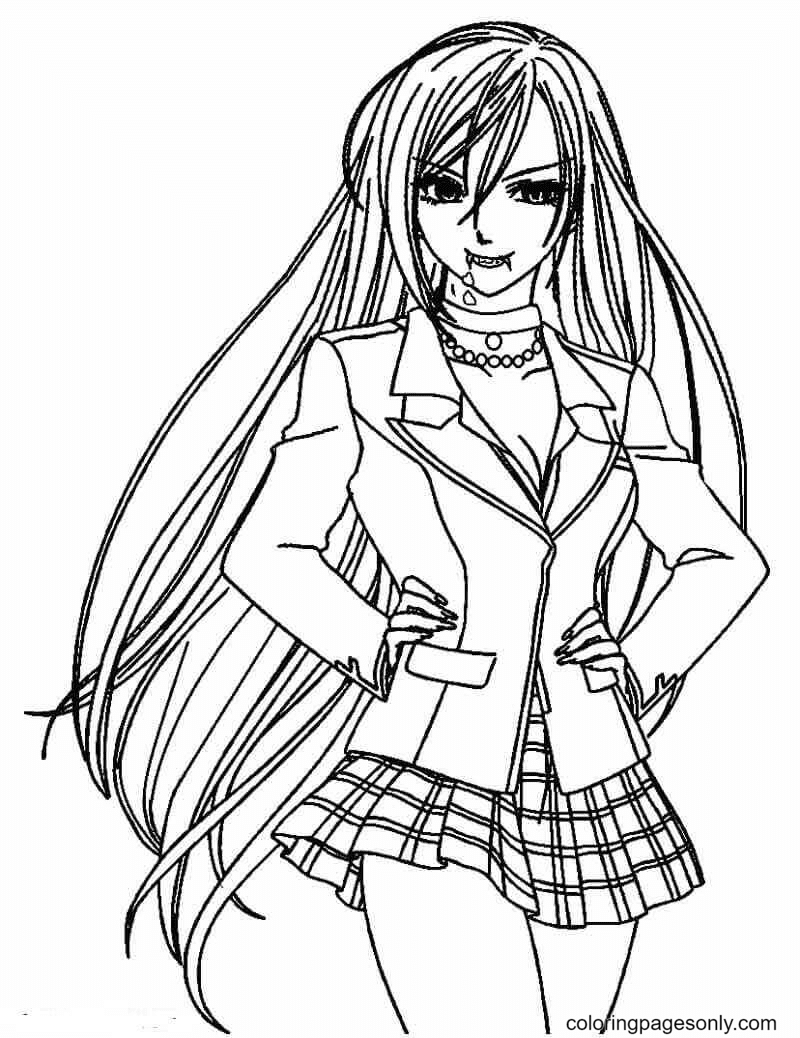
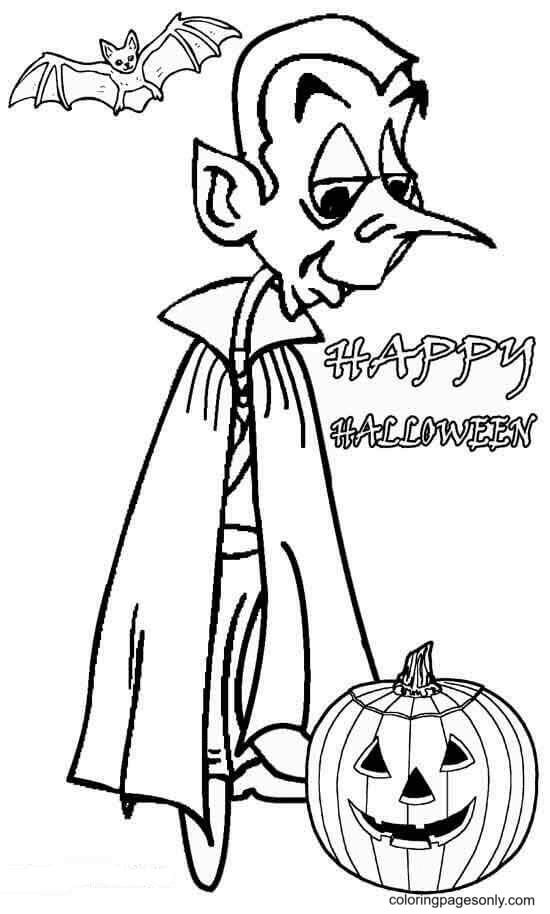
Seventeen pages take a softer, friendlier approach: kawaii-style faces, a vampire family, and a vampire kid in a costume rather than a full transformation. These pages can take brighter, less dramatic colors than the scarier scenes, since the goal here is a fun Halloween character rather than a genuine fright.
Scary and Gothic Vampires
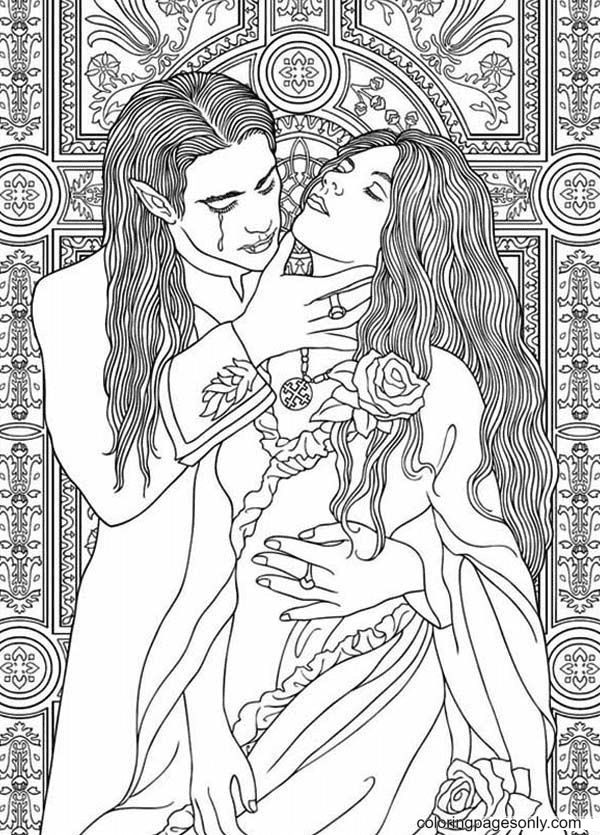
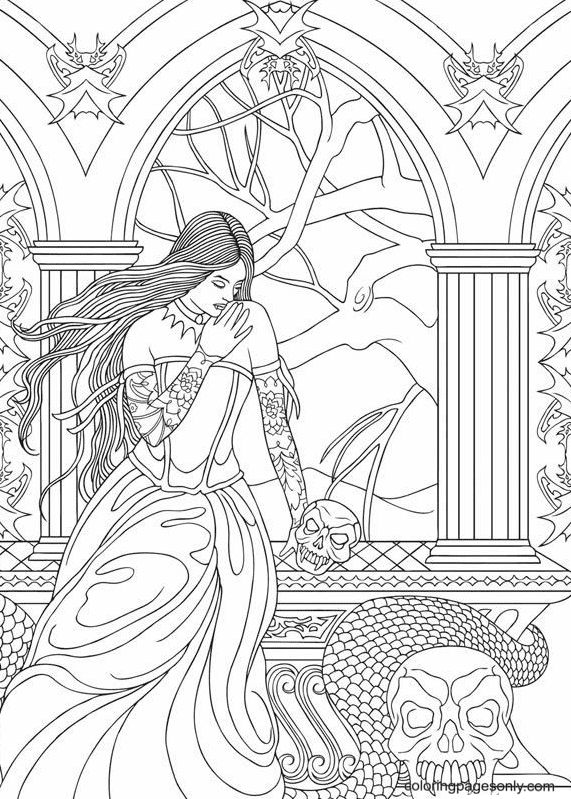
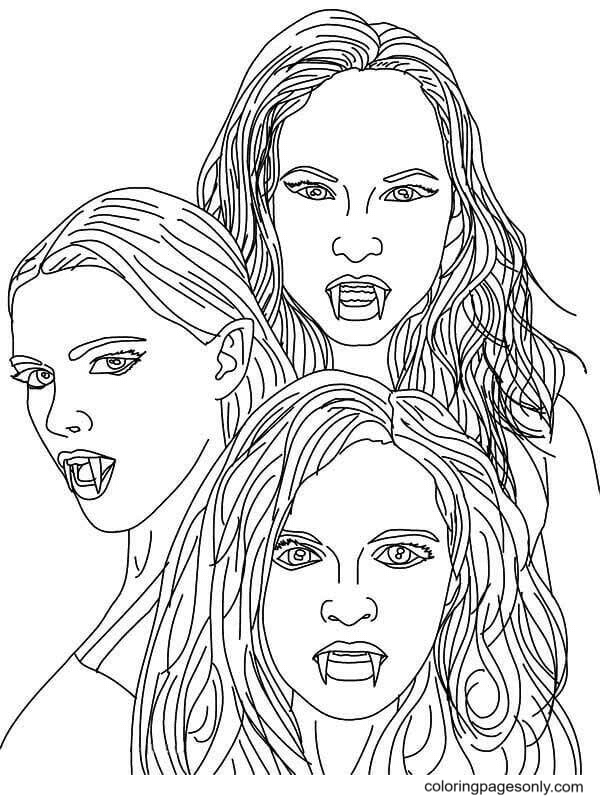
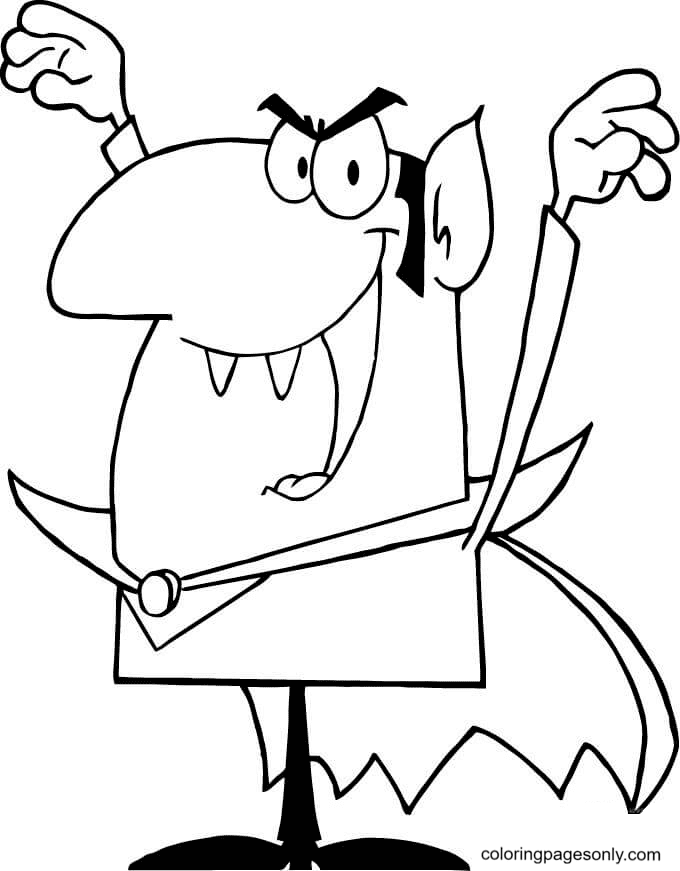
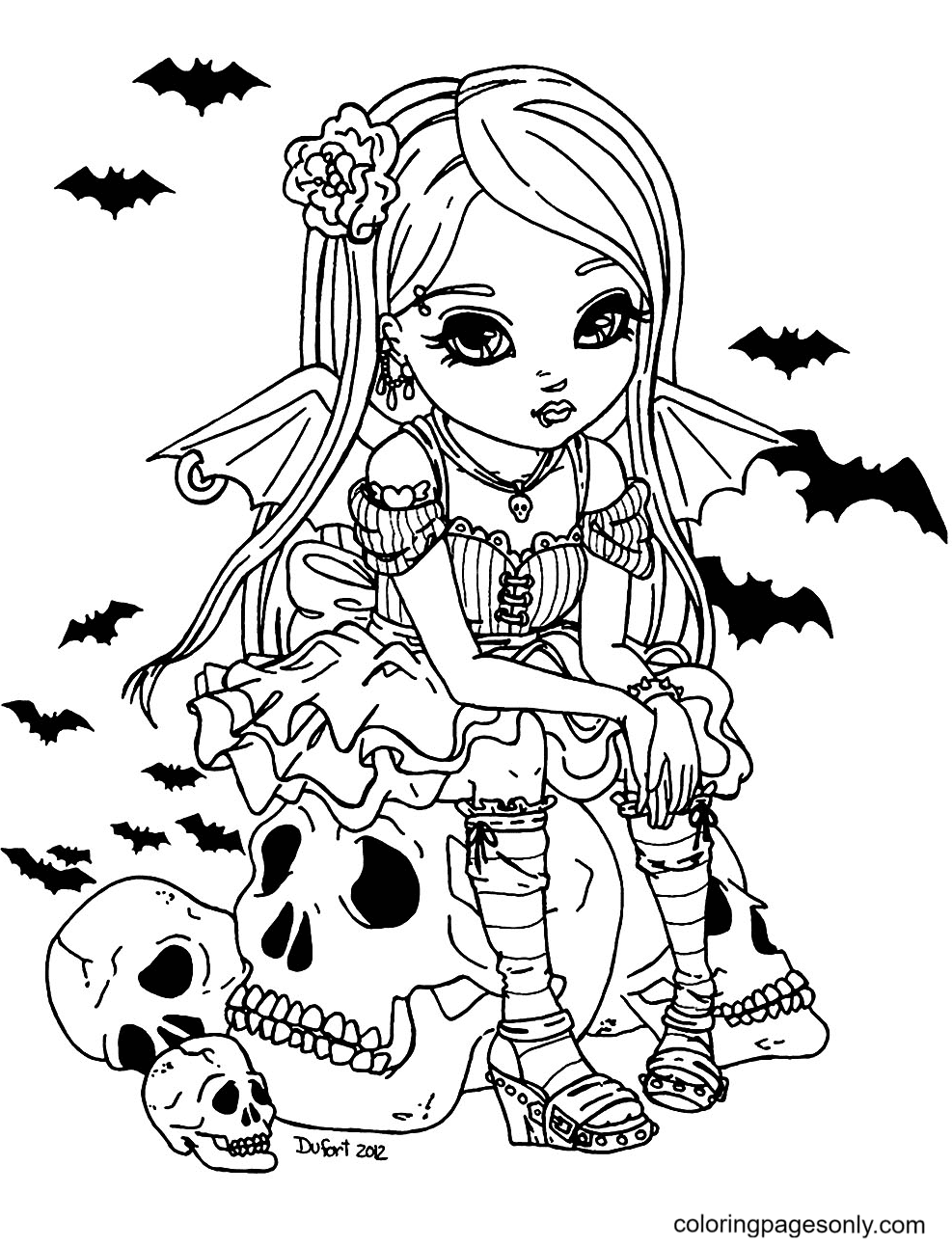
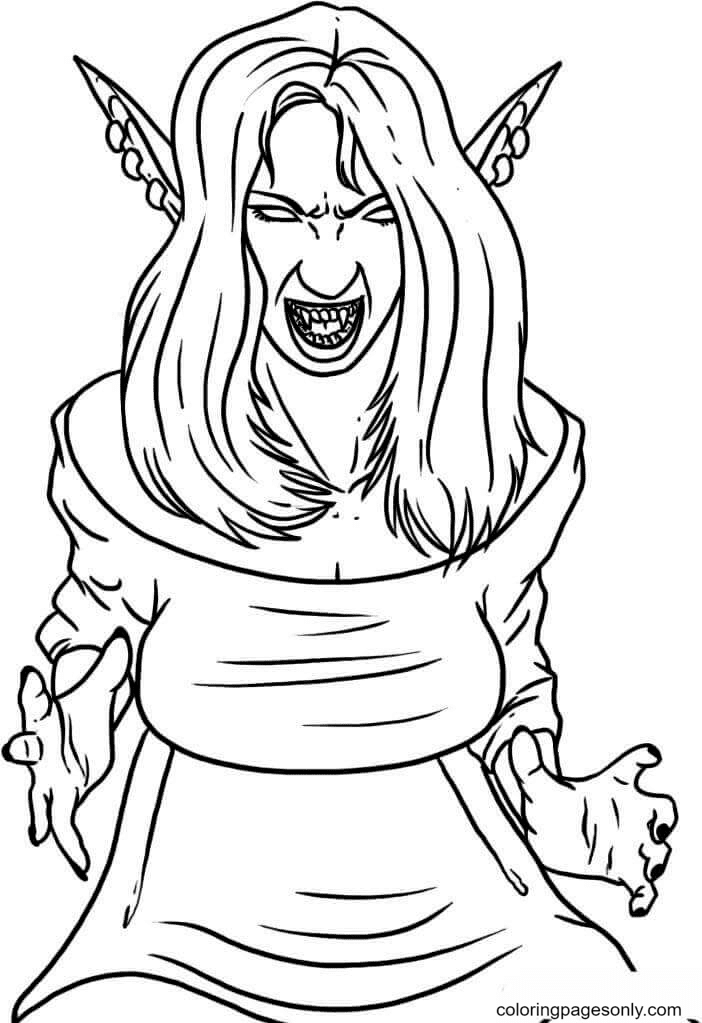
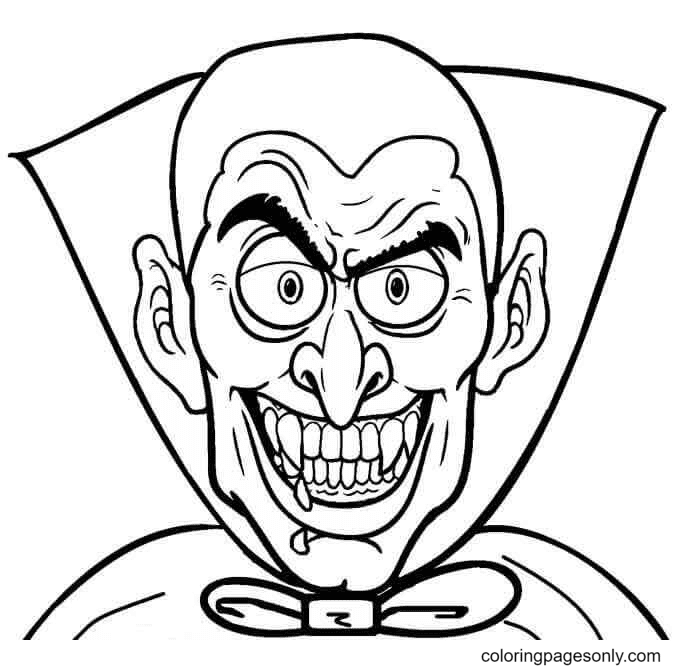
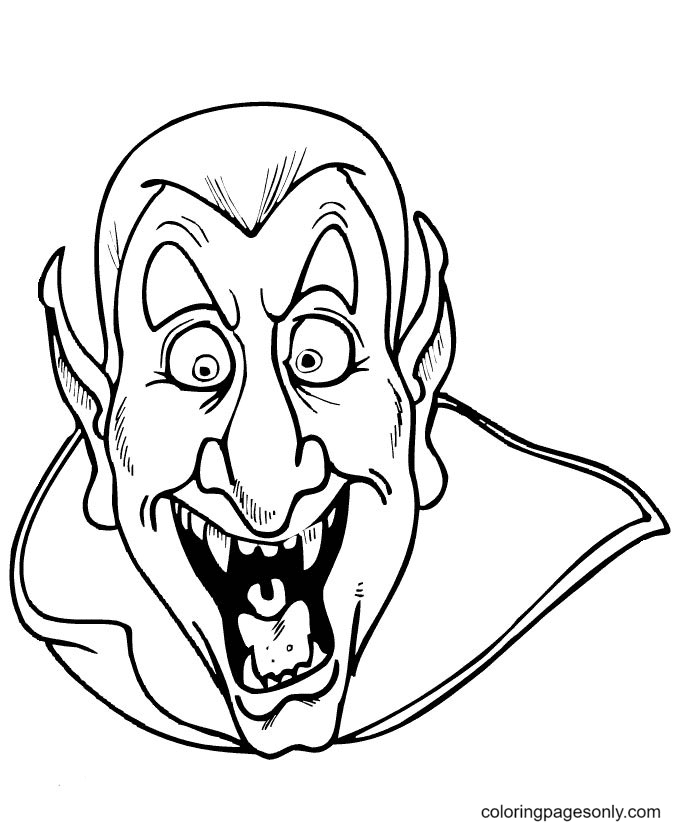
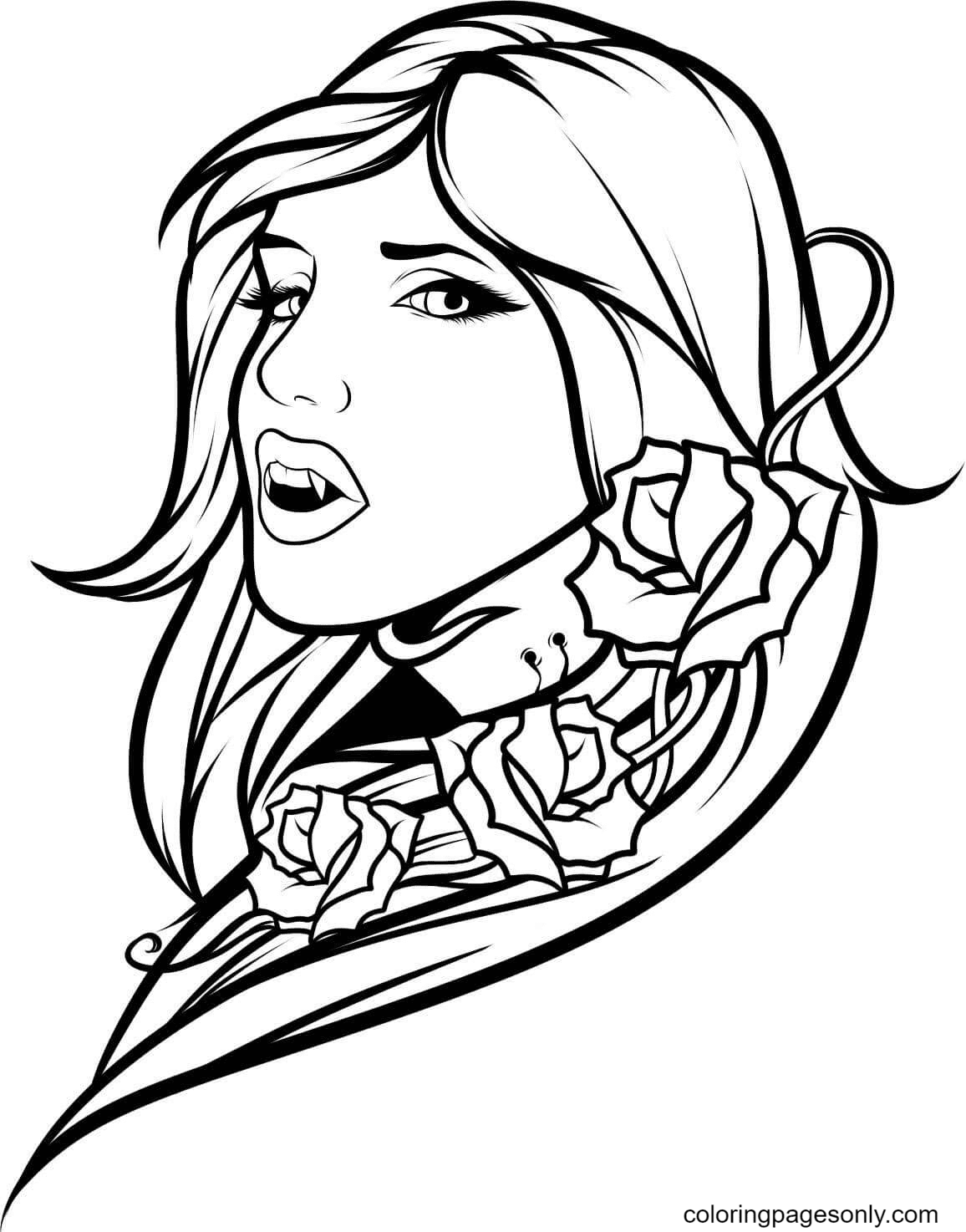
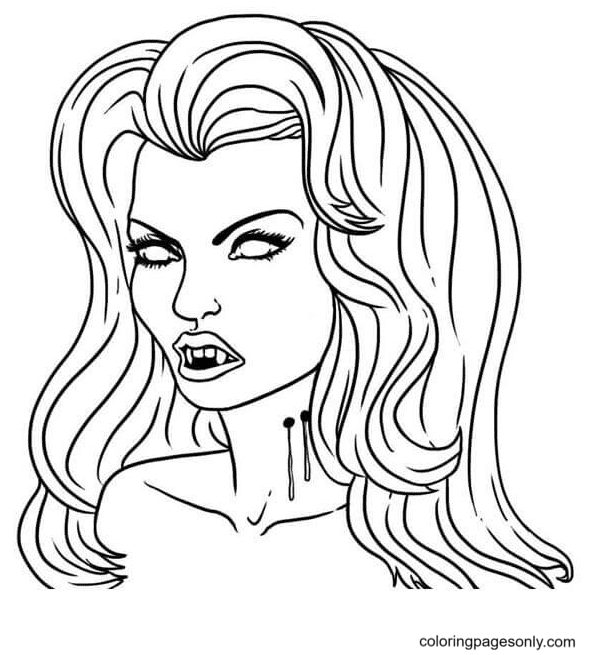
Twenty pages lean into a more frightening, detailed style, with sharp teeth, dramatic capes, and gothic backdrops built for older colorists. These pages reward a more limited, high-contrast palette, deep reds and blacks against pale skin, over a full rainbow of color.
Additional Vampire Designs
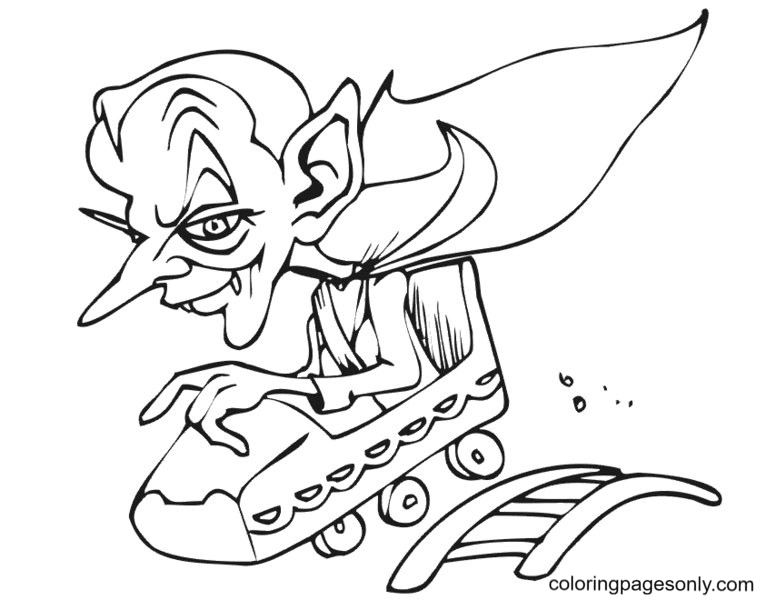
Thirteen pages round out the collection with additional vampire scenes and portraits. One page in this group is labeled as a roller coaster and doesn’t actually show a vampire; it appears to be a labeling mix-up on the site. The rest are standard vampire-themed designs, just without a more specific title.
What Vampire Coloring Pages Do
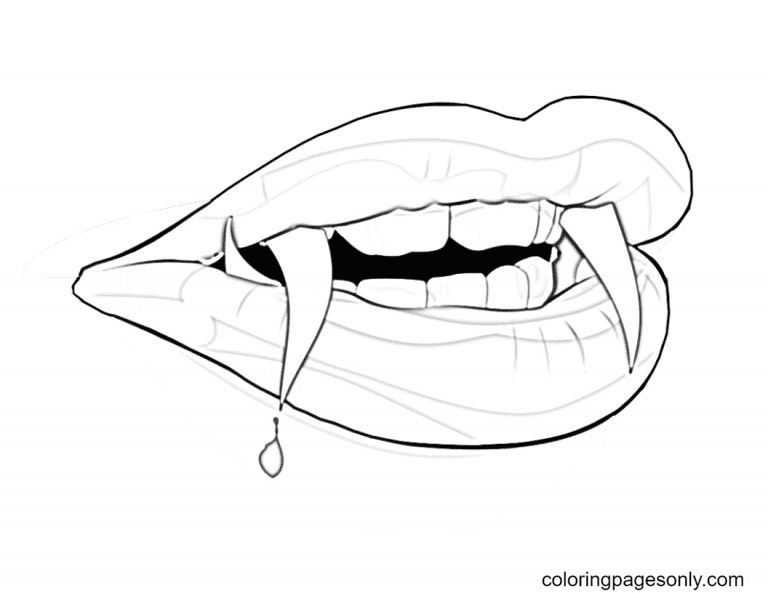
Capes and fangs reward a careful hand. A flowing cape’s folds and a vampire’s sharp, symmetrical fangs ask for steadier, more deliberate lines than a plain figure would, and the American Academy of Pediatrics names exactly this kind of structured coloring, done between ages 2 and 7, as a clear path to fine motor skill development. The simpler, cute, and kid-friendly pages offer an easier version of that same practice before a busier, more detailed scene.
Fiction wrote some of these “rules.” Since a detail as basic as dying in sunlight didn’t come from centuries-old folklore but from a single 1922 film, coloring a vampire page is a small opening to point out that a lot of what feels like ancient tradition is really just one story that everyone copied afterward.
Calm through repetition. A 2005 Art Therapy Journal study found a measurable drop in anxiety after coloring sessions built around a defined structure. The repeating folds of a cape and the layered darkness of a graveyard scene are about as structured as a coloring page gets.
A gentle way to handle something spooky. Splitting the collection between cute, costume-style vampires and darker, more gothic scenes means a child can pick their own comfort level with Halloween’s spookier imagery, rather than being handed one fixed tone for the whole set.
How to Color Vampire Pages Well
- Classic Dracula: Use a Black cape with a Scarlet lining, pale White or Timberwolf skin, and Black slicked-back hair with a widow’s peak.
- Mina Harker and other literary characters: Use Victorian-style clothing in deep, muted tones, Midnight Blue or Maroon, rather than the brighter colors suited to cartoon vampires.
- Licensed character crossovers: Keep the character’s own established colors, Mickey’s red shorts, a Minion’s Goldenrod body, and add only a Black cape and White fangs on top.
- Coffins and graveyard scenes: Use Timberwolf or Gray for stone and Midnight Blue for a night sky, keeping the palette cool so the vampire’s cape stands out as the one warm color.
- Cute and kawaii vampires: Brighter, less dramatic colors work well here, Carnation Pink or Sky Blue, since these pages are about a fun costume rather than genuine fright.
- Bats: Use solid Black for the wings and body, with small Scarlet or Yellow eyes for contrast against the dark color.
5 Creative Craft Ideas With Vampire Coloring Pages
- Vampire Fact Cards. Color a few different characters, then write one real fact, like the Nosferatu sunlight myth, on the back of each card. A small stack makes a simple, reusable set for a Halloween-themed lesson.
- Coffin Pop-Up Card. Color one of the “vampire rising from a coffin” pages, then fold a piece of cardstock so the vampire appears to pop up when the card opens. It turns a flat page into a small, interactive Halloween card.
- Bat Colony Garland. Color several of the small bat portraits from the vampire-and-bat pages, then string them together in a row to hang across a window or doorway. A mix of poses makes the garland feel more lively.
- Cute vs. Scary Match-Up. Color one of the cute vampires and one of the gothic, scary vampires, then display them side by side. It’s a natural way to talk about how the same character can be drawn in very different styles.
- Vampire Bookmark Set. Color a few small vampire portraits, cut them into narrow bookmark strips, and cover each with clear contact paper. A set in a few different styles makes an easy, low-cost Halloween gift.
Frequently Asked Questions
What are Vampire coloring pages?
Vampire coloring pages are free printable and browser-colorable vampire designs, from classic Dracula scenes to cute and gothic-style portraits. This collection has 85 pages, available as PDF downloads or through the online coloring tool.
Where did the name “Dracula” come from?
Bram Stoker borrowed the name Dracula from Vlad III, a 15th-century Wallachian prince nicknamed Vlad the Impaler, whose father carried the epithet “Dracul,” meaning dragon. Beyond the name and a shared aristocratic background, the fictional Count and the historical prince have little in common.
Is it true that vampires can’t go out in sunlight?
Not originally. In Stoker’s 1897 novel, Dracula can move around in daylight with reduced power and is ultimately killed by a knife. The idea that vampires disintegrate in sunlight actually comes from Nosferatu, a 1922 unauthorized film adaptation.
Who is Mina Harker?
Mina Harker is a human character in Bram Stoker’s original novel, bitten by Dracula and left partway toward becoming a vampire herself before being saved. She’s a protagonist of the story, not a villain.
Why do vampires supposedly have no reflection?
The idea traces back to older European folk beliefs that a person without a soul wouldn’t cast a reflection. Bram Stoker incorporated that existing folk idea into his novel, and it’s remained a standard vampire trait in fiction ever since.
Are the licensed-character vampire pages, like Mickey Mouse, official designs?
No. The Mickey Mouse, Lego, and Minion vampire pages are fan-made coloring sheets for personal, non-commercial use. They are not affiliated with, licensed by, or endorsed by Disney, the Lego Group, or Illumination.
Are Vampire coloring pages suitable for young children?
Yes, with the right page. The cute and kid-friendly pages suit younger children, while the more detailed gothic and scary pages suit older kids who enjoy a spookier Halloween page.
Why does one page in this collection show a roller coaster instead of a vampire?
One page in this collection is labeled as a roller coaster and doesn’t actually show a vampire. It is a labeling mix-up on the site rather than an intentional design choice.
Start Coloring
Download any design by clicking it. No account, email, or payment is required to color or print. Every page opens in the online coloring tool for on-screen use or downloads as a full-resolution PDF for printing. Share a finished vampire page using the Facebook or Pinterest buttons at the top of the page.