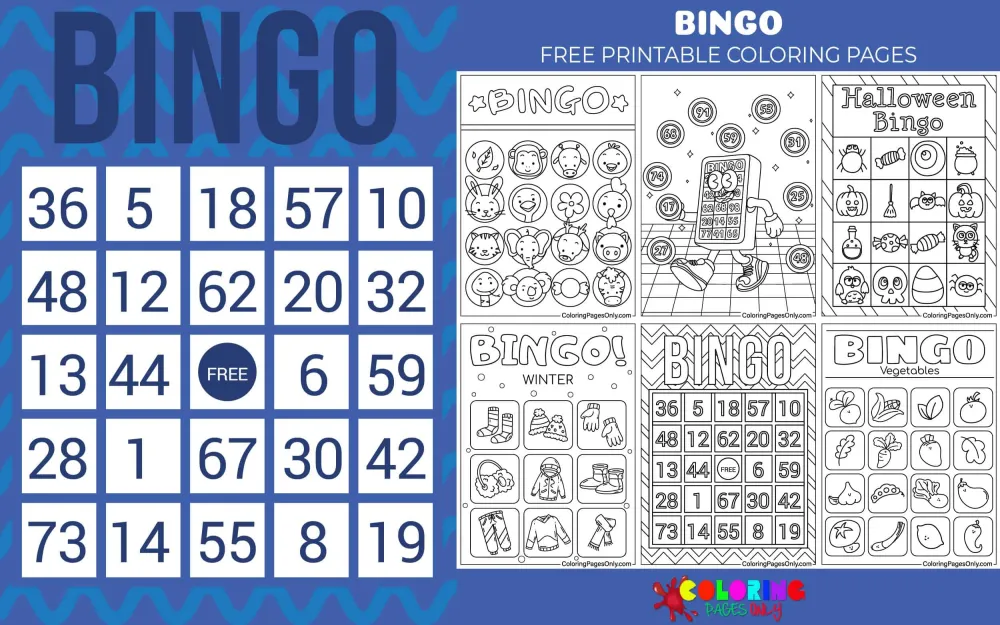
Bingo Coloring Pages at ColoringPagesOnly.com brings together 31 free printable pages featuring illustrated bingo cards across a wide range of themes – Christmas, Halloween, Valentine’s Day, winter, space, unicorns, animals, vegetables, the alphabet, numbers, and more. Every page in the collection uses picture bingo format: instead of numbers, each square on the card contains a small illustrated image related to the theme, which the child colors before playing. Download any page as a free PDF to print, or color online directly in your browser.
This collection sits within the Games Coloring Pages hub. For related educational activities, see Numbers Coloring Pages, Alphabet Coloring Pages, and Fun Counting Coloring Pages.
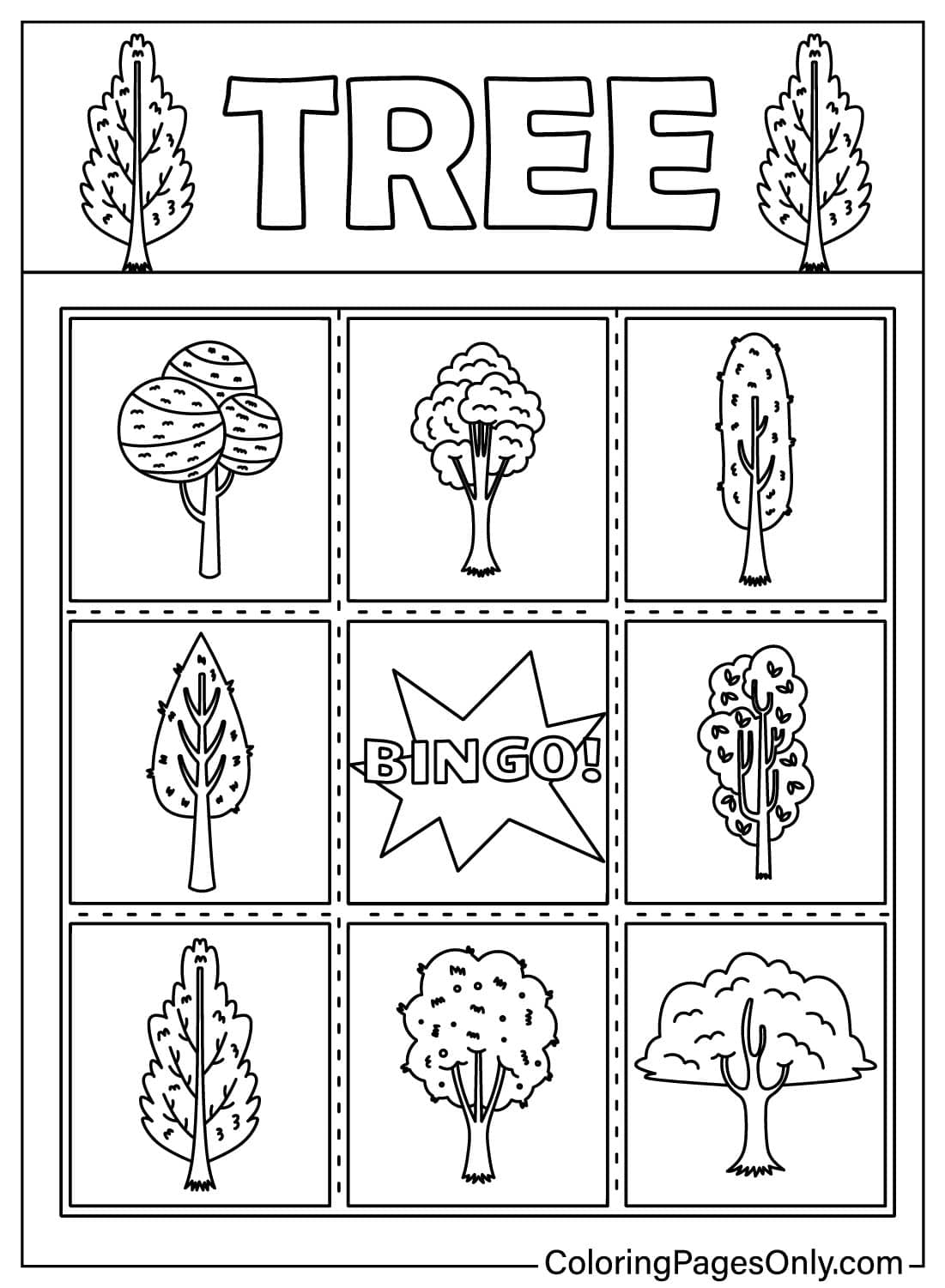
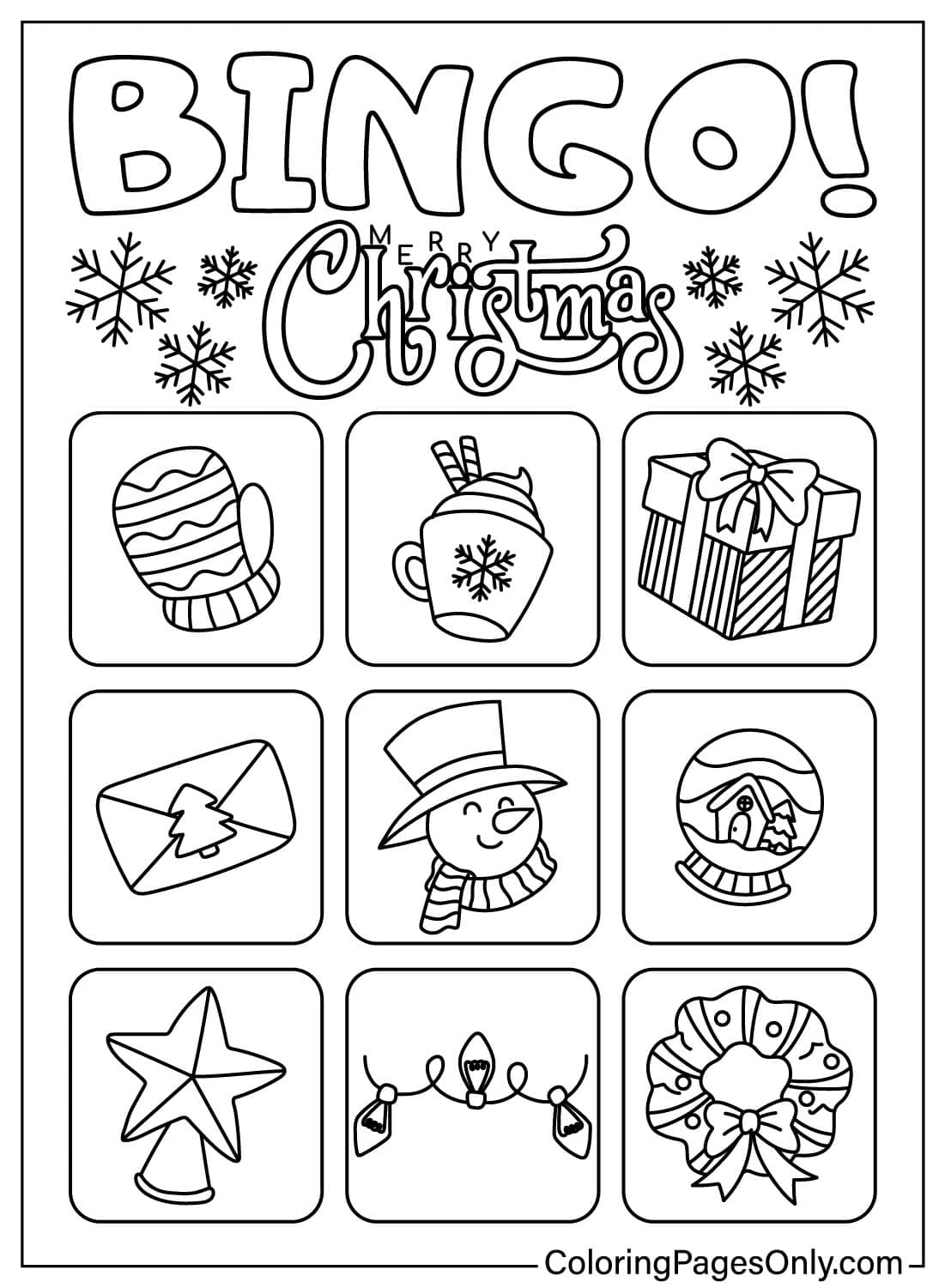
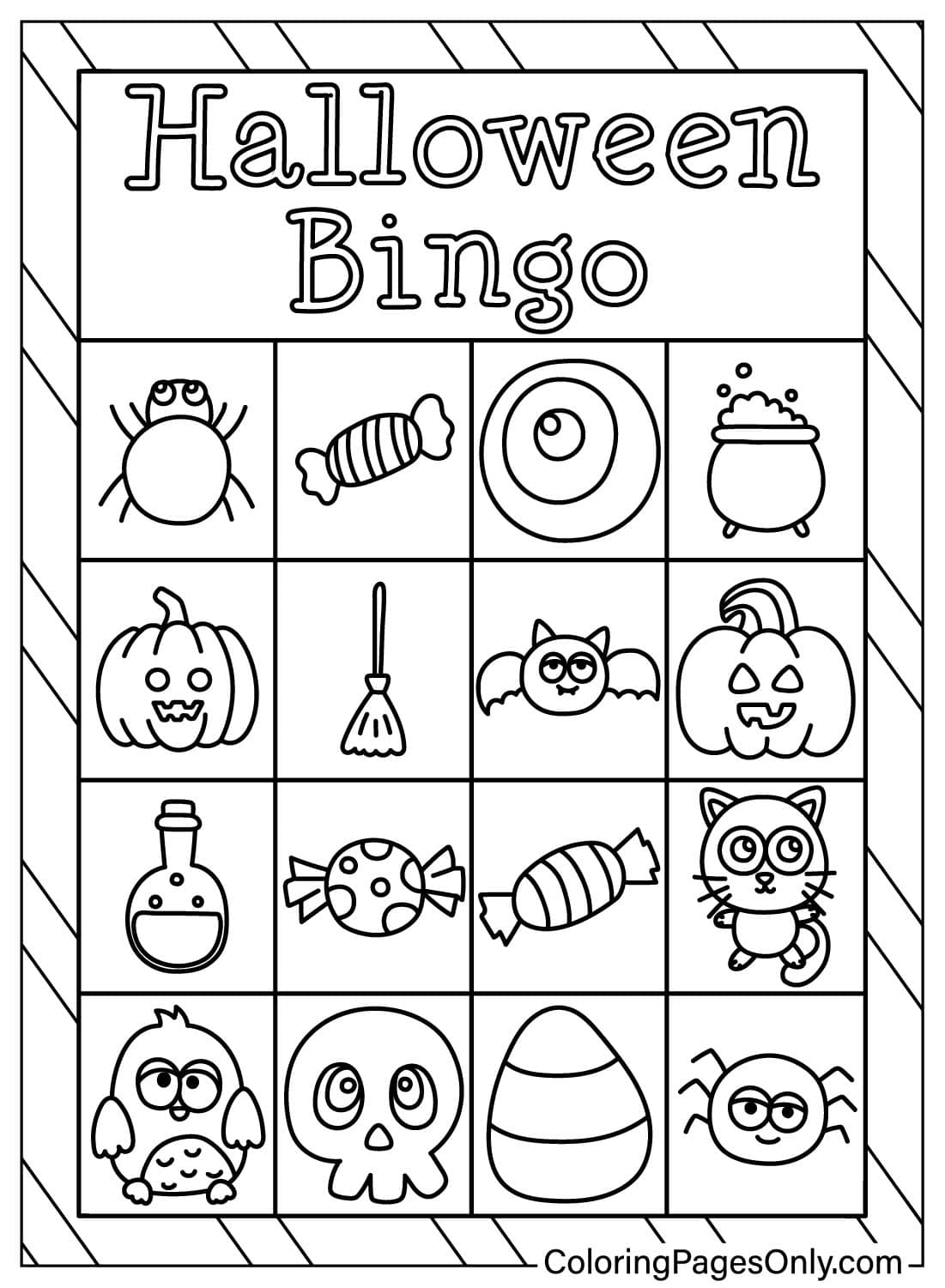
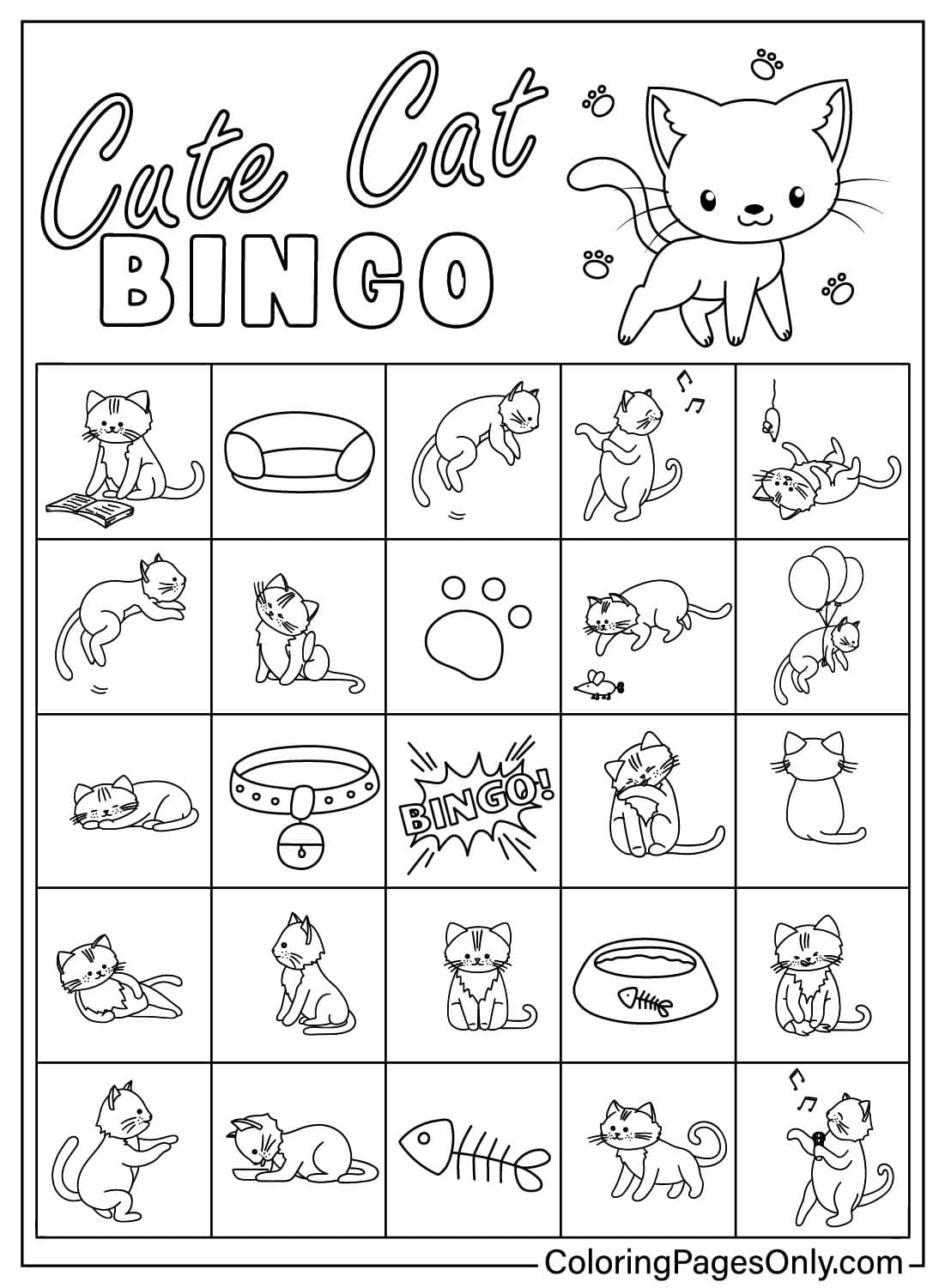
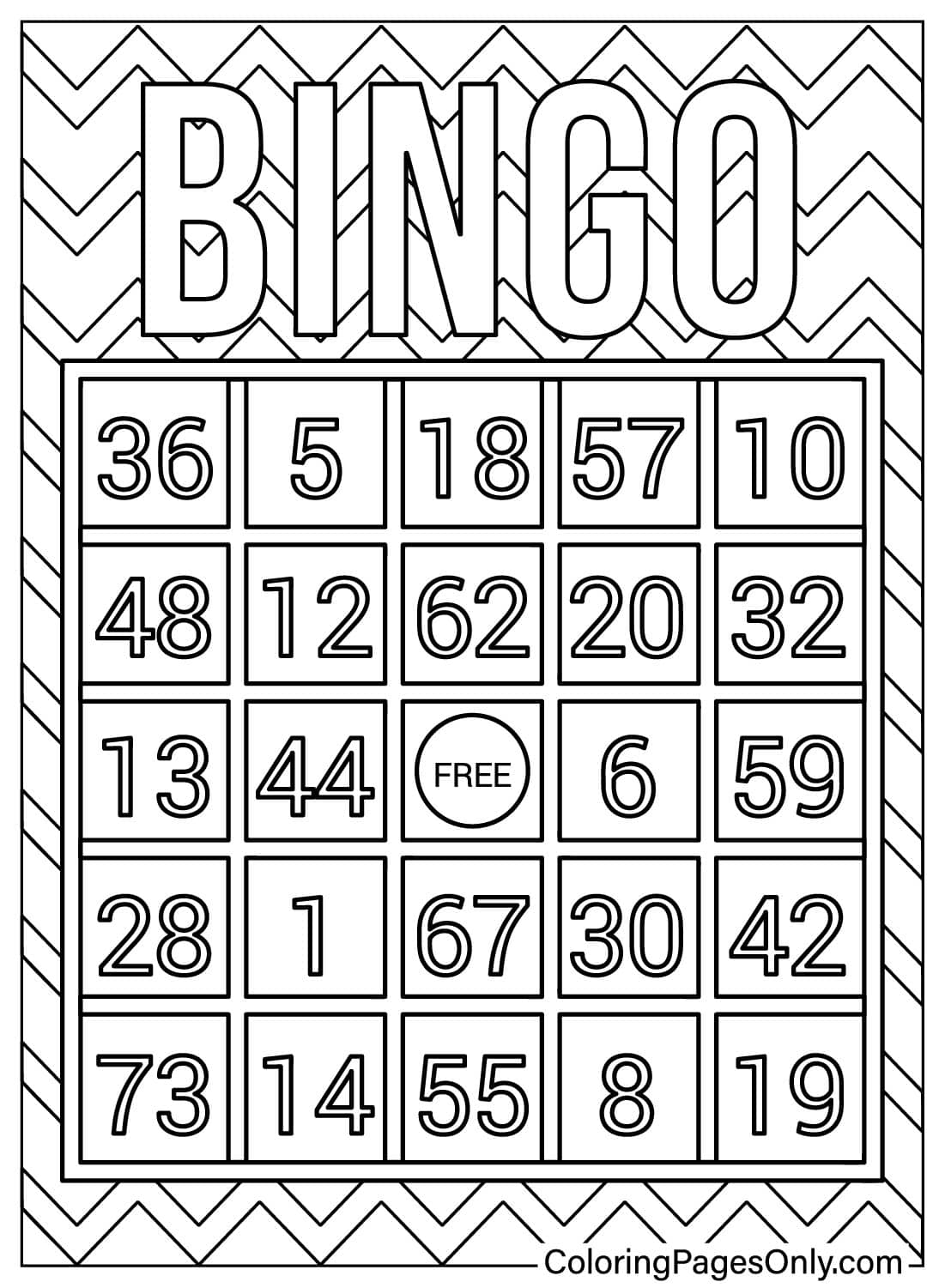
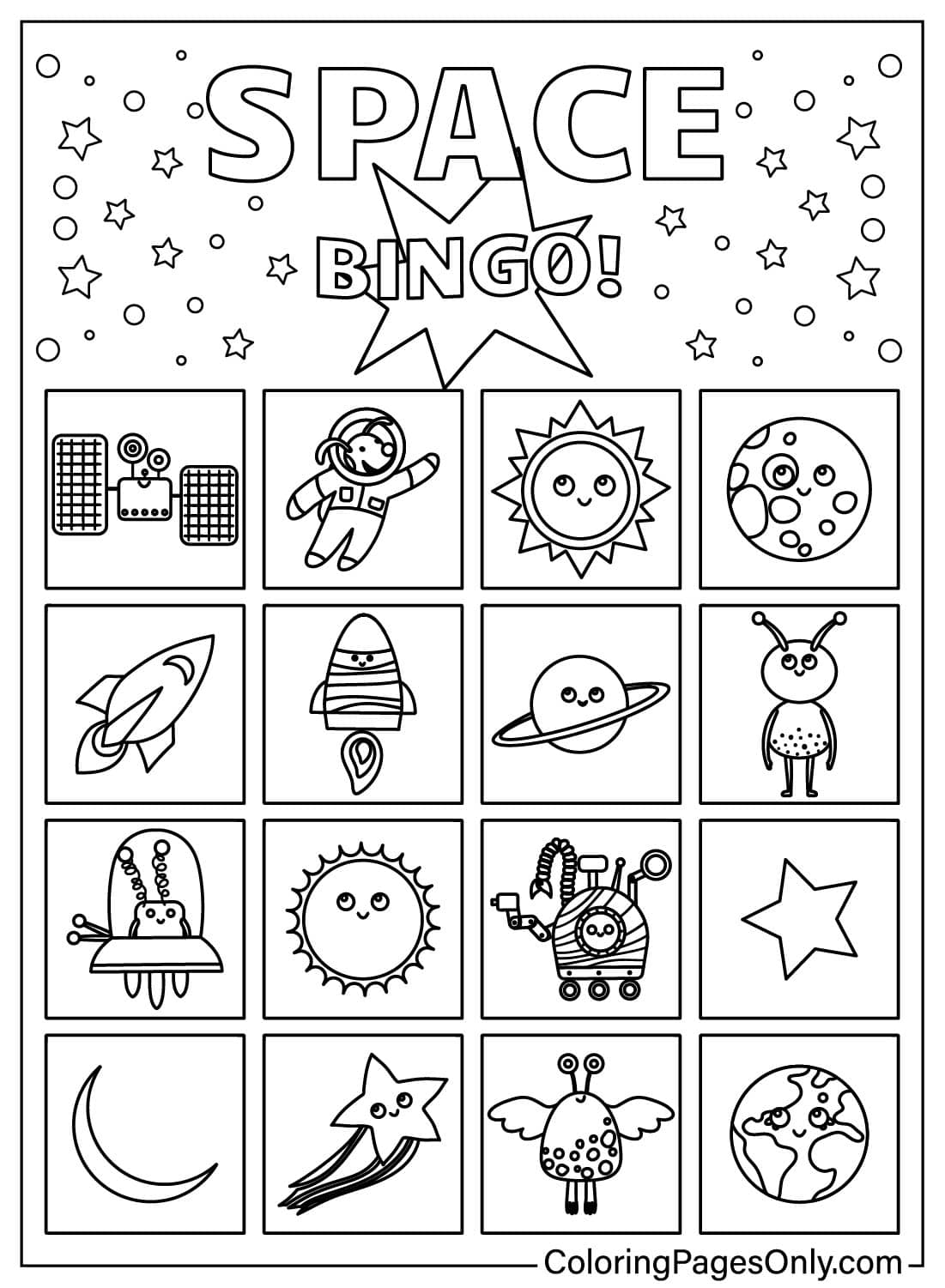
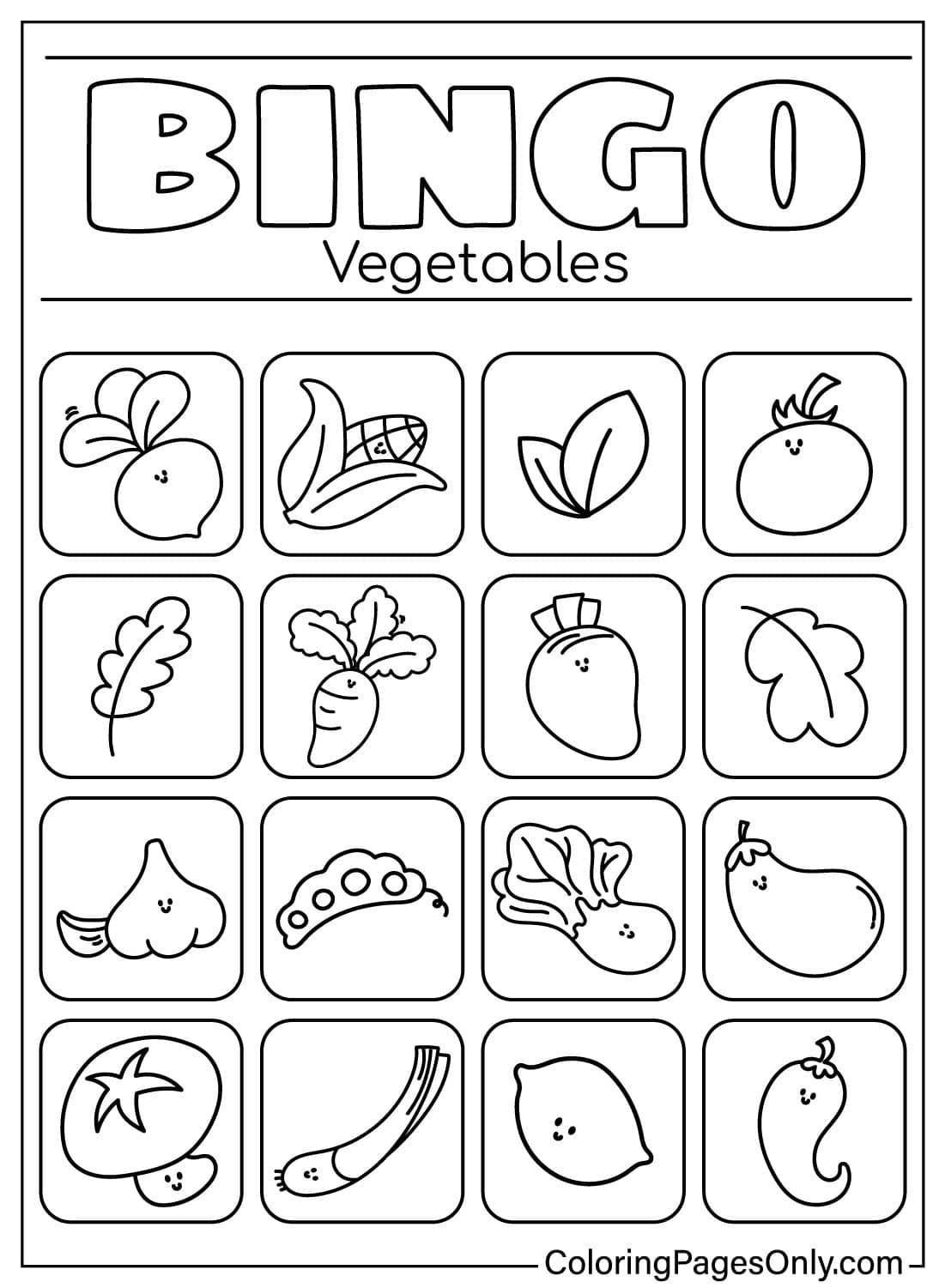
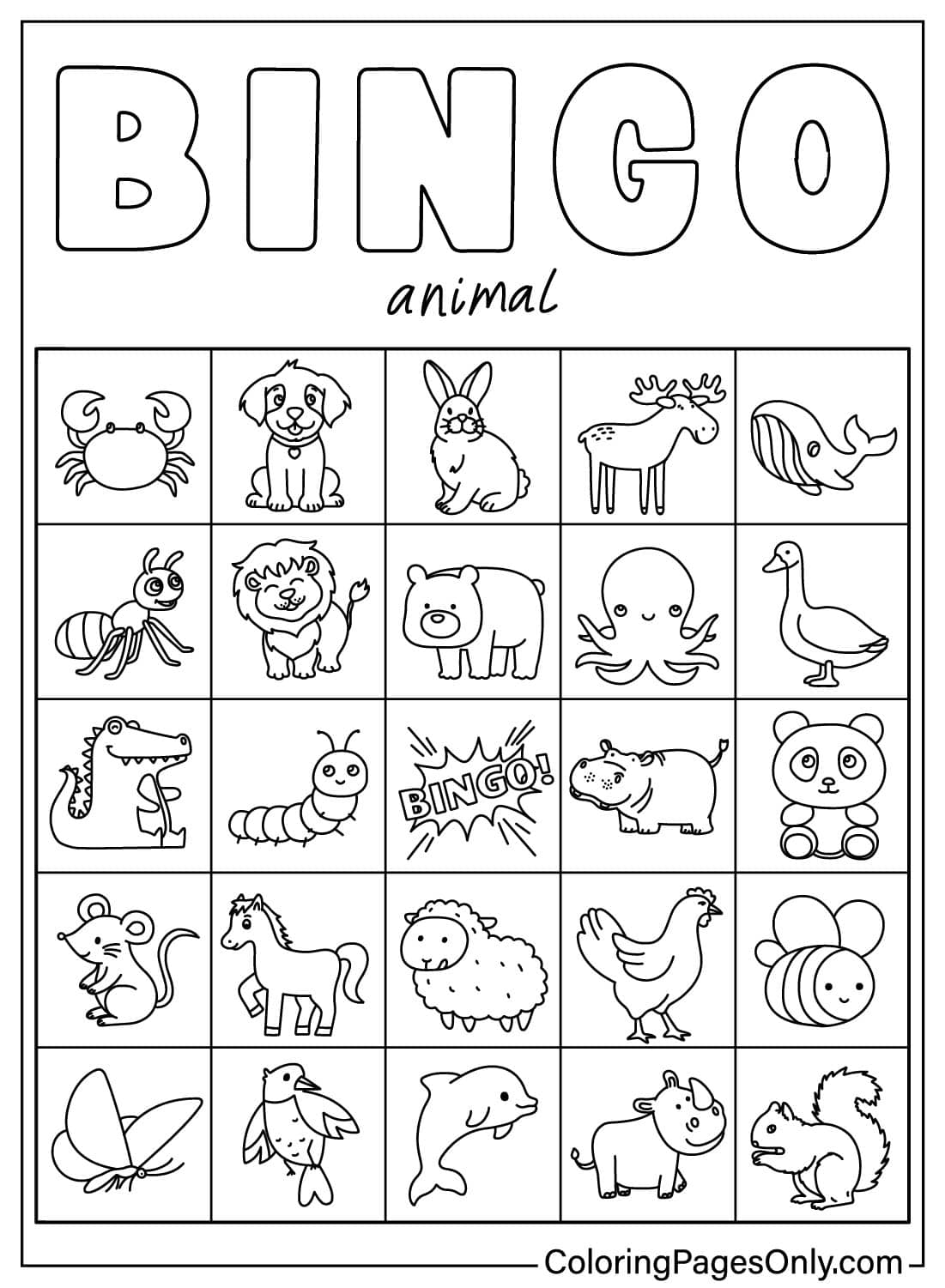
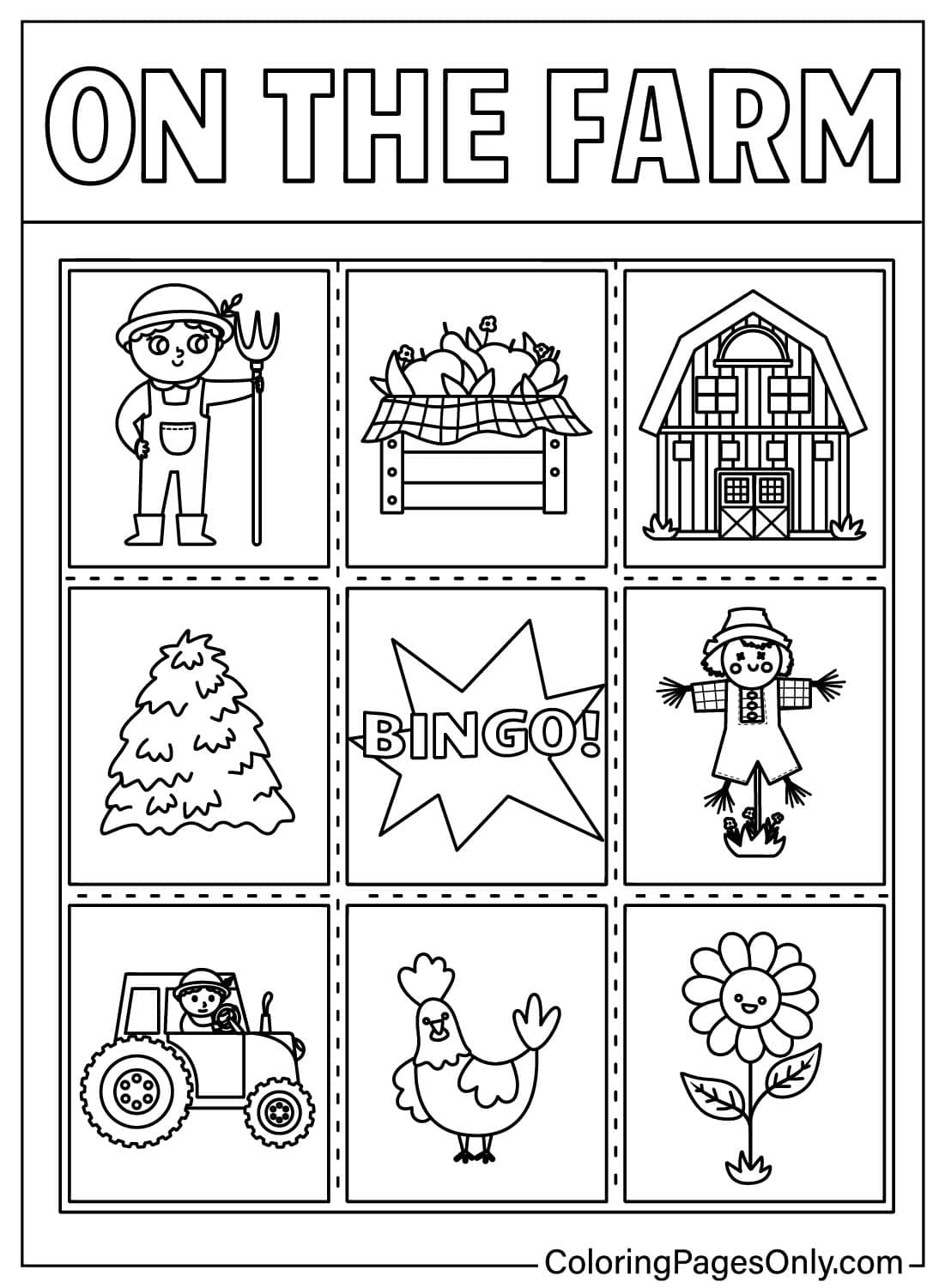
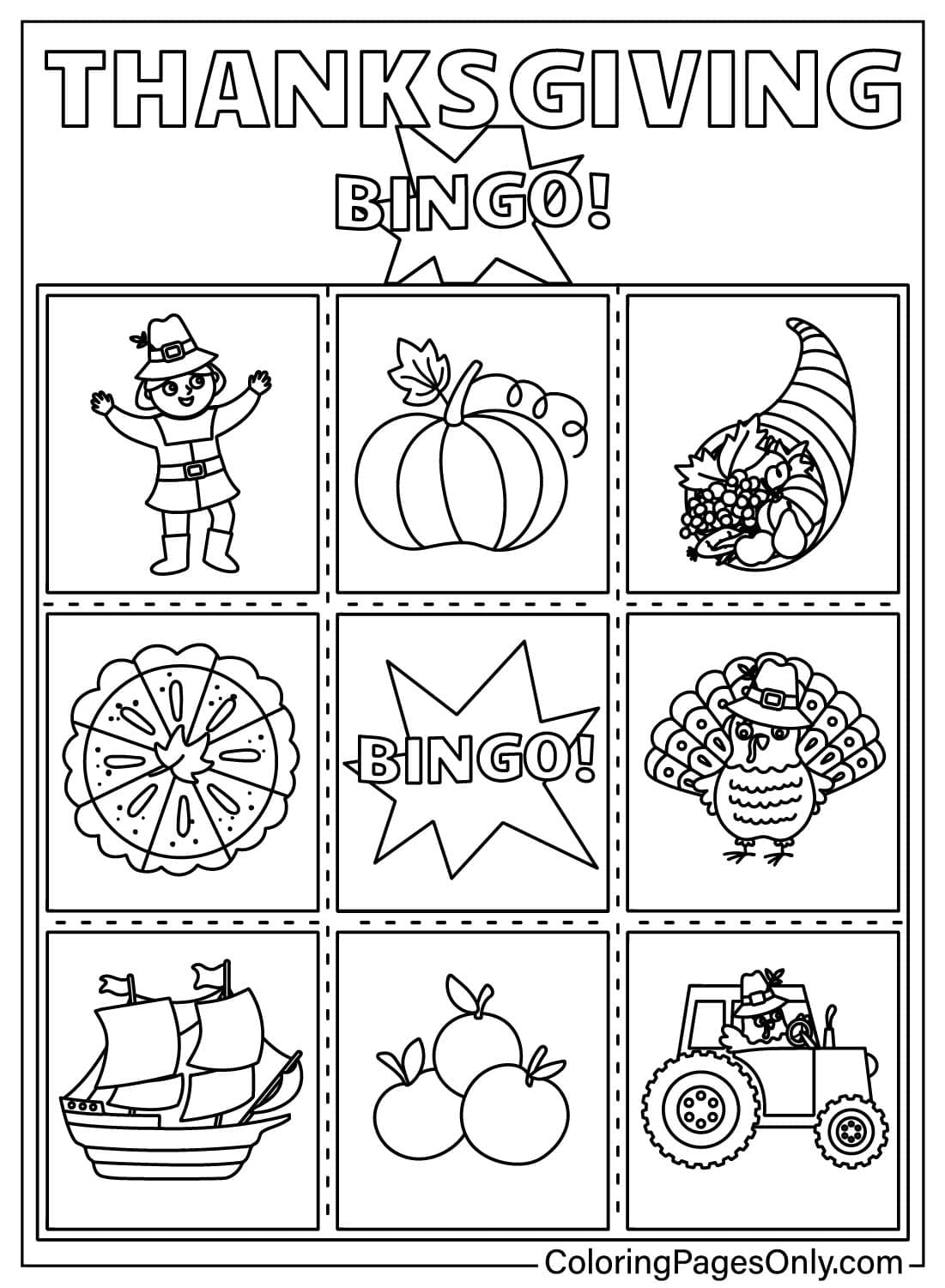
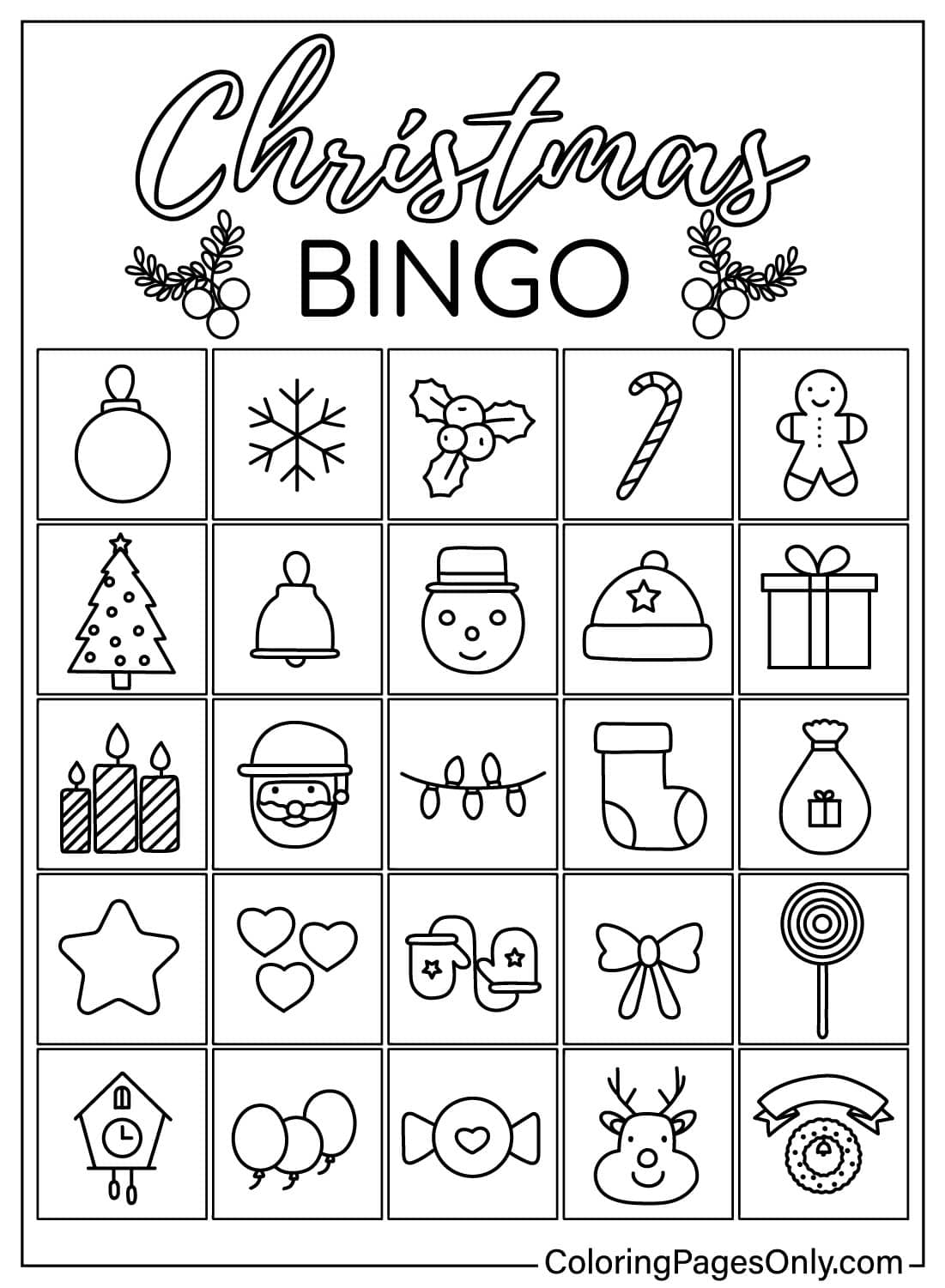
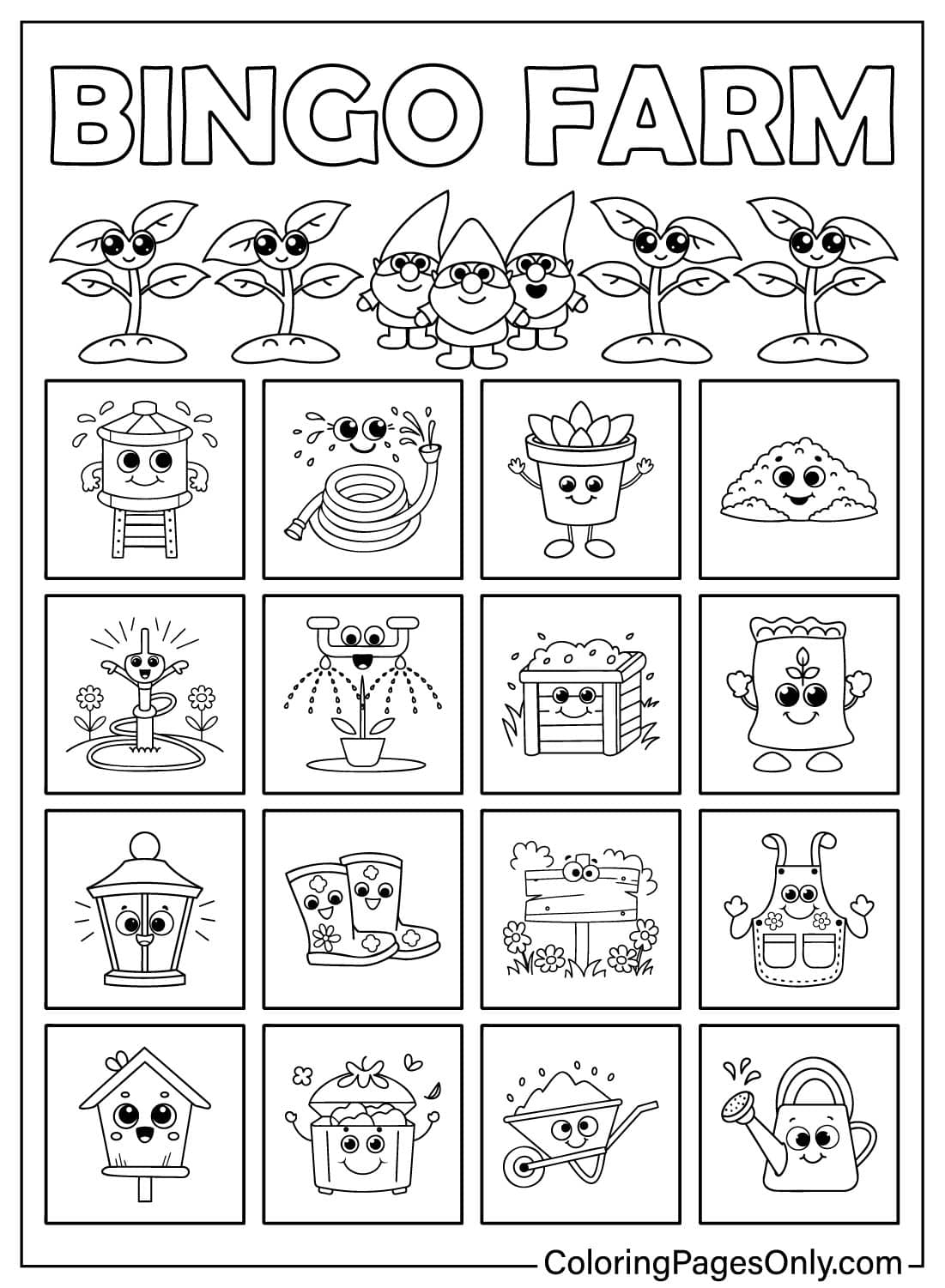
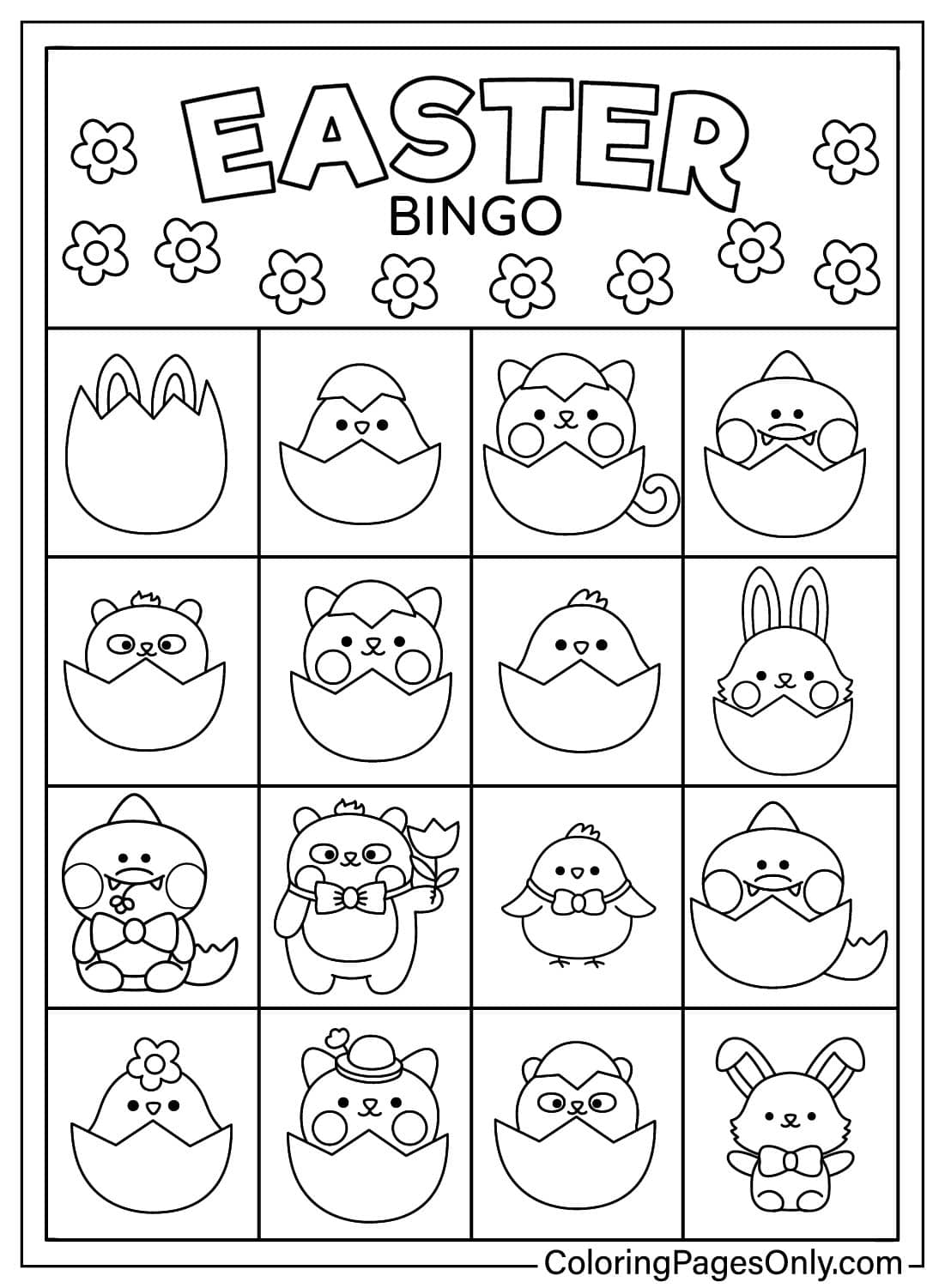
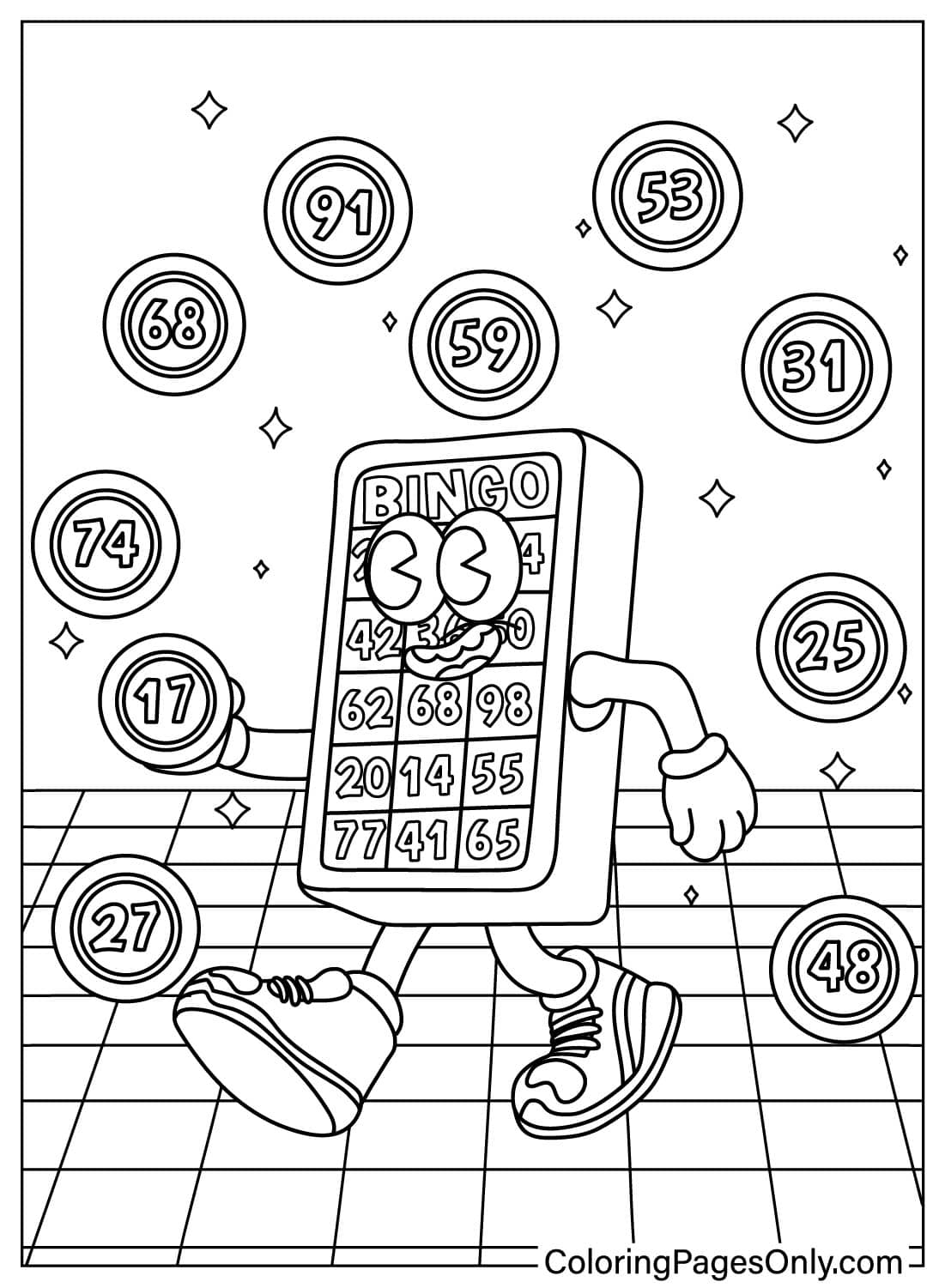
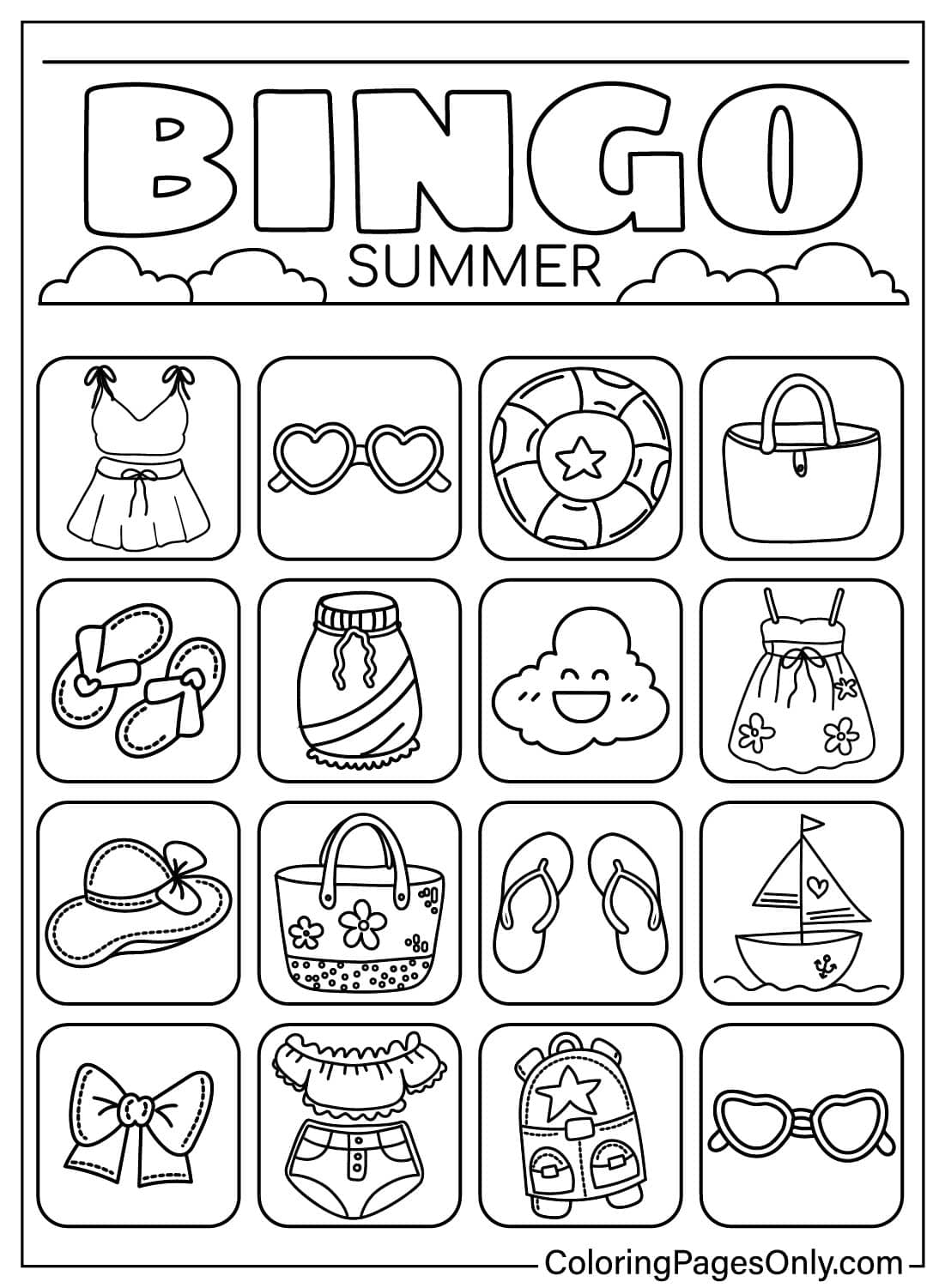
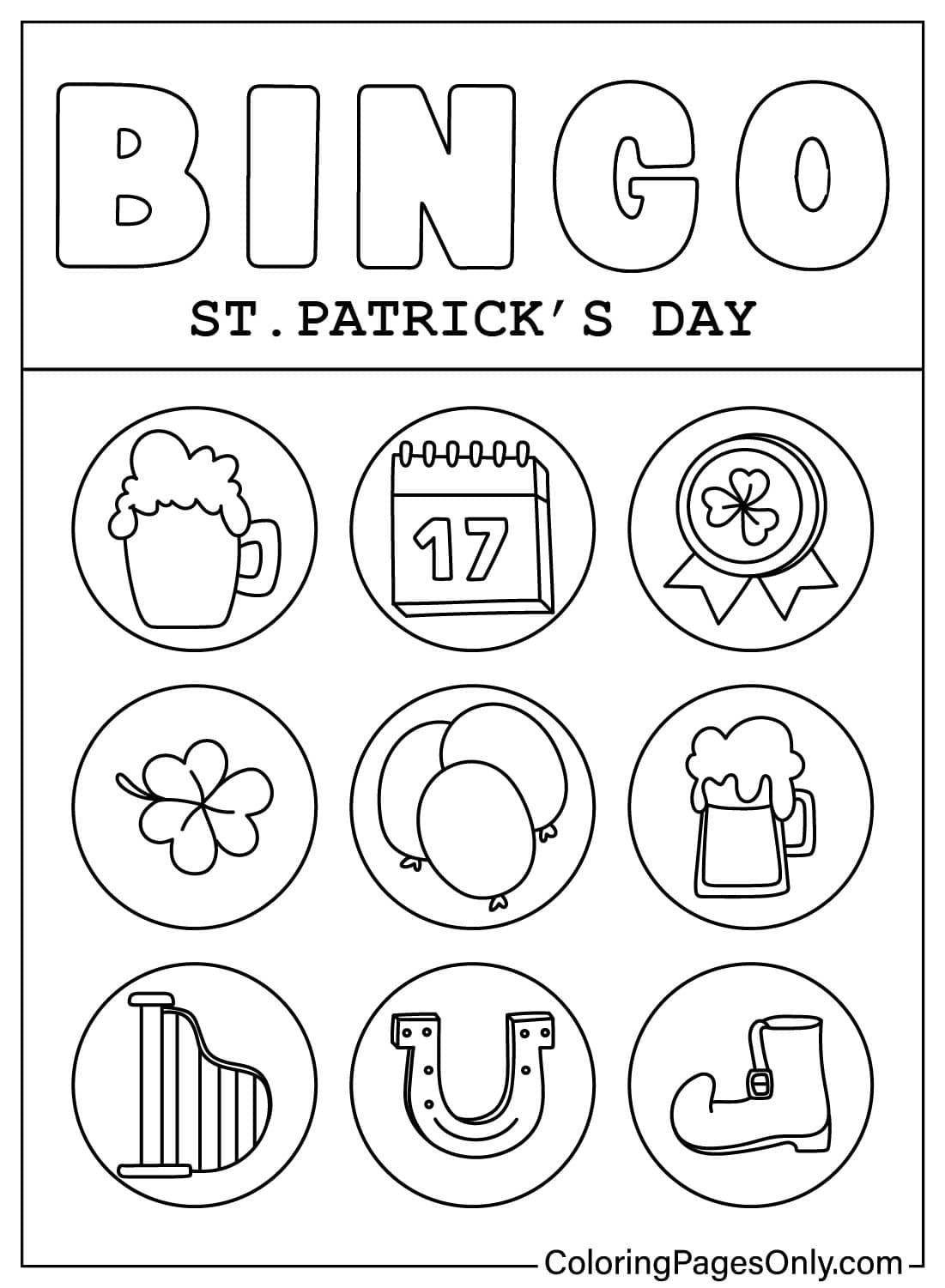
What Makes This Collection Different – Picture Bingo Cards
Standard bingo uses a 5×5 grid of random numbers (1–75 in American bingo) with a free center square, called out by a host who draws numbered balls. The player who marks a complete row, column, or diagonal first shouts “Bingo!” and wins.
The pages in this collection use a child-adapted variation called picture bingo (also called image bingo or illustrated bingo) – where each square contains a small drawn image rather than a number. A Christmas bingo card might have squares showing a tree, a snowflake, a candle, a reindeer, and an ornament; a space bingo card might show a rocket, a planet, a star, an astronaut, and a moon. The game is played with picture cards rather than numbered balls – the caller holds up or names each image, and players mark the corresponding square on their card.
The coloring activity in this collection functions as a preparation phase for playing: by coloring each illustrated square before the game begins, the child becomes thoroughly familiar with every image on their card – what it is, what it looks like, where it sits in the grid. This pre-game coloring session is not just a creative activity; it is a rehearsal that makes the subsequent game significantly more accessible, especially for younger players who might otherwise struggle to identify images quickly under the time pressure of active gameplay.
The result is a hybrid that serves two distinct purposes: it is a coloring page that produces a finished, personally colored artwork, and it is a functional game component that can be used in an actual bingo session after it is completed.
The History of Bingo – From Renaissance Italy to 60,000 Players in a Tent
Bingo traces its lineage to one of history’s longest-running lottery games: Lo Giuoco del Lotto d’Italia, organized by the Italian government in 1530 when Italy was unified under its first national governing structure. Players purchased tickets, numbers were drawn, and winners were determined by chance. The game was not merely entertainment – its revenues contributed meaningfully to the Italian state treasury, and it has been played nearly every week since 1530. The modern Italian national lottery is a direct institutional descendant of this 16th-century game.
In 1778, the game arrived in France, where it was called Le Lotto and became fashionable among the French aristocracy. The French version introduced an innovation that would shape the game’s future: a structured card divided into three horizontal rows and nine vertical columns, with five numbered and four blank squares in each horizontal row – a layout recognizable as the ancestor of the modern bingo card. It was in France that the calling-and-marking format solidified: a caller drew numbered chips from a bag, players marked their cards, and the first player to complete a row won.
A less-celebrated but historically significant step occurred in 19th-century Germany, where educators adapted the game structure as a classroom teaching tool – using it to help children learn arithmetic, spelling, and historical facts. This German educational adaptation is the earliest documented example of bingo being used deliberately as a learning vehicle rather than as a gambling game, and it established the pattern that educational bingo follows to this day.
The modern American version of the game arrived via carnival circuits in the early 1920s, under the name Beano – because players used dried beans as markers. Then came the event that gave the game its name. In December 1929, a New York toy salesman named Edwin S. Lowe stopped at a carnival near Atlanta, Georgia, during a long road trip. He found an enormous crowd gathered around a Beano table, completely absorbed – the caller had tried to close at midnight, then at 1 a.m., then at 2 a.m., and still could not convince anyone to leave. The game finally ended at 3 a.m. when the caller physically chased the players out.
Lowe took the idea back to New York, bought some dried beans, a rubber numbering stamp, and cardboard, and began running test games in his apartment. During one of these sessions, an excited player won, jumped up, and shouted not “Beano!” – but “Bingo!” It was a slip of the tongue, a mistake of excitement. Lowe heard it and immediately recognized something in the sound: crisp, bright, memorable. He adopted the name on the spot. “Bingo” was born from an accident of enthusiasm.
The game spread rapidly, but a practical problem emerged: in large groups, multiple players frequently won the same game, which was commercially and socially problematic. Lowe approached Carl Leffler, a mathematics professor at Columbia University, and commissioned him to design 6,000 unique bingo cards in which no two cards shared the same number combinations in the same positions. Leffler agreed, with payment rising per card as each successive card became mathematically harder to create without overlapping. By the final cards, Leffler was receiving $100 per card – an enormous sum. He eventually completed all 6,000, though the effort is said to have damaged his mental health significantly. The story of Professor Leffler’s sacrifice became part of bingo folklore: the game’s mathematical integrity cost one man his sanity.
The game’s charitable dimension was established almost immediately after Lowe’s product launched. A priest from Wilkes-Barre, Pennsylvania, wrote to Lowe with a problem: his parish was in financial difficulty, and a parishioner had suggested using bingo as a fundraiser – but the game kept producing too many winners per session. Could Lowe create more unique cards? Lowe’s 6,000-card solution made large-scale bingo feasible, and the church connection gave the game widespread social legitimacy that pure commercial gambling would never have achieved. By 1934, an estimated 10,000 bingo games were played per week across America. Lowe’s company employed a thousand people, operated nine floors of New York office space, and ran 64 printing presses continuously. The largest single bingo game in history, held at New York’s Teaneck Armory, drew 60,000 players, with 10,000 more turned away at the door.
Lowe copyrighted the word “bingo” in 1930, but he is not remembered as a restrictive proprietor. He allowed churches, schools, and community organizations to use the game freely, reserving commercial rights for the toy industry. This generosity is why bingo became genuinely universal rather than a proprietary product.
Bingo as an Educational Tool – Why It Works
The German educators of the 19th century who first used lottery-card games in their classrooms understood something that contemporary educational research has since confirmed: game structures that combine chance with recognition and recall produce stronger learning outcomes than pure drill or passive exposure.
Number recognition and recall. The Number Bingo for Kids page in this collection directly targets the most foundational numeracy skill: seeing a numeral and instantly recognizing its identity. In standard number bingo, the caller names a number, and the player scans their card for that number. Every call is a numeral-recognition exercise – but unlike flash cards, it occurs in a context of genuine suspense (will the number be on my card?) that sustains attention in a way that rote recognition exercises rarely do.
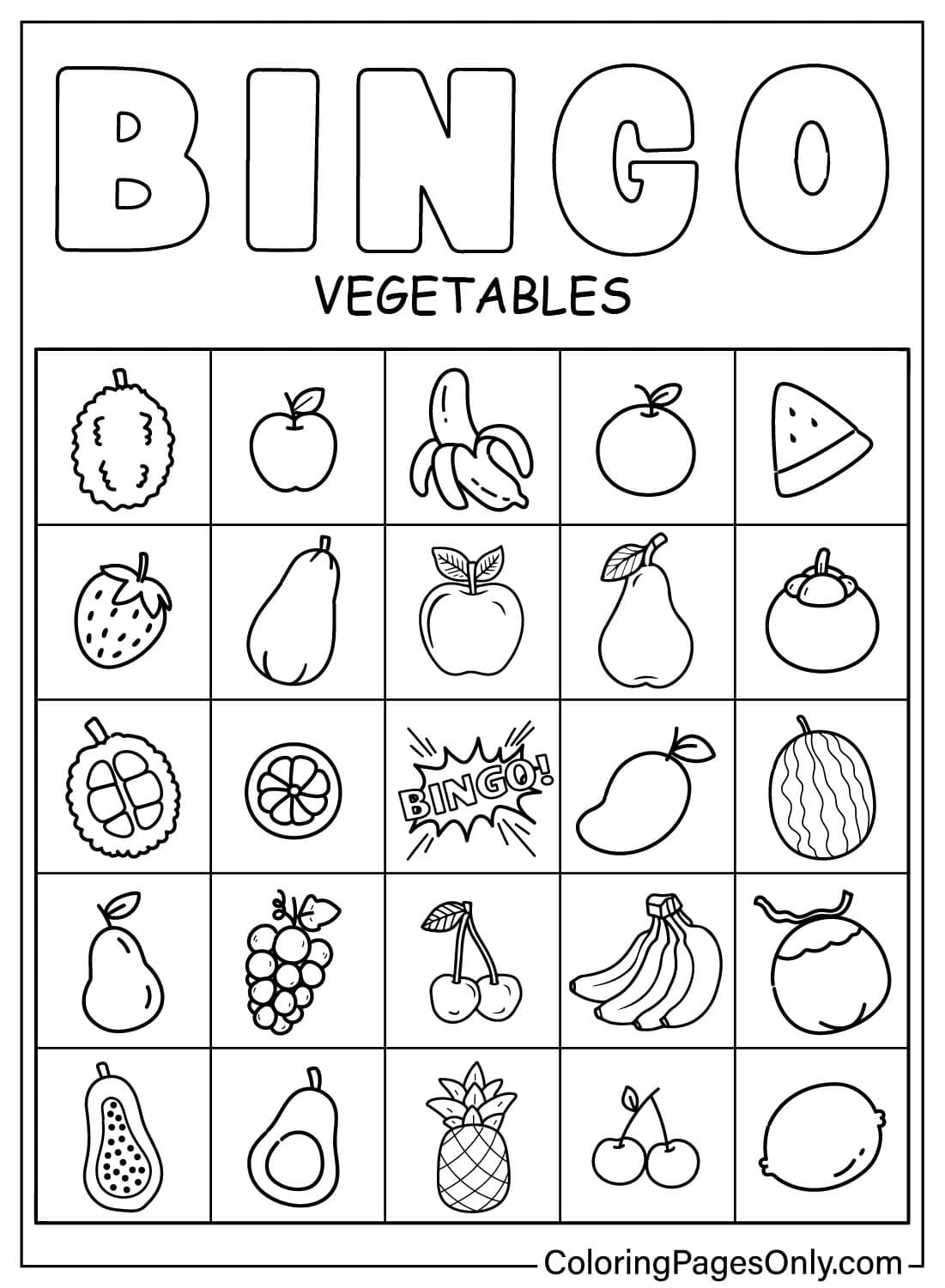
Vocabulary and category learning. The picture bingo format used throughout this collection is particularly effective for vocabulary development because it requires the child to maintain active visual knowledge of every image on their card. When a caller names a vegetable (the Learning Vegetables page), the child must search their card, which requires knowing what the named vegetable looks like among several other vegetables. This is not passive picture-matching; it is active categorical recognition, exactly the cognitive process that builds robust category-level vocabulary knowledge.
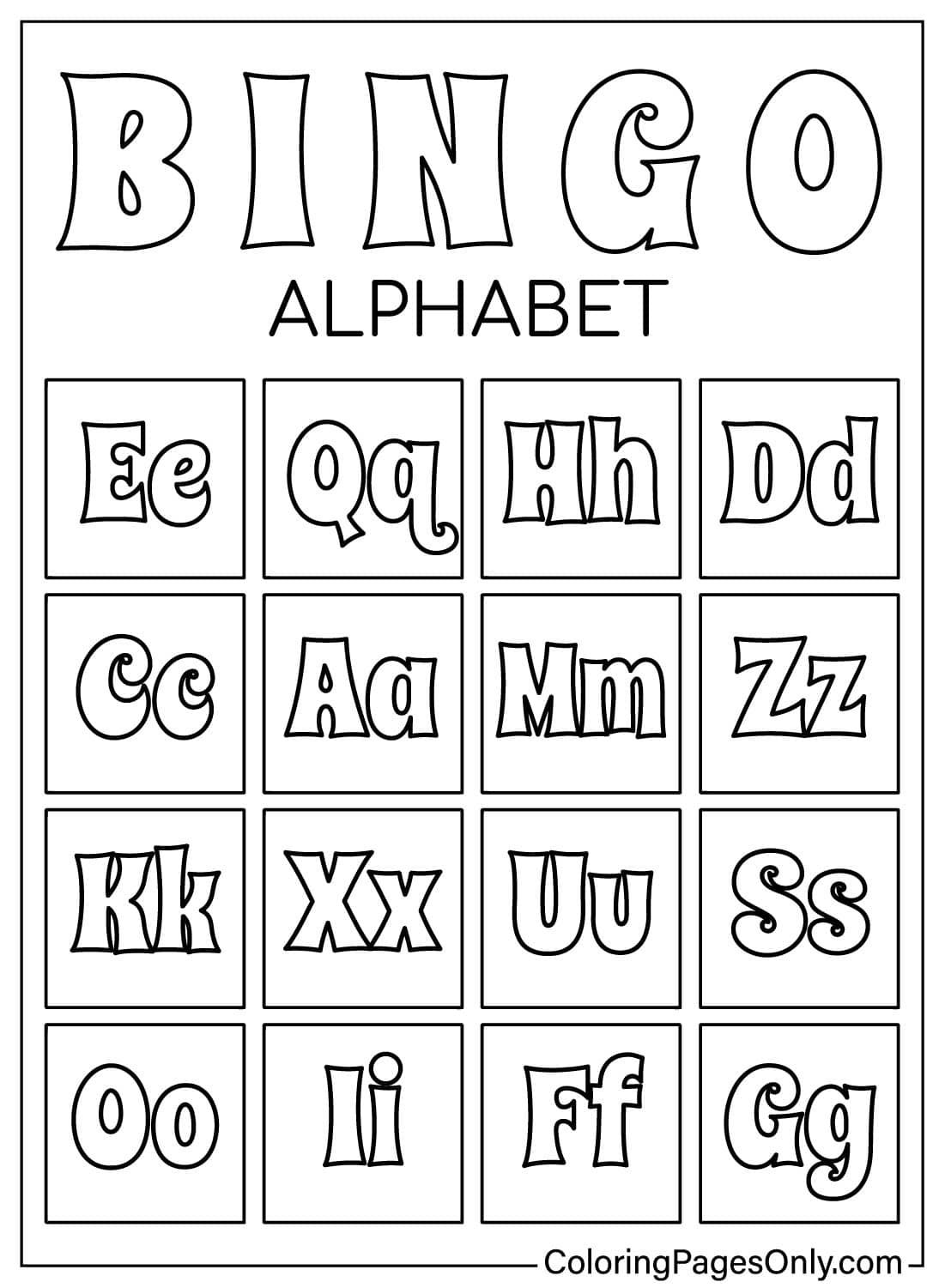
Alphabet recognition. The Learning Alphabet from the Bingo Game page targets letter recognition in the same game framework. Each square shows a letter, and the caller names letters (or calls a word beginning with each letter). The child marks the corresponding letter on their card. The game format means repeated, rapid letter recognition across the full alphabet – without the rote-drilling tedium that letter flashcard sessions can produce.
Attention and listening comprehension. Bingo is, at its core, an extended listening comprehension task. The child must sustain attention across every call, process what they hear, search their card, and make a rapid identification decision. For the themed picture bingo cards in this collection – where the caller names objects from a Christmas scene, a Halloween setting, or a unicorn fantasy – this listening task also builds auditory vocabulary: hearing a word, connecting it to its visual referent, and acting on that connection within seconds.
Pattern recognition and spatial awareness. Tracking which squares are marked, which row or column is closest to completion, and whether a diagonal is forming are all active spatial reasoning tasks. Young players who play bingo regularly develop a working awareness of a 5×5 grid structure that generalizes to other spatial and mathematical contexts.
The Collection’s Themes – A Complete Guide
The 31 pages span seasonal celebrations, fantasy subjects, natural science, and educational domains – ensuring that virtually any classroom unit, family occasion, or personal interest has a matching bingo page.
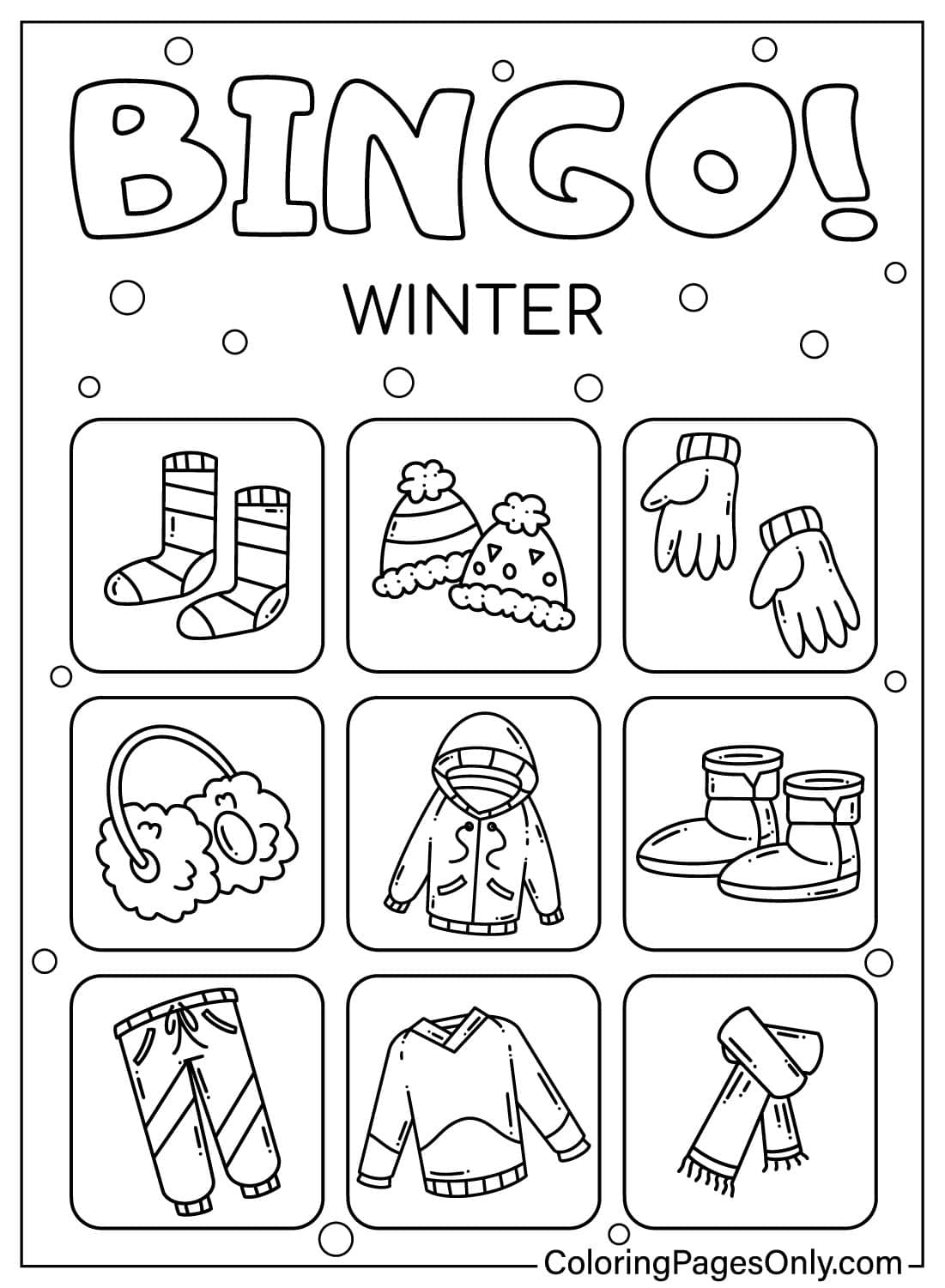
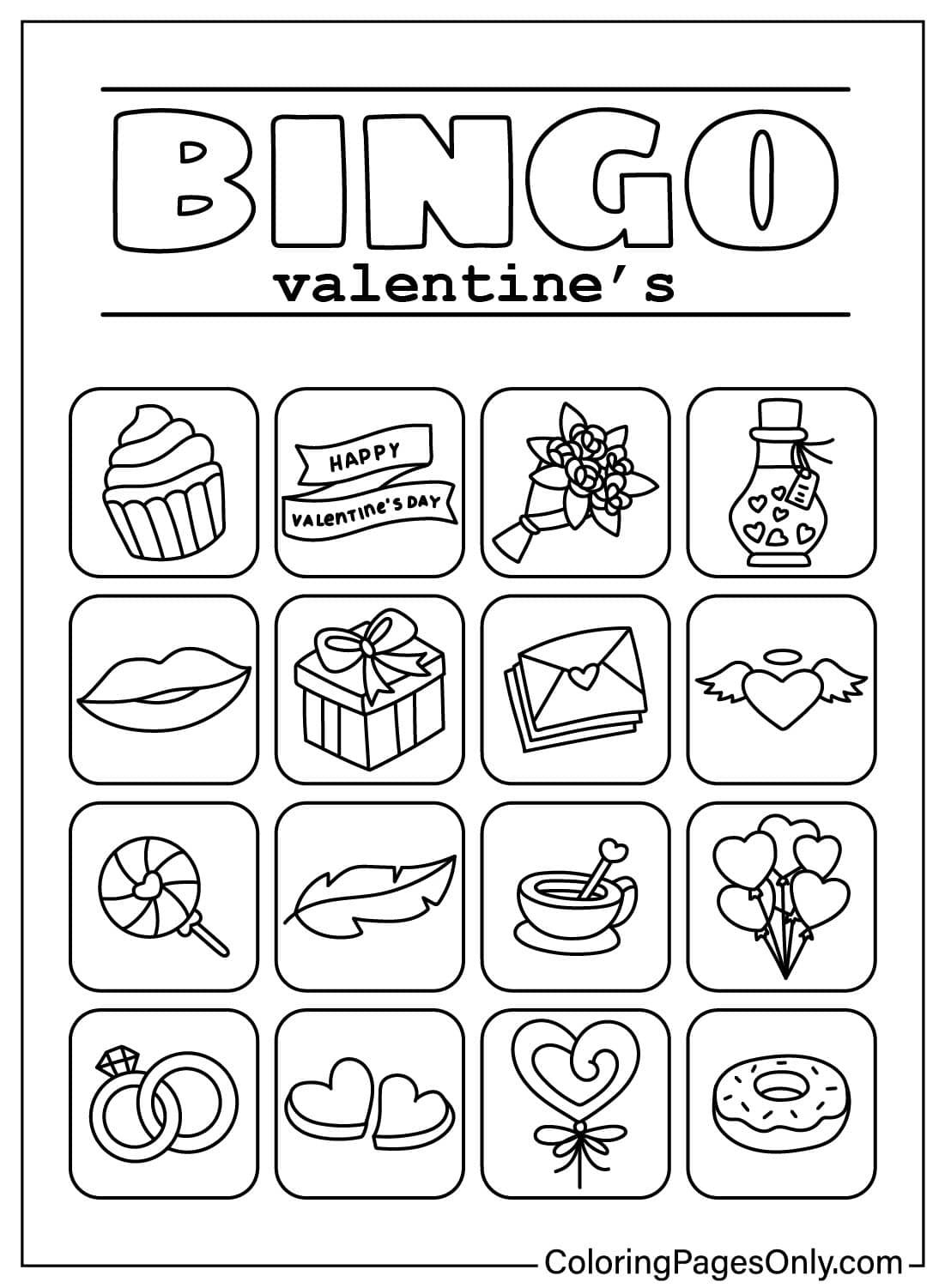
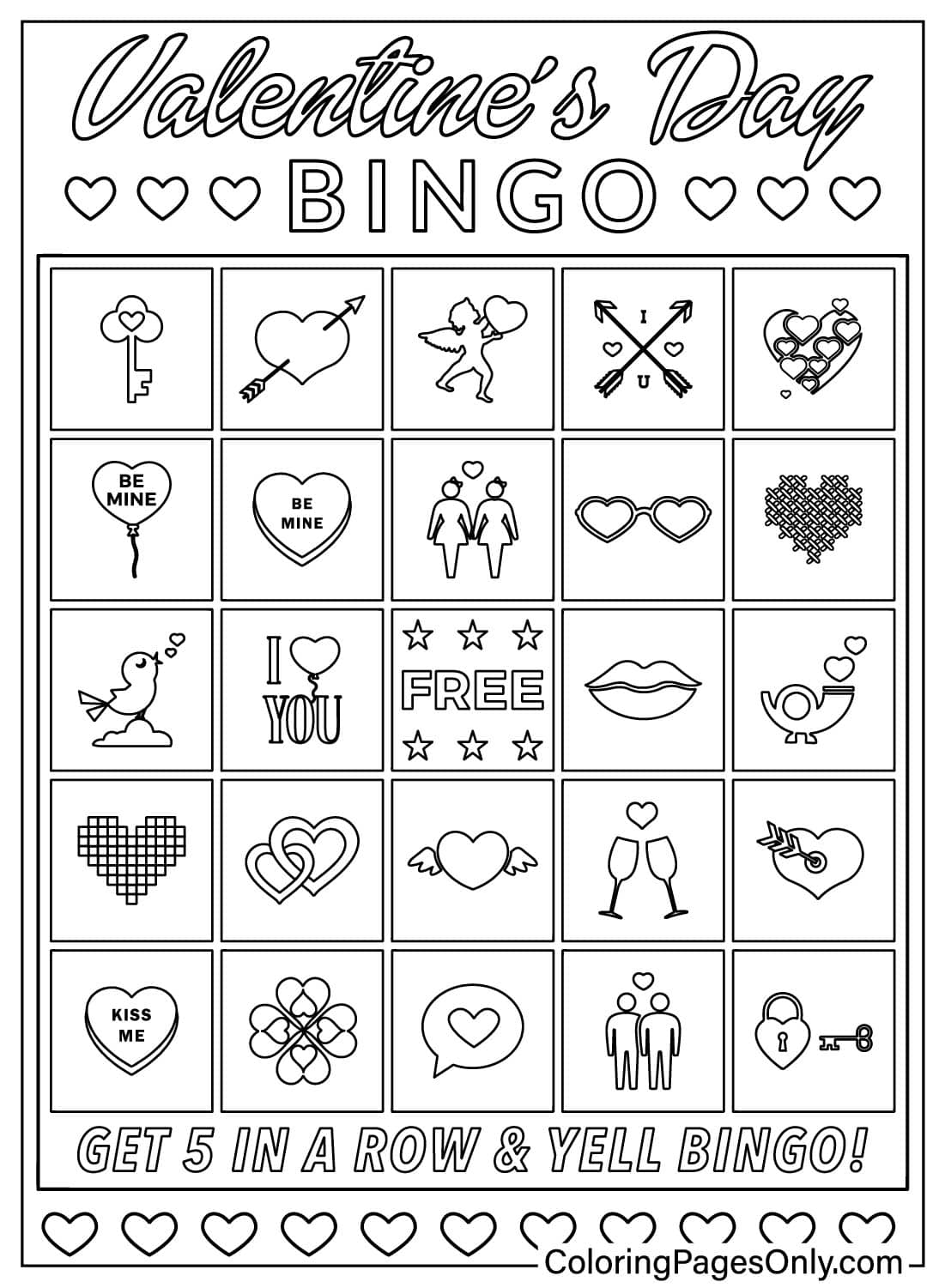
Seasonal and Holiday pages include the two Christmas tiles (Christmas Bingo with Santa, snowman, reindeer, gingerbread man, candle, gifts, and ornaments; and Happy Christmas with Bingo Game), a Halloween tile (bat, vampire, spider, witch, cauldron, lantern, tomb, raven, ghost), two Valentine’s Day tiles (Valentine’s Bingo Game and Valentine Day Bingo for Fun), and a Winter Items tile covering cold-weather vocabulary. These pages are ideal for timing seasonal classroom or home activities – the coloring-before-playing preparation gives children a brief thematic vocabulary introduction before the game session begins.
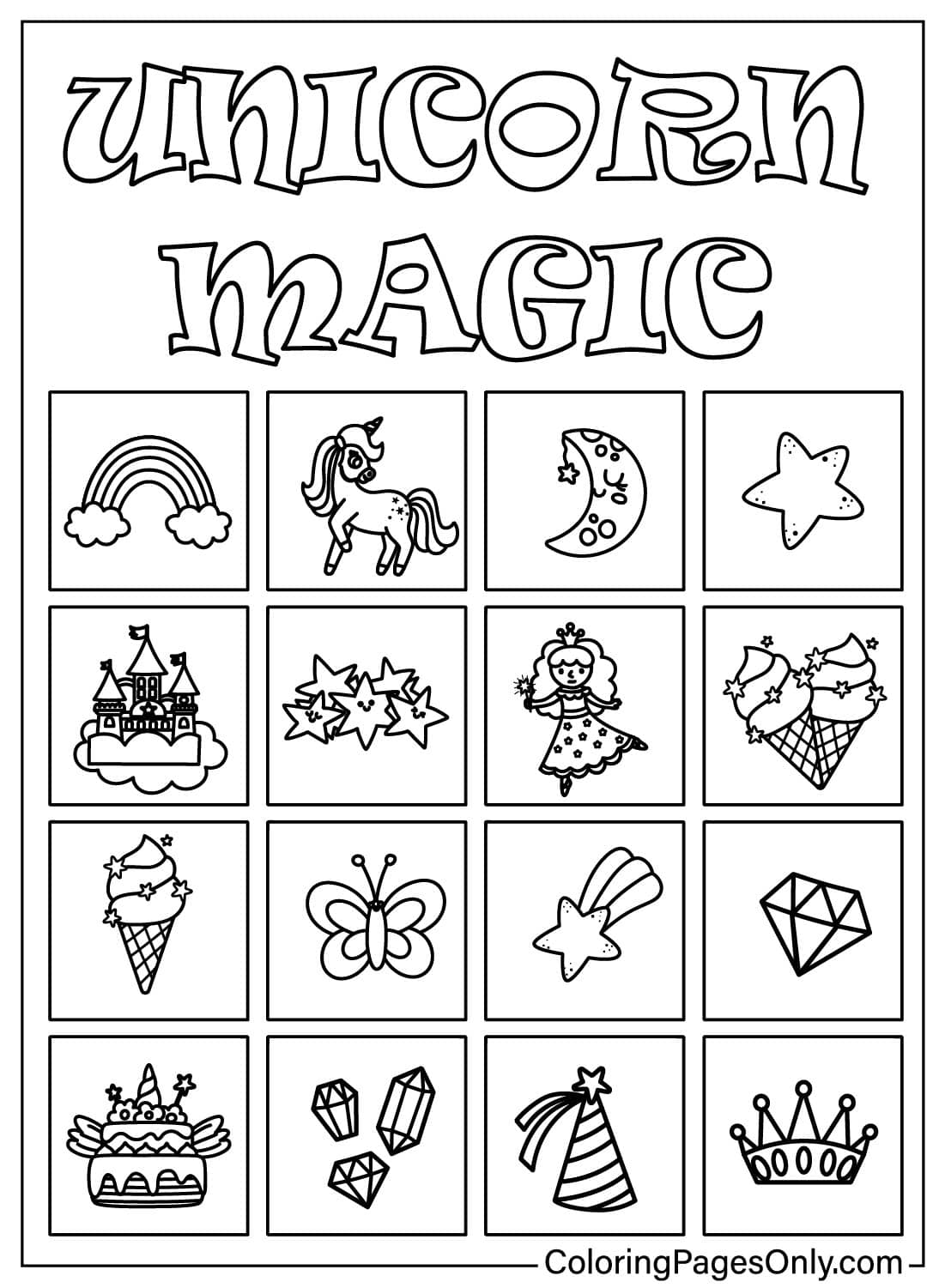
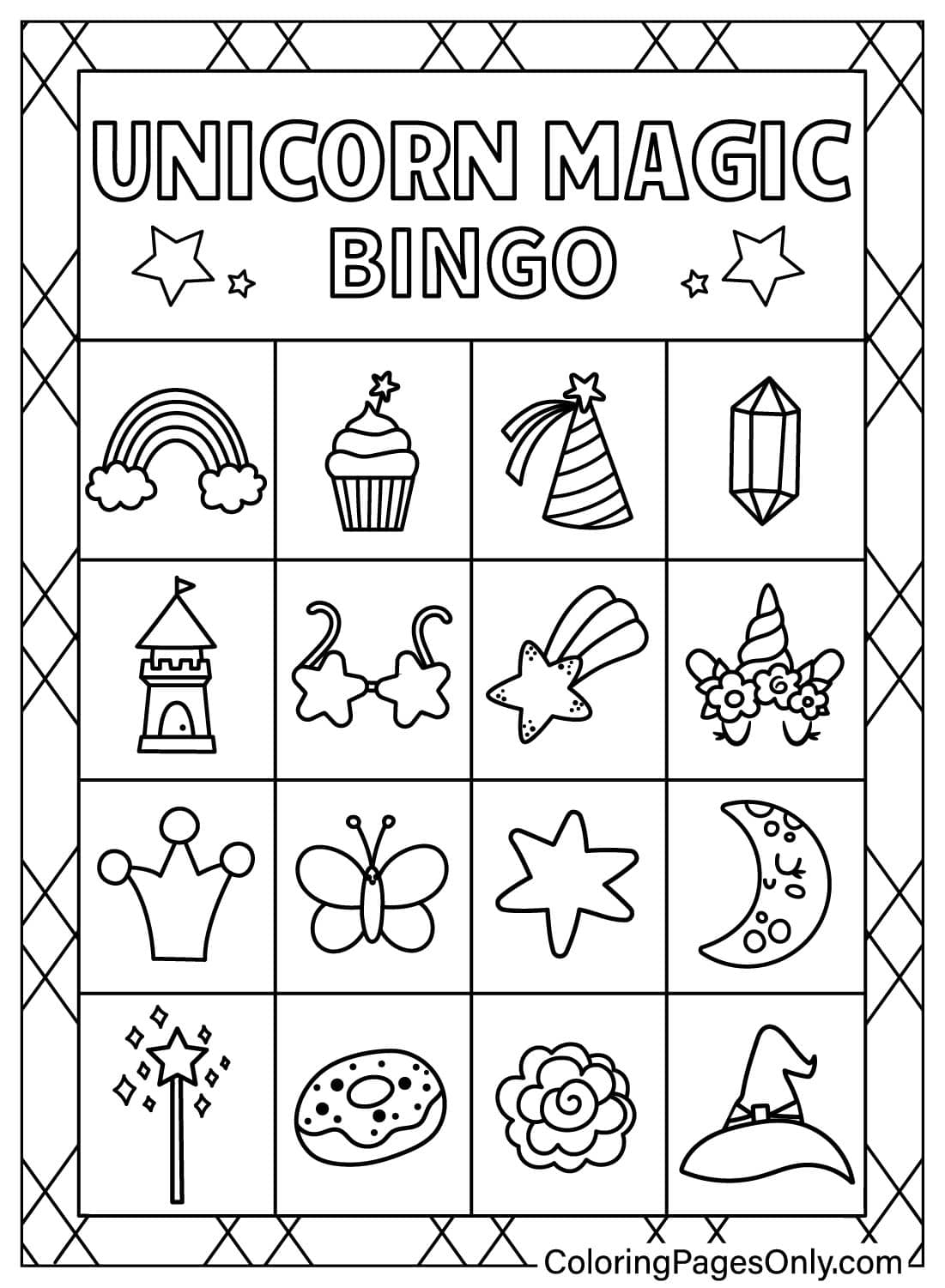
Fantasy and Imagination pages include two unicorn tiles (Unicorn of Bingo Game and Unicorn Magic and Fun Bingo Game) and a space tile (Fun Space Bingo). The unicorn pages draw on the whimsy aesthetic familiar from the site’s Whimsy Cute collection, with richly illustrated magical imagery in each square. The space tile introduces astronomical vocabulary (rocket, planet, star, astronaut, moon, comet, satellite) in a game format that makes space learning immediately engaging.
Animals pages include the Funny Cat Bingo tile (cat-themed vocabulary and illustrations) and the Cute Animals Bingo tile. These pages can complement science or nature study units, with each square’s animal illustration providing coloring practice alongside the vocabulary reinforcement of the game.
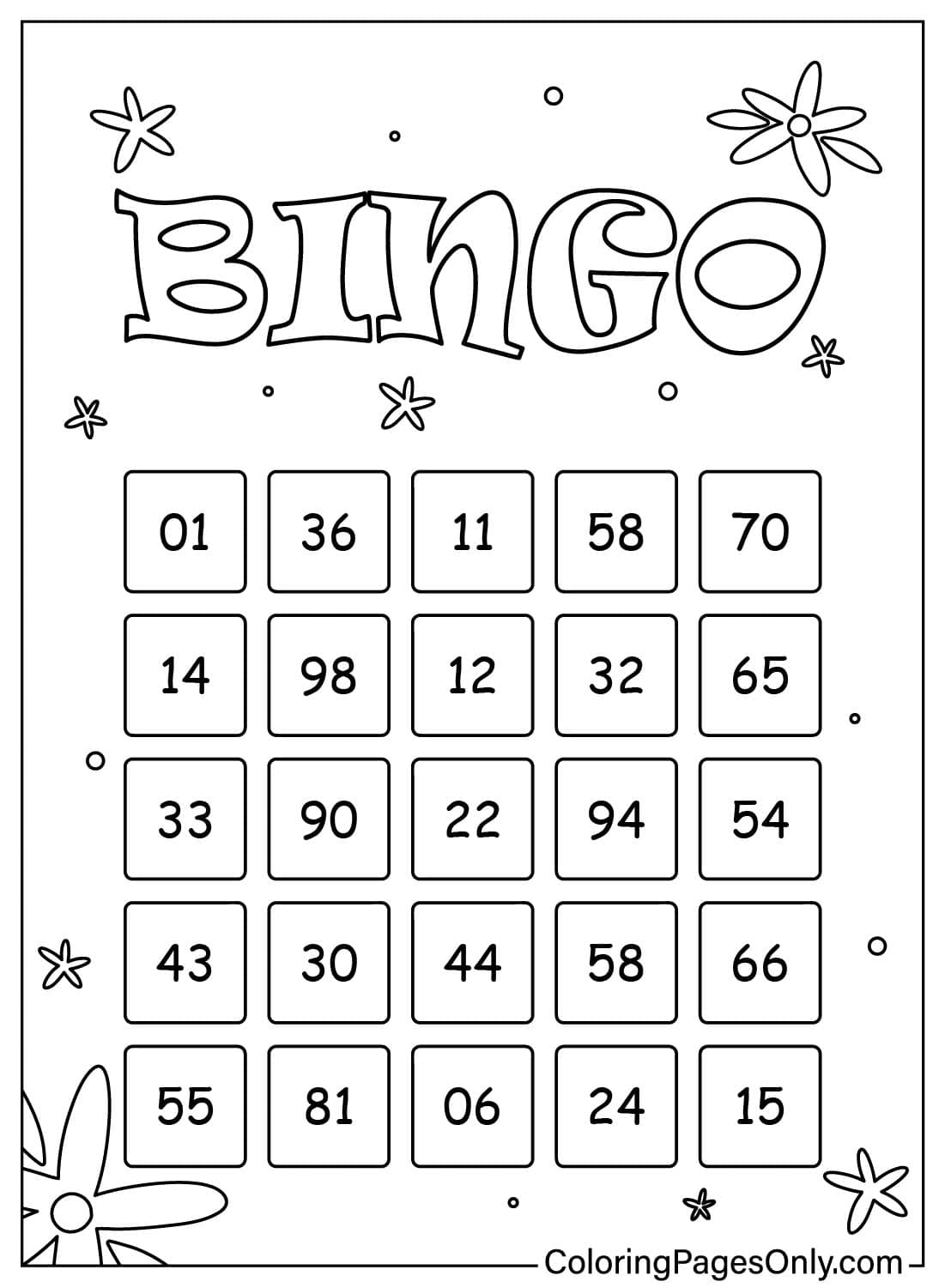
Educational Focus pages are the most directly curriculum-aligned in the collection. Number Bingo for Kids targets numeral recognition across the full single-digit and early double-digit range. Learning Vegetables through Bingo for Kids introduces vegetable vocabulary (carrot, broccoli, tomato, corn, and others) in a format that turns nutritional education into an engaging group activity. Learning the alphabet from a bingo game presents letter recognition challenges through the bingo framework.
General and Mixed pages – tiles like Funny Bingo Game, Interesting Bingo Game for Everyone, Helpful Bingo Page, Easy Bingo Game, and Free Bingo Color Sheet – have subjects that require image verification to describe precisely. The CMS team should inspect each of these tiles and rename them according to the specific theme shown in the illustration.
How to Color These Pages – Then Play Them
Because the tiles in this collection are functional game cards as well as coloring pages, the preparation approach matters more than for a standard coloring page.
Color every square’s illustration distinctly. In a picture bingo card, each square must be visually identifiable during rapid gameplay – a player scanning their card to find “the carrot” must be able to spot it among “the broccoli,” “the tomato,” and “the corn” at a glance. Use colors that differentiate each subject clearly: realistic canonical colors where possible (orange carrot, red tomato, green broccoli) or vivid contrasting colors where realistic colors would be too similar. The goal is a card where every square reads as visually distinct from its neighbors.
Use light, open coloring on each square. Bingo cards have small squares, and dark, heavily saturated colors can make the illustrations harder to identify at a glance. Use a full base color but leave the illustrative detail lines visible – the line art is what makes each image recognizable, and color should support rather than obscure those lines.
Color the border or frame of each card in a bright accent color. If multiple children will be playing together using different cards, giving each card a distinctively colored border (one card with a red frame, one with a blue frame, one with a purple frame) makes it instantly clear whose card is whose without requiring name labels.
Leave the square borders themselves uncolored. The grid lines that separate squares should remain clearly visible – they are the structural skeleton of the game card. Coloring over them makes it harder to see which square is which, especially during the rapid marking of gameplay.
Laminate or cover with clear contact paper before playing. If you plan to use the colored card for multiple bingo sessions, laminating the finished page (or covering it with peel-and-stick contact paper) allows you to use dry-erase markers or small chips as markers, wipe them clean after each game, and reuse the card indefinitely. Without lamination, each game session requires a fresh printed-and-colored copy.
Running a Bingo Game with Colored Cards – A Quick Guide
Once the cards are colored, organizing an actual bingo session requires only a few additional materials.
Calling materials. Create a simple call set by writing or drawing each image from the theme on small pieces of card (one image per card). Shuffle the call cards and place them face-down in a stack. The caller draws one at a time, holds it up or names it aloud, and players mark the matching square on their card. For younger children, the caller should both hold up the image and name it aloud – the dual visual and auditory presentation reinforces the vocabulary connection.
Markers. Physical markers (small buttons, coins, dried beans – in homage to the original “Beano” – or small colored tiles) should be available for each player. Place one marker on each called image that appears on the card. The first player to complete a full row (horizontal, vertical, or diagonal) shouts “Bingo!” and wins.
Verification. When a player calls bingo, ask them to read back the images in their winning row: “Star, rocket, planet, astronaut, moon.” This verification step serves double duty – it confirms the win is legitimate, and it produces one final round of vocabulary recall for each image in the completed row.
Variations for educational use. For the Number Bingo page, the caller can name numbers in different ways – saying “seven,” “5 + 2,” and “one less than eight” and asking players to find the matching number each time. This variation turns bingo into an active arithmetic exercise rather than simple recognition. For the Alphabet page, the caller can give a word and ask players to find the starting letter – “which letter does ‘elephant’ start with?” – rather than naming the letter directly.
Coloring Tips for Bingo Cards
Start with the most complex illustration on the card. Every bingo card has squares of varying complexity – some images are simple (a star, a moon, a heart) and some are more detailed (a reindeer, a unicorn, a witch). Begin with the most complex square, coloring it carefully with full attention to detail. This establishes the visual standard and color palette for the rest of the card, and the simpler squares that follow will feel quick and satisfying by comparison.
Use a consistent accent color for star or sparkle elements. Many themed bingo cards – particularly the unicorn and space pages – include stars, sparkles, and magical glow effects scattered across multiple squares. Choose one bright accent color (gold, electric yellow, or vivid pink) for all star/sparkle elements across the entire card, regardless of what other colors appear in each square. This consistent accent color unifies the card visually, making it look designed rather than randomly colored.
For the Christmas and Halloween cards – lean into the canonical palette. Christmas bingo benefits from the warmest, most traditional version of the seasonal palette: deep evergreen for trees, scarlet for ornaments and Santa’s coat, gold and silver for tinsel and stars, warm cream for the snowman. Halloween bingo benefits from the boldest, most graphic version of its palette: true black for the bat and spider, deep purple for the witch, vivid orange for the jack-o’-lantern, and luminous green for the cauldron. These canonical palettes make the finished cards immediately recognizable as seasonal objects and visually satisfying in a way that off-palette choices do not.
For the space card – use gradients to suggest cosmic depth. The space-themed squares benefit particularly from a layered coloring approach: dark navy or deep blue for the space background of each square, with the illustrated objects (planets, rockets, stars) in vivid contrasting colors floating against that dark ground. If you are using colored pencils, try layering a dark navy base across the entire background of each square, then adding the illustrated subjects on top in warm yellows, oranges, teals, and purples. The contrast between the dark background and the vivid subjects creates the visual drama that makes space illustration compelling.
For educational cards (vegetables, alphabet, numbers) – use realistic, specific colors. The Learning Vegetables card specifically benefits from realistic coloring – orange carrots, red tomatoes, green broccoli and spinach, yellow corn, purple eggplant – because color is itself a distinctive property of each vegetable and contributes to the child’s identification during gameplay. If the carrot is colored blue, a child who has not internalized the carrot’s canonical orange might not recognize it instantly during the rapid pace of calling. Realism here serves the educational function of the card.
5 Activities
The color-then-play session. Structure a complete bingo activity in two phases: in the first (30–45 minutes), children color their individual bingo cards independently – each child receives the same themed card to color, but makes their own color choices for each square. In the second phase (15–20 minutes), play an actual bingo game using the finished colored cards. The deliberate separation of these two phases reinforces the coloring-as-preparation function: children understand that they are coloring to prepare for the game, which gives the coloring session a concrete purpose beyond the creative activity itself. Because every child’s card has the same layout (it is the same printed page), the game can be run with a standard call set – the variety comes from the individual coloring choices, not from different card layouts.
The themed vocabulary warm-up. Before coloring the Learning Vegetables, Learning Alphabet, or Number Bingo pages, run a 5-minute warm-up in which children name as many items from the theme as they can before seeing the card. How many vegetables can you name? How many do you think are on the card? Then reveal the card. This pre-coloring prediction activity creates a specific curiosity about which items appear on the card – and children who are curious about the answer color more attentively, because they are looking carefully at each square to identify and confirm the item. After coloring, ask: Were there any items you didn’t predict? Were there any you predicted that didn’t appear?
The bingo calling challenge. Instead of a parent or teacher calling the items, give the calling role to one of the players. For the picture cards, the caller draws a call card, looks at the illustration, and must name it aloud without help. For younger children, this is itself a vocabulary and confidence challenge – they must be sure enough of the image’s identity to announce it publicly. For the educational cards (vegetables, alphabet), the calling role adds a reading or letter-naming component to the caller’s task. Rotating the calling role through all players over multiple games ensures every child has the experience of both calling and marking – two distinct cognitive tasks that reinforce the same vocabulary through different channels.
The create-your-own bingo card. After completing and playing any card from this collection, challenge children to design their own themed bingo card on blank grid paper. They must: choose a theme, select 24 items from that theme (for the 24 non-free squares of a 5×5 card), draw a small illustration of each item in a square, and randomize the square positions (not alphabetical, not in any obvious order). Then create a matching set of call cards. Exchange bingo cards with another child or family member, and play. This design activity requires much deeper engagement with the theme’s vocabulary than playing does – the designer must know 24 distinct items, represent each one illustratively, and ensure the card is playable. It is also a genuine introduction to randomization: children who try to arrange their items alphabetically or thematically quickly discover that ordered arrangements make the game too predictable.
The seasonal bingo collection. Over the course of a year, color and play each seasonally appropriate page at the right time: Valentine’s Day bingo in February, Halloween bingo in October, Christmas bingo in December, and winter items in January or February. After each session, store the finished colored card in a personal bingo folder dated with the month and year. At the end of the year, the child has a complete illustrated record of seasonal vocabulary across multiple holiday contexts – a personally meaningful artifact that documents a year of seasonal learning through play. The folder also becomes a reference for the following year: revisiting the previous year’s Halloween bingo card before playing this year’s Halloween bingo is a natural spaced-repetition vocabulary review.