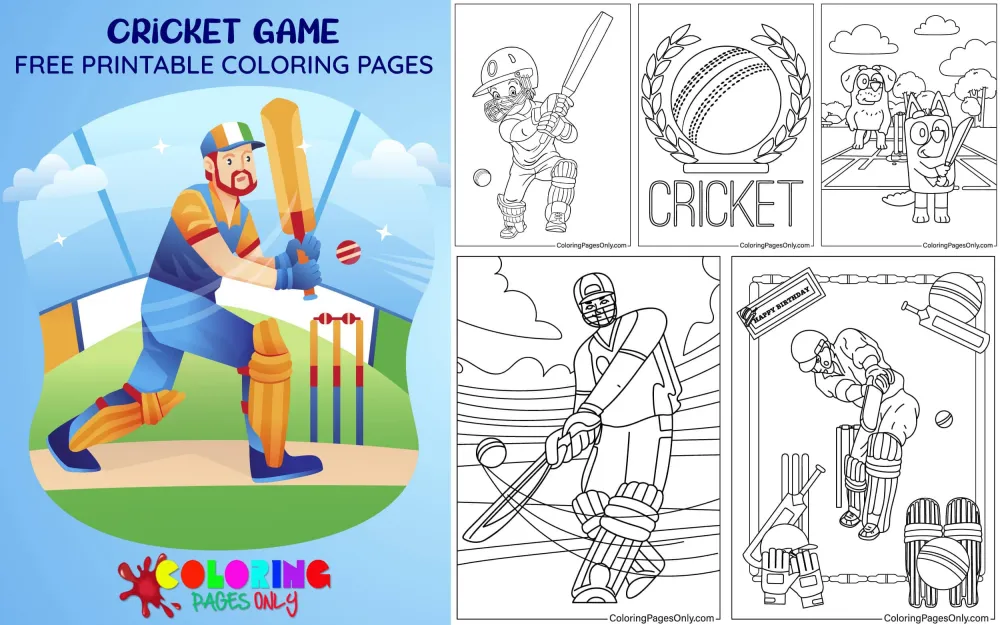
Explore 56 free cricket coloring pages featuring batsmen, bowlers, wicket-keepers, batting shots, national teams, IPL franchises, kids, cartoon characters, animals, equipment, and stadiums – free printable PDF and online coloring for all ages.
Cricket’s origin story is surprisingly hard to pin down. The earliest written record of the game being played appears in 1597, in a court case from Guildford, Surrey, England, where a coroner named John Derrick testified that he had played creckett on a particular piece of land as a boy some fifty years earlier – placing the game’s origins firmly in 16th-century rural England. By 1744, the Laws of Cricket were formally codified for the first time. The first Test match in history was played in Melbourne in March 1877, between Australia and England – Australia won by 45 runs, which set a competitive tone that the two countries have maintained without interruption for nearly 150 years.
Today, cricket is played by approximately 2.5 billion fans across more than 100 countries, making it the second most-watched sport in the world after soccer. The Indian Premier League alone generates annual revenues exceeding $10 billion, making it one of the most valuable sports leagues on the planet. For hundreds of millions of people across South Asia, the Caribbean, Australia, England, and East Africa, cricket is not just a sport – it is an organizing principle of social life, a language for talking about national identity, and a thread connecting grandparents to grandchildren across generations.
These 56 free pages at ColoringPagesOnly.com cover all of it – the shots, the equipment, the teams, the animals who apparently wandered onto the pitch with a bat. All free, PDF, JPG, or PNG, available to print or color online. Come in.
What’s Inside
The Batting Shots – Where Cricket Gets Technical
Cricket has a vocabulary of batting shots that takes years to fully understand and a lifetime to execute well. Several pages in this collection depict specific named shots, and they reward a closer look.
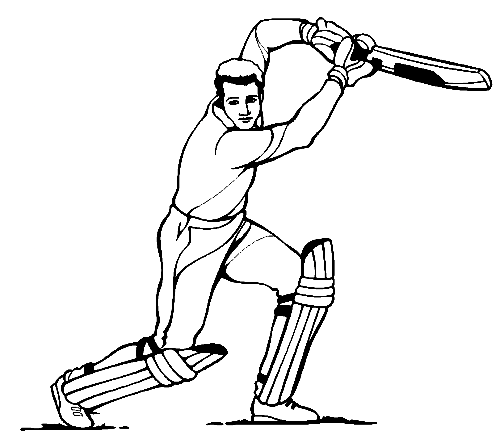
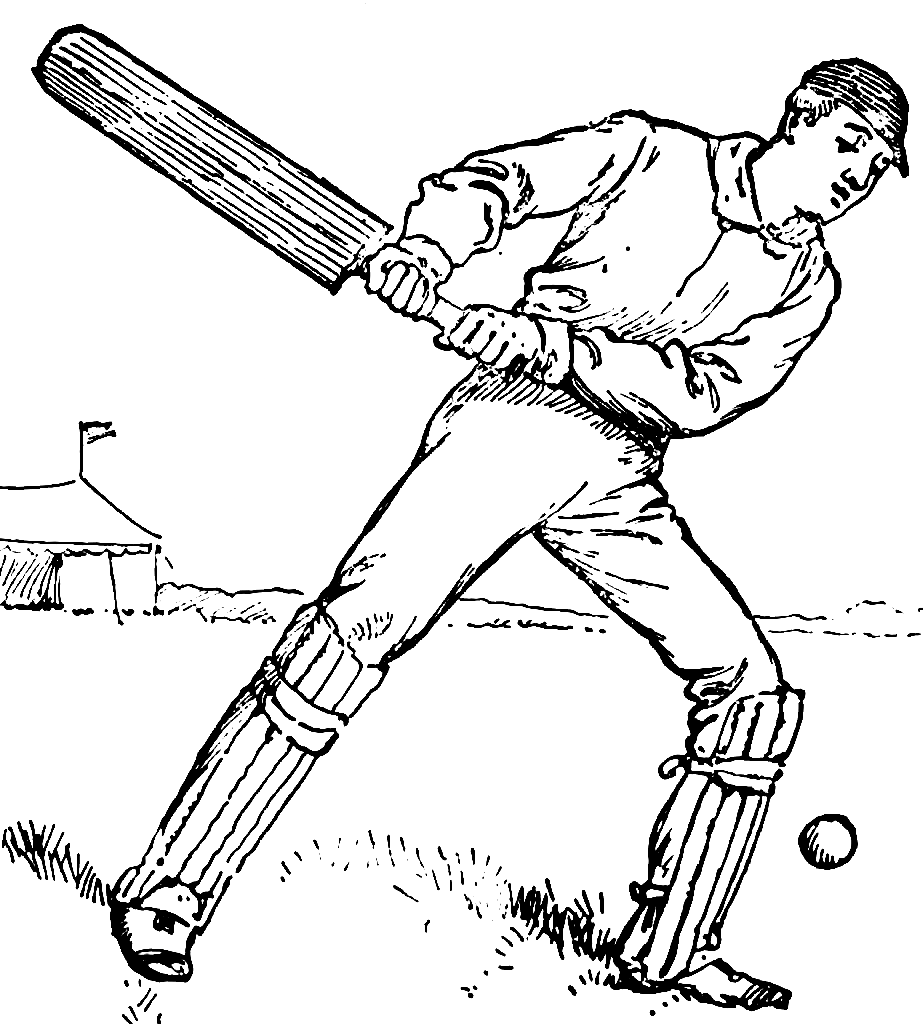
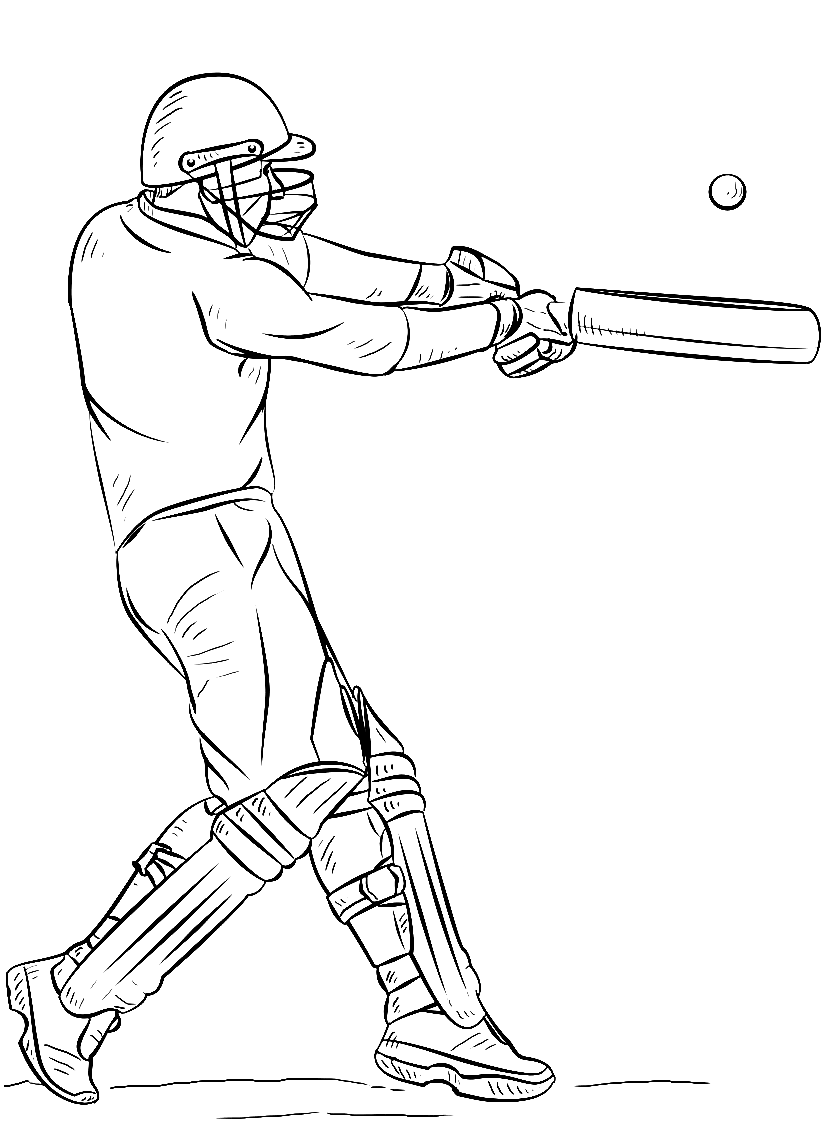
Cricket Drive Shot captures the most classical of all cricket strokes – the batsman moving forward to meet a full-length delivery, head over the ball, bat swinging in a clean downward arc through the line of the ball, weight transferring fully onto the front foot. The cover drive in particular – played through the off side with the bat following the direction of the ball in an elegant, full arc – is considered by most cricket fans and players to be the single most beautiful shot in the game. When played well, it has a geometry and a rhythm that looks more like dance than sport.
Cricket Cut Shot is a different animal entirely – an attacking stroke played to a short, wide delivery, the batsman rocking back onto the back foot and cutting the ball square or behind square on the off side with a horizontal bat. The cut requires sharp eyes, fast hands, and precise timing. Play it a fraction too early or too late, and the edge finds the wicket-keeper. Play it right and the ball races to the boundary before the fielder has taken a step.
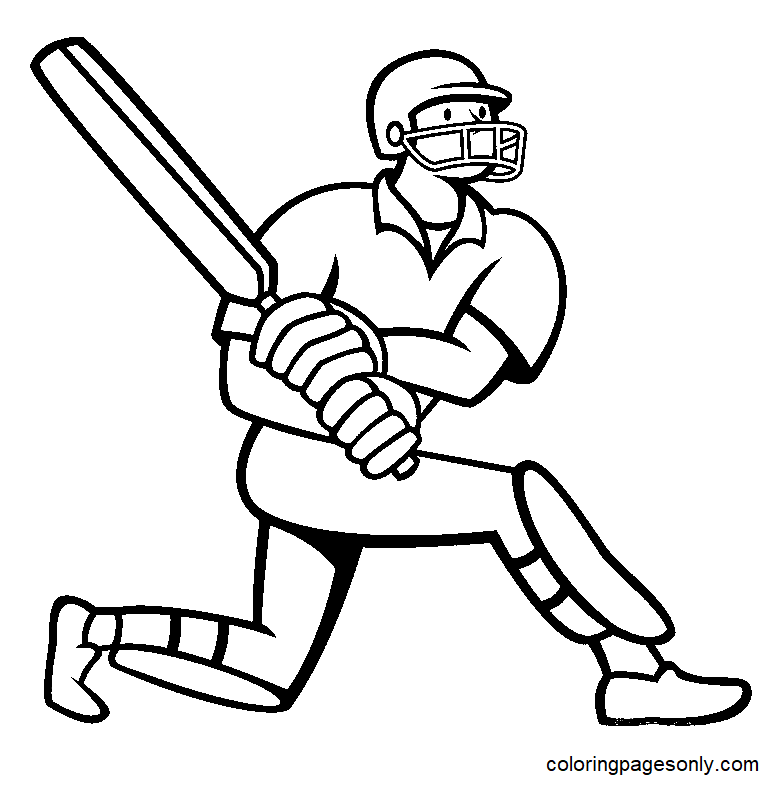
Cricket Hook Shot is the most aggressive and arguably the most dangerous shot in the collection – played to a short-pitched delivery aimed at the batsman’s body, the hook requires the batsman to swivel on the back foot and pull the ball around behind square leg, often while the ball is at head height. It demands complete commitment and considerable courage. A mistimed hook goes straight to a fielder in the deep; a well-executed one clears the boundary for six.
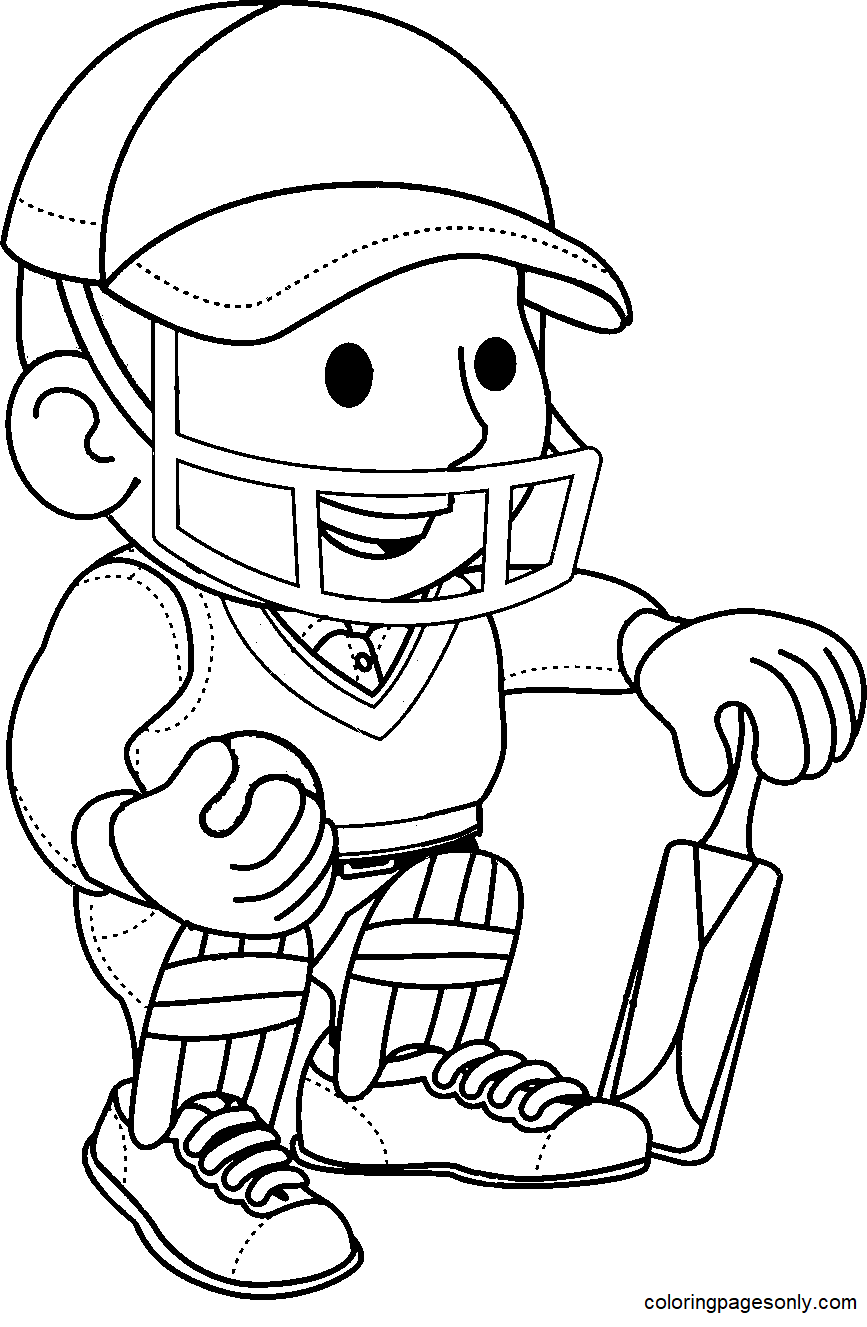
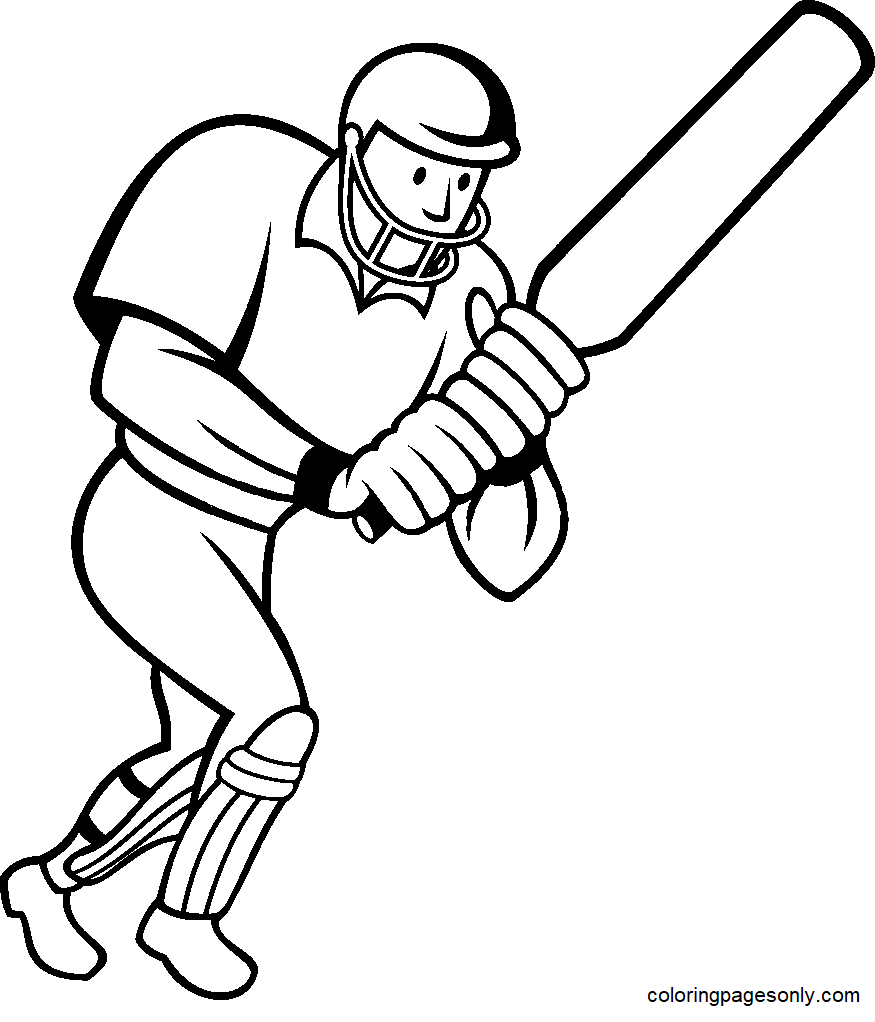
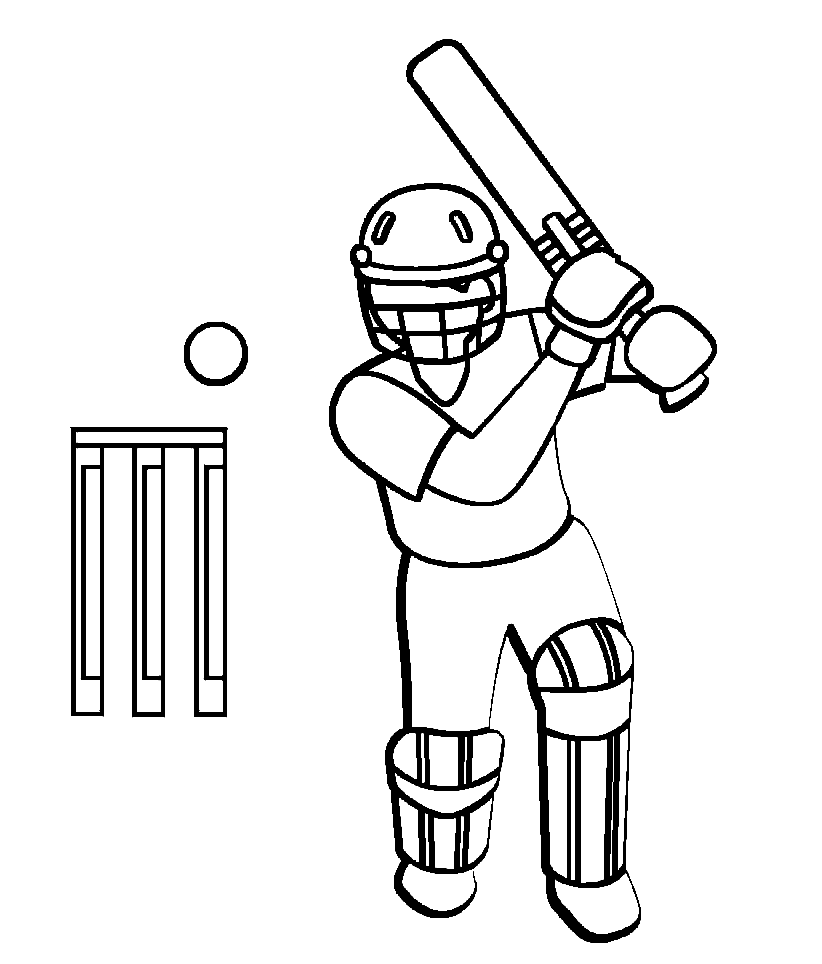
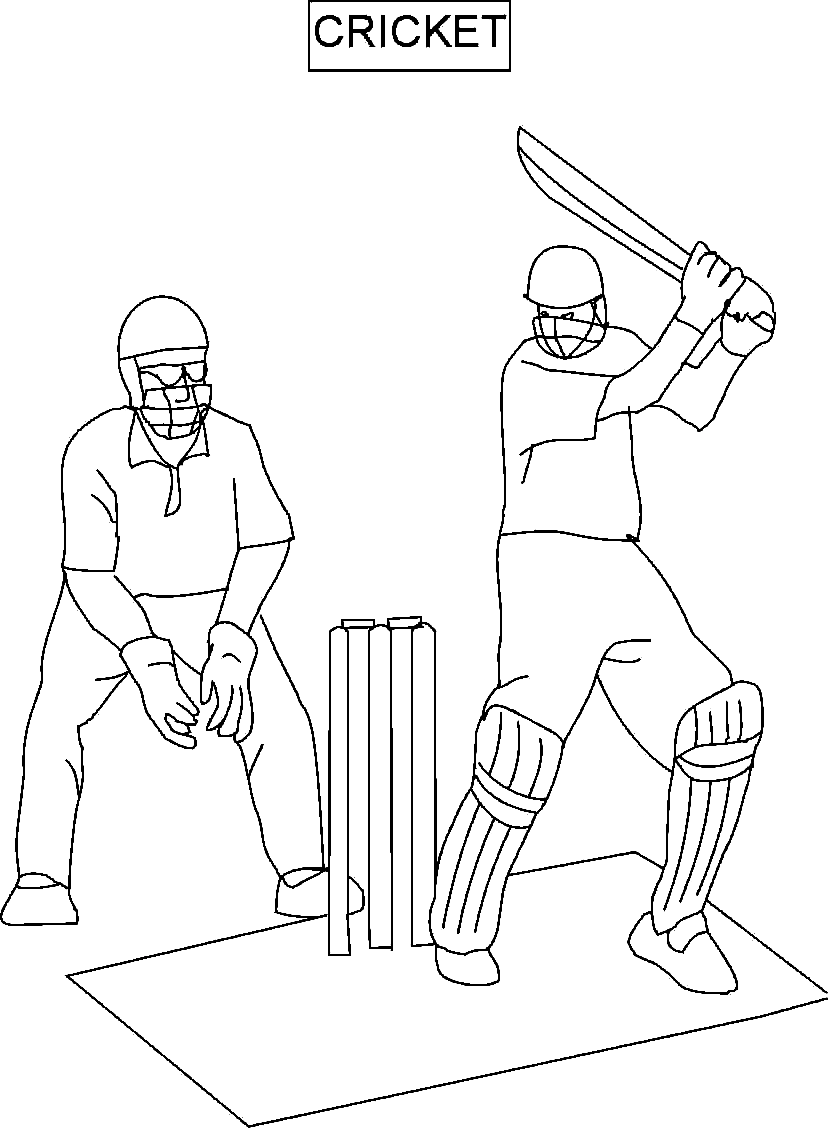
Cricket Batsman, Cricket Batsman Printable, Cricket Batsman And Wicket-keeper, Batsman And Wicket Keeper, and Batsman Wearing Helmet show the fundamental contest at the heart of the game: a batsman guarding three stumps while a wicket-keeper crouches directly behind them, waiting for any ball that beats the bat.
The Bowlers and Match Scenes
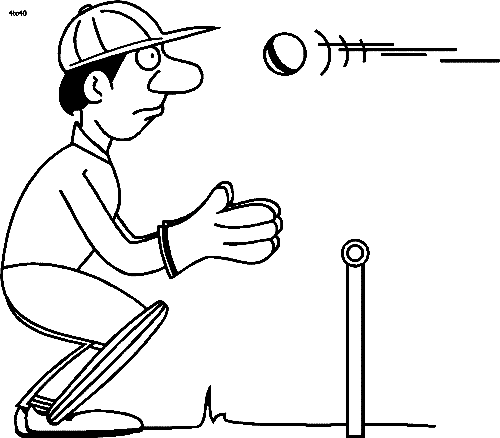
Cricket Game, Cricket Game Match, Cricket Game Player, Cricket Player, Free Cricket Player, Free Printable Cricket, and Free Printable Cricket Game capture various aspects of the match in progress. Cricket Wicket Keeper deserves specific mention: the wicket-keeper is the only fielder who wears gloves and pads, stands behind the stumps for every single delivery, and must catch or stop deliveries that can arrive at over 150 kilometers per hour. Across a five-day Test match, a wicket-keeper might take more than 500 deliveries standing up to the stumps – a physically demanding and technically extraordinary position that is almost always also the loudest, most vocal presence on the fielding side.
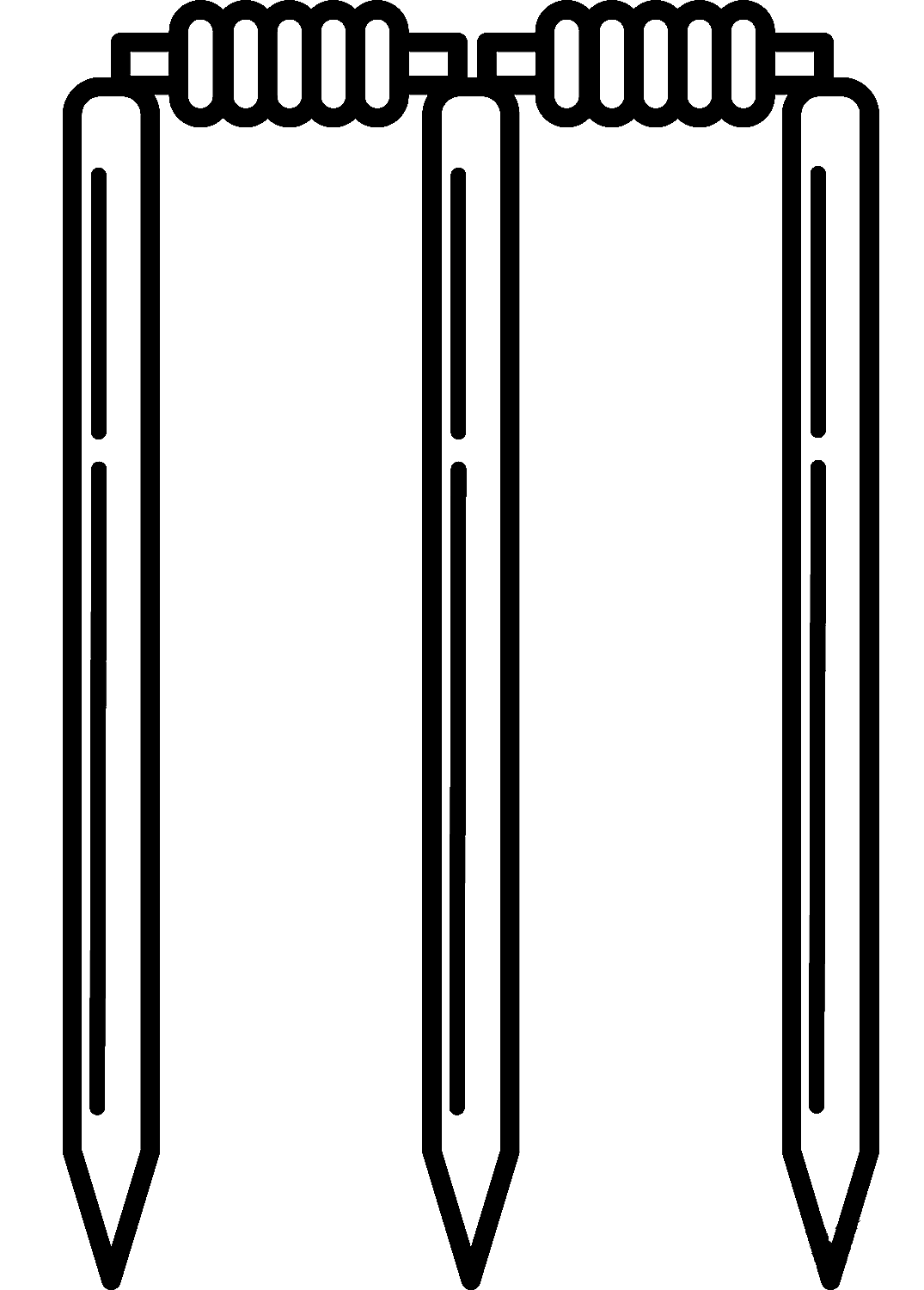
Cricket Stumps shows the three wooden stumps and two bails that form the wicket – the target the bowler is trying to hit, the thing the batsman is trying to protect, and the object whose dislodgement or removal ends a batting innings by one of several methods. Each stump is 28 inches tall; the three stumps together span 9 inches wide. The two small bails that balance on top of the stumps can be dislodged by the lightest touch of the ball, a bowler’s follow-through, the batsman’s foot, or the wicket-keeper’s gloves – each triggering its own specific dismissal under the Laws of Cricket.
Cricket Stadium gives some sense of the scale at which the game operates. Lord’s Cricket Ground in London, opened in 1814 and widely regarded as the most prestigious cricket venue in the world, has a capacity of over 30,000. The Eden Gardens in Kolkata holds approximately 66,000 – making it the largest cricket stadium in India and one of the largest in the world. The Melbourne Cricket Ground holds 100,024 people, making it the world’s largest cricket stadium by capacity and one of the largest sports venues on earth.
National Teams – The Countries of Cricket
The national team pages are the collection’s most explicitly global section, and they represent cricket’s extraordinary geographic breadth.
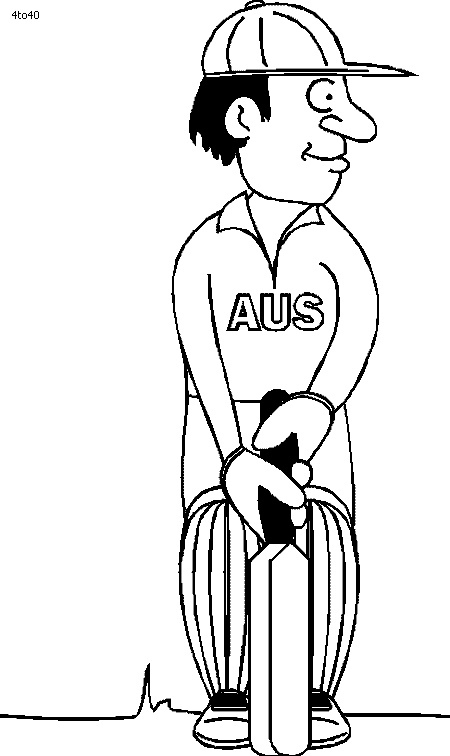
Australia Team and Australian cricketers represent the country that has won the most Cricket World Cup titles – five, as of the 2023 Men’s Cricket World Cup – and that has produced some of the sport’s most dominant periods of play, including the mid-1990s to mid-2000s era under Steve Waugh and Ricky Ponting, when Australia won three consecutive World Cups and went unbeaten in Test series after Test series.
The England Team represents the country that invented the modern game, where the Laws of Cricket were first codified in 1744, and where the oldest continuing international cricket rivalry – the Ashes, played against Australia for a tiny urn of symbolic ashes since 1882 – has generated more drama, controversy, and emotion per match than almost any other recurring sports fixture in history.
The Pakistan Team and the New Zealand Team represent two countries with very different cricket cultures and very different strengths. Pakistan has produced some of the finest fast bowlers in history – Wasim Akram and Waqar Younis were two of the most feared new-ball partnerships ever to play the game – while New Zealand has built a reputation in recent decades for thoughtful, technically sound cricket under captains like Stephen Fleming and later Kane Williamson.
West Indies Team, the Ireland Team, and the Zimbabwe Team complete the international section. The West Indies pages deserve particular context: the West Indian cricket team – a composite side representing fifteen countries and territories – dominated world cricket from the mid-1970s to the early 1990s under captains Clive Lloyd and Viv Richards with a fast bowling attack of sustained ferocity that has never quite been replicated. Gordon Greenidge, Desmond Haynes, Viv Richards, Malcolm Marshall, Michael Holding, Joel Garner, Curtly Ambrose – the names read like a museum of cricket excellence.
IPL Franchises – The T20 Revolution
The Indian Premier League, launched in 2008, changed cricket more profoundly than any other structural development since the introduction of one-day cricket in the 1970s. The IPL’s Twenty20 format – 20 overs per side, completed in approximately three hours – brought international stars from every cricket nation together under franchise ownership, combining the entertainment model of North American sports leagues with the global reach of cricket’s fanbase.
The Mumbai Indians Team is the most successful franchise in IPL history by titles won. Chennai Super Kings Team, the franchise captained for most of its history by MS Dhoni – widely considered the greatest wicket-keeper-batsman and the shrewdest captain in the sport’s modern era – has won multiple titles and maintains one of the sport’s most passionate fanbases. Kolkata Knight Riders Team, Royal Challenger Bangalore, Delhi Capitals Team, and Kings XI Punjab complete the IPL section, giving Indian cricket fans the pages most personally meaningful to them.
Kids and Cartoon Pages
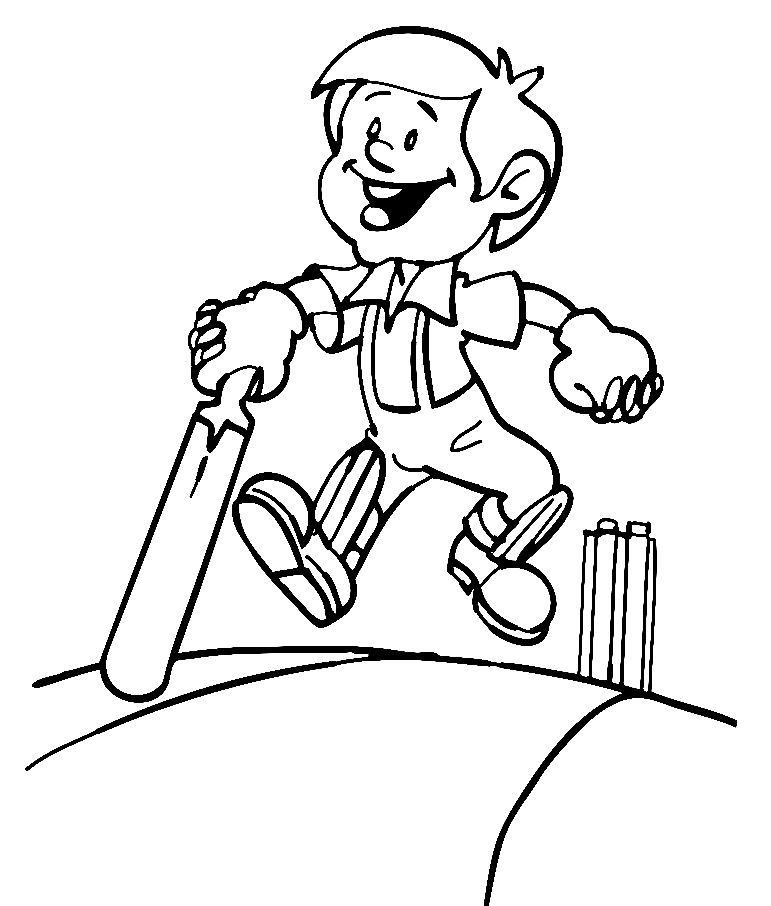
The Boy Playing Cricket Game, Boy Playing Cricket, Boy with Cricket Bat, and Kids Playing Cricket show children as the natural participants they are. Cricket has one of the youngest global participation profiles of any major sport: in India, Pakistan, Bangladesh, Sri Lanka, and the Caribbean, children start playing informal street and backyard cricket at ages four and five, years before they encounter any formal instruction.
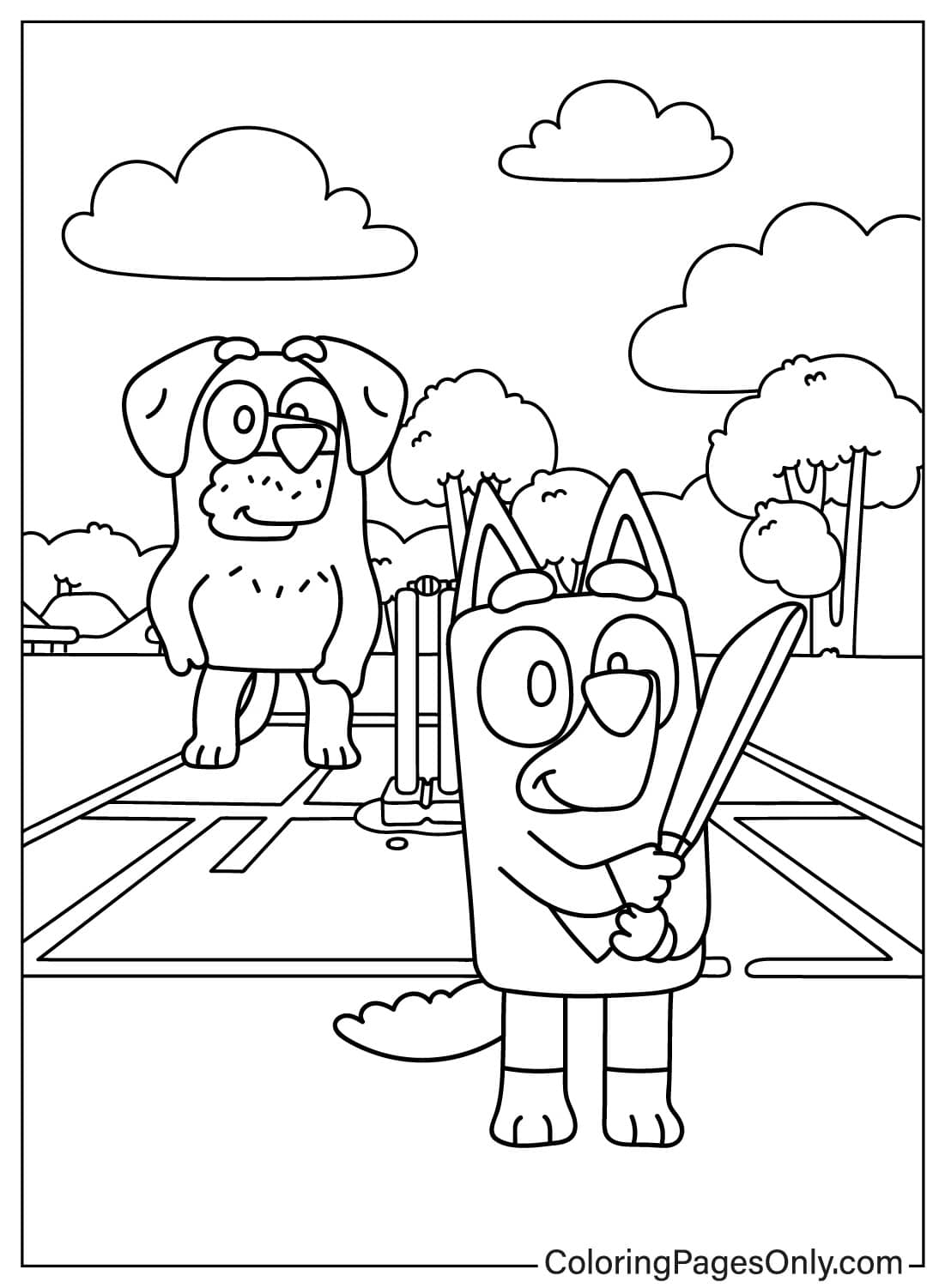
Bluey and Bingo Playing Cricket Game is the collection’s most charming page. Bluey is an Australian animated series – set in Brisbane, made by Ludo Studio, and first broadcast on ABC Kids Australia in 2018 – that has since become one of the most-watched children’s programs in the world. Cricket is genuinely part of Australian backyard culture in a way that makes Bluey and Bingo playing it feel completely natural and specifically Australian rather than generic. The page connects cricket to the most beloved children’s property in Australia and makes it immediately accessible to any young fan of the show.
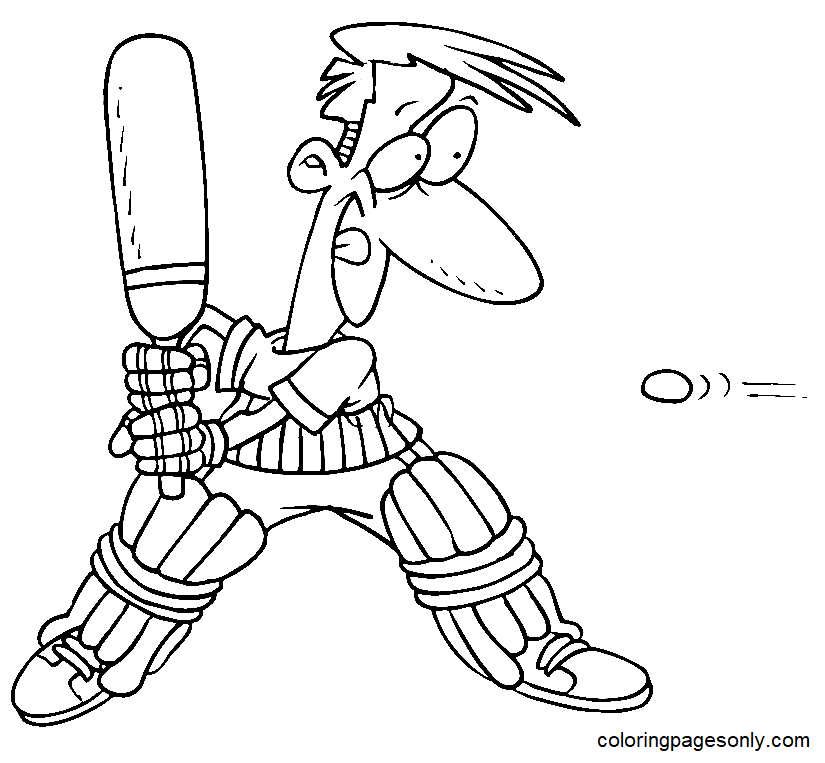
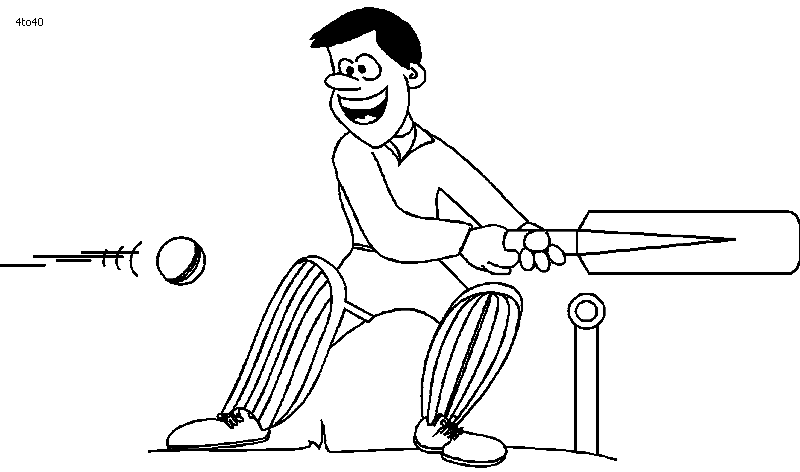
Cartoon Character Playing Cricket Game, Funny Cricket Batsman, and Superhero Cricket round out the character section with pages that prioritize energy, humor, and the imaginative freedom that comes from removing the stakes of the actual game and letting the sport be simply, purely fun.
Animal Pages
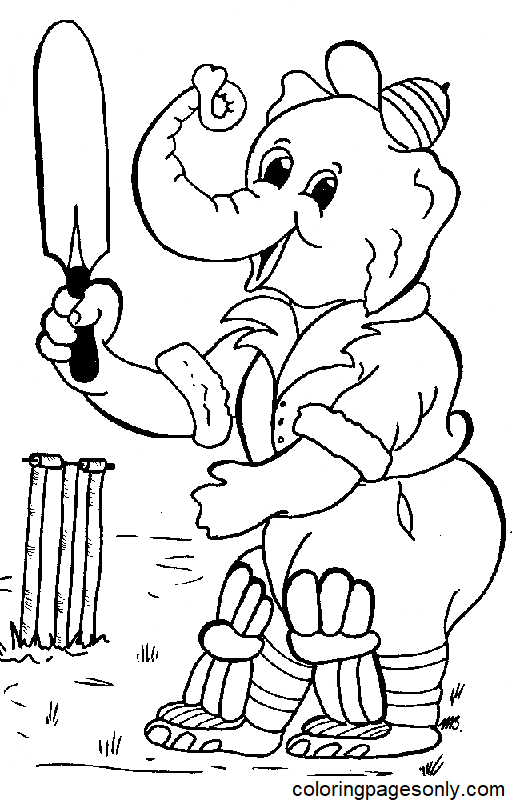
Kangaroo Playing Cricket Game – a kangaroo with a bat, which raises interesting questions about footwork, given the species’ unique locomotion, but suggests extraordinary lower-body power. Cute Elephant Playing Cricket – the balance point of 4,000 kilograms meeting a 163-gram ball is a genuinely fascinating physics problem. Crocodile Playing Cricket – technically well-positioned to guard the stumps, given the species’ reputation for patient stillness followed by explosive movement. Goat Playing Cricket and Animals Playing Cricket complete a wildlife XI that would give any international side serious pause.
What These Pages Actually Do
Cricket builds patience. Of all the major sports, cricket most explicitly requires – and teaches – the ability to sit with uncertainty, wait for the right moment, and resist the impulse to act before the conditions are right. A batsman can face 300 deliveries in a Test innings. Not everyone needs to be hit. Coloring pages teach the same thing, slightly: slowing down, working within lines, taking time with a section before moving to the next. The two activities have more in common temperamentally than they initially appear to.
It introduces cricket’s vocabulary to new audiences. Cricket’s terminology – wicket, crease, cover drive, LBW, maiden over, duck – is genuinely opaque to anyone who didn’t grow up with the game. A child who has colored a hook shot page and had someone explain what a hook shot is, or who has colored the stumps page and learned what a bail is and why it matters, arrives at their first televised cricket match with entry points that make the broadcast comprehensible rather than baffling. The pages are, among other things, a cricket primer for families where the sport is new.
Fine motor development. The cricket pages include some of the most technically demanding coloring subjects in this entire collection – the detailed batting stance with helmet, gloves, pads, and bat all requiring careful differentiation; the cricket ball’s distinctive seam; the stumps and bails in precise geometric relationship to each other. The American Academy of Pediatrics identifies fine motor skill development as a key childhood milestone, and the focused, detail-oriented work these pages require develops exactly that.
It connects diaspora communities to their home. For families from India, Pakistan, Sri Lanka, Bangladesh, the Caribbean, and East Africa living outside their home countries, cricket pages carry a different kind of meaning. The IPL franchise pages, the national team pages, the batsman pages with their specifically South Asian visual vocabulary – these are pages that a grandparent from Kolkata and a grandchild born in London can color together while talking about something they both love and that one of them grew up with. That intergenerational conversation is one of the most valuable things a coloring page can facilitate.
Mindfulness that works. The 2005 Art Therapy Journal study is worth repeating here: structured coloring significantly reduced anxiety in adult participants. Cricket, at its best, is also a mindfulness practice – the bowler running in, the batsman in his stance, the fielder in position, all focused completely on this delivery and nothing else. The coloring pages and the sport share a quality of absorbed present-moment attention that is increasingly rare and increasingly valuable.
How to Color These Pages Well
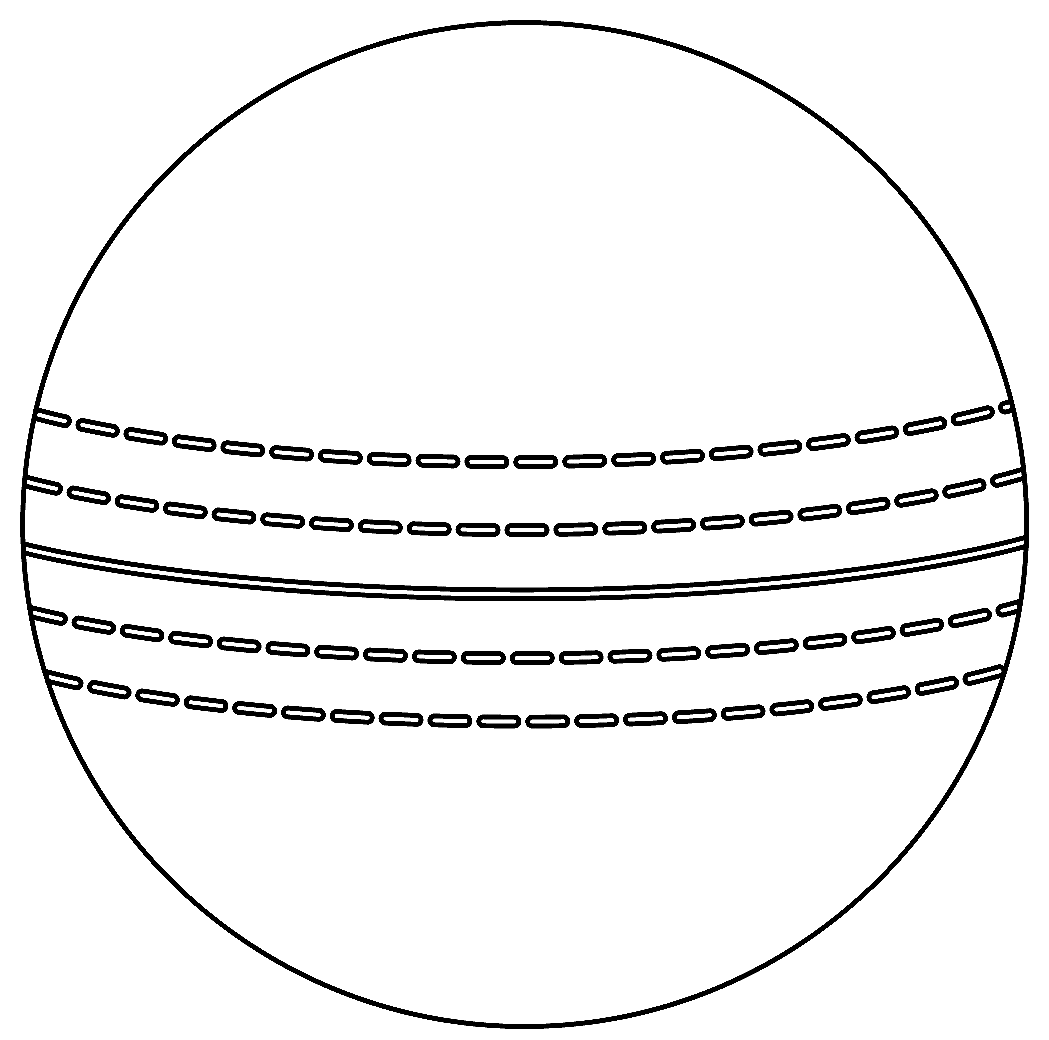
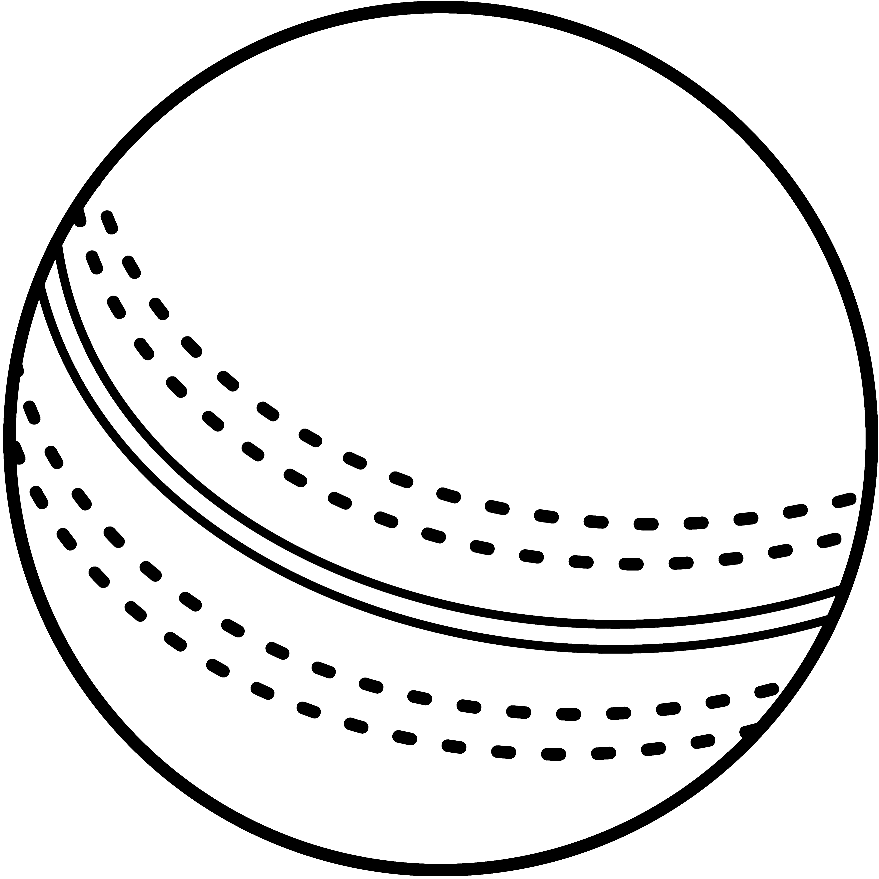
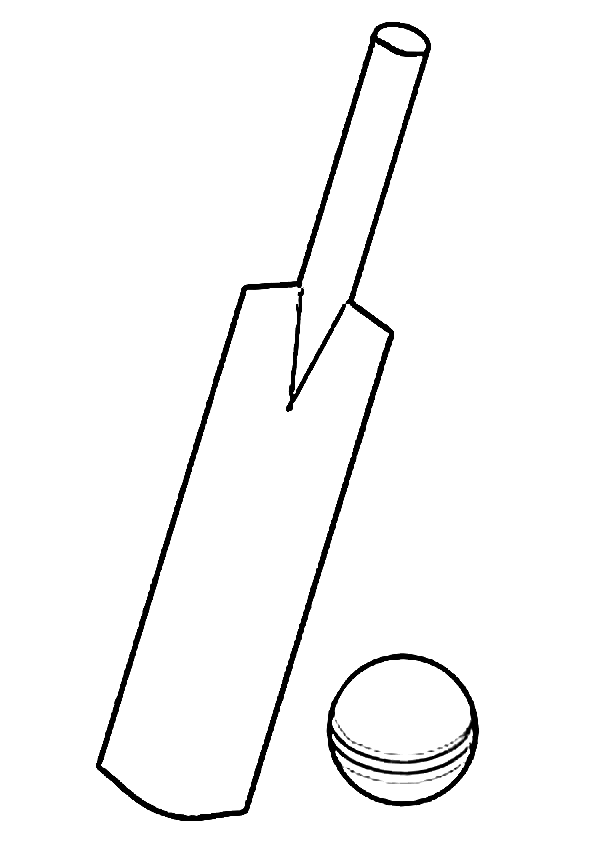
The cricket ball wants red and seam. The red Dukes ball used in Test cricket in England, and the white ball used in limited-overs cricket, are both distinctive objects that reward careful coloring. For the red ball: a deep, slightly warm crimson – not orange-red, not dark maroon, but a full, rich red that reads as leather. The seam – the raised stitching that runs around the circumference of the ball – should be a slightly lighter, more golden-brown line rather than a contrasting color, since the seam is part of the same leather as the ball but raised above the surface. A subtle highlight – a near-white arc near the top of the ball where it catches light – makes all the difference.
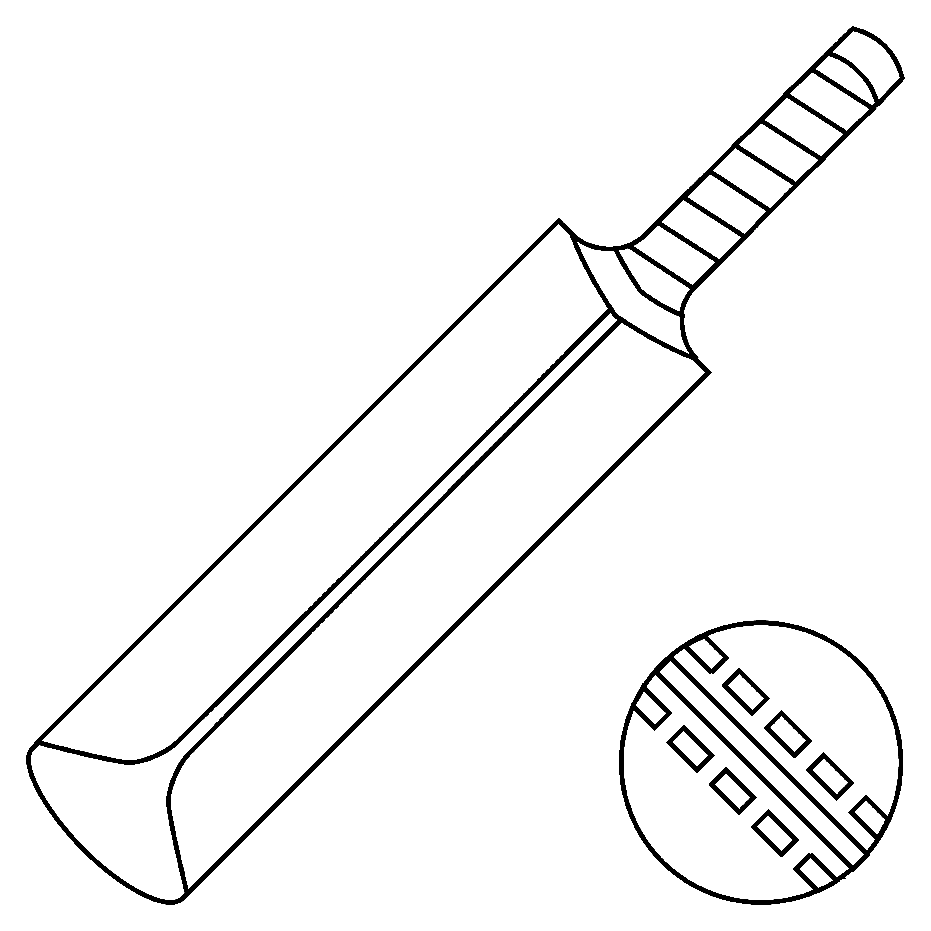
The bat is willow, not wood generically. A cricket bat is made from white willow – Salix alba var. caerulea, specifically, which is pale, almost blonde in color. The flat face of the bat where the ball is struck is noticeably lighter than the back ridge, edges, and handle area. For the blade, use a warm off-white or very pale tan. The splice (the V-shaped joint where blade meets handle) should be a slightly darker contrast. The grip – wound rubber or twine – can be black, dark red, or any grip color the coloring artist chooses, since cricket bat grips come in every color imaginable.
Get the whites right for the playing kit. Traditional Test cricket is played in white – whites that on a sunlit afternoon look both very clean and very warm, not the blue-white of a bleached shirt but the slightly warm off-white of quality cricket flannels. For the batting pads, use a similar warm off-white with darker straps in black or navy. For the fielding side, the same white kit but often with a colored cap – Australia’s baggy green, England’s navy, Pakistan’s green.
IPL franchise colors reward doing the research. Mumbai Indians: blue and gold. Chennai Super Kings: yellow and gold. Royal Challengers Bangalore: red, black, and gold. Kolkata Knight Riders: purple and gold. Delhi Capitals: red and blue. Kings XI Punjab: red and silver. Getting these right – which takes thirty seconds of checking – transforms the franchise pages from generic cricket illustrations into something a genuine IPL fan recognizes immediately and values more for the accuracy.
For the Bluey page, the characters come first. Bluey is a blue heeler puppy – blue-grey body, blue face markings, orange-tan inner ears. Bingo is her younger sister – warm orange body, darker orange patches. Both wear no clothing in the main series, but in a cricket context might be imagined in whites. The important thing is getting the two characters’ distinct color contrast right: Bluey’s cool blue-grey against Bingo’s warm orange creates the visual dynamic that fans recognize instantly.
5 Craft Ideas
Cricket Birthday Card
Choose two or three pages from the collection – a batsman, the bat and ball, and the card template if you’re using it. Color each in the recipient’s favorite team colors if you know them: Chennai Super Kings yellow for an MS Dhoni devotee, Pakistan green for a fan of Pakistan cricket, Australia gold and green for someone who grew up watching the Baggy Greens.
Cut out the colored figures and layer them on folded cardstock, overlapping slightly so the card has depth and visual movement. The batsman in mid-cover-drive position works well as the central element, with the bat-and-ball page trimmed and arranged below. Add a handwritten message inside in the dominant team color.
A card made this way takes twenty minutes and lands differently than anything purchased. Cricket fans notice that someone knew enough about the sport – and about them – to color the right team colors.

Image source: Etsy.
Cricket T-Shirt
Print your chosen cricket image on iron-on heat transfer paper and follow the standard transfer process: preheat the iron to cotton/linen setting, no steam, transfer face-down on a washed cotton shirt, press firmly for 60–90 seconds, allow to cool completely before peeling.
The bat and ball pages, the stumps page, and the cricket logo page translate best to fabric – they have clean, graphic silhouettes that read clearly at t-shirt scale. Color before printing if doing it manually, or color digitally and print on the transfer paper directly.
One specific recommendation: the Cricket Stumps page, colored in a high-contrast palette with a dark background behind the pale stumps, makes a genuinely striking t-shirt design – simple, immediately recognizable to any cricket fan, and unlike anything sold in a commercial sports shop.

Cricket Wall Art
Print a favorite cricket player page on the heaviest paper your printer can handle, color it carefully with your best technique, and frame it. That’s the whole instruction.
It sounds too simple to be worth writing down. It isn’t. A well-colored page of a batsman in full drive position, mounted in a simple black frame and hung in a bedroom or home office, looks good. The pages are high-resolution, the line quality is professional, and a careful coloring job with accurate equipment colors and realistic skin tones produces a result that holds up at wall scale.
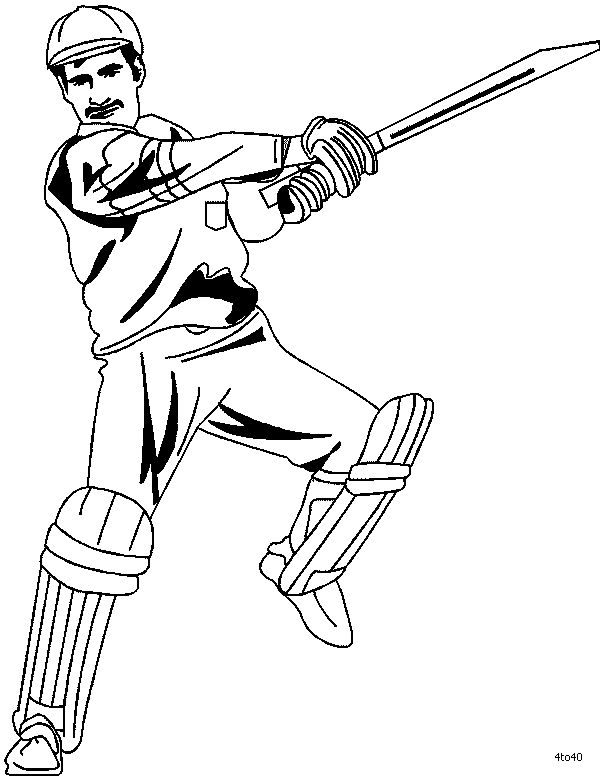
The Australian Cricketer, Cricket Game Player, and Batsman Wearing Helmet pages all work particularly well for this. Color them with the same patience you’d bring to anything you intended to keep, put them in a frame, and put them on the wall.

Decorate Gift Wraps
Your gift will become outstanding and meaningful by decorating it with images related to the game of cricket. You’ll adjust the size to create multiple images on one page. After measuring, print the photos on high-quality paper.
You can leave the image in black and white like the image below or color it as you like. Once your decorative wrapping paper is ready, use it to wrap the gift as usual. Tie a ribbon or twine around the wrapped gift to complete the gift. You can also attach a small cricket-themed tag to the ribbon.

Image source: Amazon.
Design A Wall Art Picture
This is a great way to decorate your space and celebrate your love of cricket. As usual, you choose cricket coloring sheets featuring players, equipment, or scenes from a cricket match. Then, you print them out on plain paper or cardstock for durability.
The next step is to color the image in your own artistic style. Place your finished wall art in a picture frame for a polished look. Make sure the frame size matches your painting. Additionally, you can display the work as-is or use tape to hang it directly on the wall.

Frequently Asked Questions
When was cricket invented, and where did it originate? The earliest documented reference to cricket being played is from 1597, in a court case from Guildford, Surrey, where a man named John Derrick testified he had played cricket as a child around 1550. The sport developed in rural southeastern England through the 17th century, with the first major London matches recorded in the early 18th century. The Laws of Cricket were formally codified for the first time in 1744. The first Test match was played in Melbourne in March 1877, between Australia and England.
What is a Test match, and how does it differ from other formats? Test cricket is the oldest and longest format, played over up to five days between two teams of eleven, with each team batting twice. A match can end in a win, a loss, or a draw. One-day international cricket (ODIs) limits each team to 50 overs per innings and is typically completed in a single day. Twenty20 cricket (T20) limits each team to 20 overs, lasting approximately three hours. The IPL uses the T20 format. Test cricket is considered the game’s highest form by most traditionalists; T20 is the most commercially successful and the most widely watched globally.
What is the IPL, and why is it so significant? The Indian Premier League is a professional Twenty20 franchise cricket league in India, founded in 2008 by the Board of Control for Cricket in India (BCCI). It currently has ten franchises based in different Indian cities. The IPL transformed global cricket by creating a domestic league that could attract the world’s best players with extremely high salaries, pioneering the franchise model in cricket, and demonstrating that T20 cricket could generate revenues comparable to the world’s largest sports leagues. It is currently valued at over $10 billion annually.
What are the main ways to be dismissed in cricket? A batsman can be dismissed in ten ways under the Laws of Cricket, of which six are common: bowled (the ball hits the stumps and dislodges a bail), caught (the ball is caught by a fielder before touching the ground after hitting the bat or glove), LBW – leg before wicket (the ball strikes the batsman’s leg on a delivery that would otherwise have hit the stumps, when the batsman has not hit the ball with the bat), run out (the batsman is out of his crease when the fielding side breaks the wicket), stumped (the batsman is out of his crease and the wicket-keeper breaks the wicket with the ball), and hit wicket (the batsman knocks the stumps with bat or body while playing a shot).
What are the Ashes? The Ashes is a Test cricket series played between England and Australia, considered the most storied rivalry in international cricket. The name derives from a satirical obituary published in The Sporting Times in 1882 after England lost a home Test to Australia for the first time, mourning the death of English cricket and the ashes being taken to Australia. A small urn – reportedly containing the ashes of a burnt cricket bail – was presented to the English captain after a subsequent English tour of Australia. The urn is held at Lord’s Cricket Ground, and the series has been played approximately every two years since 1882.
What coloring supplies work best for cricket pages? For the detailed batting stance and equipment pages, colored pencils with fine tips give the most control, particularly for differentiating the bat, pads, gloves, and helmet. For the cartoon and animal pages, broad-tip markers deliver the bold, clean color these illustrations reward. For the cricket ball, a layered colored pencil application produces the most convincing leather texture. For the team and franchise logo pages, markers give the most accurate, consistent team color reproduction. Younger children do best with chunky crayons for the simple action pages and the kids playing cricket pages.
What age group are these pages best suited for? The cartoon character pages – Bluey and Bingo, the funny batsman, the animals – work well from age 3 upward. The kids playing cricket pages suit ages 4–9. The batting shot pages (drive, cut, hook), equipment pages, and stadium page reward the patience and fine motor control that develops around age 7 or 8. The IPL franchise and national team pages mean the most to children who follow the sport – and in India, Pakistan, Bangladesh, Sri Lanka, and the Caribbean, that includes children as young as five or six who can already name every player in the national squad.
Is cricket difficult to understand as a newcomer? Cricket’s reputation for complexity is partly deserved and partly overstated. The basic premise is simple: one team bats, trying to score runs; the other team fields, trying to take ten wickets and end the batting innings. The complexity comes from the variety of dismissal methods, the format differences between Test, ODI, and T20 cricket, and the strategic depth that comes from five days of play in a Test match. Coloring pages – particularly the equipment pages, batting shot pages, and the batsman-and-wicket-keeper page – are actually a surprisingly effective entry point for newcomers, because they make the physical vocabulary of the game visible and concrete before any match is watched.
Browse the full collection at ColoringPagesOnly.com. All 56 pages are free – no account, no payment, no steps between you and the file. Print at home on standard paper or color directly in your browser.
Cricket is the only sport where a match can last five days and still end in a draw – and where that draw can feel more satisfying than a victory, because of what the two teams had to do to earn it. It is played with a red leather ball in English county grounds in April when it’s still cold enough to see your breath, and with a white ball under floodlights in Mumbai in May when it’s 38 degrees at 10 pm. It is watched in silence in Lord’s Long Room and in noise that registers on seismometers at Eden Gardens. It is coloring pages of a kangaroo and a goat with cricket bats, and it is the most technically precise sport ever invented, and it is Bluey and Bingo in the backyard, and it is the Ashes, and it is somehow all of these things at once.
Pick up your colors. Choose your team. Come to the crease.
Share your work on Facebook and Pinterest and tag #Coloringpagesonly. We especially want to see the IPL franchise pages and what people do with the Bluey and Bingo one.
Color the crease. Back your shot. Play your game.