
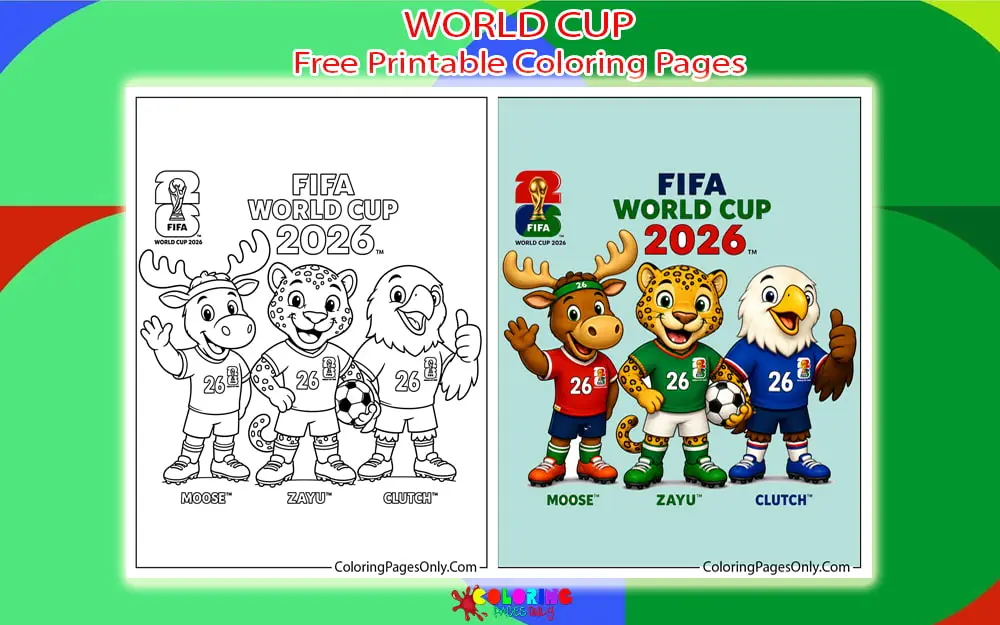
Free World Cup Coloring Pages: 30+ pages featuring soccer players, goalkeepers, penalty shootouts, free kicks, corner kicks, header goals, dribbling scenes, stadium crowds, fan flags, trophy celebrations, medal ceremonies, podium moments, host-country pages, North America maps, match brackets, group-stage pages, kids playing soccer, jersey design sheets, referee moments, fair play handshakes, family watch parties, classroom activities, and 2026 World Cup-inspired tournament scenes. All free, printable PDFs and online coloring pages are ready for home, classroom, sports lessons, family match days, geography activities, tournament countdowns, and soccer-themed crafts.
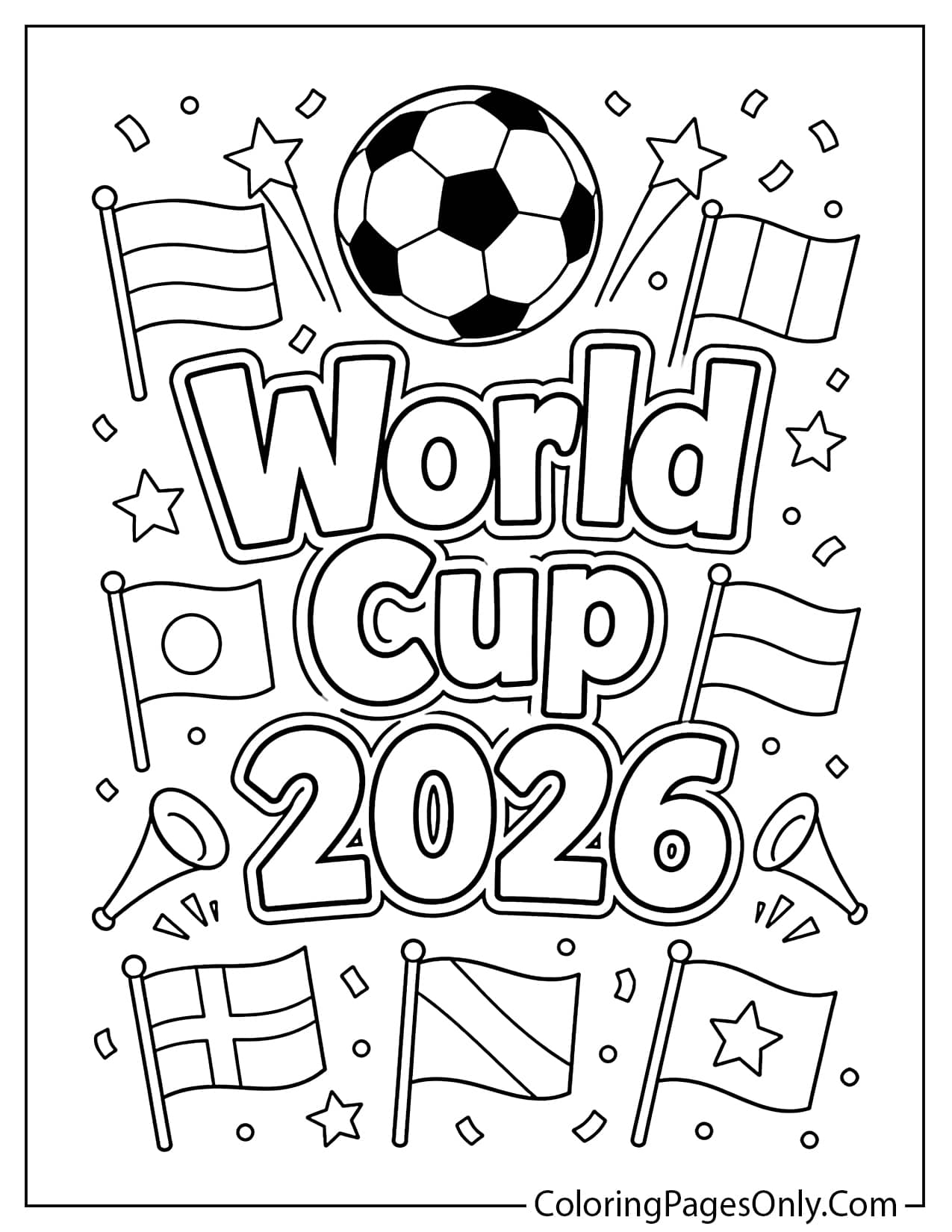
The FIFA World Cup 2026 will be hosted by Canada, Mexico, and the United States, making it the first edition shared by three host countries. It will also be the first World Cup with 48 teams, expanding the tournament to 104 matches across 16 host cities. The tournament is scheduled from June 11 to July 19, 2026, with group-stage matches, knockout rounds, and the final held in New York and New Jersey. These details make the 2026 tournament especially useful for coloring pages about flags, maps, stadiums, brackets, teams, fans, and global soccer celebration.
This collection gives younger children simple soccer balls, jerseys, goal nets, flags, and fan pages. At the same time, older colorists can work on detailed stadium scenes, goalkeeper saves, penalty shootouts, match brackets, trophy pages, referee moments, and host-country designs. Teachers can use the pages for sports vocabulary, geography lessons, country studies, classroom displays, and tournament activities. These 30+ free pages at ColoringPagesOnly.com cover World Cup players, soccer fans, host countries, trophies, match moments, maps, brackets, and 2026-themed activities. All free, PDF or PNG, print or color online.
What’s Inside
World Cup 2026 and Host-Country Pages
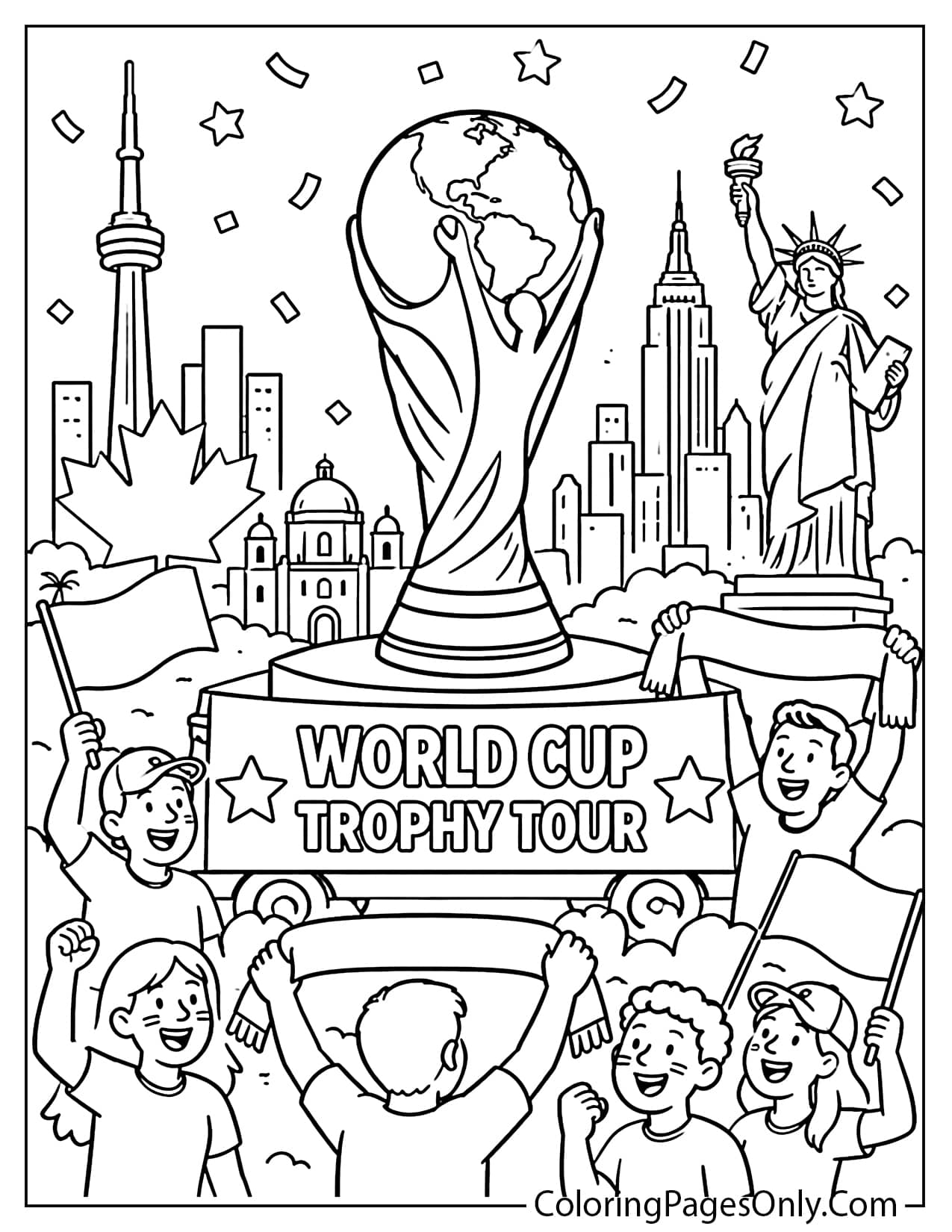
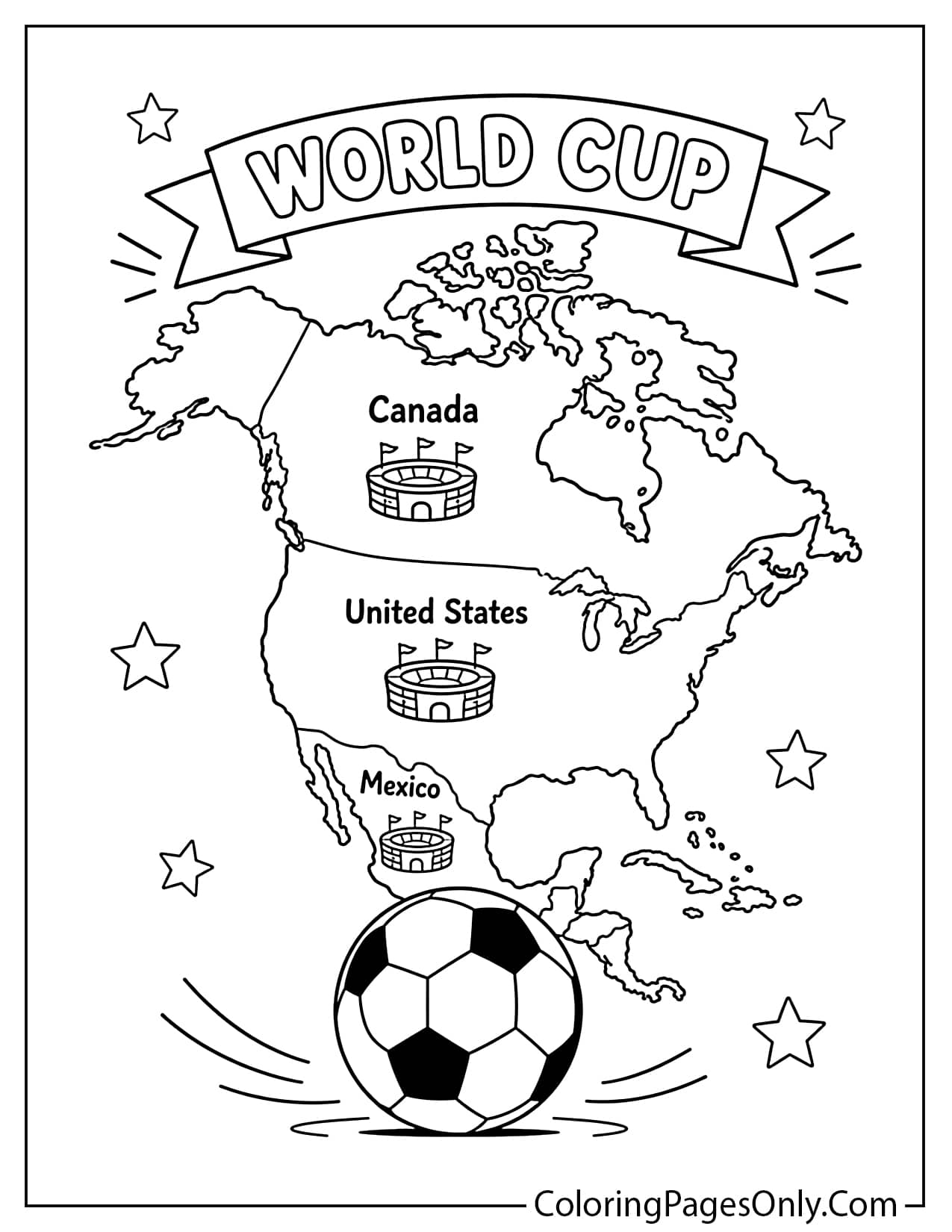
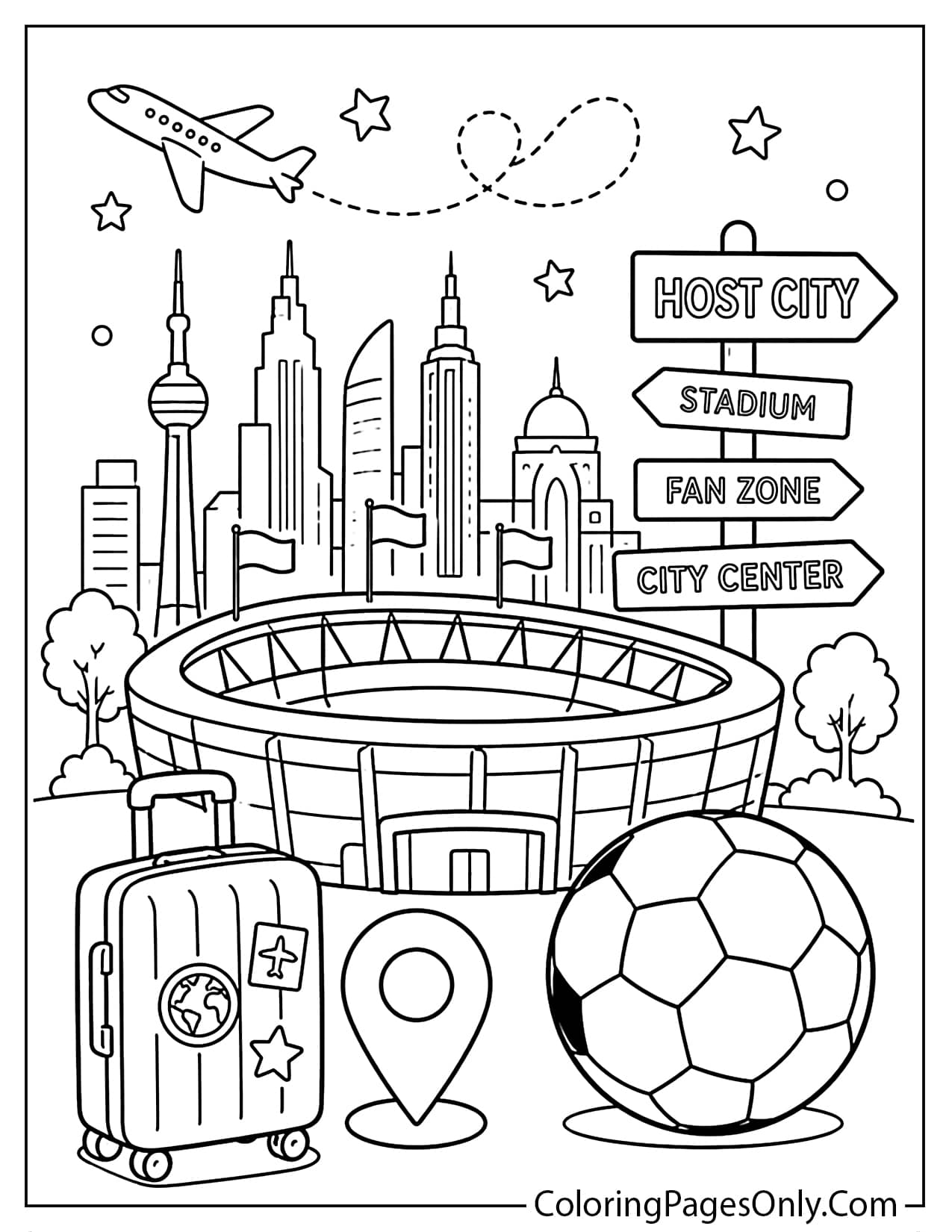
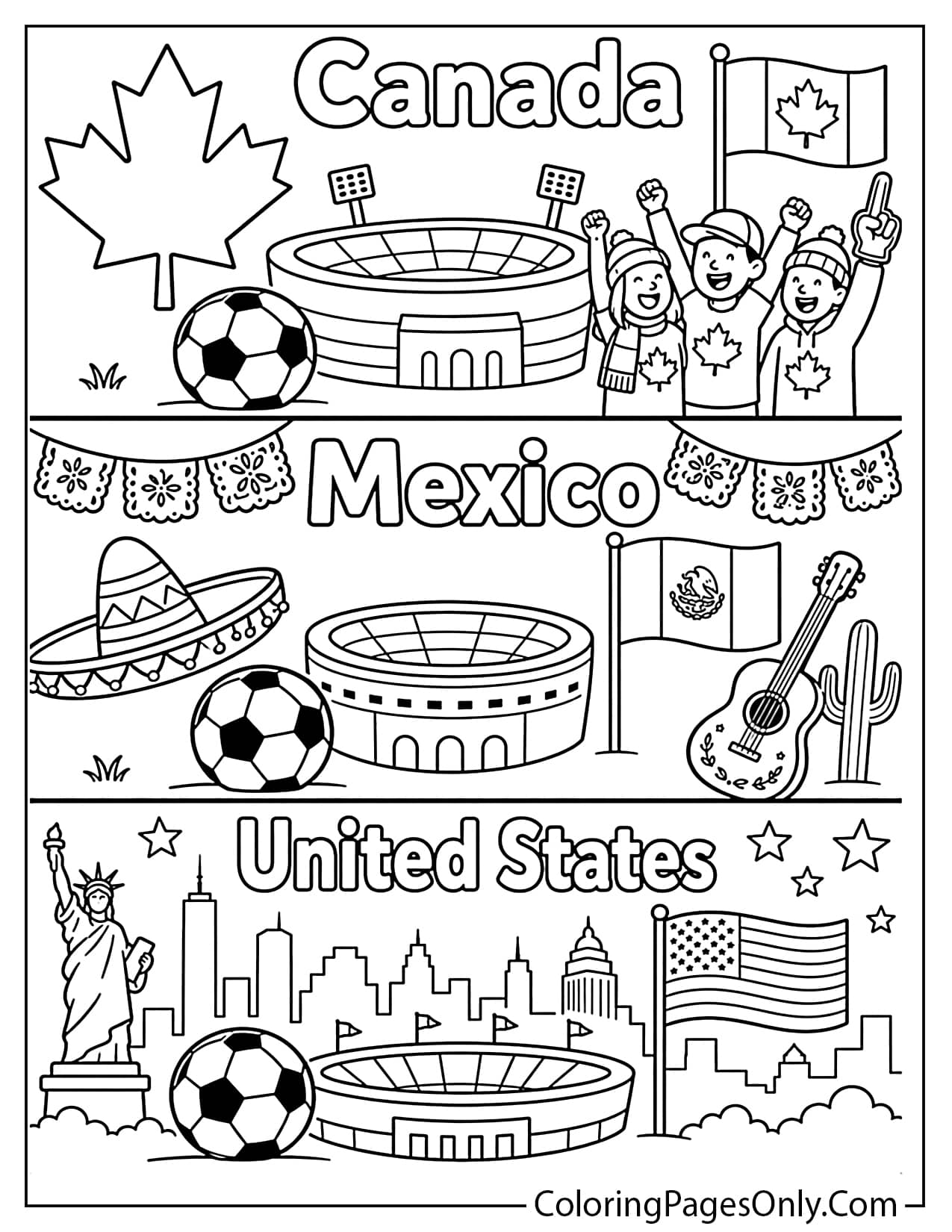
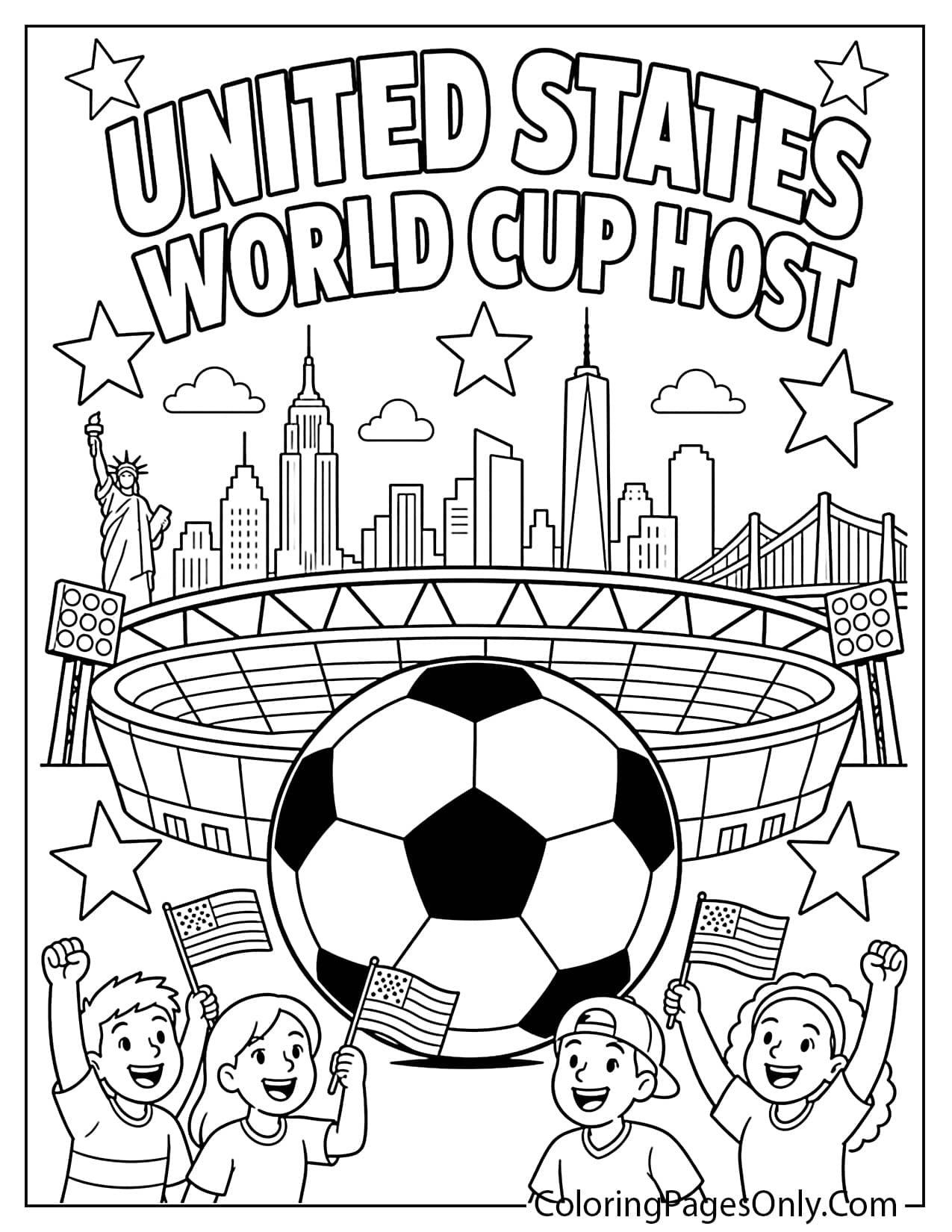
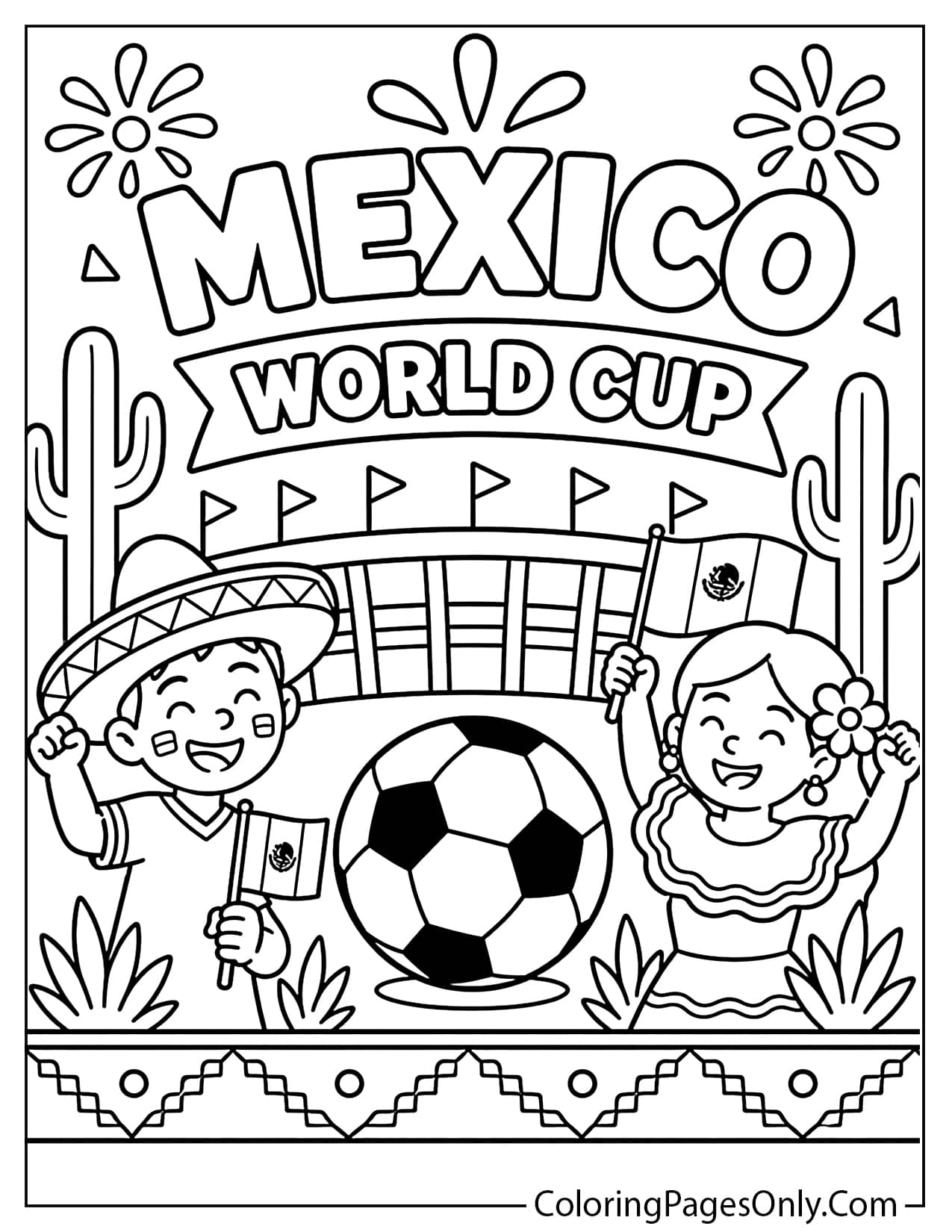
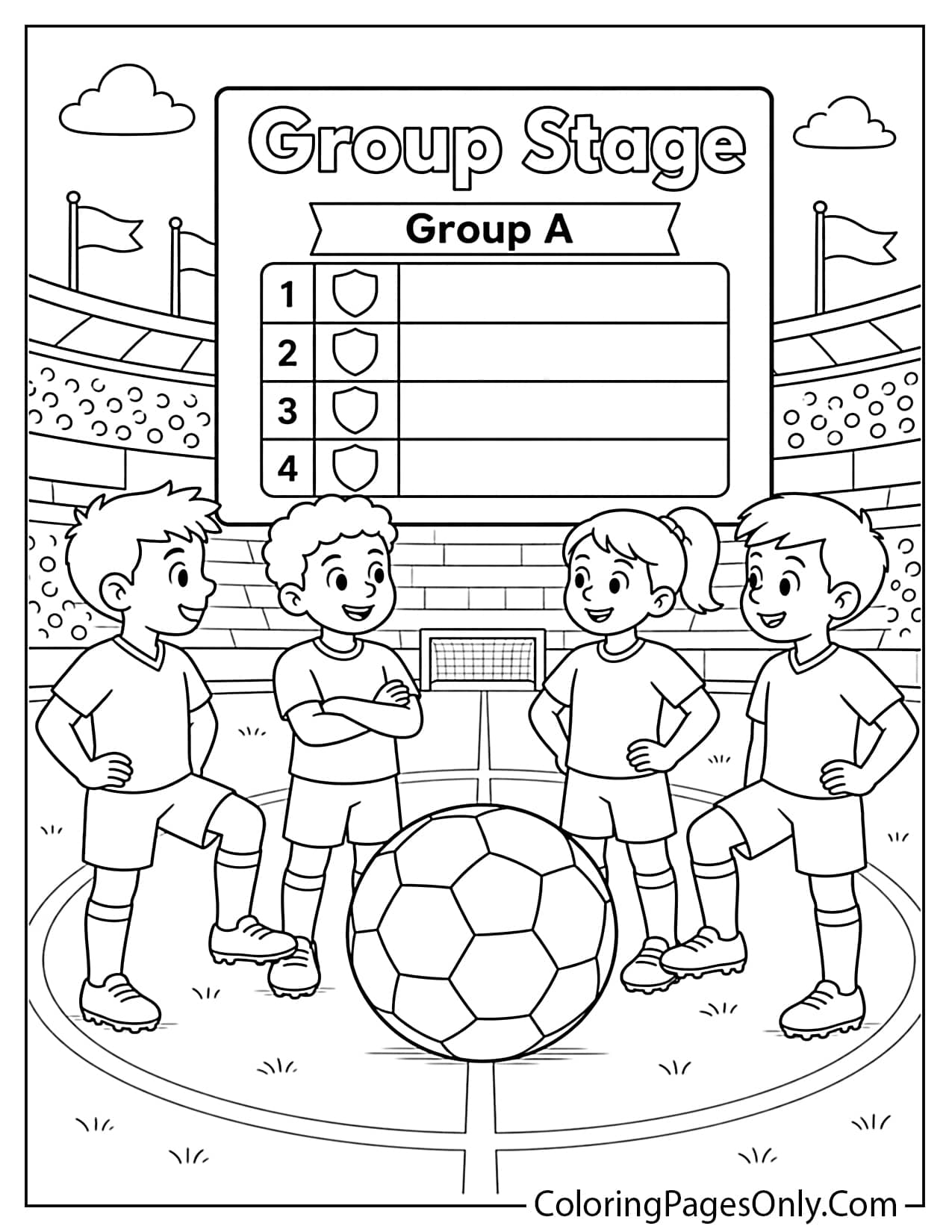
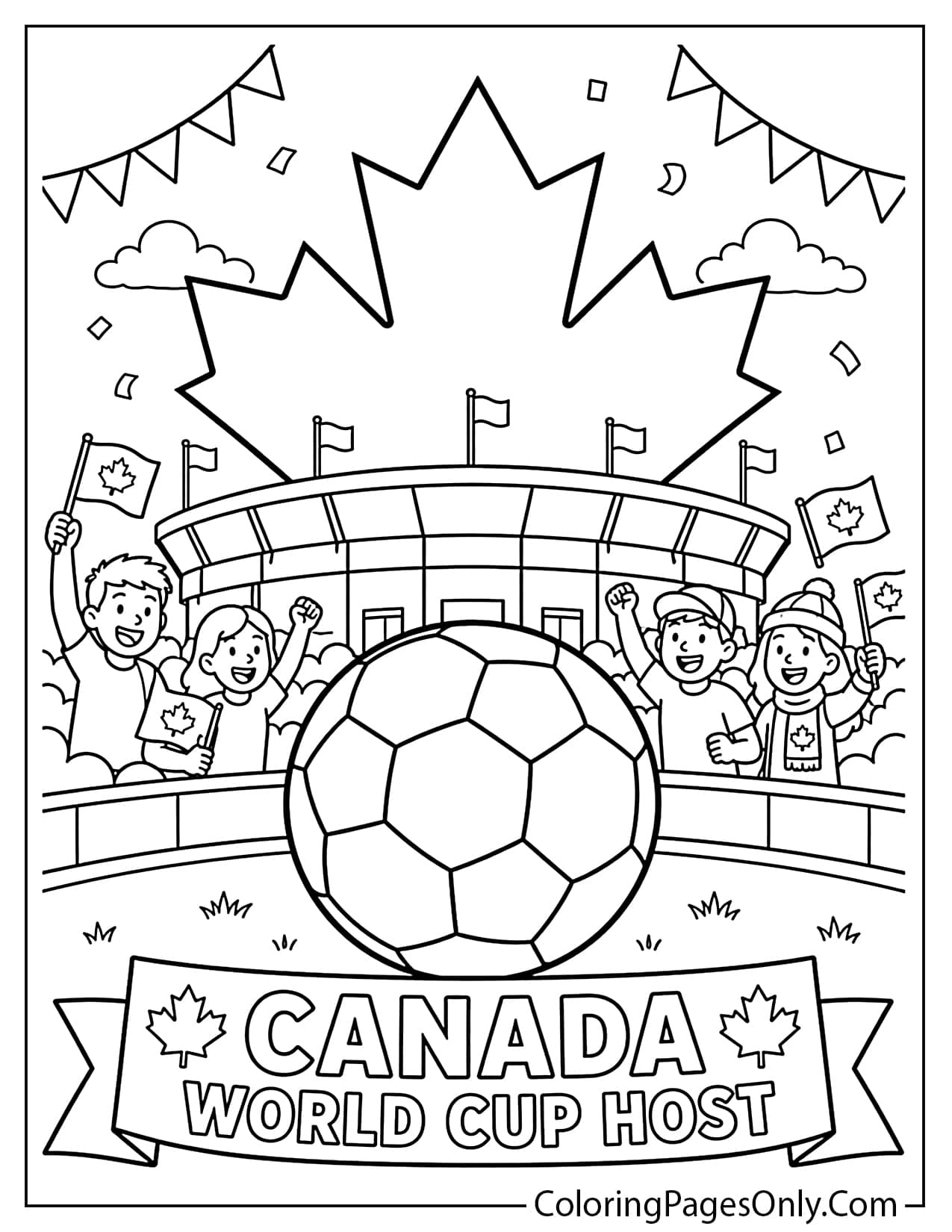
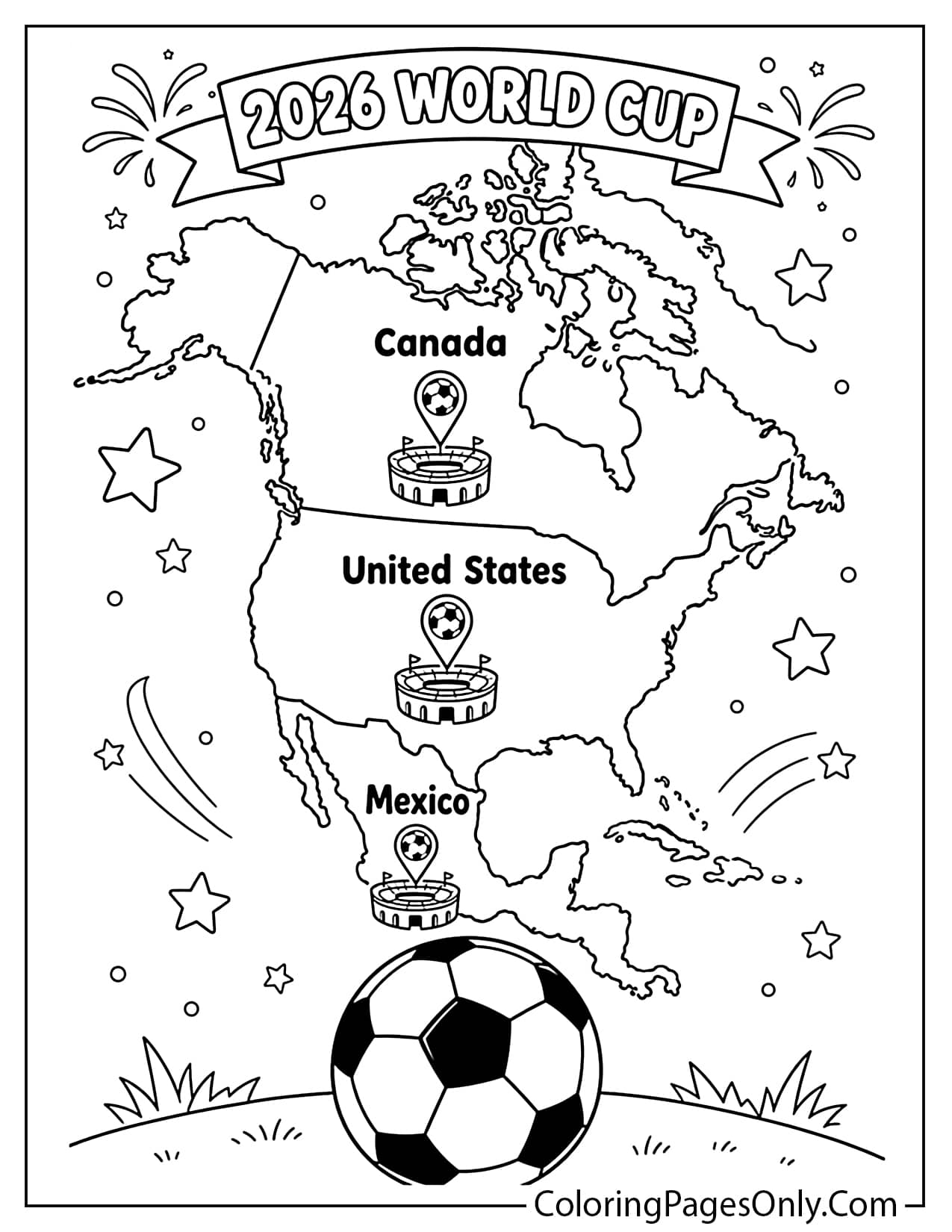
This group focuses on the 2026 tournament setting: Canada, Mexico, the United States, North America maps, host-country symbols, stadiums, flags, match schedules, group-stage pages, and World Cup 2026 celebration scenes. These pages give children a visual way to understand that the tournament is not happening in just one city or one country. A map page can support geography lessons, while a host-country page can introduce Canada’s maple leaf, Mexico-inspired patterns, and United States stars in a simple, child-friendly way.
Coloring World Cup host-country pages: Use maple red and clean white for Canada-inspired sections, festive green, white, and red for Mexico-inspired sections, and navy blue, bright red, and white for United States-inspired details. Keep host-country symbols broad and simple rather than copying official logos or tournament branding. The common mistake is making every flag or symbol too detailed; leave some blank areas so children can add their own team colors.
Soccer Players and Match Action Pages
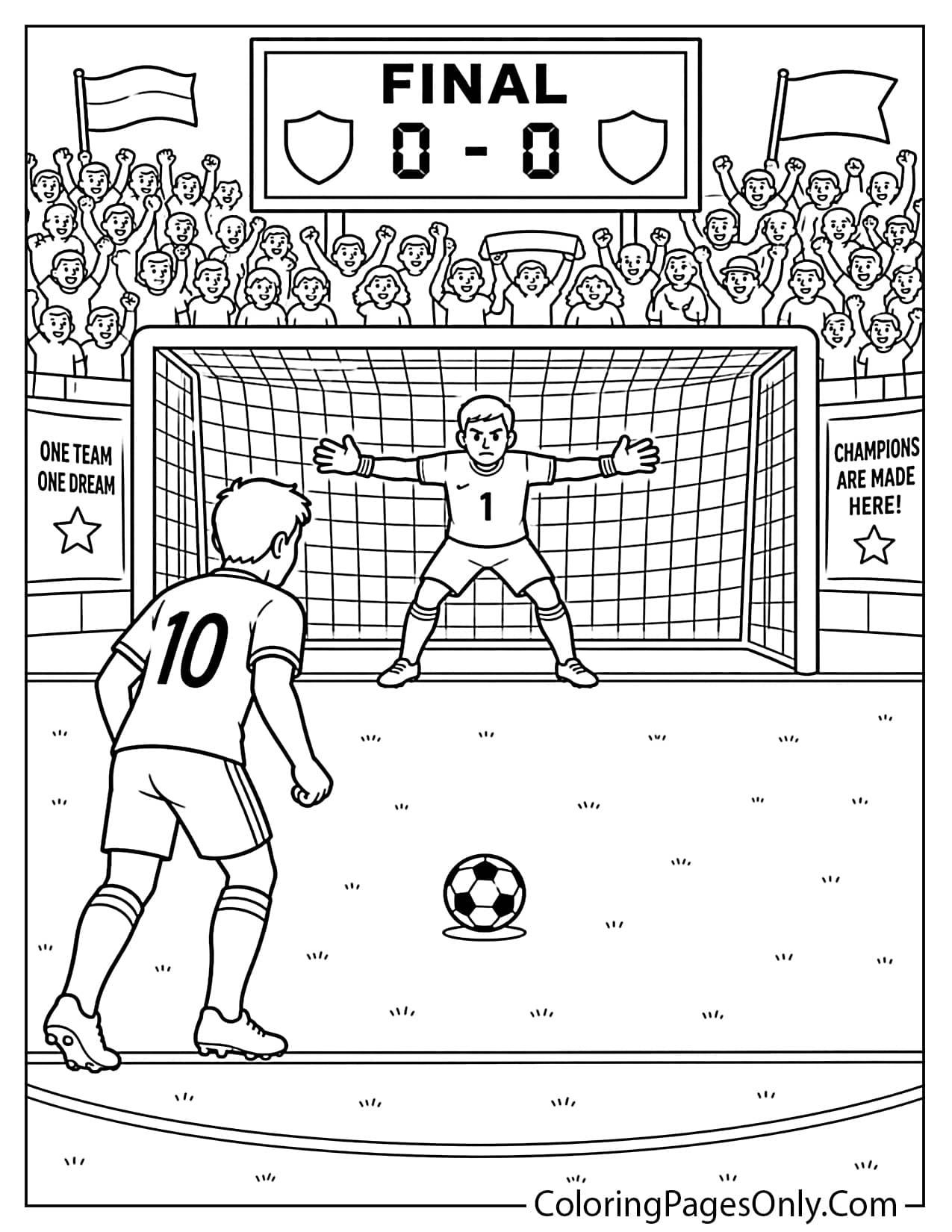
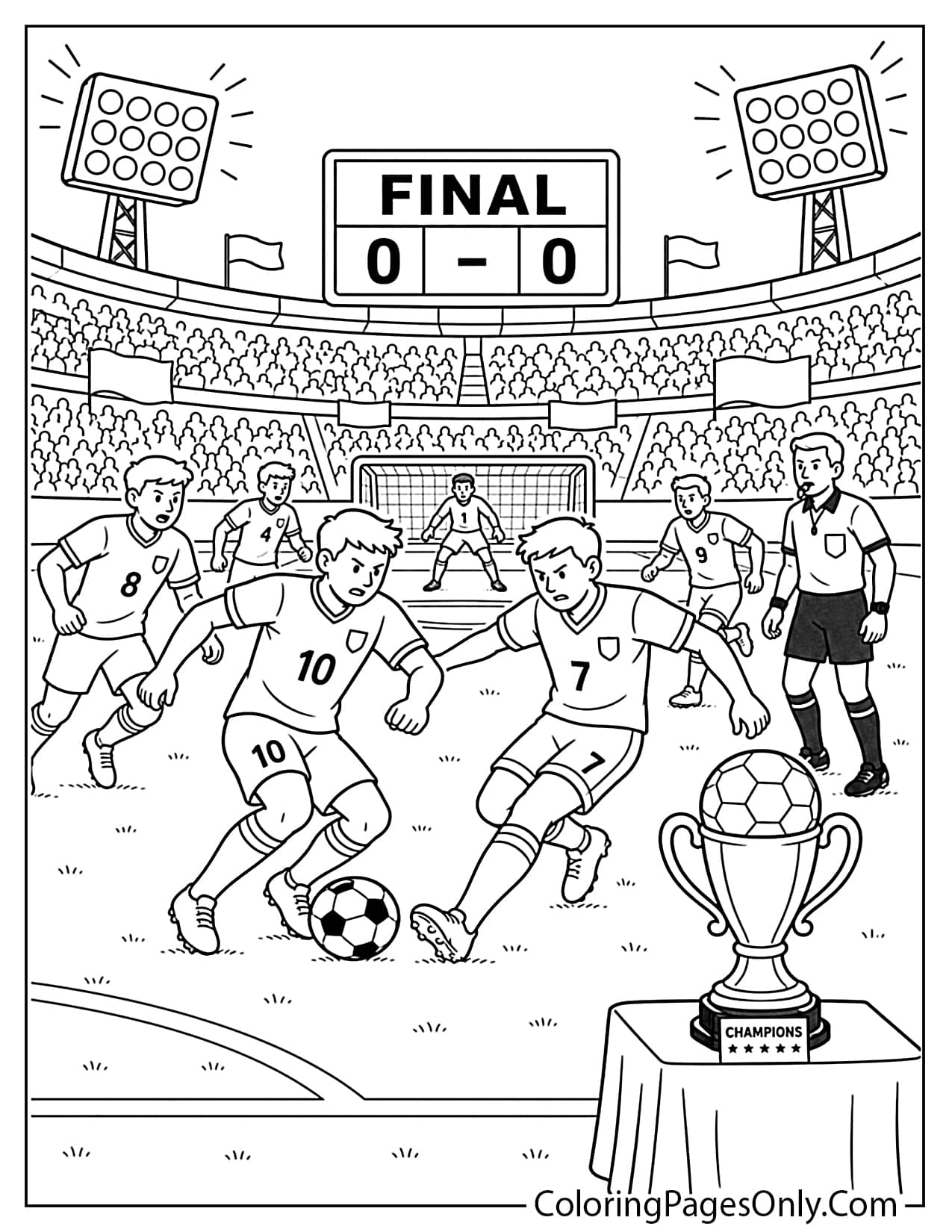
These pages show the movement of the game: strikers scoring, goalkeepers diving, players taking penalties, free kicks, corner kicks, headers, dribbling runs, and sliding tackles. Match-action pages help children see how soccer is built from moments of speed, aim, balance, and teamwork. They also give older colorists more to work with because a player’s body position, the ball’s direction, and the background crowd all need different treatment.
Coloring World Cup players: Start with the jersey and shorts before coloring the field so the player stays visually clear. Strong soccer palettes include royal blue and white, crimson red and gold, emerald green and white, golden yellow and navy, or clean white with bold trim. The common mistake is coloring the field too dark; keep the grass lighter than the player’s uniform so the action remains easy to read.
Stadiums, Fans, Flags, and Watch Parties
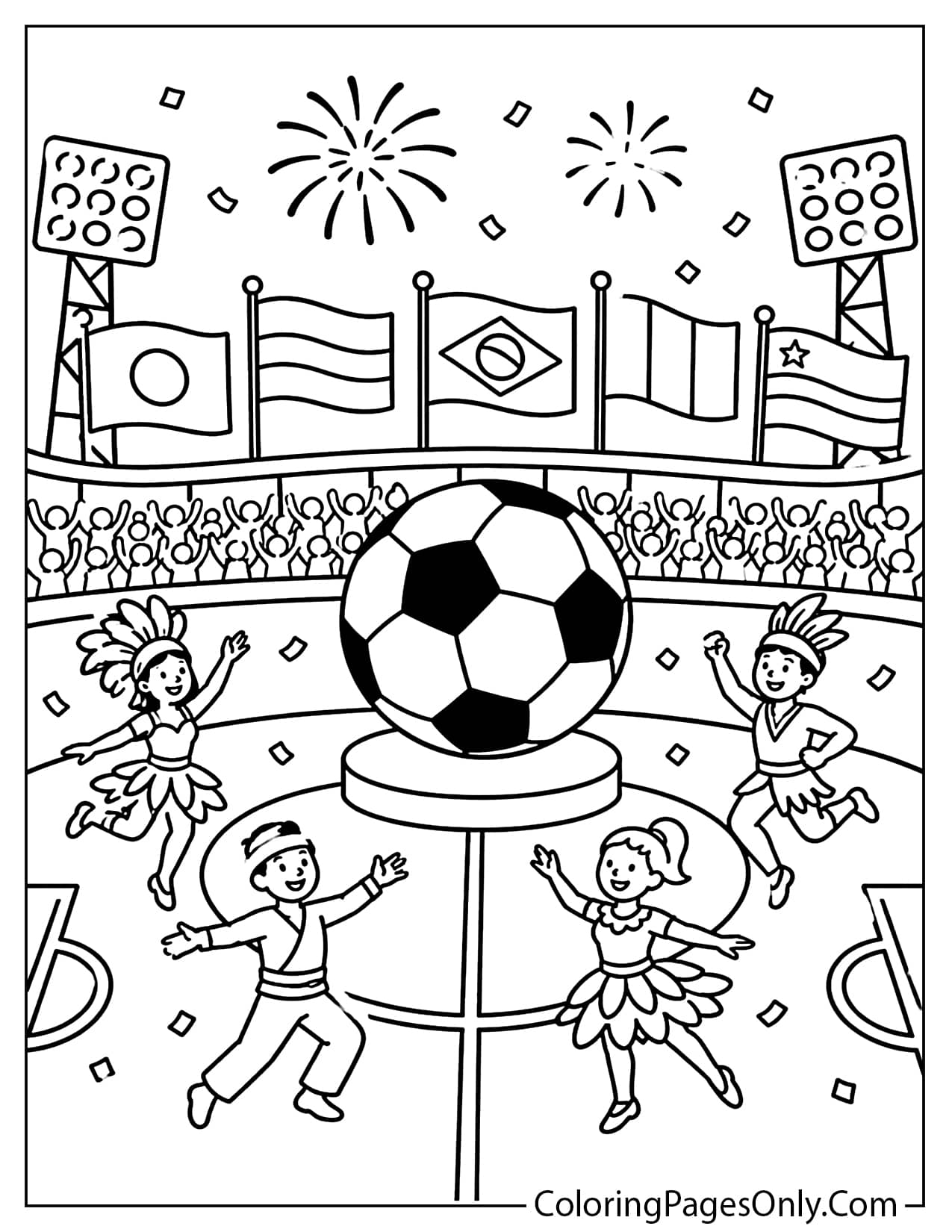
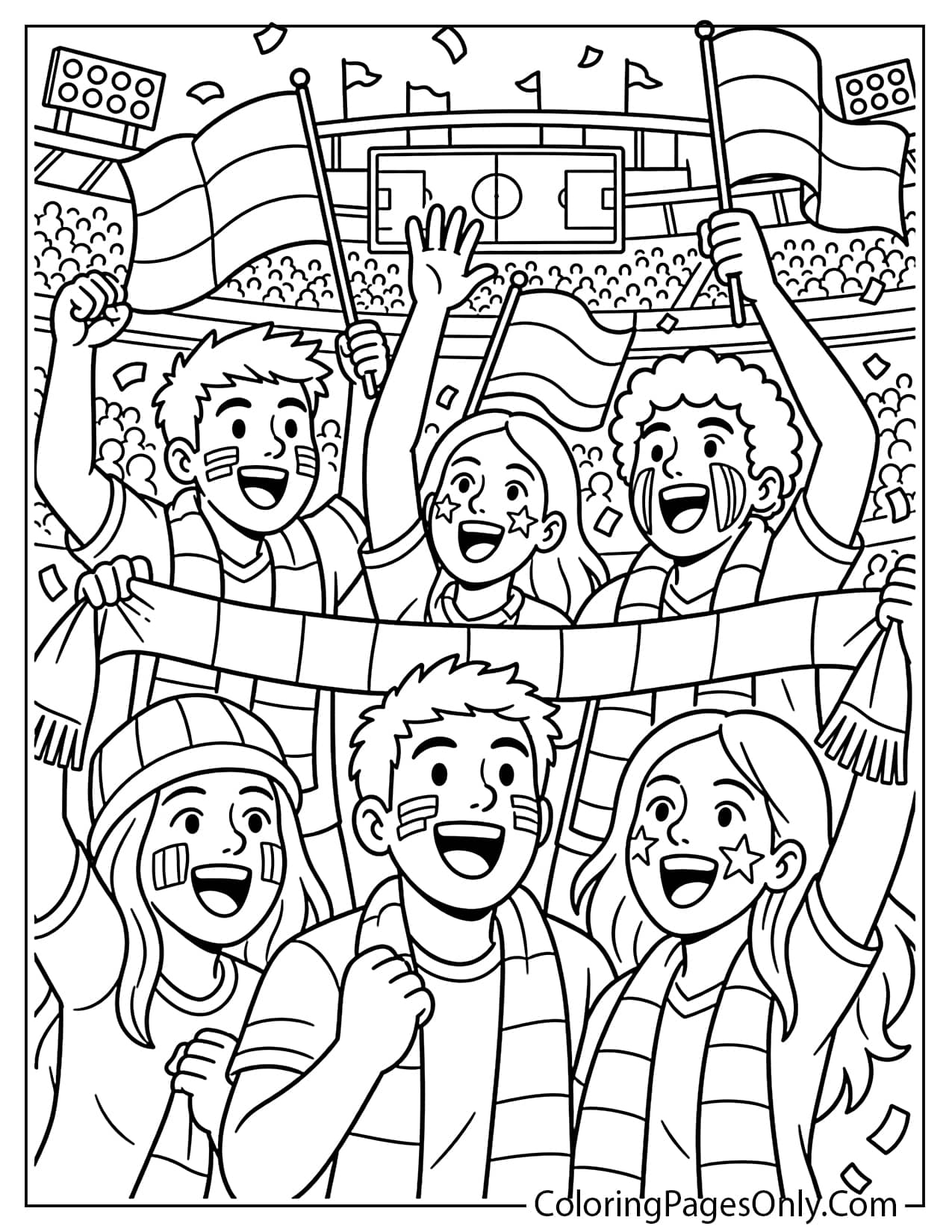
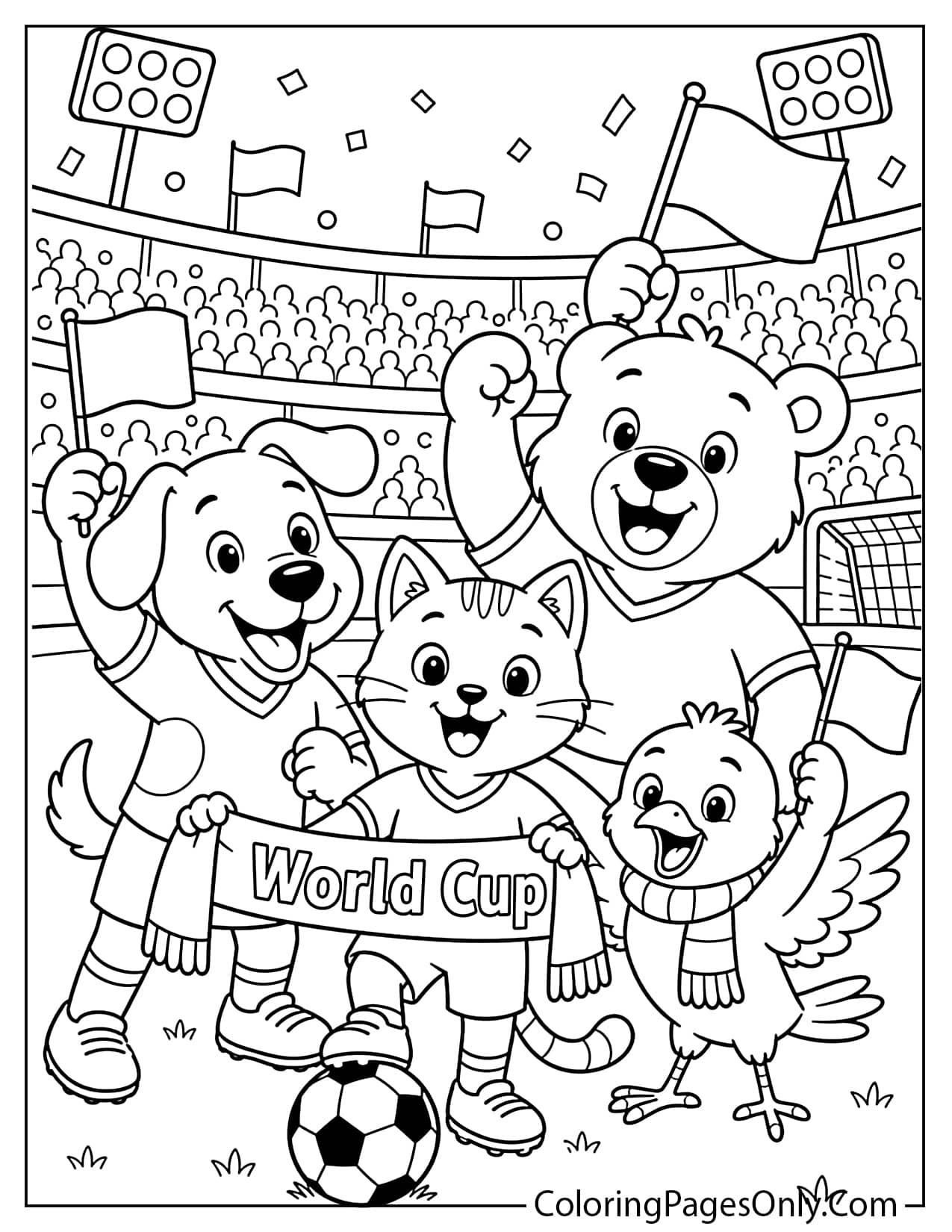
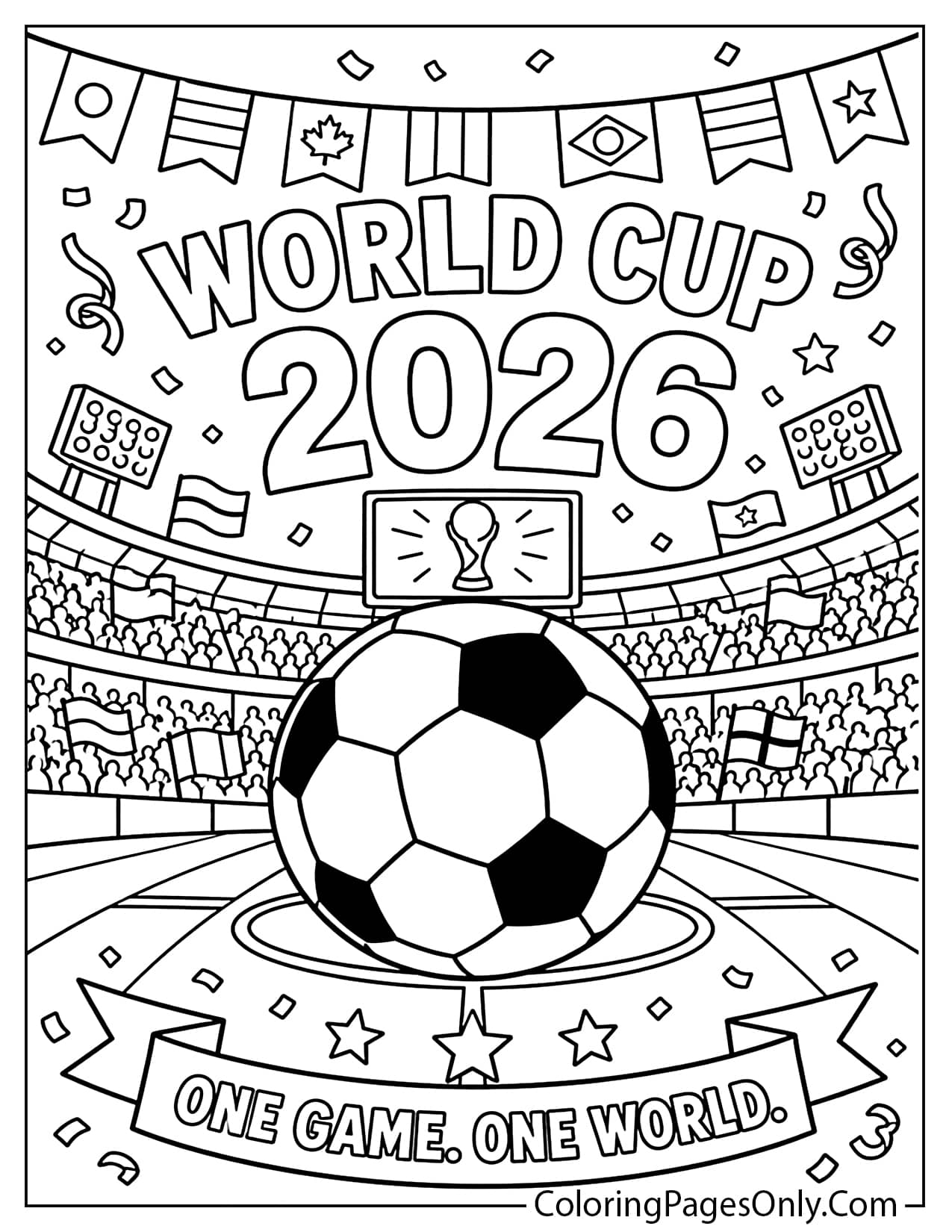
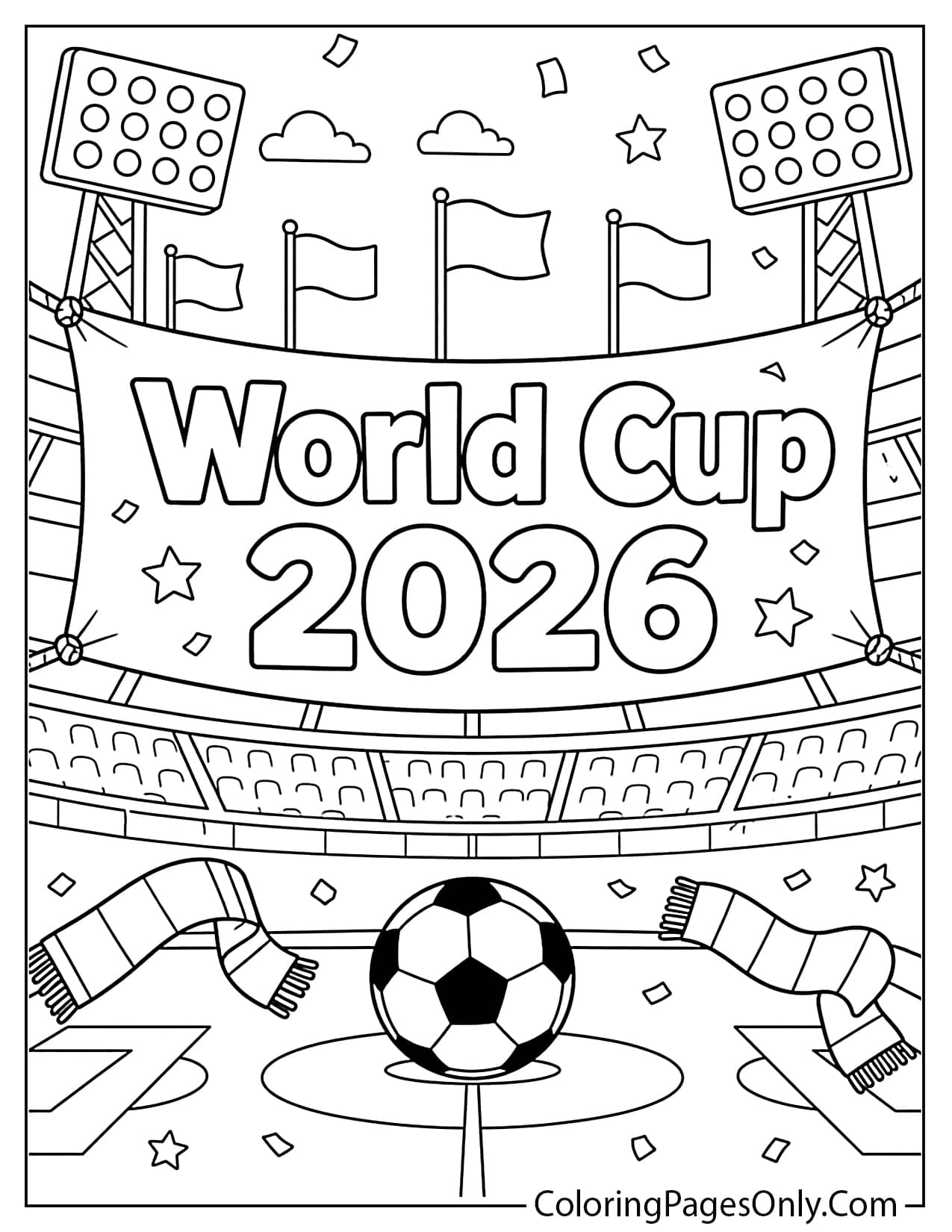
World Cup atmosphere extends beyond the match itself. Stadium lights, cheering crowds, scarves, flags, family watch parties, classroom activities, and children holding banners all show how the tournament becomes part of everyday life. These pages are useful for families watching at home, teachers planning soccer-themed activities, and children who enjoy the celebration around the sport as much as the game.
Coloring stadium and fan scenes: Use light grey for stadium structures, grass green for the field, sky blue for open backgrounds, and small clusters of red, blue, yellow, green, and white in the stands. For night matches, add deep navy behind the stadium lights but keep pale yellow or white halos around the lamps. The common mistake is filling every fan with heavy color; small repeated color clusters make the crowd look lively without becoming messy.
Trophies, Medals, Podiums, and Celebration Pages
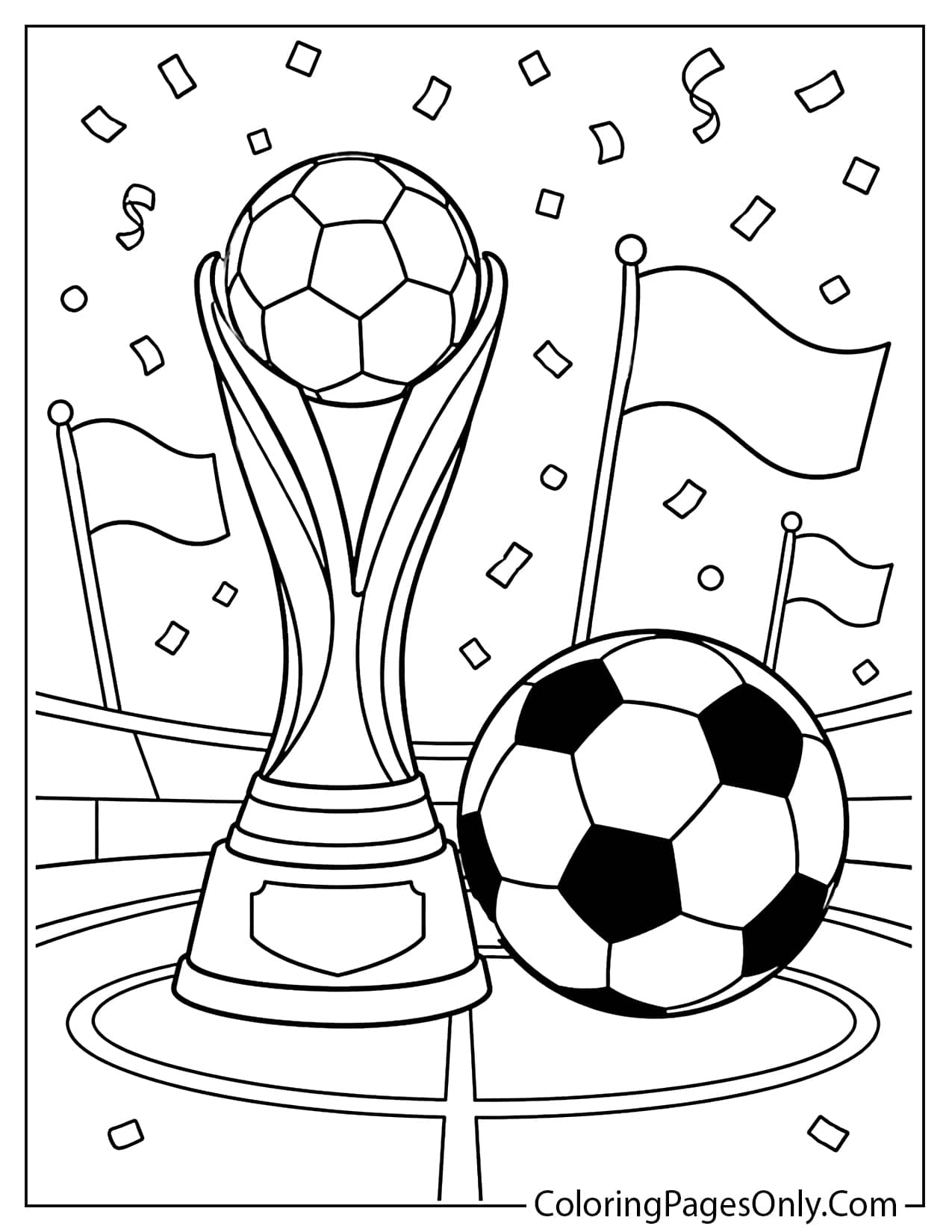
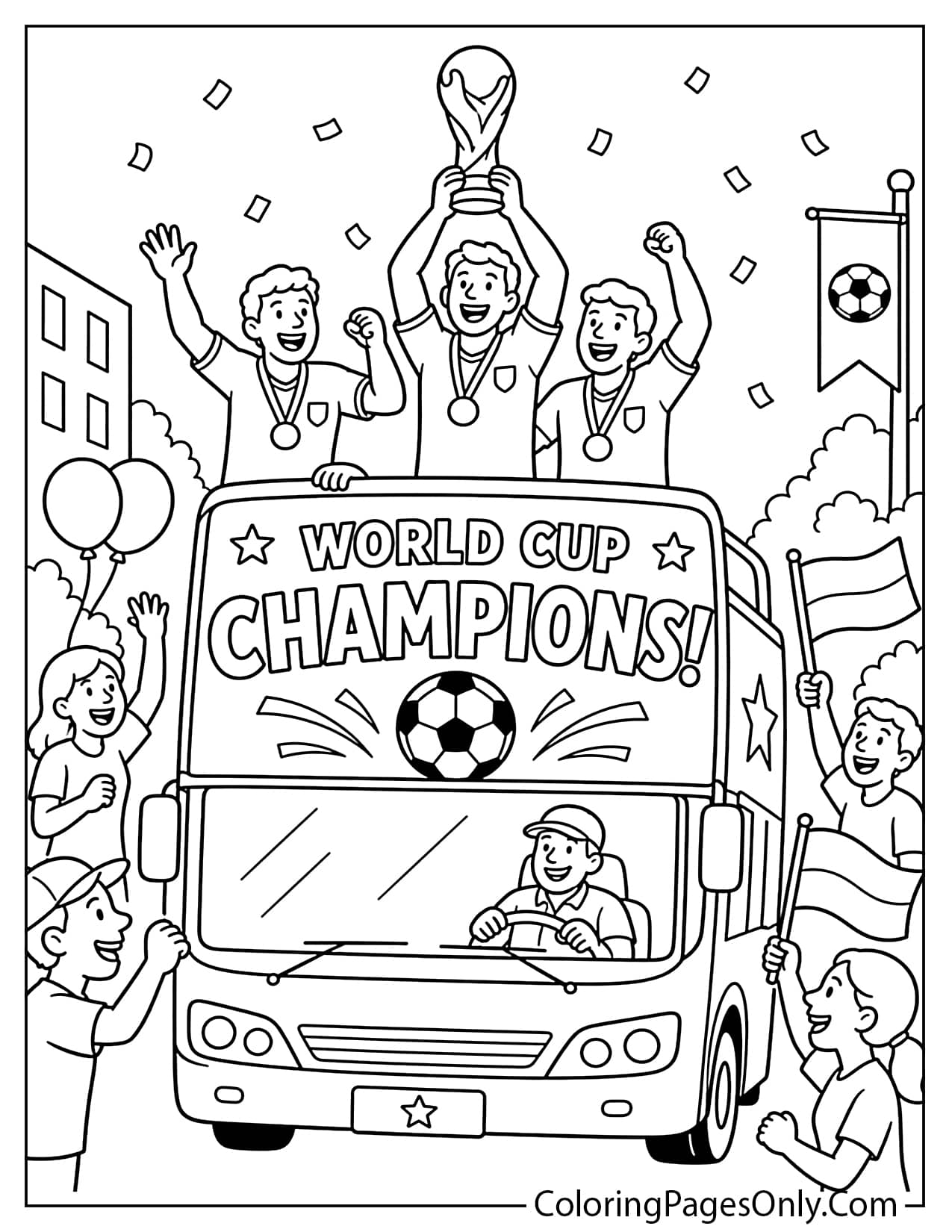
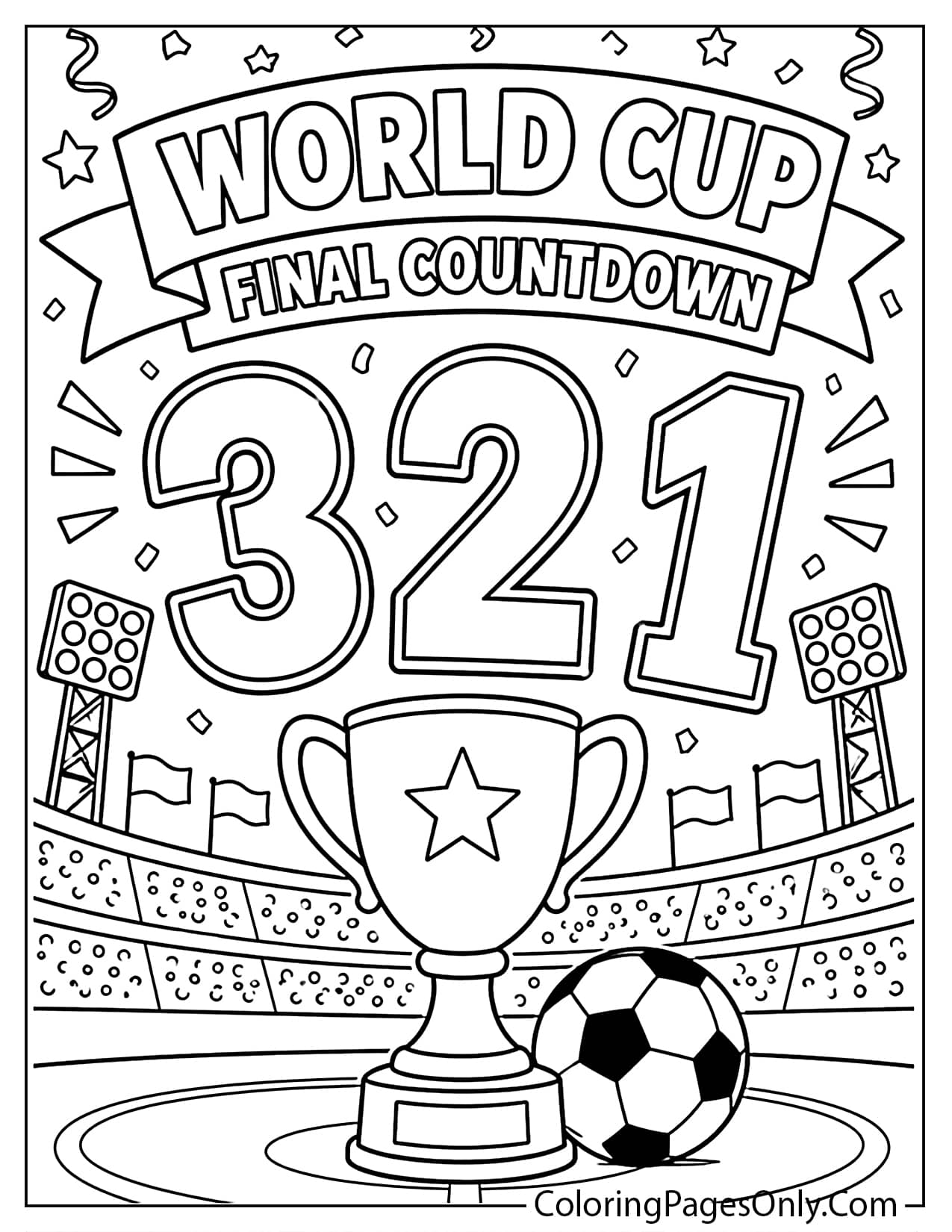
Trophy and medal pages give the collection a strong championship feeling. Generic cups, medal ceremonies, podiums, trophy celebrations, confetti, and soccer balls create clear focal points that younger children can understand quickly. These pages also work well for crafts, classroom displays, tournament countdowns, and sports awards activities.
Coloring trophy and medal pages: Use golden yellow as the base layer, then add amber brown along the lower edge and pale yellow near the highlight areas. For medals, use gold, silver, grey, and warm bronze, keeping the ribbons bright but simple. The common mistake is coloring the whole trophy one flat yellow; a small shadow on one side makes the cup look more metallic.
Kids, Teams, and Soccer Learning Pages
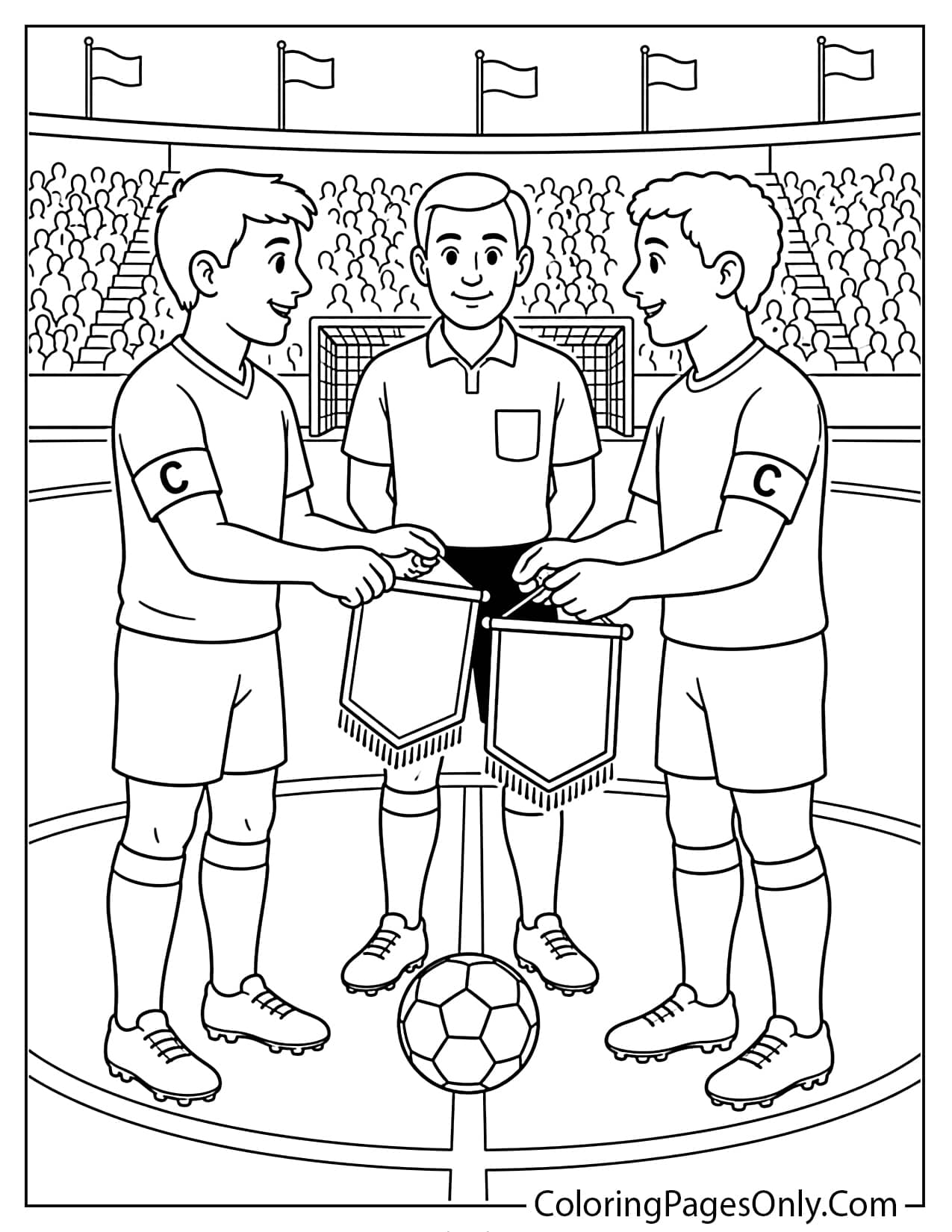
This group includes kids playing soccer, youth training drills, classroom World Cup activities, jersey design pages, fan flags, team huddles, captains, referees, and fair play handshakes. These pages are especially helpful for younger children because they connect a global tournament to familiar scenes: a backyard game, a classroom map, a team talk, or a family cheering in front of the TV. They also support lessons about cooperation, rules, respect, and sportsmanship.
Coloring kids’ soccer pages: Use friendly colors such as sky blue, grass green, sunflower yellow, tomato red, soft orange, and clean white. Keep faces and hands lightly shaded, then use stronger colors for shoes, cones, balls, scarves, and flags. The common mistake is making every child’s uniform the same; vary the shirt colors so the scene feels more inclusive and lively.
What These Pages Do
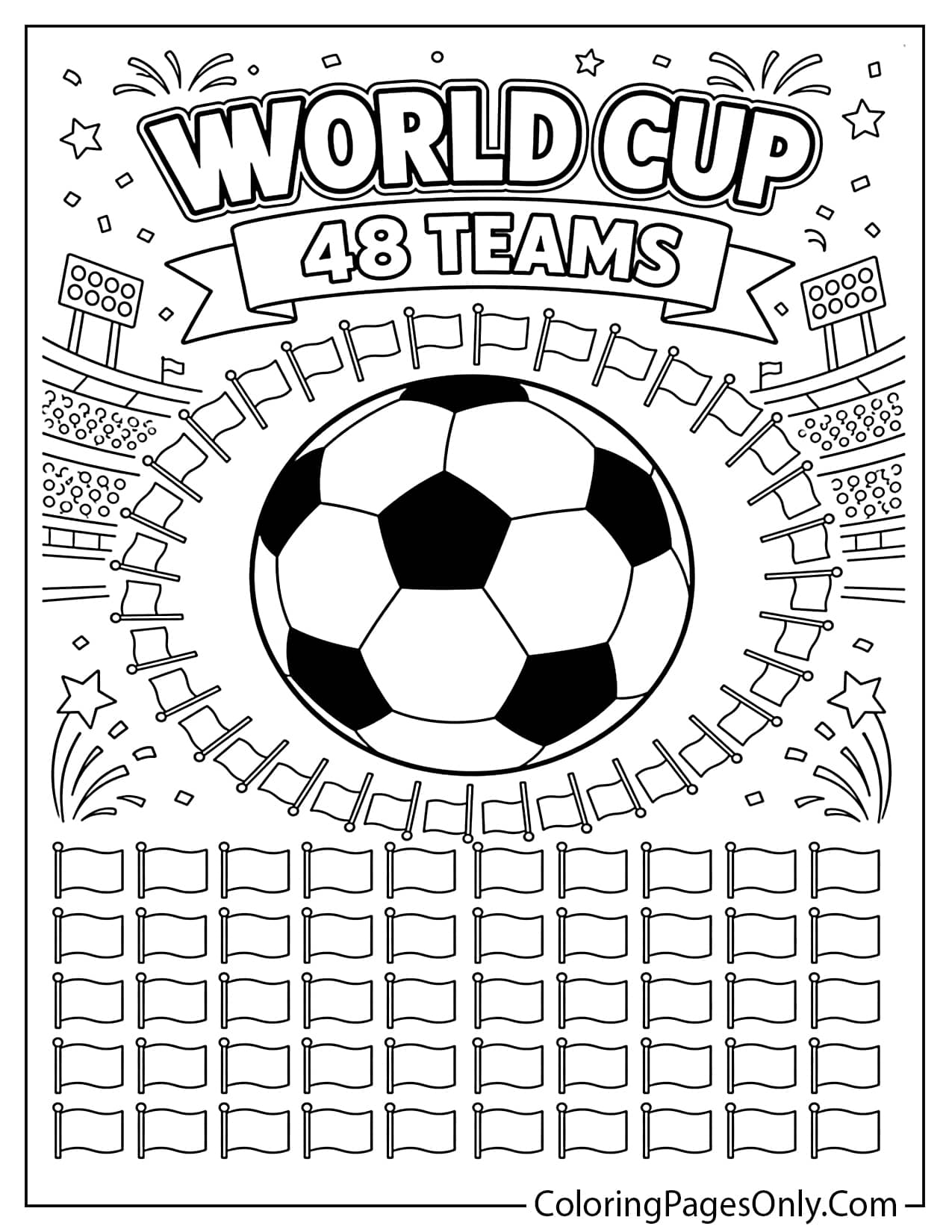
World Cup coloring pages connect children to a major global sporting event. The 2026 tournament brings together 48 national teams across Canada, Mexico, and the United States, which gives families and teachers a natural way to discuss geography, flags, maps, teamwork, match brackets, and international sports culture. A coloring page with fans, stadiums, and match scenes can introduce the idea that soccer, also known globally as football, is played locally but celebrated worldwide.
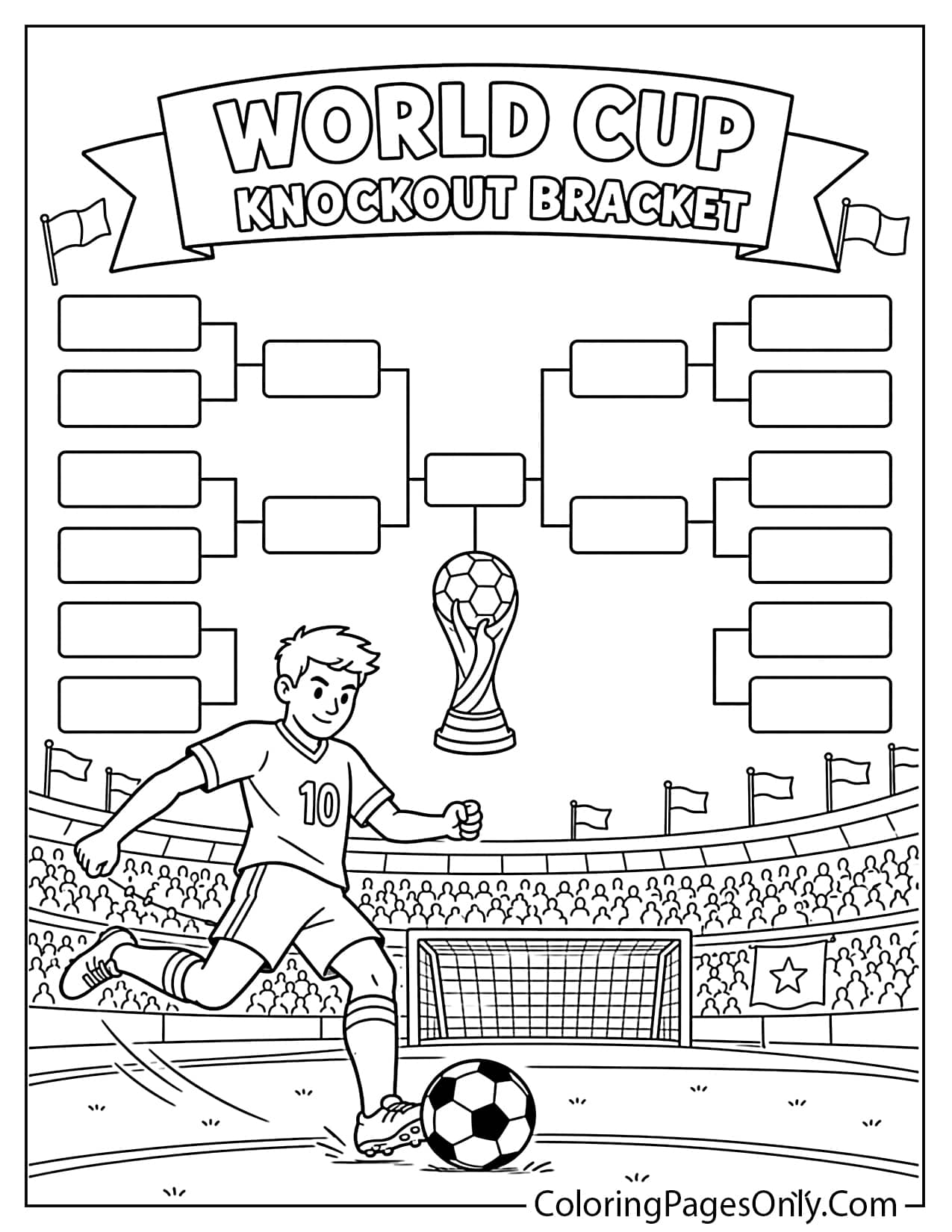
These pages also teach design through movement, pattern, and scale. A penalty page uses a clear line between the kicker, the ball, and the goalkeeper. A stadium page uses repeated crowd shapes and curved stands. A trophy page uses symmetry and metallic shading, while a bracket page uses sequence and structure. These visual patterns help children practice composition without needing a formal art lesson.
The American Academy of Pediatrics identifies fine motor skill development as a key milestone throughout early childhood. HealthyChildren.org, the parenting site from the American Academy of Pediatrics, lists coloring with crayons or chalk among quiet-time activities that can help improve a 3-year-old child’s hand abilities. World Cup pages support that development through small jersey numbers, ball panels, flags, net lines, medals, cleats, bracket boxes, and scarf patterns.
The 2005 Art Therapy Journal study on structured coloring and anxiety reduction applies well to soccer pages with repeated patterns. Goal nets, stadium seats, ball panels, flag rows, trophy details, schedule boxes, and bracket lines give children organized spaces to color. This structure can help coloring feel calm and focused, especially during a loud, emotional tournament season.
How to Color These Pages Well
Keep the soccer ball readable first. Classic soccer balls work best when the black panels stay crisp, and the white panels are left clean or lightly shaded with pale grey. Add a small shadow under the ball using cool grey or soft blue-grey. The common mistake is coloring the whole ball too dark; leave enough white so the ball remains the center of the action.
Make jerseys bright but not crowded. Choose one main color for the shirt, one for the shorts, and one small accent for socks, collar, or trim. Strong combinations include royal blue and white, crimson red and gold, emerald green and white, golden yellow and navy, or black and clean white. Test jersey colors on scrap paper first before adding numbers, stripes, or flag-inspired details.
Use the field to create depth. Start with light grass green across the whole field, then add darker green bands or diagonal mowing stripes. Keep the area closest to the player slightly darker and the far background lighter. The common mistake is using one flat green everywhere, which makes the stadium scene feel less active.
Color stadium crowds with small repeating patterns. Instead of coloring every fan separately, use clusters of red, blue, yellow, green, and white across the stands. Leave some white spaces between rows to keep the crowd from looking heavy. This technique works well for large stadium pages, opening-match scenes, and final-match pages.
Treat trophies and medals like metal. Use golden yellow first, then layer amber brown on one side and pale yellow near the highlight edge. For silver medals, use light grey, cool blue-grey, and white highlights. Avoid pressing too hard at the beginning because metallic objects need contrast, not just one strong color.
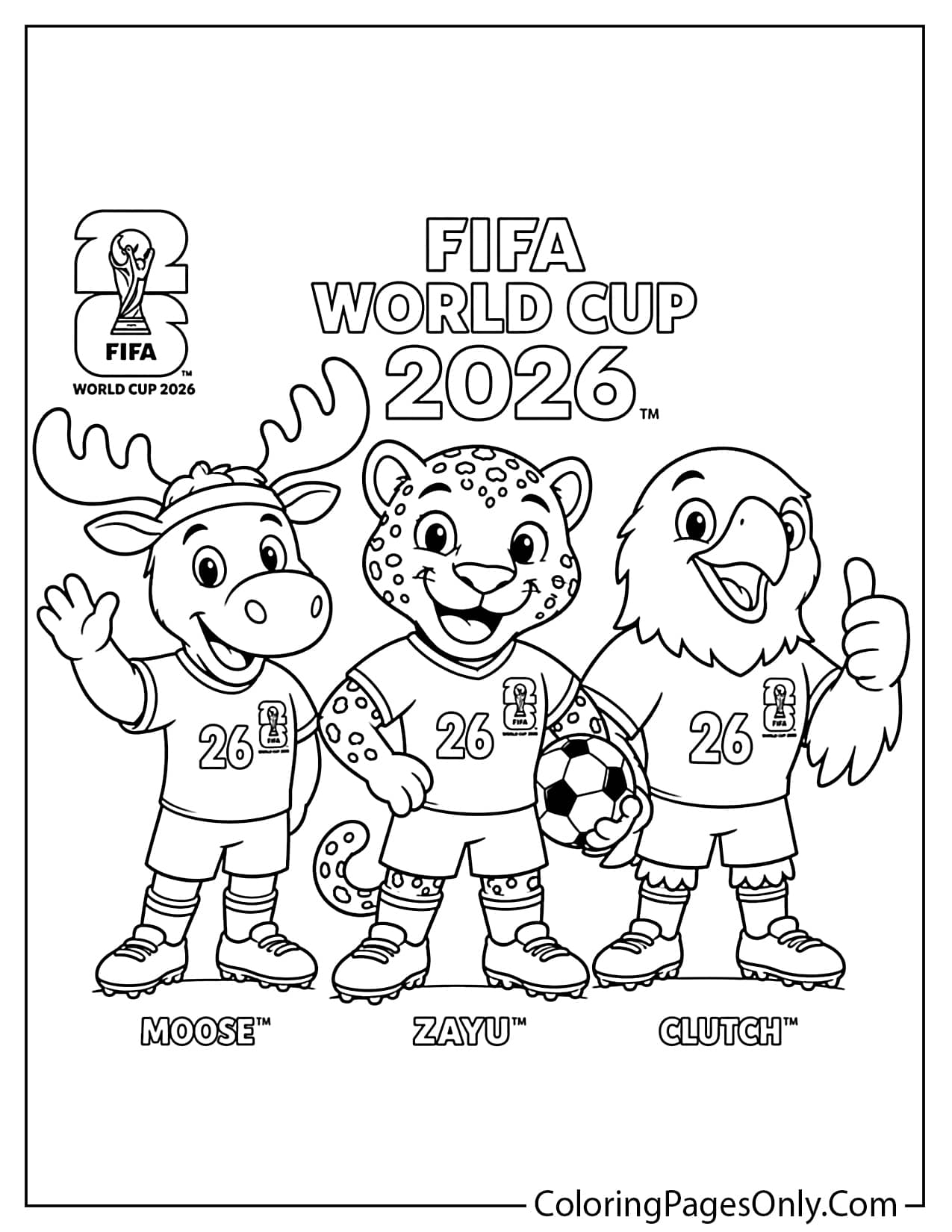
Separate host-country themes with clear color families. Canada-inspired pages can use red, white, and maple-leaf accents; Mexico-inspired pages can use green, white, red, and festive pattern details; United States-inspired pages can use red, white, blue, stars, and stadium lights. Keep the symbols general and child-friendly, especially when avoiding official logos, official mascot designs, or exact tournament marks.
5 Creative Craft Ideas
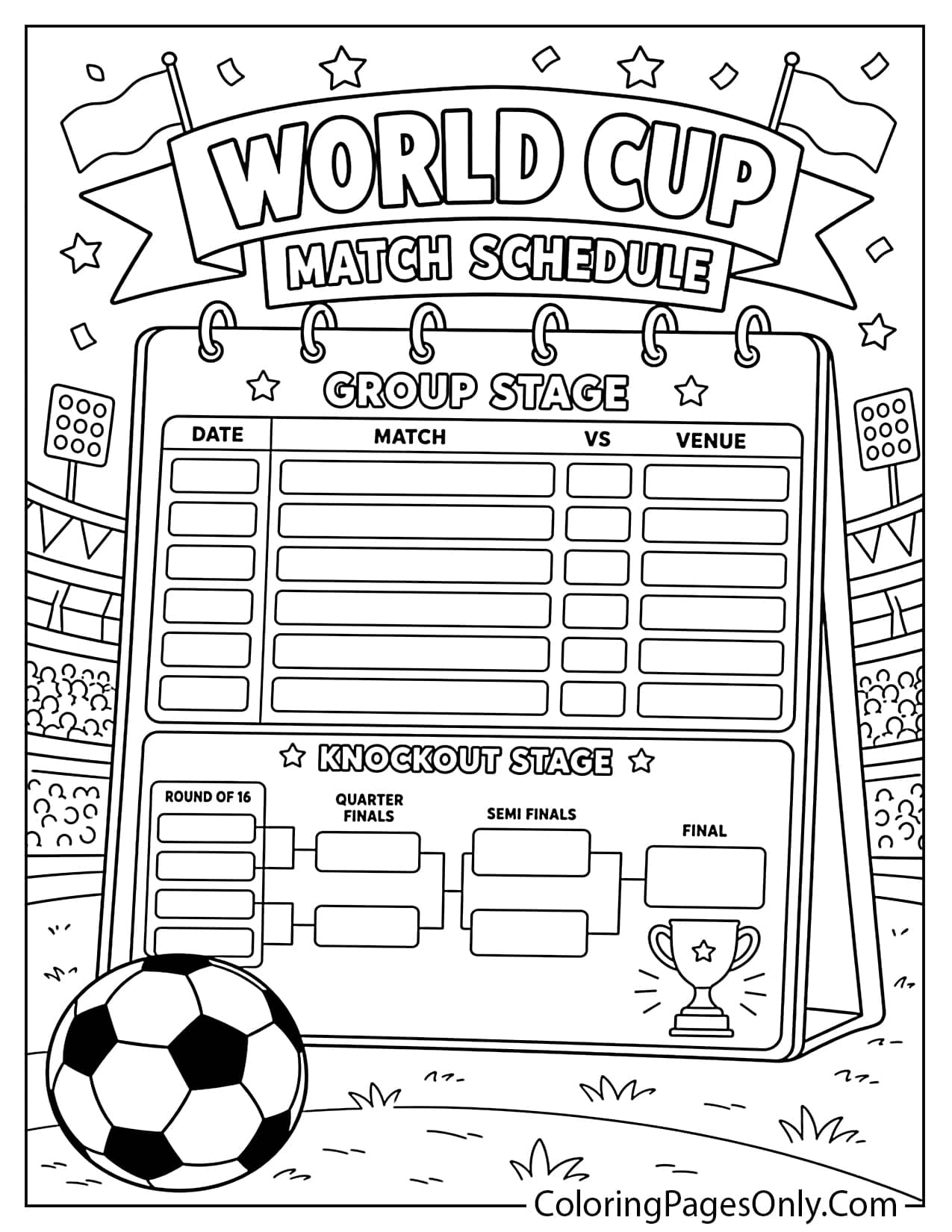
World Cup Match Bracket Board
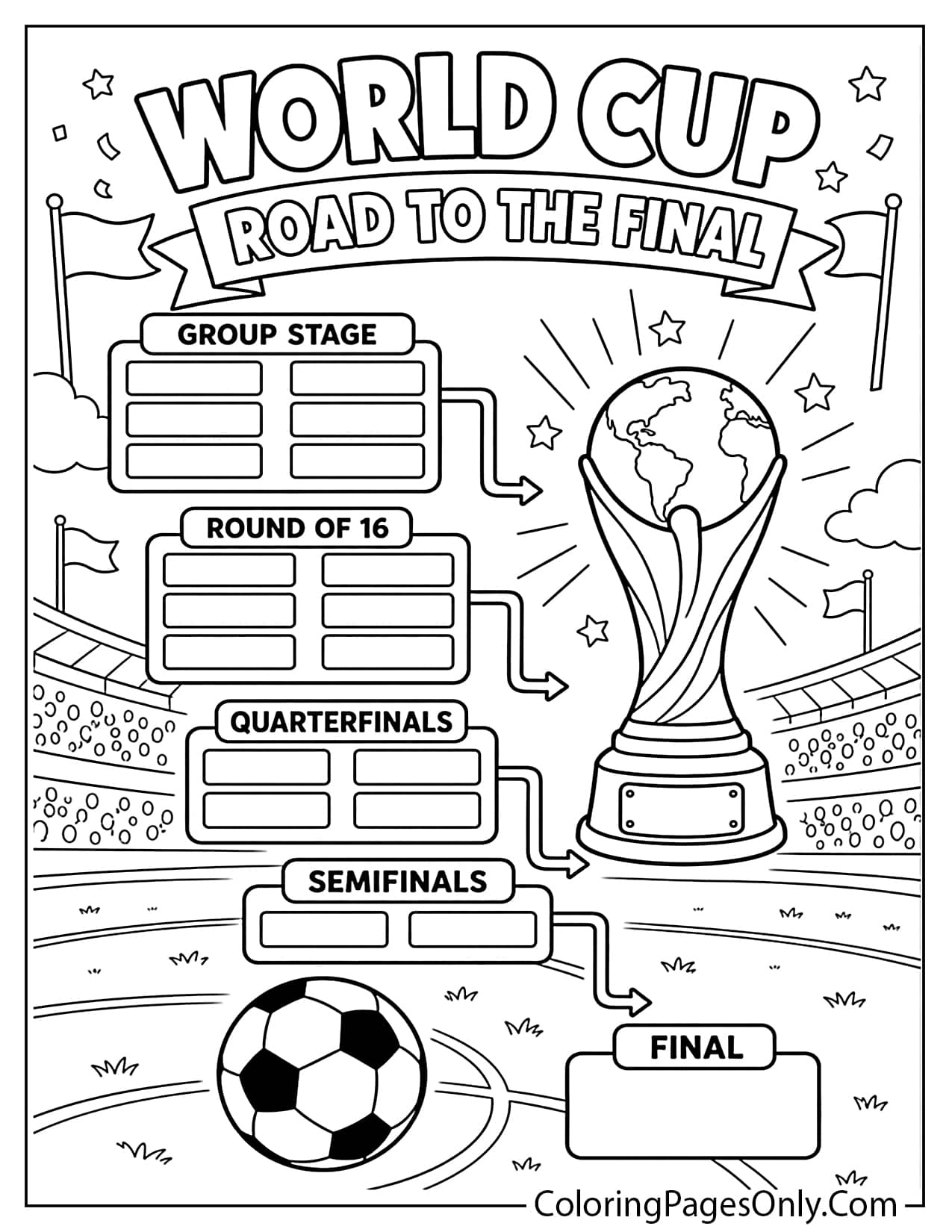
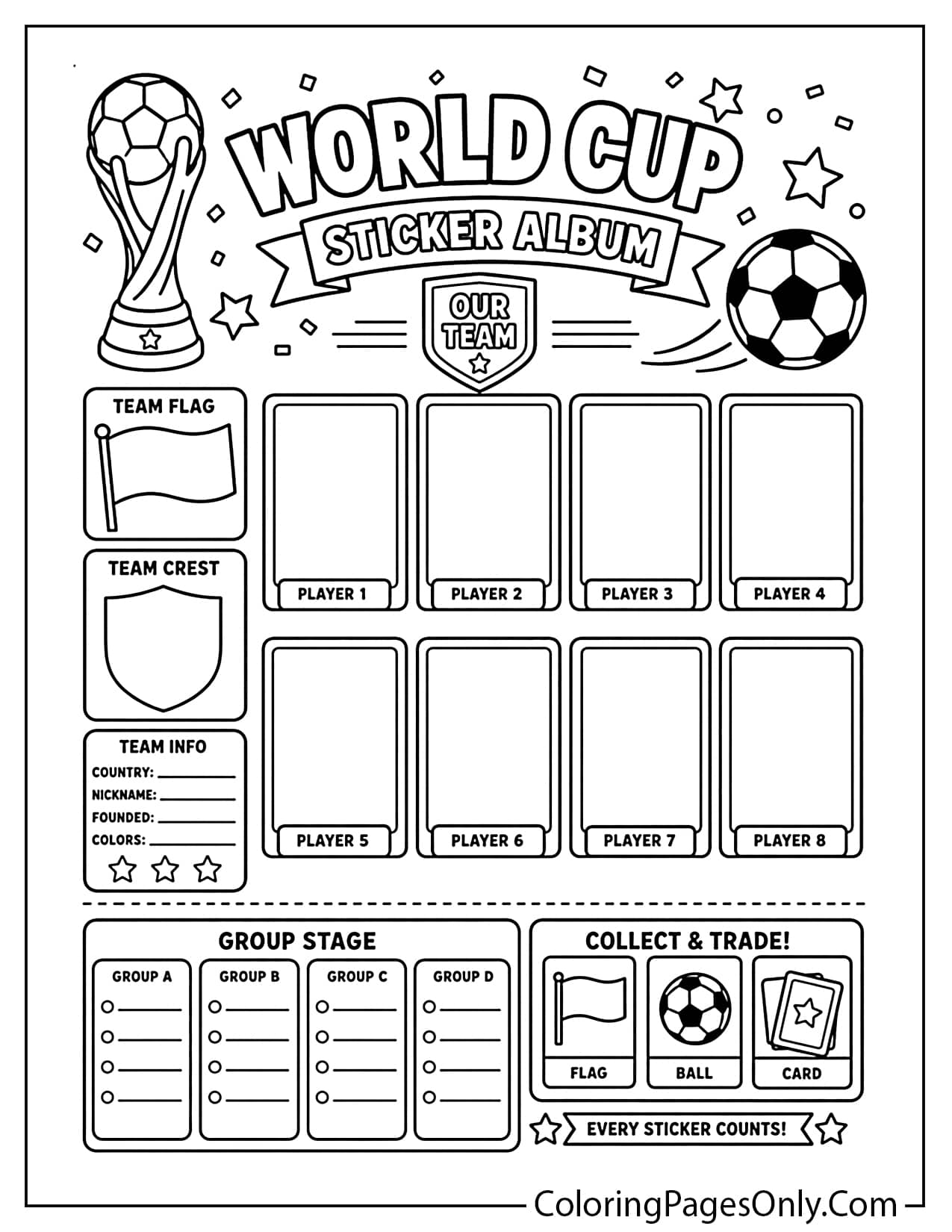
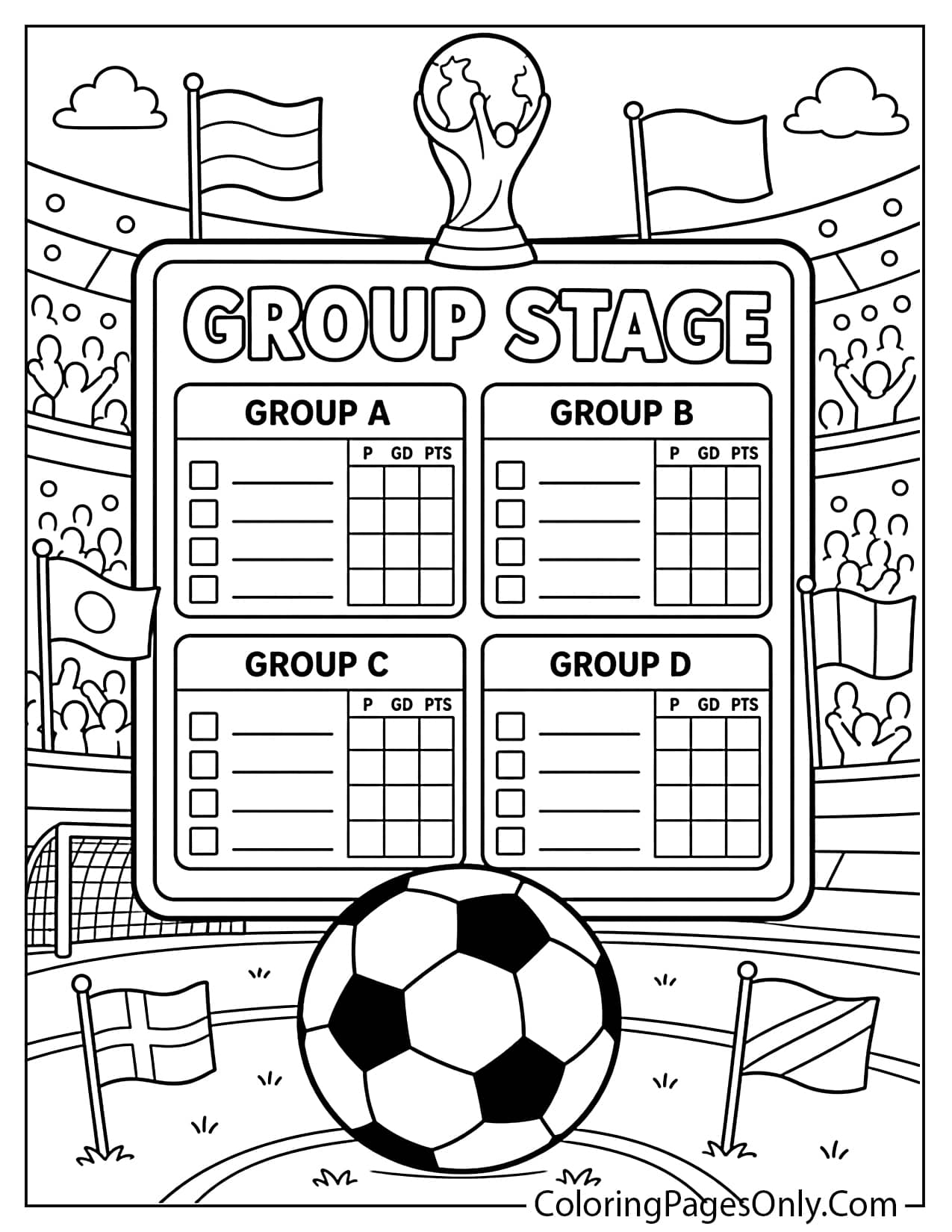
Use bracket, group-stage, match schedule, and knockout coloring pages to build a classroom tournament board. Materials include printed pages, poster board, scissors, glue, markers, and small sticky notes. Children color the bracket page first, then add team names, blank flags, or country cards around it. As matches progress, they can move teams forward through the bracket or create a pretend tournament for classroom play. This craft works well for ages 8–13 because it combines coloring with sequencing, geography, prediction, and sports vocabulary. The finished board can stay on a classroom wall throughout the tournament.
Design Your Own Soccer Jersey
Use the jersey design coloring page to let children create a team shirt. Materials include printed jersey pages, crayons, colored pencils, markers, and optional stickers. Children choose two or three team colors, add a number, draw stripes or patterns, and write a short team name. Younger children can focus on bold color blocks, while older children can design a full kit with socks, shorts, and scarf colors. This project supports creativity, identity, pattern planning, and sports design. It is also a good family activity during a match because each child can create a different team.
World Cup Host Countries Map
Use host-country, map, and flag pages to create a North America-themed geography craft. Materials include a printed map page, colored pencils, glue, small labels, and a larger sheet of paper. Children color Canada, Mexico, and the United States in three different color families, then add soccer balls or stadium markers near the host areas. Older children can label the countries and write one sentence about each host. This craft connects soccer excitement with geography and cultural awareness. It works best for ages 7–12, especially in classrooms preparing lessons around the 2026 tournament.
Goal Celebration Pop-Up Card
Use a striker goal, a goalkeeper save, a trophy celebration, or a podium page to create a pop-up card. Materials include cardstock, scissors, glue, crayons, and a folded background sheet. Children color and cut out the soccer player, ball, or trophy, then attach the figure to a folded paper tab inside the card. When the card opens, the player or trophy pops forward from the stadium background. This project is suitable for ages 6–10 with adult help for cutting. It teaches basic paper engineering, depth, and storytelling while keeping the soccer theme active and cheerful.
World Cup Fan Flag Garland
Use fan flags, soccer balls, scarves, and stadium crowd pages to make a garland. Materials include printed pages, string, tape or hole punch, crayons, and safety scissors. Children color several small flags or soccer symbols, cut them into triangles or rectangles, and attach them along a string. The garland can decorate a classroom, sports corner, family watch-party table, or bulletin board. This craft is simple enough for ages 4–8 and encourages color choice, pattern recognition, and group participation. It also helps young children feel included in the tournament without needing to understand every rule of soccer.
Frequently Asked Questions
What is the World Cup?
The World Cup is an international soccer tournament contested by men’s national teams. FIFA organizes it and usually takes place every four years. Teams qualify through regional competitions before reaching the final tournament. In this coloring collection, the World Cup appears through soccer players, stadiums, trophies, fans, flags, host-country scenes, brackets, and match moments.
When did the World Cup begin?
The first FIFA World Cup was held in 1930 in Uruguay. Uruguay also won that first tournament, making it an important country in early World Cup history. Since then, the tournament has grown into one of the most-watched sporting events in the world. The 2026 edition continues that growth with a larger team field and three host countries.
What is special about the 2026 World Cup?
The 2026 World Cup is special because Canada, Mexico, and the United States will host it. It is the first World Cup held across three host countries and the first to include 48 teams. The tournament will include 104 matches across 16 host cities, which is a major expansion from previous editions. That makes it a strong theme for coloring pages about soccer, flags, travel, stadiums, brackets, and global celebration.
What kinds of World Cup scenes are included in these coloring pages?
The collection includes soccer players, stadiums, goal celebrations, penalty shootouts, goalkeeper saves, trophies, medals, fan flags, kids playing soccer, host-country scenes, match schedules, and 2026-inspired pages. Some pages are simple, such as soccer balls and goal nets, while others include detailed stadium crowds, action scenes, or bracket layouts. This range helps families and teachers choose pages for different ages and activity types. It also lets children color both the sport itself and the culture around the tournament.
Why do World Cup coloring pages often include flags, stadiums, and trophies?
Flags show that the World Cup is an international tournament, not just a single-team event. Stadiums help show the scale of the matches and the energy of the crowd. Trophies and medals represent achievement, teamwork, and the final goal of the competition. Together, these details make the pages feel connected to the real tournament atmosphere.
What soccer skills can children learn from these pages?
Children can learn visual ideas connected to dribbling, passing, shooting, goalkeeping, heading, defending, corner kicks, free kicks, and penalty shootouts. The pages are not formal coaching diagrams, but they introduce soccer vocabulary in a visual way. A goalkeeper page can show reaction and reach, while a free kick page can show spacing and aim. Team huddle, captain, referee, and handshake pages can also introduce sportsmanship, leadership, rules, and cooperation.
What age group are these World Cup Coloring Pages best suited for?
The simplest soccer ball, flag, jersey, and goal-net pages can work from about age 3 with thick crayons and adult supervision. Pages with full stadiums, action scenes, brackets, players, referees, and trophy ceremonies are better for ages 7–12 because they include smaller details and more structured spaces. Older children, teens, and adults can use the more detailed pages for shading, team-color design, and tournament crafts. The best page depends on outline complexity and the child’s patience level.
Can these pages be used in classrooms during the World Cup 2026?
Yes. Teachers can use World Cup pages for geography lessons, sports vocabulary, flag activities, bracket boards, classroom decorations, and quiet coloring time. A host-country map page can support a lesson about Canada, Mexico, and the United States. A bracket page can help children understand sequence and tournament structure. A fan flag, garland, or jersey design project can turn the collection into a group activity before or during match days.
World Cup coloring pages carry the feeling of a tournament without needing a screen: the ball at the center, the crowd around the field, the flag in a child’s hand, and the moment just before a shot reaches the goal. The 2026 tournament adds even more visual possibilities with three host countries, 48 teams, a larger match schedule, and a wider global stage.
Browse the full collection at ColoringPagesOnly.com. All 30+ pages free, no sign-up, PDF or PNG, print at home or color online.
These pages fit many real moments: a classroom countdown, a family watch party, a geography lesson, a sports unit, or a quiet afternoon between matches. They also give children a way to understand soccer through color, pattern, motion, and celebration.
For the final pass, keep the soccer ball clear, the field lighter than the players, and trophy highlights bright. A few clean white spaces can make the whole page look sharper.
Share your work on Facebook and Pinterest and tag #Coloringpagesonly. We especially want to see your World Cup Match Bracket Board and World Cup Fan Flag Garland.