Broken Hearts Coloring Pages
 By:
Jennifer Thoa - Content Editor & Designer
Updated:
By:
Jennifer Thoa - Content Editor & Designer
Updated:
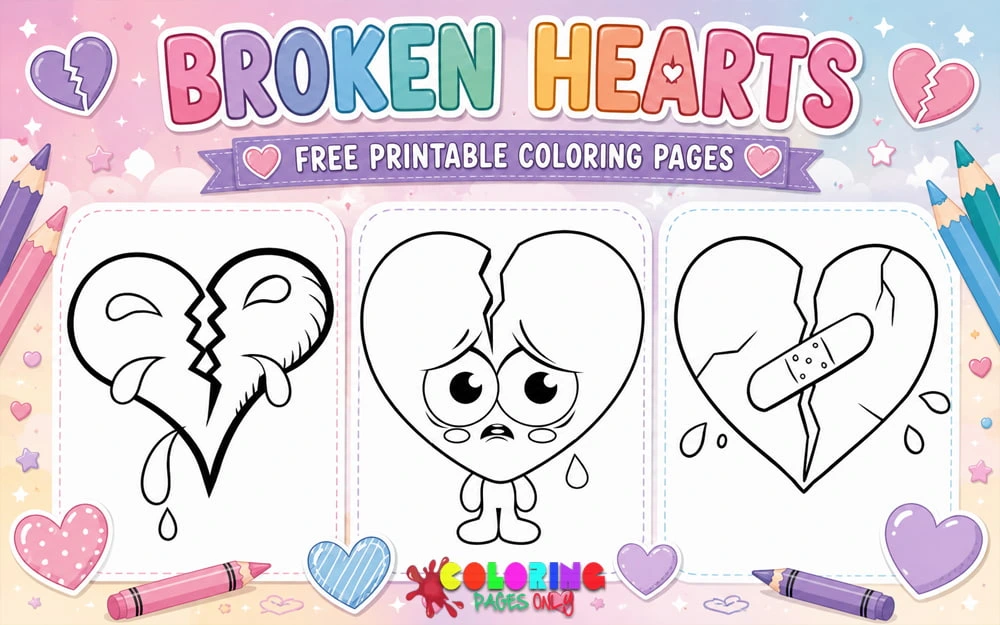
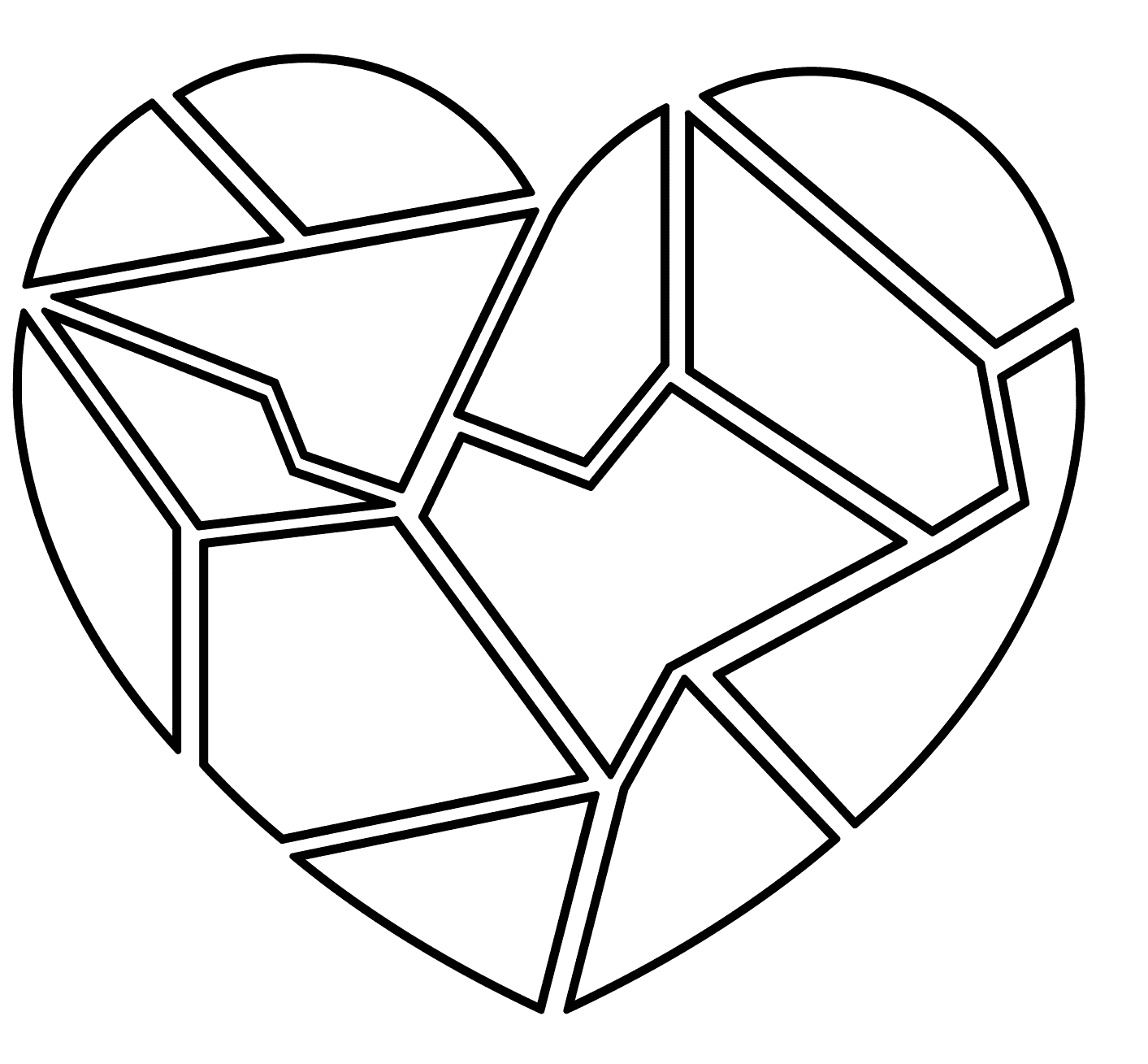
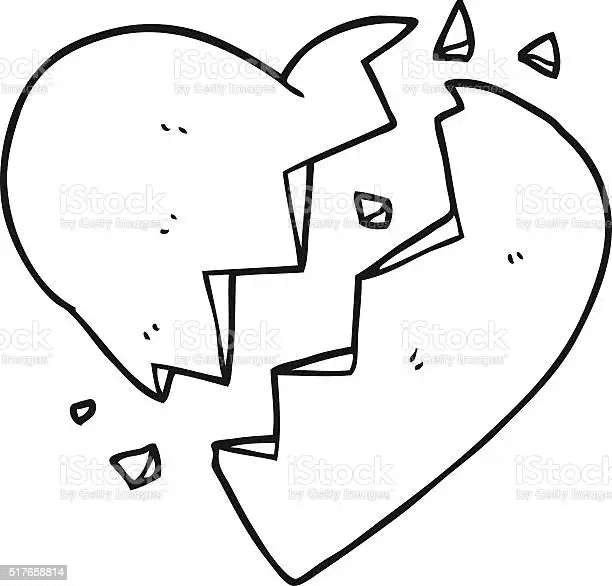
Broken hearts coloring pages: 24+ free printable PDF designs featuring broken heart symbols with stitches, bandages, plasters, lightning, and roses, alongside sad, cartoon, and icon variants. Every page is free to download as a PDF or color in the browser, with no account required.
The broken heart is one of the most recognized symbols in Western visual culture, used across art, tattoo design, and everyday communication. Most pages in this set show damage and repair in the same image: stitched, bandaged, patched.
These pages suit older children and adults interested in expressive or symbolic coloring and graphic design subjects.
The coloring challenge is unique to this set: most pages combine the red of a heart with at least one repair element in a contrasting material. Getting the warmth and value relationships between the red heart, the thread or bandage, and any background elements to read correctly is what separates a flat interpretation of these pages from an expressive one.


Quick Answer
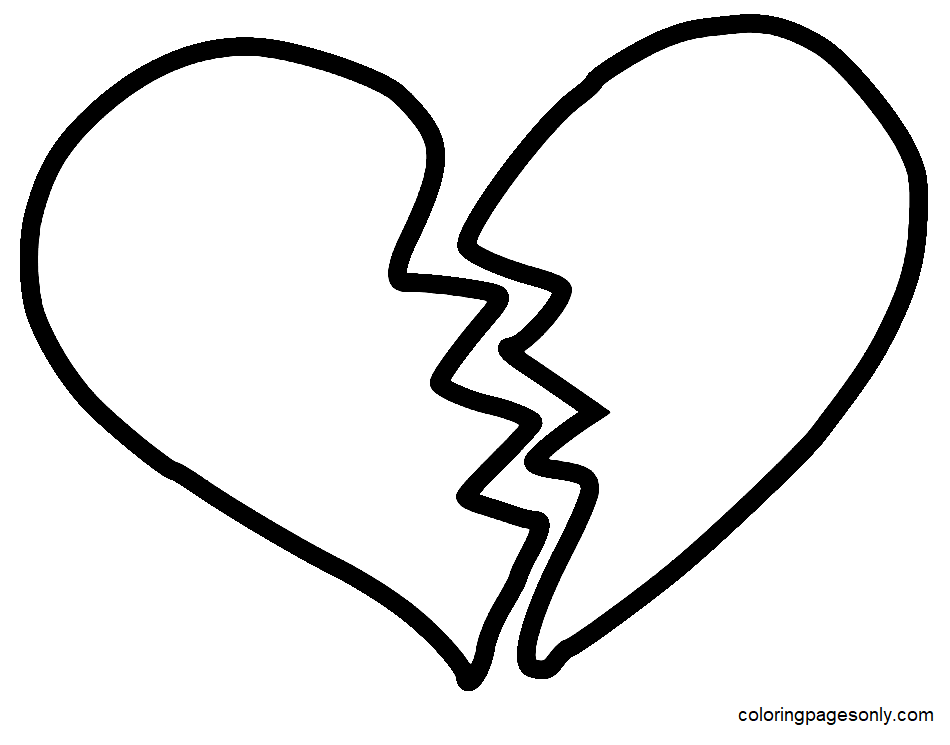
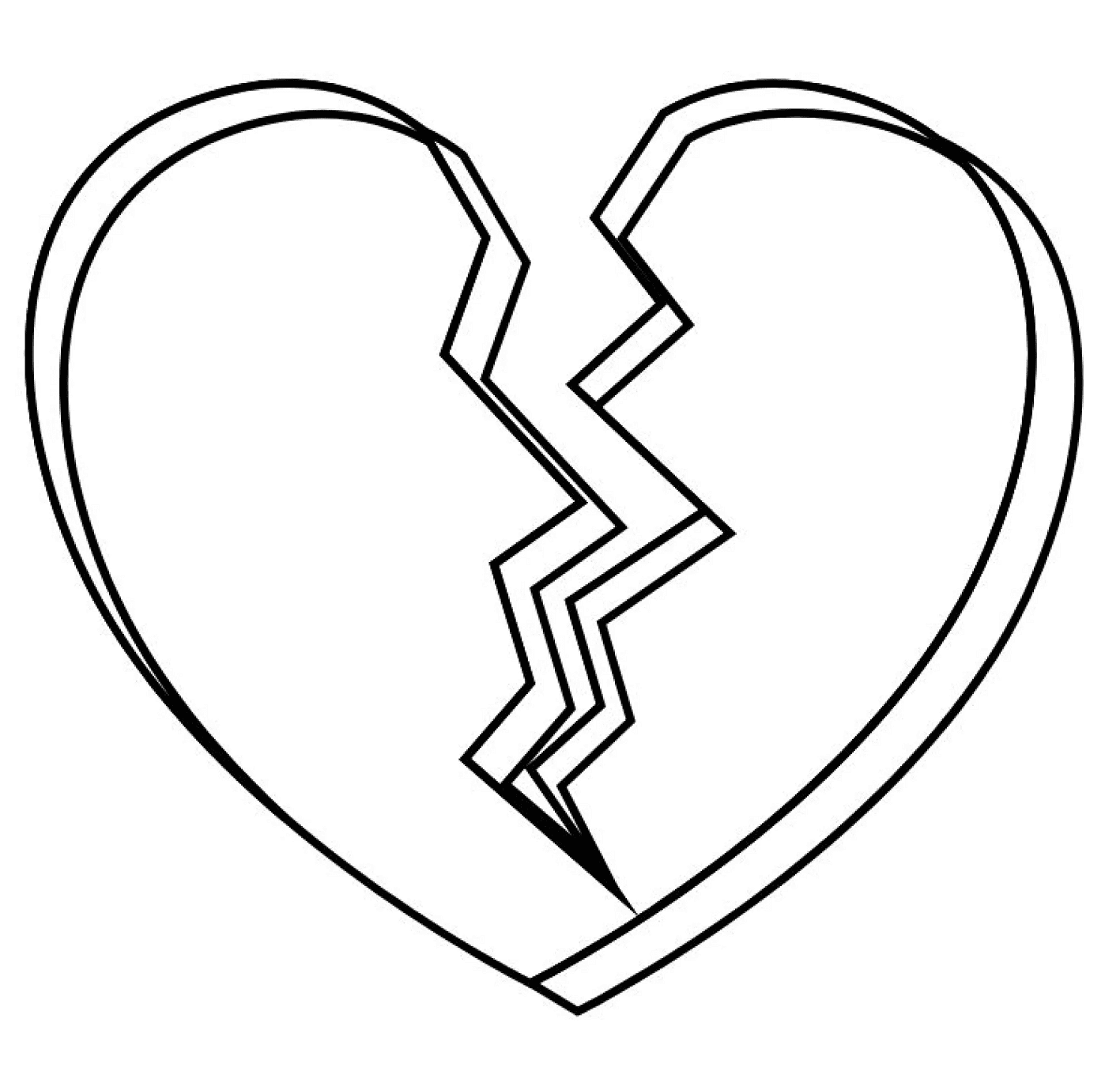
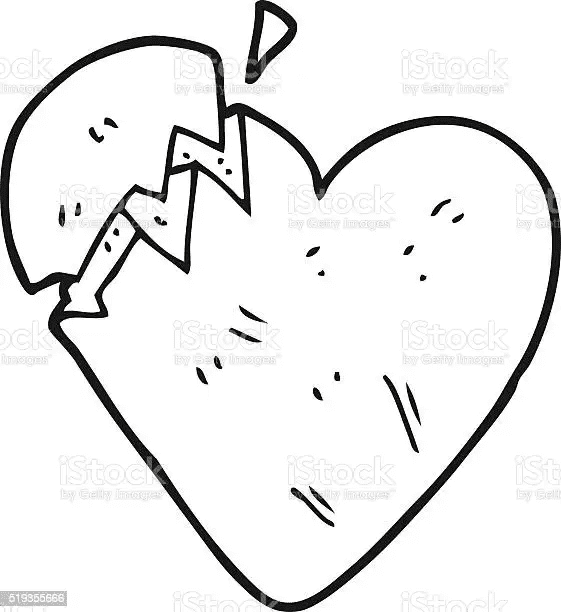
Broken hearts coloring pages are a free set of 24+ printable PDFs and browser-based coloring sheets featuring broken heart symbols with stitches, bandages, roses, and lightning, in graphic, cartoon, and decorative formats.
Best for: Older children and adults, expressive coloring enthusiasts, and anyone interested in symbolic graphic design, tattoo-style art, or emotional imagery
Formats: printable PDF and online coloring
Popular pages: heart with stitches, broken heart with bandage, broken hearts and roses, heart and lightning, and beautiful broken heart
Creative uses: a healing hearts display, a roses and broken hearts pairing, a repair symbols study, and a graphic design reference set
What’s Inside Broken Hearts Coloring Pages
The set covers the broken heart symbol across multiple visual registers, with a consistent focus on the combination of damage and repair elements that distinguishes it from purely negative broken heart imagery.
Broken Heart with Repair Elements
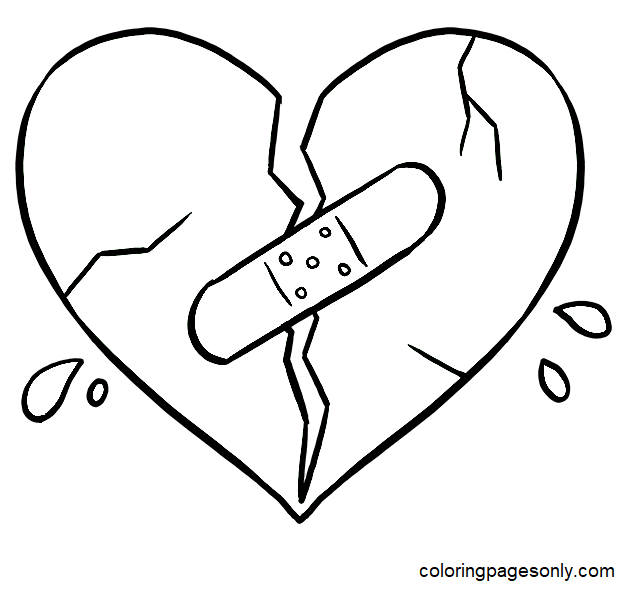
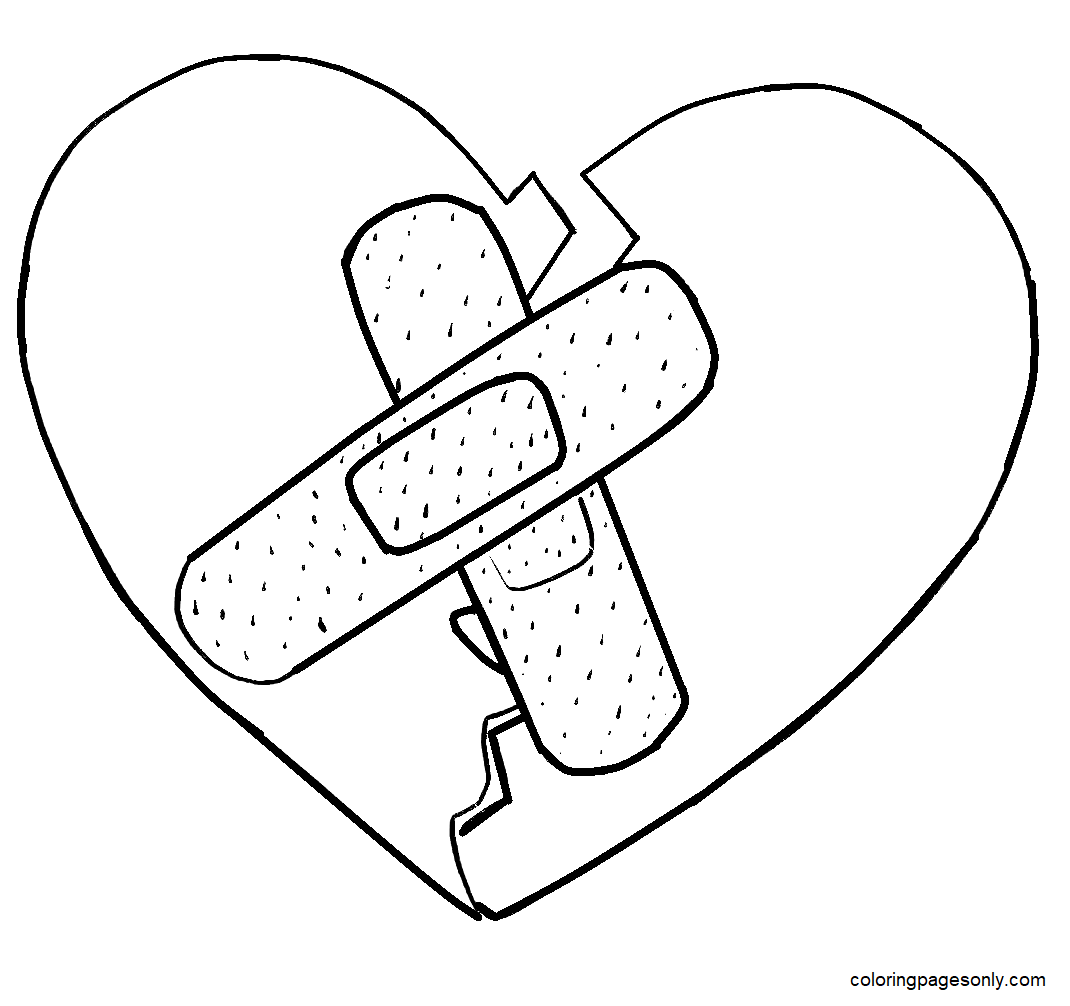
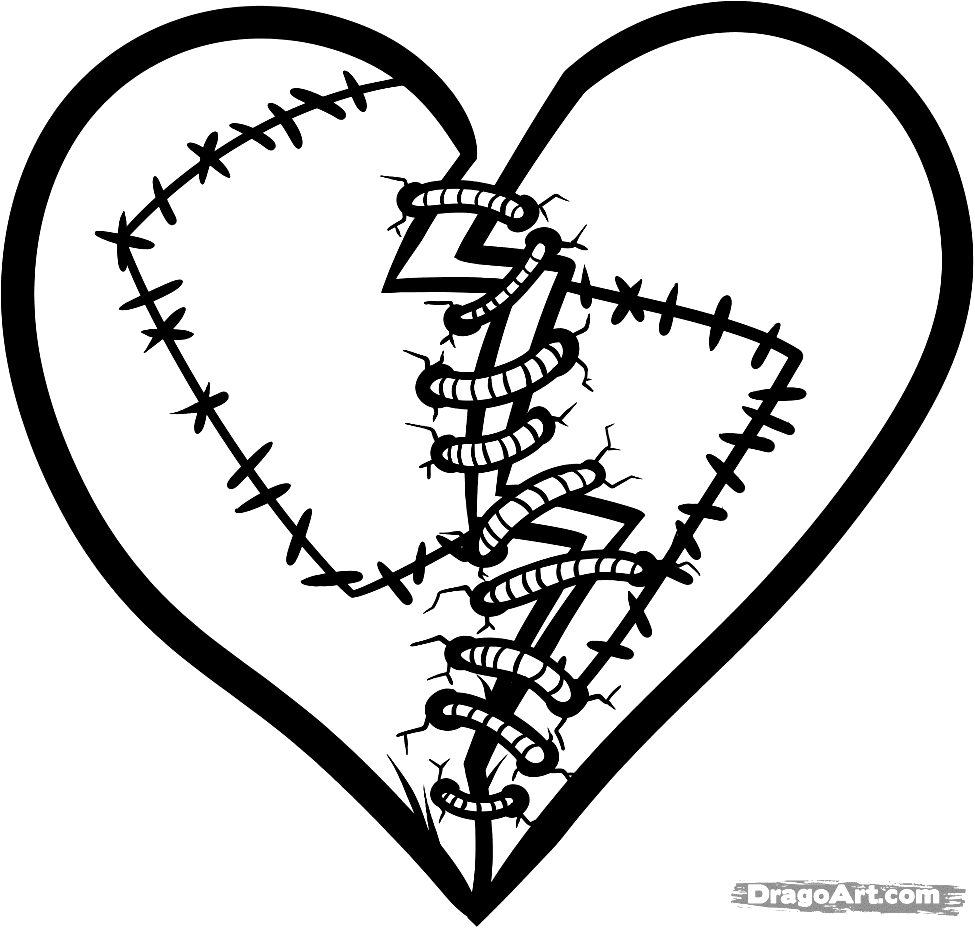
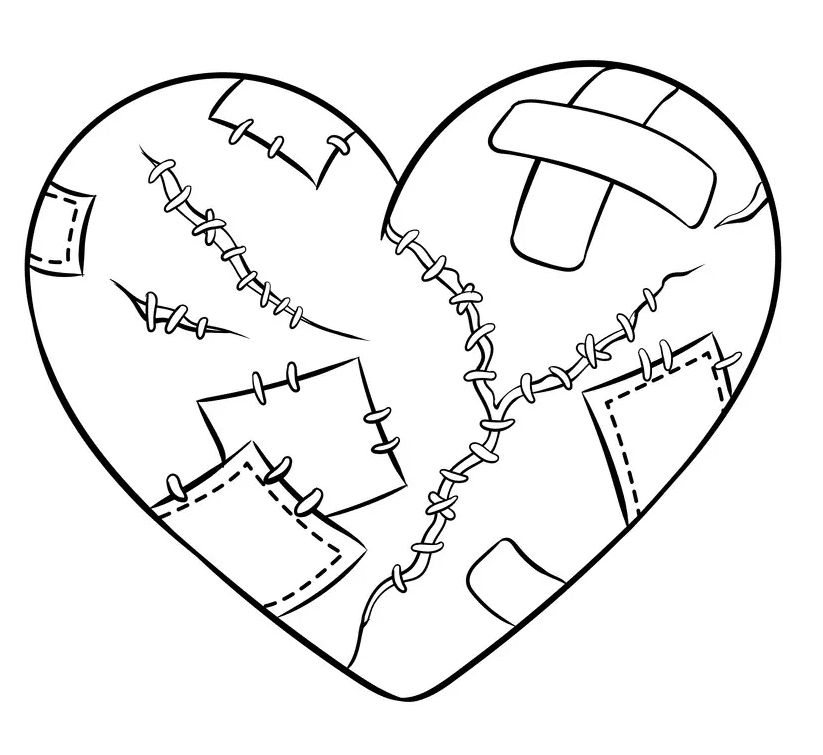
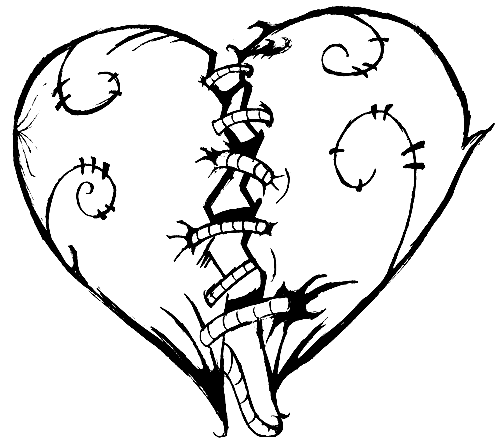
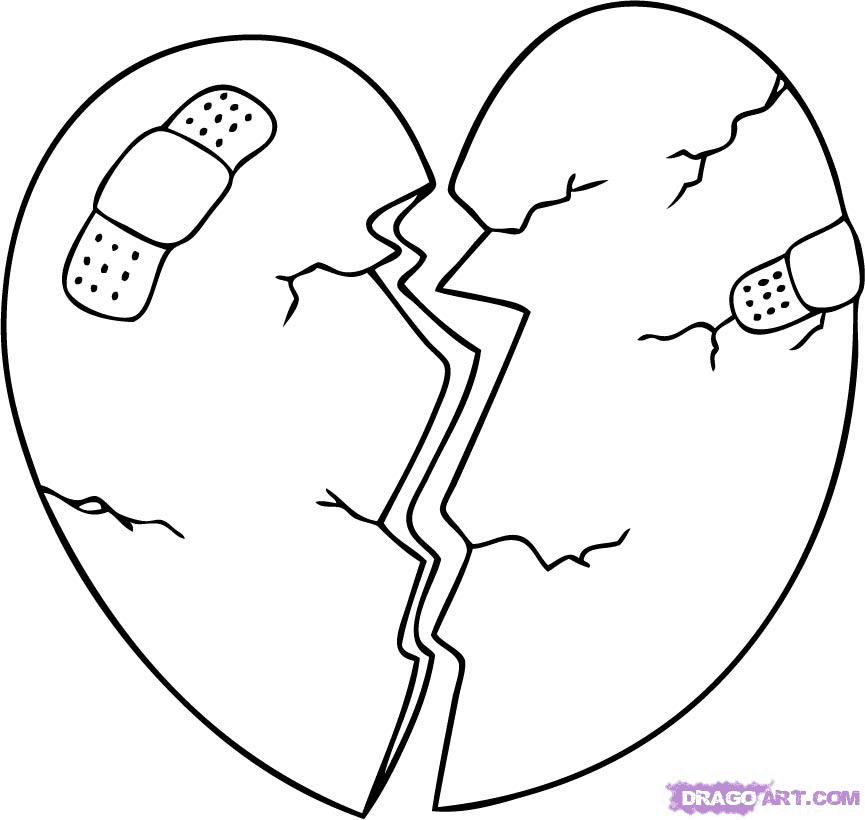
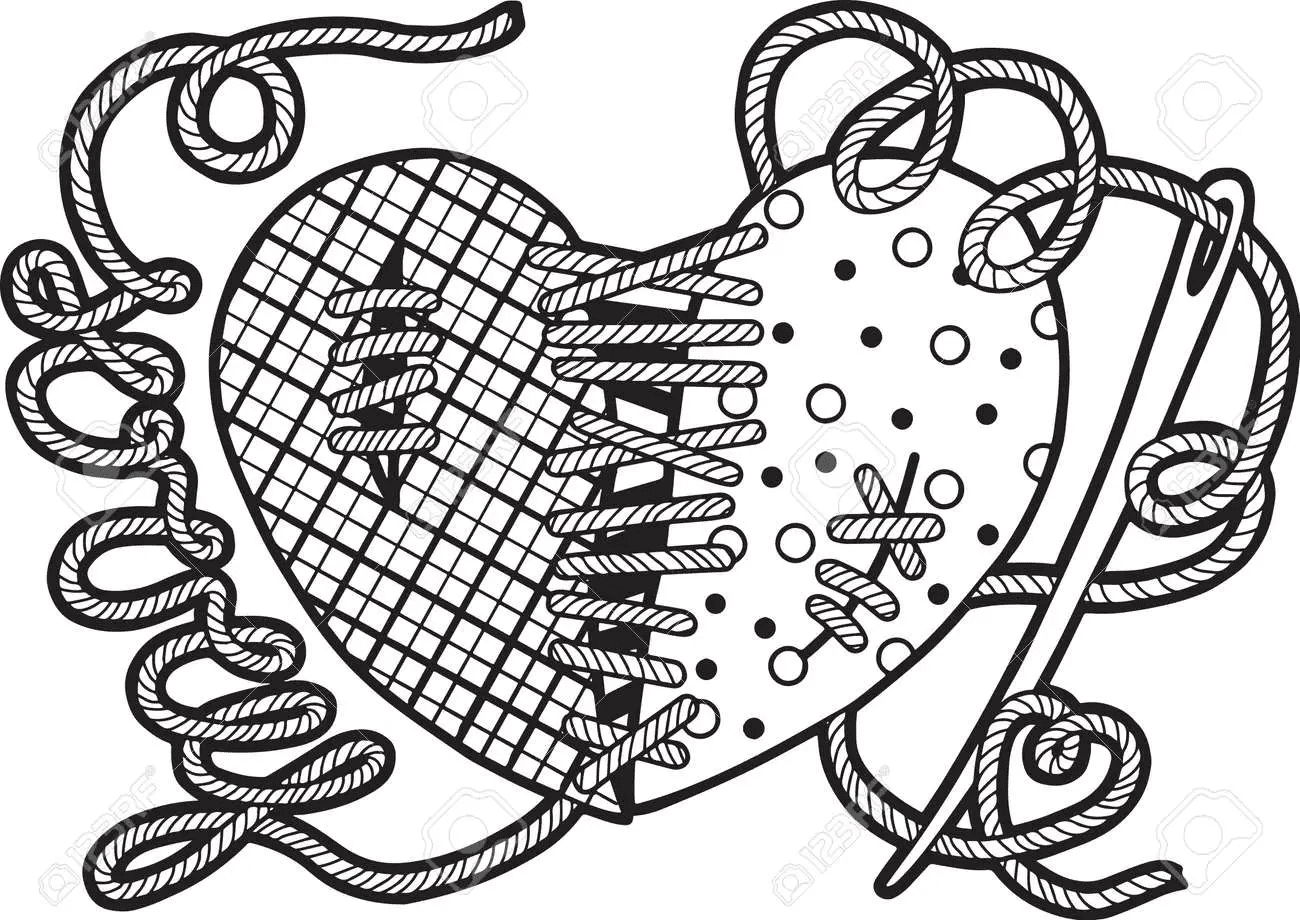
The most distinctive pages in the set show the broken heart in the process of being fixed: Heart with Stitches, Heart with Sewing Needle, Broken Heart with Plaster, Cool Broken Heart with Plaster, and Broken Heart with Bandage.
Coloring repair-element pages: each repair element has its own natural palette.
Stitches and sewing needle pages: the thread used to stitch a broken heart together can be any color, but the most expressive choices are either contrasting (white or yellow thread on a red heart) or matching (dark red thread on a red heart, barely visible but deliberate). A needle or thread in a warm gold works as a middle option that reads as deliberate care rather than quick repair. The stitches themselves should follow the crack line of the heart, and keeping them evenly spaced with consistent length reads as more careful and intentional than loose, irregular stitches.
Plaster and bandage pages: the standard plaster or bandage color is a warm beige or skin tone, a pale warm tan that sits distinctly apart from the red of the heart. White bandages read as clinical; warm beige reads as personal. On these pages, the small cross or dot detail on the plaster center gives a secondary color accent opportunity: a small warm orange or red cross on a beige plaster.
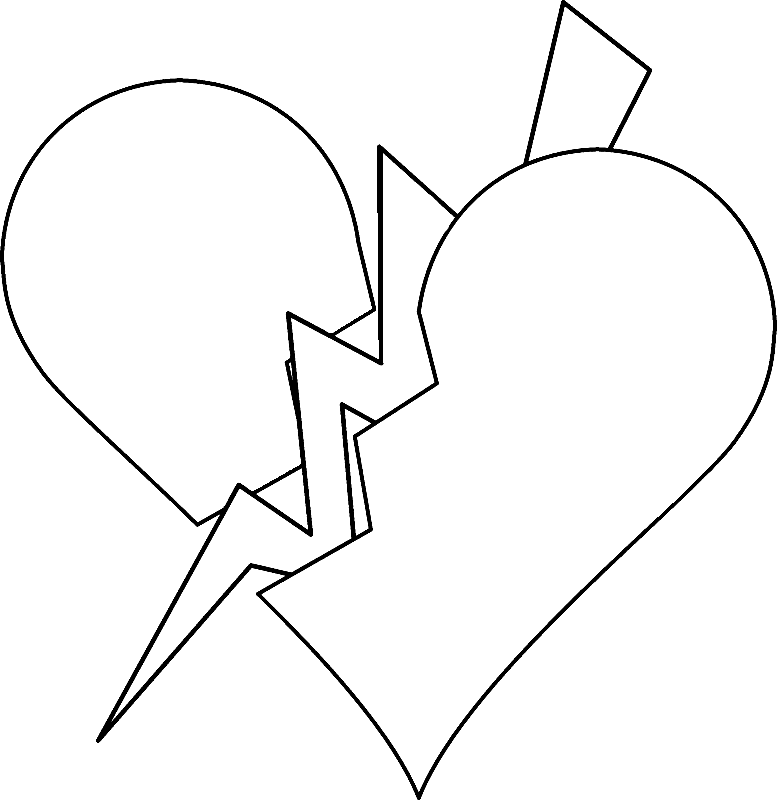
Heart and Lightning
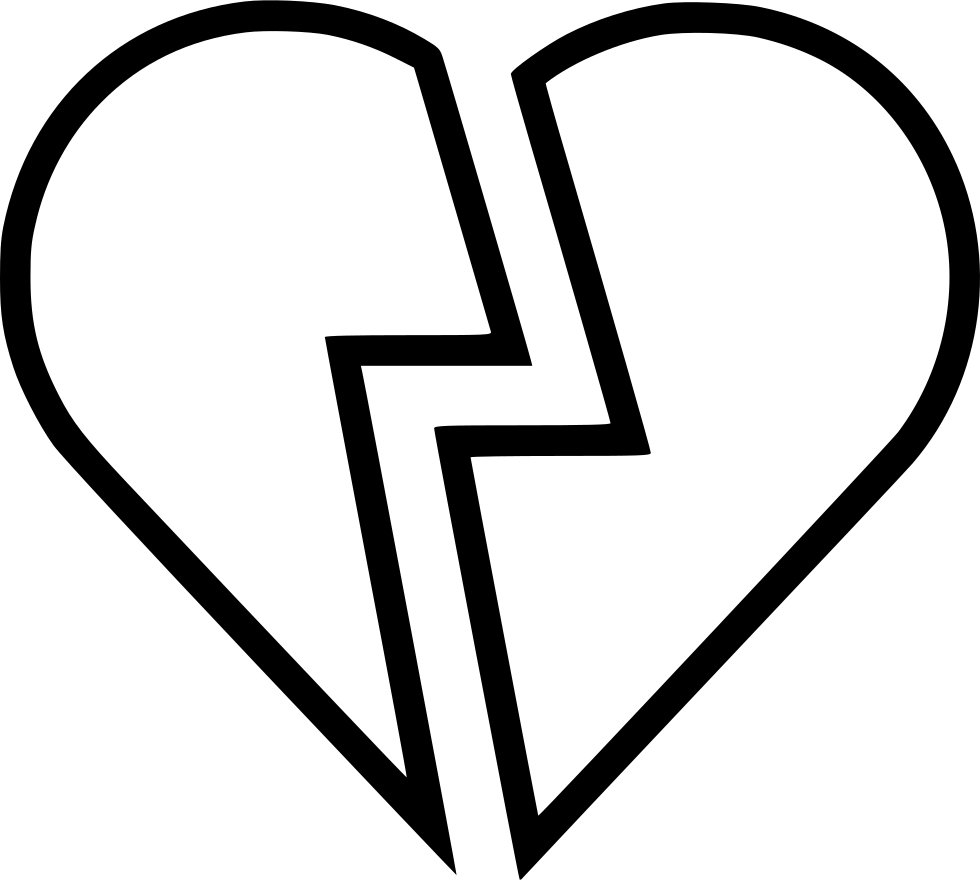
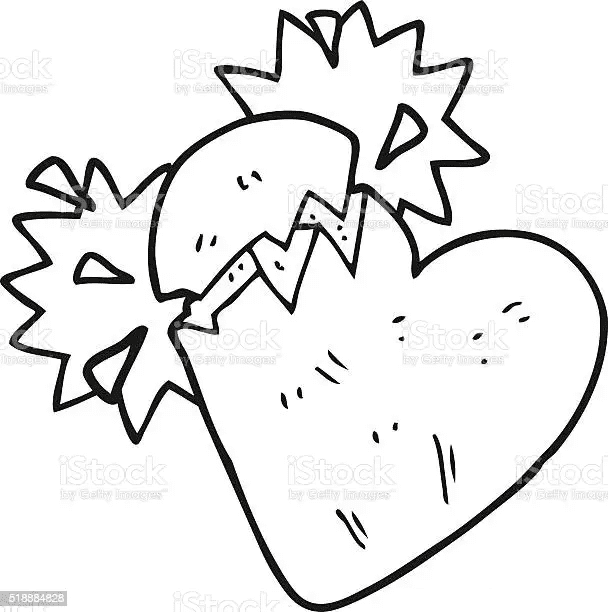
One page shows a heart with a lightning bolt element.
Coloring the lightning page: lightning can be read two ways on this page: as the thing that broke the heart (a strike of damage, cool white or blue-white) or as the energy inside a heart that still has power (warm yellow or gold). The choice of cool vs. warm for the lightning significantly changes the emotional reading of the page. Cool white or blue lightning reads as external damage. Warm gold or yellow lightning reads as internal energy. Both interpretations are valid, and neither is wrong.
Broken Hearts and Roses
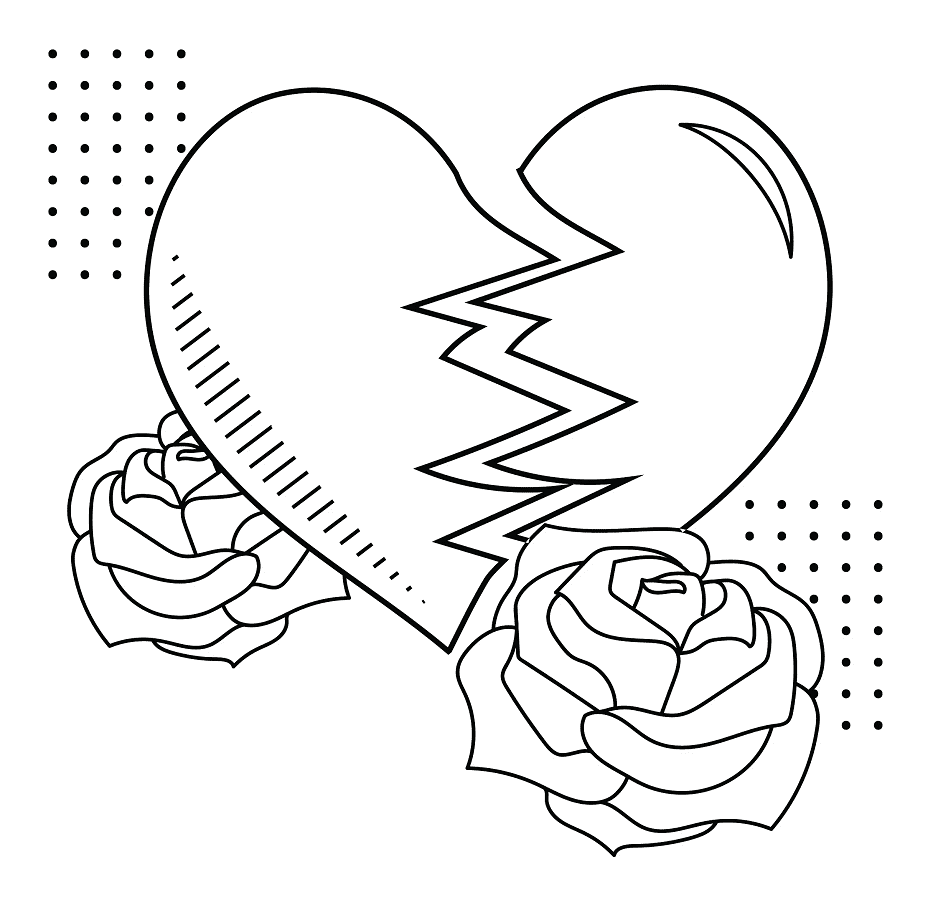
One page combines broken heart imagery with roses.
Coloring the roses and heart page: roses and broken hearts share the color red, which is the coloring challenge on this page. Using two clearly different reds (a more orange-red for the roses, closer to real rose color, and a cooler, more vivid red for the heart) keeps both elements readable as distinct subjects. Alternatively, using a contrasting palette for the roses entirely (pale pink, deep burgundy, or white) lets the red heart remain the visual anchor. Green rose stems and leaves ground the composition and provide the only natural relief from the red-dominant palette.
Sad and Cartoon Variants
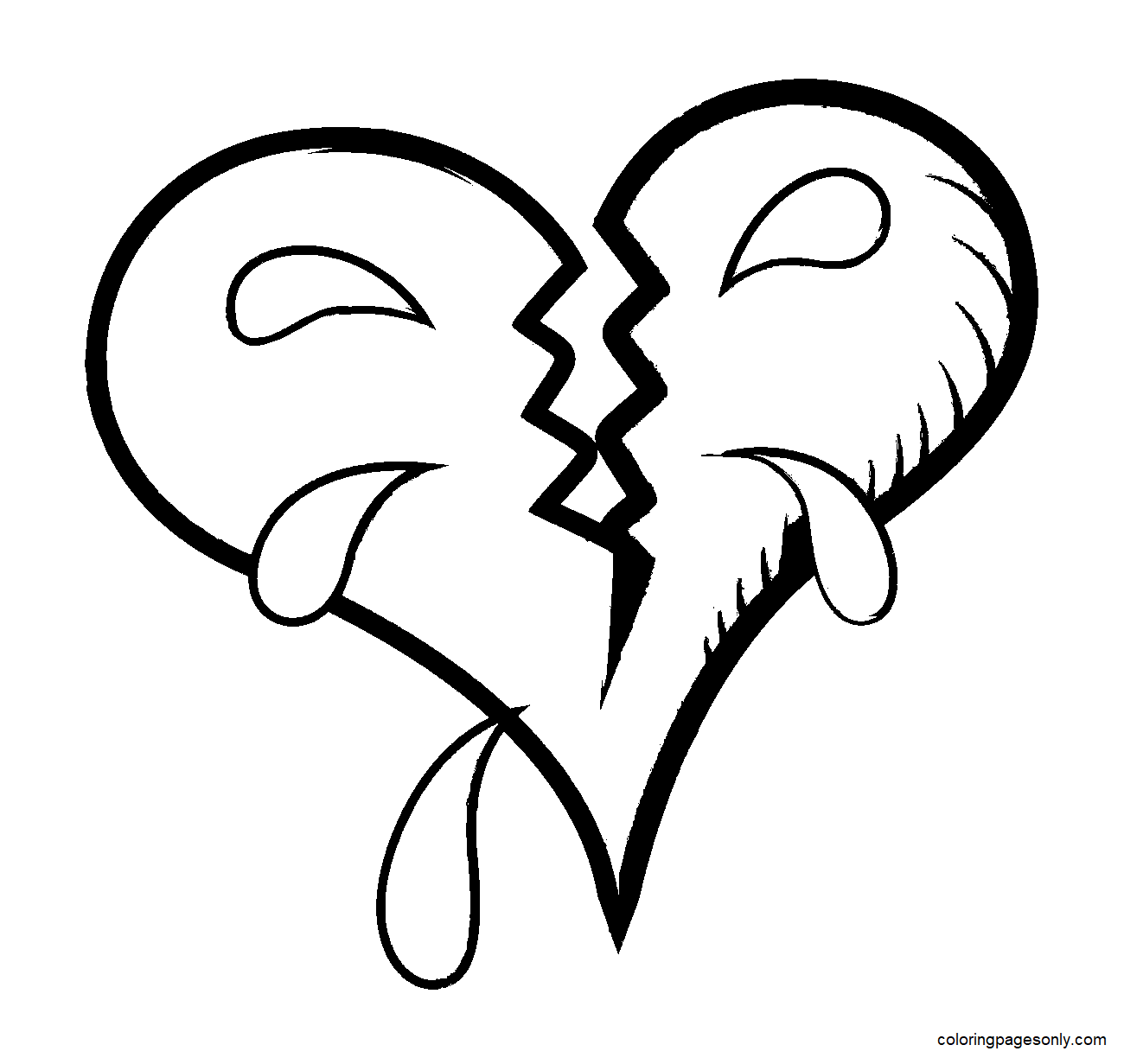
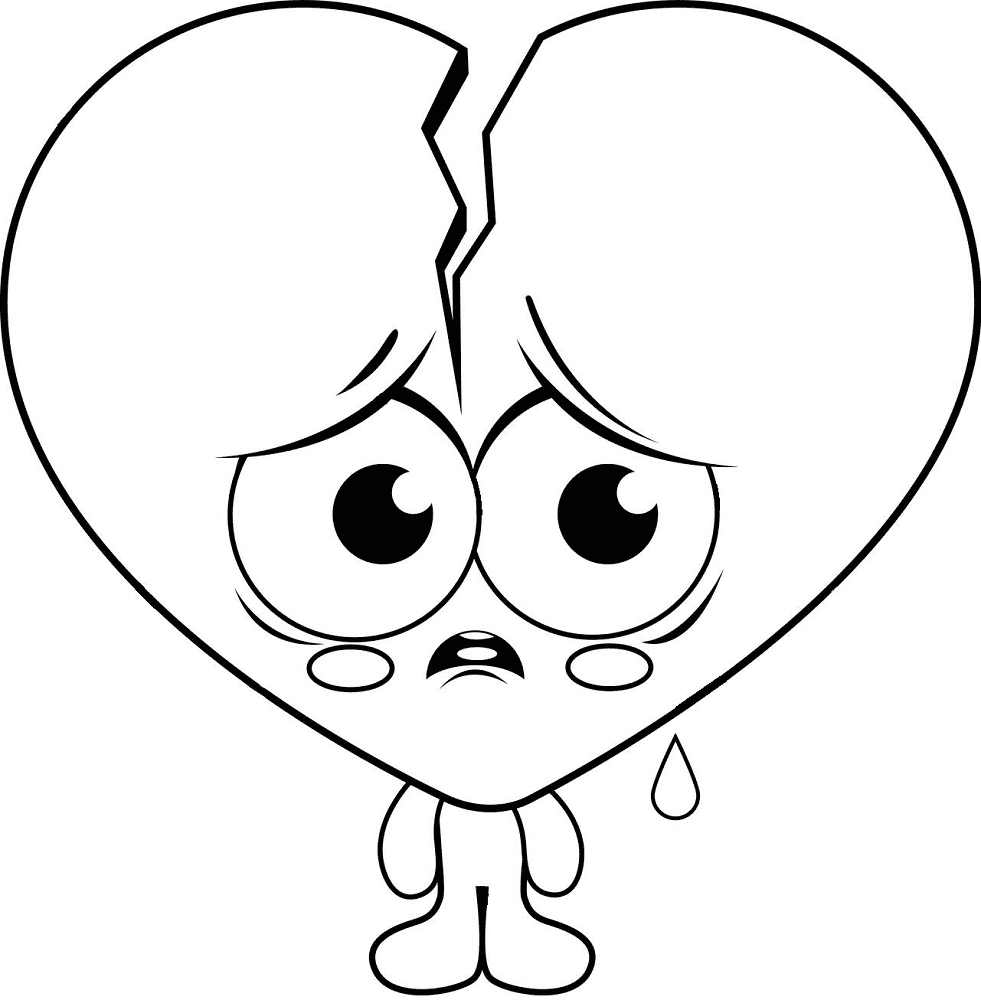
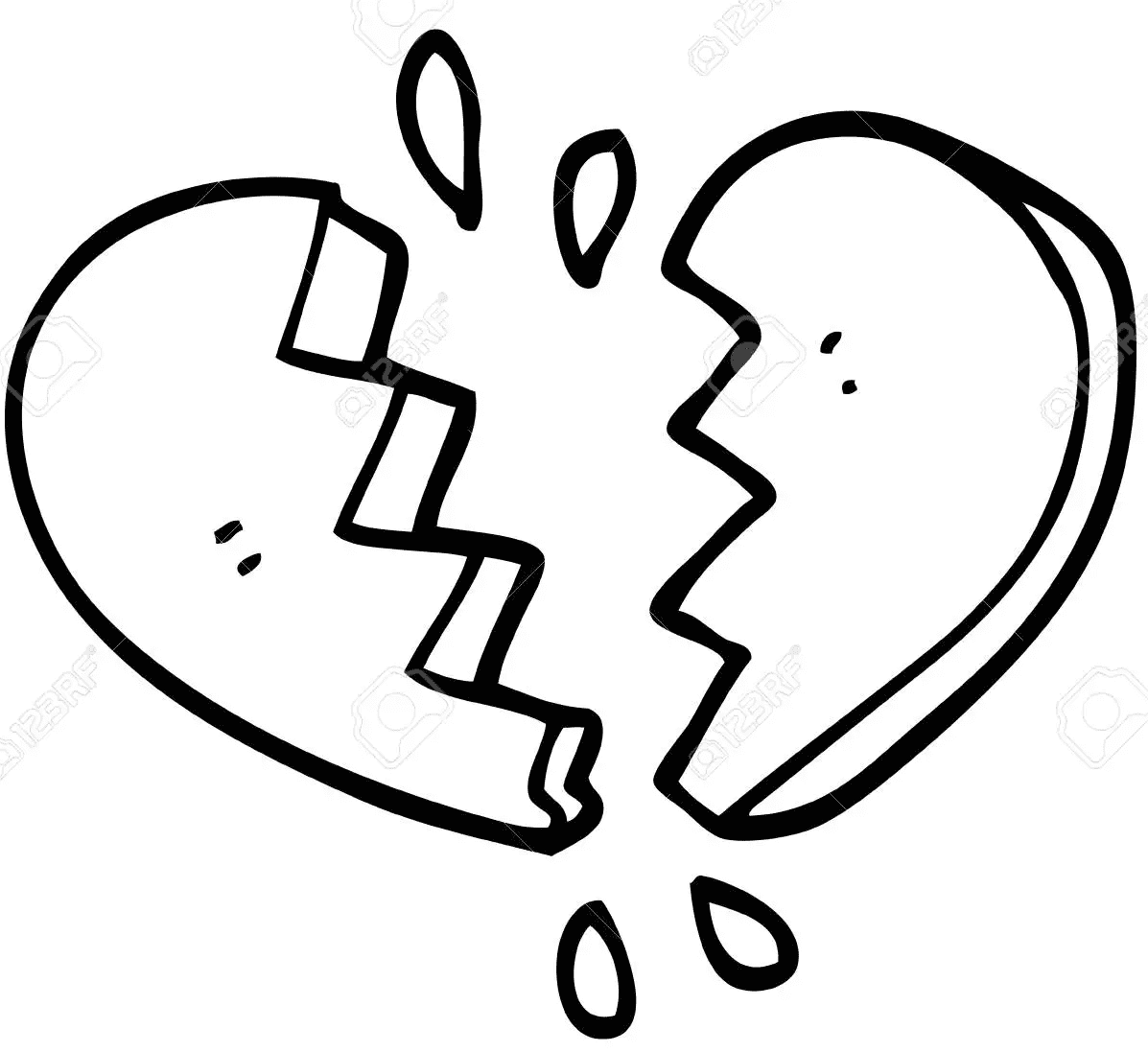
Two pages present softer, more accessible approaches: a sad, broken heart and a cartoon broken heart.
Coloring sad and cartoon pages: the sad broken heart typically adds a teardrop element to the symbol, requiring a blue-grey or pale blue for the tear against the red heart. The cartoon broken heart simplifies the form and may use more expressive, less realistic proportions. Both pages work with less saturated, slightly cooler reds than the more graphic pages: a slightly muted, warmer red reads as sad or soft rather than vivid and intense.
Graphic and Icon Pages
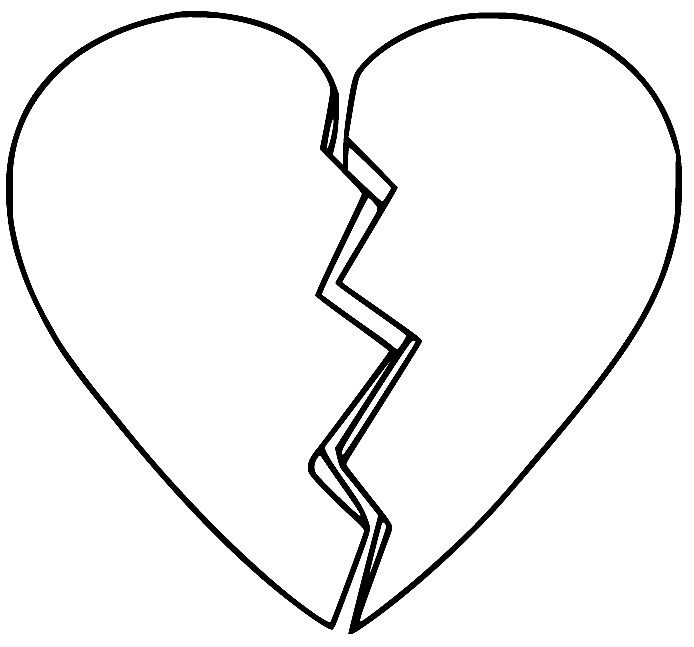
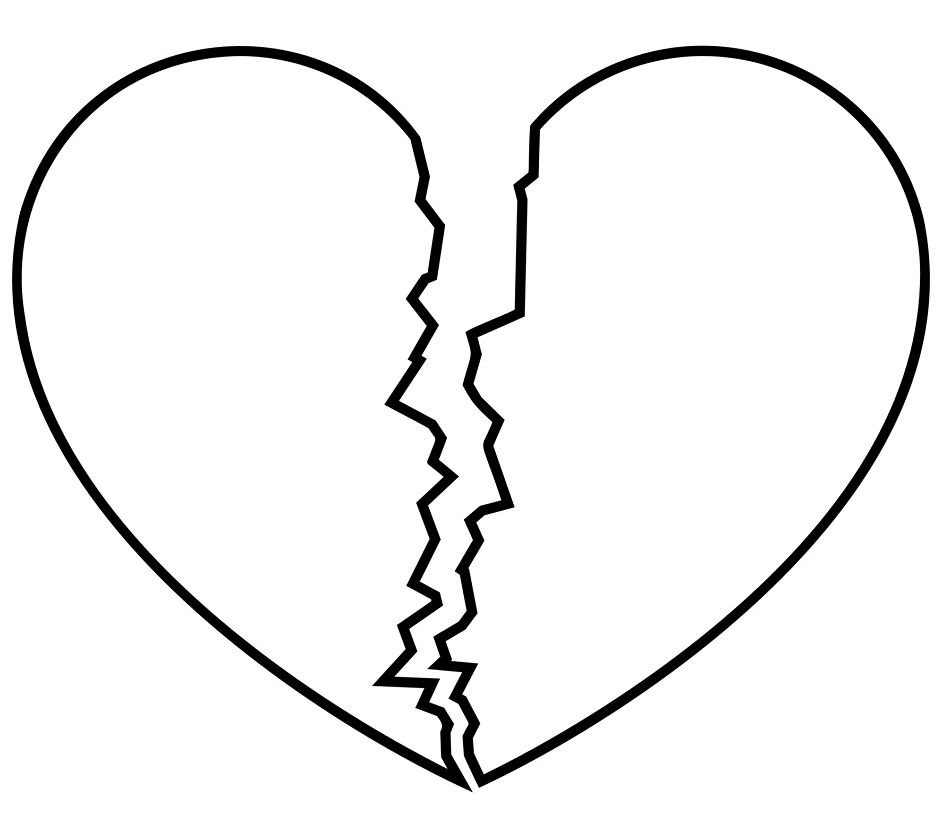
Several pages present the broken heart in clean graphic and icon formats: heart icon, beautiful heart, and several printable and downloadable variants in standard compositions.
Coloring graphic pages: icon and clean-format pages work best with flat, saturated color decisions that take advantage of the simplified shapes. A gradient treatment on clean graphic hearts (slightly lighter toward the top of each half, slightly deeper toward the break line) gives the simple form a dimensional quality without adding detail.
Printable PDF and Online Broken Hearts Coloring Pages
The stitches and roses pages reward printing for detail work. Icon and graphic pages work well in both formats.
What These Pages Do
The broken heart as a symbol does not only mean loss. It has meant that, in poems and songs and texts for centuries, but the symbol itself has always carried a dual meaning: a whole heart, and the possibility that it could be whole again. The stitched heart and the bandaged heart in this set are not sad versions of the symbol. They are a different kind of image: one that holds damage and repair at the same time.
Coloring a broken heart with stitches asks for a specific kind of attention: following the crack line, spacing the stitches, deciding how tight the thread runs. It is close, careful work on a symbol that most people recognize immediately but rarely examine closely. The roses page puts red next to red and asks the colorist to keep them separate. The lightning page offers a choice between damage and energy. Each page is a small decision about what the symbol means to the person holding the pen.
The AAP notes that expressive coloring activities centered on widely recognized emotional symbols, particularly those that present the symbol in both damaged and healing states, give children a structured, low-stakes way to explore and externalize complex feelings through visual choices rather than words.
Art therapy practitioners note that broken heart imagery with repair elements is among the most commonly used symbolic material in expressive arts therapy, as it provides a visual container for experiences of loss or hurt while simultaneously making the possibility of repair visible and tangible through the act of coloring.
How to Color Broken Hearts Coloring Pages
Use two distinct reds when the page has both heart and roses. A rose red tends toward orange-red or warm coral, while a symbolic heart red tends toward a cooler, more vivid primary red. Keeping them visibly different prevents the composition from reading as a single red mass.
Repair elements read best in warm neutrals rather than pure white. Bandages, plasters, and threads in warm beige or ivory read as personal and caring. Pure white reads as clinical and cold. On pages where the repair element is the emotional center of the image, the warmth of its color matters.
The lightning decision changes the whole emotional register of the page. Cool blue or white lightning reads as something that happened to the heart. Warm yellow or gold lightning reads as something still alive inside it. Decide which interpretation feels right before starting.
Gradient treatment on clean graphic forms adds depth without adding detail. On icon and simple broken heart pages, a subtle gradient from a lighter red at the top to a slightly deeper red at the break line gives the shape its volume. The break line itself can be left as the darkest point or highlighted in near-black for a sharper graphic quality.
5 Creative Craft Ideas with Broken Hearts Coloring Pages
Repair Elements Study
Color the Heart with Stitches, Broken Heart with Plaster, and Broken Heart with Bandage pages as a three-part repair display. Give each repair element a different warm neutral: gold thread, ivory bandage, warm beige plaster.
Three versions of the same damaged heart, three different repair materials. Takes about twenty-five minutes.
Lightning Interpretation Pair
Color the Heart and Lightning page twice: once with cool blue-white lightning (external damage), once with warm gold lightning (internal energy).
The same image, two readings, two completely different emotional registers. Takes about twenty minutes.
Roses and Heart Color Study
Color the Broken Hearts and Roses page using two deliberately different reds: an orange-warm red for the roses and a cooler primary red for the heart.
The most technically specific color challenge in the set. Takes about twenty minutes.
Healing Hearts Display
Color four pages from the repair category (stitches, needle, plaster, and bandage) and display them together as a healing series.
A collected display organized around the theme of repair rather than damage. Takes about thirty minutes.
Gradient Icon Study
Color three of the graphic or icon format pages, applying a subtle gradient to each: lighter red at the top of each heart half, deepening toward the break. Vary the intensity across the three pages.
A study of how gradient treatment changes the same basic form. Takes about twenty minutes.
FAQ About Broken Hearts Coloring Pages
Are these broken hearts coloring pages free, and can I color them online?
Yes. Every page is free, with no account, email, or payment required. Download the PDF to print at home, or open it in the online coloring tool to color on screen.
What do broken heart coloring pages include?
This set of 24+ pages features broken heart symbols in a wide range of graphic styles, including hearts with stitches, sewing needles, plasters, bandages, and lightning; a hearts and roses composition; sad and cartoon variants; icon and clean graphic formats; and a beautiful heart design. The pages range from simple geometric shapes to more detailed illustrative designs.
What is the symbolism of a broken heart with stitches?
A heart with stitches represents the process of healing after emotional pain: the idea that a broken heart is not simply damaged but is actively being repaired. The stitched heart image appears frequently in tattoo art, graphic design, and illustration as a symbol of resilience and the effort involved in recovering from loss. It is distinct from purely damaged broken heart imagery because the healing process is made visible.
What colors are best for broken heart coloring pages?
The most common palette for broken heart coloring pages centers on red as the dominant color, with secondary colors determined by the specific elements. Stitches and threads work well in gold, white, or dark red. Bandages and plasters work in warm beige or ivory. Roses complement hearts in orange-red or pink, distinct from the heart’s cooler primary red. Lightning can be cool blue-white for a damage interpretation or warm yellow-gold for an energy interpretation.
Are these pages appropriate for children?
These pages are appropriate for older children aged 8 and up who understand the symbolic meaning of broken heart imagery. The designs are graphic and symbolic rather than violent or distressing, and the repair elements in many pages frame the images around healing rather than loss alone. Younger children may not yet connect to the emotional significance of the symbol.
Are these official broken hearts coloring pages from a brand or show?
No. These are original coloring page designs based on the broken heart as a widely used cultural symbol. They are not affiliated with or based on any licensed brand, animated series, or specific artwork.
What age group are these pages best suited for?
These pages are best suited for older children aged 8 and up, teenagers, and adults. The symbolic content and the color decision-making these pages invite are more engaging for older audiences who bring emotional context to the imagery.
Start Coloring
Download any page by clicking the design. No account, email, or payment is required. Pages print directly from the browser at full resolution or open in the online coloring tool for screen use. Share finished pages on Facebook or Pinterest using the share buttons at the top of each design page.