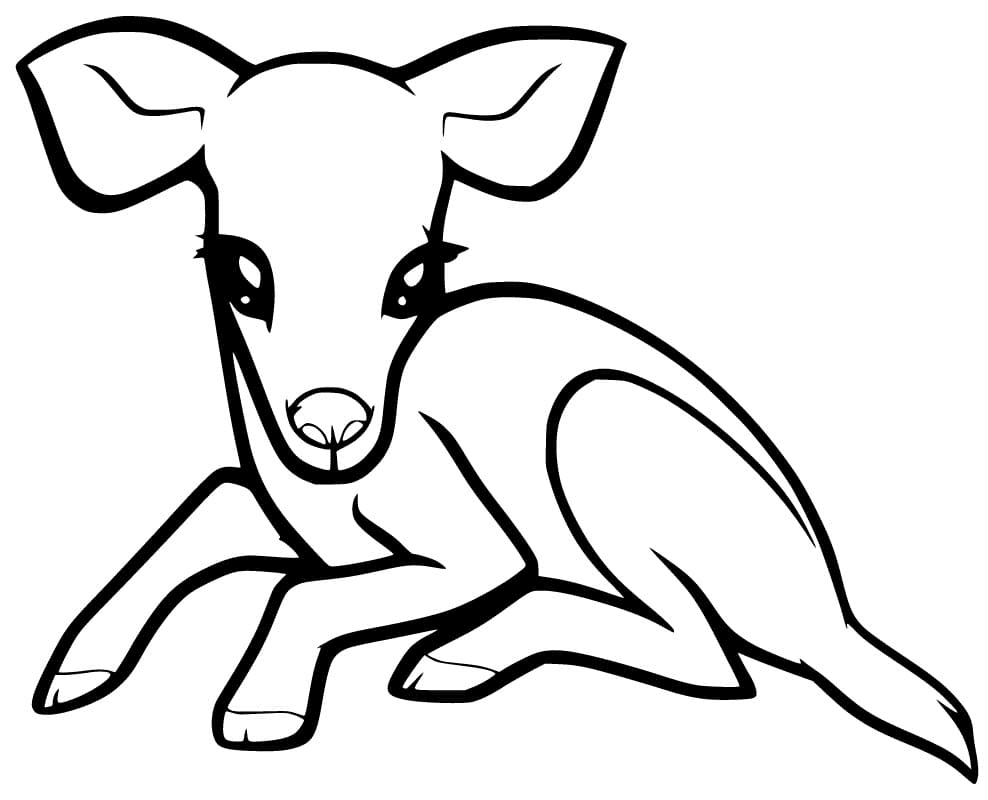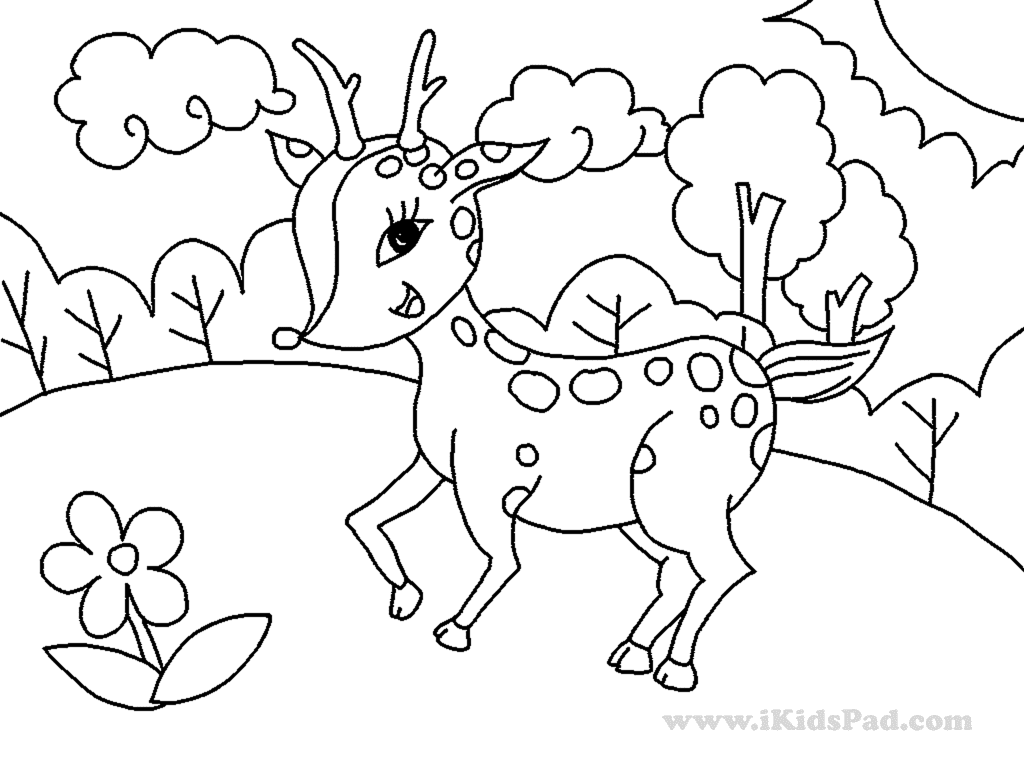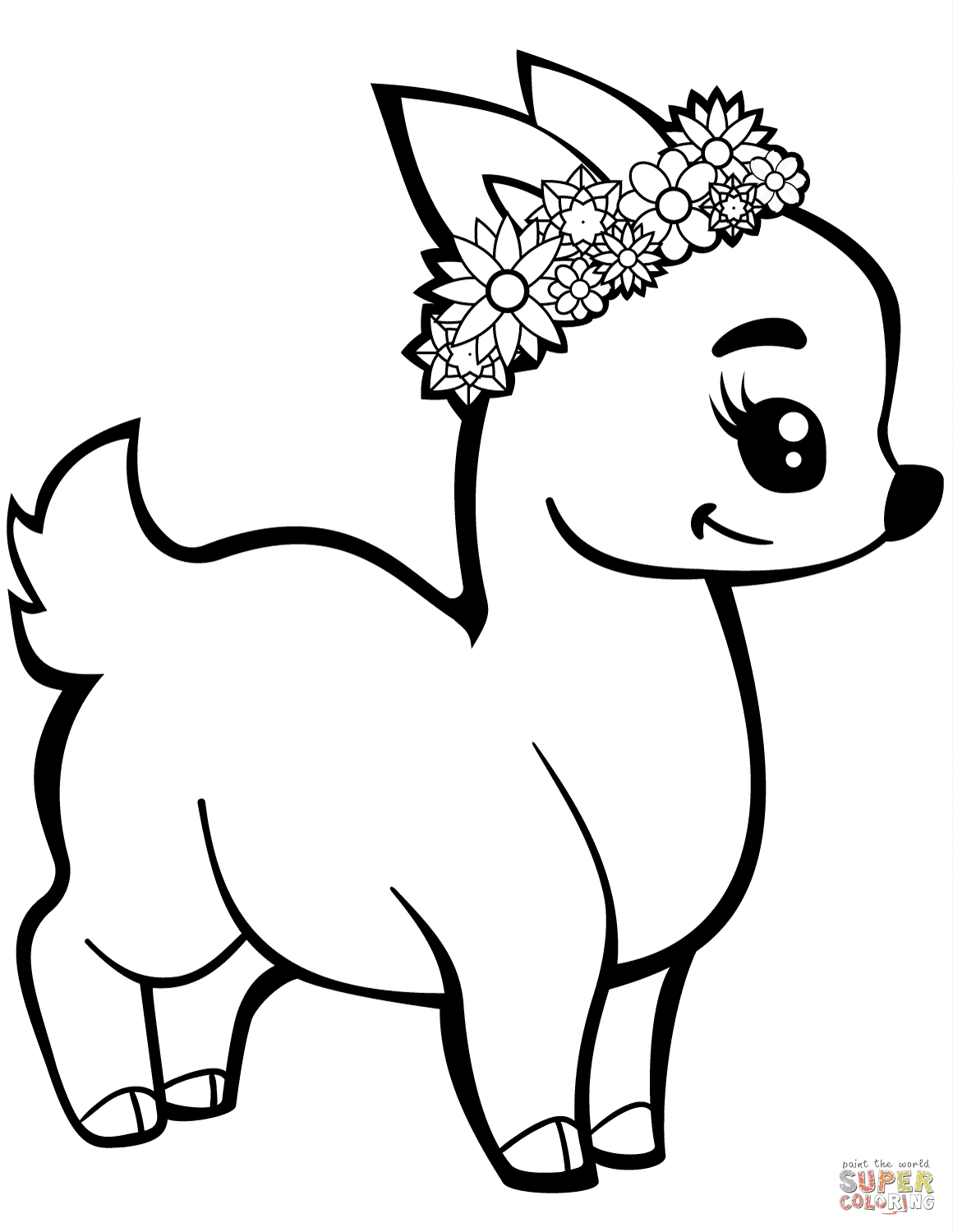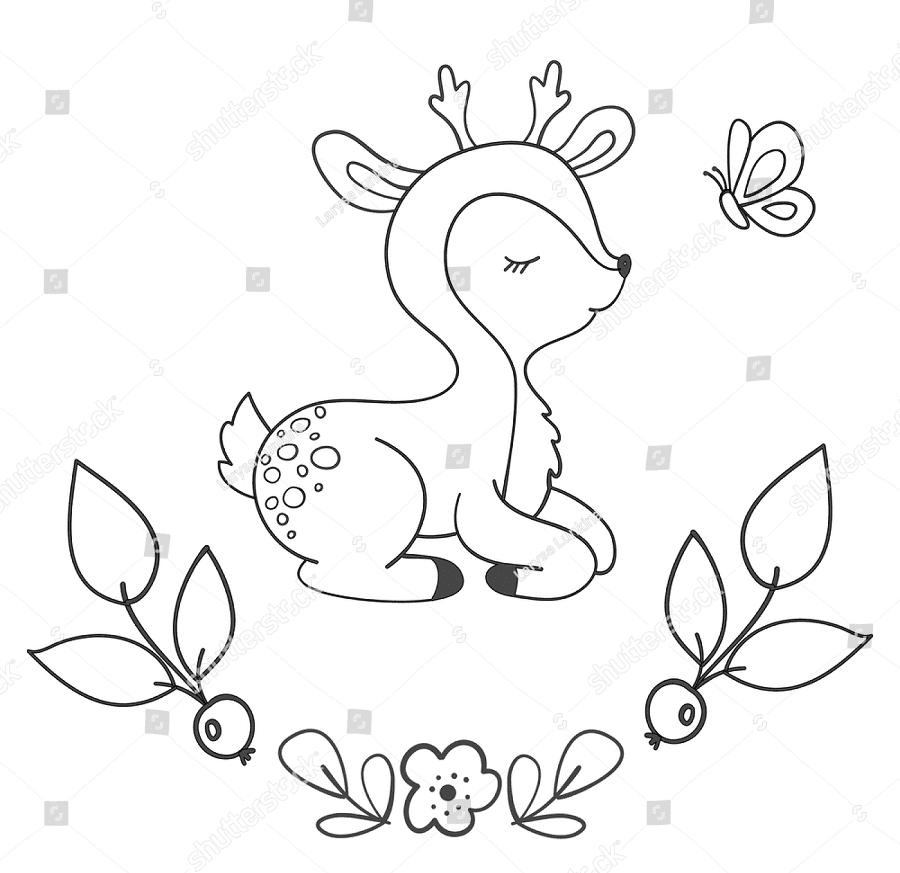
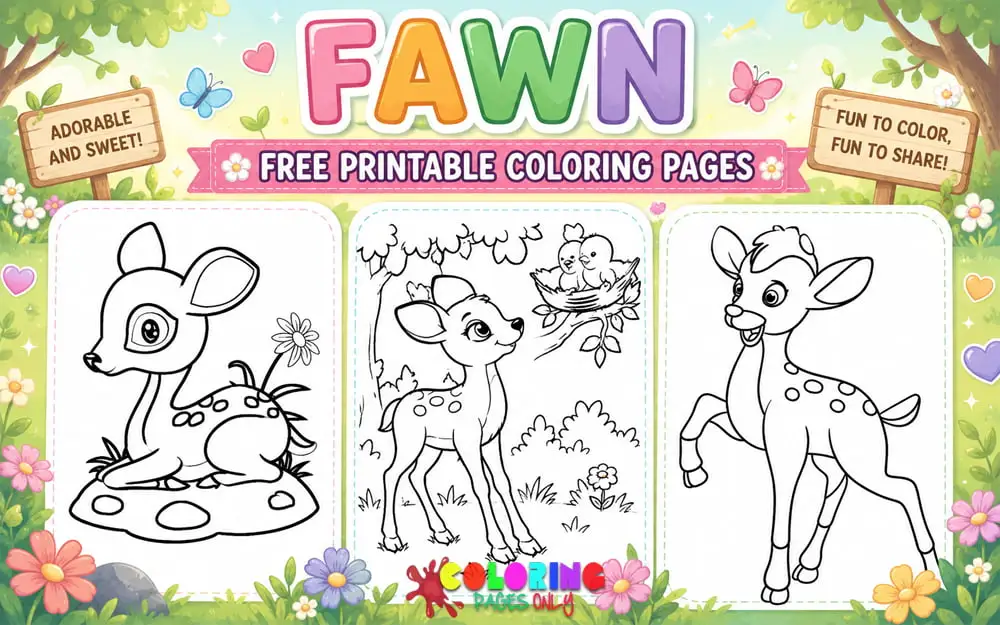
Fawn coloring pages: 32+ free printable PDF designs featuring baby deer across realistic illustrations, cartoon designs, nature-paired scenes, a newborn fawn, a Christmas design, a Sambar Deer page, and an alphabet learning page. Every page is free to download as a PDF or color in the browser, with no account required.
A fawn is a baby deer in its first year, before the spotted coat fades. The white dapple spots on a warm reddish-brown coat are a camouflage adaptation present from birth across multiple deer species.
These pages suit young children, classrooms, and parents looking for calm, nature-themed coloring with both simplified and realistic deer designs.
The coloring challenge is unique to this set: realistic and cartoon fawn pages require completely different approaches. The cartoon pages use simplified shapes and flat color areas. The realistic pages require working with the natural earth tones of a fawn coat: warm reddish-brown or tan, with white spots scattered across the back and sides. Getting both types right across the same set is the range this collection offers.
Quick Answer
Fawn coloring pages are a free set of 32+ printable PDFs and browser-based coloring sheets featuring baby deer in cartoon, realistic, and nature-scene formats, plus a Sambar Deer page, a Christmas design, and an alphabet learning page.
Best for: Young children aged 3 and up, preschool and elementary classrooms, and anyone who enjoys nature, forest animal, or baby animal coloring subjects
Formats: printable PDF and online coloring
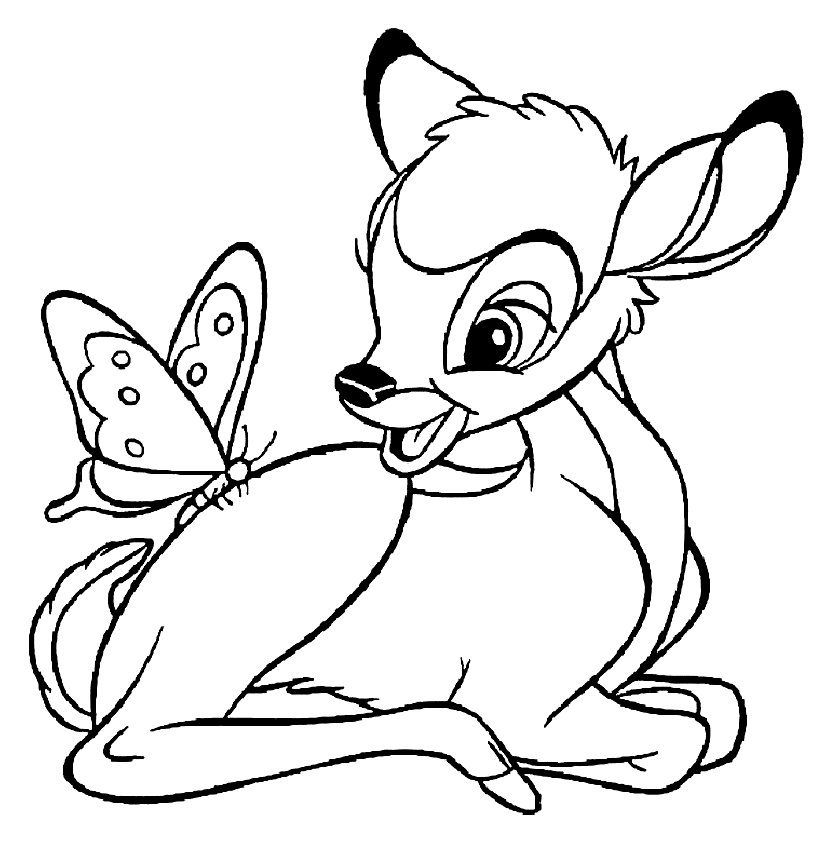
Popular pages: cute fawn, fawn with butterfly, flower fawn, newborn fawn, and fawn and bunny
Creative uses: a forest friends display, a fawn nature study, a seasonal Christmas display, and a baby animal alphabet set
What’s Inside Fawn Coloring Pages
The set covers a wide range of styles, settings, and subjects, from simple cartoon designs to more detailed nature illustrations.
Cartoon and Stylized Fawn Pages
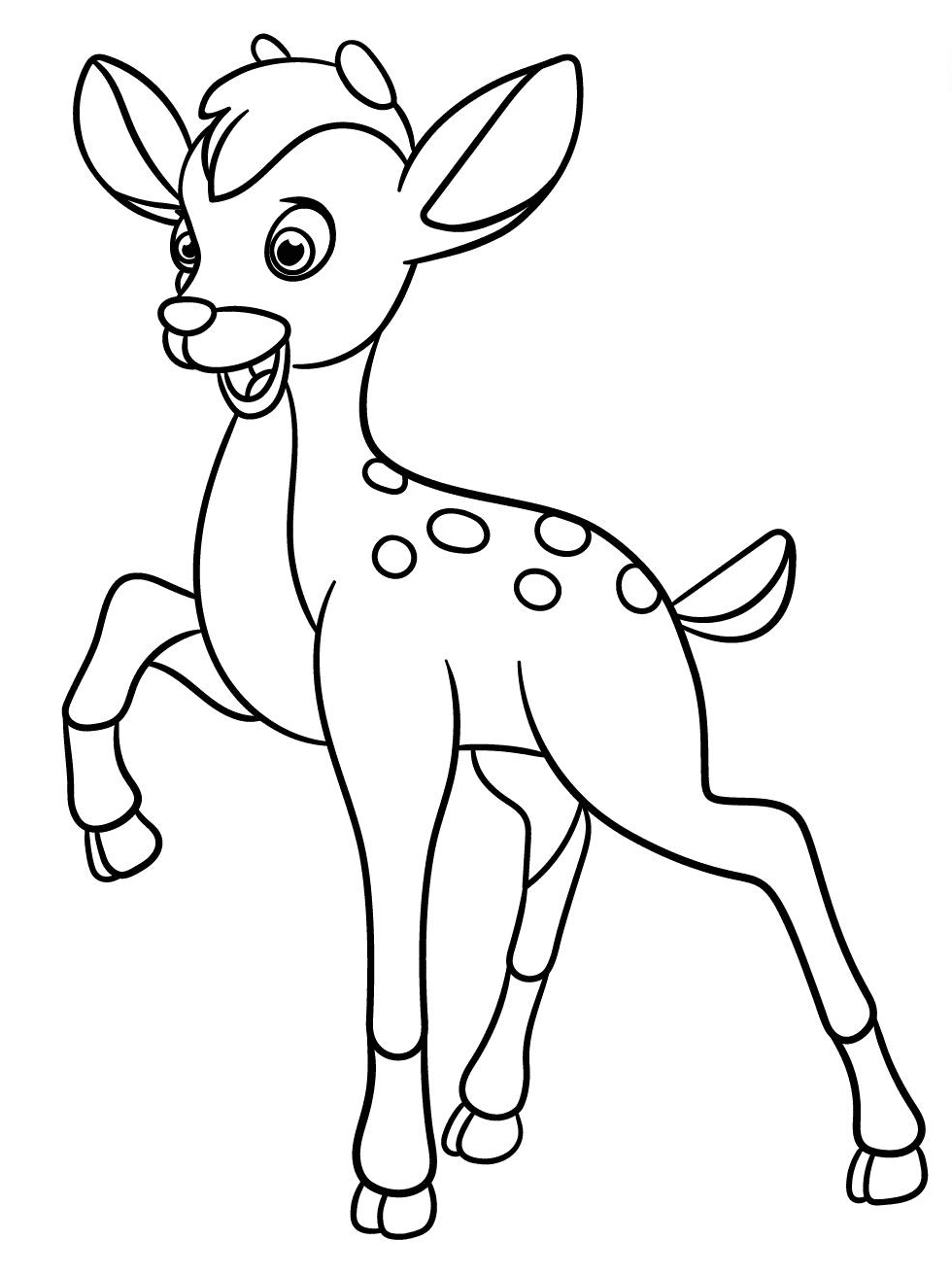
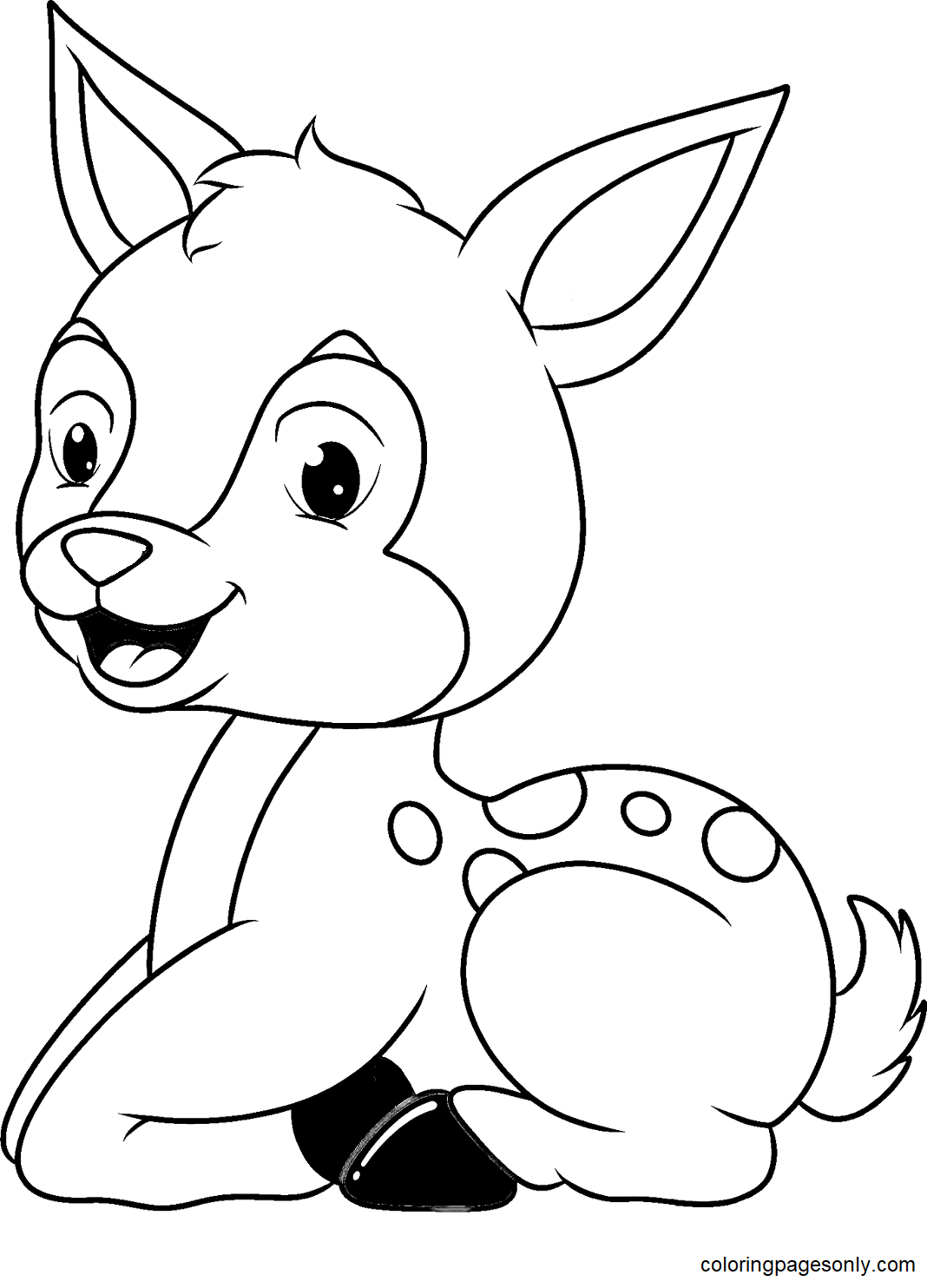
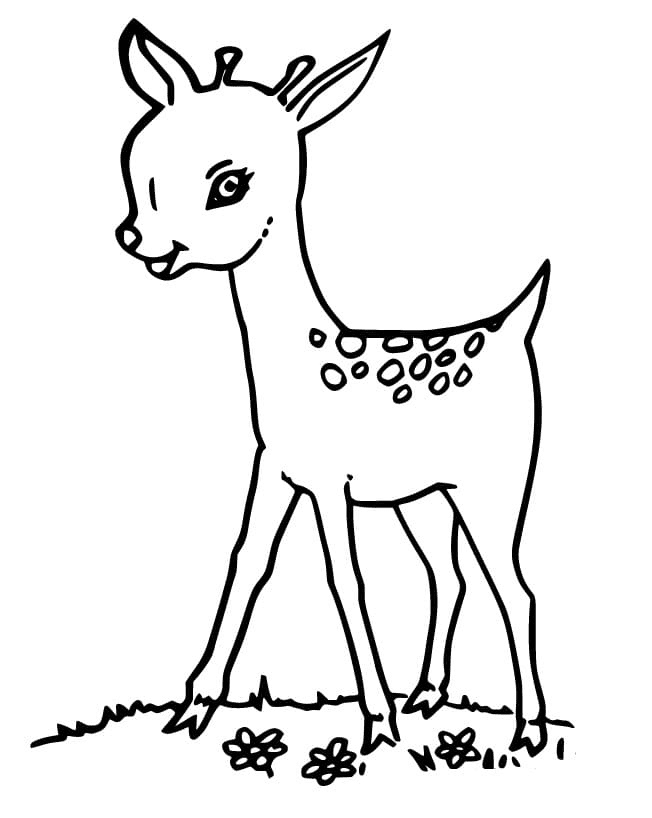
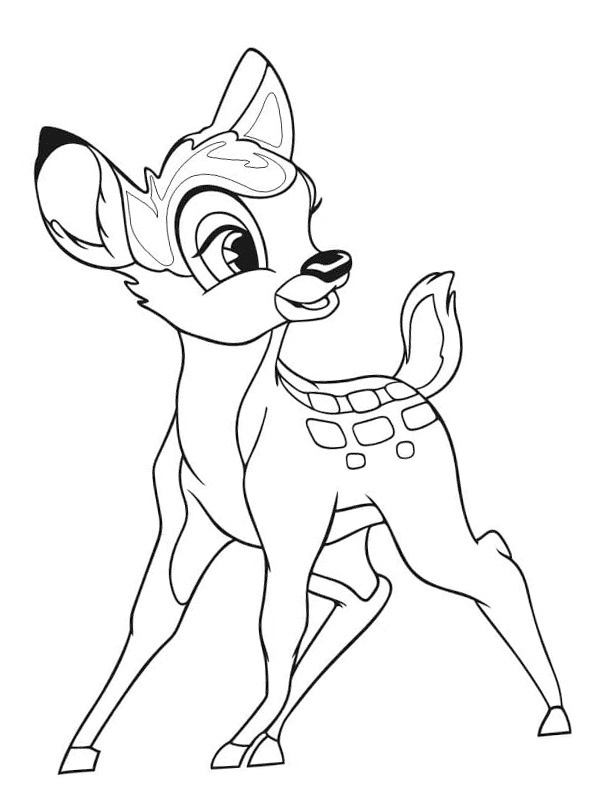
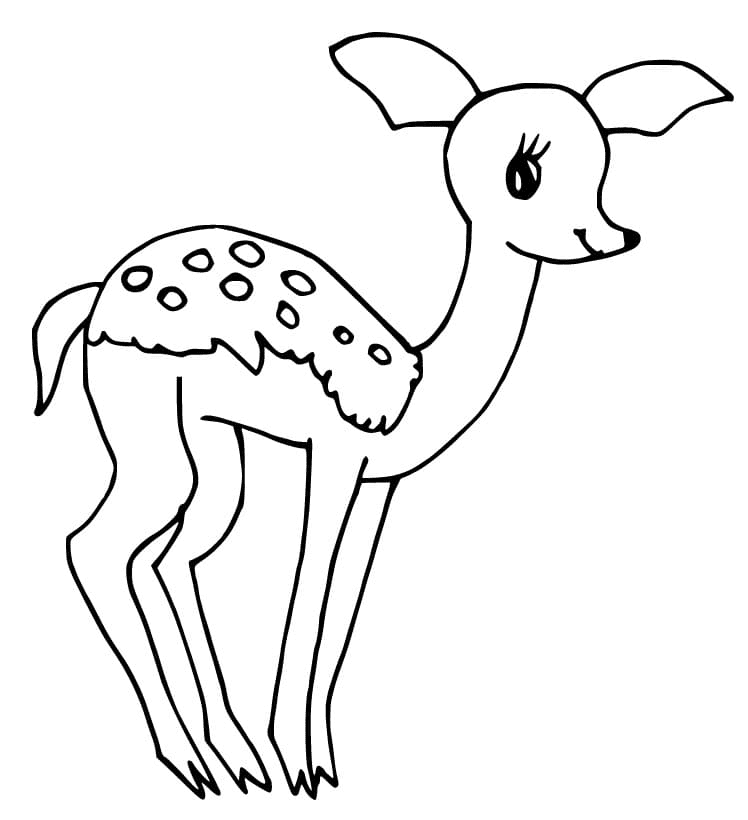
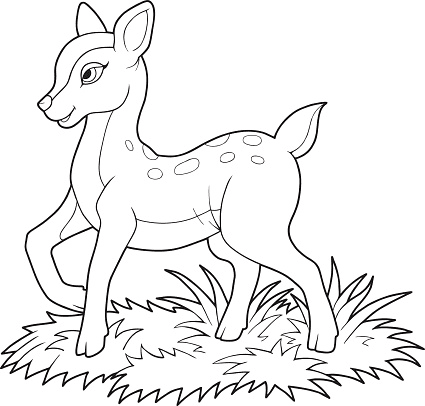
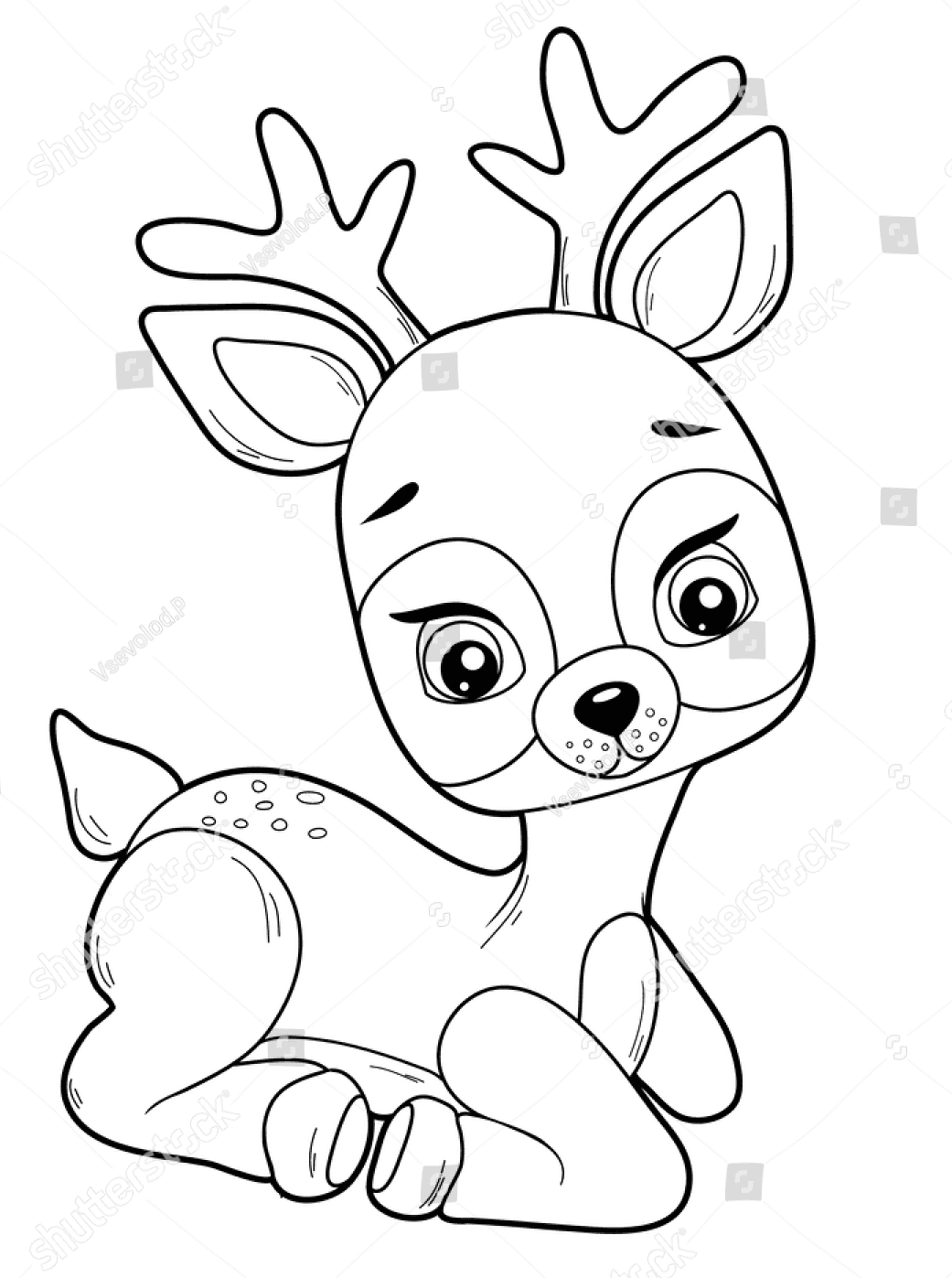
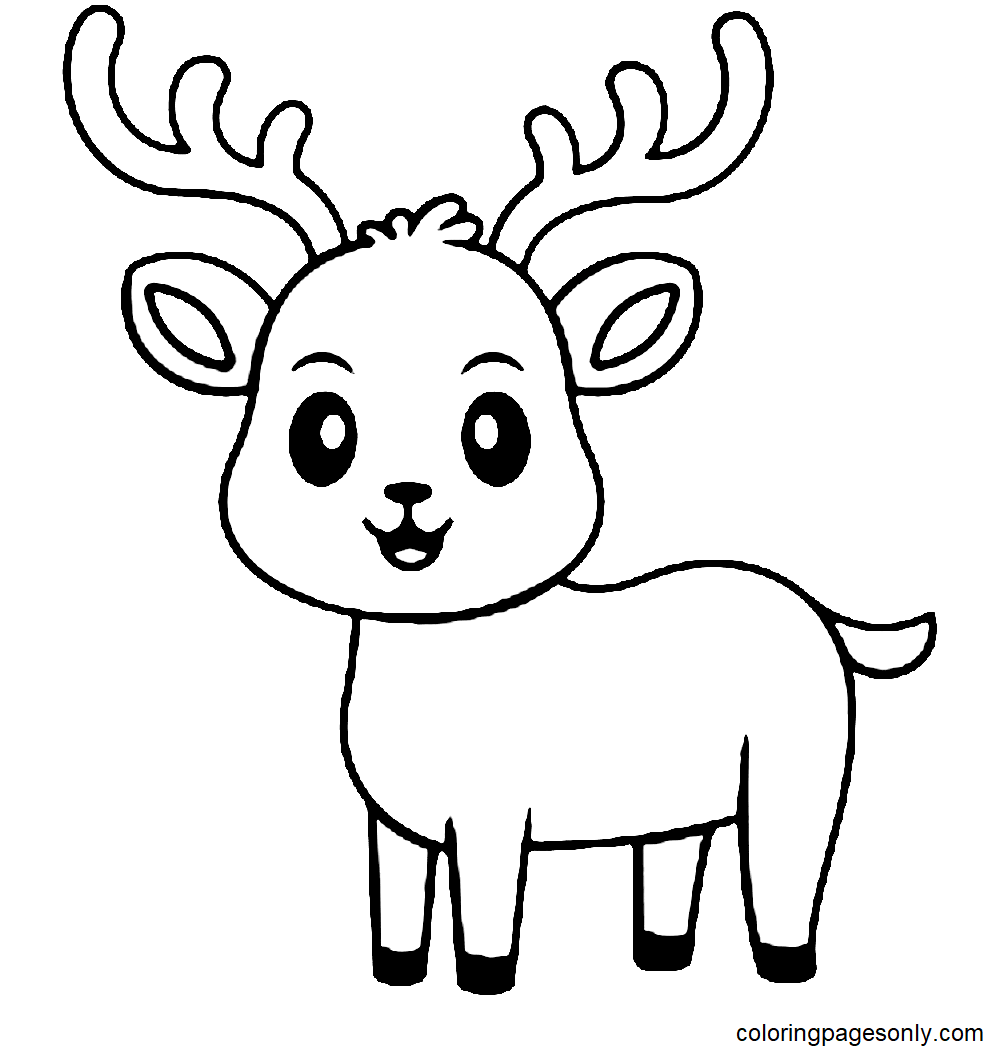
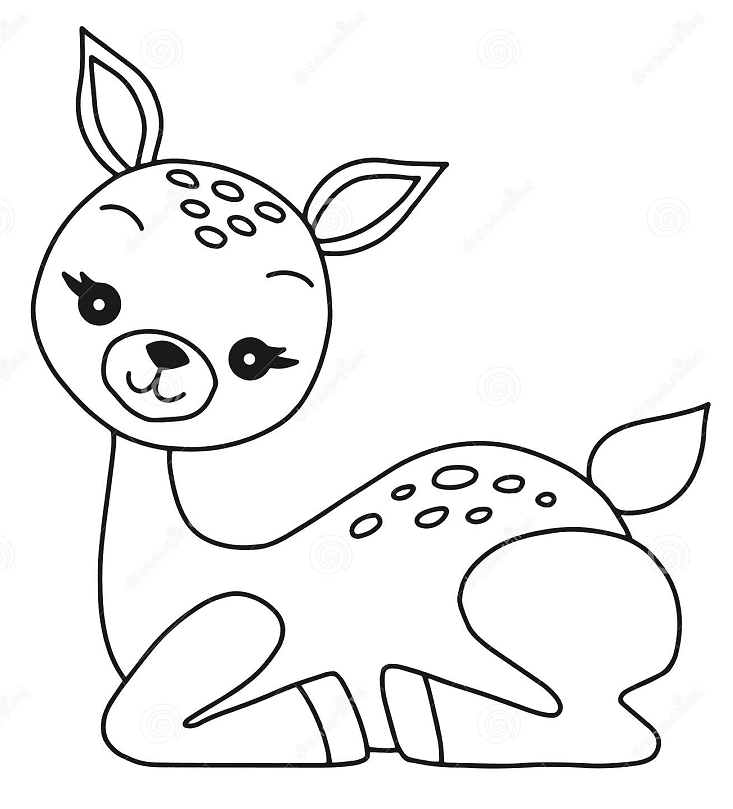
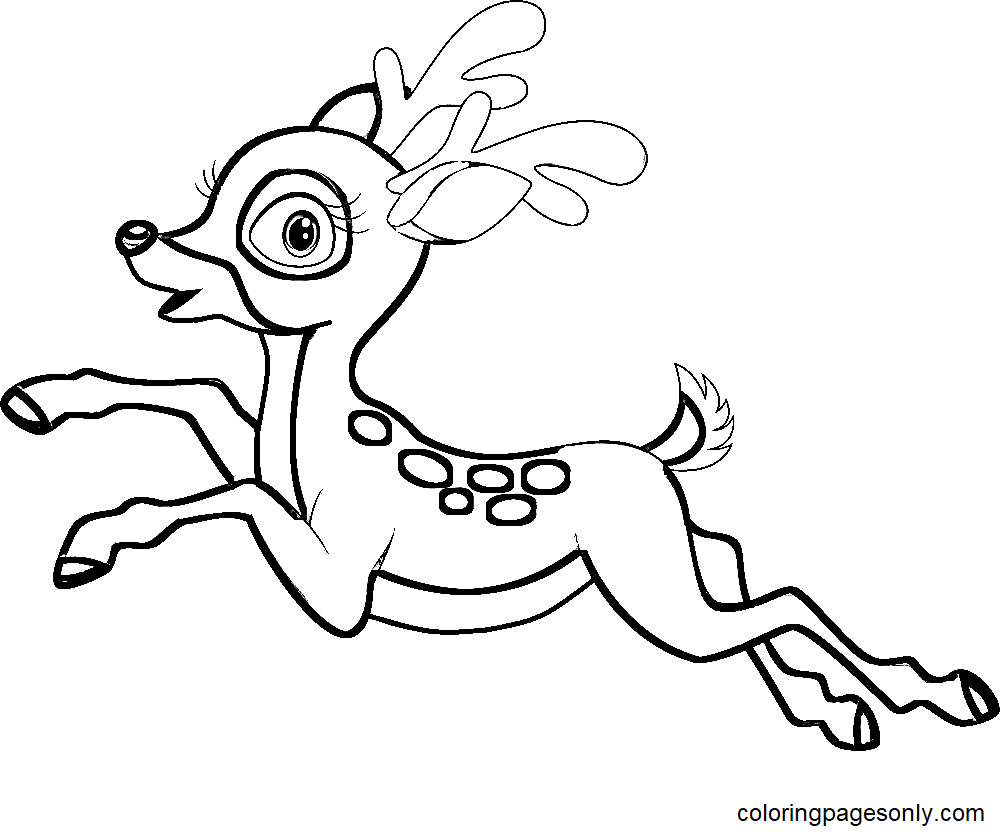
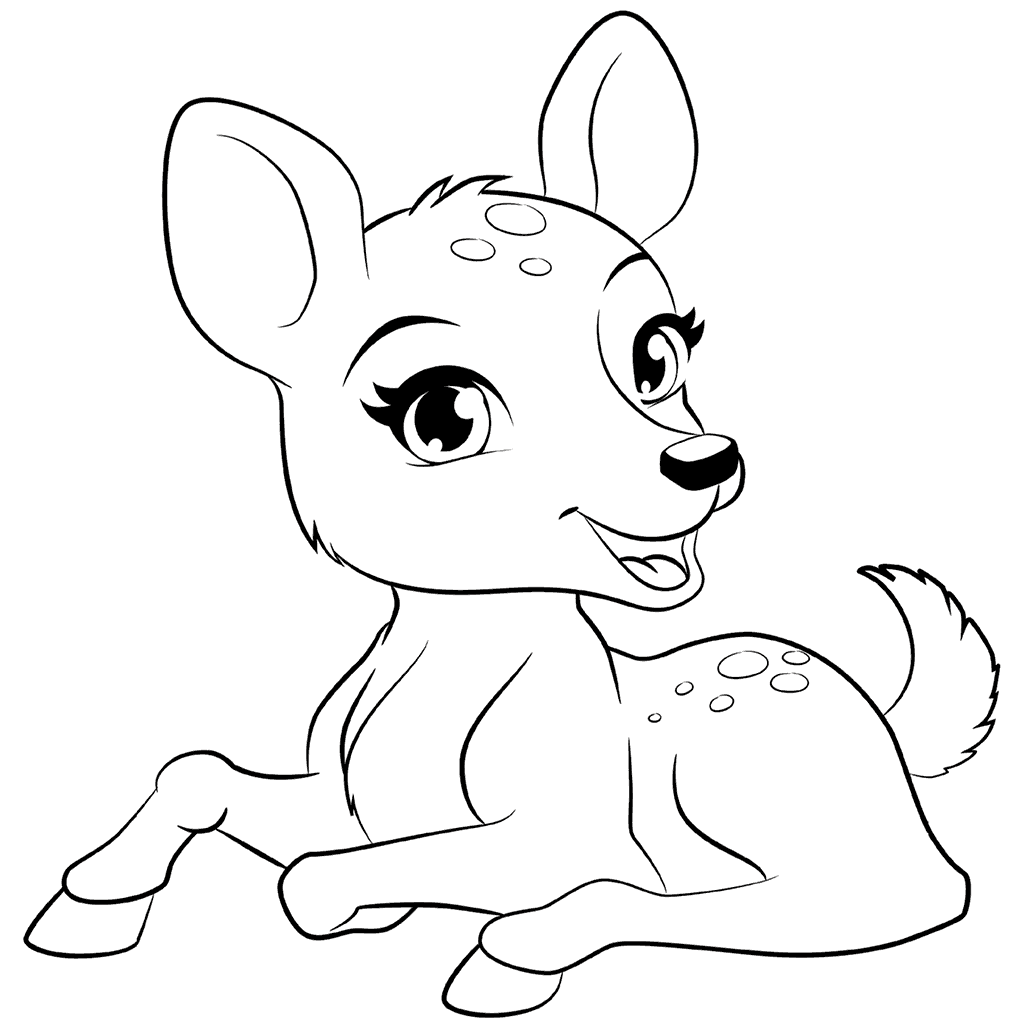
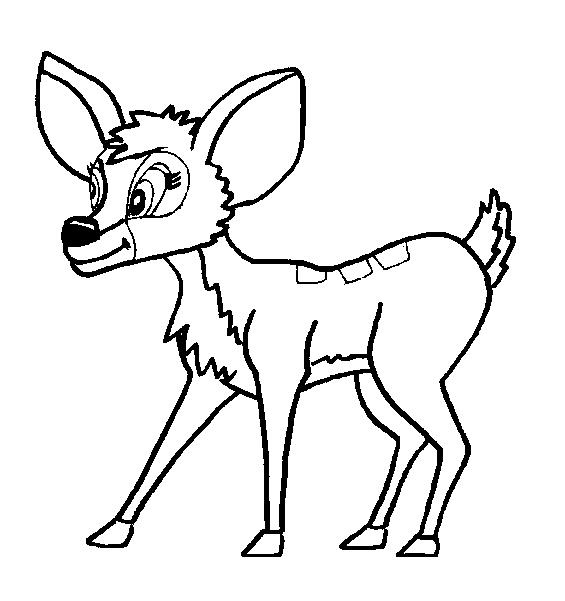
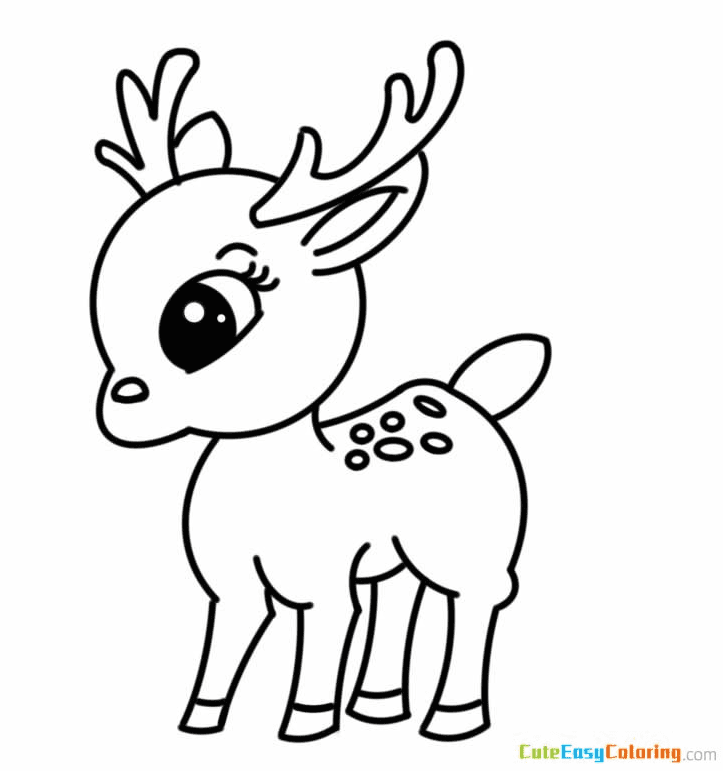
The largest group covers stylized and cartoon fawn designs: cute, adorable, lovely, pretty, beautiful, happy, little, and general cartoon fawn. These pages use simplified, rounded forms, large, expressive eyes, and straightforward body shapes.
Coloring cartoon fawns: cartoon fawn pages use simplified coat colors without complex spot placement. A warm tan or golden brown for the main coat, with large, evenly spaced white or cream spots on the back and sides, reads correctly without requiring precise anatomical accuracy. The eyes on cartoon pages are typically very large and round: a deep, warm brown with a highlight spot gives them the soft, gentle quality associated with deer in illustrated children’s books. Muzzle and leg areas are often lighter than the main coat, in a pale cream or warm white.
Realistic Fawn Pages
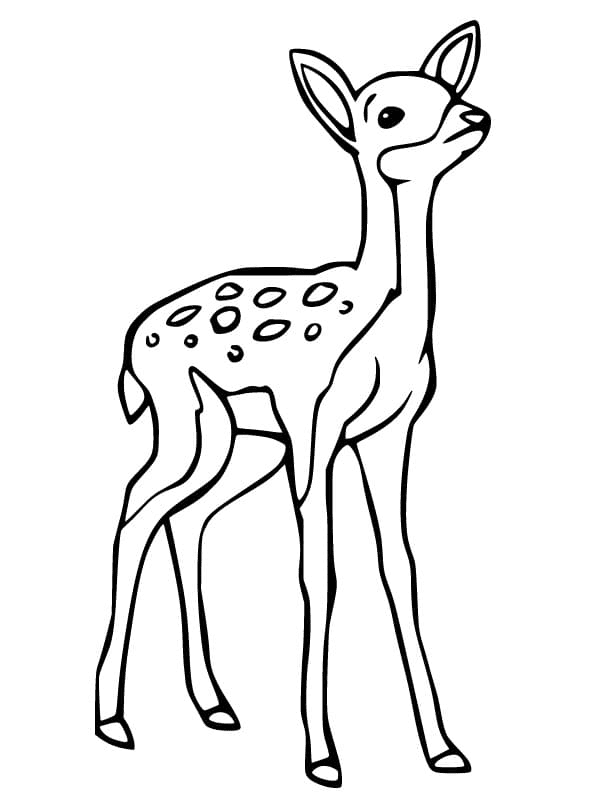
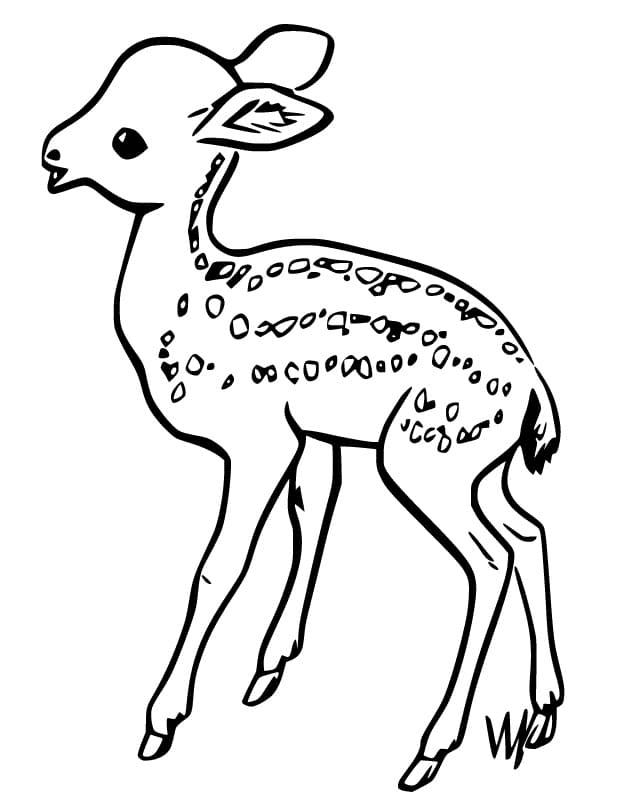
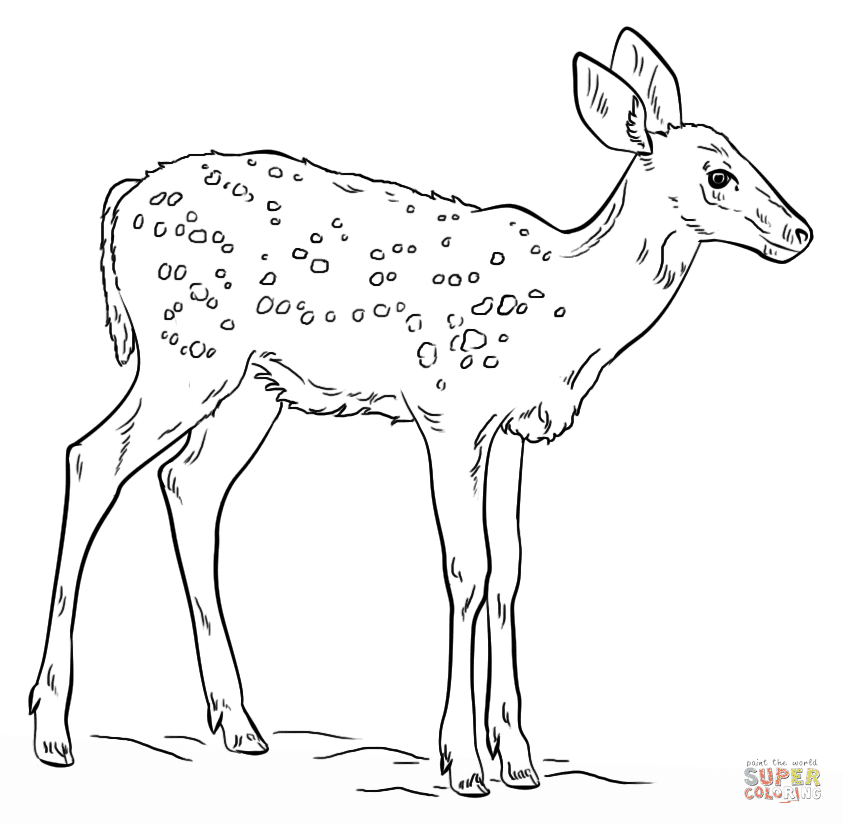
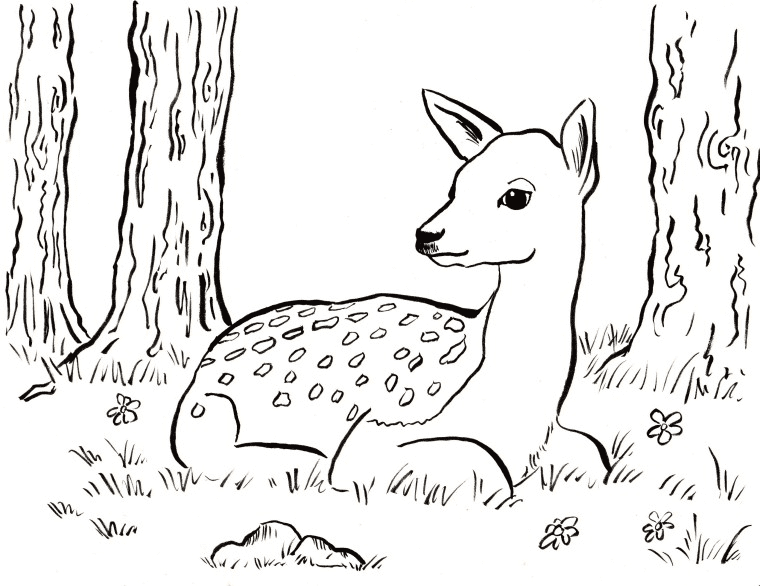
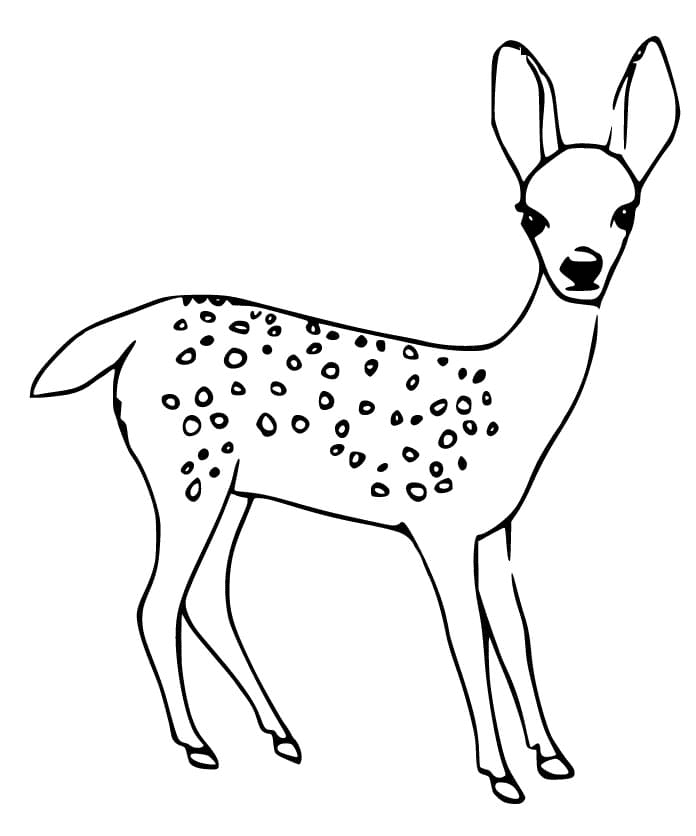
Two pages present a more anatomically accurate approach: a realistic fawn and a printable fawn with closer attention to natural proportions.
Coloring realistic fawns: real fawn coats are a warm reddish-brown base with white dapple spots arranged in irregular rows along the back and sides. The spots are not perfectly circular: they are elongated, irregular, and more densely clustered along the spine. The underside, muzzle, and inner legs are a paler cream or warm white. A realistic fawn also has darker legs and facial markings than the body, and the ears are notably large relative to the head. On realistic pages, working the warm reddish-brown body first, then adding spots as irregular pale shapes afterward, produces the most accurate result.
Nature Scene Pages
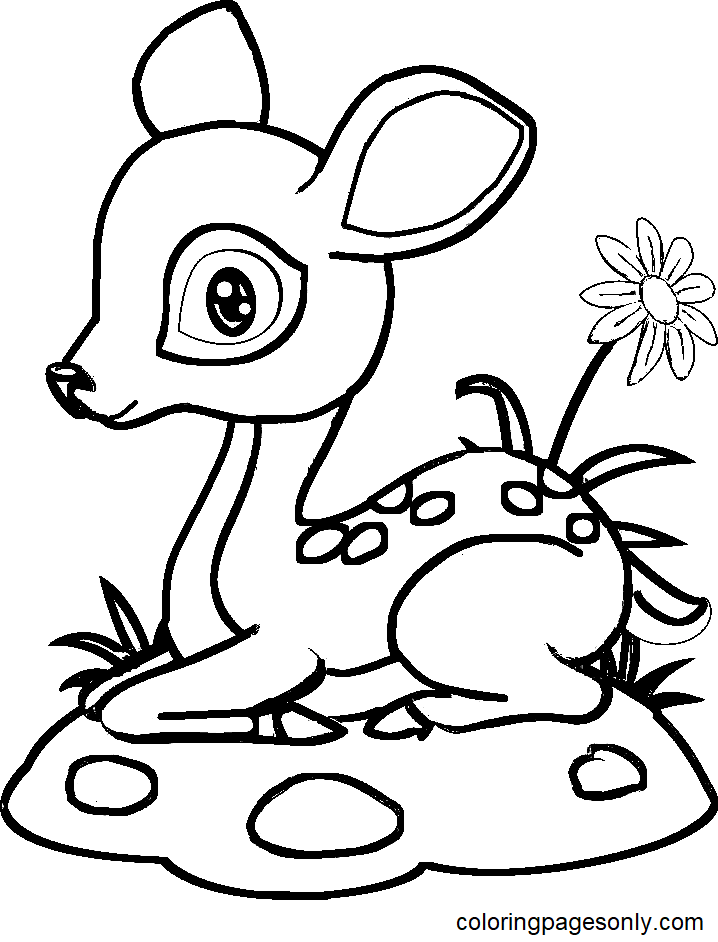
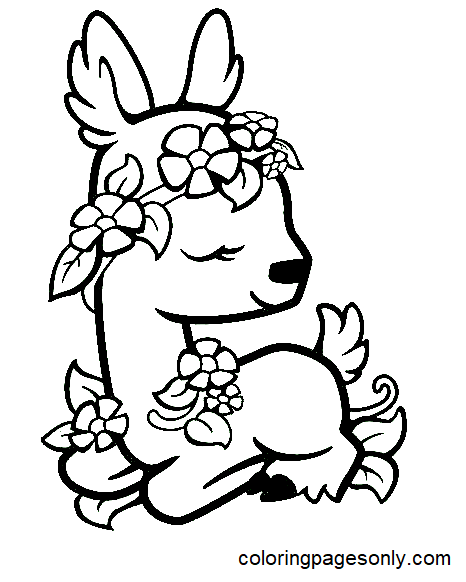
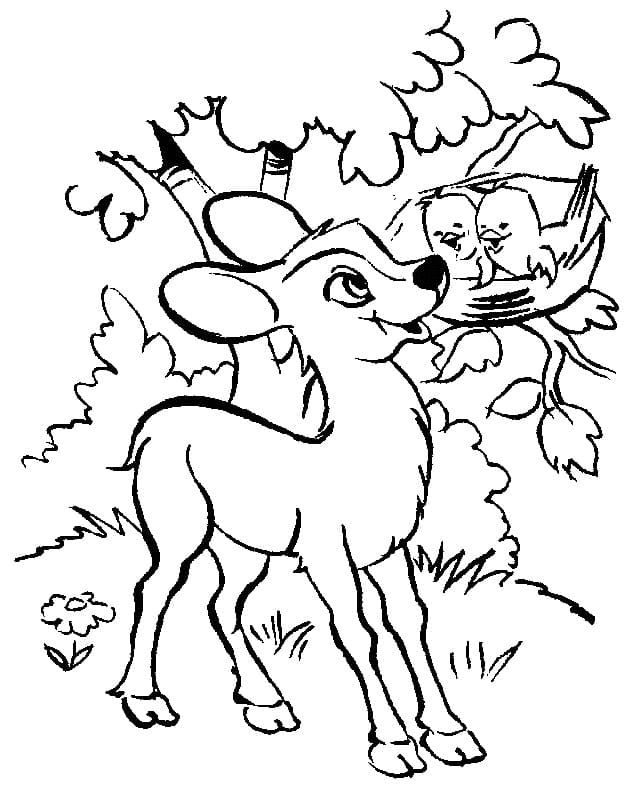
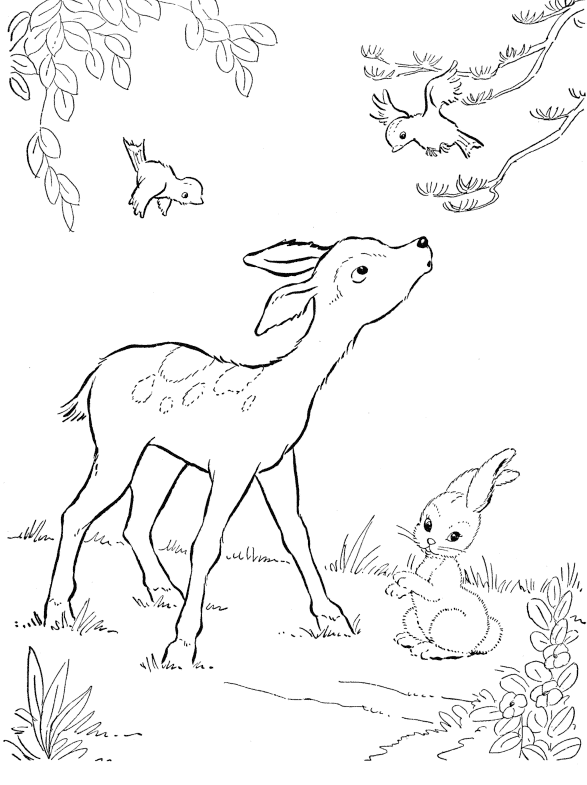
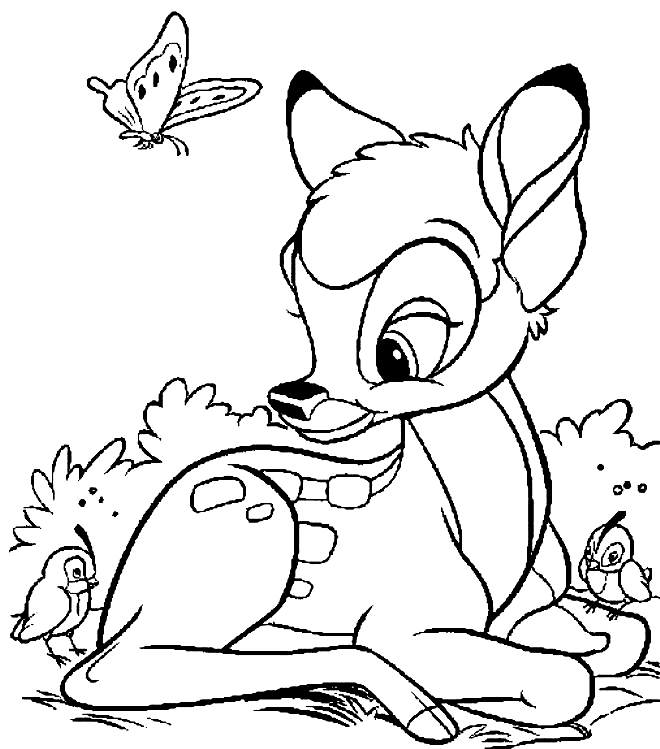
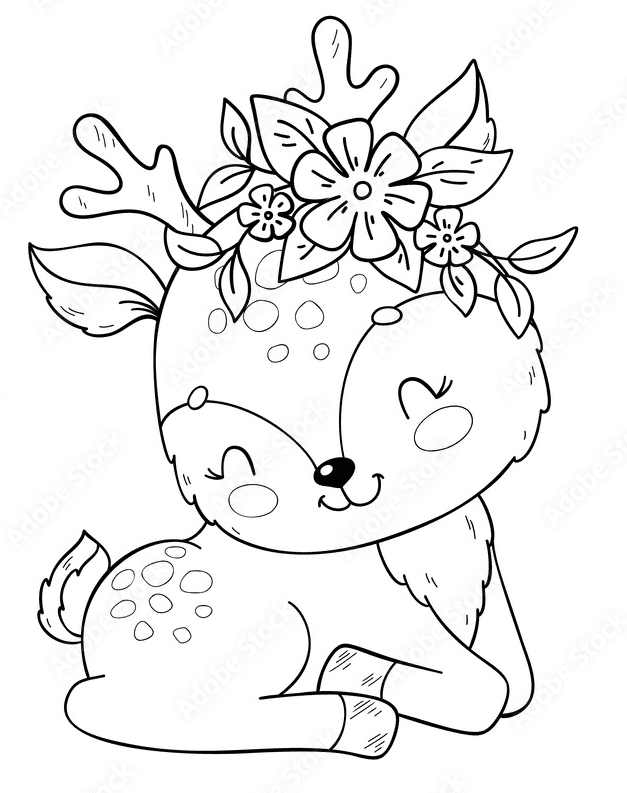
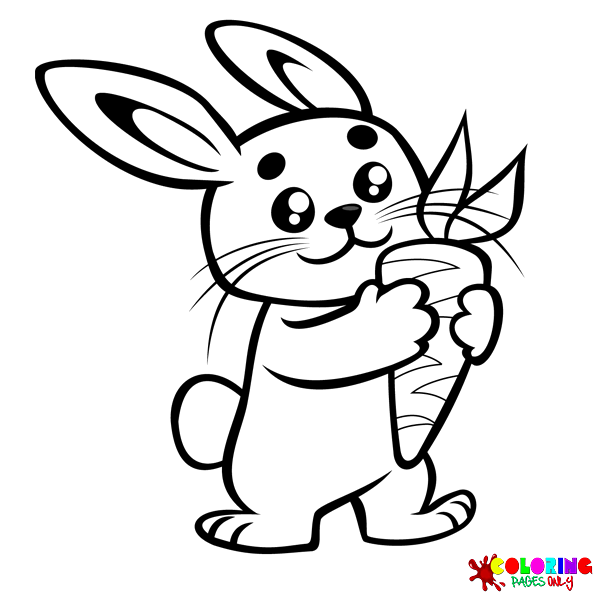
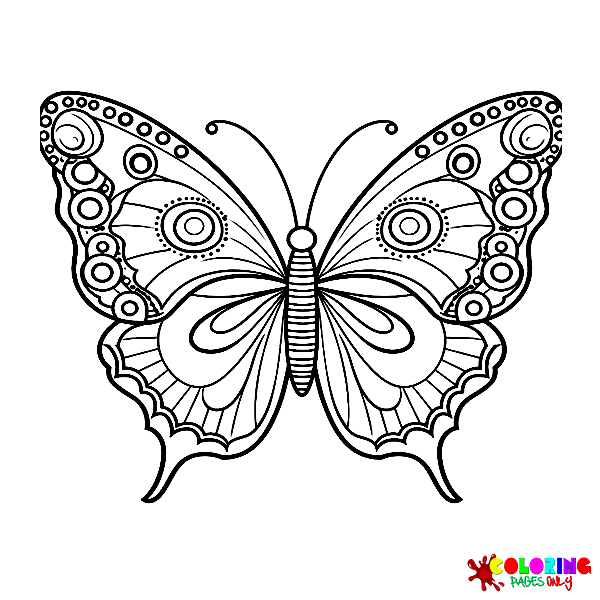
Nine pages pair the fawn with natural elements: flowers and butterflies, butterflies alone, birds, a bunny, a flower fawn, a fawn with a wreath, and a happy fawn with birds.
Coloring nature scene pages: fawn pages with flowers and butterflies work best when the natural elements use colors that complement rather than compete with the deer’s earth tones. Soft warm pinks and yellows for wildflowers, orange-and-black or blue Morpho butterflies, and muted greens for foliage all sit naturally in the same palette as the fawn’s warm coat. On the bunny and fawn page, keeping the bunny in soft cool grey-white against the fawn’s warm tan creates a gentle warm-cool contrast that reads naturally as two woodland animals.
Special Pages
Several pages stand out from the standard portrait set.
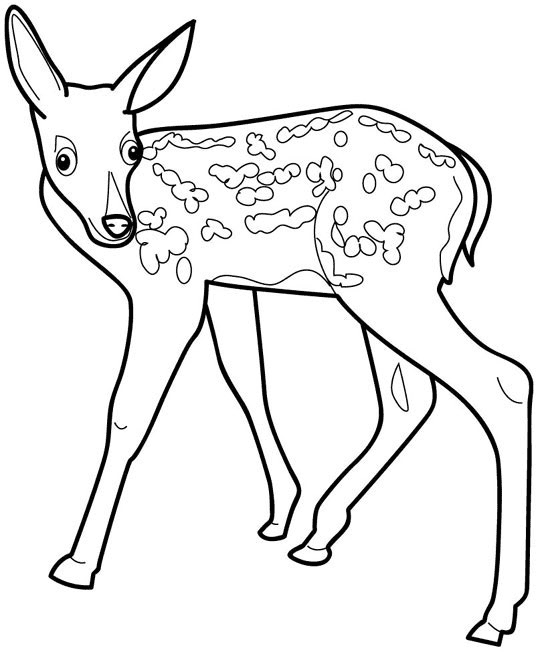
Newborn fawn: a newborn fawn has proportions noticeably different from a juvenile: longer, more delicate legs relative to the body, a slightly larger head, and spots that appear very crisp and high-contrast because the coat is new. A warmer, more vivid reddish-brown for a newborn coat (before the first rain or dust dulls it) gives this page a distinct quality.
Sambar Deer: The Sambar is one of the largest deer species, found across South and Southeast Asia. Unlike the spotted fawn pages, the Sambar is a large, solid-colored deer in dark brown, without the dappled pattern. This page is the most dramatically different from the rest of the set and works as a scale-contrast companion to the fawn pages.
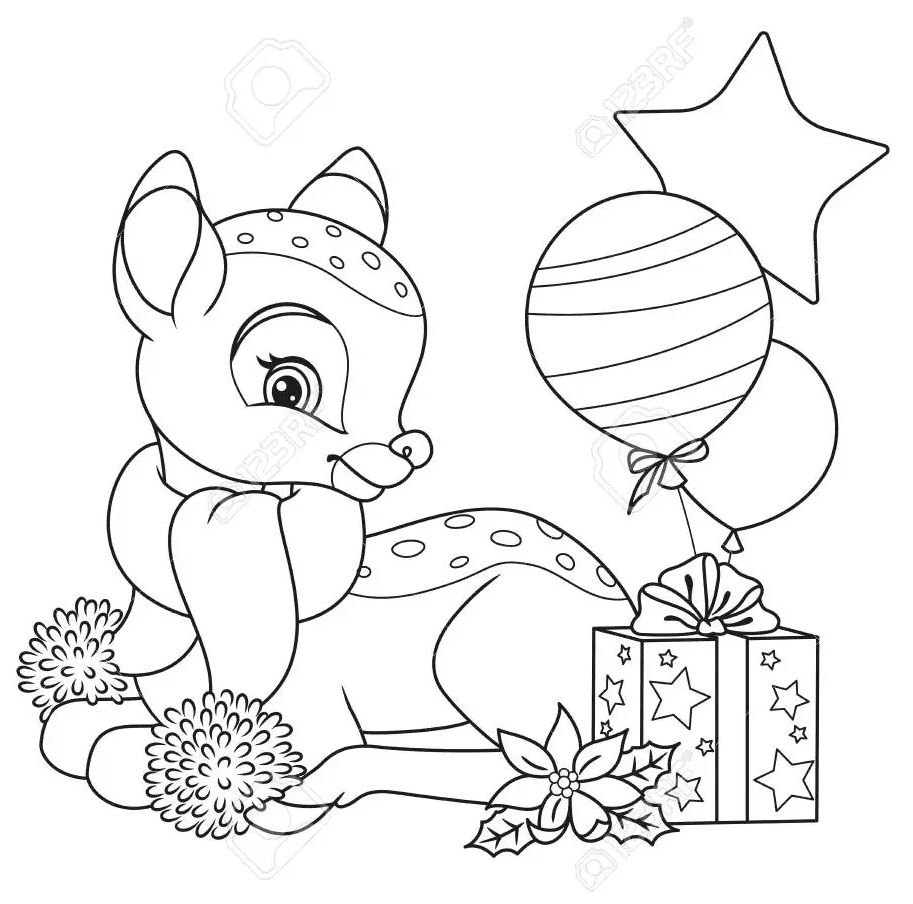
Christmas Fawn: a seasonal design featuring the fawn in a holiday context. Soft, warm red and green holiday accents work naturally alongside the fawn’s earth-tone palette.
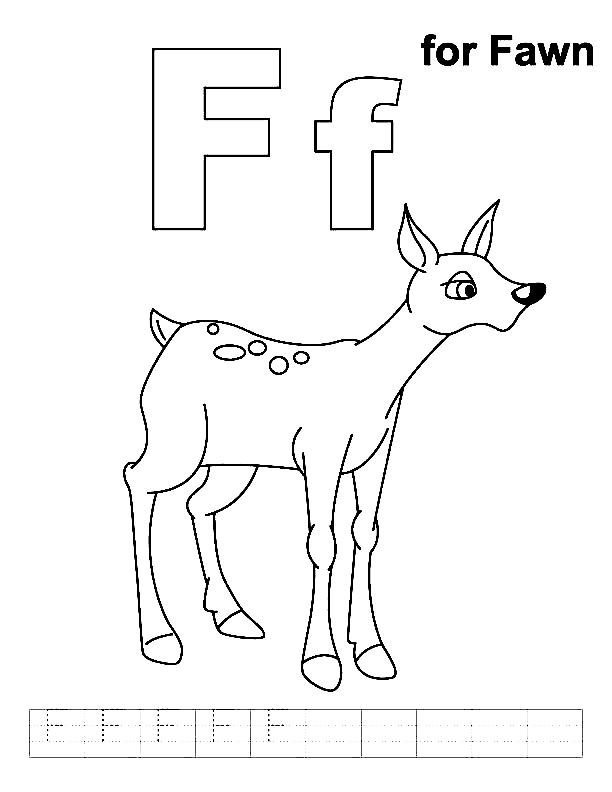
F for Fawn and Draw Fawn for Kids: the alphabet page pairs the letter F with a simple fawn illustration, useful for classroom letter-of-the-week activities. The how-to-draw page guides young children through drawing their own fawn step by step.
Printable PDF and Online Fawn Coloring Pages
The realistic pages and nature scene pages reward printing for spot pattern work. Cartoon and alphabet pages work well in both formats.
What These Pages Do
A fawn’s spotted coat fades by the time the deer is about three months old. Before that, the spots break up the deer’s outline against dappled forest floor light, a camouflage system that works because the fawn lies still and the spots mimic the way sunlight falls through leaves. The spots are not permanent. They are specifically suited to a particular moment in a deer’s life, and then they go.
Coloring a fawn with care means paying attention to where the spots sit on the coat (along the spine, down the sides in irregular rows) and what tone the base coat is. It is a nature observation exercise as much as an art activity. The realistic pages in this set make that observation available directly. The cartoon pages make it accessible for younger children who are not yet ready for the complexity of accurate anatomy. Both are valid, and together they give the set its range.
The AAP notes that coloring activities connected to real animals and their natural markings, particularly when accompanied by factual context, support children’s early science literacy and build the habit of careful observation that underpins both natural history and visual art.
Art therapy practitioners note that forest animal subjects, particularly baby animals in nature settings, are among the most reliably calming coloring subjects for young children, offering gentle imagery with no conflict or threat that allows full attention to be given to the color work itself.
How to Color Fawn Coloring Pages
The base coat is warm reddish-brown, not yellow-brown. A fawn’s coat has a warm reddish or orange-brown quality, closer to a chestnut or terracotta than a flat tan. Yellow-brown reads as generic. The warm red-brown is what makes the deer look like a deer rather than a generic animal shape.
Spots are irregular and clustered toward the spine. On realistic pages, the white dapple spots are most densely concentrated along the spine and taper off toward the sides and belly. They are oval or elongated rather than perfectly round. Placing them too evenly or too symmetrically reads as a pattern rather than nature. Irregular, slightly varying shapes in a roughly spinal arrangement are correct.
Cartoon pages work well with a single warm tan. On simplified cartoon fawn pages, the detailed spot placement of realistic pages is not needed. A single warm golden tan for the body, large cream or white spots, and a lighter muzzle and inner leg area give the cartoon fawn its characteristic soft, rounded look without requiring spot accuracy.
Nature scene pages work best when the fawn is the warmest color. Flowers, butterflies, and foliage should be cooler or more muted than the fawn’s warm coat, so the deer reads as the visual center of the page. Vivid greens or saturated florals that are warmer than the fawn pull attention away from the main subject.
Forest Friends Display
Color the fawn and bunny page, the fawn and butterfly page, and the fawn and birds page as a three-part forest friends set. Keep the fawn’s warm coat consistent across all three.
Three nature scene compositions showing the same subject in different woodland pairings. Takes about twenty-five minutes.
Realistic vs Cartoon Comparison
Color the realistic fawn page with accurate earth tones and irregular spots, and a cartoon fawn page with simplified flat colors. Display side by side.
The same animal, two visual languages: one observational, one accessible. Takes about twenty minutes.
Newborn to Juvenile Study
Color the newborn fawn page with a vivid, warm reddish-brown and high-contrast spots, and a standard fawn page with a slightly more muted, weathered coat tone.
A two-page study on how the same animal changes visually as it ages. Takes about fifteen minutes.
Christmas Forest Display
Color the Christmas fawn page alongside any nature scene page. Display as a seasonal forest display.
A seasonal use of the set’s most distinctive thematic variant. Takes about fifteen minutes.
F for Fawn Classroom Card
Color the alphabet page cleanly, keeping the letter F and the fawn illustration in coordinated warm tones. Laminate for classroom display.
A practical classroom product from a set page. Takes about ten minutes.
FAQ About Fawn Coloring Pages
Are these fawn coloring pages free, and can I color them online?
Yes. Every page is free, with no account, email, or payment required. Download the PDF to print at home, or open it in the online coloring tool to color on screen.
What is a fawn?
A fawn is a baby deer, specifically a deer in its first year of life before the adult coat develops. Fawns are born with a warm reddish-brown or tan coat covered in white dapple spots, which serve as camouflage by mimicking the pattern of sunlight through forest foliage. The spots typically fade and disappear by the time the deer is three to four months old, when the adult coat grows in.
Why do fawns have spots?
Fawn spots are a camouflage adaptation. In the dappled light of a forest floor, the white spots break up the deer’s body outline in a way that makes it harder for predators to detect. Fawns instinctively remain still when left alone, and the combination of stillness and spotted pattern makes them very difficult to see against leaf litter and undergrowth.
What is the Sambar Deer page in this set?
The Sambar Deer is one of the largest deer species in the world, native to South and Southeast Asia and the Indian subcontinent. Unlike the small spotted fawns in the rest of the set, the Sambar is a large, solid-colored deer in deep brown-grey without a dapple pattern. Adult Sambar can reach over 300 kilograms. The Sambar page provides a size and style contrast to the fawn pages and represents a different phase of a deer’s life.
What colors should I use for a realistic fawn?
A realistic fawn has a warm reddish-brown or chestnut base coat, with white or cream dapple spots arranged in irregular rows along the spine and sides. The muzzle, inner legs, and underside are paler, in warm cream or white. The nose is a soft brown-pink, and the eyes are a deep, warm brown. Legs are typically slightly darker than the body.
Are these official fawn coloring pages from a specific show?
No. These fawn coloring pages are nature-themed illustrations of real deer, not characters from a specific animated series or licensed property. They are free for personal and classroom use.
What age group are these pages best suited for?
Fawn coloring pages are appropriate for a wide age range. Cartoon and simplified fawn pages are well-suited to children aged 3 and up. Realistic pages with more detail are better for children aged 6 and up who are ready for closer observation work. The alphabet and how-to-draw pages are specifically useful for preschool and early elementary children.
Start Coloring
Download any page by clicking the design. No account, email, or payment is required. Pages print directly from the browser at full resolution or open in the online coloring tool for screen use. Share finished pages on Facebook or Pinterest using the share buttons at the top of each design page.