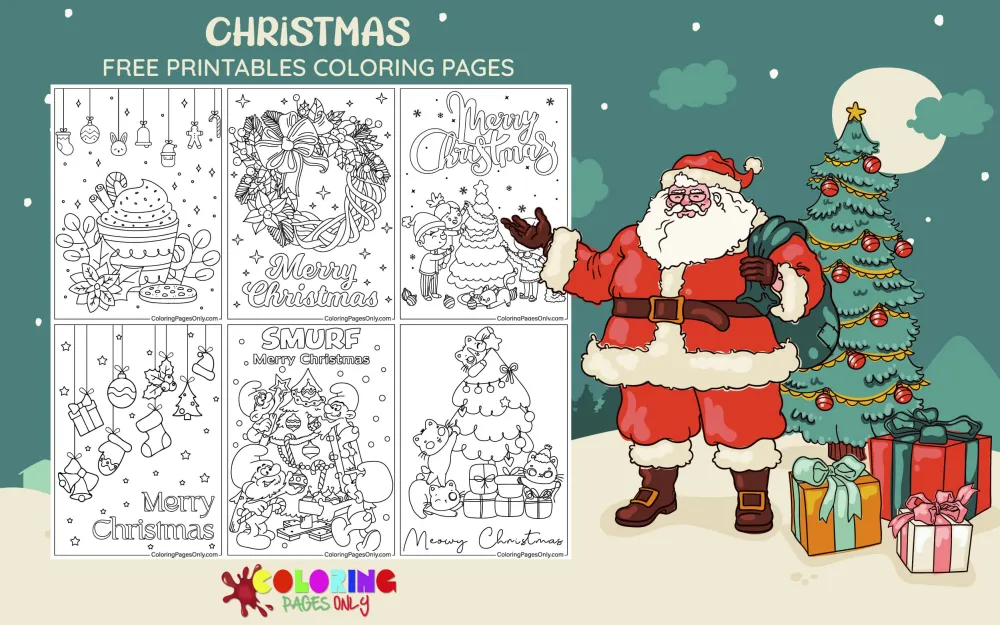
Christmas Coloring Pages at ColoringPagesOnly.com is the site’s largest holiday collection – 2,160+ free pages organized across 35 dedicated sub-collections covering the full range of Christmas imagery: the core characters (Santa, Rudolph, the Grinch, Nutcracker, Elf), the decorative elements (Christmas trees, wreaths, ornaments, stockings, lights, candles, holly, advent wreaths), the food and sweets (gingerbread man, gingerbread house, candy cane), the religious tradition (nativity, angels, religious Christmas), the character and family sub-themes (Disney Christmas, Christmas animals, cute Christmas, snow globes), and the pattern and design collections for adult colorists (mandala, sweater, wallpaper, Christmas pattern). Whether you are looking for a simple Santa page for a young child, a detailed nativity scene for a religious household, an intricate Christmas mandala for an adult, or a Disney character in a holiday setting, each theme has its own sub-gallery. The full Holidays collection is available through our Holidays Coloring Pages hub.
Every page is completely free – download as PDF to print or color online in your browser. No sign-up, no cost.








What’s in This Collection
The Core Christmas Figures
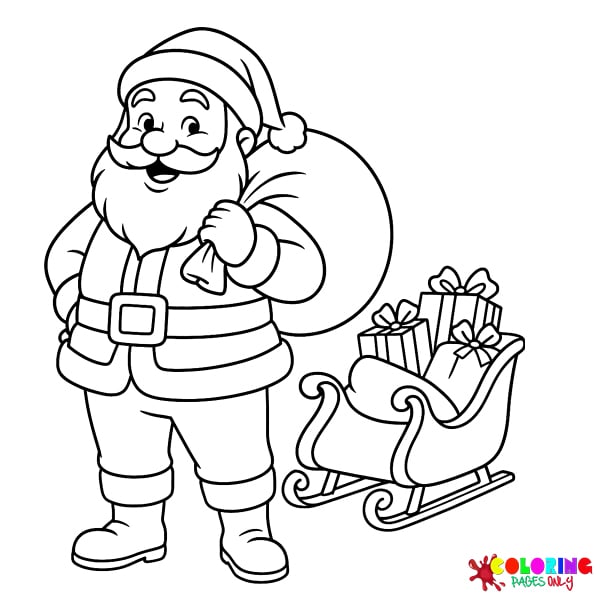
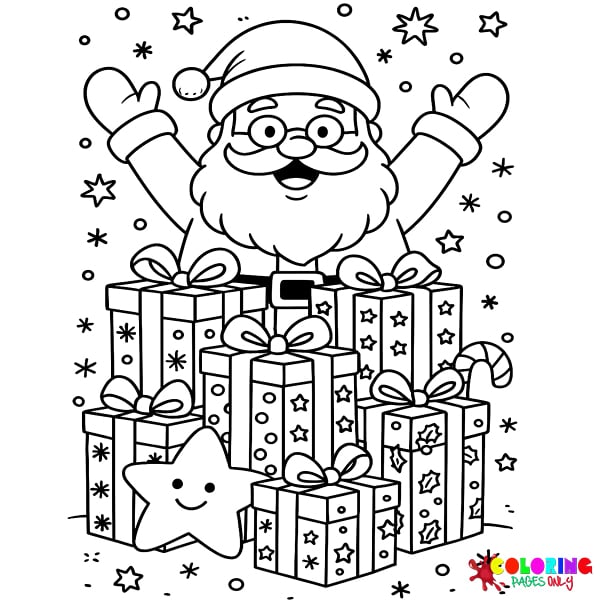
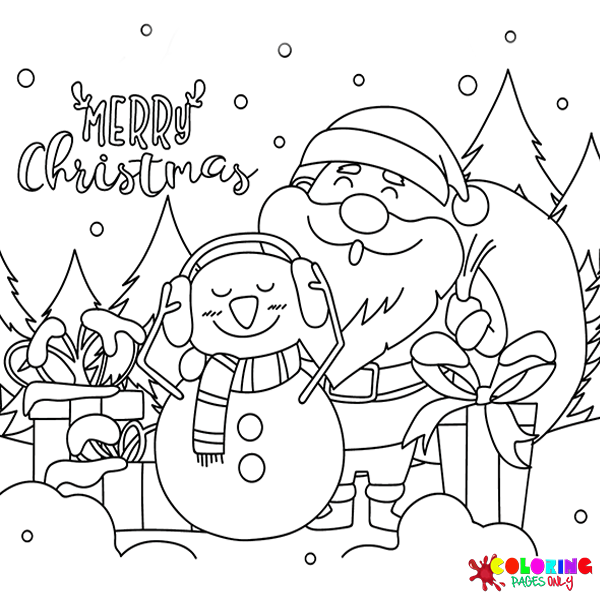
Santa Claus is the collection’s anchor and most frequently accessed sub-gallery, with pages ranging from simple seated Santas suited for young children through more detailed workshop and sleigh scenes for older colorists. The Santa Claus pages span traditional portrait compositions, action scenes of Santa delivering gifts, and softer portraiture of Santa reading letters or preparing gifts with elves.
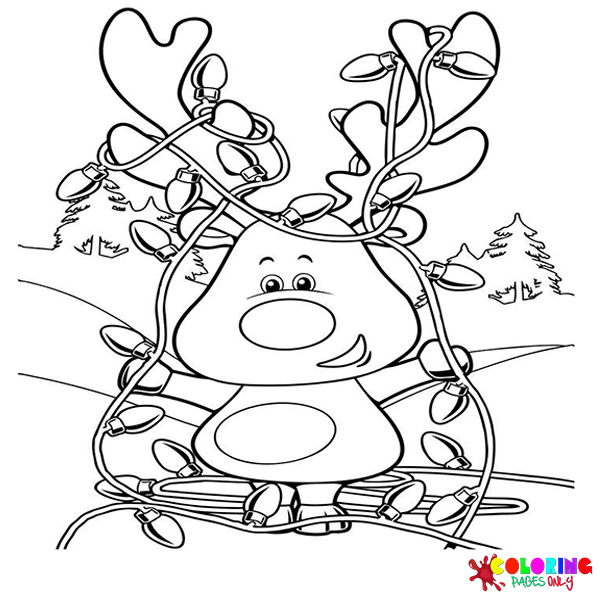
Rudolph covers the most famous of Santa’s nine reindeer – the red-nosed deer whose story originates in Robert L. May’s 1939 story and the classic 1964 Rankin/Bass animated television special that has aired every year since. Rudolph pages capture the character in standard reindeer portrait form and in action, flying or leading the sleigh.
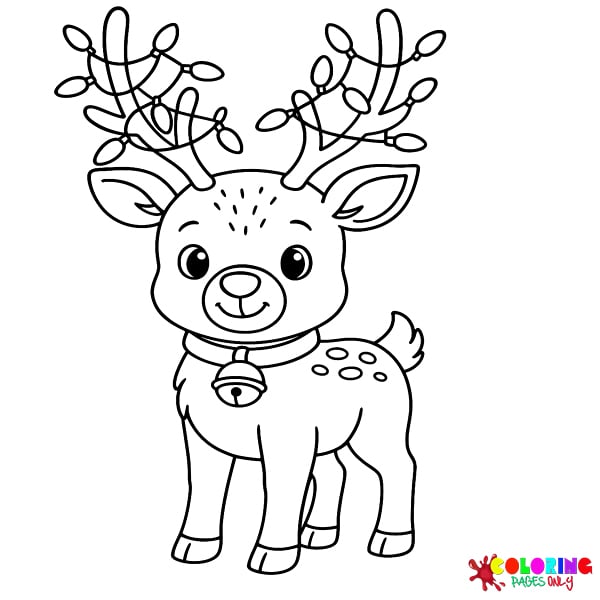
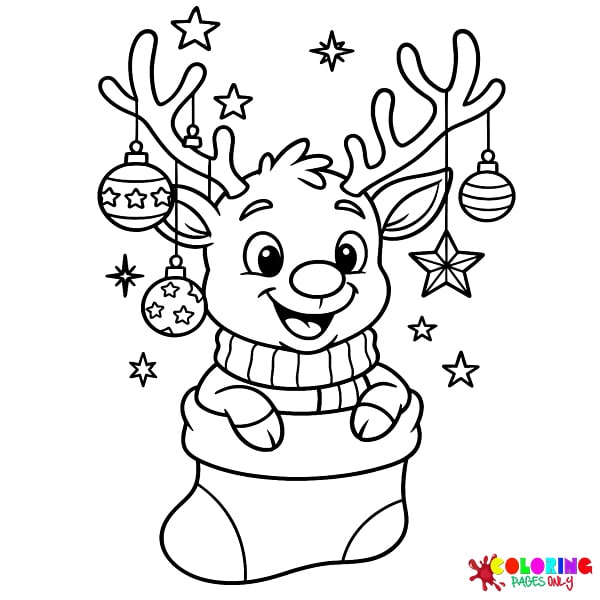
Reindeer broadens beyond Rudolph to cover Santa’s full team – Dasher, Dancer, Prancer, Vixen, Comet, Cupid, Donner, and Blitzen – in both individual portraits and group or sleigh compositions. These pages are particularly useful for children who want to depict specific reindeer from the traditional Christmas canon.
Elf covers Santa’s workshop helpers – the small, pointy-eared figures in red and green clothing with curled-toe shoes and jingle bells – in workshop scenes, gift-wrapping compositions, and individual portrait pages. The Elf sub-collection also includes pages referencing the broader cultural Santa’s elf archetype beyond any specific licensed character.
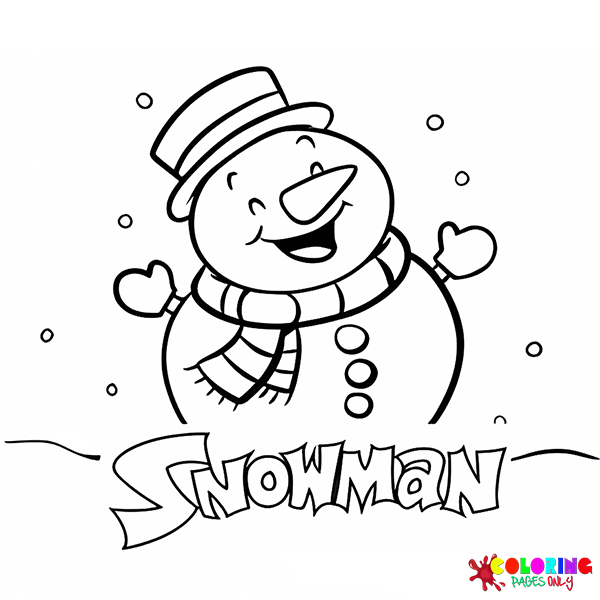
Snowman – the classic winter figure of stacked white snowballs with a carrot nose, coal or button eyes, stick arms, and a scarf – has extensive coverage in this collection, from simple two-ball snowman designs for young children through elaborate snowman family and snowman with winter landscape pages.
Grinch covers the beloved antagonist-turned-hero from Dr. Seuss’s How the Grinch Stole Christmas! (1957) and its 1966 animated special, 2000 film, and 2018 animated film. The Grinch has sustained independent popularity as a Christmas coloring subject across age groups. Pages in this sub-collection capture the Grinch’s expressively grumpy face, his transformation moment, and his characteristic interactions with Cindy Lou Who and Max the dog.
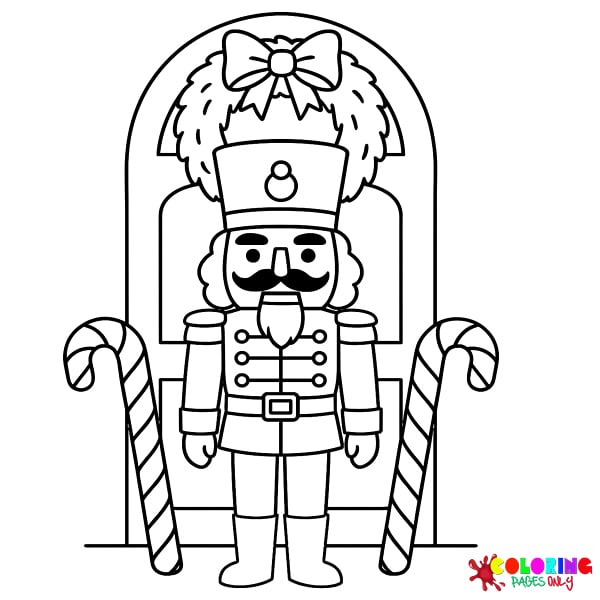
Nutcracker covers the iconic Christmas toy soldier figure associated with Tchaikovsky’s 1892 ballet The Nutcracker, which has been performed globally as a Christmas tradition for over a century. Traditional nutcracker figures have a very specific palette – typically a red military jacket with gold trim and epaulets, blue or black pants, a tall black hat or crown, a white wig, and a hinged jaw.
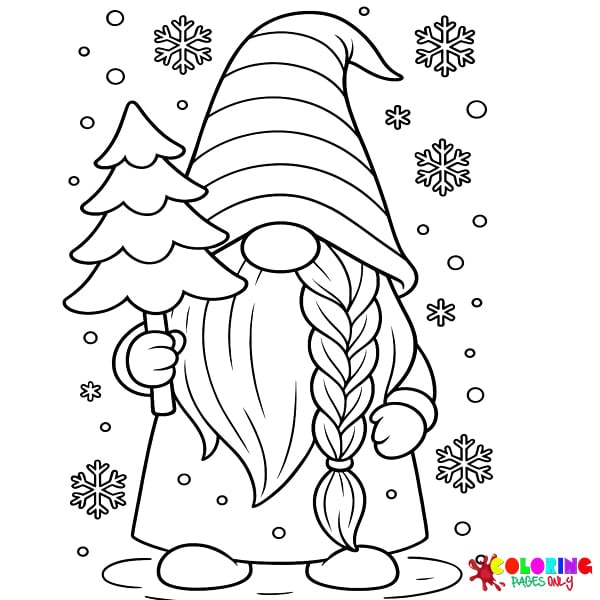
Gnome covers the Scandinavian Christmas gnome (tomte/nisse) tradition – small, bearded figures in pointed hats, often in red or grey – which has become one of the fastest-growing Christmas decorating trends in recent years. Gnome pages appeal to adults and families who prefer a more Scandinavian/hygge aesthetic than the classic American Santa Claus imagery.
Trees, Plants, and Decorations
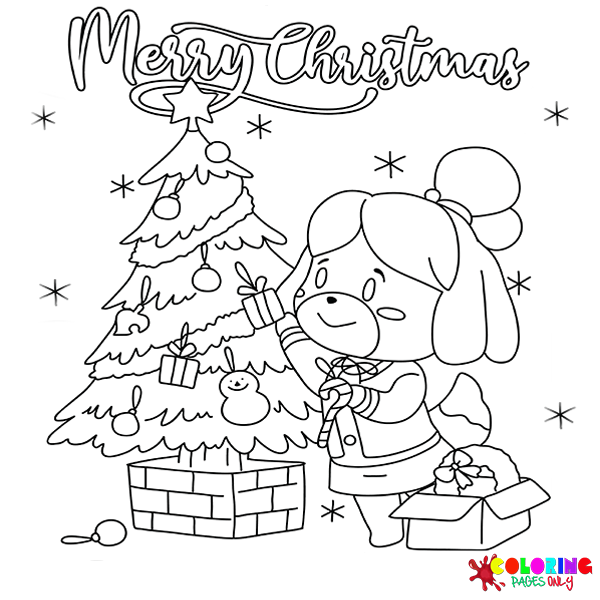
Christmas Tree is the collection’s second most-accessed sub-gallery and offers the widest range of complexity in the Christmas collection – from simple triangle-outline trees for toddlers and preschoolers to fully decorated, multi-layered trees with ornaments, tinsel, stars, and presents underneath, suited for adults and detailed colorists.
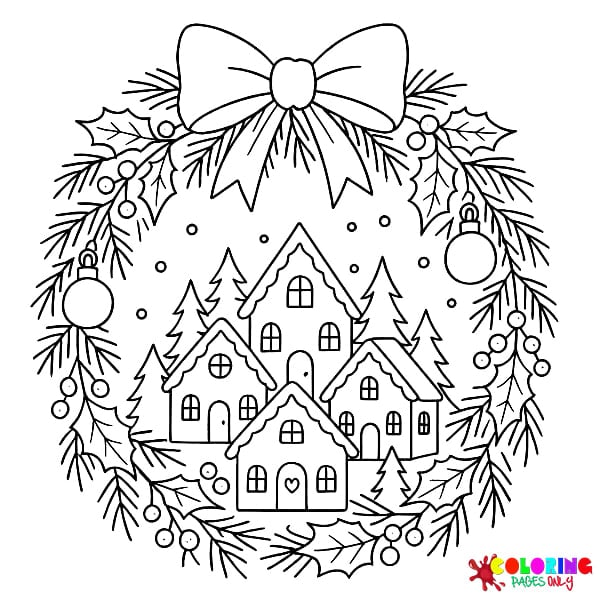
A Christmas Wreath covers the circular evergreen wreath hung on doors and windows – typically depicted with holly, berries, a bow, and ornamental accents. Wreath pages are particularly popular as coloring subjects for creating seasonal greeting card-sized designs.
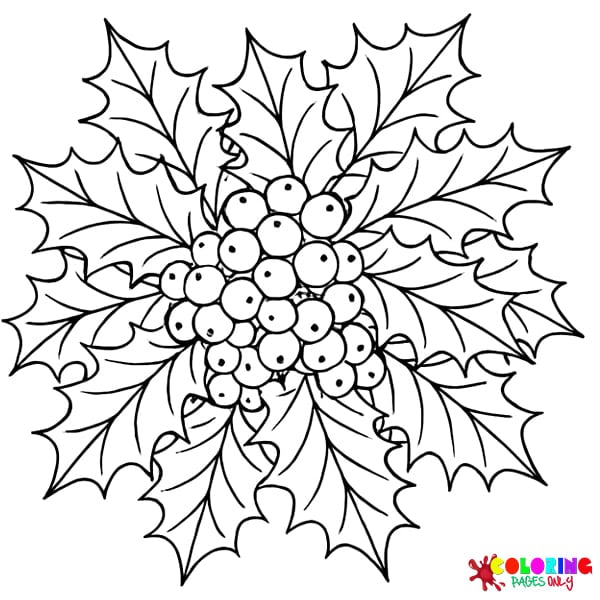
Christmas Holly covers holly as an isolated decorative element – the dark green spiky leaves and vivid red berries that are among Christmas’s most recognizable botanical symbols. Holly pages are often simpler and more contained than full wreath or tree compositions, making them well-suited for borders, small prints, and card decorations.
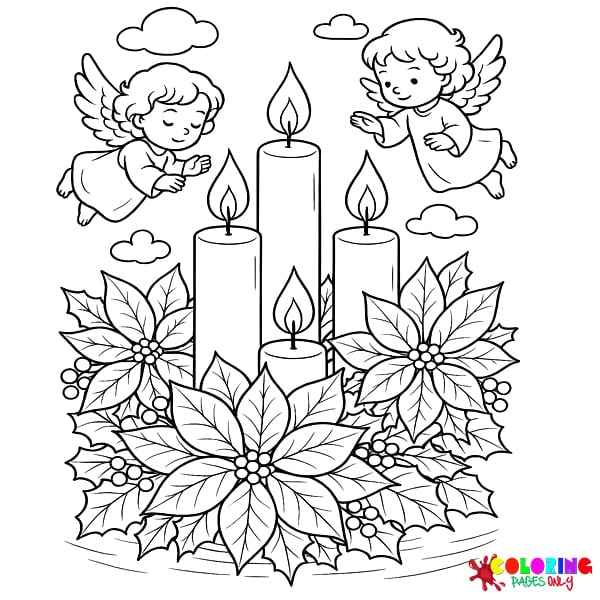
An Advent Wreath is distinct from the decorative Christmas wreath – an Advent Wreath is a liturgical object used in Christian tradition during the four Sundays of Advent before Christmas, consisting of an evergreen ring with four candles lit progressively across the Advent season. Traditional Advent wreath colors follow the liturgical calendar: three purple/violet candles and one pink/rose candle (lit on Gaudete Sunday), with a separate white Christ candle sometimes added at the center for Christmas Day.
Christmas Ornaments covers individual tree ornament designs – round balls, icicles, stars, angels, and novelty shapes – in both simple outline forms suited for young children and detailed illustrated ornament pages for adult colorists who enjoy highly finished decorative work.
Christmas Lights covers string-light arrangements – the colorful bulb strands hung on trees, rooflines, and windows that are among the most visually characteristic elements of Christmas home decoration. Light string pages provide the distinctive opportunity to plan a specific color sequence across the bulbs, making each completed page a slightly different aesthetic result.
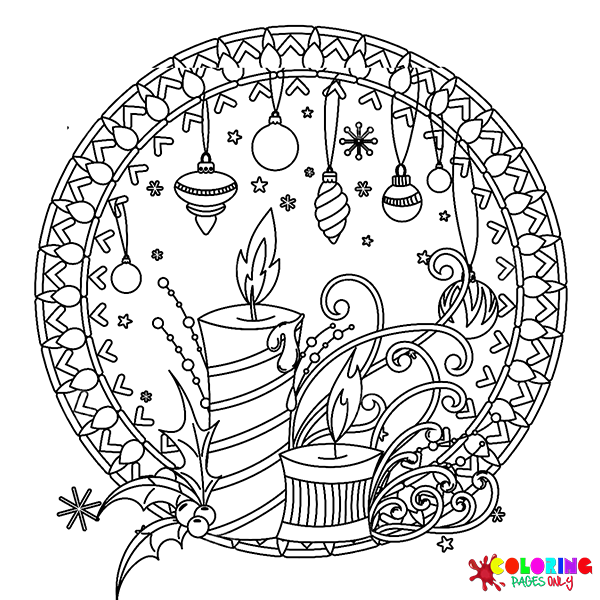
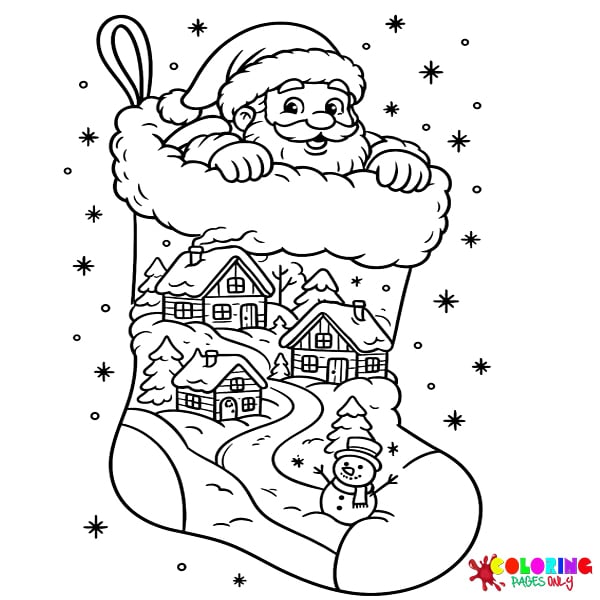
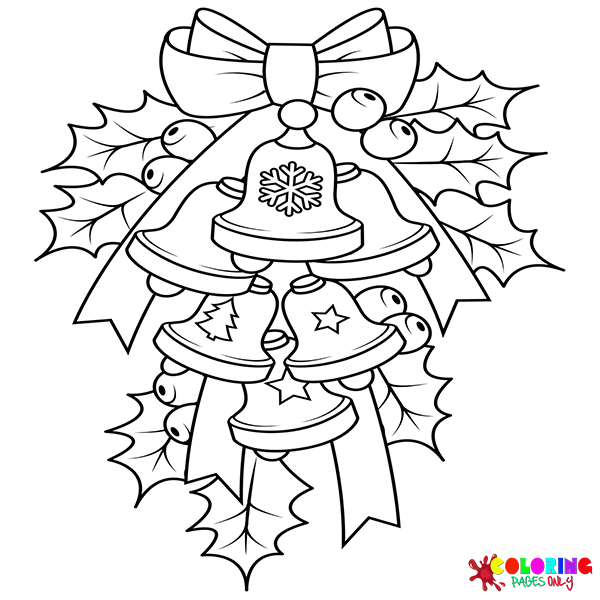
Christmas Bells, Christmas Candles, and Christmas Stockings cover three of Christmas’s most instantly recognizable symbolic objects. Bell pages typically depict the gold church bell or sleigh bell form. Candle pages show tapered candles in candlesticks or grouped arrangements. Stocking pages range from simple hanging sock outlines to detailed stuffed stockings overflowing with wrapped gifts, candy canes, and toys, which are among the most customizable pages in the collection, since a stocking’s specific contents can reflect a child’s particular interests.
Food, Sweets, and Baked Goods
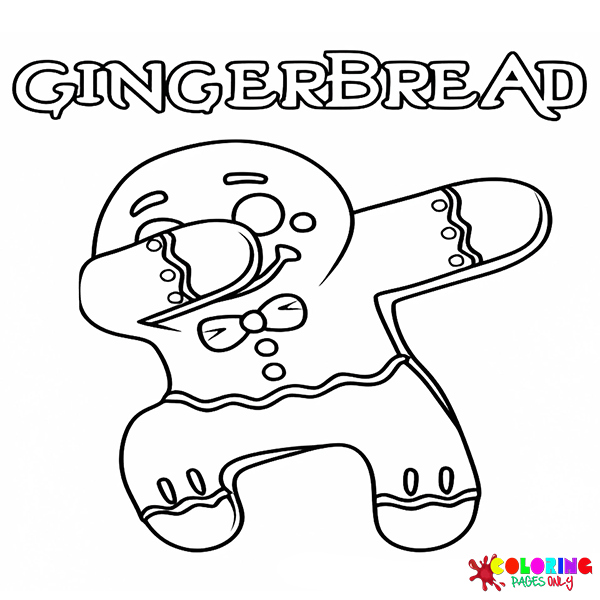
Gingerbread Man is one of the most child-accessible sub-collections in the Christmas gallery – the simple, familiar silhouette of a gingerbread cookie with icing details makes these pages easy and satisfying for children as young as three or four.
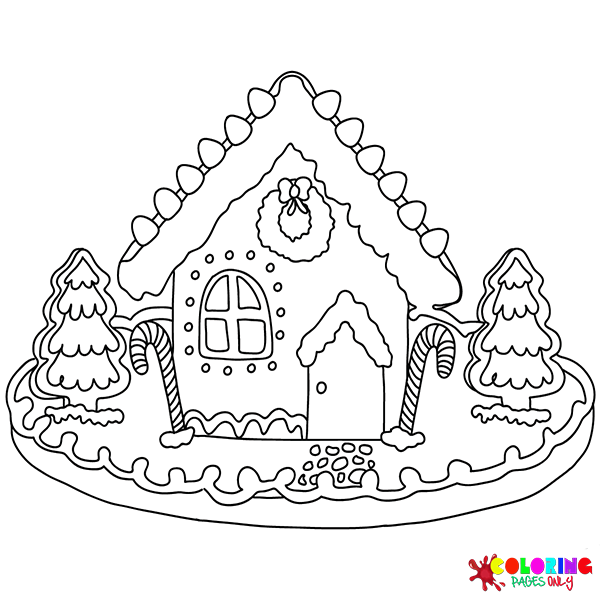
Gingerbread House scales up the gingerbread concept to the more architecturally detailed cottage form – walls, rooflines, windows, and doors decorated with icing, gumdrop accents, and candy cane borders. Gingerbread house pages are significantly more complex than gingerbread man pages and are better suited for children ages 6+ and adults who enjoy detailed work.
Christmas Candy Cane covers the curved peppermint stick in its traditional red-and-white stripe form, both in simple individual candy cane outlines and in arrangements, wreaths, and decorative borders incorporating the candy cane motif.
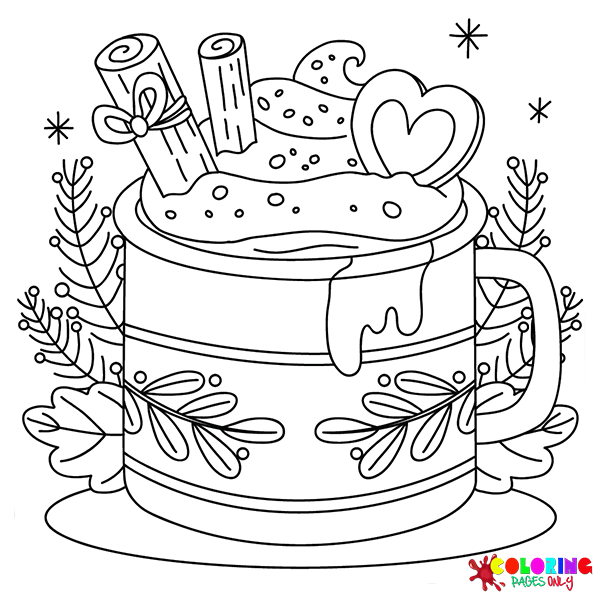
Christmas Milkshake is the newest and most whimsical food sub-collection – tall, elaborate holiday-themed milkshakes topped with whipped cream, candy canes, sprinkles, and Christmas decorations. These pages appeal to children who enjoy the “dessert art” aesthetic that has become popular in children’s content.
Religious and Traditional
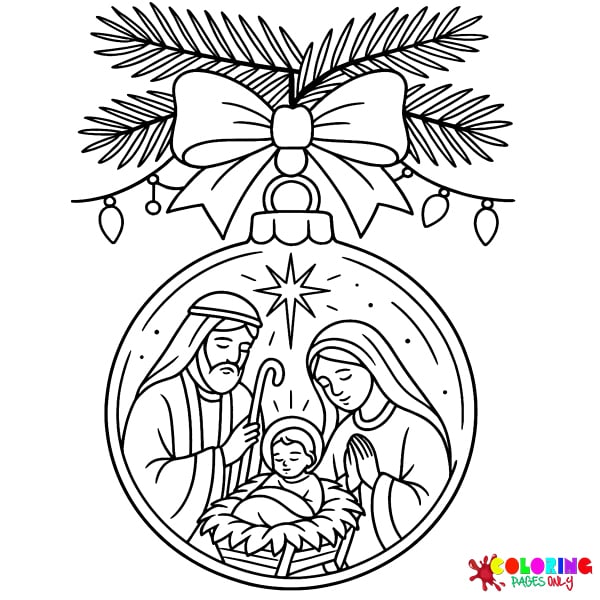
Nativity covers the Christmas nativity scene – the central tableau of Christian Christmas observance depicting the birth of Jesus in Bethlehem, with Mary, Joseph, the infant Jesus in a manger, shepherds, wise men (Magi), and animals. Nativity pages are among the most requested in the Religious Christmas sub-collection and span simple, child-friendly outline versions through more detailed traditional artistic renderings.
Religious Christmas provides broader coverage of the Christian aspects of Christmas beyond the nativity scene, specifically including the Star of Bethlehem, the three Magi and their gifts (gold, frankincense, and myrrh), the shepherds and angels of the Annunciation to the Shepherds, and other Biblical Christmas imagery.
Christmas Angels covers angel figures across both the religious nativity tradition and the secular Christmas angel – the tree-topper figure in flowing white robes with gold or white wings. Angel pages appear in both the religious observance context (the Angel Gabriel of the Annunciation) and the decorative secular context.
Character and Thematic Collections
Disney Christmas places beloved Disney characters in Christmas-themed compositions – seasonal scenes with Mickey and Minnie Mouse, holiday settings with Stitch, Elsa, and Olaf from Frozen in winter scenes, and other Disney characters in festive contexts. These pages bridge the Christmas collection with the broader Disney audience the site already serves.
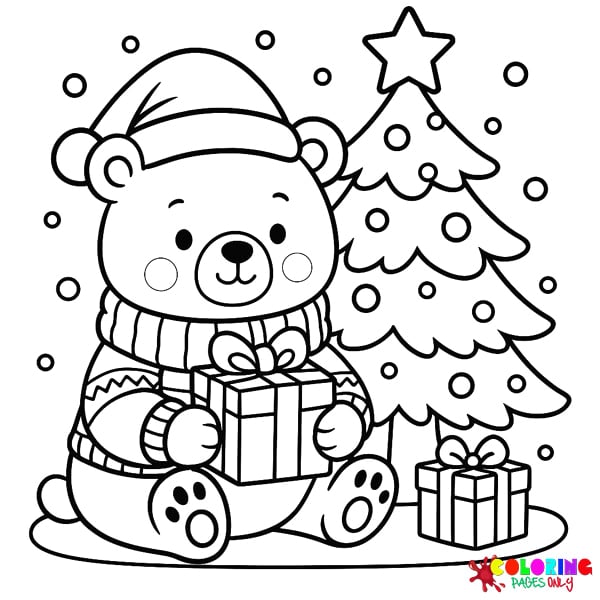
Christmas Animals covers animals in Christmas-themed compositions – polar bears, penguins, rabbits, foxes, and woodland creatures depicted in holiday settings, wearing scarves and hats, or interacting with Christmas decorations. These pages are particularly popular for children who prefer animal-focused imagery over human character pages.
Christmas Cartoon provides a broader category of animated and cartoonish Christmas art that doesn’t fit into a specific licensed character collection – general cartoon-style Santas, elves, and holiday characters in an expressive drawn style.
Cute Christmas covers Christmas imagery in a kawaii/chibi aesthetic – rounded, large-eyed, simplified character forms applied to Santa, snowmen, elves, reindeer, and holiday objects. These pages are designed primarily for younger children and fans of the kawaii art style.
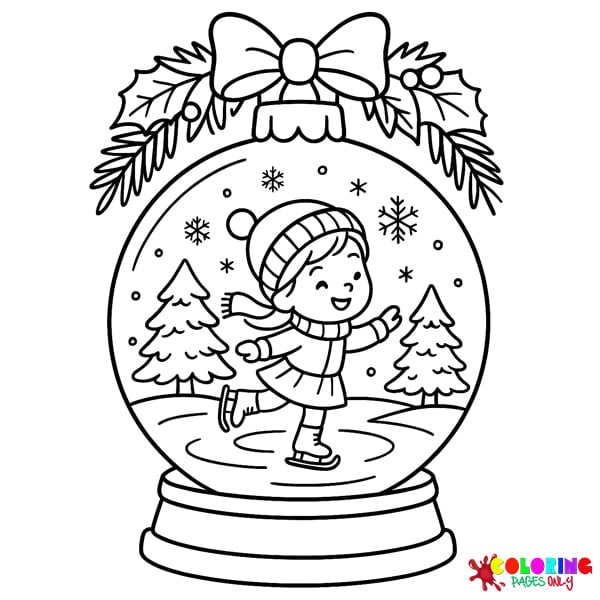
Snow Globe covers the decorative glass globe snow dome – filled with miniature winter scenes and artificial snow – in both simple outline form and more detailed illustrated versions, capturing specific scenes inside the globe.
Christmas in July is a deliberately seasonal outlier – Christmas imagery without the December timing constraint, popular for summer craft sessions, school holiday projects, and year-round Christmas enthusiasts.
Pattern and Design Collections (Adult Colorists)
Christmas Mandala applies the radially symmetric mandala format to Christmas motifs – snowflakes, stars, poinsettias, and ornament patterns arranged in the complex circular structures that adult colorists who enjoy mindfulness coloring find most satisfying. Christmas mandala pages are the most intricate in the collection and are designed for adult use.
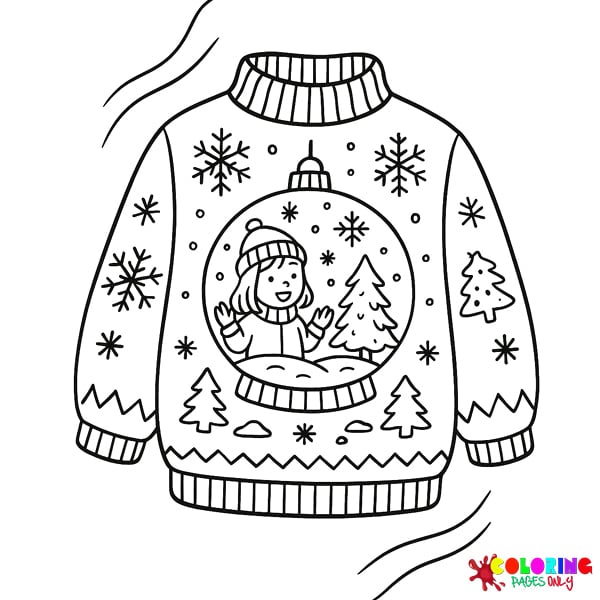
Christmas Sweater covers the “ugly Christmas sweater” pattern format – the bold, geometric, often deliberately gaudy knitted sweater patterns associated with the Christmas sweater party tradition. These pages give colorists full creative latitude over the pattern’s color scheme, with the challenge of creating a visually cohesive or deliberately clashing sweater design.
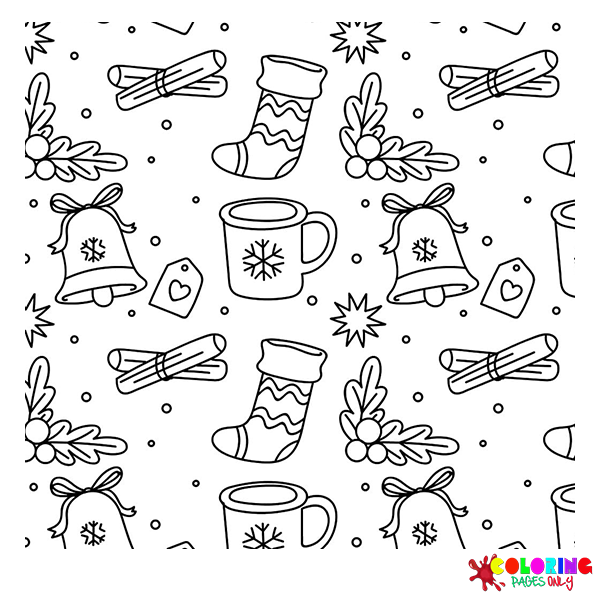
Christmas Pattern and Christmas Wallpaper cover repeating pattern designs – rows of alternating Christmas motifs, continuous borders, and wallpaper-format compositions – that work particularly well as finished pieces when applied as gift wrap, card backgrounds, or framed decorative prints.
Christmas Cards provides pages specifically designed in greeting card dimensions and format – bordered compositions with space for a personal message – that can be colored, folded, and sent as handmade Christmas cards.
Coloring Guide: Getting the Colors Right
Santa Claus has one of the most standardized color palettes of any Christmas subject. The suit is vivid fire-engine red – a fully saturated, unmuted red with no orange or brown bias. The trim (collar, cuffs, hem) and beard are bright white. The belt is solid black with a gold buckle – the gold is warm, bright, and clearly metallic, not yellow. The boots are black and match the belt. Santa’s skin is warm and rosy – particularly his cheeks, which are often depicted with a distinct, round rose-red blush. His hat has the same red body as the suit with a white pompom at the tip. Eyes are typically blue or dark, and the eyebrows are white, matching the beard.
Rudolph’s nose is the single most important coloring decision in any Rudolph page, and it is consistently misrendered in a common way: the nose should be a vivid, saturated red-orange to red – genuinely glowing, the reddest element on the page. It is not pink, not dark maroon, and not orange-red. Rudolph’s body follows standard reindeer coloring: warm reddish-brown on the back and sides, lighter cream-tan on the belly and inner legs. Antlers are the same warm brown as the body, and hooves are dark brown or near-black.
The Grinch is a very specific green – a medium yellow-green, distinctly lighter and more yellow than forest green, and distinctly more muted and cooler than lime green. The specific “Grinch green” sits between those two – it should read as clearly green against a white page but with a slightly yellowish quality. His Santa suit, in scenes from the story where he disguises himself, uses the same vivid red as canonical Santa. His expression is the defining feature in any Grinch portrait, and the detailed work around his narrowed eyes and curled smile benefits from darker shadow values.
The Christmas tree in traditional depictions uses deep evergreen – a rich, dark, slightly blue-green that represents a mature spruce, fir, or pine. This is significantly darker than the medium greens used for many other plant subjects. Traditional ornaments on a Christmas tree can follow any color scheme, but the canonical combination is gold and red ornaments with silver tinsel, a gold or silver star on top, and multicolored or warm-white light bulbs. The trunk and stand use warm brown.
The Snowman is almost entirely white, which creates a specific coloring challenge: white on white paper reads as empty rather than as a white object. The most effective approach is a very light, cool blue-gray wash applied over the snowman’s entire body surface, leaving the brightest highlights (the tops of each sphere) completely white. This gives the snowman three-dimensional roundness while preserving the white-object impression. The carrot nose is vivid orange. The coal buttons and eyes are near-black with a very slight brown bias. The scarf can be any color – red is traditional, but green, blue, and plaid are all common.
The Gingerbread Man is a warm amber-caramel brown – the specific color of baked gingerbread cookie, notably lighter and more orange-red-brown than chocolate, and notably warmer and more golden than standard brown. Icing details (the smile, button features, and decorative borders) are typically rendered in bright white, with red, green, and pink as accent icing colors for candy details.
The Nativity palette follows centuries of artistic convention. Mary’s veil is deep blue – the lapis lazuli blue of medieval manuscript painting that has defined Mary’s color association in Western artistic tradition. Joseph’s robes are typically warm earth tones: tan, brown, or ochre. The manager hay is warm golden-yellow. The Star of Bethlehem is vivid gold. Baby Jesus is traditionally depicted in white swaddling clothes with warm, golden light cast on the scene from above. The wise men’s garments use rich jewel tones – deep red, deep blue, gold – reflecting the regal gifts of gold, frankincense, and myrrh they bring.
The Advent Wreath’s candle colors follow a specific liturgical sequence in the traditional Catholic and mainline Protestant tradition: the first, second, and fourth candles are purple/violet; the third candle (Gaudete Sunday, the third Sunday of Advent) is rose/pink – a slightly lighter, warmer pink-purple. Some denominations use all red candles, and some add a central white Christ candle for Christmas Day. The evergreen of the wreath uses the same deep green as the Christmas tree.
Holly berries are vivid red – clearly, fully saturated red, contrasting sharply with the dark, glossy green of the spiky holly leaves. The leaves should be noticeably darker green than mid-green, with a slight sheen quality. The cluster of three berries is a recognizable arrangement that reads immediately as holly in any scale.
FAQs
What age range are Christmas coloring pages suitable for? This collection serves ages 2 through adult. The simplest pages – basic gingerbread men, simple snowman outlines, Santa portraits with large bordered areas – work for toddlers and preschoolers. The mandala, pattern, and detailed nativity pages are designed for adults and older teens.
Are there Christmas pages for classroom use? Yes. Pages in this collection are free to print in unlimited quantities and require no sign-up, making them suited for classroom holiday activities. Simple pages – gingerbread man, Christmas tree, Santa – work well for groups; individual character pages work better for take-home activities.
What is the difference between the Nativity and Religious Christmas sub-collections? The Nativity collection focuses specifically on the manger scene – Mary, Joseph, the infant Jesus, shepherds, wise men, and animals in the Bethlehem stable. The Religious Christmas collection is broader and includes the Star of Bethlehem, the three Magi separately, the Annunciation to the Shepherds, and other Biblical Christmas imagery not necessarily depicted in a nativity tableau.
Do the Christmas pages include non-Santa secular imagery as well as religious content? Yes. The collection is organized by theme – fully secular imagery (snowmen, candy canes, Christmas trees, gingerbread), religious imagery (nativity, angels, religious Christmas), character imagery (Grinch, Nutcracker, Disney Christmas), and pattern/design imagery are all separate sub-collections, allowing you to navigate directly to the type of Christmas content that suits your household, classroom, or tradition.
What’s the difference between the Christmas Wreath and the Advent Wreath collections? A Christmas wreath is a decorative evergreen circle hung as a door or wall decoration, associated with the secular holiday season. An Advent wreath is a specific liturgical object with four candles used to mark the four weeks before Christmas in Christian tradition, with specific candle colors that follow the Advent calendar.
All 2,160+ Christmas Coloring Pages are free – download as PDF or color online. Share your finished pages on Facebook and Pinterest.