Food Coloring Pages at ColoringPagesOnly.com covers over 1,440 pages across 27 sub-categories – the full landscape of what people eat, drink, crave, and celebrate with, from the most globally distributed fast food brands to the quietly specific pleasures of a Japanese octopus ball and an aesthetic lofi milk drink. Food is one of the most naturally rewarding coloring subjects in the entire site: every food item comes with an expected color palette built into real-world knowledge – a pizza is golden-brown crust with vivid red tomato sauce and white-yellow melted cheese; a strawberry ice cream cone is a specific pink on white in a tan wafer cone – which means the colorist has a reference answer they already know, while also having complete freedom to invent. The collection ranges from the serious celebration food of birthday cakes and wedding-tier cakes through the casual comfort of hot dogs and popcorn, the globally beloved aesthetics of boba tea and sushi, and the purely American candy and holiday confectionery traditions.
Every page in this collection is completely free to download as a PDF and print, or to color online directly in your browser.



Frozen and Cold Treats
The cold and frozen sub-categories form the largest single cluster in the Food collection, anchored by the most-searched food coloring page sub-category on the site.
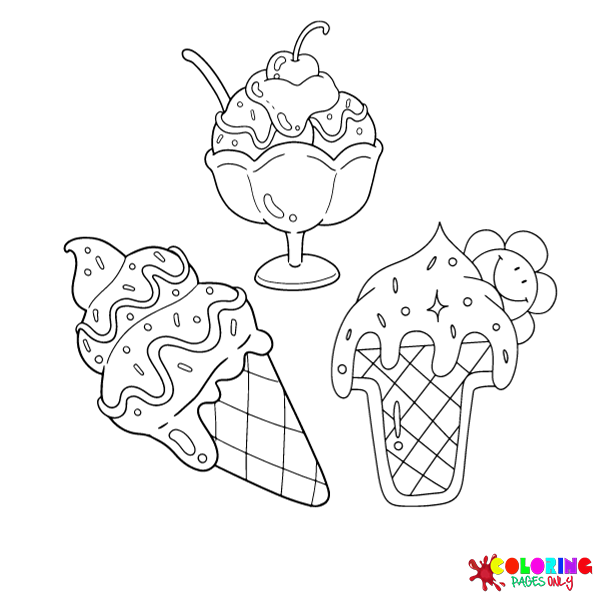
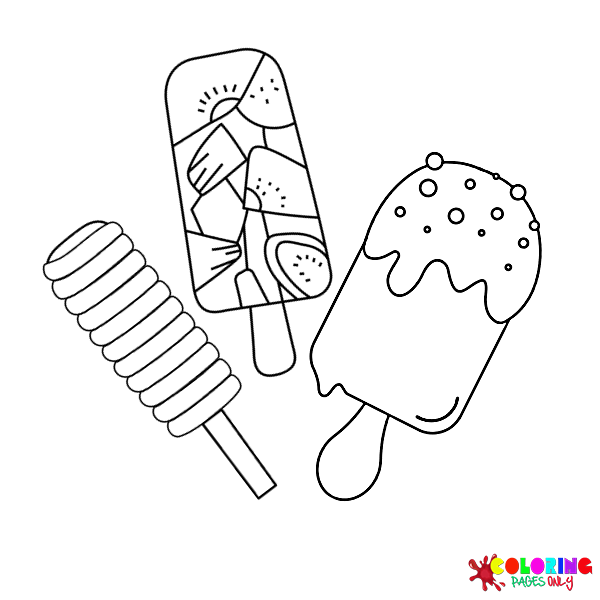
Ice Cream is the Food category’s highest-traffic sub-category and one of the most universally recognizable food forms in the world – the cone and scoop composition with its distinctive soft-serve swirl or rounded hard-scoop profile, the sundae with toppings, the banana split, and the full range of ice cream shop compositions. Ice cream pages are among the most color-expressive in the collection: every flavor has a canonical color (strawberry pink, chocolate brown, mint green, vanilla cream, blueberry purple, pistachio pale green), but every colorist is also free to invent their own. The collection includes simple single-scoop pages for younger colorists and elaborate multi-scoop compositions with toppings for more ambitious ones. Popsicle covers the flat-stick frozen treat in its many forms – the rocket pop’s red-white-blue, the creamsicle’s orange-and-cream, the fudge bar’s deep chocolate brown, and the fruit bar’s various vivid single-fruit colors.
Boba Tea covers the Taiwanese bubble milk tea and its many variants – the tall cup, the wide straw, and the dark tapioca pearls settled at the bottom that define the drink’s visual identity. Boba tea pages have a specific coloring challenge: the milk tea body is a warm tan-to-brown depending on the tea base, the pearls are a deep near-black brown, and the cup is typically clear plastic showing the drink’s color through it. The aesthetic appeal of boba tea as a coloring subject reflects its social media visual prominence – it is one of the most photographed food-and-drink items of the 2010s and 2020s. Coffee covers the full coffee beverage spectrum from the simple black espresso to the elaborate latte art of specialty coffee culture – the foam-patterned surface of a cappuccino, the layered ombre of an iced latte, and the café environment that frames the coffee experience. Starbucks covers the specific visual identity of the world’s largest coffee chain – the green siren logo cup, the seasonal holiday red cup, and the Frappuccino with its whipped cream crown that is one of the most visually recognizable branded beverages in the world. Lofi Milk covers the aesthetic milk and dairy drink in its lo-fi/cozy illustration style – the warm, slightly desaturated approach to a simple glass of milk that connects the food category to the Cozy aesthetic tradition.
Summer Treats & Foods covers the seasonal intersection of warm weather and cold food – ice cream at the beach, popsicles in the park, cold drinks at outdoor gatherings, and the full sensory world of summer eating.
Cakes, Cupcakes, and Baked Celebration Food
The cake and baked-good cluster covers what might be the most emotionally weighted food category in the collection – the foods that mark the significant moments of life.
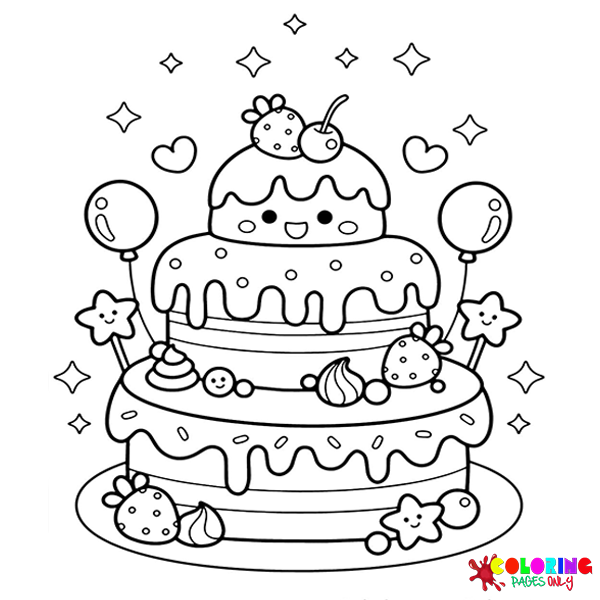
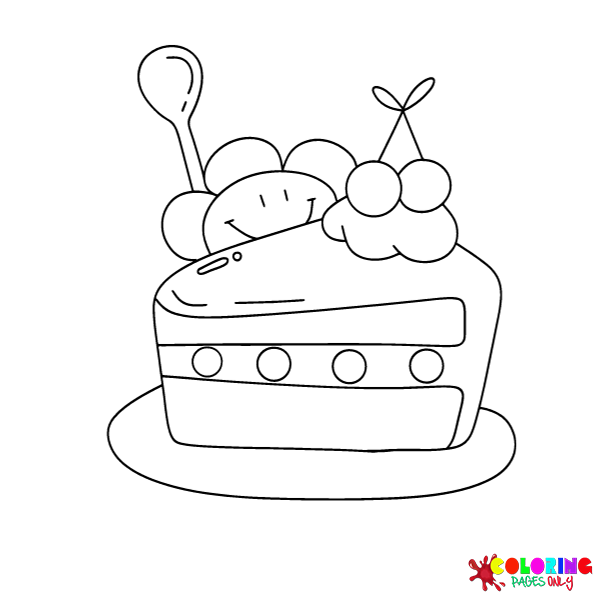
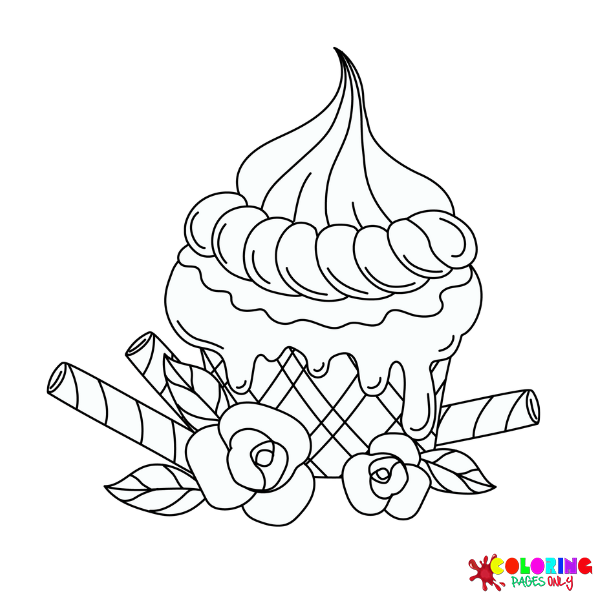
Cake is the broad sub-category covering the layered frosted cake in its many forms – from the simple two-layer round with butter cream frosting through the elaborate multi-tier fondant-covered creations of professional baking, the naked cake with visible layer edges, and the novelty cake shaped to resemble objects, characters, or themes. The coloring challenge of the cake page centers on the frosting: the smooth, even coat of buttercream or fondant that covers the exterior, typically in a solid color with decorative piping, flowers, or drip effects in contrasting colors. Birthday Cake has its own dedicated sub-category reflecting the specific birthday cake tradition – the candle-topped, often vibrantly decorated cake that marks the annual celebration of another year. Birthday cake pages almost universally include the lit candles whose yellow flame and melting wax drip is one of the most immediately coloring-friendly details in the food collection. Cupcake covers the individual-serving cake in its paper wrapper – one of the most accessible food coloring subjects because the small scale and high frosting-to-cake ratio make each cupcake a small but complete composition of color and texture.
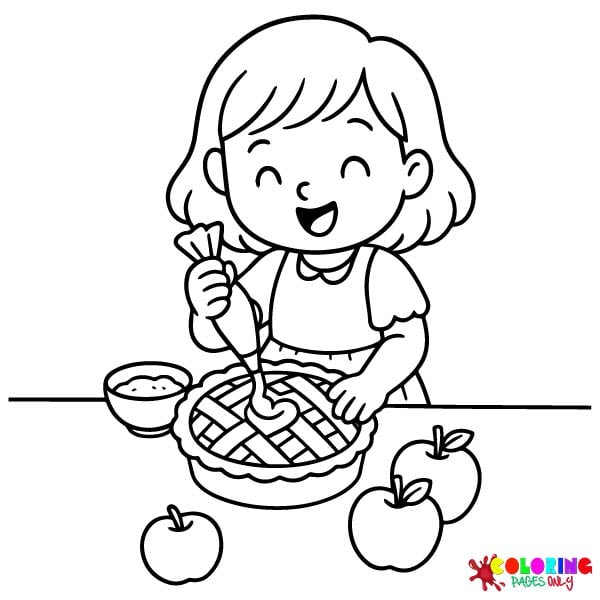
Cookie covers the baked single-portion sweet across its many forms – the chocolate chip cookie, whose golden-brown dough and dark chip distribution is one of the most iconic food textures in American culture, the decorated sugar cookie, whose flat surface is designed for icing and can be almost any color, the snickerdoodle, the shortbread, and the global variety of cookie traditions. Apple Pie covers the American pie tradition – the lattice top or full-crust golden-brown surface with the filling’s amber-red fruit visible through the vents, typically set in a pie dish in a home kitchen context.
Desserts is the broad hub sub-category that covers the dessert world generally – multiple dessert types in ensemble compositions, dessert table spreads, and pages that show a variety of sweet course offerings together.
Candy, Sweets, and Confectionery
Candy covers the broad category of sugar confectionery – gummy bears, hard candy, candy corn, wrapped caramel, and the full spectrum of the candy shop’s visual abundance. Candy pages are among the most color-saturated in the entire Food collection, because candy’s physical form is defined by its artificial colors – vivid primary and secondary colors that exist nowhere in nature and signal “sweet” through intensity alone. Lollipop covers the stick candy in its swirled, round, and novelty forms – the classic flat round with its spiral color pattern, the giant gourmet lollipop, and the character-shaped lollipop. Chocolate covers the cacao-derived confectionery in its many forms – the chocolate bar with its scored segments, the chocolate truffle, the chocolate box with its arranged assortment, and the hot chocolate drink. The color palette of chocolate pages is one of the most specific in the collection: the deep warm brown of dark chocolate, the lighter milk chocolate brown, and the ivory cream of white chocolate.
Donut covers the fried ring pastry with its glazed or frosted top and optional sprinkle decoration – one of the most compositionally simple and coloring-friendly food forms, given the ring shape’s clean outline and the flat glaze surface’s invitation to a smooth, even color application. Peeps covers the marshmallow chick and bunny confectionery associated with the American Easter tradition – the simple, rounded bird or rabbit shapes in their iconic pastel yellow, pink, purple, and lavender colors that are among the most specific seasonal color palettes in the Food collection. Popcorn covers the popped corn kernel in its movie-theater bag or bowl – the warm yellow of butter-coated popcorn against the red-and-white-striped classic bag is one of American snack culture’s most recognizable visual compositions.
Global Street Food and Restaurant Culture
Several sub-categories cover the international food traditions that have crossed cultural borders to become genuinely global eating experiences.
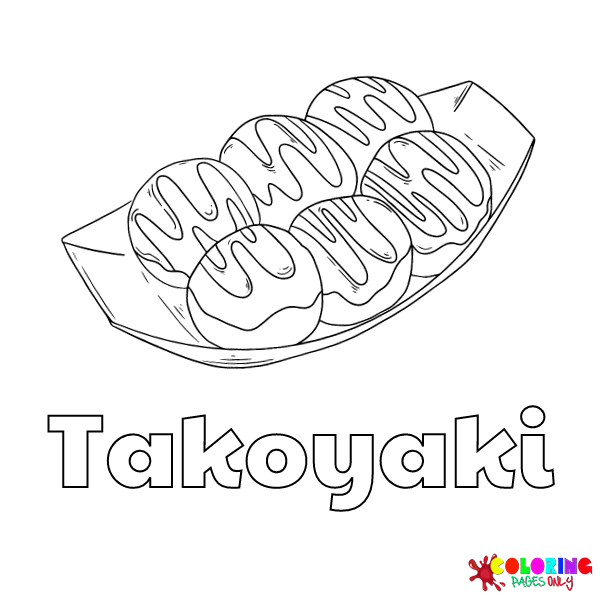
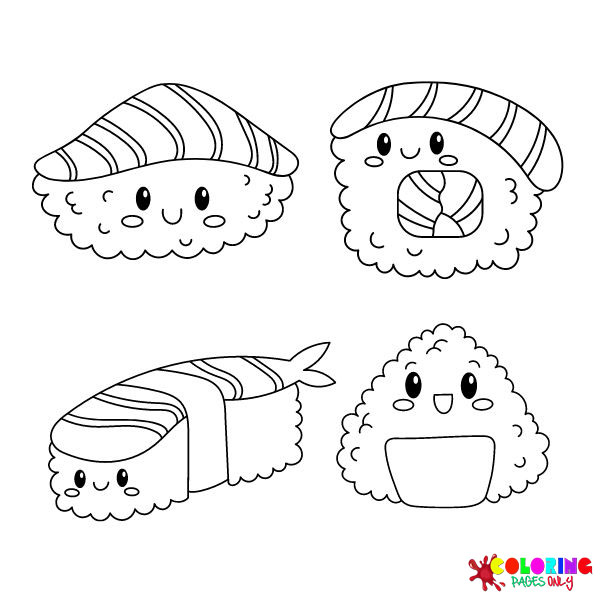
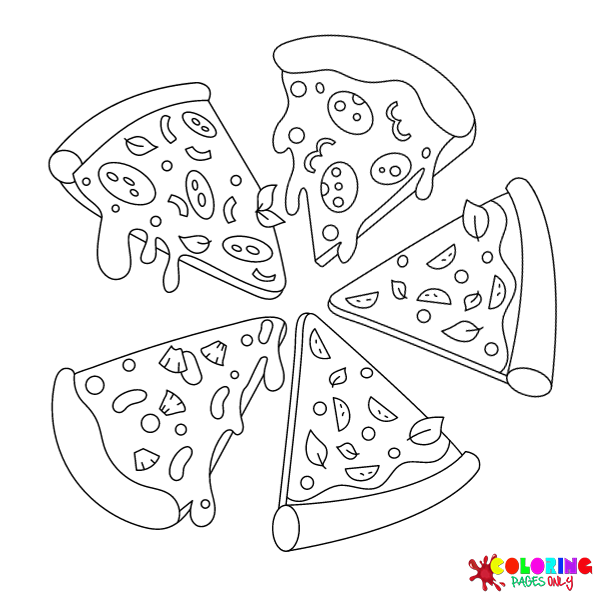
Pizza covers the Italian-origin baked flatbread that is now the world’s most universally eaten dish – the classic Margherita with red tomato, white mozzarella, and green basil; the American pepperoni pizza with its overlapping orange-red circles on melted yellow cheese; the slice, the whole pie, and the pizza box. Pizza pages allow the colorist to design their own topping distribution, which makes them one of the more creatively open food subjects in the collection. Sushi covers the Japanese rice-and-fish tradition in its illustrated form – the nigiri’s oval rice base with its fish topping, the maki roll’s circular cross-section of rice, seaweed, and filling, and the hand roll’s cone shape. Sushi pages have a specific color logic: the rice is white-cream, the nori seaweed is a deep near-black forest green, the salmon is coral-orange, the tuna is deep red-pink, and the avocado is soft green. Takoyaki covers the Osaka street food of octopus-filled wheat flour balls – round balls topped with brown takoyaki sauce, white Japanese mayonnaise, green aonori seaweed flakes, and the pink-orange of dancing katsuobushi bonito flakes, making it one of the most colorfully complex Japanese street food illustrations in the collection.
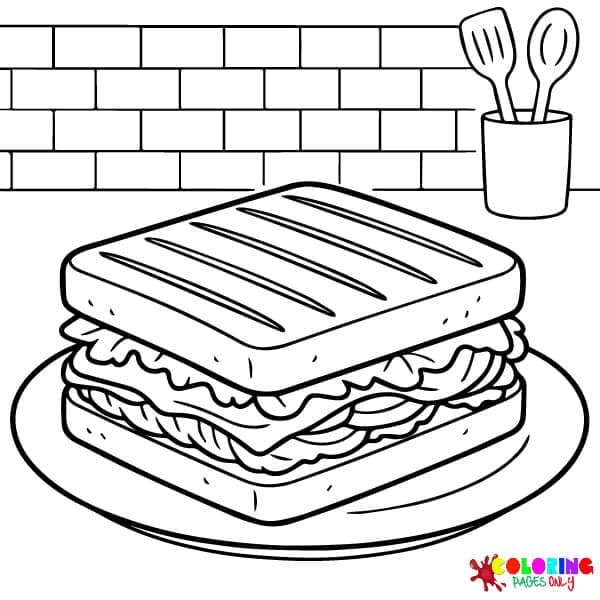
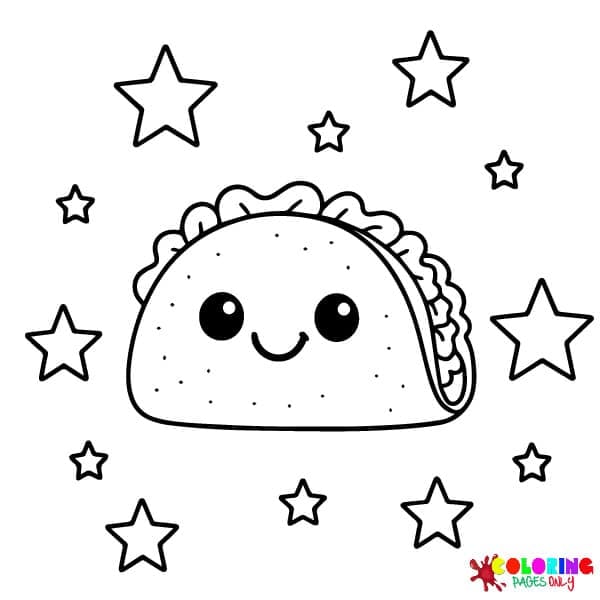
Taco covers the Mexican corn or wheat tortilla folded around fillings – the hard shell taco in its golden-yellow U-shape, the soft taco’s rounded form, and the colorful internal arrangement of meat, cheese, lettuce, tomato, and sour cream. Sandwich covers the bread-enclosed meal in its many forms – the stacked deli sandwich with its visible cross-section of meats, cheeses, and vegetables, the sub or hoagie, and the simpler grilled cheese or BLT. Hot Dog covers the American stadium and street food – the tube of pink-red frankfurter in its pale tan bun, with the bright yellow mustard and red ketchup applied in their characteristic squiggles.
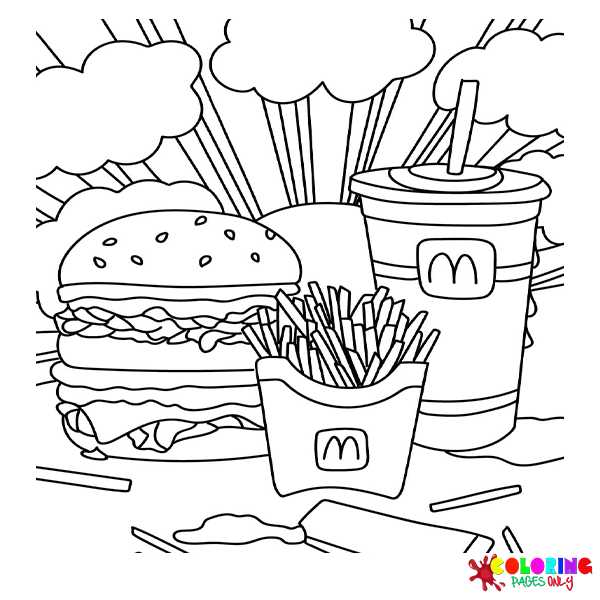
McDonald’s is the world’s most recognized fast food brand, and its iconic visual elements – the golden arches, the red-and-yellow color scheme, and the signature menu items (Big Mac, French fries, Happy Meal box) whose visual identities are among the most immediately recognizable food-and-brand compositions in global visual culture.
Aesthetic and Cultural Drinks
Whimsical Bento covers the Japanese bento box lunch in its illustrated, playful form – the rectangular or tiered compartmentalized container with its carefully arranged portions of rice, protein, vegetables, and decorative elements (character-shaped onigiri, vegetable flowers, decorative picks). The whimsical bento is a specific modern tradition of making the school or work lunch into a small visual artwork, and the coloring pages here reflect that aesthetic ambition.