
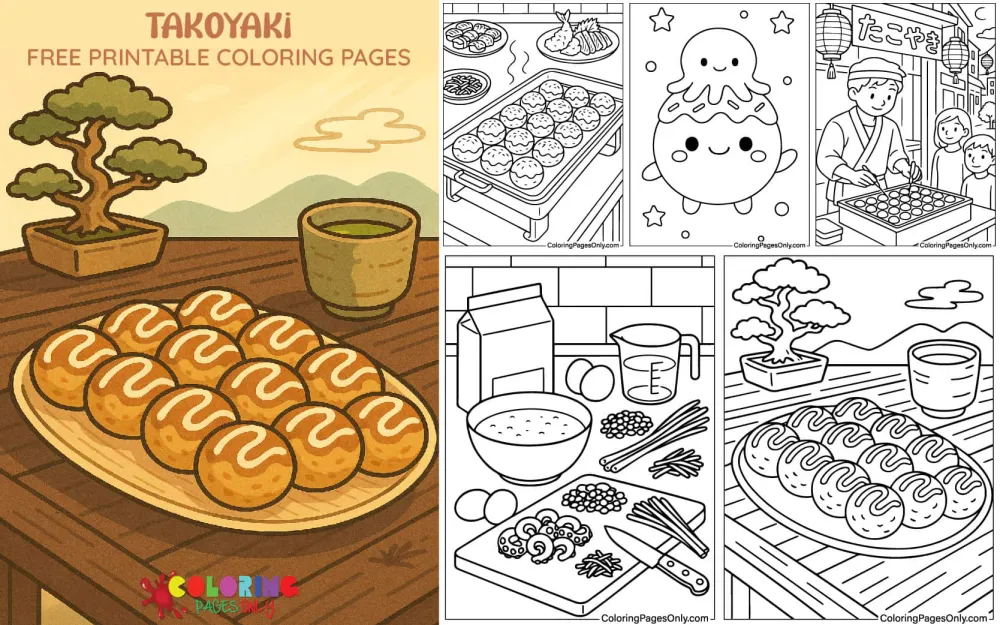
Free Takoyaki Coloring Pages: 53 printable PDF designs covering the round, octopus-filled Japanese street snack, from festival stalls and food trucks to cute cartoon versions. Each page can be downloaded as a PDF to print or colored online in the browser, with no account required.
Takoyaki was invented in 1935 by Osaka street vendor Tomekichi Endo, who filled a savory batter ball with diced octopus, an idea that grew out of an earlier snack called rajioyaki. The name itself is a direct description: tako means octopus, and yaki refers to the grilling method, which is why so many pages in this set pair a takoyaki ball with a cartoon octopus character.
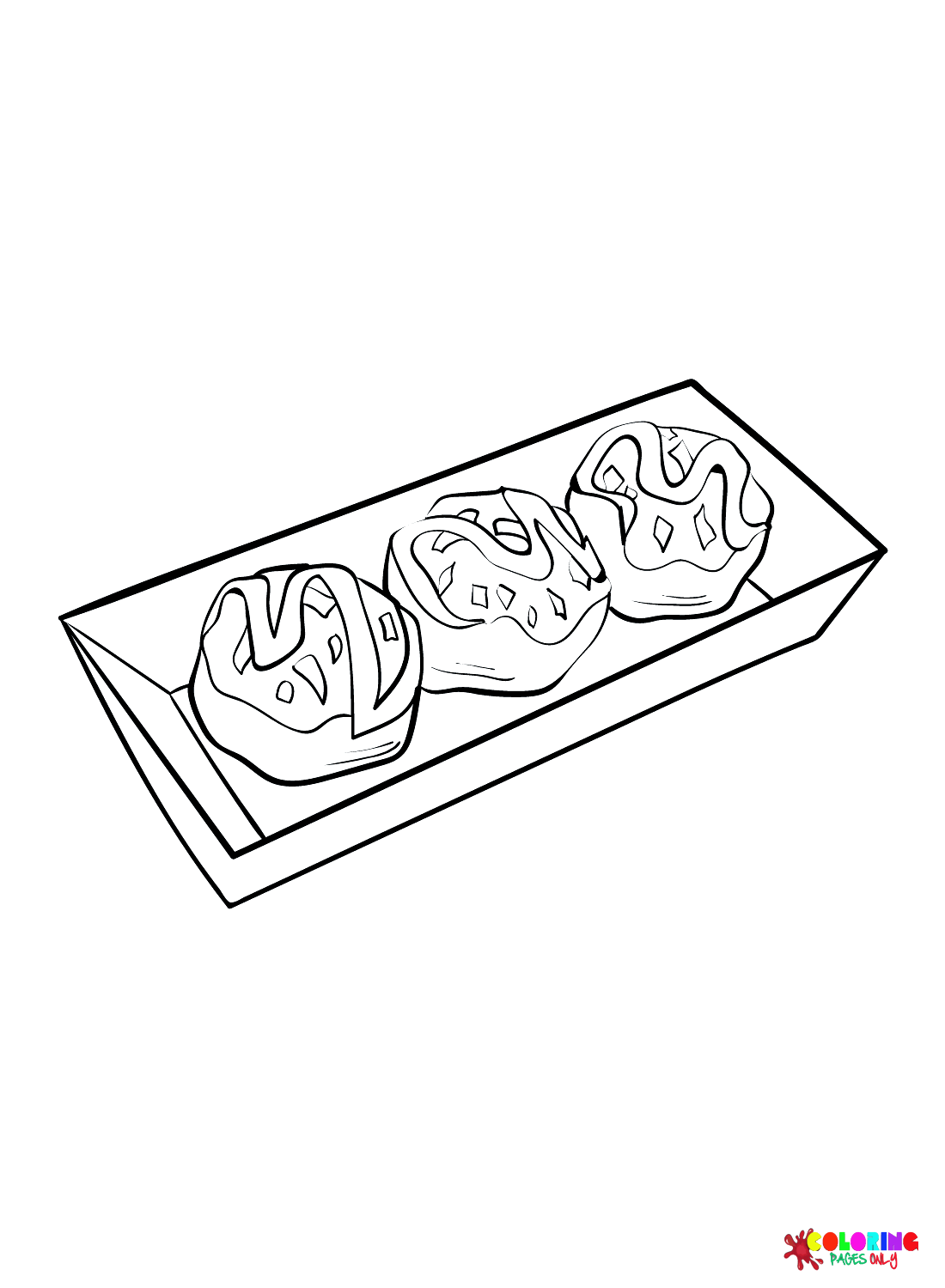
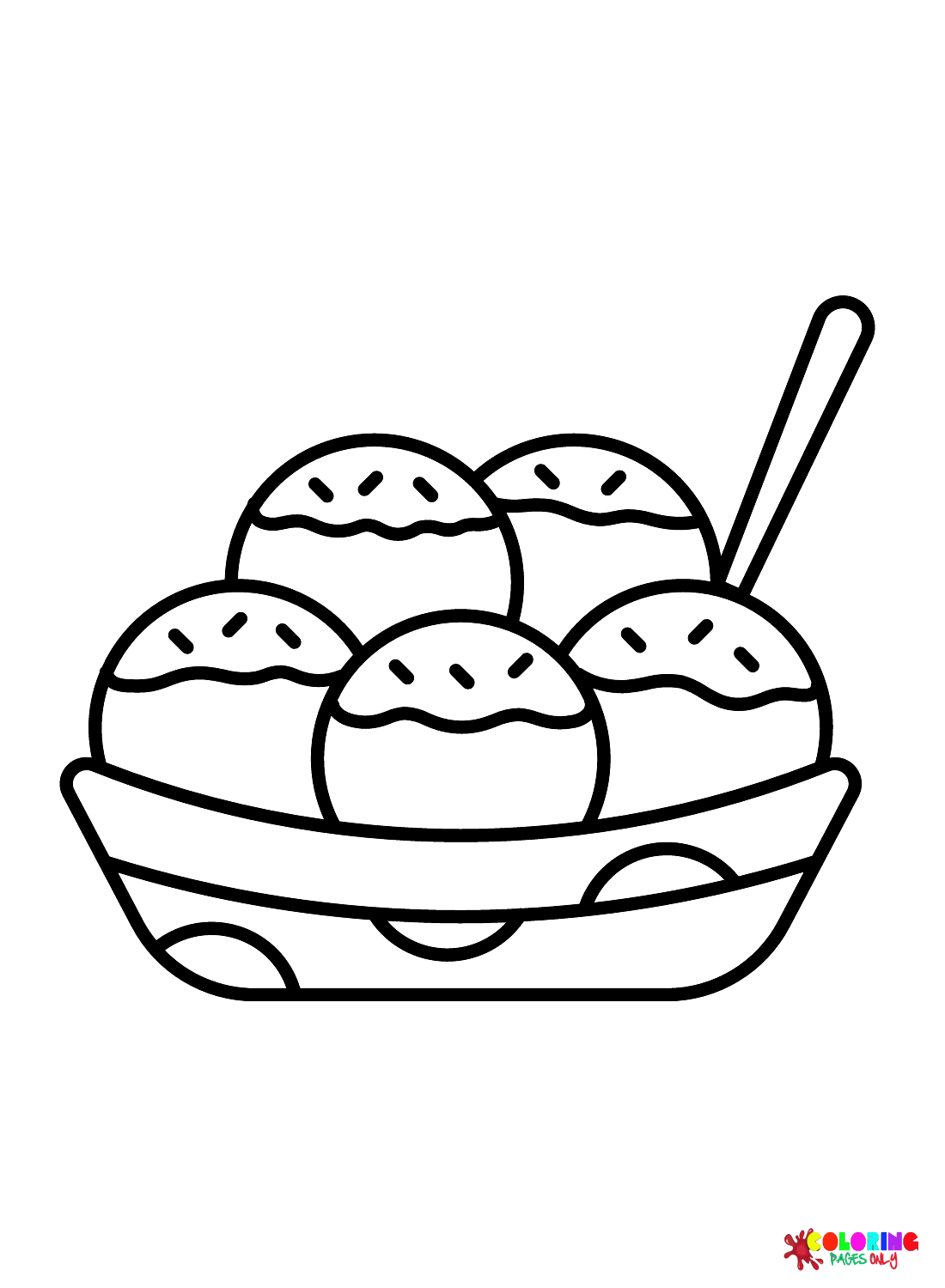
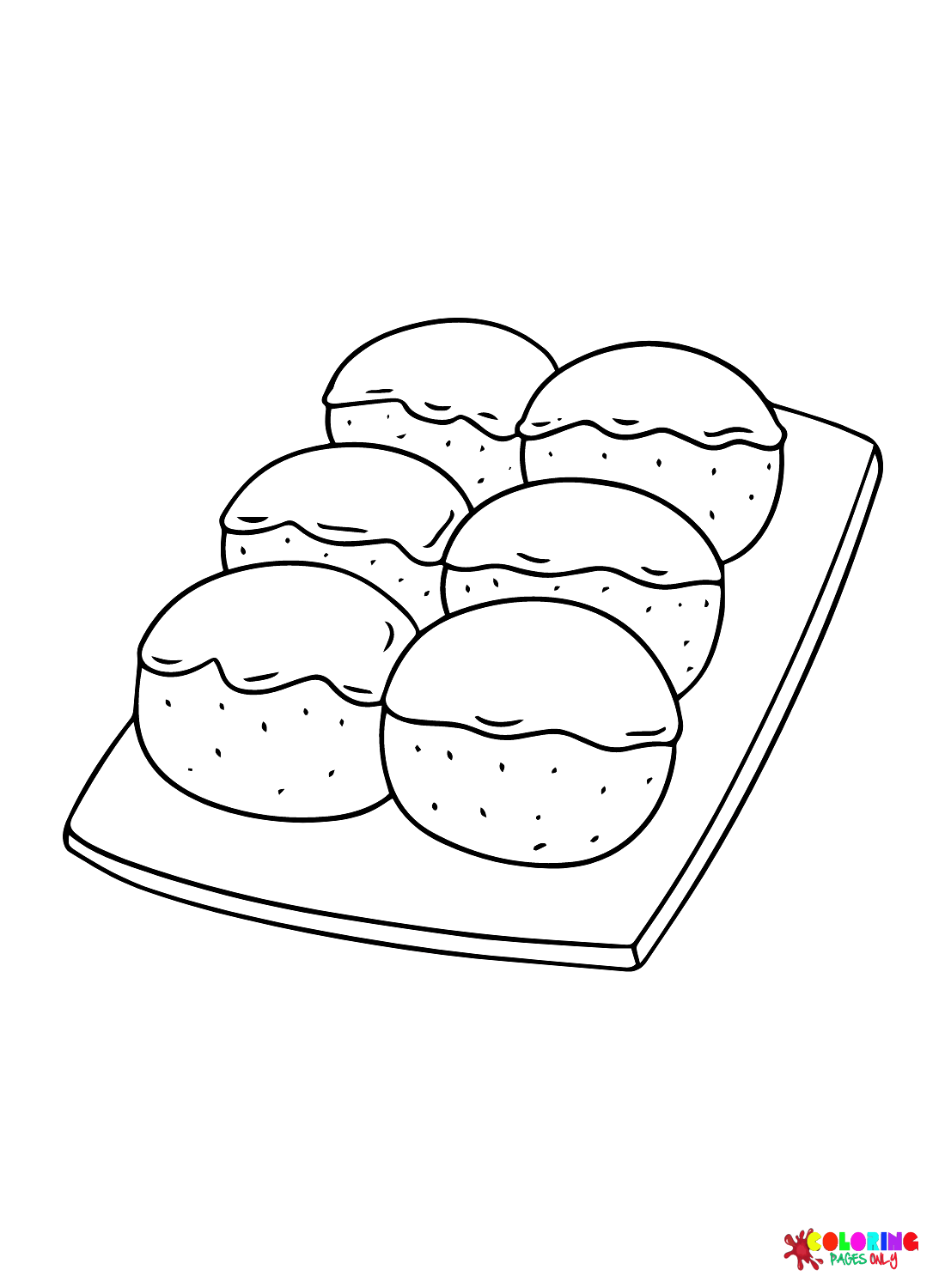
The 53 pages are split into everyday scenes, playful octopus pairings, cute character-style portraits, and a large set of general single-subject pages, giving colorists everything from a street food stall to a simple, single ball ready for a quick coloring session.
What Is Inside This Collection
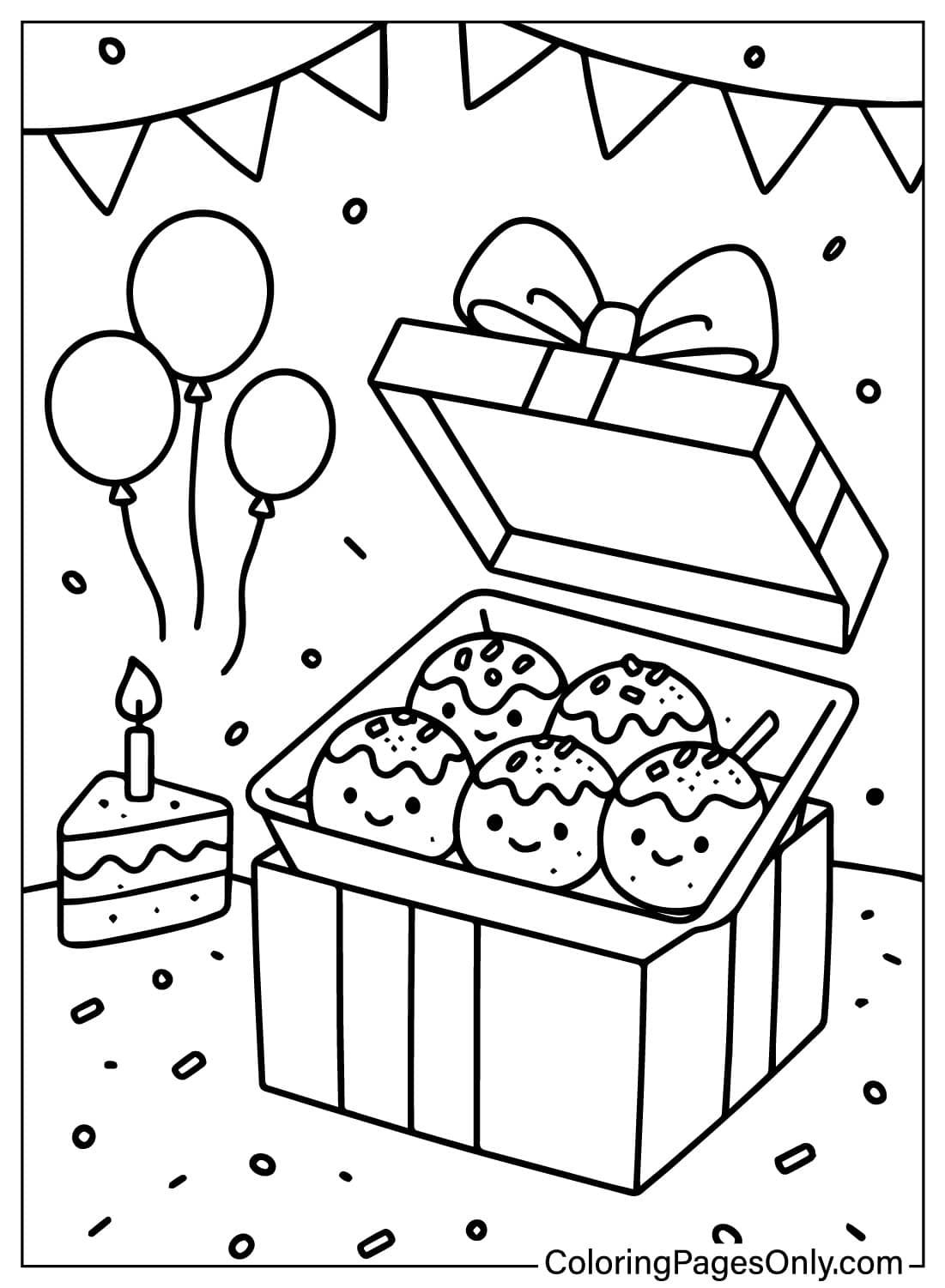
The 53 pages group loosely by setting and style rather than by a single repeated scene, with a large share of the set made up of simple, single-subject variations.
Everyday Scenes and Street Food Moments
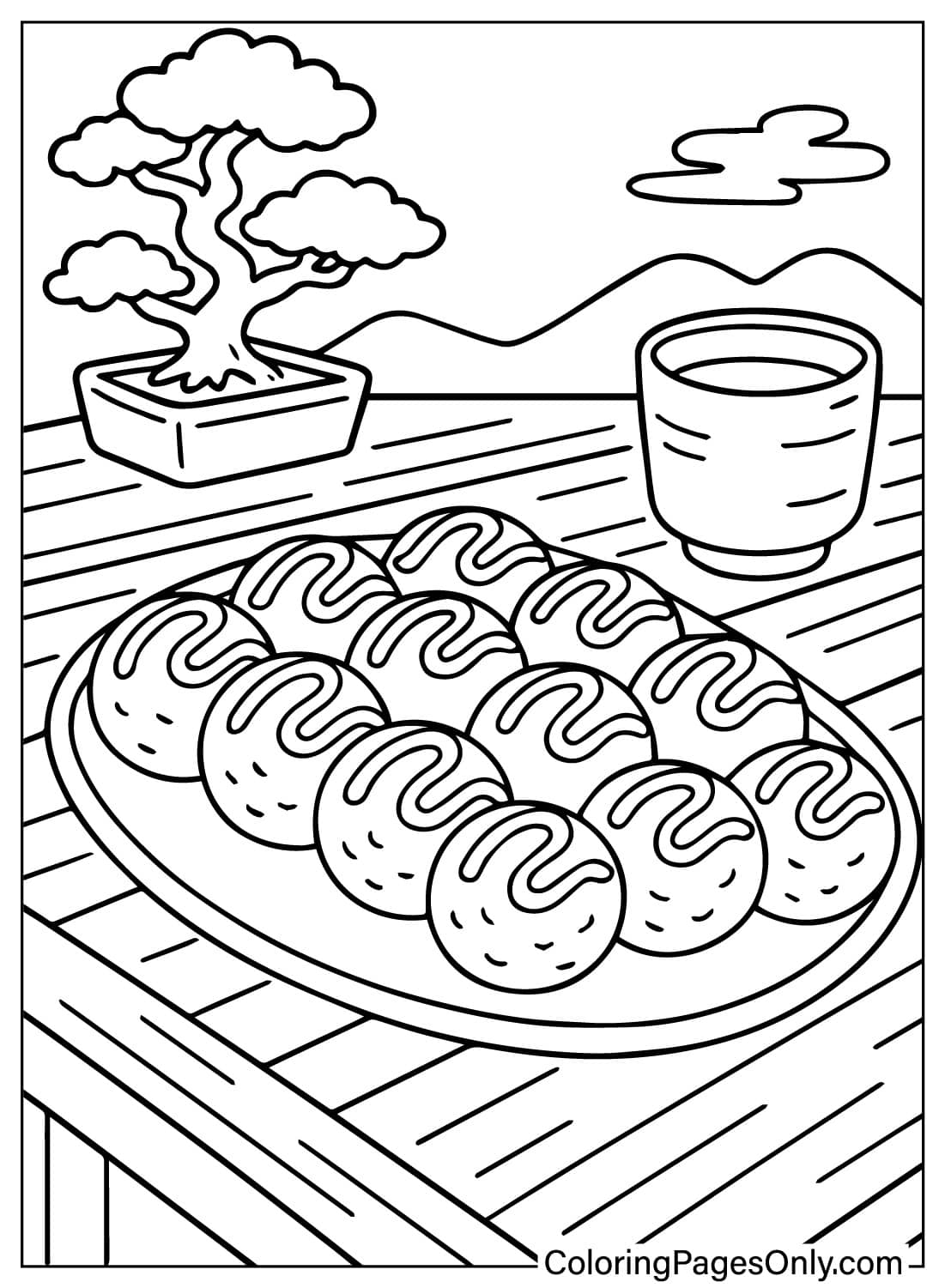
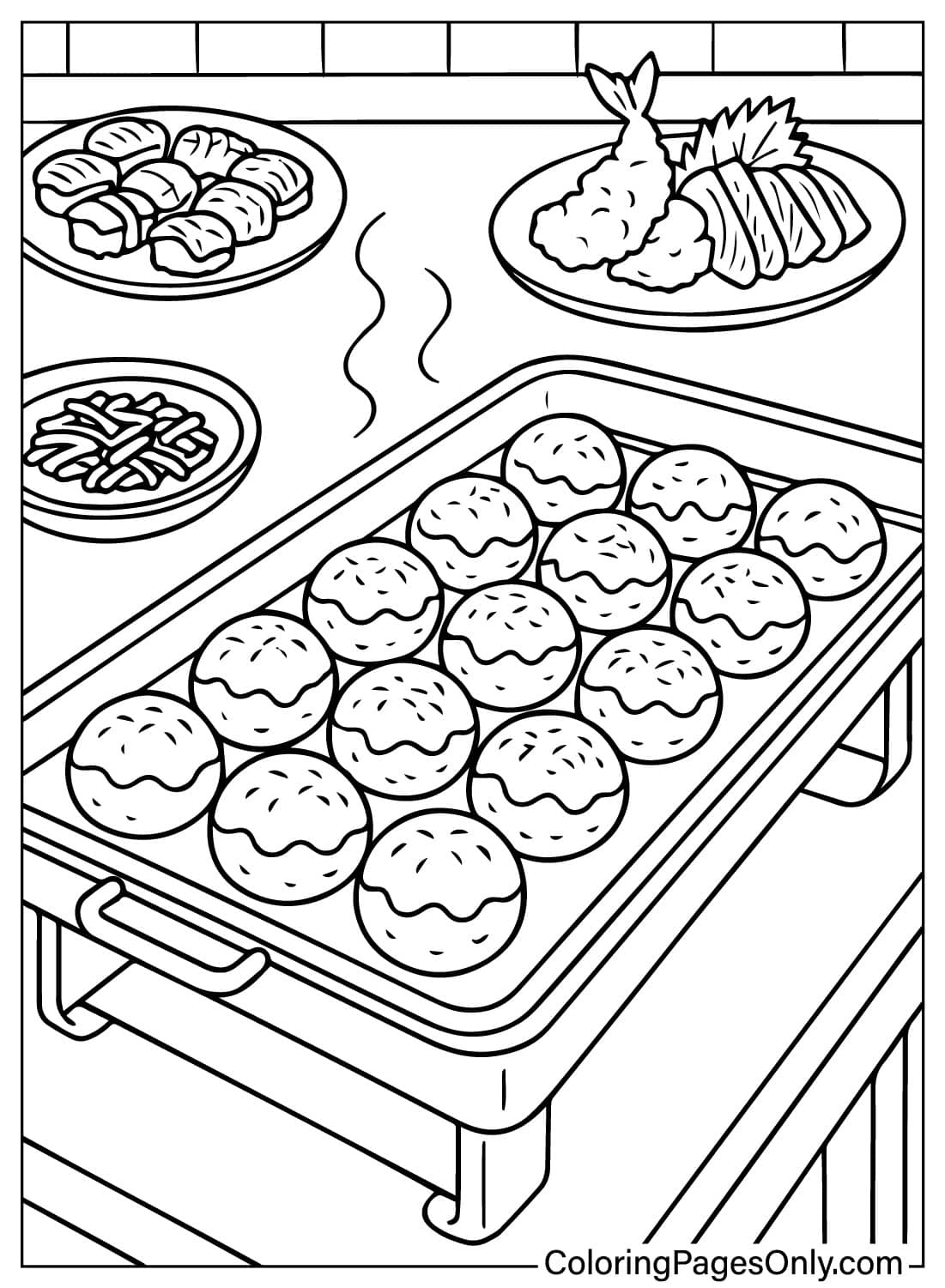
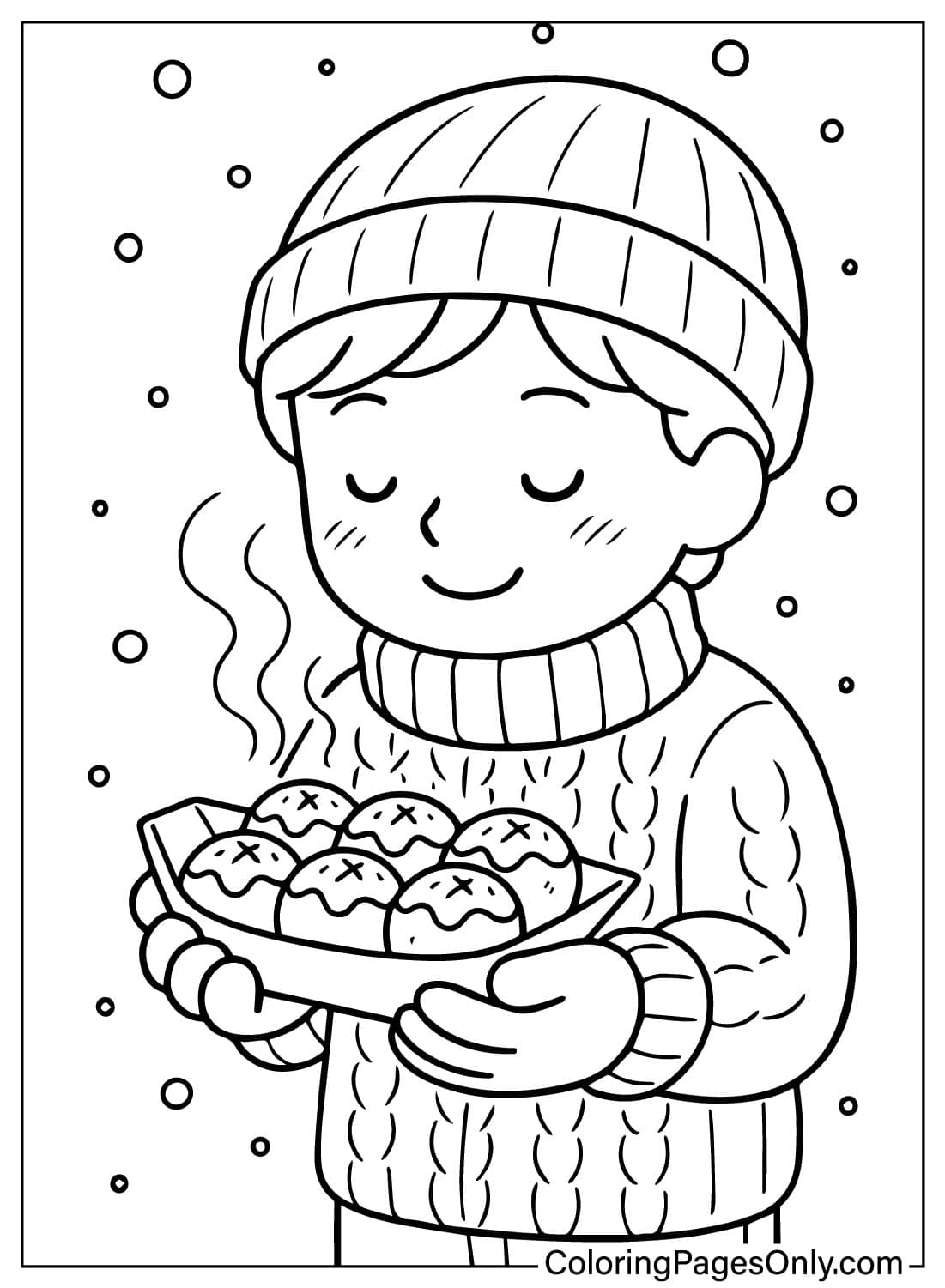
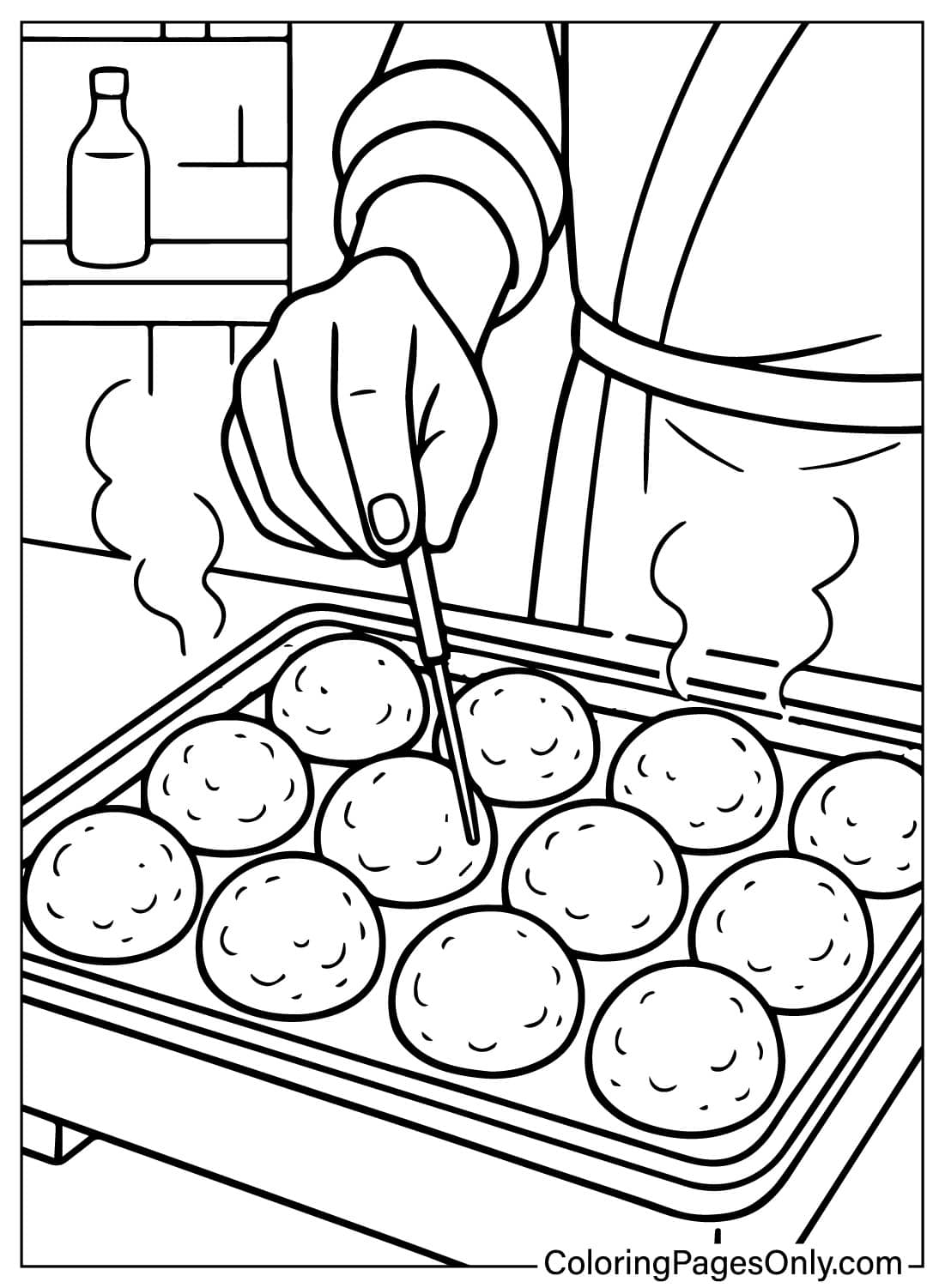
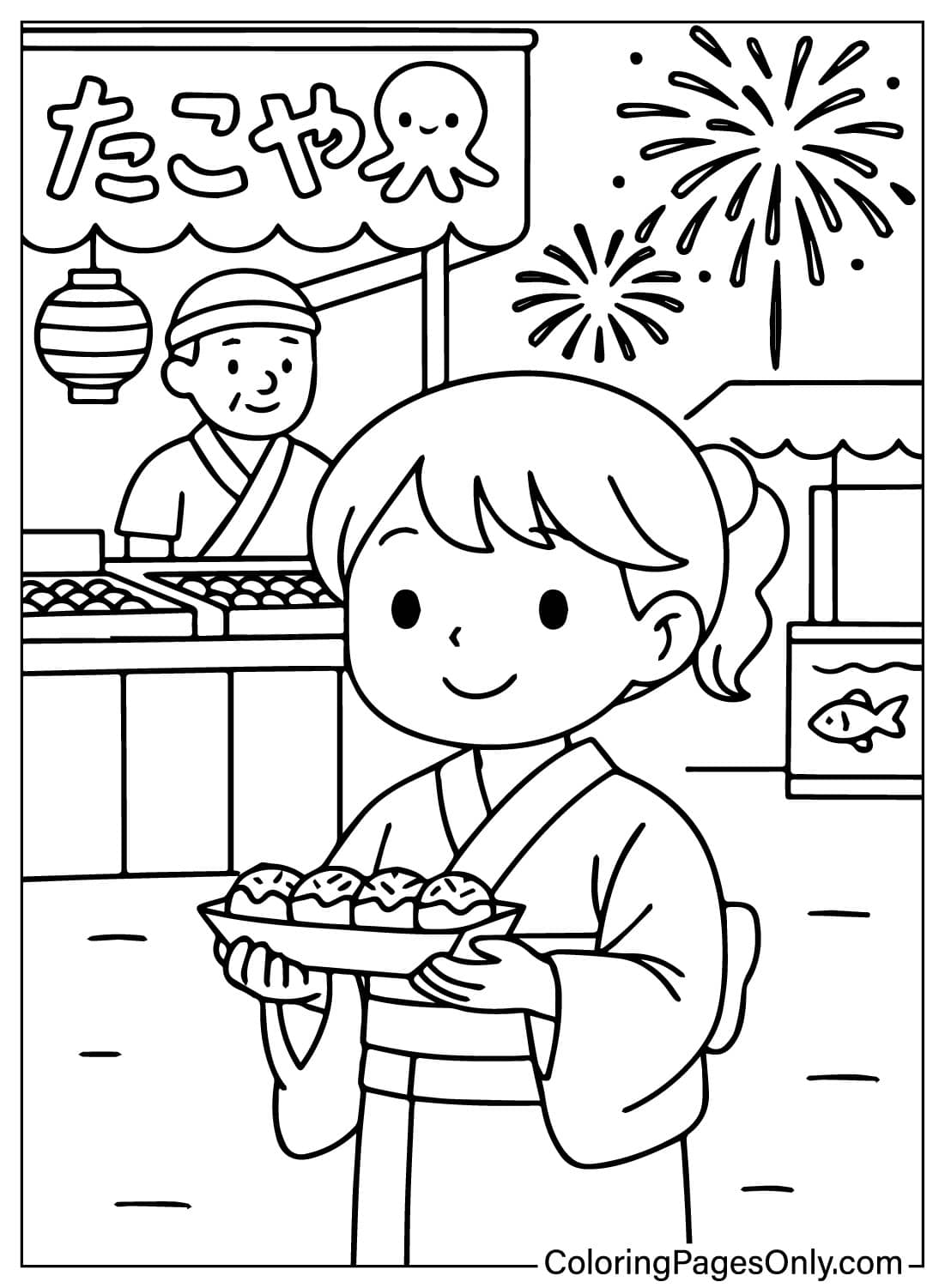
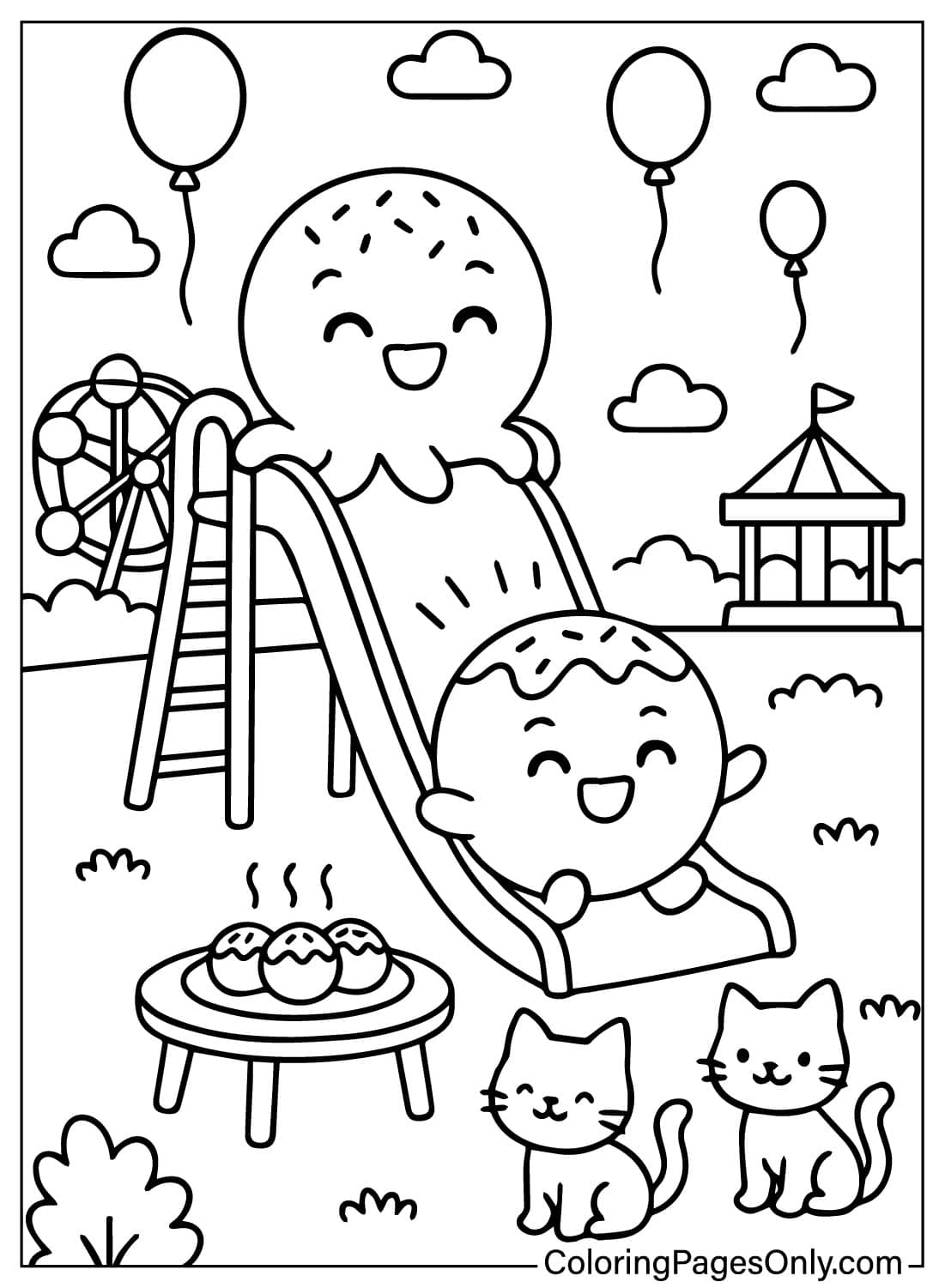
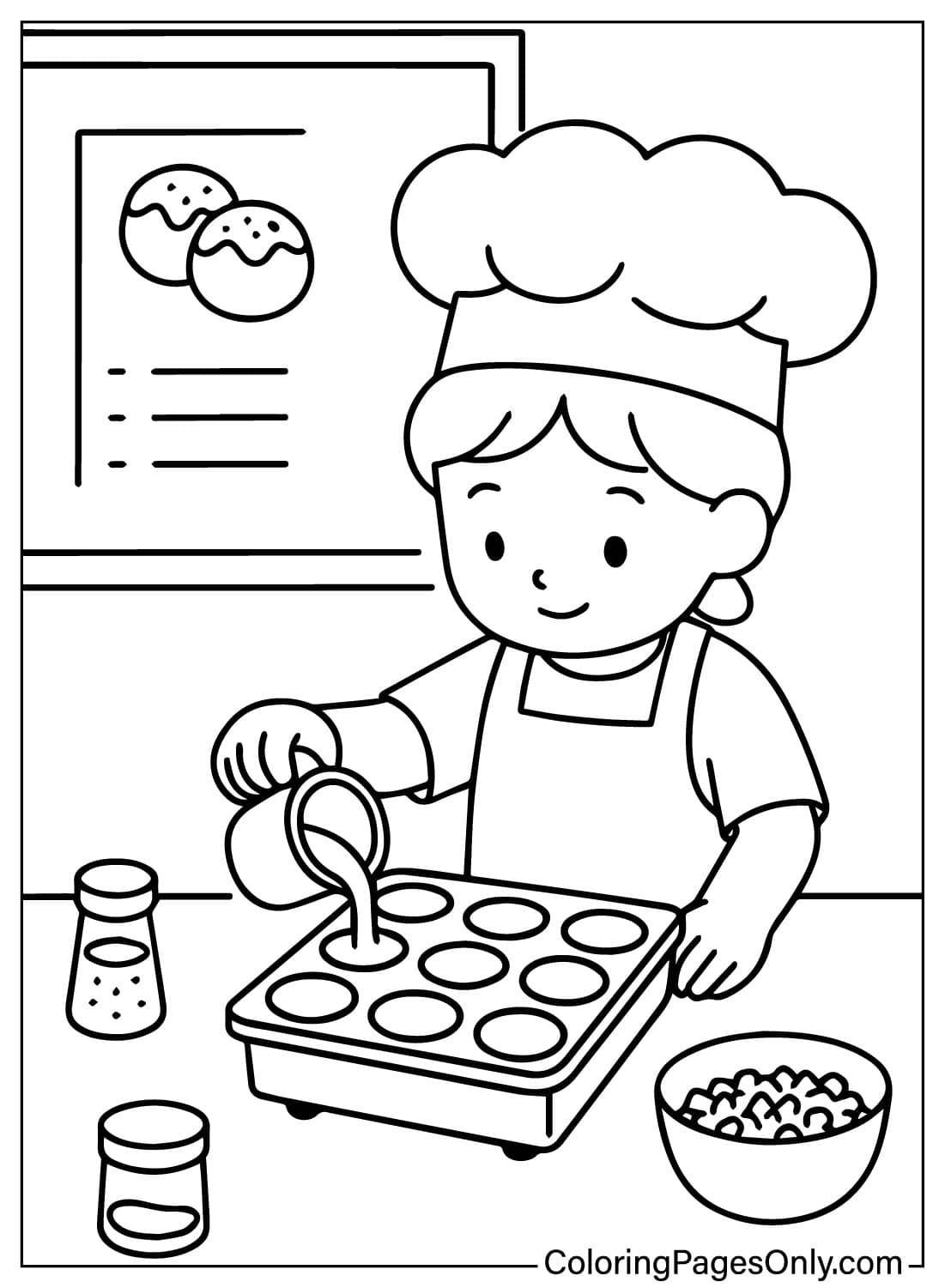
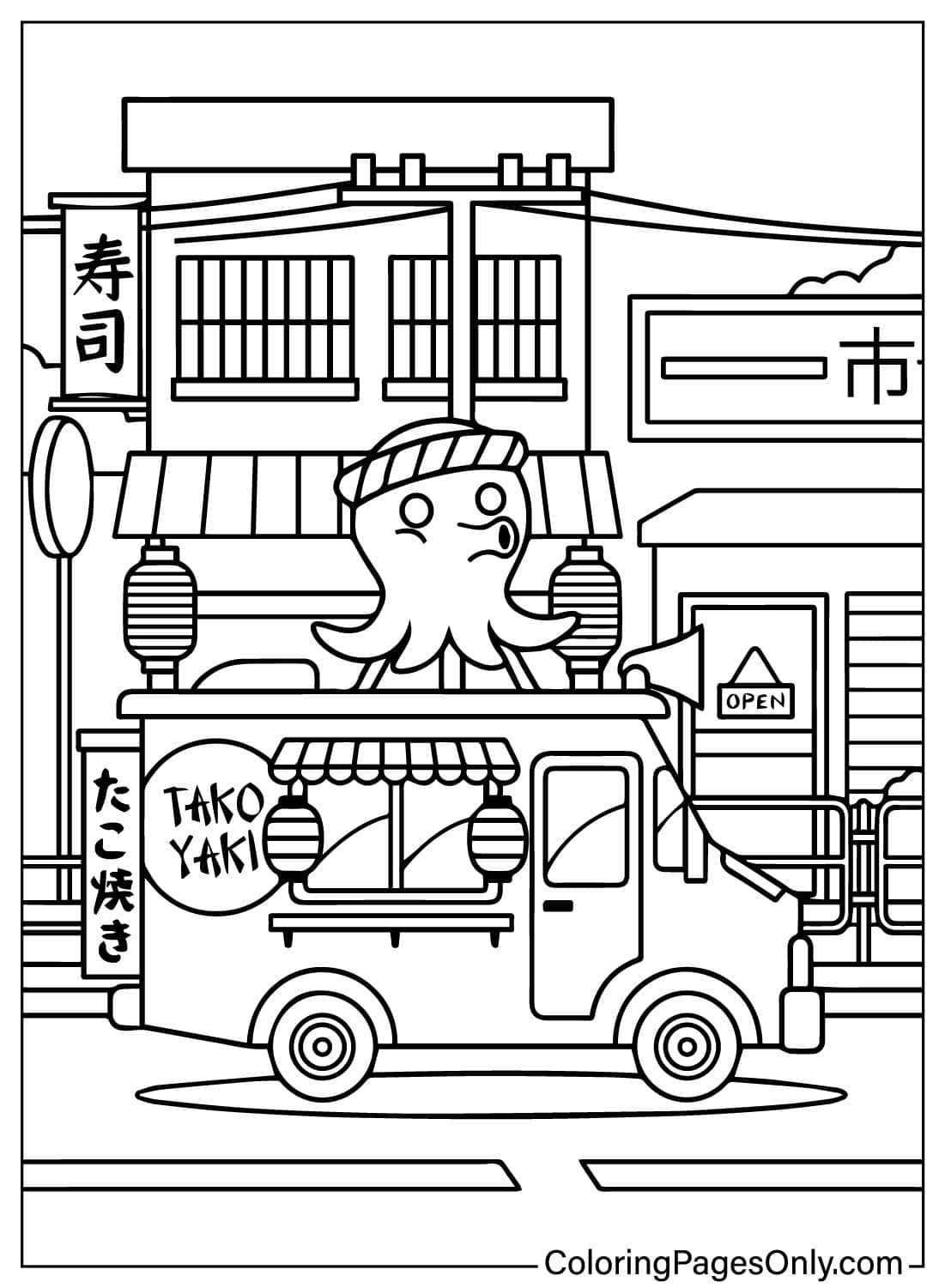
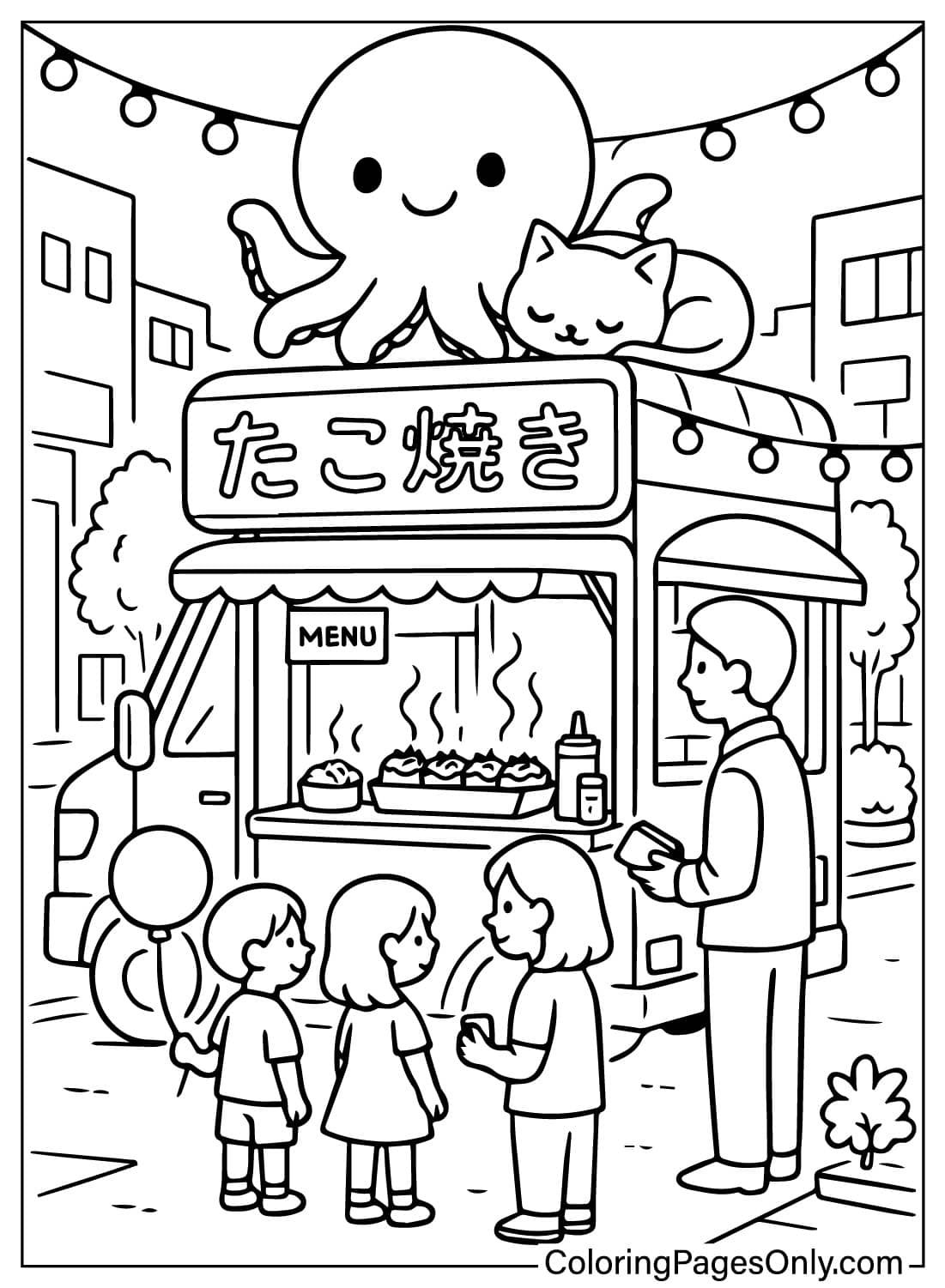
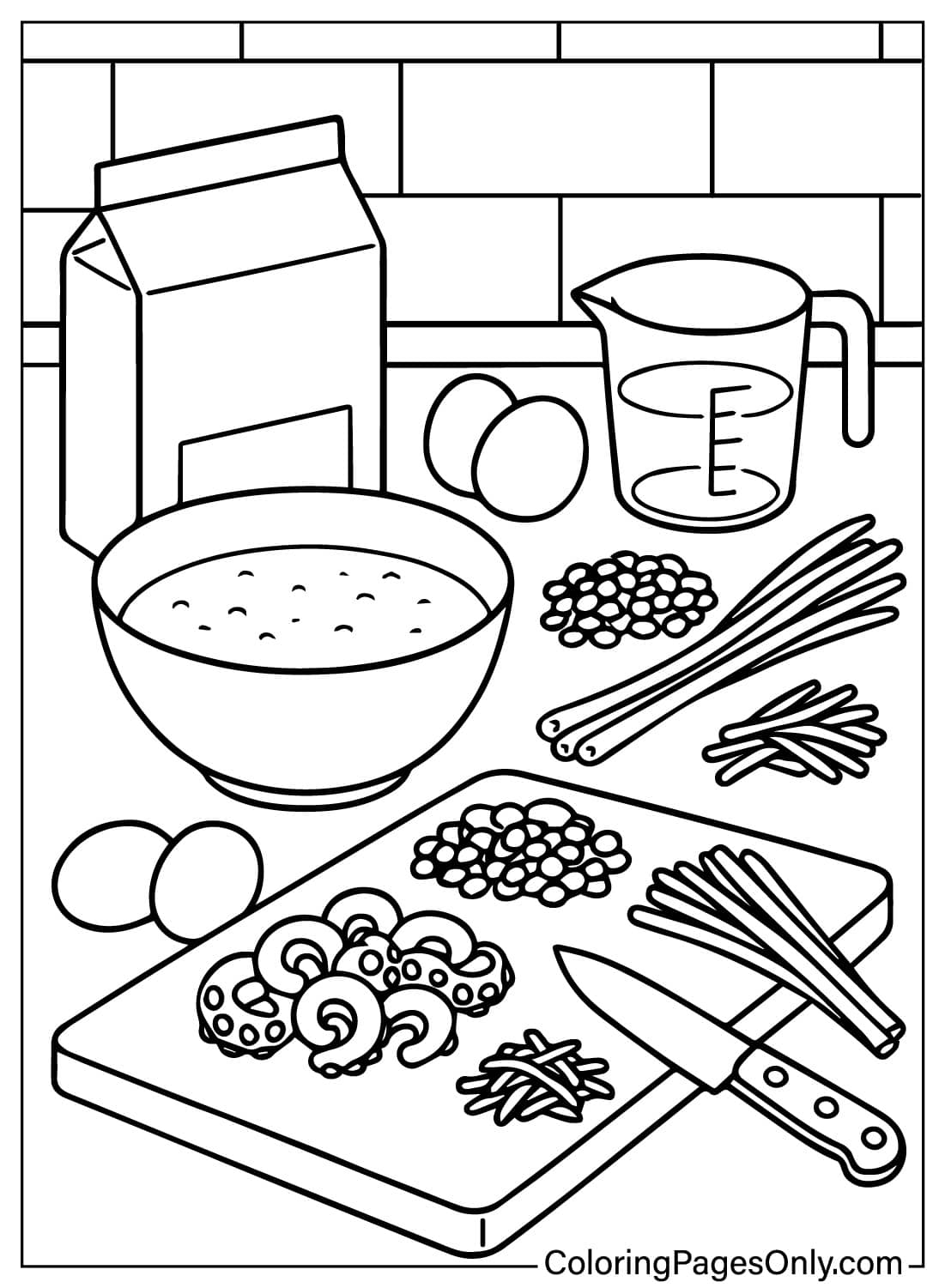
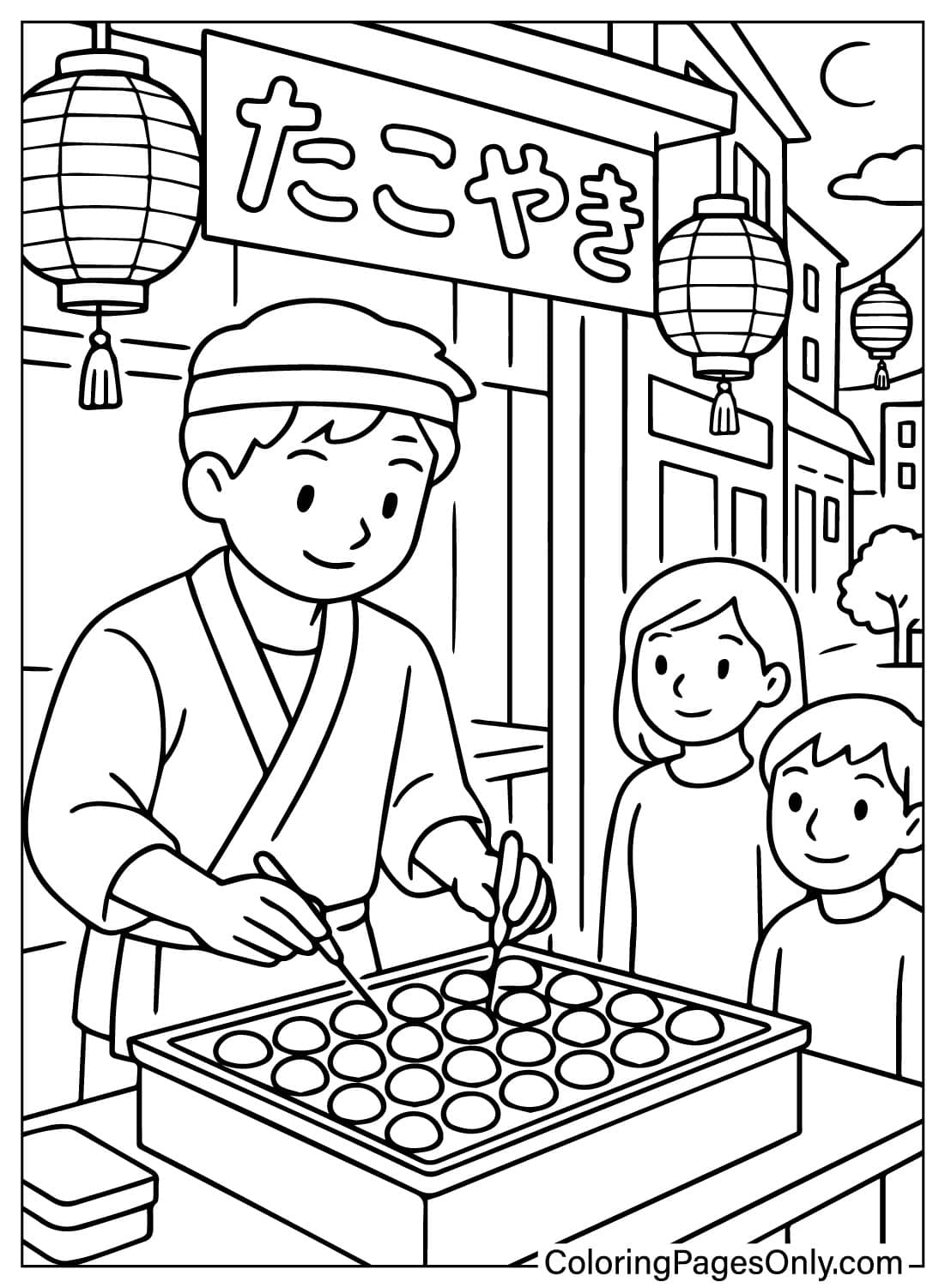
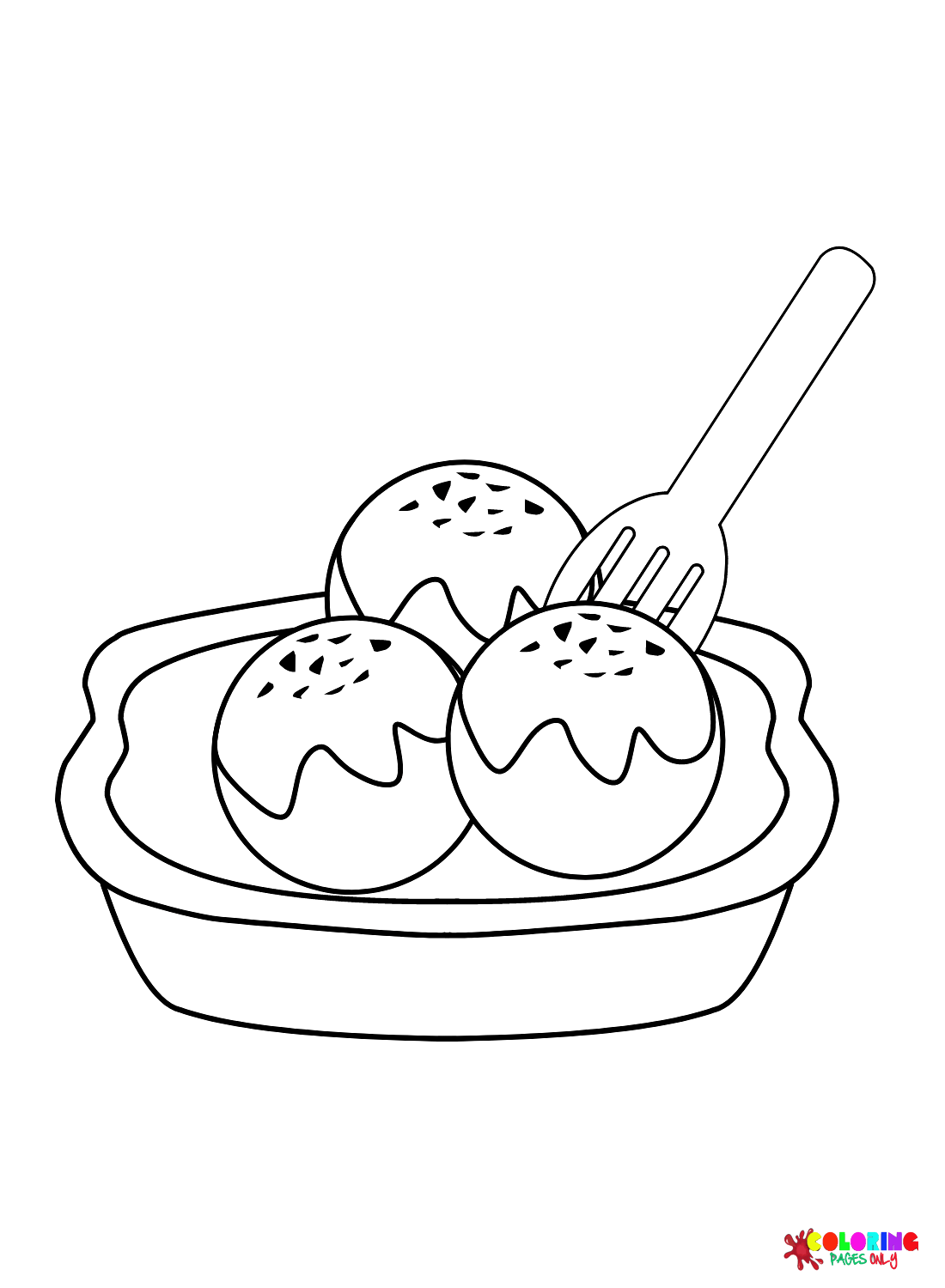
The largest group places takoyaki in a real-world setting: a street stall, a food truck, a summer festival, a cooking class, or a family meal at the table. These pages suit a warm palette of Golden Brown for the batter and Burnt Orange for the grill or stall details, since the scene works best when the food itself stays the visual focus.
Takoyaki with Its Octopus Namesake
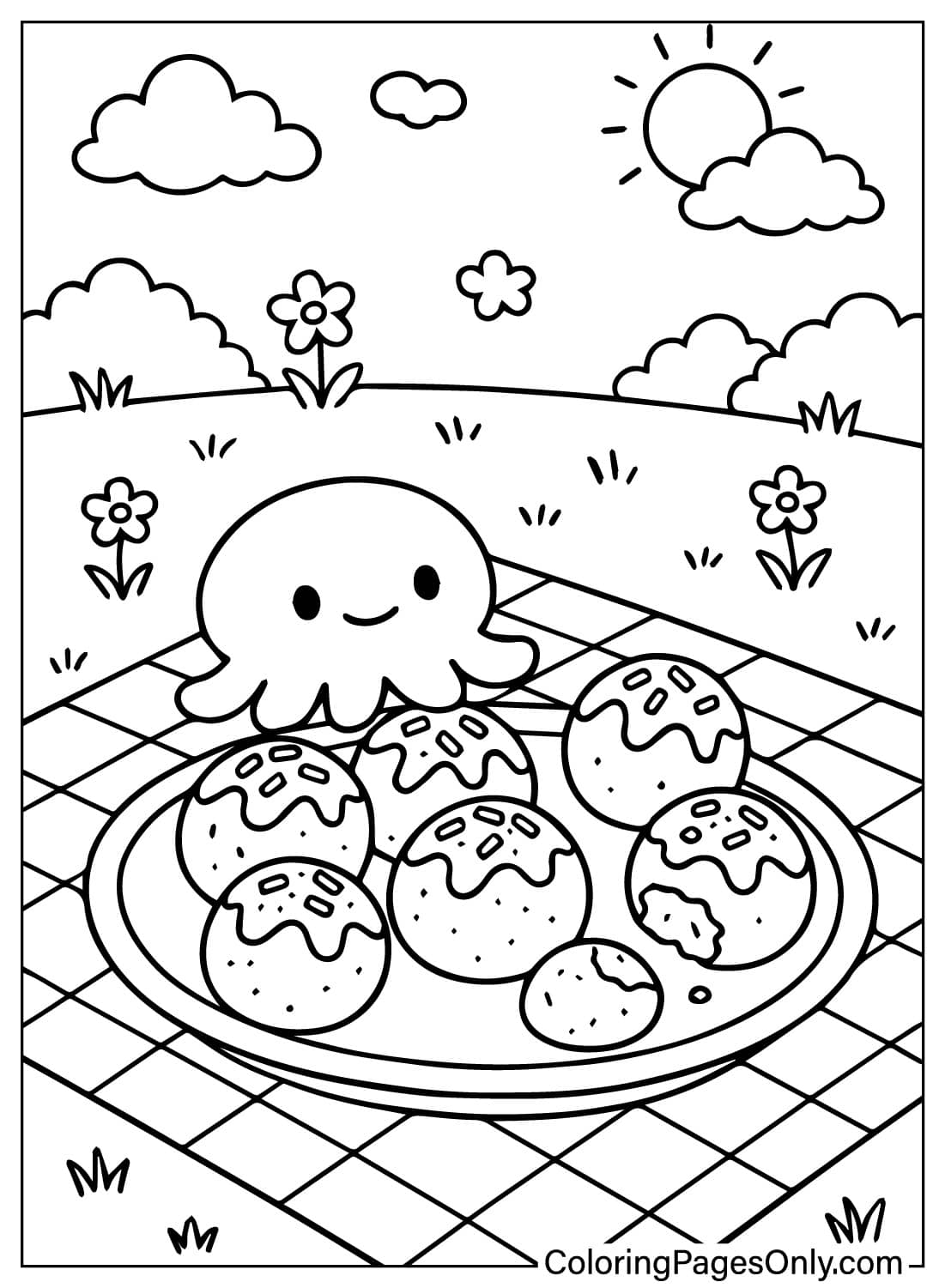
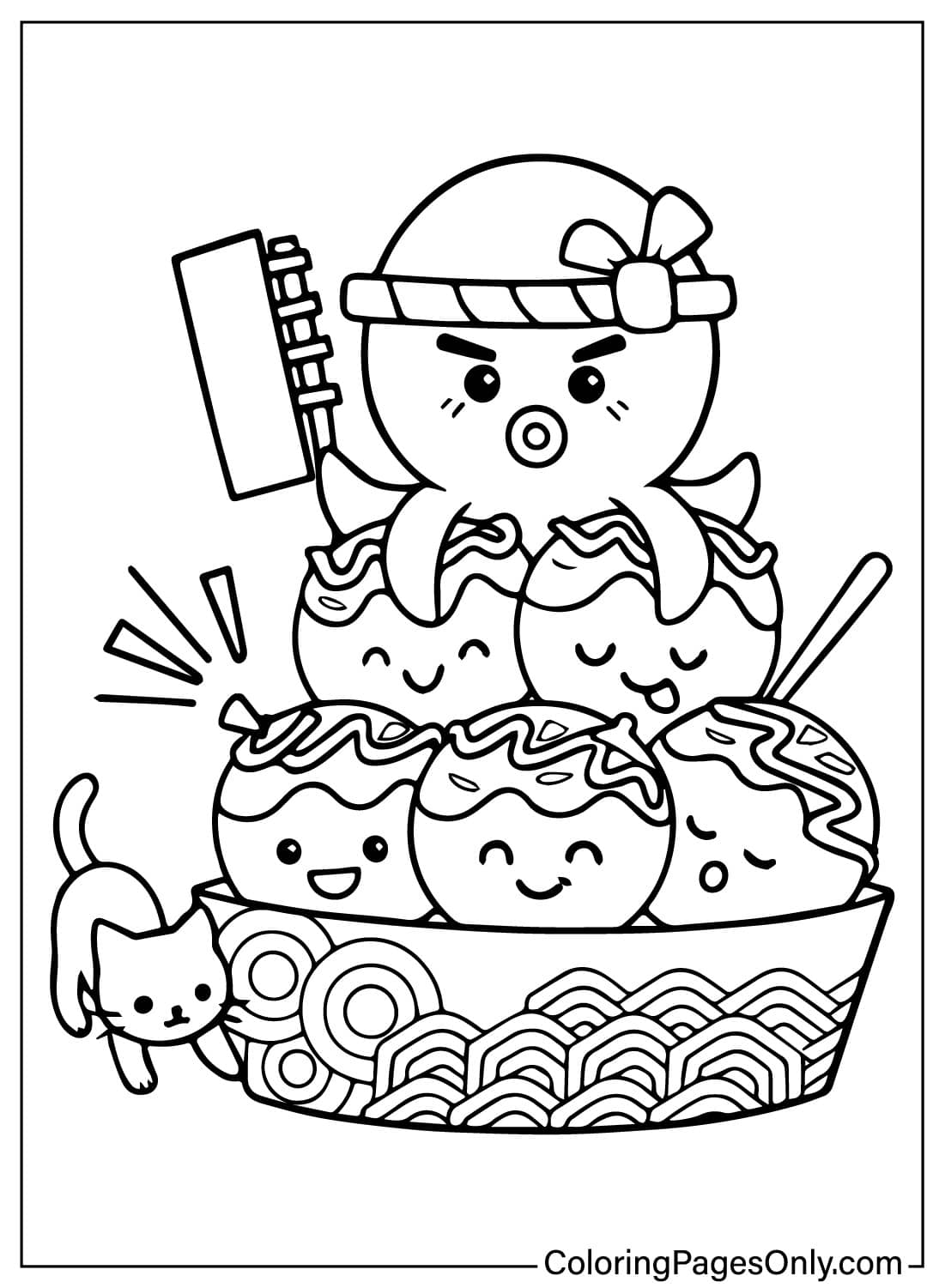
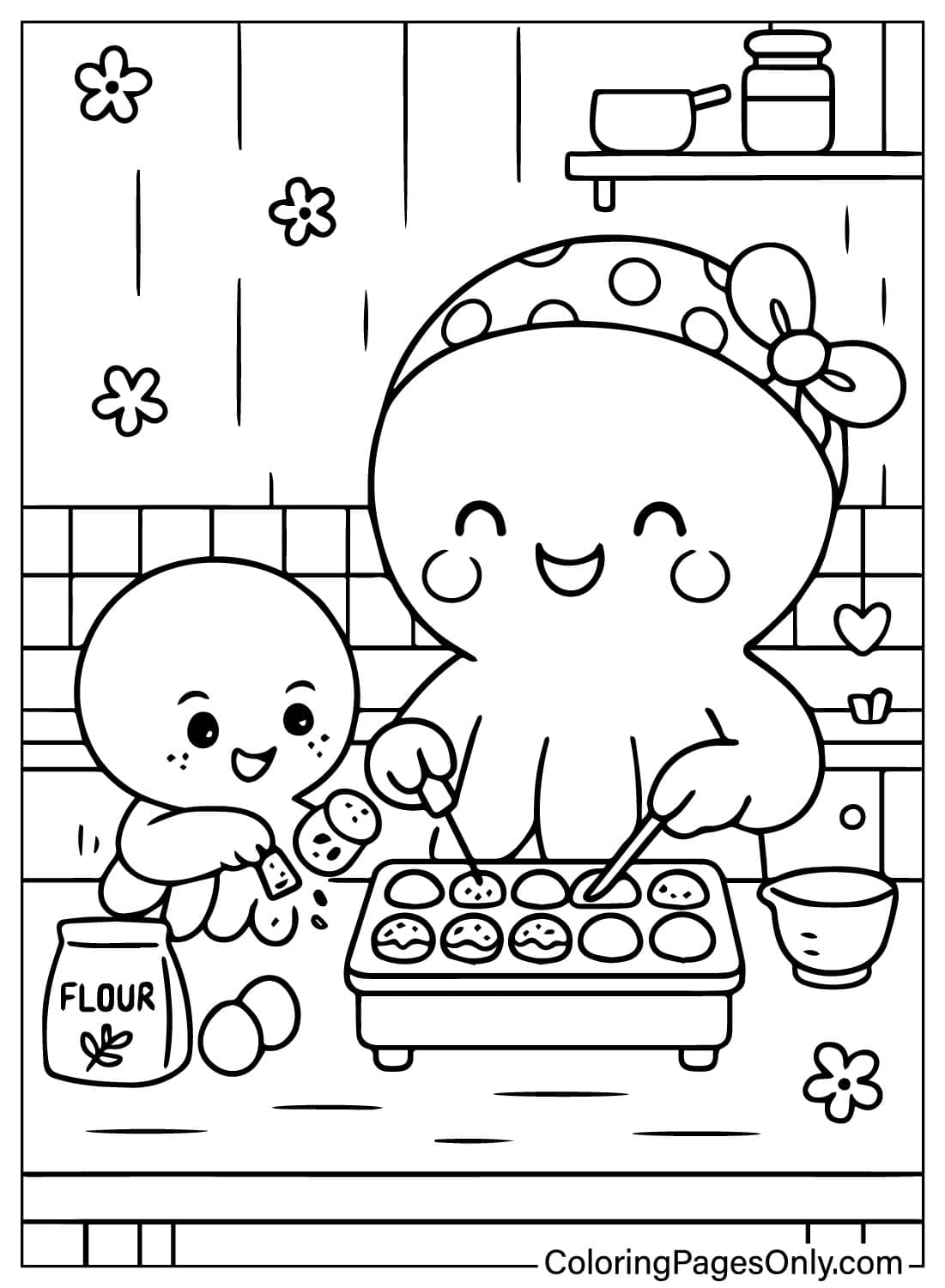
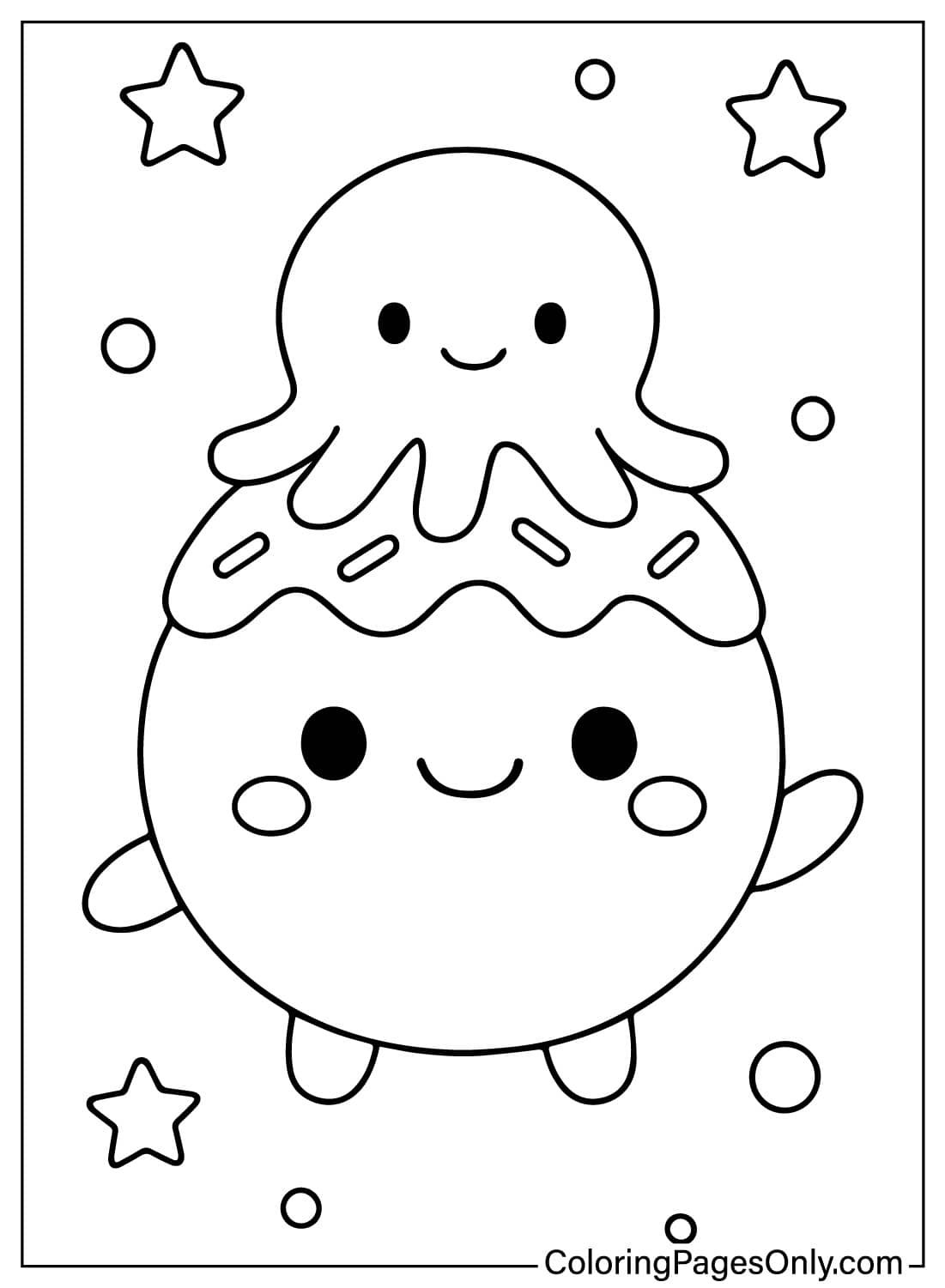
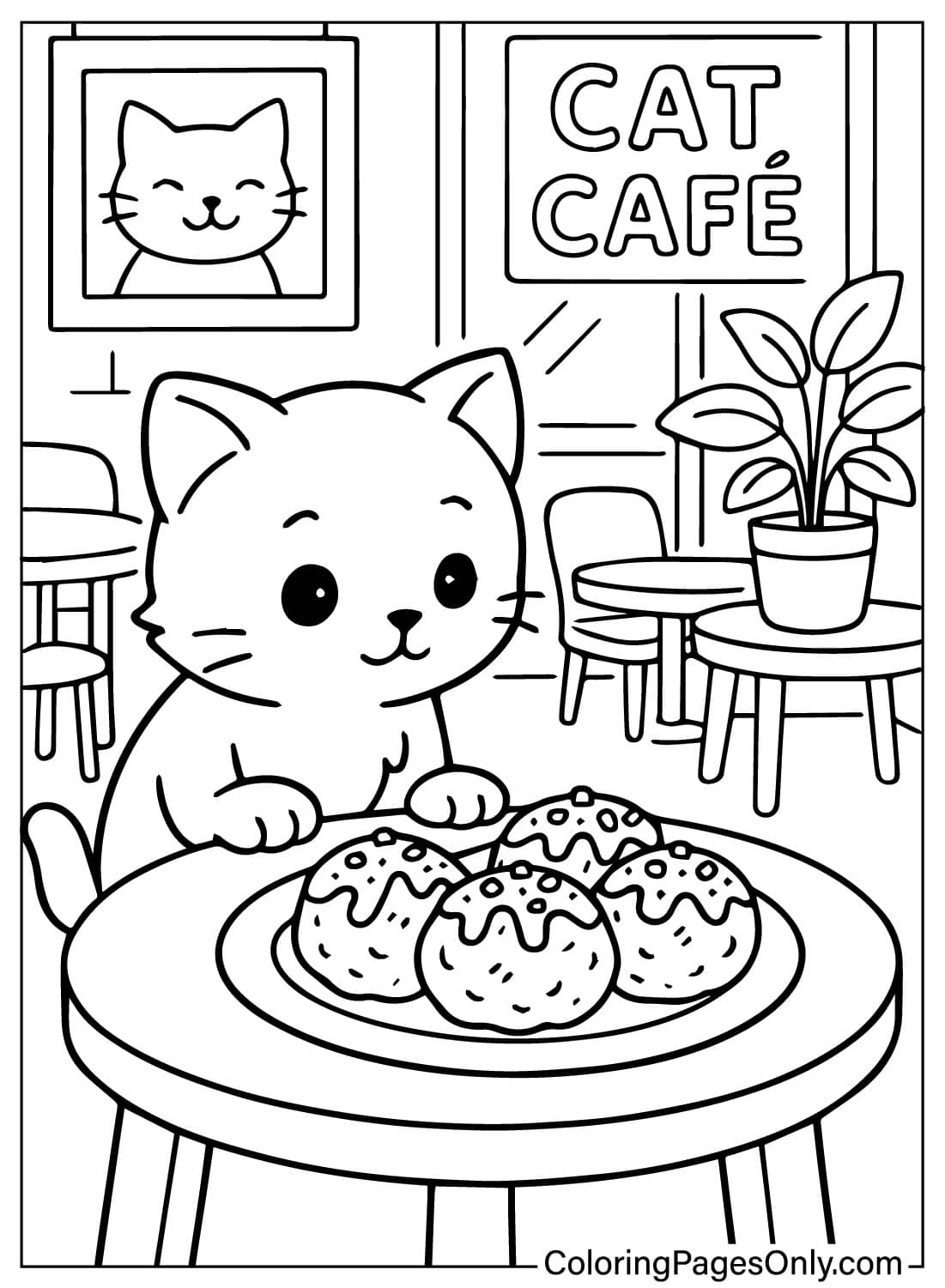
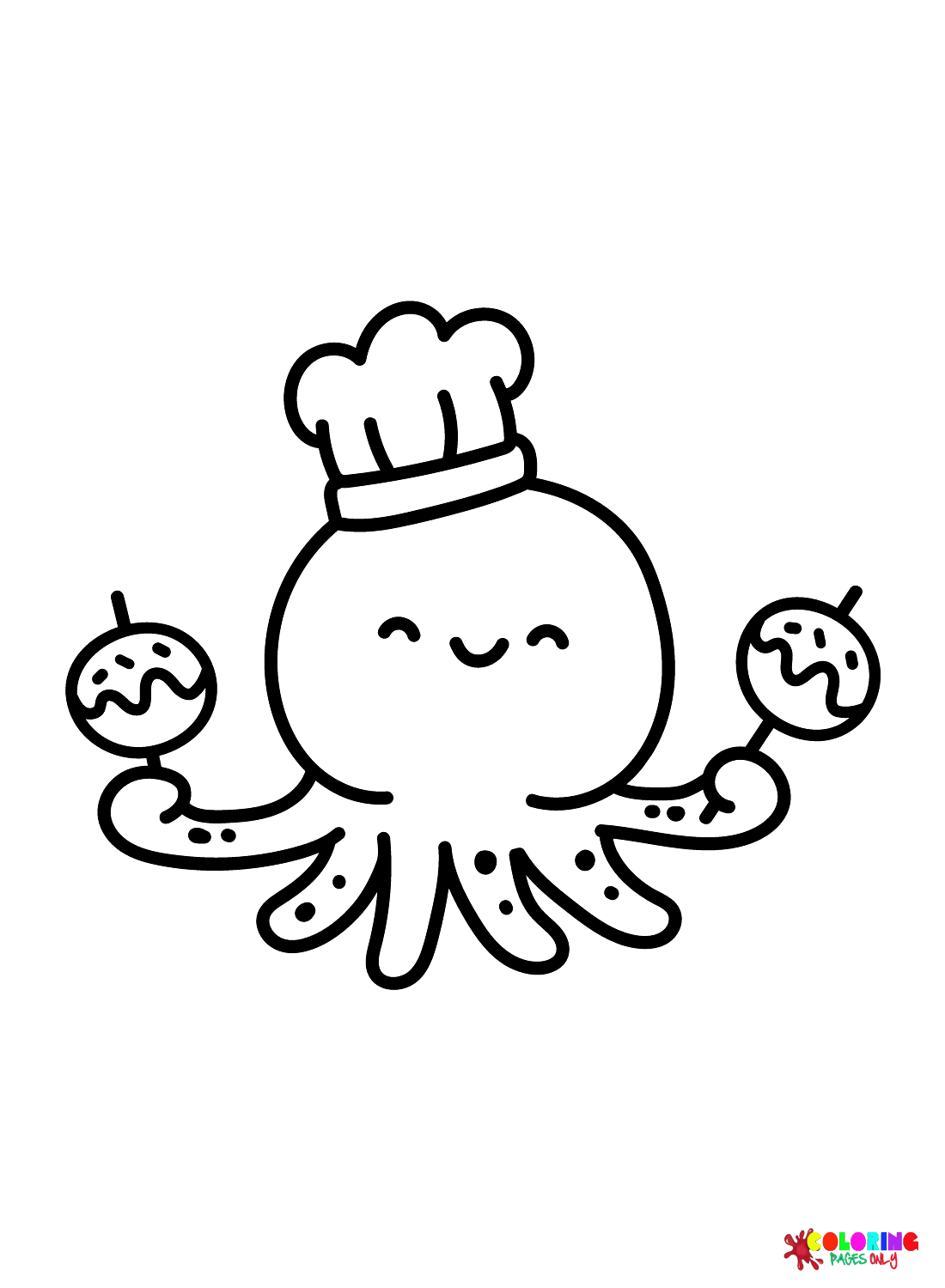
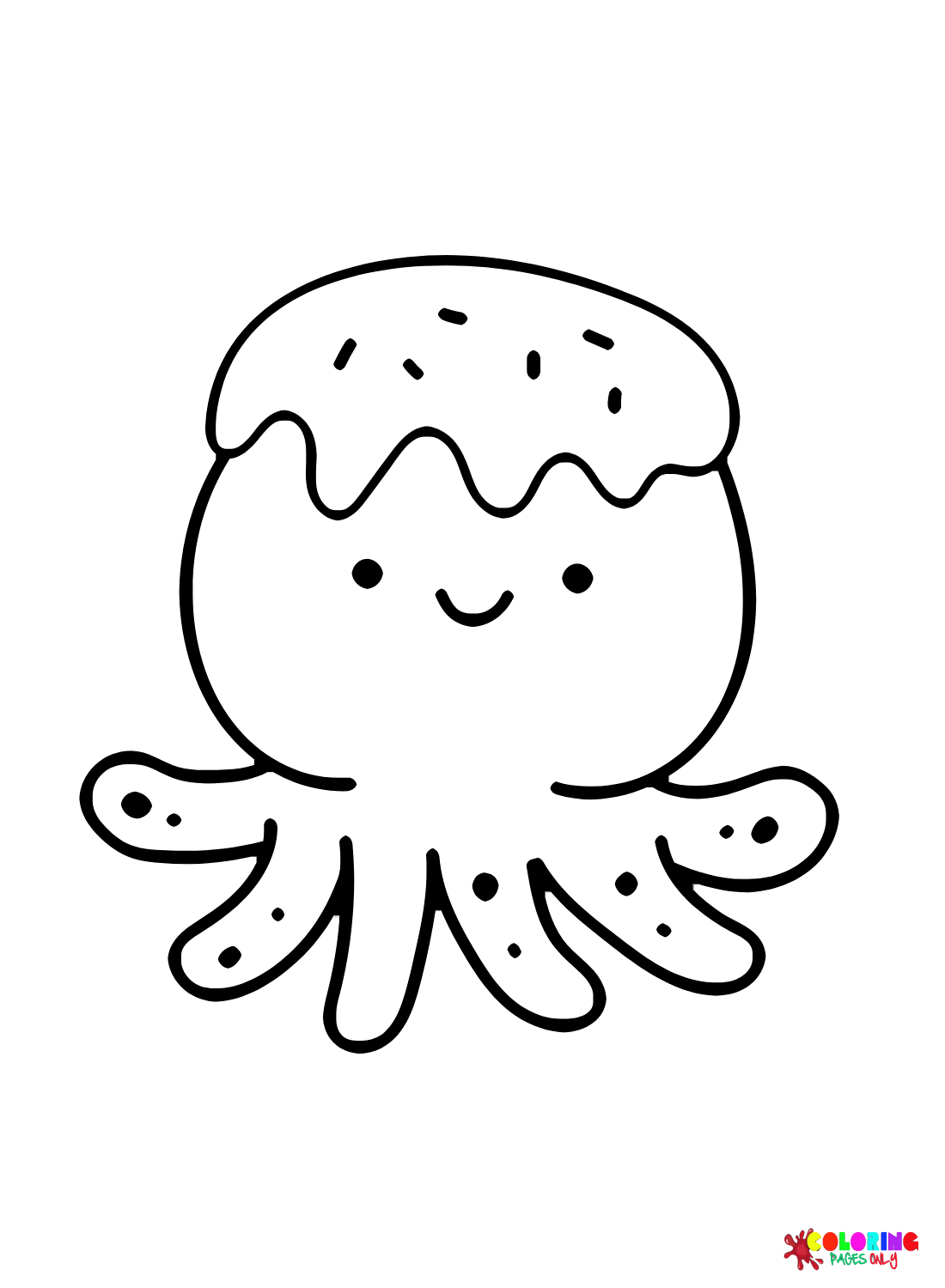
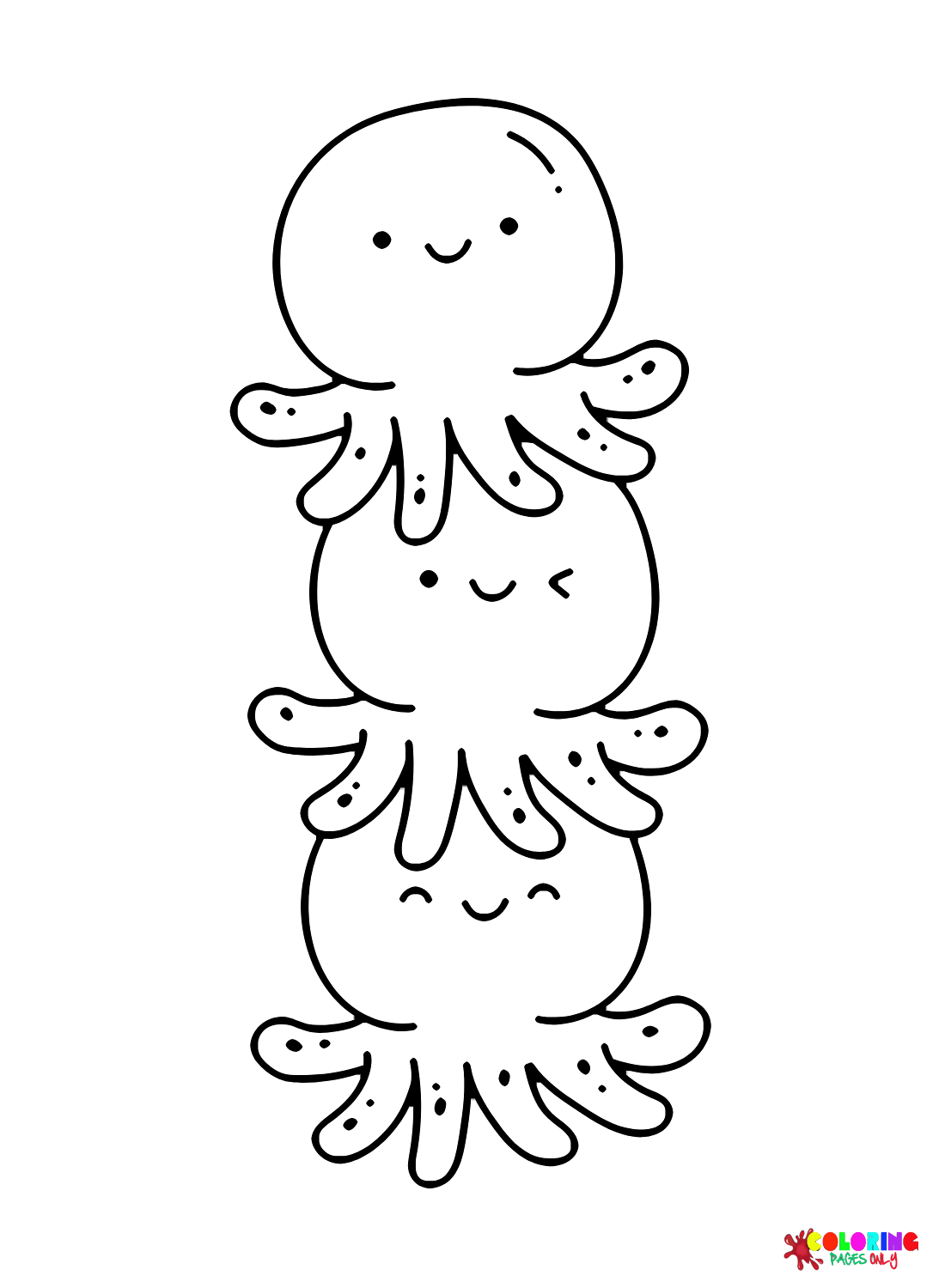
A smaller group leans directly into the tako in takoyaki, pairing a takoyaki ball or pile with a cartoon octopus character, sometimes shown as the one doing the cooking. These pages suit a classic Red or Coral for the octopus, playing off the same ingredient the dish is named for.
Cute and Cartoon-Style Takoyaki
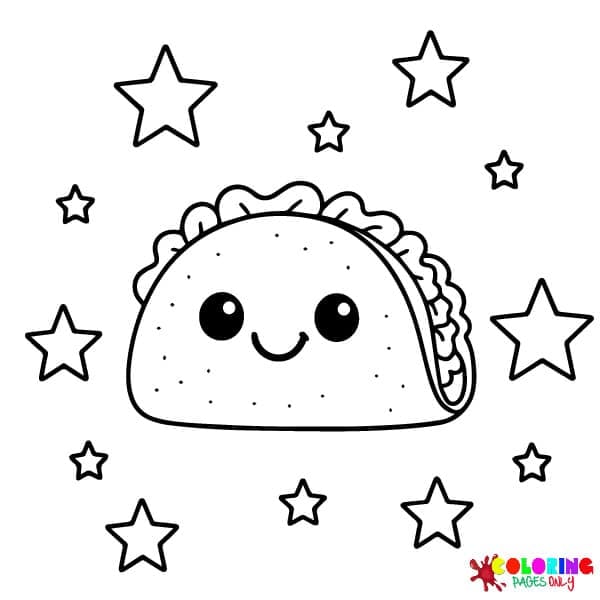
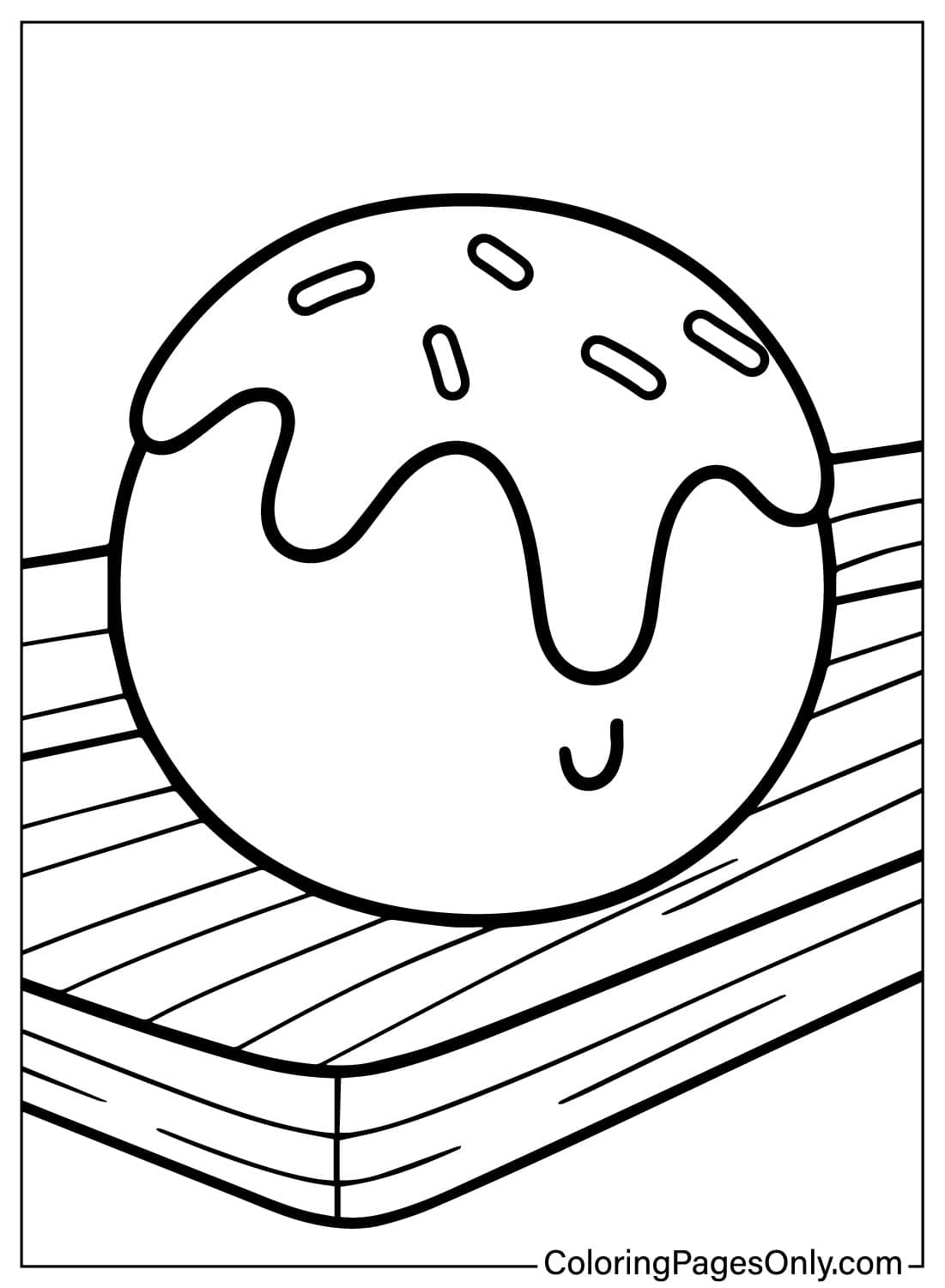
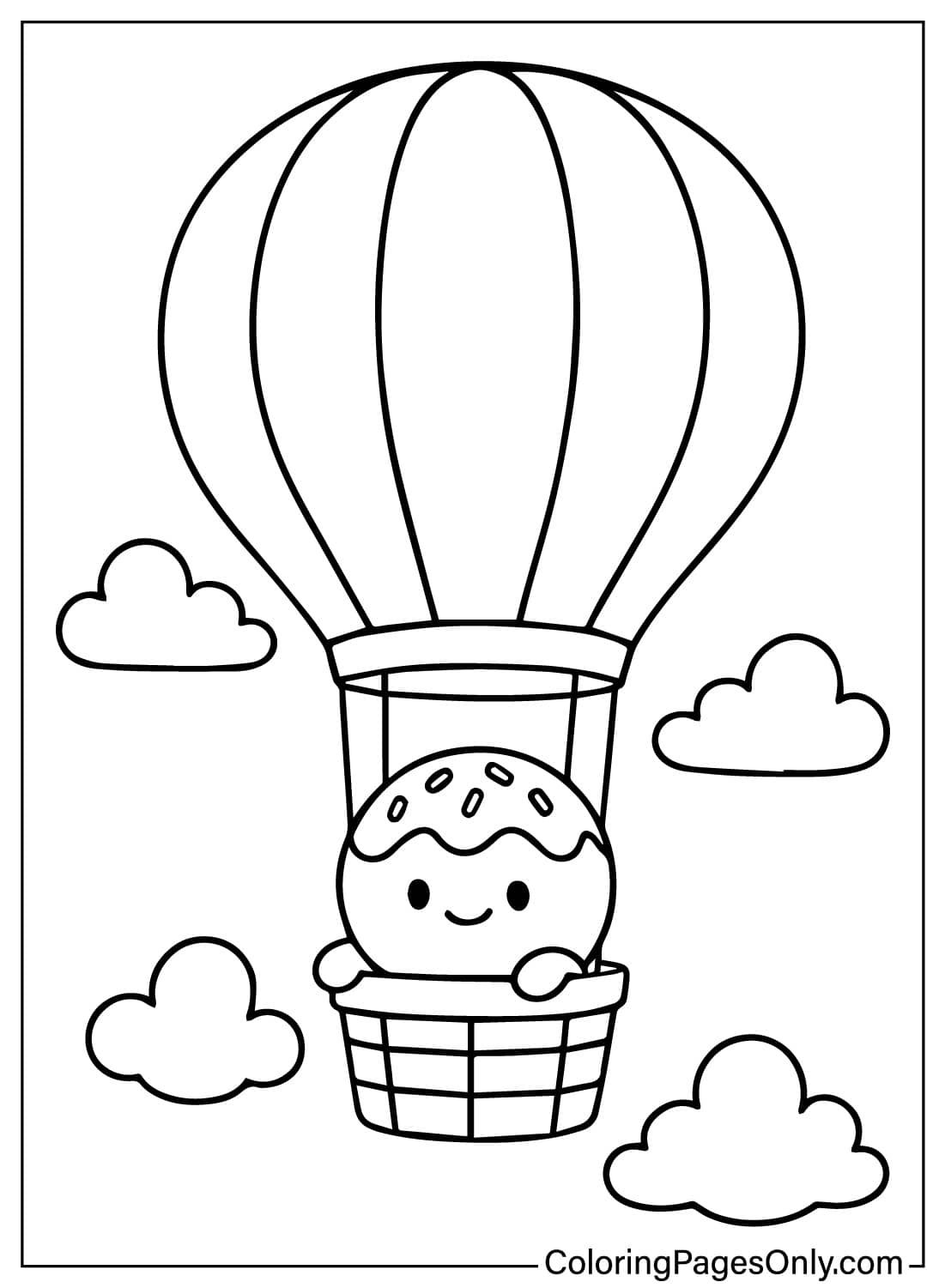
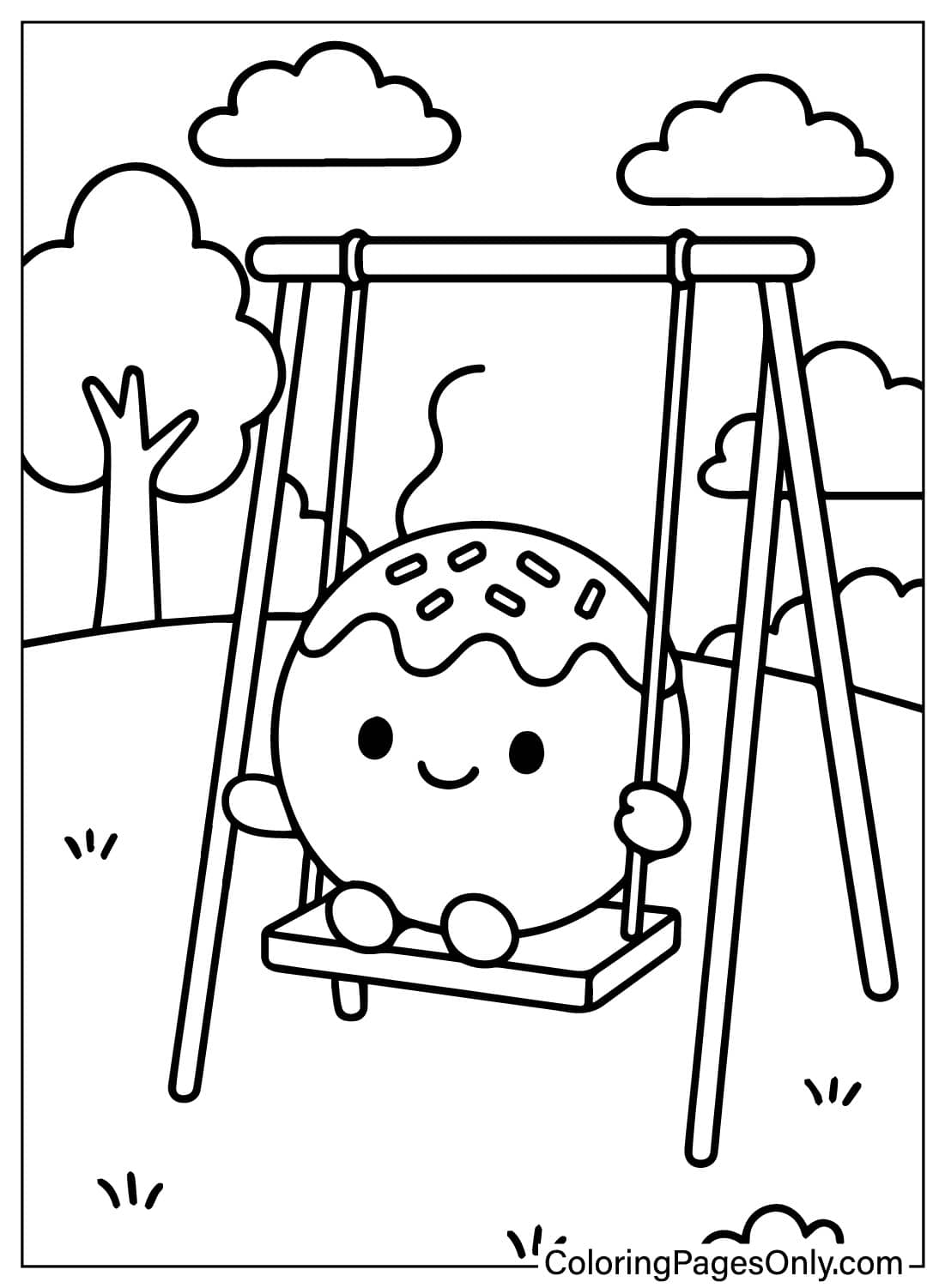
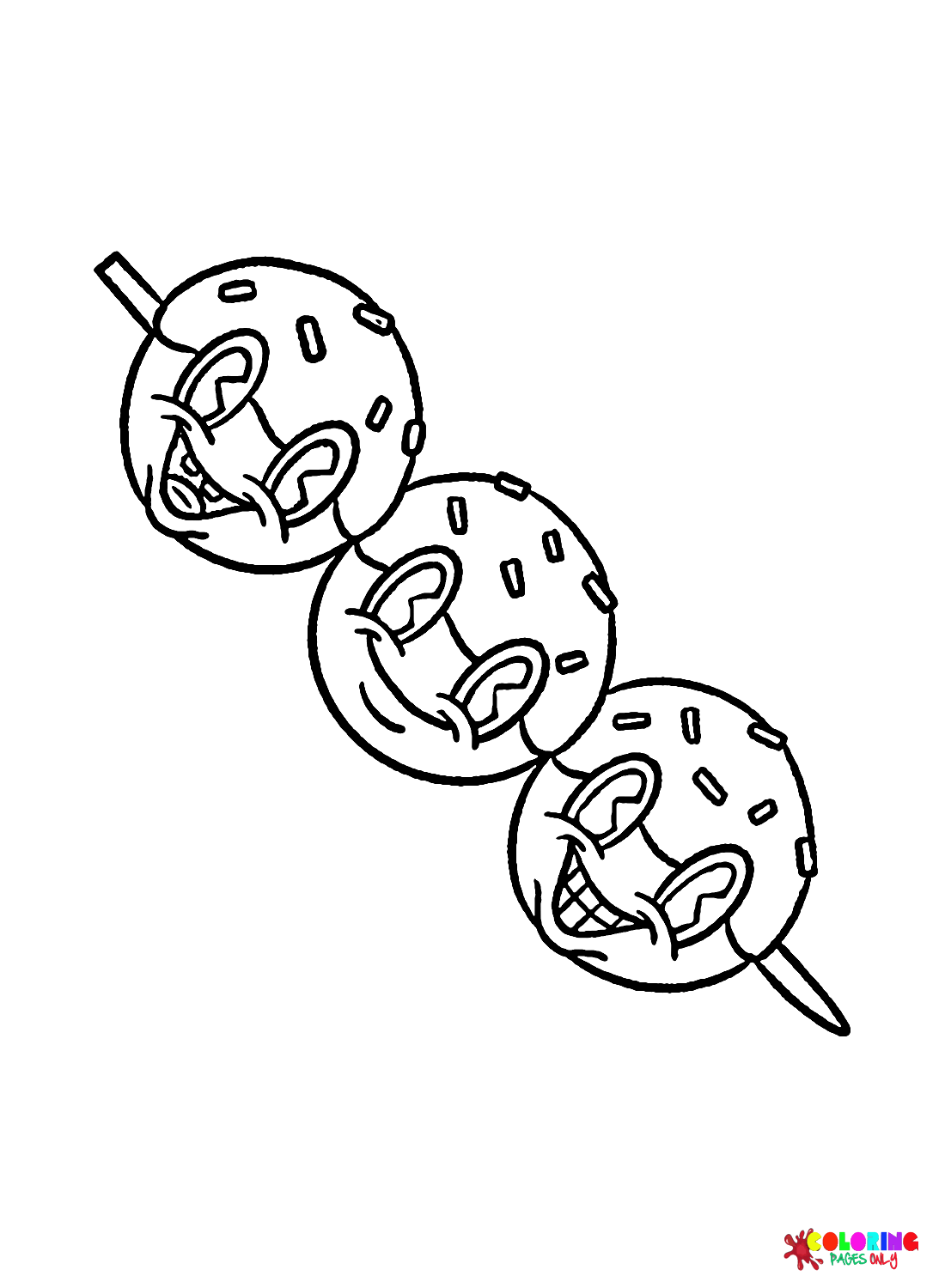
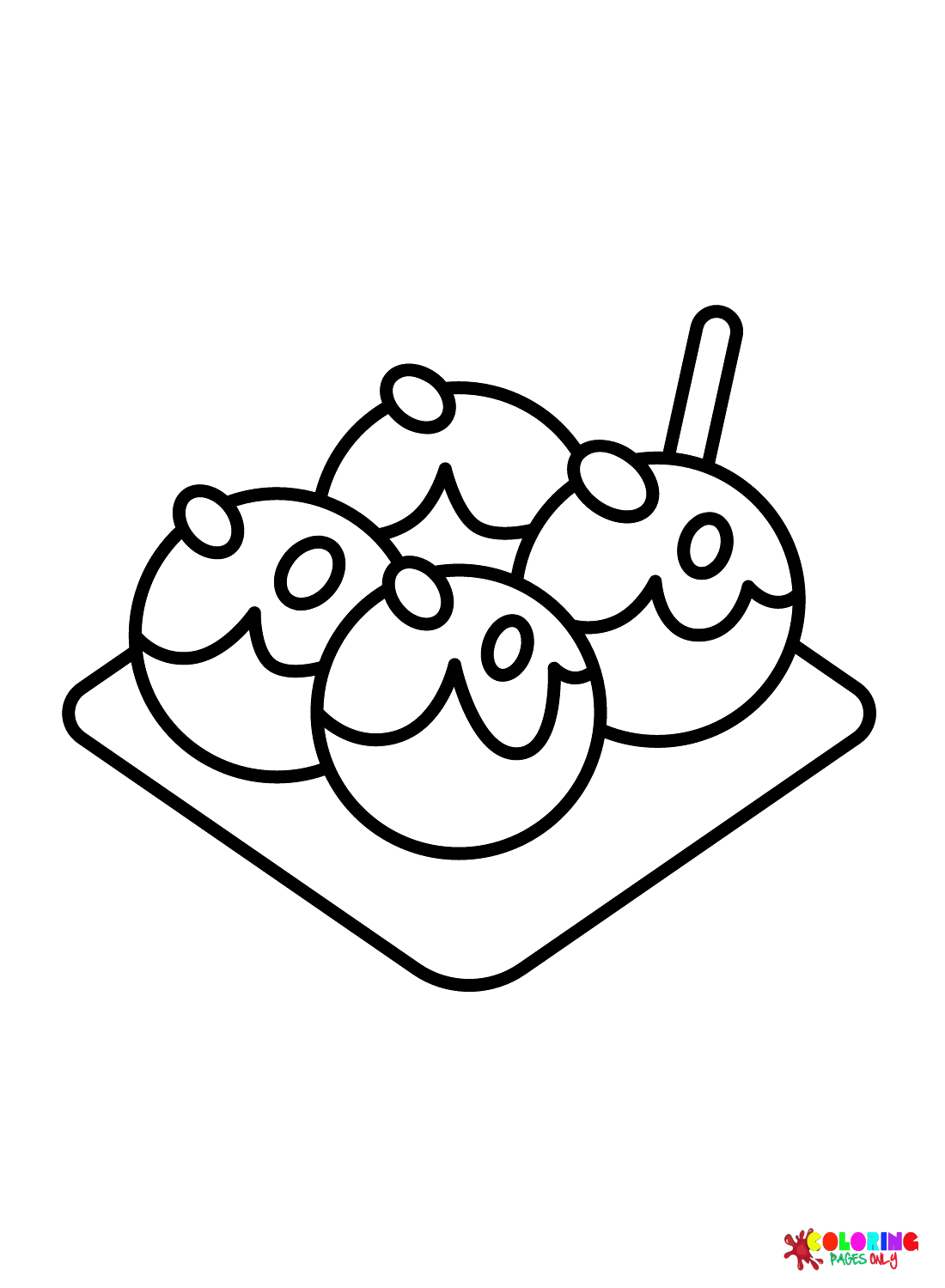
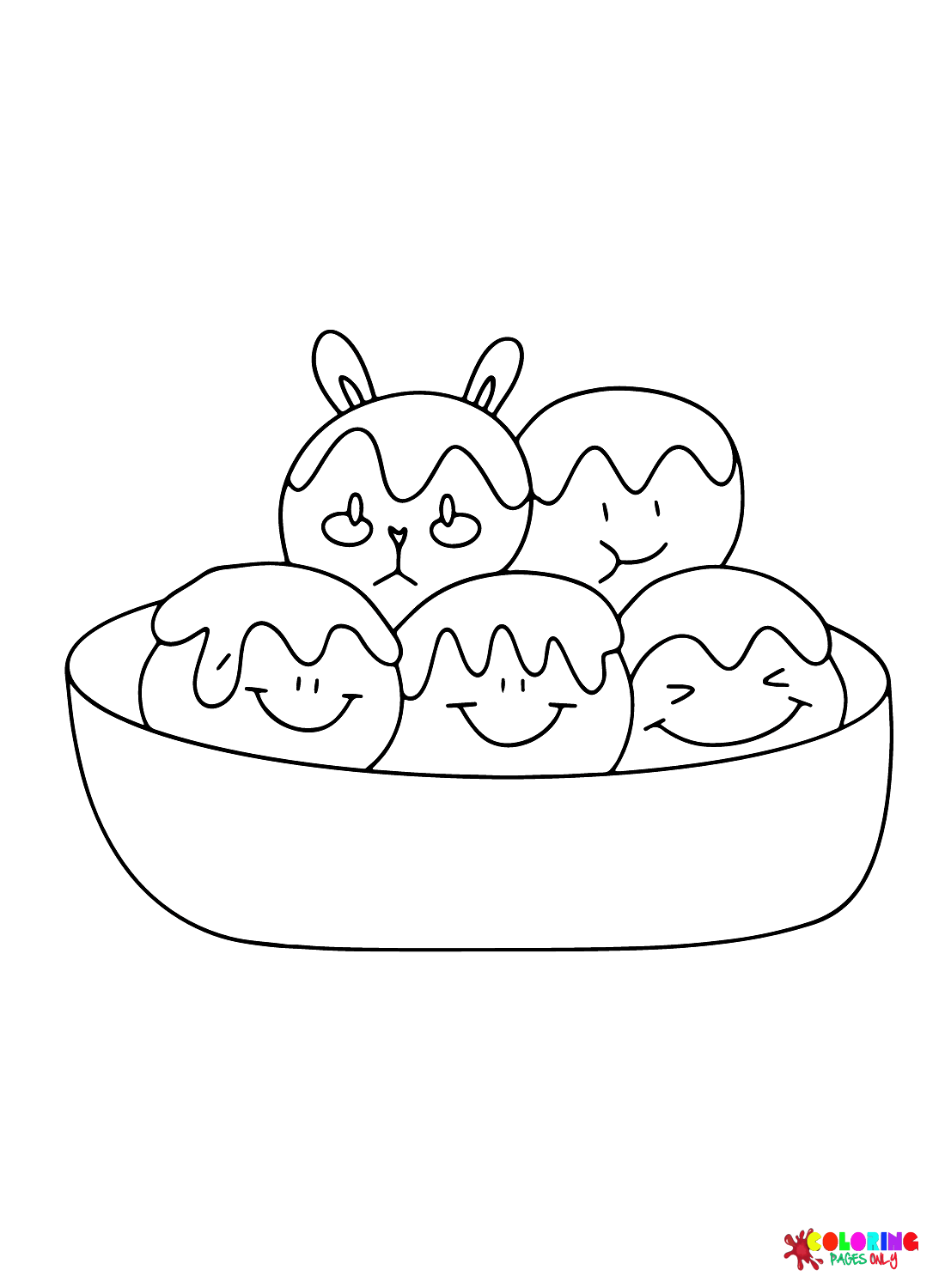
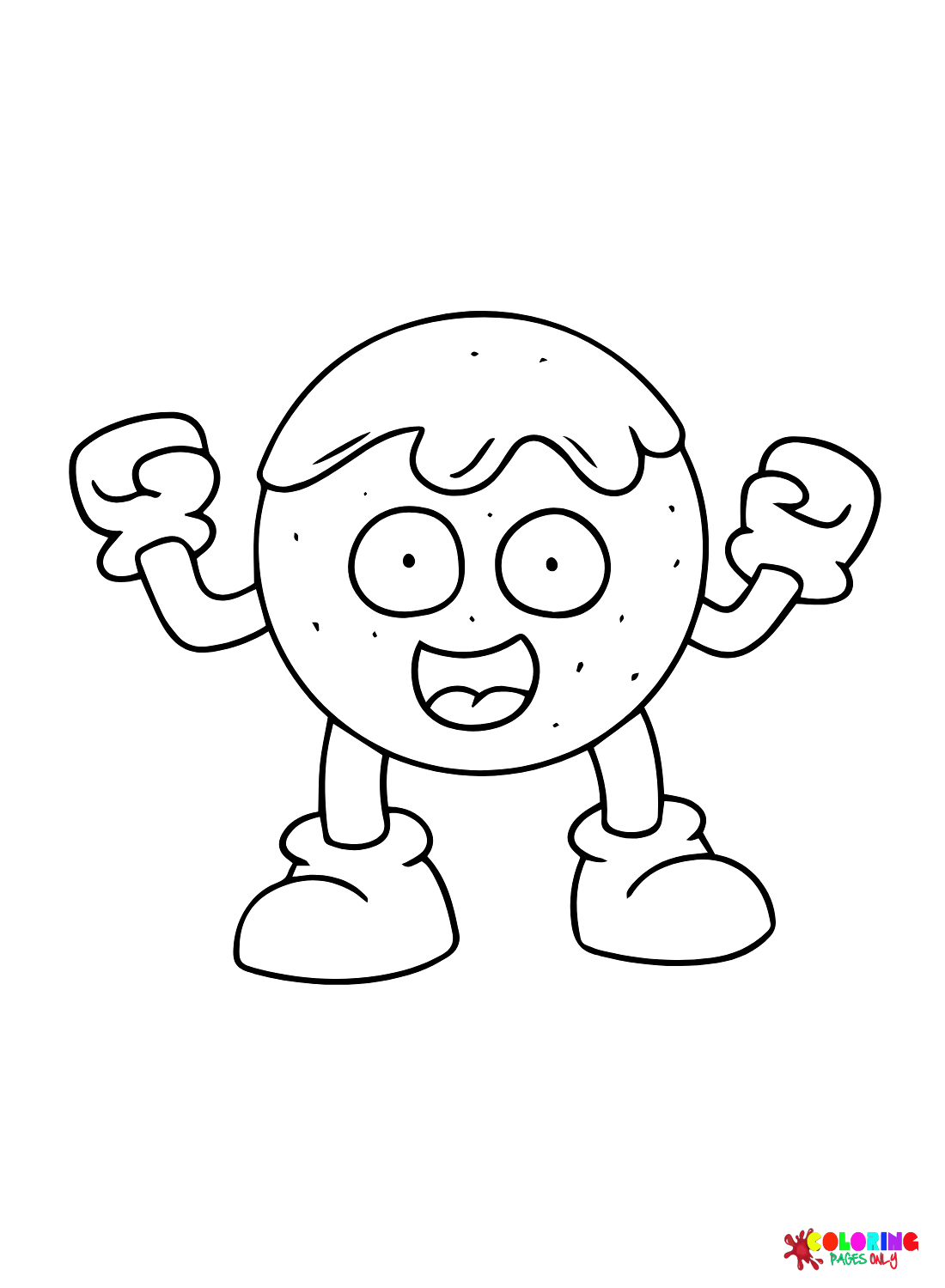
Another group gives individual takoyaki balls faces, limbs, and expressions in a bright, kawaii style. These work well with Golden Brown for the base and a lighter Peach or Tan highlight to suggest the crisp, rounded shell.
General Portrait Pages
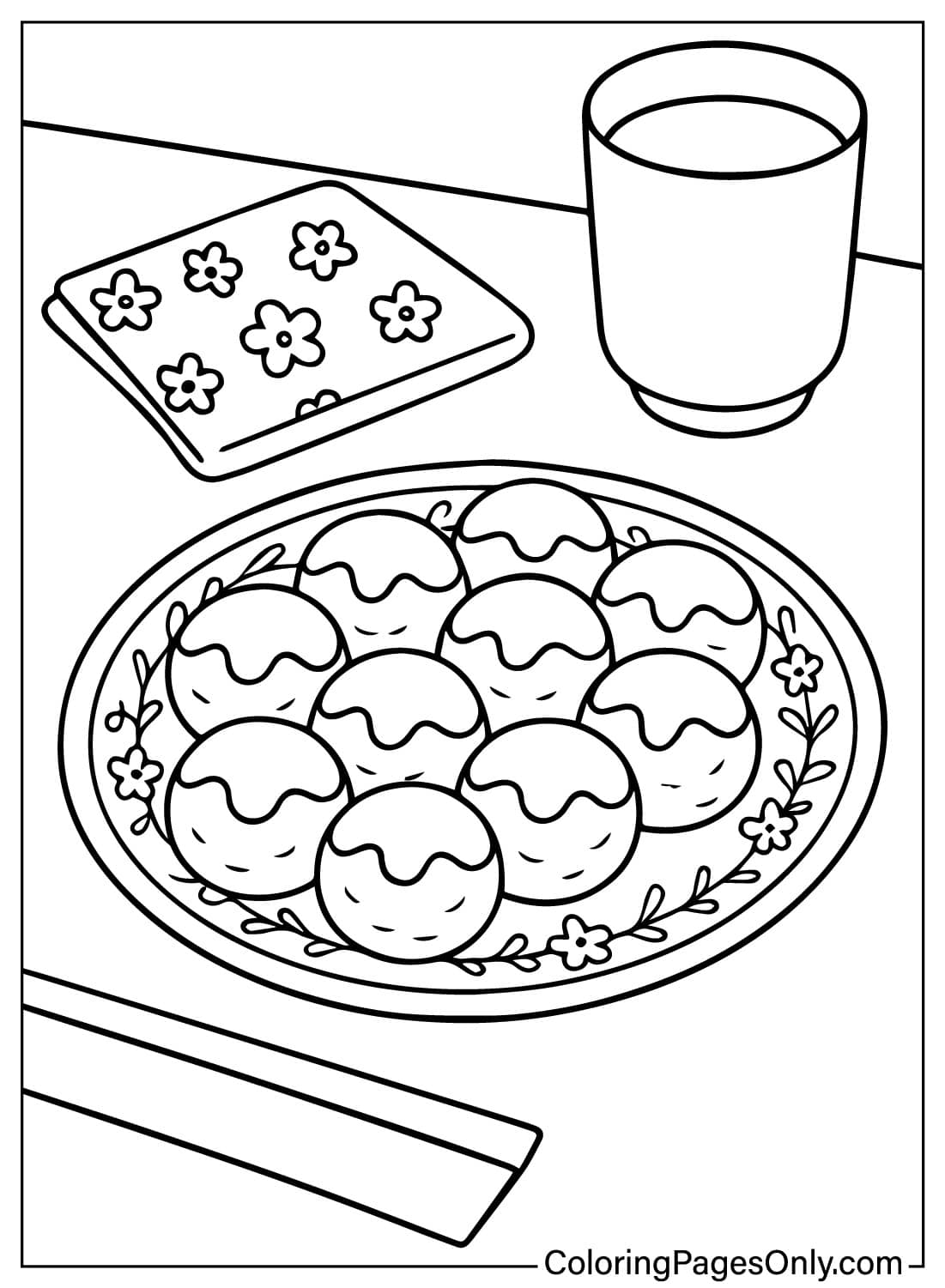
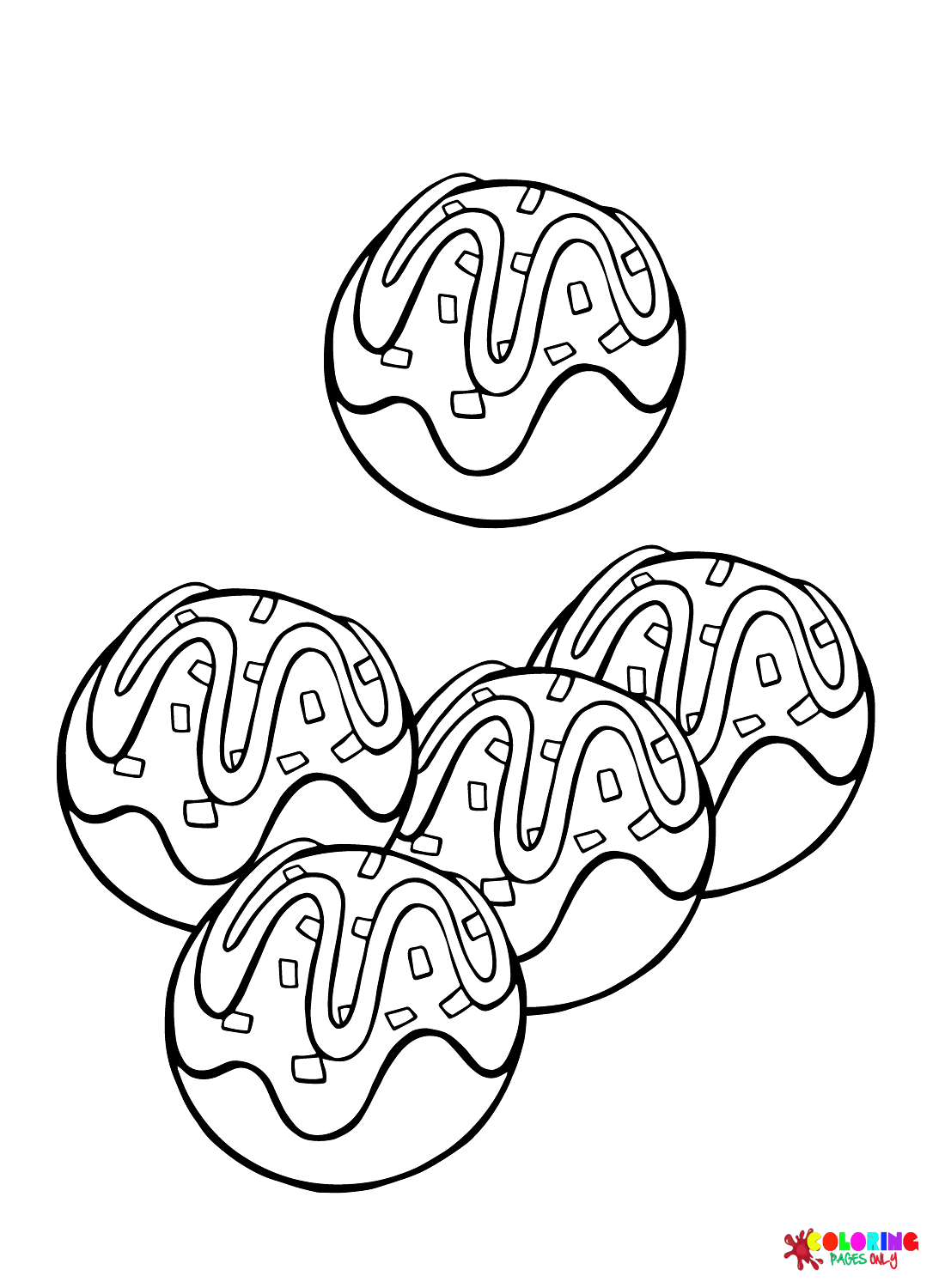
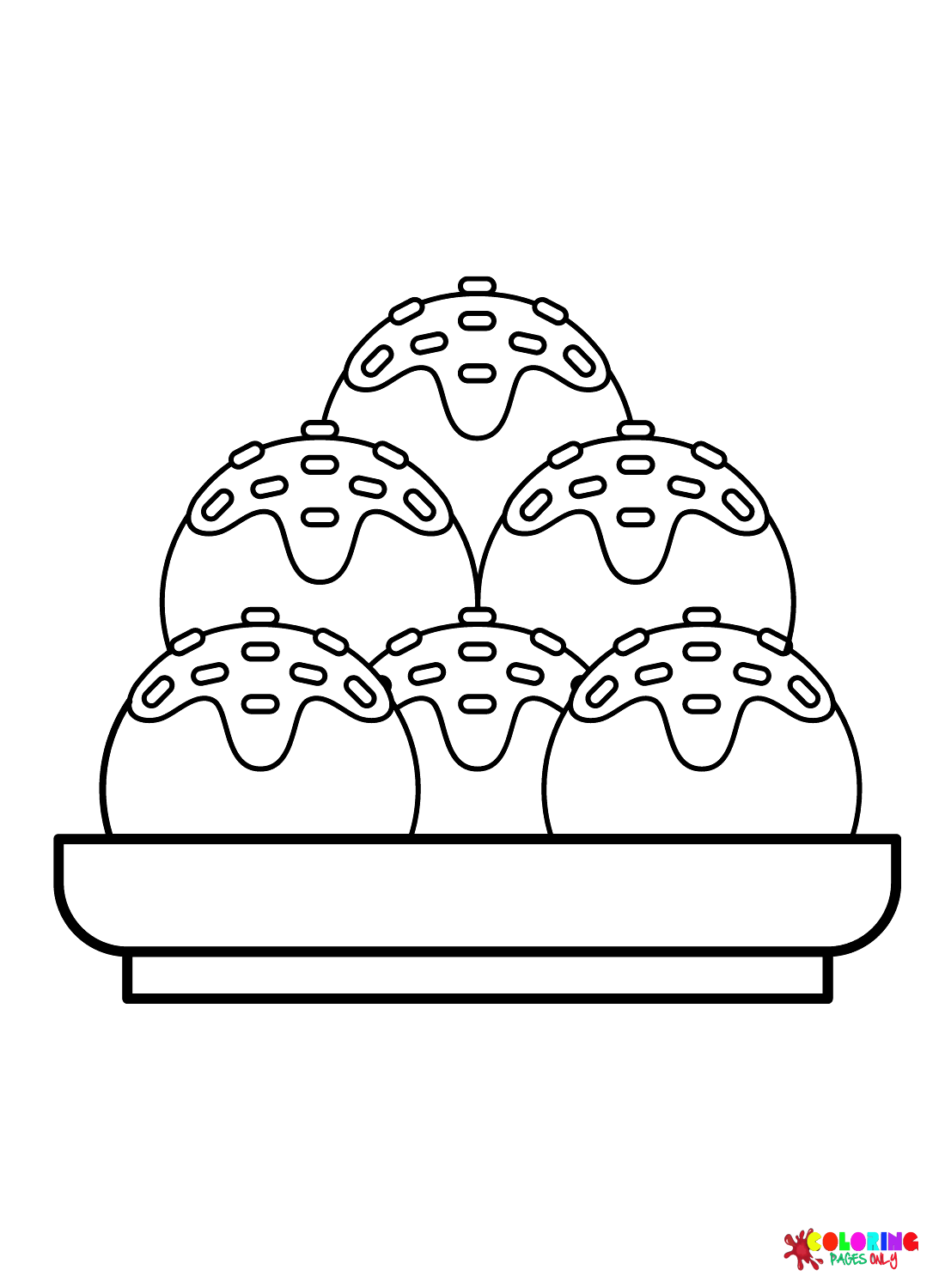
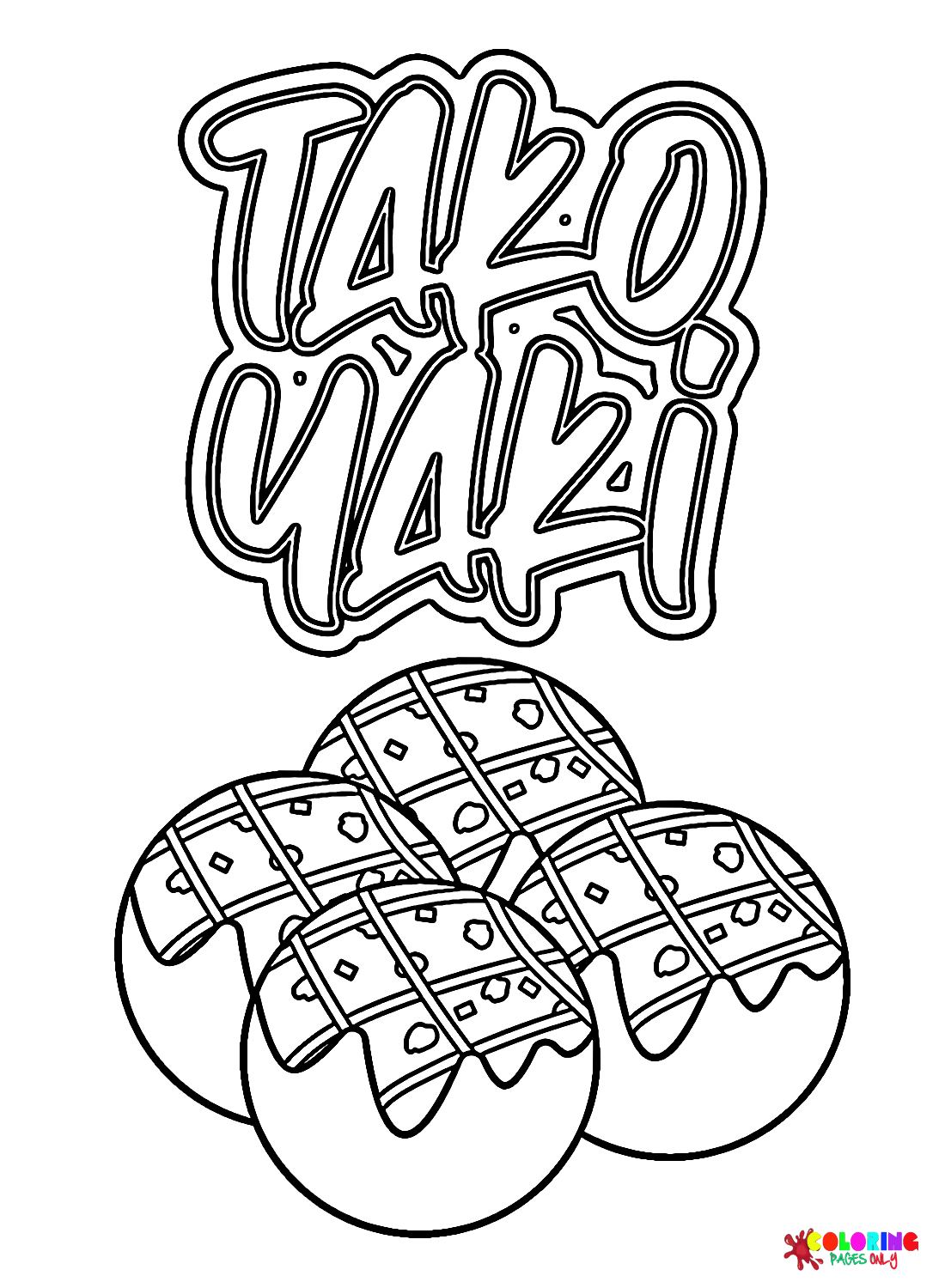
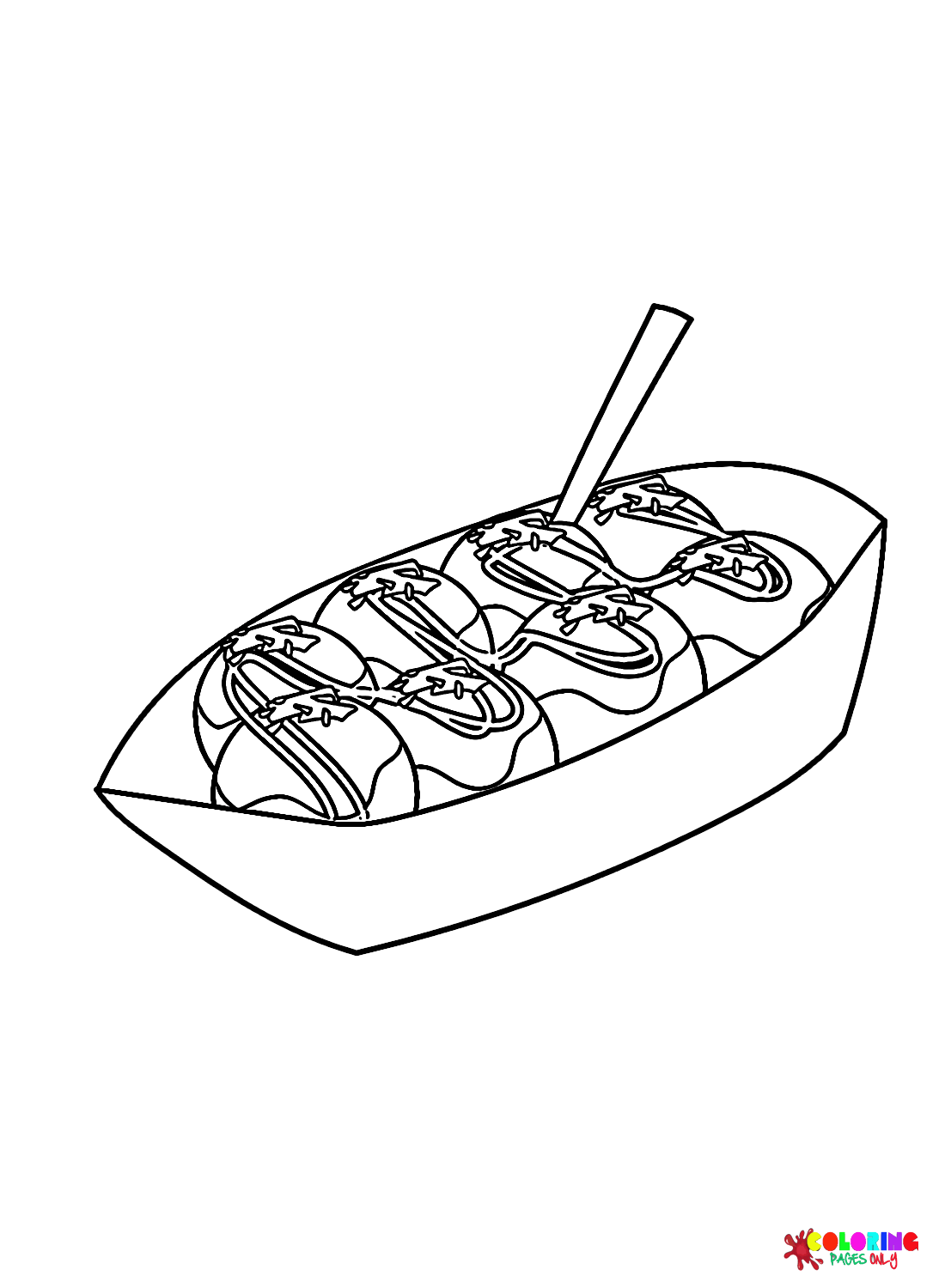
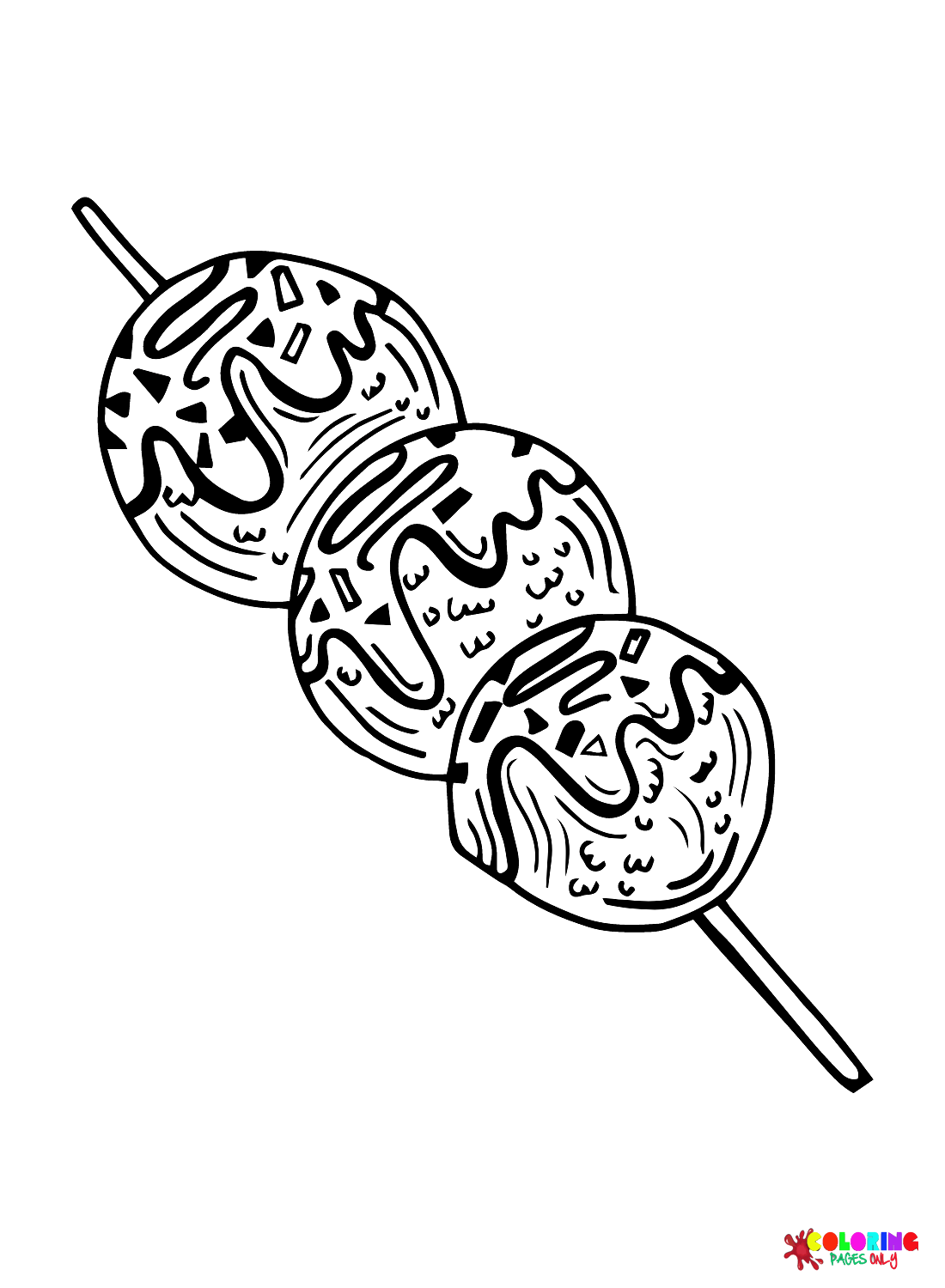
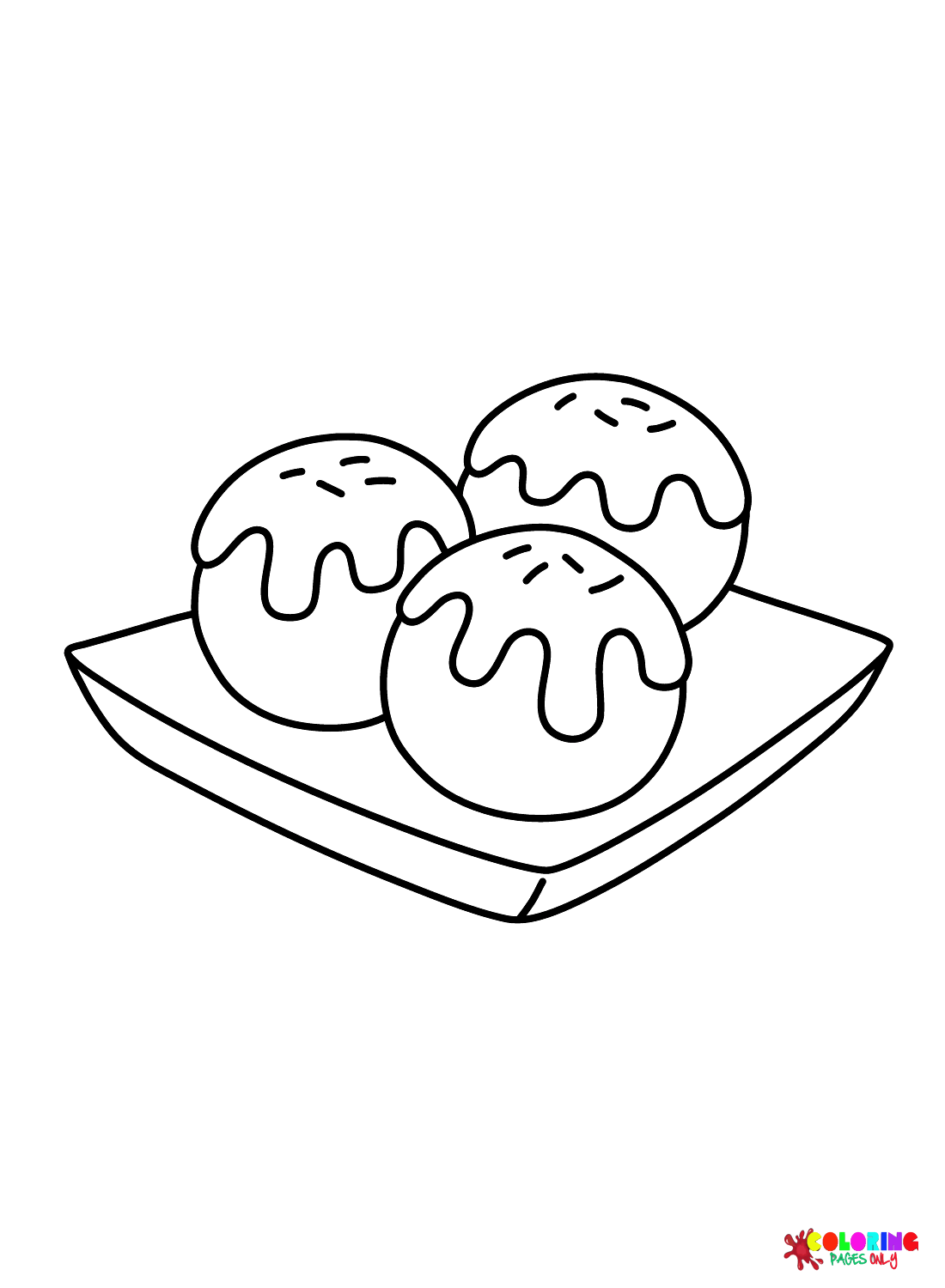
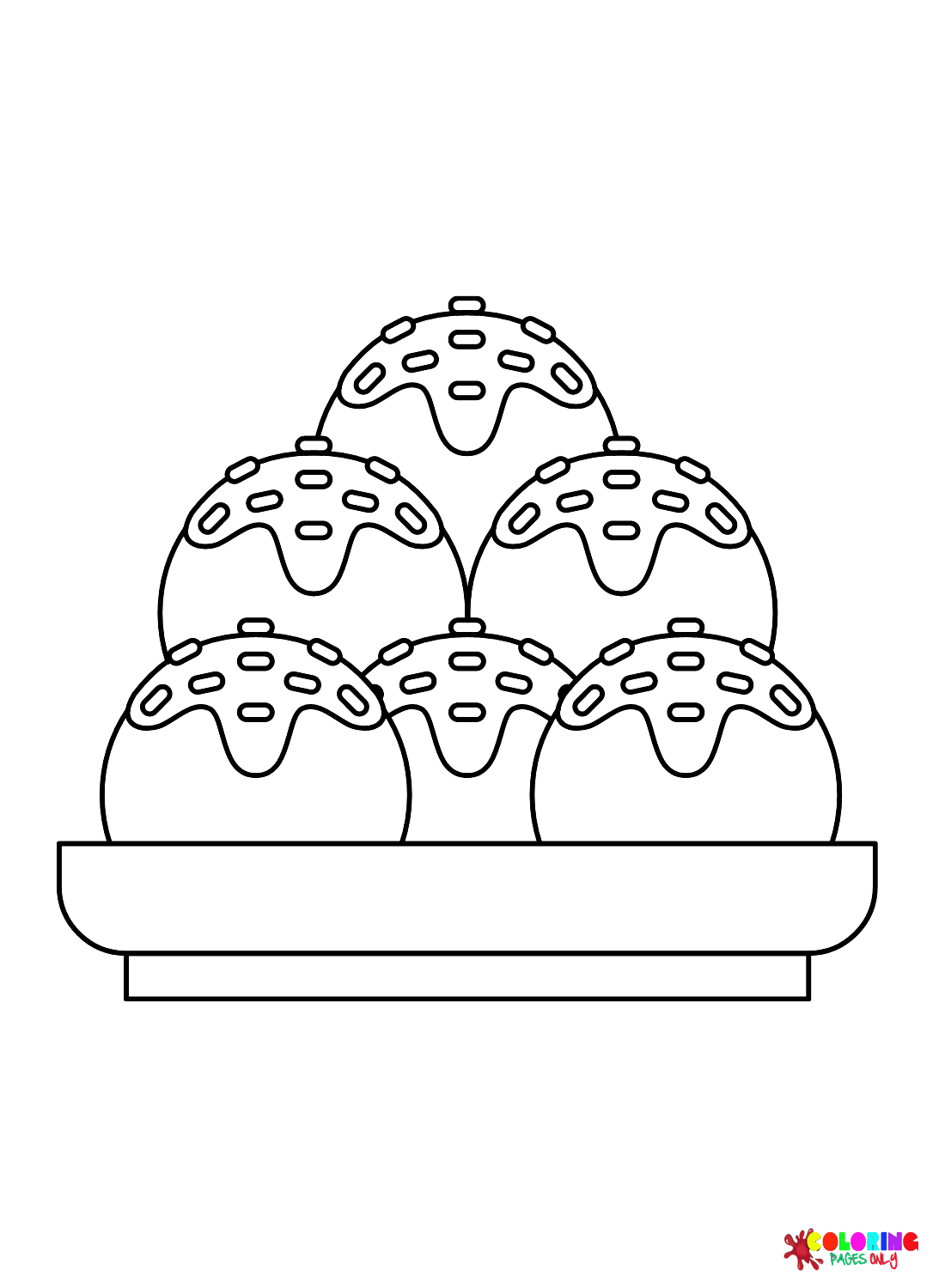
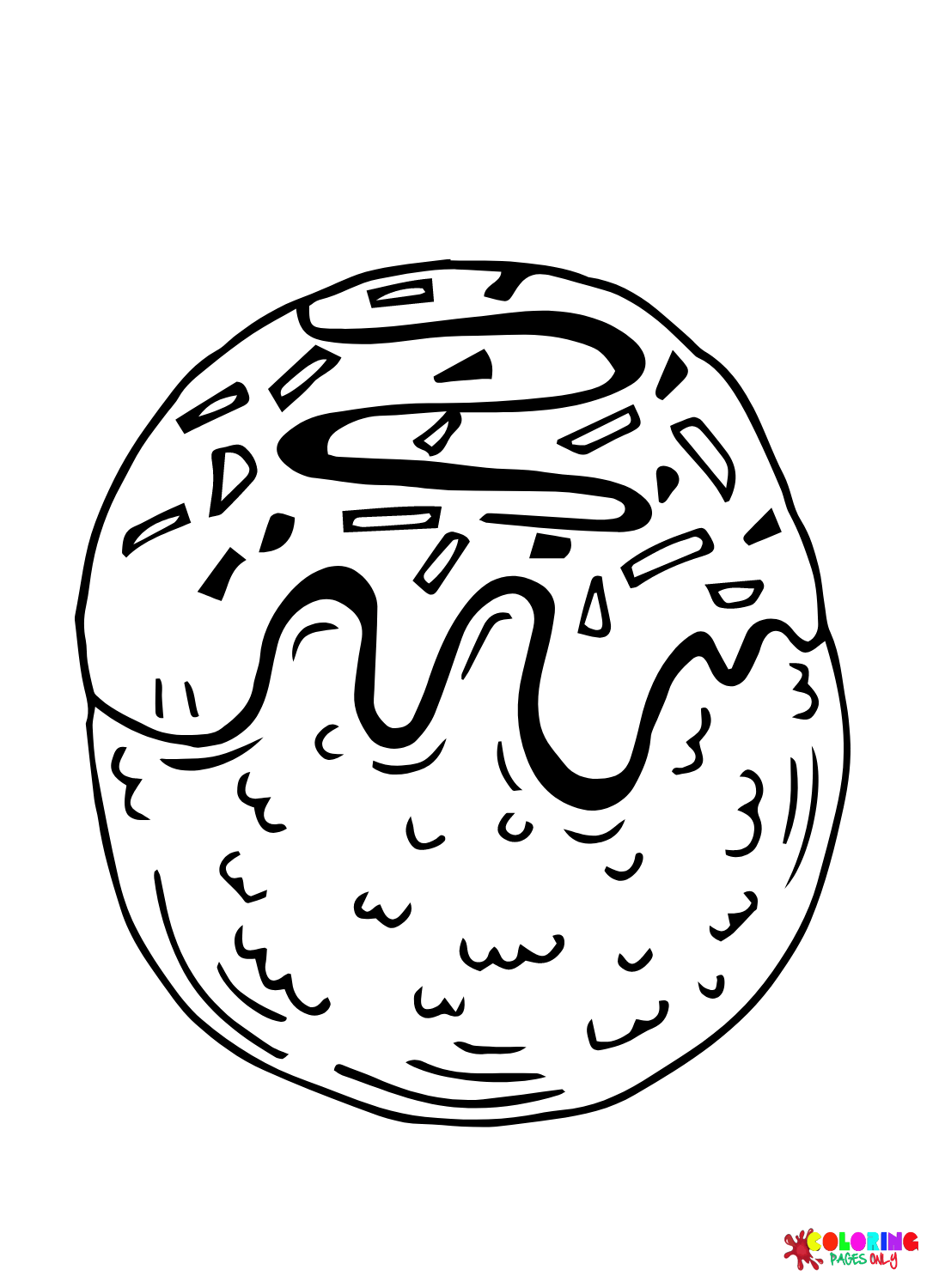
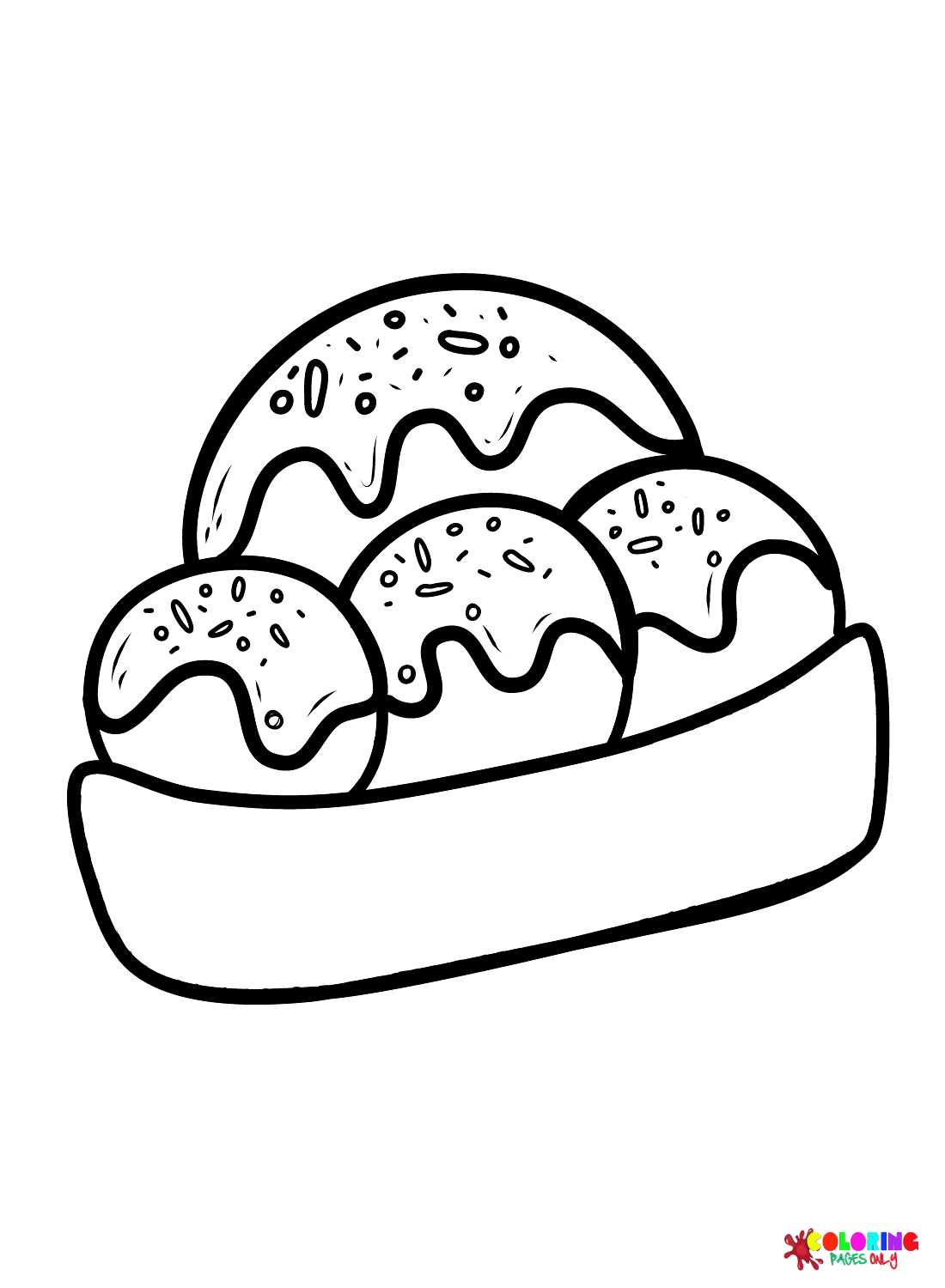
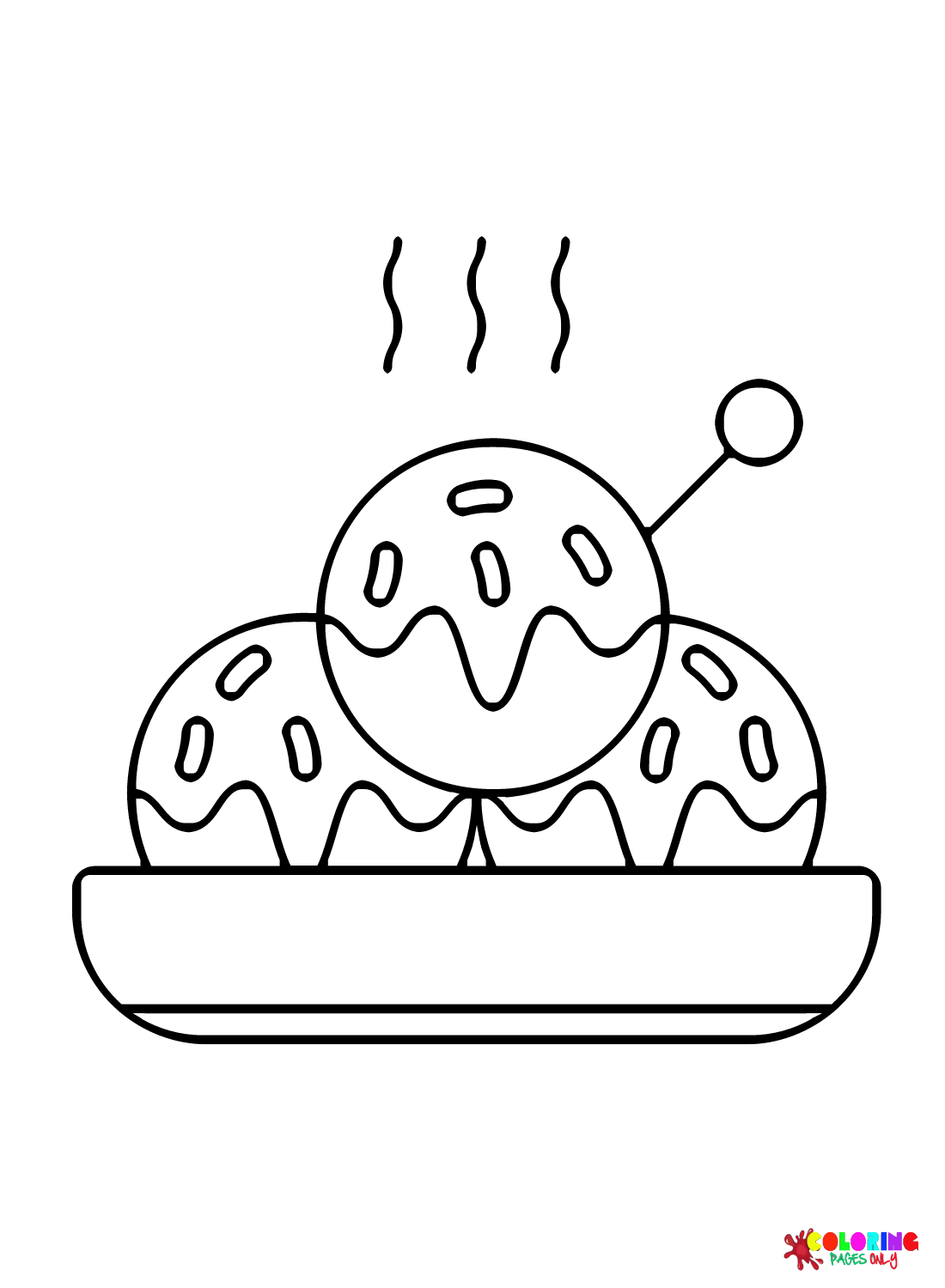
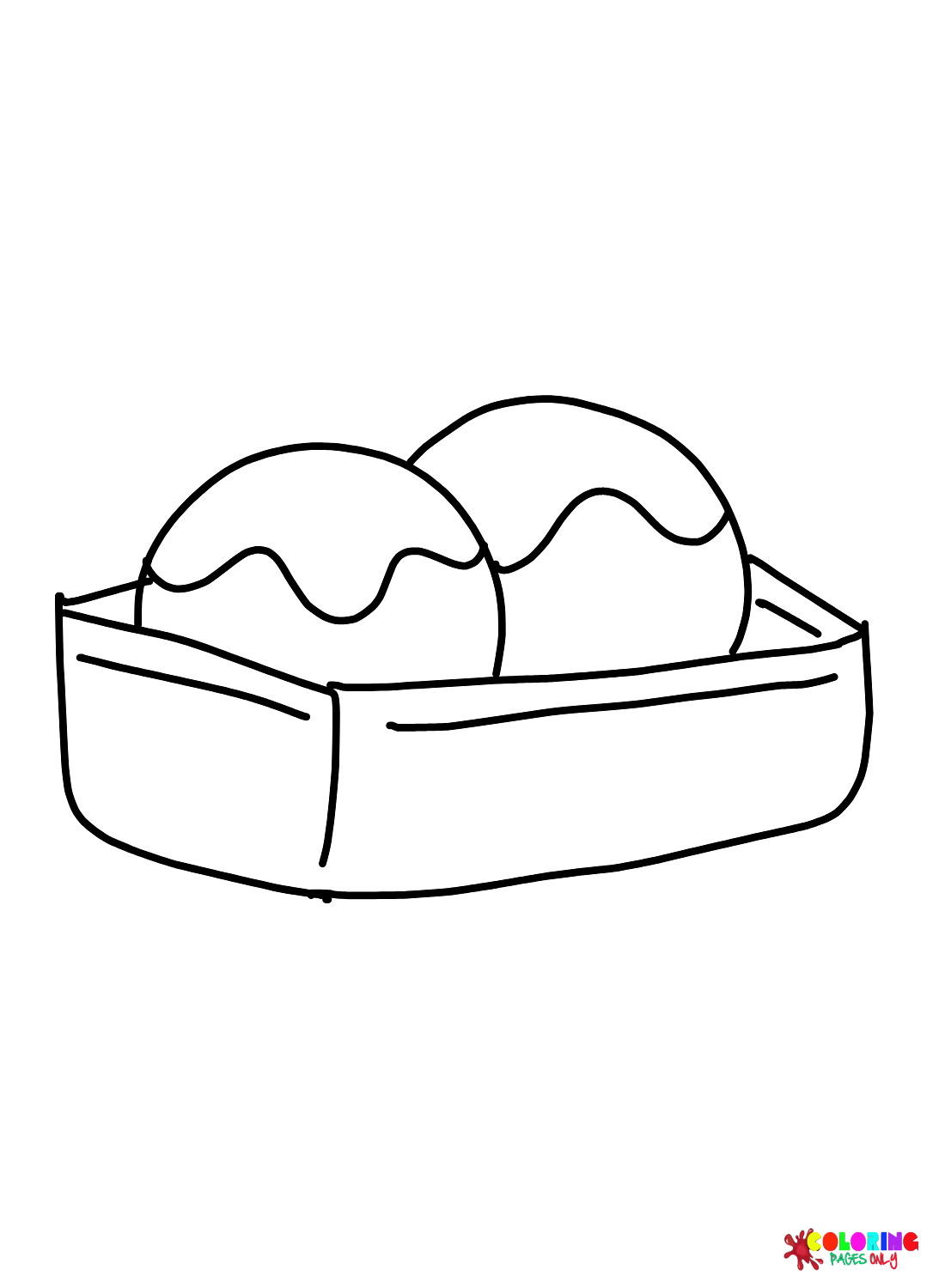
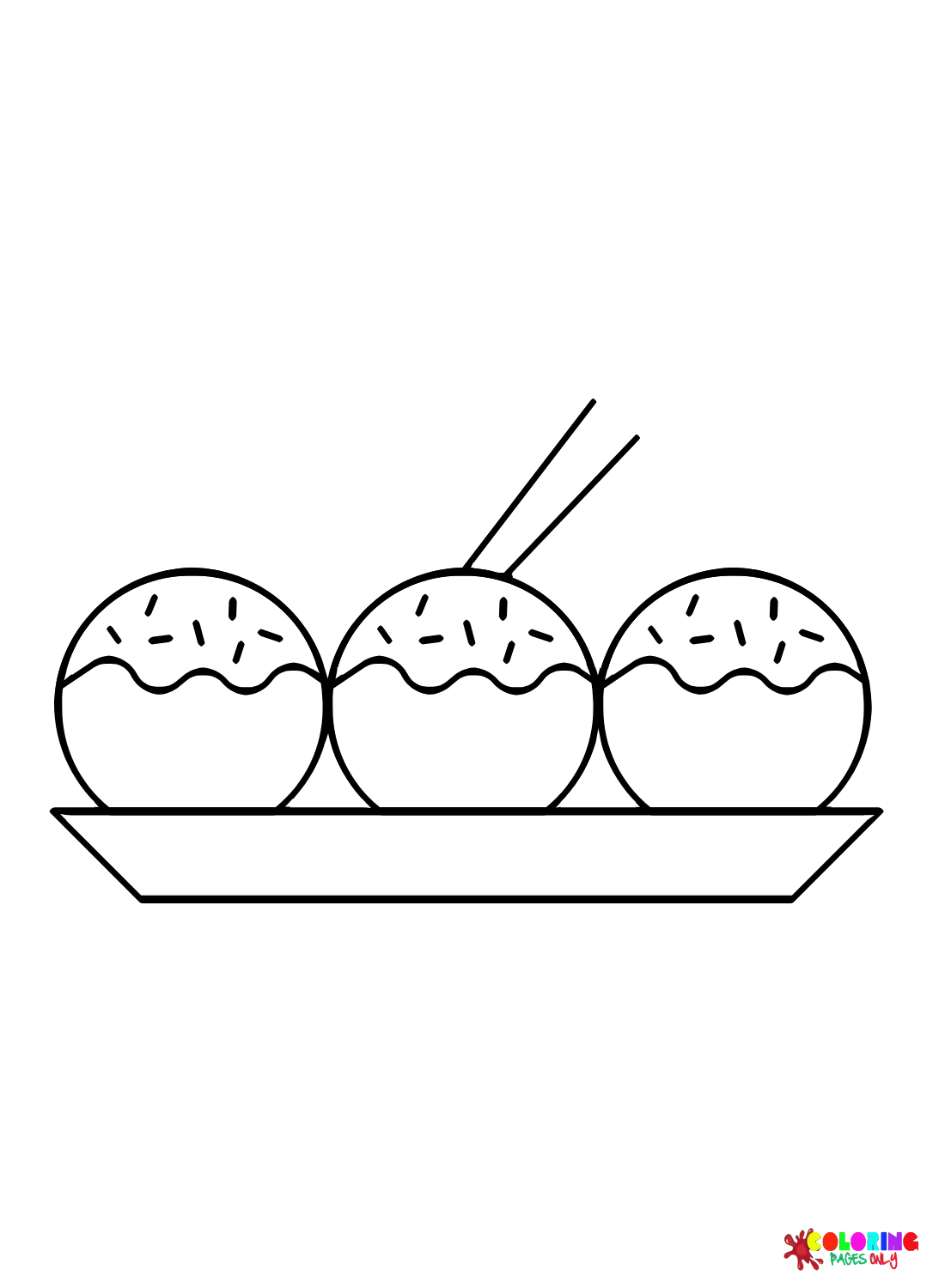
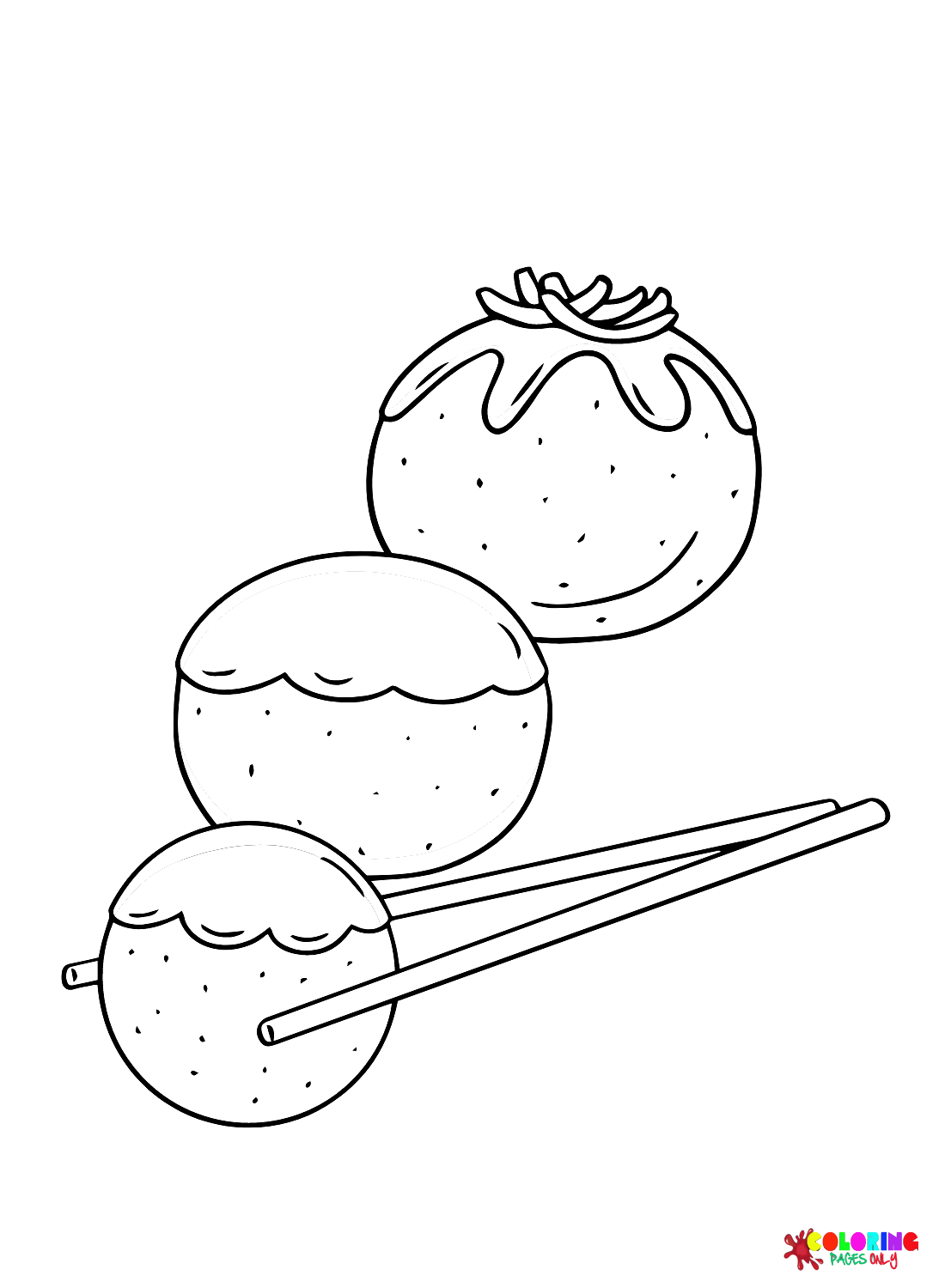
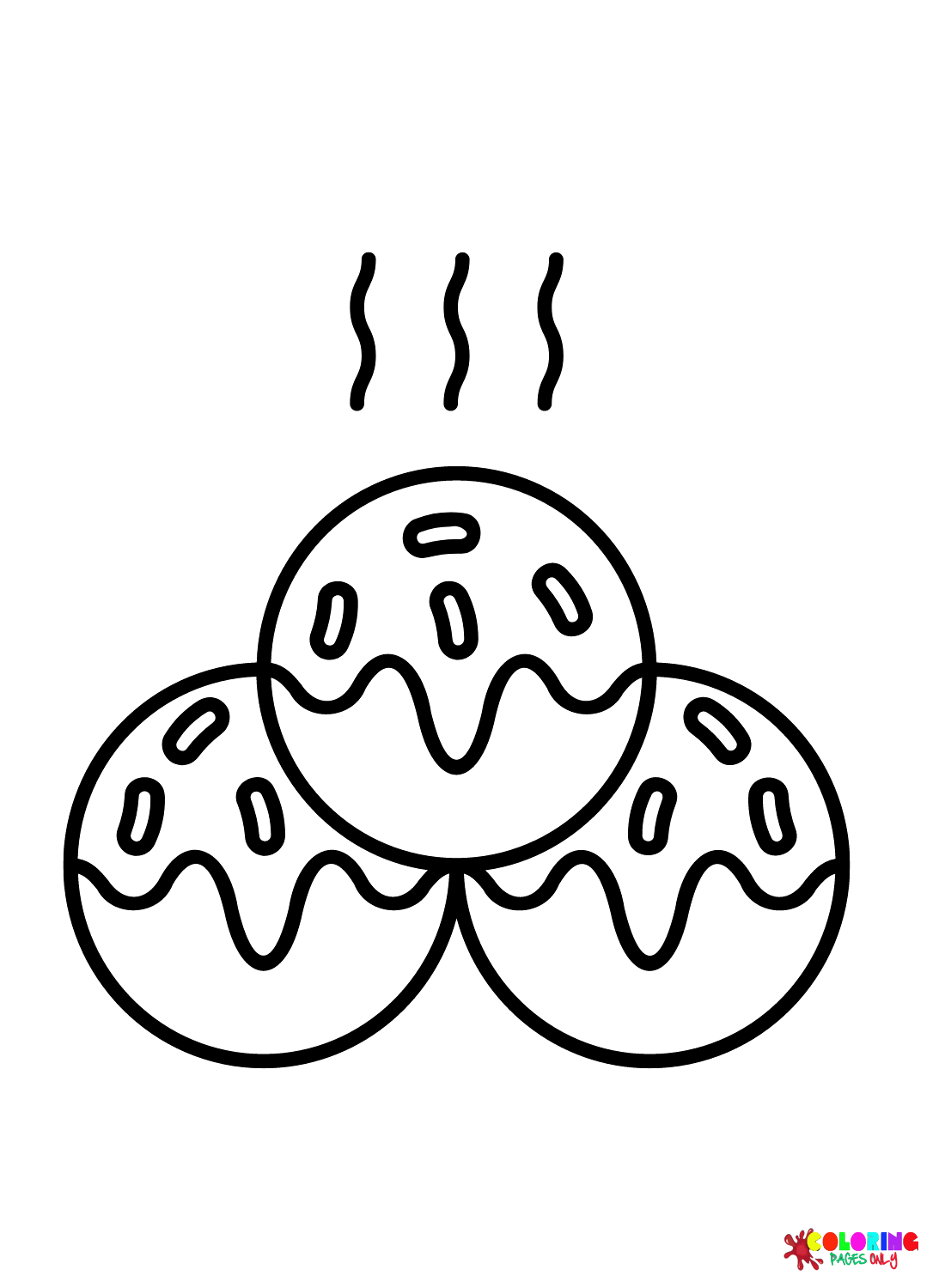
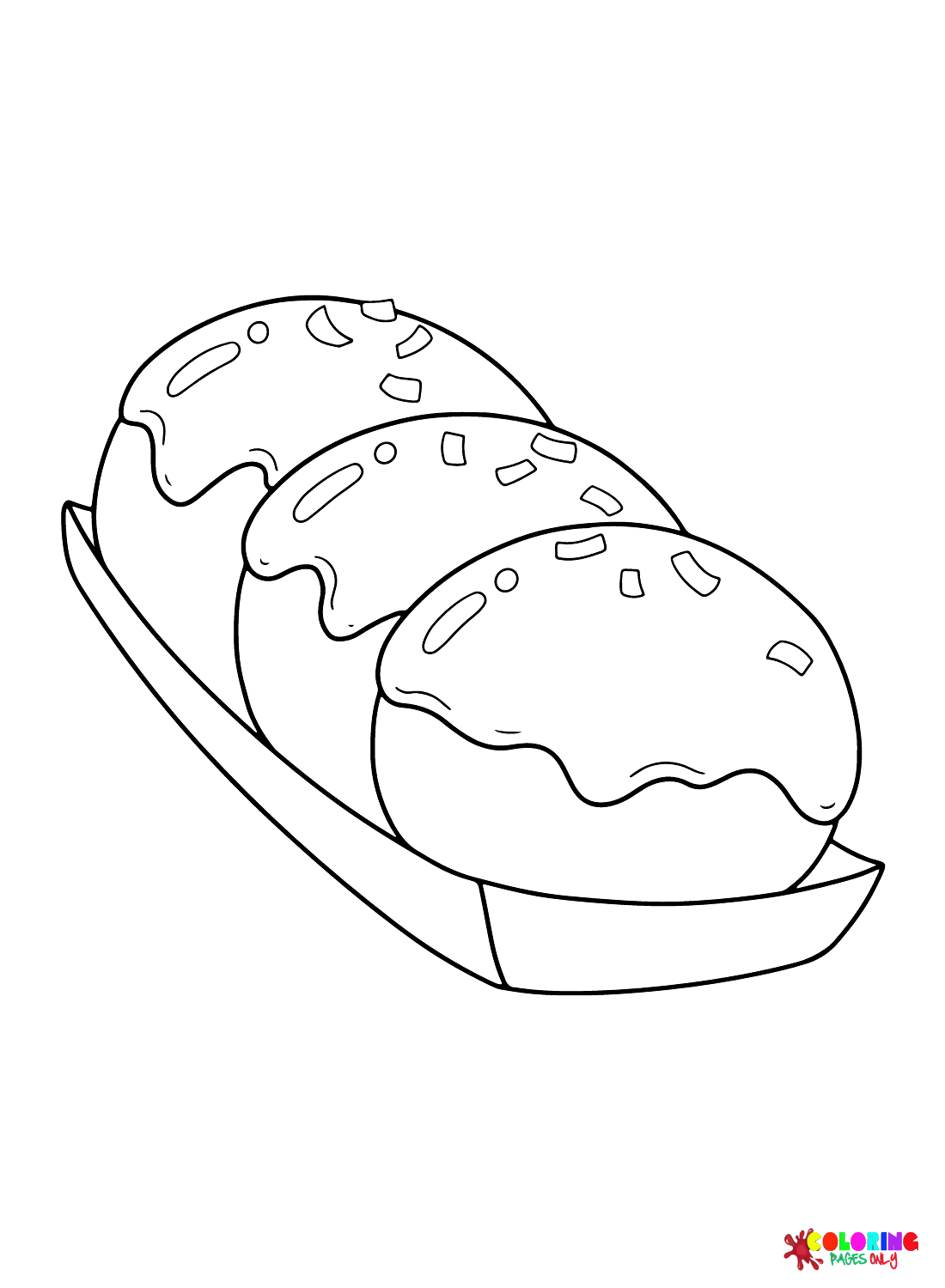
The remaining pages are simpler, single-subject designs repeating the basic takoyaki ball and topping shape without a specific scene or character. These are best treated as a practice set for the core shape and topping detail rather than a series of distinct scenes.
What Takoyaki Coloring Pages Do
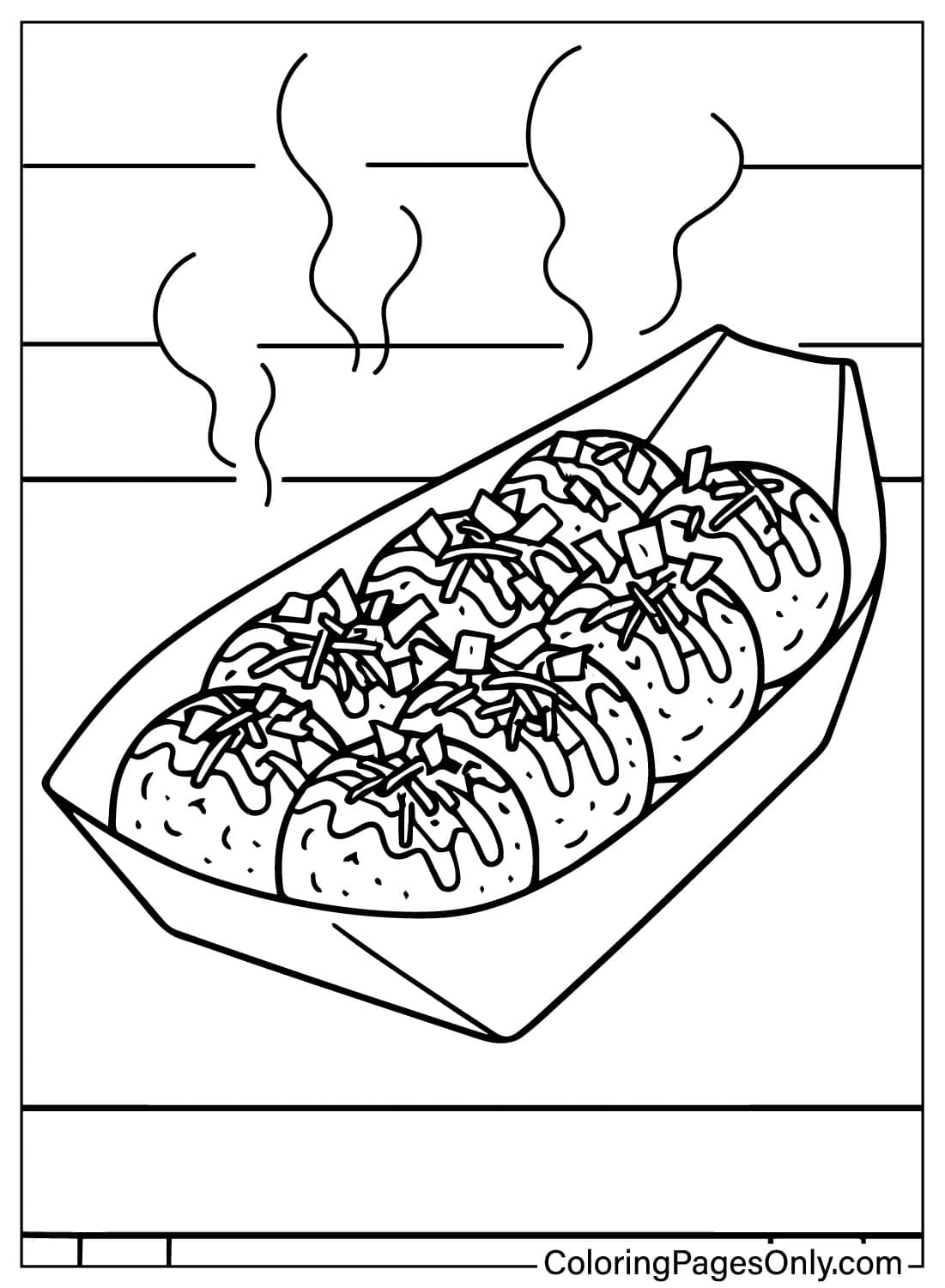
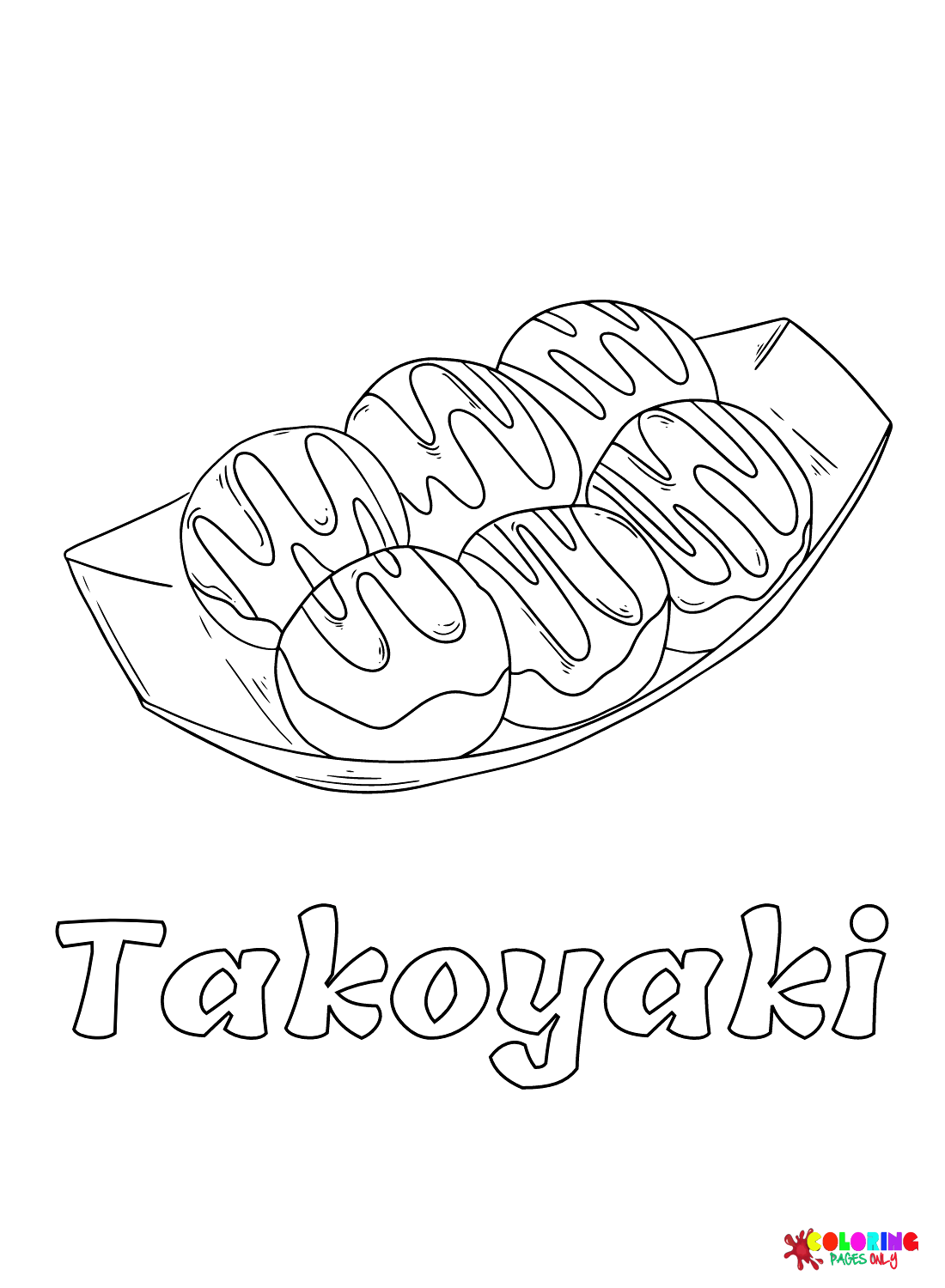
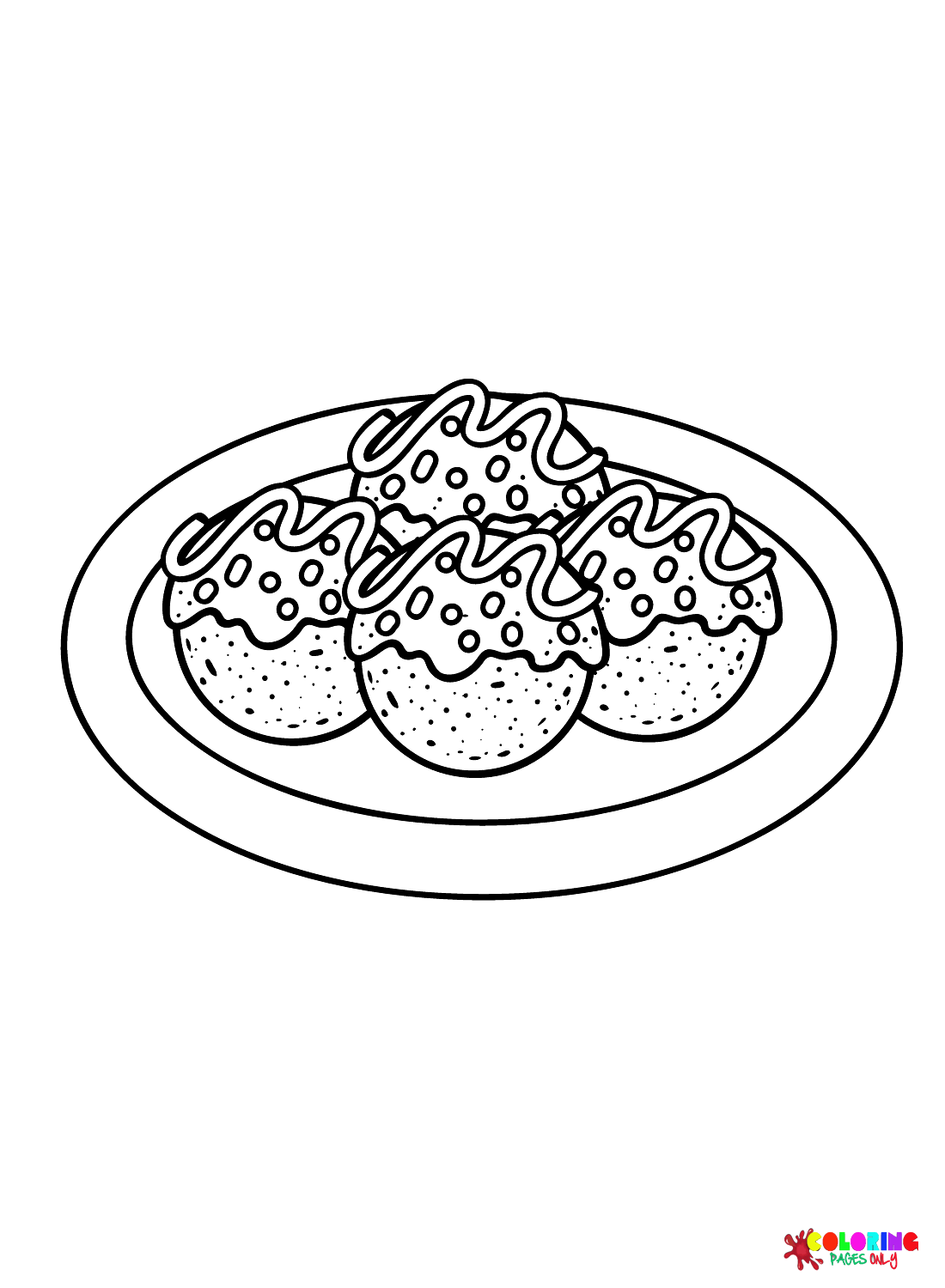
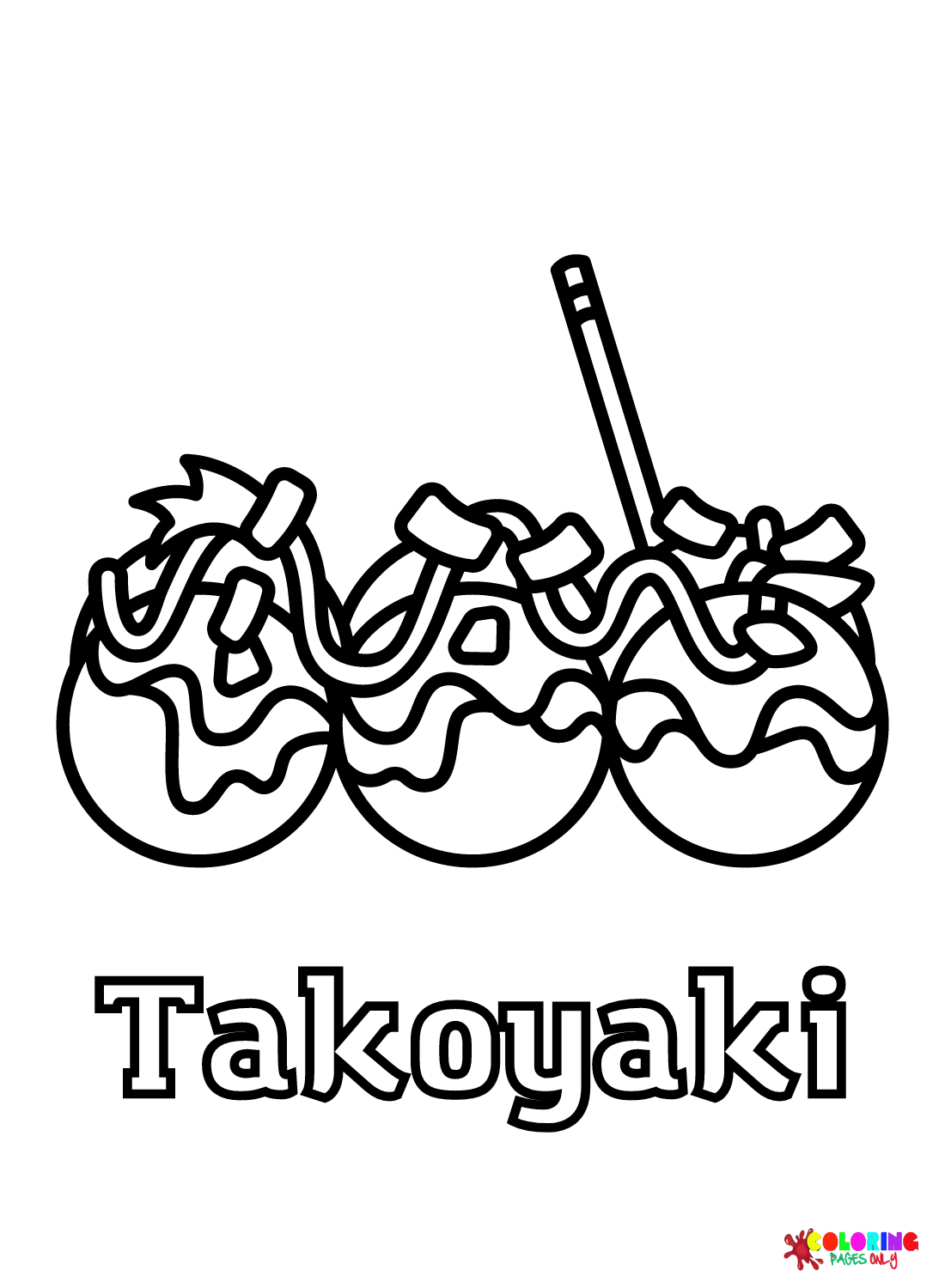
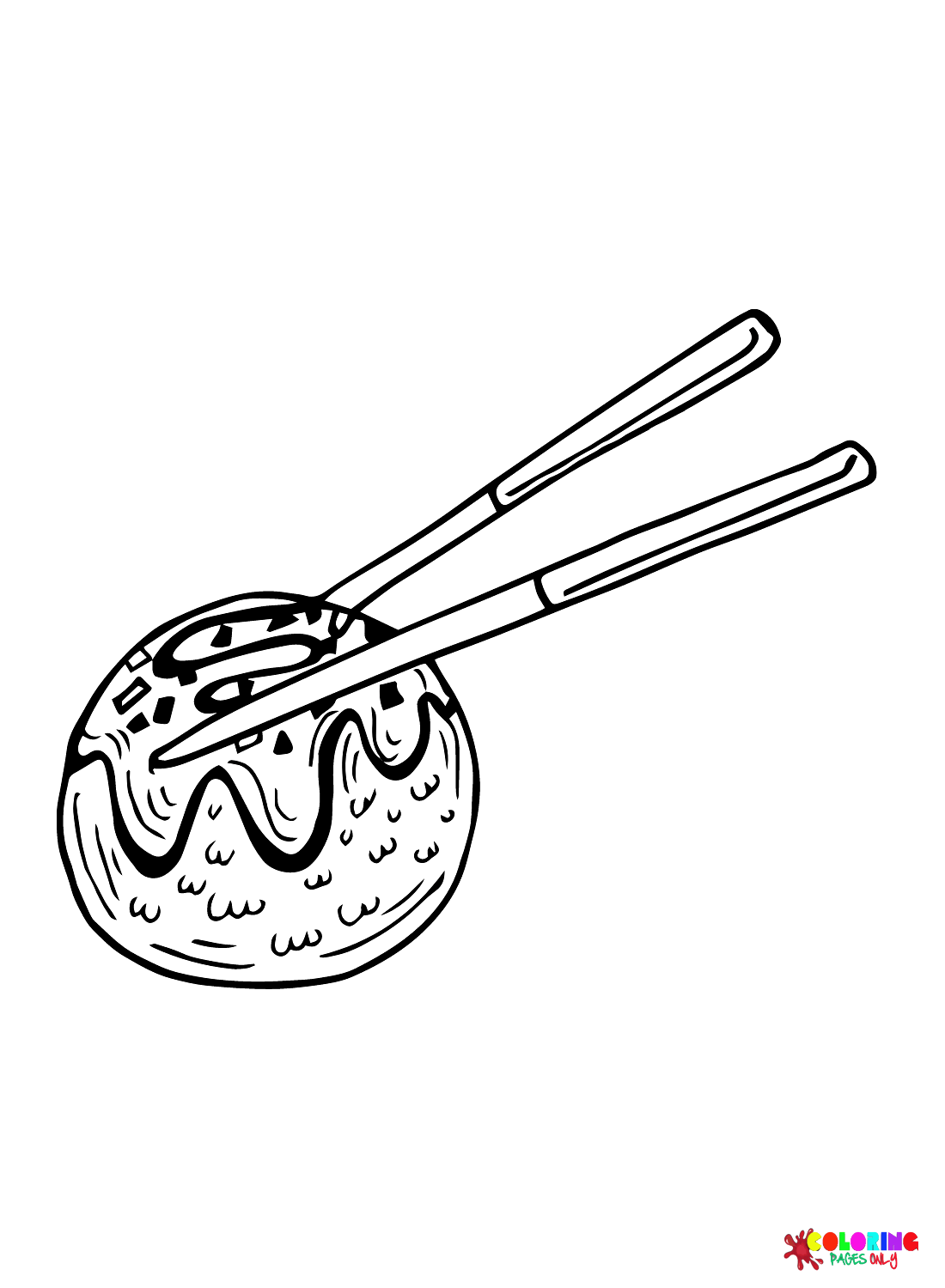
A genuine circle-and-topping challenge, not just a blob to fill in. The American Academy of Pediatrics identifies fine motor skill development as a core benefit of structured coloring for children ages 2 through 7. A takoyaki ball is a specific test of that skill: a clean, round outline topped with thin, overlapping bonito flake lines and a zigzag of mayonnaise, which asks for far more control than shading in a single solid shape.
A snack that is also a small piece of food history. Unlike an invented cartoon food, takoyaki traces back to a single named person, Tomekichi Endo, and a specific year and city, 1935 Osaka, giving a coloring page a real story to go with it rather than a generic “yummy food” framing. Coloring the street stall and festival pages in this set gives that history a visual setting to sit in.
The “dancing” bonito flake detail is a calm, repetitive coloring task. A 2005 study in the Art Therapy Journal documented measurable reductions in anxiety following structured coloring sessions, and the thin, curling bonito flake topping on a fully detailed takoyaki page calls for exactly that kind of slow, one-line-at-a-time attention, since each flake is its own small stroke rather than one flat topping color.
A built-in wordplay connection between food and character. Because takoyaki’s name literally comes from tako, the Japanese word for octopus, the octopus-paired pages in this set are not a random mashup but a direct visual pun that gives kids a small, memorable fact to hold onto: the food is named after the very ingredient inside it.
How to Color These Pages Well
- Takoyaki base: Use Golden Brown for the crisp outer shell, with a slightly deeper Burnt Sienna in the shadowed underside where each ball meets the pan or plate.
- Sauce and mayonnaise: Color the sauce a dark Mahogany or Brown, then add a thin, zigzag Cream or White line over it to capture the classic drizzle pattern.
- Bonito flakes: Use light Tan or Beige and vary the stroke direction slightly on each flake, since real bonito flakes curl and shift rather than lying perfectly flat.
- Aonori seaweed flakes: Add small dots or flecks of Sea Green over the sauce, since the green flakes are the detail that most sets a finished takoyaki page apart from a plain fried ball.
- Octopus characters: Reserve Red or Coral for octopus-themed pages, keeping the color distinct from the takoyaki’s own Golden Brown so the two elements read as separate characters.
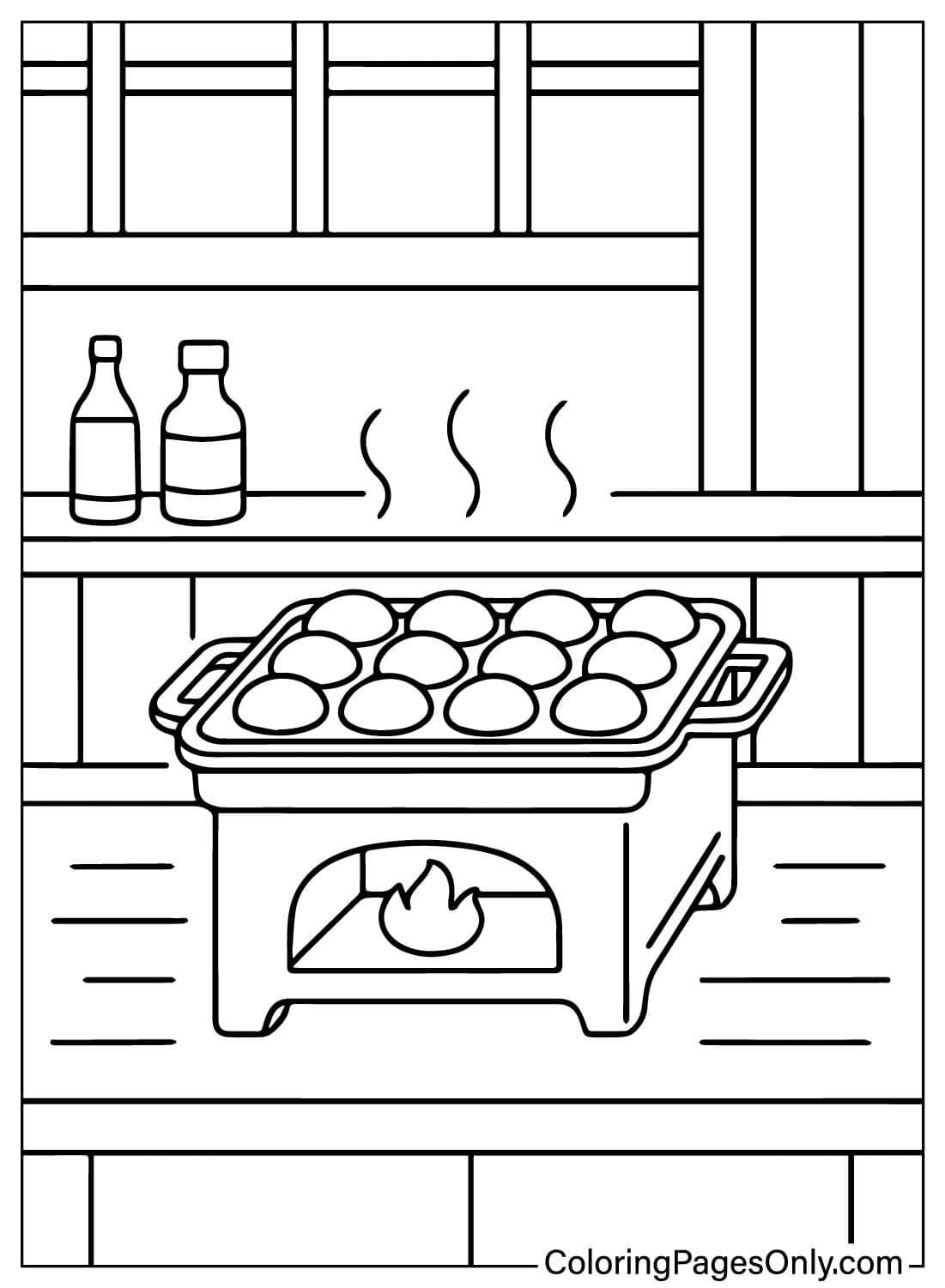
- Grills and stall details: Use Silver or Gray for the takoyaki pan and Black for its round molds, since the distinctive multi-cavity grill is part of what makes the cooking scenes recognizable.
5 Creative Craft Ideas With Takoyaki Coloring Pages
1. Pretend Takoyaki Stall
Color several of the food-truck or street-stall pages, then set them up on a table with handwritten paper price signs for a pretend takoyaki stand. Take turns being the vendor and the customer to turn the display into a simple role-play game.
2. Topping Layer Practice
Color one takoyaki ball page slowly, working through the base, sauce, mayonnaise zigzag, and bonito flakes as separate layered steps rather than all at once. Compare the finished page to a plain, uncolored one to see how much the topping detail changes the final look.
3. Octopus and Takoyaki Pairing Card
Color one of the octopus-paired pages and glue it to a folded card, then write “tako means octopus” inside as a small fact for whoever receives it. This works well as a simple thank-you or birthday card for a friend who likes Japanese food or culture.
4. Festival Lantern Garland
Color a few of the festival-scene takoyaki pages, cut them into small flags, and string them along a ribbon to make a garland similar to the lantern strings seen at a real Japanese summer festival. Hang the finished garland somewhere visible so the craft becomes a small display piece rather than a one-off page.
5. Takoyaki Bookmark
Trim one of the simple single-ball pages into a tall strip and laminate it or cover it in clear contact paper for everyday use in a book. Choose one of the plainer general portrait pages for this craft, since a busier scene page does not trim down as cleanly.
Frequently Asked Questions
What are takoyaki coloring pages?
A free set of 53 printable PDF and online coloring designs featuring takoyaki, the round Japanese octopus-filled snack, in street food scenes, octopus pairings, and cute cartoon styles. Every page downloads free or opens for online coloring, with no account required.
What is takoyaki, and what is it made of?
Takoyaki is a round, savory Japanese snack made from a wheat batter filled with diced octopus and cooked in a special molded pan, then topped with a sweet-savory sauce, mayonnaise, dried bonito flakes, and seaweed flakes.
Who invented takoyaki, and when?
Takoyaki was invented in 1935 by Osaka street vendor Tomekichi Endo, who adapted an earlier snack called rajioyaki by swapping in diced octopus as the filling.
Why is takoyaki associated with octopus characters in these pages?
The name takoyaki comes directly from tako, the Japanese word for octopus, and yaki, meaning grilled, which is why several pages in this collection pair a takoyaki ball with a cartoon octopus rather than an unrelated character.
Why do the bonito flakes on top of takoyaki look like they are moving?
Real bonito flakes are shaved paper-thin, so the heat rising off freshly cooked takoyaki makes them curl and shift, an effect often described as the flakes “dancing,” which the detailed coloring pages in this set try to capture with layered, curling flake lines.
Are these takoyaki pages based on a specific restaurant or brand?
No. These are general illustrations of the dish and Japanese street food culture rather than depictions of any single named restaurant, stall, or company.
Are takoyaki coloring pages appropriate for young children?
Yes. The simple general portrait and cartoon-style pages suit toddlers and preschoolers, while the detailed street-stall and topping-heavy pages work well for older children who want a longer coloring project.
Can this collection be used for a lesson on Japanese food culture?
Yes. The street-stall and festival scenes pair well with a discussion of Japanese street food traditions, and the octopus-naming detail offers an easy way to connect language and food in a single lesson.
Start Coloring
Download any page by clicking the design. No account, email, or payment is required. Pages print directly from the browser at full resolution or open in the online coloring tool for screen use. Share finished pages on Facebook or Pinterest using the share buttons at the top of each design page.