
Explore 65 free basketball coloring pages featuring Kobe Bryant, Kyrie Irving, player action, NBA team logos, kids playing, cartoon characters, animals, and the iconic flaming ball – free printable PDF and online coloring for all ages.
December 21, 1891. Springfield, Massachusetts. A Canadian physical education instructor named James Naismith nailed two peach baskets to the elevated running track of the YMCA gymnasium and handed his class a soccer ball. The original 13 rules fit on two pages. There was no dribbling – you caught the ball, stood still, and passed it. The baskets had no holes in the bottom, so someone had to climb a ladder to retrieve the ball every time a shot went in.
From those peach baskets, basketball became the most globally watched indoor sport in the world. The NBA generates over $10 billion in annual revenue. Kobe Bryant’s jersey has been retired in two numbers by the same franchise. And somewhere right now, on a court with no nets and cracked concrete and a bent rim, someone is working on a move they’ll use for the rest of their life.
These 65 free pages at ColoringPagesOnly.com cover all of it – legendary players, NBA team logos, kids shooting, cartoon characters, animals who got lost on the way to the hoop, and balls on fire for reasons that seem entirely justified. All free, PDF, JPG, or PNG. Come in.













What’s Inside
The Legends: Kobe Bryant and Kyrie Irving
Two player pages stand apart from the rest of the collection, and both deserve more than a passing mention.
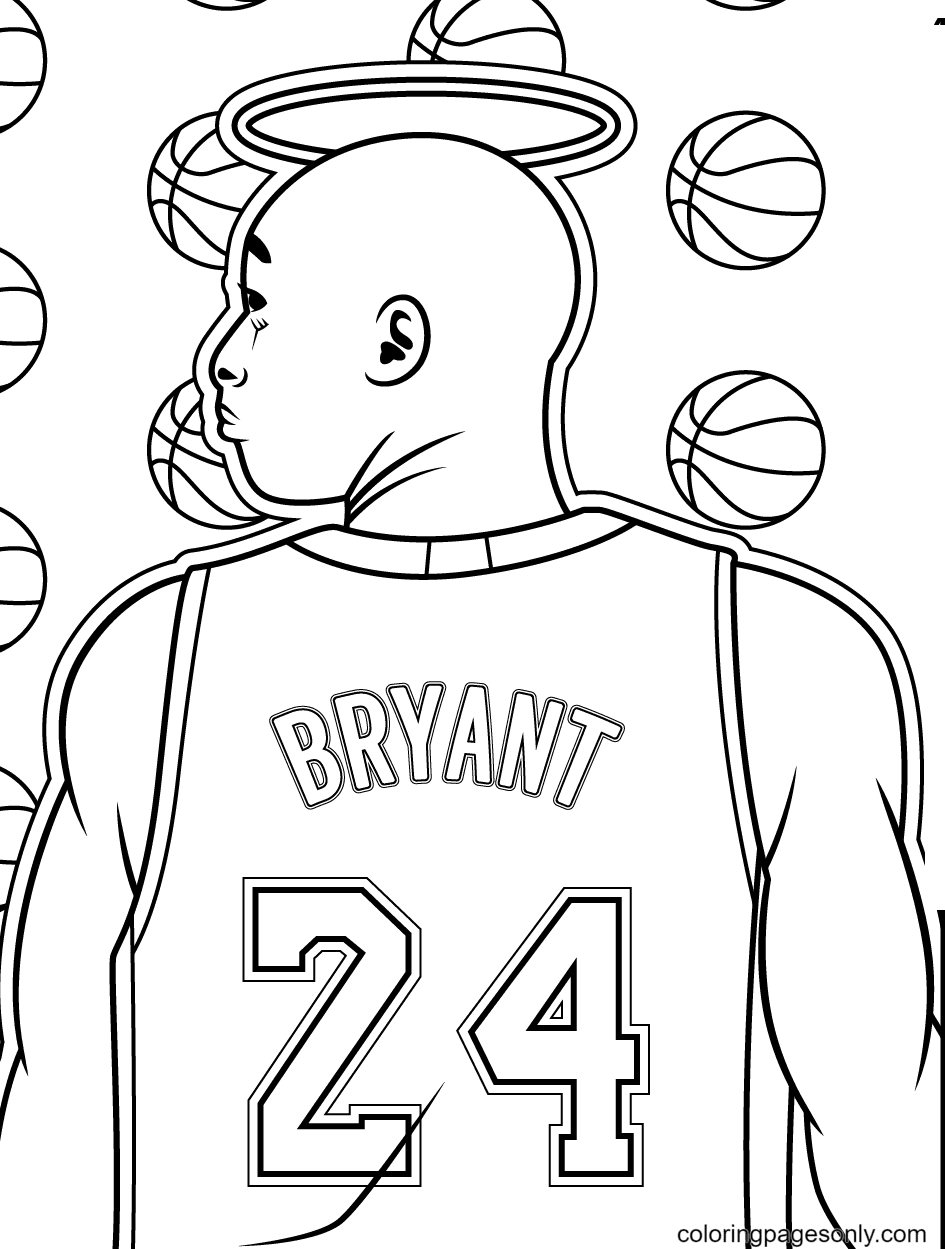
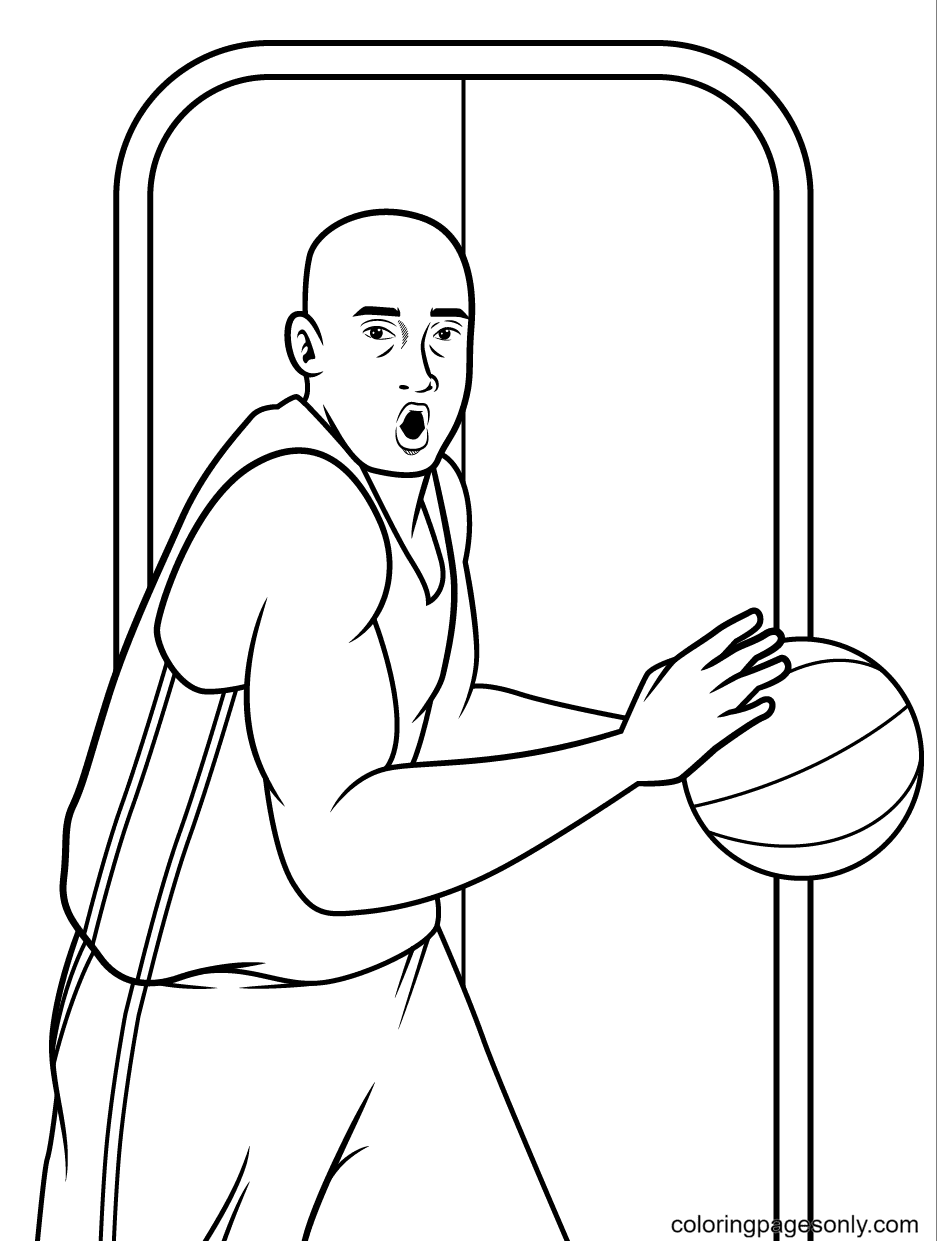
Kobe Bryant – 20 seasons with the Los Angeles Lakers. Five NBA championships. Two Olympic gold medals. 81 points in a single game against the Toronto Raptors in January 2006, the second-highest individual scoring performance in NBA history. Kobe retired in 2016 after dropping 60 points in his final game – a statistic that felt like something he invented specifically for the last night. He died in a helicopter crash in January 2020, along with his daughter Gianna and seven others. He was 41. The numbers 8 and 24 are both retired by the Lakers. Both belong to the same person.
Coloring the Kobe page is not a neutral act for anyone who grew up watching him play. Use Lakers gold – a specific warm, deep golden yellow, not the bright yellow of other jerseys – and the purple that the Lakers have used in various shades across decades. Get those two colors right, and the page means something.
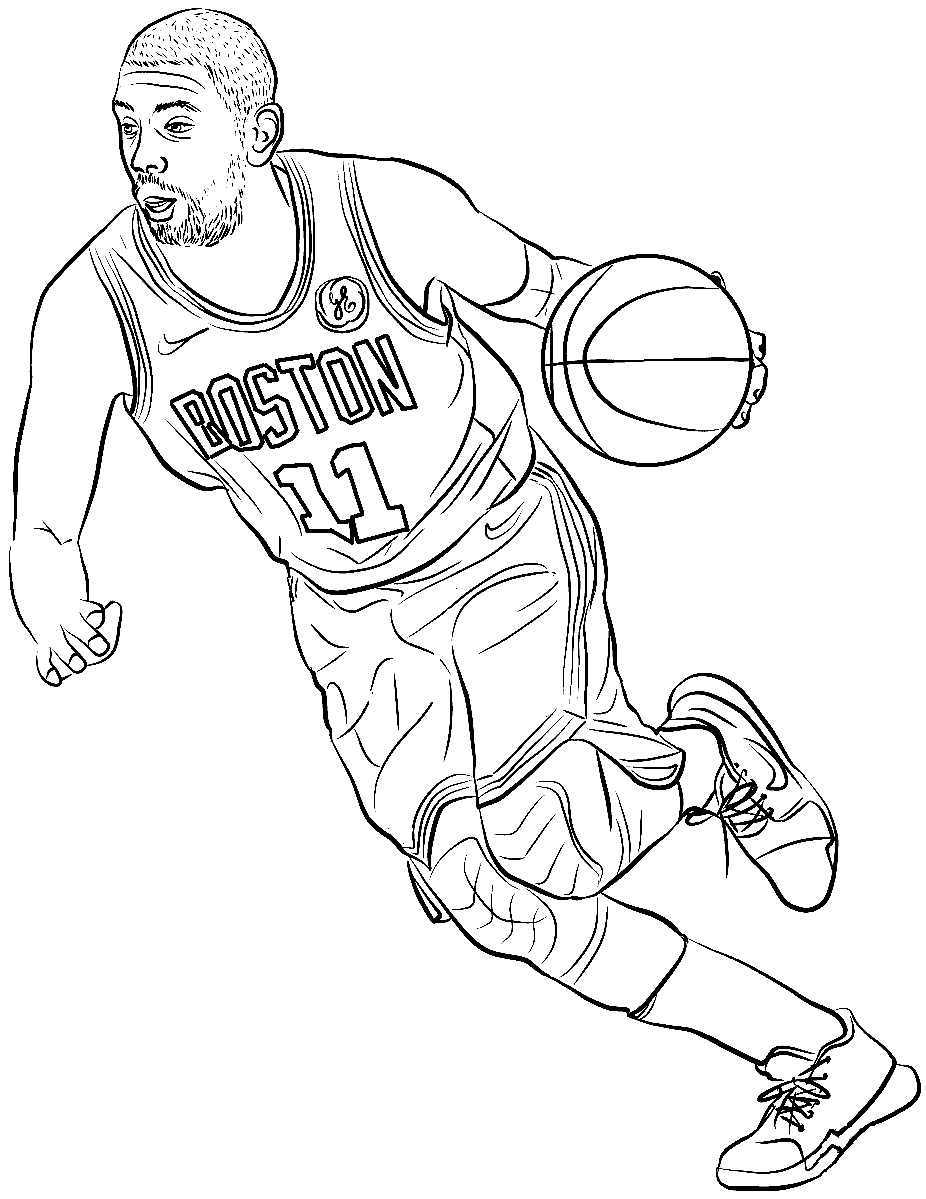
Kyrie Irving is one of the most technically gifted ball-handlers the game has ever produced. His ability to manipulate the ball at speed – behind the back, between the legs, hesitation crossovers that have left defenders falling – is something coaches still use as teaching footage. He’s won a championship (2016, Cleveland Cavaliers) in one of the most dramatic Finals in league history, coming back from 3-1 down against the Golden State Warriors. His page rewards careful attention to uniform detail.
Player Action Pages
The movement pages are where the basketball coloring collection is at its most technically interesting, because basketball movement is genuinely distinctive – fast, rotational, reliant on precise balance and body control in ways that the illustrations capture surprisingly well.
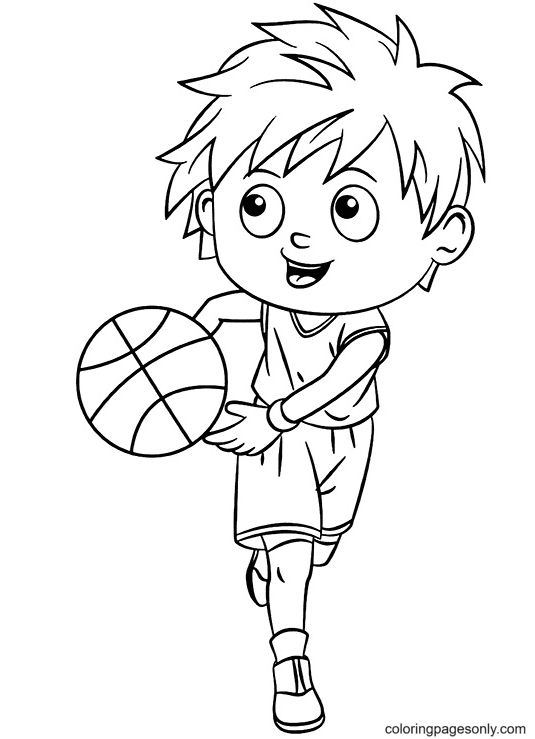
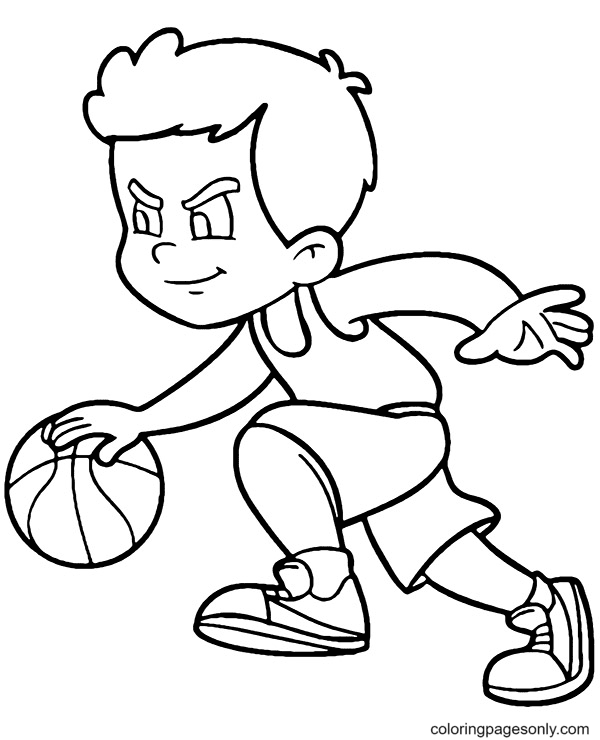
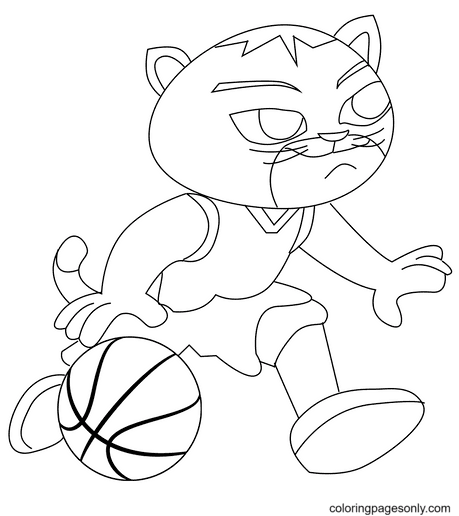
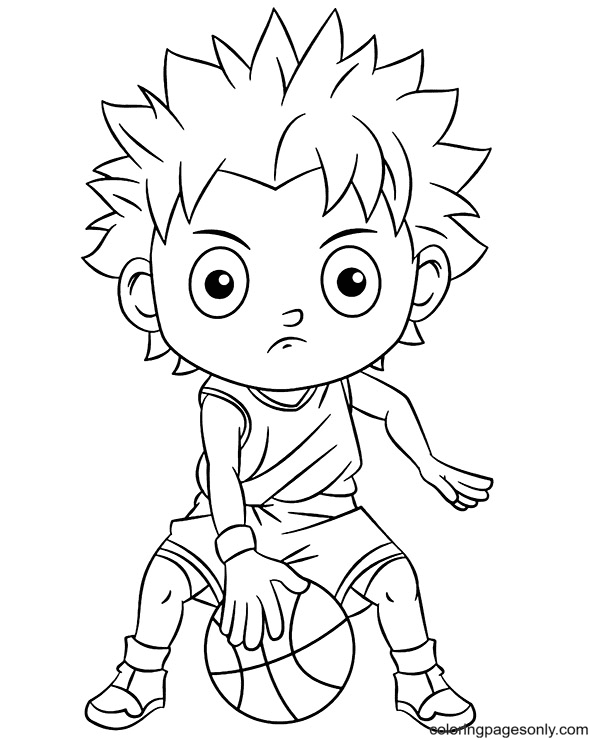
Professional Dribbling, Basketball Player is Dribbling, Basketball Dribbling, and Great Dribbling – dribbling in basketball is not just advancing the ball. It’s a communication system. The way a player dribbles signals their intent, their comfort level, and their readiness to shoot or pass. Elite ballhandlers like Kyrie Irving or Steph Curry use the dribble to manipulate a defender’s weight transfer before making a decisive move.
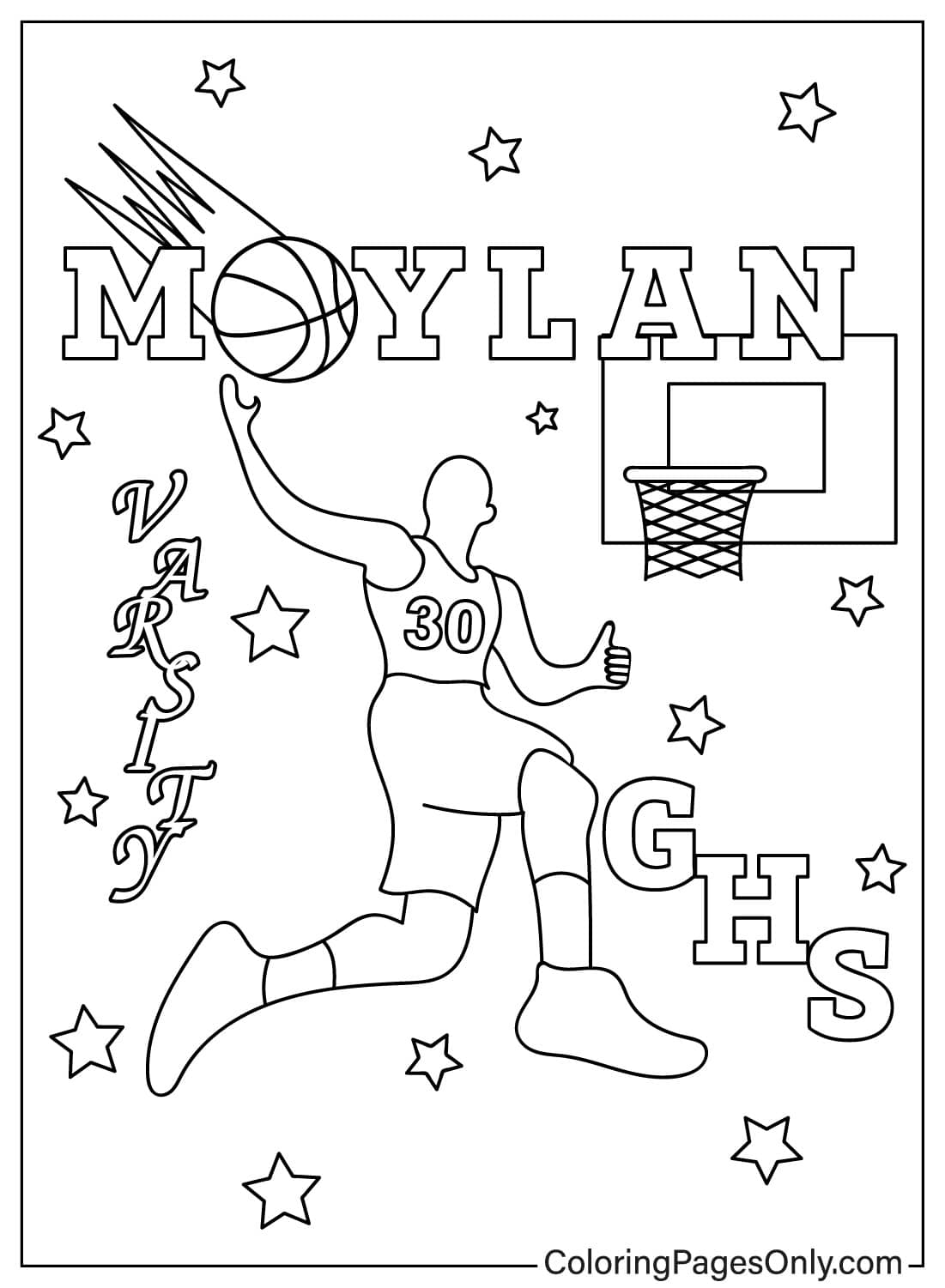
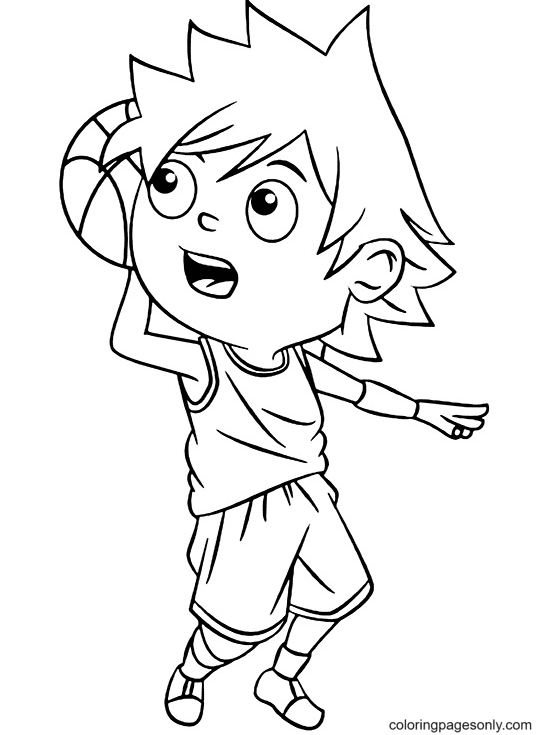
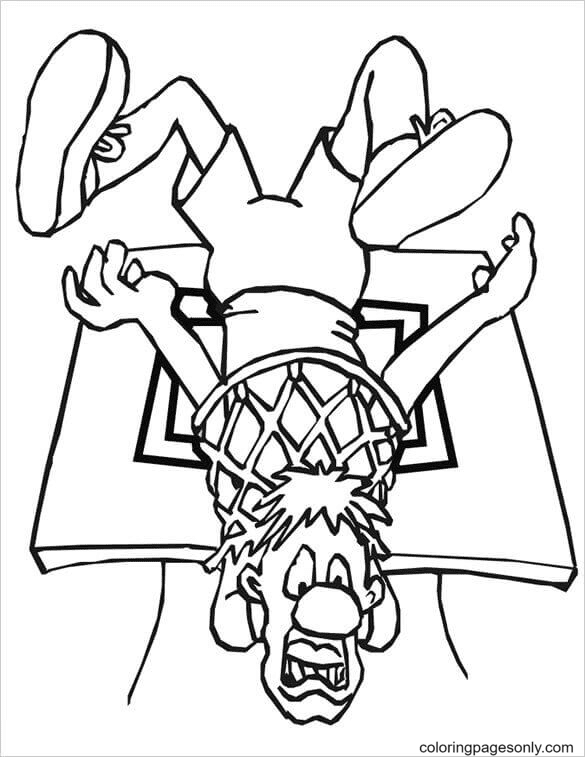
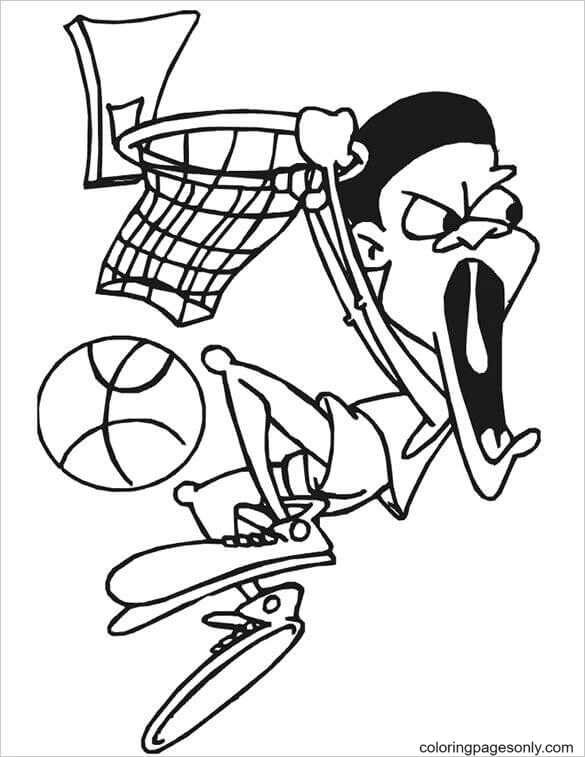
Basketball Shooting Position, Ready to Throw the Ball, Ready To Score, Definitely Score, The Ball is Thrown into the Basket, He Was Thrown into A Basketball Net, Basketball Throw, and Lead the Ball to Score. Capture the shooting arc at various points – from the gathered position before release to the ball already in flight toward the hoop. The shooting form page in particular shows the elbow tucked under the ball, the guide hand on the side, the wrist following through toward the basket – the mechanics that coaches teach and players spend thousands of hours repeating until they become automatic.
Basketball Defense shows the defensive stance – feet wide, hips low, weight on the balls of the feet, hands active, eyes on the offensive player’s midsection rather than the ball. Good defensive positioning is invisible to casual fans and immediately recognizable to anyone who has been coached in the game.
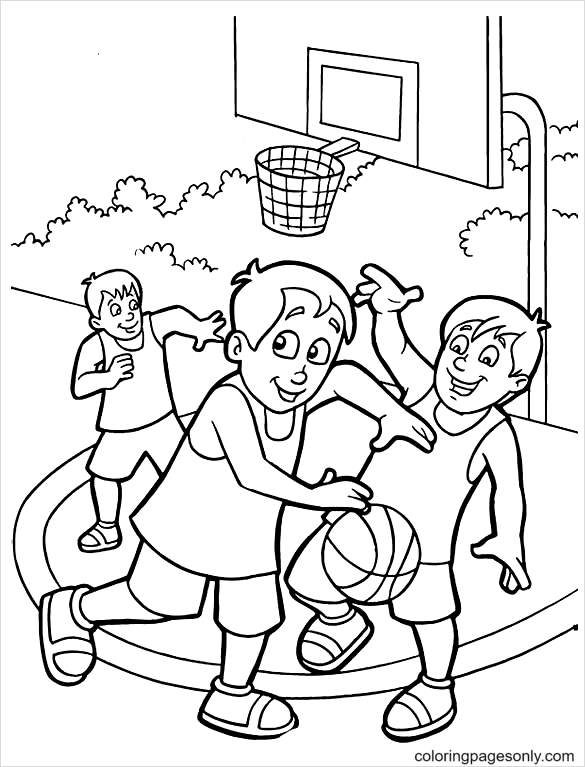
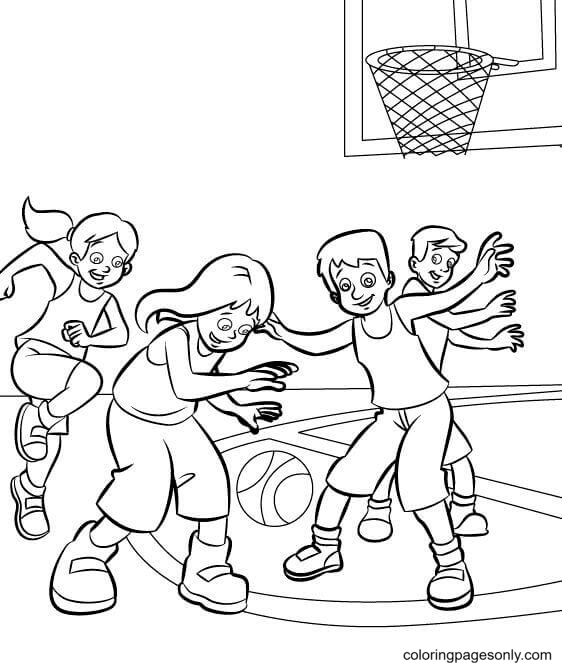
Basketball Match, Friendly Match, Play Professional Basketball, and Play Basketball With Friends capture the game in its social context – five on five, two on two, the pick-up game that has no referees and makes its own rules.
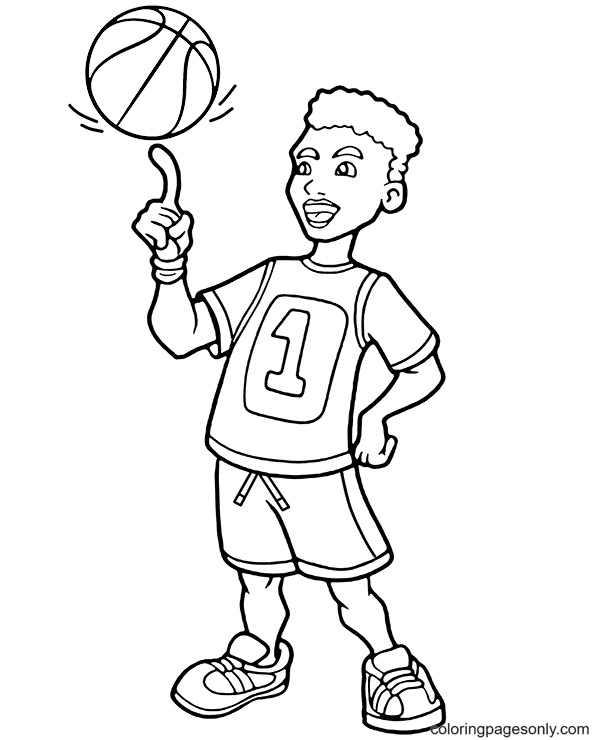
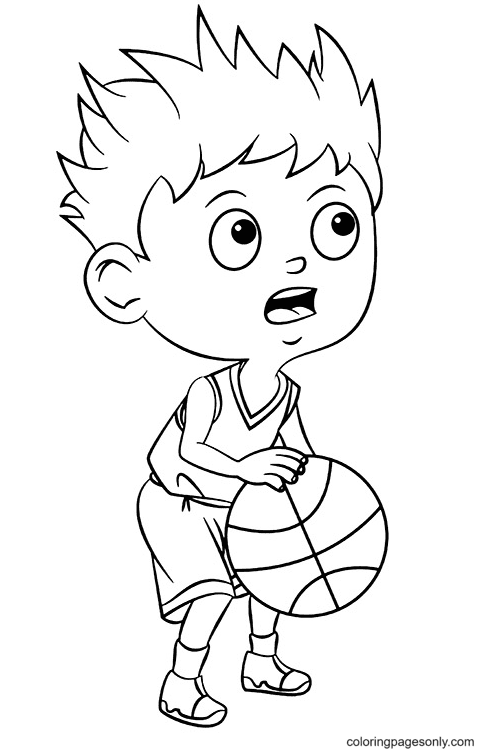
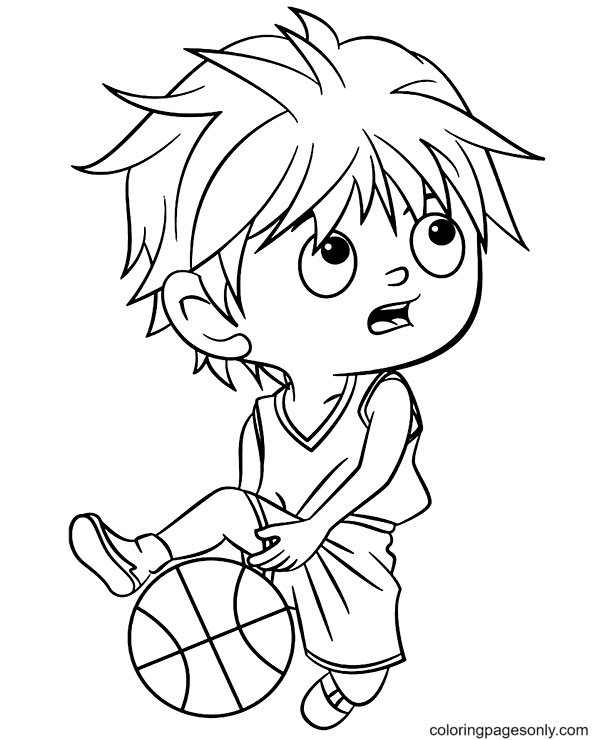
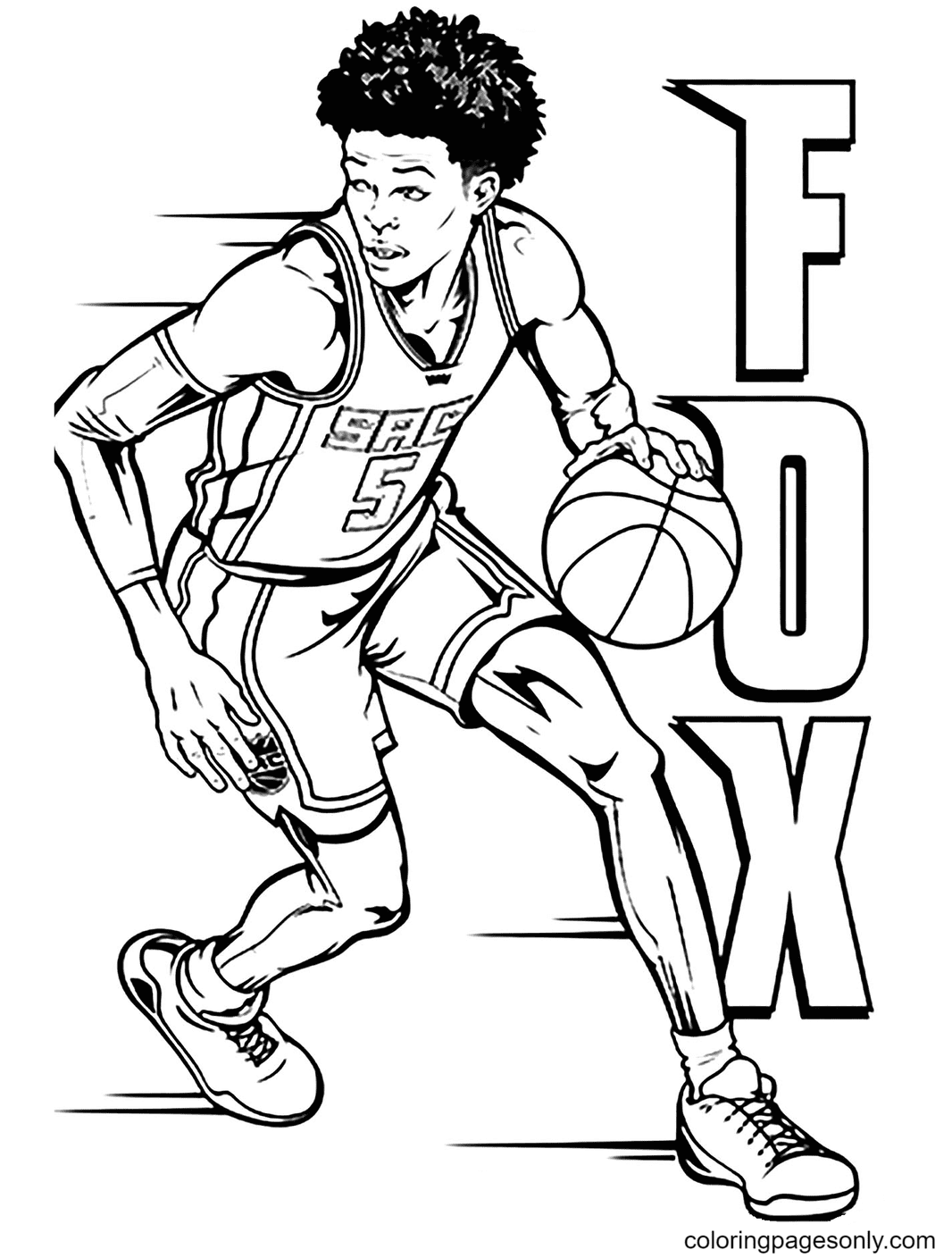
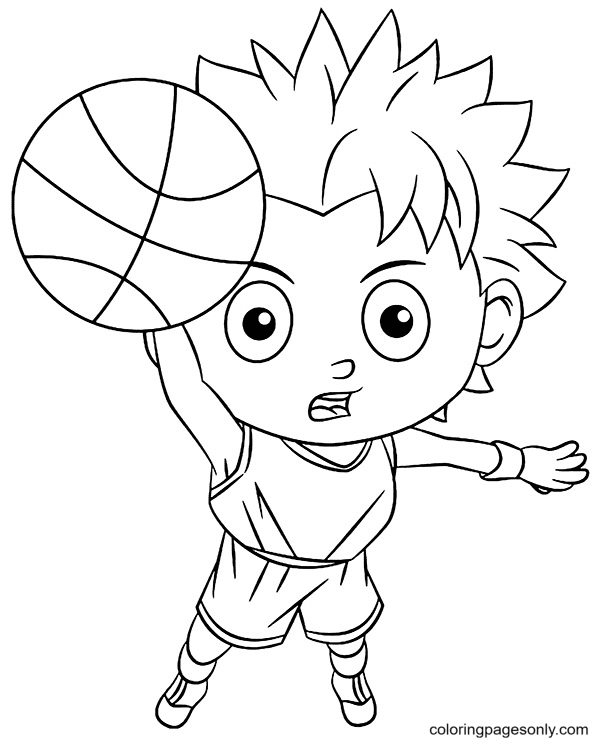
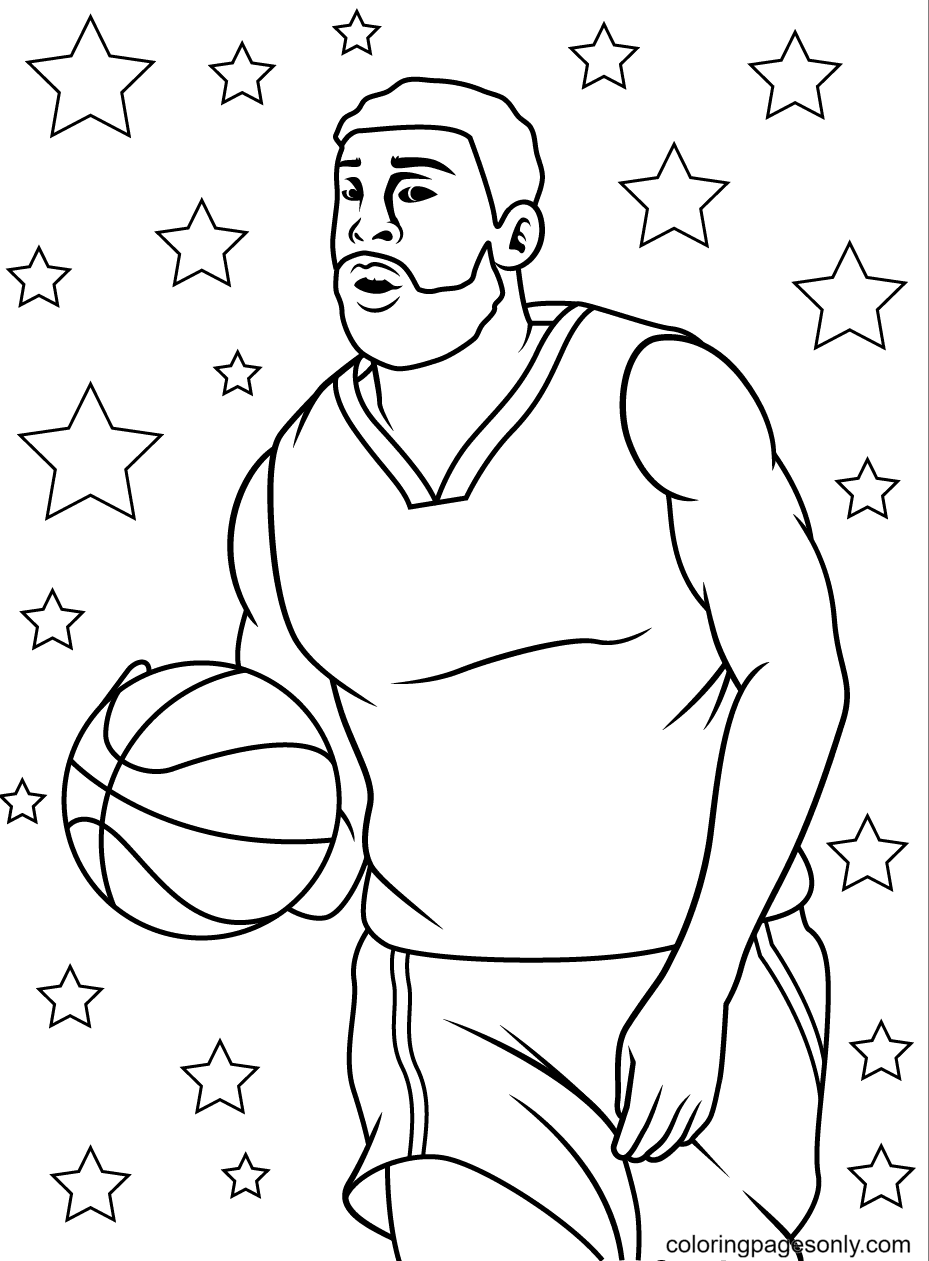
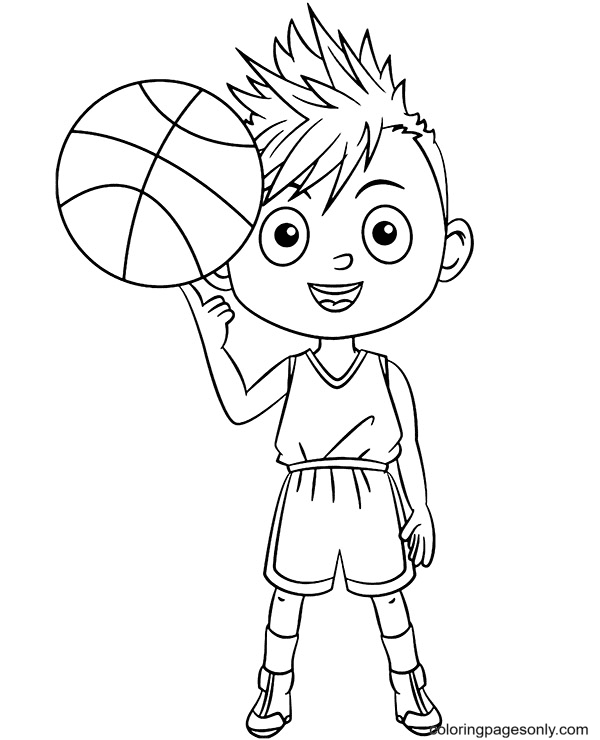
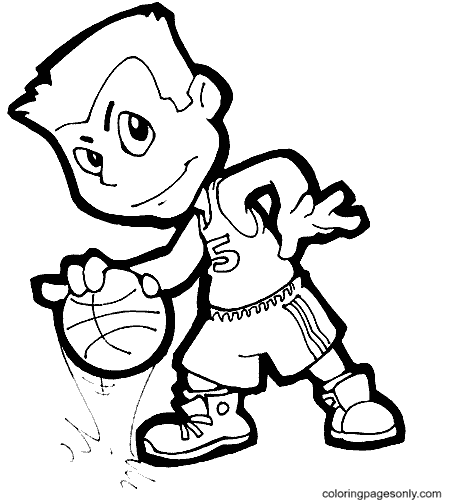
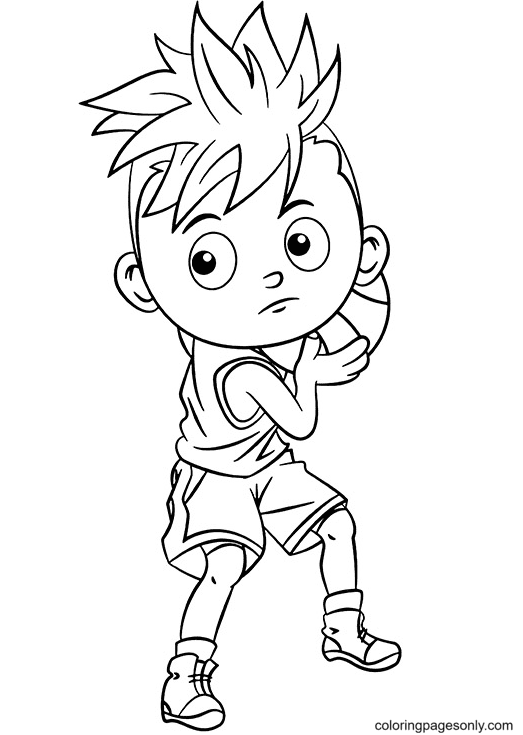
Famous Basketball Player, Famous Basketball Player In Chibi Style, Bearded Basketball Player, Spin a Ball on a Finger, Basketball Spin on a Finger, The Boy Spinning Basketball On Finger, Happy and Excited After Scoring, and Confused While Throwing Basketball round out the action section with a range of player expressions and moments – including the confused thrower, which is the most emotionally honest basketball page in the entire collection.
The Ball Pages
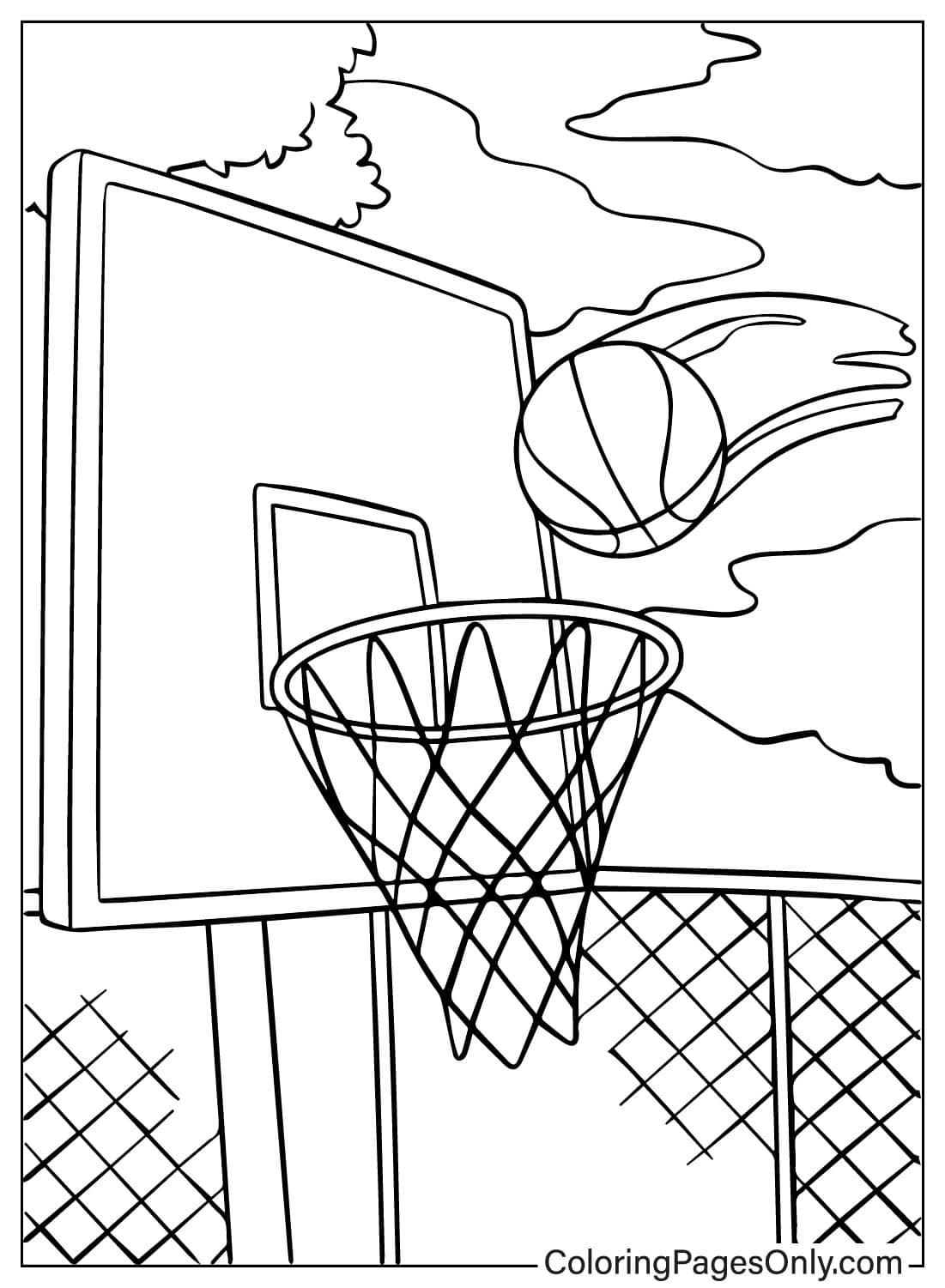
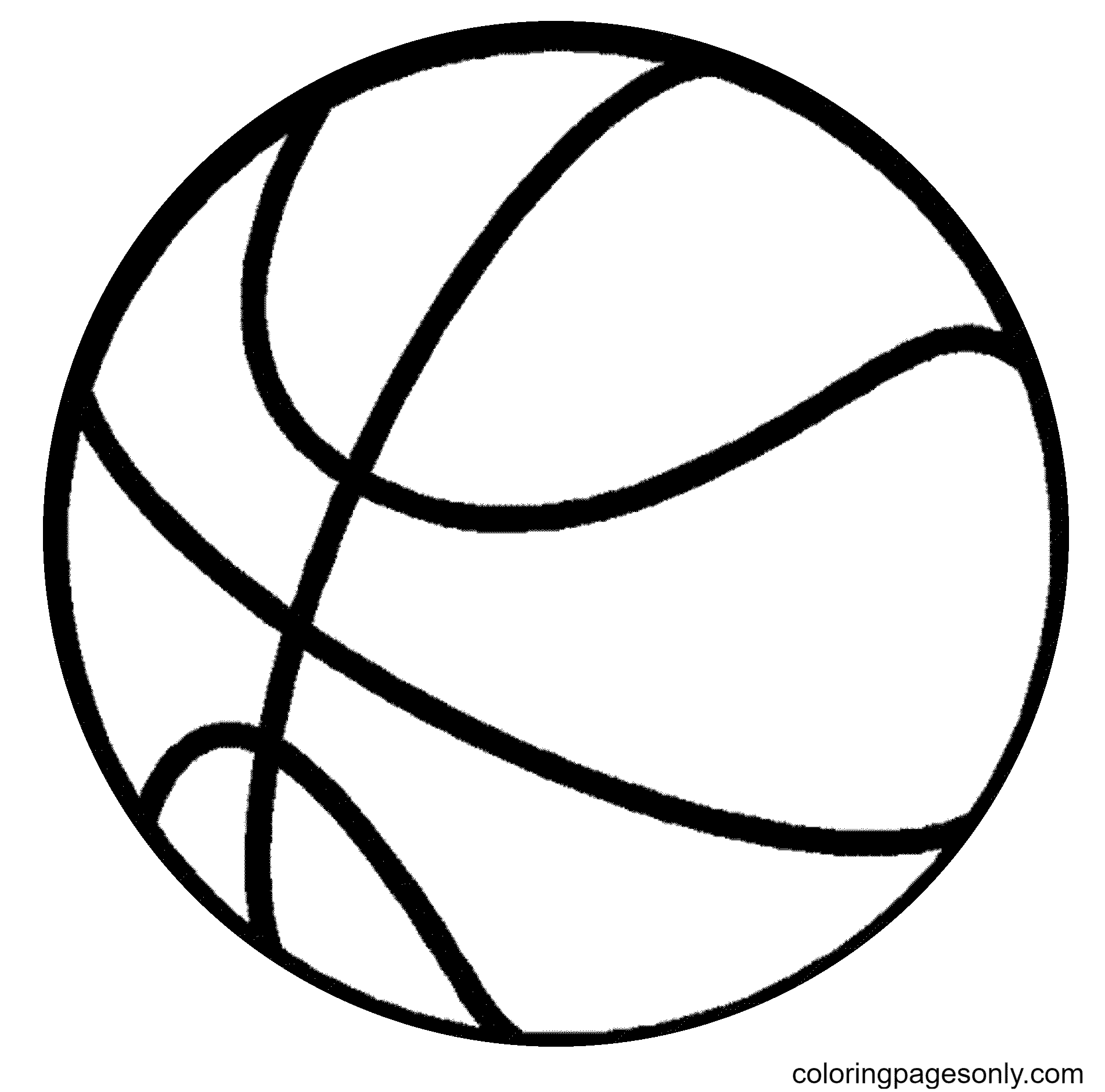
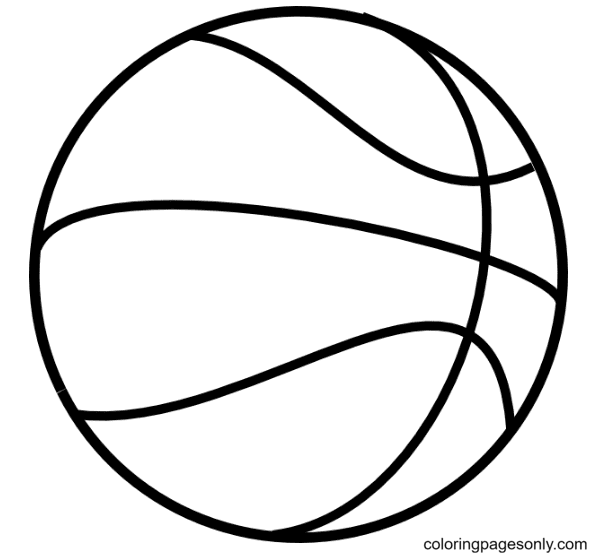
Basketball Ball, A Basketball Ball, Ball Used in Basketball Match, Basket and A Ball, Basketball Hoop and Backboard, and Basketball Yard isolate the equipment that makes the game work. An NBA game ball – manufactured by Spalding for decades, now by Wilson since 2021 – is made of full-grain leather, inflated to between 7.5 and 8.5 PSI, measures 29.5 inches in circumference, and weighs 22 ounces. The distinctive black seam lines that divide the ball into eight panels are one of sport’s most recognizable surface markings.
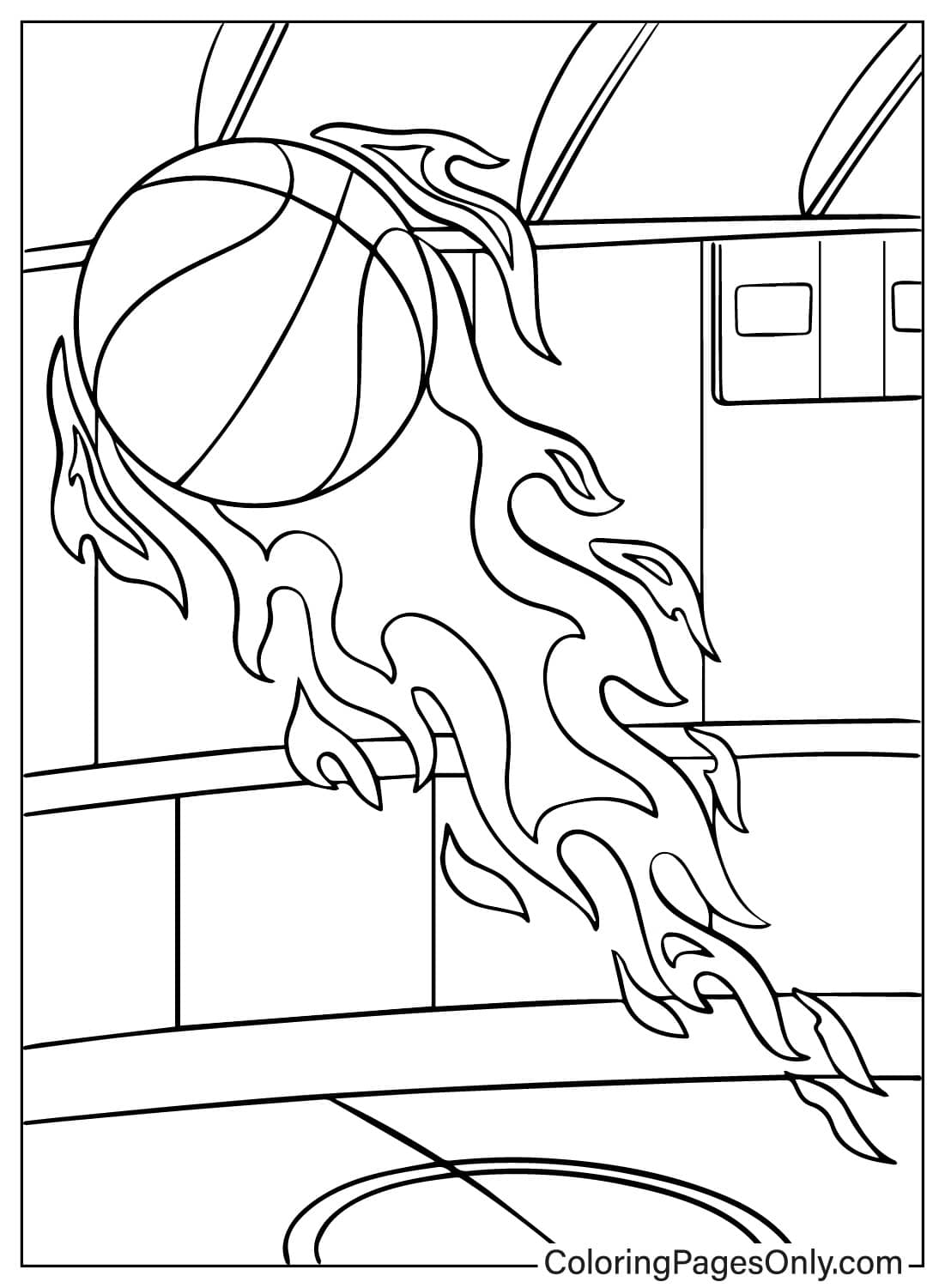
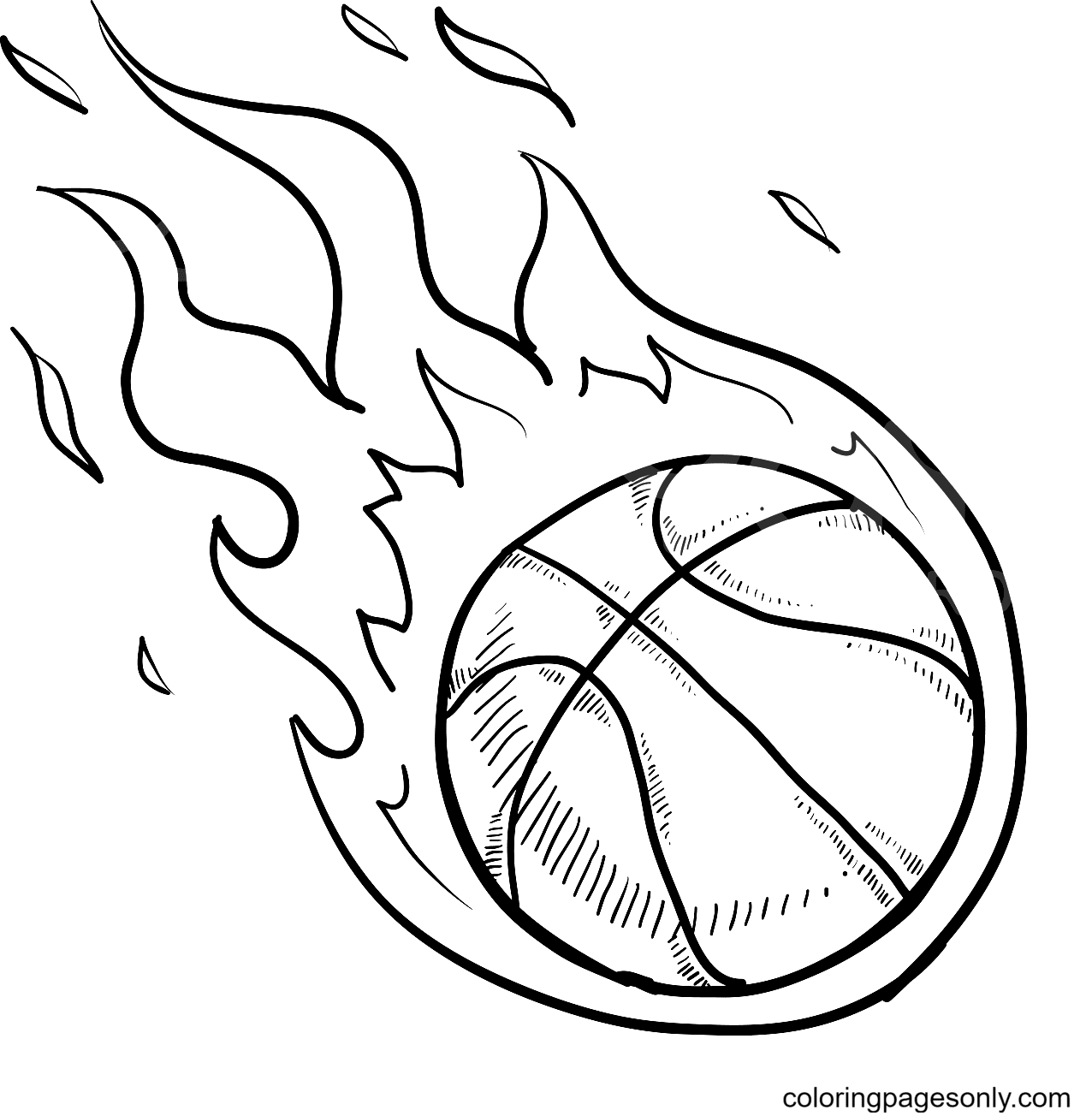
Flaming Basketball, Fire Basketball, and Angel Wings Basketball Ball push the ball into graphic territory – pages that work as poster art and reward the boldest, most committed color choices in the collection. The flaming ball in particular: white at the core of each flame, yellow-white transitioning to orange, deep red at the tips. The ball itself rendered almost black against the fire. This is the page you give to a twelve-year-old who wants to create something that looks like it belongs on the wall of a sports store.
NBA Teams
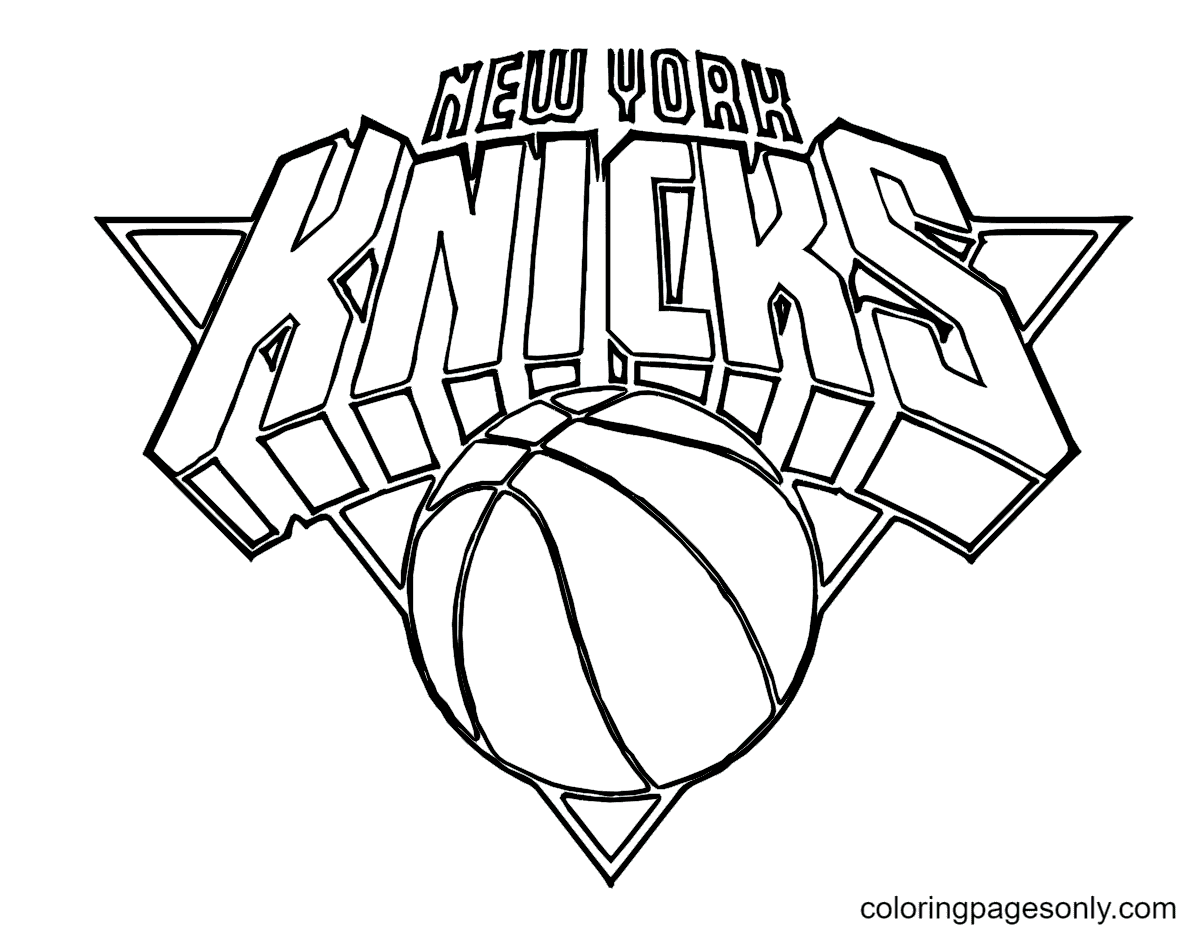
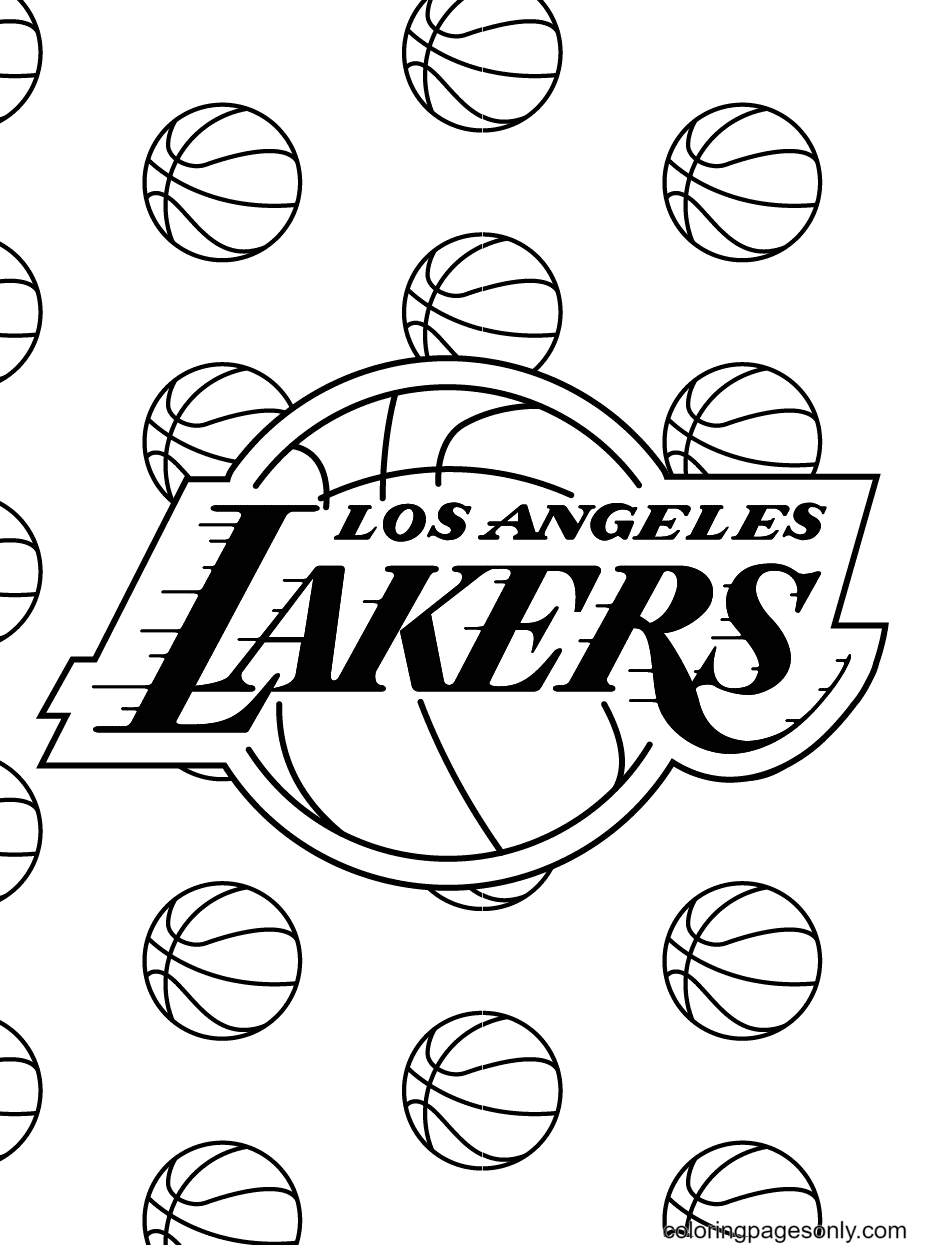
The Los Angeles Lakers, the Golden State Warriors, the Miami Heat, the Cleveland Cavaliers, and the Washington Wizards logos represent some of the NBA’s most storied franchises.
The Lakers: 17 championships – the most in the Western Conference and second most in the league overall. Their gold and purple color scheme is one of American sports’ most iconic. The Warriors: four championships since 2015, built around Steph Curry’s revolutionary three-point shooting that genuinely changed how every team in the league plays offense. The Heat: three championships, the franchise that assembled the first modern “superteam” when LeBron James, Dwyane Wade, and Chris Bosh teamed up in 2010. The Cavaliers: one championship, in 2016, which was the one that mattered – coming back from 3-1 down against the Warriors in what remains the greatest Finals comeback in NBA history. The Wizards: navy and red, a franchise that has given the league some of its most technically gifted guards over the years.
NBA Logo
NBA Logo Basketball – the NBA logo depicts a silhouetted basketball player dribbling, designed by Alan Siegel in 1969. The silhouette has been widely identified as Jerry West, the Hall of Fame guard who played for the Lakers from 1960 to 1974, though the NBA has never officially confirmed this. West himself has expressed discomfort with the association. The logo is one of the most recognized sports symbols in the world. Color the player in solid blue and red against white, or try inverting the traditional color placement for a striking alternative result.
Kids and Girls Playing
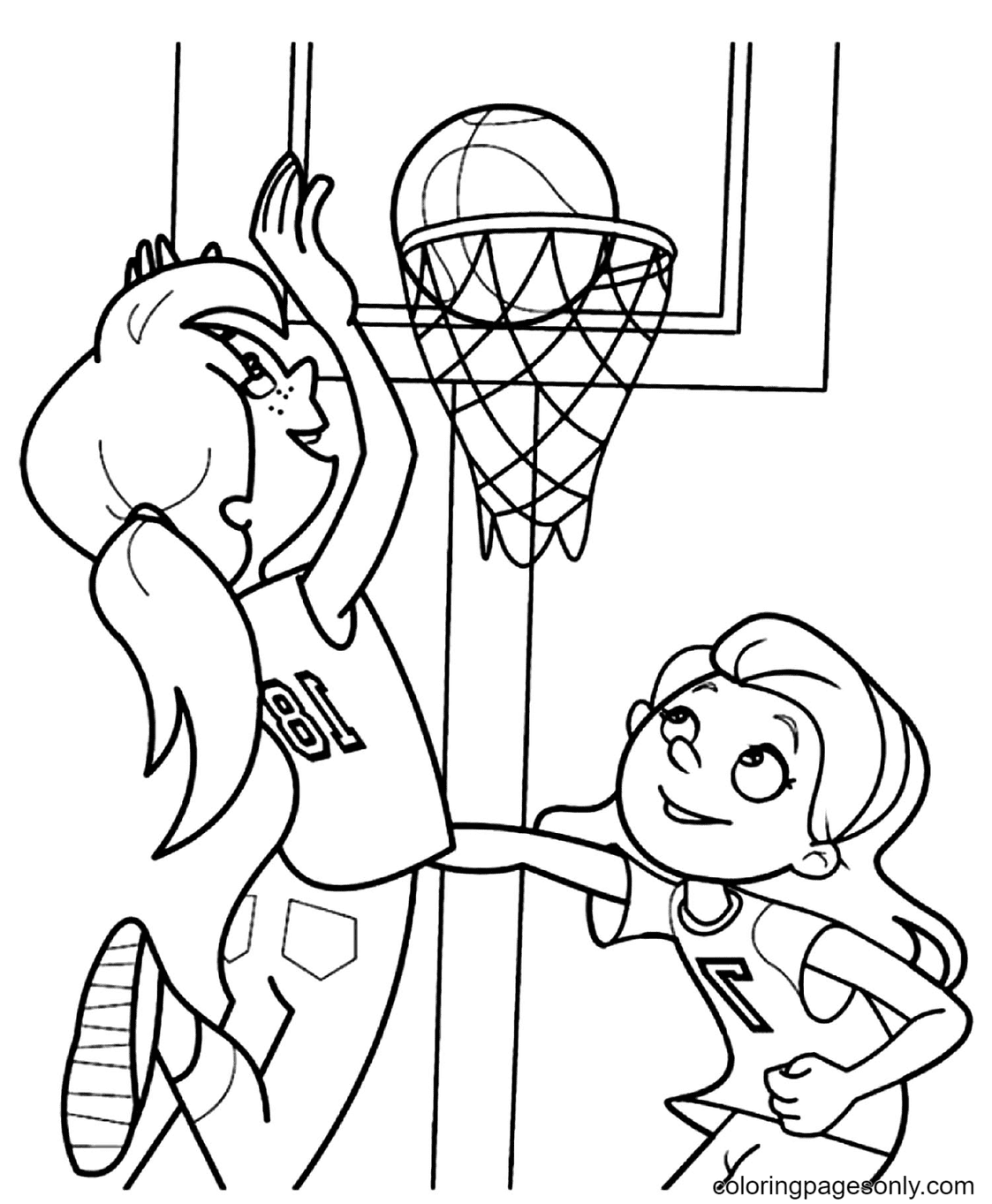
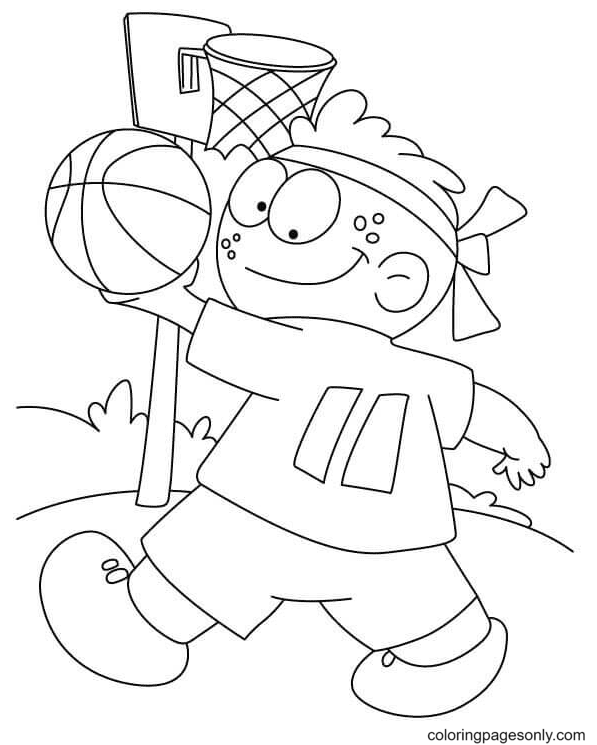
Kids Playing Basketball, Two Girls Playing Basketball, and Johnny Plays Basketball place children at the center of the game, which is where basketball starts for almost everyone. Approximately 26 million Americans aged 6 and older play basketball, making it consistently one of the top three participation sports in the United States. The game’s low barrier to entry – all you technically need is a ball and a hoop – means it reaches children in neighborhoods where other sports’ equipment costs are prohibitive.
Two Girls Playing Basketball is worth specific mention: women’s basketball at the professional level, through the WNBA (founded 1996) and international leagues, has been producing some of the game’s most technically accomplished players for three decades. Caitlin Clark’s 2024 WNBA season drew television ratings and attendance figures that broke records for women’s professional basketball in the United States.
Cartoon Characters and Animals
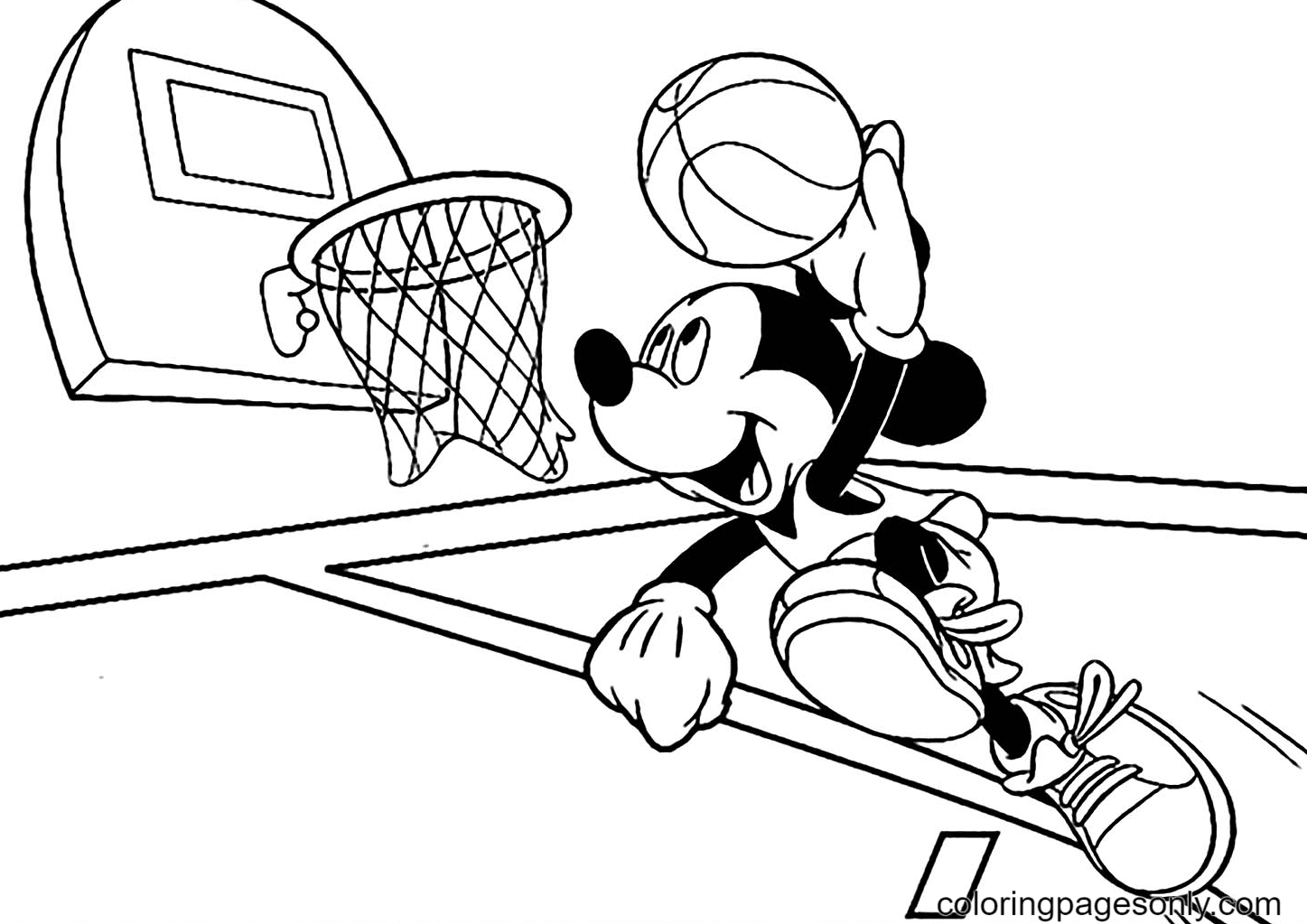
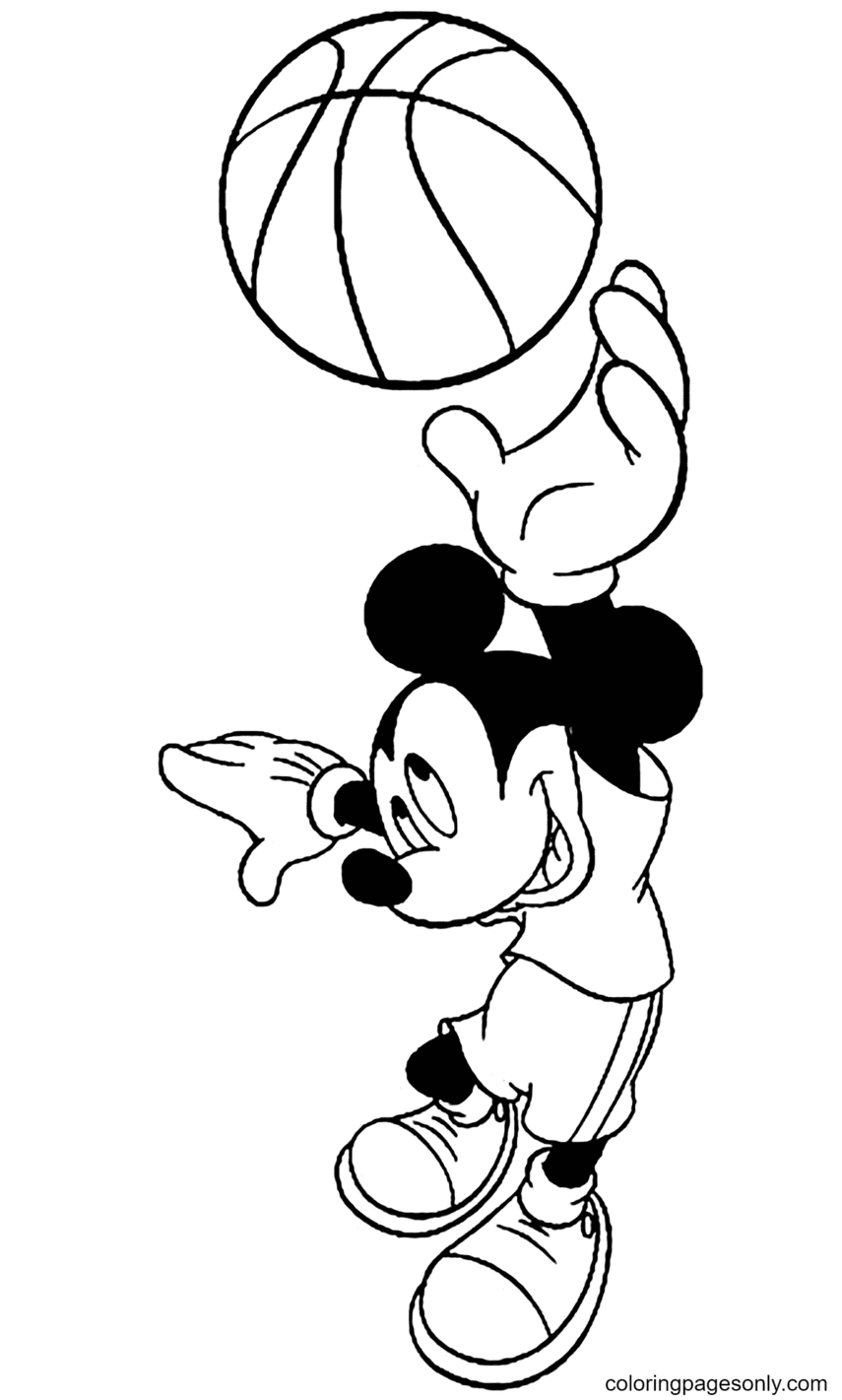
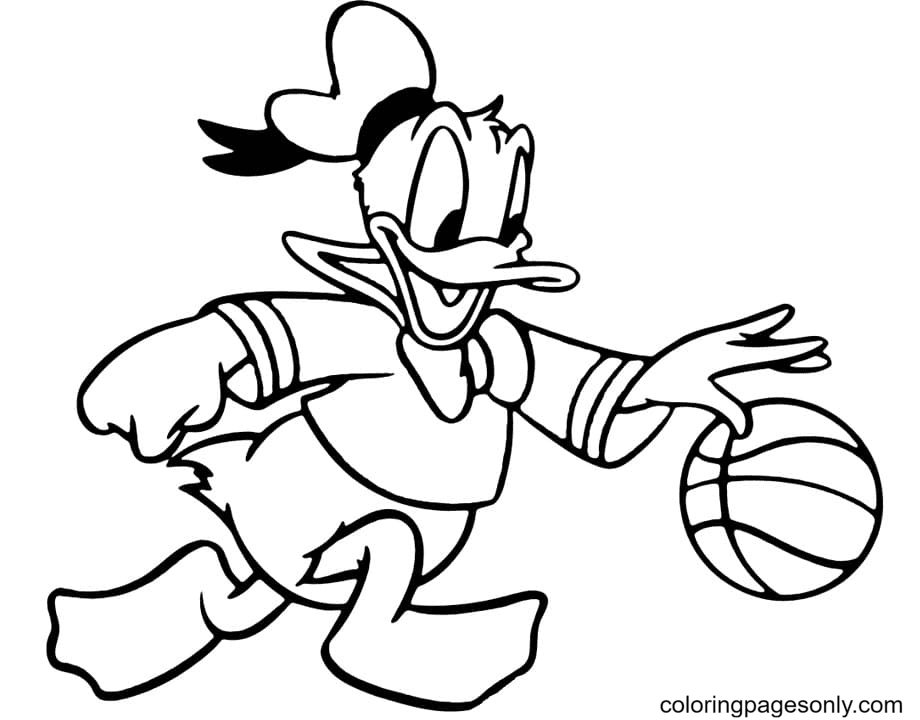
Mickey Playing Basketball, Mickey Throws The Ball Into The Net, Donald Playing Basketball, Goofy Playing Basketball – the Disney crew on the court, each bringing their established personality to the game. Goofy’s defensive positioning is presumably creative. Donald’s relationship with the officials will be tense.
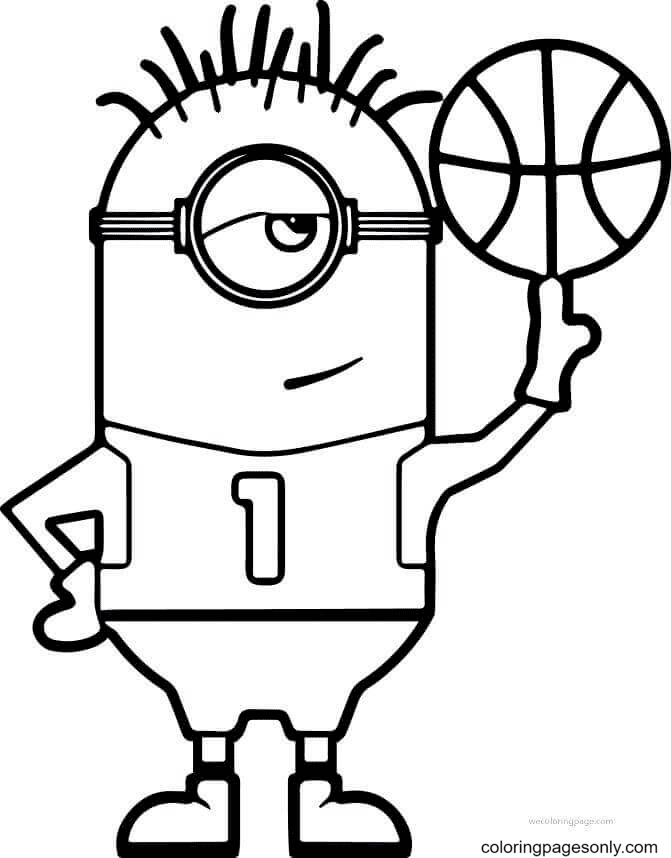
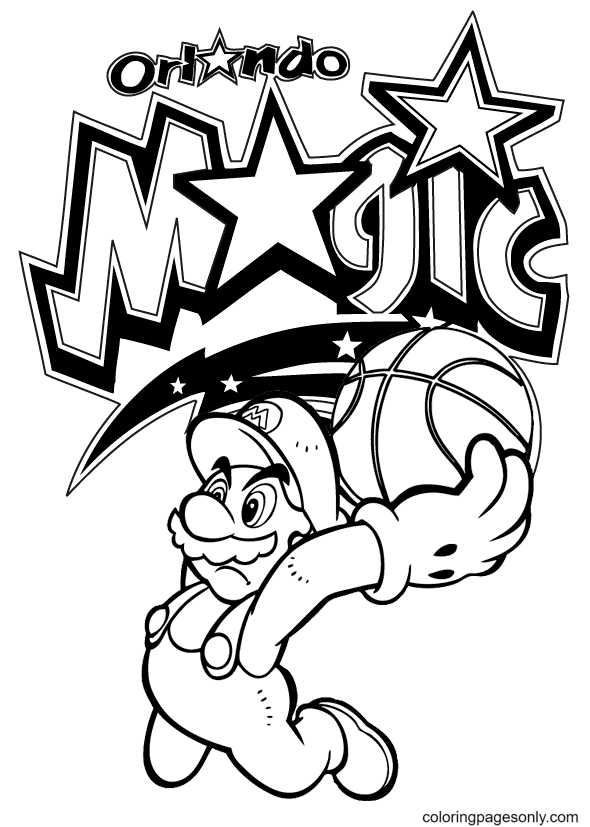
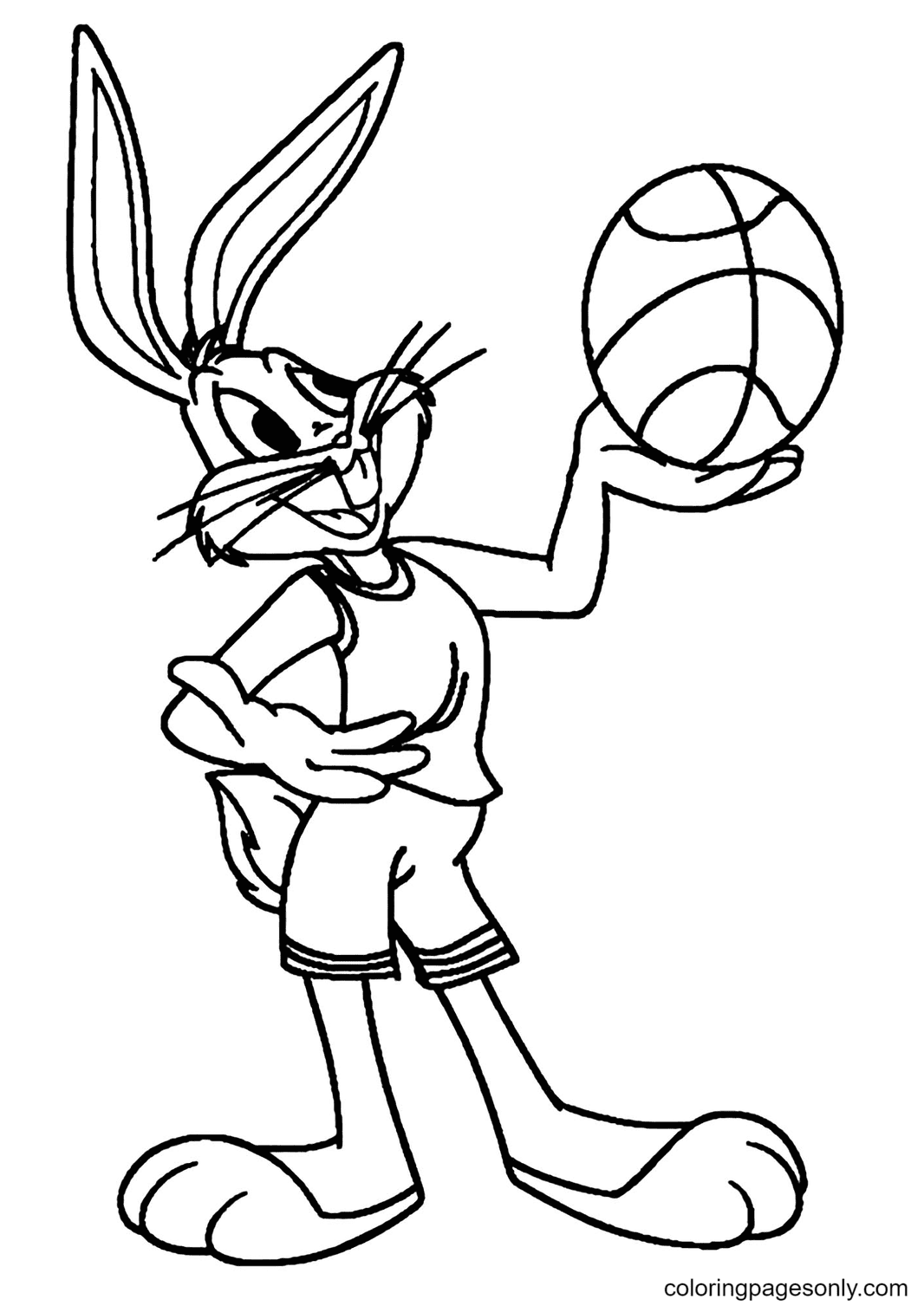
Elmo Basketball, Bugs Bunny Holding a Basketball, Minion Basketball, and Mario Playing Basketball – four more characters from four different creative universes, all united by their apparent decision to take up basketball. The Minion page in particular is consistently popular with children who are fans of the Despicable Me franchise and who have very specific feelings about what color a Minion should be.
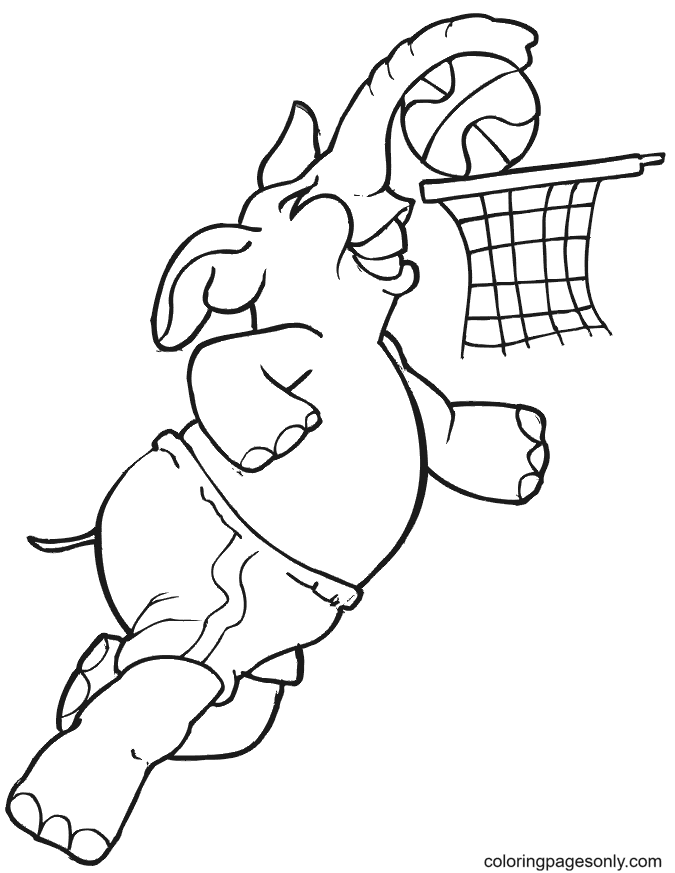
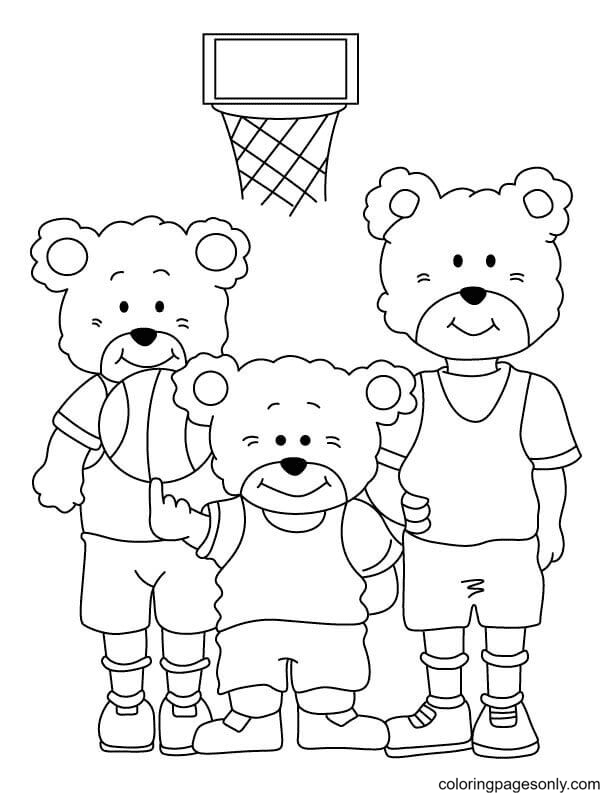
Tiger Playing Basketball, Elephant Playing Basketball, Cat Playing Basketball, Fox Basketball Player, and Cute Bears Playing Basketball complete the animal roster. The elephant has the most interesting physical profile – extraordinary wingspan, surprising agility, unclear relationship with the concept of a foul. The cat is obviously only playing because it wants to and will stop the moment it loses interest.
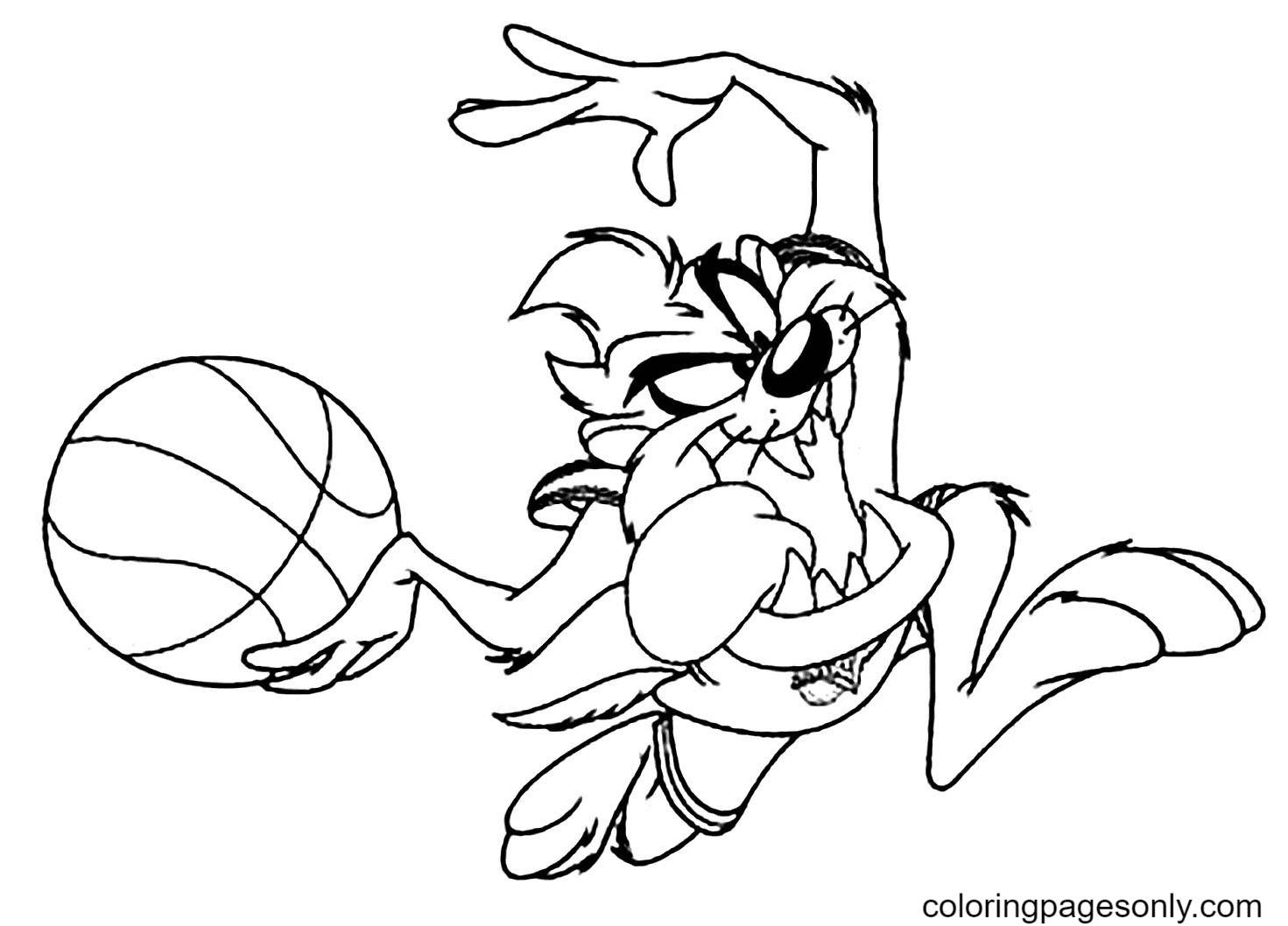
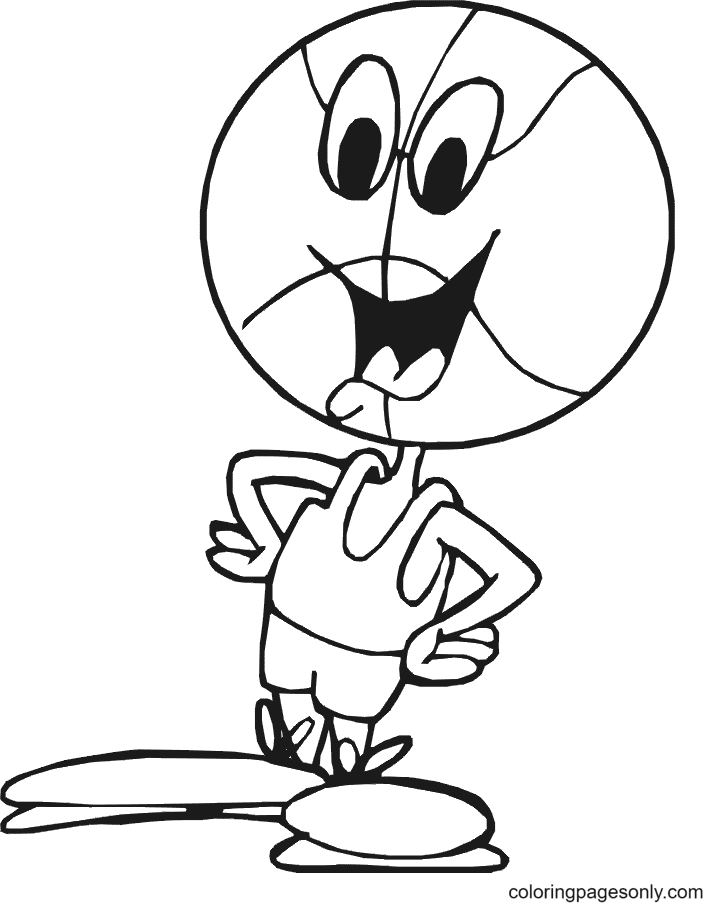
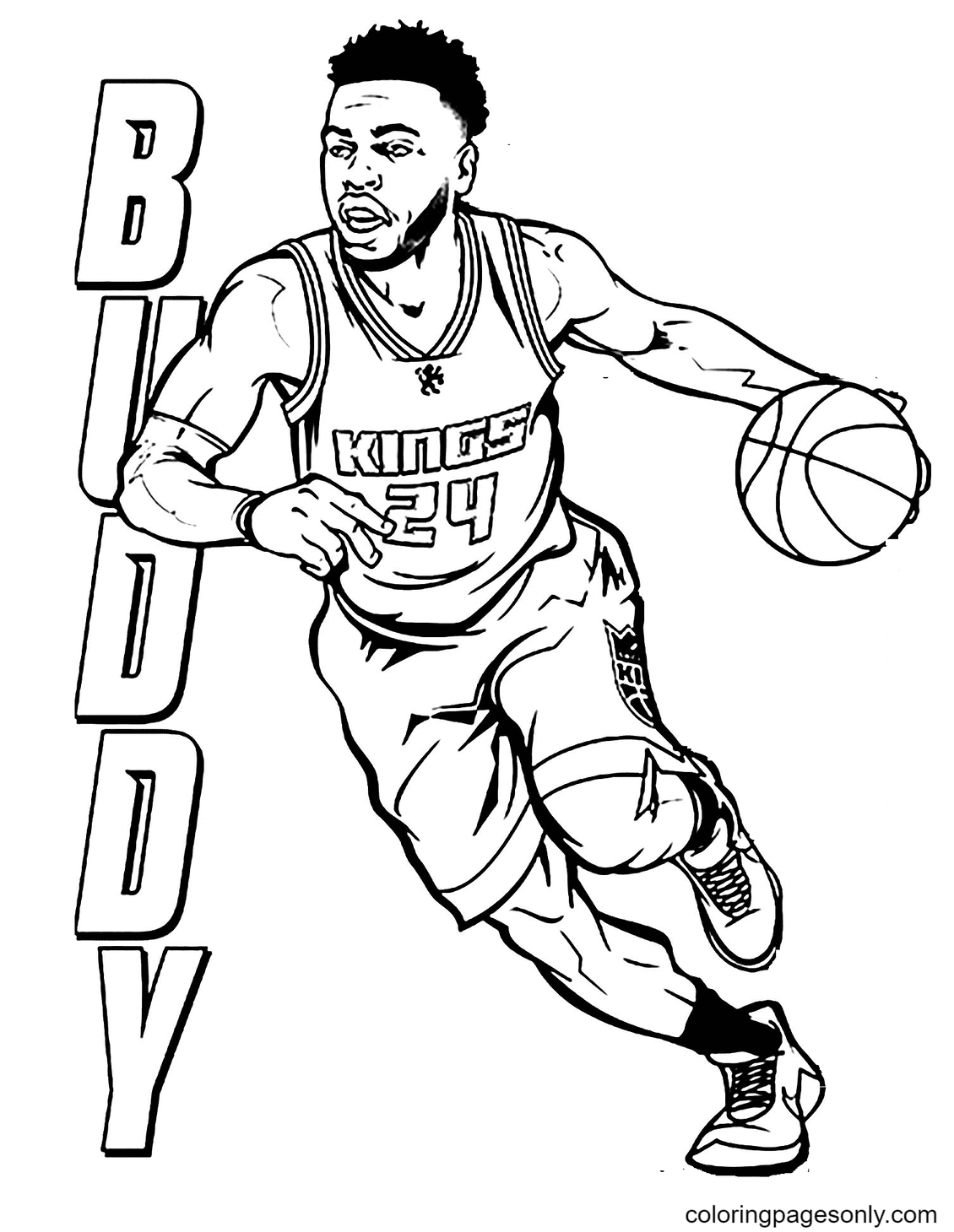
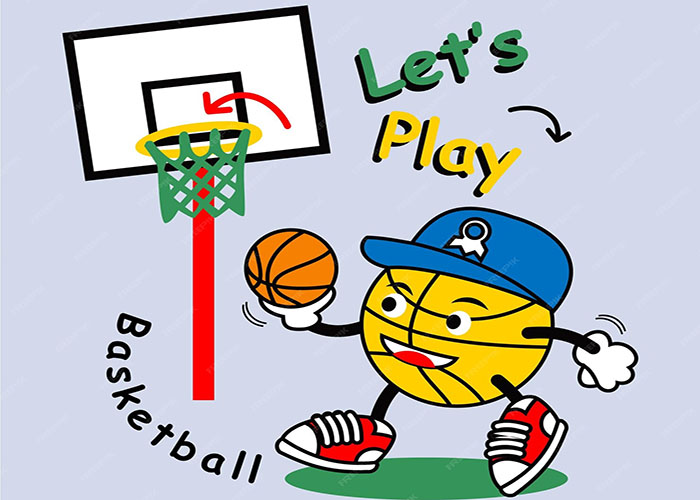
Cartoon Character Performing Basketball and Cute Basketball Poster, Buddy Playing Basketball, and Angry Basketball Character round out the character section with designs that lean toward graphic and expressive rather than representational.
What These Pages Actually Do
Basketball rewards visual study. Unlike some sports where watching film and watching a game are separate activities, basketball movement is sufficiently varied and fast that slowing it down – paying close attention to a single player’s body position in a shooting stance, a defensive posture, a dribbling motion – genuinely deepens comprehension of what is happening in a real game. Coloring a shooting form page while thinking about what the elbow, wrist, and guide hand are each doing is a quiet version of that visual study.
The legend pages build genuine sports history knowledge. Kobe’s page is not just a player in a Lakers uniform – it’s a gateway to a specific era of basketball, a specific style of play, a specific kind of competitor that the game has produced only a handful of times in its history. A child who colors that page and asks why his numbers are both retired is asking a question whose answer involves one of the strangest and most human stories in professional sports. That conversation is worth having, and the coloring page opens it.
Fine motor development. The player action pages in this collection are technically demanding coloring subjects. The shooting stance requires careful attention to arm angles, the dribbling pages require tracking curved lines through multiple body planes, and the defensive stance is a study in asymmetric balance. The American Academy of Pediatrics identifies fine motor development as a key childhood milestone, and the motivated, sustained practice that a child brings to coloring their favorite basketball player is one of the most effective tools for building it.
Team colors build brand literacy and fan identity. Research from the Aspen Institute’s Project Play identifies sport-specific identity formation – the feeling of belonging to a particular team’s story – as one of the strongest predictors of children’s sustained sports participation and fandom. Coloring the Lakers logo in the correct gold and purple, or the Warriors in their specific royal blue and gold, is a small act of team identification that reinforces the emotional connection children already feel to teams they follow.
The art therapy element. The 2005 Art Therapy Journal study on structured coloring reducing anxiety has been referenced across this series. It applies here too, and the basketball pages’ physical energy – movement, competition, the expressiveness of the player figures – makes them particularly effective for children who find the calmer, more static subjects less engaging. An active child who won’t sit with a flower or a landscape coloring page may stay with a Kobe dunking page for twenty minutes.
How to Color These Pages Well
NBA team colors are worth getting exactly right. Lakers purple is a specific warm-cool purple – not lavender, not navy-purple, but a saturated medium purple with slightly warm undertones. Lakers gold is deep and warm – closer to amber than to bright yellow. Warriors royal blue is a true, saturated navy-royal mix; their gold is a warm, slightly orange-tinted gold. Heat red is a true, vivid red. Cavaliers wine and gold: the wine is a deep burgundy, not a bright red. Wizards’ navy and red: the navy is very dark, nearly black in some contexts. Five minutes with a reference image before you start saves twenty minutes of frustration mid-page.
The basketball’s surface markings. A basketball has eight leather panels divided by a network of black seam lines, plus a wider groove that circles the equator of the ball. The seam lines should be applied last, after the orange base color is established – use a fine tip marker or sharp colored pencil for the seams rather than trying to work around them. The orange base itself: a warm, slightly reddish orange, not a pure orange and not a red-orange. Burnt sienna in colored pencil gets close. Apply a slightly lighter, more yellow-orange highlight to the upper hemisphere of the ball where light catches it.
For the flaming ball pages, build fire from the inside out. Start with white or very pale yellow at the absolute core of each flame. Then a ring of lemon yellow. Then bright orange. Then, deep red at the outermost tips. The transition between each zone should be a soft blend, not a hard line. The ball itself should go very dark – deep charcoal or near-black – so the fire has maximum contrast to work against. This technique, applied consistently, makes the flaming ball look like it has an actual light source inside it.
Action pages want directional strokes. A player driving to the basket is moving forward and downward. A player launching a jump shot is moving upward. Apply color strokes in the direction of the body’s movement on the large muscle areas – it takes a few extra seconds, and it gives the figure visual momentum that flat, directionless coloring doesn’t achieve.
For Kobe: the number matters. If the illustration shows a jersey number, establish early which era of Kobe you’re coloring – number 8 (the first twelve years) or number 24 (the last eight). Both are Lakers uniforms, same gold and purple, but the choice is significant to anyone who follows the game closely. For the page labeled simply “Kobe Bryant,” the number 24 home white uniform (white jersey, gold trim, purple number) is the most iconic visual of his career’s second act and the one most associated with his greatest individual performances.
5 Creative Activity Ideas
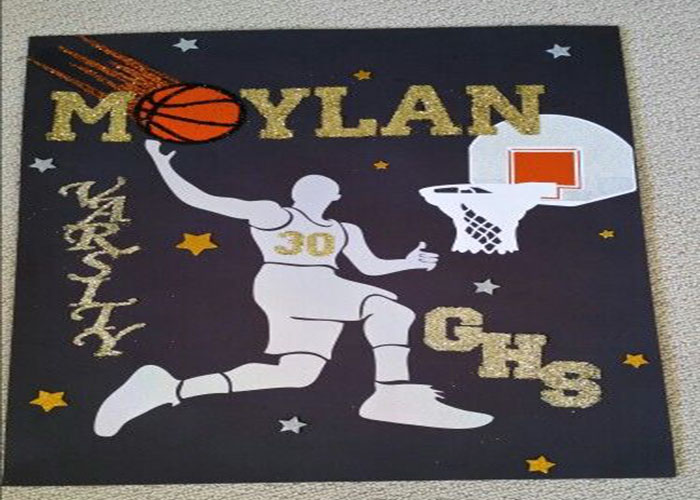
Basketball Wall Art
Print your chosen basketball page on the heaviest cardstock your printer handles. Color it with your best technique – full attention to team colors, player anatomy, ball surface markings. Frame it in a simple black or white frame sized to your paper.
That’s the whole instruction, and it works. The player action pages – the shooting stance, the dribbling, the defense position – are professionally drafted illustrations that hold up at wall scale. A well-colored Kobe Bryant or Kyrie Irving page, mounted and framed, looks like intentional sports art. Put it in a bedroom, a living room, or anywhere that could use the energy of the game on the wall.
The Famous Basketball Player and Famous Basketball Player in Chibi Style pages offer two different aesthetic registers for the same basic idea: realistic proportions for one kind of wall, chibi style for another. Both work.
3D Pop-Up Basketball Card
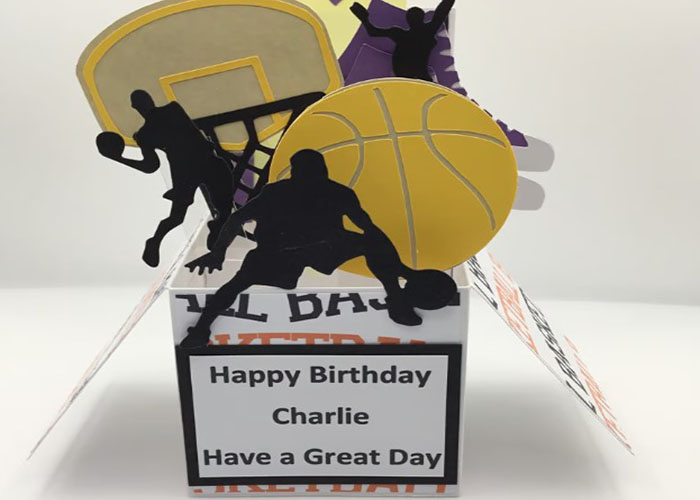
Print three or four pages – a player in shooting position, the basketball page, the hoop and backboard page, and optionally the NBA logo page. Color all of them carefully, then cut out the central figures from each page.
Fold a piece of A5 cardstock in half as the card base. On the inside of the card, draw two small parallel horizontal cuts approximately 3cm long and 1cm apart, positioned slightly forward of the fold line. Fold the tab this creates toward you, then fold it back, then open the card – the tab now pops forward when the card opens. Apply glue to the front face of the tab and attach your most important cutout (the shooting player works best) so it stands upright when the card opens.
Layer the other cutouts on the card’s inner walls – the hoop on one side, the ball page in the background, the NBA logo at the top. Write the birthday or occasion message in the remaining space. The card is genuinely impressive when opened, and it takes about thirty minutes from start to finish.
Team Colors Poster
Select five to eight pages from the collection – mix player action pages, team logo pages, and the ball pages – and color every single one in the same team’s color scheme. All Lakers (gold and purple). All Warriors (royal blue and gold). All Heat (red and black). Whatever team matters to whoever this poster is for.
Cut out the colored figures and arrange them on a large sheet of poster board before gluing – try different compositions until the balance works. A diagonal arrangement typically looks most dynamic: player pages at top-left and bottom-right, logo and ball pages filling the center and corners. Glue each element, add a hand-lettered team name at the top in the team’s primary color, and mount the finished poster.
The result is a piece of fan art that is more personal and more interesting than anything commercially produced, because every color choice in it was made deliberately by someone who knows the team.
Basketball-Themed Door Hanger
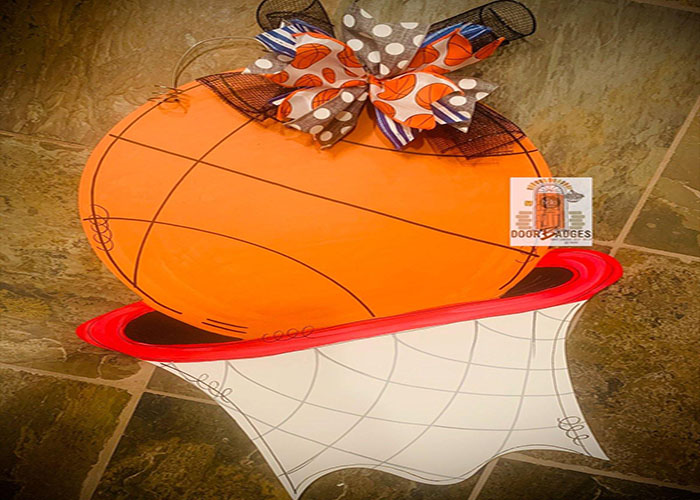
Print the hoop and backboard page, one or two ball pages, and optionally a player page – all at reduced size (approximately 60% of the full page). Color them with the bold, high-contrast approach that the reduced scale rewards: decisive color choices, no tentative half-coloring.
Cut each page out along its outline. On a piece of thick cardstock, trace a standard door hanger shape – a rectangle approximately 10cm × 25cm with a circular hole at the top large enough to fit over a door handle. Cut it out. Layer your colored basketball elements on the front of the hanger, gluing each in place with a glue stick. Apply a coat of clear contact paper over the entire front surface to protect the colors and give the finished hanger a laminated quality.
Write the room occupant’s name, a team motto, or a basketball quote on the remaining space. Punch a small hole at the top and thread a short piece of ribbon through for optional decorative hanging. The finished door hanger takes about forty-five minutes and immediately declares the occupant’s basketball allegiance to everyone who passes in the hallway.

NBA Logo Identification Game
This is the basketball version of the car logo identification game from the Car Logo Coloring Pages article – a quiz format that rewards accumulated knowledge about the teams and logos in the collection.
Print the five NBA team logo pages at reduced size (two per A4 sheet works well). Color one complete set carefully – these become the answer cards, labeled on the back with team name, city, conference, and one notable fact (championships won, most famous player, year founded). Print a second set in black and white only – these become the question cards.
To play: show a black-and-white question card to the group. First player to correctly name the team earns a point. Bonus point for naming the team’s conference (Eastern or Western). Second bonus point for naming the team’s colors correctly. Third bonus point for the notable fact on the answer card’s back.
After each round, use the color answer cards to verify and introduce the facts – the Warriors’ dynasty starting in 2015, the Cavaliers’ 2016 comeback, the Lakers’ 17 championships. The game teaches sports geography, team identity, and basketball history in a format that feels competitive rather than instructional.
Frequently Asked Questions
When and where was basketball invented? Basketball was invented on December 21, 1891, by James Naismith, a Canadian physical education instructor working at the International YMCA Training School in Springfield, Massachusetts. Naismith was tasked with creating an indoor winter sport to keep students active between football and baseball seasons. He nailed two peach baskets to the elevated running track of the gymnasium, wrote 13 rules in two pages, and introduced the game to his class of 18 students. The first baskets had no holes – someone climbed a ladder to retrieve the ball after each made shot. Naismith was inducted into the Basketball Hall of Fame in Springfield, which remains the home of the Naismith Memorial Basketball Hall of Fame.
Who is Kobe Bryant, and why is his page one of the most significant in the collection? Kobe Bryant played 20 seasons for the Los Angeles Lakers (1996–2016), winning five NBA championships and earning two Olympic gold medals. He scored 81 points in a single game against the Toronto Raptors in January 2006 – the second-highest single-game scoring performance in NBA history. He retired in April 2016 after scoring 60 points in his final game at age 37. He passed away in January 2020 in a helicopter crash in Calabasas, California, at age 41. The Lakers retired both his jersey numbers – 8 and 24 – the only player in franchise history to have two numbers retired. He was inducted into the Naismith Memorial Basketball Hall of Fame in 2020.
What are the NBA’s most successful franchises? As of the 2024–25 season, the Boston Celtics and Los Angeles Lakers are tied for the most NBA championships with 17 each. The Golden State Warriors have won four championships since 2015 (2015, 2017, 2018, 2022). The Chicago Bulls won six championships across two three-peats in the 1990s (1991–93, 1996–98), all with Michael Jordan. The San Antonio Spurs won five championships between 1999 and 2014. The Miami Heat have three championships (2006, 2012, 2013). The Cleveland Cavaliers have one championship (2016), which was notable for being the largest comeback in Finals history – from 3-1 down against the Warriors.
What are the dimensions and specifications of an NBA basketball? An NBA game ball measures 29.5 inches in circumference, weighs 22 ounces, and is inflated to between 7.5 and 8.5 PSI. The balls are made of full-grain Horween leather – the same tannery in Chicago has supplied the leather since the 1940s. Spalding was the official NBA ball manufacturer from 1983 until 2021, when Wilson took over the contract. The ball’s eight leather panels are divided by distinctive black seam channels and a wider groove running around the ball’s equator. The specific burnt orange color of the ball was introduced in 1957 by Tony Hinkle, then the coach at Butler University, to make the ball more visible to players and fans.
Who is the NBA logo, and why is it controversial? The NBA logo depicts a white silhouette of a dribbling basketball player against a blue and red background. It was designed by Alan Siegel in 1969 for a $5,000 fee. The silhouette has been widely identified as Jerry West, the Hall of Fame guard who played for the Los Angeles Lakers from 1960 to 1974 and was widely known as “The Logo” during his playing career. The NBA has never officially confirmed that the silhouette depicts West. West himself has publicly expressed that he is uncomfortable with the association and has requested that the NBA use a different player’s silhouette – specifically suggesting a Black player, given basketball’s demographics and cultural history. The NBA has not changed the logo.
How does basketball scoring work? A basket scored from inside the three-point line counts for 2 points. A basket scored from beyond the three-point arc (23 feet 9 inches from the basket at the top of the key in the NBA; 22 feet in the corners) counts for 3 points. Free throws, awarded after certain fouls, count for 1 point each. A standard NBA game consists of four 12-minute quarters. Overtime periods are 5 minutes each. The team with the most points at the end of regulation or overtime wins.
What age group are these basketball pages best suited for? The cartoon character pages – Mickey, Goofy, Donald, Elmo, Bugs Bunny, the Minions, Mario – work well from age 3 upward. The animal pages (tiger, elephant, cat, fox, bears) suit ages 4–9. The basic player action pages and ball pages work well for ages 5–10. The Kobe Bryant and Kyrie Irving pages, the NBA team logo pages, and the more detailed competitive action pages reward the patience and sports knowledge that develops around age 7 or 8 and are genuinely engaging for adults, particularly for NBA fans and parents who grew up watching these teams and players. The flaming ball and fireball pages are consistently popular with older children and teenagers who want a page they can approach as graphic design rather than sports illustration.
What are good team color combinations for coloring the NBA pages? Lakers: deep gold (amber-gold, not bright yellow) and purple (warm-cool medium purple). Warriors: royal blue and gold (slightly orange-tinted warm gold). Heat: red and black with gold accents. Cavaliers: wine (deep burgundy) and gold. Wizards: navy (very dark blue) and red. For the NBA logo itself: blue on the left half of the background, red on the right, white silhouette. These colors are worth verifying with a quick reference image – NBA team colors are proprietary and have specific shades that fans notice when they’re wrong.
Browse the full collection at ColoringPagesOnly.com. All free, no sign-up required, PDF, JPG, or PNG, print at home or color in browser.
James Naismith’s 13 rules fit on two pages. The game has been played for 134 years, on every continent, in languages he never spoke, in arenas he couldn’t have imagined, by players he would have watched in complete disbelief. From peach baskets with no holes to Wilson leather balls inflated to 8 PSI, from college gyms in Massachusetts to Crypto.com Arena in Los Angeles at 10 pm on a Thursday. The game traveled far from where it started. It took the people who loved it with it.
Pick up your colors. Choose your team. Color something that matters.
Share your work on Facebook and Pinterest and tag #Coloringpagesonly. We especially want to see the Kobe pages and what people do with the flaming ball.
Color the game. Honor the legend. Keep shooting.