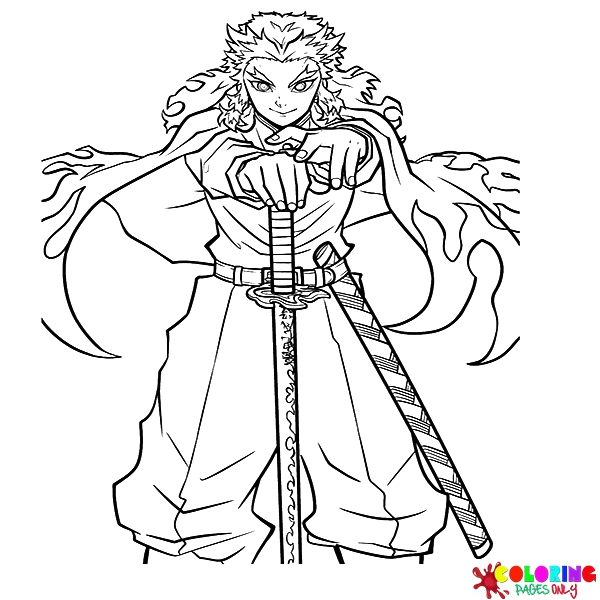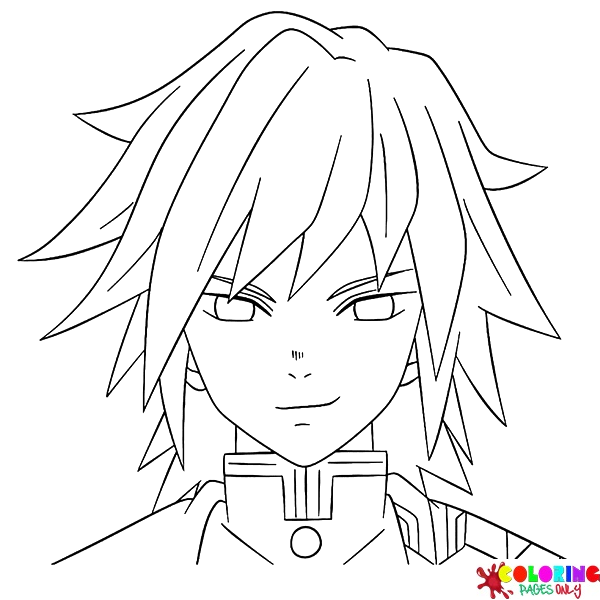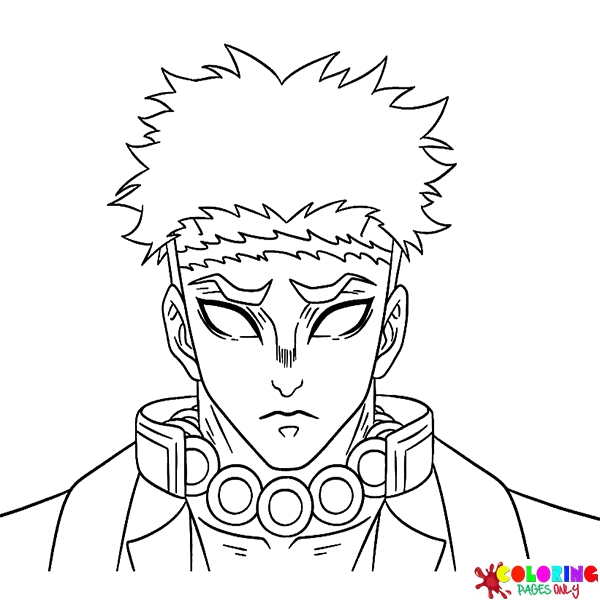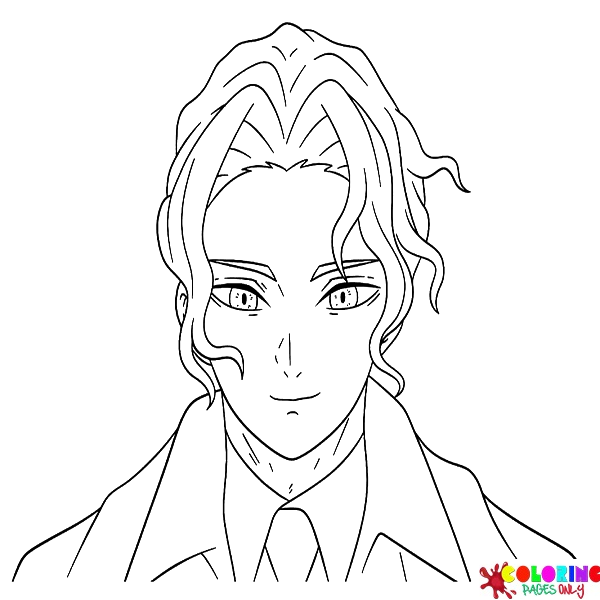
Free Iguro Obanai Coloring Pages: 24 printable PDF designs featuring Obanai Iguro, the snake-themed swordsman of Gotouge’s Demon Slayer manga, in formal portraits, snake companion scenes, and a trio of chibi sketches. Download a sheet for your printer or open it on screen and work through it with the built-in coloring tool.
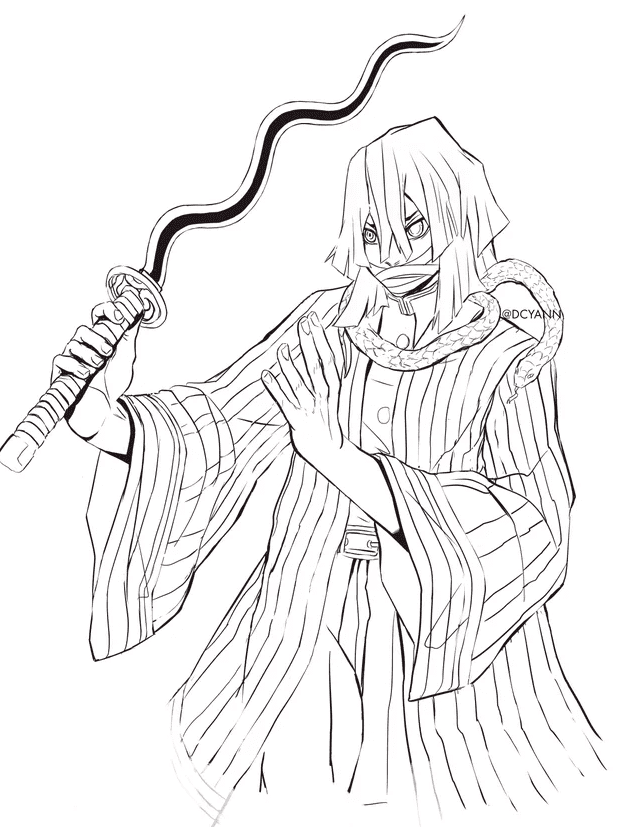
Obanai ranks among the nine Hashira who lead the corps, a sharp-tongued swordsman who keeps his mouth and chin wrapped in bandages and carries a wavy, serpent-shaped blade. His eyes are two different colors, yellow on the right and turquoise on the left, and a white snake named Kaburamaru rides coiled around his neck wherever he goes.
His outfit is what makes these pages a satisfying technical exercise. The black-and-white striped haori runs in long vertical lines down his body, so keeping each stripe straight and evenly spaced while the fabric folds is the main skill this collection trains.


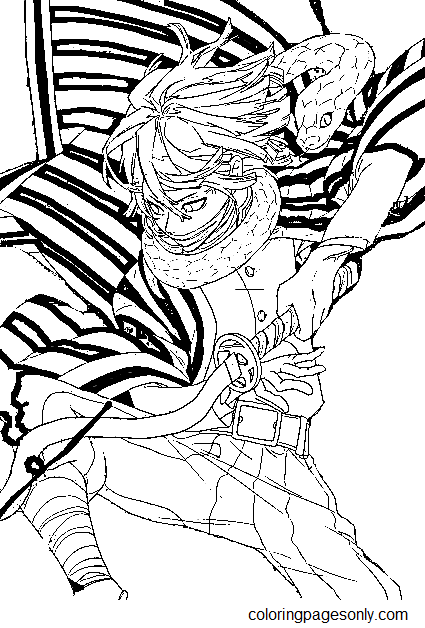
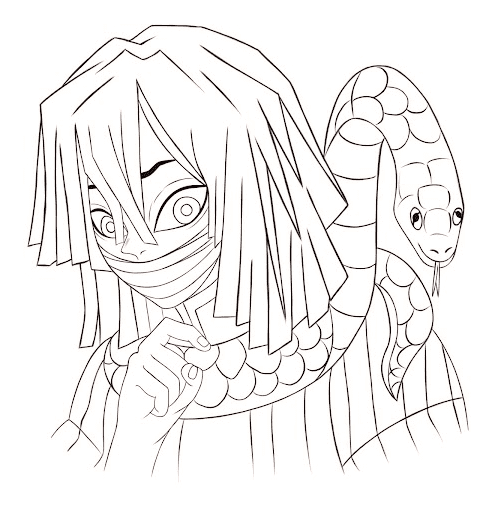
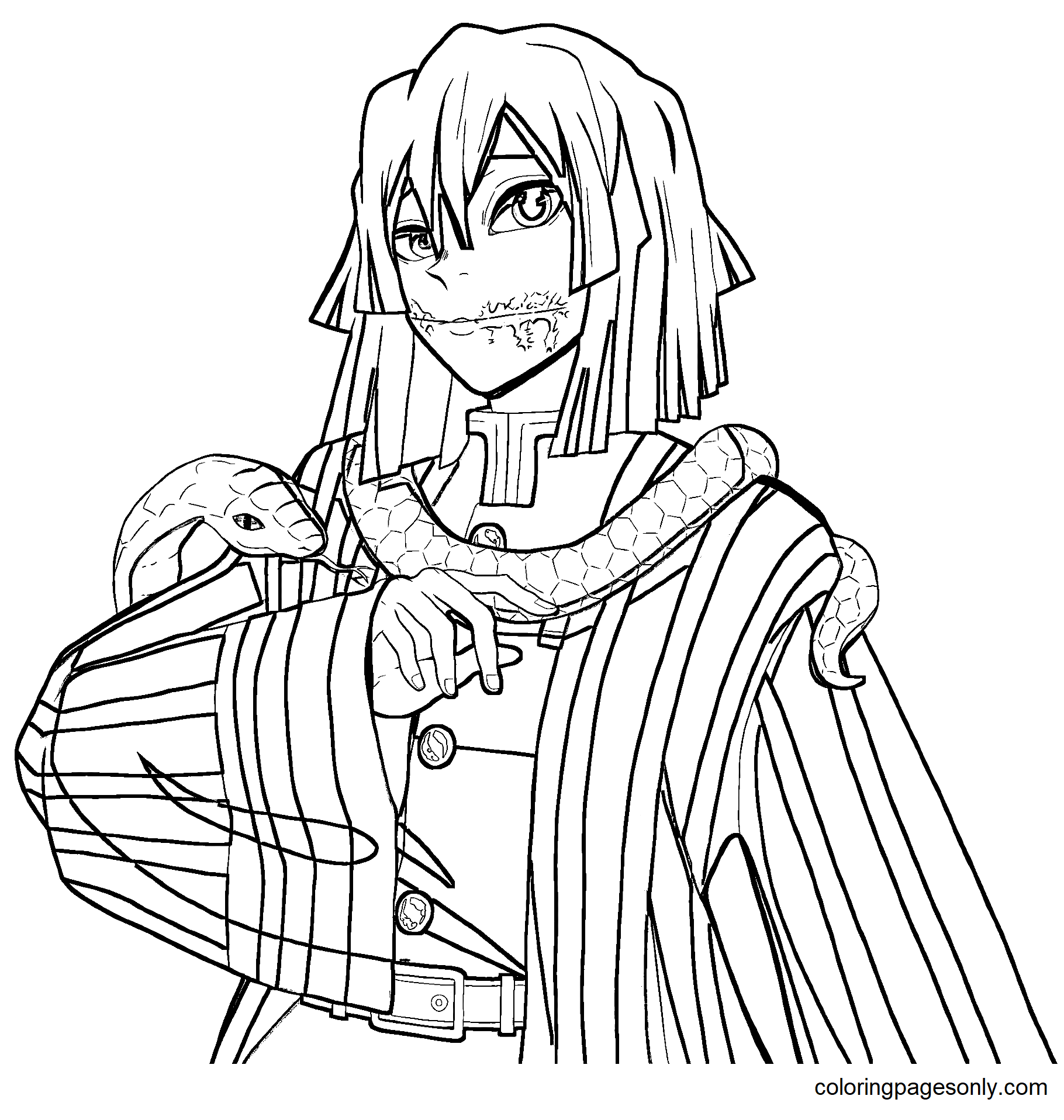
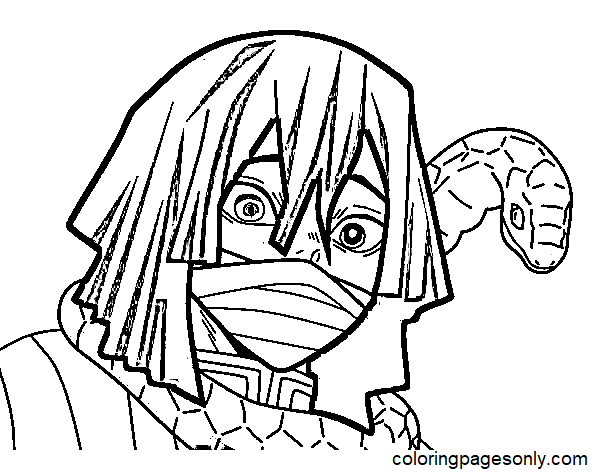

What’s Inside This Collection
Three simple groups make up this set: dignified Hashira portraits, scenes built around Kaburamaru, and small chibi drawings.
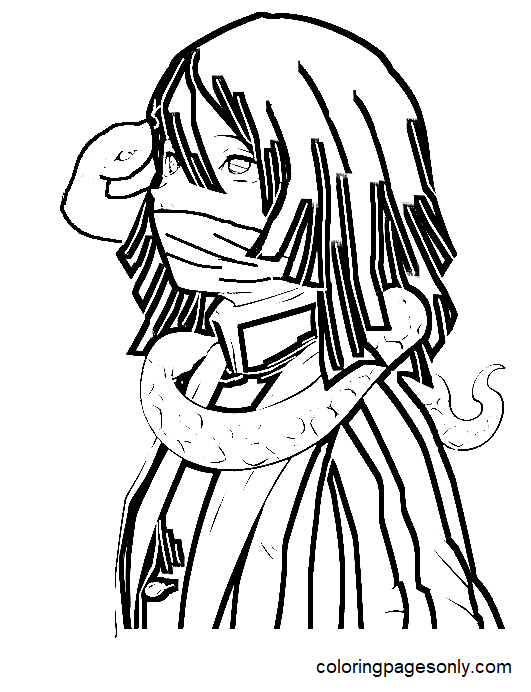
Serpent Hashira Portraits
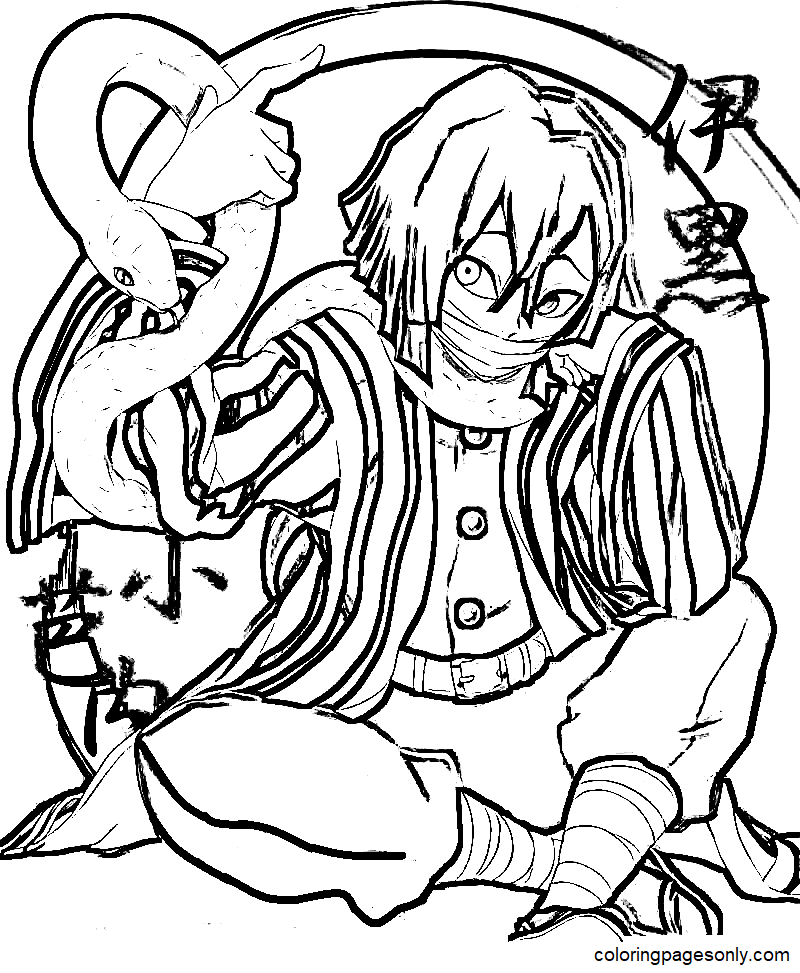
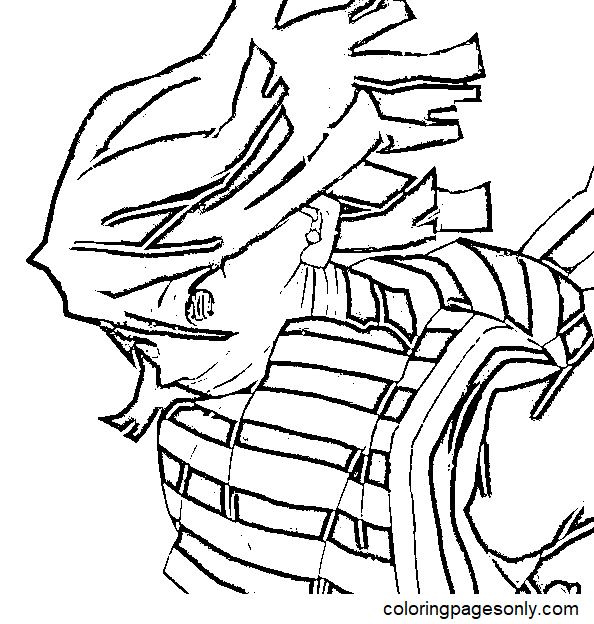
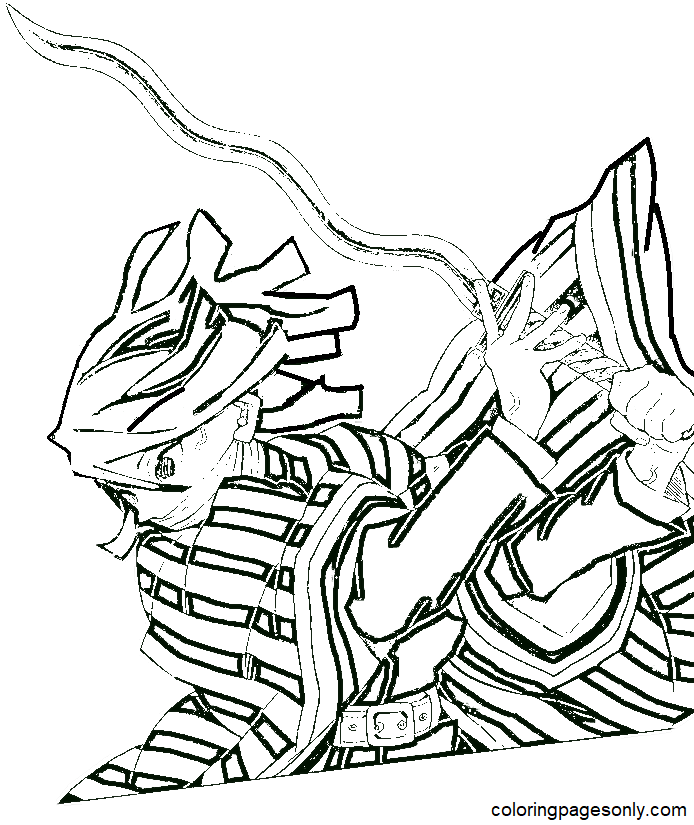
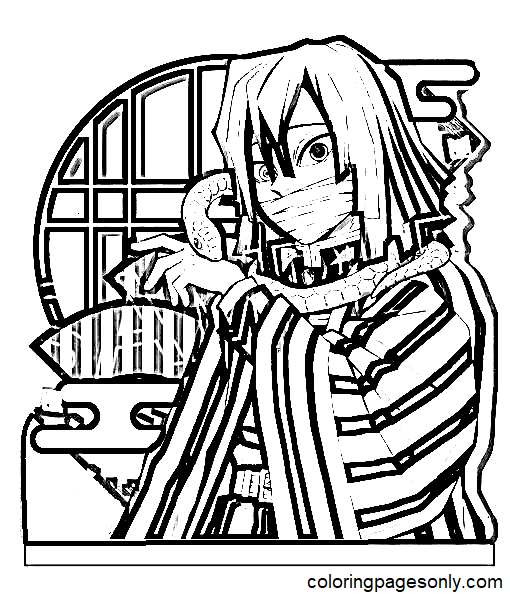
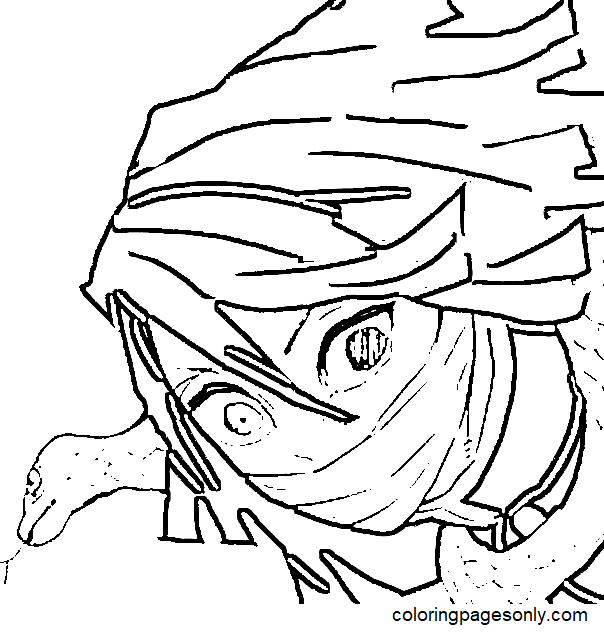
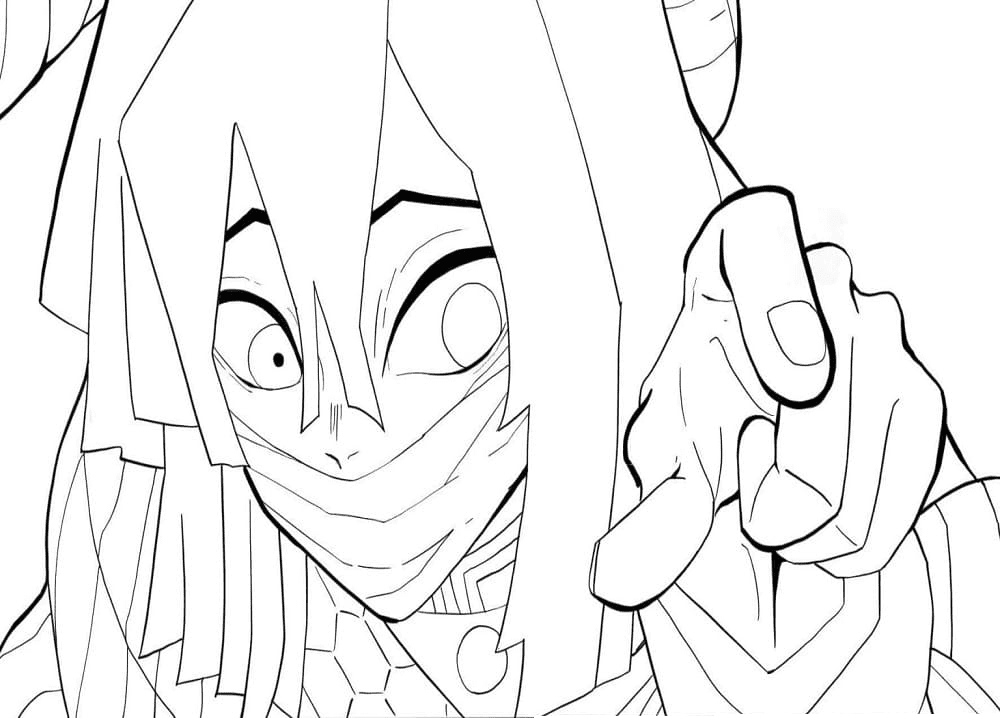
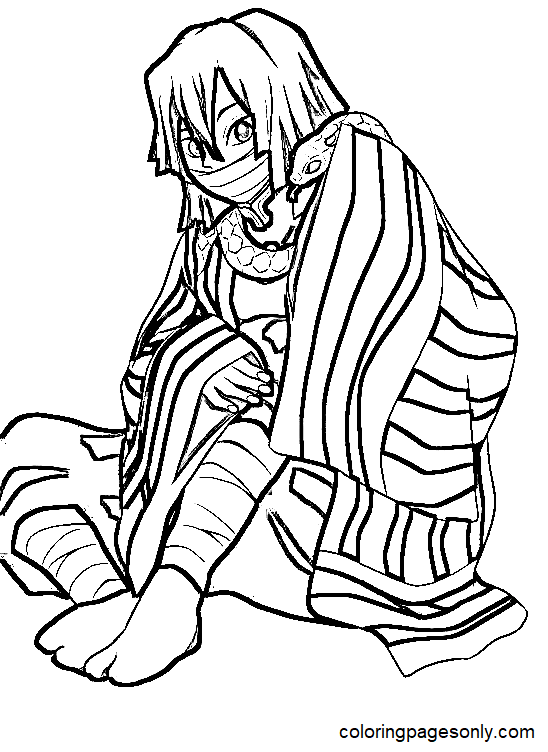
Most of the set presents Obanai in his full Hashira look, with his long-sleeved striped haori, bandaged face, and narrowed, watchful eyes, as in Serpent Hashira Obanai Iguro. Keep his hair Black, alternate the haori stripes in Black and white paper, and reserve the brightest colors for his eyes, Lemon Yellow on one side and a cool blue-green on the other.
Obanai and Kaburamaru
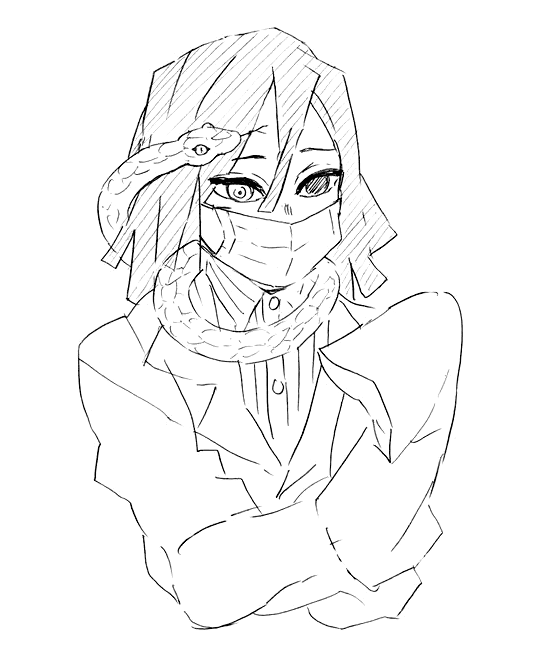
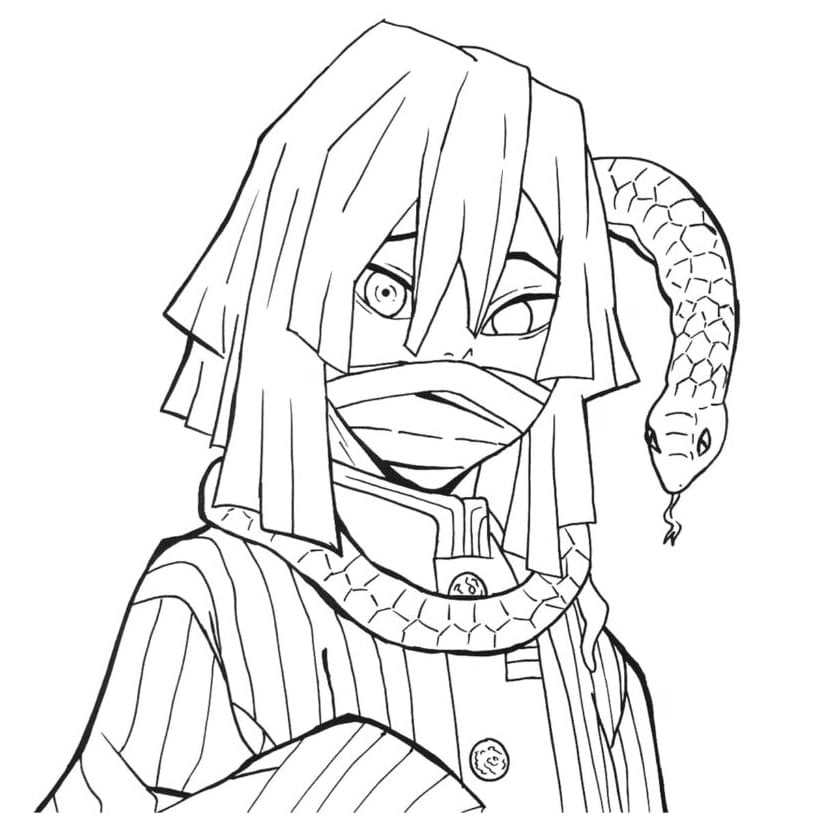
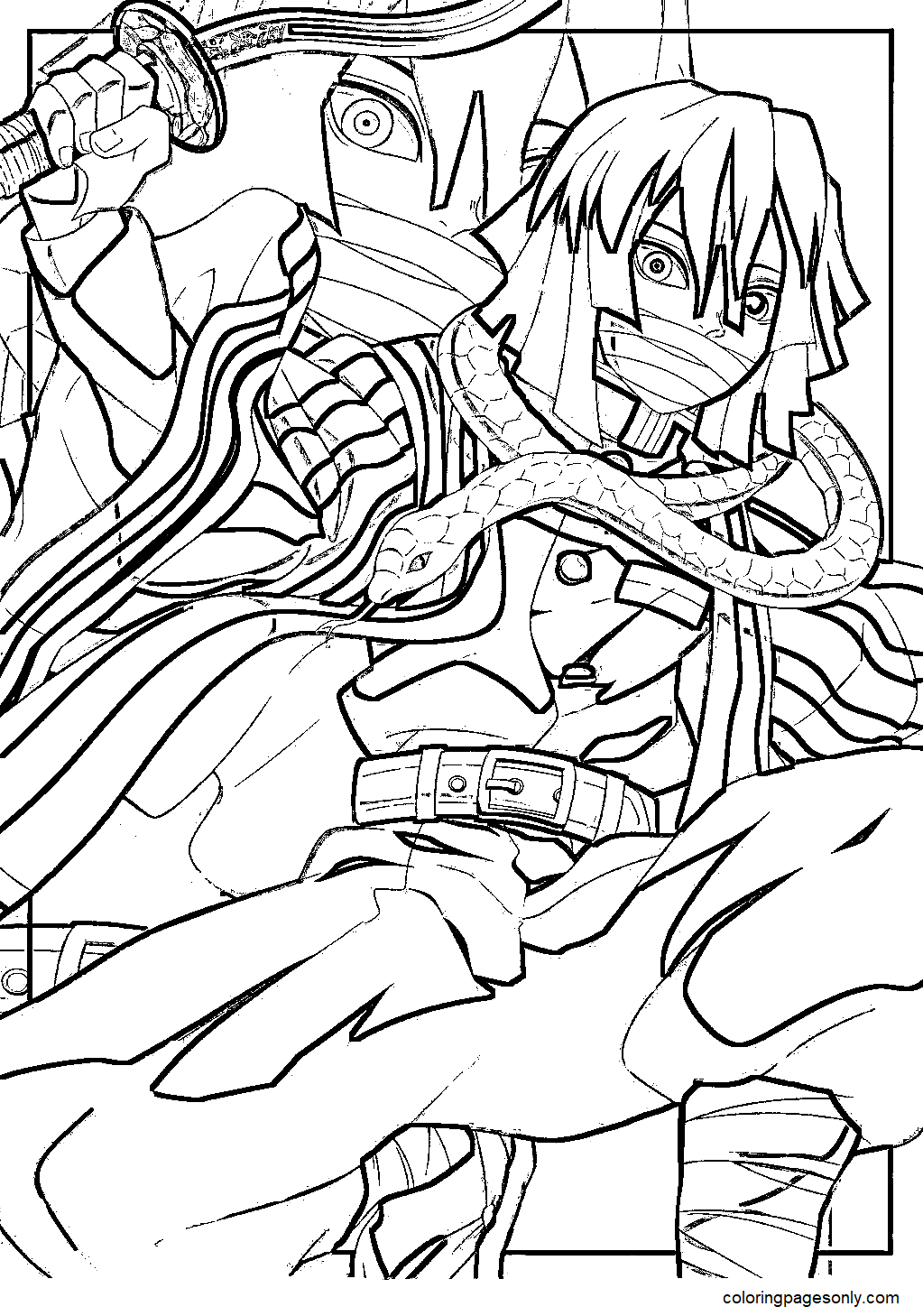
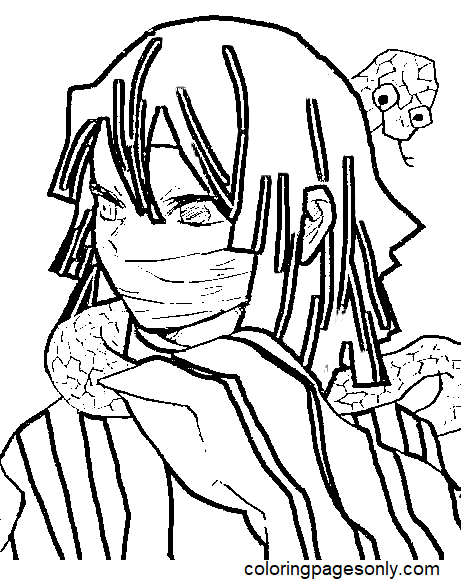
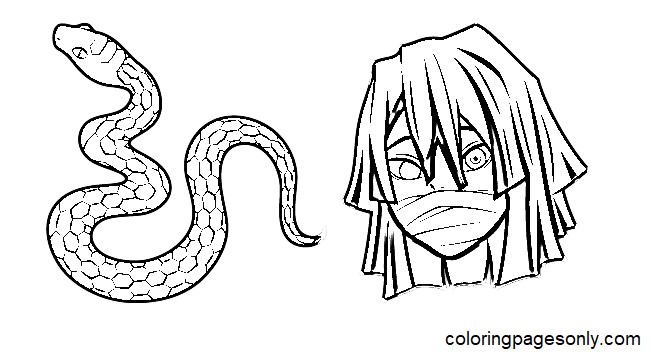
Pages such as Iguro Obanai with Snake put Kaburamaru at the center, coiled across Obanai’s shoulders or rising beside his face. Leave the snake almost entirely paper white, define its body with a few soft Gray curves, and give its small eyes a dot of Red so it stands out against the striped fabric.
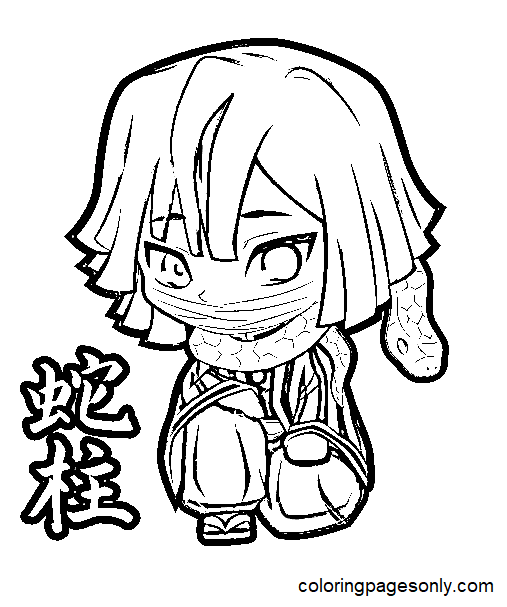
Chibi Obanai
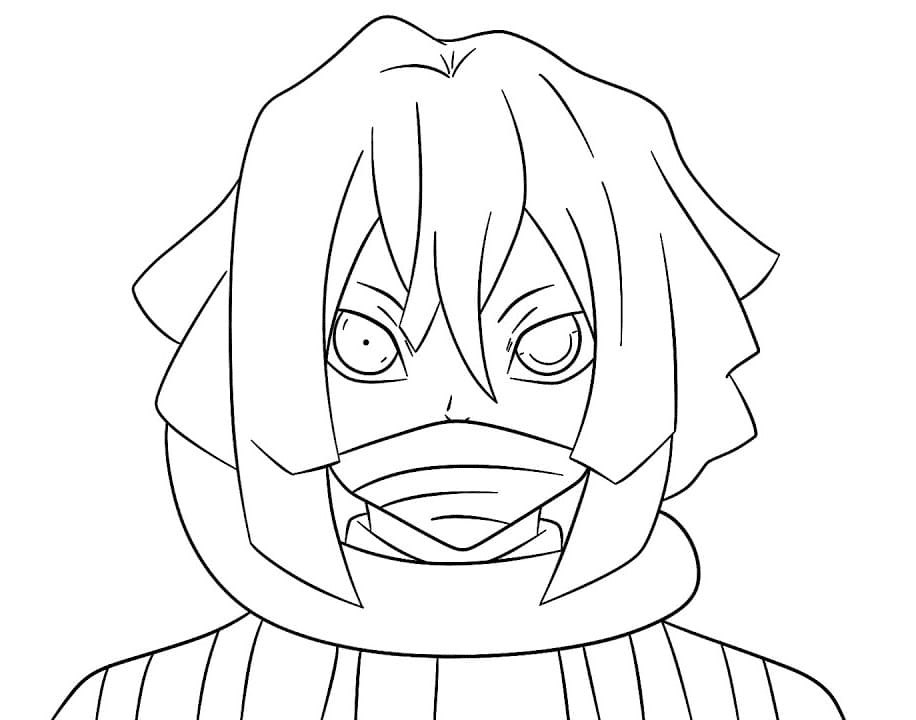
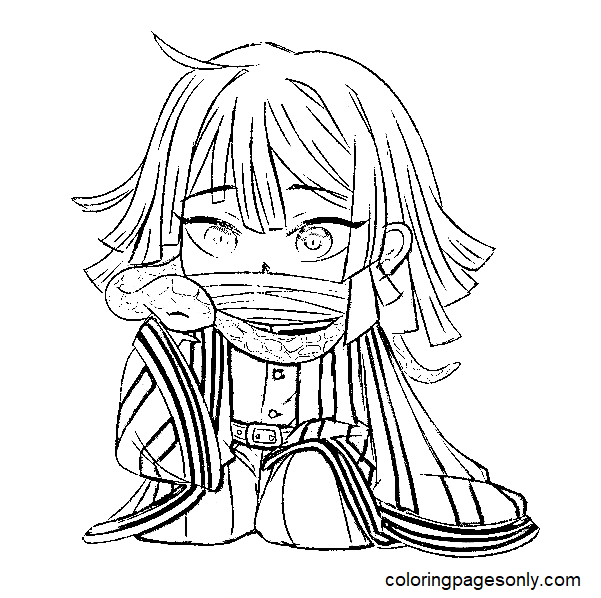
The chibi drawings shrink him into a round, big-headed figure with a tiny Kaburamaru tucked against his neck. Fewer, thicker stripes make the haori much quicker to fill, and the two eye colors still read clearly at this size.
What Iguro Obanai Coloring Pages Do
Seeing expression in the eyes alone. With his lower face covered, every emotion Obanai shows comes through his brows and his two differently colored eyes. Coloring several portraits side by side trains young artists to notice how small changes above a mask still tell the viewer how a character feels.
Practicing straight, even lines. Children between 2 and 7 build fine motor control through structured coloring, as the American Academy of Pediatrics points out. Long haori stripes ask for slow, steady strokes from top to bottom, and the chibi versions repeat that striping in shorter, wider bands for smaller hands.
A focused, low-stress activity. Findings in the Art Therapy Journal from 2005 linked structured coloring to measurably lower anxiety. A mostly black, white, and gray palette with just two bright eye colors keeps choices simple and lets attention settle on careful, unhurried work.
A friendship worth talking about: Kaburamaru is not just a pet but Obanai’s trusted partner, watching the battlefield for him and warning him of danger. That bond gives parents and teachers an easy way to talk with kids about loyalty and how friends look out for one another.
How to Color Iguro Obanai Coloring Pages
- The heterochromia must be clearly different, not subtly different. Obanai’s right eye is a warm yellow-gold, his left eye a vivid teal. If both are treated as similar light colors, the most distinctive feature of his design disappears. The yellow should be warmer and slightly more muted; the teal should be cooler and more saturated. On chibi pages where the irises are small, this difference still needs to be readable.
- The serpent scale haori follows organic curves, not a straight grid. Tanjiro’s checkerboard haori is a regular grid. Obanai’s scale pattern has curved, overlapping shapes that follow the body’s natural contours. Working along the curve of each scale rather than across a flat grid is what makes the pattern read as scales rather than as flat pattern fill. Take time to trace the scale outlines before adding color.
- Kaburamaru reads best as the lightest element on the page. The dark navy uniform, the black-and-white haori, and Obanai’s pale skin all sit in the mid-to-dark range. A bright, clean white for Kaburamaru, with only faint cool grey for scale definition, makes the serpent read as a deliberate light accent in a predominantly dark palette.
- The bandages are warm, off-white, not pure white. A warm ivory or cream keeps the bandages distinct from Kaburamaru’s cooler white. Two whites on the same page need different temperatures to be visually separate.
5 Creative Craft Ideas with Iguro Obanai Coloring Pages
1. Serpent Scale Pattern Study
Color the same haori pattern on two different Obanai pages, focusing on getting the organic scale curves consistent. Compare the results.
A direct practice exercise in following a curved repeat pattern, which is harder than it looks and more transferable than grid patterns. Takes about twenty-five minutes.
2. Kaburamaru Companion Display
Color two pages featuring Kaburamaru prominently: one with the serpent draped at Obanai’s shoulder and one with the serpent in a more active pose. Display as a paired companion set.
A study in the same two-subject composition across different energy levels. Takes about twenty minutes.
3. Heterochromia Eye Study
Color three Obanai pages focusing specifically on maintaining the yellow-vs-teal distinction across each. Display as a row.
Training the consistency of a two-color eye design across repeated pages is one of the more specific coloring challenges this set offers. Takes about twenty-five minutes.
4. Hashira Relationship Pair
Color an Obanai page alongside a Mitsuri Kanroji page from the Mitsuri Kanroji Coloring Pages set. Keep his restrained dark palette against her warm pinks.
The Serpent and Love Hashira as a matched display, the series’s most visually contrasting pair in one of its most quietly significant relationships. Takes about twenty minutes.
5. Chibi Serpent Hashira Set
Color all three chibi Obanai pages as a matched set, keeping the heterochromia consistent across all three.
A focused chibi series with a clear technical goal: three pages, the same two-color eyes, done right each time. Takes about twenty minutes.
FAQ About Iguro Obanai Coloring Pages
Are these Iguro Obanai coloring pages free, and can I color them online?
Yes. Every page is free, with no account, email, or payment required. Download the PDF to print at home, or open it in the online coloring tool to color on screen.
Who is Iguro Obanai?
Iguro Obanai is a character from Demon Slayer: Kimetsu no Yaiba by Koyoharu Gotouge. He is the Serpent Hashira of the Demon Slayer Corps, known for his heterochromia eyes, the bandages covering the lower half of his face, his twisted serpentine Nichirin Sword, and his constant companion, the white serpent Kaburamaru. He is one of the nine Hashira who fight in the final battle against Muzan Kibutsuji.
Why does Obanai wear bandages on his face?
Obanai was born into a family connected to a demon cult, and the bandages cover scars from his early life that he has carried since childhood. He wore them throughout his time in the Demon Slayer Corps. The bandages are not a mask in the same way as Inosuke’s boar skull: they cover a part of himself he never chose to expose, even to those closest to him.
What is Kaburamaru?
Kaburamaru is Obanai’s white serpent companion. In the series, Kaburamaru serves as a communication partner during combat. Because Obanai’s Serpent Breathing style uses movement and positioning that require constant spatial awareness, Kaburamaru observes the battlefield and relays information by moving against Obanai’s body. The serpent appears on almost every page of this set.
What is Serpent Breathing?
Serpent Breathing is a Breathing Style derived from Water Breathing, developed by Obanai himself and adapted to his unusual twisted Nichirin Sword. The techniques involve unpredictable, winding movements that change direction mid-strike, mimicking the movement of a serpent. Because the blade is curved and the strikes are non-linear, opponents find it very difficult to predict where an attack will land.
What is Obanai’s relationship with Mitsuri Kanroji?
Obanai and Mitsuri Kanroji, the Love Hashira, have a relationship that the series develops quietly across supplementary materials and the final arc. Obanai is one of the few people Mitsuri is fully open with, and she is one of the very few people he allows himself to be open with in return. Their relationship is one of the most significant emotional arcs in the final battle sequence of the series.
Are these official Iguro Obanai coloring pages?
No. These are fan-made coloring sheets for personal use and are not affiliated with, licensed by, or endorsed by Koyoharu Gotouge, Shueisha, Aniplex, ufotable, or any other rights holder of Demon Slayer: Kimetsu no Yaiba.
What age group are these pages best suited for?
Demon Slayer is rated for audiences aged 13 and up due to its action and dark themes. The coloring pages are appropriate for fans of the series from around age 8. Chibi pages work for younger children who enjoy the character designs.
Start Coloring
Download any page by clicking the design. No account, email, or payment is required. Pages print directly from the browser at full resolution or open in the online coloring tool for screen use. Share finished pages on Facebook or Pinterest using the share buttons at the top of each design page.