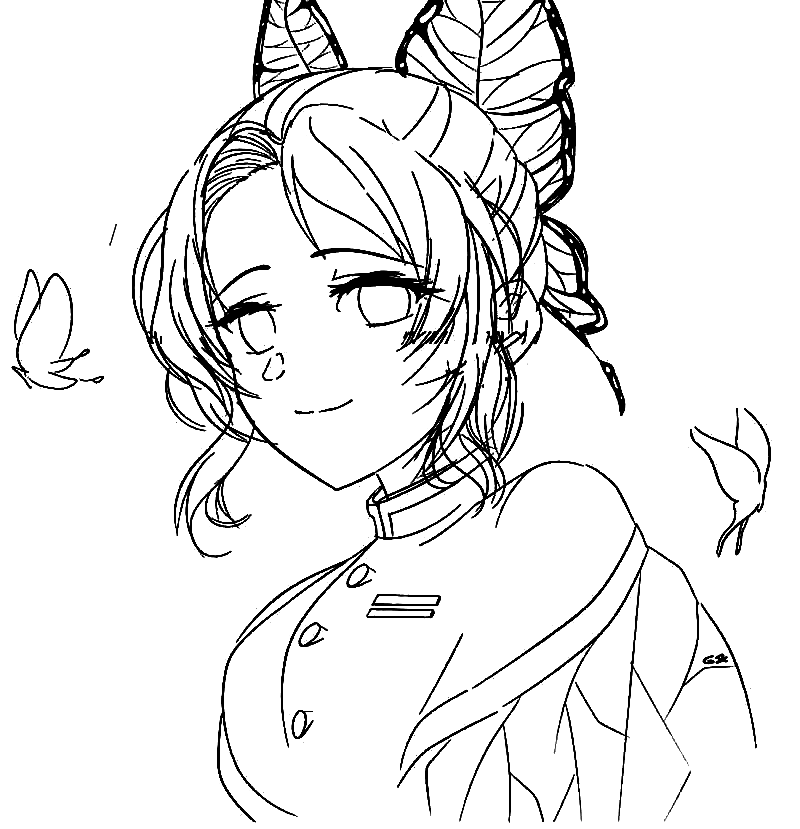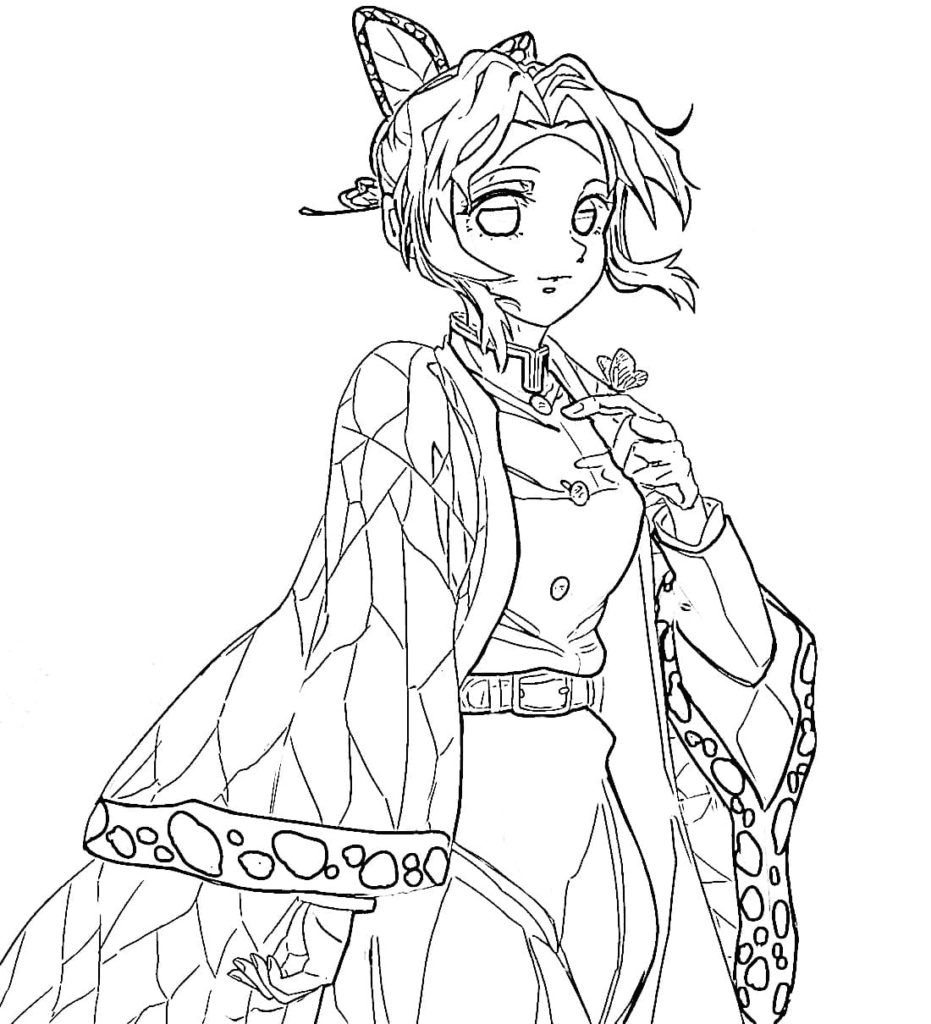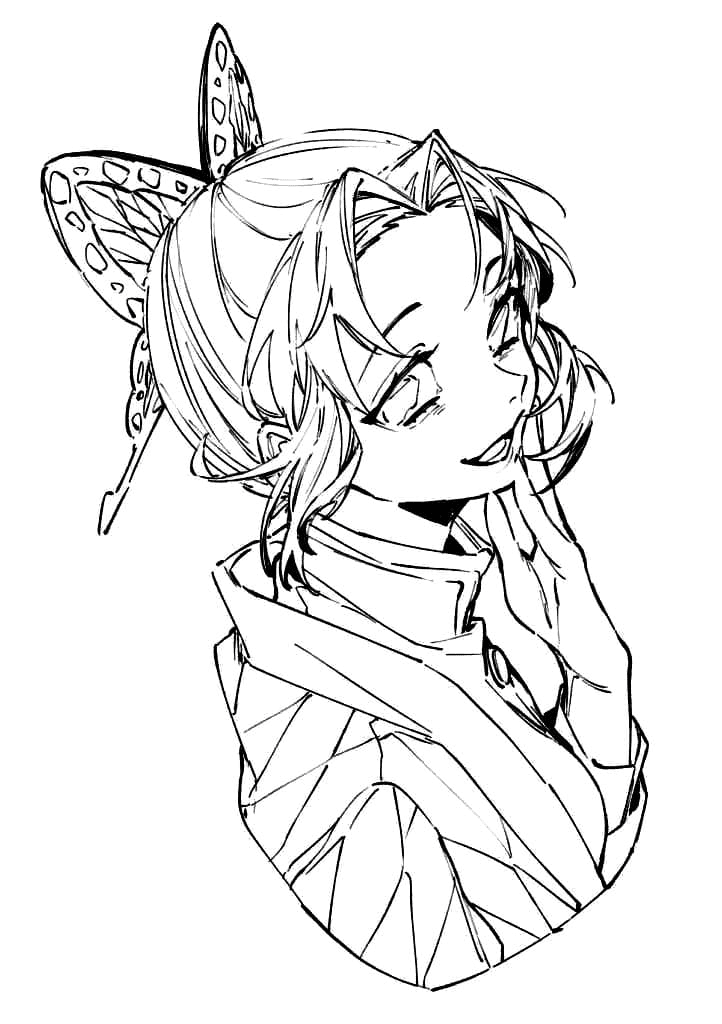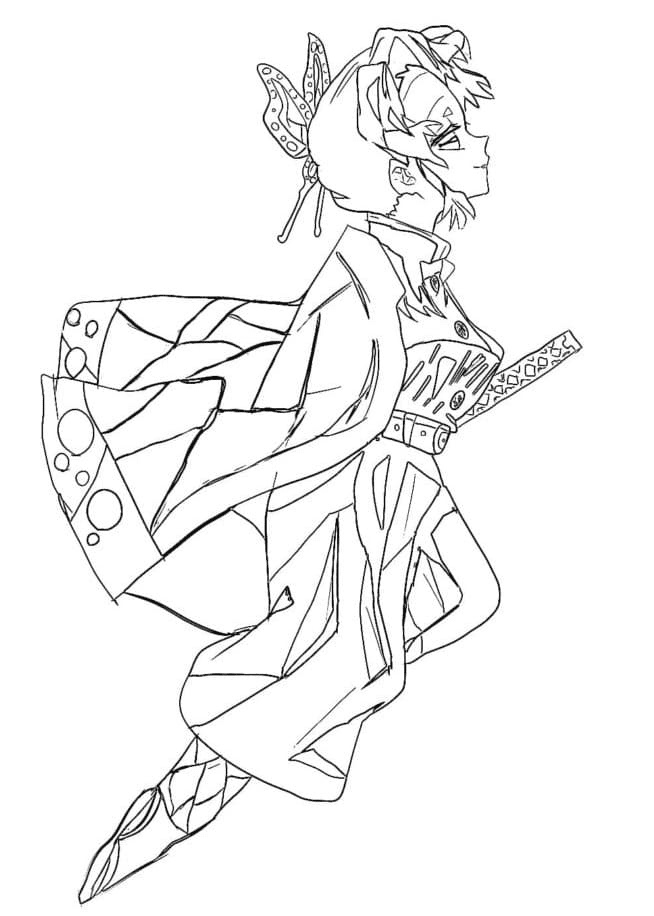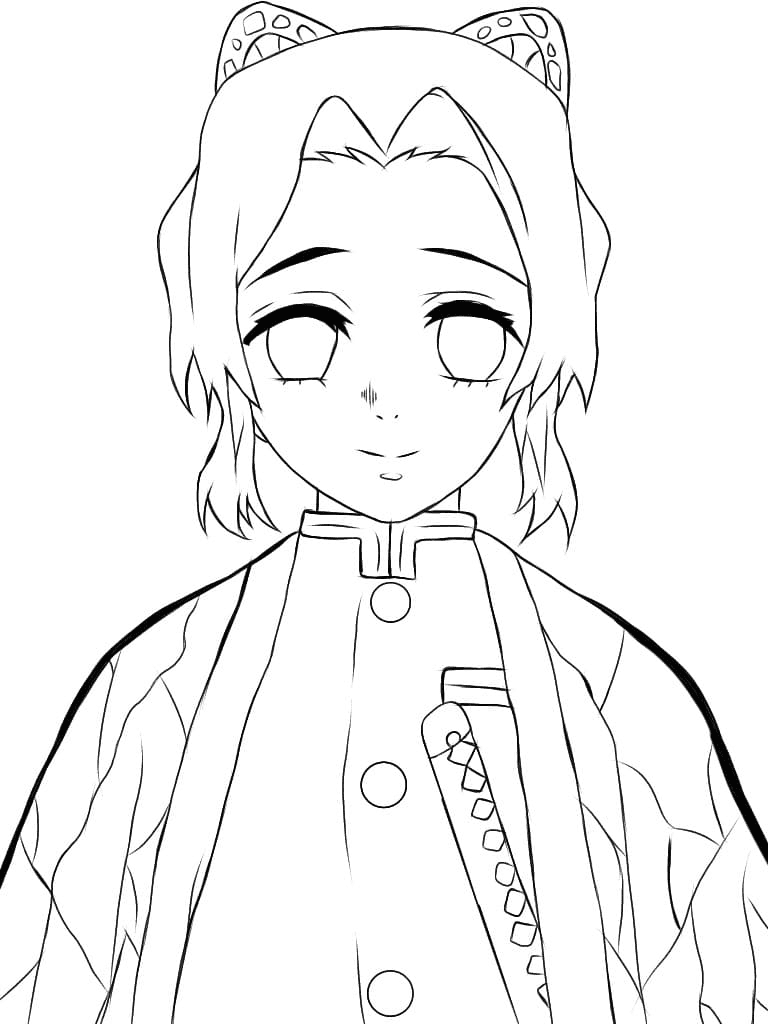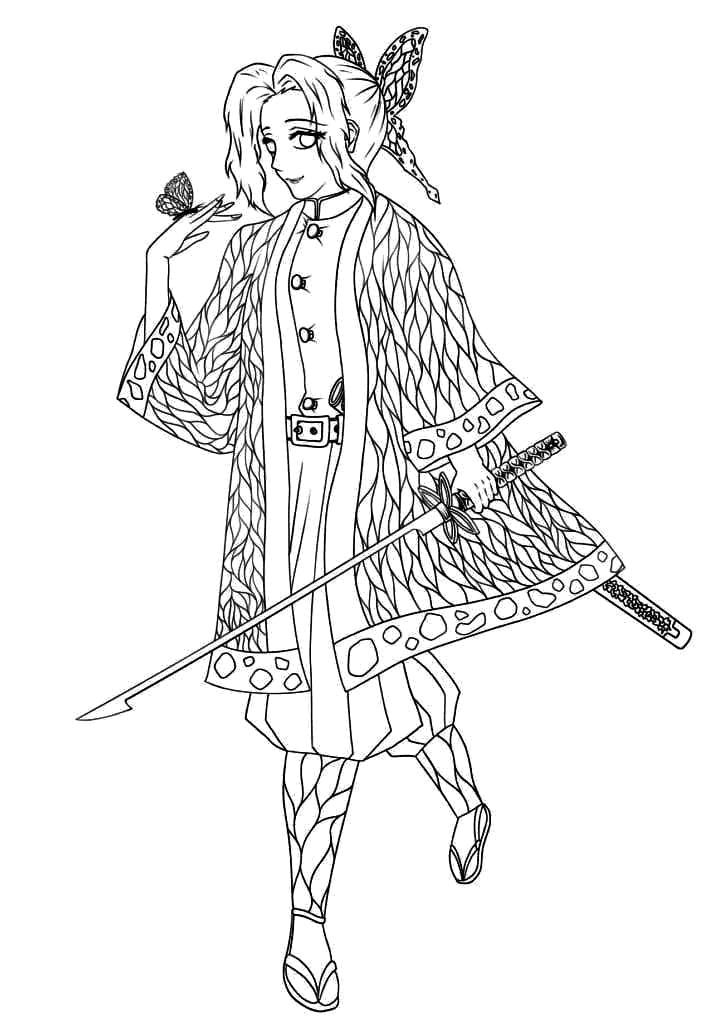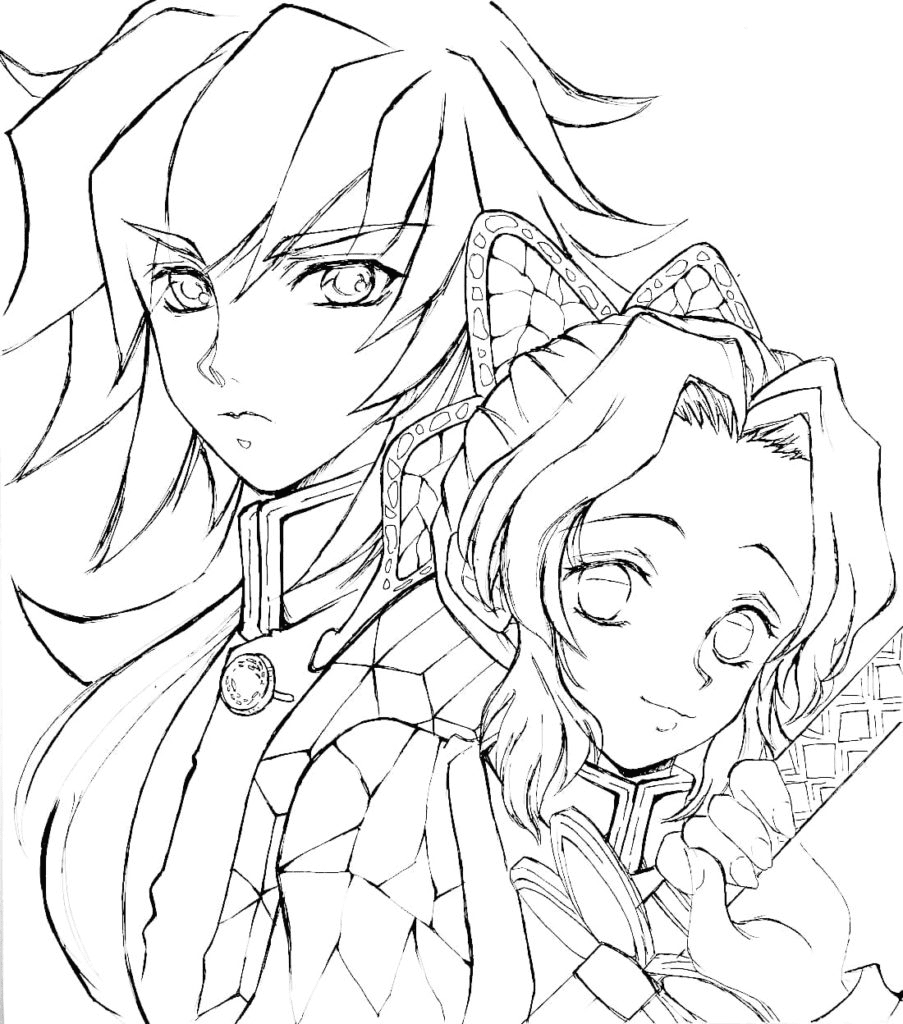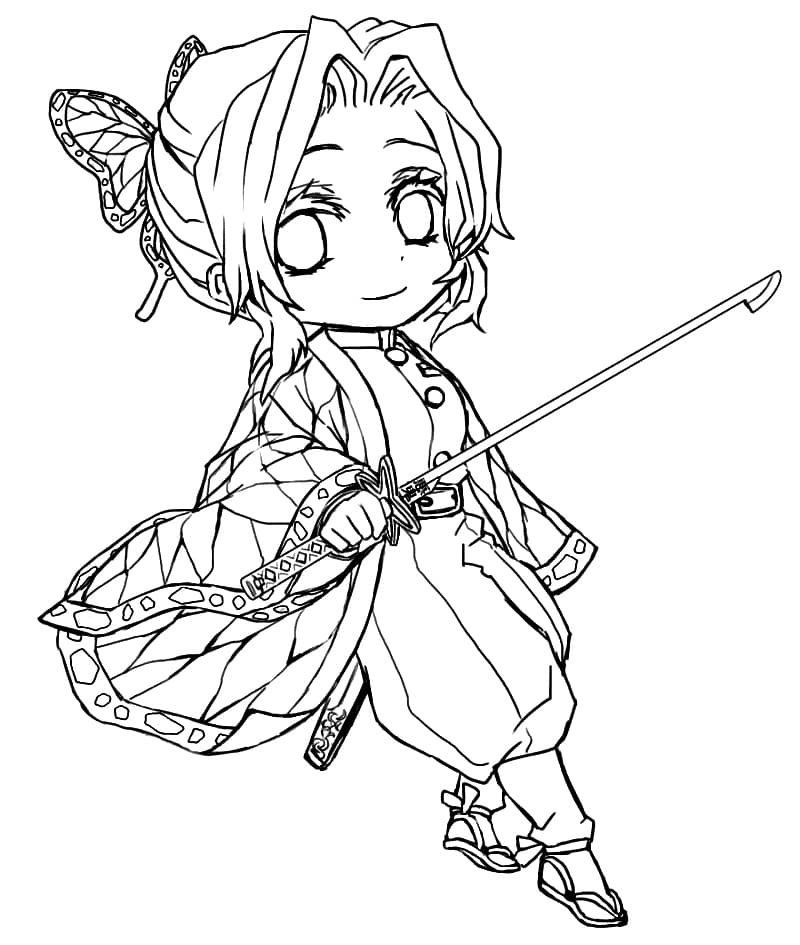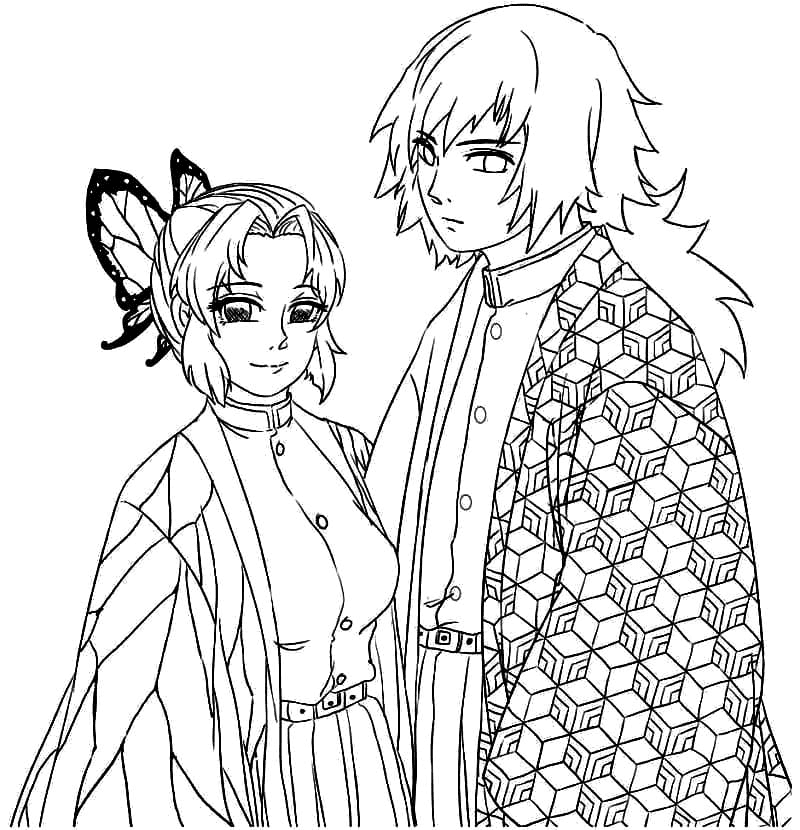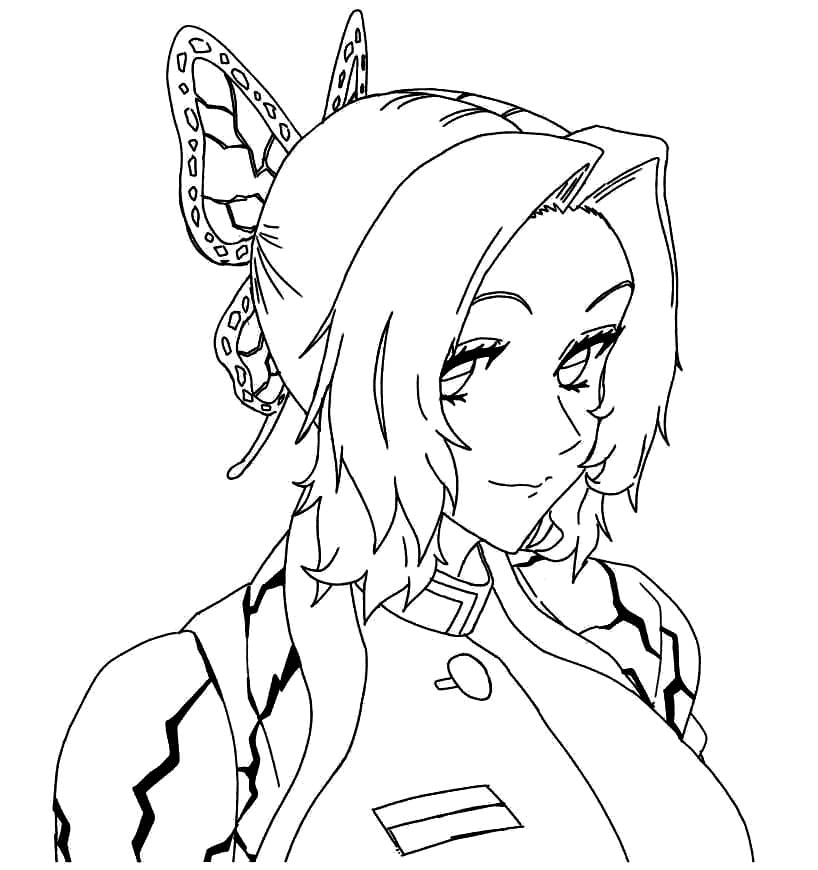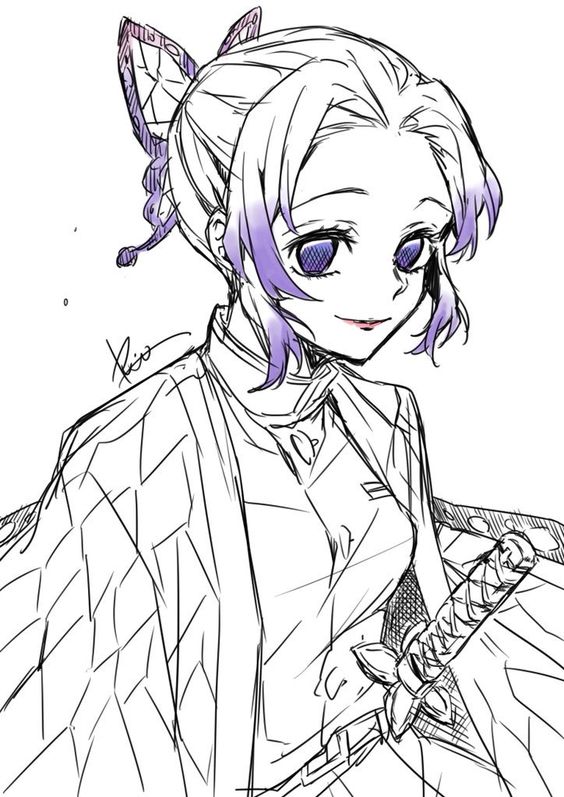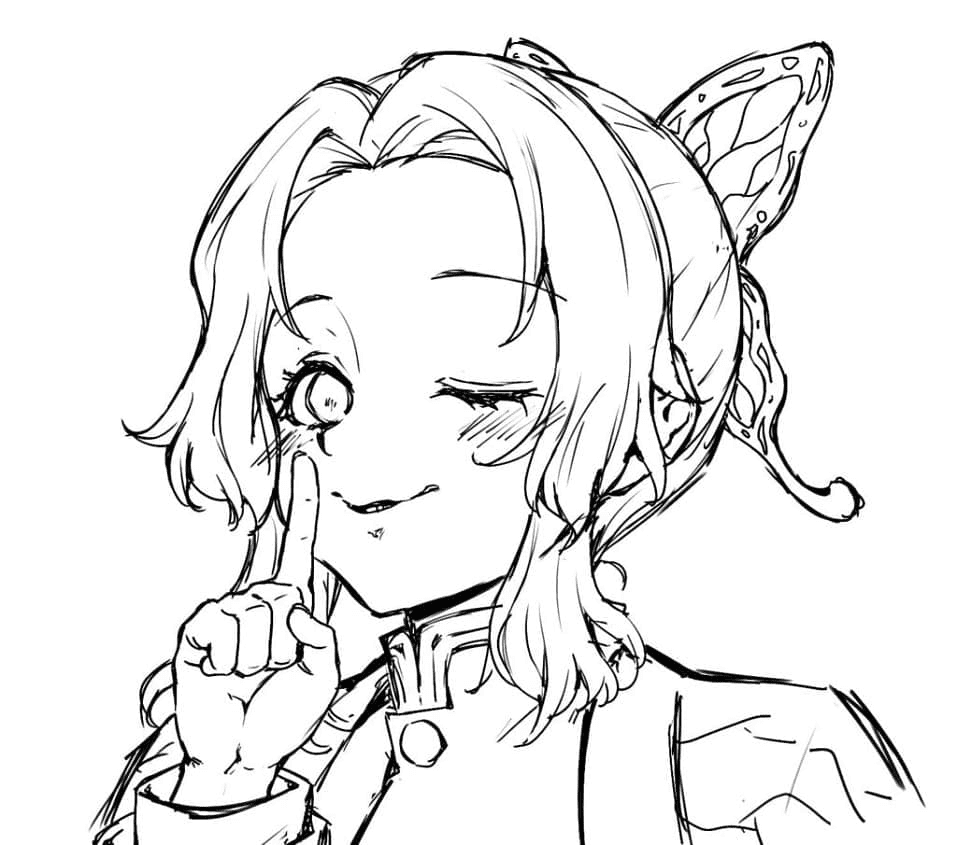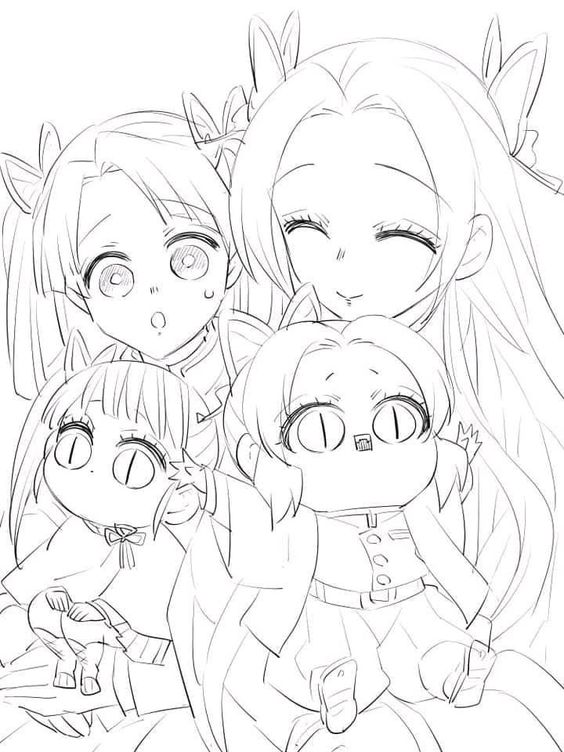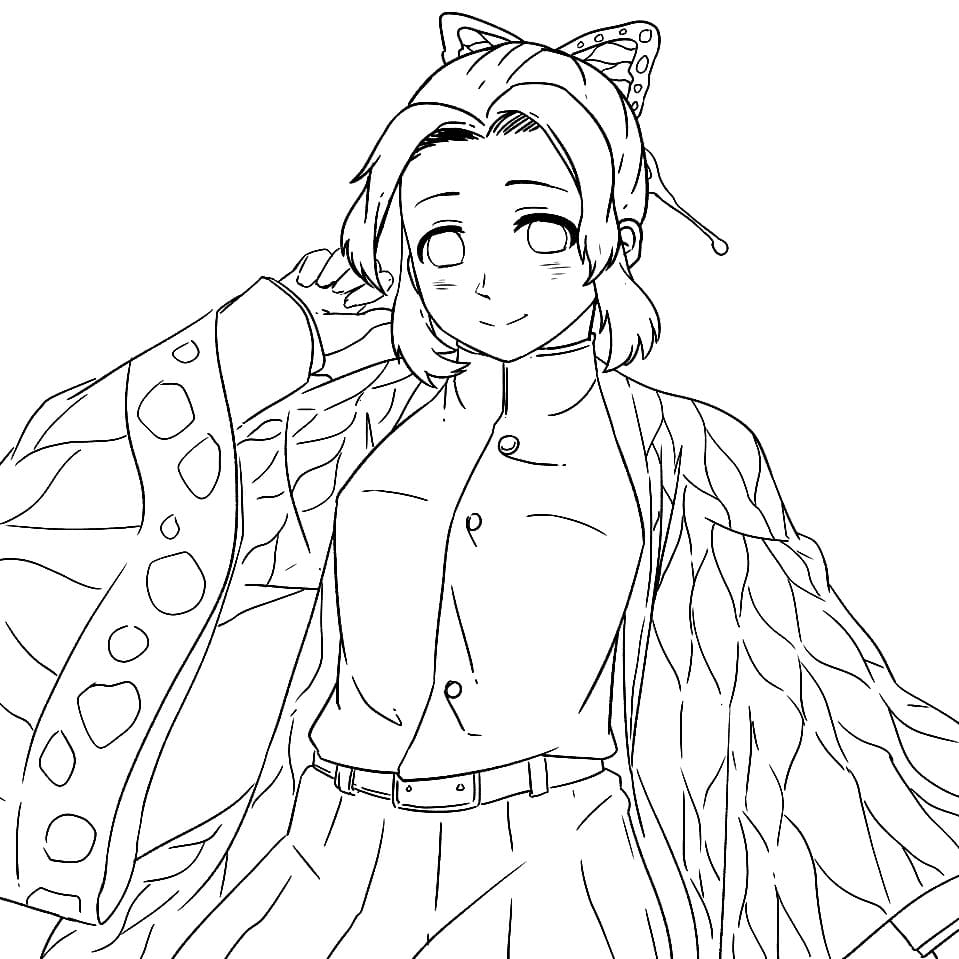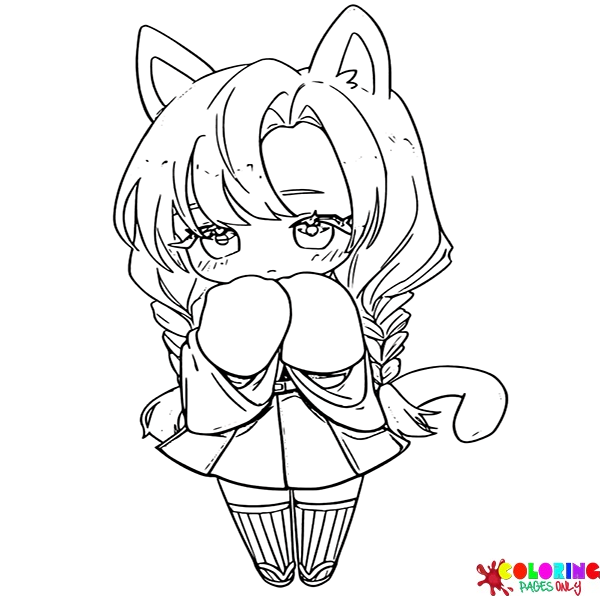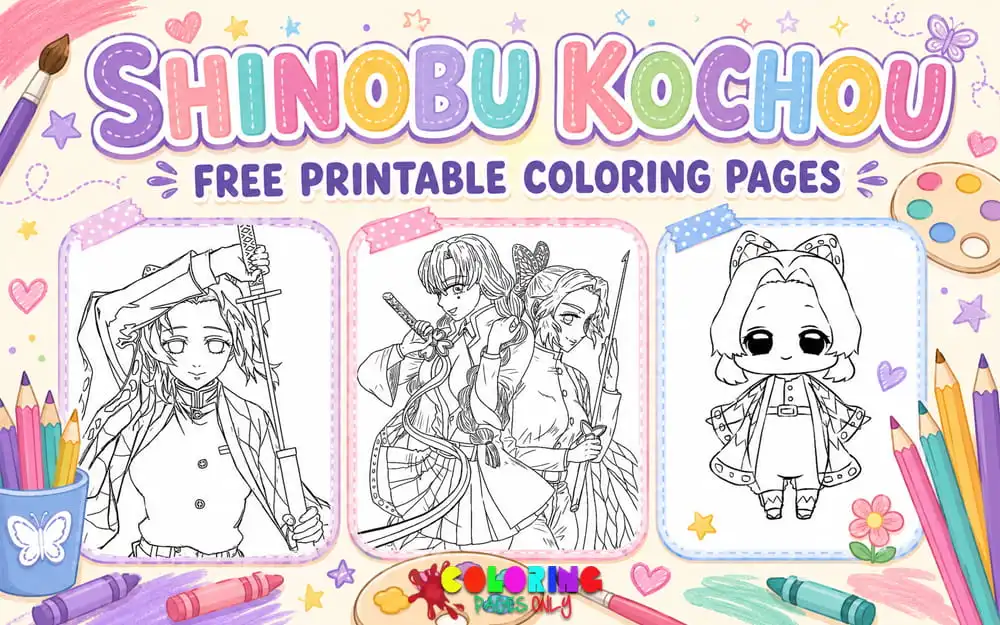
Free Shinobu Kochou Coloring Pages: 40+ printable PDF pages featuring Shinobu across solo portraits, expression and sword pages, butterfly duo pages, chibi pages, duo pages with Giyu Tomioka and Mitsuri Kanroji, and a group page. All free, download PDF to print, or color online.

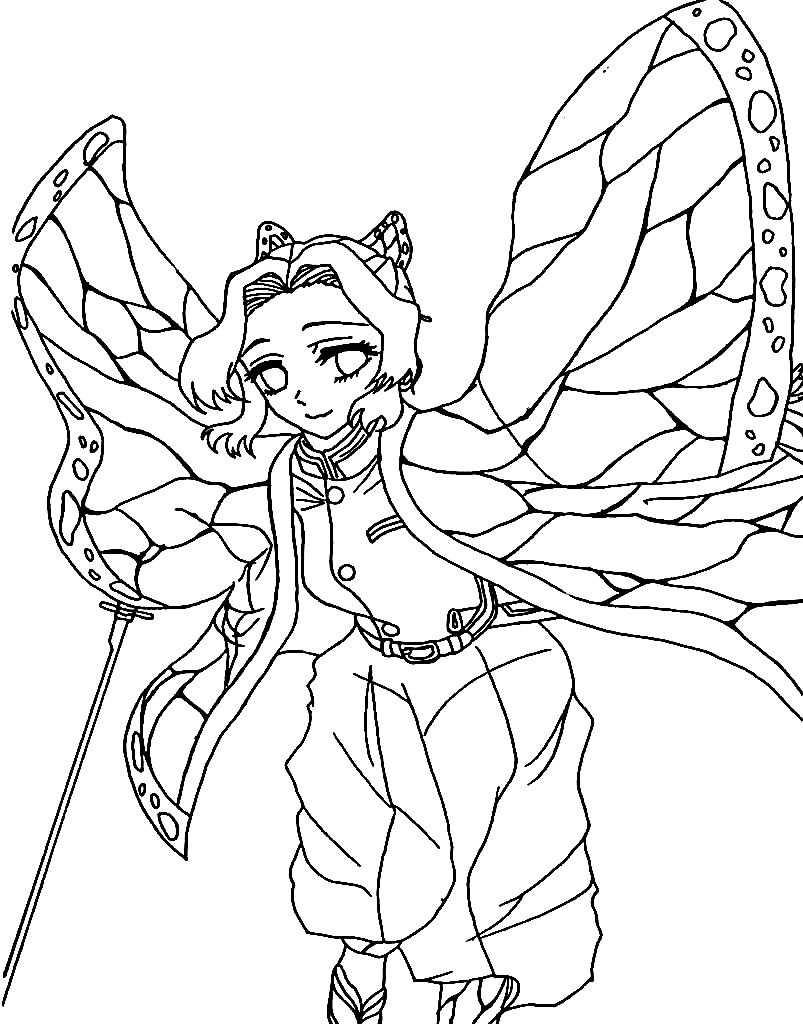
Shinobu’s design looks deceptively simple at first glance: pale skin, purple-gradient hair, a soft expression, and a dark uniform. Then you reach the haori. The butterfly wing haori is one of the most intricate garments in any Demon Slayer character’s design: a dark purple base at the shoulders that transitions through teal-green and yellow at mid-length before ending in a burst of pink-to-white at the hem, all rendered as overlapping butterfly wing shapes. Most of the work in this set happens in that single garment, and getting it right makes every page immediately recognizable as Shinobu.

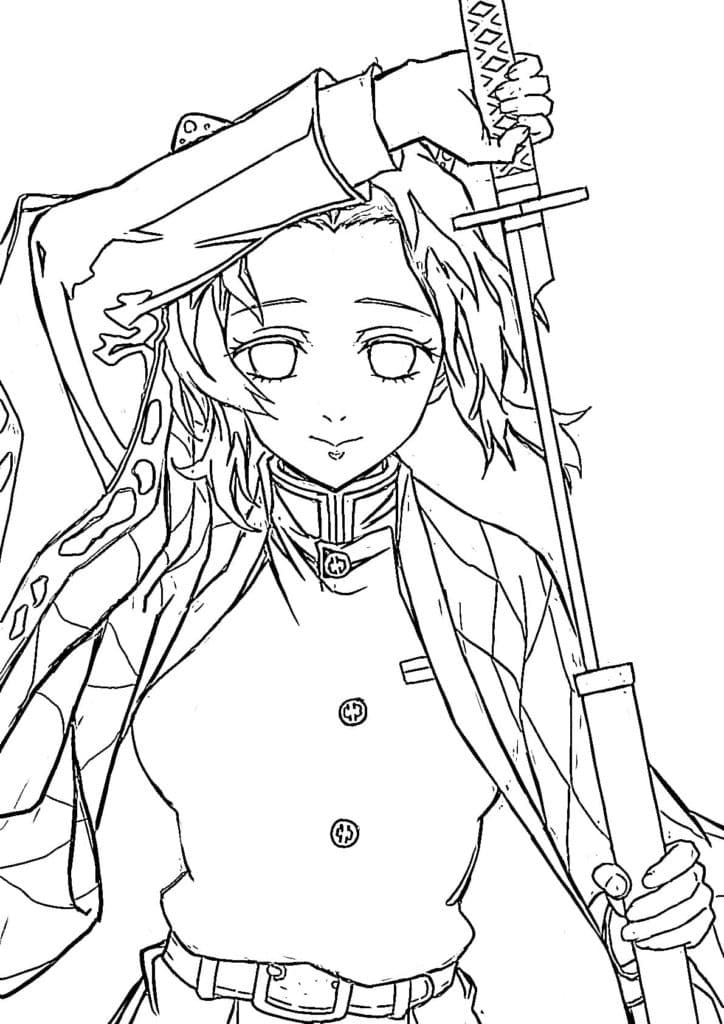
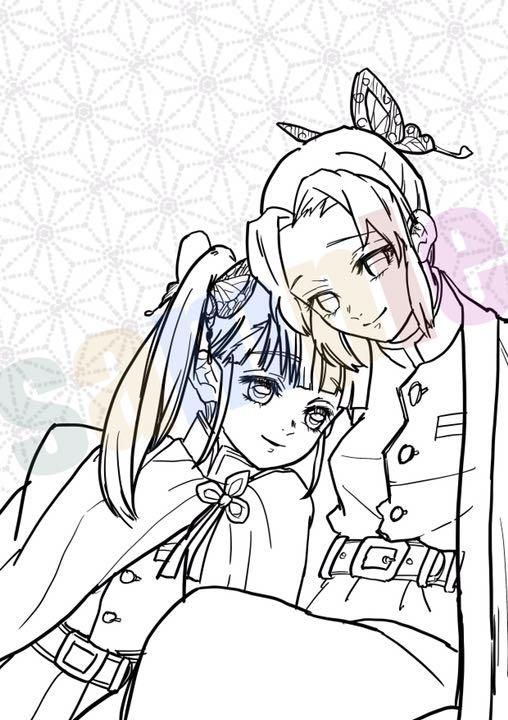
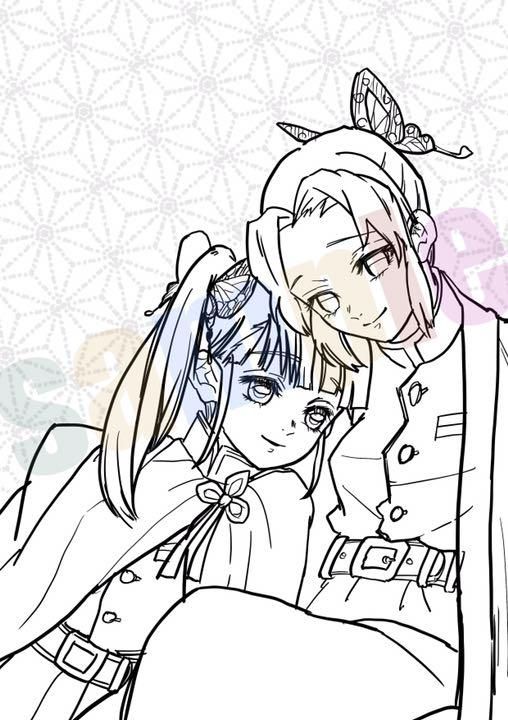
The pages are divided into two types. Solo portrait and expression pages, Smiling Shinobu, Happy Shinobu, Beautiful Shinobu, Shinobu with sword, reward careful attention to the haori pattern and her constant gentle expression. Duo and butterfly pages, Shinobu with Giyu, Shinobu with Mitsuri, Shinobu with butterfly companions, shift the focus to palette contrast: Giyu’s geometric red-and-white against Shinobu’s soft gradients, and Mitsuri’s vivid pink-and-green against Shinobu’s cooler purple. Chibi pages suit younger fans; the detailed haori gradient and duo pages give older fans more to work through.

These pages work well at home or as anime fan art. These are fan-made coloring pages and are not official, licensed, or endorsed by the creators or rights holders of Demon Slayer: Kimetsu no Yaiba.

Quick Answer

Shinobu Kochou coloring pages are a free set of 40+ printable PDFs and online coloring sheets featuring the Insect Hashira across solo portraits, expression and sword pages, butterfly pages, chibi pages, and duo pages with Giyu Tomioka and Mitsuri Kanroji. The butterfly wing haori’s dark-to-pink gradient is the set’s defining coloring challenge.

Best for: Demon Slayer fans, Shinobu fans, anime fans, teens and adults, and anyone who enjoys intricate patterns and gradient coloring on anime characters.

Formats: printable PDF and online coloring.

Popular pages: Shinobu Kochou Smiling, Shinobu Kochou and Butterfly, Shinobu Kochou and Giyu Tomioka, Chibi Shinobu Kochou, Shinobu With Sword.

Creative uses: fan art practice, butterfly haori gradient study, Shinobu and Giyu contrast pair, Demon Slayer Hashira display, and chibi expression collection

What’s Inside Shinobu Kochou Coloring Pages

Shinobu Kochou Solo Pages

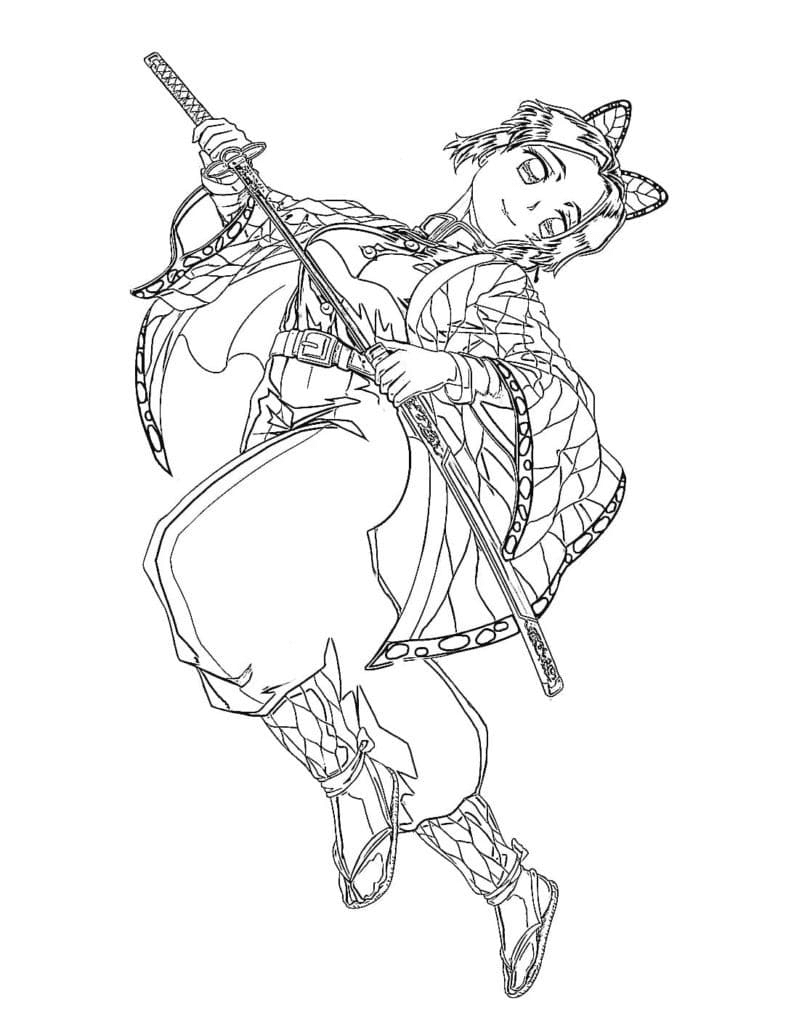
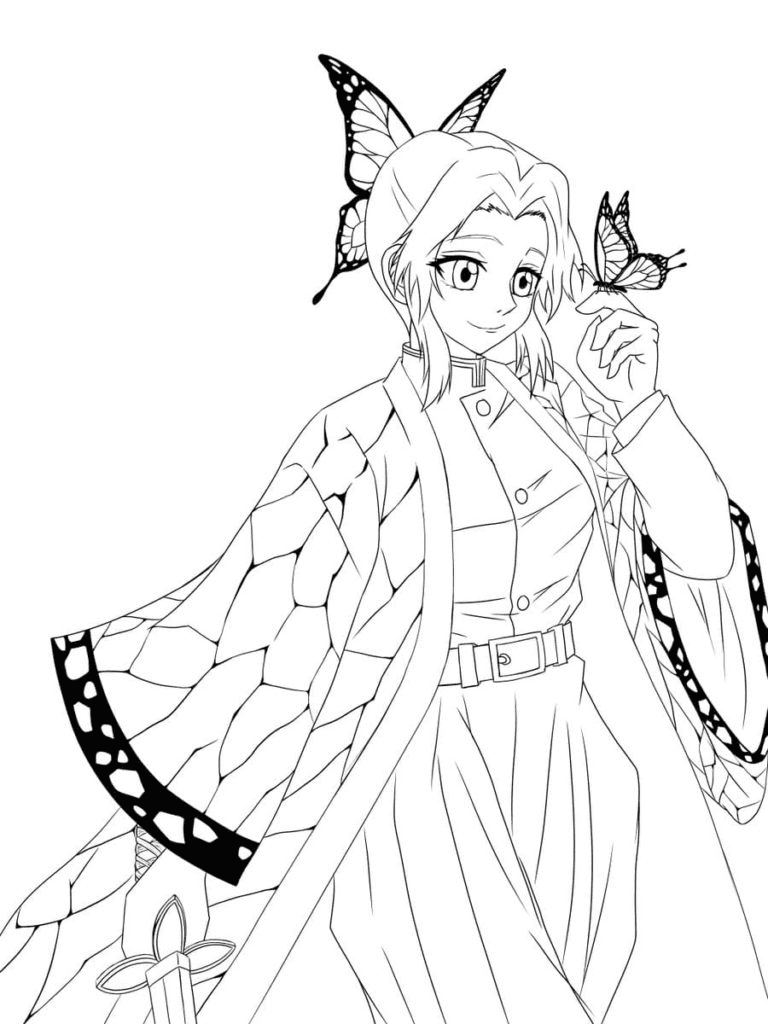
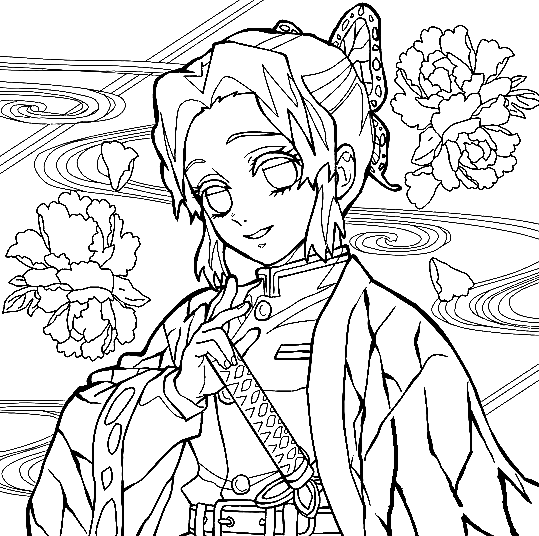
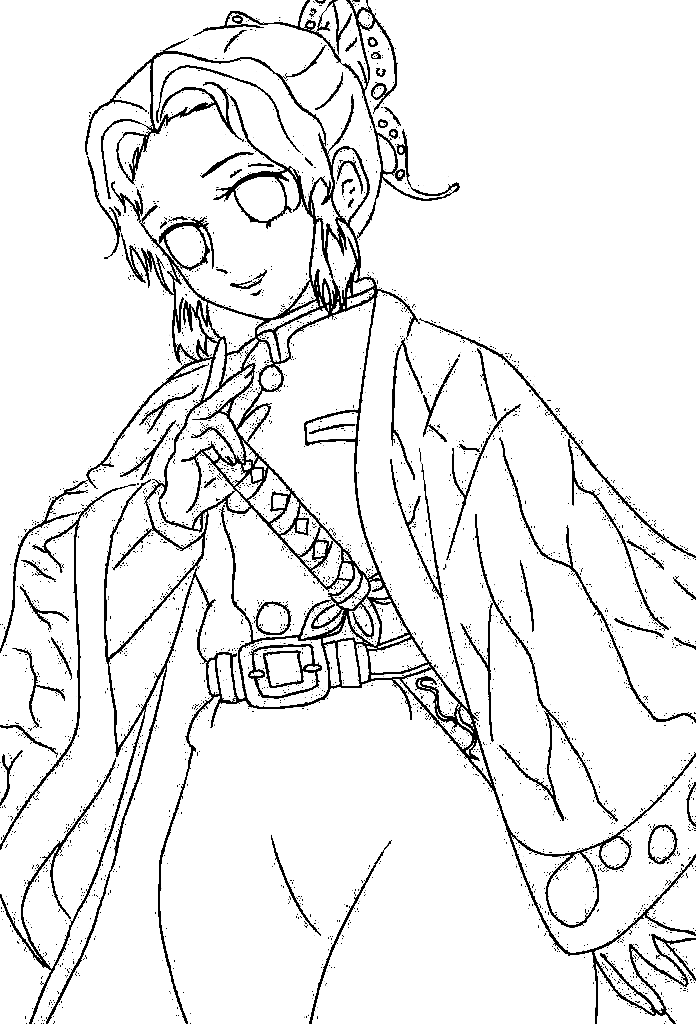
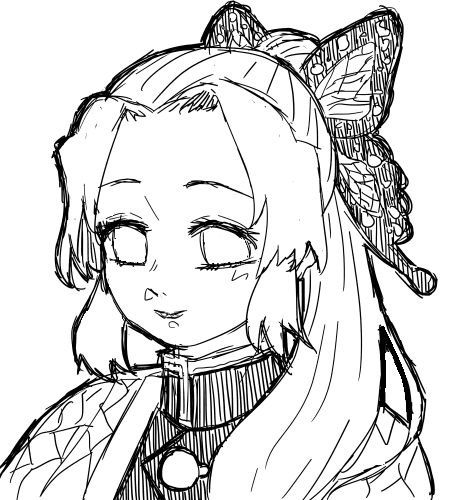
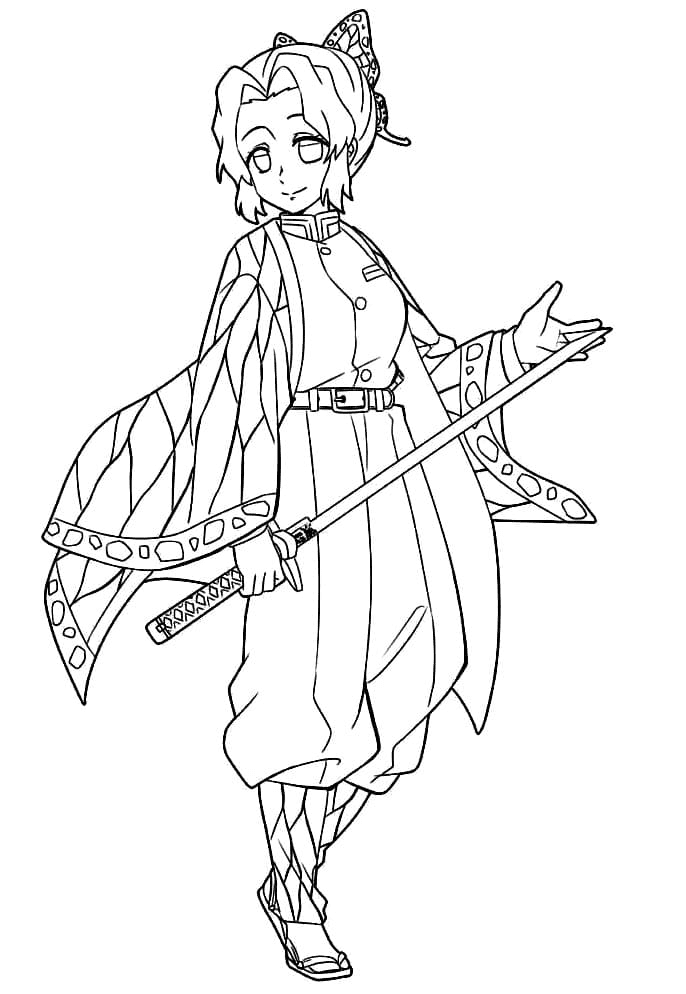
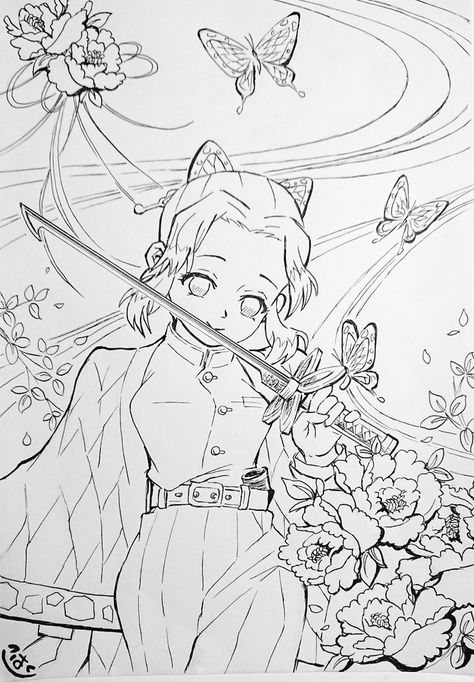
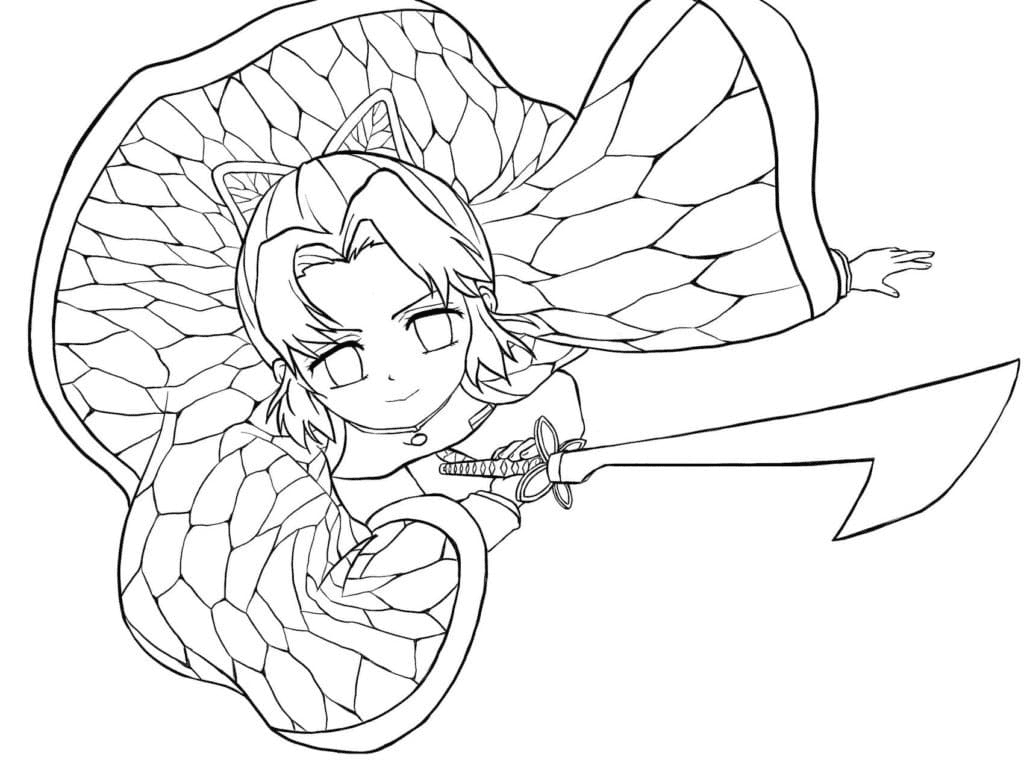
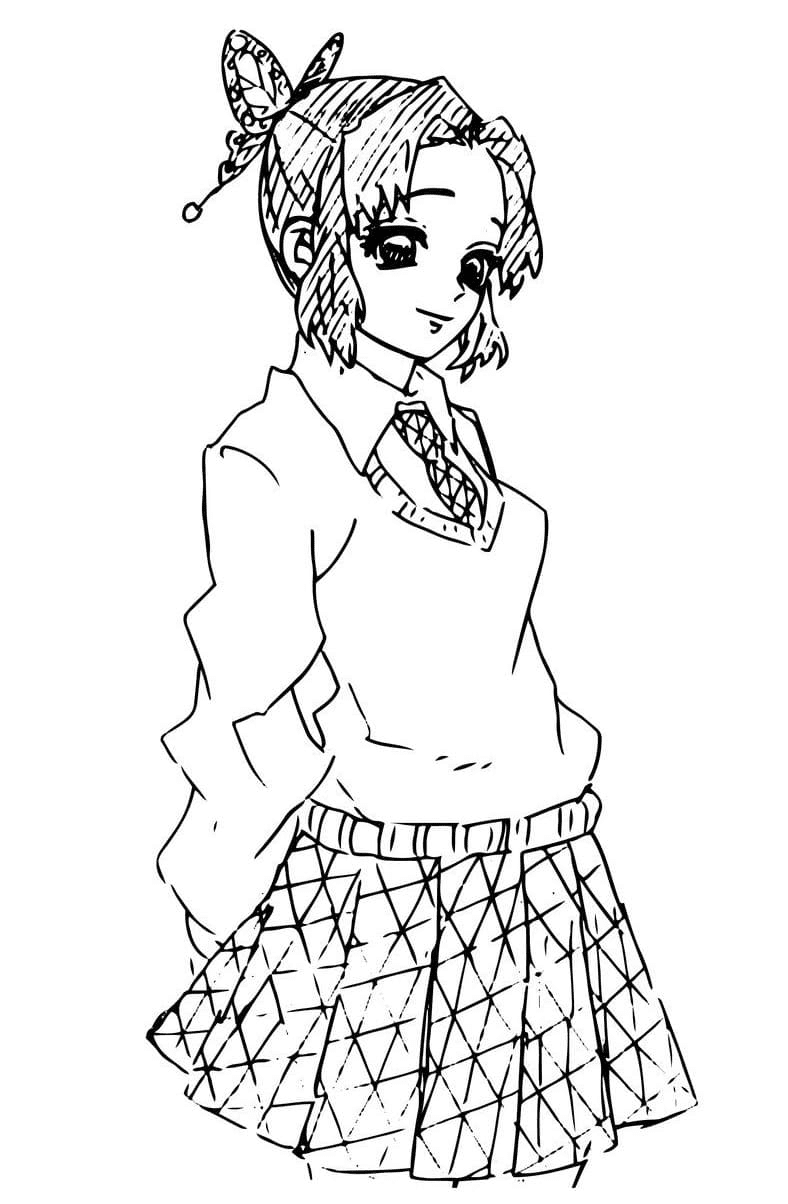
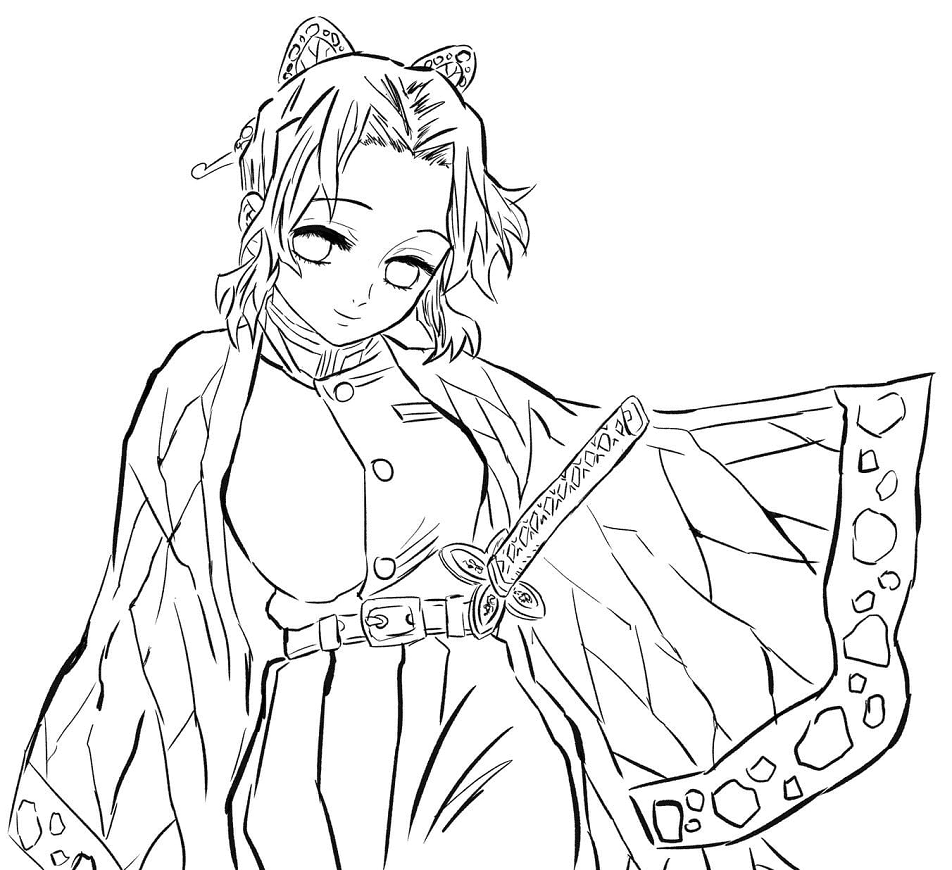
The solo pages cover Shinobu across portrait close-ups, three-quarter views, and full-body poses. Expression variants include Smiling, Happy, Lovely, Beautiful, Cute, Kawaii, Adorable, Amazing, and Wonderful pages. Several printable and free printable versions of the core design are also included. The Shinobu With Sword and Shinobu Kochou With Sword pages show her in a more active stance with her thin blade.

Coloring Shinobu’s base design: Shinobu’s hair transitions from a deeper purple at the roots to a lighter, more lavender tone at the tips, with a final pale highlight at the very ends. Her skin is pale and slightly cool. Her eyes are a vivid purple, slightly more saturated than the lighter sections of her hair. Her standard uniform is dark, close-fitting, and mostly uniform in tone: a deep charcoal-navy that reads as dark without competing with the haori. The haori demands the most attention: start with the dark purple at the shoulder and upper back, transition through teal-green and yellow in the mid-section, and finish with the pink-to-white butterfly wing burst at the hem. Each transition should blend smoothly across the butterfly wing shapes rather than stopping abruptly at any one boundary.

Shinobu Kochou and Butterfly Pages

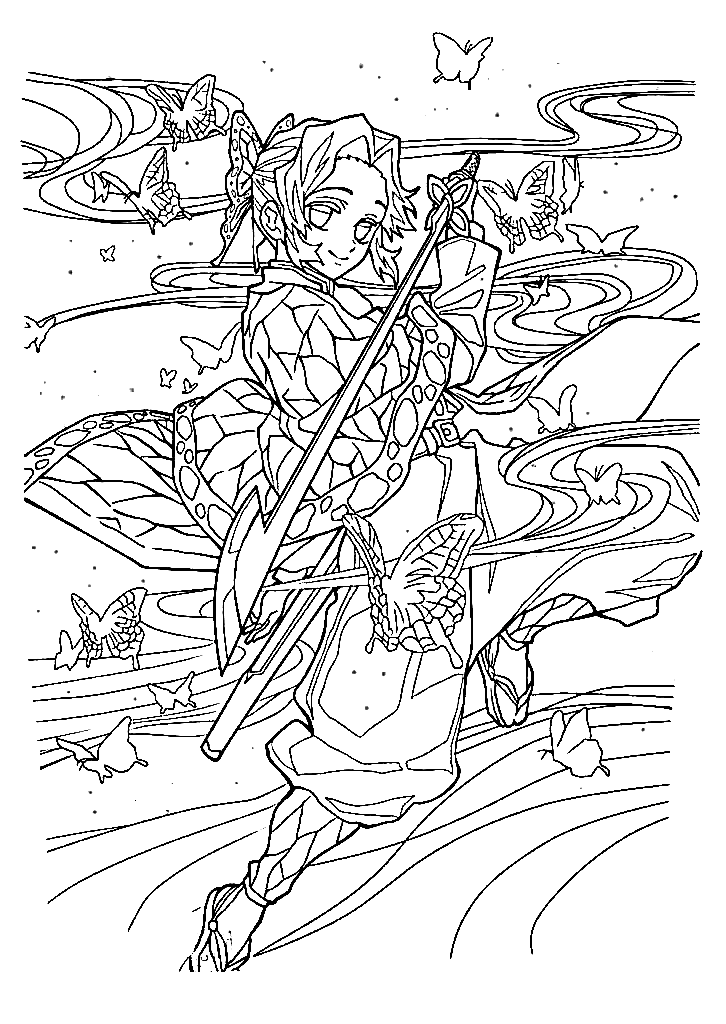
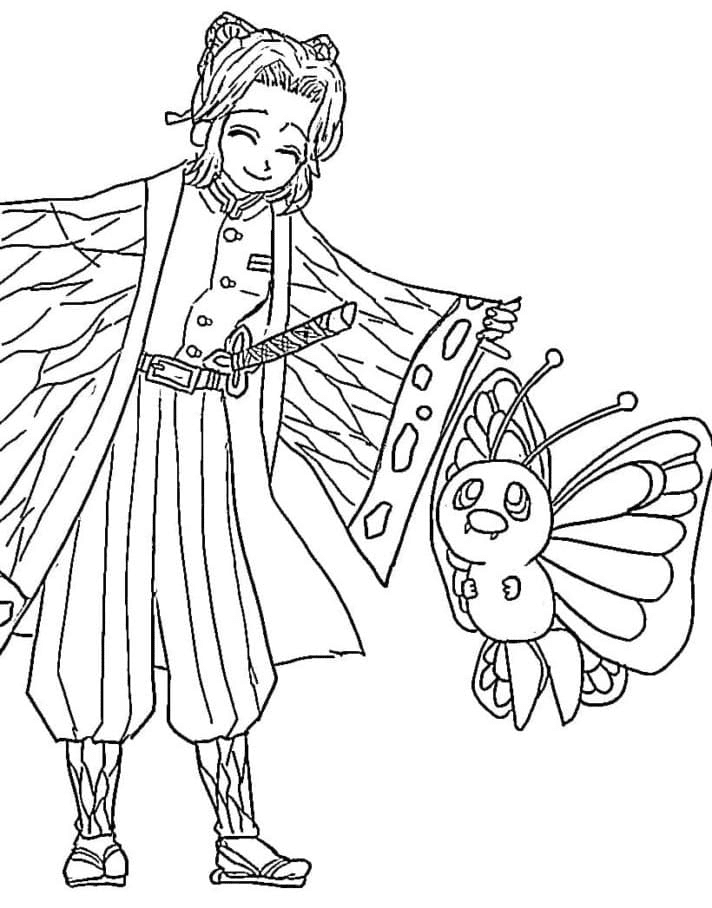
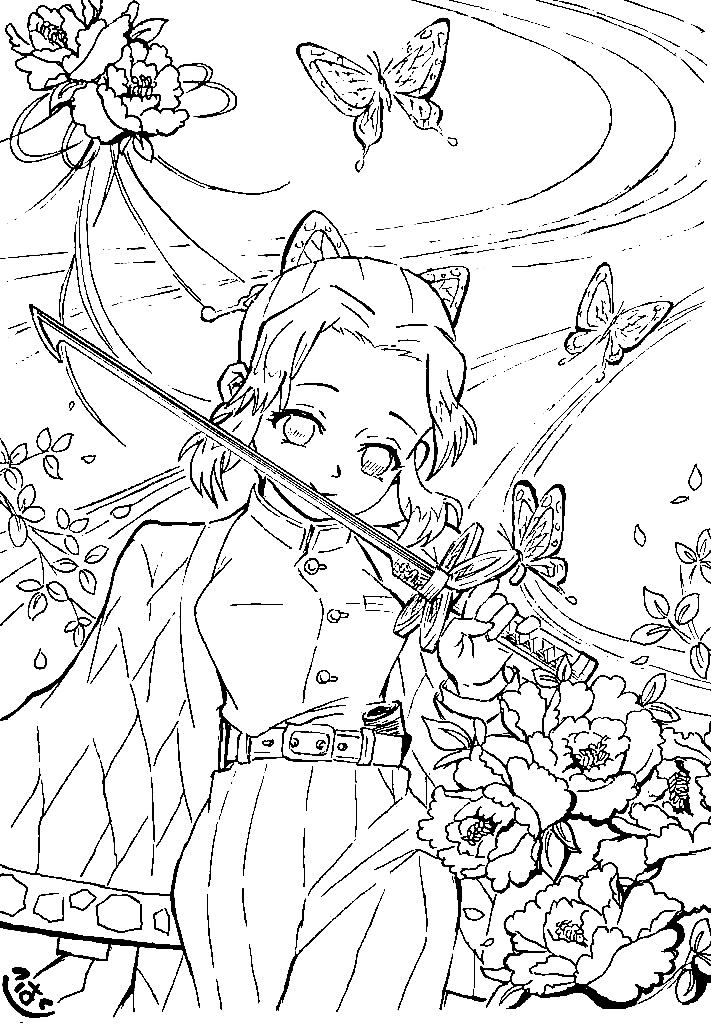
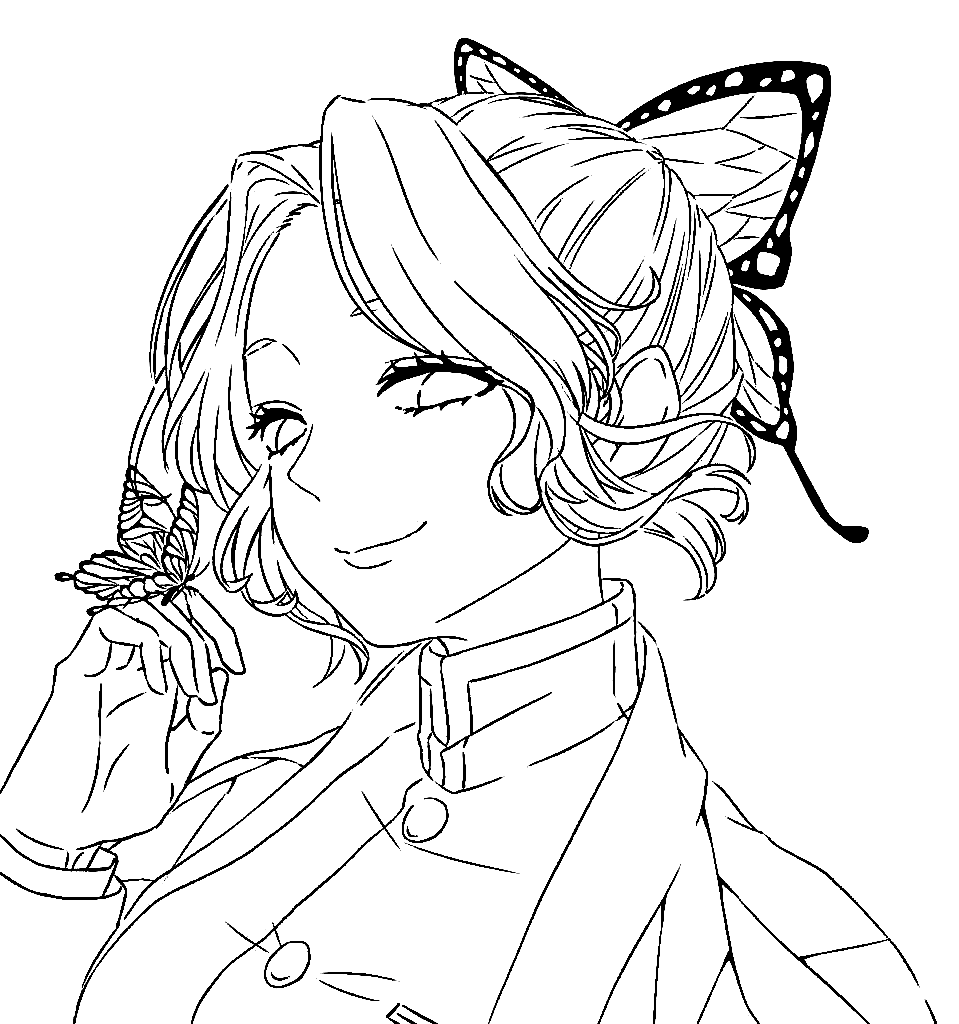
Two pages pair Shinobu with butterfly companions: Shinobu Kochou and Butterfly, and Shinobu And Butterfly.

Coloring the butterfly pages: the butterflies in these pages share Shinobu’s haori palette. Use the same yellow-green, teal, and pink tones from the haori for the butterfly wings, keeping the markings slightly darker at the wing edges and lighter toward the center to suggest the translucency of butterfly wings. The effect is a visual echo between character and companion: Shinobu’s haori and the butterflies around her read as the same living pattern at different scales.

Shinobu Kochou and Giyu Tomioka Pages

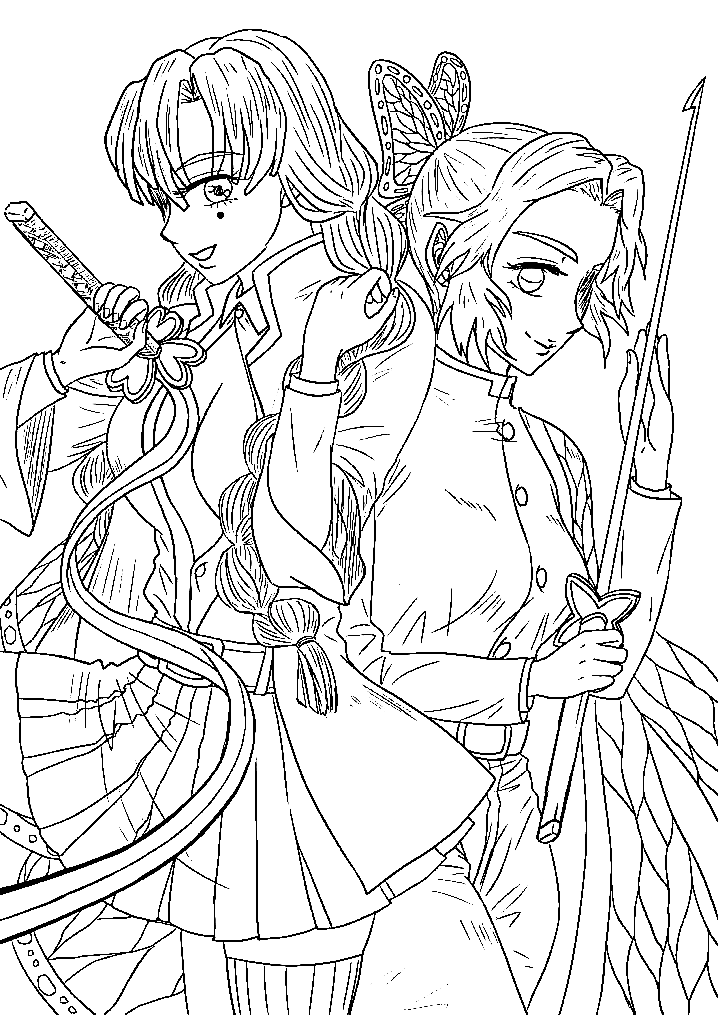
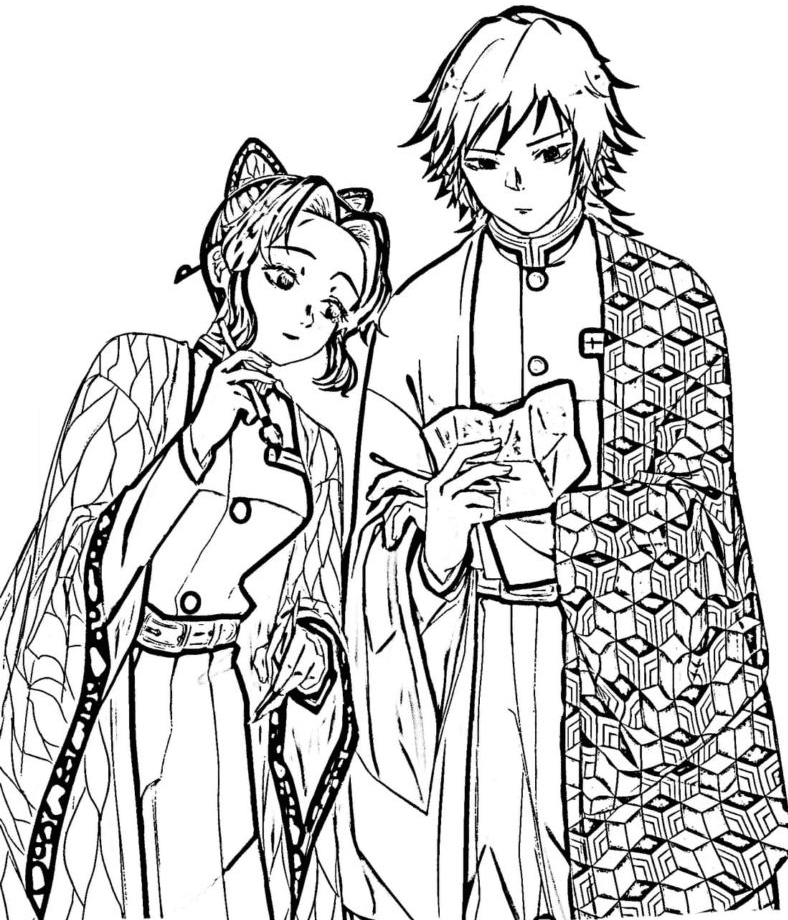
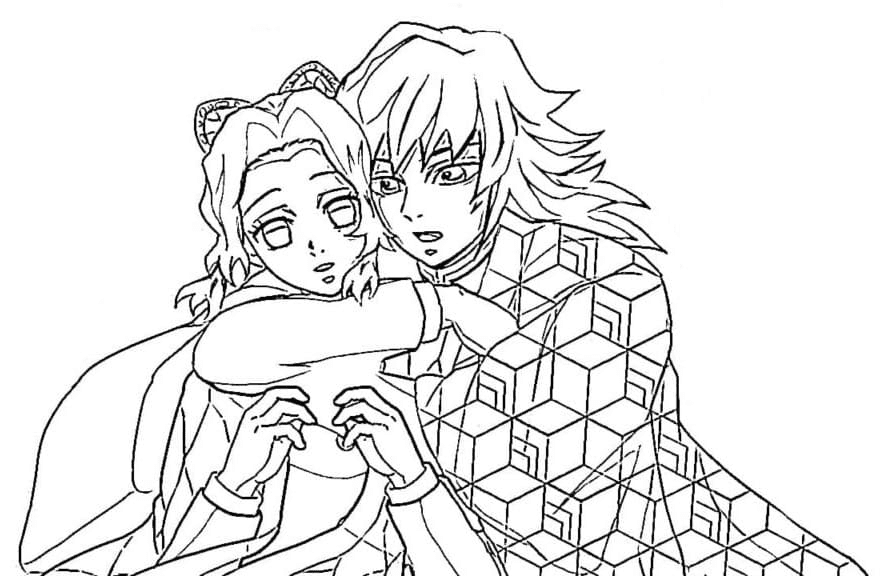
Four pages show Shinobu alongside the Water Hashira: Shinobu Kochou and Giyu Tomioka, Tomioka and Shinobu, Giyu Tomioka and Shinobu Kochou, and Shinobu and Tomioka.

Coloring Shinobu and Giyu together: Giyu’s haori is split vertically down the center: one half a geometric red-and-white pattern, the other half plain dark fabric. His hair is dark, and his overall palette is more angular and structured than Shinobu’s soft gradients. The contrast between the two on any shared page is between the geometric and the organic, between Giyu’s hard-edged pattern and Shinobu’s flowing butterfly gradient. On these pages, keep each haori true to its own visual logic: Giyu’s side sharp and flat, Shinobu’s side soft and transitional.

Shinobu Kochou and Mitsuri Kanroji Pages

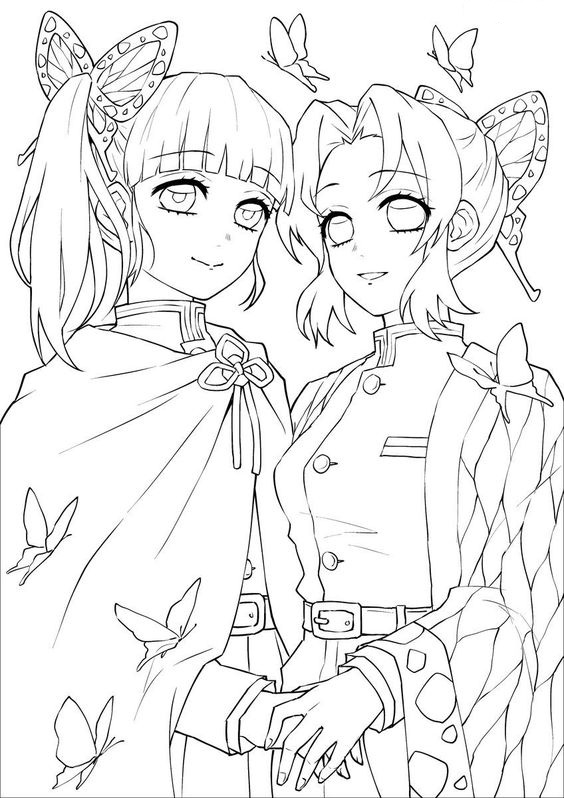
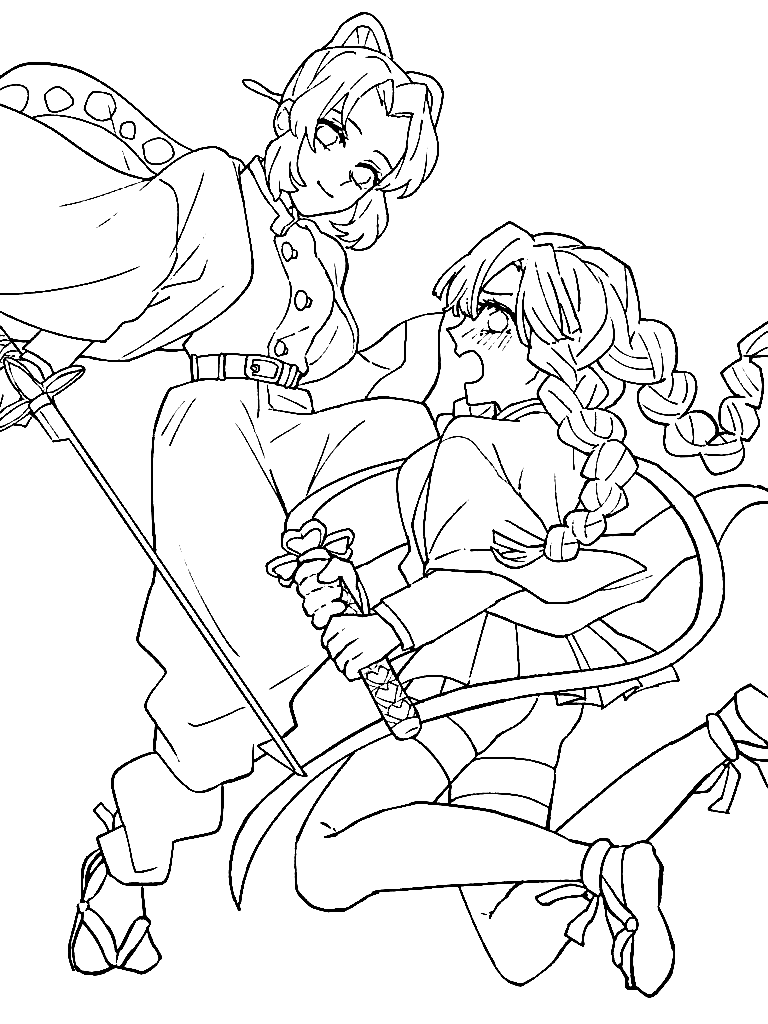
Two pages pair Shinobu with the Love Hashira: Shinobu Kochou and Mitsuri Kanroji and Mitsuri Kanroji and Shinobu Kochou.

Coloring Shinobu and Mitsuri together: Mitsuri is the warmest palette in the Demon Slayer Hashira cast. Her hair transitions from pink at the roots through green at the tips, and her haori is a soft pink. On the duo pages, her vivid warm pink reads as the direct complement to Shinobu’s cool purple. Give Mitsuri her full warm pink-green and let Shinobu’s gradient haori carry the cool side of the composition: the two Hashira’s palettes create a warm-cool balance that makes each character look more vivid by contrast.

Chibi and Group Pages

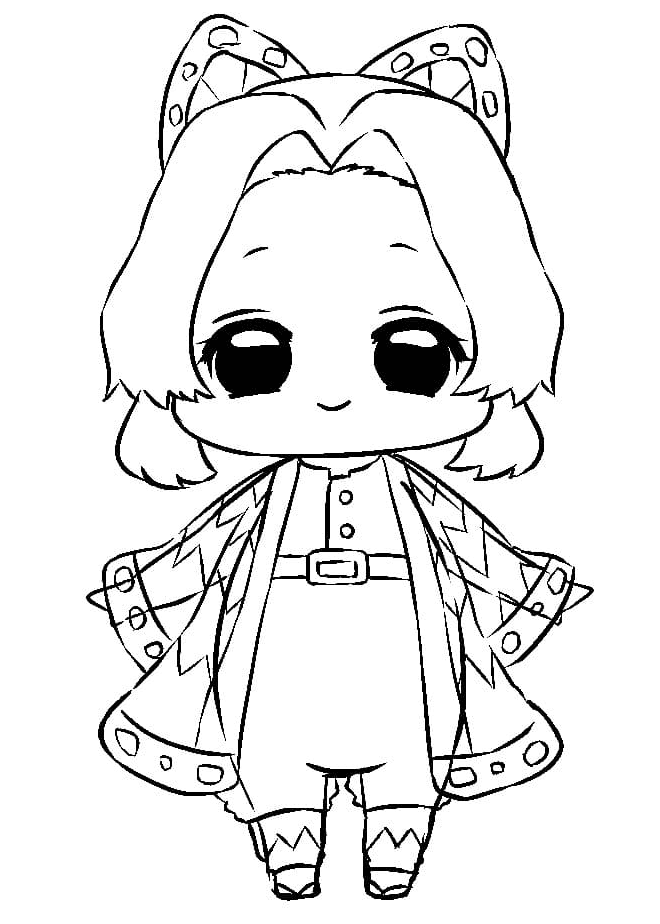
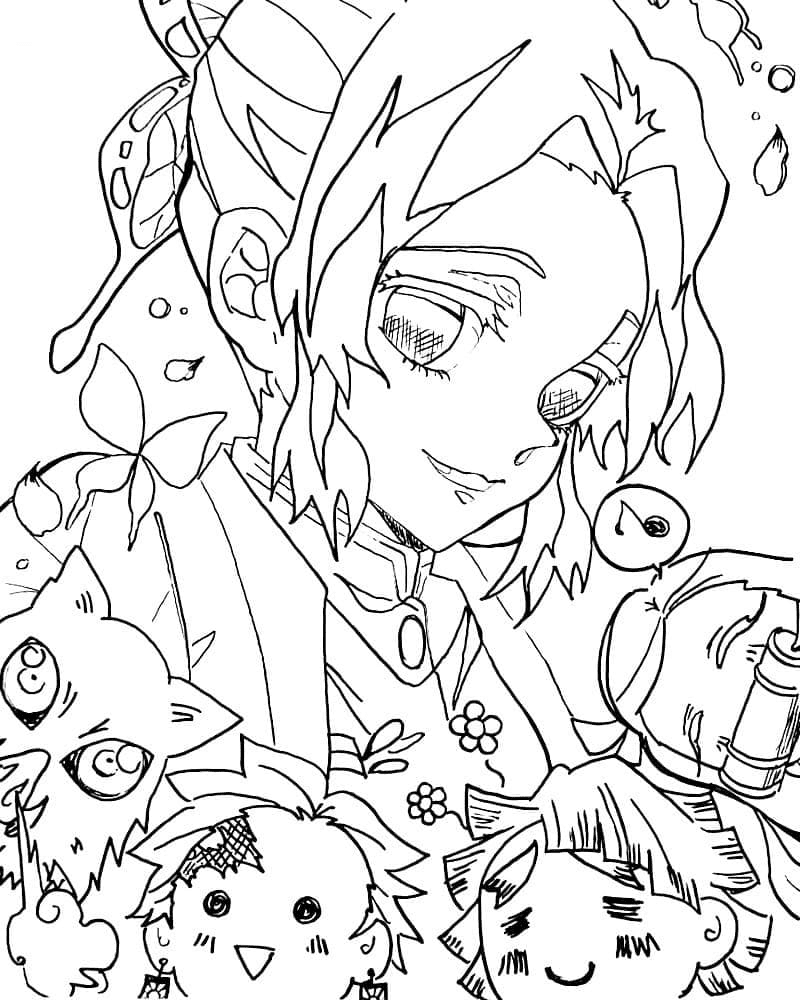
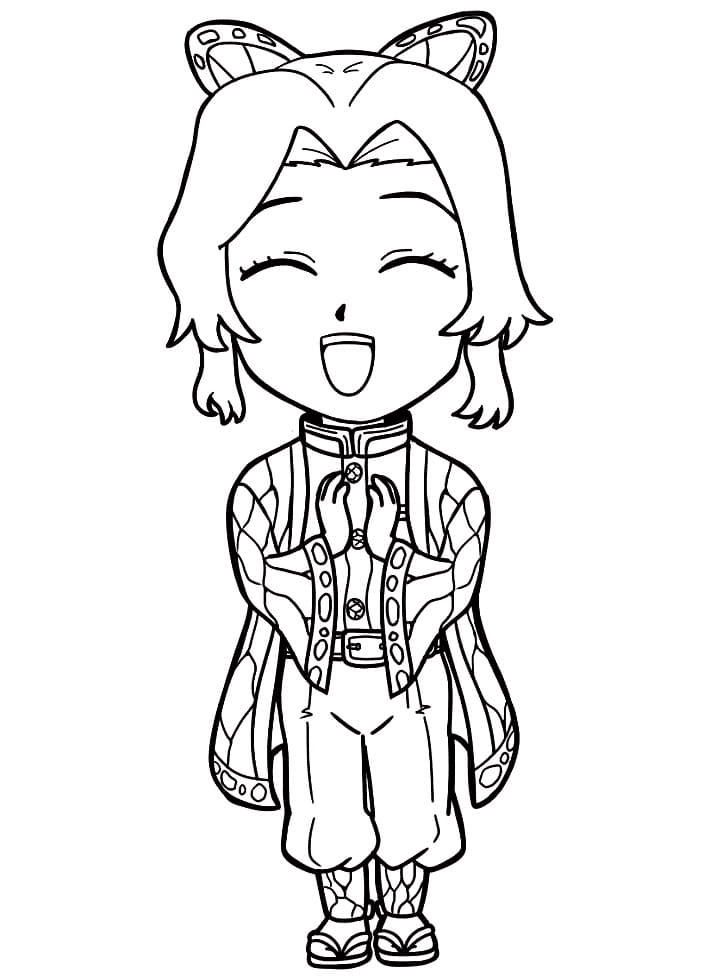
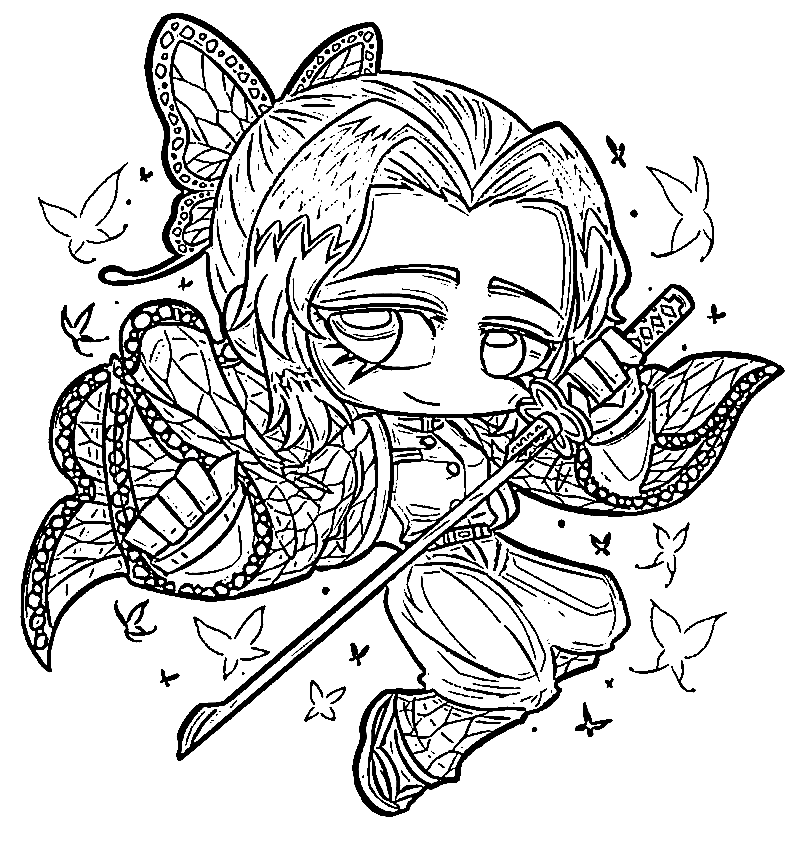
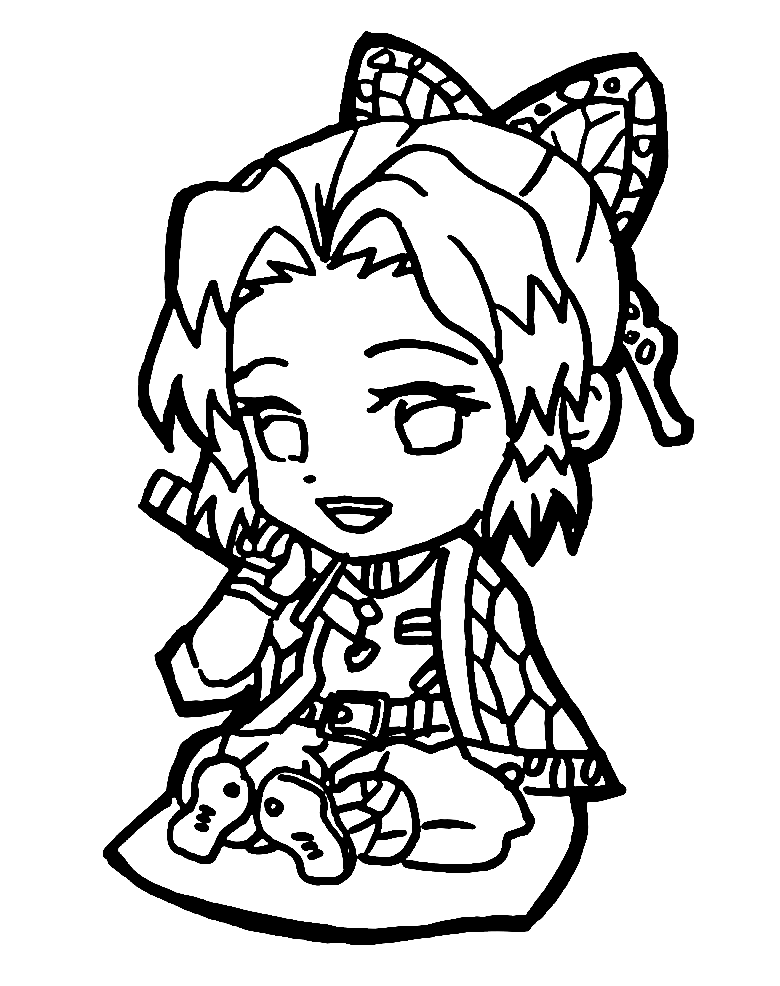
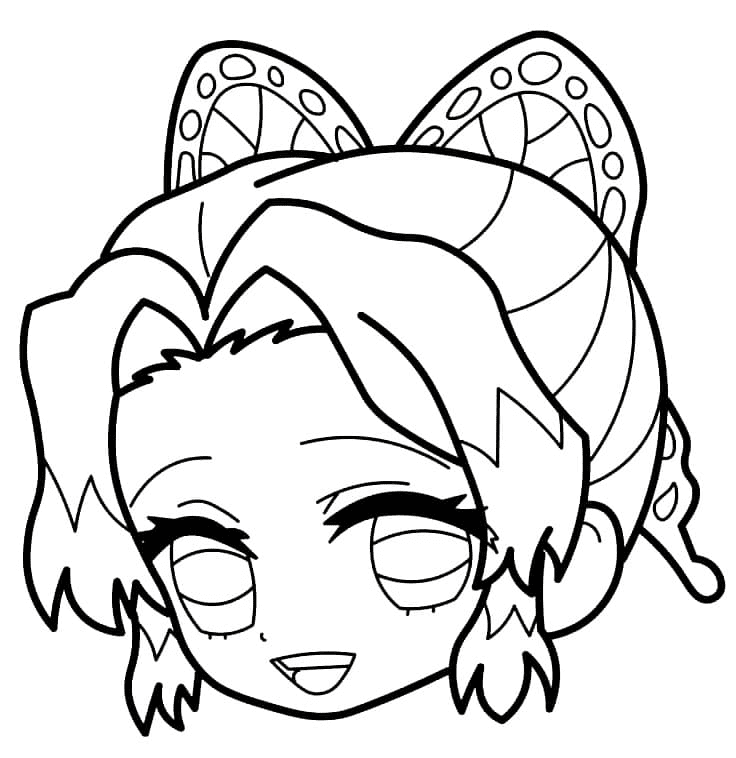
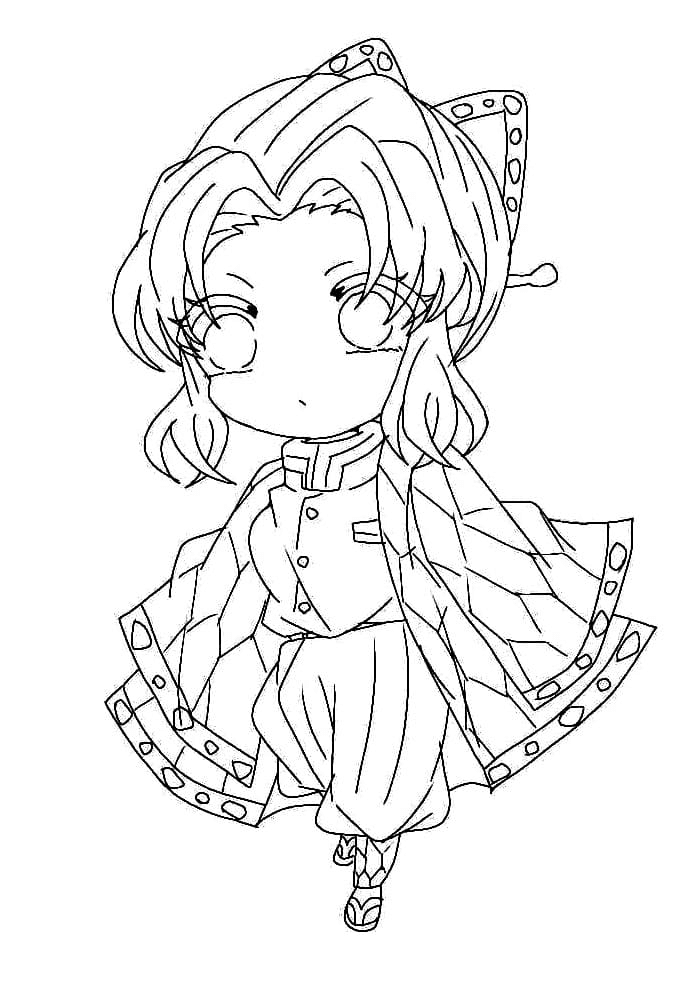
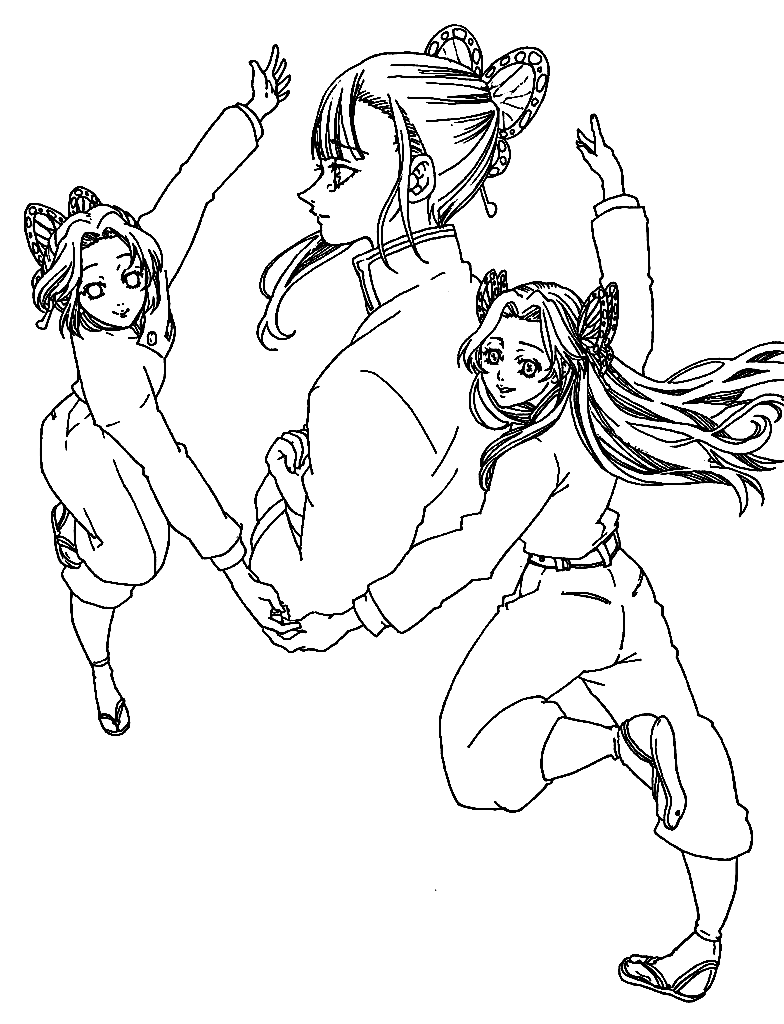
Five chibi pages show Shinobu in simplified form: Shinobu Kochou Chibi, Chibi Shinobu, Chibi Shinobu Kochou, Happy Chibi Shinobu, and Cute Chibi Shinobu. Several group pages show Shinobu alongside other Demon Slayer characters in various compositions.

Coloring chibi and group pages: chibi Shinobu keeps the same purple hair gradient and butterfly haori, but in simplified proportions where the haori pattern becomes a broadly suggested gradient rather than a detailed wing design. Apply the same purple-to-pink direction but treat each color zone as a single flat fill with a smooth edge rather than a detailed pattern. On group pages, identify each character’s signature palette before starting: Shinobu’s cool purple gradient, Giyu’s split geometric haori, Mitsuri’s warm pink, and any other Hashira present.

Printable PDF and Online Shinobu Kochou Coloring Pages

Every design comes in two ways: a printable PDF for paper, or the same artwork colored on screen.

Using both formats: print the PDF when you want a clean sheet for fine-liners, colored pencils, or blending markers, and use the on-screen version when there is no printer nearby. The PDF holds the butterfly haori’s gradient linework and the fine detail of Shinobu’s hair transition cleanly on standard letter or A4 paper.

What These Pages Do

Shinobu Kochou’s butterfly haori is one of the best examples in anime character design of a single garment that teaches two distinct coloring skills simultaneously: gradient transitions and pattern work. The haori does both at once, asking you to move through purple, teal, yellow, pink, and white across a surface that is also organized into overlapping butterfly wing shapes. These are not independent problems: the gradient must follow the wing shapes, and the shapes only read correctly if the gradient flows through them correctly. A colorist who can handle that coordination has the foundation for any garment, textile, or wing surface that combines gradient and pattern. From here, Demon Slayer coloring pages are the direct parent hub, and anime coloring pages are the broader collection.

The American Art Therapy Association recognizes that creative challenges, which appear simple on the surface but reveal genuine complexity on engagement, provide a particular kind of satisfaction distinct from either purely easy or purely frustrating tasks. Shinobu’s design exemplifies this: the pale face and soft expression look approachable, and then the haori reveals itself as a genuinely demanding pattern problem. That experience of discovering unexpected depth in what looked manageable is one of the more quietly absorbing things a coloring set can offer. The American Academy of Pediatrics supports creative activities that build pattern recognition and fine motor precision, and the haori gradient specifically requires both: reading the wing shapes correctly before placing any color, and then executing the transitions with enough control that the pattern reads at the scale the linework provides.

How to Color Shinobu Kochou Coloring Pages

These steps work for any page in the set, from a simple chibi to the full duo pages.

Plan the haori gradient before placing any color. The haori runs dark purple at the shoulders, through teal-green and yellow in the middle section, and finishes in pink-to-white at the hem. The butterfly wing shapes are the framework through which this gradient flows: identify the wing boundaries first, then fill each wing zone in the correct color for that section of the gradient. Reversing the order, filling arbitrarily, and hoping the gradient emerges, produces muddy results.

Blend the hair gradient from root to tip. Shinobu’s hair moves from deeper purple at the roots to a lighter lavender at the tips. Use two or three tones of purple: darkest at the roots and inner areas, mid-purple for the main body of the hair, and a pale cool lavender or near-white at the very tips. The transition should be gradual across the length of each strand rather than an abrupt color change at a fixed midpoint.

On butterfly pages, echo the haori palette in the butterfly wings. The companion butterflies and the haori are the same living pattern at different scales. Use teal, yellow-green, and pink for the wings with slightly darker edges and lighter centers to suggest translucency. The consistency between the haori and the butterfly makes the whole composition feel like a single unified design.

On the Giyu duo pages, keep each haori in its own visual logic. Giyu’s pattern is sharp, geometric, and flat. Shinobu’s is soft, organic, and gradient. Apply flat clean fills to Giyu’s side and flowing gradient work to Shinobu’s side: mixing the two approaches would make both look wrong.

On the Mitsuri duo pages, push both palettes to full saturation. Mitsuri’s warm pink-green and Shinobu’s cool purple-to-pink need to be at full intensity for the warm-cool contrast to work. Softening either side to match the other loses the visual energy that the pairing is built on.

5 Creative Craft Ideas with Shinobu Kochou Coloring Pages

Butterfly Haori Gradient Study

Color a solo Shinobu page focusing entirely on the haori gradient: dark purple at the shoulders, teal-green in the mid-section, pink-to-white at the hem, following the butterfly wing shapes throughout.

Write the four gradient tones on the back as a personal reference for any future gradient-and-pattern work. Mount on a card as a standalone technique study. Takes about thirty minutes.

Shinobu and Butterfly Pair

Color the Shinobu Kochou and Butterfly page, using the same teal, yellow-green, and pink palette from the haori for the butterfly wings with darker edges and lighter wing centers.

Mount on a card to show how the haori pattern and the butterfly echo each other at different scales. Takes about twenty-five minutes.

Shinobu and Giyu Contrast Display

Color a solo Shinobu page and a Shinobu and Giyu duo page side by side, keeping Shinobu’s haori in full soft gradient and Giyu’s haori in sharp, flat geometric fills.

Mount both on a dark card with the caption “Insect and Water” for a Hashira contrast display that takes about thirty-five minutes.

Chibi Shinobu Expression Collection

Color three chibi pages, Happy Chibi Shinobu, Cute Chibi Shinobu, and Chibi Shinobu Kochou, using the same palette throughout but varying the face expression on each.

Cut all three to the same size and mount them in a row on a card for a chibi collection that takes about twenty-five minutes.

Shinobu and Mitsuri Warm-Cool Pair

Color the Shinobu Kochou and Mitsuri Kanroji page, giving Mitsuri her full warm pink-and-green and keeping Shinobu in her cool purple gradient.

Mount on a card with the caption “Insect and Love” for a warm-cool Hashira pair that takes about twenty-five minutes.

FAQ About Shinobu Kochou Coloring Pages

Are these Shinobu Kochou coloring pages free, and can I color them online?

Yes. Every page is free, with no account, email, or payment required. Download the PDF to print at home, or color the design on screen in the browser.
Which characters are included?

The set features Shinobu Kochou across solo portraits, expression and sword pages, butterfly pages, and chibi pages, with duo pages alongside Giyu Tomioka and Mitsuri Kanroji, and group pages with other Demon Slayer characters.

Who is Shinobu Kochou?

Shinobu Kochou is the Insect Hashira in Demon Slayer: Kimetsu no Yaiba, one of the nine most powerful demon slayers. She uses Insect Breathing and a thin, poisoned blade rather than a standard Nichirin sword. Known for her constant gentle smile and calm demeanor that conceals considerable intensity, she is one of the series’ most popular characters. You can read more about Shinobu and the series on Wikipedia.

What colors should I use for the butterfly haori?

The haori runs dark purple at the shoulders, transitions through teal-green and yellow in the mid-section, and finishes with pink-to-white butterfly wing shapes at the hem. Plan the gradient zones before filling any color, and follow the butterfly wing shapes as the framework for each color transition.

How do I color Shinobu’s hair?

Shinobu’s hair runs from a deeper purple at the roots to a lighter lavender at the tips. Use three tones: darkest purple at the roots and inner areas, mid-purple for the main body, and a pale cool lavender or near-white at the very tips. Apply each transition gradually across the length of the hair rather than switching abruptly at a single point.

What is the contrast between Shinobu and Giyu on the duo pages?

Giyu’s haori is split vertically with one half in a geometric red-and-white pattern and the other in plain dark fabric: sharp, flat, and angular. Shinobu’s haori is a flowing gradient with organic butterfly wing shapes: soft, transitional, and curved. On shared pages, keep each haori in its own visual language to preserve the contrast that defines their pairing.
Are the chibi pages suitable for younger fans?

Yes. The chibi pages simplify the haori into a broadly suggested gradient without detailed wing patterns, making them much more accessible for younger fans and beginners. The full solo and duo pages with the complete haori gradient are better suited to older fans who want more technically demanding coloring work.

How do I color the butterfly companion pages?

Echo the haori palette in the butterfly wings: teal, yellow-green, and pink with slightly darker edges and lighter centers to suggest translucency. Keeping the butterfly palette consistent with the haori makes the whole composition read as a unified design rather than a character with unrelated props.

Are these official Demon Slayer coloring pages?

No. They are fan-made coloring sheets created by fans for personal use and are not affiliated with, licensed by, or endorsed by the creators or rights holders of Demon Slayer: Kimetsu no Yaiba.

What crafts can I make with these pages?

Popular options include a butterfly haori gradient study, a Shinobu and butterfly pair, a Shinobu and Giyu contrast display, a chibi expression collection, and a Shinobu and Mitsuri warm-cool pair.

More Demon Slayer and Anime Coloring Pages

Browse the full set at ColoringPagesOnly.com, then open any design to print it or color it on screen.

These pages are made for personal fan use. They are fan-made coloring designs and are not official products of the Demon Slayer: Kimetsu no Yaiba franchise.

For the final pass: plan the haori gradient zones before placing any color, blend the hair from darker roots to pale lavender tips, and on duo pages, keep each character’s haori in its own visual logic. Those three habits cover the most demanding coloring decisions in the set.

Share your work on Facebook and Pinterest and tag #ColoringPagesOnly. We would love to see your gradient studies, butterfly pairs, and Hashira contrast displays.

These related coloring collections will help you explore the wonderful world of colors. Let’s choose, be creative, and show us your great pictures!

Jennifer Thoa – Content Editor & Designer

Jennifer Thoa is Content Editor and Designer at ColoringPagesOnly.com. Degree in Journalism and Creative Writing, University of Kansas. She writes and edits long-form educational articles on anime, film, animals, world cultures, and automotive history - verified against named primary sources before publication.