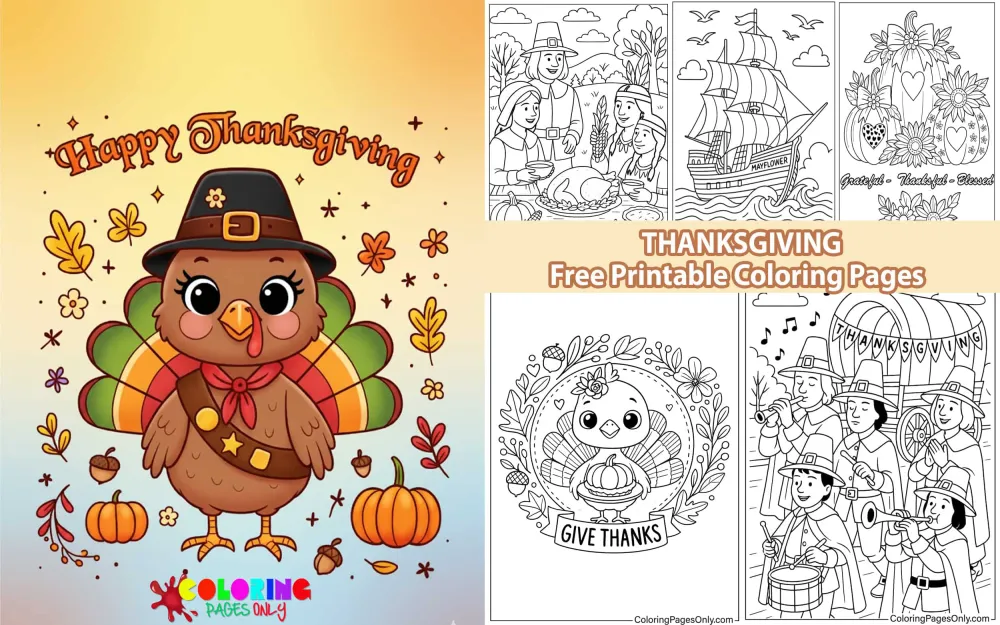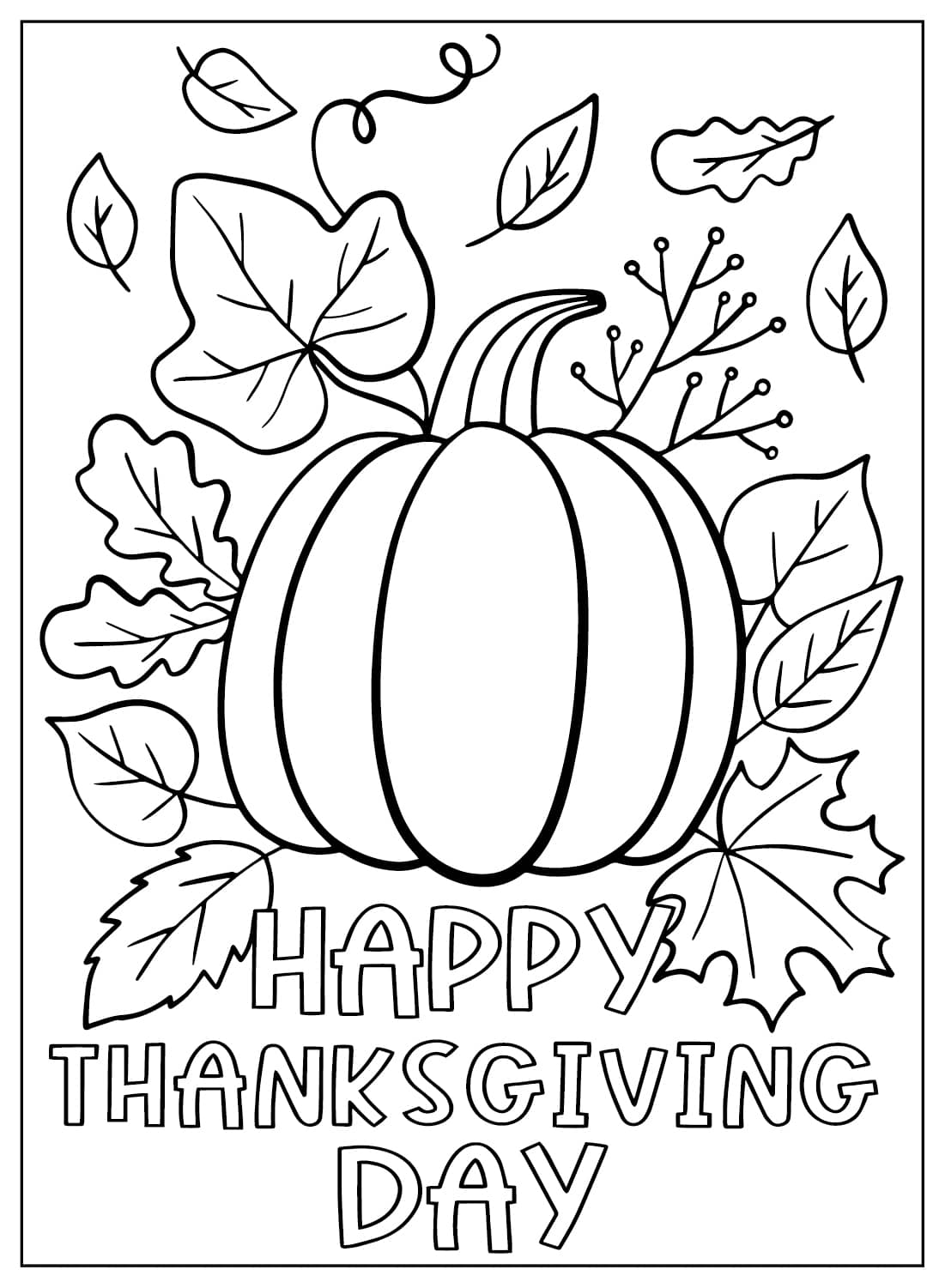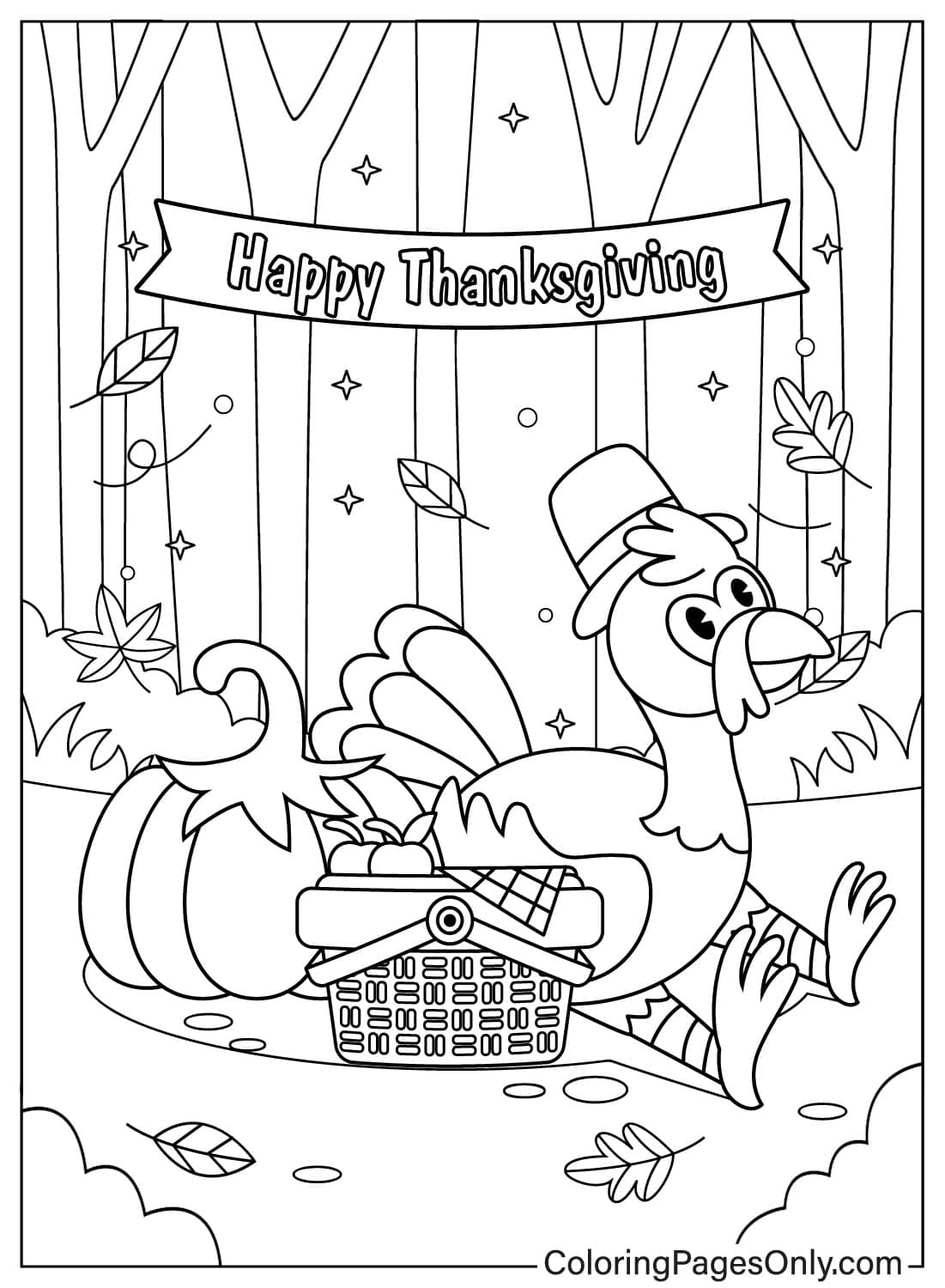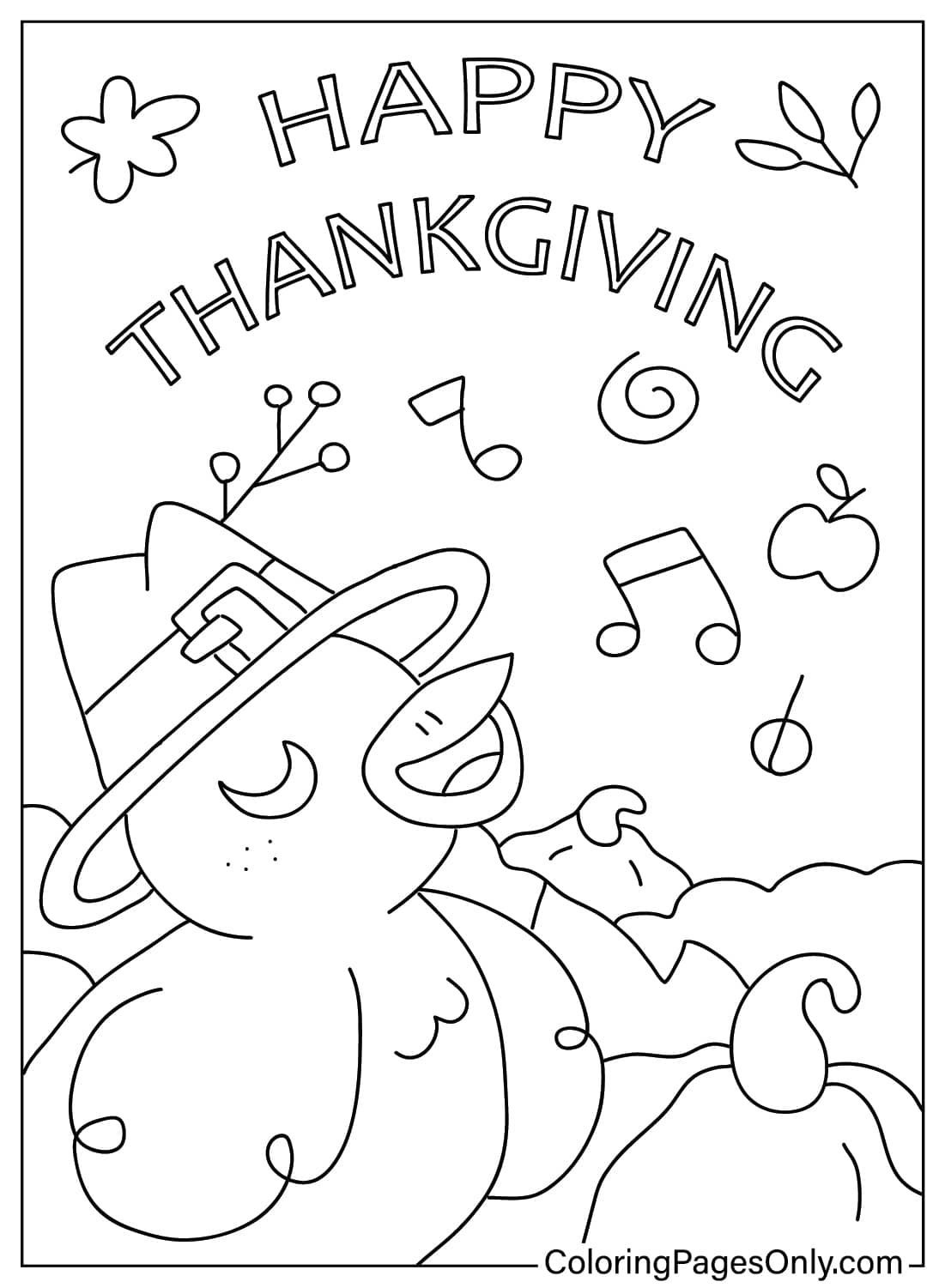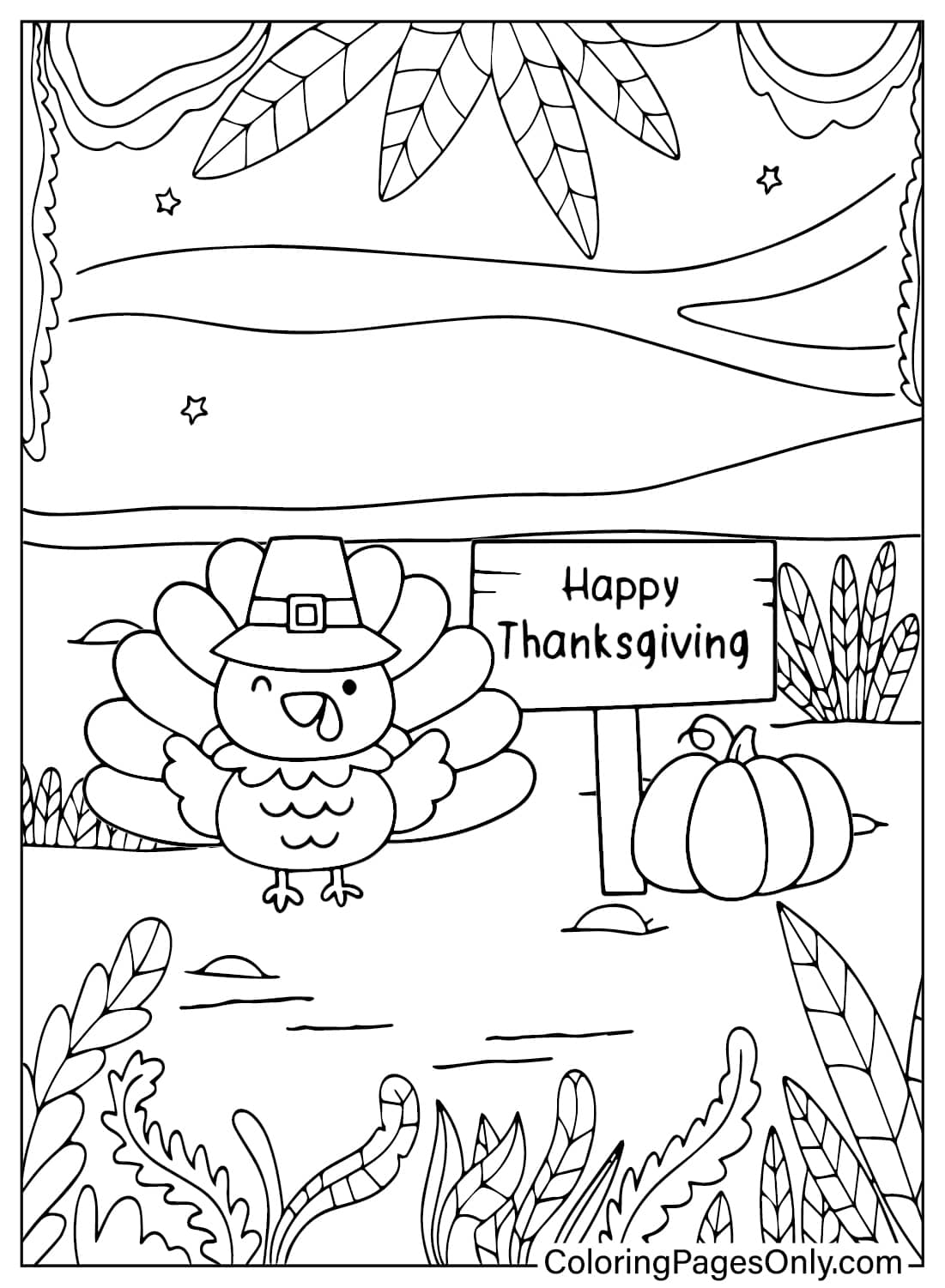
Thanksgiving Coloring Pages: 50+ free printable PDF designs covering turkeys, Pilgrims, harvest scenes, woodland animals in pilgrim hats, family feasts, and gratitude text posters for kids and adults.
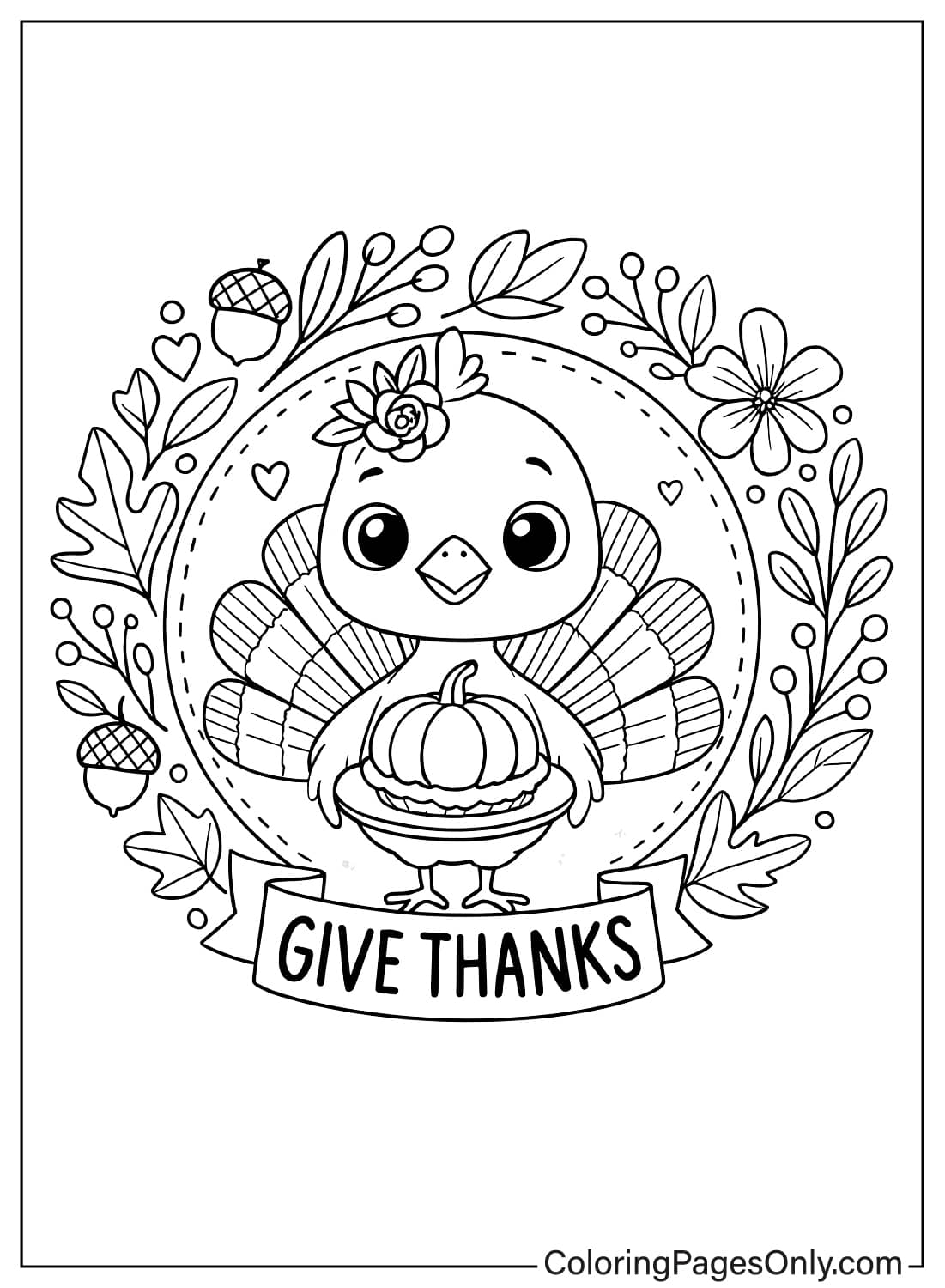
Thanksgiving in the United States is a federal holiday observed on the fourth Thursday of November, established by an act of Congress in 1941. The observance traces to a proclamation issued by President Abraham Lincoln on October 3, 1863, which designated the last Thursday of November as a national day of Thanksgiving during the Civil War. Lincoln’s proclamation drew on seventeen years of advocacy by Sarah Josepha Hale (the author of “Mary Had a Little Lamb”), who had written to presidents and governors consistently since 1846, requesting formal national recognition. The holiday’s historical anchor is the autumn 1621 harvest feast at Plymouth Colony, where Pilgrim settlers and members of the Wampanoag Confederacy (whose leader was Ousamequin, known to colonists as Massasoit) shared a multi-day celebration. That feast was not called Thanksgiving by its participants; it was a harvest observance that only acquired its present symbolic weight in the following centuries.

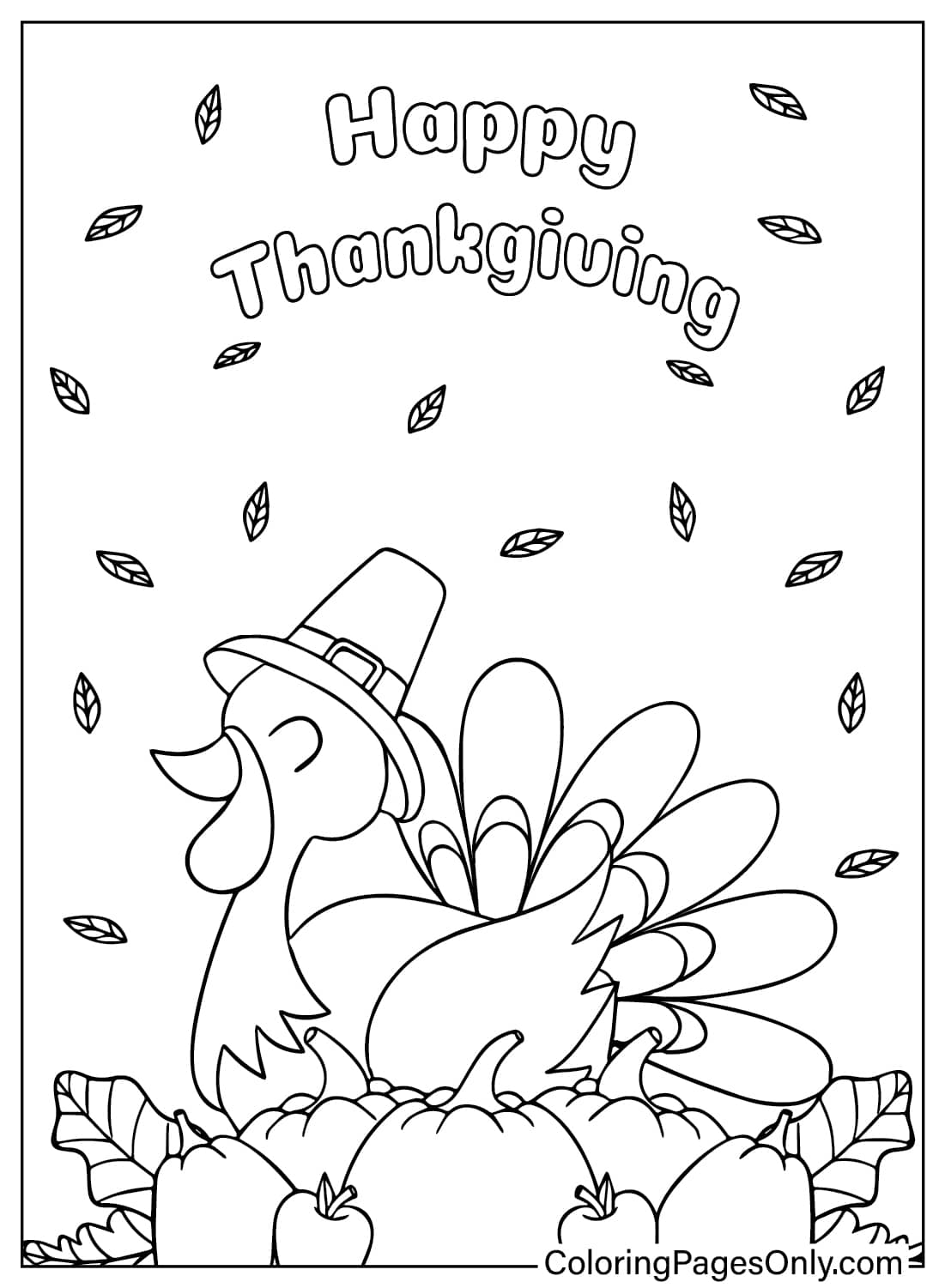
The collection covers the full range of Thanksgiving imagery: turkeys in cartoon and cute styles, Pilgrim and colonial scene pages, harvest foods and autumn landscapes, woodland animals in Pilgrim hats, family and celebration pages, and gratitude text poster pages. A licensed character group adds Hello Kitty and Pomni in Thanksgiving settings.

These 50+ free pages at ColoringPagesOnly.com cover every Thanksgiving subject from the Mayflower to the harvest table. All free, PDF or PNG, print or color online.

What’s Inside

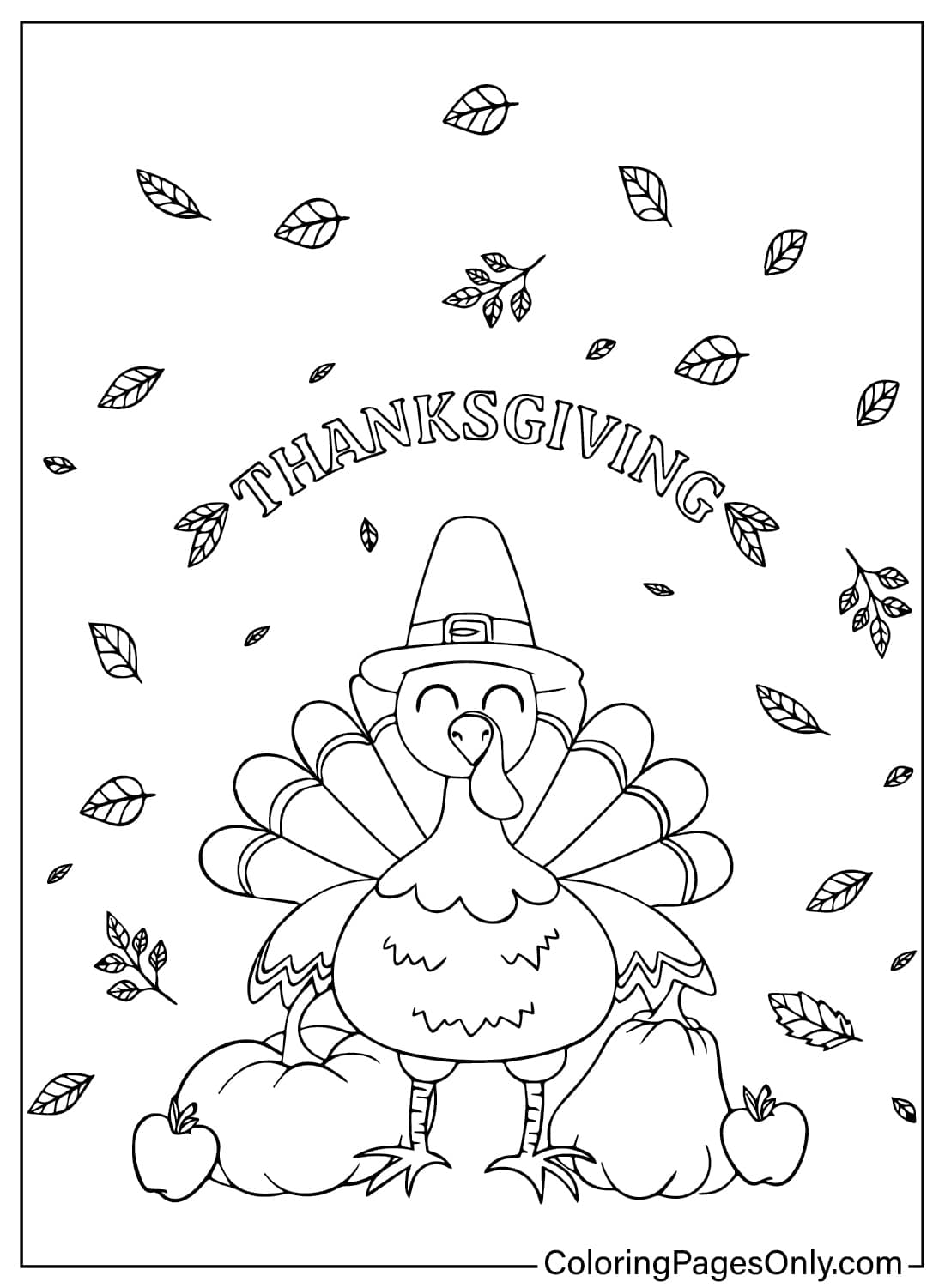
Turkey Pages

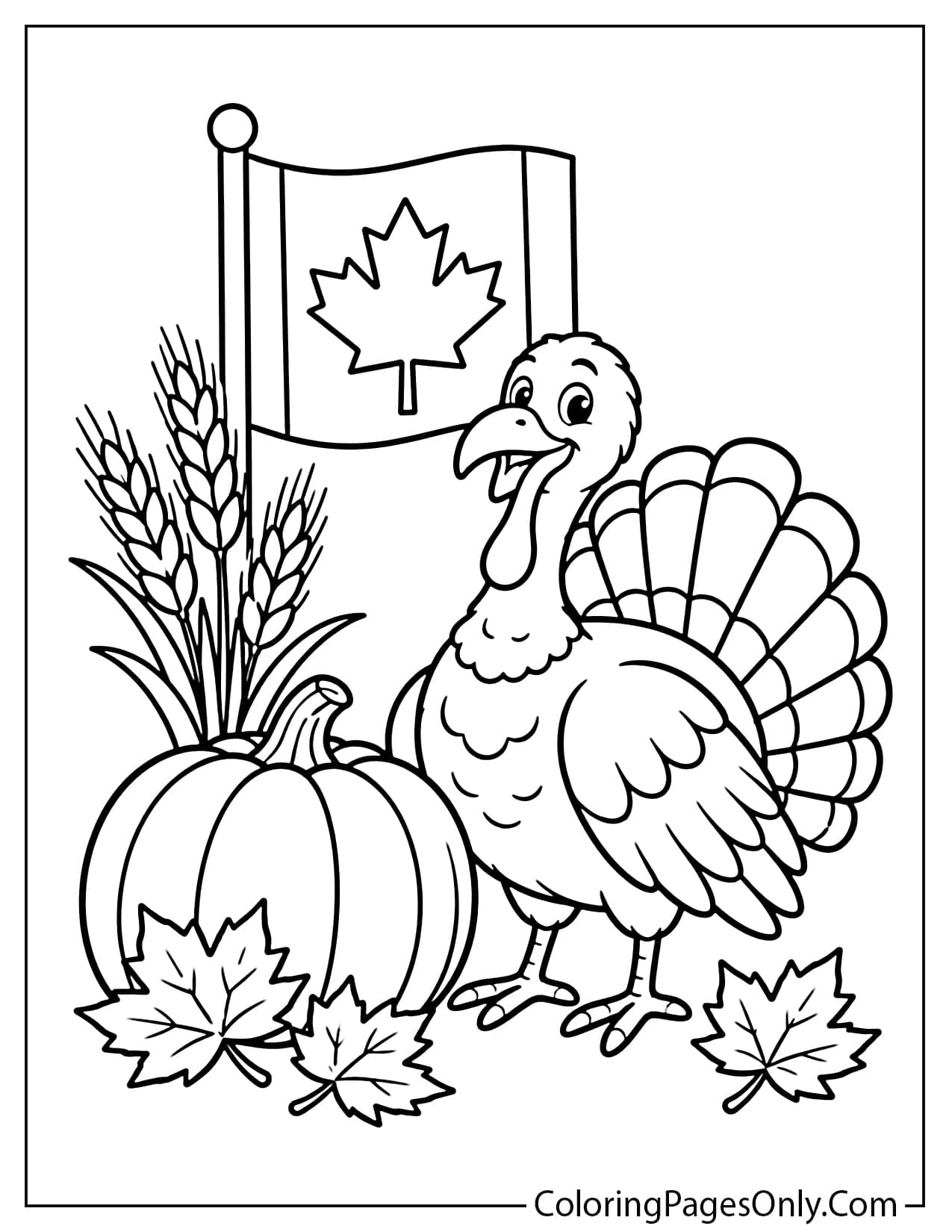
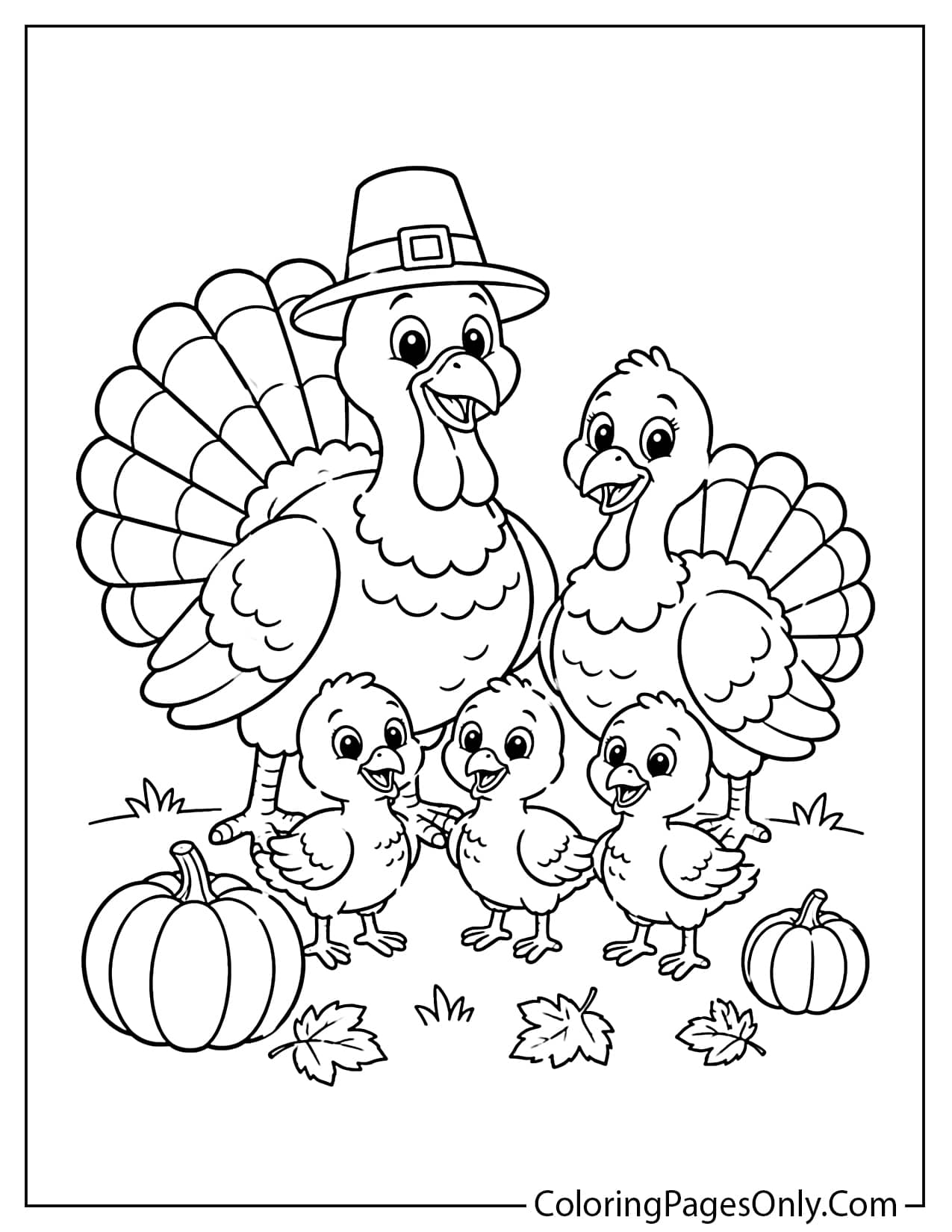
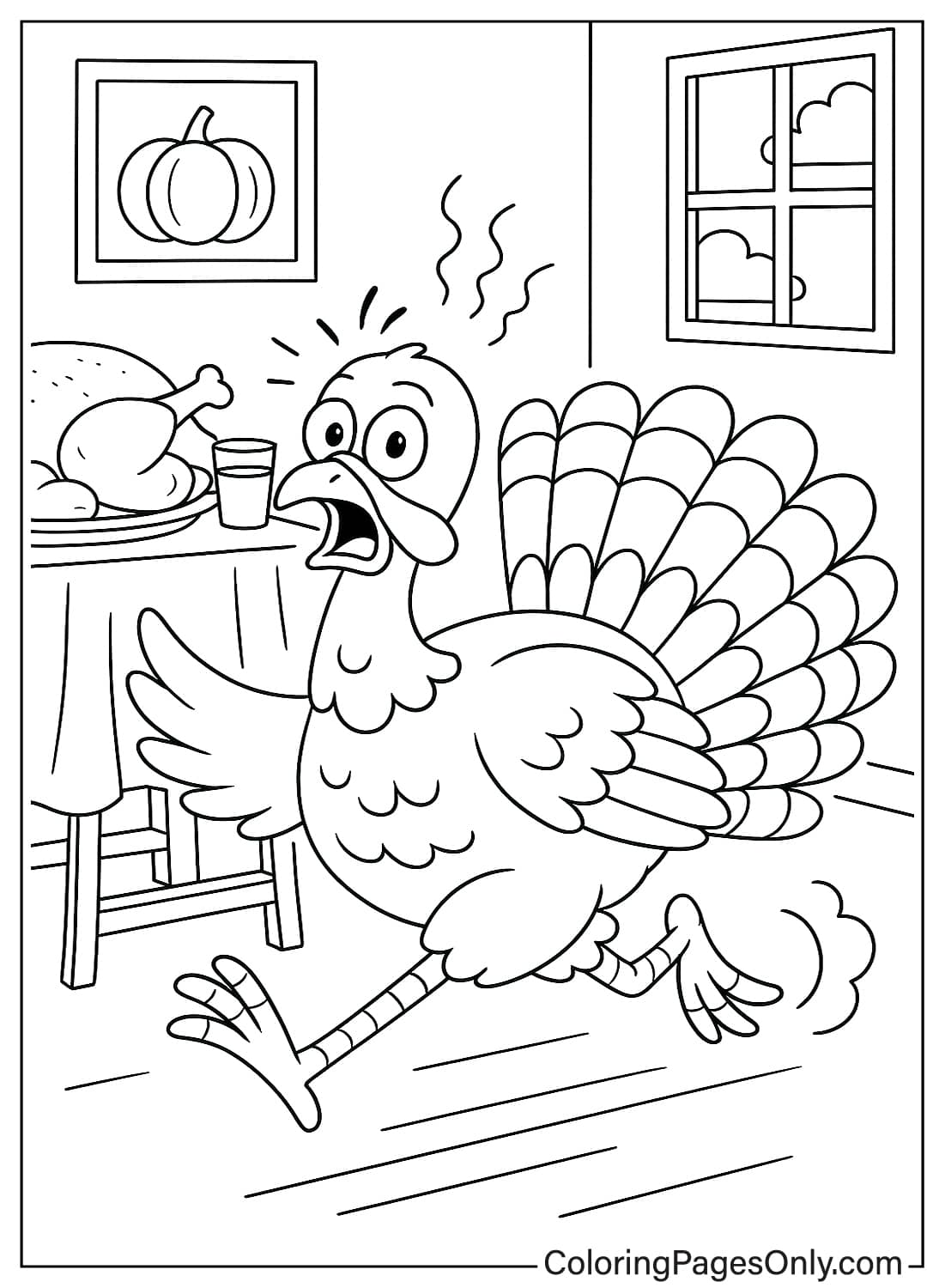
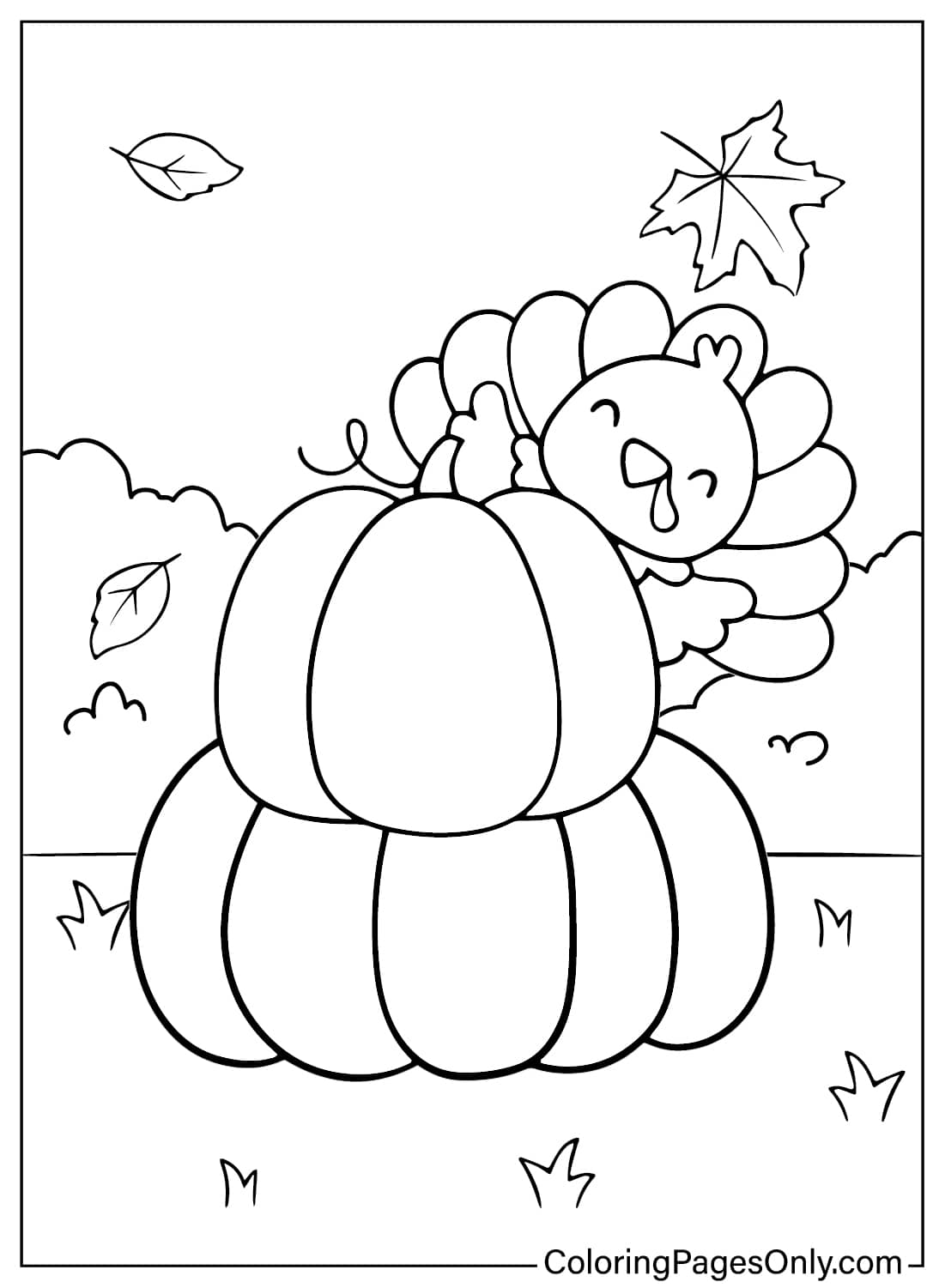
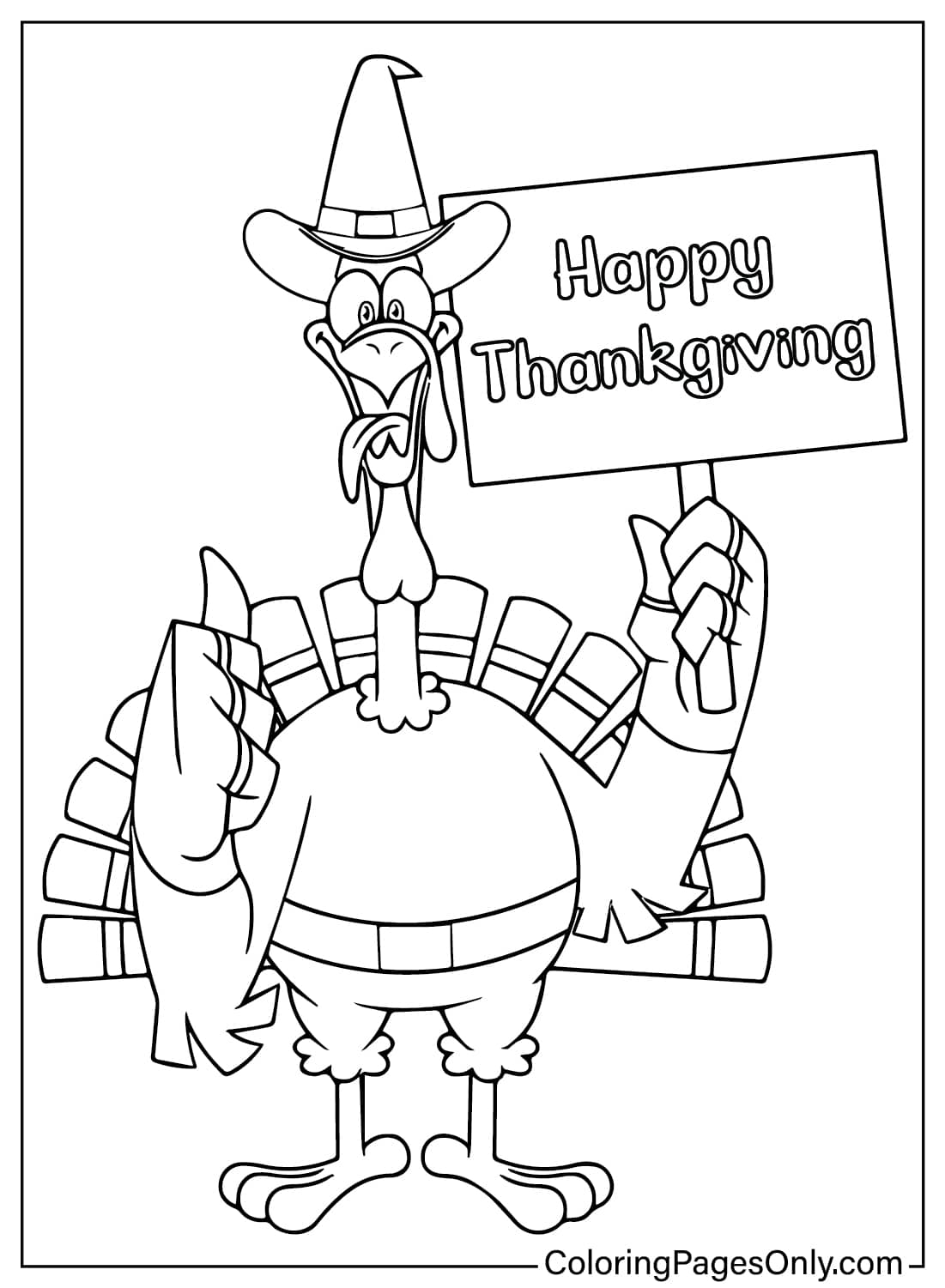
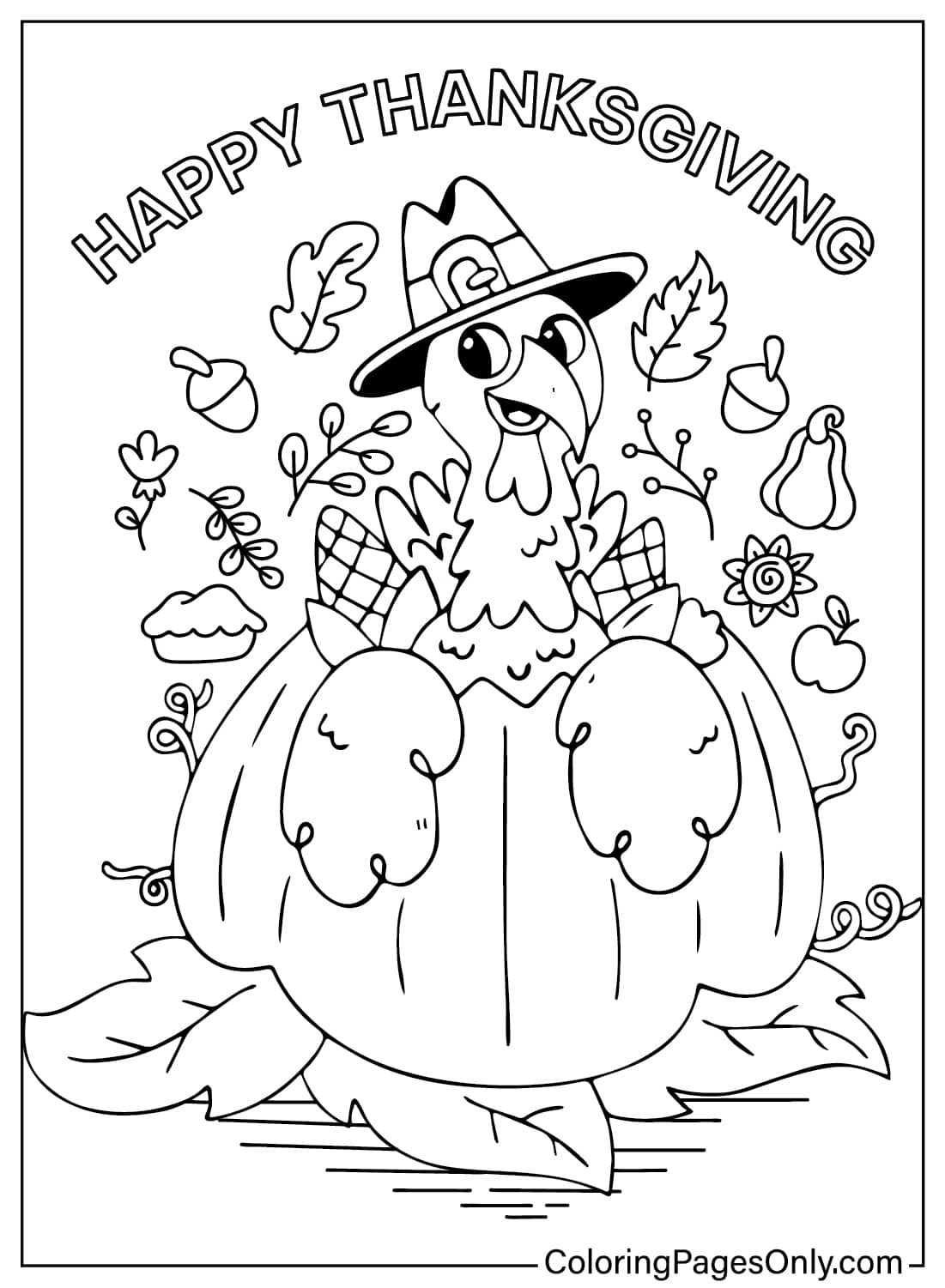
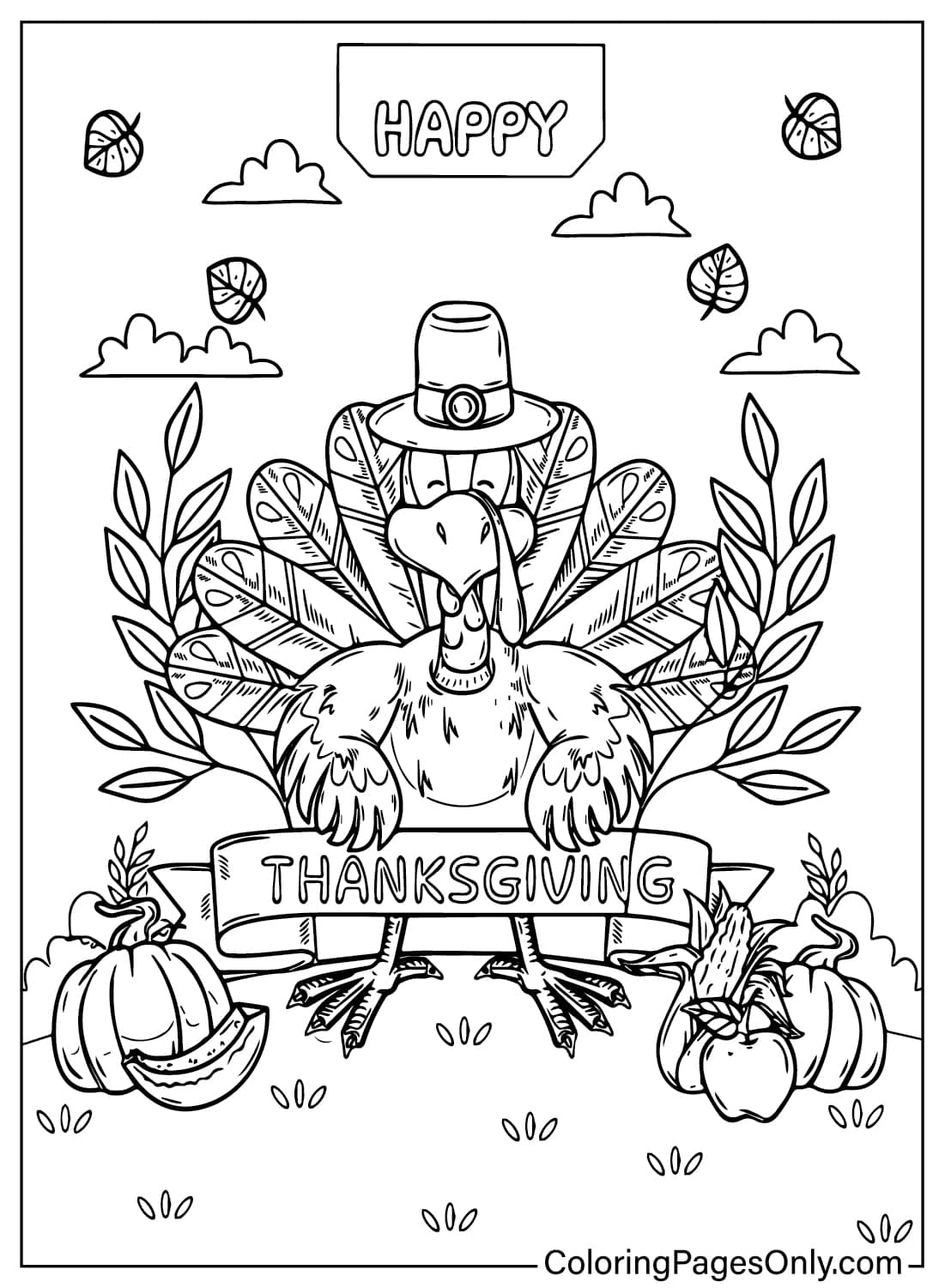
The turkey is the collection’s largest and most varied single-subject group: cartoon turkeys, funny turkeys, cute baby turkeys, turkeys in pilgrim hats, turkeys running away from dinner, and turkeys paired with pumpkins. The wild turkey (Meleagris gallopavo) is native to North America and was a food source for both indigenous peoples and early colonists. Benjamin Franklin reportedly expressed a preference for the wild turkey over the Bald Eagle as the national bird in a private letter to his daughter in 1784. However, he never made the argument formally.
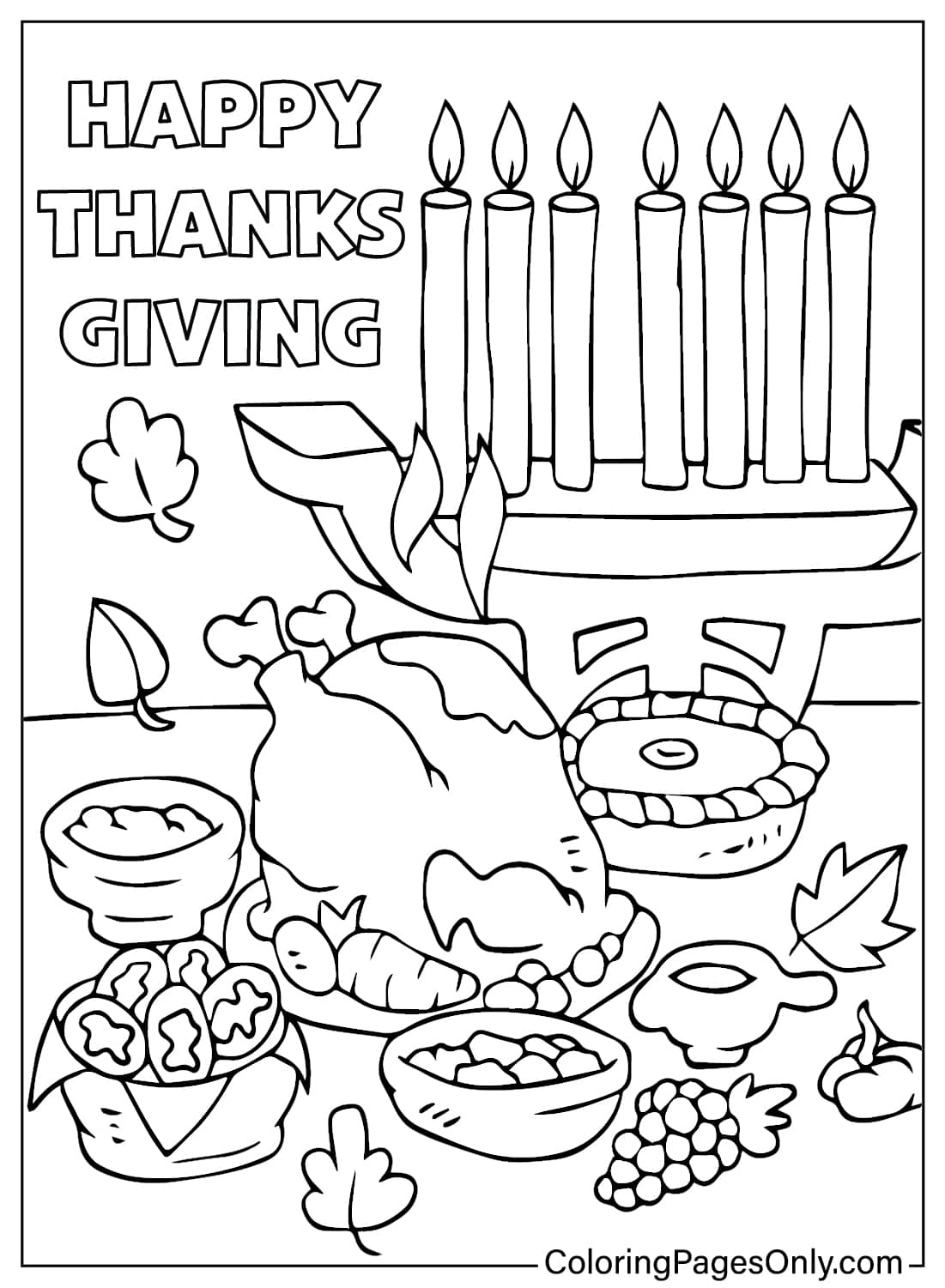
Coloring turkeys: The wild turkey’s body feathers run in warm browns, deep russet-reds, and black with iridescent bronze overtones. The tail feathers (the full fan display) are the page’s visual centerpiece: each feather shades from warm brown at the base through gold and amber toward a dark brown band at the tip. The turkey’s bare head and neck are typically blue-grey with red wattles; the snood (the fleshy protuberance over the beak) is red-orange. On cute and cartoon turkey pages, a warm burnt orange body with jewel-toned tail feathers in deep red, teal, and gold produces the most visually satisfying result.
Pilgrim and Historical Scene Pages

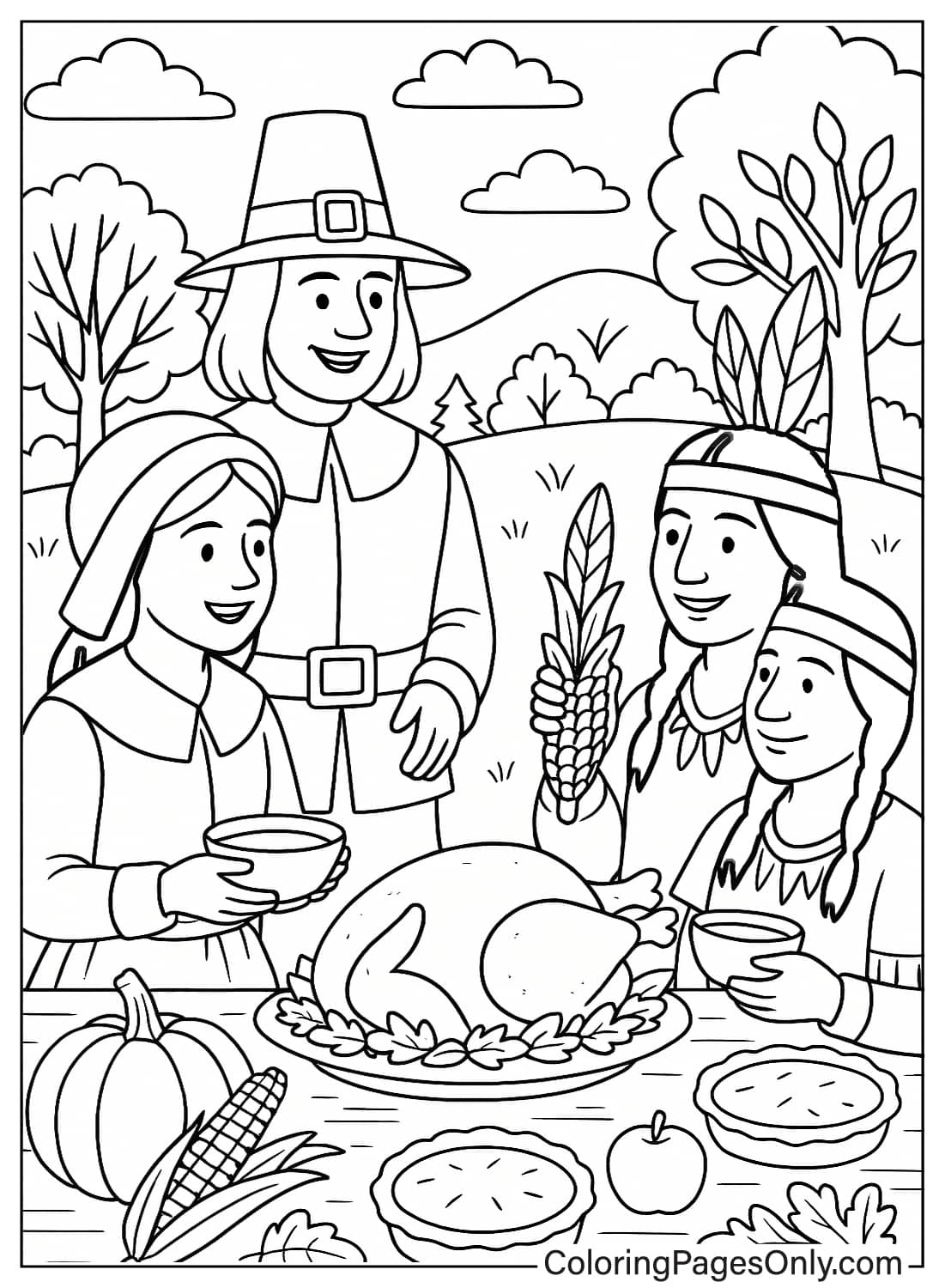
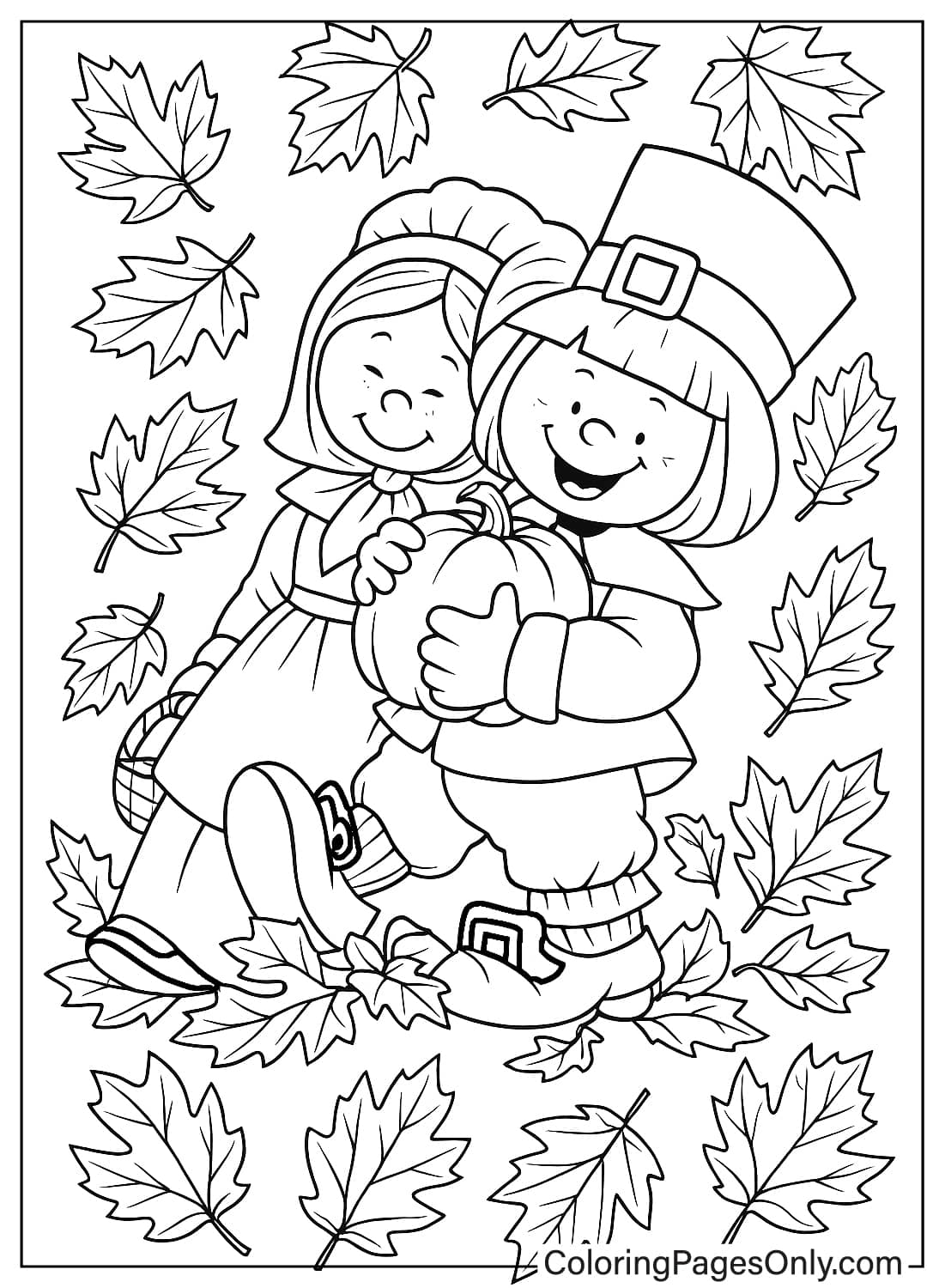
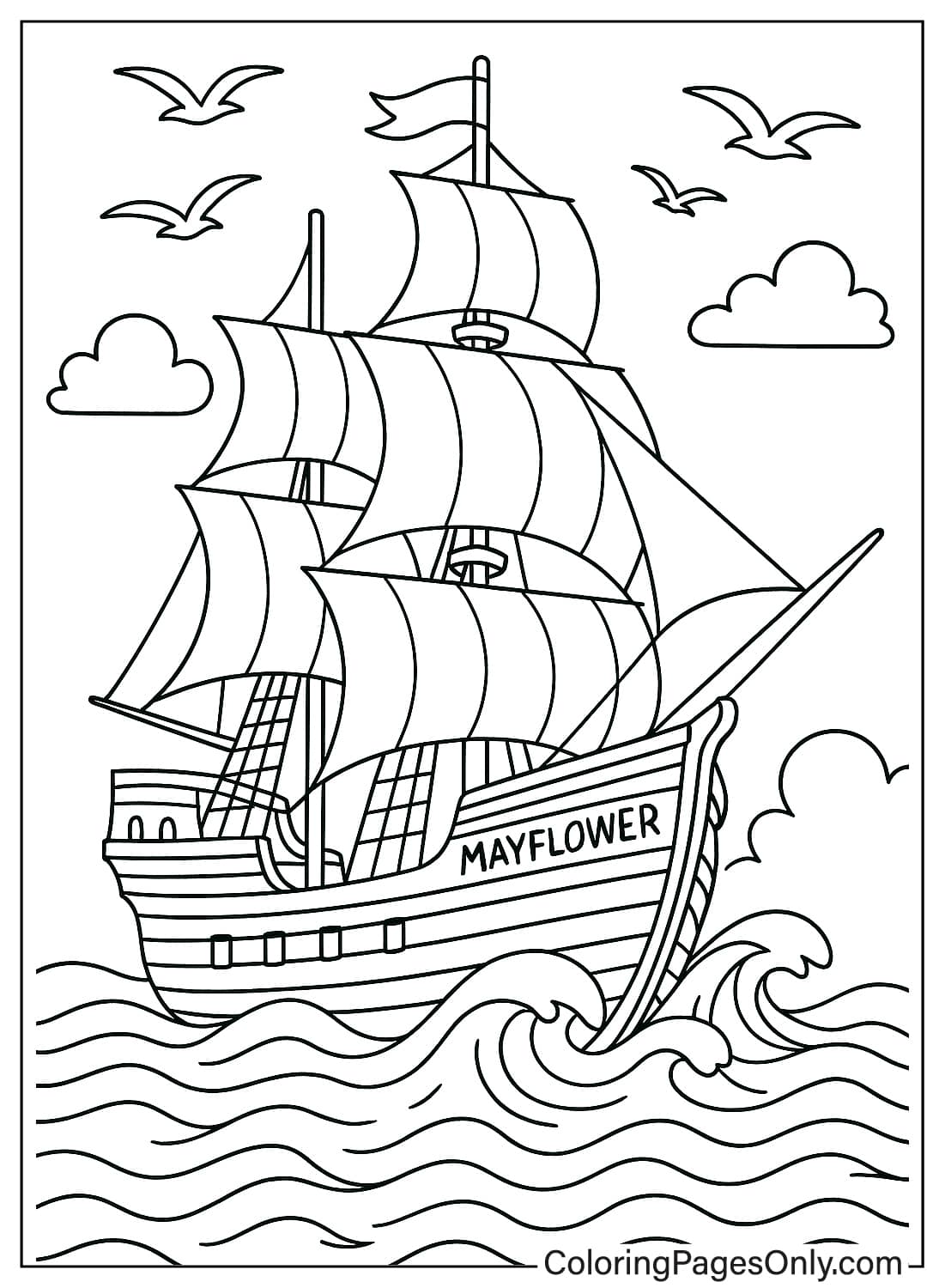
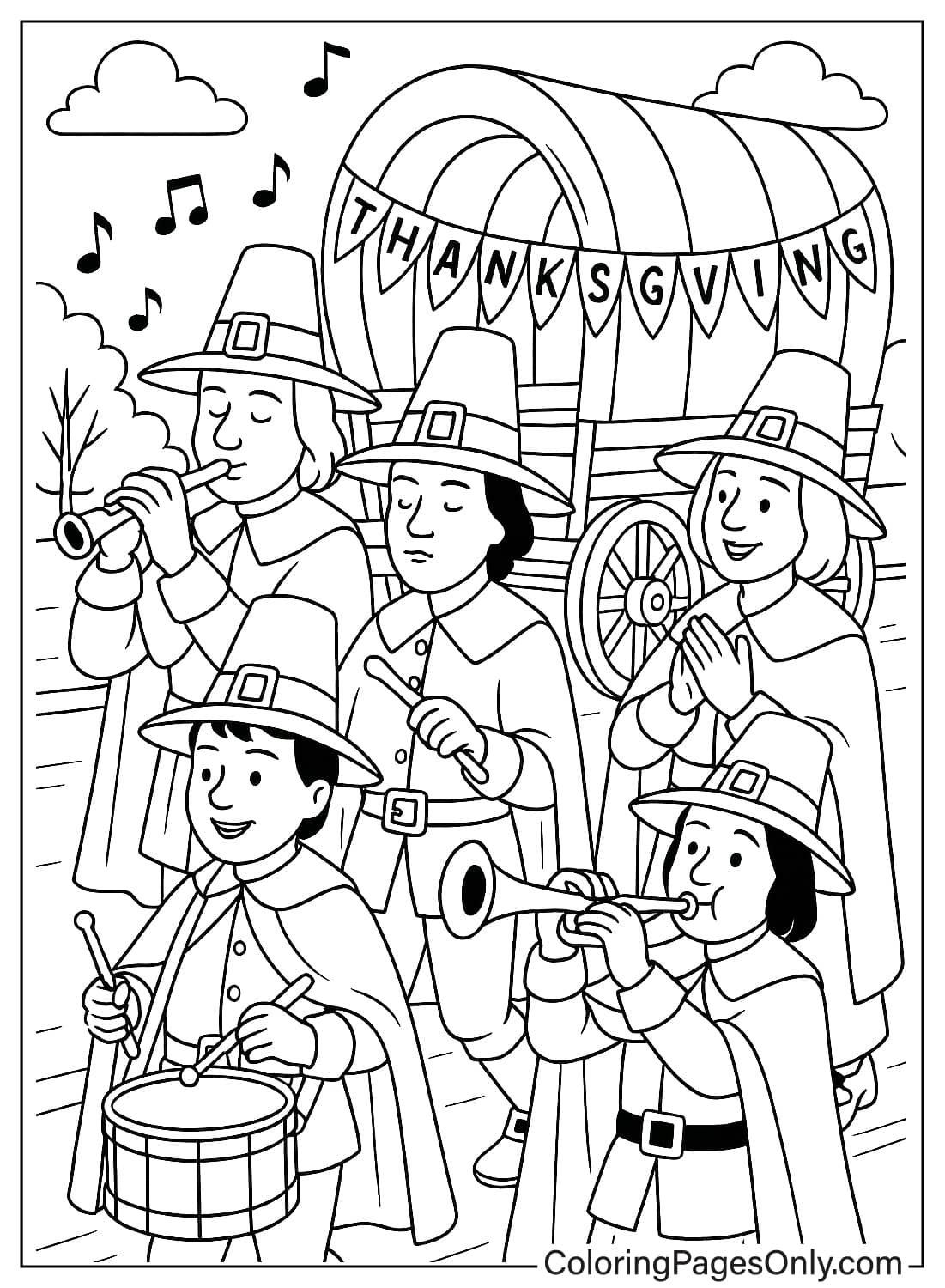
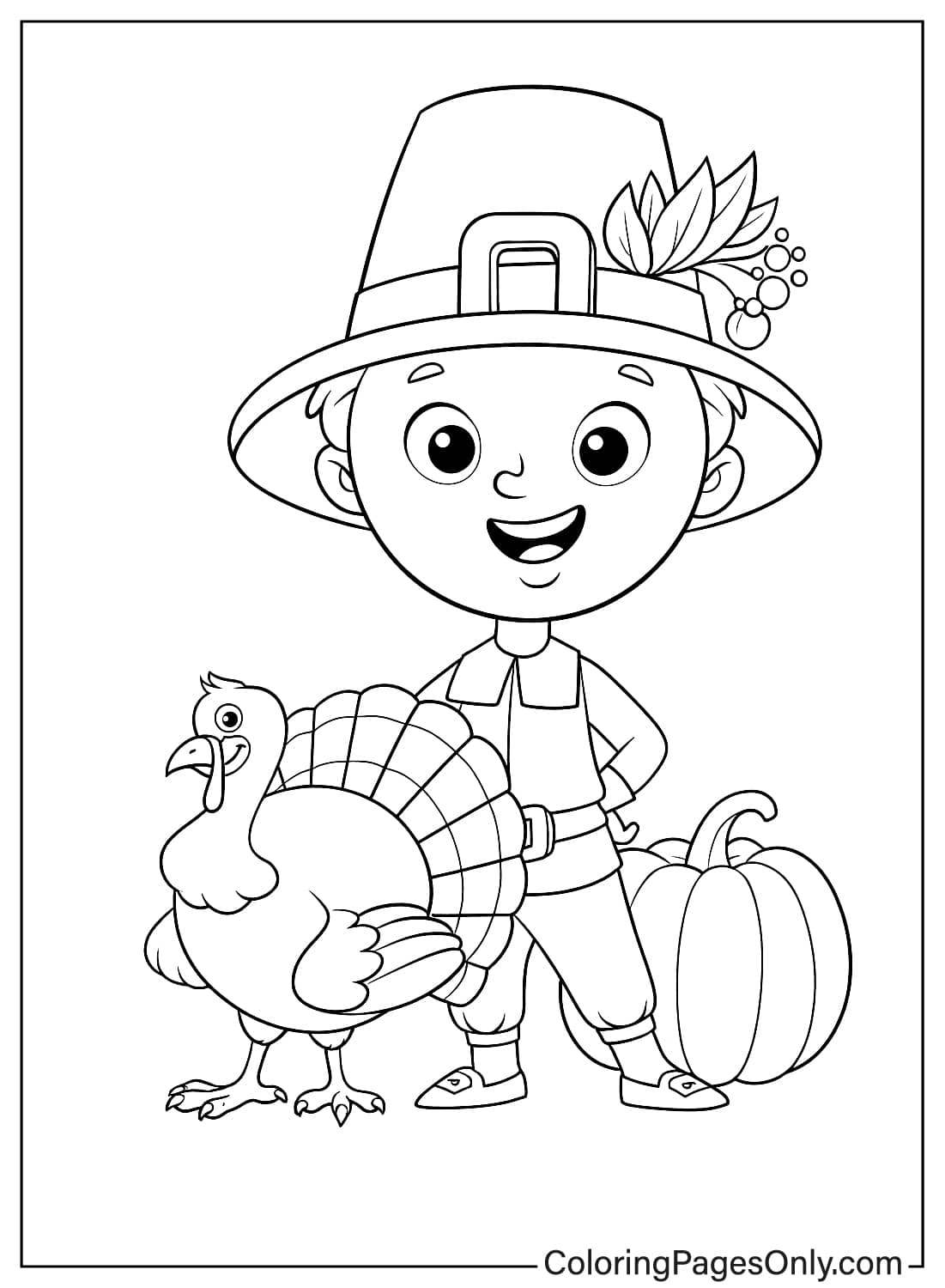
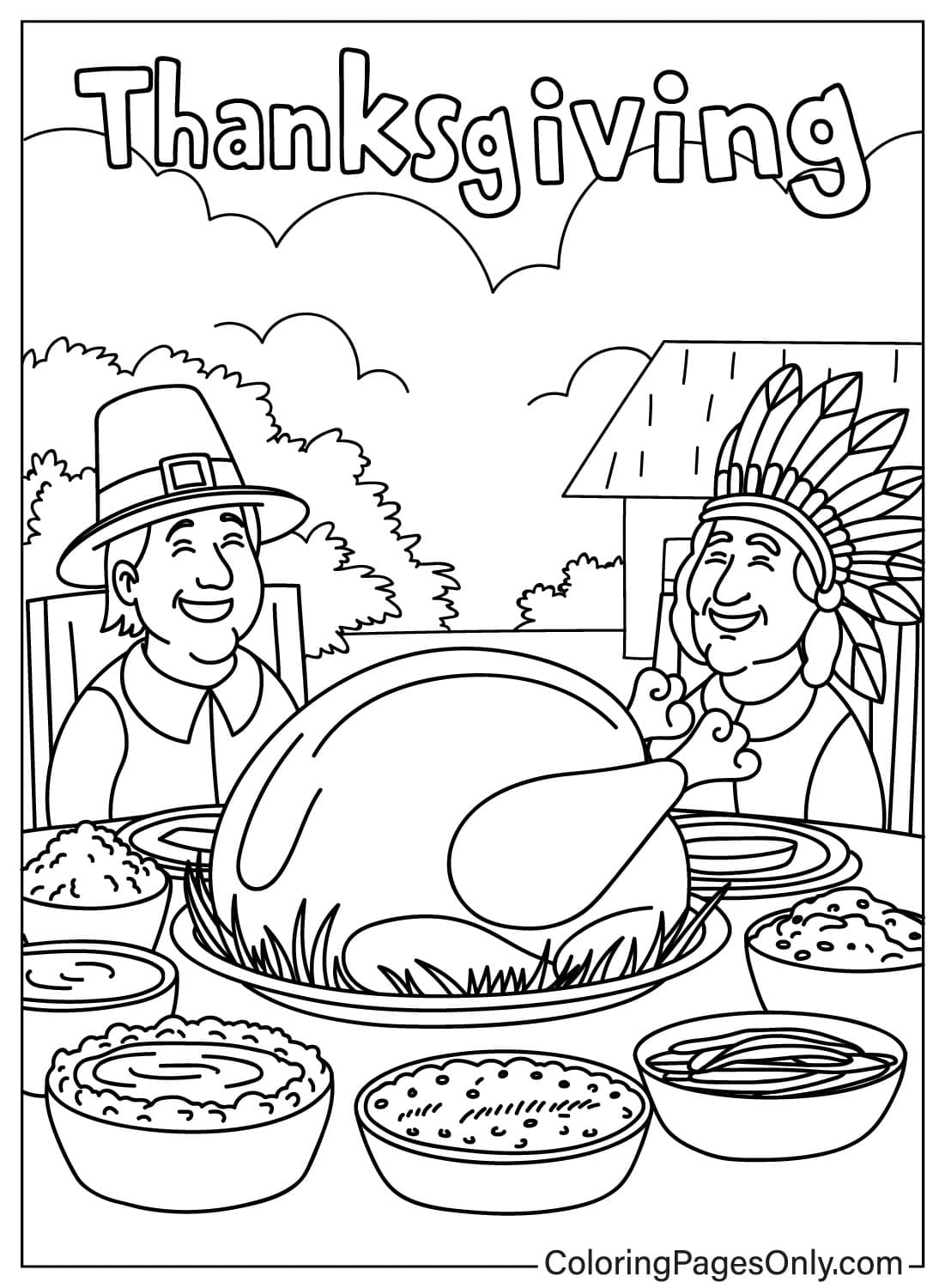
The historical pages in this collection place Thanksgiving in its colonial and historical context: “First Thanksgiving Feast Pilgrim Native American Coloring,” “Mayflower Ship Thanksgiving Journey Coloring Page,” “Pilgrim Band Thanksgiving Wagon Coloring Sheet,” “Boy Pilgrim Turkey Pumpkin Thanksgiving Coloring Page,” and “Happy Pilgrim Children Fall Leaves Coloring Page.” The Pilgrims departed Plymouth, England, aboard the Mayflower on September 16, 1620, and arrived at the site of Plymouth Colony in present-day Massachusetts in late November 1620. The 1621 harvest feast lasted approximately three days and included deer, fish, shellfish, and corn-based foods. Turkey may not have featured prominently; the record of the feast comes primarily from Edward Winslow’s letter of December 1621.

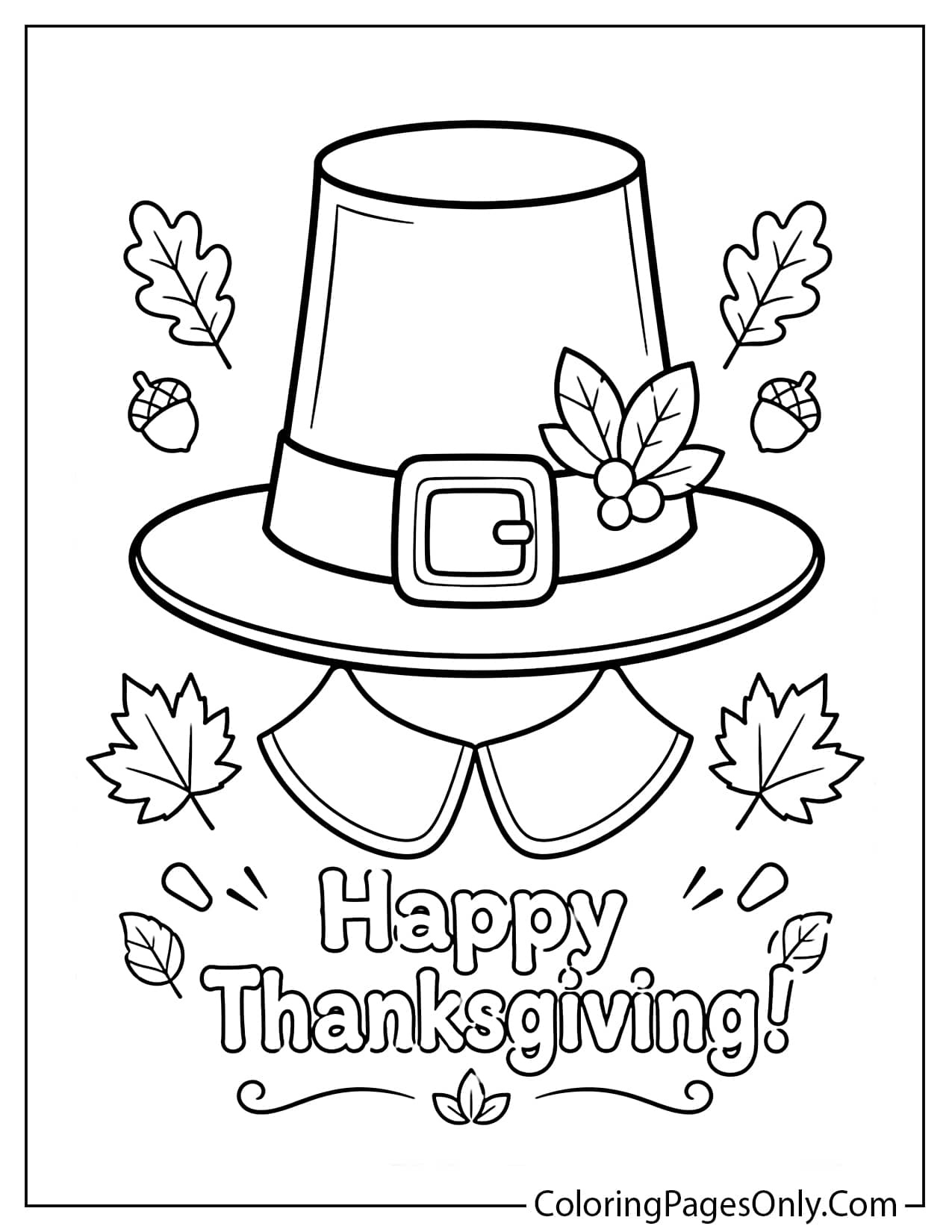
Coloring Pilgrim costumes: The black-hat-with-gold-buckle image of the Pilgrims is largely a Victorian-era illustration convention rather than an accurate representation of 1620s Puritan dress. Actual Pilgrim clothing was more varied in color: earth tones, muted greens, warm greys, and wool browns. Keep costume colors dark and muted overall; the technique for getting this right is in the How to Color section below. The Mayflower pages work well with deep ocean blue-grey for the sea, warm tan for the ship’s wooden hull, and off-white for the sails.

Harvest and Food Pages

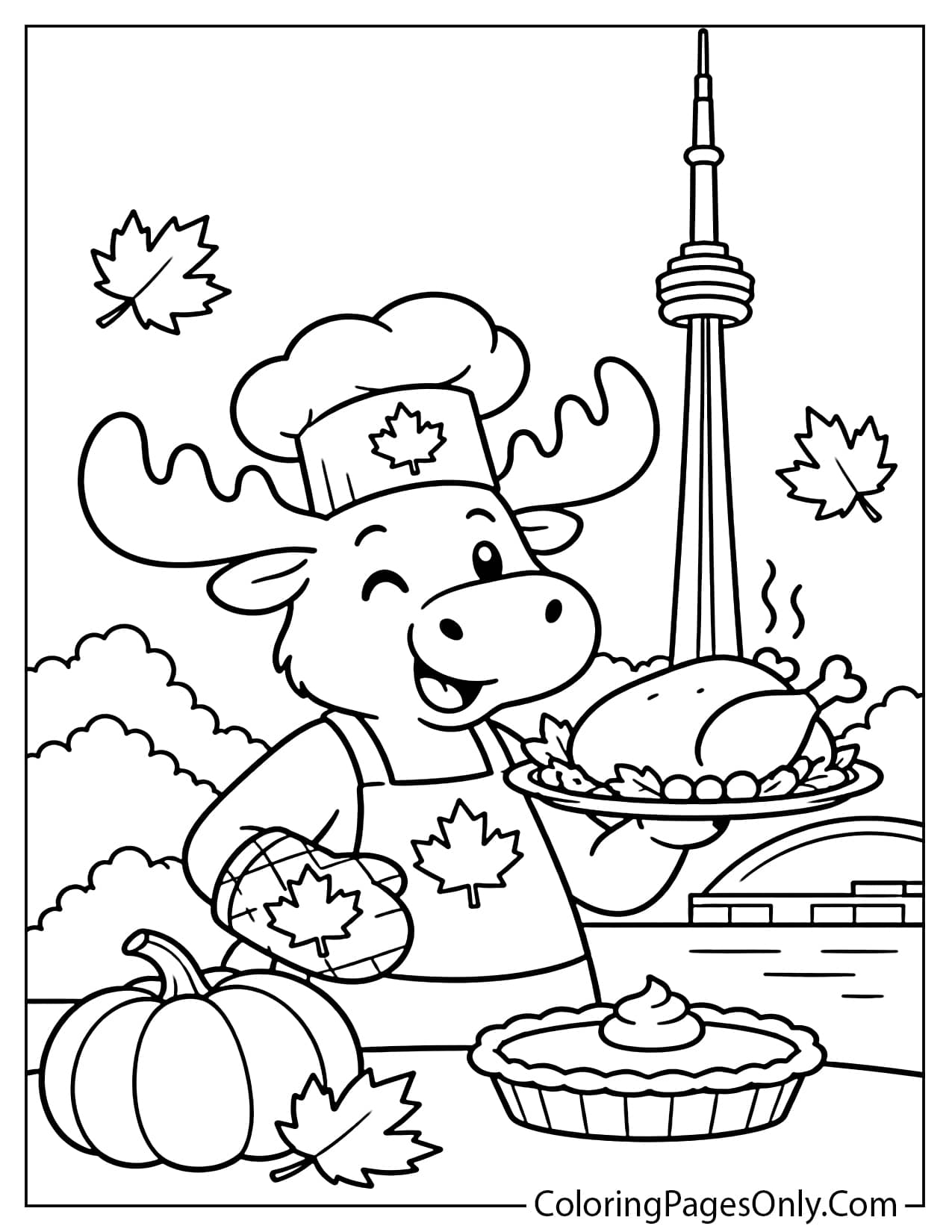
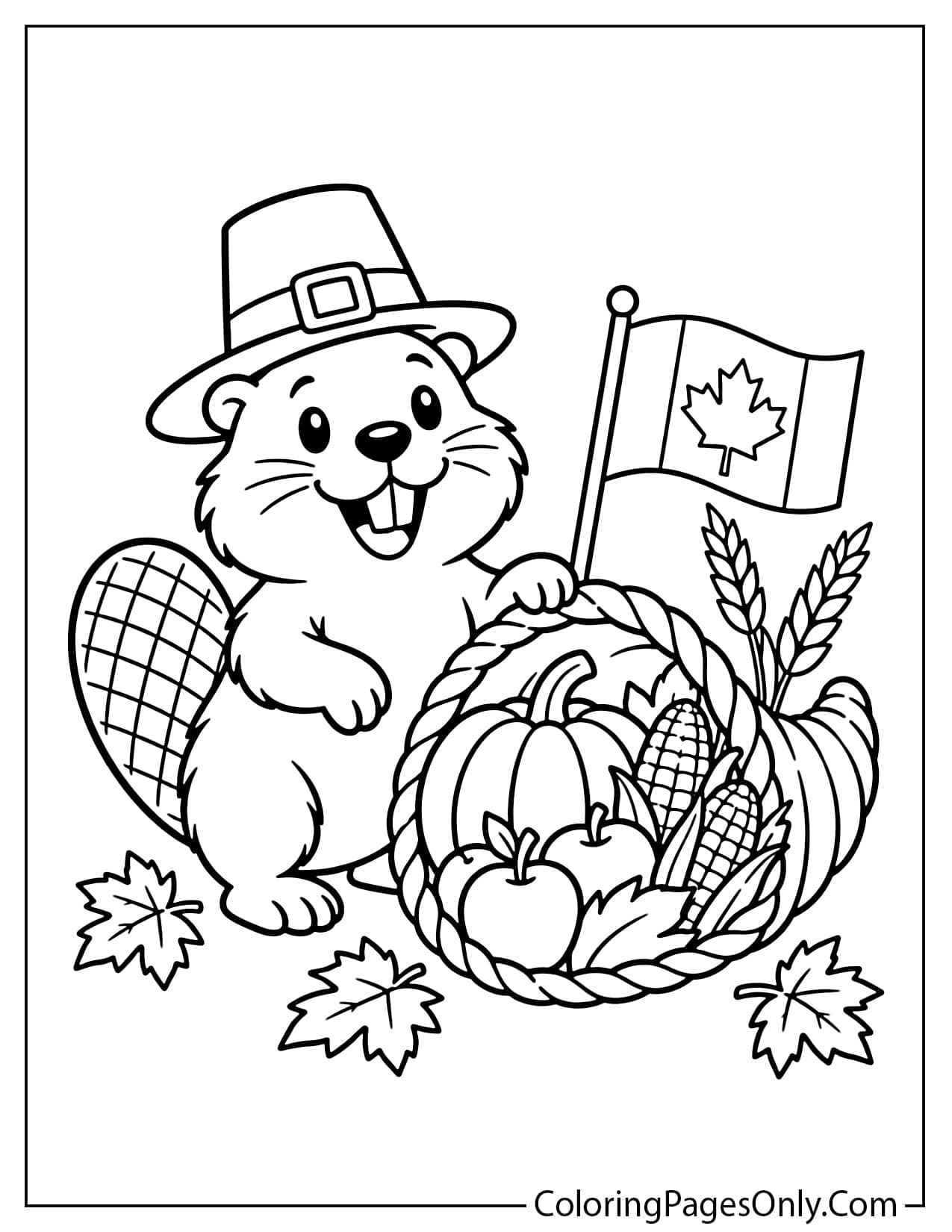
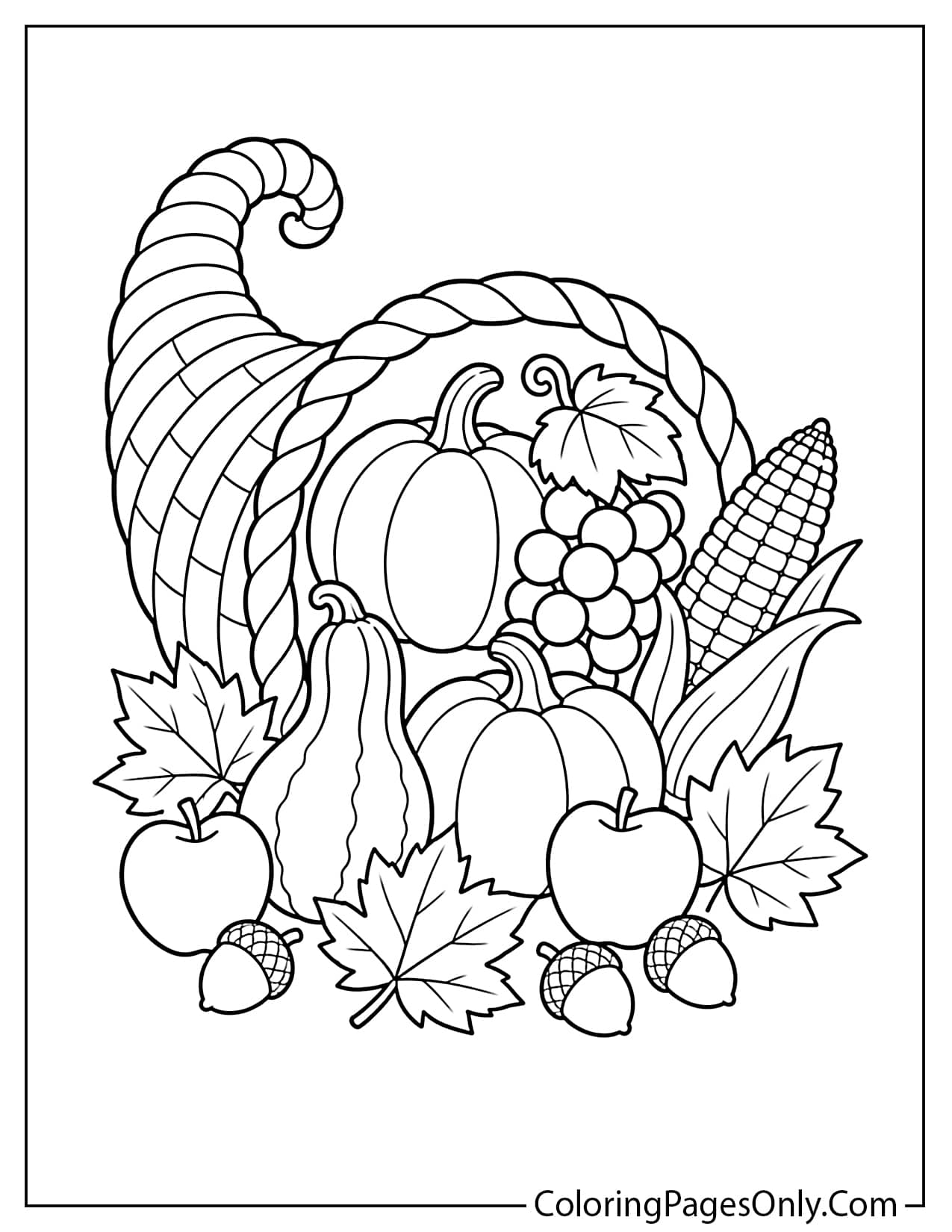
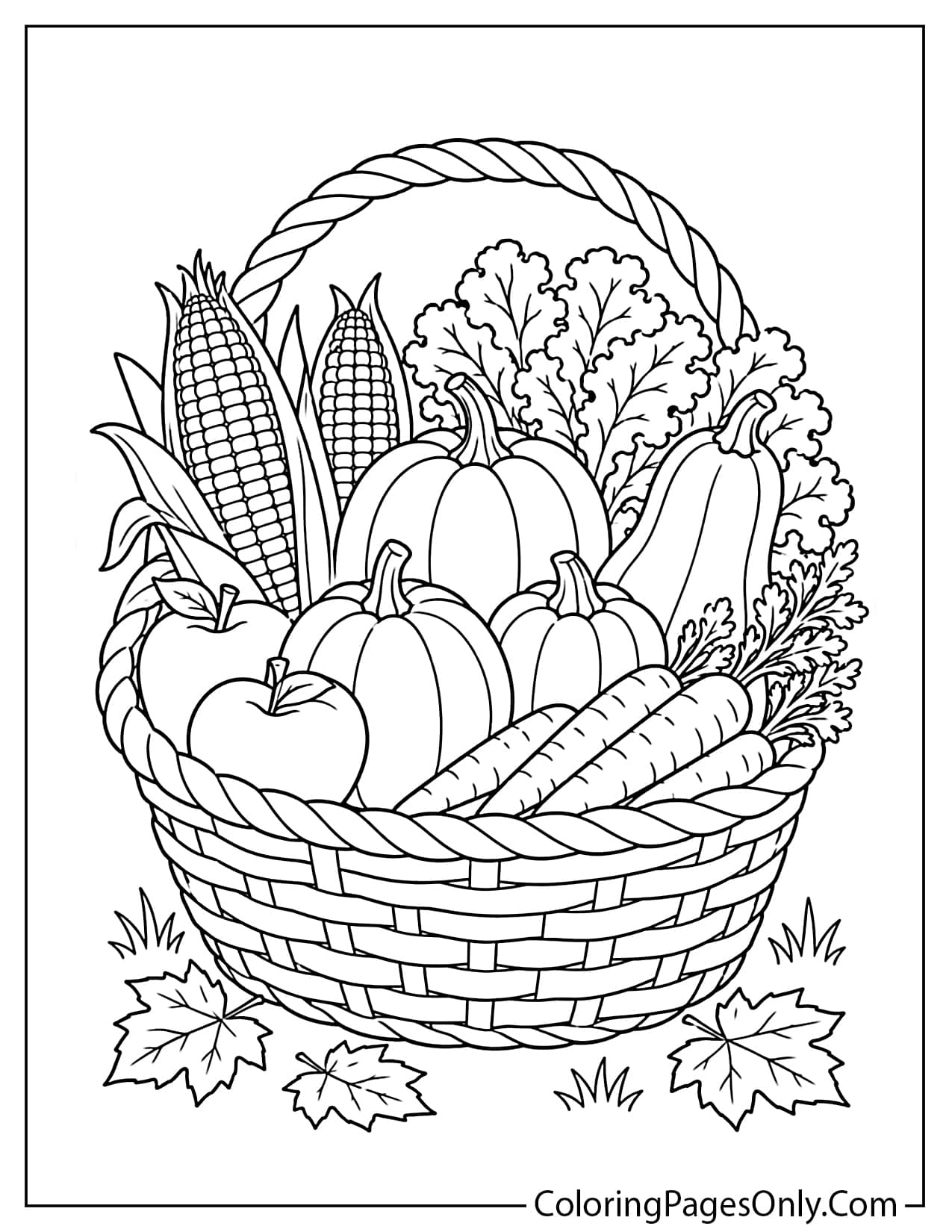
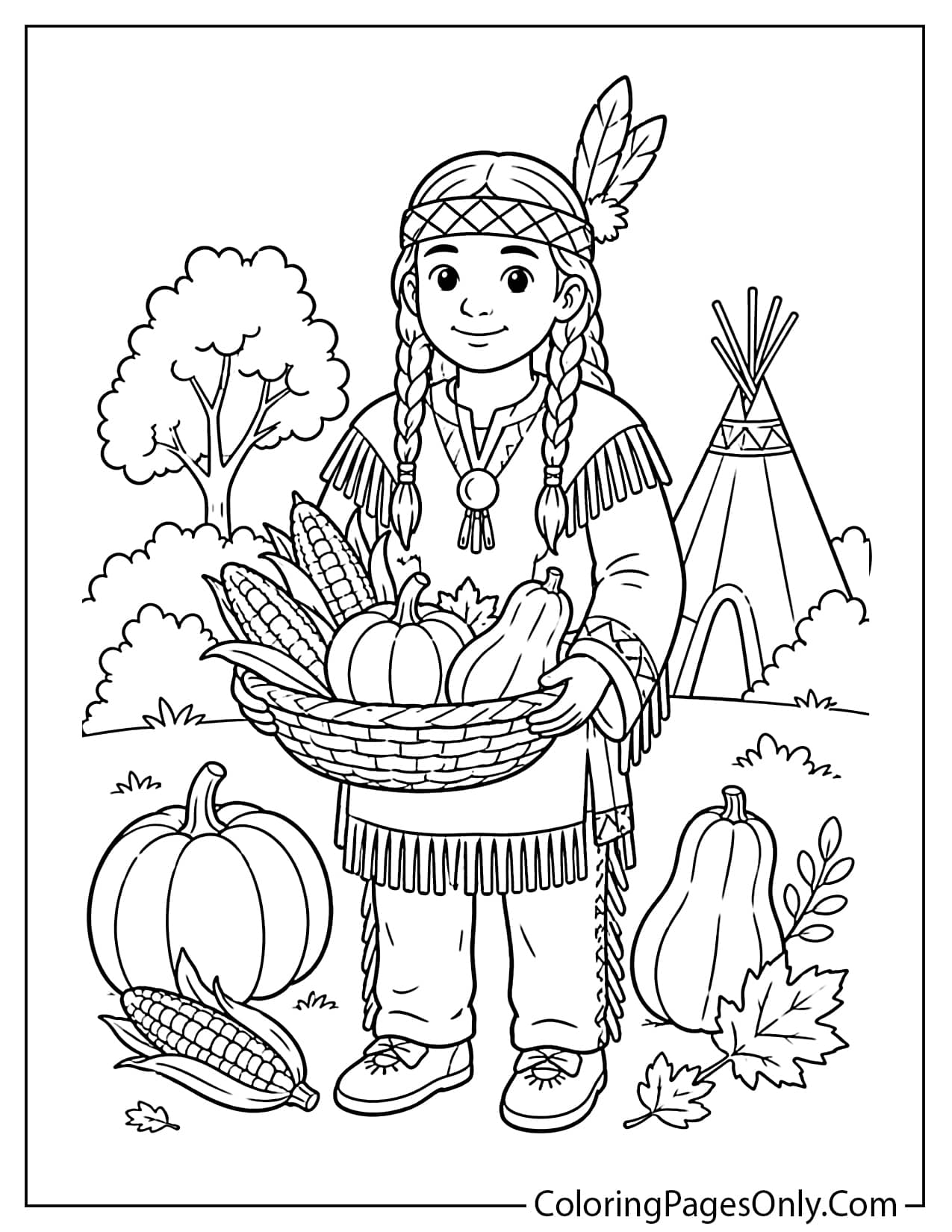
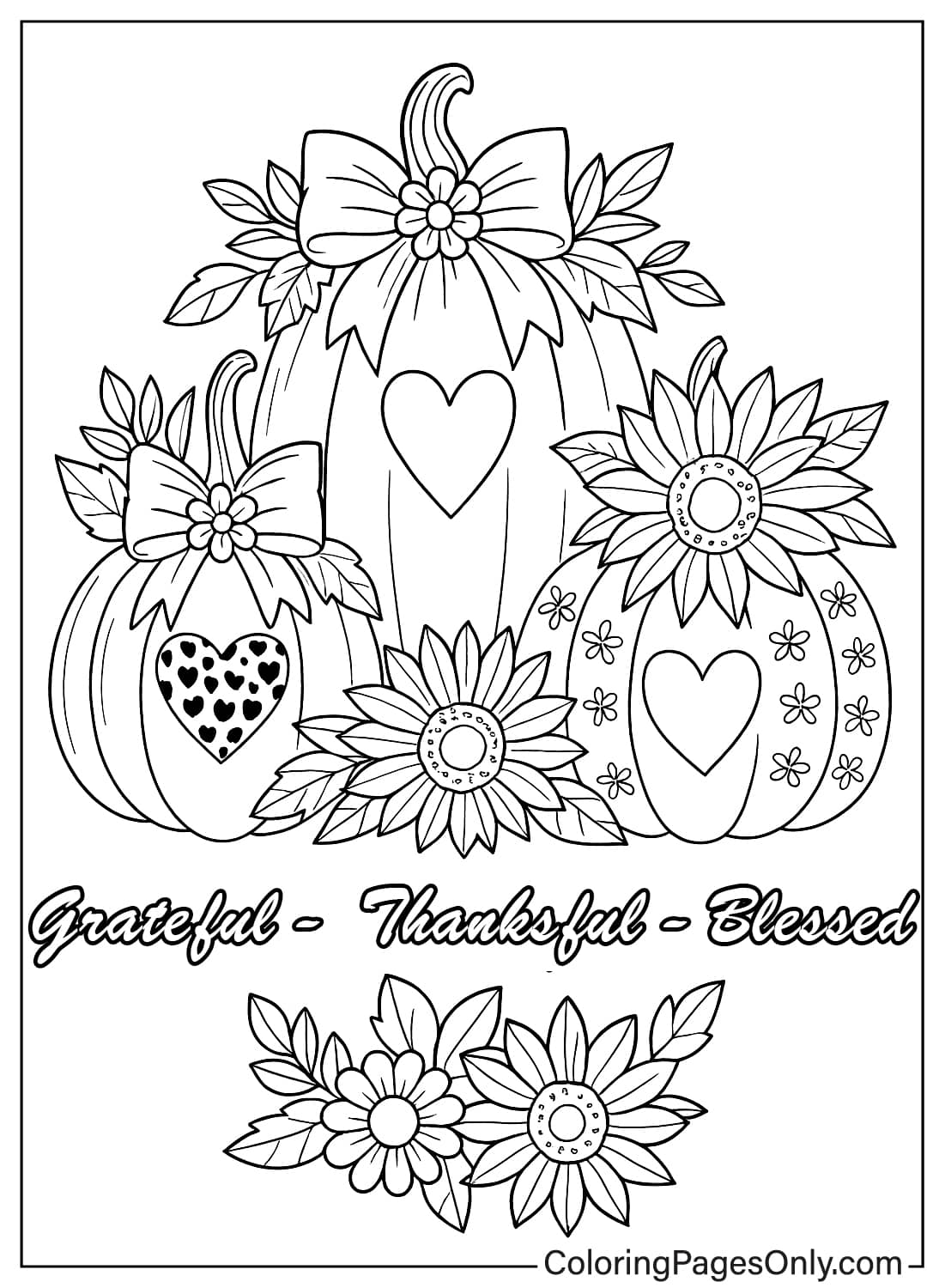
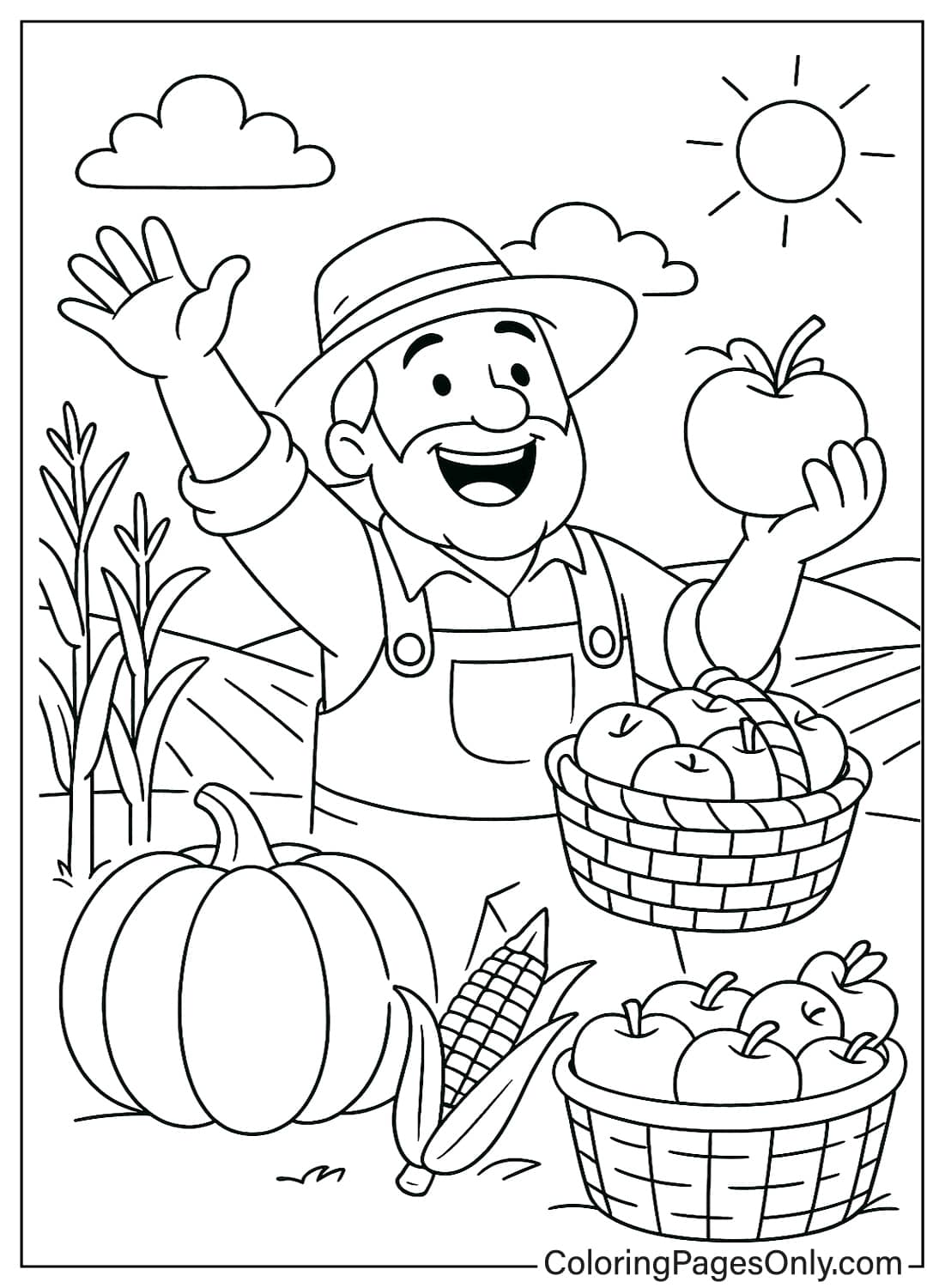
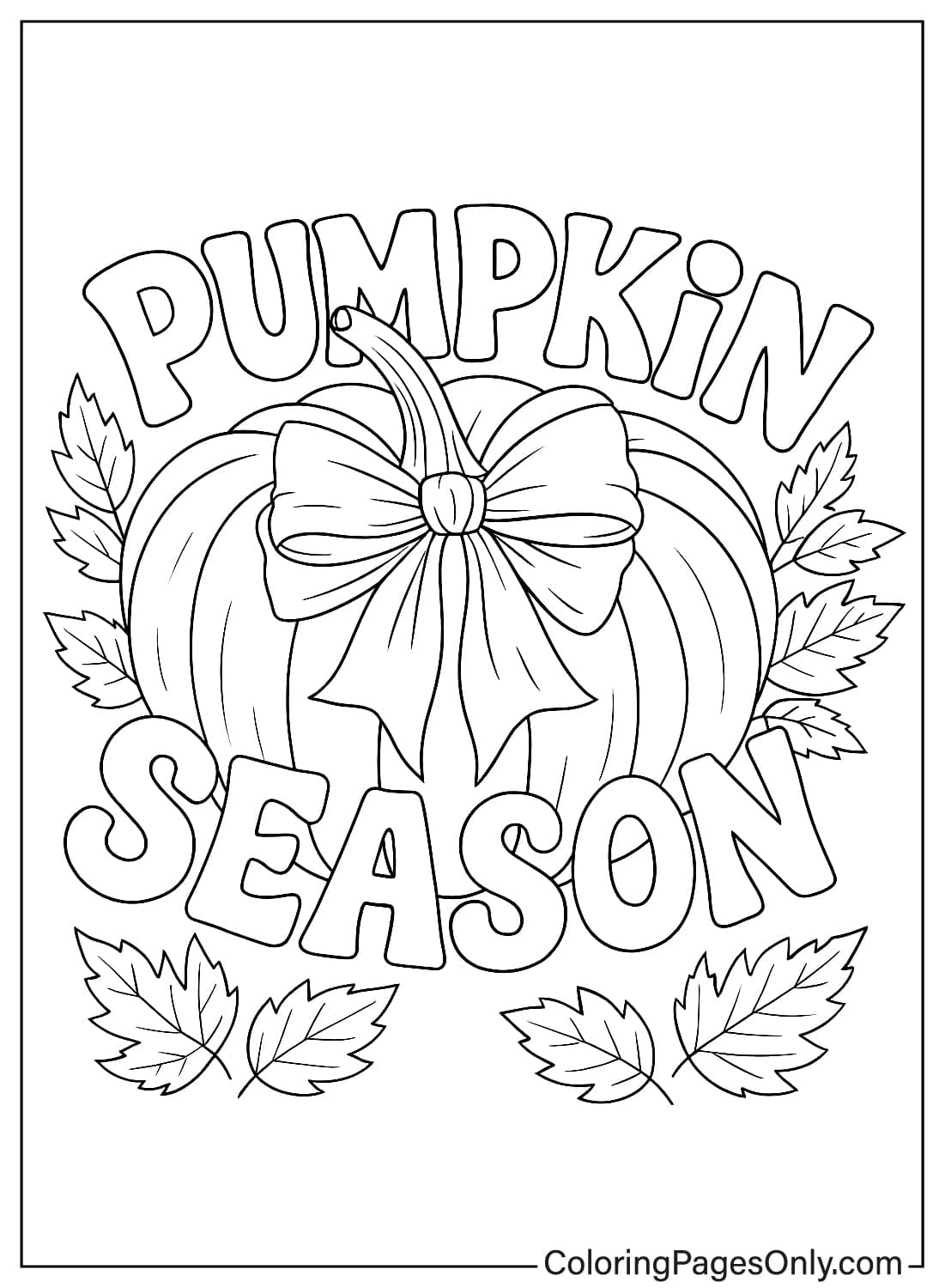
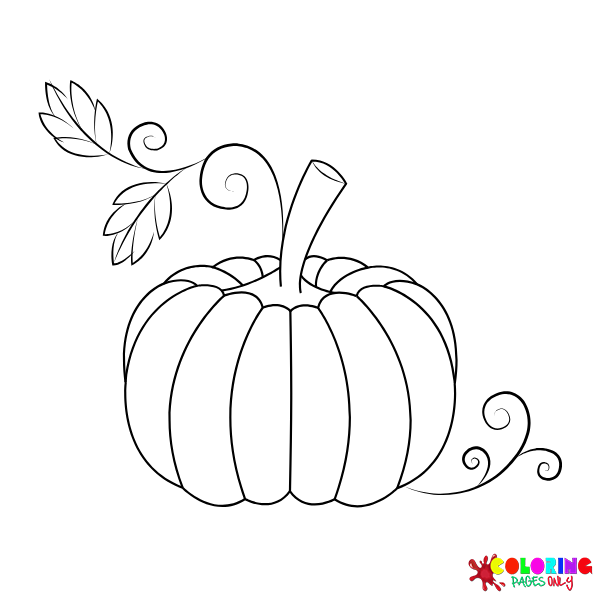
Pumpkins, corn, apples, sunflowers, and feast table pages occupy a substantial portion of the collection. “Grateful Thankful Blessed Pumpkin Sunflowers Coloring,” “Farmer Harvest Pumpkin Corn Apple Coloring Page,” “Sweet Harvest For Thanksgiving,” “Thanksgiving Party Table,” and “Pumpkin Season Fall Leaves Coloring Page” all center on the agricultural abundance that Thanksgiving has represented since the 1621 feast. The three main crops of the Wampanoag and other Algonquian peoples (corn, beans, and squash, known collectively as the Three Sisters) were foundational to the harvest that the 1621 celebration marked.

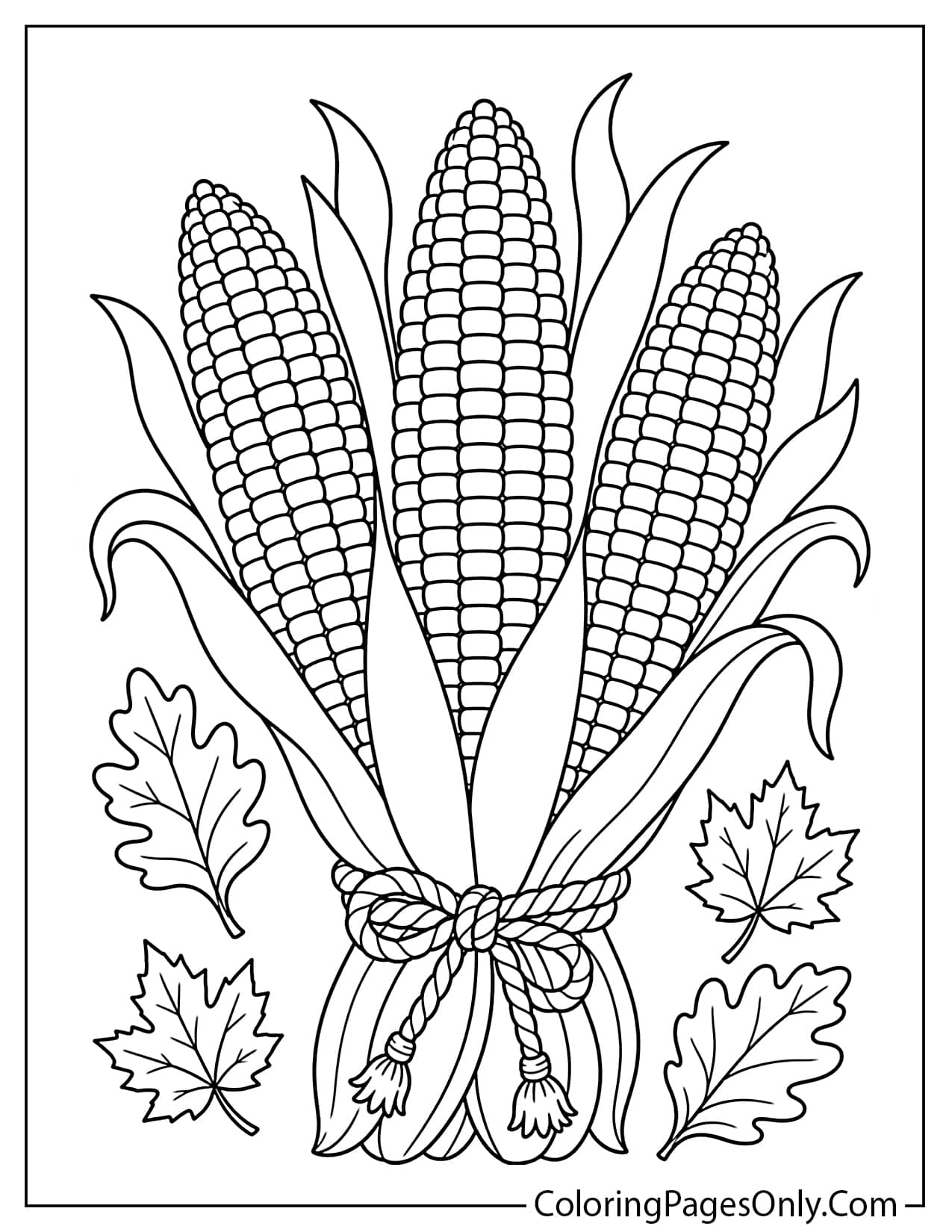
Coloring harvest pages: The Thanksgiving harvest palette is the warmest in the annual holiday calendar: deep orange for pumpkins, warm golden yellow for corn, the reds and greens of apples, and the russet-amber-gold range of autumn leaves. Pumpkin orange for Thanksgiving is slightly warmer and darker than Halloween pumpkin orange, closer to harvest amber than safety cone. Sunflowers combine a warm medium yellow for the petals with a deep brown center. Autumn leaves on table settings or background elements range from deep red through warm orange to golden yellow; applying these in adjacent zones rather than blending creates the clearest autumn impression.

Woodland Animals in Thanksgiving Settings

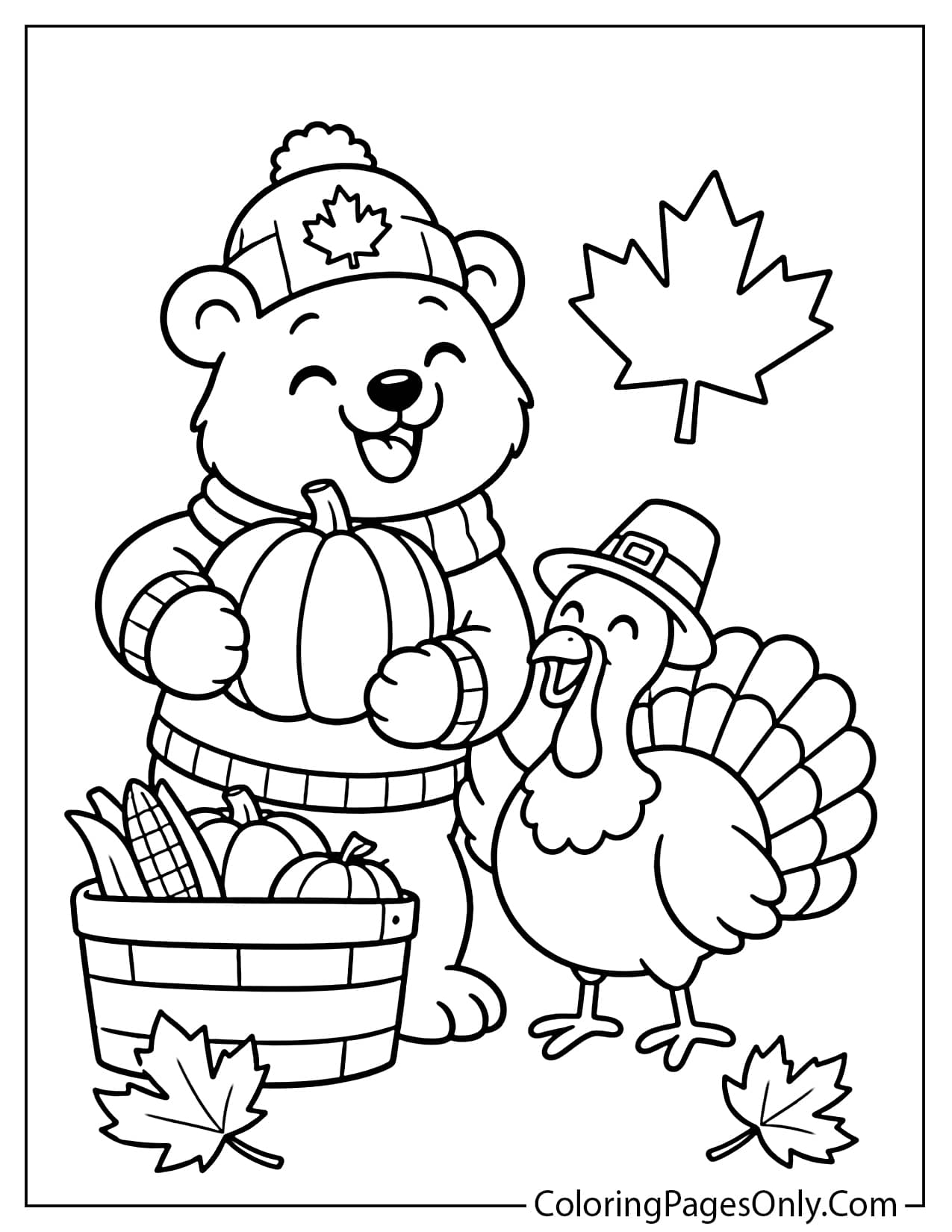
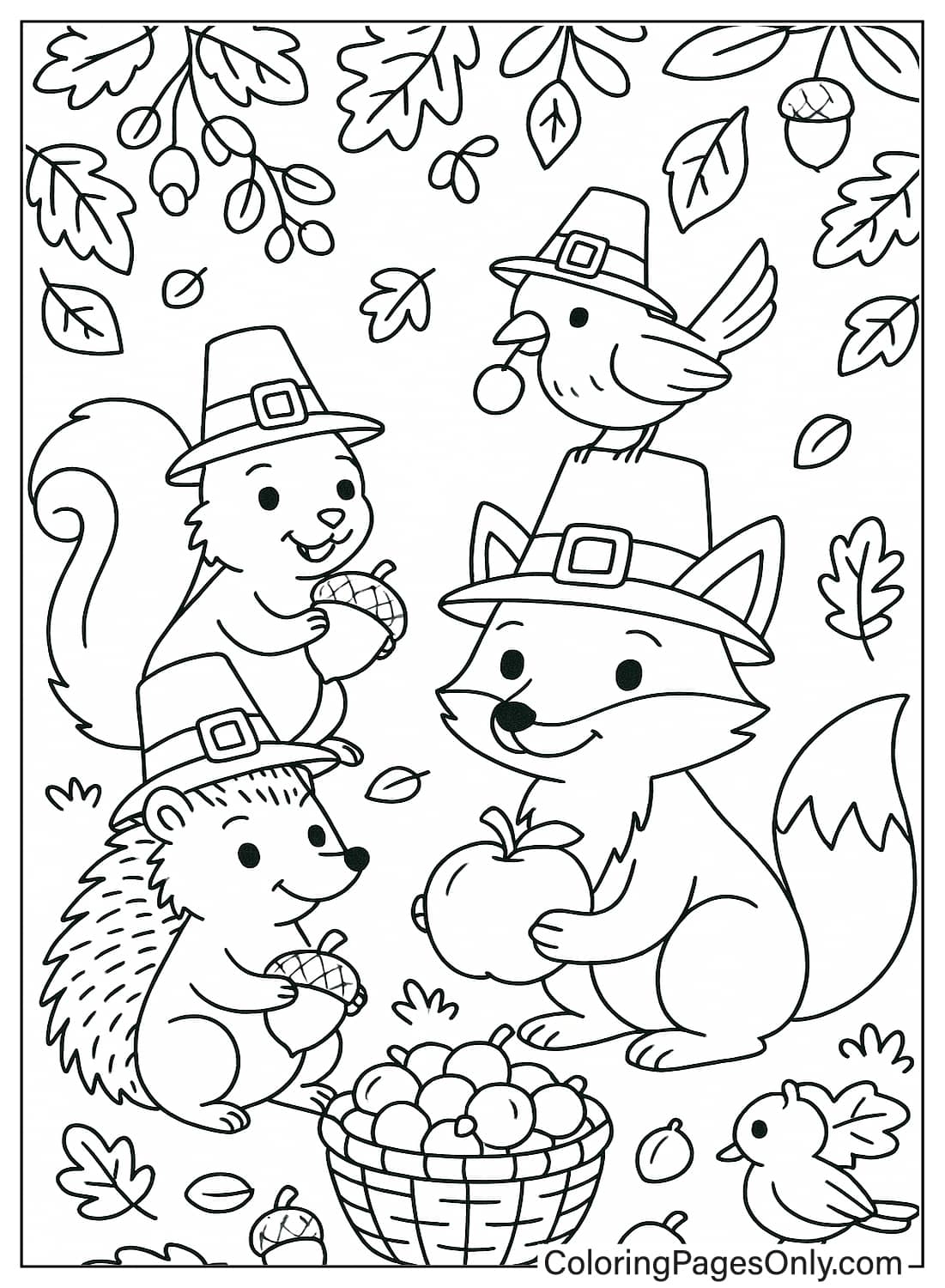
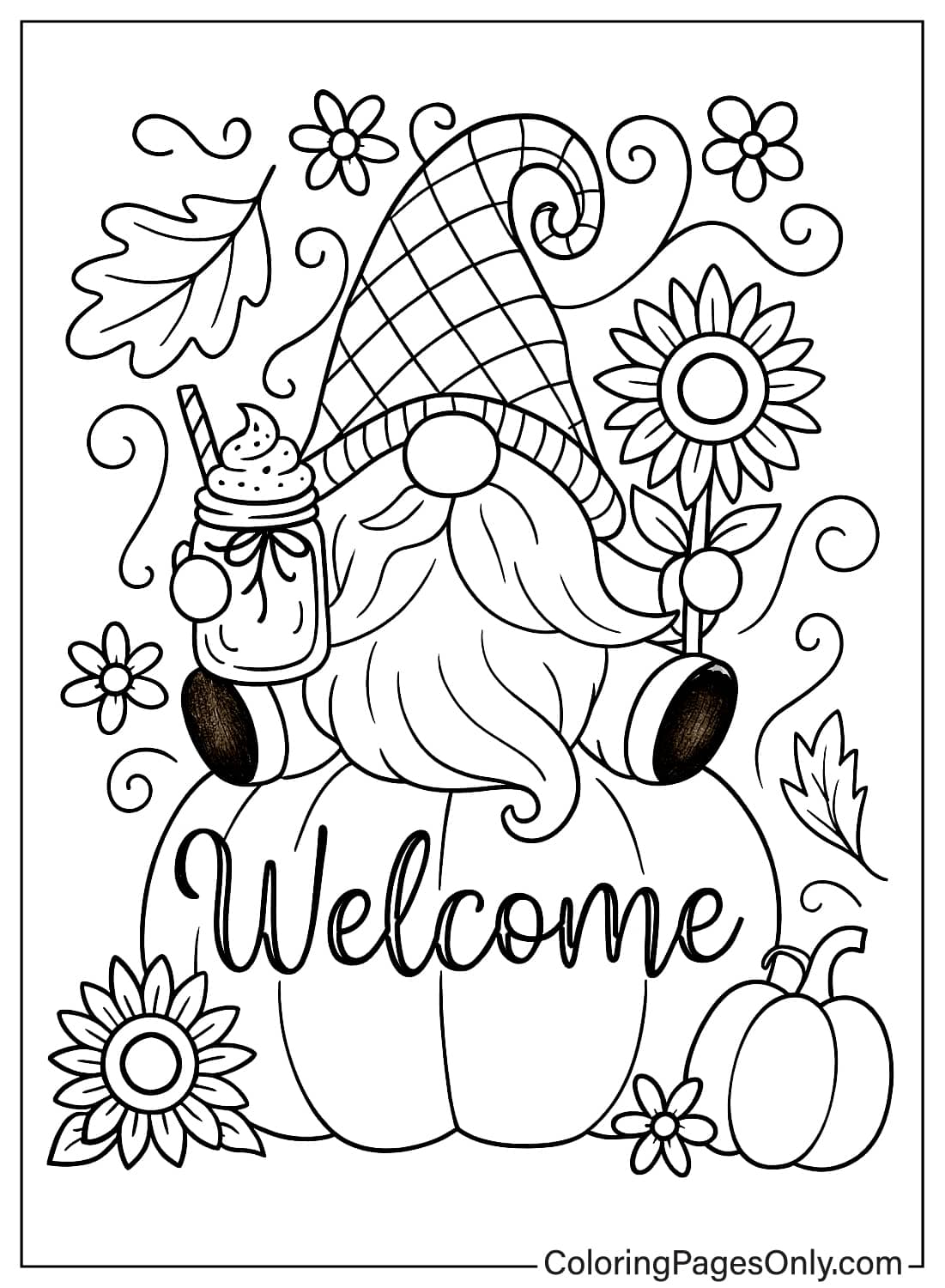
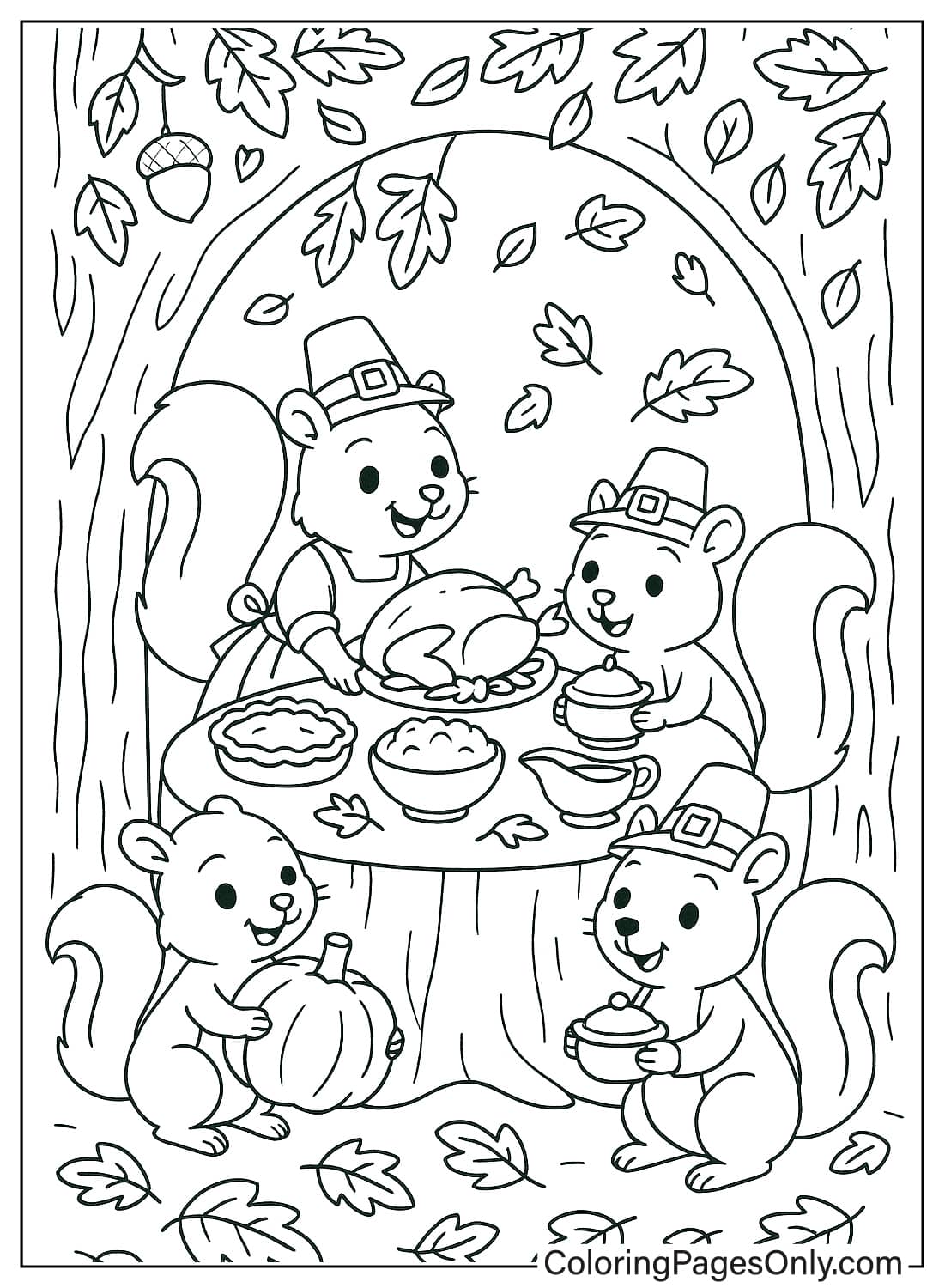
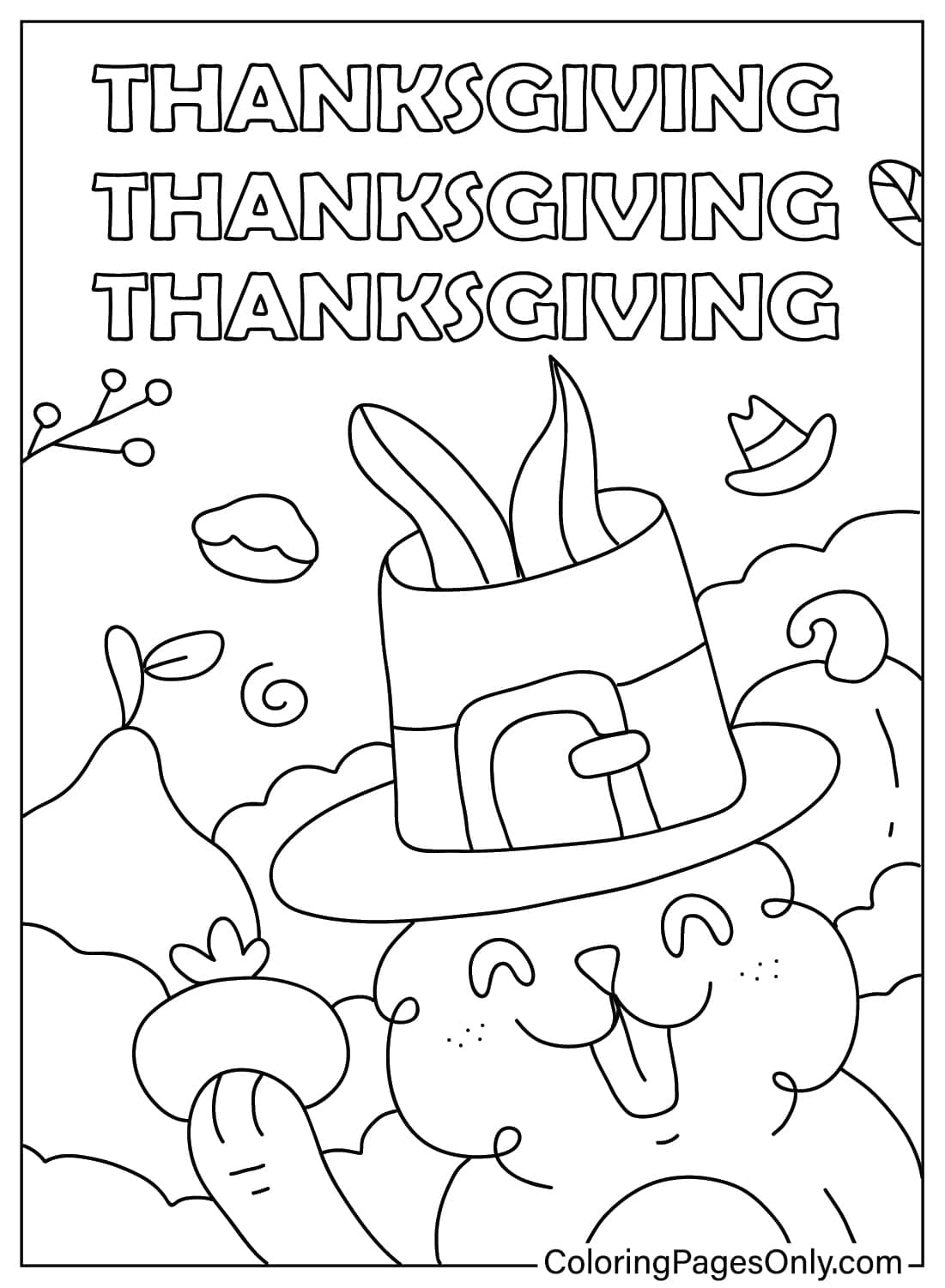
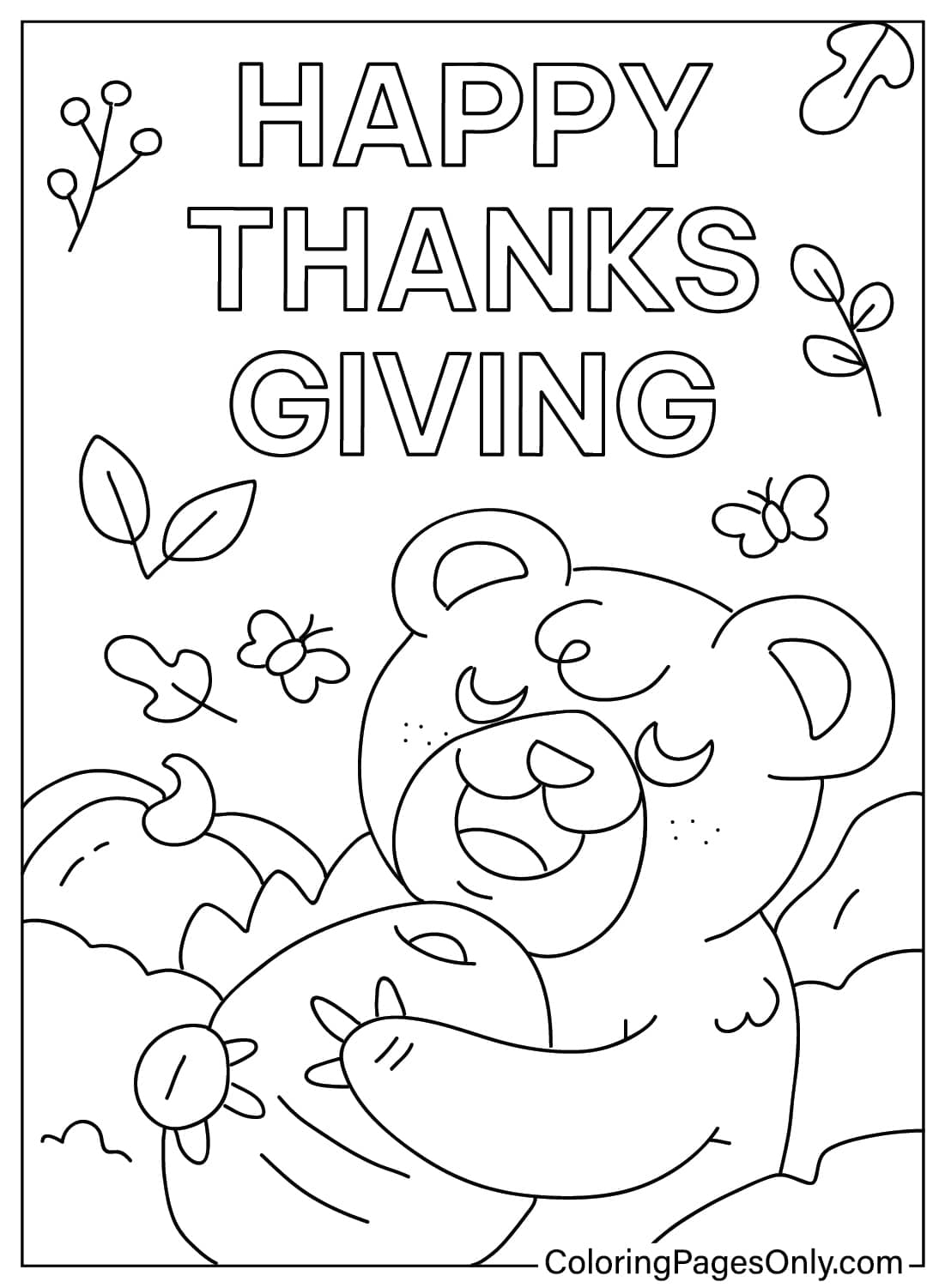
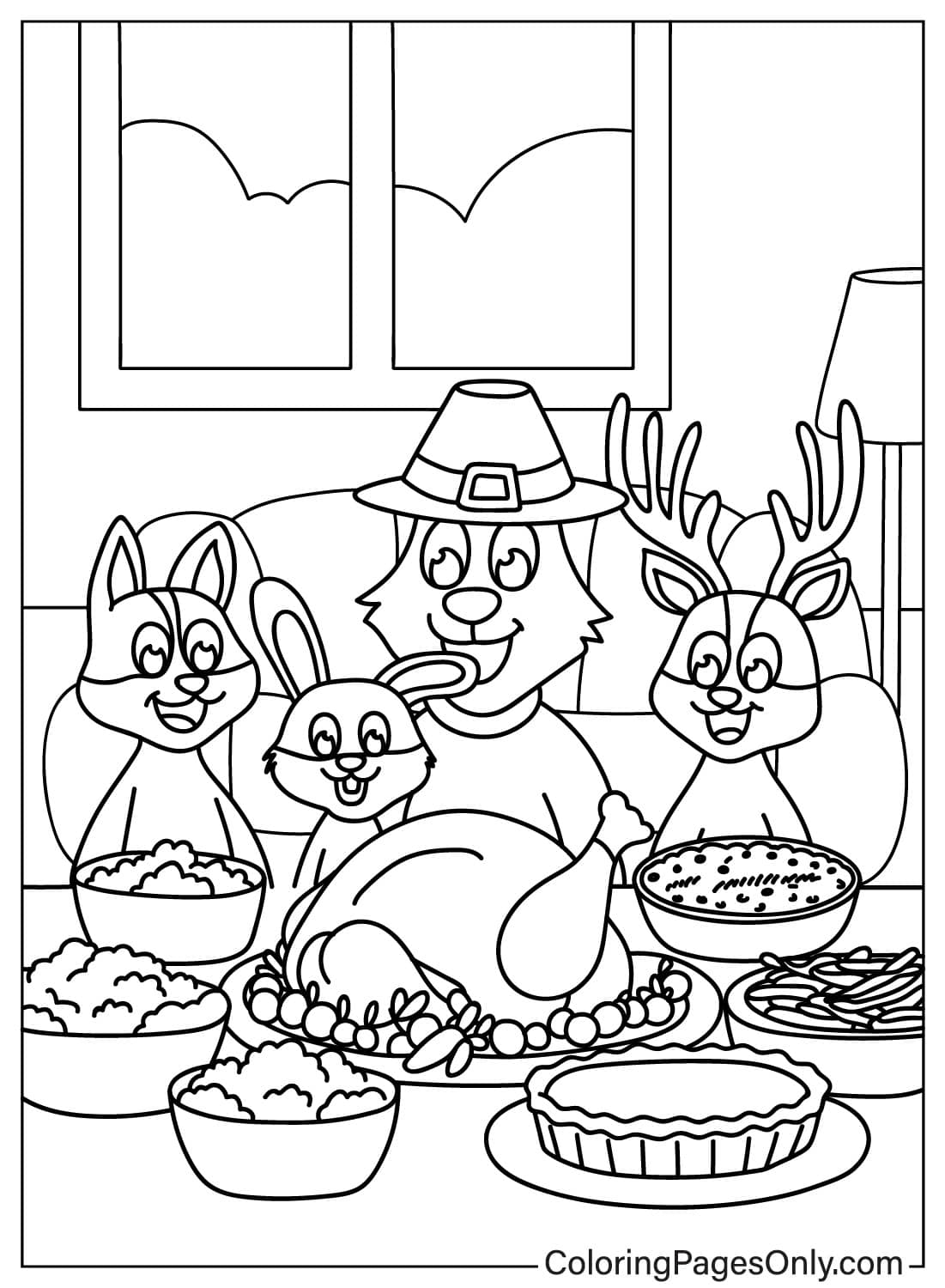
“Cute Woodland Animals Thanksgiving Coloring Page,” “Cute Squirrel Family Wearing Pilgrim Hats Thanksgiving Dinner Coloring,” “Rabbit Welcoming Thanksgiving,” “Rabbit Family On Thanksgiving,” “Bear Holding Thanksgiving Pumpkin,” and “Gnome On Thanksgiving” bring the forest into the holiday’s visual language. These pages are the collection’s most accessible for very young colorists, as woodland animals have familiar round shapes and large color zones.

Coloring woodland animals: Squirrels in Thanksgiving pages are warm grey-brown with a lighter belly and tail. Rabbits are typically warm grey or white. Bears are warm, dark brown. The Pilgrim hat accessories (black hats with gold buckles) provide a warm gold accent against each animal’s natural earth tones. Gnomes follow the standard gnome palette: a tall pointed hat in deep red or forest green, a warm cream tunic, a long white beard, and a warm skin tone on the nose, which is the only visible facial feature in the traditional gnome design.

Gnomes and Cute Character Pages

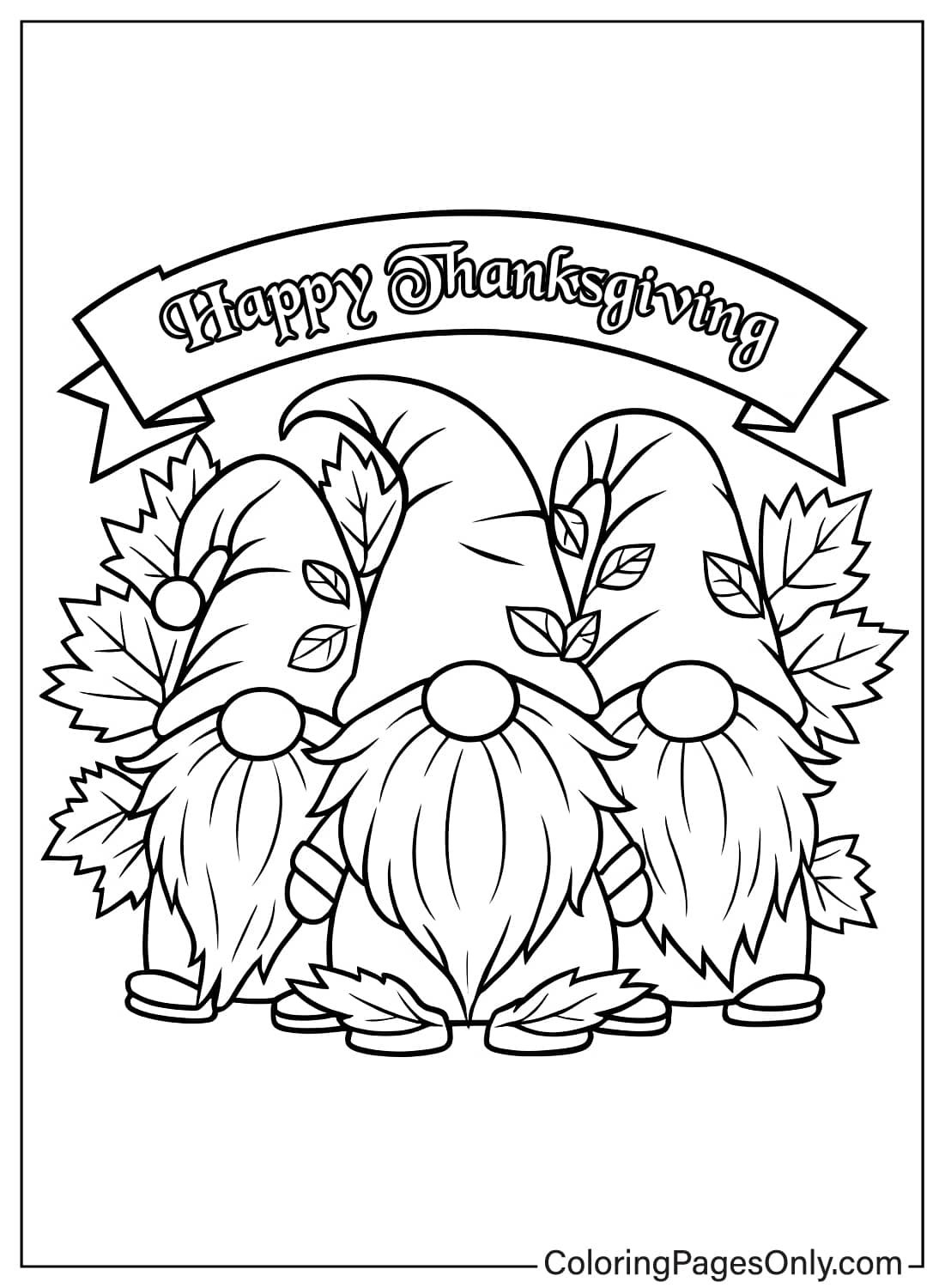
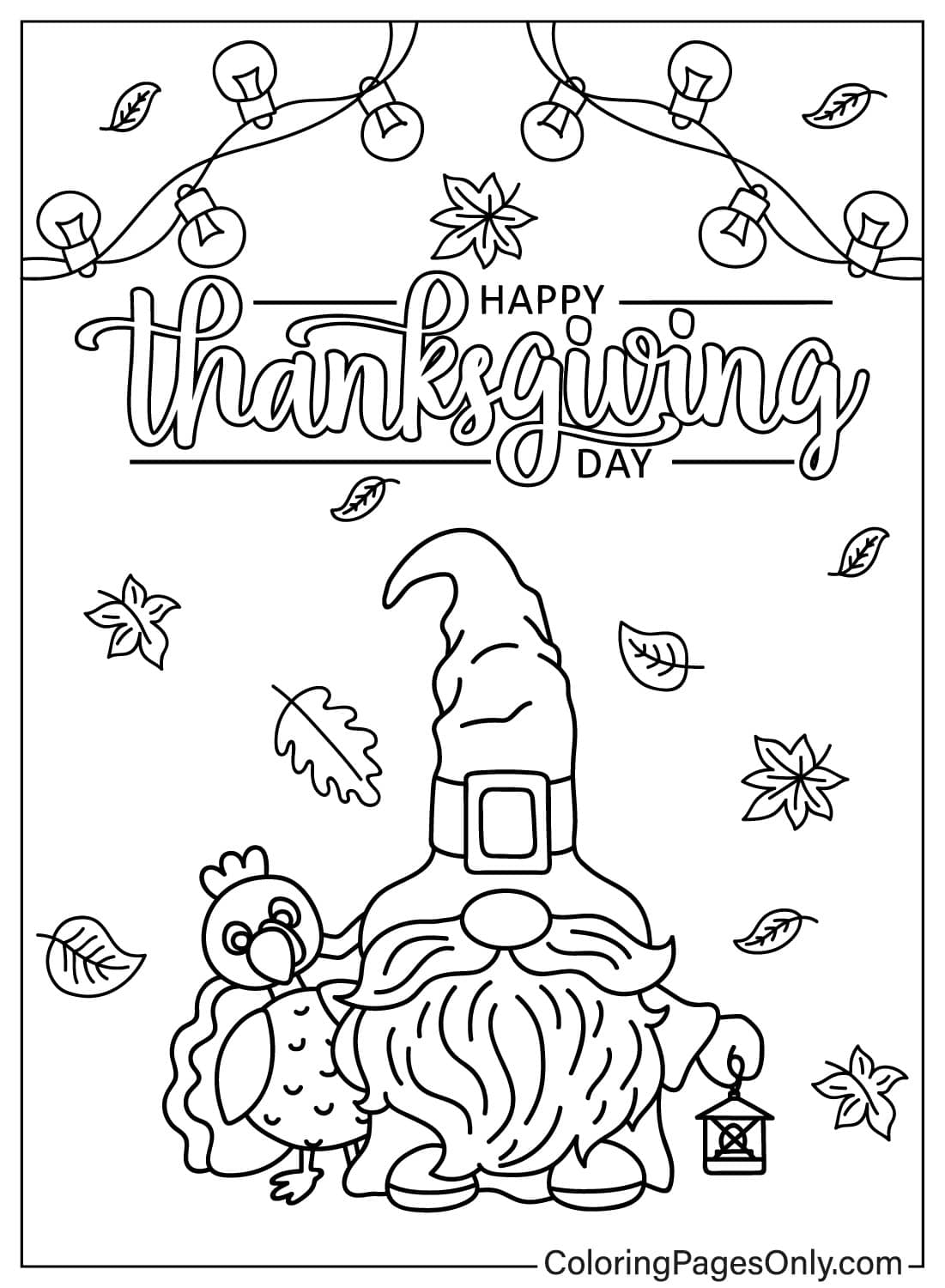
“Cute Welcome Gnome Pumpkin Spice Coloring Page” and “Cute Gnomes Happy Thanksgiving Coloring Page” represent the contemporary tradition of placing gnome characters into seasonal holiday contexts. Gnomes have appeared in American seasonal decoration since at least the mid-twentieth century, adapted from Scandinavian nisse and tomte traditions. The Thanksgiving gnome typically appears holding a pumpkin or corn, wearing harvest-orange or forest-green clothing.

Coloring gnomes: Gnomes on Thanksgiving pages use autumn-adjacent palettes rather than the standard red of Christmas gnomes. Deep forest green, warm burgundy, and pumpkin orange all work well as primary hat colors. The beard is white with slightly warm grey in the deepest shadow areas. Pumpkin props on gnome pages should use the same warm harvest orange as the pumpkin pages elsewhere in the collection, keeping the orange consistent across all pages in a multi-page coloring session for a visually coherent set.

Family and Celebration Pages

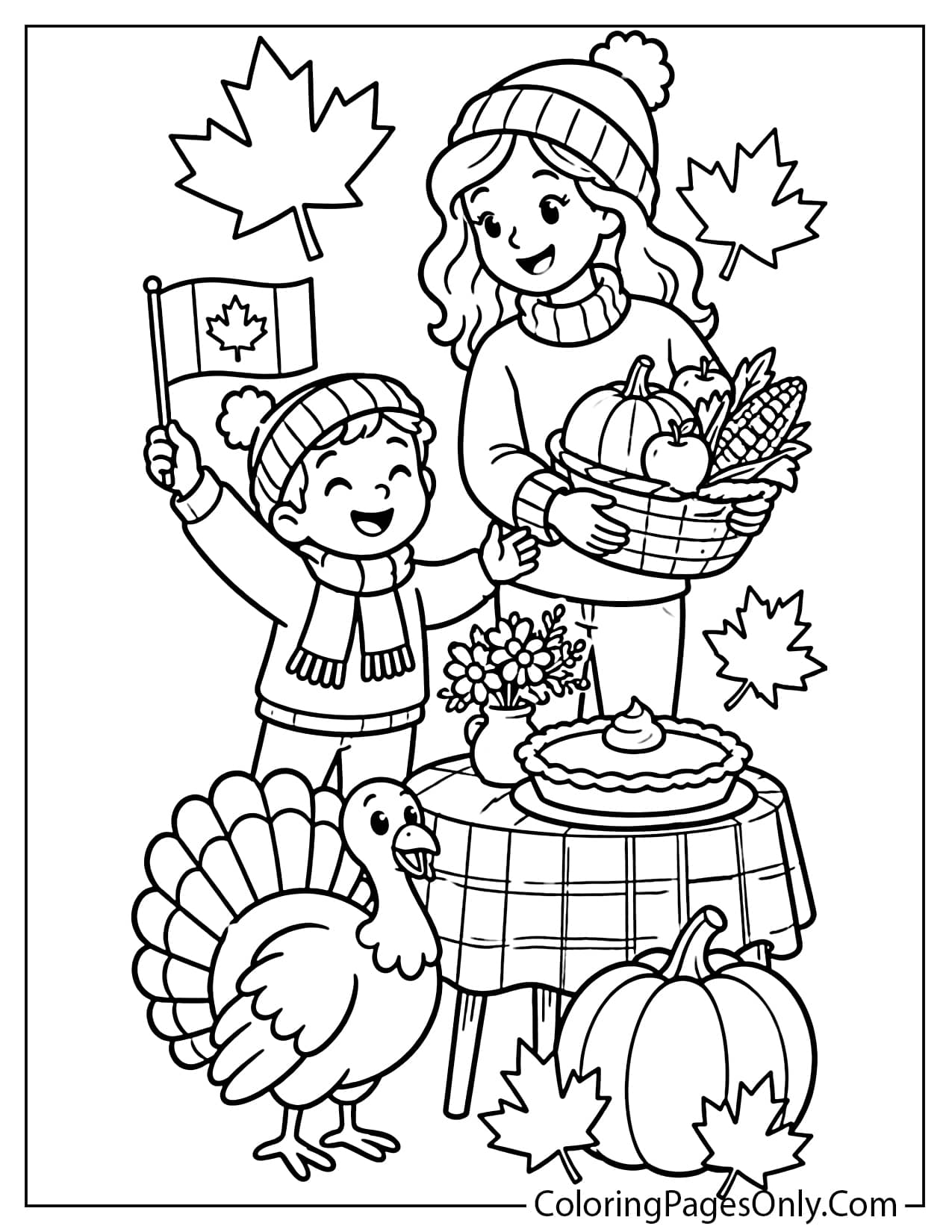
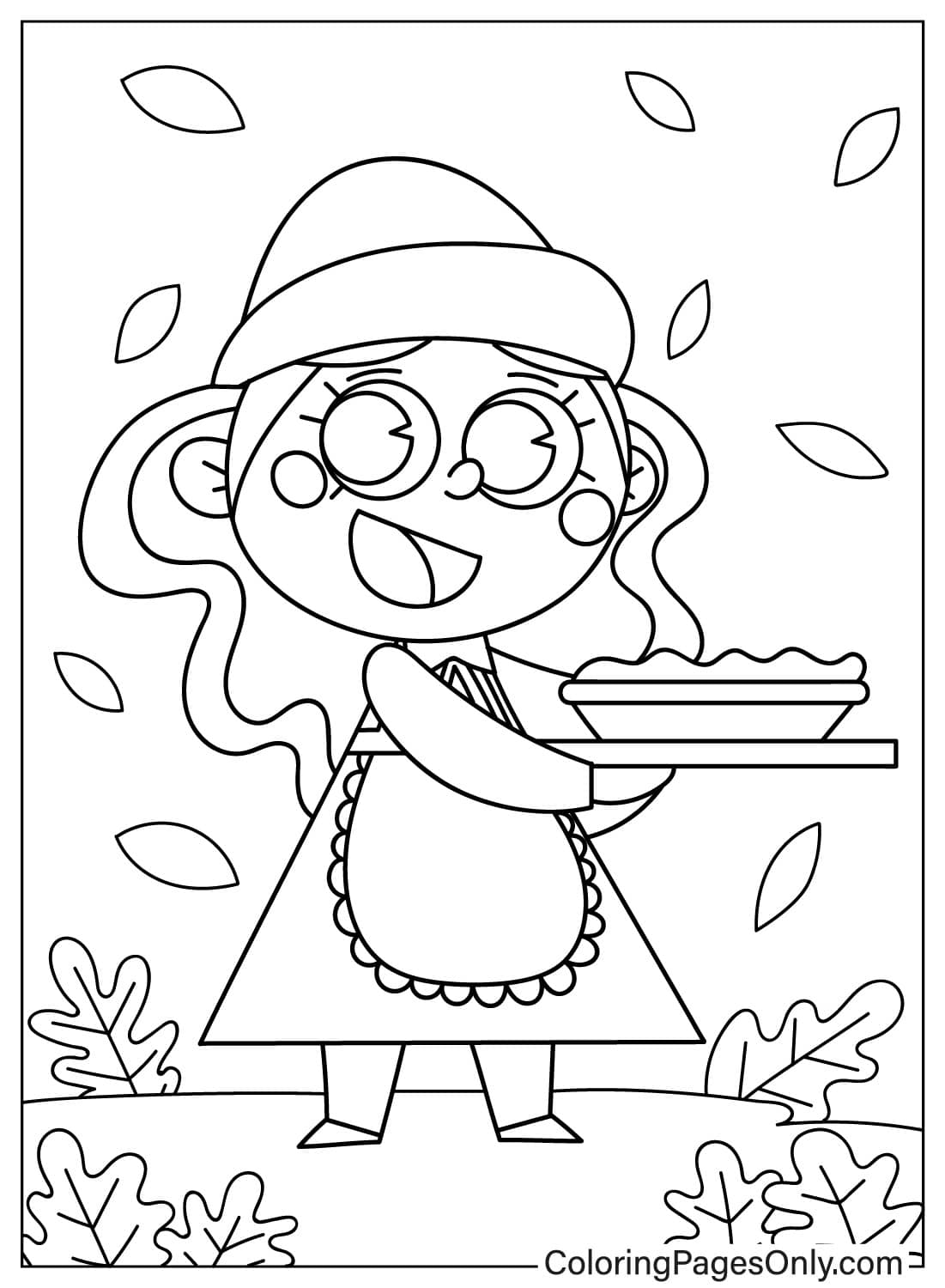
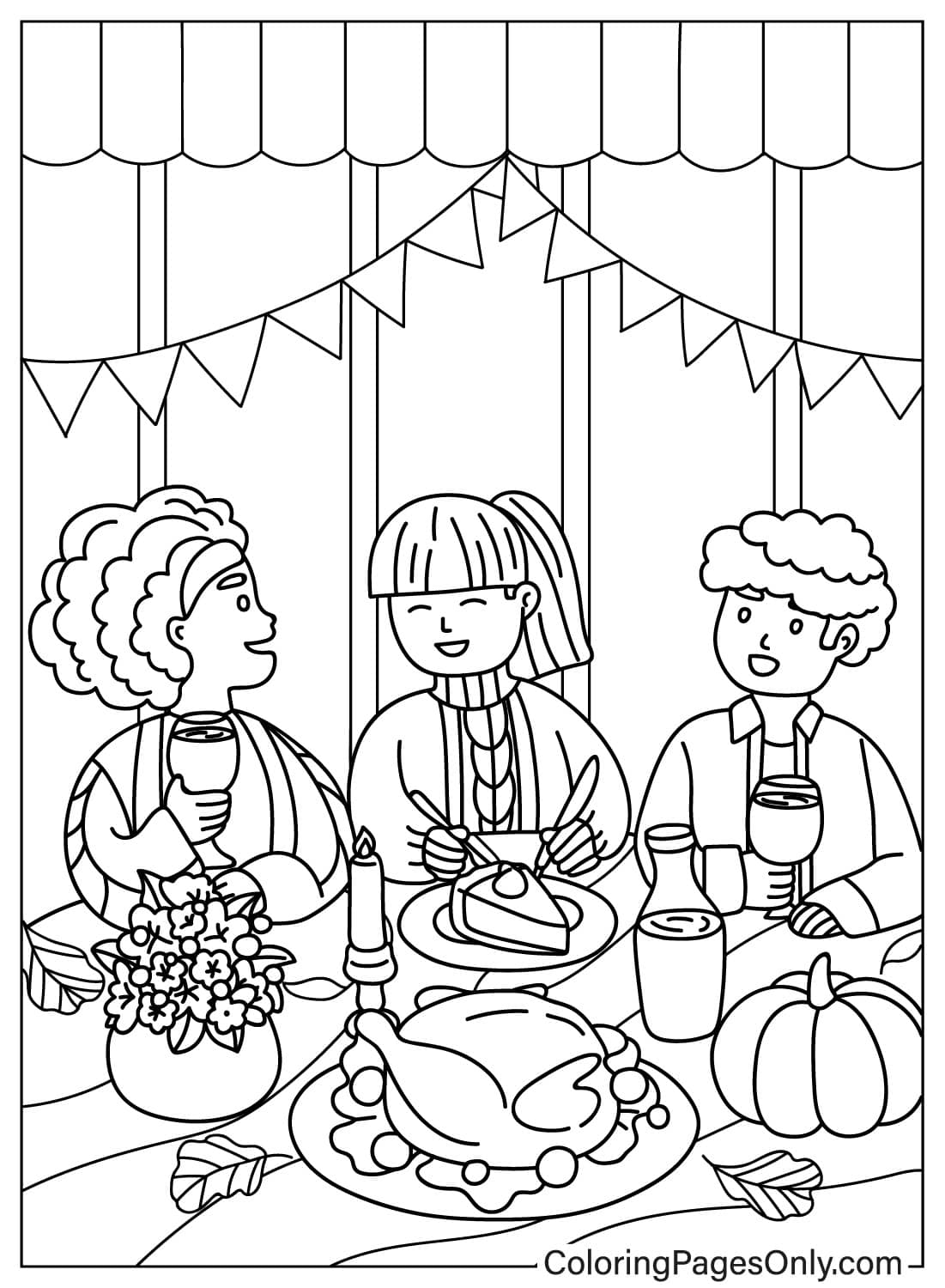
“Thanksgiving Family Gathering,” “Thanksgiving Party Table,” “Thanksgiving Table Party,” “Little Girl Preparing Thanksgiving Food,” “Welcoming Thanksgiving,” and the card pages center on the contemporary celebration rather than the historical event. These pages are the collection’s most personal: the activity of cooking, setting the table, and gathering around it.

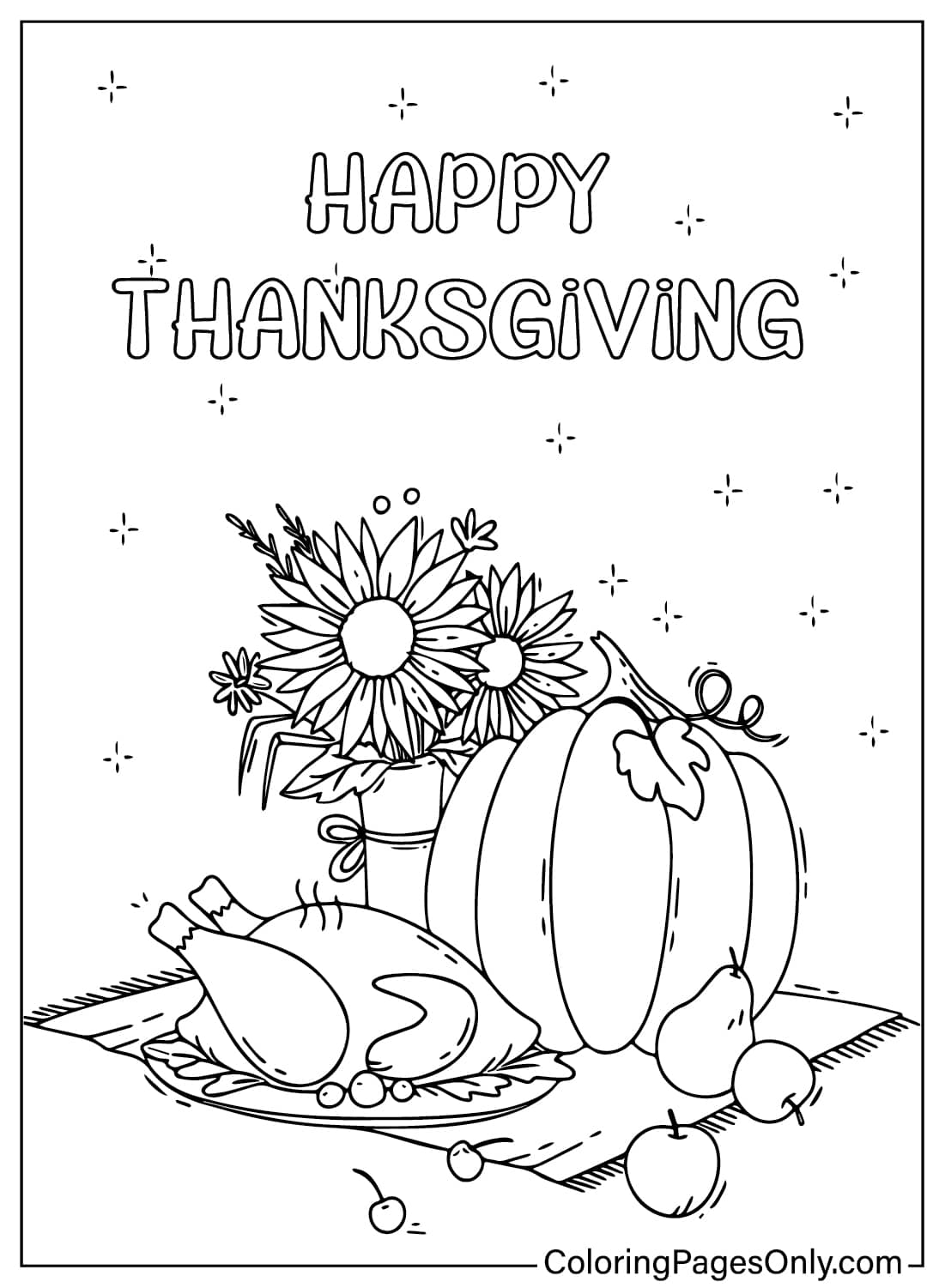
Coloring family and table pages: Thanksgiving table settings traditionally include warm, rich colors: deep burgundy tablecloths, golden candlelight, warm cream napkins, and the harvest palette of orange and brown centerpieces. On pages showing cooked turkey on a platter, the roasted skin is a deep amber-brown, darker at the leg and breast surfaces than at the sides. Candlelight on the table pages produces a warm golden-yellow glow that affects nearby white surfaces. Apply a very light warm yellow to the white tablecloth or napkin areas immediately adjacent to any candle to suggest the warmth of indoor light.

Gratitude Text and Poster Pages

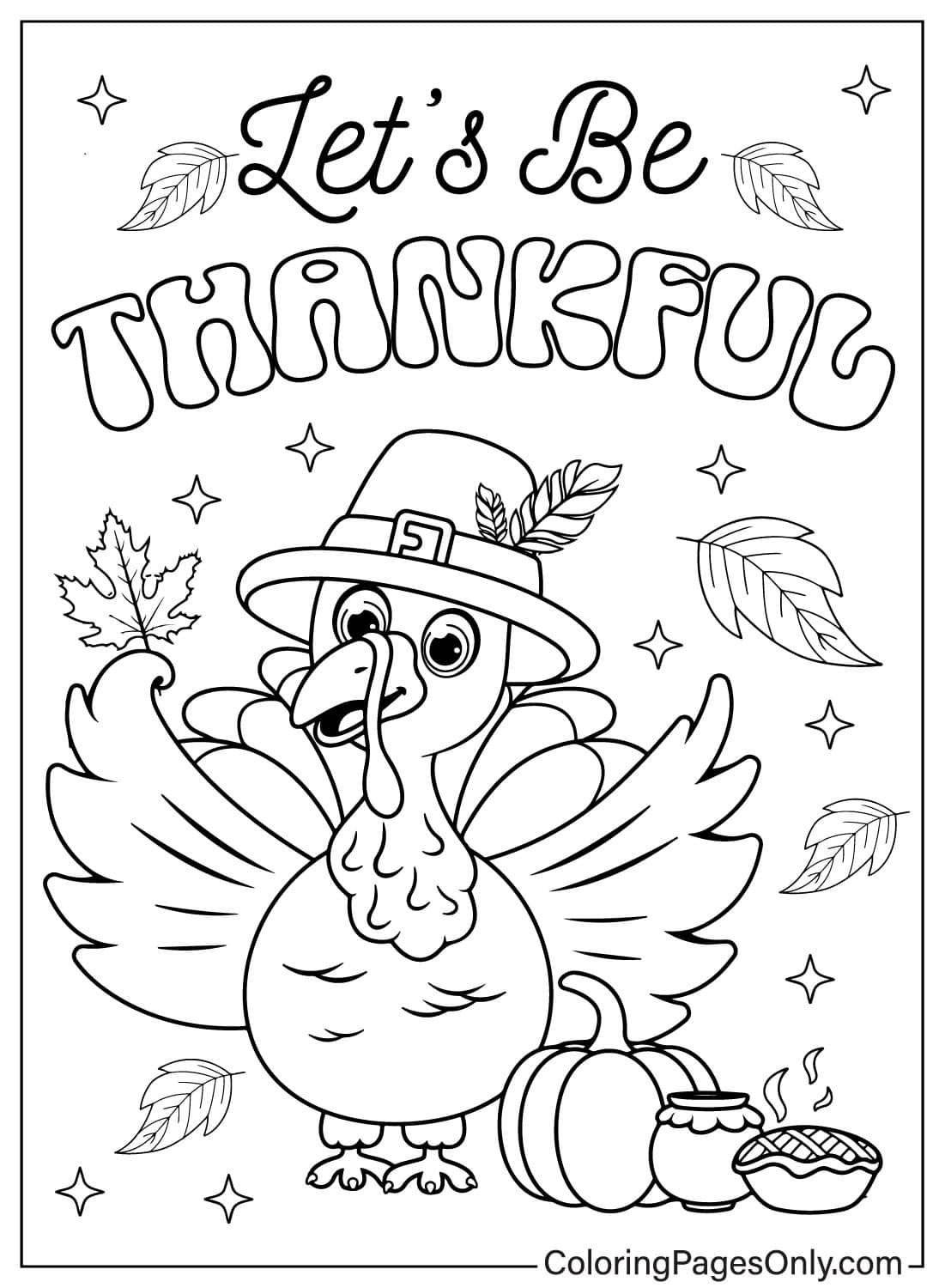
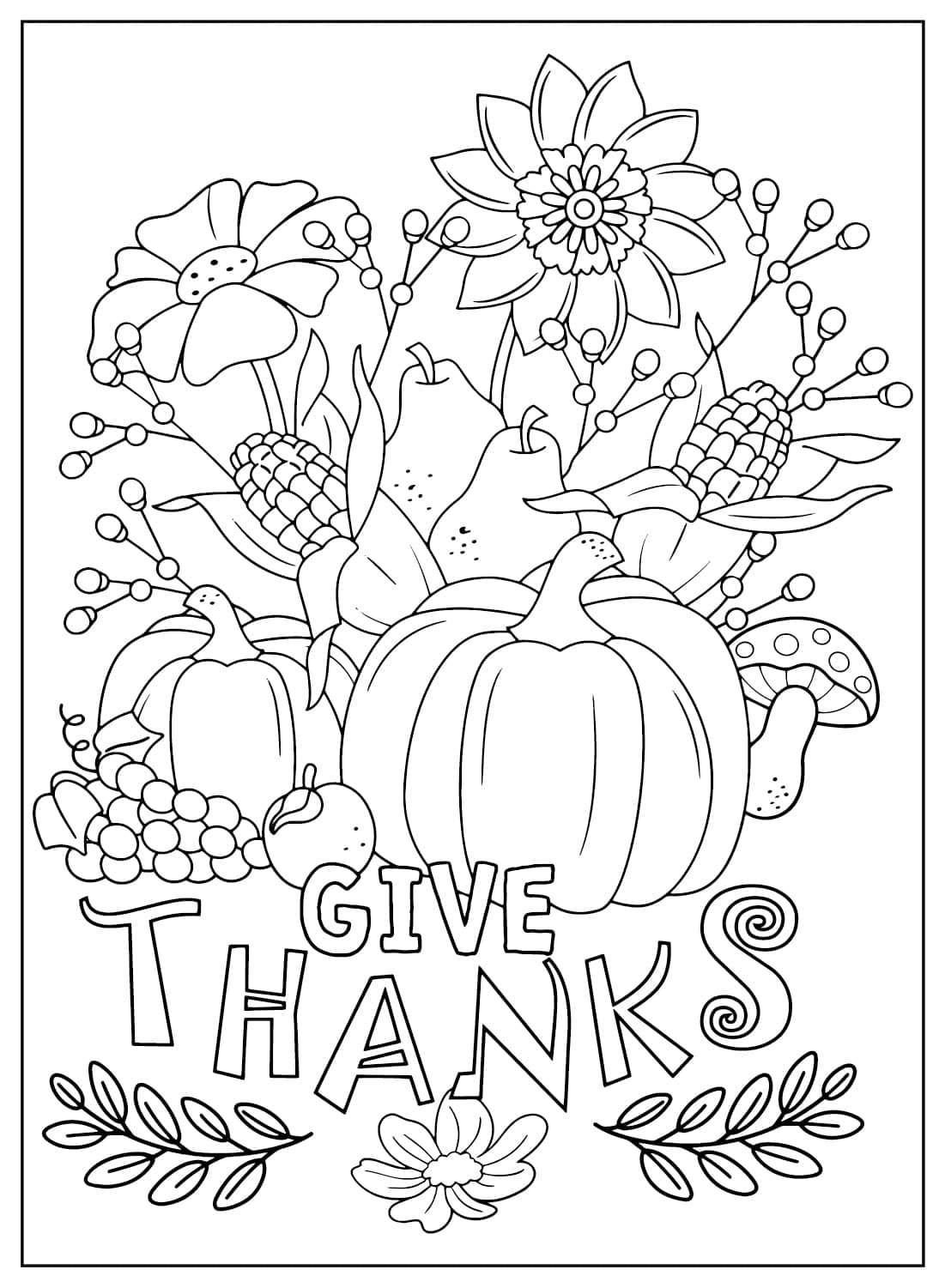
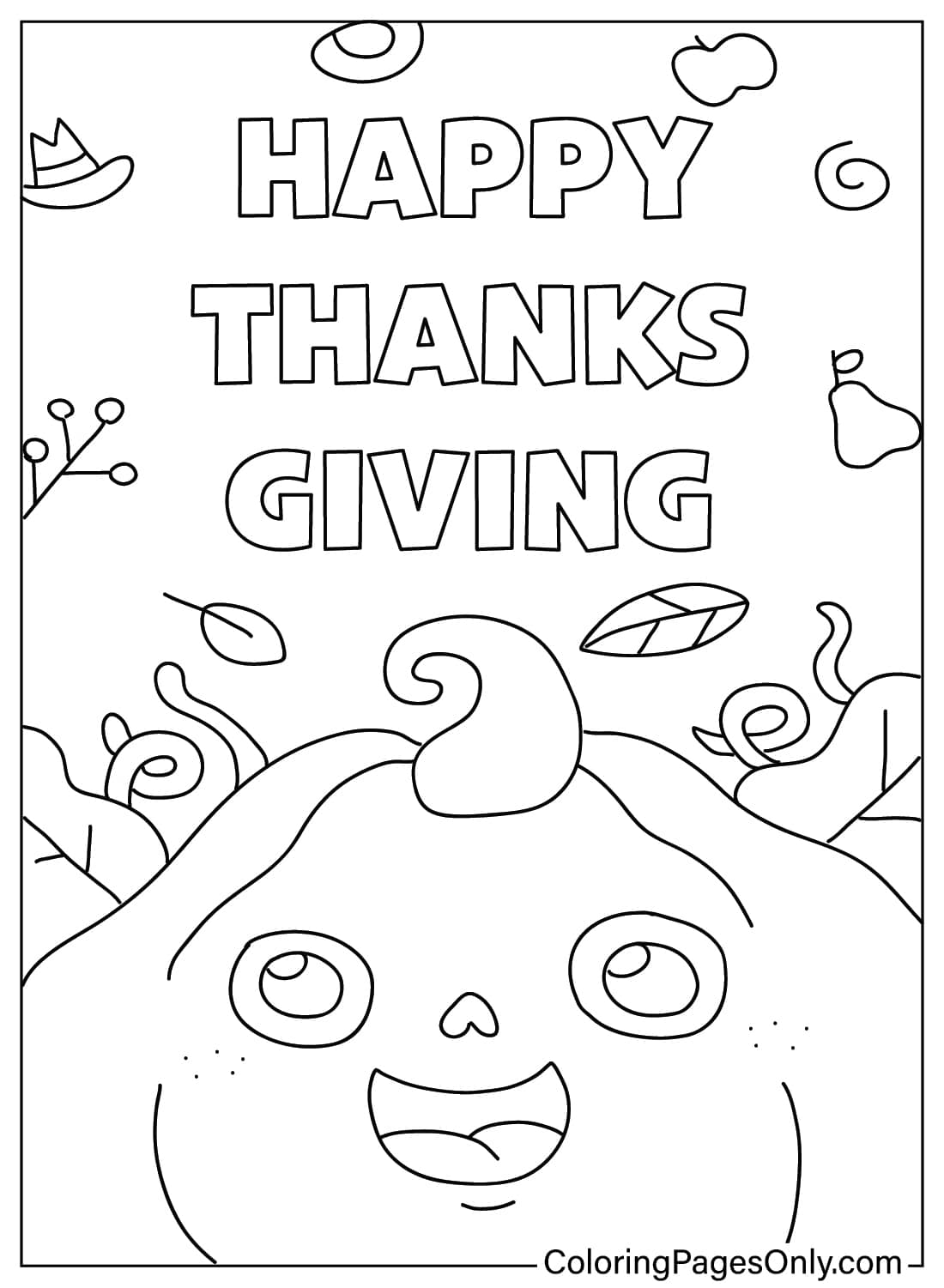
“Words Of Thanksgiving,” “Thankful Day,” “Grateful Thankful Blessed Pumpkin Sunflowers Coloring,” and “Happy Thanksgiving Card” are text-forward designs: poster layouts where the words are the primary visual element and harvest decorations provide the framing. These pages function as finished wall displays and cards once colored.

Coloring text poster pages: The most effective approach on text poster pages is to apply a consistent accent color to all text elements first, then color the decorative elements around them. A warm, deep burgundy or forest green for the text reads strongly against the white page without competing with the harvest orange of the surrounding decorations. Leave the text slightly lighter than its surrounding decorative elements, so the eye finds the text first when it reads as slightly lighter than a busy background.

Licensed Characters in Thanksgiving Settings

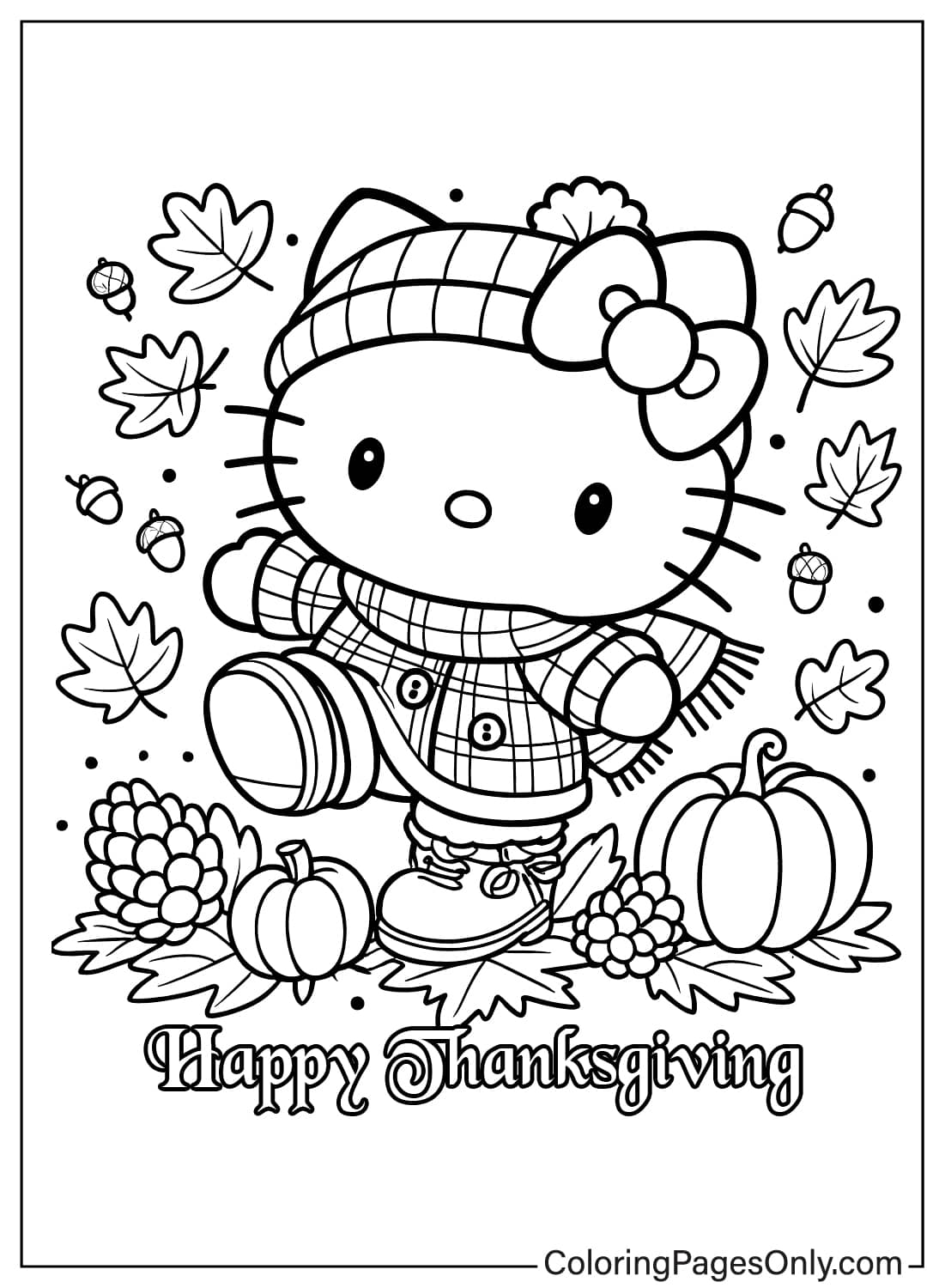
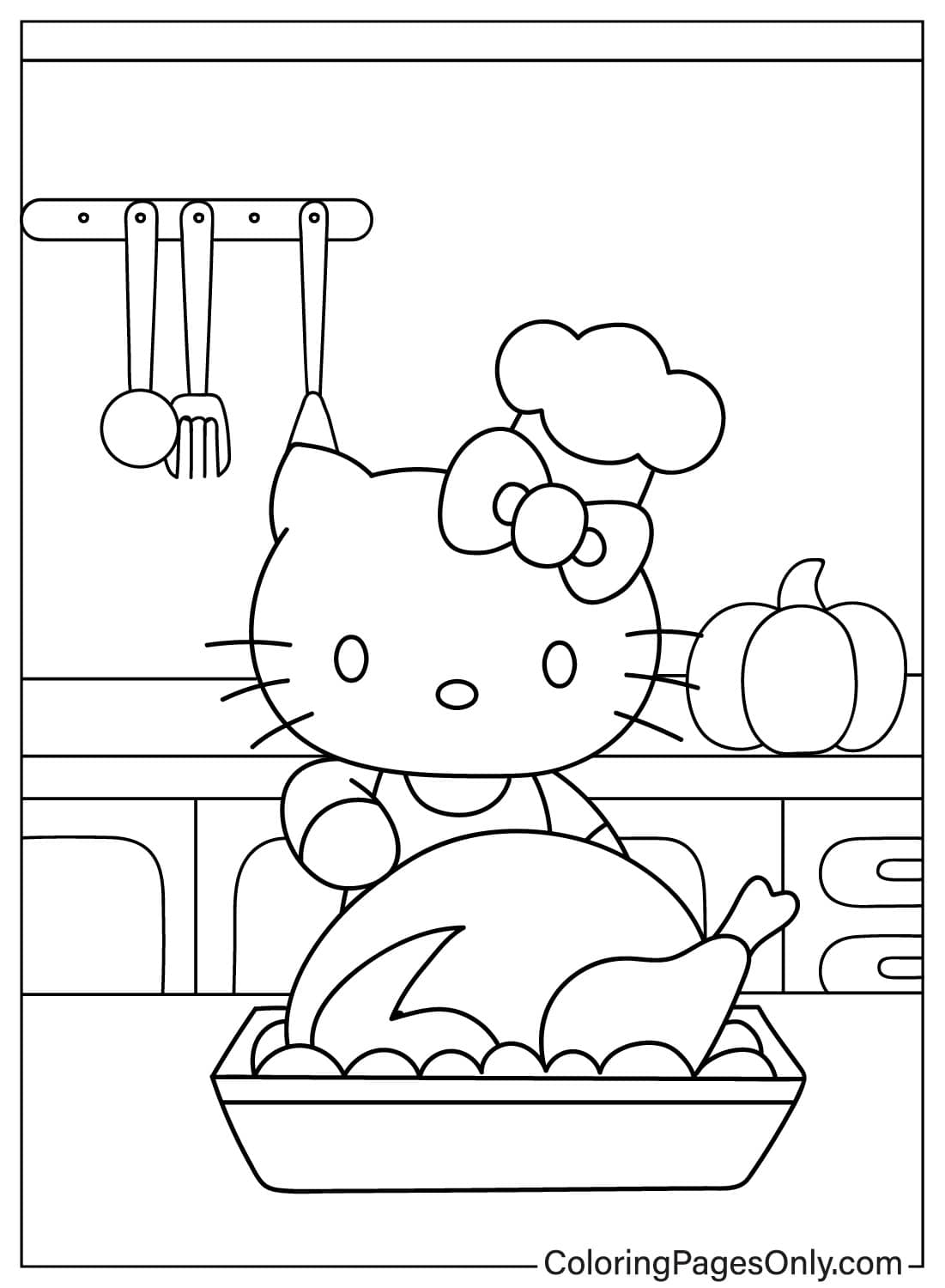
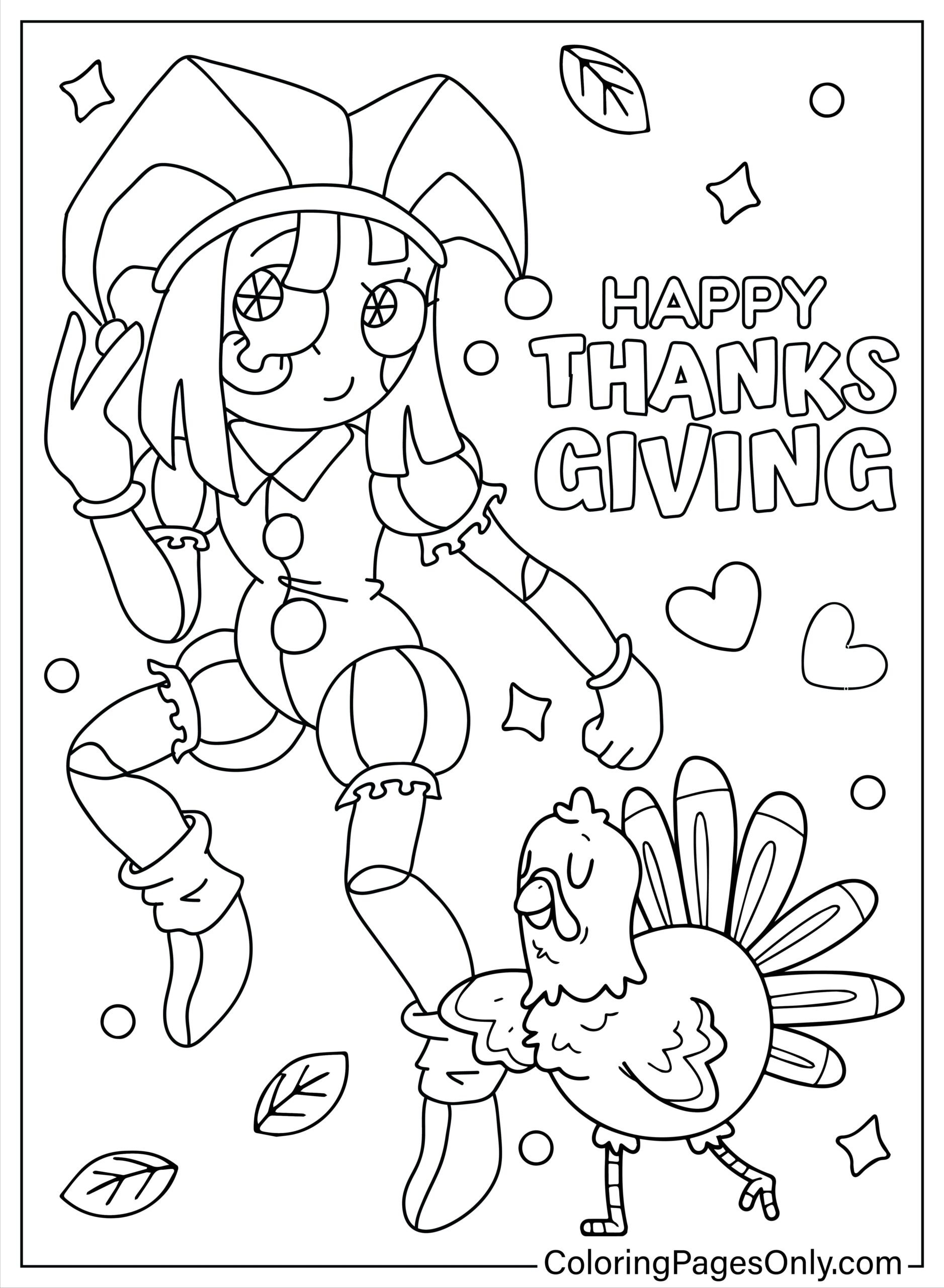
“Hello Kitty Happy Thanksgiving Fall Coloring Page,” “Hello Kitty Celebrating Thanksgiving,” and “Pomni Celebrating Thanksgiving” place characters from their respective franchises in Thanksgiving settings. These pages serve fans of Hello Kitty (Sanrio) and Pomni from The Amazing Digital Circus (Glitch Productions) who want Thanksgiving-specific content featuring familiar characters.

Coloring licensed character Thanksgiving pages: Hello Kitty’s base colors (white with a yellow star on the bow) should stay canonical; apply the Thanksgiving elements, such as autumn leaves, pumpkins, and harvest backgrounds, in the collection’s standard harvest palette. Pomni’s base design uses vivid purples and blues; the Thanksgiving setting elements around her work well in the warm harvest palette as a contrast to her cool character colors.

What These Pages Do

Thanksgiving coloring pages connect a holiday’s domestic present to a documented historical past. The fourth Thursday of November in the United States carries two distinct layers: the contemporary family gathering of football and dinner, and the 1621 feast at Plymouth Colony that provided the symbolic origin. The Pilgrims, the Mayflower, the Wampanoag Confederacy, and the harvest table are all present in this collection. Coloring the Mayflower page or the Pilgrim-and-feast page introduces children to historical imagery with a specific documented date (autumn 1621) and specific named participants: the Pilgrim settlers and the Wampanoag under Ousamequin.

The harvest palette of Thanksgiving provides one of the richest coloring opportunities in the seasonal calendar. The warm amber-to-russet-to-deep-brown range of autumn, combined with the pumpkin orange and the jewel tones of turkey tail feathers, offers more color variety within a single cohesive palette than most other holidays. Children who work through multiple pages in a session develop a working knowledge of warm color relationships, learning how burnt orange sits beside russet and how golden yellow advances against deep brown, in a way that is genuinely useful beyond the coloring activity.

Fine motor development is served across the collection’s range of difficulty. The American Academy of Pediatrics identifies fine motor skill development (controlled grip, pressure variation, directional stroke work within defined spaces) as a measurable developmental milestone through early and middle childhood. The simple baby turkey and cute gnome pages serve the youngest colorists with large open zones. The Mayflower ship and detailed feast table pages serve older children and adults with intricate structural detail, rigging lines, and multiple small-element scenes.

Gratitude as a practiced activity has documented well-being benefits. The gratitude poster pages in this collection (including “Words Of Thanksgiving,” “Thankful Day,” and “Grateful Thankful Blessed”) engage the coloring activity with a reflective dimension that the 2005 Art Therapy Journal study on structured activity documented as measurably reducing anxiety in participants. Thanksgiving’s explicit theme of gratitude makes these pages particularly suited to pairing with a brief conversation about what the household or classroom is thankful for, connecting the coloring activity to the holiday’s central meaning.

How to Color These Pages Well

Turkey tail feathers are the collection’s most rewarding challenge. A well-colored turkey tail fan reads as individually distinct feathers with depth and iridescence, not a flat, colored half-circle. Assign a different tone to alternating feathers: deep russet and warm gold, or dark teal and amber. Add a slightly darker band near each feather’s outer edge to suggest the natural dark border. On cute cartoon turkey pages where the body is simplified to one warm orange, the fan still benefits from this alternating treatment, keeping each feather visually distinct against the flat body tone.

The fall harvest palette has three zones that should stay distinct. The warmest zone is pumpkin orange: full saturation, warm, not red-orange. The middle zone is golden amber and yellow, slightly cooler than orange, the color of dry corn and autumn leaves at peak. The darkest zone is russet and deep brown, the color of acorns, walnut shells, and the darkest feathers. Keeping these three zones distinct rather than blending them into an even mid-tone is what makes fall harvest pages read as autumnal rather than muddy.

Pilgrim pages look most historically credible with muted, dark clothing tones. The instinct to color Pilgrim hats black and buckles gold accurately reflects the illustration convention, but filling out the rest of the costume in dark charcoal grey rather than bright colors reads as more period-appropriate than primary-color Pilgrim clothes. The white collar and cuffs are the Pilgrim costume’s signature detail; render them as clean, bright white with very light warm grey shadow only at the fold areas.

Woodland animals on Thanksgiving pages work best with their natural coat colors, not seasonal tones. The temptation on a squirrel-in-pilgrim-hat page is to make the squirrel orange or warm amber to match the harvest palette. Resist this. The animal’s natural coat reads as more charming precisely because it contrasts with the Pilgrim hat and harvest props. The hat and pumpkin carry the seasonal color; the animal stays itself. Changing the animal to match the harvest palette removes the contrast that makes these pages visually interesting.

Gnome hats in the Thanksgiving context work in three color options. Standard Christmas gnome red does not read as Thanksgiving. Better options include a deep forest green (which connects to the autumn landscape), a warm burgundy-red (the color of cranberries and autumn berries), and a warm pumpkin orange (which matches the harvest palette directly). All three read as Thanksgiving rather than Christmas or generic. Avoid bright primary red, as it pulls the eye toward Christmas associations rather than harvest ones.

Feast table pages read best when light sources are established first. On pages showing a Thanksgiving dinner table with candles, apply a very light warm yellow to the white tablecloth areas nearest the candle bases before coloring anything else. This establishes the table’s light source and makes the subsequently applied darker colors on the food, dishes, and centerpieces read as existing in the same candlelit space. Without this light source, table pages tend to look uniformly lit from nowhere, which reads as flat.

Five Creative Craft Ideas

Thanksgiving Gratitude Book

Print five to six pages from the collection, one page per family member or classroom student. Color each page and write one sentence of gratitude on the back: what that person is thankful for this year.

Bind the pages together with two staples along the left edge or punch holes and thread with ribbon. The finished book holds each participant’s colored page and written gratitude in a single booklet, dated with the current year.

The gratitude book works equally well as a family keepsake and as a classroom activity. For classroom use, each student colors one page and contributes one gratitude sentence; the class book is read aloud and kept in the room for the season. Best suited for ages 5 and up for the writing component; younger children can color with an adult writing their dictated sentence.

Turkey Place Cards

Print the “Cute Baby Turkey Give Thanks Coloring Page” and small turkey pages multiple times, one per dinner guest. Color each turkey page and cut each turkey out along its outline.

Write one guest’s name on the front of each turkey and fold a small piece of cardstock into a tent card base. Attach the colored turkey to the front of the tent card with glue. The finished place card stands on the Thanksgiving table at each guest’s seat, identifying their place with a turkey the household colored together.

For families with young children, this craft produces a direct connection between the coloring activity and the Thanksgiving table. Children see their own coloring work placed at each seat and are more engaged with the table setup. Best suited for ages 4 and up, with adult help for writing names.

Mayflower and Plymouth Diorama

Print the “Mayflower Ship Thanksgiving Journey Coloring Page” and the “First Thanksgiving Feast Pilgrim Native American Coloring” page. Color both carefully: the Mayflower in warm tan hull with off-white sails and deep blue-grey sea, the feast scene in the full Thanksgiving harvest palette.

Fold a piece of cardstock into a two-sided diorama shape (back panel and floor). Mount the Mayflower page on the back panel and cut out the feast figures from the second page, standing them on the floor of the diorama. Add a handwritten label: “Plymouth Colony, Autumn 1621.”

The finished display pairs the journey with the arrival. This is the collection’s most educational craft, connecting the two historical pages into a single display, best for ages 7 and up as a combined coloring and research activity.

Harvest Wreath

Print the “Thanksgiving Wreath” page and four to five small harvest-element pages: pumpkins, corn, fall leaves, and sunflowers. Color all pages in the harvest palette. Cut out the individual elements from the smaller pages.

Layer the cut-out harvest elements around the border of the colored wreath page, attaching them with glue to add texture and depth to the flat coloring. The finished piece combines the foundation wreath with three-dimensional cut-out additions, producing a decorative piece that reads as more complex than a single coloring page.

Mount on a backing sheet with a loop of ribbon at the top for hanging. Suited for ages 6 and up; younger children can do the coloring with an adult handling the cutting and assembly.

(Image placeholder: Harvest Wreath)

What We’re Grateful For Garland

Print eight to ten text-forward pages from the collection: “Words Of Thanksgiving,” “Thankful Day,” and “Grateful Thankful Blessed” pages, plus simple single-character pages as fillers. Color all pages.

Cut each finished page into a long horizontal strip, approximately one-third of the page height, centered on the main text or character. Punch a small hole at each end of each strip. Thread twine through all strips, spacing them evenly, alternating between the text pages and the character pages.

The finished garland displays the holiday’s gratitude vocabulary (Thankful, Grateful, Blessed) in a continuous horizontal display across a doorway or mantelpiece, made entirely from pages colored by the household. Best suited for ages 5 and up; very young children can color while adults handle cutting and assembly.

Frequently Asked Questions

What is Thanksgiving, and when is it observed? Thanksgiving is a national holiday in the United States, observed on the fourth Thursday of November. It was established as a federal holiday by an act of Congress in 1941. Canada observes Thanksgiving on the second Monday of October. The holiday centers on themes of gratitude, harvest, and family gathering, and its symbolic origin is the autumn 1621 feast at Plymouth Colony in present-day Massachusetts, where Pilgrim settlers and members of the Wampanoag Confederacy shared a multi-day harvest celebration.

What happened at the First Thanksgiving in 1621? In autumn 1621, Pilgrim settlers at Plymouth Colony shared a harvest feast with approximately ninety Wampanoag men and their leader Ousamequin, known to colonists as Massasoit. The Pilgrims had arrived on the Mayflower in late November 1620. The feast lasted approximately three days. The primary record comes from a December 1621 letter by Pilgrim Edward Winslow, which describes wild fowl and deer as the main foods. The participants did not call the event Thanksgiving; it was a harvest celebration. The Wampanoag Confederacy had inhabited the region for thousands of years before European contact, and their agricultural knowledge (particularly of the Three Sisters crops: corn, beans, and squash) contributed significantly to the colony’s survival.

Who were the Pilgrims, and why did they come to America? The Pilgrims were English Separatists, members of a Protestant group that had separated from the Church of England, who sought religious freedom. They first fled to Leiden in the Netherlands in 1608, then decided to establish a colony in North America. They departed Plymouth, England, aboard the Mayflower on September 16, 1620, with 102 passengers. The crossing took sixty-six days. They arrived at what is now Provincetown Harbor on November 21, 1620 (Old Style calendar) and established Plymouth Colony at present-day Plymouth, Massachusetts. Of the original 102 passengers, approximately half died during the first winter.

How did Thanksgiving become a national holiday? Thanksgiving observances occurred in various colonies and states throughout the seventeenth, eighteenth, and early nineteenth centuries, without national standardization. George Washington proclaimed November 26, 1789, as a national day of Thanksgiving. The effort to establish Thanksgiving as a permanent annual national holiday was led most persistently by Sarah Josepha Hale, editor of Godey’s Lady’s Book, who began writing letters to presidents and governors requesting formal recognition in 1846. President Abraham Lincoln issued the decisive proclamation on October 3, 1863, designating the last Thursday of November as a national day of Thanksgiving, a decision made during the Civil War. Congress formally fixed Thanksgiving as the fourth Thursday of November in 1941.

Why is the turkey associated with Thanksgiving? The association of turkey with Thanksgiving developed gradually through the nineteenth century. Turkey had been a common food source in North America since before European contact. Sarah Josepha Hale’s novel Northwood (1827) described a New England Thanksgiving dinner featuring turkey as the centerpiece. As her influence spread, Thanksgiving traditions nationally through her writings, the turkey came with them. The wild turkey (Meleagris gallopavo) is native to North America and was present in the region around Plymouth; wild fowl was mentioned in the 1621 Winslow letter, though it is uncertain whether this specifically included turkey. By the late nineteenth century, turkey had become the canonical Thanksgiving centerpiece in American popular culture.

What are the Three Sisters, and why are they associated with Thanksgiving? The Three Sisters (corn, beans, and squash) are three crops that indigenous peoples across North America, including the Wampanoag, cultivated together using a companion planting method that was highly productive and sustainable. Corn provides a stalk for beans to climb; beans fix nitrogen in the soil; squash spreads across the ground, suppressing weeds and retaining moisture. The Wampanoag and other Algonquian peoples had cultivated the Three Sisters for centuries before European contact. These crops were central to the food supply that made the 1621 harvest feast possible, and they remain core to the Thanksgiving harvest imagery throughout this collection.

What age group are these pages best suited for? The baby turkey pages, simple gnome pages, and woodland animal pages are accessible for children as young as 3, with large open zones suited to broad markers or chunky crayons. The turkey pages with full tail fan detail, the Pilgrim scene pages, and the harvest table pages are most engaging for ages 5 through 8, where more controlled coloring is manageable, and the historical context is beginning to be comprehensible. The Mayflower ship page and the adult turkey page suit ages 8 and up or adult colorists who want a longer, more detailed project. The text poster pages, such as “Words Of Thanksgiving” and “Grateful Thankful Blessed,” are appropriate for all ages as display pieces.

What are the colors of Thanksgiving, and what do they represent? Thanksgiving’s color palette is drawn from the autumn harvest: orange from pumpkins and squash, golden amber and yellow from dried corn and autumn leaves, warm brown and russet from tree bark and walnut shells, and deep red from cranberries and the darkest autumn leaves. These are the colors of the season in the northeastern United States, the part of the country where both the 1621 Plymouth feast and the nineteenth-century New England Thanksgiving traditions that Sarah Josepha Hale described took place. The palette is warm and analogous (running through orange to brown to gold) and associated with abundance rather than with celebration or festivity in the Christmas or Fourth of July sense.

Browse and Color

Sarah Josepha Hale wrote to five sitting presidents for seventeen years before Abraham Lincoln read her letter and acted on it. Lincoln’s proclamation came on October 3, 1863, at the midpoint of the Civil War. He was asking a divided country to give thanks. The language of his proclamation is careful: it acknowledges suffering, lists the blessings, and asks for the healing of the national wounds. It is not a cheerful document. It is a serious one.

The turkey, the pilgrim hat, and the harvest basket came later, through the same popular tradition that Sarah Josepha Hale helped build. They are good symbols for what the holiday asks of people: to take stock of what has come in, to acknowledge what has been given, and to share a table.

The pages in this collection cover all of it: the Mayflower arriving, the 1621 feast, the harvest table set for whoever is gathered around it, the squirrel family in their pilgrim hats, the turkey running away from dinner, and the gnome holding a pumpkin. Some of these images are historical. Some of them are just fond.

Browse the full collection at ColoringPagesOnly.com. All 50+ pages free, no sign-up, PDF or PNG, print at home or color online.

Share your finished pages on Facebook and Pinterest and tag #Coloringpagesonly. We especially want to see the Gratitude Books and the Turkey Place Cards.

The fourth Thursday of November. The harvest is in. Give thanks.

More from Our Holidays Collections

More from our Holidays collections:

Jennifer Thoa – Writer and Content Creator

Hi there! I’m Jennifer Thoa, a writer and content creator at Coloringpagesonly.com. With a love for storytelling and a passion for creativity, I’m here to inspire and share exciting ideas that bring color and joy to your world. Let’s dive into a fun and imaginative adventure together!