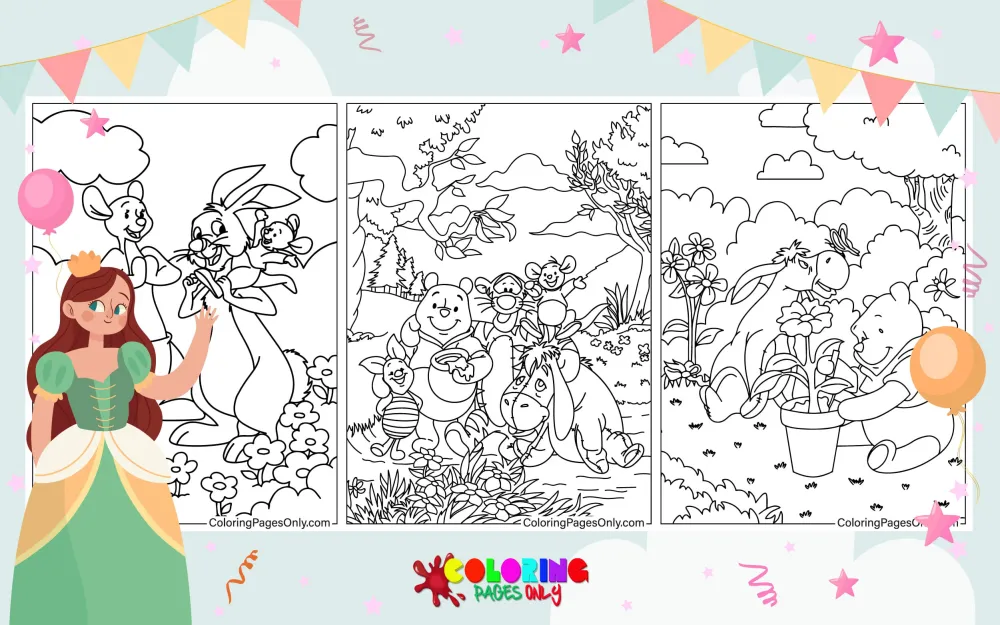
Explore 68 free Winnie the Pooh coloring pages featuring Pooh, Piglet, Tigger, Eeyore, Kanga, Roo, Owl, Rabbit, Christopher Robin, and the entire Hundred Acre Wood – available as free printable PDF and interactive online coloring for kids, families, and fans of all ages.
There is a particular kind of comfort that only a few stories in the world manage to provide – not the comfort of excitement or adventure, but the deeper, quieter comfort of feeling that the world is a place where friendship is real, honey is always worth pursuing, and even the gloomiest afternoon in the forest is better when shared with someone who loves you. A. A. Milne found that comfort in a stuffed bear named after his son Christopher Robin’s favorite toy, and in the imaginary world of the Hundred Acre Wood where that bear lived.
Winnie-the-Pooh was first published on October 14, 1926, and nearly a century later, Pooh Bear remains one of the most beloved and enduring characters in the history of children’s literature. Walt Disney acquired the rights to the characters in 1961, and the Disney adaptations have introduced Pooh, Piglet, Tigger, and Eeyore to generations of children who then grew up and introduced them to their own children, creating one of the most genuinely multigenerational connections in popular culture.
At ColoringPagesOnly.com, our collection of 68 free Winnie the Pooh coloring pages brings the warmth of the Hundred Acre Wood directly to your coloring table. Every character is here – from Pooh hugging his honey jar to Eeyore being gently, philosophically gloomy, from Tigger bouncing with irrepressible energy to Piglet finding small courage in big moments. Every page is free to download as PDF, JPG, or PNG, and available to color online directly in your browser.
Come in. The Hundred Acre Wood is waiting.
What’s Inside Our Winnie the Pooh Coloring Pages Collection?
Our collection covers every beloved resident of the Hundred Acre Wood – and the full range of moments, moods, and friendships that have made this world one of the most warmly remembered in all of children’s literature.
Winnie the Pooh Coloring Pages – A Bear of Very Little Brain and a Very Large Heart
Winnie the Pooh is, in A. A. Milne’s original conception, a bear of “very little brain” who nonetheless navigates the world with a kind of instinctive wisdom that more intellectually accomplished characters consistently fail to match. He is gentle, generous, easily distracted by honey, and possessed of a philosophical outlook on life that has made him quotable in ways that genuinely surprise people who encounter his words as adults. “You are braver than you believe, stronger than you seem, and smarter than you think” – these words, widely attributed to Milne’s Pooh, capture the emotional intelligence that defines the character beneath his cheerful bumbling.
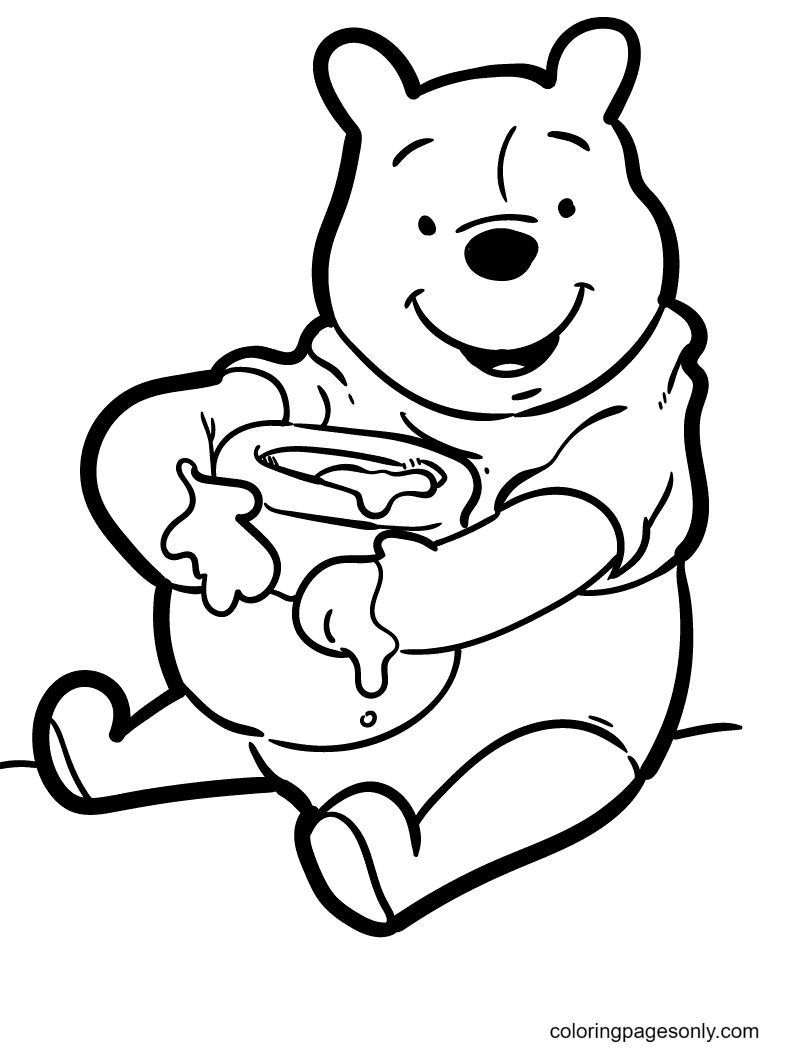
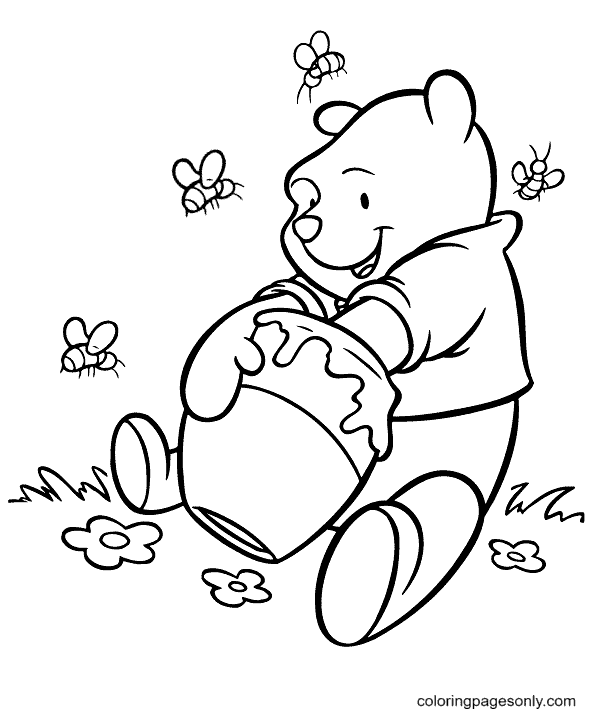
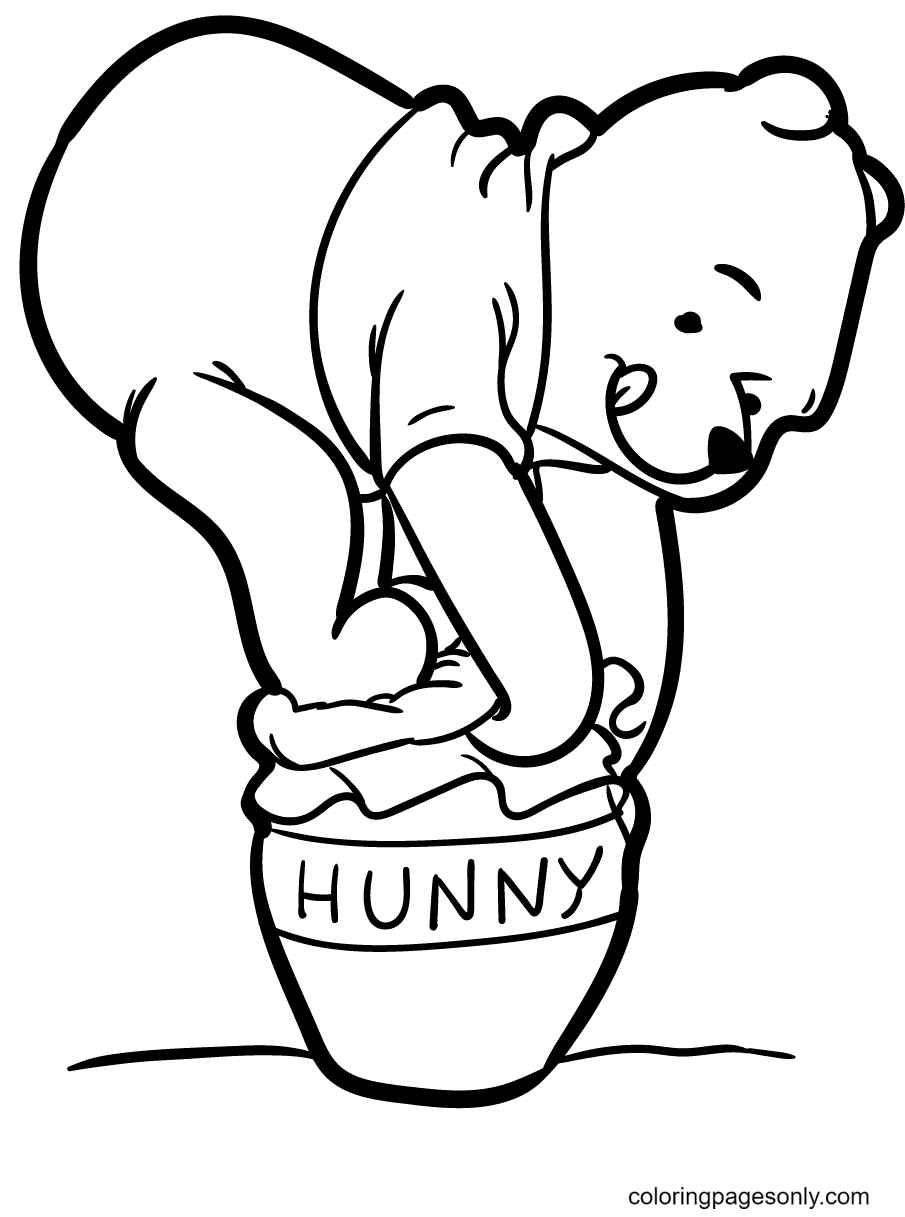
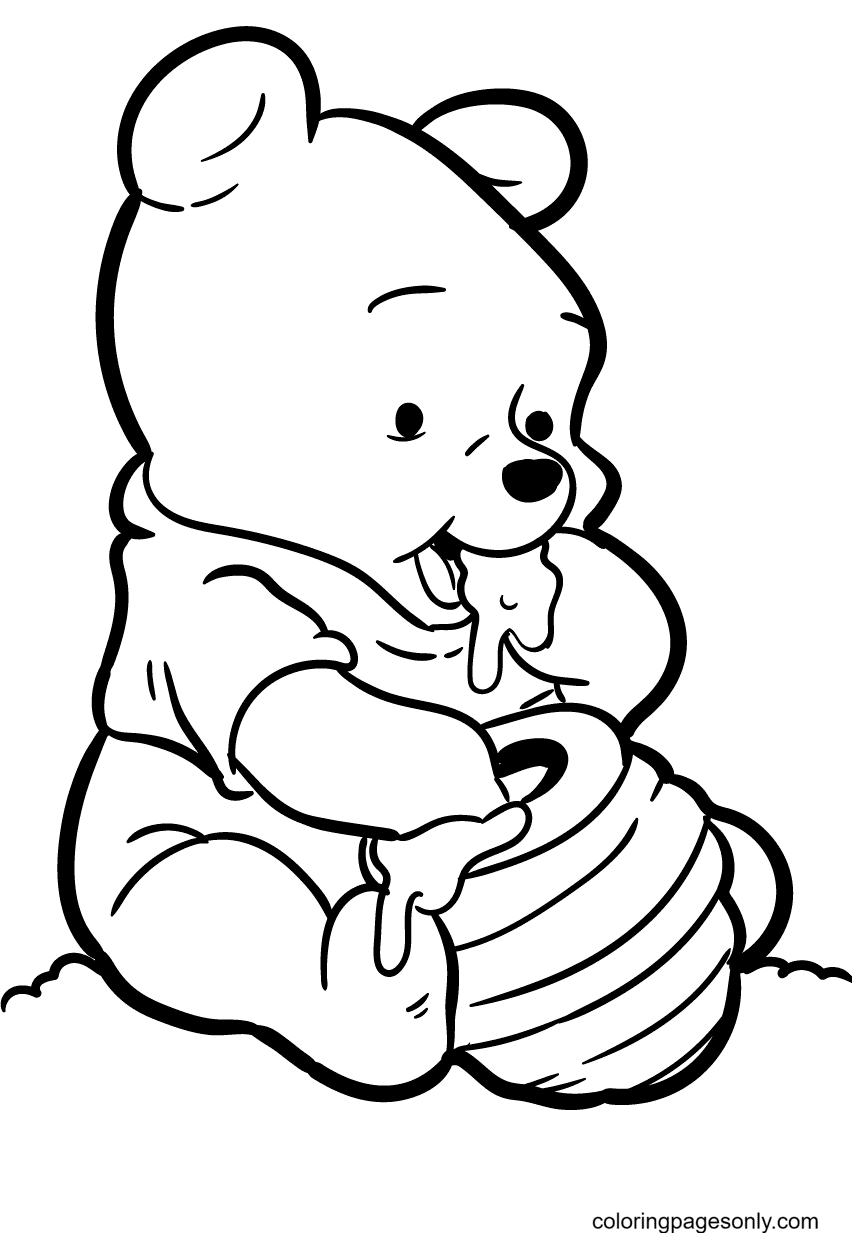
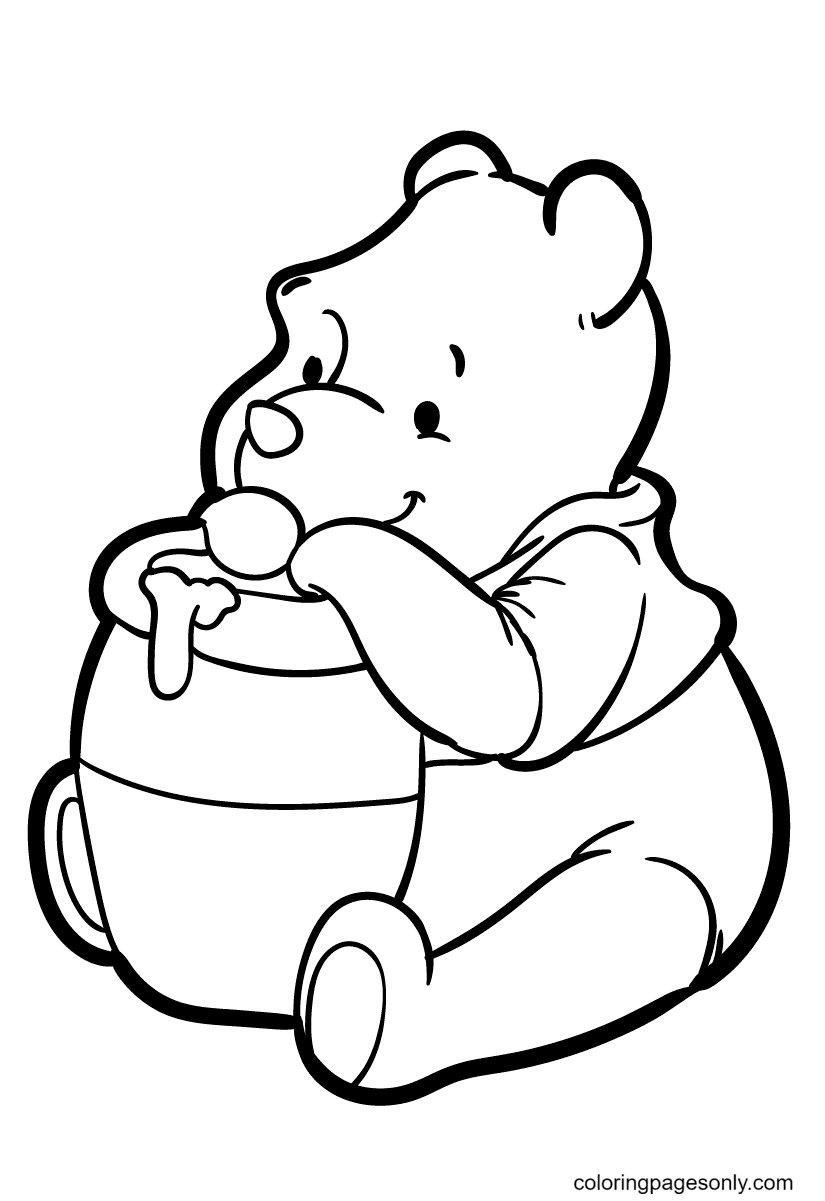
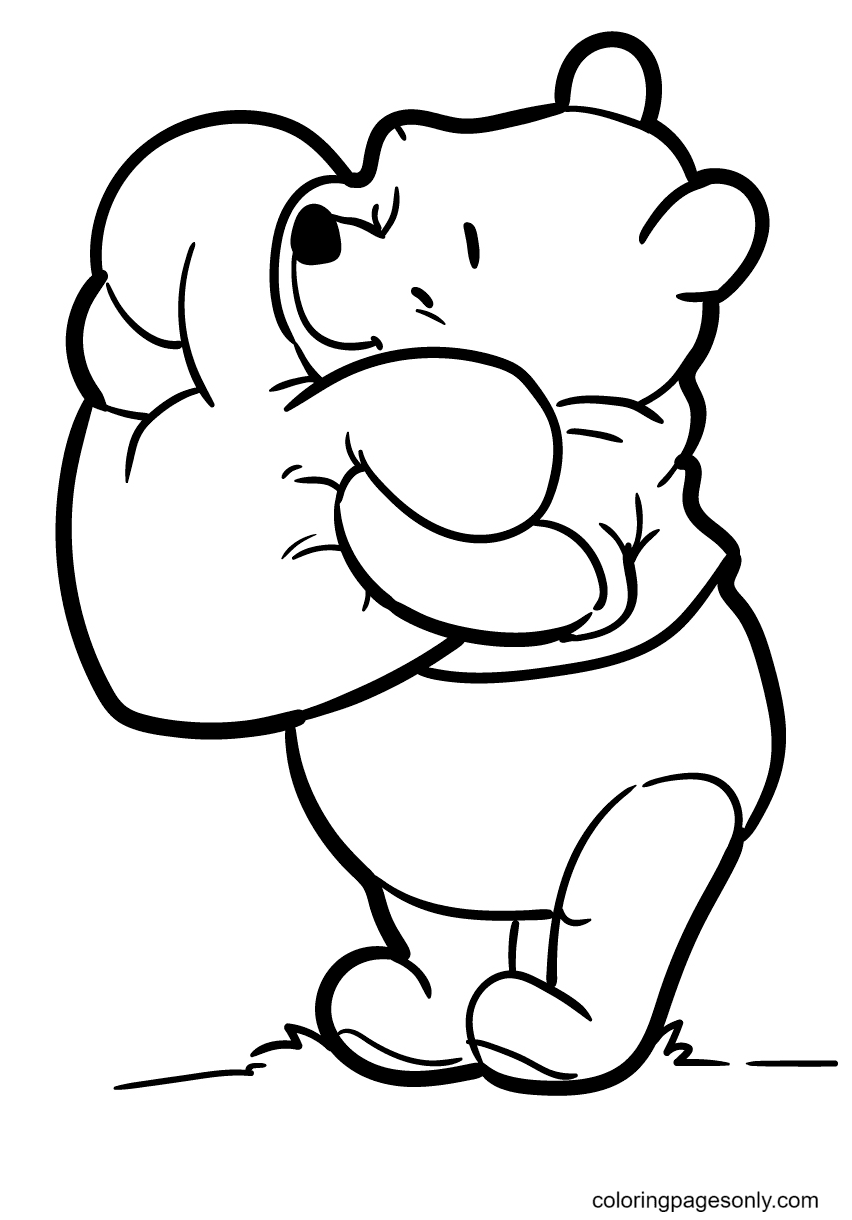
Our Pooh pages span his full universe of activities and moods. Pooh Eating Honey Happily, Pooh Bear with Honey, Winnie the Pooh Eats Honey, Winnie the Pooh Hugs a Jar of Honey, Pooh Bear with Two Honey Jars, and Pooh Tries to Open the Honey Jar celebrate the one constant that organizes Pooh’s inner life – his absolute, joyful, unembarrassed devotion to honey. These pages are among the most popular in the entire collection, and they reward the most satisfying color choice in Winnie the Pooh art: a rich, warm, luminous golden yellow for the honey that makes every jar look genuinely delicious.
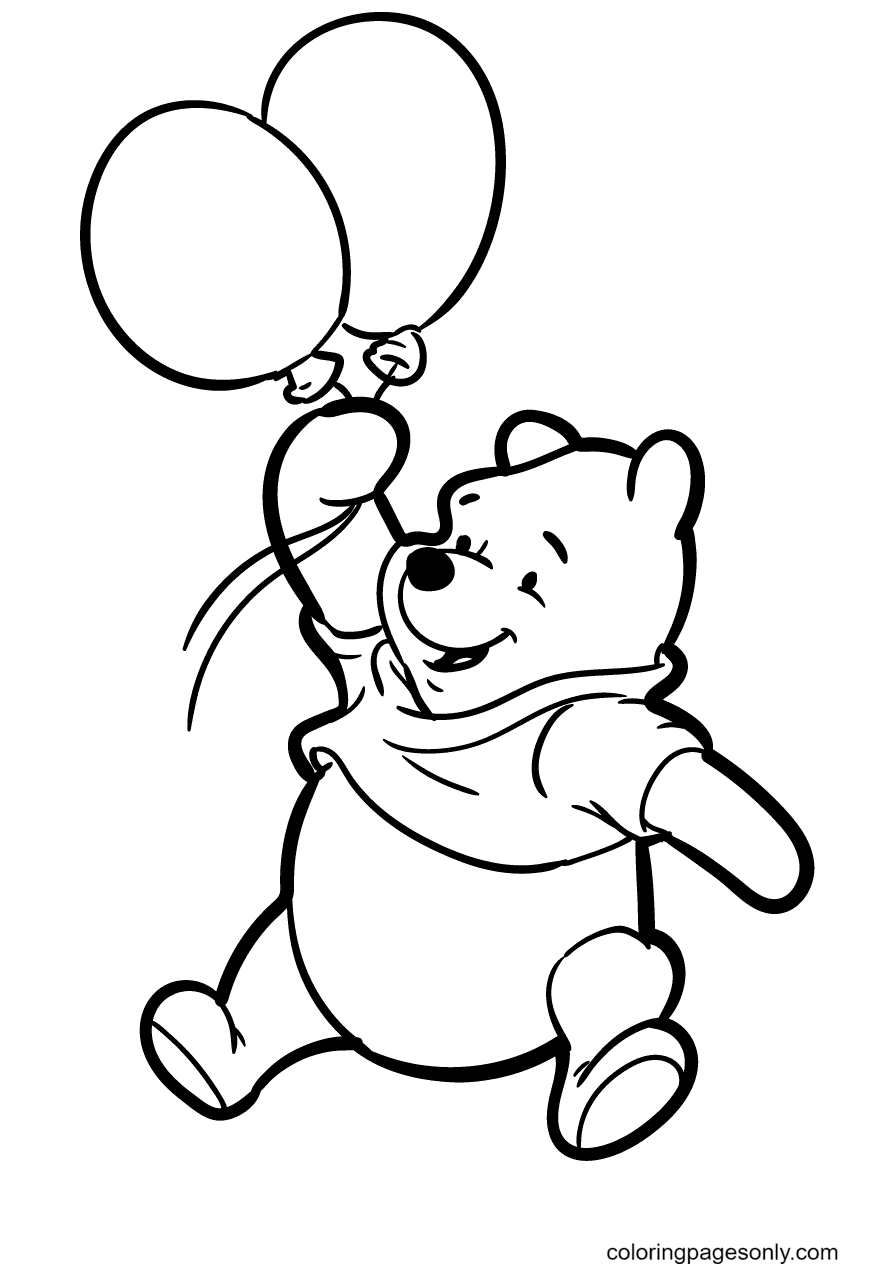
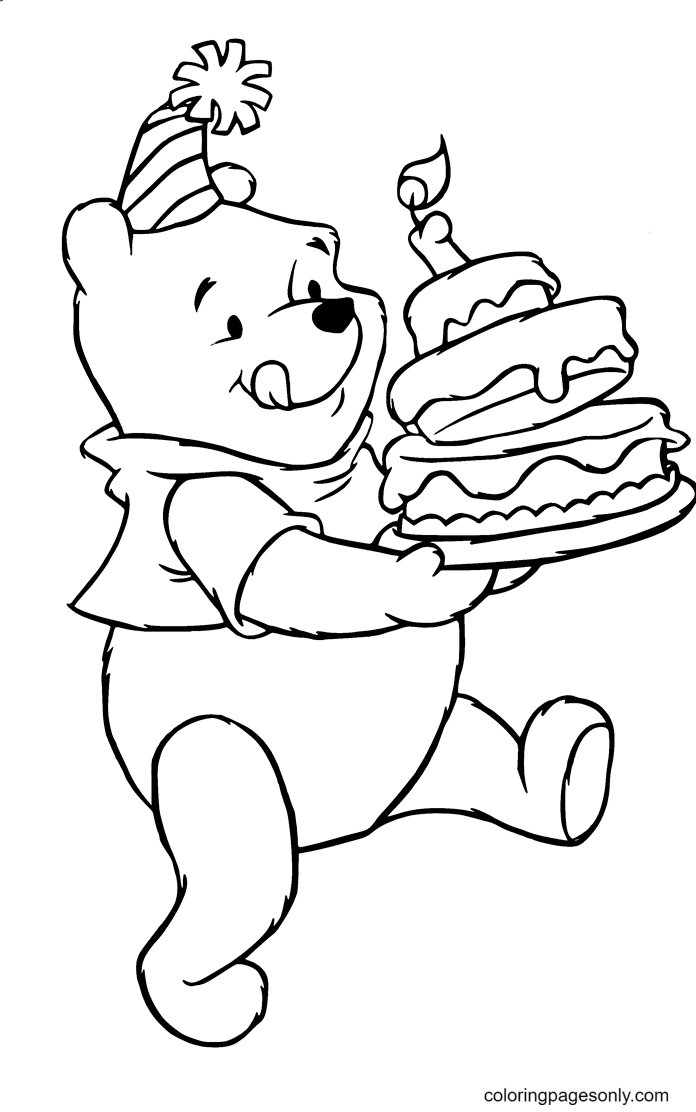
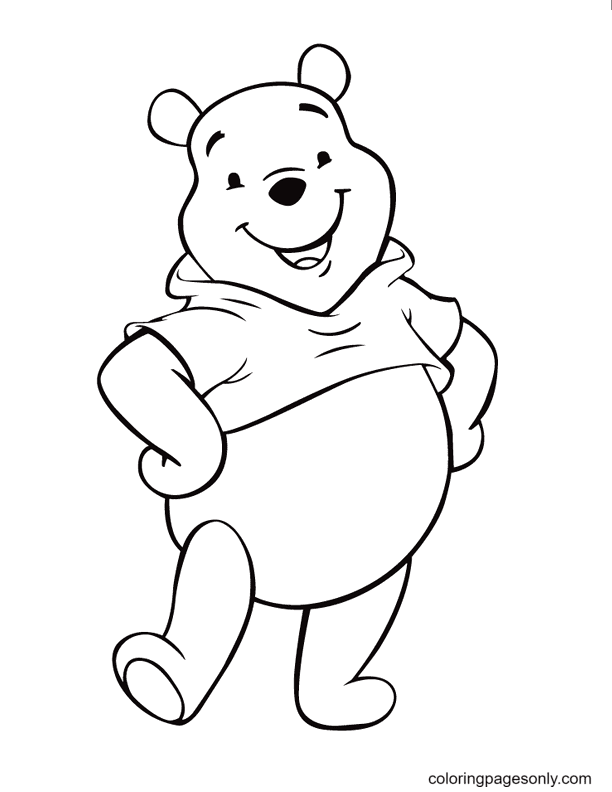
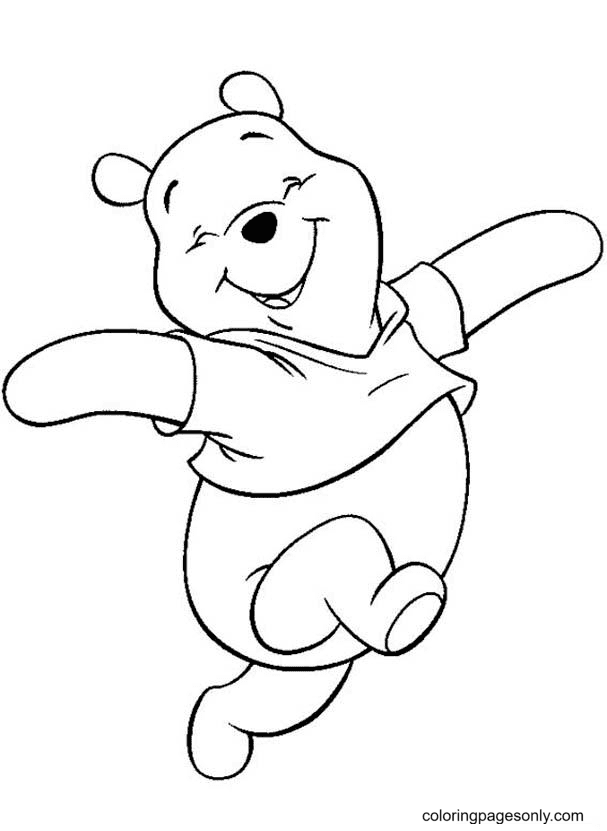
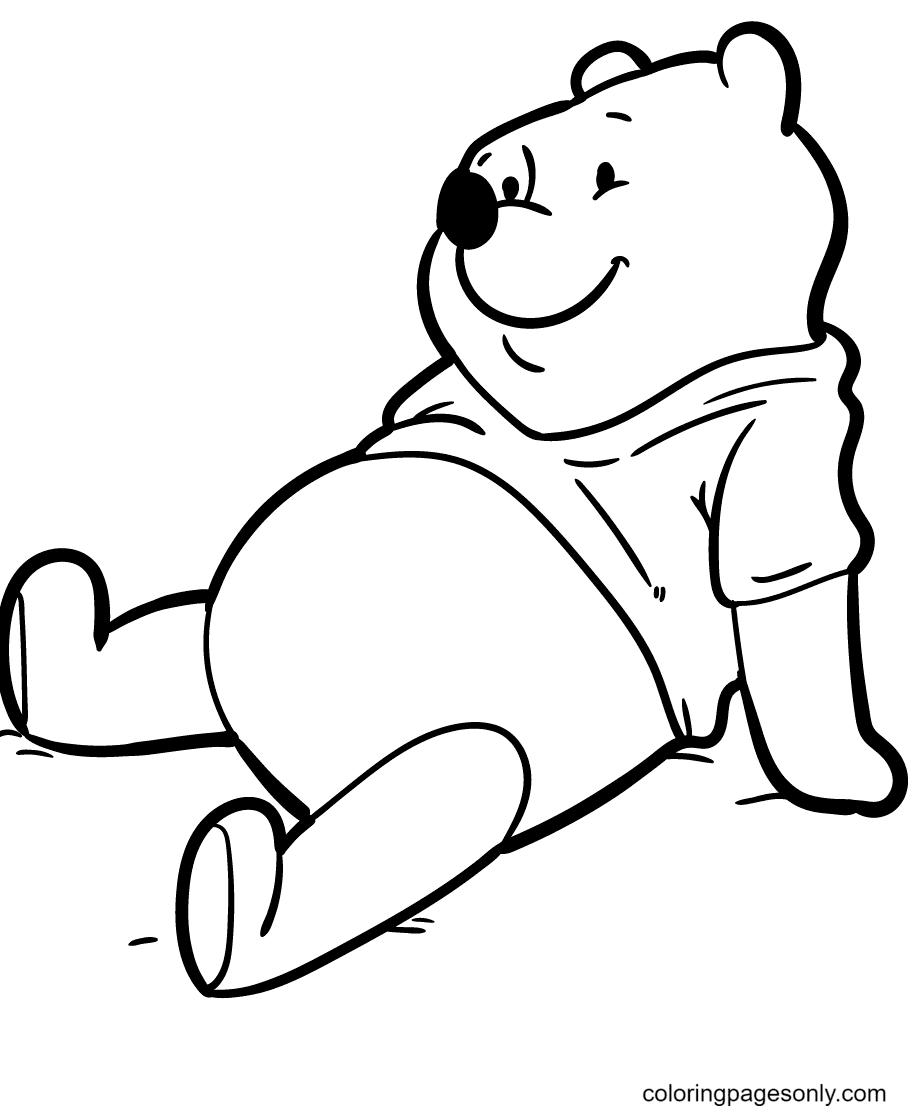
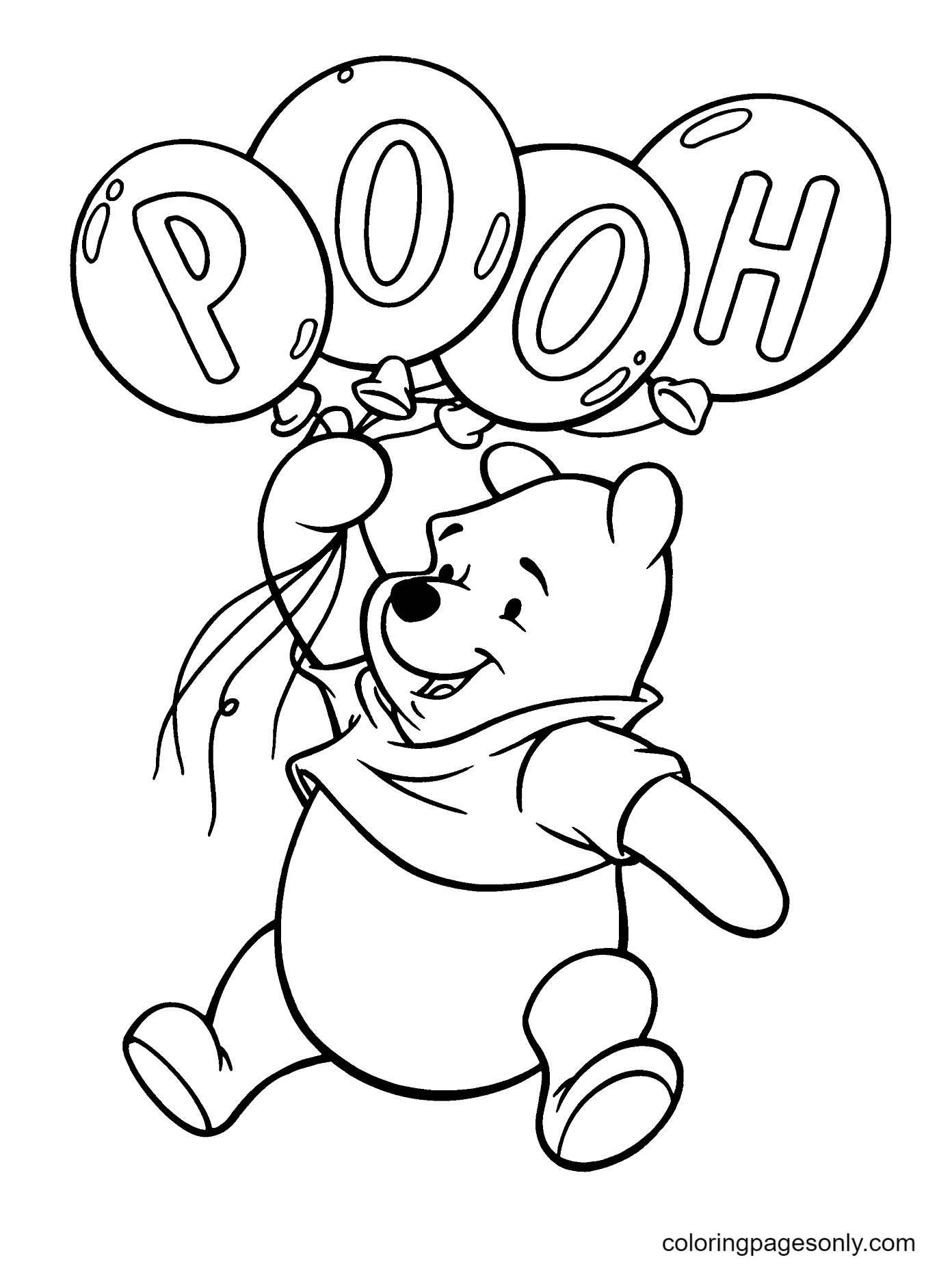
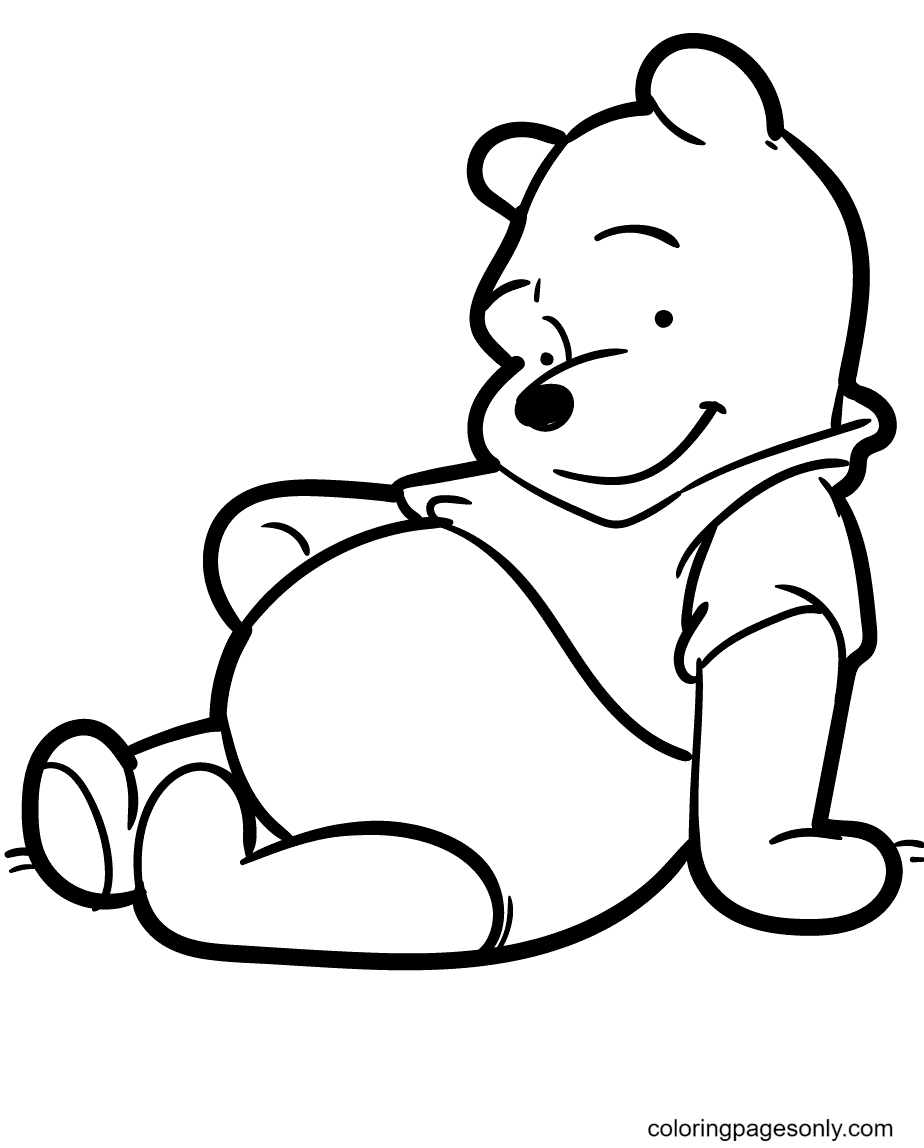
Pooh Holding Two Balloons, Pooh Bear with Balloons, and Pooh with a Birthday Cake capture Pooh in celebration mode – another of the collection’s recurring themes, since the Hundred Acre Wood is a place where birthdays are taken seriously, and presents are given with complete sincerity even when they arrive slightly used. Adorable Winnie the Pooh, Happy Pooh Bear, Happy Winnie, Winnie Smiles, and Winnie Relaxes and Daydreams offer a full portrait of a character whose default emotional state is one of contented, wondering happiness.
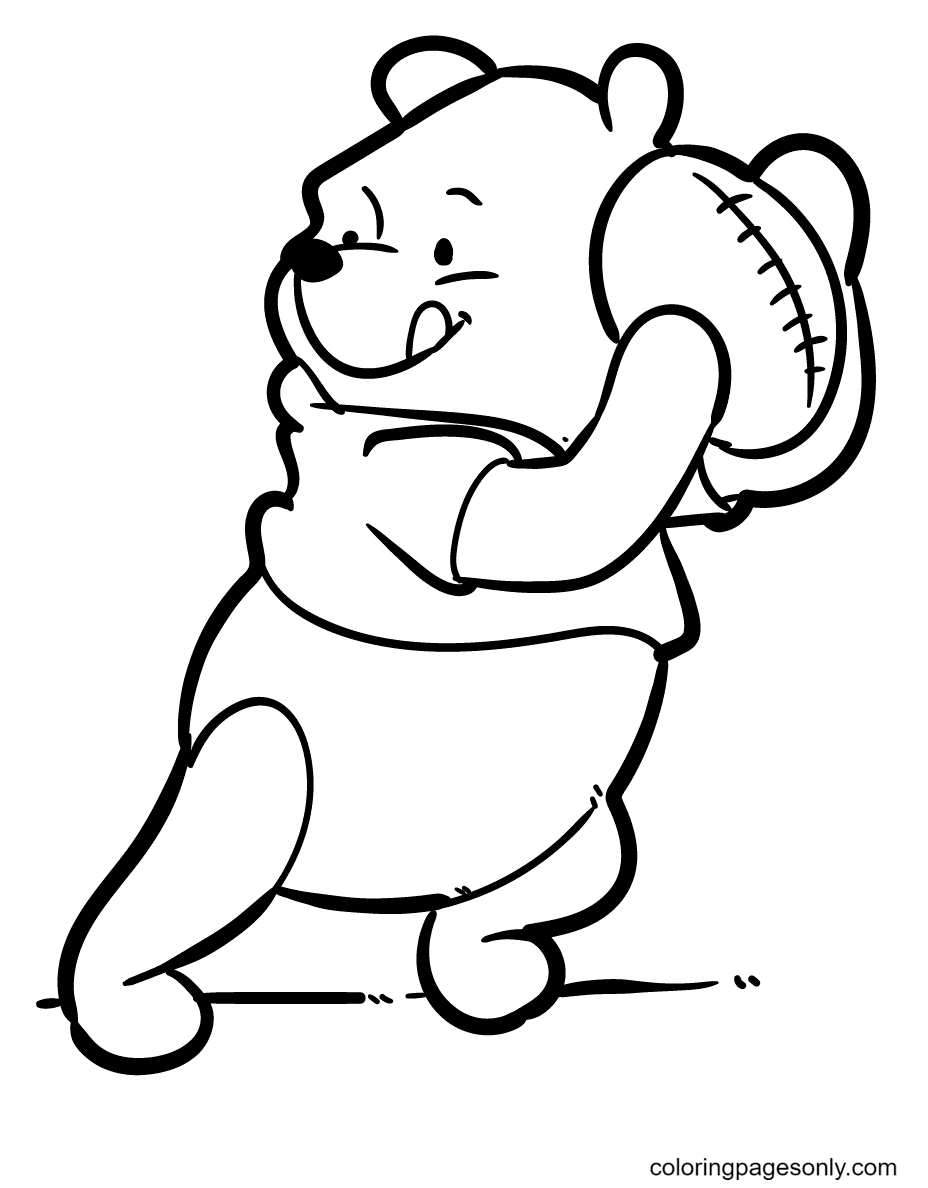
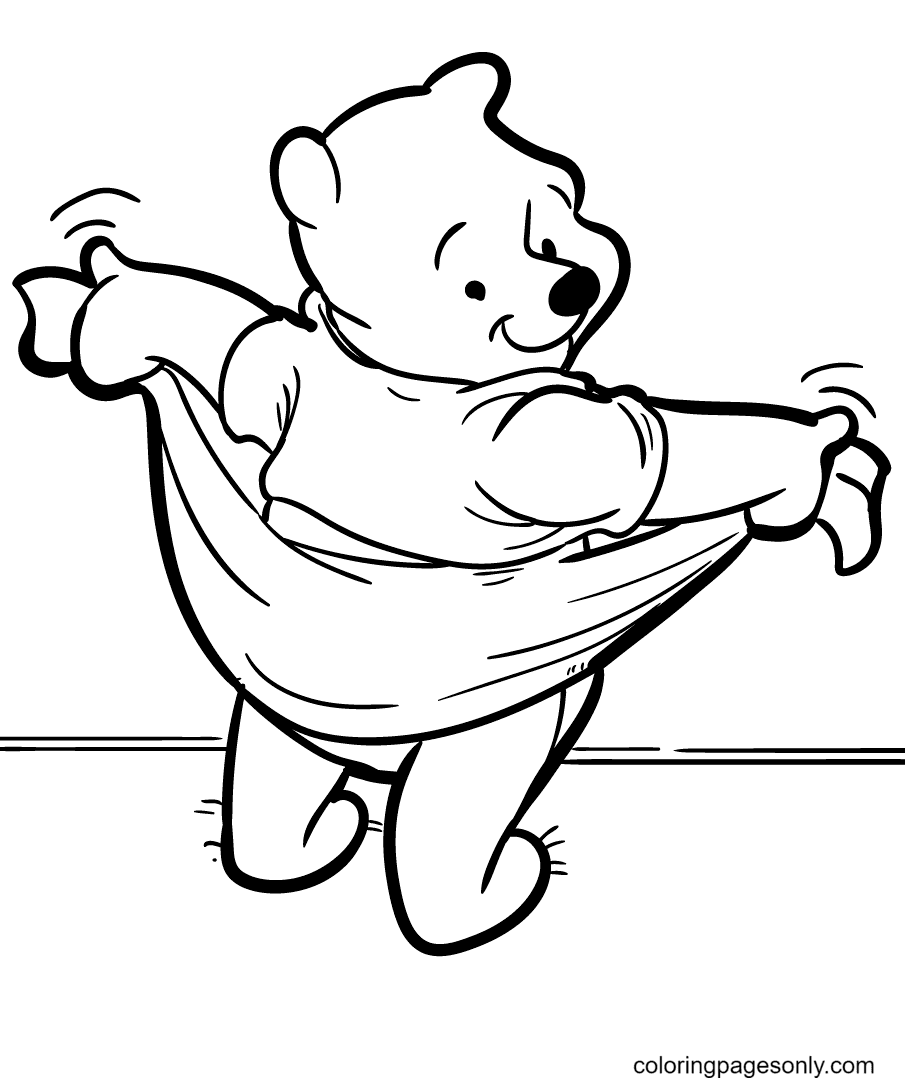
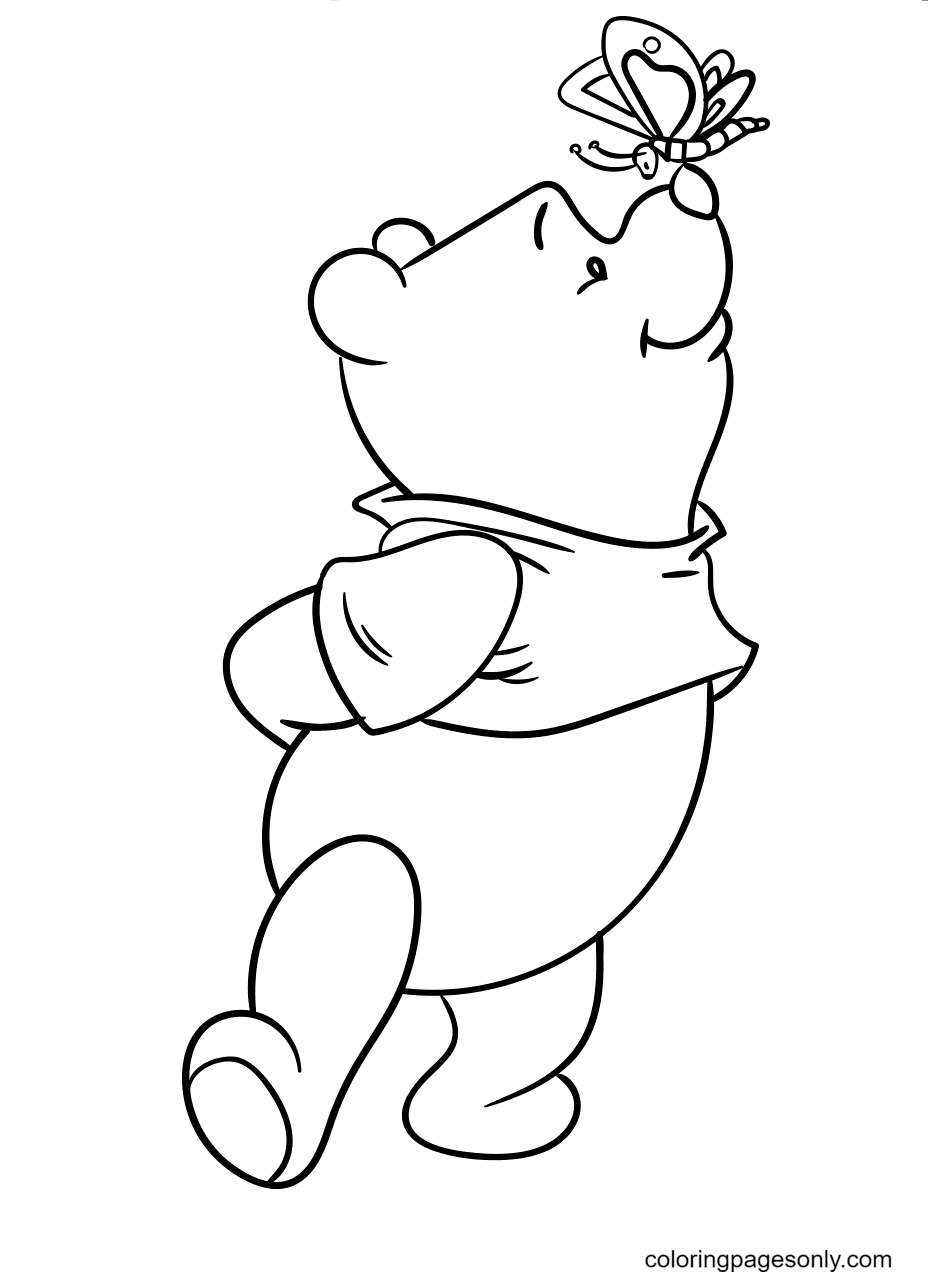
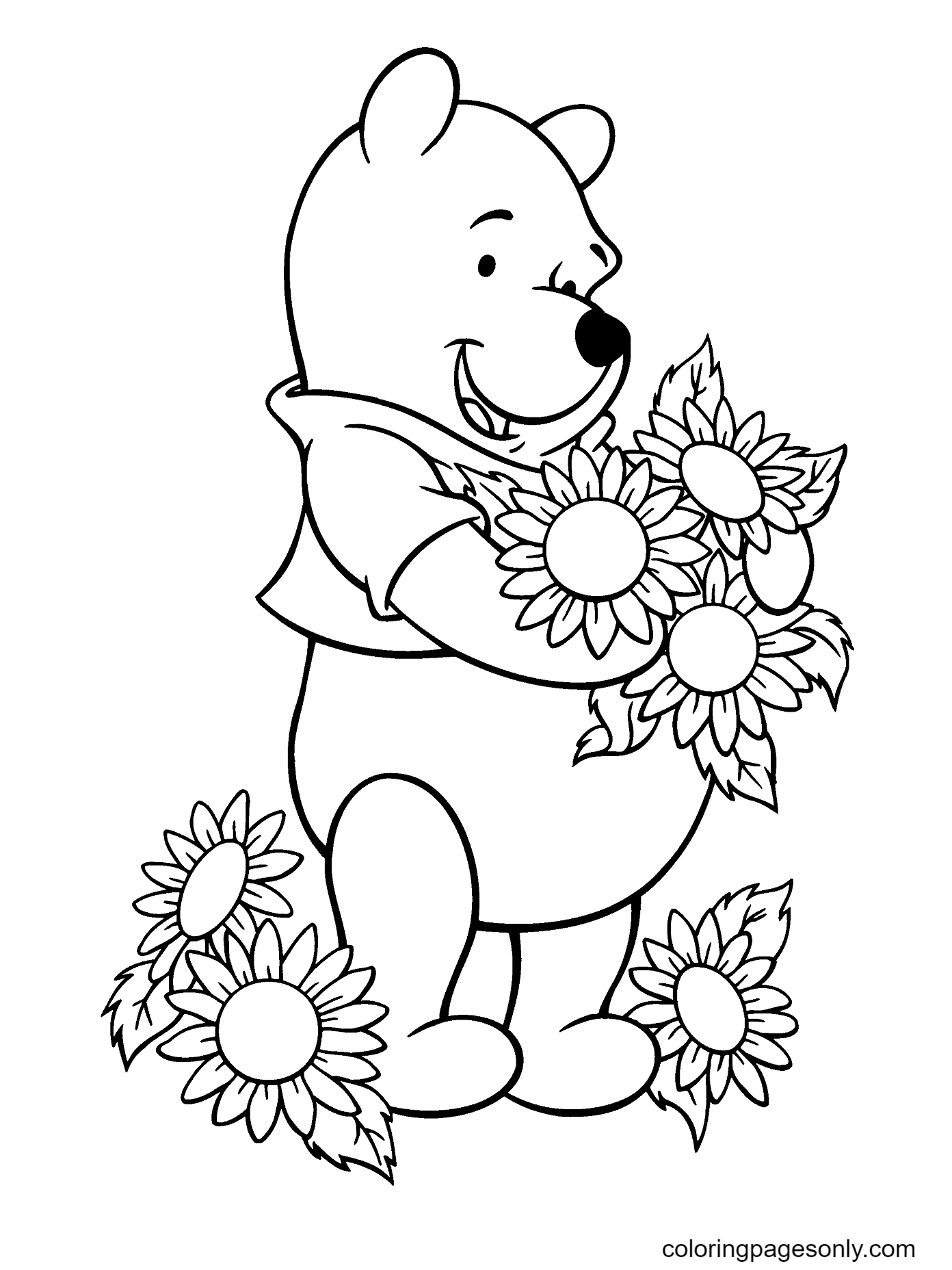
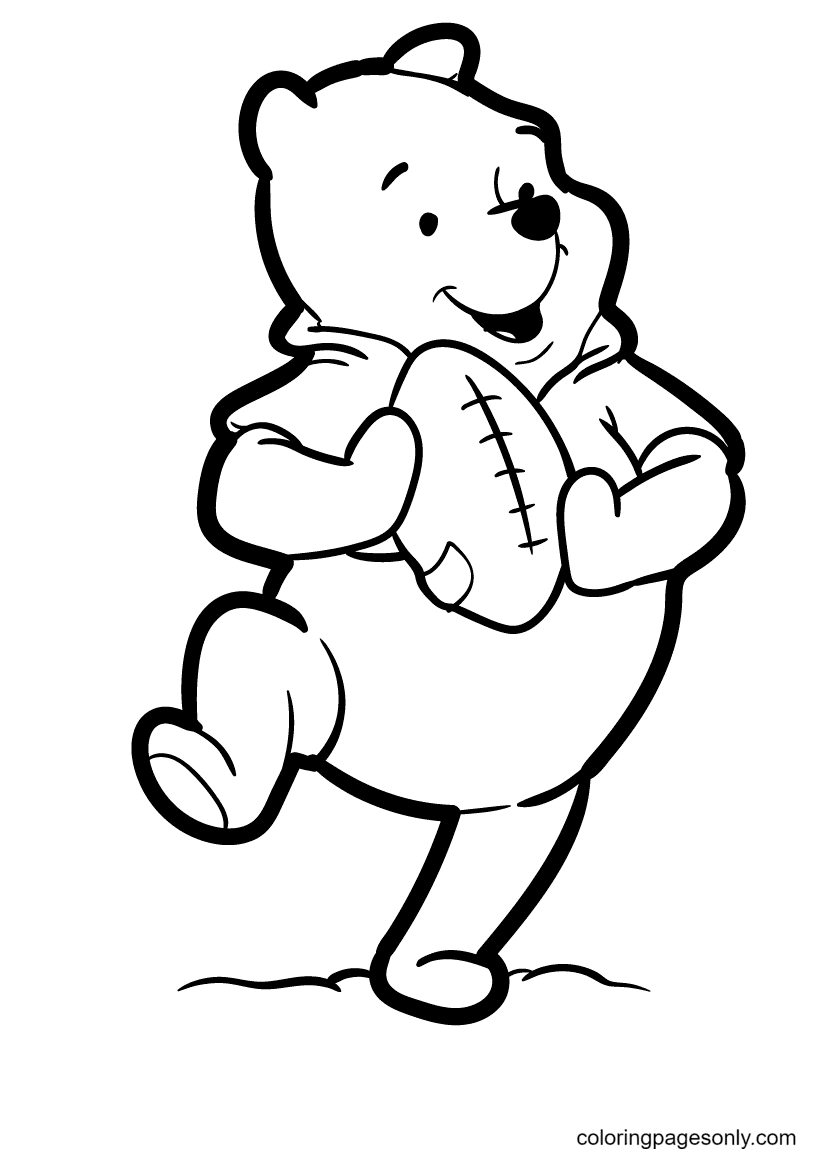
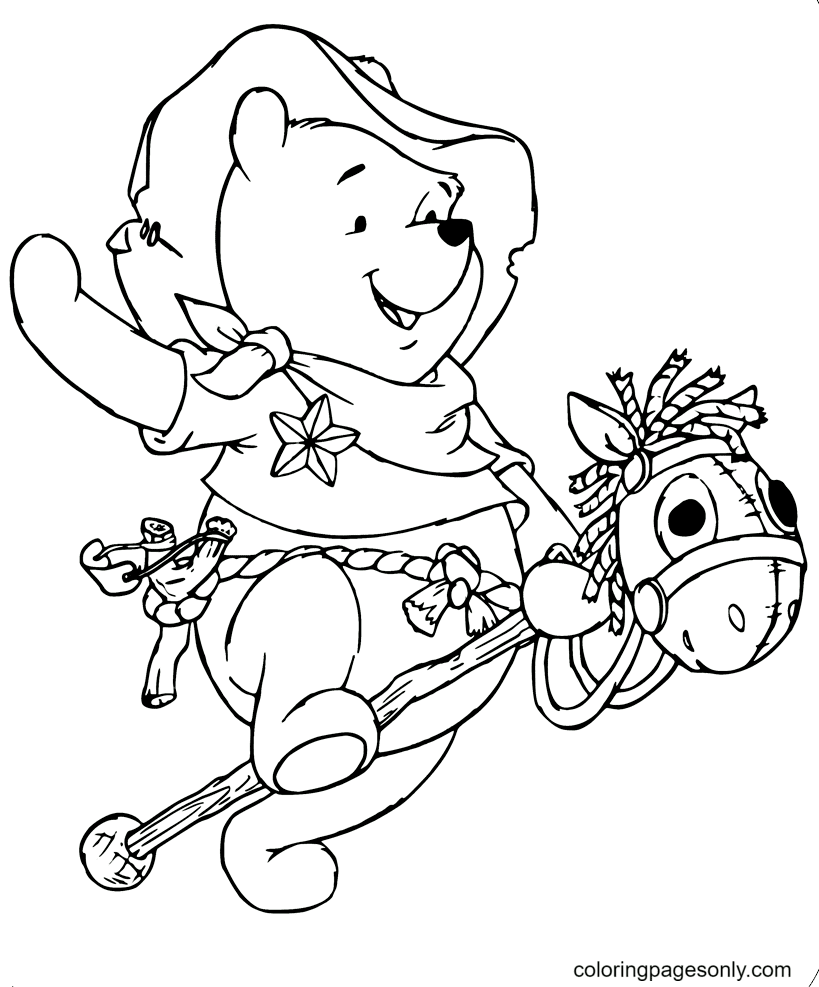
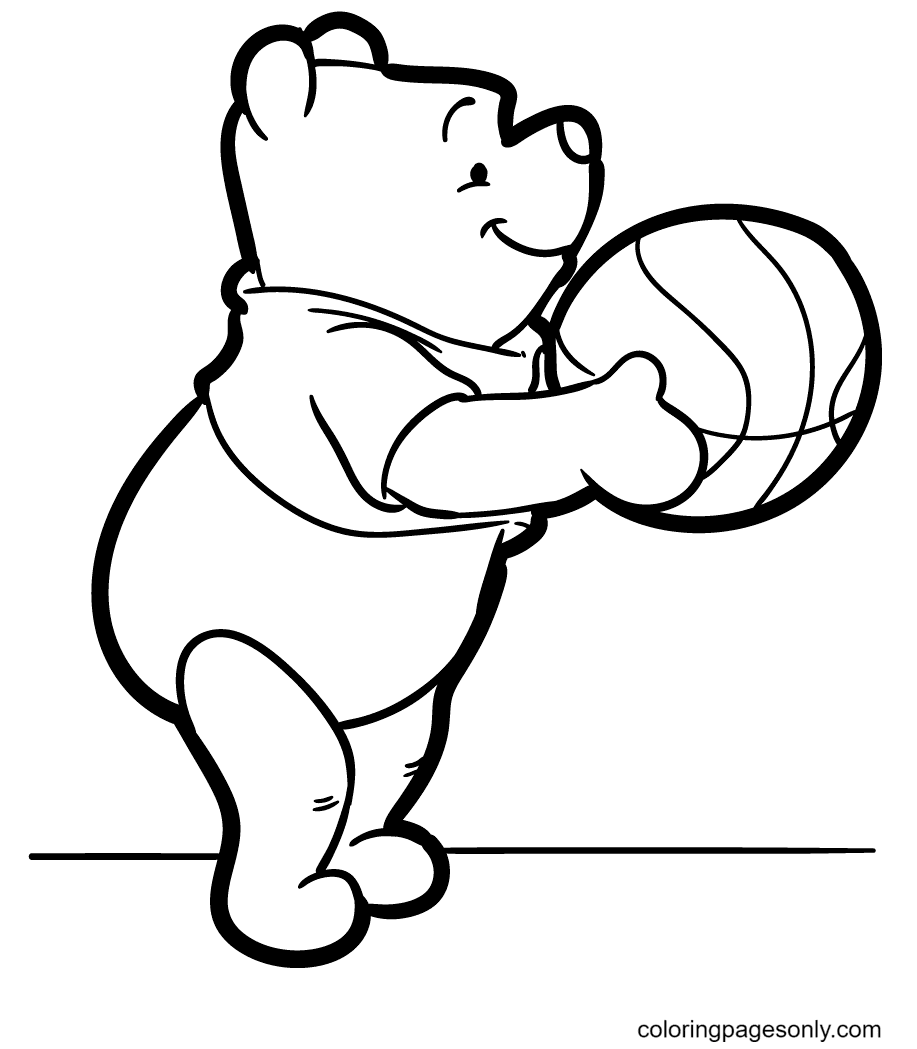
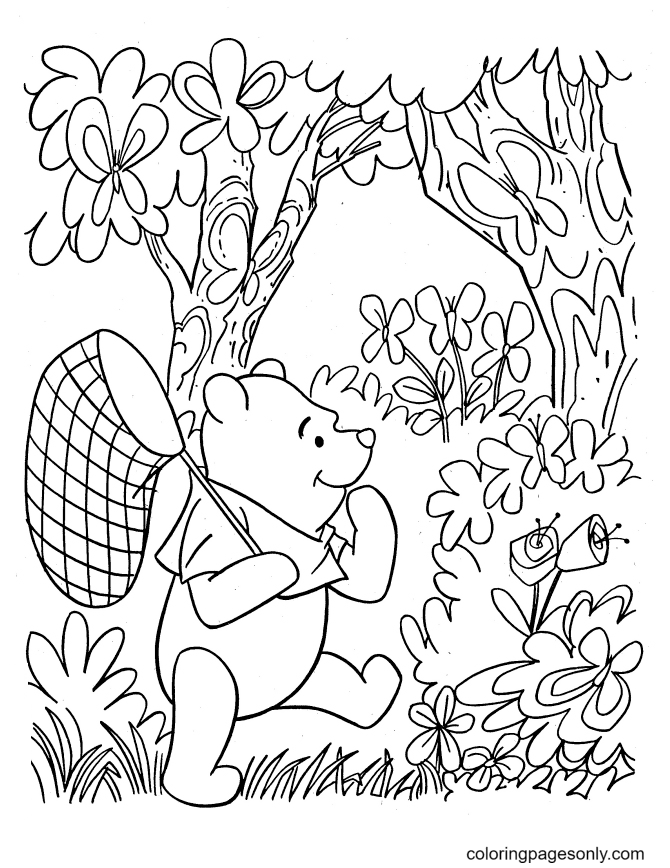
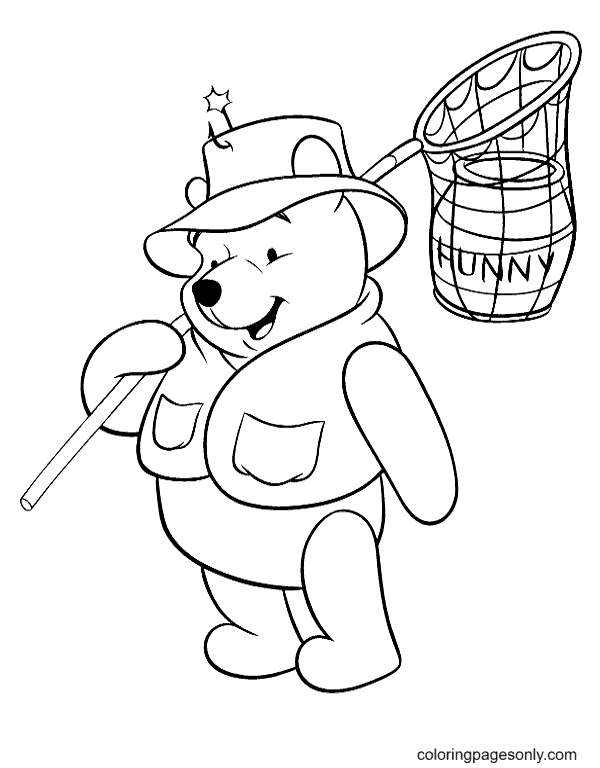
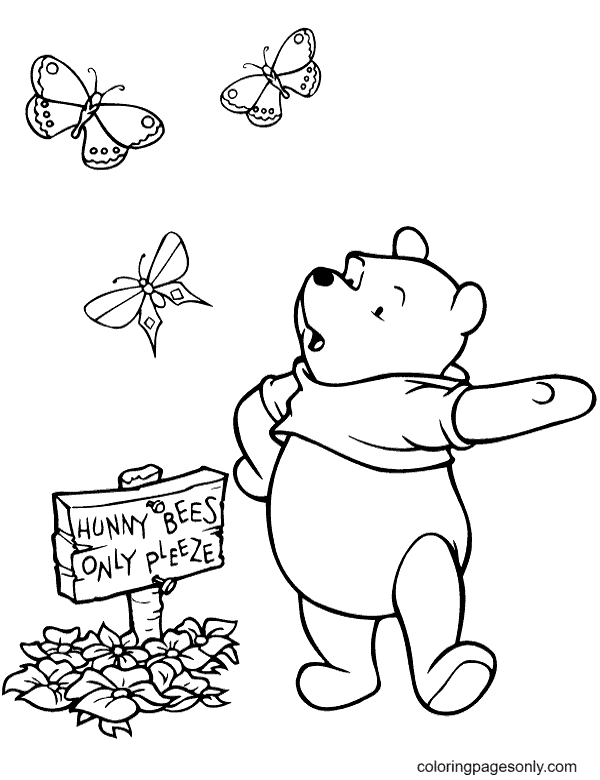
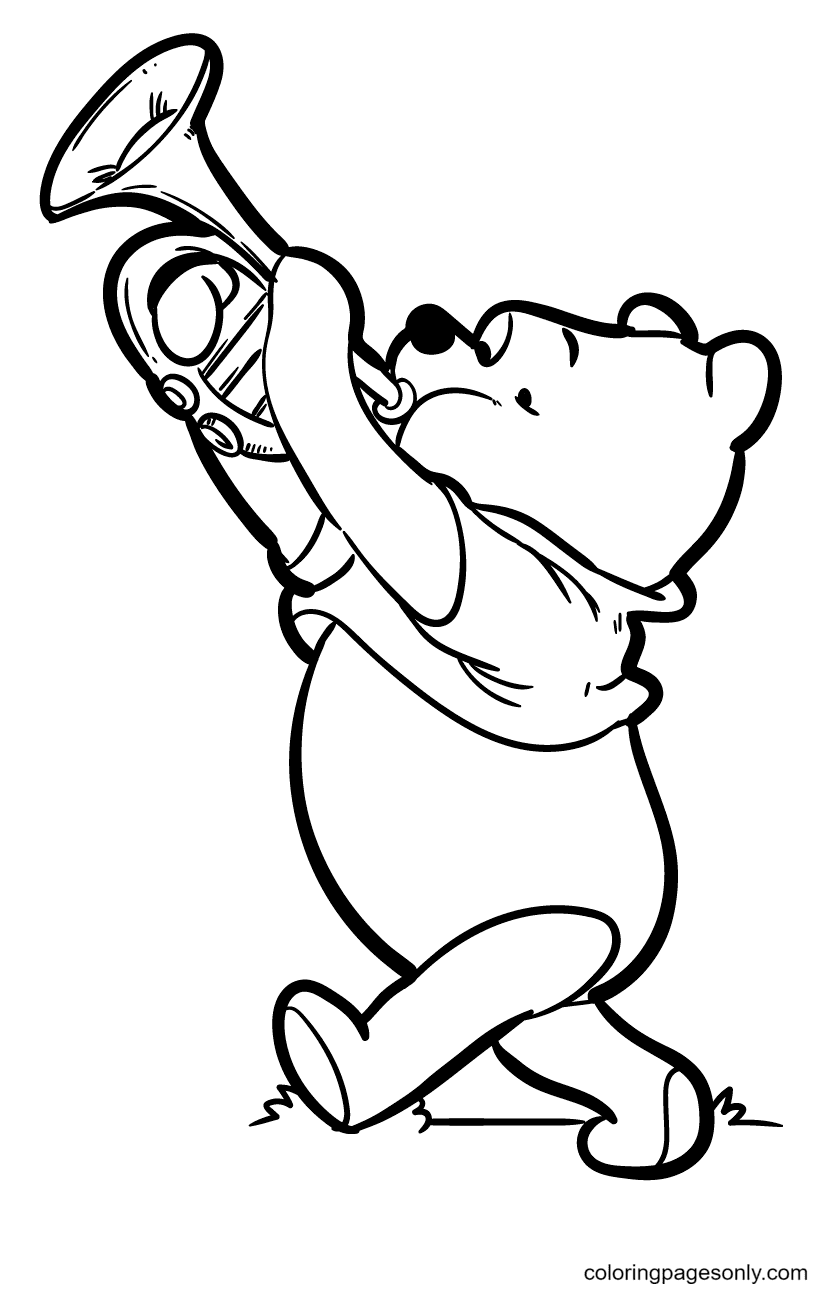
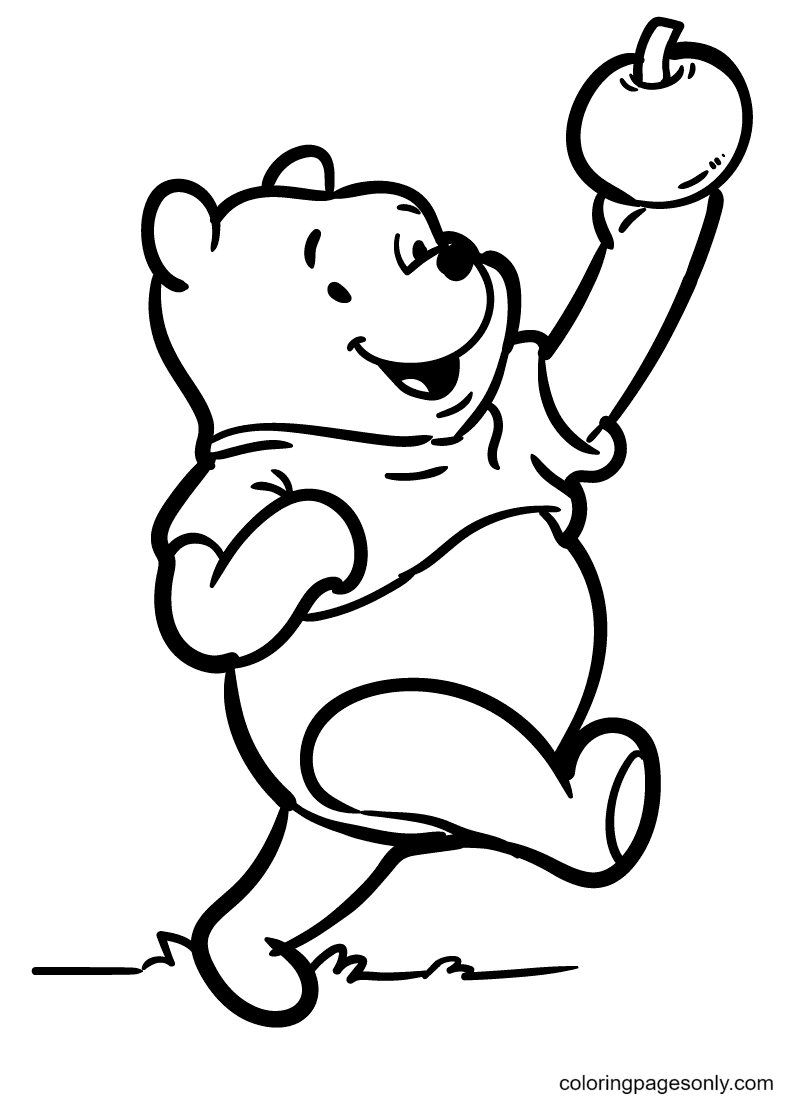
Winnie the Pooh Throws the Ball, Winnie Holds the Ball, Pooh Holding a Basketball, Pooh Bear is Playing the Trumpet, Pooh Goes to Catch Butterflies, Pooh Playing With Butterfly In The Forest, Winnie Playing with Butterfly, Pooh Loves Flowers, Pooh Holding a Apple, Winnie Just Ate a Delicious Meal, Winnie the Pooh Dries with a Towel, and Winnie Cowboy capture the delightful absurdity of a bear who approaches every activity – sport, music, nature observation, culinary experience, personal hygiene, and Western cosplay – with the same total, undivided enthusiasm.
Piglet Coloring Pages – Small in Size, Large in Heart
Piglet is, as Milne established, “a Very Small Animal” – and he knows it. He is frightened of Heffalumps, anxious about storms, and generally aware that the world is considerably larger and more unpredictable than he would prefer. What makes Piglet extraordinary is not courage – it is the fact that he is frightened of almost everything and shows up anyway, because his friends need him. The moment when Piglet gives Christopher Robin his most cherished possession, a balloon, as a birthday gift for Eeyore – and the balloon pops – and Piglet gives it anyway, saying “I gave him a balloon, and it popped” – is one of the most quietly devastating acts of generosity in children’s literature.
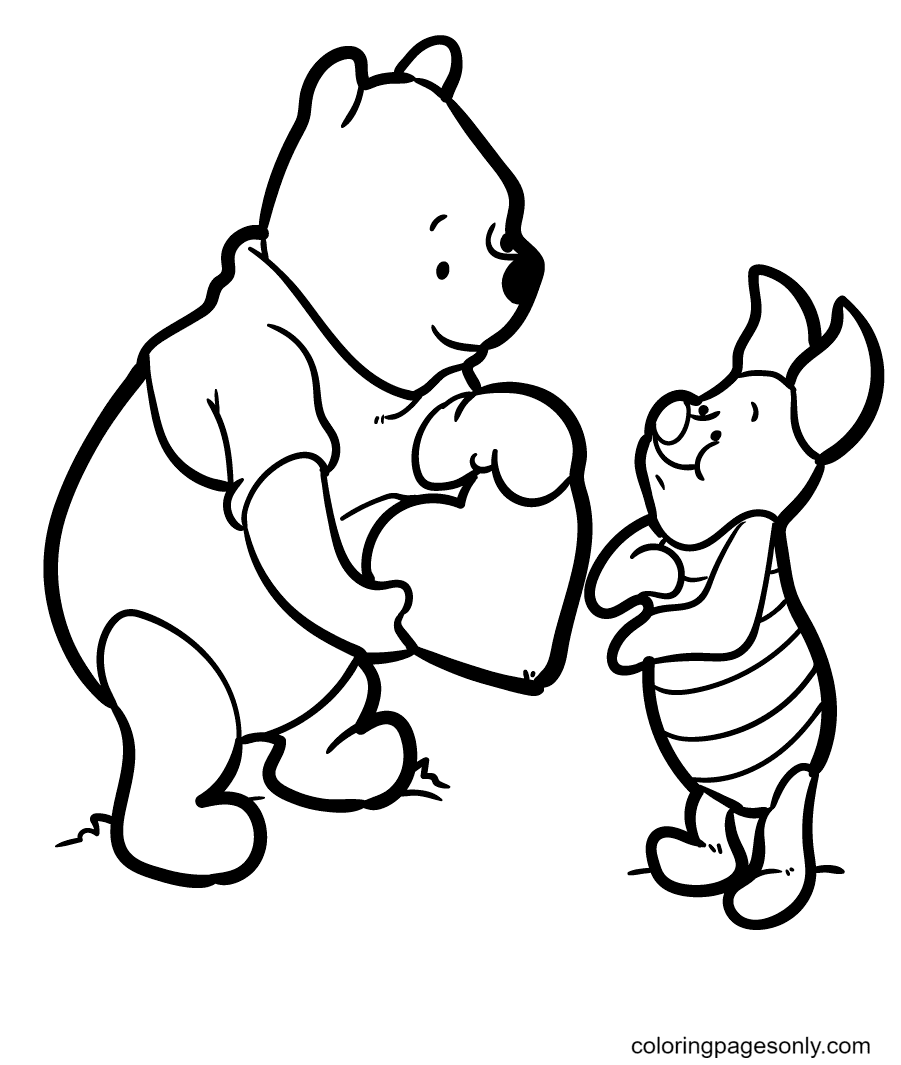
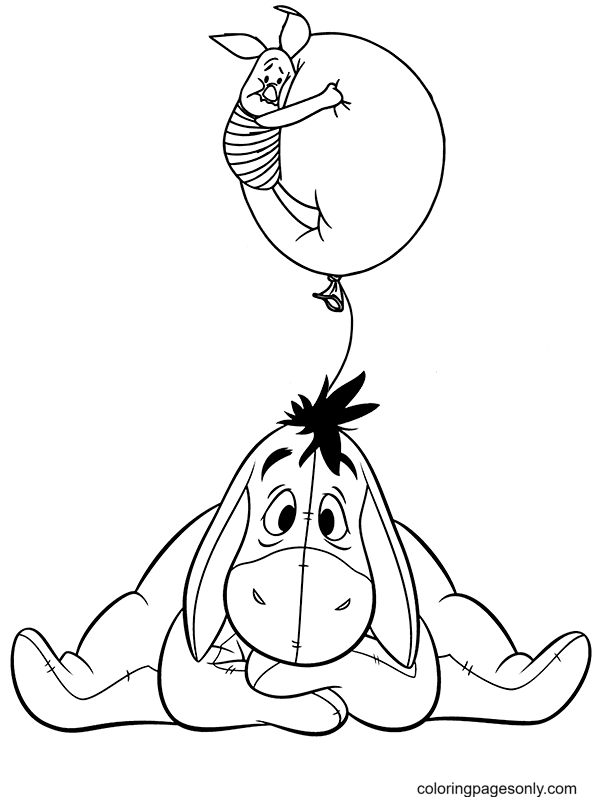
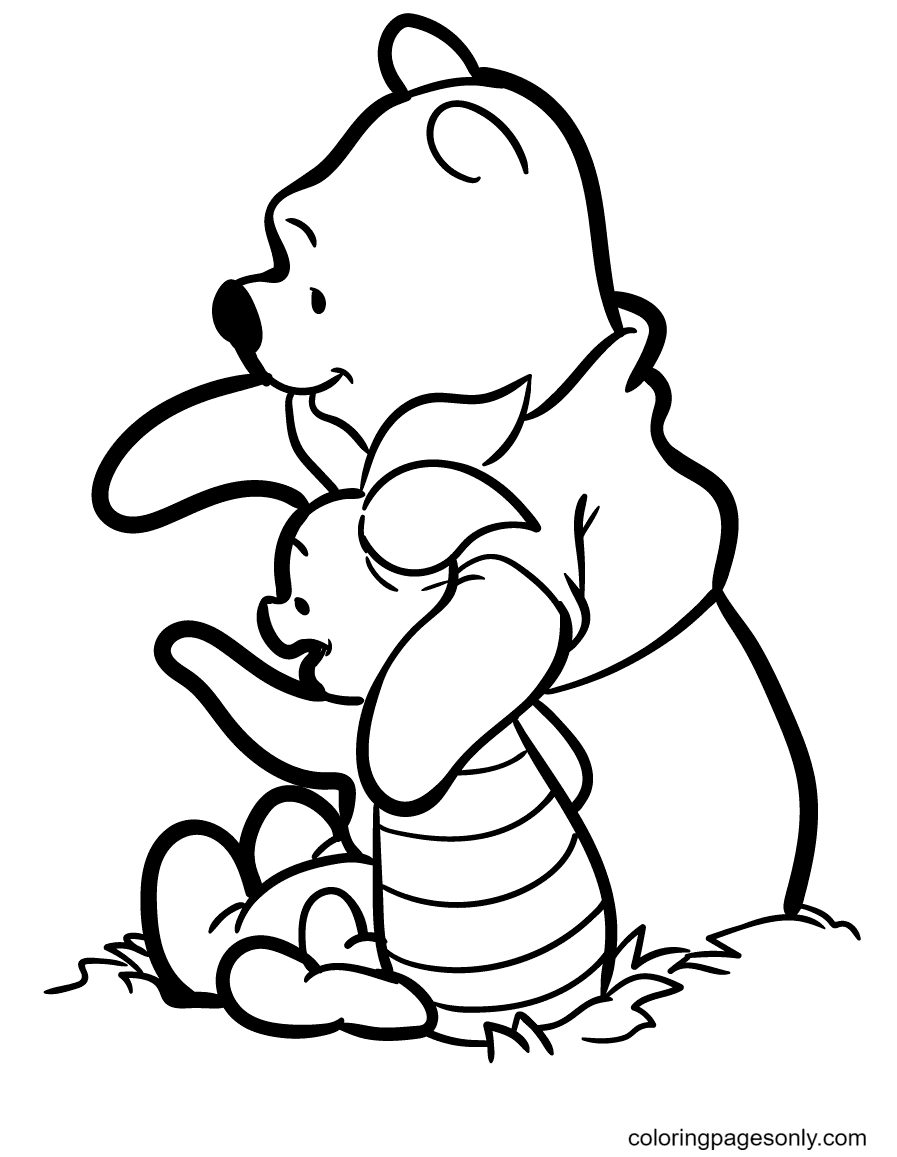
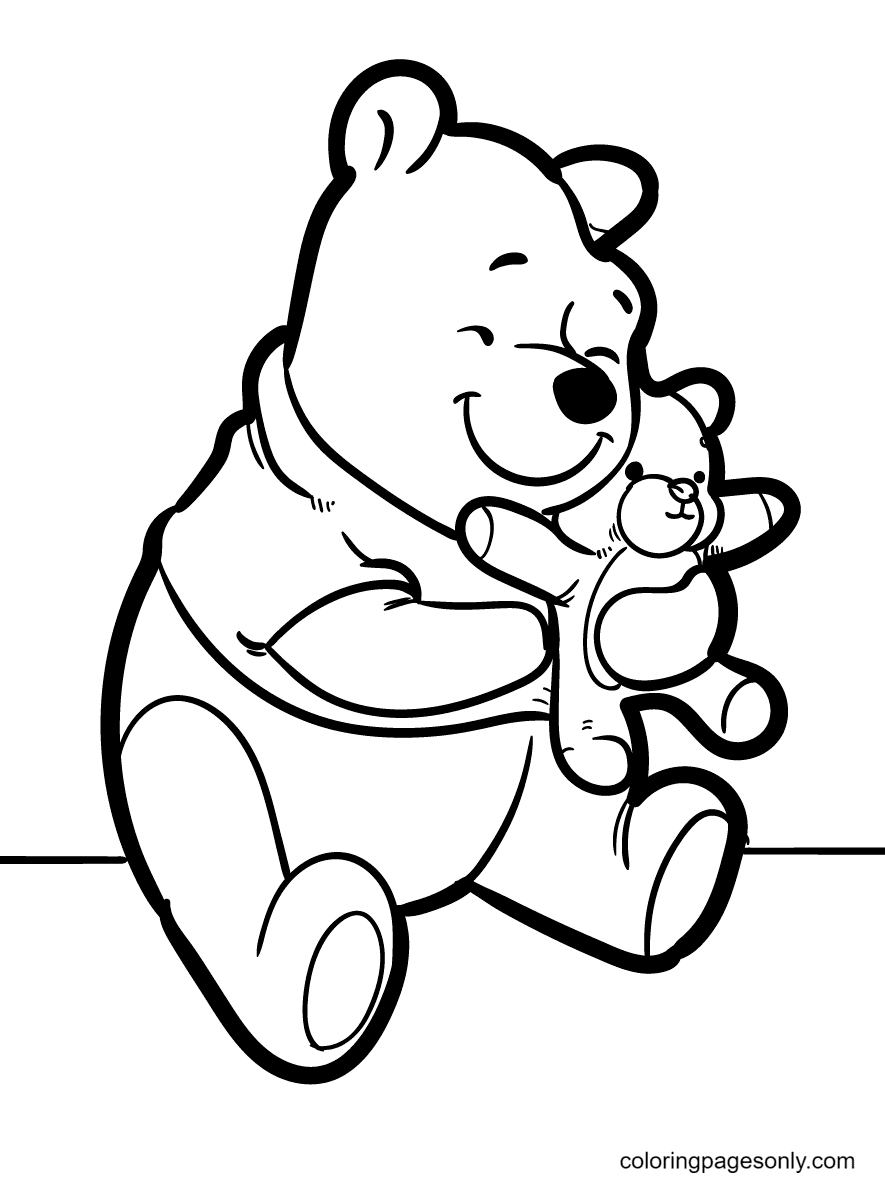
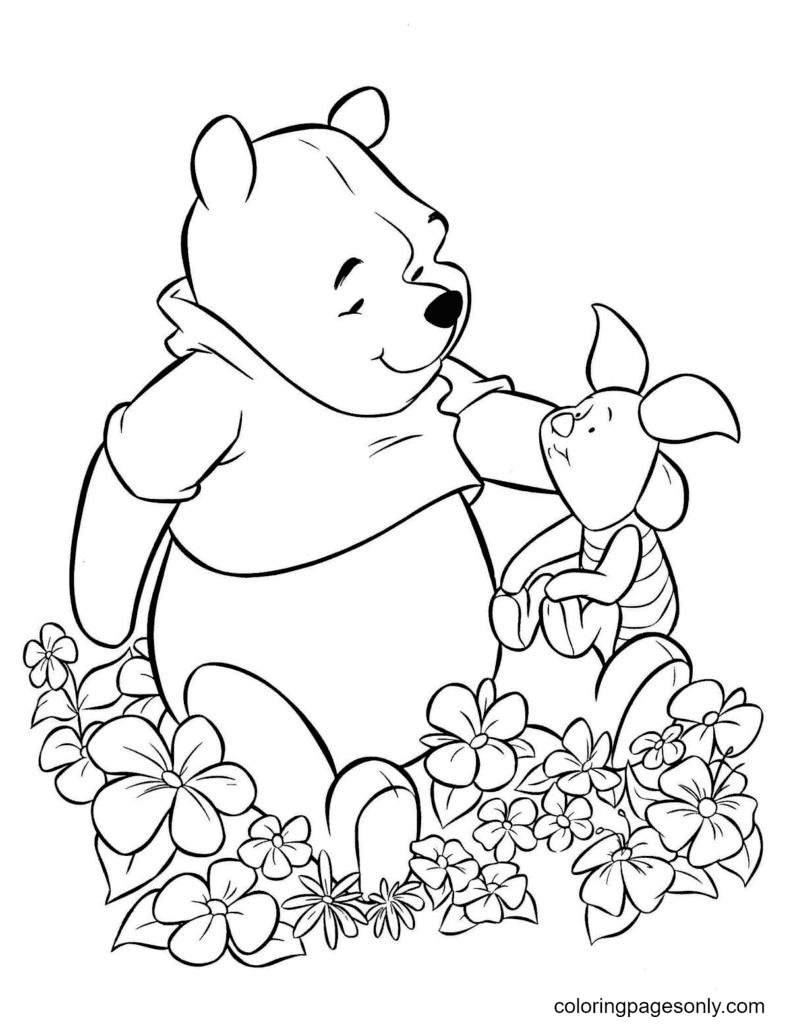
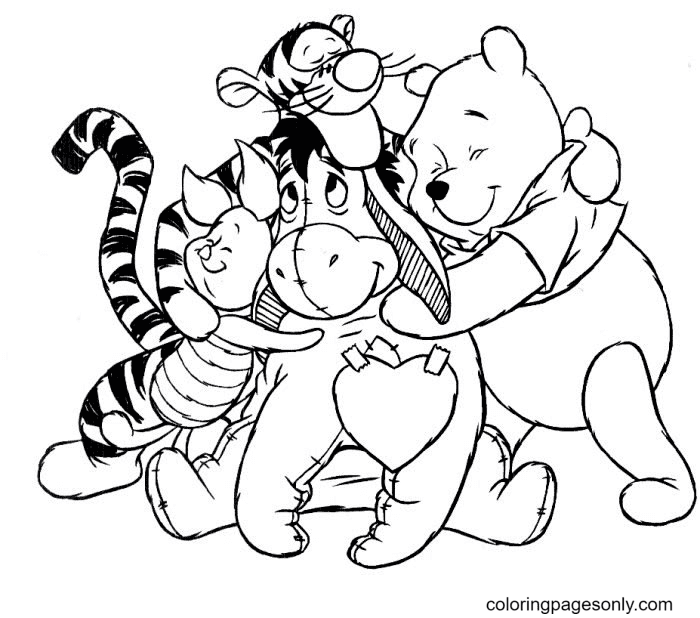
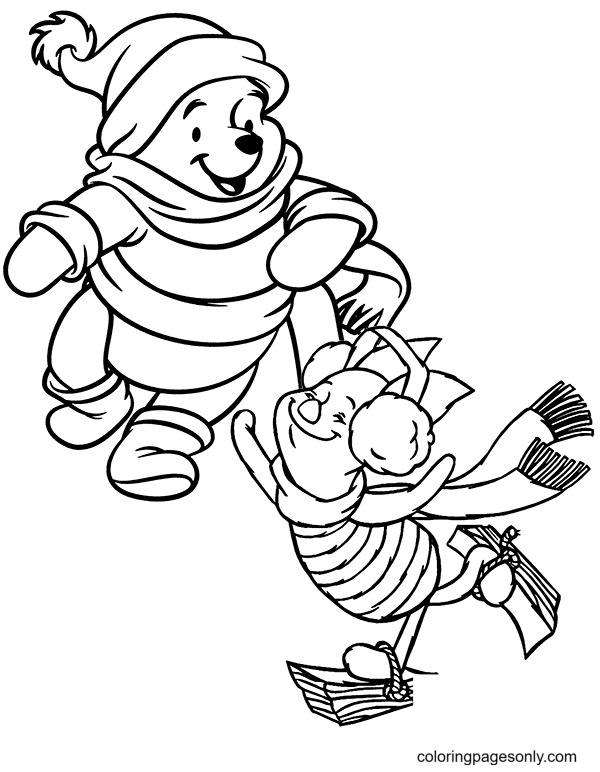
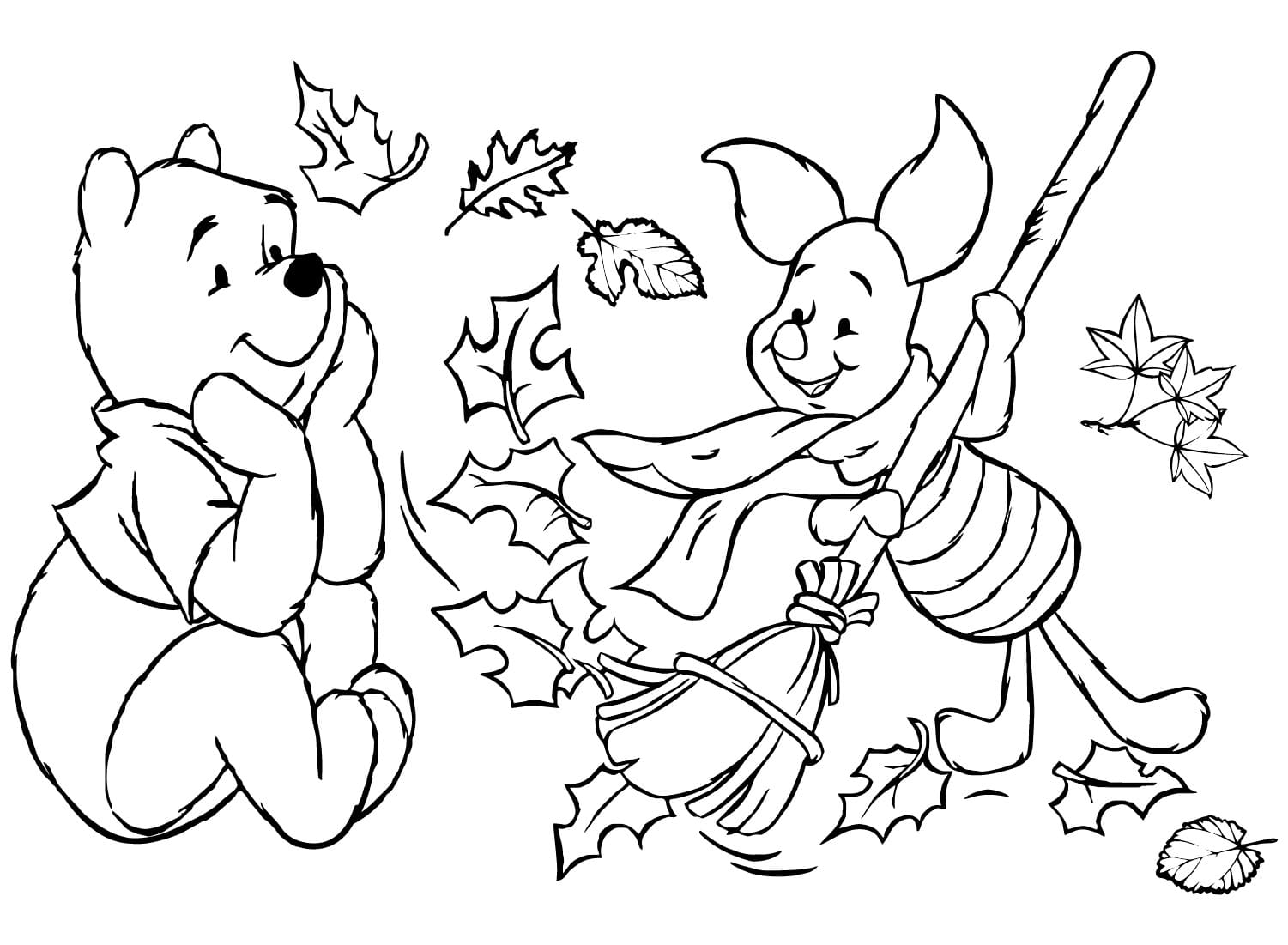
Cute Pooh & Piglet, Winnie the Pooh and Piglet, Winnie the Pooh Gives a Heart to Piglet, Pooh Cuddling Piglet, Pooh And Piglet Have Fun Going To School, Pooh And Piglet Sitting On Eeyore’s Back, Pooh and Piglet, Winnie and Piglet, and Eeyore and Piglet all feature Piglet in the context that suits him best: alongside his friends, where his smallness is irrelevant because he is entirely, completely loved. Piglet Eating Watermelon captures a moment of pure Piglet joy – small, simple, completely satisfied – that is among the most charming pages in the entire collection.
Piglet’s soft pink design – pale rose body, slightly deeper pink ears, the distinctive striped pink-and-white jumper of the Disney version – rewards a delicate, gentle approach to coloring that suits both young children and adult colorists who appreciate the challenge of nuanced, restrained color work.
Tigger Coloring Pages – The Wonderful Thing About Tiggers
Tigger is, as he will tell you immediately upon meeting him, “the only one.” He bounces. He is loud, enthusiastic, supremely confident, occasionally reckless, and completely incapable of entering a room at normal volume. He is also, beneath the performance of exuberant self-promotion, one of the most straightforwardly kind characters in the Hundred Acre Wood – a friend who shows up with full energy and complete loyalty, even if he sometimes bounces you into a tree on the way.
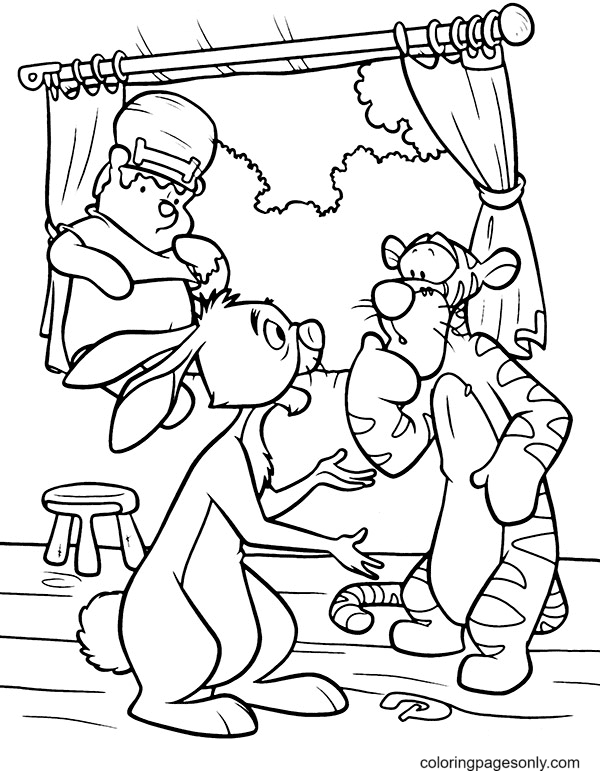
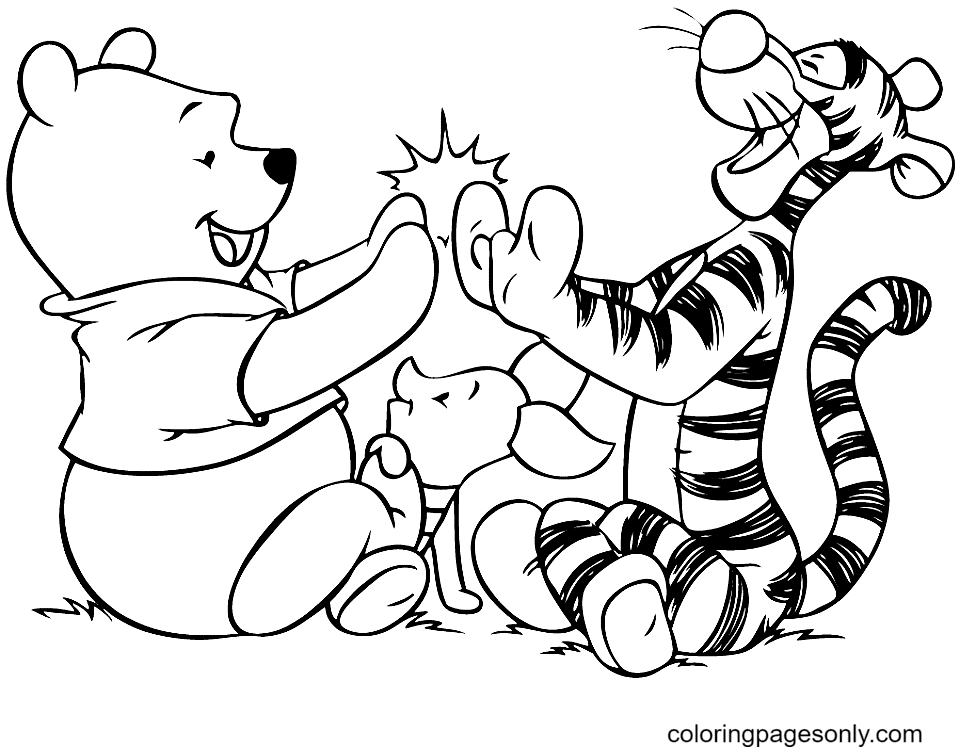
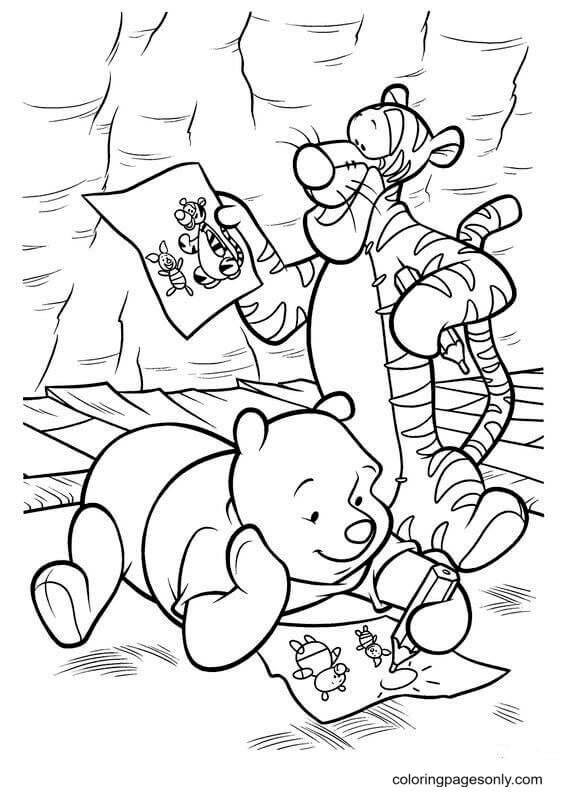
Pooh and Tigger Showering In The Rain, Pooh and Tigger Resting In The Forest, Pooh with Tigger and Piglet Playing Together, Pooh and Tigger, and Tigger, Rabbit, and Winnie all feature Tigger in the company of his friends, which is the only company Tigger genuinely wants, despite his theatrical claims to self-sufficiency.
Tigger’s design is one of the most technically interesting in the collection: the bold orange base, the dramatic black stripes, the pale yellow chest and chin area, and the distinctive spring-like tail all require deliberate, confident color choices and careful attention to pattern placement. Children who enjoy systematic, pattern-based coloring find Tigger pages particularly satisfying.
Eeyore Coloring Pages – The Philosophy of Gentle Melancholy
Eeyore is the Hundred Acre Wood’s resident philosopher of pessimism – a grey donkey with a pink tail attached by a nail, who expects the worst from every situation and is therefore never disappointed, and occasionally pleasantly surprised. He says, “Thanks for noticing me” with a sincerity that is simultaneously funny and genuinely touching. He is, in the way of all great fictional pessimists, actually more emotionally honest than the optimists around him – and his friends love him for it with a consistency and tenderness that he never quite expects but always, in the end, receives.
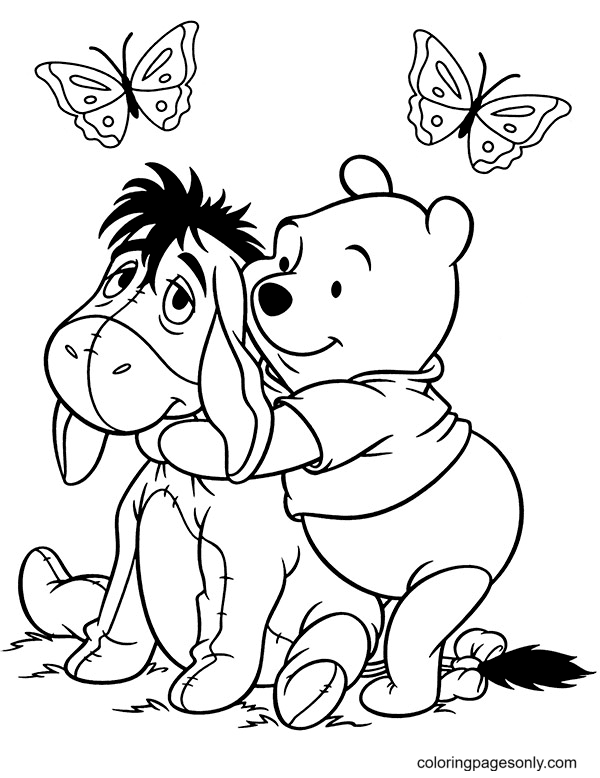
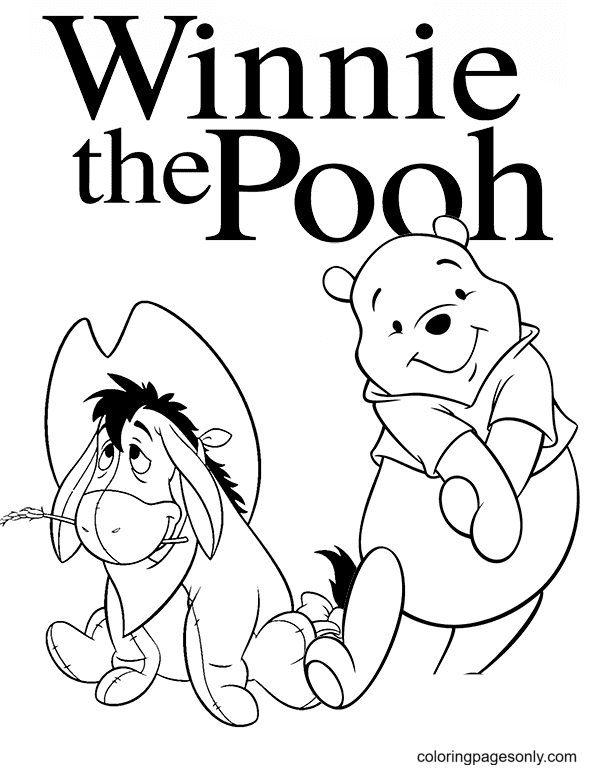
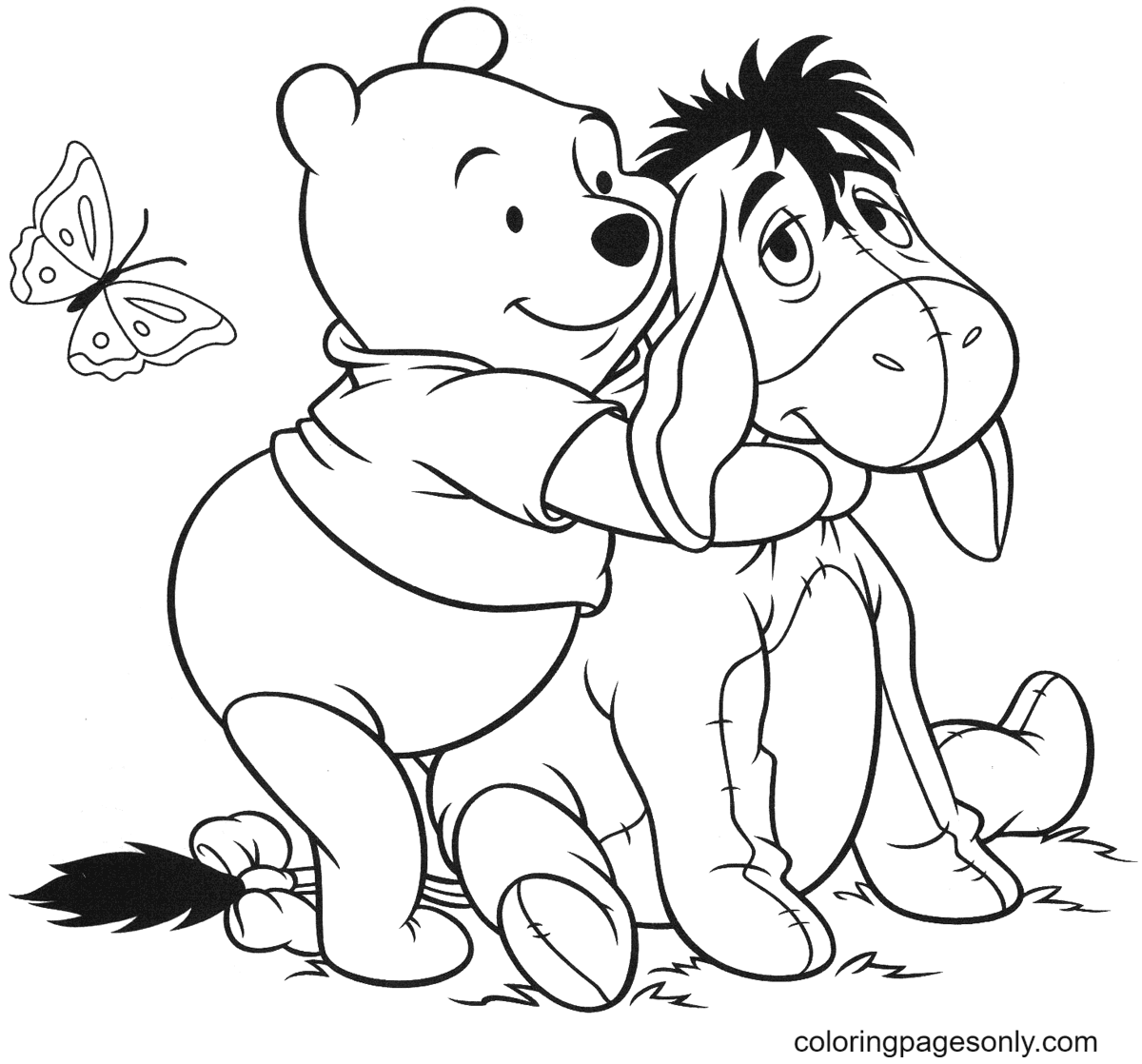
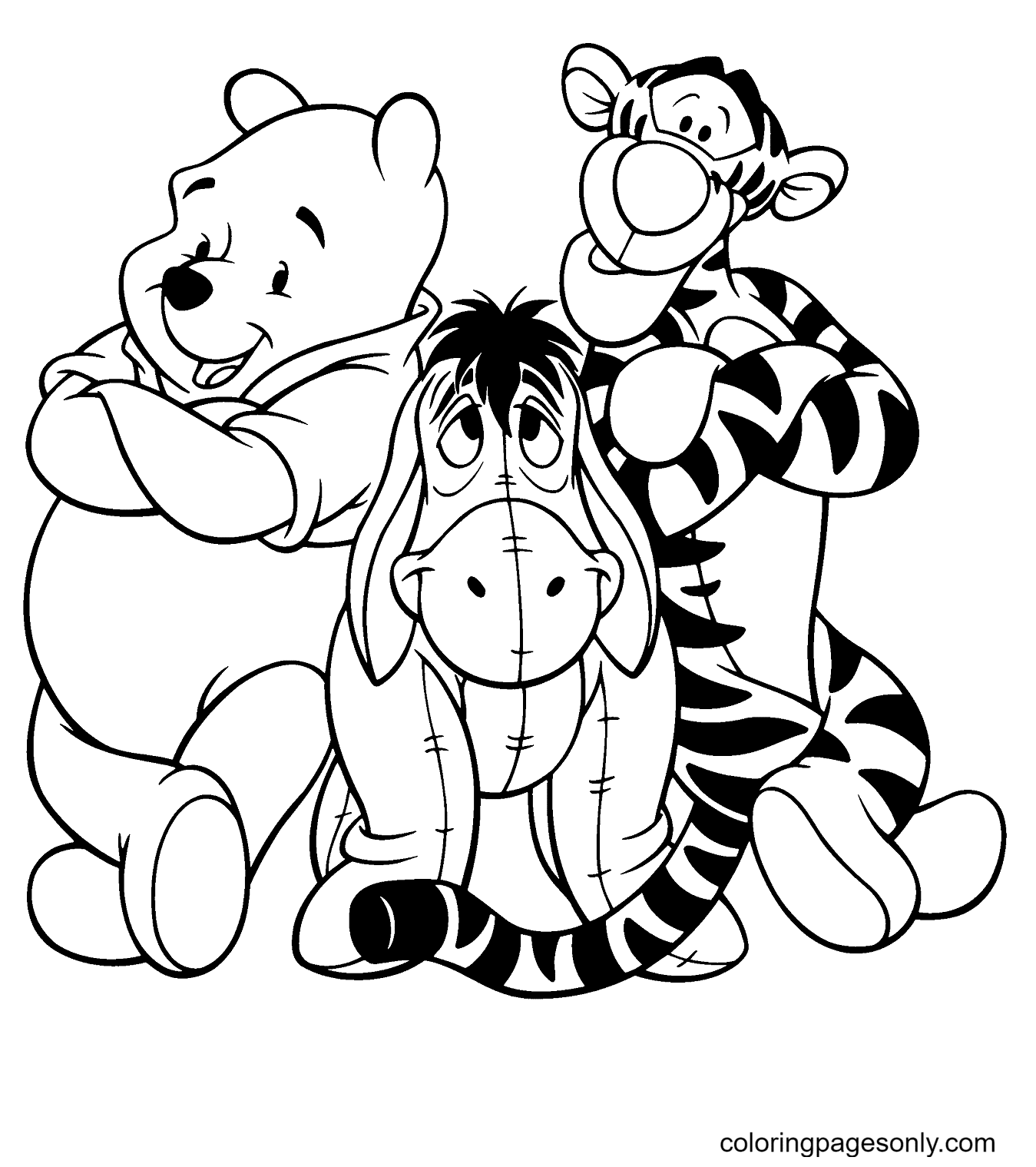
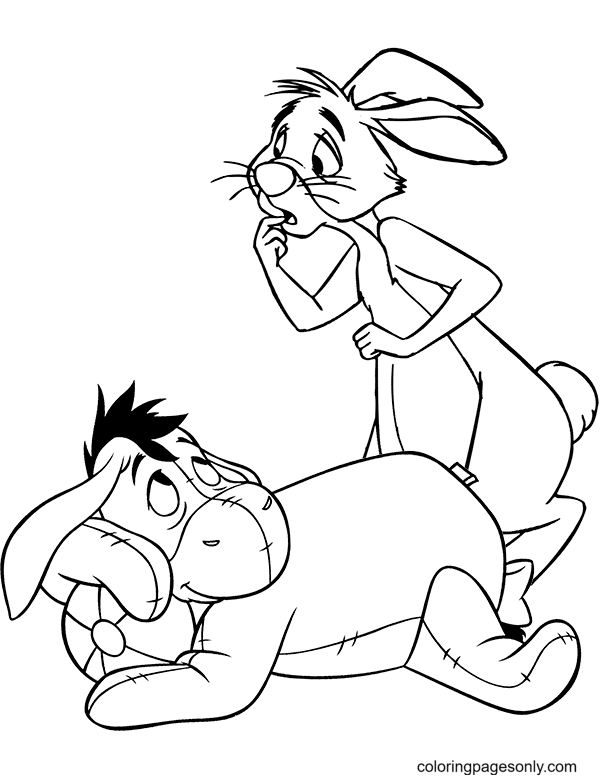
Pooh and Eeyore, Cute Pooh & Eeyore, Eeyore and Pooh, Eeyore with Pooh Bear, Pooh Hugs Eeyore, Pooh and Eeyore Planting The Flower In A Pot, Pooh and Eeyore with Tigger, Eeyore and Piglet, and Eeyore and Rabbit all feature Eeyore in the context of the community that sustains him – friends who show up precisely because they know he expects them not to.
Eeyore’s grey-blue coloring – muted, desaturated, genuinely melancholy in its visual temperature – is one of the most interesting challenges in the collection. A flat grey misses the character entirely. The most evocative Eeyore pages use a layered approach: a cool blue-grey base, a slightly warmer grey-brown on the back and haunches, and a touch of dusty lavender in the deepest shadows. His pink tail, bright against the grey, is the one element of Eeyore’s design that seems to belong to a more cheerful world – and it reads, in the right coloring, as a tiny, persistent note of hope.
Kanga, Roo & Rabbit Coloring Pages – The Practical Residents
Kanga is the Hundred Acre Wood’s most competent adult – organized, warm, practical, and possessed of the maternal authority that the Wood’s more chaotic residents (Tigger especially) both resist and depend on. Roo is her young son, perpetually enthusiastic, always willing to try anything that Tigger suggests, and one of the clearest illustrations of the original stories’ understanding that childhood is fundamentally characterized by fearlessness in the presence of a secure attachment figure.
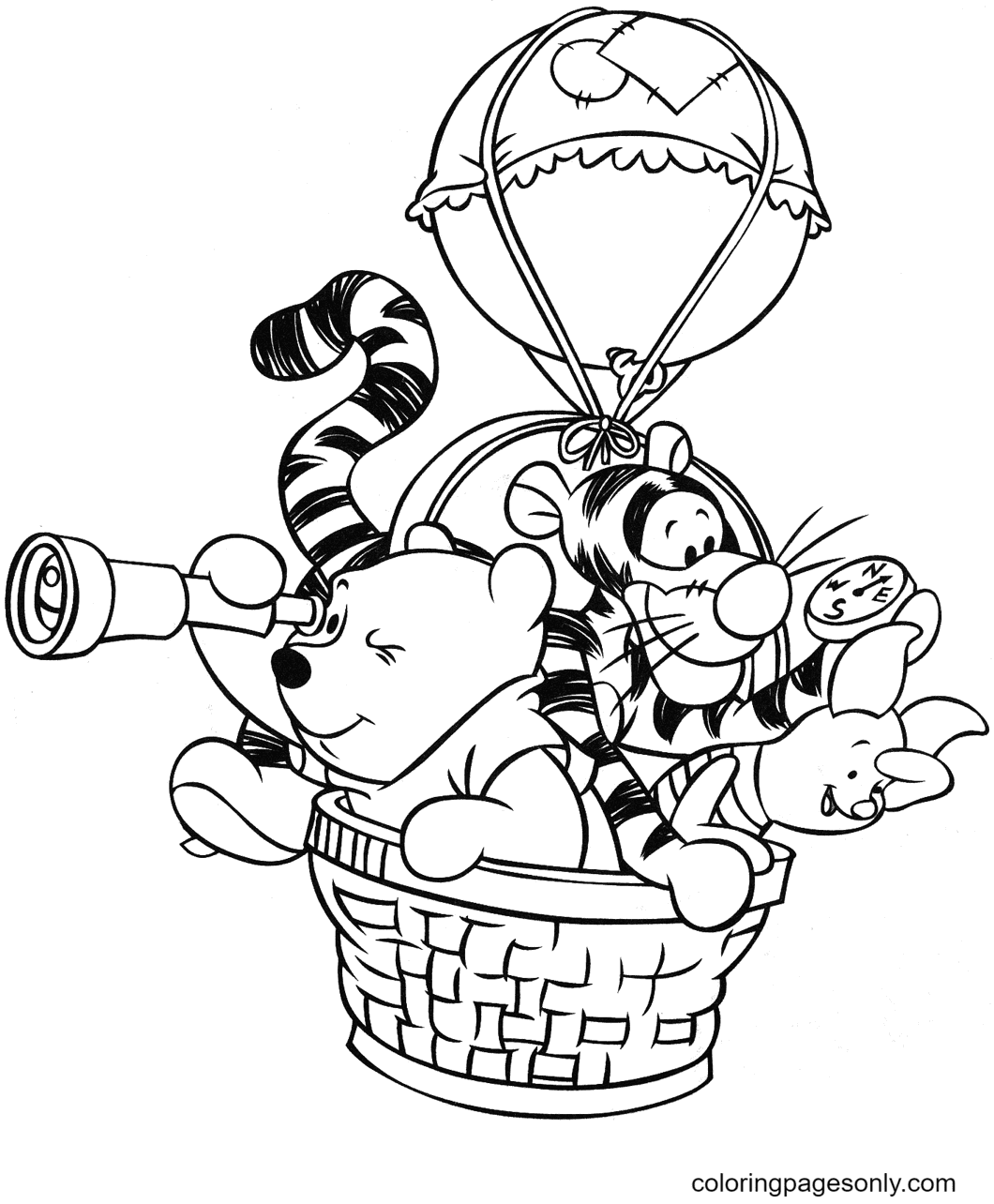
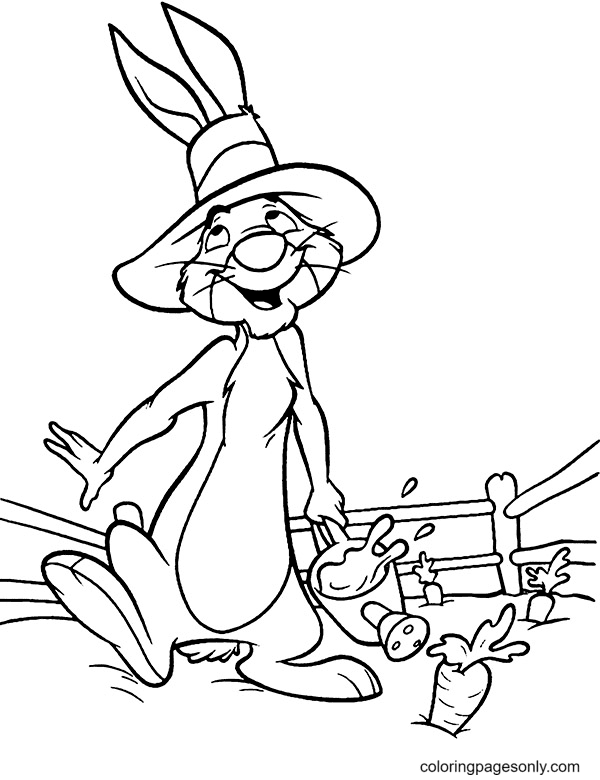
Kanga and Rabbit Romping With Roo and Pooh, Tiger, Piglet In Hot Air Balloon capture these characters in the spirit of adventure and communal play that defines the Hundred Acre Wood at its most joyful. Rabbit in the Garden features the Wood’s resident worrier and reluctant host – a character whose practical intelligence is constantly undermined by his tendency to overthink everything, and whose garden is the most ordered, maintained, and lovingly tended space in an otherwise pleasantly chaotic world.
Owl & Christopher Robin Coloring Pages – Wisdom and the Boy Who Made It All
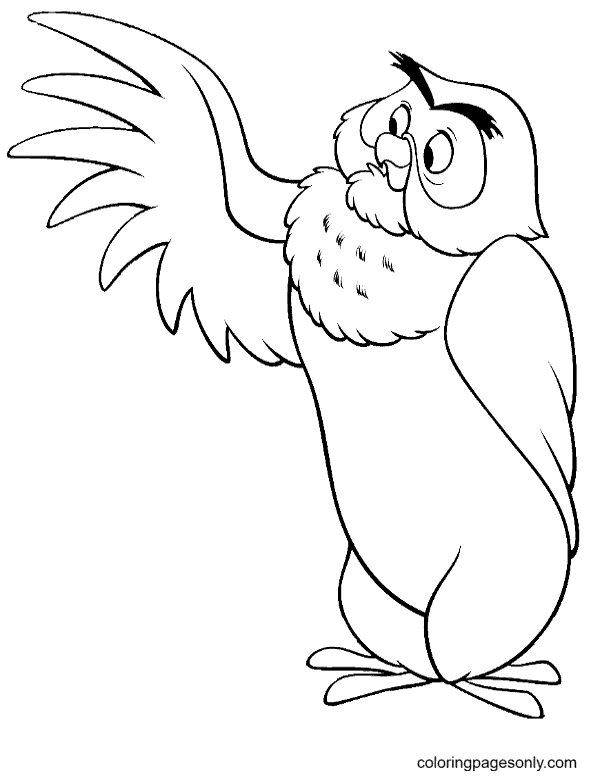
Owl is the Hundred Acre Wood’s self-appointed intellectual authority – a bird who uses long words and delivers long speeches and is, in the original Milne stories, revealed to be unable to actually spell correctly, which is a perfect and gentle joke about the gap between the performance of wisdom and its actual content. Owl from Winnie the Pooh captures him in full professorial mode, and rewards a careful, detailed approach to his complex feather patterns.
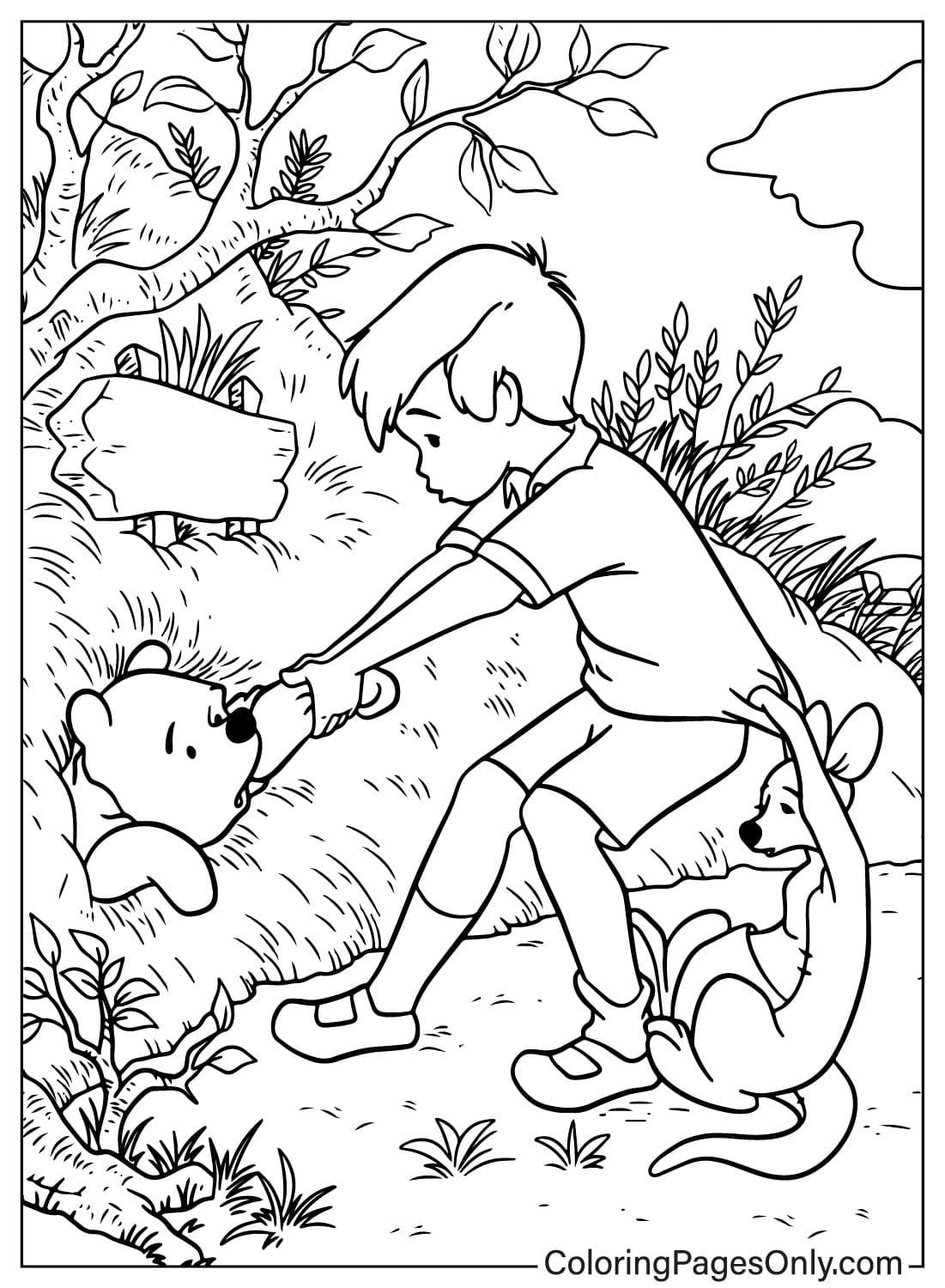
Christopher Robin is the boy whose imagination created the Hundred Acre Wood – based directly on the real Christopher Robin Milne, A. A. Milne’s son, whose actual stuffed bear (a Winnie the Pooh purchased at Harrods in London) now resides at the New York Public Library, where it has been on display since 1987. Christopher Robin and Kanga Saving Pooh From the Pit features the boy who is, in Milne’s world, the one character who moves between the real world and the Hundred Acre Wood – the bridge between imagination and reality, between childhood and the adult world that is always waiting just outside the trees.
Group & Scene Coloring Pages – The Hundred Acre Wood Together
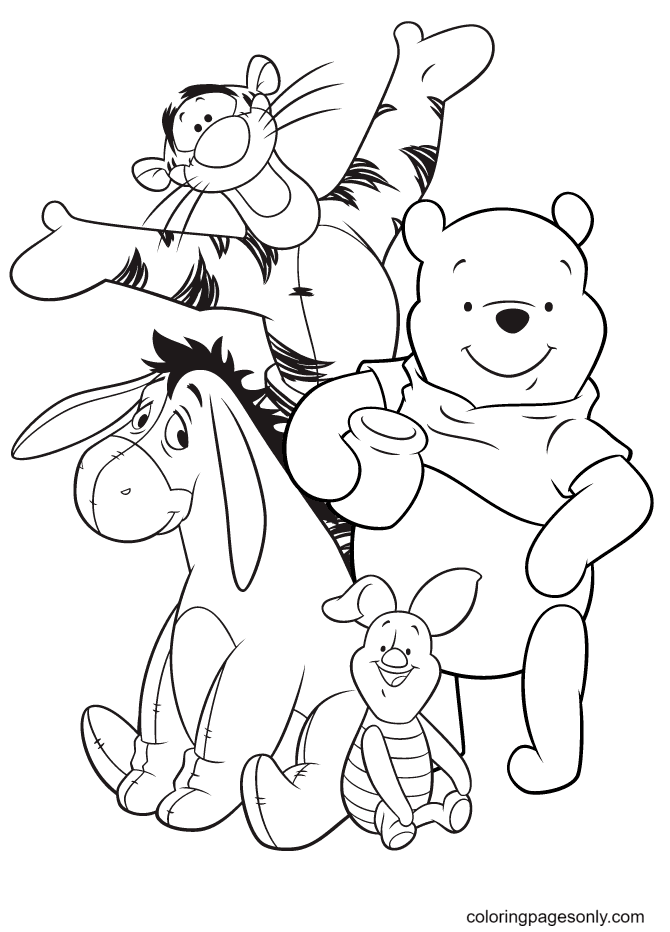
Pooh And His Friend In The Forest, Pooh Bear and His Friends, Pooh, Piglet, Eeyore and Tigger, Tigger, Rabbit and Winnie, Pooh with Tigger and Piglet Playing Together, and Pooh, Tiger, Piglet In Hot Air Balloon bring the full community of the Hundred Acre Wood together in compositions that reward the most ambitious and joyful coloring sessions – filling each character with their distinctive palette while managing the relationship between colors across a complex, multi-figure scene.
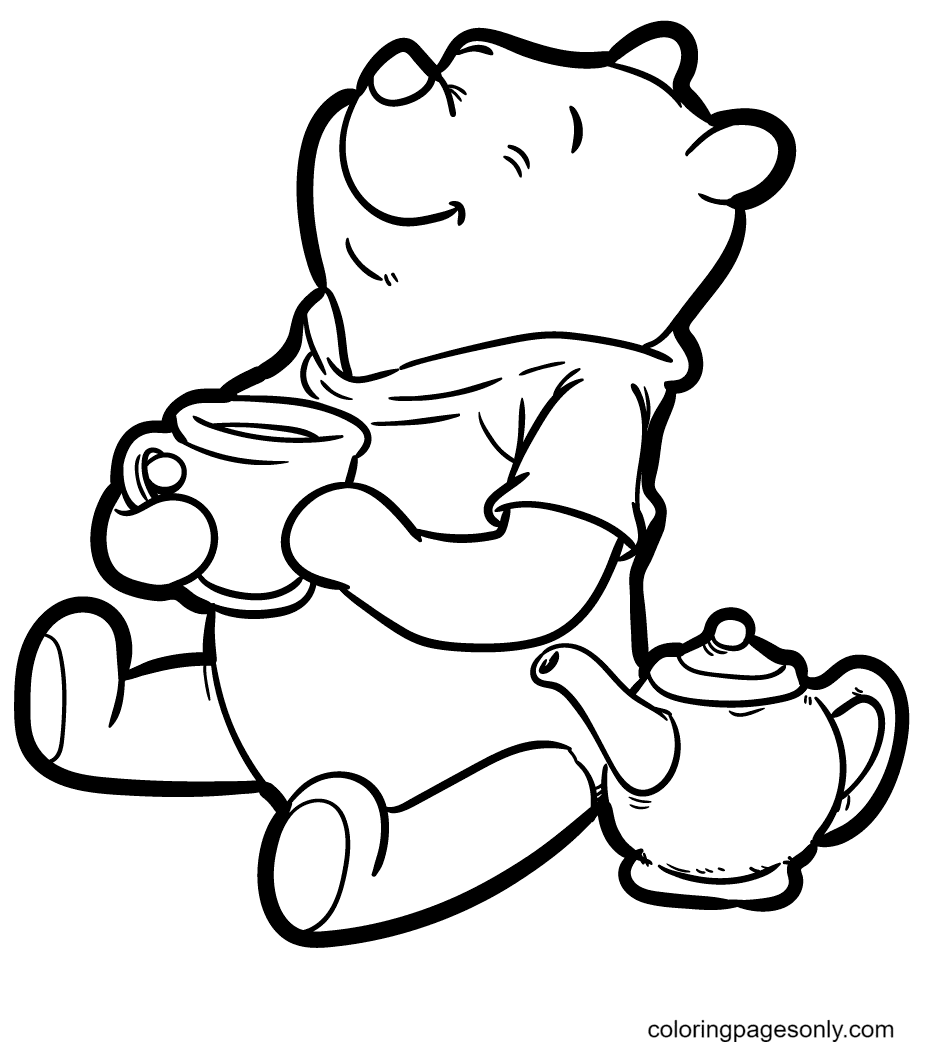
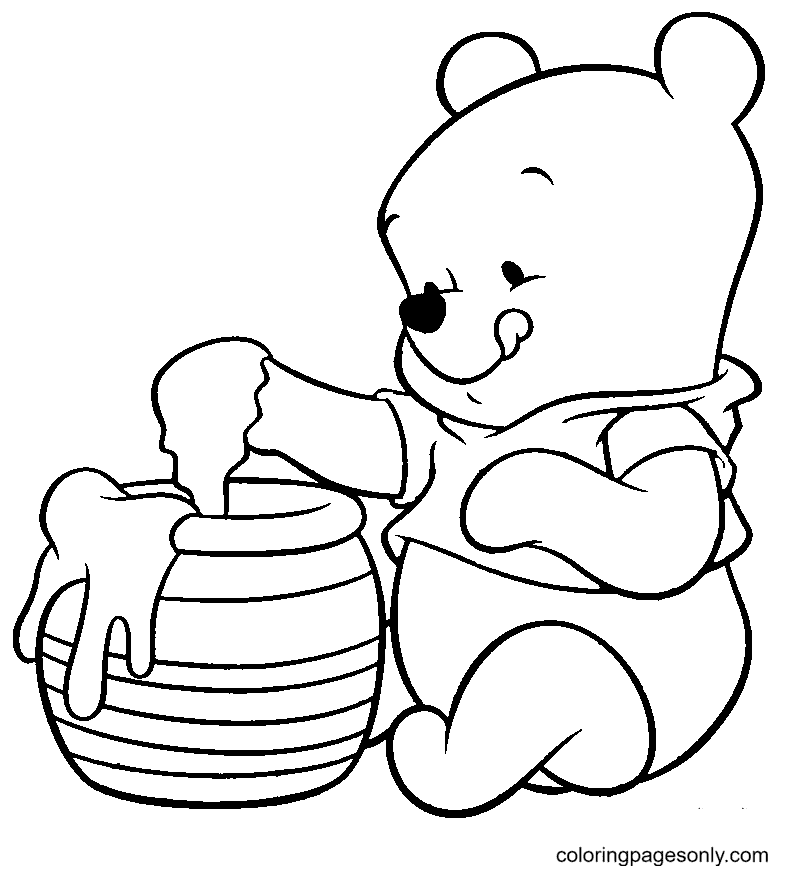
Teapot and Teacup in Pooh’s Hand captures one of the Wood’s most civilized pleasures – a small bear having tea, the most British of activities, in the most English of imaginary forests – with a simplicity and warmth that makes it one of the most consistently popular pages in the collection for adult colorists. Baby Winnie the Pooh brings the bear into his most irresistibly small and rounded form, a page that generates consistent delight from parents who color it alongside the very young children they are introducing to Pooh for the first time.
Why You’ll Love Our Winnie the Pooh Coloring Sheets
68 designs available free, always. Every page downloads as PDF, JPG, or PNG at no cost – no subscription, no sign-up, no restrictions for personal or educational use. PDF delivers the sharpest print quality for home printing. JPG is ideal for quick single-page sessions. PNG supports digital coloring and transparent-background creative projects.
Color online or print at home. Our built-in online coloring tool works in any browser – perfect for tablets and classroom devices. Print on standard A4 paper for a traditional, hands-on coloring session. Both options are always available, always free.
A story that genuinely crosses generations. Winnie the Pooh is one of the very few children’s properties that parents and grandparents do not merely tolerate – they actively love, because they grew up with it too. Coloring these pages together creates a shared experience anchored in a shared story, which is something that more recently created properties simply cannot replicate. When a parent colors Pooh with a child, they are not just spending time together – they are passing something forward.
Designs for every age and skill level. Simple, rounded character portraits of Pooh hugging his honey pot are perfect for toddlers just developing crayon control. Detailed group scenes, forest environments, and the intricate feather patterns of Owl pages challenge older children and adults. The collection’s emotional range – from joyful to melancholy, from energetic to contemplative – means every colorist finds a page that matches their mood.
Incredible Benefits of Winnie the Pooh Coloring Pages
Coloring pages anchored in beloved stories offer specific developmental and emotional benefits that go beyond what generic coloring activities provide – and Winnie the Pooh, with its extraordinary emotional depth and its century-long presence in children’s lives, is particularly well-positioned to deliver them:
Supports Emotional Intelligence Through Character Recognition
The characters of the Hundred Acre Wood are, in one of the most frequently cited applications of Milne’s work in developmental psychology, widely understood to represent recognizable emotional and psychological profiles. Pooh’s contented simplicity, Piglet’s anxious courage, Tigger’s impulsive enthusiasm, Eeyore’s gentle melancholy, Rabbit’s controlling perfectionism, Owl’s intellectual vanity, and Kanga’s nurturing competence form a community that mirrors the emotional diversity children encounter in their own social worlds.
Developmental psychologists and educators have long noted that children use fictional characters as safe frameworks for understanding and discussing emotions they are experiencing in their own lives. Coloring an Eeyore page and talking about why Eeyore always expects bad things to happen – and why his friends show up anyway – is a naturally arising, low-pressure way to discuss depression, loneliness, and the importance of consistent friendship that many children find easier to approach through a fictional proxy than through direct conversation.
Develops Fine Motor Skills Through Motivated, Sustained Practice
Occupational therapists consistently identify motivation as the most powerful predictor of the quality and duration of fine motor practice in young children. Winnie the Pooh characters – with their emotional familiarity, their narrative associations, and their distinctive visual identities – generate the kind of genuine enthusiasm that keeps young children at the task longer, applying more care to coloring within lines and managing their tools with greater precision, than unfamiliar subject matter typically achieves. The American Academy of Pediatrics identifies fine motor skill development as a key milestone throughout early childhood, and sustained, motivated coloring is one of the most effective and most accessible tools for supporting it.
Fosters Intergenerational Bonding Through Shared Story
Research from the Harvard Graduate School of Education’s Project Zero consistently shows that shared creative activities anchored in familiar narrative – reading together, creating art together around known stories – are among the most powerful tools for building the kind of secure, trusting attachment between children and caregivers that predicts positive outcomes across academic, social, and emotional domains. Winnie the Pooh occupies a rare position in this regard: it is a story that most adults in the English-speaking world already know and love, which means that coloring these pages together is not merely an activity but a conversation – about the story, about the characters, about what Piglet’s courage means to a parent who remembers being afraid and showing up anyway.
Promotes Mindfulness and Emotional Regulation
The Hundred Acre Wood is, in its essence, a place of radical slowness – a world where the most important thing that happens on any given afternoon is a bear going to visit his friend, or a small animal finding the courage to do something that frightens him, or a gloomy donkey discovering that his birthday has been remembered. Coloring these pages invites the same quality of attention: slow, focused, present, unrushed. A 2005 study published in Art Therapy: Journal of the American Art Therapy Association found that structured coloring activities significantly reduced anxiety in adult participants, and the gentle, warm, emotionally safe imagery of the Hundred Acre Wood is particularly well-suited to producing this effect in both children and adults.
Builds Narrative Literacy and Story Comprehension
Winnie the Pooh coloring pages are not merely character portraits – they are moments from a story. When a child colors Pooh Tries to open the Honey Jar, they are inhabiting a narrative situation: the honey is inside, Pooh wants it, something must happen next. This narrative embedding of the coloring activity naturally prompts children to think about character motivation, sequence, cause and effect, and story structure – the foundational elements of narrative literacy that support both reading comprehension and creative writing development throughout the school years.
Expert Coloring Tips for Winnie the Pooh Pages
These techniques progress from beginner to advanced – find your level and challenge yourself to try the next one:
Master Pooh’s golden palette through layering. Pooh Bear’s warm golden-yellow is one of the most satisfying colors to work with in the entire collection – but it requires layering to achieve its full warmth and depth. Start with a bright, warm yellow across the entire body. Add a second layer of slightly orange-tinted, deeper yellow on the sides, the tops of the arms, and the rounded belly where the form curves away from light. Finish with a near-amber tone in the deepest shadows – under the chin, in the crease of the arms, under the rounded belly. The honey jars deserve the same treatment: rich amber-golden at the center and sides, warm yellow-white near the top opening where the honey catches light. When both Pooh and his honey are layered this way, the visual relationship between bear and jar becomes strikingly harmonious.
Handle Piglet’s pink with restraint and nuance. The temptation with Piglet pages is to reach for the brightest, most saturated pink available – and to resist it is to produce a much more beautiful result. Piglet’s real palette is soft: a pale, peachy-pink base across the body, deepening to a slightly warmer rose on the ears, the snout, and the inner areas of the limbs. The Disney version’s striped jumper – pink and white horizontal stripes – benefits from alternating a slightly deeper pink with a near-white for the white stripes, rather than pure white, which can look harsh against the softness of Piglet’s overall palette. The final effect should feel tender and small, like the character himself.
Give Eeyore’s grey the emotional depth it deserves. A single flat grey produces an Eeyore who looks blank rather than melancholy, which misses the character entirely. The most evocative Eeyore coloring uses three distinct grey-blue tones: a medium cool grey as the base; a slightly warmer grey-brown for the back, top of the head, and the mane; and a soft, dusty blue-lavender in the deepest shadow areas – under the belly, inside the ears, along the lower legs. His distinctive pink tail (which is, in the original stories, pinned on and regularly falls off) should be a clear, slightly warm pink that reads as conspicuously, almost bravely cheerful against the grey of the rest of his body – a tiny note of hope on an otherwise philosophical figure.
Make Tigger’s stripes bold and deliberate. Tigger’s orange-and-black striped pattern is one of the most technically challenging designs in the collection, and the most rewarding when executed well. Use a vivid, warm orange – not too red, not too yellow – as the base across the entire body. Apply the black stripes with a firm, confident hand, following the curves of the body so that the stripes read as wrapping around a three-dimensional form rather than being drawn on a flat surface. The pale yellow-cream of Tigger’s chest, chin, and the inner surfaces of his ears should be added last, since it is this area that provides the visual relief from the bold orange-and-black and gives the design its playful, friendly quality.
Use the Hundred Acre Wood’s seasonal palette for backgrounds. The forest scenes in this collection reward backgrounds colored in the warm, golden light of the original E. H. Shepard illustrations – the illustrator who drew the first editions of Milne’s books and established the visual language of the Hundred Acre Wood. Shepard used warm ochres, soft tans, and gentle sage greens, with the occasional cool blue for shadow areas under trees. Replicating this palette – rather than reaching for the brighter, more saturated greens of a generic forest background – gives the finished page the same gentle, autumnal warmth that has made Shepard’s illustrations feel like the definitive visual record of a place that never quite existed and has always, somehow, felt like home.
Approach group scenes with a unified color temperature. When coloring pages that feature multiple characters together – Pooh, Piglet, Eeyore, and Tigger, Pooh Bear and His Friends, or the hot air balloon scene – plan your palette across all characters before you begin, rather than coloring each one individually from start to finish. The goal is a unified warm-cool balance across the whole page: warm tones (Pooh’s golden yellow, Tigger’s orange, the honey amber) balanced against cooler tones (Eeyore’s blue-grey, the forest greens, the sky blues). When these temperatures are distributed deliberately across the composition, the finished page has a visual coherence that makes it feel like a complete scene rather than a collection of individually colored characters.
5 Creative Craft Ideas with Winnie the Pooh Coloring Pages
Hundred Acre Wood Storybook
Create a hand-assembled illustrated storybook set in the Hundred Acre Wood by combining your colored Winnie the Pooh pages with your own original story. Begin by selecting eight to ten pages from the collection that suggest a narrative sequence – perhaps starting with Pooh discovering his honey supply is empty (Pooh Tries to Open the Honey Jar), setting off through the forest to find more (Pooh And His Friend In The Forest), encountering his friends along the way, and ending with the whole community gathered together in celebration (Pooh Bear and His Friends).
Color each page with care, then arrange them in narrative order. Between each illustration, write a page of story text – in your own voice, with your own invented dialogue, building on the scenes the coloring pages suggest. Aim for two to three sentences per page for younger children; a full paragraph or more for older writers. Add handwritten page numbers and a title page featuring your best Pooh portrait with the book’s title and your name as author and illustrator.
Bind the finished pages with binder rings or ribbon and present the completed book to a younger sibling, a grandparent, or a school library. This project develops narrative writing, creative sequencing, illustration-text integration, and the immensely satisfying experience of finishing a book that you made yourself – which is, in the spirit of A. A. Milne, a small act of imagination that becomes completely real.

Character Emotion Portrait Gallery
Create a classroom or bedroom gallery that uses the Hundred Acre Wood’s cast as an illustrated guide to emotional literacy – a set of character portraits, each paired with the emotion or quality that character most distinctively represents, displayed together as a visual reminder that feelings are real, valid, and shared by everyone, even a bear of very little brain.
Select one page per major character: Pooh (Adorable Winnie the Pooh or Happy Pooh Bear), Piglet (Pooh Cuddling Piglet or Piglet Eating Watermelon), Tigger (Pooh And Tigger Resting In The Forest), Eeyore (Eeyore and Pooh or Pooh Hugs Eeyore), Kanga and Roo (Kanga And Rabbit Romping With Roo), Rabbit (Rabbit in the Garden), and Owl (Owl From Winnie the Pooh). Color each portrait carefully, then mount on cardstock and add a hand-lettered label beneath each one: “Pooh – Joy and Contentment”, “Piglet – Courage”, “Tigger – Enthusiasm”, “Eeyore – Honesty”, “Kanga – Nurturing”, “Rabbit – Diligence”, “Owl – Curiosity.”
Arrange the finished portraits at eye level in a hallway, classroom, or bedroom – and return to them when the emotions they represent come up in daily life. This gallery works as both a beautiful piece of illustrated art and a living, accessible emotional vocabulary guide that children can point to, talk about, and draw meaning from in real situations.

Pooh’s Honey Pot Gift Wrap
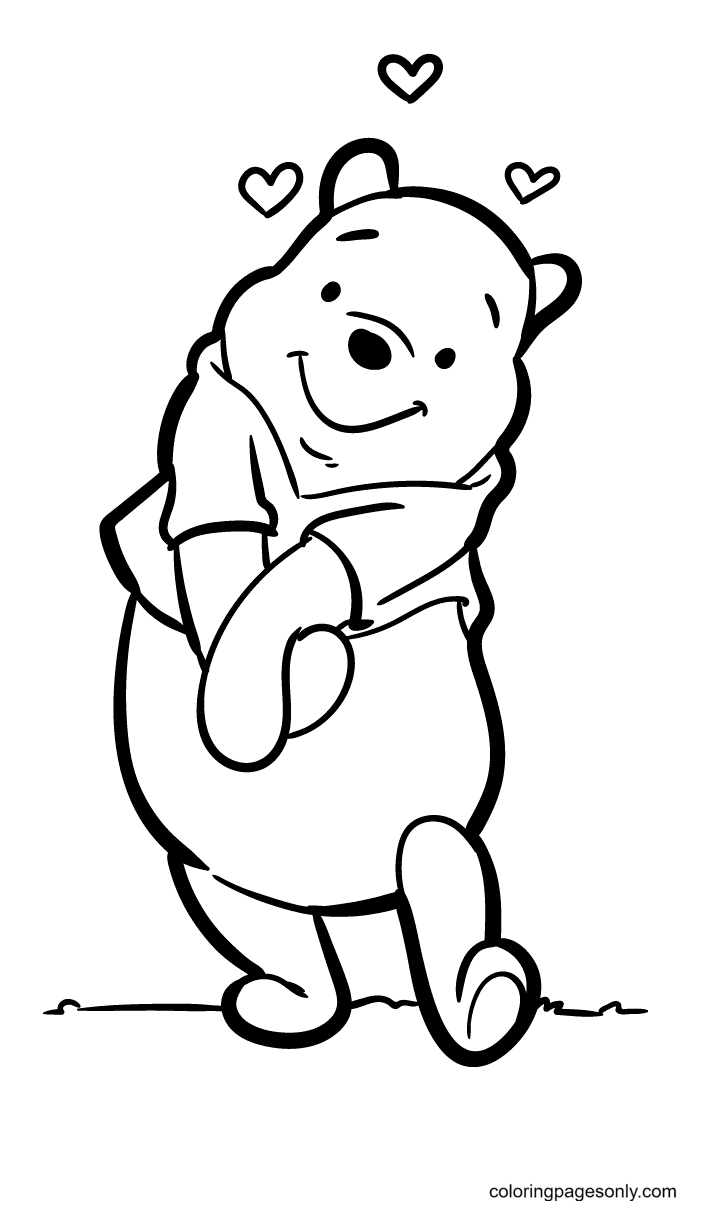
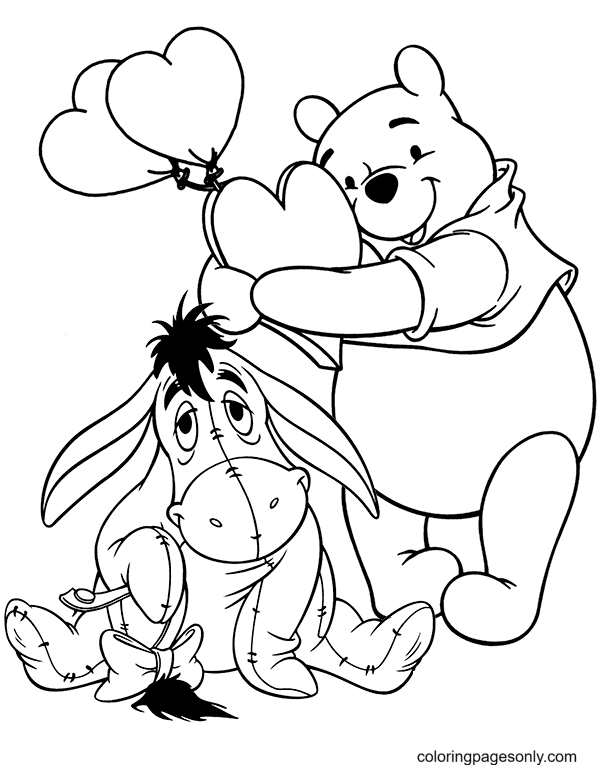
Transform your colored Winnie the Pooh pages into personalized gift wrapping for a birthday, holiday, or any occasion that deserves something made by hand rather than bought from a shop. Select three or four of the most joyful, celebratory pages from the collection – Pooh with a Birthday Cake, Pooh Holding Two Balloons, Pooh Bear Hugging a Giant Heart, and Winnie the Pooh Gives a Heart to Piglet are natural choices – and color each one with a warm, festive palette.
Once colored, use the pages directly as gift wrap for small presents: wrap the gift in plain tissue paper first, then lay the colored page around it and secure with ribbon or twine. For larger gifts, scan or photocopy the colored pages and tile them across a larger sheet of craft paper, creating a patterned gift wrap surface covered in Pooh and his friends. Add a gift tag hand-lettered with a Pooh quote – “A little consideration, a little thought for others, makes all the difference” – and finish with a bow.
This craft produces gift wrapping that is simultaneously more beautiful, more personal, and more memorable than anything purchased – and it teaches children something genuinely important: that making something with your hands and giving it to someone you love is one of the most Pooh-like things a person can do.

Create A Bookmark
Like other craft ideas, you will cut out pictures of Pooh Bear and other characters you like from coloring pages. You can crop out an entire scene if you want a larger bookmark. Then, paste the cut image onto cardboard to make the bookmark sturdy. In case you don’t have cardboard, you will paste the picture on thick paper or use cardboard to make a card.
You can add color to the image, draw more patterns, paste stickers, and write text on the bookmark to create a bookmark. its own uniqueness. You can punch a small hole in the top of the bookmark and thread it with ribbon or yarn for added decoration.

Make Stamps
Stamps printed with adorable characters from Winnie the Pooh will definitely be a unique and meaningful gift for friends and relatives. Making stamps with coloring pages is fun and quite simple. First, you choose the character images you like the most on the coloring page. If you want, you can recolor them to make them more vivid. You must use a serrated die to create a stamp along the square border.
The next step is to apply transparent tape to both sides of the cutout image. If you use self-adhesive decal paper, you just need to peel off the back layer of paper and stick it on the image. You should take advantage of other coloring pages to create a diverse stamp collection with many different characters.

Frequently Asked Questions About Winnie the Pooh Coloring Pages
Who created Winnie the Pooh, and when was the character first published? Winnie-the-Pooh was created by A. A. Milne (Alan Alexander Milne), a British author who based the character on his son Christopher Robin Milne’s stuffed bear. The bear was named after Winnie, a real Canadian black bear that lived at the London Zoo during World War I and became a beloved attraction – and after Pooh, a swan the family had encountered. Winnie-the-Pooh was first published on October 14, 1926, by Methuen & Co. in the UK. The original illustrations were created by E. H. Shepard, whose pen-and-ink drawings established the visual identity of the Hundred Acre Wood that has defined the characters ever since.
What is the real Winnie the Pooh bear, and where is it now? The real stuffed bear that inspired A. A. Milne’s stories was a Steiff teddy bear given to Christopher Robin Milne on his first birthday in August 1921. Christopher Robin named it Winnie, after the London Zoo bear he visited regularly with his father. The original stuffed animals – Pooh, Piglet, Tigger, Kanga, and Eeyore – were given to the New York Public Library by Milne’s publisher, E. P. Dutton, in 1987, where they are currently on permanent display in the Donnell Center collection. Pooh himself shows the wear of a deeply loved childhood toy: he is visibly worn, significantly faded, and entirely real.
How did Disney become involved with Winnie the Pooh? Walt Disney Studios acquired the rights to the Winnie the Pooh characters from the Milne estate in 1961 – a purchase that Disney considered one of his most important acquisitions. The first Disney Pooh short, Winnie the Pooh and the Honey Tree, was released in 1966, the same year Walt Disney died. The Disney adaptations significantly transformed the visual design of the characters – particularly Tigger, who appears in only one of Milne’s original books (The House at Pooh Corner, 1928) – and introduced the characters to global audiences who may not have encountered the original Milne books. The Disney versions are the ones most familiar to children today, and the ones represented in our coloring collection.
What is the Hundred Acre Wood based on? The Hundred Acre Wood was directly inspired by Ashdown Forest in East Sussex, England – a large area of heathland and woodland where A. A. Milne and his family had a country home called Cotchford Farm. Milne and Christopher Robin explored the forest together regularly, and the specific locations in the stories – the bridge where Poohsticks is played, the hollow tree where Pooh keeps his honey, the sandy pit where Roo plays – all have real counterparts in Ashdown Forest. The bridge, known as Poohsticks Bridge, was restored in 1999 and remains a popular visitor destination.
Are the Winnie the Pooh characters based on real people or animals? The animal characters are based primarily on Christopher Robin’s real stuffed toys. Pooh was the Steiff bear. Piglet, Tigger, Kanga, Roo, and Eeyore were all Christopher Robin’s actual toys. Rabbit and Owl were entirely invented by Milne. Kanga and Roo were, according to A. A. Milne, introduced into the stories to give the Hundred Acre Wood a maternal presence – Kanga was the first adult female character in the world. Christopher Robin himself appears in the stories essentially as himself, though A. A. Milne was careful to maintain the fictional frame of the Hundred Acre Wood as an imaginary space distinct from the real Ashdown Forest.
What colors should I use for the main characters? The Disney-established canonical palette is: Pooh – warm golden yellow with a slightly darker honey-amber shadow tone; Piglet – pale peachy-pink with a deeper rose on ears and snout, pink-and-white striped jumper; Tigger – vivid warm orange with bold black stripes, pale yellow-cream chest and chin; Eeyore – muted blue-grey with a slightly warmer grey-brown back, pink tail; Kanga – warm tan-brown with a pale cream chest pouch; Roo – warm golden-tan, slightly lighter than Kanga; Owl – warm tan and brown feathers with white facial disc; Rabbit – warm golden-tan with slightly darker brown markings; Christopher Robin – the Disney version typically wears a red shirt and yellow shorts. The original E. H. Shepard illustrations are pen-and-ink, without color – so technically any palette is historically defensible.
What age group are these pages best suited for? The collection works across a genuinely wide age range. Simple, open character portraits – Adorable Winnie the Pooh, Happy Pooh Bear, Piglet Eating Watermelon – are ideal for toddlers and preschoolers ages 2–5 who are developing basic coloring control. More detailed compositions featuring multiple characters and forest environments work well for ages 5–10. Adult colorists who grew up with Pooh – and there are many – find the collection deeply nostalgic and creatively satisfying, particularly when approaching the more complex group scenes and the Eeyore pages, which reward the most nuanced and emotionally considered color work in the entire collection.
Can these pages be used for classroom activities? Yes – Winnie the Pooh pages are exceptionally well-suited to early childhood and elementary classroom settings. The characters’ distinct emotional profiles make them natural anchors for social-emotional learning discussions. The story’s themes – friendship, courage, kindness, the value of showing up for the people you love – align naturally with character education curriculum in most school systems. The Eeyore pages are particularly useful for age-appropriate discussions of melancholy, loneliness, and the importance of consistent friendship, which many educators find easier to approach through the safe distance of a fictional character.
Getting started is simple: browse the full Winnie the Pooh collection right here at ColoringPagesOnly.com, choose your favorite characters and scenes, and download them instantly – always free, always without sign-up. Print at home on standard A4 paper, or use our online coloring tool directly in your browser. Come back regularly – new designs are added to the collection on an ongoing basis.
The Hundred Acre Wood has been waiting for nearly a century. It is still warm there. The honey is still worth pursuing. And Pooh is still, as he has always been, the kind of friend who shows up – slow and steady and entirely sincere – whenever you need him.
Pick up your colors. Step into the forest. And color something that will remind you, for a little while, of what it felt like to be very young in a world that was still completely, perfectly kind.
Share your finished artwork with us on Facebook and Pinterest, and tag #Coloringpagesonly. We love seeing your interpretations of these beloved characters – and especially the color choices people make for Eeyore, which are never quite the same twice, and always exactly right.
Color the warmth. Remember the Wood. Come home again.