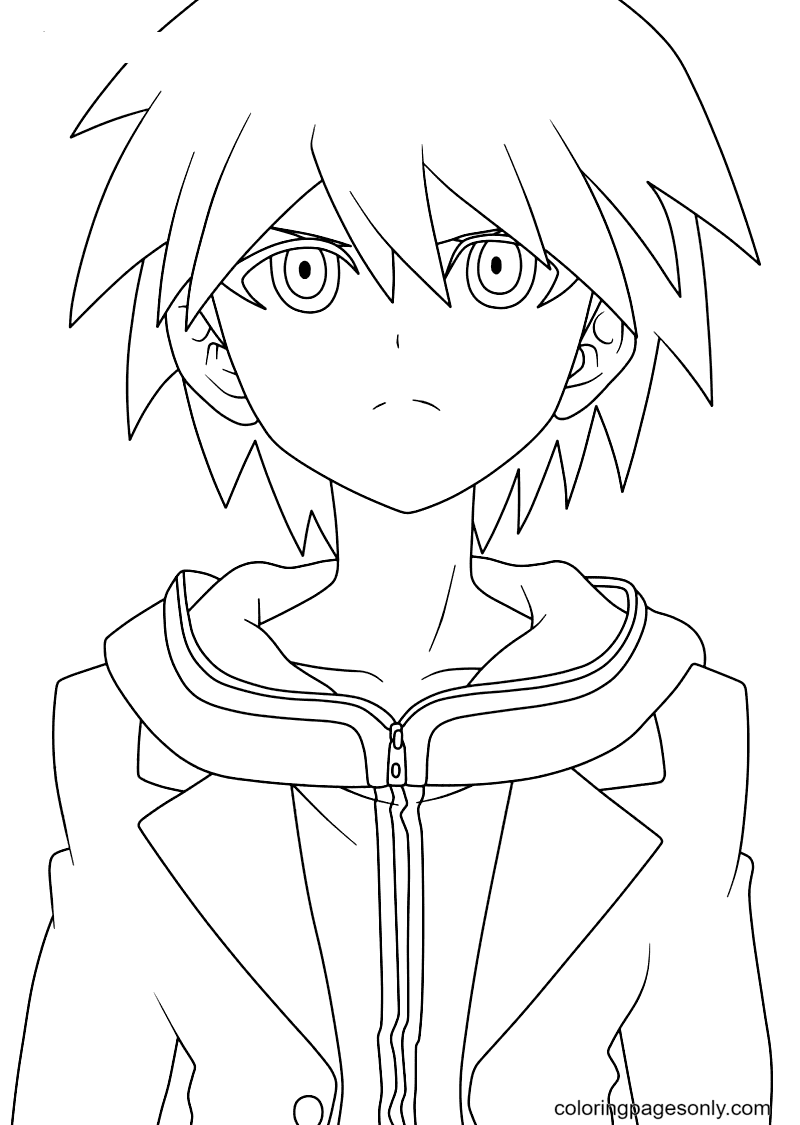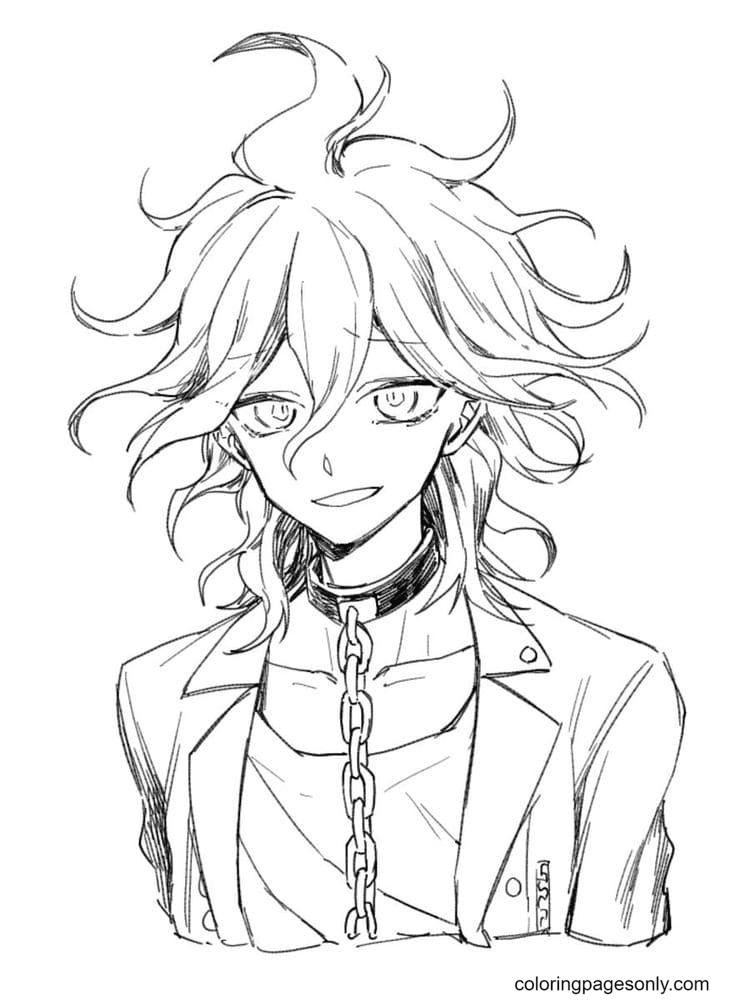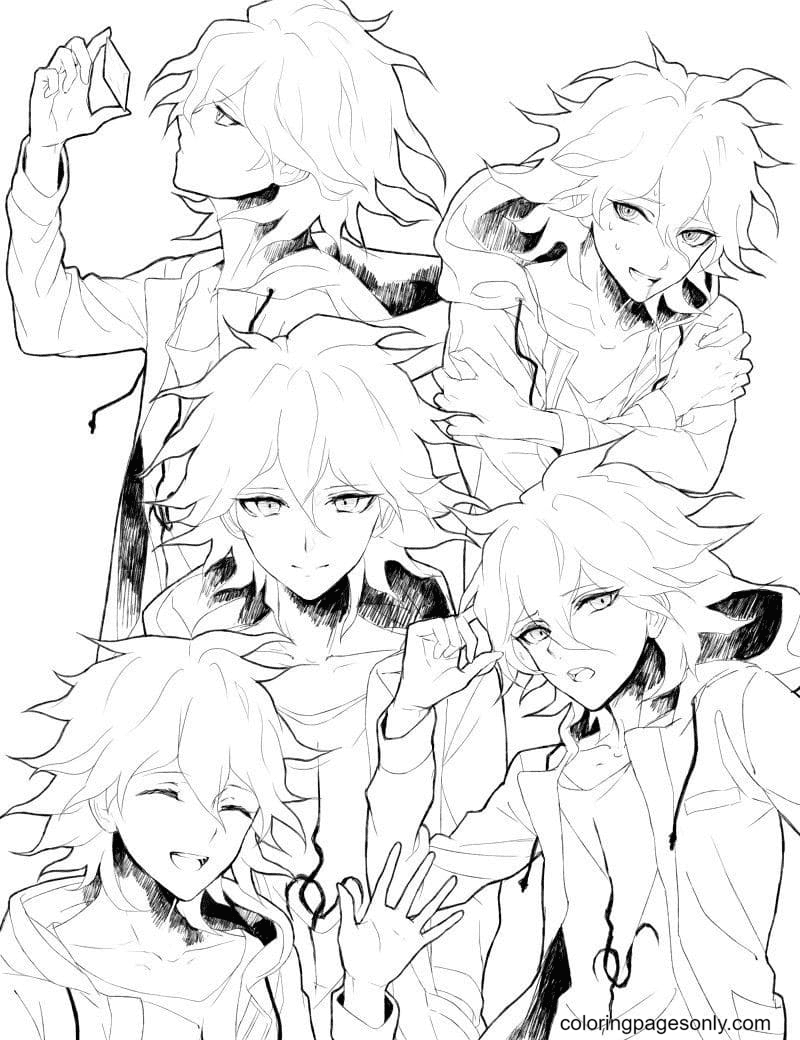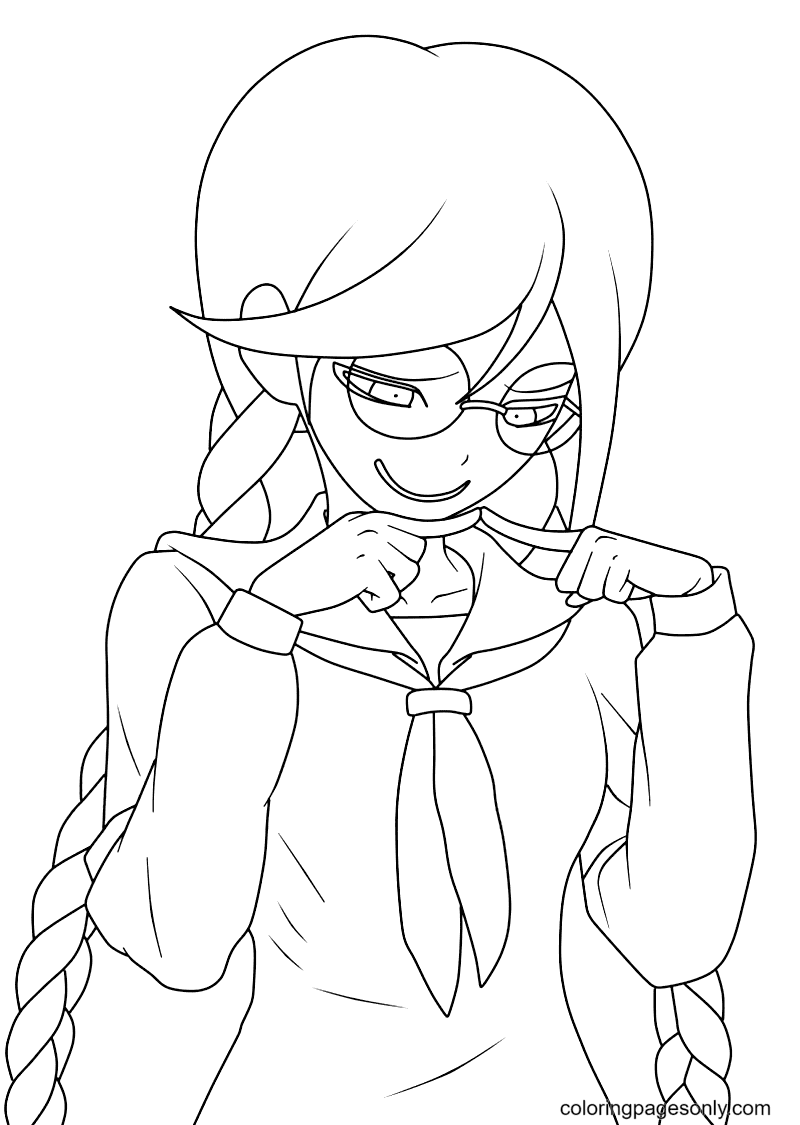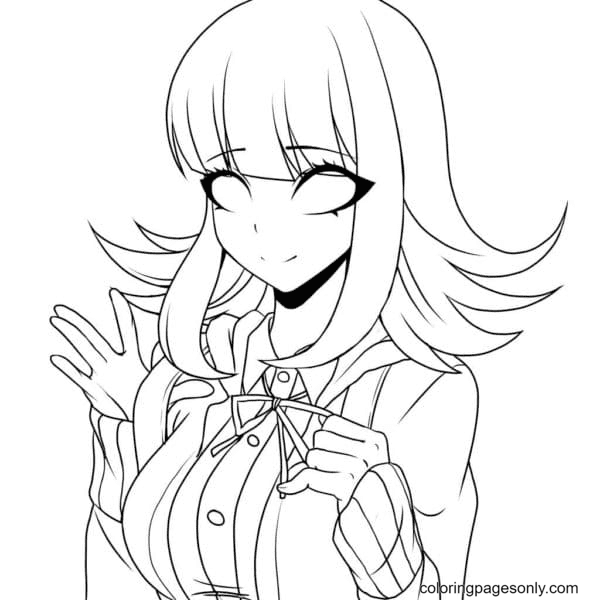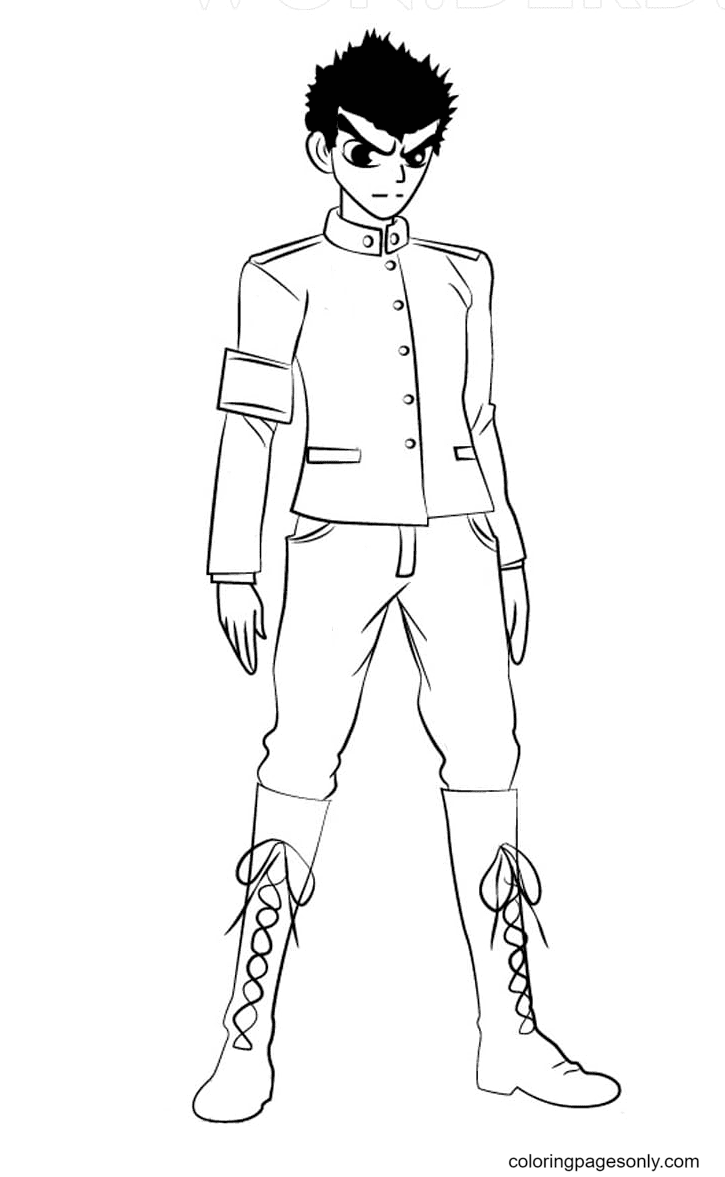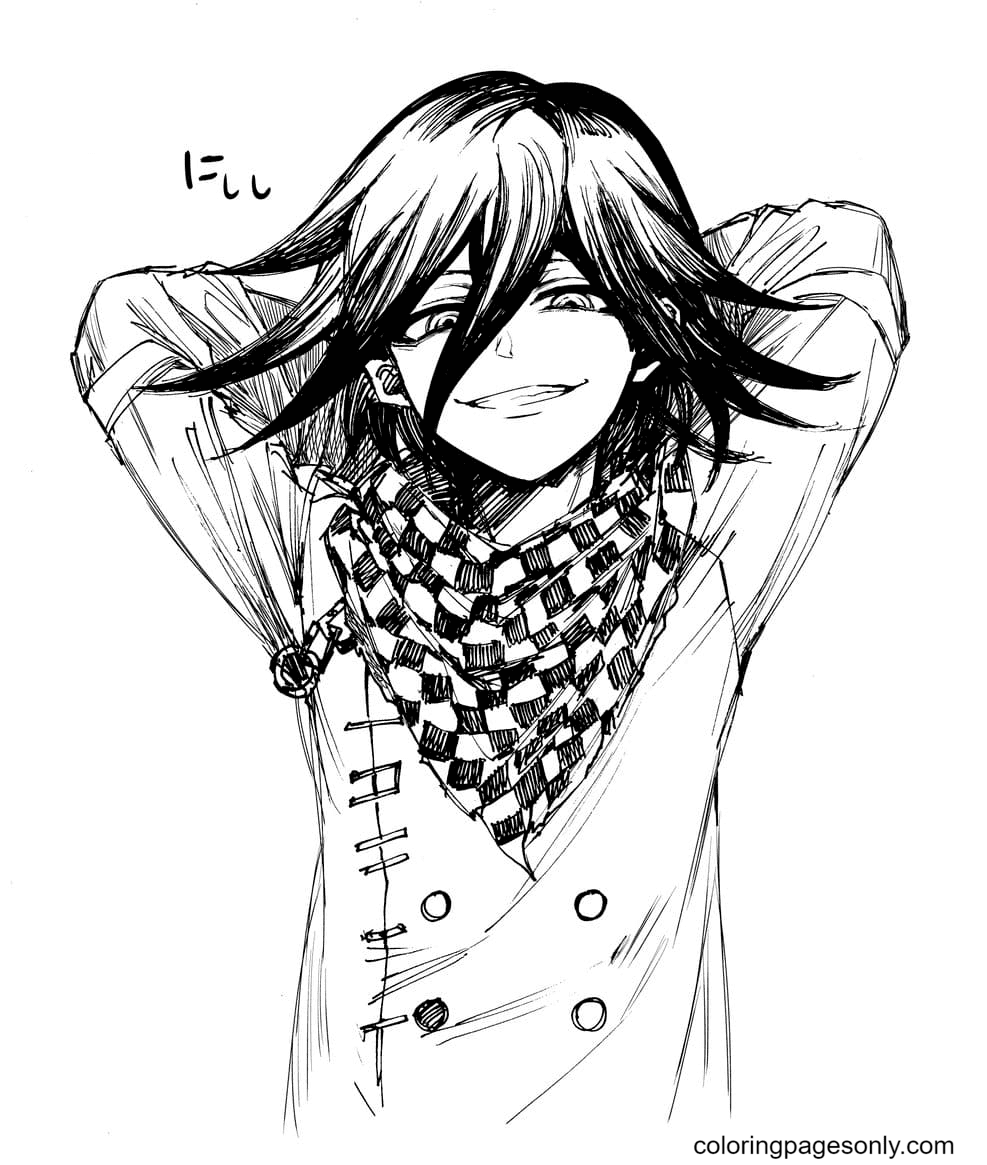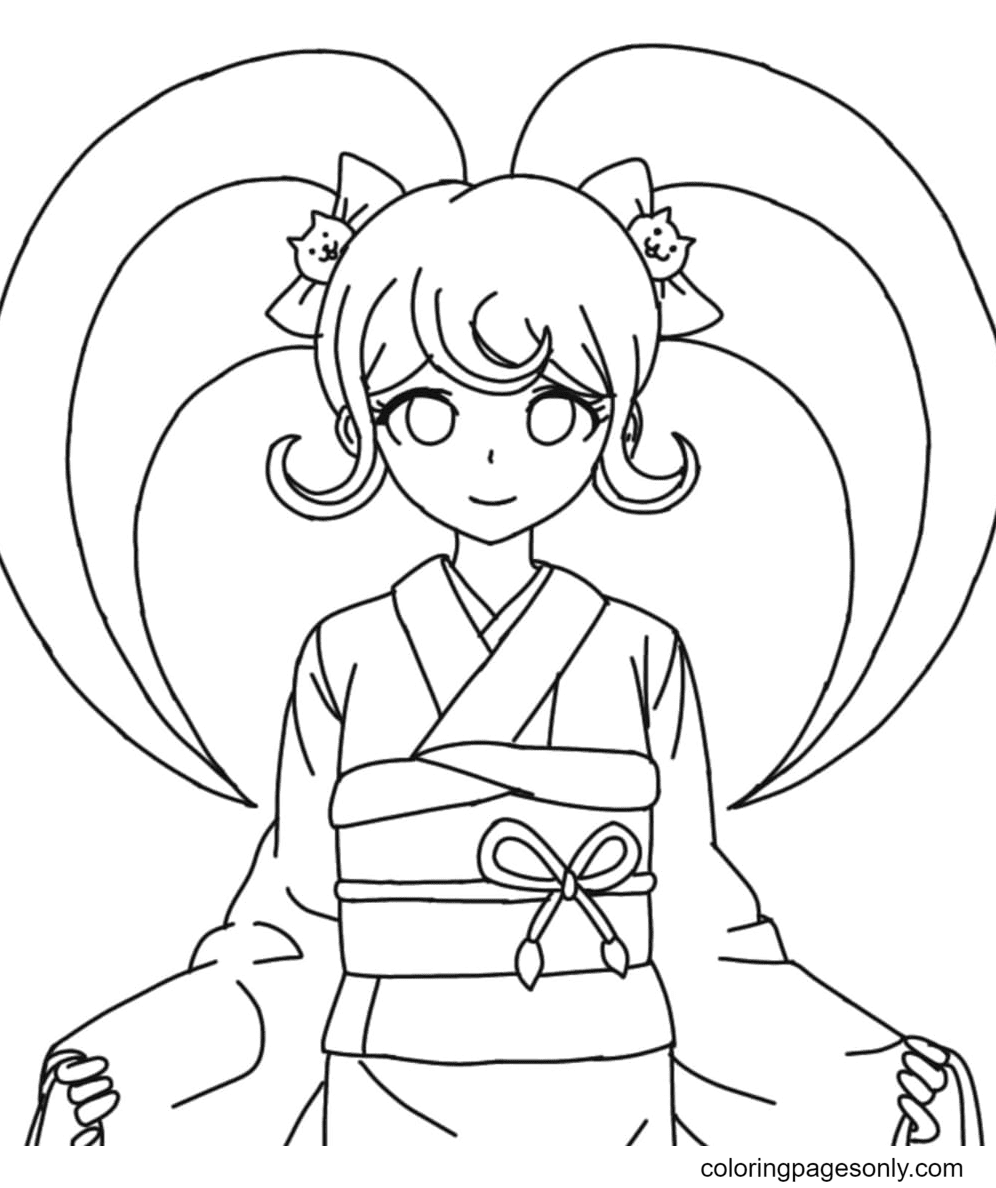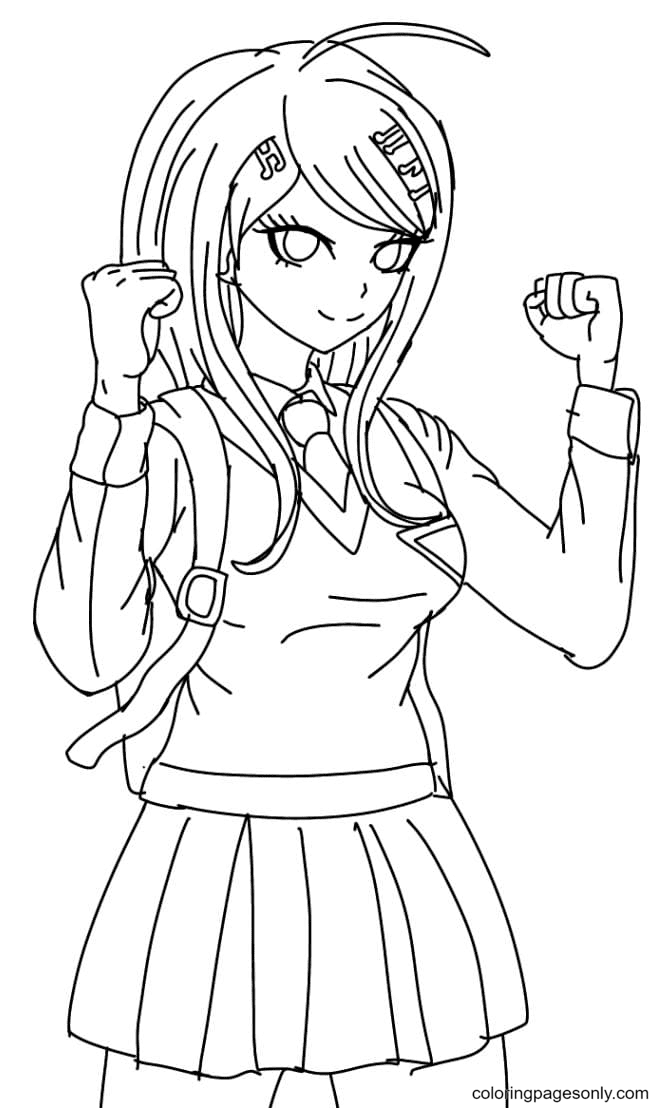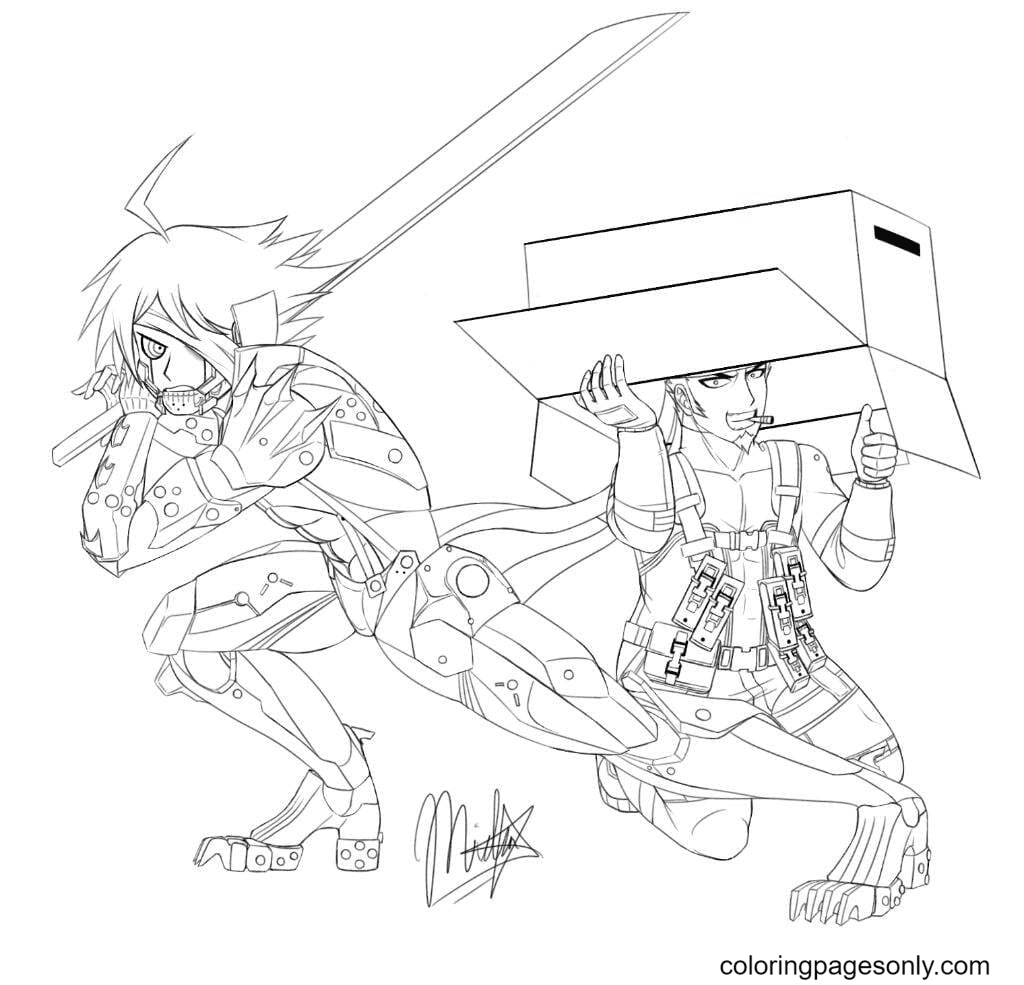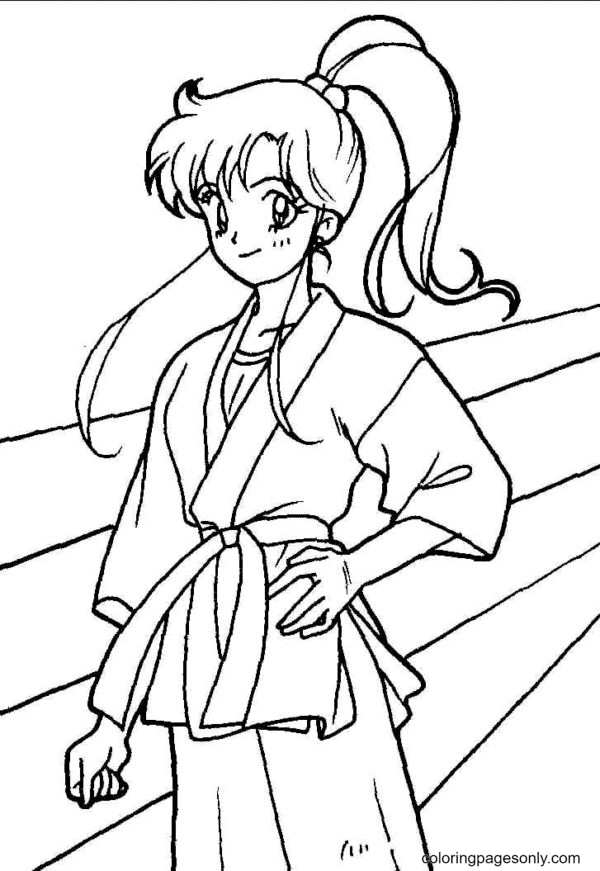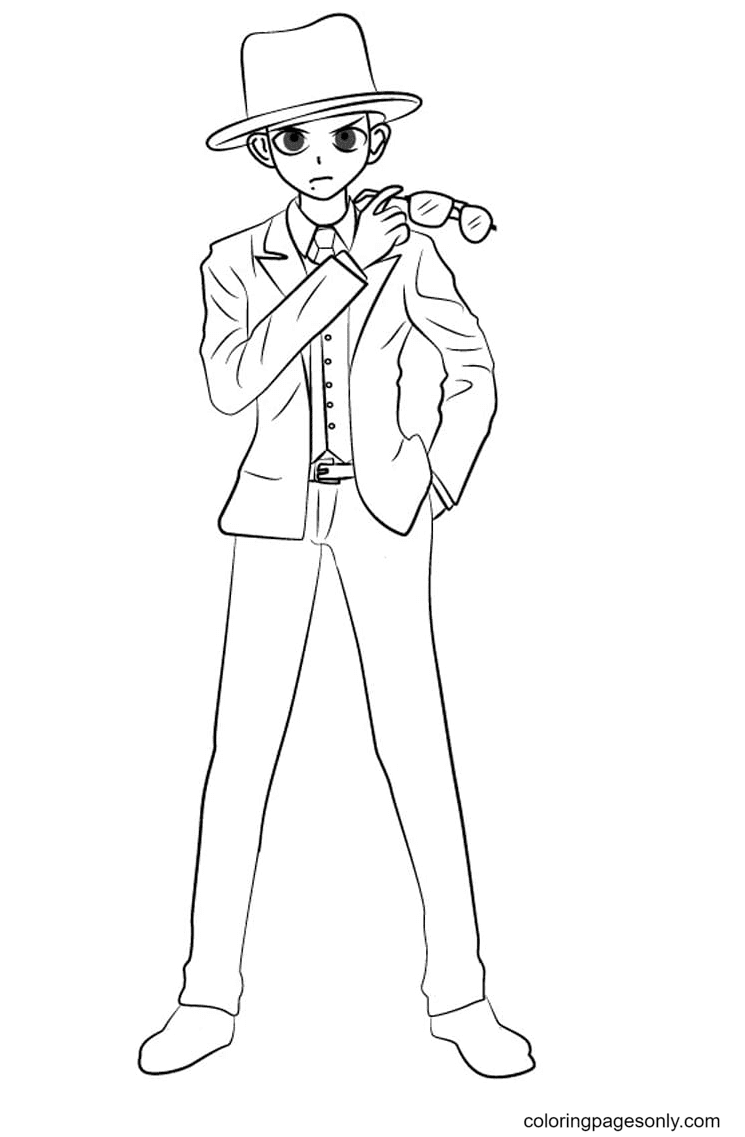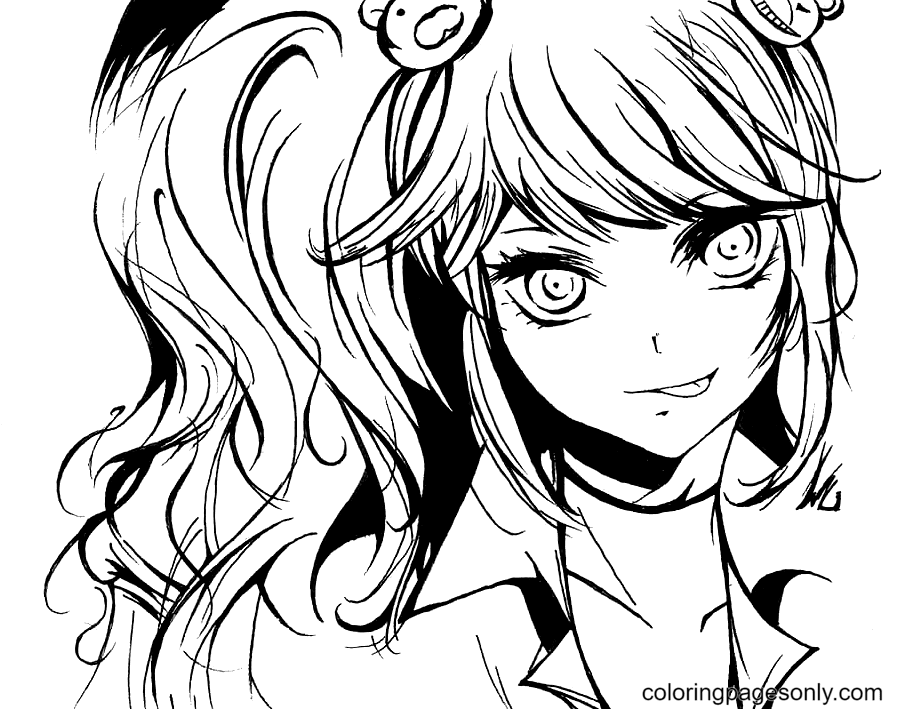
Danganronpa Coloring Pages at ColoringPagesOnly.com brings together 80+ free pages based on Spike Chunsoft’s visual novel and adventure game series – characters from all three mainline games covering Monokuma and the cast of Hope’s Peak Academy, the Jabberwock Island students, and the Ultimate Academy for Gifted Juveniles, along with group scenes, paired character compositions, and fan art crossovers. Download any page as a PDF to print, or color online in your browser. The full Anime collection is at Anime Coloring Pages.
Note: The Danganronpa games are rated M (Mature 17+) for violence and dark themes. The coloring pages are character art illustrations suitable for fans of the series.
What is Danganronpa?
Danganronpa is a Japanese visual novel and mystery adventure game series created by writer Kazutaka Kodaka and character designer Rui Komatsuzaki, developed and published by Spike Chunsoft. The mainline series consists of three titles: Danganronpa: Trigger Happy Havoc (2010, English release 2014), Danganronpa 2: Goodbye Despair (2012, English release 2014), and Danganronpa V3: Killing Harmony (2017, simultaneous English release). A spinoff game, Ultra Despair Girls, and an anime series (Danganronpa 3: The End of Hope’s Peak High School) expand the franchise’s narrative.
The core premise of the series is a “mutual killing game.” In each installment, a group of high school students who possess extraordinary talents – called “Ultimates” – are trapped in a confined location and forced to participate in a death game run by the mechanical bear Monokuma. The rules are brutal: students must survive without killing each other, but any student who successfully commits murder and evades detection in a subsequent class trial can escape – at the cost of everyone else’s execution. The class trial mechanic, in which surviving students must deduce the identity of the killer through logic and evidence before a wrong vote means collective execution, is the series’ gameplay core.
The Danganronpa series is known within the visual novel and game art community for Rui Komatsuzaki’s distinctive character design language: highly stylized figures with sharp, geometric features, extreme color contrast, and character palettes that communicate personality at a glance. The pink blood used throughout the games – a localization decision maintained from the Japanese originals to allow the games to pass rating systems as non-“realistic” violence – is one of the most discussed aesthetic choices in the franchise.
Character Guide
Danganronpa: Trigger Happy Havoc (DR1)
Makoto Naegi is the protagonist of the first game – a teenage boy with brown hair in a slightly rounded style, pale skin, and a distinctive outfit of a white hoodie layered under a green hooded jacket or coat. His “talent” is Ultimate Lucky Student – chosen for Hope’s Peak Academy through a lottery rather than any actual ability. His expression is typically open and earnest, which contrasts with most of the game’s more guarded or extreme characters.
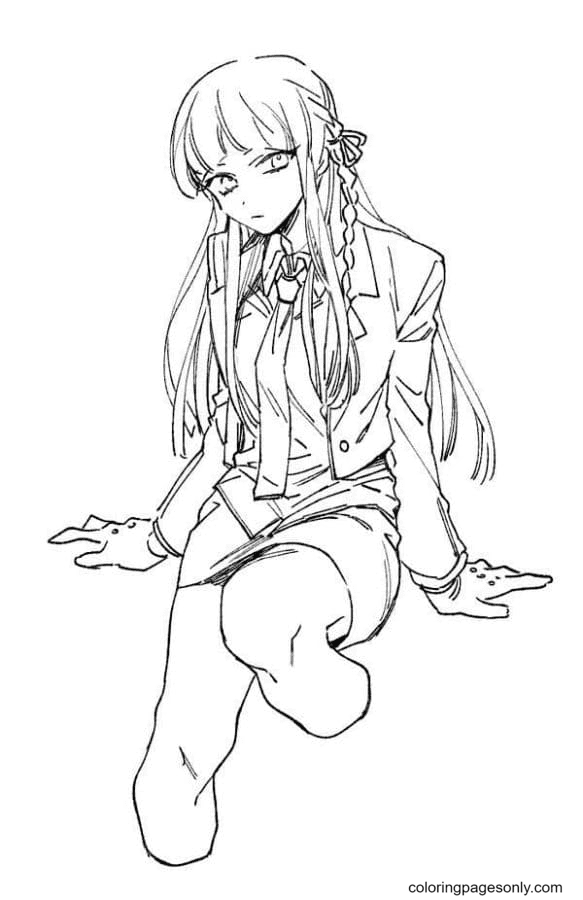
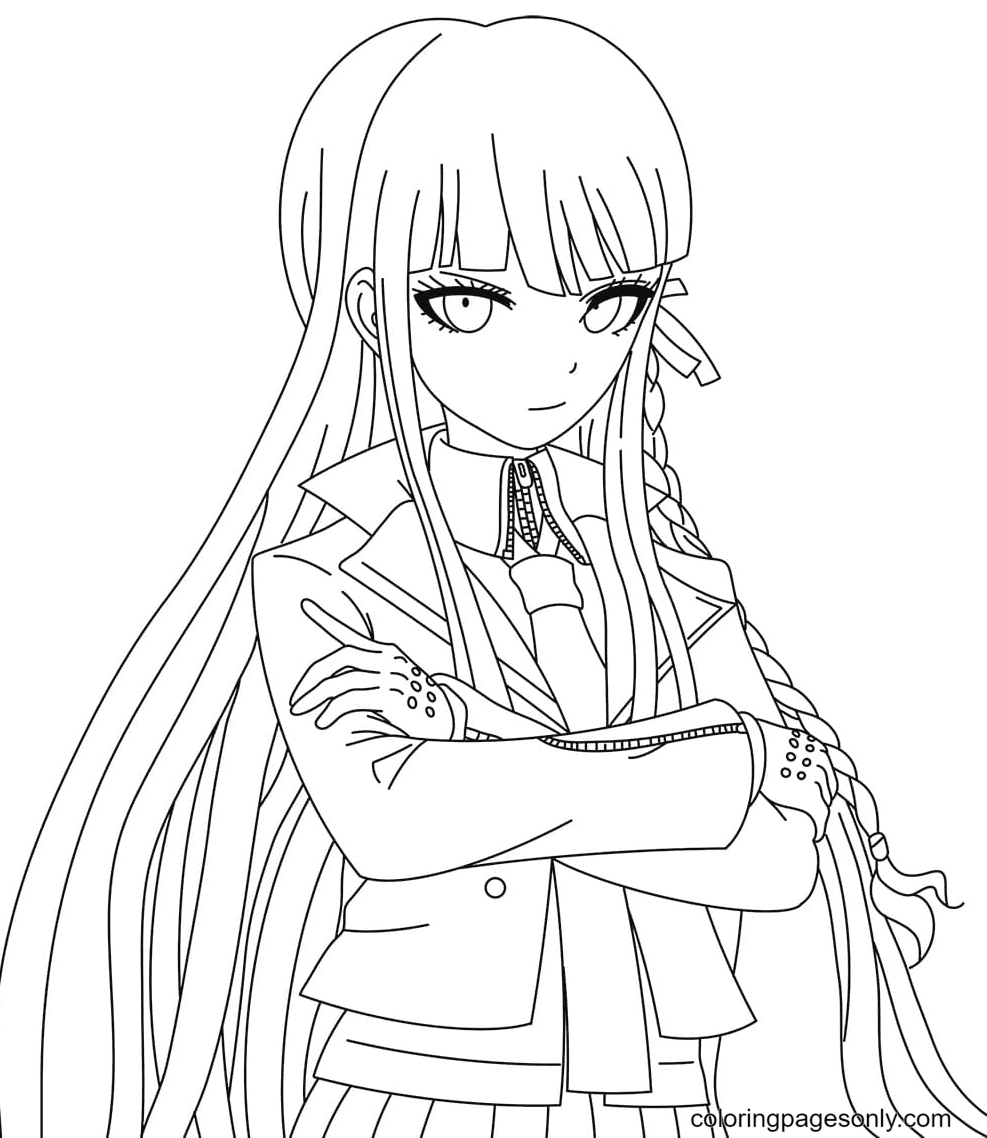
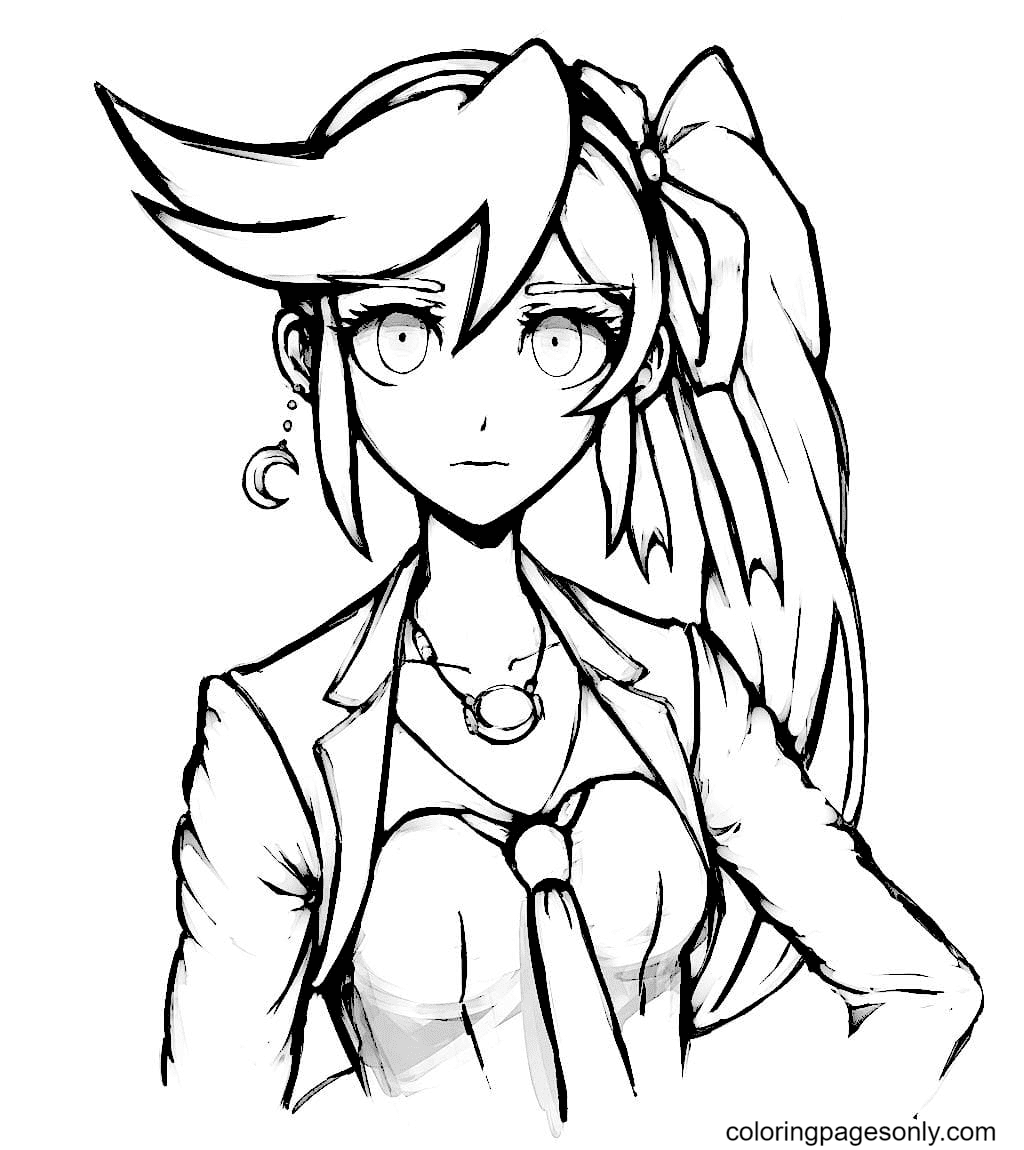
Kyoko Kirigiri is DR1’s most prominent female character and Makoto’s closest ally – a girl with long silver-lavender hair, pale skin, and a composed, unreadable expression. She almost always wears gloves (covering her hands for reasons that become significant in the game) and purple-lavender clothing that matches her hair. Her Ultimate is Detective, and her visual design – the cool silver hair, the covered hands, the perpetually guarded expression – makes her one of the most immediately distinctive characters in the collection.
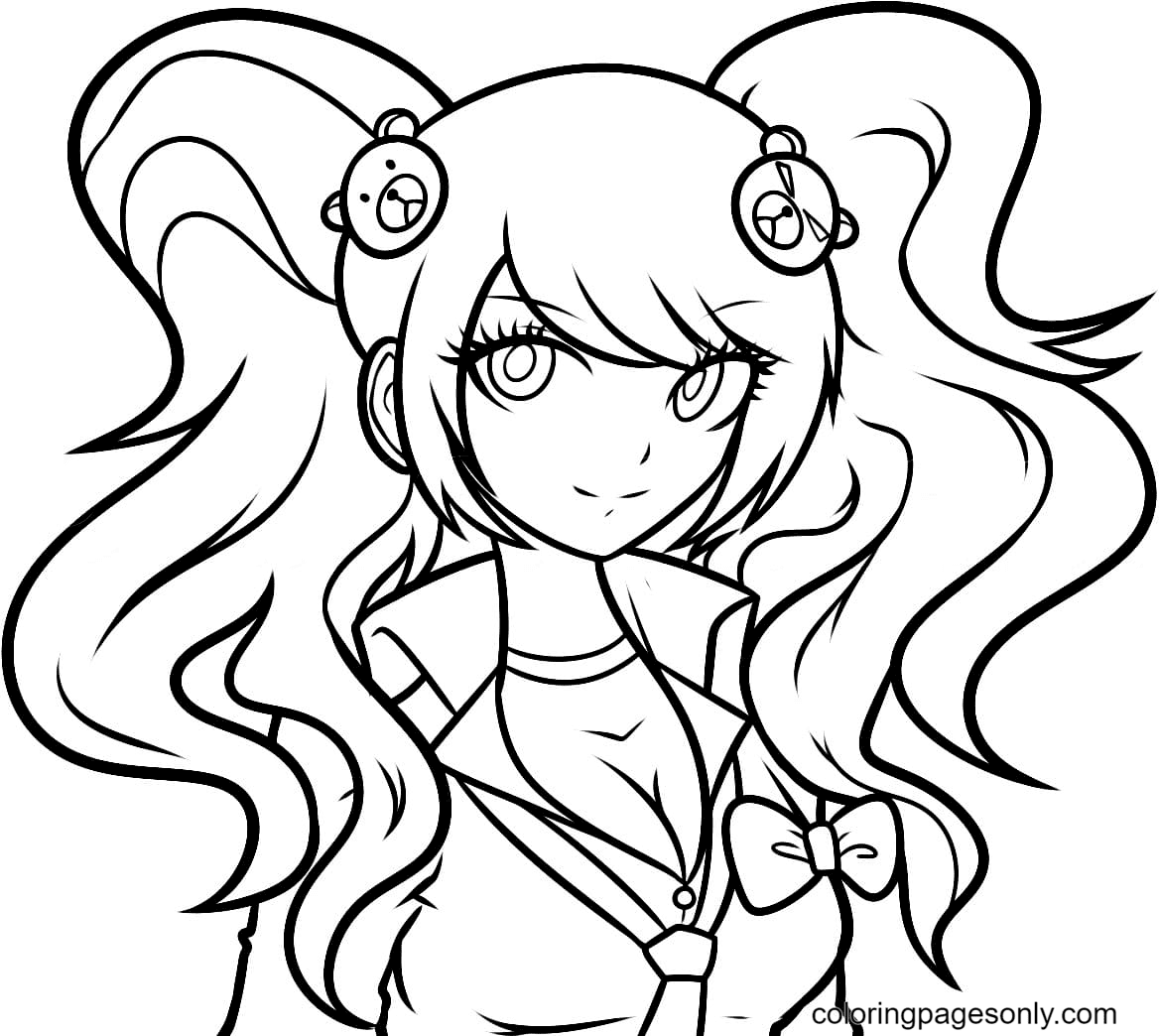
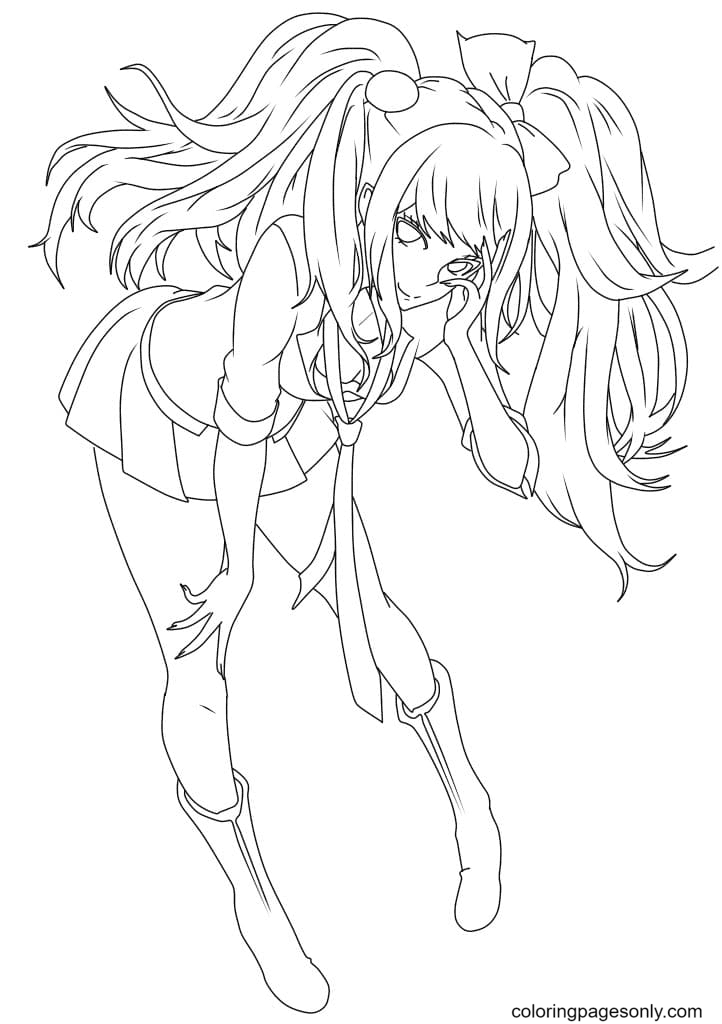
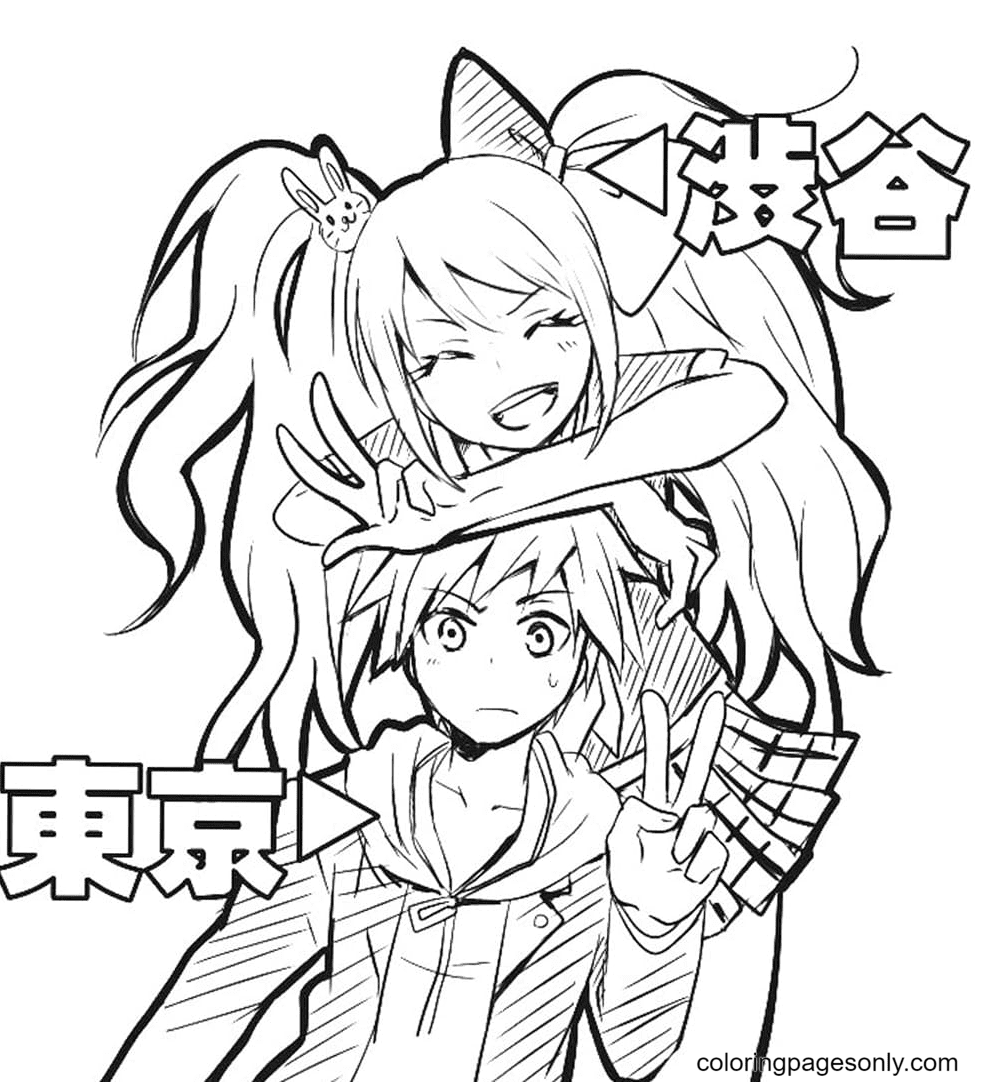
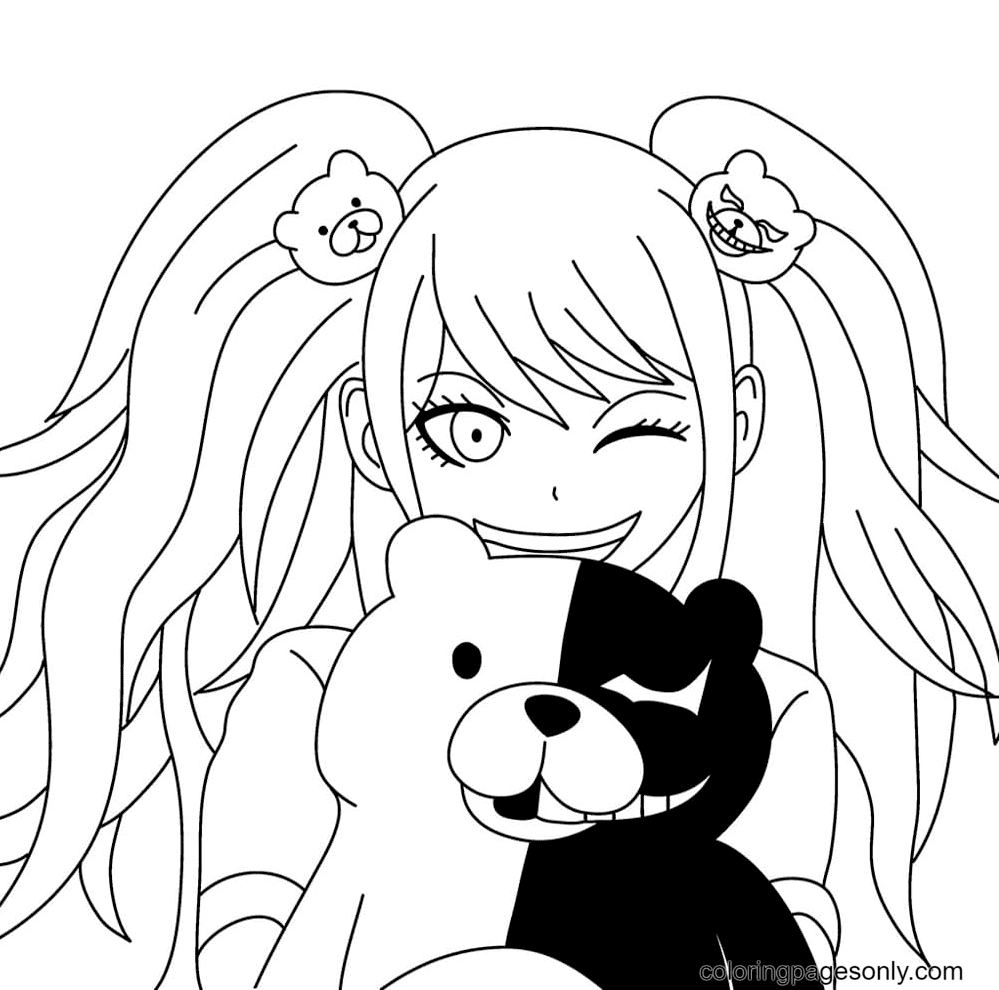
Junko Enoshima is the primary antagonist of the series, appearing across all three games in various forms. Her canonical appearance is a blonde girl with large pigtails in the gyaru fashion aesthetic – elaborate eye makeup, a school uniform altered to be more fashionable, and a bear skull tie. Her color palette combines the conventional “cute girl” pink-and-blonde with darker, more unsettling details. Her twin pigtails are a warm blonde; her tie is red; her makeup uses darker and more dramatic tones than the other girl characters.
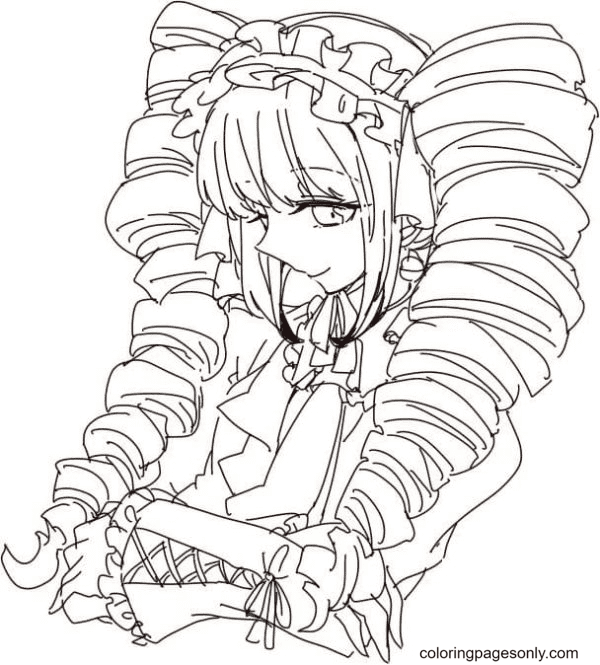
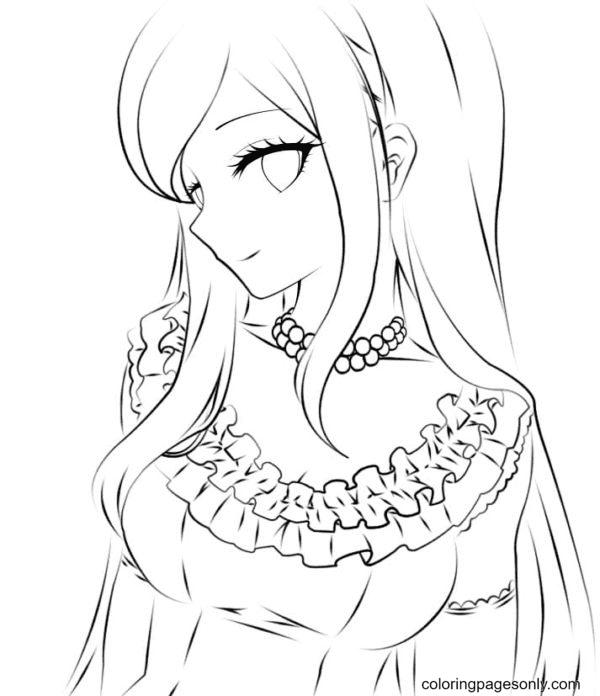
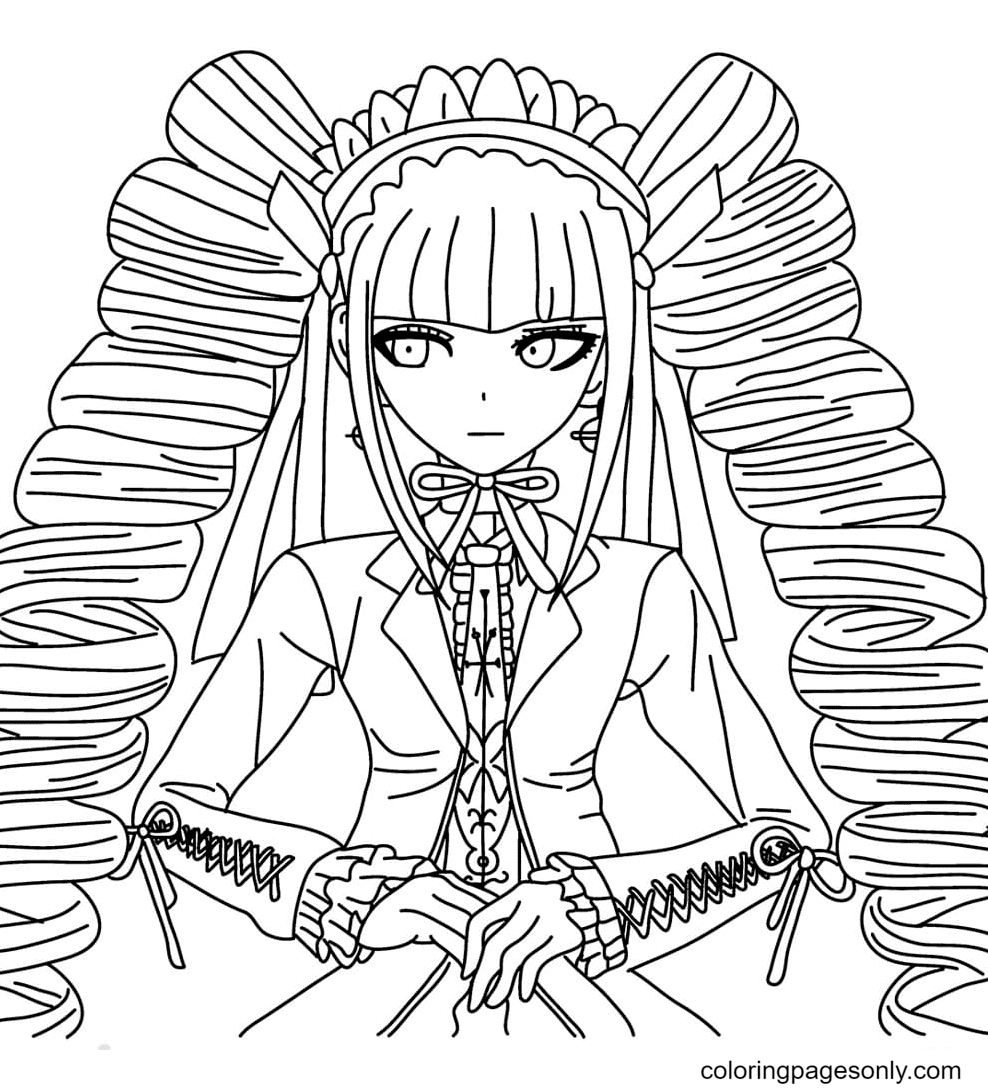
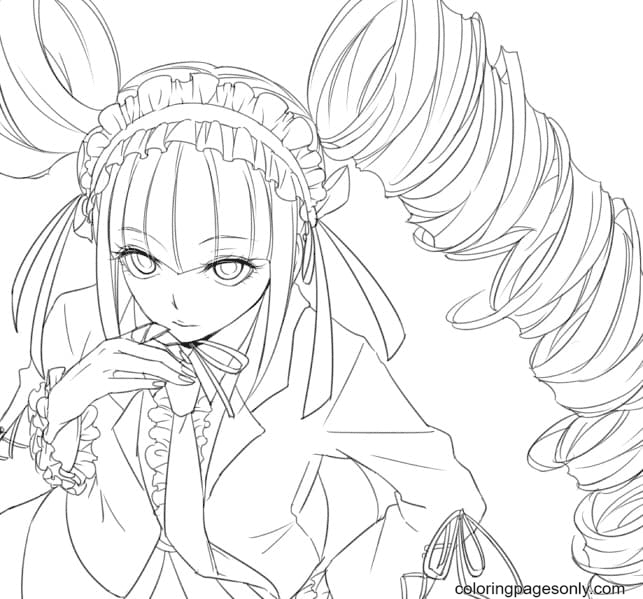
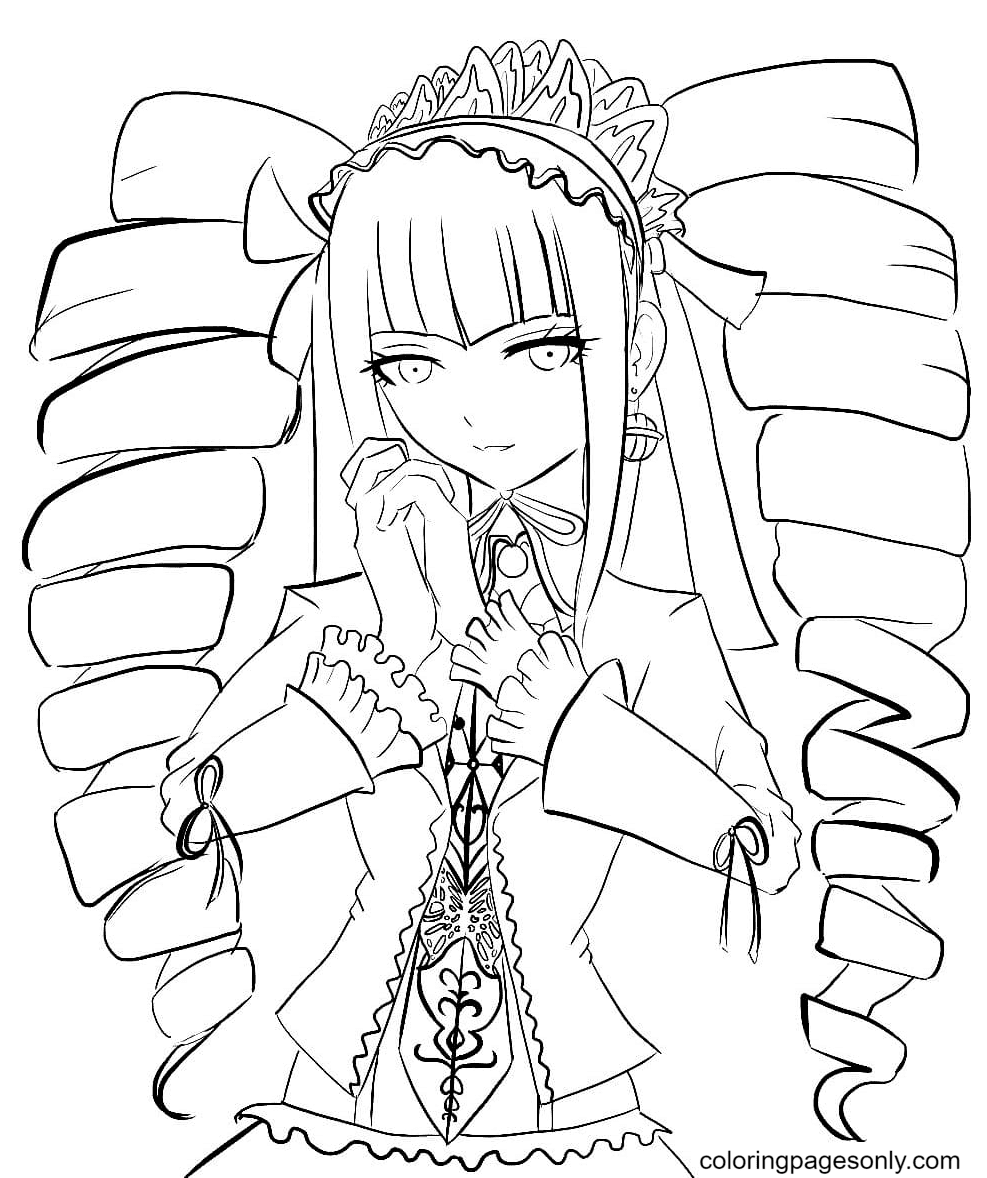
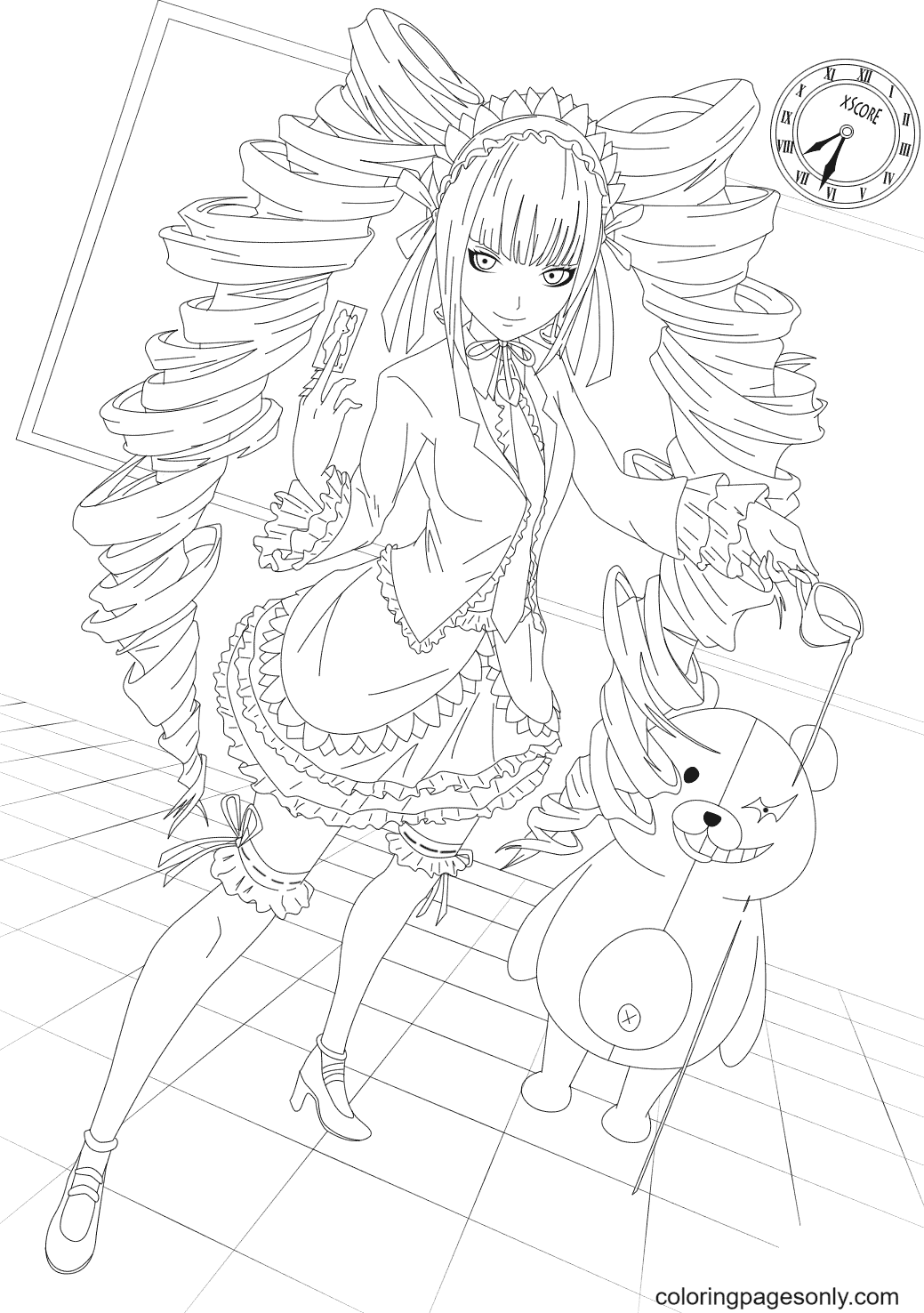
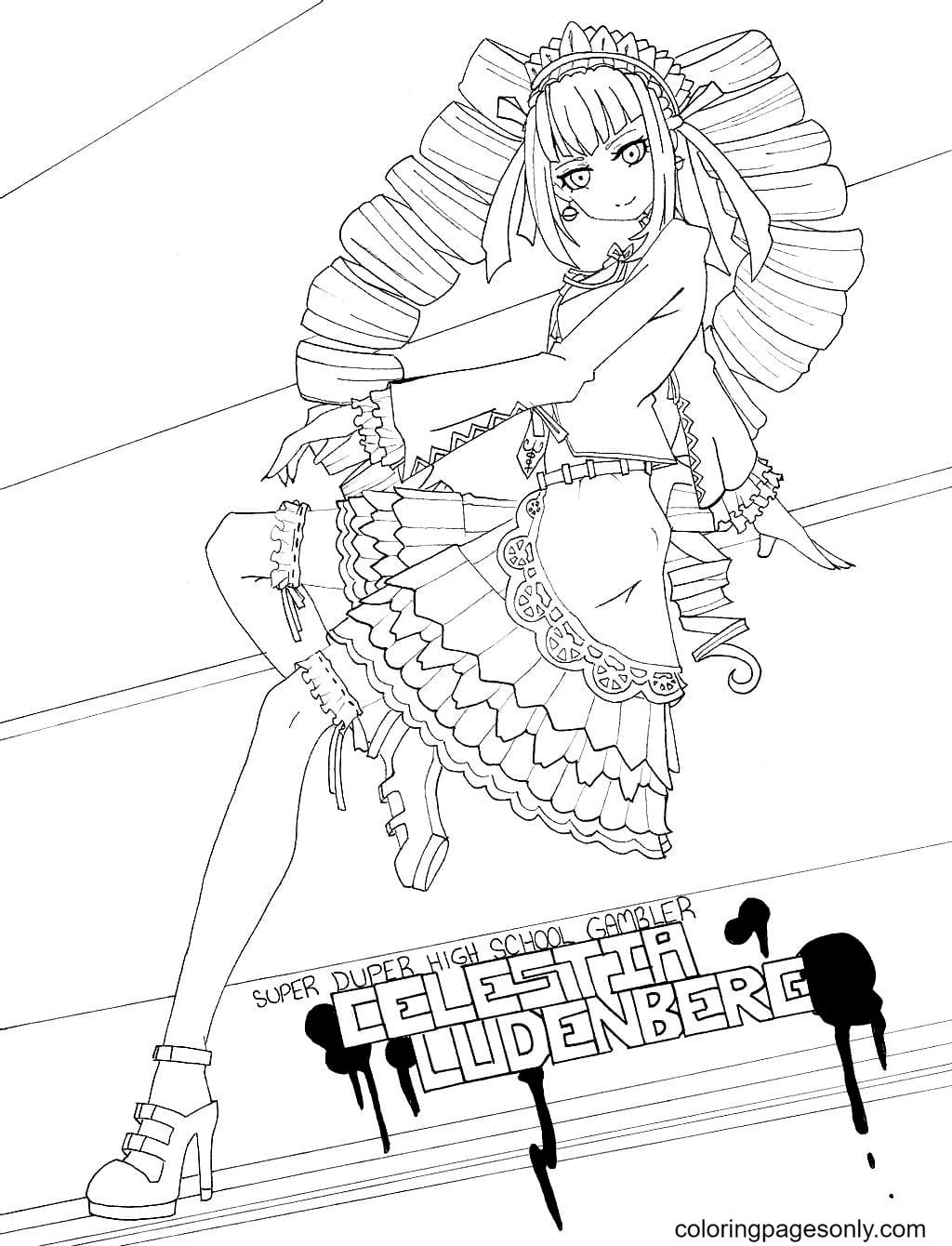
Celestia Ludenberg (real name Taeko Yasuhiro) is the Ultimate Gambler – a girl with extremely elaborate twin drill-curl black hair, porcelain-pale skin, and a Victorian Gothic Lolita fashion aesthetic. Her clothing is primarily black and white with red accent details, consistent with the gothic Lolita visual tradition. Her hair is the most structurally complex of any character in the collection – the large spiral curls require careful line-following to render clearly – and her outfit is the most monochromatic, making it one of the easier costume palettes to plan (black, white, red, and skin tone cover most of the design).
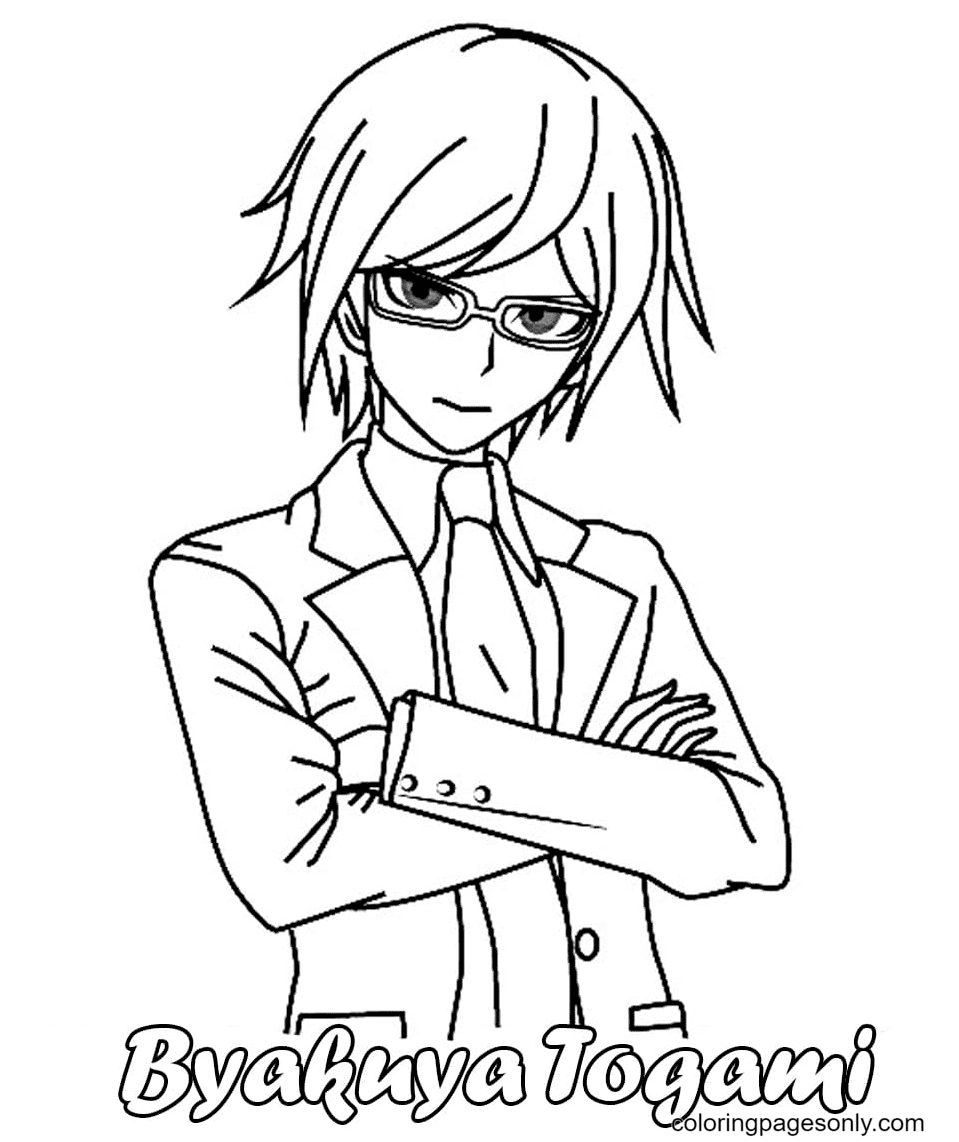
Byakuya Togami (appearing as “Togami”) is the Ultimate Affluent Progeny – a tall, aristocratic blonde boy wearing a pristine white suit and glasses. His expression defaults to contemptuous superiority. The all-white suit is his most visually distinctive element: it places him tonally opposite to Monokuma’s black-and-white split design, with Togami rendered entirely in the light half of the palette.
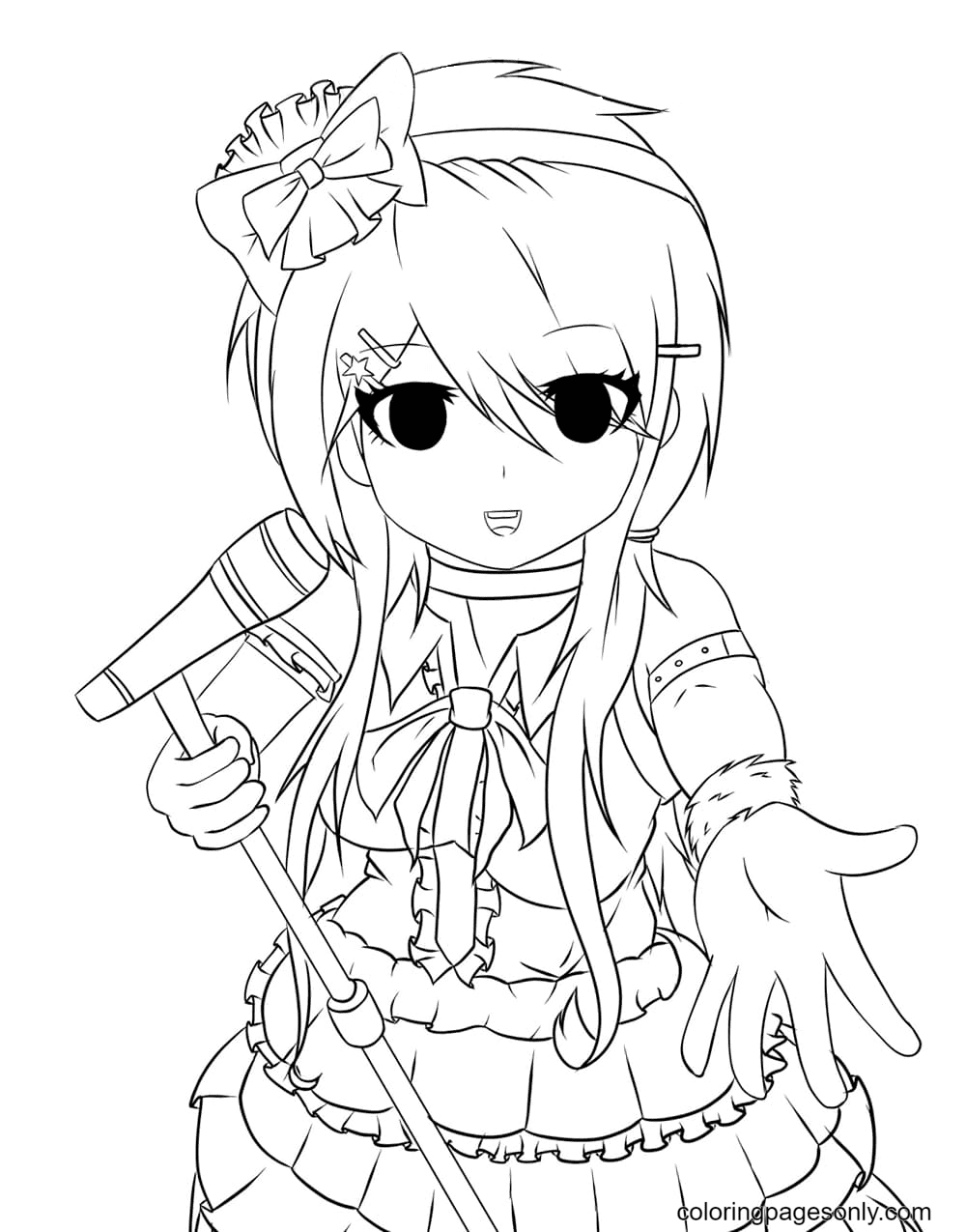
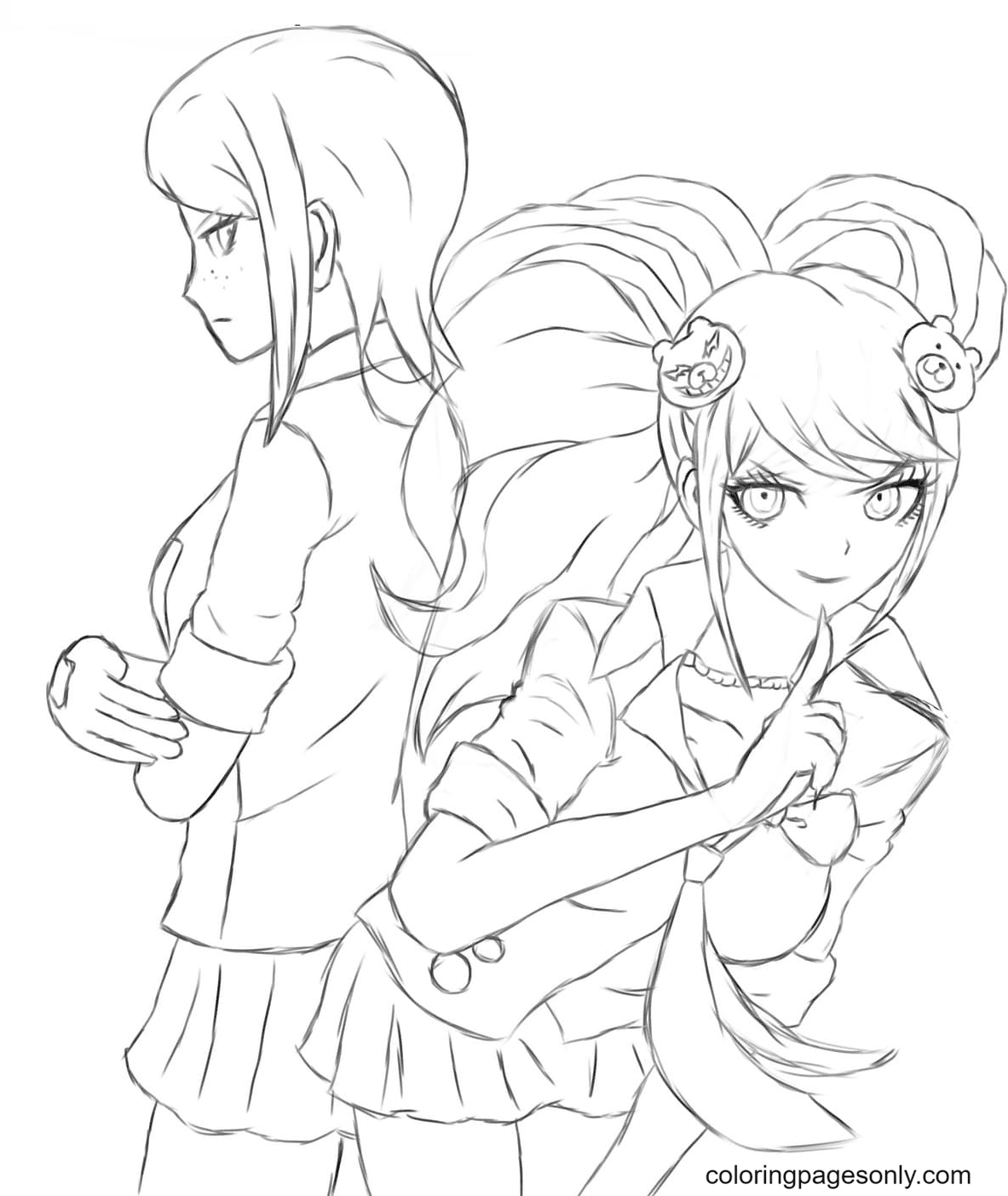
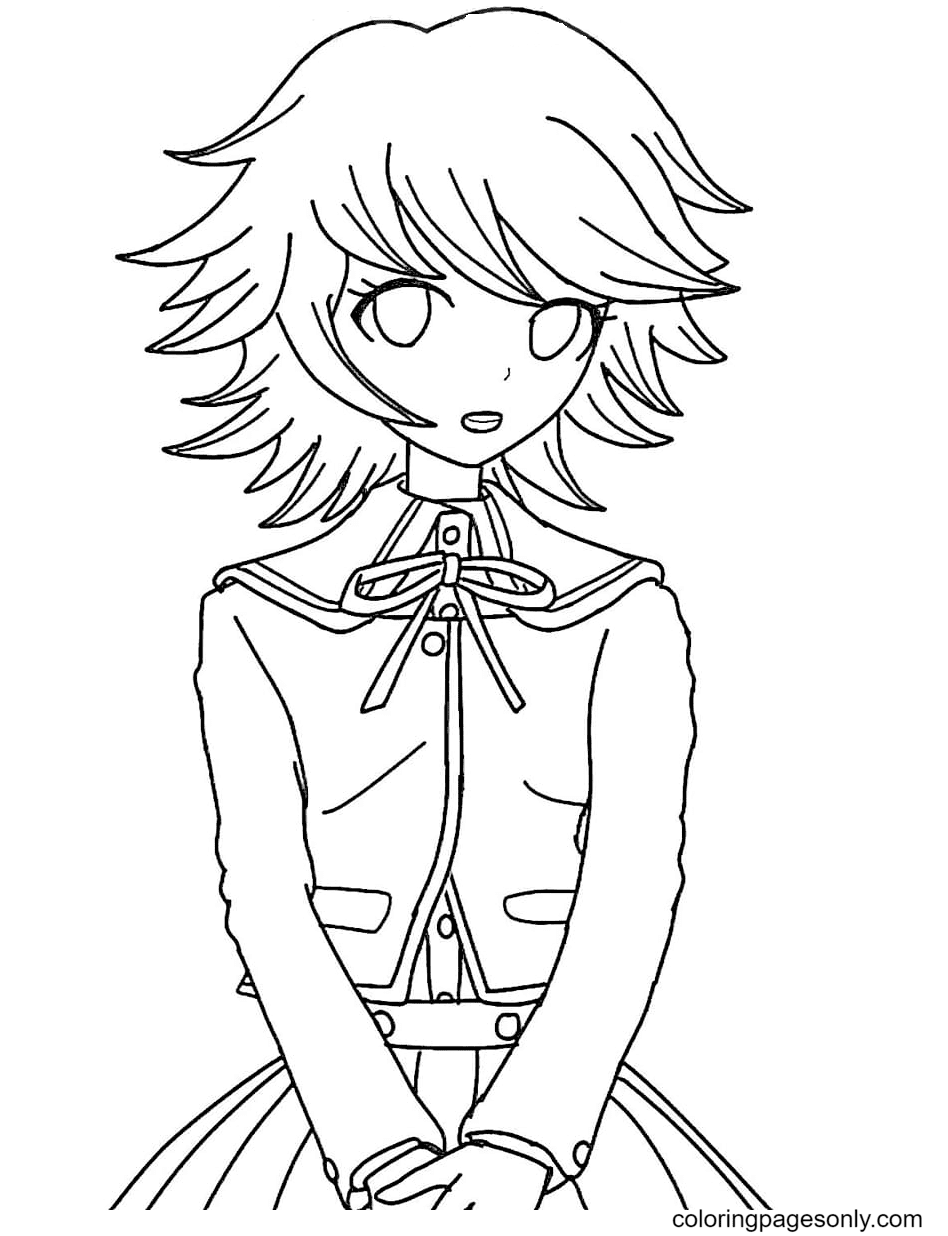
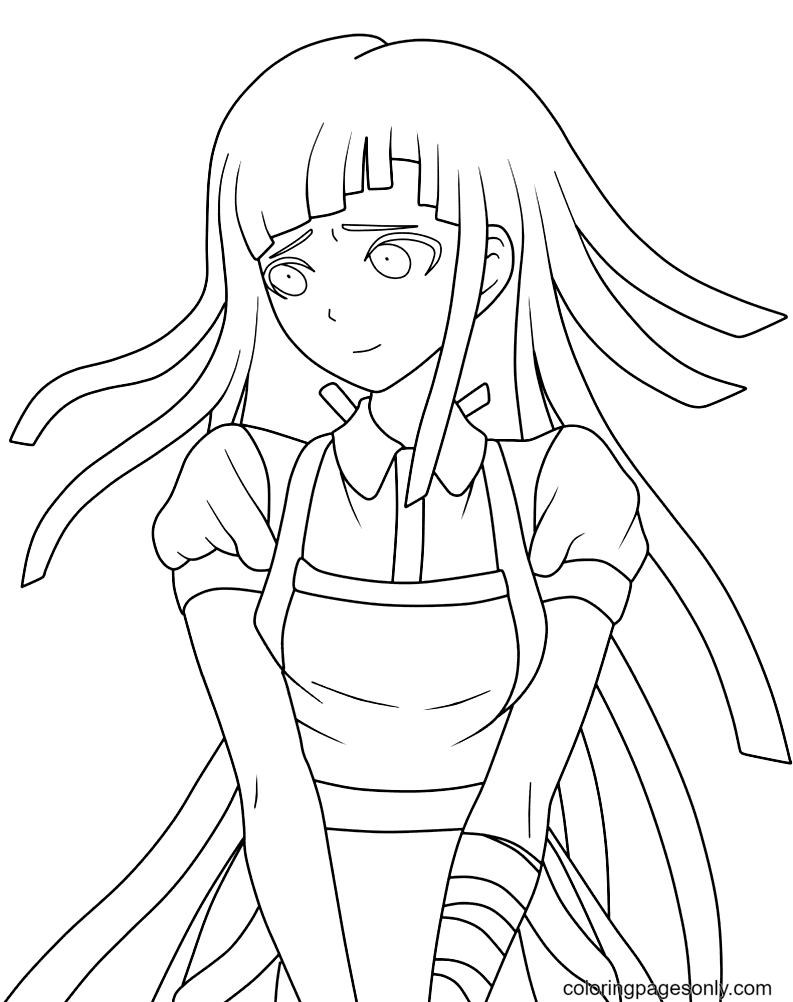
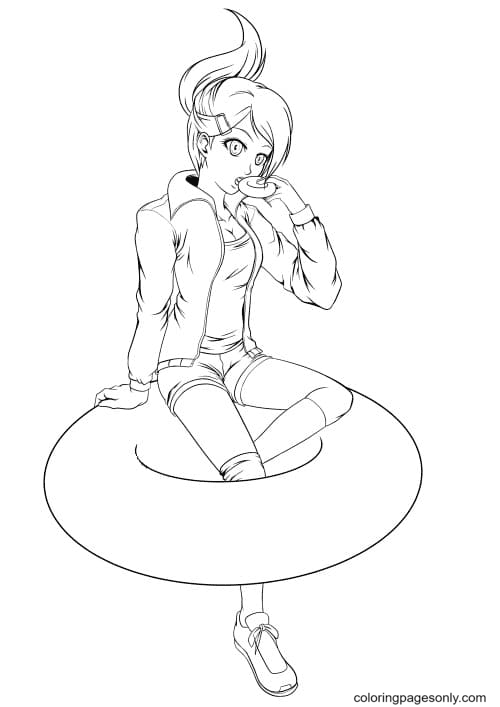
Sayaka Maizono is the Ultimate Pop Sensation – a girl with long blue hair and an idol singer aesthetic. Her blue hair is a warm blue-teal rather than cold steel-blue, contrasting with the cooler silver of Kirigiri’s hair. Aoi Asahina is the Ultimate Swimming Pro – a girl with dark brown hair and an athletic build, shown in Aoi Asahina in a Lifebuoy alongside her iconic swimming imagery. Kiyotaka Ishimaru is the Ultimate Moral Compass – a dark-haired boy in a strict school uniform with excessive buttons and a generally rigid, upright expression. Chihiro Fujisaki is the Ultimate Programmer – a small, gentle-looking character with brown hair.
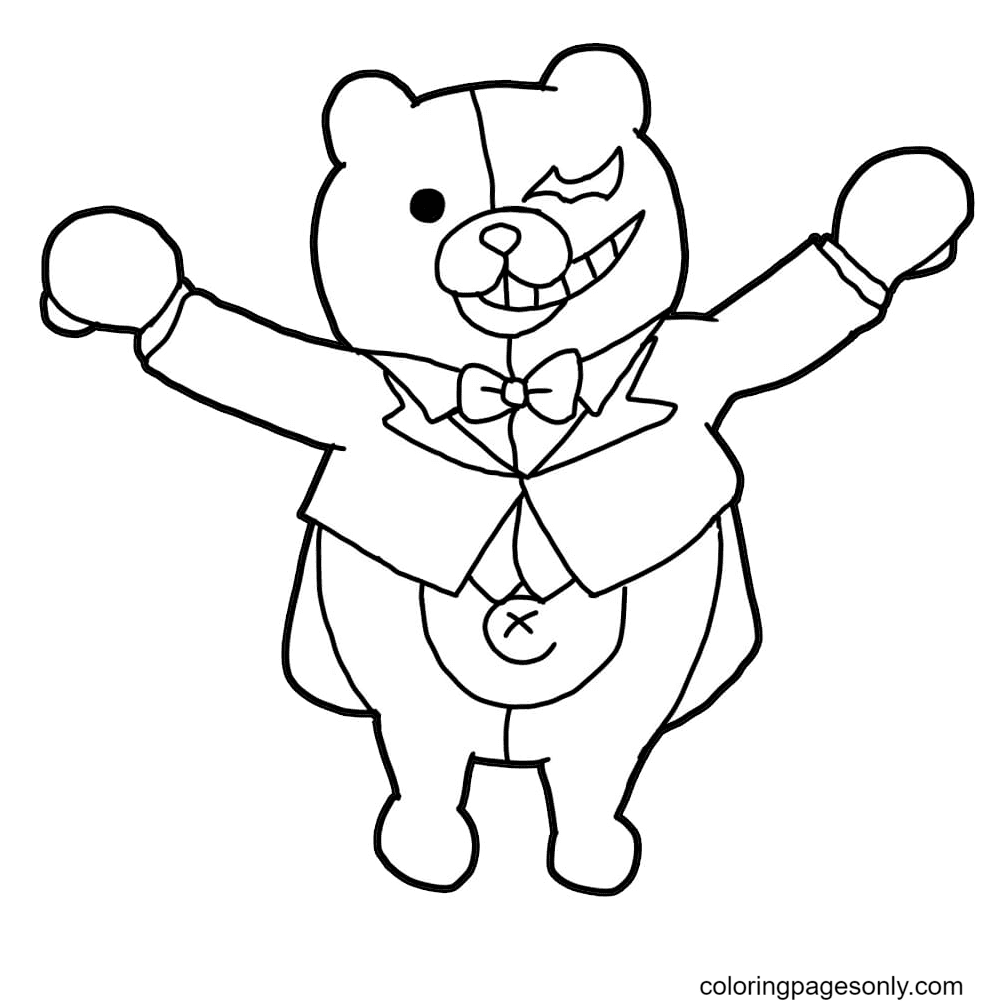
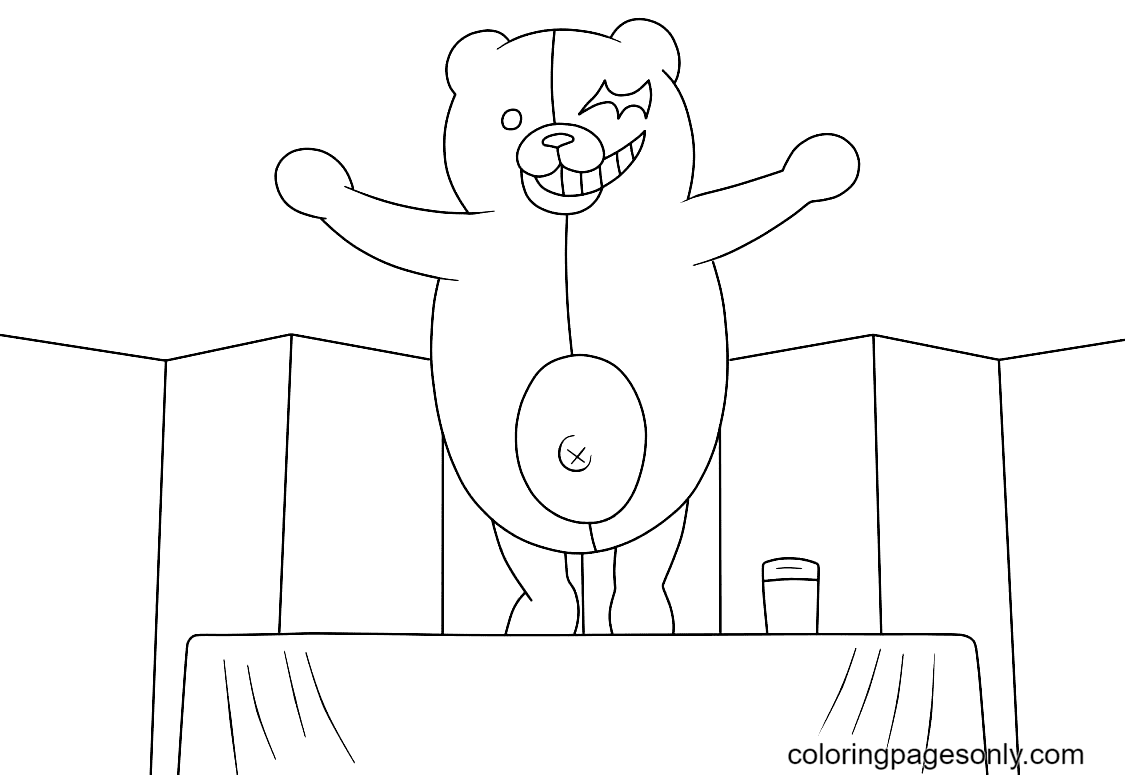
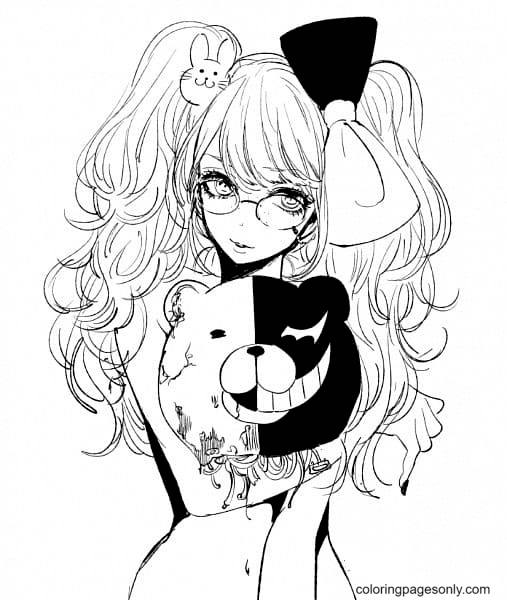
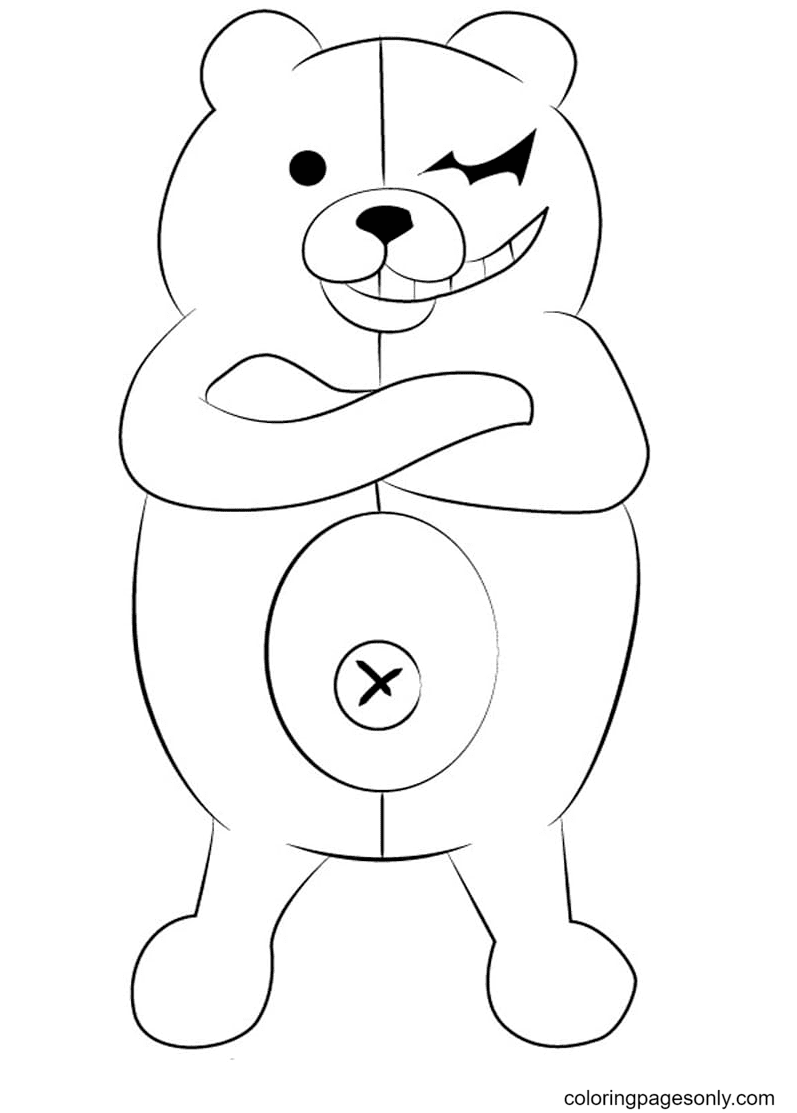
Monokuma is the series mascot and principal antagonist of all three games – a robotic bear with a split design: the right half is a friendly white bear with a standard black eye, and the left half is a sinister black bear with a red eye, a jagged, tooth-filled grin, and a generally menacing character. The hard division between the two halves is the character’s defining visual element: the right side is cute and approachable, the left side is threatening. This split is always consistent – right half white/friendly, left half black/sinister – and should be maintained exactly across all Monokuma pages.
Danganronpa 2: Goodbye Despair (DR2)
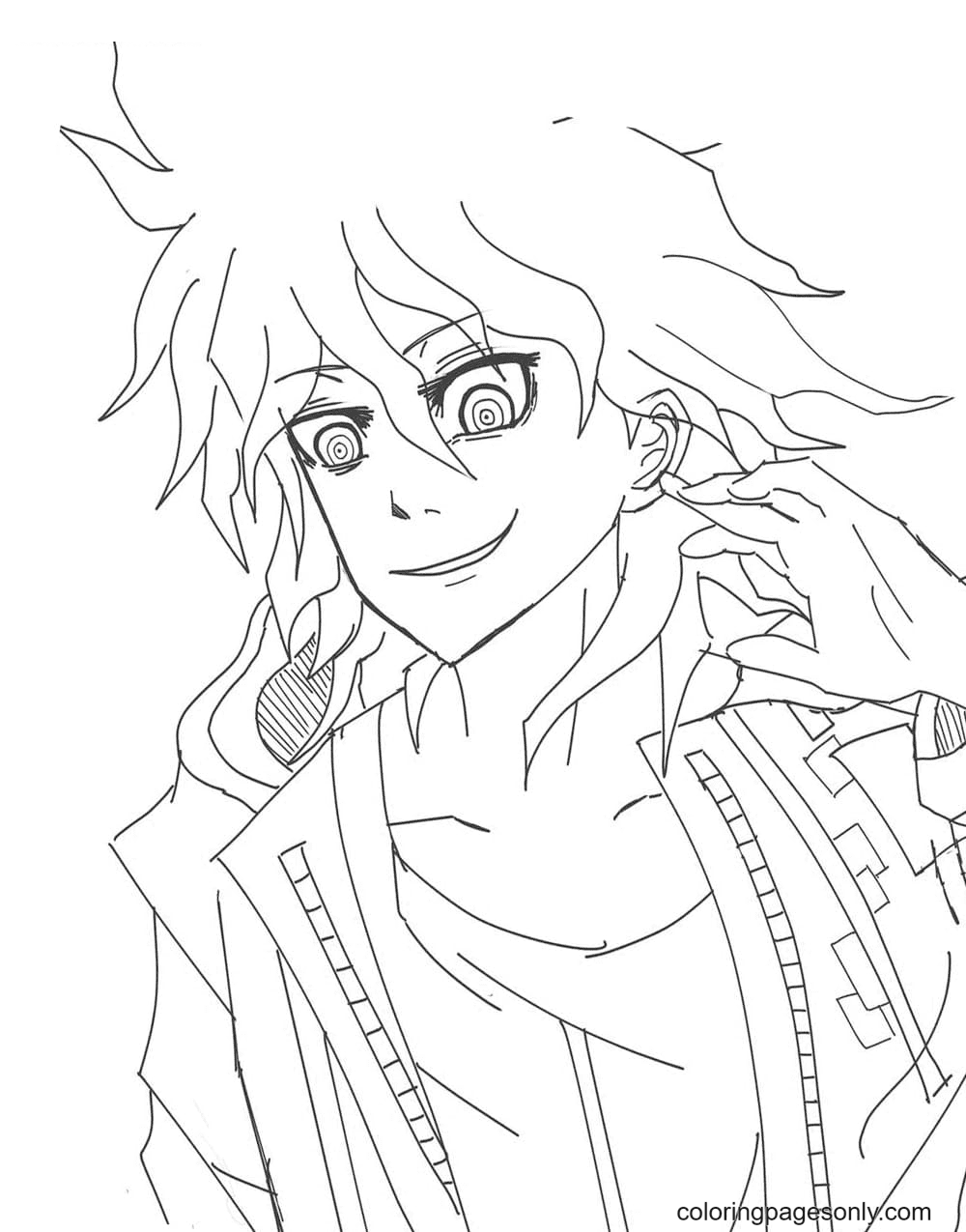
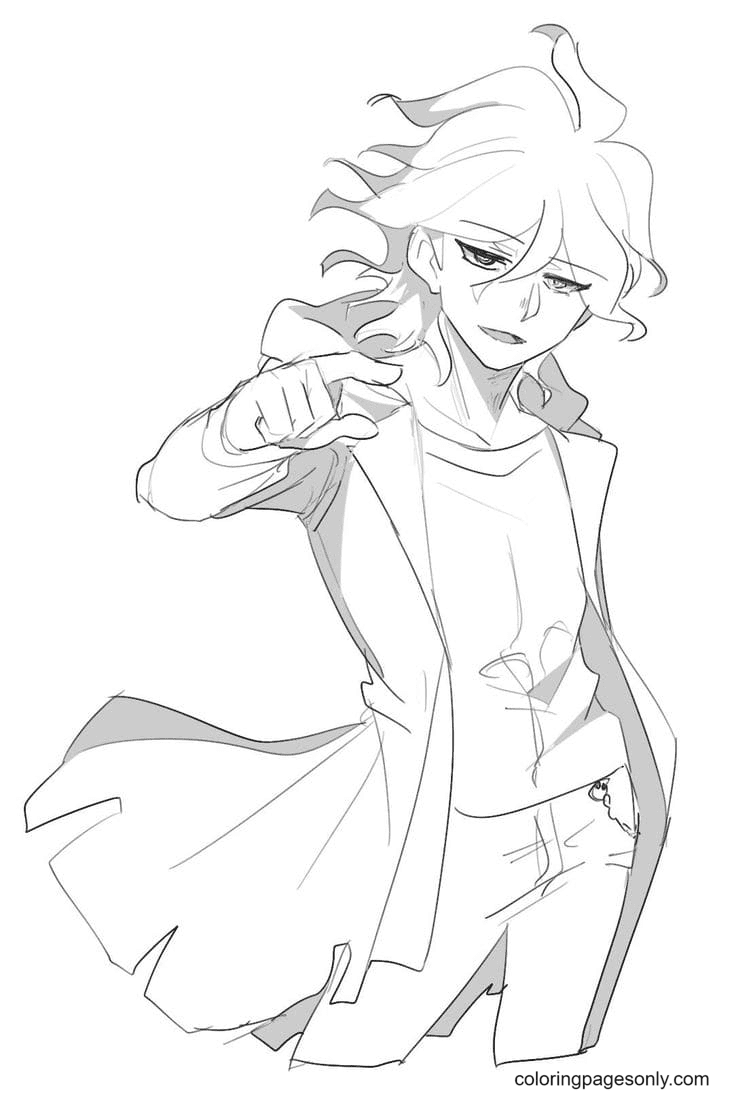
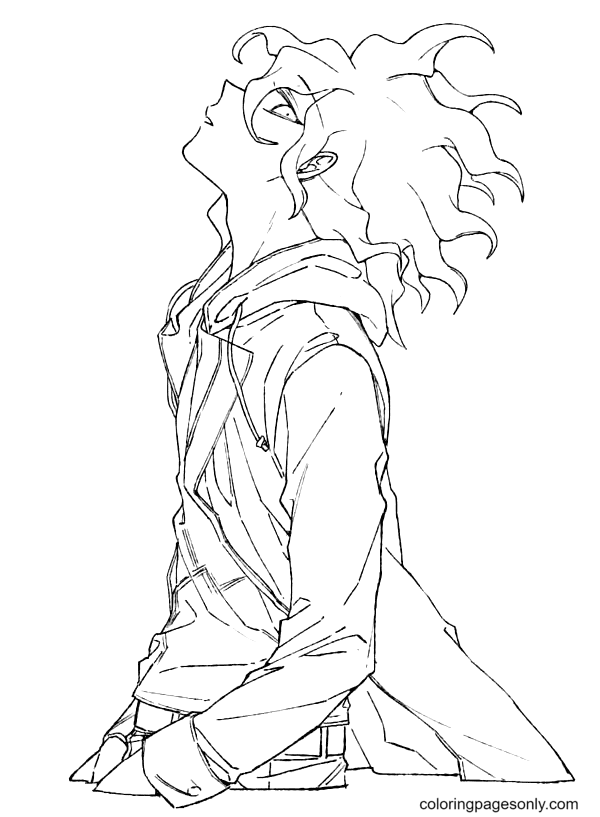
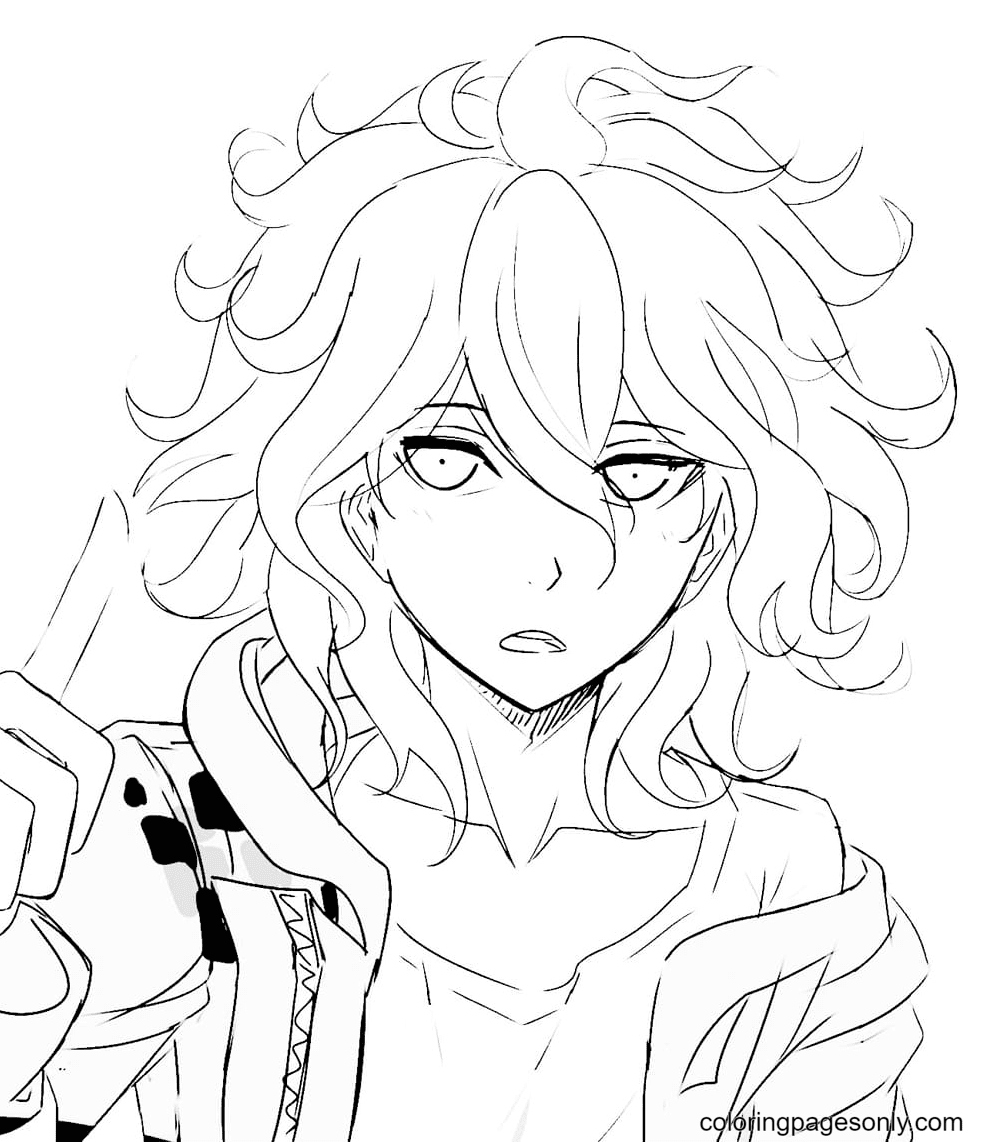
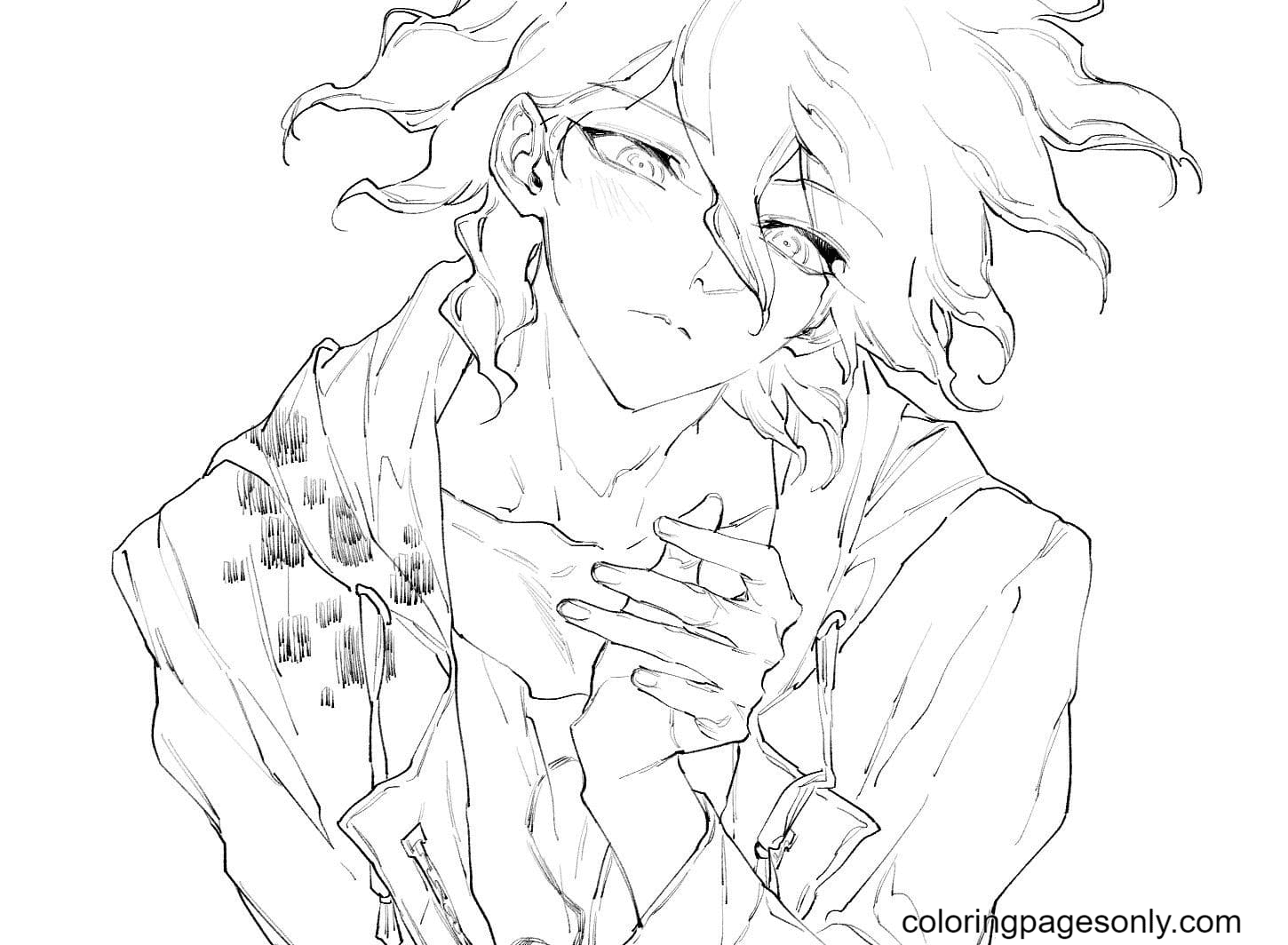
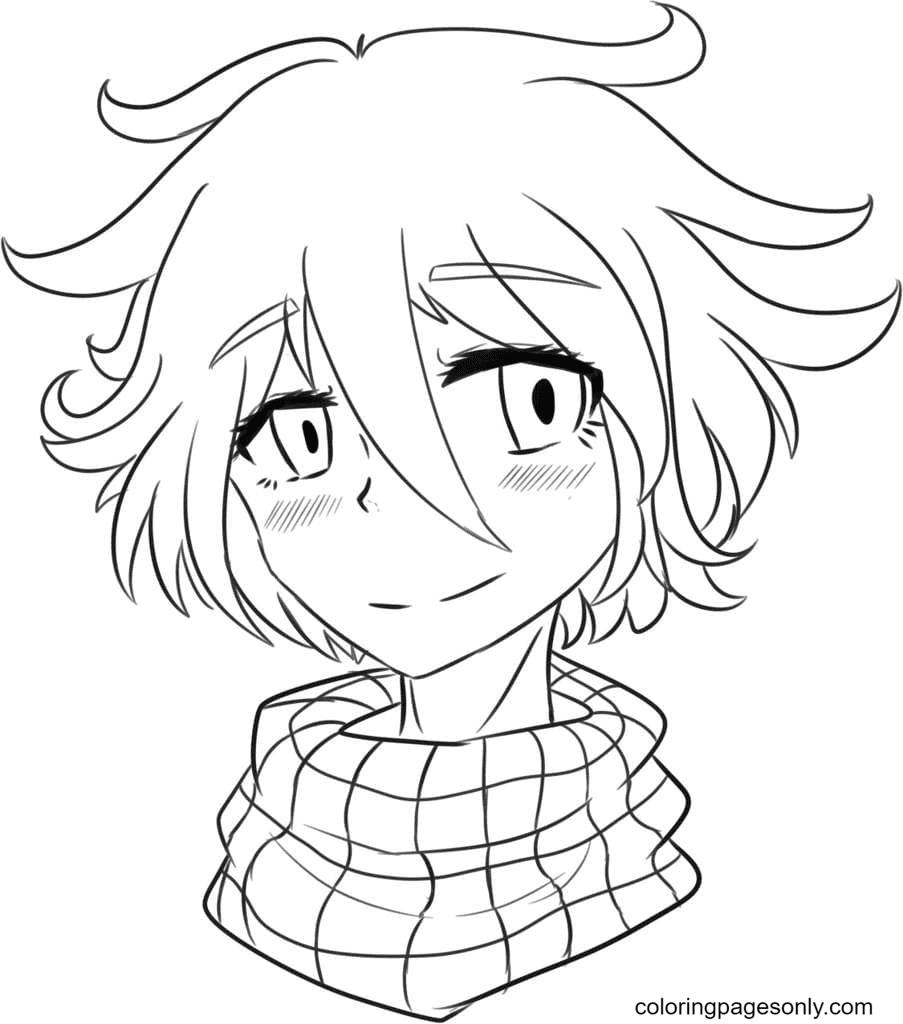
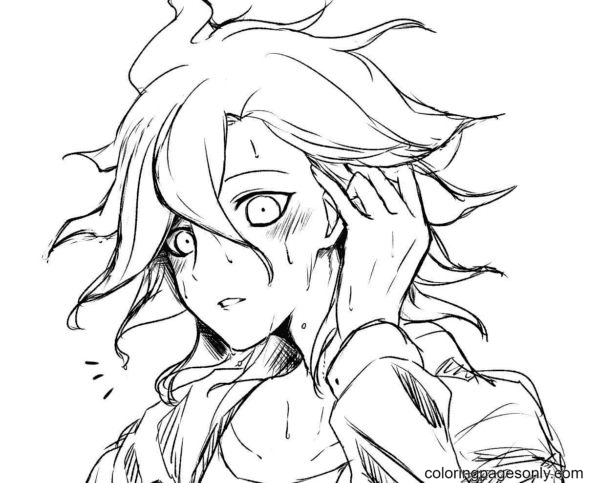
Nagito Komaeda is the most prominently featured DR2 character in this collection, appearing in multiple pages – Nagito, Nagito Komaeda, Nagito Komaeda is Sad, Sad Nagito, Pensive Nagito Komaeda, Big-eyed Nagito Komaeda. He is a teenage boy with long, disheveled white-silver hair, a grey hoodie with a hood often worn up or pushed back, pale skin, and green eyes. His expression ranges from his unsettling wide smile to deep melancholy – the emotional range visible in the different pages. His white/silver hair is cooler than Kirigiri’s lavender-silver: Nagito’s is a pure near-white, while Kirigiri’s has more purple warmth.
Chiaki Nanami appears in Nanami Chiaki and Nanami Chiaki and Bear Monokuma. She has soft pink hair and a habitually tired or unfocused expression – she appears to be half-asleep in most of her official artwork, consistent with her Ultimate Gamer personality of long gaming sessions. Her clothing is a soft, muted palette of pinks and greys.
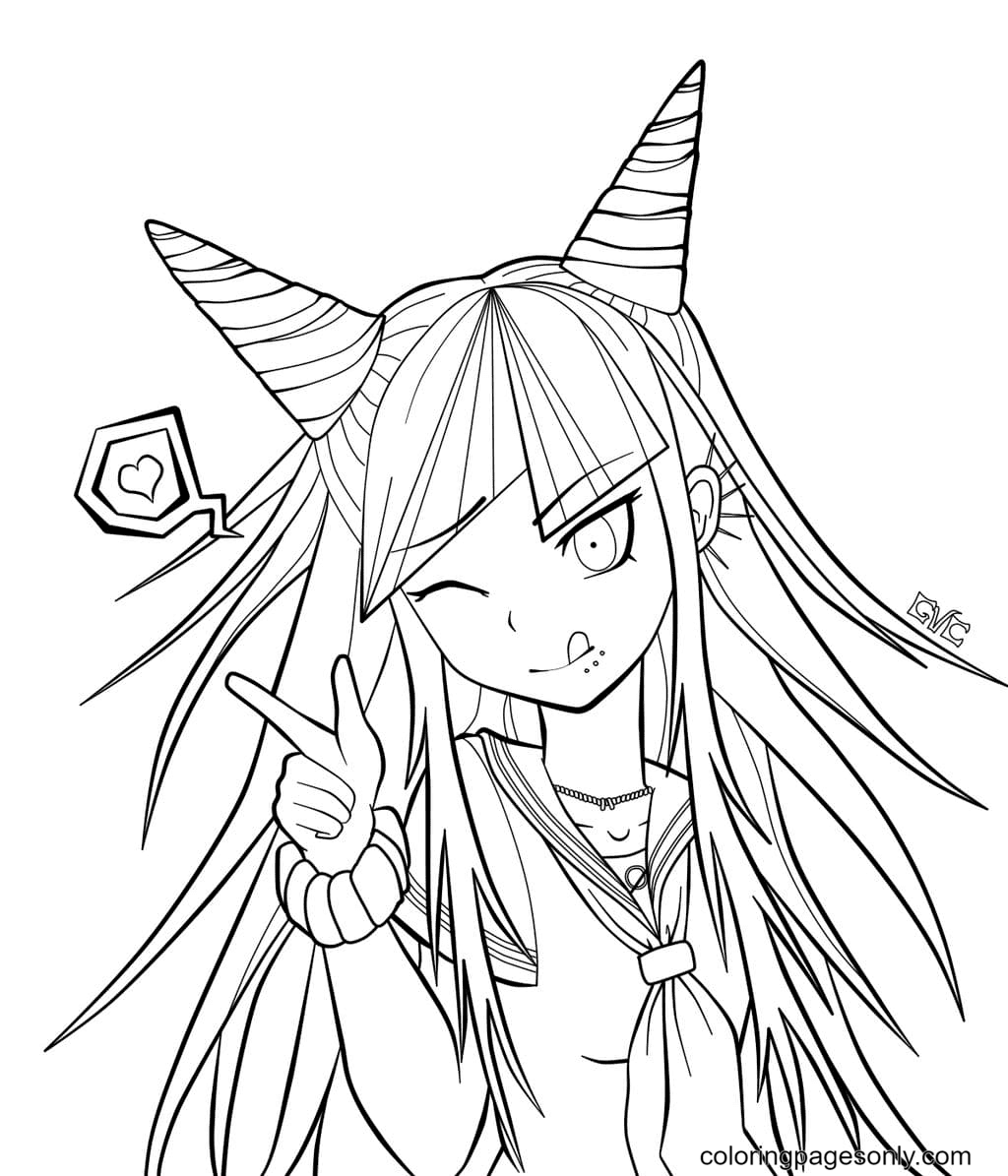
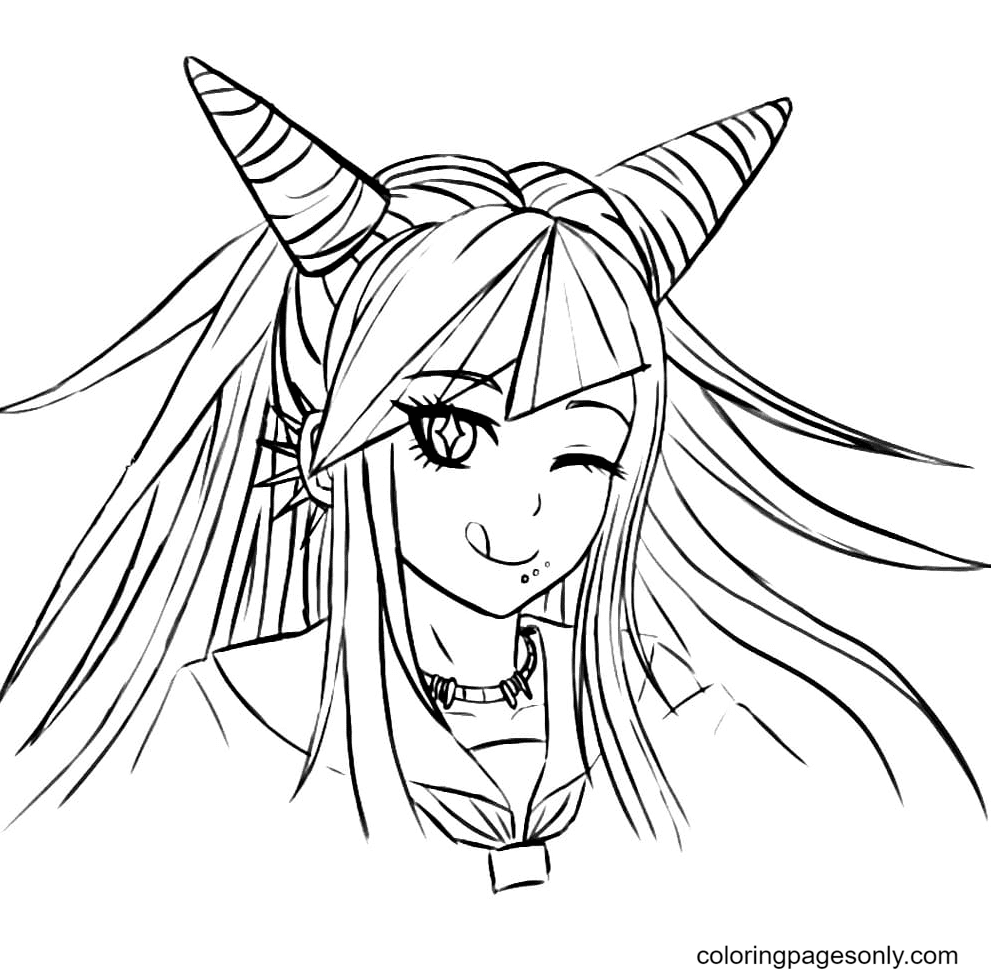
Ibuki Mioda (appearing in Ibuki Mioda, Musical Ibuki Mioda, and Ibuki Mioda Winks) is the Ultimate Musician – one of the most visually complex character designs in the collection. Her hair is constructed from multiple differently-colored sections: black at the base with large upward-projecting spikes of different colors. The exact coloring of the hair sections varies between official artworks, but the key colors are black, white, and vivid accent colors (pink, yellow, purple) distributed across the spike sections. Her outfit is a punk-influenced black and white with additional graphic elements. Her expression is always energetic and exaggerated.
Hiyoko Saionji appears in Hiyoko Sayonji and Hiyoko Sayonji in a Kimono. She is a very small girl – the smallest in DR2 – with long blonde hair in a distinctive style tied at the top and falling down. Her kimono page shows her in a traditional Japanese robe with a yellow and green color palette consistent with her floral-and-traditional aesthetic.
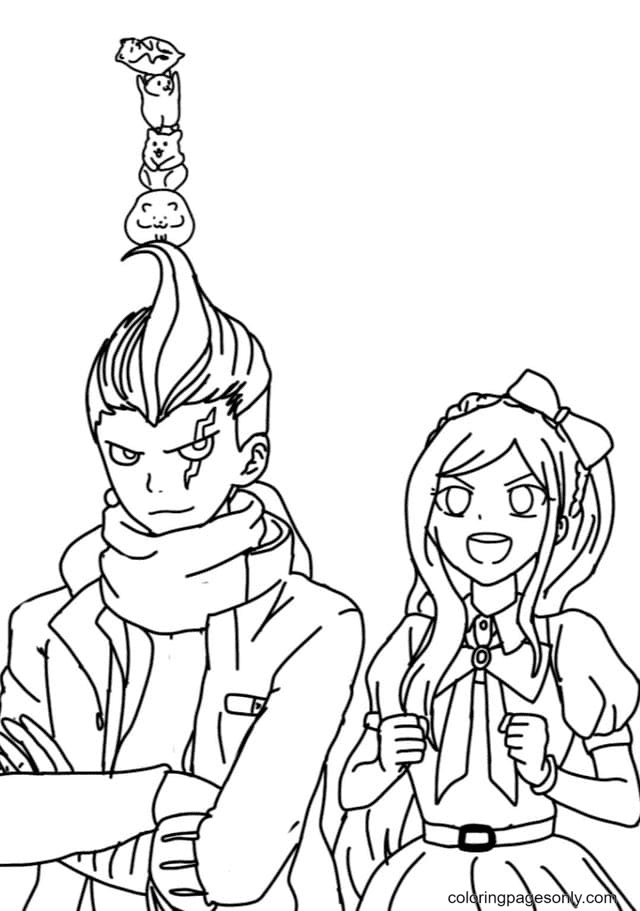
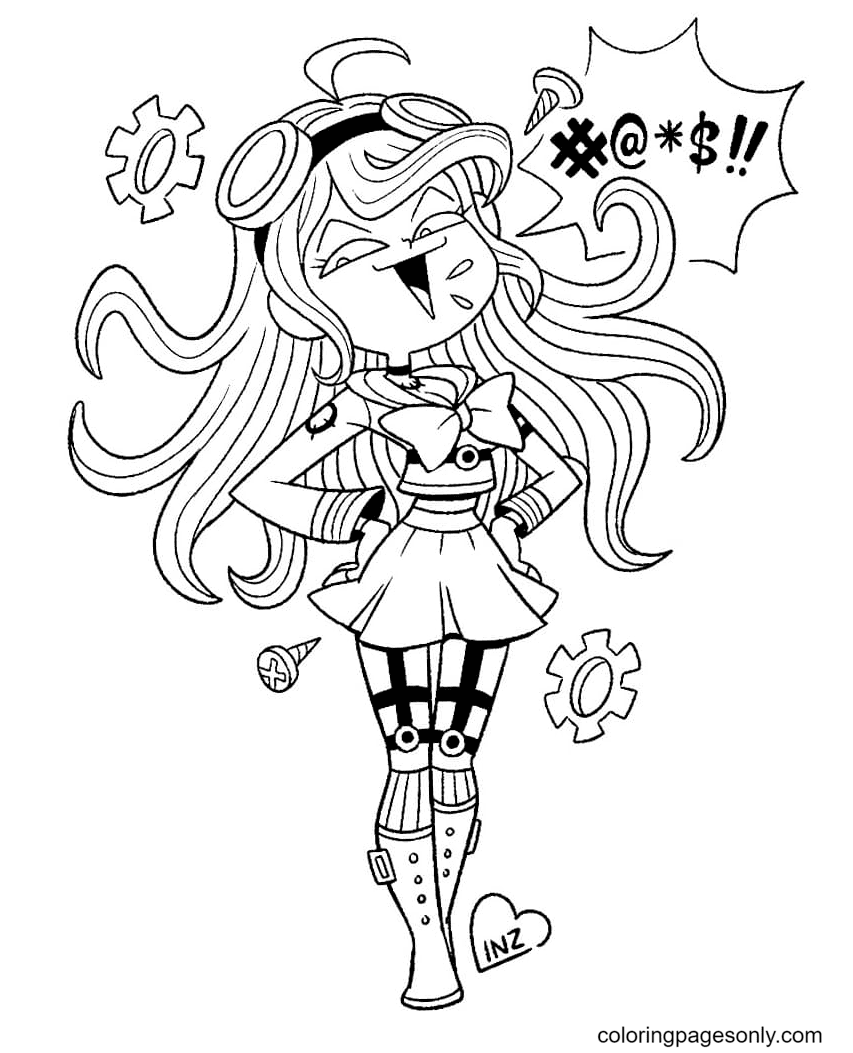
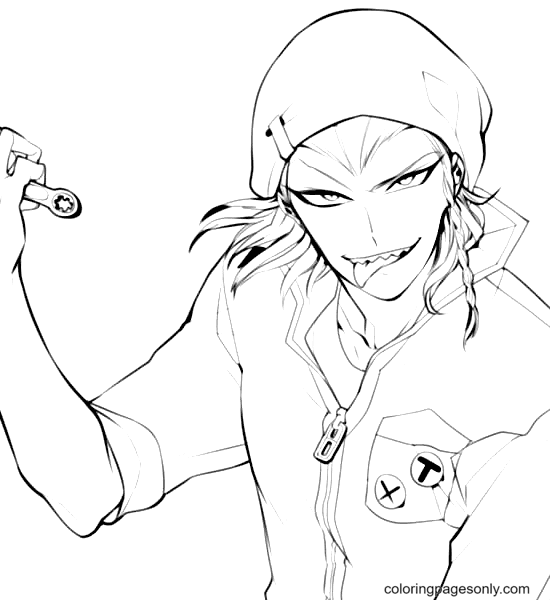
Kazuichi Soda is the Ultimate Mechanic – a boy with dyed pink hair (roots showing darker), a mechanics-themed outfit with many pockets and zippers, and typically a gas mask worn pushed up on his forehead rather than covering his face. Fuyuhiko Kuzuryu is the Ultimate Yakuza – a short, stocky boy with blonde hair and an almost permanently angry expression, wearing a formal suit. Sonia Nevermind and Gundham Tanaka (appearing together in Sonia and Gundham) are a pairing – Sonia is a blonde, formally-dressed European princess type; Gundham is a dramatic dark-palette character with long white hair and a face-covering scarf.
Danganronpa V3: Killing Harmony (DR3)
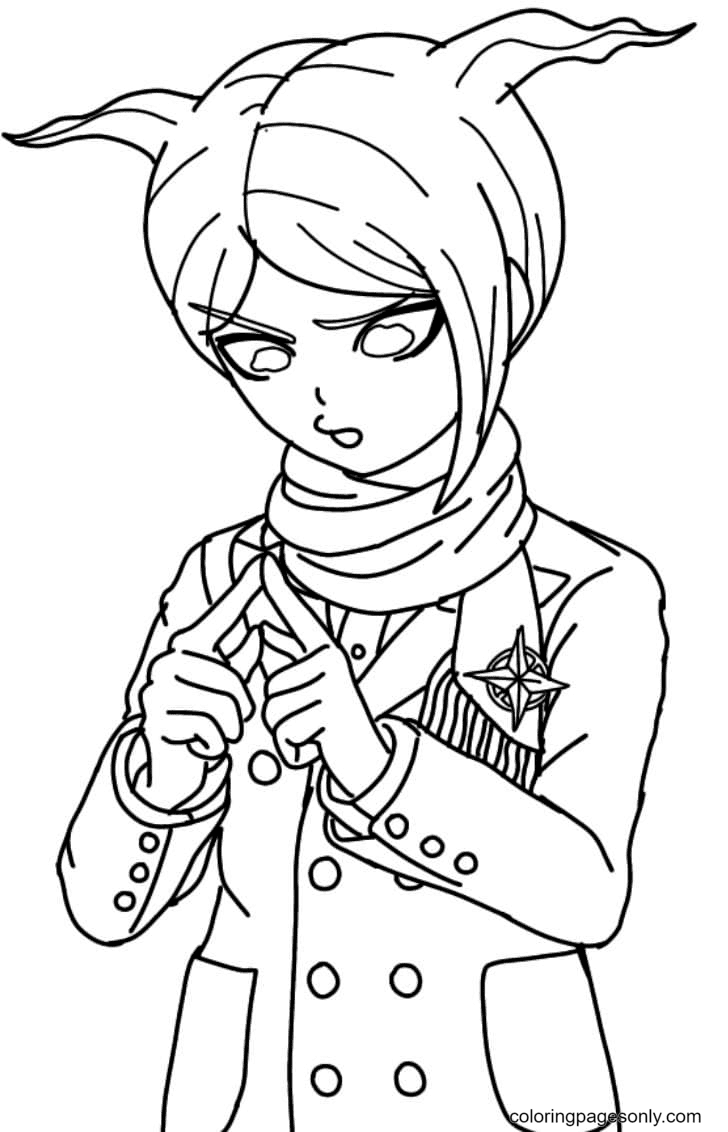
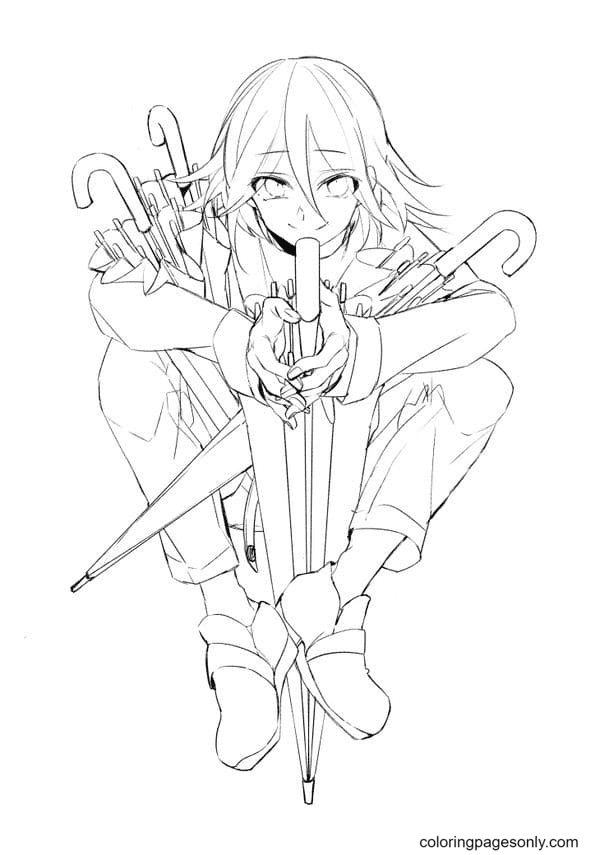
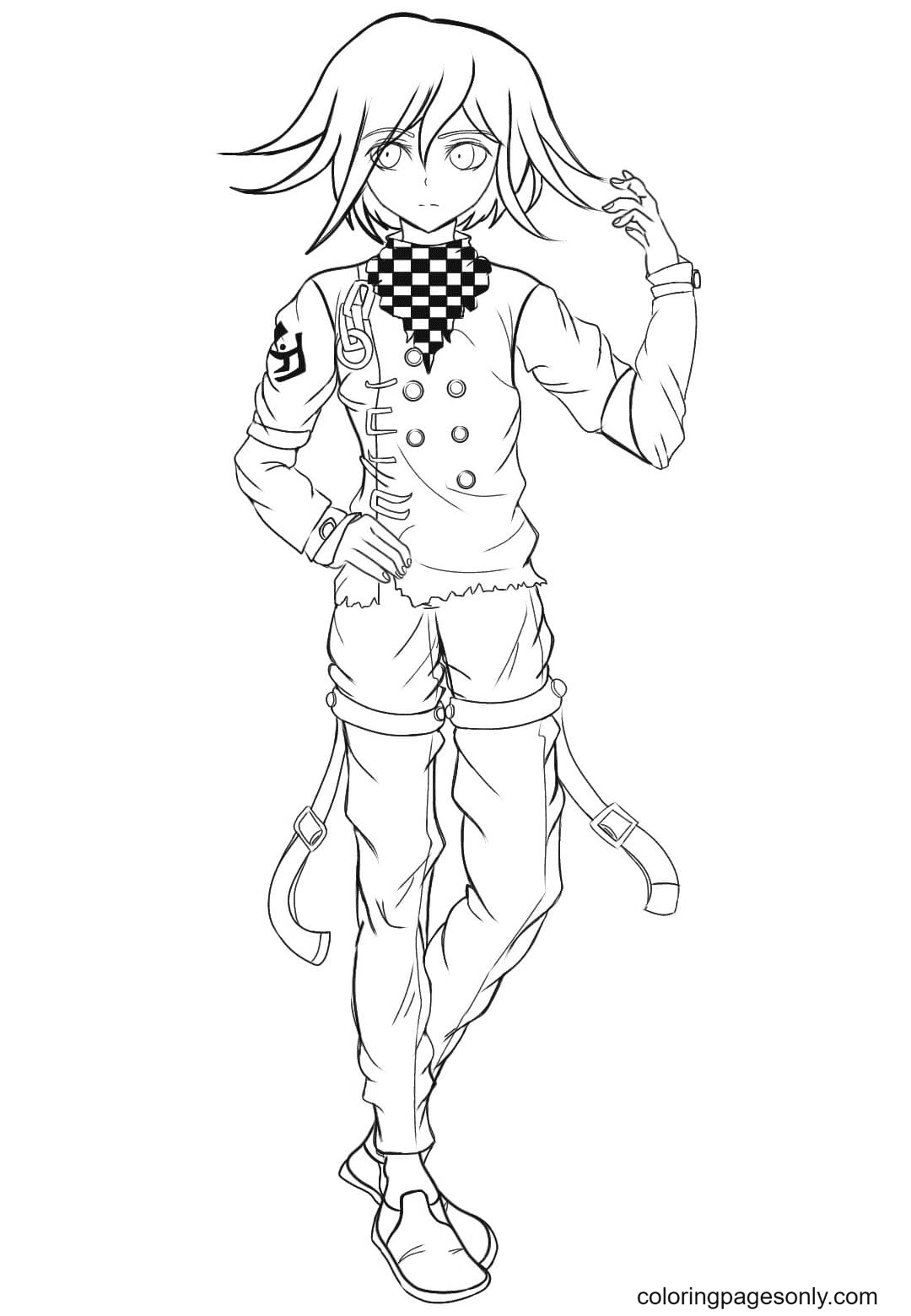
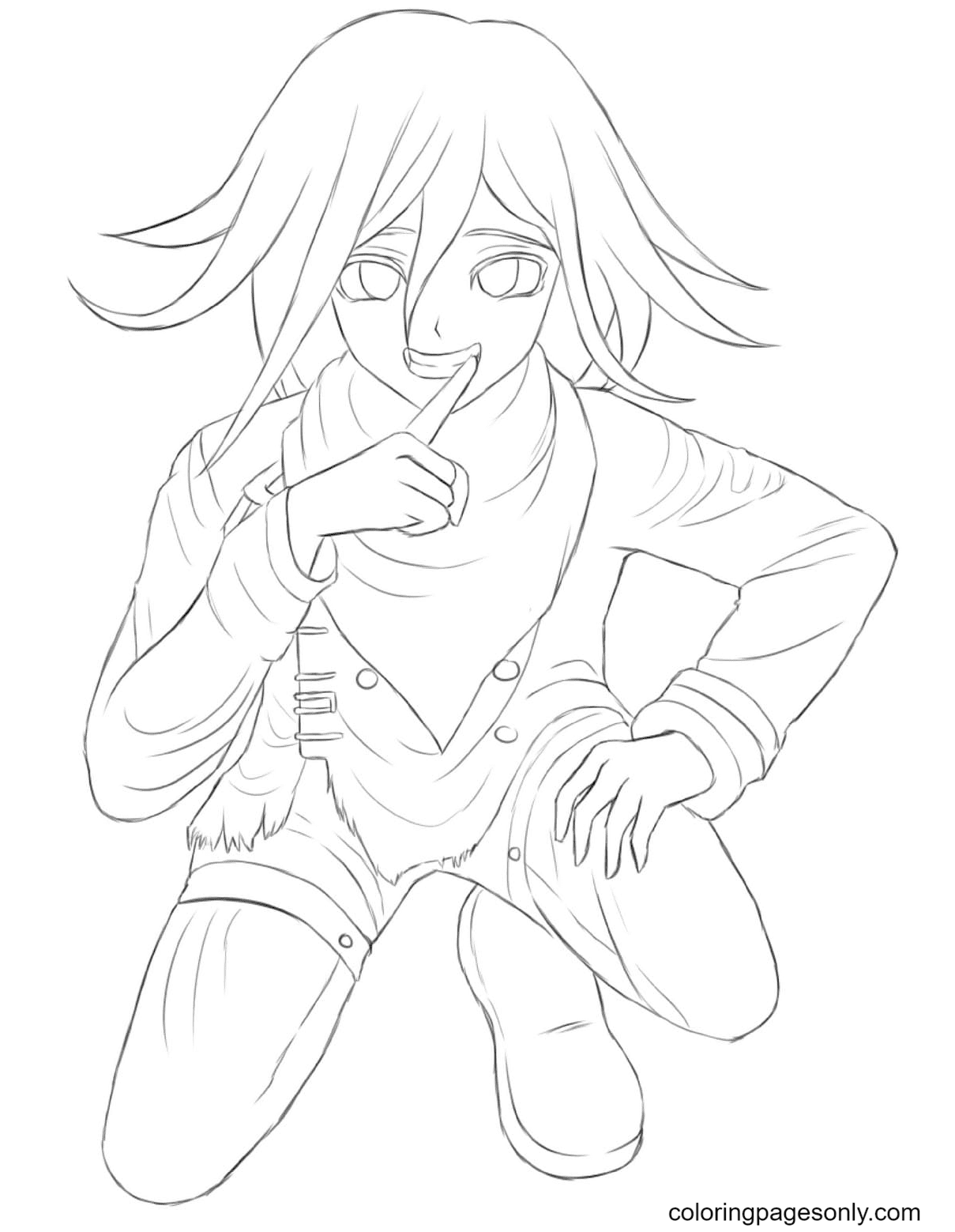
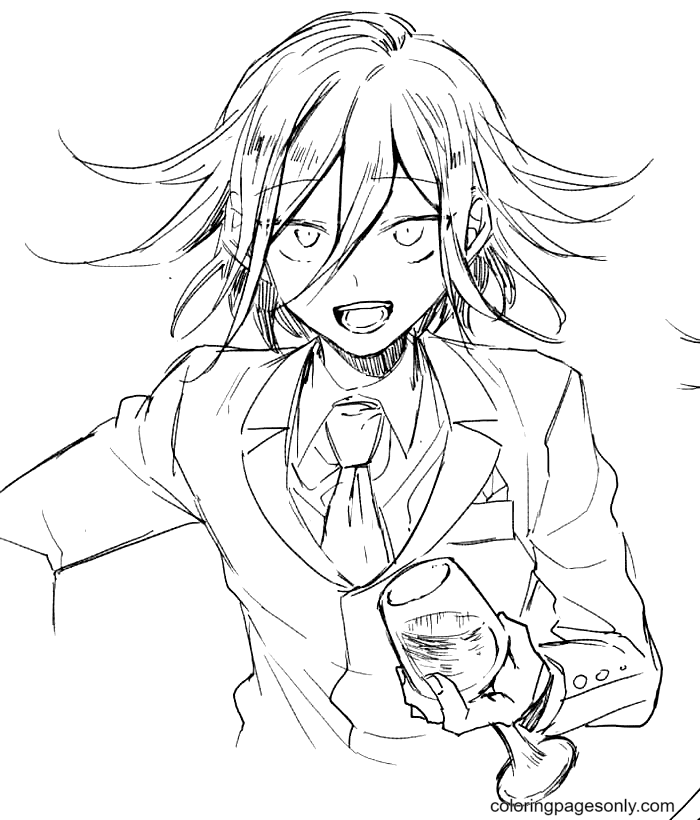
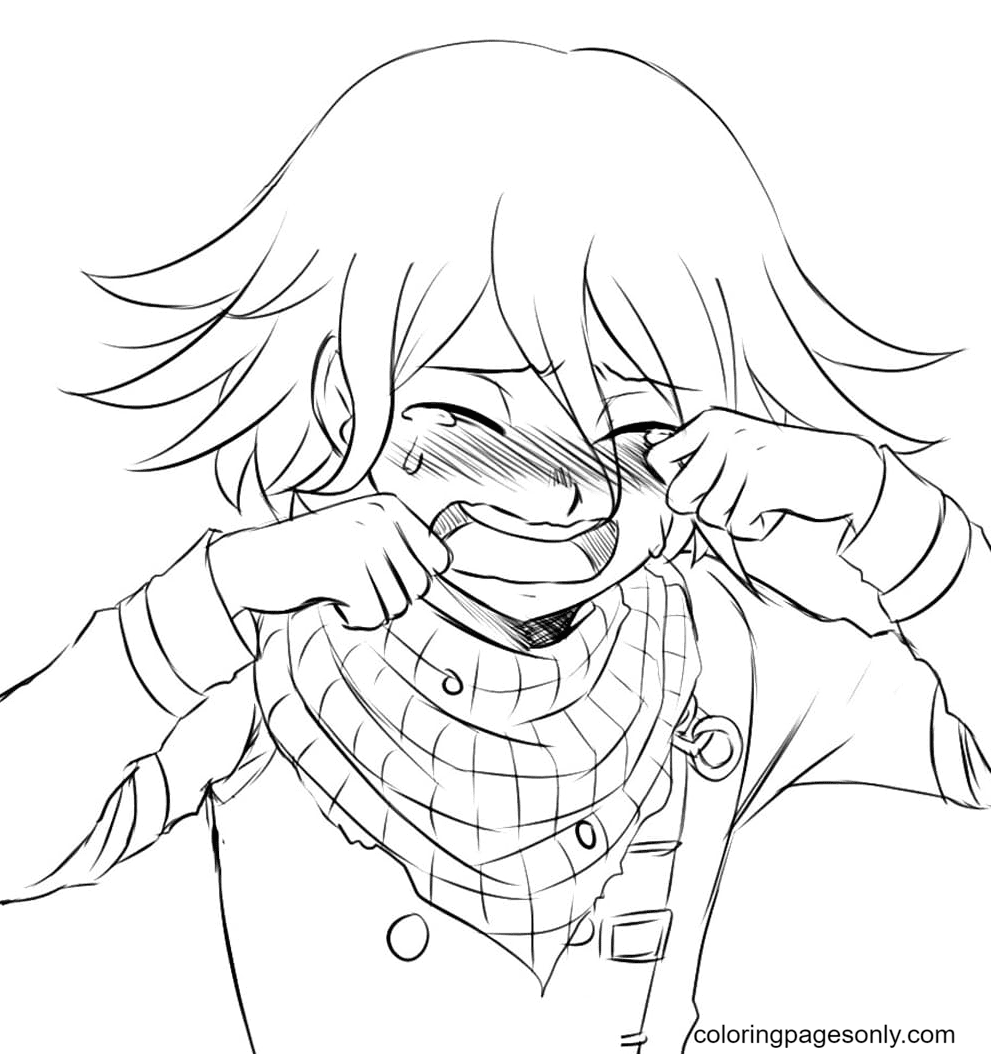
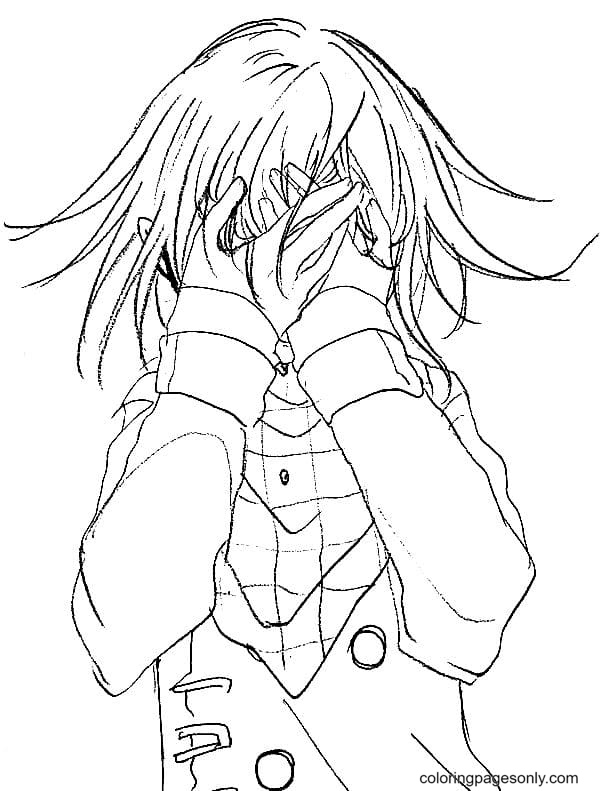
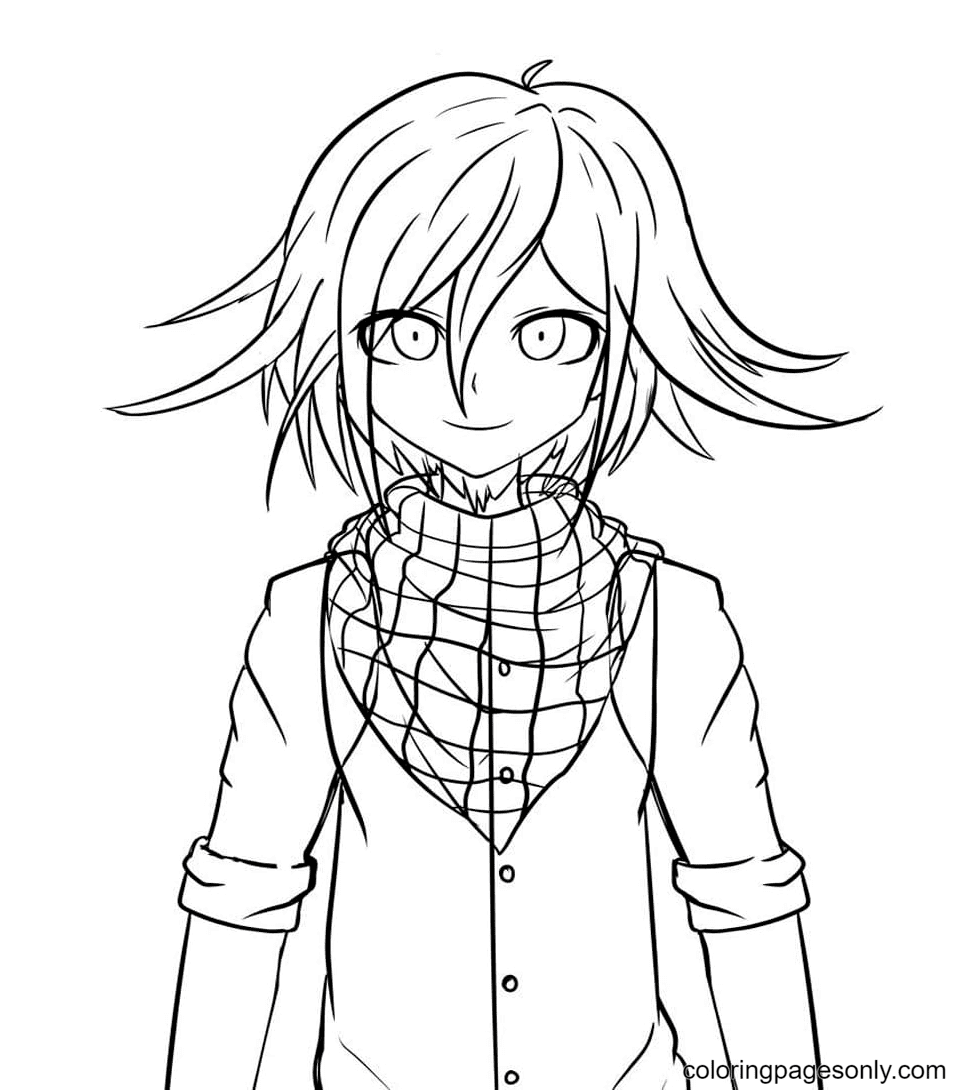
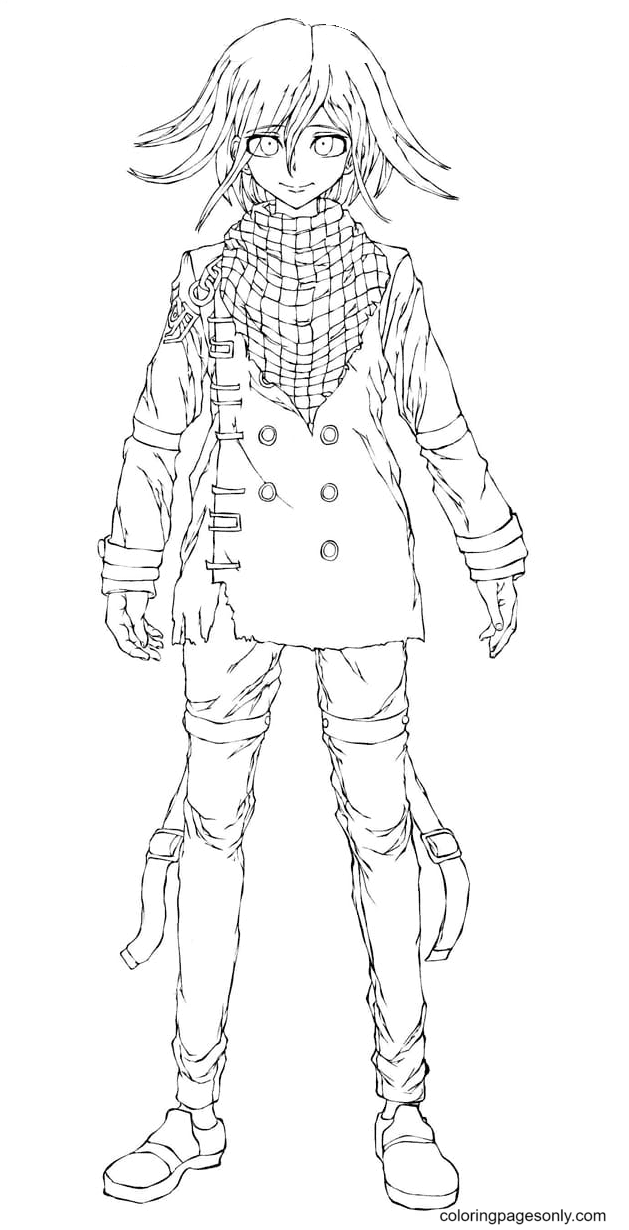
Kokichi Ouma is the most prominently featured V3 character in this collection, appearing on many pages – Kokichi with Umbrellas, Kokichi Ouma Danganronpa V3, Kokichi Oma, Kokichi Covered His Face with His Hands, Cute Kokichi, Cute Kokichi Oma, Happy Kokichi, Kokichi Crying. He is a small boy with purple twin-tail hair (similar length and styling to Junko’s blonde pigtails but in purple), pale skin, and a perpetual mischievous or teasing expression. His outfit is a primarily black uniform with white polka dots – the DICE organization’s colors. His purple hair is a vivid, saturated medium purple – not dark violet and not light lavender, but a confident mid-purple.
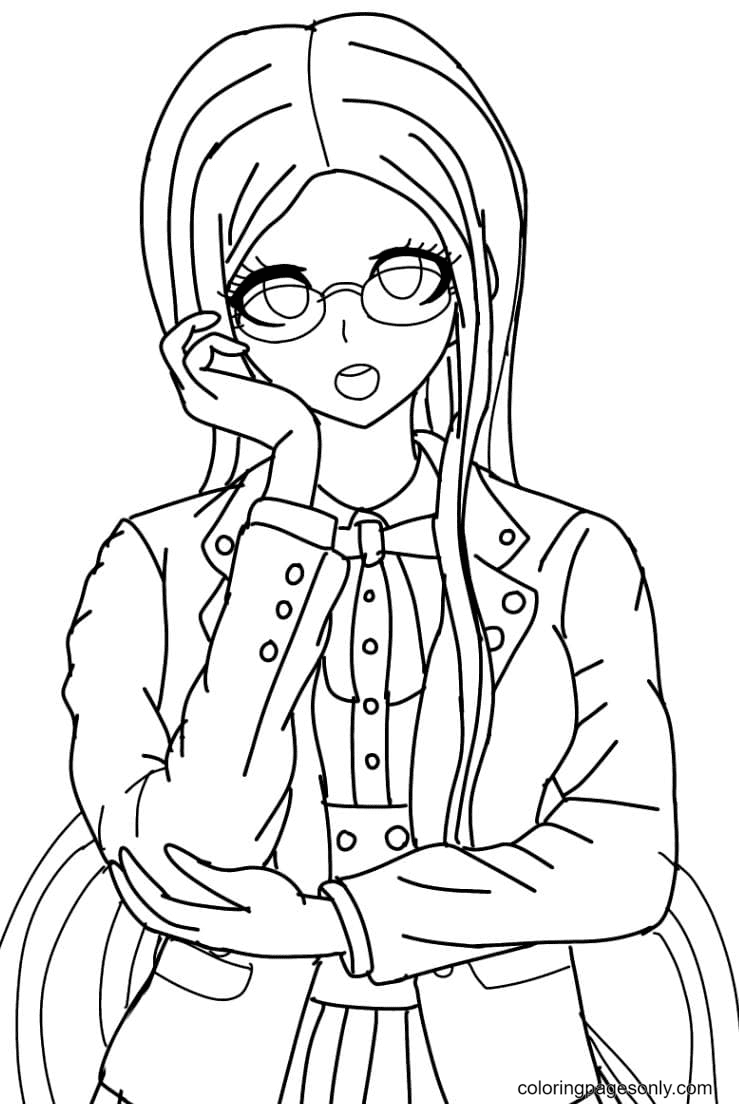
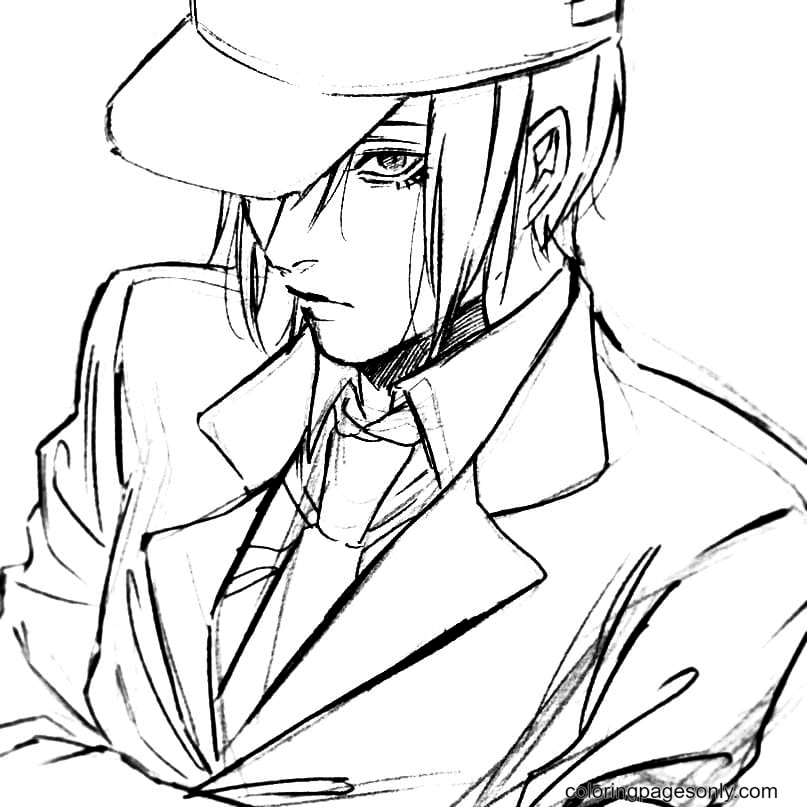
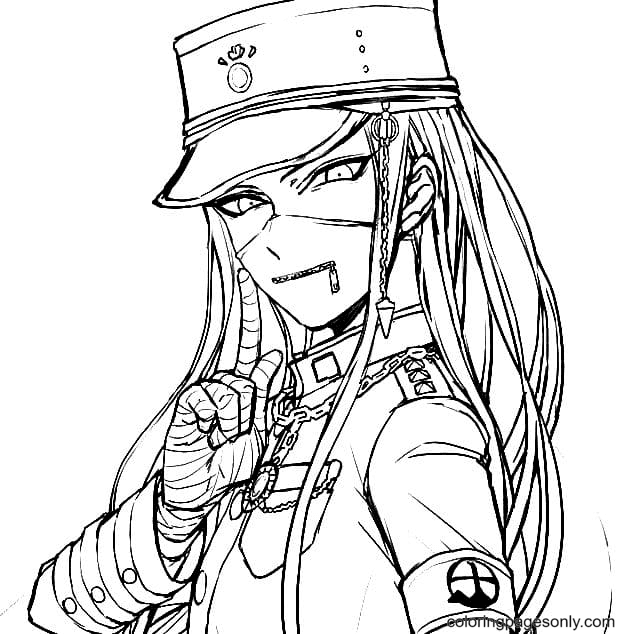
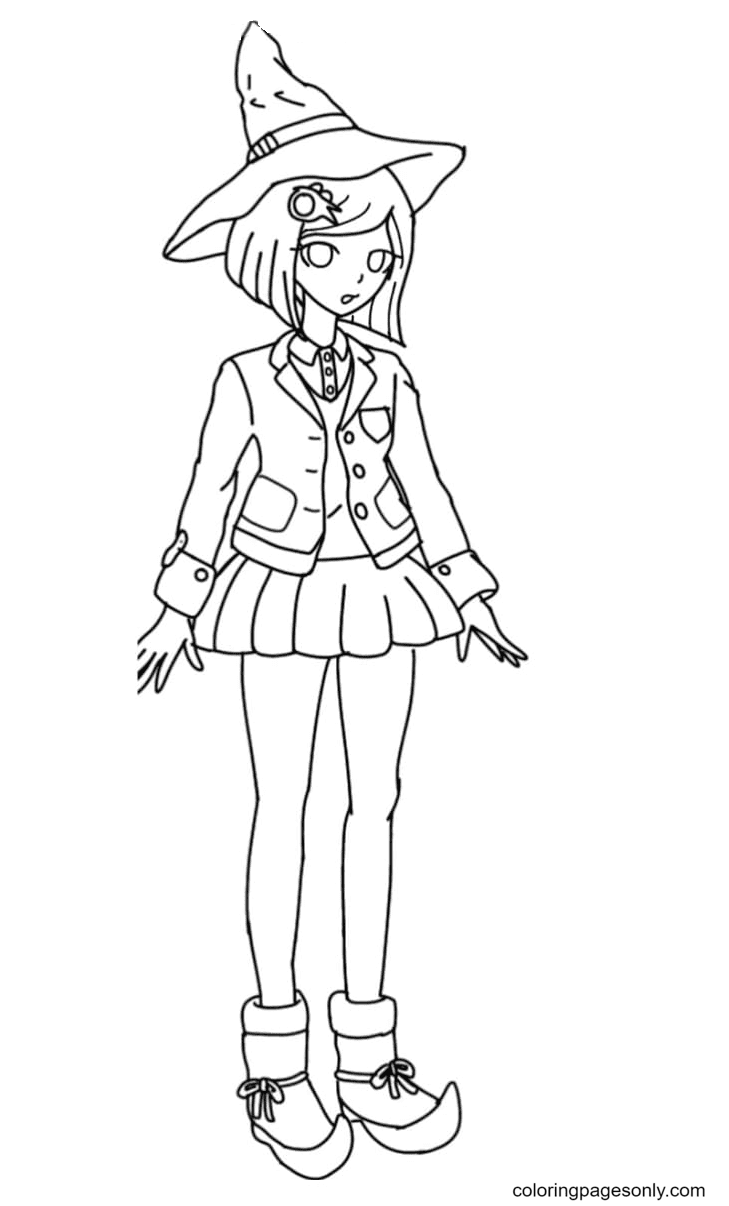
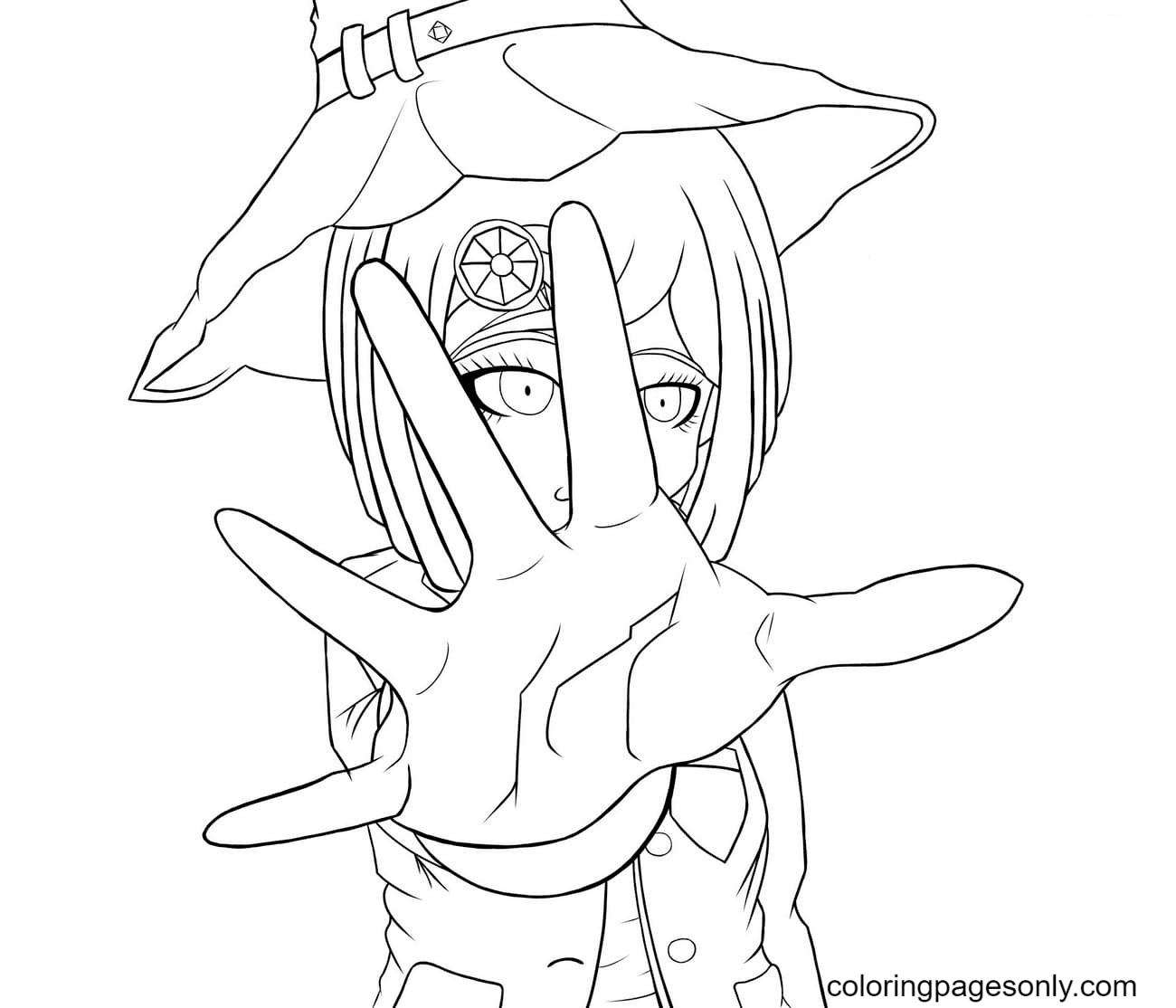
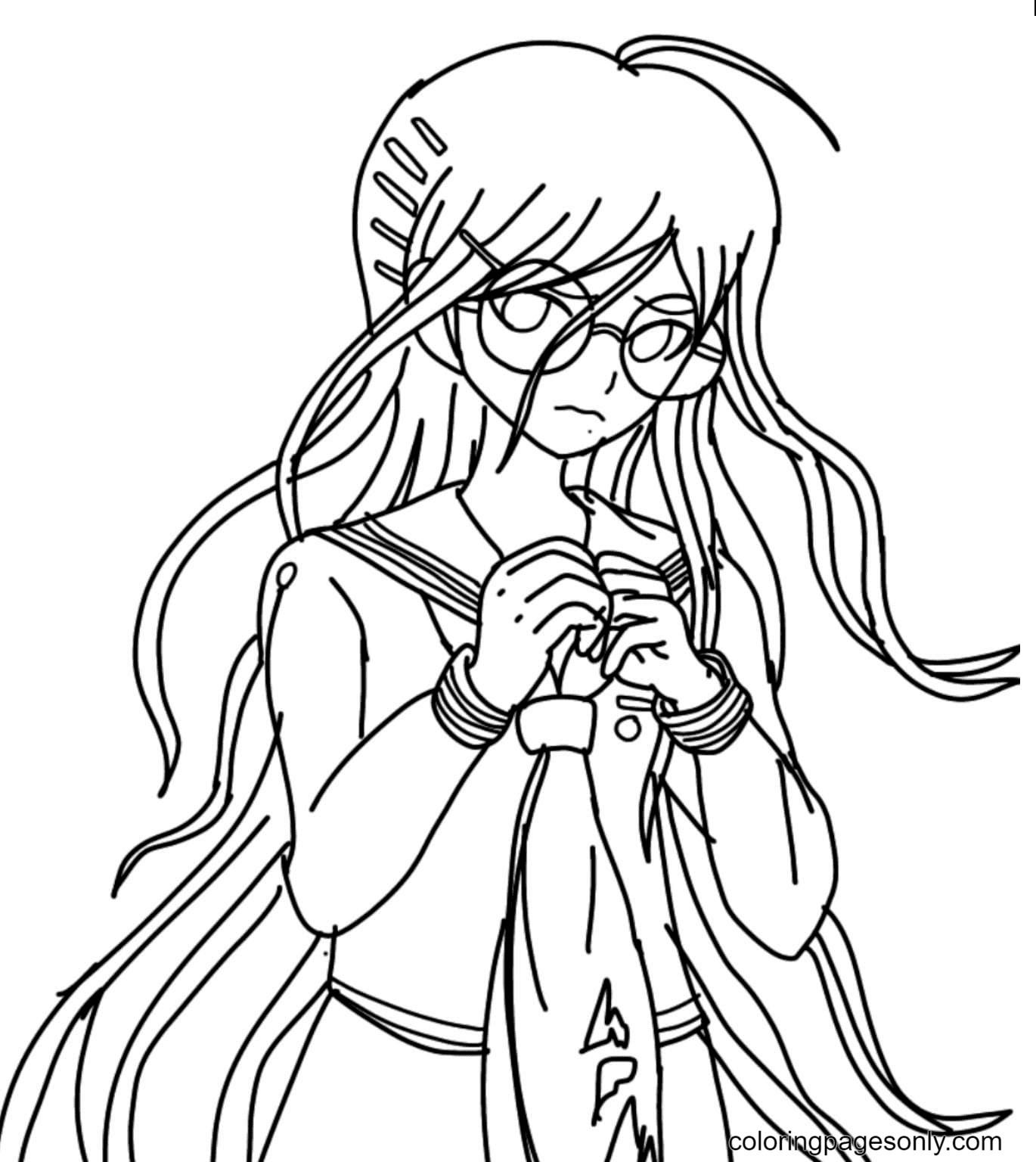
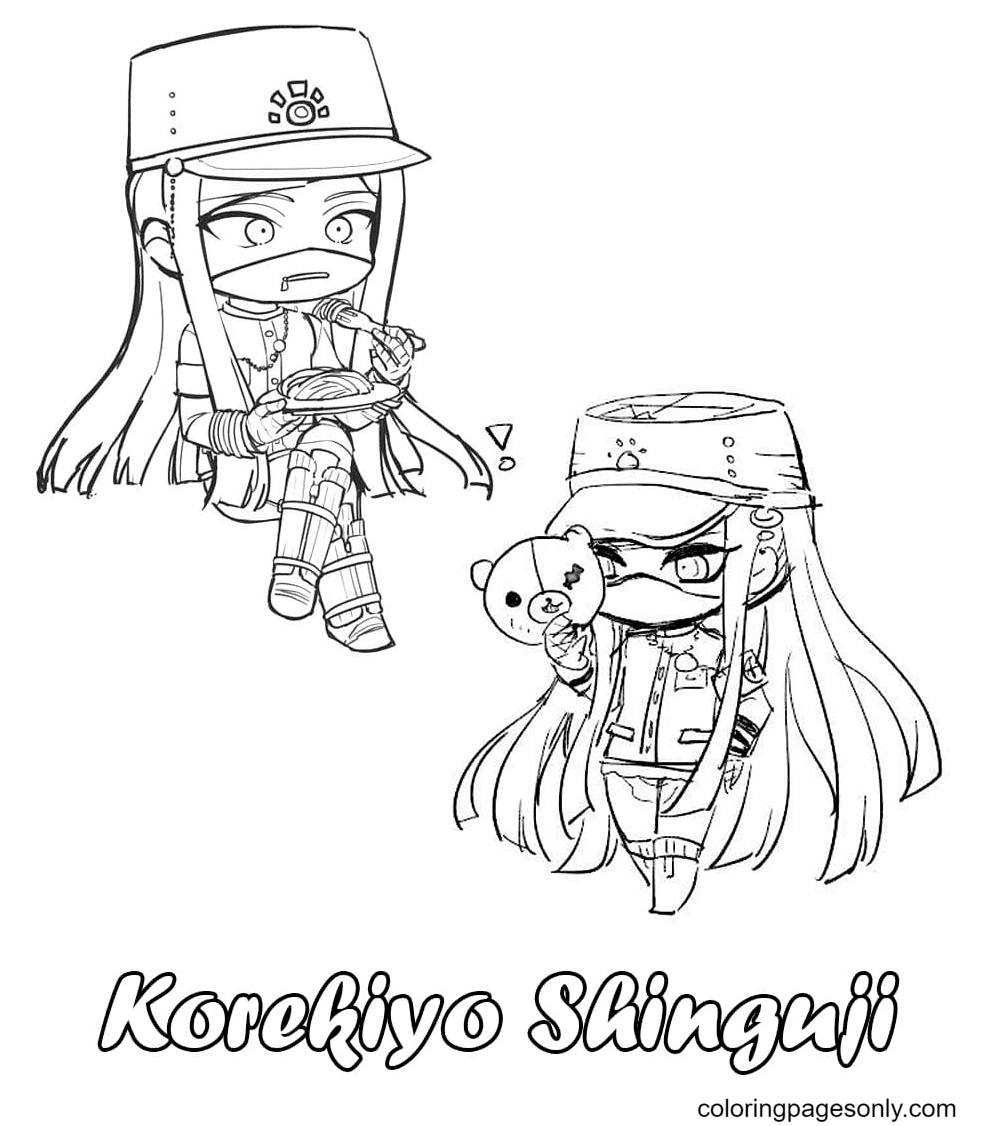
Shuichi Saihara is the protagonist of V3 – a dark-haired boy who almost always wears a hat or cap pulled down to partially obscure his eyes. His hat is his most visually defining accessory; pages showing him without it (Shuichi Saihara Wearing a Cap) are the exception. His outfit follows a dark detective aesthetic. Kaede Akamatsu (Happy Kaede Akamatsu) is V3’s opening-act protagonist – a pink-haired girl with a piano keyboard motif woven into her clothing and accessories. Himiko Yumeno (Himiko Yumeno, Himiko Yumeno from Danganronpa V3) is the Ultimate Mage – a girl with a short red bob cut, a magic-themed outfit with a witch’s cape and hat. Korekiyo Shinguji (Korekiyo Shinguji, Cool Korekiyo Shinguji, Chibi Korekiyo Shinguji) is one of the most distinctive designs in V3 – a tall figure with long black hair falling over the face and a mask covering the lower half, giving the character a wrapped, obscured quality. Miu Iruma (Kawai Miu Iruma) has long blonde hair and inventor-themed clothing. Tsumugi Shirogane has blue hair and glasses. Angie Yonaga (Angie Yonaga from Danganronpa V3) has white hair and dark skin, an art-themed aesthetic. Nagisa Shingetsu is from the spinoff Ultra Despair Girls.
Coloring Tips
Monokuma’s split design must be kept absolutely consistent across all pages. Left half = black bear with red eye and jagged red-lined mouth. Right half = white bear with standard black eye and neutral expression. The dividing line between the two halves runs precisely down the vertical center of the bear’s face and body. Any variation from this precise split changes the character from Monokuma into an unrecognizable bear. The red accents – the left eye and the mouth lining – are the single warm color in an otherwise pure black-and-white design.
Nagito Komaeda’s white hair is the coolest and most neutral white in the collection – purer and less warm than Celestia’s black hair (which has cool undertones that create depth), less purple-warm than Kirigiri’s silver-lavender. To give his hair form without losing the near-white quality, use a very light cool grey (barely a step above white) for shadow areas, keeping the highlights as paper white. The contrast between his almost-white hair and his pale skin is minimal, which means his green eyes and the grey of his hoodie are what most clearly define his color palette.
Kokichi Ouma’s purple hair is the most important single color decision in the V3 character pages. It is a confident, saturated medium purple – the purple of an eggplant or a Cadbury wrapper, not the pale lavender of fashion trends and not the dark indigo of night sky. Kokichi’s whole visual identity is built on the contrast between this vivid purple, his near-white skin, and the high-contrast black-and-white polka-dot pattern of his DICE uniform. Getting the purple to full saturation and medium value is more important than any other color decision on his pages.
Celestia Ludenberg’s gothic Lolita costume is the most technically complex single-character outfit in the DR1 pages. The key is treating the costume as layers: the dress itself is primarily black with structured white ruffle details at the collar and cuffs. The red accents – ribbon, belt, and other details – should be a clear, clean red rather than burgundy or orange-red. Her twin drill curls are jet-black, and the internal spiral structure of the curls suggests light and shadow: the outermost surface of each curl receives the most light (lighter black/dark grey) while the inner curves are deepest black. Her skin is the palest in the DR1 cast.
Junko Enoshima’s gyaru aesthetic requires warm, vivid colors across the board – the aesthetic is about visual intensity and energy. Her blonde twin tails are a warm, golden blonde rather than cool platinum; her makeup uses strong dark liner for dramatic eye effect; her red tie is a pure, vivid red. The bear skull motif on her tie is typically rendered in white or pale against the red.
For the Ibuki Mioda pages, research the specific color distribution of her hair spikes before starting. The spikes are different colors – black base, pink spikes, white spikes, and accent color spikes – and the arrangement matters for recognizability. Her punk outfit has specific graphic elements that read better when each section is cleanly distinguished from its neighbors.
For the Hiyoko Saionji in Kimono page, the kimono should be rendered in the traditional silk texture quality of Japanese formal wear – slightly lustrous, with fold shadows adding depth. Her canonical kimono colors tend toward yellow-green and warm floral patterns. The kimono is the most elaborate textile composition in the collection and benefits most from a deliberate light-source approach (identifying where light hits the fabric and where folds create shadow before applying any color).
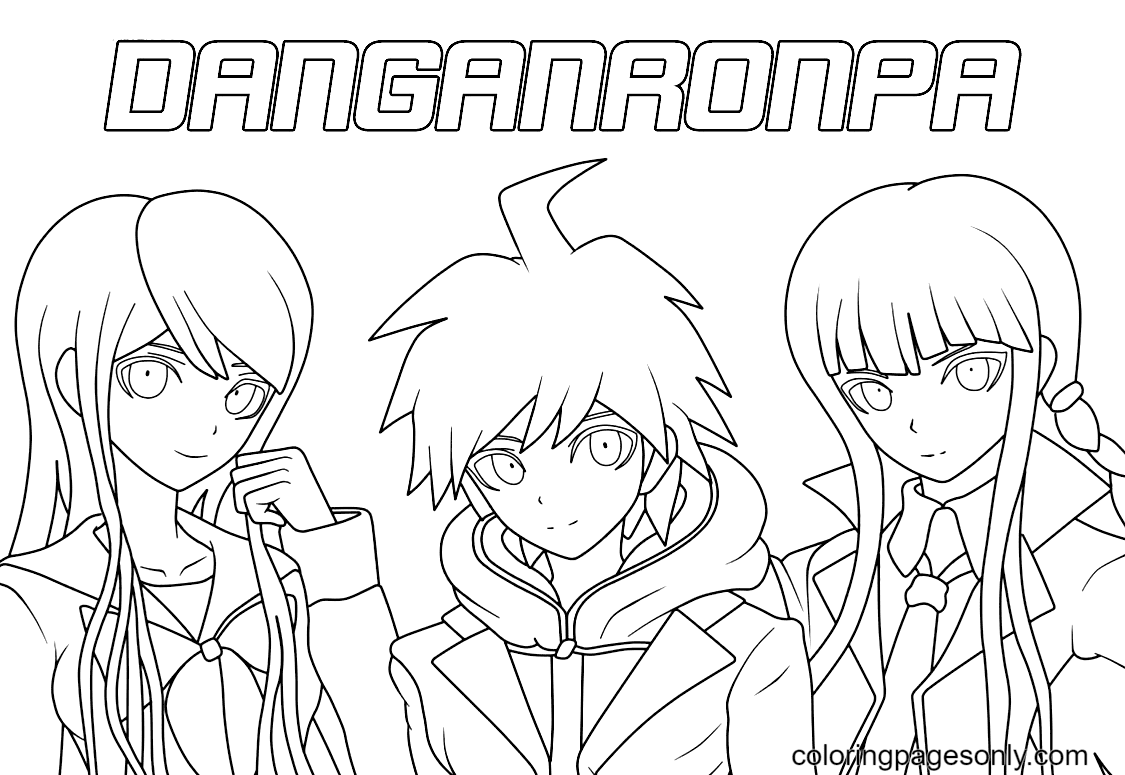
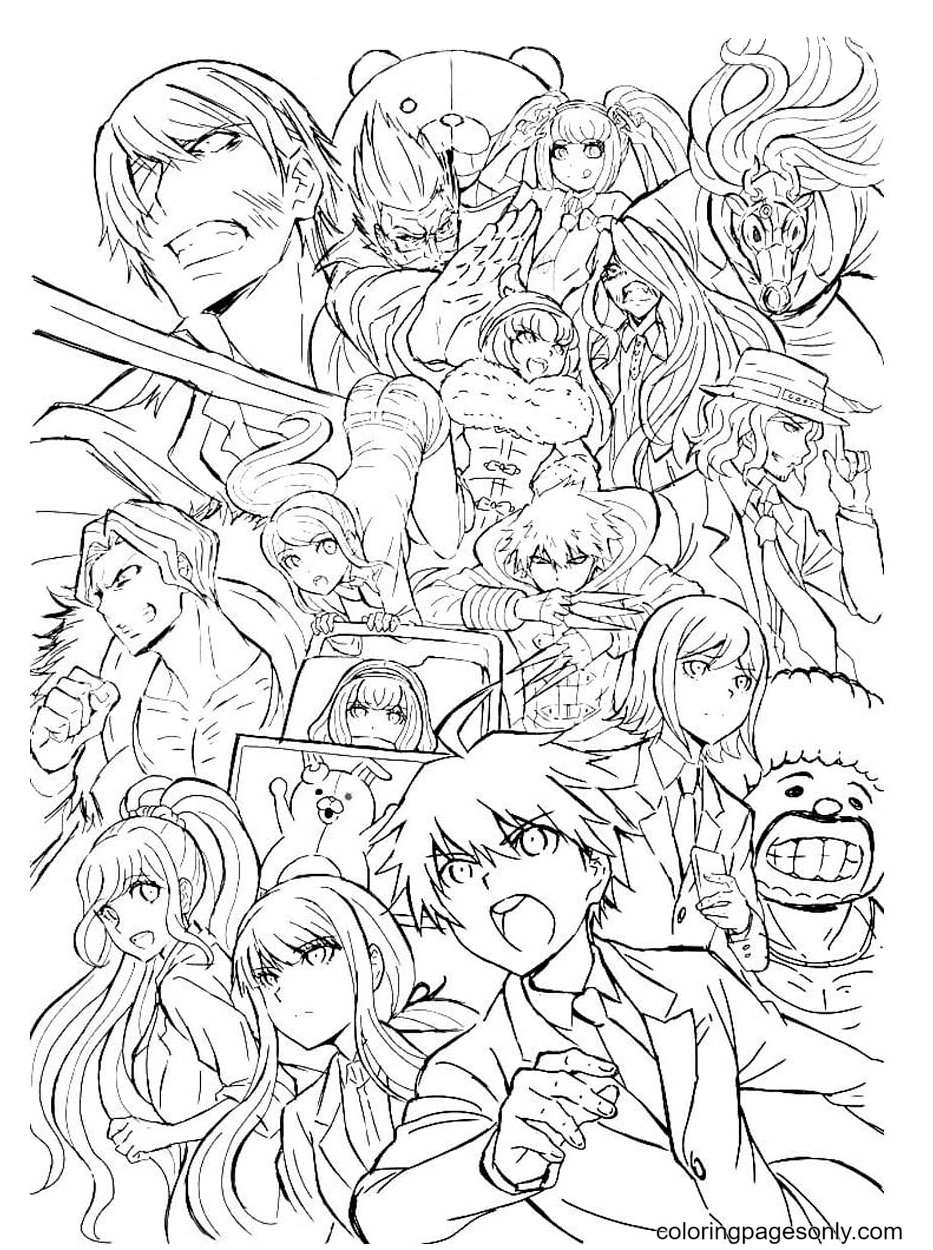
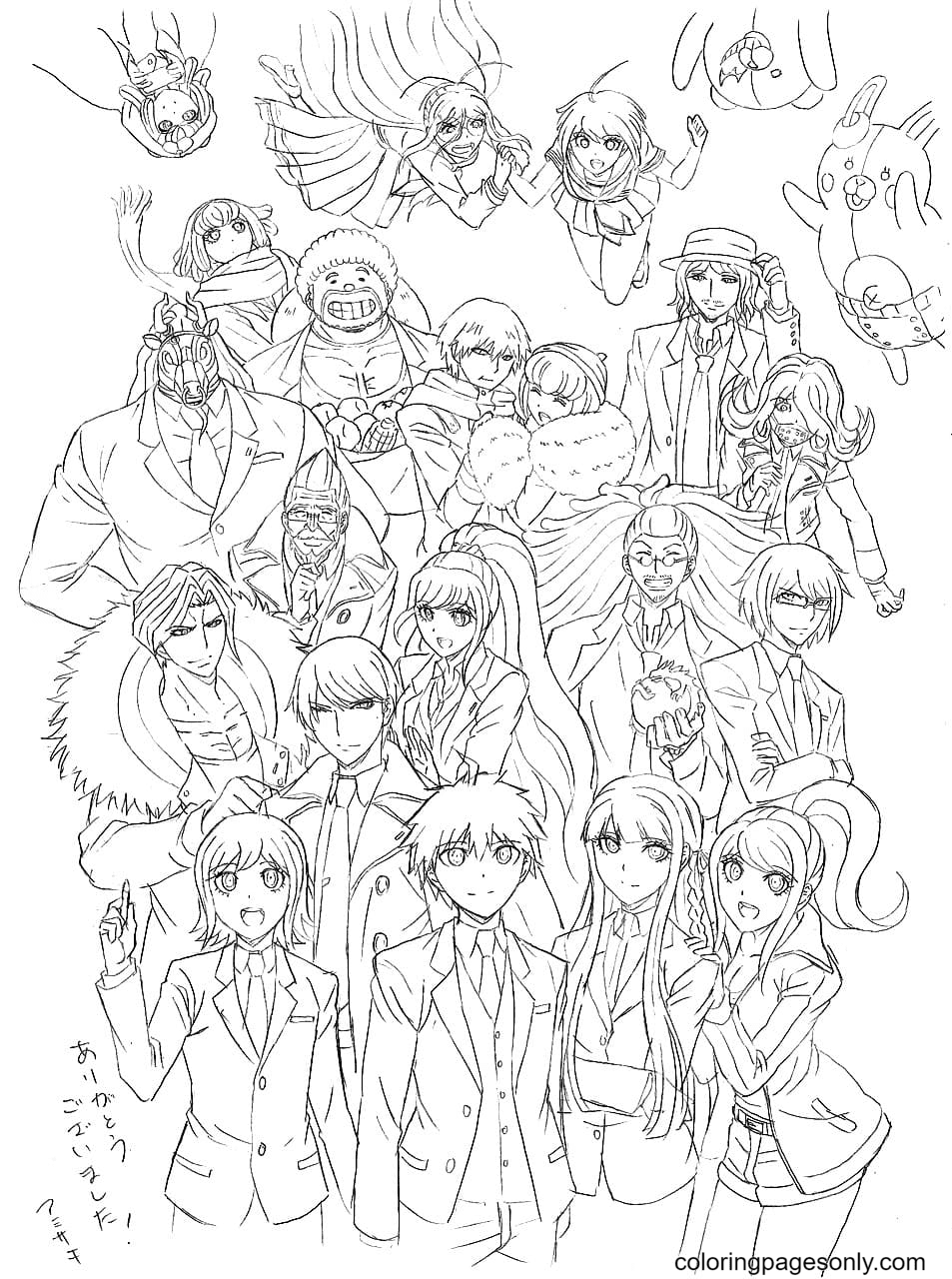
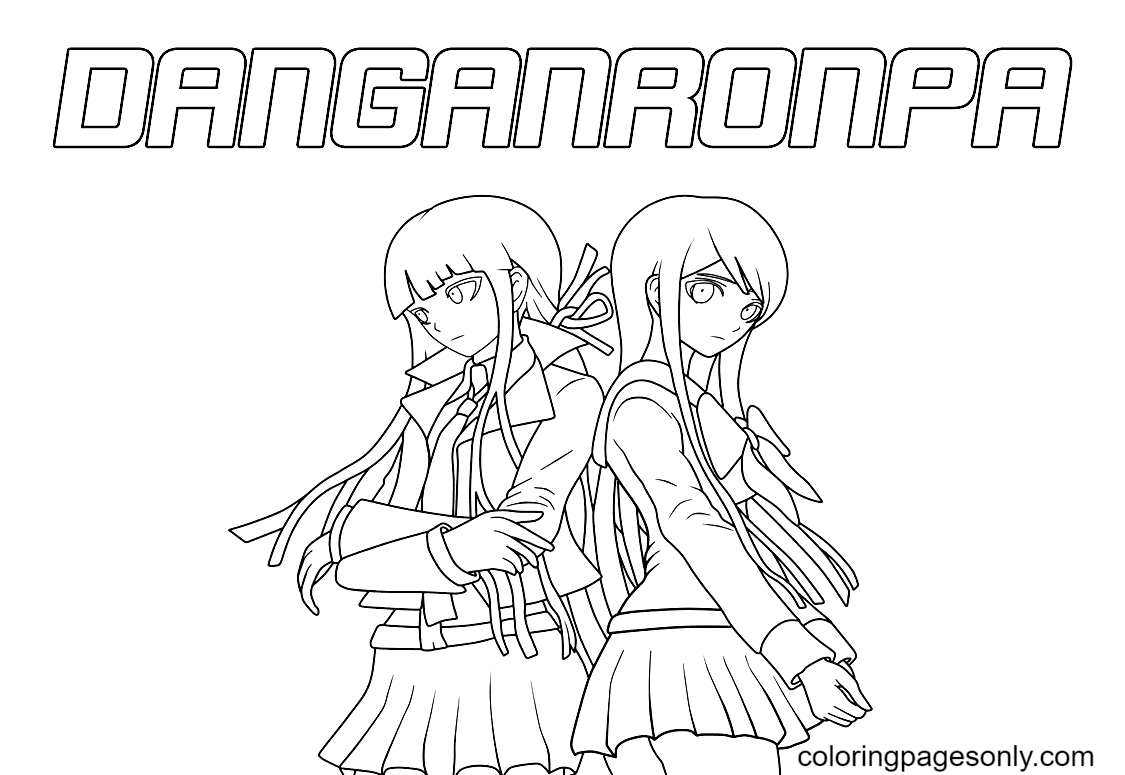
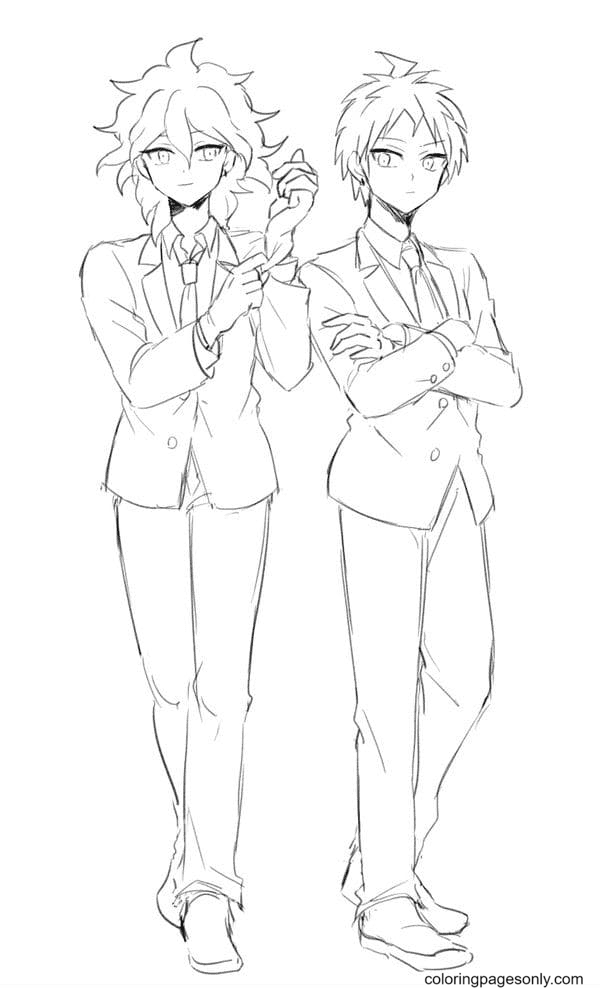
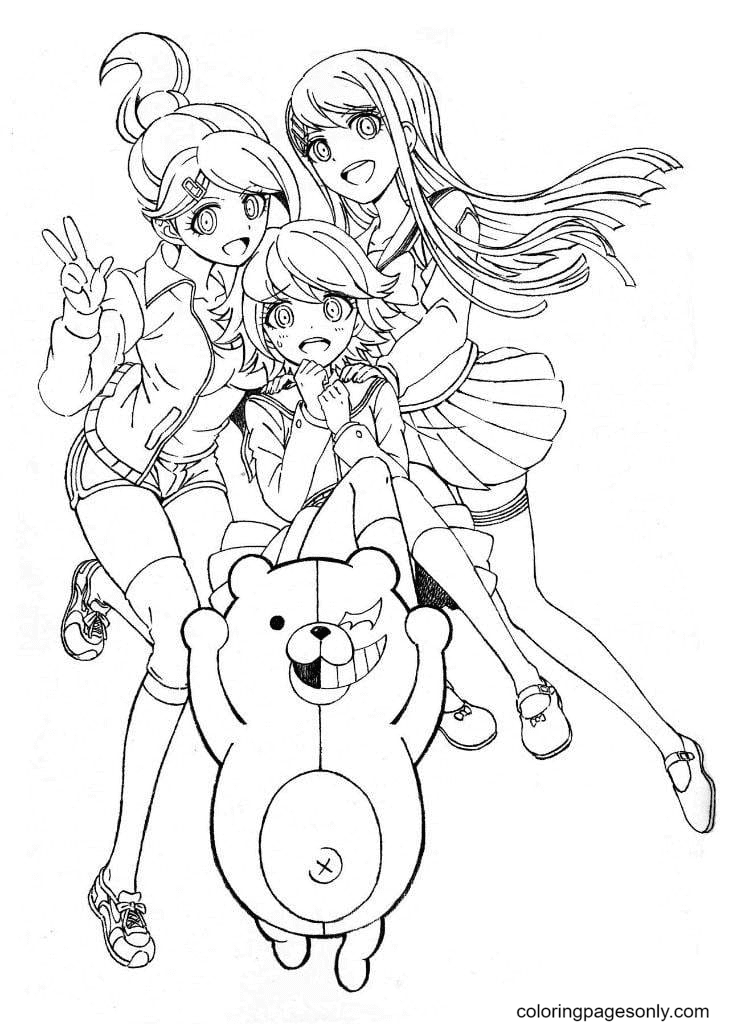
For the group scene pages – Enoshima Junko, Makoto Naegi, and Kyoko Kirigiri; Boys from the Danganronpa Anime; Characters from the Danganronpa Anime – maintaining each character’s canonical palette simultaneously is the primary challenge. Color each character’s hair first (the most immediately recognizable element), then move to clothing. Keep all characters at roughly the same tonal range so no single character reads as dramatically brighter or darker than the others unless the composition specifically calls for that contrast.
5 Activities with Your Danganronpa Pages
Color Monokuma’s split in explicit contrast. Print Monokuma in a Suit and Bear Monokuma – two pages showing the character in different compositions. Color both using exactly the same treatment: right half pure white with black eye, left half pure black with red eye, and jagged mouth. The exercise establishes the canonical Monokuma palette and then shows how the same color treatment reads differently across two different compositional arrangements. After finishing, take a photograph of both pages and lay them side by side: notice how the split reads differently depending on whether Monokuma is facing toward or away from the viewer, and how the composition around him emphasizes different aspects of his dual nature.
Color the Nagito Komaeda expression series. Print Nagito Komaeda, Nagito Komaeda is Sad, Sad Nagito, and Pensive Nagito Komaeda – four pages showing Nagito in different emotional states. Color all four using exactly the same palette: the same near-white hair, the same pale skin, the same grey hoodie. The constraint forces you to work entirely with line, expression, and composition to distinguish four pages that use identical colors. When finished, arrange the four pages in order from most unsettling (his characteristic wide smile) to most vulnerable (the sadder expressions) and write one word under each page describing what the expression communicates.
Color the protagonist trio. Print Makoto Naegi (DR1), a Hajime Hinata page if available (DR2), and Shuichi Saihara (DR3) – the three male protagonists, one per game. Color each in their canonical palette: Makoto in his green jacket and white hoodie, Shuichi in his dark hat and jacket. Notice what the series’ character designers chose to do with the protagonist role across three games: the protagonist is each time a relatively ordinary-looking boy among a cast of extremely visually distinctive characters, and the relative plainness of the protagonist palette (darker, more neutral clothing, dark hair) is a deliberate design choice that makes the extreme colors of the supporting cast pop in comparison.
Color the Celestia Ludenberg multi-page set. Print Celestia Ludenberg, Modest and Sweet Celestia Ludenberg, Gambling Celestia Ludenberg, and Celestia and Monokuma. Color all four pages with exactly the same costume palette for Celestia – the same black dress, the same white ruffles, the same red accents, the same jet-black drill curls. On the Celestia and Monokuma page, the black of Celestia’s dress will interact directly with the black of Monokuma’s left half and the white of his right half – study how Celestia’s predominantly black palette relates visually to the two halves of Monokuma. Does she seem more allied with the black (sinister) side or the white (innocent) side of the design, purely based on color?
Color Kokichi across his emotional range. Print Kokichi with Umbrellas, Cute Kokichi Oma, Happy Kokichi, Kokichi Crying, and Kokichi Covered His Face with His Hands. Color all five in his canonical purple hair and DICE uniform across all pages. Kokichi’s character in the game is defined by the impossibility of knowing when his emotions are genuine versus performed – he smiles when lying, laughs when scheming, and the game never fully resolves whether his tears or his joy are real. After coloring all five pages, write one sentence under each asking whether the emotion shown is genuine or a performance, based on nothing except the composition and expression visible in the illustration. Compare your answers to how other fans interpret the same expressions.
These related coloring collections will help you explore the wonderful world of colors. Let’s choose, be creative, and show us your great pictures!