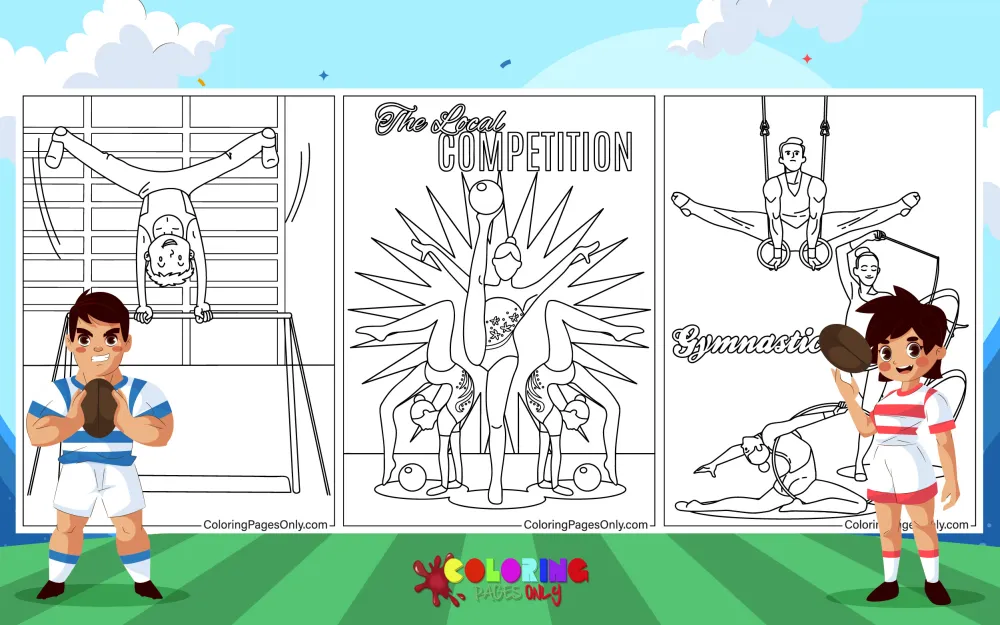
Explore 59 free gymnastics coloring pages featuring artistic gymnastics, rhythmic gymnastics, balance beam, uneven bars, rings, vault, trampoline, pommel horse, acrobatic gymnastics, and more – available as free printable PDF and interactive online coloring for kids, young gymnasts, and fans of all ages.
There are sports that require strength, and there are sports that require grace – and then there is gymnastics, which requires both simultaneously, performed in front of judges who are looking for technical perfection and artistic expression at the same time, on apparatus that offers very little margin for error. A balance beam is 5 meters long and exactly 10 centimeters wide – about the width of a closed fist – set 125 centimeters above the floor. Elite gymnasts perform back handsprings, aerials, and full pirouettes on it as though the width of the beam is a minor inconvenience rather than one of sport’s most demanding physical challenges.
Gymnastics has existed in organized form since at least the ancient Greek Olympic Games, and its modern competitive structure was developed in early 19th-century Germany by Friedrich Ludwig Jahn – known as the “Father of Gymnastics” – who designed and popularized the apparatus that still defines the sport today: the horizontal bar, parallel bars, balance beam, vault, and rings. The Fédération Internationale de Gymnastique (FIG), founded in 1881, is the oldest international sports federation still in active operation. Men’s artistic gymnastics appeared at the very first modern Olympic Games in Athens in 1896; women’s artistic gymnastics was added in Amsterdam in 1928; rhythmic gymnastics joined the Olympic program in Los Angeles in 1984; and trampoline gymnastics became Olympic in Sydney in 2000.
At ColoringPagesOnly.com, our collection of 59 free gymnastics coloring pages celebrates every discipline and every apparatus – from the soaring release moves of the horizontal bar and the breathtaking twists of floor exercise to the flowing ribbons of rhythmic gymnastics and the precise power of the vault. Whether you are a young gymnast who spends six afternoons a week in the gym and wants to bring that world home in a different way, a parent whose child has just discovered the sport, a teacher building a physical education unit, or simply someone who finds the extraordinary human movement of gymnastics genuinely beautiful to watch, this collection was made for you.
What’s Inside Our Gymnastics Coloring Pages Collection?
Our library spans all six major gymnastics disciplines recognized by the FIG – organized around the real apparatus and events that gymnasts train and compete on at every level, from recreational classes to the Olympic Games.
Artistic Gymnastics – Women’s Events
Women’s artistic gymnastics consists of four events: vault, uneven bars, balance beam, and floor exercise. Each apparatus demands a different combination of skills, and each has produced some of the most iconic moments in Olympic history.
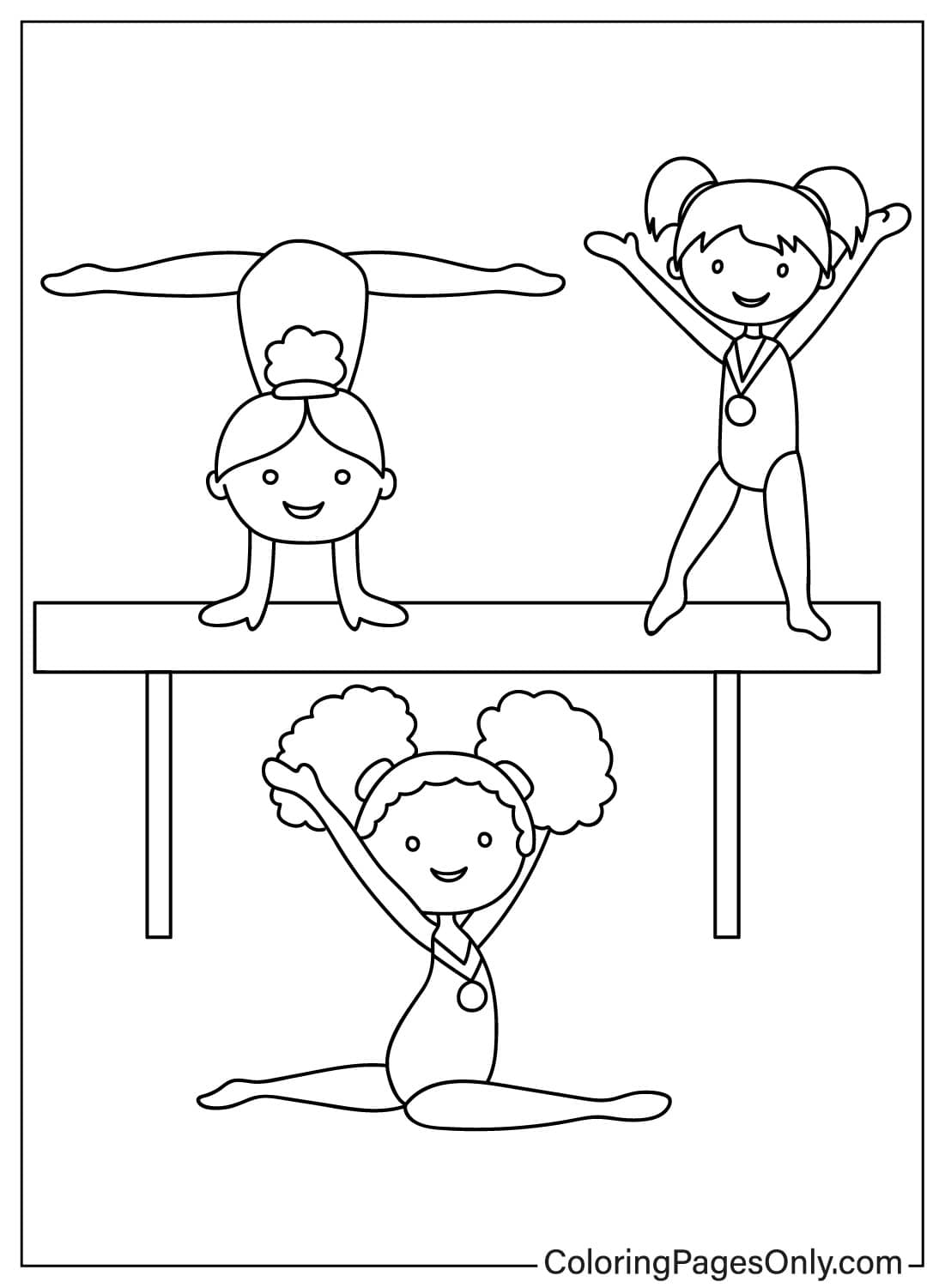
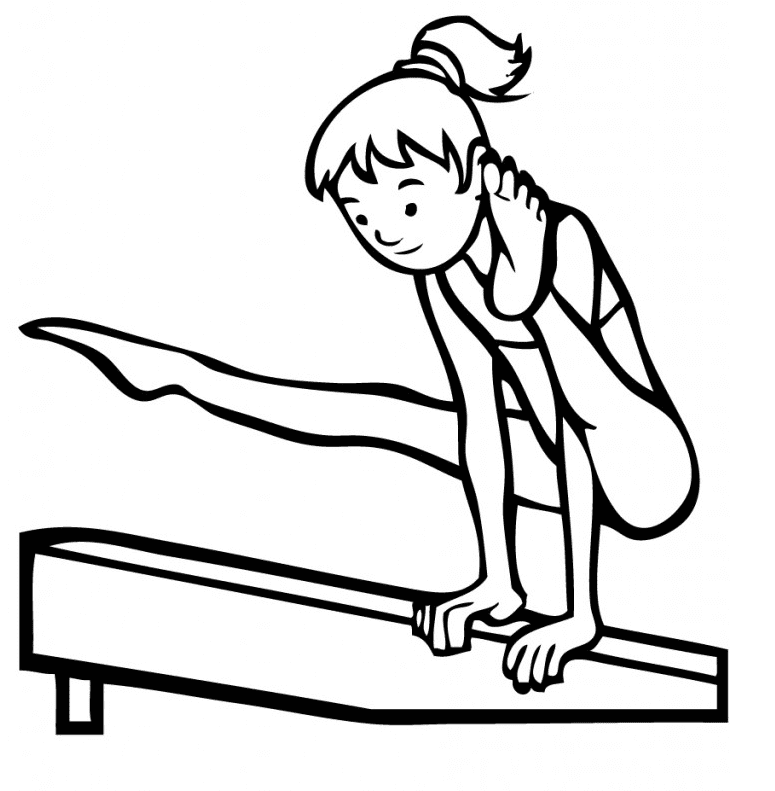
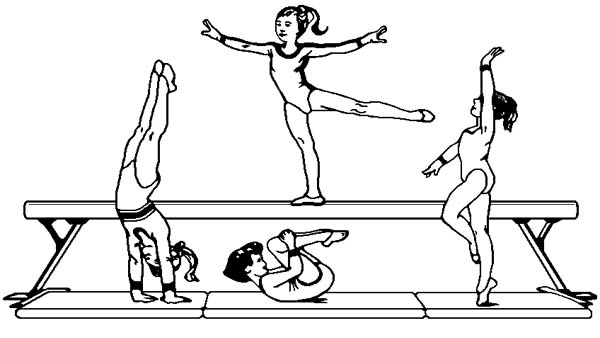
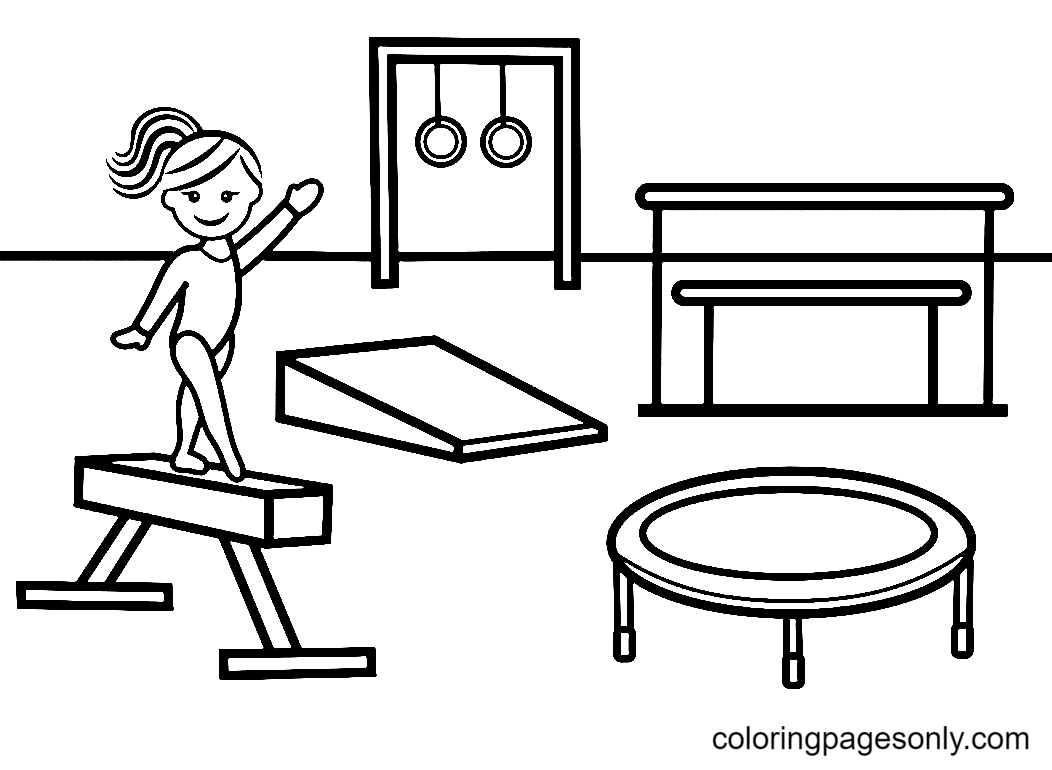
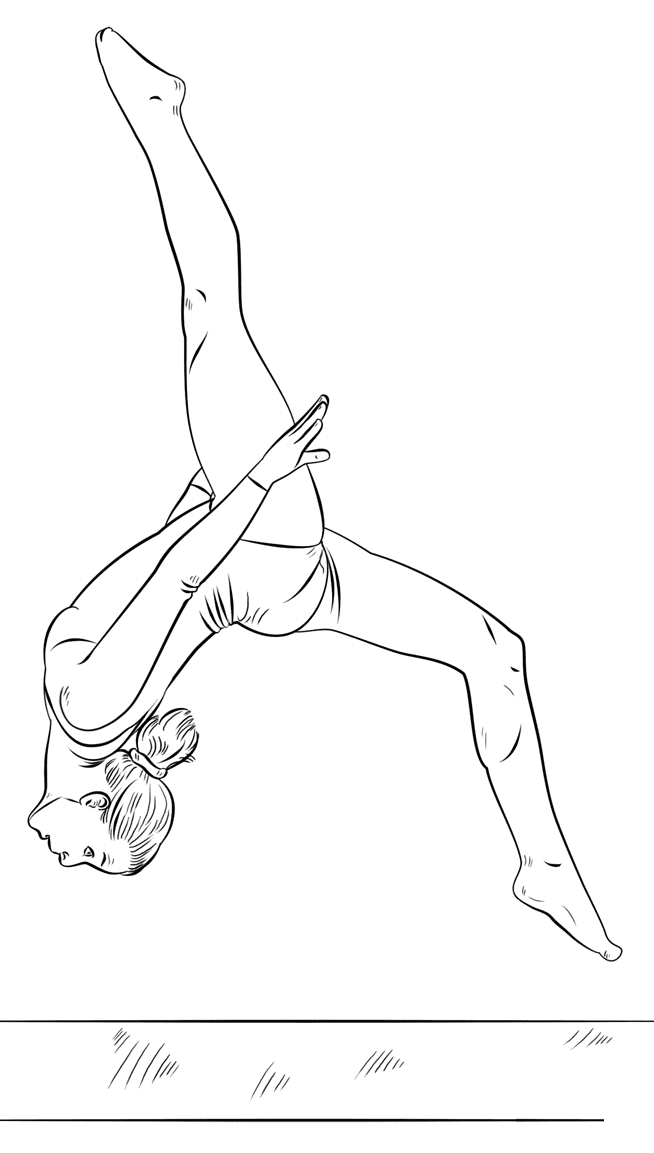
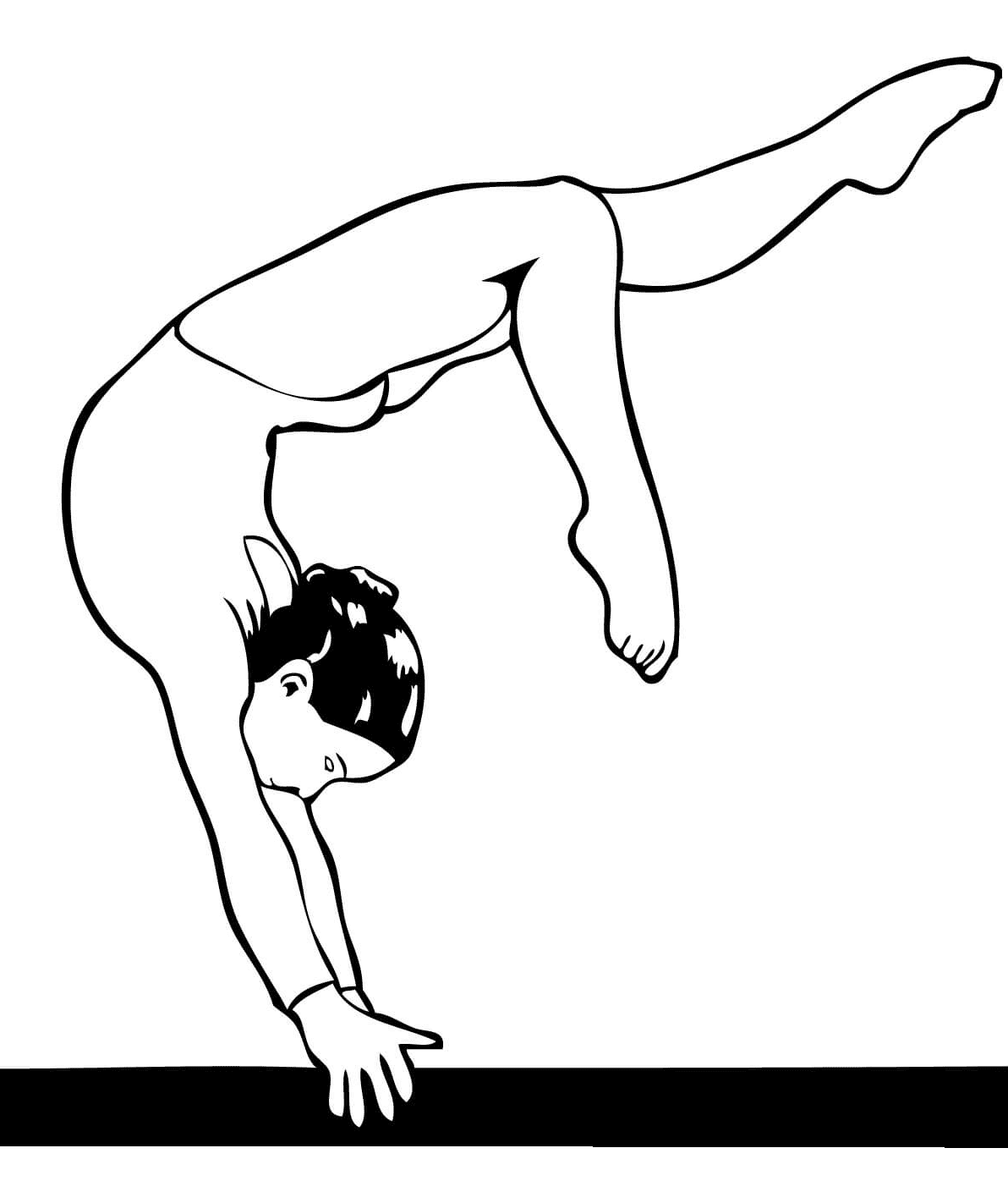
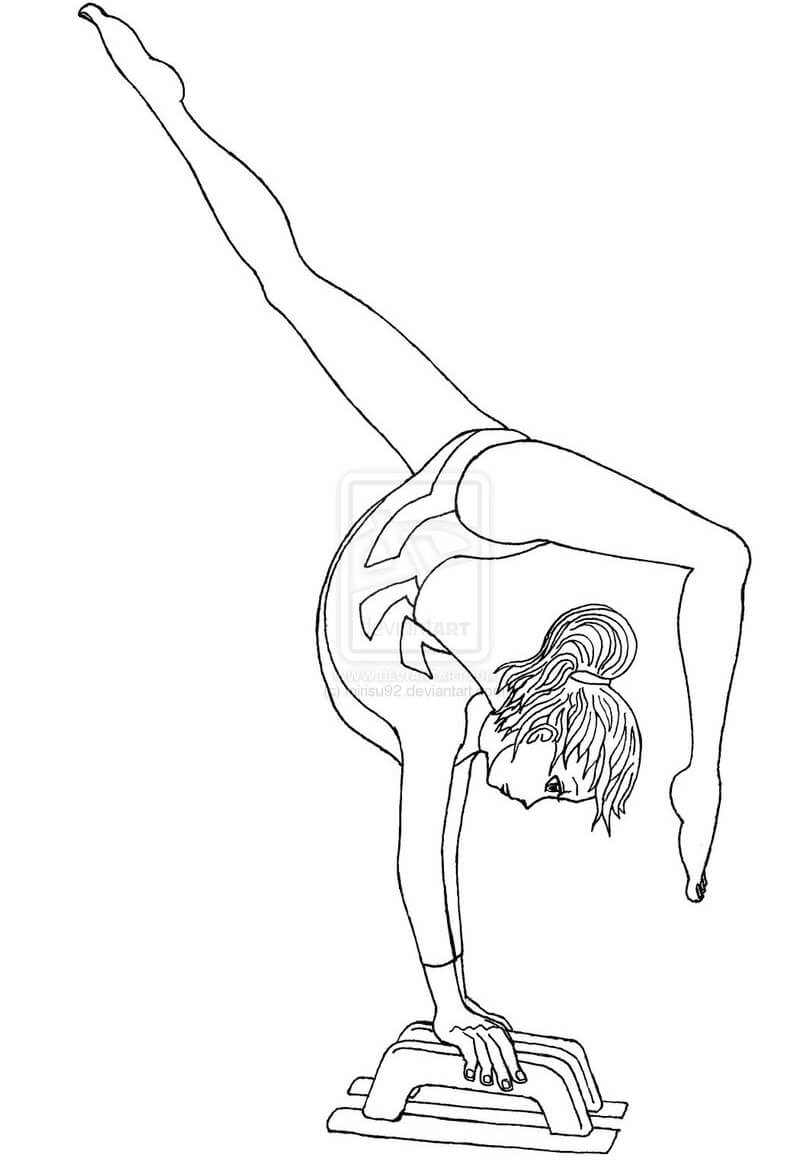
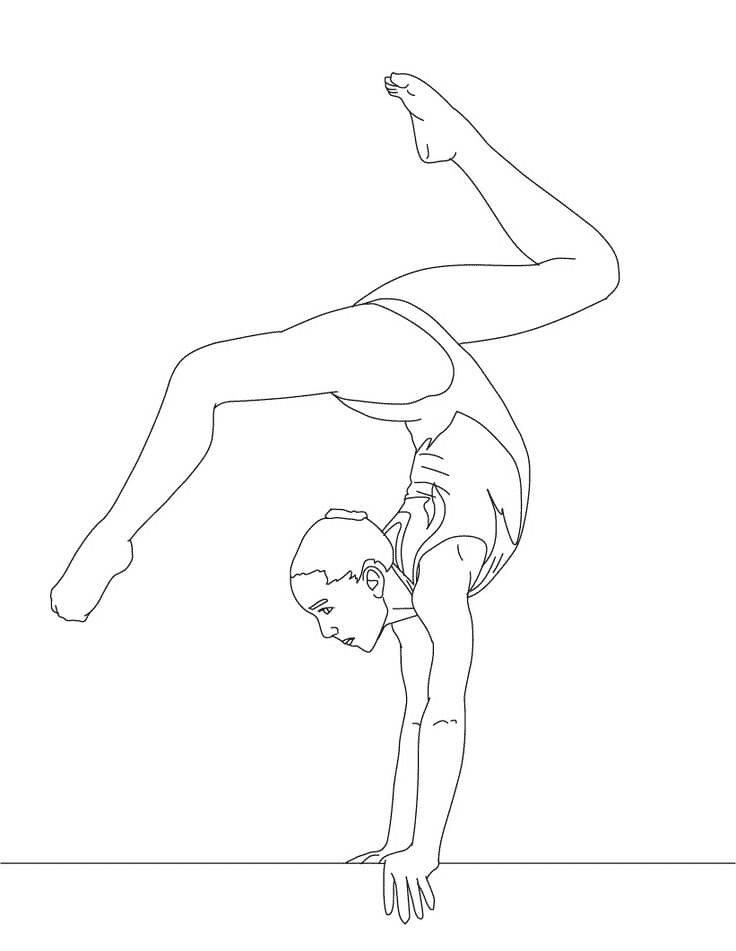
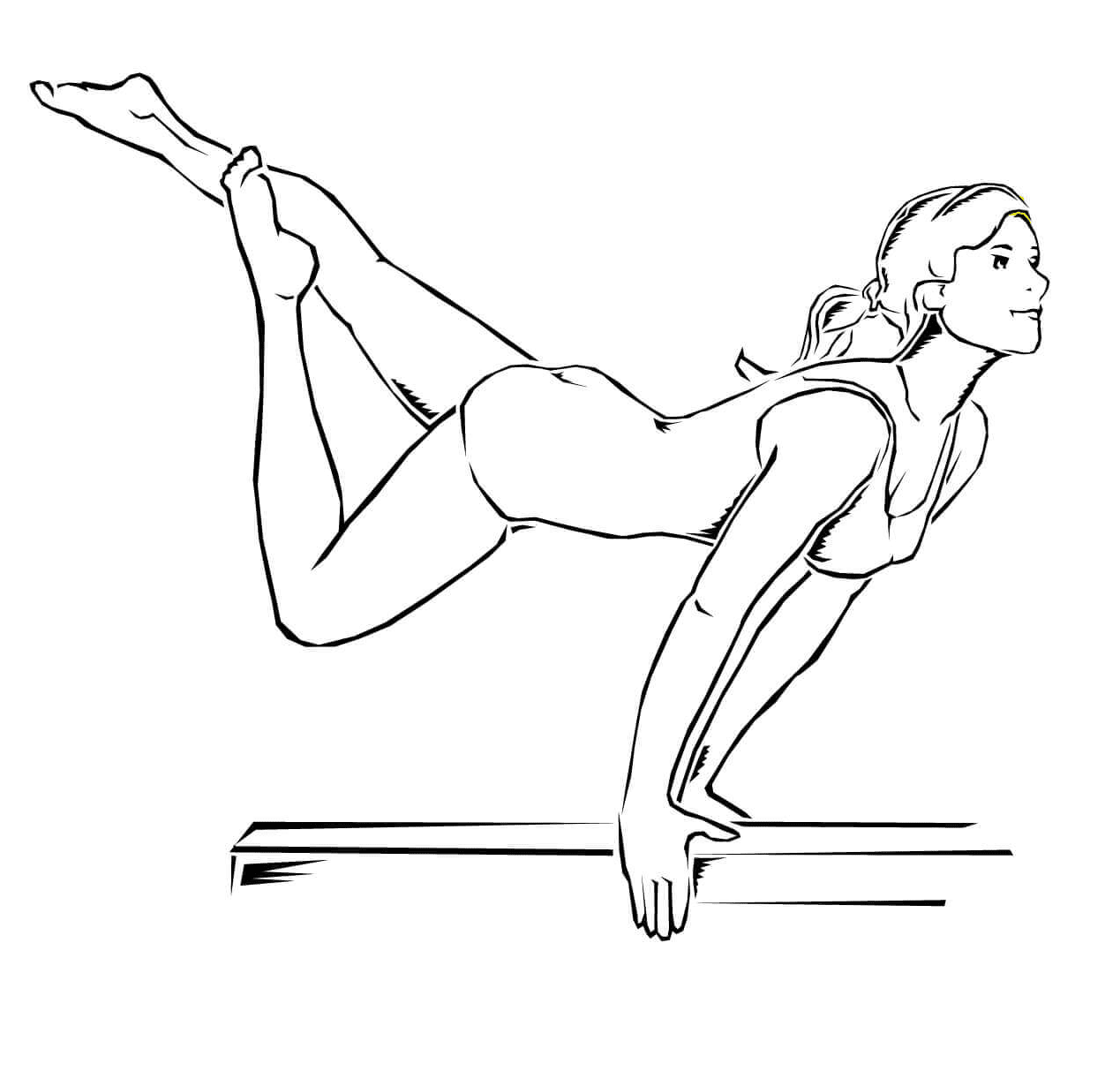
The balance beam pages – Balance Beam Gymnastics, Balance Beam Gymnastics Printable, Balance Beam Artistic Gymnastics, Gymnast on a Beam, Full Turn on Balance Beam, Full Turn on Balance Beam Gymnastics, and Female Gymnast Somersaulting On A Balance Beam – capture the event that most visibly represents gymnastics’ demand for precision over power. Every skill performed on the beam carries a difficulty value under the Code of Points scoring system (introduced after the controversial judging controversy at the 2004 Athens Olympics that replaced the previous perfect-10 system), and the most difficult elements – Arabian double fronts, layout step-outs, full-twisting back handsprings – require the gymnast to locate a 10-centimeter-wide surface while rotating in multiple dimensions at once.
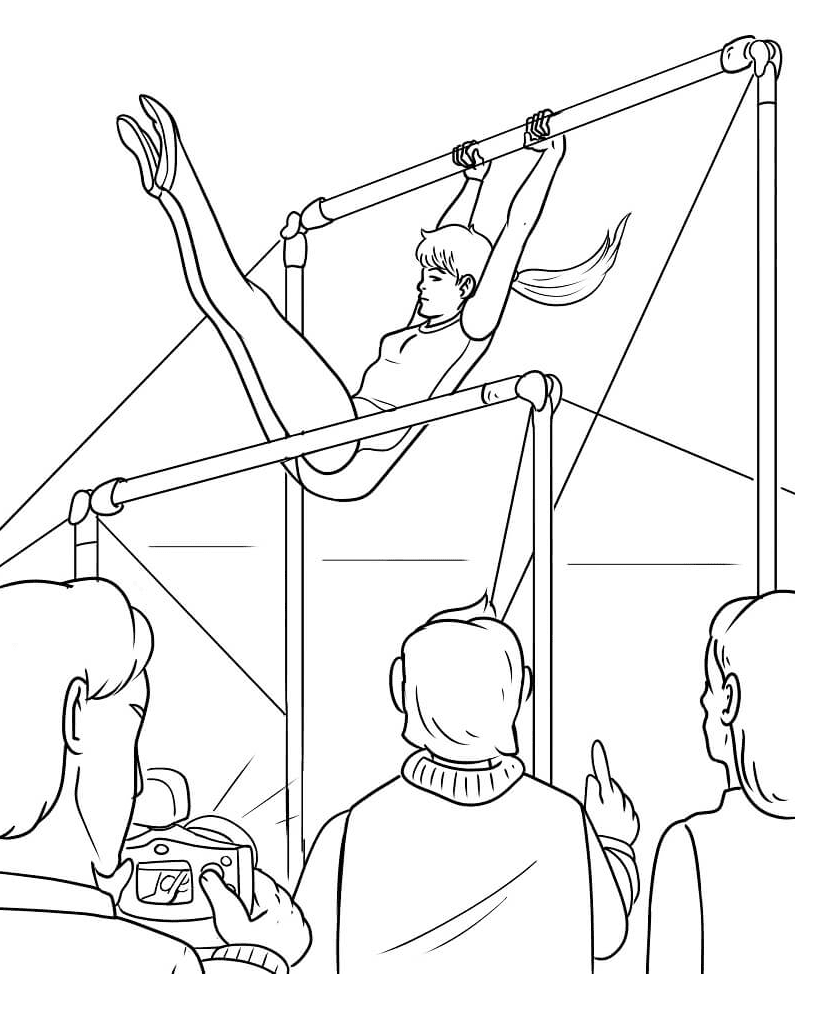
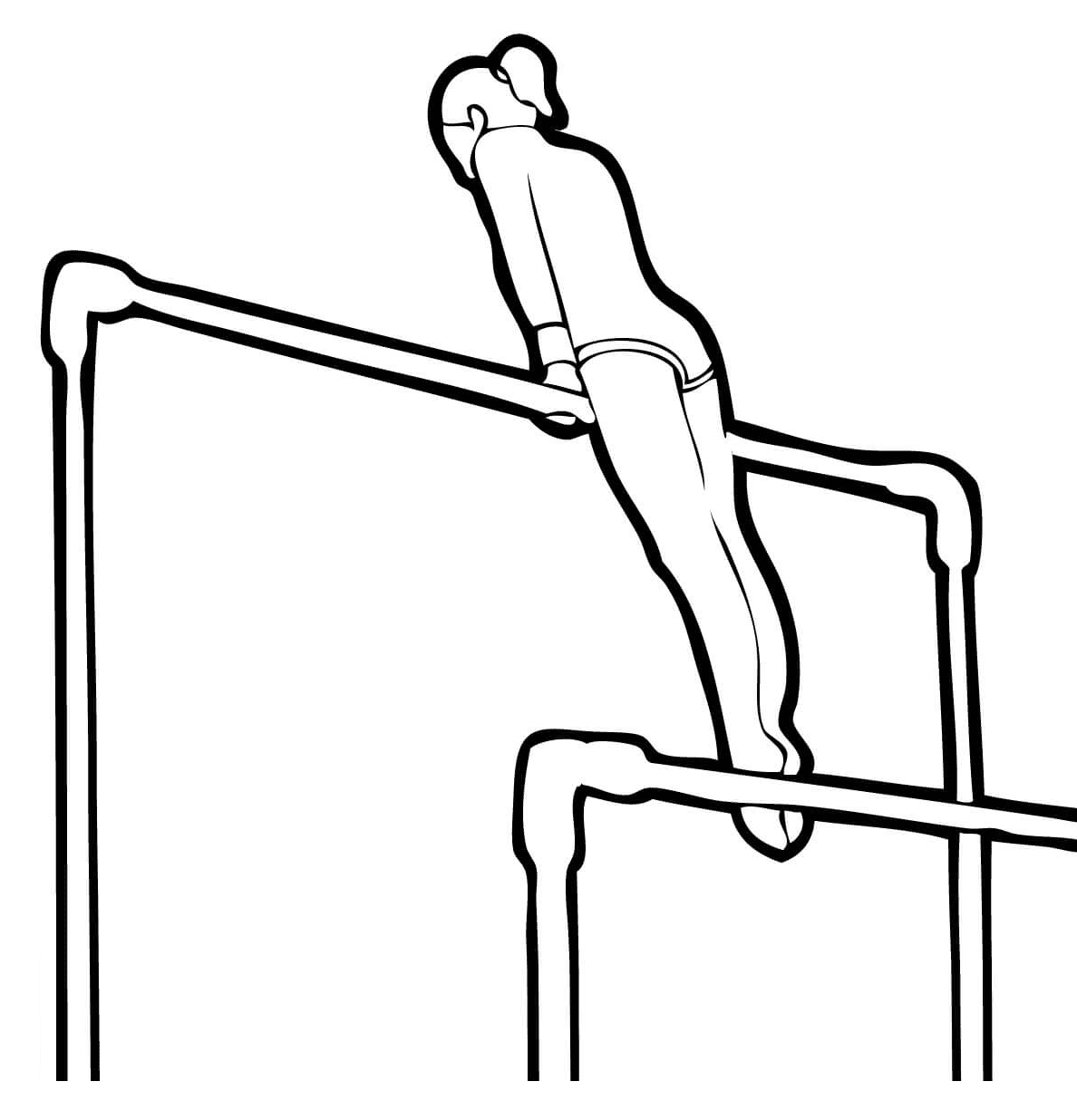
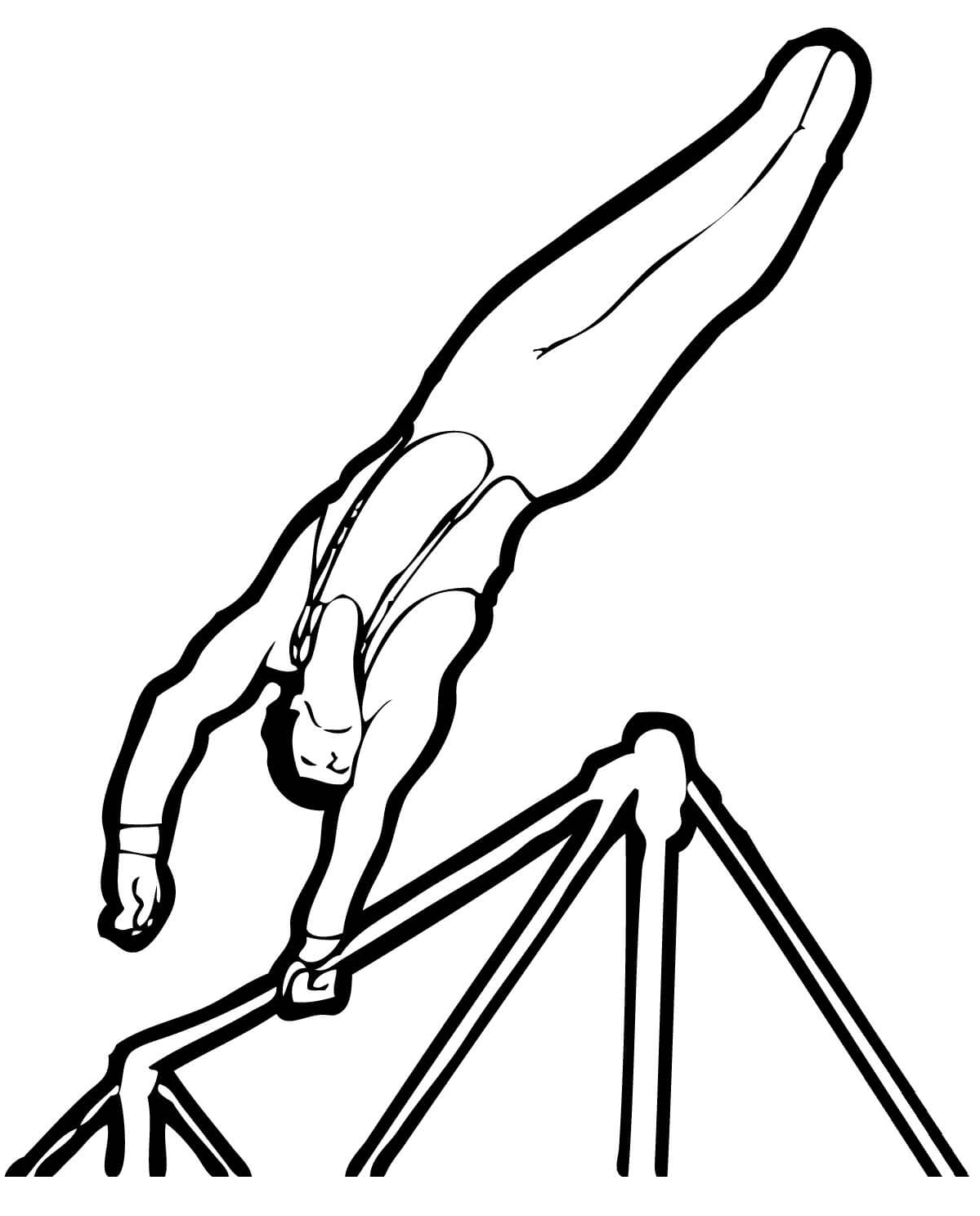
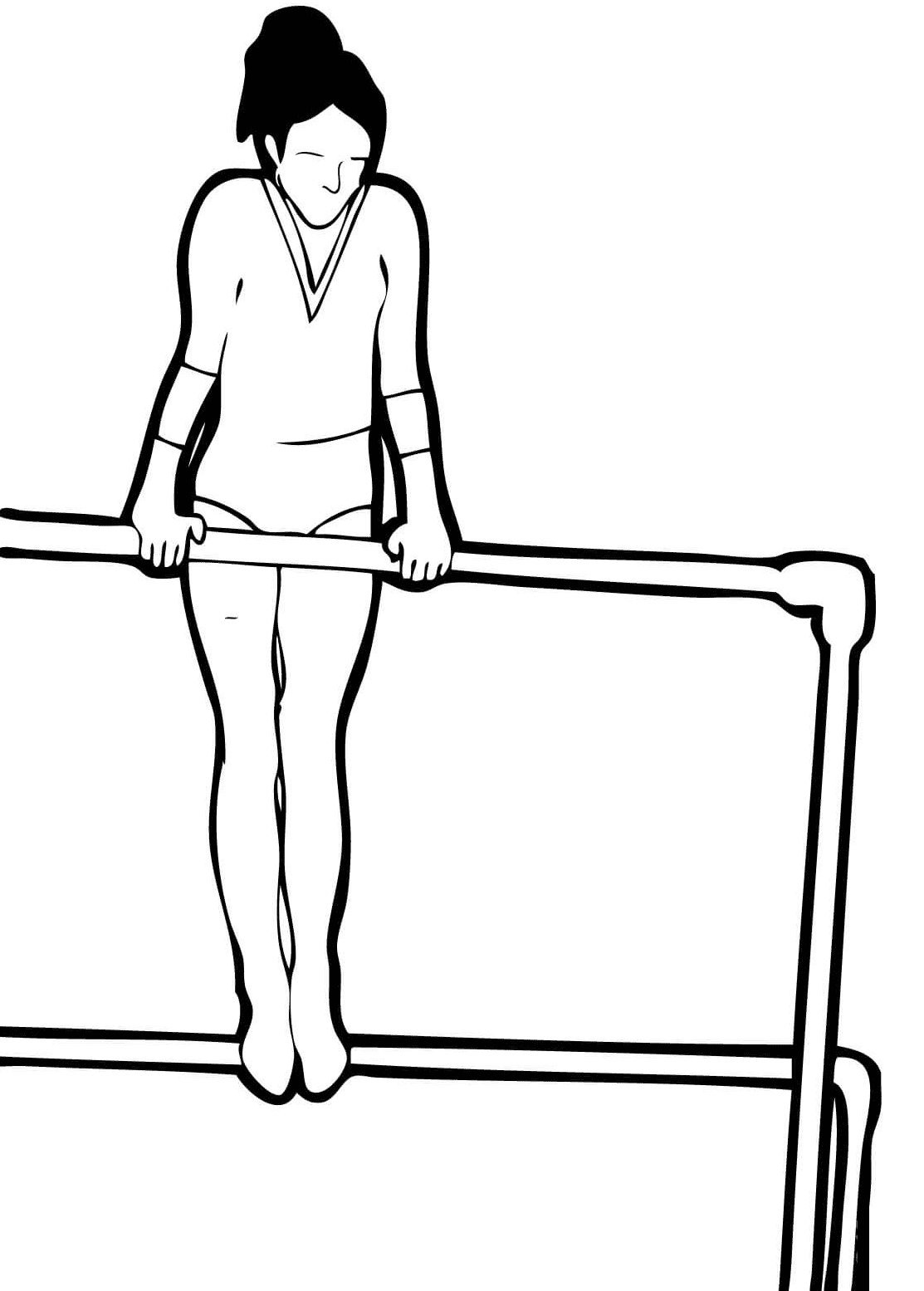
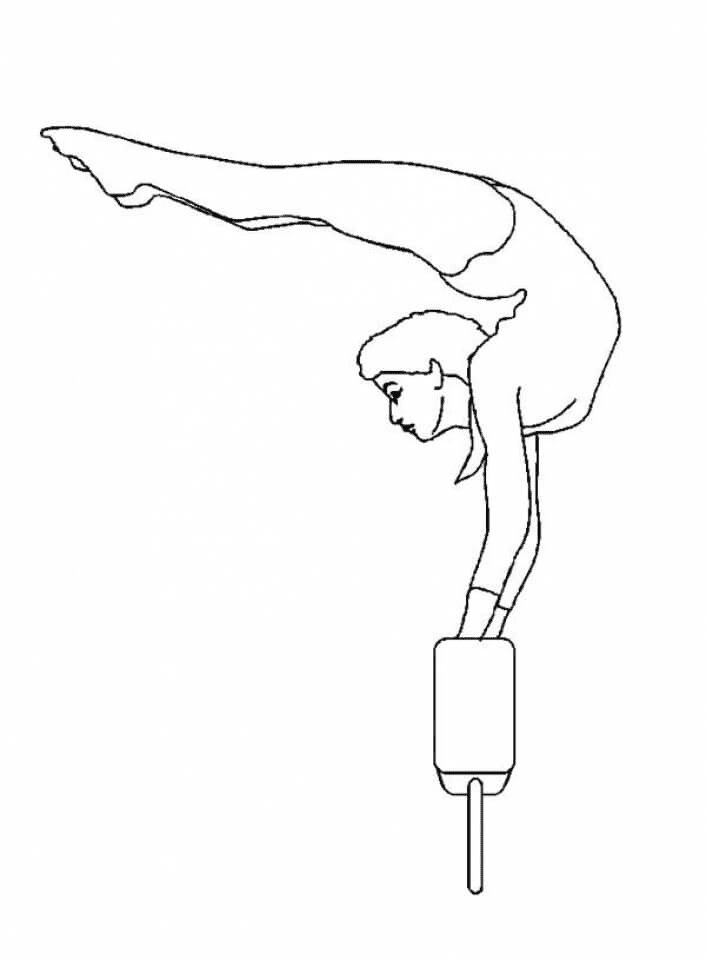
The uneven bars pages – Uneven Bars Performance, Uneven Bars Artistic Gymnastics, Girl on Uneven Bars – feature the most technically complex apparatus in women’s gymnastics. The uneven bars require the gymnast to transition between two bars set at different heights through release moves, giants (full rotations around the bar), and precise handstand positions – all performed in a continuous, uninterrupted flow that is scored as much for its seamless composition as for the difficulty of individual elements.
Artistic Gymnastics – Men’s Events
Men’s artistic gymnastics comprises six events: floor exercise, pommel horse, rings, vault, parallel bars, and horizontal bar – a broader apparatus range than the women’s program that reflects the historical development of the sport and the different physical demands placed on male gymnasts.
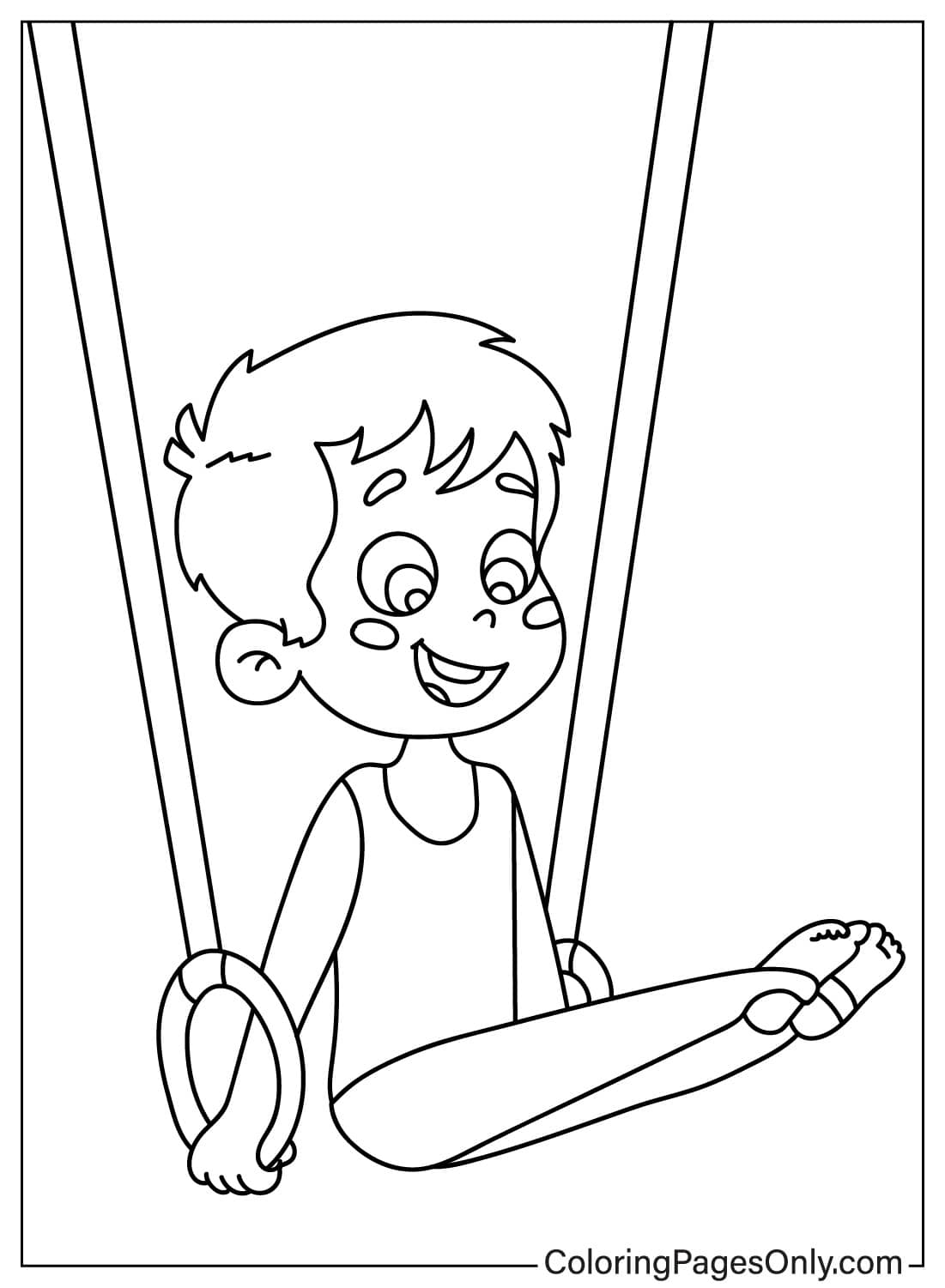
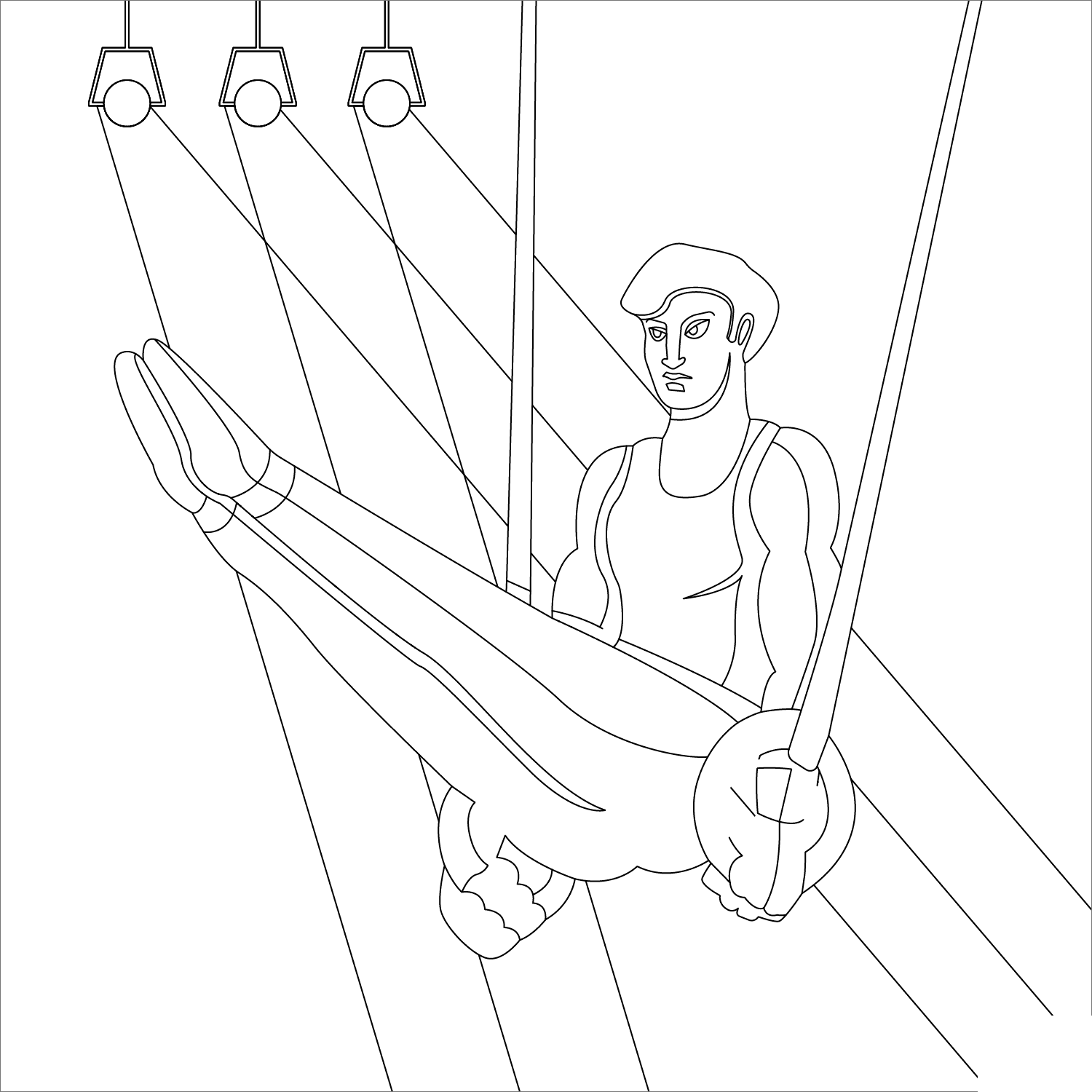
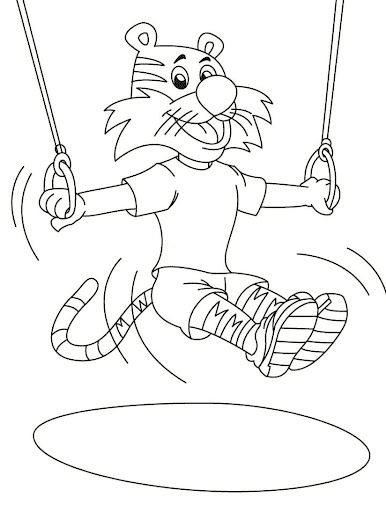
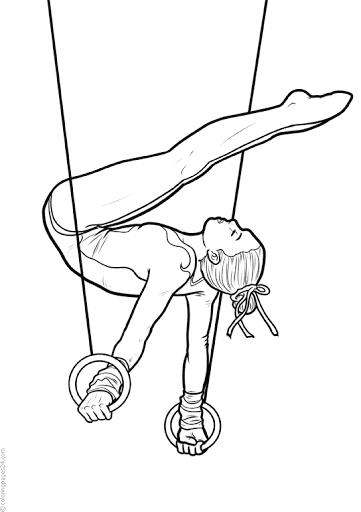
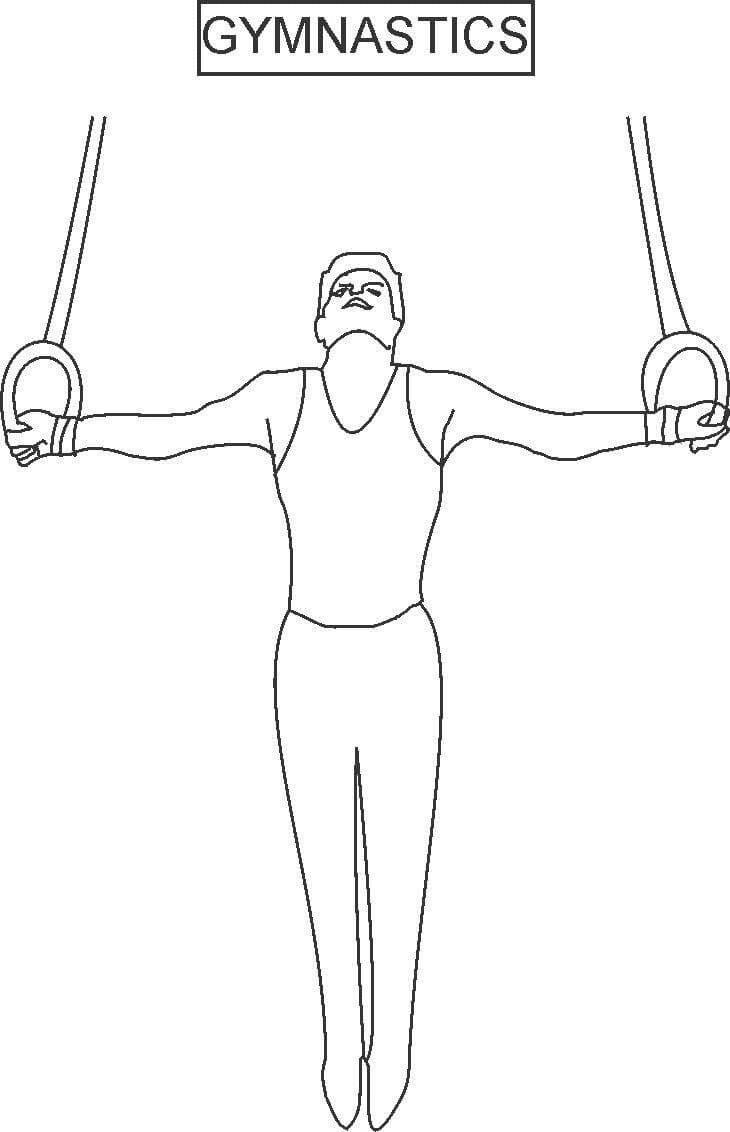
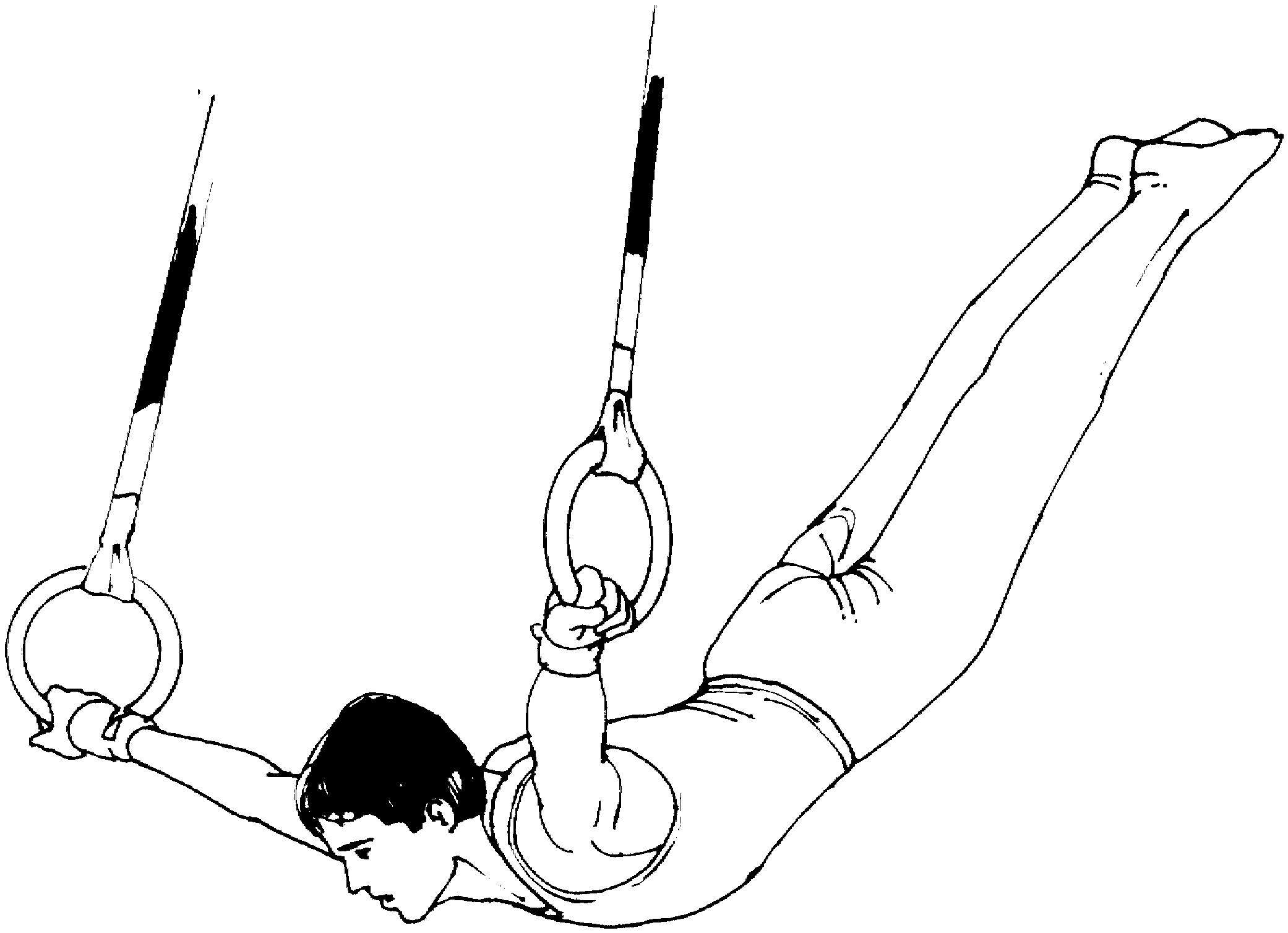
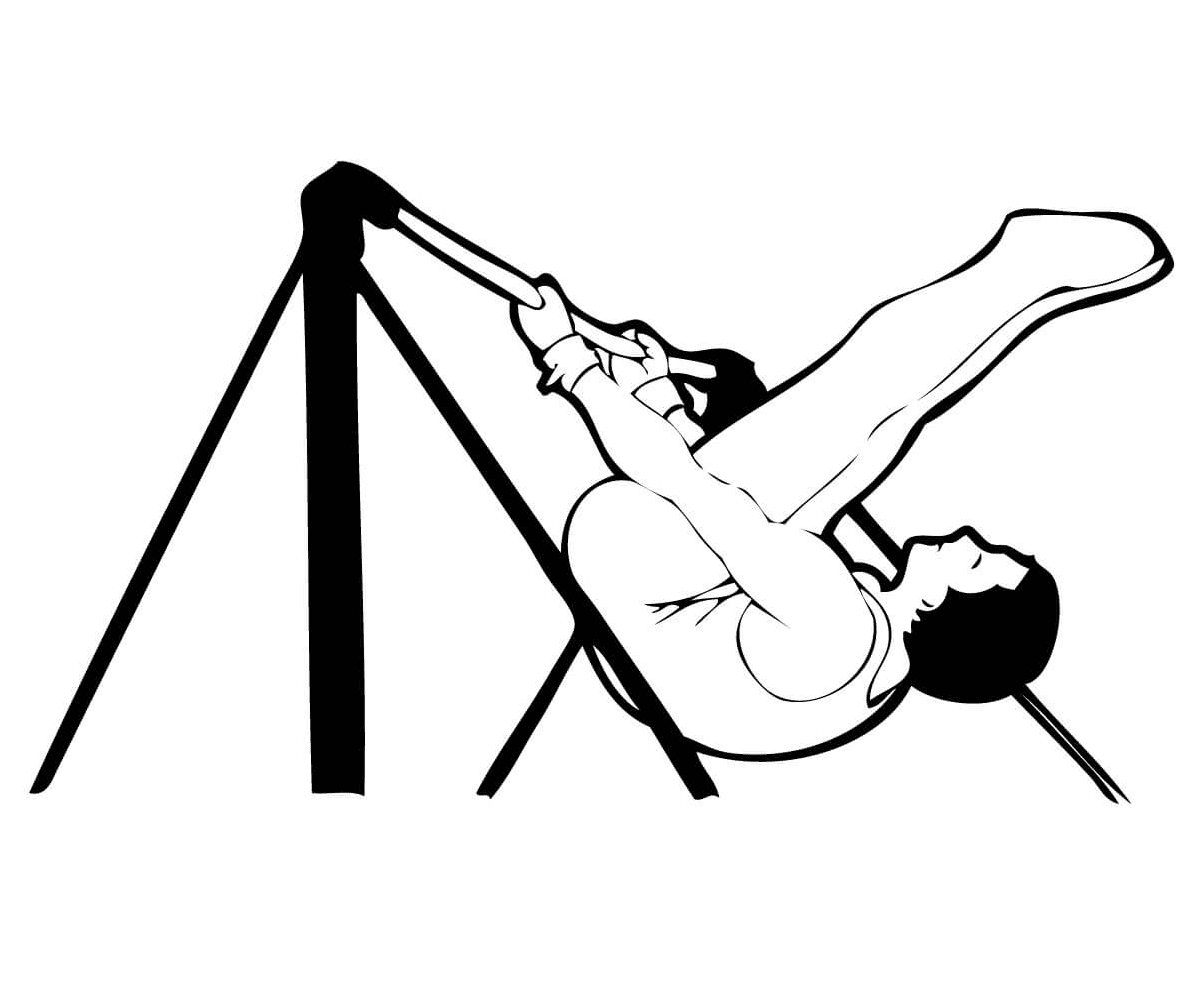
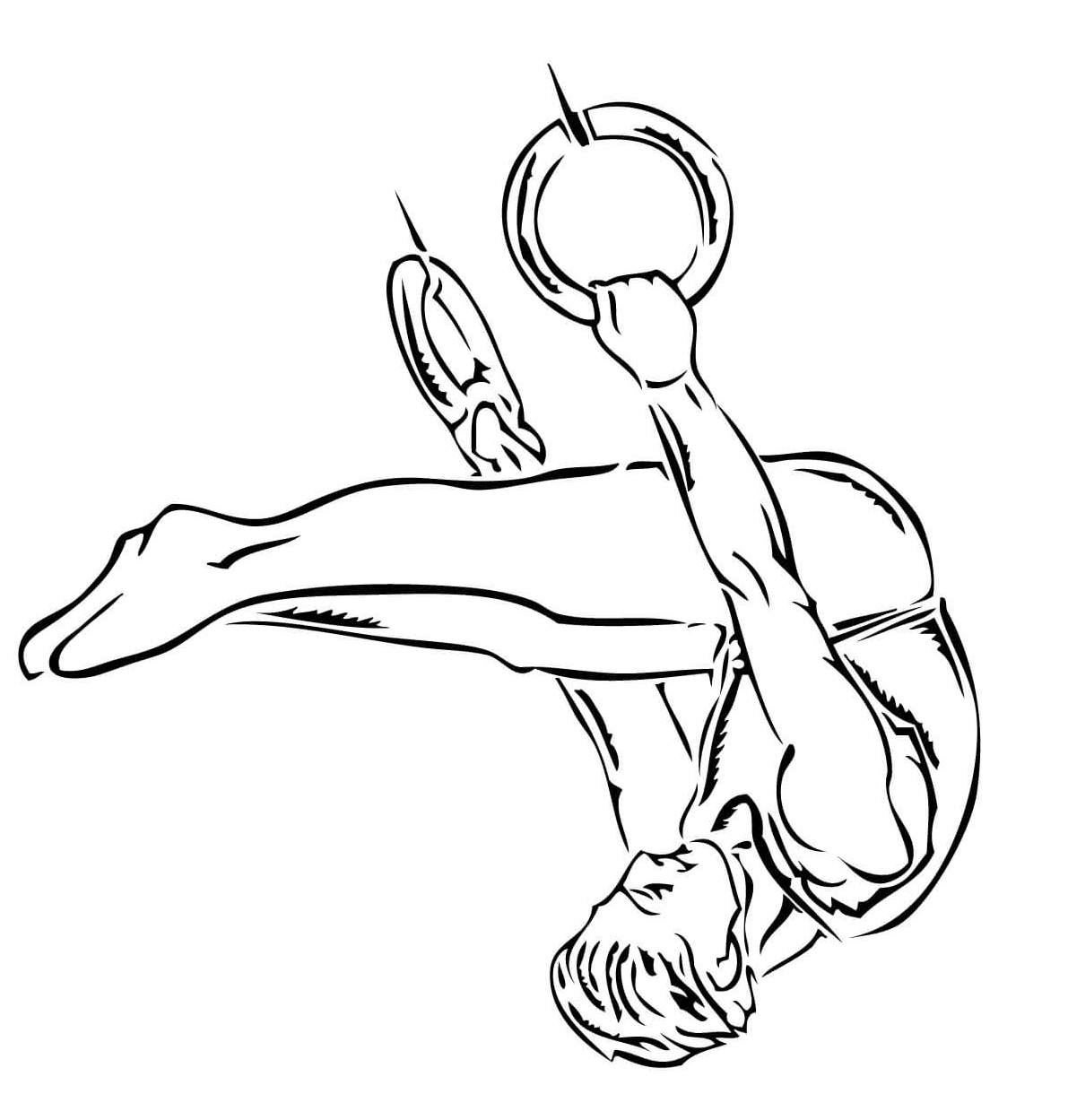
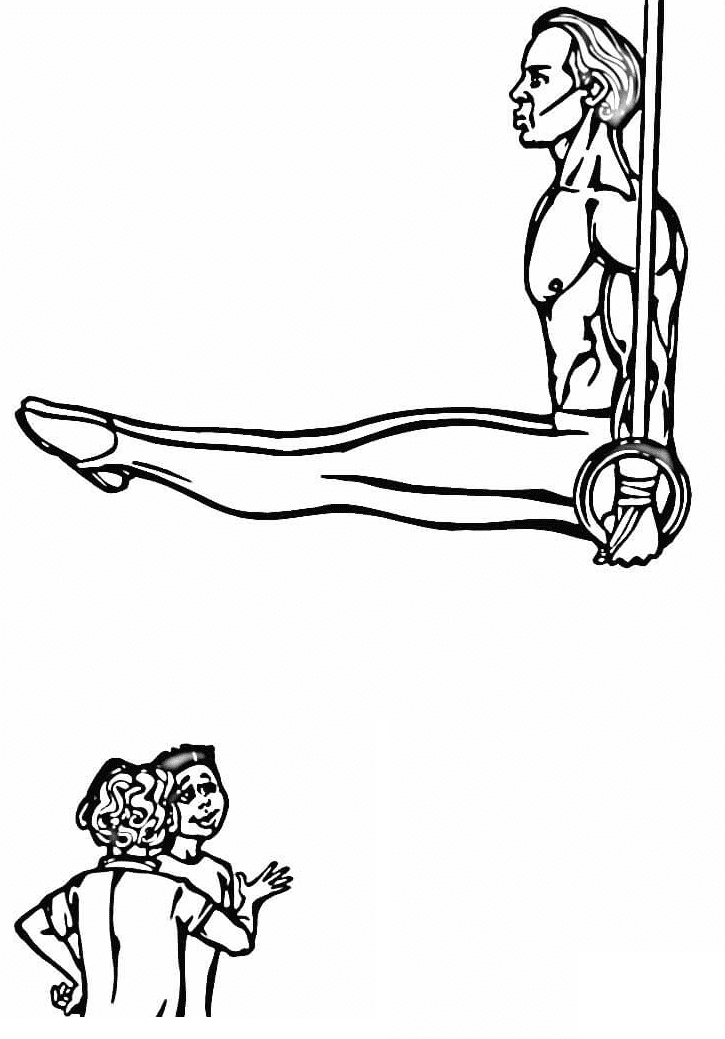
The rings pages – Gymnastic Ring Performance, Gymnastic Ring Performance to Print, Gymnast on the Rings, Artistic Gymnastics Rings, Artistic Gymnastics Rings to Print, Boy Doing Gymnastic Rings – feature the purest strength event in gymnastics. The still rings hang on cables from a frame 5.75 meters above the floor; the gymnast must perform an iron cross (arms fully extended horizontally under full body weight), an inverted cross, strength holds, and swing elements that release and catch the rings – all while keeping the rings as still as possible. The still rings are widely considered the most demanding upper-body strength event in all of Olympic sport.
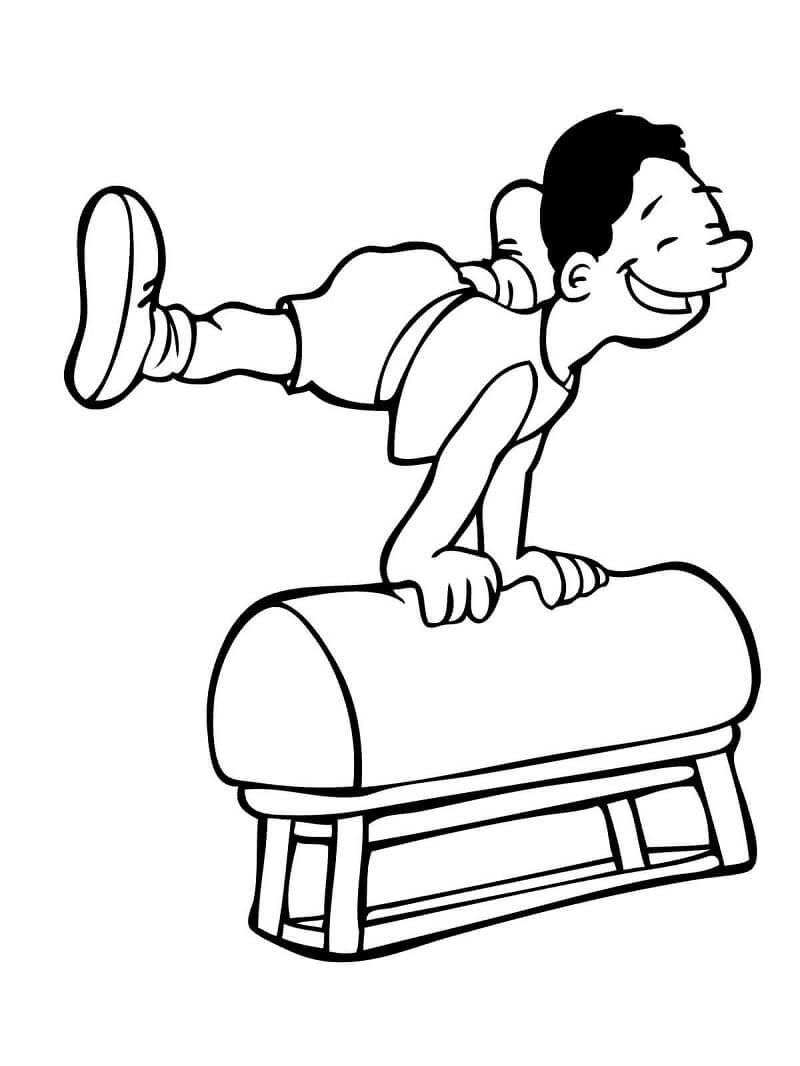
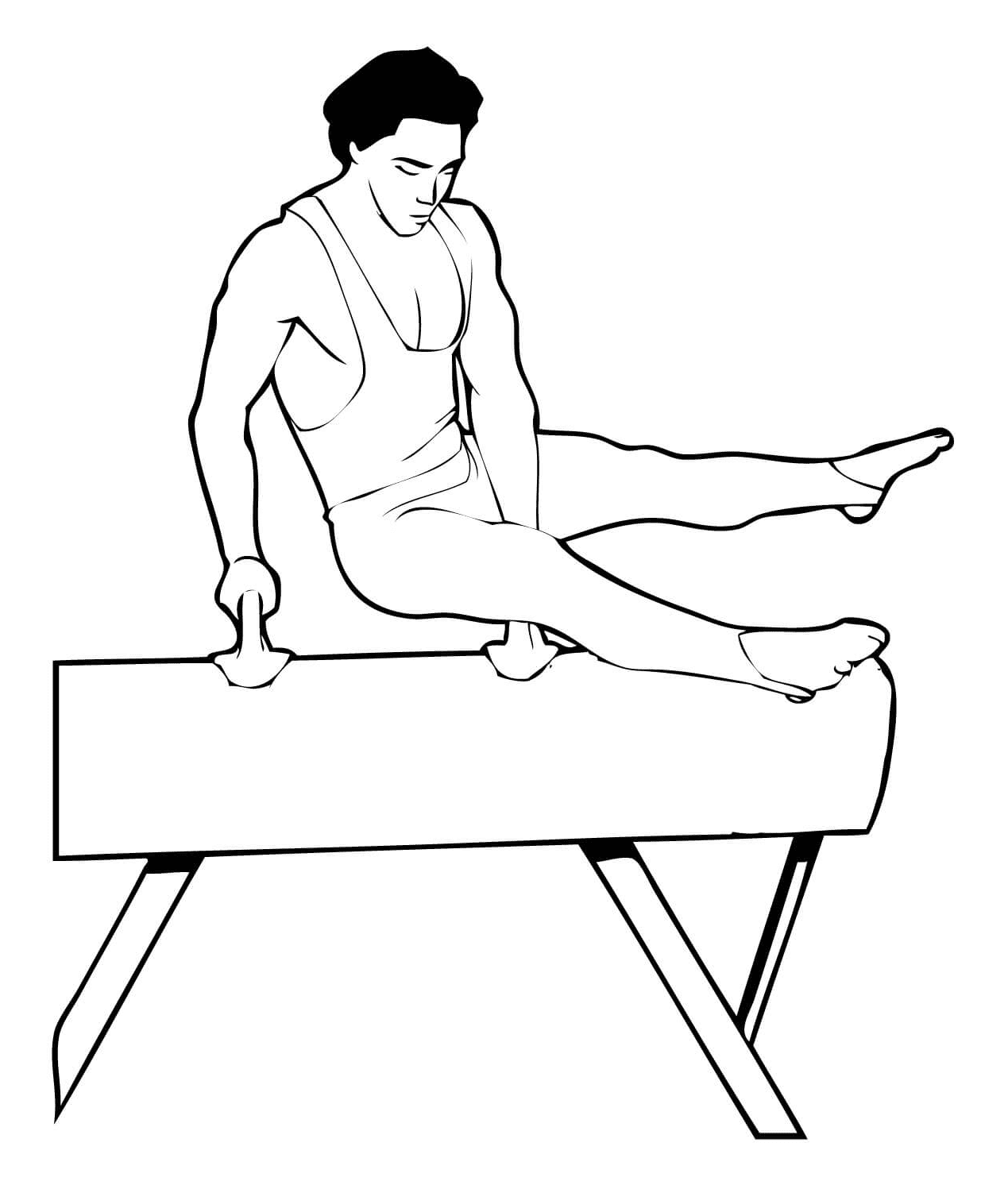
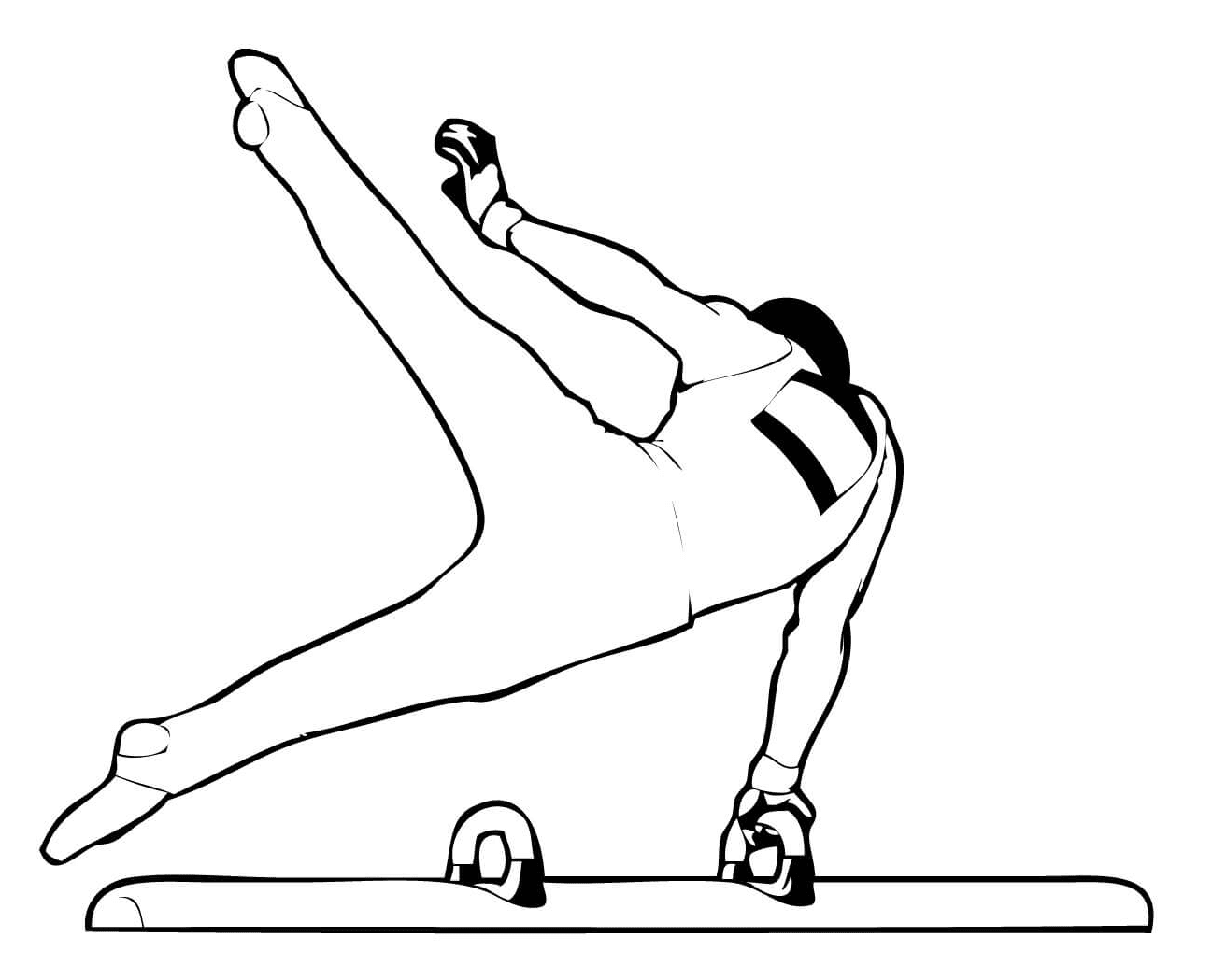
The pommel horse pages – Artistic Gymnastics Pommel Horse, False Scissor Pommel Horse – capture an event that is unique to men’s gymnastics and unlike any other apparatus in sport: a leather-covered curved body with two handles (pommels) set on a raised frame, on which the gymnast performs continuous circular movements and scissors entirely on his hands, with both legs swinging in controlled arcs that must never stop moving. The pommel horse rewards rhythm, balance, and shoulder strength simultaneously – and is notoriously unforgiving of the smallest error in hand placement.
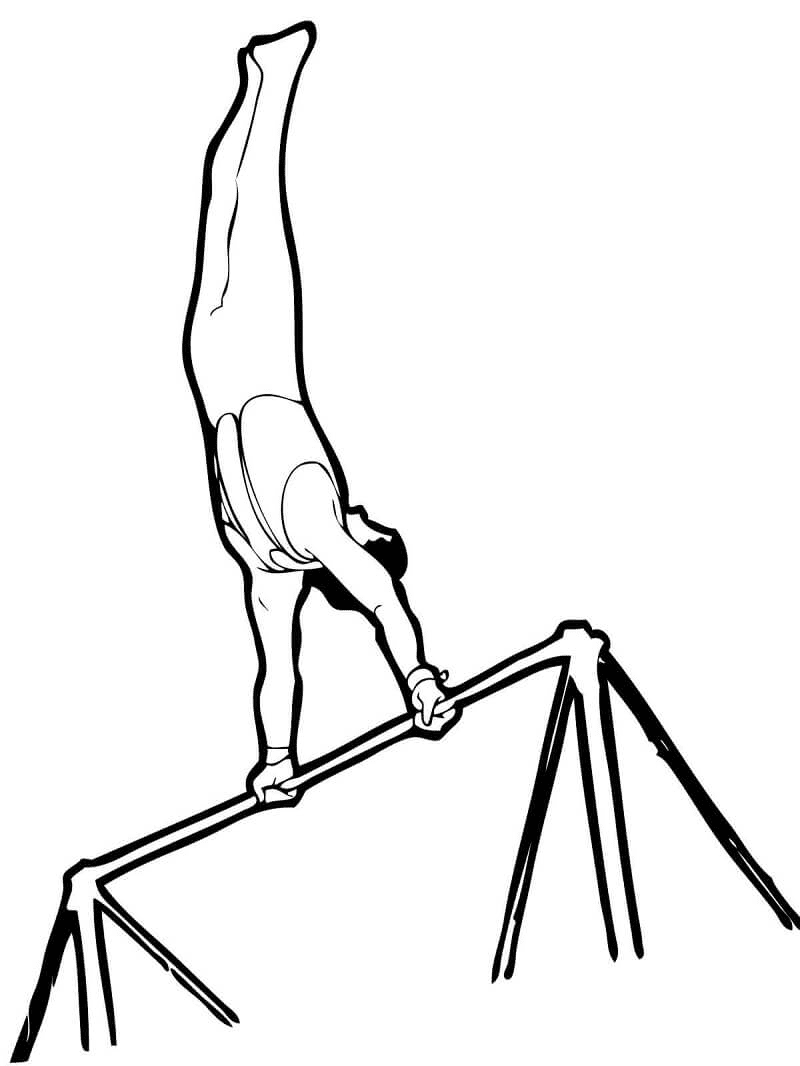
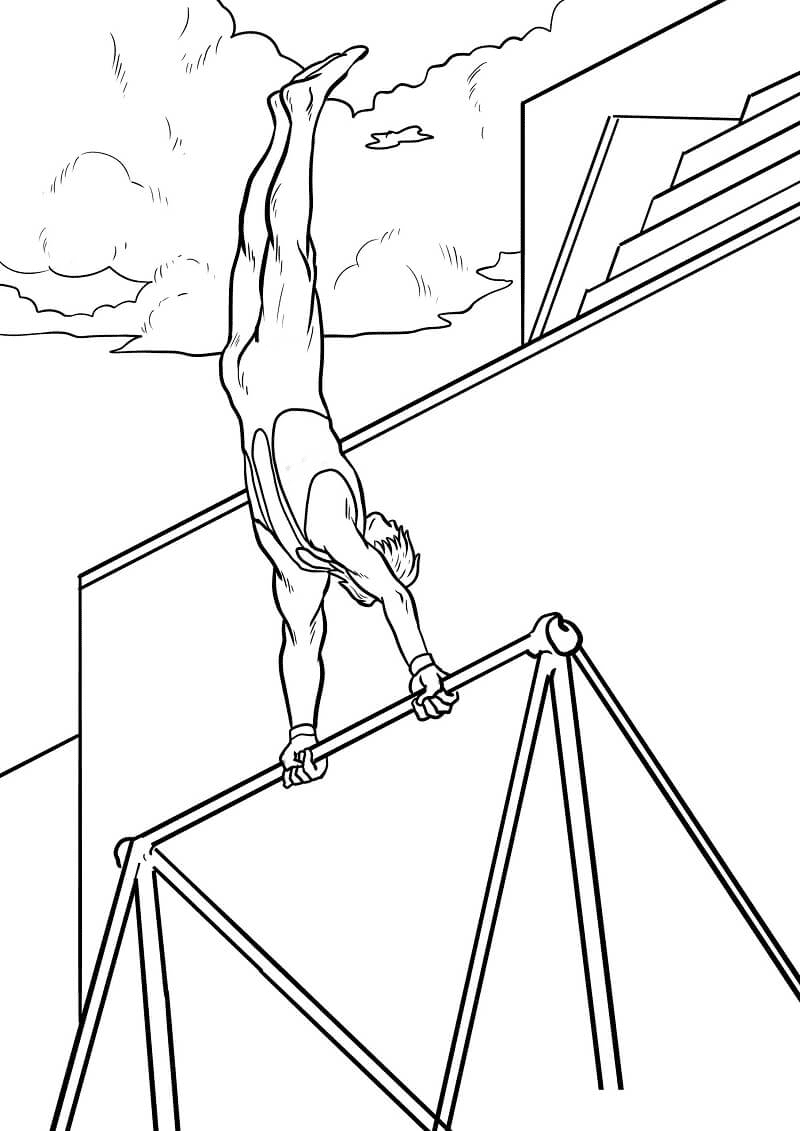
The horizontal bar pages – High Bar Gymnastics, Artistic Gymnastics High Bar, Artistic Gymnastics High Bar Printable, Artistic Gymnastics Horizontal Bar, Artistic Gymnastics Horizontal Bar Printable – feature the most crowd-pleasing event in men’s gymnastics. Release moves on the horizontal bar – the Tkatchev, the Kolman, the Cassina – involve the gymnast releasing the bar completely, traveling through the air, and catching the bar again, all while maintaining sufficient height and rotation to stick the landing position. The horizontal bar final is consistently the most loudly attended event at any gymnastics World Championship or Olympic Games.
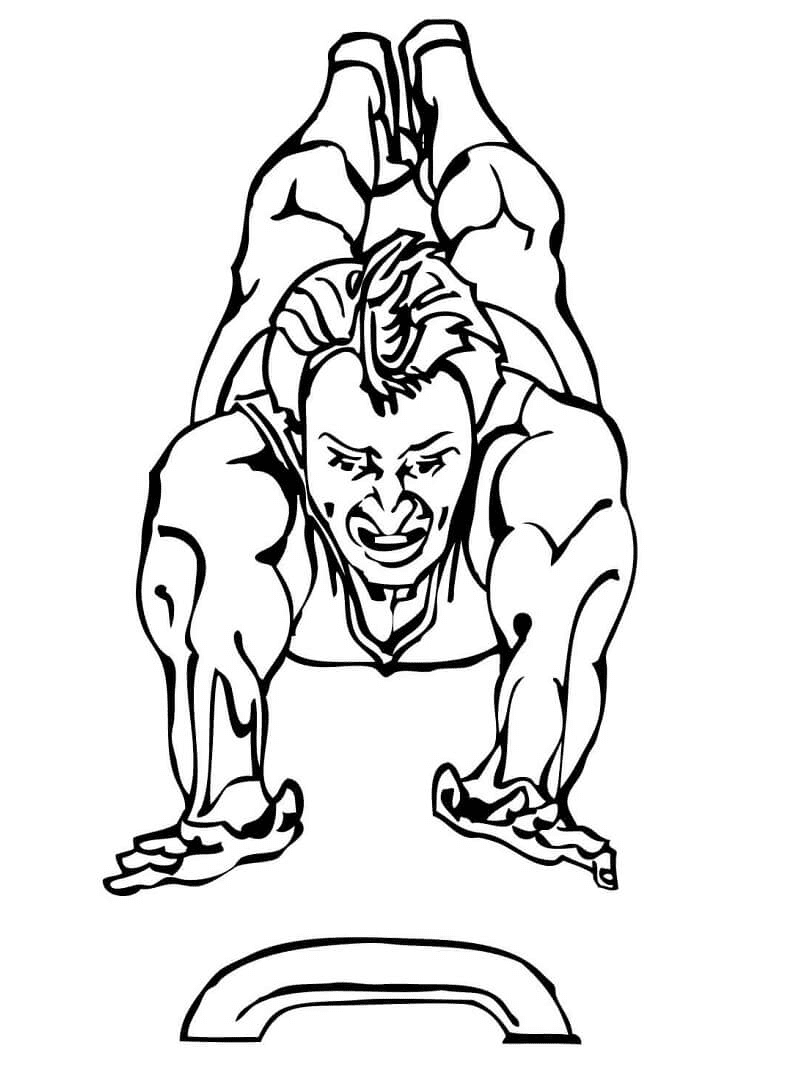
The vault pages – Vault Gymnastics Performance, Vault Gymnastics Performance Boy, Vault Artistic Gymnastics – show the fastest event in gymnastics: a 25-meter approach, a punch from the springboard, a brief contact with the vaulting table, and then a sequence of rotations in the air before a stuck landing. The most difficult vaults – the Produnova (double front salto), the Cheng (round-off half-on, double pike salto), the Yurchenko double pike – involve aerial movements that last less than two seconds from table contact to landing.
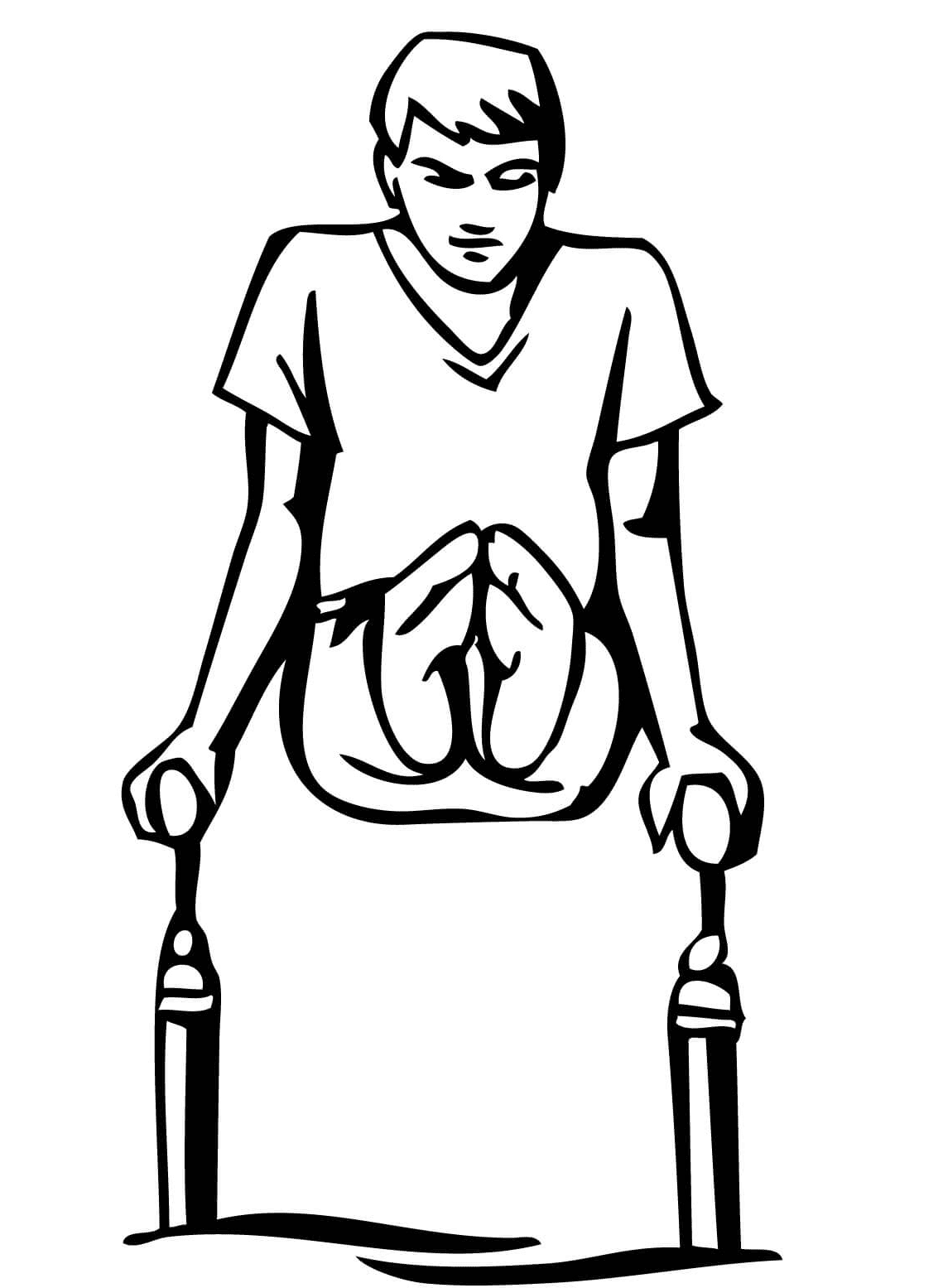
The parallel bars page – Parallel bars l-sit – shows one of the fundamental strength positions in men’s gymnastics: the L-sit, in which the gymnast supports his entire body weight on the bars with legs extended horizontally at hip height, requiring extraordinary core and hip flexor strength to maintain even for the two-second minimum hold required in competition.
Rhythmic Gymnastics – Movement, Music, and Apparatus
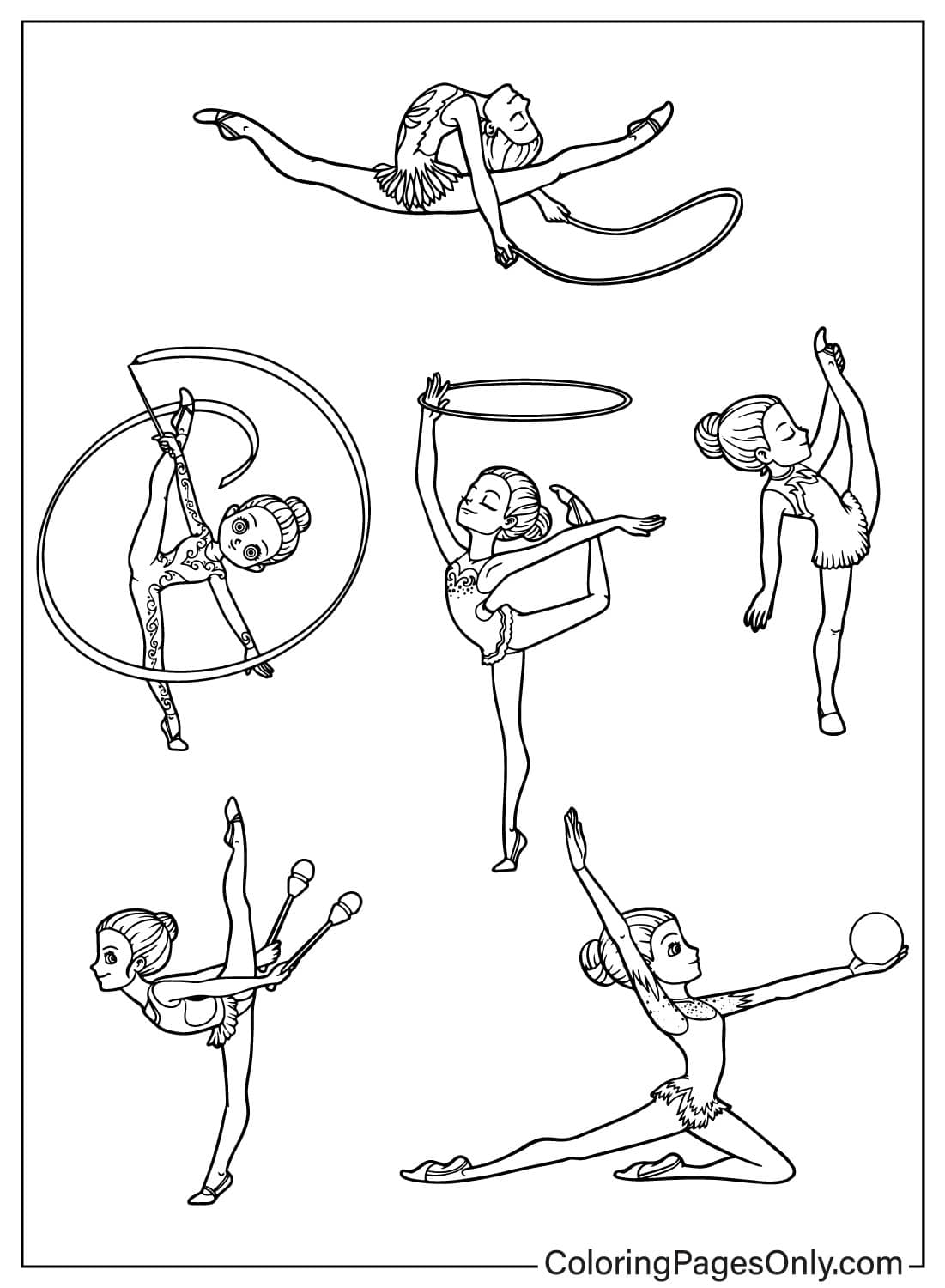
Rhythmic gymnastics is exclusively a women’s discipline at the Olympic level, combining elements of ballet, dance, gymnastics, and apparatus manipulation into routines that are judged simultaneously on artistic presentation and technical difficulty. The five apparatus used in rhythmic gymnastics are the rope, hoop, ball, clubs, and ribbon.
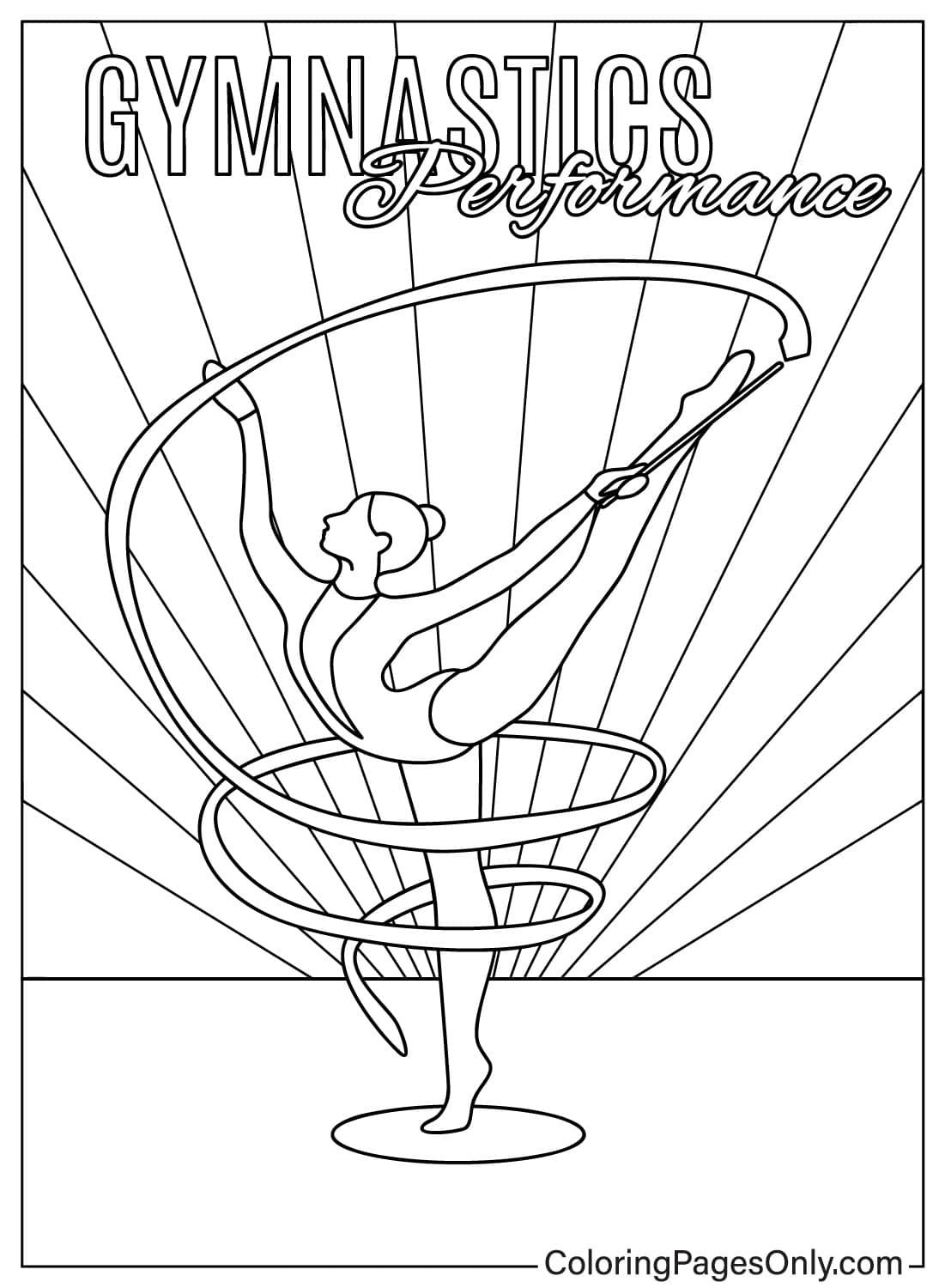
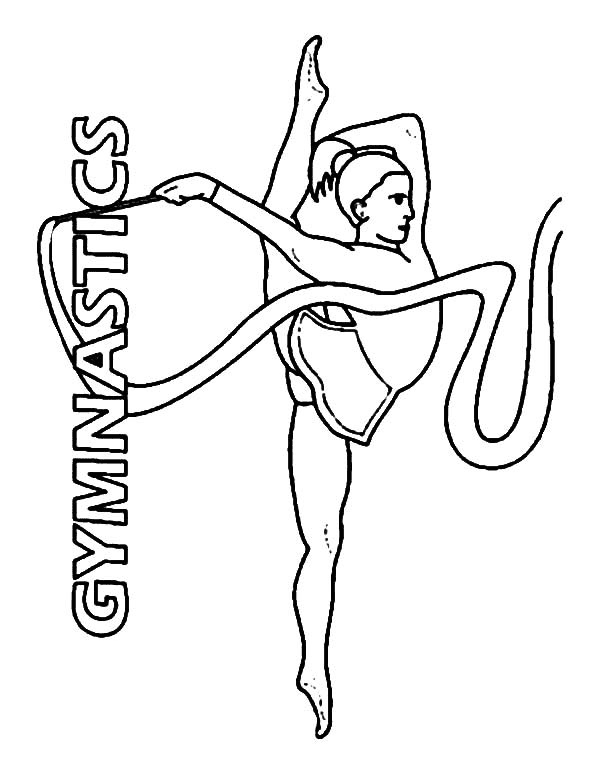
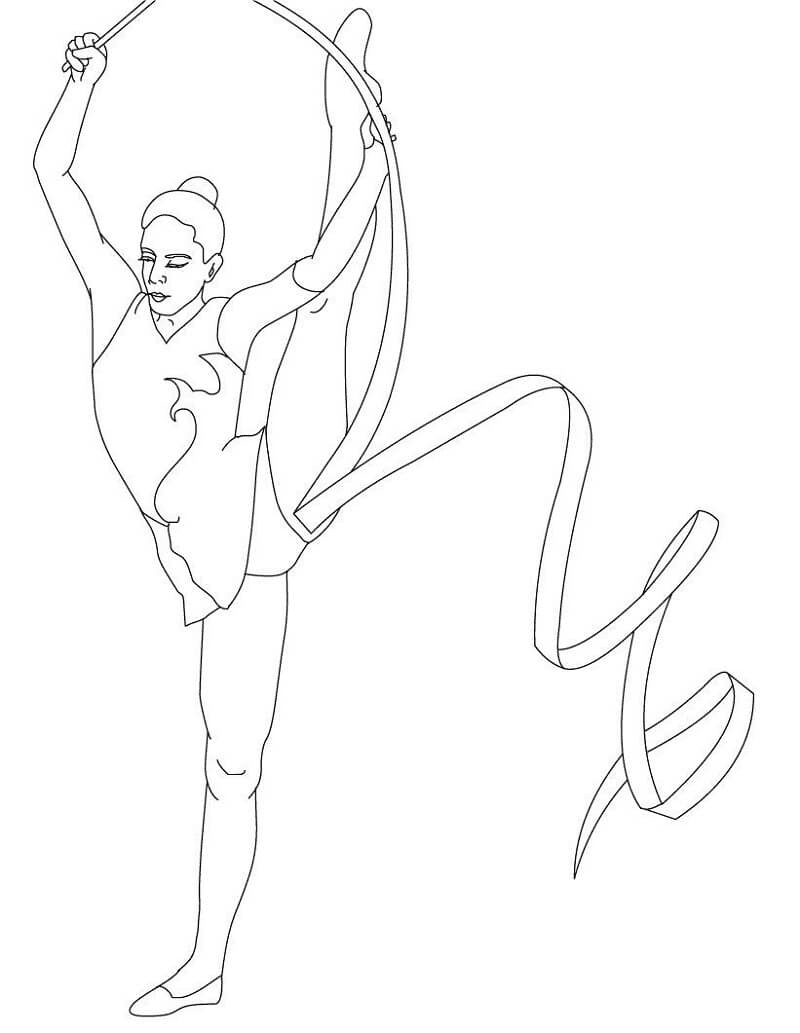
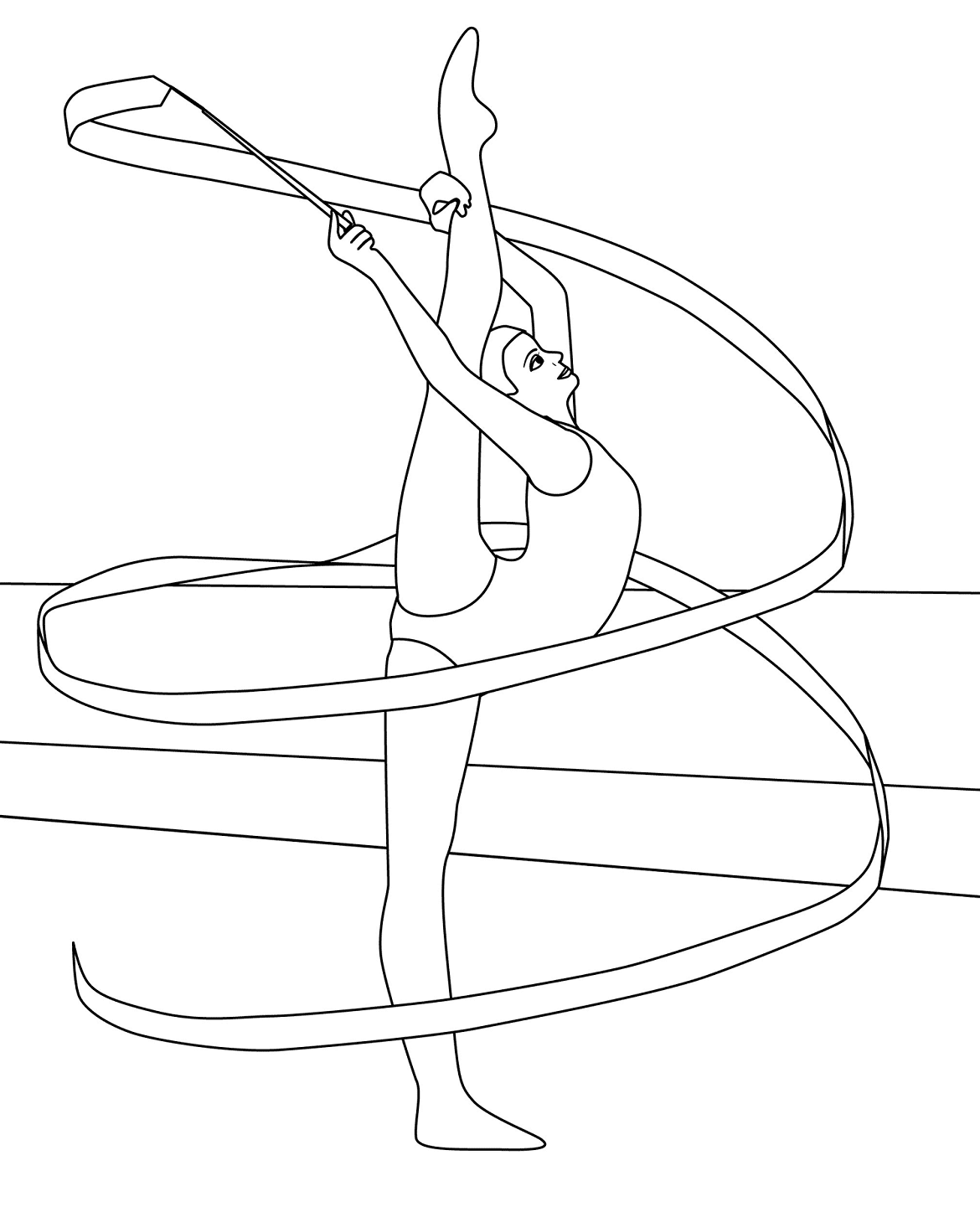
The ribbon pages – Rhythmic Gymnastics With Ribbon, Rhythmic Gymnastics Ribbon, Rhythmic Gymnastic Performance, Rhythmic Gymnastics – are among the most visually striking in the entire collection. The ribbon itself is 6 meters long, attached to a stick 50–60 centimeters in length, and must remain in continuous motion throughout the routine – the ribbon can never touch the floor. Elite ribbon routines feature spirals, snakes, throws with body rotations, and cascades of movement that make the ribbon appear to be a living extension of the gymnast’s body.
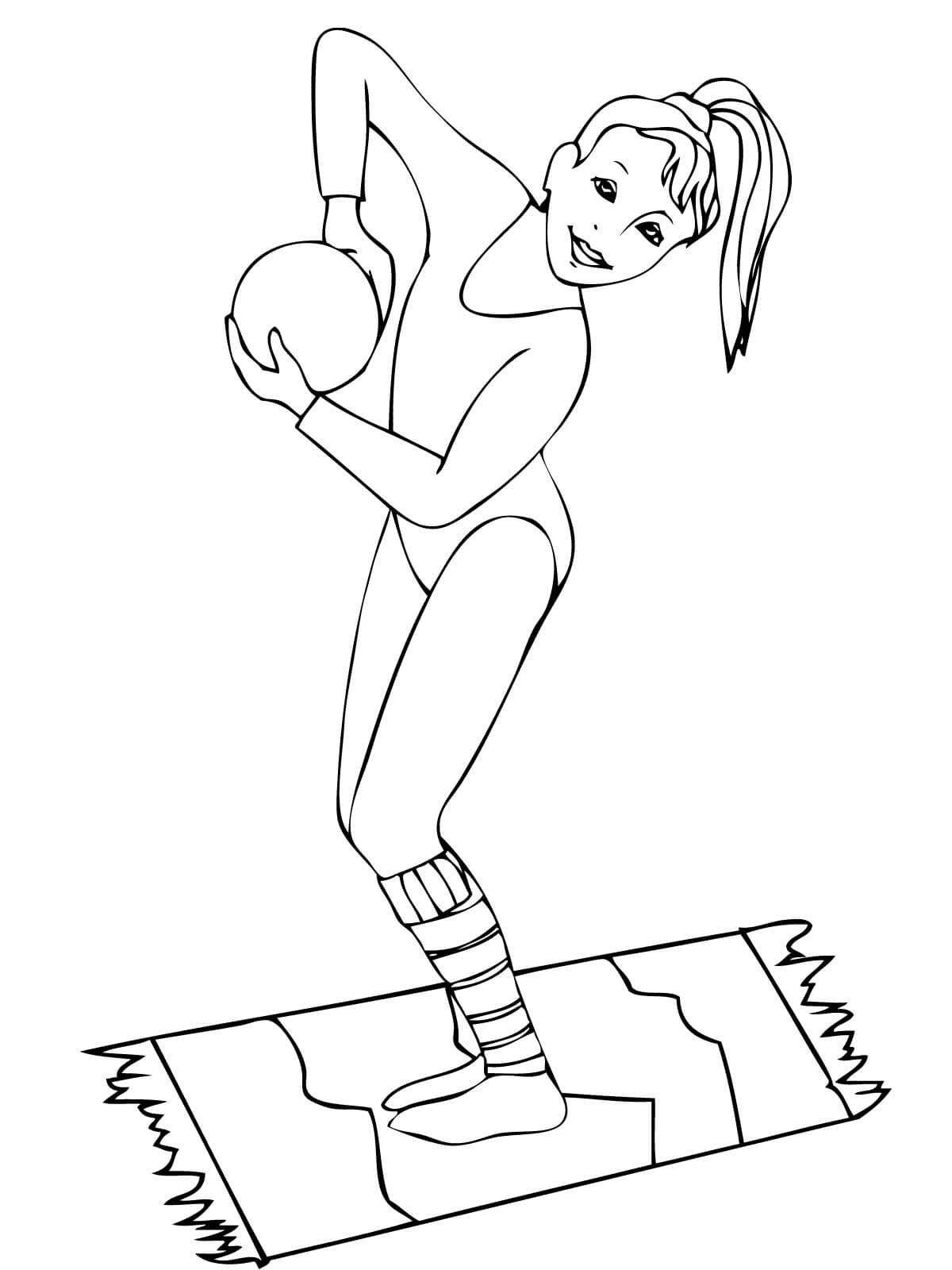
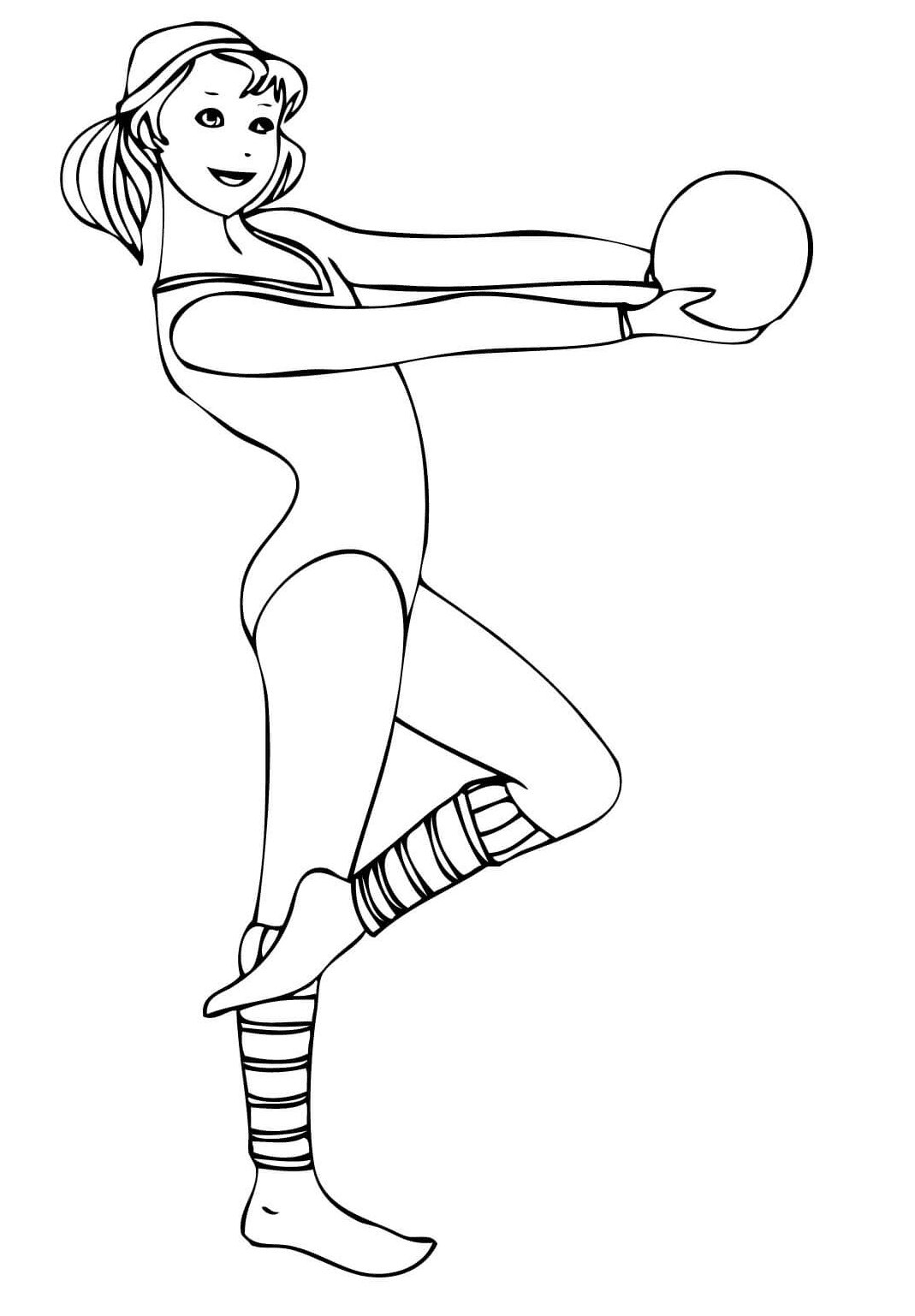
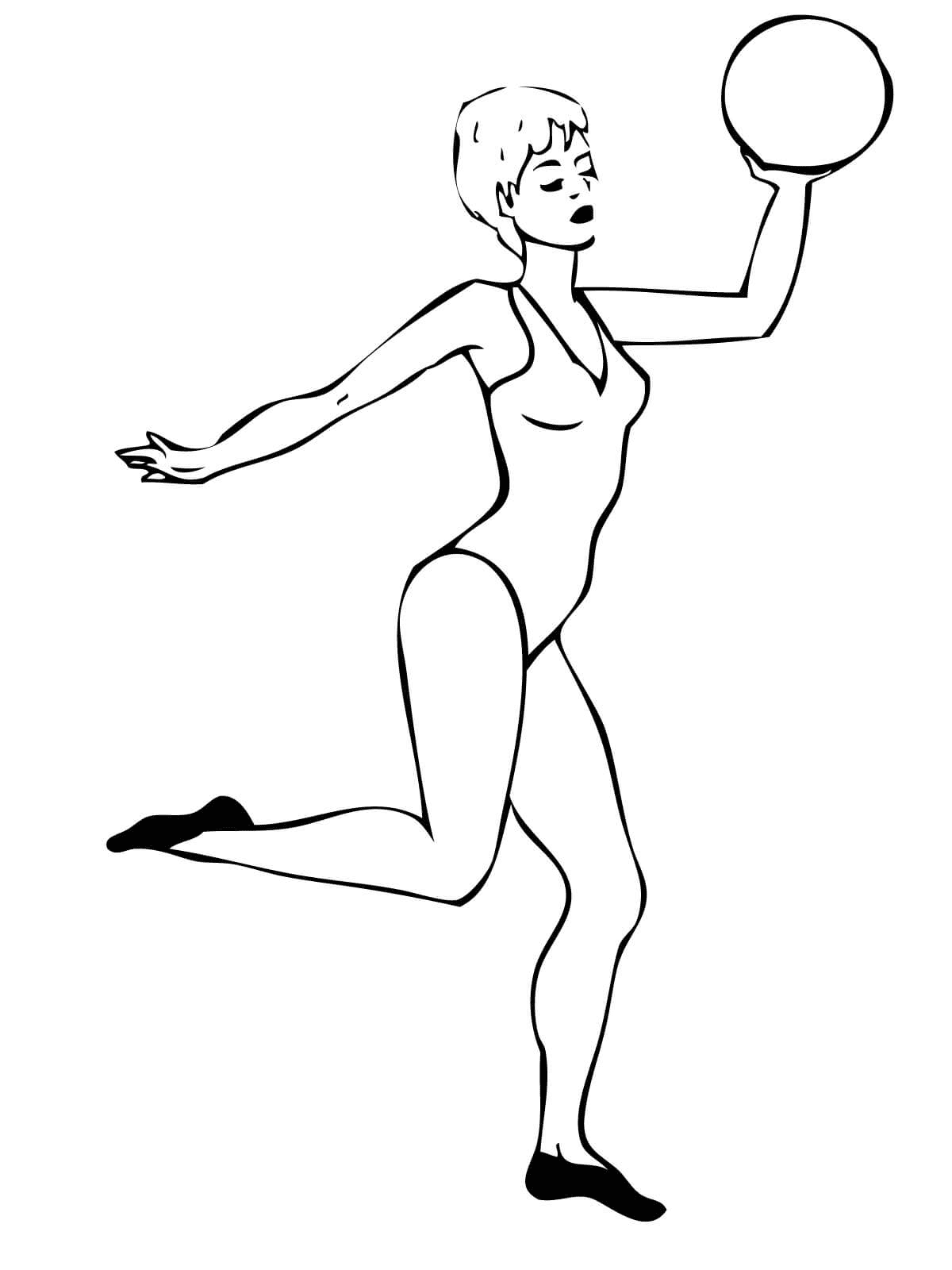
The ball pages – Rhythmic Gymnastics Exercises with Ball, Rhythmic Gymnast Performing with a Ball – capture the apparatus that most rewards the quality of the relationship between gymnast and object. The ball must flow naturally from the gymnast’s hands, never be gripped or held – only rolled, bounced, and thrown – giving good ball work a quality of effortless cooperation between athlete and apparatus that is extraordinarily difficult to achieve and immediately recognizable when it is.
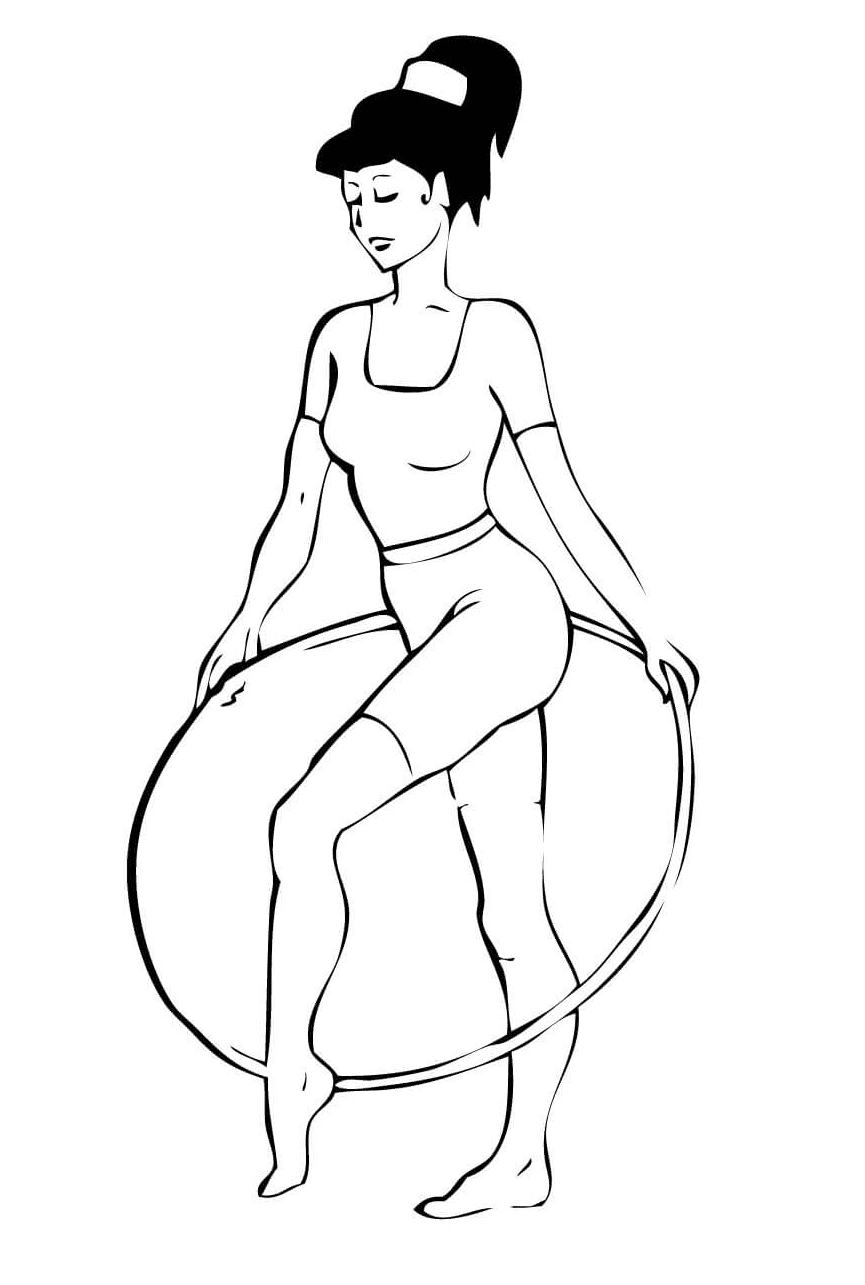
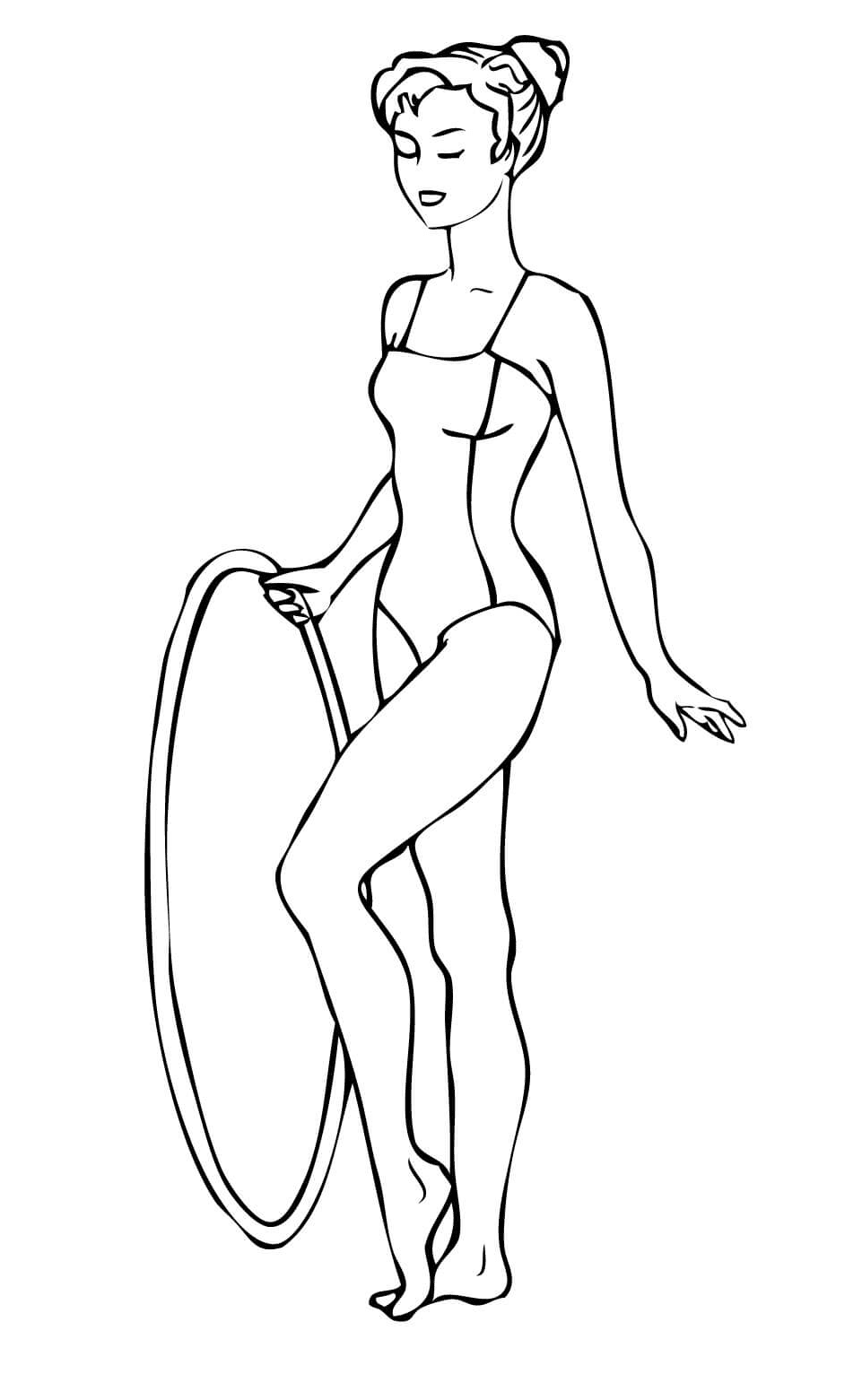
The hoop pages – Gymnastics Routine with a Hoop, Rhythmic Gymnast Performing with a Hoop – feature one of the most versatile rhythmic apparatus: the hoop can be rolled, thrown, caught, spun on the body, jumped through, and used as a prop for acrobatic elements, making it one of the richest sources of choreographic possibility in the entire discipline.
Balance Beam, Floor, Kids, and Competition Pages
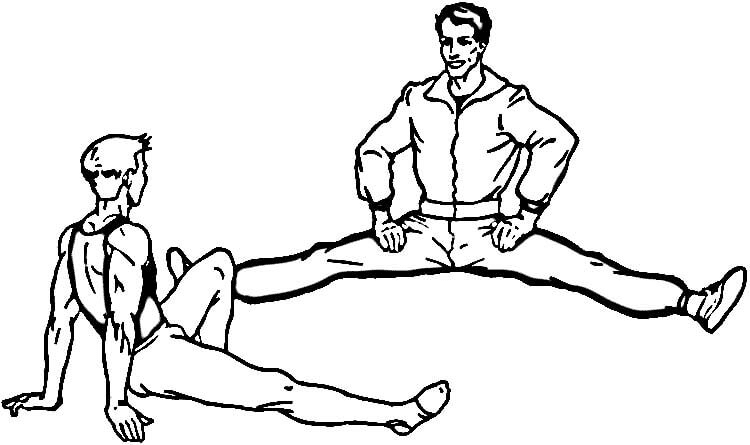
Gymnastics Competition, Gymnastics Performance, Olympic Gymnastic, Gymnastics Exercise, Gymnastics For Kids, Gymnastics for Kids, Gymnastics Free, Gymnastic, Gymnastic to Print, Girls Doing Gymnastics, Girl Gymnastic, Girl with Gymnastics, Working Out, and Gymnastics Poster bring together the full social, competitive, and recreational world of the sport – from the intensity of a competition floor to the joyful, exploratory quality of children discovering gymnastics for the first time.
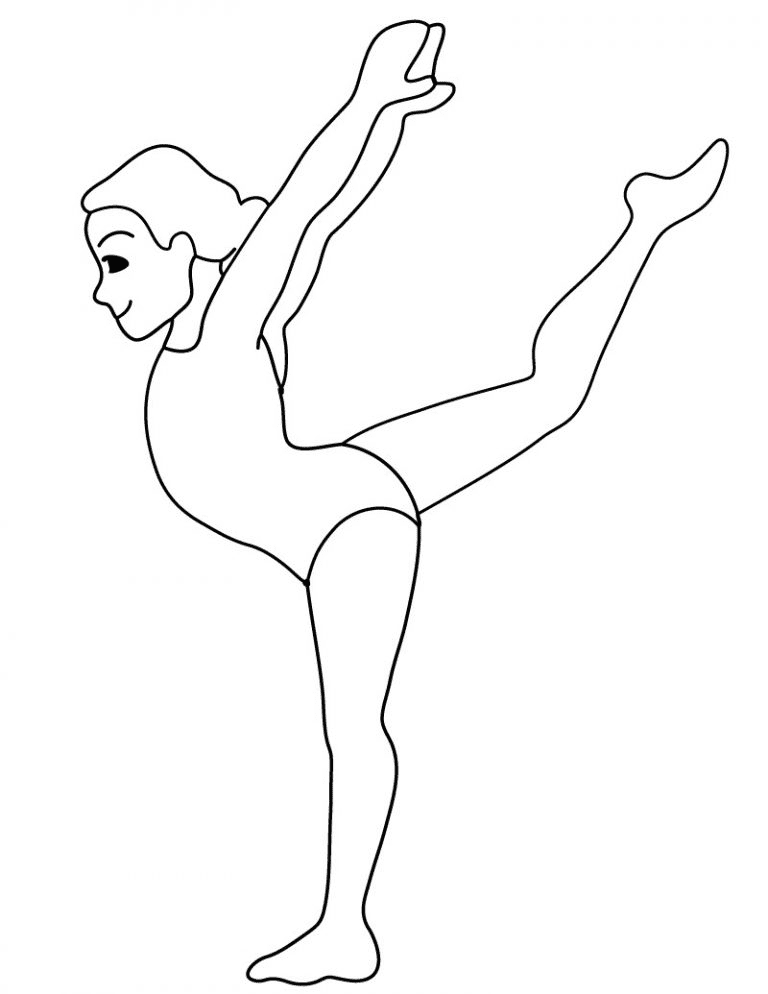
Gymnast Dancing Ballet captures the deep connection between gymnastics and dance – particularly in women’s artistic floor exercise and throughout rhythmic gymnastics, where ballet technique, pointed toes, extended lines, and expressive arms are not decorative additions but scorable technical requirements. The FIG Code of Points awards artistry points for the quality of dance elements, the use of space, and the musical interpretation of floor and rhythmic routines.
Trampoline Gymnastics Pages
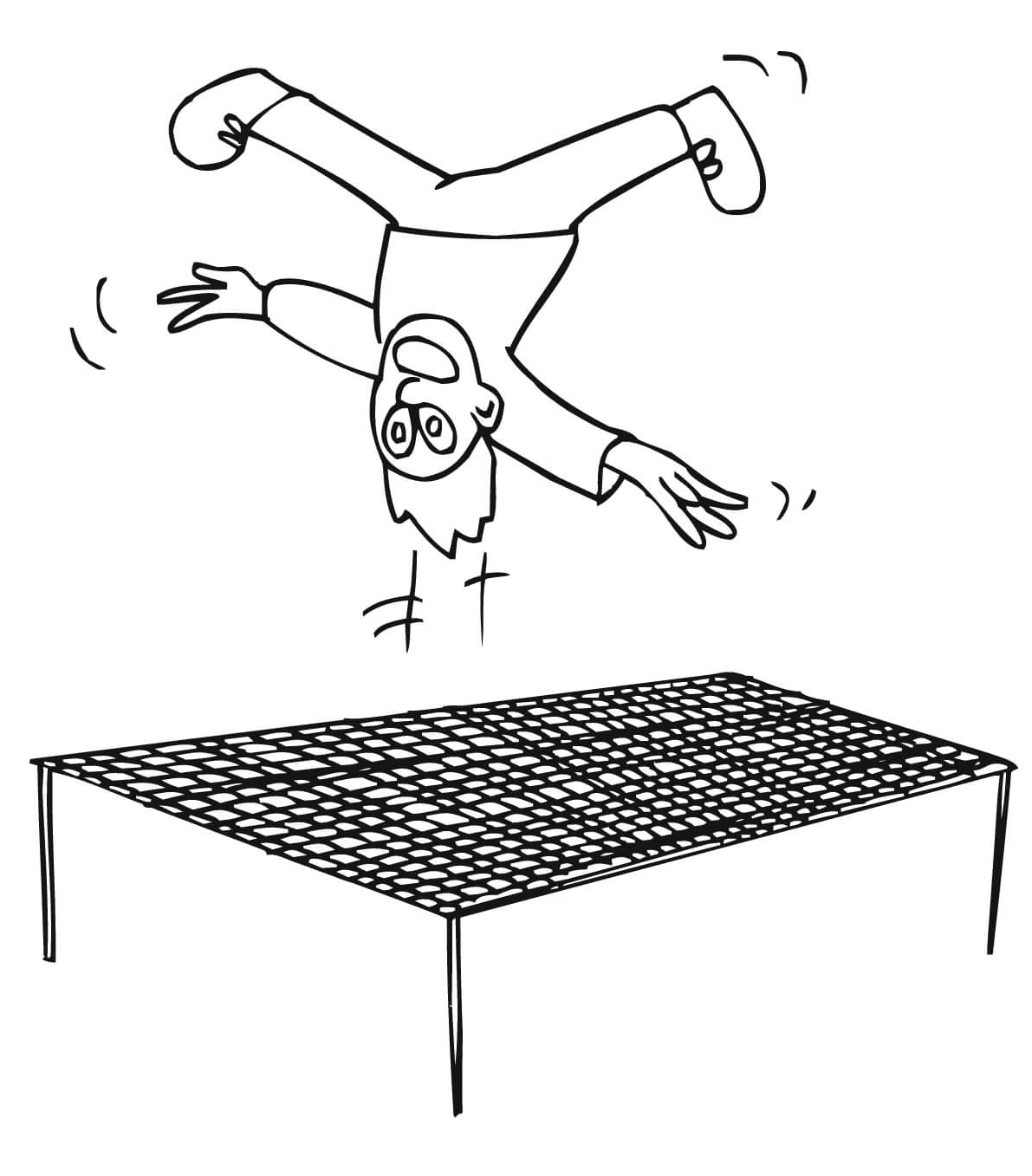
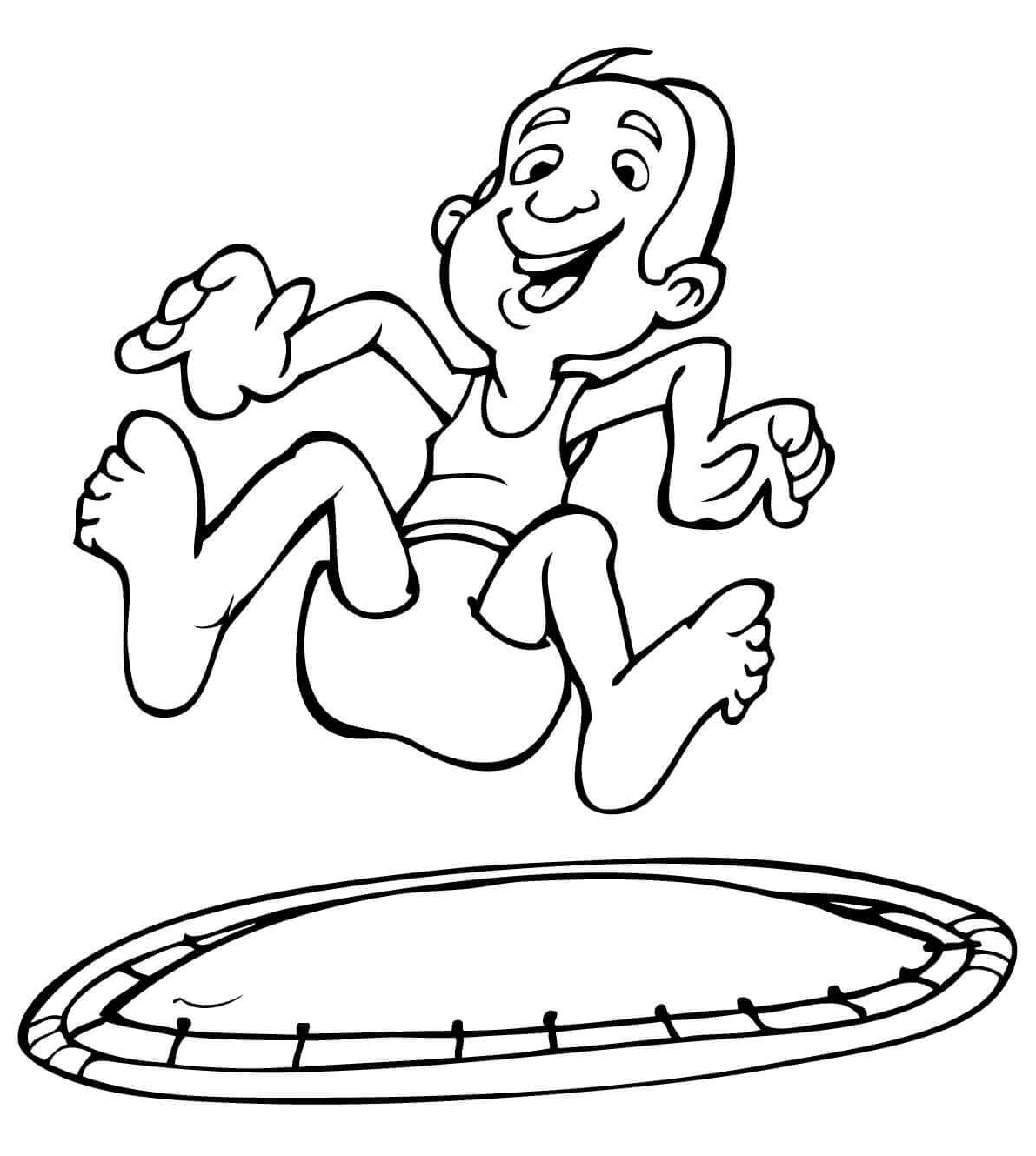
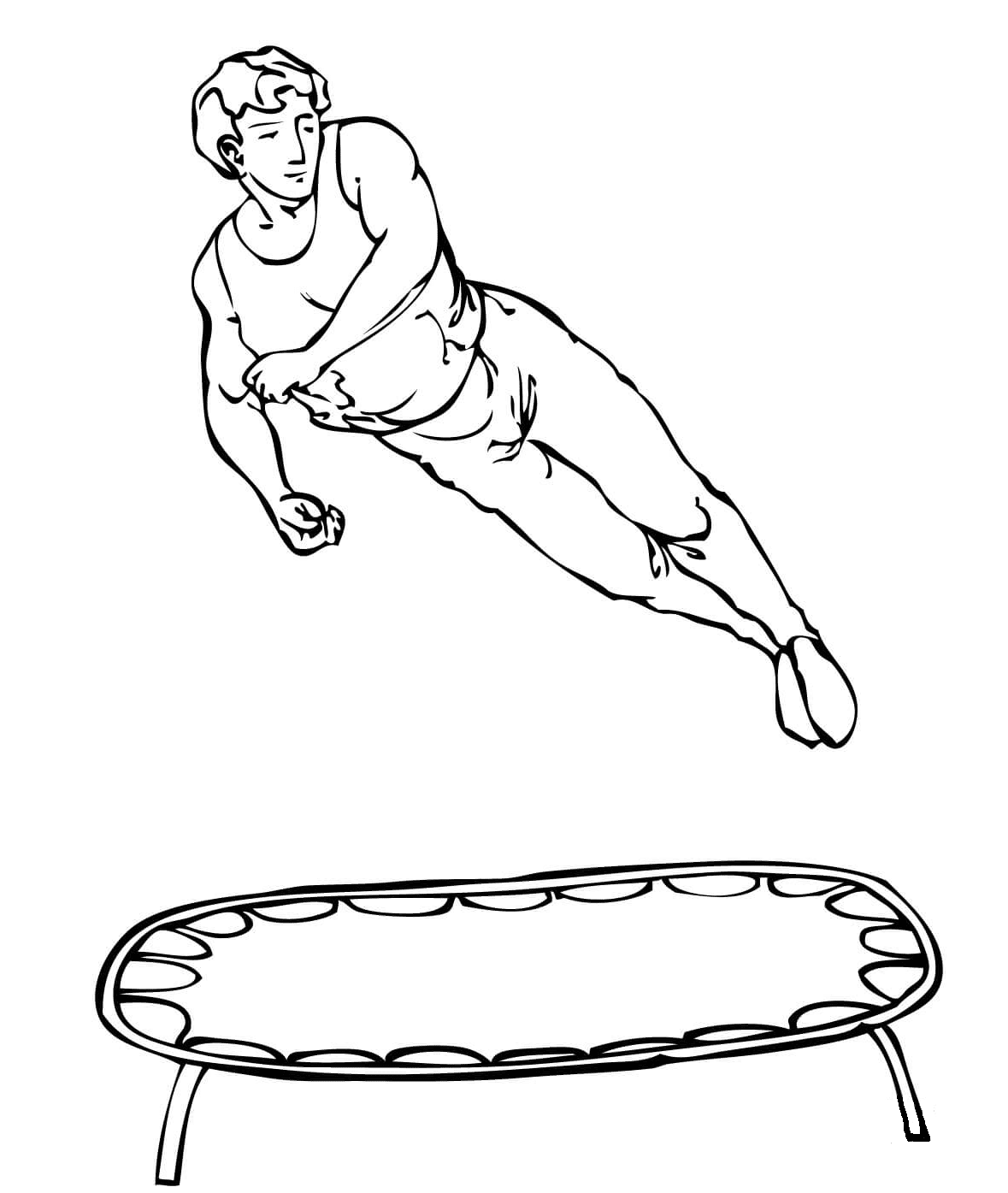
Jumping Upside Down on Trampoline, Funny Jumping on Trampoline, and Athlete on Trampoline feature trampoline gymnastics – an Olympic discipline since the 2000 Sydney Games – in which athletes perform ten-skill routines of twisting and somersaulting elements reaching heights of up to 8–10 meters above the trampoline surface. Trampoline gymnasts are scored on difficulty, execution, time of flight (measured electronically), and synchronization (in the synchronized trampoline event). The sport has produced some of the most spectacular aerial movements in all of gymnastics.
Acrobatic Gymnastics and Special Pages
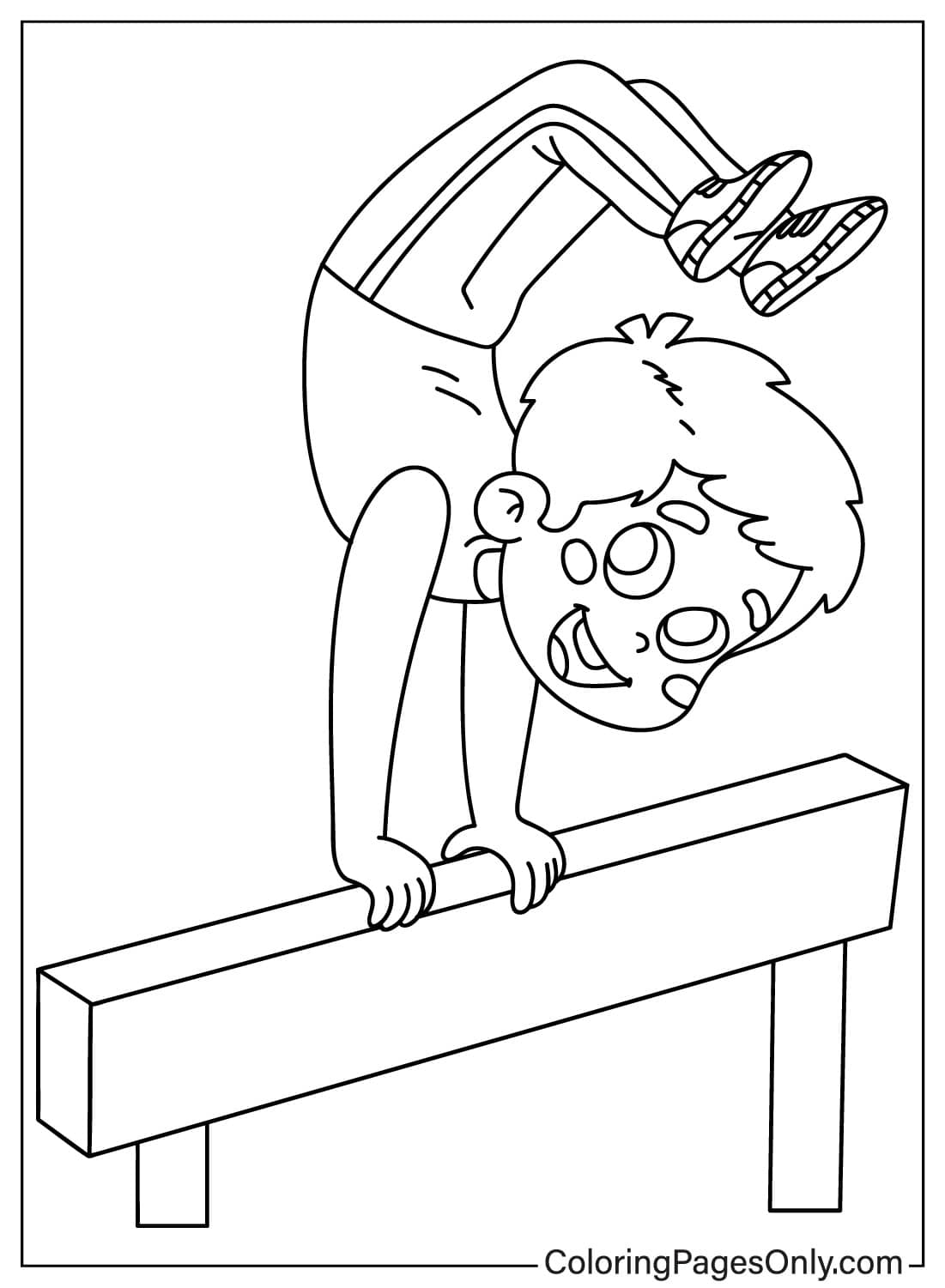
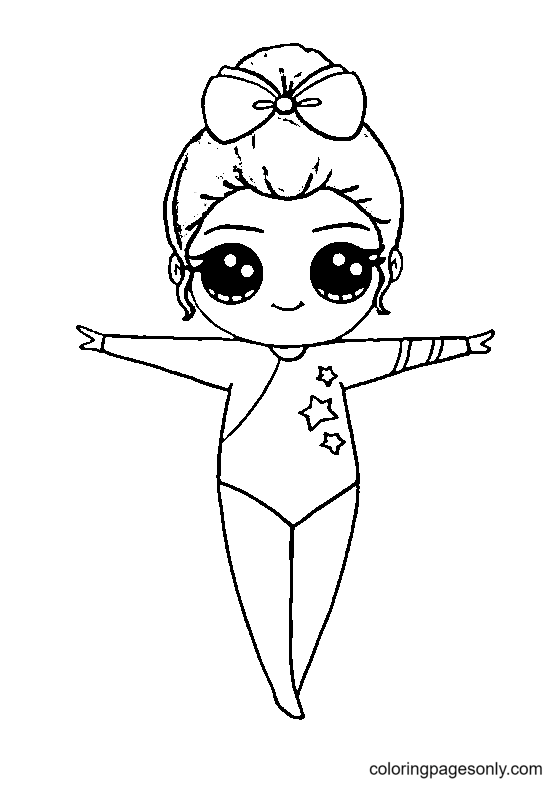
Acrobatic Gymnastics and Boy Tumbling On A Beam and Boy Balancing On A Beam capture the partnership discipline of acrobatic gymnastics – performed by pairs, trios, and quartets who combine tumbling, balancing, and throwing elements that require one partner to support another in extended holds, dynamic throws, and catches that can reach heights of several meters. Cute Chibi Gymnast brings the kawaii anime aesthetic to gymnastics in a page that is enormously popular with children who love the chibi character style and who find its large-headed, small-bodied proportions both adorable and somehow very suited to a gymnast’s expressive face.
Gabby Douglas – A Page of Historic Significance
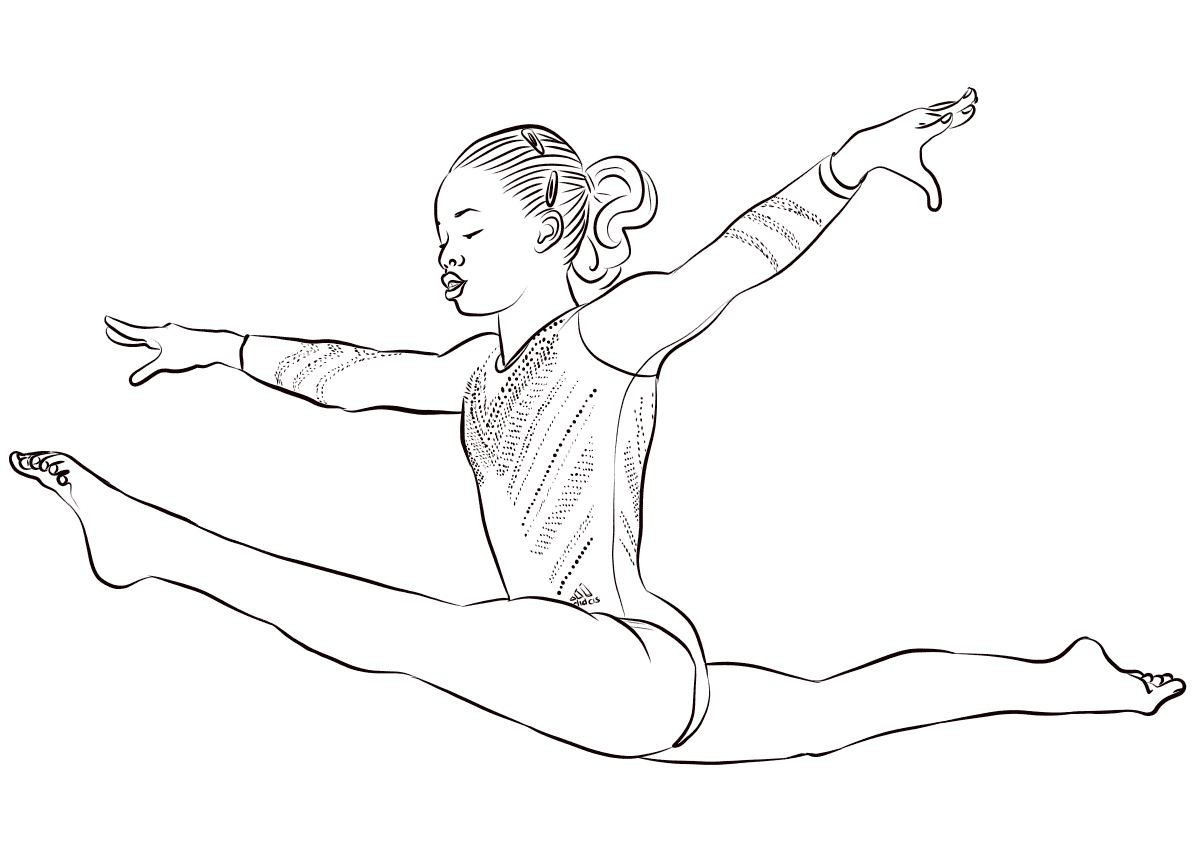
The Gabby Douglas page deserves particular mention. Gabrielle “Gabby” Douglas, at the 2012 London Olympic Games, became the first African American and the first American gymnast of color to win the individual all-around gold medal – one of the most significant achievements in the history of American gymnastics. She also won team gold with the “Fierce Five” at those same Games. The Gabby Douglas coloring page is one of the few pages in the entire gymnastics collection featuring a specific, named, historically significant athlete – making it a particularly meaningful choice for children who are learning both about gymnastics and about representation, barrier-breaking, and what it means to be first.
Why You’ll Love Our Gymnastics Coloring Sheets
59 designs available free, always. Every page downloads as PDF, JPG, or PNG at no cost – no sign-up, no subscription, no restrictions for personal or educational use. PDF delivers the sharpest print quality. JPG is ideal for quick single-page sessions. PNG supports digital coloring and creative projects with a transparent background.
Color online or print at home. Our built-in online coloring tool works in any browser – perfect for tablets, classroom devices, and screen-based creative sessions. Print on standard A4 paper for a traditional hands-on coloring experience. Both options are always available, always free.
Covers every gymnastics discipline and apparatus. From the dramatic power of the vault to the flowing grace of the ribbon, from the pure strength of the rings to the artistic expression of floor exercise – no other free gymnastics coloring collection covers the full spectrum of the sport with the technical specificity and visual accuracy of ours.
Genuinely educational alongside the entertainment. Every apparatus page teaches something real about what that apparatus is, what it demands, and how it fits into the broader world of competitive gymnastics. Children who color these pages alongside parents or coaches who can talk about what is happening in each image are building real sports literacy alongside their artistic skills.
Incredible Benefits of Gymnastics Coloring Pages
Gymnastics coloring pages deliver a specific and powerful combination of benefits that connect the values of the sport – precision, artistry, perseverance, physical courage – with the well-documented developmental benefits of focused creative activity:
Builds Body Awareness and Kinesthetic Understanding
Gymnastics is fundamentally a sport of body awareness – the ability to know precisely where every part of your body is in space at all times, including when upside down, rotating, or in mid-air. This quality, called proprioception, is one of the primary physical skills that gymnastics develops in young athletes. Coloring detailed gymnastics illustrations – carefully following the lines of an extended arm, a pointed toe, a curved back in a back walkover – builds the same quality of visual attention to body position that young gymnasts are developing in the gym. A study published in Physical Education & Sport Pedagogy found that visual learning activities that focused on body position and movement patterns significantly improved proprioceptive awareness in elementary-age children, suggesting that careful coloring of sports illustrations is not as disconnected from physical development as it might initially appear.
Develops the Fine Motor Precision That Gymnastics Itself Rewards
The relationship between coloring and fine motor development is well established across occupational therapy and child development research, and gymnastics coloring pages provide a particularly appropriate application of that relationship. The sport values precision above almost all other qualities: a hand position 5 degrees off on the rings changes the entire visual presentation of the skill; a slightly bent knee on the balance beam is a deduction. Coloring the technical pages in this collection – the uneven bar release, the pommel horse scissor, the ribbon spiral – requires and develops exactly the deliberate, fine-grained hand control that makes a young gymnast’s work look polished and intentional rather than approximate. The American Academy of Pediatrics identifies fine motor development as a key milestone throughout early childhood, and motivated, sustained coloring practice is one of the most accessible tools for supporting it.
Introduces Gymnastics Vocabulary and Technical Knowledge
Gymnastics has a rich, specific technical vocabulary – the names of apparatus, skills, and positions that begin to feel overwhelming to new parents and young gymnasts when they first encounter them. What is the difference between an aerial and a back walkover? What is a release move, and why does it matter on uneven bars? What does “Code of Points” mean? The coloring pages in this collection – organized by apparatus and labeled with specific technical terms – provide a visual reference that makes this vocabulary tangible and memorable. Children who color a page labeled “Parallel Bars L-Sit” while learning what an L-sit is and why it requires extraordinary core strength are building the technical literacy that makes watching gymnastics, talking to coaches, and understanding competition results significantly more engaging and meaningful.
Supports Motivation and Identity Formation in Young Gymnasts
Sports psychology research consistently identifies identity – the feeling of “I am a gymnast” rather than “I do gymnastics” – as a powerful predictor of sustained participation, resilience through difficulty, and long-term athletic development. For young gymnasts who spend many hours each week in the gym and feel genuinely connected to the sport, coloring pages that depict their apparatus, their movements, and their competitive world provide a way of expressing and reinforcing that identity in a creative context outside the gym itself. A 2016 study published in the Journal of Sport and Exercise Psychology found that sport-related artistic activities – drawing, coloring, and crafting around a sport a child participates in – significantly strengthened sport-specific identity and were associated with higher rates of sustained participation over a two-year follow-up period.
Promotes Mindfulness and Recovery from Intense Training
Elite and competitive gymnastics training is physically and mentally demanding in ways that few recreational sports match. Young gymnasts who train 15–25 hours per week need recovery time that genuinely disengages the mind from the performance focus and perfectionism demands of the gym. A 2005 study published in Art Therapy: Journal of the American Art Therapy Association found that structured coloring activities significantly reduced anxiety in adult participants, and parallel benefits for high-performing children have been documented across sport psychology and occupational therapy literature. Gymnastics-themed coloring pages provide a specifically relevant form of this recovery: the gymnast is still connected to the world and imagery of the sport they love, but the relationship is creative and non-evaluative rather than technical and judged.
Expert Coloring Tips for Gymnastics Pages
These techniques progress from beginner to advanced – find your level and stretch toward the next one:
Begin every gymnastics figure with the line of the spine. Before laying down any color, study the figure on the page and identify the central line of the spine – the axis around which all the other body parts extend. Is the gymnast arched backward over the beam? Curled forward in a pike? Extended in a perfect vertical handstand? Coloring the torso and spine area first, in a deliberate, intentional stroke that follows this central axis, establishes the postural quality of the entire figure and makes the arms, legs, and head feel like natural extensions of a coherent body rather than separately colored shapes.
Color leotards with attention to the fabric’s behavior on the body. Gymnastics leotards are fitted, structured garments that show the body’s shape very precisely, and the most evocative coloring of leotard pages uses shadow and highlight to suggest the three-dimensional form beneath the fabric. Apply the base color of the leotard across the entire garment, then add a slightly darker tone of the same color on the sides, under the arms, and along the inner thighs – areas where the fabric would be shadowed by the body’s curves. A very subtle, lighter tone on the center front of the torso (where light would catch a convex surface) completes the illusion of a fitted garment on a three-dimensional body.
Make the ribbons spiral and flow. The rhythmic gymnastics ribbon pages are among the most artistically free in the collection – the ribbon can be any color, and the coloring approach can transform a static line on the page into something that feels genuinely in motion. Apply color to the ribbon not in uniform strokes but in alternating light and dark bands – following the curve of the spiral – to suggest the way real ribbon catches light differently on its front and back surfaces as it rotates through the air. Using two analogous colors (two shades of the same hue, or two neighboring hues on the color wheel) rather than a single flat color makes the ribbon appear to twist and move even in a static illustration.
Use the balance beam’s narrow width as a compositional anchor. The balance beam pages are some of the most visually interesting in the collection because the beam itself – that narrow, precise horizontal line – divides the composition and gives every other element its meaning in relation to it. Color the beam in a warm wood tone (most competition beams are covered in suede or leather in natural tones with a slight orange-brown warmth), and make it slightly darker at the edges to suggest its three-dimensional rectangular cross-section. The contrast between the warm, solid beam and the dynamic, airborne quality of the gymnast above it is the visual tension that makes balance beam pages so striking when colored with care.
For rings and bar pages, color the cables and apparatus before the gymnast. On pages featuring the horizontal bar, rings, parallel bars, and uneven bars, establish the apparatus color – steel grey or silver for the bars, warm brown leather for ring handles – before moving to the gymnast’s figure. Apparatus elements that overlap the gymnast’s body (the cable of the rings passing behind the shoulder, the bar appearing in front of the wrists) will be much easier to handle accurately when the apparatus is established first, allowing you to work around it when coloring the gymnast’s body rather than trying to add it afterward.
Apply directional strokes to suggest movement in floor exercise and vault pages. Floor exercise and vault pages depict the most dynamic movements in gymnastics – the gymnast is airborne, rotating, extending through space. Rather than coloring these figures with uniform, directionless strokes, apply color in the direction of the body’s movement: slightly downward-angled strokes on a descending vault, upward-curving strokes on a rising layout on the floor. This technique, borrowed from figure illustration and animation, gives the finished page a sense of genuine physical momentum that flat coloring cannot achieve.
3 Creative Craft Ideas with Gymnastics Coloring Pages
Gymnastics Birthday Card
Create a personalized gymnastics birthday card that will delight any young athlete far more than any store-bought alternative – because it was made specifically for them, with pages from their sport and colors chosen with their personality in mind.
Select three to five gymnastics coloring pages that feel most personally relevant to the recipient: their favorite apparatus, their favorite skill type, or a figure that matches their own gymnastics level and style. Color each page with care, choosing a color palette that feels personal – the birthday gymnast’s favorite colors for the leotard, for example, or the colors of their gym club. When all pages are colored, cut out the gymnast figures individually, following their outlines precisely with small scissors.
Prepare the card base from a piece of thick cardstock (A5 folded in half, or any size that fits your envelope). Arrange the cut-out gymnast figures on the front of the card in a dynamic composition – perhaps one doing a back walkover, another performing a beam split, a third in a ribbon spiral – overlapping them slightly to create depth and visual energy. Glue each figure in place using a glue stick or a thin layer of PVA. Add glitter to the gymnast’s leotard, or use metallic gel pens to add shine to the apparatus. Inside the card, write a personal message.
The finished card is genuinely beautiful – the kind of handmade gift that goes on a bedroom wall rather than in the recycling bin – and the process of making it, from choosing the pages to arranging the composition, is creative and meaningful for the maker as well as the recipient.

Gymnastics Sticker Set
Create a personalized set of gymnastics stickers that can be used to decorate notebooks, water bottles, gym bags, phone cases, and anywhere else a young gymnast wants to express their identity and love of the sport. This craft is practical, personal, and produces something that actually gets used daily – which makes it one of the most satisfying in the entire collection.
Select eight to twelve pages from the collection that feature a variety of apparatus and skill types – enough variety to create a sticker set that covers the full range of gymnastics expression. Print each page at a reduced size (50–60% of the full page gives sticker-appropriate dimensions for most designs) on standard paper. Color each gymnast carefully with colored pencils or fine-tip markers – the smaller size rewards fine detail work and precise color application. Allow all coloring to dry completely.
For adhesive stickers, apply a sheet of clear contact paper (sticky side down) over each colored page before cutting. Press firmly from the center outward to eliminate air bubbles. Then cut each gymnast figure out individually, leaving a thin 2mm border of clear contact paper around the edge – this acts as both a protective laminate and a subtle frame that makes each sticker look professionally finished. The back of the contact paper acts as the release paper; peel it away to reveal the adhesive and apply it to any smooth, dry surface.
For a more durable result, print on actual sticker paper (available at most office supply stores), color, and cut. Label the finished sticker set in a small kraft-paper envelope with the recipient’s name and a gymnastics-themed design on the front.

Image source: Etsy.
Gymnastics Cupcake Toppers
Turn a standard set of cupcakes into a gymnastics-themed celebration centerpiece by creating personalized toppers from the gymnastics coloring pages – an unexpectedly sophisticated result from a straightforward craft that any adult or older child can produce in under an hour.
Select five to eight pages from the collection that feature strong, clean figures with clear outlines – the rhythmic gymnast with ribbon, the gymnast on the balance beam, the vault performance, the rings athlete, and the chibi gymnast are all excellent choices for the topper scale. Print each page at approximately 25–30% of full size (experiment to find the scale that fits comfortably on the top of your cupcakes), printed on the thickest paper your printer can manage, ideally cardstock.
Color each figure carefully – at this small scale, fine-tip markers tend to give the most precise, vibrant results without the bleeding that can occur with broad-tip tools. For a professional finish, apply a thin coat of clear nail polish or a gloss decoupage medium over each colored figure after the coloring is dry – this protects against moisture from the frosting and gives the topper a slight sheen that reads as intentional and polished rather than homemade.
Cut out each figure and use small scissors to follow the outline precisely, leaving no white border. Attach a toothpick or a short bamboo skewer to the back of each cutout using a generous application of hot glue or strong craft glue; press and hold for 30 seconds until set. Allow to cure for at least 15 minutes before inserting into the cupcakes.
Arrange the finished toppers in the cupcakes so that different athletes face different directions, creating a dynamic, all-around-feel arrangement on the serving plate. The result is a genuinely beautiful display that shows the care and thought behind the celebration – and that gymnastics-loving guests will photograph and share.

Frequently Asked Questions About Gymnastics Coloring Pages
What are the different types of gymnastics? The FIG (Fédération Internationale de Gymnastique) recognizes six disciplines: artistic gymnastics (the most widely practiced, featuring men’s and women’s events on apparatus including the balance beam, uneven bars, vault, floor, pommel horse, rings, parallel bars, and horizontal bar), rhythmic gymnastics (women-only at the Olympic level, combining dance and apparatus manipulation with rope, hoop, ball, clubs, and ribbon), trampoline gymnastics (Olympic since 2000, including individual and synchronised events), acrobatic gymnastics (performed in partnerships and groups involving balancing, throwing, and catching), aerobic gymnastics (performed to music with continuous high-intensity movement patterns), and parkour gymnastics (the newest recognized discipline, added in 2018).
When was gymnastics first included in the Olympic Games? Men’s artistic gymnastics appeared at the very first modern Olympic Games in Athens in 1896. Women’s artistic gymnastics was added to the Olympic program at the 1928 Amsterdam Games. Rhythmic gymnastics became an Olympic sport at the 1984 Los Angeles Games, and trampoline gymnastics joined the program at the 2000 Sydney Games. As of the 2024 Paris Games, gymnastics events are held across artistic, rhythmic, and trampoline disciplines.
Who is considered the Father of Gymnastics? Friedrich Ludwig Jahn (1778–1852), a German physical educator and nationalist, is widely recognized as the “Father of Gymnastics.” Jahn developed the core apparatus of modern gymnastics – the horizontal bar, parallel bars, balance beam, vault horse, and rings – and established the first gymnastics clubs (Turnvereine) in Germany in the early 19th century. His influence spread throughout Europe and eventually to the United States, where gymnastics became part of school and university physical education programs. The FIG, founded in 1881, is the direct institutional descendant of the gymnastics movement Jahn initiated.
What is the Code of Points in gymnastics scoring? The Code of Points is the technical rulebook developed by the FIG that governs how gymnastics routines are scored in competition. It replaced the previous “perfect 10” system (made famous by Nadia Comaneci’s historic perfect scores at the 1976 Montreal Olympics) after the 2004 Athens Games, when a judging controversy involving Alexei Nemov’s horizontal bar routine exposed the limitations of the closed 10-point scale. Under the current system, scores are open-ended – there is no maximum – and are composed of a Difficulty score (D-score, based on the cumulative value of skills performed) and an Execution score (E-score, starting at 10.0 and deducted for errors in form, technique, and artistry). The total score is D + E.
Who was Gabby Douglas, and why is she historically significant? Gabrielle “Gabby” Douglas is an American gymnast who, at the 2012 London Olympic Games, became the first African American and the first American gymnast of color to win the individual all-around gold medal – the event widely regarded as the most prestigious title in women’s gymnastics. She also won team gold with the “Fierce Five” (Aly Raisman, McKayla Maroney, Kyla Ross, and Jordyn Wieber). Douglas’s victory was recognized as a landmark moment in both gymnastics and American sports history, and her page in this coloring collection offers a meaningful opportunity to discuss achievement, representation, and barrier-breaking with children who color it.
What apparatus are used in rhythmic gymnastics? Rhythmic gymnastics uses five apparatus: the rope (a hand-woven cord of hemp or synthetic material), the hoop (a rigid circle of plastic, 80–90 cm in diameter), the ball (rubber or synthetic rubber, 18–20 cm in diameter, 400–500 grams), the clubs (two identical clubs of wood or synthetic material, 40–50 cm in length, 150 grams each), and the ribbon (a satin ribbon 6 meters in length attached to a stick 50–60 cm long). Individual rhythmic gymnasts use one apparatus per routine; group competitions may use a combination of two different apparatus shared among five gymnasts simultaneously, creating the extraordinary visual complexity of synchronized multi-apparatus handling that characterizes the group event.
What age group are these gymnastics coloring pages best suited for? The collection spans a wide age range. Simple character pages – the Cute Chibi Gymnast, the Gymnastics for Kids pages, and the children’s gymnastics scenes – are ideal for ages 3–7. The more detailed apparatus pages (balance beam, uneven bars, rings, vault, pommel horse) provide the most interesting artistic challenge for ages 7 and up and for adults who want to practice human figure and sports illustration coloring technique. Young gymnasts who are actively training find that the apparatus pages most directly relevant to their own training – their specific events and skills – are the most personally meaningful to color, regardless of age.
Can these pages be used in gymnastics classes or clubs? Absolutely – and this is one of the most effective uses of the collection. Gymnastics coaches and program directors use these pages as creative rewards after class, as quiet activities during recovery periods, as educational supplements when teaching younger students about apparatus names and functions, and as take-home projects that extend engagement with the sport beyond training hours. The apparatus identification and technical labeling in many of our pages make them particularly useful as visual learning tools alongside verbal instruction. Parents of young gymnasts consistently find that their children’s investment in the sport deepens when they can engage with it creatively at home as well as physically in the gym.
Getting started is simple: browse the full gymnastics collection right here at ColoringPagesOnly.com, choose your pages – start with the apparatus that matters most to you, or go straight to the rhythmic ribbon pages for their unmatched visual beauty – and download them instantly, always free, always without sign-up. Print at home on standard A4 paper, or use our online coloring tool in your browser for a screen-based session.
Gymnastics asks extraordinary things of the people who practice it – extraordinary discipline, extraordinary courage, and an extraordinary willingness to fall down and get back up on a piece of apparatus that is 10 centimeters wide. Coloring these pages will not teach you a back walkover. But it will give you a few quiet minutes in a world that celebrates what the human body can do when it is trained with love and care and relentless, patient repetition.
Pick up your colors. Choose your apparatus. And bring a little of that extraordinary world into your afternoon.
Share your finished artwork with us on Facebook and Pinterest – we love seeing how young gymnasts color the pages that depict their own events, and the care that gymnastics families bring to the Gabby Douglas page in particular. Tag #Coloringpagesonly and join our community of colorists, athletes, and fans of one of the world’s most demanding and beautiful sports.
Color the grace. Honor the strength. Celebrate the ten.