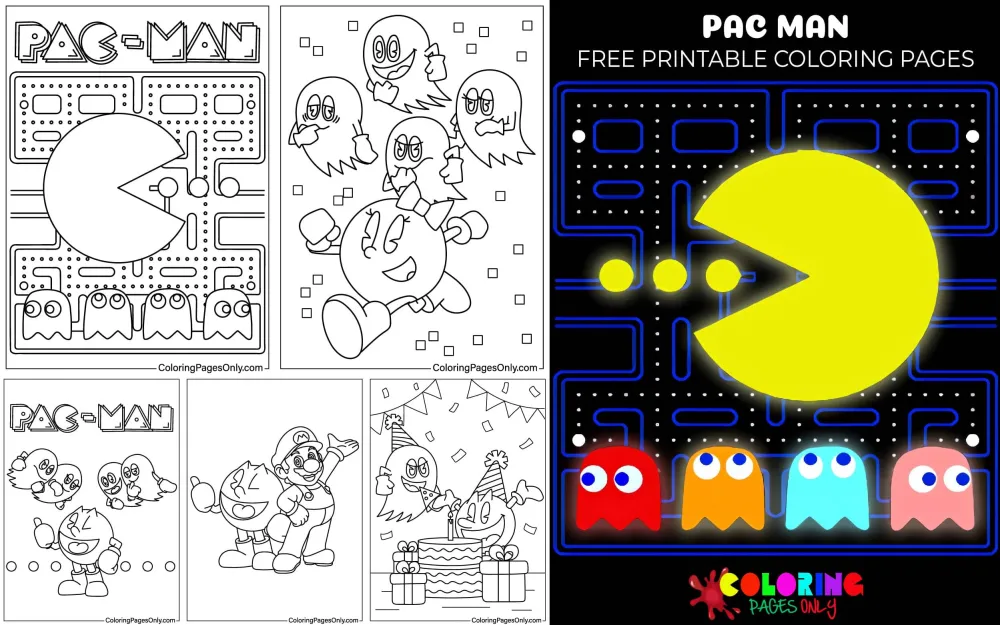
Pac-Man coloring pages: 30 printable PDF designs spanning cute cartoon versions, simple solo portraits, in-game action scenes, and a few crossovers and themed pages. Each page can be downloaded as a PDF to print or colored online in the browser.
Pac-Man’s simple yellow shape has an origin story that even its own creator has told a few different ways. Designer Toru Iwatani developed the game at Namco, releasing it in Japan on May 22, 1980, under the name “Puck Man,” a nod to the Japanese onomatopoeia “paku paku,” the sound of repeated chewing. Iwatani has often said a pizza inspired the character’s missing-wedge shape with a slice removed. However, in other interviews, he’s credited it to a simplified version of the Japanese character for “mouth.” Either way, the name changed before the game reached American arcades that October: Midway renamed it “Pac-Man” specifically because “Puck Man” was an easy target for vandals to scratch the P into an obscene word. The four ghosts chasing Pac-Man aren’t just palette swaps of each other, either. Blinky (red) chases directly and aggressively, Pinky (pink) tries to cut Pac-Man off by aiming ahead of him, Inky (cyan) moves unpredictably based on Blinky’s position, and Clyde (orange) mostly keeps his distance. Four distinct behaviors are built into one of the earliest examples of character-driven game AI.
With 30 pages split between cute versions, simple portraits, in-game action, and a few themed crossovers, the set works as a quick single-page project and as a small piece of early video game history.

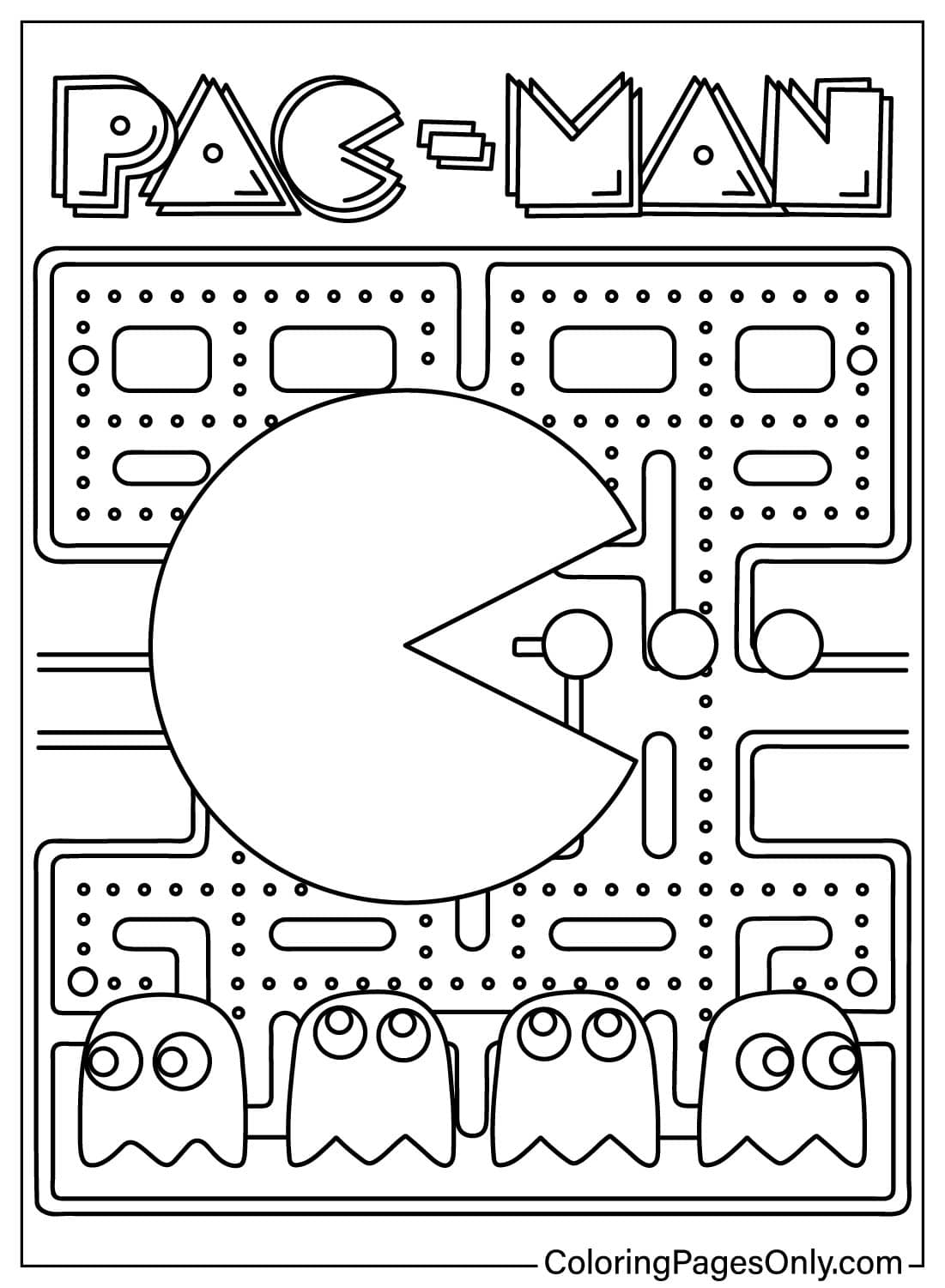
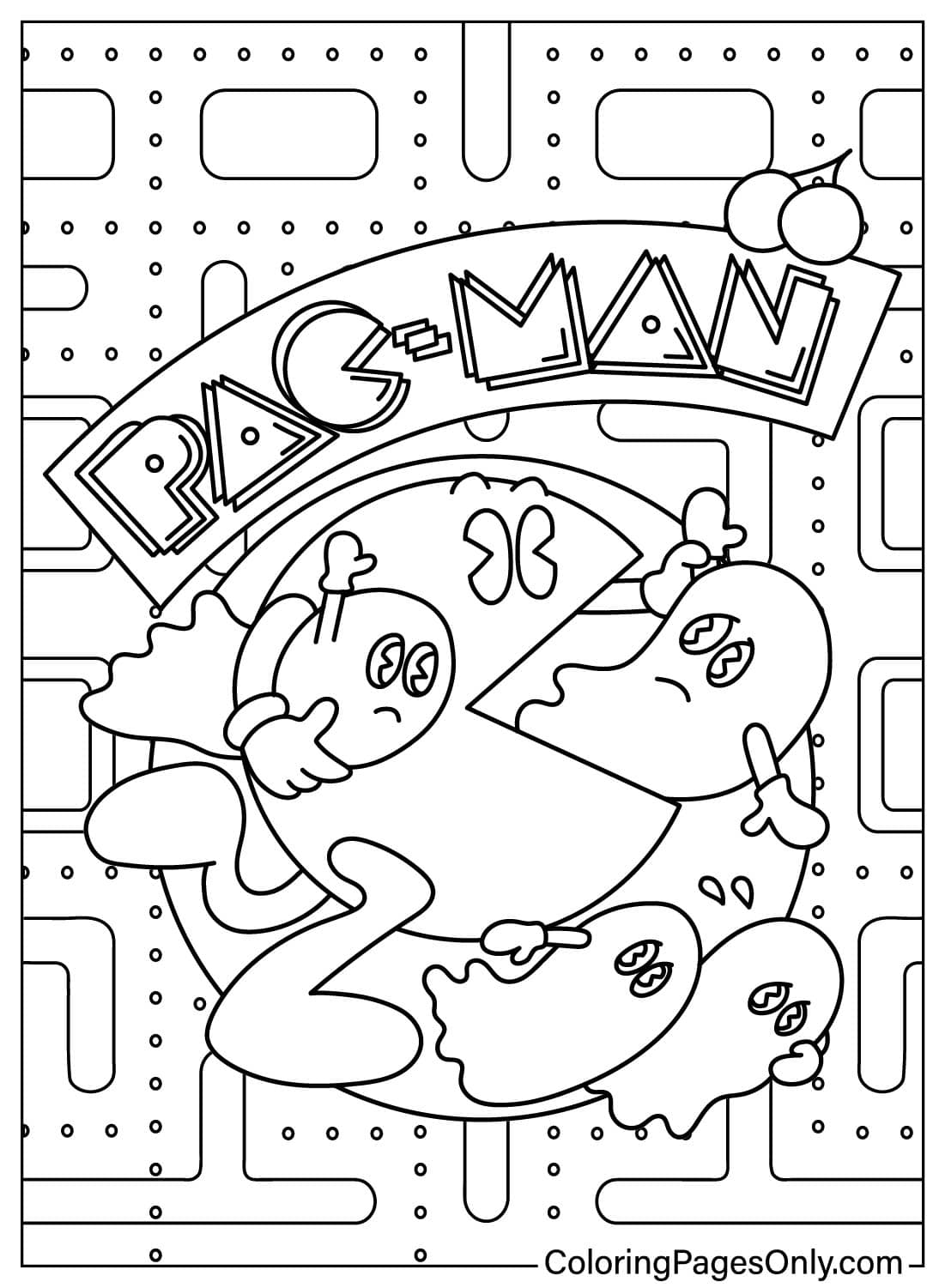


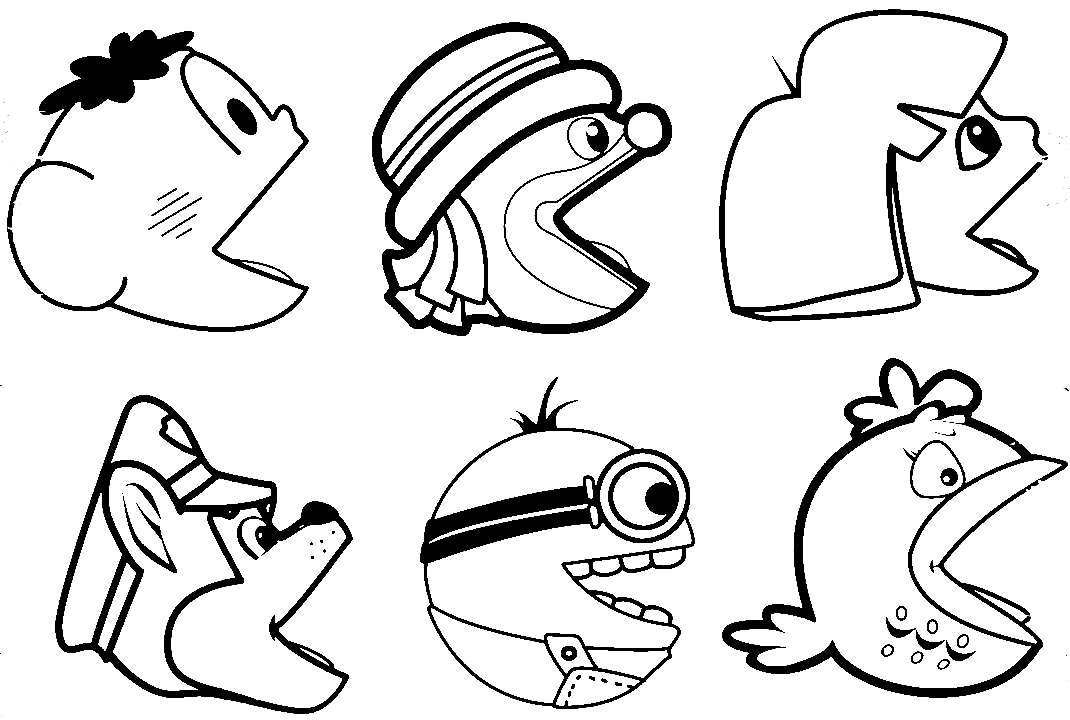
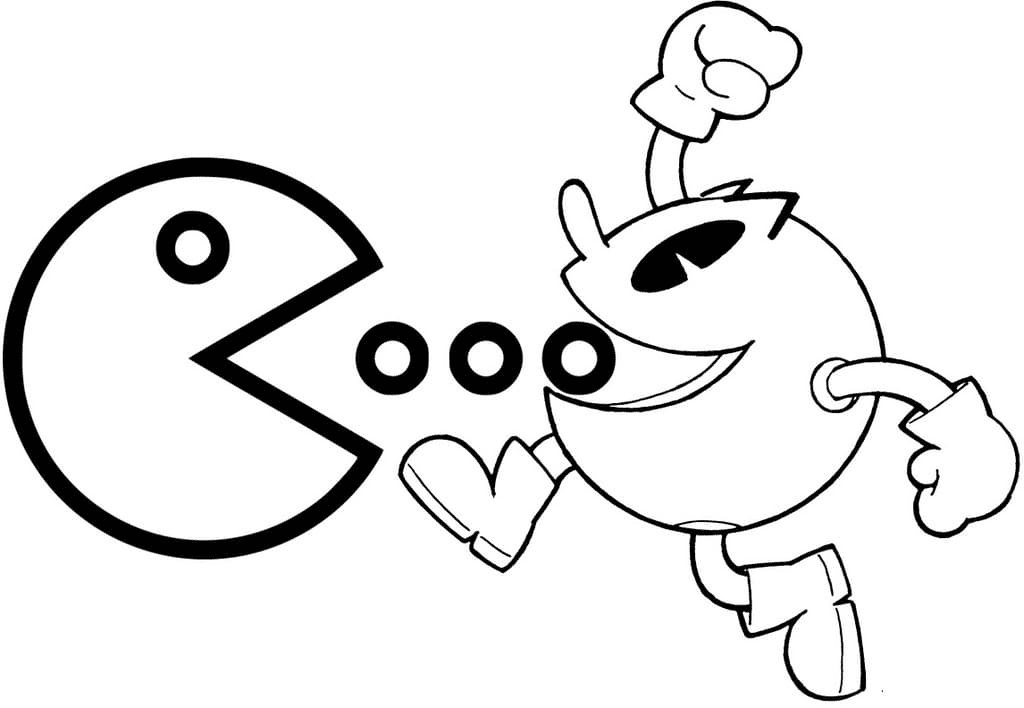



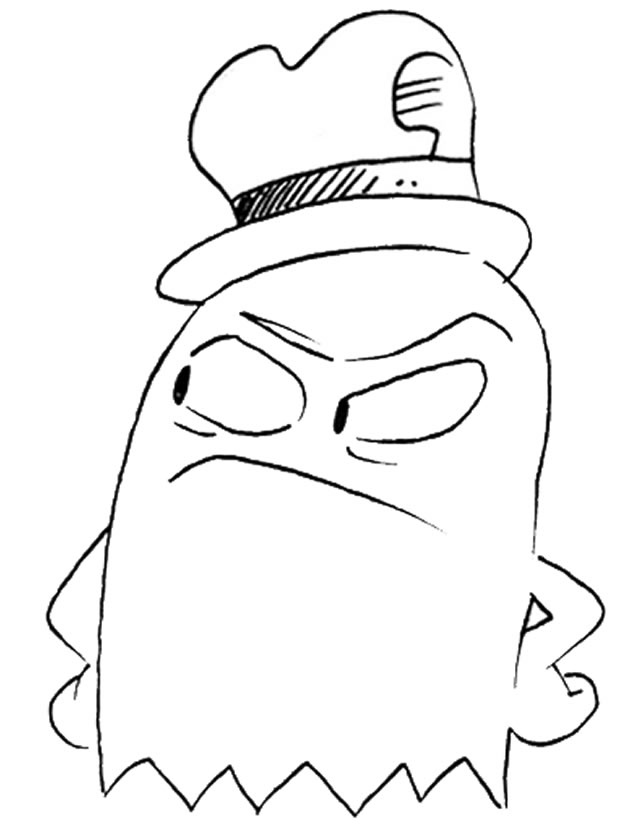
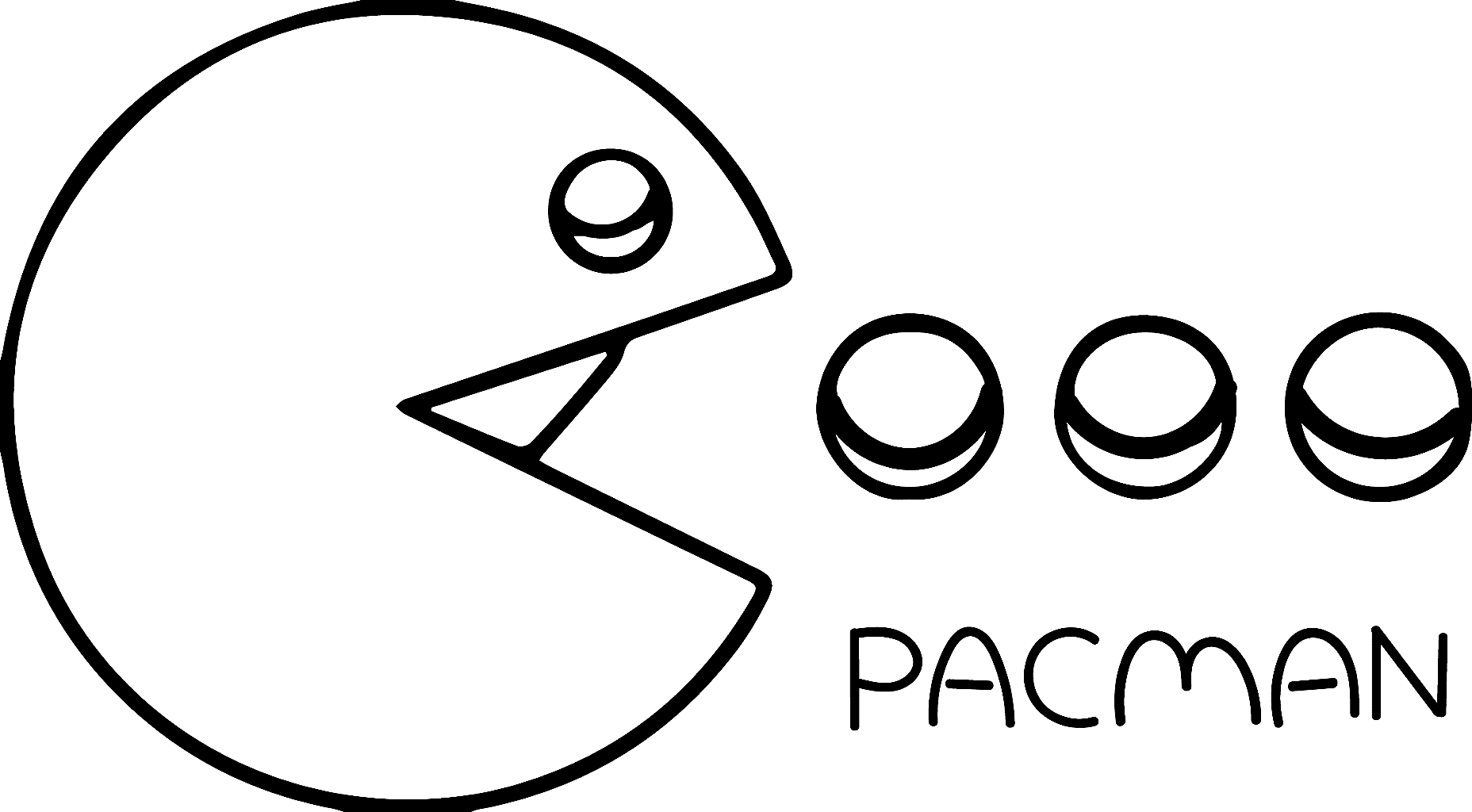
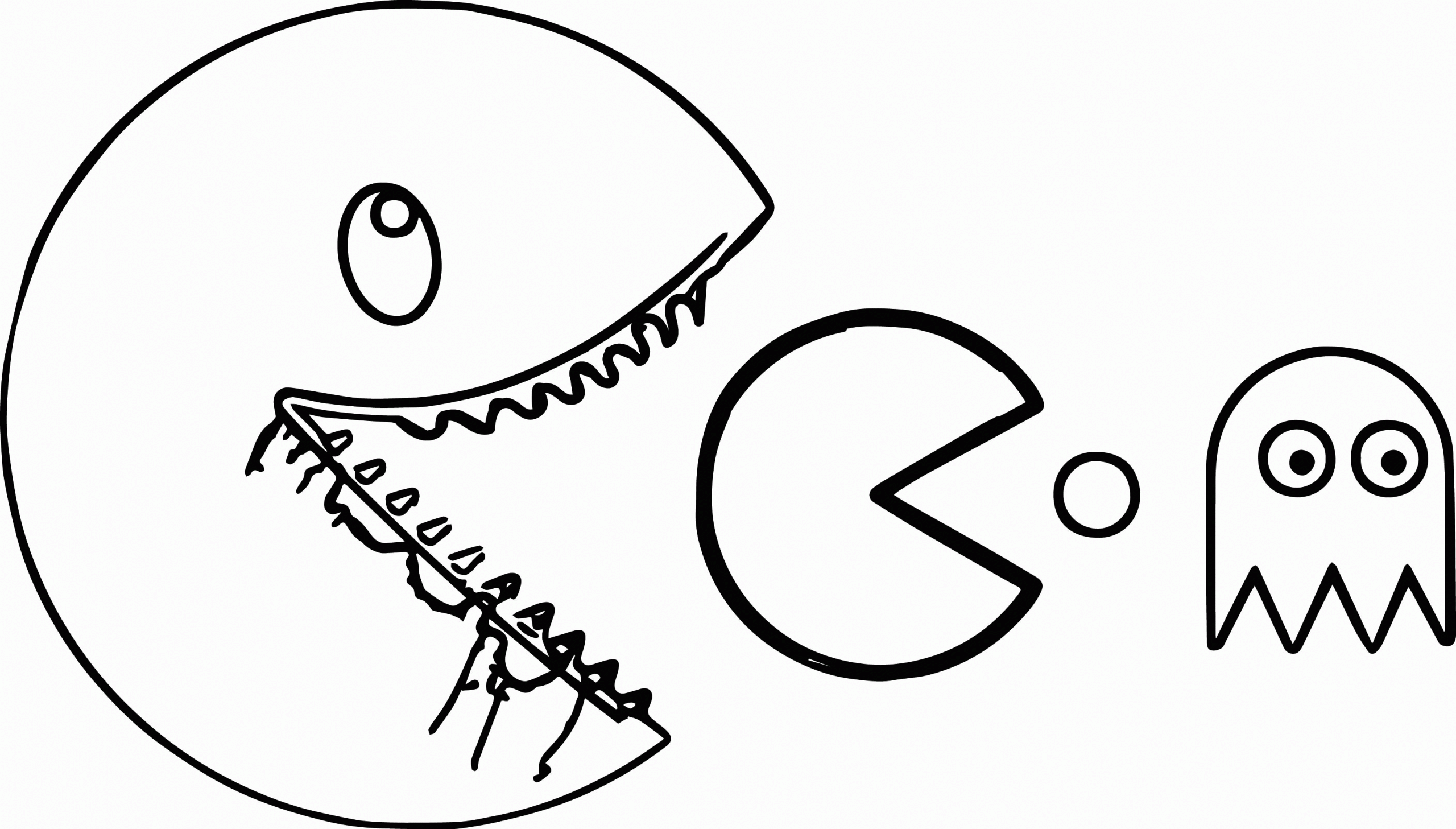
What Is Inside This Collection
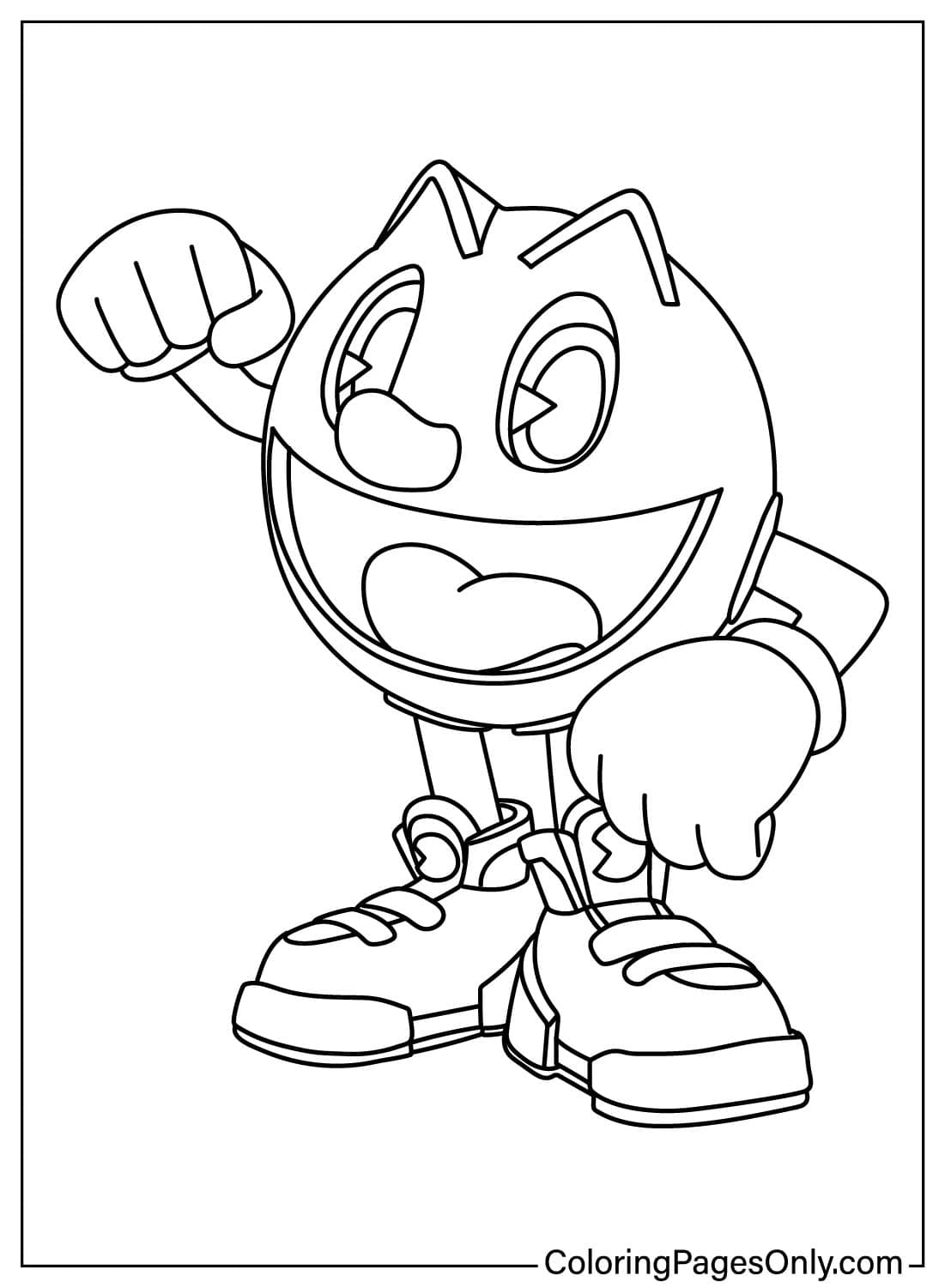
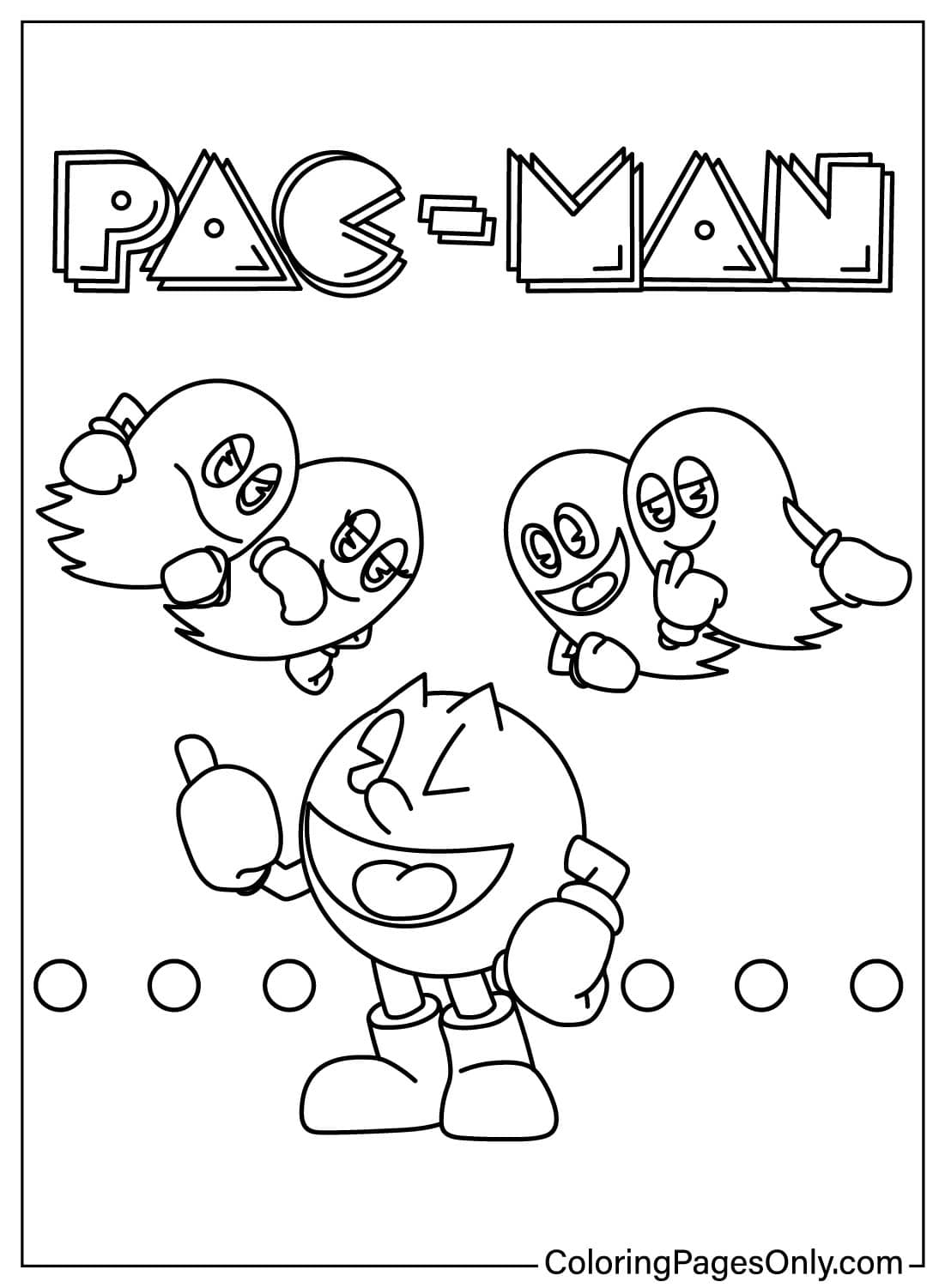
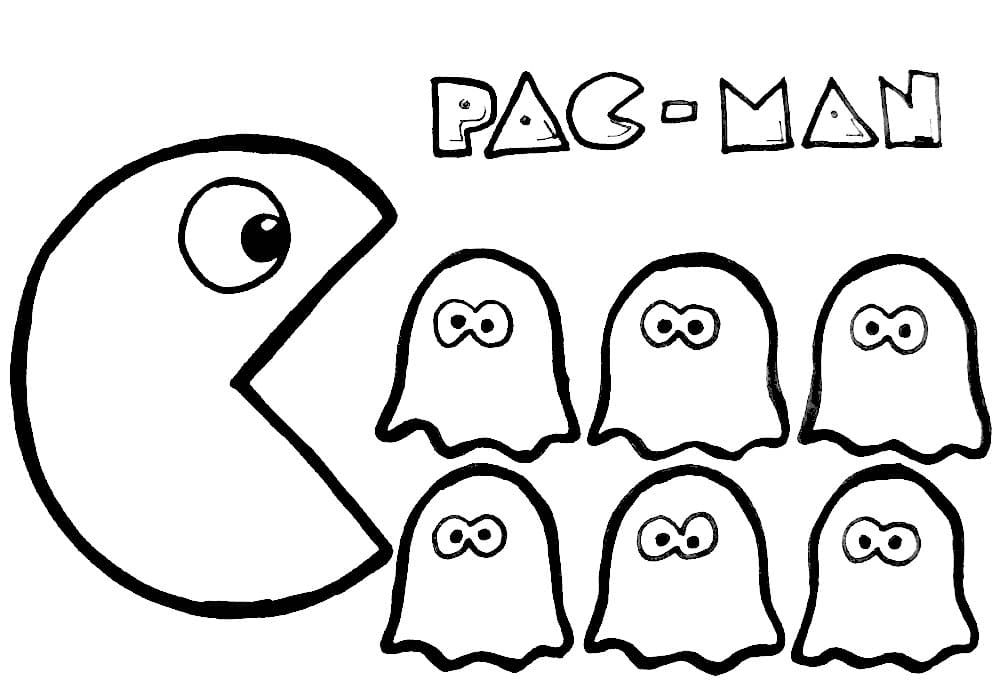
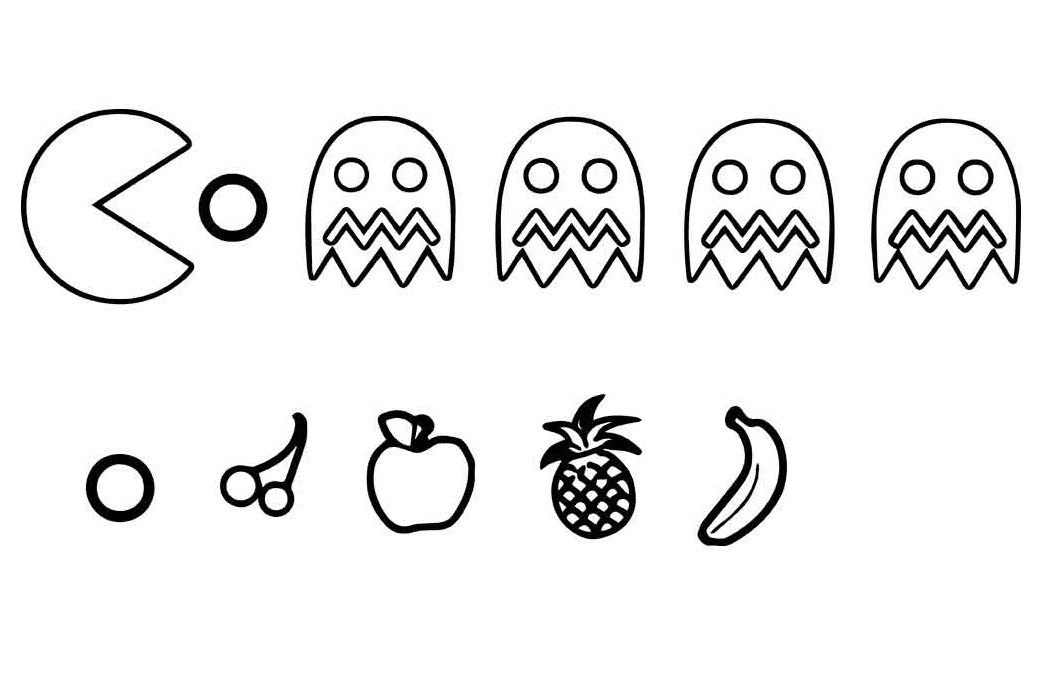
This collection groups its 30 pages by style, since a cute cartoon version, a plain portrait, and an in-game action scene each call for a different coloring approach.
Cute and Friendly Pac-Man
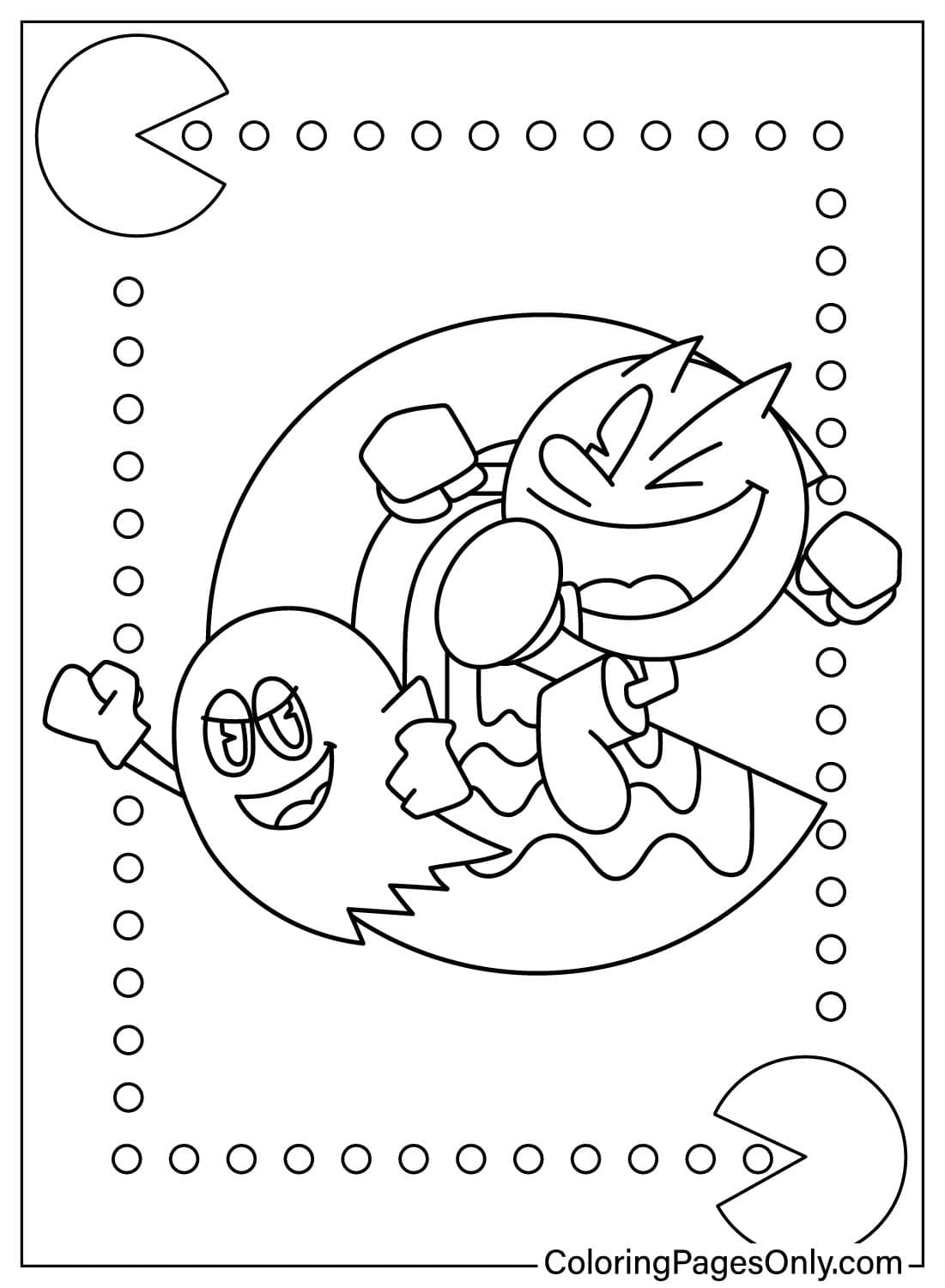
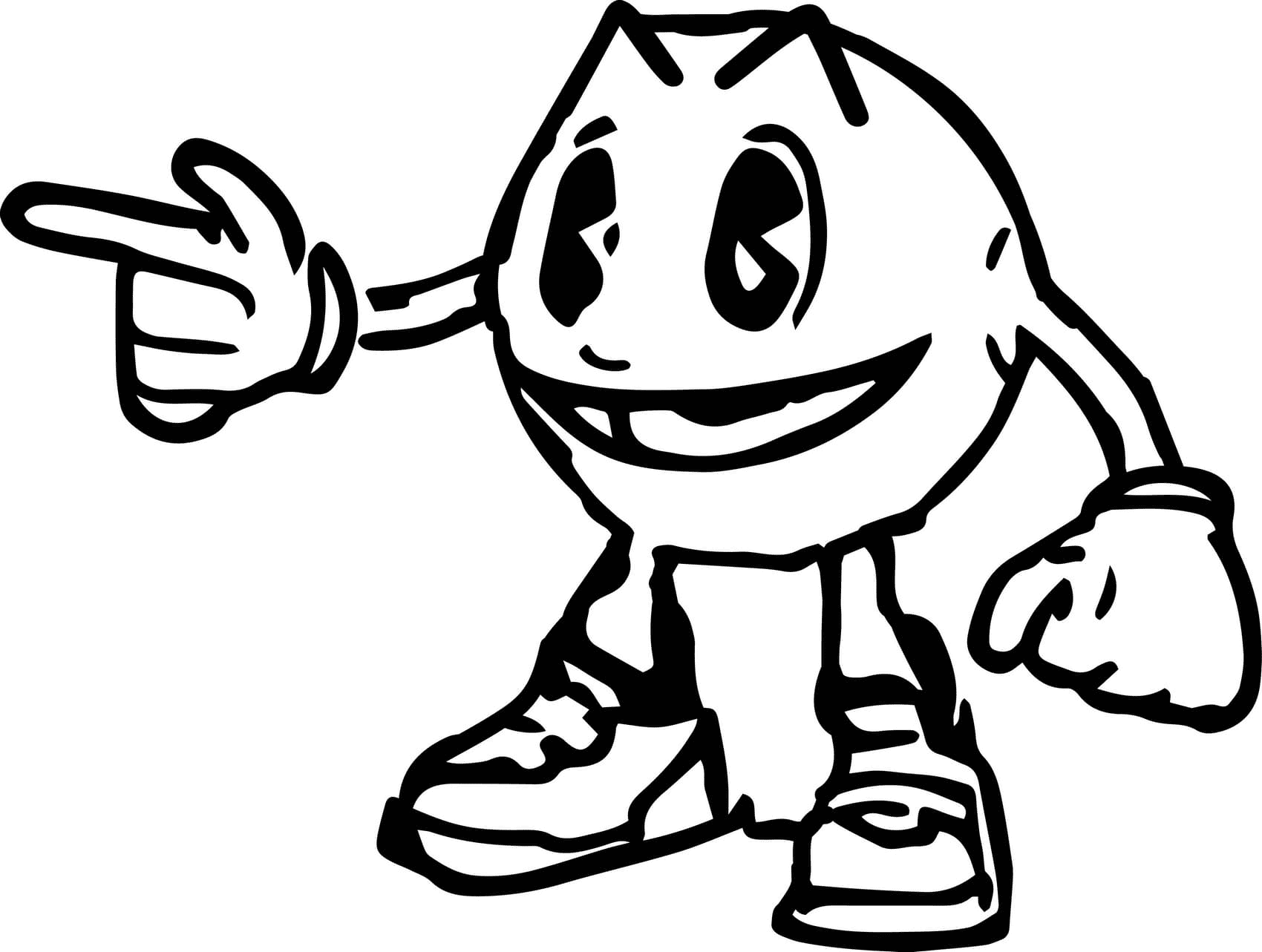
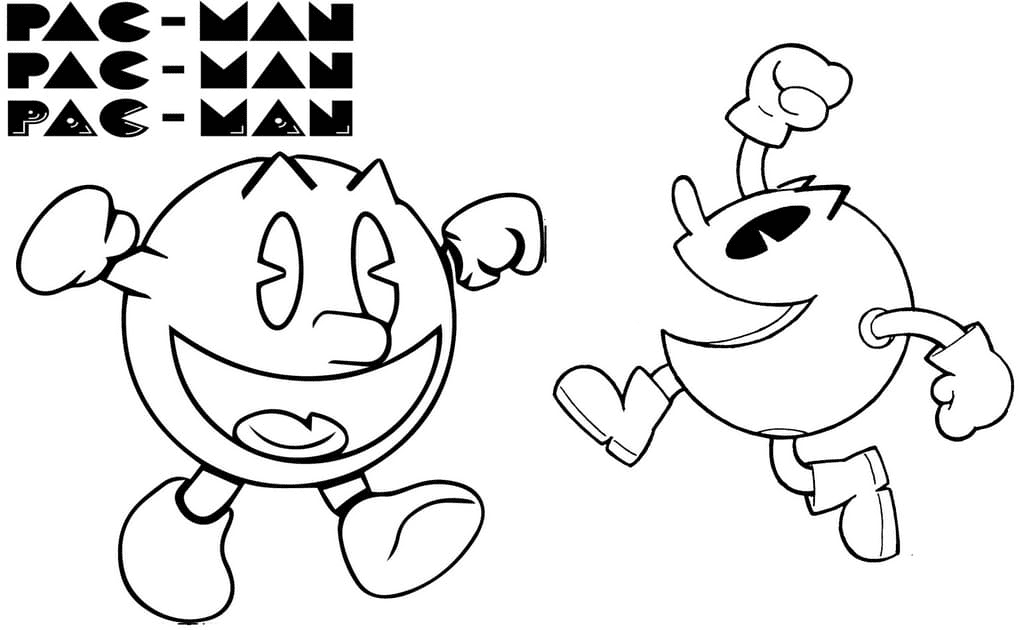
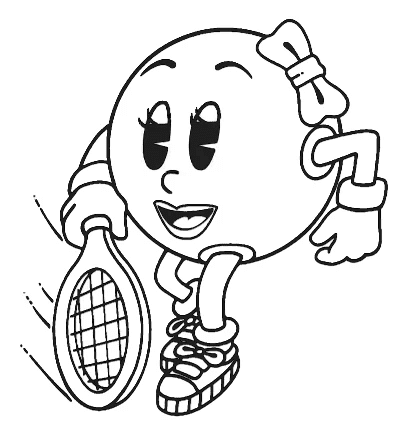
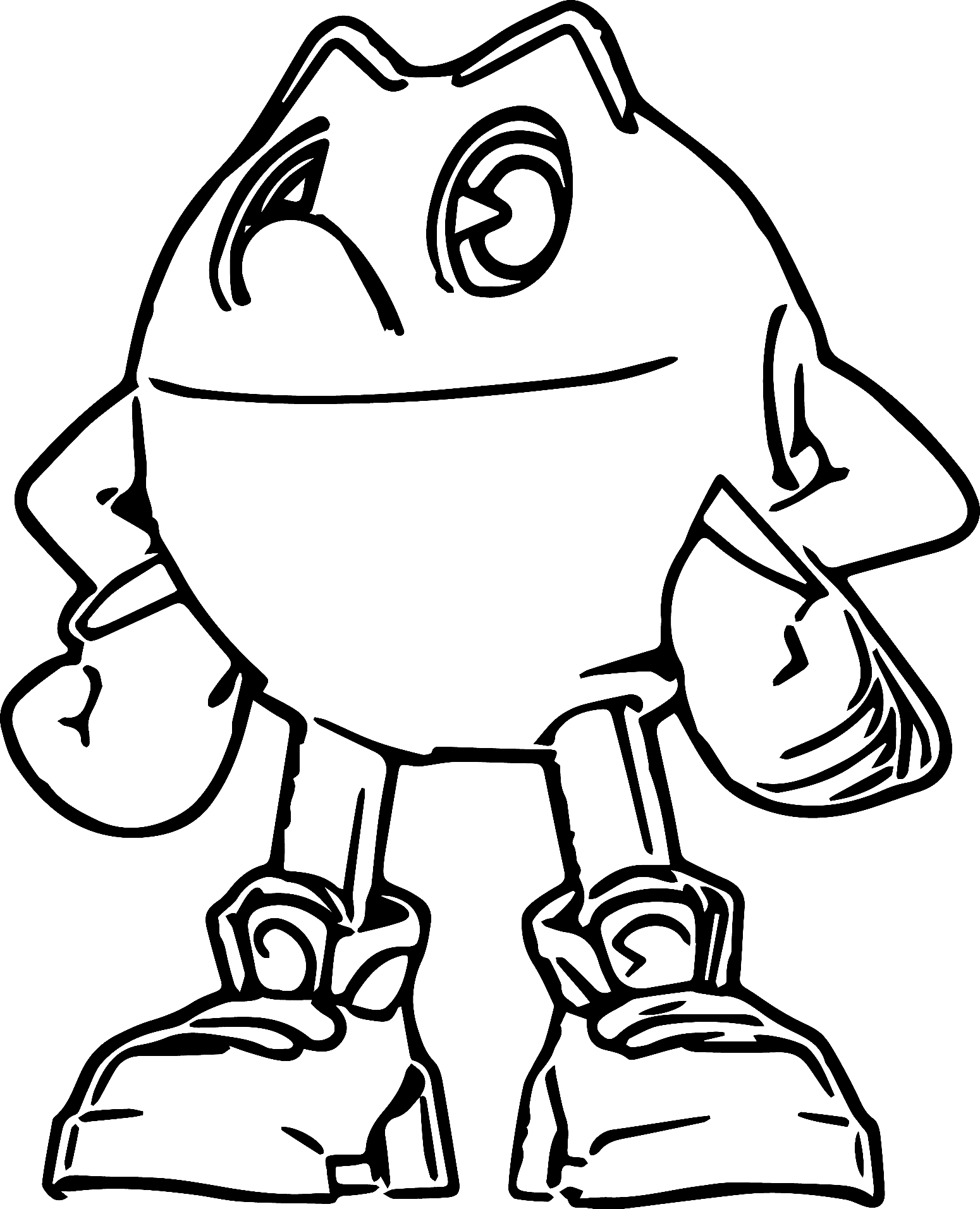
Nine pages take a softer, more playful approach to Pac-Man, with bigger eyes, a friendlier expression, or a simple cartoon style. These pages can take bright, cheerful colors freely, since the goal is charm rather than matching the exact look of the original 1980 arcade sprite.
Simple and Solo Portraits
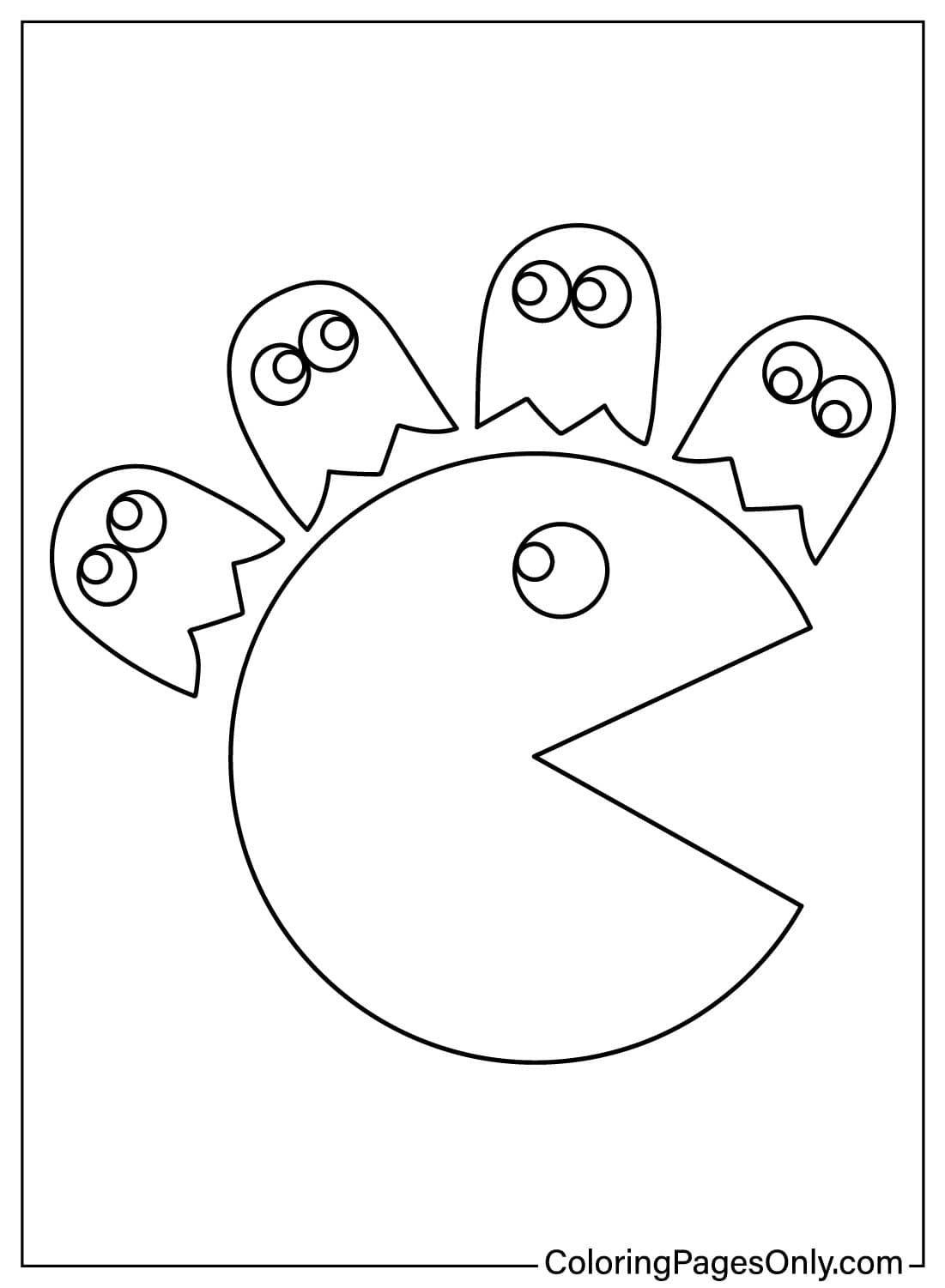
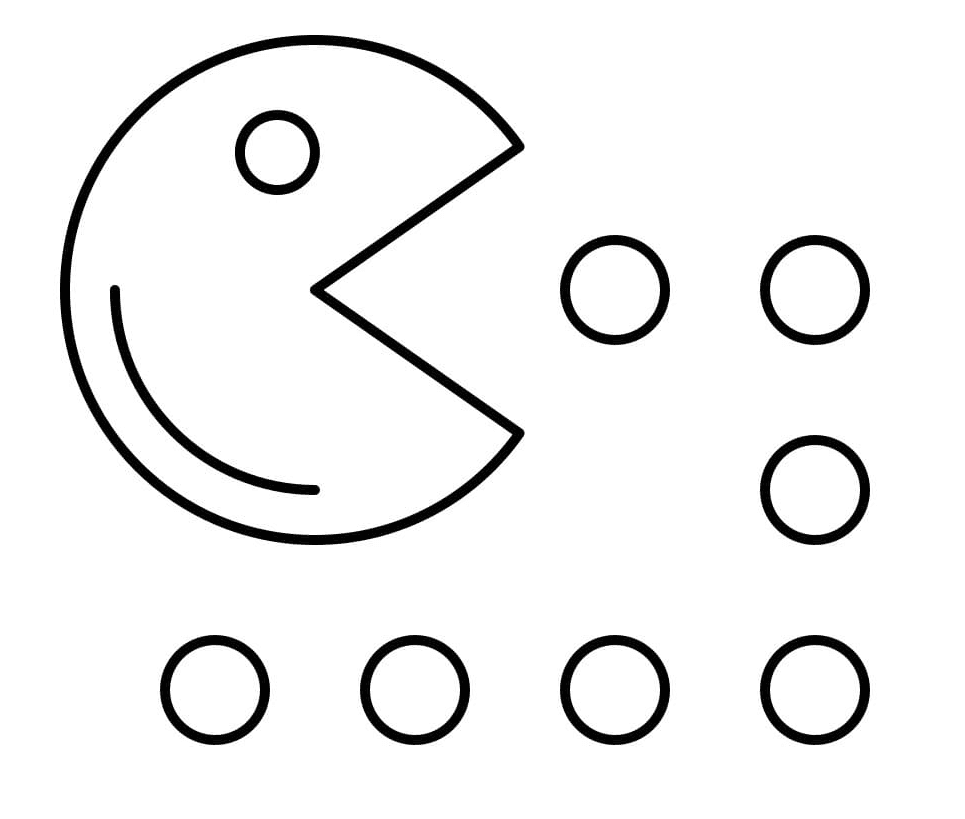
Seven pages keep to a plain, solo Pac-Man outline without a maze, ghosts, or a specific scene attached. These are the best pages for focusing on Pac-Man’s core shape, since the character is really just a yellow circle with a wedge-shaped mouth, a design so simple it was originally limited by 1980s arcade hardware.
Pac-Man in Action, Eating Ghosts
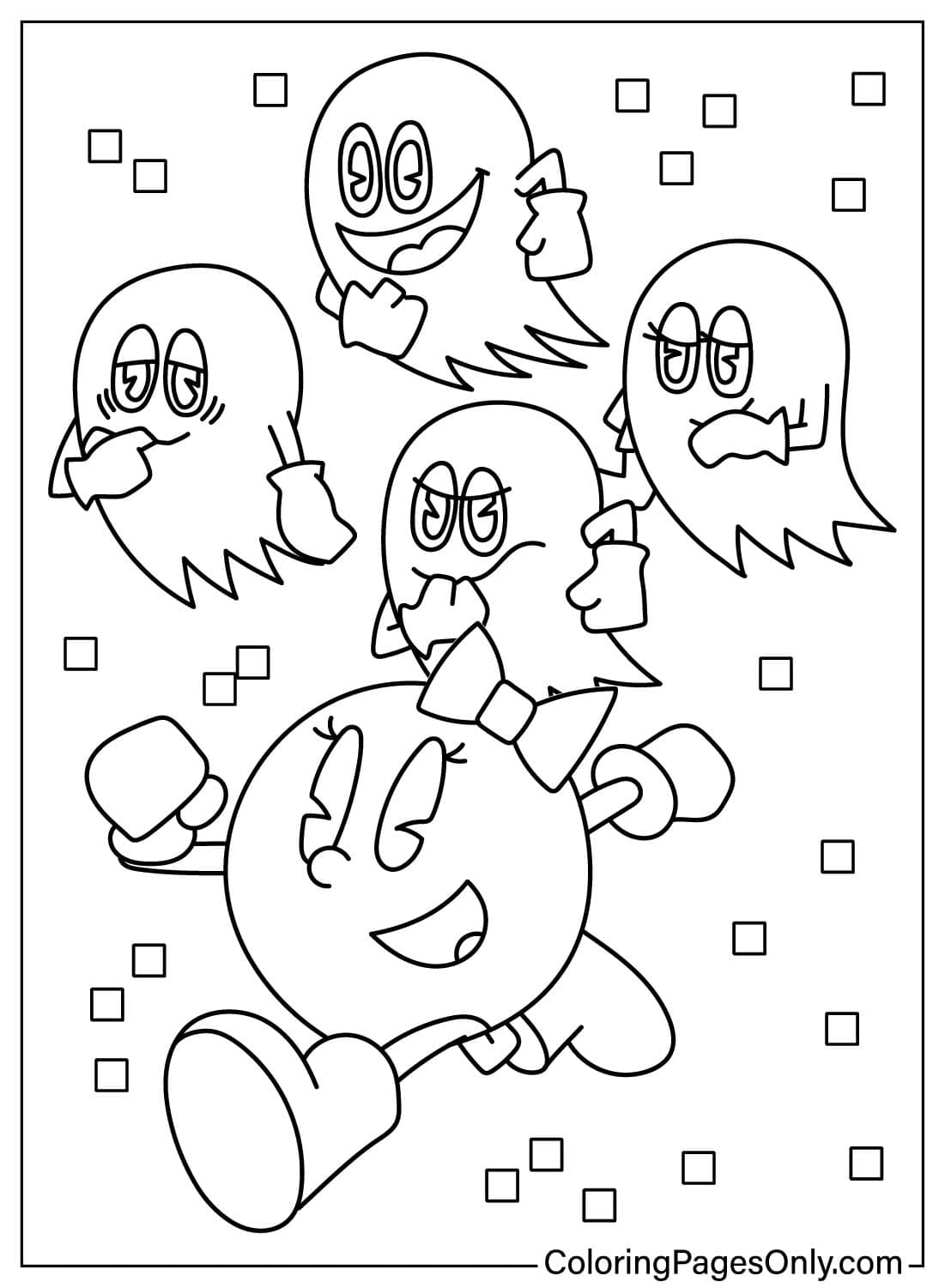
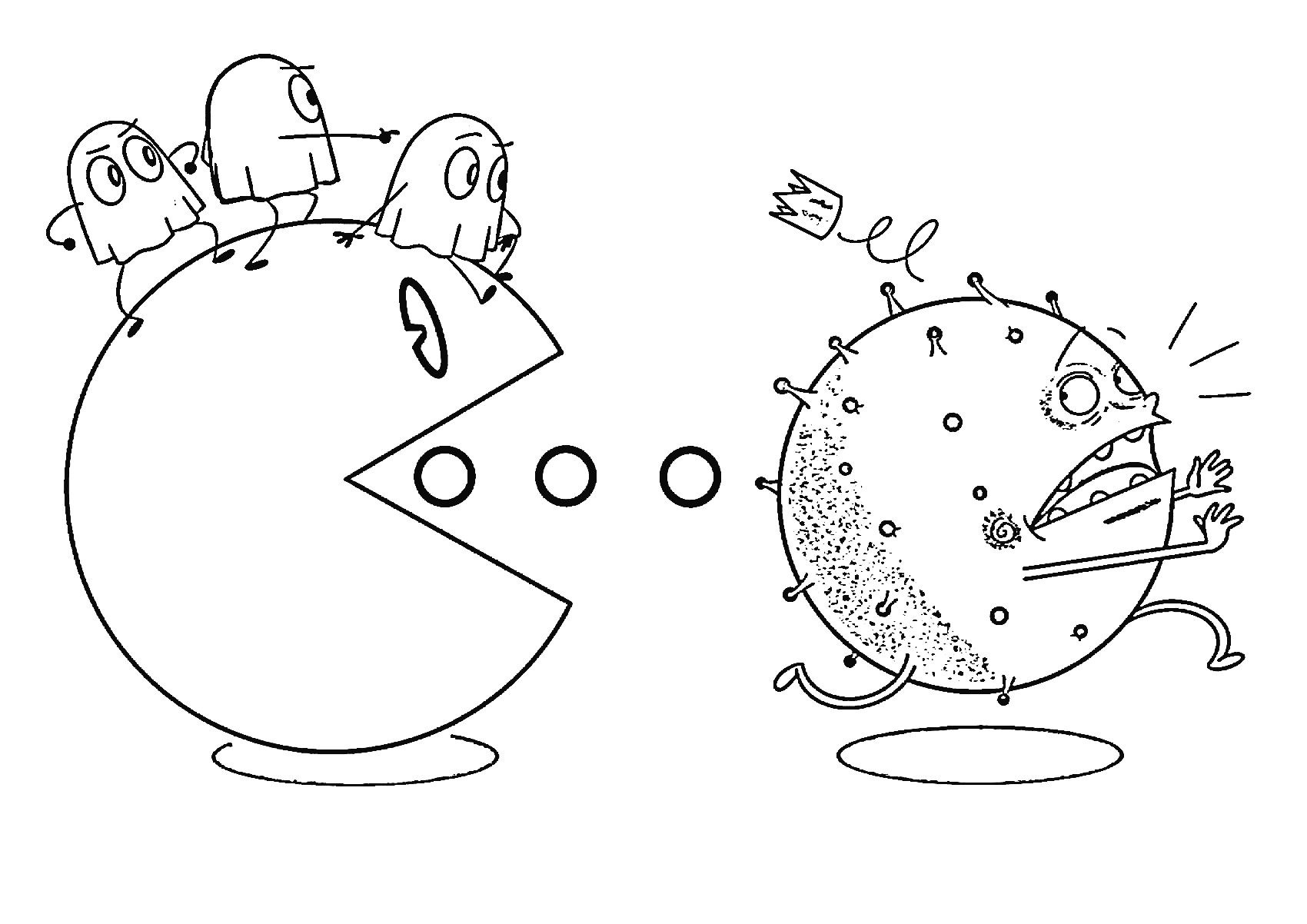
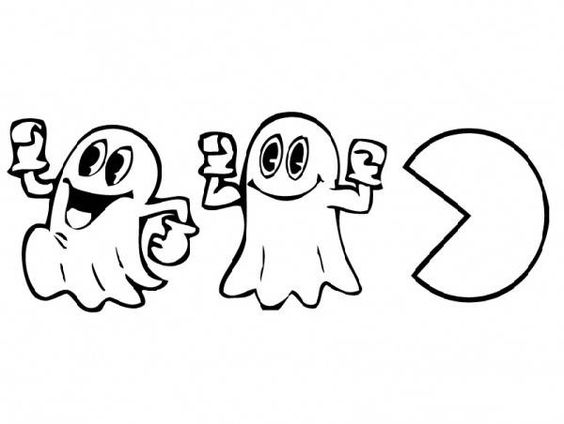
Eight pages show Pac-Man mid-game: chasing or eating the ghosts, moving through pellets, or set against a pixelated background. Each of the four classic ghosts has its own real color: Blinky red, Pinky pink, Inky cyan, and Clyde orange. Keeping those specific colors consistent helps a page look accurate to the original game rather than generic.
Crossovers and Themed Scenes
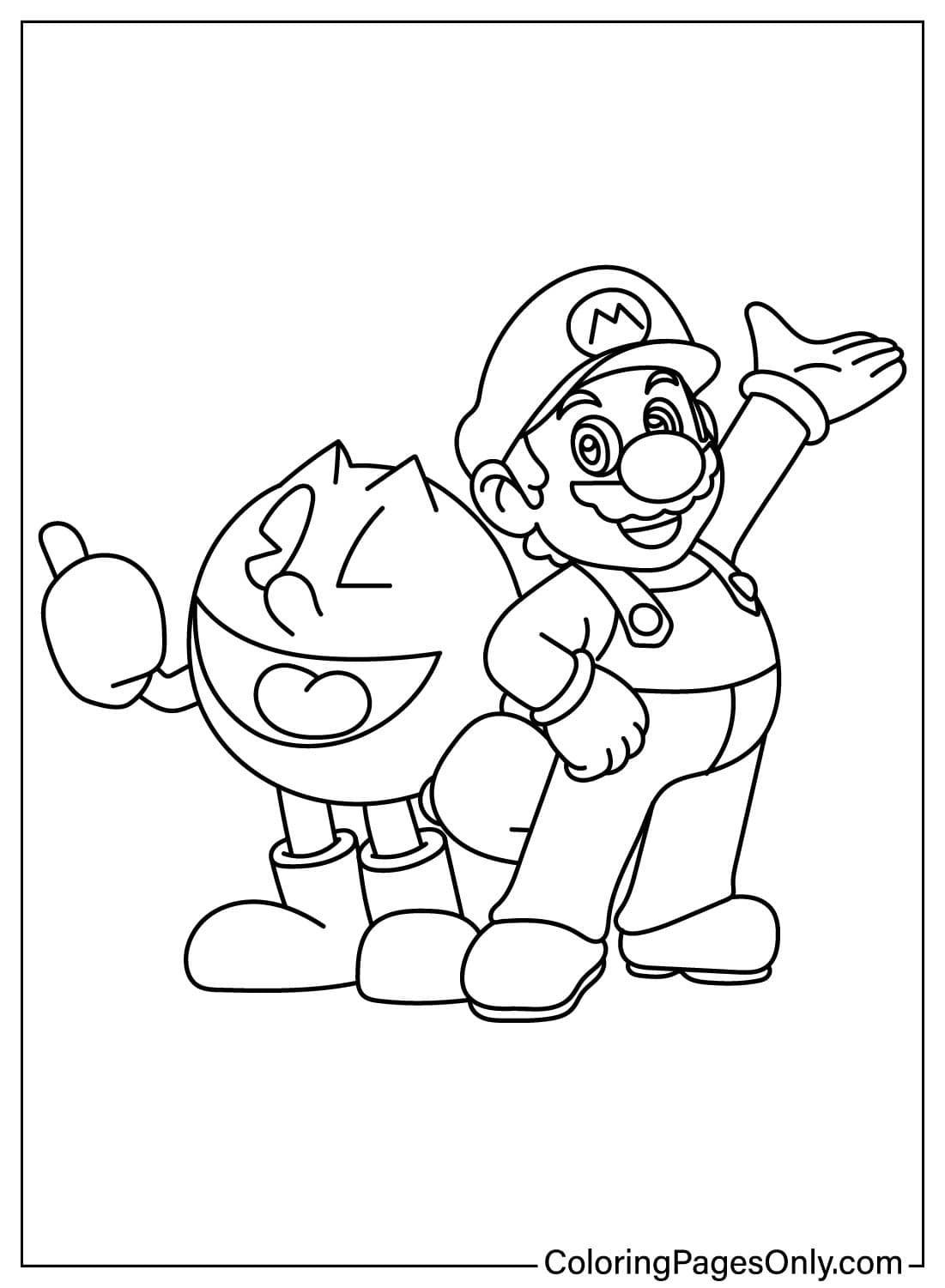
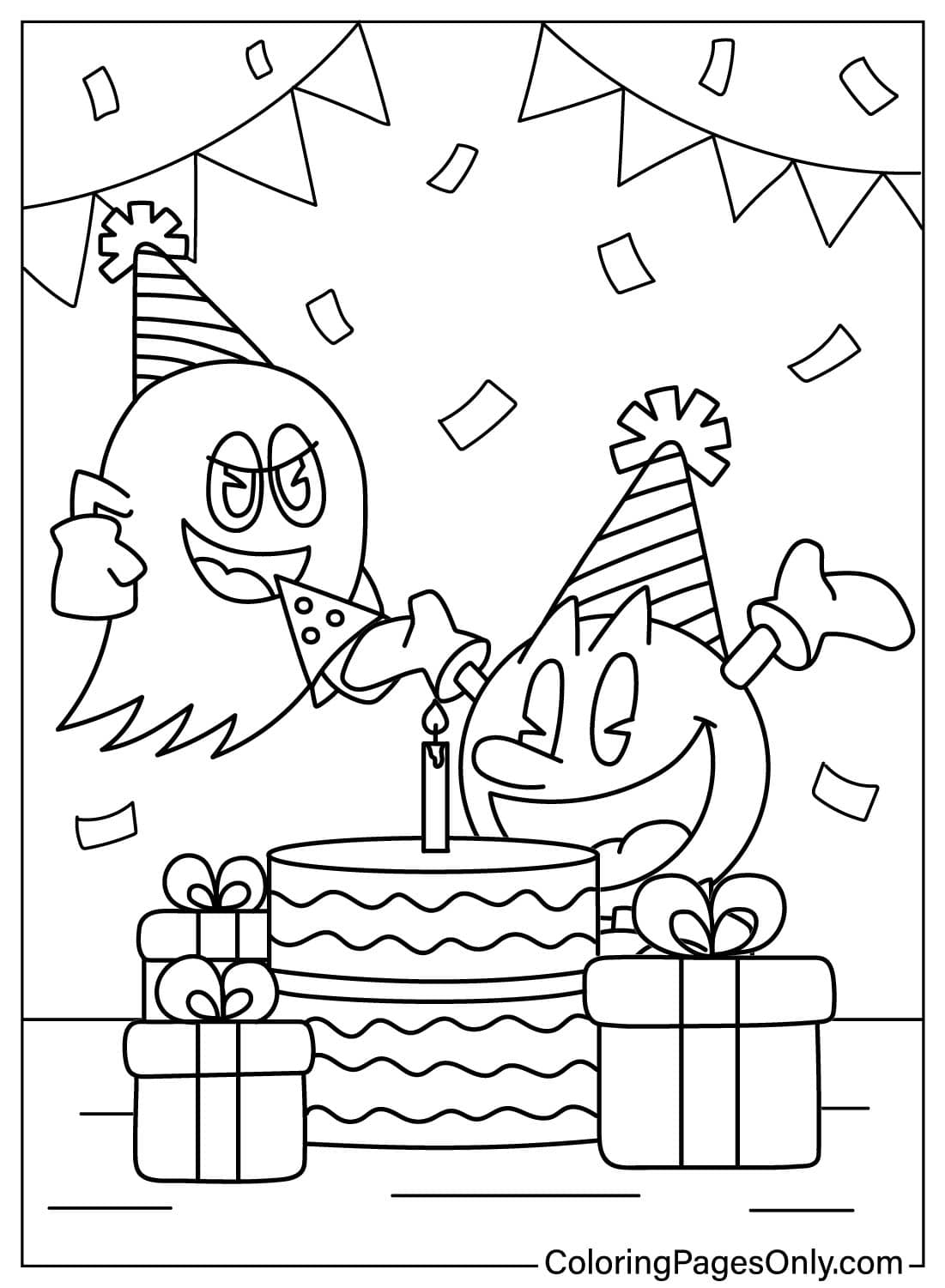
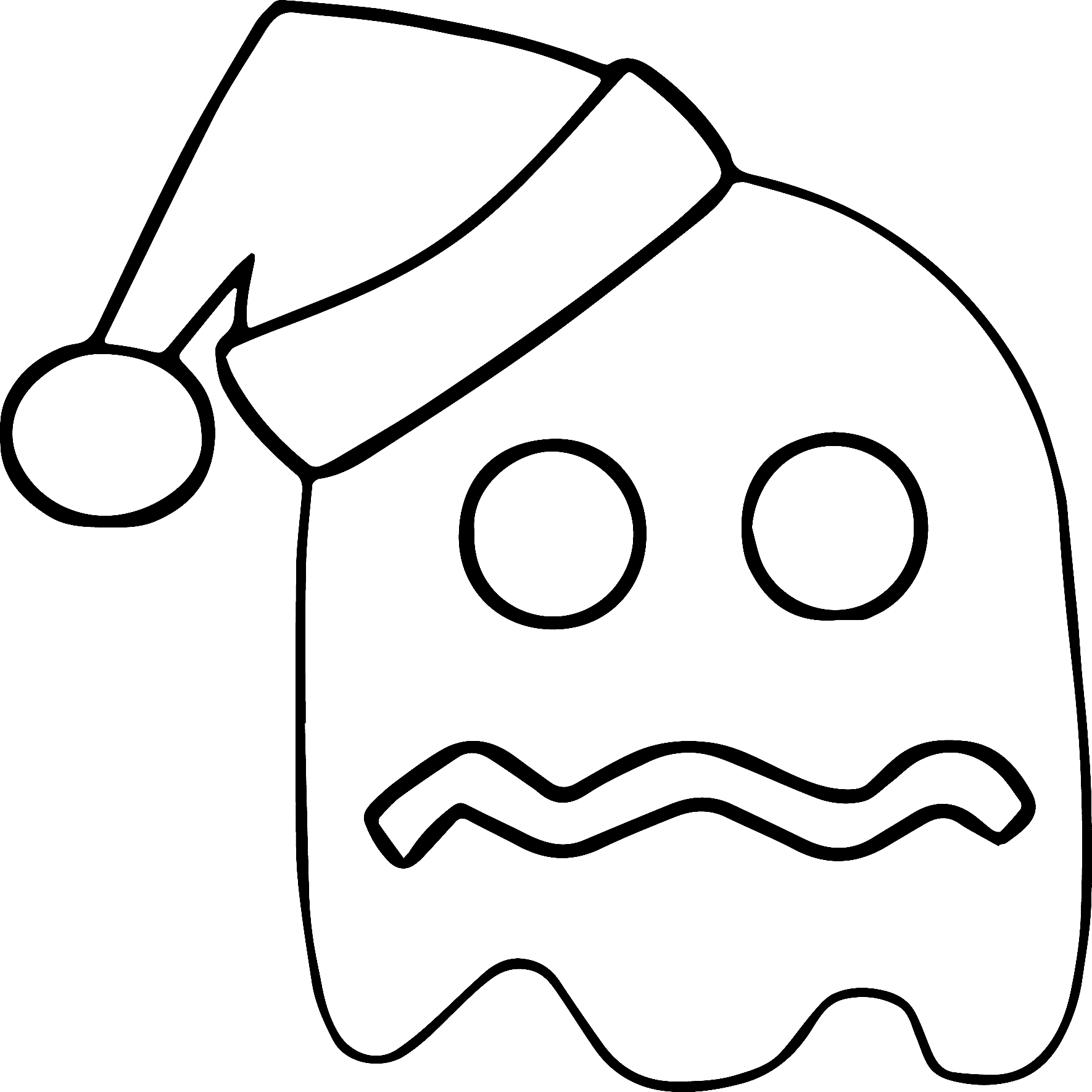
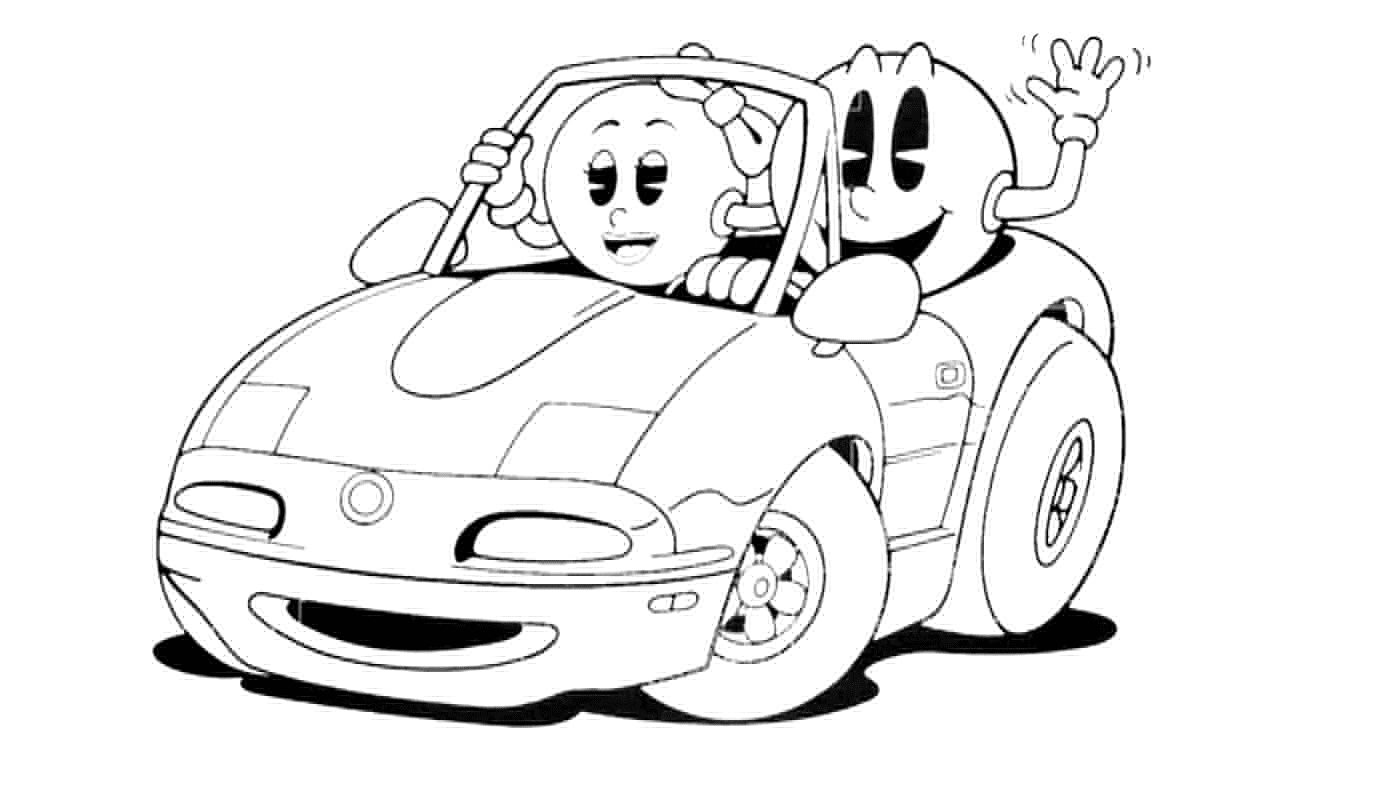
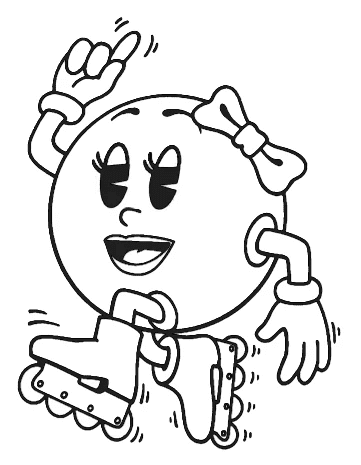
Six pages step outside a standard Pac-Man scene: a crossover with Mario, a birthday theme, a Christmas-themed ghost, and a page featuring Ms. Pac-Man, a related but distinct character. Ms. Pac-Man is recognizable by her bow and a small beauty mark, details worth including to tell her apart from the original character.
What Pac-Man Coloring Pages Do
Simple shapes still reward a careful hand. Even Pac-Man’s basic wedge-mouth circle takes steadier, more deliberate coloring to keep clean and round than it might first appear, and the American Academy of Pediatrics names exactly this kind of structured coloring, done between ages 2 and 7, as a clear path to fine motor skill development. The cute, simplified pages offer an easy starting point before a busier in-game action scene.
Four ghosts, four real personalities. Since Blinky, Pinky, Inky, and Clyde were each programmed with genuinely different chasing behaviors back in 1980, coloring all four accurately, matching the right color to the right ghost, is a small way to notice that even a decades-old arcade game had real character design behind it.
Calm through repetition. A 2005 Art Therapy Journal study found a measurable drop in anxiety after coloring sessions built around a defined structure. A maze page’s repeating dots and corridors are about as structured as a coloring page gets.
A shape with more than one story. Since even Pac-Man’s creator has given more than one account of where the design came from, a pizza slice in one telling, a simplified mouth symbol in another, coloring the character is a good reminder that even simple, iconic designs don’t always have one single, tidy origin story.
How to Color Pac-Man Coloring Pages Well
- Pac-Man himself: Use Sunglow or Goldenrod, the classic bright yellow, kept as one solid, flat color.
- Blinky: Use Scarlet, and show him leading a direct chase whenever the scene allows.
- Pinky: Use Carnation Pink or Magenta, typically shown cutting across the maze rather than following directly behind.
- Inky: Use Turquoise Blue or Sky Blue, positioned as the least predictable-looking ghost in a group scene.
- Clyde: Use Sunglow-Orange or Burnt Orange, often placed a bit apart from the other three ghosts.
- Maze and dots: Use Midnight Blue or Black for the maze walls, with White or Sunglow dots, keeping high contrast so the path reads clearly.
5 Creative Craft Ideas With Pac-Man Coloring Pages
1. Ghost Fact Cards. Color the four ghosts, then write each one’s real chasing behavior on the back of the card. A small stack makes a simple, reusable set for a retro-gaming or game-design lesson.
2. Maze Design Challenge. Color a Pac-Man maze page, then draw an original maze path of your own around the existing dots. It’s a fun way to combine coloring with a bit of hands-on design.
3. Then vs. Now Poster. Color a classic-style Pac-Man and one of the cuter, more modern-style pages, then label the differences. It’s a quick way to see how the same character has been redrawn over the years.
4. Retro Game Night Sign. Color a Pac-Man and ghost page, then use it as a themed decoration for a game night or party. It’s a simple way to turn a finished page into real decor.
5. Pac-Man Bookmark Set. Color a few small portraits, cut them into narrow bookmark strips, and cover each with clear contact paper. A set makes a fun, low-cost gift for a retro gaming fan.
Frequently Asked Questions
What are Pac-Man coloring pages?
Pac-Man coloring pages are free printable and browser-colorable designs of the classic arcade character, from cute cartoon versions to in-game action scenes and a few crossovers. This collection has 30 pages, available as PDF downloads or through the online coloring tool.
Who created Pac-Man, and when was it released?
Pac-Man was created by designer Toru Iwatani at Namco and first released in Japan on May 22, 1980, under the original name “Puck Man.”
Why was the name changed from Puck Man to Pac-Man?
The game was renamed “Pac-Man” for its American release in October 1980 because Midway, the U.S. distributor, was concerned vandals would scratch the P in “Puck Man” into an obscene word on arcade cabinets.
Where did Pac-Man’s design actually come from?
Iwatani has given more than one account over the years. He’s often said a pizza inspired the character’s missing-wedge shape with a slice removed, but he’s also credited it to a simplified version of the Japanese character for “mouth.”
Do the four ghosts really behave differently?
Yes. Each of the four ghosts was programmed with a different chasing pattern: Blinky chases directly, Pinky tries to cut Pac-Man off ahead of his path, Inky’s movement depends on Blinky’s position, and Clyde alternates between chasing and keeping his distance.
How is Ms. Pac-Man related to the original game?
Ms. Pac-Man began as an unauthorized fan modification of the original game called “Crazy Otto,” created by a company unaffiliated with Namco. It was later licensed and officially released by Midway in 1982 as a legitimate sequel.
Are Pac-Man coloring pages suitable for young children?
Yes, with the right page. The simple and cute pages suit younger children, while the more detailed in-game action scenes suit older kids and adult fans of the original arcade game.
Are these official Namco or Bandai Namco designs?
No. These are fan-made coloring sheets for personal, non-commercial use and are not affiliated with, licensed by, or endorsed by Namco or Bandai Namco.
Start Coloring
Download any design by clicking it. No account, email, or payment is required to color or print. Every page opens in the online coloring tool for on-screen use or downloads as a full-resolution PDF for printing. Share a finished Pac-Man page using the Facebook or Pinterest buttons at the top of the page.