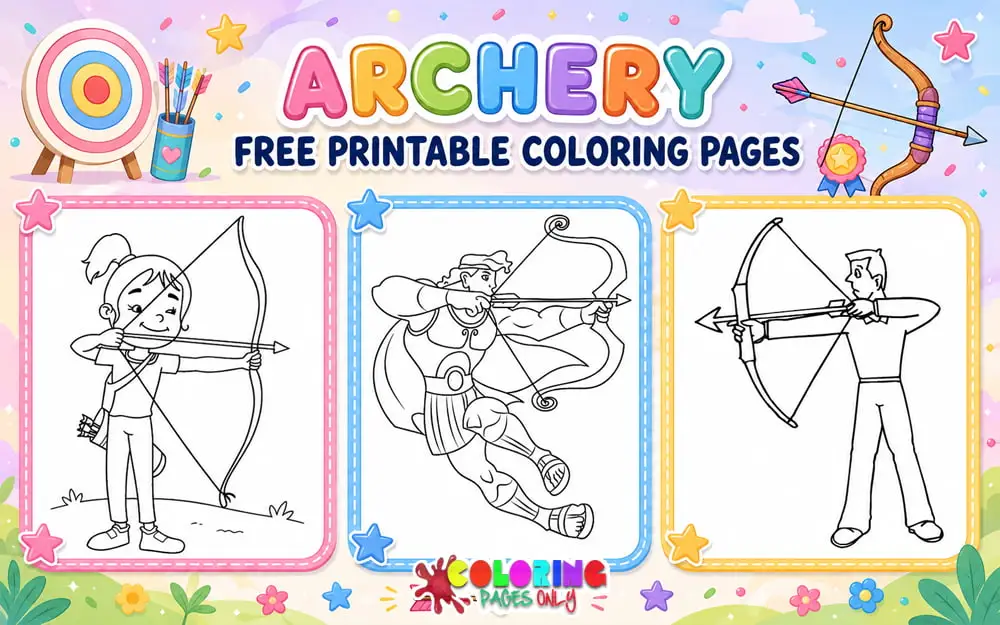
Archery coloring pages: 41+ free printable PDF designs covering equipment pages with bows, arrows, and targets, boy and girl archer pages, competition and Olympic scenes, Robin Hood and Hercules, and cartoon animal archery pages. Every page is free to download as a PDF or color in the browser, with no account required.
Archery is one of the oldest human skills, developed independently across cultures as both a hunting tool and a weapon of war. It became an Olympic sport in 1900 and has been a permanent fixture of the Games since 1972. Today, it is practiced as a competitive precision sport and a recreational activity worldwide.
These pages suit children interested in archery, fans of Robin Hood and Hercules, younger children drawn to the cartoon animal archer pages, and anyone who enjoys precision sport coloring subjects.
The set has a clear entry point for any age: equipment pages are simple flat fills, cartoon animal pages are expressive and humorous, and the competition and character pages reward more detailed color work.
Quick Answer
Archery coloring pages are a free set of 41+ printable PDFs and browser-based sheets covering equipment, human archers of all ages, competition scenes, Robin Hood, Hercules, and animal archer pages.
Best for: children interested in archery or the outdoors, fans of Robin Hood and mythological characters, and anyone looking for a sport coloring set that mixes realistic and cartoon styles
Formats: printable PDF and online coloring
Popular pages: Target, Robin Hood Archery, Hercules With Bow and Arrow, Girl Archer, Olympics Archery, and Rooster Archery
Creative uses: a target color accuracy study, a Robin Hood and Hercules contrast pair, an Olympic competition page, and a cartoon animal archery set
What’s Inside Archery Coloring Pages
The set covers four distinct groups: equipment and targets, human archers, mythological and character pages, and animal pages.
Equipment and Target Pages
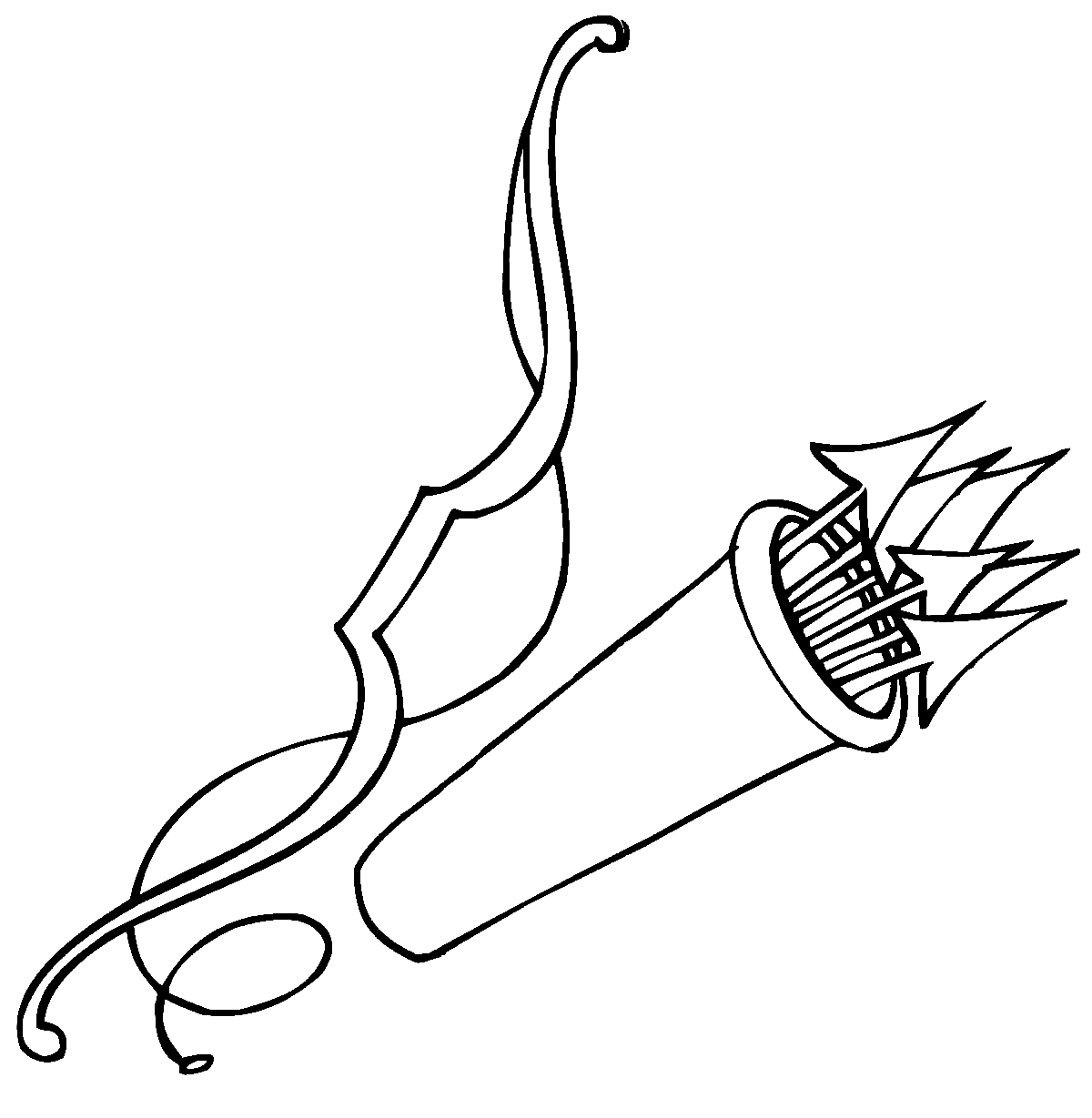
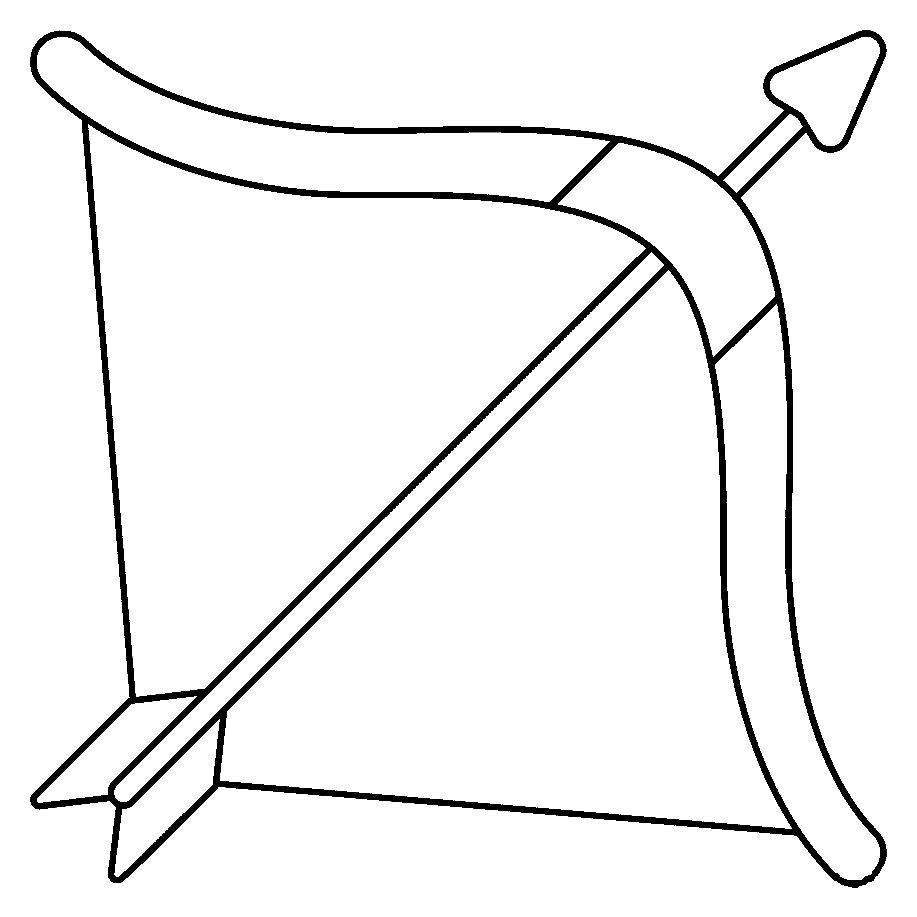
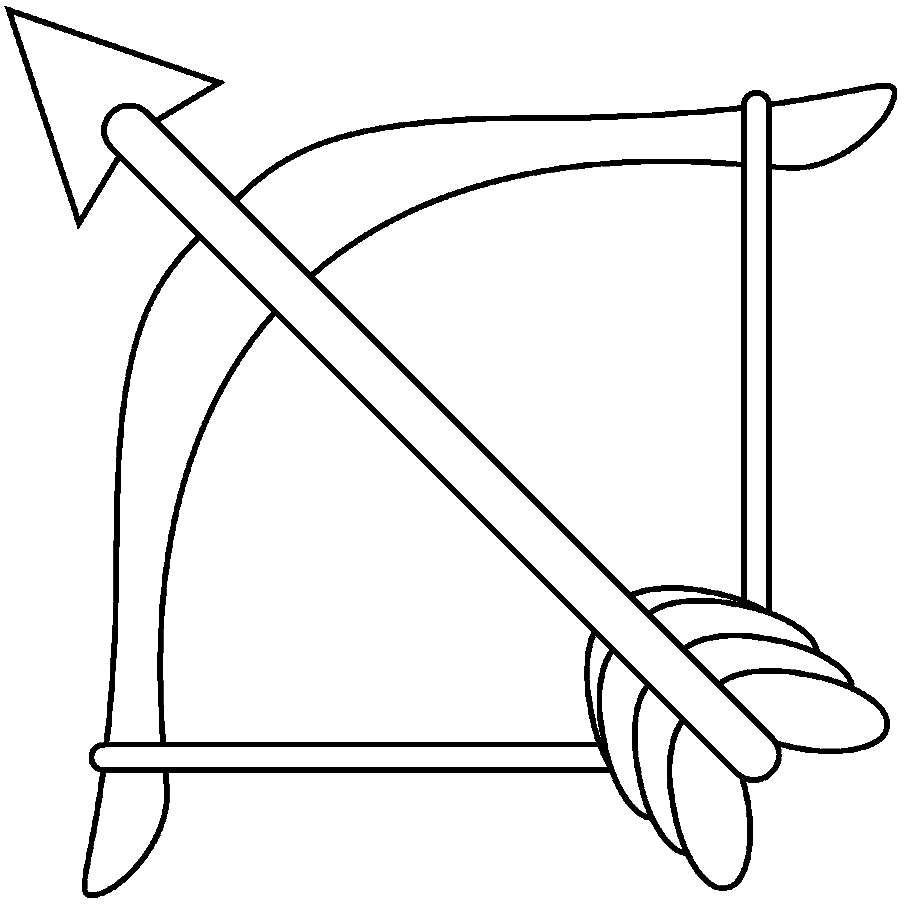
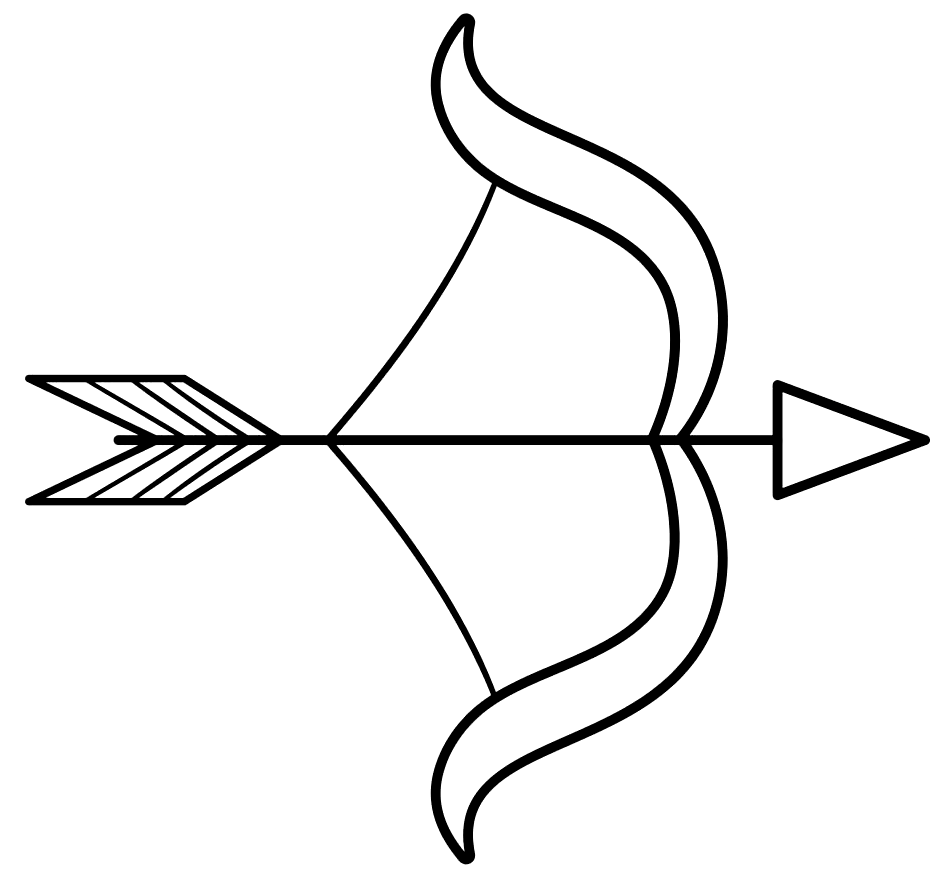
Eleven pages focus on archery equipment: the bow, arrows, and the target.
Coloring the target: the standard archery target uses five colored concentric ring zones. From the center outward: yellow or gold (the innermost 10-ring, often called the bull’s-eye), red (7 and 8 rings), blue (5 and 6 rings), black (3 and 4 rings), and white (1 and 2 rings on the outer edge). The World Archery Federation standardizes this specific color sequence and applies it to all competition targets. Getting the color order right on the target page makes it immediately recognizable to anyone familiar with the sport.
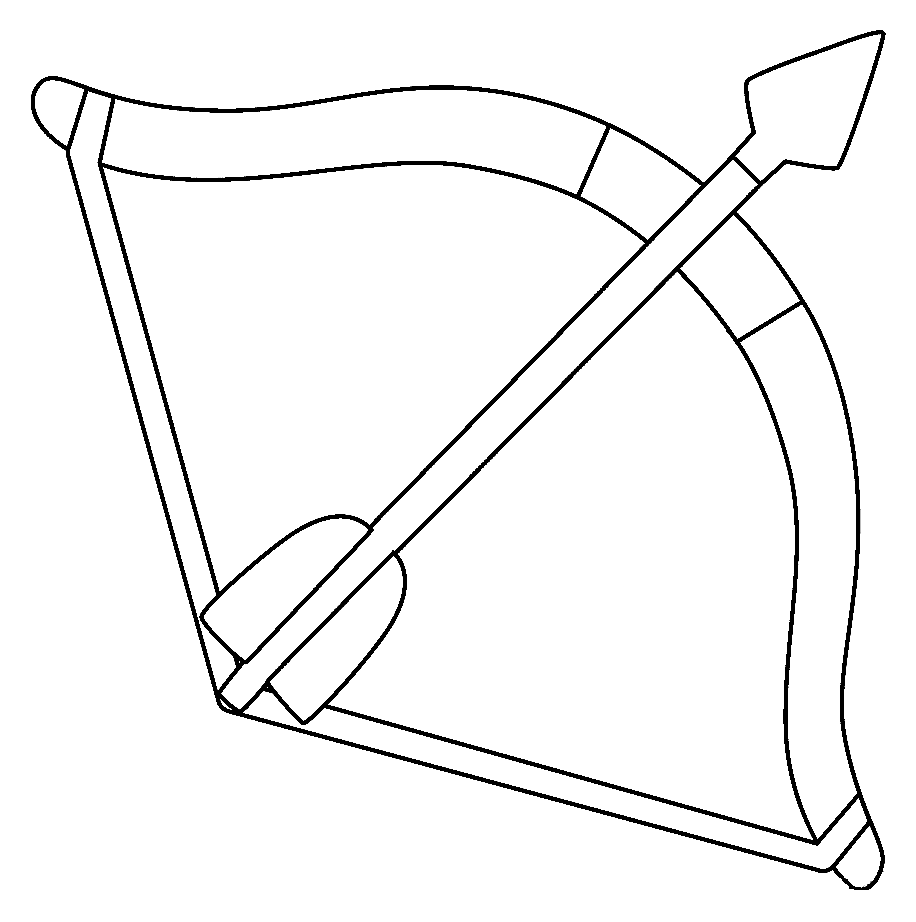
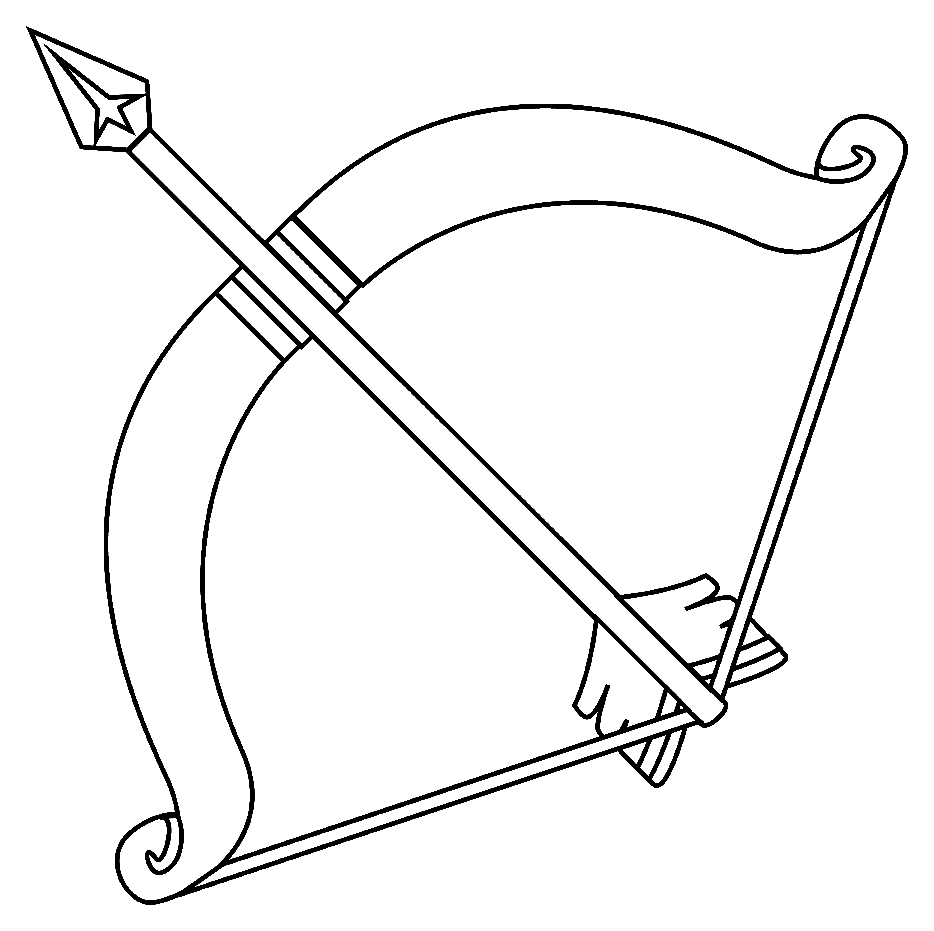
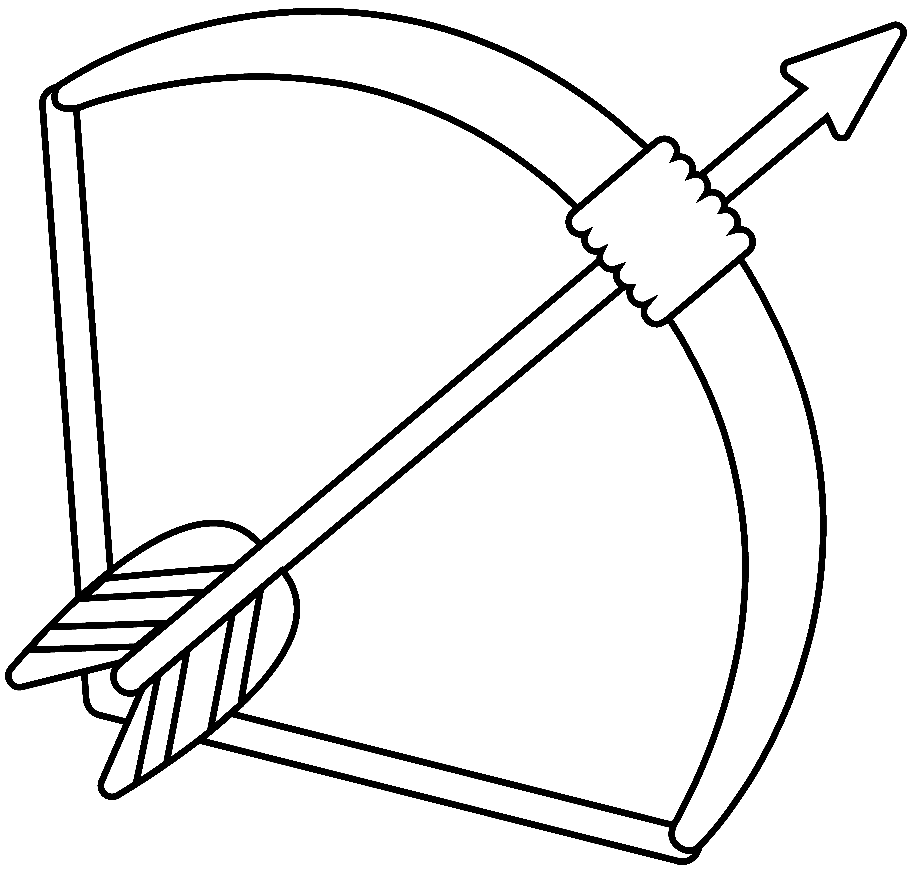
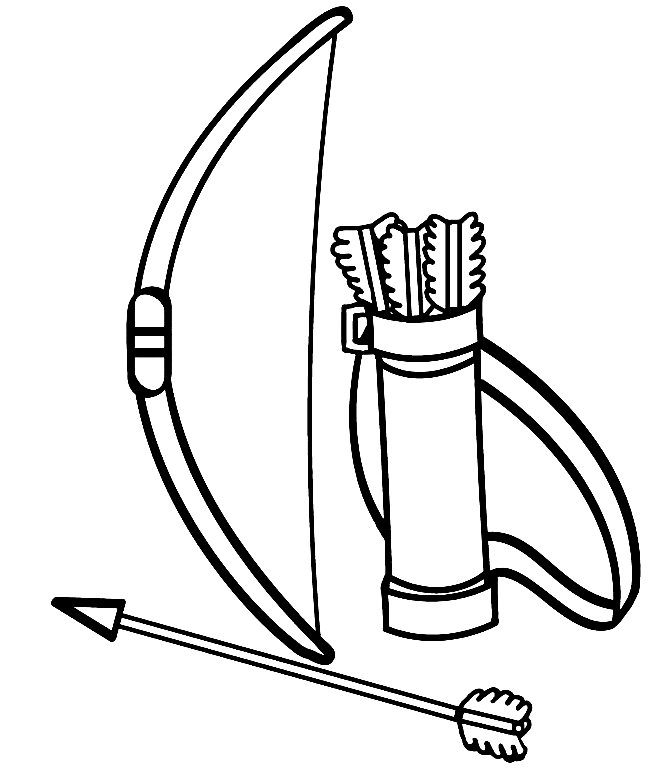
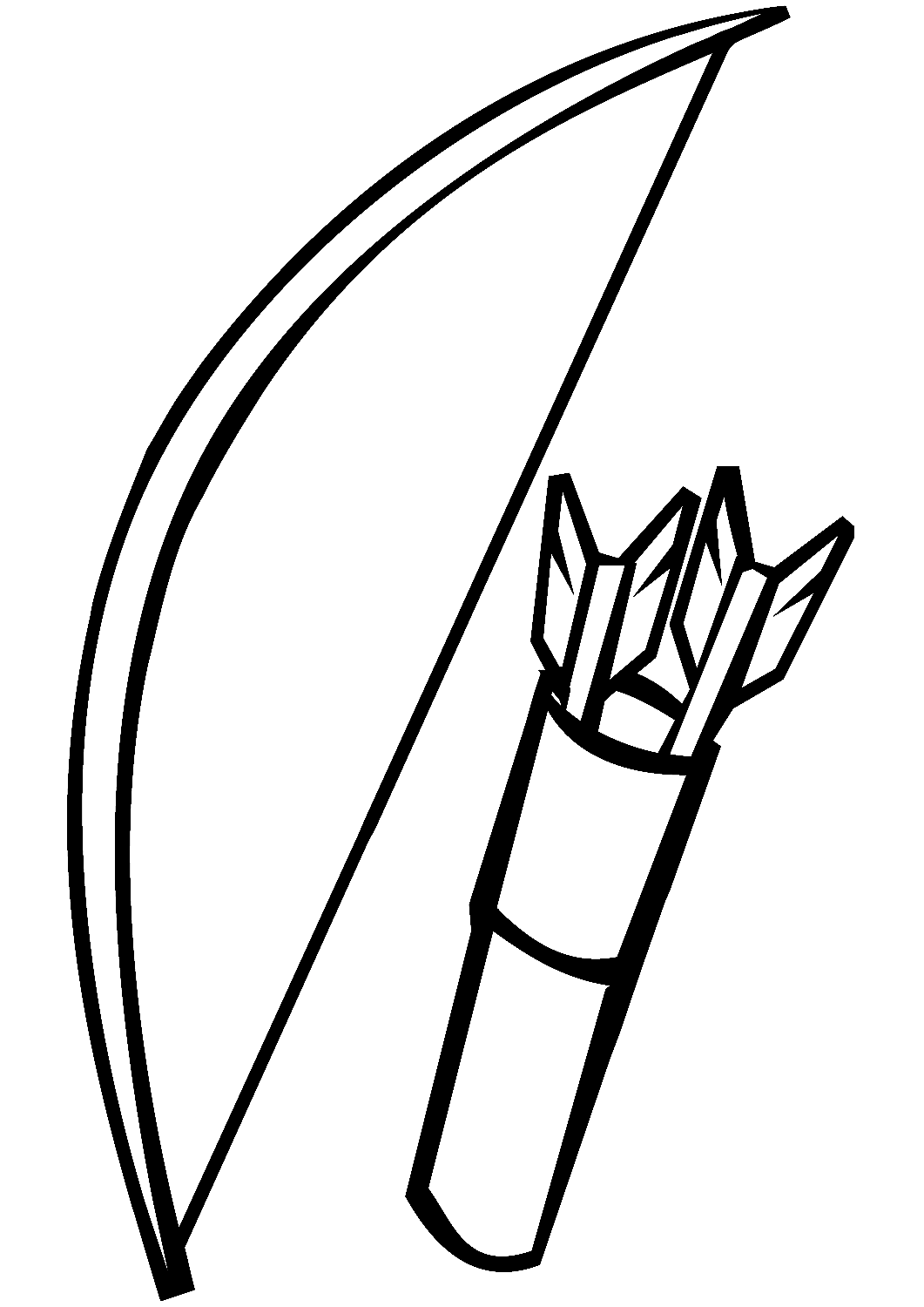
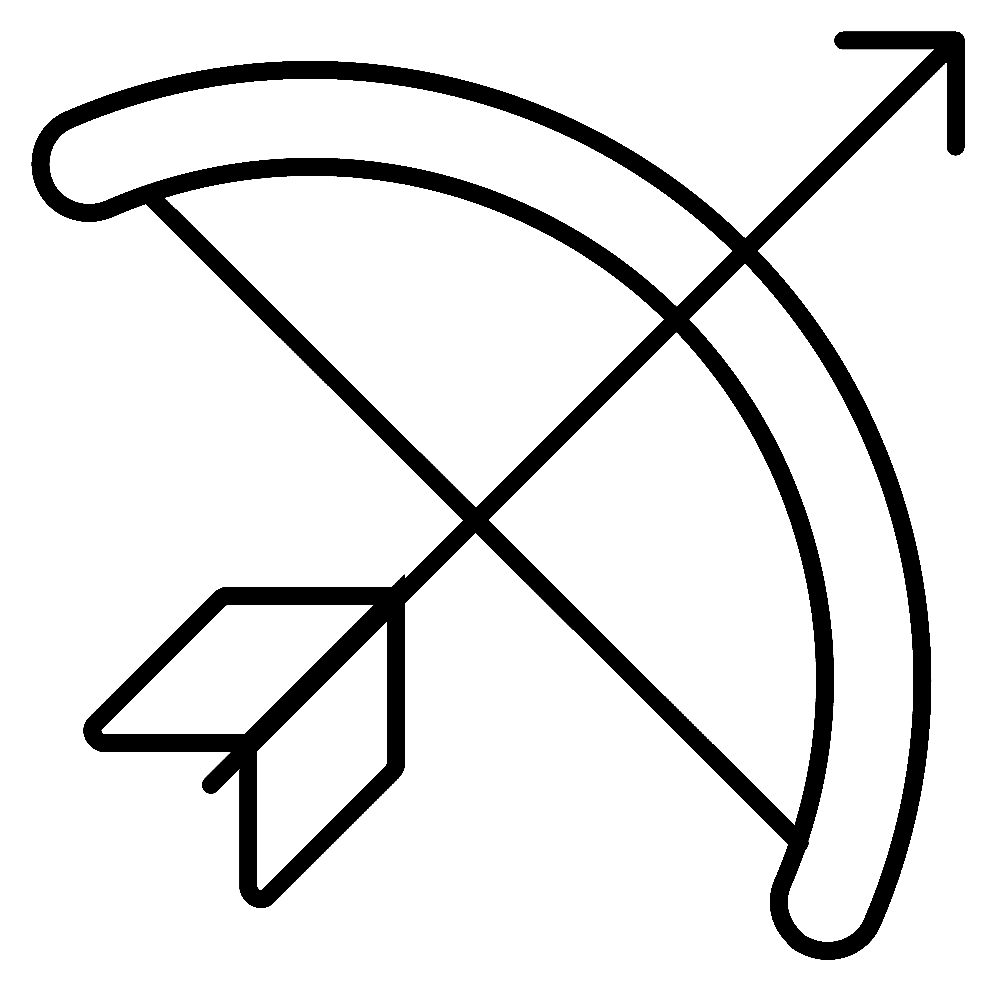
Coloring bows and arrows: a recurve bow has two curved limbs extending from a central riser or handle. The limbs are traditionally made of wood (warm tan to amber-brown), and the riser on modern bows is often aluminum or carbon (silver, black, or dark grey). The bowstring is white or pale grey. Arrows have a wooden or carbon shaft (natural tan for wood, dark grey or black for carbon), brightly colored fletchings (the feather or vane stabilizers at the tail end), and a steel arrowhead. Fletching colors are often red, blue, yellow, or orange and are the most vivid element on a bow-and-arrow composition.
Human Archer Pages
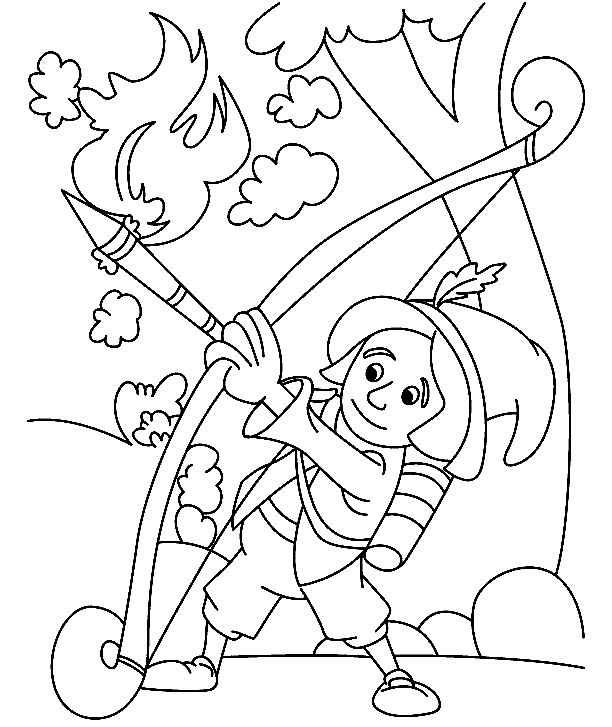
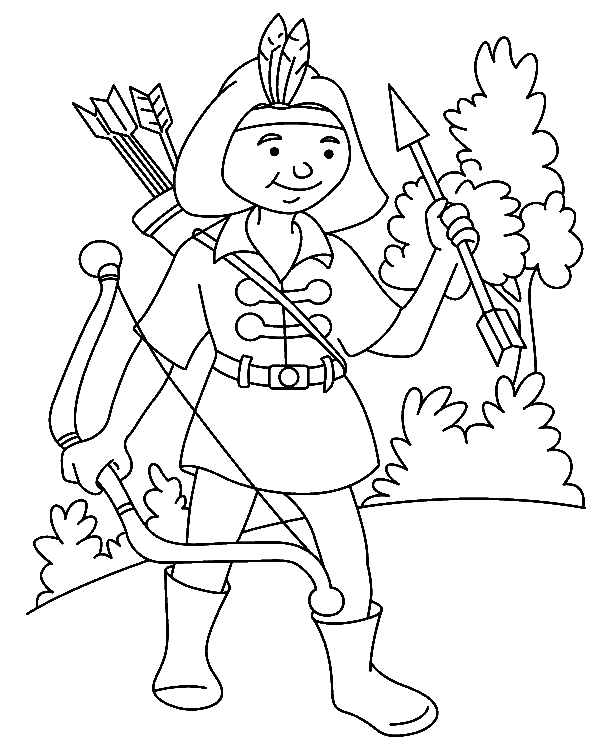
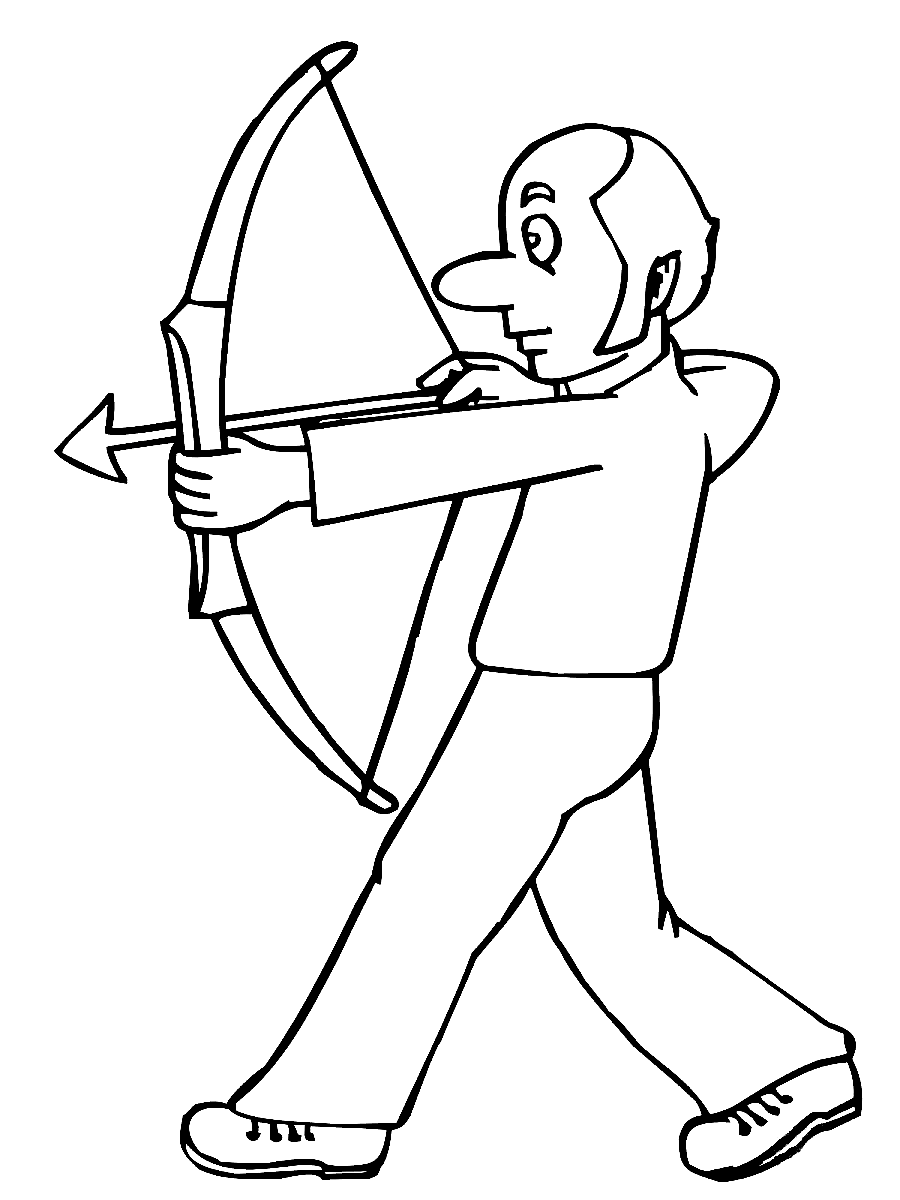
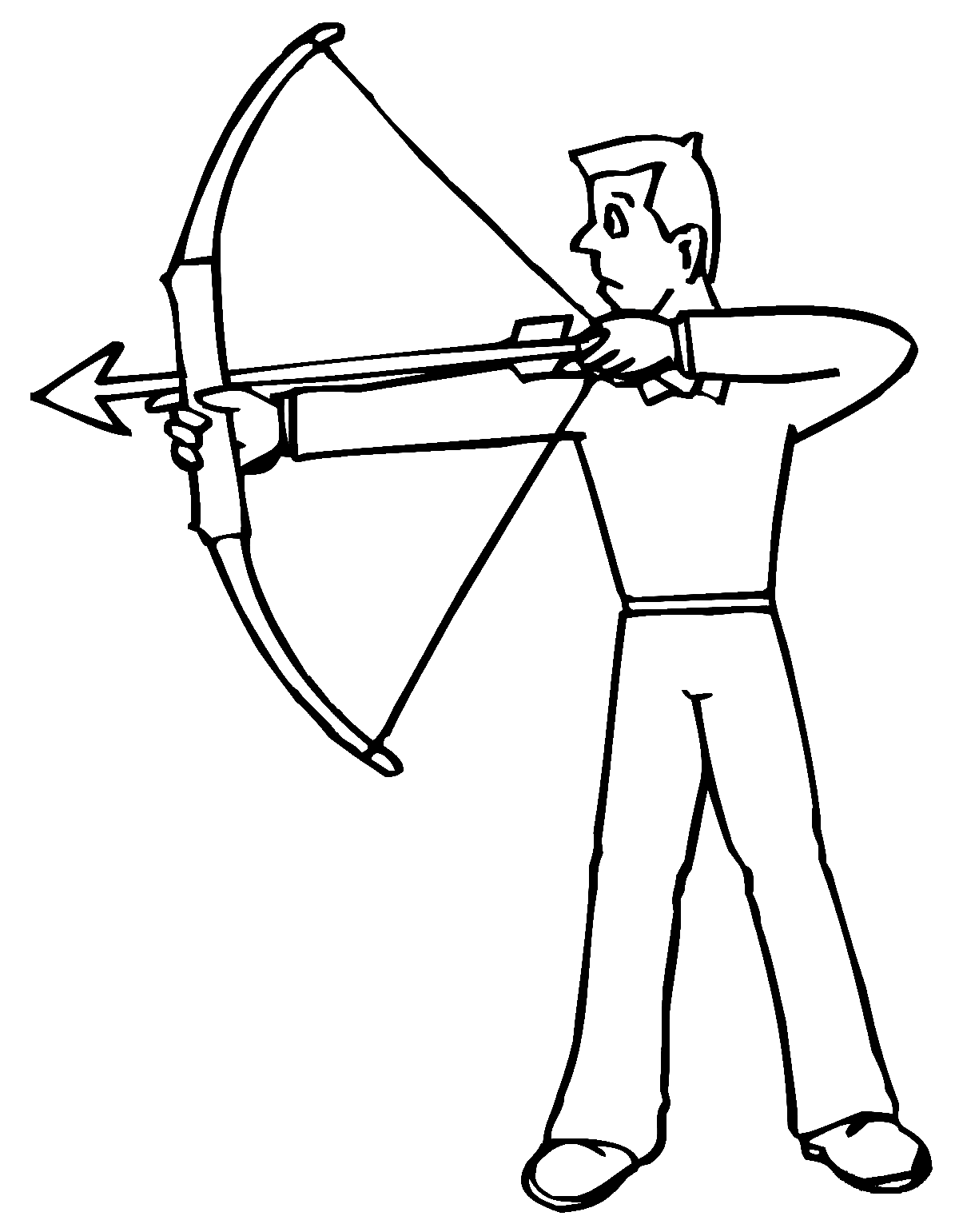
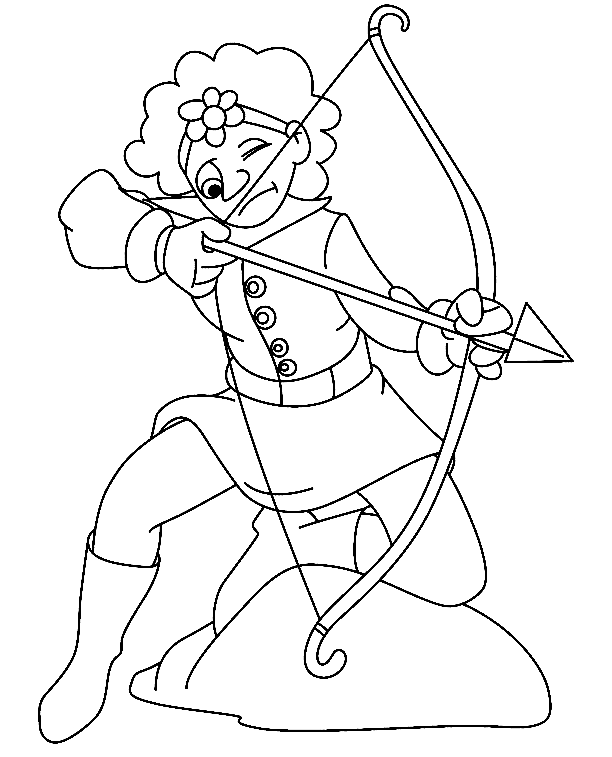
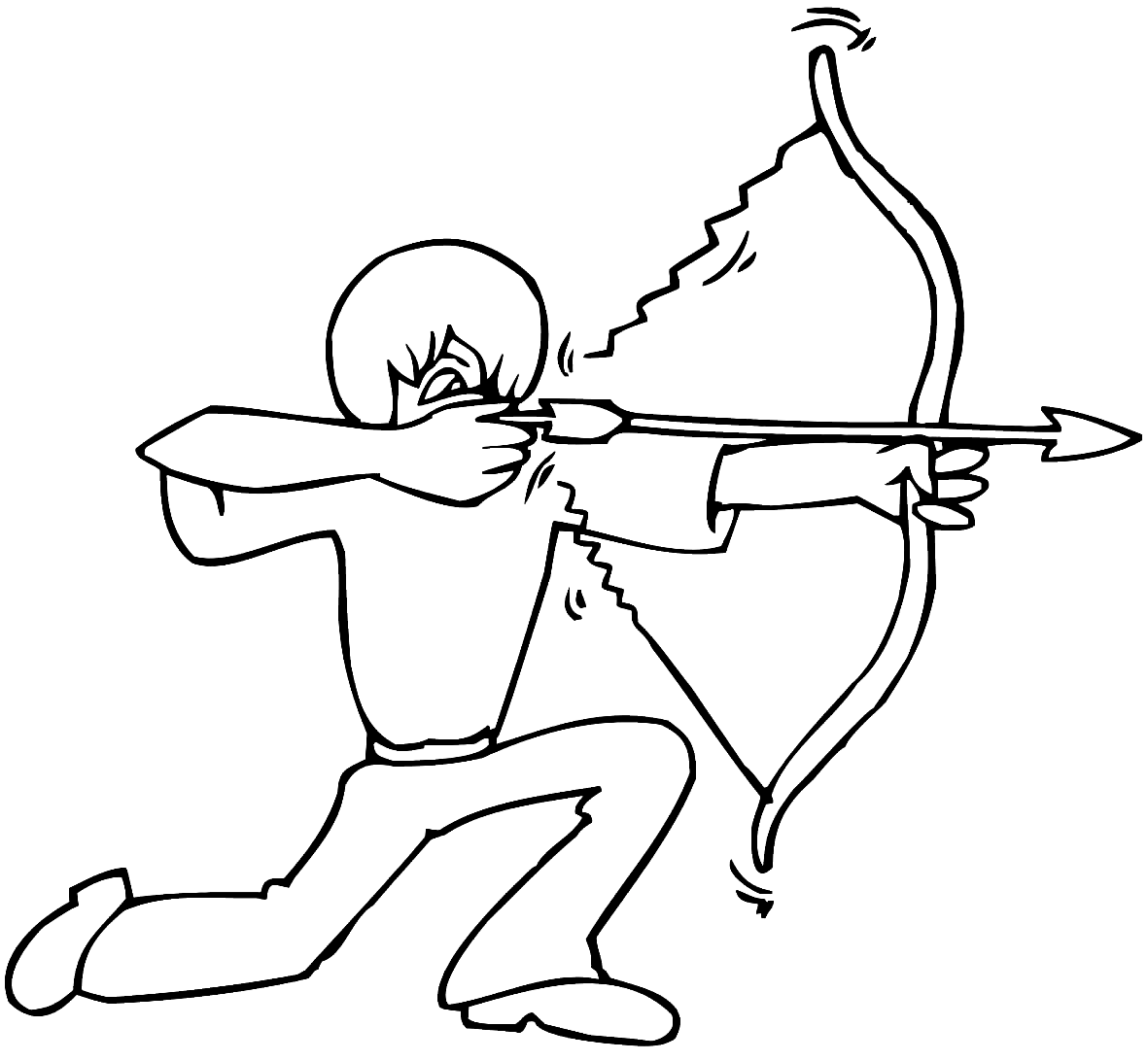
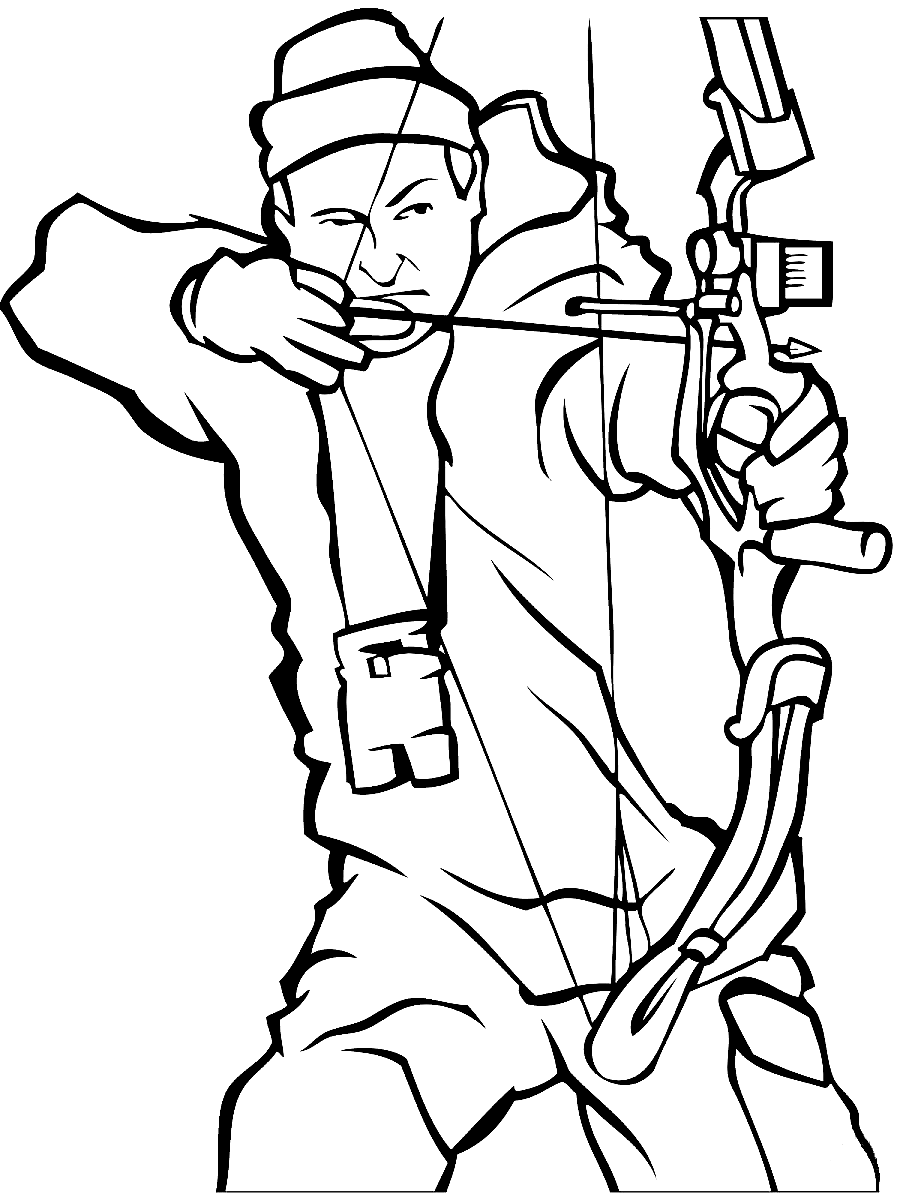
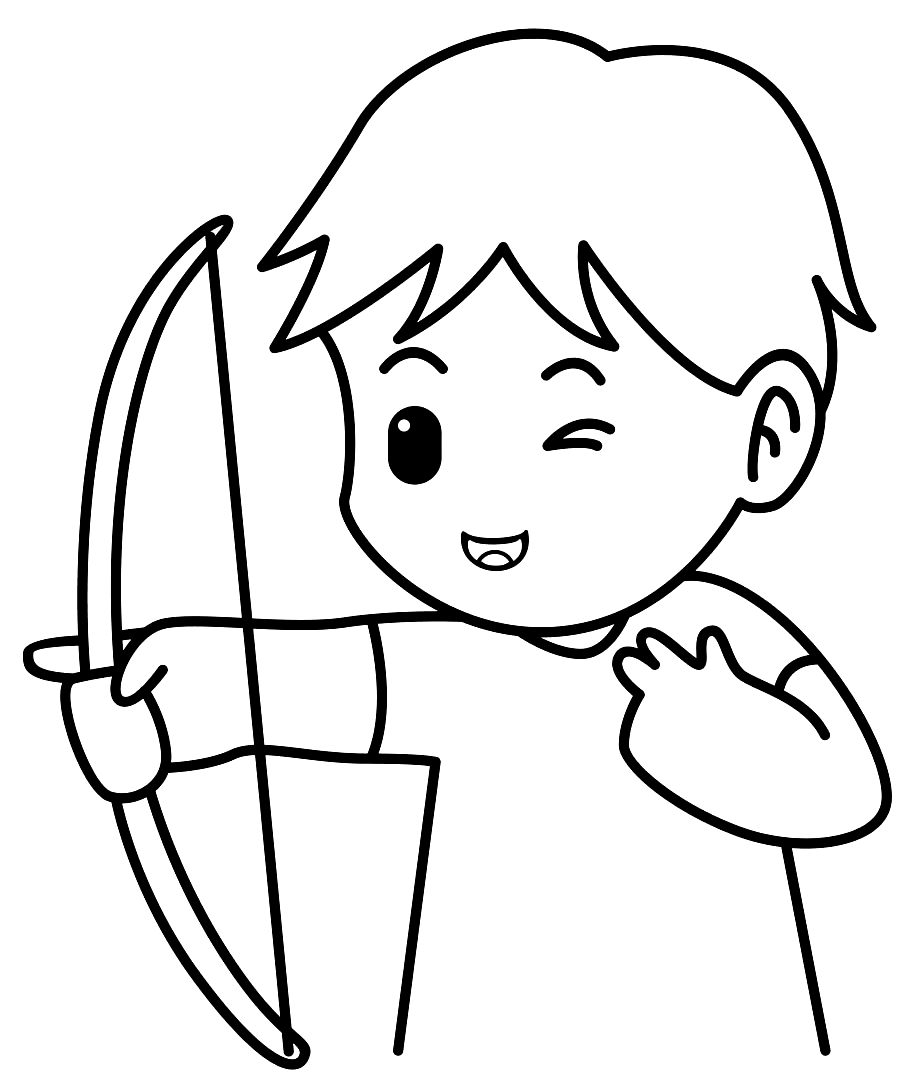
Seventeen pages show human archers across boy archers, girl archers, a man with a bow, competition scenes, and specialty pages.
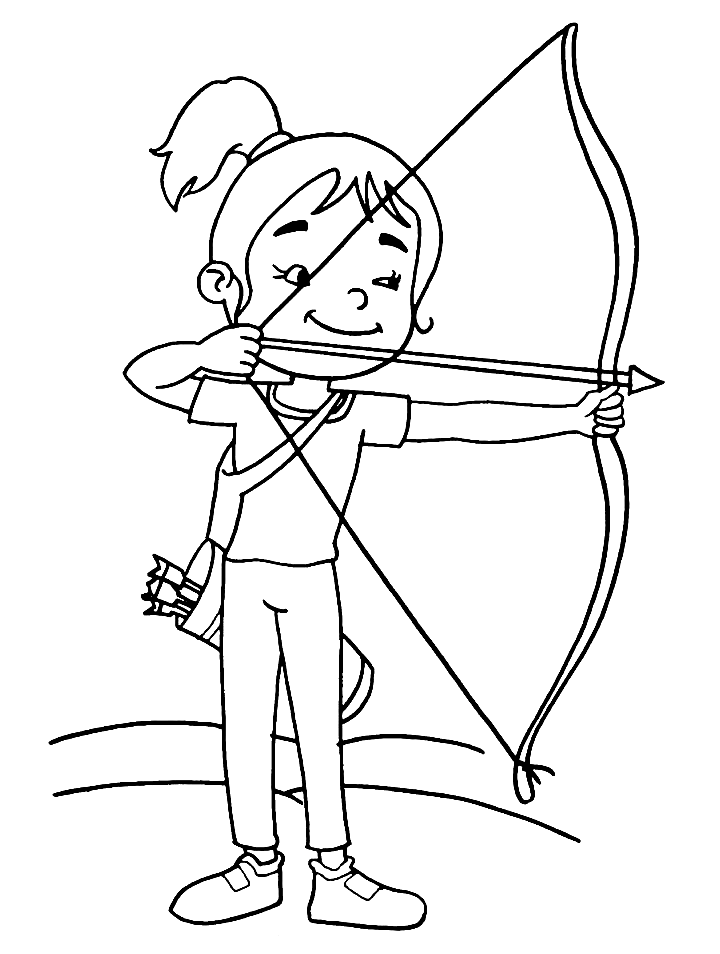
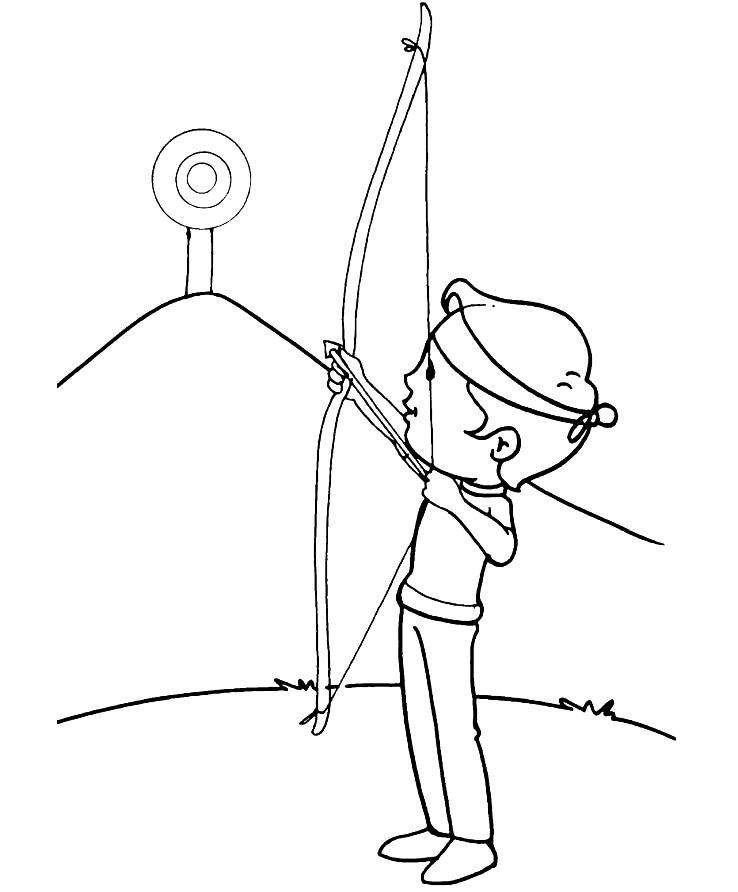
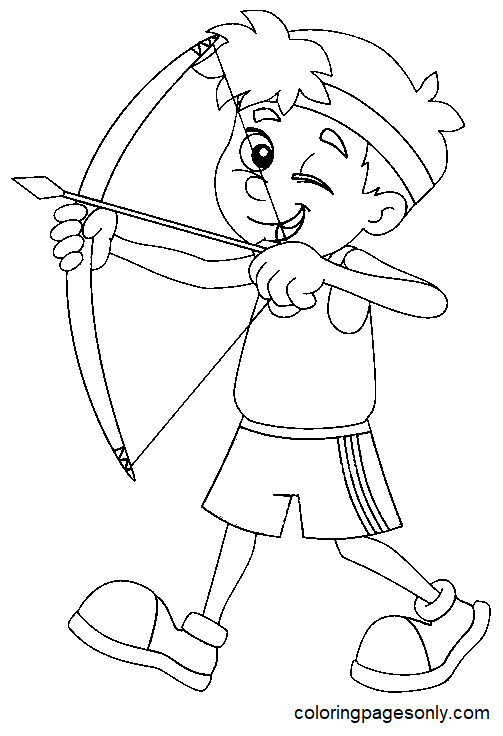
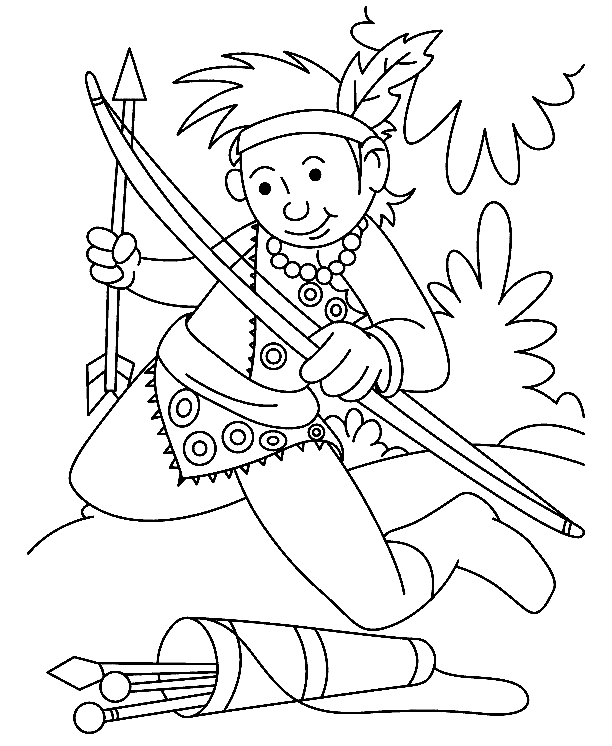
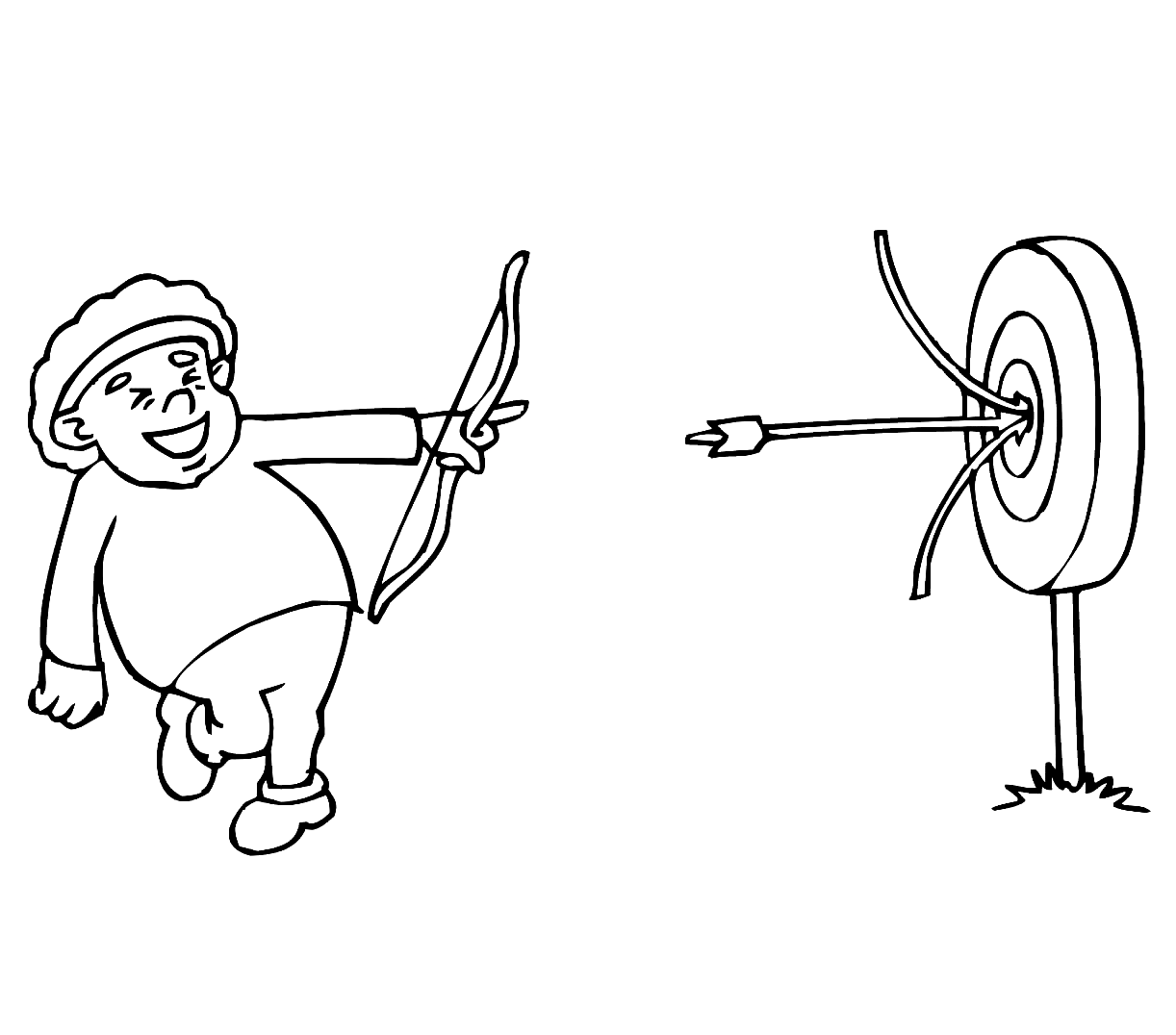
Coloring boy archers: the boy archer pages show archers at full draw or in a standing practice stance. Archery competition clothing is typically a simple fitted top in the team or national color. An arm guard (bracer) is worn on the bow arm forearm, usually made of leather or brown. A finger tab or shooting glove protects the drawing hand and appears on the fingers of the shooting hand in darker leather, brown, or black. The quiver holding spare arrows is brown leather or modern black nylon.
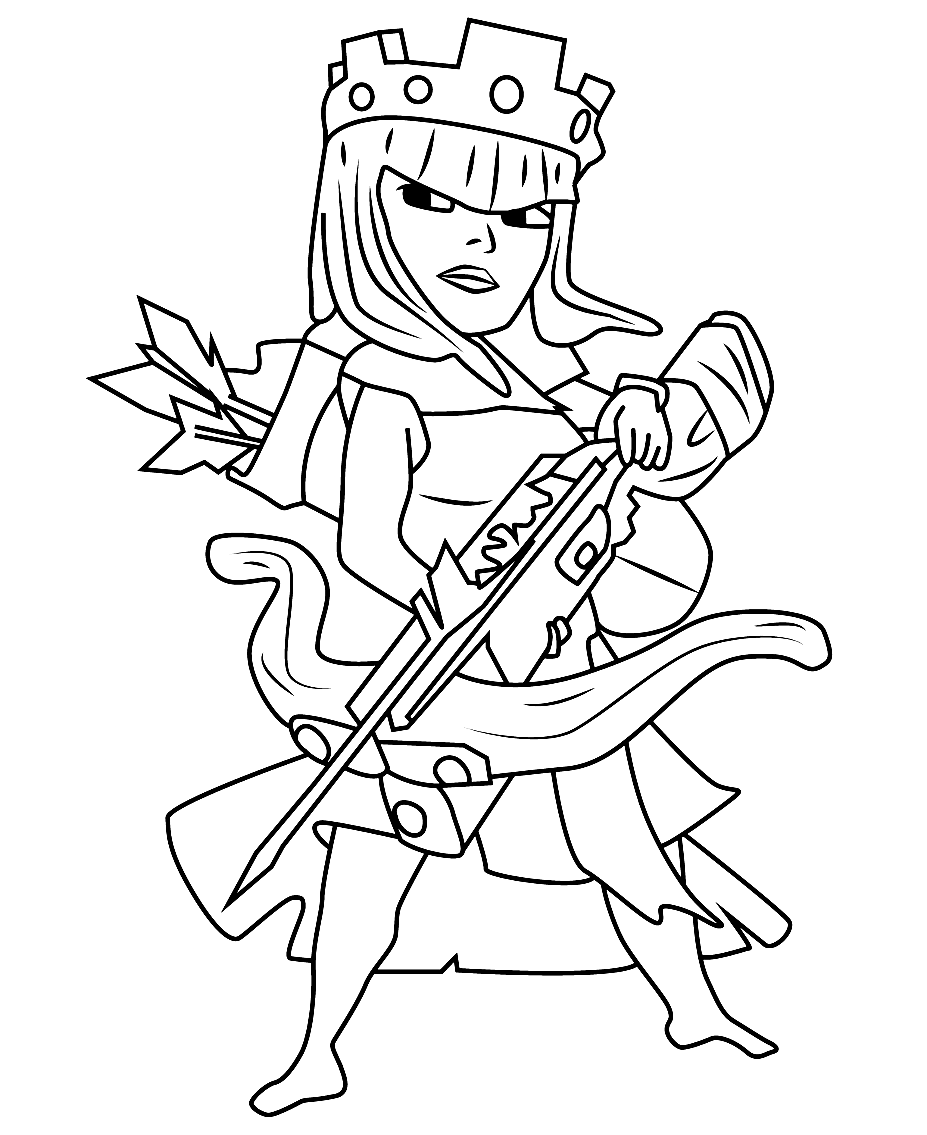
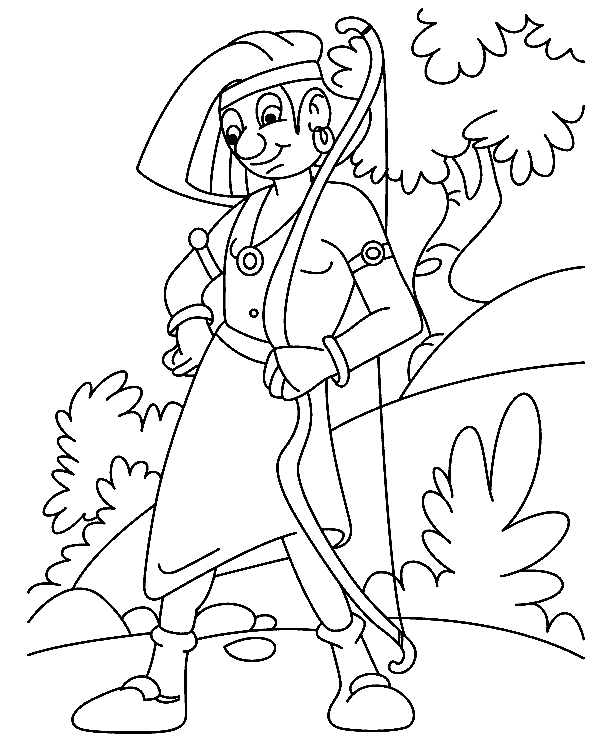
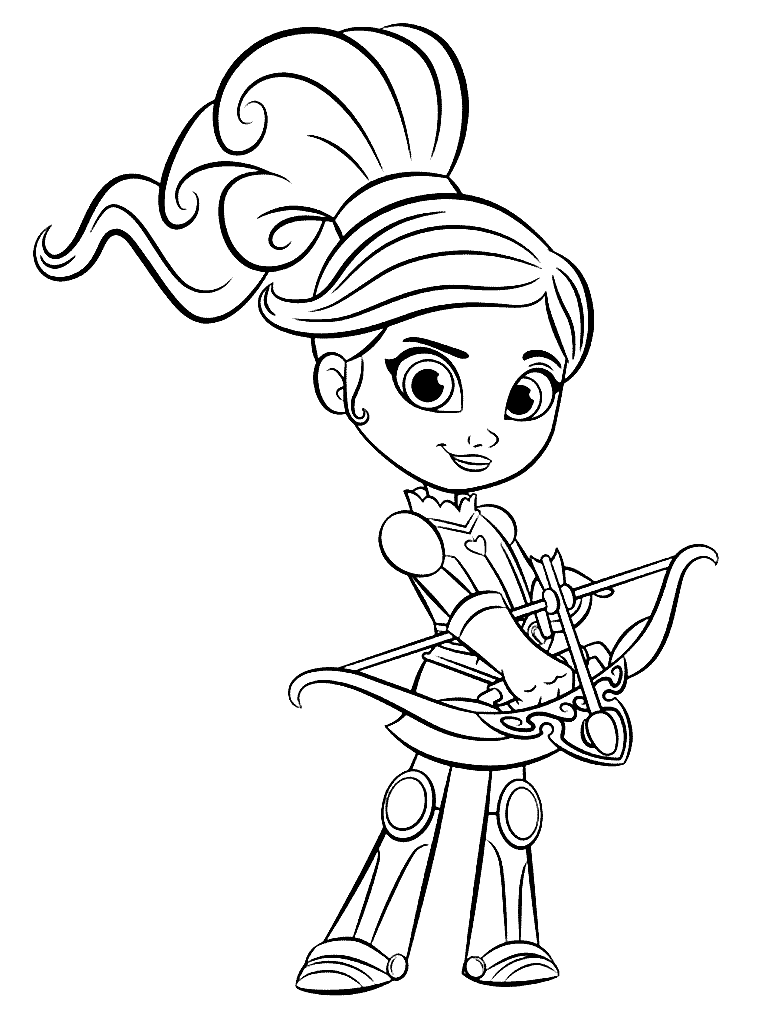
Coloring the Girl Archer and Archer Queen: the female archer pages share the same equipment palette. The Archer Queen page may suggest a more regal or fantasy-styled archer with additional detail in headdress, costume, or decorative bow. These pages suit slightly more complex coloring with costume detail beyond standard competition gear.
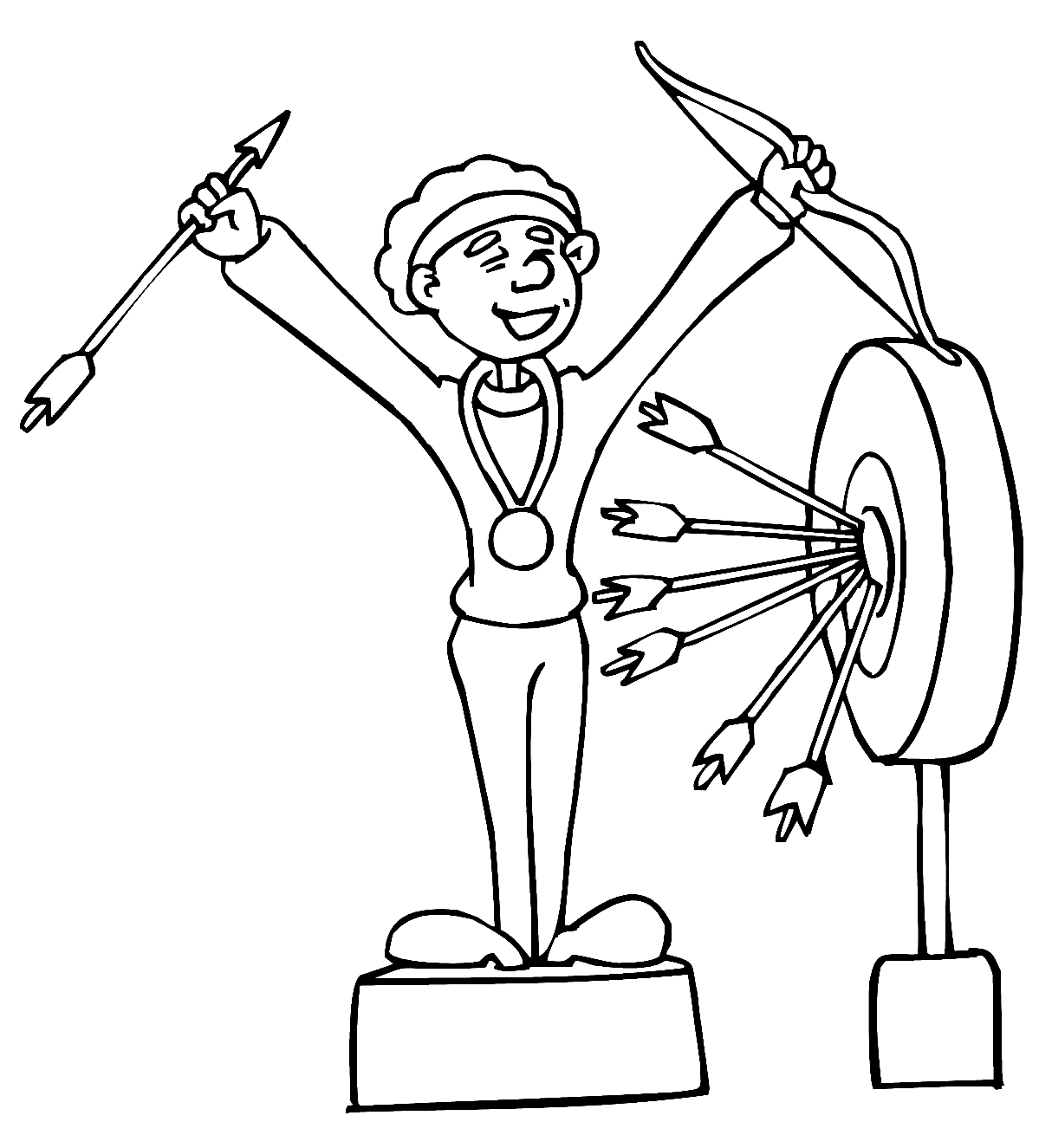
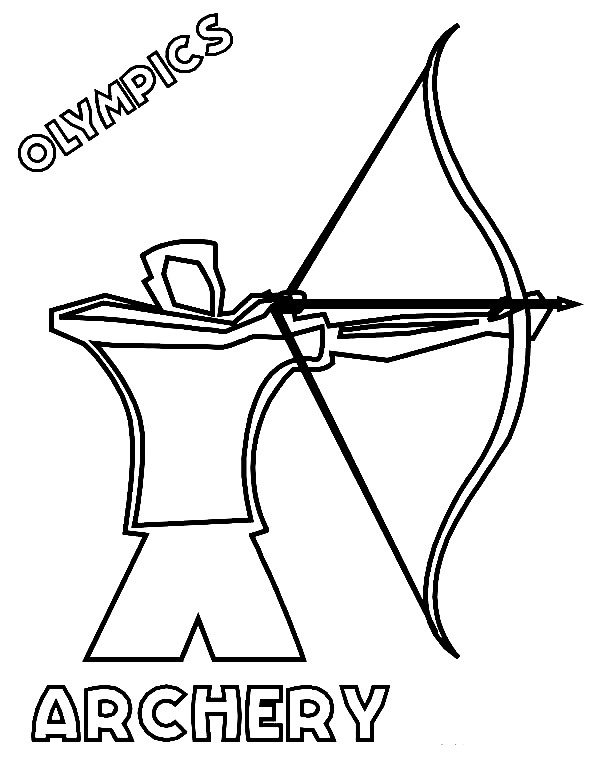
Coloring the Olympics Archery page: competition archery takes place on a full-length outdoor range. The archer wears national team colors and stands at the shooting line. The target at the far end provides the gold-red-blue-black-white color anchor for the page. The Archery Competition Winner page adds a victory context with a medal or podium element.
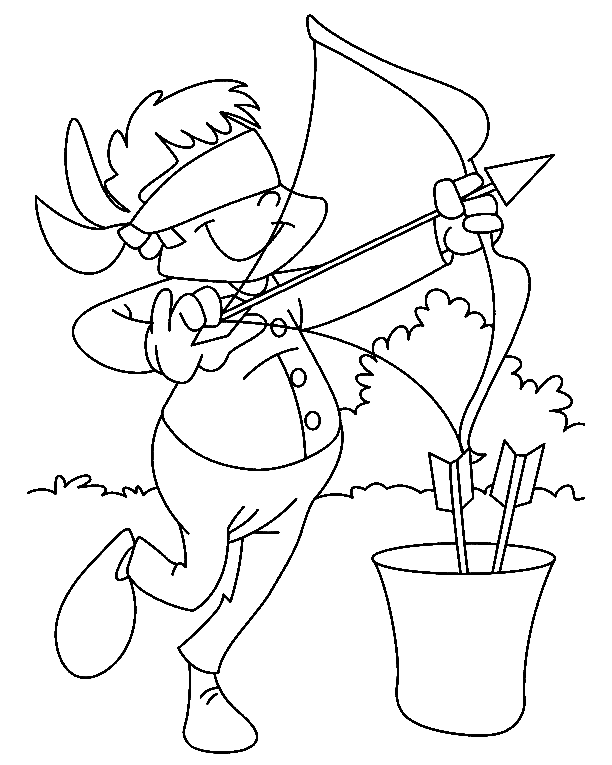
Coloring Blindfold Archery: This page shows the visually unusual concept of an archer preparing to shoot while blindfolded. The standard bow-and-arrow palette applies, with the addition of a distinctive blindfold across the eyes.
Mythological and Character Pages
Six pages feature Robin Hood and Hercules.
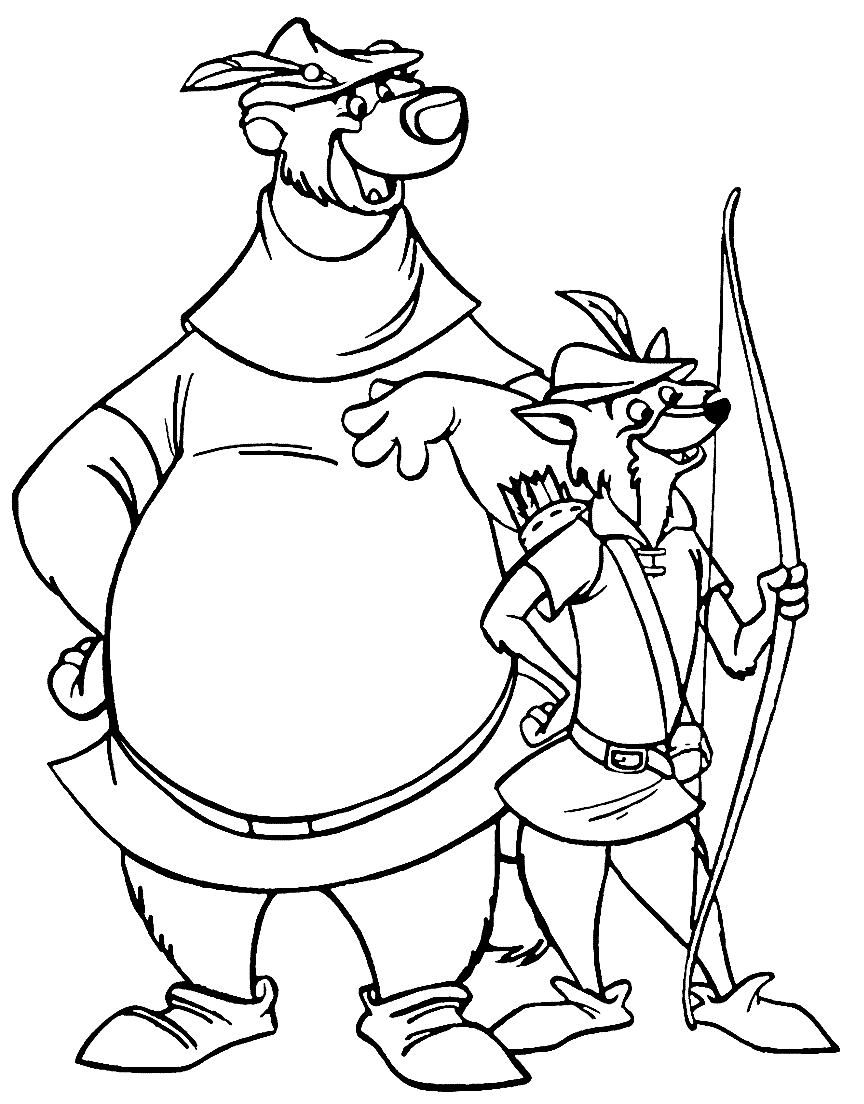
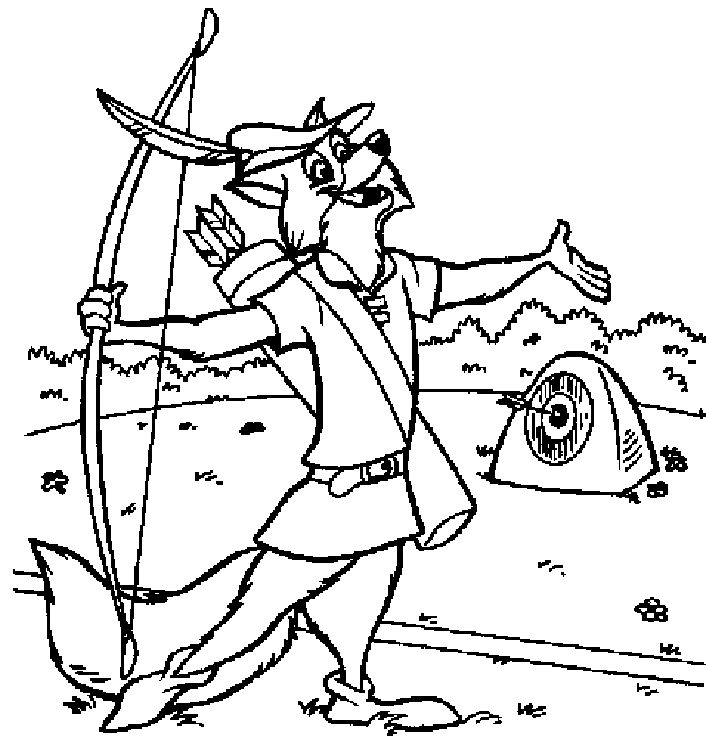
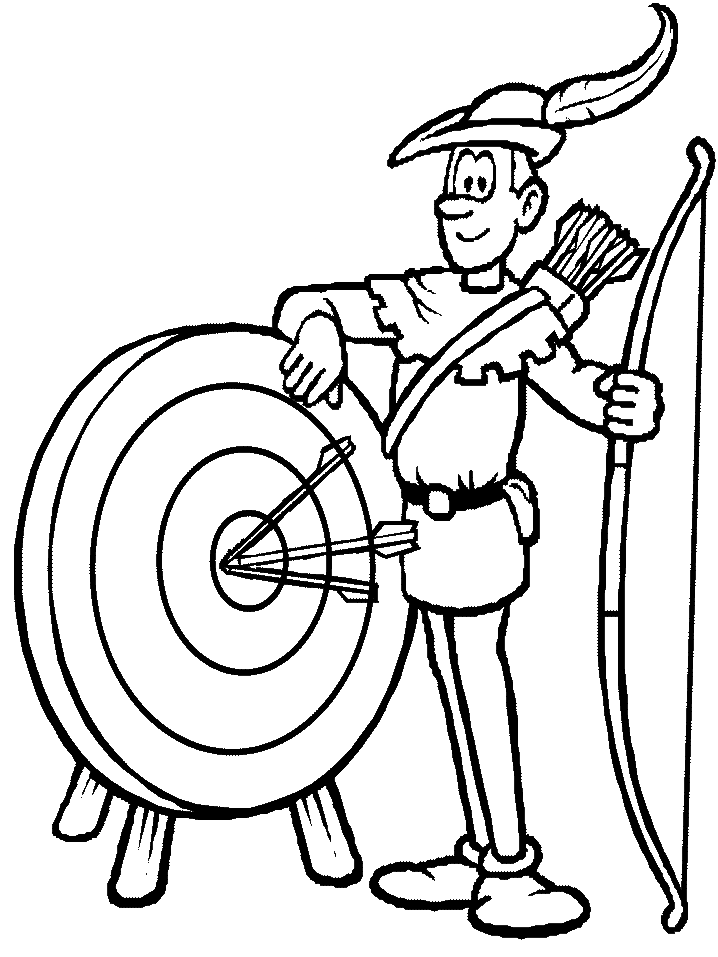
Coloring Robin Hood: the traditional Robin Hood palette is forest green, worn in the Lincoln Green associated with English forest outlaws of the medieval period. The standard depiction shows a green tunic and hood, a brown leather belt and quiver, and a natural wood longbow. Robin Hood’s longbow is longer and more upright than the recurve bow on the competition pages: it is a simple straight or slightly curved stave of yew or ash in natural pale yellow-brown. If the page shows a more stylized or cartoon Robin Hood, the green-brown palette still applies with simplified shapes.
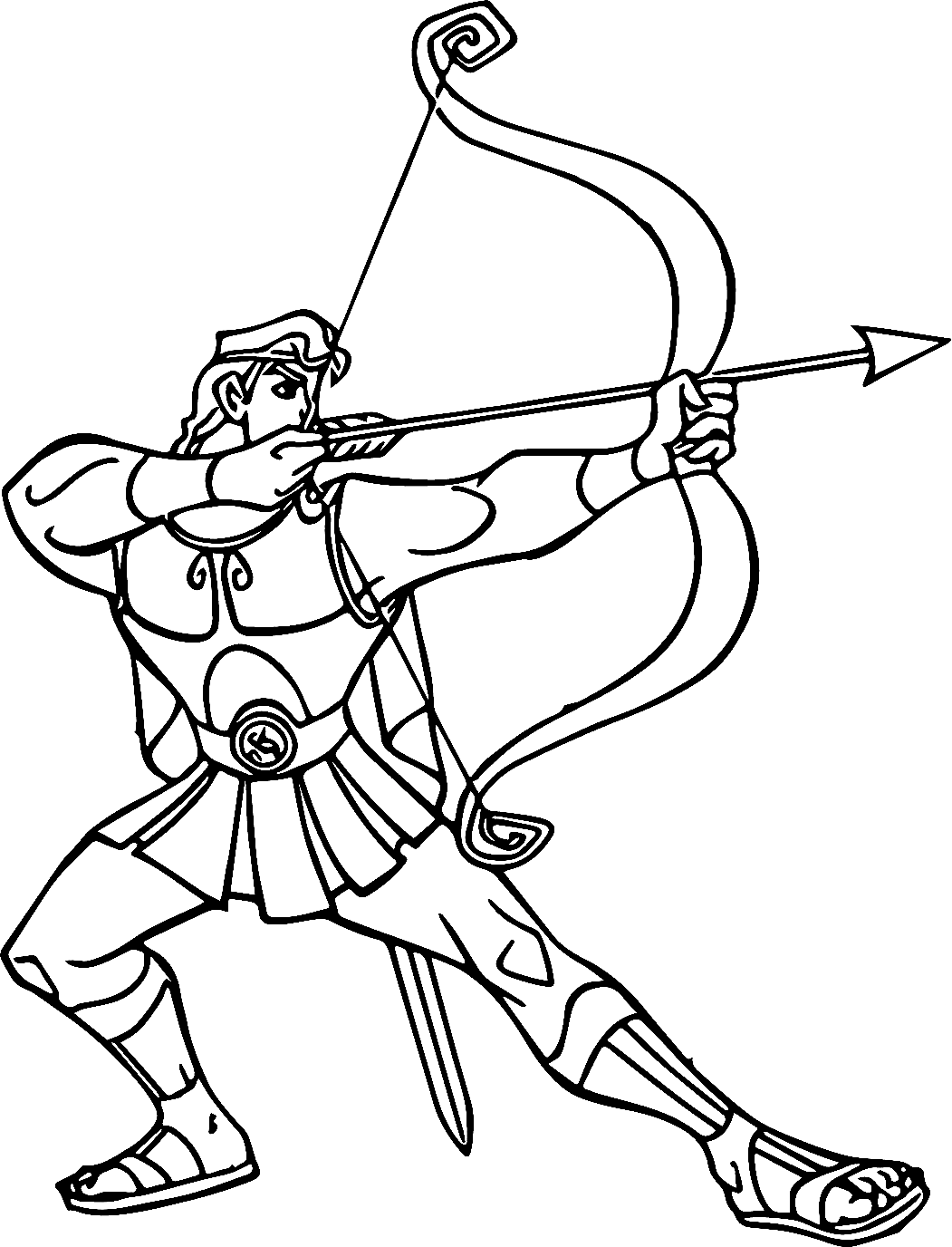
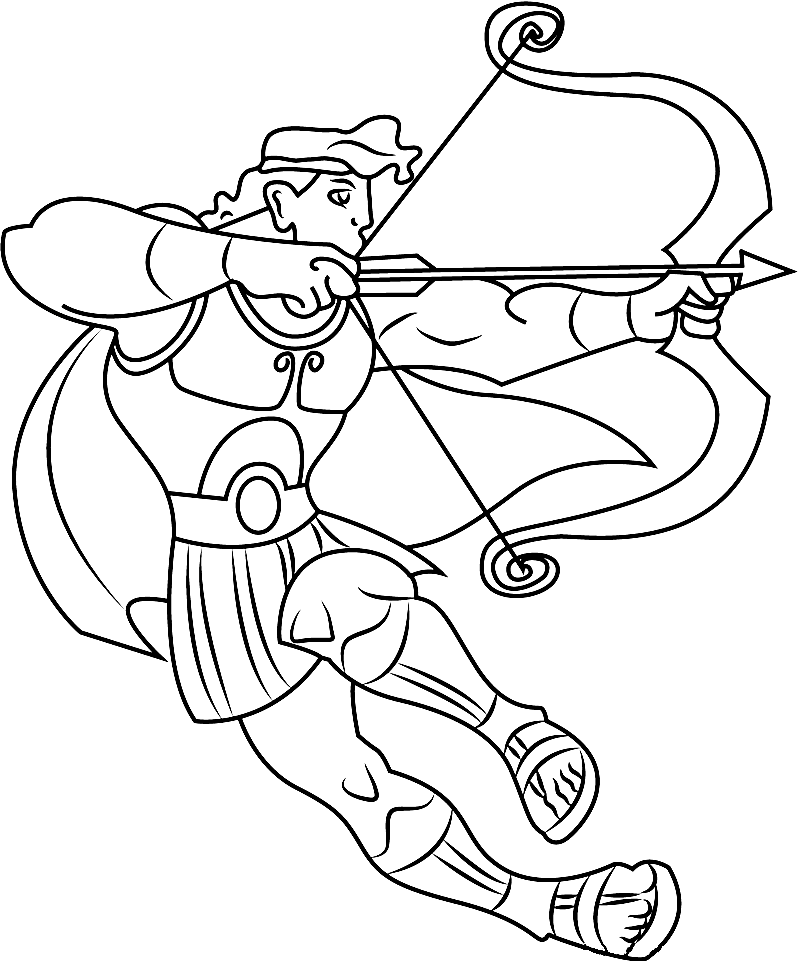
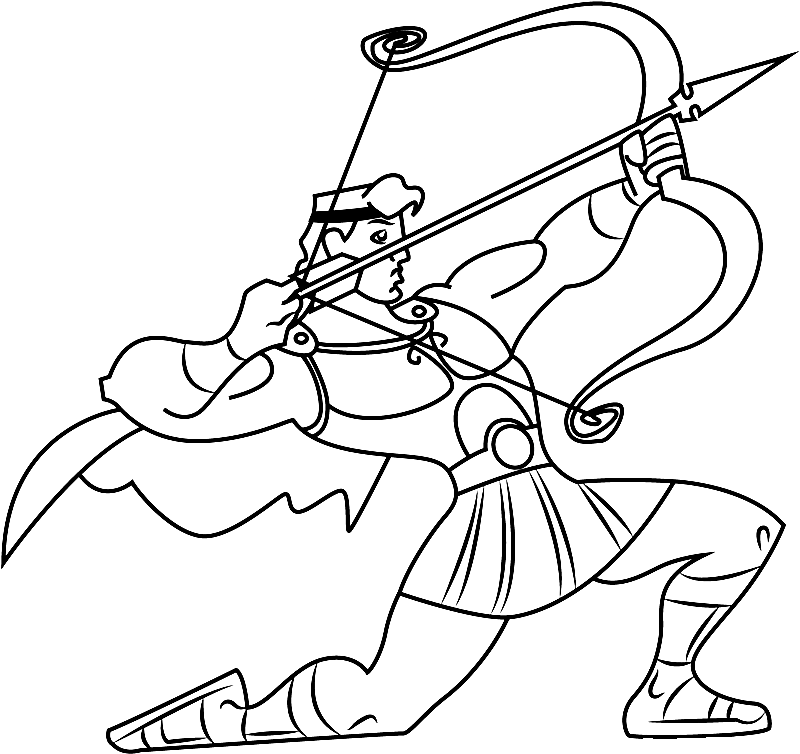
Coloring Hercules: the Disney animated Hercules wears a rust-orange or deep amber tunic with gold accents and carries a dark olive-brown quiver and bow. His skin tone is warm, and his hair is auburn-brown. The mythological Hercules is also commonly depicted with his bow when hunting the Hydra or the Erymanthian Boar. In either version, warm amber and orange tones against the dark olive of the quiver and bow create the characteristic Hercules palette.
Animal Archer Pages
Two pages show animals in an archery context.
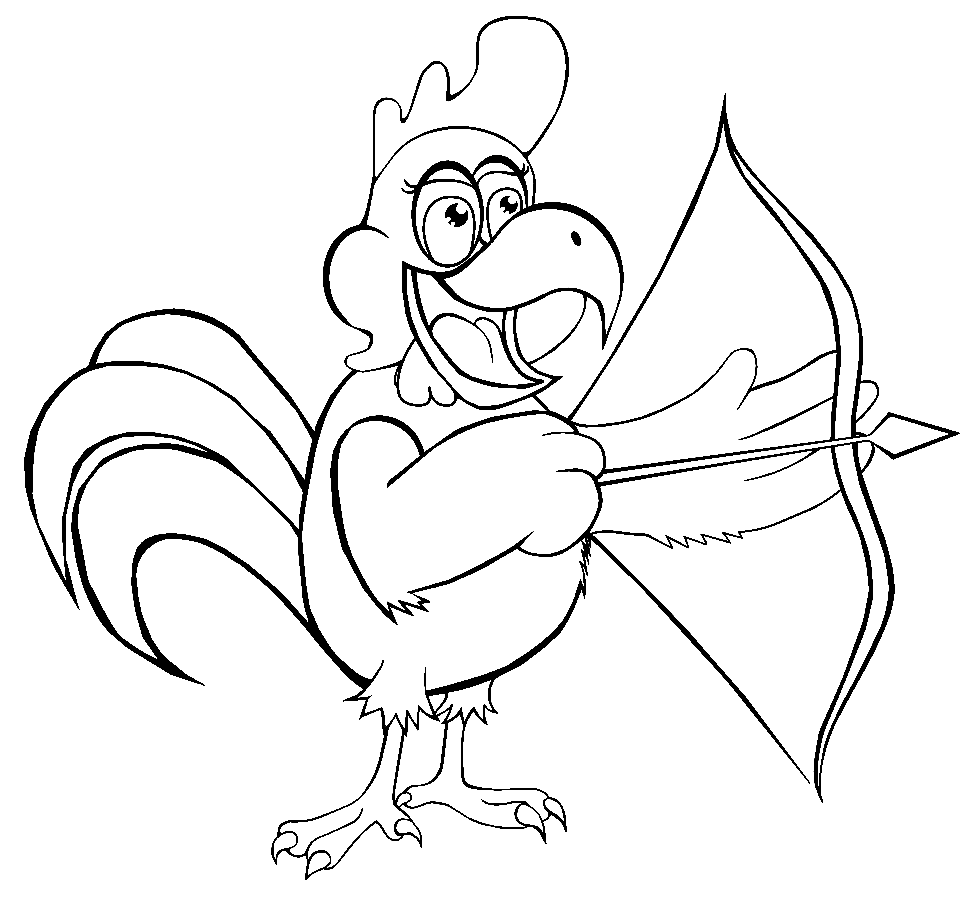
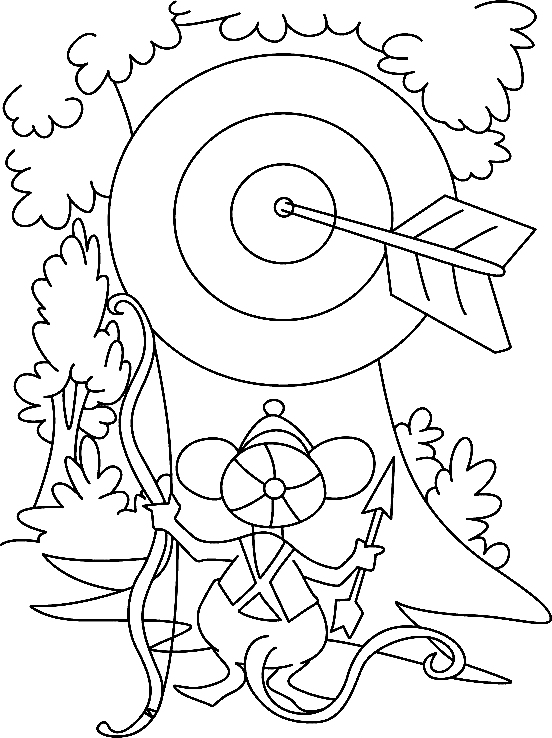
Coloring Rooster Archery and Mouse Archery: these cartoon pages place a rooster and a mouse in the archer role. A rooster has a red comb and wattle, orange-yellow beak, red-brown or multicolored feathers, and yellow legs. A cartoon mouse is typically grey with a pale pink ear interior, pink nose, and a thin tail. On both pages, the animal’s natural palette applies to the body while the archery equipment uses the same tan-brown bow and brightly colored fletching as the human archer pages.
Printable PDF and Online Archery Coloring Pages
The target page and the Robin Hood and Hercules pages reward printing for detail and equipment work. Equipment-only pages and animal archer pages work well on screen.
What These Pages Do
When an arrow is released, it does not fly straight. A freshly released arrow bends. As it accelerates off the bowstring, the arrow flexes laterally, wrapping around the bow itself before the string releases, and then continues to oscillate side to side for the first portion of its flight before gradually stabilizing. This is called the archer’s paradox, and it has been documented since high-speed photography made it visible in the 20th century.
The reason it works at all is that arrows are engineered to flex at a specific rate matched to the bow. This property is called the arrow’s spine, and it is measured by how much the shaft deflects under a standard weight. An arrow that is too stiff or too flexible for a given bow will oscillate incorrectly and fly off course regardless of the archer’s aim. Matching the arrow’s spine to the bow’s draw weight is as important as aiming correctly.
The bow and arrow on every page in this set look simple: a bent stick and a thin shaft. The physical mechanics are considerably more involved. The target, with its color-coded concentric rings, exists to reveal the cumulative precision of a system that begins with how an arrow bends.
The AAP notes that coloring activities featuring precision sports such as archery provide a natural framework for discussing focus, breath control, and the relationship between stillness and accuracy, which are concepts relevant to both athletic and academic performance.
Art therapy practitioners note that archery-themed coloring, particularly the concentric ring target, is among the more meditative coloring subjects: the circular geometry of the target and the directional geometry of the arrow create a clear visual relationship that many people find satisfying to complete.
How to Color Archery Coloring Pages
The target color order is fixed: gold, red, blue, black, white from the center out. This is the World Archery Federation’s standardized competition target. Any other color order makes the target look unfamiliar to anyone who has watched or played the sport. The gold innermost ring is the most important: it should be a warm, vivid yellow-gold rather than orange or pale yellow.
Fletching colors are the most vivid element on bow-and-arrow pages. The shaft of the arrow and the bow itself use natural, muted tones. The fletchings (the fin-like stabilizers at the back of the arrow) are typically bright red, blue, yellow, or orange on competition arrows, and they are the one place on a bow-and-arrow page where vivid color is accurate. Making the fletchings the most saturated element on the page is both accurate and compositionally effective.
Robin Hood is forest green: not olive, not brown-green. Lincoln Green was a specific vivid emerald-to-forest green associated with English outlaws and forest dwellers. It reads more vividly than modern military olive. A clear, somewhat saturated forest green on Robin Hood’s tunic is more accurate to the traditional depiction than a muted earthy version.
On Hercules pages, warm amber against dark olive reads correctly. The Disney Hercules palette specifically uses a burnt orange-amber tunic against darker earth tones. Keeping the tunic in the orange-amber family rather than a neutral tan or brown makes the character immediately recognizable.
On animal pages, use natural animal colors for the body. The humor comes from the contrast between the animal’s natural appearance and the equipment they are using. Coloring the animals in their natural palettes and the equipment in standard archery colors makes this contrast as clear as possible.
5 Creative Craft Ideas with Archery Coloring Pages
Target Accuracy Study
Color the Target page using the exact World Archery Federation color order: gold center, red, blue, black, white outer rings. Start at the center and work outward.
The official competition target is rendered in its standardized palette. Takes about ten minutes.
Equipment Pair
Color the Bow and Arrow page and the Bow and Arrows page as a matched set with the same bow palette (tan wood limbs, pale grey string) and two different fletching colors.
The same equipment, two different arrow configurations. Takes about fifteen minutes.
Mythology Archer Comparison
Color Robin Hood Archery in full forest green and Hercules With Bow and Arrow in warm amber-orange, placing both pages side by side.
Two of the most famous archers in Western storytelling, two completely different palettes. Takes about twenty minutes.
Olympic Competition Scene
Color the Olympics Archery page with national team colors and the full gold-red-blue-black-white target at the far end of the range.
A competition scene anchored by the most color-specific element in the sport. Takes about fifteen minutes.
Animal Archery Pair
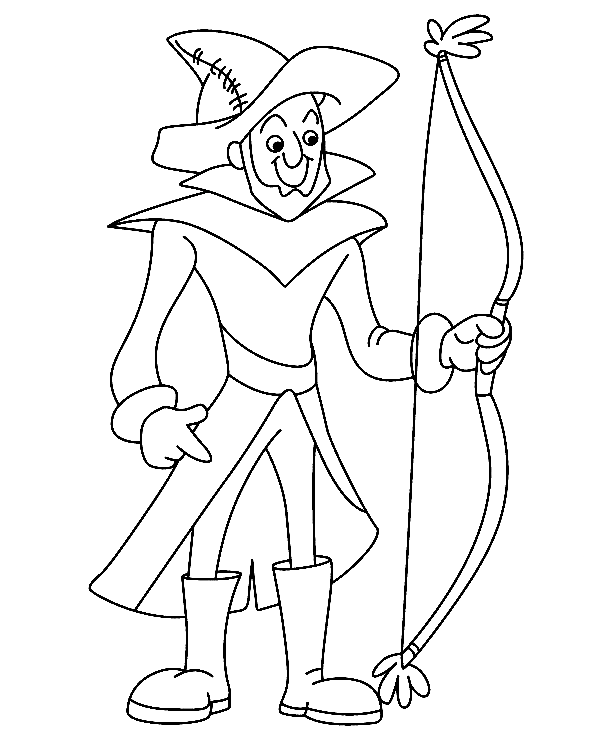
Color Rooster Archery and Mouse Archery keep each animal in its natural palette with bright fletching on the arrows.
Two unlikely archers, two natural color schemes, two sets of vivid arrow fletchings. Takes about fifteen minutes.
FAQ About Archery Coloring Pages
Are these archery coloring pages free, and can I color them online?
Yes. Every page is free, with no account, email, or payment required. Download the PDF to print at home, or open it in the online coloring tool to color on screen.
What is the archer’s paradox?
The archer’s paradox is the phenomenon where an arrow bends and oscillates sideways during release rather than flying straight. As the bowstring accelerates the arrow forward, the shaft flexes around the bow itself before stabilizing in flight. This works because arrows are engineered with a specific stiffness, called the spine, matched to the bow’s draw weight. An incorrectly matched arrow oscillates out of alignment and flies off course.
What are the colors on a standard archery target?
A standard World Archery Federation competition target uses five color zones from the center outward: gold or yellow (the 10-ring bull’s-eye), red (7 and 8 rings), blue (5 and 6 rings), black (3 and 4 rings), and white (1 and 2 rings on the outer edge). This color sequence is standardized across all major international competitions.
When did archery become an Olympic sport?
Archery was first included in the modern Olympic Games in 1900 in Paris. It was removed from the program in 1908 and again after 1924 because participating nations could not agree on standardized rules. It returned permanently to the Olympics in 1972 in Munich after the World Archery Federation established universal competition standards. Only the recurve bow style is used in Olympic competition.
Who is Robin Hood?
Robin Hood is a legendary English folk hero and fictional outlaw associated with Sherwood Forest in Nottinghamshire, England. He is most commonly depicted as an expert archer in a green tunic and hood who steals from the rich to give to the poor. The character appears in ballads dating to the 14th century and has been depicted in countless films, television series, and other media.
What bow style does Hercules use?
In Greek mythology, Hercules is associated with a composite bow, one of the powerful bows of the ancient world. In the Disney animated film Hercules (1997), he is depicted with a bow as part of his heroic gear. The bow in these coloring pages likely reflects the Disney animated design, with warm amber and earth tones consistent with the film’s color palette.
Are these official archery coloring pages from a specific organization?
No. These are original illustration coloring sheets and are not affiliated with, licensed by, or endorsed by the World Archery Federation, the International Olympic Committee, or any rights holder of the characters depicted.
What age group are these pages best suited for?
Archery coloring pages suit children aged 4 and up. The animal and cartoon character pages are accessible to younger children, and the equipment detail pages and competition scenes offer enough complexity for older children and adults interested in the sport.
Start Coloring
Download any page by clicking the design. No account, email, or payment is required. Pages print directly from the browser at full resolution or open in the online coloring tool for screen use. Share finished pages on Facebook or Pinterest using the share buttons at the top of each design page.