Cycling coloring pages: 60+ free printable PDF designs covering the full family of competitive and everyday cycling, from road racing and track cycling to mountain biking, BMX, family bike rides, and playful seasonal scenes. Every page is available as a printable PDF or to color in the browser, with no account required.
The bicycle itself has been around longer than almost anyone expects. The earliest two-wheeled “running machine,” built by German inventor Karl Drais in 1817, had no pedals at all; riders pushed off the ground with their feet instead. Pedals didn’t arrive until decades later, and the sport built around the bicycle grew fast once they did: the Tour de France, cycling’s most famous race, first rolled out in 1903 and is still run every summer over three weeks and roughly 2,000 miles of French roads.
These pages suit young riders just learning to balance, kids who already know every rider in the peloton, and adults who still remember the exact bike they had as a child.
One coloring detail that belongs only to this set: the jerseys of professional road racing. The Tour de France alone uses four different colored jerseys, one for each type of race leader: yellow for the overall race leader, green for the top sprinter, white with red polka dots for the best climber, and plain white for the best young rider. A rider or team scene colored with one of these jerseys in mind reads as accurate to anyone who follows the sport, and as a fun detail to anyone who doesn’t.
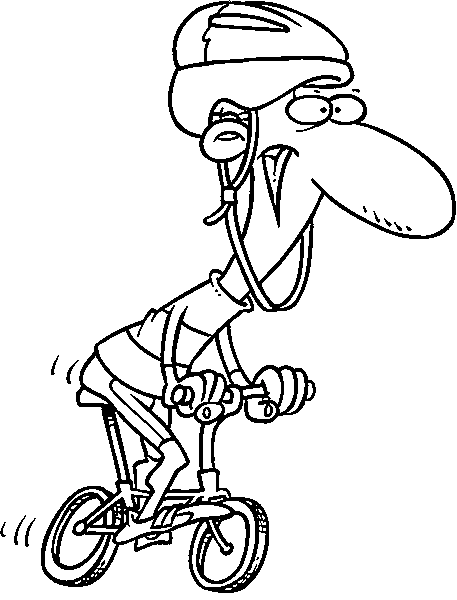
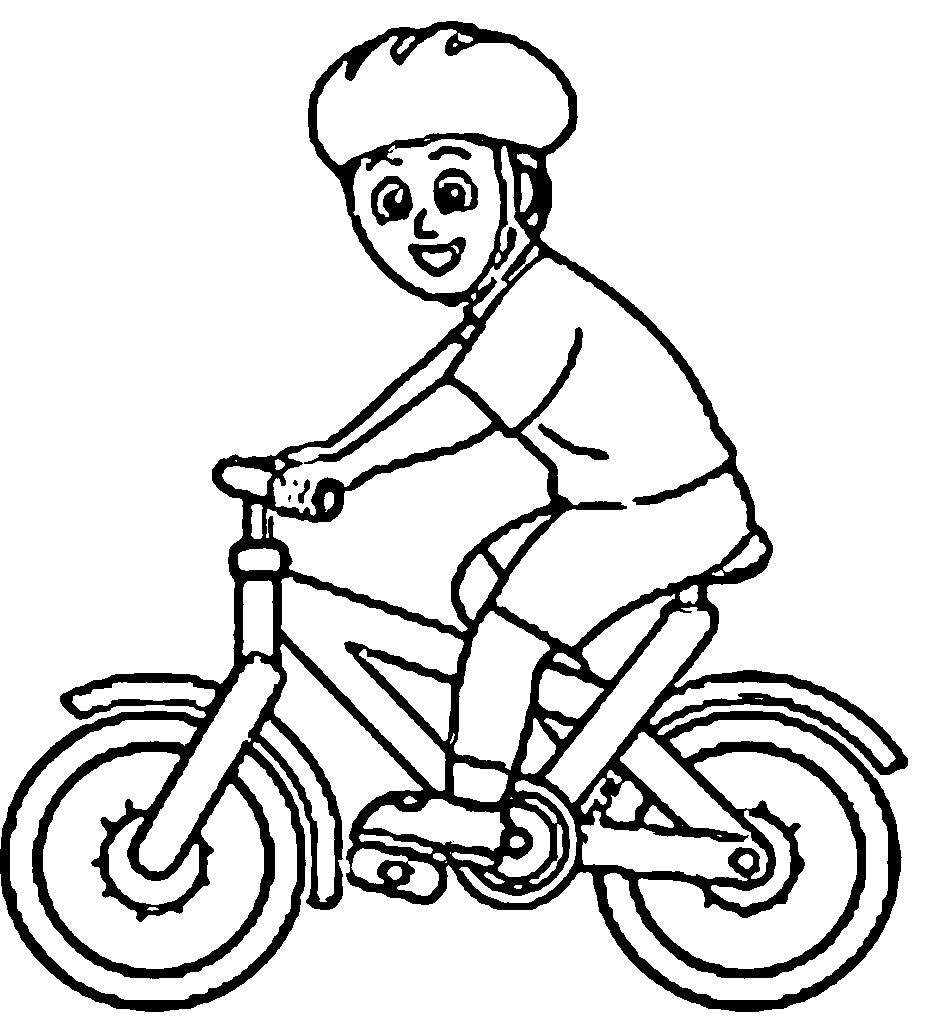
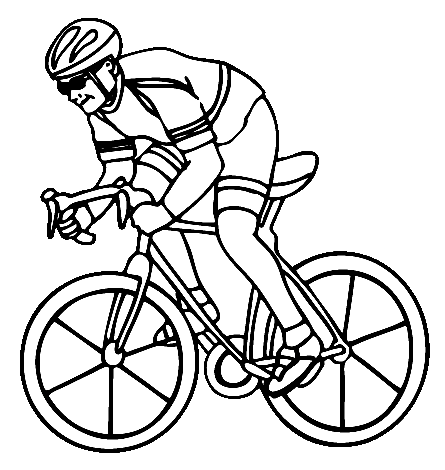
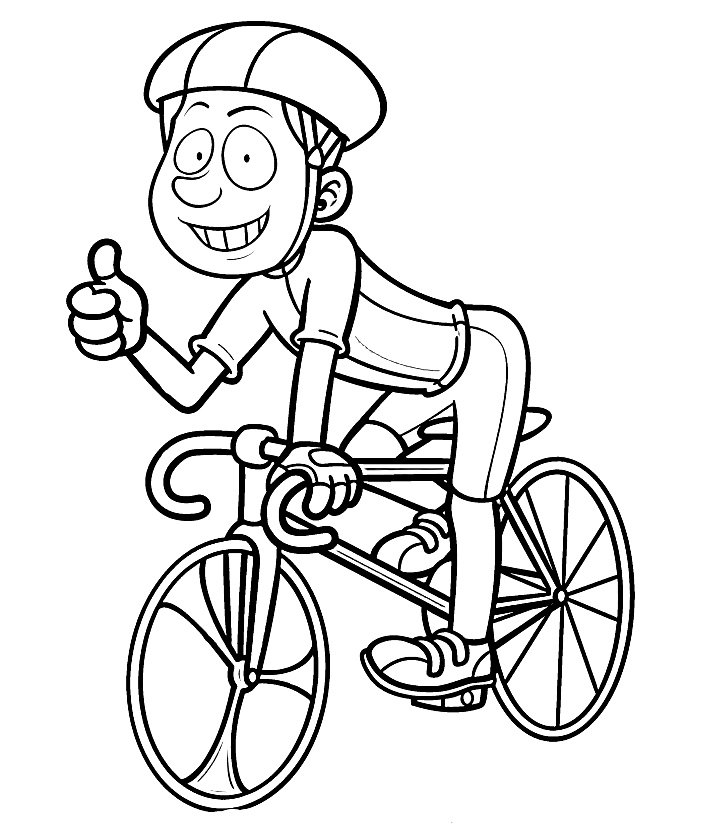
Quick Answer
Cycling coloring pages are a free set of 60+ printable PDFs and browser-based coloring sheets covering road racing, track cycling, mountain biking, BMX, cyclocross, and everyday family bike rides.
Best for: children aged 3 and up, young cyclists and BMX or mountain-bike fans, and families who want an active, shared theme everyone recognizes
Formats: printable PDF and online coloring
Popular pages: the road racing peloton, a child on a first bike with training wheels, the mountain bike trail jump, and the velodrome track sprint
Creative uses: a jersey-colors reference board, a first-bike-to-race-bike comparison, a cycling achievement card, and a four-seasons bike ride display
What’s Inside Cycling Coloring Pages
With 60+ pages built around a single activity, the set is organized by cycling discipline and setting rather than by character, since the subject is always a rider and a bike.
Road Racing and Grand Tour Style Pages
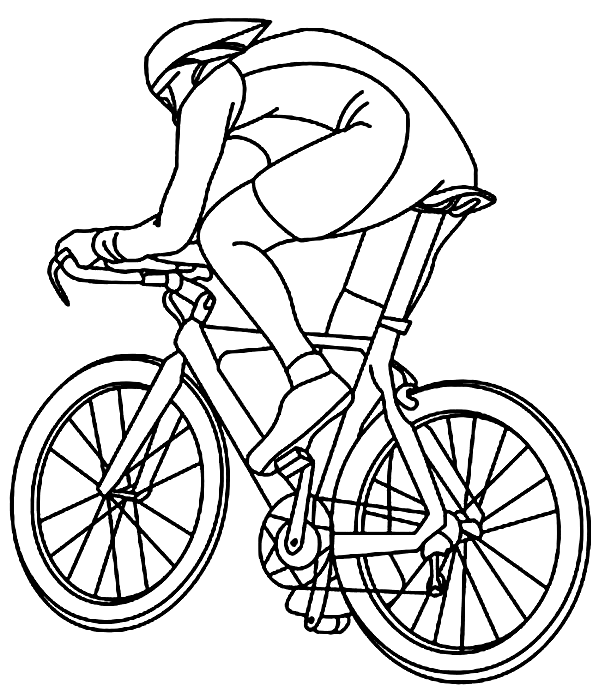
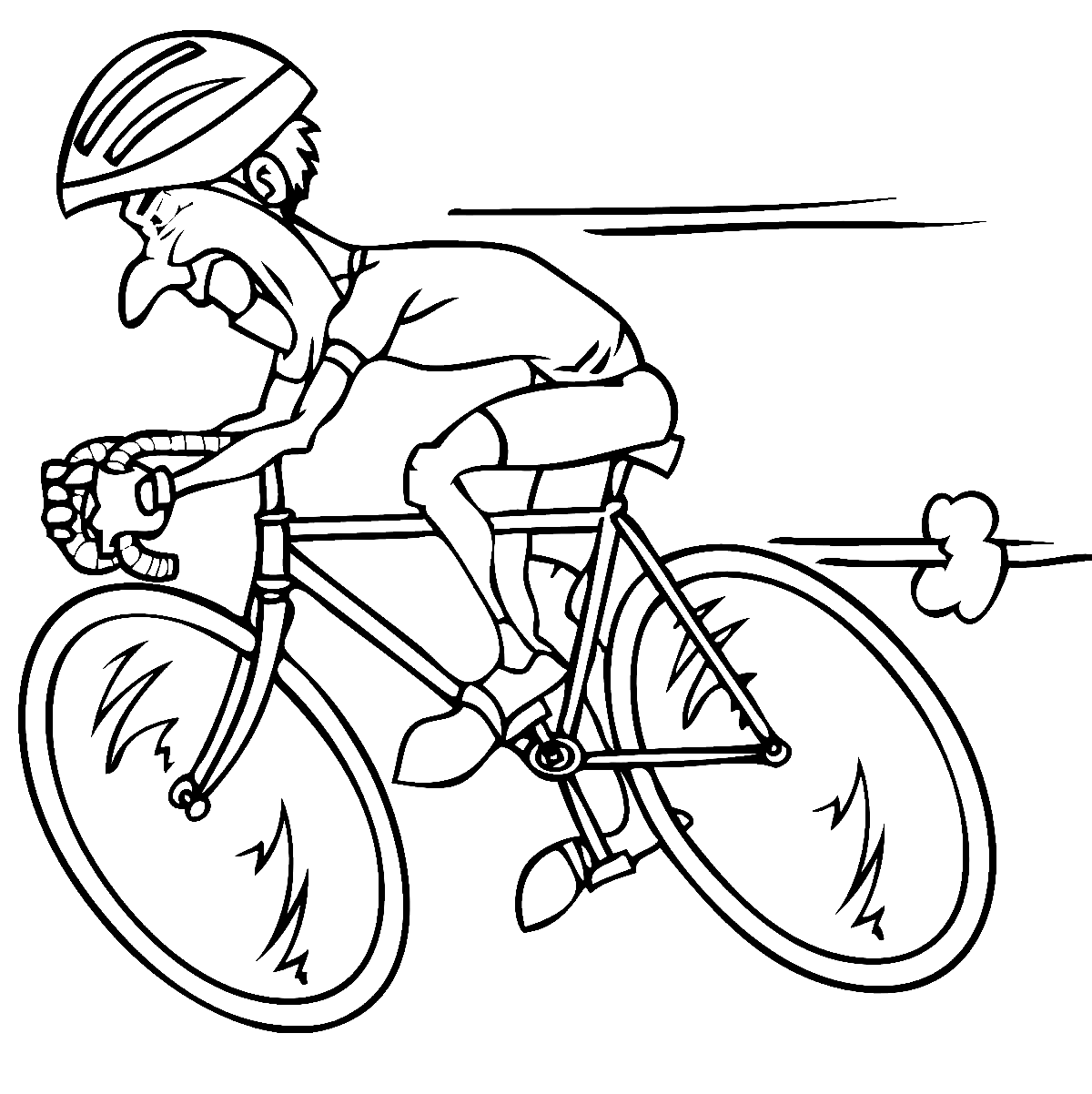
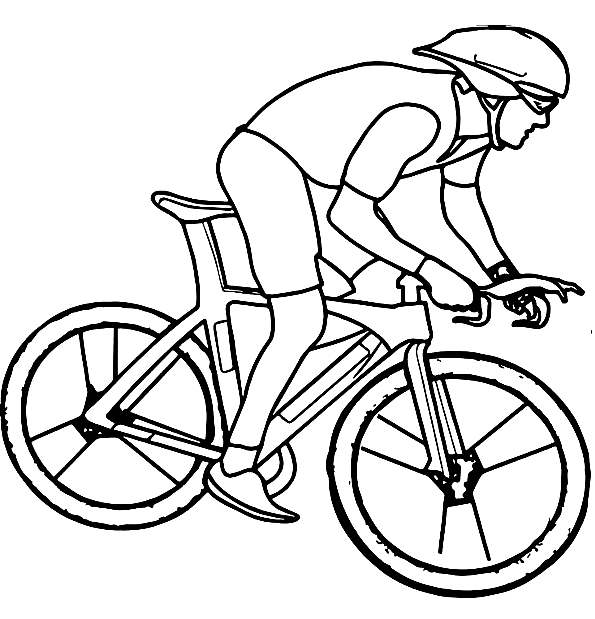
The core of the set covers competitive road racing: a peloton moving together as one shifting group, a solo breakaway rider, a mountain climb with switchbacks, and a sprint finish with arms raised. Several pages use the specific jersey styles associated with the sport’s biggest races, the Tour de France, the Giro d’Italia, and the Vuelta a España.
Coloring road racing pages: the jersey is the biggest decision on any road racing page. A solid, saturated color block reads better than a busy pattern at coloring-page scale, and picking one of the four Tour de France leader colors (yellow, green, white with red dots, or plain white) gives the page instant authenticity. The bike itself works best in a color that contrasts with the jersey rather than matches it.
Track Cycling, BMX, and Cyclocross
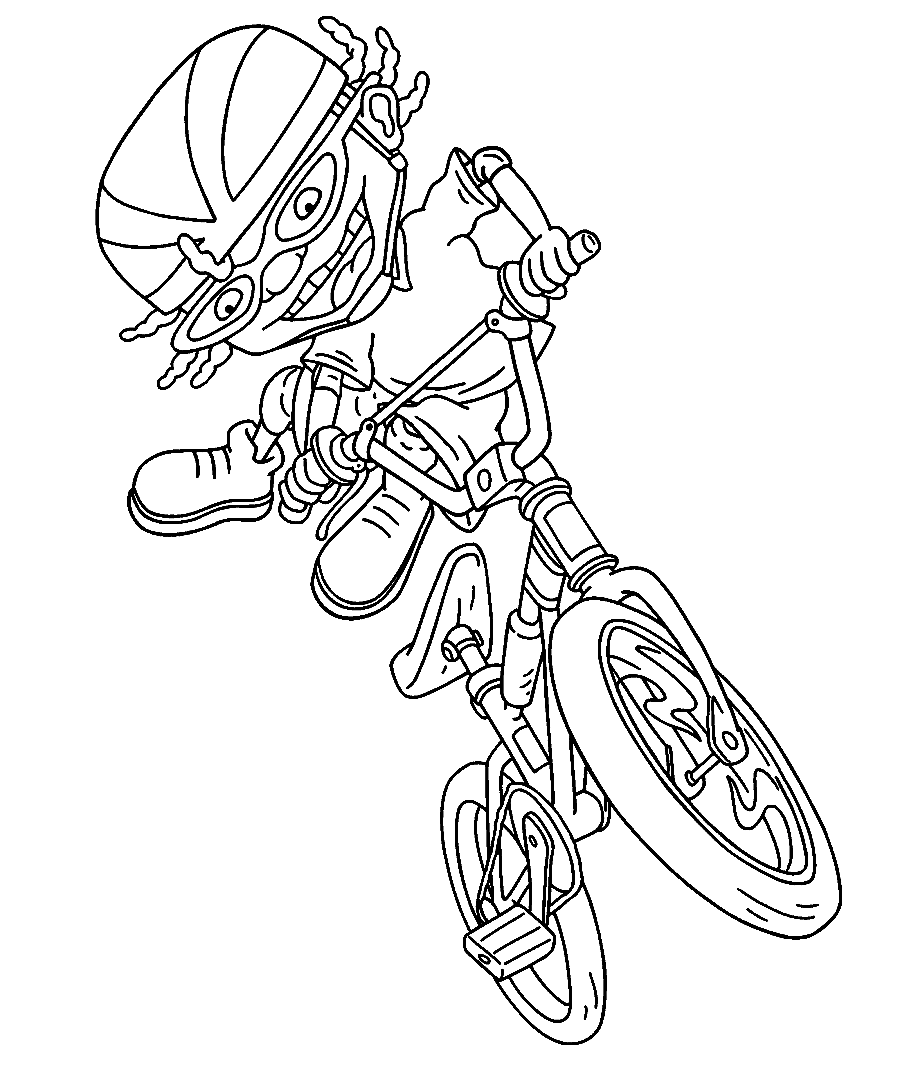
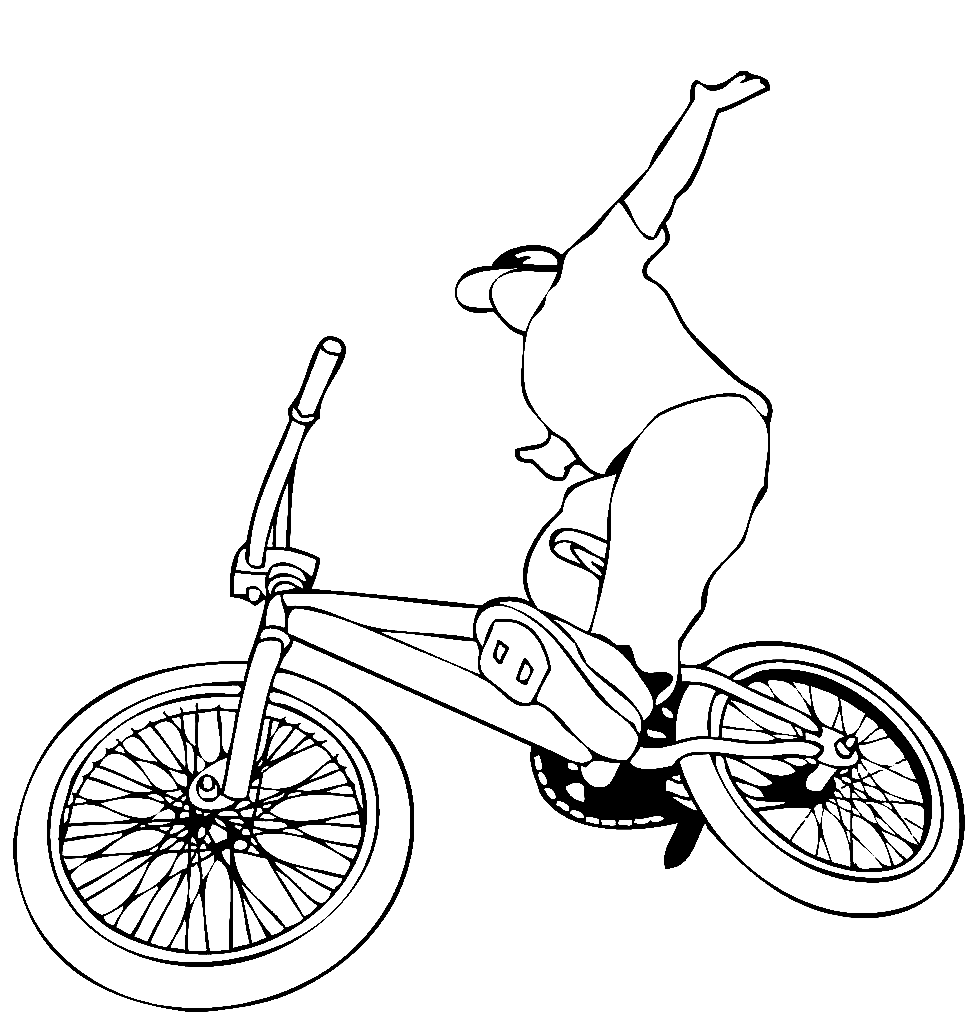
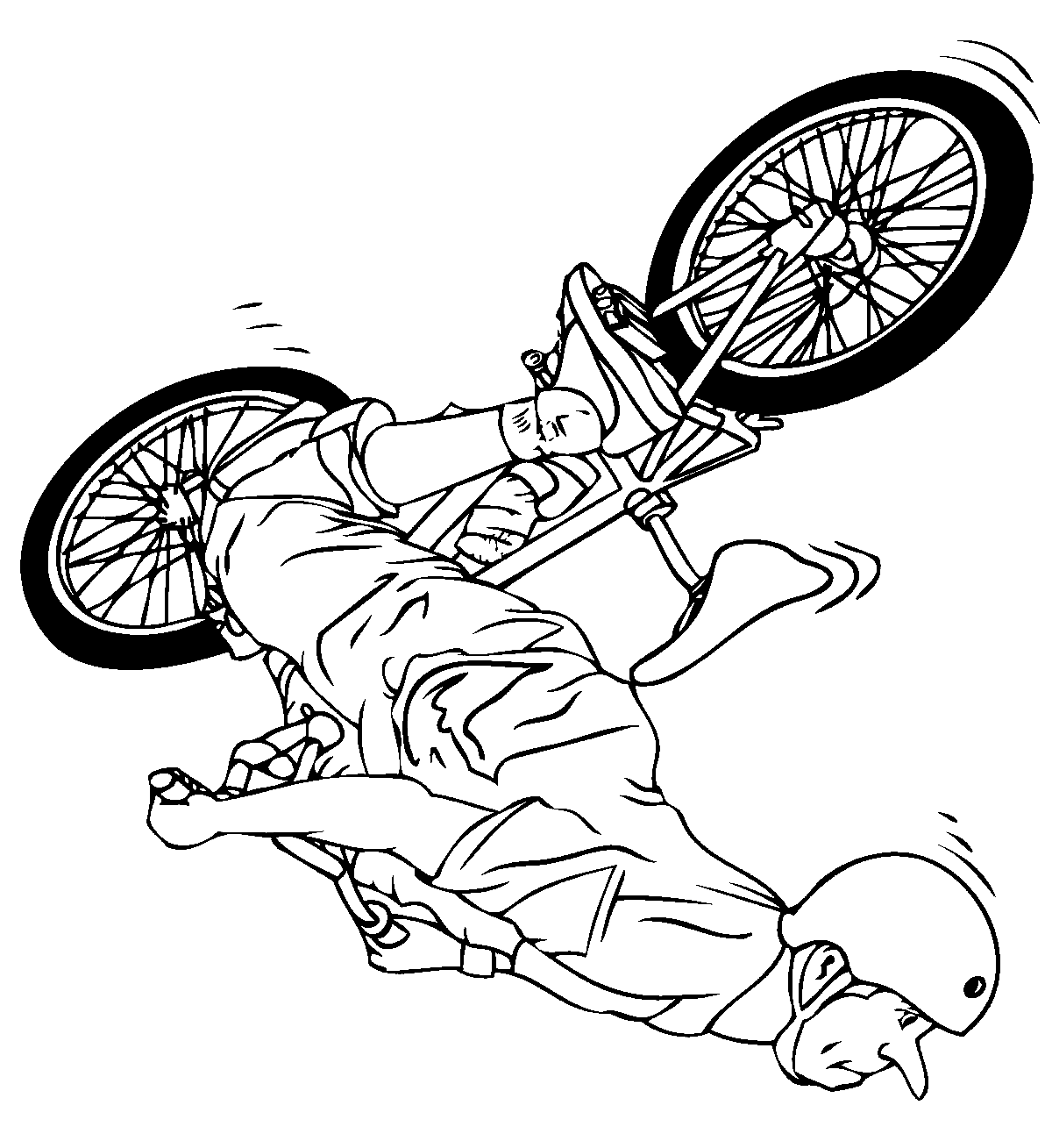
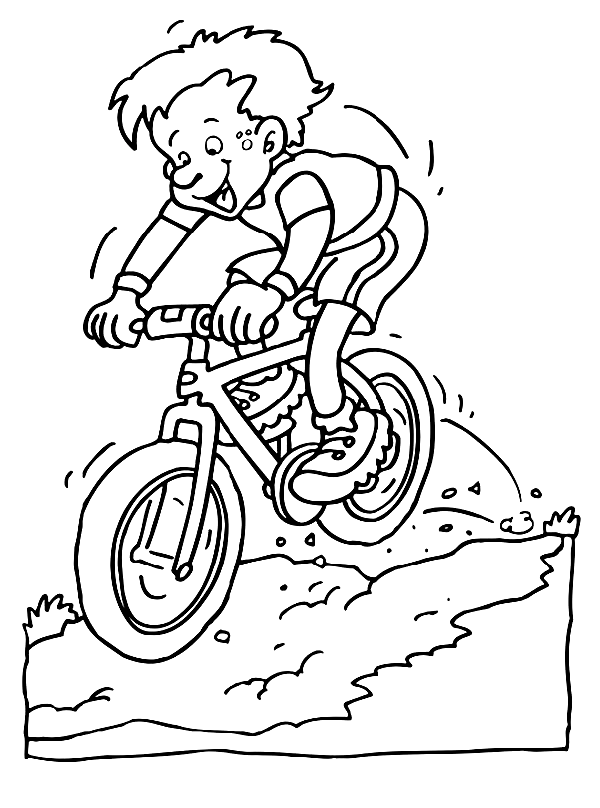
This group covers the faster, tighter forms of the sport: a track cyclist leaning into the steep banked curve of a velodrome, a BMX rider mid-air off a dirt jump, and a cyclocross rider carrying the bike over a muddy obstacle.
Coloring track and BMX pages: the banked curve of a velodrome page needs its surface colored as one continuous gradient, lighter at the top rail and deeper toward the bottom, to suggest the steep tilt. On BMX jump pages, the dirt take-off ramp reads best in warm browns and ochres rather than flat gray, since real dirt jumps are rarely neutral in color.
Mountain Biking and Trail Scenes
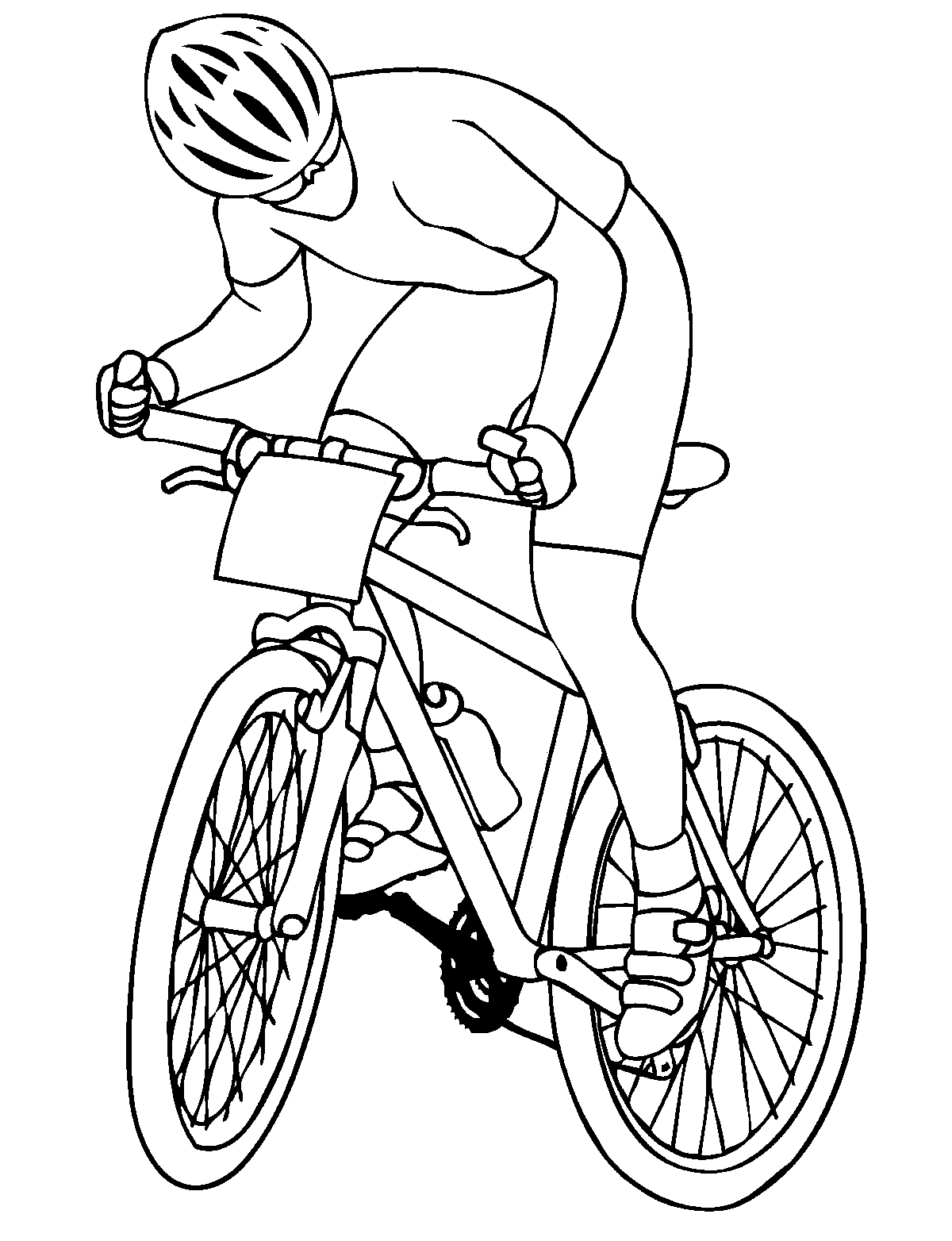
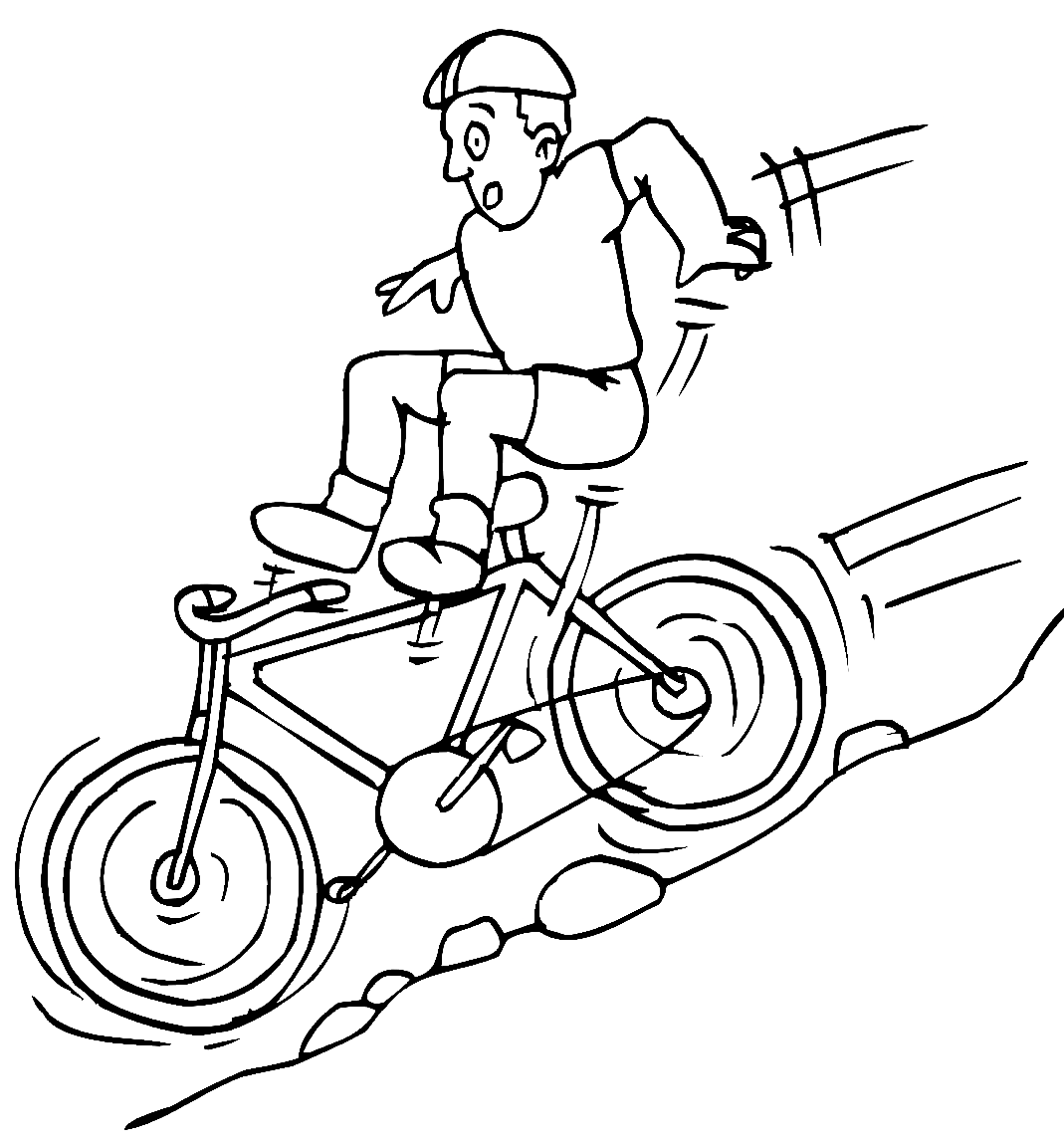
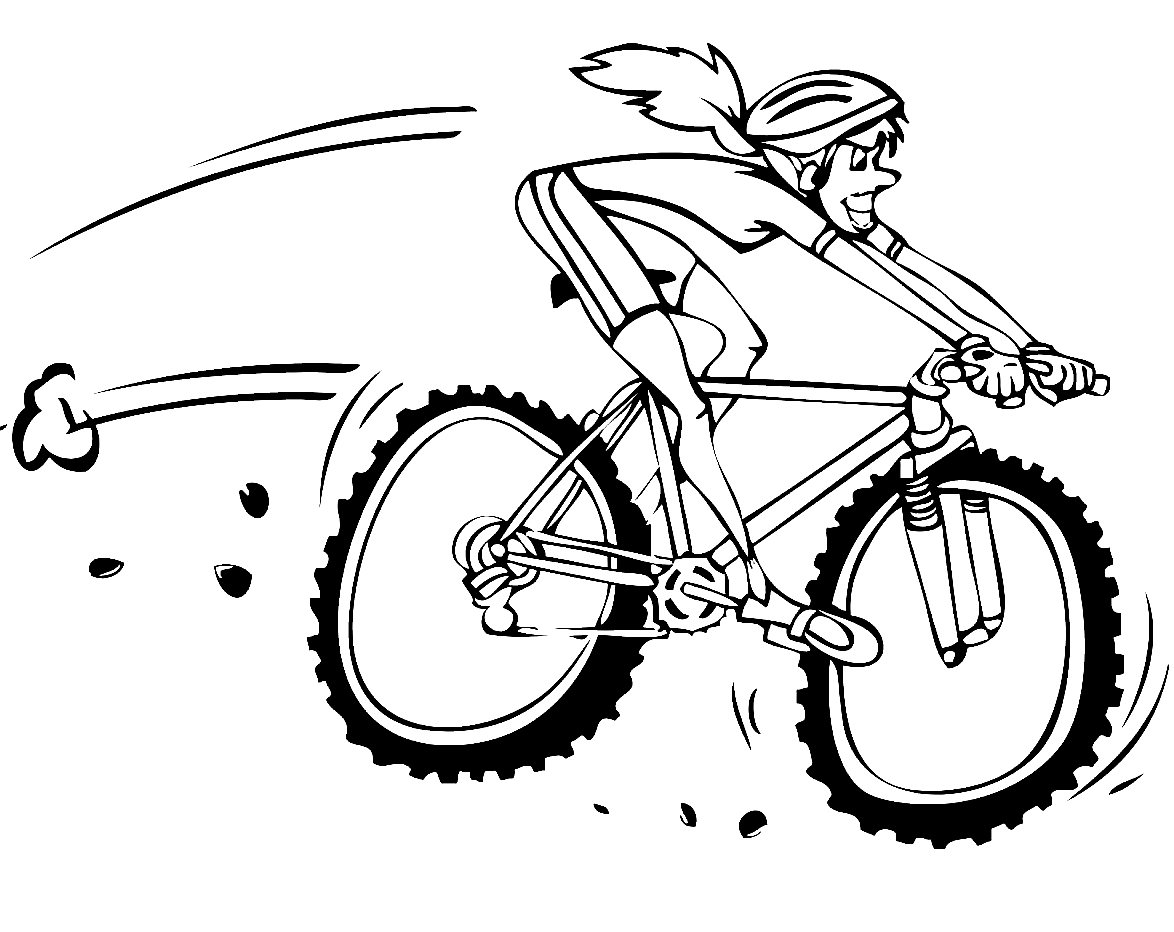
Roughly a third of the set shows off-road riding: a rocky downhill descent, a forest single-track trail, a rider crossing a stream, and a climb up a switchback fire road.
Coloring mountain bike pages: The trail surroundings do most of the storytelling here. Deep greens and browns for a forest trail, warm ochre and rust tones for a desert descent, and gray-blue rock faces for an alpine section all change the mood of an otherwise identical bike and rider.
Kids Learning to Ride and Family Cycling
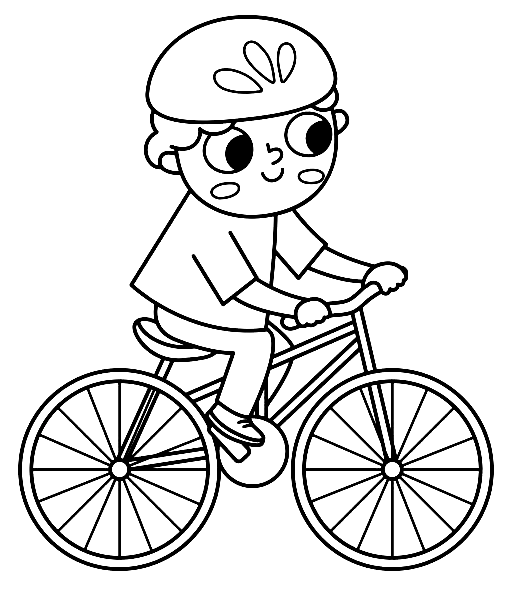
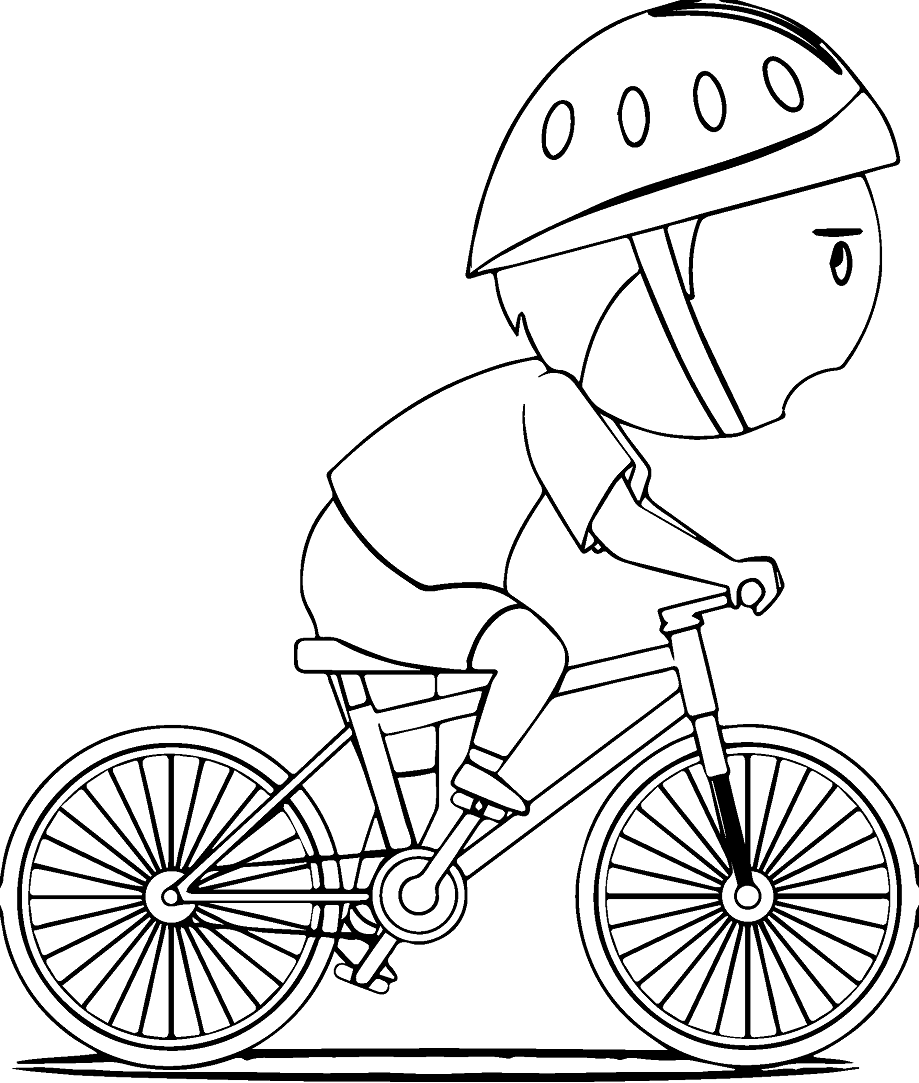
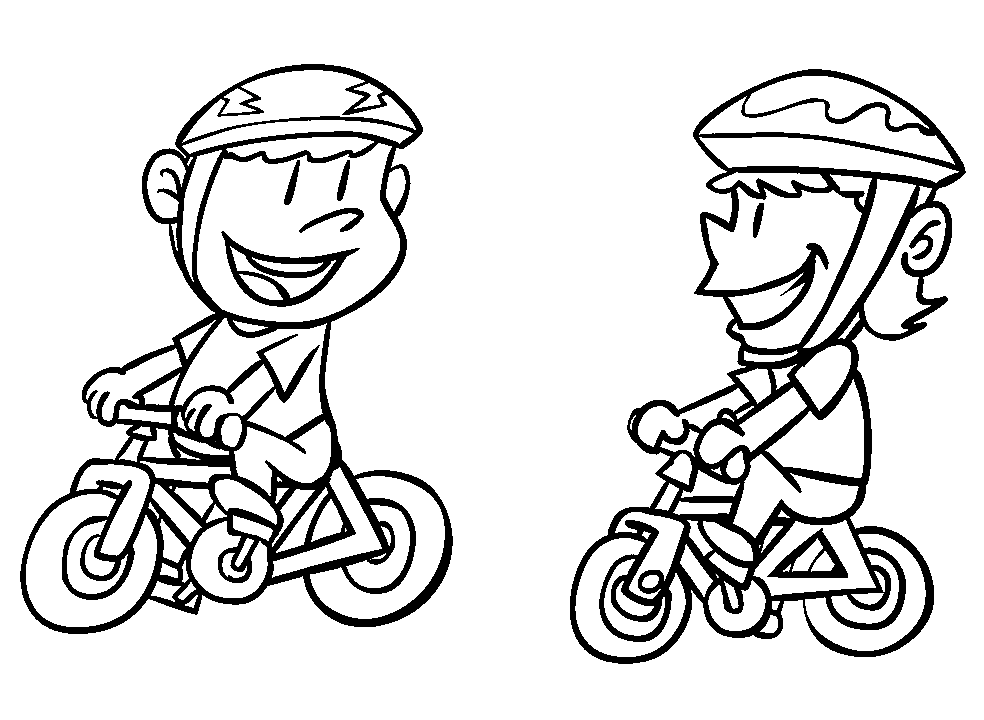
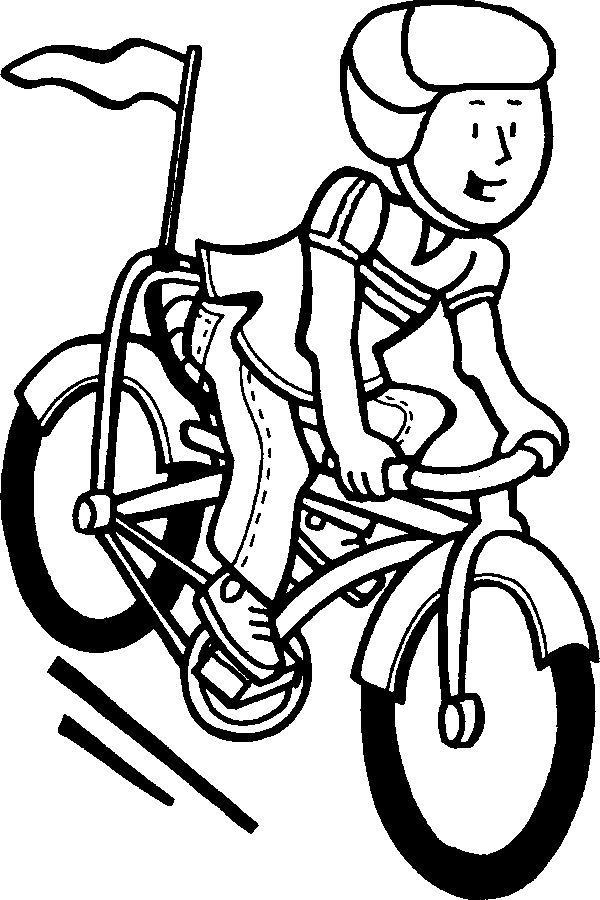
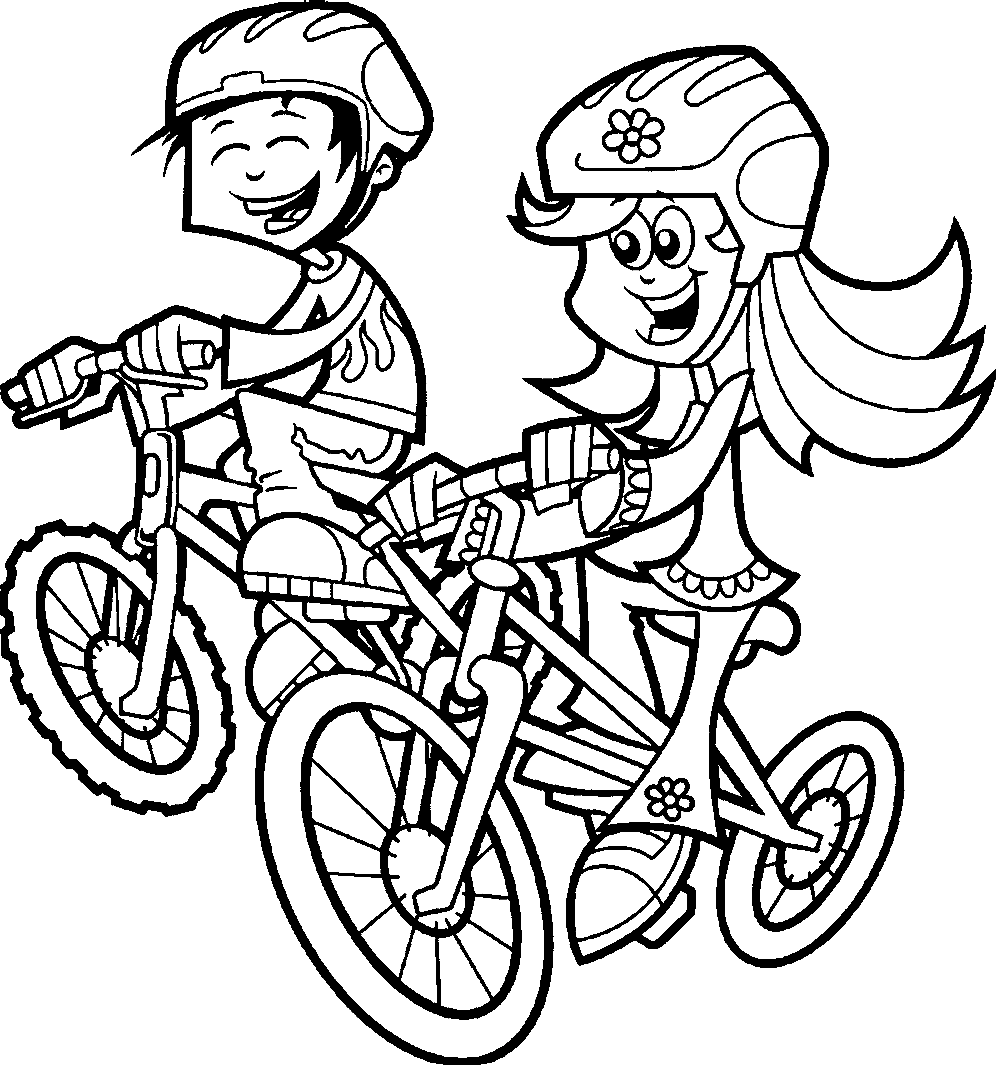
A meaningful share of the set is dedicated to everyday, non-competitive riding: a child on a first bike with training wheels, a parent and child on a tandem, a family riding together with a basket of flowers on the handlebars, and a dog running alongside.
Coloring family cycling pages: helmets are the detail worth lingering on here. A bright, personal helmet color does more to make a child’s page feel like “their” rider than the color of the bike frame does, and it’s an easy way to let a child pick a favorite color without touching the rest of the scene.
Seasonal and Whimsical Cycling
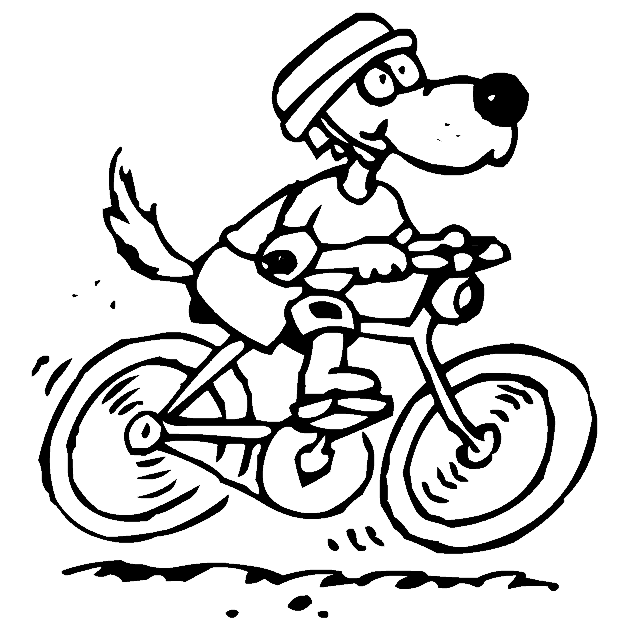
The remaining pages take the bicycle somewhere playful: a spring ride through blossoming trees, a summer boardwalk cruise, an autumn leaf-covered path, a snowy winter ride bundled in scarves, animal characters pedaling oversized bikes, and a unicycle balancing act.
Coloring seasonal pages: let the season set the palette first and the bike second. Warm pastels for spring, bright saturated tones for summer, deep gold and rust for autumn, and cool blues and whites for winter all work better when the bike repeats just one accent color across all four, so a set colored together still looks like a matched collection.
What These Pages Do
Cycling is one of the few activities that genuinely spans generations without needing an explanation. A grandparent who grew up watching the Tour de France on television, a parent who commuted to work by bike, and a child who just took the training wheels off can all recognize themselves somewhere in this set, which makes it one of the rare coloring themes a family can sit down with together, rather than handing it to just the kids.
The set also builds a specific, hands-on kind of fine motor skill. The American Academy of Pediatrics has pointed to structured coloring as a genuine contributor to fine motor development in children roughly between the ages of two and seven, and this collection puts that practice to unusually direct use. The steady, controlled hand movement needed to color spokes radiating from a hub, or a chain running evenly between gears, sits close to the same hand control a child is learning at the handlebars of a real bike, so the page and the skill it depicts reinforce each other rather than sitting side by side as unrelated things.
There is a calmer benefit here, too. Art therapy practitioners have noted that coloring imagery connected to physical activity and the outdoors tends to feel more restorative than a purely decorative image, and cycling has research of its own behind that idea: time spent on a bike is consistently linked to better cardiovascular health and mood at any age. Coloring a ride scene works well as a genuine wind-down after an actual one, for kids and adults alike.
The pages also carry real vocabulary that a young rider can use. A child coloring the helmet, the handlebars, and the training wheels on a first-bike page is naming the exact parts they are learning to manage on their own bike, which gives the coloring activity a purpose that goes beyond the page itself.
How to Color Cycling Coloring Pages
Give the wheels depth, not flat black. A tire colored as pure black reads as a hole in the page. Adding a slightly lighter charcoal gray along the tire’s outer edge, with pure black reserved for the tread grooves, makes the wheel look round instead of flat.
Pick one frame color and let one small detail repeat it. Bicycles have no single “correct” color the way a character does, which is part of the fun, but a page looks more finished when the frame color reappears once more somewhere small, like the water bottle, the helmet trim, or the shoelaces.
Treat metal parts as silver, not gray. The chain, spokes, and handlebars are meant to catch light. A thin white or pale-yellow highlight line down one side of a chrome part, over a base of cool gray, gives it a believable metallic shine that flat gray alone can’t.
Build speed with contrast, not just motion lines. On racing and jump pages, a few light, evenly spaced lines behind the wheel help, but the real sense of speed comes from leaning the color values: a slightly blurred, lighter shade just behind the back wheel reads as motion more convincingly than lines alone.
5 Creative Craft Ideas with Cycling Coloring Pages
Jersey Colors Reference Board
Color four road racing pages, one in each of the Tour de France jersey colors: yellow, green, white with red dots, and plain white. Arrange them together with the name of each jersey written underneath.
A working reference for what each color means in professional racing, built entirely from coloring pages. Takes about twenty-five minutes.
First Bike vs. Race Bike Comparison
Color the training-wheels first-bike page and the road racing page using the same color palette for both bikes.
The same rider’s bike at two completely different stages of the sport, side by side. Takes about twenty minutes.
Cycling Achievement Card
Color a page that fits the occasion: the first-bike page for a child who just lost the training wheels, or the road racing sprint finish for an adult who just finished a long ride. Fold a piece of card in half and glue the page to the front.
A ready-made way to mark a genuinely physical milestone, not just a birthday. Takes about ten minutes.
Dream Bike Design Gallery
Color the same bicycle portrait page four or five times, giving it a completely different color scheme each time. Line them up and vote on a family favorite “paint job.”
Because bike color is wide open rather than fixed, this is one of the few crafts where the same outline can produce four genuinely different-looking results. Takes about twenty minutes.
Race Day Gallery
Color the peloton, the BMX jump, the mountain trail, and the velodrome pages, and display them together as a loose “Race Day” story.
Four completely different disciplines under one sport, arranged like a single day of racing. Takes about thirty minutes.
FAQ About Cycling Coloring Pages
Are these cycling coloring pages free, and can I color them online?
Yes. Every page is free, with no account, email, or payment required. Download the PDF to print at home, or open it in the online coloring tool to color on screen.
What age group are these cycling coloring pages best suited for?
The simple bike portraits and first-bike scenes work well from age 3. The road racing, mountain bike, and BMX pages, with more detail in the gear and equipment, suit ages 5 and up. The seasonal and achievement-card pages work for any age, including adults.
Why is coloring cycling scenes especially good for kids who are learning to ride?
The pages put names to the parts a child is actually learning to manage on a real bike: the handlebars, the pedals, the helmet, and the training wheels, so the coloring activity reinforces vocabulary and familiarity alongside the fine motor practice of coloring itself.
When was the bicycle actually invented?
The earliest version, a pedal-less two-wheeled “running machine” called a draisine, was built by German inventor Karl Drais in 1817. Pedals weren’t added until decades later, and the modern chain-driven “safety bicycle,” with two equal-sized wheels, arrived in the 1880s.
What’s the best way to color bicycle wheels and spokes?
Work from the hub outward with a straightedge or ruler if you have one, keep the spokes evenly spaced, and use a slightly lighter gray along one edge of the rim to suggest metal catching light, rather than filling the whole wheel in flat black.
Are these pages based on a specific bicycle brand or professional cycling team?
No. The bikes, jerseys, and race scenes are generic and inspired by the sport of cycling broadly, including its real jersey-color traditions. Still, they are not licensed by or affiliated with any specific bicycle brand, professional team, or race organizer.
Can I use these pages for a cycling club, classroom, or birthday party?
Yes. Teachers use the family and first-bike pages for early bike-safety lessons, cycling clubs use the road racing and jersey pages for youth recruitment events, and the achievement card works well for a bike-themed birthday party favor.
How often are new cycling coloring pages added?
New pages are added periodically as the collection grows, so it’s worth checking back for new disciplines, seasonal scenes, and race-day designs.
Start Coloring
Download any page by clicking the design. No account, email, or payment is required. Pages print directly from the browser at full resolution or open in the online coloring tool for screen use. Share finished pages on Facebook or Pinterest using the share buttons at the top of each design page.