Mr. Bean Coloring Pages
Free Mr. Bean coloring pages – 30+ pages featuring the world’s most recognized silent comedy character in portrait poses, scenes with his beloved teddy bear, his orange Mini, famous episode moments, animated series versions, and the full visual catalog of Britain’s most internationally exported comedy creation – free printable PDF and online coloring for fans of all ages and all continents.
Mr. Bean first appeared on British television on January 1, 1990, in an episode of the same name broadcast on ITV. Rowan Atkinson and Richard Curtis created the character – Atkinson having developed the initial concept while studying at The Queen’s College, Oxford, where he performed early versions of the wordless, physically expressive man-in-a-suit at student comedy events. The series ran for fourteen episodes across six years, its final episode airing in October 1995.
Rowan Sebastian Atkinson CBE was born on January 6, 1955, in Consett, County Durham, England. He holds a Master’s degree in Electrical Engineering from Oxford – a fact that sits alongside the character he created there in a specific irony, since Mr. Bean’s relationship to engineering and practical problem-solving is consistently catastrophic. The character is childlike in his social understanding and surprisingly creative in his problem-solving, generating comedy from the gap between what he intends and what results.
The show produced no more than fourteen episodes in its live-action run. It has been broadcast in almost every country on earth, dubbed or subtitled into dozens of languages, and remains one of the most watched British television exports in history – aided substantially by the specific fact that it barely needs translation. Mr. Bean speaks rarely, and when he does, it barely matters. The comedy is in the face, the body, and the situation.
These 30+ free pages at ColoringPagesOnly.com capture the full Mr. Bean visual range. All free, PDF or PNG, print or color online.
What’s Inside
Portrait and Expression Pages
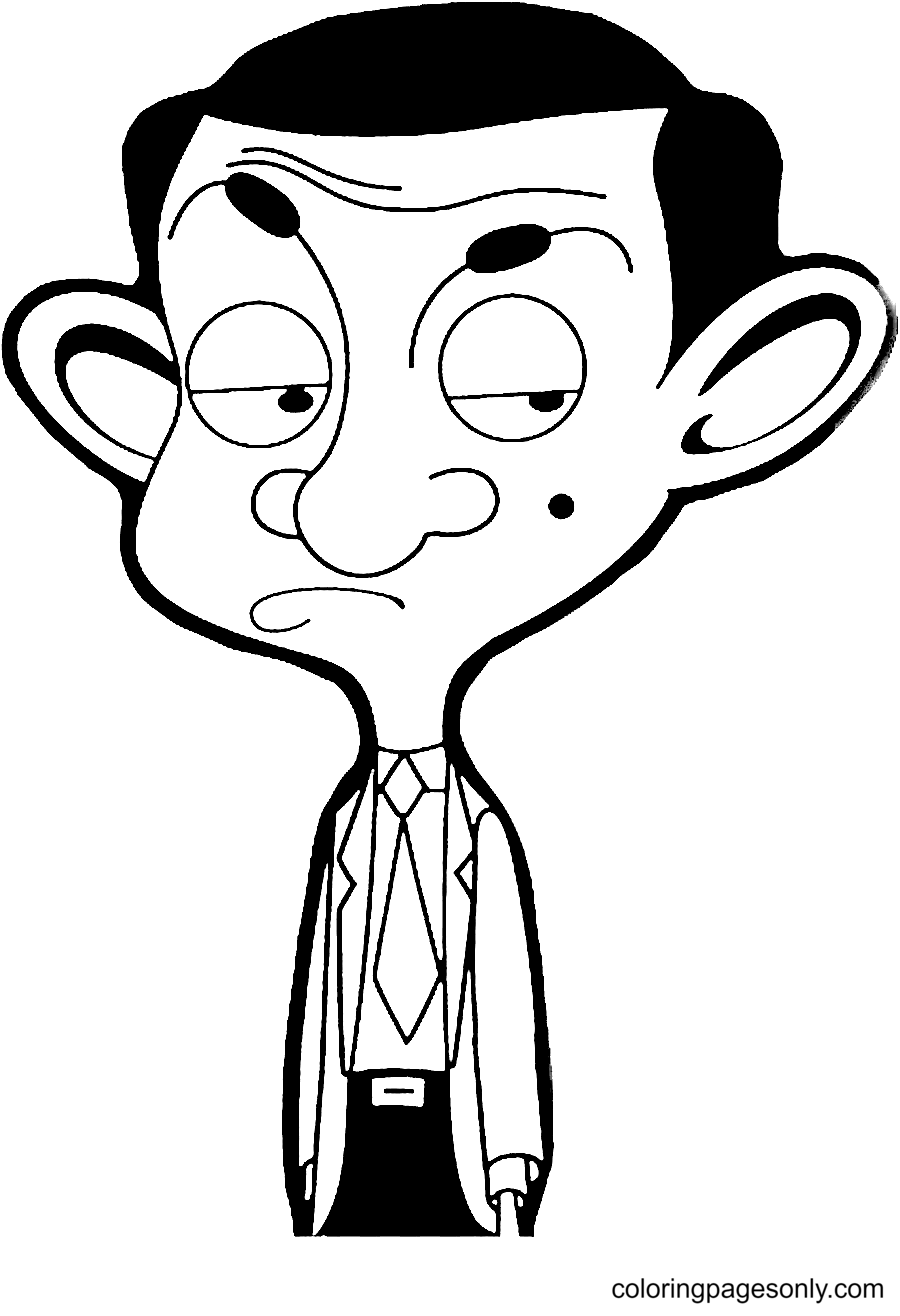
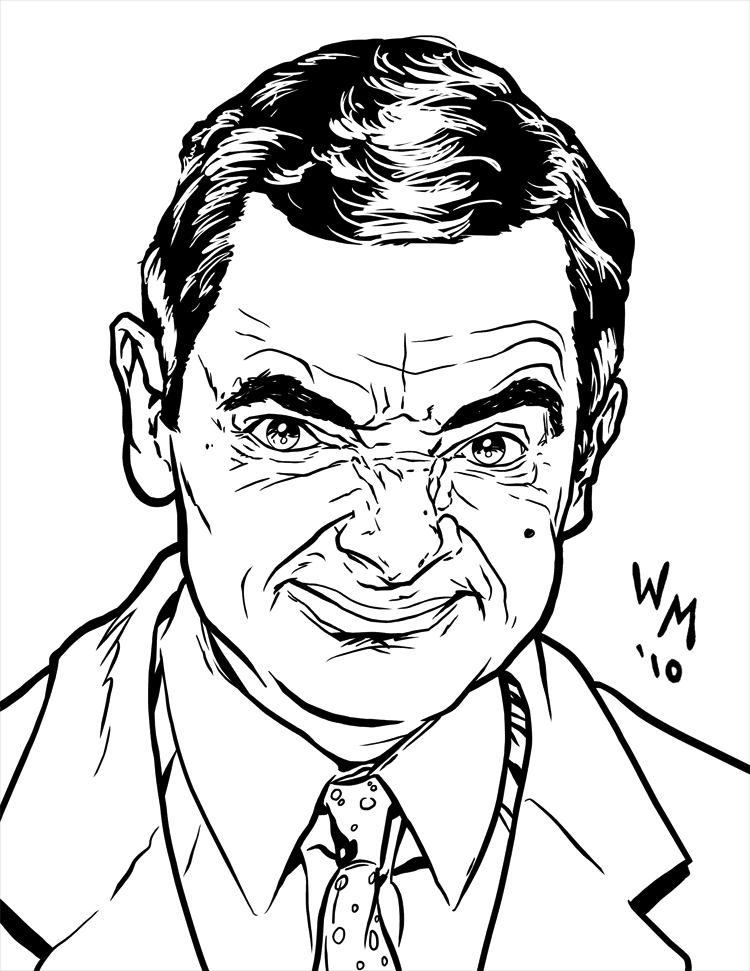
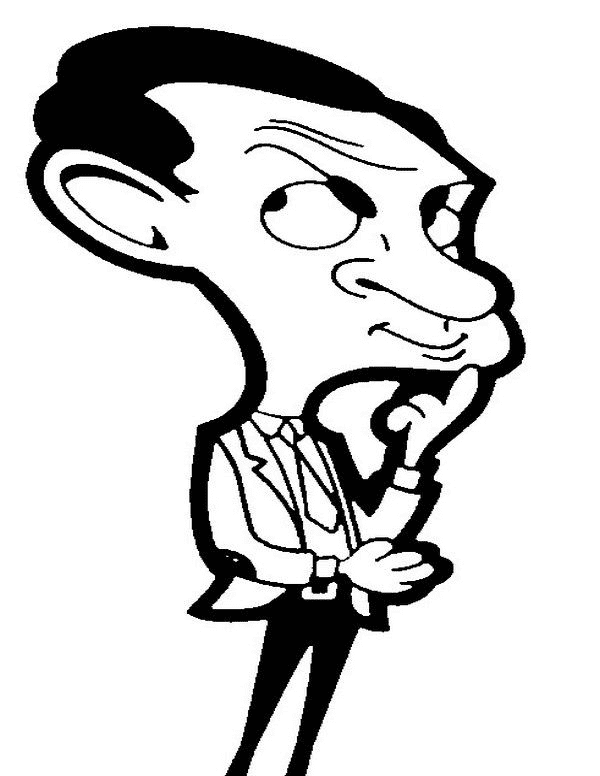
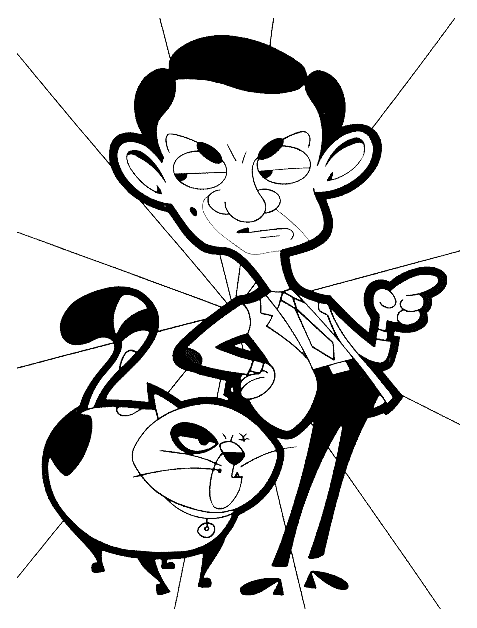
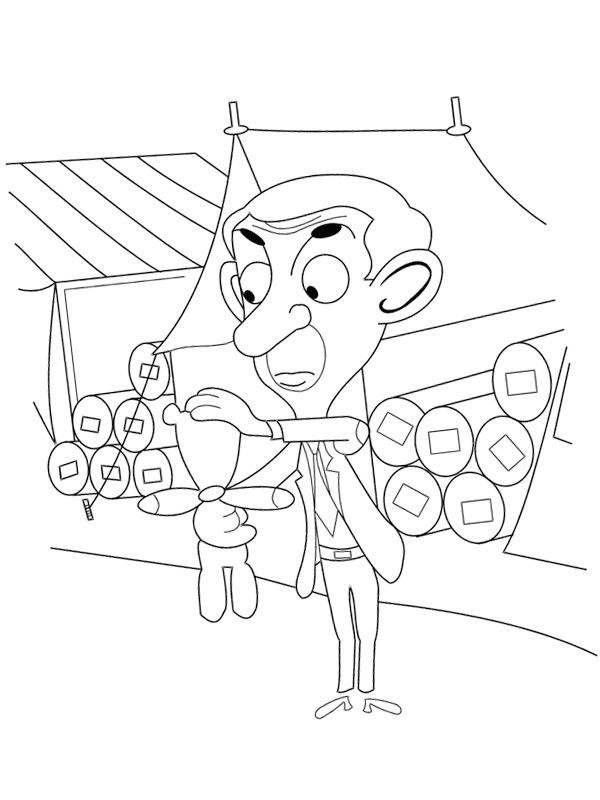
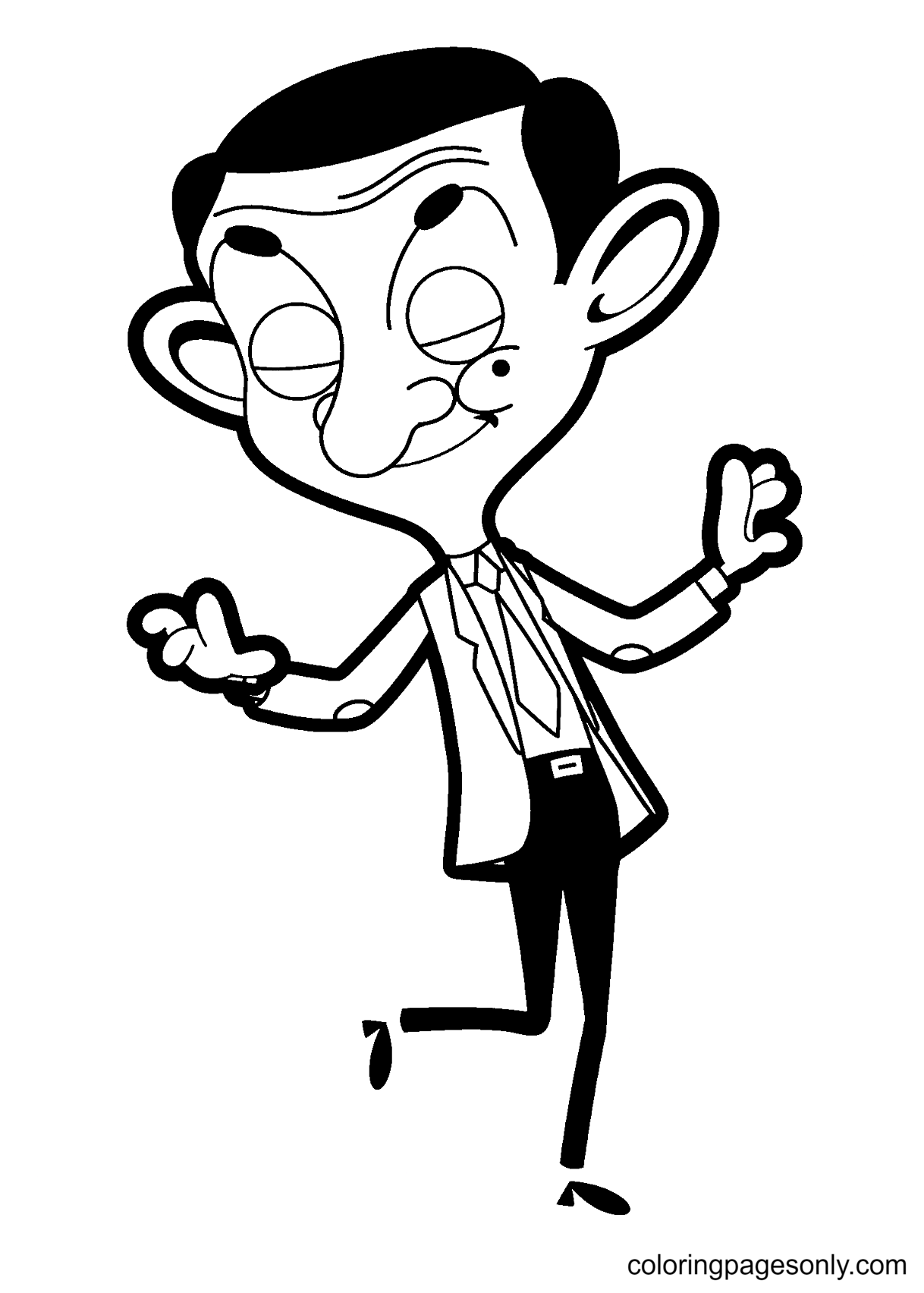
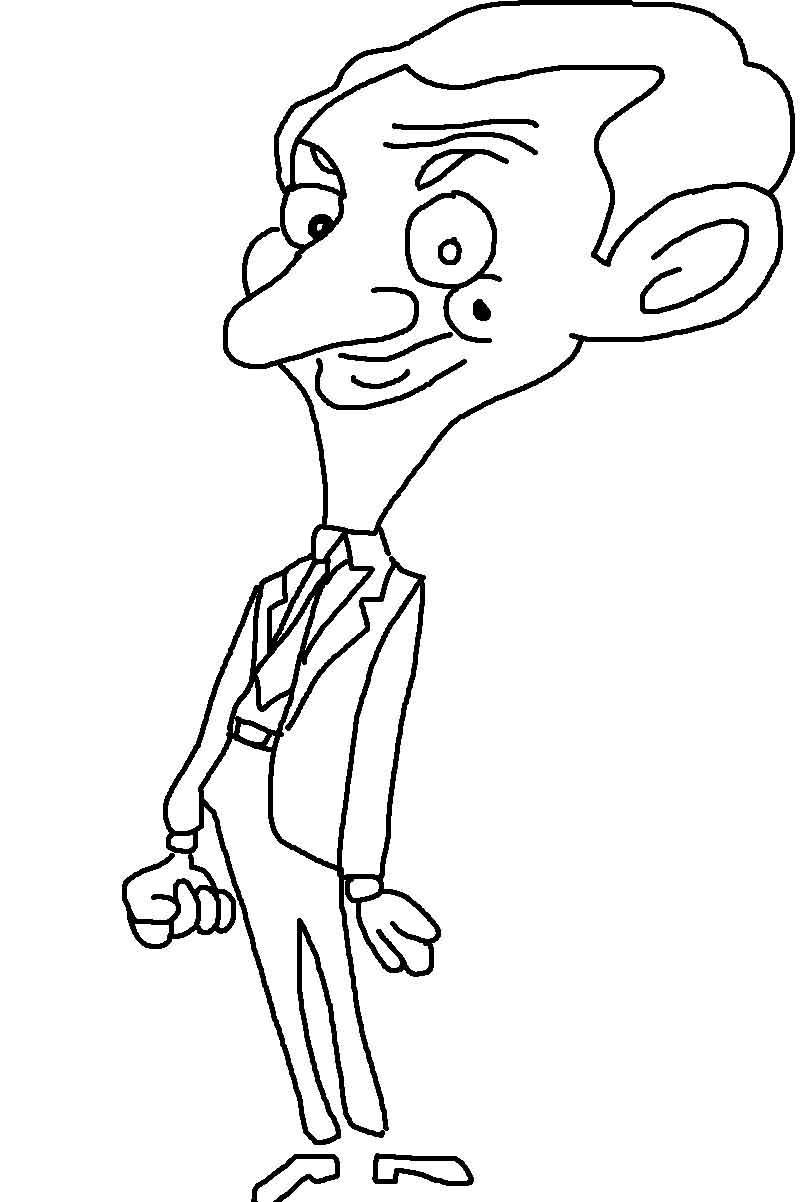
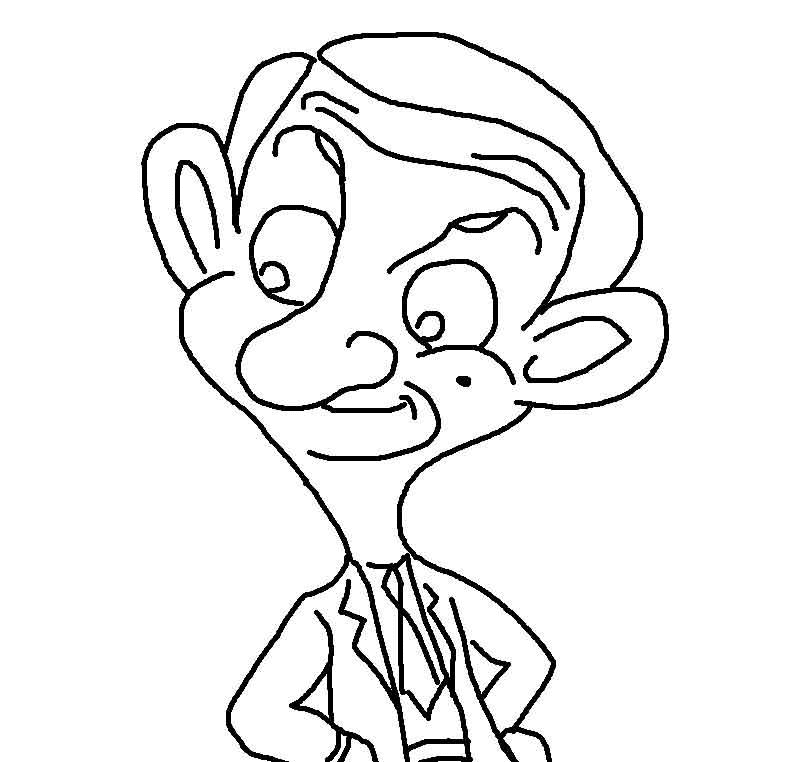
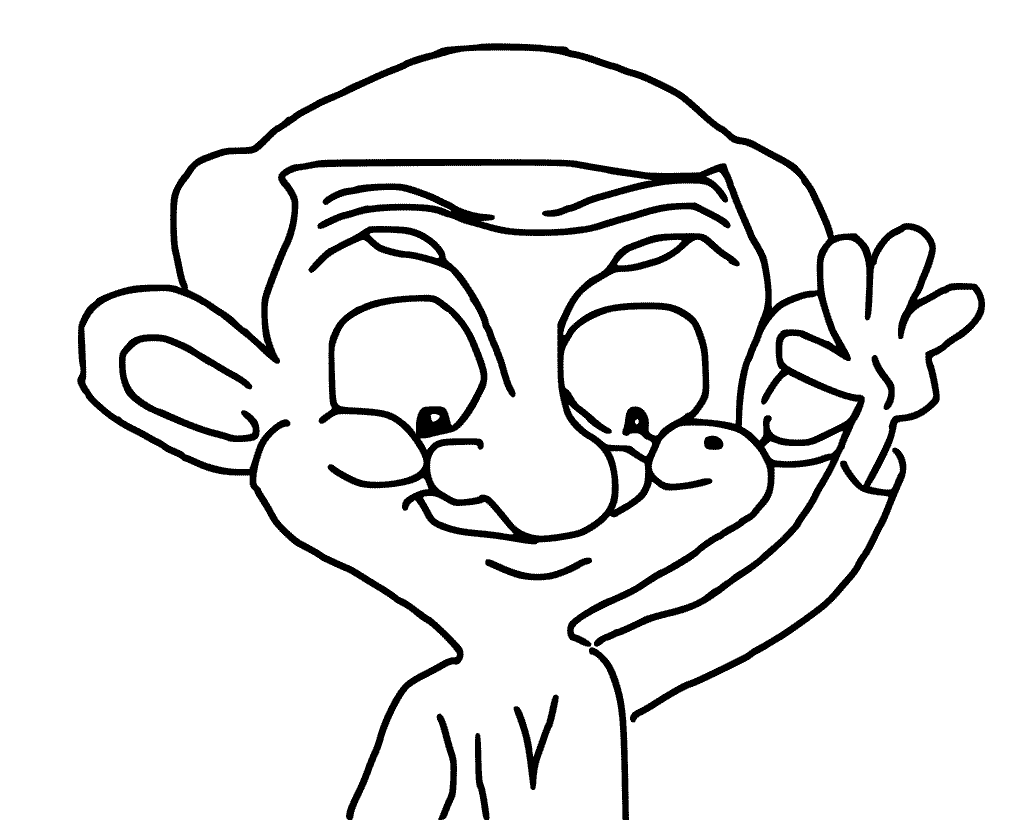
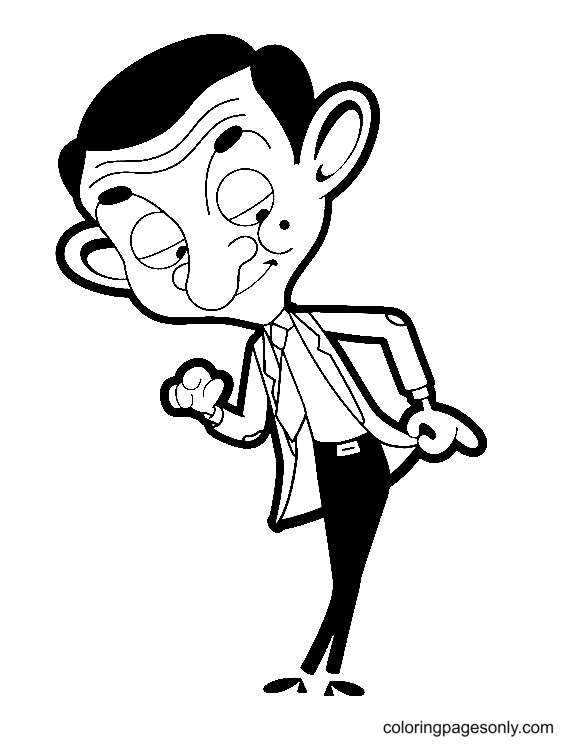
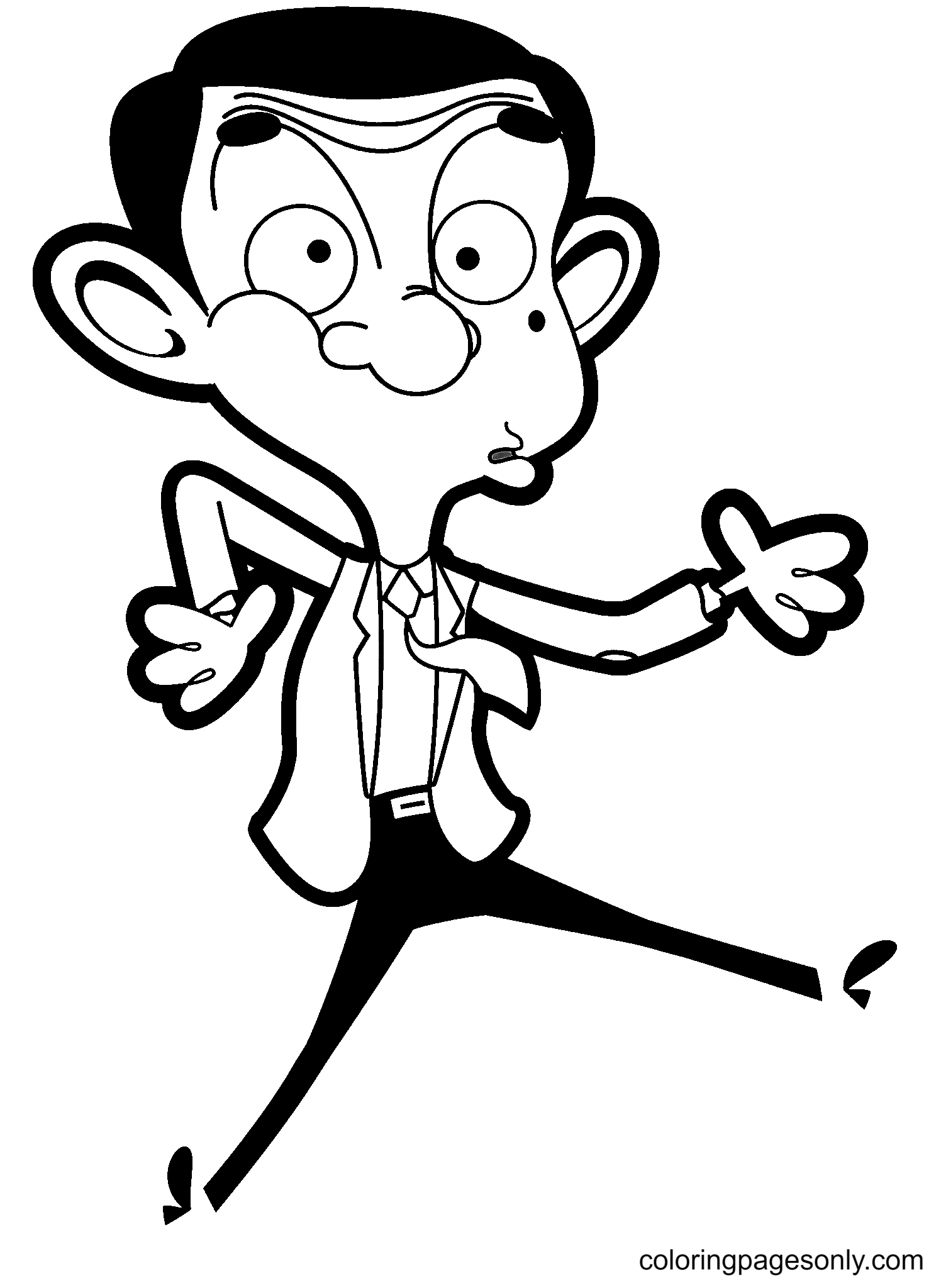
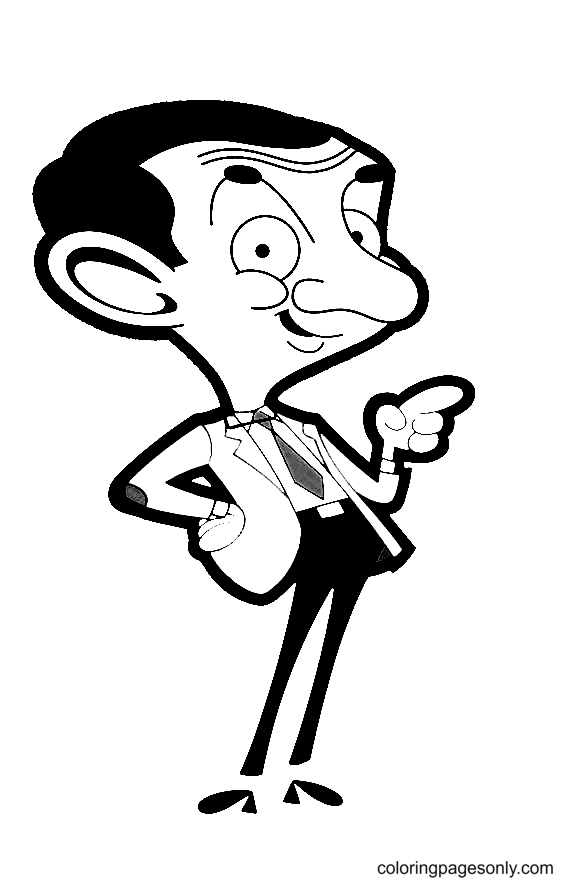
The collection’s most directly character-focused pages show Mr. Bean in the poses and expressions that constitute his visual identity – the raised eyebrows of someone who has just had a plan, the wide-eyed alarm of someone whose plan has immediately gone wrong, the smug satisfaction of someone who believes their plan has worked (before it becomes clear it has not).
Mr. Bean’s face is Rowan Atkinson’s most specific performance contribution to the character. This extraordinarily mobile face can communicate an entire situation through subtle shifts in eyebrow position, eye width, and mouth shape without any dialogue required. This is what makes the pages work as coloring subjects: the expressions are exaggerated enough to be clearly readable in a line drawing.
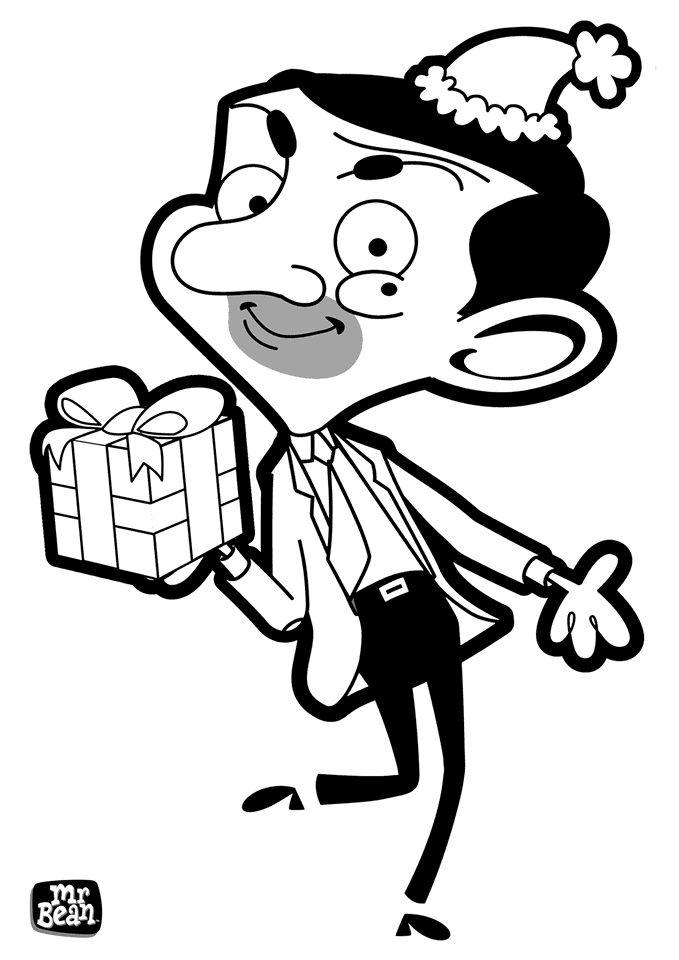
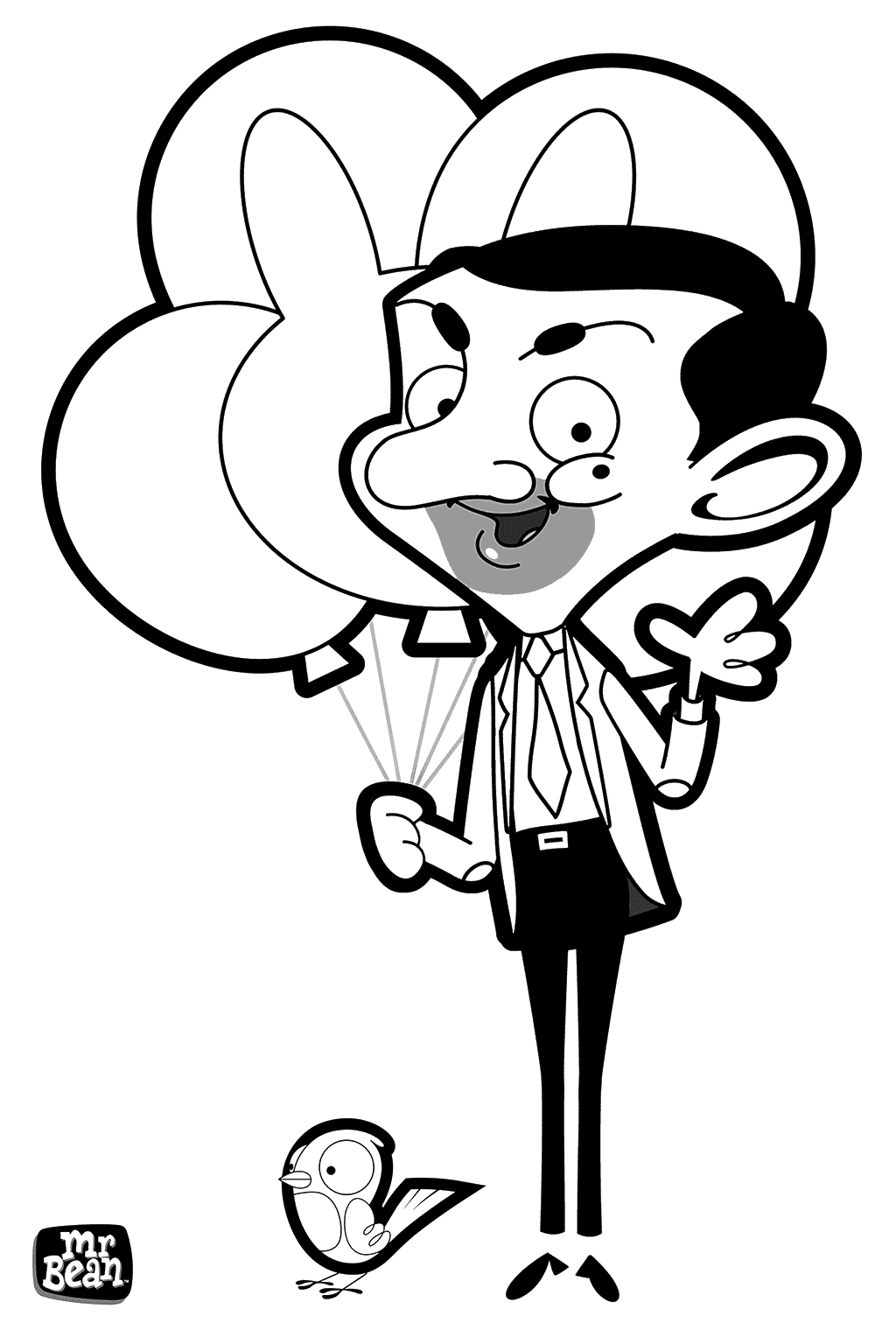
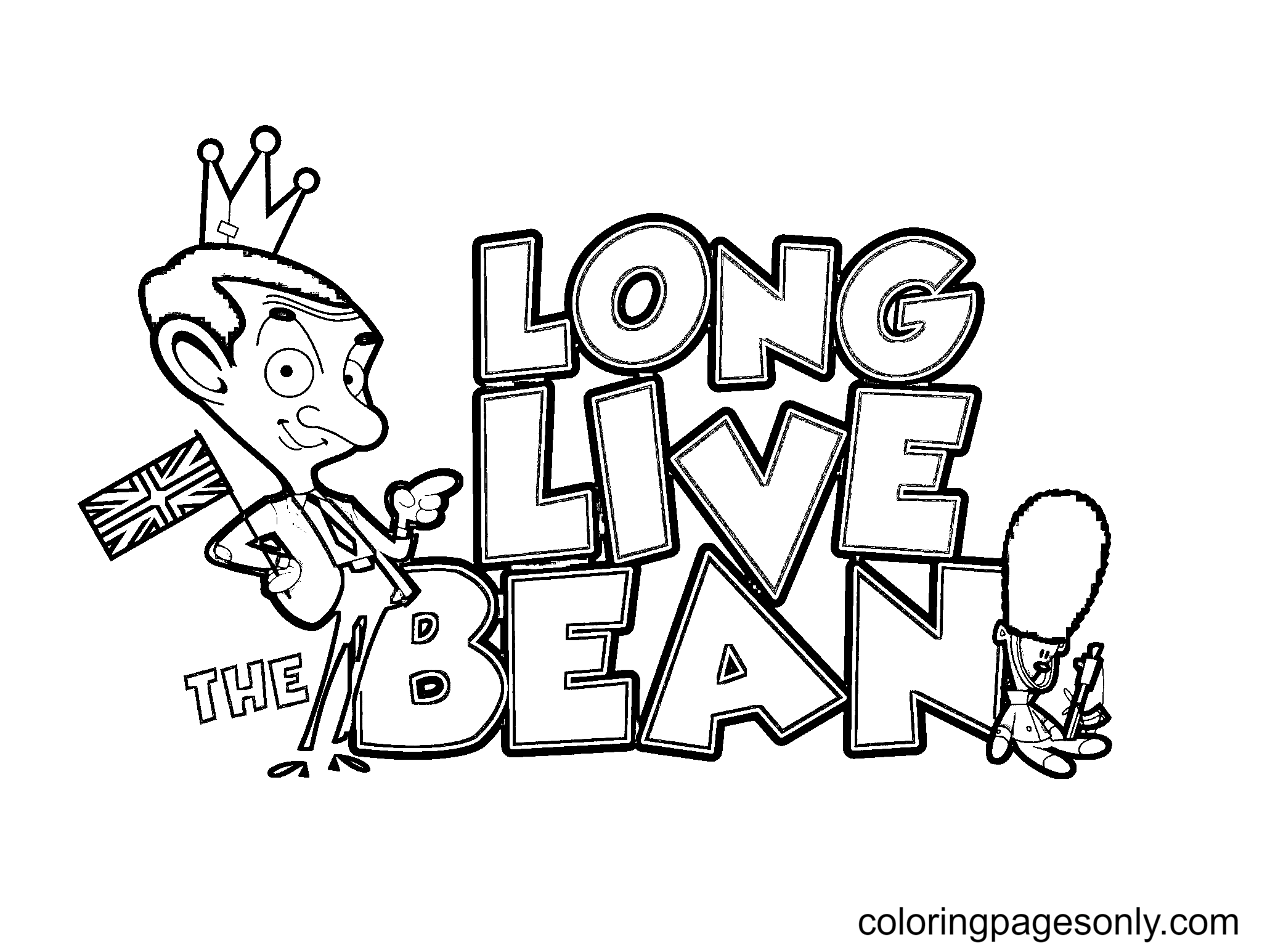
His canonical appearance is consistent across the series: brown hair slightly disheveled, a light brown or tan suit jacket worn over a white shirt and tie, dark trousers. The suit is slightly too tight and slightly too short in some scenes – the specific ill-fitting quality of clothing chosen by someone who is trying to be presentable without fully understanding what presentable requires.
Coloring Mr. Bean: His hair is a warm medium brown – naturally coloured, no dramatic styling. His suit is a warm tan or khaki-brown – not a formal dark suit but the specific light brown of his canonical jacket. His shirt is white. His tie varies by episode – a small red, green, or striped tie, rendered with slightly more saturated color than the rest of the outfit to give the composition a color anchor.
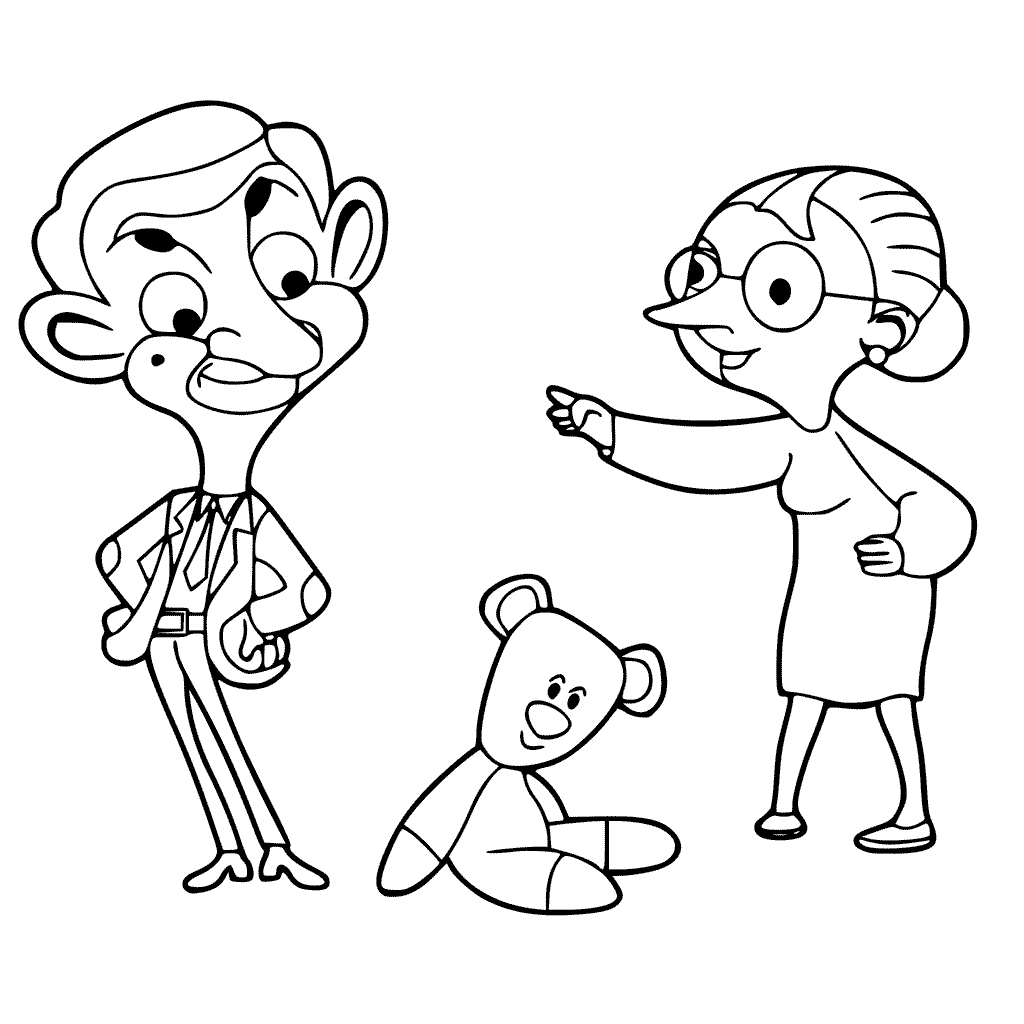
Mr. Bean and Teddy
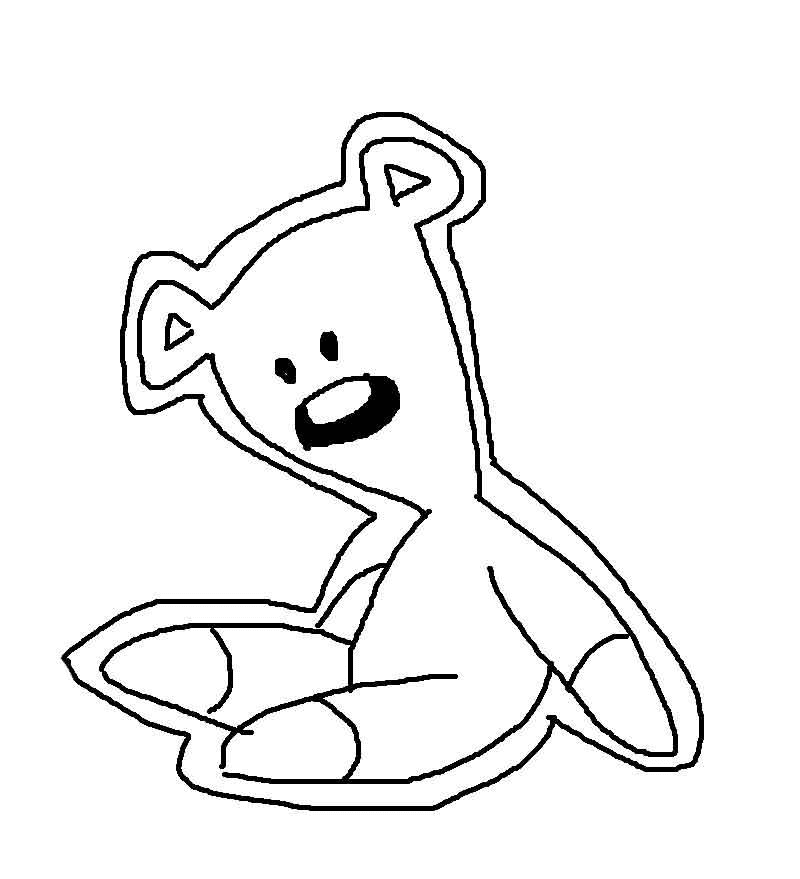
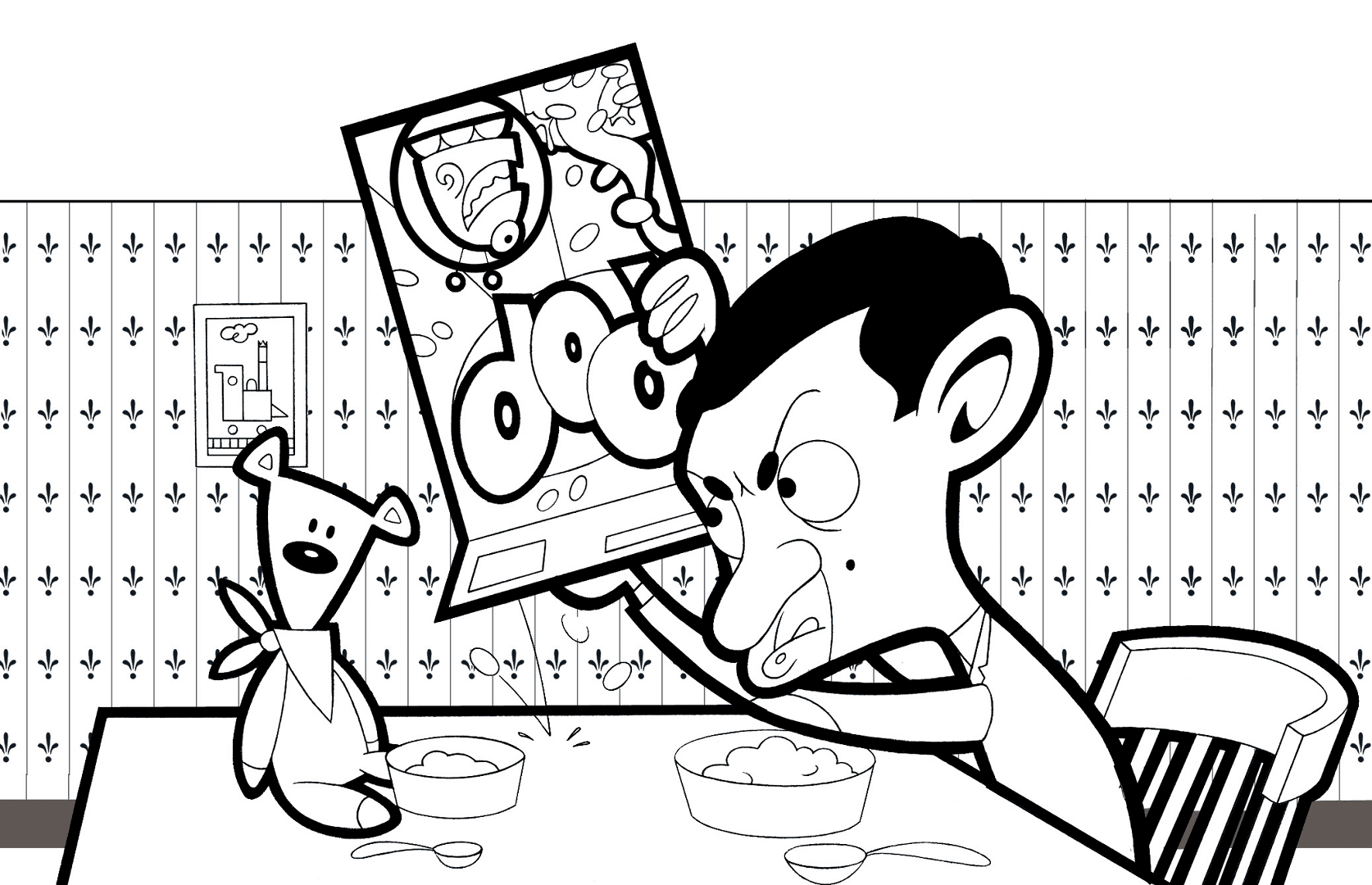
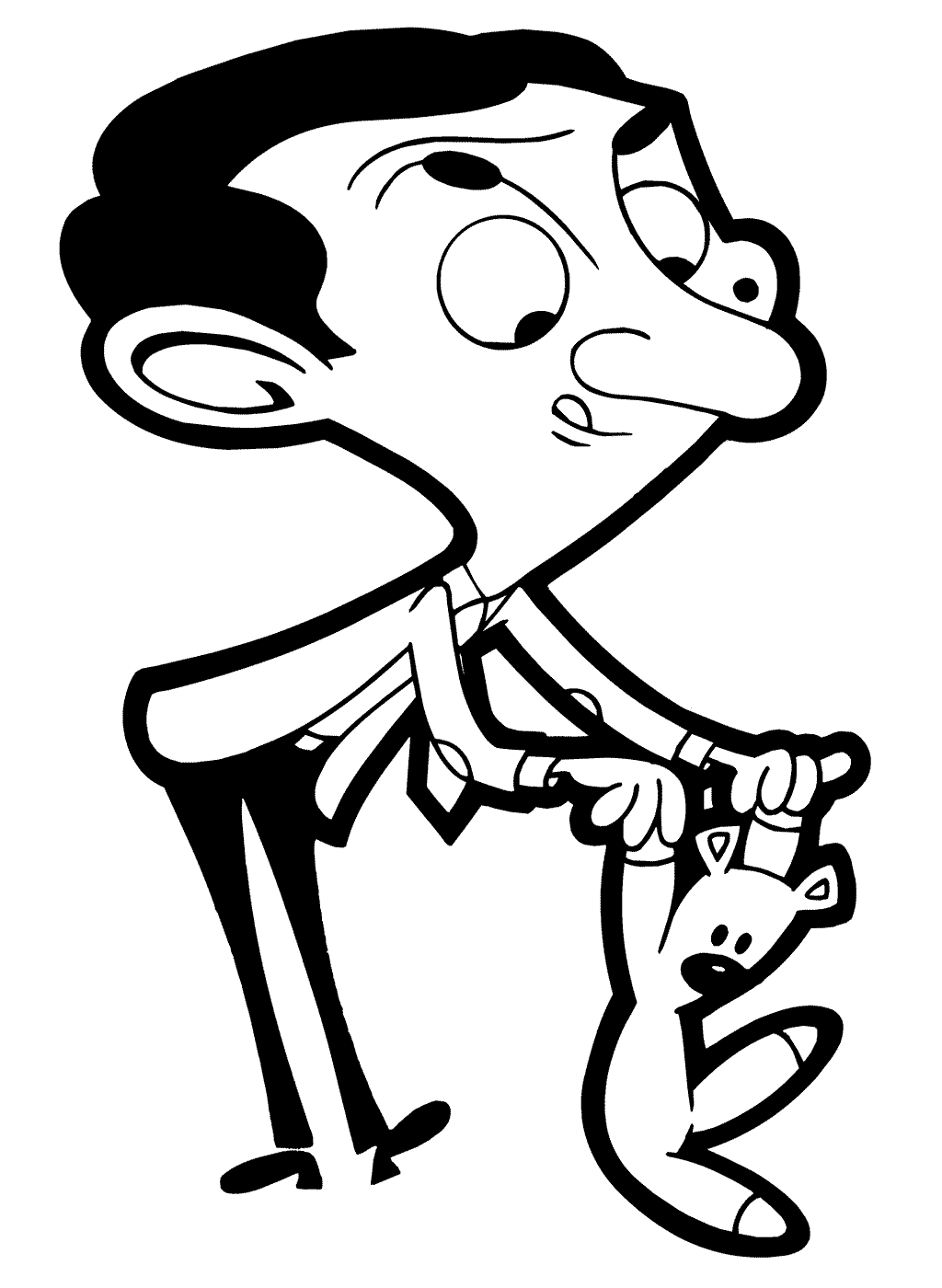
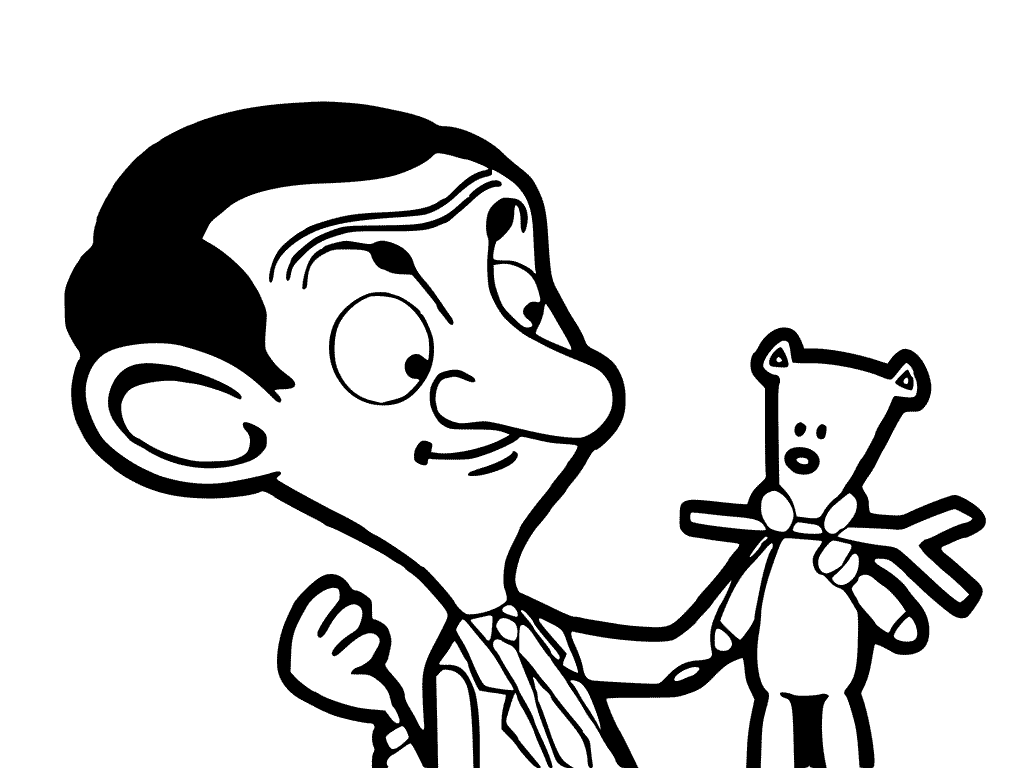
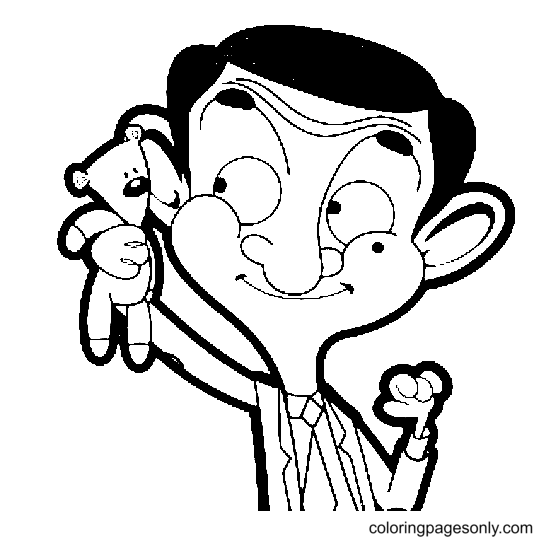
Teddy is Mr. Bean’s constant companion – a small, simple stuffed bear who sits with him, watches television with him, celebrates with him, and occasionally suffers for him. Teddy’s status in the show is neither explained nor questioned: Mr. Bean treats him as if he were a living being with feelings and preferences, and the comedy of this is never at Teddy’s expense.
The Teddy pages capture the most affectionate register in the collection – these are the pages where Mr. Bean’s relationship with the world is at its most tender. His expression toward Teddy is different from his expression toward everything else: less calculating, more genuinely warm.
Teddy is a small, pale brown or beige stuffed bear – simple in design, consistent in appearance, never dramatically redesigned across the series. He typically appears in Mr. Bean’s hands or beside him.
Coloring Teddy: A warm, pale beige or light tan – the simple, worn-looking color of a stuffed toy that has been carried everywhere for years. Apply it at moderate pressure across the bear’s entire body. The stitching and seam lines of a stuffed toy should be rendered in slightly darker tan at the seam points. Teddy’s eyes are small, dark, and button-like – two small dark dots.
The Mini and the Reliant Robin
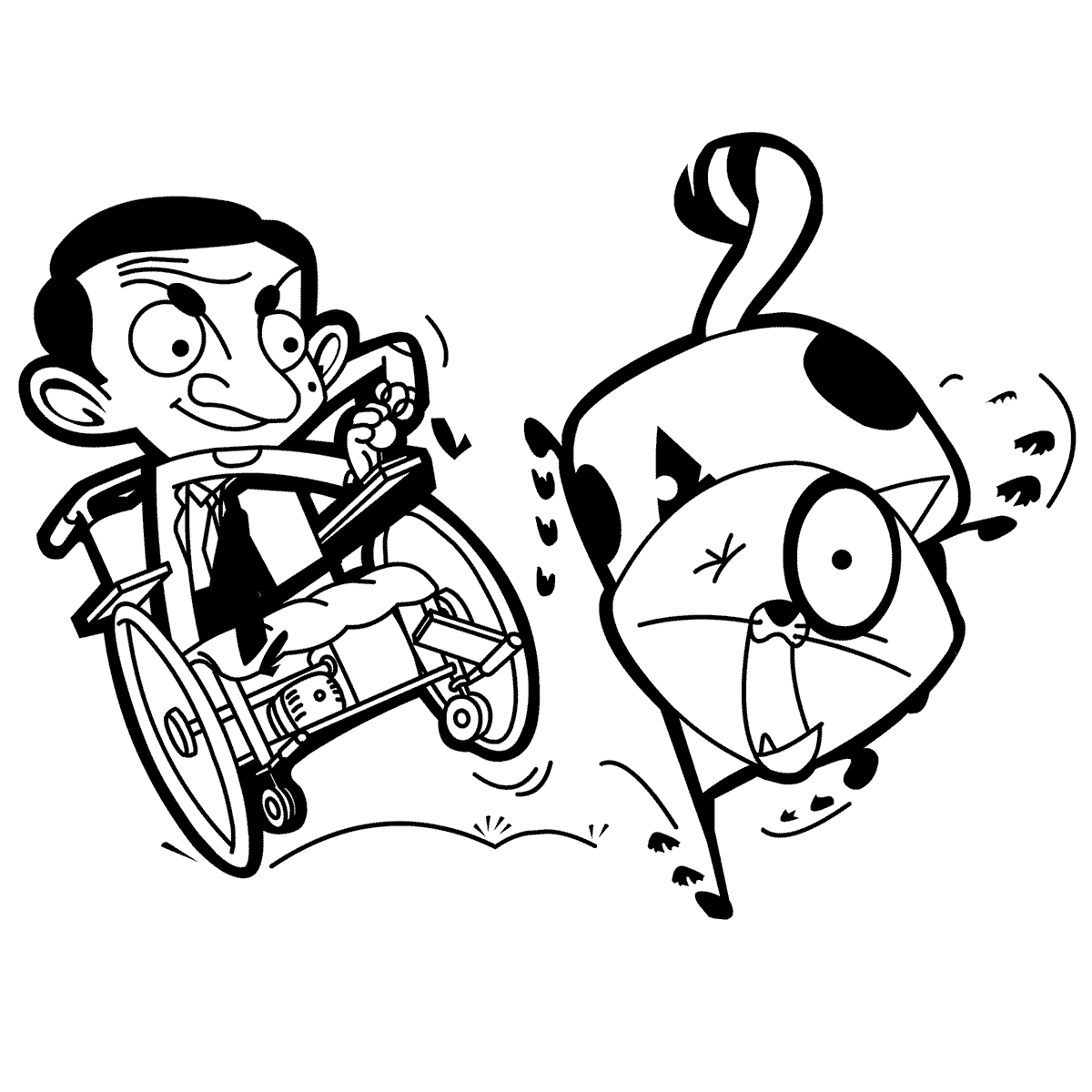
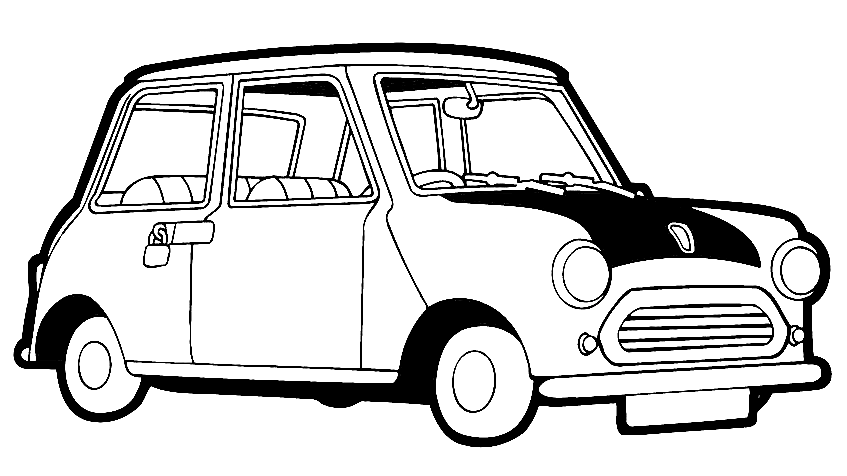
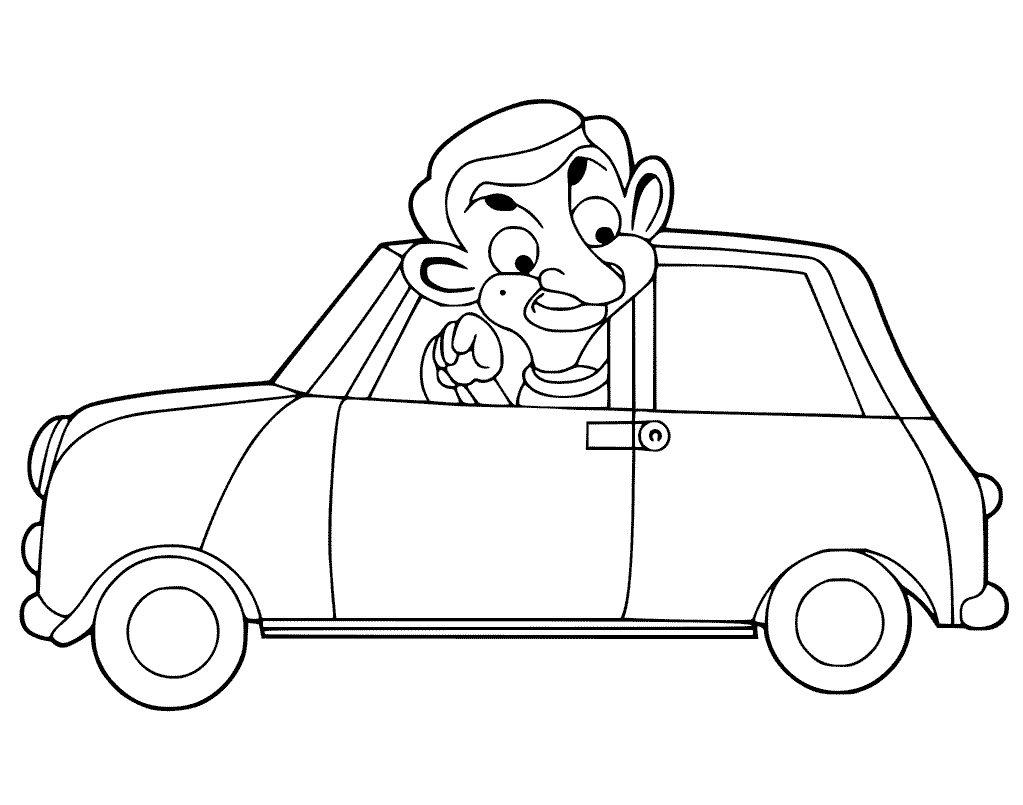
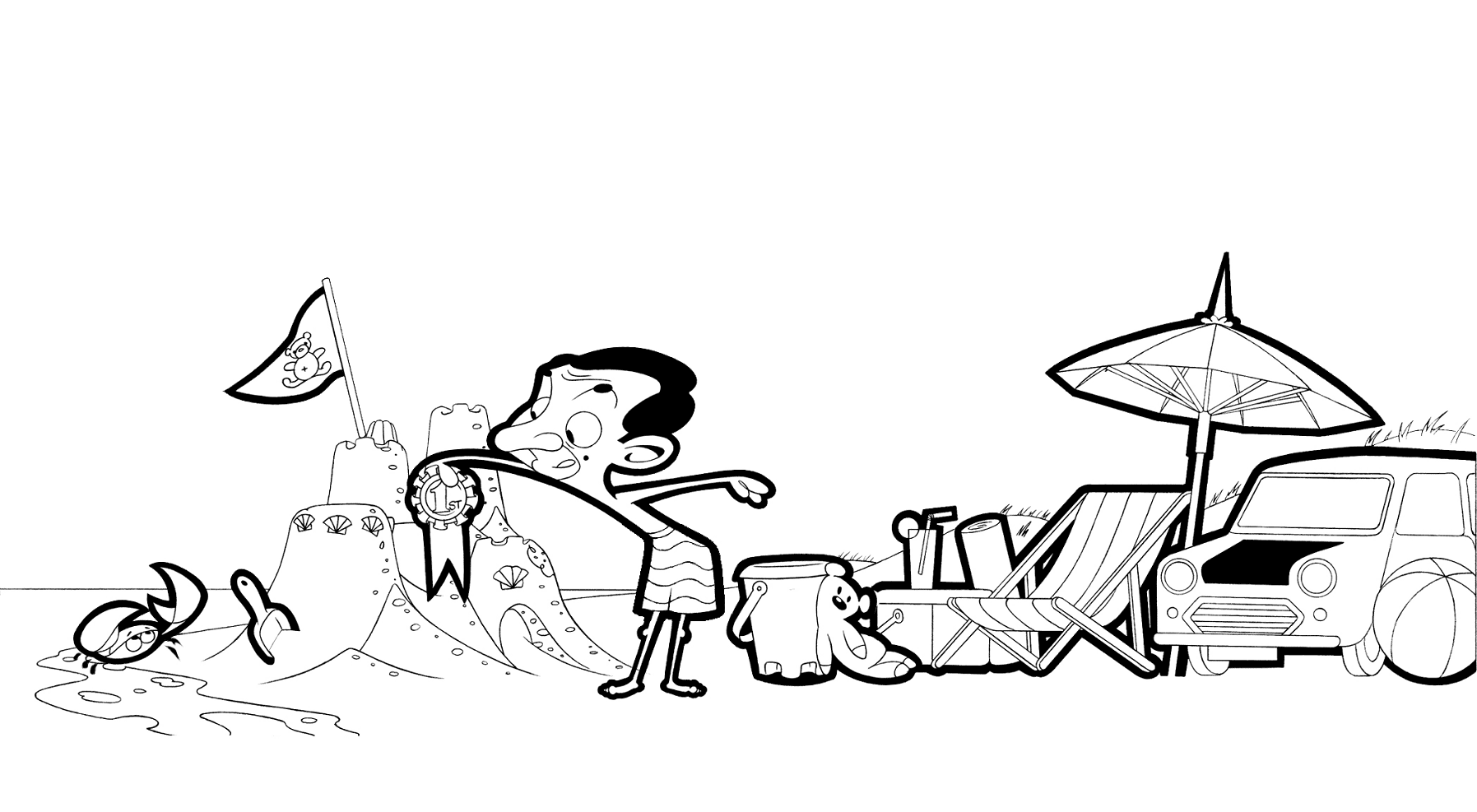
Mr. Bean drives a British Leyland Mini 1000 in a vivid orange-red – one of British television’s most recognized vehicles. The Mini is small, boxy in the specific way of 1970s British cars, and driven by Mr. Bean with a confidence that is entirely independent of his actual driving ability.
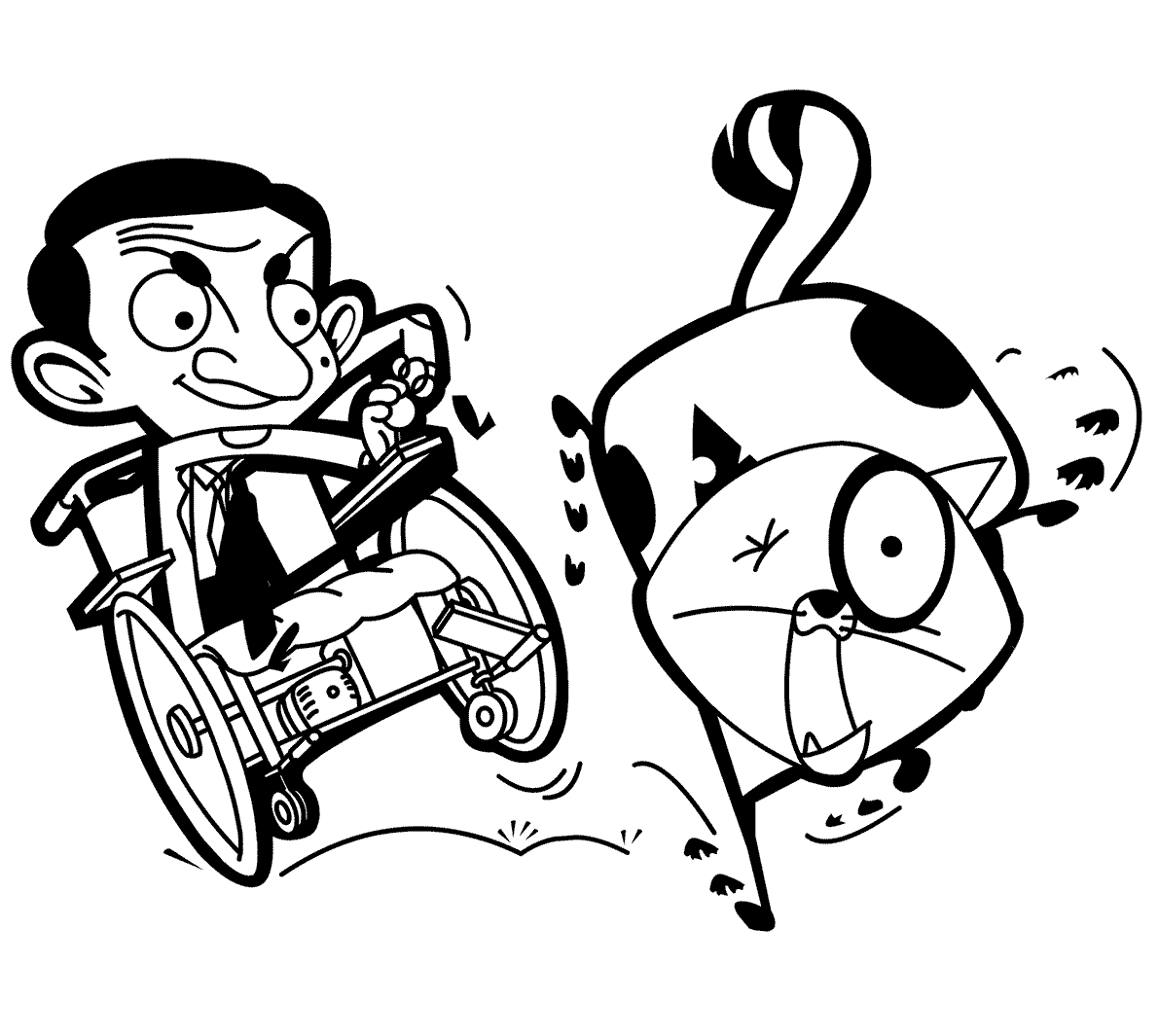
His recurring nemesis is a tan or gold Reliant Robin – a three-wheeled British car – whose driver encounters Mr. Bean repeatedly across the series, always with the same result: the Reliant Robin ends up on its side. The Reliant Robin’s three-wheeled instability is a real characteristic of the actual vehicle, and Mr. Bean’s Mini appears to find it every time they share a road.
The vehicle pages are the collection’s most specifically British in their visual reference – the combination of a Mini and a Reliant Robin is a specifically 1970s-90s British automotive comedy that most non-British audiences simply accept as funny without necessarily knowing what makes it funny.
Coloring the Mini: The original bright orange-red of the canonical Mr. Bean Mini – a vivid, warm orange that sits between red and orange, reading as neither pure red nor pure orange but the specific tone of British Leyland’s most famous small car. Three-zone metallic technique applies: lighter orange-red on the roof and upper surfaces, main orange-red on the door panels and lower body, and darker orange-red in the deep shadow areas.
Coloring the Reliant Robin: A warm tan or gold – the specific warm beige-yellow of the canonical Reliant Robin color. It should contrast clearly with Bean’s more vivid orange Mini.
Famous Episode Scenes
The series’s most memorable visual moments appear across the collection:
The Turkey Scene from “Merry Christmas, Mr. Bean” (1992) – in which Bean’s head becomes lodged inside a large raw turkey. This is possibly the show’s single most widely recognized moment internationally – an image that has circulated across cultures for thirty years and reads as funny even to viewers who have no knowledge of what preceded or followed it.
The Dentist – Bean in a dentist’s waiting room, conducting various entertainments with himself and the other patients, including a competitive waiting-room chess game and eventually self-dentistry.
The Swimming Pool – Bean is on the high diving board, unable to jump and unable to climb back down, executing increasingly elaborate attempts to descend without going over the edge.
The Exam – Bean in a university examination hall, covering his answers from a neighbor, having revised for the wrong examination.
Coloring scene pages: These pages require the environmental context to read correctly – a coloring page of Bean with his head inside a turkey requires the turkey to be clearly rendered as a turkey for the joke to be legible. Render the environmental props at the same level of care as the figure.
Animated Series Pages
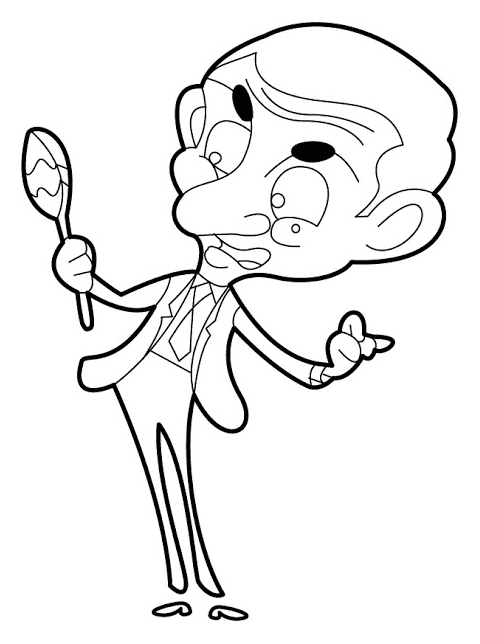
Mr. Bean: The Animated Series (2002-2019) adapted the character for animation across 130+ episodes, with Rowan Atkinson providing the voice. The animated version is visually distinct from the live-action character: slightly more exaggerated features, the same brown hair and tan suit, but rendered in the specific line quality and color palette of animated television rather than the photographic quality of live action.
The animated pages give younger fans the most accessible version of the character – the one they are most likely to have watched – and allow the same visual shorthand (the suit, the tie, the expressions, Teddy) to function in a simplified, bolder-outline format.
Coloring animated pages: The animated version uses slightly more saturated colors than the live-action would suggest – the suit is a clearer, slightly warmer tan, the hair a slightly more vivid brown. Apply colors at moderately higher saturation than you would choose for a realistic live-action portrait.
What These Pages Do
Mr. Bean’s global reach is built on the specific achievement of comedy that requires no translation. The character’s near-silence was not a constraint imposed by production considerations – it was a deliberate creative decision to make the show as internationally exportable as possible. The comedy of a man trying to get through ordinary daily situations without anyone noticing his complete incompetence in ordinary daily life requires no cultural context that is specific to Britain or to English. The coloring pages work the same way: they are funny because the expressions and situations are funny, regardless of the language in which the viewer encountered the show.
The character is one of the clearest examples in television of physical comedy as a complete storytelling language. Atkinson’s performance demonstrates what a face and a body can communicate without words – a full range of intention, surprise, problem-solving, and consequence expressed entirely through expression and movement. Coloring the expression pages is engaging with that performance’s specific visual language.
Mr. Bean’s teddy bear is a specific lesson in how much detail can communicate emotionally. Teddy’s presence in any composition changes what Mr. Bean’s character communicates – without Teddy, he is a bumbling misfit; with Teddy, he is a bumbling misfit who is capable of genuine affection. The same face reads differently depending on what it is directed toward. The coloring pages that include both demonstrate this directly.
Fine motor development. The American Academy of Pediatrics identifies fine motor skill development as a key childhood milestone throughout early childhood. Mr. Bean’s facial expression detail, the tie and suit detail of his costume, the Teddy’s seam and button details – all provide motivated, sustained fine motor practice. The 2005 Art Therapy Journal study on structured coloring and anxiety reduction applies throughout, with particular relevance for the specific calm that comes from working on expression detail – the focused attention on what a face is communicating.
How to Color These Pages Well
The face is the whole performance – give it the most attention. Mr. Bean’s comedy lives in his expressions. A coloring page of him with a flat, neutrally rendered face loses the entire character. The eyebrows – their position, the angle between them, whether they are raised together or asymmetrically – carry the most important expression information. Render the eyebrows as clearly defined dark lines, precisely placed. Their exact position relative to the eyes determines whether Bean reads as surprised, scheming, alarmed, or satisfied.
The tan suit is not brown and not beige – it sits precisely between. The most common error on Mr. Bean pages is either making the suit too warm (it becomes brown and heavy) or too pale (it reads as off-white). The correct tone is the specific warm khaki-tan of the actual suit – apply a warm medium tan at moderate pressure and check that it reads as distinctly neither brown nor cream. In shadow fold areas of the jacket, add a slightly darker warm brown at the crease lines.
Teddy requires the texture of old fabric. A new stuffed toy and a much-loved, long-carried stuffed toy have different surface qualities. Teddy reads as old and well-used – his fabric has a slightly worn, soft quality rather than the bright cleanness of new plush. Apply the pale tan of his fur at light pressure, then add the very subtlest darkening at his seam lines and in the recesses between his limbs and body. Keep it subtle – Teddy should still read as pale and soft, but with the quality of something that has been held every day for a long time.
The orange Mini is the collection’s most vivid color. Apply the orange-red at full saturation and full pressure across the car body. This is the strongest color statement in any page that includes the Mini – it should read as vivid and immediate, consistent with the car’s role in the series as something brightly visible at all times (and therefore available to bump into the Reliant Robin). Three-zone metallic treatment applies: the roof and hood are the lightest orange-red, the main panels are the mid-tone, and the sills and undersides are the darkest.
Episode scene pages need environmental context to work comedically. The humor of the turkey scene, the exam scene, and the swimming pool scene depends on the context being readable. Before coloring any scene page, identify all the elements and color each in service of its readability – the turkey should look like a turkey, the exam papers should look like documents, the pool should read as water and tile. The character’s expression against a clearly readable environment is what makes the scene’s humor legible in a coloring page.
5 Creative Craft Ideas
The Expression Study
Mr. Bean’s face is one of the most expressively varied in television comedy. Print five different Mr. Bean portrait pages – specifically selecting pages that show different expressions. Color all five in identical costumes and hair colors.
Arrange all five in a row. Below each, add a label in one word: “Planning.” “Alarmed.” “Satisfied.” “Surprised.” “Scheming.” The finished display demonstrates how much information the face alone communicates – five identical figures in identical clothing, each reading as entirely different because of expression alone.
Bean and Teddy – A Partnership Display
Print one large Mr. Bean page and one smaller Teddy page (or print a page that includes both). Color Mr. Bean in his canonical tan suit. Color Teddy in worn pale beige.
Mount both together – Teddy held or beside Mr. Bean – on a cream backing sheet. Add, in small hand-lettered text: “No first name given. No explanation required. Fourteen episodes. Everywhere in the world.”
The finished display honors the specific partnership that is the show’s emotional core, stated with the minimum of words appropriate for a character who uses the minimum of words.
The Mini vs. The Reliant Robin
Print the Mini page and a Reliant Robin page if available, or draw a simplified three-wheeled car shape on blank paper. Color the Mini in its canonical vivid orange-red. Color the Reliant Robin in its warm gold-tan.
Mount both on a backing sheet, facing each other – the Mini on the left, the Reliant Robin on the right. Between them, add a large curved arrow indicating the Mini’s approach. Add: “Every time. Without fail.”
The finished display captures the series’s most repeated running gag – one vivid orange car and one three-wheeled gold car, the outcome predetermined regardless of how far apart they start.
The 2012 Olympics Moment
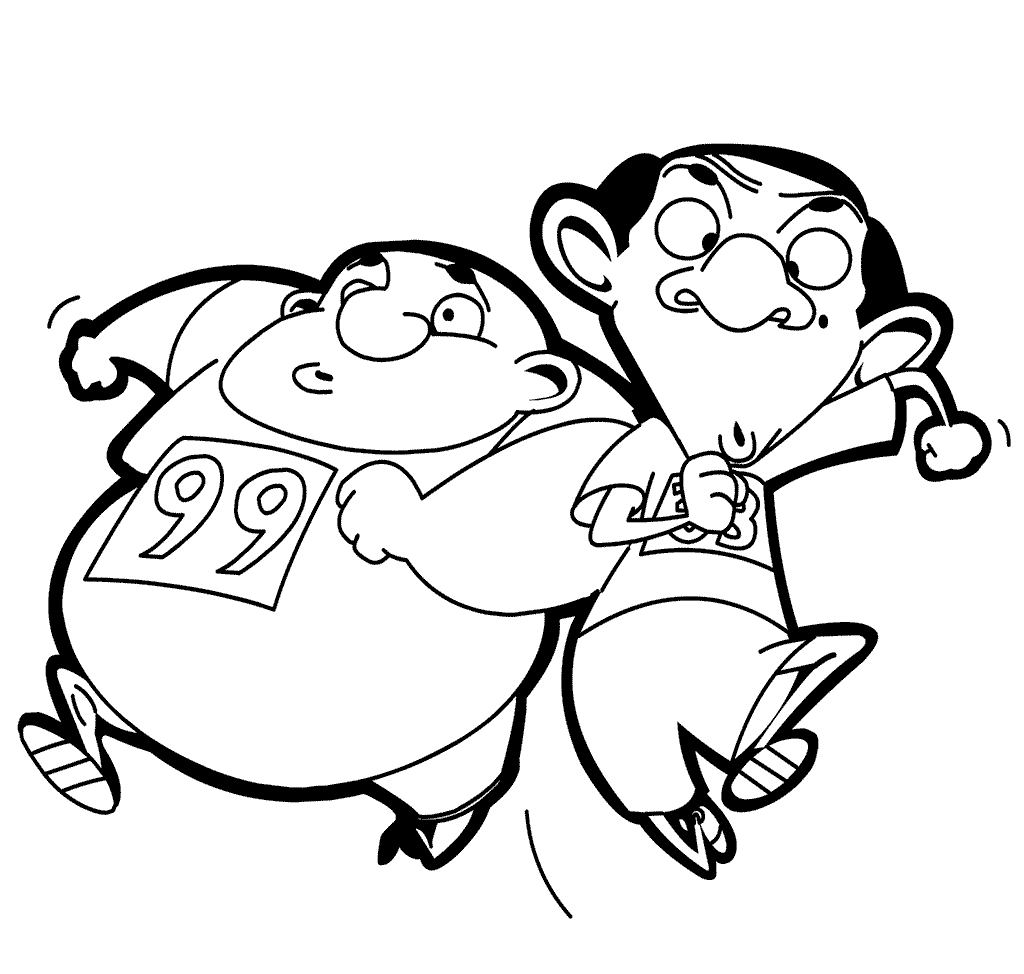
Rowan Atkinson performed as Mr. Bean during the Opening Ceremony of the 2012 London Olympics – watched by approximately 900 million people globally. In the sequence, Mr. Bean plays a single key on a keyboard alongside the London Symphony Orchestra performing Vangelis’s “Chariots of Fire,” progressively speeds up and eventually falls asleep, then daydreams himself into a race against Olympic sprinters, cheating to win.
Print a Mr. Bean seated portrait page. Color it carefully. Mount on a backing sheet with a drawn keyboard beneath his hands. Add: “August 27, 2012. Danny Boyle’s Opening Ceremony. 900 million viewers. One key, played repeatedly, slightly too slowly.”
The Silent Comedy Lineage
Mr. Bean belongs to a specific tradition of wordless physical comedy that extends from the silent film era through to the present. Print a Mr. Bean page. Color it in his canonical palette.
On a backing sheet, mount the finished Bean portrait at the right. On the left, create a hand-drawn timeline: “Charlie Chaplin – The Tramp, 1914.” “Jacques Tati – Monsieur Hulot, 1953.” “Rowan Atkinson – Mr. Bean, 1990.” Connect the three names with a line. Add below: “Same tradition. Same wordlessness. Three different suits.”
Frequently Asked Questions
Who created Mr. Bea,n and when did the character first appear? Mr. Bean was created by Rowan Atkinson and Richard Curtis. Atkinson developed the initial concept for the character while studying at The Queen’s College, Oxford, where he performed early versions of the wordless physical comedy character at student events. The character made his television debut on ITV on January 1, 1990, in the episode titled “Mr. Bean.” Rowan Sebastian Atkinson CBE, born January 6, 1955, in Consett, County Durham, England, holds a Master’s degree in Electrical Engineering from Oxford. He was awarded a CBE in the 2013 New Year’s Honors.
How many episodes of Mr. Bean were produced? The original live-action Mr. Bean series produced fourteen episodes for ITV between 1990 and 1995. The series began with “Mr. Bean” (January 1, 1990) and ended with “Hair by Mr. Bean of London” (October 1995). A special episode, “Merry Christmas, Mr. Bean,” aired in 1992 and is among the most widely recognized individual episodes. Two feature films followed: Bean (1997) and Mr. Bean’s Holiday (2007). An animated series, Mr. Bean: The Animated Series, produced 130+ episodes from 2002 to 2019, with Atkinson voicing the character.
Why does Mr. Bean barely speak? The decision to make Mr. Bean a near-silent character was deliberate and driven by two considerations: creative and commercial. Creatively, Atkinson was interested in exploring the tradition of physical comedy – the wordless performance tradition of Charlie Chaplin, Buster Keaton, and Jacques Tati’s Monsieur Hulot – which requires all storytelling to be communicated through face, body, and situation. Commercially, a virtually silent comedy is the most internationally exportable format in television – it requires no dubbing, no subtitling, and no cultural localization beyond what any viewer can understand from watching the situation. This commercial logic proved accurate: Mr. Bean has been broadcast in nearly every country on earth.
What is Mr. Bean’s relationship with his teddy bear? Teddy is Mr. Bean’s constant companion – a small, simple stuffed bear who travels with him, shares his home, and is treated by Mr. Bean as if he were a living being with feelings and preferences. No explanation for this relationship is offered or required by the show. The comedy of Teddy’s role is not at Teddy’s expense but at Mr. Bean’s – it reveals his childlike internal world, his genuine capacity for affection, and the specific quality of a character who is far more at ease with a stuffed bear than with actual people. Teddy is widely considered one of the most recognized props in British television comedy.
What car does Mr. Bean drive? Mr. Bean drives a British Leyland Mini 1000 in a vivid orange color, with registration number SLW 287R in many episodes (though this varies). The Mini is both his primary mode of transport and a recurring story element – its small size and Mr. Bean’s unconventional approach to driving create several of the series’ most extended comic sequences. His recurring automotive nemesis is a tan Reliant Robin – a three-wheeled British car – whose driver repeatedly encounters Mr. Bean with consistently unfavorable results for the Robin, which ends up on its side in their every meeting. The Reliant Robin’s three-wheeled instability is a genuine characteristic of the actual vehicle.
What was Rowan Atkinson’s Mr. Bean performance at the 2012 Olympics? During the Opening Ceremony of the 2012 London Olympics on July 27, 2012, directed by Danny Boyle, Rowan Atkinson performed as Mr. Bean in a sequence watched by a global television audience estimated at approximately 900 million people. In the segment, Mr. Bean is shown playing a single key on a keyboard synthesizer alongside the London Symphony Orchestra performing Vangelis’s “Chariots of Fire” – initially seriously, then increasingly slowly, then falling asleep and daydreaming himself into the race being depicted in the accompanying visuals, where he cheats by riding alongside the athletes in a car and then sprinting across the finish line at the last moment. The sequence is widely considered one of the ceremony’s highlights.
Browse the full collection at ColoringPagesOnly.com. All 30+ pages free, no sign-up, PDF or PNG, print or color online.
Rowan Atkinson developed Mr. Bean at Oxford while studying electrical engineering and performed early versions at student comedy events. He and Richard Curtis turned those performances into fourteen television episodes between 1990 and 1995. The show barely spoke. It barely needed to.
The face did everything. The suit was too tight. The teddy bear was there.
In 2012, 900 million people watched a man play one key on a synthesizer, slightly too slowly, alongside an orchestra. They knew who he was.
Pick up your warm tan. The suit comes first. Leave the face for last – the face is the whole thing.
Share your work on Facebook and Pinterest and tag #Coloringpagesonly. We especially want to see the expression studies and the Mini vs. Reliant Robin displays.
Color the suit. Give him Teddy. The expression will tell you the rest.
More from our TV show and film collections: