
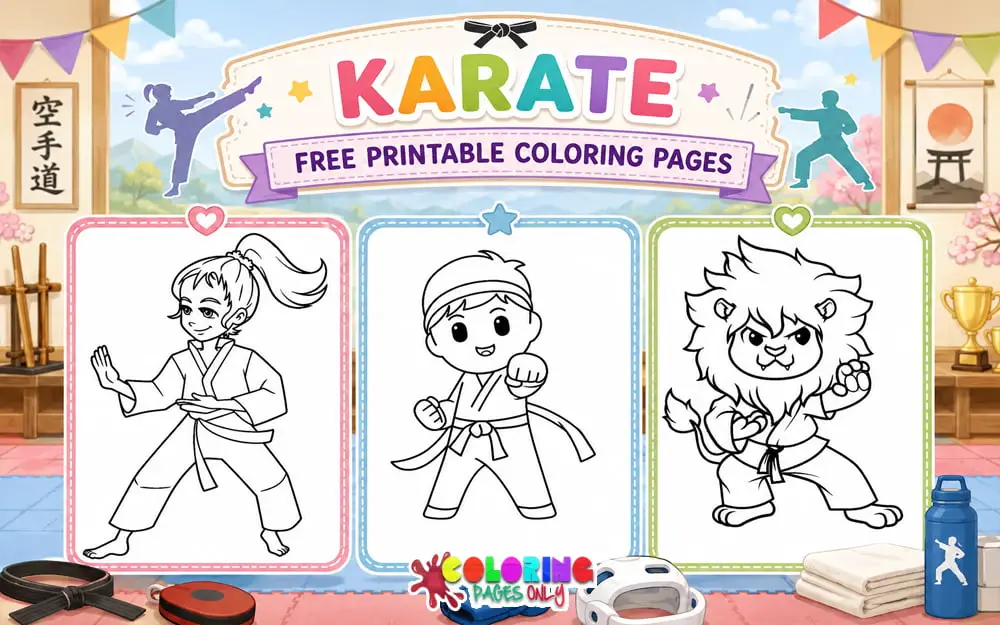
Free Karate Coloring Pages: 39 printable PDF designs featuring boys and girls in crisp white uniforms, flying kicks, and a whole dojo of animals, from a tiger to a karate kitten. Print a page before class or color it on screen at home.
Karate is a martial art that grew up on the island of Okinawa, in southern Japan, where local fighting styles mixed with techniques brought from China. The name means “empty hand,” because students learn to defend themselves without weapons, relying on punches, kicks, and blocks. In a dojo, students wear a white uniform called a gi, bow to their teacher, or sensei, and earn colored belts as their skills grow. Karate also stresses respect, self-control, and patience, which is a big part of why so many families sign their children up for classes.
Cartoon animals and simple kid poses make the set easy for preschoolers, while action kicks and detailed uniforms give older students more to shade.







What’s Inside This Collection
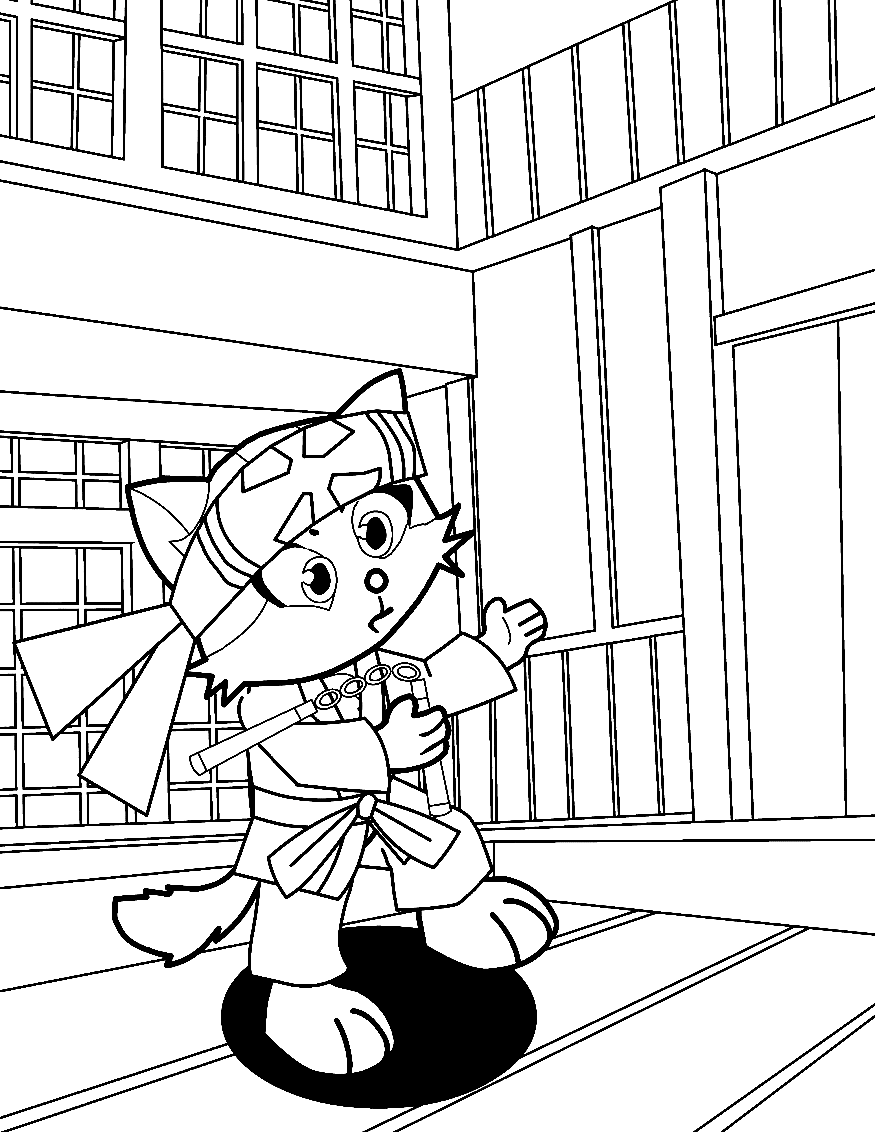
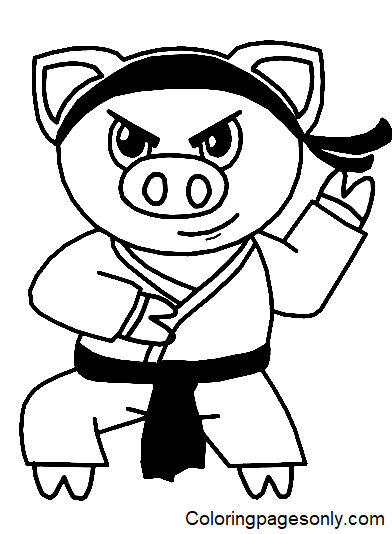
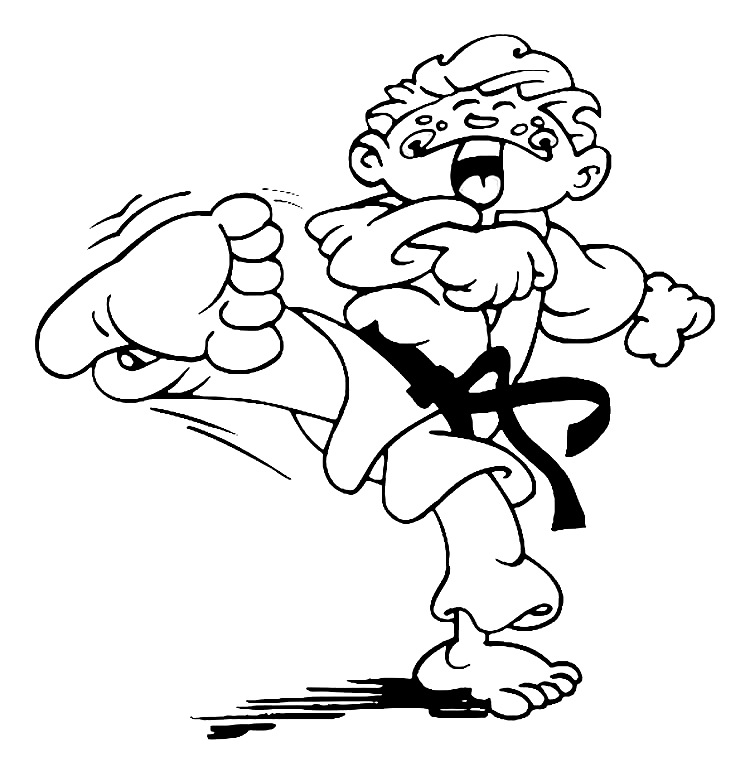
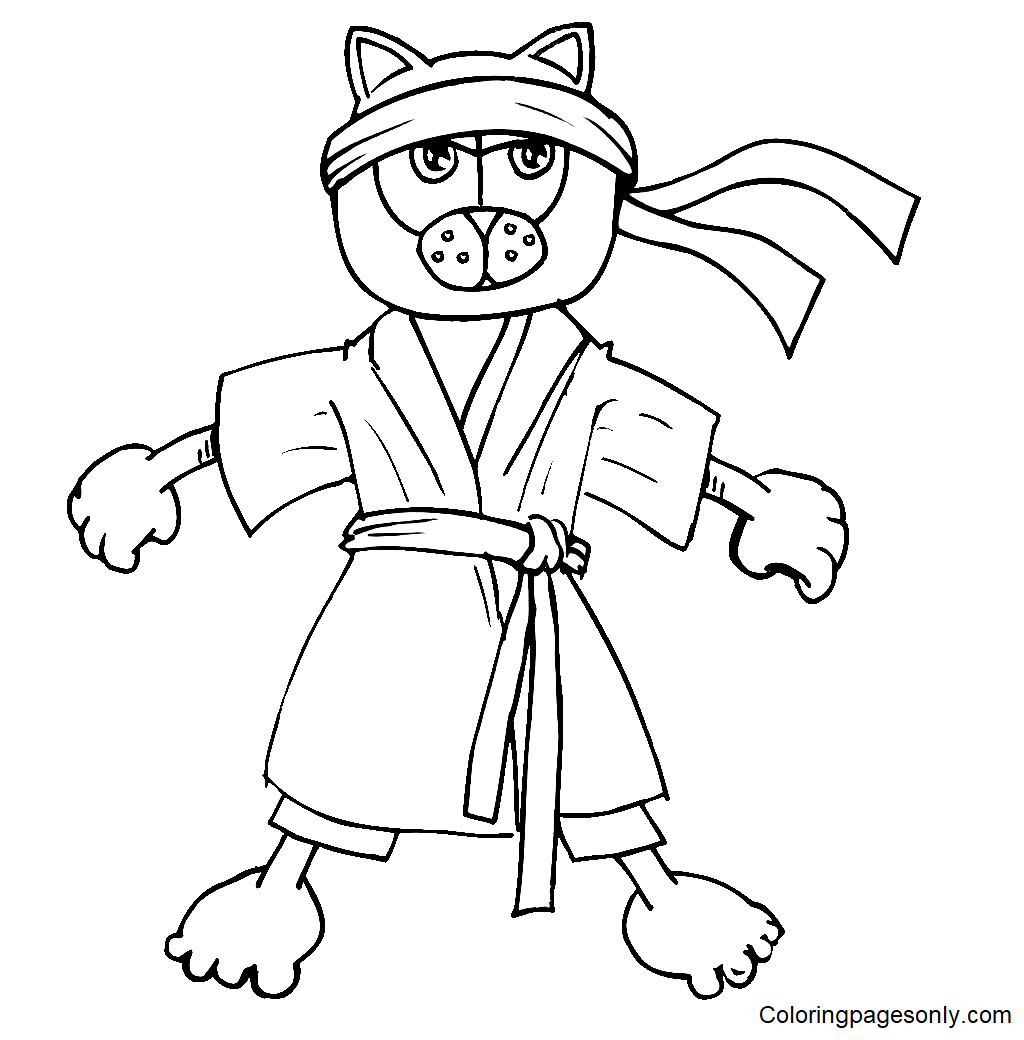
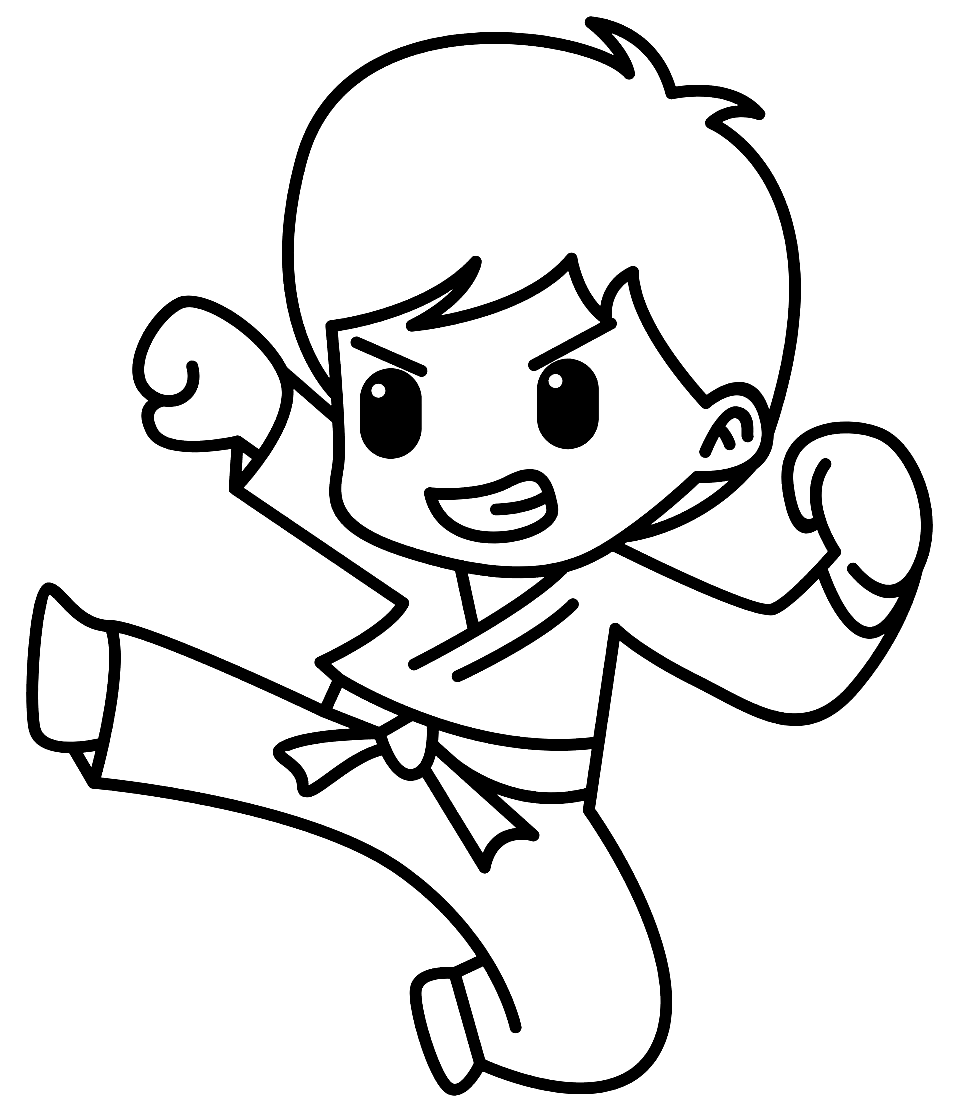
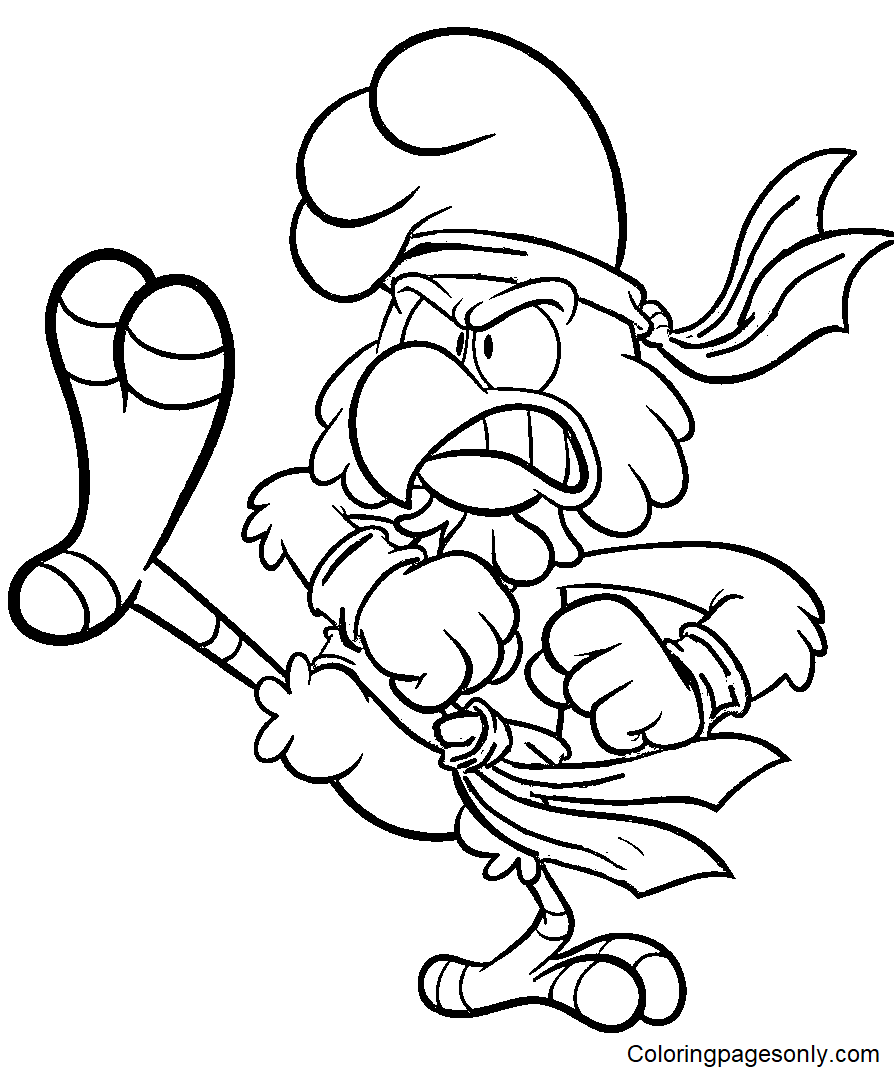
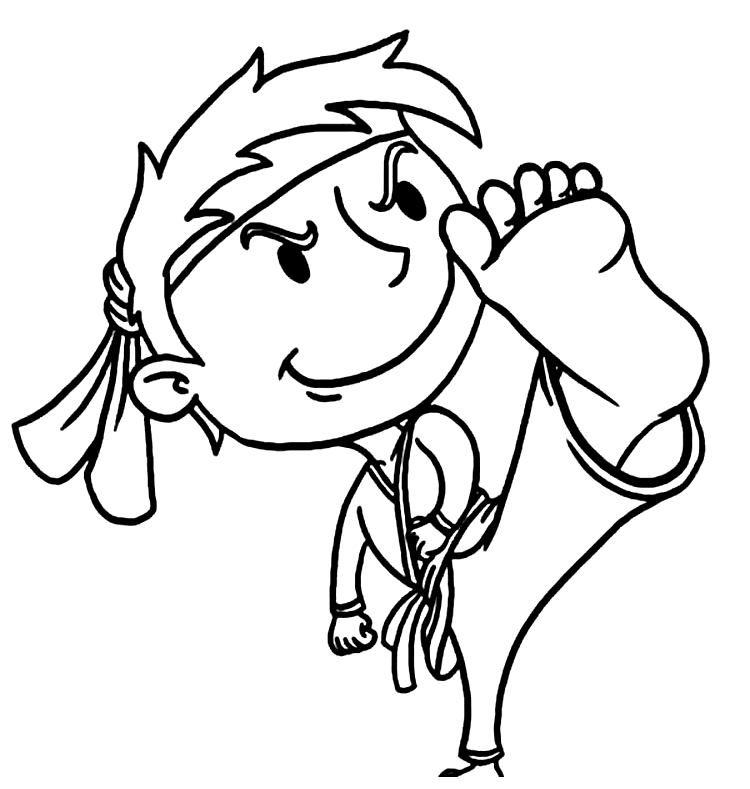
Kids in karate class, animal karate masters, action kicks, and cartoon crossovers make up the 39 sheets.
Kids in Karate Class
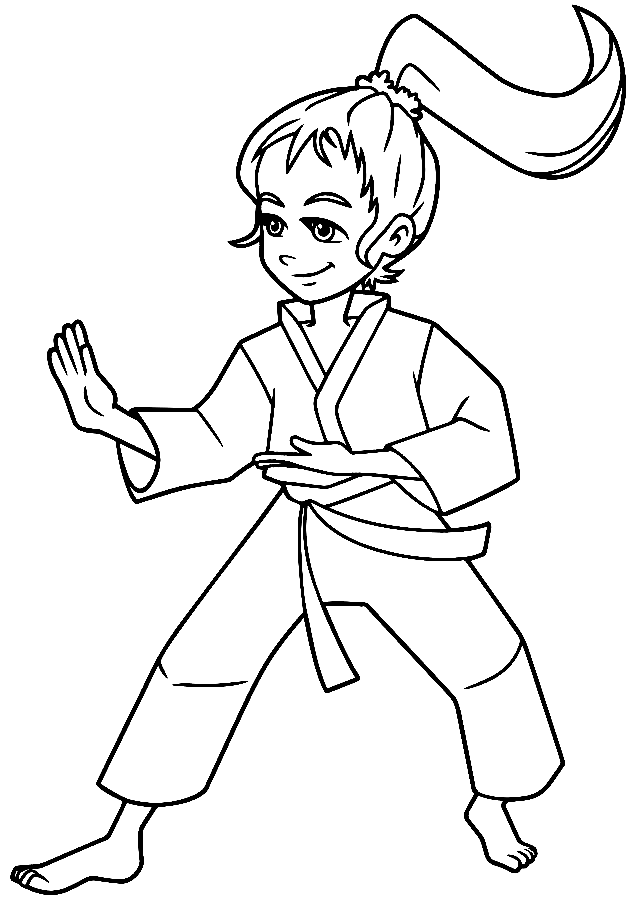
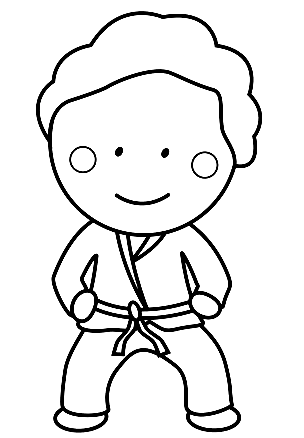
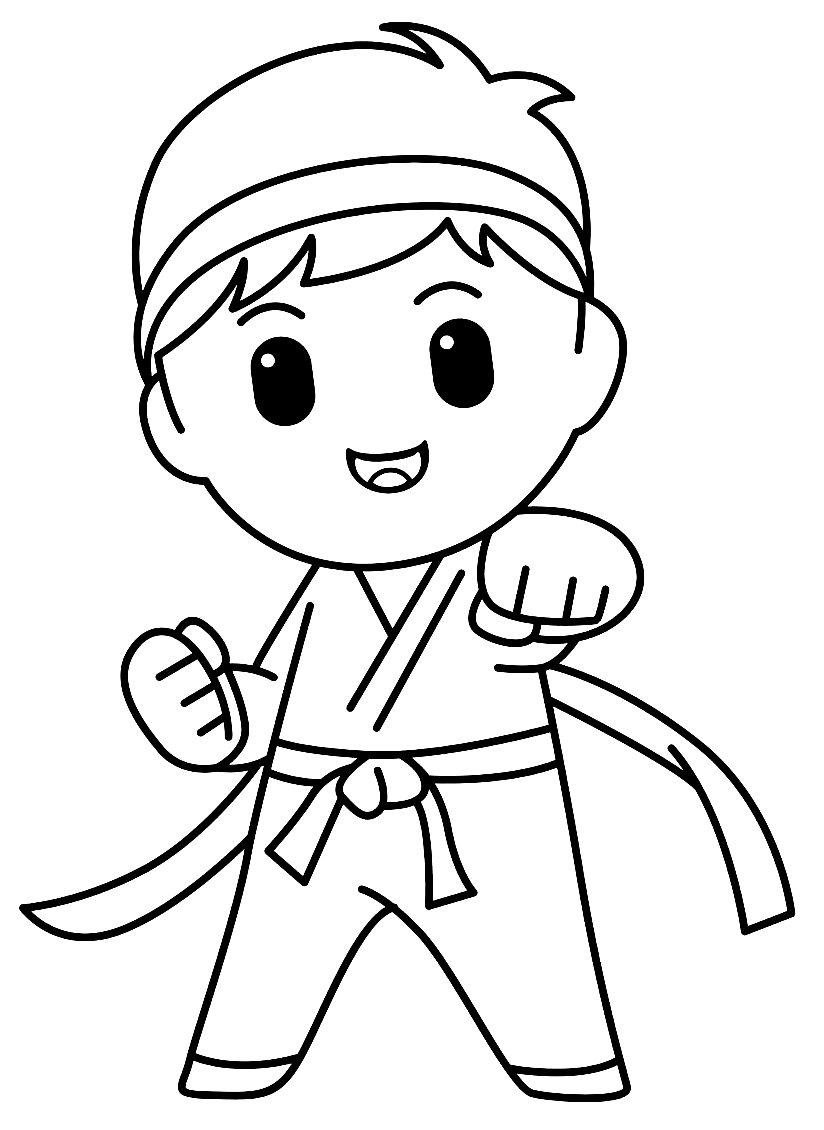
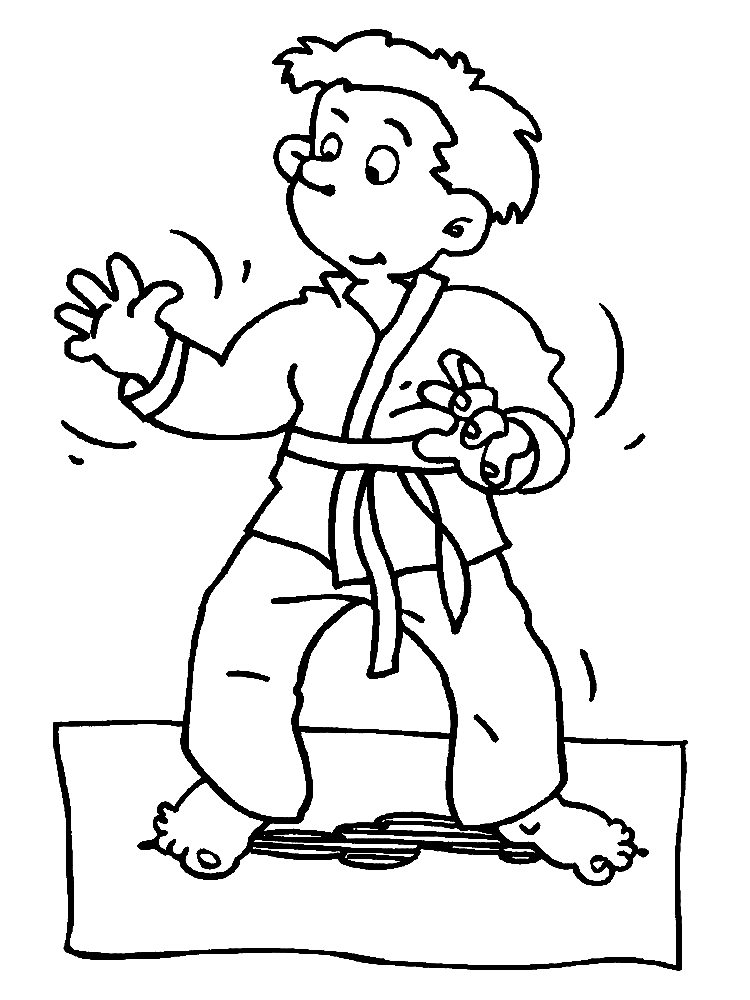
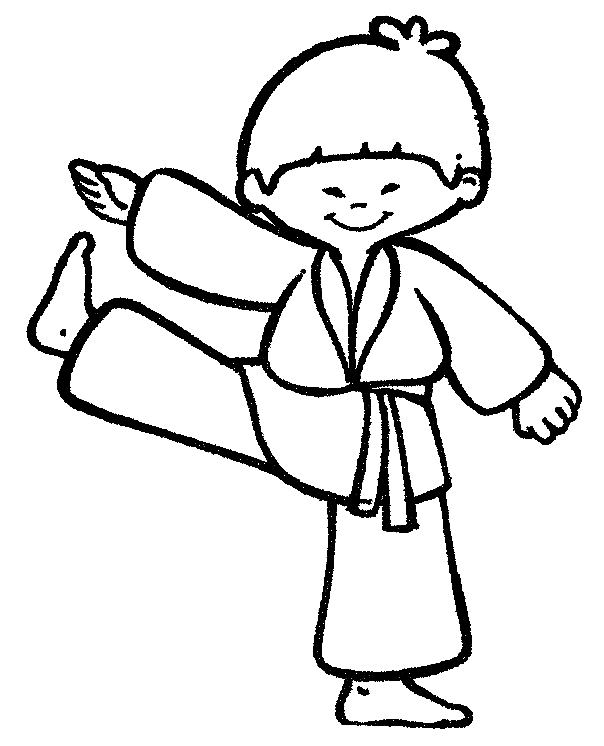
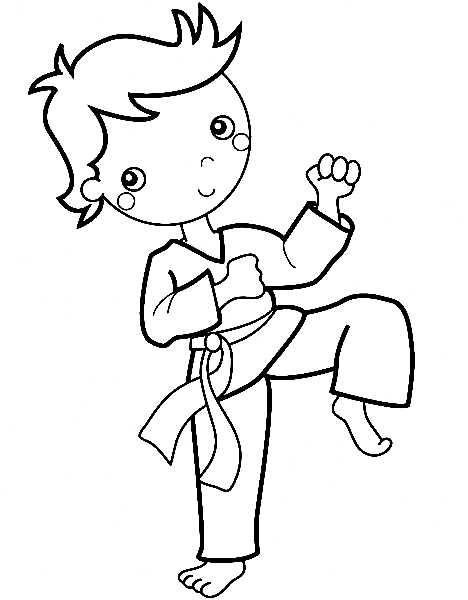
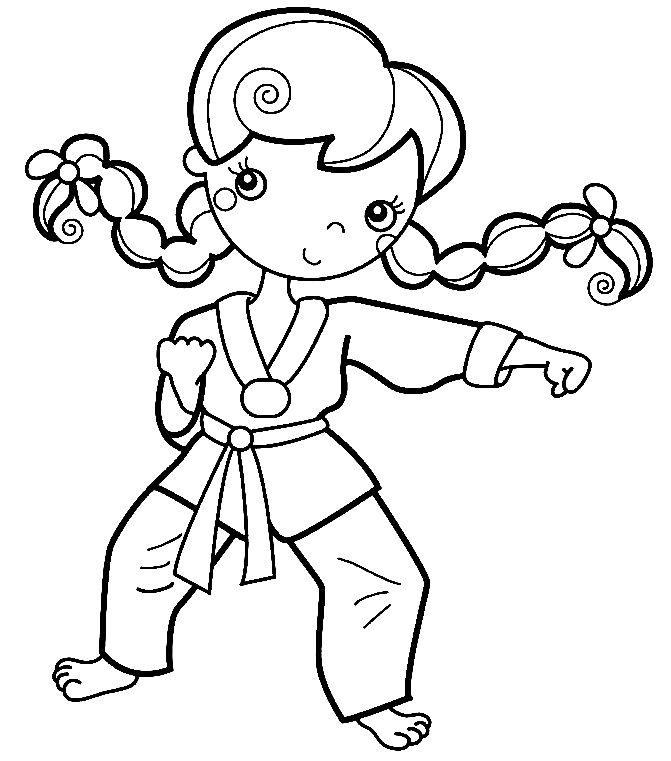
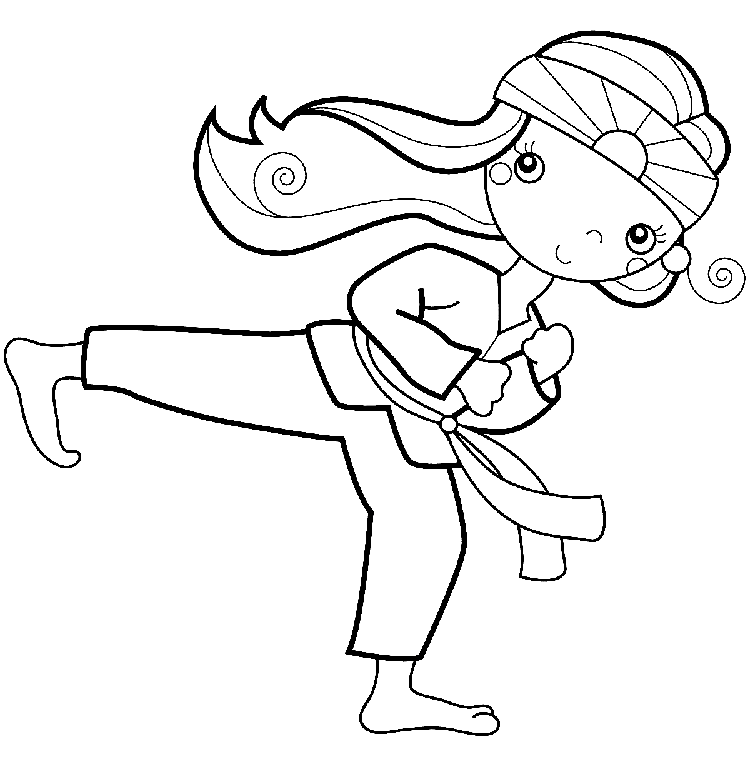
Boys and girls practice punches, bows, and ready stances, with pages like Happy Karate Boy showing a proud young student. Keep each gi White with soft Gray folds, and let the belt add the color.
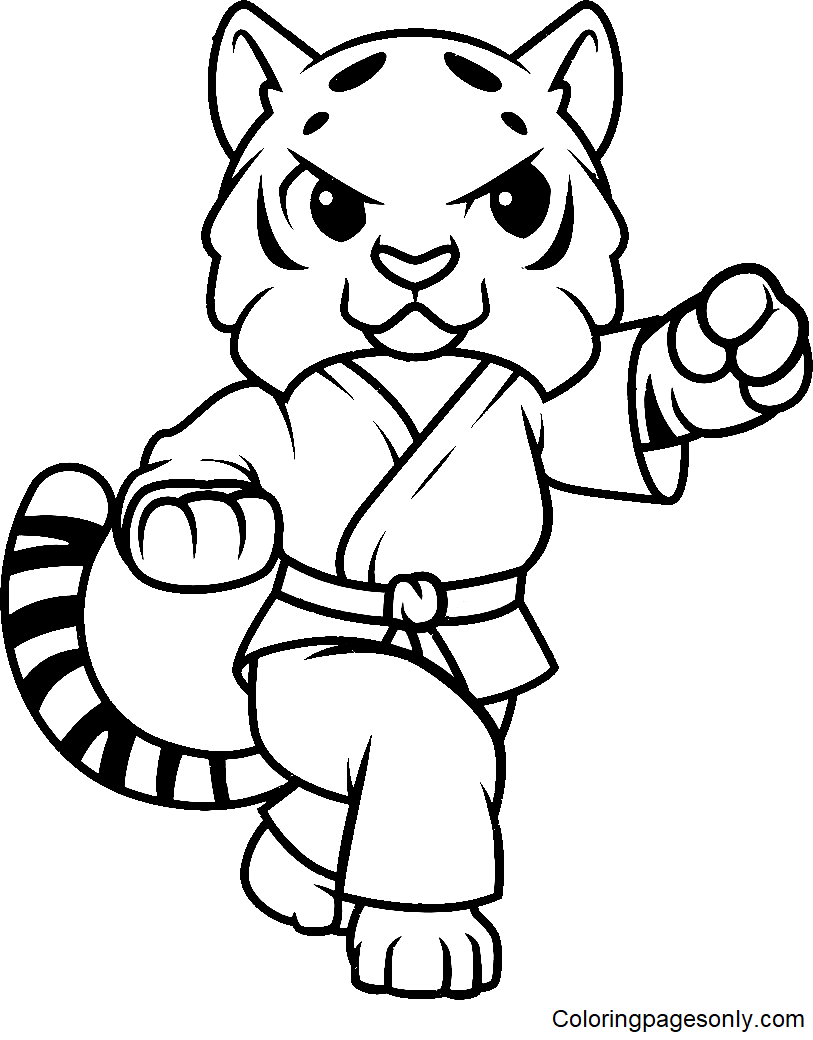
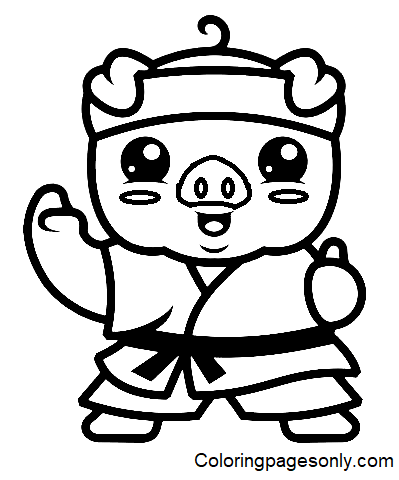
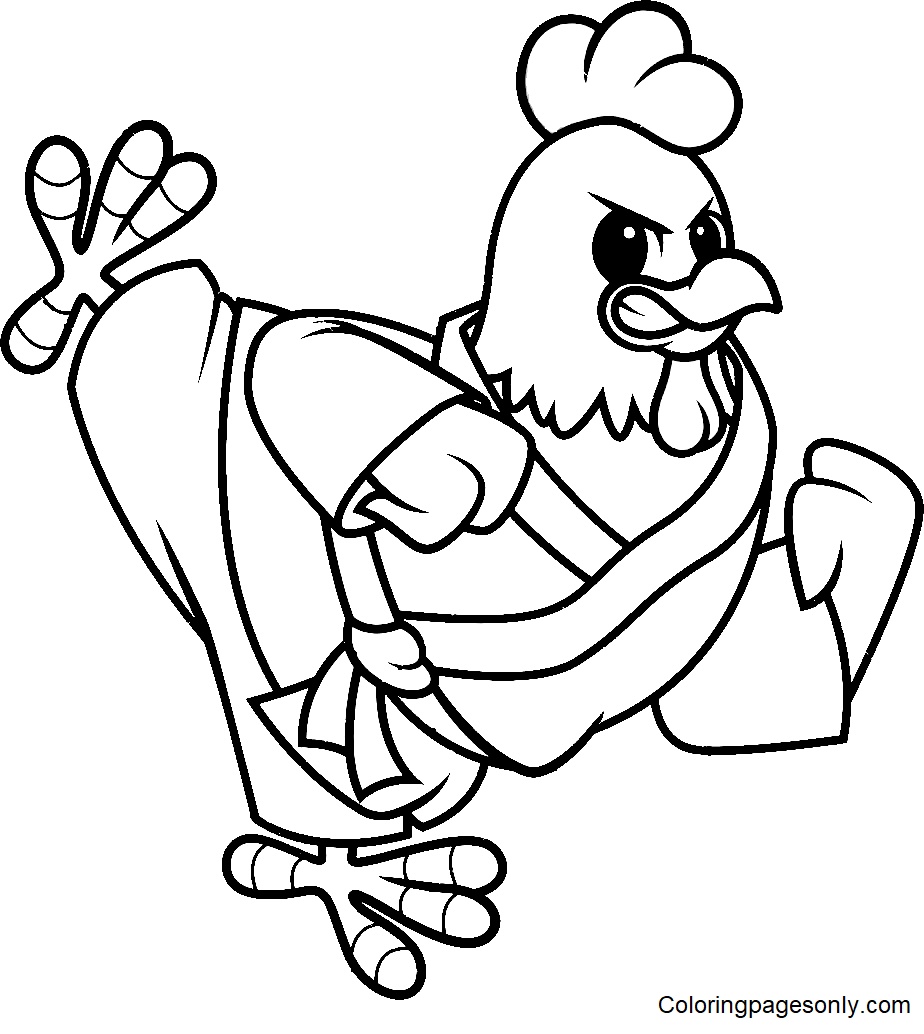
Animal Karate Masters
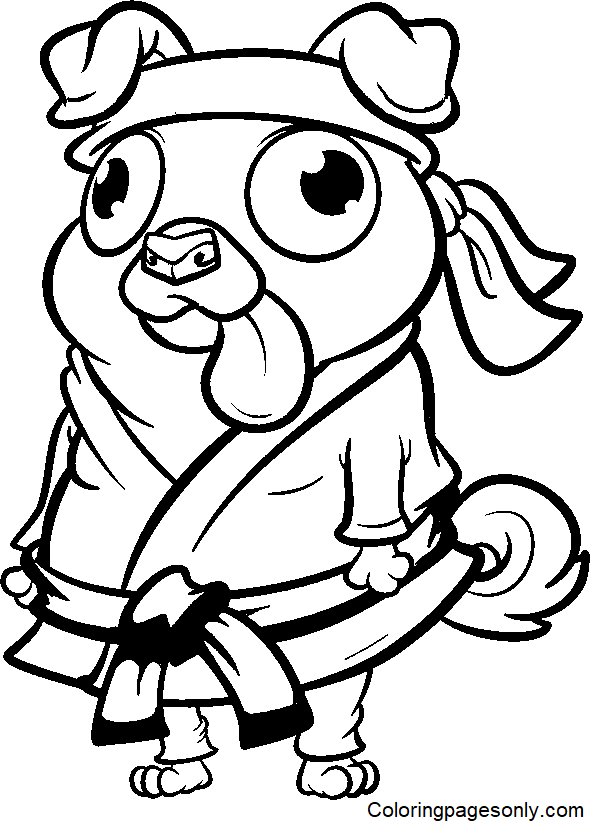
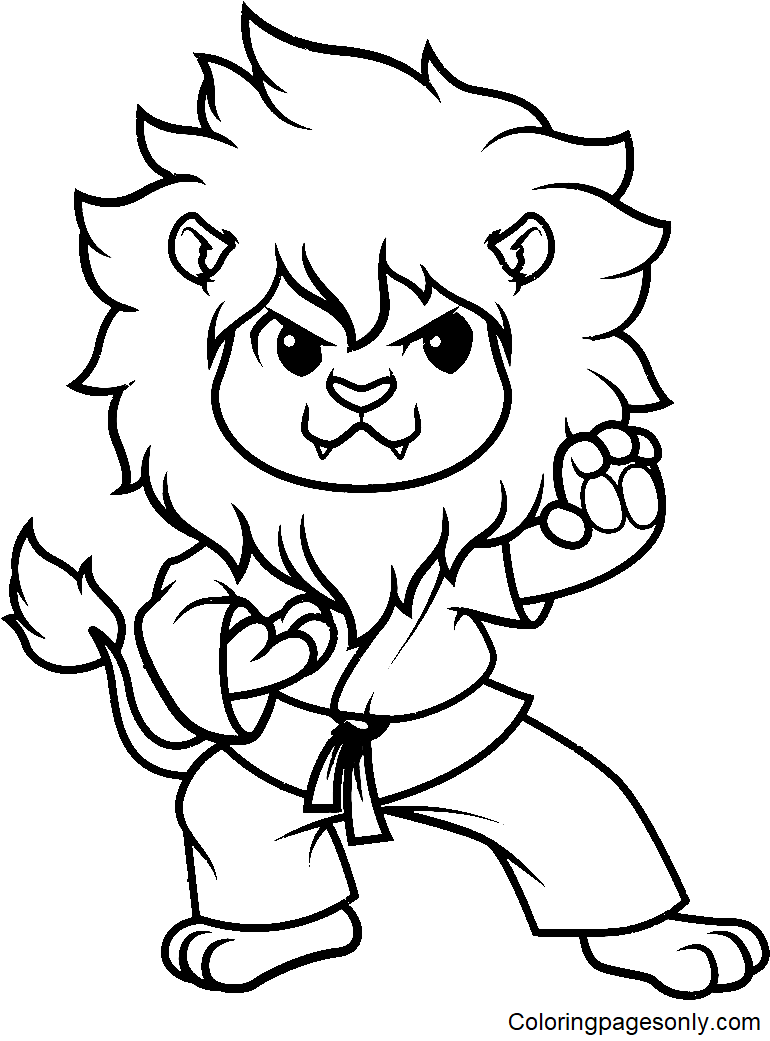
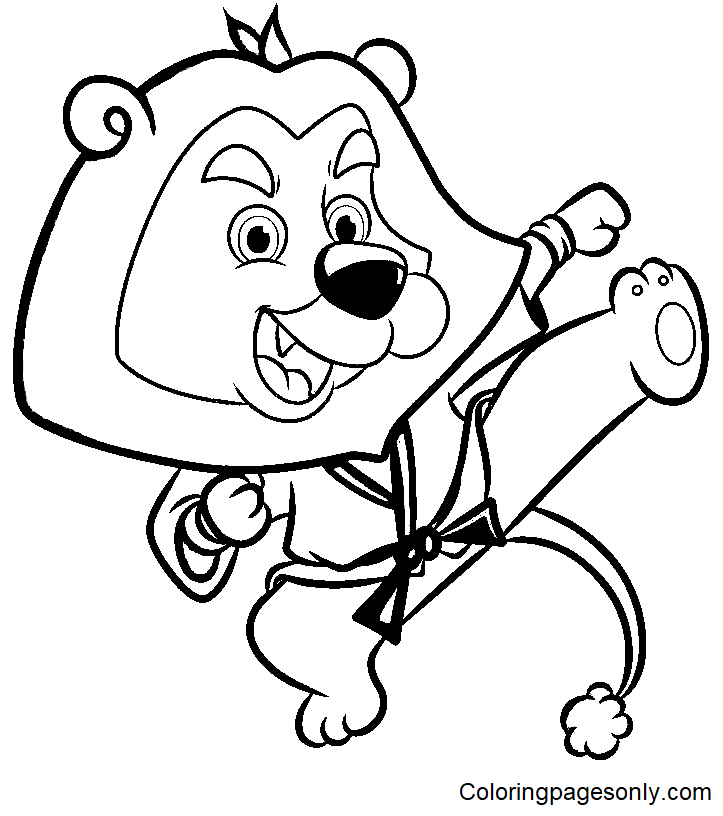
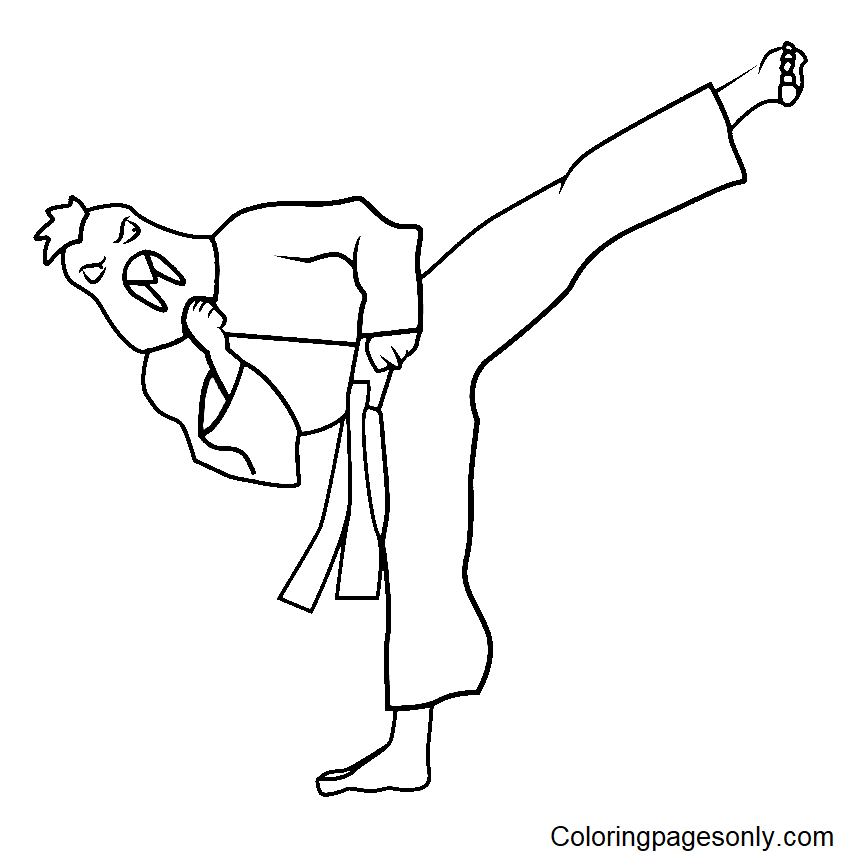
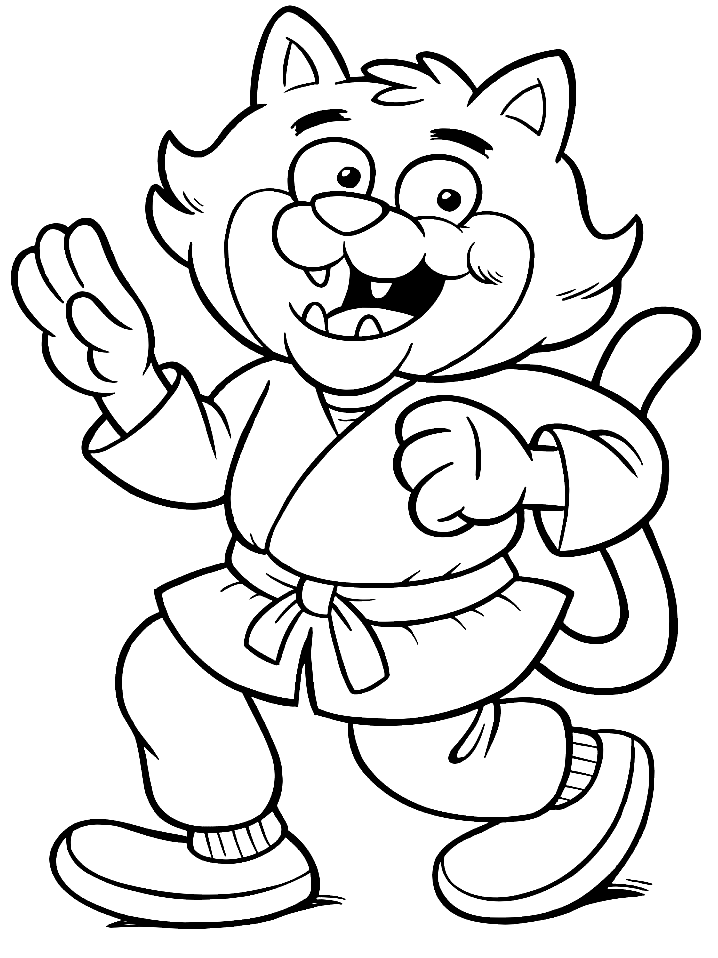
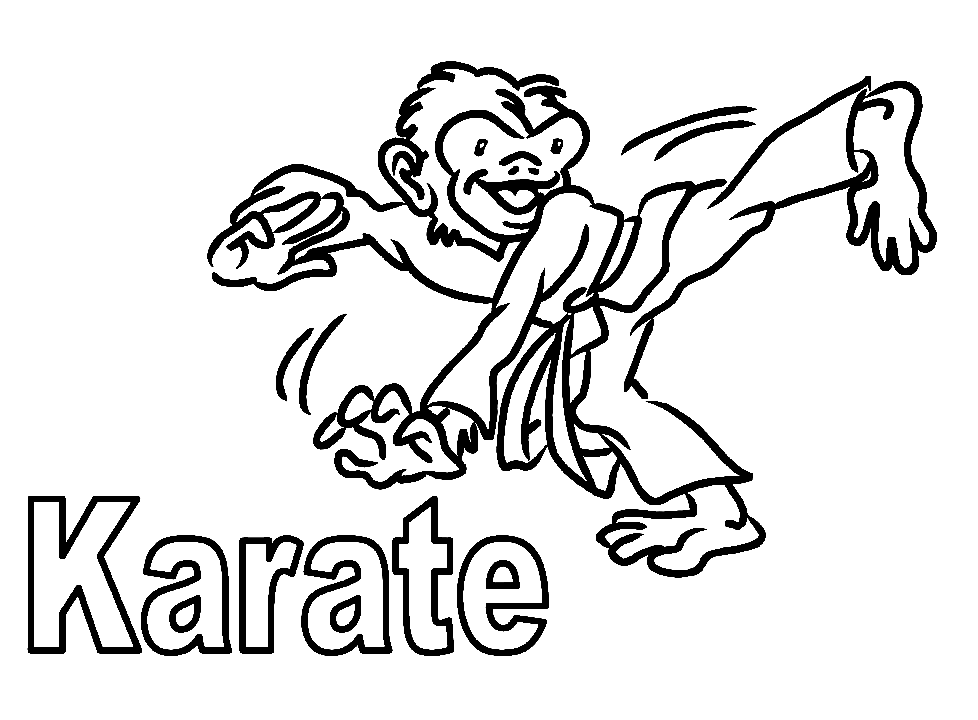
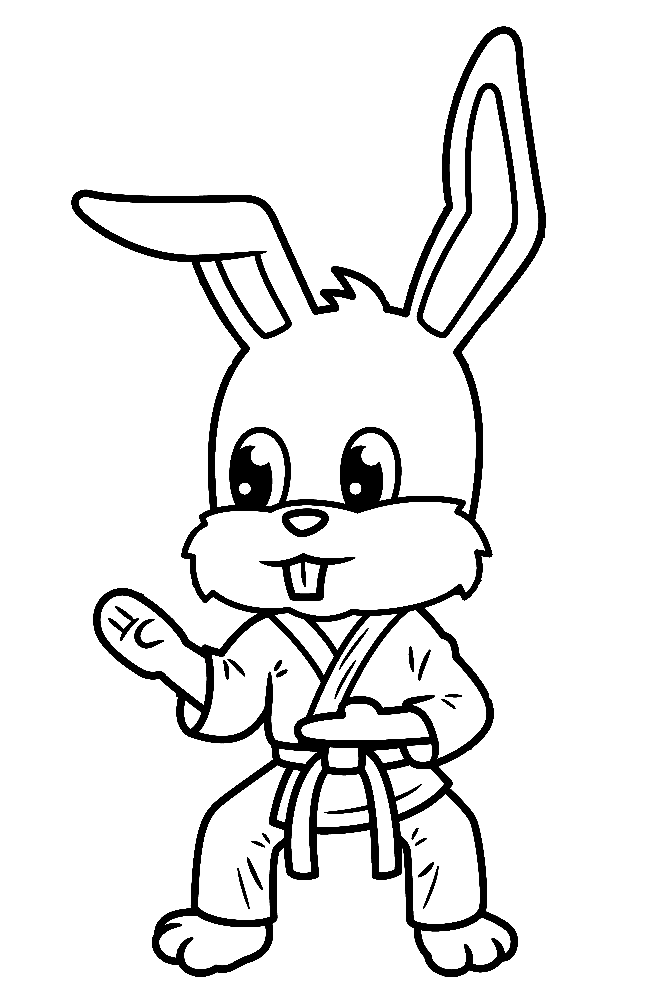
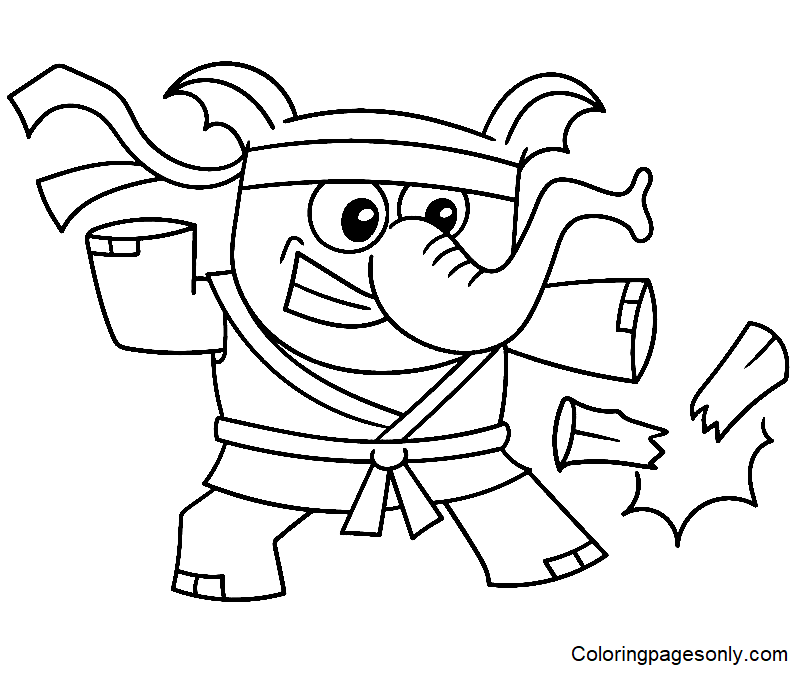
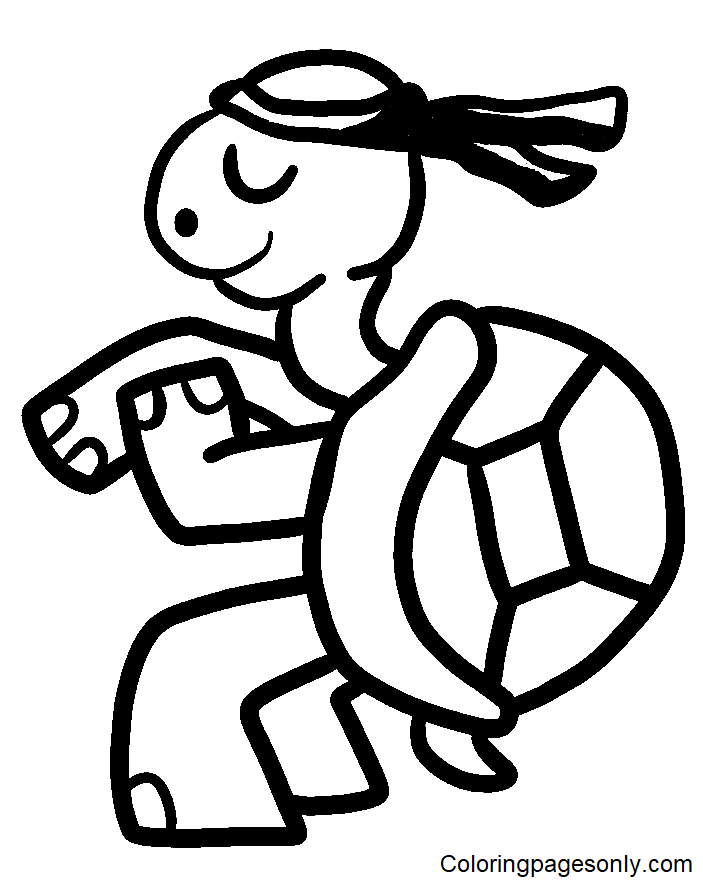
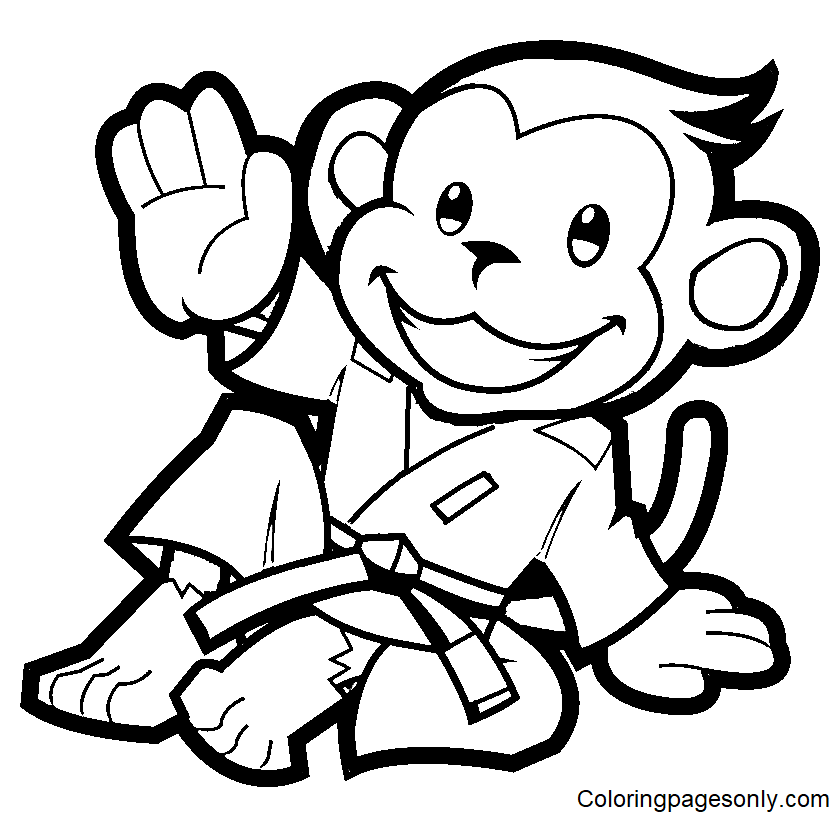
A huge part of the collection turns animals into martial artists, including a fierce tiger and a tiny chick throwing a kick. Color each animal’s natural fur or feathers first, then add a White gi and a bright belt on top.
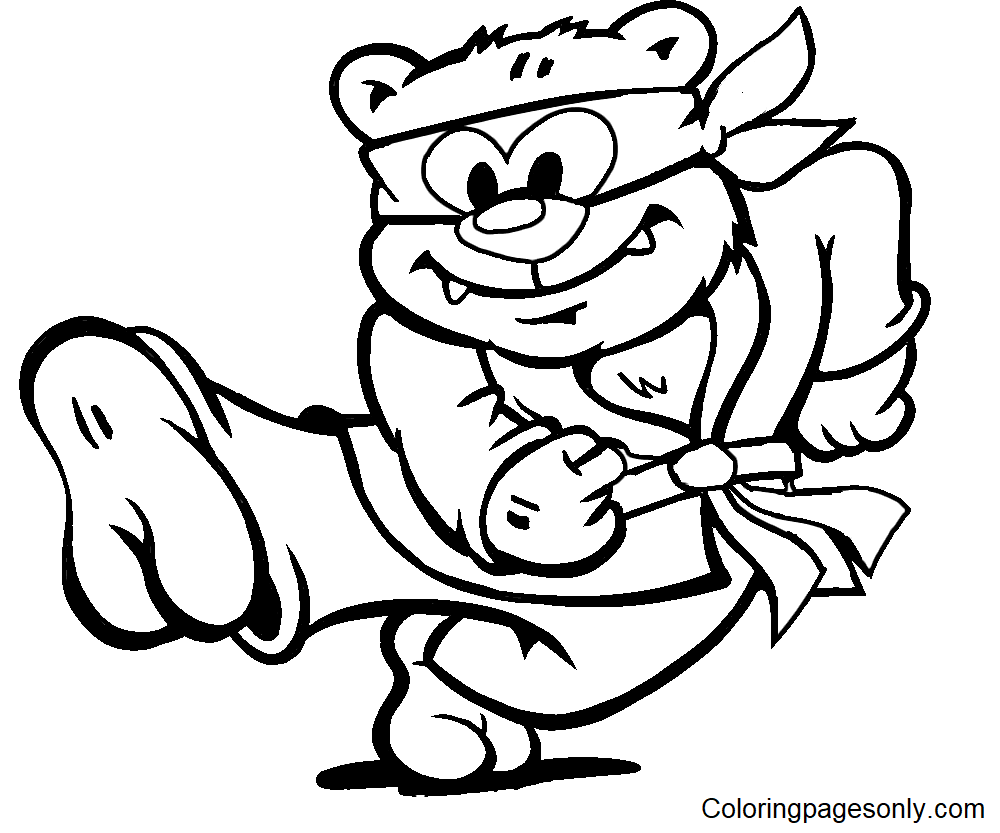
Kicks and Action Poses
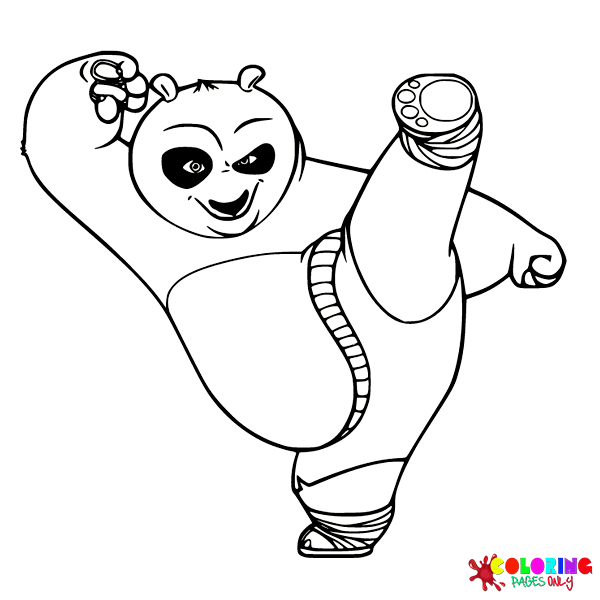
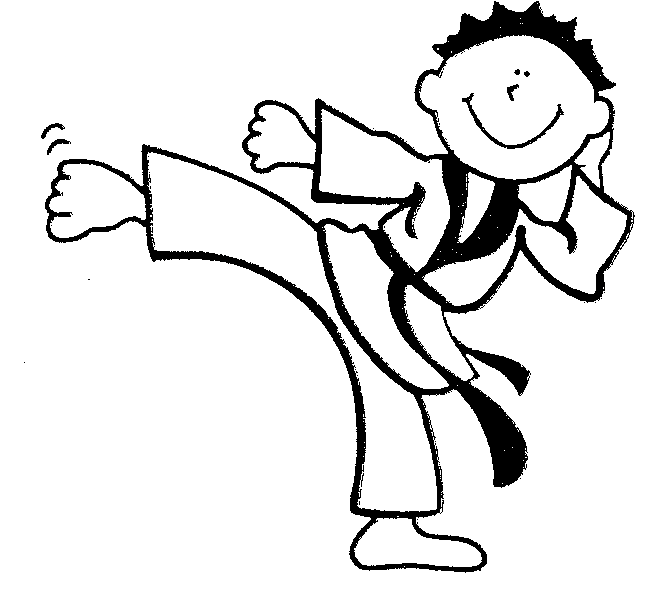
High kicks and fighting stances freeze the sport’s most exciting moments. A few short Gray motion lines behind the kicking foot help the movement jump off the page.
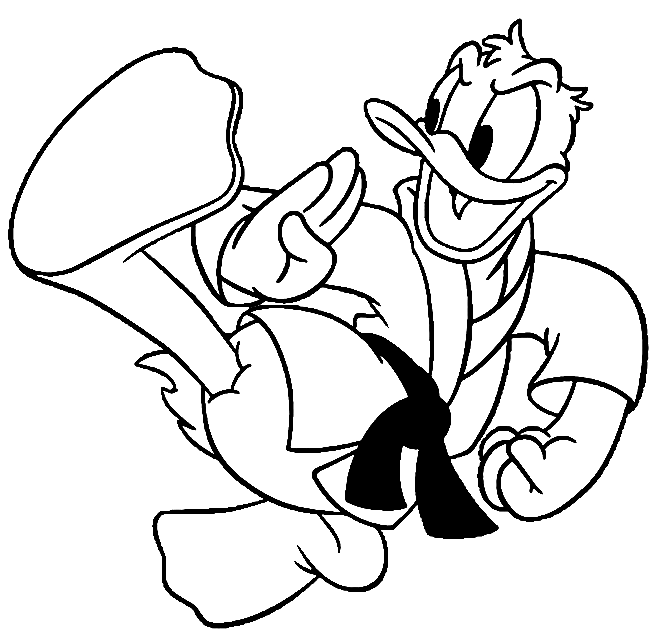
Cartoon Crossovers
Familiar cartoon faces also step into the dojo for a bit of fun. Keep their familiar show colors so kids recognize them right away.
What Karate Coloring Pages Do
Teaching respect and self-control. Karate classes begin and end with a bow, and students learn to use their skills only for self-defense. Coloring a karate student is an easy moment to talk with children about listening to teachers, being kind to classmates, and staying calm when they feel upset.
Building hand control for school. Belt knots, gi folds, and animal whiskers ask kids to slow down and color carefully. Coloring is one of the everyday activities the American Academy of Pediatrics connects with fine motor growth in children ages 2 through 7, and small details like a belt knot give that growth a focused target.
Practicing focus like a martial artist. Karate students train their minds to concentrate on one movement at a time, and coloring asks for the same kind of steady attention. In 2005, research reported in the Art Therapy Journal found measurable reductions in anxiety following structured coloring, making these pages a calm way to prepare for a busy class or a belt test.
Learning karate words. Gi, dojo, sensei, and kata are Japanese words every new student hears. Kids can label their finished pages with these terms and practice saying them aloud before their next lesson.
How to Color Karate Pages Well
- The gi: Leave most of the uniform White, then add Light Gray shading along the sleeves, collar, and pant folds. The soft shadows make the fabric look crisp and clean.
- Belt colors: Pick a real belt rank, such as Yellow, Orange, Green, Blue, Brown, or Black, and color the belt in one solid shade. Kids can choose their own belt color to match their current rank.
- Kicking leg: Shade the kicking leg slightly darker than the standing leg, and add short curved lines behind the foot. This makes the kick look fast and powerful.
- Animal fur and feathers: Color the tiger Orange with Black stripes, the lion Golden Yellow with a Brown mane, and the chick a bright Lemon Yellow. Natural colors help the animals stay recognizable under their uniforms.
- Faces and expressions: Use Rose for cheeks and a firm Black line for focused eyebrows. Determined faces show the confidence karate students bring to the mat.
- Dojo background: Add a Tan wooden floor and a pale Cream wall, with a simple Red circle for a Japanese flag. A quiet background keeps the focus on the karate pose.
5 Creative Craft Ideas With Karate Coloring Pages
1. Belt Rank Chart
Color the same karate kid several times, giving each copy a different belt color from White to black. Glue them in order on a long strip of paper to show how students move up the ranks.
2. Animal Dojo Poster
Color several animal karate pages, cut out each character, and arrange them on a poster board in rows like a class. Write a Japanese karate word under each animal, such as dojo or sensei.
3. Belt Test Good Luck Card
Glue a colored karate page onto the front of a folded sheet of cardstock. Inside, write an encouraging message for a friend or sibling preparing for a belt test.
4. Paper Belt Bookmark
Cut a long strip of paper, color it in a favorite belt color, and glue a small karate character at the top. Tie a knot shape at one end with yarn so it looks like a real belt.
5. Dojo Shoebox Scene
Line the bottom of a shoebox with tan paper for a wooden floor and add a paper flag to the back wall. Stand colored karate kids and animals on folded tabs inside to create a mini dojo.
Frequently Asked Questions
What are Karate coloring pages?
They are 39 free printable sheets featuring kids in karate uniforms, action kicks, animal martial artists, and a few cartoon crossovers. Each page is ready to print as a PDF or color on screen.
Where did karate come from?
Karate developed in Okinawa, an island in southern Japan, by blending local fighting traditions with Chinese martial arts. In the 1920s, teachers such as Gichin Funakoshi brought it to mainland Japan, and it later spread around the world.
What does the word karate mean?
Karate means “empty hand” in Japanese. The name reflects that students learn to protect themselves using only their hands and feet, without weapons.
What do karate belt colors mean?
Belts show a student’s rank, starting with White for beginners and moving through colors such as yellow, green, and brown toward black. The exact order of colors varies from one school to another.
Is karate an Olympic sport?
Karate made its Olympic debut at the Tokyo 2020 Games, which were held in 2021. It was not included in the Paris 2024 program.
What is a dojo?
A dojo is the training hall where karate students practice. Students usually bow when they enter and leave to show respect for the space, their teacher, and their classmates.
What age are Karate coloring pages for?
The cute animal pages suit children from about 3, and the action kicks and detailed uniforms fit kids up to about 10. They are also popular in martial arts schools as rewards for young students.
What is kata in karate?
Kata is a set series of moves that students practice alone, like a dance of blocks, punches, and kicks. Learning kata helps students build memory, balance, and precise technique.
Start Coloring
Pick a karate kid, a kicking tiger, or a tiny chick ready to spar, then print it or color it online with no sign-up required. Young martial artists can share their finished pages on Facebook or Pinterest.